
Kennedy Kiser
A practical guide to experiencing Dubai’s culture, food, and coastline without spending a fortune.

Night view of downtown Dubai, including Burj Khalifa, seen from the Shangri-La Hotel. Sam Gao. CC BY 2.0.
Dubai, the metropolis of the United Arab Emirates, is often associated with over-the-top luxury—think indoor ski resorts, gold-dispensing ATMs, and record-breaking skyscrapers. As one of the top destinations in the world for luxury tourism, it might seem out of reach for travelers on a tight budget. But beneath the surface lies a side of the city that’s surprisingly accessible. With a little planning, it’s entirely possible to enjoy the beauty, culture, and energy of Dubai without draining your bank account.
One of the easiest ways to start saving is with transportation. Dubai’s public transit system is cheap, efficient, and shockingly clean. Metro rides often cost less than a dollar, and hopping on a traditional wooden abra boat to cross Dubai Creek costs just 27 cents. Not only is this one of the most affordable experiences in the city, it also offers a peaceful moment of reflection in an otherwise fast-paced environment.

Rickshaw vendor on a beachside path at sunset, Jumeirah Beach Residence, Dubai. CC0.
Eating well in Dubai doesn’t have to mean dropping money on hotel buffets or five-star dinners. Some of the city’s best food can be found on its streets—in the neighborhoods of Karama, Satwa, or Al Rigga—where you can find sizzling shawarma, steaming biryani, and fresh falafel for just a few dollars. These areas are packed with small restaurants run by Pakistani, Indian, and Filipino immigrants who bring vibrant flavors and generous portions to the table. For a true Dubai staple, grab a seat at Ravi Restaurant, where the food is cheap, spicy, and beloved by locals and tourists alike.
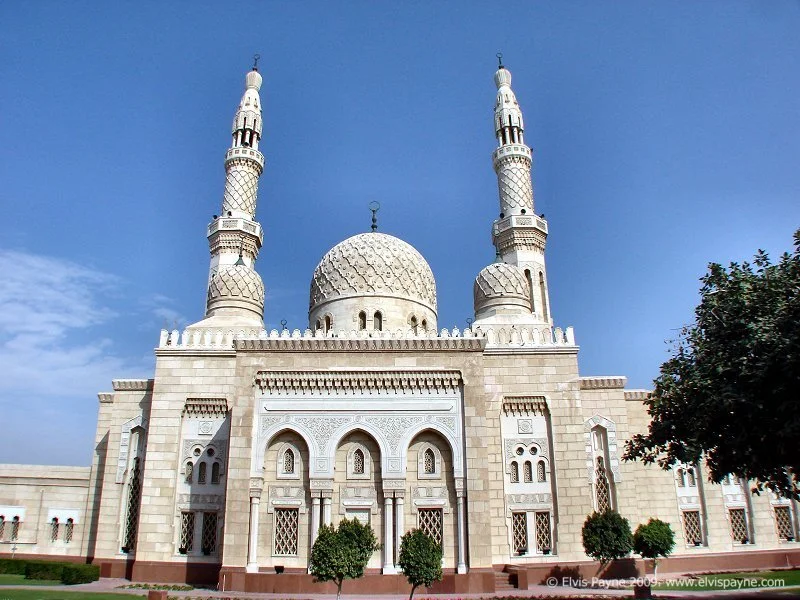
View of Jumeirah Grand Mosque, a prominent religious site in Dubai. Elvis Payne. CC BY 2.0.
Even in a city that feels brand-new, history is not hard to find. The Al Fahidi Historical District preserves a glimpse of the old Dubai with its sand-colored buildings, narrow alleyways, and wind towers. It’s home to a handful of quiet, low-cost museums (like the Dubai Museum and the Coffee Museum) that offer a deeper understanding of the city’s roots. Not far away, the Jumeirah Mosque welcomes non-Muslim visitors and offers guided tours designed to encourage cross-cultural understanding. It’s a peaceful and enlightening break from the usual tourist circuit.
Nature, too, is free in Dubai. While some beach clubs charge steep access fees, many of the city’s best beaches are open to the public. Kite Beach is a favorite for swimming, strolling, and people-watching, while Al Mamzar Beach Park offers shaded spots and clean facilities. Whether you’re soaking up the sun or wandering along the boardwalk, the coastline here feels like a luxury in itself—and you don’t have to pay a dirham to enjoy it.
Budget accommodations are more common than people think. Staying in areas like Deira or Bur Dubai can cut costs dramatically while still giving you easy access to major attractions. Hostels, guesthouses, and Airbnbs offer as low as $20 per night, while clean, simple private rooms can range from $35 to $60. Many include kitchens, making it easier to save even more by cooking meals yourself. On the higher end, standard hotels in downtown or beachfront areas typically range from $100 to $300 per night, with luxury resorts easily exceeding $500.
To keep your expenses down, it helps to buy a Nol Card for access to all public transit, travel during the shoulder seasons when flights and hotels are cheaper, and avoid tourist traps like overpriced mall food courts or themed dinner shows. Instead, look out for free community events, markets, and local festivals—they’re often listed online or passed around through word of mouth.

Early morning ferry shows on Dubai Creek, with the city beginning to stir. McKay Savage. CC BY 2.0.
Dubai might be best known for its ultra-rich aesthetic, but it’s also a place full of unexpected affordability, warmth, and depth. If you move beyond the surface and step off the polished hotel path, the city opens itself up in all kinds of ways—many of them free or close to it. The magic of Dubai is real, and it doesn’t have to cost a fortune to feel it.
TO VISIT:
Dubai is easily reached via direct international flights, with budget airlines often offering deals at Dubai International Airport (DXB). Affordable lodging can be found in older neighborhoods like Deira and Bur Dubai, where guesthouses and hostels typically cost between US $25 and $60 per night. The city’s metro system connects most major attractions, and a Nol Card allows seamless travel on metro, buses, and abras. For immersive local experiences, consider guided walking tours of the Al Fahidi Historical District or booking an abra ride at sunset across Dubai Creek. The cooler months (November through March) are best for beach visits, open-air markets, and exploring the city’s cultural side on foot.

Kennedy Kiser
Kennedy is an English and Comparative Literature major at UNC Chapel Hill. She’s interested in storytelling, digital media, and narrative design. Outside of class, she writes fiction and explores visual culture through film and games. She hopes to pursue a PhD and eventually teach literature! @kennedy_kiser