
Zoe Lodge
“Dark tourism” attracts modern visitors to horrific sites, from concentration camps to war memorials, to view historical atrocities.
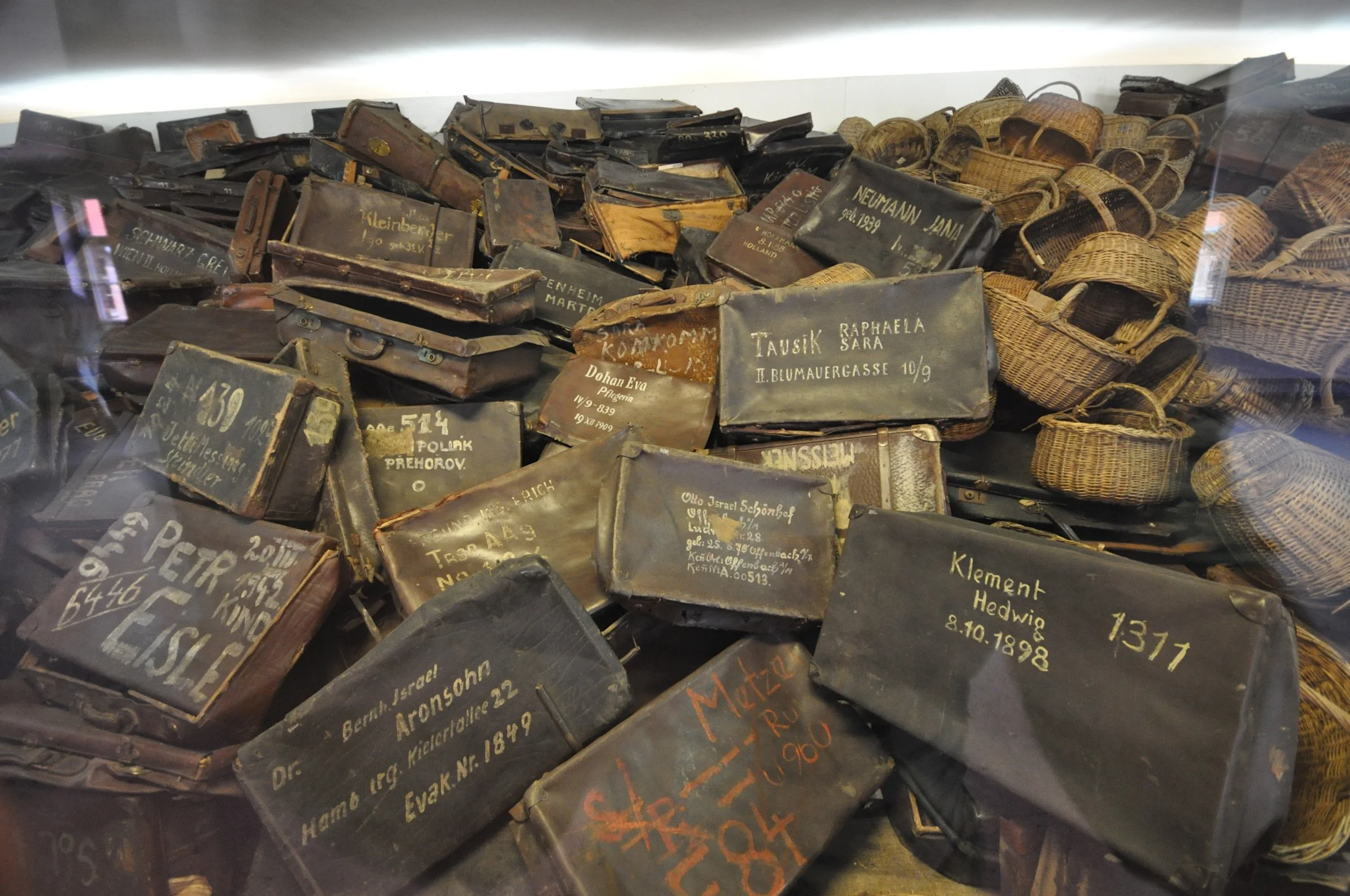
Luggage items in the Auschwitz Museum. Jorge Lascar. CC BY 4.0.
From the eerie ruins of Chernobyl to the solemn grounds of Auschwitz, dark tourism is quietly booming. Also known as “thanatourism,” this phenomenon attracts travelers to sites historically linked to death, tragedy and suffering. The popularity of dark tourism has been growing in recent years, helped along by the 2018 Netflix series “Dark Tourist,” a travel show focused on visiting macabre destinations. Though some may view it as morbid curiosity, dark tourism is more complex than it seems, rooted in our collective need to understand, confront and memorialize the darkest depths of human history.
Some of these “dark tourism” sites are among the most popular historical attractions worldwide, despite their gruesome undertones. One is the city of Pompeii in Italy, in which the ashen outlines of ancient citizens killed by the devastating volcanic eruption are a famed tourist attraction. Another is the Tuol Sleng Genocide Museum in Cambodia, which is a school turned Khmer Rouge prison that now serves as a museum that houses haunting educational exhibits on the regime’s horrific practices. Also in Cambodia are the Killing Fields of Choeung Ek, which is a mass grave site from the Khmer Rouge regime and is now represented by a stupa filled with skulls. In Ukraine, visitors can participate in guided tours of the abandoned town of Pripyat and the remains of Reactor 4 from the Chernobyl nuclear meltdown. In Poland, the haunting remains of the massive Auschwitz-Birkenau concentration camp have been transformed into a museum and a UNESCO World Heritage Site where visitors can be educated on some of the darkest horrors of the Holocaust.
Tourists’ motivations are as varied as the destinations. For some, it’s a desire to pay respects and to ensure that history is not forgotten, particularly for those with cultural connections to the sites, such as Jewish tourists visiting Holocaust sites. For others, it’s a pursuit of meaning in a world overwhelmed with sanitized tourist attractions. As conventional travel increasingly offers photo-friendly escapism, dark tourism presents a sharp contrast, an often sobering alternative.
Sites like the Vietnam Memorial Wall in Washington, D.C., Rwanda’s Genocide Memorials and Hiroshima’s Peace Memorial Park serve as powerful reminders of the consequences of hatred, violence and war. Places like these preserve history and hold space for reflection. Visits to these sites can be insightful and educational, providing information and emphasizing the importance of reflecting on human tragedies.
However, ethical questions surrounding dark tourism remain, as it continues to grow more popular. Travelers must ask themselves at what point remembrance slips into voyeurism, and when does education become exploitation? This issue becomes especially clear in places like the 9/11 Memorial in New York or Ground Zero in Hiroshima, where tourists take photos beside memorial plaques or buy themed merchandise from nearby shops. The commercialization of grief has prompted critics to call for more responsible engagement. This concern raises the question of whether tourism ever truly honors a site of trauma, or does it inevitably risk trivializing it?
The answer may lie in how we travel. Ethical tourism of these “dark” sites is possible, but it requires sensitivity, self-awareness and respect for the local context. That means avoiding sensationalism, supporting educational initiatives and listening to the voices of those directly impacted. When done thoughtfully, dark tourism can open a dialogue between past and present, helping visitors reckon with the legacy of violence in a more globalized world.
However, not all dark tourism sites are grounded in historical fact. Paranormal hotspots, haunted prisons and disaster-themed tours also fall under the umbrella, such as tours of Alcatraz in San Francisco or the Parisian Catacombs. While these experiences can be thrilling, they often blur the line between fiction and reality, which can be damaging for the reputation of “dark tourism” as a genre. For critics, this “dark entertainment” threatens to dilute the educational potential of “dark tourism.”
The rise of dark tourism also mirrors broader societal shifts. As travelers seek more authentic experiences, they're also expressing a growing discomfort with the erasure of certain historical events. In an age of disinformation and denial, visiting a concentration camp or nuclear disaster zone becomes a tangible reminder of the atrocities that humanity is capable of. Ultimately, “dark tourism” challenges travelers not just to look, but to recognize injustice, endurance and the human cost of conflict. It asks us to engage with discomfort rather than avoid it, to remember rather than forget.

Zoe Lodge
Zoe is a student at the University of California, Berkeley, where she is studying English and Politics, Philosophy, & Law. She combines her passion for writing with her love for travel, interest in combating climate change, and concern for social justice issues.