
Kennedy Kiser
A winter journey through where cultural traditions such as reindeer herding, joik and land rights endure amid growing climate and industrial pressures.

Sami reindeer race during the annual festival in Tromso, Norway. Ronel Reyes. CC BY 2.0.
Nestled within the Arctic landscapes of Norway, Sweden and Finland lies Sapmi, the ancestral homeland of the Sami people — Europe’s only recognized Indigenous group. For centuries, the Sami have herded reindeer across snowy tundra, practiced animistic traditions and sung ancient joik melodies that echo the land’s soul. But this landscape is no longer untouched. Industrial mining, deforestation and the mounting effects of climate change now cut through traditional grazing paths and sacred spaces. Despite legal protections, Sami groups still fight for meaningful recognition of land rights and cultural sovereignty.
The Sami are Europe’s only Indigenous people with official legal status under international frameworks like the United Nations’ ILO Convention 169. This recognition stems from their descent from the first known settlers of the Sapmi region, with a continuous cultural, linguistic and territorial presence that predates modern European nation-states. The Sami never formed a nation-state and instead lived semi-nomadic lives closely tied to the land. They have historically faced colonization, forced assimilation policies and cultural erasure — especially during the 19th and 20th centuries. Their designation as Indigenous reflects not only this pre-colonial connection to the land, but also their ongoing efforts to preserve distinct traditions, protect endangered languages and assert sovereignty. While other minority groups exist in Europe, the Sami are uniquely acknowledged in legal and political frameworks due to this enduring identity. Nonetheless, enforcement of their rights remains uneven across Norway, Sweden and Finland.
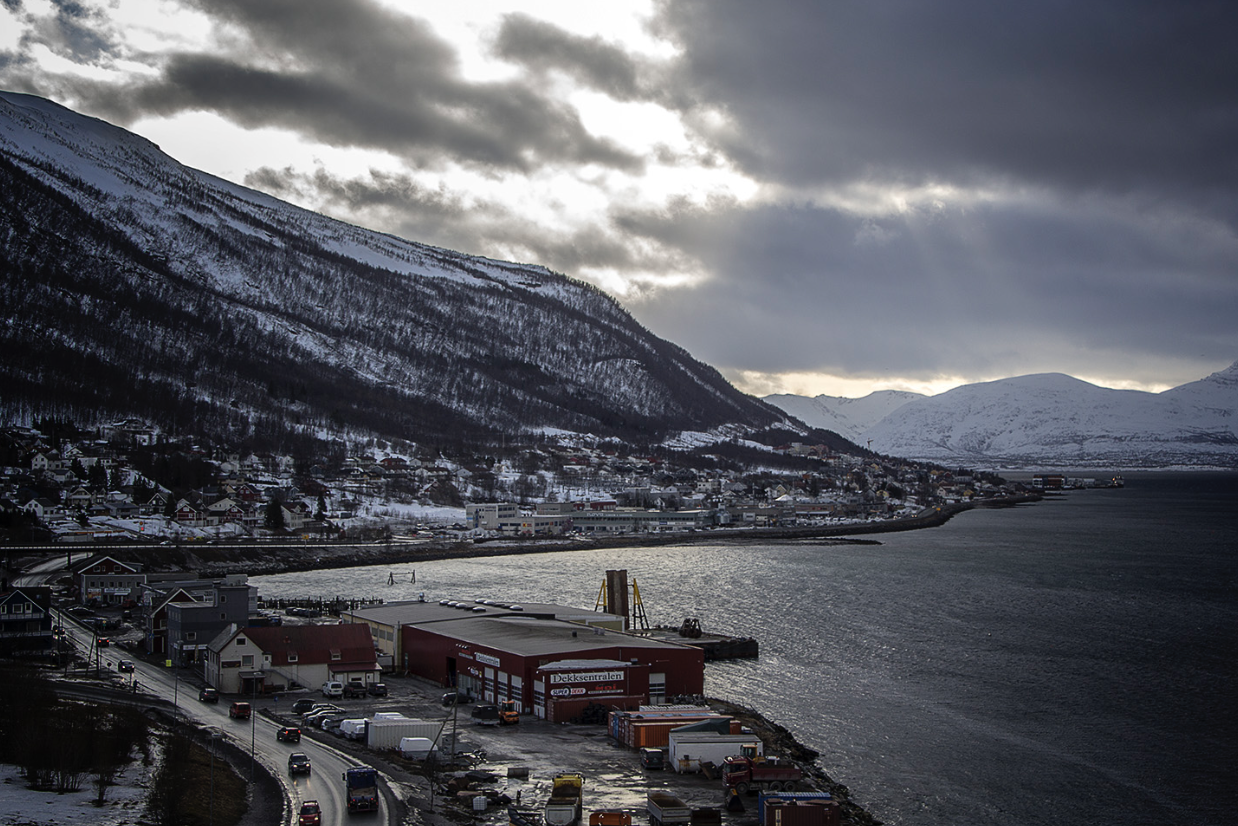
View of Tromso, a city in northern Norway. Rodrigo Silva. CC BY 2.0.
Tromso, a vibrant Arctic city surrounded by fjords and mountains, is a launching point into northern Norway’s Sami regions. From here, small-group tours and Sami-owned experiences provide access to cultural sites and reindeer herding lands, particularly in Finnmark County.
Legal limitations compound climate disruptions. While Sami communities have some rights to traditional lands, much of the territory remains under state control in Sweden and Finland, and is vulnerable to outside development. The rush for rare earth minerals used in green technologies has made Sami lands a target for industrial extraction — ironically, in the name of environmental progress.

Lavvu-style tent glows in a snowy forest in Nellim, Finland. Dries Buytaert. CC BY 4.0.
Beyond the political landscape, daily life in Sapmi is rich with tradition. Many Sami-run travel programs invite guests into “lavvu” or conical tents for meals cooked over open fires — typically “bidos,” a hearty reindeer stew. Inside, guides share oral histories, explain traditional dress patterns and perform “joik”: a melodic, often wordless vocal tradition used to evoke people, animals and places.
Unlike conventional singing, joik is deeply personal. Each one is meant not to describe, but to be what it represents. The effect is haunting and immersive — an oral map of Sami memory and identity. Today, younger generations continue to revive the practice, blending joik with contemporary music to resist cultural erasure and reconnect with their heritage.
Ethical travel in Sami country means supporting Indigenous-led initiatives rather than packaged excursions. Organizations like Fifty Degrees North and local Sami tourism boards emphasize collaboration, not commodification. Opportunities range from learning how to throw a traditional lasso to visiting winter festivals like the Sami People’s National Day on February 6, where flags fly, speeches are held in the Sami language and handmade “duodji” or crafts are showcased.
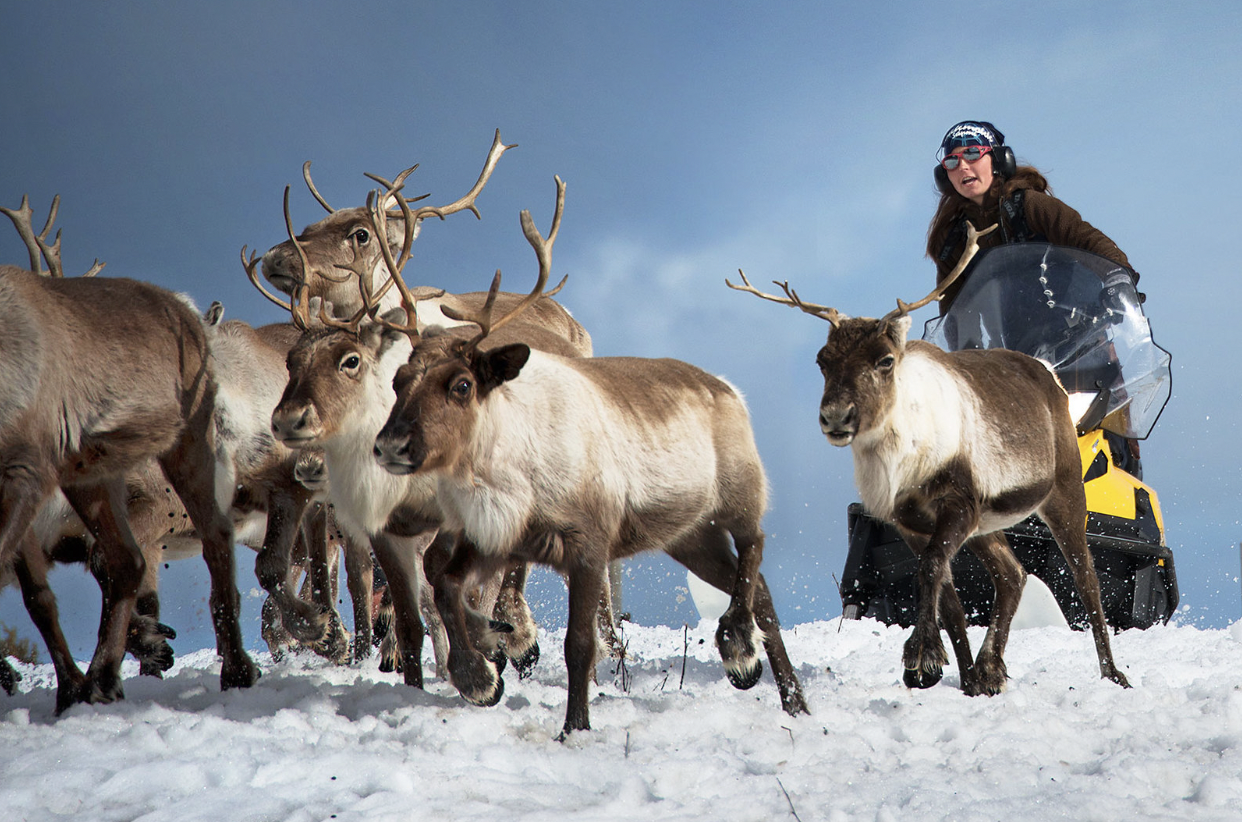
Annica Lanta herds reindeer in Arctic Scandinavia. Michiel van Nimwegen. CC BY 2.0.
Some programs even allow visitors to join seasonal reindeer migrations — an ancient practice now threatened by shrinking pastureland and increasingly unstable snow conditions. These journeys double as ecological lessons: what appears to be a pristine wilderness is, in fact, an actively contested space.
A winter journey through Sapmi offers more than scenic landscapes and cozy fires. It reveals a living culture shaped by snow, song and resistance. For those willing to listen, the Arctic speaks, not only through wind and reindeer hooves, but through people who have always known how to survive here.
For a deeper literary exploration of Sami identity and cultural memory, readers can turn to “Ædnan: An Epic” by Linnea Axelsson. This is a bilingual novel-in-verse that follows multiple generations of Sami families navigating displacement, resistance and reconnection.
TO VISIT:
The easiest gateway to Sami territory is Tromso, Norway, accessible via direct flights from Oslo. From there, buses or rental cars connect visitors to Finnmark and other northern regions. Lodging ranges from guesthouses to Sami-owned lodges, with nightly rates averaging US$100 to $150. Outfitters like Tromso Arctic Reindeer and Wild Norway offer immersive, Indigenous-led experiences. Winter (December to March) is ideal for witnessing reindeer migration and joik performances under the northern lights.

Kennedy Kiser
Kennedy is an English and Comparative Literature major at UNC Chapel Hill. She’s interested in storytelling, digital media, and narrative design. Outside of class, she writes fiction and explores visual culture through film and games. She hopes to pursue a PhD and eventually teach literature! @kennedy_kiser