
With concerts cancelled and galleries closed, here are 8 global art groups reaching people in unique ways. From Kenya’s mobile art installations to London street art to live streaming performances, around the world artists are innovating.
Read MoreMeet 6 Athlete-Activists Demanding Change
Social activism and athletics have become intertwined, especially in the digital age. Here are some of the world’s most impactful athlete-activists.
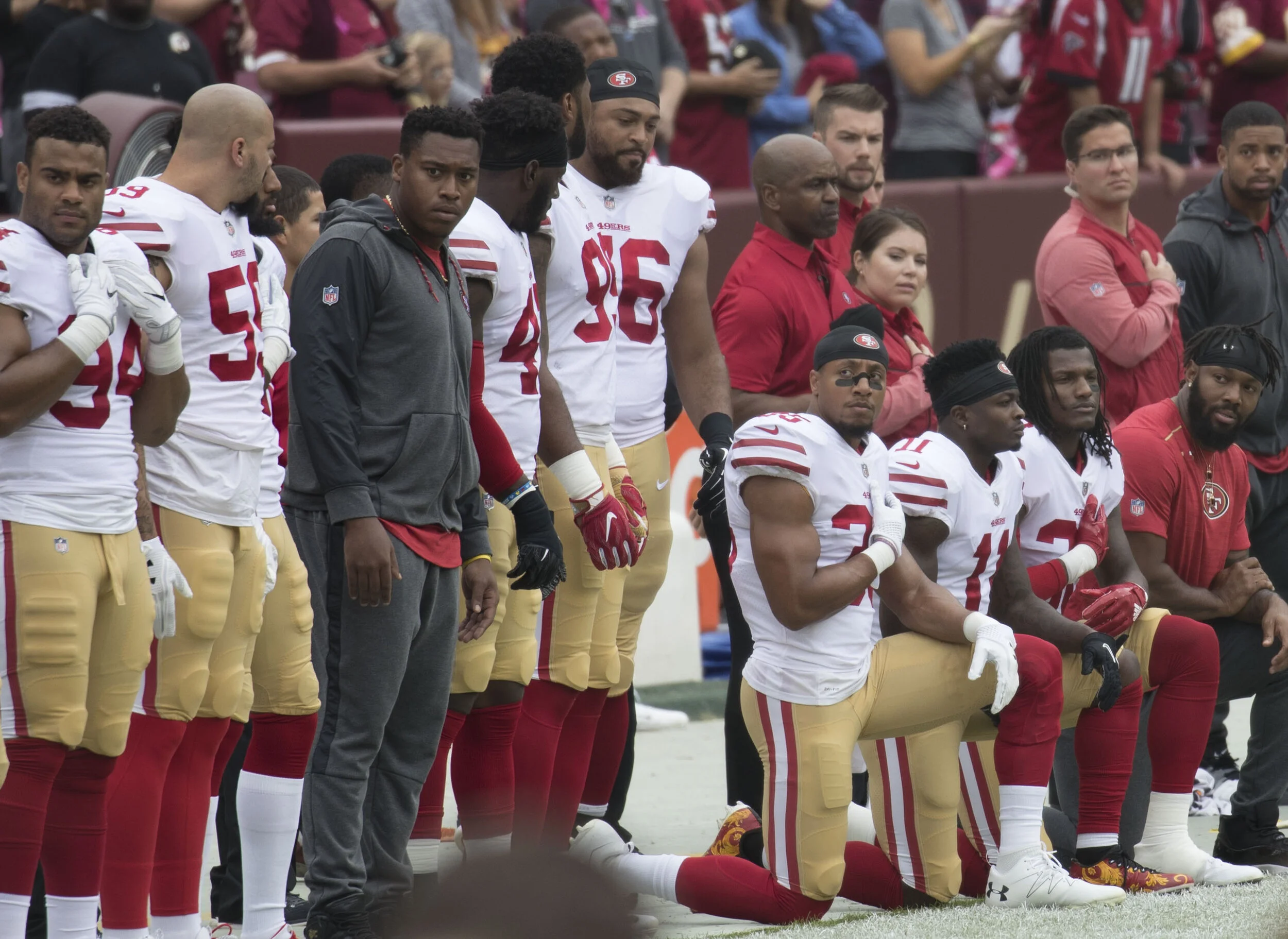
The San Francisco 49ers kneeling during the playing of the national anthem. Keith Allison. CC BY 2.0.
Following the lead of Colin Kaepernick, a football player for the San Francisco 49ers who protested police violence through kneeling during the national anthem, athletes have increasingly embraced the intersection of athletics and activism. Four years after Kaepernick’s original act of peaceful protest, athletes are now some of the most vocal activists in the world, using their status to encourage social activism. Due to the modern celebrity of sports, combined with the wide platform of social media, athletes from almost every sport have devoted their time off the field to social causes. Here are six athlete-activists working to transform their communities:
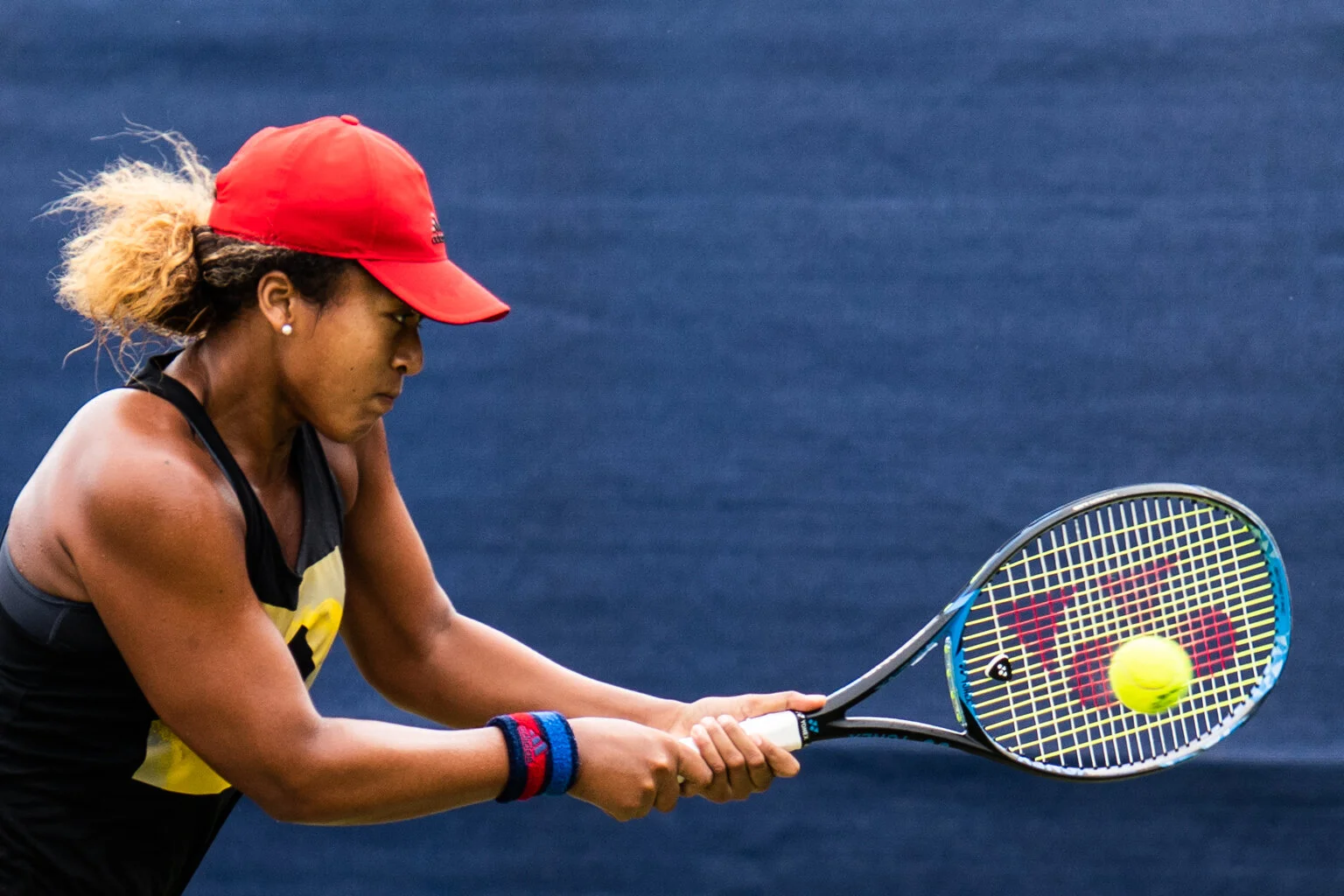
Naomi Osaka playing tennis. Peter Menzel. CC BY 2.0.
1. Naomi Osaka — Tennis
Naomi Osaka, the reigning U.S. Open champion, is the world’s highest-paid female athlete. She is also one of the most vocal supporters of the Black Lives Matter movement, using her platform to commemorate victims of racial violence. In August, Osaka withdrew from a tournament she was favored to win in protest of anti-Black injustice. In a statement on her social media accounts, Osaka wrote: “Before I am an athlete, I am a Black woman.” Osaka is an activist on the court as well, wearing seven different masks with the names of victims of police brutality and racism: Breonna Taylor, Elijah McClain, Ahmaud Arbery, Trayvon Martin, George Floyd, Philando Castile and Tamir Rice.

Brittney Griner playing for the Phoenix Mercury. Lorie Shaull. CC BY 2.0.
2. Brittney Griner — Basketball
WNBA player and Olympian Brittney Griner is an outspoken advocate for the LGBTQ+ community. In 2017, Griner led the charge to prevent Texas from passing Senate Bill 3, which would have forced transgender people to use restrooms and locker rooms that match their gender assigned at birth. As a member of the LGBTQ+ community, Griner encourages young adults to be authentically themselves. Griner is also at the forefront of the movement for the WNBA to stop playing the national anthem prior to games in support of the Black Lives Matter movement.

Akim Aliu in a mid-game interview. Anders H Foto. CC BY 2.0.
3. Akim Aliu — Hockey
In his essay titled “Hockey Is Not for Everyone,” written in May, professional hockey player Akim Aliu exposed the National Hockey League’s unaddressed problem with racism. After recognizing rampant racism in his sport, Aliu co-founded the Hockey Diversity Alliance, an organization dedicated to eradicating “systemic racism and intolerance in hockey” while making the sport accessible to all communities. In a statement posted on Twitter by the board of the organization, Aliu wrote: "We are hopeful that anyone who puts on skates or sits in the stands will do so without worrying about race, gender or socioeconomic background and will be able to express their culture, identity, values and personality without fear of retribution."

Juan Mata playing for his former team, Chelsea. Christopher Johnson. CC BY 2.0.
4. Juan Mata — Soccer
Manchester United player Juan Mata launched Common Goal in 2017, a charitable organization geared toward redistributing global soccer wealth back into the communities that raised and trained the world’s premier soccer stars. Mata was the first of his peers to pledge 1% of his salary to this organization, and the organization has now grown to include 390 pledgers and 207 partner organizations. Mata told The Players’ Tribune: “Through Common Goal we're creating a collaborative way for football to give back to society … By making the pledge, we can form a lasting connection between football as a business and football as a tool for social change.”

Fu Yuanhui and teammate Liu celebrate a 2015 backstroke win. Oleg Bkhamri. CC BY 2.0.
5. Fu Yuanhui — Swimming
Chinese Olympic swimmer Fu Yuanhui is breaking down the stigma surrounding menstrual cycles for female athletes. At the Rio Olympics in 2016, Yuanhui openly shared the way in which her period affected her athletic performance, with social media users sharing widespread support for her honesty. In China, taboos around menstrual cycles lead to the topic seldomly being discussed, and Chinese swimming fans took to social media apps to praise Yuanhui for her honesty. Only 2% of women in Chinese use tampons, and Yuanhui’s acknowledgment of her period on a world stage was eye-opening for Chinese women, 76% of whom are reported to feel uncomfortable in social settings when they have their period.
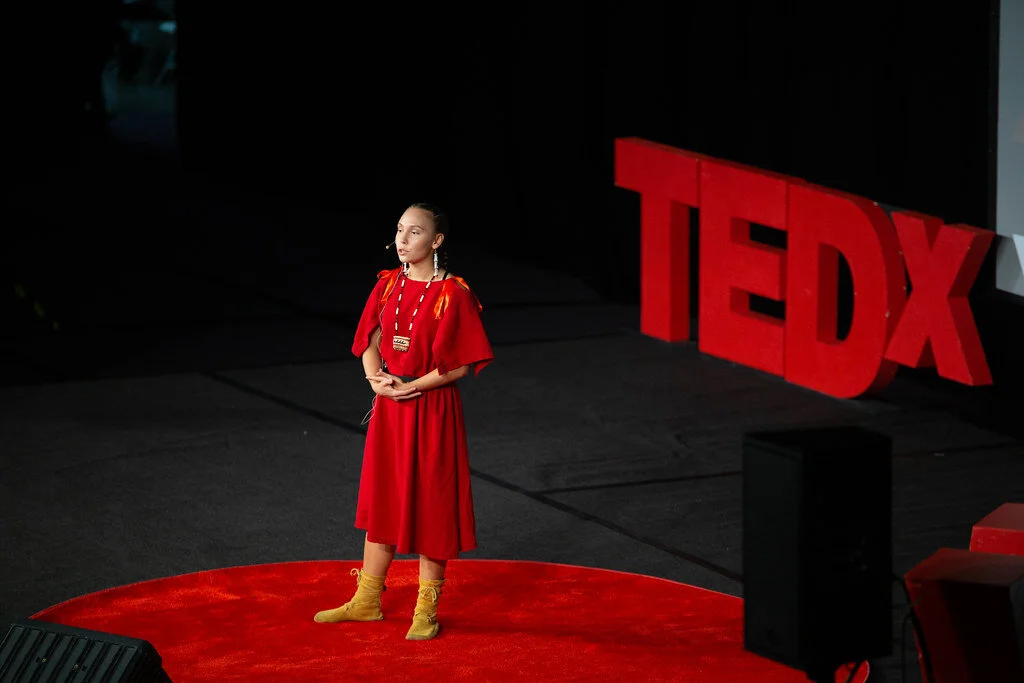
Fish on stage delivering a TED Talk. TEDxYouthSeattle. CC BY-NC-ND 2.0.
6. Rosalie Fish — Running
College runner Rosalie Fish is the least-known athlete on this list, but one of the fiercest advocates of Missing and Murdered Indigenous Women (MMIW). In her senior year of high school, Fish ran her meets with the outline of a red hand painted across her face and the words Missing and Murdered Indigenous Women written on her leg. Now in college, Fish has become a leading figure in advocacy for MMIW. A member of the Cowlitz Tribe, Fish told Off the Cuff: “For me to say I don’t want Indigenous women to be ignored anymore is, by some people, a political statement. Advocating for Missing and Murdered Indigenous Women, they will say that’s political. To me that’s survival.” Fish has also delivered a TED Talk explaining her activism, which you can watch here.

Sarah Leidich
is currently an English and Film major at Barnard College of Columbia University. Sarah is inspired by global art in every form, and hopes to explore the intersection of activism, art, and storytelling through her writing.
The Ainu: One of Japan’s Indigenous Groups
In August 2019, the Japanese government passed a law that officially recognized the Ainu as an Indigenous people group. After nearly two centuries of legalized discrimination, the Ainu are reclaiming their identity and history, and they are just getting started.
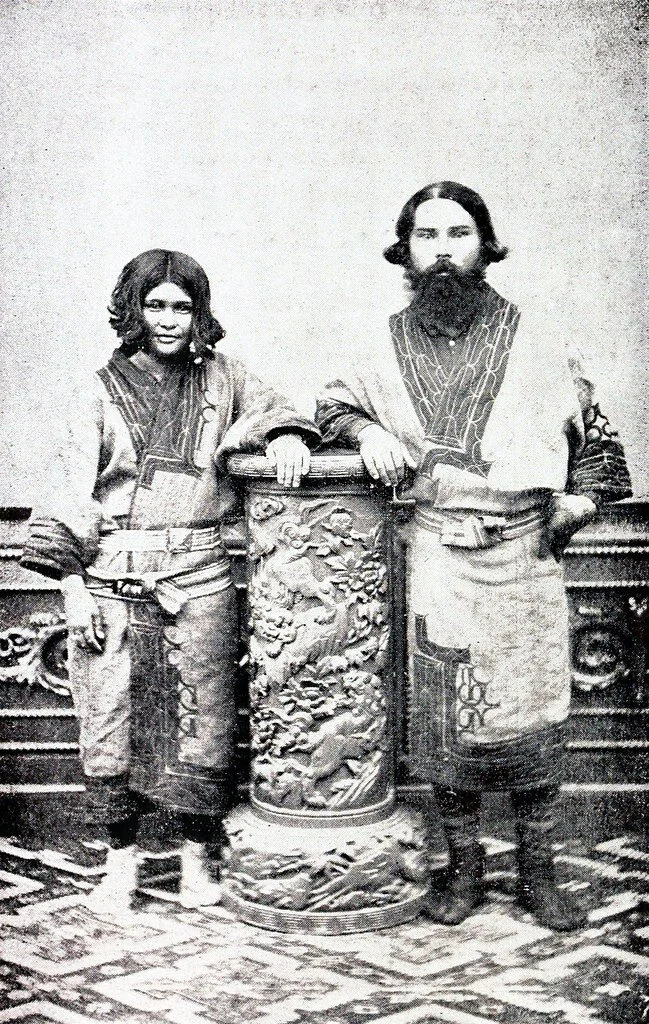
An Ainu couple before assimilation; their features are still different from those of their Japanese counterparts. Stuart Rankin. CC BY-NC 2.0.
In July, Japan unveiled the Upopoy National Ainu Museum, the country’s first cultural center dedicated to Indigenous identity. Located on the island of Hokkaido—one of the Ainu’s ancestral lands—the Upopoy Museum showcases the history of the Ainu through performances and historical relics. What is remarkable about the museum’s opening is not its resiliency amid a pandemic, but that the structure opened at all. Much like the power dynamic between American settlers and Native American tribes, the Ainu endured a legacy of forced assimilation by the ethnic Japanese and their ruling government.
Before this, the Ainu were a hunter-gatherer tribe that inhabited the northern islands of Ezo (present-day Hokkaido), the Kuril Islands and the Russian island of Sakhalin. According to archaeological records, the Ainu called these lands home as early as the 14,500 B.C. The Ainu also had strong ties to animism, a belief that manifested itself in the relationship between the Ainu and the bears on the islands. The Ainu even created a ceremony in which bear cubs were taken, raised and then sacrificed in a ritual offering. These symbolic rites guided Ainu tradition and their balanced connection with nature.
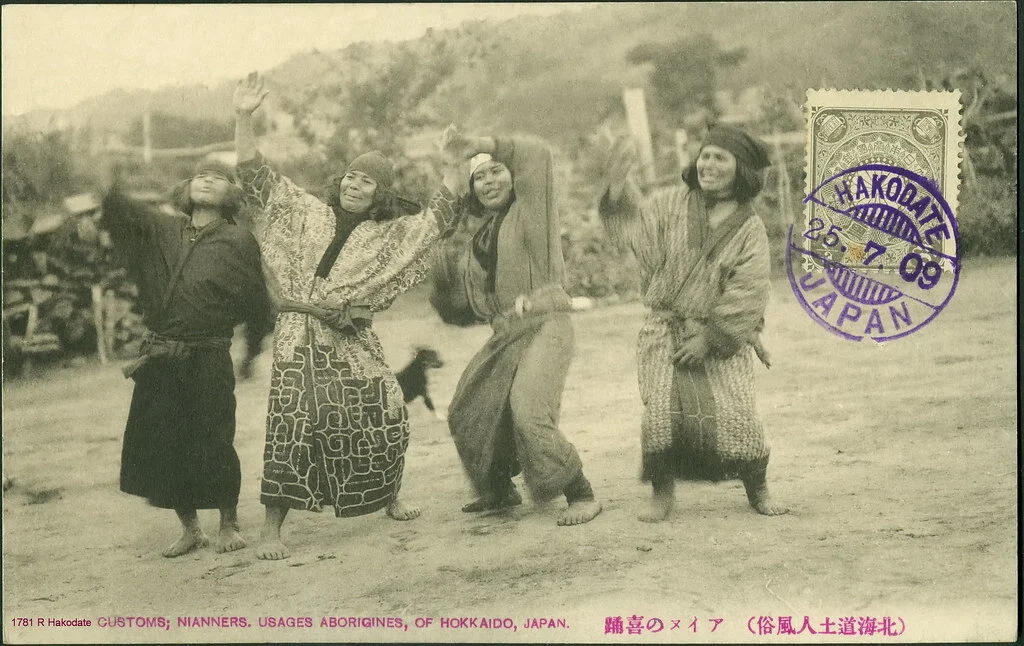
Ainu women performing a welcome dance on Hokkaido. Vladimir Tkalcic. CC BY-NC-ND 2.0.
When the Meiji government annexed Hokkaido in the late 19th century, the Ainu’s pastoral way of life was interrupted. While the Ainu lived in Japan, they physically differed from their Japanese counterparts. The Ainu have a more European look with lighter skin and thick hair. Men sported full beards, and women tattooed their lips once they reached adulthood. Because of this, the Japanese derided the Ainu as backward and foreign. Around this time, Japan also became the first non-European country to have defeated Russia in battle. Flush with victory and newly acquired lands, the Japanese sought to build up a national myth of military might and cultural homogeneity. One of these initiatives included a policy of forced assimilation on the island of Hokkaido.
The Japanese government enlisted the help of American consultants who had reeducated their own North American Indigenous groups. The Ainu were forced into Japanese-speaking schools and were required to change their names. As the land was repurposed for industrial and agricultural uses, the Ainu were pushed into wage labor and became an impoverished and politically disenfranchised minority. Even after World War II, the Ainu were deprived. To participate in the scientific advancements of the mid-20th century, the Japanese government essentially emboldened researchers to rob Ainu graves and remains.
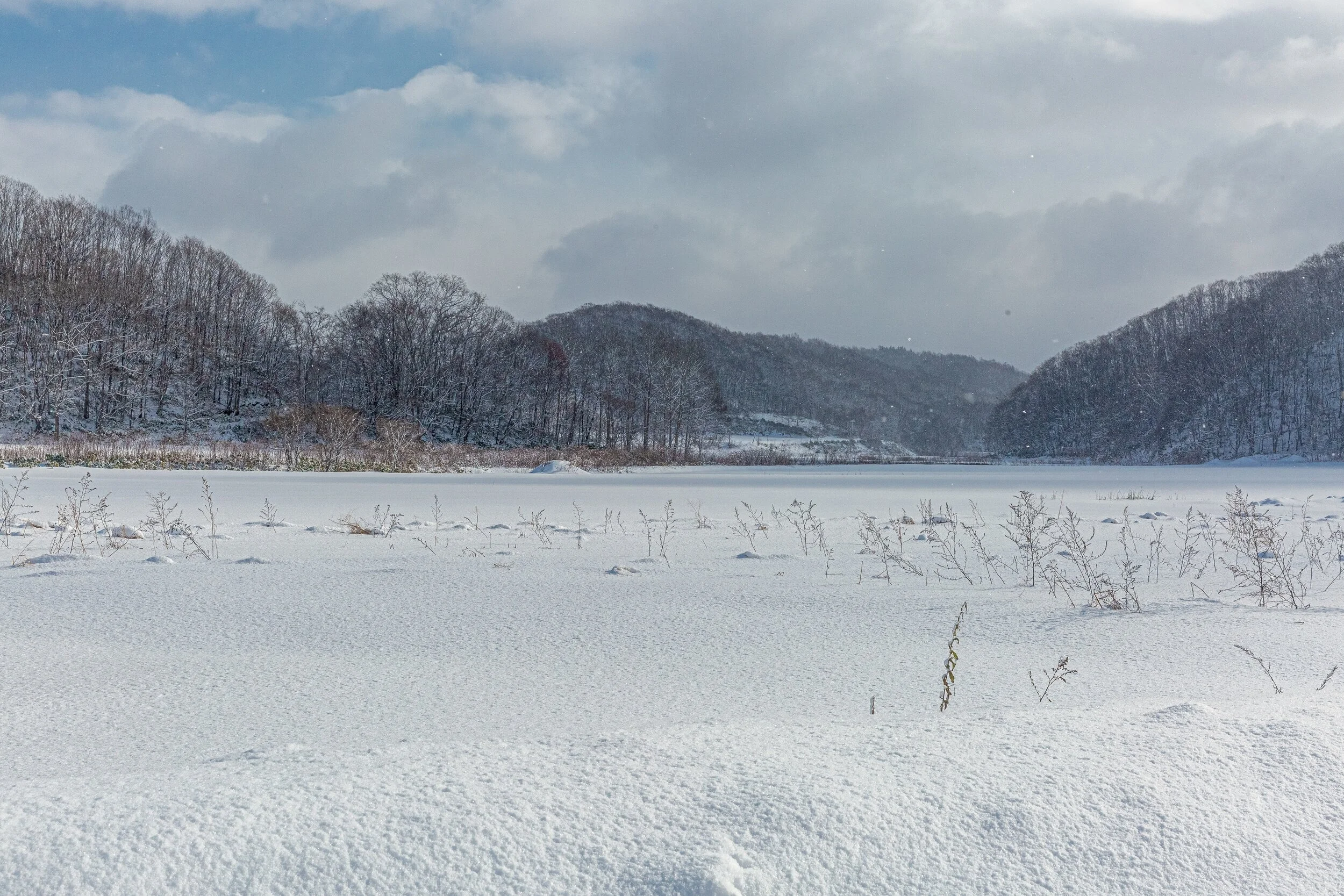
The Upopoy National Museum is housed in Hokkaido, one of the Ainu’s ancestral homelands. Marek Okon. Unsplash.
In February 2019, the Japanese government introduced a bill that would officially recognize the ethnic Ainu minority as an Indigenous people for the first time. The bill included measures that would support Ainu communities, fund scholarships and educational opportunities, and allow the Ainu to cut down trees in nationally owned forests for use in traditional practices.
While many lauded the proposal, some felt that the bill missed a crucial element: an apology. In an interview with CNN, musician Oki Kano shared that he was only 20 years old when he found out that he was Ainu. Thanks to rigorous assimilation policies, the Ainu in Japan bear more resemblance to ethnic Japanese than past generations. Because of the ugly legacy of discrimination, however, the true number of Ainu still left in Japan is unknown. Due to fear, many of the Ainu have chosen to hide their background, leaving younger generations with limited if any knowledge about their heritage. The Ainu language is also at risk of extinction.
Although the bill became law in August 2019 and Tokyo University returned some of the robbed remains the following year, the fight for the Ainu people’s rights is just beginning. Despite widespread recognition and gradual acceptance of the Ainu, some feel the Ainu culture is at risk of tokenization. Though the preservation of Ainu culture is commendable, the Ainu’s future should also be considered if they are to have a chance at survival.
Rhiannon Koh
Rhiannon earned her B.A. in Urban Studies & Planning from UC San Diego. Her honors thesis was a speculative fiction piece exploring the aspects of surveillance technology, climate change, and the future of urbanized humanity. She is committed to expanding the stories we tell.
With Democracy on the Horizon, Uzbekistan Flirts with Freedom
Uzbekistan’s new attention to human rights and democratic ideals, along with the rapid boom in its tourism industry and steps toward religious tolerance, are potential signifiers of progress.
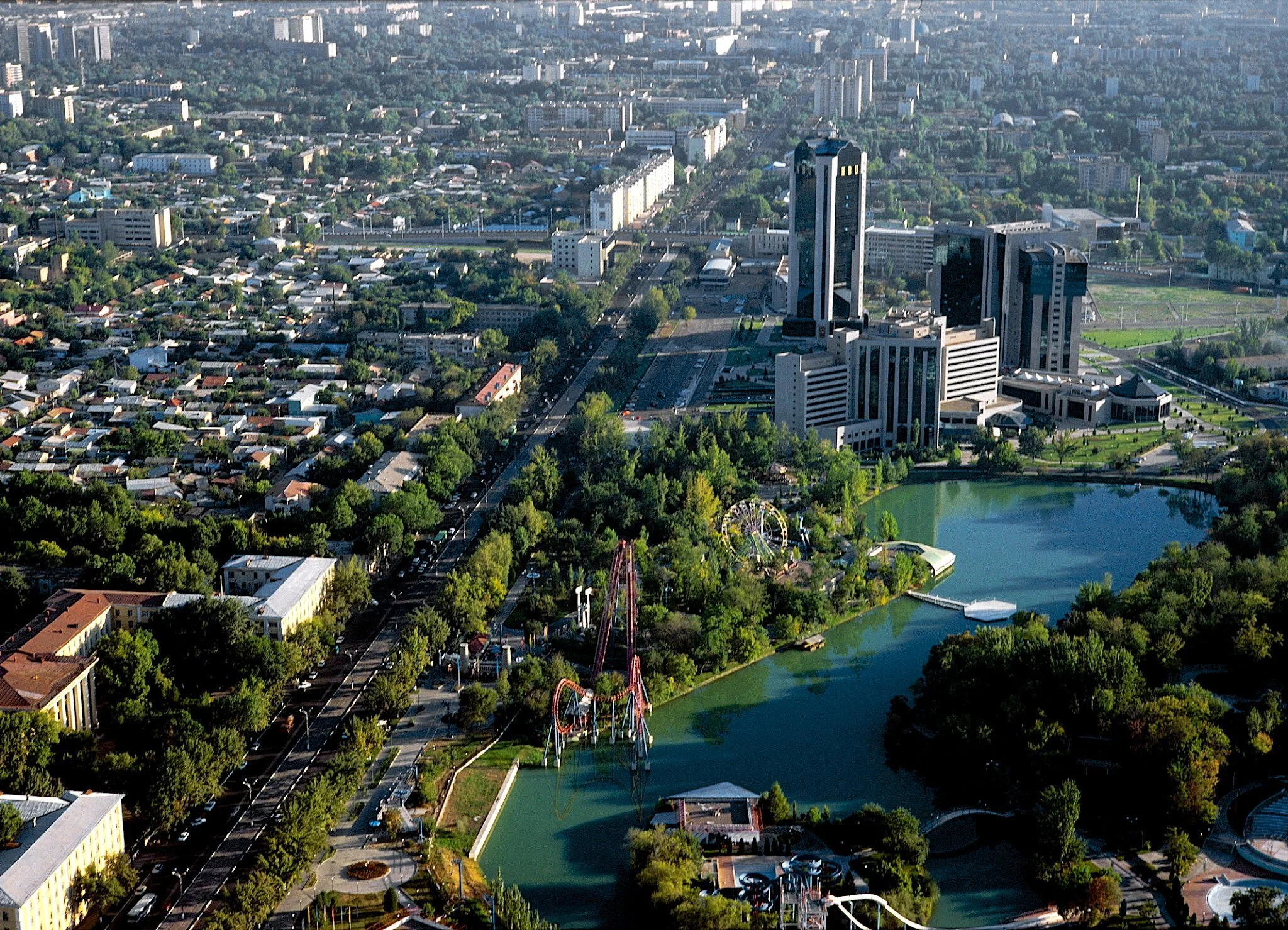
Tashkent, capital of Uzbekistan. Markus Biedermann. CC BY NC-ND 2.0.
Cradled between Kazakhstan and Turkmenistan, Uzbekistan lies at the heart of Central Asia. Uzbekistan’s population is predominantly Sunni Muslim, and adherents are considered the most devout in Central Asia. The capital, Tashkent, is full of signs of its rich Islamic heritage: historic mosques and mausoleums are scattered among Soviet-style towers.
The country’s complex and multifaceted history explains its diverse population. At the height of the Silk Road, cities located in present-day Uzbekistan such as Bukhara and Samarkand were trading hubs between the East and the West. It was through these centers that Arab traders brought Islam and a written alphabet to the region. After centuries of conquests and rivalry between Uzbek city-states, Russia swallowed up these states with the promise of protection in the early 19th century. It was established as the Uzbek Soviet Socialist Republic in 1924, where religion was suppressed and the population inflicted with forced collectivization.
Ever since Uzbekistan’s independence in 1991, long-serving President Islam Karimov has largely avoided democratization while embracing diplomacy and investment from the global community. Despite his attempts to join the U.S. in its “war on terror,” Karimov was regularly criticized by the United Nations for his long record of human rights violations. His persecution of the large Muslim population in Uzbekistan could not be ignored by U.S. in light of the Andijan massacre, when at least 187 civilians were killed. After Karimov’s death in 2016, Uzbekistan seems to have emerged from three decades of isolation and autocratic rule.
Today, President Shavkat Mirziyoyev’s administration boasts of its progressive policies: Mirziyoyev advocates for freedom of the press, supports religious tolerance and disapproves of unjust imprisonment. Since the start of Mirziyoyev’s presidency in 2016, a few journalists have been spared incarceration, previously blocked media platforms were made accessible, and a number of political prisoners were released. These actions displayed Mirziyoyev’s ostensible devotion to human rights, which was bolstered by his emerging friendship with U.S. Rep. Trent Kelly, his interaction with nongovernmental organizations, and his government’s partnership with the Cotton Campaign, which combats unpaid cotton production in Uzbekistan. As a result, Uzbekistan was elected to the U.N. Human Rights Council for the first time in history this October. In an article found on the United Nations’ website, Uzbekistan is lauded for its “firm commitment to the purposes and principles of the U.N. Charter and the universal declaration of human rights.” Although members of the U.N. carefully watch Mirziyoyev to ensure the establishment of these democratic ideals, Uzbekistan is now regarded as a country working toward greater freedom.
There are complications involved in Mirziyoyev’s steps toward democratization. Even though Mirziyoyev has been vocal about eliminating Uzbekistan’s forced cotton labor, advocacy group Uzbek Forum found that forced labor persists in the country. Rather than setting up an institutional stronghold on the cotton industry, the government privatized the cotton sector, which only decentralized government-enforced labor by a few degrees.
Mirziyoyev’s efforts toward modernizing the Uzbek capital of Tashkent have resulted in mass displacement of the city’s original inhabitants. Through the demolition of its buildings and the restructuring of its neighborhoods, the government has carried out a wide-scale gentrification of the city. Tashkent is now considered a travel destination, full of shining skyscrapers and new hotel districts. In order to bolster Uzbekistan’s economy, Mirziyoyev allowed visa-free travel for 30 days for visitors from 65 countries, including the United States.
These markers of progress are met with a mixture of emotions—the U.N. is enthusiastic about Mirziyoyev’s commitment to human rights, while Human Rights Watch remains skeptical of the legitimacy of these policies. The new seemingly democratic leadership of Mirziyoyev creates suspicion among Uzbeks and foreigners alike. Pushed by economic motivations, the president’s attempts to abide by the universal guidelines of human rights stir up hopes among Uzbeks for a freer future.

Heather Lim
recently earned her B.A. in Literatures in English from University of California, San Diego. She was editor of the Arts and Culture section of The Triton, a student-run newspaper. She plans on working in art criticism, which combines her love of visual art with her passion for journalism.
India’s Marijuana Users Worry Amid Cannabis Crackdown
With many arguing it is high time to change marijuana laws, the government begins cracking down on cannabis.
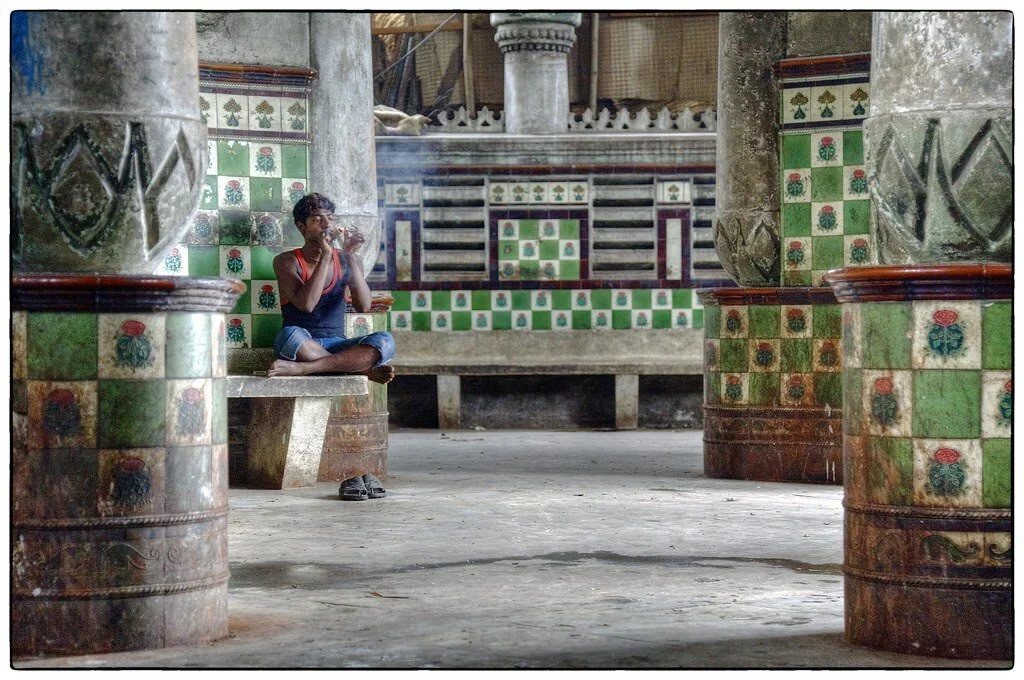
Lighting up in Kolkata. Timothy Neesam. CC BY-NC-ND 2.0.
Every village in India is sure to have it. Everyone will know a friend or a friend of a friend who uses it, even if they don’t use it themselves. Whether a local rickshaw driver or a Bollywood starlet, every social class seems to enjoy its relaxing qualities. Some religious leaders even tout its effect on transcendental meditation. The police, however, are ramping up efforts to expunge it from India. The substance: marijuana.
Despite occupying a prominent role in Indian society for centuries, the consumption of marijuana is highly stigmatized. The Narcotics Control Bureau (NCB) began cracking down on its use by targeting Bollywood stars caught in the act. Actress Rhea Chakraborty spent a whole month in jail after investigators discovered she had procured weed for her then boyfriend. Her private messages have endangered the careers of many other stars. Deepika Padukone is now under suspicion; he discussed “doob” over WhatsApp.
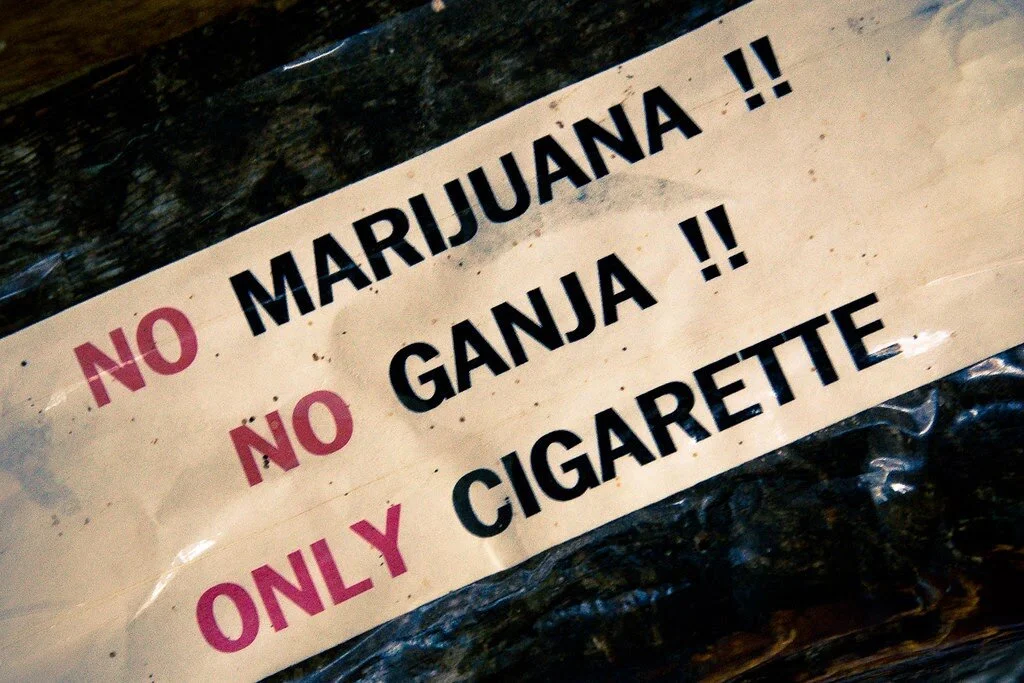
A sign prohibiting marijuana use. henrikj. CC BY-NC 2.0.
The NCB has much on its plate if it wishes to flush the drugs out of Bollywood. A-list celebrity Ranvir Shorey said in an interview that drugs are part of Bollywood culture, not because denizens are depraved but because drugs, especially marijuana, are ingrained in Indian culture. He noted, “I think drug consumption in Bollywood is the same proportion as it is generally in society” and that the stigma against weed is a “colonial hangover” based on “laws that are hundreds of years old and have not changed.”
Even older than these laws are the many traditions of cannabis use. The earliest mention of it comes from the Hindu Vedas, which extol both its medicinal and spiritual properties. It describes the god Shiva puffing smoke to contemplate the mysteries of life and death. Following this example, religious ascetics eschew materialistic pleasures in pursuit of a meditative life, sometimes aided by marijuana. On the flip side, soldiers would often imbibe it to muster courage before battle, much the way European soldiers would swig whiskey. From antiquity onward, cannabis played a prominent and socially welcomed role in many aspects of life.
Indeed, British imperialism helped to initiate the decades-old disdain for pot. When colonization first began in the 19th century, cannabis was often a farmer’s most profitable crop. Food was grown mainly for sustenance. To sell it, however, farmers were forced to navigate an expensive, labyrinthine process of taxes and licenses. Hoping to turn a profit, farmers smuggled cannabis instead. When imperial courts began prosecuting smugglers, cannabis acquired a criminal association.
If social attitudes toward weed are a colonial hangover, India’s laws are a neocolonial imposition. In 1961, the United Nations’ Single Convention on Narcotic Drugs (SCND) classified marijuana as a “hard drug” in an effort to address drug abuse worldwide. The convention did not respect the innumerable traditions centered around marijuana or the purported evidence that its moderate use caused no harmful side effects. In India’s case, it did leave a loophole for bhang, a milky beverage infused with cannabis that is consumed at some Hindu holidays.
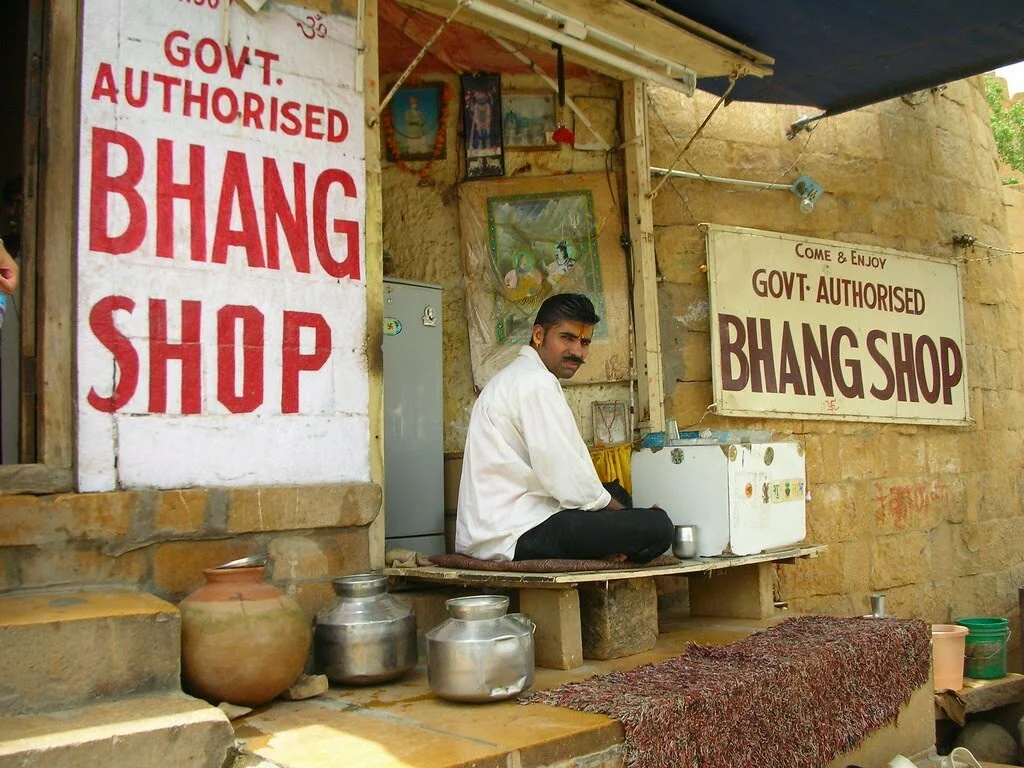
An authorized bhang shop. Tom Maisey. CC BY 2.0.
The Narcotic Drugs and Psychotropic Substances Act of 1985 fulfilled the stipulations India agreed to in the SCND. It spelled out the fines and prison sentences faced if one is caught using or selling pot. Coming at the height of the Western world’s war on drugs, it is viewed by some as an example of the rich world’s sensibilities determining the domestic laws of poorer nations.
No law seems likely to stop marijuana’s consumption, though. According to one 2019 survey, 3% of Indians—31 million people—consumed a cannabis product in the past year. Bustling cities offer weed connoisseurs a wide array of dealers to choose from, and almost every rural village houses at least one seller, whether a seasoned dealer or an enterprising local, to provide a high. When police catch a smoker in the act, they can easily be bribed.
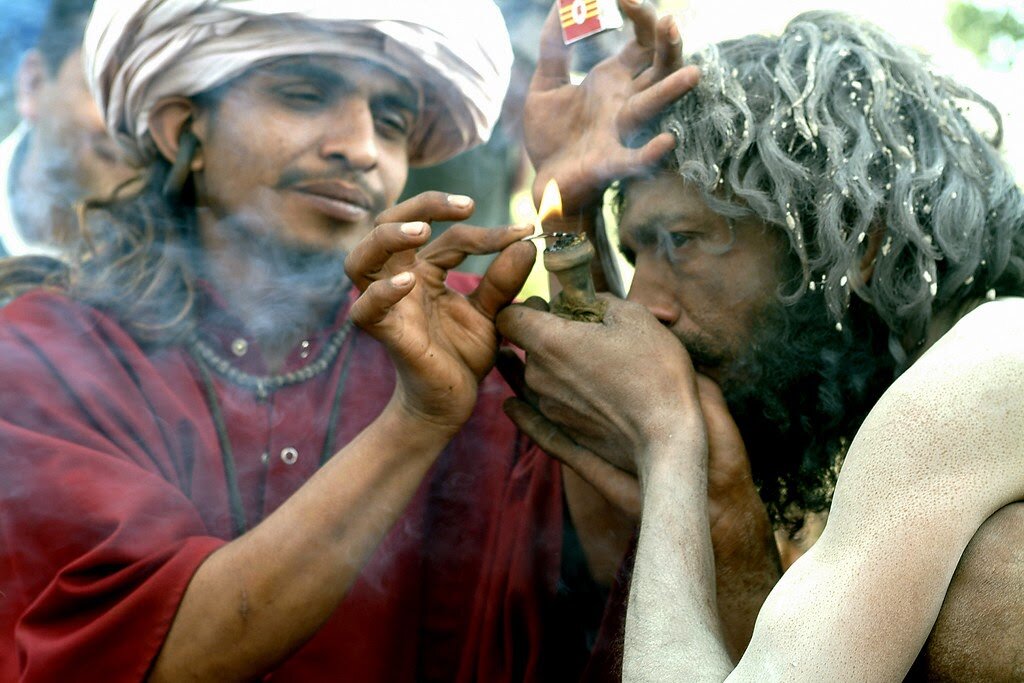
Two sadhus, religious ascetics, smoking marijuana. kehworks. CC BY-NC 2.0.
Consumption habits will likely prove stronger than the moral questions about marijuana’s use. So long as India’s pot consumers include Bollywood stars and religious leaders, rural farmers and stressed-out office workers, the coalition is nearly impossible to beat. Mumbai and Delhi consume 70 tons of cannabis a year. The NCB simply cannot confiscate that much product, so its efforts may all go up in smoke.
To read more about the controversy around the word “marijuana” check out our article here.
Michael McCarthy
is an undergraduate student at Haverford College, dodging the pandemic by taking a gap year. He writes in a variety of genres, and his time in high school debate renders political writing an inevitable fascination. Writing at Catalyst and the Bi-Co News, a student-run newspaper, provides an outlet for this passion. In the future, he intends to keep writing in mediums both informative and creative.
Evo Morales Returns in Triumph to Bolivia, Ending a Year in Exile
One year after he stepped down amid a contested election, the popular left-wing leader is back. Will he be content with his supporters’ love, or will he seek power as well?

Evo Morales waving the Wiphala, a symbol for South America’s Indigenous people. Brasil de Fato. CC BY-NC-SA 2.0.
Exiled leaders rarely return so triumphantly. Evo Morales, president of Bolivia for 14 years before fleeing the country in November 2019, greeted a jubilant crowd when he crossed the border from Argentina and trekked to his home province of Chapare. Many expected a more forceful return, perhaps a march to the seat of government in La Paz. Rather, Morales traveled to where he started his political career at the precise moment when that career seems set to either end or begin again.
If Morales plans to kick-start a new phase in his political career, he reenters in a much better position than when he started. Born to a poor family in the Orinoca region in 1959, his family moved with countless other families from the highland altiplanos to work on lowland coca farms, which provided poor Bolivians the best shot at a livable wage. The young Evo became a union leader, fiercely advocating for the rights of farmers when the United States’ war on drugs demanded the Bolivian government slash its supply of coca, its most profitable crop. In Bolivia, people chew on it or brew tea, but one ton of leaves can be refined into two pounds of cocaine base paste.
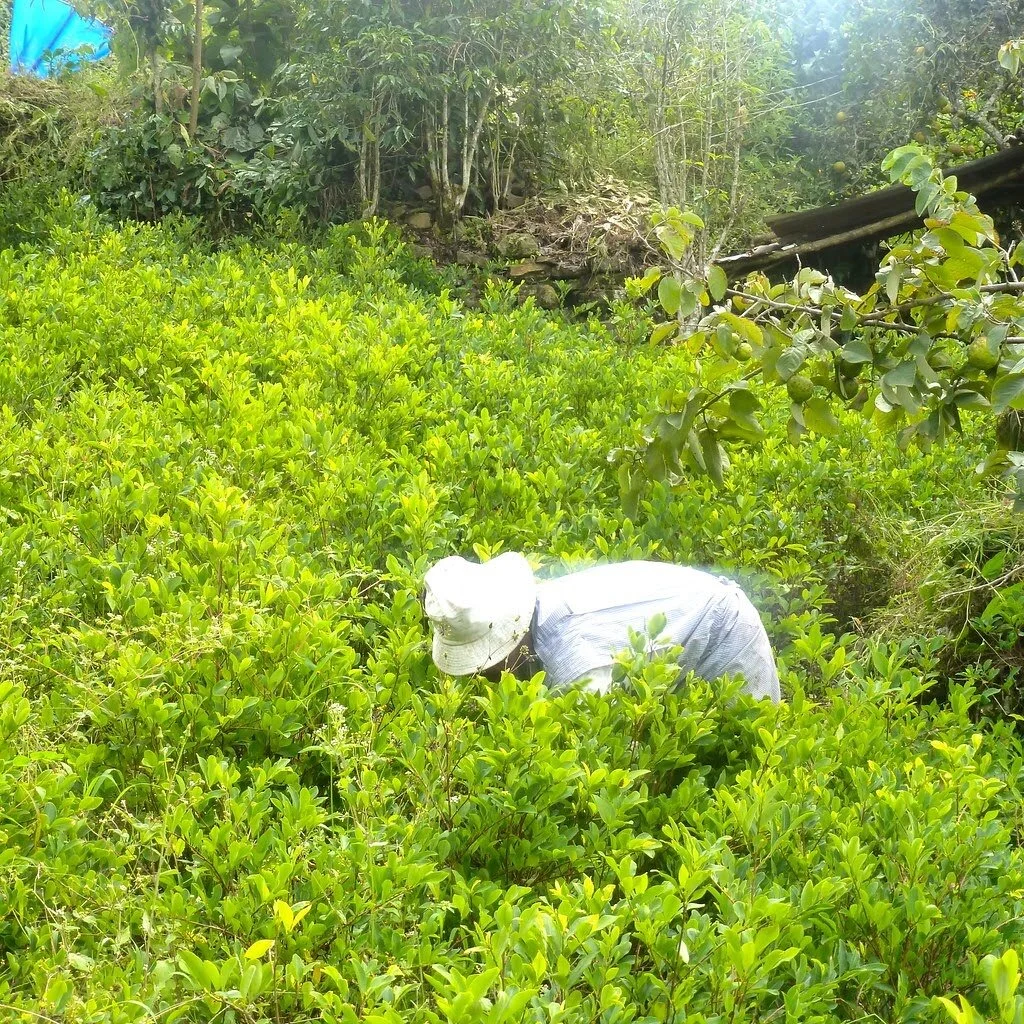
A farmer pruning coca. Erik Cleves Kristensen. CC BY 2.0.
Morales’ experiences there fostered a brand of politics staunchly devoted to the poor and Indigenous communities through the institution of socialism. He joined and soon transformed the Movement for Socialism party (MAS) and became a one-term congressman. After leading violent street altercations that forced two presidents to resign, his ambitions expanded to the national realm. In 2006, the Bolivian people voted him in as president, beginning a 14-year-long tenure which would prove revolutionary.
For one, he was the first Indigenous president since the country’s independence in 1825. In a nation that is 42% Indigenous, this seems strange, but centuries of colonization and racism led to a society of haves and have-nots. An ethnic Aymara, Morales expanded MAS’s appeal to all Indigenous people, chafing many Whites and Mestizos who supported MAS in far fewer numbers. Some Indigenous communities found Morales’ embrace of Indigenous peoples hollow; he allowed drilling in forest reserves and expanded the amount of land settlers could clear.
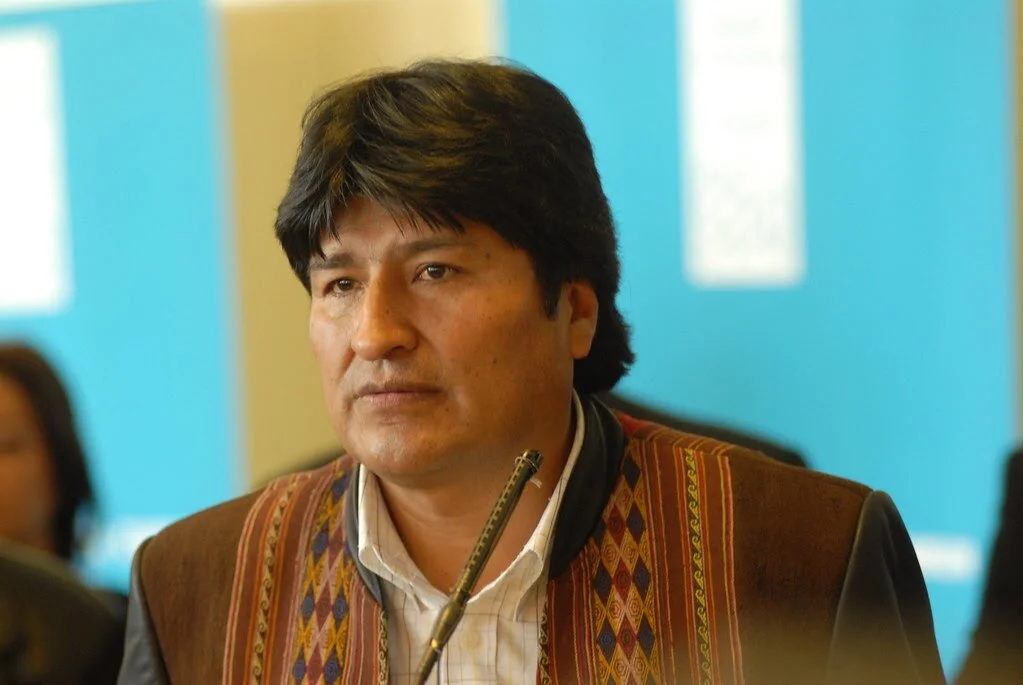
Man without a plan. Alain Bachellier. CC BY-NC-ND 2.0.
Most of all, however, he presided over what many view as an economic miracle. Morales’ government reduced by two-thirds the amount of people living on less than $1.90 a day, the World Bank’s definition of extreme poverty. The high price of petroleum, another of Bolivia’s largest exports, allowed his administration to invest heavily in innovation and modernization. The widespread prosperity led many to ignore Morales’ authoritarian streak. He would often jail critics and journalists while piling lawsuits on his political rivals.
But when Morales ran for a fourth term against constitutional term limits, opponents found it unforgivable. A pause in vote-counting led many to believe he planned to rig the election, so thousands stormed the streets to protest the election results. Clashes broke out between pro- and anti-Morales protesters; 36 people died amid the violence. Once the military “recommended” Morales step down, he boarded a plane to Mexico and left Bolivia in the hands of little-known senator Jeanine Anez.
She was a right-wing politician with exactly the opposite views of Morales. Where he proudly represented Indigenous peoples, Anez called them “savages.” (In his triumphant return, Morales sarcastically quipped, “The Bolivian right and the global right should know: the savages are back in government.”) Anez presided over an economic slump due to political unrest and COVID-19. She governed for 11 months before the electorate put in office Morales’ own protege Luis Arce.
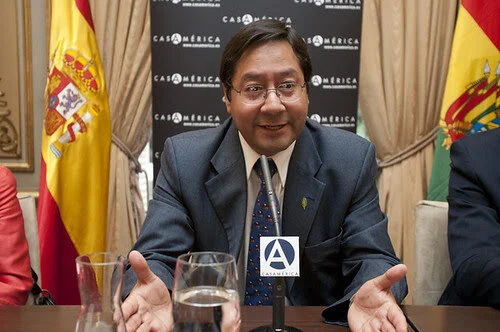
Morales’ protege Luis Arce. Casa de América. CC By-NC-ND 2.0.
A bland, uncharismatic technocrat, Arce won broad appeal precisely because he was Morales’ choice. He engineered the economy during Morales’ presidency, so he can take credit for much of Bolivia’s prosperity. His support from the former president may prove both a blessing and a curse, however. He will struggle to distance himself from a controversial figure who still holds strong sway over MAS. His primary responsibility will be to maintain distance from Morales to the greatest extent possible.
For the time being, however, Morales will enjoy his warm welcome home. Crowds gleefully waved the Wiphala, a colorful checkered flag representing Indigenous peoples. Supporters dressed in their finest, most colorful Indigenous attire to celebrate his homecoming. Luis Arce neither met him in Chapare nor sent him a word of greeting. So far they hold no communication. For the sake of Bolivia’s democracy, many hope it will stay that way.
Michael McCarthy
Michael is an undergraduate student at Haverford College, dodging the pandemic by taking a gap year. He writes in a variety of genres, and his time in high school debate renders political writing an inevitable fascination. Writing at Catalyst and the Bi-Co News, a student-run newspaper, provides an outlet for this passion. In the future, he intends to keep writing in mediums both informative and creative.
Cutting Ties: Saudi Arabia Announces Reforms for Migrant Workers
Saudi Arabia has begun lifting up its struggling migrant workers with its most recent initiative. However, what this decision truly means in terms of effective change remains uncertain.
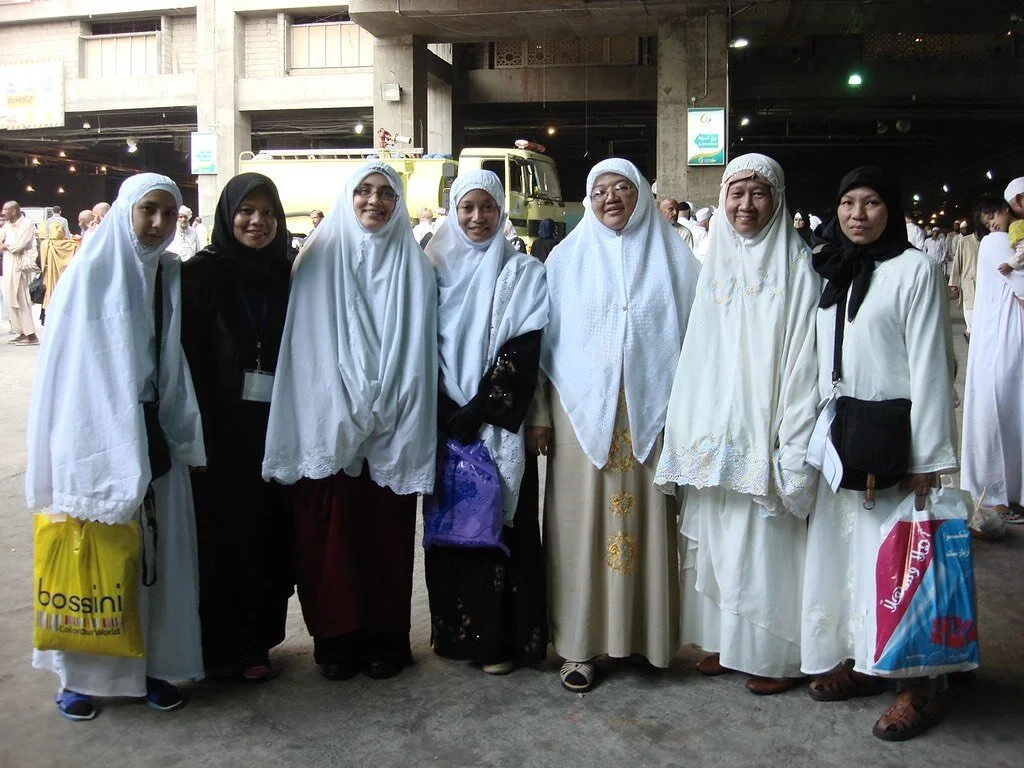
Saudi women. Mohd Azli Abdul Malek.CC By-NC-SA 2.0.
Saudi Arabia recently kick-started the “Labor Relation Initiative” that will eliminate policies tightly binding migrant workers to their sponsors. It is expected that the changes will begin in March 2021, potentially impacting up to one-third of the nation’s population. This initiative may be the beginning of the end of the notorious “kafala” system that has been under international scrutiny since its conception in the 1950s.
The kafala sponsorship system, which is currently practiced in most Persian Gulf states, began about 70 years ago to create a beneficial flow in the migrant labor force. Workers are assigned a sponsor, or “kafeel,” for their decided contract period. The sponsor may be a single person or a company. The sponsor has complete control over the worker’s ability to change jobs or enter and exit the country; written permission must be granted for any changes. Thus, the worker must report all related activity to the sponsor, and failure to do so will result in criminal punishment. The sponsor must then report all activity to the immigration authorities, and fund the worker’s entry and exit.
Essentially, the kafeel is the migrant’s legal tie to the country, leaving the worker no choice but to acquiesce. The kafala system has allowed kafeels to exercise excessive control over their workers, such as taking their travel documents; this is illegal, though, in some of the countries that practice the system. The kafala system has faced much criticism with claims that it is a gateway to modern slavery; there have been many reports of forced work and sexual abuse. However, it appears that the intense exploitation of workers over the years may potentially begin to close with Saudi Arabia’s new Labor Relation Initiative.
The initiative now allows workers to move their sponsorship to other jobs and to cross the border without permission of their kafeel. The policy is only one aspect of Crown Prince Mohammed bin Salman’s “Vision 2030,” in which he aims to increase international economic activity. Many are hopeful that this initiative will bring about substantial change for not only the current 10 million impacted workers, but also future generations who would benefit from the complete abolishment of the kafala system.
Others are wary of holding out hope, stating that ties to a sponsor would need to be completely cut in order for change to be sustained. At the moment, this limited reform has not clarified whether all migrant workers are shielded, nor whether sponsors can still report their workers for running away. Concerns over this unanswered portion of the policy bring much fear; a worker whose travel documents have been invalidated by their sponsor faces immediate deportation.
Maybe this initiative will end the process for good, or perhaps it is merely a camouflaged political scheme. Regardless, much hope remains that the injustices of the kafala system will be reduced.

Ella Nguyen
is an undergraduate student at Vassar College pursuing a degree in Hispanic Studies. She wants to assist in the field of immigration law and hopes to utilize Spanish in her future projects. In her free time she enjoys cooking, writing poetry, and learning about cosmetics.
Geopolitical Tensions Hinder Climate Science in the Himalayas
The Himalayas remain one of the most susceptible regions in the world to climate change.
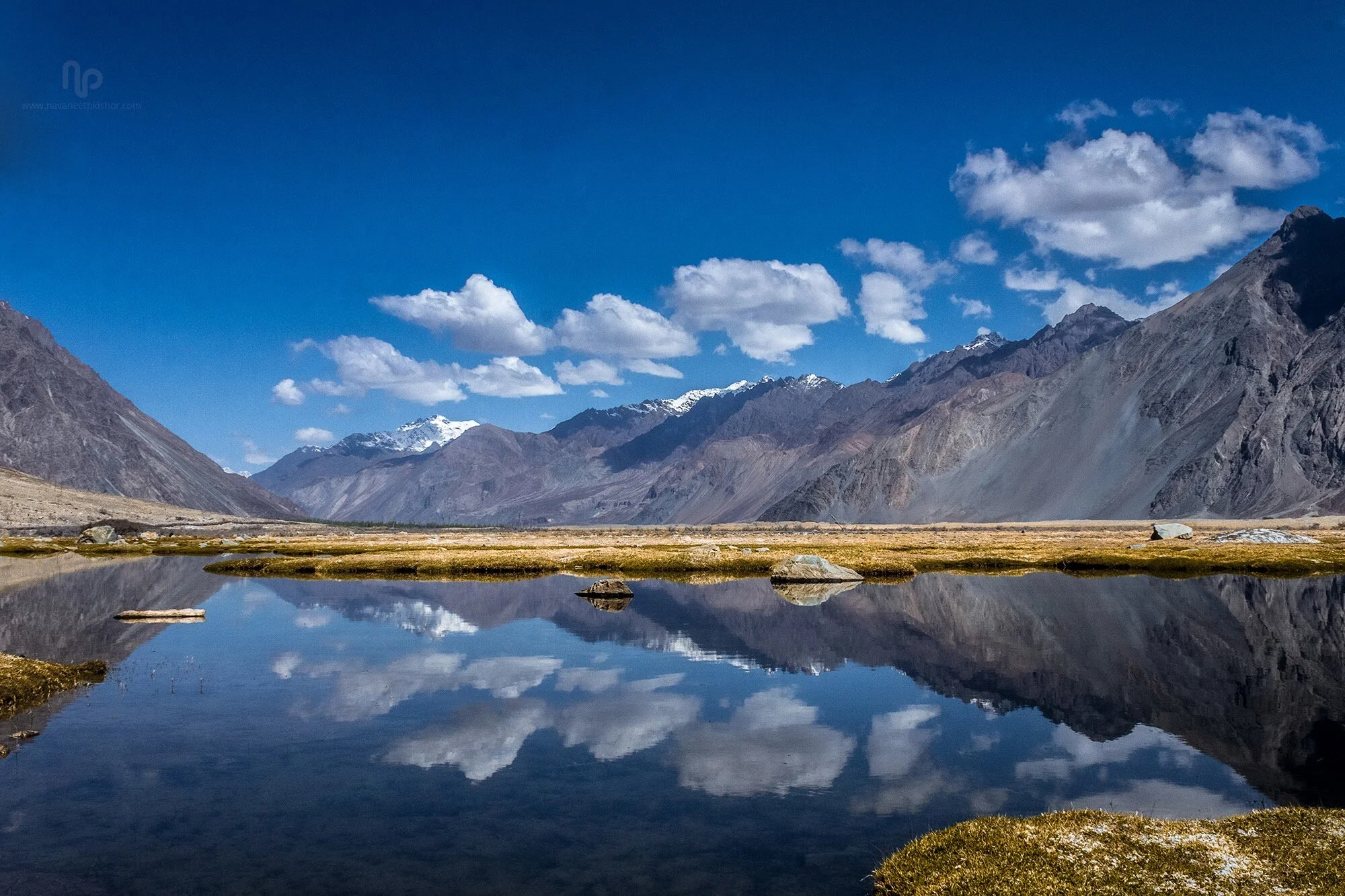
A lake in the Himalayas. Kishor. CC2.0
In order to address the imminent threat of climate change in the Himalayan region, environmental ministers from eight countries had hoped to meet in Nepal’s capital of Kathmandu in April. Organized by the International Center for Integrated Mountain Development (ICIMOD), it had taken over two years of convincing environmental leaders to work together as geopolitical tensions in the region continued to rise. An assessment conducted by ICIMOD reveals that the Himalayas are predicted to lose more than one-third of their ice caps by the end of the century, underscoring the importance of international collaboration on this issue. The event ended up being canceled, though, due to the rise of the COVID-19 pandemic.
Passing through Afghanistan, Bhutan, China, India, Nepal and Pakistan, the Himalayas act as a barrier between countries. Home to four of the world’s 36 biodiversity hotspots and more than 35,000 plant and 200 animal species, the Himalayan region is one of the most biodiverse in the world. The Himalayas also contain the world’s third-largest ice deposits (after Antarctica and the Arctic) with over 15,000 glaciers scattered throughout the region. These glaciers, known as the “water towers of Asia,” are the starting points for many of Asia’s largest rivers, such as the Indus, Ganges, Yangtze and Mekong, and help sustain over 2 billion people.
Overflowing glacial lakes pose severe risks for mountain communities, as rising water levels from melted ice caps result in floods of water, ice and rocks down mountainsides, washing away homes, infrastructure and crops. Lake Imja in particular, a high-altitude lake near Mount Everest in Nepal, poses a threat to Sherpa communities living in the mountain valleys.

A red panda, one of many species endemic to the Himalayan region. Ducker. CC2.0
From a geopolitical standpoint, the Himalayas have served as a political and cultural buffer between India and China since ancient times, which resulted in little interaction between their cultures and governments. As the Himalayas were considered impassable for much of history, the delineation of international borders was not given much importance until recently. Currently, however, nearly all of their 2,500-mile border is disputed. One of the most contested regions is Ladakh in northern India, where the most violent clashes in the last 45 years have recently occurred between India and China. Another region is the Mahakali river basin in northwestern Nepal, which acts as a meeting point between Nepal, India and China. The Himalayan region is also one of the most heavily militarized in the world.
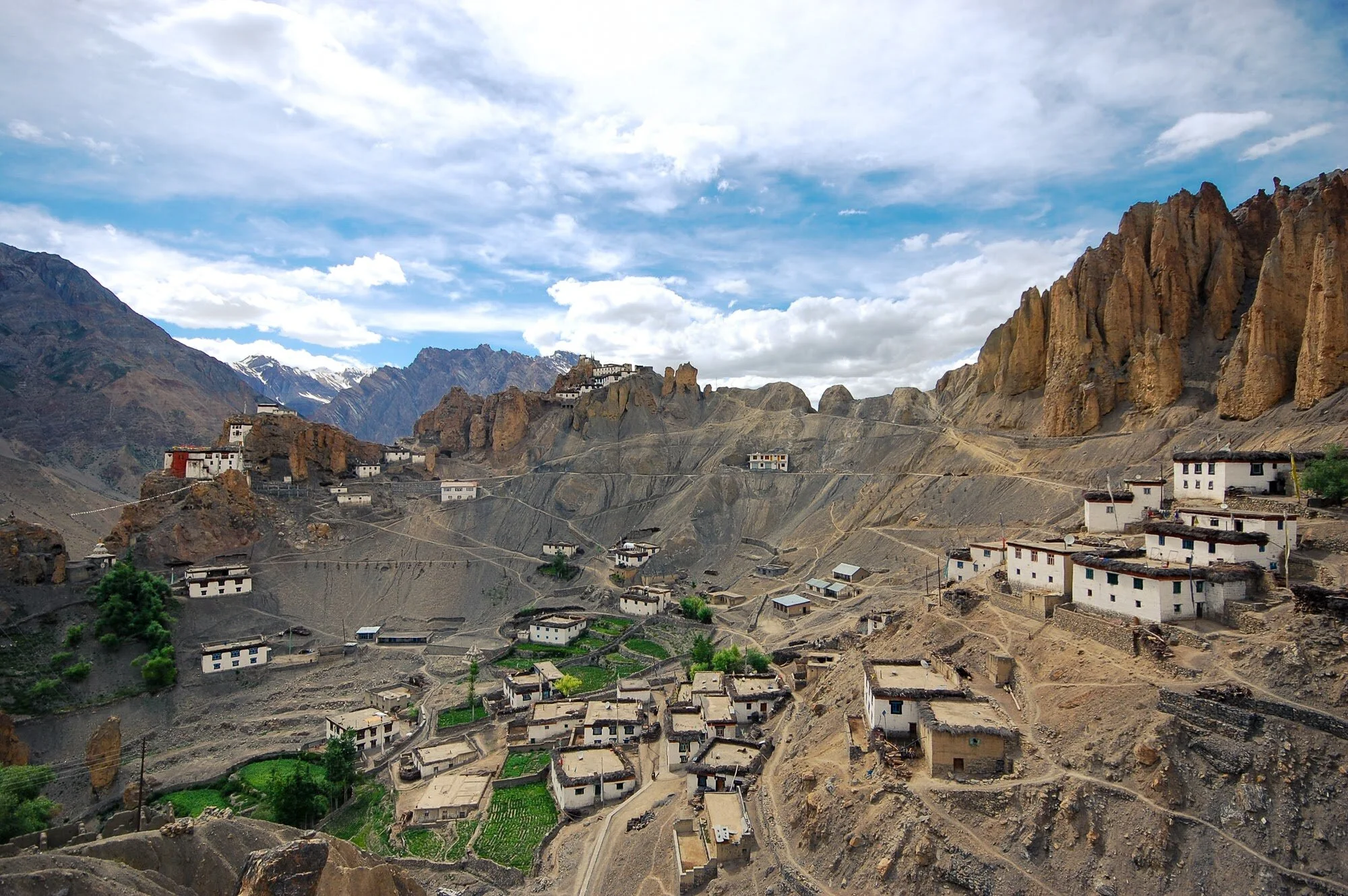
Dhankar village in India’s Spiti Valley. The Adventurous b3n. CC2.0
Despite the urgency of current climate science research and political action, scientific progress in the region continues to suffer. When the Intergovernmental Panel on Climate Change (IPCC) released its fourth assessment report in 2007, the entire Himalayan region was listed as a “black hole” for data. Although governments tried to address the problem, there still has not been much action, with similar concerns in the IPCC’s fifth assessment report published in 2014. One of the major difficulties is weak data-sharing between countries, which is fraught with secrecy. Although scientists advocate for open data-sharing between countries, many governments disregard their requests for national security reasons. “To be frank, scientific culture doesn’t have deep roots in this region,” says Dipak Gyawali, Nepal’s former water resources minister. “Countries think somebody else will use the science that they are doing. That is wrong. Science ultimately benefits others beyond borders.”
Climate change remains one of the most existential threats to humanity. Working together to address transnational environmental issues in the Himalayas will not only protect its fragile ecosystems but will also foster diplomacy and peace between nations in a politically volatile part of the world.

Megan Gürer
is a Turkish-American student at Wellesley College in Massachusetts studying Biological Sciences. Passionate about environmental issues and learning about other cultures, she dreams of exploring the globe. In her free time, she enjoys cooking, singing, and composing music.
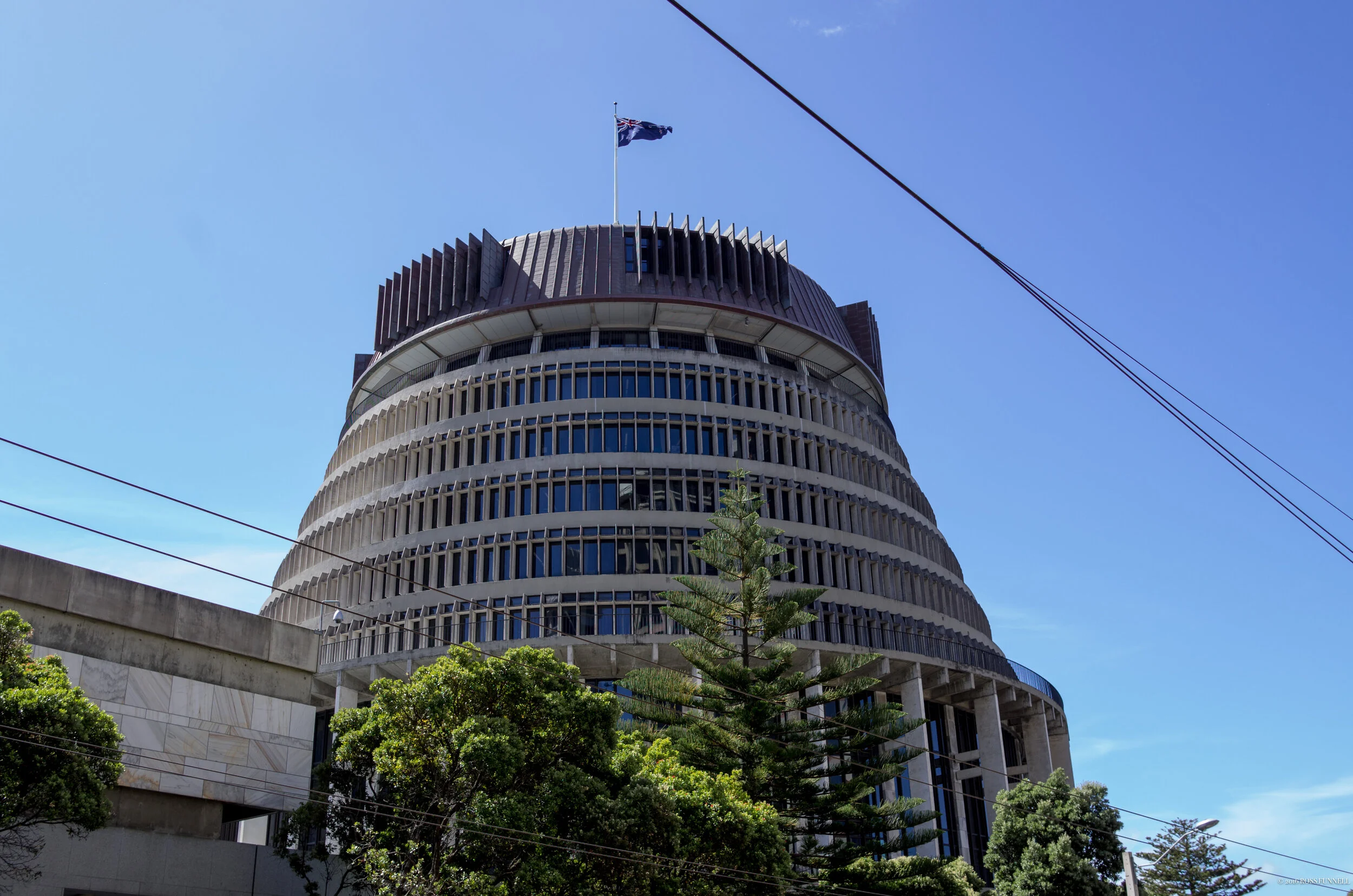
The New Zealand Parliament building. Ref54. CC BY-NC-ND 2.0.
New Zealand Legalizes Euthanasia as World Begins to Accept the Practice
In a late October referendum, New Zealanders voted in favor of legalizing euthanasia, the practice of allowing patients with an incurable and painful illness to terminate their life early. This binding act, which will go into effect on Nov. 6, 2021, will make New Zealand one of seven countries to permit the controversial practice. Assisted suicide, a similar practice which involves a physician aiding in ending a terminal patient’s life, is legal in a handful of jurisdictions, including Switzerland, Germany and several U.S. states.
The practice of euthanasia, while gaining support around the globe, is still considered controversial, especially among religious communities. The Roman Catholic Church, for instance, has condemned the practice, stating in the Catechism of the Catholic Church that: “Whatever its motives and means, direct euthanasia consists in putting an end to the lives of handicapped, sick or dying persons. It is morally unacceptable.” This opposition has resulted in a patchwork system of legal euthansia, assisted suicide or other means of voluntarily terminating one’s life.
New Zealand’s “End of Life Choice Act”
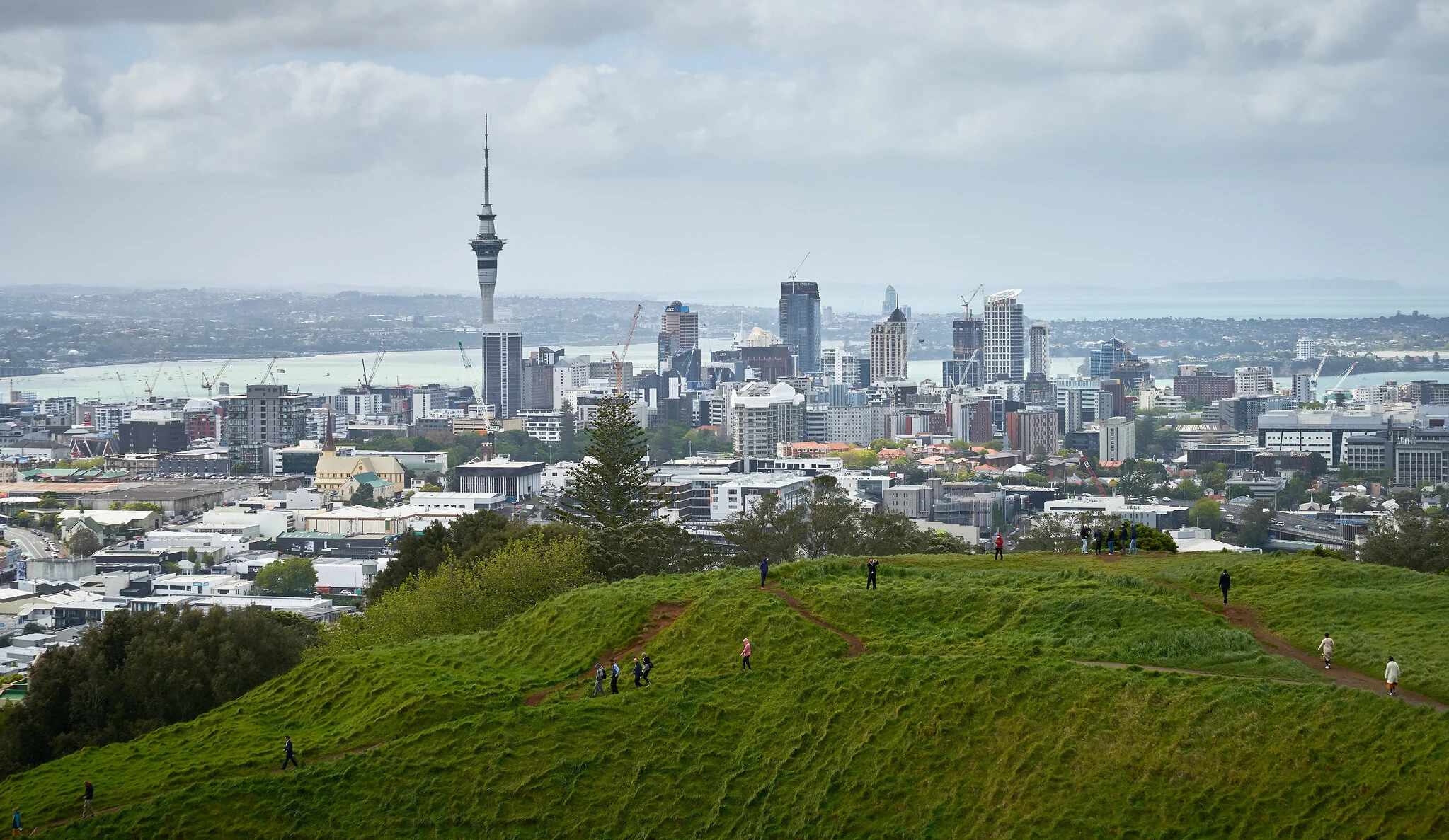
A view of Auckland, New Zealand’s most populous city. Pedro Szekely. CC BY-SA 2.0.
New Zealand’s referendum centered around whether or not the country should adopt the 2019 End of Life Choice Act. The law, which was originally introduced in October 2015 by member of Parliament David Seymour, permits voluntary euthanasia for patients confirmed by two doctors to have a terminal illness and be in the final six months of their lives.
“The motivation for this bill is compassion,” Seymour said in a press release from political party ACT New Zealand. “It allows people who so choose and are eligible under this bill to end their life in peace and dignity, surrounded by loved ones.”
While public opinion in New Zealand over the last two decades has averaged around 68% annually in support of legalized euthanasia, opponents to the practice have succeeded in shooting down similar legislation. Two iterations of the Death with Dignity Bill and a previous iteration of the End of Life Choice Bill, which outlined similar euthansia legalization statuses to the one voted on last month, failed to make it through Parliament in 1995, 2003 and 2012, respectively.
The main opposition force to euthanasia in New Zealand has been The Care Alliance, an organization which was created shortly after the introduction of the 2012 End of Life Choice Bill. It advocates for “better end-of-life care and assisted living services for people at the end of life or who require assistance to live” with the belief that “a compassionate and ethical response to suffering does not include euthanasia or assisted suicide.”
The current End of Life Choice Act is set to go into effect on Nov. 6, 2021, which allows for a one-year implementation period to take place immediately after the results of the referendum were finalized on Nov. 6, 2020.
Bans on Euthanasia Around the Globe
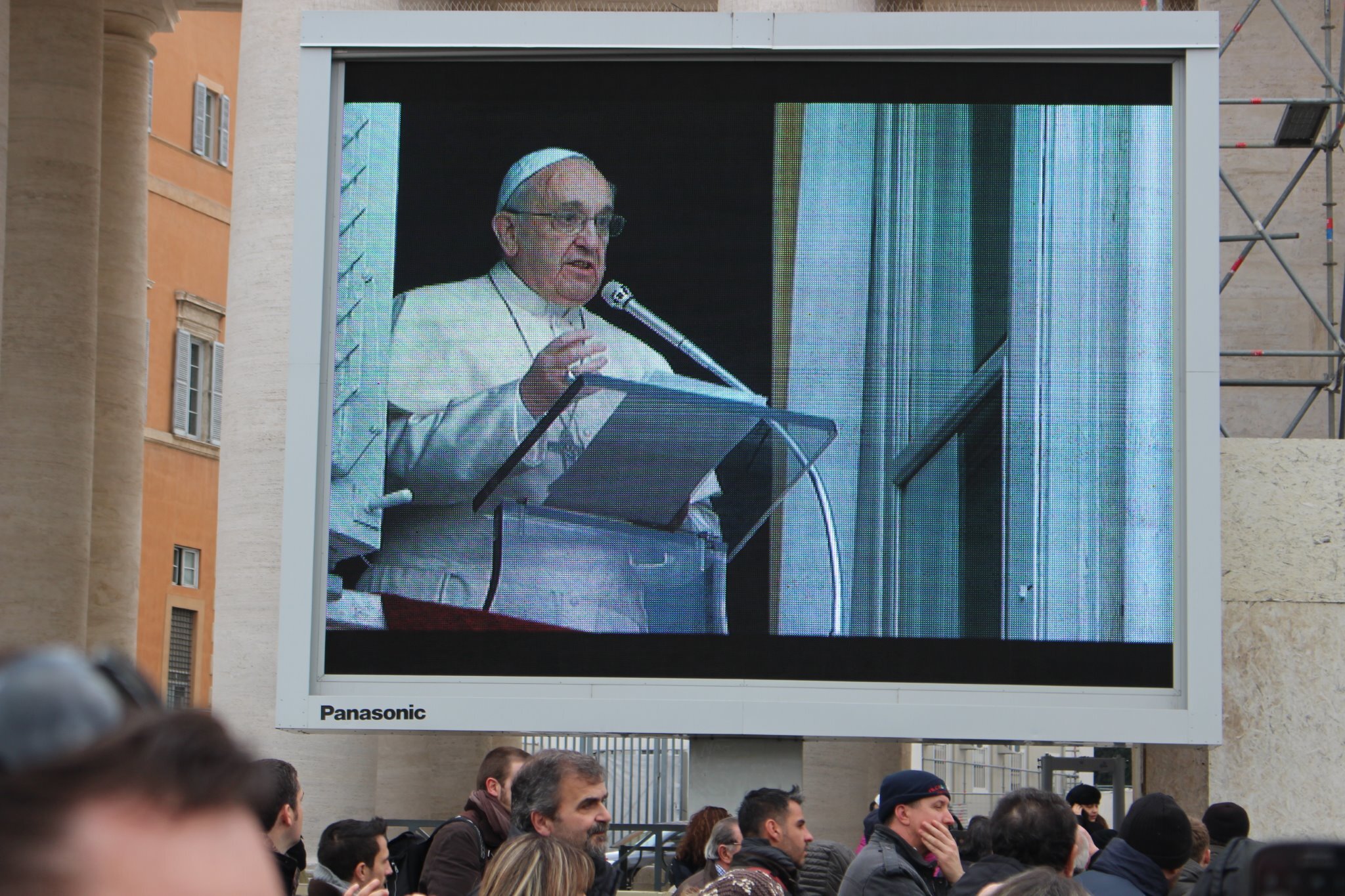
A crowd listens as Pope Francis delivers Sunday Angelus. Greg Sass. CC BY-NC-SA 2.0.
As of November 2020, euthanasia in any form is explicitly banned in countries on every continent. While each country has its own reasons for banning the practice, one standard which has inhibited further global legalization has been the United Nations’ International Covenant on Civil and Political Rights, which states that “Every human being has the inherent right to life. This right shall be protected by law. No one shall be arbitrarily deprived of his life." This has been interpreted by many in opposition to euthanasia as a standard to abide by.
Many within the religious community have opposed euthanasia for years. Many denominations of Christianity, including Episcopalianism, Lutheranism, the Eastern Orthodox Church and the aforementioned Catholicism, have all condemned the practice as a form of murder.
While Islam does not explicitly prohibit euthanasia, the practice is considered to be in direct opposition to Islamic law. Several passages from the Quran have been interpreted in such a manner, including “And do not take any human being’s life—which Allah has made sacred save with right” and “Do not kill yourselves: for verily Allah is to you most merciful.” This has resulted in euthanasia being a crime in nearly all majority-Muslim countries.
Other world religions, such as Judaism, Buddhism and Hinduism, are still debating the ethics of euthanasia. Generally, these debates center around a conflict between a divine right to life and the increasing trend toward global secularism.
Euthanasia’s Patchwork Legality
The flag of the World Health Organization. United States Mission Geneva. CC BY-ND 2.0.
Euthanasia in any form and assisted suicide are legal in at least one country on every continent except Africa. Belgium, Canada, Colombia, Luxembourg, the Netherlands, and the Australian state of Western Australia are the most permissive places for euthanasia, allowing for the active form of the practice, which involves an incurably ill patient receiving terminal care.
Passive euthanasia, the practice of refusing medical treatment and receiving appropriate pain management, is more broadly legal, primarily in the Western world but also in India, South Korea, Argentina and Chile.
The Australian state of Victoria and the countries of Germany and Switzerland permit assisted suicide. This practice differs from both active and passive euthanasia in that a physician is not the one terminating a patient’s life, but rather aids a patient as they terminate their own life. In the United States, assisted suicide is legal in the District of Columbia, California, Colorado, Hawaii, Maine, New Jersey, Oregon, Vermont and Washington state. Additionally, the legal status of assisted suicide in Montana is disputed due to an unclear court ruling in 2009.
With the ongoing pandemic and renewed discussions on the ethics of ending one’s life, euthanasia remains a hotly debated issue which likely will not go away any time soon.

Jacob Sutherland
is a recent graduate from the University of California San Diego where he majored in Political Science and minored in Spanish Language Studies. He previously served as the News Editor for The UCSD Guardian, and hopes to shed light on social justice issues in his work.
Indonesian Muslims Protest French President
Thousands of people gathered at Indonesia’s French Embassy to protest French President Emmanuel Macron. Macron has a history of anti-Muslim rhetoric and recently defended the publication of caricatures depicting the Prophet Muhammad.
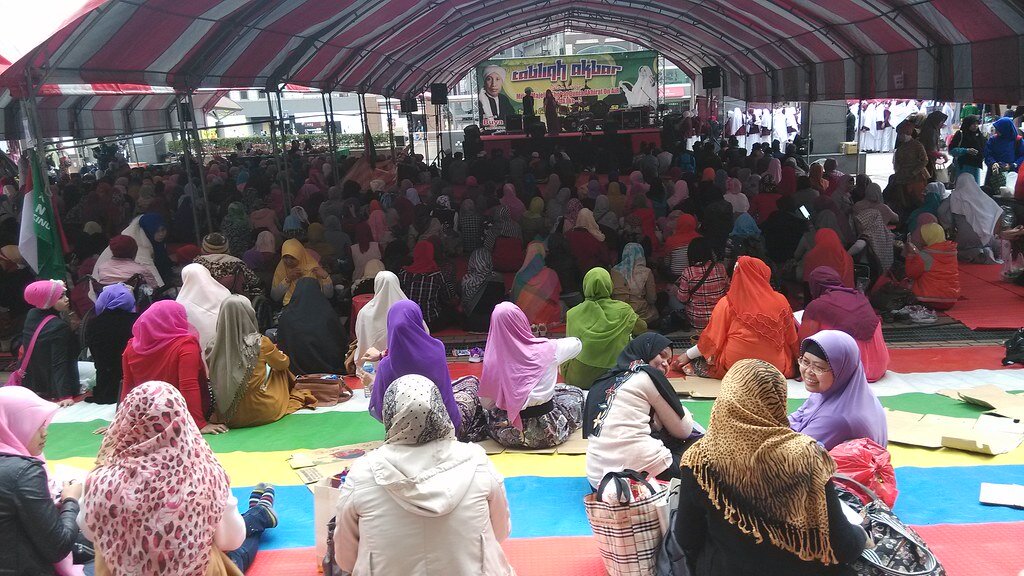
On Nov. 2, thousands of people gathered outside the French Embassy in Jakarta, Indonesia, to protest French President Emmanuel Macron.
Macron defended the publication of cartoons that depict the Prophet Muhammad, which many have deemed inflammatory. The cartoons were originally published in the Charlie Hebdo magazine in 2015. They were republished in September to mark the opening of the trial for the 2015 attacks against the magazine’s staff, which were partially motivated by the publication of the cartoons.
Last month, the cartoons were a topic of discussion in a Paris classroom during a lecture on freedom of expression. After the lecture, on Oct. 16, the teacher who led the class was beheaded by a student enraged by the cartoon being shown in class. In a separate incident on Oct. 29, three people were stabbed to death in the seaside town of Nice by a Tunisian man yelling “Allahu Akbar,” a commonly used phrase meaning “God is greatest.” Though it has an innocuous meaning and is used in a number of day-to-day situations, the phrase has been tarnished by an association with terrorist acts, such as the 2015 Charlie Hebdo attack.
These recent incidents have reinvigorated anti-Muslim sentiment in France, and Macron has been criticized for his comments. Macron told the news site Al-Jazeera that he understands people’s concern over the cartoons, but said that he “will always defend in my country the freedom to speak, to write, to think, to draw.” He maintained his stance that the cartoons were protected under freedom of expression after the beheading of the teacher in October, and has been accused by some of spreading anti-Muslim sentiment in his statements.
Macron has received criticism for his anti-Muslim rhetoric in the past. On Oct. 2, he called Islam a religion “in crisis” around the world and introduced a plan to push what he termed “Islamist radicalism” out of French education and the public sector. In the same speech, he announced the government’s intention to present a bill strengthening a 1905 law officially separating the church and state in France.
In Indonesia, the French Embassy was heavily guarded and protected by barbed wire, but over 2,000 people stood outside chanting and holding signs. Protesters displayed banners that read “Macron is the real terrorist,” “Go to hell Macron,” and “Macron is devil” and called for a boycott of French goods. Some protesters stomped on Louis Vuitton bags to demonstrate their rejection of French products. Speakers at the protest demanded that Macron apologize and take back his anti-Muslim comments. They also called for the immediate removal of the French ambassador.
On Oct. 31, Indonesian President Joko Widodo condemned the terrorist attacks in Paris and Nice while also speaking out against Macron’s defense of the cartoons. Widodo argued that freedom of expression that tarnishes the honor of religious symbols could not be justified and said that “linking religion with terrorist acts is a big mistake.” Muslims in France have repeatedly denounced the terrorist acts.
Rachel Lynch
is a student at Sarah Lawrence College in Bronxville, NY currently taking a semester off. She plans to study Writing and Child Development. Rachel loves to travel and is inspired by the places she’s been and everywhere she wants to go. She hopes to educate people on social justice issues and the history and culture of travel destinations through her writing.
Argentina Times Two: Country Declares Rule over Antarctica—and the Falklands
The nation claims disputed territories in Antarctica. Will anyone notice?

A disputed no man’s land. Trey Ratcliff. CC BY-NC-SA 2.0.
Argentina recently doubled in size, according to Argentina. President Alberto Fernandez signed into law a 650,000-square-mile expansion of Argentinian territory from its southernmost tip to the South Pole, including maritime territory in between. Though the law was signed in August, its effects are just beginning to be felt. Next school year, Argentinian children will receive textbooks proclaiming their country to be twice the size it was when their parents went to school.
The law’s legal reasoning is rooted in the United Nations Convention on the Law of the Sea, which provides President Fernandez a somewhat adequate basis for such an expansion. Argentina’s geographical shelf extends far into the sea, and the water is shallow enough to extend the country’s claim beyond the standard limit of 200 nautical miles from the nation’s coast. Though the move is grounded in international law, it has the potential to produce some controversy.
Most strikingly, the law asserts what President Fernandez calls “Argentina’s claim to the Malvinas,” also known as the Falkland Islands. Fighting erupted between Britain and Argentina in 1982 when Argentina attempted to seize control of the Falklands, only to be rebuffed by Britain’s navy. While Britain still maintains control, most Argentinians support President Fernandez’s insistence that they have a rightful claim to the islands.
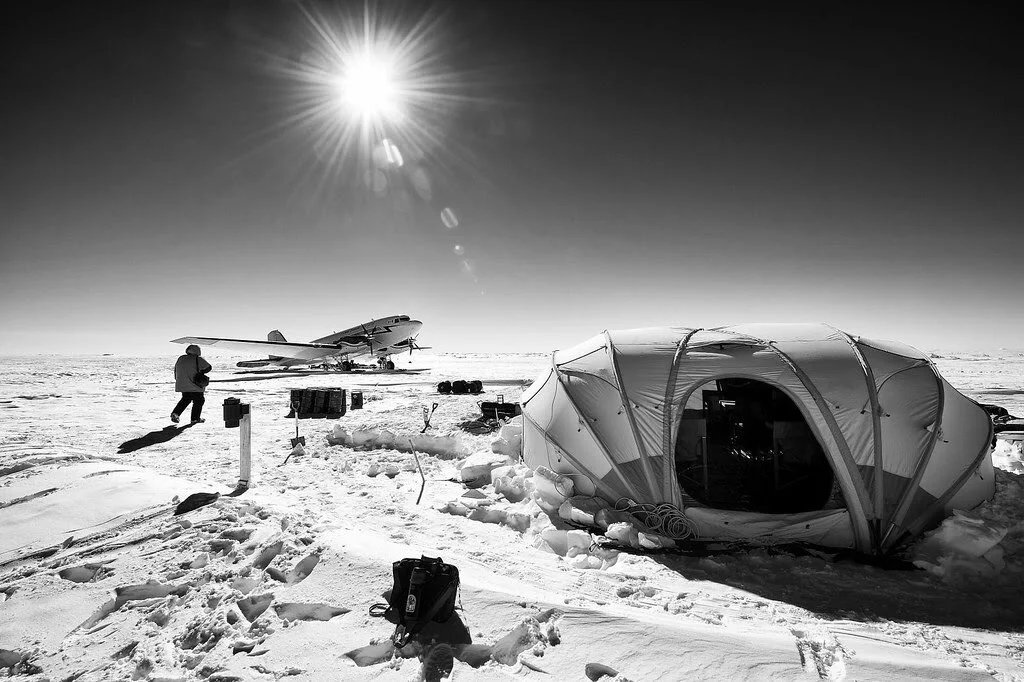
Life on the ice. Christopher.Michel. CC BY 2.0.
For the time being, however, the conflict over the Falklands is as frozen as Antarctica itself. Other territorial spats are unlikely to occur. Since explorers began mapping the continent, numerous nations have claimed it as their own. International negotiations over land claims in Antarctica culminated in the Antarctic Treaty System in 1961. It provided freedom of scientific research for all nations and banned military activity, mineral mining and nuclear waste disposal.
Argentina’s new waters offer much more than the snowy lands of Antarctica. Commercial fishing is lucrative just off the British-controlled island of South Georgia. There, fishermen enjoy prime access to abundant schools of Patagonian toothfish, icefish and Antarctic krill. While the COVID-19 pandemic has stopped most tourism, Antarctica contains myriad natural wonders for tourists strong-willed enough to endure the frigid temperatures.
For now, disputed waters in Antarctica are unlikely to ignite any conflicts. The regions are sparsely populated and for the most part strategically unimportant. Even the Falkland Islands, the flashpoint of the war with Britain, has only 2,500 residents.

Scientific research at the end of the world. NASA Goddard Photo and Video. CC BY 2.0.
In fact, the brave few Argentinians who currently live in Antarctica enjoy a unique perk: safety from the coronavirus. The 400 people from the country in Antarctica reside on the only continent without a single case of COVID-19. These scientists and soldiers conduct scientific research but with far less staff than in prior years. To prevent the spread of the virus, Argentina opted to send only 400 researchers rather than the usual 2,000. Every person sent will take a test and quarantine before traveling to Argentina’s facilities, and since they won’t have many medical resources, people will be evacuated at the first sign of infection. Argentinian researchers can rest assured, though, that their president believes they tread not on a foreign continent but on their own home turf.
Michael McMarthy
is an undergraduate student at Haverford College, dodging the pandemic by taking a gap year. He writes in a variety of genres, and his time in high school debate renders political writing an inevitable fascination. Writing at Catalyst and the Bi-Co News, a student-run newspaper, provides an outlet for this passion. In the future, he intends to keep writing in mediums both informative and creative.
Syria’s Allies Exploit the Nation’s Strife
With friends like these, who needs enemies?
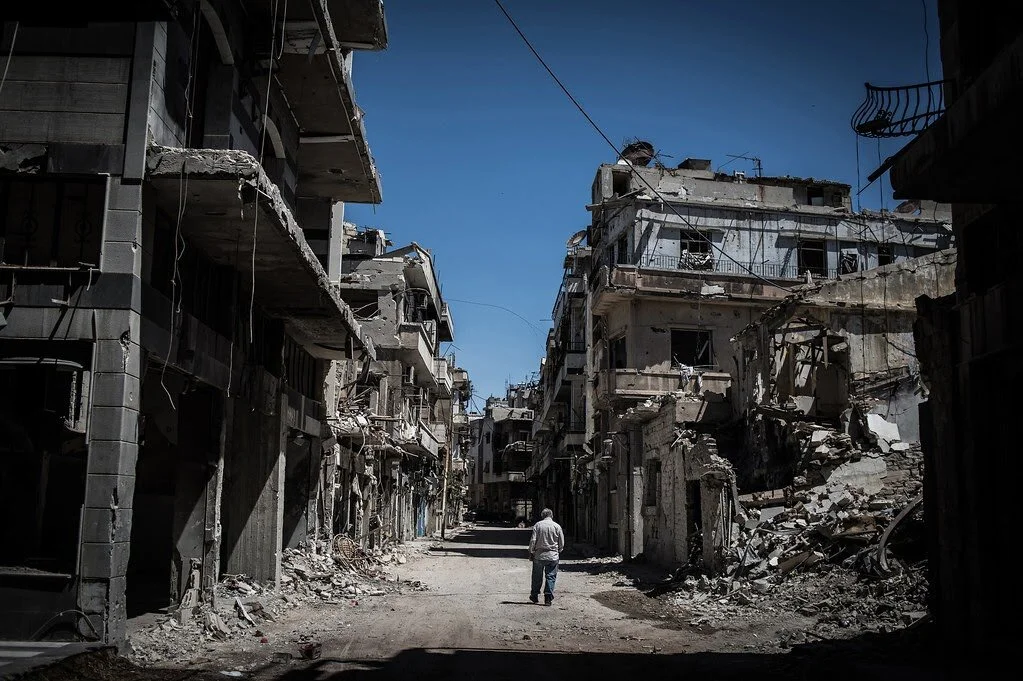
A long road to recovery. Chaoyue Pan. CC BY-NC-ND 2.0.
Bashar Assad didn’t survive his country’s civil war alone. Only with the help of Russia was he able to resist rebel forces and reestablish his grip on Syria. Now, his grip on power seems unshakable, and the question has moved from who will win to how Syria will rebuild. This challenge, however, Assad might have to do alone.
It will be a mighty task. Every aspect of Syria’s economy suffered in the almost decade long civil war. Oil, the country’s primary export, is being produced at one-sixth its prewar level, and last year’s wheat crop was half the prewar average. 60% of businesses have closed either permanently or temporarily. What savings citizens had are losing value fast, for the Syrian currency lost 70% of its value against the dollar. The forthcoming peace is preferable to war but far from easy.
COVID-19 only adds to the country’s plight. The Assad regime has attempted to hide the extent of the devastation by blaming COVID-19 deaths on “pneumonia,” but the damage is clearly intense. Desperate for food and cash, many Syrians shirked lockdown measures. Other measures enforced in other countries are impossible to follow in a war zone. What little medical infrastructure existed has been swiftly overwhelmed.
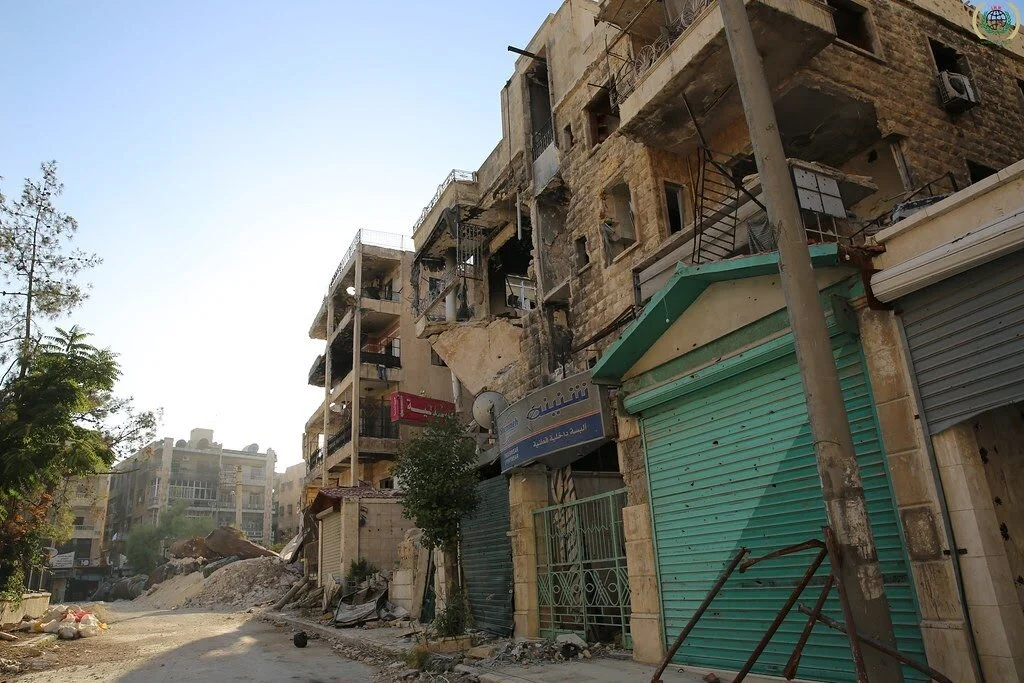
The ruins of Aleppo. Ihh Insani Yardim. CC BY-NC-ND 2.0.
Syria’s allies and neighbors seem content to watch its slow death and profit where they can. Recently, Russian Foreign Minister Sergei Lavrov visited not to help with reconstruction efforts but to scope out energy and construction contracts. Russia knows it can depend on Syria’s loyalty because the Assad regime has nowhere else to turn. Turkish involvement in Syria, meanwhile, focused on supporting anti-Assad rebels along with limiting the influence of regional Kurds, an ethnic group with aspirations of a nation-state.
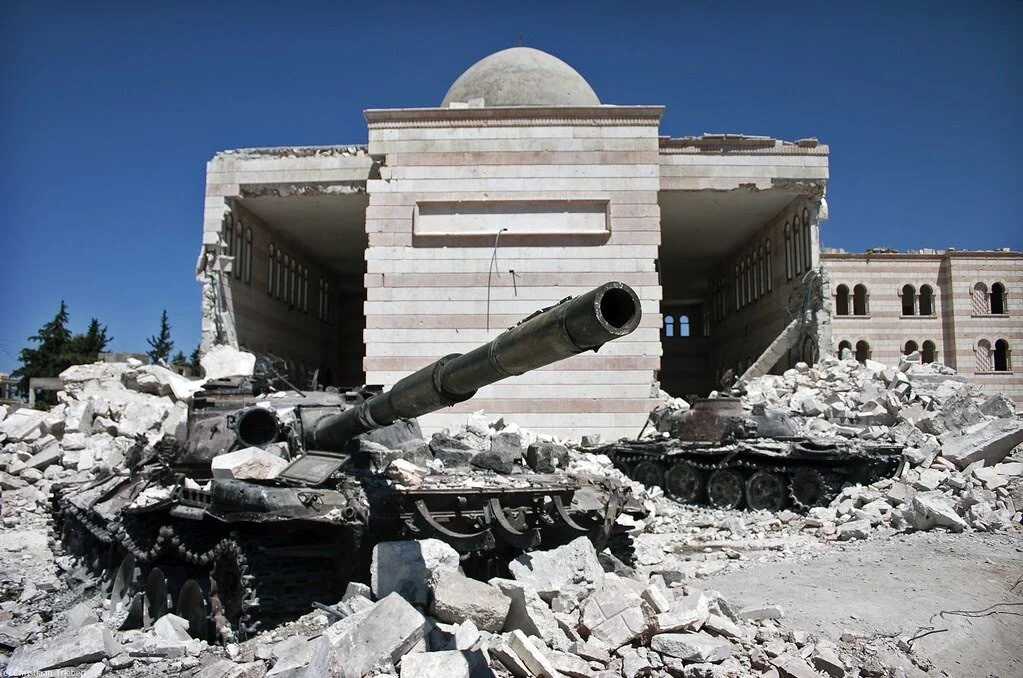
What’s left of Azaz. Christiaan Triebert. CC BY-NC 2.0.
The United States and Europe provide only humanitarian aid. The U.S. heaped sanctions on Assad’s government in an effort to force at least a semi-democratic settlement, but Assad drifts still further into authoritarianism. At one point, President Donald Trump entertained assassinating the Syrian leader after his use of chemical weapons in 2018. “I would have rather taken him out. I had him all set. Mattis didn’t want to do it,” Trump said, referring to former Secretary of Defense James Mattis. To switch from a desire for assassination to a respectful negotiation would be a stark, and unlikely, change.
Rather than give aid, Russia seems content to exploit Syria’s weaknesses. As always, the decisions of Syria’s leaders and allies will mainly affect Syrian citizens. The Assad regime’s finances have been bled so dry that it is rumored that customs officers and generals impound trucks and confiscate goods just to charge hefty bribes for their return.
The plight of Syrian mercenaries illustrates just how dire life the situation has become. Years of fighting created a generation of young men whose only marketable skill is waging war. With no fighting left to be done at home and hungry families to feed, these men have enlisted as mercenary soldiers for Turkey and Russia. Once on the fringe of Syrian life, brick and mortar offices now house recruiters who advertise on WhatsApp, often lying about the safety of certain deployments. Families have more or less accepted fighting as a necessary means to make a living. In the current economy, there are no other options.
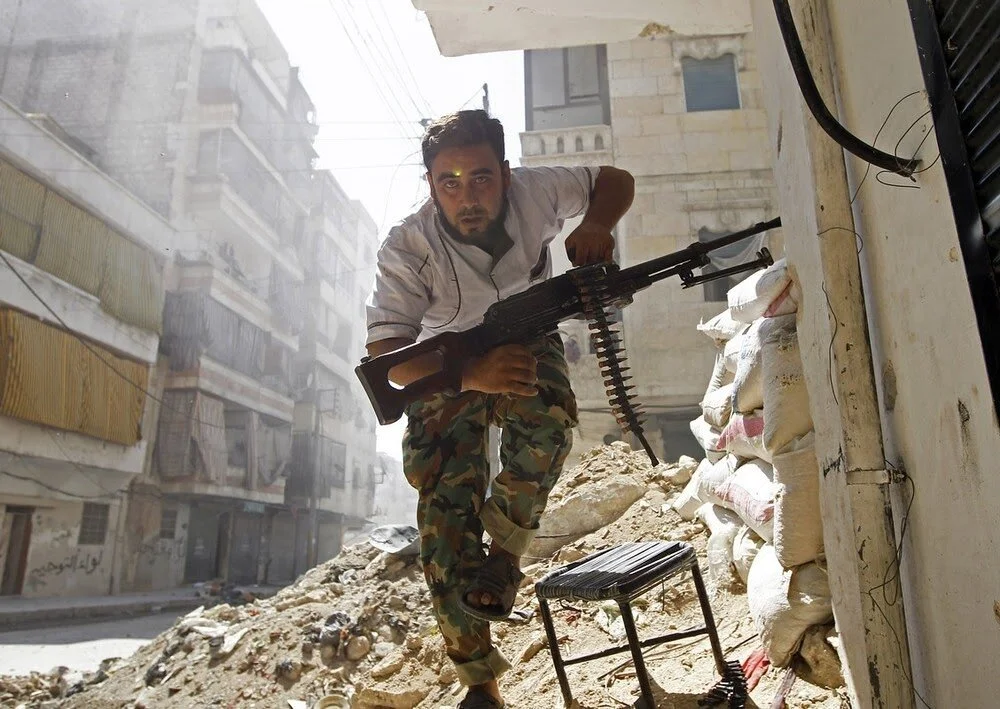
Nowhere left to run. a.anis. CC BY-ND 2.0.
What these fighters make can hardly be called a living. A soldier earns the equivalent of $1 a day, most of which has to be sent home to their family. Syrian mercenaries were deployed in 2019 to fight the conflict in Libya, and just recently, they were deployed to fight for Azerbaijan against Armenia in the disputed Nagorno-Karabakh territory. Russia and Turkey have made pawns out of Syria’s most desperate citizens to support their foreign policy expansions. As one Syrian businessman loyal to Assad observed, “Our saviors have become vultures.”
Syria’s isolation will only intensify in the near future. The Netherlands recently announced that it is preparing a case for the International Criminal Court at The Hague for “gross human rights violations and torture in particular.” Russia repeatedly blocked efforts from the U.N. Security Council to refer such a case, but the Netherlands has bypassed the U.N. altogether. It is yet another thrust from the international community to move Assad in a more democratic direction., For the time being, however, Assad refuses to budge and the plight of Syrians is likely to continue.
Michael McCarthy
Michael is an undergraduate student at Haverford College, dodging the pandemic by taking a gap year. He writes in a variety of genres, and his time in high school debate renders political writing an inevitable fascination. Writing at Catalyst and the Bi-Co News, a student-run newspaper, provides an outlet for this passion. In the future, he intends to keep writing in mediums both informative and creative.
Aotearoa: Reclaiming Maori Language and Identity in New Zealand
Compared to Indigenous groups around the world, the Maori in New Zealand enjoy more agency because of the Treaty of Waitangi, a founding document that recognizes Maori ownership of land and their subsequent autonomy in the country’s government. However, some feel that more can be done to create a bicultural and celebratory society—one that puts the Maori language at the forefront.
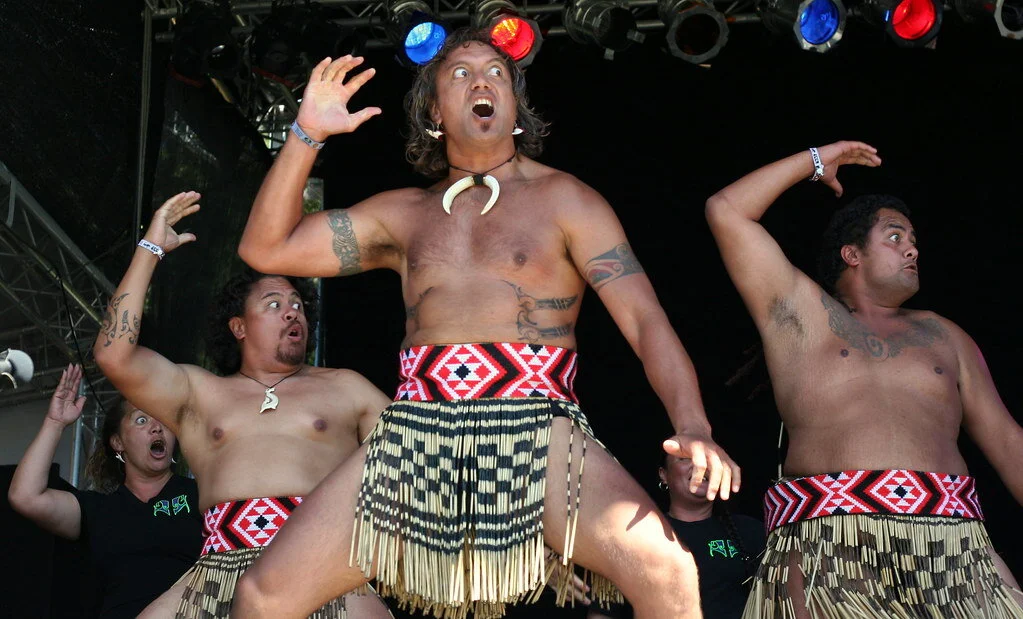
A performance of the haka, a traditional Maori dance. Matthieu Aubry. CC BY-NC-SA 2.0.
New Zealand is an island country known for its scenic views, its native kiwi bird and its iconic role as the fictional Middle Earth. The country, named Aotearoa (meaning “long white cloud”) in the Maori language, is also steeped in rich history and culture.
Before European settlement, New Zealand was home to the Maori, one of the region’s many Polynesian ethnic groups. According to their oral histories, the Maori first voyaged from present-day Tahiti. They arrived and began inhabiting Aotearoa as early as 1300 A.D. Once settled, the Maori formed tribal societies. Their culture revolves around respect for the natural environment. The Maori also possess elements of a warrior culture—they craft unique performative arts such as the haka, a war dance turned into a ceremonial celebration.
Although the first Europeans—Dutch navigators—made contact with the Maori in 1642, the Maori way of life was not significantly impacted until the late 1700s. With the arrival of British Capt. James Cook, the scramble for New Zealand ensued. As nearby French voyagers and ungoverned sealers and whalers reaped profits from the islands’ natural resources, the British moved to make New Zealand a colony in 1840.
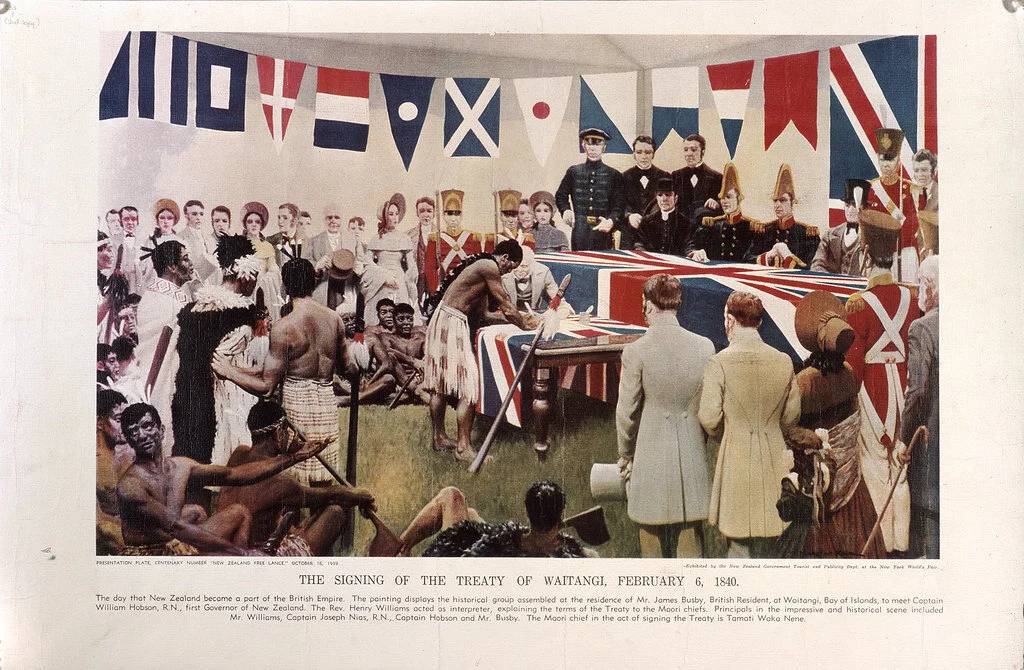
Reconstruction of the signing of the Treaty of Waitangi. Archives New Zealand. CC BY 2.0
In that same year, the Treaty of Waitangi was created. This artifact is not only recognized as a founding document but also as one that acknowledges Maori rights to the land. Despite its contentious nature, the Treaty of Waitangi is still considered a key success for the treatment of Indigenous people in New Zealand. In countries like Canada and Australia, Indigenous groups suffer a lower quality of life and enjoy less autonomy than their counterparts in New Zealand. These disparities can be traced back to the absence of a document acknowledging Indigenous people’s land rights.
Although the status of the Maori in New Zealand may be considered a model for Indigenous treatment across the globe, there are still discrepancies that prevent them from fully embracing their dual identities. Though Maori is considered one of the national languages and has been celebrated every September since 1975, a national study found that only 148,000 people in New Zealand can hold a conversation in it.
In a piece for The Guardian, Leigh-Marama McLachlan explains her rejection of Maori culture to sustain success in New Zealand. She writes, “Back then, almost no one in my family spoke [Maori]. My grandmother was like so many Maori of that generation who were led to believe that our language would be of no use to their children.” Although McLachlan possesses some rudimentary Maori, she laments the overwhelmingly monolingual sentiment of the country.
The personal rejection of Maori culture can be traced back to the early stages of New Zealand’s modernization. In a 2015 study, Maori education professors Lesley Rameka and Kura Paul-Burke found that education for children dismissed the value of Maori. Textbooks failed to frame Maori history in a positive light, rendering the culture and language as “unintellectual, trivial and strange.”
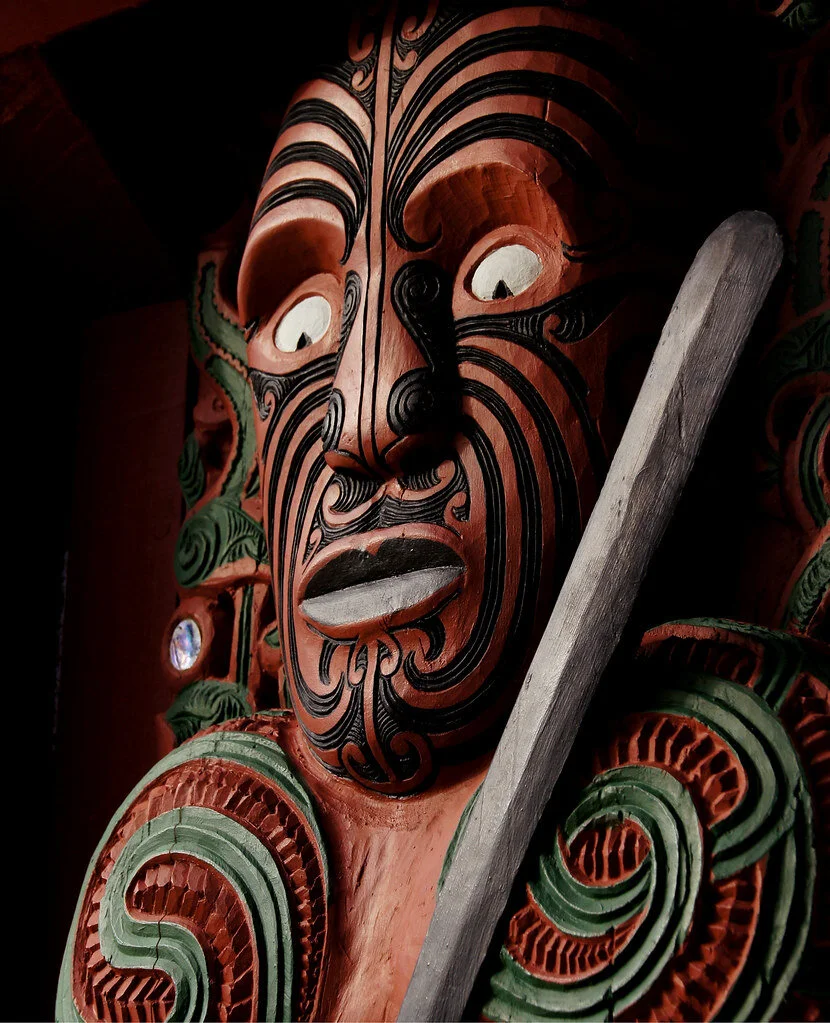
A Maori carving. Bernard Spragg.
Since the last Maori Language Week in September, some feel that it is time to restore places to their rightful Maori names. Since the protests against racial injustice in the United States, policymakers and stakeholders were forced to reexamine New Zealand’s racist past of colonialism and disenfranchisement. With an overall renewed interest in Maori rights and treatment, several telecommunications firms in the country have already changed their names to include “Aotearoa.”
Rhiannon Koh
Rhiannon earned her B.A. in Urban Studies & Planning from UC San Diego. Her honors thesis was a speculative fiction piece exploring the aspects of surveillance technology, climate change, and the future of urbanized humanity. She is committed to expanding the stories we tell.
Polish Leaders Reject Criticism of LGBTQ+ Policies
50 ambassadors and international representatives published an open letter pressing Poland to work for the tolerance of LGBTQ+ people. Polish leaders responded by saying that the rights of LGBTQ+ Poles are not threatened.

Polish leaders denied that the rights of LGBTQ+ citizens have been restricted after an open letter from 50 ambassadors and international representatives expressed concerns over the policies of President Andrzej Duda’s government.
The letter, posted on Sept. 27, asserts that Poland needs to work for “nondiscrimination, tolerance and mutual acceptance,” particularly in the education, health, social affairs, public service, public documents and citizenship sectors. It goes on to say that “human rights are universal and everyone, including LGBTI persons, are entitled to their full enjoyment” and affirms that “this is something that everyone should support.”
Poland’s LGBTQ+ community has dealt with persecution from a number of sources, including the Catholic Church, local communities and the government. This summer, President Duda won reelection after campaigning against LGBTQ+ “ideology,” which he labeled as “more destructive” than communism. During his campaign, Duda agreed with another politician who claimed that “LGBT is not people,” but an ideology that threatens the young and those in traditional families.
U.S. Ambassador Georgette Mosbacher, one of the letter’s signatories, tweeted a link to the letter with the caption: “Human Rights are not an ideology—they are universal. 50 Ambassadors and Representatives agree.” Joachim Brudzinski, of Poland’s ruling Law and Justice party, responded that “we in Poland also agree.” Brudzinski followed the statement with a call for a letter in defense of Christians, who he alleges have faced mistreatment. Poland is majority Catholic, and Christians are generally considered to not experience oppression. This summer, Brudzinski tweeted that “Poland without LGBT is most beautiful.”
The rhetoric of Duda, Brudzinski and other politicians has led to a number of towns in conservative parts of Poland passing resolutions pronouncing themselves free of “LGBT ideology.” These towns, widely known as “LGBT-free zones,” house nearly 32% of Poland’s population, according to an LGBTQ+ rights group tracking the resolutions.
Bart Staszewski, a Polish activist, protests these resolutions by briefly attaching a sign that reads “LGBT-FREE ZONE” in four languages next to the towns’ signs. He posts pictures of the signs on Instagram, often including an LGBTQ+ person from the town in his shot. Staszewski’s signs are a form of performance art that offers a visual representation of Poland’s anti-LGBTQ+ policies, which Staszweski and other activists say harm an already marginalized community.
During a news conference in response to the open letter, Prime Minister Mateusz Morawiecki called Staszewski’s protests a “falsified reality” that presents LGBTQ+ rights in Poland as under attack. Morawiecki also addressed the ambassadors directly, saying, “To the dear ambassadors, I can only say that tolerance belongs to Polish DNA … Nobody needs to teach us tolerance.” He concurred with the letter’s claim that every person is entitled to the enjoyment of rights, but rejected the idea that LGBTQ+ Poles were being denied these.
Poland is not particularly LGBTQ+ friendly, despite what its leaders have said in recent days. Members of the community are angry and fearful after Duda’s reelection on an anti-LGBTQ+ platform. Activists are currently advocating for legislation criminalizing hate speech based on sexual identity. The open letter praises the kind of work done by Polish activists, urging the government to support all people’s “fundamental rights.”
Rachel Lynch
is a student at Sarah Lawrence College in Bronxville, NY currently taking a semester off. She plans to study Writing and Child Development. Rachel loves to travel and is inspired by the places she’s been and everywhere she wants to go. She hopes to educate people on social justice issues and the history and culture of travel destinations through her writing.
Unpacking the Nagorno-Karabakh Conflict and the Armenian Diaspora
The renewed conflict in the South Caucasus region has its roots in long-standing historical divisions between Turkey and Armenia.
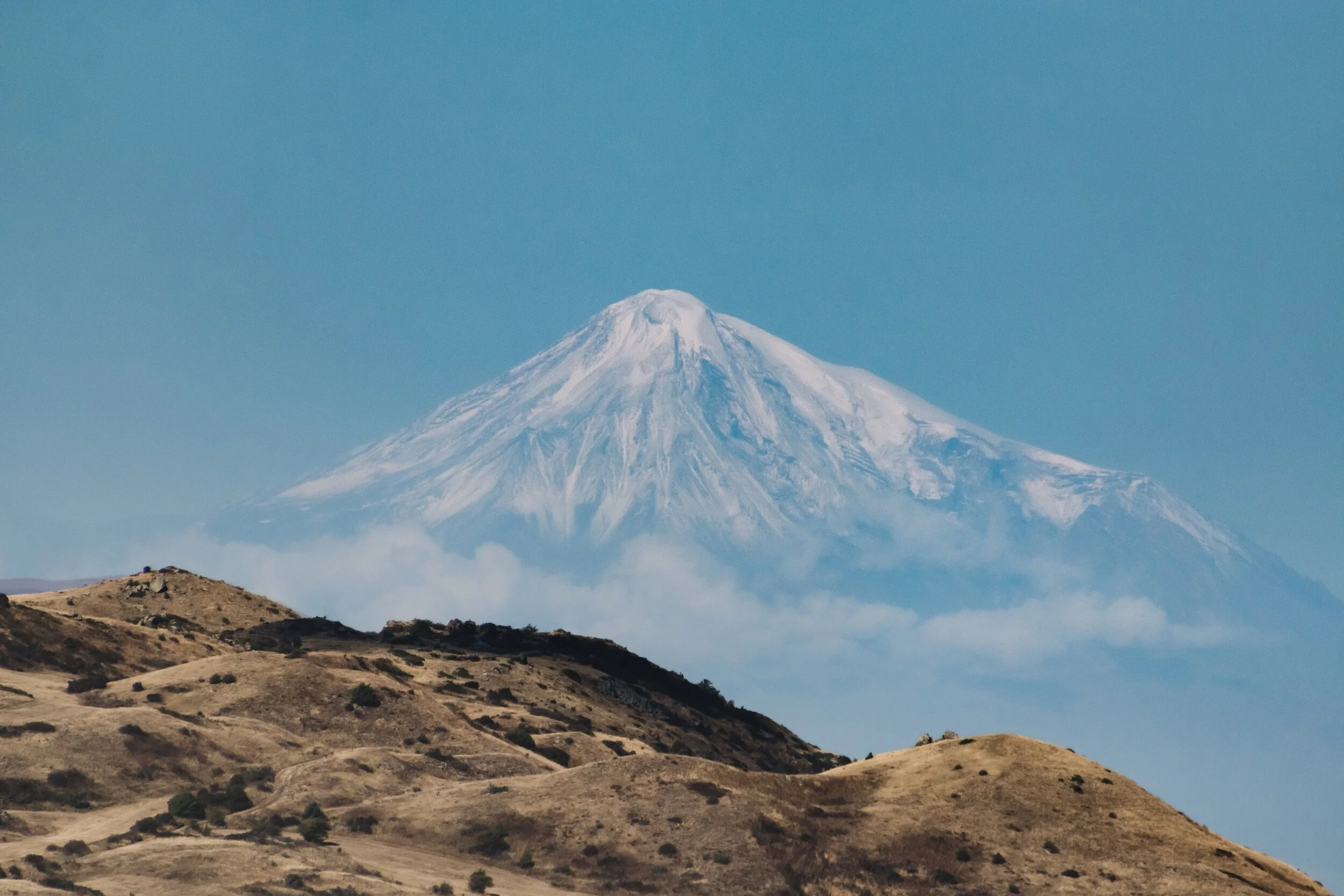
A view of Mount Ararat. West. CC2.0
Tensions between Azerbaijan and Armenia have been renewed due to the ongoing territorial dispute over Nagorno-Karabakh. Fighting started up again on Sept. 27 and has caused massive upheaval and casualties on both sides. Backed by Turkey, the Azerbaijani military bombed Nagorno-Karabakh’s regional capital of Stepanakert with intense artillery fire, while Armenia launched missiles at Ganja (Azerbaijan’s second-largest city), putting citizens in grave danger. Officials speculate that the last two weeks of fighting have proven to be the worst since a cease-fire was brokered by Russia in 1994. Although another cease-fire is a possibility, there is no prediction of what will come next. “Don’t discount the possibility of this turning into something much larger,” said Kevork Oskanian from the University of Birmingham in England. “Once a conflict like this kicks off, it has a dynamic of its own and you don’t know where it will go.”
A Brief History of the Nagorno-Karabakh Dispute
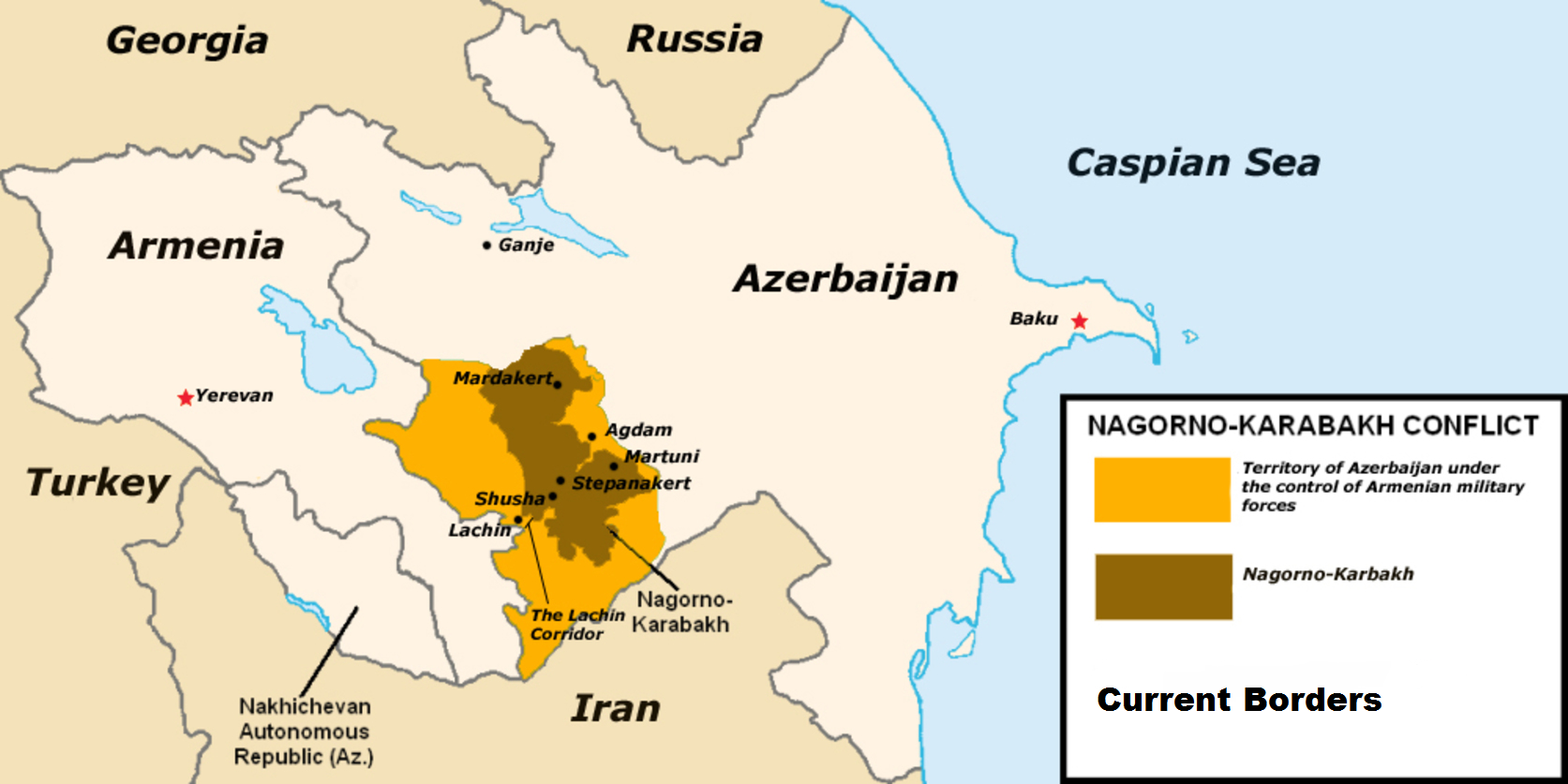
A map of the Nagorno-Karabakh region. Achemish. Wikimedia Commons. CC4.0
The recent fighting is a result of a renewed 32-year-long military conflict between Azerbaijan and Armenia. The territory of Nagorno-Karabakh, also known as Artsakh to Armenians, contains a population of about 150,000. Although completely surrounded by Muslim-majority Azerbaijan, it is governed and claimed by Christian Armenians. Josef Stalin gave the territory to Azerbaijan in 1921 and made it an autonomous region two years later. Initially, the territorial dispute was not violent, as both Armenia and Azerbaijan were under the stronghold of the Soviet Union. However, nationalistic and militaristic tensions increased between the two nations when the USSR began to dissolve. The fighting began in 1991, which resulted in 30,000 casualties and over one million displaced. Although a cease-fire was agreed to in 1994, no official peace deal has been reached. Armenia is happier with the status quo than Azerbaijan, as it was able to reclaim 20% of surrounding land during the fighting in the ‘90s (shown in yellow on the map above). However, Azerbaijan still has a large population of people displaced by the fighting who want to return to their homes.
Why Turkey is Supporting Azerbaijan
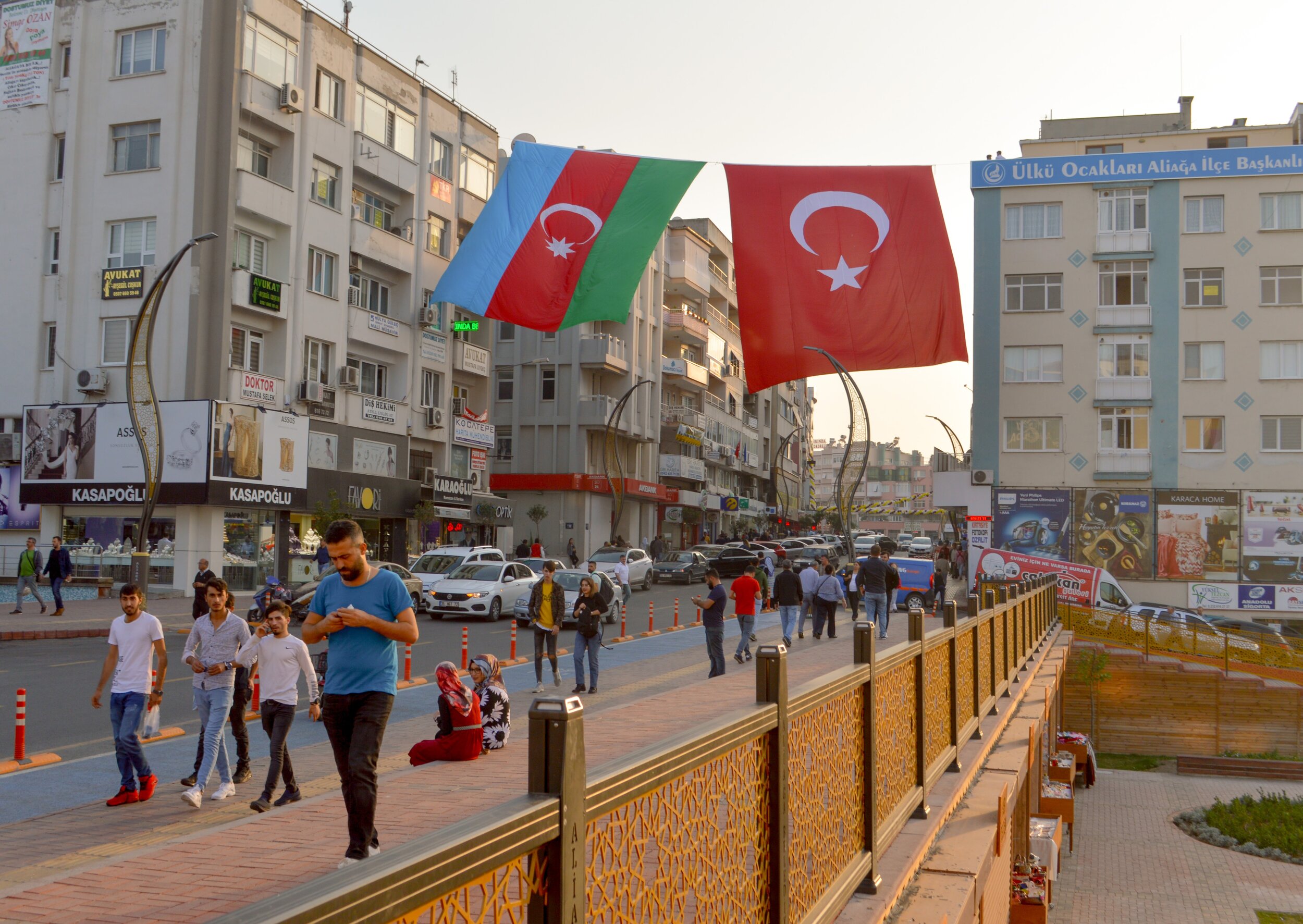
Azerbaijani and Turkish flags in Izmir, Turkey. Anzola. CC 2.0
Azerbaijan is often referred to as a little brother to Turkey, due to the two nations’ connections through cultural, linguistic and religious ties.The two have a relationship built on trade and mutual exchange. Azerbaijan provides a large portion of Turkey’s gas and oil, where the money in return is used to buy weapons from Turkey. Azerbaijan is currently using military weapons provided by Turkey to strike Nagorno-Karabakh, allowing Turkey to increase its political presence in the region. Underpinning Turkey’s involvement in the conflict are the events of 1915, where 1.5 million Armenians were killed under the direction of the Ottoman Empire (present-day Turkey), which many consider a genocide but Turkey denies. Many Armenians see Azerbaijan’s alliance with Turkey as a resurfacing of these events, providing an ultimate threat to their existence and statehood.
The Conflict Reaches the Armenian Diaspora
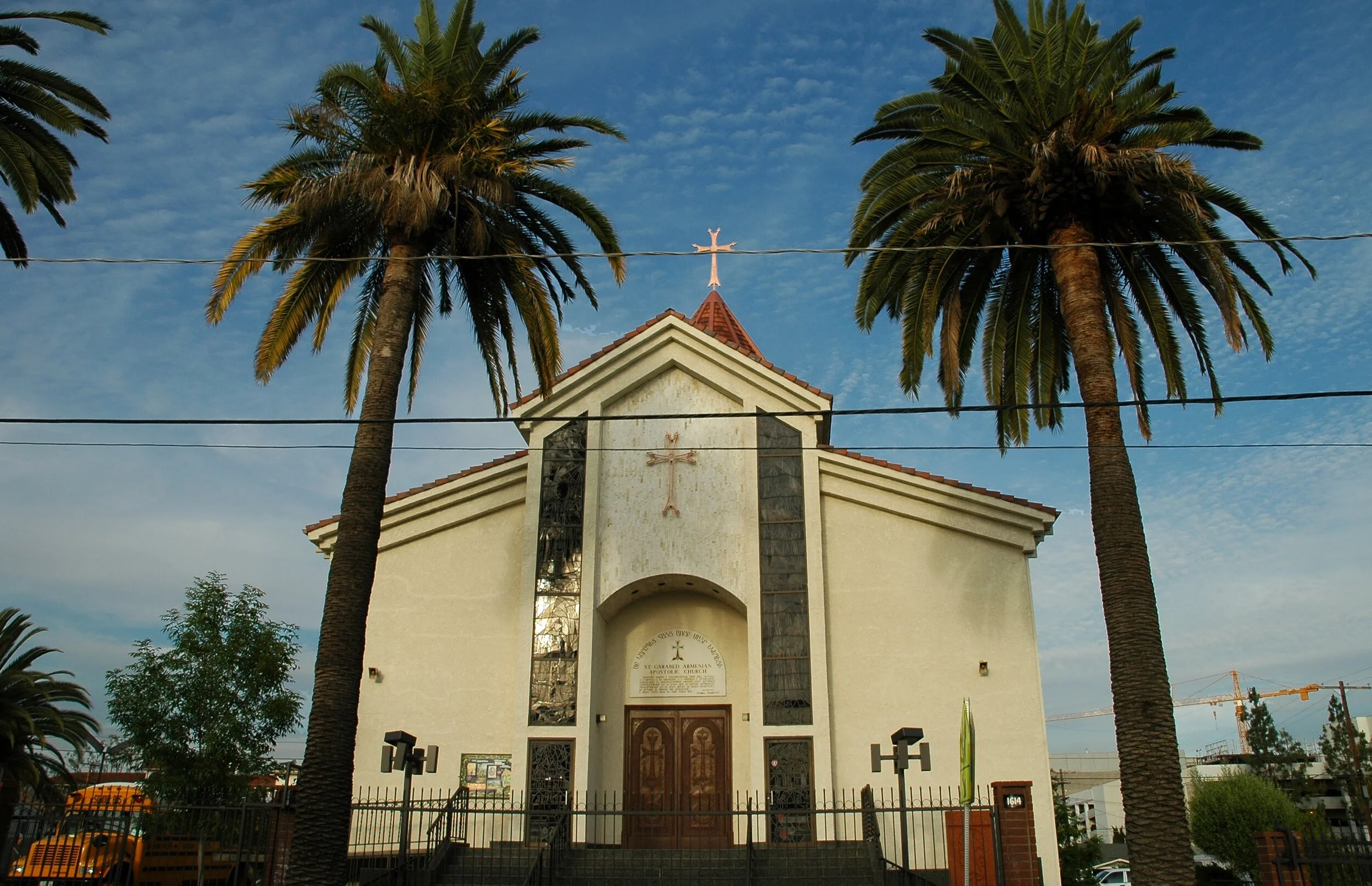
An Armenian church in Los Angeles. Steeds. CC2.0
Although Armenia has a population of 3 million, the diaspora population is estimated to be much larger, with notable communities in Australia, Russia, Lebanon, France and Southern California. Although the events of 1915 resulted in mass migrations of Armenians around the world, the diaspora goes as far back as the Middle Ages. Throughout history, many Armenians migrated to new corners of the world due to political upheaval. Armenian merchants often traveled to trade and sell wares, playing a key role in the economies of China, India and Persia. Armenia’s long history of migration and displacement has resulted in a strengthened cultural identity in diaspora communities. Many notable Armenian celebrities, including Kim Kardashian and Serj Tankian, are strong proponents of the Armenian cause, posting on social media to raise awareness of the Nagorno-Karabakh dispute. Armenian lobby groups have held protests in Southern California, as well as asking Armenian-Americans to bring awareness of the conflict to representatives and congresspeople. Some Armenians even contemplate returning to their country to fight Azerbaijan. According to Alex Galitsky, part of the Armenian National Committee of America’s western region, “I think a lot of people see themselves as bearing some responsibility for the defense of our nation.”
The conflict in Nagorno-Karabakh continues to escalate as nationalistic and militaristic tendencies fuel both sides. True peace will only be reached if Turkey, Armenia and Azerbaijan are willing to begin the difficult work of listening and embracing each other’s conflicting histories and narratives.

Megan Gürer
Megan is a Turkish-American student at Wellesley College in Massachusetts studying Biological Sciences. Passionate about environmental issues and learning about other cultures, she dreams of exploring the globe. In her free time, she enjoys cooking, singing, and composing music.
Sri Lanka Strives Toward Gender Equality Through Economic Empowerment
Sri Lanka’s efforts to combat the gender gap allow women to support themselves and their communities.
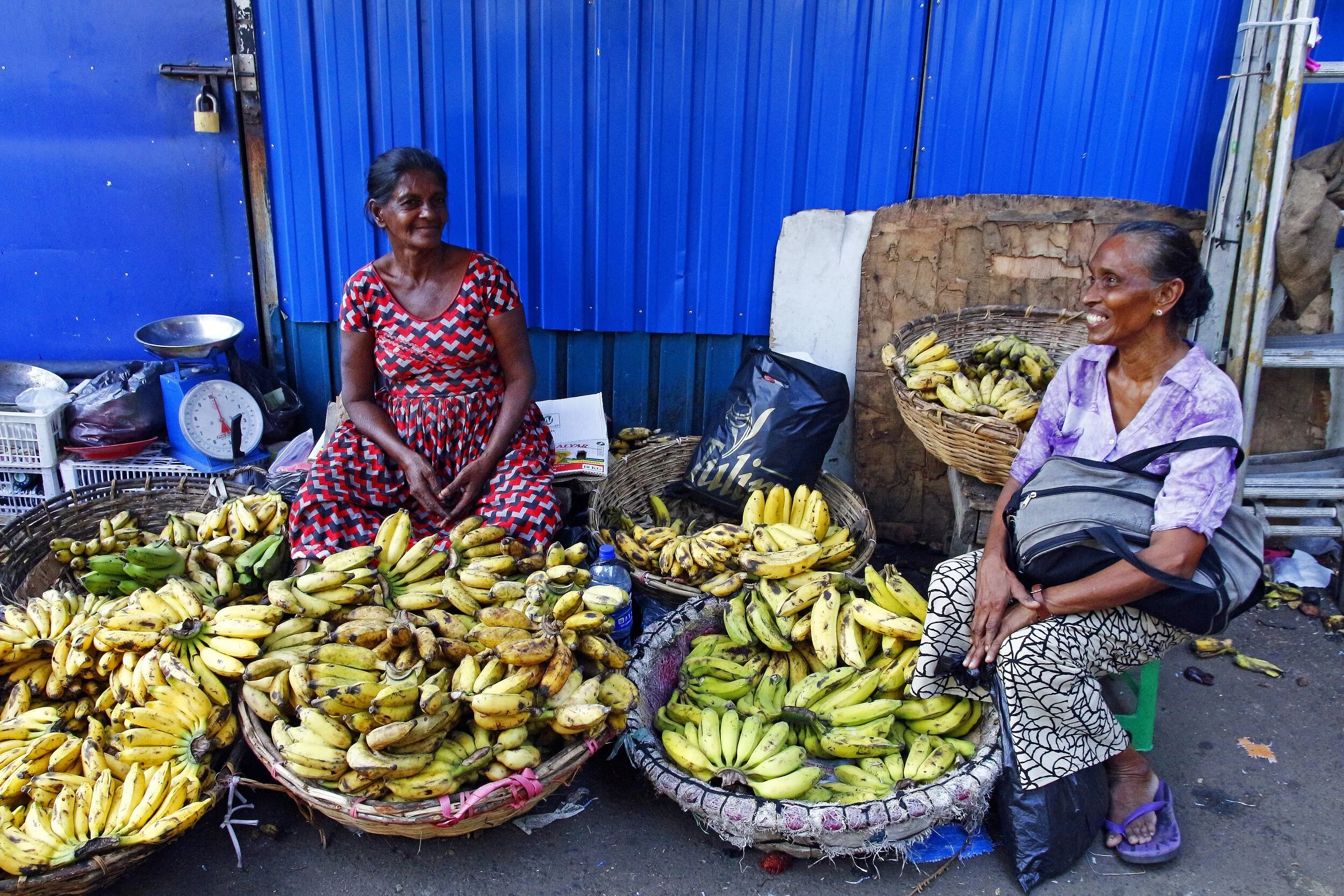
Women selling produce at a market in Sri Lanka. imke.sta. CC2.0
Nicknamed the “pearl of the Indian Ocean” and famous for its spices, unique culture and lush ecosystems, Sri Lanka is also known for its advances in gender equality. The island nation became in 1960 the first country in the world to elect a female prime minister, Sirimavo Bandaranaike. Sri Lanka has also long provided free and compulsory education for men and women up to the university level.
Even so, high levels of gender-based violence are present throughout the country and the unemployment rate of women is twice that of men. Most women occupy low-paying positions in agriculture and the garment industry with little chance of economic mobility. Although well-respected in the Asia-Pacific region, Sri Lanka’s educational system often enforces traditional ideological and cultural beliefs, which can perpetuate negative stereotypes about women. A university-level education does not guarantee women positions of power, with large disparities between men and women in science, technology and political positions throughout the country. Additionally, a 26-year-long civil war (1983-2009) isolated Sri Lanka from the modern world, allowing traditional gender roles to thrive in war-affected areas.
Developing economic opportunities for women has the potential to overcome barriers to gender equality. Here are two organizations working to do just that:
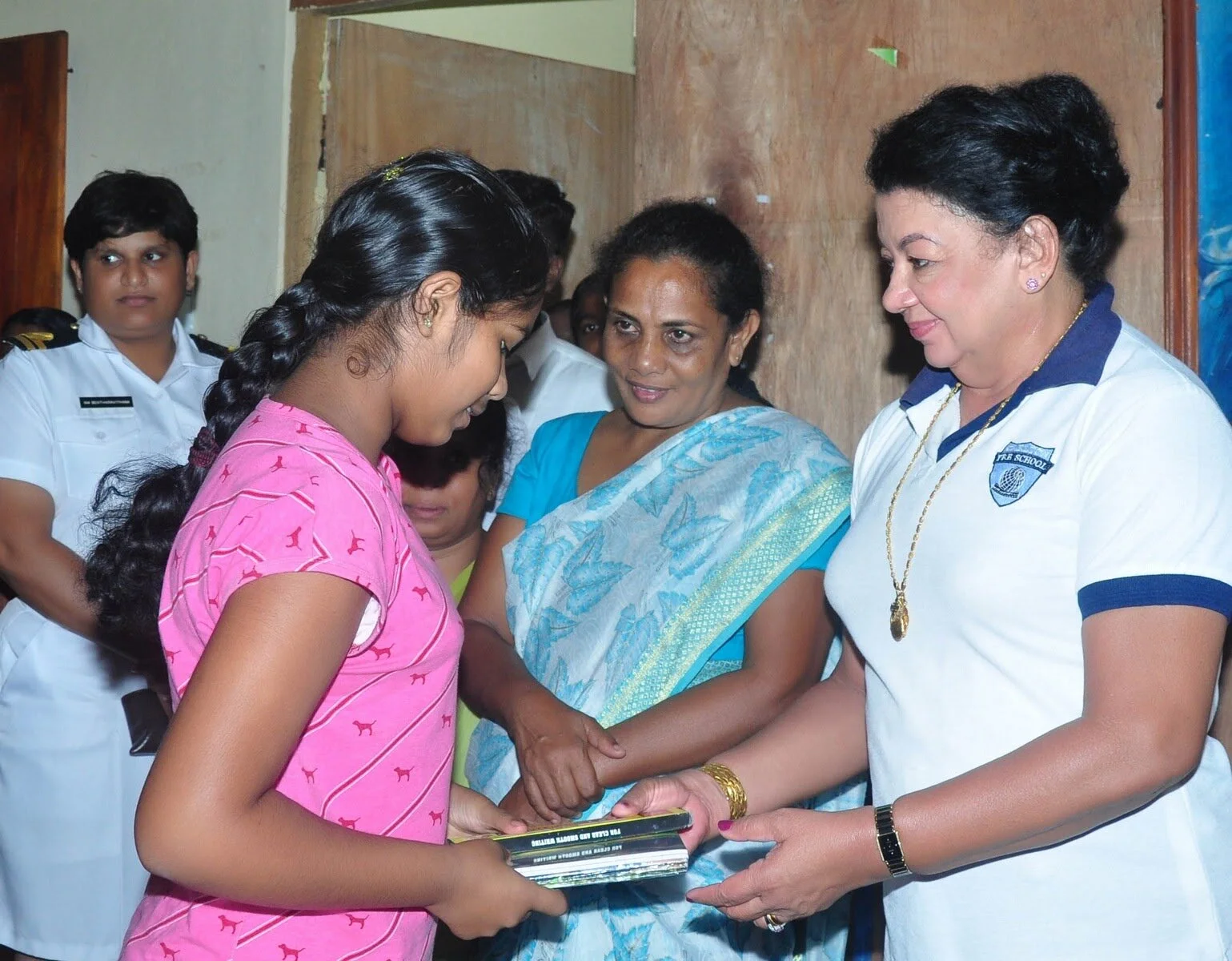
Women receiving medical training provided by the Women’s Development Centre. Rajapaksa. CC2.0
The Women’s Development Center
This Sri Lanka-based nongovernmental organization has made incredible strides in supporting at-risk women, children and people with disabilities since its founding in 1986. With the goal of creating opportunities for marginalized groups, the group is on its way to “creating a just and secure society for women and children.” Although the organization has a multifaceted approach, social enterprises and economic empowerment remain its key goals. The social enterprise “Sthree”, meaning “woman” in Tamil and Sinhala, was founded in 2011 with the goal of empowering women and their local communities. The platform provides a market in Kandy for Sri Lankan women and disabled people to sell handmade products, such as saris, jewelry, decor, snacks and chutneys, recycled paper products and eco-friendly purses and handbags. Sthree also provides training and skill-building workshops for women and disabled individuals. Sthree is beginning to expand to an international clientele, even hosting an international exhibition and sale in Sweden in 2016.
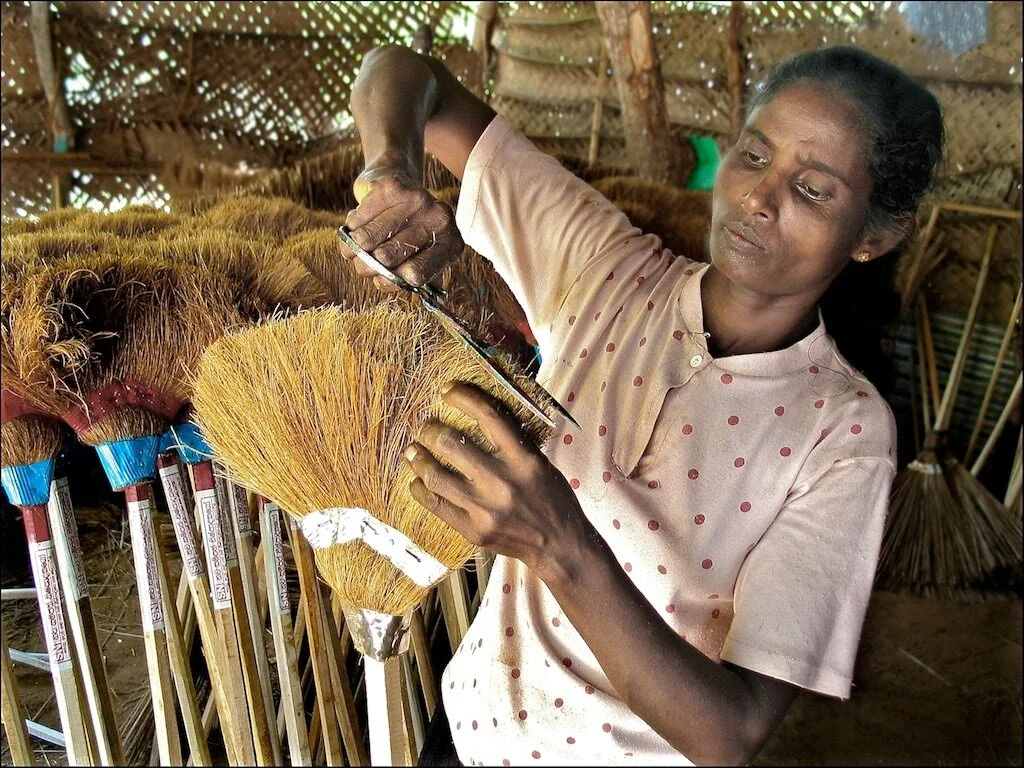
A woman making brooms for a woman’s cooperative in Sri Lanka. Foley. CC2.0
Puthukkudiyiruppu Women Entrepreneurs’ Cooperative Society
The PTK Cooperative, initially founded by Krishnakumar Jeyaranjini and 14 other women in 2012, provides a platform for war-affected women to support themselves and their families economically. The business has expanded over the years, producing detergent, chili powder and rice flour. The organization has the backing of the International Labour Organization (ILO), which helps link it to buyers, markets and social enterprises. The organization enables collaboration between women from different ethnic groups and communities in Sri Lanka, helping to create social cohesion and tolerance. The organization continues to defy gender norms and stereotypes. “Often the words ‘woman’ and ‘detergent’ bring out gendered images of a woman washing clothes at home, not of a woman owning or running a successful detergent-producing enterprise,” said Simrin Singh, director of the ILO country office for Sri Lanka. “It is stories of our work empowering women like Jeyaranjini, building block by block, that are the essential inspiration so many other women in this country could use to break the barriers to their empowerment.”
Although Sri Lanka has made considerable progress toward gender equality in the last 50 years, many obstacles remain. Empowering women at a grassroots level helps provide women more economic agency while ensuring the well-being of generations to come.
Megan Gürer
Megan is a Turkish-American student at Wellesley College in Massachusetts studying Biological Sciences. Passionate about environmental issues and learning about other cultures, she dreams of exploring the globe. In her free time, she enjoys cooking, singing, and composing music.

Sudanese people gathering in front of a mosque. Nina R. CC 2.0.
Sudan Separates Religion and State Following al-Bashir’s Ouster
The Northeast African nation of Sudan has made the decision to separate religion from the state, dissolving 30 years of governance by Islamic law. The country, which has been attempting to rebuild itself after long periods of colonial rule and political strife, came to this decision in an attempt to quell current tensions between religious and military groups.
Sudan was formerly under colonial rule by the United Kingdom, though the British did not make their presence in Sudan a physical one. They maintained control by partnering with Egypt through a dual colonial government known as the Anglo-Egyptian Condominium (1899–1956). This agreement separated the Muslim-dominated north from the majority-Christian south. As colonial presence grew stronger in the region, so did division along ethnic, socioeconomic, religious and linguistic lines.
Sudan was able to gain independence in 1956, but the country is still overwhelmed with tensions as its citizens and government continue to reconcile with issues caused by colonization. They eventually led to the Second Sudanese Civil War (1983-2005) between the central government in Khartoum and the Sudan People’s Liberation Army, causing an eventual 2 million deaths and the creation of an independent South Sudan. This conflict was amplified when Omar al-Bashir took office by way of a military coup in 1989 in the middle of this 22-year-long civil war. He ruled for 30 years and did so through the suppression of political opponents as well as violence against the Sudanese people. During his presidency, multiple arrest warrants were issued to al-Bashir by the International Criminal Court on charges including war crimes and crimes against humanity, such as his attacks on citizens in Darfur.
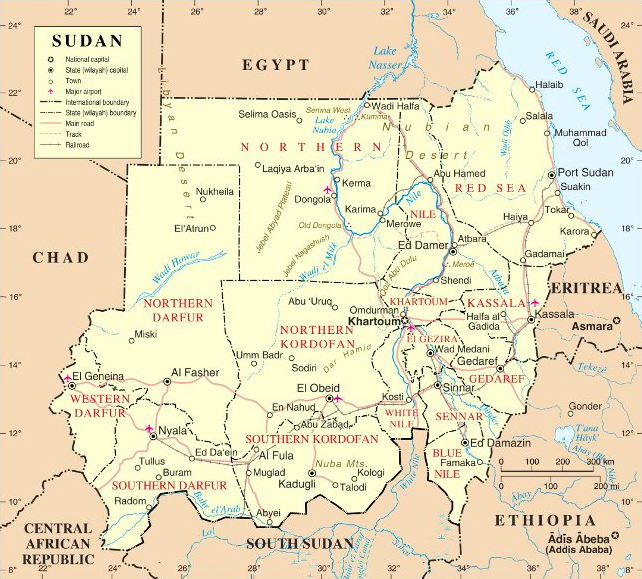
Map of Sudan. Muhammad Daffa Rambe. CC BY-SA 3.0.
Al-Bashir continued to hold his power until April 2019 when, after months of unrest, the Sudanese military toppled him. On Sept. 3, 2020, Sudan issued its declaration to sever ties between mosque and state, saying that, “For Sudan to become a democratic country where the rights of all citizens are enshrined, the constitution should be based on the principle of ‘separation of religion and state,’ in the absence of which the right to self-determination must be respected.”
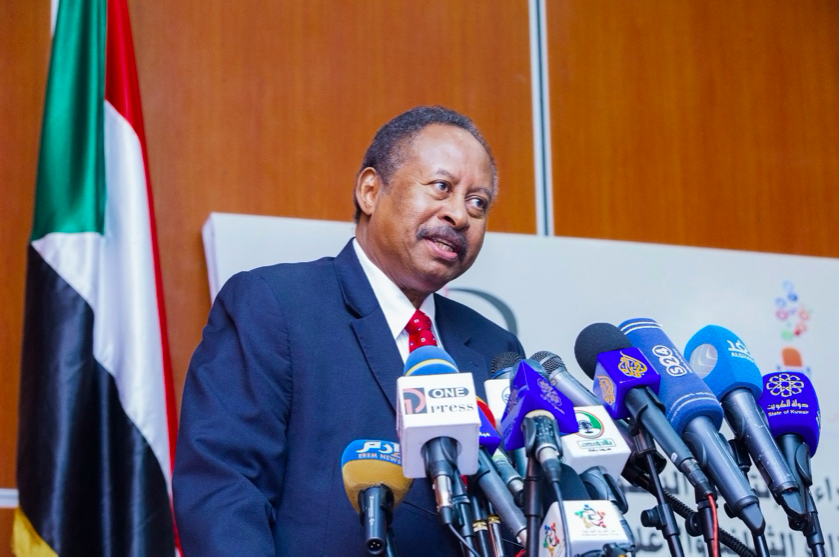
Prime Minister Abdalla Hamdok. Ola A .Alsheikh. CC BY-SA 4.0.
Prime Minister Abdalla Hamdok and Abdelaziz al-Hilu, leader of the Sudan People’s Liberation Movement-North rebel group, signed this document together. Additionally, the document emphasizes its effort toward unity with the statement, “Sudan is a multiracial, multiethnic, multireligious and multicultural society. Full recognition and accommodation of these diversities must be affirmed.” More than simply separating church and state, the declaration gives the country momentum in its push toward unification.
Renee Richardson
Renee is currently an English student at The University of Georgia. She lives in Ellijay, Georgia, a small mountain town in the middle of Appalachia. A passionate writer, she is inspired often by her hikes along the Appalachian trail and her efforts to fight for equality across all spectrums. She hopes to further her passion as a writer into a flourishing career that positively impacts others.
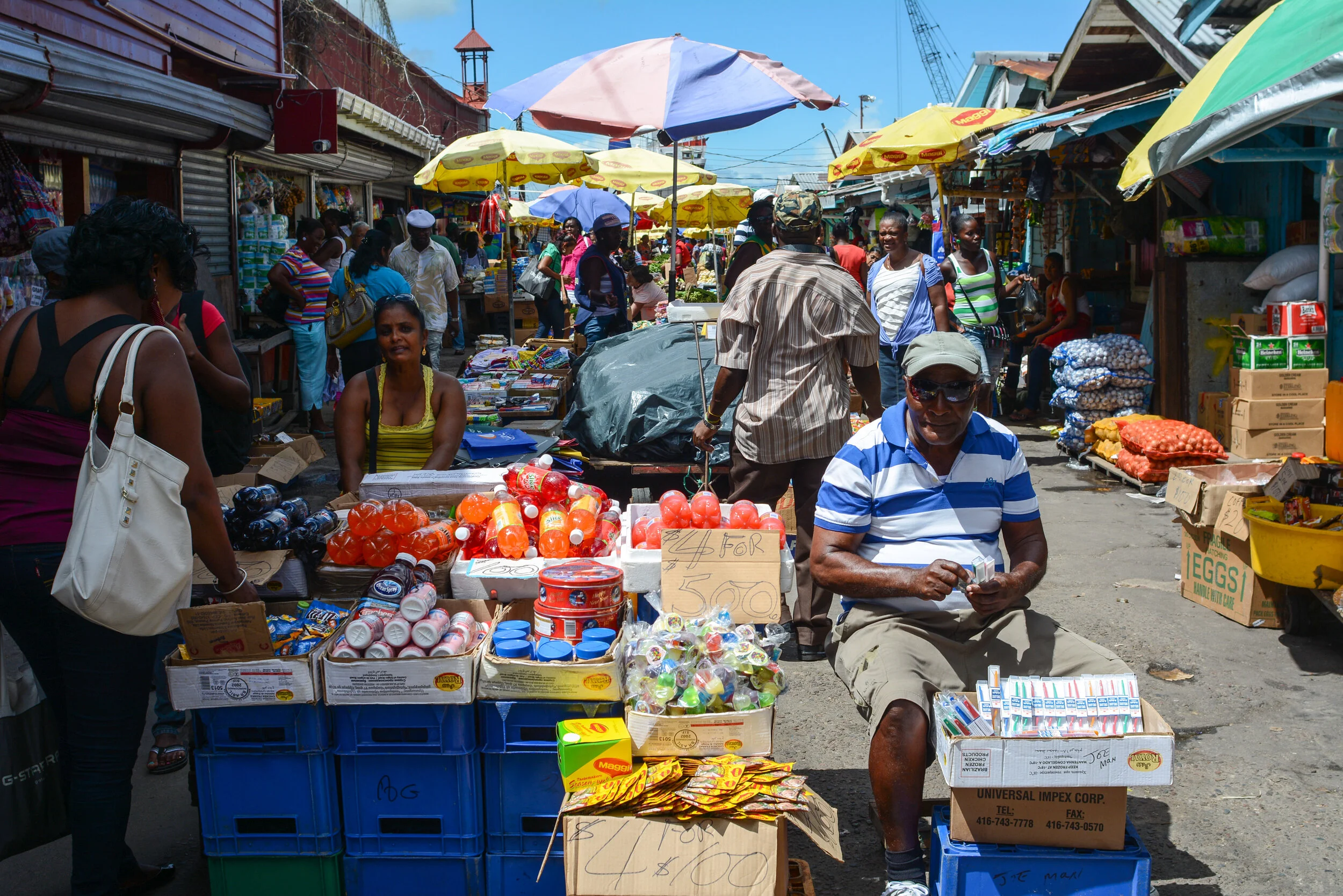
People at a market in Georgetown, Guyana, before the COVID-19 pandemic. M M from Switzerland. CC BY-SA.
Tensions Soar Following Racially Motivated Murders of Three Guyanese Teenagers
Following a hotly contested election, the murders of three Guyanese teenagers have sparked renewed racial tensions in Guyana between the country’s two main ethnic groups, Afro-Guyanese and Indo-Guyanese. This comes as the world is having a broader conversation on racial justice, which was sparked by the resurgence of the Black Lives Matter movement in May.
The bodies of Afro-Guyanese teenagers Isaiah and Joel Henry were found mutilated in coconut fields in the Mahaica-Berbice region on Sept. 6. Haresh Singh, an Indo-Guyanese teenager, was killed three days later while trying to pass through a protest that had started in response to the initial murders.
“I will work day and night to get to the bottom of what happened to those teens,” President Irfaan Ali said in a press release. “Safety and security in all of the communities remain a top priority. As you can see, there is more visibility on the ground, more resources on the ground … We cannot tolerate lawlessness and criminality. We have to fix what went wrong and move forward.”
Volda Lawrence, chairperson of the political party People’s National Congress Reform, released a statement condemning the racist murders and stating that racism cannot be combated with more racism.
“My brothers and sisters, our protest must not end until justice is served,” Lawrence said. “I am resolute in my stance to go the full mile with you, until we achieve our desired outcome, justice. But we must protest in a peaceful and civil manner, doing so with respect for human life, dignity and property. Our protest must be solution-oriented and not driven by chaos, violence and destruction. For those that have utilized violence or caused destruction, please refrain from such acts as we seek justice for those who were taken from us.”
In response to the three racially motivated murders, the Guyana Human Rights Association plans to submit a formal request for the United Nations to investigate the killings with forensic pathology.
“This call is not intended to cast doubt on the capacity or impartiality of local investigators, so much as a response to the deep distrust accompanying the political polarization of the society,” the organization said in a statement on Sept. 8. “These callous murders are not seen as isolated. Both sides are quick to see them as a continuation of earlier ethnic upheavals … Both sides feel accumulated bitterness towards a system that has accommodated such turmoil.”
The protests surrounding the murders parallel those around the world in support of racial equality. Hundreds of thousands of people globally have continued to protest in support of the Black Lives Matter movement following the murders of George Floyd, Breonna Taylor and Ahmaud Arbery earlier this year. This has since inspired activists to broaden the movement, highlighting other instances of racial injustice in their own communities including police brutality against Indigenous Australians.
What differs in the case of Guyana is that while racism has been an issue in the country since its inception, tensions have increased following massive oil discoveries and the election of President Ali in March.
The discovery of oil off the coast of Guyana has set the country on course to expand its economy by 50% by the end of 2020, which would give it the fastest-growing economy in the world in a time when a global recession looms due to the ongoing COVID-19 pandemic.
The presidential race, which was between then-incumbent David Granger, who was backed by Afro-Guyanese supporters, and Ali, who is now South America’s first Muslim head of state and was backed by Indo-Guyanese supporters, centered around racializing the oil discoveries by both candidates claiming that their supporters would lose out on profits if the other candidate was elected.
Deodat Persaud, a member of Guyana’s Ethnic Relations Committee, told The New York Times that “racism is connected to political power in Guyana.”
In the week that has followed since the initial murders, President Ali has visited with the families of all three slain teenagers and has ordered the government to begin enforcing the Racial Hostility Act and the Cybercrime Act in an effort to crack down on virtual hate speech.

Jacob Sutherland
Jacob is a recent graduate from the University of California San Diego where he majored in Political Science and minored in Spanish Language Studies. He previously served as the News Editor for The UCSD Guardian, and hopes to shed light on social justice issues in his work.

TikTok logo against a blue sky. Kon Karampelas. CC BY.
Indigenous Creators Raise their Voices on TikTok
On TikTok, the social media app with over 800 million users worldwide, Indigenous creators have found a platform. Amplifying Indigenous narratives that are often unheard, creators share culture, history and daily life with their followers. Throughout the COVID-19 pandemic, Indigenous creators have also utilized the app to illustrate how the virus disproportionately affects Native Americans. As a platform, TikTok offers users small clips of content, lending accessibility to information often unavailable in mainstream media.
James Jones, a member of Canada’s Cree Nation, is a creator, dancer and Indigenous performer who uses TikTok as a platform for awareness and advocacy. His videos show users the basics of hoop dancing and the intricacies of tribal regalia used for ceremonial purposes. Jones told Vogue: “We dance for those who can’t dance, and we dance to heal. I always hope to educate and bring awareness in a good way.”
Theland Kicknosway is a 17-year-old Cree creator who uses his platform to connect with other Indigenous teens and spread awareness of Indigenous culture. In his series on braids, he teaches users about the sanctity of hair in Indigenous culture. Kicknosway educates viewers on the grim treatment of Indigenous people in both the present and the past while empowering Indigenous men to wear their braids proudly.
Lila Bible is a Native American teen working to bring awareness to the ongoing plight of missing Indigenous women across North America. Indigenous women are subjected to violent crimes at a rate as high as 10 times the average across many parts of the United States. In her videos, Bible emphasizes the need to advocate for these missing women, using her personal narrative as a touchstone.
Jojo Jackson is another creator who works to dismantle preconceived notions of Native American communities. He went viral in April 2020 with a video illustrating the harsh impact that the coronavirus has had on the Navajo Nation. Jackson told The Guardian that he “just wanted to spread awareness, to give people basic, raw information because I thought the news was sugarcoating it. I wanted to show what it’s like [on the reservation], the number of COVID-19 cases and the basic resources the Navajo Nation just doesn’t have.”

Sarah Leidich
Sarah is currently an English and Film major at Barnard College of Columbia University. Sarah is inspired by global art in every form, and hopes to explore the intersection of activism, art, and storytelling through her writing.
Algeria’s Relationship with the Media Grows Tense Amid Political Woes
On Aug. 10, Algerian officials sentenced journalist Khaled Drareni to three years in prison for reporting on the 2019 Hirak protests. Calling for the removal of Algerian President Abdelaziz Bouteflika, the Hirak pro-democracy protests were some of the largest anti-government demonstrations since the Algerian civil war in the 1990s. While the protests were successful in removing Bouteflika from power, Algerian activists are unsatisfied with the corruption that still drives the Algerian government. Drareni’s sentencing has amplified the divide between independent publications and state-run media, drawing attention to the censorship that Algerian journalists face.
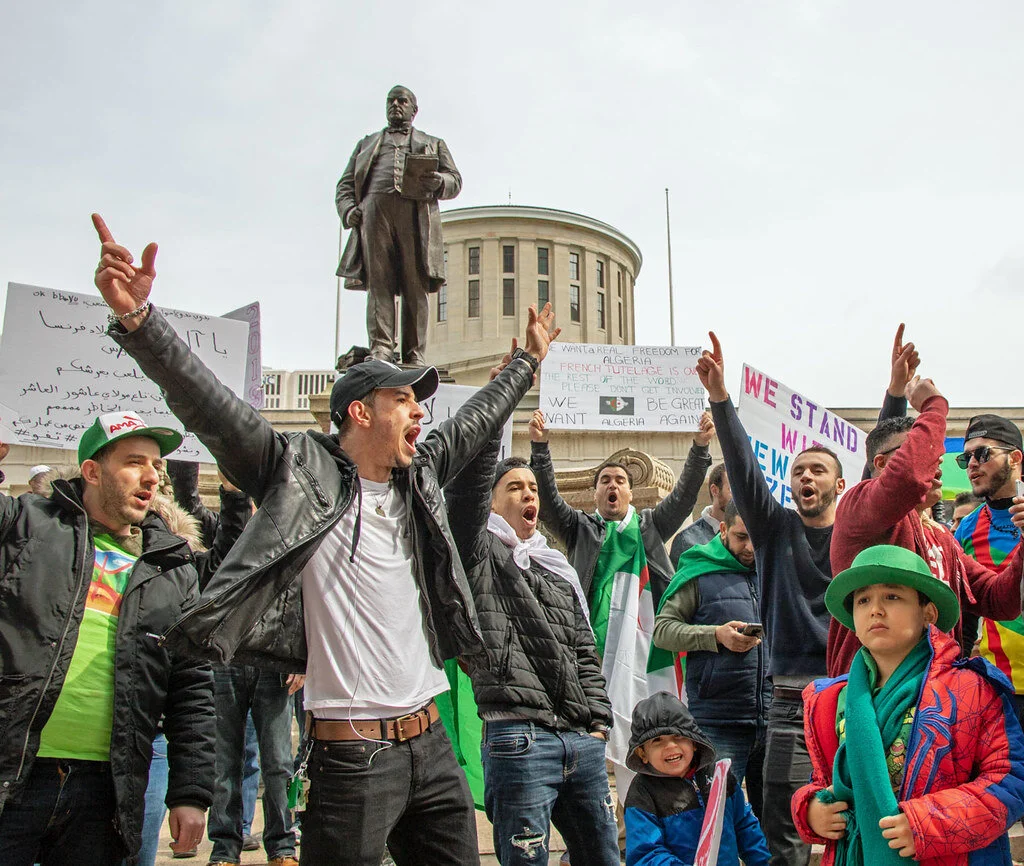
Hirak protests in Algiers. Becker. CC BY 2.0.
From 1991 to 2002, Algeria was engaged in a civil war between the government and Islamist political groups. Throughout this unrest, journalists in Algeria explored the many human rights abuses present in the country. As the war began to resolve in 1999, Abdelaziz Bouteflika was elected president of Algeria. With his 2005 Charter for Peace and National Reconciliation, he offered amnesty to groups that committed violence between 1992 and 2006. While this charter protected many Algerians from prosecution, Bouteflika also used it to restrict the press from investigating human rights violations.
Following the enactment of this charter, independent publications were allowed a modicum of freedom as they operated independently of the state. However, the divide between independent publications and the Algerian state-run media only grew as Bouteflika consolidated his power.
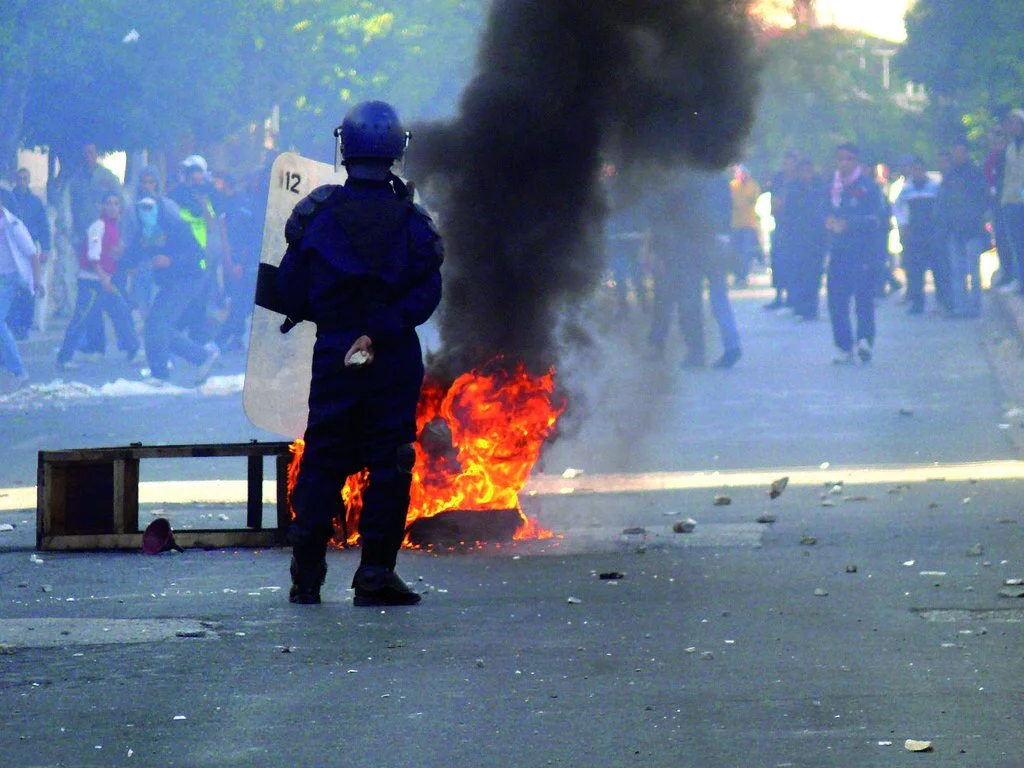
An Algerian soldier barricades a street. Magha Rebia. CC BY 2.0.
In recent years, as pro-democracy movements gain traction in Algeria, independent publications have generally been the only media covering the protests. With tensions between Algerian citizens and the government mounting over the past decade, independent publications have been increasingly villainized by the state. Using state-owned companies as leverage, the Algerian government has stripped most independent publications of their primary source of income—advertisements.
Within the past year, multiple independent media outlets critical of the regime have been blocked, including Maghreb Emergent and Radio M. Reporters Without Borders, an international organization that works to protect freedom of the press globally, now ranks Algeria 146th out of 180 countries in the 2020 World Press Freedom Index, which evaluates the degree of freedom awarded to journalists. Algeria’s ranking in this index has dropped drastically in the past five years -- in 2015, Algeria was ranked 27 places higher.
The imprisonment of Khaled Drareni only amplifies the harsh restrictions being gradually imposed on the Algerian media. In April 2020, Algeria passed a law criminalizing “fake news” to maintain “public order and state security.” This law increases the repression of journalists in an already corrupt state. With privately-owned media facing severe blockades, social media has become a driving force in disseminating information to young people across the country. Social media platforms have become a pivotal tool for activists, allowing them to coordinate nonviolent protests and spread news that is not aired on radio or television. This movement has encouraged reporters at state-backed media companies to resign and actively fight for marginalized voices to be heard. Algeria remains in a state of flux as reporters stripped of their formal platforms are actively working toward freedom of the press through alternative means of communication.

Sarah Leidich
is currently an English and Film major at Barnard College of Columbia University. Sarah is inspired by global art in every form, and hopes to explore the intersection of activism, art, and storytelling through her writing.