
While most people associate National Parks with the US, there are amazing National Parks to visit around the world. Check out glaciers, tropical wetlands, the oldest desert in the world in these parks in Iceland, Namibia, Thailand, India and more.
Read MoreInside the Lives of the American Amish
The Amish are known for their conservative beliefs and rejection of modern technology. Today, more than 300,000 Amish live in the United States.
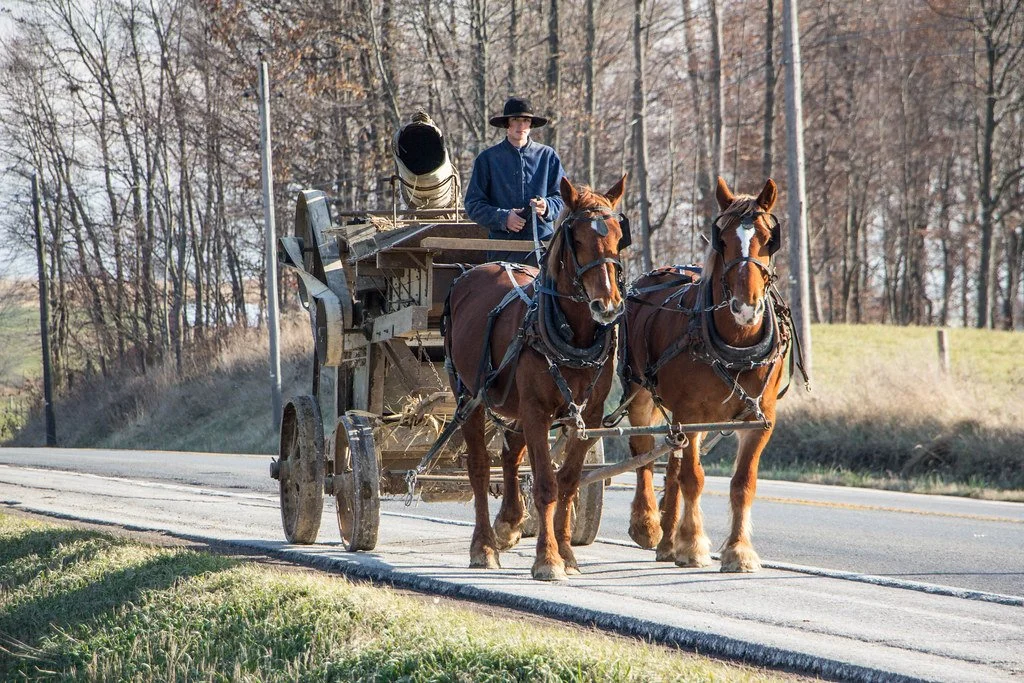
Teen Returning Home From Work. Melnee Benfield. CC BY-NC-SA 2.0
The Amish Church originated in Europe in the seventeenth century following a split from the Mennonite Swiss Brethren in 1692. This split was due to a disagreement about the treatment of members who had been found guilty in breaching the doctrine. To escape persecution, the Amish migrated to Pennsylvania in the 1730s. Today the population is an estimated 300,000 people in more than 30 states and is steadily growing due to the Amish belief that children are a blessing from God. The majority of the Amish community (62 percent) live in Pennsylvania, Ohio and Indiana. They are Christian believers who have isolated themselves from modern society and live in rural areas of the United States. They do this to keep their community from being influenced by outsiders, who they refer to as the “English.”
Family is the most important social unit in Amish culture. On average, families have seven children, although larger family units than this are common. Chores are divided traditionally by the gender binary, with girls staying and helping their mothers manage the home. If they decide to work outside the home, it is within the Amish community doing jobs like sewing, selling food in local stands or stores, waitressing, midwifing or nursing. Boys work alongside their father in farms, construction, crafting furniture, raising livestock and auctioneering. On days when they are not working, the Amish turn to sports like baseball, volleyball and basketball. Board games are also very popular among the Amish household, as well as fishing, hunting and being in community with friends and family.
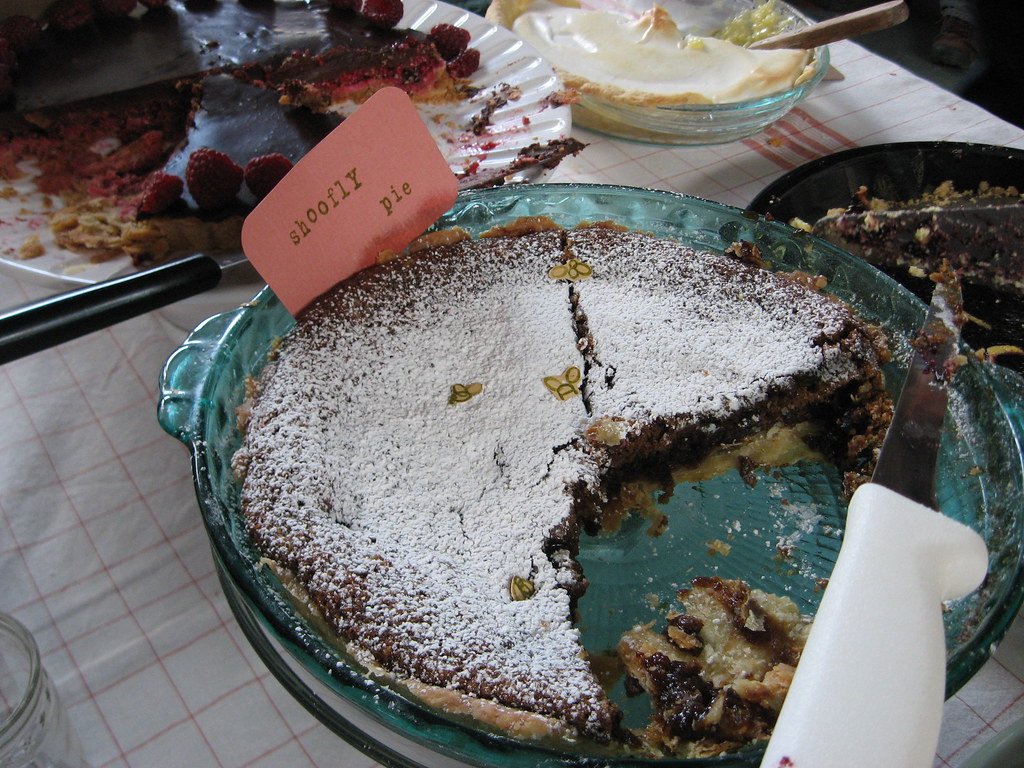
The Amish generally eat foods produced in their own gardens or on their farms. As a rule, they do not eat processed, store-bought foods. Homegrown fruits and vegetables, eaten fresh, canned or frozen, play an important part of the Amish diet. Vegetables often found in their meals include peas, corn, zucchini, beets, beans and rhubarb. Meals are designed to sustain hardworking lifestyles. The women in the community are known to bake cakes, pies, cookies and bread. An Amish dessert favored by many is Shoofly pie, typically composed of flour, brown sugar, water, spices and egg. The pie is topped with crumbs and served in a flaky pie crust. Shoofly pie is similar to coffee cake, but with a gooey molasses bottom.
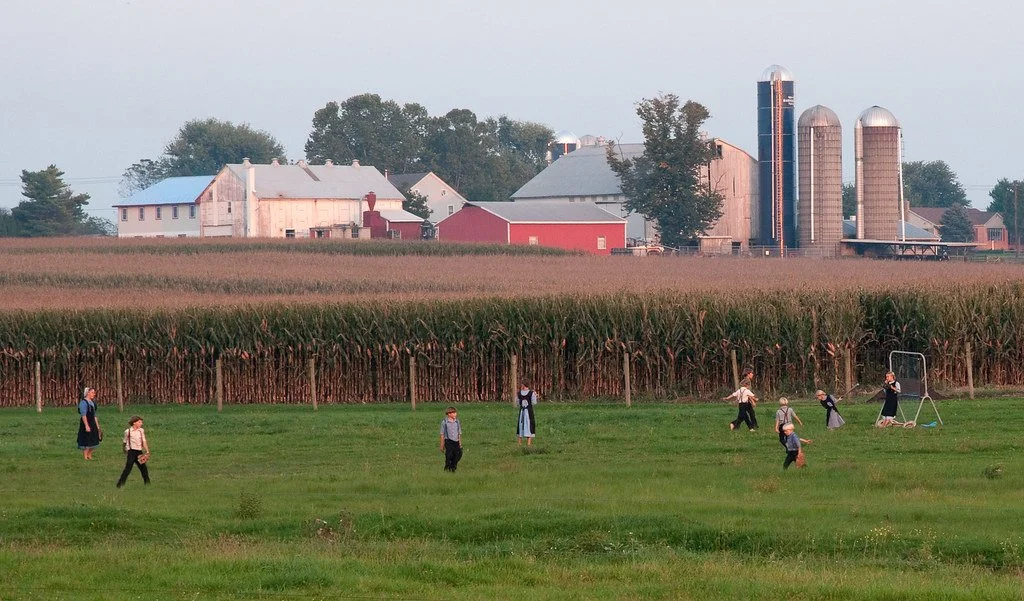
Kids of All Ages Playing Baseball. Bob Jagendorf. CC BY-NC 2.0
Education in the Amish community begins at the age of six (first grade) and culminates at 13 (eighth grade). Children are taught in a one-room schoolhouse, usually within walking distance of their home. The classroom is composed of 30-35 children, many of which are siblings or cousins. The day begins with Bible reading, hymn singing and reciting the Lord’s Prayer. At the end of the morning routine, the basics are taught: writing, math, history, arithmetic and English. The students’ first language is Amish German dialect, then English is learned at school. The teacher or teacher’s aide will circulate the room teaching individual grades while the other grades read or prepare for their time of teaching. Higher education is discouraged, as it could lead to leaving the Amish community and influencing others to do the same. Amish children are exempt from state compulsory attendance beyond the eighth grade based on religious principles.
The Amish reject modern technology as it can open the door to temptations and change their traditional lifestyle. Instead, they choose to live simple lives and are self-sufficient. The Amish farm and produce everything they own and ride a horse and buggy or a bike to travel around the community. However, there is a time when Amish youth can decide whether or not they would like to continue living within the community. This is a season where rumspringa, a German term for running around, takes place. At the age of 16, parents allow the teens to fully experiment with the outside world and activities, which would otherwise be condemned and result in shunning. Due to the fact that individuals aren’t baptized, teens are not yet under the church authority. This is part of the reason why they are given a pass. This experience lasts two years and 90 percent of teens return home.
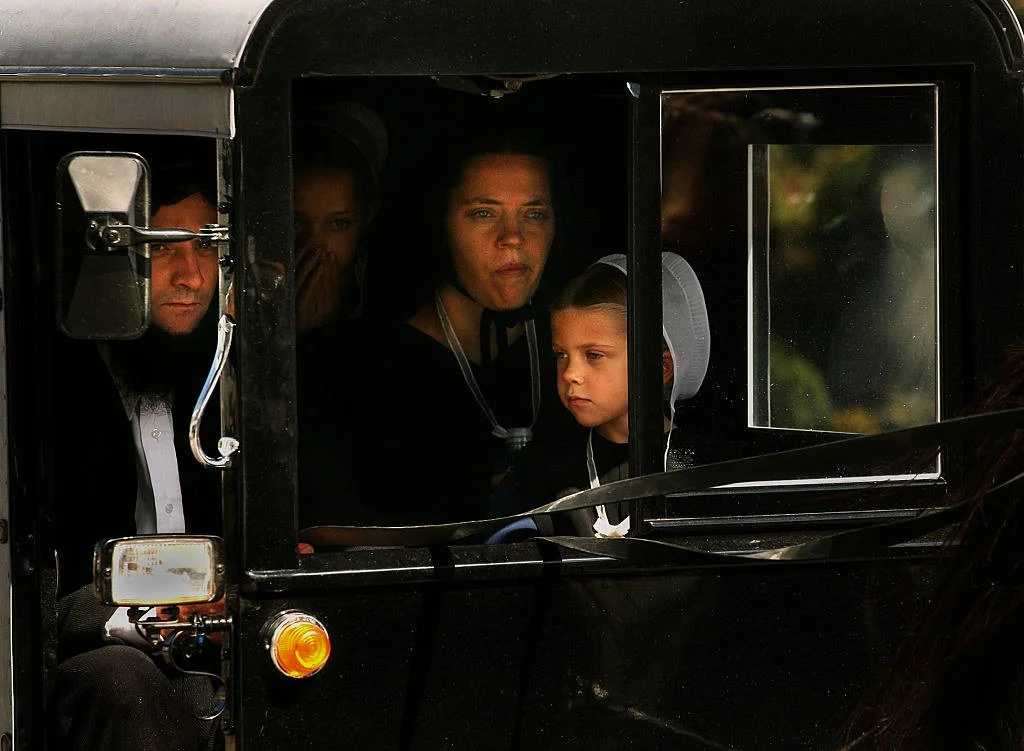
Amish Family on a Horse and Buggy. Brucedetorres. CC BY-PDM 1.0
After arriving more than three centuries ago, the Amish have sustained a private life from the outside world. Not allowing many into their community has resulted in the preservation of their beliefs and isolation. The Amish continue to live in the US with two new recent settlements, Argentina and Bolivia.

Jennifer Sung
Jennifer is a Communications Studies graduate based in Los Angeles. She grew up traveling with her dad and that is where her love for travel stems from. You can find her serving the community at her church, Fearless LA or planning her next trip overseas. She hopes to be involved in international humanitarian work one day.
10 Miles From Their Past: Za’atari Syrian Refugee Camp in Jordan
Jordan opened the Za'atari refugee camp in 2012, which has now gradually turned into a permanent settlement. Za’atari is home to an estimated 80,000 refugees, more than half of which are children.
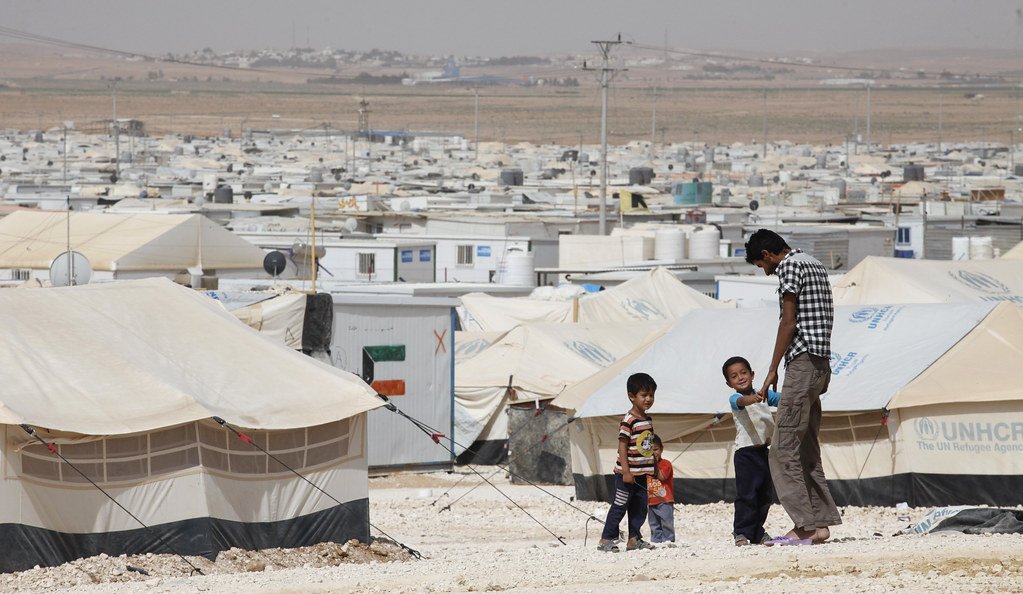
Less than 10 miles from the Syrian border sits the Za’atari refugee camp in Jordan’s desert. A camp that began as a collection of tents has now become an urban settlement with thousands of portacabins. At its peak, Za’atari hosted 150,000 refugees, today the camp hosts 80,000. For many it’s the closest thing to home, however many still struggle to find work to make a steady income.
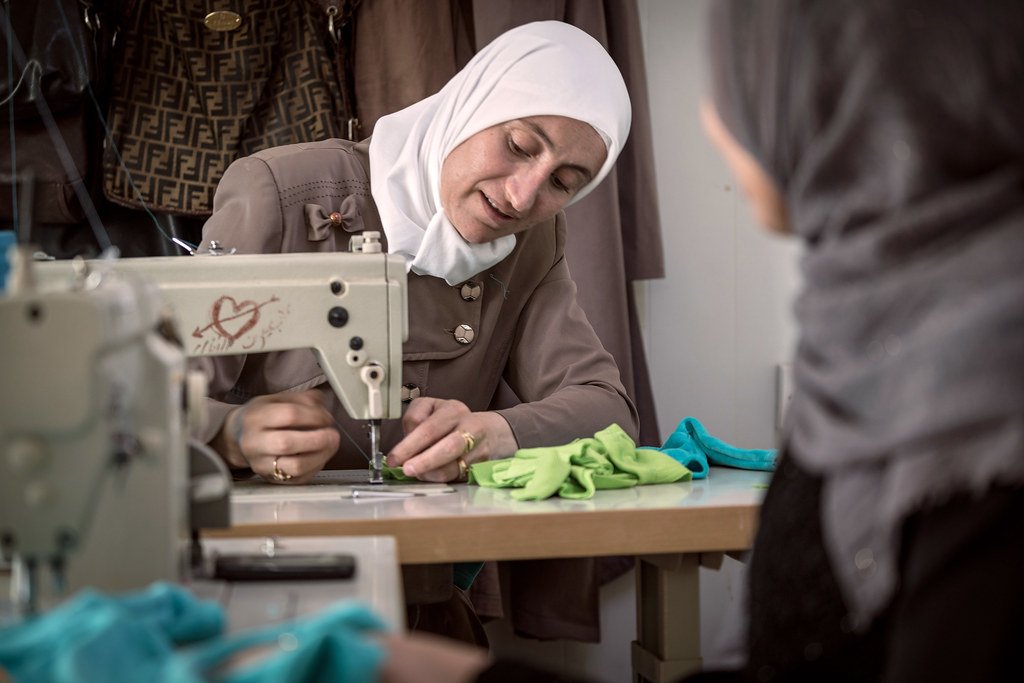
Syrian Refugee Learning To Sew. UN Women Gallery. CC BY-NC-ND 2.0
The Za’atari refugee camp has all of the components that make up a city, including 32 schools, 58 community centers and eight medical clinics. Despite all of this aid, there are still insufficient resources for the influx of refugees housed there. Less than a fifth of the population has current work permits. Many men work illegally to support their families. Many women are excluded from employment and have to fight against social norms that call for them to stay home. However, the camp has provided classes geared towards women to teach them basic skills to help them earn an income. The benefits of these classes is to restore routine in their lives, fight off cultural norms and aid in their mental healing. It also helps them regain purpose and become self-sufficient.
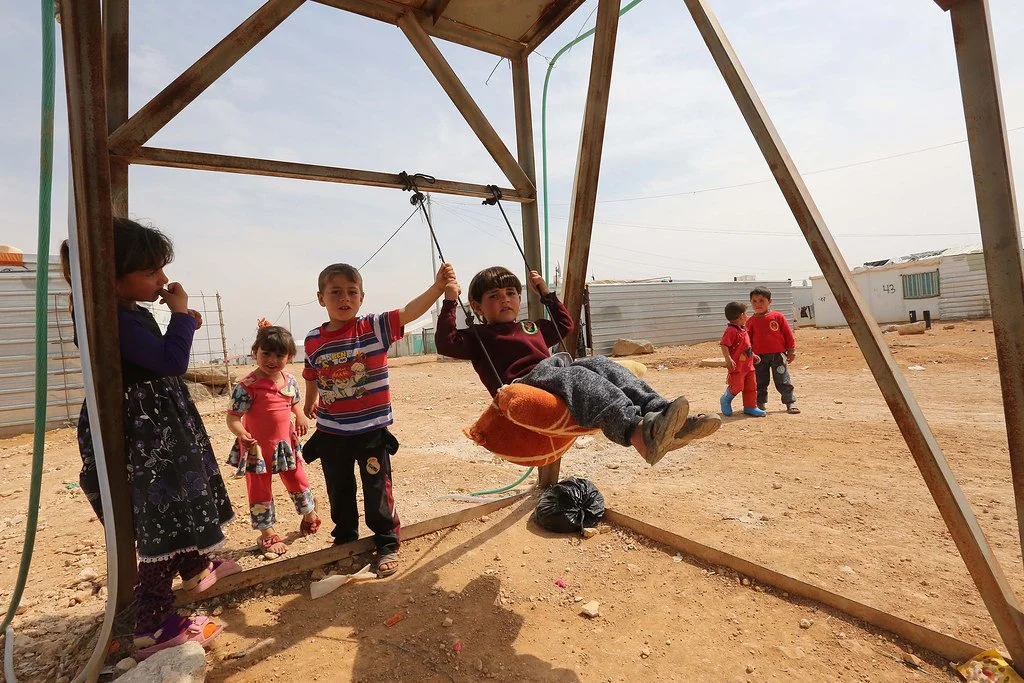
Children make up 58% of the population in Za’atari and an estimated 22,000 children are enrolled in school. They attend makeshift classes, but organizations are calling for an increase in financial aid. There is a need for more trained teachers and improved safety measures to facilitate the children’s access to class. Many girls face harassment and abuse as they walk to classes or as they walk back home. In addition, there’s a lack of resources for the children that need extra support in learning the material. The civil war has impacted where the children stand against their global peers in regards to education. Half of Syrian middle school-aged children are unable to read at a second-grade level and an average of 59% of middle school students could not do a second-grade math problem. In addition, only 1% of youth pursue higher education due to difficulty in obtaining transcripts, unfamiliar entrance exams, a language barrier and lack of funds.
The trauma experienced by both adults and children from the war and subsequently the resettlement process into another country, has led to a serious impact on the mental health of refugees. More than three-quarters of Syrian refugees have mental health symptoms. The violence, killings of loved ones and peers, destruction and frequent fear for their lives has caused PTSD, depression and anxiety, as well as intellectual and cognitive difficulties. To escalate the situation, there’s a stigma towards individuals with mental illness in Middle Eastern countries. Therefore, not many express the difficulties they face and the trauma they have experienced. The Za’atari camp offers mental health aid to the individuals and guides them towards healing so they are able to lead productive and mentally stable lives in the future.
The cost of keeping the 530-hectare camp operating every single day costs $500,000. Each person in the family (regardless of age) receives JOD 23 ($32) a month to cover food expenses. The money can be used in the two contracted supermarkets (Safeway and Tazweed) located in the camp or the four bread selling points. This allows the camp refugees to choose from a variety of produce to feed their families, bringing a sense of normalcy. Moreover, each family also receives 35 liters of water a day used for cleaning, drinking, eating and flushing the toilet. The water is filtered and chlorinated to meet the standards of tap water across Jordan. Water is brought in by dozens of tanker trucks or pumped from desert boreholes that directly feed water to the porta cabins. Electricity is provided through the solar power plant in Za’atari and has eased families' living conditions in the camp. It has improved their safety and security while facilitating food storage and allowing children longer hours to do their homework. The plant has helped save $5 million per year in electricity bills.
The Za’atari camp is a safe place where many aid workers and volunteers live. However, many forms of crime still exist: theft, violence, smuggling. Crime erupts as people are frustrated with their living situation and the limited resources available to them. There is little formal employment available within the camp. This results in refugees selling personal items, supplies received from organizations and, at times, prostitution. A young refugee girl said that she sells her body to support her family back home during the war. She makes, on average, $70 a day and although she fears persecution by Jordanian authorities, she explains that it’s her only way to help her family. Prostitution in Jordan is illegal and punishable. If foreign women and men are found guilty, they can be deported. Desperate families will at times sell their young daughters and forcefully marry them to men in the refugee camp.
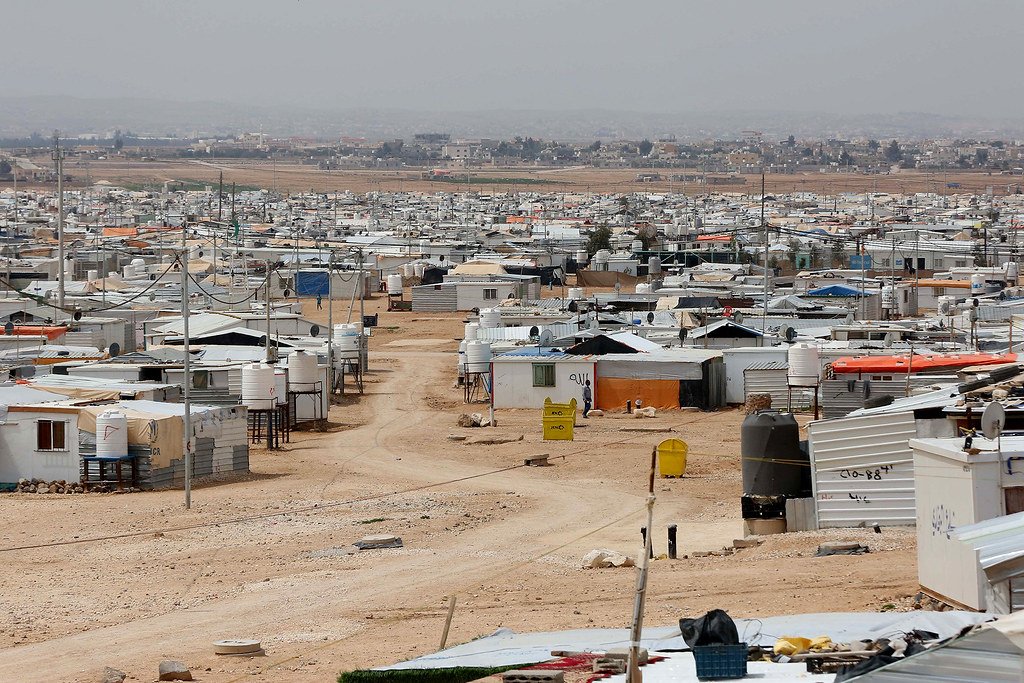
The camp will continue to host and support refugees through education, livelihood opportunities and work permits. This will alleviate the trauma and circumstances lived by many Syrians. The Za’atari leaders hope to return a sense of dignity to the refugees and bring opportunity to the camp inhabitants with the resources provided.
To Get Involved
UNHCR helps provide aid to Syrian refugees who have fled. They provide shelter kits and non-food items as well as protection services and psychosocial support to those who remain in Syria.
To learn more about UNHCR click here.
To support the Syrian refugees through UNHCR click here.
RELATED CONTENT:
PODCAST: Exploring Jordan with Yulia Denisyuk

Jennifer Sung
Jennifer is a Communications Studies graduate based in Los Angeles. She grew up traveling with her dad and that is where her love for travel stems from. You can find her serving the community at her church, Fearless LA or planning her next trip overseas. She hopes to be involved in international humanitarian work one day.
Living in Fear of Persecution as an Albino in Africa
There are many challenges for the Albino Community in Africa including discrimination, social exclusion and neglect.
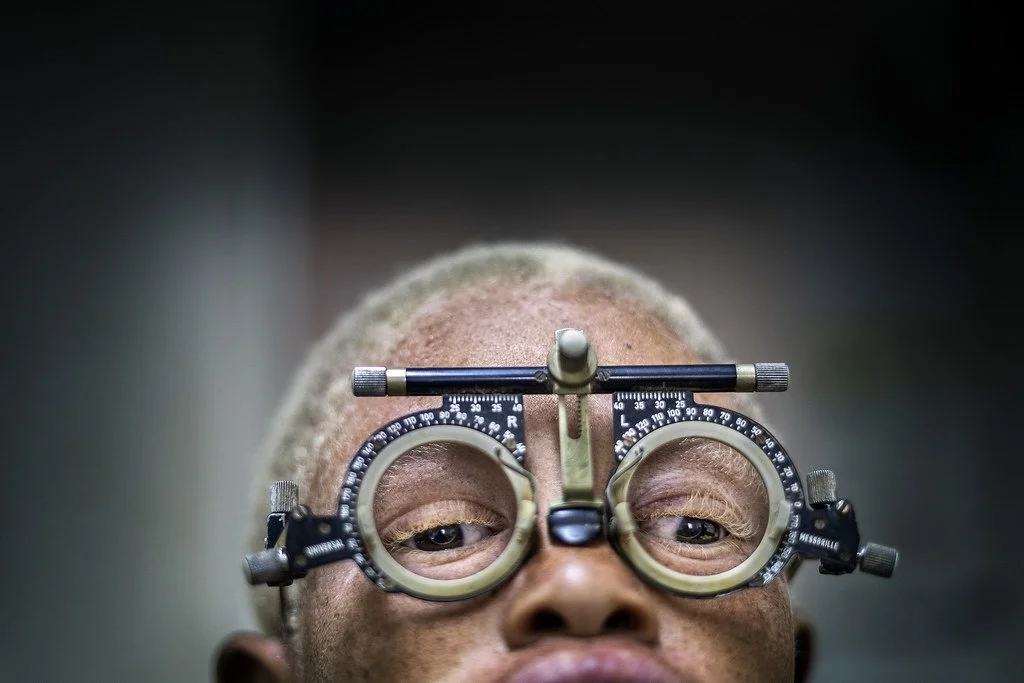
Albino Child Getting His Vision Checked. IAPB/VISION 2020. CC BY-NC-SA 2.0
Albinism is a genetic disorder resulting in decreased production of a pigment called melanin. It affects the skin, hair and eyes, resulting in light color or no color. One in 1000 Africans have albinism, while in the United States it affects one in 20,000 Americans. People with this genetic disorder have been discriminated against and persecuted in Africa. Children with albinism are sought after for their limbs because witch doctors believe their bodies harness magical powers. Due to the extreme measures witch doctors use to attain children and adults, people with the genetic disorder (albinism) are sent to protection centers.
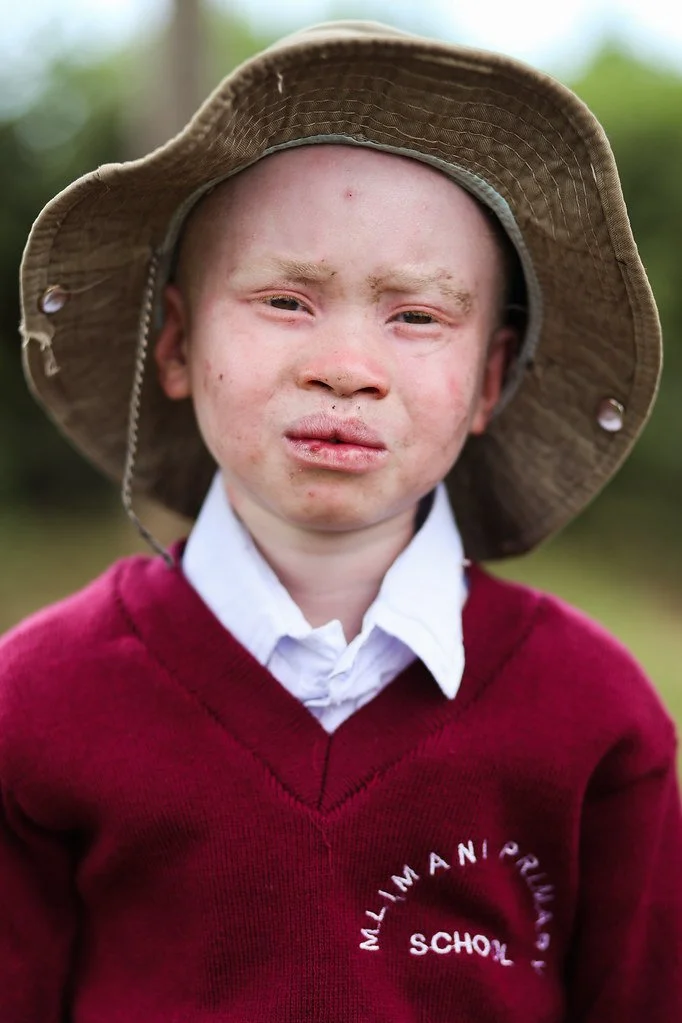
School Boy with Albinism. ViktorDobai. CC BY-NC 2.0
More than half of the African population believe in witchcraft. Families with children or members who have albinism are oftentimes frowned upon and members of the community believe that albinism is a result of being cursed. Many women are rejected by their partners after giving birth, husbands believing their wives had affairs with white men. Oftentimes, families don’t want to be associated with those superstitions and abandon their children. The rejection continues in school. Children face teasing and discrimination by their peers, and this affects the development of positive self identity. Research has shown that teachers and school administrators lack the specific educational needs and resources for children with albinism. The absence of support and care, drives up rates of truancy among these children. Adults face descrimination as well, especially for individuals living in rural areas where superstitions are heightened. Due to poverty and the need for education, many with the genetic disorder are illiterate and are forced into menial jobs, exposing them to the sun and skin cancer. Those who manage to finish school face discrimination in the work place and are rarely considered for promotions.
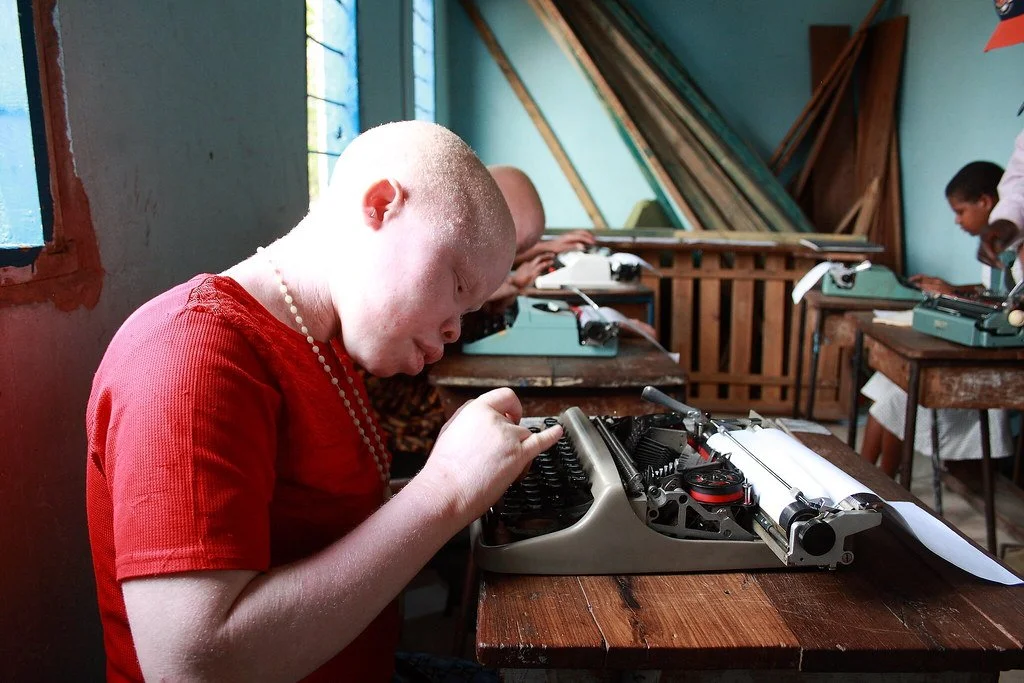
Teenage Girl Learning to Type. Alex Wynter. CC BY-NC-SA 2.0
Albino children and adults live in constant fear of being assaulted, kidnapped, murdered or having their limbs cut off. Witch doctors are common in Africa and believe that albino limbs mixed with magical potions are powerful. This belief is prevalent among many rural communities, even in politicians looking to win prospective elections. Witch doctors convince clients that bones and other organs of people with albinism will bring wealth, success and love to their lives. With this belief, clients pay up to $75,000 USD for an albino corpse while limbs can sell for $2,000 USD. For albino women, rape is prevelant. Women and girls are assaulted in the belief that intercourse with them can cure diseases, including AIDS.
As a result of these attacks, protection centers and boarding schools have been created for the safety of albino children. For example, the Buhangija Centre in Shinyanga, Tanzania. The center houses more than 300 children and protects them with guards who stand in front of the gates 24 hours a day. Only families and people who have been given government authority can enter the premises. The school provides an education, dormitory and meals free of charge. Although they provide safety and isolation for the children, the school headmaster Silliman Shabali Cabanya acknowledges this is not a long term solution. He believes society needs to be accepting and allow people with albinism to lead normal lives alongside other members of the community. He says, “keeping them hidden behind high walls and barbed wire is damaging for their development and long term psychological health.”
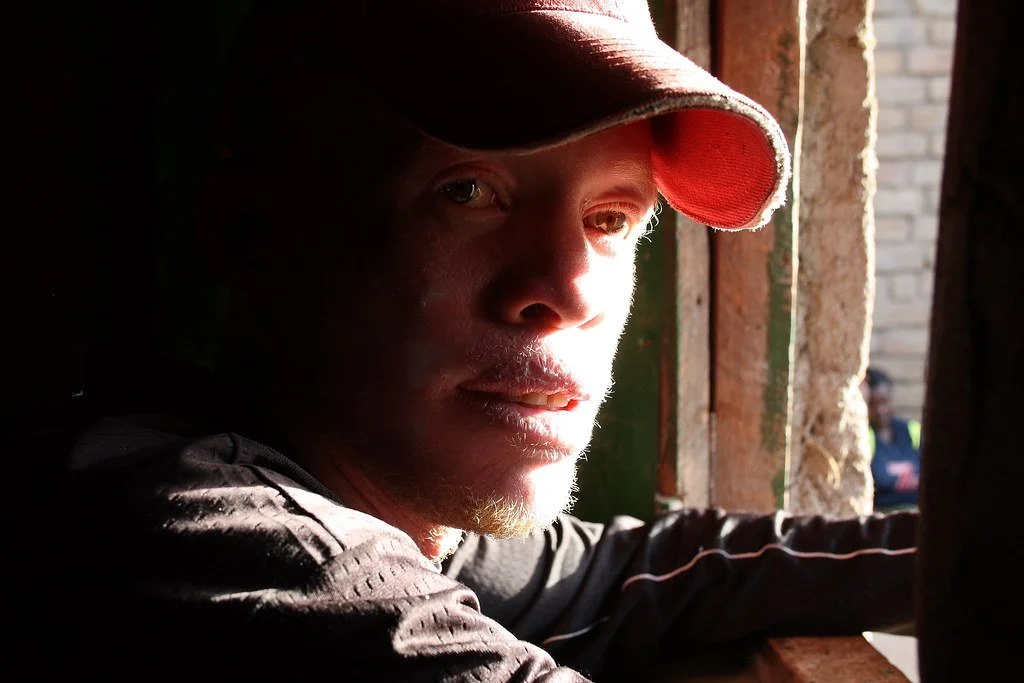
Young Man Protecting Himself From The Sun. Alex Wynter. CC BY-NC-SA 2.0
Lack of resources are the driving force in the preventable deaths witnessed yearly. Nine out of 10 people with albinism die between the ages of 30-40 due to skin cancer and the absence of sunscreen, hats, sunglasses and eyeglasses. The sun is extremely harmful to their skin and many don’t wear sunscreen because of its high cost. A sunscreen bottle can cost $14 - $19 USD depending on the African nation, about a sixth of the average monthly income in Senegal. In Zambia, medicine can be imported without being taxed, but sunscreen is considered a luxury cosmetic. It remains expensive and subject to tax, says John Chiti, executive director of the Albino Foundation of Zambia. There are some people, like 13 year old Chisha, who didn’t know what sunscreen was until he was admitted to the hospital for skin cancer. Currently, there is no policy that urges the government to produce or distribute sunscreen to people living with albinism. For those who can’t afford it, current solutions include wearing long sleeve shirts and trying to stay indoors as much as possible.
With so many attacks and discrimination taking place against the albino community in Africa, a significant milestone took place last month. Malawi Parliament welcomed the country’s first albino lawmaker, Overstone Kondowe, telling the press, “the victory is a clear demonstration that people are changing their attitudes.” Kondowe will be the first lawmaker to fund a national action plan on albinism.
To Get Involved:
Beyond Suncare is an organization that creates sunscreen for the albino community in Africa and distributes it to rural areas. They help educate and bring awareness to this genetic condition while employing 30 percent of local staff with albinism. To learn more about Beyond Suncare click here.
To support the albino community in Africa click here

Jennifer Sung
Jennifer is a Communications Studies graduate based in Los Angeles. She grew up traveling with her dad and that is where her love for travel stems from. You can find her serving the community at her church, Fearless LA or planning her next trip overseas. She hopes to be involved in international humanitarian work one day.
Where to Travel in 2022
Check out these 20 destinations to consider for your 2022 travel plans. From the Rainbow Mountains of Peru to the Northern Lights of Norway, you will find adventure and more visiting these CATALYST picks.
Read MoreSouth India on Foot: Breaking Stereotypes One Step At a Time
We all have images in our minds about faraway places and the people that occupy them. Whether accurate or not, these ideas are often put in our heads by the news we consume, school textbooks or social media.
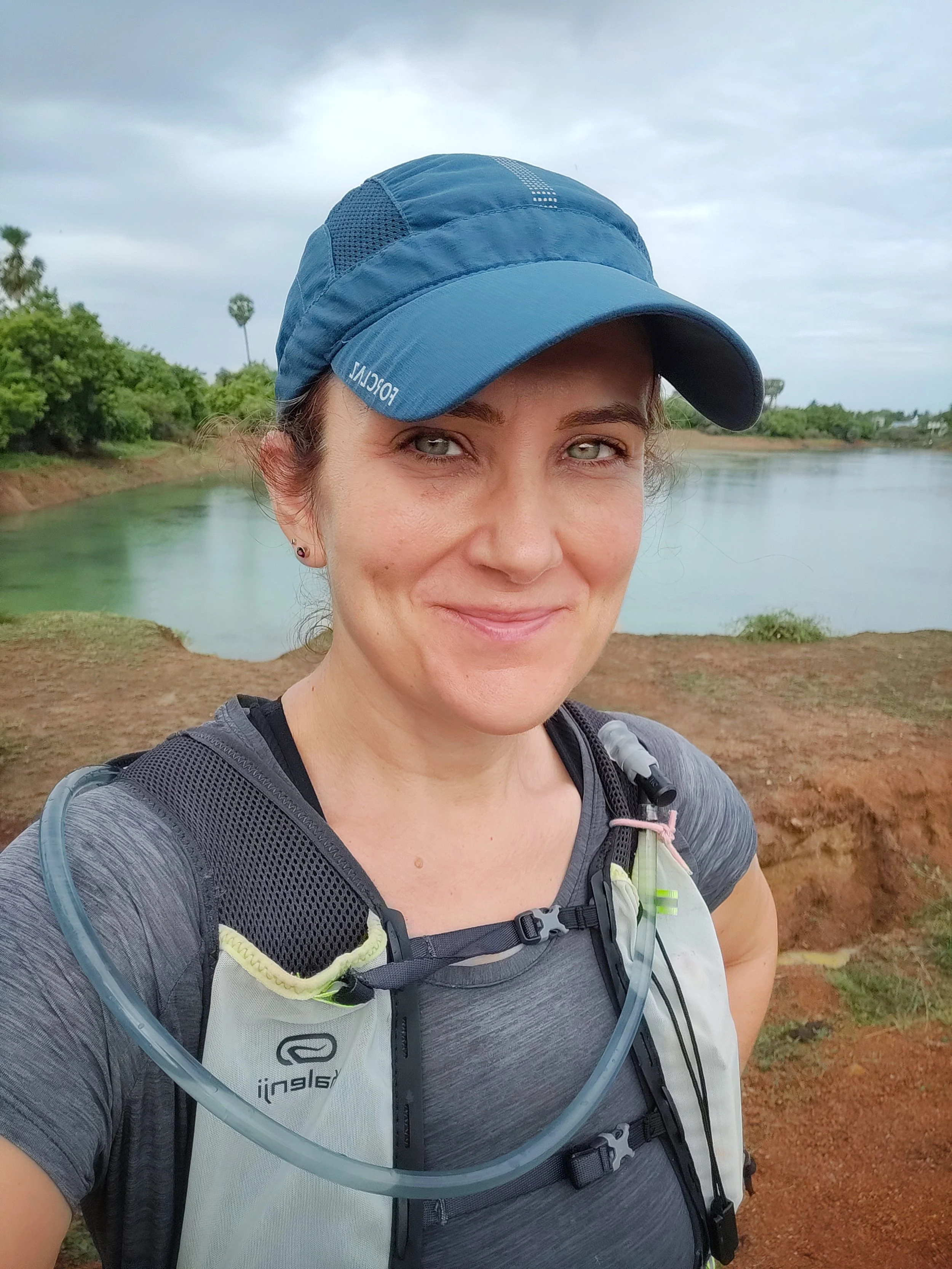
Dawn Lwakila exploring bush-trails in India’s rural Tamil Nadu
I’m one of those folks who likes to go and see for herself. I’ve spent the past 30 years living and traveling across four continents. My roots are in northern Canada—Yukon to be exact. Many would think this to be the absolute opposite in every way from my current home in the big bustling city of Chennai, the capital of India’s southern state, Tamil Nadu. Fortunately, I live on the outskirts of the city which enables me to get into the countryside fairly quickly. I believe it is my small-town roots that have allowed me to feel comfortable and at home in rural settings here in India.
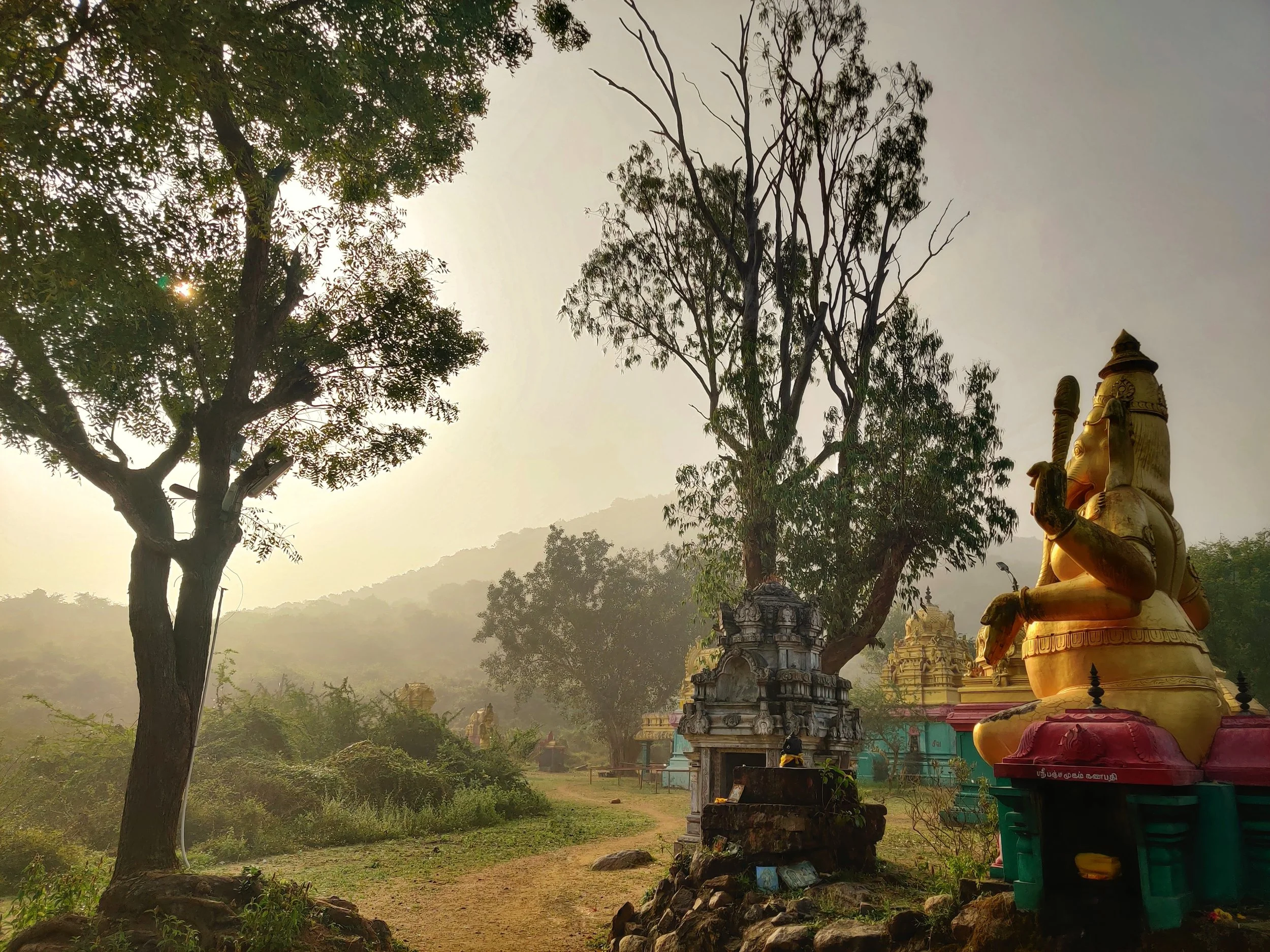
Ganesh temple in Tamil Nadu’s Chengalpattu District.
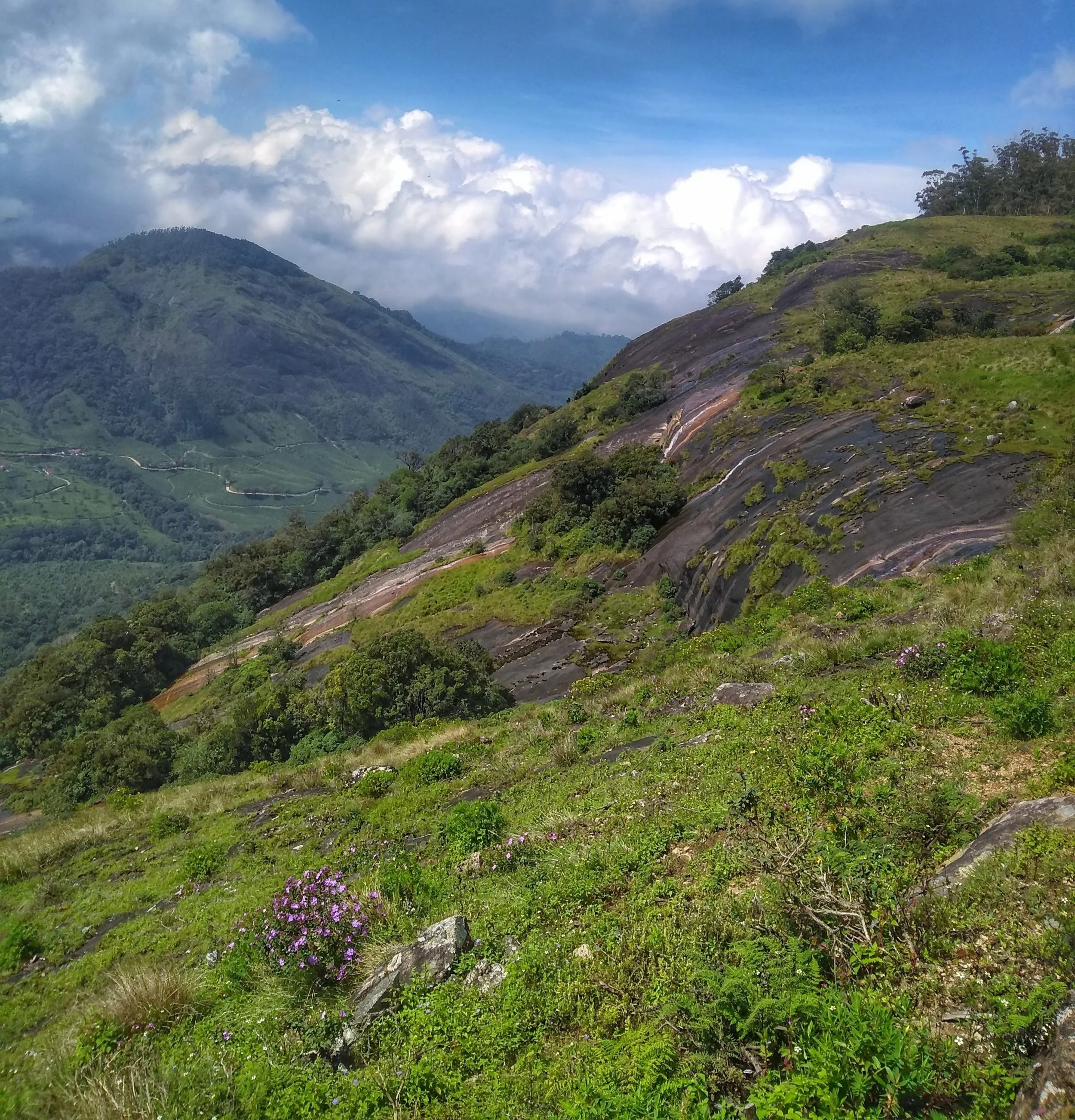
I love wandering the dreamy hills of Munnar, Kerala.
I’m a wanderer at heart, and I am happiest walking from village to village, hilltop to hilltop. Some days I only walk 15km and other days I may walk more than 40km. I take backroads and bush trails, all the while documenting what I find beautiful with a few photos and videos, posted almost daily on my Instagram. Photography is a wonderful form of storytelling and the tale that I aim to tell isn’t often heard. I have been warned countless times not to walk alone in India. From mainstream media, I have been inundated with images representing India as a place of filth, overcrowding and crime. This has not been my experience.
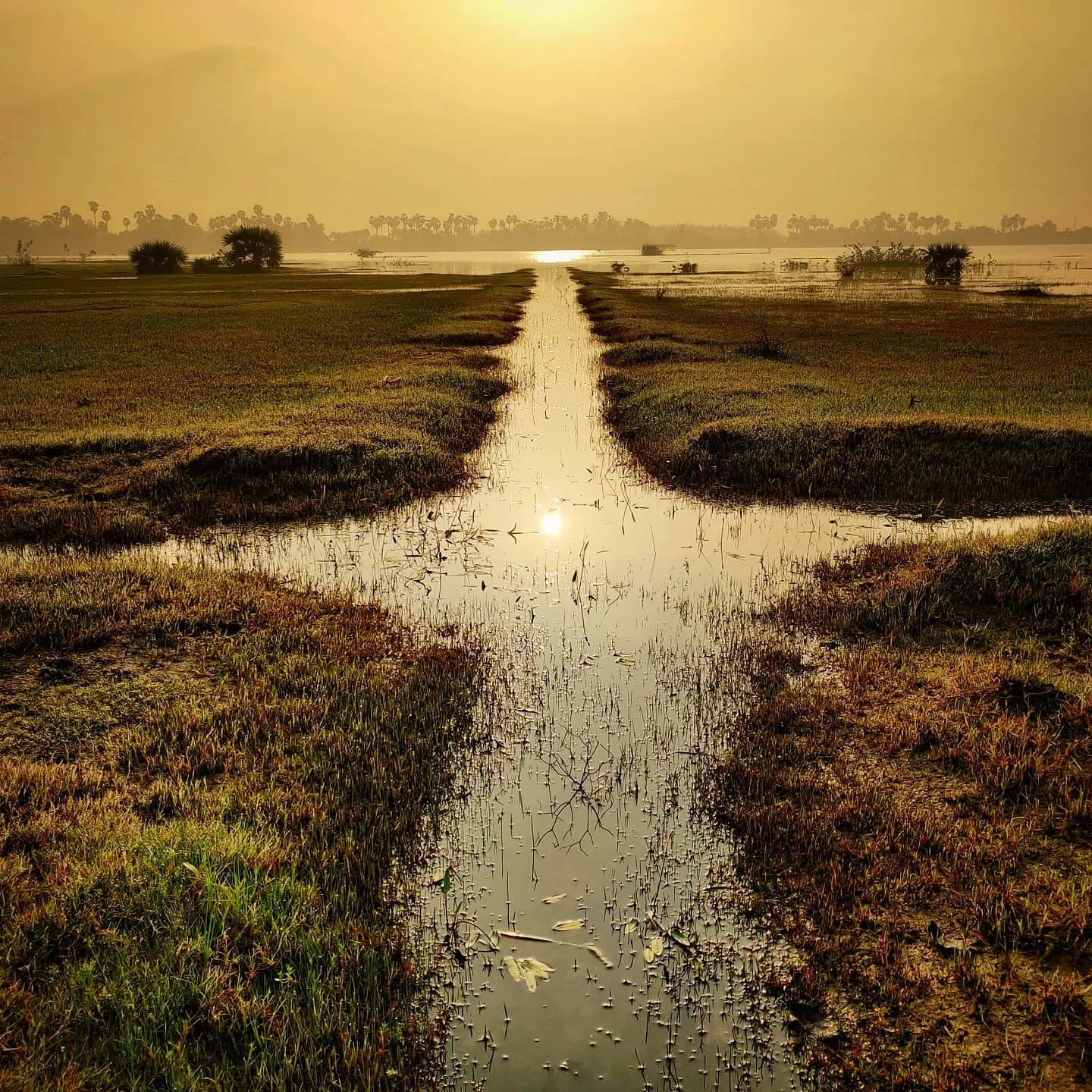
Mambakkam Lake, Tamil Nadu. I love to leave my house while it’s still dark so that I can reach these magnificent locations at sunrise.
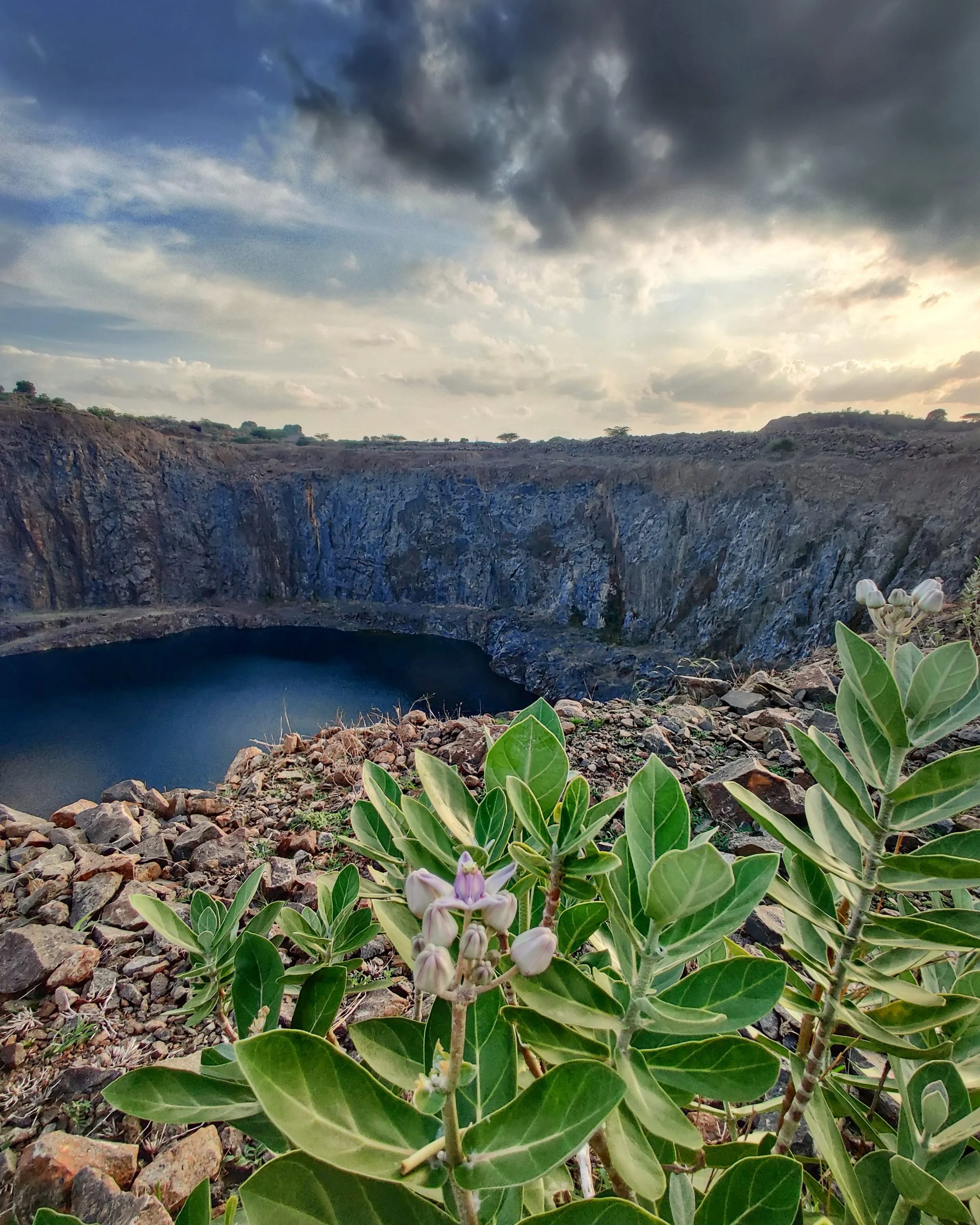
My secret swimming hole.
Over the past several years I have walked through much of South India exploring my home-state of Tamil Nadu as well as Kerala, Karnataka and Andhra Pradesh. There has not been a single incident where I felt threatened or unsafe. Rather, I have been greeted with nothing but kindness and hospitality. I have walked through bustling cities, endless kilometers of road and countless areas of pristine natural beauty, enjoying the entire place all to myself.
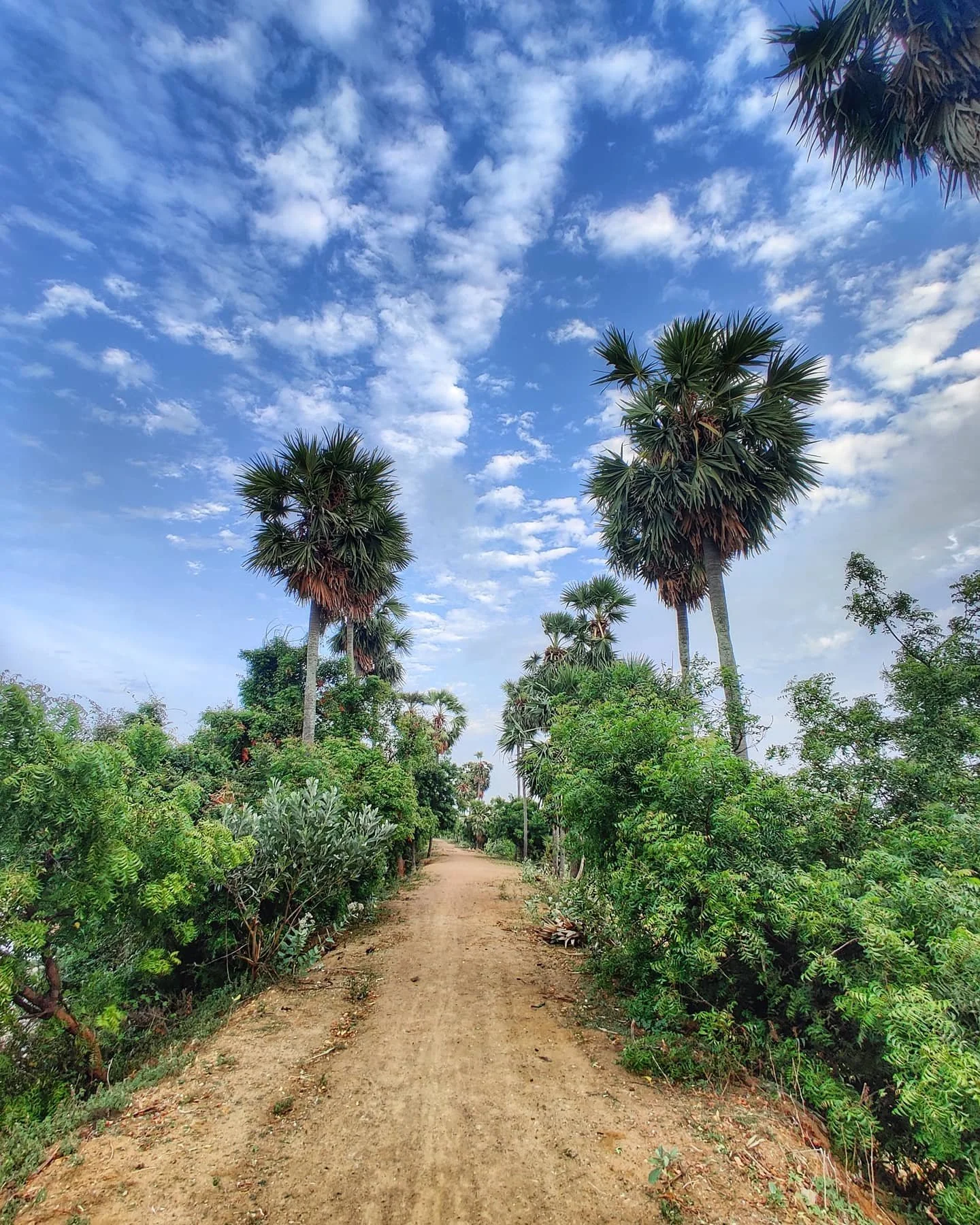
Following back-roads in Chengalpattu, Tamil Nadu.
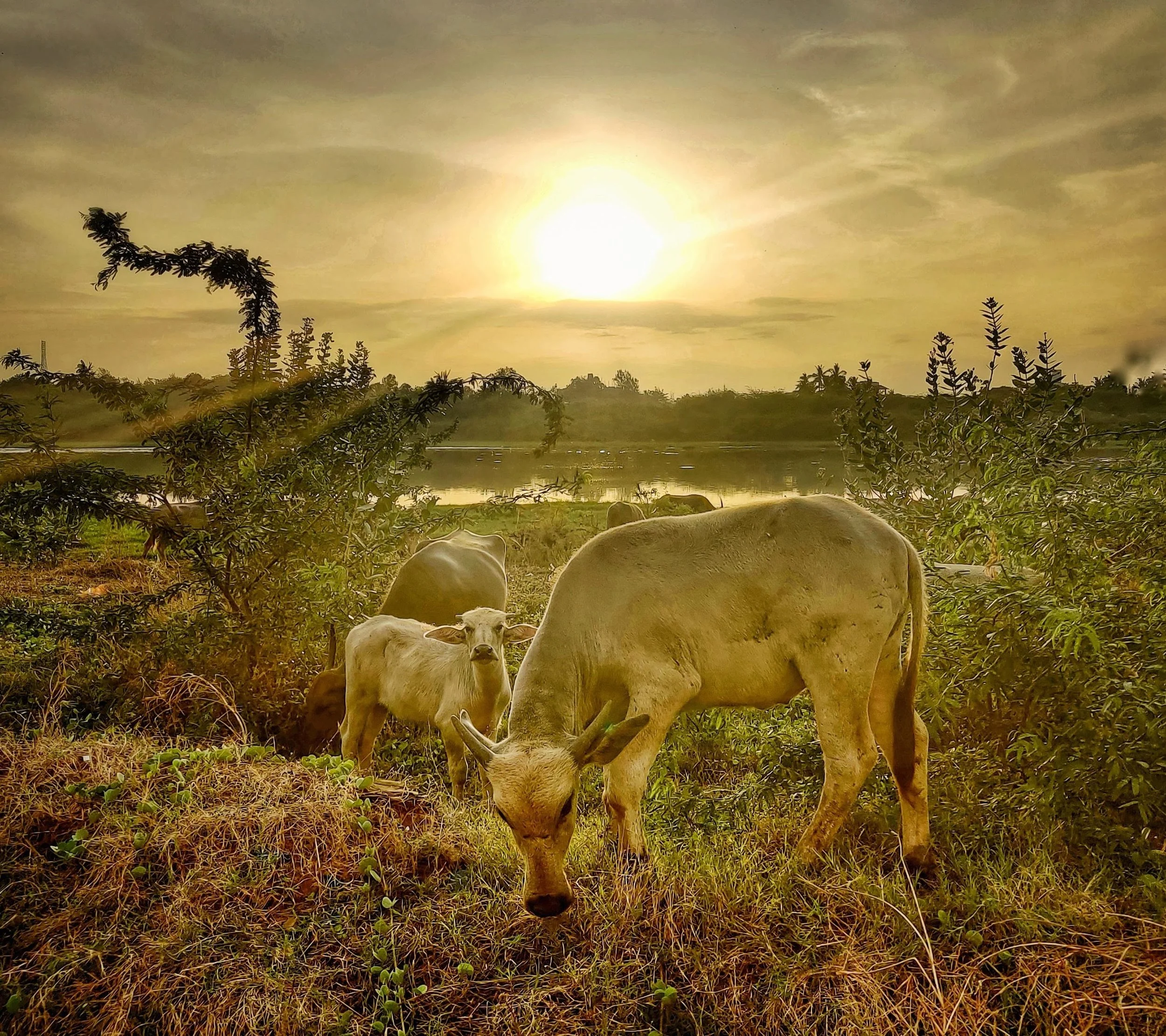
Golden buffalo babies at sunrise.
I choose to go to locations that are off the beaten path. I search Google Maps for interesting features in the landscape and simply go check it out. One of my favorite things to do is follow small backroads from village to village. I cut through farmland and learn when each of the crops is planted and harvested. I find wondrously forgotten temples, tucked away in forests or on hilltops, unvisited except by a few folks from nearby settlements. I prefer to see life slowed down and simplified. For me, rural India offers the most incredible scenery where I am always bound to meet kind-hearted people who offer me smiles, refreshments and places to rest my tired feet.
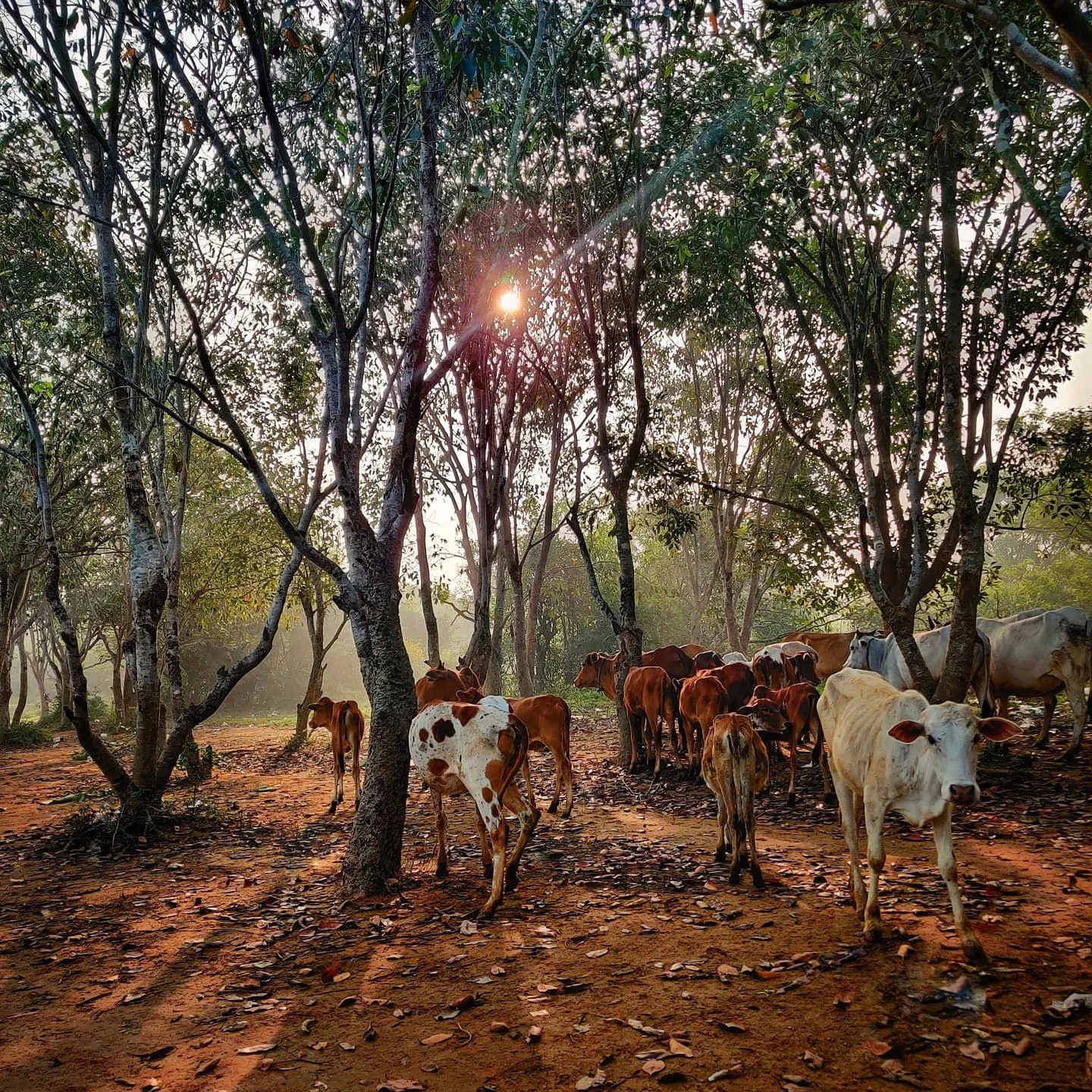
Misty morning, cutting through the forest at sunrise to find a hidden lake.
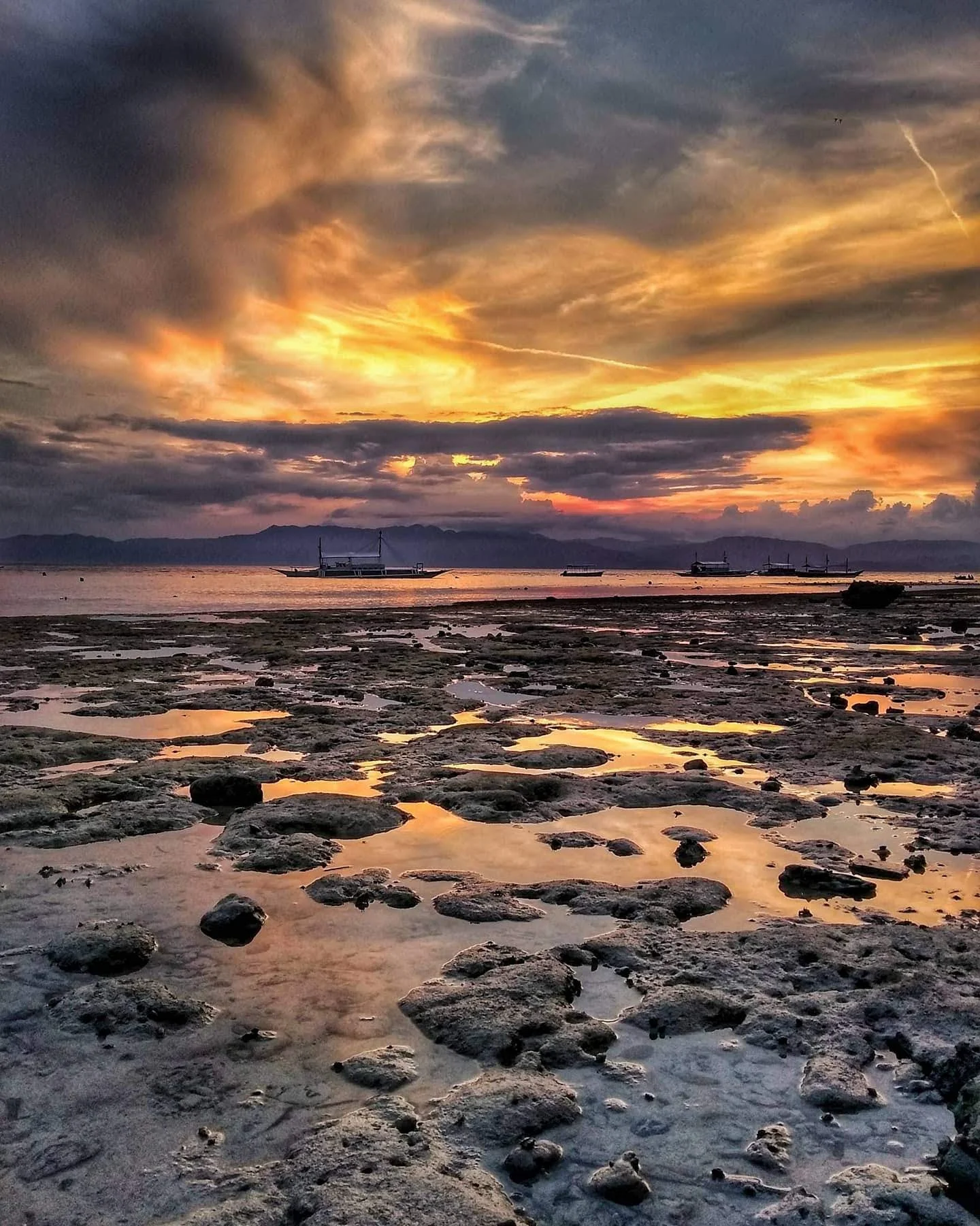
Enjoying the coast of Kerala after trekking the highlands.
I feel so grateful for the sense of pride in the beauty of South India my photography has sparked. Many people, especially in the cities of India, have their eyes fixed on international destinations. When they look at tourism in India they often head to large resort towns or famous national parks. There is a sense of surprise when people see my images and learn of places in their own backyards that rival these famous destinations. I have received both local and national media coverage, which boggles my mind, but I guess this is because I’m doing something that the majority of women are not doing and, with a fresh set of eyes, I’m showcasing humble locations that are largely overlooked.
The comment I get the most from people who have never visited India is, “This is not how I pictured India to be.” For me, this is the greatest compliment, as it means that people are reevaluating the impressions they have about this country that is so dear to my heart.
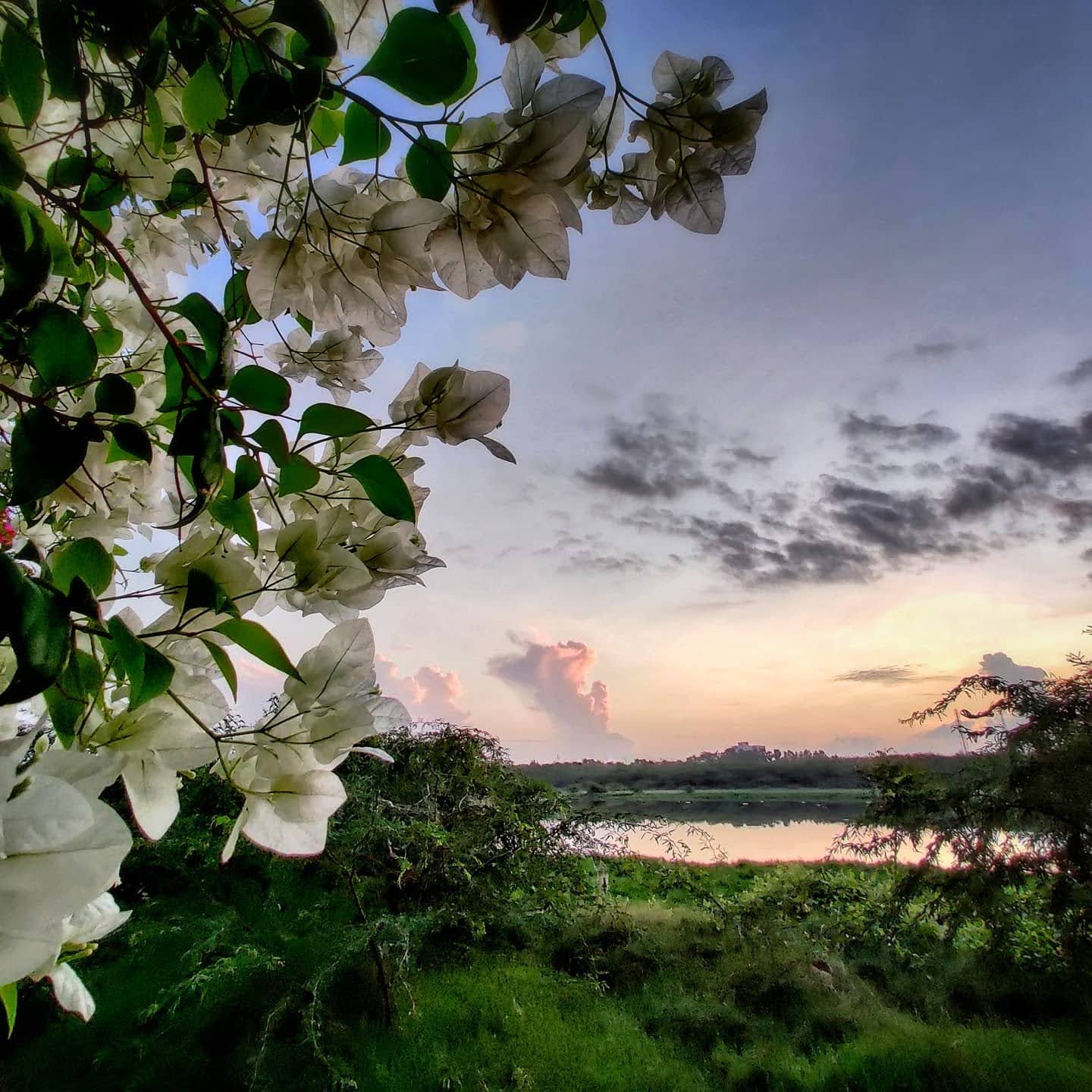
Muttukadu Backwaters at sunrise. This is an important nesting and feeding area for both local and migratory birds.
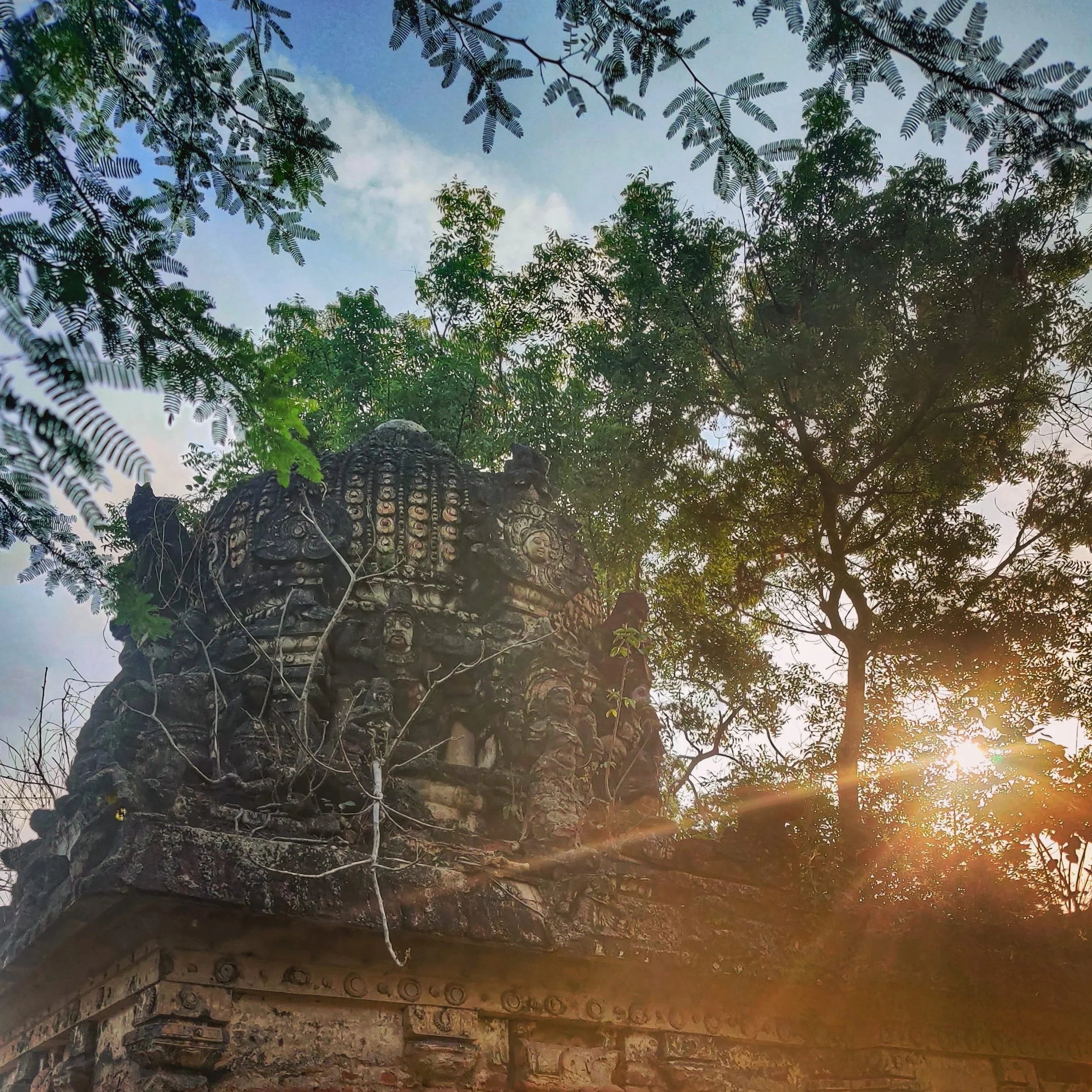
An old neglected temple in Kanchipuram District of Tamil Nadu.
I like to approach new places with the idea that I’m a simple student and that those around me have something of value to offer. Trying to absorb as much as I can, I chose to share through my photography what intrigues and inspires me. I look for a sense of belonging and what connects me to others. Over the years I have learned that despite the superficial things that mark our differences—language, religion, politics—there is much more that unites us as humans. Step by step I find that all my previous notions about a place are left behind, replaced by a much more balanced and authentic understanding.
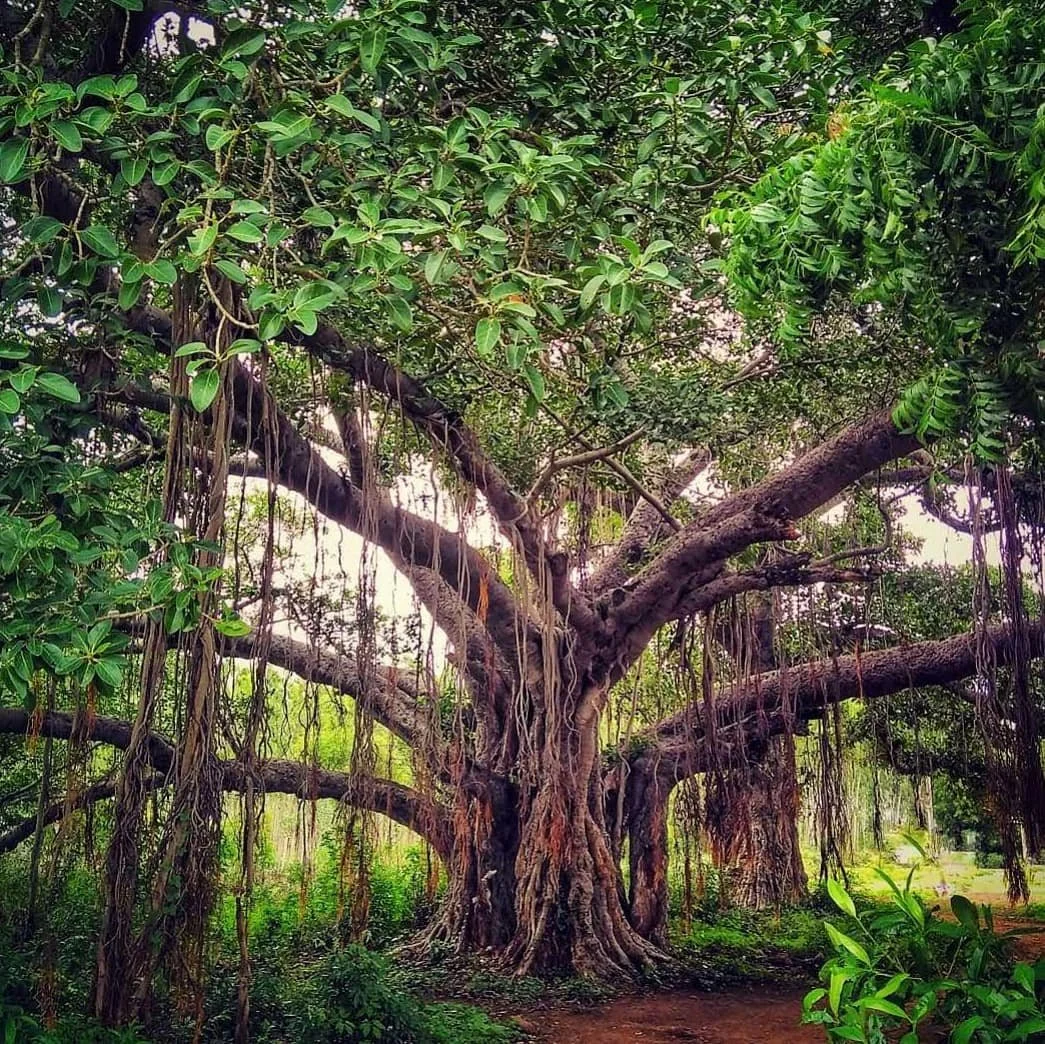
Banyan tree. Andhra Pradesh.
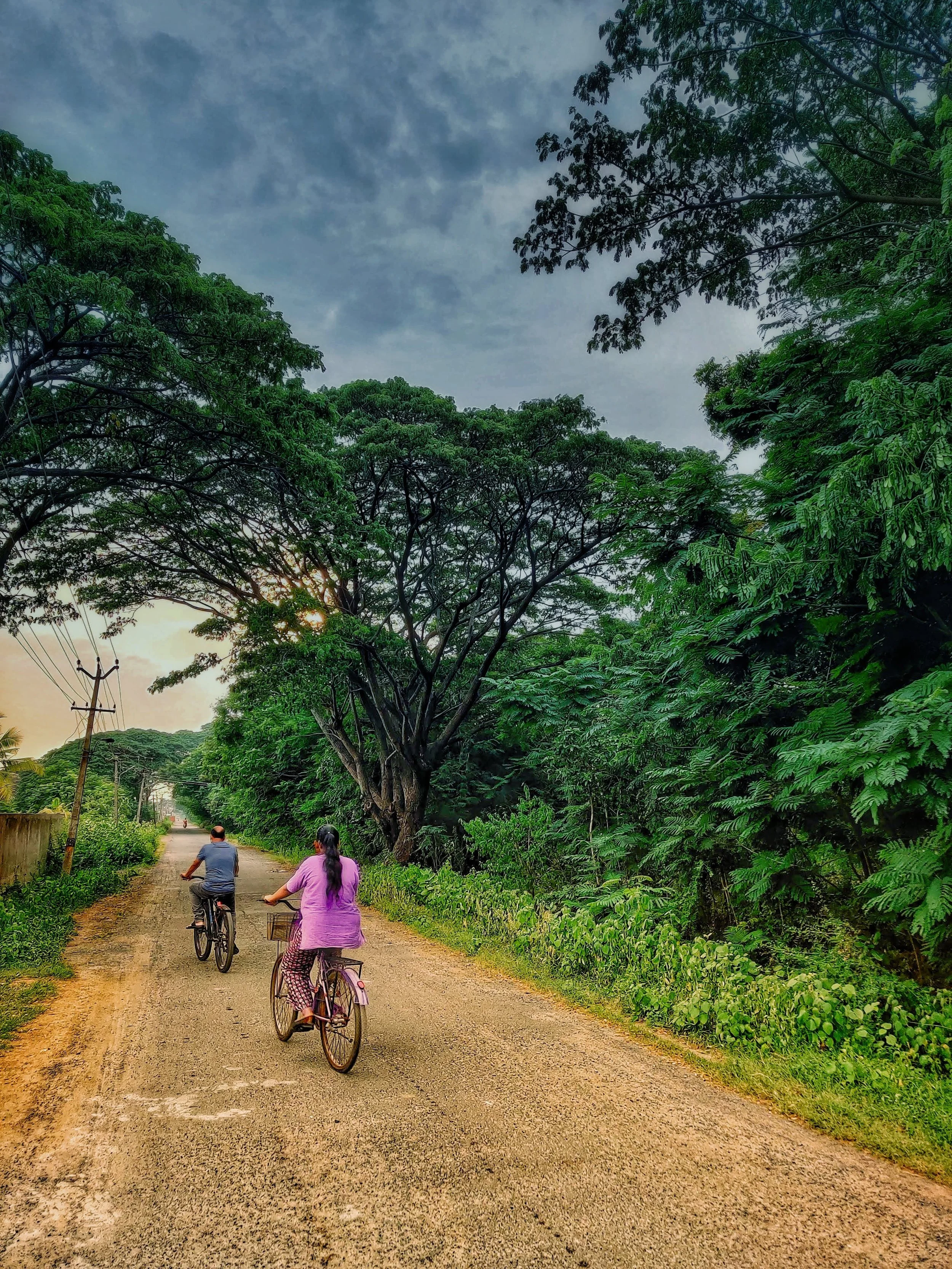
Peaceful moments walking from village to village.
Nothing compares to making my way through a new place on foot. The world slows right down and all the little details come into view. Precious moments that could never be captured any other way have become my daily reality. I am grateful for this journey and my hope is that it will inspire others to get out there and explore in a way that allows them to feel intimately connected to the places they visit.
Feel free to stay up to date with my adventures. You can find me on Instagram @dawned_onme or on Youtube: Wander Woman.
Dawn Lwakila
Dawn continually takes the path less trodden, both figuratively and literally. She loves to really live in a place and grow some roots there — as well as a good wander and the freedom to explore. Canada is her homeland, but her heart and soul are scattered across the globe. She has journeyed through over 30 countries and still has an ever-growing bucket list of new places to experience. She is currently based out of Tamil Nadu India.
7 Stunning Caves Worth Exploring
Though caves often hold a fearsome reputation, they have a myriad of captivating natural features and intriguing histories.
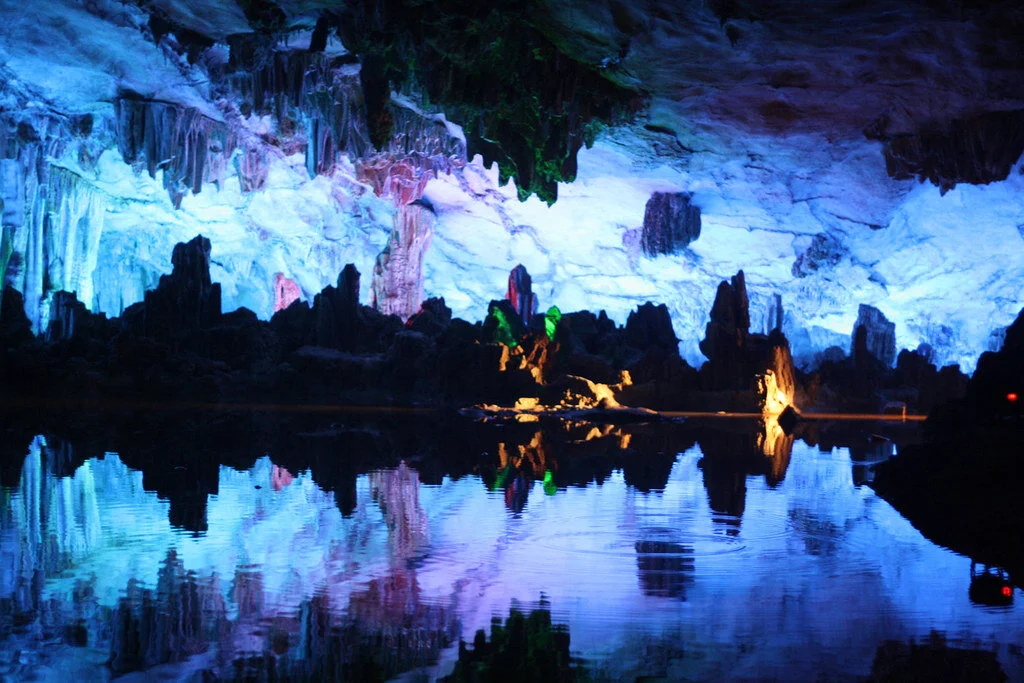
Caves often get a bad reputation: cold, dark, damp and uninteresting, or even frightening. In reality, caves offer snapshots of history, unusual natural structures, and examples of remarkable biodiversity. There are thousands of caves on Earth, and even more that are yet to be discovered. Each cave is unique, with specific natural formations that cannot be found anywhere else. Here are seven incredible caves to add to your list of must-see sights.
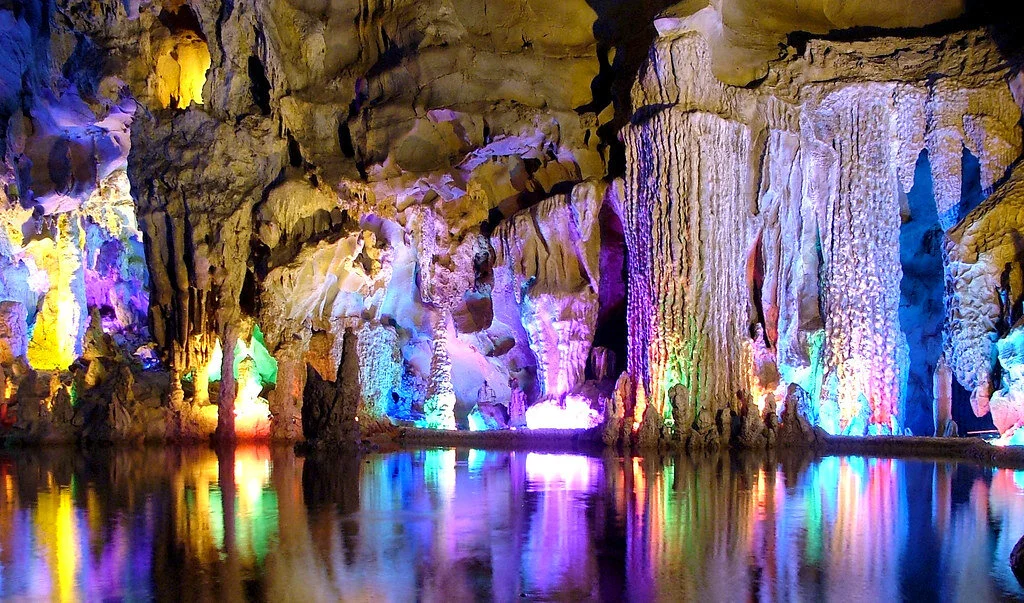
1. Reed Flute Cave, China
Called “the Palace of Natural Art,” Reed Flute Cave is known for its impressive stone curtains and pillars. Reed Flute Cave is located just 3 miles from downtown Guilin, China, and has been an attraction for centuries. Seventy-seven inscriptions of poems and travel descriptions can be found around the cave, and the oldest dates back to 790 A.D., the era of the Tang dynasty. There are inscriptions from the Tang, Song, Yuan and Ming dynasties, written by monks, poets, scholars and tourists from all over China. Today, the cave is lit by many multicolored lights hidden in its natural cracks and crevices, which cast a bright rainbow glow around the dark space, giving cave visitors a surreal and breathtaking experience. The cave was forgotten for years until its rediscovery in 1940, when a group of Chinese refugees stumbled upon it while fleeing from Japanese forces. During World War II, the cave’s large chamber, called the “Crystal Palace of the Dragon King,” was used as a bomb shelter. The cave regained popularity after its rediscovery at the end of the war, and was officially opened to the public in 1962.
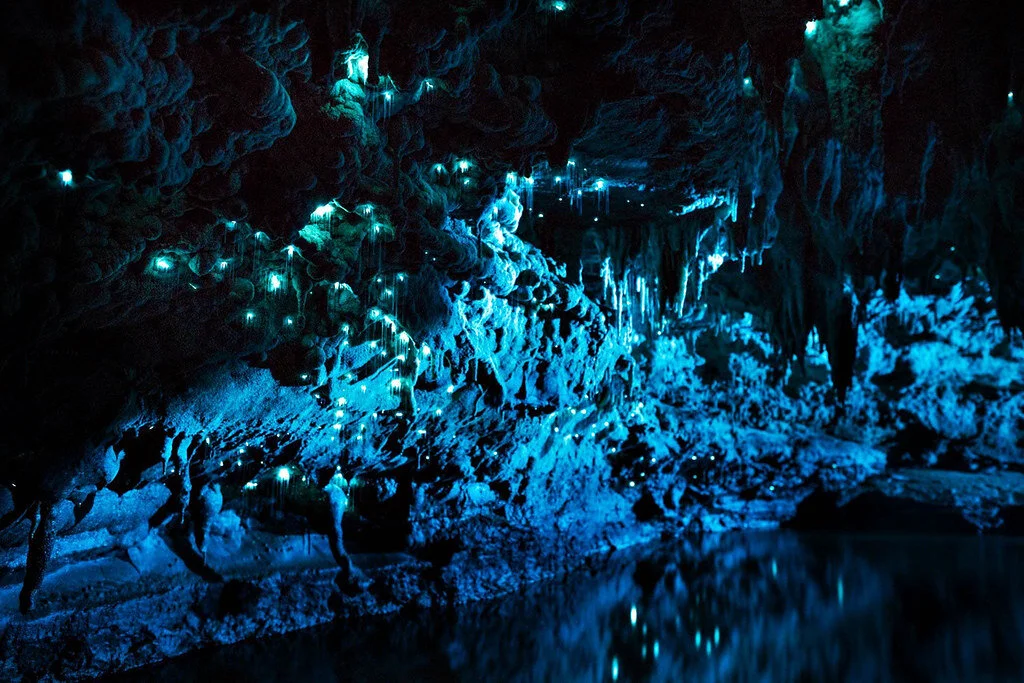
2. Waitomo Glowworm Caves, New Zealand
Visitors to the Waitomo Glowworm Caves will take a trip into the past by exploring a cave over 30 million years old. The cave, located in Waitomo on the North Island of New Zealand, is praised as one of New Zealand’s best natural attractions. It contains an underground river, towering rock formations, and thousands of shimmering glowworms. The Glowworm Caves have been an attraction for over 130 years. These limestone caves formed at the bottom of the ocean millions of years ago. Local Maori communities knew about the caves, but they were first explored in 1887 by Maori Chief Tane Tinorau and English surveyor Fred Mace. After discovering the natural beauty of the caves, Chief Tinorau opened the caves to tourists in 1889. Many of the guides for tours today are descendants of Chief Tinorau. Guides take visitors on walking tours through the caves, as well as boat tours through the glowworm grotto. These boat tours take visitors to the center of the grotto, where they can look up in awe at the luminescent glowworms covering the cave walls and ceiling.

3. Mendenhall Ice Caves, Alaska
Just 12 miles outside downtown Juneau lies Mendenhall Glacier, known as the “Glacier Behind the Town.” Inside the glacier are the Mendenhall ice caves, passageways formed by water flowing through the glacier. These caves vary in size from tiny openings visitors have to squeeze through to giant caverns. Mendenhall Glacier was first explored in 1794 by Joseph Whidbey, a member of the British Royal Navy serving on Capt. George Vancouver’s 1791-95 expedition of the Pacific Northwest coast. To visit the caves, travelers can hike through the Tongass National Forest and then across the glacier, or they can canoe across Mendenhall Lake to the glacier. Both options offer breathtaking views of the glacier and surrounding landscapes, and both are somewhat strenuous but well worth the effort. Inside the caves, visitors are immersed in the cool blue shades of light coming through the glacier and can explore ever-changing ice formations. The caves change as the ice melts, so each visit to the Mendenhall ice caves is unique. The presence of the caves is also inconsistent and typically seasonal, so visitors should be sure to check on the status of the caves before planning a trip.
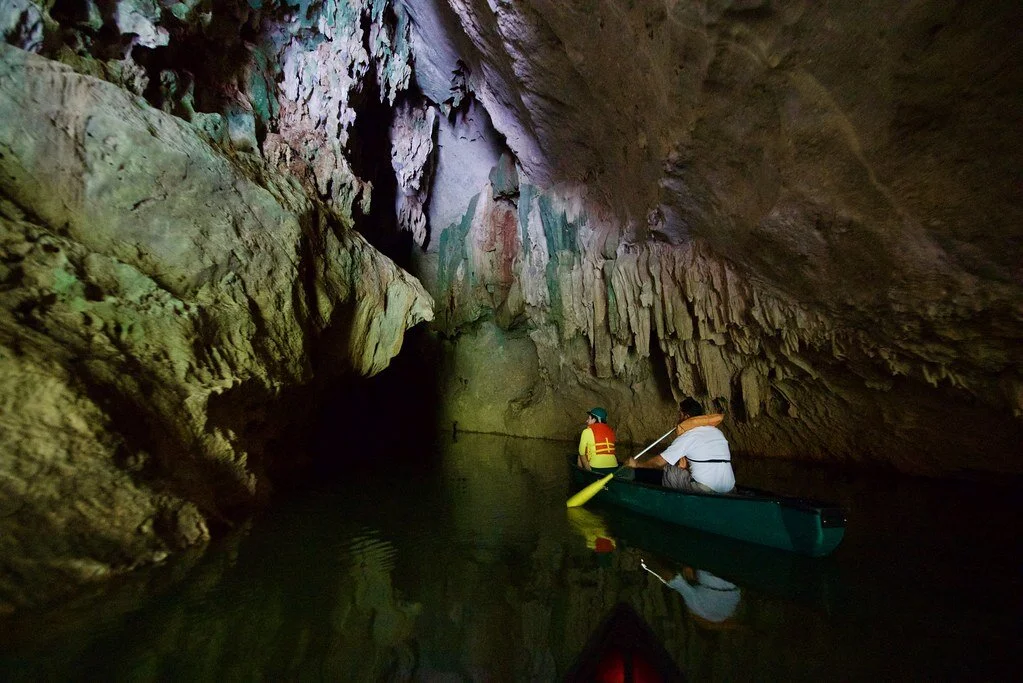
4. Barton Creek Cave, Belize
To discover the wonders of Barton Creek Cave, visitors will have to board a canoe. Barton Creek Cave is located east of San Ignacio along the western edge of Belize. It is a wet cave because it has a cave river running through it, and paddling along this tranquil river is the only way to take in the cave’s majesty and history. It is the largest river cave in Belize and contains evidence of ancient Mayan culture. The cave is natural, but archaeologists have identified a number of areas they believe were purposefully modified by the Mayans to improve access to the cave. These modifications include natural formations of flowstone broken to allow access to a rimstone pool and holes drilled by Mayan tools, likely to serve as handholds or to attach climbing ropes. Ten ledges made by the Maya line the cave walls, where archaeologists have discovered thousands of pottery shards, most of which are from large jars called ollas, and a number of stone tools. These discoveries have helped archaeologists determine the use of the cave during Mayan times; it was likely the site of ritual activity and worship. The Maya regarded caves as sacred sites, and the artifacts found in Barton Creek Cave reflect this view. Tours through the cave offer visitors the opportunity to witness incredible natural formations and to learn how the ancient Mayans interacted with the cave.
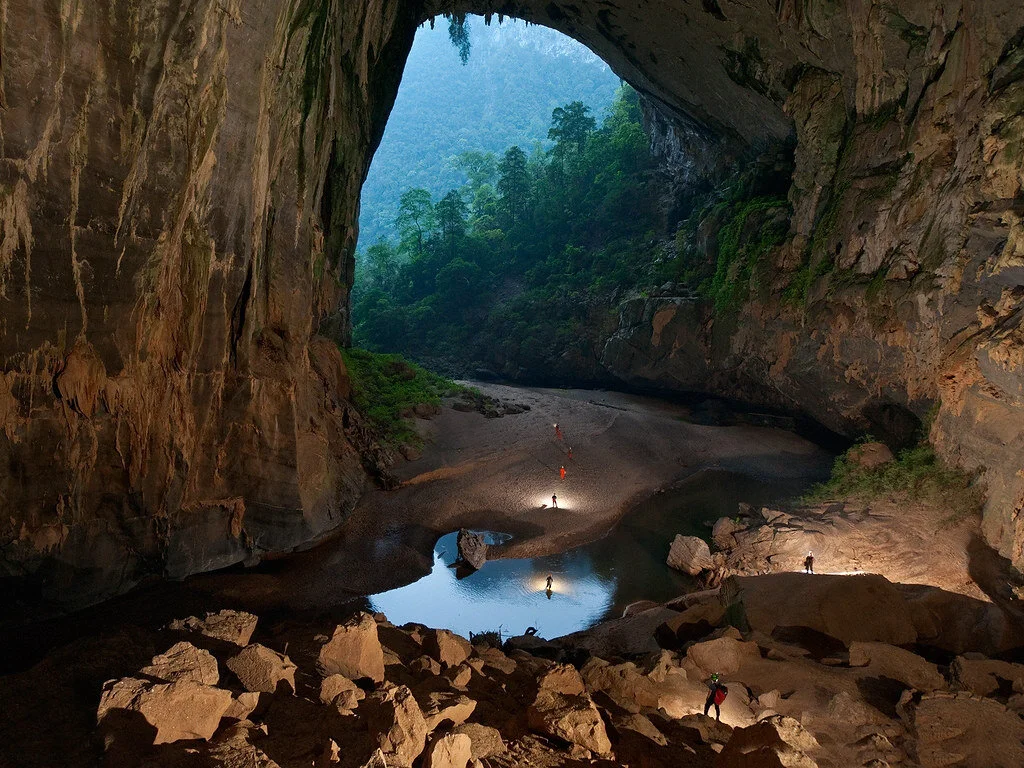
5. Hang Son Doong, Vietnam
For travelers who want to explore a cave but worry about darkness and small spaces, Son Doong Cave in central Vietnam is the perfect place to visit. Son Doong has the largest cross section of any cave in the world, reaching over 5 miles long, 650 feet wide and 490 feet tall. In some areas, the limestone ceiling of the cave grew weak and collapsed, creating huge skylights and allowing areas of lush vegetation to grow inside the cave. It was formed millions of years ago by the Rao Thuong River eroding limestone. Son Doong Cave was initially discovered in 1990 by a local man named Ho Khanh, who stumbled upon the entrance while searching the area for food and timber. He then returned home and no further exploration of the cave occurred until Howard and Deb Limbert, members of the British Cave Research Association, heard Ho Khanh’s story and urged him to find the cave again. In 2008, he successfully rediscovered the cave, and a survey was conducted by Howard Limbert and a group of British cavers. The cave opened to the public in 2013. Visitors are sure to be impressed by the sheer size of the cave, as well as its natural formations, river and distinctive vegetation growth.
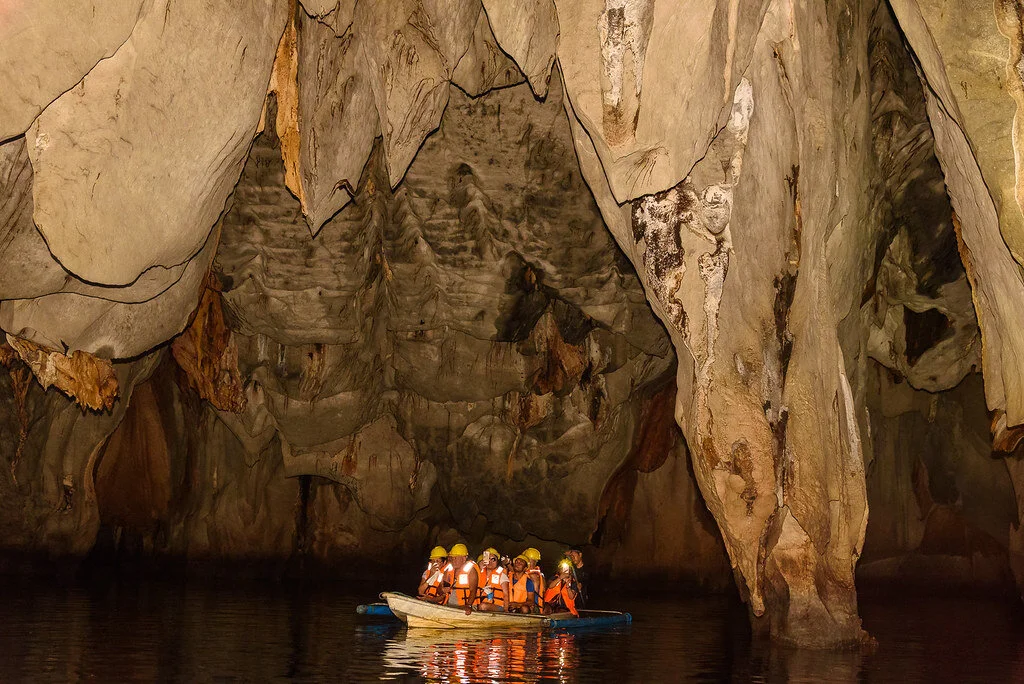
6. Puerto Princesa Underground River, Philippines
Located on Palawan, the westernmost island in the Philippines, Puerto Princesa Subterranean River National Park is home to old-growth forests, wildlife and an expansive limestone cave system. The Puerto Princesa Underground River, as it is commonly known, flows for over five miles through beautiful caverns and eventually meets the sea. Visitors can take underground river tours on paddleboats to see the stunning cave formations and limestone cliffs, as well as a variety of native animal species. There are records of the Puerto Princesa Underground River dating back to 1898, but it is believed to have been known to early inhabitants of the Philippines and investigated by foreign explorers prior to that time. The area was established as an official attraction in 1971, and the cave system is still being explored. In 2010, researchers discovered a large cave dome above the underground river, with more river channels and access to an even deeper cave. The Puerto Princesa Underground River offers an abundance of fascinating natural formations to explore.
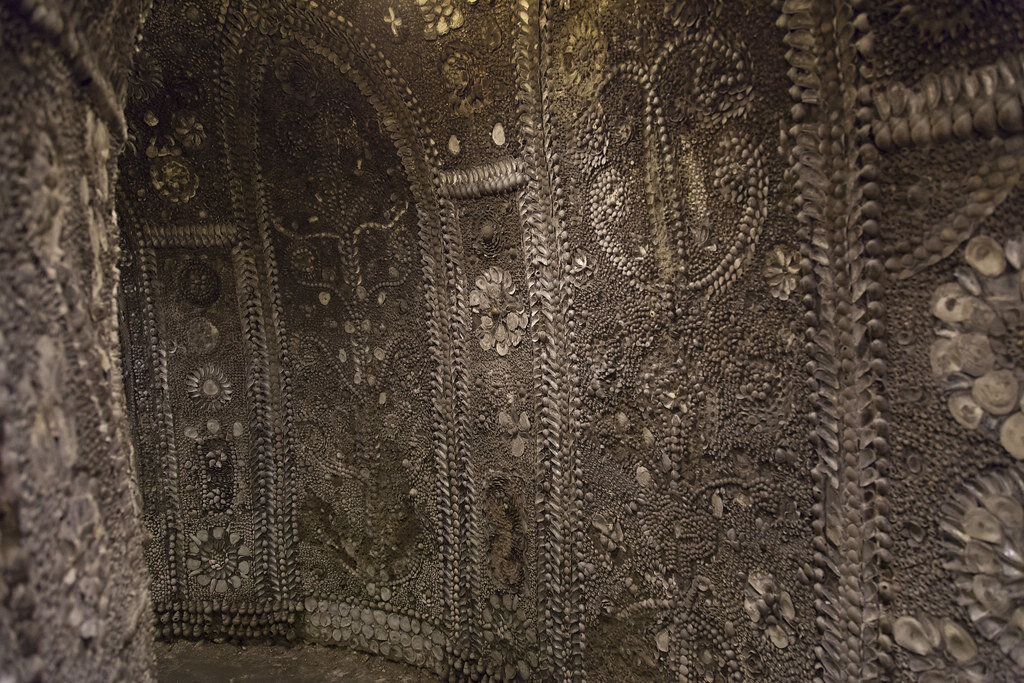
7. Shell Grotto, England
Shell Grotto is one of England’s most mysterious sites, encompassing over 70 feet of tunnels under the seaside town of Margate. These caves were discovered by chance in 1835, when a man excavating his new land stumbled upon them. Sprawling mosaics made of mussel, oyster, whelk and cockle shells cover every wall of the tunnels. Historians are unsure of who built Shell Grotto, or why. Theories range from Shell Grotto being a place of worship to a simple display of extreme wealth to the meeting room of a secret society. The elaborate shell designs offer little explanation, displaying swirling patterns that can be interpreted as a number of different things. Shell Grotto is a tremendous work of art, and the questions surrounding its origin and purpose add a layer of intrigue that draws visitors from around the world.

Rachel Lynch
Rachel is a student at Sarah Lawrence College in Bronxville, NY currently taking a semester off. She plans to study Writing and Child Development. Rachel loves to travel and is inspired by the places she’s been and everywhere she wants to go. She hopes to educate people on social justice issues and the history and culture of travel destinations through her writing.
Spain’s Graffiti Phenomenon
Spain is known for the street art that decorates major cities and towns all over the country, with multiple Spanish street artists reaching global acclaim. The street art phenomenon is especially significant not only for the identity it gives to Spain, but also for its relation to contemporary culture and expression.

Graffiti in Alicante, Spain. Photo by Ralph (Ravi) Kayden.
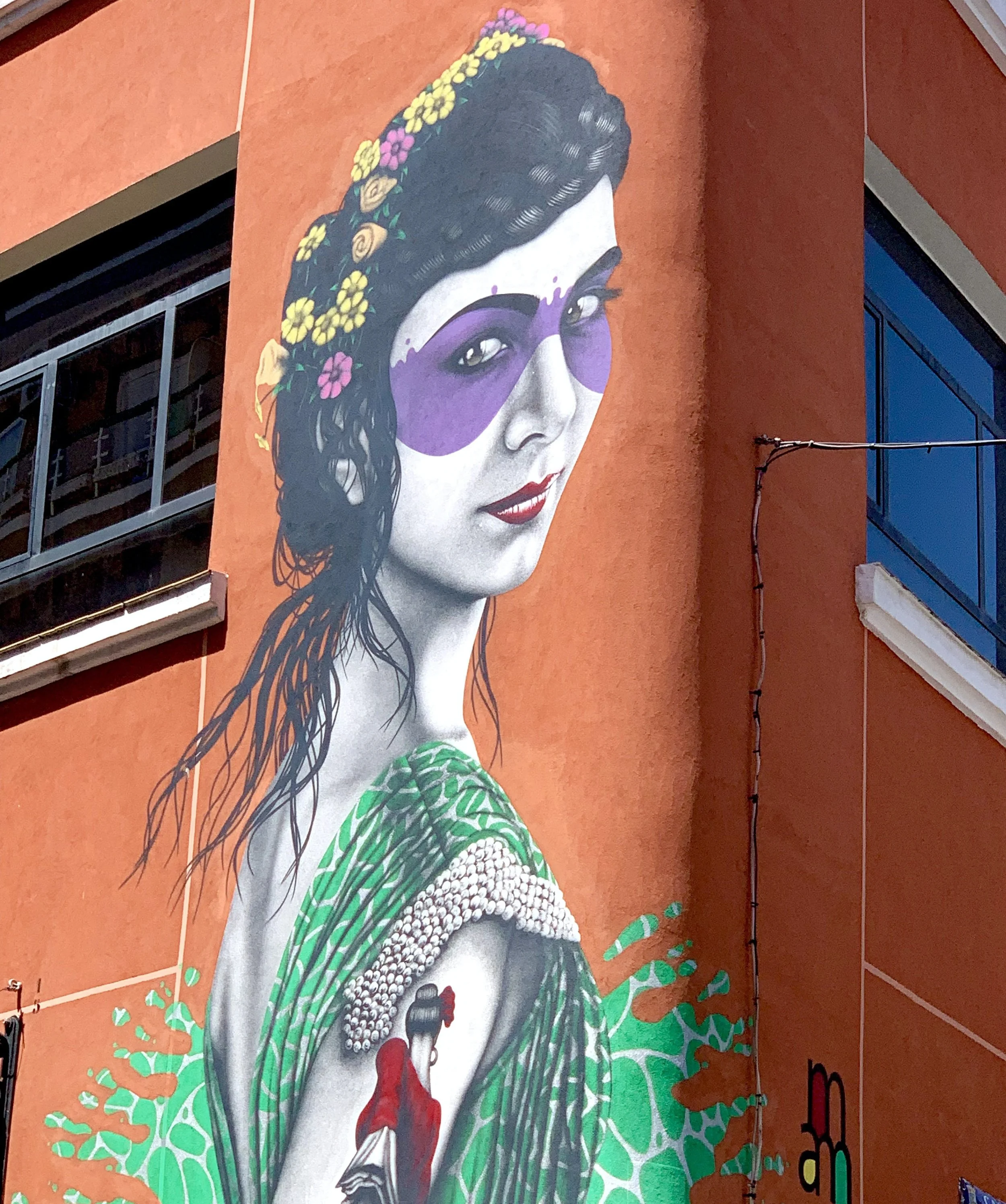
Mural in Madrid, Spain. Photo by Nancy O'Connor.
When walking the streets of Valencia, Spain, nowhere is the graffiti more prolific than Barrio Carmen, the historic district of Valencia. Tall buildings along winding stone alleys are adorned with color: depicting abstract images, portraits, and scenery reminiscent to that of the artists of the Escuela de Bellas Artes. Property owners often commission artists to decorate the entrance to their buildings, establishing a connection to the culture of artistic exhibition that exists within the city. Valencia is just one home to the countless networks of street artists across Spain: graffiti peppers the streets and surfaces of major cities, villages, and neighborhoods alike across the nation.
In Barcelona and Madrid, the real graffiti phenomenon exists not in the streets, but underground: along the sides of metro cars. Given the costs of cleaning and repairing painted cars, this form of graffiti is revered as the most risky, and the most thrilling. Barcelona has begun to heighten its police presence in the metros to prevent vandalism, but this measure has only served to make the artists more crafty. Rappelling through vents, jumping fences, and running from the police have become commonplace in the laundry list of a street artist’s activities.

Saville Street, Saville, Spain. Photo by Look Up Look Down Photography.
The two principles that unite the diverse network of graffiti artists throughout Spain are anonymity and adventure. In this way, street art becomes an equalizing force for expression. Of the thousands of graffiti artists throughout Spain, there exists no single class or personal affiliation. From this anonymity arises solidarity; artists sometimes work in teams or paint in recognizable styles, but rarely is the actual identity of an artist public.
Regarding adventure, José Sánchez, an anthropological researcher at Pompeu Fabra University, describes that from graffiti, artists find both a sense of belonging as well as adrenaline. There is, then, a dual impetus: to create some sort of permanence through visual expression, but also for the rush of the moment: the danger of painting in precarious situations, or of attempting to evade vandalism charges from the police. Sánchez offers the notion that the street art phenomenon arises as a microcosm for a contemporary society entrenched in immediate gratification, tactile pleasures, and hedonism, which Sánchez identifies mostly as the impact of youth culture. This explanation, however, seems to only cover part of the multifaceted nature of graffiti and its specific mode of public speech.
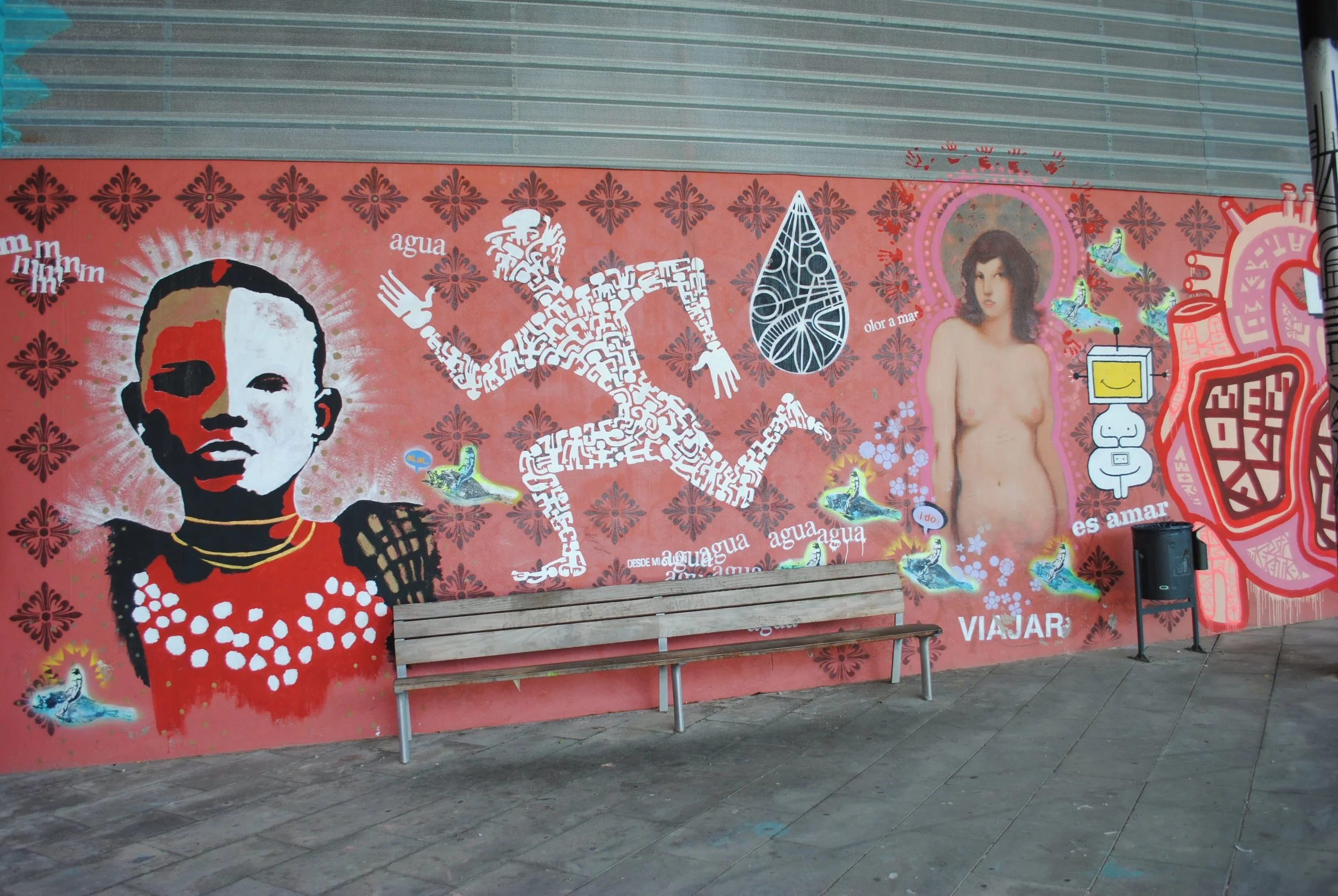
Mahón, Menorca, Spain. Photo by JR Harris.
One prolific street artist from the Gijon region of Northern Spain, who goes by the moniker “Señor X,” has become widely known as “Spain’s Banksy,” in reference to the mysterious British graffiti artist who has gained significant global acclaim in recent decades. Señor X’s work is focused on social commentary: the vast majority of his murals are anti-capitalist and anti-establishment. Señor X’s dynamic portfolio represents just part of the larger body of street art created in protest.
Furthermore, the debate over graffiti as street art versus graffiti as vandalism is just one feature over the larger question of legitimate protest. Art and visual expression have long been means of protest: Picasso’s Guernica, one of the most renowned pieces in the Spanish canon was painted in response to the bombing of the civilians of Guernica, Spain during the Spanish Civil War. The murals of artists such as Señor X represent many of the same sentiments and involve similar artistic meticulousness, but are illegal, rather than revered. Nonetheless, street art remains an integral part of identity and expression within Spain, and furthers discussions as to the nature of protest and youth culture globally.
HALLIE GRIFFITHS
Hallie is an undergraduate at the University of Virginia studying Foreign Affairs and Spanish. After graduation, she hopes to apply her passion for travel and social action toward a career in intelligence and policy analysis. Outside of the classroom, she can be found, quite literally, outside: backpacking, rock climbing, or skiing with her friends.
The CATALYST Gift Guide
10 Awesome Gifts from Socially Responsible Brands
These days, social impact isn’t reserved for nonprofits or volunteer organizations, and people are becoming more aware of the power and influence they hold as consumers. This season, CATALYST wants to help you find the perfect sustainable and socially responsible gift for the people in your life who care about shopping ethically. As customers have become more aware of the social and environmental issues happening around the world, for-profit companies are embracing their responsibility to make a positive impact. Below are 10 gifts from companies that focus on social and environmental change, sharing their successes with local and global communities.
1. TOMS India Slipper $59.95

Courtesy of TOMS Shoes
TOMS has reached a new level of comfort with its India slippers. On the outside, these shoes have a faux shearling plaid print extended to the faux fur lining on the inside. The rubber soles mean you can take the coziness of these slippers out of the house, perfect for lazy days or last-minute trips to the grocery store for that thing that was totally on your list but somehow you forgot.
TOMS is a company committed to using its success to improve the lives of others, and that includes the planet. A third of their profits go to grassroots efforts creating change at local levels, and in 2020 TOMS committed to expanding sustainable practices in key areas of their business. Last year, the company gave more than four million dollars to grassroots partners in 28 different countries and began creating products rooted in environmentally friendly materials and processes.
2. Bombas Holiday Sock Pack $54.40

Courtesy of Bombas
The limited-edition Bombas Holiday Sock Pack wraps all your favorite festive patterns into one. The use of extra-long-staple cotton and a cushioned footbed means these socks don’t sacrifice comfort and provide quality that will last wear after wear. The purchase of this set quadruples in giving power by donating not one, but four pairs of socks to someone in need.
Through a mission-based approach, Bombas has donated over 45 million items to homeless shelters in all 50 states. Their one-for-one business model means that anytime you purchase a pair of socks, underwear or t-shirt from their site, they donate another to a person in need. While socks may not be on the top of the kids’ wish list, they’ll have the added gift of knowing that their present also provided a sense of dignity to someone less fortunate.
3. VEJA V-10 Sneakers $150

Courtesy of VEJA Studio
VEJA’s vegan sneakers use cotton as a replacement for leather in what they term as C.W.L., or Cotton Worked as Leather. The shoe’s canvas is made of 100% organic cotton, coated with P.U., corn starch and ricinus oil from Brazil, and is 54% bio-based. The suede logo is made from 100% vegan synthetic microfibers that are sourced from São Paulo in Jacareí and made using a solvent-free process that’s less toxic than processes for classic synthetic suede.
At VEJA, their commitment to transparency prioritizes looking beyond the style of a shoe to how they are made. VEJA works directly with local producers all over Brazil. In doing so, they cut out the middle man, yet still, pay twice the market price for cotton so the associations can use the funds to improve their working conditions. Additionally, 100% of the logistics for the VEJA online site and Parisian stores are managed by Log’ins, a company that promotes social and professional integration. Through their partnership, 322 people who would’ve typically been excluded from the labor market have found jobs at VEJA.
4 Patagonia Fleece Pull-Over $119
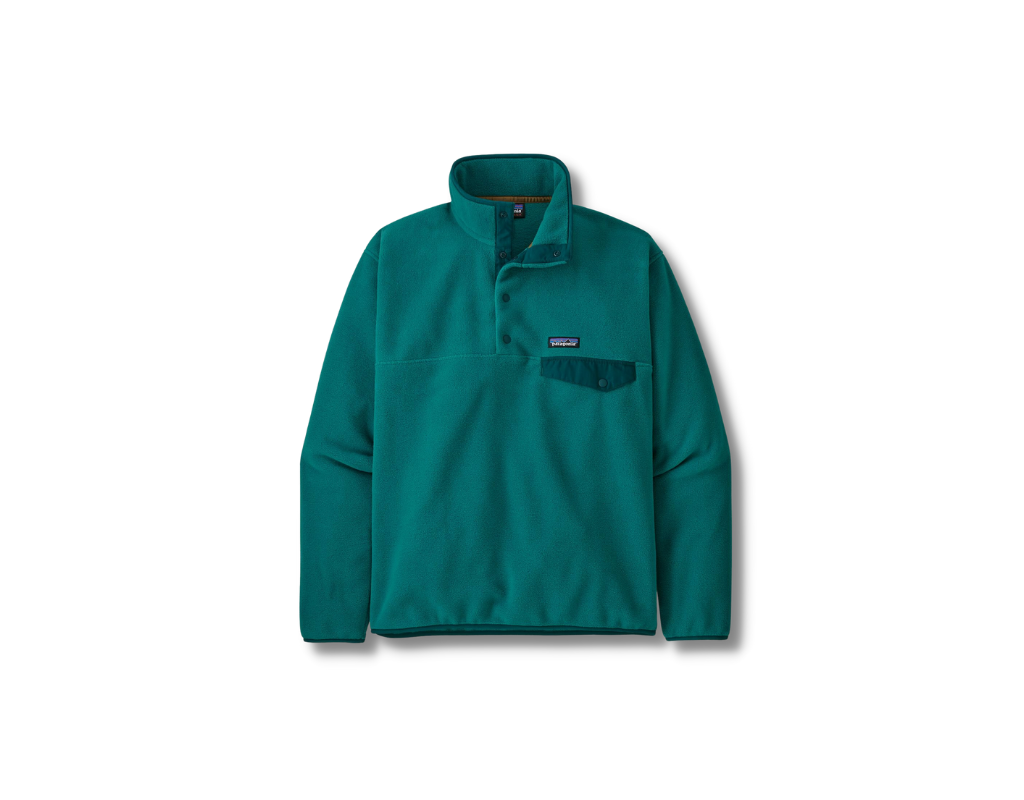
Courtesy of Patagonia
The classic Snap-T Fleece Pullover from Patagonia is a winter wardrobe staple made with warm, durable recycled polyester fleece and sewn with their Fair Trade Certified mark. Perfect for casual wear, hiking and work, you can rest easy knowing that Patagonia’s quality will last a lifetime.
Patagonia uses a high proportion of materials made from recycled fabrics, rejecting the concept of fast fashion through their dedication to creating high-quality, long-lasting products. Patagonia’s Worn Wear program incentivizes customers to extend the lives of their Patagonia pieces by repairing, recycling and trading their used items for something new. Their participation in the Fair Trade program has supported over 64,000 workers with fair living wages and their work with suppliers in Taiwan, Japan, Thailand and South Korea helps eliminate fees for migrant workers vulnerable to bonded labor.
5. Davines Healthy Shine Set $85

Courtesy of Davines
Davines’ Healthy Shine set is a package of restorative hair products. This set includes their NOUNOU Shampoo and MOMO Conditioner that nourish, hydrate and soften hair. The Ol Oil adds shine and protection from heat and environmental factors. It can be used either as a leave-in treatment or after styling as a finishing touch.
Davines' production site is powered 100% by renewable energy and 27% of their products have neutralized their life cycle emissions. Their partnership with the Rodale Institute promotes the sourcing of sustainable ingredients through regenerative agriculture. Davines is one of 800 B Corp companies committed to reaching net-zero emissions by the year 2030, 20 years earlier than the goals set by the Paris Agreement.
6. Arganic Inside Out Beauty Set $47.48

Courtesy of Arganic
The Inside Out Beauty Set from Arganic comes with a set of their fully traceable, single-origin argan oil, including a 50ml bottle of cosmetic argan oil and a 100ml bottle of their culinary argan oil. Argan oil is mostly known for its beauty benefits, but its nutty flavor exceptionally balances dishes and is known to improve heart health.
Argan oil has been used for centuries by the indigenous Berber people of Morocco, and its multi-purpose use makes it a product that promotes reduced consumption. However, many argan oils on the market are made of oil sourced from several producers, resulting in a lack of transparency of the supply chain. Arganic works with a single organic farm in Morocco so you know that your money is directly supporting the 600 Berber women they employ. These women are paid above average and are provided with a free classroom for their children on the worksite.
7. BioLite Stove $150

Courtesy of BioLite
Leave the gas canisters behind and unlock the power of sticks and twigs with BioLite’s award-winning stove. Their patented combustion technology turns fire into electricity, so you can cook your meals and charge your gear at the same time. At just two pounds, the BioLite stove packs down to the size of a 32oz wide mouth water bottle, and boils in less than five minutes.
BioLite’s mission is to bring energy everywhere, using its heat-to-electricity technology to cut fuel consumption in half and reduce toxic emissions by 90%. Their range of more than 20 products is revolutionizing the way people across the globe experience energy. As of November 2021, their impact has reached over three million people in Africa and Asia, granting them access to clean and affordable home energy. Your purchase of a BioLite product helps them invest in their programs, engineering and distributing light and energy to remote customers.
8. Paravel Aviator Carry-On $275
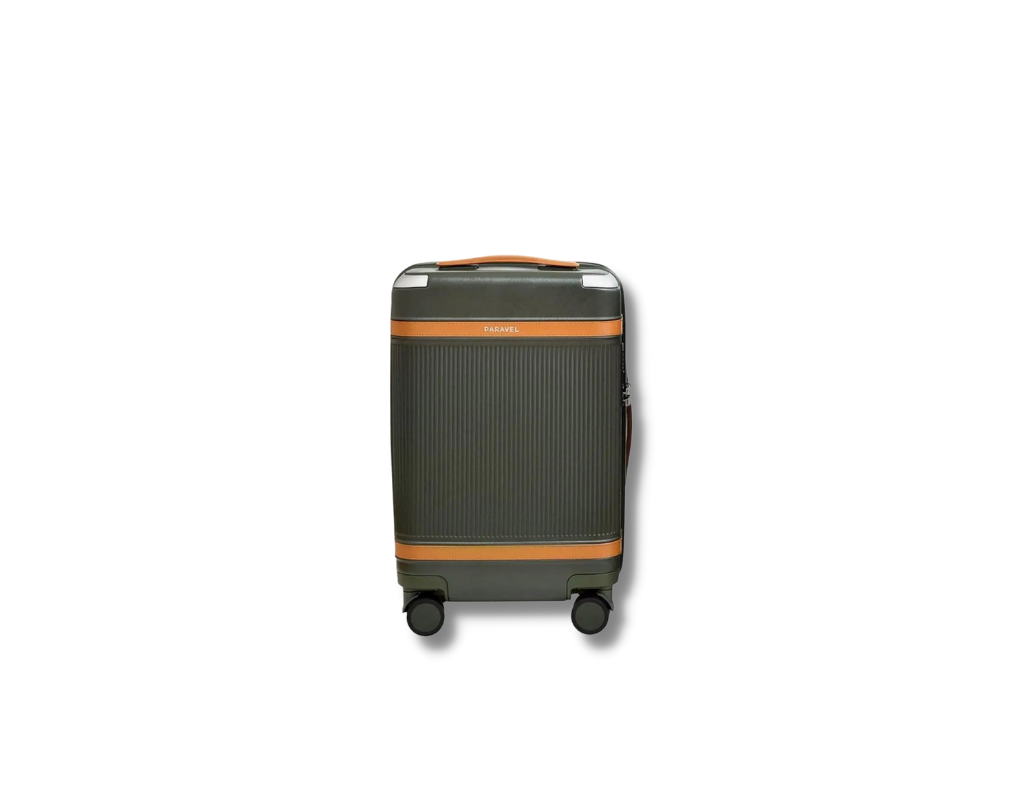
Courtesy of Paravel
Paravel’s Aviator carry-on is the first-ever carbon neutral suitcase. Not only does Paravel offset all emissions emitted during the sourcing, assembly and shipping process of the item, but they go the extra mile to offset the estimated emissions of your first flight with your new suitcase. In addition, the suitcase incorporates recycled materials wherever possible, from the lining made of 15 recycled plastic bottles to the handle made from recycled aircraft-grade aluminum.
Paravel creates top-quality travel products that aren’t only easy on the eyes, but easy on their impact on the environment. Not only do all of their supply chain partners follow their code of social responsibility, but their commitment to sustainability has offset more than 12,000 tons of CO2 emissions—equal to pulling 2,000 cars off the streets for a year. The utilization of upcycling to create their products is how they removed over three million plastic water bottles from the ocean and planted more than 166,000 trees.
9. Ethnotek Cyclo Travel Sling Bag $89
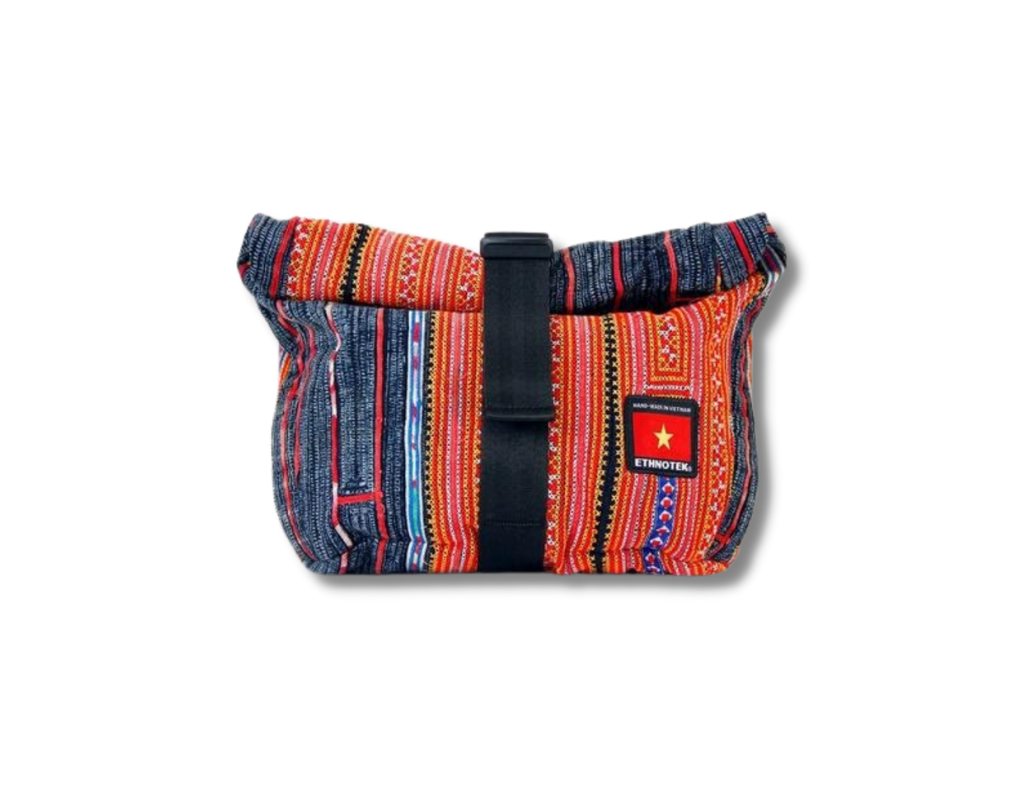
Courtesy of Ethnotek
The Ethnotek Cyclo Travel Sling Bag is made using a process called ‘jaspe’ by a family in Paxtoca, Guatemala. The yarn for this bag is tied and dyed in sections, then spooled and fed into a treadle loom, all by hand. The Travel Sling’s main compartment rolls open and closed, allowing for maximum storage volume. There’s a built-in organizer with a small pocket for documents, two stretch mesh pockets for water bottles, and a pen slot. The hidden zipper pockets on the side are there to hold your quick-grab accessories, like a phone or sunglasses. Lastly, the hidden back zipper pocket allows for quick access to your important travel documents while keeping them safe and secure.
Ethnotek creates high-quality backpacks, laptops and travel bags that feature ethically sourced, traditional, handmade textiles. Weavers and artisans around the world are seeing less local demand for their fabrics, and traditional techniques are quickly being replaced by machines and factory labor in major cities. Ethnotek sources handmade textiles in person and purchases them directly from the artisan or village they’re created in. Your purchase helps stimulate the demand for these traditional, handcrafted pieces and practices of hand printing, weaving and embroidery in Ghana, Guatemala, India, Indonesia and Vietnam.
10. Cotopaxi Fuego Down Vest $150
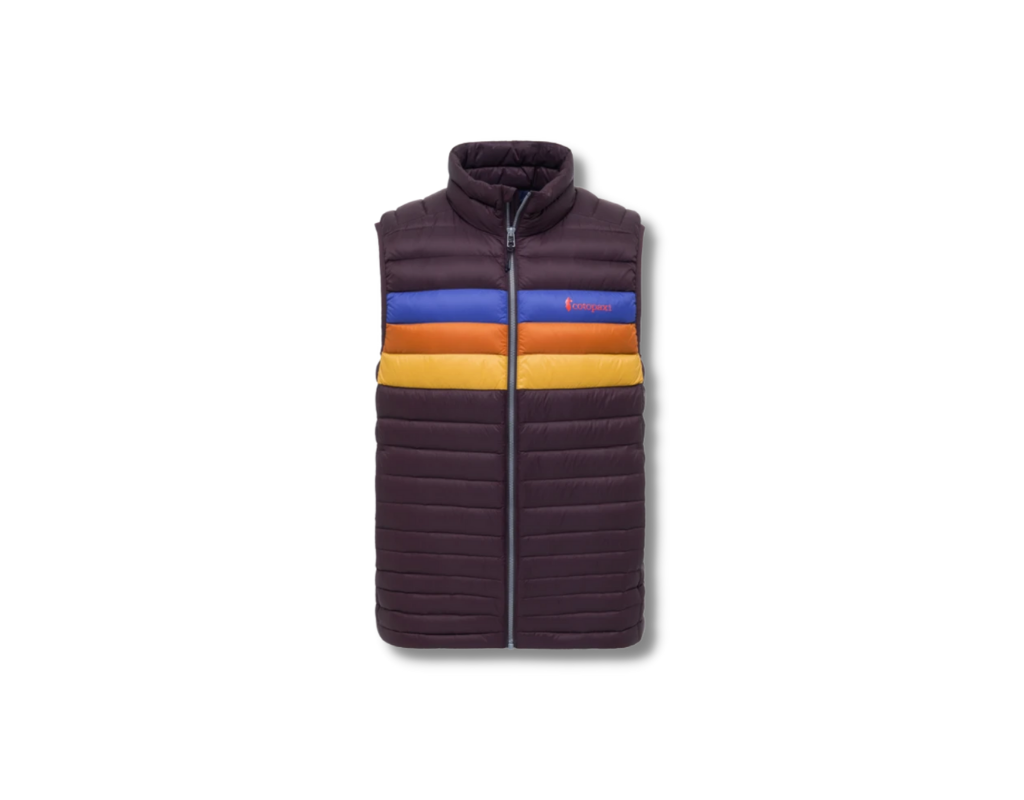
Courtesy of Cotopaxi
The Fuego Down Vest features responsibly sourced, water-proof, RDS-Certified down in a streamlined design. The vest is perfect for those chilly weather days that don’t quite warrant a jacket, but also serves well underneath one as a core-warming layer on colder days. The vest includes an adjustable drawcord along the hem, two zippered exterior pockets and two interior pockets. The vest is light and compactable, so when it’s not being worn it can be packed into its interior pocket.
All of Cotopaxi’s insulation pieces are made using responsibly sourced down that ensures the humane treatment of ducks and geese. As a B Corp Certified company, all of their factories promote fair labor practices. Additionally, Cotopaxi allocates one percent of its revenue to the Cotopaxi Foundation, awarding grants to non-profit partners who work to improve the human condition and alleviate poverty. This year alone, the foundation has awarded 34 individual grants, directly assisted 750,000 people and donated over $400,000.
Claire Redden
Claire Redden is a freelance journalist from Chicago, where she received her Bachelor’s of Communications from the University of Illinois. While living and studying in Paris, Claire wrote for the magazine, Toute La Culture. As a freelancer she contributes to travel guides for the up and coming brand, Thalby. She plans to take her skills to London, where she’ll pursue her Master’s of Arts and Lifestyle Journalism at the University of Arts, London College of Communication.
Child Marriage Remains a Global Issue
A bill to ban child marriage and close loopholes in legislation recently received bipartisan support in the house of commons for England and Wales.
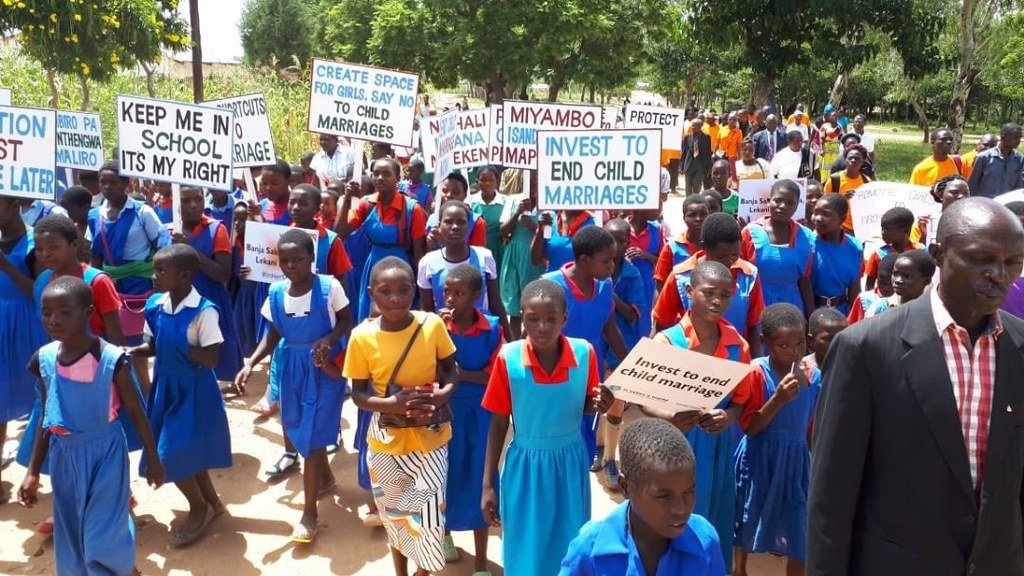
Ending Child Marriage Campaign. Abel Mphepo,Kalu Institute. CC BY-NC-ND 2.0
Currently, 16 and 17 year olds can marry in England and Wales with the consent of a guardian. A recent bill introduced by Conservative MP Pauline Latham will end exceptions in the current legislation which allows marriages under 18 to occur. If passed, the bill will also criminalize underage marriages or religious marriages of minors. By criminalizing all child marriage, the bill will also help activists and victims alike by relieving pressure on victims to prove the marriage was forced.

Aneeta Prem, Founder and President of Freedom charity, addresses attendees at the Girl Summit to discuss efforts to end Female Genital Mutilation (FGM) and Child, Early and Forced Marriage (CEFM). DFID - UK Department for International Development. CC BY-NC 2.0
Child marriage is a global issue. 21% of young women globally are married before their eighteenth birthday, and 12 million girls under 18 are married each year. Child marriage is widely regarded by activists as a violation of human rights and it puts children in significant danger. Child marriage occurs for several reasons, including poverty and societal norms. While child marriage is most common with girls, children regardless of gender are forced into marriages before adulthood. The effects of child marriage on young girls have shown that the children are at risk of early pregnancy, lack of education and domestic violence. Additionally, girls who do not receive education are more vulnerable to child marriage. Often when female children are forced to be wives, they are expected to take on domestic duties, and education no longer becomes a priority. Early pregnancies are also a significant risk to young girls, with complications from childbirth being the leading cause of death for girls aged 15-19 globally. Additionally, the children born from a child marriage are 60% more likely to die within the first year than those born to a mother over 19.
Child marriage is most prominent in sub-Saharan Africa and South Asia, but it is a global issue present in western countries as well. There are loopholes where children under 18 can enter into marriage in 44 US states. Many countries in Europe have similar laws, allowing child marriage to occur in Austria, Belgium, Italy and Spain. Several countries in Europe have taken similar action to the bill presented in the United Kingdom, completely outlawing child marriage without exception. Germany, Norway and Denmark are some of the countries that have completely banned any child marriage. According to Pew Research, 153 of 198 countries require people to be legal adults to marry. Although a large majority of countries have legislation that requires adulthood for marriage, the same countries often have exceptions, allowing child marriage to remain prevalent globally.

Dana Flynn
Dana is a recent graduate from Tufts University with a degree in English. While at Tufts she enjoyed working on a campus literary magazine and reading as much as possible. Originally from the Pacific Northwest, she loves to explore and learn new things.
Cappadocia’s Colorful Hot Air Ballooning
Ever considered hot air ballooning? One amazing place to try it is Cappadocia in Turkey where 100 balloons go up daily and spectacular views of Love Valley and more landscapes are visible.
Read MoreMass Detention of Civilians In Ethiopia
The Ethiopian government declared a state of emergency, resulting in the detention of civilians on suspicion of cooperating with rebel terrorists.

Addis Ababa, capital of Ethiopia. DFID - UK Department for International Development CC BY 2.0
Ethiopia has been in the throes of a civil war. The federal government, headed by Prime Minister Abiy Ahmed, has been fighting against Tigrayan rebels in the northwest region of the country. Recently, it appears Tigray fighters are at an advantage as they push south towards the nation’s capital. In response, the government declared a state of emergency Nov. 2 and began to roundup civilians of Tigrayian descent. Civilians with no connection to the rebels are being detained, forced from their homes, plucked off the street or at work. The United Nations stated that more than 1,000 people have been detained since the government declared the state of emergency. Additionally, they reported that 70 drivers contracted by the United Nations and agencies to deliver aid to the country have been detained by officials as well. Along with the detained drivers, 16 employees of the United Nations were detained following the state of emergency. These employees were present because the Tigray region is in desperate need of aid after airstrikes fell on the region in mid-October. The dire situation in Tigray has been labeled an ongoing humanitarian crisis.
The civil war broke out after tensions between the Tigray’s People Liberation Front political party and the federal government came to a point. The party previously held control of the Ethiopian government for decades, until Prime Minister Abiy Ahmed took office in 2018. In 2020, the T.P.L.F attacked a military base in the Tigray region, prompting the Prime Minister to order a military offensive in response. In June, the Ethiopian military was forced to withdraw from the Tigray region, marking a major defeat and subsequent turning point of the conflict.
In July 2021, the United Nations requested access to the region because an estimated 400,000 people were experiencing famine, with another 1.8 million at risk. Additionally, 1.7 million people have been internally displaced while thousands of others have fled the country.
The state of emergency declared on Nov. 2 allows officials to search anyone’s home and arrest without a warrant solely based on suspicion of association with rebel groups. The recent arrests have included other ethnicities, but the majority of detentions have been people of Tigrayan descent. Along with the large-scale detentions, public figures allied with the government have taken to social media inciting hate speech against ethnic Tigrayans. The head of the Ethiopian government communication office stated that the detentions were not ethnically motivated, but the United Nations High Commissioner of Human Rights expressed concern at the broad terms of the recent state of emergency.

Dana Flynn
Dana is a recent graduate from Tufts University with a degree in English. While at Tufts she enjoyed working on a campus literary magazine and reading as much as possible. Originally from the Pacific Northwest, she loves to explore and learn new things.
9 Vibrant Towns Across The Globe
Vibrantly colored cities are rarely seen aside from children’s books. However, these 9 cities turn ordinary streets into colorful towns.
Read MoreThe CATALYST Giving Guide: 11 Nonprofits Working to Change the World
This holiday season, give the gift of support to nonprofit organizations operating across the globe. Through your donation, you have the ability of giving literacy to children, gender-equal education to girls, protection for displaced people and more.
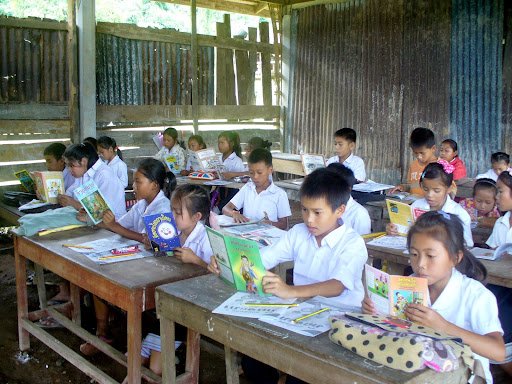
Silent reading time in Lao, Wikimedia Commons, CC BY SA-3.0
Education is an important tool that many nonprofits work to provide to children in countries around the world. By building literacy and providing important resources, organizations are granting children the ability to change their lives.
1. Pencils of Promise
Pencils of Promise is a global organization that works for greater educational opportunities. Their initiatives provide teachers with training and resources and provide students with safe places to learn. Pencils of Promise has now built more than 550 schools in Ghana, Guatemala and Laos. Your donation would help them continue providing children with access to education in facilities that grant them access to clean water and private bathrooms.
2. Room to Read
More than 750 million people are illiterate, two-thirds of them women and girls. Room to Read works with global communities to extend literacy and gender equality in education. So far, more than 23 million children and communities in South Africa, South Asia and the Middle East have received their support. A donation will help bridge the gap, granting more women and young girls the power of literacy.
Women and girls are a crucial focus among national and international organizations. By providing women and young girls with equal access to education, healthcare and economic and political empowerment, nonprofits are creating a brighter future for generations to come.
3. Girls Rising
Due to the coronavirus pandemic, girls’ education is in a state of crisis. Girls Rising provides their own customized curricula focused on building confidence and agency among young girls in more than 12 countries. A donation gives girls the gift of understanding their rights along with confidence in their ability to change their lives and communities.
4. Global Fund for Women
The Global Fund for Women is one of the leading foundations for women’s equality. They have invested in nearly 5,000 grassroots groups in 175 countries, helping win rights for millions of women and girls. Their campaigns for economic and political empowerment as well as sexual and reproductive health and rights both take a movement-led approach that is consistently under-resourced. Donations support these movements and lead to more egalitarian workplace regulations, more equitable land rights, better access to financial institutions, expanded legal protections for domestic workers and stronger laws against sexual harassment around the globe.
The environment is a crucial issue for our planet and everything it inhabits. As temperatures continue to rise, resources deplete and weather intensifies, we are beginning to see the realities of a future on Earth.
5. Greenpeace
Greenpeace’s global priority is to undermine the fossil fuel sector and remove fossil fuels’ legitimacy in society. Through nonviolent creative action, Greenpeace confronts the systems that threaten our environment. Donations support them as they pave the way towards a greener world.
Human rights issues occur around the globe, and there are nonprofit organizations doing the work to help. Through their efforts, victims of human trafficking and refugees around the world receive lifesaving assistance.
6. Free the Slaves
Free the Slaves is on a mission to abolish the conditions that allow modern slavery to exist. Their community liberation model focuses on community engagement, policy and advocacy, movement building and learning initiatives. Your donation would allow them to provide funding and technical expertise to local organizations in human trafficking hotspots in India, Ghana, Haiti, Mauritiana, Brazil, Nepal, Dominican Republic, Vietnam, Senegal and the Democratic Republic of the Congo.
7. Amnesty
Show your support and give to Amnesty, a nonprofit organization that works for human rights across the globe through a three-tier approach: research, mobilization and advocacy. They are the world's largest grassroots human rights organization. Last year alone, Amnesty helped free 153 people who were wrongfully imprisoned and changed laws in dozens of countries on refugees, reproductive rights, LGBTQ+ equality, free speech, the death penalty and other critical human rights issues.
8. Refugees International
There are currently more than 80 million people displaced by conflict, human rights abuse, persecution and climate disasters. Refugees International does work in the Americas, Asia, Europe, North Africa, sub-Saharan Africa and the Middle East to provide lifesaving assistance, human rights and protection for displaced people. A donation to Refugees International supports promoting solutions to displacement crises around the world.
Travel can often have a negative impact on local communities. However, there are organizations whose goals are to connect travelers with locals to ensure the communities’ residents are the ones benefiting.
9. Travel2Change
Travel2Change is a Hawaii-based nonprofit organization that encourages travelers to make a difference in the community. Their work ensures that the local Hawaiian community benefits from tourism by connecting visitors with impactful activities offered by locals. Your donation this giving season helps Travel2Change keep its activities affordable or free so as many people as possible are able to participate and connect to the local community.
Health is a universal subject across the globe and during the pandemic, the most susceptible communities were ones that were already distressed. Nonprofit organizations are providing medical assistance to people all over the world who normally would not have access to it.
10. Doctors Without Borders
Doctors Without Borders is an international medical humanitarian organization that provides medical assistance to people in 88 countries. Amid conflict and political instability, their teams in Afghanistan provide vital medical care in Herat, Helmand, Kandahar, Khost and Kunduz provinces. The 2,300 staff members working in the country respond to a range of medical needs, from acute malnutrition to maternal health services. Donations support their work providing medical services to people affected by conflict, epidemics, disasters or exclusion from healthcare.
Sports are a competitive and entertaining activity that bring people together. Today, there are organizations using sports to break down cultural and political barriers in areas of conflict.
11. Surfing 4 Peace
Surfing 4 Peace is a community of surfers and supporters that conduct cooperative projects, host events and run campaigns that emphasize coexistence, cross-cultural dialog and the shared experience of surfing. In the Middle East and around the world, Surfing 4 Peace aims to bridge cultural and political barriers between surfers in diverse communities. In 2007, Surfing 4 Peace successfully gathered and transferred 14 surfboards through border authorities from Israel to Gaza to donate them to the small Palestinian surfing community. Since then, the group has organized multiple projects for the surfing community in Gaza, including the Gaza Surfer Girl Project and Gaza Surf Relief. Donations support creating a safe and inclusive community rooted in the shared love for surfing.
Claire Redden
Claire Redden is a freelance journalist from Chicago, where she received her Bachelor’s of Communications from the University of Illinois. While living and studying in Paris, Claire wrote for the magazine, Toute La Culture. As a freelancer she contributes to travel guides for the up and coming brand, Thalby. She plans to take her skills to London, where she’ll pursue her Master’s of Arts and Lifestyle Journalism at the University of Arts, London College of Communication.
Beyond Kilimanjaro: The Rich Culture of Tanzania
While Kilimanjaro, the tallest mountain in Africa, gives Tanzania the most notoriety, there is so much more to this country’s culture and landscape. The Maasai peoples, national parks, notable food, and the unique island of Zanzibar that has strong Arabic influence. Read more…
Read MoreThe Unique Landscapes of New Zealand's Milford Sounds
Milford Sound located in Fiordland National Park’s diverse landscape has been preserved for years, drawing travelers from around the world.
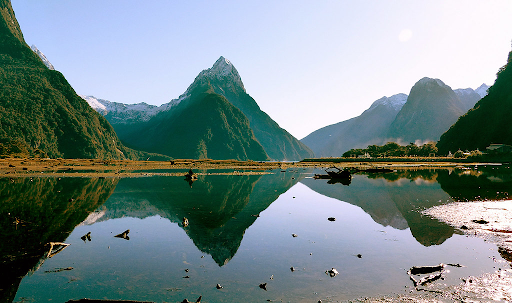
Milford Sound is often considered a destination for immersing oneself in nature. Located on the west coast of the southern island, the sound is situated in New Zealand’s Fiordland National Park. A sound, by definition, is a valley filled with seawater. Milfrorf Sound, however, is formed from glacial water, which technically makes it a fiord. Milford Sound has attracted visitors for centuries, but the history of the sound dates back more than 1,000 years.
The Māori first discovered the fiord, using the land for fishing, hunting and mining pounamu (green jade). According to Māori legend, the sound was carved by Atua, a godly figure who split the cliffs surrounding the sound. The Māori named Milfrod Sound Piopiotahi in refrence to a native bird. A Māori tells the story of a piopio bird flying over the sound after the legendary figure Maui died while pursuing immortality.
In 1877, a man from Scotland settled in Milford Sound, opening the first hotel with his wife. Visitors in the late 19th century and early 20th century were only able to reach the sound through a walking path, Milford Track. In 1954, a tunnel was drilled through the rock surrounding the sound, bringing new road access. With the building of the road, Milford Sound became much more accessible to travelers and has drawn large numbers of visitors from around the world.
Milford Track is still available to explore today within the boundaries of the national park. The path is over 30 miles long and typically takes four to five days to complete. Each night, hikers can stay at a hut along the route before continuing the next day. The trail starts at the head of Lake Te Anau and ends a short boat ride away from Milford Sound. There are also many different day-hikes that visitors can complete to see the park as well as a variety of boat tours. The area experiences heavy rainfall year round, which provides the lush environment and abundance of waterfalls. Kayaking is also popular among visitors, as it allows people to explore the water in an eco-friendly way.
One of the iconic sites of Milford Sound is the Mitre Peak. The mountain sharply rises up from the water, reaching a height of more than 5,000 feet. Additionally, the area is well known for its waterfalls. Lady Bowen Falls, the tallest permanent waterfall in the park, feeds directly into the fiord. Accessible by boat and a short hike, the falls are another important landmark in Milford Sound.

Milford Sound is not just known for its beautiful scenery and nature, but is an important aspect of New Zealand's heritage. The national park is a UNESCO World Heritage Site recognized for its unique landscapes and wildlife. The area is protected by several laws, including the Conservation Act of 1987, to ensure that the area will continue to prosper.

Dana Flynn
Dana is a recent graduate from Tufts University with a degree in English. While at Tufts she enjoyed working on a campus literary magazine and reading as much as possible. Originally from the Pacific Northwest, she loves to explore and learn new things.
Underwater Noise Pollution is Shrinking Whales' Worlds
Human-caused noise pollution impacts sound-reliant species of whales and other marine life. Seismic mapping, shipping and boating traffic mask the acoustic communication systems they’re reliant on.
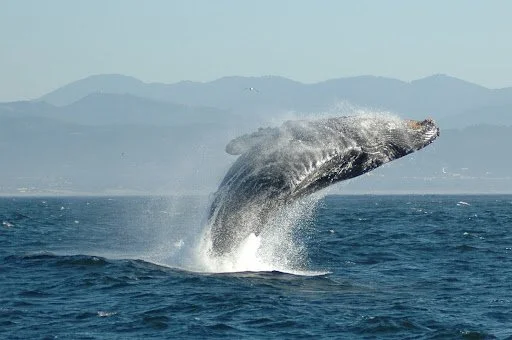
Jumping Humpback Whale, Wikimedia Commons, CC BY-SA 2.5
When a strand of eight adult female beaked whales were found on the shores of the far-flung Aleutian Islands in Alaska, members of the National Oceanic and Atmospheric Administration response team were bewildered. The whales appeared to be healthy, with no major external injuries, but their presence was unusual. What was thought to be a rare occurrence in 2018 has turned out to be part of a recurring pattern. Marine Mammal Science published a study which revealed that since the original discovery of the species, Alaska has had 74 known beaked whale strandings in 42 separate events.
Military and naval operations in the area were put to a halt in 1997 but the U.S. Geological Survey’s monitors at the Alaska Volcano Observatory have detected human-caused seismic survey activity along the islands. New research suggests that the surveys may have been involved in the mass stranding. Underwater sonic tests are only the latest example of ocean noise pollution cited by environmentalists. Growing concern has spurred research into the potential threats of human-made noise for marine life.
During seismic surveys, blasts of compressed air produce pulses of sound that analyze the seafloor for natural resources. At 220-250 decibels, these seismic air guns are the loudest noise created by humans underwater, producing a sound louder than a Saturn V rocket during launch. According to an article in Nature, “in the five decades before 1950, researchers recorded just seven mass strandings; but from then to 2004, after the introduction of high-power sonar for naval operations, there were more than 120.”
During the Trump administration, a ban on offshore drilling was lifted and companies from Central Florida to the Northeast were granted permits to carry out seismic mapping for gas and oil exploration. Senior bioacoustics researcher at the Cornell Lab of Ornithology Christopher Clark has studied whale communication for 40 years. Clark described the noise produced from seismic mapping as a “living hell” for undersea life.
Another primary contributor to ocean noise is shipping traffic, both commercial and recreational. Between 1950 and 2000 ship traffic doubled, producing an increase in noise of about three decibels per decade. This has led to communication masking — a term used to describe the reduction in the area over which animals are able to acoustically communicate. Research shows that across species, the combination of noise contribution from commercial and recreational vessels led to a reduction in communication range of up to 82%. A recent study found that shipping noise has the potential to double by 2030, further limiting the distance whales and other marine life are able to communicate between.
In the marine ecosystem, where visibility is limited, acoustics are the primary form of communication. For whales, every aspect of their lives is dependent on sound. Many of their species are highly intelligent, social beings who communicate in clicks and songs, and are even known to have their own languages. Some whales and orcas are known to use echolocation, a natural sound wave sonar, to hunt and locate food. Noise masks their expressions between their families, affecting their ability to feed and care for their young, as well as their orientation and ability to detect prey or oncoming ships.
In 1956, French oceanographer Jacues Cousteau released a documentary misleadingly titled The Silent World, that fed into the misconception of a quiet underwater seascape. Today we know that a healthy ocean isn’t a silent one. The ocean thrives on the familiar sounds of its natural world, sounds that marine life recognizes as home. Lead author ofThe Soundscape of The Anthropocene Ocean Carlos Duarte says that “The soundtrack of home is now hard to hear, and in many cases has disappeared.”
Claire Redden
Claire is a freelance journalist from Chicago, where she received her Bachelor’s of Communications from the University of Illinois. While living and studying in Paris, Claire wrote for the magazine, Toute La Culture. As a freelancer she contributes to travel guides for the up and coming brand, Thalby. She plans to take her skills to London, where she’ll pursue her Master’s of Arts and Lifestyle Journalism at the University of Arts, London College of Communication.
A Romanian City Swallowed by Toxic Waste
The landscape of Geamăna is a reminder of the impact mining has on local communities and environments. A nearby copper mine, Rosia Poieni, continues to leak its contaminated deposits further into the water sources of surrounding areas.
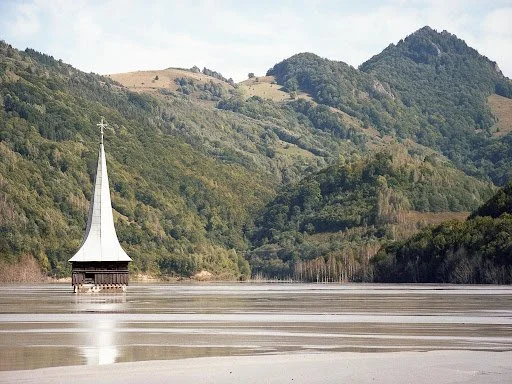
Geamana church flooded with toxic waste, Flickr.com, CC BY NC-ND-2.0
Geamăna, Romania was once a quaint village nestled in the Sesii Valley of the Apuseni Mountains, a range in Transylvania, Romania. In the late 1970s, Romanian dictator Nicolae Ceaușescu made way for a new copper mining project called Rosia Poieni. Work began in less than a year and the 400 families who lived in Geamăna were evacuated. Their village was replaced by an artificial lake used as a catch basin for the large quantities of toxic waste the mining project produced.
Before displacing the villagers in Geamăna, the government promised the residents they would be relocated to a new village five miles away. They ended up being moved more than 60 miles away, receiving land and a small amount of money. Locals were upset because the government didn’t fulfill their promise to relocate the community’s gravesite, which still remains around the flooded church.
Rosia Poieni is Romania’s largest copper mine and the second-largest copper mine in Europe. The mine is owned by the state company, CupruMin. In its prime, the copper pit produced 11,000 tons of copper a year, representing 65% of the total copper reserves in Romania. Before 1993, the discharge into the lake contained very few metals. When they could no longer sell the iron sulfate, CupruMin began discharging it into the water.
Ever since, the metals released and the acidity of the water have increased significantly. As of 2016, more than 130 million tons of tailings containing metals such as copper, iron and zinc, have been discharged into the settling basin, an act referred to as “acid mine drainage.” Despite measures to counteract the phenomenon, a 2000 report by the French Geological Survey found the water to be very acidic, with a pH of 2.7.
Recurring incidents of contaminated water leaking from the basin have spread pollution as far as Turda, a city more than 50 miles downstream. In 2008, millions of fish were found floating in the Aries river, a distributary of the Valea Șesii that connects to the artificial lake, as a result of CupruMin’s failure to charge the electric pumps that protect the area from biohazards. In 2011, a broken pipe led to 100 tons of waste poured into another nearby river, the Curmătura, and eventually into the Aries. Another incident occurred in 2012 when a few mineshafts flooded, spilling more of the contaminated water into the Aries.
CupruMin receives fines from the local authorities every year for their actions, but these reprimands don’t seem to have much of an effect. The deposit of the Rosia Poieni copper mine is estimated at 900,000 tons, allowing the company to continue its exploitation for at least 20 years. As production continues, the contaminated lake will only expand and increase the range of its environmental impact. All that’s left to be seen of the old village of Geamăna today is the spire of what was once the town’s church, engulfed in toxic water: a surreal landscape that serves as a striking image of what could become of nearby towns if CupruMin isn’t held accountable.
Claire Redden
Claire Redden is a freelance journalist from Chicago, where she received her Bachelor’s of Communications from the University of Illinois. While living and studying in Paris, Claire wrote for the magazine, Toute La Culture. As a freelancer she contributes to travel guides for the up and coming brand, Thalby. She plans to take her skills to London, where she’ll pursue her Master’s of Arts and Lifestyle Journalism at the University of Arts, London College of Communication.
Menstruation and Impurity Are Synonymous in Nepal
Women and young girls are dying every year in Nepal because of a tradition that deems them impure due to their monthly menstrual cycle.
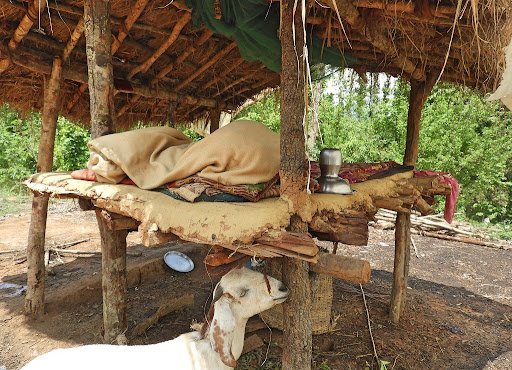
Rural villages in western and midwestern Nepal force girls and women to stay in menstruation huts outside of their homes. This centuries-old Hindu practice of chhaupadi (“chaau” means “impure,” and “padi” means “shed”) believes that women and girls are unclean, untouchable and impure during their menstrual cycles. When on their periods, girls and women are not allowed to live in the family home and are excluded from doing a range of everyday activities. Although the practice of chhaupadi was made illegal in 2005, it remains prevalent in remote areas and is still practiced by 77% of Nepalese.
Under the chhaupadi practice, menstruators are banned from touching milk, idols, cattle, a male family member, a pregnant woman or any child below the age of five. In addition, while on their periods, girls and women are not permitted to enter any social gathering, school, temple or kitchen, as they are considered impure. If anything or anyone is touched, it is to be discarded or deeply cleansed. Diet during menstruation changes as well: girls and women are not allowed to eat rice, meat, pickles, citrus fruits or milk products. Meals are further restricted as they do not have access to a kitchen.
While temporarily living in an unhygienic hut which oftentimes have no walls or doors, young girls and women are at risk for snake bites, rape, poor sanitation, urinary tract infections, diarrhea, dehydration, hypothermia and death. If girls encounter any health issues while in their huts, they are expected to wait until their menstruation is completed before seeking medical care. Blocked from using their bathrooms, they are forced to walk long distances to use public restrooms. Their time in the menstruation huts can last anywhere from 4-7 days a month. Each year at least one death occurs in menstruation huts. In December 2016, a 15-year-old suffocated after lighting a fire in the shed where she was staying to keep warm. In 2018, a teenage girl died when she was bitten by a snake while sleeping.
Chhaupadi is not limited to times of menstruation; itt is also practiced during childbirth. Women must deliver their babies in unhygienic sheds or huts, and remain for the next 10-14 days post-delivery. Consequently, chhaupadi during childbirth can lead to both maternal and infant death arising from excessive bleeding, septic shock, malnutrition and other unresolved complications caused by lack of healthcare access. Although exact figures of maternal and child health consequences due to chhaupadi are unknown, neonatal and maternal mortality is high in the far-western regions where chhaupadi is common.
The mental health of women and girls is impacted due to isolation from family and social exclusion, which results in: depression, low self-esteem and disempowerment among girls. In addition, there is also a fear of sexual abuse and assault at night causing extreme anxiety in the young girls. Cases of rape are not reported due to fear that a man would not want to marry a girl in the future as a result of “impurity.” The psychological issues girls and women endure while in the huts go unnoticed and are often ignored. The continuity of the chhaupadi practice is one way of preserving a tradition to the Nepalese people. It has been in existence for a long time with a focus on purity, aimed at pleasing the deities believed to take care of the community.
In August 2017, the Nepalese government began criminalizing the chhaupadi practice and imposed a fine ($30) and/or a three-month jail sentence for anyone forcing a woman to follow the custom. Local police are tasked with destroying chhaupadi shelters. Despite these efforts, the practice has been difficult to abolish as it is deeply rooted in traditional beliefs. Activists argue that the chhaupadi practice will be difficult to fully stop, as many women make the decision to practice it for themselves. However, with the new law, women who choose to practice chhaupadi are required to do so in a safer way, by isolating themselves from their families in a separate area or room and not a shed. This requirement exists to help protect the health and safety of the menstruators whilst allowing them to follow their traditional practice.

Jennifer Sung
Jennifer is a Communications Studies graduate based in Los Angeles. She grew up traveling with her dad and that is where her love for travel stems from. You can find her serving the community at her church, Fearless LA or planning her next trip overseas. She hopes to be involved in international humanitarian work one day.
The 5 Blue Zone Regions and their Centenarian Lifestyle
Dan Buettner coined the term blue zones—regions around the world where people live the healthiest and the longest. These Centenarians share similar lifestyles, although living thousands of miles from each other.
Old Man Looking Out. NeilsPhotography. CC BY 2.0
Average life expectancy around the world is 77 years. However, award winning journalist and New York Times bestselling author Dan Buettner discovered five regions where people typically live to be over 90. Buettner named these cities ‘Blue Zones’ to identify them by their life expectancy. Researchers found that although their lifestyles change slightly, the people of blue zone areas were living longer and had more fulfilled lives compared to the rest of the world. This is due to their primarily plant-based diet, their spirituality, family and social networks, along with regular exercise and drinking moderate amounts of alcohol. The five cities classified as blue zones are Okinawa, Japan; Sardinia, Italy; Nicoya, Costa Rica; Ikaria, Greece; Loma Linda, California.
1. Okinawa, Japan
Okinawan on a Walk. Dshack. CC BY-NC 2.0
Okinawans are among the healthiest living people in the world and Okinawan women live the longest in all the earth, with an average lifespan of 90 years. They follow a plant based diet, eating mostly sweet potatoes, rice, grains and soy. The Okinawan household does not have much furniture; meals are eaten on tatami mats on the floor. By getting up and down several times a day to relax or eat their meals, older people are able to gain lower body strength and, in turn, protect themselves from having dangerous falls. In addition, their diet and active lifestyle of gardening and walking everywhere helps their body stay strong. Their physical and mental welfare is accompanied by a social network called Moai. This social network consists of lifelong friends who support each other emotionally and financially in times of need. Okinawans know that there are always friends who surround them and are willing to lend support in time of need. By these simple lifestyle habits, the people of Okinawa have been able to live centenarian lives with less illness than those in other regions.
3. Sardinia, Italy
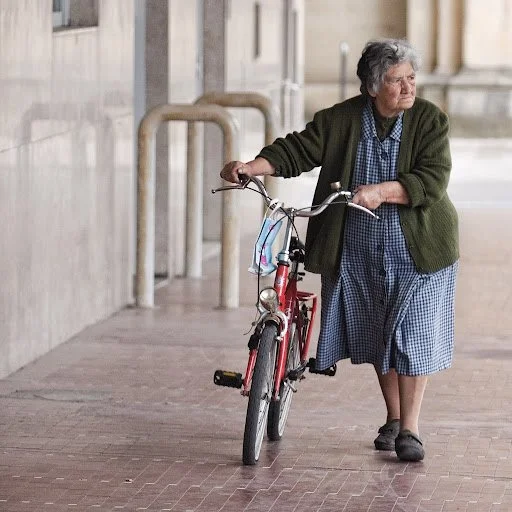
Italian Elderly Woman Going on a Bike Ride. Paolo Margari. CC BY-NC-ND 2.0
The Sardinian lifestyle has been culturally isolated from the rest of Italy as it is an island town. Sardinians' long life is the benefit of living within strong healthy families and a plant based diet accented with meat. Sardinian seniors are often surrounded by children and grandchildren, which results in lower rates of stress, depression and suicide. Men in this blue zone region are known for gathering in the street in the afternoons to share laughs with one another. Laughter reduces stress, which can lower one’s risk of cardiovascular disease. In addition to being surrounded with family and laughter, Sardinians still hunt, fish and harvest everything they eat. Their diet consists mainly of whole grain bread, fruits, beans and garden vegetables. An average of two glasses of wine daily are consumed by Sardinian residents, which is known to reduce stress among men. Meat is reserved for Sunday family meals and other special occasions. Although diet and family network help add years to Sardinians’ lives, a research team discovered that there is a rare genetic quirk carried by the island’s inhabitants.The M26 marker is linked to exceptional longevity, and due to geographic isolation, the genes of the residents in this area of Sardinia have remained mostly undiluted, resulting in nearly 10 times more centenarians per capita than the United States.
4. Nicoya, Costa Rica
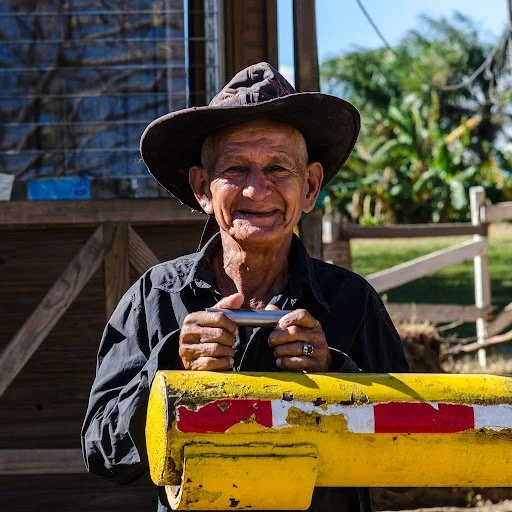
The Central American nation of Costa Rica is home to Nicoya, an 80- mile peninsula just south of the Nicaraguan border. The people of Nicoya believe in having a sense of purpose for everyday living. This purpose encourages them to feel needed and want to contribute to a greater good. With the purpose driven life they live, they continue to work and find joy in their physical chores. Usually, they are surrounded with family and frequent social gatherings from friends and neighbors. Nicoya centenarians regularly take in the sun. This helps their bodies produce Vitamin D which is known to keep bones strong and contributes to a healthy body function. Their Mesoamerican diet consists of corn, squash and beans. These foods are rich in vitamins, proteins, fiber and healthy fats,creating a complete, nutritional diet that has helped Nicoya people live well into their 100s.
4. Ikaria, Greece
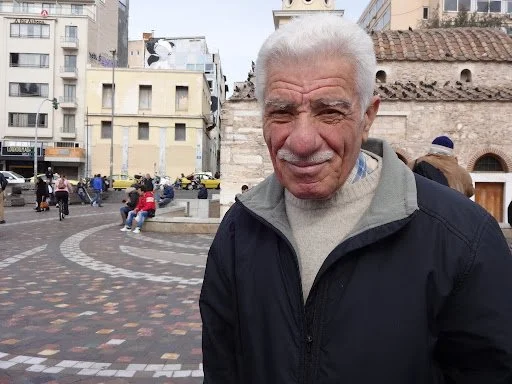
Greek Man Smiling. Julie70. CC BY-NC-ND 2.0
The small island of Ikaria in Greece sits on the Aegean Sea and is home to an almost dementia-free society. Lifestyle, clean air, relaxed pace and diet contribute to the longevity of Ikarians, with one in three making it to their 90s. The people of Ikaria tend to relax mindlessly through gardening, walking to a neighbor's house or playing late night domino games. Through the games and socializing, Ikarians are able to create connections with others. Studies have found that having a strong social network is part of living a healthy life. Their faith also aids in their longevity, as most Ikarians are Greek Orthodox Christians. While practicing calls for fasting almost half of the year, it cuts about 30 percent of calories out of the normal diet — the only proven way to slow the aging process in mammals. Lastly, almost all Ikarians drink goat milk as it provides potassium and the stress-relieving hormone tryptophan.
5. Loma Linda, California
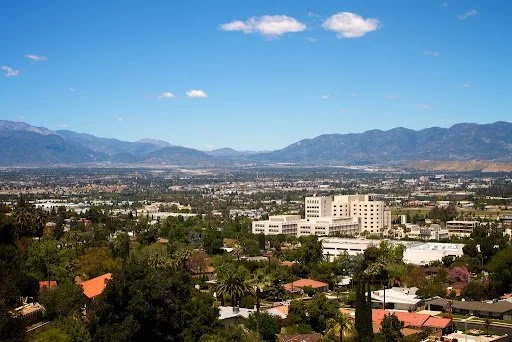
"Loma Linda, California. CCPIX. CC BY-NC 2.0
A community of an estimated 9,000 Adventists who live in Loma Linda, California put the US on the blue zone list. Adventists live 10 years longer than other Americans. Their beliefs, their volunteering, diet, exercise and fellowship add years to their lives. The Seventh-day Adventist Church encourages and provides opportunities for its members to volunteer. Through volunteering, many are able to focus on others and this allows Adventists to ward off depression. Their well balanced diet of vegetables, fruits, legumes and lots of nuts is influenced by the Bible. Adventists cite Genesis 1:29: “And God said, Behold, I have given you every herb bearing seed, which is upon the face of all the earth, and every tree, in which is the fruit of a tree yielding seed; to you it shall be for meat.” They also avoid smoking and drinking, a healthy habit that will help prevent future health issues. Many Adventists go on daily walks or participate in low intensity exercise. Their active bodies can stay consistently strong. Adventists’ time spent with like minded people who support their habits is what continues to make them some of the longest living Americans.

Jennifer Sung
Jennifer is a Communications Studies graduate based in Los Angeles. She grew up traveling with her dad and that is where her love for travel stems from. You can find her serving the community at her church, Fearless LA or planning her next trip overseas. She hopes to be involved in international humanitarian work one day.