
The roots of Kenya’s political crisis are echoed as protests shake the nation.
Read MoreFrom Chalkboards to Changes: My Experience Teaching in Rwanda
Inside a Rwandan village school where students, teachers and volunteers are reshaping education — together.
Read MoreIbrahim Traoré: The Making of a Modern Anti-Colonial Icon in Africa
At age 37, Ibrahim Traoré, Burkina Faso’s young leader, is going viral for his pan-African speeches and anti-Western stance. Still, his ties to Russia raise difficult questions about sovereignty and influence in West Africa.
Read MoreReclaiming the Chagos Islands: Unraveling the Colonial Legacy of Mauritius
The significant return of the Chagos Islands, after centuries of British control, serves as a poignant reminder of the legacy of colonialism and the ongoing hurdles that must be overcome.
Read MoreHow IVF Could Get Rhinos Off the Endangered Animal List
Before Sudan died in 2018, scientists collected his sperm in hopes of developing an embryo that would carry on the species. In December 2019, eggs from Najin and Fatu were harvested and sent to the same lab as Sudan’s sperm. It is here that scientists toyed with the idea of in vitro fertilization (IVF) for rhinos.
Read MoreGeneration Z Quits Vaping for the Congo
Rampant child labor in the Congo has ignited an ethical social movement among Generation Z.
Read MoreThe Hidden Climate Cost of Namibia and Botswana’s Oil Refinery
Energy independence for southern Africa could boost local economies, but oil refinery aspirations hold a hidden cost, contributing to greater climate issues.
Read MoreThe Impact of Authoritarianism on Food Insecurity in Chad
Food insecurity and the authoritarian regime in Chad have denied many individuals and communities access to fundamental human rights.
Read MoreTrash to Treasure: A Tour Through Cairo’s Garbage City
Take a guided walk through Cairo’s Garbage City and discover how one community is turning waste into a way of life.
Read MoreMorocco: A Colorful Tapestry of Heritage and Natural Beauty
Morocco is a land of contrasts, from the vastness of the Sahara to the intricate mazes of its ancient medinas. Each moment spent here is like stepping through the pages of a vividly illustrated storybook, where every corner promises a new adventure
Read MoreThe Supernatural Role of Masks in Nigeria’s Yoruba Tribal Culture
Julia Kelley
Whether the feminine celebration of the Gelede mask or the spiritual transformation through the Egungun mask, these cultural objects perform an imperative role in the Yoruba people’s religious culture.

Egungun Festival Masks. Fermi12. CC BY-SA 4.0.
African masks have been functionally used for thousands of years. Recognized for their supernatural qualities, they transform wearers into new entities, symbolize animal or ancestor spirits, mythological heroes, or moral values, and can even be a way of honoring specific individuals. Moreover, specific ceremonies and masks act as visual representations of local customs. With a vibrant music and dance tradition, the Yoruba people are known for their notable mask culture. The Yoruba are one of Nigeria’s largest ethnic groups, mainly concentrated in the southwestern part of the country but also found in smaller groups throughout Benin and Togo. For over 1,500 years, they have also been defined by their advanced urban kingdoms, strong economy and unique artistic tradition. Ceremonies are imperative to their way of life; vibrant festivals, rituals and weddings display cultural pride, celebrate history and connect the physical realm to the spiritual. Beyond the symbolic instruments and costumes used during these occasions, masks are also extremely vital due to their mystic transformative qualities.
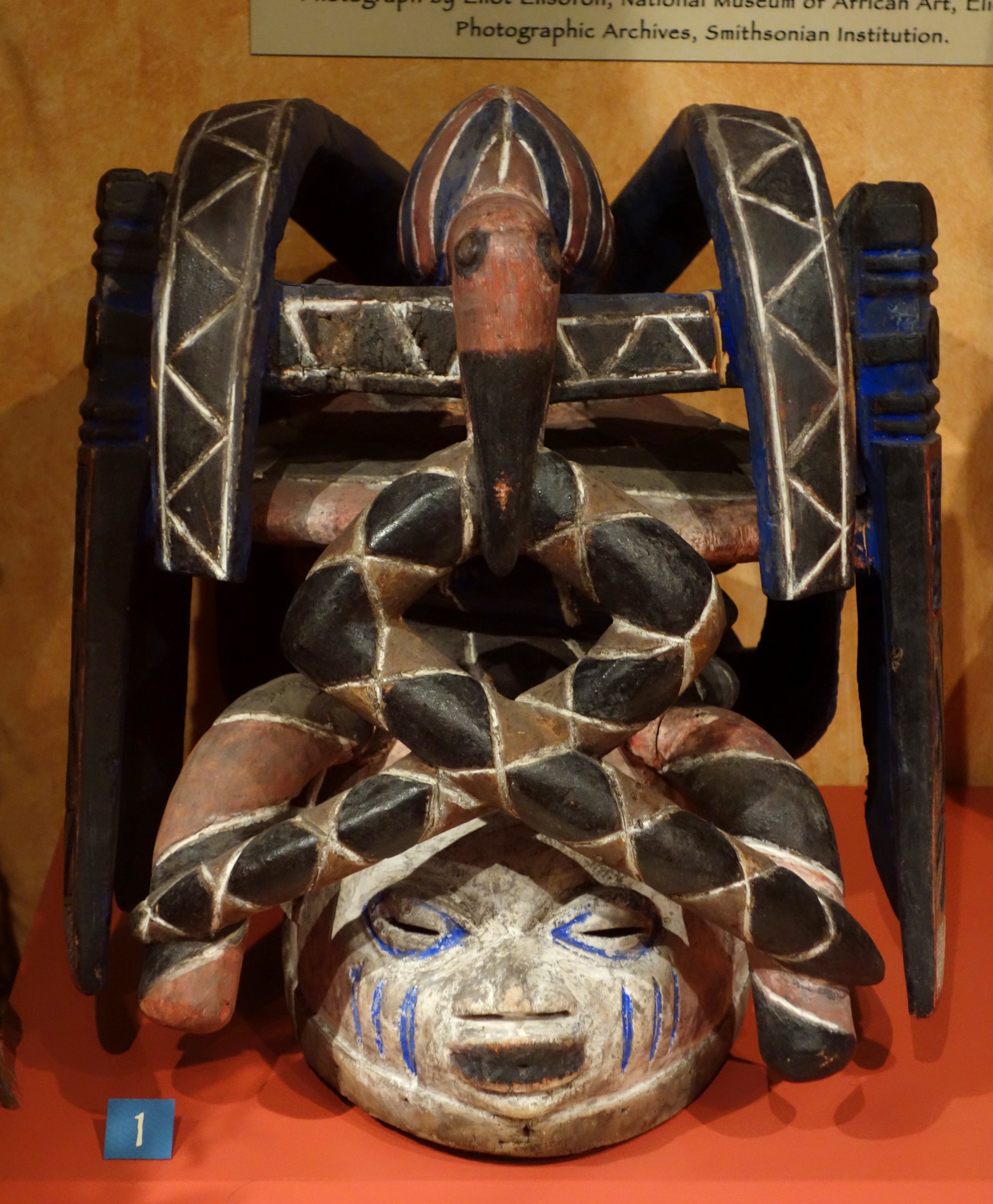
Gelede Mask With Animal Figure. Daderot. CC0 1.0.
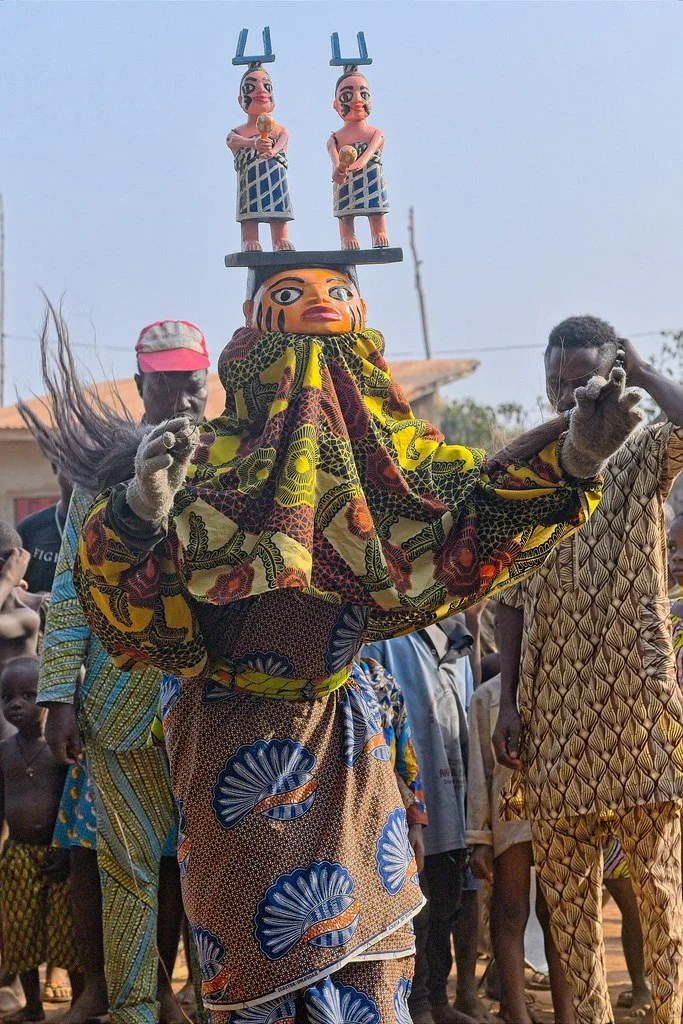
Gelede Dance. dave massie. CC BY 2.0.
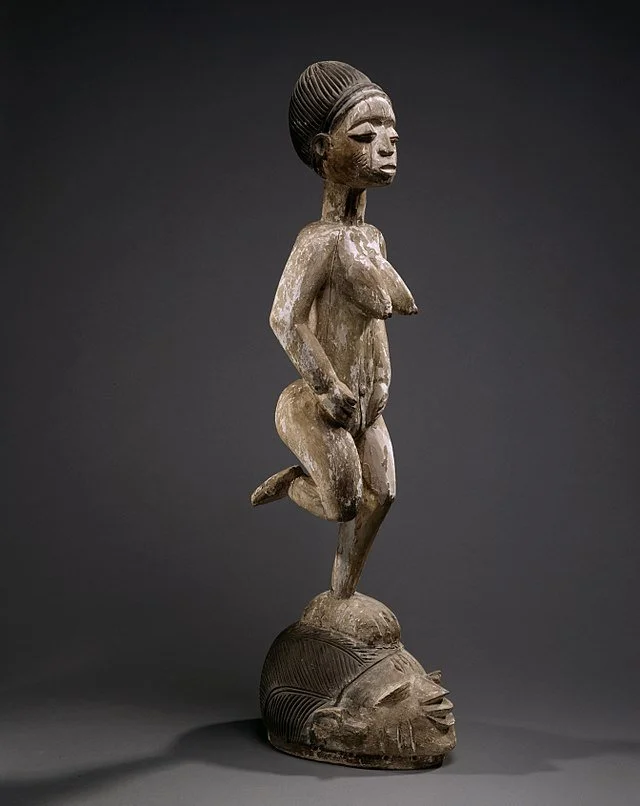
Gelede Mask With Woman Figure. Kugbenu (Vervaardiging). CC0.
However, when and how masks are used depends on their corresponding festivals. The Gelede mask, for example, is used during the Gelede dance. This ceremony is performed as a way to pay tribute to the primordial mother Iyà Nlà and recognize women’s role in social organization and development. Retracing the history and myths of the people, the Gelede takes place annually after harvests and during times of drought and epidemics. The masks, adorned with intricate motifs and vibrant colors, are worn as a way to honor “mothers,” or good witches who have power over bad ones, in their efforts to protect the community from negative forces. Individual masks reflect local traditions, such as through unique facial markings or figures included on the masks.
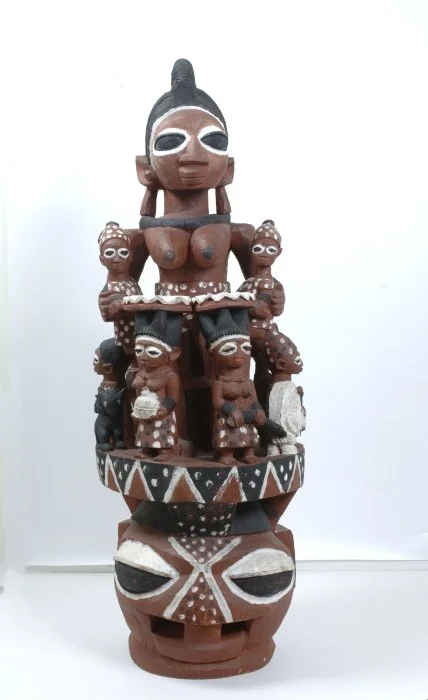
Epa Festival Mask. Beeldhouwer / sculptor: Jospeph Agbana. CC BY-SA 3.0.
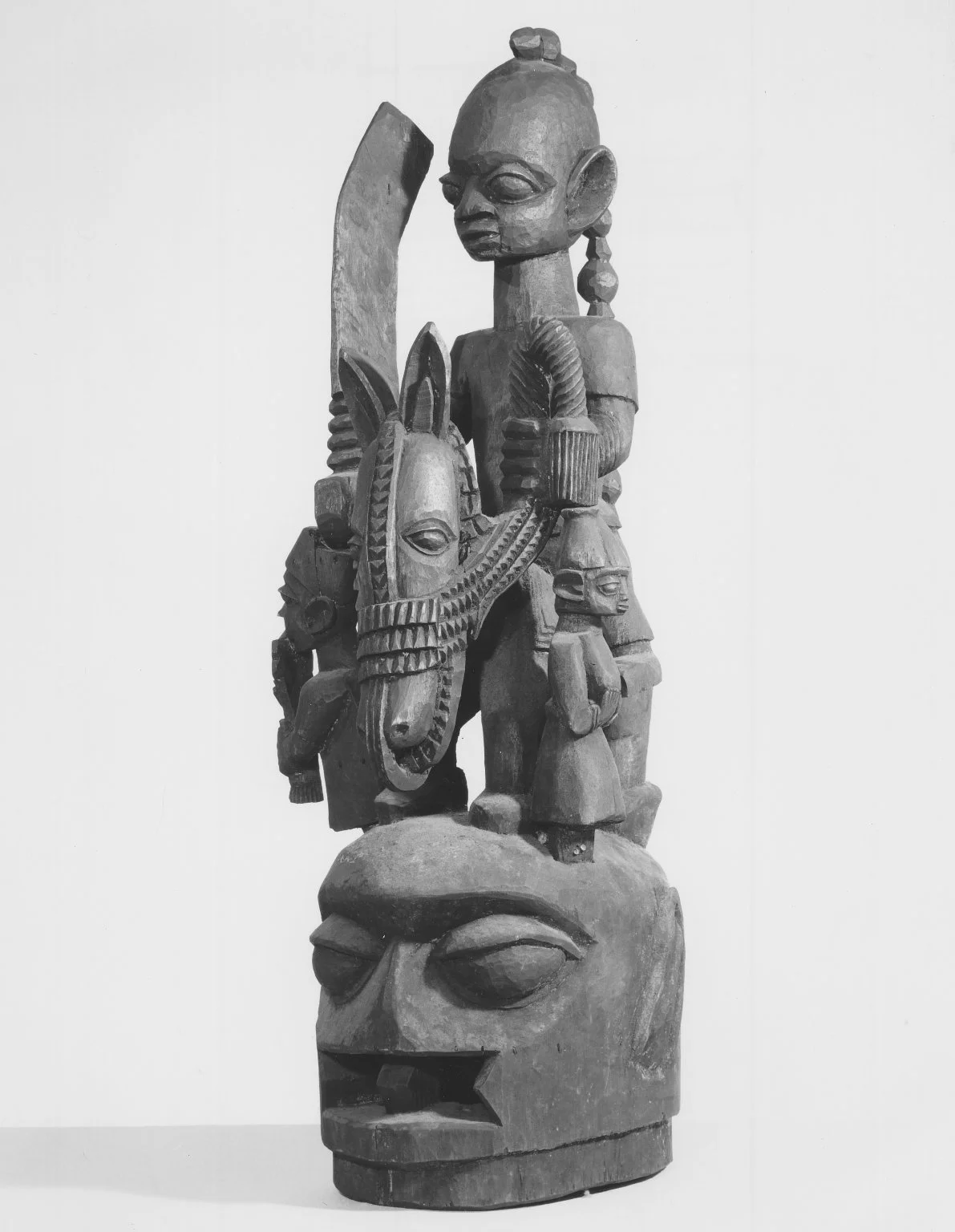
Epa Mask With Warrior Figure. Unknown author. CC BY 3.0.
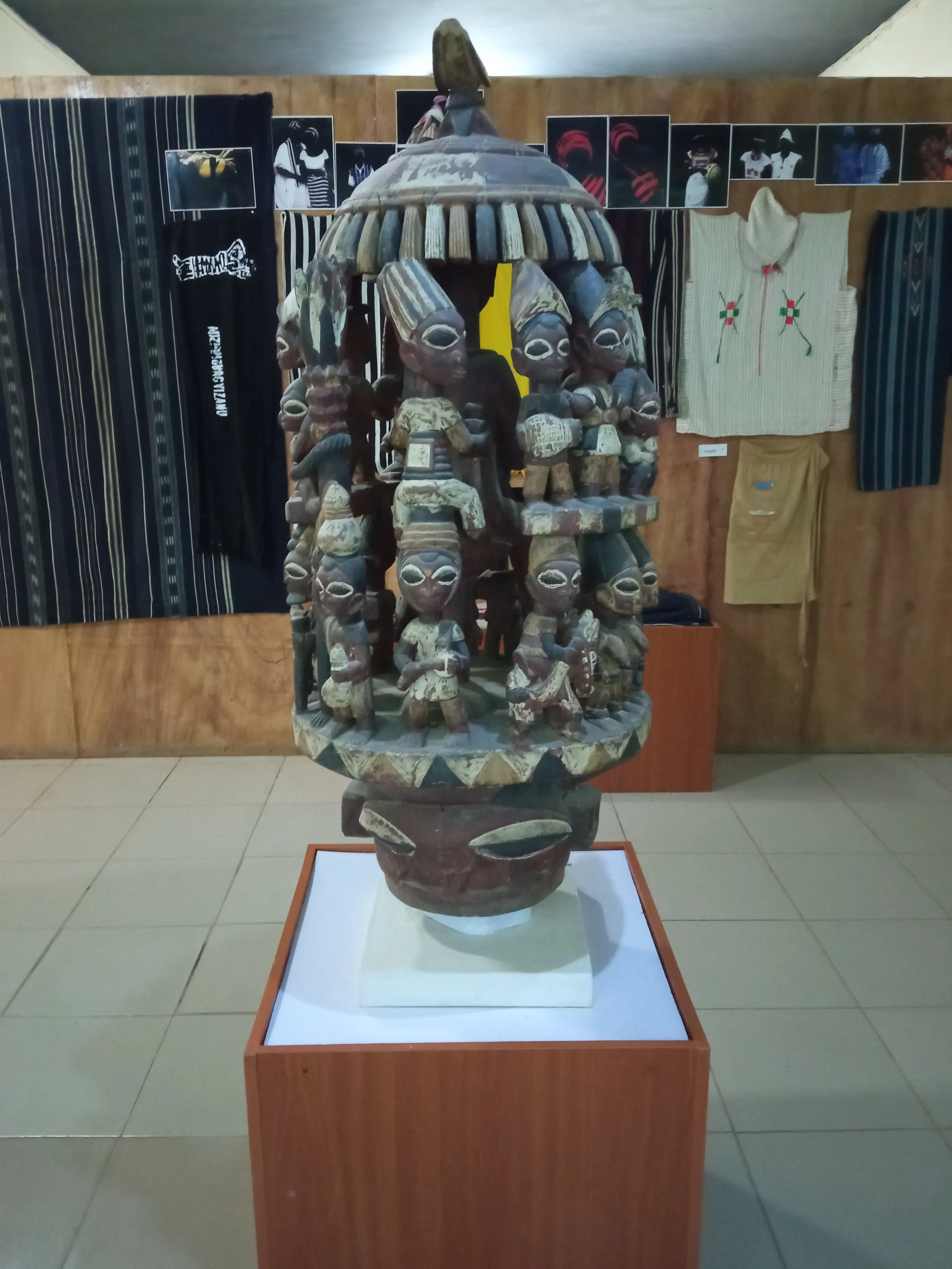
Large Epa Helmet Mask. Em-mustapha. CC BY-SA 4.0.
Epa masks are worn during yam harvest festivals by young male dancers as they leap onto mounds. The rigorous movements of this dance indicate the community’s fate over the next year; if the dancer successfully leaps, then all is well, but if not, sacrifices are made to the forces that made him fail. Leading up to these ceremonies, the masks are kept in shrines, where they are fed to increase their power and efficacy. Since they are believed to contribute to the wearer’s success, heavy weight and symbols associated with war are characteristic of these masks.
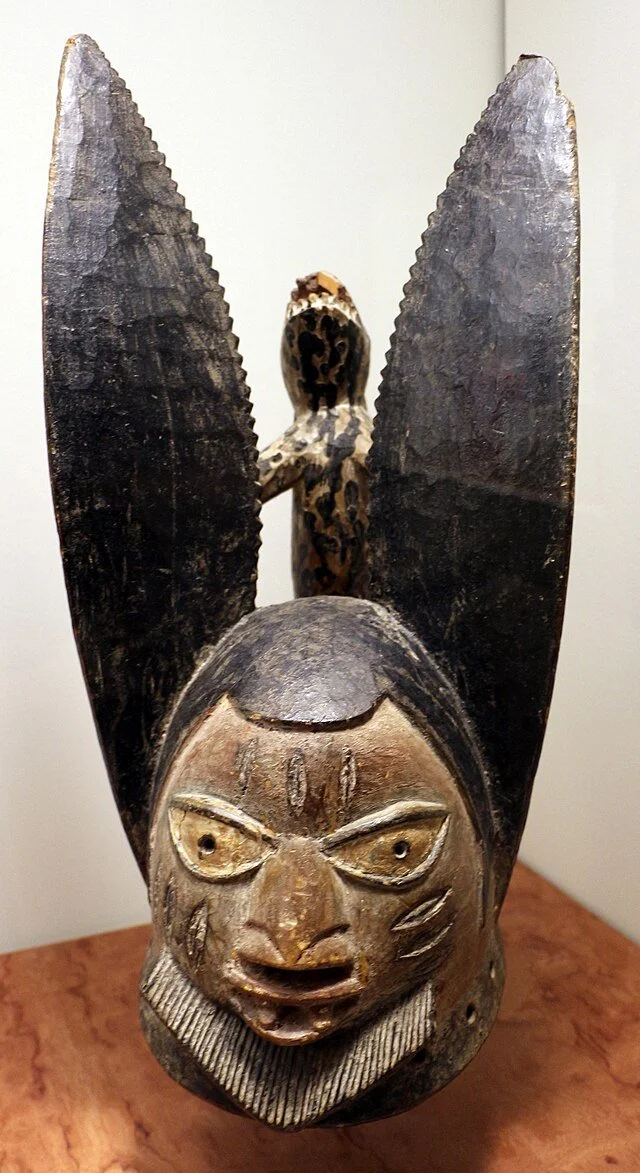
Ancestor Egungun Mask. Sailko. CC BY 3.0.

Egungun Festival. Fermi12. CC BY-SA 4.0.
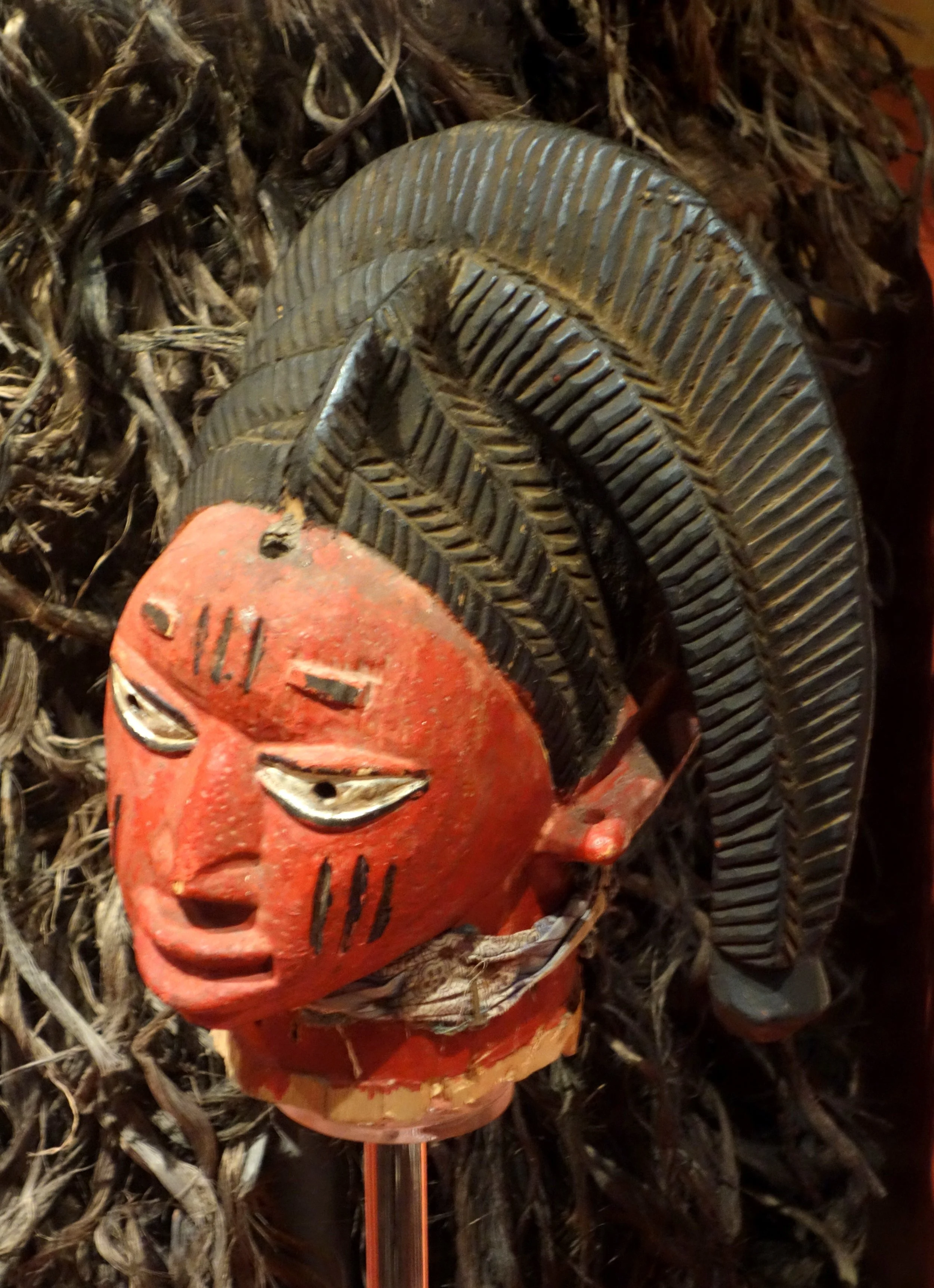
Yoruba Egungun Mask. Daderot. CC0 1.0.
One of the most important masks in their ritual culture, the Yoruban Egungun masks are worn to worship ancestors. These are used during Odun Egungun or “masquerade” festivals, during which men move through town wearing masks as they embody their ancestors. These masks act as a visual manifestation of those being depicted, offering members of the community the opportunity to strengthen their familial bonds and ask for protection or blessings.
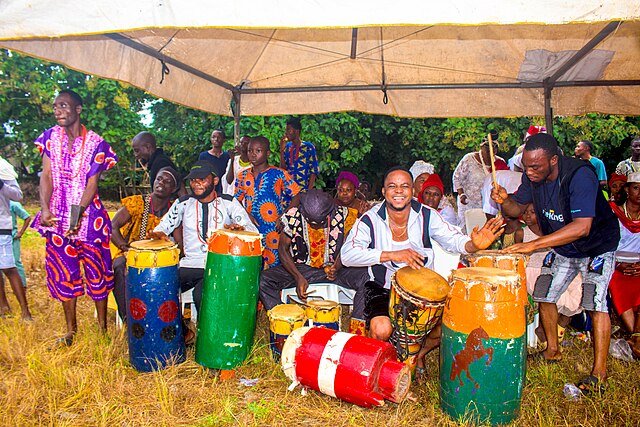
Yoruba Festival Music and Dance. Tunde Akangbe. CC BY-SA 4.0.
Developed over centuries, ceremonial masks remain a significant part of Yoruban culture. African masks have also become admired in museums worldwide for their intricate designs, but contemporary artists and historians have noted that they are exhibited mostly as ethnography. Moreover, African masks have inspired many well-known European artworks, most notably in Picasso’s 20th-century modernist paintings. This Westernization has helped shape stereotypes around African communities, decontextualizing their current cultural significance. However, as the Yoruba masks demonstrate, festivals recommence every year, and the masks continue to visually represent the community’s rich history and religious tradition.
Julia Kelley
Julia is a recent graduate from UC San Diego majoring in Sociocultural Anthropology with a minor in Art History. She is passionate about cultural studies and social justice, and one day hopes to obtain a postgraduate degree expanding on these subjects. In her free time, she enjoys reading, traveling, and spending time with her friends and family.
Cholera Outbreaks: Nigeria’s Struggle with a Reoccurring Epidemic
Julia Kelley
Poor access to clean water and underdeveloped facilities has led Nigeria to face a decades-long, deadly battle against cholera.
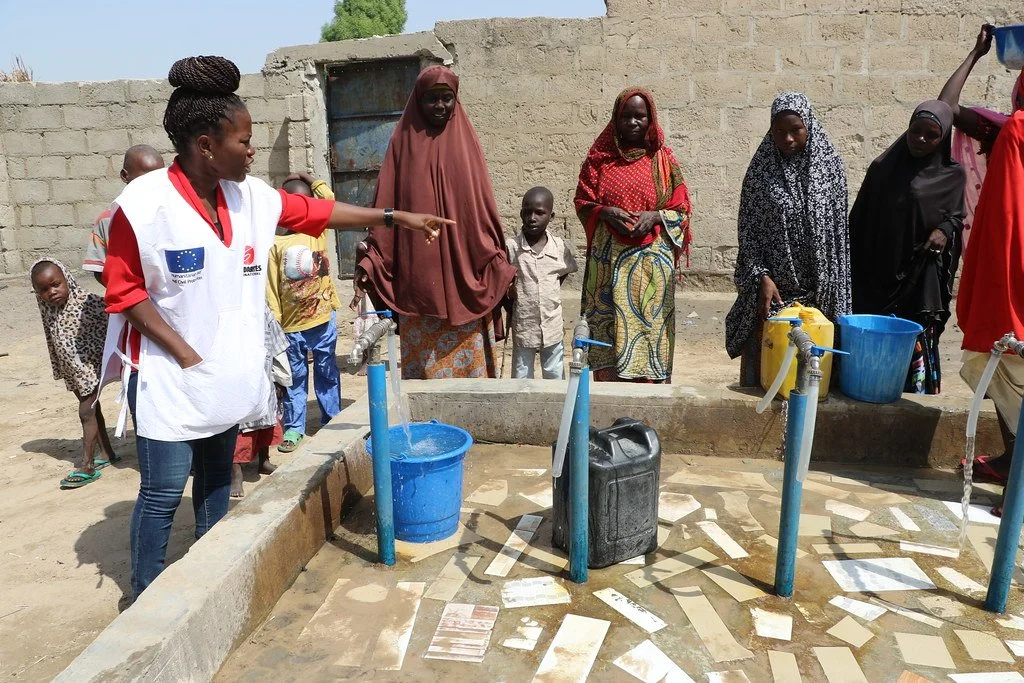
Access to Safe Water in Nigeria. EU Civil Protection and Humanitarian Aid. CC BY-NC-ND 2.0.
For decades, Nigeria has faced major cholera outbreaks throughout the country, posing a serious threat to public health. The disease, an acute diarrheal infection caused by ingesting food or water contaminated with the bacterium Vibrio cholerae, is a major indication of inequity, as well as a lack of social and economic development in the areas where it forms. Since 1972, cholera has plagued Nigeria in intermittent outbreaks that have claimed thousands of lives, the worst being in 1991, with a high of 59,478 reported cases and 7,654 deaths. Despite numerous attempts by the World Health Organization, the Nigeria Center for Disease Control and the Borno State Ministry of Health to provide support through free cholera vaccines and implement prevention and preparedness, the country continues to fight against large, destructive outbreaks.
Many factors make Nigeria especially prone to these widespread epidemics, including a lack of access to safe drinking water, a lack of infrastructure necessary for water supply and waste disposal and a lack of health facilities. Particularly in smaller communities and remote villages, sourcing clean water is a challenge that leads residents to dig their own wells. Moreover, during the dry season, these wells dry up and leave individuals only with the more hazardous alternative of shallow streams. Poor weather conditions worsen this significant obstacle to clean water and sanitation. Flooding, for example, increases food insecurity by destroying farmland, creating economic loss, demolishing sanitation facilities and contaminating sources of clean water. Several financial issues, including poor investment, funding allocation and low human capital, in conjunction with already deficient infrastructure and low community participation, also contribute to a lack of secure water infrastructure. Not only does this make for a higher potential of infection, but Nigera’s healthcare infrastructure is also underdeveloped, lacking the medical facilities and supplies necessary to treat those infected with cholera. Limited medical equipment and supplies, as well as a lack of internet connectivity, make it extremely difficult to heal patients and facilitate important reporting of cholera data.
These issues remain significant and continue to threaten the lives of Nigeria’s citizens. This is exemplified by the country’s most recent outbreak in 2024, which saw about 11,000 recorded cases and 359 deaths in October that year. Intense rains throughout the year led to widespread floods and dam breaks across Nigeria, weakening water infrastructure, destroying farmland and leaving many homeless in damaged areas, overall causing a large part of the country to be vulnerable to diseases like cholera. This most recent epidemic was met with policy and prevention program recommendations in the hope of impeding future spreads, the most critical of which being Water, Sanitation and Hygiene services. These accelerate and sustain access to safe water, sanitation services and good hygiene practices, all of which are the main deterrents of cholera spread. While this strategy proved effective when instituted by the Nigerian government during the 2018 outbreak, it still requires increased government funding and outside investment to remain effective. Public health and safety continue to endure disadvantages, as the threat of cholera looms over the country.
GET INVOLVED:
For those looking to get involved in supporting the fight against cholera outbreaks in Nigeria, check out organizations such as WaterAid, Bread and Water for Africa, Save the Children and The Water Project, groups focused on supplying safe drinking water and sanitation to Nigeria, as well as many other countries in Africa. In addition, organizations like Doctors Without Borders, the World Health Organization, ICAP Global Health and Gavi, The Vaccine Alliance provide medical support to cholera patients in Nigeria and contribute to the development of disease control and prevention.
Julia Kelley
Julia is a recent graduate from UC San Diego majoring in Sociocultural Anthropology with a minor in Art History. She is passionate about cultural studies and social justice, and one day hopes to obtain a postgraduate degree expanding on these subjects. In her free time, she enjoys reading, traveling, and spending time with her friends and family.
How Congo and Rwanda Arrived at the Brink of War
In their fight over marginalized peoples and access to rare minerals, the Congolese military and Rwanda-backed rebels risk triggering a broader regional war in southeast Africa.
Read MoreGhanaians Knee Deep in Clothing Waste
Ghana is struggling with the overwhelming influx of textile waste from the fast fashion industry, with millions of garments dumped each week, much of it unfit for resale
Read MoreChild Slavery in Congo’s Cobalt Mines
The world’s high demand for cobalt mining has led to the exploitation of child labor in the Congo.
Read MoreUS Declares Genocide in Sudan
After two years of famine, disease, and misery, the U.S. has given an official deemed the ongoing conflict in Sudan as genocide.
Read MoreBarring Basic Rights: Uganda’s Anti-Homosexuality Regulation
Modern anti-gay regulations continue to threaten the lives and safety of Ugandan LGBTQ+ individuals.
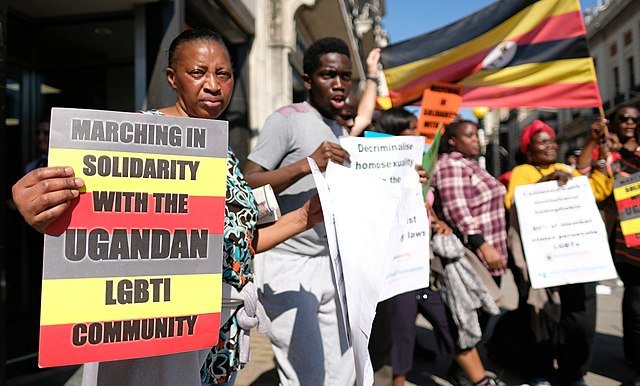
Group Marching in Support of Uganda’s LGBTQ+ Community. Alisdare Hickson. CC BY-SA 2.0.
Known for having one of the world’s harshest LGBTQ+ rights records, the Ugandan parliament has pursued longstanding efforts to diminish same-sex activity within the country. As a result of 19th-century British colonization, the severe criminalization of homosexuality set the stage for modern homophobic sentiments. This culminated in the Anti-Homosexuality Act of 2023, which was later upheld by the Ugandan parliament in April 2024.
The 2023 Anti-Homosexuality Act was signed into law by Ugandan President Yoweri Museveni in May 2023, enforcing strict restrictions against LGBTQ+ individuals. Implementing harsh penalties, the act demands life imprisonment for consensual same-sex activity and the death penalty in cases of “aggravated homosexuality,” a term that denotes any same-sex act that involves people under 18, older than 75, those with a disability, or when consent is not given or cannot be given. This act is not the first attempt to limit LGBTQ+ rights in Uganda. In 2010, the Ugandan parliament passed a bill introducing similarly anti-gay legislation that was eventually ruled illegal by the constitutional court due to its lack of necessary quorum. In 2021, however, the president succeeded in passing a sexual offenses bill that criminalized same-sex relationships and sex work in Uganda.
While the Ugandan government has praised such legislation as acting in the country’s best interest, the persistent condemnation of same-sex actions has negatively impacted the lives of LGBTQ+ Ugandans. This has not only promoted anti-gay views but has also threatened lives through the reduction of HIV prevention and perpetuation of societal abuse. In an interview with Amnesty International, Ugandan activist and founder of the gay and intersex rights organization Freedom and Roam Uganda (FARUG), Jacqueline Kasha described the new law’s impact on her community. She contends that advocacy and visibility for LGBTQ+ individuals have sharply diminished with the aggressive crackdown: “Several LGBTI persons have since gone underground which is now impeding all our efforts, especially in the health sphere in the fight against HIV, mental illness and economic disparities.” The 2023 Act has allowed anti-gay groups to accuse or arrest people with little evidence or reasoning. As such, LGBTQ+ individuals are vulnerable to attack when outside the safety of their homes, forced to hide their identities under the threat of violence. Furthermore, those in need of HIV services have become disproportionately vulnerable to health risks, driven away from receiving care due to fear of criminal punishment or discrimination.
The first case of “aggravated homosexuality” has already come into effect: 21-year-old Michael Opolot was arrested in August 2023 after allegedly participating in public sexual activity with another man reported to have a disability. While the new act permits this arrest, there has not been any evidence submitted by police to substantiate claims that the alleged victim is disabled and therefore could not give consent. Opolot’s case has provoked Ugandan activists to challenge the law's constitutionality, citing the act’s contradiction of citizens’ freedom from discrimination and rights to privacy and health. Moreover, they have noted that Opolot’s case demonstrates the senseless oppression of LGBTQ+ individuals. Ugandan activist Clare Byarugaba affirmed that this mistreatment not only violates human rights but also suppresses advocacy, as “activists, public health workers, and others face long prison sentences and hefty fines” for attempting to voice support.
As a result of such political, social and health persecution, the LGBTQ+ population in Uganda has been left unprotected and endangered by intimidating threats. Although Uganda’s government views the recent passing of anti-homosexual legislation as a “step forward” for the country, many in the LGBTQ+ community have experienced the opposite result in their daily lives. Several international organizations and governments have commented on the bill, with United States President Joe Biden describing the act as a “tragic violation of universal human rights,” and the Joint United Nations Programme on HIV/AIDS (UNAIDS) explaining that “criminalizing populations most at risk of HIV, such as the LGBTQ+ communities, obstructs access to life-saving health and HIV services.” Despite such international criticism, anti-homosexuality continues to loom largely over Uganda and LGBTQ+ existence within the country.
TO GET INVOLVED
Those looking to support LGBTQ+ communities in Uganda can do so by getting involved with organizations dedicated to supporting individuals inside the country as well as those who have fled. Such organizations include: Sexual Minorities Uganda (SMUG), an LGBTQ+ advocacy organization, Universal Coalition of Affirming Africans Uganda (UCAA - UG), a human rights organization advocating for human rights and marginalized people, and Global Black Gay Men Connect (GBGMC), a group collaborating with Uganda Key Populations Consortium (UKPC) and SMUG to launch an emergency response fund to support LGBTQ+ Ugandans.
Julia is a recent graduate from UC San Diego majoring in Sociocultural Anthropology with a minor in Art History. She is passionate about cultural studies and social justice, and one day hopes to obtain a postgraduate degree expanding on these subjects. In her free time, she enjoys reading, traveling, and spending time with her friends and family.
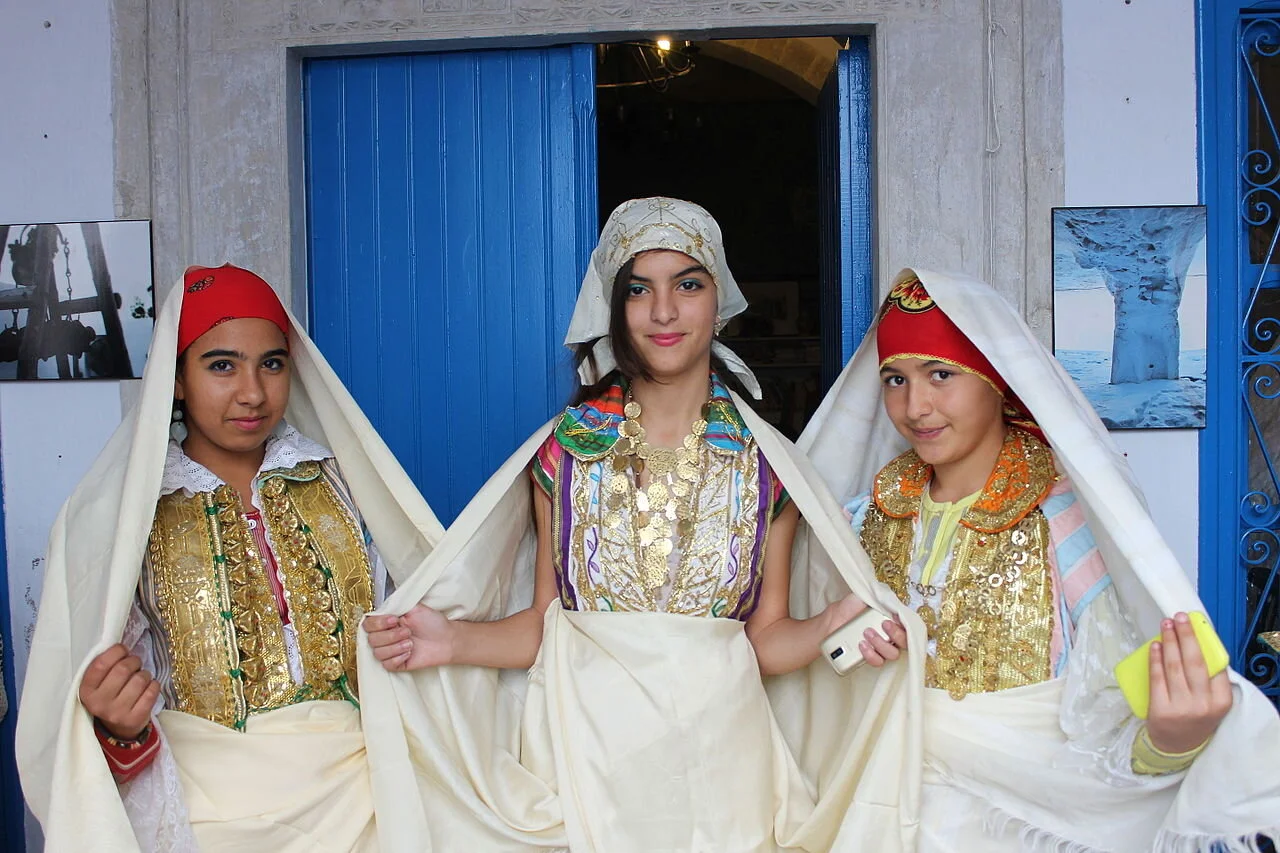
Tunisian girls wearing traditional Tunisian dress including the sefseri, a white veil made of silk or wool. Sami Mlouhi. CC BY-SA 4.0.
6 Treasures of Tunisia, From 'Star Wars' to Desert Oases
Tunisia is a country in North Africa, a region known as the Maghreb, that is similar in culture, history and religion to Morocco and its neighbor, Algeria. Tunisia is one of the most visited countries in Africa – it is a popular vacation destination for Libyans, Algerians, the French, Germans and the British. The country’s official language is Arabic, but the local Tunisian Arabic dialect,darija,, and French are also commonly used. The majority of Tunisians are Muslim, though a small Jewish community lives on Djerba, North Africa’s largest island.
The tiny country offers a variety of landscapes – beaches, mountains, the desert, woods and salt pans – that are sure to appeal to all types of travelers. The museums and ancient Roman ruins are sure to appeal to history buffs, and die-hard “Star Wars” fans will be interested to know that many scenes on the planet Tatooine were filmed in Tunisia. Be ready to enjoy dishes flavored with harissa, a spicy red pepper paste that has recently become popular in the U.S., along with plenty of seafood and Maghrebi staples such as couscous and syrupy doughnut-like bambalouni and zlebia.
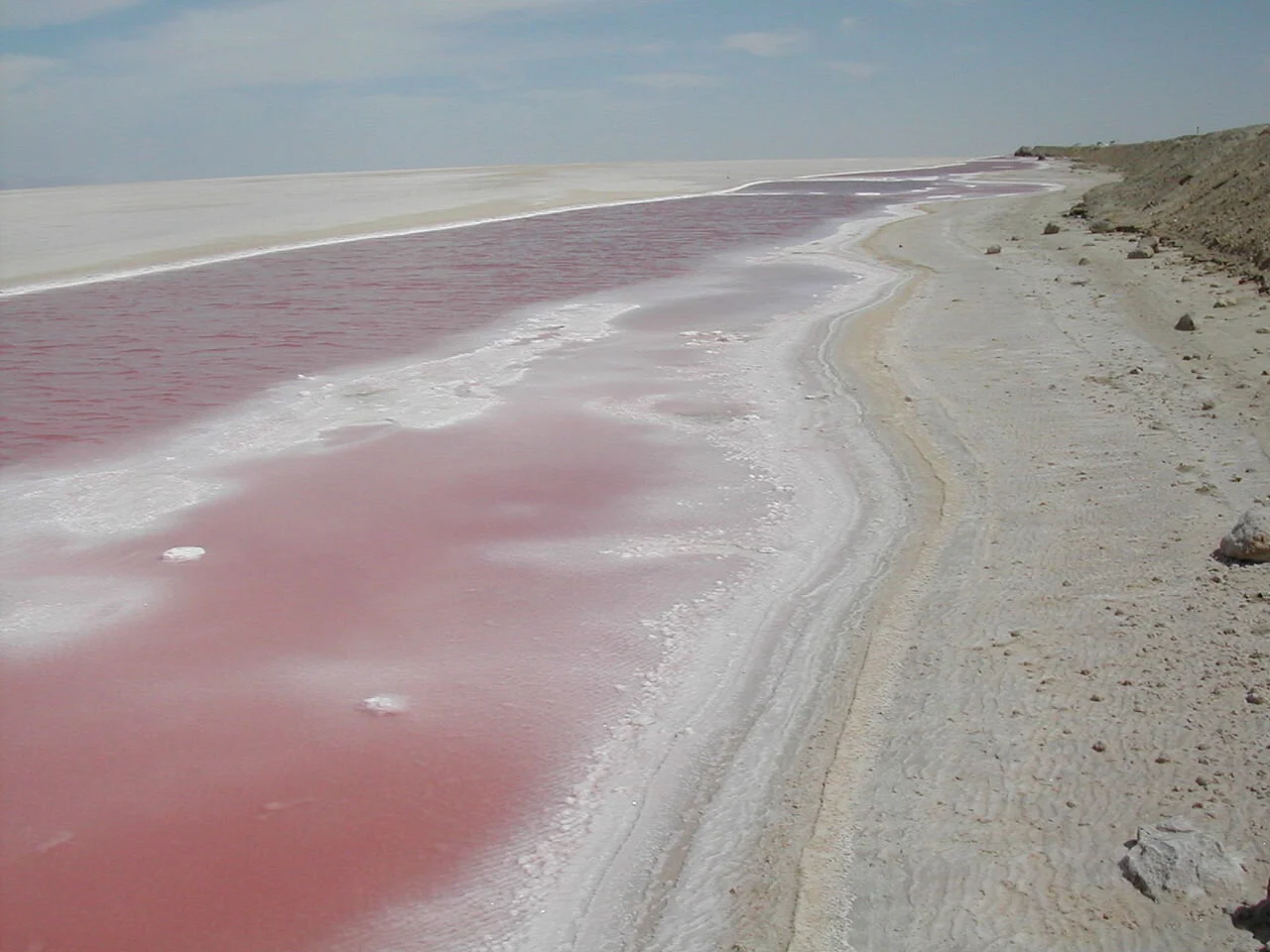
Minerals from Atlas Mountain runoff give Chott el Djerid its pink hue. Vinzenz Mühlstein. Public Domain. CC0
1. Chott el Djerid
The fictional planet Tatooine from the “Star Wars” saga was named after Tataouine, a desert city in Tunisia. Although no scenes were filmed in the real Tataouine, many of the first “Star Wars” film’s scenes were filmed in cities all over Tunisia. One of the most notable scenes of Tatooine is of Luke Skywalker’s home, the exterior of which was filmed in Chott el Djerid, the Sahara’s largest salt pan. A chott, or salt lake, stays dry for the majority of the year but fills intermittently from infrequent rainfall and during the spring thaw when water runoff from the Atlas Mountains floods the basin. The dissolved minerals from the Atlas Mountains give Chott el Djerid its otherworldly cotton candy pink color.
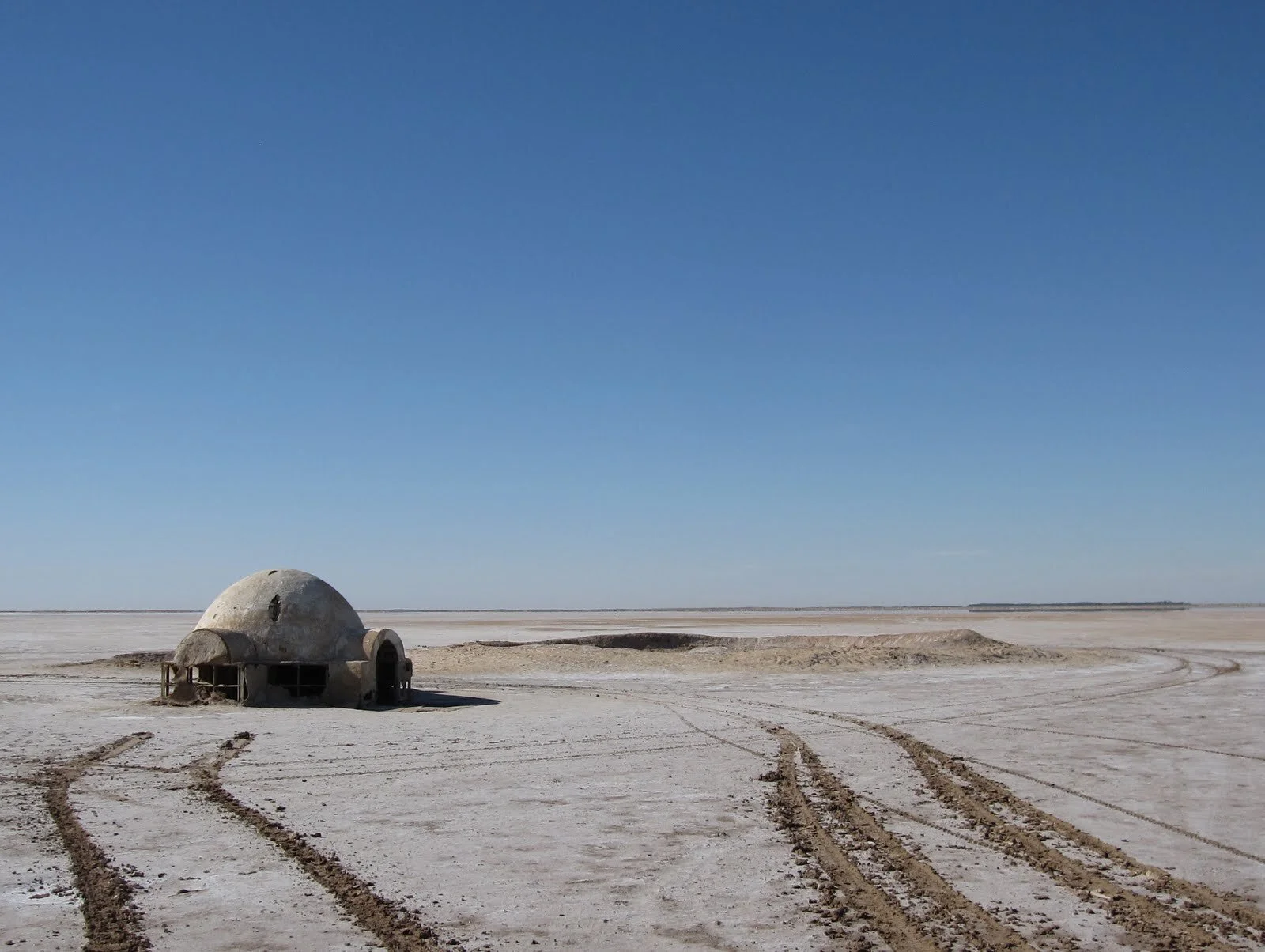
Remains of the Lars Homestead on one of the “Star Wars” movie sets in Chott el Djerid. Stefan Krasowski. CC BY 2.0.
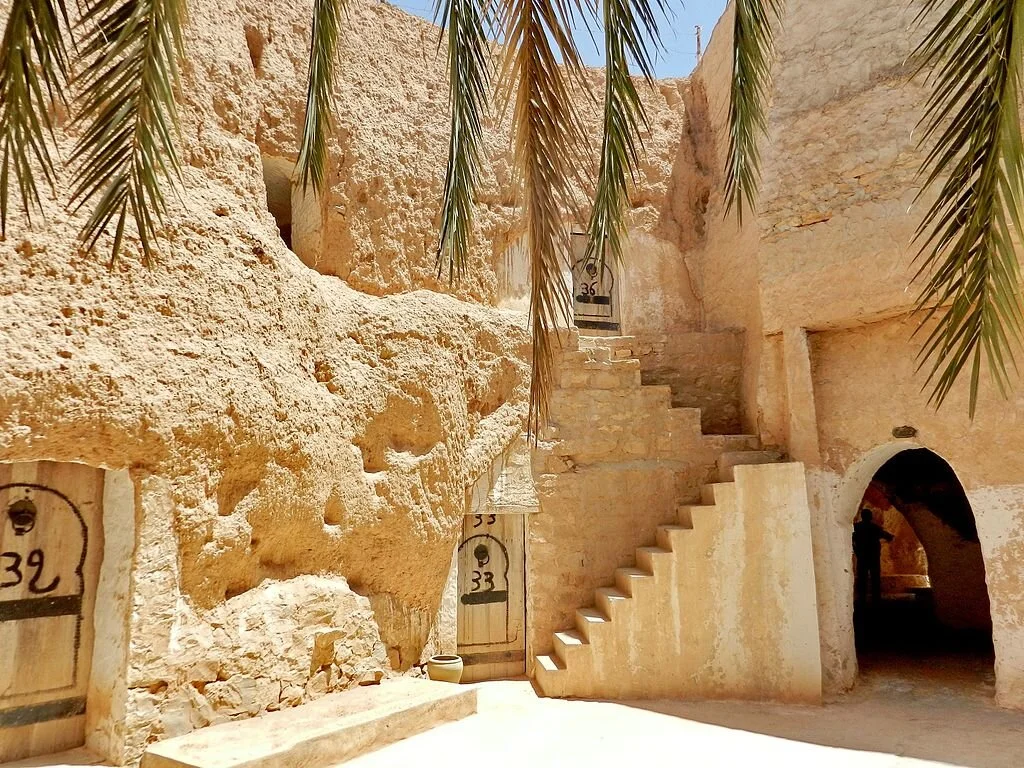
Ancient Berber underground homes in Matmata, Tunisia. Tanya Dedyukhina. CC BY 3.0.
2. Matmata
When “Star Wars: A New Hope” was released in 1977, Matmata, a small Berber village in southern Tunisia, became famous for its underground cavelike homes where some of the local residents still live. (The Berber, or Amazigh, are an ethnic group native to Northwest Africa, particularly the Maghreb.) The interior of Luke Skywalker’s home was filmed in the courtyard of Hotel Sidi Idriss, an underground hotel in Matmata. The hotel is open year-round, and is a must-visit for any die-hard “Star Wars” fan. For those who are not “Star Wars” fans but still want to visit the cave dwellings, the Musée Berbère de Tamezret (about six miles from Matmata) is a great alternative option.
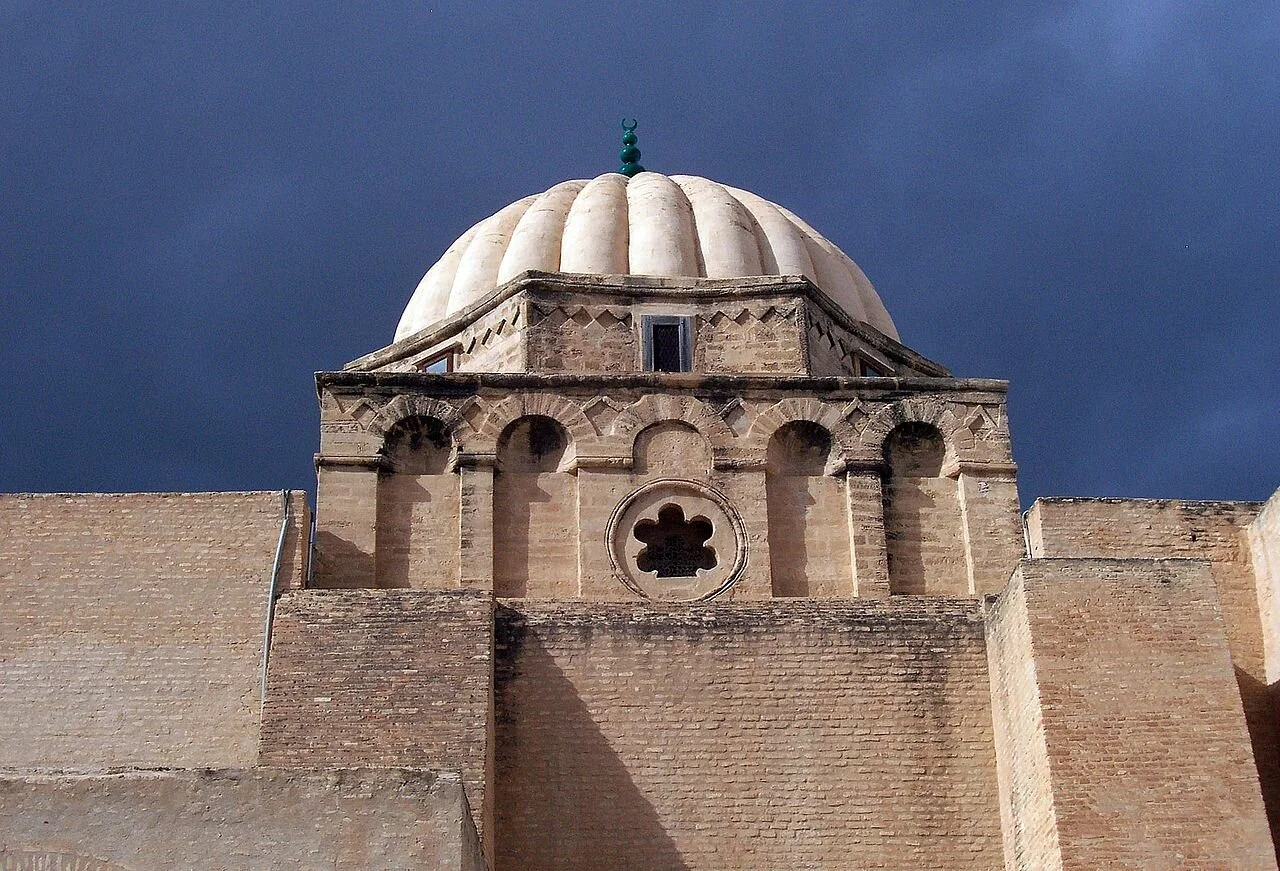
The dome of the Great Mosque of Kairouan houses the mihrab, or structure that points out the direction in which Muslims pray. Colin Hepburn. CC BY-SA 2.0.
3. Kairouan
Kairouan, a UNESCO World Heritage Site, is considered by some to be the fourth holiest site in Islam, after Mecca, Medina and Jerusalem. The city, founded by the Umayyads in 670, is the most ancient Arab-Muslim center in the Maghreb. Kairouan began as a military camp, but soon became an important center for Islamic scholarship, religious sciences, and art. The city contains many mosques, but the most important is the Great Mosque of Kairouan, also known as the Great Mosque of Uqba. The mosque contains a courtyard and a prayer hall, as well as a 105-foot minaret that bears resemblance to a Syrian bell tower or an ancient Roman lighthouse.
Another site that cannot be missed when visiting Kairouan are the Aghlabid Basins, a sophisticated feat of engineering and the largest hydraulic installation of the Middle Ages. Originally, there were 16 pools that provided water for Kairouan, but today only two reservoirs remain. Nearby, Kairouan’s souk has countless vendors who sell everything from snacks and jewelry to carpets and leather goods.
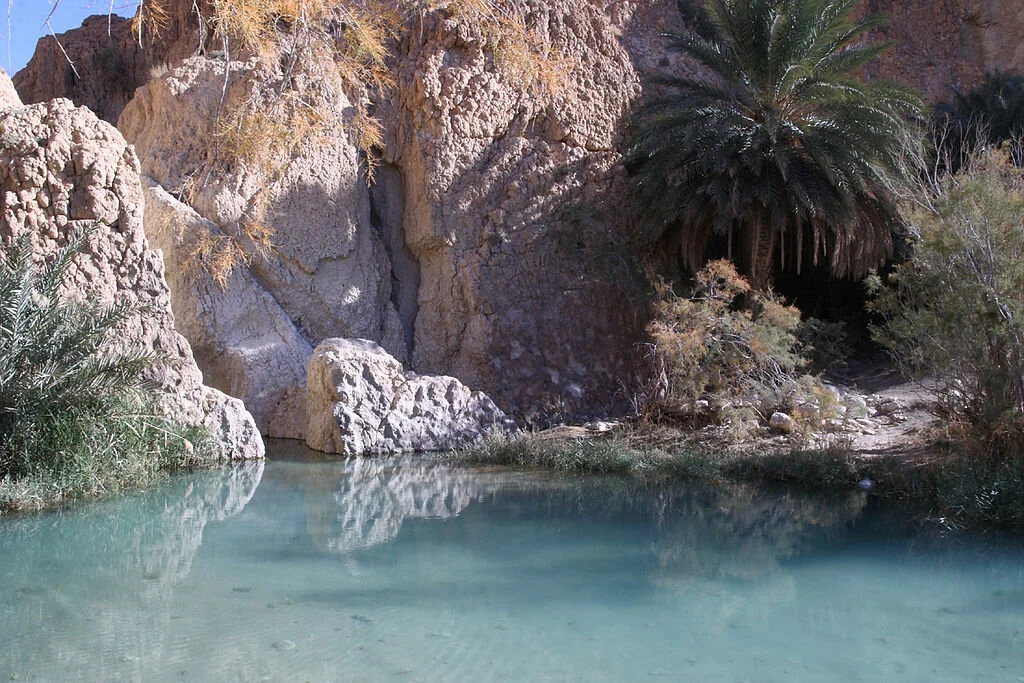
The Chebika oasis lies at the bottom of the Djebel el Negueb Mountains. Remi Jouan. CC BY-SA 3.0.
4. Chebika
Built on what was once a Roman military post, Chebika is a small village that sits right above a palm oasis at the foot of the Djebel el Negueb, which are part of the Atlas Mountains. At the top of the mountain, one can see the oasis, the village, and Chott el Gharsa, a salt lake that lies near the Algerian border (and served as a movie set for “Star Wars: The Phantom Menace” and “The English Patient”). Visitors can hike up the canyon to a small waterfall where they will be greeted by a beautiful view of bright green palm trees standing starkly against the mountainside.
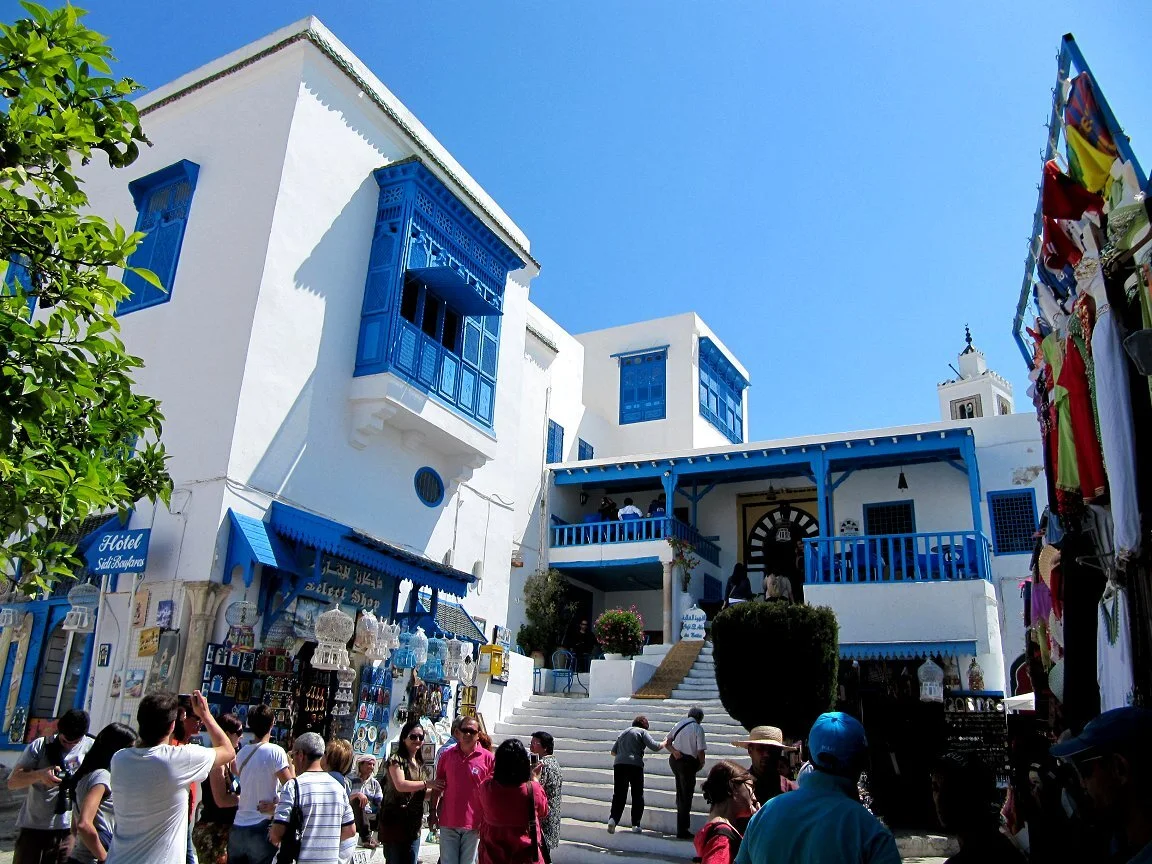
Hôtel Bou Fares and storefront in Sidi Bou Said. Allain Muller. CC BY-SA 2.0.
5. Sidi Bou Said
Sidi Bou Said is known for its blue and white theme, common to other Mediterranean-region cities and towns. The beautiful cerulean doors, shutters, gates and decorative balconies against the whitewashed buildings mirror the bright sky and the Mediterranean Sea which lies below the cliffside town. Sidi Bou Said was established as a religious sanctuary in the 13th century by Abu Said al-Baji, after whom the town was named. The palace Ennejma Ezzahra, finished in 1921 by French painter and musicologist Rodolphe d’Erlanger, is now a museum one can visit to see the beautiful architecture, view paintings by the baron, and see a treasure chest that was reportedly once owned by Suleiman I of the Ottoman Empire. Within the palace is the Centre des Musiques Arabes et Méditerranéennes (Center for Arab and Mediterranean Music), which houses a collection of musical instruments and art, and acts as a concert venue.
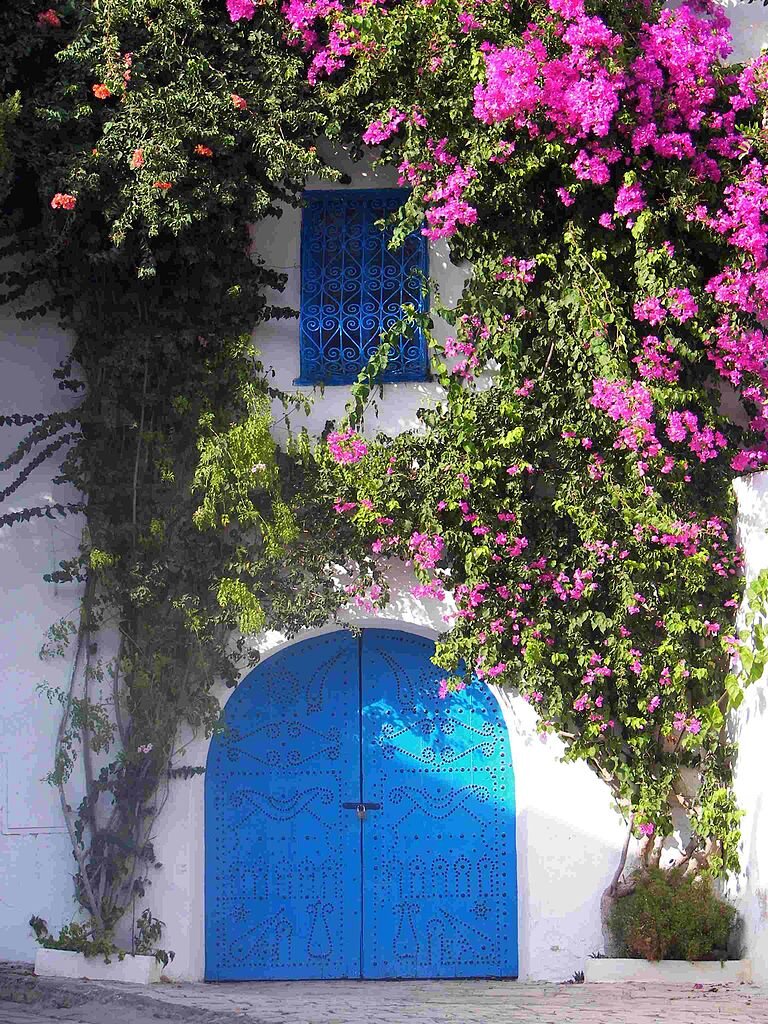
Traditional blue door in Sidi Bou Said surrounded by purple bougainvillea. Benrais. CC BY-SA 3.0.

Korbous was frequented by the ancient Romans of Carthage as a health resort. Patrick Giraud. CC BY 3.0.
6. Korbous
If you enjoy spas and natural hot springs, head for Korbous – a single street clinging to a cliff face on the west coast of Cap Bon. The mineral-rich hot springs of Korbous have been a popular spa and health resort since the time of the ancient Romans of Carthage, as evidenced by an inscription on display in the National Bardo Museum in Tunis. Korbous was not a popular spa destination until the 19th century, when Ahmed Bey, the last Ottoman leader of Constantine, had the hammam, or Turkish bath, built. In addition to the hot springs, mud from Aïn Kanassira, rich with minerals, is used to treat arthritis, various skin diseases and other health issues.
Asiya Haouchine
Asiya is an Algerian-American writer who graduated from the University of Connecticut in May 2016, earning a BA in journalism and English. She was an editorial intern and contributing writer for Warscapes magazine and the online/blog editor for Long River Review. She is currently studying for her Master’s in Library and Information Science. @AsiyaHaou
Speaking for the Trees: A Plan to Bring Life Back to the Sinai Desert
For Ties van der Hoeven, the desert isn’t a symbol of emptiness but of hope.
Read MoreTunisia: Discover Ancient Rome in North Africa
Thousands of years later, Tunisia’s rich history as part of the Roman empire is still on display.
A view of Carthage Palace in Tunisia. Farah Jack Mustaklem. CC BY-SA 4.0
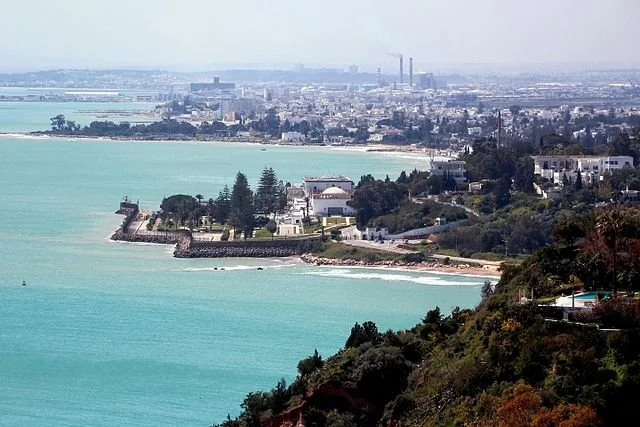
For many, the word “Rome” evokes images of the city in Italy. Its days as the center of one of the largest empires in history ended millennia ago, and today, popular culture has largely moved on, TikTok memes aside. But the Roman Empire was far bigger than many now imagine, stretching well into the modern-day Middle East and across North Africa. Today, the empire’s ruins remain visible in the furthest reaches of its territories.
Tunisia, for instance, is home to a wealth of ancient Roman history. Sitting on the edge of the Sahara Desert, the African nation has found fame with tourists who admire its gorgeous beaches. However, beyond the nation’s natural beauty and high-quality resort towns, Tunisia's territory was once at the very heart of the Roman empire in Africa. Ranging from the remains of villages to the shell of the great city of Carthage, ancient ruins dot the country’s landscape. Almost every major city features ancient Roman artwork, architecture and history. While Tunisia is gorgeous in its own right, the country possesses a richer history than almost anywhere else in the world.
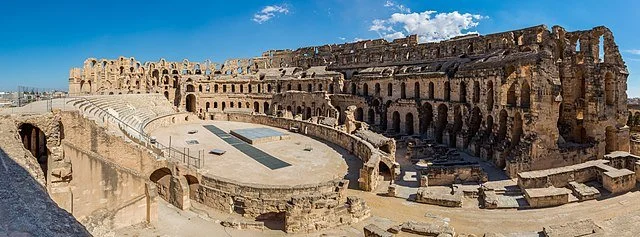
The best-preserved example of Imperial Rome’s presence in Tunisia is El Jem. Estimated to have held up to 35,000 people at once, El Jem is not only the largest amphitheater in Africa but one of the largest in the world. Incredibly, the entire building is supported by stone arches, the edifice resting on a flat plain with no hills or rises for balance. The structure’s underground passages also remain largely intact, and tours are led daily through the entire grounds of the colosseum.
A panoramic view of El Jem. Diego Delso. CC BY-SA 4.0
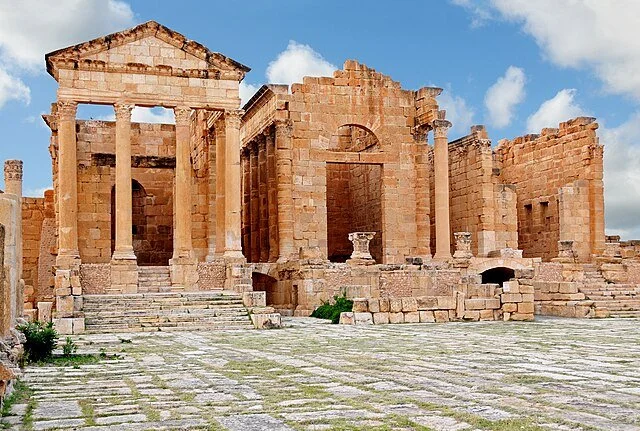
Another incredible part of history hidden away just outside the Sahara is the ancient city of Sbeitla, home to some of the best-preserved temples from the Byzantine Empire. Outside Sbeitla, visitors can also tour the ruins of Byzantine public baths, a Roman Forum that houses ancient temples to Minerva, Jupiter and Juno, and a series of Catholic basilicas.
The Roman Forum in Sbeitla. Dennis Jarvis. CC BY 2.0
In addition to its ancient history, Tunisia provides visitors with the unique opportunity to visit the Sahara Desert. Numerous tour companies offer frequent excursions into the desert on camelback. These tours range from day trips to two or more days of camping and bivouacking in traditional Bedouin style. These tours are a once-in-a-lifetime opportunity to experience the lifestyle of the nomadic tribes local to Tunisia.
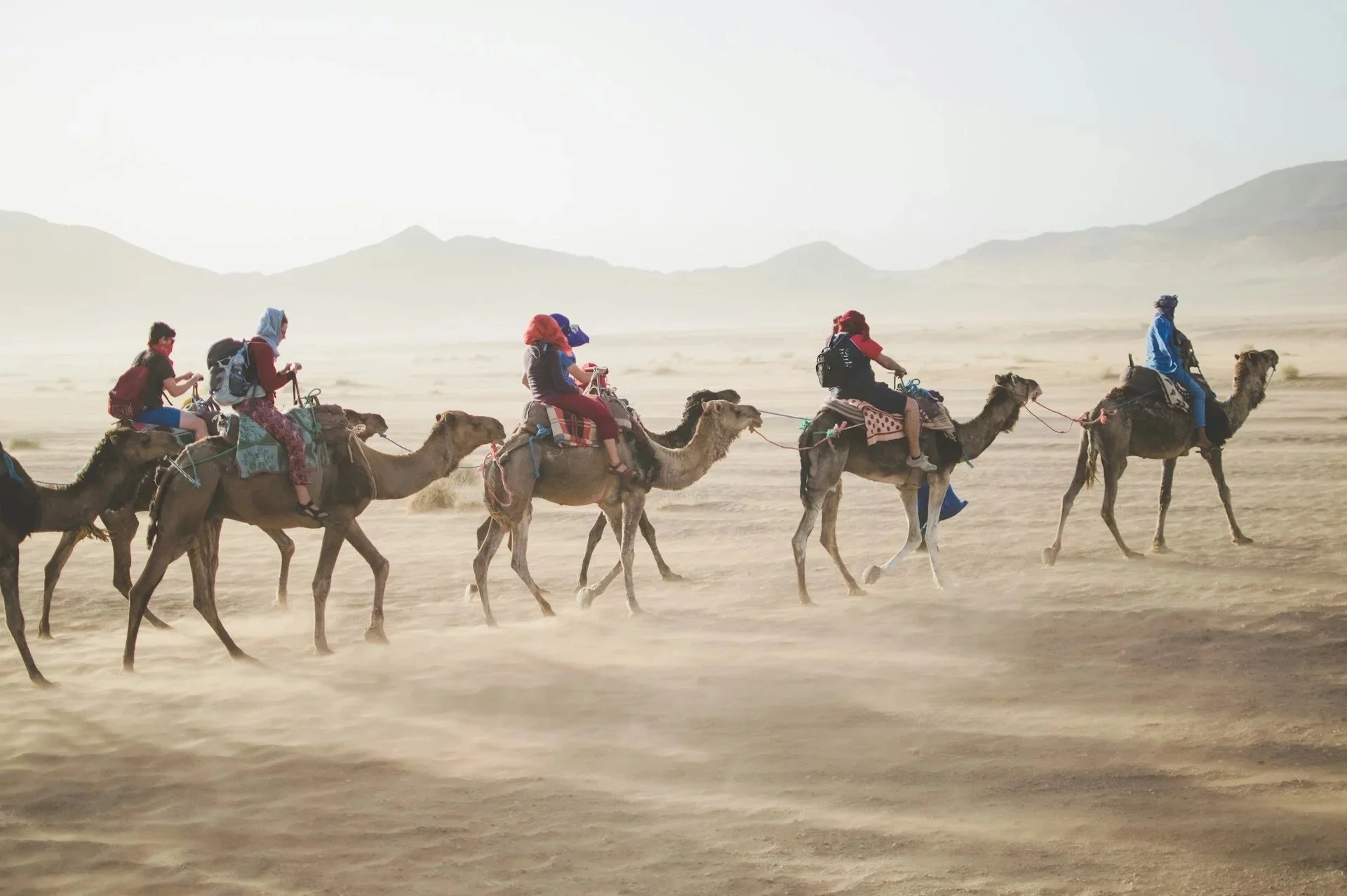
A camelback tour of the Sahara Desert. Vaida Tamošauskaitė. CC0
Despite all of the wonderful experiences that Tunisia presents, there are notable risks to visiting the country as a tourist. As of May 2024, the US Department of State issued a Level 2 travel advisory. This marker warns tourists to avoid certain areas due to increased terrorist activity in countries around Tunisia and the newly declared military zone south of the city of Remada. However, the majority of the country is still considered mostly safe to visit, with only select locations listed at Level 4 or “do not travel.” Tourists should mind the precautions listed in the advisory.
Visitors to Tunisia may be advised to stay in the country’s capital Tunis, a central location which allows easy access to the majority of the destinations listed above. The city offers a variety of hotel options, with prices ranging from $100-300 a night. More affordable options include the Dar Ya hostel in Tunis (priced at around $40 per night) and rentable apartments (from around $35 a night) located just outside the main city.
Ryan Livingston
Ryan is a senior at The College of New Jersey, majoring in English and minoring in marketing. Since a young age, Ryan has been passionate about human rights and environmental action and uses his writing to educate wherever he can. He hopes to pursue a career in professional writing and spread his message even further.