No Peace for the People: Ethiopia’s Ethnic Groups Targeted

While citizens and officials alike fear a potential civil war in Ethiopia’s Tigray region, the country’s ethnic groups have become targets of violence. Many fear that the current struggles deepen existing ethnic divides. 
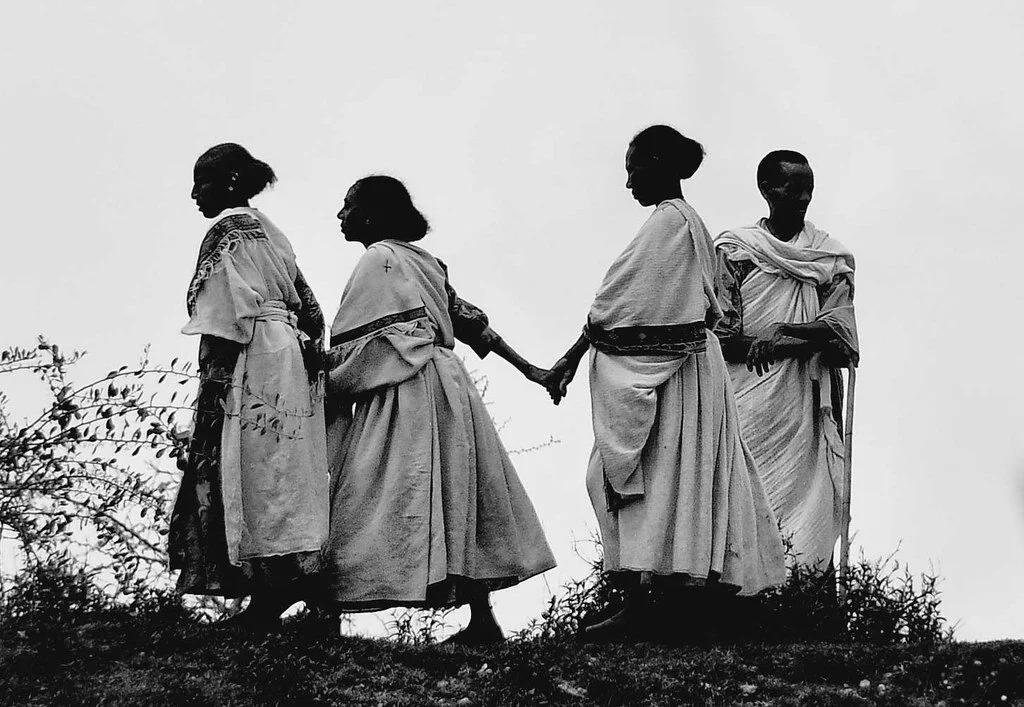
Women of the Tigray region in Ethiopia. Rod Waddington. CC BY-SA 2.0. 

Over the past several weeks, the Tigray region of northern Ethiopia has exploded into violence. The current conflict comes after years of mounting tensions between the elected government of the Tigray region and the federal government. The postponement of the September election sparked the most recent series of violent acts; existing ethnic tensions have now transformed into the slaughtering of local ethnic groups, forcing many to flee for safety in Sudan. 

A Rising Civil War 

The tensions in Ethiopia trace back along a labyrinthine history of political unrest, with the primary combatants being the proponents of the federal government and the officials in the Tigray region. Fighting escalated when Prime Minister Abiy Ahmed accused the Tigray region of attacking a federal military base and responded by sending an attack on the region. However, underlying issues began back in 2018 when Ahmed was first elected. 

For decades, Ethiopia’s main political party was the Ethiopian People’s Revolutionary Democratic Front, which began around 1991 when the Tigray People’s Liberation Front (TPLF) aided the overthrow of the previously Marxist government. Up until 2018, the party had controlled both the political and economic components of the country. With Prime Minister Abiy Ahmed’s election, the TPLF’s power within the party it founded began to quickly disappear. Ahmed removed and attempted to convict many officials through potentially corrupt means, many of whom escaped to the Tigray region. He also attempted to combine parties that followed ethnic lines, which deepened divides among the groups. 

In response to the prime minister’s recent postponement of the election, the unofficial leaders of the Tigray region made a decision no one in the country had done before: they held their own election. Tigray threatened secession, which is upheld in the nation’s constitution. The federal government, though, responded by withdrawing aid from Tigray and sending in troops. 

Ethnic Targeting

Now that the violence has furthered into increasing physical confrontation, many ethnic groups in Ethiopia feel under attack. Recent killings have left ethnic Tigrayans and ethnic Amharas slaughtered in the streets. Calls for peace talks between the two groups have been rejected, and now nearly 15,000 people have fled for safety. 

There are major criticisms on both sides, with calls for the TPLF’s unconditional surrender coming from the federal government. Meanwhile, the regional government of Tigray has been accused of igniting fear that is believed to have fed into the violent slaughtering of ethnic Amharas. 

Officials fear that these killings could turn into an ethnic cleansing and genocide. Tigrayan locals are dealing with the bulk of the chaos; many are being taken in for questioning and are too fearful to contact family members outside of the region. 

Experts warn that Ethiopia’s history of ethnic conflict will likely repeat itself as the nation spirals into political disarray. Only the potential for peace now holds the nation together as its ethnic groups continue to clash. 


Ella Nguyen

Ella is an undergraduate student at Vassar College pursuing a degree in Hispanic Studies. She wants to assist in the field of immigration law and hopes to utilize Spanish in her future projects. In her free time she enjoys cooking, writing poetry, and learning about cosmetics.
7 Architectural Marvels of Tashkent that Reveal Uzbekistan’s History

Tashkent, the capital of Uzbekistan, boasts of its opulent infrastructure and the nation’s history to a world audience. 

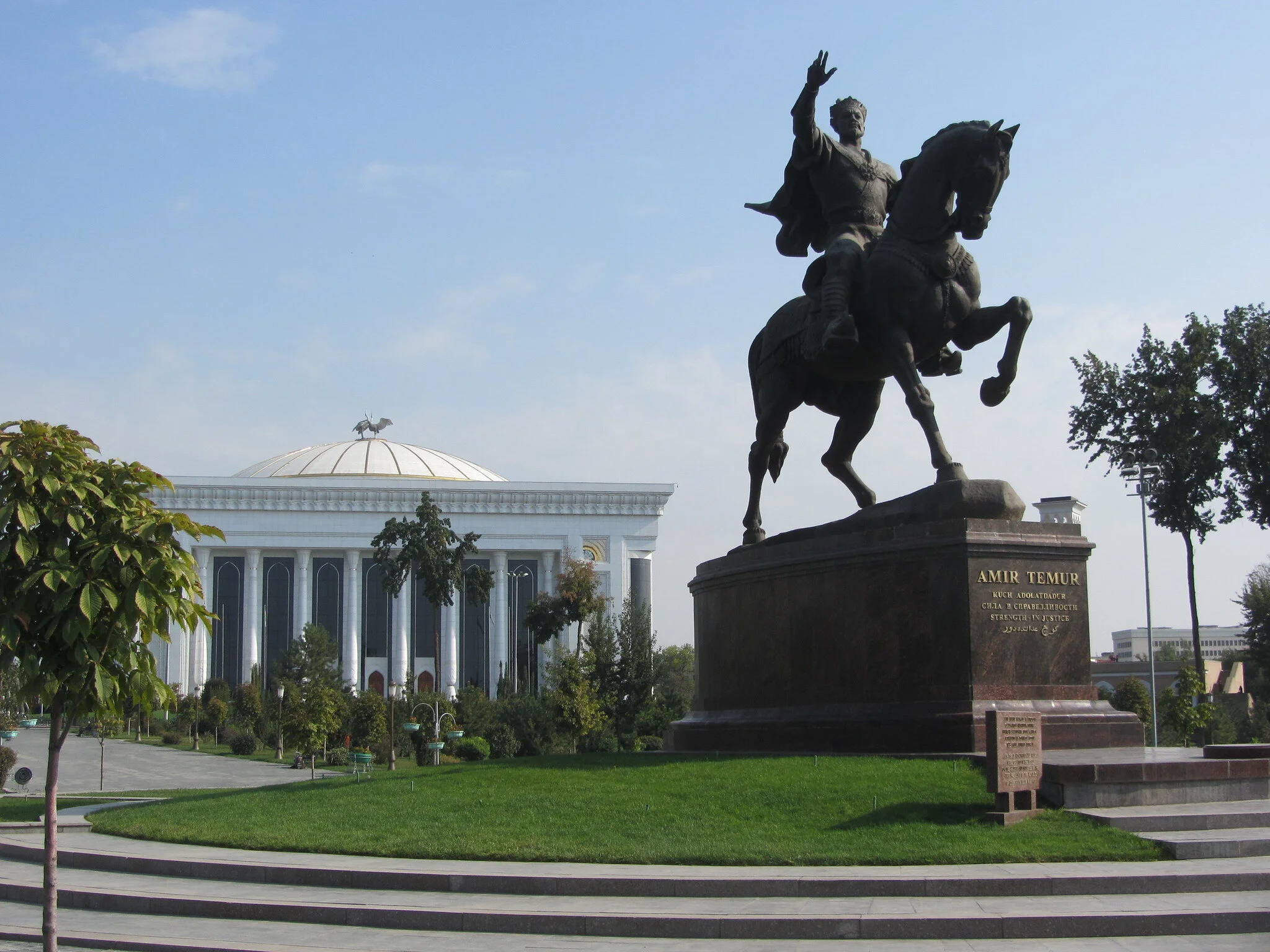
Amir Temur Square in Tashkent’s center. Matthew Goulding. CC BY-NC-ND 2.0.

Glistening skyscrapers are built over historic neighborhoods, while ancient mosques and some Soviet-era buildings are left unscathed. Tashkent, Uzbekistan, has been dramatically shape-shifted by the late president Islam Karimov and the current president Shavkat Mirziyoyev. As the city gets reconstructed, some of its rich history remains: Tashkent’s mosques, Soviet-style subway stations, classical opera houses and theaters, and traditional Russian architecture draw in many visitors. Here are seven sites which each represent distinct eras in Tashkent’s tumultuous history. 

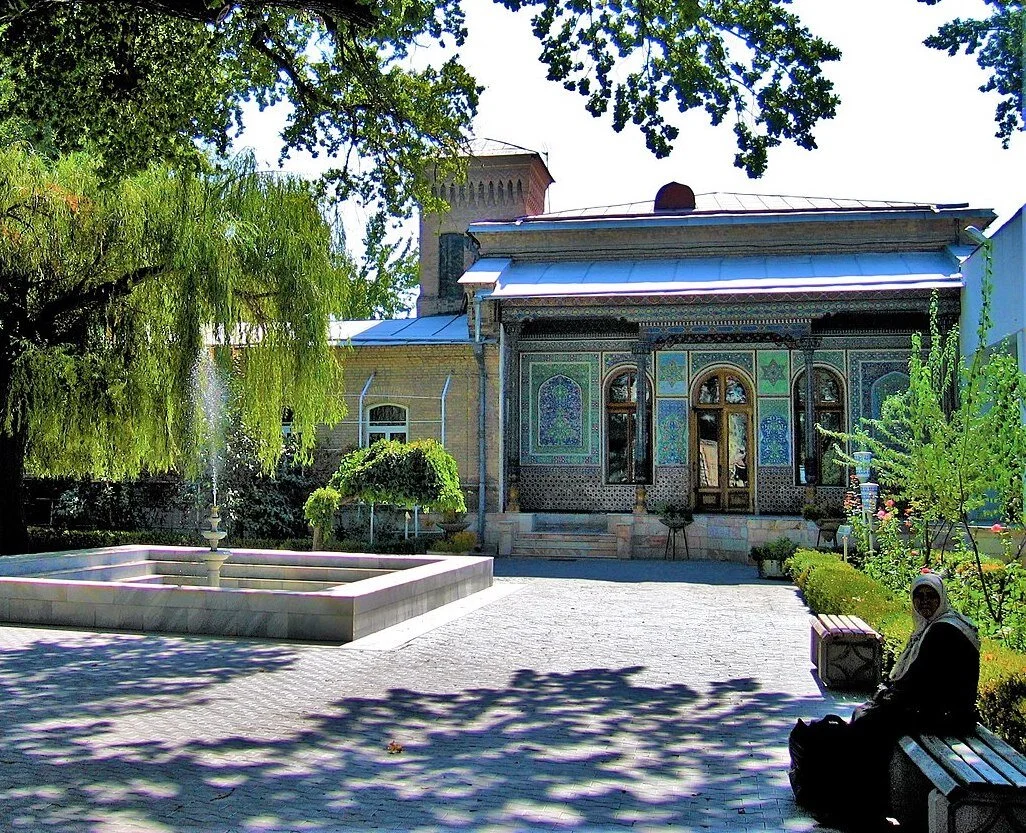
Museum of Applied Arts in Tashkent. Ehedaya. CC0 1.0

1. Museum of Applied Arts

In the early 20th century, Russian aristocrat Alexander Polovtsov ordered that a mansion be made to showcase Uzbek architecture and craftsmanship. After Polovtsov’s death, the mansion was turned into a museum in 1937, where its interior was further remodeled. This structure’s interior is entirely covered in ornamentation, displaying key components of Islamic architectural design such as the “girih,” a pattern made up of many intricate lines, arabesque stucco, and zellij, a mosaic of individually crafted pieces which create a motif. At the center of its main room is a stunning muqarna, an inverted dome carved to an exacting honeycombed configuration; this centerpiece is embellished with flora-inspired stucco designs and individually painted tiles which resemble the stained-glass windows of a chapel. 

Close-up of Barak Khan Madrassa’s facade. LBM1948. CC-BY-SA 4.0.

2. Hazrati Imam Complex

Larger-than-life mosques and mausoleums border a wide square where visitors stroll around in awe, either on a pilgrimage or simply admiring the grandiosity of the minarets and domes. The Hazrati Imam Complex is a conglomerate of historically significant monuments; its most notable sites are the Muyi Muborak Madrassa, the Barak Khan Madrassa and the Tillya Sheikh Mosque. Originally built in the 16th century as a tomb for one of the first imams of Tashkent, the complex drastically changed over the following centuries. Tillya Sheikh Mosque is a stately rectangular building with tall minarets topped with vibrant turquoise domes. The structure’s most notable features are its Central Asian architectural design, the panjara, which is a patterned lattice grid, and its geometrically carved pillars. The Muyi Muborak Madrassa (meaning “sacred hair”) is the most significant monument in this ensemble, since it is said to house the hair of the Prophet Muhammad and the oldest Quran, which dates back to 656 A.D. The library’s walls are mostly a neutral beige, but its arches and domes are covered in arabesques of colorful tiles. The Barak Khan Madrassa displays a stunning facade covered in floral motifs, Arabic calligraphy inscriptions, and geometric linework. At the madrassa’s center is an inverted dome with miniature arches and an open walkway into the building. 

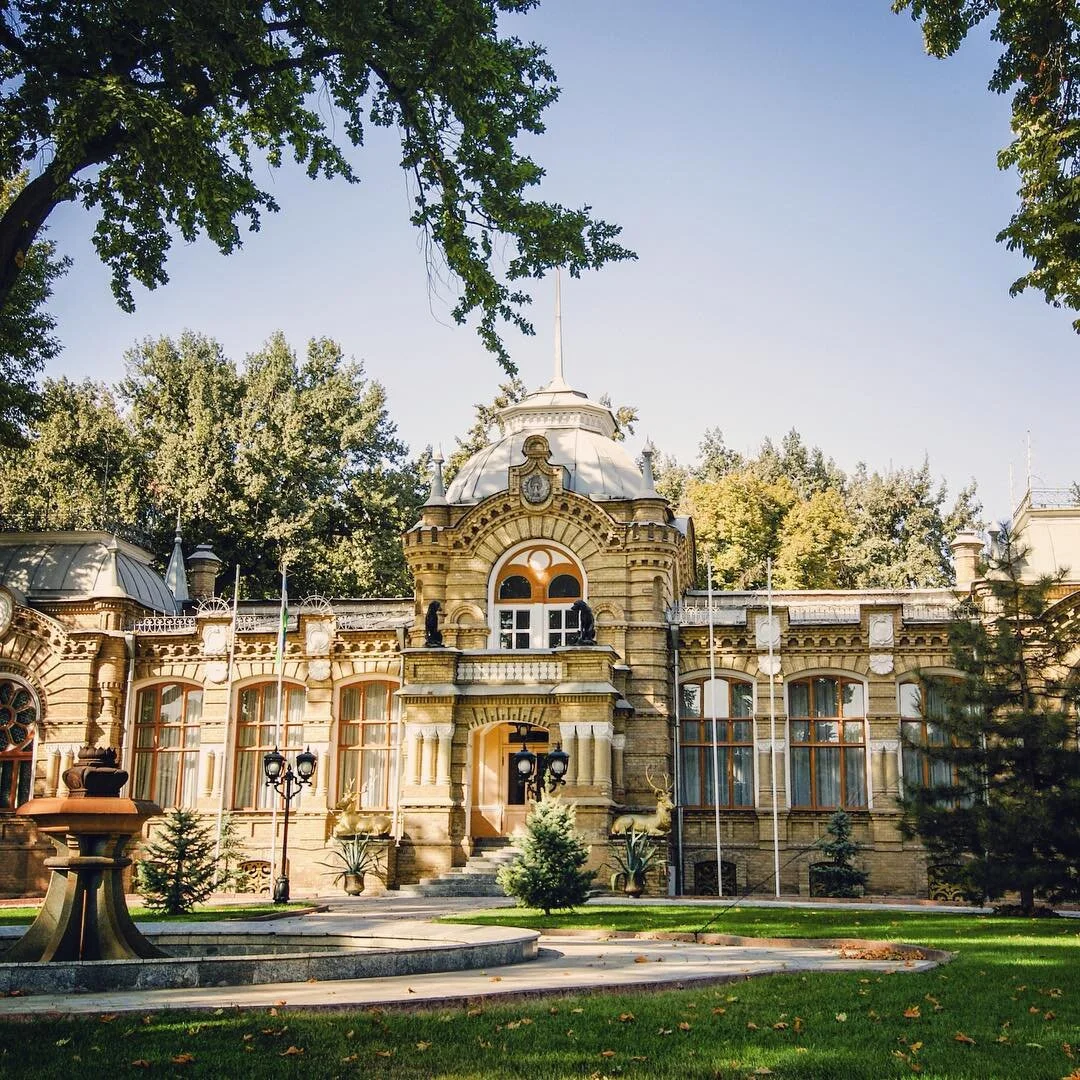
The Palace of the Romanovs in Tashkent. Jude Lee. CC BY 2.0.

3. The Palace of the Romanovs 

Although Tashkent is architecturally diverse, this oddly Baroque estate near its center looks alien in a city full of Soviet modernism and traditional Islamic architecture. Left behind by Grand Duke Nicholas Kostantinovich Romanov who was exiled from Russia for a scandalous love affair near the end of the 19th century, this palace embodies the international art nouveau. The building is predominantly monochromatic, as opposed to the vibrant color palette of traditional Islamic architecture. It flaunts a combination of its neoclassical base structure, extravagant gothic stucco work and Asiatic lattices. Bronze sculptures of deer and hounds sit precariously at the entrance of the mansion above a staircase to greet the visitors. The palace’s interior is more decadent: beds are covered in textiles with gold and silver thread weavings, valuable metal trinkets decorate its hallways, and Uzbek wood carvings adorn its walls. The Palace of the Romanovs reminds one of Russia’s pre-Soviet occupation of Uzbekistan, which used to be the colony of Turkestan. 

Hotel Uzbekistan. Giorgio Montersino. CC BY-SA 2.0.

4.  Hotel Uzbekistan

Hotel Uzbekistan is flat, precise and mathematical. The building itself is a towering sheet of metal with no variation in pattern or shape. Standing as a remarkable display of Soviet modernism from the 1970s, this hotel is a relic of the Uzbek Soviet Socialist Republic. The typical brutalist architecture often paired with Soviet aesthetics is made flexible in this structure, as shown in its lattice pattern found in Islamic architecture.

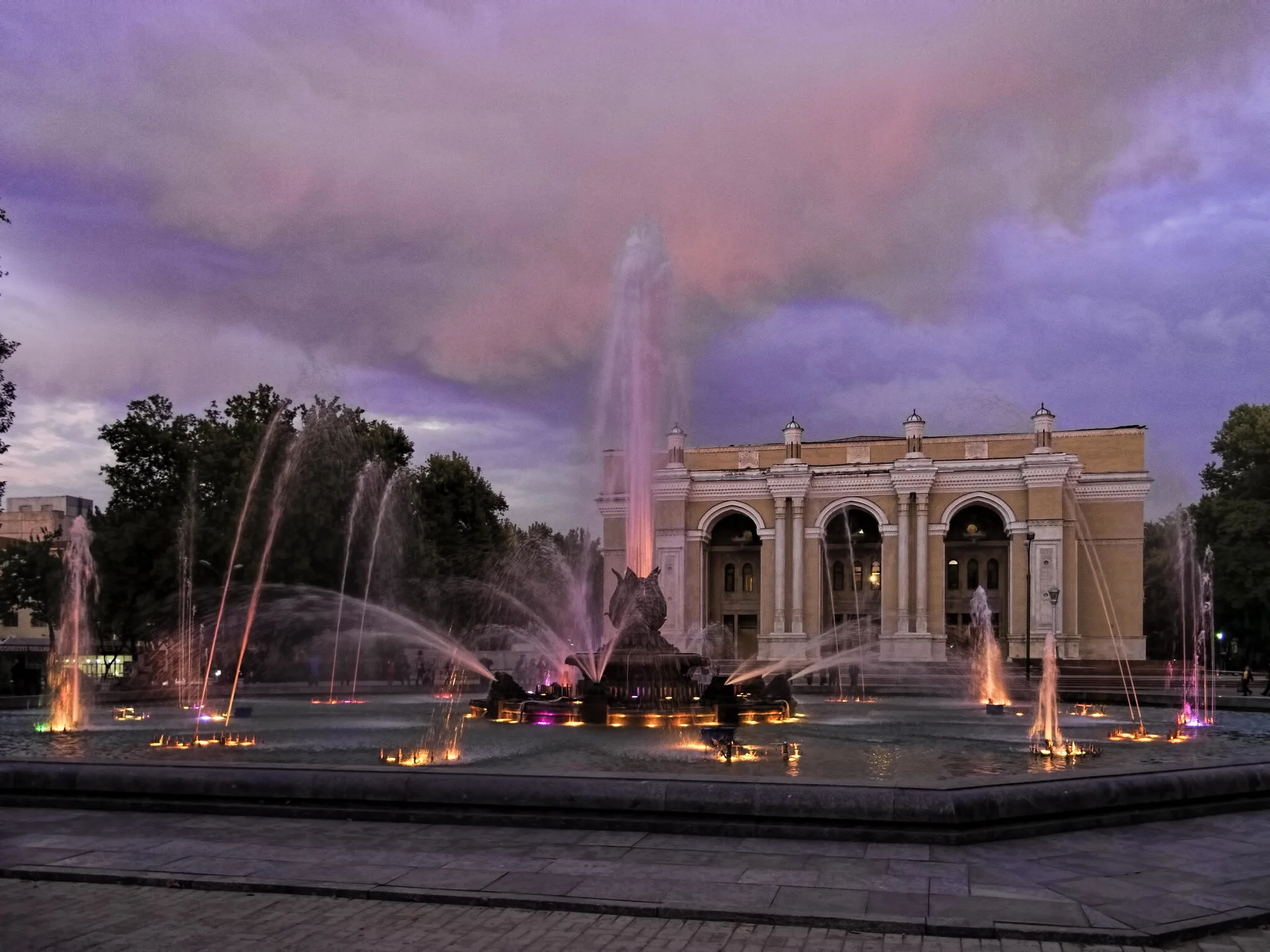
In the evening, the fountain lights up in front of the Alisher Navoi Opera House. Dan Lundberg. CC BY-SA 2.0.

 5.  The Alisher Navoi Opera House 

Romanesque pillars hold up this neoclassical beauty at the heart of Tashkent. At the front of this mainly Western-style theater is a remarkable fountain that stretches to the width of the building itself. Its distinctively European charm can be traced back to the classical architecture of czarist Russia. The Alisher Navoi Opera House was designed by Soviet architect Alexey Shchusev under Josef Stalin’s call to redesign Tashkent after World War II. Shchusev’s approach to building cultural institutions, including the famous Lenin’s Mausoleum, was to marry the decorative elements of Russian classicism with the structural integrity of Soviet brutalism. The space of the theater itself is adorned with arabesque etchings on its balconies and gold embellishments bordering the stage. Today, the Alisher Navoi Opera House remains a central playhouse for ballets, musical performances and plays. 

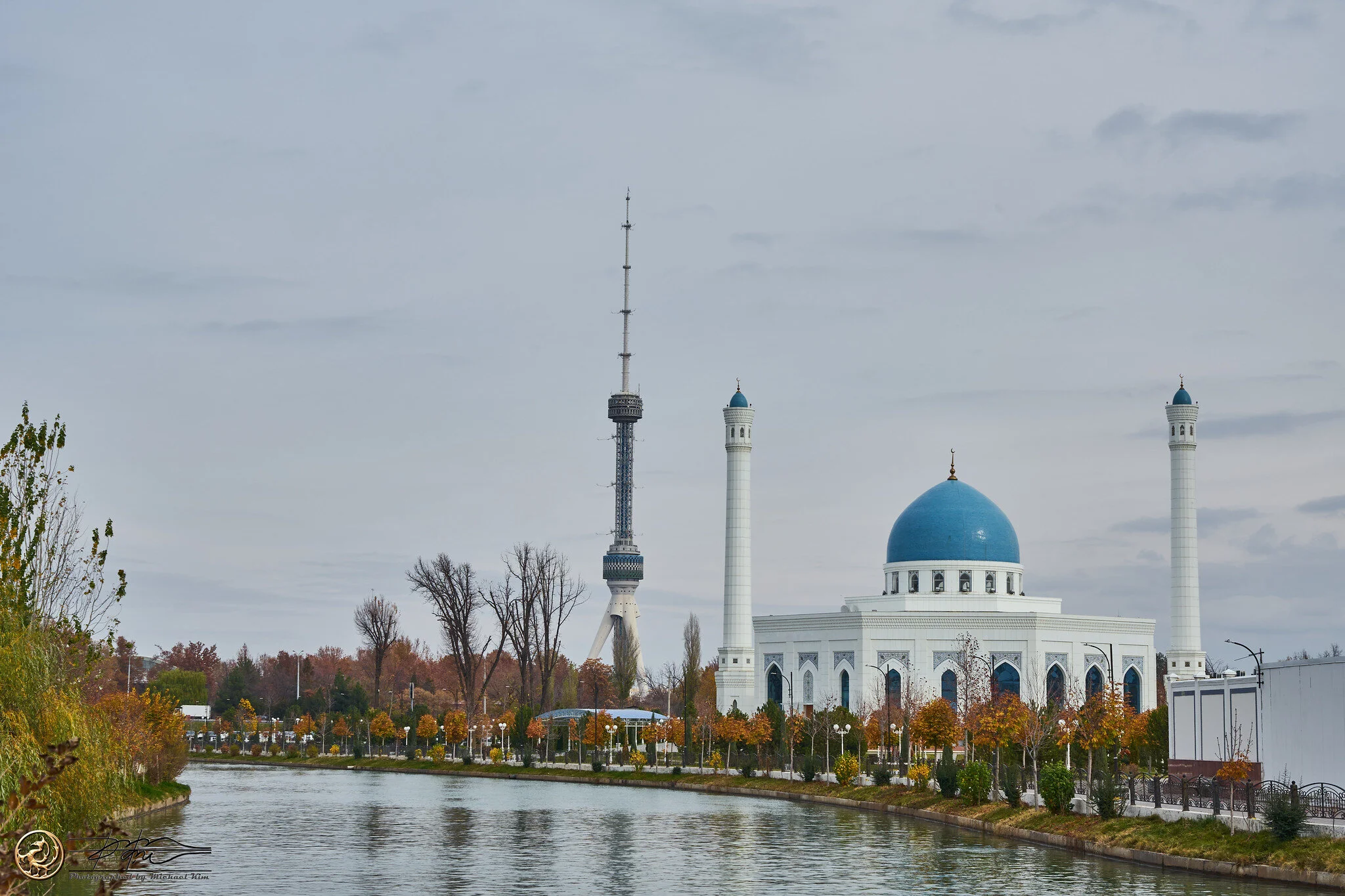
Minor Mosque sitting along the banks of Anhor Canal. Michael Kim. CC BY-ND 2.0.

6. Minor Mosque

Minor Mosque is a fairly new religious center which opened in 2014 under Islam Karimov’s presidency. Although the mosque follows the traditional structure with its two minarets and its sky-blue dome, it is completely different in material. Instead of being made a typical brown-toned brick base, the mosque is a glaringly white marble, making it a sight to behold. Its facade is decorated with curling floral patterns and Quran passages. Minor Mosque is a feat of Uzbek architectural accomplishment after its independence. The new site seems to reaffirm the country’s Islamic roots, while boasting of its modernization.

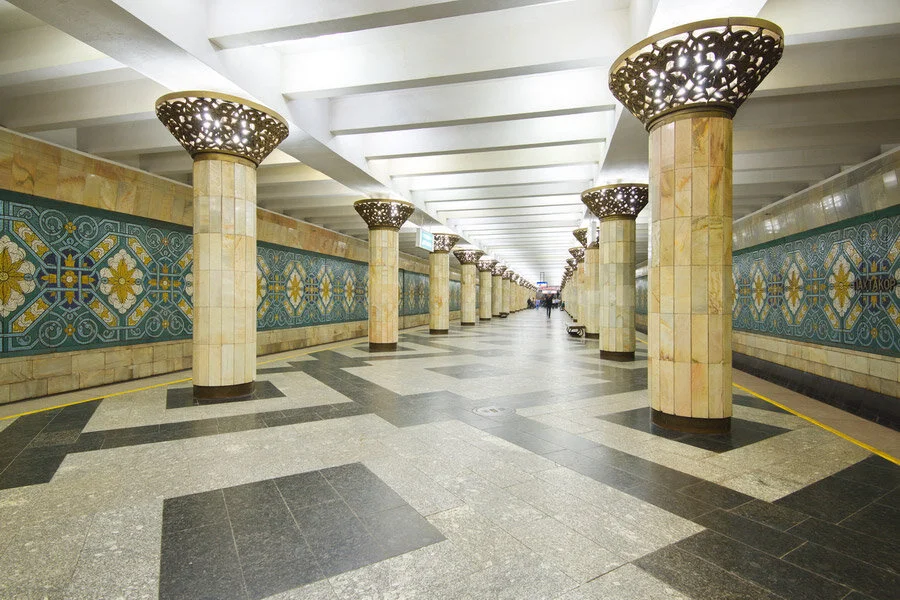
Pakhtakor Station has classical pillars and an arabesque mosaic on its walls. Valentin Parshin. CC0 1.0.

 7. Tashkent Subway System

Tashkent’s subway system is full of mosaic art, chandeliers and echoes of Soviet attempts at excellence. First opened in 1977 at the height of the Cold War arms race, Tashkent subway stations doubled as nuclear bomb shelters. Much like the famously extravagant subway stations in Russia, Tashkent’s are built with the utmost acuity to detail and order. 

Uzbekistan’s ongoing efforts to reform its Soviet past and its recent history under Islam Karimov are clearly expressed in the tearing down of older structures. As the city’s historic mahallas are demolished for the construction of shopping malls, new buildings threaten Tashkent’s original residences. Each monumental building in Tashkent is telling of Uzbekistan’s past under Russian occupation, its Islamic influences, and its encounters with globalization. Tashkent is a melting pot of architectural forms, and in some ways, the noteworthy buildings are used as both markers for national identity and foreign allure.  


Heather Lim

Heather recently earned her B.A. in Literatures in English from University of California, San Diego. She was editor of the Arts and Culture section of The Triton, a student-run newspaper. She plans on working in art criticism, which combines her love of visual art with her passion for journalism.

Street Artists Save Protest Masterpieces

Artists adorned New York City with Black Lives Matter tributes. But what becomes of graffiti when the world tries to erase it?

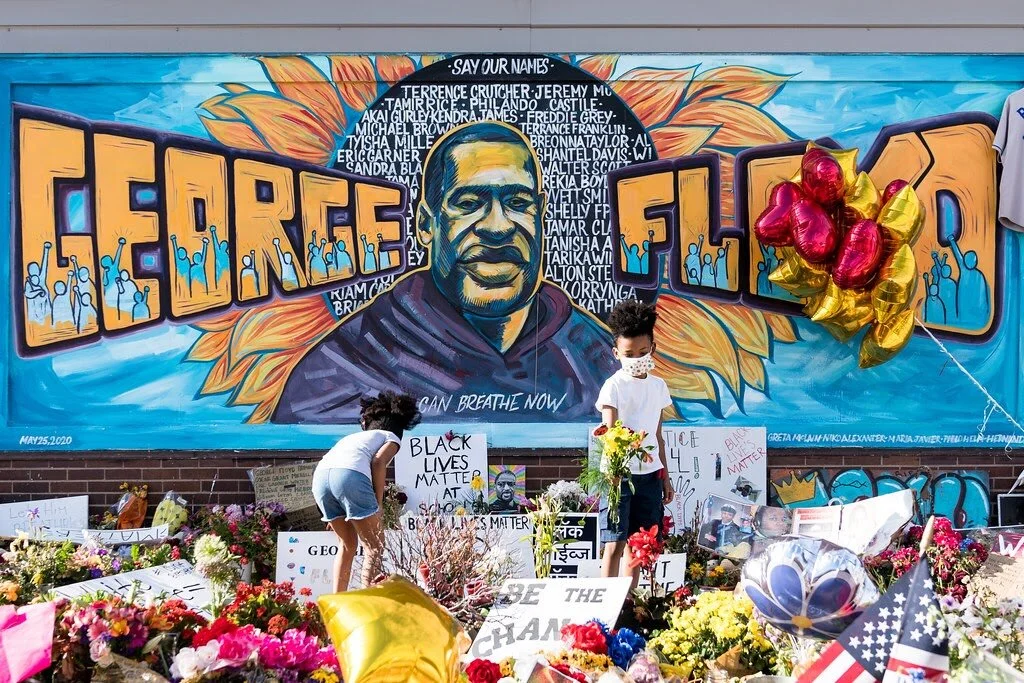
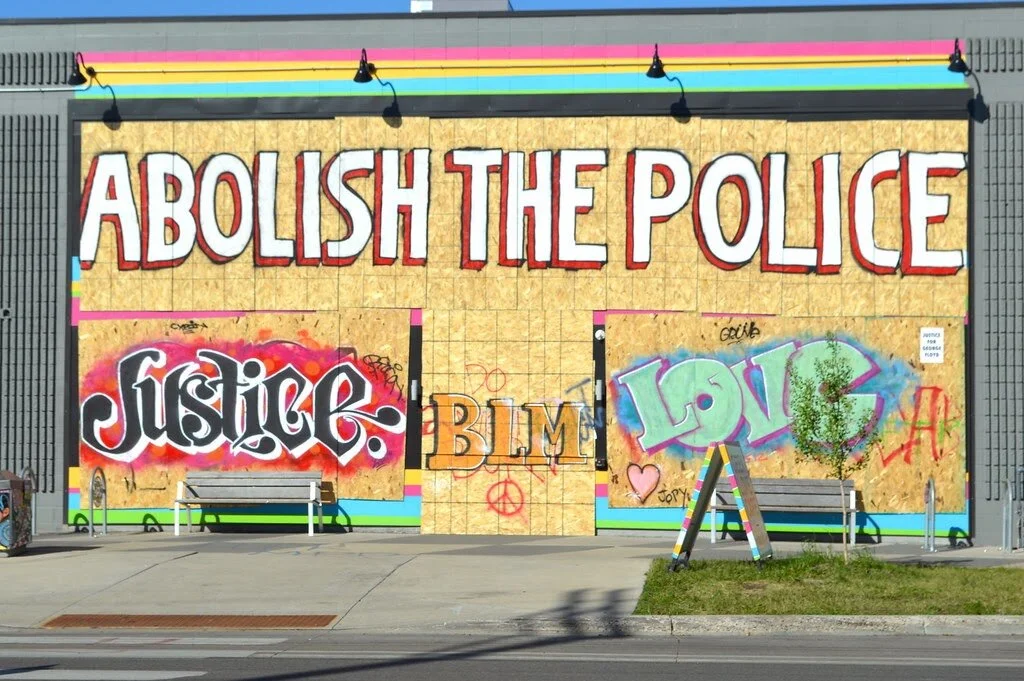
A mural in Minneapolis remembers George Floyd’s life. Lorie Shaull. CC BY-SA 2.0.

SoHo prepared for the worst. In the days before the election, the Manhattan neighborhood’s famed boutiques and shops barricaded their windows with plywood to protect their merchandise from looters. After a summer of uprising, one more round of rioting seemed inevitable. The wooden boards provided yet another reminder of how unlivable 2020 had become. It was as if the neighborhood shut its eyes to a reality too bleak to bear. 

Enter into this dismal cityscape the artists who first put SoHo on the map. Before high-end shops and wealthy shoppers gentrified this stylish slice of Manhattan, street artists like Keith Haring and Jean-Michel Basquiat adorned its concrete buildings with graffiti. In the ‘80s and ‘90s, countless creatives made SoHo an international hub for artists of all stripes. Now, history comes full circle. Street artists see a rare and irresistible opportunity to take the plywood covering SoHo’s shops and create masterpieces. 

Peace, love and police abolition. iamrenny. CCO 1.0.

Among them are Konstance Patton and Trevor Croop. This past summer, Patton focused on her Goddess Project, adorning the streets with vibrant, noble portraits of Black and Indigenous women. Croop spent much of 2020 abroad, leading art workshops and reconnecting with his Lebanese heritage. Within days of his return to the U.S., the two met on the street, throwing up artwork side by side. 

Both seasoned street artists, they knew firsthand how transitory the form can be. An artist might spend hours on a painting that will be erased in a matter of days. The situation in SoHo is much more fraught. When businesses began reopening, they trashed the pieces painted on sheets of plywood. Others scrambled to grab as many panels as they could and loaded them into vans to sell to the highest bidder. 

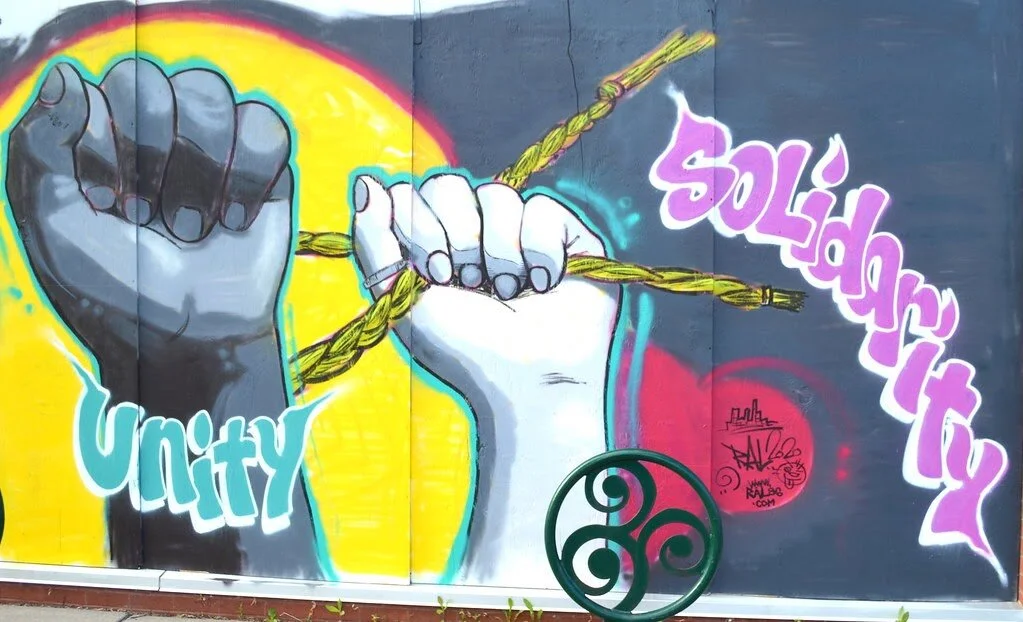
Can’t we just get along? iamrenny. CCO 1.0.

Recognizing the inestimable value of these pieces of art, Patton and Croop founded the SoHo Renaissance Factory (SRF), which stores wooden boards bearing protest art in an empty SoHo dance studio. It consists of themselves and three fellow artists: Sule, Amir Diop and Brendan McNally. They developed an extensive network of friends, artists and security guards who alert them when a work of art is about to be trashed. They rush to the scene in an attempt to save the piece. Sometimes they arrive in the nick of time; other times they do not.

SRF member Amir Diop experienced the latter firsthand. During the protests demanding justice for the death of George Floyd, Diop painted a mural on the plywood boards covering the Museum of Modern Art’s (MoMA) design store. It showed smiling faces circling around a black hole beneath the words “Take me to a place where Black Lives Matter.” Only days after he painted it, MoMA tore down the piece and shredded it. In the words of Diop, “They said that place doesn’t exist and they just threw it in the garbage.”

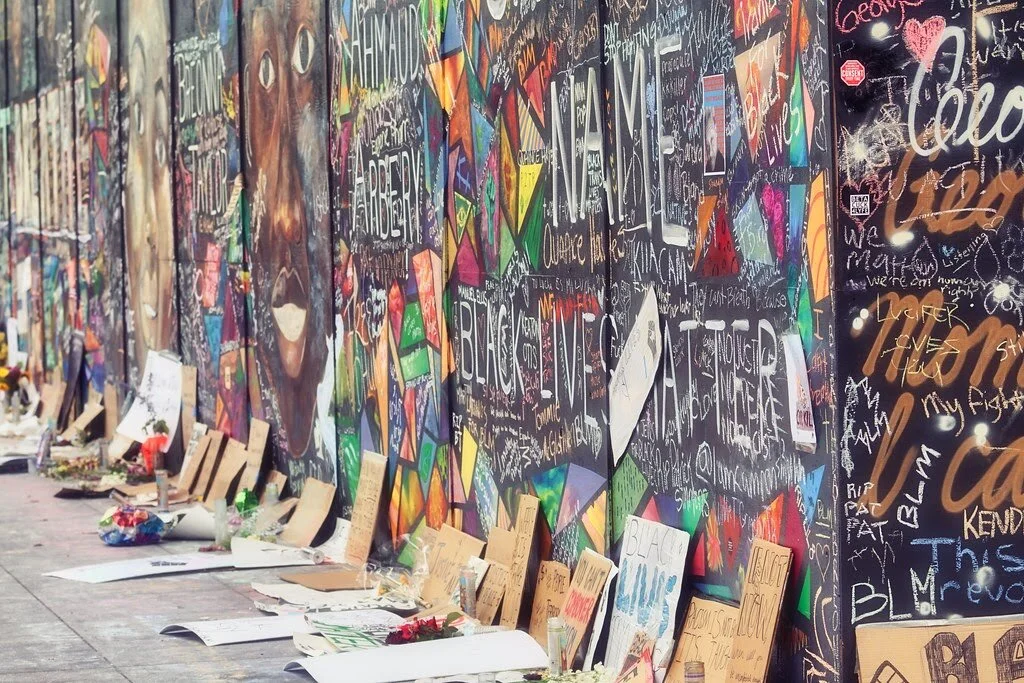
Spray their names. drburtoni. CC BY-NC-ND 2.0.

Street artists enjoy few legal protections. The Visual Artists Rights Act (VARA) of 1990 protected art from being mutilated or destroyed but only if it reached a “recognized stature.” In the digital age, this term is ambiguous. Instead of a signature, artists leave their social media handles in a painting’s corner, raising the question of whether online fame qualifies under VARA. For the time being, however, artists cannot depend on the art establishment. If the MoMA won’t recognize art, it is unlikely that a court will. 

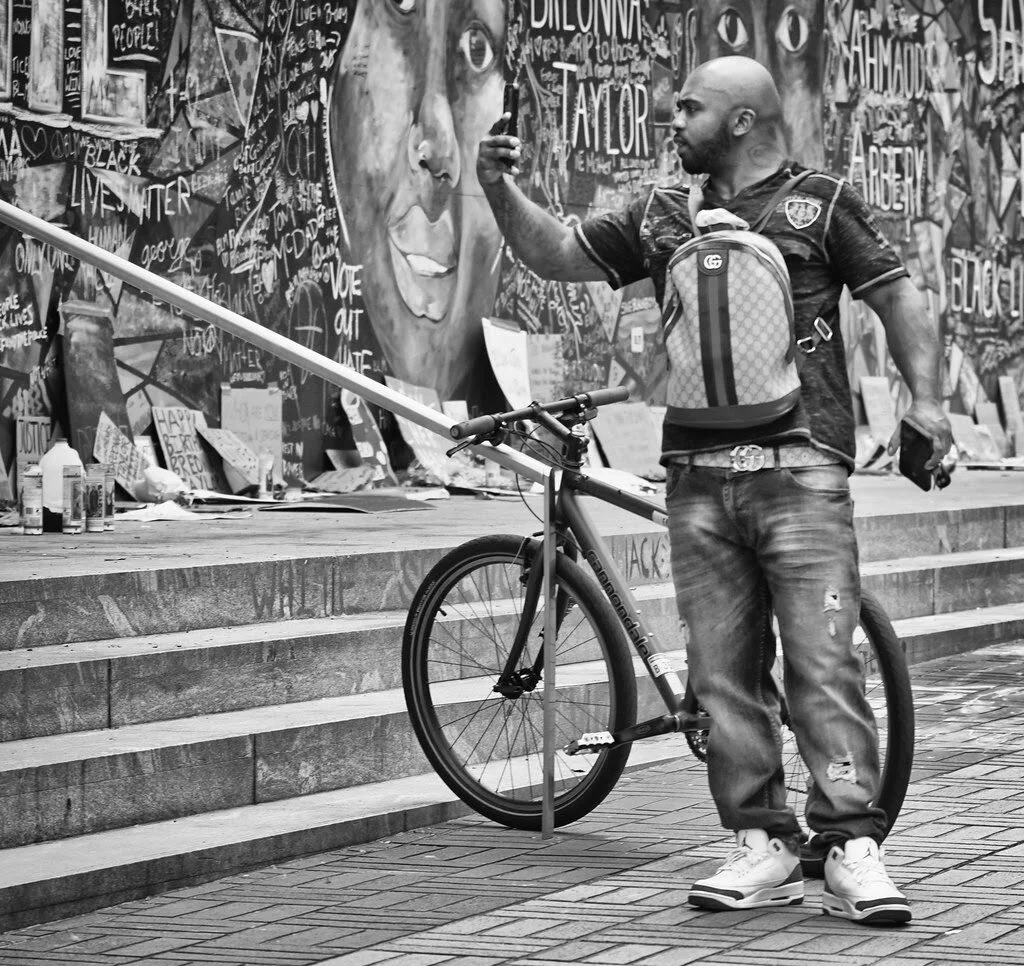
A moment to remember. drburtoni. CC BY-NC-ND 2.0.

The future of the SRF is unclear, but it does look promising. The group recently struck a deal with Mana Contemporary, an arts center in New Jersey, to display the wooden boards in a public show next year when COVID-19 restrictions hopefully ease up. For now, the SRF has moved to a spacious studio in the NoMo SoHo Hotel, where it landed a residency. The new space offers a comfortable environment to create art, but the work of the SRF will always be rooted in the streets.

See the work of the SoHo Renaissance Factory on its website:

https://sohorenaissancefactory.com/

Or check out each artist’s work on their Instagram pages:

Konstance Patton - @konartstudio

Trevor Croop - @light.noise

Sule - @sulecantcook

Amir Diop - @amir.diop99

Brendan McNally - @brendantmcnally

You can also support the mission of the SoHo Renaissance Factory by getting involved with organizations that support racial justice, some of them listed below:

Black Lives Matter - https://secure.actblue.com/donate/ms_blm_homepage_2019

Color of Change - https://secure.actblue.com/contribute/page/support-us?refcode=coc_website_popup

SURJ - https://www.showingupforracialjustice.org/donate-to-surj.html

Organizations for Black Struggle - https://www.obs-stl.org/

Project South - https://projectsouth.org/


Michael McCarthy

Michael is an undergraduate student at Haverford College, dodging the pandemic by taking a gap year. He writes in a variety of genres, and his time in high school debate renders political writing an inevitable fascination. Writing at Catalyst and the Bi-Co News, a student-run newspaper, provides an outlet for this passion. In the future, he intends to keep writing in mediums both informative and creative.

Scotland Becomes First Country to Provide Free Period Products

The Period Products (Free Provision) (Scotland) Bill requires local authorities and schools to make sanitary materials free and available to all.

A woman passes a menstrual product to another. Annika Gordon. Unsplash.

On Nov. 24, Scotland became the first country to provide free and universal access to period products. In a tweet, the Scottish Labour Party confirmed that the bill had passed unanimously. This historic legislation was approved after a four-year grassroots campaign spearheaded by Scottish Labour’s health spokesperson, Monica Lennon.   

The Period Products (Free Provision) (Scotland) Bill is groundbreaking for several reasons. Not only does it aim to dispel period misconceptions, but it also functions to support individuals who struggle to care for themselves. A 2018 Scottish government study found that roughly 220,000 girls and women between the ages of 12 and 54 lived in relative poverty. Period products can cost about $10.75 per month. Although that might not seem like much, Lennon wrote in the 2017 proposal, “when you have no or very little income, it can be insurmountable.”

According to the United Nations Population Fund, menstruation is also an issue of human rights. Despite its natural occurrence, periods are often stigmatized. Consequently, limited conversations on menstrual health might make it difficult for those in need to seek adequate help. For instance, a December 2017 study condemned the menstrual hygiene plight of homeless women as a “public health disgrace.” Researchers reported that homeless women tend to reuse products despite cleanliness concerns such as toxic shock syndrome. An interviewee shared that her shelter provided only two pads, while the average woman uses approximately 20 pads per cycle.

Consequently, the passage of the Period Products Bill is a stepping-stone toward recognizing the worth of women as well as the unique challenges they face.  

What about other countries?

Like Scotland, China’s women are taking a stand. Jiang Jinjing, a women’s rights advocate, gained prominence after the COVID-19 outbreak hindered the distribution of supplies. She started the campaign Stand by Her in an effort to alleviate period poverty while also destigmatizing menstruation.  Her work has inspired both men and women to set up centers that provide free period products. In at least 338 schools and colleges across the country, boxes and bags of individually wrapped period products have already sprung up in bathrooms. While their network is still growing, Jiang believes that they have planted seeds of change. She also noted that their efforts have helped to normalize words like “pads” and “periods,” which, she notes, is a “huge milestone.”

New Zealand is another country that provides free sanitary products—but only to students enrolled in schools. Miranda Hitchings, a co-founder of Dignity, a nongovernmental organization that gives period products to those in need, lauded the move but emphasized that period poverty encompasses a wider population. While the situation has yet to evolve, New Zealand’s Minister for Women, Julie Anne Genter, recognized that menstruation is a fact of life and that “access to these products is a necessity, not a luxury.”

Moving forward

Ultimately, Scotland’s historic move could prove a necessary spark for many budding efforts around the world. By Jan. 1, 2021, the United Kingdom will no longer tax period products. Countries like Spain and Switzerland are also planning to reduce tampon taxes by about 5%. Until other countries follow suit, making period products free for all remains a key component toward attaining true gender equality. 


Rhiannon Koh

Rhiannon earned her B.A. in Urban Studies & Planning from UC San Diego. Her honors thesis was a speculative fiction piece exploring the aspects of surveillance technology, climate change, and the future of urbanized humanity. She is committed to expanding the stories we tell.

Amid COVID-19, Garment Workers Are Asking Employers to #PayUp

While the COVID-19 pandemic has slowed down many sectors of the economy, online sales have spiked—as well as the vulnerability of many laborers working with little to no safety net. 

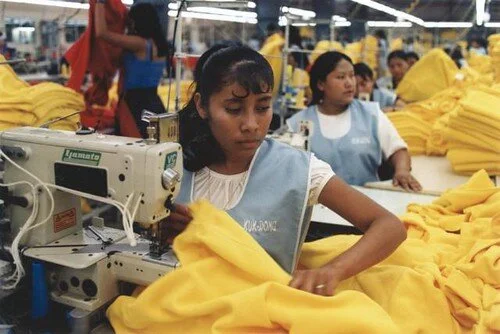
Sweatshop workers mass producing fabrics for below average wages. Marissa Orton. CC BY-SA 2.0.

Since the beginning of COVID-19 lockdowns, e-commerce has reaped significant monetary benefits. In the United States alone, online sales rose 43% in September, totaling $60.4 billion. Though online shops gained countless new customers, not all in the industry were celebrating.

Since March, many frontline workers have been laid off. For example, the American startup company Everlane, a clothing line that promises “radical transparency,” came under fire for terminating workers who attempted to start a labor union amid the pandemic. Despite founder Michael Preysman’s statement that the layoffs were “the hardest decision we’ve ever had to make,” non-management employees called them out. Those who held leadership positions in the company retained most of their salaries.

Across the globe, COVID-19 has weakened both the bargaining power and socioeconomic mobility of garment workers. Its consequences have been especially devastating for those in developing nations. In India, the closure of schools has led around 80,000 children to begin working as laborers. If unaddressed, the pandemic could set the country back decades on child exploitation. With limited options, families are often strong-armed by traffickers into believing their children will lead better lives in the big city. Many never see their families again.   

As a European Trade Union Institute article reported, COVID-19 did not break labor rights; it only revealed how broken the system already was. In Leicester, England, predominantly female and migrant sweatshop workers from Eastern Europe, Bangladesh and Pakistan faced wages as low as $4.50 an hour, received threats and humiliation, and were even denied bathroom breaks.. A June report from Labour Behind the Label found that online fashion retailer Boohoo’s Leicester factory was operating at 100% capacity despite lockdown orders. In the same month, the company projected that its shares had increased by 22%.Some feel that fast-fashion workers are stuck in a lose-lose situation. A Bloomberg report found that the closure of roughly 1,090 garment factories in Bangladesh amounted to an economic loss of $1.5 billion. Workers were not entitled to unemployment benefits, rendering them even more vulnerable in the face of pandemic uncertainties. A Solidarity Center article found that because of social distancing measures, workers’ ability to unionize and collectively bargain for their rights was severely limited.

Not all hope is lost, however. COVID-19 has created opportunities for critical change. As online sales have gone up, so has social media usage. In March, after notable labels such as Nike, Gap and Levi’s had canceled billions of orders, the nonprofit organization Remake revealed the plight of garment workers through the #PayUp movement. Stores like H&M and Zara were pressured into compensating their suppliers for orders that had already been produced, passing that money on to workers. While the fight is far from over, garment workers’ future may become brighter as consumers take a longer glance at the fast-fashion industry

How To Get Involved:

  • The Awaj Foundation is a woman-led organization based on addressing gender-based violence in the garment industry. It supports workers from Bangladesh. For more information on ways to support it, click here.

  • Based in Los Angeles, the Garment Worker Center aims to restore agency and dignity back to workers currently strong-armed by sweatshop conditions. To learn more, visit its website here.


Rhiannon Koh

Rhiannon earned her B.A. in Urban Studies & Planning from UC San Diego. Her honors thesis was a speculative fiction piece exploring the aspects of surveillance technology, climate change, and the future of urbanized humanity. She is committed to expanding the stories we tell.

A Guide to Chatuchak: Thailand’s Largest Market

Chatuchak Weekend Market is Thailand’s largest market, containing over 15,000 stalls. The market offers anything visitors could want to buy and provides an incredible cultural experience. 

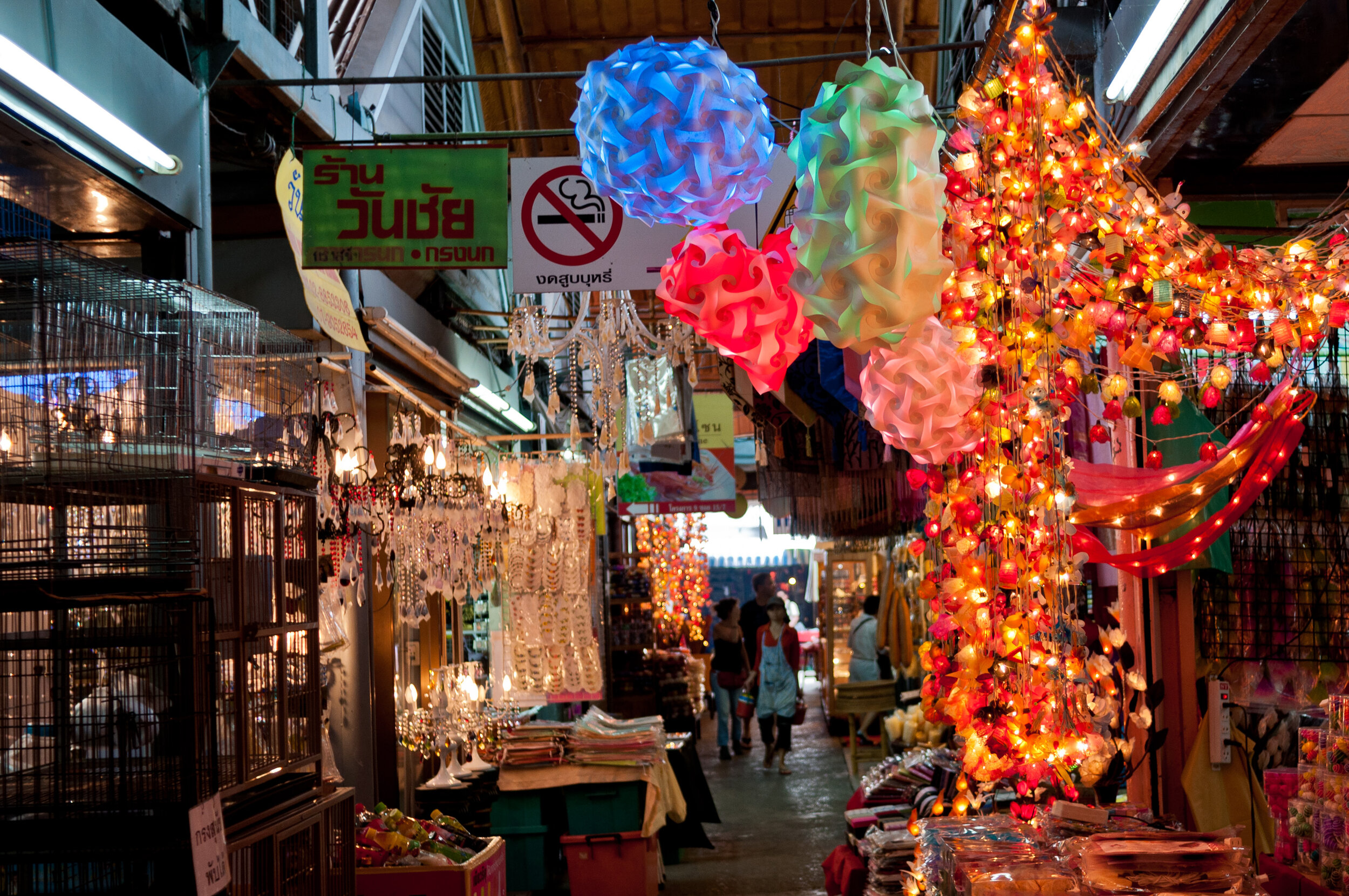
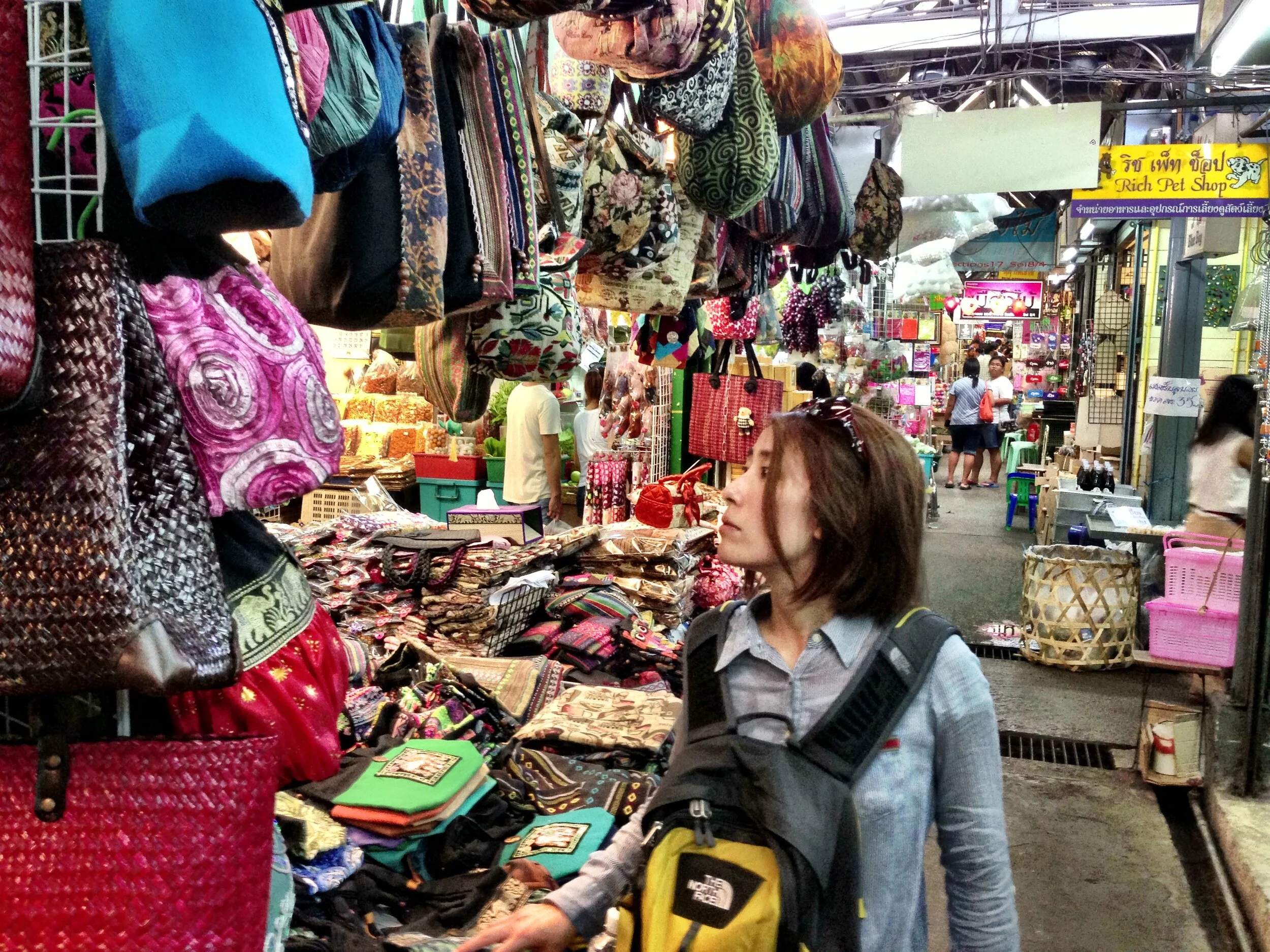
If you want to buy anything at all in Thailand, from vintage clothes and home decor to street food and exotic animals, visit the Chatuchak Weekend Market. The market spans 35 acres in Bangkok and contains over 15,000 stalls, making it Thailand’s largest market and one of the largest in the world. Chatuchak is divided into 26 sections and is so expansive that maps are available to help visitors navigate the vendors. Most of Chatuchak’s stalls are open on weekends, hence the common name “Chatuchak Weekend Market,” but a number of stalls are open during the week as well. 

Chatuchak Weekend Market, also known as “Jatujak” or “JJ Market,” opened over 70 years ago. It began as a small, local Bangkok market called Sanam Luang in 1942. The market opened as a result of the rule of Thailand’s third prime minister, Field Marshal Plaek Phibunsongkhram, who ordered that every town have its own flea market in order to promote trade and boost the local economy. The market was relocated numerous times over the years until it was permanently established in Chatuchak in 1982 and officially named Chatuchak Market five years later. Today, the market receives an estimated more than 200,000 visitors each weekend and is known around the world as a landmark and a must-see destination in Bangkok. 

Due to Chatuchak Market’s incredible size, it can seem daunting to visitors. However, many people say that spending a day in the market wandering and hunting for what you want is an exciting part of the Chatuchak experience, and navigating the market is not as difficult as it may appear. Visitors to Chatuchak can pick up complimentary maps showing the locations of vendors from kiosks along the main road, which circles the entire market. This main road branches into a number of smaller alleyways called “soi,” which make up the market’s 27 sections. These sections are not organized by product; clothing, for example, is found in nearly every section, but the numbered areas will help visitors get their bearings. Additionally, there is a Chatuchak Guide app available for iOS and Android that displays a live map and allows users to search for products and stalls. 

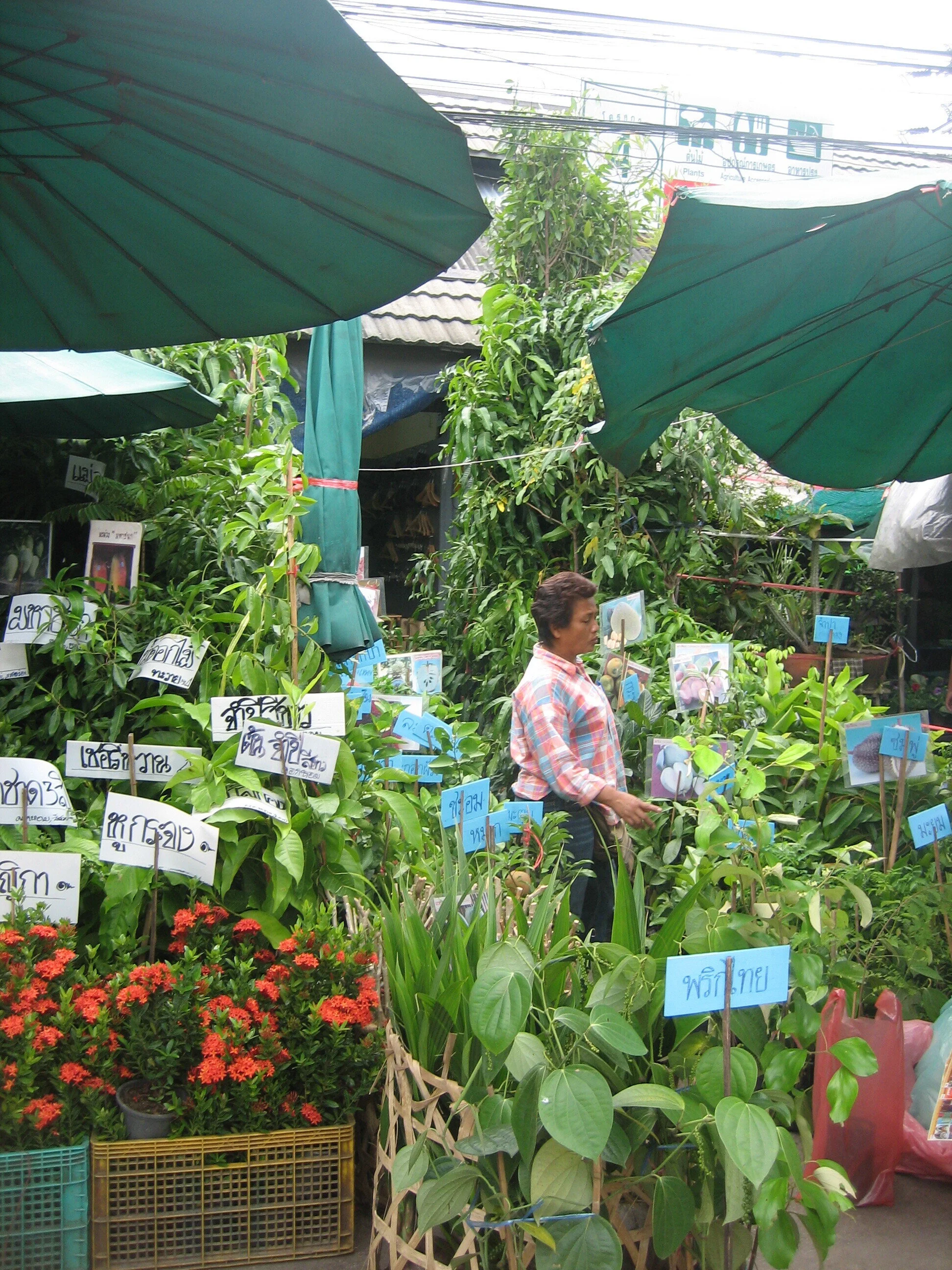
Vendors at Chatuchak Market control their own operating hours, so the market does not open or close at a set time. It is listed as being open from 9 a.m. to 6 p.m. on Saturdays and Sundays, but many vendors will remain open as long as there are customers around. For visitors who want to explore the market but will not be in Bangkok over a weekend, smaller sections of the market open on Wednesdays, Thursdays and Fridays. The plant section opens from 7 a.m. to 6 p.m. on Wednesdays and Thursdays, and the wholesale section from 6 p.m. to midnight on Fridays.  

Bartering is common in Thailand, so prices at most Chatuchak stalls are negotiable unless otherwise posted. The Chatuchak Market website notes that the best approach to bartering is “smiling and being polite,” and not being concerned about walking away if you don’t get the price you’re hoping for. Since Chatuchak has over 15,000 stalls, you’re likely to be able to find a better deal at another stall, and you can always return and renegotiate later.

 It is recommended that travelers planning to visit Chatuchak Market spend at least three hours for a brief visit and five hours or longer for a more in-depth look.The best time to arrive is in the morning to give yourself ample time to explore. Visitors should dress in comfortable clothing and shoes. There are public restrooms throughout the market. Chatuchak Market is easily accessible by public transportation such as Skytrain, subways and buses, or by taxi or tuk-tuk, a motorcycle with a small carriage for seating two to three people. 

Chatuchak Market is a wonderful place to spend a day while in Bangkok. It offers visitors an opportunity to experience a piece of Thailand’s history and culture, taste authentic Thai street cuisine like pad thai and coconut ice cream, and browse a wide range of unique products.  


Rachel Lynch

Rachel is a student at Sarah Lawrence College in Bronxville, NY currently taking a semester off. She plans to study Writing and Child Development. Rachel loves to travel and is inspired by the places she’s been and everywhere she wants to go. She hopes to educate people on social justice issues and the history and culture of travel destinations through her writing.

Visit Mexico and Germany on a Virtual Visit Staycation

With the ongoing COVID-19 pandemic and winter fast approaching, many who traditionally would take a holiday vacation are stuck at home in an effort to curb the spread of the virus. That said, one can still enjoy a nontraditional vacation while following proper safety precautions. Here is our guide to taking an international “staycation” featuring two different destinations, as well as tips on how to design your own trip abroad from the comfort of your couch.

Read More

Meet 6 Athlete-Activists Demanding Change

Social activism and athletics have become intertwined, especially in the digital age. Here are some of the world’s most impactful athlete-activists. 

The San Francisco 49ers kneeling during the playing of the national anthem. Keith Allison. CC BY 2.0.

Following the lead of Colin Kaepernick, a football player for the San Francisco 49ers who protested police violence through kneeling during the national anthem, athletes have increasingly embraced the intersection of athletics and activism. Four years after Kaepernick’s original act of peaceful protest, athletes are now some of the most vocal activists in the world, using their status to encourage social activism. Due to the modern celebrity of sports, combined with the wide platform of social media, athletes from almost every sport have devoted their time off the field to social causes. Here are six athlete-activists working to transform their communities:

Naomi Osaka playing tennis. Peter Menzel. CC BY 2.0. 

1. Naomi Osaka — Tennis

Naomi Osaka, the reigning U.S. Open champion, is the world’s highest-paid female athlete. She is also one of the most vocal supporters of the Black Lives Matter movement, using her platform to commemorate victims of racial violence. In August, Osaka withdrew from a tournament she was favored to win in protest of anti-Black injustice. In a statement on her social media accounts, Osaka wrote: “Before I am an athlete, I am a Black woman.” Osaka is an activist on the court as well, wearing seven different masks with the names of victims of police brutality and racism: Breonna Taylor, Elijah McClain, Ahmaud Arbery, Trayvon Martin, George Floyd, Philando Castile and Tamir Rice. 

Brittney Griner playing for the Phoenix Mercury. Lorie Shaull. CC BY 2.0. 

2. Brittney Griner — Basketball 

WNBA player and Olympian Brittney Griner is an outspoken advocate for the LGBTQ+ community. In 2017, Griner led the charge to prevent Texas from passing Senate Bill 3, which would have forced transgender people to use restrooms and locker rooms that match their gender assigned at birth. As a member of the LGBTQ+ community, Griner encourages young adults to be authentically themselves. Griner is also at the forefront of the movement for the WNBA to stop playing the national anthem prior to games in support of the Black Lives Matter movement. 

Akim Aliu in a mid-game interview. Anders H Foto. CC BY 2.0.  

3. Akim Aliu — Hockey 

In his essay titled “Hockey Is Not for Everyone,” written in May, professional hockey player Akim Aliu exposed the National Hockey League’s unaddressed problem with racism. After recognizing rampant racism in his sport, Aliu co-founded the Hockey Diversity Alliance, an organization dedicated to eradicating “systemic racism and intolerance in hockey” while making the sport accessible to all communities. In a statement posted on Twitter by the board of the organization, Aliu wrote: "We are hopeful that anyone who puts on skates or sits in the stands will do so without worrying about race, gender or socioeconomic background and will be able to express their culture, identity, values and personality without fear of retribution."

Juan Mata playing for his former team, Chelsea. Christopher Johnson. CC BY 2.0.

4. Juan Mata — Soccer

Manchester United player Juan Mata launched Common Goal in 2017, a charitable organization geared toward redistributing global soccer wealth back into the communities that raised and trained the world’s premier soccer stars. Mata was the first of his peers to pledge 1% of his salary to this organization, and the organization has now grown to include 390 pledgers and 207 partner organizations. Mata told The Players’ Tribune: “Through Common Goal we're creating a collaborative way for football to give back to society … By making the pledge, we can form a lasting connection between football as a business and football as a tool for social change.”

Fu Yuanhui and teammate Liu celebrate a 2015 backstroke win. Oleg Bkhamri. CC BY 2.0. 

5. Fu Yuanhui — Swimming

Chinese Olympic swimmer Fu Yuanhui is breaking down the stigma surrounding menstrual cycles for female athletes. At the Rio Olympics in 2016, Yuanhui openly shared the way in which her period affected her athletic performance, with social media users sharing widespread support for her honesty. In China, taboos around menstrual cycles lead to the topic seldomly being discussed, and Chinese swimming fans took to social media apps to praise Yuanhui for her honesty. Only 2% of women in Chinese use tampons, and Yuanhui’s acknowledgment of her period on a world stage was eye-opening for Chinese women, 76% of whom are reported to feel uncomfortable in social settings when they have their period. 

Fish on stage delivering a TED Talk. TEDxYouthSeattle. CC BY-NC-ND 2.0.

6. Rosalie Fish — Running

College runner Rosalie Fish is the least-known athlete on this list, but one of the fiercest advocates of Missing and Murdered Indigenous Women (MMIW). In her senior year of high school, Fish ran her meets with the outline of a red hand painted across her face and the words Missing and Murdered Indigenous Women written on her leg. Now in college, Fish has become a leading figure in advocacy for MMIW. A member of the Cowlitz Tribe, Fish told Off the Cuff: “For me to say I don’t want Indigenous women to be ignored anymore is, by some people, a political statement. Advocating for Missing and Murdered Indigenous Women, they will say that’s political. To me that’s survival.” Fish has also delivered a TED Talk explaining her activism, which you can watch here

Sarah Leidich

is currently an English and Film major at Barnard College of Columbia University. Sarah is inspired by global art in every form, and hopes to explore the intersection of activism, art, and storytelling through her writing. 

7 Documentaries to Cure Your Wanderlust

Travel restrictions got you down? Try escaping with these global documentaries, guaranteed to soothe your cabin fever. Visit Mount Everest, Bhutan, Greenland, North Macedonia, Israel and more…

Read More

The Ainu: One of Japan’s Indigenous Groups

In August 2019, the Japanese government passed a law that officially recognized the Ainu as an Indigenous people group. After nearly two centuries of legalized discrimination, the Ainu are reclaiming their identity and history, and they are just getting started.

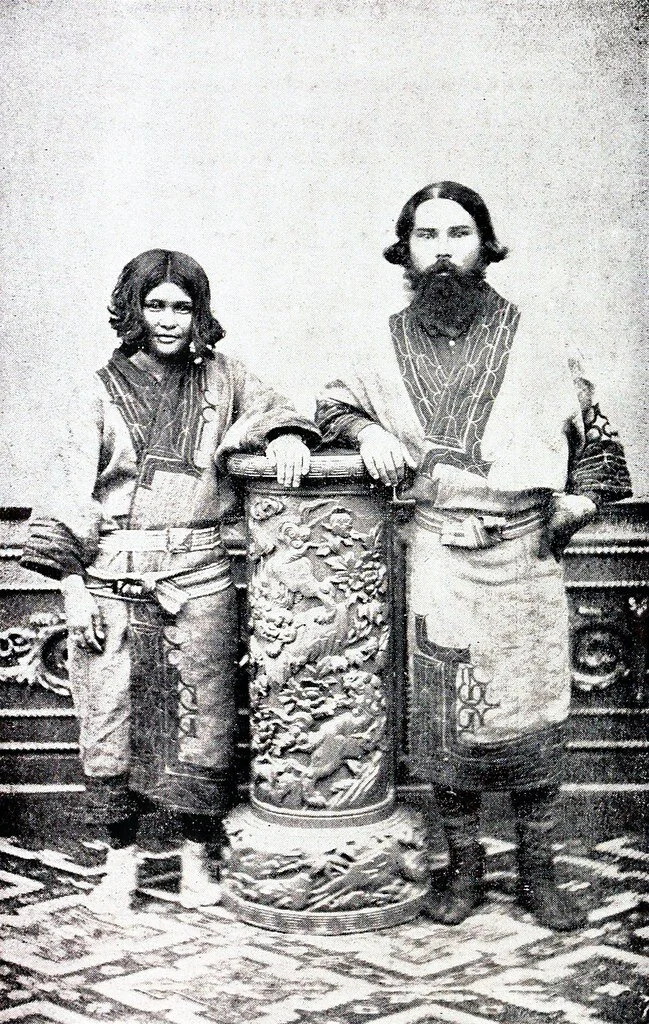
An Ainu couple before assimilation; their features are still different from those of their Japanese counterparts. Stuart Rankin. CC BY-NC 2.0.

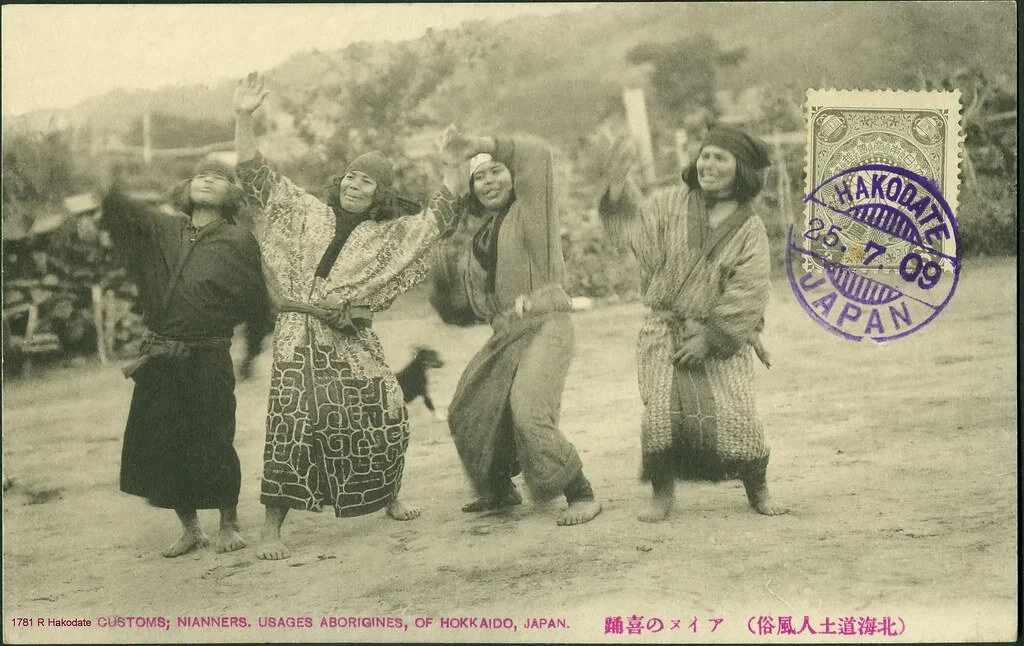
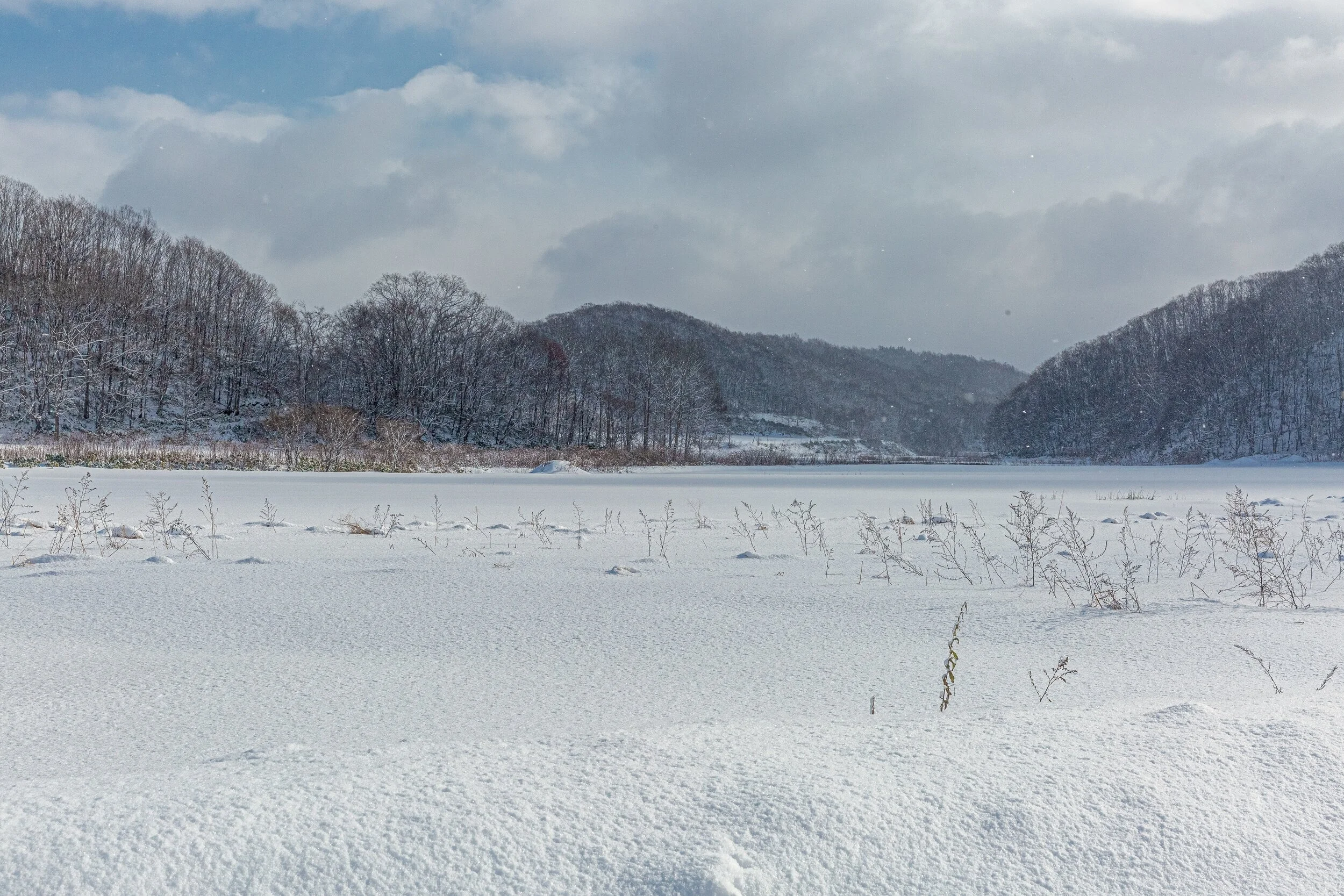
In July, Japan unveiled the Upopoy National Ainu Museum, the country’s first cultural center dedicated to Indigenous identity. Located on the island of Hokkaido—one of the Ainu’s ancestral lands—the Upopoy Museum showcases the history of the Ainu through performances and historical relics. What is remarkable about the museum’s opening is not its resiliency amid a pandemic, but that the structure opened at all. Much like the power dynamic between American settlers and Native American tribes, the Ainu endured a legacy of forced assimilation by the ethnic Japanese and their ruling government.

Before this, the Ainu were a hunter-gatherer tribe that inhabited the northern islands of Ezo (present-day Hokkaido), the Kuril Islands and the Russian island of Sakhalin. According to archaeological records, the Ainu called these lands home as early as the 14,500 B.C. The Ainu also had strong ties to animism, a belief that manifested itself in the relationship between the Ainu and the bears on the islands. The Ainu even created a ceremony in which bear cubs were taken, raised and then sacrificed in a ritual offering. These symbolic rites guided Ainu tradition and their balanced connection with nature.

Ainu women performing a welcome dance on Hokkaido. Vladimir Tkalcic. CC BY-NC-ND 2.0.

When the Meiji government annexed Hokkaido in the late 19th century, the Ainu’s pastoral way of life was interrupted. While the Ainu lived in Japan, they physically differed from their Japanese counterparts. The Ainu have a more European look with lighter skin and thick hair. Men sported full beards, and women tattooed their lips once they reached adulthood. Because of this, the Japanese derided the Ainu as backward and foreign. Around this time, Japan also became the first non-European country to have defeated Russia in battle. Flush with victory and newly acquired lands, the Japanese sought to build up a national myth of military might and cultural homogeneity. One of these initiatives included a policy of forced assimilation on the island of Hokkaido.

The Japanese government enlisted the help of American consultants who had reeducated their own North American Indigenous groups. The Ainu were forced into Japanese-speaking schools and were required to change their names. As the land was repurposed for industrial and agricultural uses, the Ainu were pushed into wage labor and became an impoverished and politically disenfranchised minority. Even after World War II, the Ainu were deprived. To participate in the scientific advancements of the mid-20th century, the Japanese government essentially emboldened researchers to rob Ainu graves and remains.  

The Upopoy National Museum is housed in Hokkaido, one of the Ainu’s ancestral homelands. Marek Okon. Unsplash. 

In February 2019, the Japanese government introduced a bill that would officially recognize the ethnic Ainu minority as an Indigenous people for the first time. The bill included measures that would support Ainu communities, fund scholarships and educational opportunities, and allow the Ainu to cut down trees in nationally owned forests for use in traditional practices.

While many lauded the proposal, some felt that the bill missed a crucial element: an apology. In an interview with CNN, musician Oki Kano shared that he was only 20 years old when he found out that he was Ainu. Thanks to rigorous assimilation policies, the Ainu in Japan bear more resemblance to ethnic Japanese than past generations. Because of the ugly legacy of discrimination, however, the true number of Ainu still left in Japan is unknown. Due to fear, many of the Ainu have chosen to hide their background, leaving younger generations with limited if any knowledge about their heritage. The Ainu language is also at risk of extinction.

Although the bill became law in August 2019 and Tokyo University returned some of the robbed remains the following year, the fight for the Ainu people’s rights is just beginning. Despite widespread recognition and gradual acceptance of the Ainu, some feel the Ainu culture is at risk of tokenization. Though the preservation of Ainu culture is commendable, the Ainu’s future should also be considered if they are to have a chance at survival.


Rhiannon Koh

Rhiannon earned her B.A. in Urban Studies & Planning from UC San Diego. Her honors thesis was a speculative fiction piece exploring the aspects of surveillance technology, climate change, and the future of urbanized humanity. She is committed to expanding the stories we tell.

With Democracy on the Horizon, Uzbekistan Flirts with Freedom

Uzbekistan’s new attention to human rights and democratic ideals, along with the rapid boom in its tourism industry and steps toward religious tolerance, are potential signifiers of progress.

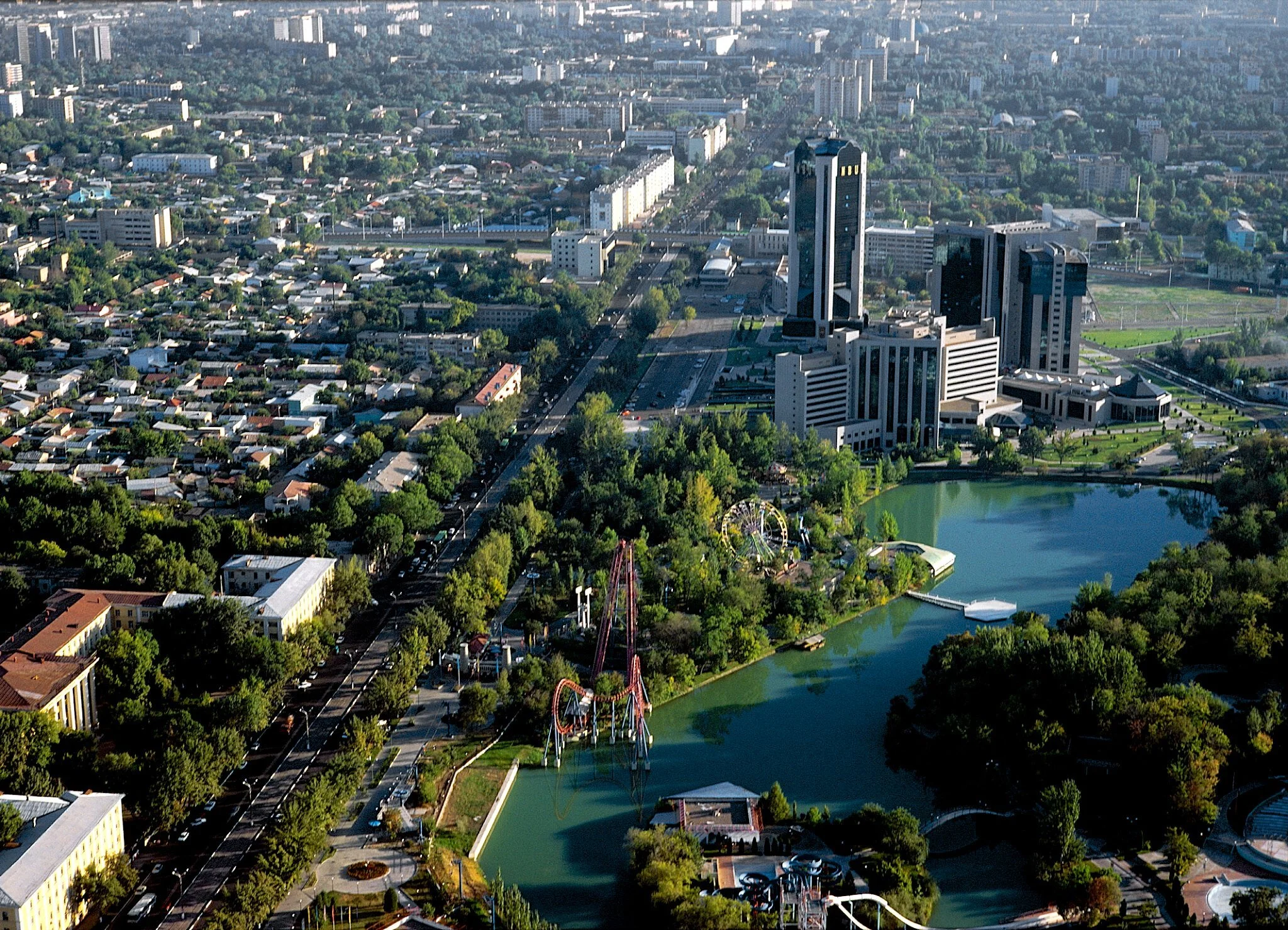
Tashkent, capital of Uzbekistan. Markus Biedermann. CC BY NC-ND 2.0.

Cradled between Kazakhstan and Turkmenistan, Uzbekistan lies at the heart of Central Asia. Uzbekistan’s population is predominantly Sunni Muslim, and adherents are considered the most devout in Central Asia. The capital, Tashkent, is full of signs of its rich Islamic heritage: historic mosques and mausoleums are scattered among Soviet-style towers.

The country’s complex and multifaceted history explains its diverse population. At the height of the Silk Road, cities located in present-day Uzbekistan such as Bukhara and Samarkand were trading hubs between the East and the West. It was through these centers that Arab traders brought Islam and a written alphabet to the region. After centuries of conquests and rivalry between Uzbek city-states, Russia swallowed up these states with the promise of protection in the early 19th century. It was established as the Uzbek Soviet Socialist Republic in 1924, where religion was suppressed and the population inflicted with forced collectivization

Ever since Uzbekistan’s independence in 1991, long-serving President Islam Karimov has largely avoided democratization while embracing diplomacy and investment from the global community. Despite his attempts to join the U.S. in its “war on terror,” Karimov was regularly criticized by the United Nations for his long record of human rights violations. His persecution of the large Muslim population in Uzbekistan could not be ignored by U.S. in light of the Andijan massacre, when at least 187 civilians were killed. After Karimov’s death in 2016, Uzbekistan seems to have emerged from three decades of isolation and autocratic rule.

Today, President Shavkat Mirziyoyev’s administration boasts of its progressive policies: Mirziyoyev advocates for freedom of the press, supports religious tolerance and disapproves of unjust imprisonment. Since the start of Mirziyoyev’s presidency in 2016, a few journalists have been spared incarceration, previously blocked media platforms were made accessible, and a number of political prisoners were released. These actions displayed Mirziyoyev’s ostensible devotion to human rights, which was bolstered by his emerging friendship with U.S. Rep. Trent Kelly, his interaction with nongovernmental organizations, and his government’s partnership with the Cotton Campaign, which combats unpaid cotton production in Uzbekistan. As a result, Uzbekistan was elected to the U.N. Human Rights Council for the first time in history this October. In an article found on the United Nations’ website, Uzbekistan is lauded for its “firm commitment to the purposes and principles of the U.N. Charter and the universal declaration of human rights.” Although members of the U.N. carefully watch Mirziyoyev to ensure the establishment of these democratic ideals, Uzbekistan is now regarded as a country working toward greater freedom. 

There are complications involved in Mirziyoyev’s steps toward democratization. Even though Mirziyoyev has been vocal about eliminating Uzbekistan’s forced cotton labor, advocacy group Uzbek Forum found that forced labor persists in the country. Rather than setting up an institutional stronghold on the cotton industry, the government privatized the cotton sector, which only decentralized government-enforced labor by a few degrees. 

Mirziyoyev’s efforts toward modernizing the Uzbek capital of Tashkent have resulted in mass displacement of the city’s original inhabitants. Through the demolition of its buildings and the restructuring of its neighborhoods, the government has carried out a wide-scale gentrification of the city. Tashkent is now considered a travel destination, full of shining skyscrapers and new hotel districts. In order to bolster Uzbekistan’s economy, Mirziyoyev allowed visa-free travel for 30 days for visitors from 65 countries, including the United States.

These markers of progress are met with a mixture of emotionsthe U.N. is enthusiastic about Mirziyoyev’s commitment to human rights, while Human Rights Watch remains skeptical of the legitimacy of these policies. The new seemingly democratic leadership of Mirziyoyev creates suspicion among Uzbeks and foreigners alike. Pushed by economic motivations, the president’s attempts to abide by the universal guidelines of human rights stir up hopes among Uzbeks for a freer future. 

Heather Lim

recently earned her B.A. in Literatures in English from University of California, San Diego. She was editor of the Arts and Culture section of The Triton, a student-run newspaper. She plans on working in art criticism, which combines her love of visual art with her passion for journalism.


Honoring San Basilio de Palenque: The First Town Liberated from Slavery in the Americas

The story of San Basilio de Palenque is one of unparalleled strength, resistance and bravery. 

River near San Basilio de Palenque. Fundacion Gabo. CC2.0 

Roughly 30 miles away from the port city of Cartagena, Colombia, lies the small town of San Basilio de Palenque. Palenque has rich historical significance, as it was the first free African town in the Americas. The town was declared a “Place of National Character and Cultural Interest” by the Colombian government and a “Masterpiece of the Oral and Intangible Heritage of Humanity” by UNESCO in 2005. 

History of San Basilio de Palenque

Town square in San Basilio de Palenque. Restrepo. CC2.0

San Basilio de Palenque was one of many walled forts, known as palenques, that were founded by those escaping slavery in colonial times. Founded in 1603 by Benkos Bioho and 36 other people, San Basilio is the only palenque remaining to this day and was successful due to its isolated location amid swamps and hills. Escaped slaves from Cartagena and surrounding regions would travel to San Basilio de Palenque in the hopes of seeking freedom. Against all odds, “palenqueros” formed their own army, language and support system to stay safe. The town was declared the first free town in the Americas in 1713, nearly 100 years before Colombia became independent from Spain. 

Palenqueros in Colombia Today

Palenquera women in Colombia. Vest. CC2.0

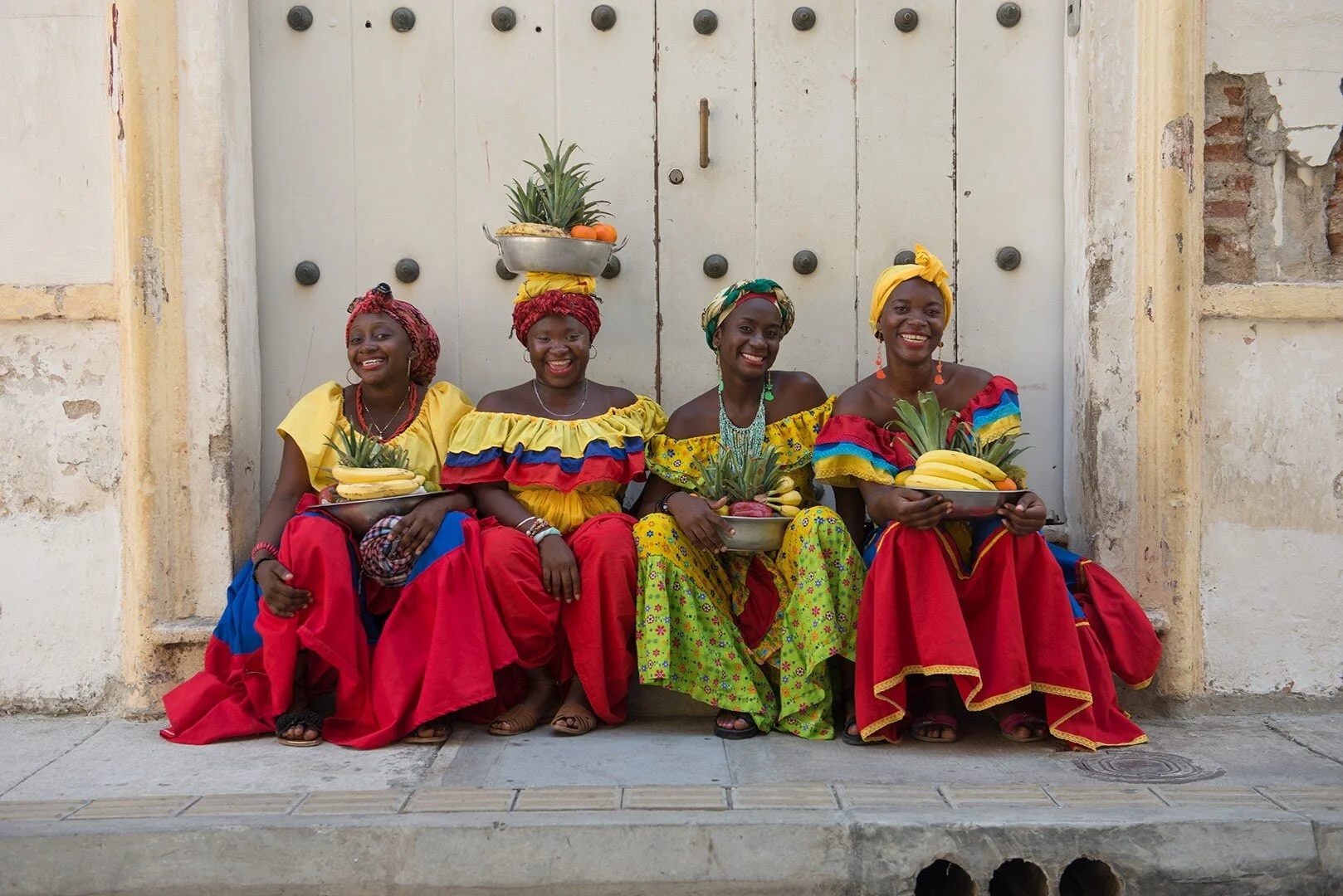
The isolated nature of San Basilio de Palenque provides limited employment opportunities, which in turn causes the migration of many palenqueros to larger cities in search of work. On the streets of Cartagena, palenquero men are engaged in construction projects while palenquera women wearing brightly colored dresses sell fresh fruit and traditional sweets made of nuts, tropical fruits and panela (unrefined sugar). In a video from Great Big Story, the palenquera Everlinda Salgado Herrera discusses the historical and cultural significance of a sweet called alegria (meaning happiness in Spanish), which represents the joy palenqueros felt when they found freedom.

Although palenqueros are becoming integrated into Colombian society, they were initially met with discrimination, sometimes leading to feelings of resentment and denial over their cultural and racial identity. In the 1980s and ‘90s, a young generation of palenqueros advocated for a resurgence of palenquero culture, hoping to promote an appreciation of their rich heritage. Strong cultural pride among palenqueros continues to this day.  Edwin Valdez Hernandez, a dance instructor at the Batata Dance and Music school in Palenque, states, "We defend our values with a shout. We are Black, and we are defending our culture."

Cultural Treasures of San Basilio de Palenque

Drummers in Palenque. Vest. CC2.0

Palenque is known worldwide for its unique language, music and culinary scene. One of Colombia’s 69 Indigenous languages, the palenquero language is only spoken in San Basilio de Palenque. Captives on European slave ships came from all parts of Africa speaking a variety of languages. As a colonizing strategy, people were purposely mixed together so they would not be able to communicate to plan an escape. Despite this, palenqueros created their own language, influenced by Castilian Spanish, Bantu, Portuguese and English. 

The cuisine of San Basilio de Palenque is a delight for the taste buds. Some dishes include seafood rice, mote (a traditional Caribbean cheese), and fish cooked in a creamy coconut sauce with pigeon peas, cassava and panela sugar. Palenquero cooking continues to reach international heights, most notably when the book “Cocina Palenquera Para el Mundo” won first prize at the 2014 Gourmand Cookbook Awards in Beijing. 

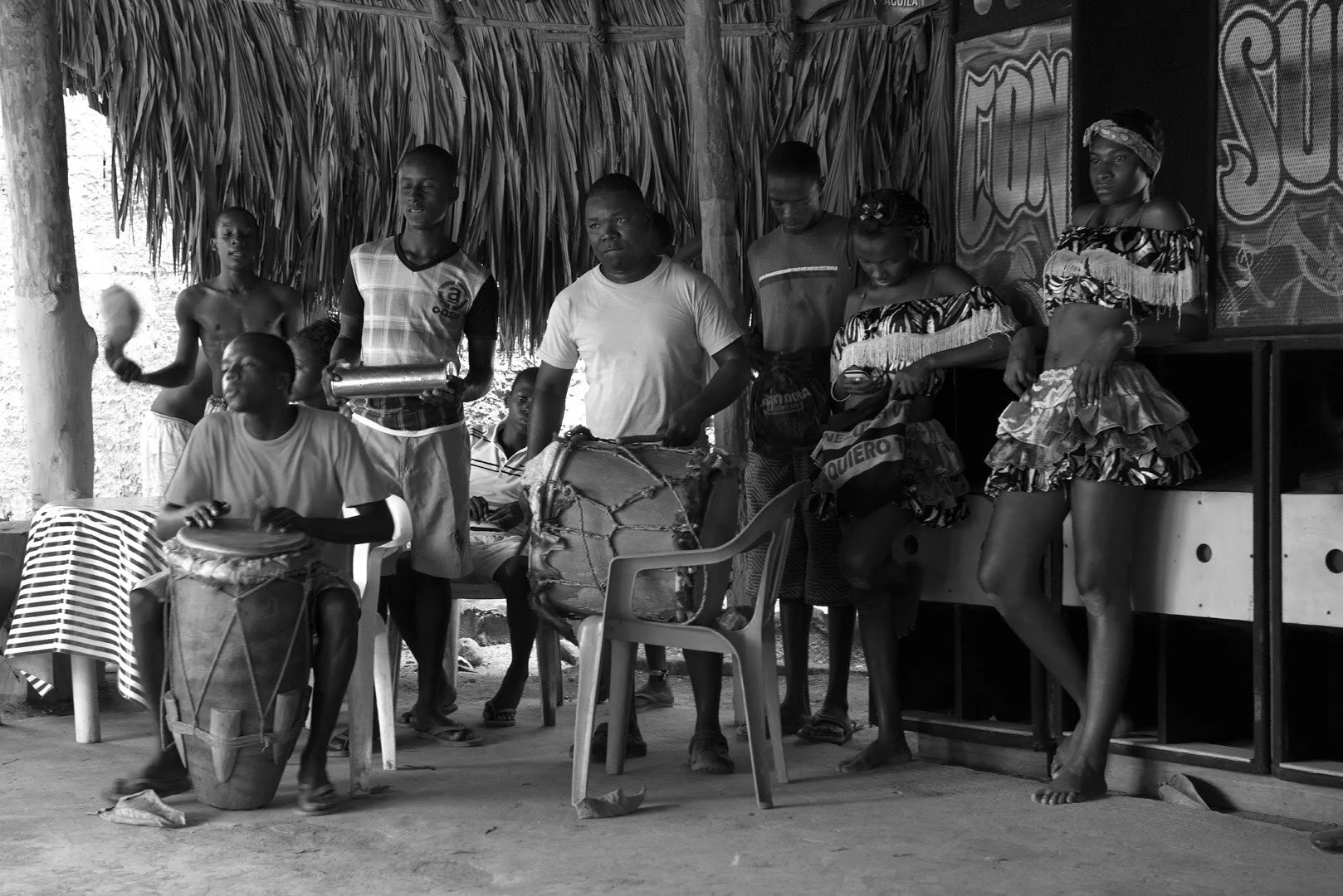
Music is an incredibly important part of palenque culture and throughout Colombia. Palenque music is joyful with sweeping rhythms and fast drum beats and is coupled with bright costumes and a seemingly endless stamina for dancing. Some of the many dance styles include chalusonga, paseo, champeta, entrompao and palenquero son. Travelers can learn about Palenque’s rich musical culture by attending the Drums and Cultural Expressions Festival held annually in October. 

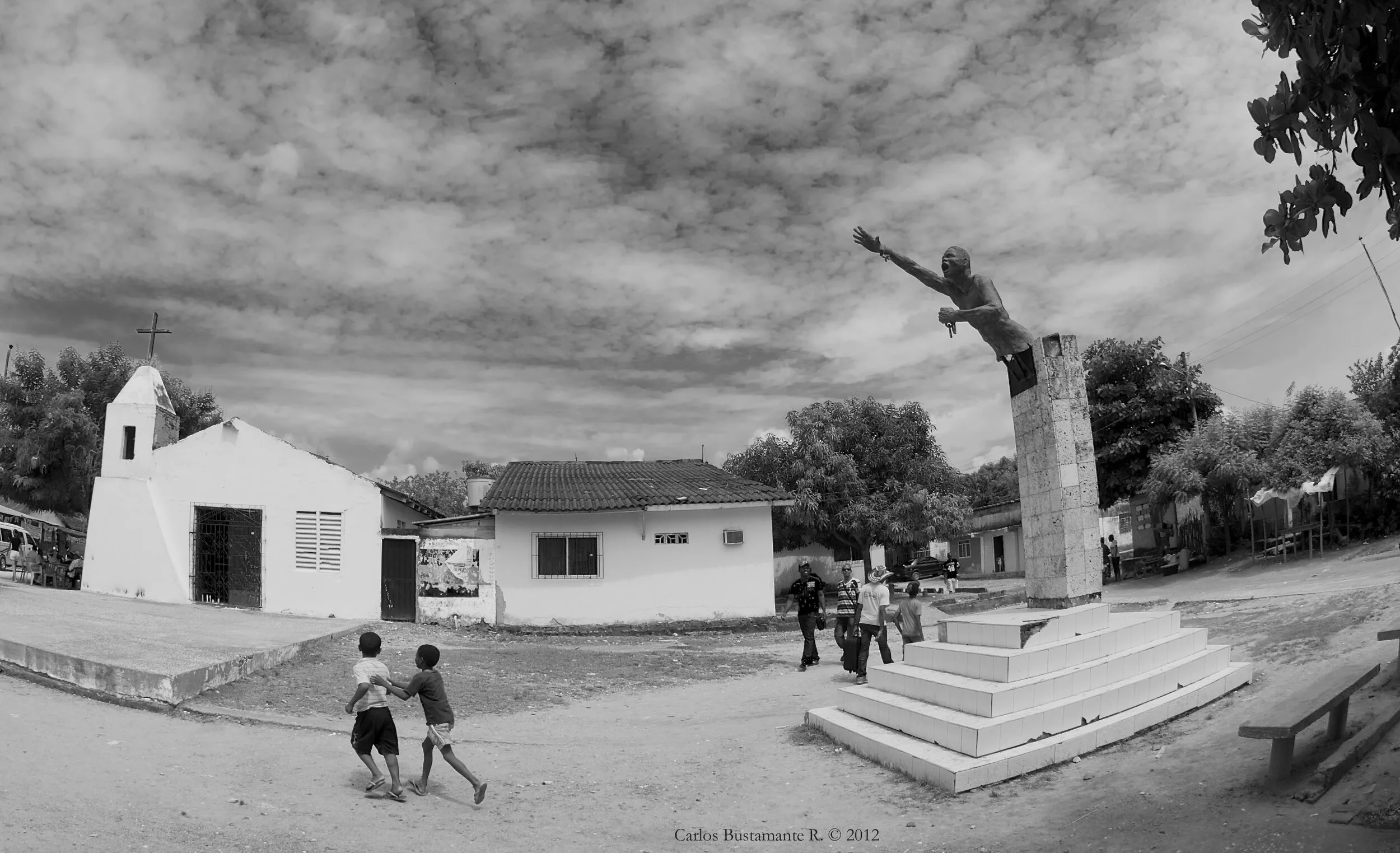
The town of Palenque is also known for its interesting methods of running society. Instead of a police presence, Palenque is organized into systems called ma-kuagro, where people have designated roles and watch over each other. The crime rate in the town is nearly nonexistent due to this sense of community among Palenqueros. Interestingly, palenque women’s hairstyles also have historical significance. In colonial times, women would braid intricate patterns in their hair that were used to create maps, store gold and transmit messages to help people reach freedom. A statue of Palenque founder Benkos Bioho breaking out of chains stands in the town center. 

A place of redemption and perseverance, San Basilio de Palenque is a cornerstone of Black resistance in Latin America and a perfect destination for a socially conscious traveler. Confronting past historical truths and being willing to listen to others’ experiences helps shed light on modern social issues to hopefully make the world a brighter and better place. 

Megan Gürer

is a Turkish-American student at Wellesley College in Massachusetts studying Biological Sciences. Passionate about environmental issues and learning about other cultures, she dreams of exploring the globe. In her free time, she enjoys cooking, singing, and composing music.

India’s Marijuana Users Worry Amid Cannabis Crackdown

With many arguing it is high time to change marijuana laws, the government begins cracking down on cannabis. 

Lighting up in Kolkata. Timothy Neesam. CC BY-NC-ND 2.0.

Every village in India is sure to have it. Everyone will know a friend or a friend of a friend who uses it, even if they don’t use it themselves. Whether a local rickshaw driver or a Bollywood starlet, every social class seems to enjoy its relaxing qualities. Some religious leaders even tout its effect on transcendental meditation. The police, however, are ramping up efforts to expunge it from India. The substance: marijuana. 

Despite occupying a prominent role in Indian society for centuries, the consumption of marijuana is highly stigmatized. The Narcotics Control Bureau (NCB) began cracking down on its use by targeting Bollywood stars caught in the act. Actress Rhea Chakraborty spent a whole month in jail after investigators discovered she had procured weed for her then boyfriend. Her private messages have endangered the careers of many other stars. Deepika Padukone is now under suspicion; he discussed “doob” over WhatsApp. 

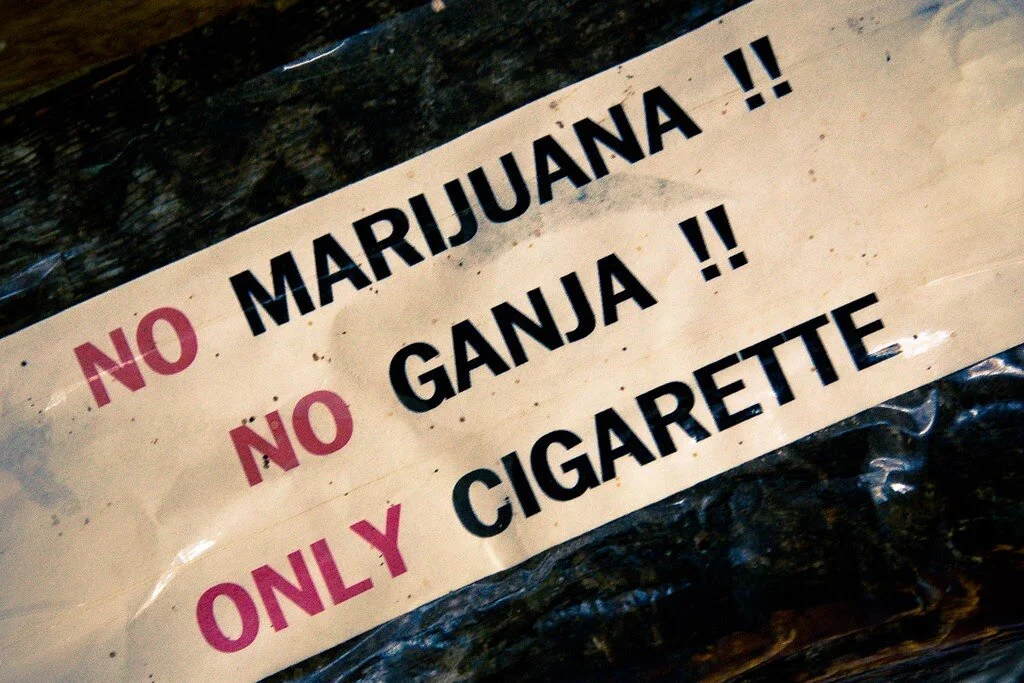
A sign prohibiting marijuana use. henrikj. CC BY-NC 2.0.

The NCB has much on its plate if it wishes to flush the drugs out of Bollywood. A-list celebrity Ranvir Shorey said in an interview that drugs are part of Bollywood culture, not because denizens are depraved but because drugs, especially marijuana, are ingrained in Indian culture. He noted, “I think drug consumption in Bollywood is the same proportion as it is generally in society” and that the stigma against weed is a “colonial hangover” based on “laws that are hundreds of years old and have not changed.”

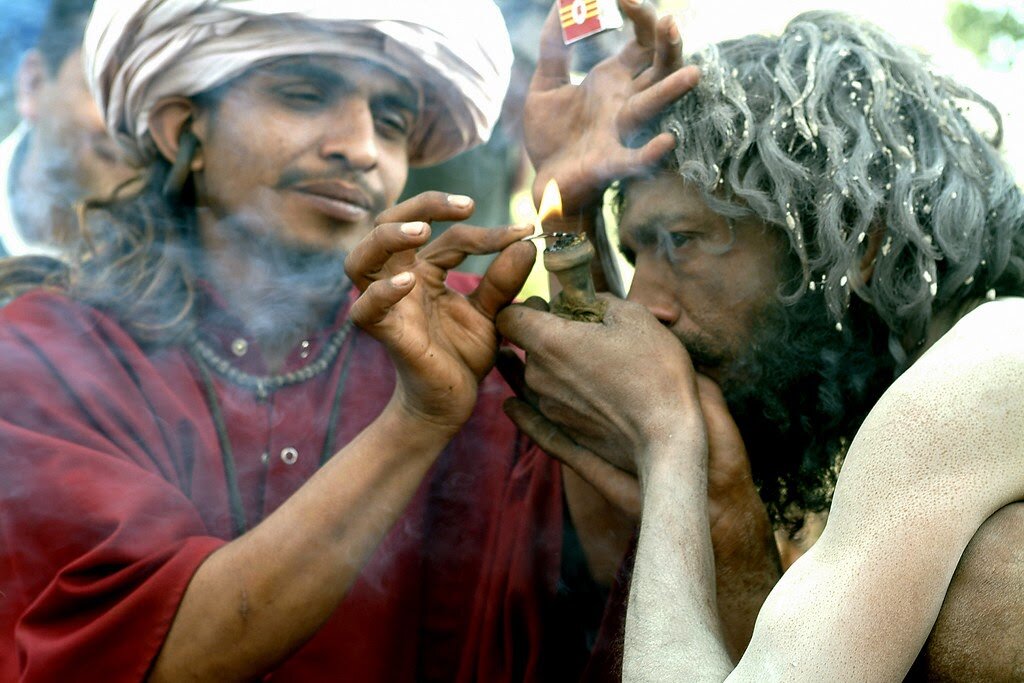
Even older than these laws are the many traditions of cannabis use. The earliest mention of it comes from the Hindu Vedas, which extol both its medicinal and spiritual properties. It describes the god Shiva puffing smoke to contemplate the mysteries of life and death. Following this example, religious ascetics eschew materialistic pleasures in pursuit of a meditative life, sometimes aided by marijuana. On the flip side, soldiers would often imbibe it to muster courage before battle, much the way European soldiers would swig whiskey. From antiquity onward, cannabis played a prominent and socially welcomed role in many aspects of life. 

Indeed, British imperialism helped to initiate the decades-old disdain for pot. When colonization first began in the 19th century, cannabis was often a farmer’s most profitable crop. Food was grown mainly for sustenance. To sell it, however, farmers were forced to navigate an expensive, labyrinthine process of taxes and licenses. Hoping to turn a profit, farmers smuggled cannabis instead. When imperial courts began prosecuting smugglers, cannabis acquired a criminal association. 

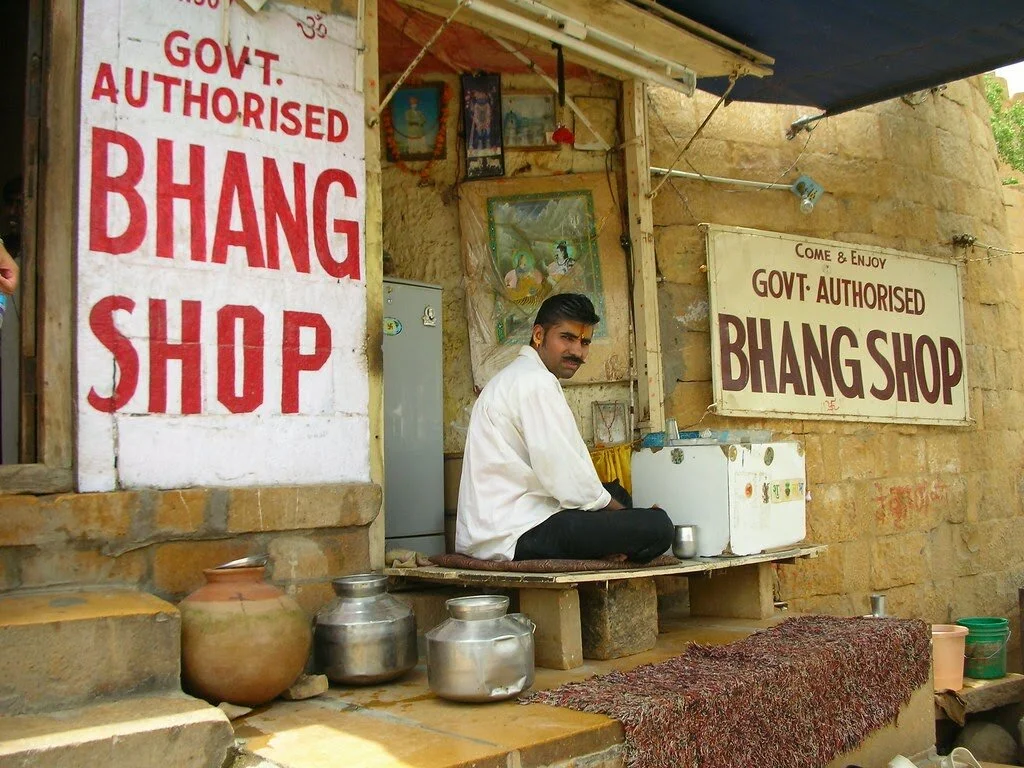
If social attitudes toward weed are a colonial hangover, India’s laws are a neocolonial imposition. In 1961, the United Nations’ Single Convention on Narcotic Drugs (SCND) classified marijuana as a “hard drug” in an effort to address drug abuse worldwide. The convention did not respect the innumerable traditions centered around marijuana or the purported evidence that its moderate use caused no harmful side effects. In India’s case, it did leave a loophole for bhang, a milky beverage infused with cannabis that is consumed at some Hindu holidays.

An authorized bhang shop. Tom Maisey. CC BY 2.0.

The Narcotic Drugs and Psychotropic Substances Act of 1985 fulfilled the stipulations India agreed to in the SCND. It spelled out the fines and prison sentences faced if one is caught using or selling pot. Coming at the height of the Western world’s war on drugs, it is viewed by some as an example of the rich world’s sensibilities determining the domestic laws of poorer nations. 

No law seems likely to stop marijuana’s consumption, though. According to one 2019 survey, 3% of Indians—31 million people—consumed a cannabis product in the past year. Bustling cities offer weed connoisseurs a wide array of dealers to choose from, and almost every rural village houses at least one seller, whether a seasoned dealer or an enterprising local, to provide a high. When police catch a smoker in the act, they can easily be bribed

Two sadhus, religious ascetics, smoking marijuana. kehworks. CC BY-NC 2.0.

Consumption habits will likely prove stronger than the moral questions about marijuana’s use. So long as India’s pot consumers include Bollywood stars and religious leaders, rural farmers and stressed-out office workers, the coalition is nearly impossible to beat. Mumbai and Delhi consume 70 tons of cannabis a year. The NCB simply cannot confiscate that much product, so its efforts may all go up in smoke. 

To read more about the controversy around the word “marijuana” check out our article here.

Michael McCarthy

is an undergraduate student at Haverford College, dodging the pandemic by taking a gap year. He writes in a variety of genres, and his time in high school debate renders political writing an inevitable fascination. Writing at Catalyst and the Bi-Co News, a student-run newspaper, provides an outlet for this passion. In the future, he intends to keep writing in mediums both informative and creative.

Throwing Tomatoes: Spain’s Festival of La Tomatina 

Sometimes organized chaos is just what a town needs to bring its residents together. Spain’s annual tomato-throwing festival of La Tomatina has certainly proven this true. 

Festivalgoers covered in tomatoes. dahon. CC BY-ND 2.0. 

Considered the world’s biggest food fight, Spain’s annual festival of La Tomatina draws countless residents and visitors to the streets. Held in the small town of Bunol near Valencia, Spain, the festival brings in over 20,000 people every year. The town, which is home to only 10,000 residents, doubles in size during La Tomatina.

The festival takes place on the last Wednesday of August, but has been canceled this year due to COVID-19 restrictions. 

Over the past several years, the festival’s appeal to visitors has skyrocketed. What was once an informal celebration now requires tickets to limit the guests to the small space available; the town plaza comfortably fits 9,000 people but well over 20,000 take part. 

The origin of the festival dates back to 1945, when it is told that a group of rambunctious boys started this cherished tradition. It is said that during a town festival, one of the boys fell down in the chaos of the parade. He then knocked over a vegetable cart, causing anger among the other observers. People began throwing the tomatoes at each other, and thus this tradition was born. 

The festival tickets can only be purchased if you are 18 years or older, but there is still a place for young feisty participants. Another festival called Tomatina Infantil, or Tomatina Kids, is held for children between the ages of 4 and 14. It takes place on the last Saturday of August, a few days after the main celebration. 

The festival itself is a brief event lasting only one to two hours. Shopkeepers prepare for the mess by using large plastic covers to protect their shops being painted red. Large trucks pull into the town center and volunteers toss tomatoes to participants eager to load for battle. The beginning of the festival is marked by a cannon shot at noon, and an hour or so later, a second cannon is shot to mark the end of the festival. Over 300,000 pounds of tomatoes are tossed around. Additionally, participants are given quite a few rules to prevent injury and severe pummeling. These rules include no bottles or hard objects, no tearing or tugging on your own or others’ clothing, requiring all tomatoes to be squashed before throwing, and participants needing to stop throwing tomatoes once the second cannon is shot. 

Once the fight has concluded, helpers hose down the painted buildings while participants wash each other. Meanwhile, other participants take a dip in the Bunol River to wash off. 

Although chaotic, La Tomatina is a testament to the power of happy accidents bonding a town and its many welcomed visitors.

Ella Nguyen

is an undergraduate student at Vassar College pursuing a degree in Hispanic Studies. She wants to assist in the field of immigration law and hopes to utilize Spanish in her future projects. In her free time she enjoys cooking, writing poetry, and learning about cosmetics.

Evo Morales Returns in Triumph to Bolivia, Ending a Year in Exile

One year after he stepped down amid a contested election, the popular left-wing leader is back. Will he be content with his supporters’ love, or will he seek power as well?

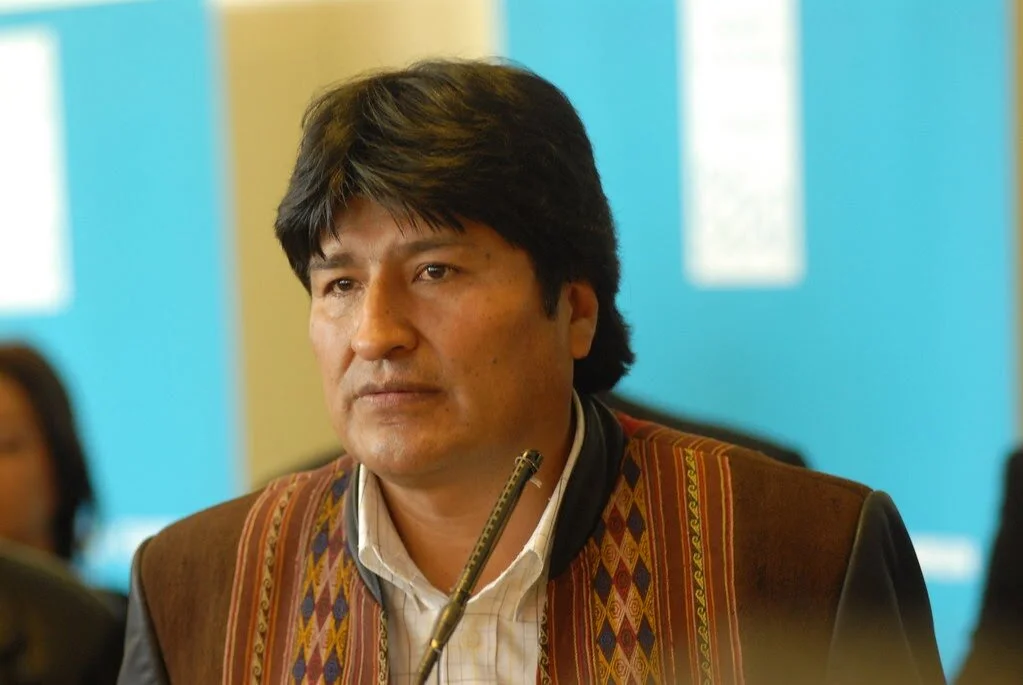
Evo Morales waving the Wiphala, a symbol for South America’s Indigenous people. Brasil de Fato. CC BY-NC-SA 2.0.

Exiled leaders rarely return so triumphantly. Evo Morales, president of Bolivia for 14 years before fleeing the country in November 2019, greeted a jubilant crowd when he crossed the border from Argentina and trekked to his home province of Chapare. Many expected a more forceful return, perhaps a march to the seat of government in La Paz. Rather, Morales traveled to where he started his political career at the precise moment when that career seems set to either end or begin again. 

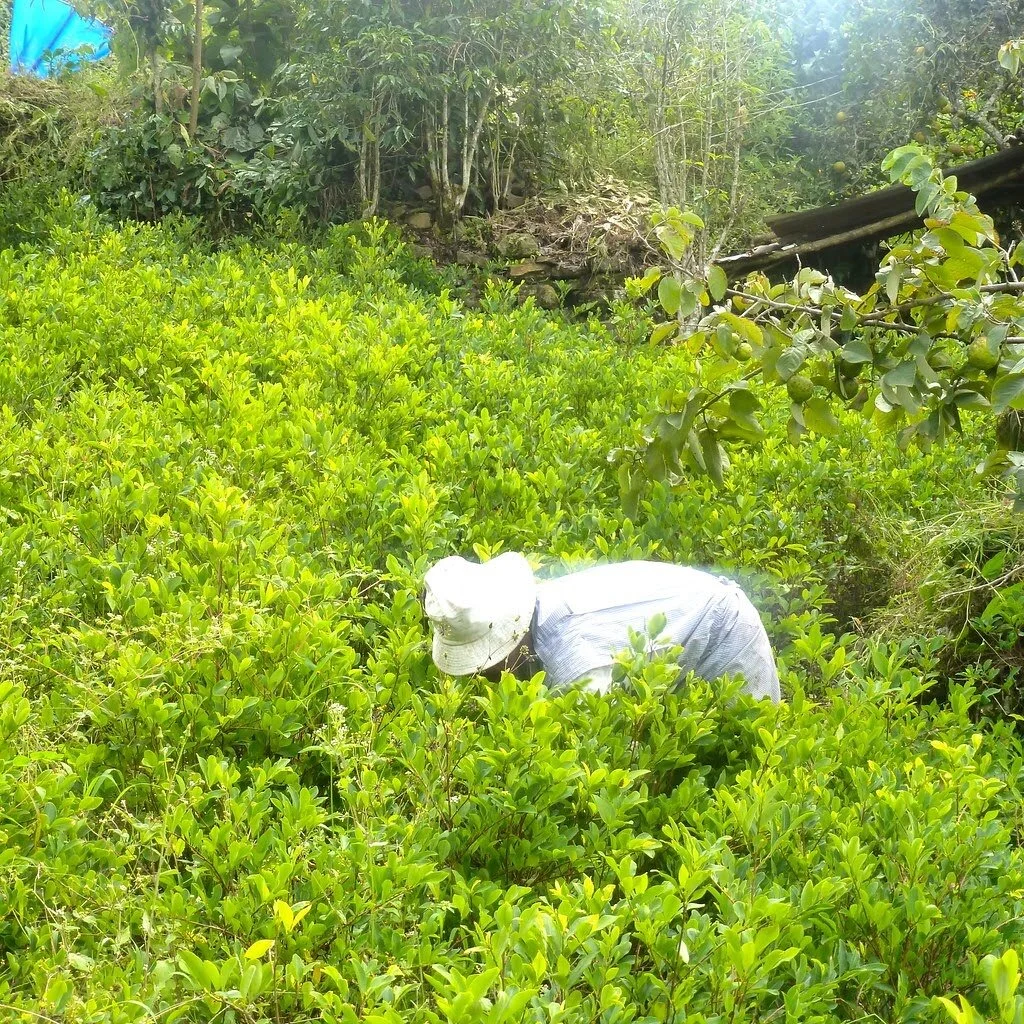
If Morales plans to kick-start a new phase in his political career, he reenters in a much better position than when he started. Born to a poor family in the Orinoca region in 1959, his family moved with countless other families from the highland altiplanos to work on lowland coca farms, which provided poor Bolivians the best shot at a livable wage. The young Evo became a union leader, fiercely advocating for the rights of farmers when the United States’ war on drugs demanded the Bolivian government slash its supply of coca, its most profitable crop. In Bolivia, people chew on it or brew tea, but one ton of leaves can be refined into two pounds of cocaine base paste. 

A farmer pruning coca. Erik Cleves Kristensen. CC BY 2.0.

Morales’ experiences there fostered a brand of politics staunchly devoted to the poor and Indigenous communities through the institution of socialism. He joined and soon transformed the Movement for Socialism party (MAS) and became a one-term congressman. After leading violent street altercations that forced two presidents to resign, his ambitions expanded to the national realm. In 2006, the Bolivian people voted him in as president, beginning a 14-year-long tenure which would prove revolutionary.

For one, he was the first Indigenous president since the country’s independence in 1825. In a nation that is 42% Indigenous, this seems strange, but centuries of colonization and racism led to a society of haves and have-nots. An ethnic Aymara, Morales expanded MAS’s appeal to all Indigenous people, chafing many Whites and Mestizos who supported MAS in far fewer numbers. Some Indigenous communities found Morales’ embrace of Indigenous peoples hollow; he allowed drilling in forest reserves and expanded the amount of land settlers could clear. 

Man without a plan. Alain Bachellier. CC BY-NC-ND 2.0. 

Most of all, however, he presided over what many view as an economic miracle. Morales’ government reduced by two-thirds the amount of people living on less than $1.90 a day, the World Bank’s definition of extreme poverty. The high price of petroleum, another of Bolivia’s largest exports, allowed his administration to invest heavily in innovation and modernization. The widespread prosperity led many to ignore Morales’ authoritarian streak. He would often jail critics and journalists while piling lawsuits on his political rivals.

But when Morales ran for a fourth term against constitutional term limits, opponents found it unforgivable. A pause in vote-counting led many to believe he planned to rig the election, so thousands stormed the streets to protest the election results. Clashes broke out between pro- and anti-Morales protesters; 36 people died amid the violence. Once the military “recommended” Morales step down, he boarded a plane to Mexico and left Bolivia in the hands of little-known senator Jeanine Anez. 

She was a right-wing politician with exactly the opposite views of Morales. Where he proudly represented Indigenous peoples, Anez called them “savages.” (In his triumphant return, Morales sarcastically quipped, “The Bolivian right and the global right should know: the savages are back in government.”) Anez presided over an economic slump due to political unrest and COVID-19. She governed for 11 months before the electorate put in office Morales’ own protege Luis Arce.

Morales’ protege Luis Arce. Casa de América. CC By-NC-ND 2.0.

A bland, uncharismatic technocrat, Arce won broad appeal precisely because he was Morales’ choice. He engineered the economy during Morales’ presidency, so he can take credit for much of Bolivia’s prosperity. His support from the former president may prove both a blessing and a curse, however. He will struggle to distance himself from a controversial figure who still holds strong sway over MAS. His primary responsibility will be to maintain distance from Morales to the greatest extent possible.

For the time being, however, Morales will enjoy his warm welcome home. Crowds gleefully waved the Wiphala, a colorful checkered flag representing Indigenous peoples. Supporters dressed in their finest, most colorful Indigenous attire to celebrate his homecoming. Luis Arce neither met him in Chapare nor sent him a word of greeting. So far they hold no communication. For the sake of Bolivia’s democracy, many hope it will stay that way. 


Michael McCarthy

Michael is an undergraduate student at Haverford College, dodging the pandemic by taking a gap year. He writes in a variety of genres, and his time in high school debate renders political writing an inevitable fascination. Writing at Catalyst and the Bi-Co News, a student-run newspaper, provides an outlet for this passion. In the future, he intends to keep writing in mediums both informative and creative.

Cutting Ties: Saudi Arabia Announces Reforms for Migrant Workers

Saudi Arabia has begun lifting up its struggling migrant workers with its most recent initiative. However, what this decision truly means in terms of effective change remains uncertain. 

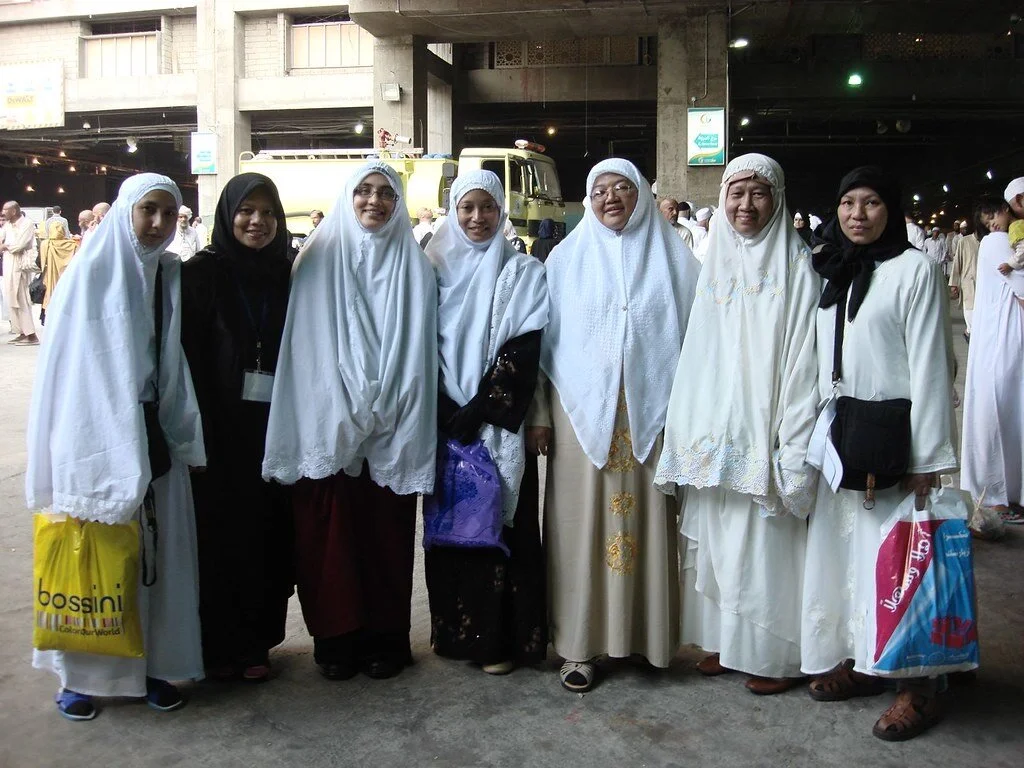
Saudi women. Mohd Azli Abdul Malek.CC By-NC-SA 2.0.

Saudi Arabia recently kick-started the “Labor Relation Initiative” that will eliminate policies tightly binding migrant workers to their sponsors. It is expected that the changes will begin in March 2021, potentially impacting up to one-third of the nation’s population. This initiative may be the beginning of the end of the notorious “kafala” system that has been under international scrutiny since its conception in the 1950s. 

The kafala sponsorship system, which is currently practiced in most Persian Gulf states, began about 70 years ago to create a beneficial flow in the migrant labor force. Workers are assigned a sponsor, or “kafeel,” for their decided contract period. The sponsor may be a single person or a company. The sponsor has complete control over the worker’s ability to change jobs or enter and exit the country; written permission must be granted for any changes. Thus, the worker must report all related activity to the sponsor, and failure to do so will result in criminal punishment. The sponsor must then report all activity to the immigration authorities, and fund the worker’s entry and exit. 

Essentially, the kafeel is the migrant’s legal tie to the country, leaving the worker no choice but to acquiesce. The kafala system has allowed kafeels to exercise excessive control over their workers, such as taking their travel documents; this is illegal, though, in some of the countries that practice the system. The kafala system has faced much criticism with claims that it is a gateway to modern slavery; there have been many reports of forced work and sexual abuse. However, it appears that the intense exploitation of workers over the years may potentially begin to close with Saudi Arabia’s new Labor Relation Initiative. 

The initiative now allows workers to move their sponsorship to other jobs and to cross the border without permission of their kafeel. The policy is only one aspect of Crown Prince Mohammed bin Salman’s “Vision 2030,” in which he aims to increase international economic activity. Many are hopeful that this initiative will bring about substantial change for not only the current 10 million impacted workers, but also future generations who would benefit from the complete abolishment of the kafala system. 

Others are wary of holding out hope, stating that ties to a sponsor would need to be completely cut in order for change to be sustained. At the moment, this limited reform has not clarified whether all migrant workers are shielded, nor whether sponsors can still report their workers for running away. Concerns over this unanswered portion of the policy bring much fear; a worker whose travel documents have been invalidated by their sponsor faces immediate deportation. 

Maybe this initiative will end the process for good, or perhaps it is merely a camouflaged political scheme. Regardless, much hope remains that the injustices of the kafala system will be reduced. 

Ella Nguyen

is an undergraduate student at Vassar College pursuing a degree in Hispanic Studies. She wants to assist in the field of immigration law and hopes to utilize Spanish in her future projects. In her free time she enjoys cooking, writing poetry, and learning about cosmetics.
Geopolitical Tensions Hinder Climate Science in the Himalayas

The Himalayas remain one of the most susceptible regions in the world to climate change.

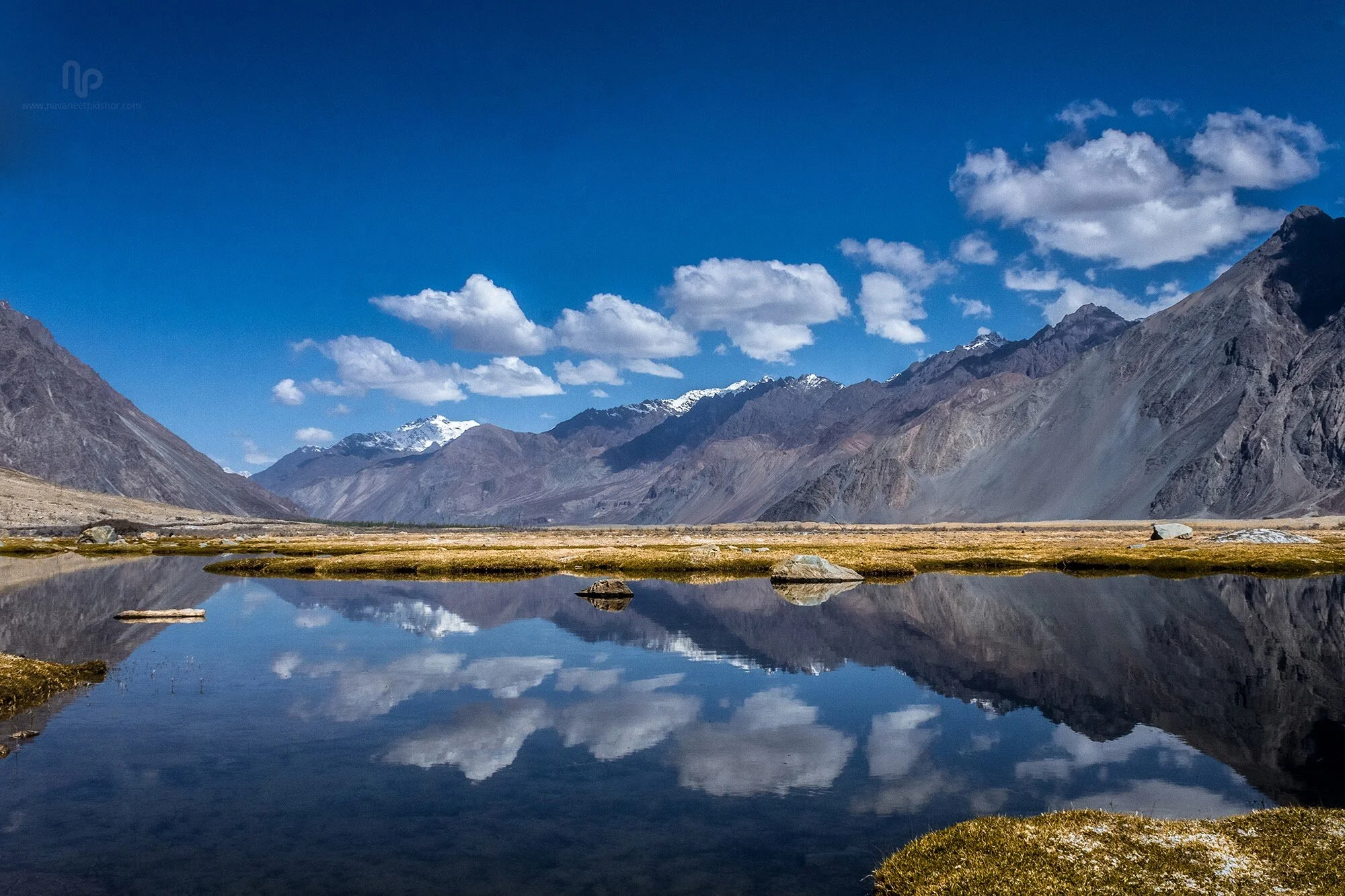
A lake in the Himalayas. Kishor. CC2.0

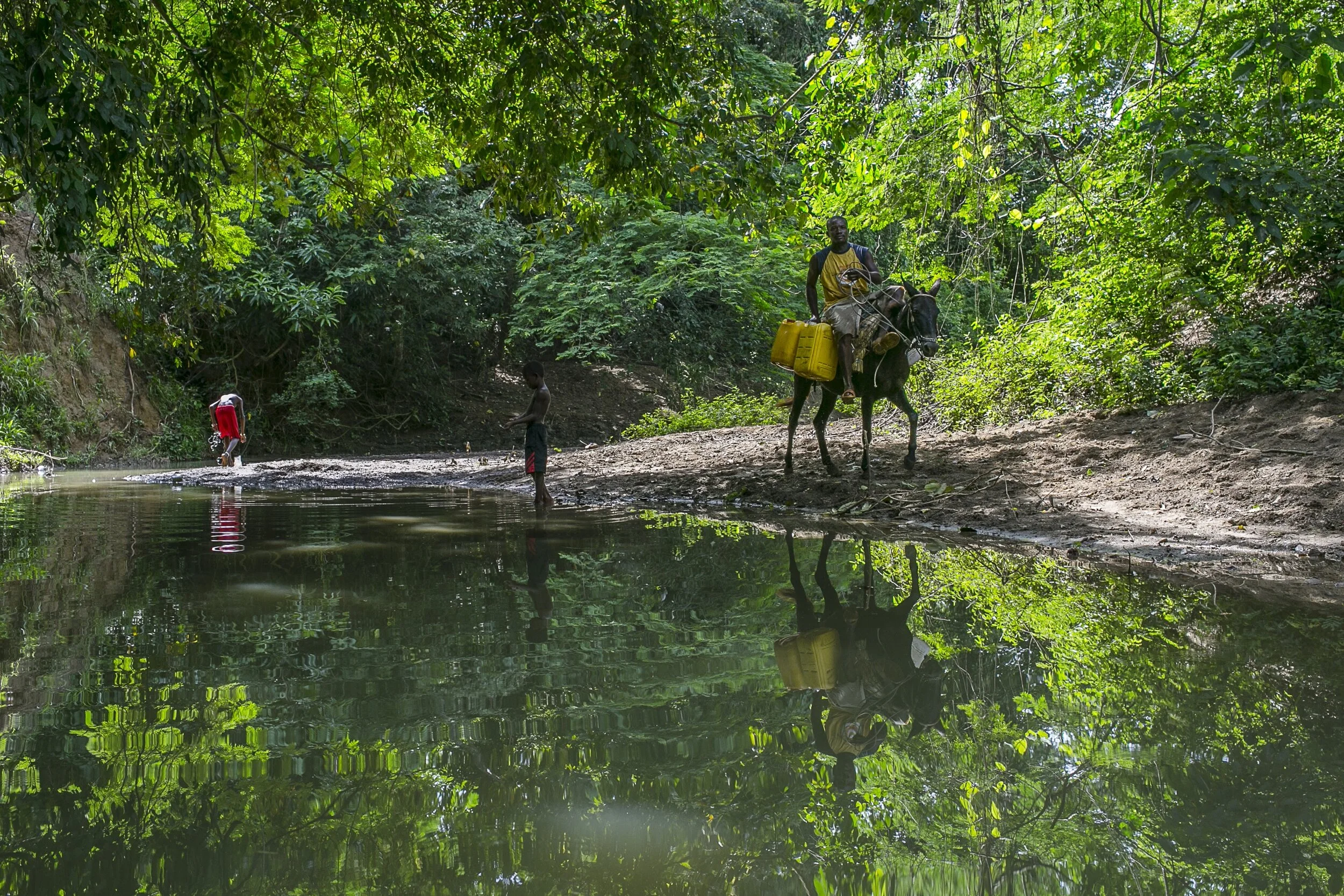
In order to address the imminent threat of climate change in the Himalayan region, environmental ministers from eight countries had hoped to meet in Nepal’s capital of Kathmandu in April. Organized by the International Center for Integrated Mountain Development (ICIMOD), it had taken over two years of convincing environmental leaders to work together as geopolitical tensions in the region continued to rise. An assessment conducted by ICIMOD reveals that the Himalayas are predicted to lose more than one-third of their ice caps by the end of the century, underscoring the importance of international collaboration on this issue. The event ended up being canceled, though, due to the rise of the COVID-19 pandemic. 

Passing through Afghanistan, Bhutan, China, India, Nepal and Pakistan, the Himalayas act as a barrier between countries. Home to four of the world’s 36 biodiversity hotspots and more than 35,000 plant and 200 animal species, the Himalayan region is one of the most biodiverse in the world. The Himalayas also contain the world’s third-largest ice deposits (after Antarctica and the Arctic) with over 15,000 glaciers scattered throughout the region. These glaciers, known as the “water towers of Asia,”  are the starting points for many of Asia’s largest rivers, such as the Indus, Ganges, Yangtze and Mekong, and help sustain over 2 billion people

Overflowing glacial lakes pose severe risks for mountain communities, as rising water levels from melted ice caps result in floods of water, ice and rocks down mountainsides, washing away homes, infrastructure and crops. Lake Imja in particular, a high-altitude lake near Mount Everest in Nepal, poses a threat to Sherpa communities living in the mountain valleys. 

A red panda, one of many species endemic to the Himalayan region. Ducker. CC2.0

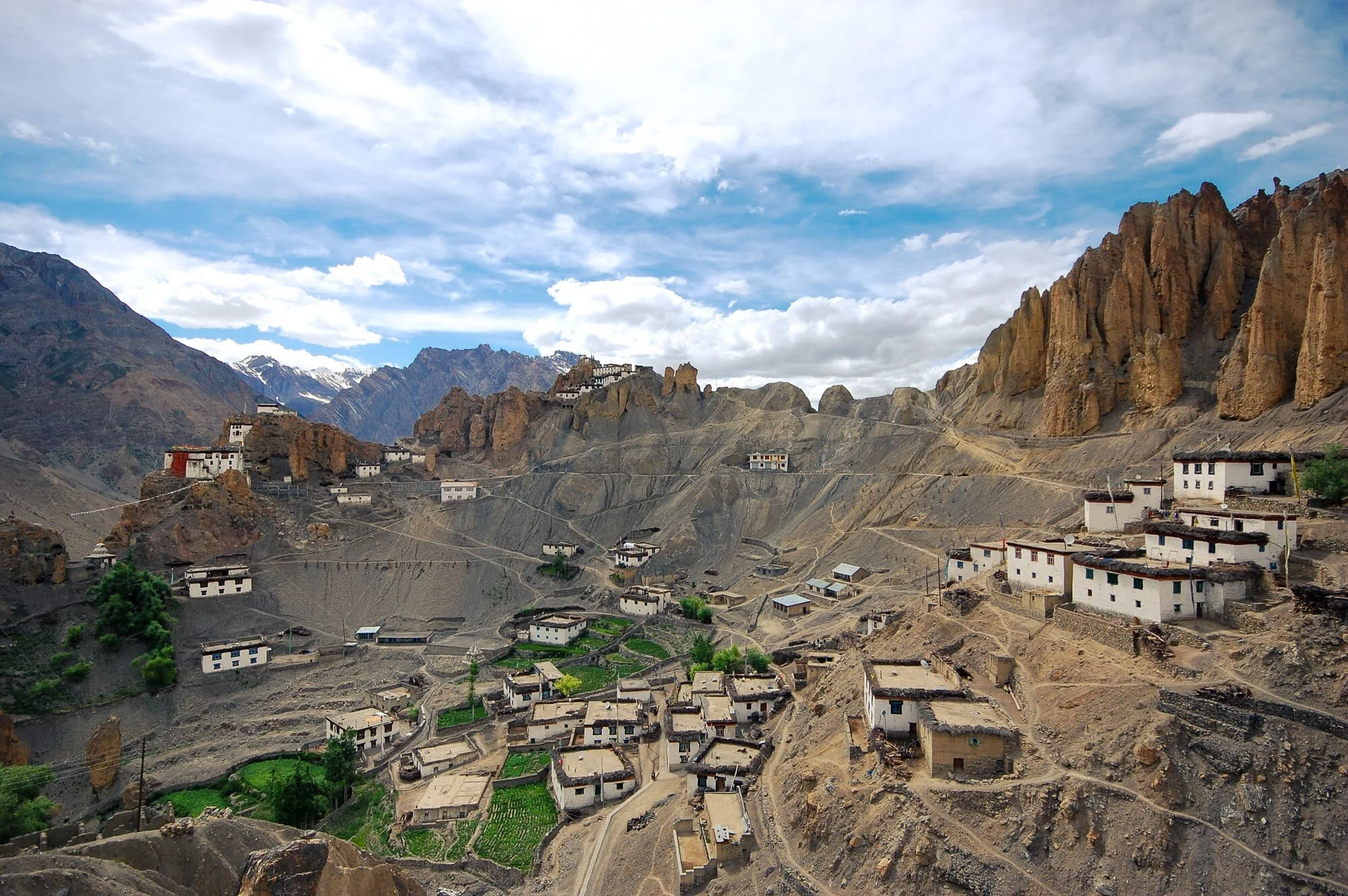
From a geopolitical standpoint, the Himalayas have served as a political and cultural buffer between India and China since ancient times, which resulted in little interaction between their cultures and governments. As the Himalayas were considered impassable for much of history, the delineation of international borders was not given much importance until recently. Currently, however, nearly all of their 2,500-mile border is disputed. One of the most contested regions is Ladakh in northern India, where the most violent clashes in the last 45 years have recently occurred between India and China. Another region is the Mahakali river basin in northwestern Nepal, which acts as a meeting point between Nepal, India and China. The Himalayan region is also one of the most heavily militarized in the world. 

Dhankar village in India’s Spiti Valley. The Adventurous b3n. CC2.0

Despite the urgency of current climate science research and political action, scientific progress in the region continues to suffer. When the Intergovernmental Panel on Climate Change (IPCC) released its fourth assessment report in 2007, the entire Himalayan region was listed as a “black hole” for data. Although governments tried to address the problem, there still has not been much action, with similar concerns in the IPCC’s fifth assessment report published in 2014. One of the major difficulties is weak data-sharing between countries, which is fraught with secrecy. Although scientists advocate for open data-sharing between countries, many governments disregard their requests for national security reasons. “To be frank, scientific culture doesn’t have deep roots in this region,” says Dipak Gyawali, Nepal’s former water resources minister. “Countries think somebody else will use the science that they are doing. That is wrong. Science ultimately benefits others beyond borders.”

Climate change remains one of the most existential threats to humanity. Working together to address transnational environmental issues in the Himalayas will not only protect its fragile ecosystems but will also foster diplomacy and peace between nations in a politically volatile part of the world. 

Megan Gürer

is a Turkish-American student at Wellesley College in Massachusetts studying Biological Sciences. Passionate about environmental issues and learning about other cultures, she dreams of exploring the globe. In her free time, she enjoys cooking, singing, and composing music.