
As the pandemic threatens lives globally, it has allowed for unseen tragedies to take hold: Naval vessels are increasingly vulnerable to piracy.
Read More3 Asian Theatrical Traditions
The cinema may be the world’s most prominent entertainment, but recorded film screenings cannot match the liveliness of performing theater. Learn about three theatrical traditions beloved by their Asian audiences for their craftsmanship and cultural significance.

Stage Theatre. AndyRobertsPhotos. CC BY 2.0.
Theater is a unique art in its ability to elicit both laughter and tears within the same showing. Throughout these three Asian nations the stage is a place where performers can bring imaginary worlds to life, or inspire their audiences to better their own.
1. Japan’s Rakugo

Rakugo. Isabelle + Stephanie Galley. CC BY 2.0.
Rakugo (fallen words) showcases a storyteller’s skill to enthrall their audience without the use of any costumes, scenery or special effects. Rakugo was developed during Japan’s Edo Period (1603-1868) by Buddhist priests who recounted dramatic tales to illustrate the impermanence of life and the sufferings elicited by materialistic attachment. Soon non-religious performers regaled crowds with parodied interpretations of those parables. A specialized sect of storytellers has emerged since, termed the rakugoka, who rely upon improvisation, exaggeration and, most critically, wordplay for their performances. A rakugoka presents upon the spartan kōza stage while dressed in traditional Japanese garb, and has only a sensu (paper fan) and a tenugui (hand towel) as props to aid them. With pantomime, voice and facial expressions the rakugoka will narrate one of 300 stories inspired by the realities of ordinary people.
The stories of rakugo are structured as back-and-forth dialogues between a set of archetypal characters and generally culminate in a funny climax. Popular character archetypes include cunning tricksters, miserly merchants, arrogant authorities and kaidan (ghosts or other apparitions). Each narration ends with an raku (fall), a humorous linguistic twist which serves as a punch line for the whole performance. Rakugo is analogous to a one-man show of sit-down comedy.
2. India’s Nukkad Natak
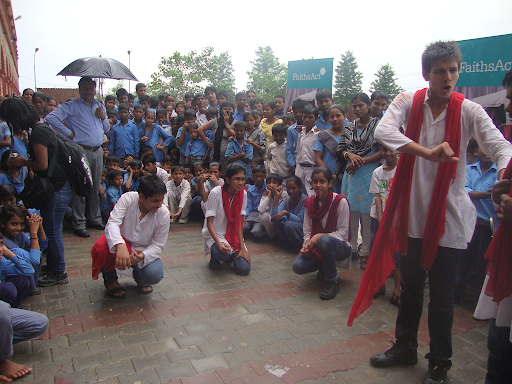
Nukkad Natak. DLF PUBLIC SCHOOL, INDIA. CC BY 2.0.
From universities to slums throughout India, nukkad natak (street drama) serves as a medium of entertainment as well as social commentary. India has a rich heritage of theater which traces back centuries, but nukkad natak was shaped very recently among the country’s schools and streets. In the 1980s, left-wing grassroots activists started to put on plays for the lay public to highlight major social and political issues. Nukkad natak grew especially popular among college students who identified an outlet through which they could express their unacknowledged emotions and views. Nukkad natak has since become a channel for communication and information among the uneducated masses.
Without any audiovisual equipment or cosmetic crew professionals nukkad natak troupes are forced to capitalize their bodies to the fullest. The troupers’ voices vary in pitch and volume as they undertake in constant physical motion. Troupes will not shy away from controversial scenes like sexual assault but will act them out publicly to provoke emotions. Some troupes dedicate their performances towards the portrayal of exemplary civic behavior. Even India’s private sector recognizes nukkad natak’s enormous influence on public society; some multinational corporations sponsor their own performances to advertise their products.
3. Indonesia’s Wayang Kulit

Yogyakarta, Wayang Kulit. Arian Zwegers. CC BY 2.0.
Although its origins are disputed to date, there is no debate as to the renown wayang kulit (shadow leather) holds today in Indonesia and neighboring countries. Intricately detailed leather puppets are deftly maneuvered by a dhalang (puppeteer) between a light source and a blank screen to portray a story via shadow. Performances feature plots derived from a bevy of sources, ranging from Hindu epics such as the Ramayana or Mahabharat to the East Javanaese Prince Panji cycle.
A show of wayang kulit may carry on through the night for eight hours and is usually accompanied by a gamelan bronze orchestra. A single performance may entail the use of hundreds of puppets, all of whom are designed with utmost faithfulness to visual symbolism. Puppets portraying noble heroes, for example, are crafted in accordance with the Javanese ideal of male beauty: slender build, long and pointed nose and eyes shaped like soya beans. A puppet’s colors represent characteristics; gold indicates dignity whereas white is the color of youth.
RELATED CONTENT:


Rohan A. Rastogi
Rohan is an engineering graduate from Brown University. He is passionate about both writing and travel, and strives to blend critical thinking with creative communication to better understand the places, problems, and people living throughout the world. Ultimately, he hopes to apply his love for learning and story-sharing skills to resolve challenges affecting justice, equity, and humanity.
Holy Men of Nepal and India
Check out this amazing special photo essay by photographer Carol Foote who visited with the Sadhus at the Kumbh Mela, the world’s largest religious pilgrimage held only once every 12 years.
Read More
Shohei Ohtani pitching in Sapporo. Scott Lin. CC BY-NC-ND 2.0.
Baseball: A Japanese Pastime
America, over the years, has given a lot of cultural significance to the sport of baseball. We place it alongside apple pie and fireworks in the grand list of material symbols of our country. Not only that: baseball, over the years, has often reflected our country’s struggles back at us. It’s confronted discrimination in Jackie Robinson, and labor disputes with Curt Flood. It’s helped heal us, as well. Mike Piazza’s post-9/11 home run brought more joy to New York than anything that followed during the War on Terror.
But baseball is also of waning interest to many Americans. The sport is long, with games usually clocking in over three hours long. It also doesn’t market itself very well. Some of the greatest of all time are playing right now, but has any non-baseball fan heard of Mike Trout, Jacob DeGrom, or Shohei Ohtani? Likely not. The sport isn’t going away anytime soon, but there’s no doubt baseball’s cultural significance is declining in America. Fortunately, that isn’t the only place the sport is cherished.
Baseball was introduced to Japan during the late 1800s by way of an English professor from Maine named Horace Wilson. It didn’t take long for the sport to become a national pastime; professional leagues have existed since 1936, and the country’s national high school baseball championship, Summer Koshien, began in 1915. Today, baseball is Japan’s most popular sport; an almost bizarre outcome considering the existence of nationally-developed sports like sumo and globally adored sports like soccer.
But the popularity of baseball in Japan would be diminished if it weren’t for the homegrown players who have starred overseas. The first Japanese player to play in the MLB was a pitcher, Masanori “Mashi” Murakami, who debuted in 1964. Murakami wasn’t an elite player, and was even forced to return to Japan after two years due to his restrictive contract, but his appearance in the bigs opened the floodgates for others to make America’s game their own.
The first bona-fide Japanese star was pitcher Hideo Nomo. In 1995, Nomo’s first year in Major League Baseball, he posted a league-leading 11.1 strikeouts per nine innings to go alongside a 2.54 ERA (ERA stands for earned run average, or the average number of runs allowed every nine innings. Anything under 4 is considered good. Under 3? Great.) His rookie season is his best known (“Nomo fever” was said to have hit LA), but Nomo went on to have an excellent career, eventually retiring in 2008 after 323 games, 1918 strikeouts, and 2 no-hitters.

A fan holds a “Japan National Team” baseball flag at the World Baseball Classic. Steve Rhodes. CC BY-NC-ND 2.0
There is also the case of Ichiro Suzuki, who with his illustrious career and unique style of play became one of the most well-loved baseball players of the 21st century. Ichiro had exceptional speed, stellar defense, and a superhuman ability to take care of his body, but he was best known for what he did with the bat in his hands. Ichiro’s approach was simple: he would slap the ball around the field, and beat out singles and doubles. He rarely walked or hit for power, but was so talented at this contact-oriented approach that it didn’t matter. It was primordial baseball planted firmly into the twenty-first century, and it worked. In 2004, Ichiro broke the single-season hit record, a record that had stood for 84 years and seemed all but unbreakable with how the game had changed. The principles of hitting have strayed from Ichiro’s even further since then; it’s not unlikely that Ichiro’s grand total of 262 hits in 2004 will stand until the earth is swallowed by the sun.
There’s only one active player who has a chance of topping Ichiro in the Japanese pantheon of stars, and his case is being made this very season. He’s a 27-year-old, currently having not just the best-ever season by a Japanese player, but possibly the best-ever season by anyone.
To explain Shohei Ohtani, one must first note that over its 150-year history professional baseball has become more and more a sport of specialization. Teams today might feature hitters who only hit against left-handed pitching, and speedsters who rarely start but are used late in games as pinch runners.
Ohtani is the one man who breaks up modern baseball’s prime order. He is a pitcher who hits; it’s as simple as that, really. Baseball players have long been separated into hitters and pitchers. Hitters don’t pitch (not seriously, anyway), and pitchers don’t hit (at least, not well; perhaps the best example of baseball’s specialist tendencies is how pitchers haven’t cared about being able to hit for a hundred years, despite the fact that half of the league still requires them to on a regular basis). But Ohtani plays both roles.
That in itself is historic. No player has been both a MLB pitcher and a lineup regular since Babe Ruth, who served the role in 1919. But here’s the kicker—Ohtani is really, really good at both his positions. He has hit 44 home runs while pitching to a 9-2 recond and a 3.36 ERA so far this season. Those are elite statistics, better than Ruth’s 1919 numbers. The value of one man bringing a season of premier pitching and hitting to his team is hard to quantify. But the case can be made that Ohtani’s 2021 season is the greatest of all time, at least so far. There’s no doubt the man is a one-in-a-million player, a gift from the baseball heavens. By coming from Japan, he also represents a nation that may lead in taking the sport forward.
This year, Japan beat the United States to win the gold medal in Olympic baseball. The victory, though marred by the fact that the best players from both countries stayed home, represented another step up the baseball ladder for Japan. As baseball exits America’s zeitgeist, it continues to grow in the island nation. The NPB’s level of play is going up—it’s still behind the major leagues, but not by a massive amount. Even more important is fan interest. In 2019, the last full season of the NPB, the league’s total attendance numbers grew to second in the world across all professional sports leagues.
As more stars are born and made, Japan’s baseball legacy will only continue to grow. Who knows? Maybe in a century, Japan will have come so far that baseball fans will diminish the careers of MLB stars like Trout, DeGrom, and Ohtani. They can’t be that good, the fans will say. They were playing in the United States.

Finn Hartnett
Finn grew up in New York City and is now a first-year at the University of Chicago. In addition to writing for CATALYST, he serves as a reporter for the Chicago Maroon. He spends his free time watching soccer and petting his cat.
Yemen Experiences World's Worst Humanitarian Crisis
Yemen’s ongoing civil war has left 24 million in need of assistance and more than 100,000 dead since the conflict began in late 2014. Today, Yemen is considered the world’s worst humanitarian crisis and is on the brink of being labeled by the United Nations as the world’s worst famine in 100 years.
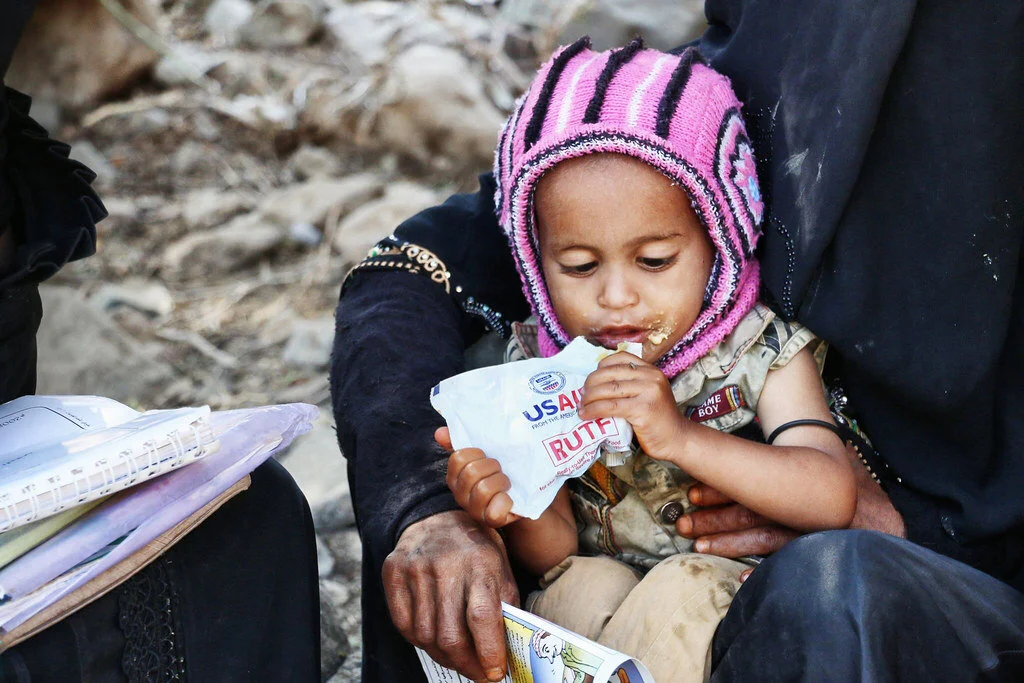
A hungry Yemeni child eats a food bag. USAID_IMAGES. CC BY-NC 2.0.
Hunger, malnutrition, famine, displacement and mental health issues are among some of the devastating consequences imposed upon Yemeni civilians by the country’s civil war. Although the conflict between Yemeni President Abdrabbuh Mansour Hadi’s government and the Houthi, or Ansar Allah, armed movement broke out in late 2014, Yemen was already one of the most vulnerable countries in the Middle East.
Following the Arab Spring in late 2011, previous Yemeni President Ali Abdullah Saleh was forced to turn over his power to his deputy, Abdrabbuh Mansour Hadi. Since then, the country has been enthralled in a civil war which has left millions of civilians hungry homeless, or dead. Houthi forces took over Sana’a, the capital of Yemen, in late 2014, instigating the war. By early 2015, Houthi officials declared mobilization to overthrow Hadi’s regime and, only a day later, fighting broke out in Lahij Governorate. Lahij Governorate quickly succumbed to Houthi rule and President Hadi fled the nation.
With the help of the United Arab Emirates, Saudi Arabia created a coalition of mostly Sunni Arab states to combat Houthi forces and the rise of Iranian influence in the Middle East in 2015. Today, much of the conflict in Yemen is a proxy conflict for the power struggle between Iran and Saudi Arabia in the region.
The Arab coalition conducted countless air campaigns to drive out Houthi forces from Yemen and facilitate the return of Hadi’s government, despite the trail of destruction these air strikes leave behind. Funerals, weddings, homes, mosques, schools and hospitals have all fallen victim to these bombs. In response to an attack on Saudi Arabia’s eastern oil fields—which disrupted nearly five percent of the world’s global oil supply—Saudi Arabia spearheaded a bombing campaign. According to the Yemen Data Project, the conflict and air strikes since 2015 left around 17,000 Yemeni civilians dead or injured, as of March of 2019.
According to the United Nations, Yemen remains the world’s worst humanitarian crisis. With over 100,000 people killed and 85,000 children dead from famine, the UN warned that millions of Yemenis could face starvation in what could be “the world’s worst famine in 100 years.” Currently, 16.2 million Yemenis are food insecure while famine continues to rise; child malnutrition there is one of the highest in the world, with two million children in need of acute malnutrition assistance; and at least one child dies of malnutrition or diarrhea every 10 minutes in Yemen.
Displacement is another major consequence of the war in Yemen. With more than five million people estimated to have been forced to flee their homes, four million Yemenis remain displaced today. These displaced families live in camps of makeshift shelters, forcing them to continue moving around and making them vulnerable to severe weather conditions, air strikes and other dangers. In addition to the overwhelming number of displaced and homeless Yemenis, the nation is also home to around 300,000 refugees mostly from the Horn of Africa.
The devastating impacts of Yemen’s ongoing war does not stop at the physical realm—consequences of the violence have affected the mental health of Yemeni youth. According to Columbia Global Centers’ PGIF Project, a 25-year-old living in Yemen today “has already lived through 15 major conflicts and wars,” making depression, PTSD and other mental health disorders common in Yemen’s youth. Considering the lack of infrastructure and medical facilities already in Yemen, mental health concerns are pushed to the backburner. With roughly one psychiatrist per 500,000 people, only three mental health hospitals exist in Yemen. The lack of mental health services and resources has forced individuals who battle with mental health issues to turn to alternate methods of help, such as Quranic healing, while professional help is reserved for more extreme disorders, such as psychosis.
PTSD is one of the most common products of war, and this is evident with Yemeni children. Growing up with bombs dropping all around them, PTSD in Yemeni civilians and children is often triggered by loud noises and the sounds of planes whooshing overhead. Behavioral changes such as bedwetting, isolating oneself and emotional detachment are common consequences of PTSD in children.
Beyond death by air strike or on-the-ground fighting, many Yemenis have lost their lives to hunger and diseases because of restrictions on humanitarian assistance, imports and access to essential services. Because of this, UN Secretary-General Antonio Guterres refers to Yemen’s crisis as “man-made.” Many third party nations, organizations and institutions have requested the warring countries involved to improve civilian protection, but have experienced little success. Now, many activists have taken to social media to garner support and aid for Yemen’s children, as well as raise awareness of Yemen’s situation—for being the world’s worst humanitarian crisis, Yemen is often underrepresented in the media.
GET INVOLVED
Despite the restrictions on humanitarian aid in Yemen, there are still ways to help. Save the Children is one of the largest organizations operating in Yemen and is currently aiding children suffering from malnutrition, supporting health facilities in hard-to-reach areas and leading educational programs.
The international organization, World Food Programme, aims to provide 13 million people with food assistance across Yemen. To accomplish this goal and ensure their efforts are uninterrupted in 2021, the WFP is seeking to raise $1.9 billion.
The Danish Refugee Council offers partnership opportunities to private companies, where partners will have the opportunity to help solve the global displacement crisis. The DNC is a trusted partner of the United Nations, is rated the world’s third best non-governmental organization, and is a Core Humanitarian Standards certified organization.

Mia Khatib
Mia is a rising senior at Boston University majoring in journalism and minoring in international relations. As a Palestinian-American, Mia is passionate about amplifying the voices of marginalized communities and is interested in investigative and data-driven journalism. She hopes to start out as a breaking news reporter and one day earn a position as editor of a major publication.
Future of Afghan Women in Limbo after U.S. Troops Leave
After U.S. troops recently left the largest American base in Afghanistan, Bagram Air Base, the future of Afghanistan remains unknown. In particular, the lives of Afghan women are now at stake due to the gender inequality that still exists in the country.
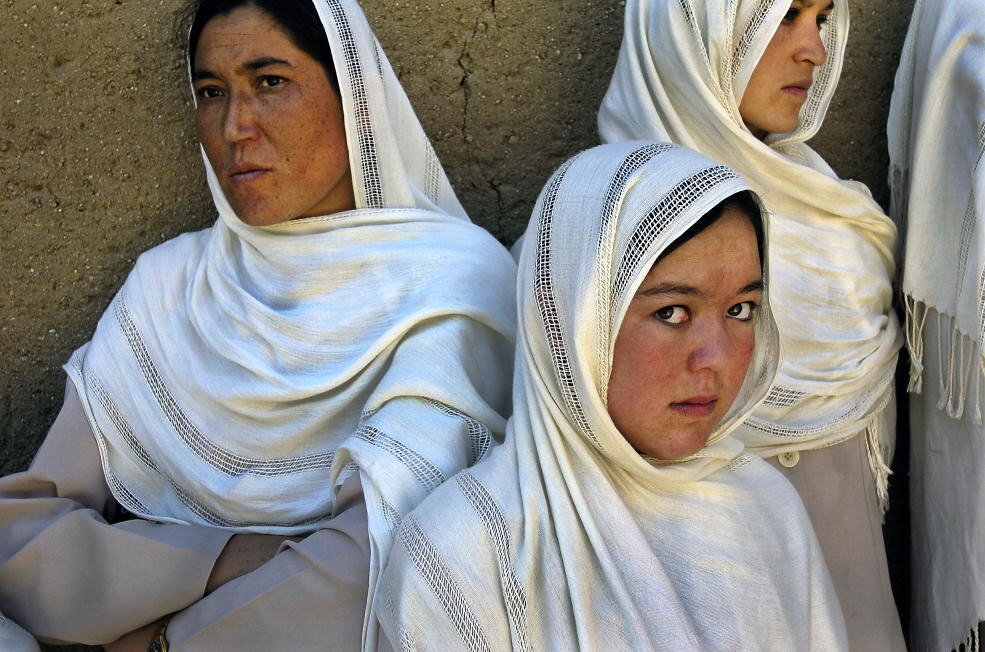
Midwifery students in Afghanistan. United Nations Photo. CC BY-NC-ND 2.0.
Due to the Taliban’s strict rules restricting women’s rights, gender inequality remains a threatening reality in Afghanistan. Countries retreating from Afghanistan—the U.S. included—are leaving behind a dark future for Afghan women and girls, who face serious crises of health, education and violence. The U.S. left Bagram Air Base, its largest base in Afghanistan, on July 1.
Afghanistan has a history of violence within the country after foreign forces have retreated their troops. For example, when the Soviets withdrew from Afghanistan in 1988, the U.S. looked away, and Afghanistan erupted in a factional war that killed thousands. During this conflict, Afghan women were raped by fighting forces.
Photos of Afghan women cowering under the whips of Taliban members haunt history, and they were the cause of feminist sympathies that emerged across the U.S. Those activists hoped that American involvement in the area would bring relief to a tortured country.
Since the Taliban were ousted in 2001, Afghan women have not wasted one minute in fighting for their rights. Today, many women serve in important governmental roles, like as parliament members and ambassadors. Many women are also musicians, artists, entrepreneurs, or inventors. In fact, during the pandemic, the Afghan girls robotics team created low-cost ventilators to treat COVID-19 patients.
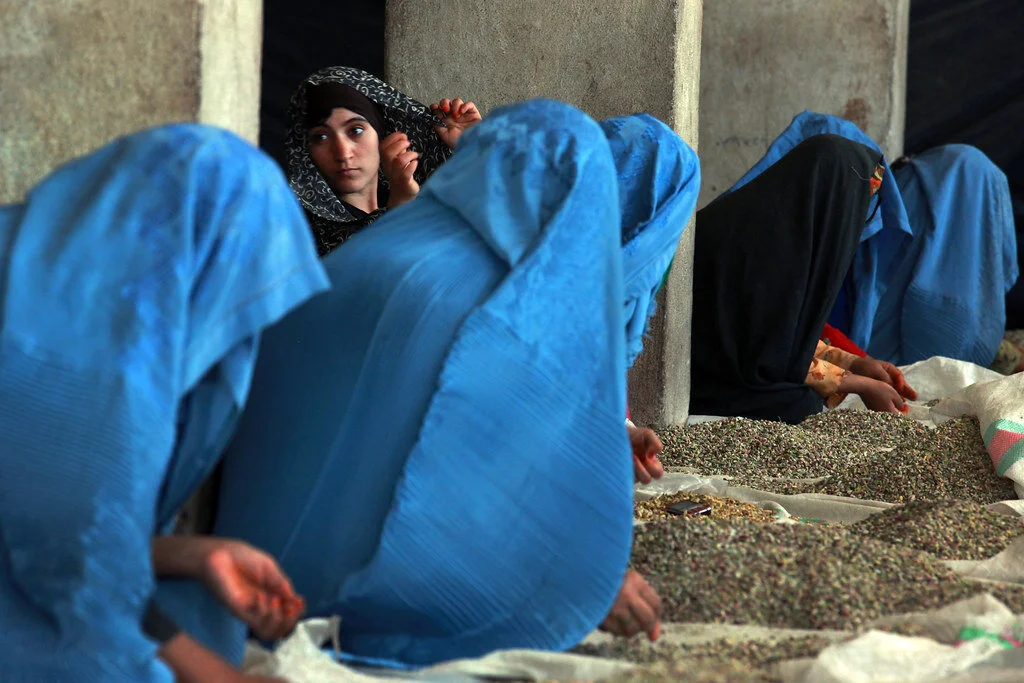
Women on the job in Afghanistan. United Nations Photo. CC BY-NC-ND 2.0.
In more good news, infant mortality has decreased and life expectancy has increased. Foreign involvement has had a big hand in accomplishing this. However, now that international troops are withdrawing, aid has been shrinking and pledges to help Afghanistan are less frequent.
Along with the U.S., several other embassies have also withdrawn their troops from Afghanistan, including Australia.
In an interview with Human Rights Watch, Afghan women said that they now face obstacles in accessing care due to costs, insecurity, and scarcity of providers. Furthermore, as countries withdraw from Afghanistan, the unknown future of the country could mean further violence that would produce even more problems for women and families.
GET INVOLVED
To help the fight for women’s rights in Afghanistan, consider working, interning, or volunteering with Women for Afghan Women WAW. WAW was founded to advocate for women then living under the brutal rule of the Taliban in Afghanistan. Now, it is the largest organization for Afghan women and girls globally and the largest women’s organization in Afghanistan. Afghan Women’s Educational Center also focuses on Afghan women’s rights—they are a non-profit women-led national organization that reduces vulnerability among marginalized communities with a special focus on women and children. They offer various jobs and projects to get involved with.

Isabelle Durso
Isabelle is an undergraduate student at Boston University currently on campus in Boston. She is double majoring in Journalism and Film & Television, and she is interested in being a travel writer and writing human-interest stories around the world. Isabelle loves to explore and experience new cultures, and she hopes to share other people's stories through her writing. In the future, she intends to keep writing journalistic articles as well as creative screenplays.
Amid Pandemic, Japan Faces an Epidemic of Loneliness
Japan has a Minister of Loneliness to address skyrocketing rates of suicide and isolation, some stemming from COVID-19 among other reasons. The elderly and hikikomori, modern day hermits, seem most affected.
Read MoreCOVID-19 Has Fueled Child Labor in Nepal
With the closing of schools due to COVID-19 and insufficient government aid, children in Nepal are being pushed into dangerous labor.
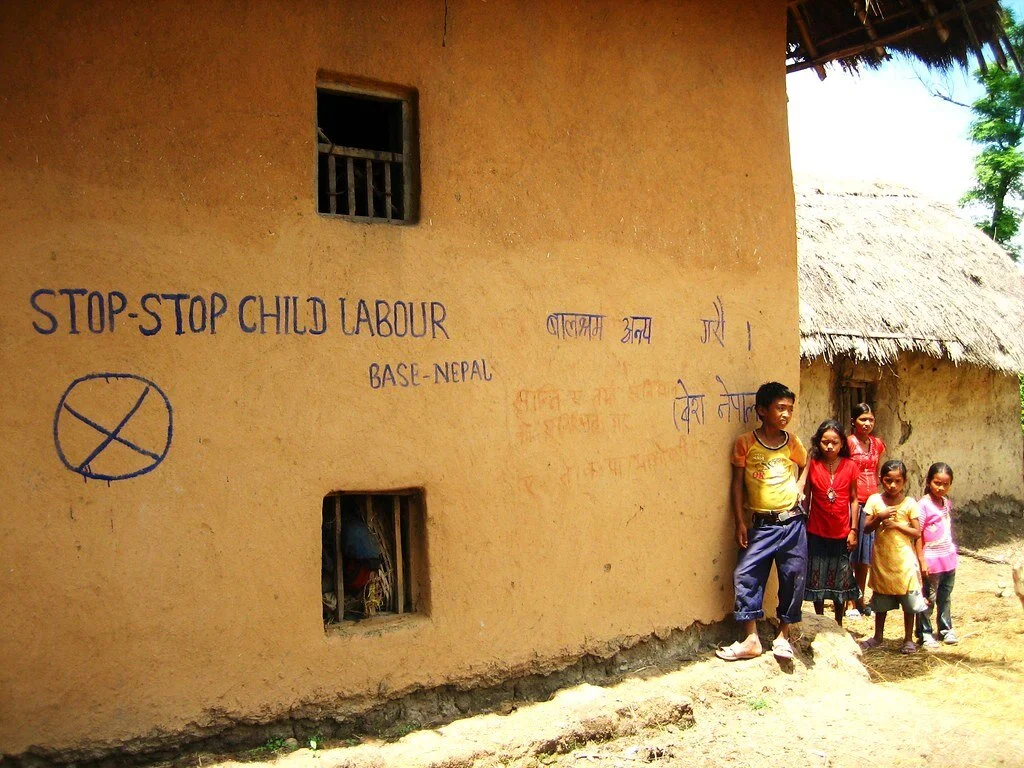
Stop Child Labor Graffiti in Kothari. The Advocacy Project. CC BY-NC-SA 2.0.
The COVID-19 pandemic has affected all aspects of life in Nepal, including education, government assistance, employment and domestic life. Due to adults losing their jobs and income, the rising illness and death rates among caregivers, and even more lockdowns, children are being forced into exploitative labor so they can provide for their families.
The second wave of COVID-19 cases in Nepal continues to put children at risk of child labor. Many children feel that they have no choice in the matter—they work long, grueling hours to help their families survive and provide food.
In Nepal, children work at places like brick kilns, carpet factories and in construction, or as carpenters or vendors selling various items. Some children carry heavy bags at mining sites or crush ore with hammers, all while breathing in dust and fumes from machines and acquiring injuries from sharp objects or particles.
Human Rights Watch interviewed 25 Nepali children between ages 8 and 16, and nearly all of them said that the COVID-19 pandemic had a negative effect on their family income. According to this report, one-third of the children interviewed worked at least 12 hours per day, and some even worked seven days per week. Among the reported side-effects of working long hours, children listed fatigue, dizziness and muscle pain. In addition, many children described hazardous working conditions; many have experienced violence, harassment and pay theft.
A majority of children interviewed also reported that they made less than Nepali minimum wage for their work, which is 517 rupees per day ($4.44 in U.S. dollars). Some children said their employers paid their parents based on a piece rate instead of paying them directly.

Nutrition education seminar in Bandarkharka, Nepal. Bread for the World. CC BY-NC-ND 2.0.
One of the biggest factors contributing to the rise in child labor is the lack of access to education due to COVID-19. In Nepal, school closures began on March 18, 2020, which affected more than 8 million students. A majority of Nepali students were unable to learn online as well, leaving them without education for over a year. In that education gap, children were often forced to work for their families.
Although most schools reopened in Nepal in January and February of 2021, some children continued to work because their families still needed their child’s income to prevent going into debt. However, in April 2021, schools closed again due to a second wave of COVID-19, and children were put back to work.
Several of Nepal’s neighboring countries, including Bangladesh, India and Pakistan, have expanded cash allowances in order to cover more families. However, Nepal has not yet taken this step. Nepal needs to expand cash allowances so children can be taken out of dangerous labor and put back into school, as well as to enable families to maintain adequate standards of living without relying on child labor.
TO GET INVOLVED
To aid in the global fight against child labor, volunteer with Global March Against Child Labor, a wide network of organizations that work together to eliminate and prevent all forms of child labor through volunteering, fundraising and donating. Love 146, an international human rights NGO working to end child trafficking and exploitation, also provides many ways for people to help. Among many opportunities to help, Love 146 encourages people to get active and start a workout or host a 5k to help raise funds for their work.
To learn more about child labor and find more ways to take action, visit UNICEF’s page on global child labor.

Isabelle Durso
Isabelle is an undergraduate student at Boston University currently on campus in Boston. She is double majoring in Journalism and Film & Television, and she is interested in being a travel writer and writing human-interest stories around the world. Isabelle loves to explore and experience new cultures, and she hopes to share other people's stories through her writing. In the future, she intends to keep writing journalistic articles as well as creative screenplays.
LGBTQ+ Activists Fight Anti-Gay Hate in Siberia
In the Siberian tundra, queer folks face conservative attitudes, constant harassment and violence. As a result, the region’s few LGBTQ+ activists struggle to meet their community’s needs.

A small show of support in Siberia. reassure. CC BY-NC-SA 2.0.
To this day, Yevgeniy Glebov doesn’t know how the two strangers found his address. Secure in his apartment, he heard a knock at the door. He opened it. They asked, “Aren’t you that gay activist?”
Yevgeniy needed to go to the hospital to recover from his injuries. After he reported the assault, the police closed the case without looking for a suspect. He expected little else from the authorities in Irkutsk Oblast, the Russian federal subject deep in Siberia where he lives and works. His NGO “Time to Act” provides legal, psychological and HIV prevention resources for the region’s LGBTQ+ community. However, this work also puts a target on his back. Advocating for gay rights is mostly a thankless job, demanding secrecy. For most LGBTQ+ Russians, it’s safer inside the closet than out.
Gay pride hasn’t yet reached the mainstream in Russia. Homophobia runs rampant in Russian society and riddles the country’s laws. Article 148 of the Russian criminal code gives prosecutors the license to claim any violation of religious practice as a crime, giving them a cudgel against gay rights groups. In 2013, Prime Minister Vladimir Putin signed into the law a ban on “propaganda of nontraditional sexual relations” designed to prevent children from viewing or learning about anything homosexual. These laws reflect widespread disdain and discrimination against queer folks. The bill passed the State Duma with unanimous support.

Anti-homophobia demonstration in Russia. Marco Fieber. CC BY-NC-ND 2.0.
Homophobia is less rampant in the cultural capitals of Moscow and St. Petersburg. There, gay clubs, beaches and bookstores thrive because of a highly concentAnti-homophobia demonstration in Russia. Marco Fieber. CC BY-NC-ND 2.0.rated LGBTQ+ community. On the other hand, in Siberia, the presence of gay life diminishes as the threat of hate-fueled violence increases. Gay men have been lured to online dates in remote locations only to find a violent gang of homophobes when they arrive. Police have been known to abuse queer people as well. Yevgeniy once drove to nearby Angarsk after a supposedly gay boy had been brutalized by two strangers. When he arrived, the police had arrested the boy to accost him about his sexuality, letting the attackers go.
This environment demands a different approach to LGBTQ+ activism than in Russia’s European part. There, activists like Nikolay Alexeyev vociferously demand their rights. Alexeyev organized the first Moscow Pride parade in 2006, which then mayor of Moscow Yuri Luzhkov deemed “satanic.” The participants in the small parade faced arrests from the police and attacks from Neo-Nazis, but the subsequent, yearly demonstrations made Alexeyev the public face of the gay rights movement. He frequently brings his combative style to TV debate shows. On such a show, he grew so frustrated with a fancifully-hatted woman decrying “homosexual extremism” that he called her a “hag in a hat” and left.

A protest placard mocking Putin. Marco Fieber. CC BY-NC-ND 2.0.
Alexeyev often makes life difficult for gay activists in far-flung areas of Russia. Yevgeniy claims that the Russians he interacts with on a daily basis aren’t ready for Pride festivals, and that his pugnacity alienates those they need to win over. Irkutsk Oblast is home to 2.5 million people, but only forty LGBT activists, Yevgeniy estimates. His work with Time to Act doesn’t even pay. For money, he works at a local bakery.
A long road lies ahead for Yevgeniy and his fellow activists. LGBTQ+ folks remain political untouchables across the Russian political spectrum. Even Alexei Navalny, Putin’s most powerful foe, does not touch the issue of gay rights. Amnesty International revoked his status as prisoner of conscience mainly because of his unapologetic xenophobia, but also because of his comments about the LGBTQ+ community. In a recent interview, Navalny repeatedly used a Russian slur to describe gay people.
In the Soviet era, gay folks, if discovered, were sent to gulags—brutal work camps that relied on the frigid tundra to stop prisoners from escaping. Queer artistic luminaries such as filmmaker Sergey Paradjanov and poet Anna Barkova were enslaved there, leaving a legacy of queer survival. Their spirit invigorates LGBTQ+ activism in Russia; it is sorely needed. Although gulags now sit empty, queer Russians too often find their only safe haven in the closet.

Michael McCarthy
Michael is an undergraduate student at Haverford College, dodging the pandemic by taking a gap year. He writes in a variety of genres, and his time in high school debate renders political writing an inevitable fascination. Writing at Catalyst and the Bi-Co News, a student-run newspaper, provides an outlet for this passion. In the future, he intends to keep writing in mediums both informative and creative.
5 Famous Japanese Flowers and Their Cultural Significance
Japan is home to many incredible feats of nature, but arguably one of the most beautiful parts of Japan’s landscape is its flowers—many of which can only be found in Japan.
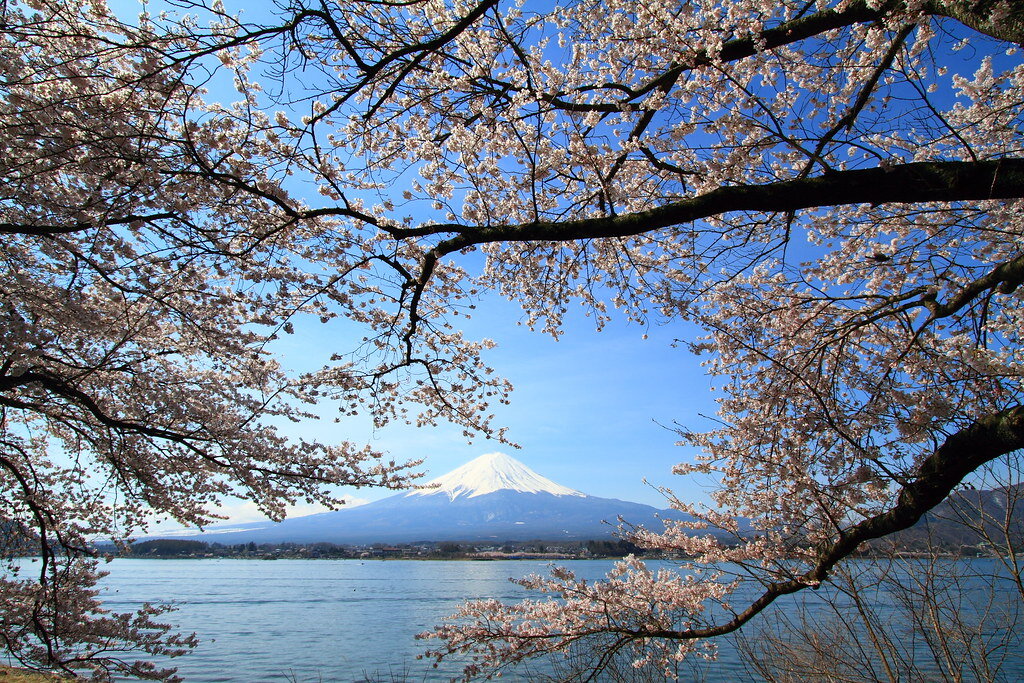
Sakura and Mt. Fuji. Skyseeker. CC BY 2.0.
Flowers are national symbols of Japan. They represent specific emotions or sentiments and are often given as gifts to express unspoken feelings. In Japan, flowers communicate emotions in place of words; the Japanese “say it with flowers.” The Japanese proverb, “Iwanu ga hana 言わぬが花,” literally translates as “not speaking is the flower.” It means that some things are better left unsaid. This language of flowers is called “Hanakotoba,” with each flower conveying a very specific meaning and sentiment in Japanese culture. This tradition stems from Japan’s strong ties to Buddhism, which teaches the value of appreciating the present moment and connecting with nature. Below are five famous and culturally important Japanese flowers.

Lacecap Hydrangea. Ali Eminov. CC BY-NC 2.0.
1. Lacecap Hydrangea
Hydrangea macrophylla is a species of flower in the Hydrangeaceae family, native to Japan. There are many components to this plant, but they all come together to form one beautiful flower. The flowers are white and purple with four wide petals and small blue bulbs in the center—a feature of regular hydrangeas. In the middle of these flowers is a bunch of smaller blooms in shades of blue, purple and green. The flowers on the outside grow into large petals, while the bunch in the center remains as smaller flowers and buds. The Japanese name for this flower is Gaku, meaning “frame,” and representing the formation of the flower. In Hanakotoba, hydrangeas represent pride; this flower is gifted to someone the giver is proud of.
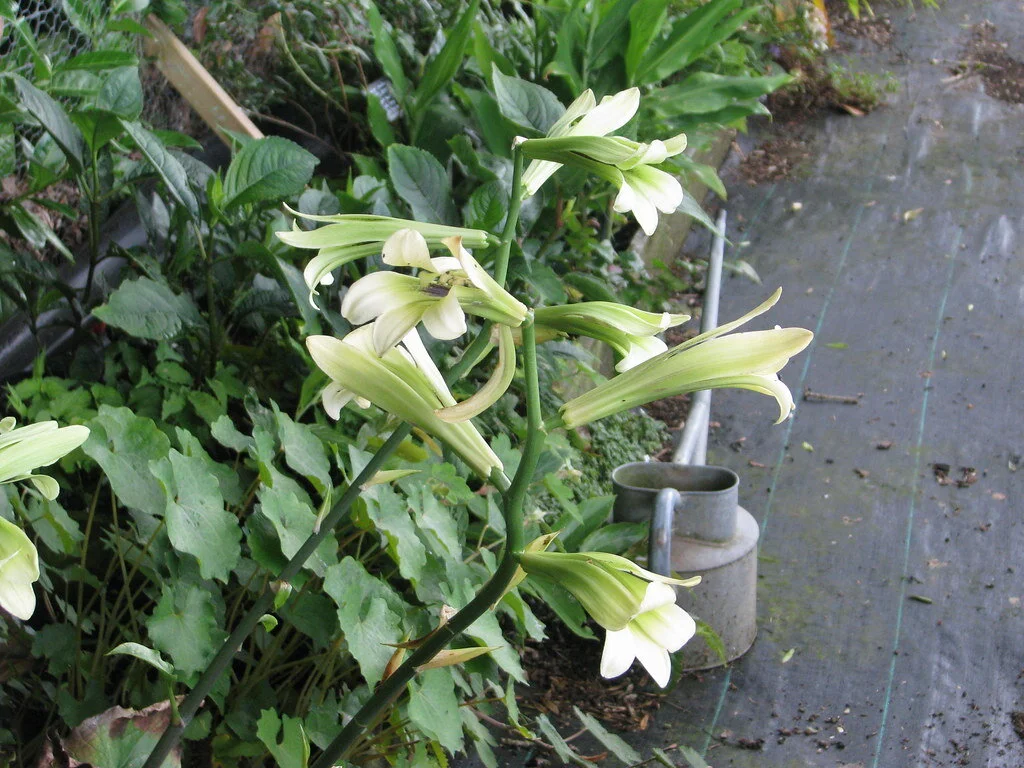
A red-veined cardiocrinum cordatum flower. Peganum. CC BY-SA 2.0.
2. Cardiocrinum cordatum
Cardiocrinum cordatum is a species of flowers in the lily family that is native to Japan and specific Russian islands. This flower resembles a lily, but its leaves are different in that they are shaped like a heart. The pale green flower blooms to the side, and is often used ornamentally due to its large, showy leaves. In Hanakotoba, white lilies represent purity and chastity.
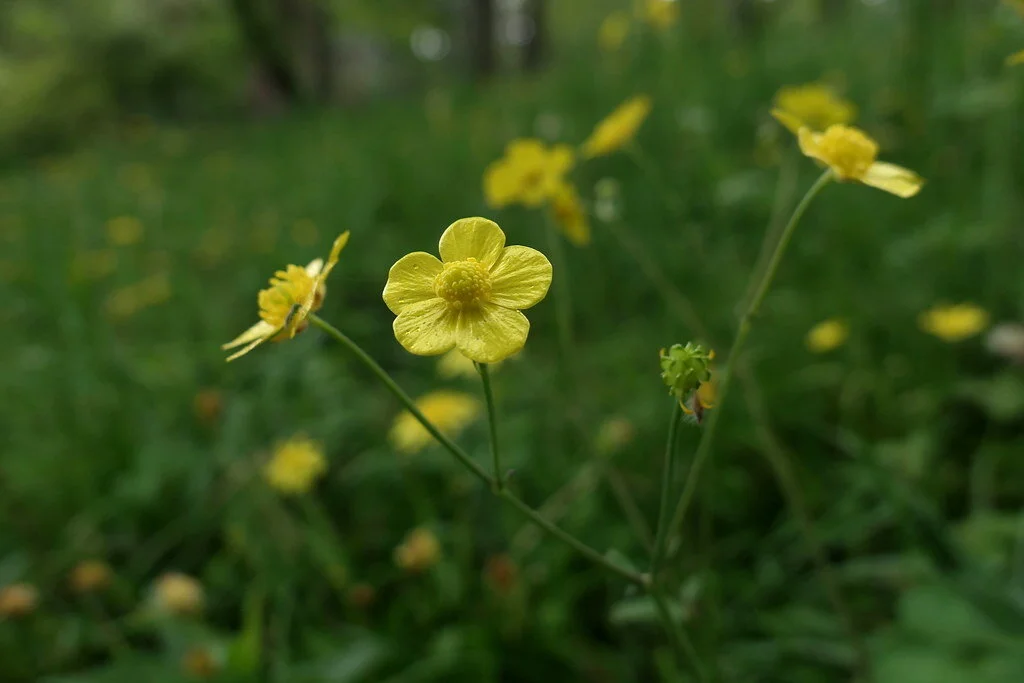
Ranunculus japonicus flowers. Greg Peterson. CC BY-NC-SA 2.0.
3. Ranunculus japonicus
Also known as the Japanese Buttercup, this flower is a perennial from the family Ranunculaceae and is of Chinese and Japanese origin. Mainly growing in mountains and fields from Hokkaido to Okinawa, the Japanese Buttercup is an abundant, wild grass. In terms of appearance, these flowers are a bright yellow, with five rounded petals and a ring of yellow fringe around the small green bulbs in the center. According to the Japanese meaning, its leaves resemble horse hoofprints in the grass. Although very small, these flowers are bright and bring happiness to those who see them.
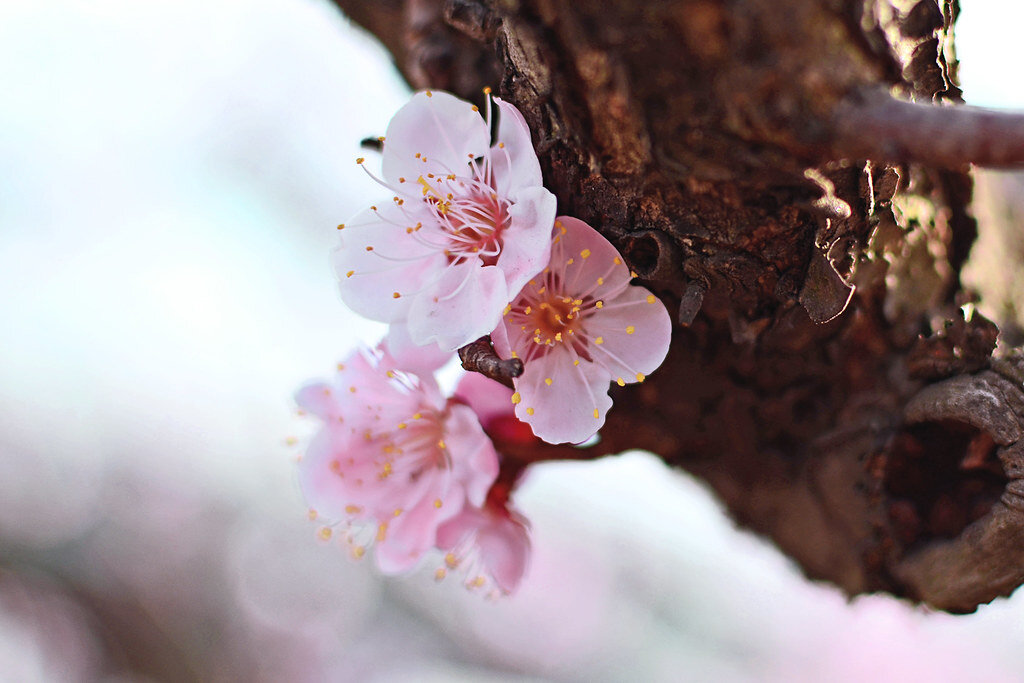
Japanese Apricot (Plum Blossom). Toshihiro Gamo. CC BY-NC-ND 2.0.
4. Prunus mume
Also known as Ume or Japanese apricot, these blossoms are from an East Asian and Southeast Asian tree species in the Armeniaca section of the genus Prunus (plums). They grow on the branches of the Japanese apricot tree and are incredibly fragrant with the smell of sweet honey. These flowers are also edible and make for stunning houseplants with their beautiful color and texture. The blossom’s buds are a dark pink, but they eventually bloom into a light pink when fully grown. In Japanese culture, this plant represents elegance, faithfulness and pure heart.

Camellia sasanqua, a November treat. Vicki DeLoach. CC BY-NC-ND 2.0.
5. Camellia sasanqua
Sasanqua is a species of Camellia native to both China and Japan, although it mostly grows in southern Shikoku, Kyushu and farther islands such as Okinawa. These bright pink and red flowers wilt one petal at a time, blooming from the end of autumn into the winter. In Hanakotoba, these flowers signify being in love or perishing with grace. Symbolizing the union between two lovers in the Chinese meaning, the delicate camellia petals represent the woman while the green leaves on the stem represent the man who protects her. The two components join together, even after death.
RELATED CONTENT:
VIDEO: Savor Japan’s Deep-Fried Maple Leaves
VIDEO: Bloom: Japan
VIDEO: Enter Kenya’s Rose Oasis

Isabelle Durso
Isabelle is an undergraduate student at Boston University currently on campus in Boston. She is double majoring in Journalism and Film & Television, and she is interested in being a travel writer and writing human-interest stories around the world. Isabelle loves to explore and experience new cultures, and she hopes to share other people's stories through her writing. In the future, she intends to keep writing journalistic articles as well as creative screenplays.
Pakistani Women Continue to Push for Societal Change
On March 8, Pakistani women’s rights activists took to the country’s streets for the Aurat March, which celebrates International Women’s Day and advocates for better treatment. The organizers of the protest immediately experienced backlash from the Taliban.
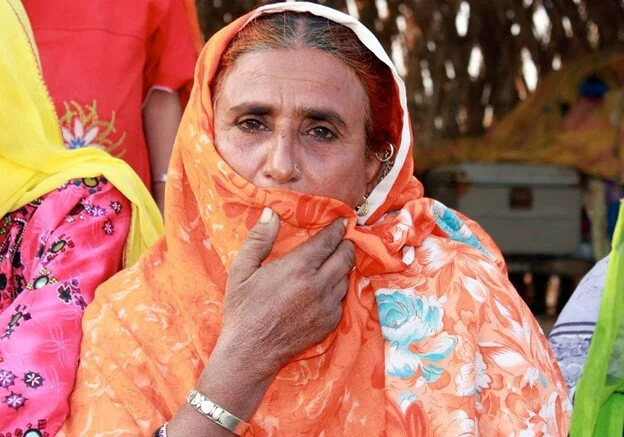
Pakistani woman sitting with friends. Vicki Francis. CC BY 2.0
Pakistani women, despite the presence of the Taliban in the country, still organized and marched on International Women’s Day. The Aurat March included pushing for accessible health care, basic economic rights and equal opportunities for women. After the marches, the Taliban posted a forbidding statement: “We want to send a message to those organizations who are actively spreading obscenity and vulgarity in our beloved Pakistan. Fix your ways.” The Taliban accused participants in the Aurat March of insulting Islam. The group falsified photos and videos, signifying that protesters held the French flag.
The social media organizer for the Aurat March in Karachi responded to the Taliban’s accusations of “obscenity and vulgarity” on Twitter: “Their attempts do not and will not deter us. We will continue to organize and speak out against the violence we are subject to. We will continue to build political power and fight back.”
Pakistan was ranked the world’s fourth worst-performing country when measuring women’s well-being and empowerment in their homes, communities and societies, according to the 2020 Women, Peace and Security Index. At least 28% of women aged 15 to 49 have experienced physical violence, according to the Pakistan Demographic and Health Survey. In the same survey, 40% of men agreed that it was acceptable to beat one’s wife under certain circumstances. With no national data for comparison, the scale of the violence against Pakistan’s women is difficult to gauge with other countries.
The fight for women’s rights in Pakistan is not new. In 1983, over 200 women marched on the Lahore High Court in protest against former Gen. Zia ul-Haq’s discriminatory laws. In 1979, Zia enacted the Hudood Ordinance, which required four male witnesses for an accusation of rape. Under this same ordinance, women who filed accusations of rape without without the proper witnesses could be sent to jail for adultery.
In December 2020, President Arif Alvi signed into law an anti-rape ordinance that approved the speedy trial of rape cases with women and children as victims. The ordinance also include the creation of a countrywide registry of sex offenders. The law came months after a rise in social outcry across Pakistan because of a motorway gang-rape incident.
Inequalities are still seen between men and women in Pakistan through lower literacy rates, lesser wages and a smaller representation in government. Pakistan ranked 151 out of 153 countries on global gender parity, according to the World Economic Forum’s Global Gender Gap Report 2020.
Despite the adversities facing women in Pakistan, they continue to organize and push for sweeping changes. In the words of Aurat March Karachi’s social media organizer, “Merely existing is a radical act of resistance.”

Kyla Denisevich
Kyla is an upcoming senior at Boston University, and is majoring in Journalism with a minor in Anthropology. She writes articles for the Daily Free Press at BU and a local paper called Urban Media Arts. Pursuing journalism is her passion, and she aims create well researched multimedia stories which emphasize under-recognized narratives to encourage productive, educated conversation.
Ten Years After Nuclear Disaster, Recovery Remains Distant in Fukushima
The tsunami and ensuing meltdowns at the Fukushima Daiichi nuclear power plant forced thousands to flee their homes. A decade later, some locals have returned home, but full recovery remains remote.
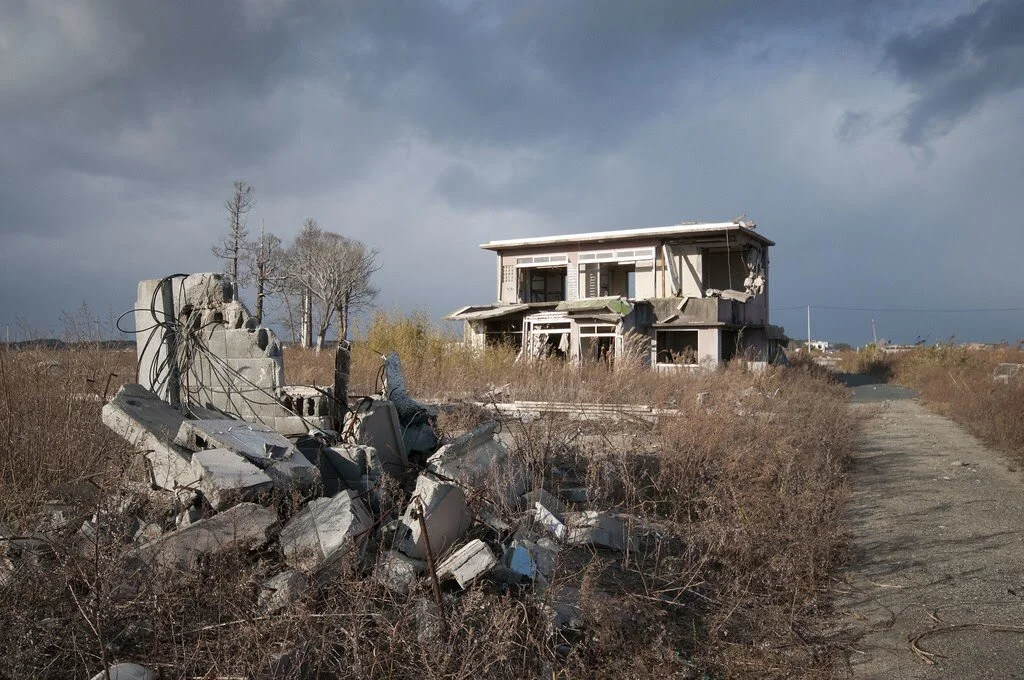
A tsunami’s wreckage. UCLAnewsroom. CC BY-NC-SA 2.0.
Upon returning home after 10 years away, Masumi Kowata found a monkey in her living room. It wasn’t a joyful homecoming. In 2011, she evacuated her home along with 160,000 locals across Japan’s Fukushima prefecture. A cloud of radiation, spewing from three simultaneous meltdowns at the Fukushima Daiichi nuclear power plant, rendered swaths of land uninhabitable. Only in 2021 did the government allow she and her husband to return. Even then, it was only safe for them to visit for the day. Clad head to toe in plastic protective gear, she tread cautiously through the wreckage of an earthquake, a tsunami and neglect: a house shaken by earthquake, food left to rot for a decade, overgrown plants vining up the walls. The monkey had helped itself to Kowata’s belongings. It pranced around the room “wearing our clothes like the king of the house.”

A house under nature’s dominion. colincookman. CC BY-NC-SA 2.0.
Wild animals have overtaken “difficult-to-return” zones, as the government termed them. Such areas encompass 2.4% of Fukushima prefecture and experience 50 times more radiation than what is considered safe. Boars, raccoon dogs and macaques roam the dangerously radioactive neighborhoods oblivious to the damage but unfettered by human life. They can cross streets without fear of speeding cars and feed on the produce of untended gardens, long overgrown. Human beings have returned much more slowly. Currently, the zones remain stuck in time at the moment of disaster.
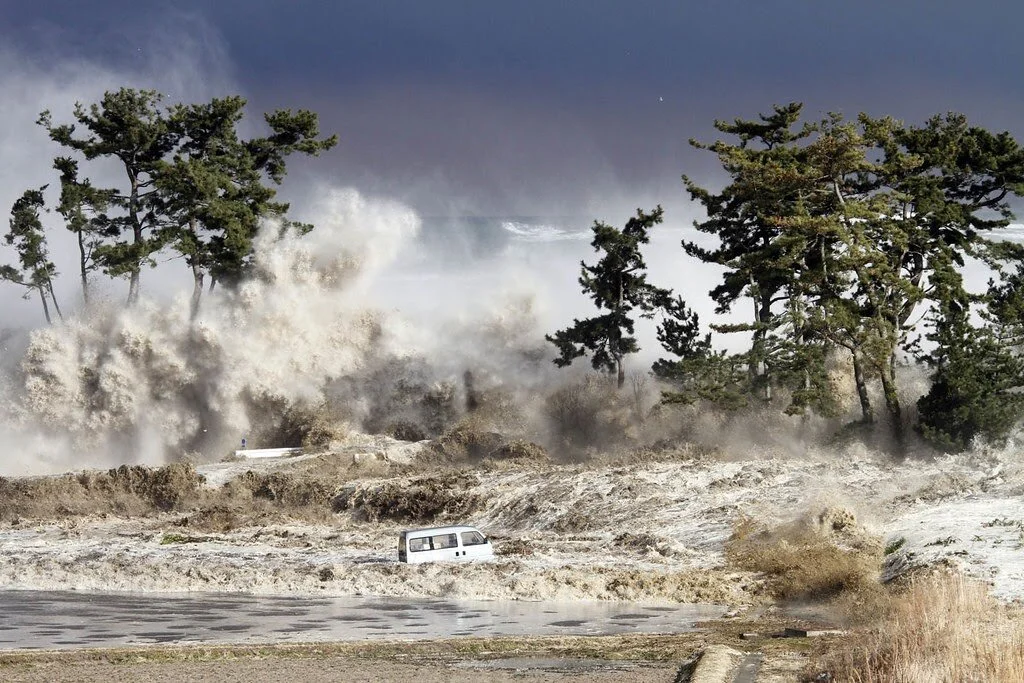
The tsunami crashing through Minamisoma, Fukushima. Warren Antiola. CC BY-NC-ND 2.0
Agriculture struggles to recover as a result. Boars descended from the nearby mountains and invaded farms and rice paddies to feast on the crops. Hunters struggle to control the wild boar population. That is to say, they shoot as many as possible. “When I got married and was about to have my first child,” said one elderly boar hunter, “my mother said to me, ‘You’re going to be a father. Stop killing. Is that really the right thing to do?’ I stopped hunting then.” Now, he ventures out each day to beat back nature’s 10-year-long advance on Fukushima’s villages. “My town is abandoned and overrun with radiated boars,” he says. “It is my duty to help.”
The tasks of hunting down boars, tending to radioactive cattle and repopulating deserted towns fall to the few who have returned. Of the 160,000 who were evacuated after the meltdowns, only one-fourth plan to return. Most of them are elderly. The majority of evacuees found it easier to settle down elsewhere than endure a yearslong wait to return home. Young people especially favored big cities filled with jobs over their provincial hometowns, a trend that predated the disaster. In the nine years before the meltdowns, Fukushima’s population declined by 100,000. In the nine years after, it fell by another 180,000.
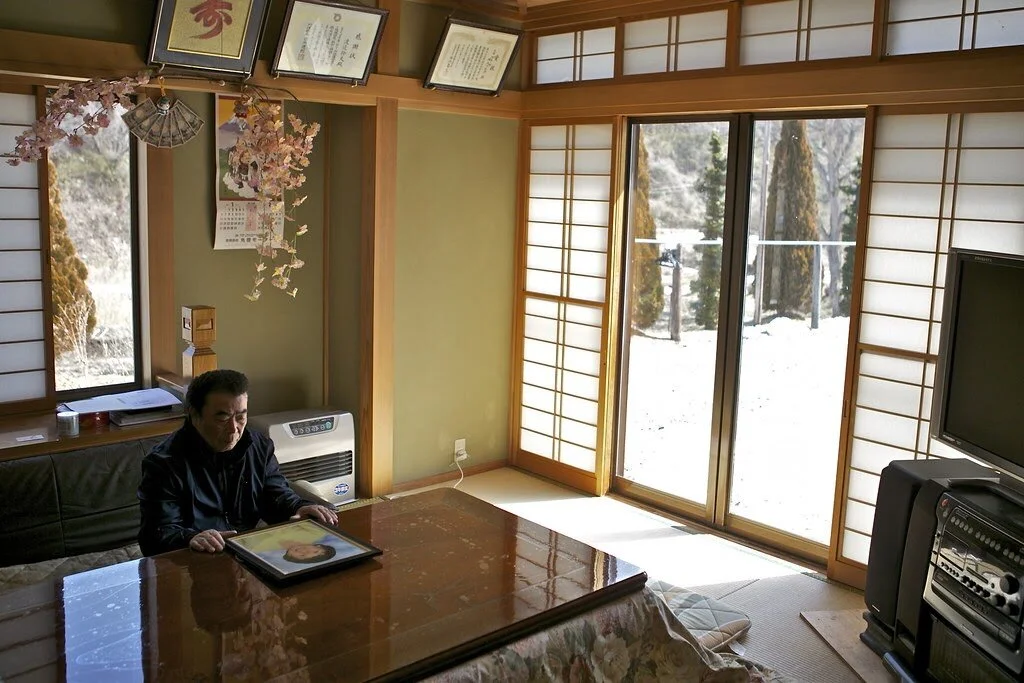
An elderly man with a picture of his late wife. Al-Jazeera English. CC BY-SA 2.0.
Local communities feel the absence of locals. As residents begin to plan for the future, they struggle to build a new community amid the ruins of an old one. Ancestral homes sit empty. Classrooms are frozen in time at the moment of the tsunami. Farmers spent generations breeding prized lines of livestock which are now useless. Radiated cattle, horses and pigs—as well as hunted boar—cannot be consumed because of radiated meat. Once famous for its produce, the prefecture’s fruits and vegetables now sell for below the national average. Though radiation tests ensure that the food is safe to eat, the stigma of nuclear disaster keeps customers away.
Hope Tourism seeks to make these ruins the foundation of the future. The group offers tours through areas that reflect both the devastation wrought by the nuclear disaster and the communal efforts toward reconstruction. Tourists see the abandoned elementary school in Ukedo, roads bent out of line by the tsunami’s rip current and black bags filled with radioactive soil. They can also tour villages trying to revive their local industries and meet community leaders who spread awareness about the dangers of nuclear fallout.
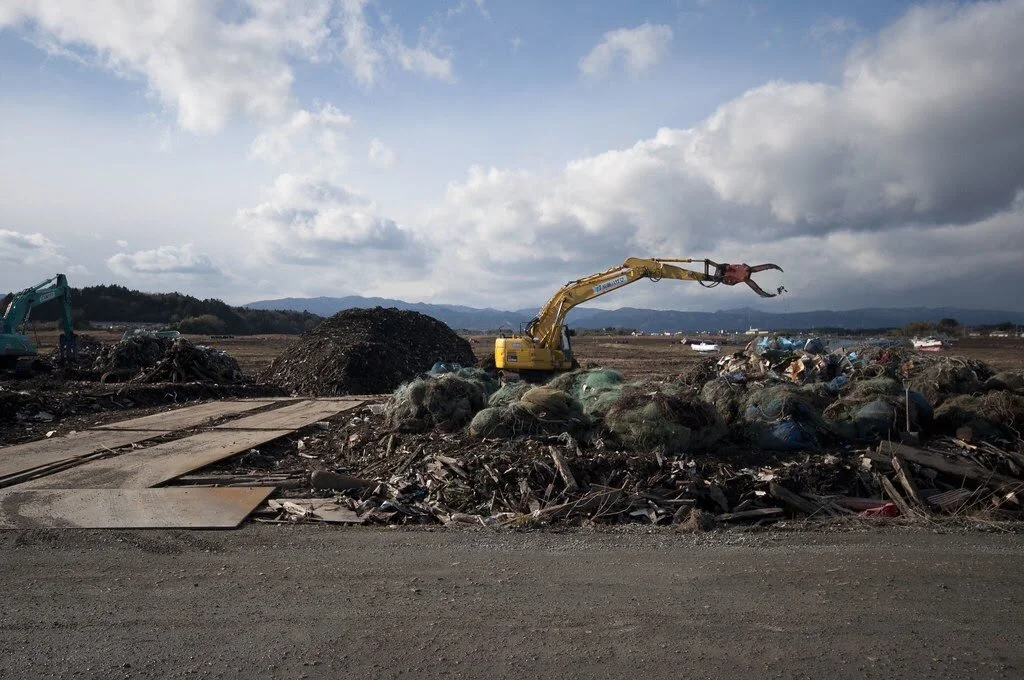
Where to put radioactive waste? UCLAnewsroom. CC BY-NC-SA 2.0.
In the face of hardship, locals still express pride in their roots. Iitate village joined the exclusive club of “most beautiful villages of Japan” in 2010, only to be wrecked by the tsunami and ensuing meltdowns. Ten years later, locals gathered to celebrate the opening of a new community center. It was built from parts of abandoned buildings: windows from old businesses, doors from run-down houses, a chalkboard from a school with no children to attend. An elderly woman in a green kimono sang folk tunes while the crowd enjoyed chestnut-filled rice balls. The Hope Tourism website states the village’s motto is a single word: madei. It means “thoughtfully” or “wholeheartedly” in the local dialect. It refers to the steady, persistent progress toward a revived community.
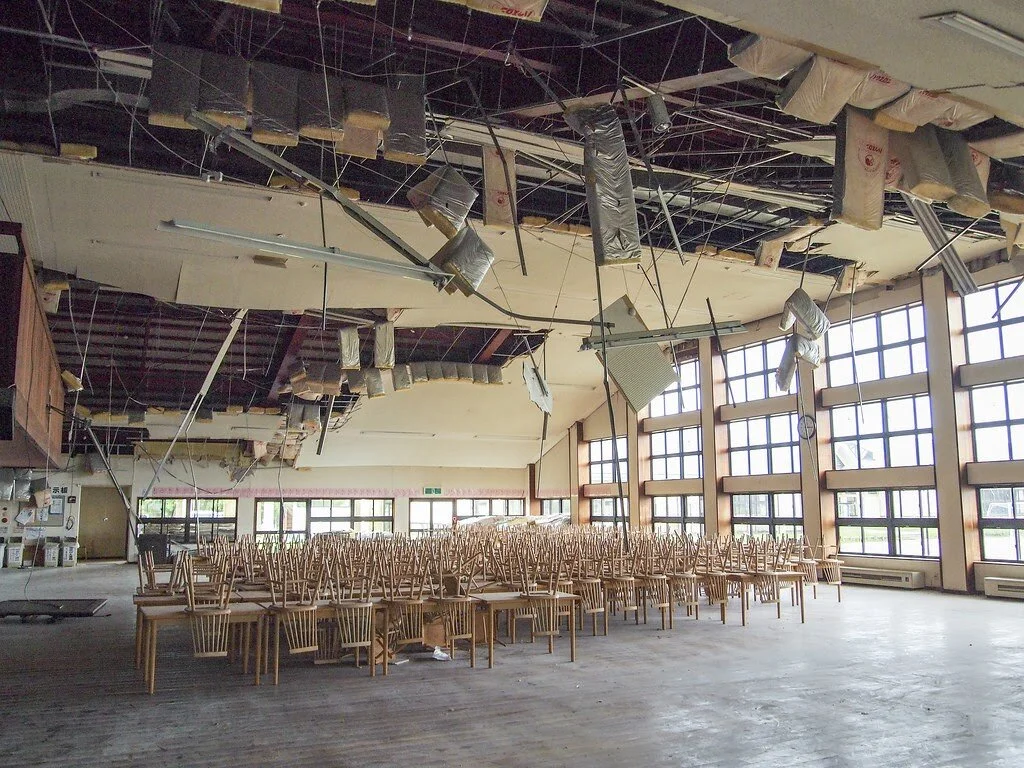
An abandoned building. Patrick Vierthaler. CC BY-NC 2.0.
The fight against nature’s invasion of Fukushima’s villages still preoccupies recently decontaminated zones. The national government branded the upcoming Olympics as the “Recovery Olympics” to highlight the region’s progress since the disaster. The Olympic torch relay will begin at Fukushima’s J-Village sports complex, which workers used as a base during the crisis in 2011. Japan will need to escape the shadow of the Fukushima disaster if the government is to accomplish key items on its agenda. Prime Minister Yoshihide Suga pledged a carbon neutral Japan by 2050, an unthinkable prospect without nuclear power.
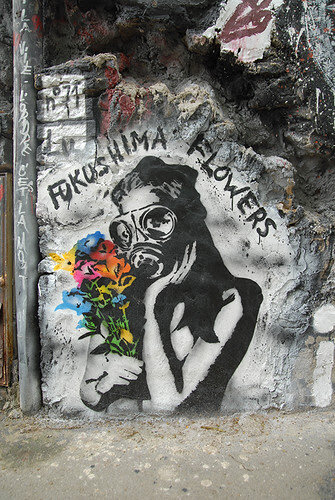
A radioactive bouquet. Abode of Chaos. CC BY 2.0.
National priorities rarely concern those repopulating Fukushima, though. They focus on the day-to-day resurrections of ghost towns. Some still search for ghosts. “I often tell people that my daughter would be a very independent and successful adult out in the world,” says one man. He lost his entire family in the tsunami, including his young daughter. “She was the type of girl other people could rely on.” With a shovel, a trowel and his gardening gloves, he digs through the soil for his daughter’s remains. “I’ve found about 20% of her, but 80% is still missing,” he says. “That means she’s definitely still here.”
Radiated livestock are marked with a white symbol that tells farmers the animal was affected by the 2011 meltdowns. There is no such symbol for the psychic wounds that Fukushima’s disaster continues to exact on its people.

Michael McCarthy
Michael is an undergraduate student at Haverford College, dodging the pandemic by taking a gap year. He writes in a variety of genres, and his time in high school debate renders political writing an inevitable fascination. Writing at Catalyst and the Bi-Co News, a student-run newspaper, provides an outlet for this passion. In the future, he intends to keep writing in mediums both informative and creative.
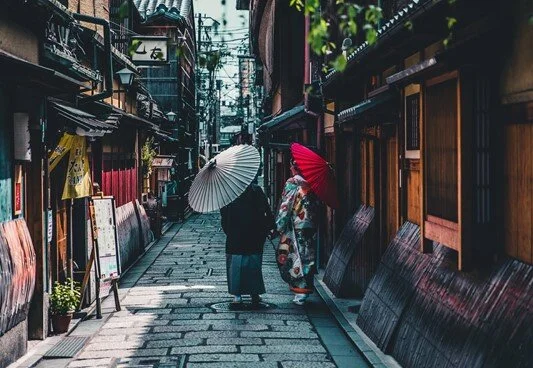
Two people walking with umbrellas in Kyoto, Japan. Andre Benz. Unsplash.
Japan Limits Reproductive Rights as Its Birth Rate Sinks
For many years, Japan has maintained one of the world’s lowest birth rates. This is only getting worse over time, as Japan recorded fewer than 1 million births and a population decline of 300,000 people for the first time in 2016. The blame for this loss often goes to women who prioritize their careers over bearing children, but in reality, economic insecurity may lie at the root of the problem.
Although Japan’s unemployment rate sits at only 3%, Jeff Kingston, a professor of history at Temple University’s Tokyo campus, claims that 40% of the workforce has unstable and temporary jobs “with low salaries and no benefits.” Such “irregular” workers have increased by about 7.6 million since 1995, whereas those with more stable jobs have decreased by 3.8 million. Such changes to the workforce stem from the revision of Japan’s labor laws in the 1990s, which allowed for a larger number of temporary employees in the country’s industries. The trend was further accentuated during the Great Recession, when there was high pressure on companies to decrease costs through the use of irregular workers.
Ryosuke Nishida, a sociology professor at the Tokyo Institute of Technology, elaborates on how even when men want to marry, their families often disapprove until a steady job is secured. Even if the woman has a stable position, roughly 70% of Japanese women quit their jobs after their first pregnancy and rely entirely on their husband’s salary. The issue doesn’t end there; employers tend to push their employees to the limit, since they are considered lucky to have found a full-time position.
To increase the country’s birth rate, Japan has begun to constrain women’s reproductive rights. Contraception is only available to women upon approval from a doctor and at the cost of $100. Moreover, as oral contraceptives were only legalized in 1999, knowledge of the pill is limited, causing emotional stress over its use and unknown side effects.
Although abortion is legal in Japan, many women resort to it because sexual counseling and education remain limited due to their taboo nature. Additionally, many health facilities across Japan require survivors of sexual assault to get consent from the perpetrator before getting an abortion, as the country’s Maternal Health Act requires approval from both a woman’s mother and her “spouse” to get an abortion. Many doctors perceive this to include the rapist, causing further pain for survivors. Although the government specifically excludes rapists, the prevalent sexism within Japanese society often leads such health care providers to neglect exceptions. The most significant issue is that despite frustrations around limited reproductive rights, women have little to no say in the matter due to the persistence of gender inequality in Japan.
Regardless, many women’s activists in Japan continue to fight for stronger rights and challenge those in high political positions to take further steps toward equality. To start overcoming its challenges, Japan must implement stronger counseling programs for women, pursue gender parity across all levels of society, and encourage men to openly address workplace stress.

Swati Agarwal
Swati is a sophomore at University of California, San Diego, where she is studying Environmental Sciences and Theatre. Although born in India, she was raised in Tokyo, which gave her the opportunity to interact with diverse people from distinct cultures. She is passionate about writing, and hopes to inspire others by spreading awareness about social justice issues and highlighting the uniqueness of the world.
Iran’s Shoddy ‘Satellite Cities’ Test Citizens’ Patience
Thanks to high rent prices and overpopulation, thousands of Iranians have been forced out of their hometowns. But the “satellite cities” built to hold them leave much to be desired.

An aerial view of Tehran, Iran. Hansueli Krapf. CC BY-SA 3.0
In the 1980s, Iran intentionally tried to grow its own population, aiming to increase its military strength amid the Iran-Iraq war. The 1979 Islamic Revolution had seen Iran’s old monarchy overthrown and a new republic built on Shiite Islam take shape. Student groups and leftist organizations rejoiced at the new rights promised to women; Islamist groups lauded the fact that their country was now a theocracy. But the new government wanted to ensure that the ideas of the revolution would last beyond one generation. So it encouraged polygamy, made birth control nearly impossible to find and lowered the age of marriage to 9 for girls and 15 for boys.
The plan worked—Iran’s population grew enormously. Forty years after the revolution, there are almost 50 million more people living in Iran. But these newcomers are not a new generation of happy, loyal citizens. They are people who the nation was not built to hold.
Overpopulation was not something Iran was completely unprepared for. Soon after the revolution, 17 new “satellite cities” were planned on the outskirts of the country's major cities. They had names like Pardis (“paradise” in Persian) and Parand ("silk"). They were to provide affordable places to live for people that the larger cities could not hold. But as Iran struggled with unrest and war, these cities wouldn’t begin to be built for decades. They remain half-finished even today.
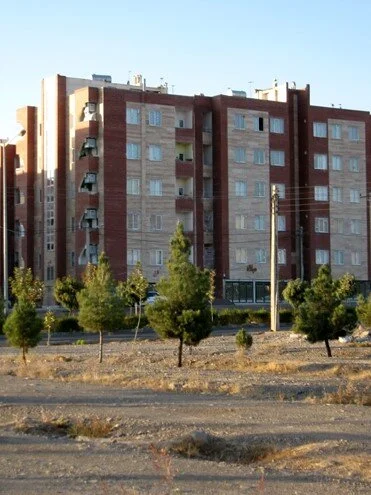
The Mehr housing project in Nishapur, Iran. Sonia Sevilla. CC BY 1.0
In 2007, the Iranian government developed a scheme it hoped would solve the overpopulation problem and make the satellite cities more livable: contract out free land to real estate developers who were willing to build low-income housing units. In this way around 2 million homes were planned to be built throughout Iran. But the Mehr housing project, as it was called, failed to deliver in the cities that needed housing the most. The 400,000 units built were poorly constructed and lacked essential utilities, like plumbing and clean water. The sterile white color that all the high-rises were painted with in Pardis says it all. These buildings didn’t seem like they were meant to be lived in, only passed through.
But the satellite cities are indeed lived in. In recent years, the overpopulation that plagues Iran’s largest cities has only gotten worse. The Financial Times reported in 2017 that the population of Tehran, Iran’s capital and largest city, “exceeds the optimum level by more than 70%.” The air is full of pollution, and the city’s roads are packed with traffic. But the last straw for many Tehranis is the cost of housing, which according to the New Yorker has more than doubled in the last three years. U.S. sanctions have contributed to this, as did former President Donald Trump’s decision to withdraw from the Iran nuclear deal. With nowhere else to go, droves of Iranians have moved to the satellite cities, where houses are cheaper. In 2019, the population of Parand was 100,000; a year later, that number had doubled.
The unfinished cities have been unable to provide jobs for their populations. Most of the people who make up Pardis must commute each day to work in Tehran. And, as the city lacks most forms of public transport, this means driving—sometimes up to three hours each way. The cities lack recreational areas, stores and the capabilities to provide health care and schooling to their growing populations. It’s no surprise that drug abuse and suicides are common in the cities.
Real estate prices remain high in congested Tehran, and more and more people are expected to leave. The people who make up these satellite cities, despite the lack of basic amenities, are grateful that they have a place to go at all. The Mehr housing project is not finished, and it is possible that in five years the livability of Tehran’s satellite cities will improve. But it is up to the Iranian government to ensure that these improvements do happen, and soon. The well-being of many Iranians depends on it.

Finn Hartnett
Finn grew up in New York City and is now a first-year at the University of Chicago. In addition to writing for Catalyst, he serves as a reporter for the Chicago Maroon. He spends his free time watching soccer and petting his cat.
How Tse Chi Lop, Asia’s Biggest Drug Lord, Was Arrested
Authorities from 20 countries worked for years to bust the Chinese-Canadian kingpin. Now, they have successfully removed the head of Asia’ largest drug syndicate.
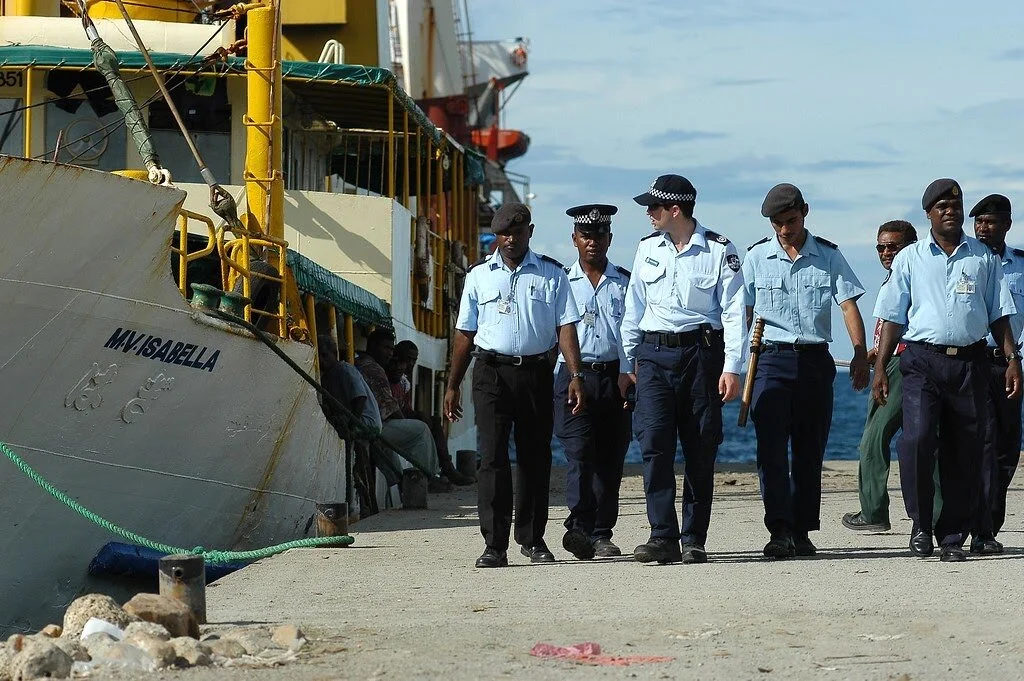
The Australian Federal Police. DFat photo library. CC BY 2.0.
Cai Jeng Ze had sweaty hands. Authorities at Yangon International Airport in Myanmar first noticed him picking at his red, blistered fingers. Drug traffickers in the Asia-Pacific region tend to have similar hands from handling methamphetamine; the drug is toxic to human skin. Authorities stopped and searched him. Taped to each of his thighs was a bag containing 80 grams of ketamine, a medical-grade anesthetic and party drug. These tiny bags were the least of the authorities’ concerns. On his person, they found two cellphones—an “Aladdin’s cave of intel” according to one investigator—that led to the takedown of Asia’s most infamous drug lord: Tse Chi Lop.
Cai Jeng Ze was arrested in 2016, and five years later, on Jan. 23, 2021, Tse Chi Lop was arrested at Amsterdam’s Schiphol International Airport. That day brought to a close the yearslong work of Operation Kungur, a counternarcotics investigation involving 20 agencies from Asia, North America and Europe. It was by far the largest effort to combat an Asian drug trafficking syndicate. Investigators estimate that Tse Chi Lop’s organization, known as “The Company,” controls 40% to 70% of the Asia-Pacific meth market, which produces $30.3 billion to $60.4 billion annually. As CEO of The Company, also known as the Sam Gor syndicate, many have dubbed him “Asia’s El Chapo.” Some investigators believe a more apt comparison would be to Pablo Escobar.
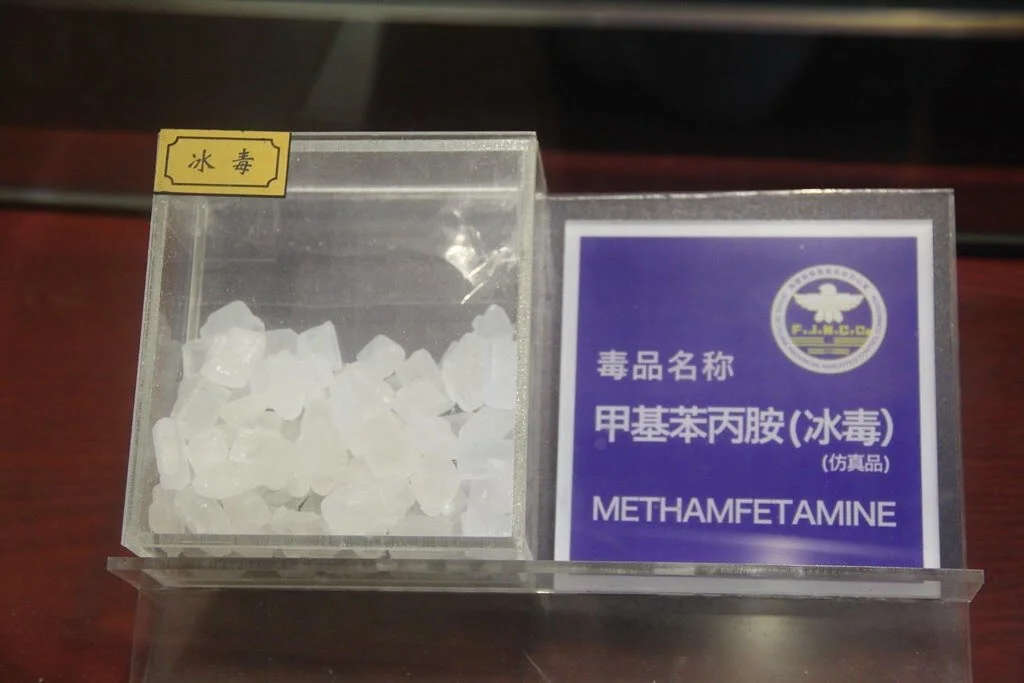
The source of Tse’s riches. Gary Lee Todd, Ph.D. CC0
But the path to arresting this kingpin began with Cai Jeng Ze’s two cellphones. Myanmar authorities invited the Australian Federal Police (AFP) to send two intelligence analysts to Yangon. Once there, they cross-referenced the phone’s contents with their vast database on Asian drug trafficking. With data gleaned from that analysis, Operation Kungur could pursue lead after lead until they gathered enough intel to arrest Tse Chi Lop.
Authorities first learned what Tse looked like by capitalizing on the most lucrative aspect of his business. The AFP intercepted a small heroin shipment into Australia, but rather than arrest the dealers, they surveilled them. After having shipment after shipment seized, Australian gangs demanded compensation from Tse. The Company’s gargantuan profit margins allow Tse to make his buyers offers they can’t refuse: if a shipment is captured by police, he will supply them with a replacement at no extra charge or give them a full refund. The Australian gang was pushing it, though. Annoyed leaders of the syndicate summoned the gang leader to Hong Kong. When the Australian met two men from The Company, Hong Kong police were there to watch. One of the men present was Tse Chi Lop.
His modest appearance belies his notoriety. He is 57 years old. With center-parted hair, he dresses like a middle-class, middle-aged family man. Though not middle-class, he was certainly a family man. He flew family members to five-star hotels for birthday parties. Though middle-aged, he surrounded himself with at least eight Thai kickboxers at a time for his security detail. He was known to bet at casinos and English horse races. One night, he lost $66 million at a casino in Macao.
His profit margins explain his lavish lifestyle. One investigator said Tse’s supply chain was so sturdy and complex that it “must rival Apple’s.” He sources much of his methamphetamine from the Shan state in northeastern Myanmar, a corner of the “Golden Triangle” where Myanmar, Thailand and Laos meet and where most of Asia’s meth originates. Rebel groups control the territory in the Shan state, allowing Tse to operate a state-of-the-art meth facility. Away from the prying eyes of Myanmar’s government, The Company can produce much higher-quality meth in much greater quantities than competitors and can charge much lower prices. A kilo goes for $70,500 in Thailand, $298,000 in Australia, and $588,000 in Japan. The Company can turn a profit charging only $1,800.

United States marshals in Asia’s “Golden Triangle.” U.S. Mashals Service. CC BY 2.0.
Authorities had the chance to give Tse, a Canadian national, a life sentence in 1998. He was found guilty of conspiracy to import heroin into the United States by the Eastern District Court of New York. Through a petition in 2000, he begged for leniency. He claimed his ailing parents needed care. His wife was overwhelmed taking care of their 12-year-old son, who suffered from a lung disorder. He promised to open a restaurant when he was freed.
Luckily, authorities got a second chance. When Tse gained freedom in 2006, he resumed where he left off, masterminding the transport of drugs across continents. Authorities are not yet releasing details about his arrest in Amsterdam. For now, the world is beginning to learn the name Tse Chi Lop. His demure demeanor allowed him to slip under the radar of investigators and media alike. Even in prison, though, his life’s work will exact long-lasting repercussions on Asia’s drug market. The Company and its supply chains persist. Investigators are left with a new question: who will take Tse’s place?

Michael McCarthy
Michael is an undergraduate student at Haverford College, dodging the pandemic by taking a gap year. He writes in a variety of genres, and his time in high school debate renders political writing an inevitable fascination. Writing at Catalyst and the Bi-Co News, a student-run newspaper, provides an outlet for this passion. In the future, he intends to keep writing in mediums both informative and creative.
Philippines Moves to Protect Children from Sexual Abuse
The Philippines passed a new law to raise the age of consent. The change could go a long way toward protecting the country’s most vulnerable children.
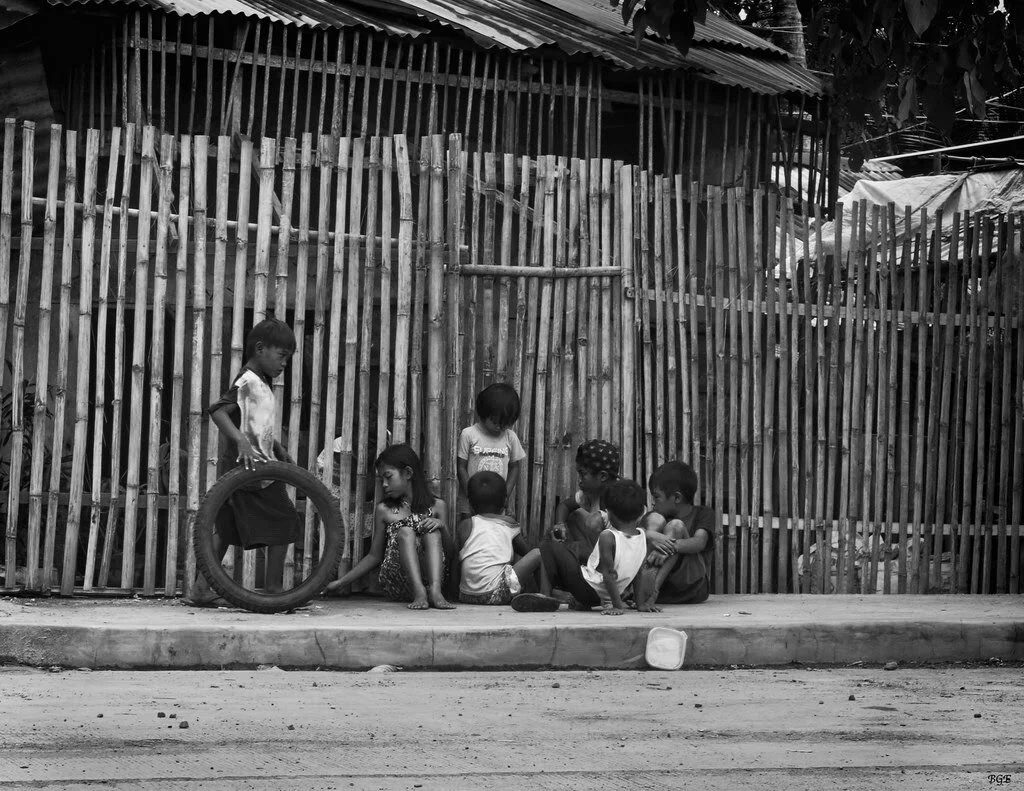
Children on the street. Beegee49. CC BY-ND 2.0.
The Philippines’ House of Representatives recently passed a new law that would raise the age of consent from 12 to 16. Long among the world’s lowest ages of consent, lawmakers hope the change will protect children from sexual predation. In recent decades, the Philippines has become a global hub of child sexual exploitation. Though the new law will improve protections for victims of abuse, long-lasting effects of sexual predation will be felt for years to come.
The age of consent was decided in 1930 in the Revised Penal Code at 12 years old, the product of what is widely considered a culture of patriarchy. At such a low age, sexual acts against children were almost impossible to prosecute in court. Defendants could claim sex with a child was consensual because they were both above the age of consent. Under this code, defendants could escape a rape verdict if they offered to marry their victim.
In recent years, sexual abuse against minors has seen a massive increase across the Philippines. Experts say the number of IP addresses used for streaming child pornography has risen from 23,333 in 2014 to 81,723 in 2017, a 250% increase. Cases of HIV/AIDS among minors have been increasing steadily over a similar period of time. Of all rape victims, 70% are children, the vast majority girls. As a result, girls as young as 14 are becoming pregnant at higher rates.
Campaigners for the bill long argued that children needed far more protections than the Philippines’ legal system granted. The law that would raise the age of consent also contains measures to harshen penalties for rape, sexual exploitation and abuse as well as shift the burden of proof of consent from the victim to the offender. The new law passed the House of Representatives with 207 votes and only 3 opposing; it is expected to pass the Senate just as easily.
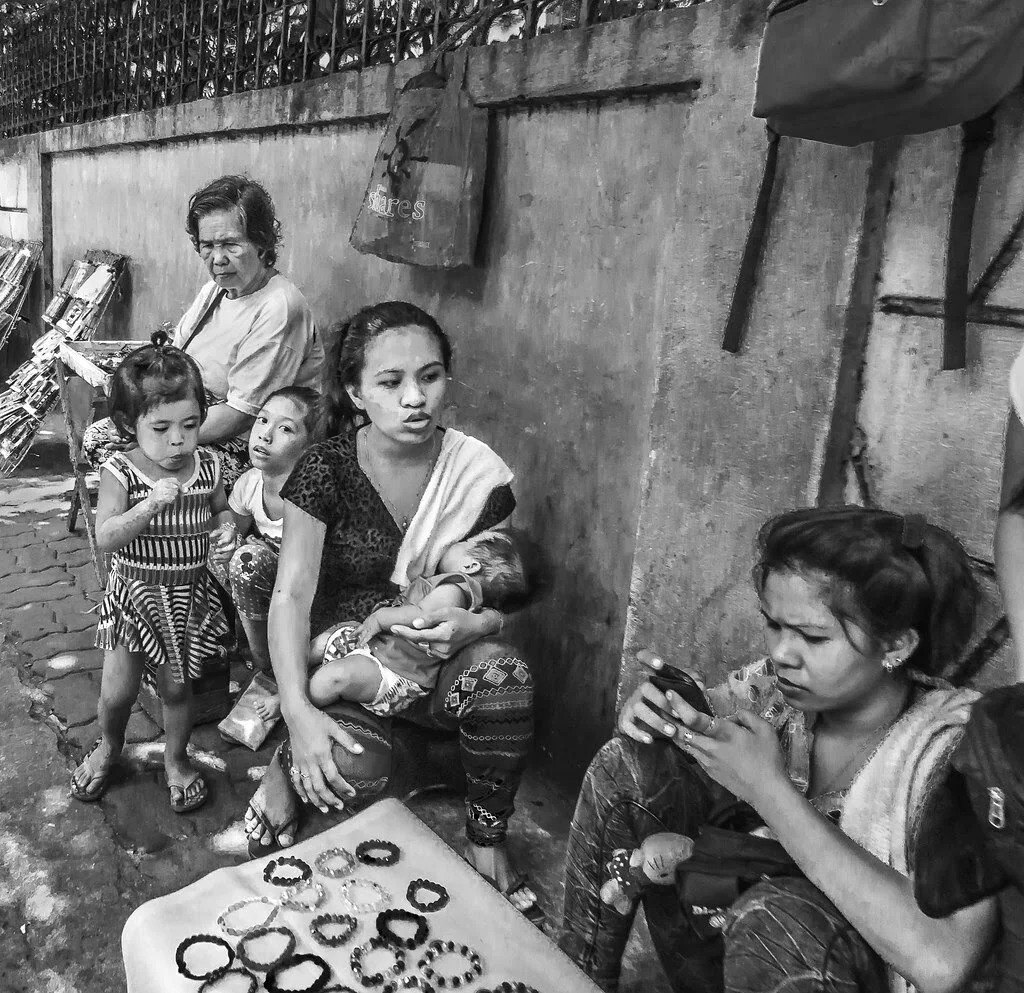
A family making ends meet. FotoGrazio. CC BY-NC-ND 2.0.
Increased data collection has painted a clearer picture of the issue in recent years. International advocacy helped focus lawmakers’ attention on the issue, but it also revealed the lack of resources the Philippines suffers from in combating sex crimes. Sixty-four percent of online abuse cases were initiated by foreign authorities who traced crimes back to the country.
Online sexual abuse afflicts more children today than it ever has. A combination of widespread poverty and COVID-19 lockdowns has rendered the practice rampant in recent months. Poor families were disproportionately harmed by lockdowns, causing a small number of families to resort to online abuse. Predators from foreign countries—mainly the United States, Canada, Europe and Australia—pay facilitators to sexually abuse children, directing the abuse themselves via a livestream.
The facilitators often include immediate and extended family. In 90 cases involving 381 victims from 2011 to 2017, 43 were abused from two months up to two years. Half were arranged by parents or extended family. The average age of victims was 11. The youngest victim was less than 1.
The Philippine government plans to implement additional measures to address the conditions that make child sexual abuse so prominent. The Philippine Plan of Action to End Violence Against Children, begun in 2017, campaigns for children’s rights and was partially responsible for raising the age of consent. The U.S. Department of State classifies the Philippines as Tier 1 for fully complying with the Trafficking Victims Protections Act. For the time being, raising the age of consent marks another crucial step in combating sexual exploitation.

Michael McCarthy
Michael is an undergraduate student at Haverford College, dodging the pandemic by taking a gap year. He writes in a variety of genres, and his time in high school debate renders political writing an inevitable fascination. Writing at Catalyst and the Bi-Co News, a student-run newspaper, provides an outlet for this passion. In the future, he intends to keep writing in mediums both informative and creative.
Nonprofits Reach Syrian Refugee Children Through Education
As the Syrian refugee crisis enters its 10th year, children continue to suffer from mass displacement and a lack of educational opportunities.

Syrian primary schoolchildren. DFID. CC2.0
The Syrian refugee crisis is considered by many to be the most urgent humanitarian crisis of the decade. Since 2011, the conflict has displaced 11 million people through the destruction of countless homes, hospitals, schools and public buildings. An equally large number of Syrians require humanitarian assistance, over half of them being children. Many of these young children lack safe spaces to play, face childhood neglect and have witnessed horrific violence in their lives. Numerous children are at risk of developing toxic stress, which is a biological response that impedes growth and development when humans have experienced too much hardship.
However, with hardship also comes hope. Reaching children early and providing educational opportunities have been shown to alleviate toxic stress, allowing children to live productive and happy lives. However, educational resources for Syrian refugee children remain in short supply. Despite its importance in providing children a brighter and more stable future, education efforts only receive 3% of humanitarian aid annually. Additionally, many humanitarian organizations do not provide adequate educational resources for children to increase school enrollment.
Students in Syria start to drop out at the age of 12, when they are in secondary school. A study conducted on Syrian refugee children in Jordan showed that only 25% of students are enrolled in secondary school, citing a lack of safe transportation, limited educational resources available, poverty and limited professional opportunities as contributing factors. Children who drop out of school are at increased risk of experiencing hardship in their lives, including living in poverty, being subjected to child marriage and facing sexual violence. Adequate educational resources and child support are essential to help provide resilience and much-needed support for Syrian refugee children. Some nonprofit organizations are aiming to do just that.
Making a Difference in Syrian Refugee Children’s Lives
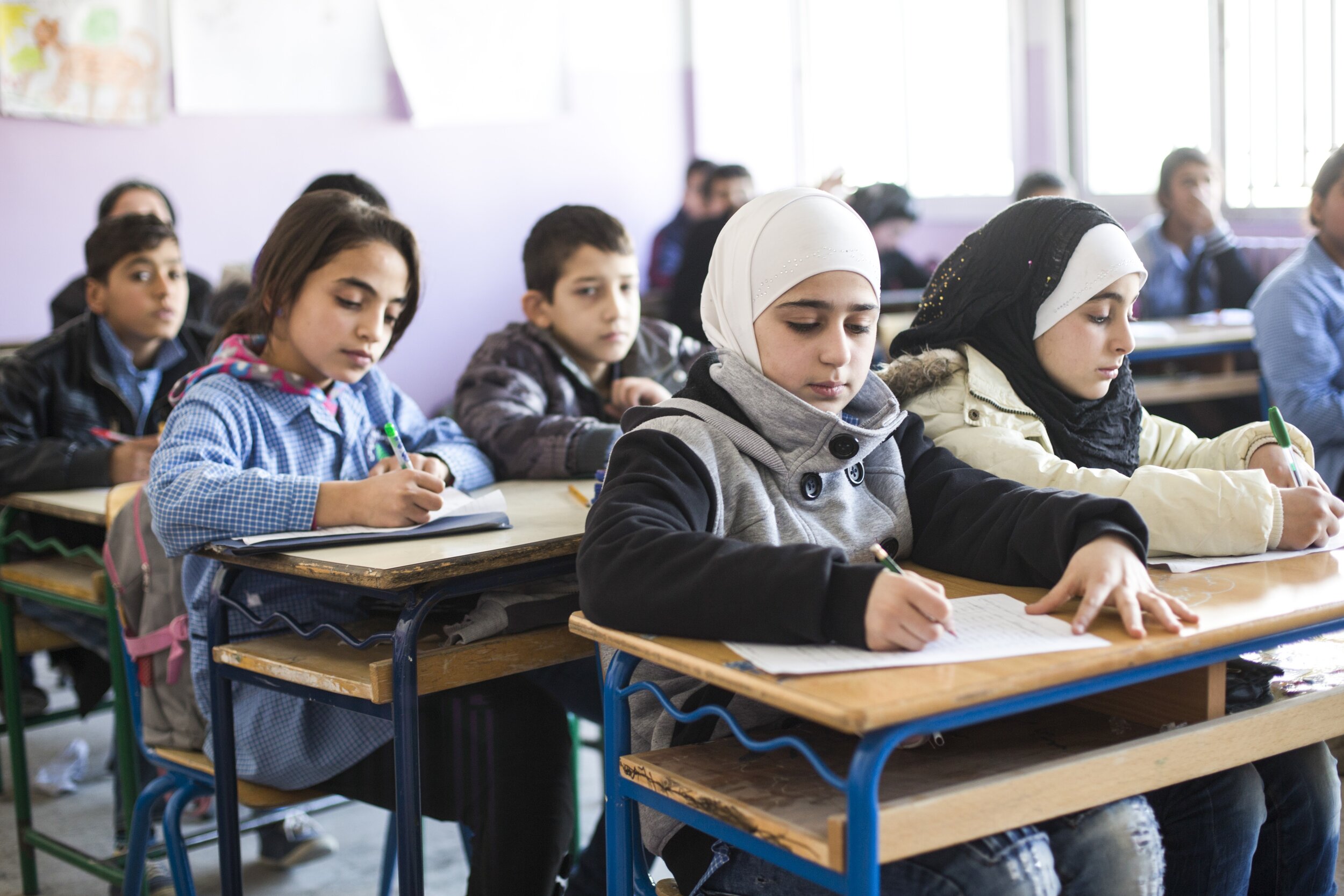
Syrian refugee children at a school in Lebanon. DFID. CC2.0
A new educational program developed by the International Rescue Committee (IRC) and Sesame Workshop aims to provide adequate educational resources for Syrian refugee children. Called Ahlan Simsim, which translates to “Welcome Sesame” in Arabic, the program aims to combine the IRC’s experience working in conflict zones with the TV show “Sesame Street,” which is known for its educational and nurturing effects on children. Program resources include safe spaces for young children to play, an Arabic-language version of ”Sesame Street,” parenting resources for caregivers, and partnerships with nonprofits and local governments to ensure child access to education. In light of COVID-19, educational programming takes place through WhatsApp and online video.
Ahlan Simsim provides children with skills in literacy and numeracy while helping them develop emotional resilience. For example, the program will teach students how to deal with difficult situations, understand their feelings and empathize with others. The program is a winner of the MacArthur Foundation’s 100&Change grant competition and is among the most ambitious early childhood development programs ever attempted by the humanitarian system. According to Sherrie Westin, executive vice president for global impact and philanthropy at Sesame Workshop, “The issue we are addressing is the greatest humanitarian crisis of our time. We know we can make a difference in the long term if we reach children early. Without that, there’s an entire generation at risk, and that has repercussions not just for their future, but for a more peaceful, stable world for all children.”
To Get Involved:
Check out this link to the International Rescue Committee’s webpage to learn more about the Ahlan Simsim initiative.

Megan Gürer
is a Turkish-American student at Wellesley College in Massachusetts studying Biological Sciences. Passionate about environmental issues and learning about other cultures, she dreams of exploring the globe. In her free time, she enjoys cooking, singing, and composing music.
Consider the Tofu: A (Tasty) History
This seemingly tasteless ingredient packs a punch in iconic dishes across Asia.

Fry it, flip it, steam it, dessert-ify it—tofu’s your jack of all trades. Sherman Kwan. Unsplash.
As a relatively tasteless food, tofu is a versatile ingredient that is present in many dishes across Asia. Tofu is centuries old. While the exact date is not known, historians believe that tofu was first used over 2,000 years ago in China. This humble dish made its debut in Japan, Korea, parts of Southeast Asia and eventually in Europe after 19th-century colonialism. In Buddhist societies, the production of tofu increased as it served as a convenient meat alternative. Molded from crushed soybeans, tofu is a flexible food that goes with nearly anything. Given its absorbent nature, tofu often tastes like the spices and flavors it has marinated in. Here are a few popular tofu dishes from across Asia:
Mapo Tofu
This classic dish has roots in China’s Sichuan region. Mapo tofu is made with soft tofu and stir-fried with various chile peppers, black bean paste and ginger. If cooked properly, the sauce itself is a bright-red color laced with thin bubbles of oil. The dish can be topped off with scallions or minced meat if so desired.

Stuff your tofu too; it’s gratifying. Qlinart. CC BY-NC-ND 2.0.
Crispy Shrimp Stuffed Tofu
In this Cantonese dish, tofu is stuffed with minced shrimp and deep-fried to crispiness. The tofu is first sliced and coated in cornstarch, then hollowed out to hold the filling. The dish is often paired with classic ingredients like Shaoxing wine, white pepper and sesame oil. These golden, bite-sized bricks can be garnished with scallions and can be dipped in a slightly sweet soy sauce.
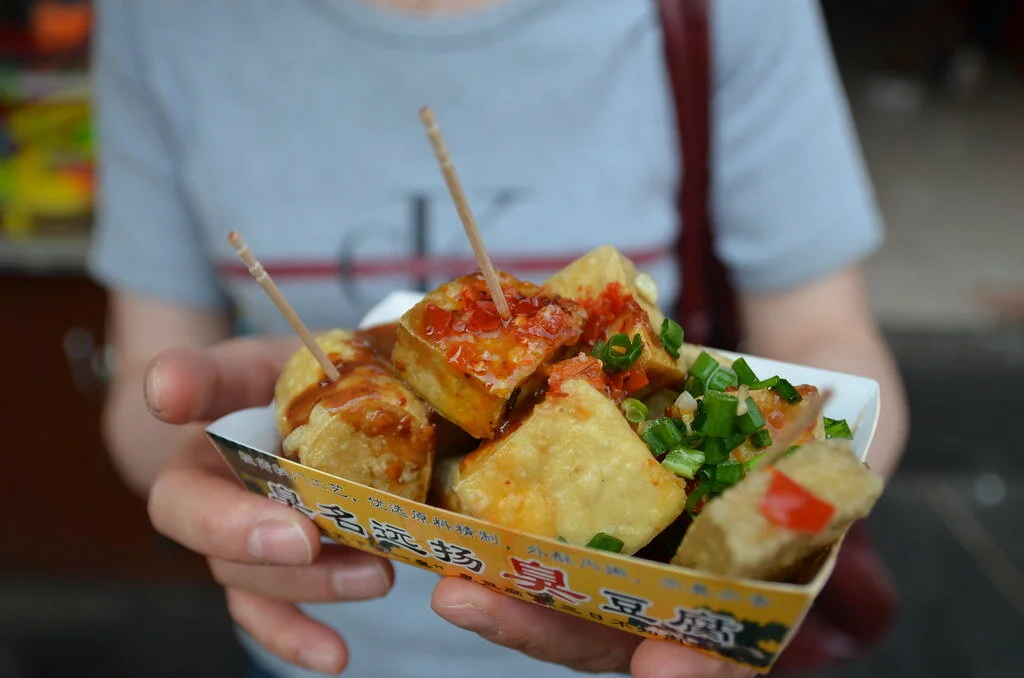
Stinky tofu is usually sold from open-air hawker stalls. Josephine Lim. CC BY-ND 2.0.
Stinky Tofu
Tofu, when stinky, can also be a delectable treat. This smelly favorite can be found along the streets of China, Hong Kong and Taiwan. Stinky tofu is made from the fermented brine in which it has soaked for a few months. The mixture is usually made from fermented milk, vegetables or meat, but can also include other ingredients like dried shrimp and mustard greens. When ready, stinky tofu is commonly served deep-fried. Its bitter and salty flavor is best paired with garlic, soy sauce or chile sauce.
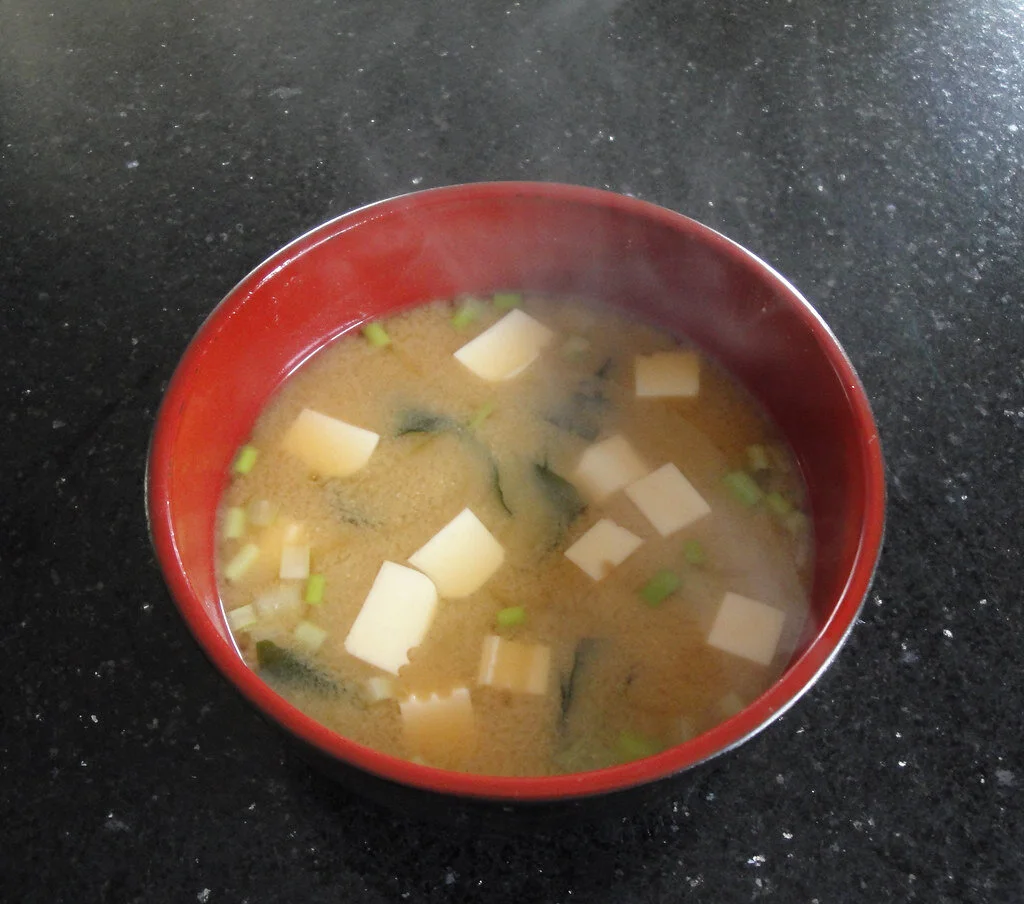
Steaming, savory miso soup for any occasion. Jude Masti. CC BY 2.0.
Miso Soup
Miso is a fermented paste with origins in Japanese cuisine. This concoction is produced by pickling soybeans with salt and other ingredients such as barley or seaweed. Miso is usually consumed as soup, and one of the main condiments is tofu. The tofu’s porous texture absorbs the umami saltiness of the miso and makes for a hearty, satisfying meal. It can be paired with clean white rice, mushrooms and even eggplants.

An edible lunch packed in a pouch. David Theduy Nguyen. CC BY-NC 2.0.
Inari Sushi
Tofu can even be incorporated into sushi. Inari sushi was first introduced to Japan during the 18th century. It first started off as offering food for fox-god temples scattered about the islands. Over time, Inari sushi became a staple option on kitchen tables. Inari sushi is a simpler style of sushi made with sweetened rice packed in tofu pouches. The tofu skin itself is pre-seasoned and deep-fried. The side can be topped off with sesame seeds and paired with vinegar and soy sauce for a uniquely sweet finish.

Best served piping hot. Republic of Korea. CC BY-SA 2.0.
Sundubu-jjigae
Also written as “soondubu,” this Korean dish is a soft tofu stew made with silken, curdled tofu served in a piping hot pot. Sundubu-jjigae is usually prepared spicy and can be cooked in seafood or meat broth. As the dish is bubbling, a whole egg is cracked into the mix and served almost immediately. Sundubu-jjigae is a popular Korean staple and is usually complemented with a bowl of rice and various “banchan” like kimchi, gamja jorim (sweetened braised potatoes) and salted cucumbers.
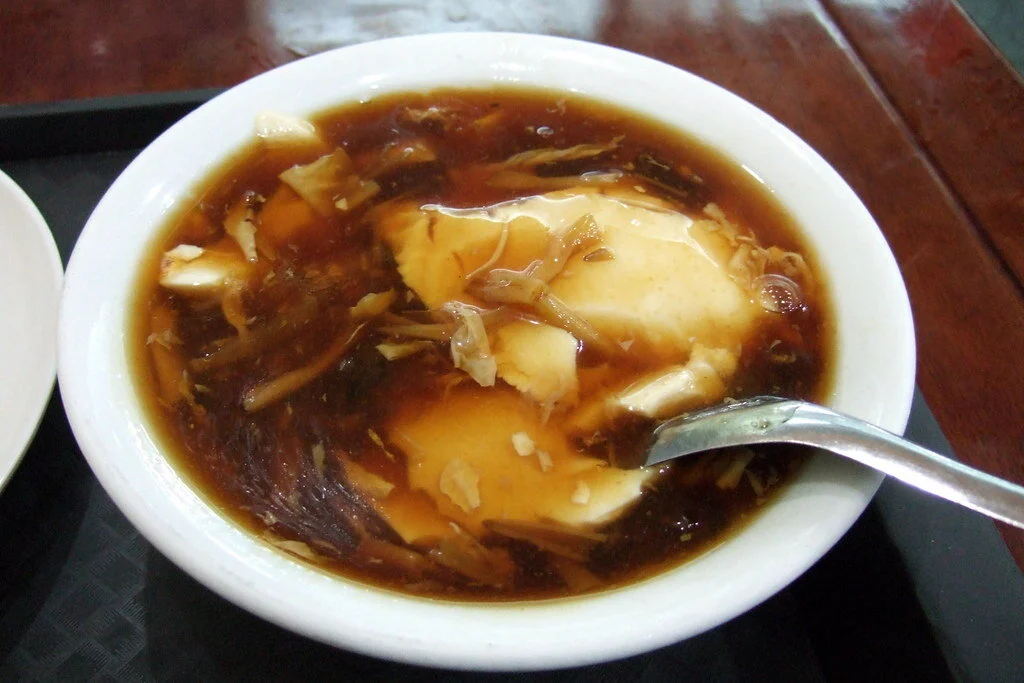
Cleanse your palate with a sweet tofu finish. Boyu Wang. CC BY-NC-ND 2.0.
Tofu Pudding
Dau hu nuoc duong. Taho. Douhua. However it’s called, tofu can also be consumed as a dessert. Tofu pudding can be found in countries like Vietnam, the Philippines, and China and takes on regional preferences. It is often paired with sweeteners like ginger syrup and brown sugar. Depending on the location, tofu pudding can also be served with peanut and strawberry.
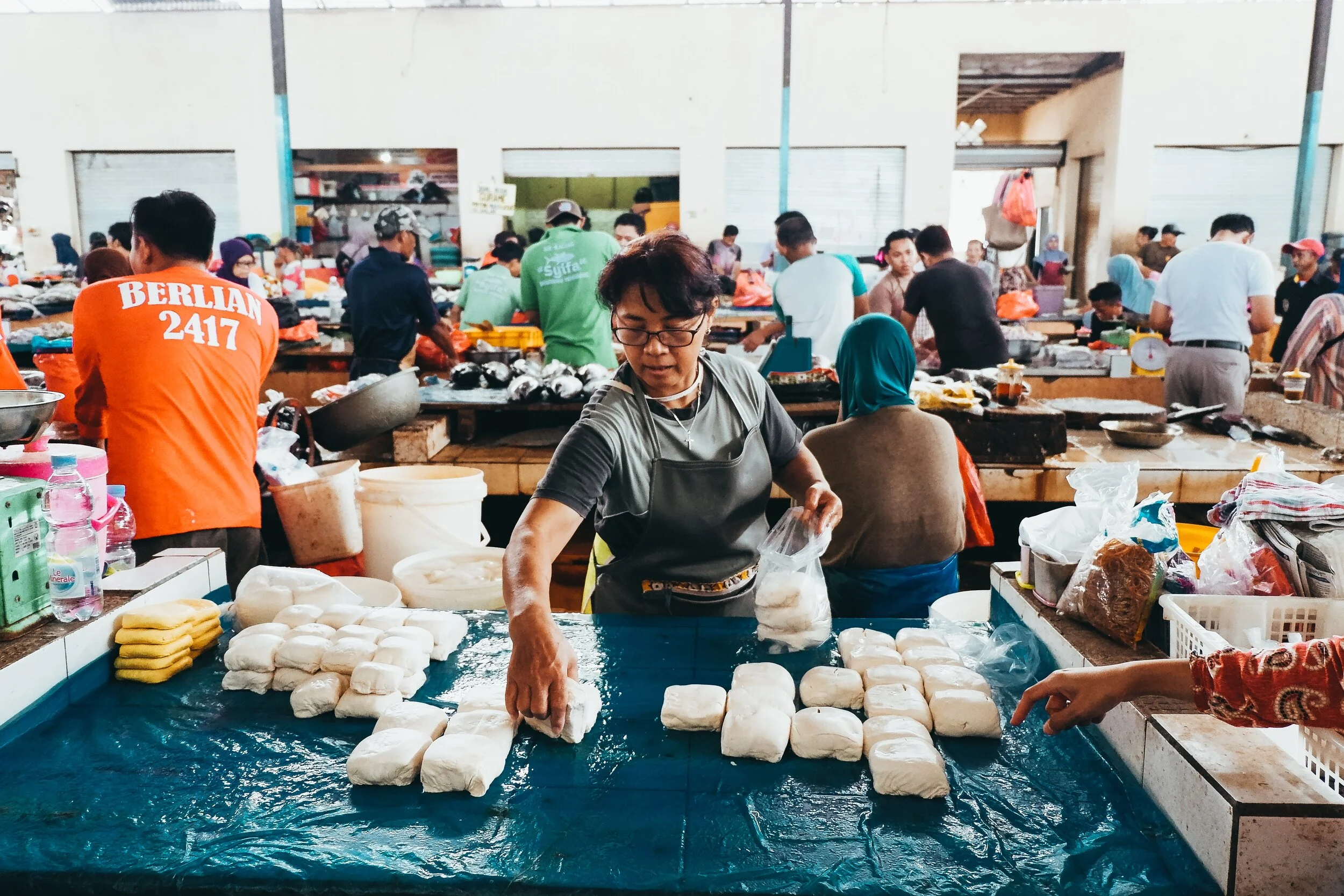
Tofu is timeless. Devi Puspita Amartha Yahya. Unsplash.
The Future of Tofu
While tofu has a stronghold in Asian cuisines, this humble ingredient continues to change and evolve across the world. As consumers look for more sustainable alternatives, tofu stands as a ready-made, centuries-old option. Not only is it healthier, but tofu is also a flexible and equally tasty substitute for meats and other high-cholesterol foods. Despite its unassuming nature, tofu has proven its timelessness.

Rhiannon Koh
Rhiannon earned her B.A. in Urban Studies & Planning from UC San Diego. Her honors thesis was a speculative fiction piece exploring the aspects of surveillance technology, climate change, and the future of urbanized humanity. She is committed to expanding the stories we tell.
Feline Fun: Japan’s Cat Culture and ‘Cat Islands’
It is always a pleasure to watch a cat prancing through the neighborhood or a skittish kitten darting for the bushes. But one country, Japan, has completely dissolved the line dividing feline and human interaction.
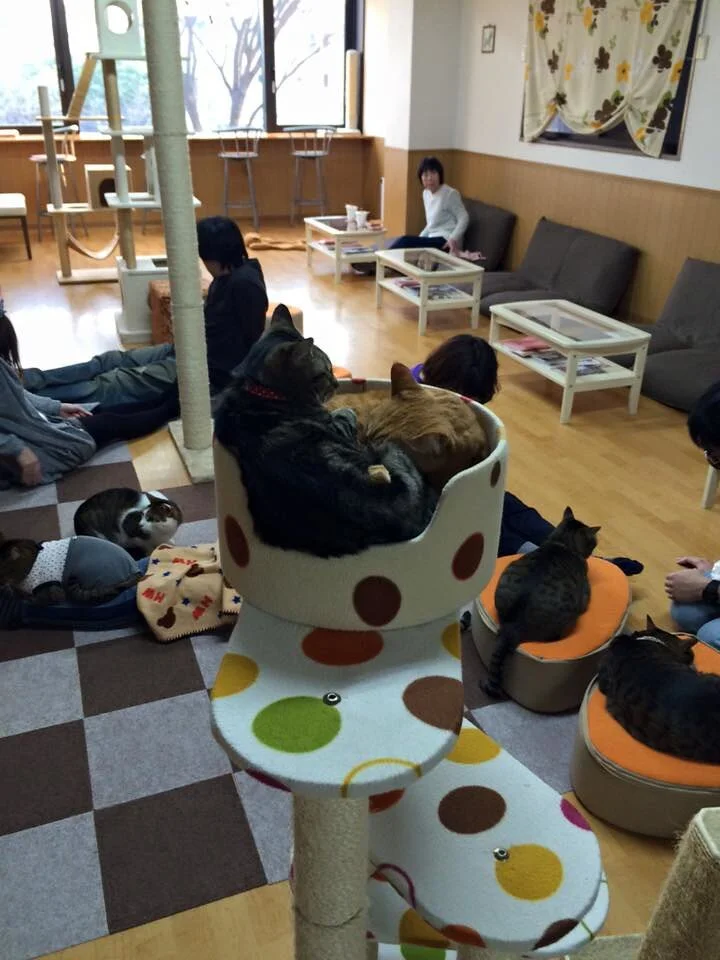
Cat cafe in Japan. nyxie. CC BY-NC-SA 2.0.
Most people, if asked to name something from Japanese pop culture, would name the “Hello Kitty” cat cartoon as one of their top answers. As popular as the character has been with children across the world, a bustling cat scene exists within Japan itself entirely separate from Hello Kitty.
Japan’s residents hold a lengthy history of interaction with their feline friends. Cats were originally an invasive species introduced to Japan around 500 A.D. The creatures soon proved their worth by managing the islands’ rat population; the silkworm industry was being devastated by pesky rats, so the nation’s cats jumped into action. Over 1,000 years ago, wealthy members of Japanese society owned cats as pets. Evidence of cats in Japanese history can be found in literary works and paintings, many of which are hundreds of years old. The country’s oral history also contains many tales of worship for the cherished creatures.
Beyond being pets, cats in Japanese culture are an integral part of social interaction. “Cat cafes” have recently blossomed in Japan’s cat culture, allowing owners to mingle while their beloved friends wander among other felines.
While a stray cat is a common sight on any island of Japan, about a dozen islands have been dubbed the “Cat Islands” for their particularly dense population of felines. Two of the most popular are the islands of Aoshima and Enoshima:
Aoshima Island
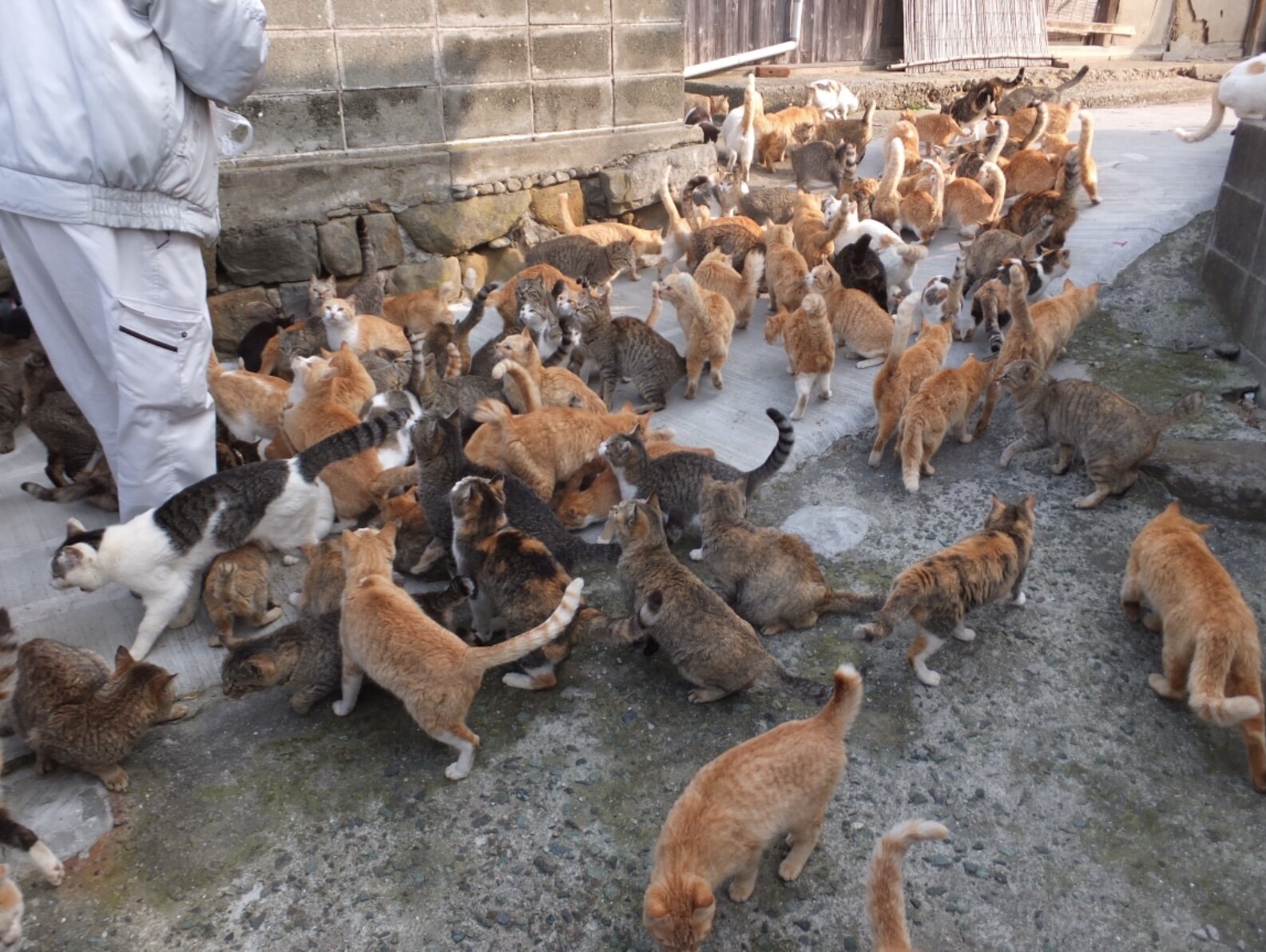
Crowd of cats on Aoshima Island. 暇・カキコ. CC BY-SA 4.0.
Aoshima Island, located in southern Japan, boasts a human to cat ratio of 1-8. Cats were originally brought to the island to manage the rat population, but now they enjoy flashy media attention as internet sensations. The cats have become increasingly popular with visitors seeing viral videos, so an interactive feeding area has been installed. The cats have now become accustomed to interaction with strangers and will gladly show affection for a bit of food.
Enoshima Island
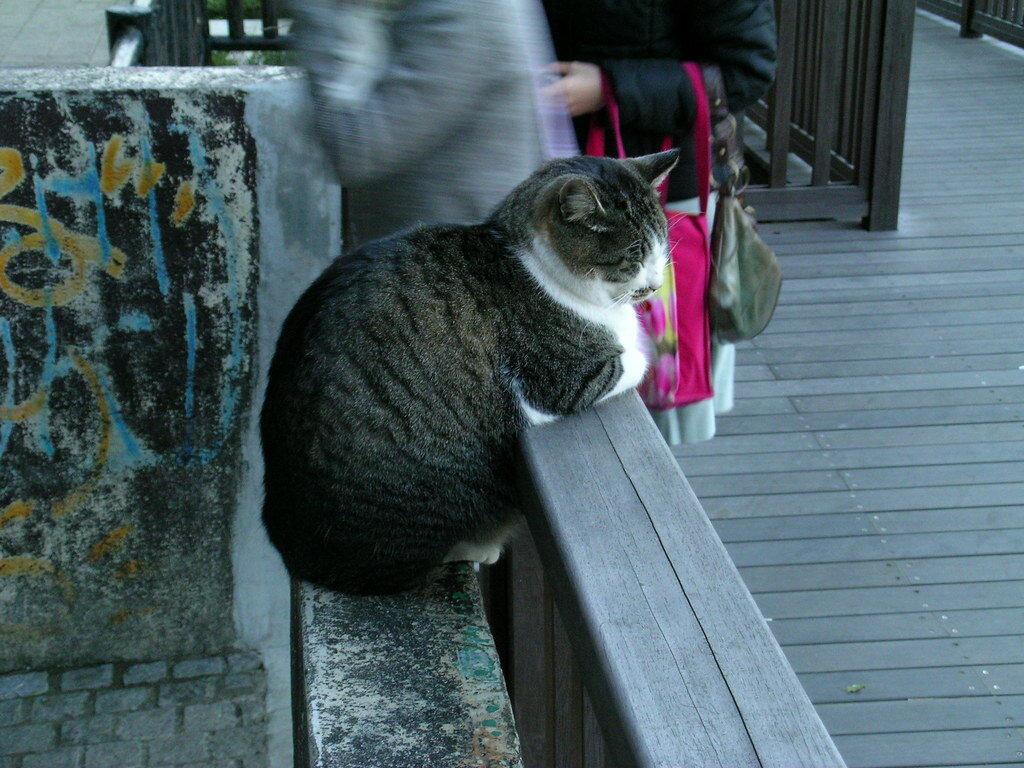
Cat on Enoshima Island. tokyofortwo. CC BY-NC-SA 2.0.
Enoshima Island is a small island just over an hour south of Tokyo. The island’s human population is minuscule compared to the population of cats; there are only about 100 human residents among over 600 cats. The island draws many visitors for its Shinto shrines, which represent a religion that does not believe in the killing of cats. The island also houses a busy fishing industry, which has proven to provide plenty of nourishment for furry residents. Thus, the island’s cat population has bloomed.
Japan’s feline friends have embedded themselves in the nation’s history and culture, and their lofty position in society appears to be secure.

Ella Nguyen
Ella is an undergraduate student at Vassar College pursuing a degree in Hispanic Studies. She wants to assist in the field of immigration law and hopes to utilize Spanish in her future projects. In her free time she enjoys cooking, writing poetry, and learning about cosmetics.
The Ainu: One of Japan’s Indigenous Groups
In August 2019, the Japanese government passed a law that officially recognized the Ainu as an Indigenous people group. After nearly two centuries of legalized discrimination, the Ainu are reclaiming their identity and history, and they are just getting started.
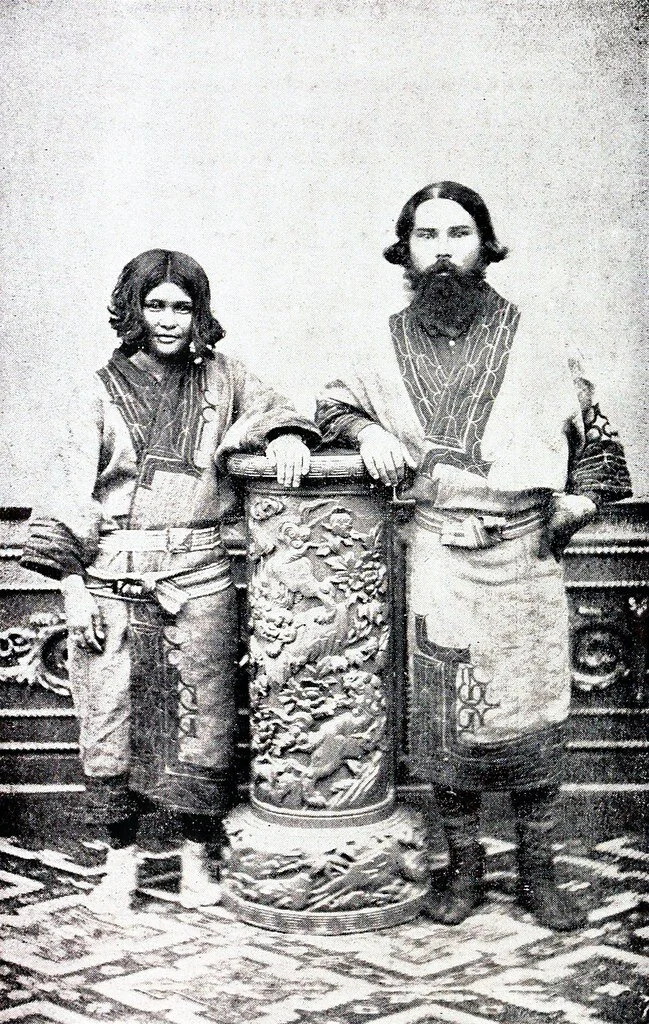
An Ainu couple before assimilation; their features are still different from those of their Japanese counterparts. Stuart Rankin. CC BY-NC 2.0.
In July, Japan unveiled the Upopoy National Ainu Museum, the country’s first cultural center dedicated to Indigenous identity. Located on the island of Hokkaido—one of the Ainu’s ancestral lands—the Upopoy Museum showcases the history of the Ainu through performances and historical relics. What is remarkable about the museum’s opening is not its resiliency amid a pandemic, but that the structure opened at all. Much like the power dynamic between American settlers and Native American tribes, the Ainu endured a legacy of forced assimilation by the ethnic Japanese and their ruling government.
Before this, the Ainu were a hunter-gatherer tribe that inhabited the northern islands of Ezo (present-day Hokkaido), the Kuril Islands and the Russian island of Sakhalin. According to archaeological records, the Ainu called these lands home as early as the 14,500 B.C. The Ainu also had strong ties to animism, a belief that manifested itself in the relationship between the Ainu and the bears on the islands. The Ainu even created a ceremony in which bear cubs were taken, raised and then sacrificed in a ritual offering. These symbolic rites guided Ainu tradition and their balanced connection with nature.
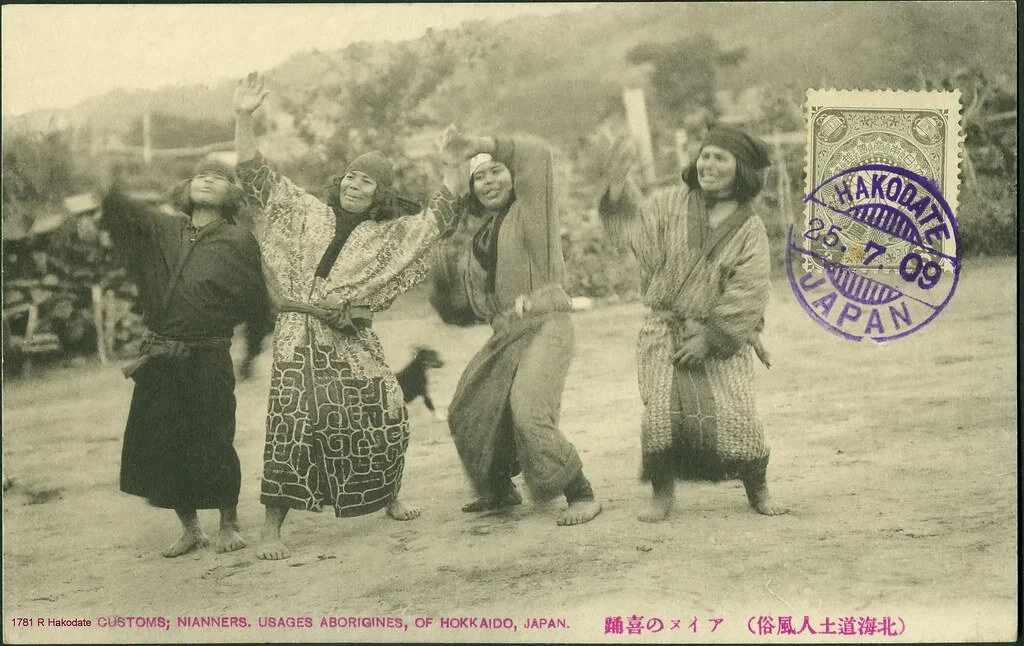
Ainu women performing a welcome dance on Hokkaido. Vladimir Tkalcic. CC BY-NC-ND 2.0.
When the Meiji government annexed Hokkaido in the late 19th century, the Ainu’s pastoral way of life was interrupted. While the Ainu lived in Japan, they physically differed from their Japanese counterparts. The Ainu have a more European look with lighter skin and thick hair. Men sported full beards, and women tattooed their lips once they reached adulthood. Because of this, the Japanese derided the Ainu as backward and foreign. Around this time, Japan also became the first non-European country to have defeated Russia in battle. Flush with victory and newly acquired lands, the Japanese sought to build up a national myth of military might and cultural homogeneity. One of these initiatives included a policy of forced assimilation on the island of Hokkaido.
The Japanese government enlisted the help of American consultants who had reeducated their own North American Indigenous groups. The Ainu were forced into Japanese-speaking schools and were required to change their names. As the land was repurposed for industrial and agricultural uses, the Ainu were pushed into wage labor and became an impoverished and politically disenfranchised minority. Even after World War II, the Ainu were deprived. To participate in the scientific advancements of the mid-20th century, the Japanese government essentially emboldened researchers to rob Ainu graves and remains.
The Upopoy National Museum is housed in Hokkaido, one of the Ainu’s ancestral homelands. Marek Okon. Unsplash.
In February 2019, the Japanese government introduced a bill that would officially recognize the ethnic Ainu minority as an Indigenous people for the first time. The bill included measures that would support Ainu communities, fund scholarships and educational opportunities, and allow the Ainu to cut down trees in nationally owned forests for use in traditional practices.
While many lauded the proposal, some felt that the bill missed a crucial element: an apology. In an interview with CNN, musician Oki Kano shared that he was only 20 years old when he found out that he was Ainu. Thanks to rigorous assimilation policies, the Ainu in Japan bear more resemblance to ethnic Japanese than past generations. Because of the ugly legacy of discrimination, however, the true number of Ainu still left in Japan is unknown. Due to fear, many of the Ainu have chosen to hide their background, leaving younger generations with limited if any knowledge about their heritage. The Ainu language is also at risk of extinction.
Although the bill became law in August 2019 and Tokyo University returned some of the robbed remains the following year, the fight for the Ainu people’s rights is just beginning. Despite widespread recognition and gradual acceptance of the Ainu, some feel the Ainu culture is at risk of tokenization. Though the preservation of Ainu culture is commendable, the Ainu’s future should also be considered if they are to have a chance at survival.

Rhiannon Koh
Rhiannon earned her B.A. in Urban Studies & Planning from UC San Diego. Her honors thesis was a speculative fiction piece exploring the aspects of surveillance technology, climate change, and the future of urbanized humanity. She is committed to expanding the stories we tell.
Music spoken in Portuguese (more commonly known as Lusophone) often stems from Brazil, Mozambique and Cape Verde. From bossa nova, to MPB to Tropicalia, learn and listen in this article on some amazing musical traditions.