
With its rugged cliffs, secluded sandy beaches, coastal plains, streams, canyons, and hills (including 1,347-foot Valencia Peak!), naturalists and backpackers can experience the solitude and freedom found along Montana de Oro’s trails in California.
‘AILA’AU's Volcano: The Forest Eater
On April 30th, 2018, Hawaii’s Puʻu ʻŌʻō crater collapsed after erupting for 35 years.
Alberta
Discover world-class skiing, Canada’s biggest dark sky preserve and mysterious ancient badlands. Rolling foothills and stunning wildlife meets the big cities with a small town feel, with extraordinary hidden gems for all.

“AISHA ADE, SOMALILAND: Mohamed Omar from the Ministry of Agriculture holds an adult desert locust.” FAO/Isak Amin.
Locusts Devastating East Africa
Swarms of desert locusts, caused by cyclones due to warming ocean temperatures, are devastating East Africa and the most apparent solutions only spell further long-term climate damage.
Since the end of January of this year, swarms of locusts have overwhelmed nations in East Africa: devouring crops, ruining livelihoods and pushing communities to the brink of famine. Locusts are relatives of grasshoppers that tend to travel in swarms; according to the National Geographic, a desert locust can eat its entire weight in plant material each day. Given the size of the swarm currently plaguing East Africa, the locusts are consuming an estimated 423 million pounds of plants daily. Photos depict waves of locusts so thick they appear to be clouds, and farmers are relying on methods such as shaking jars full of rocks and rolling tires through fields in attempts to scare the locusts away from crops, to little avail.
Climate scientists trace this swarm back to a series of cyclones that saturated the Arabian desert during 2018. As locusts breed in warm, wet conditions, the desert rain storms created a breeding ground for millions of locusts that eventually crossed the Red Sea into the Horn of Africa. Another cyclone touching down in Somalia at the end of 2019 added force to the growing onslaught of locusts. Ethiopia, Kenya and Somalia first bore the brunt of the swarms, but the locusts quickly began to migrate into neighboring Uganda and Tanzania, and they have since reached Sudan and South Sudan.
As the rainy season will begin in East Africa in late March 2020, the locust population only stands to increase exponentially. Over 20 million individuals in East Africa face the very real threat of famine should the devastation continue, and the spread of the swarms proves destabilizing to nations such as South Sudan, still reeling from violence and internal political conflict since 2013. The threat of the crop damage spirals even beyond the agricultural and livestock industries: the Kenyan government worries that damage to national parks and the herbivores that inhabit them could ruin the tourism industry, as well.
The sudden occurrence of desert locust swarms points to dire climate circumstances, both in its origin and impact. First, temperature in the Indian Ocean fluctuates along the Indian Ocean Dipole, and the Western segment of the ocean was uncharacteristically warm this year--likely due to the fires in Australia--producing the cyclones in Yemen and Somalia. Moreover, the most apparent solution to the swarms is aerial pesticide spraying, which, while immediately attractive in the face of crop devastation and famine, itself carries climate implications which could spiral years into the future. Fipronil, the pesticide most commonly used against locusts swarms, has been linked directly to unprecedented rates of bee mortality, which would have significant long term effects on the East African ecosystem. Moreover, pesticides, especially when used in massive quantities, can pollute water supplies by absorption into the groundwater and by runoff into surface water supplies.
Given the urgency and scale of the crisis, aerial pesticide spraying may be the only viable, albeit imperfect, option available to disaster relief. The World Food Programme Executive Director, David Beasley, darkly foretold that should the adequate disaster prevention aid not be raised immediately, the international community could face a disaster response that would cost upwards of $1 billion. While the UN Food and Agriculture Organization has raised $22 million to allocate towards prevention and relief efforts, this is only a fraction of the $76 million for which it originally appealed.

Hallie Griffiths
is an undergraduate at the University of Virginia studying Foreign Affairs and Spanish. After graduation, she hopes to apply her passion for travel and social action toward a career in intelligence and policy analysis. Outside of the classroom, she can be found, quite literally, outside: backpacking, rock climbing, or skiing with her friends.
Amazon Trees Write Autobiographies – Preserving Human History in Their Wood
Tropical forests are one of the world’s largest carbon stores and they help regulate the global climate. But they’re being erased at a terrifying rate. Deforestation claimed an area the size of Belgium in 2018. These habitats are often cleared to make way for palm oil plantations and grazing pasture for livestock. For most forests, destruction on this scale is a fairly modern phenomenon.
Tropical forest ecosystems tend to have very high biodiversity, but often in the places you’d least expect. Research has found that there is often more wildlife in areas where there is an ancient history of human activity.
So how have indigenous people in tropical forests nurtured biodiversity in tropical forests while still domesticating tree species, building cities and growing crops? New research published in Trends in Plant Science suggests that the answer may be written in the trees themselves.
Ancient time capsules
Over 50,000 years ago, people in Borneo managed tropical forest vegetation using fire. They burned the edge of advancing forests, and this targeted disturbance was enough to prevent a large number of tall tree species dominating. It allowed habitats to regenerate that were rich in wild food plants and attractive to the animals that people hunted.
Other traditional methods of forest management included opening the forest canopy by carefully selecting trees to cut down. The light that flooded to the forest floor could then encourage edible species such as wild yams to grow amid the regenerating vegetation. These practices are similar to the modern ideas of edible forests and agroforestry, which maintain relatively high biodiversity and retain soil carbon and nutrient stores. Much of this is lost upon conversion to industrial plantations or ranches.
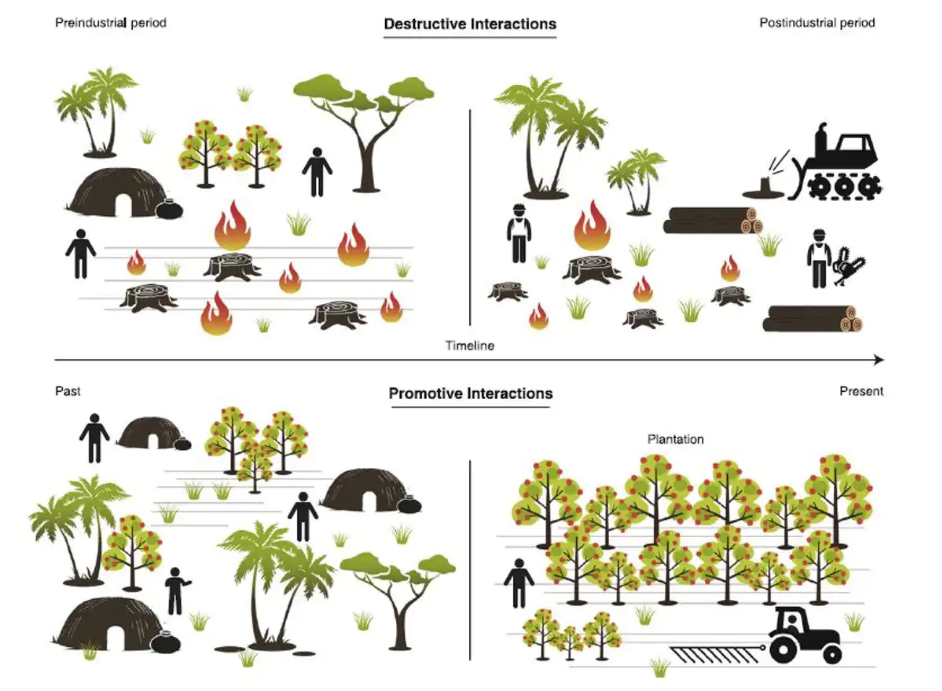
Traditional forest management encouraged biodiversity, whereas modern methods erode it. Caeteno-Adrade et al. / Trends in Plant Science
In the past, vast areas of the world’s tropical forests were managed by indigenous peoples in this way. Trees keep their own accounts of this history in their wood. It has always been thought that tropical trees have short lifespans, usually less than 400 years. But recent research shows that many tropical trees live for a very long time, and can preserve over 1,000 years of history in their timber.
You’re probably familiar with the idea that you can measure how old a tree is by counting the rings beneath its bark. One ring usually equates to one year, so dendrochronology (the study of tree rings) offers a fairly easy way to understand the life of a tree. Thicker rings tend to denote a year when conditions were good for growth – ample sunshine and water – whereas thinner rings suggest a lean year of drought and competition with other trees.
Many tropical trees don’t lay down annual rings, but in the new study dendrochronologists identified over 200 species that do. Typically wider rings reflect higher rainfall, but many trees put on a growth spurt if light intensity rises. These are called release events and can happen if trees around them are cut down, allowing more light to break through the canopy. Finding these markers helps researchers to recognise and date past episodes of forest clearance. In the Amazon, these records help scientists understand the enormous extent of pre-Columbian agriculture and forest management.

Researchers extract a core of wood to measure the tree’s rings and find out its age. Victor Caetano-Andrade
The rings also preserve evidence of changes in the climate through the different isotopes (types) of oxygen and carbon laid down in the wood. Carbon isotopes tend to reflect light availability and other factors that control photosynthesis, whereas oxygen isotopes help scientists track changes in a nearby water source and annual rainfall. Isotopic studies showed that the abandonment of Angkor Wat in the 14th century coincided with severe drought.
Forest histories can also emerge from new DNA studies. Heavily logged species go through what we call “genetic bottlenecks”, where part of the genetic material of a species is lost as many individuals die or are unable to reproduce and pass on their genes. This leads to restricted gene pools.
Researchers would expect to see the same patterns in species which were strongly affected by logging or fires started by people in the past. Genetics can also identify species that were spread by ancient people, like the Brazil nut.
Living tropical trees record within themselves a history of human activity and the forest’s response to it. The regeneration of forests after disruption by people in the past offers some hope for the future, but only if current rates of deforestation can be halted, allowing the lungs of our planet to regenerate.
Chris Hunt is a Professor of Cultural Palaeoecology, Liverpool John Moores University
THIS ARTICLE WAS ORIGINALLY PUBLISHED ON THE CONVERSATION
Australia Bushfires: A Koala Who Was Treated for Burns Returns to the Wild
Animals have experienced devastating consequences of the wildfires in Australia. Watch this video of a koala bear attempting to return to the wild.
Read More
Protestors carry the national flag as they march in Algiers. Asiya Haouchine.
Algerians Mark One Year of Political Demonstrations with New Protests
2019 marked a year of many political protests that spanned the globe. The wave of protests—the Global Protest Wave of 2019—took place in Africa, the Middle East, Hong Kong, France, Catalonia, and Latin America. In its 53rd week, the Algerian protest movement, known as “The Revolution of Smiles” or Hirak (the Arabic word for movement), began twelve days after Abdelaziz Bouteflika announced he was running for a fifth presidential term. Algerians, outraged by his decision, demonstrated across Algeria on Friday, February 22. Thousands of protestors took to the streets of the capital, Algiers, where it has been illegal to protest since June 2001 when thousands of Kabylie demonstrators demanded justice from the government’s abuse of power.
Hirak protestors called for a total overhaul of the Algerian government, starting with Bouteflika stepping down from his long-held position as president. Chants calling for a civilian state, not a military state (دولة مدنية ماشي عسكرية) became a regular part of the protest rhetoric, along with a reminder to the news organizations and Algerian government that the Algerian’s revolution is a peaceful one: “silmiya, silmiya”.
After Bouteflika announced he would not run for a fifth term on March 11, the slogan “Yetnahaw ga’a!” (get rid of them all) became a rallying cry. Protestors believed, and continue to believe, Algeria cannot be considered free until those who have contributed, participated, and strengthened Bouteflika’s 20-year reign resign from their positions in government and face persecution for injustices and crimes they have committed.
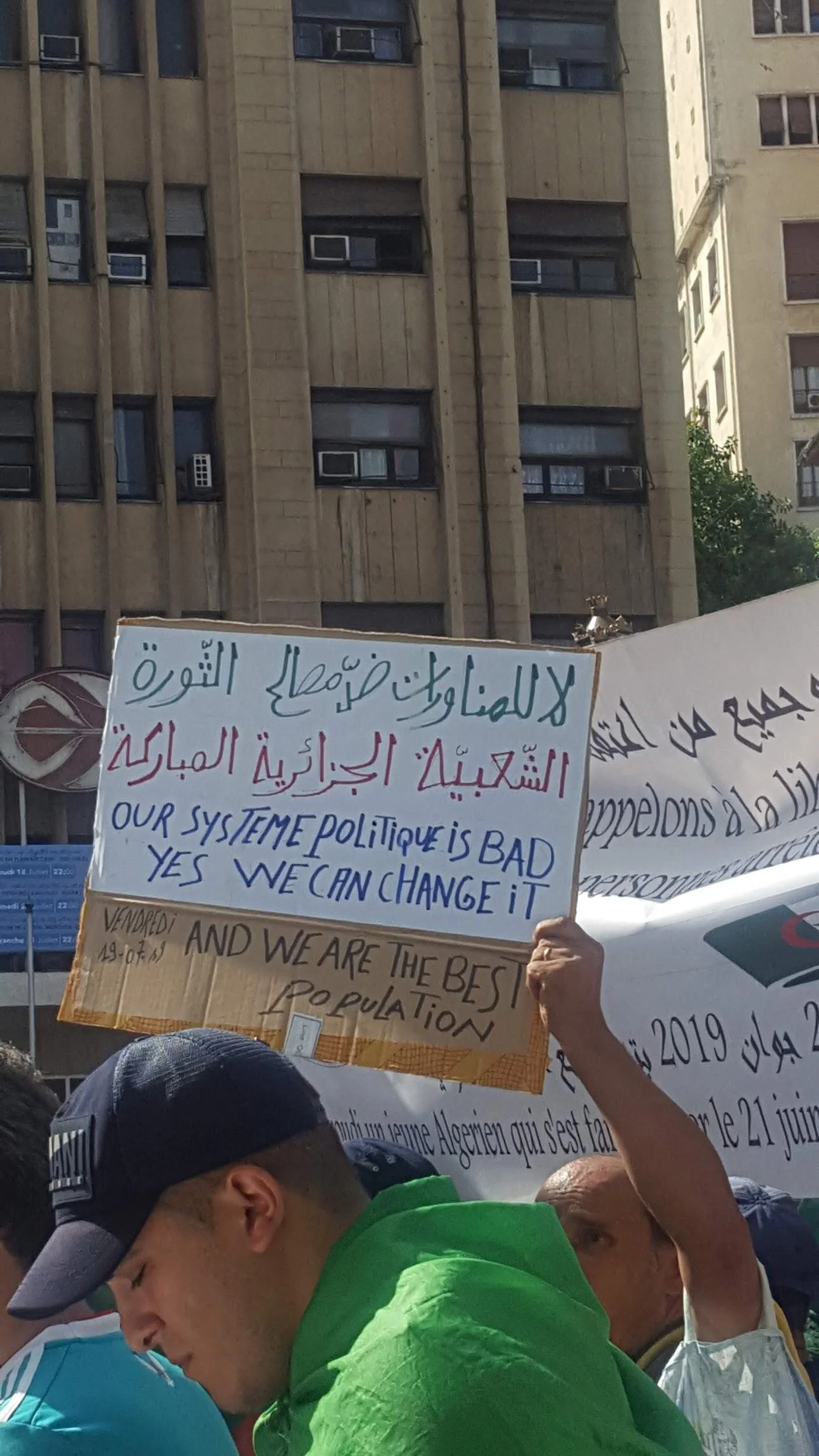
An Algerian man holds up a political sign during a march in Algiers. Asiya Haouchine.
Driving through the streets of Algeria, one can hear powerful political songs playing from phones and radios—people often singing along. Among those songs that have become the sound of protest are “Libérer l'Algérie” written by various artists supporting the movement, “La liberté” by Soolking, and “Allô le système!” and “Toxic” by Raja Meziane. Meziane has been exiled due to her politically charged songs, but continues to create music that has become part of the movement.
In a country where more than two-thirds of the population is under 30, it is the youth who are most negatively impacted by the current system. Staggering unemployment, drugs, delinquency, and harragas—North Africans who flee their country (Algeria, Morocco, and Tunisia) illegally on makeshift boats, burning their identification papers in the hope of finding a better life in Europe—are some of the challenges the Algerian youth face. It is no surprise, then, that the protests have been led by young Algerians. The Hirak inspired many Algerians—young and old—to stop being complacent and to do something to inspire hope and create change for the country they love. From babies in strollers to elders walking with canes, Algeria has not seen her citizens rise up to this degree since the Algerian war for independence. They are united and determined to be peaceful—a goal that is doubly important for most Algerians who lived through the bloody 10-year civil war of the 90s and early 2000s.
The movement succeeded in imprisoning many key figures of Bouteflika’s regime, but Algeria still has a ways to go before its government enacts the changes its citizens demand. A year later, Algerian citizens continue to protest. The crowd buzzes with energy and excitement—their passion for justice and love for their country has not dulled with time.

Asiya Haouchine
is an Algerian-American writer who graduated from the University of Connecticut in May 2016, earning a BA in journalism and English. She was an editorial intern and contributing writer for Warscapes magazine and the online/blog editor for Long River Review. She is currently studying for her Master's in Library and Information Science.
@AsiyaHaou

Rhythms of Peru
There is so much more to Peru than Machu Picchu. From the heart of Lima to deep in the Sacred Valley, 'Rhythms of Peru' takes you not only to Peru's most iconic, but also far off the tourist trail for a chance to experience a more intimate view of this beautiful country.

Coronavirus: How Media Coverage of Epidemics Often Stokes Fear and Panic
New contagious diseases are scary. They frighten us because they are unknown and unpredictable. The ongoing outbreak of the novel coronavirus has received extensive media attention, coverage that can tell us a lot about how uncertainty in the face of such an epidemic can all too easily breed fear.
For about a decade, I have been studying the role of emotions in journalism, including in the coverage of disasters and crises. Media coverage is vital to our shared conversations and plays a key role in regulating our emotions, including fear.
While fear is an emotion that we frequently experience as individuals, it can also be a shared and social emotion, one which circulates through groups and communities and shapes our reactions to ongoing events. Like other emotions, fear is contagious and can spread swiftly.
Media coverage sets the agenda for public debate. While the news doesn’t necessarily tell us what to think, it tells us what to think about. In doing so, the news signals what issues merit our attention. Research has consistently shown that when issues receive extensive media coverage and are prominent in the news agenda, they also come to be seen as more important by members of the public.
The current outbreak has been much more prominent in media coverage than recent epidemics, including Ebola. For example, a Time Magazine study shows that there were 23 times more articles in English-language print news covering the coronavirus outbreak in its first month compared to the same time period for the Ebola epidemic in 2018.
‘Killer virus’
My own research suggests that fear has played a particularly vital role in coverage of the coronavirus outbreak. Since reports first started circulating about the new mystery illness on January 12, and up until February 13 2020, I have tracked reporting in major English-language newspapers around the world, using the LexisNexis UK database. This includes almost 100 high-circulation newspapers from around the world, which have collectively published 9,387 stories about the outbreak. Of these, 1,066 articles mention “fear” or related words, including “afraid”.
Such stories often used other frightening language – for example, 50 articles used the phrase “killer virus”. One article in The Telegraph newspaper was typical of this fear-inducing language, in describing scenes on the ground in Wuhan shared on social media:
Mask-wearing patients fainting in the street. Hundreds of fearful citizens lining cheek by jowl, at risk of infecting each other, in narrow hospital corridors as they wait to be treated by doctors in forbidding white hazmat suits. A fraught medic screaming in anguish.
Tabloid newspapers such as The Sun and The Daily Mail, were more likely to use fear-inducing language. For example, The Sun’s coronavirus liveblog routinely refers to the virus as a “deadly disease”.
Many stories offered local angles by reporting on fears in local areas affected by the outbreak. In the UK, this led to a particular focus on Brighton, where several cases have been reported. For example, a story in The Times suggested:
Conversations about miniature bottles of antibacterial hand sanitiser are normally far from a mainstay of lunchtime pub chitchat. However, such is the anxiety over the coronavirus that locals in The Grenadier in Hove yesterday readily admitted to changing their hand-washing routines.
Other reports localised the story by discussing the impact on Chinese-owned businesses. The Manchester Evening News, for instance, reported that: “The fear of coronavirus is hitting businesses hard, with some reporting a 50 per cent drop in custom since the outbreak. And Chinese Mancunians report suffering more racial abuse.”
A number of stories, by contrast, sought to temper fears and provide reassurance. For example, Singaporean prime minister Lee Hsein Loong was widely quoted in cautioning against panic:
Fear can make us panic, or do things which make matters worse, like circulating rumours online, hoarding face masks or food, or blaming particular groups for the outbreak.
Fear can be catching
Research on coverage of earlier disease outbreaks show a similar emphasis on fear. In the case of the SARS epidemic in 2003, a study by historian Patrick Wallis and linguist Brigitte Nerlich found that “the main conceptual metaphor used was SARS as a killer”.

China demanded an apology after a Danish newspaper used the Chinese flag in a cartoon about the spread of the novel coronavirus. EPA-EFE/Ida Marie Odgaard
Along the same lines, media scholars Peter Vasterman and Nel Ruigrok examined coverage of the H1N1 epidemic in The Netherlands, and found that it was marked by the “alarming” tone of its coverage. Like the coronavirus, these historical outbreaks were characterised by uncertainty, breeding fear and panic.
To put these observations into perspective, it is instructive to look to a comparison to coverage of seasonal influenza, which is estimated by the World Health Organization to kill 290,000 to 650,000 people around the world every year. Since January 12 2020, world newspapers have published just 488 articles on the seasonal influenza without mention of the coronavirus.
In sharp contrast to coverage of this novel coronavirus, fewer than one in ten stories about flu (37 of 488) mentioned fear or similar phrases.
The prominence of fear as a theme in reports of the coronavirus suggests that much of the coverage of the outbreak is more a reflection of public fear than informative of what is actually happening in terms of the spread of the virus.
Former US president Franklin D Roosevelt probably overstated the case when he famously said that “the only thing we have to fear is fear itself”. Yet at a time rife with misinformation, fake news and conspiracy theories, it is worthwhile remaining alert to the dangers of this contagious emotion in the face of uncertainty.
Karin Wahl-Jorgensen is a Professor and Director of Research Development and Environment, School of Journalism, Cardiff University
THIS ARTICLE WAS ORIGINALLY PUBLISHED ON THE CONVERSATION.
VIETNAM: Hungry in Hanoi
In the summer of 2016 Alex Schiller and his girlfriend embarked on a week long trip to Hanoi and Ha Long Bay. When they weren't busy eating incredible street food, they filmed some stuff.

Albert Bierstadt, Rocky Mountain Landscape, 1870.
Three Things Historical Literature Can Teach Us About the Climate Crisis
New novels about climate change – climate fiction, or cli-fi – are being published all the time. The nature of the climate crisis is a difficult thing to get across, and so imagining the future – a drowned New York City, say; or a world in which water is a precious commodity – can help us understand what’s at stake.
This is unsurprising in these times of crisis: fiction allows us to imagine possible futures, good and bad. When faced with such an urgent problem, it might seem like a waste of time to read earlier texts. But don’t be so sure. The climate emergency may be unprecedented, but there are a few key ways in which past literature offers a valuable perspective on the present crisis.
1. Climate histories
Historical texts reflect the changing climatic conditions that produced them. When Byron and the Shelleys stayed on the shores of Lake Geneva in 1816, the literature that they wrote responded to the wild weather of the “year without a summer”.
This was caused largely by the massive eruption of the Indonesian volcano Mount Tambora the previous year, which lowered global temperatures and led to harvest failures and famine. Literary works such as as Byron’s “Darkness”, Percy Shelley’s “Mont Blanc”, and Mary Shelley’s Frankenstein reveal anxieties about human vulnerability to environmental change even as they address our power to manipulate our environments.
Many older texts also bear indirect traces of historical climate change. In Paradise Lost (1667), Milton complains that a “cold climate” may “damp my intended wing” and prevent him from completing his masterpiece. This may well reflect the fact that he lived through the coldest period of the “Little Ice Age”.
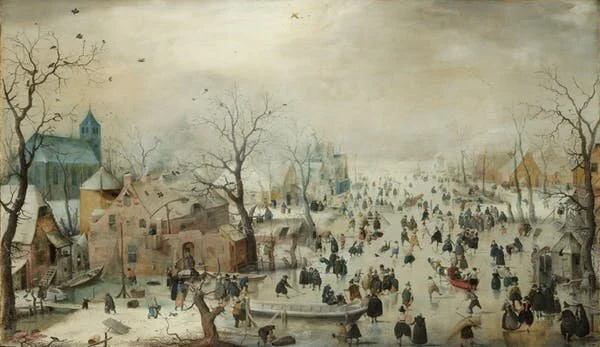
Hendrick Avercamp, Winter Landscape with Skaters, c. 1608. Rijks Museum
Even literature’s oldest epic poem, The Epic of Gilgamesh (c. 1800 BC), contains traces of climate change. It tells of a huge flood which, like the later story of Noah in the Old Testament, is probably a cultural memory of sea level rise following the melting of glaciers at the end of the last Ice Age.
These historical climatic shifts were not man made, but they still provide important analogues for our own age. Indeed, many cultures have seen human activity and climate as intertwined, often through a religious framework. One of the ironies of modernity is that the development of the global climate as an object of study, apparently separate from human life, coincides with the development of the carbon capitalism that has linked them more closely than ever.
2. How we view nature
Reading historical literature also allows us to trace the development of modern constructions of the natural world. For example, the Romantic ideal of “sublime” nature, which celebrated vast, dramatic landscapes like mountains and chasms, has influenced the kinds of places that we value and protect today in the form of national parks.
When we understand that such landscapes are not purely natural, but are produced by cultural discourses and practices over time – we protect these landscapes above others for a reason – we can start to debate whether they can be better managed for the benefit of humans and non-humans alike.
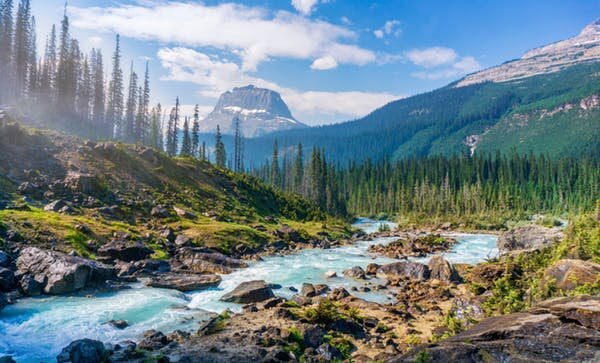
Past ideas of ‘sublime’ nature have bled into the landscapes we protect today. Hendrik Cornelissen/Unsplash, FAL
Or consider how in the 18th and early 19th centuries, the work of nature writers such as Thomas Bewick, Charlotte Smith and Gilbert White played a powerful role in promoting natural theology: the theory that evidence for God’s existence can be found in the complex structures of the natural world. Past literature has also been crucial in disseminating new scientific ideas such as evolutionary theory, which understood natural phenomena as entirely secular. Literature does not just reflect changing views of the natural world; it shapes them.
Studying historical texts helps us to understand how modern cultural attitudes towards the environment developed, which in turn allows us to perceive that these attitudes are not as “natural” or inevitable as they may seem. This insight allows for the possibility that today, in a time in which our attitude towards the environment could certainly improve, they can change for the better.
3. Ways of thinking
Some of the attitudes towards the natural world that we discover in historical literature are contentious, even horrifying: for example, the normalisation of animal cruelty portrayed in books such as Black Beauty.
But we can find more promising models too. Voltaire’s poem on the 1755 Lisbon earthquake, for example, has been used to think about the ethics of blame and optimism in responses to modern disasters, like the 1995 Kobe earthquake and the 2009 L’Aquila earthquake.
Reading past literature can also help us to appreciate the natural world for its own sake. Samuel Johnson commented of the natural descriptions in James Thomson’s poems The Seasons (1730) that the reader “wonders that he never saw before what Thomson shows him and that he never yet has felt what Thomson impresses”. Amid the frenzied distractions of modern life, the work of authors like Thomson, Dorothy Wordsworth and John Clare can help us to slow down, notice and love nature.
Historical literature can remind us of our own vulnerability to elemental forces. The famous depiction of a storm in King Lear, for example, mocks Lear’s attempt:
In his little world of man to out-scorn
The two-and-fro-conflicting wind and rain.
Shakespeare might appear to aestheticise dangerous weather, but the play reminds us that the storm is far bigger and messier than any human attempt to represent and interpret it.
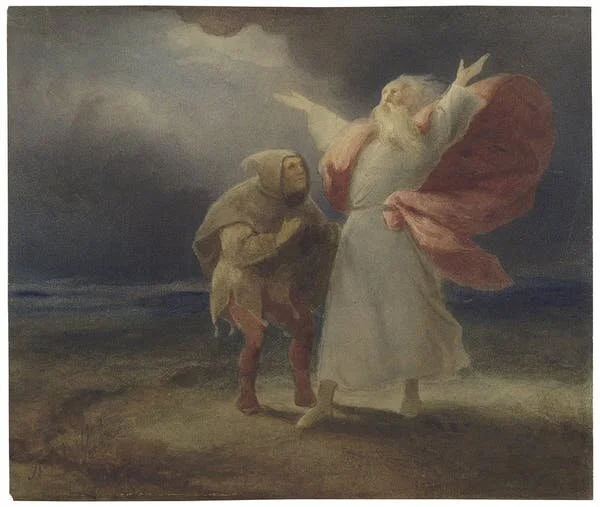
Lear and the Fool in the storm, Ary Scheffer, 1834. Folger Shakespeare Library, CC BY-SA
At the same time, literature can remind us of the need to take responsibility for our own impacts upon the environment. We may not want to follow pre-modern and early modern literature in viewing climate change as divine punishment for bad behaviour. But when Milton suggests that it was the fall of man that brought in “pinching cold and scorching heat” to replace the eternal spring of Eden, his narrative has clear figurative resonance with our present crisis.
Historical literature can show us how writers responded to climate change, trace how they influenced modern ideas about nature, and reveal valuable ways of relating to and thinking about nature. The climate crisis cannot be addressed only through technological solutions. It also requires profound cultural shifts. To make those shifts requires an understanding of past ideas and representations: both those that led to our current predicament and those that might help us address it.
David Higgins is a Associate Professor in English Literature, University of Leeds
Tess Somervell is a British Academy Postdoctoral Fellow in English, University of Leeds
THIS ARTICLE WAS ORIGINALLY PUBLISHED ON THE CONVERSATION

Within Iran’s lower classes, there is a highly conformist youth culture. Farzin Mahmoudzadeh, Author provided
How Iran’s Millennials Are Grappling With Crippling US Sanctions
In early January, after tensions between Iran and the United States escalated to the brink of war, President Donald Trump announced a detente of sorts, stating, “The United States is ready to embrace peace with all who seek it.”
It may have sounded like a conciliatory gesture, but the Trump administration went on to levy additional economic sanctions against the country only two days later.
As someone who has studied the lives of Iran’s working classes, I know just how damaging economic warfare has been. It’s hit young Iranians, who comprise a large portion of the population, particularly hard. High rates of inflation – on the order of 38.6% over the past 12 months – and a youth unemployment rate of 28.6% have drastically reduced their ability to purchase basic goods and feel any semblance of financial security.
Over the past 12 years, I’ve studied various groups of lower-class young people and their families in their homes, neighborhoods and workplaces, in shops, and in parks. I’ve also interviewed 44 youth between the ages of 15 and 29 who have been sidelined to the socioeconomic margins.
I wanted to know how they cope with prolonged insecurity and the constant threat of crisis.
Interestingly – and despite what you might see on the news – many don’t react by rebelling against authority or by regularly taking to the streets.
A central observation from my research and forthcoming book has been that, when faced with conditions of uncertainty, the young people I spoke with simply sought respect, acceptance and support from their communities. Life becomes a quest not for revolution, riches or vengeance, but for dignity.
A highly conformist culture
The desire for status and dignity is an integral part of Iranian society.
Most of the poor, younger city dwellers I studied try to achieve this through both their conduct and their dress. They want to be seen as classy, diligent and moral. In communities that value prestige and look down on poverty, this becomes their ticket to a better life.
So in an attempt to conceal their poverty, they’ll spend their limited income on the latest trends so they can attain a “modern” appearance, from having the latest smartphones to wearing brand-name shoes and shirts – or at least knockoffs.
In order to avoid being seen as lazy or delinquent, the young people I interviewed work diligently and avoid being associated with petty criminals, like drug dealers. Even though there’s rarely enough work to go around, they get creative. They work in the informal economy as shop apprentices, street vendors and seamstresses. Those who can’t find work take up unpaid work babysitting for family members or helping with a family business in an effort to appear hardworking. By doing this, they can assume a moral high ground – regardless of how little money they’re actually making.
As one local, middle-aged woman told me, “There’s something wrong with a kid who doesn’t work.”
These young men and women are adhering to a set of values prized by their communities and promoted by society through billboards, national television and official speeches.
The result is a relatively stable social order – and a youth culture that’s highly conformist.
This might come as a surprise to some, since some Western media outlets sometimes fixate on acts of rebellion.
In reality, deviance – especially among the lower classes – is rare. Many simply can’t afford the consequences of being shunned by those around them.
Rewards don’t need to be material
The quest for dignity is only part of the story. Like many young people around the world, most youth in Iran have dreams of a better future. But for those dealing with daily economic hardship, there’s a chasm between their goals and what’s possible.
“I wanted to get my bachelor’s degree and have a job where I sat behind a desk,” said Babak, a street vendor, “but I had to drop out of ninth grade in order to meet my family’s expenses.”
That gap may never be fully breached. But many young Iranians I met still feel as if it’s possible to – in the words of a mechanic’s apprentice – “bring themselves up.”
The young people I interviewed do this not by trying to game the system, but by following the rules: diligence, self-sufficiency, a smart appearance, and moral and sexual cleanliness. For this, communities reward them with jobs, small promotions, or even just more deference. The material benefits might be minimal, but people nonetheless feel validated and included in the broader fabric of the nation.
In other contexts, researchers have found that “looking the part” – performing what’s deemed to be attractive to society – matters to people’s life prospects. The youth I knew in Iran do the same. They might not fully escape poverty, but they can escape stigma.
To them, that matters.
The limits of virtue
Of course, not everyone in Iran can maintain an appearance of industry, class and virtue.
There are young people who are desperately poor, who can’t even scrape together enough money for a new pair of shoes. There are drug addicts. There are young women who have been outed as prostitutes.
Focused on only helping those they deem “deserving,” communities do little to lift up people who have fallen through the cracks. Friends and acquaintances are unwilling to recommend them for jobs, neighbors avoid connecting with them, families view them with shame.
It can all seem a bit Darwinian, with those deemed unfit becoming social pariahs.
And yet, there are many youth who persevere, who believe that living by the rules, day in and day out, is the right way to live. As Ibrahim, a laborer, emphasized, “I try to live in a good way. If people remember you as good, this is reason to be proud.” To youth like Ibrahim, living a worthy life means not simply accumulating material goods, but staying true to a moral code.
In the face of rising prices, dwindling jobs, and few prospects for socioeconomic change, the routines of daily life create space for those who have suffered most under the weight of suffocating sanctions to breathe – and, in many cases, grow.
Manata Hashemi is a Farzaneh Family Assistant Professor of Iranian Studies, University of Oklahoma.
THIS ARTICLE WAS ORIGINALLY PUBLISHED ON THE CONVERSATION
This Accidental Snow Guardian Tracked Snowfall for 40 Winters
Billy Barr lives a simple life. He enjoys tea, sitting by the fire and reading. He lives alone in a house he helped build in a remote Rocky Mountain location. But what really gets him going is the weather, and more specifically, the snowfall in his neck of the woods. So he started taking notes about it: every winter, twice a day for 40 years. These detailed snowfall notes have become a treasure trove for scientists studying climate change.
AUSTRALIA: Christmas Island's Red Crab Invasion
Every year in late October, Christmas Island sees red. Lots of red. During the annual crab migration, the island’s endemic red crabs travel from their home on the rainforest floor to the shore to mate and spawn. This mass migration of around 40 million crabs is a spectacular sight to behold.
ECUADOR: The Galapagos
Andrew Norton recently got invited to visit the Galapagos islands in Ecuador. Just before returning home he called his wife, Katie, to tell her about it. A tale of trying quasi-adventurous things, Darwin marrying his cousin and riding a tortoise, and a kid that can do 1000 kick-ups, among other things.
ICELAND: Vindur Means Wind in Icelandic
The word Vindur means ”wind” in Icelandic which is relevant to the way this video was captured. For 3 minutes you will get to enjoy amazing drone footage portraying Iceland’s unbelievable landscapes. From beautiful waterfalls to endless valleys, with its unusual mountain ranges and out of this world landscapes, oceanic cliffs, old glacier, fantastic canyons and many other wonders, take look at what make Iceland so unique.

Digital technology may help improve the effectiveness of anti-stigma education programs. (Shutterstock)
From Recognition to Transformation: How Digital Technology Can Reduce Mental Illness Stigma
When those with mental illness experience prejudice and discrimination in the form of stigma, it can make their suffering considerably worse.
Spreading awareness and understanding through education is one of the strategies used to tackle the problem. Years of public education campaigns have helped open the conversation. Yet evidence suggests that stigma against people with mental illness remains a problem in our health-care system.
Consider what the experience is like for a young person who seeks mental-health care. They may suffer for a long time before they eventually build up the courage to ask for help. When they share this with a family member or a friend, they may be encouraged to look for help, but encounter a long waiting list for treatment. Over time, they continue to struggle and things get worse. If they end up in crisis, they might need to seek emergency care.

People seeking mental health care may face long waits for treatment. (Shutterstock)
The doctor, nurse or mental health professional they encounter is probably struggling within a challenging system. Health-care professionals work hard with limited resources, soaking up the suffering of others until they begin to detach from their own humanity for self-protection. They might appear rushed. They might seem distant. This can result in the patient feeling dismissed or feeling judged.
As a psychiatrist, I bear witness to a broken system. Mental-health care is chronically underfunded. If a parent has one child with diabetes and one with anxiety or depression and they seek help, the child with diabetes receives world-class care. The child with mental illness is given a sheet of paper and a 12- to 18-month wait.
Encountering blame and shame
As a stigma researcher, my team and I found that when individuals seek help for their mental illness in settings like hospitals or emergency departments, they frequently encounter blame and shame. We also found that many health professionals stigmatize without even being aware of it.
We quickly learned that no matter how well-intentioned health professionals may be, they do not always intend to say what their patients and their families hear.
Stigma in health care is automatic. It is embedded within the fabric of the system. Can we really expect training and workshops for health-care workers to solve the problem?
One of the problems with existing stigma reduction education is that it’s delivered through in-class formats that are fairly one-dimensional. Advances in digital and social media may have the potential to challenge traditional approaches to learning and provide real-time delivery of information to a huge audience. For example, medical journals that leverage social media have a much greater impact than those that do not.

Social media can be an effective way to keep health professionals up to date. (Shutterstock)
Hashtag campaigns on social media are another example. Instead of educating people about mental illness in a classroom, a viral social media post can inspire a social movement. Digital tools like social media, blogs and wikis provide knowledge for health professionals who can use this technology to learn about a topic while deepening their engagement and promoting collaboration.
Research shows that social media is an effective and efficient way to keep health professionals up to date with the latest knowledge to improve the quality of health care for their patients.
Sharing stigma-reduction tools
Digital technology also makes stigma-reduction education freely available to everyone. By putting knowledge about stigma in the hands of patients and caregivers, technology democratizes expertise.
An example of the power of digital technology to improve health care can be found in pediatric pain research. Led by clinical psychologist, Dr. Christine Chambers, #itdoesnthavetohurt is a science-media partnership that brings evidence-based information about children’s pain directly to parents.
Chambers found that numerous eHealth tools for pain assessment and management are developed, yet have a reduced impact because they are rarely made available to patients and families. She and her team targeted their digital strategy directly at caregivers, whom they empowered with knowledge on best practices for managing pediatric pain.
Chambers’s work is a good example of how including the patient (or, in this case, the caregiver) in the solution can improve results. Digital technologies, including social media platforms, provide opportunities to include people affected by mental health stigma in new solutions to address it.
As stigma researchers, my team and I recognize the potential value in providing stigma-reducing tools directly to patients and caregivers, as well as to the health professionals those tools are targeting. Bringing those groups together may provide better ways to tackle the stigmatizing practices and policies that still exist in health care.
Javeed Sukhera is an Associate professor, Western University
THIS ARTICLE WAS ORIGINALLY PUBLISHED ON THE CONVERSATION
Bushfires, Bots and Arson Claims: Australia Flung in the Global Disinformation Spotlight
In the first week of 2020, hashtag #ArsonEmergency became the focal point of a new online narrative surrounding the bushfire crisis.
The message: the cause is arson, not climate change.
Police and bushfire services (and some journalists) have contradicted this claim.
We studied about 300 Twitter accounts driving the #ArsonEmergency hashtag to identify inauthentic behaviour. We found many accounts using #ArsonEmergency were behaving “suspiciously”, compared to those using #AustraliaFire and #BushfireAustralia.
Accounts peddling #ArsonEmergency carried out activity similar to what we’ve witnessed in past disinformation campaigns, such as the coordinated behaviour of Russian trolls during the 2016 US presidential election.
Bots, trolls and trollbots
The most effective disinformation campaigns use bot and troll accounts to infiltrate genuine political discussion, and shift it towards a different “master narrative”.
Bots and trolls have been a thorn in the side of fruitful political debate since Twitter’s early days. They mimic genuine opinions, akin to what a concerned citizen might display, with a goal of persuading others and gaining attention.
Bots are usually automated (acting without constant human oversight) and perform simple functions, such as retweeting or repeatedly pushing one type of content.
Troll accounts are controlled by humans. They try to stir controversy, hinder healthy debate and simulate fake grassroots movements. They aim to persuade, deceive and cause conflict.
We’ve observed both troll and bot accounts spouting disinformation regarding the bushfires on Twitter. We were able to distinguish these accounts as being inauthentic for two reasons.
First, we used sophisticated software tools including tweetbotornot, Botometer, and Bot Sentinel.
There are various definitions for the word “bot” or “troll”. Bot Sentinel says:
Propaganda bots are pieces of code that utilize Twitter API to automatically follow, tweet, or retweet other accounts bolstering a political agenda. Propaganda bots are designed to be polarizing and often promote content intended to be deceptive… Trollbot is a classification we created to describe human controlled accounts who exhibit troll-like behavior.
Some of these accounts frequently retweet known propaganda and fake news accounts, and they engage in repetitive bot-like activity. Other trollbot accounts target and harass specific Twitter accounts as part of a coordinated harassment campaign. Ideology, political affiliation, religious beliefs, and geographic location are not factors when determining the classification of a Twitter account.
These machine learning tools compared the behaviour of known bots and trolls with the accounts tweeting the hashtags #ArsonEmergency, #AustraliaFire, and #BushfireAustralia. From this, they provided a “score” for each account suggesting how likely it was to be a bot or troll account.
We also manually analysed the Twitter activity of suspicious accounts and the characteristics of their profiles, to validate the origins of #ArsonEmergency, as well as the potential motivations of the accounts spreading the hashtag.
Who to blame?
Unfortunately, we don’t know who is behind these accounts, as we can only access trace data such as tweet text and basic account information.
This graph shows how many times #ArsonEmergency was tweeted between December 31 last year and January 8 this year:
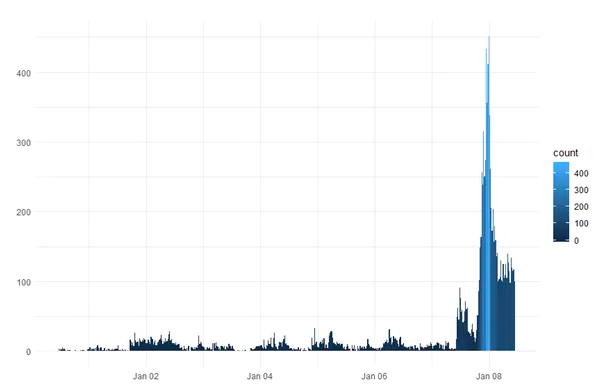
On the vertical axis is the number of tweets over time which featured #ArsonEmergency. On January 7, there were 4726 tweets. Author provided
Previous bot and troll campaigns have been thought to be the work of foreign interference, such as Russian trolls, or PR firms hired to distract and manipulate voters.
The New York Times has also reported on perceptions that media magnate Rupert Murdoch is influencing Australia’s bushfire debate.f
Weeding-out inauthentic behaviour
In late November, some Twitter accounts began using #ArsonEmergency to counter evidence that climate change is linked to the severity of the bushfire crisis.
Below is one of the earliest examples of an attempt to replace #ClimateEmergency with #ArsonEmergency. The accounts tried to get #ArsonEmergency trending to drown out dialogue acknowledging the link between climate change and bushfires.
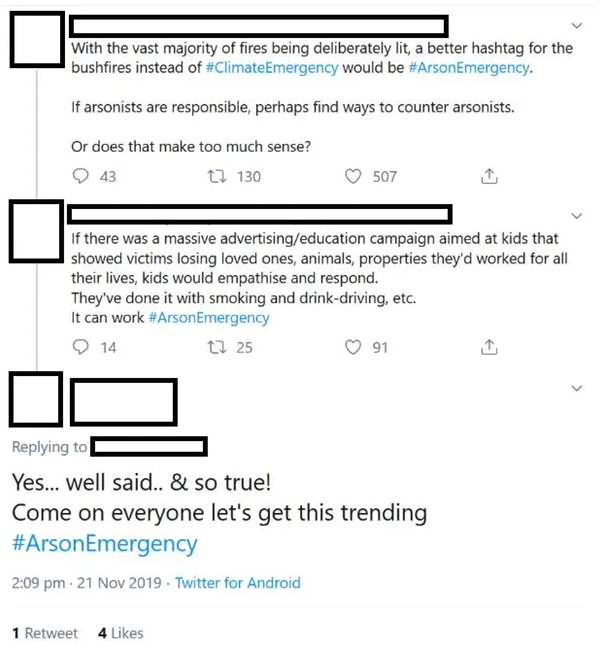
We suspect the origins of the #ArsonEmergency debacle can be traced back to a few accounts. Author provided
The hashtag was only tweeted a few times in 2019, but gained traction this year in a sustained effort by about 300 accounts.
A much larger portion of bot and troll-like accounts pushed #ArsonEmergency, than they did #AustraliaFire and #BushfireAustralia.
The narrative was then adopted by genuine accounts who furthered its spread.
On multiple occasions, we noticed suspicious accounts countering expert opinions while using the #ArsonEmergency hashtag.
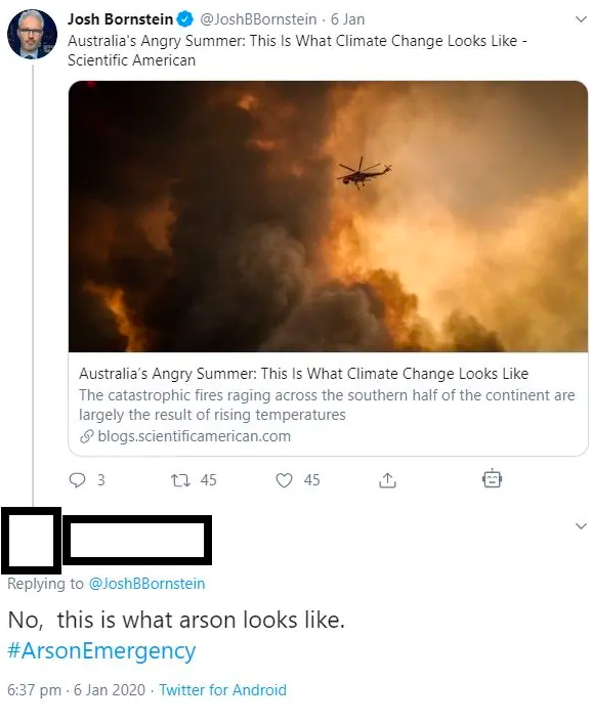
The inauthentic accounts engaged with genuine users in an effort to persuade them. author provided
Bad publicity
Since media coverage has shone light on the disinformation campaign, #ArsonEmergency has gained even more prominence, but in a different light.
Some journalists are acknowledging the role of disinformation bushfire crisis – and countering narrative the Australia has an arson emergency. However, the campaign does indicate Australia has a climate denial problem.
What’s clear to me is that Australia has been propelled into the global disinformation battlefield.
Keep your eyes peeled
It’s difficult to debunk disinformation, as it often contains a grain of truth. In many cases, it leverages people’s previously held beliefs and biases.
Humans are particularly vulnerable to disinformation in times of emergency, or when addressing contentious issues like climate change.
Online users, especially journalists, need to stay on their toes.
The accounts we come across on social media may not represent genuine citizens and their concerns. A trending hashtag may be trying to mislead the public.
Right now, it’s more important than ever for us to prioritise factual news from reliable sources – and identify and combat disinformation. The Earth’s future could depend on it.
Timothy Graham is a Senior Lecturer, Queensland University of Technology
Tobias R. Keller is a Visiting Postdoc, Queensland University of Technology
THIS ARTICLE WAS ORIGINALLY PUBLISHED ON THE CONVERSATION
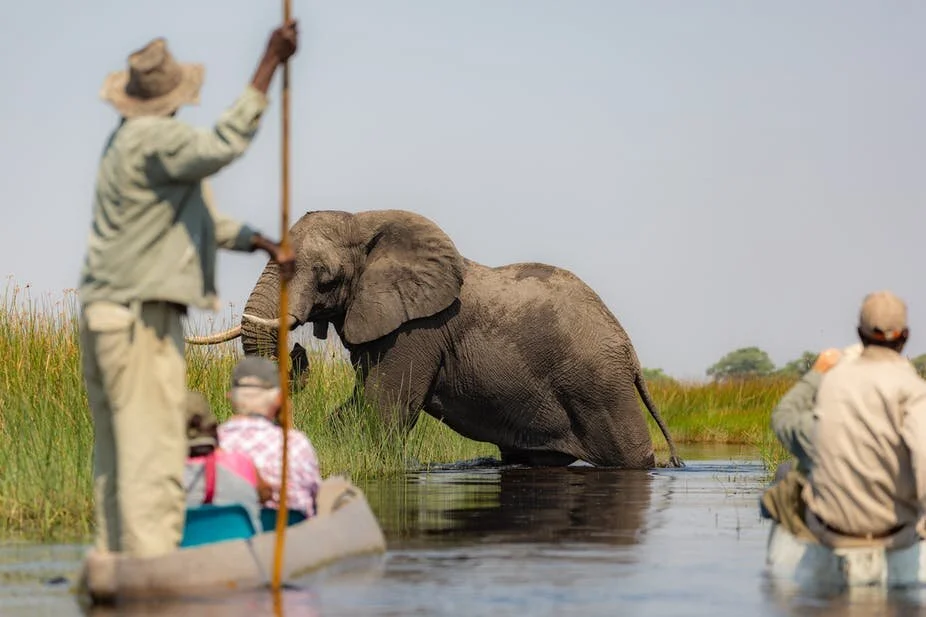
The Delta’s rich array of wildlife makes it a popular tourist destination. Ger Metselaar/Shutterstock
Botswana’s Okavango Delta is Created By a Delicate Balance, But For How Much Longer?
The Okavango Delta in northern Botswana is a mosaic of water paths, floodplains and arid islands. The delta sits in the Okavango river basin, which spans three African countries: Angola, Namibia and Botswana.
Because it’s an oasis, in a semi-arid area, it hosts a rich array of plants and attracts a huge variety of wildlife.
As a unique ecosystem, in 2014 it was placed on UNESCO’s World Heritage list and it is an iconic tourist destination, which generates 13% of Botswana’s GDP.
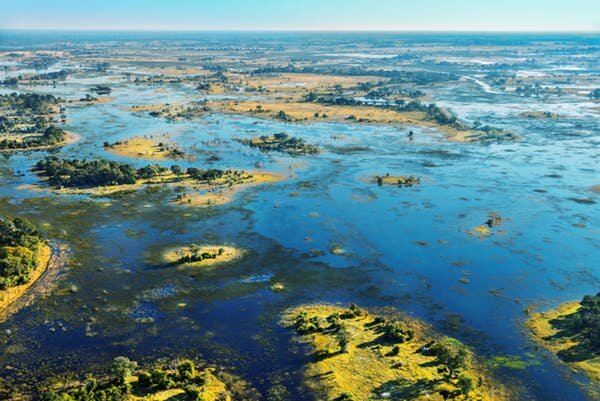
Aerial view of the Okavango Delta. Vadim Petrakov/Shutterstock
But it’s a fragile natural area. It’s controlled by deformations of the Earth’s crust over a long time (thousands to millions of years) and by annual water flows and evaporation. The size of the flooded delta from year to year varies between 3,500km² and 9,000km² because of weather fluctuations which control its water supply.
Any change to the processes that form the delta will have an impact on the wildlife and local economic activities. Its grassy floodplains are food for grazing animals in the dry period. Losses of this habitat will cause declines in wildlife and livestock. It’s therefore imperative to understand what creates and sustains the delta for the future management of the system.
We have conducted several studies that cover how the Okavango basin was formed and the way dissolved chemicals are withdrawn from the delta’s surface.
The dynamic history of the Okavango Delta’s waterways and floodplains tells us that the interplay between geology, water and plants makes the delta resilient, but vulnerable.
Some imminent changes are expected that are of concern. One is higher temperatures, which will boost evaporation and transpiration. Another is the pumping of water for irrigation in Namibia. Both of these changes will reduce the water needed to sustain the delta’s floodplains.
An oasis
The Okavango Delta is a generally flat area which is under constant change with phases of flooding and drying. A variety of geographical and natural processes have formed it and sustain it.
It’s in a depression which was created by fault lines cutting the Earth’s surface. This means water flows into it. The fault lines are created by the spread of the East African Rift – a major fracture, created over millions of years, which crosses the eastern part of Africa.
The origin of the islands in the delta is attributed to two mechanisms: the construction of termite mound spires; and formation of elevated ridges where former channels deposited sand. Both act as the starting point for vegetation to take root.
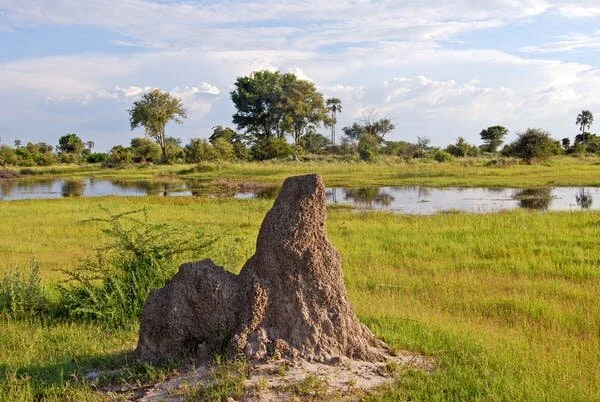


Termite mound in the delta. PIXEL to the PEOPLE/Shutterstock
The water supply comes from the Cubango and Cuito rivers in Angola. This reaches the delta between March and June and peaks in July. There’s also local rainfall in the Okavango area from November to February (about 450mm a year) which adds to this.
About 98% of the water that goes into the delta is eventually lost through evaporation and plant transpiration, when water moves through the plant and evaporates from leaves, stems and flowers.
Even though the subtropical sun generates intense evaporation, the delta’s water is fresh, not salty. This is surprising because water samples from the middle parts of the islands have very high chemical and salt concentrations. This chemical concentration occurs in thousands of islands.
The reason the water is fresh is that trees on the edges of the islands have created a barrier of natural filters between the inner part of the islands and the floodplain.
Possible changes
The Okavango Delta is continually being shaped by complex interactions of natural processes. If something happens to change the balance of these processes, it could destabilise the system.
The most important dynamic for the delta is inflowing water. The two main rivers in Angola, the Cubango and the Cuito, join to form the Okavango river, which feeds the delta. These two rivers are hydrologically quite different. The Cubango, to the west, first flows rapidly down steep, narrow paths characterised by incised valleys, rapids, waterfalls and valley swamps. The Cuito, to the east, with shallow valleys and large floodplains, gets its water from groundwater seepage.
The manipulation of these rivers – in the form of dams and irrigation – will affect the water flow and change its annual distribution. Both of these form part of current and future development planning in Angola and Namibia.
A decrease in water supply will affect the vegetation growth and the wildlife. An increase in water would inundate the islands and could dissolve the salts at the centre of them, releasing chemical elements that would change the water quality.
In addition to declines in water flow induced by global warming and human activities, ground deformation is also happening because of shifting continental plates. This could change the paths of the water flowing by changing the ground slopes. Measurements of ground deformation with Global Positioning Systems displays reveal very slight changes in local slopes that can modify the paths of the water flowing to the delta.
To sustain the Okavango Delta it’s imperative that management integrate all the components of the system. All governments are involved and must integrate scientific expertise, from upstream catchment to downstream Delta.
Michael Murray-Hudson is a Senior Research Fellow, Okavango Research Institute, University of Botswana
Olivier Dauteuil is a Directeur de Recherche au CNRS, Université Rennes 1
THIS ARTICLE WAS ORIGINALLY PUBLISHED ON THE CONVERSATION
KASHMIR — A Lost Paradise
In one of the most beautiful places on Earth, the conflict in Kashmir – which have been largely forgotten by the world – has raged on since 1947. What was once a paradise, Kashmir Valley is now the forgotten epicenter of war, human-rights violations and a true representation of what it looks like to struggle for peace and freedom. Watch this short video about the beauty and conflict of Kashmir.
Read More