
• Travel Features
  • Global Action
  • Take A Trip
  • Travel Guides
    • Podcast
    • Courses
    • Bookshop
  • About
  • Sign Up
Menu

CATALYST PLANET

  • Travel Features
  • Global Action
  • Take A Trip
  • Travel Guides
  • Discover
    • Podcast
    • Courses
    • Bookshop
  • About
  • Sign Up

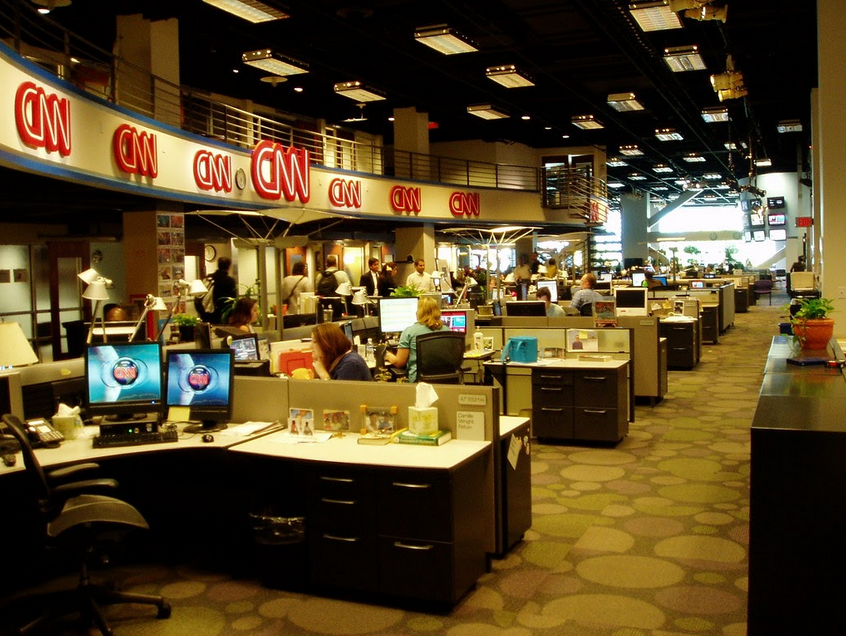
"CNN.com" by Bruno Pin is licensed under CC BY-NC-SA 2.0

How the 24-hour News Cycle Perpetuates Racial Bias in the Case of Coronavirus

March 28, 2020

Sensationalism and the 24-hour news cycle aided in killing journalistic integrity, and it also aids in perpetuating racial bias, fear, and panic. Constant reporting forces news stations to air stories that will maintain a captive audience. There is only so much news (or so many sides to a story) that can be reported on in a day. This forces 24-hour news channels to come up with content that will fill time slots and keep the audience tuned in. Since the ongoing coverage is usually focused on one particular subject or event, the audience is subjected to a constant barrage of narrowly focused facts and opinions. As a result, fear turns into panic, which can often lead to deadly results.

Coronavirus is the latest epidemic that is fueling racism, panic, and mistrust. This fear is exacerbated by sensational news and 24-hour reportage. Amidst “doomsday prepping” and the price gouging of masks and hand sanitizer, is the worst result of overblown news coverage of the coronavirus: physical and verbal attacks fueled by racism. Racist attacks against Asians in the United States, Canada, the Netherlands, and across Europe have been linked to coronavirus. Overblown news coverage of coronavirus, along with ignorance and misinformation, has helped lead to this spike in racist assaults across the globe.

One video making rounds on Twitter shows a New York subway passenger spraying what appears to be a can of Febreze in the direction of an Asian passenger while shouting at him to move away from him. Tanny Jiraprapasuke, who is Thai American, uploaded a video on Facebook of a xenophobic rant directed toward her on the Los Angeles Metro. Singaporean student Jonathan Mok posted a detailed account and pictures of his battered face on Facebook after he was assaulted on Oxford Street in London.

It does not help that some media purposely (or carelessly) enforce racial bias. On March 1, the New York Post published a story about the first confirmed case of coronavirus in Manhattan. They tweeted a link to the story along with an image of an Asian man on Main Street in Flushing, Queens, which has a large Asian American population. New York’s first confirmed case of coronavirus is a woman in her late 30s. On the same day, the New York Times used a photograph of two older Asian women wearing medical masks on a Facebook post about the same first coronavirus case in New York. The New York Post and the New York Times’s decision to use photographs of Asian Americans helped further perpetuate harmful stereotypes and fearmongering against Asians.

Roger Keil, a professor in the environmental studies department at York University said, “To combat racism, people in the public eye, including politicians and media outlets, have to begin by uncoupling the disease from its origin point.” If the media continues to be irresponsible by reporting in a way that racializes epidemics, xenophobic and racist attacks like those related to the coronavirus, SARS, and Ebola will continue to plague our societies. Coronavirus is not an excuse to discriminate. It certainly does not.

Asiya Haouchine

is an Algerian-American writer who graduated from the University of Connecticut in May 2016, earning a BA in journalism and English. She was an editorial intern and contributing writer for Warscapes magazine and the online/blog editor for Long River Review. She is currently studying for her Master's in Library and Information Science.

@AsiyaHaou

Tags COVID-19, Coronavirus, racism, racial bias, news, epidemic, panic, New York, New York Times, media, SARS, ebola
Comment

Coronavirus: How Media Coverage of Epidemics Often Stokes Fear and Panic

March 1, 2020

New contagious diseases are scary. They frighten us because they are unknown and unpredictable. The ongoing outbreak of the novel coronavirus has received extensive media attention, coverage that can tell us a lot about how uncertainty in the face of such an epidemic can all too easily breed fear.

For about a decade, I have been studying the role of emotions in journalism, including in the coverage of disasters and crises. Media coverage is vital to our shared conversations and plays a key role in regulating our emotions, including fear.

While fear is an emotion that we frequently experience as individuals, it can also be a shared and social emotion, one which circulates through groups and communities and shapes our reactions to ongoing events. Like other emotions, fear is contagious and can spread swiftly.

Media coverage sets the agenda for public debate. While the news doesn’t necessarily tell us what to think, it tells us what to think about. In doing so, the news signals what issues merit our attention. Research has consistently shown that when issues receive extensive media coverage and are prominent in the news agenda, they also come to be seen as more important by members of the public.

The current outbreak has been much more prominent in media coverage than recent epidemics, including Ebola. For example, a Time Magazine study shows that there were 23 times more articles in English-language print news covering the coronavirus outbreak in its first month compared to the same time period for the Ebola epidemic in 2018.

‘Killer virus’

My own research suggests that fear has played a particularly vital role in coverage of the coronavirus outbreak. Since reports first started circulating about the new mystery illness on January 12, and up until February 13 2020, I have tracked reporting in major English-language newspapers around the world, using the LexisNexis UK database. This includes almost 100 high-circulation newspapers from around the world, which have collectively published 9,387 stories about the outbreak. Of these, 1,066 articles mention “fear” or related words, including “afraid”.

Such stories often used other frightening language – for example, 50 articles used the phrase “killer virus”. One article in The Telegraph newspaper was typical of this fear-inducing language, in describing scenes on the ground in Wuhan shared on social media:

Mask-wearing patients fainting in the street. Hundreds of fearful citizens lining cheek by jowl, at risk of infecting each other, in narrow hospital corridors as they wait to be treated by doctors in forbidding white hazmat suits. A fraught medic screaming in anguish.

Tabloid newspapers such as The Sun and The Daily Mail, were more likely to use fear-inducing language. For example, The Sun’s coronavirus liveblog routinely refers to the virus as a “deadly disease”.

Many stories offered local angles by reporting on fears in local areas affected by the outbreak. In the UK, this led to a particular focus on Brighton, where several cases have been reported. For example, a story in The Times suggested:

Conversations about miniature bottles of antibacterial hand sanitiser are normally far from a mainstay of lunchtime pub chitchat. However, such is the anxiety over the coronavirus that locals in The Grenadier in Hove yesterday readily admitted to changing their hand-washing routines.

Other reports localised the story by discussing the impact on Chinese-owned businesses. The Manchester Evening News, for instance, reported that: “The fear of coronavirus is hitting businesses hard, with some reporting a 50 per cent drop in custom since the outbreak. And Chinese Mancunians report suffering more racial abuse.”

A number of stories, by contrast, sought to temper fears and provide reassurance. For example, Singaporean prime minister Lee Hsein Loong was widely quoted in cautioning against panic:

Fear can make us panic, or do things which make matters worse, like circulating rumours online, hoarding face masks or food, or blaming particular groups for the outbreak.

Fear can be catching

Research on coverage of earlier disease outbreaks show a similar emphasis on fear. In the case of the SARS epidemic in 2003, a study by historian Patrick Wallis and linguist Brigitte Nerlich found that “the main conceptual metaphor used was SARS as a killer”.

China demanded an apology after a Danish newspaper used the Chinese flag in a cartoon about the spread of the novel coronavirus. EPA-EFE/Ida Marie Odgaard

Along the same lines, media scholars Peter Vasterman and Nel Ruigrok examined coverage of the H1N1 epidemic in The Netherlands, and found that it was marked by the “alarming” tone of its coverage. Like the coronavirus, these historical outbreaks were characterised by uncertainty, breeding fear and panic.

To put these observations into perspective, it is instructive to look to a comparison to coverage of seasonal influenza, which is estimated by the World Health Organization to kill 290,000 to 650,000 people around the world every year. Since January 12 2020, world newspapers have published just 488 articles on the seasonal influenza without mention of the coronavirus.

In sharp contrast to coverage of this novel coronavirus, fewer than one in ten stories about flu (37 of 488) mentioned fear or similar phrases.

The prominence of fear as a theme in reports of the coronavirus suggests that much of the coverage of the outbreak is more a reflection of public fear than informative of what is actually happening in terms of the spread of the virus.

Former US president Franklin D Roosevelt probably overstated the case when he famously said that “the only thing we have to fear is fear itself”. Yet at a time rife with misinformation, fake news and conspiracy theories, it is worthwhile remaining alert to the dangers of this contagious emotion in the face of uncertainty.

Karin Wahl-Jorgensen is a Professor and Director of Research Development and Environment, School of Journalism, Cardiff University

THIS ARTICLE WAS ORIGINALLY PUBLISHED ON THE CONVERSATION.

Tags coronavirus, news, China, panic, epidemic, influenza, CheckOut, COVID
Comment

Also check out...

Featured
Vietnam’s Floating Markets Are Disappearing
The Supernatural Role of Masks in Nigeria’s Yoruba Tribal Culture
Opening the World to Deaf Travelers with Lily Yu

Featured trips

Featured
Offer NGO Support While Visiting Quito
Experience Life as a Mongolian Nomad
Help Grow Organic Costa Rican Coffee

Sign up for the CATALYST newsletter

Sign up for our newsletter to get the scoop on international travel, global social impact insights, our latest podcast releases, and more from around the world, all delivered right to your inbox!

We respect your privacy.

Thank you!
Newsletter Sign Up | Advertise | Careers + Internships | Privacy Policy | Submissions | Contact Us

Copyright © 2025, MISSION MEDIA LLC. All rights reserved.