
Here’s how to plan a sustainable multi-city European trip using world-class public transportation.
Read MoreAlbania’s Wild River: How the Vjosa Is Reshaping Sustainable Travel
Thanks to the country’s recent UNESCO recognition, Albania is working to reduce pollution and balance sustainability with travel along the Vjosa.
Read MoreRefugees Wait for Relief in Lesvos
A decade after the start of the migration crisis in Europe, the outlook for refugees in Lesvos is bleak.
Read MoreSailing Beneath the Northern Lights on Norway’s Arctic Coast
Sophia Michelen
A journey through Arctic Norway examines the Northern Lights from scientific, geographic, and cultural perspectives, including aurora research, Sami traditions, and the landscapes of the Norwegian coast.
Images by Sophia Michelen
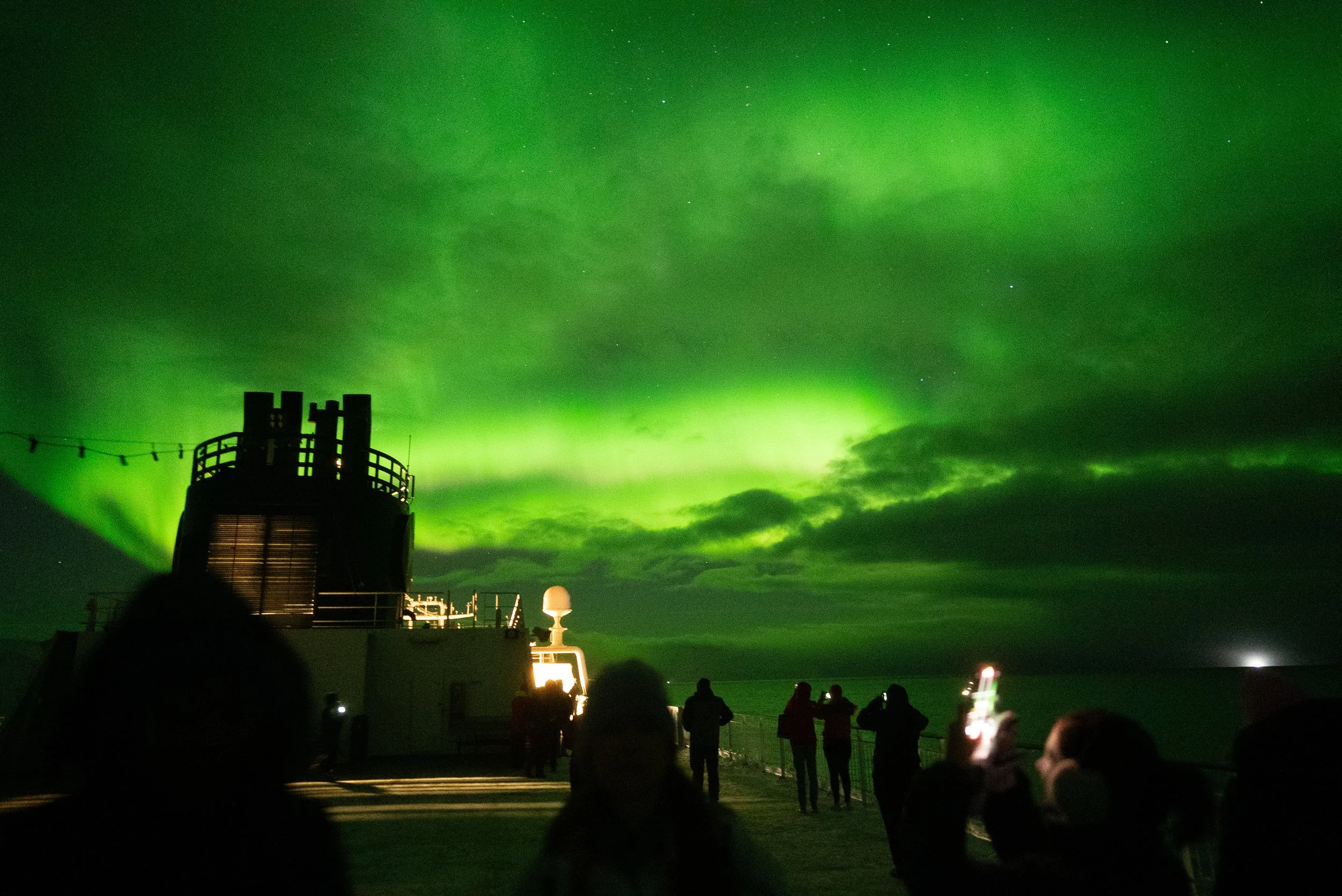
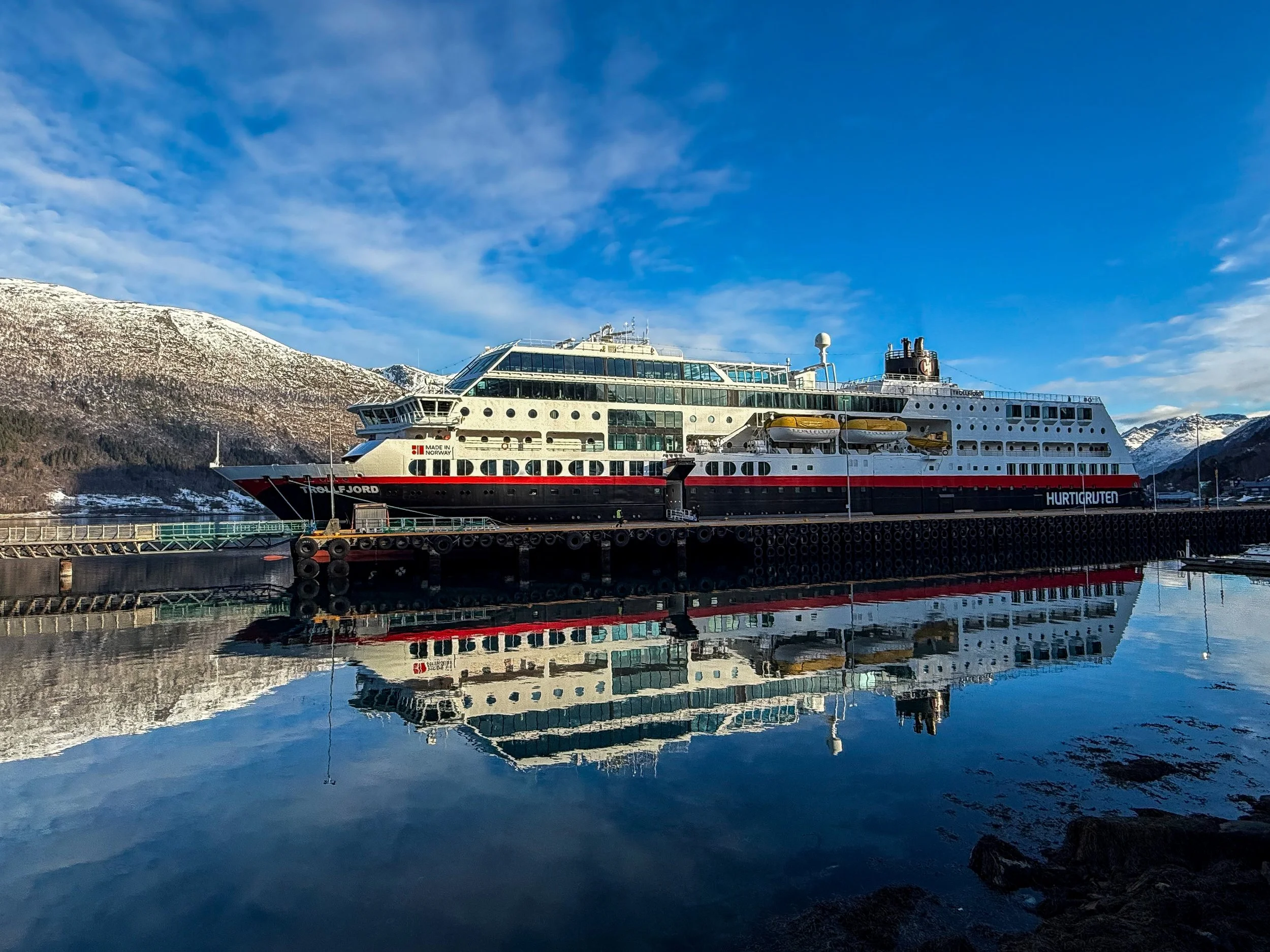
The deck lights are dimmed to red as the MS Trollfjord moves quietly through the Arctic night. Beyond the railings, the sea is black and nearly indistinguishable from the sky, and passengers stand in silence, watching. I am among them during the inaugural Hurtigruten Astronomy Voyage, sailing south from Troms along Norway’s northern coast aboard the North Cape Line. Over six winter nights, the ship travels through one of the world’s largest aurora hotspots: Troms, Finnmark, and Nordland, where long polar nights and clear Arctic skies create some of the best conditions on Earth for seeing the Northern Lights.
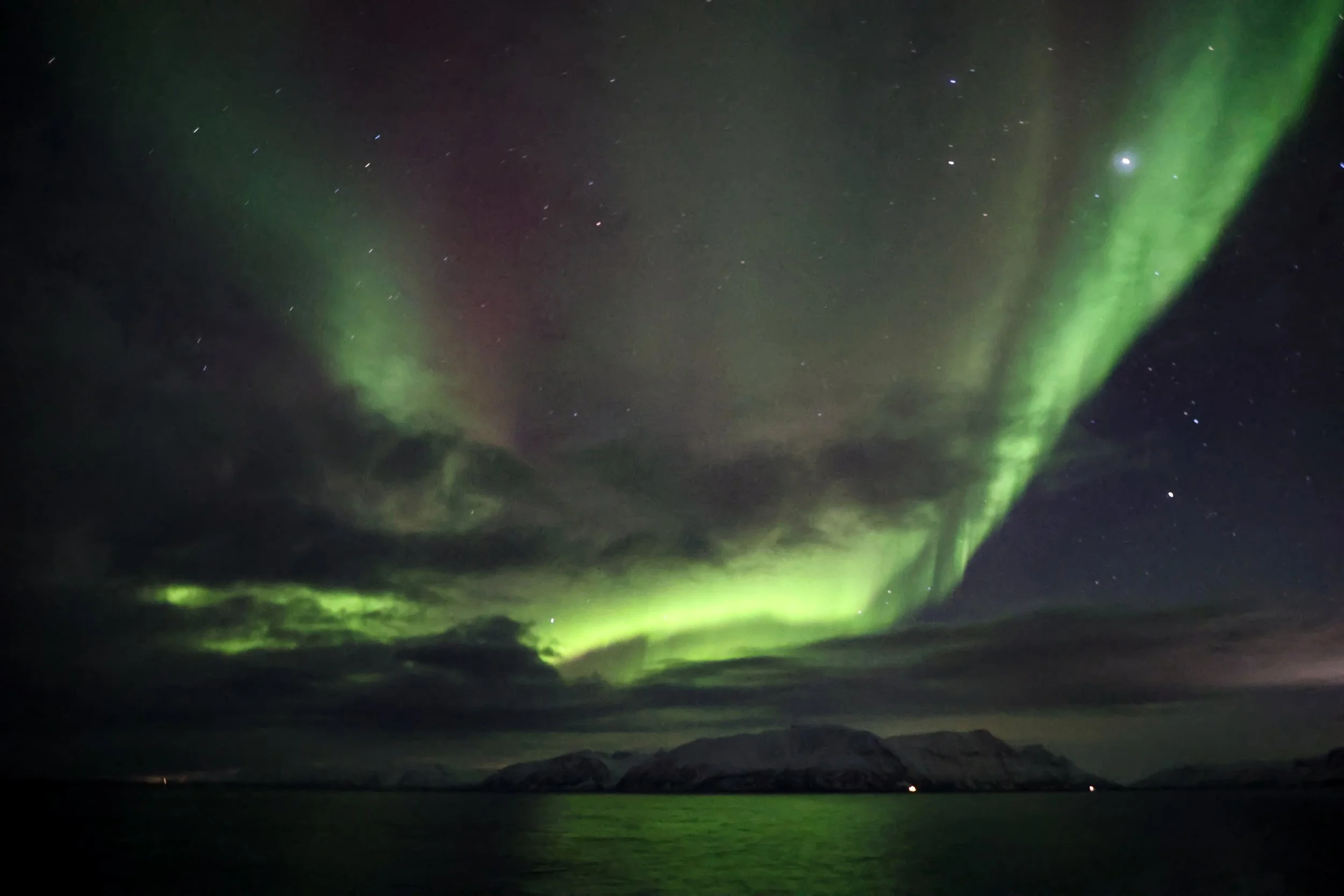
Above us, the first faint ribbon slowly appears. For centuries, the aurora has inspired mythology and speculation. Yet the phenomenon unfolding above the Norwegian coast begins far beyond the horizon, at the sun itself. “The aurora is the end of a chain of invisible processes,” explains astronomer Tom Kerss, Hurtigruten’s Chief Aurora Chaser, during a lecture earlier that afternoon. Charged particles carried by the solar wind collide with Earth’s magnetic field and are guided toward the poles. When those particles strike gases high in the atmosphere, they release energy in the form of light. From the deck of a ship moving through Arctic Norway, the science becomes something else entirely: a shifting curtain of green and pink rippling across the sky.
The Geography of the Lights
Northern Norway sits beneath the auroral oval, a ring-shaped zone around the magnetic poles where the lights appear most frequently. Long winter nights, minimal light pollution and open Arctic skies make the region one of the world’s most reliable places to witness the phenomenon.
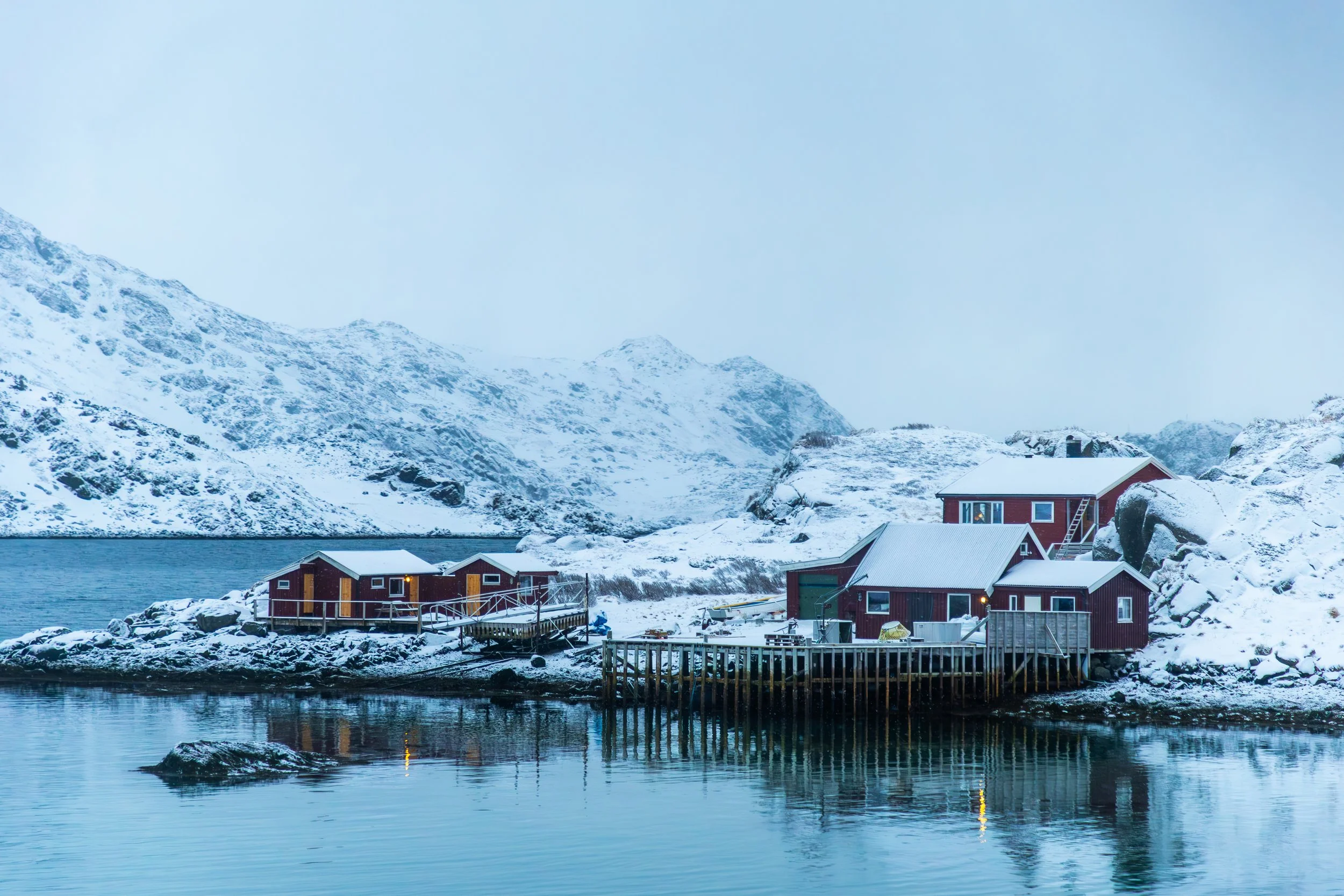
Traveling by sea also adds the advantage of mobility. Rather than waiting in a single location for the sky to clear, ships can move along hundreds of miles of coastline, navigating between weather systems and cloud cover. Along this stretch of Norway, the landscape unfolds gradually, with snow-covered mountains rising directly from the sea, small harbors tucked between fjords and villages that appear briefly along the shoreline before disappearing again behind headlands.
For Kerss, who has spent years studying and photographing auroras across the Arctic, Norway’s coast remains uniquely suited to observing the phenomenon. The lights themselves vary constantly, sometimes appearing as faint arcs barely visible against the stars and other times erupting into sweeping curtains of green stretching from horizon to horizon. On rare nights, red and violet hues ripple across the sky as oxygen and nitrogen react at different altitudes in Earth’s upper atmosphere. Even with the science explained, the moment when the sky begins to move feels almost surreal.
Life Along the Arctic Coast
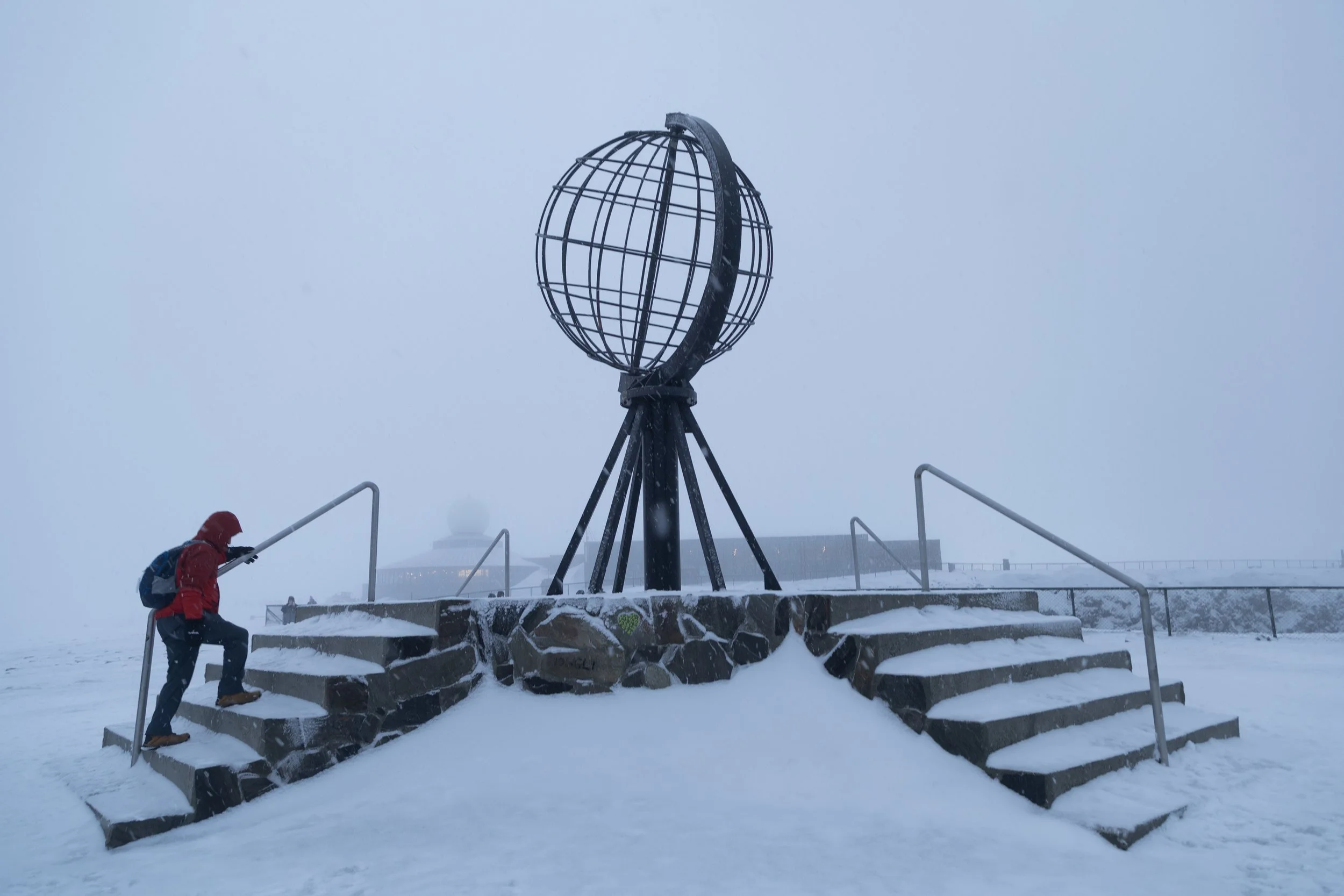
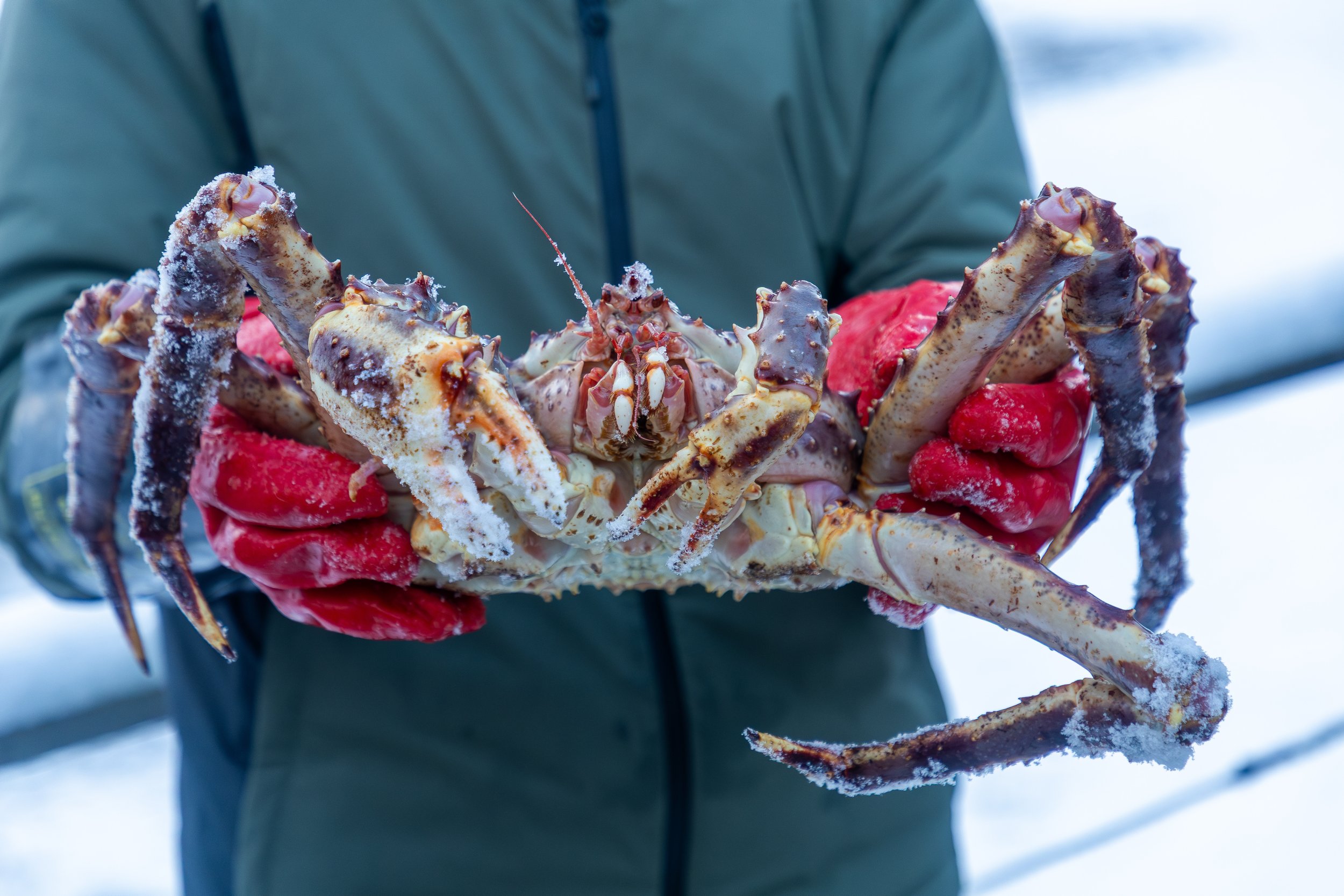
During the day, the voyage moves between small Arctic communities shaped by the sea. In Honningsvag, colorful wooden buildings cluster around a harbor where fishing boats remain central to the local economy. Offshore, the Barents Sea provides king crab, one of the region’s most recognizable delicacies. Originally introduced to these waters decades ago, the enormous crustaceans have become a defining part of northern Norway’s fishing culture. Visitors heading out onto the surrounding waters often end the excursion with a simple meal of fresh crab served with little more than bread and butter.
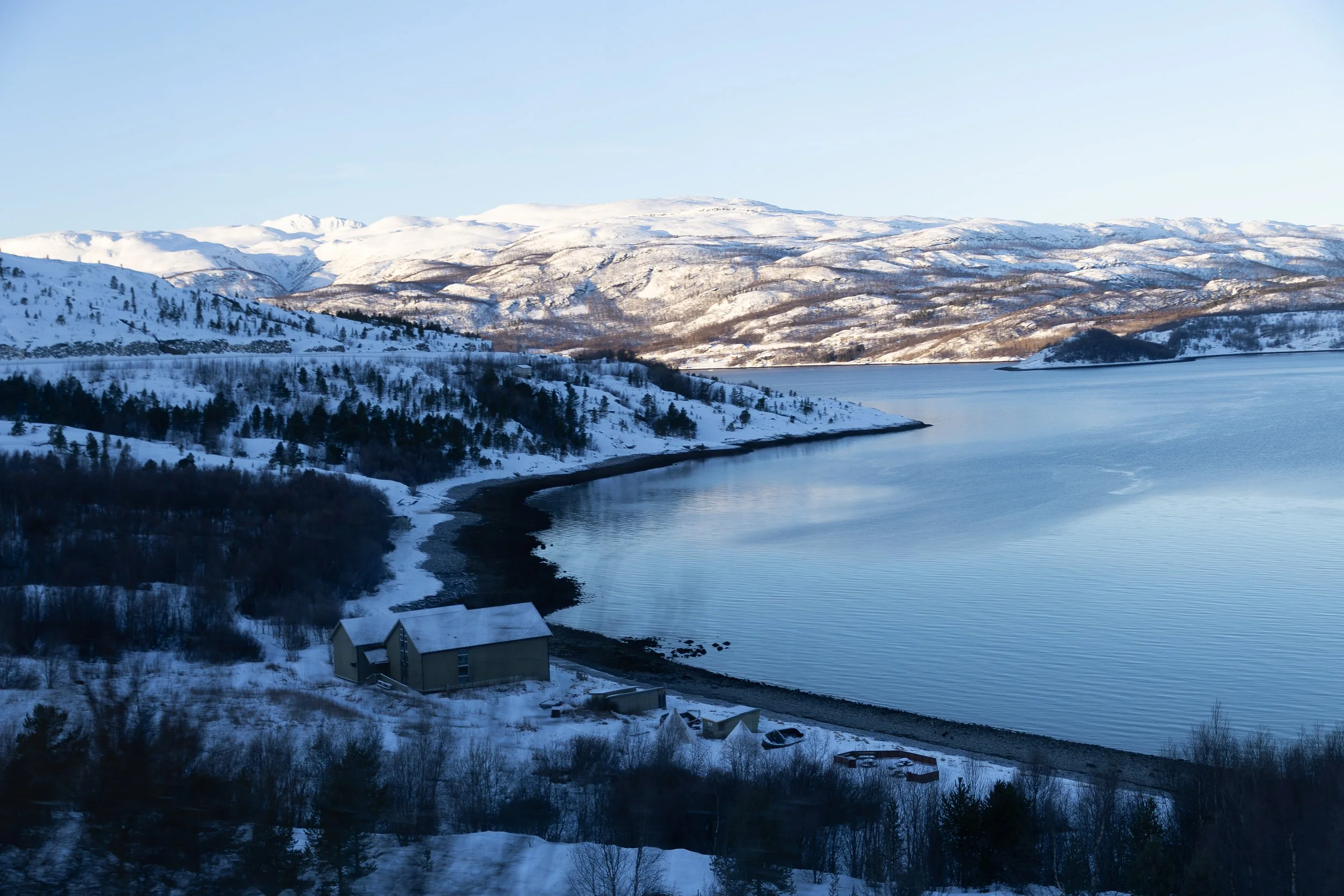
Further south, the landscape shifts again. Jagged mountain ranges rise sharply from the sea, their peaks dusted with snow even in early spring. The coastline twists through narrow fjords and open stretches of water, where the horizon seems to extend endlessly northward. Moving through these waters offers a sense of scale that is difficult to grasp from land alone.
Images by Sophia Michelen
Alta and the Study of the Aurora
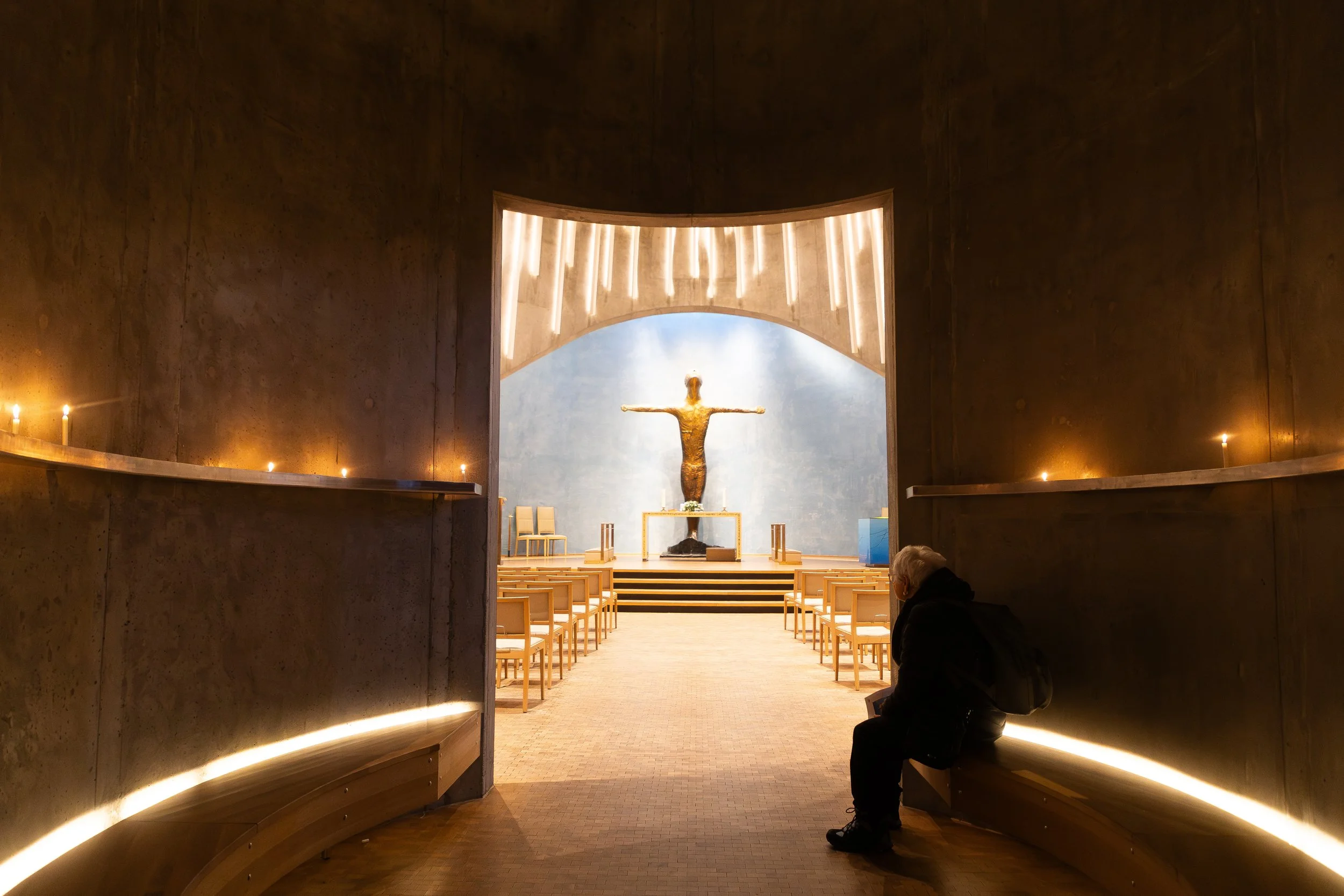
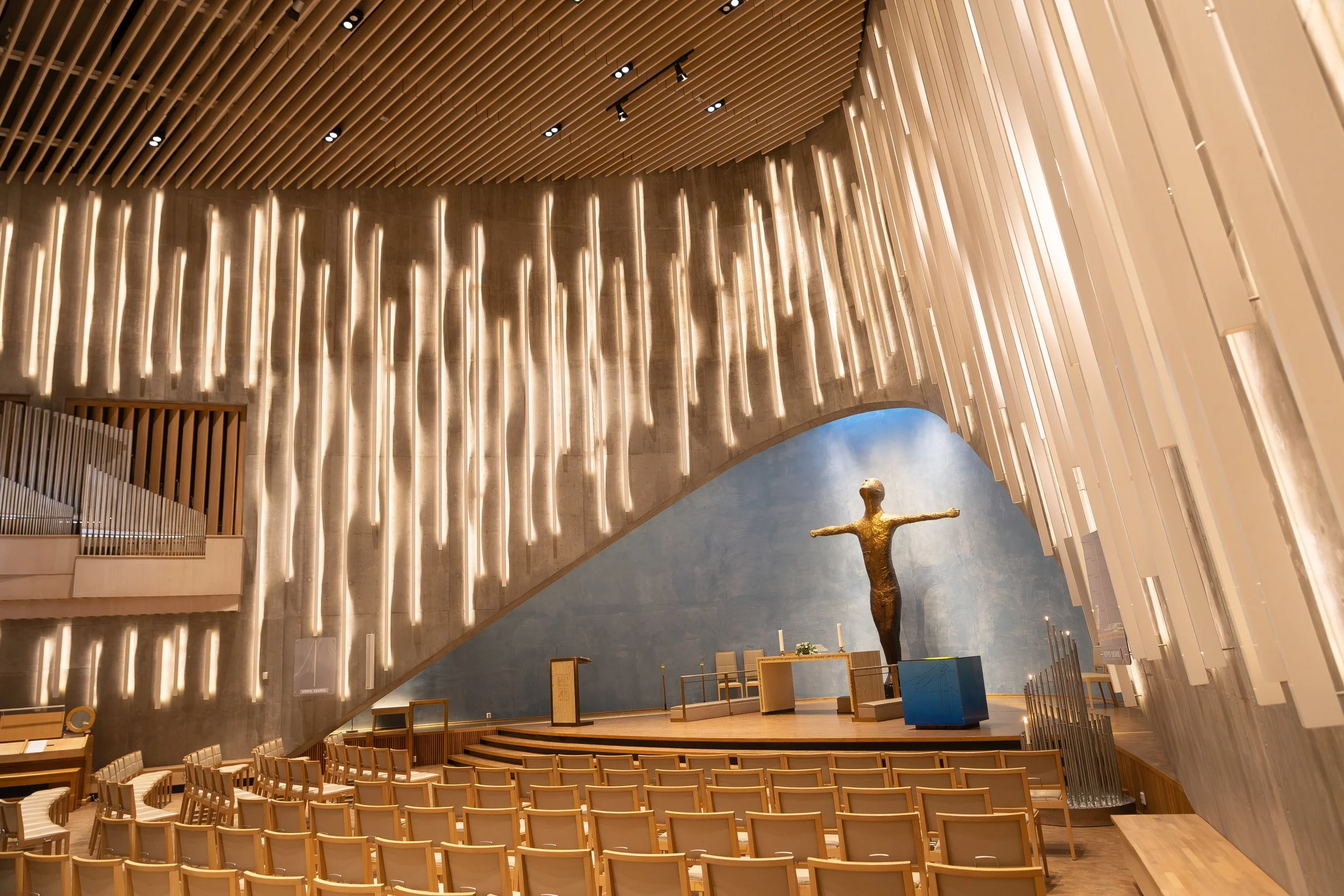
One of the most significant stops along the route is Alta, often referred to as the city of the Northern Lights. For more than a century, scientists have traveled here to study the aurora.
In the late 1800s, Norwegian physicist Kristian Birkeland conducted pioneering research that helped explain the connection between solar activity and the lights visible in Earth’s polar regions. His work laid the foundation for modern aurora science and helped transform what had long been considered a mysterious phenomenon into a subject of scientific investigation.
Today, Alta remains one of the best places in the world to see the aurora. Its inland location, wide skies and relatively dry climate create ideal viewing conditions during the long winter months. Yet even here, scientific explanation has never entirely replaced the sense of wonder that accompanies the lights.


Indigenous Perspectives
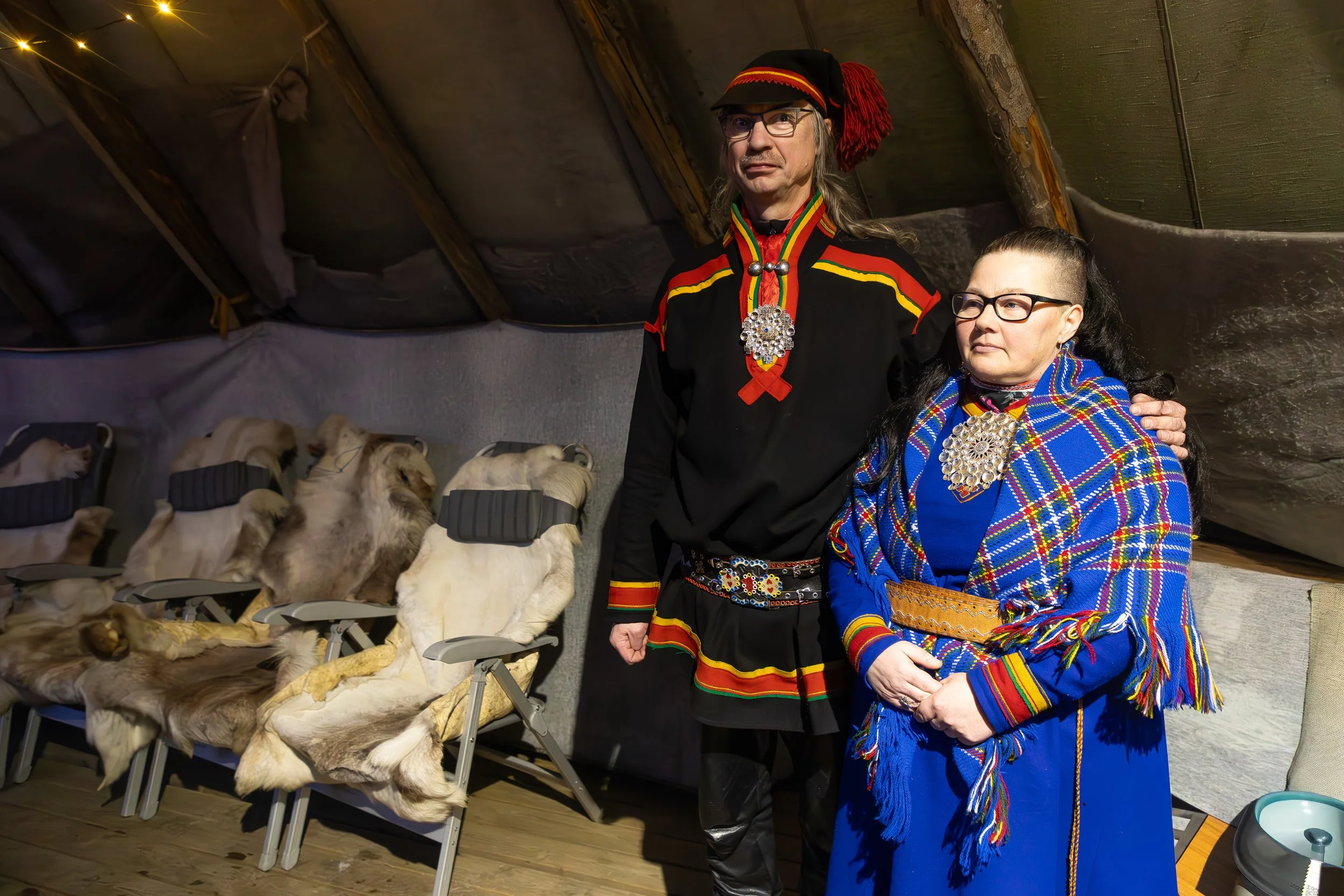
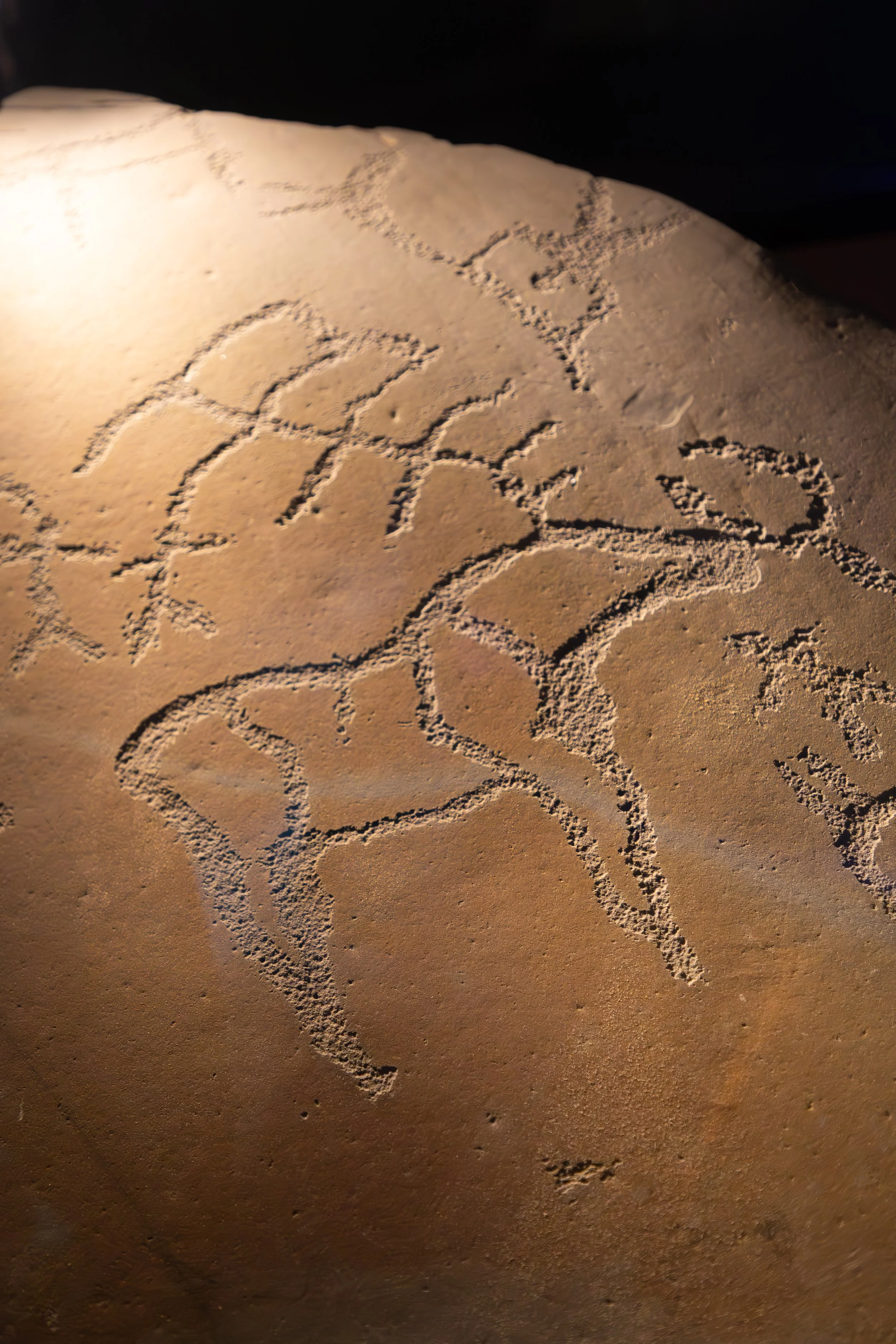
Long before scientists attempted to measure or photograph the aurora, the lights already held meaning for the Indigenous Sami people of northern Scandinavia. Their relationship with the Arctic landscape runs deep, shaped by centuries of reindeer herding, fishing and seasonal migration across tundra and forest. Their traditions reflect a worldview in which humans exist as part of a broader ecological system rather than separate from it.
That connection is increasingly visible in the region’s culinary traditions. Sami food culture emphasizes careful use of local resources, from reindeer meat to wild berries and Arctic fish, and reflects a deep respect for the natural environment. On Hurtigruten voyages, Sami culinary ambassador Maret Ravdna Buljo introduces travelers to these traditions and the cultural values behind them, offering a glimpse into a way of life rooted in balance with the surrounding landscape. For many visitors, the experience provides a deeper understanding of how people have lived within this demanding environment for generations.
Images by Sophia Michelen
When the Sky Comes Alive
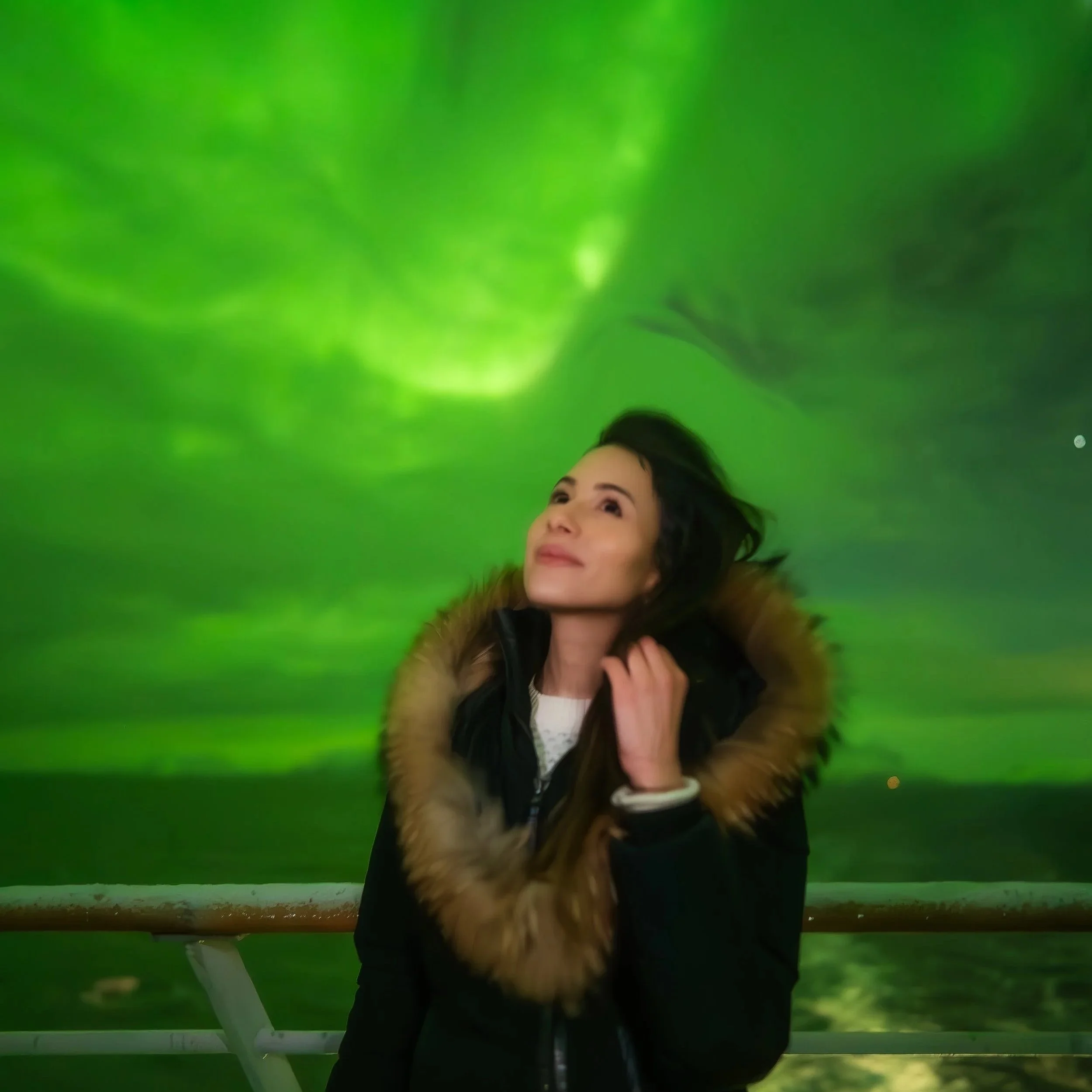
Late one evening, the ship slows as passengers gather again on the outer decks. The sky is clear, the stars unusually sharp in the cold Arctic air. At first, nothing happens. Then a pale band appears above the horizon. The light brightens gradually, stretching upward before folding into waves of luminous green. Within minutes, the entire sky seems to move. Curtains of color ripple and drift overhead, sometimes slow and graceful, other times flickering rapidly as if responding to an unseen current. The dark water below reflects faint streaks of color, doubling the spectacle.
Even with a scientific explanation in mind, the experience resists easy description. The aurora remains both predictable and mysterious, governed by solar physics yet endlessly varied in appearance. Standing on deck as the lights sweep overhead, it becomes clear to me why people have traveled north for centuries in search of this moment. Along Norway’s Arctic coast, the Northern Lights are more than a destination. They are a reminder that some of the most powerful natural phenomena unfold quietly, high above the horizon, waiting for those willing to look up.
Sophia Michelen
Sophia Michelen is a New York City–based photojournalist, travel writer and documentary producer whose work explores culture, environment and place through visual storytelling. She has reported from more than half of the world’s countries, with work appearing in publications including National Geographic Traveller India, Teen Vogue and Ms. Magazine. She is also a co-host of the PBS travel series America: The Land We Live In.
Berlin’s Punk Spirit: Interview With SO36
Take a look inside Berlin’s historic punk club and see what it takes to survive.
Read MoreDo Greenlanders Really Need Saving?
Salome Liptak
Trump's continued pursuit of annexing Greenland has complicated international discussions of the territory's relationship with Denmark.
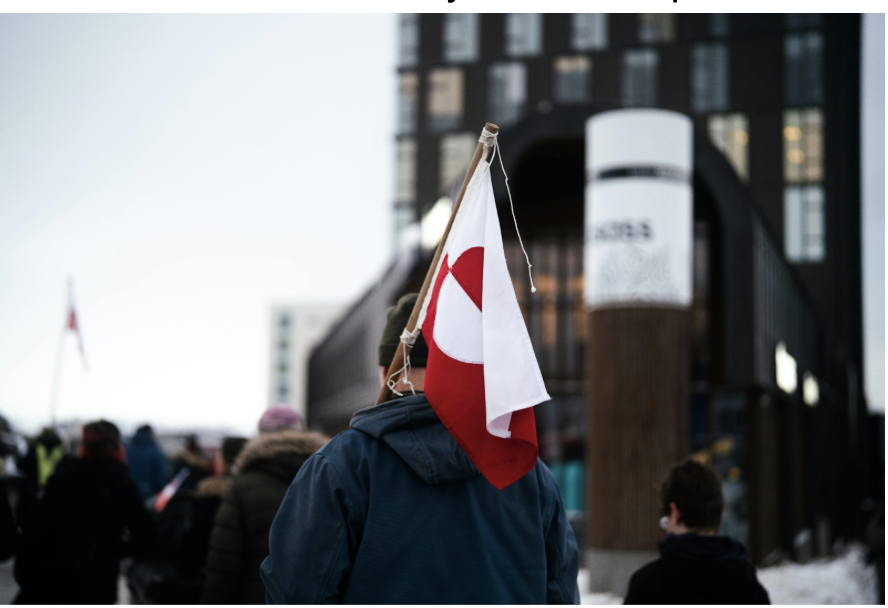
Protester holding Greenland’s flag. Peter Platou. Pexels.
Greenland, the autonomous territory of Denmark that is home to about 56,000 people, has been the subject of international debate during the second Trump administration. Trump first expressed interest in purchasing Greenland from Denmark in 2019, but now he has escalated to threats of tariffs against Denmark and its European allies, as well as military action against Greenland.
Greenland has had its own parliament for domestic governance since the 1979 Home Rule Act, and it achieved self-rule in 2009, when legislation outlining Denmark’s legal pathway to voluntary independence was passed. Current polls show that Greenlanders hope to utilize this pathway to complete independence from Denmark, but Greenland’s vast, remote landscape and low population make economic independence presently impossible. This is also a major factor for the healthcare access issues that concern Greenlanders of all viewpoints, since the most remote community clinics are typically understaffed and underresourced.
Several European leaders have expressed their disapproval of Trump’s threats and emphasized their solidarity with Greenland against foreign intervention. Greenland’s unique status as a territory has required careful wording when defending the island’s right to self-determination, including U.K. Prime Minister Keir Starmer’s affirmation that “the future of Greenland is for the people of Greenland and the Kingdom of Denmark alone.” French President Emmanuel Macron made a similar statement, choosing to affirm Greenlanders’ sovereignty while speaking in Indigenous Greenlandic.
Greenland’s post-colonial relationship with Denmark, as is true for many Indigenous groups around the world, remains complicated. Greenland, whose population is majority Inuit, bears several national wounds from Danish colonial rule, which only ended in 1953. These include social experiments that separated Inuit children from their families and put them in Danish foster families to assimilate in 1951, as well as the forced sterilization of Inuit women throughout the 1960s. While Denmark has made strides toward reparations with public apologies and payouts for those involved, this painful history has left its mark, and systemic discrimination continues to be an issue in Greenland’s healthcare, education and social services, all of which are funded by Denmark.
Trump’s current push to annex Greenland has taken a different tone than that of his first term, utilizing the Kingdom of Denmark's present sovereignty over Greenland to justify U.S. intervention. On Truth Social, he announced his plan to send the U.S. hospital ship USNS Mercy to Greenland “to take care of the many people who are sick, and not being taken care of there.” The post’s unsubstantiated claim, along with its AI-generated image of the Mercy, caused widespread confusion. It appears this plan may have originated with Jorgen Boassen, a Greenlandic Trump supporter who has been vocal about issues of healthcare access in Greenland’s rural clinics. In response, Greenland’s Prime Minister, Jens-Frederik Nielsen, noted that Greenland currently has a “public healthcare system where treatment is free for citizens,” providing more access to services than the current U.S. healthcare system, despite being flawed.
This new attempt at a humanitarian claim to Greenland only further complicates international discourse on Greenland’s sovereignty. For the majority of Greenlanders who oppose American acquisition of Greenland, Trump's threats of intervention on their behalf have only increased the obstacles they face in establishing independence, as they are reliant on Denmark for defense; if Greenland were to leave the realm of Denmark, it would likely be unable to defend itself from unwanted intervention. Many Greenlanders have expressed humor at the ironic effect Trump’s actions have taken, such as one viral video from the Danish public broadcast DRP3, where a man tells the camera, “Yes, Mr. President! You are a true peacemaker. Because your threats have actually brought Denmark and Greenland closer together than ever!”
While Denmark’s control leaves much to be desired for many Greenlanders and complete sovereignty remains a political goal, it is clear that intervention from Trump is both unwarranted under international legal norms and unwanted by the majority of Greenlanders.
Salomé Liptak
Salomé is a student at Sarah Lawrence College studying literature and writing. She is passionate about storytelling (both true and fictional) and its power to reflect the world as it is, or imagine what could be.
Meet Liverpool: An English City With Deep Irish Roots
Liverpool’s history of Irish immigration after the Great Famine has come to deeply influence the city’s culture and traditions.
Read MoreWhy Finland Continues to be the Happiest Country
Benefitting from infrastructure built by governmental support, valued social welfare and important traditions, Finland maintains its rank as the world’s happiest country.
Read MoreExploring the Balkans by Train
The Balkans are reviving old railway routes through Montenegro, Bosnia and Serbia, adding a new way to explore the region.
Read MoreThe Secret Behind Albania’s Bunkers
Albania’s bunkers were built during the Cold War but have since been repurposed as local businesses and tourist attractions.
Read MoreFrance Debates Ban on Childfree Hotels and Restaurants
In France, the debate on childfree hotels, restaurants, campsites and resorts is coming to a head.
Read MoreExploring Iceland’s Remote Highlands
Only accessible for a few months each year, these trails offer unrivaled volcanic and geographic sights.
Read MoreCopenhagen Helps Travelers Make Positive Impact
CopenPay is a traveler rewards program designed to encourage sustainability to reduce the environmental impact of tourism in Denmark's capital.
Read MoreThe Swiss City Where People Swim to Work
In Bern, Switzerland, locals float downstream to commute to work during the summertime.
Read MoreHow Women in Turkey Stitch Resistance Into Fabric
Across Turkey, textile art bridges cultural heritage with feminist activism in the face of authoritarianism.
Read MoreMilitary Noise Pollution in Switzerland
Military activity has long contributed to Switzerland’s noise pollution, with limited progress in reducing the impact.
Read MoreCows, Castles and Communist Echoes: Romania’s Forgotten Maramures
In northern Romania, centuries-old traditions still shape everyday life, even as the region opens to curious travelers.
Read MoreTiger Rewilding Efforts Transform Kazakhstan
Central Asian Tigers are again roaming Kazakhstan, 70 years after their extinction. Their return is celebrated as an ecological triumph, but it also brings apprehension and uncertainty as locals express concerns for the safety of humans and livestock.
Read MoreAlcohol Abuse and Consumption in Latvia
Latvia ranks fourth in countries with the highest alcohol consumption, raising concerns regarding alcohol abuse and challenges to rehabilitation.
Read MoreDigital Disrespect: The Social Media “Holocaust Challenge”
2025 marks 80 years since the end of the Holocaust; harmful social media trends around Poland's memorial sites greatly disrespect the 6 million Jewish victims.
Read More