
Kennedy Kiser
Across Turkey, textile art bridges cultural heritage with feminist activism in the face of authoritarianism.
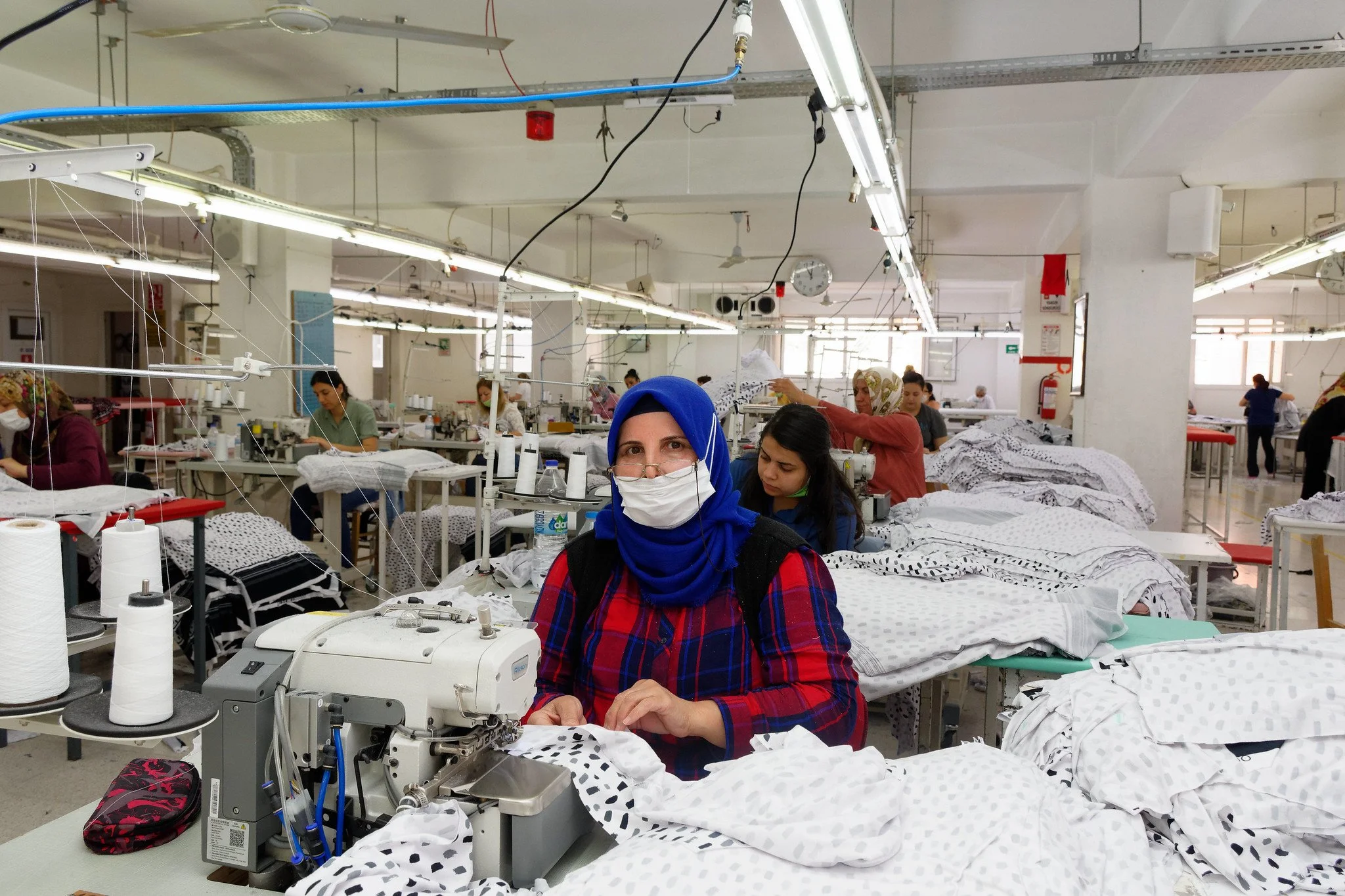
Women sewing in Izmir, Turkey. Kivanc Ozvardar. CC BY-NC-ND 2.0.
Across Turkey, embroidery and quilting are not only methods of preserving cultural heritage; they are also tools of survival and protest. In living rooms, neighborhood workshops and small cooperatives, women gather around thread and fabric to stitch designs that carry messages far beyond their material form. Practices once confined to the domestic sphere are now political statements against authoritarianism, gender violence and economic exploitation.
Textiles have always been part of Turkey’s cultural identity. Ottoman women embroidered dowries with intricate motifs, while Anatolian quilting and weaving traditions were passed down from one generation to the next. These arts were historically tied to gendered labor. Women were expected to remain in private, unpaid domestic spaces while men engaged in public life.
In the late twentieth century, feminist groups began rethinking this division. They argued that embroidery and quilting could be reclaimed as symbols of resilience. By the 1990s, women’s organizations in Istanbul and Ankara were already using sewing circles as safe spaces to discuss domestic violence and political repression. These meetings happened away from the surveillance of the state and patriarchal households, giving women a sense of freedom that was often denied elsewhere.
Today, this tradition has returned with urgency. Turkey has one of the highest femicide rates in Europe, with 3,035 women killed between 2013 and 2021. The country’s withdrawal from the Istanbul Convention in 2021, an international treaty designed to protect women from violence, sparked nationwide protests. Sewing circles have since become alternative meeting grounds for women who feel abandoned by institutions.
Embroidered banners demanding justice for murdered women are carried into demonstrations. Quilts are stitched together from patches contributed by survivors of abuse, forming collective memorials of trauma and strength. In some neighborhoods, textile cooperatives provide income to women who have left abusive households. These efforts give financial independence while preserving cultural craft. Fabric becomes a platform for naming injustices in a society where free speech is increasingly under threat. Needlework offers a way to smuggle resistance into daily life, visible yet unpoliced.
Textile cooperatives are also part of a broader struggle for economic survival. Turkey’s economy has faced inflation, rising unemployment and widening inequality. Women, often the first to lose their jobs, turn to cooperative models where profits are shared and hierarchies are minimized. Groups like the Kadin Emegi Kolektifi, or the Women’s Labor Collective, sell handmade goods online and at local markets. Income is redirected to members rather than corporate employers. These groups also serve as informal training centers, teaching business skills alongside craft techniques.
What makes these sewing circles powerful is their dual character. They operate inside the home, with women embroidering at their own kitchen tables. At the same time, they extend into public protest, art exhibitions and social media. An embroidered slogan displayed at a march may later be posted online, reaching audiences far beyond Turkey’s borders.
Textiles resonate because they are intimate and tactile. A quilt stitched in grief or defiance contains not only powerful words but also the labor of the hands that made it. In settings where speech is censored, this form of testimony resists erasure. It is difficult to ban, easy to hide and impossible to ignore once displayed.
As repression grows, women in Turkey continue to create threads of connection across generations. Young activists experiment with digital embroidery machines, uploading feminist designs to be replicated worldwide. Older women preserve the traditional motifs of Anatolia but embed them with slogans against violence and inequality. Together, these practices form a quiet but powerful archive of resistance. Each stitch carries both history and defiance, turning the fabric of daily life into a canvas for survival and change.
GET INVOLVED:
Want to support Turkey’s women-led cooperatives and understand how fabric is being used as resistance? Here are a few ways to engage:
Follow and Share: Look up grassroots groups like Mor Cati (Purple Roof Women’s Shelter Foundation) or Kadin Emegi Kolektifi to see how textile art intersects with activism.
Support Cooperative Economies: Many Turkish women’s cooperatives sell crafts online through Etsy or fair-trade platforms. Purchasing directly helps sustain independent income for marginalized workers and survivors of abuse.
Stay Informed: For background on Turkey’s women’s movement, explore resources from Human Rights Watch and Amnesty International, both of which track issues of gender violence and repression.

Kennedy Kiser
Kennedy is an English and Comparative Literature major at UNC Chapel Hill. She’s interested in storytelling, digital media, and narrative design. Outside of class, she writes fiction and explores visual culture through film and games. She hopes to pursue a PhD and eventually teach literature! @kennedy_kiser