
Evelyn Garcia Medina
In Bern, Switzerland, locals float downstream to commute to work during the summertime.
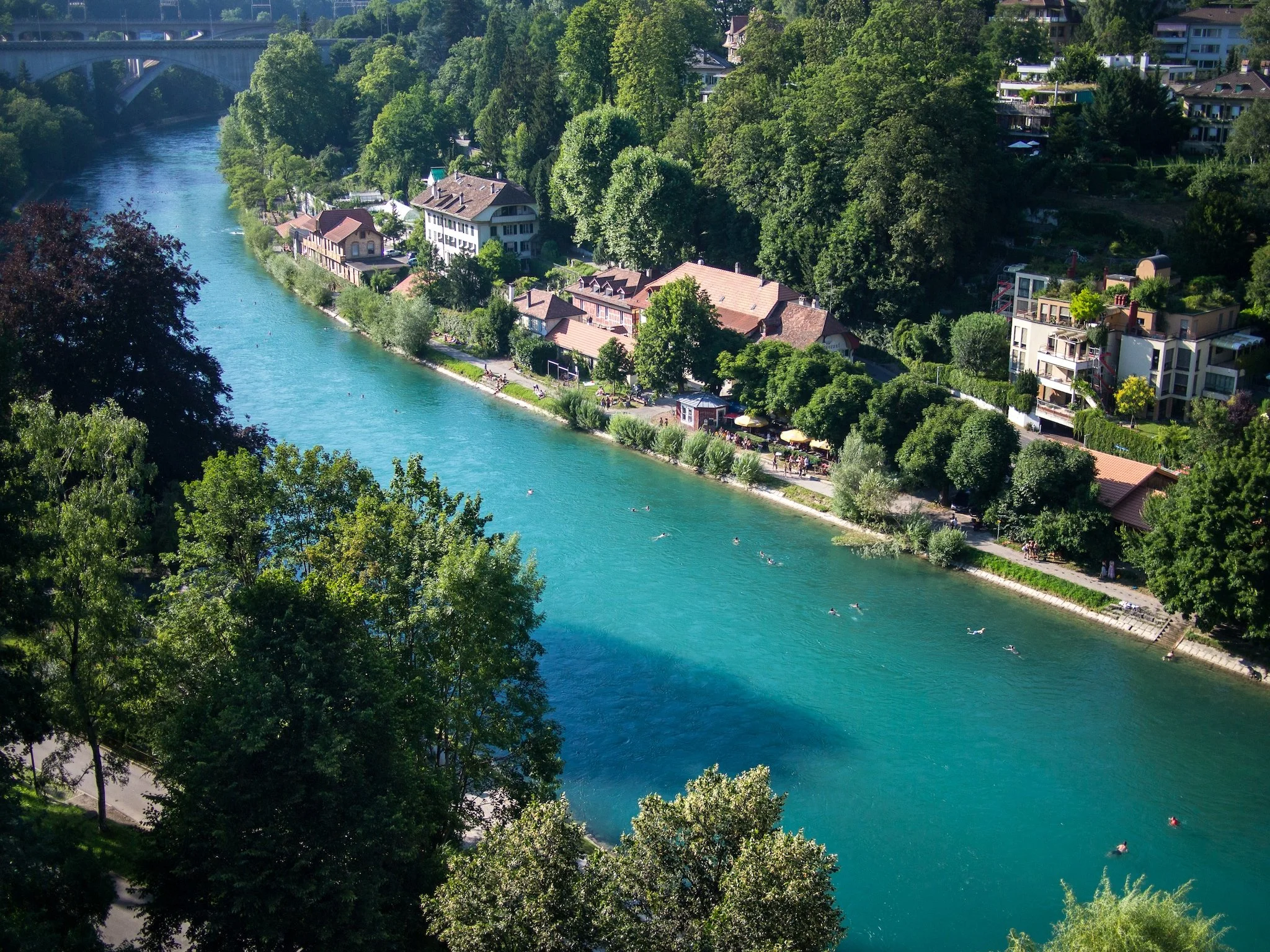
Aare River in Bern, Switzerland. Guido Gloor Modjib. CC BY-NC-ND 2.0.
In the heart of Bern, Switzerland, is the Aare River, encircling the city’s UNESCO-protected Old Town. In the summertime, locals and visitors flock to the water to swim, paddleboard or even go for a boat ride. But this isn’t just any river. The Aare is also a commute route for locals to get to and from work. Instead of driving or riding the train, some Bern residents float with the current of the river as a means of transportation, and it has become a normal part of many people’s routine.
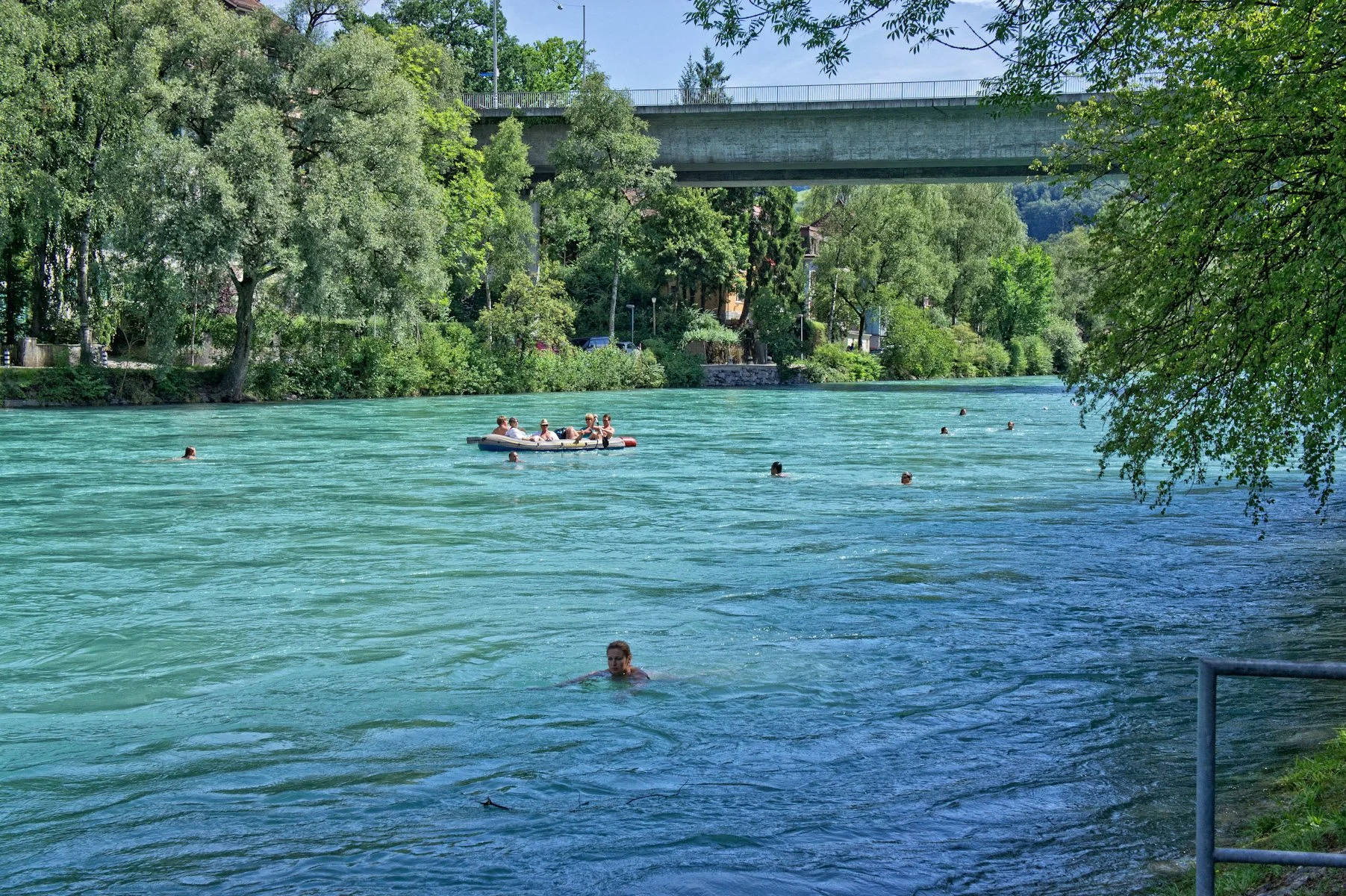
People swim and raft in the river. Scott Kaintz. CC BY-NC-ND 2.0.
What does a day of swimming to your destination look like in Bern? First, any visitor to the Aare needs to ensure they’re comfortable with swimming, as it’s only recommended to enter the water if you’re an experienced swimmer who is aware of the risks. There are designated entry and exit points, as well as steps to climb in and out of the water, which are often near public transportation. To start the swim, locals change into their swimwear, and if following proper protocol, they’ll sit in the water for a few minutes to allow their bodies to acclimate to the cold. They also carry a waterproof bag to store their dry clothes, electronics, work items and other belongings, often a fish-shaped one named Wickelfisch. Afterward, the bag is filled with towels and swimsuits to be stored during work.
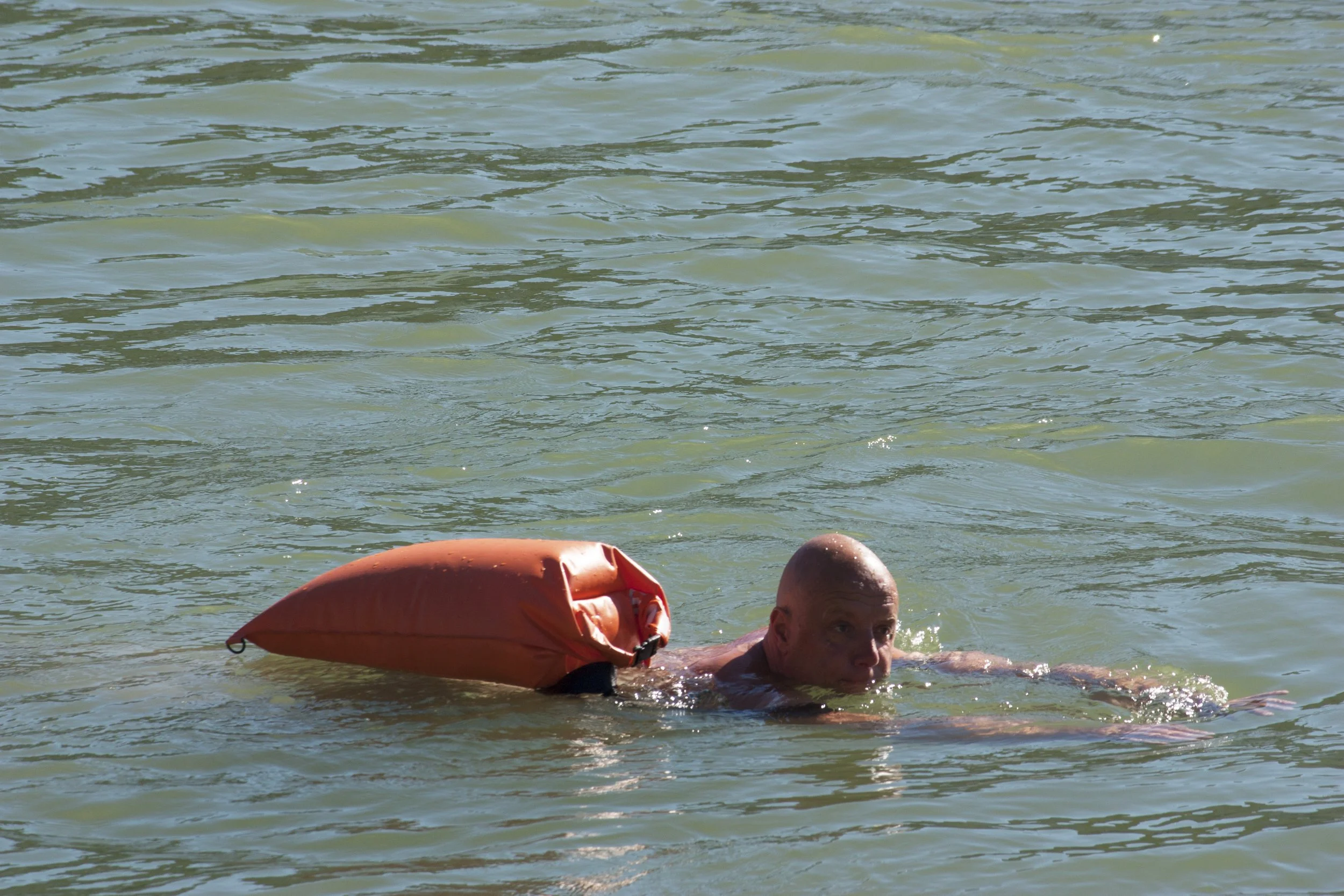
Man swims with a Wickelfisch swim backpack. Kitty Terwolbeck. CC BY 2.0.
There are many reasons why Bern locals swim in the Aare to get places, despite it not being a common transportation method elsewhere. For the folks who use the river to commute home, the swim can be relaxing and a nice way to connect with nature, especially because the afternoon to evening hours are when the water is at its warmest. Additionally, using the river cuts transportation time down significantly. One local, Evelyn Schneider-Reyes, says it takes her only 15 minutes to get home from her office via the river, a route that has become a part of her routine. The tourism sector of Bern says, “Nobody would bat an eye in Bern [at swimmers in the Aare]. It’s even rumored that swimsuits used to be hung out to dry on the balcony of the Swiss Parliament Building on a regular basis.” They continue, “For many locals, the Aare is so much more than a river – it’s a way of life.” When the weather warms up, the Bernese go from a reserved group to a more social and communal people, creating camaraderie that doesn’t otherwise frequent city life.
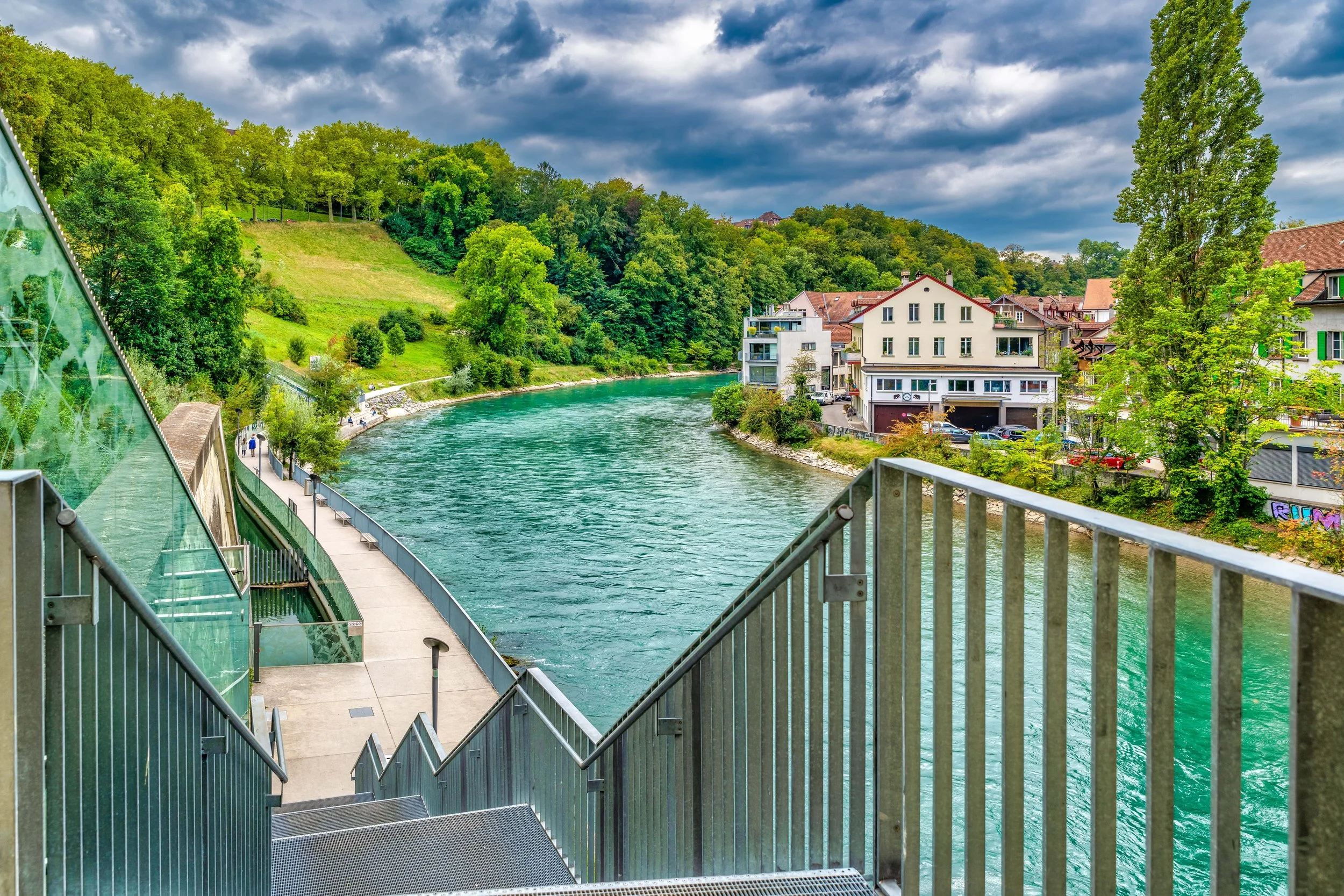
Stairs at an exit point of the river. Karlheinz Klingbeil. CC BY-NC-SA 2.0.
The Aare River isn’t only for locals, though, and Bern itself encourages travelers to visit. If you do choose to travel to Bern’s special river, remember the important safety tips recommended by the city to ensure a fun and safe experience. The river’s strength is often underestimated and can be dangerous unless you follow the pre-swim and during-swim advisories. This Bernese river can be a fun and relaxing summertime experience for locals and visitors alike.

Evelyn Garcia Medina
Evelyn is a recent Chicana graduate with a B.A. in English and Comparative Literature. Born and raised in the Bay Area, she draws inspiration from her passions: her cultural roots, environmentalism, and human rights. In her free time, she goes on hikes and enjoys learning about current social issues, history, and animals.