
Kennedy Kiser
In northern Romania, centuries-old traditions still shape everyday life, even as the region opens to curious travelers.
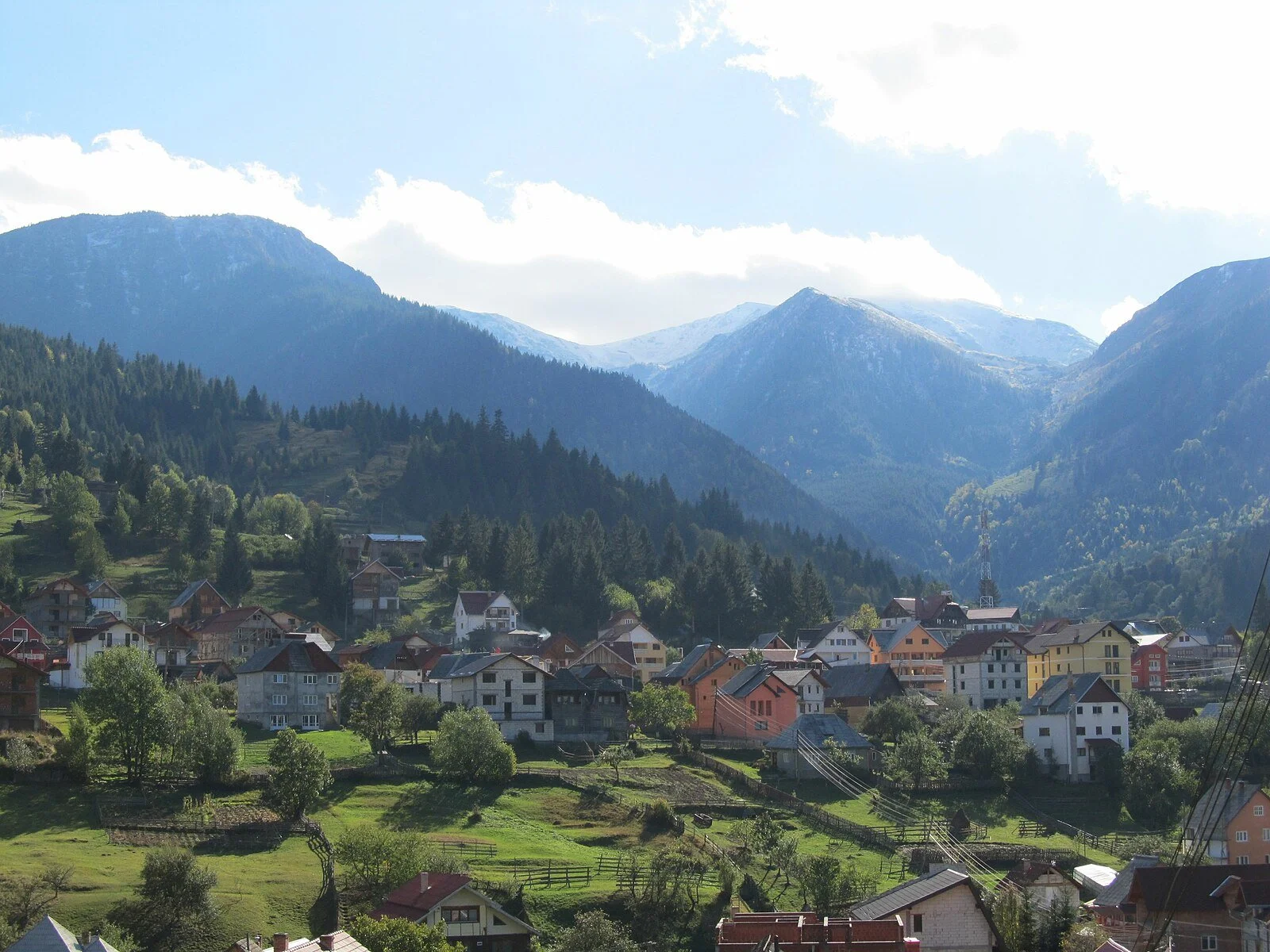
Borsa, Maramures. Nenea Hartia. CC BY-SA 4.0.
In the far north of Romania, near the Ukrainian border, lies Maramures, a region where village life still follows rhythms that, elsewhere in Europe, have faded. Here, hay is stacked by hand in summer, wool is spun into Sunday clothes during the long winters and carved wooden gates mark the entrance to family homes. While Romania’s cities have modernized quickly since the fall of communism, Maramures has kept a slower pace, shaped by its geography, history and strong cultural traditions.
The area’s isolation is partly geographic. The surrounding Carpathian Mountains once kept Maramures connected mainly to its own network of villages. For centuries, this meant that customs, crafts and even dialects developed with little outside influence. When Romania was under communist rule from 1947 to 1989, central planning reached the cities far more forcefully than the remote countryside. Although the regime attempted to collectivize farms, many rural households in Maramures continued to grow food, tend animals and practice trades in the same ways they had done for generations.
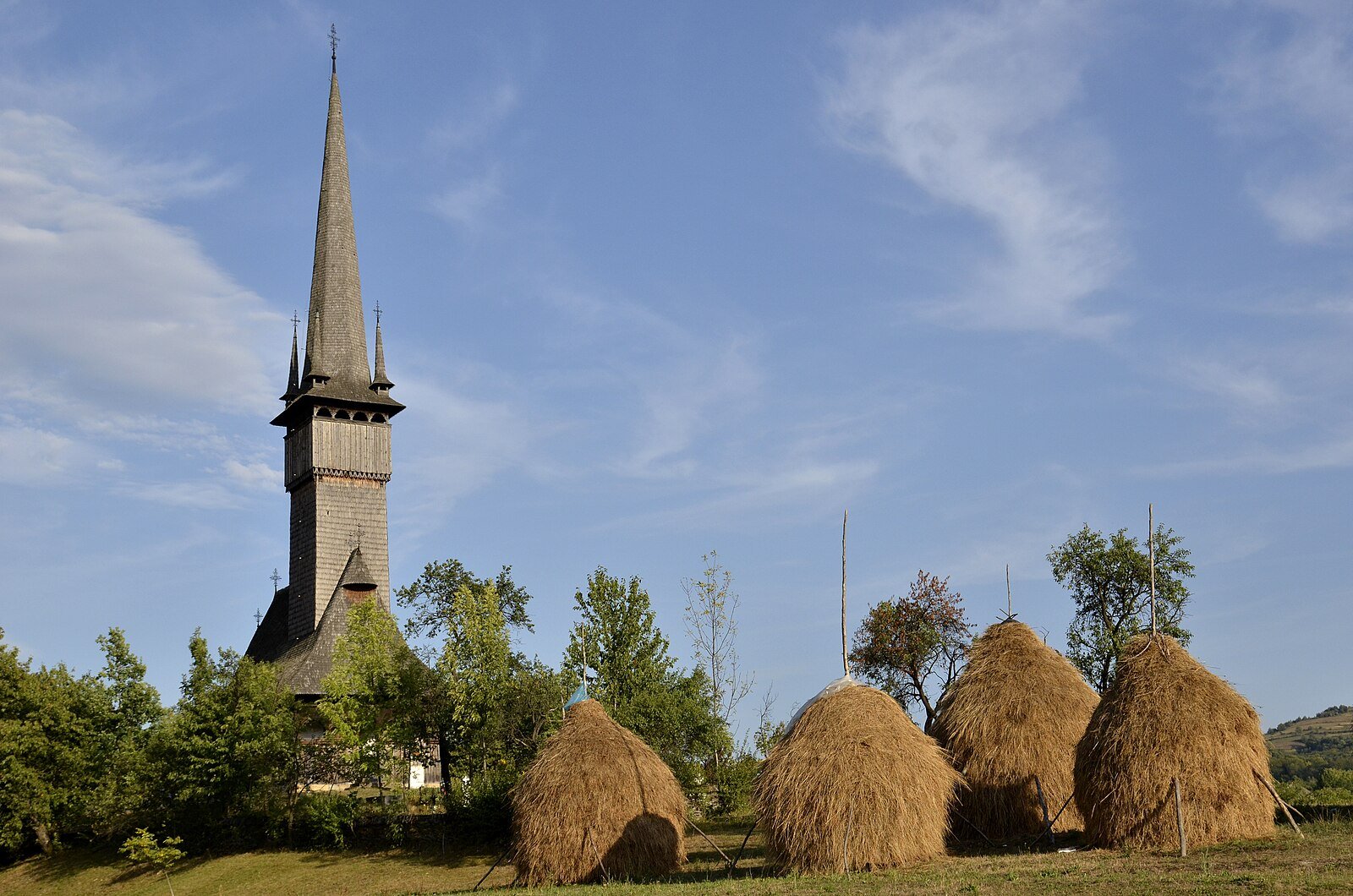
Wooden church from Surdesti, Maramures, Romania. The Traveller LB. CC BY-SA 3.0.
Religion plays a central role in the region’s identity. The UNESCO-listed wooden churches, some built over 300 years ago, remain active places of worship. Their tall spires and shingled roofs are distinctive features of Maramures’ architecture. Services are often accompanied by traditional singing that has been passed down orally. Many villagers still wear embroidered shirts, wool skirts or fur vests to Sunday mass, clothing that is not staged for visitors but part of community pride.
While traditions here are strong, they are not untouched by change. Younger residents often leave to work abroad or in Romania’s cities, returning home for holidays. This has led to a slow shift in village life. Houses built in the last two decades are often large and modern, standing beside older and smaller wooden structures. Smartphones are now common, even in homes without indoor plumbing. Tourism is also growing, with more guesthouses opening and more travelers seeking out what is often described as the “authentic” Romania.
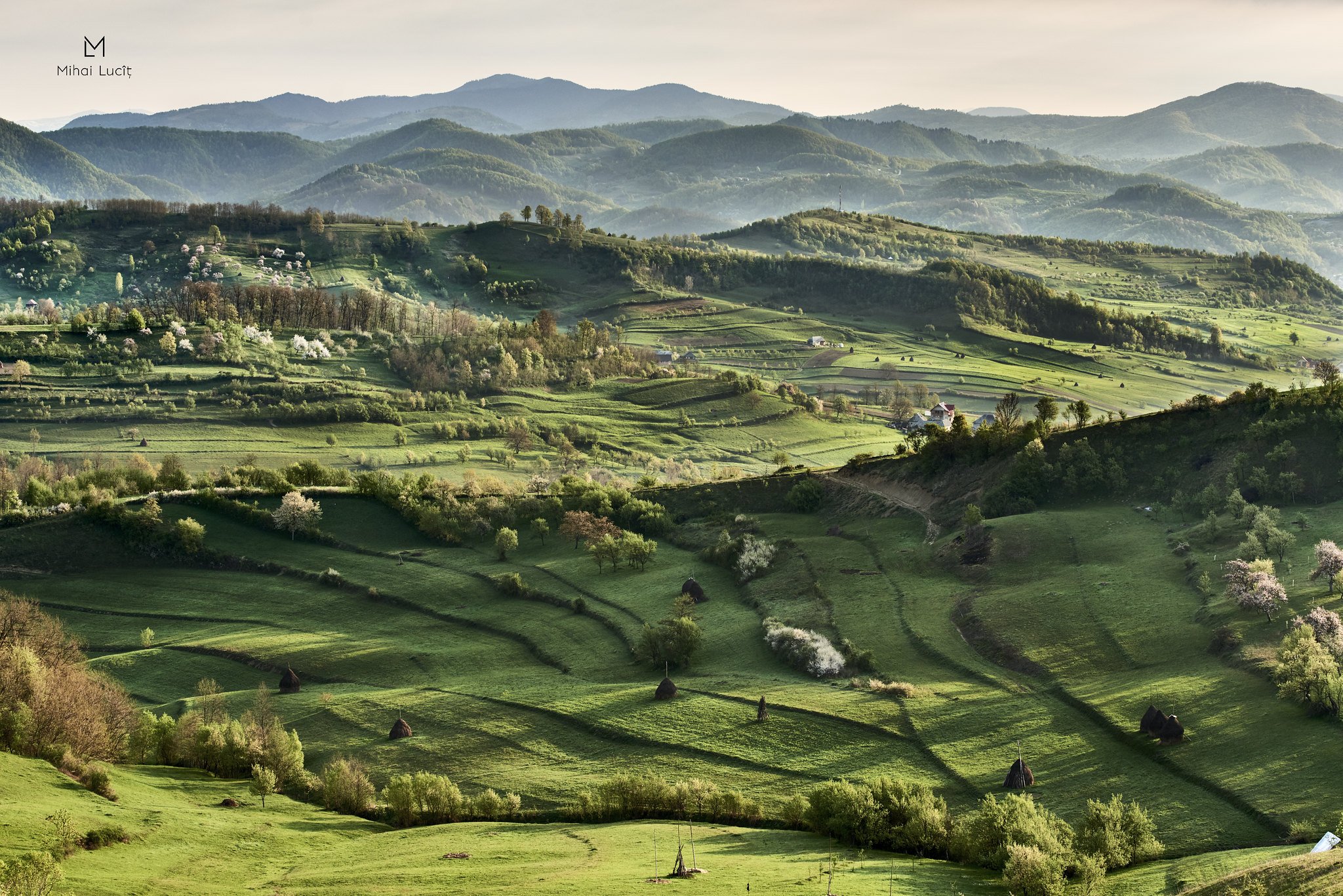
Valeni village, Maramures. Mihai Lucit. CC BY 2.0.
For visitors, Maramures offers both beauty and complexity. The rolling meadows, forests and hayfields create a rural landscape that feels timeless, but the post-communist reality is present too. Infrastructure is uneven, and economic opportunities are limited. Some younger residents see tourism as a way to keep traditions alive while also earning an income. Others worry that too much outside attention could turn customs into performances for visitors rather than parts of daily life.
Travelers interested in history will find the region’s folk museums valuable for understanding its resilience. The Sighet Memorial Museum, for example, documents political repression during the communist period, while smaller village museums preserve examples of local craftsmanship. Markets sell handwoven textiles, carved wooden utensils and sheepskin coats, often made by the same families who have carried on these skills for generations.
For those willing to slow down, Maramures is best experienced by spending time in a village, walking the dirt lanes and seeing how daily life unfolds. Visitors may hear the bells of cows being led to pasture at dawn or watch hay being raked and piled into tall mounds in the afternoon sun. These scenes are not arranged for tourists, but they are increasingly observed by them.
TO VISIT
The main entry point to Maramures is Sighetu Marmatiei, about six hours by train or bus from Cluj-Napoca (US$15-20) or one hour by taxi from Baia Mare Airport. Public transport between villages is scarce, so most visitors rent a car or hire a driver. Accommodation is mainly in family-run guesthouses in villages like Breb, Barsana and Sapanta, with private rooms costing US$25-50 per night, often including breakfast. Many hosts offer home-cooked meals for US$5-10, featuring local staples, like sarmale, mamaliga and smoked pork with pickled vegetables. Sighetu Marmatiei has small restaurants serving traditional Romanian food for under US$10. The best time to visit is late May to early October, when the weather is mild and festivals, haymaking and harvest traditions are in full swing.

Kennedy Kiser
Kennedy is an English and Comparative Literature major at UNC Chapel Hill. She’s interested in storytelling, digital media, and narrative design. Outside of class, she writes fiction and explores visual culture through film and games. She hopes to pursue a PhD and eventually teach literature! @kennedy_kiser