
Zoe Lodge
The Balkans are reviving old railway routes through Montenegro, Bosnia and Serbia, adding a new way to explore the region.
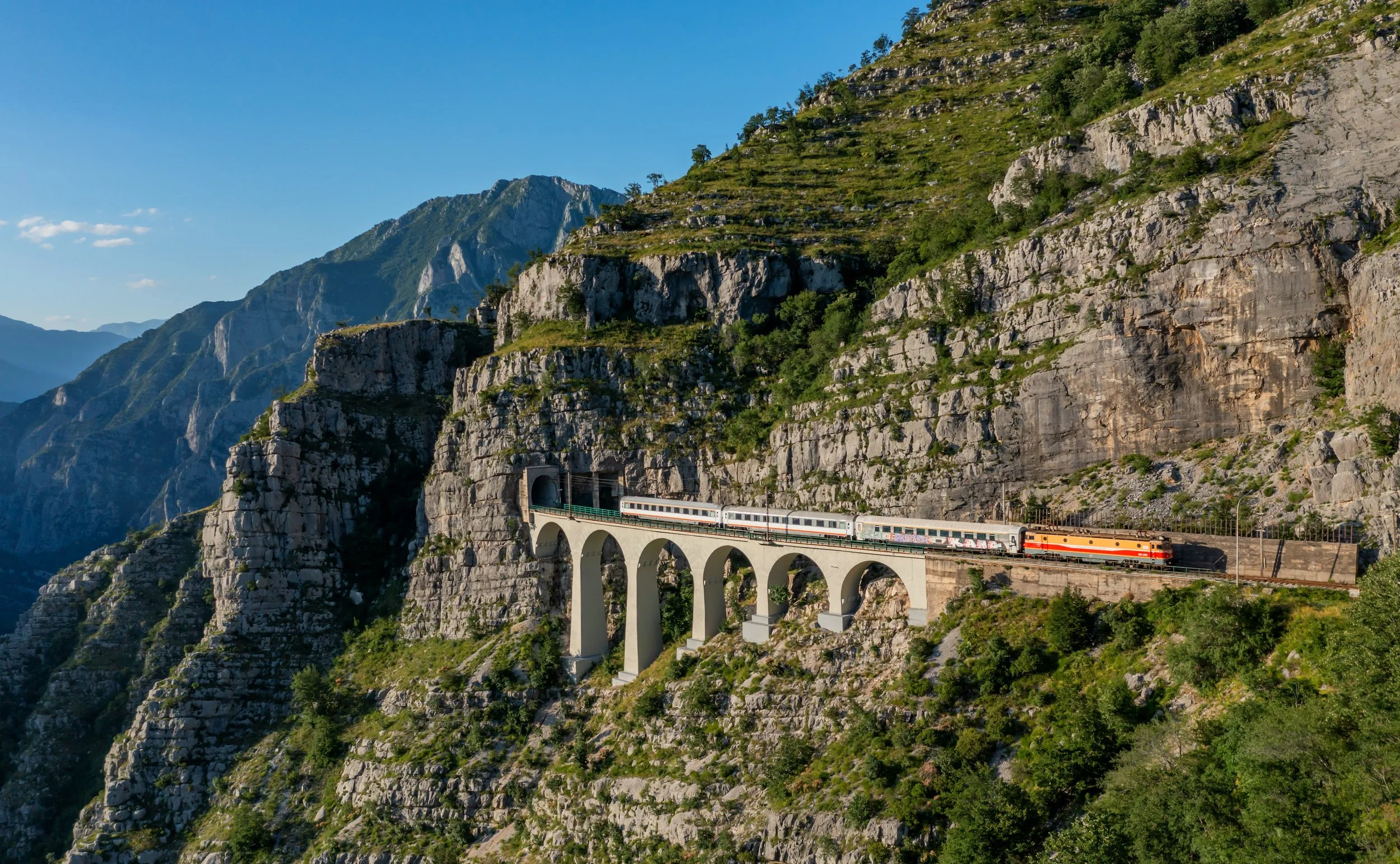
The Belgrade-Bar railway. David Gubler. CC BY-SA 4.0.
High in the misty peaks of Montenegro, along the winding canyons of Bosnia and Herzegovina and through the forested hills of Serbia, something remarkable is awakening on old railway tracks. As once-neglected lines are revived, backpackers and eco-conscious travelers are being rewarded with journeys that weave together rugged scenery, Ottoman-era architecture and a region rebuilding after devastating conflict.
One of the most significant examples is the Belgrade-Bar railway, linking Serbia’s capital with the Adriatic port of Bar in Montenegro. Since its completion in 1976, the line has been known for its impressive engineering, including over 435 bridges, 254 tunnels and awe-inspiring structures, such as the Mala Rijeka Viaduct, which is the highest railway bridge in Europe. However, neglect and the breakup of Yugoslavia left much of the line in disrepair. Trains slowed, reliability dropped and ridership waned. More recently, thanks to funding from the European Investment Bank and EU grants, major upgrades are underway, including track rehabilitation, new signalling systems and restoration of key tunnels and slopes. The aim isn’t just to restore a historic route but to reclaim the line as a backbone of sustainable, eco-sensitive travel. For travelers, this means the opportunity to ride through the Balkans’ breathtaking landscapes, including gaping gorges through deep river canyons, rugged highlands and views of the Adriatic that once seemed accessible only by road.
In Bosnia and Herzegovina, the Sarajevo-Ploce line, which directs toward Mostar and the Dalmatian coast, has also been experiencing a revival. Closed or partially suspended during wartime and in the years immediately following it, the route has, over the past decade, resumed passenger service, including newer weekend extended runs into Croatia. The route is known for delivering one of Europe’s most visually stunning train journeys, as it follows river valleys, hundreds of tunnels and descends toward the Adriatic Sea. Especially during summer, a revived seasonal “Southern Rail Line” service has attracted hikers, photographers and eco-travelers eager to avoid congested roads. Trains depart on weekends, offering an experience that is as much about scenery, culture and nature as it is about the destination.
For those who prefer a slower pace, heritage lines, like the Sargan Eight in western Serbia, offer just that. A narrow-gauge line lovingly restored, the Sargan Eight winds through tunnels, over bridges and down dense forests. It boasts incredible architecture, ambience and engineering that harken back to the early 20th century. The ride helps backpackers detach from fast transit and fully absorb the place by stopping in remote stations, walking to nearby lookouts and staying in rustic villages spread across the historic Serbian countryside.
Reviving these railways is part of a larger story of post-conflict rebuilding, regional cohesion and environmental responsibility. As Balkan states strengthen ties to European infrastructure networks, investment in rail is increasingly seen as a tool for sustainable development. Using trains instead of buses or cars helps reduce carbon emissions, eases pressure on mountain roads and keeps small towns alive, as trains historically bring opportunities for commerce, connection and exposure. For backpackers, this means more routes off the beaten path, more chance encounters with locals and travel that feels more tactile and grounded.
For travelers, the best seasons to visit are typically late spring to early autumn, offering clear views and more frequent train services, especially on Sarajevo-Ploce and Belgrade-Bar routes. It’s important to note that delays are common, and local boarding allows for unplanned stops along the routes. Traveling along these lines also allows guests to spend nights in small mountain lodges or guesthouses near train stops, rather than only in major cities, to support efforts in rebuilding rural economies. For those willing to travel slowly and listen to what landscapes have to say, this revival is offering some of the most powerful journeys in Europe.

Zoe Lodge
Zoe is a student at the University of California, Berkeley, where she is studying English and Politics, Philosophy, & Law. She combines her passion for writing with her love for travel, interest in combating climate change, and concern for social justice issues.