
Zoe Lodge
The United States’ largest offshore wind project faces a broad range of support and skepticism
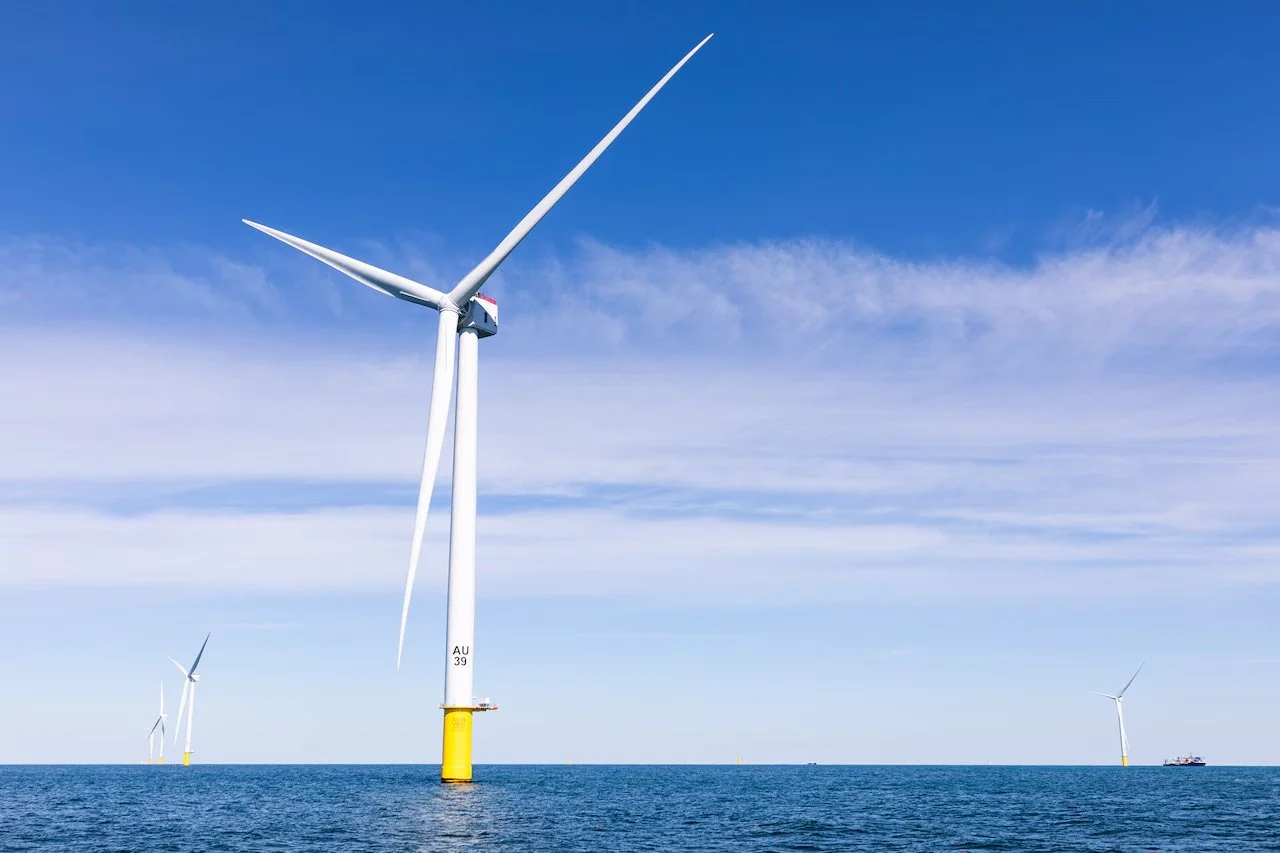
Offshore wind farm off the coast of Massachusetts. Eric Haynes. CC BY NC-ND 3.0.
California’s 840 miles of Pacific coastline may soon be home to a new frontier of clean energy production: floating offshore wind farms. Discussed as a way to reduce the state’s reliance on fossil fuels and nuclear energy, the project has surged ahead in recent years despite hiccups under the Trump administration, which often resisted renewable energy expansion. Now, as state and federal agencies greenlight leases in areas like Morro Bay and Humboldt Bay, the debate over offshore wind between civilians and the bureaucracy is intensifying.
The proposed projects would install hundreds of towering wind turbines, projected to be approximately 1,000 feet tall, anchored 20-60 miles from the coast. The California project is unique in comparison to offshore wind projects in Europe or the East Coast of the United States because the turbines would be affixed to floating platforms tethered to the deep ocean floor, as opposed to the fixed-bottom turbines in shallower waters. Power would be sent ashore through submarine cables, feeding into California’s grid and advancing its ambitious green energy goals.
Supporters see this as a historic opportunity. The Department of Energy estimates that offshore wind in California could generate over 25 gigawatts of power, which is enough to supply almost 10 million homes. Advocates highlight the urgency of expanding renewables, as heatwaves, wildfires and droughts expose the dangers of climate-driven energy shortfalls. “California is playing a historic and leading role in global decarbonization, powering one of the world’s largest economies with increasingly clean power, with our sights set on 100% clean energy by 2045,” said California Public Utilities Commissioner John Reynolds.
Conversely, fishing communities, coastal residents, and select environmental groups have raised concerns about disrupted marine ecosystems and altered seascapes. Commercial fishers fear that turbine arrays and transmission cables could displace fleets and entangle nets. Marine biologists warn that construction noise and electromagnetic fields from cables may disturb whales, sea lions and other endangered species that migrate through the regions.
Opponents also question the visual and cultural impact of turning parts of California’s scenic coastline into energy infrastructure. In places like Morro Bay, a fishing hub that also thrives on tourism, there is unease about the economic trade-offs of embracing offshore wind. However, these concerns are largely unsubstantiated. There are three leases near Morro Bay off the Central Coast of California and two much further north off the coast of Humboldt. The leases are between 20-60 miles away from each coastline, ensuring little to no visibility of the project from the shore. Construction would also propel economic growth and create jobs in each area due to the massive scale of the project under a billion-dollar industry that has global developers eager to invest. A 2022 report found that offshore wind projects in the United States could create over 75,000 jobs.
Government cooperation adds another layer of complexity. While turbines will float in federal waters more than three miles offshore, the onshore facilities and transmission cables require coordination with state agencies and local communities. The Bureau of Ocean Energy Management oversees leasing in the federal outer continental shelf, but the California Coastal Commission and other state entities have a say in permitting and environmental reviews. The staggering responsibilities have often slowed renewable energy projects, yet in this case, federal and state actors have largely aligned in pushing development forward.
Under the Trump administration, Offshore Wind California has taken significant hits due to the administration’s constant push away from renewable energy. In late August, the Trump administration delivered a devastating blow to offshore wind projects across the United States. Trump ordered a halt in construction at a wind farm in Rhode Island and withdrew or canceled $679 million in Biden-era federal funding for offshore wind. The Humboldt zone of the California project took the heftiest blow, losing more than $425 million in federal funding.
The future of the project is uncertain, having taken a pause under the Trump administration, but those involved with the project on both the business and governmental sides are optimistic that this will just be a pause and that ultimately, the need for clean energy will prevail. Offshore wind may indeed power California’s green transition, but it will also test the state’s ability to steer that transition in a way that earns public trust.
GET INVOLVED:
There are a number of organizations both in support of and standing against these projects, so no matter the stance, there is an opportunity to get involved and make opinions heard. The Pacific Offshore Wind Consortium is a joint research group focused on innovation and working with locals and Tribal members to ensure the safest and most respectful methods of implementing offshore wind. Offshore Wind California is the primary organization garnering support for and mobilizing the offshore wind project, providing opportunities to join the coalition, donate, support and attend events listed on its website. The REACT Alliance is a Central Coast-based group raising awareness about potential environmental impacts and harm to small local communities, with opportunities to join and donate.

Zoe Lodge
Zoe is a student at the University of California, Berkeley, where she is studying English and Politics, Philosophy, & Law. She combines her passion for writing with her love for travel, interest in combating climate change, and concern for social justice issues.