How Tse Chi Lop, Asia’s Biggest Drug Lord, Was Arrested 

Authorities from 20 countries worked for years to bust the Chinese-Canadian kingpin. Now, they have successfully removed the head of Asia’ largest drug syndicate. 
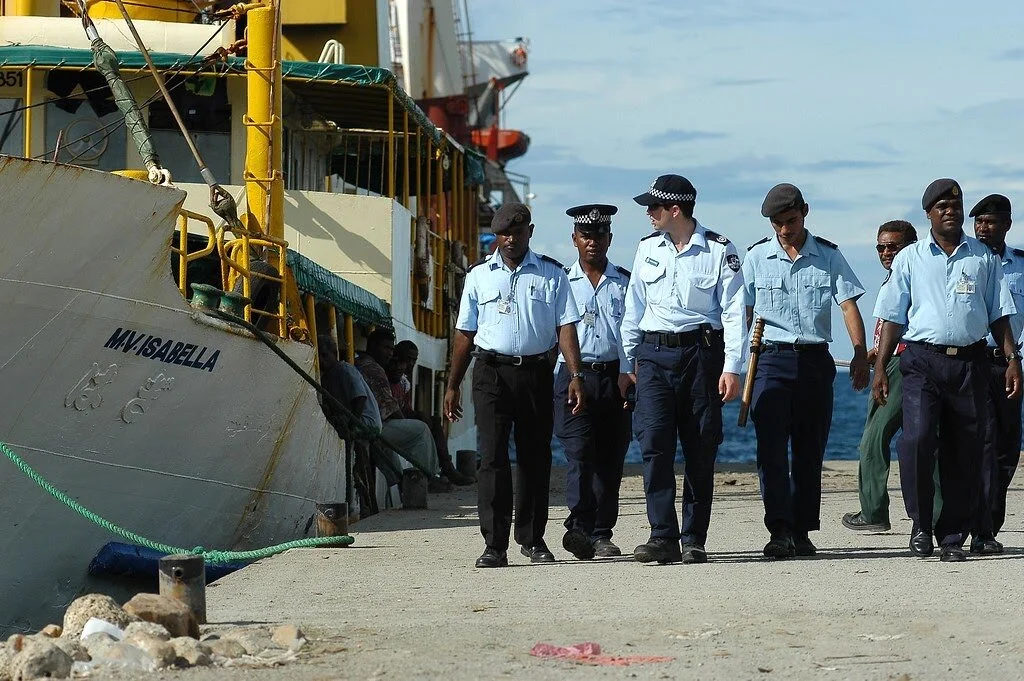
The Australian Federal Police. DFat photo library. CC BY 2.0.

Cai Jeng Ze had sweaty hands. Authorities at Yangon International Airport in Myanmar first noticed him picking at his red, blistered fingers. Drug traffickers in the Asia-Pacific region tend to have similar hands from handling methamphetamine; the drug is toxic to human skin. Authorities stopped and searched him. Taped to each of his thighs was a bag containing 80 grams of ketamine, a medical-grade anesthetic and party drug. These tiny bags were the least of the authorities’ concerns. On his person, they found two cellphones—an “Aladdin’s cave of intel” according to one investigator—that led to the takedown of Asia’s most infamous drug lord: Tse Chi Lop. 

Cai Jeng Ze was arrested in 2016, and five years later, on Jan. 23, 2021, Tse Chi Lop was arrested at Amsterdam’s Schiphol International Airport. That day brought to a close the yearslong work of Operation Kungur, a counternarcotics investigation involving 20 agencies from Asia, North America and Europe. It was by far the largest effort to combat an Asian drug trafficking syndicate. Investigators estimate that Tse Chi Lop’s organization, known as “The Company,” controls 40% to 70% of the Asia-Pacific meth market, which produces $30.3 billion to $60.4 billion annually. As CEO of The Company, also known as the Sam Gor syndicate, many have dubbed him “Asia’s El Chapo.” Some investigators believe a more apt comparison would be to Pablo Escobar. 
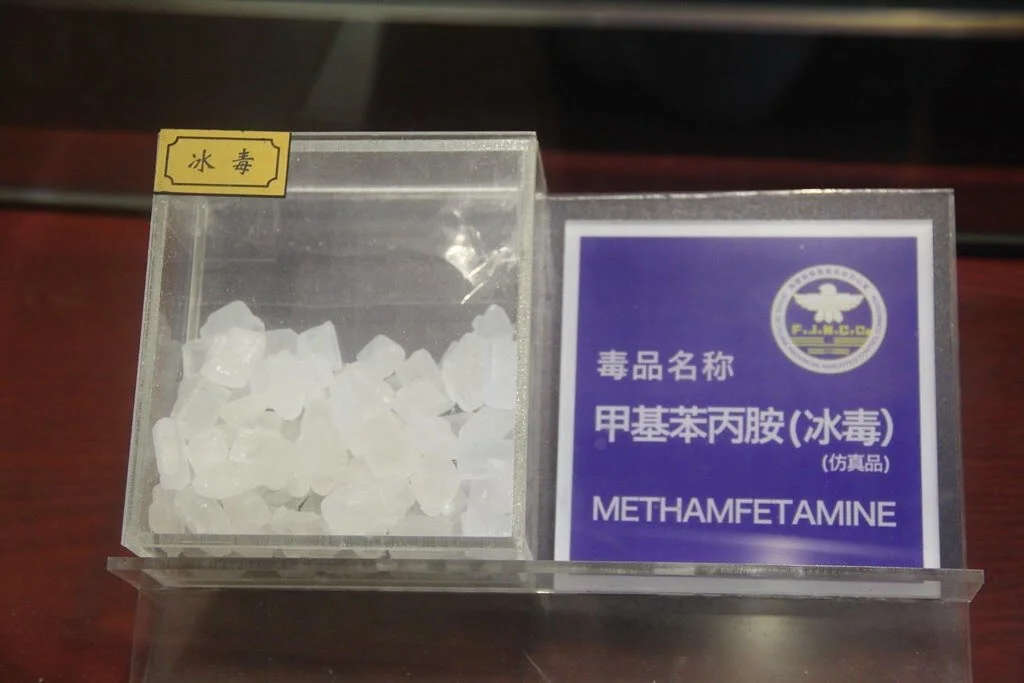
The source of Tse’s riches. Gary Lee Todd, Ph.D. CC0 

But the path to arresting this kingpin began with Cai Jeng Ze’s two cellphones. Myanmar authorities invited the Australian Federal Police (AFP) to send two intelligence analysts to Yangon. Once there, they cross-referenced the phone’s contents with their vast database on Asian drug trafficking. With data gleaned from that analysis, Operation Kungur could pursue lead after lead until they gathered enough intel to arrest Tse Chi Lop.

Authorities first learned what Tse looked like by capitalizing on the most lucrative aspect of his business. The AFP intercepted a small heroin shipment into Australia, but rather than arrest the dealers, they surveilled them. After having shipment after shipment seized, Australian gangs demanded compensation from Tse. The Company’s gargantuan profit margins allow Tse to make his buyers offers they can’t refuse: if a shipment is captured by police, he will supply them with a replacement at no extra charge or give them a full refund. The Australian gang was pushing it, though. Annoyed leaders of the syndicate summoned the gang leader to Hong Kong. When the Australian met two men from The Company, Hong Kong police were there to watch. One of the men present was Tse Chi Lop.

His modest appearance belies his notoriety. He is 57 years old. With center-parted hair, he dresses like a middle-class, middle-aged family man. Though not middle-class, he was certainly a family man. He flew family members to five-star hotels for birthday parties. Though middle-aged, he surrounded himself with at least eight Thai kickboxers at a time for his security detail. He was known to bet at casinos and English horse races. One night, he lost $66 million at a casino in Macao. 

His profit margins explain his lavish lifestyle. One investigator said Tse’s supply chain was so sturdy and complex that it “must rival Apple’s.” He sources much of his methamphetamine from the Shan state in northeastern Myanmar, a corner of the “Golden Triangle” where Myanmar, Thailand and Laos meet and where most of Asia’s meth originates. Rebel groups control the territory in the Shan state, allowing Tse to operate a state-of-the-art meth facility. Away from the prying eyes of Myanmar’s government, The Company can produce much higher-quality meth in much greater quantities than competitors and can charge much lower prices. A kilo goes for $70,500 in Thailand, $298,000 in Australia, and $588,000 in Japan. The Company can turn a profit charging only $1,800. 

United States marshals in Asia’s “Golden Triangle.” U.S. Mashals Service. CC BY 2.0.

Authorities had the chance to give Tse, a Canadian national, a life sentence in 1998. He was found guilty of conspiracy to import heroin into the United States by the Eastern District Court of New York. Through a petition in 2000, he begged for leniency. He claimed his ailing parents needed care. His wife was overwhelmed taking care of their 12-year-old son, who suffered from a lung disorder. He promised to open a restaurant when he was freed. 

Luckily, authorities got a second chance. When Tse gained freedom in 2006, he resumed where he left off, masterminding the transport of drugs across continents. Authorities are not yet releasing details about his arrest in Amsterdam. For now, the world is beginning to learn the name Tse Chi Lop. His demure demeanor allowed him to slip under the radar of investigators and media alike. Even in prison, though, his life’s work will exact long-lasting repercussions on Asia’s drug market. The Company and its supply chains persist. Investigators are left with a new question: who will take Tse’s place?



Michael McCarthy

Michael is an undergraduate student at Haverford College, dodging the pandemic by taking a gap year. He writes in a variety of genres, and his time in high school debate renders political writing an inevitable fascination. Writing at Catalyst and the Bi-Co News, a student-run newspaper, provides an outlet for this passion. In the future, he intends to keep writing in mediums both informative and creative.
Philippines Moves to Protect Children from Sexual Abuse

The Philippines passed a new law to raise the age of consent. The change could go a long way toward protecting the country’s most vulnerable children. 

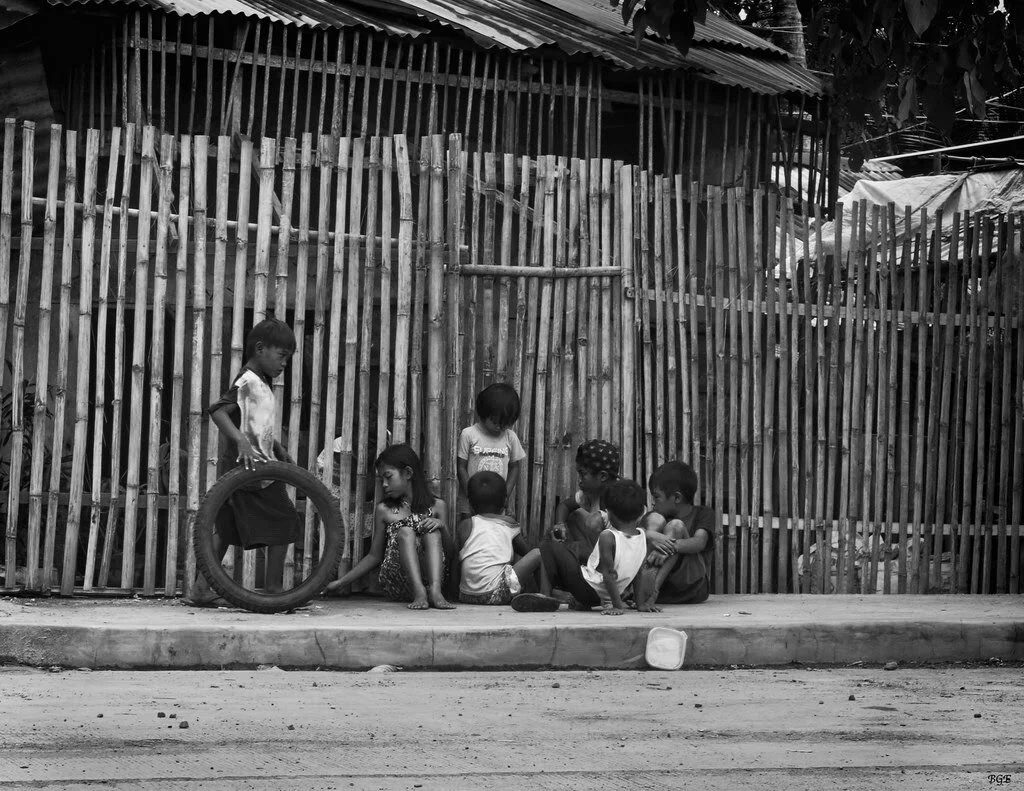
Children on the street. Beegee49. CC BY-ND 2.0.

The Philippines’ House of Representatives recently passed a new law that would raise the age of consent from 12 to 16. Long among the world’s lowest ages of consent, lawmakers hope the change will protect children from sexual predation. In recent decades, the Philippines has become a global hub of child sexual exploitation. Though the new law will improve protections for victims of abuse, long-lasting effects of sexual predation will be felt for years to come. 

The age of consent was decided in 1930 in the Revised Penal Code at 12 years old, the product of what is widely considered a culture of patriarchy. At such a low age, sexual acts against children were almost impossible to prosecute in court. Defendants could claim sex with a child was consensual because they were both above the age of consent. Under this code, defendants could escape a rape verdict if they offered to marry their victim. 

In recent years, sexual abuse against minors has seen a massive increase across the Philippines. Experts say the number of IP addresses used for streaming child pornography has risen from 23,333 in 2014 to 81,723 in 2017, a 250% increase. Cases of HIV/AIDS among minors have been increasing steadily over a similar period of time. Of all rape victims, 70% are children, the vast majority girls. As a result, girls as young as 14 are becoming pregnant at higher rates. 

Campaigners for the bill long argued that children needed far more protections than the Philippines’ legal system granted. The law that would raise the age of consent also contains measures to harshen penalties for rape, sexual exploitation and abuse as well as shift the burden of proof of consent from the victim to the offender. The new law passed the House of Representatives with 207 votes and only 3 opposing; it is expected to pass the Senate just as easily. 

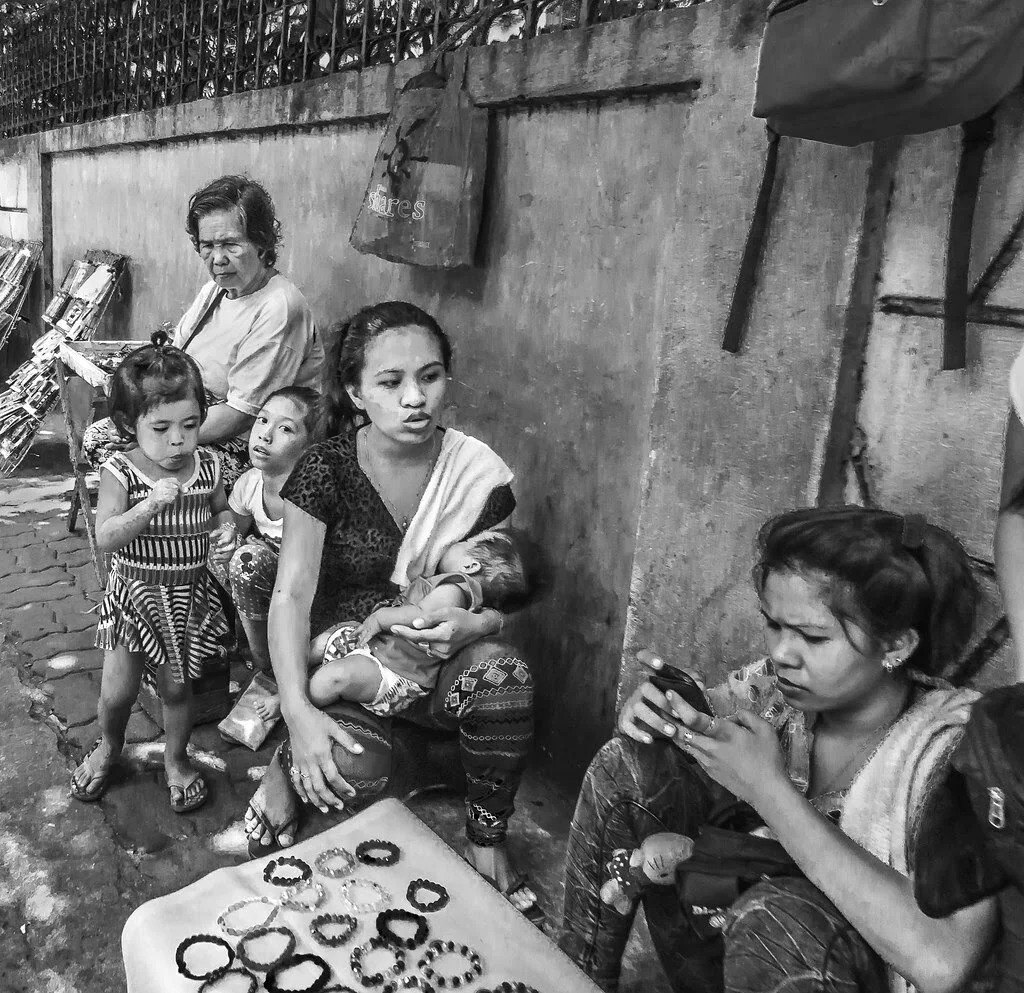
A family making ends meet. FotoGrazio. CC BY-NC-ND 2.0.

Increased data collection has painted a clearer picture of the issue in recent years. International advocacy helped focus lawmakers’ attention on the issue, but it also revealed the lack of resources the Philippines suffers from in combating sex crimes. Sixty-four percent of online abuse cases were initiated by foreign authorities who traced crimes back to the country.

Online sexual abuse afflicts more children today than it ever has. A combination of widespread poverty and COVID-19 lockdowns has rendered the practice rampant in recent months. Poor families were disproportionately harmed by lockdowns, causing a small number of families to resort to online abuse. Predators from foreign countries—mainly the United States, Canada, Europe and Australia—pay facilitators to sexually abuse children, directing the abuse themselves via a livestream. 

The facilitators often include immediate and extended family. In 90 cases involving 381 victims from 2011 to 2017, 43 were abused from two months up to two years. Half were arranged by parents or extended family. The average age of victims was 11. The youngest victim was less than 1. 

The Philippine government plans to implement additional measures to address the conditions that make child sexual abuse so prominent. The Philippine Plan of Action to End Violence Against Children, begun in 2017, campaigns for children’s rights and was partially responsible for raising the age of consent. The U.S. Department of State classifies the Philippines as Tier 1 for fully complying with the Trafficking Victims Protections Act. For the time being, raising the age of consent marks another crucial step in combating sexual exploitation.


Michael McCarthy

Michael is an undergraduate student at Haverford College, dodging the pandemic by taking a gap year. He writes in a variety of genres, and his time in high school debate renders political writing an inevitable fascination. Writing at Catalyst and the Bi-Co News, a student-run newspaper, provides an outlet for this passion. In the future, he intends to keep writing in mediums both informative and creative.

Nonprofits Reach Syrian Refugee Children Through Education

As the Syrian refugee crisis enters its 10th year, children continue to suffer from mass displacement and a lack of educational opportunities. 

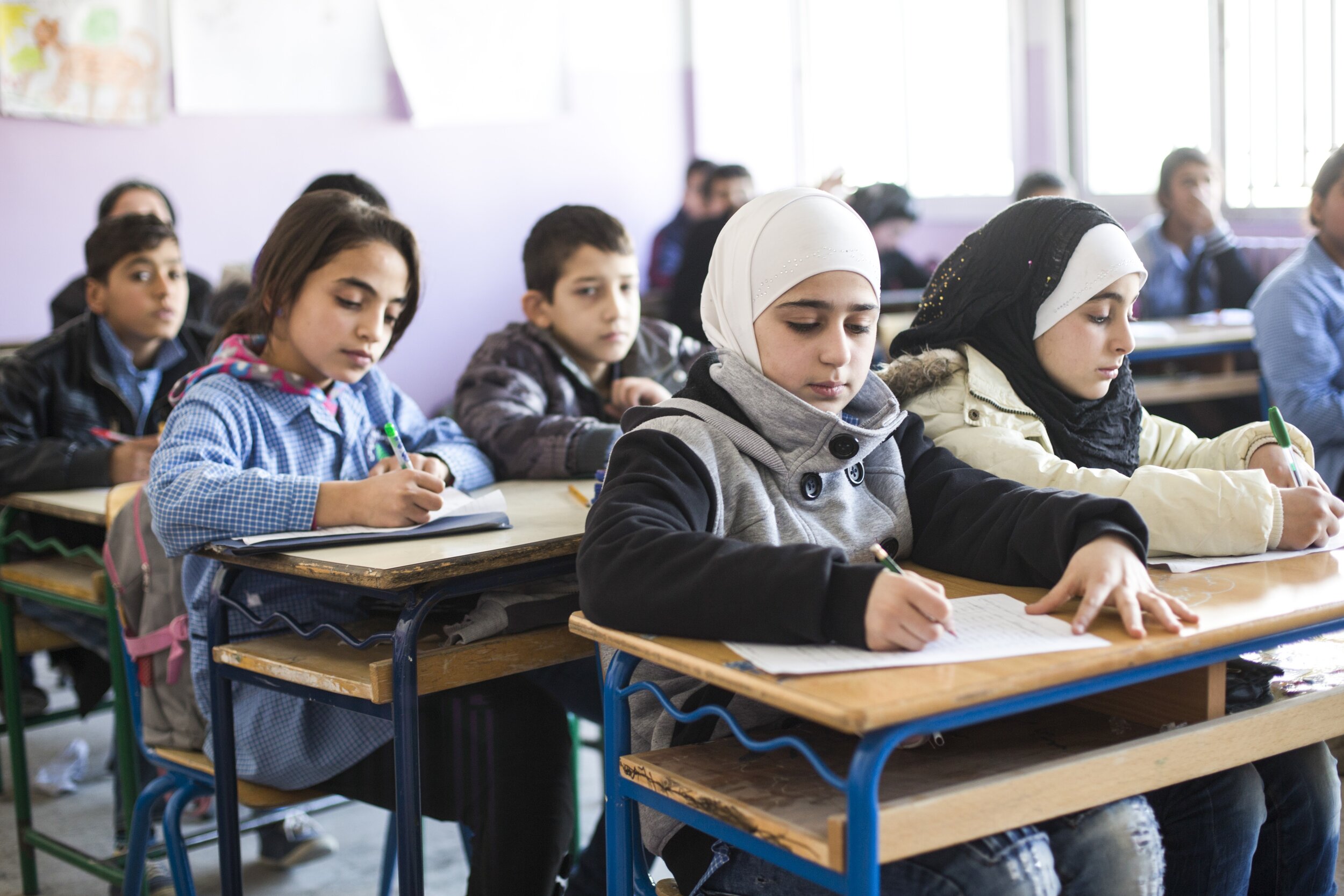
Syrian primary schoolchildren. DFID. CC2.0

The Syrian refugee crisis is considered by many to be the most urgent humanitarian crisis of the decade. Since 2011, the conflict has displaced 11 million people through the destruction of countless homes, hospitals, schools and public buildings. An equally large number of Syrians require humanitarian assistance, over half of them being children. Many of these young children lack safe spaces to play, face childhood neglect and have witnessed horrific violence in their lives. Numerous children are at risk of developing toxic stress, which is a biological response that impedes growth and development when humans have experienced too much hardship. 

However, with hardship also comes hope. Reaching children early and providing educational opportunities have been shown to alleviate toxic stress, allowing children to live productive and happy lives. However, educational resources for Syrian refugee children remain in short supply. Despite its importance in providing children a brighter and more stable future, education efforts only receive 3% of humanitarian aid annually. Additionally, many humanitarian organizations do not provide adequate educational resources for children to increase school enrollment. 

Students in Syria start to drop out at the age of 12, when they are in secondary school. A study conducted on Syrian refugee children in Jordan showed that only 25% of students are enrolled in secondary school, citing a lack of safe transportation, limited educational resources available, poverty and limited professional opportunities as contributing factors. Children who drop out of school are at increased risk of experiencing hardship in their lives, including living in poverty, being subjected to child marriage and facing sexual violence. Adequate educational resources and child support are essential to help provide resilience and much-needed support for Syrian refugee children. Some nonprofit organizations are aiming to do just that.

Making a Difference in Syrian Refugee Children’s Lives

Syrian refugee children at a school in Lebanon. DFID. CC2.0

A new educational program developed by the International Rescue Committee (IRC) and Sesame Workshop aims to provide adequate educational resources for Syrian refugee children. Called Ahlan Simsim, which translates to “Welcome Sesame” in Arabic, the program aims to combine the IRC’s experience working in conflict zones with the TV show “Sesame Street,” which is known for its educational and nurturing effects on children. Program resources include safe spaces for young children to play, an Arabic-language version of ”Sesame Street,” parenting resources for caregivers, and partnerships with nonprofits and local governments to ensure child access to education. In light of COVID-19, educational programming takes place through WhatsApp and online video. 

Ahlan Simsim provides children with skills in literacy and numeracy while helping them develop emotional resilience. For example, the program will teach students how to deal with difficult situations, understand their feelings and empathize with others. The program is a winner of the MacArthur Foundation’s 100&Change grant competition and is among the most ambitious early childhood development programs ever attempted by the humanitarian system. According to Sherrie Westin, executive vice president for global impact and philanthropy at Sesame Workshop, “The issue we are addressing is the greatest humanitarian crisis of our time. We know we can make a difference in the long term if we reach children early. Without that, there’s an entire generation at risk, and that has repercussions not just for their future, but for a more peaceful, stable world for all children.”

To Get Involved: 

Check out this link to the International Rescue Committee’s webpage to learn more about the Ahlan Simsim initiative.


Megan Gürer

is a Turkish-American student at Wellesley College in Massachusetts studying Biological Sciences. Passionate about environmental issues and learning about other cultures, she dreams of exploring the globe. In her free time, she enjoys cooking, singing, and composing music.

Consider the Tofu: A (Tasty) History

This seemingly tasteless ingredient packs a punch in iconic dishes across Asia. 

Fry it, flip it, steam it, dessert-ify it—tofu’s your jack of all trades. Sherman Kwan. Unsplash. 

As a relatively tasteless food, tofu is a versatile ingredient that is present in many dishes across Asia. Tofu is centuries old. While the exact date is not known, historians believe that tofu was first used over 2,000 years ago in China. This humble dish made its debut in Japan, Korea, parts of Southeast Asia and eventually in Europe after 19th-century colonialism. In Buddhist societies, the production of tofu increased as it served as a convenient meat alternative. Molded from crushed soybeans, tofu is a flexible food that goes with nearly anything. Given its absorbent nature, tofu often tastes like the spices and flavors it has marinated in. Here are a few popular tofu dishes from across Asia: 
Mapo Tofu

This classic dish has roots in China’s Sichuan region. Mapo tofu is made with soft tofu and stir-fried with various chile peppers, black bean paste and ginger. If cooked properly, the sauce itself is a bright-red color laced with thin bubbles of oil. The dish can be topped off with scallions or minced meat if so desired.  

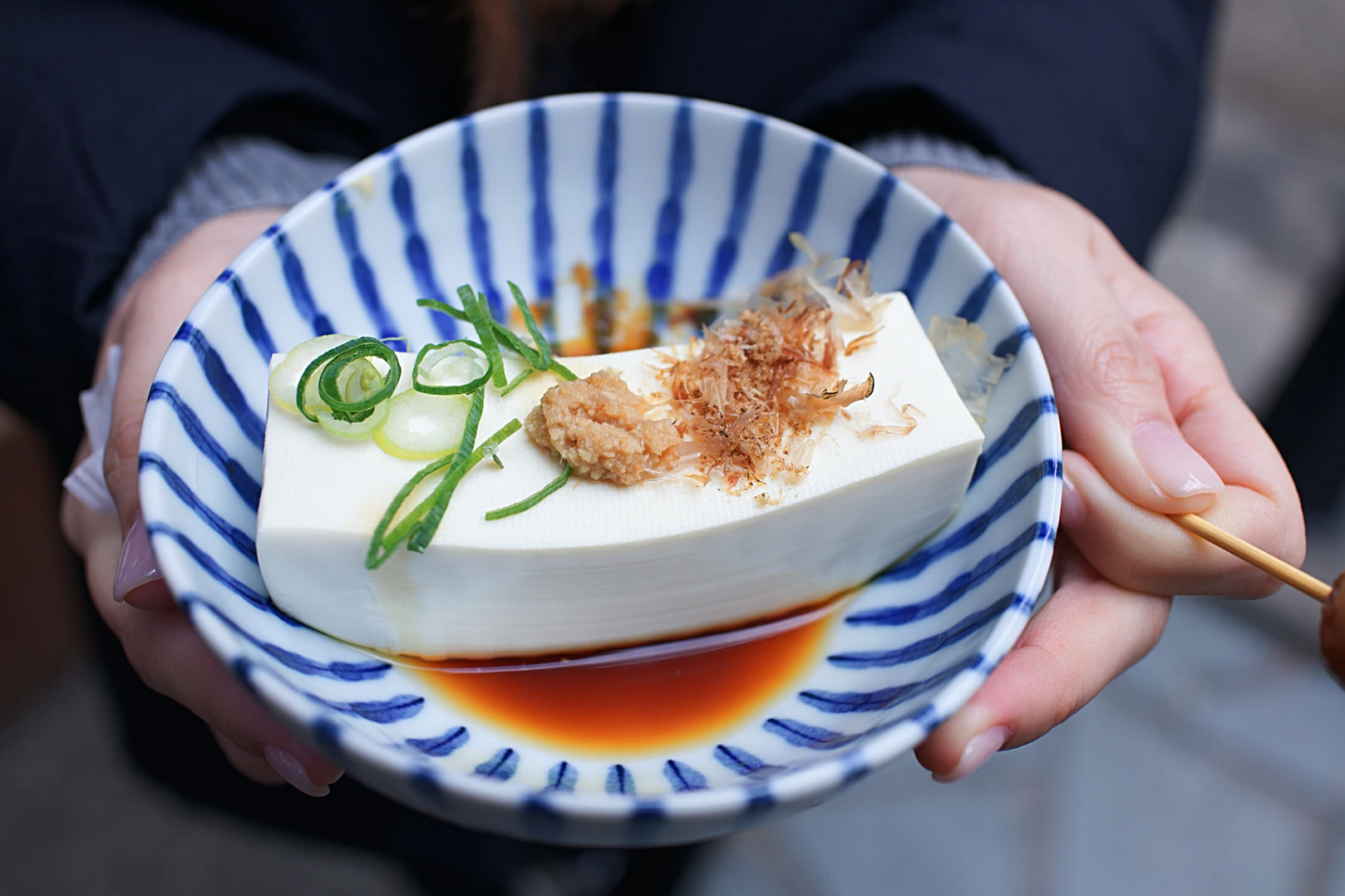
Stuff your tofu too; it’s gratifying. Qlinart. CC BY-NC-ND 2.0. 

Crispy Shrimp Stuffed Tofu

In this Cantonese dish, tofu is stuffed with minced shrimp and deep-fried to crispiness. The tofu is first sliced and coated in cornstarch, then hollowed out to hold the filling. The dish is often paired with classic ingredients like Shaoxing wine, white pepper and sesame oil. These golden, bite-sized bricks can be garnished with scallions and can be dipped in a slightly sweet soy sauce. 
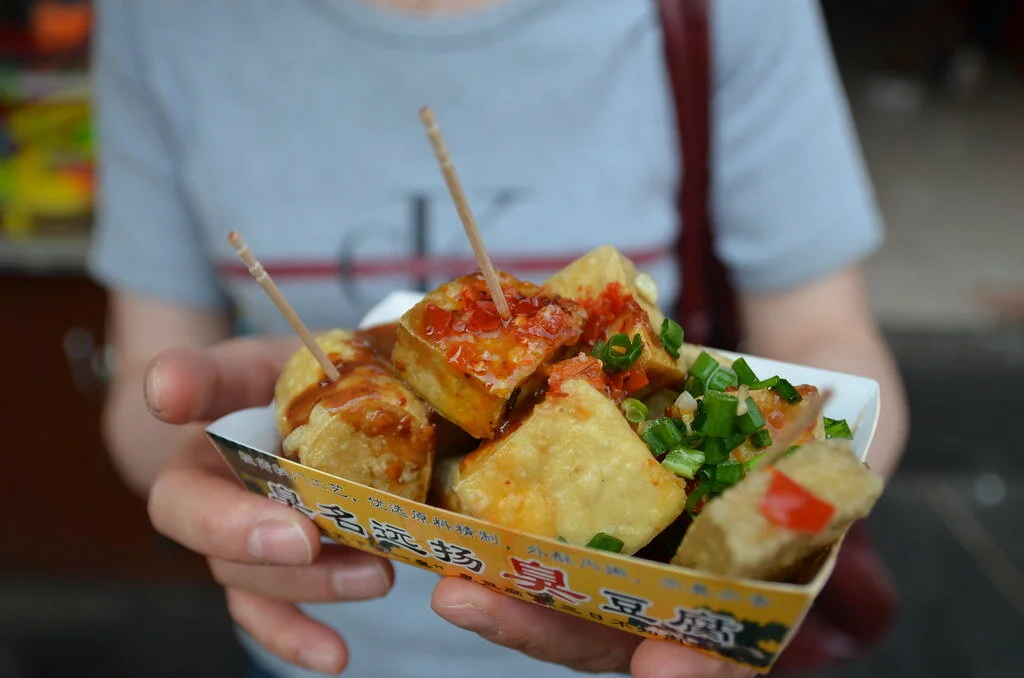
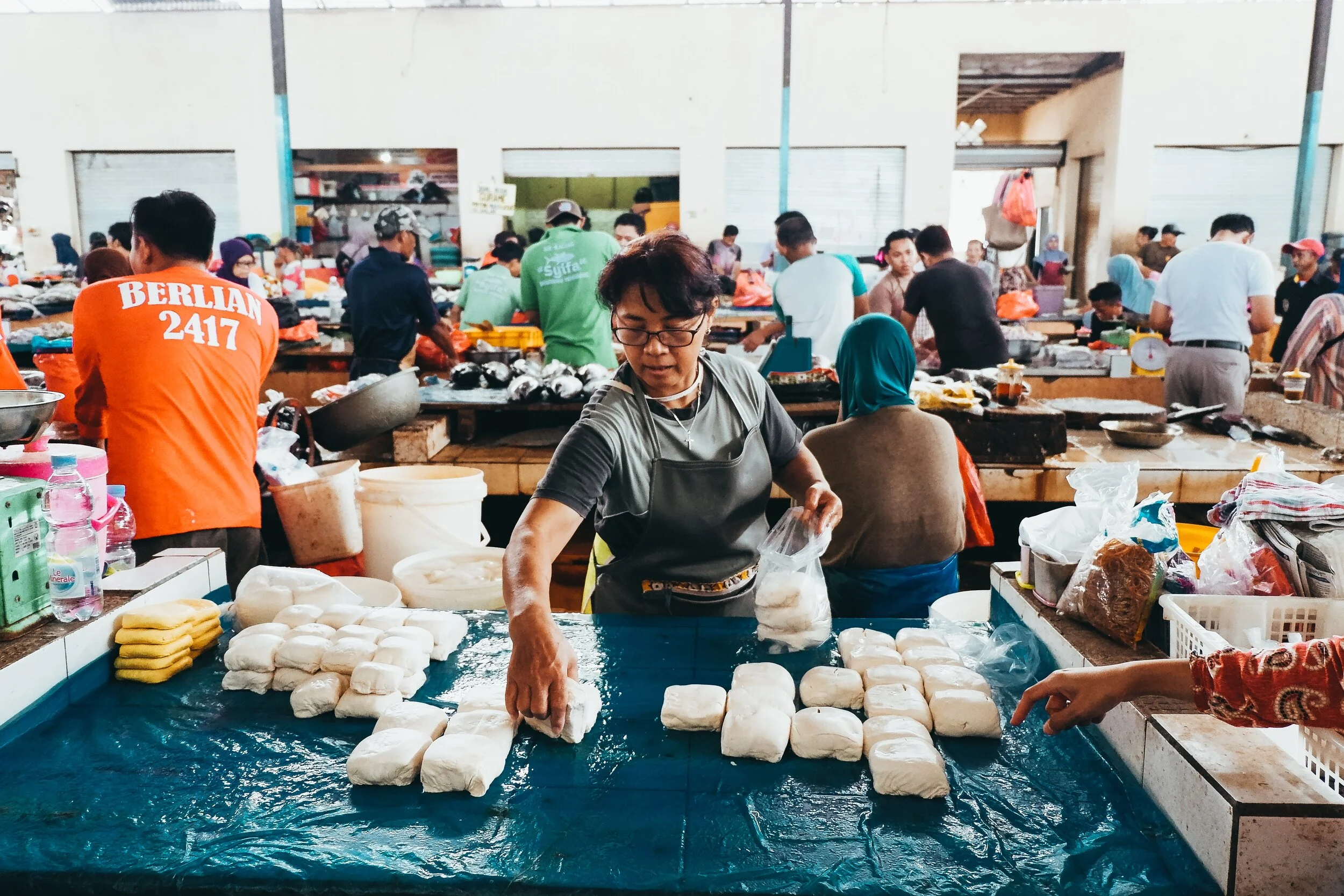
Stinky tofu is usually sold from open-air hawker stalls. Josephine Lim. CC BY-ND 2.0. 
Stinky Tofu

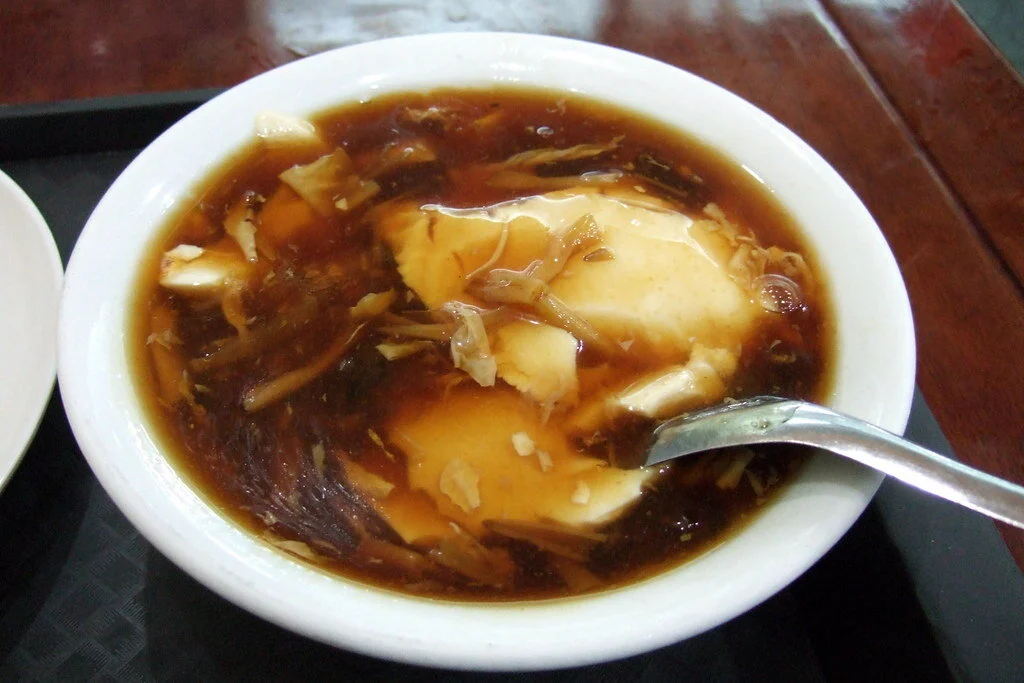
Tofu, when stinky, can also be a delectable treat. This smelly favorite can be found along the streets of China, Hong Kong and Taiwan. Stinky tofu is made from the fermented brine in which it has soaked for a few months. The mixture is usually made from fermented milk, vegetables or meat, but can also include other ingredients like dried shrimp and mustard greens. When ready, stinky tofu is commonly served deep-fried. Its bitter and salty flavor is best paired with garlic, soy sauce or chile sauce. 

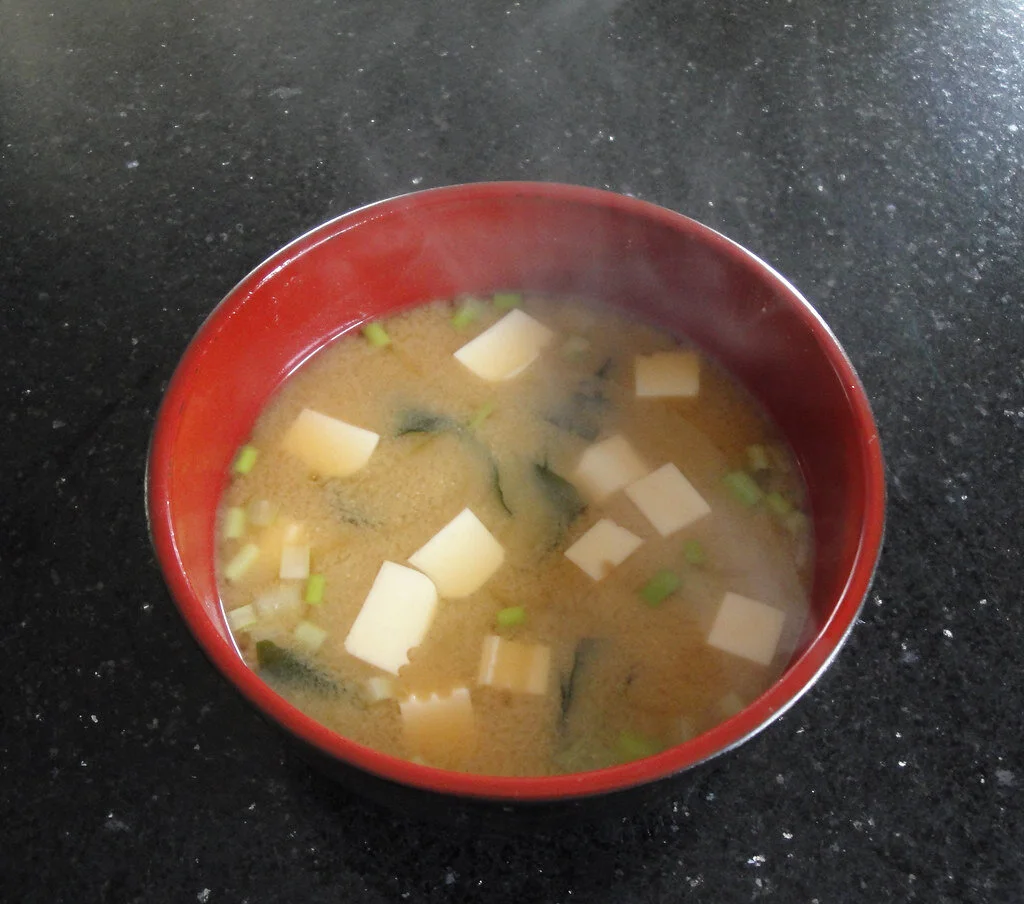
Steaming, savory miso soup for any occasion. Jude Masti. CC BY 2.0. 

Miso Soup 

Miso is a fermented paste with origins in Japanese cuisine. This concoction is produced by pickling soybeans with salt and other ingredients such as barley or seaweed. Miso is usually consumed as soup, and one of the main condiments is tofu. The tofu’s porous texture absorbs the umami saltiness of the miso and makes for a hearty, satisfying meal. It can be paired with clean white rice, mushrooms and even eggplants. 

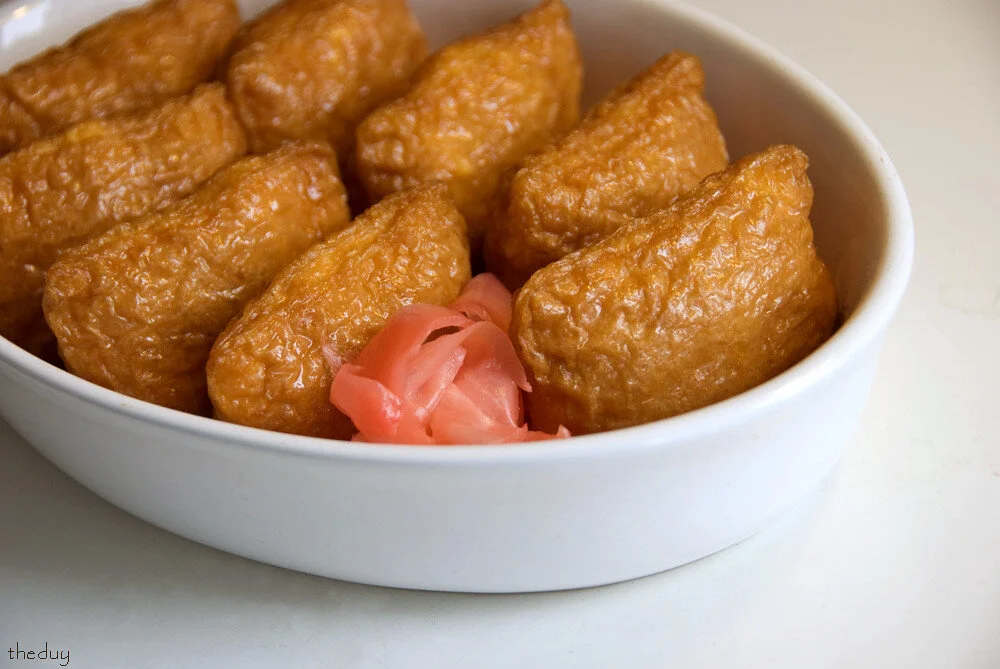
An edible lunch packed in a pouch. David Theduy Nguyen. CC BY-NC 2.0. 

Inari Sushi 

Tofu can even be incorporated into sushi. Inari sushi was first introduced to Japan during the 18th century. It first started off as offering food for fox-god temples scattered about the islands. Over time, Inari sushi became a staple option on kitchen tables. Inari sushi is a simpler style of sushi made with sweetened rice packed in tofu pouches. The tofu skin itself is pre-seasoned and deep-fried. The side can be topped off with sesame seeds and paired with vinegar and soy sauce for a uniquely sweet finish. 

Best served piping hot. Republic of Korea. CC BY-SA 2.0. 

Sundubu-jjigae  

Also written as “soondubu,” this Korean dish is a soft tofu stew made with silken, curdled tofu served in a piping hot pot.  Sundubu-jjigae is usually prepared spicy and can be cooked in seafood or meat broth. As the dish is bubbling, a whole egg is cracked into the mix and served almost immediately. Sundubu-jjigae is a popular Korean staple and is usually complemented with a bowl of rice and various “banchan” like kimchi, gamja jorim (sweetened braised potatoes) and salted cucumbers.   

Cleanse your palate with a sweet tofu finish. Boyu Wang. CC BY-NC-ND 2.0. 

Tofu Pudding

Dau hu nuoc duong. Taho. Douhua. However it’s called, tofu can also be consumed as a dessert. Tofu pudding can be found in countries like Vietnam, the Philippines, and China and takes on regional preferences. It is often paired with sweeteners like ginger syrup and brown sugar. Depending on the location, tofu pudding can also be served with peanut and strawberry. 

Tofu is timeless. Devi Puspita Amartha Yahya. Unsplash.

The Future of Tofu

While tofu has a stronghold in Asian cuisines, this humble ingredient continues to change and evolve across the world. As consumers look for more sustainable alternatives, tofu stands as a ready-made, centuries-old option. Not only is it healthier, but tofu is also a flexible and equally tasty substitute for meats and other high-cholesterol foods. Despite its unassuming nature, tofu has proven its timelessness. 


Rhiannon Koh

Rhiannon earned her B.A. in Urban Studies & Planning from UC San Diego. Her honors thesis was a speculative fiction piece exploring the aspects of surveillance technology, climate change, and the future of urbanized humanity. She is committed to expanding the stories we tell.

Feline Fun: Japan’s Cat Culture and ‘Cat Islands’

It is always a pleasure to watch a cat  prancing through the neighborhood or a skittish kitten darting for the bushes. But one country, Japan, has completely dissolved the line dividing feline and human interaction. 

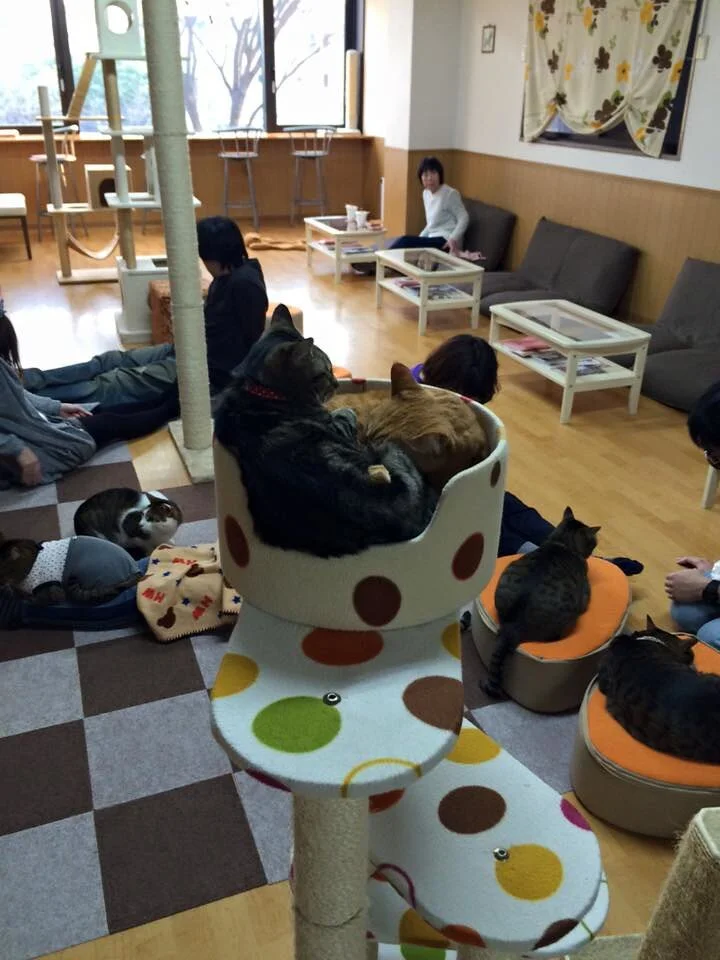
Cat cafe in Japan. nyxie. CC BY-NC-SA 2.0. 

Most people, if asked to name something from Japanese pop culture, would name the “Hello Kitty” cat cartoon as one of their top answers. As popular as the character has been with children across the world, a bustling cat scene exists within Japan itself entirely separate from Hello Kitty. 

Japan’s residents hold a lengthy history of interaction with their feline friends. Cats were originally an invasive species introduced to Japan around 500 A.D. The creatures soon proved their worth by managing the islands’ rat population; the silkworm industry was being devastated by pesky rats, so the nation’s cats jumped into action. Over 1,000 years ago, wealthy members of Japanese society owned cats as pets. Evidence of cats in Japanese history can be found in literary works and paintings, many of which are hundreds of years old. The country’s oral history also contains many tales of worship for the cherished creatures. 

Beyond being pets, cats in Japanese culture are an integral part of social interaction. “Cat cafes” have recently blossomed in Japan’s cat culture, allowing owners to mingle while their beloved friends wander among other felines. 

While a stray cat is a common sight on any island of Japan, about a dozen islands have been dubbed the “Cat Islands” for their particularly dense population of felines. Two of the most popular are the islands of Aoshima and Enoshima:

Aoshima Island

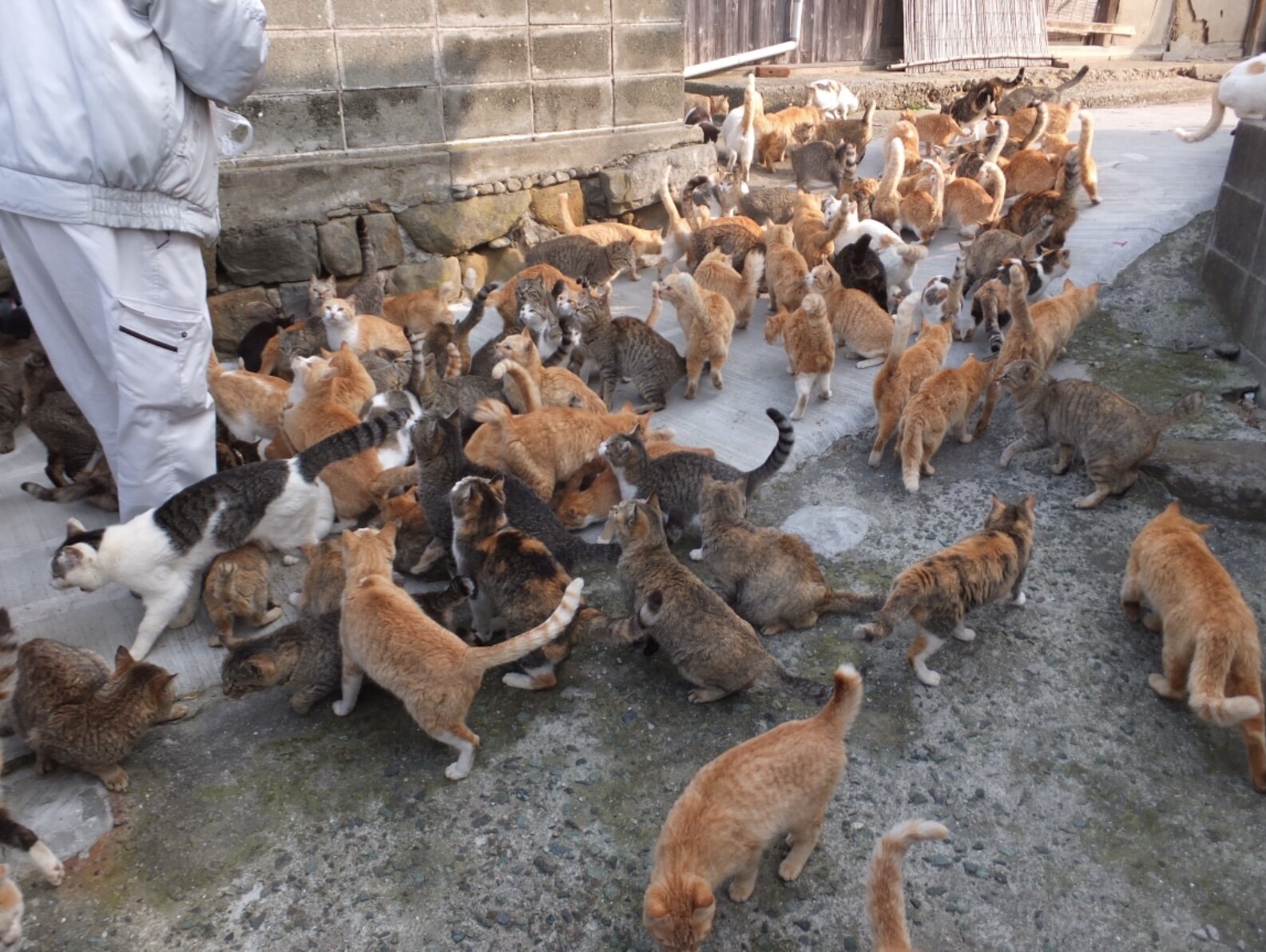
Crowd of cats on Aoshima Island. 暇・カキコ. CC BY-SA 4.0. 

Aoshima Island, located in southern Japan, boasts a human to cat ratio of 1-8. Cats were originally brought to the island to manage the rat population, but now they enjoy flashy media attention as internet sensations. The cats have become increasingly popular with visitors seeing viral videos, so an interactive feeding area has been installed. The cats have now become accustomed to interaction with strangers and will gladly show affection for a bit of food. 

Enoshima Island

Cat on Enoshima Island. tokyofortwo. CC BY-NC-SA 2.0.

Enoshima Island is a small island just over an hour south of Tokyo. The island’s human population is minuscule compared to the population of cats; there are only about 100 human residents among over 600 cats. The island draws many visitors for its Shinto shrines, which represent a religion that does not believe in the killing of cats. The island also houses a busy fishing industry, which has proven to provide plenty of nourishment for furry residents. Thus, the island’s cat population has bloomed. 

Japan’s feline friends have embedded themselves in the nation’s history and culture, and their lofty position in society appears to be secure. 


Ella Nguyen

Ella is an undergraduate student at Vassar College pursuing a degree in Hispanic Studies. She wants to assist in the field of immigration law and hopes to utilize Spanish in her future projects. In her free time she enjoys cooking, writing poetry, and learning about cosmetics.

The Ainu: One of Japan’s Indigenous Groups

In August 2019, the Japanese government passed a law that officially recognized the Ainu as an Indigenous people group. After nearly two centuries of legalized discrimination, the Ainu are reclaiming their identity and history, and they are just getting started.

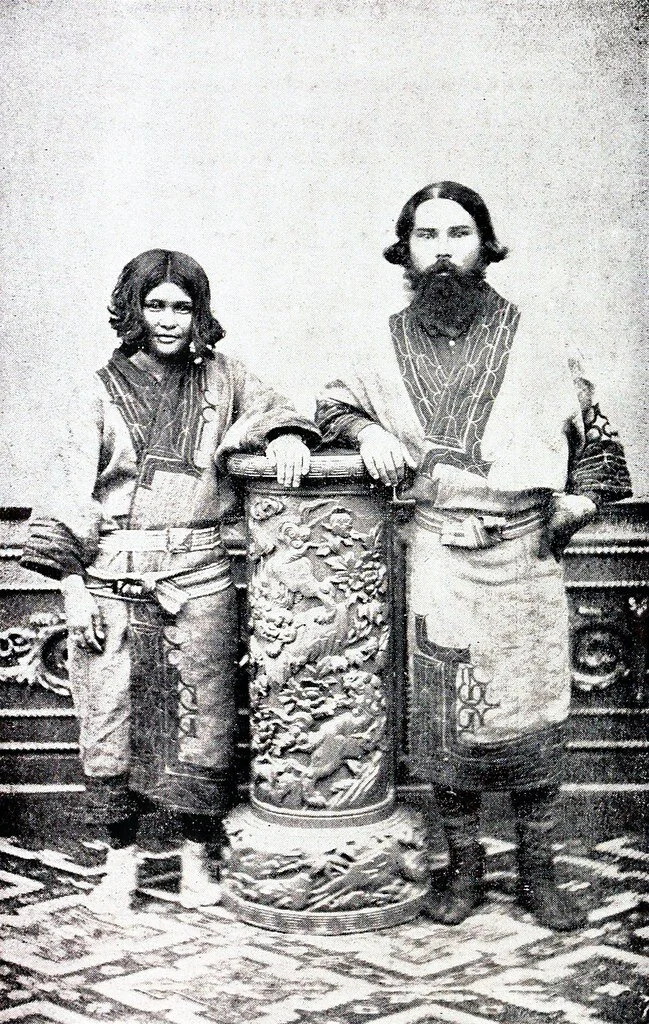
An Ainu couple before assimilation; their features are still different from those of their Japanese counterparts. Stuart Rankin. CC BY-NC 2.0.

In July, Japan unveiled the Upopoy National Ainu Museum, the country’s first cultural center dedicated to Indigenous identity. Located on the island of Hokkaido—one of the Ainu’s ancestral lands—the Upopoy Museum showcases the history of the Ainu through performances and historical relics. What is remarkable about the museum’s opening is not its resiliency amid a pandemic, but that the structure opened at all. Much like the power dynamic between American settlers and Native American tribes, the Ainu endured a legacy of forced assimilation by the ethnic Japanese and their ruling government.

Before this, the Ainu were a hunter-gatherer tribe that inhabited the northern islands of Ezo (present-day Hokkaido), the Kuril Islands and the Russian island of Sakhalin. According to archaeological records, the Ainu called these lands home as early as the 14,500 B.C. The Ainu also had strong ties to animism, a belief that manifested itself in the relationship between the Ainu and the bears on the islands. The Ainu even created a ceremony in which bear cubs were taken, raised and then sacrificed in a ritual offering. These symbolic rites guided Ainu tradition and their balanced connection with nature.

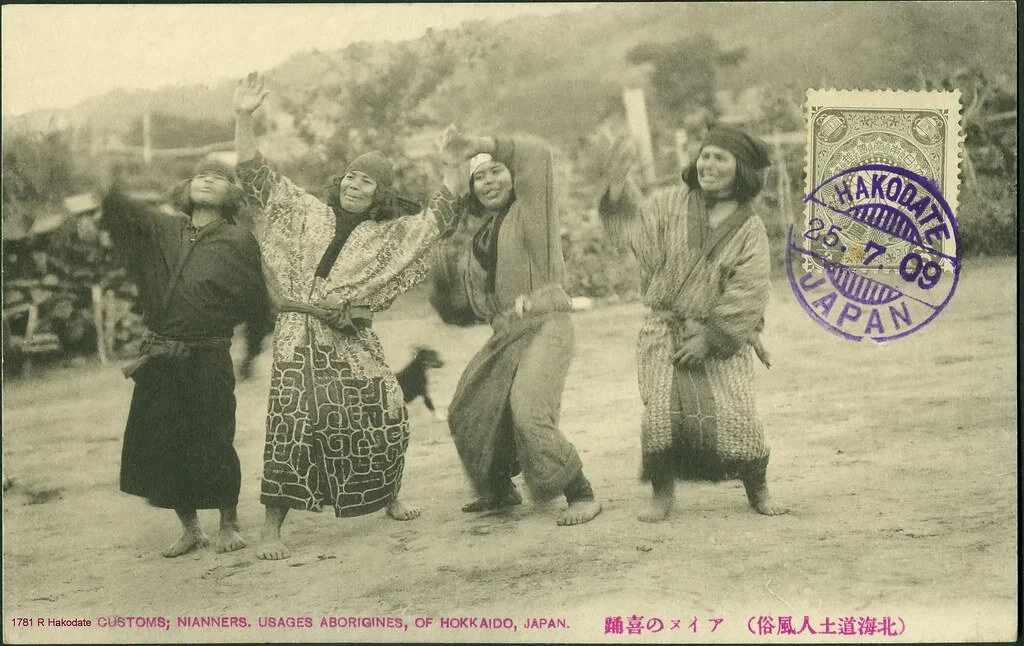
Ainu women performing a welcome dance on Hokkaido. Vladimir Tkalcic. CC BY-NC-ND 2.0.

When the Meiji government annexed Hokkaido in the late 19th century, the Ainu’s pastoral way of life was interrupted. While the Ainu lived in Japan, they physically differed from their Japanese counterparts. The Ainu have a more European look with lighter skin and thick hair. Men sported full beards, and women tattooed their lips once they reached adulthood. Because of this, the Japanese derided the Ainu as backward and foreign. Around this time, Japan also became the first non-European country to have defeated Russia in battle. Flush with victory and newly acquired lands, the Japanese sought to build up a national myth of military might and cultural homogeneity. One of these initiatives included a policy of forced assimilation on the island of Hokkaido.

The Japanese government enlisted the help of American consultants who had reeducated their own North American Indigenous groups. The Ainu were forced into Japanese-speaking schools and were required to change their names. As the land was repurposed for industrial and agricultural uses, the Ainu were pushed into wage labor and became an impoverished and politically disenfranchised minority. Even after World War II, the Ainu were deprived. To participate in the scientific advancements of the mid-20th century, the Japanese government essentially emboldened researchers to rob Ainu graves and remains.  

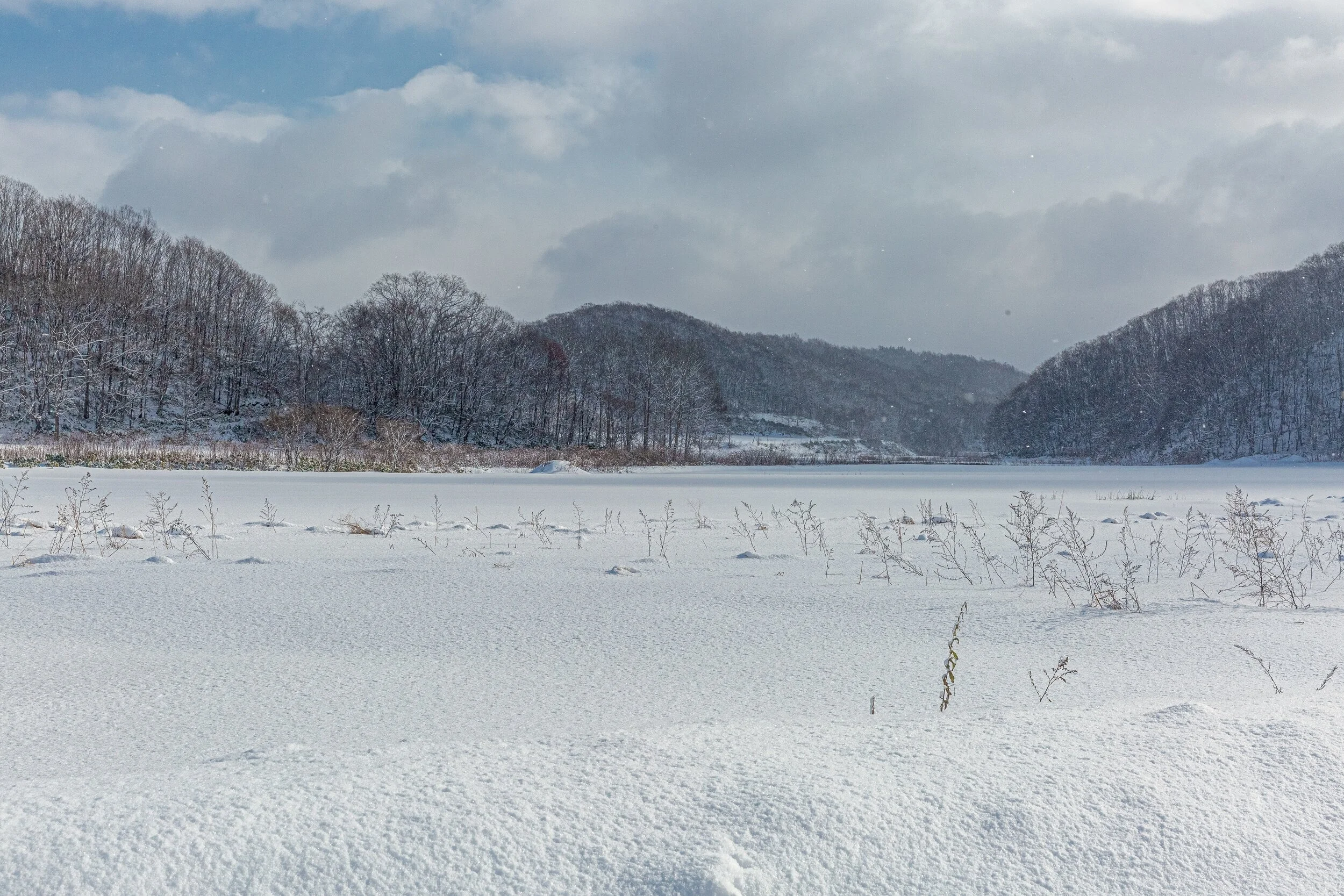
The Upopoy National Museum is housed in Hokkaido, one of the Ainu’s ancestral homelands. Marek Okon. Unsplash. 

In February 2019, the Japanese government introduced a bill that would officially recognize the ethnic Ainu minority as an Indigenous people for the first time. The bill included measures that would support Ainu communities, fund scholarships and educational opportunities, and allow the Ainu to cut down trees in nationally owned forests for use in traditional practices.

While many lauded the proposal, some felt that the bill missed a crucial element: an apology. In an interview with CNN, musician Oki Kano shared that he was only 20 years old when he found out that he was Ainu. Thanks to rigorous assimilation policies, the Ainu in Japan bear more resemblance to ethnic Japanese than past generations. Because of the ugly legacy of discrimination, however, the true number of Ainu still left in Japan is unknown. Due to fear, many of the Ainu have chosen to hide their background, leaving younger generations with limited if any knowledge about their heritage. The Ainu language is also at risk of extinction.

Although the bill became law in August 2019 and Tokyo University returned some of the robbed remains the following year, the fight for the Ainu people’s rights is just beginning. Despite widespread recognition and gradual acceptance of the Ainu, some feel the Ainu culture is at risk of tokenization. Though the preservation of Ainu culture is commendable, the Ainu’s future should also be considered if they are to have a chance at survival.


Rhiannon Koh

Rhiannon earned her B.A. in Urban Studies & Planning from UC San Diego. Her honors thesis was a speculative fiction piece exploring the aspects of surveillance technology, climate change, and the future of urbanized humanity. She is committed to expanding the stories we tell.

Indonesian Muslims Protest French President 

Thousands of people gathered at Indonesia’s French Embassy to protest French President Emmanuel Macron. Macron has a history of anti-Muslim rhetoric and recently defended the publication of caricatures depicting the Prophet Muhammad. 

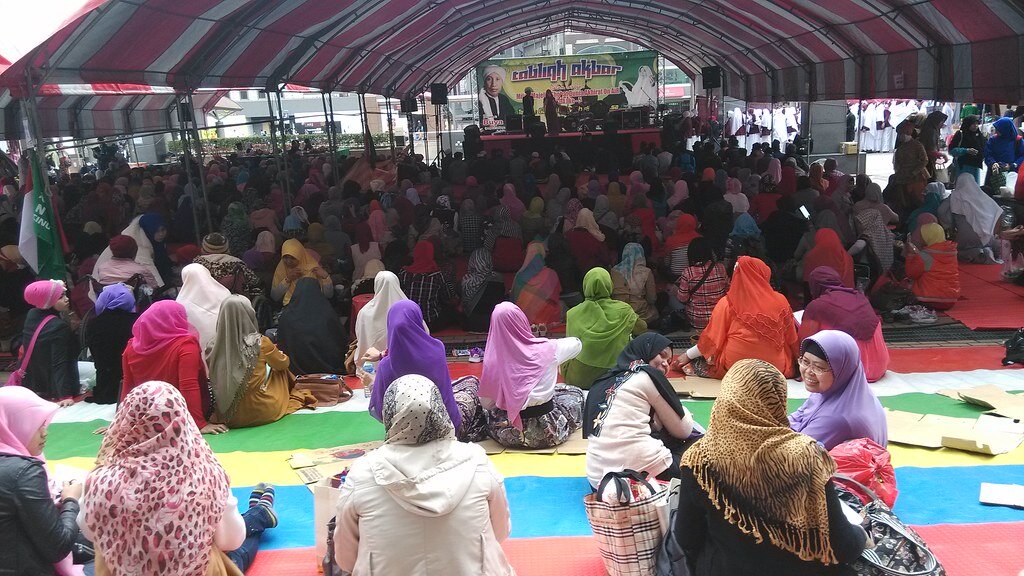
On Nov. 2, thousands of people gathered outside the French Embassy in Jakarta, Indonesia, to protest French President Emmanuel Macron. 

Macron defended the publication of cartoons that depict the Prophet Muhammad, which many have deemed inflammatory. The cartoons were originally published in the Charlie Hebdo magazine in 2015. They were republished in September to mark the opening of the trial for the 2015 attacks against the magazine’s staff, which were partially motivated by the publication of the cartoons. 

Last month, the cartoons were a topic of discussion in a Paris classroom during a lecture on freedom of expression. After the lecture, on Oct. 16, the teacher who led the class was beheaded by a student enraged by the cartoon being shown in class. In a separate incident on Oct. 29, three people were stabbed to death in the seaside town of Nice by a Tunisian man yelling “Allahu Akbar,” a commonly used phrase meaning “God is greatest.” Though it has an innocuous meaning and is used in a number of day-to-day situations, the phrase has been tarnished by an association with terrorist acts, such as the 2015 Charlie Hebdo attack.   

These recent incidents have reinvigorated anti-Muslim sentiment in France, and Macron has been criticized for his comments. Macron told the news site Al-Jazeera that he understands people’s concern over the cartoons, but said that he “will always defend in my country the freedom to speak, to write, to think, to draw.” He maintained his stance that the cartoons were protected under freedom of expression after the beheading of the teacher in October, and has been accused by some of spreading anti-Muslim sentiment in his statements. 

Macron has received criticism for his anti-Muslim rhetoric in the past. On Oct. 2, he called Islam a religion “in crisis” around the world and introduced a plan to push what he termed “Islamist radicalism” out of French education and the public sector. In the same speech, he announced the government’s intention to present a bill strengthening a 1905 law officially separating the church and state in France. 

In Indonesia, the French Embassy was heavily guarded and protected by barbed wire, but over 2,000 people stood outside chanting and holding signs. Protesters displayed banners that read “Macron is the real terrorist,” “Go to hell Macron,” and “Macron is devil” and called for a boycott of French goods. Some protesters stomped on Louis Vuitton bags to demonstrate their rejection of French products. Speakers at the protest demanded that Macron apologize and take back his anti-Muslim comments. They also called for the immediate removal of the French ambassador. 

On Oct. 31, Indonesian President Joko Widodo condemned the terrorist attacks in Paris and Nice while also speaking out against Macron’s defense of the cartoons. Widodo argued that freedom of expression that tarnishes the honor of religious symbols could not be justified and said that “linking religion with terrorist acts is a big mistake.” Muslims in France have repeatedly denounced the terrorist acts. 

Rachel Lynch

is a student at Sarah Lawrence College in Bronxville, NY currently taking a semester off. She plans to study Writing and Child Development. Rachel loves to travel and is inspired by the places she’s been and everywhere she wants to go. She hopes to educate people on social justice issues and the history and culture of travel destinations through her writing.

What Makes Bhutan So Happy?

Meet the country which prioritizes the contentment of its citizens before everything else through its “Gross National Happiness” program.

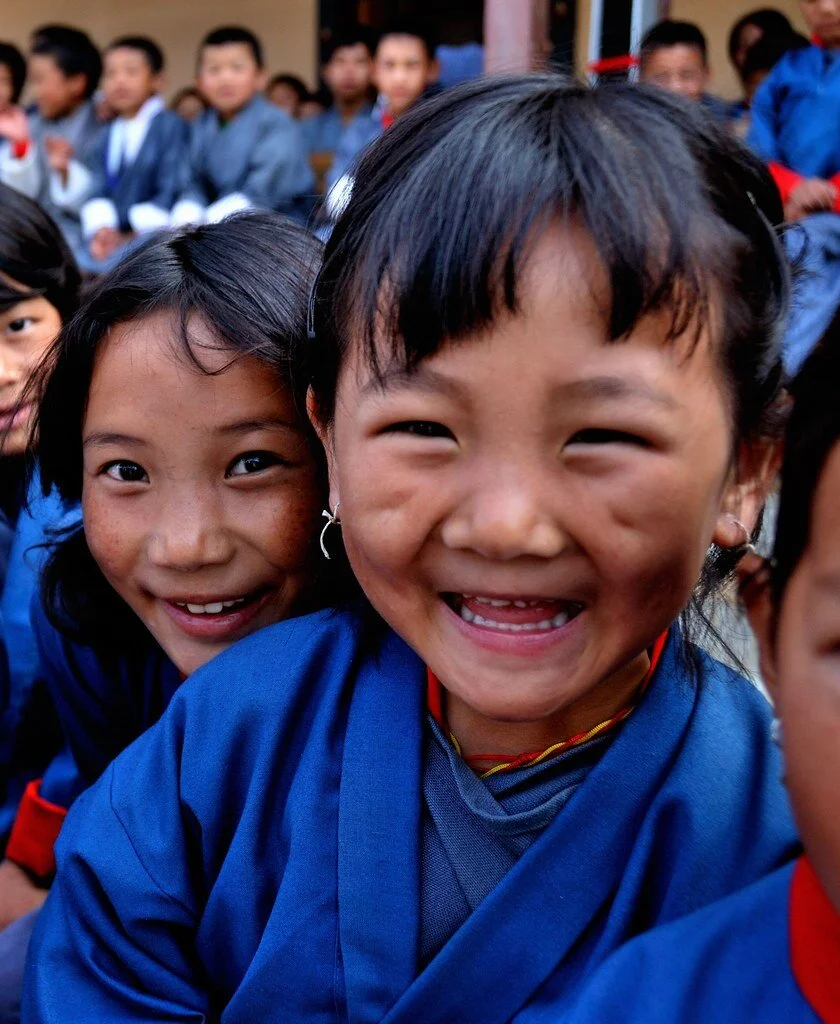
Bhutanese children. r y _ _ _ _ . CC BY-NC 2.0

Imagine a country hidden away from the rest of the world. Tucked in between China and India, the world’s most populous countries, little Bhutan rests at the base of the Himalayan mountains. The rural country long ago made the decision to close off its borders to most tourism in hopes of preserving the nation’s unique Buddhist culture and the identity of its 740,000 people. In 1974 the country gradually reopened, though the Bhutanese monarchy was reluctant for the nation to be connected with the rapidly urbanizing world. Bhutan could not be completely isolated for long due to globalization, and in 1999 internet and Wi-Fi were quickly introduced. Being alone for so long, Bhutan was innovative in ways that made sense for its culture and ecosystem.

Dochula Pass. Göran Höglund (Kartläsarn). CC BY 2.0

Bhutan is unique in its location and recent connections to the outside world, but it’s the traditions and customs within Bhutan that really make it a sight to behold. Even during the age of colonization and imperialization, Bhutan was never colonized. The country’s official religion remains Vajrayana Buddhism, a deity-dense, merit-based and karma-focused faith implemented into everyday life and routines. 

Bhutan Buddhist monk sand art. John K. CC BY-NC-ND 2.0

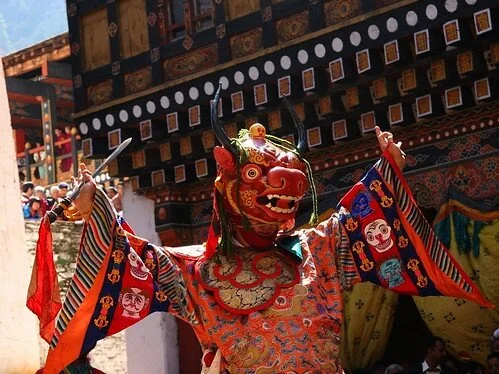
Dance of the death god. jmhullot. CC BY-SA 2.0

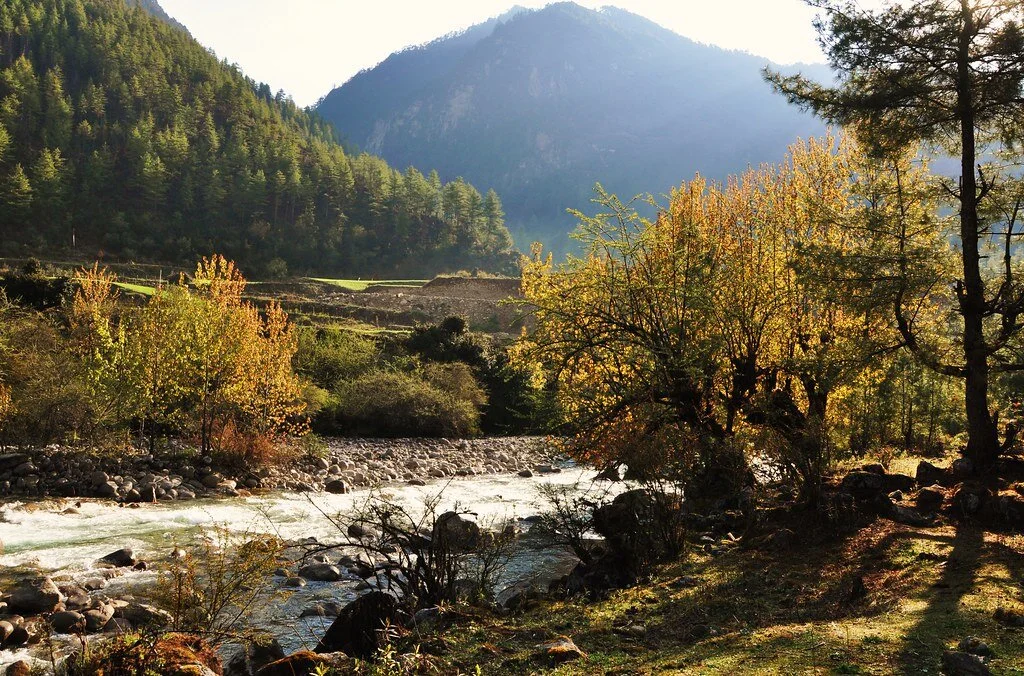
Ecology is everything. Bhutan is the only carbon negative nation in the modern world, absorbing three times more carbon than it produces. In light of climate change, that feat is revolutionary. Its government has established laws that require Bhutan to always have its area 60% covered in forest lands. Keeping in mind its minimal carbon footprint, Bhutan is still vigilant about tourists who enter the country, always prioritizing  the preservation of the nation’s cohesive identity. The tourist industry is nationally regulated, making it expensive and difficult to travel to. Documents and visas are issued by state-appointed companies and provide visitors with everything, including hotels, insurance and most importantly a guide who must accompany travelers at all times

Ecology is everything. 360around. CC BY 2.0

Ecology and tourism are not the only things the government has taken to regulating. Bhutan is once again unique in national policy, measuring its nation’s happiness. Outsiders like to say that Bhutan is the “happiest country in the world” and the statistics given by Bhutan back up this claim. In 2015, the annual extensive survey that gauges the nation’s happiness concluded that 91% of its population was happy.” The Ministry of Happiness measures the contentment of its population with “Gross National Happiness” (GNH). 

King of Bhutan. Bhutan-360. CC BY-NC-SA 2.0

Ex-Prime Minister Tshering Tobgay defined it as “a developing philosophy that acknowledges that economic growth is important, but that growth must not be mindless, but sustainable.”

Much like a country’s gross domestic product, GNH is considered important. Established in 2008, the Gross National Happiness Commission was appointed to take into consideration and care the inner peace of Bhutan’s people. Broken down into four pillars, nine domains and 72 indicators, GNH is a difficult concept to comprehend. The country’s leaders take into account how happy its people are in every aspect of life: governance, health, education, living standards, culture, ecology, time use and psychological well-being. 

Tobgay breaks Bhutan’s complicated process down to three components: the key to happiness is security, identity and purpose. These things are not mutually exclusive; they reinforce one another in every direction, both on an individual and a national level. He says that, “The government has a responsibility to ensure the whole nation has individual pursuit of the keys to happiness.” 

Temple overlooking the Himalayas. Jean Marie Hullot. CC BY-SA 2.0

The Bhutanese are often misunderstood. Outsiders often believe that just because they have GNH, it automatically makes them the happiest country in comparison to all others. They have free health care, free education, clean air, a thriving environment and a strong sense of community. But Tobgay argues that the Bhutanese still struggle because that is what it means to be human. Bhutan is a “real country with real people, and real desires.” Although every person may suffer from inner turmoil for whatever reason, the Bhutanese should be happy knowing that they have been given the keys to happiness.


Yuliana Rocio

Yuliana is currently a Literature/Writing major at the University of California San Diego. Yuliana likes to think of herself as a lover of words and a student of the world. She loves to read, swim, and paint in her free time. She spent her youth as part of a travel-loving family and has grown up seeking adventure. She hopes to develop her writing skills, creating work that reflects her voice and her fierce passion for activism.

Sri Lanka Strives Toward Gender Equality Through Economic Empowerment

Sri Lanka’s efforts to combat the gender gap allow women to support themselves and their communities. 

Women selling produce at a market in Sri Lanka. imke.sta. CC2.0

Nicknamed the “pearl of the Indian Ocean” and famous for its spices, unique culture and lush ecosystems, Sri Lanka is also known for its advances in gender equality. The island nation became in 1960 the first country in the world to elect a female prime minister, Sirimavo Bandaranaike. Sri Lanka has also long provided free and compulsory education for men and women up to the university level.

Even so, high levels of gender-based violence are present throughout the country and the unemployment rate of women is twice that of men. Most women occupy low-paying positions in agriculture and the garment industry with little chance of economic mobility. Although well-respected in the Asia-Pacific region, Sri Lanka’s educational system often enforces traditional ideological and cultural beliefs, which can perpetuate negative stereotypes about women.  A university-level education does not guarantee women positions of power, with large disparities between men and women in science, technology and political positions throughout the country. Additionally, a 26-year-long civil war (1983-2009) isolated Sri Lanka from the modern world, allowing traditional gender roles to thrive in war-affected areas.

Developing economic opportunities for women has the potential to overcome barriers to gender equality. Here are two organizations working to do just that:

Women receiving medical training provided by the Women’s Development Centre. Rajapaksa. CC2.0

The Women’s Development Center

This Sri Lanka-based nongovernmental organization has made incredible strides in supporting at-risk women, children and people with disabilities since its founding in 1986. With the goal of creating opportunities for marginalized groups, the group is on its way to “creating a just and secure society for women and children.” Although the organization has a multifaceted approach, social enterprises and economic empowerment remain its key goals. The social enterprise “Sthree”, meaning “woman” in Tamil and Sinhala, was founded in 2011 with the goal of empowering women and their local communities. The platform provides a market in Kandy for Sri Lankan women and disabled people to sell handmade products, such as saris, jewelry, decor, snacks and chutneys, recycled paper products and eco-friendly purses and handbags. Sthree also provides training and skill-building workshops for women and disabled individuals. Sthree is beginning to expand to an international clientele, even hosting an international exhibition and sale in Sweden in 2016.

A woman making brooms for a woman’s cooperative in Sri Lanka. Foley. CC2.0

Puthukkudiyiruppu Women Entrepreneurs’ Cooperative Society

The PTK Cooperative, initially founded by Krishnakumar Jeyaranjini and 14 other women in 2012, provides a platform for war-affected women to support themselves and their families economically. The business has expanded over the years, producing detergent, chili powder and rice flour. The organization has the backing of the International Labour Organization (ILO), which helps link it to buyers, markets and social enterprises. The organization enables collaboration between women from different ethnic groups and communities in Sri Lanka, helping to create social cohesion and tolerance. The organization continues to defy gender norms and stereotypes.  “Often the words ‘woman’ and ‘detergent’ bring out gendered images of a woman washing clothes at home, not of a woman owning or running a successful detergent-producing enterprise,” said Simrin Singh, director of the ILO country office for Sri Lanka. “It is stories of our work empowering women like Jeyaranjini, building block by block, that are the essential inspiration so many other women in this country could use to break the barriers to their empowerment.”

Although Sri Lanka has made considerable progress toward gender equality in the last 50 years, many obstacles remain. Empowering women at a grassroots level helps provide women more economic agency while ensuring the well-being of generations to come. 


Megan Gürer

Megan is a Turkish-American student at Wellesley College in Massachusetts studying Biological Sciences. Passionate about environmental issues and learning about other cultures, she dreams of exploring the globe. In her free time, she enjoys cooking, singing, and composing music.

U.N. Drops Saudi Arabia-Led Coalition From Blacklist Despite Recent Killings of Children 

With no evidence that children are safe, the U.N. decided to remove the Saudi Arabia-led coalition in Yemen off a blacklist for violations of children’s rights. 

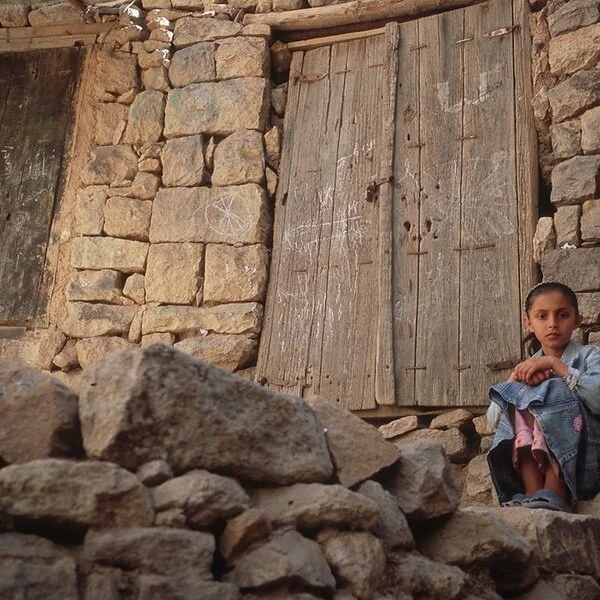
Child in Yemen among the rubble. Carl’s eye. CC BY-NC-ND 2.0

On June 17, the U.N. made the decision to remove the military coalition led by Saudi Arabia from one of its blacklists. The significance of this specific list, which focuses on children in armed conflict, is to shame groups that are guilty of violating the rights of children. Anyone can be placed on the list for a multitude of violations ranging from killing children to the recruitment of children for war. U.N. Secretary-General Antonio Guterres stated that the coalition’s removal was decided by efforts made to reduce the number of deaths and decrease the airstrikes that caused the killings over the previous three years.

However, there is a discrepancy in the decision. According to data released by the U.N., 222 children were hospitalized or killed as a result of these attacks last year. In addition, several hours after the U.N. announced its decision to remove the coalition, four children were killed in an attack in northwest Yemen.           

The war in Yemen can be traced back to 2011. Following the Arab Spring, there has been unrest due to a failed political transition that led to terrorist attacks, a separatist movement and corruption. However, in 2014 a rebel group known as the Houthis, backed by Iran, ousted the government. What started out as a civil war transitioned into a conflict with neighboring countries as the Saudi Arabia-led coalition stepped in, attempting to help restore the government and defeat the Houthis.  

Child of Yemen. Carl’s eye. CC BY-NC-ND 2.0

As of March 2020, it is estimated that 7,700 civilians have died in the war, largely due to airstrikes from the coalition. However, these are only verified deaths. Some statistics estimate it to be as high as 100,000 fatalities. On top of the conflict, Yemen has been experiencing one of the worst famines it has seen in over 100 years. The country is considered the poorest Arab nation, and the war has ruined the economy to the extent that many people, especially children, are considered malnourished.                                                            

There has been backlash over the U.N.’s decision to remove the coalition from the blacklist. From a video posted by Al Jazeera, protests have taken to the streets outside of the U.N. headquarters in Yemen to speak of their disapproval. The main concern is that the removal could leave children vulnerable to future attacks, as voiced by groups like Save the Children. Observers are also questioning the integrity of the blacklist itself, including Iran which said that “the U.N. is giving a free pass.” Iran claims that the Houthis and the Yemeni government have been responsible for the same number of deaths yet only the Houthis remain on the list.

Guterres has said that U.N. would monitor the coalition’s activity over the next year. If there is an increase in children’s casualties, the coalition would be placed back on the list.


Eva Ashbaugh

Eva is a Political Science and Gender, Sexuality, and Women's Studies double major at the University of Pittsburgh. As a political science major concentrating on International Relations, she is passionate about human rights, foreign policy, and fighting for equality. She hopes to one day travel and help educate people to make the world a better place.

Overpopulated Indonesia Fears Baby Boom Due to Coronavirus

After months of telling its citizens to stay at home, Indonesia is now facing fears of a potential baby boom.

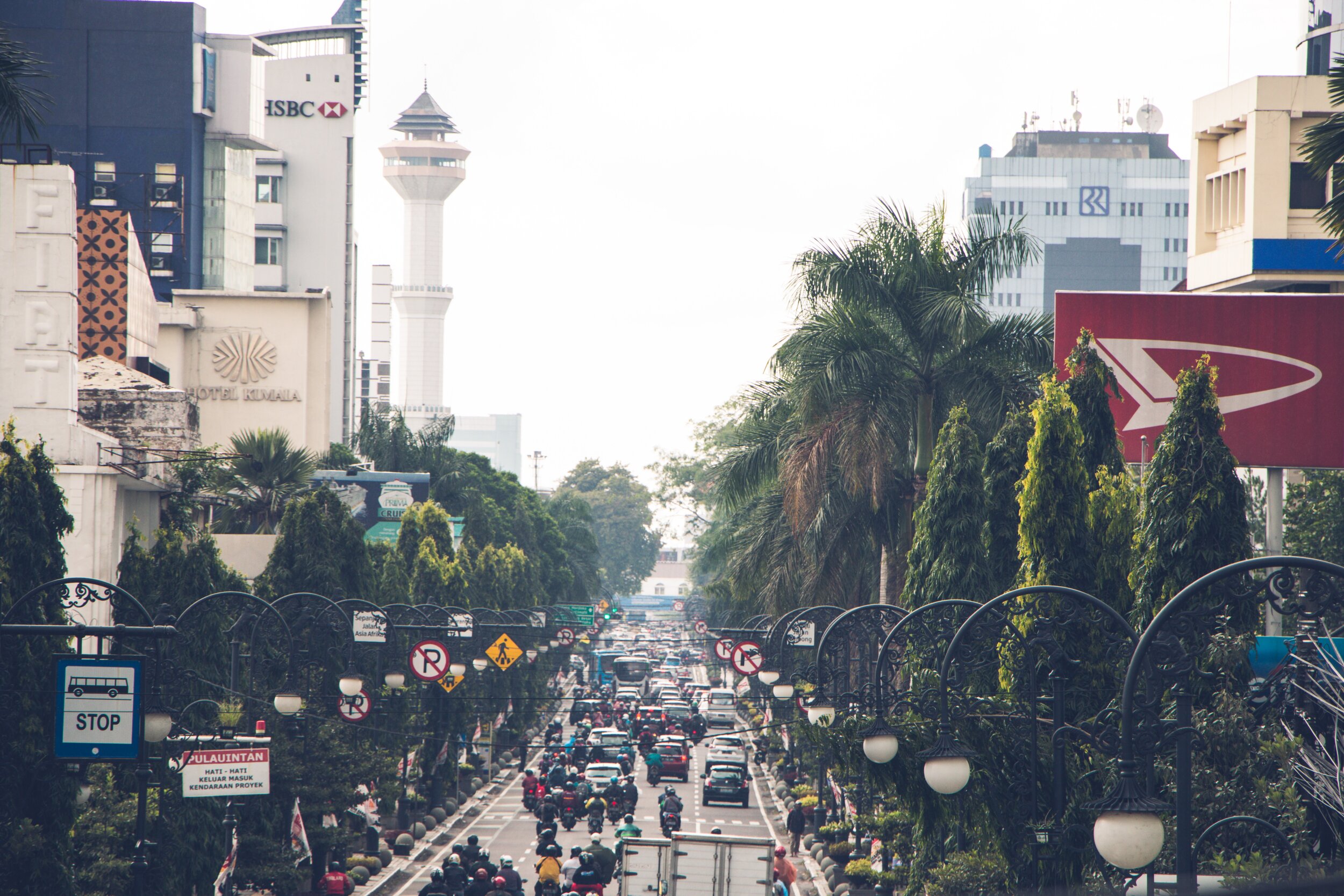
Traffic in Bandung, Indonesia. Ikhsan Assidiqie. Licensed by Unsplash.

With the country under quarantine from COVID-19, many people have stopped going to clinics to get contraceptives out of fear of catching the virus. This projected increase in pregnancies comes after extensive efforts by the country to encourage smaller families, an action taken in order to fight against the concern of child malnutrition. This problem is so severe that government vehicles drove around the cities and pleaded with the public through loudspeakers: “You can have sex. You can get married. But don’t get pregnant. Dads, please control yourself. You can get married. You can have sex as long as you use contraception.”  

The National Population and Family Planning Board (BKKBN) is Indonesia’s government-backed family planning program tasked with helping married couples manage the creation of their families. BKKBN is widely successful and employs 24,000 counselors to help execute their mission, much of which includes distributing free contraceptives to the public. 

The agency recently determined that there had been a significant decrease in the use of contraception between March and April of 2020 and that about 10 million couples in the country no longer had access to a form of birth control. An increase in pregnancy rates is deeply concerning for the Indonesian government because the country is struggling to manage the current population size given its available space and resources. In order to try and alleviate some of these effects, the government has openly discouraged people from having large families for years and freely provided various forms of birth control. About half of those who use contraceptives receive monthly or trimonthly hormone injections, 20% use birth control pills and many use IUDs. Condoms remain unpopular, though, across the country. It is worth noting that abortion in Indonesia is only permitted if it is “to save the woman’s life.” There are many possible contributors to the drop in contraceptive use during this quarantine period, such as a fear of leaving the house to acquire contraceptives (especially from hospitals), closed contraception clinics and other closed health care providers. 

One significant consequence of Indonesia’s population struggles is child malnutrition, a problem that Indonesian President Joko Widodo promised to alleviate within 4 to 5 years. More severe cases of child malnutrition (especially when paired with poor hygiene) can result in child stunting, a condition where the child is more than two standard deviations below the median of child growth standards as determined by the World Health Organization. If children are experiencing stunting then they are more susceptible to pneumonia, diarrhea and a weakened immune system. Given that COVID-19 is known to be more fatal for those with compromised immune systems, this is an especially pertinent concern. Long-term effects include an increased chance of experiencing chronic diseases such as hypertension and a lowered IQ. According to the organization 1,000 Days Fund, a group dedicated to the elimination of stunting, children with stunting can miss about a year of school because of the sickness. While Widodo has found some success in lowering the number of child stunting cases in the past few years, this period of quarantining may prove to be a major setback.

BKKBN announced that Indonesia should expect about 420,000 more babies than the average 4.8 million in the upcoming year. One demography expert at the Indonesian Institute of Sciences, Dr. Augustina Situmorang, believes pregnancy spikes are most likely to occur in low-income families who relied on the previously-accessible birth control provided by BKKBN in addition to young women who lost their jobs, had to return to their hometowns, and then had to get married due to social pressures. 


Indonesia’s health care system is already working overtime and has suffered considerably from COVID-19, registering more than 33,000 cases and over 1,900 deaths. Nevertheless, the government is attempting some preventive measures to combat more potential pregnancies. This includes allowing access to multiple months of birth control pills at a time, making door-to-door deliveries of contraceptives along with emergency supplies, and hoping to distribute contraceptives to 1 million people on June 29, dubbed “National Family Day.” Going forward, the Indonesian government will have to move efficiently if it wants to limit the burden felt by the Indonesian health care system with future generations.

Phoebe Jacoby

is a Media Studies major and Studio Art minor at Vassar College who believes in the importance of sharing stories with others. Phoebe likes to spend her free time reading, drawing, and writing letters. She hopes to continue developing her skills as a writer and create work that will have a positive outward effect.

Gender Matters in Coastal Livelihood Programs in Indonesia

Significant investments have been made in improving the well-being of Indonesian coastal communities in recent decades. However, most of these programs have not tackled gender inequalities.

Projects based on comprehensive understanding of gender norms in coastal communities will contribute to improved community wellbeing. www.shutterstock.com

Our team studied 20 coastal livelihood programs implemented across the Indonesian archipelago from 1998 to 2017. Our aim was to see how gender issues were considered in project design and implementation.

The Indonesian government, international governments, international development and lending agencies and non-government conservation organisations funded these projects.

Most projects included women in activities to enhance or introduce new livelihoods. However, 40% of the projects were gender-blind with respect to the design and impact of their activities. This means that activities may have further entrenched processes that disadvantage women by limiting their ability to pursue their own livelihood goals.

Only two projects (10%) used an approach that sought to challenge entrenched gender norms and truly empower women.

We recommend future projects be developed with a comprehensive understanding of gender norms within coastal communities. Participatory approaches that address and challenge these norms should be implemented. This will more effectively contribute to improvements in community well-being.

What we found

Our study, which assessed livelihood programs from various regions throughout Indonesia – including Bali, Sulawesi and West Papua – found 95% of programs had directly or indirectly included women. They did so through activities such as providing training and equipment to support alternative sources of income – e.g. making fish or mangrove-based food products.

Only three of the 20 projects provided gender awareness training for staff members and community facilitators. Only one provided similar training at the community level. In addition, two projects included a gender quota for community facilitators (30-50% female).

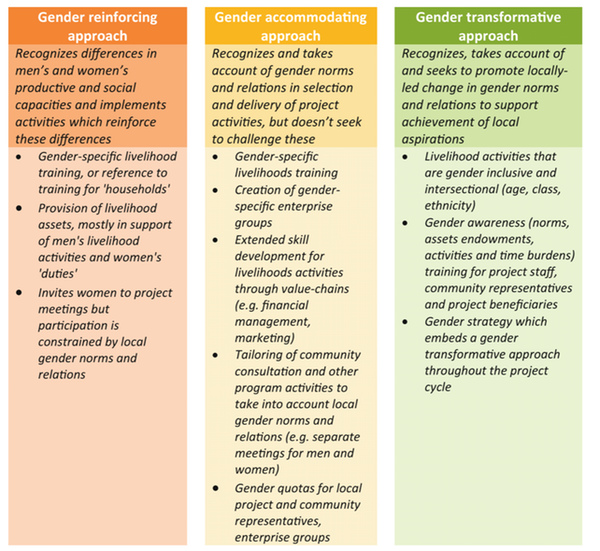
However, we found most projects applied either a “gender reinforcing” approach – reinforcing the existing gender norms and relations that underlie social and economic inequalities between men and women – or a “gender accommodating” approach – recognising these norms and relations but making no attempt to challenge them.

For example, many projects included separate “women’s activities”, such as handicrafts manufacture, or sought to increase household income by engaging women in income-generating enterprise groups. However, there was little consideration of how women would balance these activities with traditional caring and household roles, or of other ways women contributed to the household economy.

What we can do

Based on our findings, we recommend a “gender transformative” approach. Firstly, this approach involves mainstreaming gender issues across entire project cycles. Secondly, it involves working with coastal communities to identify and, where appropriate, challenge existing gender norms and social relations.

A core component of these projects is gender analysis. This is a process that identifies:

  • men’s and women’s activities within the home and community

  • differences in men’s and women’s access to, control over and use of livelihood resources

  • differences in participation in processes that govern management of natural resources

  • the gender norms and relations governing these differences

  • their impact on men’s and women’s livelihood opportunities.

For example, the Coastal Field School program included participatory activities that documented men’s and women’s daily activities. This activity highlighted the time women spent on caring and household duties and unpaid supportive contributions to “men’s activities”.

When undertaken in a participatory manner, this analysis helps communities to identify local, and broader structural, barriers to gender equality. They can then identify options and potential actions for overcoming these barriers. This creates a more equitable social and economic environment.

Summary of the characteristics of approaches to gender in development programs (based on Lawless et al. 2017), with examples of typical project activities drawn from our. study. Stacey et al (2019).

This process must be sensitively facilitated because it may confront traditional power hierarchies within communities. It also takes time, which must be factored into project cycles.

The use of gender-transformative approaches can improve the well-being of coastal communities by identifying and reducing barriers to equitable participation in social and economic life. This increases the ability of men and women to pursue enhanced or alternative livelihood opportunities.

Finally, recognising women’s contributions, building women’s confidence and giving women voice to participate in local community planning processes creates greater opportunities for issues of concern to women to be included in the development agenda.

Natasha Stacey is a Associate Professor, Research Institute for the Environment and Livelihoods, College of Engineering, IT and Environment, Charles Darwin University

Emily Gibson is a PhD Candidate, Research Institute for the Environment and Livelihoods, Charles Darwin University

THIS ARTICLE WAS ORIGINALLY PUBLISHED ON THE CONVERSATION