3 Asian Theatrical Traditions

The cinema may be the world’s most prominent entertainment, but recorded film screenings cannot match the liveliness of performing theater. Learn about three theatrical traditions beloved by their Asian audiences for their craftsmanship and cultural significance.  

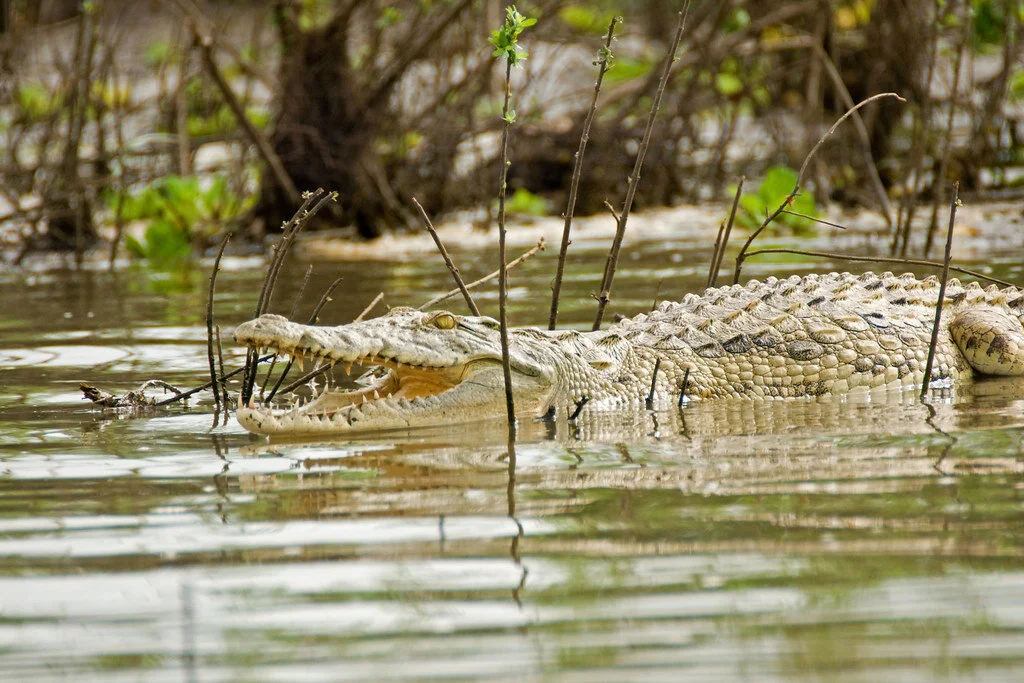
Stage Theatre. AndyRobertsPhotos. CC BY 2.0.

Theater is a unique art in its ability to elicit both laughter and tears within the same showing. Throughout these three Asian nations the stage is a place where performers can bring imaginary worlds to life, or inspire their audiences to better their own.  

1. Japan’s Rakugo

Rakugo. Isabelle + Stephanie Galley. CC BY 2.0.

Rakugo (fallen words) showcases a storyteller’s skill to enthrall their audience without the use of any costumes, scenery or special effects. Rakugo was developed during Japan’s Edo Period (1603-1868) by Buddhist priests who recounted dramatic tales to illustrate the impermanence of life and the sufferings elicited by materialistic attachment. Soon non-religious performers regaled crowds with parodied interpretations of those parables. A specialized sect of storytellers has emerged since, termed the rakugoka, who rely upon improvisation, exaggeration and, most critically, wordplay for their performances. A rakugoka presents upon the spartan kōza stage while dressed in traditional Japanese garb, and has only a sensu (paper fan) and a tenugui (hand towel) as props to aid them. With pantomime, voice and facial expressions the rakugoka will narrate one of 300 stories inspired by the realities of ordinary people.

The stories of rakugo are structured as back-and-forth dialogues between a set of archetypal characters and generally culminate in a funny climax. Popular character archetypes include cunning tricksters, miserly merchants, arrogant authorities and kaidan (ghosts or other apparitions). Each narration ends with an raku (fall), a humorous linguistic twist which serves as a punch line for the whole performance. Rakugo is analogous to a one-man show of sit-down comedy. 

2. India’s Nukkad Natak
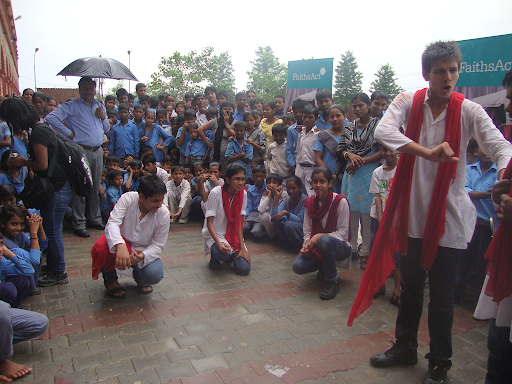
Nukkad Natak. DLF PUBLIC SCHOOL, INDIA. CC BY 2.0.

From universities to slums throughout India, nukkad natak (street drama) serves as a medium of entertainment as well as social commentary. India has a rich heritage of theater which traces back centuries, but nukkad natak was shaped very recently among the country’s schools and streets. In the 1980s, left-wing grassroots activists started to put on plays for the lay public to highlight major social and political issues. Nukkad natak grew especially popular among college students who identified an outlet through which they could express their unacknowledged emotions and views. Nukkad natak has since become a channel for communication and information among the uneducated masses. 

Without any audiovisual equipment or cosmetic crew professionals nukkad natak troupes are forced to capitalize their bodies to the fullest. The troupers’ voices vary in pitch and volume as they undertake in constant physical motion. Troupes will not shy away from controversial scenes like sexual assault but will act them out publicly to provoke emotions. Some troupes dedicate their performances towards the portrayal of exemplary civic behavior. Even India’s private sector recognizes nukkad natak’s enormous influence on public society; some multinational corporations sponsor their own performances to advertise their products.   

3. Indonesia’s Wayang Kulit
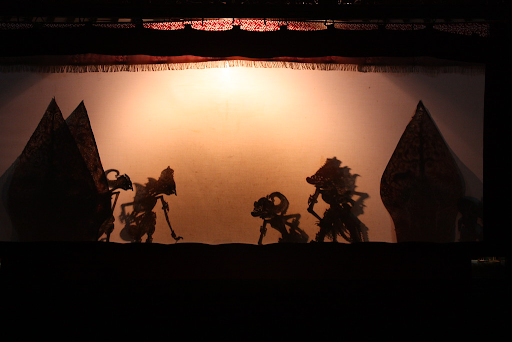
Yogyakarta, Wayang Kulit. Arian Zwegers. CC BY 2.0. 

Although its origins are disputed to date, there is no debate as to the renown wayang kulit (shadow leather) holds today in Indonesia and neighboring countries. Intricately detailed leather puppets are deftly maneuvered by a dhalang (puppeteer) between a light source and a blank screen to portray a story via shadow. Performances feature plots derived from a bevy of sources, ranging from Hindu epics such as the Ramayana or Mahabharat to the East Javanaese Prince Panji cycle. 

A show of wayang kulit may carry on through the night for eight hours and is usually accompanied by a gamelan bronze orchestra. A single performance may entail the use of hundreds of puppets, all of whom are designed with utmost faithfulness to visual symbolism. Puppets portraying noble heroes, for example, are crafted in accordance with the Javanese ideal of male beauty: slender build, long and pointed nose and eyes shaped like soya beans. A puppet’s colors represent characteristics; gold indicates dignity whereas white is the color of youth.


RELATED CONTENT:

Rohan A. Rastogi

Rohan is an engineering graduate from Brown University. He is passionate about both writing and travel, and strives to blend critical thinking with creative communication to better understand the places, problems, and people living throughout the world. Ultimately, he hopes to apply his love for learning and story-sharing skills to resolve challenges affecting justice, equity, and humanity.
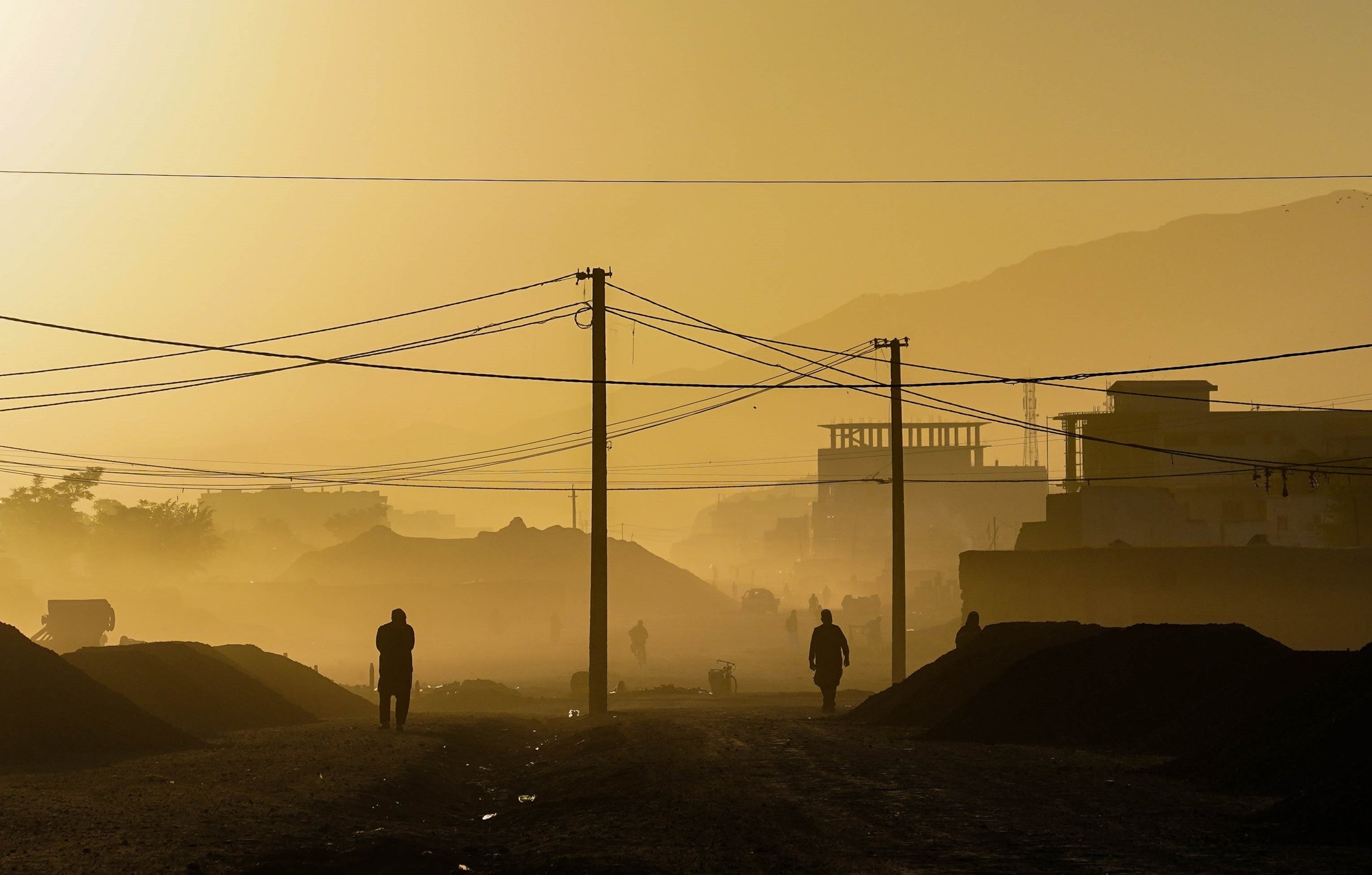
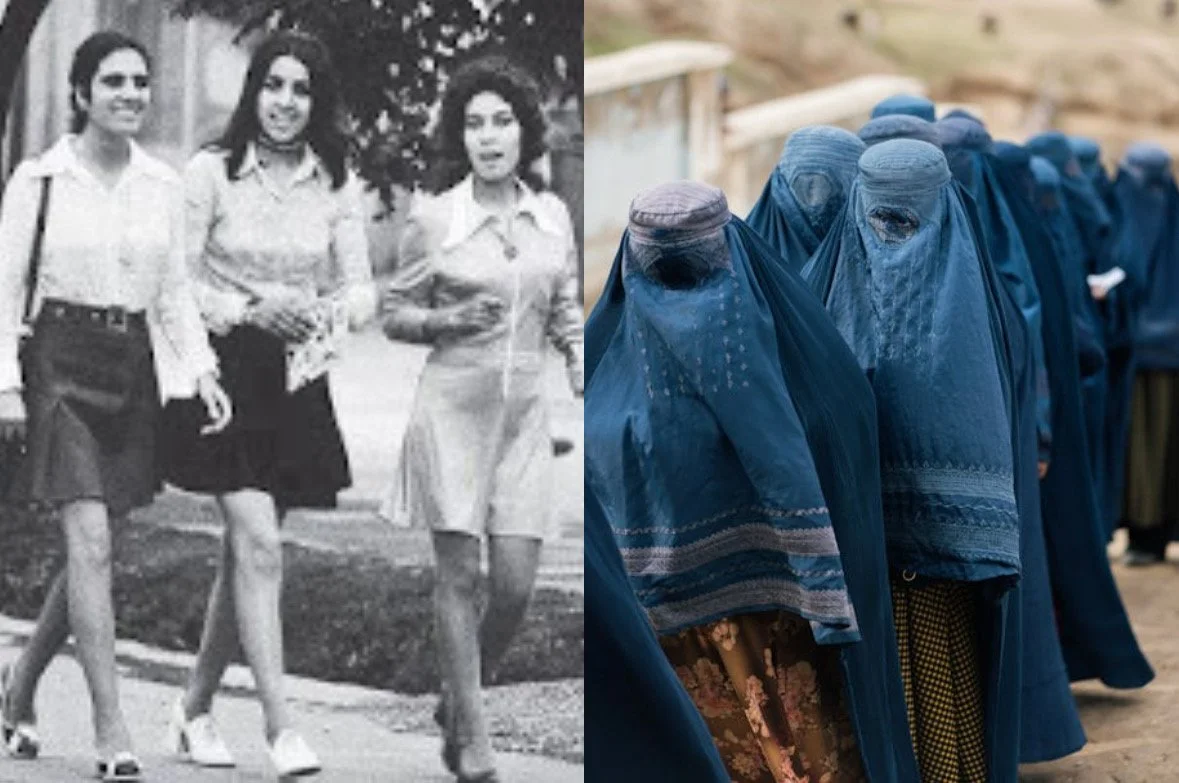
Afghanistan’s Looming Humanitarian Crisis

After 20 years of war between the U.S. and the Taliban, Afghanistan continues to crumble. The recent Taliban takeover has disturbed foreign aid, leaving  18 million nationals in need of assistance. 

Afghanistan had relied on foreign aid and donors to support its economy even before the Taliban regained control of the nation. According to Al Jazeera, more than one-third of the nation’s GDP was composed of foreign funding. However, the U.S.’s withdrawal from Afghanistan and the Taliban’s recent takeover caused the departure of relief workers and funding cuts. While the U.N. appealed for almost $200 million in additional funding for support for Afghanistan, nations are struggling to navigate how to deliver resources to Afghan civilians successfully. As the country approaches economic collapse and widespread hunger and poverty, foreign aid is crucial to saving innocent lives; however, interaction with the Taliban is the primary delivery route. Donors and foreign governments are hesitant to assist the Taliban due to their track record of human rights violations and fear of corruption and misuse of funds. 

Because the Taliban’s regime is not internationally recognized, The World Bank cut financial aid to Afghanistan. In addition, the International Monetary Fund said that the Taliban would not be granted access to use its new reserves. As a result the U.S., E.U. and the U.K. have ceased their aid programs in the region. Despite this and the sanctions on Afghanistan, the U.S. will continue to provide aid for Afghanistan via non-governmental organizations. One method to minimize the misuse of relief funds by the Taliban includes assisting with  food, medicine and other necessary resources instead of financial aid. Some nations, including Pakistan and Iran, have taken to this method over the years. Another way for countries to work around the Taliban includes channeling relief programs through U.N. agencies or the World Bank. Despite these efforts, there is no guarantee that the funds will be distributed appropriately, and there is always a risk of fund misuse.

Sanctions and other restrictions also hinder the delivery of aid. At the end of August, conditions at the Kabul airport impeded The World Health Organization’s attempts to send 500 tonnes of medicine to Afghanistan. The Pakistani government facilitated the WHO in this effort and delivered 12.5 metric tonnes of medicine to Kabul. However, sanctions could disrupt other deliveries unless formal exemptions are issued. Some humanitarian groups have previous experience providing aid to areas controlled by the Taliban and have even been assured by the Taliban that their efforts will not be interrupted. The Taliban recently tweeted that the World Food Programme’s humanitarian efforts are appreciated and assured of the organization's security. 

According to the United Nations Development Programme (UNDP), Afghanistan’s poverty rate is expected to increase from 72 percent to 98%by mid-2022. Around 14 million people (35% of the population) and two million children are food insecure in Afghanistan due to rising food prices, severe drought and displacement. The United Nations reported that there had been a 50% increase in the cost of wheat, sugar, rice and cooking oil compared to pre-pandemic prices. Flour, oil, beans and gas prices have also hiked by around 63%. Food prices continue to skyrocket as economic sanctions impact the availability of imported goods. According to a survey conducted by Save the Children, many families have accumulated debt to purchase food. Some families have resorted to selling their belongings, cutting back on meals and putting their children into the workforce to pay off this debt. Banking issues and asset freezes may continue to further food insecurity for locals. More than 18 million people — half the population — in Afghanistan rely on humanitarian aid to survive. The necessary resources must be delivered soon to derail the region from snowballing into a more profound economic and humanitarian crisis. 

GET INVOLVED 

While these crucial deliveries have been limited in Afghanistan, there are still ways to help through independent and reliable organizations. For example, the Afghanistan Humanitarian Fund is one of the U.N.’s country-based pooled funds collecting donations. Through this pooled fund, contributions are controlled by local U.N. representatives and funds are made available to various partner organizations on the front lines. Another U.N.-based program that is collecting donations is the World Food Program. The Taliban recently negotiated with the director of the WFP, David Beasley. They assured him that the new government would facilitate the organization’s efforts and grant them access to deliver relief resources. Beasly told PBS that the Taliban had honored their word thus far. Similarly, Save the Children is accepting funds from donors to help Afghan children and families in need, mobilizing to meet the urgent needs of refugees. 


RELATED CONTENT


Mia Khatib

Mia is a rising senior at Boston University majoring in journalism and minoring in international relations. As a Palestinian-American, Mia is passionate about amplifying the voices of marginalized communities and is interested in investigative and data-driven journalism. She hopes to start out as a breaking news reporter and one day earn a position as editor of a major publication.

The Smallest Country in South America: Suriname

The nation of Suriname is home to a multicultural society and the Amazon rainforest. Yet, little is known of the country as it attempts to stand out behind the shadows of its former Dutch colony. 

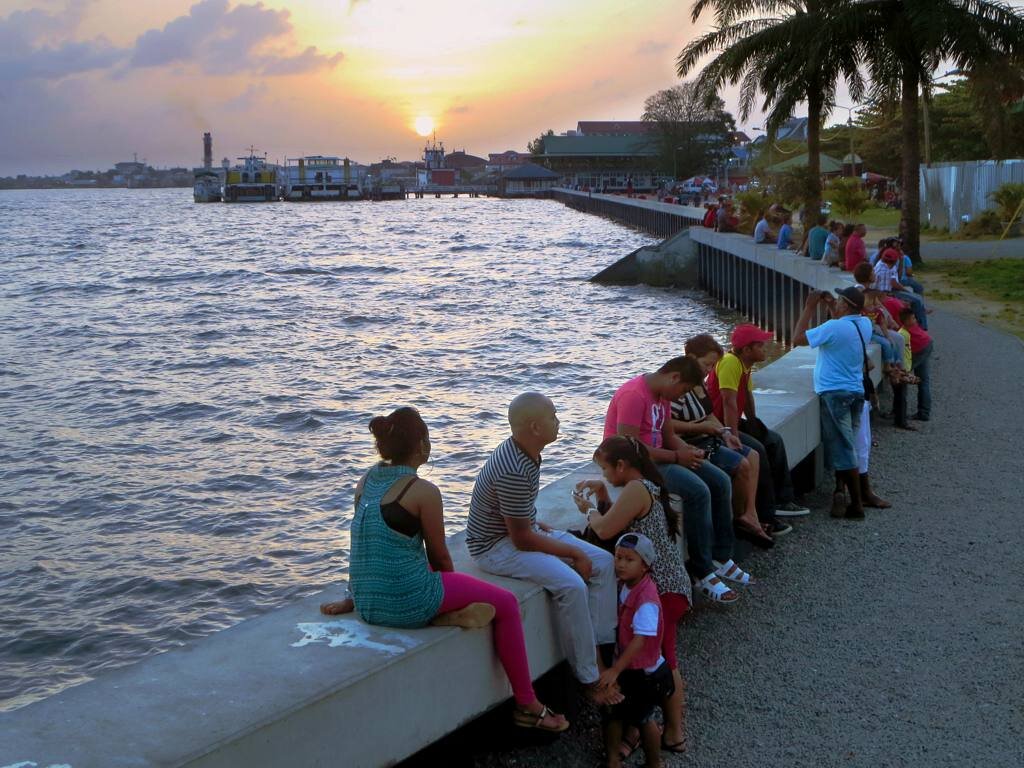
Suriname River Waterfront. D-Stanley. CC BY 2.0

When one thinks of South America, one thinks of all the Spanish-speaking countries. However, rarely do you think of The Guianas, the three countries in the northern part of the continent: Guyana, Suriname and French Guiana. The smallest nation of the three is Suriname, and it covers a surface area of 63,252 square miles. Known as a former colony of The Netherlands, Suriname gained its independence in 1975. This Dutch-speaking nation is surrounded by 94% of pristine forest and has a multicultural society. 

Suriname is named after its first occupants, the Surinen Indians. However, in 1602 the Dutch settled in the region, and by 1667 it became a colony of the Netherlands. Throughout the Dutch’s settlement in the nation, many important events made Suriname the country it is today. After the termination of slavery, the Dutch brought in East Indian laborers. The Netherlands granted Suriname its independence on November 25th, 1975, when the Surinamese people rioted over inflation and unemployment. Fast forward to today, the country is a constitutional democracy

In addition, Suriname is struggling with seven in ten people falling below the poverty line. The Surinamese rely heavily on the exportation of gold and other minerals, accounting for 85% of exports and 27% of government revenues. Agriculture is also a big part of their exportation, which includes bananas, rice and shrimp. With poverty taking a toll on its people, there has been an upside to their current financial situation. The country will begin producing oil in 2025, appealing to prospective investors. The government holds 13 billion barrels of oil and gas that have been discovered in the past six years. With this finding, financial stability can emerge for the Surinamese. At the moment, Suriname produces oil for domestic use and its own oil company Staatsolie

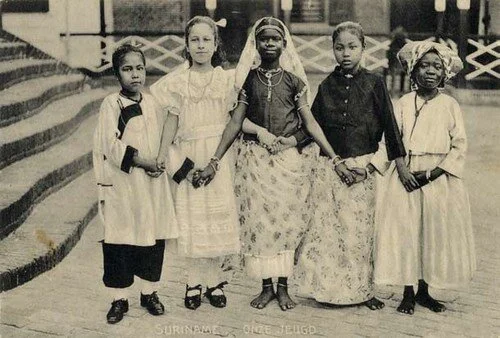
Surinam youth. KITLV Collections. CC BY-NC 2.0

With the history Suriname has lived through, it is no surprise that it is a multicultural nation. It is made up of South Asians (Indians), Maroons, Suriname Creole(Afro-Surinamese), Javanese, biracial and others. 

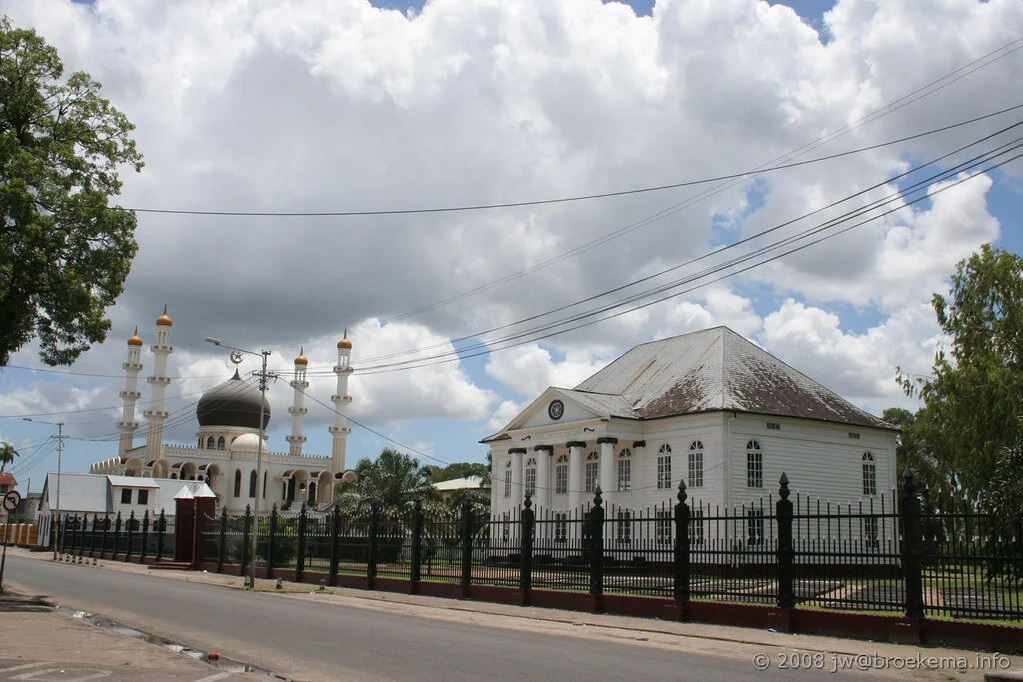
Even ith this diverse and integrated culture that makes up Suriname, citizens of this nation  live peacefully among one another. So much so that a Jewish temple and a Muslim mosque sit side by side in the capital city of Paramaribo. This cohabitation can be seen as the entire country officially marks other nations’ religious and nonreligious holidays as their own. . These holidays include Chinese New Year, Easter, Indigenious Peoples Day, Maroons day, Idul Adha and Deepavali. Through this act, the nation exemplifies unity through its melting pot of diversity. 

With any diverse culture comes an eccentric music genre. Through the music, one can hear the different backgrounds of each region represented. Suriname’s music style is no different. It is a mixture of International European, North American indigenous and South American rhythms. One of the Surinamese most well-known music forms is Kaseko. It is a fast-paced beat with Indo-Caribbean influence, which emphasizes wind instruments and percussion. 

The nation’s cuisine is quite diverse as well and is a big part of the Surinamese culture. However, there is a dish that they call their own, which is Pom, the National dish. The name Pom is short for pomtajer, the root vegetable used to top the dish. Pom is a casserole made up of root vegetables and your choice of meat. This dish is a luxury, usually served on special occasions due to the high cost of meat.  

Muslim Temple and Jewish Mosque sitting side by side. Dan Lundberg. CC BY-SA 2.0

There are many influences in the country’s buildings and architecture today. With all of the ethnicities and cultures that inhabit Suriname, it is no surprise it would spill over onto the design of the city. Made up of mostly wooden buildings, the style and design seem to have stayed rooted in a specific time period. There are no contemporary buildings, and that is what makes the city so enchanting. Throughout Suriname you can see the fusion of Dutch, North American and Creole culture and others in the architectural style

On the outskirts of the city sits more than 90% of lush green forest, the Amazon. With such vast greenery, this forest is home to 150 species of mammals, 650 bird species and 350 fish species. With such a large part of the forest being untouched and preserved, Suriname species don’t face extinction like other species around the world. This is due to the capacity of the land makes it easy to house the numerous species. Nature enthusiasts visit the various nature reserves Suriname has to offer. The largest and most popular is the Central Suriname Nature Reserve at 1.6 million hectares; it protects the upper watershed of the mighty Coppename River and other important rivers. The reserve’s animals include sloths, jaguar, tapir, eight species of primates and others. 

Sunset in the Suriname rainforest. Delphinidaesy. CC BY-NC-ND 2.0

This small nation is home to slightly fewer than 600,000 people. Although mostly unknown to many, Suriname is slowly bringing in many travelers worldwide. Its unique landscape and culture are admired and it is sure to attract many more travelers in the years to come. Suriname is making a name for itself on the world map with so many species to see and nature reserves to explore. 


RELATED CONTENT:


Jennifer Sung

Jennifer is a Communications Studies graduate based in Los Angeles. She grew up traveling with her dad and that is where her love for travel stems from. You can find her serving the community at her church, Fearless LA or planning her next trip overseas. She hopes to be involved in international humanitarian work one day.

Abuse in France’s Catholic Church: Report Finds Victims Number More Than 200,000

An independent commission found that for the last 70 years, hundreds of thousands of children were abused by clergy in France, and the church was ill-equipped to respond to and prevent abuse.

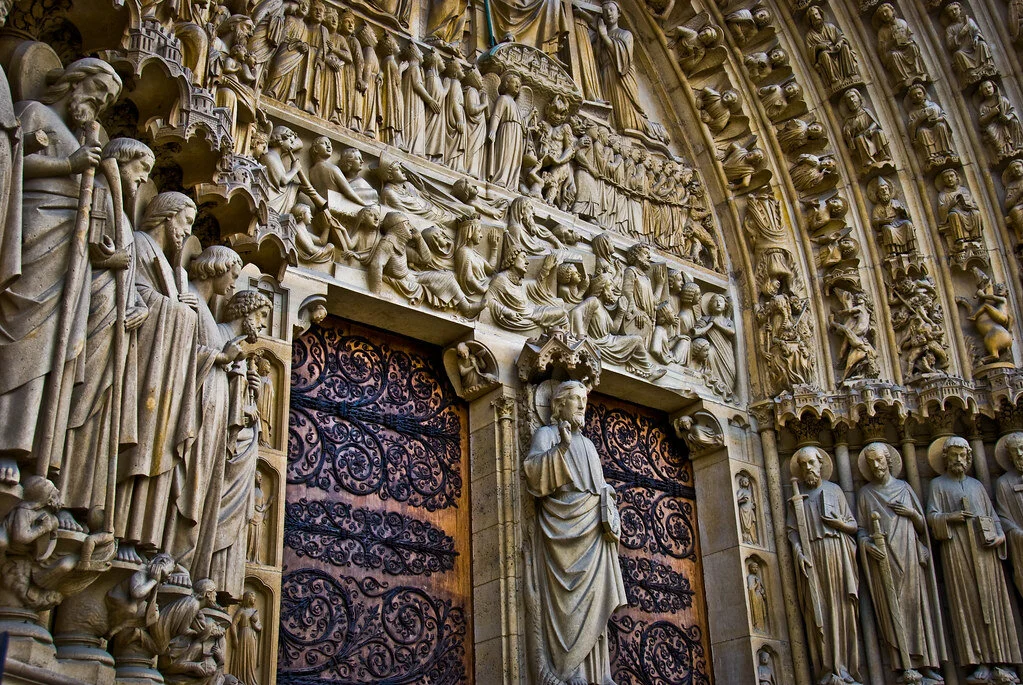
“Notre Dame, Paris.” Gary Campbell-Hall. CC BY 2.0

The Independent Commission on Abuse in the Church (CIASE) was published after an extensive three-year investigation. The report found that over 200,000 minors were abused by clergy members of the Catholic Church in France alone from 1950 to the present day. Furthermore, the commission estimated that, including laypersons who were employed by the church, such as staff in Catholic schools, the number of victims rose to 330,000 over the years. 

The report also found that while family or friends in France perpetrated the highest rate of sexual violence against minors, the Catholic Church is the second environment with the highest prevalence of sexual violence. The report estimates that the number of perpetrators ranges from 2900 to 3200. While this number may seem low for the number of victims, the commission notes that “scientific research shows that a sexual predator can effectively assault a great number of victims, especially predators of male children- as is overwhelming the case in the Catholic Church.” The Vatican released a statement that the Pope learned of the report’s staggering findings with “sorrow.” Pope Francis stated, “I would like to express to the victims my sadness… my sorrow for the trauma that they have suffered. And also my shame” in response to the report’s findings.

The report found that the Catholic Church did little to prevent the abuse over the last 70 years, stating, “The Catholic Church’s attitude has evolved over time but it has remained too focused on the protection of the institution, for a long time with no regard to the victims.” Furthermore, the commission found that from 1950 to 1970, the church was focused on avoiding scandal and often saved aggressors by silencing victims. The report found that while the institution did not accept the violence, it was too focused on preserving the institution and did not know how to prevent or address the abuse. The commission urges the Church to not just move on from past abuse, stating: “ It is not enough for the Church to claim awareness, albeit too late in the day.” CIASE also said that the church needed to recognize the abuse, and take responsibility and begin a process of compensation.

The report also addresses canon law, finding that victims have “no place” in the law that was unprepared to deal with sexual violence. The report also cited deviations in catholicism where priests are almost elevated to saint status. The over-emphasization of obedience and purity could lead to environments that perpetuate sexual violence.

The CIASE report is not the first of its kind, but change within the Church seems to be slow. The head of the inquiry, Jean-Marc Sauvé, told reporters that until the 2000s’ the church had shown “deep, total and even cruel indifference" towards the victims of sexual abuse.


Dana Flynn

Dana is a recent graduate from Tufts University with a degree in English. While at Tufts she enjoyed working on a campus literary magazine and reading as much as possible. Originally from the Pacific Northwest, she loves to explore and learn new things.

15 of the World’s International Dark Sky Sanctuaries 

The star-filled night sky is one of the greatest natural wonders, but it can be hard to see these days due to light pollution. Therefore, the ultimate places for stargazing are “Dark Sky Sanctuaries”, some of the most remote and dark places where the night sky is perfectly visible. Check out these 15 spots.

Read More

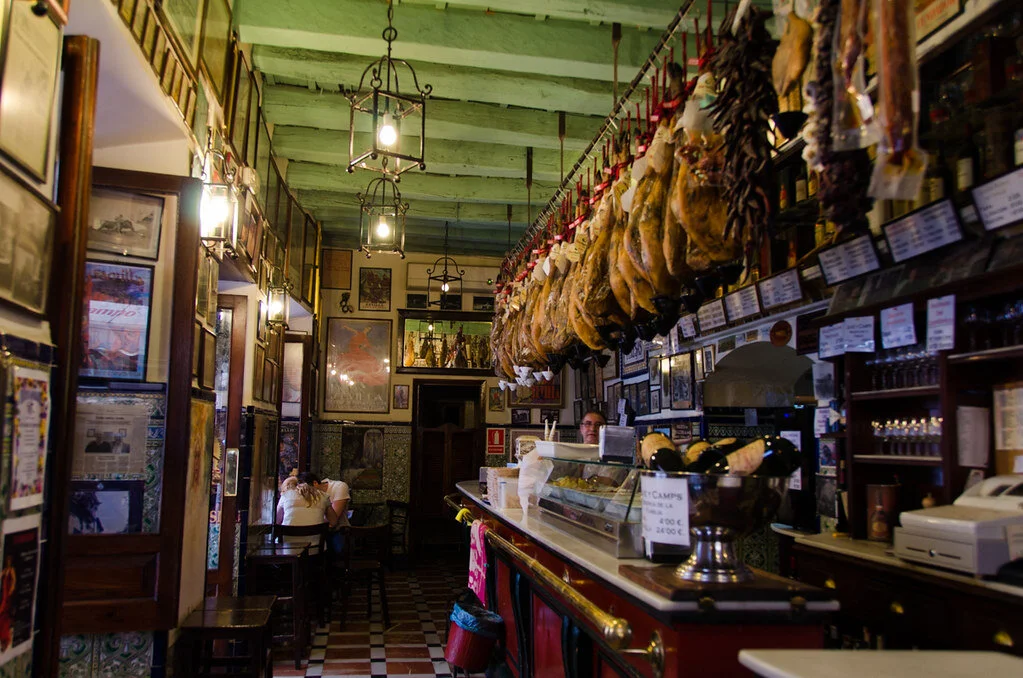
Tapas Bars in Andalucía Continue Spanish Traditions

Spanish tapas started as simple small plates to accompany a drink and are now an important part of Spain’s culture where people gather for food, drinks and socializing.

Bar Las Teresas in southern Spain. VallausaCC BY 2.0

Tapas bars are a long-held Spanish tradition that includes traditional food, wine, friends and a lively atmosphere. The small plates have been enjoyed at wine bars for generations, but the exact origin of tapas is unknown. There are several tales speculating how the dishes first gained popularity. One dates back to the 13th century when King Alfonso X of Castille was ill and only ate and drank in small quantities. Another story tells a more grassroots origin, with local bars in Andalucía serving wine with a saucer on top to keep flies out during the hot summer. In addition, a small amount of complimentary food would be placed on the plate to attract more customers to the bar. Even though there may be some disagreement over the origins of tapas, there is no doubt that the cuisine is a staple of Spanish food and culture. With increased tourism and popularity, most tapas are no longer free, although some wine bars still will serve complimentary tapas in smaller towns in Andalucía.

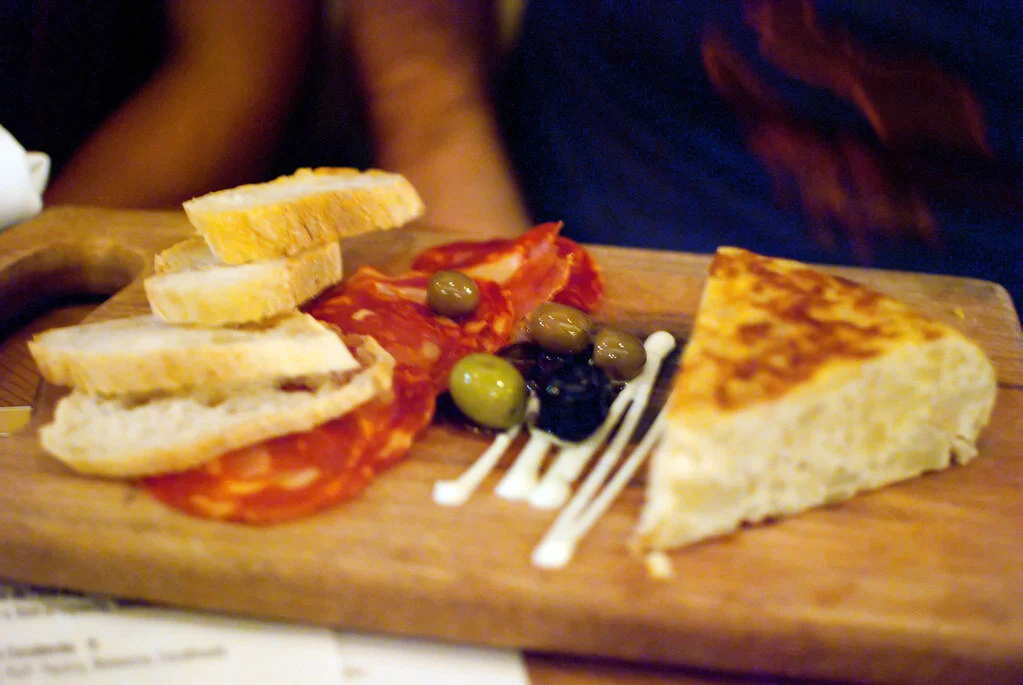
Tapas bars are typically small wine bars, with varying small plates placed on top of the bars. While many tapas may have started out as simple small plates,  chefs have gotten increasingly inventive in creating new dishes over the years. Traditional cold tapas include serrano, thinly sliced salt-cured ham and manzanilla or gordal olives, classic Andalucía olives, along with a variety of salads. Seafood is prevelant, with calamari and prawns dipped in batter, called gambas gabardina, being just a few dishes offered at tapas bars. Other popular tapas include ham croquettes (a fried ball of cheese and ham), pincho de tortillas (a potato-based omelet) and patatas bravas (fried potatoes covered in sauce).

Tapas bar hopping is popular for people to socialize and enjoy traditional food. People can have tapas as a quick snack with a drink and can eat standing up at a bar, or turn the small plates into a complete meal with many people. Tapas hold so much cultural significance to Spain that in 2016 the country sought to put tapas on the UNESCO Intangible Cultural Heritage List. Tapas have now spread worldwide with chefs experimenting with small plates of all kinds. Despite the global reach, Spain’s beloved tapas bars are still a unique cultural experience.


RELATED CONTENT


Dana Flynn

Dana is a recent graduate from Tufts University with a degree in English. While at Tufts she enjoyed working on a campus literary magazine and reading as much as possible. Originally from the Pacific Northwest, she loves to explore and learn new things.

3 Cliffside Communities and Underground Towns

Towns throughout the world strive for connection with their natural environment. Here are three which built very close relationships with local geology.

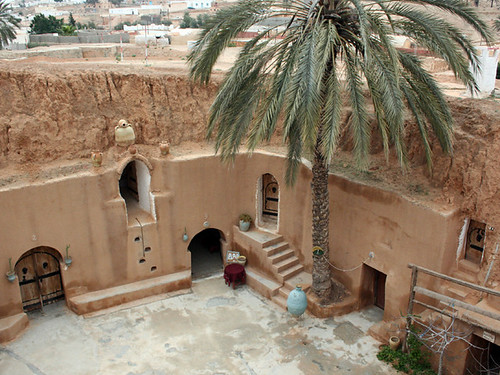
 Hotel Sidi Driss, Matmata. Scottroberts. CC BY 2.0 

Venice may be renowned for its aquatic urban planning, but it’s not the only place making resourceful use of its surroundings. Learn about the following three settlements whose residents literally live under a rock (or two). 

1.     Setenil de las Bodegas, Spain

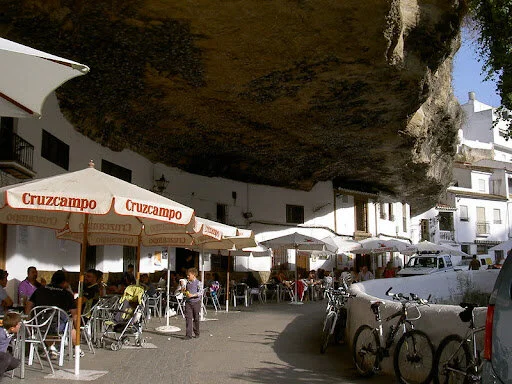
Biking street in Setenil de las Bodegas. Kans1985. CC BY 2.0

In Southern Spain lies Setenil de las Bodegas, a town carved into towering bluffs of rock. The rocky cliffs are remnants of a canyon gorge eroded by the river Rio Trejo and were first developed for residence by the Moors in the 12th century. They built houses directly into cave walls to provide inexpensive, temperature-regulated dwellings at minimal risk from disasters such as earthquakes or wildfire. With expansive rocky overhangs serving as natural roofing, these houses are materially efficient and easy to maintain. The three thousand inhabitants of Setenil de las Bodegas take pride in local history; the town is named after seven battles fought by Catholic Spaniards against the Moorish rulers during the Reconquista. The Moors maintained their defensive stronghold throughout six attempts but were defeated by the Catholics on the seventh.

Visitors may tour the town’s Nazari castle, an Arabian fortress dating back to the Almohad Caliphate, and the signature church of Our Lady of the Incantation. In addition, Setenil de las Bodegas offers several restaurants and bars for visitors to sample among its stony streets; dine upon the traditional local delicacy sopa cortijera, a wild asparagus soup enriched with boiled eggs and chorizo.

2.     Matmata, Tunisia

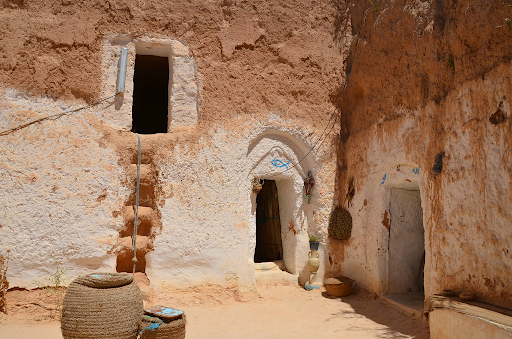
Troglodyte house. Professor Mortel. CC BY 2.0

Just across the Mediterranean Sea, Berber descendants populate the town of Matmata, iconic for its traditional subterranean dwellings. Historians are uncertain about when these troglodytes first emerged; settlement may have occurred as early as the 11th century or as late as the 15th. The Berbers excavated clay from underground pits to form cool spaces within which they could evade the dry heat of the Matmata valley. Deep, circular pits were dug into the sandstone ground and hollowed out. The troglodyte spaces were subsequently dug out around the pit’s perimeter, leaving the central pit as a courtyard. Sandstone clay was soft enough to excavate by hand but would harden rapidly upon exposure to air. Such underground homes were sturdy but vulnerable to flooding; during the 1960’s Matmata were forced to evacuate due to extreme rains.

Visitors may immediately recognize Hotel Sidi Driss, the site selected by George Lucas to film Luke Skywalker’s childhood home on the planet of Tatooine, within Matmata. Hotel Sidi Driss operates to date, boasting twenty rooms, a hotel restaurant, and Star Wars decorations in homage to its movie history. 

3.     Coober Pedy, Australia

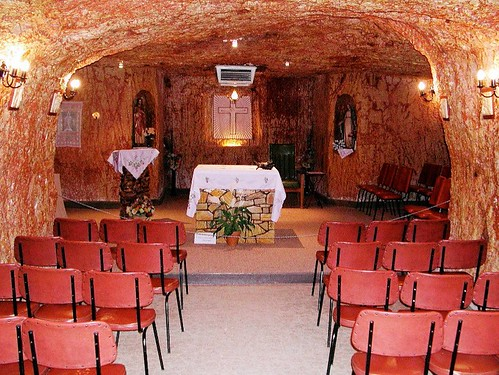
The underground church in Coober Pedy. www.wbayer.com. CC BY 2.0

In Australia’s outback, Coober Pedy is a storied subterranean town situated at the edge of the Great Victoria Desert. The town originated from the discovery of opal reservoirs in 1916 and soon became a premier mining community. Miners moved to Coober Pedy to try their luck at burrowing for gemstones but found extreme temperatures more often than opals. To deal with the dry summer heat, which can exceed 100 degrees Fahrenheit, miners started to sleep and eat in the mines. It wasn’t long before miners decided to dig out proper buildings from sandstone to reside in. Currently, Coober Pedy boasts public museums, libraries, churches, bars, a drive-in theatre and even a swimming pool,—all underground.     

But the ‘Opal Capital of the World’ has cause for another claim to fame: ‘Hollywood of the Outback.’ Coober Pedy is renowned for science fiction filmography due to its extreme environment and barren landscapes. Hardly any vegetation grows natively; Coober Pedy’s tallest tree used to be a sculpture of scrap metal before townsfolk planted seeds. Moviemakers have flocked to Coober Pedy to leverage the area’s uncanny resemblance to other planets. “Mad Max: Beyond Thunderdome,” “Pitch Black,” “Red Planet” and “Until the End of the World Planet” are some sci-fi films shot in Coober Pedy.


Rohan A. Rastogi

Rohan is an engineering graduate from Brown University. He is passionate about both writing and travel, and strives to blend critical thinking with creative communication to better understand the places, problems, and people living throughout the world. Ultimately, he hopes to apply his love for learning and story-sharing skills to resolve challenges affecting justice, equity, and humanity.
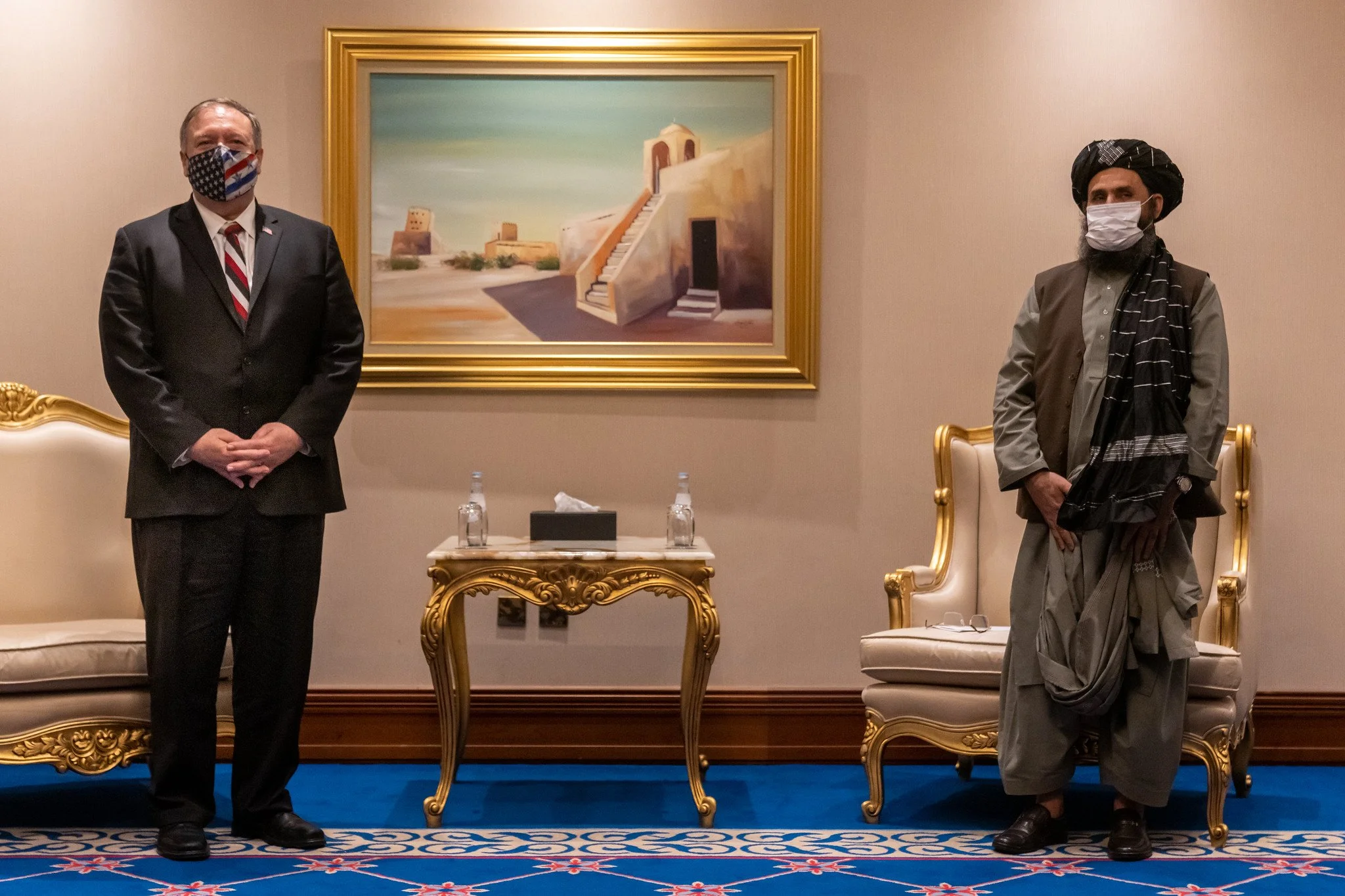
W.H.O. Approves First-Ever Malaria Vaccine

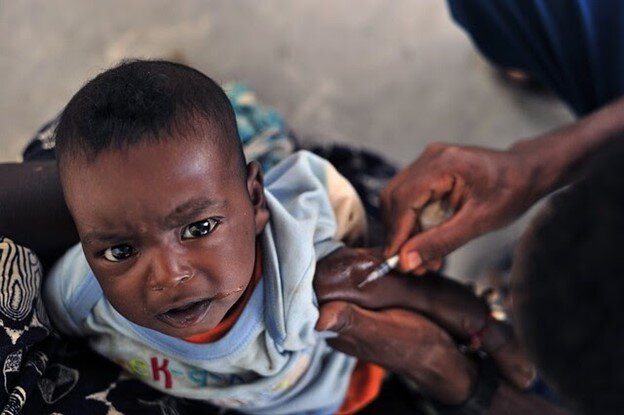
On October 6,  the World Health Organization recommended the vaccine Mosquirix for widespread use against the deadliest malaria-causing parasite. The vaccine is anticipated to save the lives of over 100,000 young children living in sub-Saharan Africa.

Malaria Vaccine. tpsdave. CC BY 2.0. 

On October 6, the WHO Director-General announced the UN agency’s approval of humanity’s first vaccine against malaria for broad rollout. Dr. Tedros Adhanom Ghebreyesus termed the announcement a ‘historic moment’ and a ‘glimmer of hope’ for sub-Saharan infants and children, who are the most vulnerable demographic to die from the parasitic disease.

Disease Background

Malaria is a life-threatening infectious disease caused by the Plasmodium” family of protozoan parasites. The disease is transmitted via mosquito bites rather than human contact.  Mosquitoes’ saliva can pick up the parasite from an infected person, then give the parasite to the enxt healhty person they bite. Upon contraction, the parasite circulates throughout the human bloodstream and destroys  their red blood cells. Within two to four weeks of contraction, malaria symptoms such as fever, aches, chills, nausea and vomiting occur. Severe cases of malaria can cause anemia and jaundice, and if left untreated, it can cause seizures, kidney failure, coma or death. 

Disease Burden

Though there are nearly 230 million cases of malaria worldwide, Africa pays the greatest price. The continent sees 94% of malaria cases globally, where six countries account for approximately half of all reported malaria deaths: Nigeria (23%), Democratic Republic of Congo (11%), United Republic of Tanzania (5%), Burkina Faso (4%), Mozambique (4%) and Niger (4%). While malaria occurs in other regions such as South America, the disease predominantly wreaks havoc upon the planet’s poorest continent.

Children under the age of five are twice as likely as older patients to die upon contraction. For example, of the 409,000 global deaths caused by malaria in 2019, children five years or younger accounted for 67% of them. 

Africa’s disproportionate prevalence of malaria is the result of a confluence of factors. First, the continent’s tropical and subtropical climates are perfect conditions for marsh mosquitos year-round.  Second, relative socio-political instability and lagging economic development have made it difficult to implement large-scale preventive public health practices like mosquito nets and insecticide sprays that are needed to curtail transmission. 

Vaccine Information

After a decade of clinical trials operating within seven African countries, the World Health Organization coordinated a pilot program to evaluate the safety and efficacy of the Mosquirix vaccine (GlaxoSmithKline’s RTS,S). The trials served 15,000 infants and young children in Ghana, Kenya and Malawi. The trial found that Mosquirix is feasible and cost-effective to deliver to the public, even amidst the COVID-19 pandemic. Equitable access to malaria prevention is now a reality thanks to the Mosquirix vaccine’s approval. 

However, there are some logistical obstacles that countries will need to navigate because Mosquirix is imperfect. The vaccine was shown to prevent about four in ten malaria cases. The dosage structure is also time-intensive. One must receive three doses in three months, followed by a final injection a year later. This vaccination timeline will likely be the biggest obstacle. Peter Agre, the head of Johns Hopkins Malaria Research Institute, acknowledges “from an objective level most are disappointed that [Mosquirix] wasn’t more effective”. 

Nevertheless, public health experts are excited about Mosquirix’s potential. Of more than 2.3 million total doses injected throughout the pilot, the vaccine reduced severe malaria by 30%. In addition it reached two-thirds of children lacking a bed-net to sleep under. As the Director of the WHO Global Malaria Programme, Dr. Pedro Alonso states, “We’ve been looking for a malaria vaccine for over 100 years now. This will save lives and prevent disease.”


Rohan A. Rastogi

Rohan is an engineering graduate from Brown University. He is passionate about both writing and travel, and strives to blend critical thinking with creative communication to better understand the places, problems, and people living throughout the world. Ultimately, he hopes to apply his love for learning and story-sharing skills to resolve challenges affecting justice, equity, and humanity.

Nazaré, Portugal: How A Fishing Village Became a Surfing Mecca

For centuries, Nazaré, Portugal was a traditional fishing village; until it made its way on the big wave surfing map. Now, it’s what many consider to be the Mecca of surfing, drawing crowds from across the globe. 

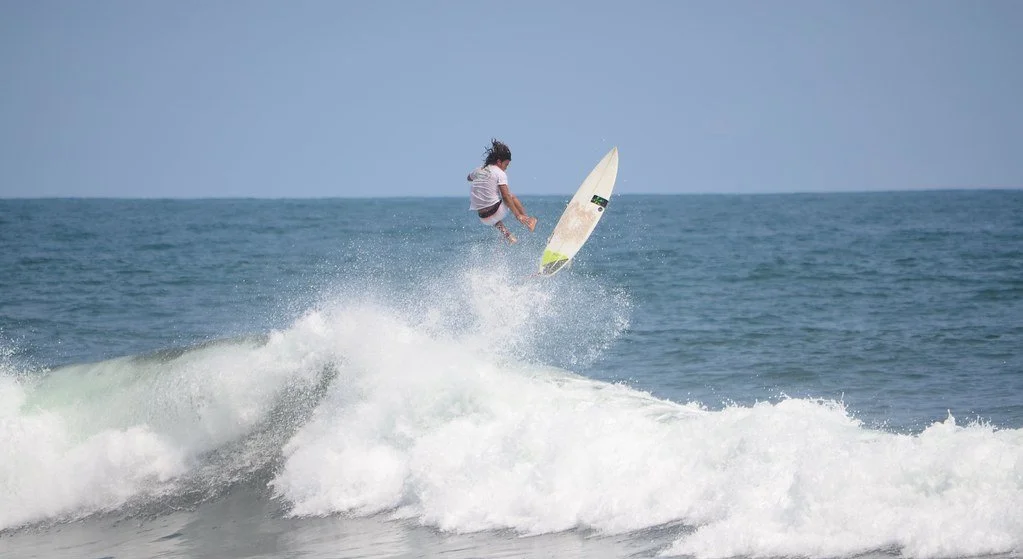
Historically, big wave surfers gravitated towards the waves found in the surfing communities of Hawaii and California. Locations like Jaws, Mavericks, Shipstern Bluff and Mullaghmore were thought of as the best of the best. However, it wasn’t until recently that Nazaré, Portugal made its name as a surfing destination. Nazaré’s beach of Praia do Norte has all the elements for disaster—a deep underwater canyon and currents of waves that collide into one, breaking towards the coast of monumental cliffs. Surfing there, in the winter especially, was long thought to be impossible. It wasn’t until 2010 that someone was daring enough to surf the uncharted waters and alter the history of Nazaré forever. 

Just a few meters off the shore of Praia do Norte is the Nazaré Canyon, an underwater submarine valley 3 miles deep. When water currents move through the valley, they get compressed and begin to move faster. When these currents collide with the local water current, they forge waves upwards of 10 stories high. Among villagers, the waves in Praia do Norte were forbidden. Many had loved ones who died at sea, and they taught their children to avoid the huge waves. So in 2010, when Garret McNamara first arrived, locals were apprehensive about getting behind him and his mission to ride a 100-foot wave.  

It took five years for McNamara to take up an invitation from Dino Casimiro, a local bodyboarder who worked to publicize Nazaré’s waves. When he first laid his eyes on the view from the cliff, he told The New York Times, “it was like finding the Holy Grail.” He’d spend the next year preparing, studying the rhythm of the waves, and developing a safety system with his team of jet-ski tow-riders and spotters on walkie-talkies. Finally, in November of 2011, McNamara conquered a 78-foot wave, earning him a Guinness World Record, and serving as proof that Nazaré’s waves were real and surfable. From that moment on, every big wave surfer in the world wanted their shot to make a name for themselves at Nazaré. Today, at least 20 professional surfers stay in Nazaré during any given week in the winter, including men and women like Justine Dupont, Lucas Chianca, and Kai Lenny. 

In 2013, the town’s current mayor Walter Chicharro was elected. Chicharro worked with McNamara and Casimiro to capitalize on their waves’ fame and invested in the professionalization of the surfing scene. The World Surf League now hosts an annual big wave surfing challenge event every winter, a time that Nazaré’s 10,000 locals were accustomed to having to themselves. In additon, Mayor Chicharro opened the town’s 17th-century lighthouse, Farol Da Nazaré, both as a museum showcasing the town’s history and as a space to view the waves. According to an article in The New York Times, about 40,000 people visited it in 2014, while more than 220,000 entered the fort in 2018. 

Today the town is used to the presence of surfers; even the local fisherman welcome them thanks to the business they bring. Joao Carlines, a retired fisherman, told reporters that “Surfers have a different relationship with the sea, but I’m happy the town’s become known for surfing because it means we have people coming here in the winter.” While the elusive 100-foot wave has yet to be ridden, rest assured that it will be one day, and it will be in Nazaré. In anticipation of that day, surfers and their fans will continue traveling to the seaside village in hopes of witnessing the historic event for themselves.  


Claire Redden

Claire is a freelance journalist from Chicago, where she received her Bachelor’s of Communications from the University of Illinois. While living and studying in Paris, Claire wrote for the magazine, Toute La Culture. As a freelancer she contributes to travel guides for the up and coming brand, Thalby. She plans to take her skills to London, where she’ll pursue her Master’s of Arts and Lifestyle Journalism at the University of Arts, London College of Communication. 

Hut-to-Hut: Hiking in the Italian Dolomites

Mountain Huts, called Rifugios, make multiple day treks through the Italian Alps accessible to hikers.

Puez-Geisler nature park in the Dolomites. Dmitry Djouce. CC BY 2.0

The mountain range located in northern Italy has 18 major peaks and uniquely diverse mountain landscapes. The Dolomites have sharp peaks in varying shapes, along with alpine meadows and valleys that have drawn hikers for years. Mountain huts, also known as rifugios, are placed throughout the Italian mountain range, all within a day’s hike of the next hut. The trek to visit each hut is a total of 75 miles, and typically takes hikers ten days to complete. The huts are stocked with food, and offer basic bedding for travelers. While not every rifugio offers places for hikers to stay overnight, many only serve food, so travelers can stop for lunch before continuing to the next hut. The huts allow hikers to do multiple day-treks without having to pack much. All they will need is personal items and sleeping bag linings. The rifugios are open starting in June and often draw travelers of varying hiking experience.

The Dolomites first started attracting hikers during the ‘golden age of mountaineering’ in the late 19th century. Many mountaineers who first summited the peaks wrote early travel guides for the region, drawing more explorers. Then, in World War One, the Dolomites became the front line for the Italian and Austro-Hungarian armies to pass through. As a result, there are still visible remnants of the war, one being an open-air museum of Mt. Lagazuoi. The ‘castle of rock’ has complex systems of tunnels dug into the mountainside during the war. The tunnels are open for people to walk through and learn more about World War One’s impact on the region. 

Additionally,a museum is dedicated to World War One on the range’s highest peak, Marmolada. The summit stands at over 10,000 feet, making the museum the highest in Europe. The locals of the region often speak Italian, German and Ladin, a Rhaeto-Romaniclanguage that is recognized as an official language of the region. Roughly 30,000 people speak Ladin, and there are considerable efforts to preserve the region’s language and the culture.


Dana Flynn

Dana is a recent graduate from Tufts University with a degree in English. While at Tufts she enjoyed working on a campus literary magazine and reading as much as possible. Originally from the Pacific Northwest, she loves to explore and learn new things.

The Women of Kenya’s Lake Victoria Reject “Fish for Sex”

In a small fishing village on the shores of Lake Victoria, women are breaking the gender roles that dominate the area. A cooperative called No Sex For Fish brings women together to source fish for themselves, without trading their bodies.

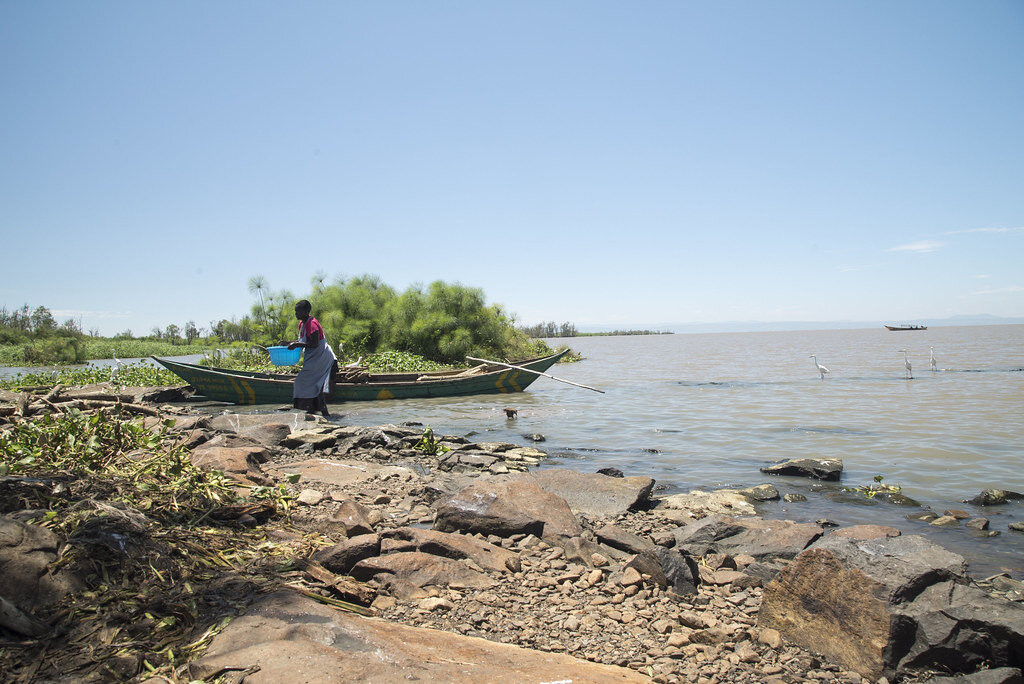
A woman carrying a bucket by her boat in Lake Victoria. CC BY-NC-ND 2.0

“No Sex For Fish” is a bold name. It summarizes what the women of Nyamare have fought for. In the villages along Lake Victoria in Kenya, the fishing industry is split by gender: men do the fishing, women do the selling. Due to overfishing and environmental issues, the lake’s fish population ran low in the 1970s and the fisherman couldn’t catch enough product to supply all of the women. 

In a practice the locals refer to as “jaboya,” the men offered the women a trade-off: sex for fish. The women were left without a choice. For many, their families depend on the money they earn from selling fish. To sustain their loved ones and send their children to school, the women complied. After almost 40 years of this routine, the “jaboya” practice went from exploitative to dangerous. Studies have estimated the prevalence of HIV fishing communities around Lake Victoria to be between 21 and 30 percent. 

Due to the lack of economic opportunities in the area, the women of Nyamare found themselves in a situation familiar to women across the globe: a position of powerlessness in a system controlled by men. Then in 2011, a woman named ​​Justine Adhiambo Obura led the No Sex For Fish cooperative. The women obtained 30 boats through grants from PEPFAR, USAID and the World Connect charity. 
In a testimonial to the World Connect Charity, Justine said, “We are very thankful for this program; it has allowed us to become businesswomen and to control our own finances. The men have to ask us for the money. Though the business has many challenges, we keep working.” With access to their own boats, the women hired men to fish for them. Alice Akinyi Amonde told NPR she’d earn about 50 dollars a day when things were going well, but now she’s lucky if she makes 3 dollars.

In March 2020, after months of heavy rain, the water levels in Lake Victoria climbed to the highest degree in decades. The floods swamped farmland, engulfed homes and displaced thousands of people. Unfortunately, this timing coincided with the emergence of the COVID-19 pandemic, and economic activity was put at a standstill. With no homes, no boats and no farmland, the community has been left in limbo. 

The organized fishing trade that once supported the families along Lake Victoria’s shore has collapsed. In interviews with NPR in September 2020, the women from No Sex For Fish said that they worry that, even if fishing were to become possible again, the practice of trading sex would re-emerge due to the difficulty imposed by the weed-clogged lake. They also said that, while they want to go back to the trade, they’ll need financial support. 

Ruth Odinga, the Kisumu County director of special programs, told NPR that “when such tragedies occur, the government only assists to save lives and not to make life comfortable for them.” With minimal assistance from the government, these women are looking for other ways to earn a living. Despite the challenges they’ve faced, the women of Nyamare are still hopeful for the future.


Claire Redden

Claire is a freelance journalist from Chicago, where she received her Bachelor’s of Communications from the University of Illinois. While living and studying in Paris, Claire wrote for the magazine, Toute La Culture. As a freelancer she contributes to travel guides for the up and coming brand, Thalby. She plans to take her skills to London, where she’ll pursue her Master’s of Arts and Lifestyle Journalism at the University of Arts, London College of Communication.

Hong Kong Activist Group Forced to Delete Social Media

In order to comply with China’s recent national security law, a well-known pro-democracy group was ordered to scrub its online presence. 

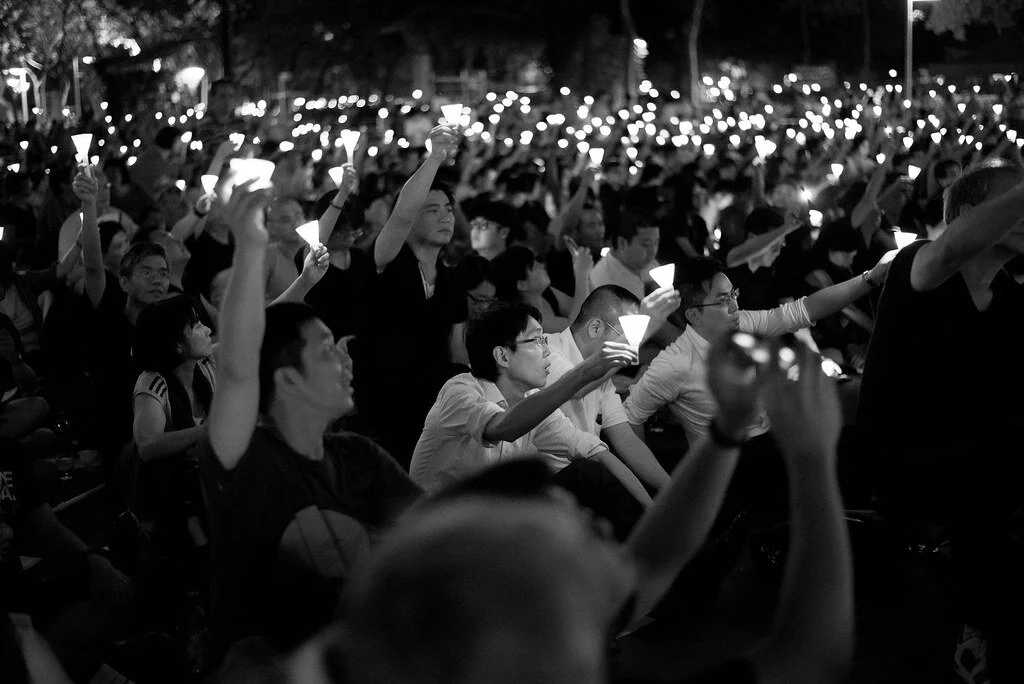
A  2015 vigil for the 1989 Tiananmen Square Protests. VeryBusyPeople. CC BY-SA 2.0

In early September 2021, the Hong Kong Alliance in Support of Patriotic Democratic Movements of China, a well-known activist group in Hong Kong, received notices from officials to delete all online content to comply with the recent national security law. As a result, the group has closed its website as well as all social media pages, including their Facebook, Twitter and Youtube. The Hong Kong Alliance is most well known for hosting vigils for the 1989 Tiananmen Square student protests that resulted in hundreds of deaths. The protests in 1989 called for political and economic reform, and Chinese police responded violently and arrested tens of thousands of protesters. In addition, the group is known for advocating for democratic movements and does not hesitate to criticize the government online. Officials also used the national security law to arrest several leaders of the group who refused to provide information to police regarding the group’s funding and membership.

The security law went into effect on June 30, 2020, causing concerns that Hong Kong was losing its judiciary independence and other democratic freedoms such as freedom of speech and assembly. Under the initial 1997 agreement, when China gained control of Hong Kong from Britain, there was always supposed to be a national security law in Hong Kong. However, Hong Kong would retain a separate judiciary system. Hong Kong has previously had protests starting in 2019 in response to a law that allowed extradition to the mainland. The protests turned increasingly violent, and eventually, the extradition bill was withdrawn. The controversial security law criminalized succession, subversion of state power, terrorism and collusion with foreign entities. The law takes precedence over a local Hong Kong law, and a National Security Committee will be put in place with no local oversight. In addition, crimes considered to be serious national security threats will be tried on the mainland in Chinese courts, essentially a version of the extradition bill that was thrown out as a result of the 2019 protests. 

The Hong Kong Alliance was not the first group that faced the consequences of the recent security law. Shortly after the law was enacted in 2020, many people deleted their social media, and pro-democracy media outlets deleted old posts and entire archives. The Hong Kong alliance has restarted a Facebook page. Still, it is unclear how the group will be using social media in the future.


Dana Flynn

Dana is a recent graduate from Tufts University and holds a degree in English. While at Tufts she enjoyed working on a campus literary magazine and reading as much as possible. Originally from the Pacific Northwest, she loves to explore and learn new things.

What Happens to Afghan Refugees Once They Flee? 

People have been leaving Afghanistan for 40 years, hoping to escape conflict, violence, and poverty. The Taliban’s recent takeover has exacerbated the displacement and flight of Afghan people, but where do they go once they’ve left? 

Why are people fleeing Afghanistan? 

This year, 20 years after The Taliban was ousted from power in Afghanistan, the insurgent group regained control of the country. On August 15, Taliban forces took Kabul, the nation’s capital, with little resistance. Afghan President Ashraf Ghani fled the country, and the government collapsed, securing The Taliban’s position of power. 
Following The Taliban’s seizure of Kabul and effective takeover of the country, tens of thousands of people fled Afghanistan, fearing their safety under Taliban rule. 

Amnesty International reports that at present, there are over 2.6 million registered refugees from Afghanistan worldwide and more who haven’t been registered or who are asylum seekers (meaning they haven’t yet been legally recognized as refugees). People began leaving Afghanistan forty years ago, seeking refuge from conflict, violence and poverty. However, the recent Taliban takeover has escalated the amount of violence faced by people in Afghanistan and raised human rights concerns, especially over the treatment of women and girls

The United Nations Refugee Agency predicts that up to half a million people could flee Afghanistan by the end of the year. As many as 125,000 people fled between August 16 and 26 during a multinational evacuation effort led by the U.S. military. However, more Afghans are still displaced and trying to escape Taliban rule. 

What happens to Afghan refugees once they leave the country? 

If Afghans can make it out of the country, what happens next varies. Those leaving via land borders often live in temporary refugee camps, like the ones set up by Iran and Tajikistan

Pakistan and Iran have been the countries to take in the largest numbers of Afghan refugees in the past. However, this time, officials from both countries have said that they cannot take another large influx of refugees. Instead, they will be expected to stay in camps on the borders until they  return to Afghanistan. 

On August 16, the UNHRC issued a non-return advisory, meaning that no country can deport people to Afghanistan right now. 

Some governments, such as Austria, Poland, Turkey and Switzerland, have made clear that they will not welcome any Afghan refugees and are upping border security to guard against anyone entering their countries illegally. However, other governments, such as France, Germany, Canada, Australia, the U.K. and the U.S., have pledged to host Afghan refugees and asylum-seekers.

United States

Axios reports that an expected 37,000 Afghan refugees will soon be entering the U.S., likely the first group of several. They will be sent to 46 states, excluding Hawaii, South Dakota, West Virginia and Wyoming, with California and Texas receiving the most people. 

More than half of the Afghan refugees who have already arrived in the U.S. helped the U.S. officals and their families, some of whom hold Special Immigrant Visas. This next wave of 37,000 also includes many people regarded as U.S. allies, who either have an SIV or have applied for one. 

Those refugees who are not eligible for an SIV can apply for other types of relief, such as asylum or a temporary visa. In additoin, they can still enter the U.S., even without a valid visa, if they have applied for humanitarian parole, which allows those facing an emergency or urgent humanitarian crisis to enter the country for a temporary period. 

All Afghan refugees are eligible to apply for humanitarian parole and asylum, and they can also apply for a U.S. visa. However, those who have applied for either but have not yet completed the lengthy screening and interview process to receive clearance are being sent to third-party countries before they can enter the United States. Kosovo, Albania, North Macedonia and Uganda have agreed to temporarily host smaller numbers of refugees ultimately destined for the U.S. 

When Afghan refugees arrive in the U.S., legal residents or U.S. citizens are tested for COVID-19 and then released to go to their destinations. Those who are not will be sent to military bases for processing, which includes a health screening and services such as help to apply for work authorization. After processing, these refugees are connected with a refugee resettlement agency. 

Resettlement agencies, like RAICES in Texas, are funded by the U.S. Committee for Refugees and Immigrants. Resettlement agencies, using a $1200-per-person stiped, set up housing, including utilities and furniture, for the refugees, and enroll children in school and sign families up for social services programs such as Medicaid. The agencies also provide job skills training and help refugees with their job searches; they also help refugees adjust to their new homes through cultural orientation programs. In addition, some refugees qualify for monthly cash assistance, which the resettlement agencies also provide. 

United Kingdom 

The Home Office, the U.K.’s lead immigration department, has announced that any Afghans that worked for the U.K. government or British military can stay in the U.K. permanently. There are currently over 8000 Afghan refugees in the U.K., and many of those who were initially only granted temporary residency can now upgrade their immigration status and find permanent housing and jobs. 

Right now, manyf Afghan refugees in the U.K. are living in hotels, but the government hopes to have them resettled more permanently soon. The government has developed two resettlement plans for Afghan refugees—the one currently in progress is known as Operation Warm Welcome, which provides support similar to that of U.S. resettlement agencies such as enrolling kids in school, registering refugees for healthcare and helping them to find housing. The second plan, the Afghan Citizens Resettlement Scheme, is a longer-term plan, aiming to take in an additional 20,000 refugees over the next few years. 

The refugees who are not currently eligible for permanent residency  can apply for a five-year visa; after the visa is up they can apply for permanent residence.

France

Between August 16 and 27, France evacuated over 2500 Afghans from Kabul, mainly activists. Many of these refugees left families behind in Afghanistan and now worry that they will be unable to reunite. France is notoriously slow at approving family reunification applications, with Afghans having to wait an average of three years before bringing their relatives. France’s president, Emmanuel Macron, has expressed concerns about a large influx of immigrants, saying that though France will continue to protect those who are most threatened under Taliban rule, “irregular migratory flows” need to be stemmed. 

According to the European Resettlement Network, refugees who can enter France are granted a temporary, six-month leave to work and receive certain social services benefits. After that, all refugees are required to lodge an asylum claim, which, when approved, grants them official refugee status. After gaining refugee status, refugees may apply for French citizenship. 

Challenges 

Whether refugees are in camps or have found refuge in other countries, they often face challenges like unsanitary conditions, a lack of food and housing, and harassment from people around them. Though people leaving Afghanistan are safe from the more immediate dangers of conflict and violence, just leaving the country does not ensure their long-term well being. 

Organizations like Refugees International and Amnesty International have put forth recommendations on how countries can best respond to the Afghan refugee crisis and better help refugees. 

To Get Involved: 

To learn how to support Women for Women International’s emergency relief fund, click here

To get involved with the International Rescue Organization, click here

To learn more about Afghan Aid, an organization that has been working in Afghanistan for nearly 40 years, click here

Ways to help Afghan refugees are different depending on where you live, so consider looking into local and national organizations as well. 


Rachel Lynch

Rachel is a student at Sarah Lawrence College in Bronxville, NY currently taking a semester off. She plans to study Writing and Child Development. Rachel loves to travel and is inspired by the places she’s been and everywhere she wants to go. She hopes to educate people on social justice issues and the history and culture of travel destinations through her writing.

5 African World Heritage Sites Under Threat

Of the 17 natural UNESCO World Heritage Sites that are in danger, 12 are located in Africa. Here is a deep-dive into five of these unique sites and the looming threats that surround them.

The United Nations Educational, Scientific and Cultural Organization (UNESCO) awards landmarks and areas around the world status as a ‘World Heritage Site’ for the location's unique cultural, historical or environmental significance. As part of this, World Heritage Sites are provided legal protection by UNESCO, however, many of these sites are now endangered. According to UNESCO, Africa and the Middle East have the largest number of threatened sites. Of the 17 UNESCO natural world heritage sites that are endangered, 12 are located in Africa. Five of these endangered African parks and reserves are described below.

1. Manovo-Gounda St Floris National Park, Central African Republic

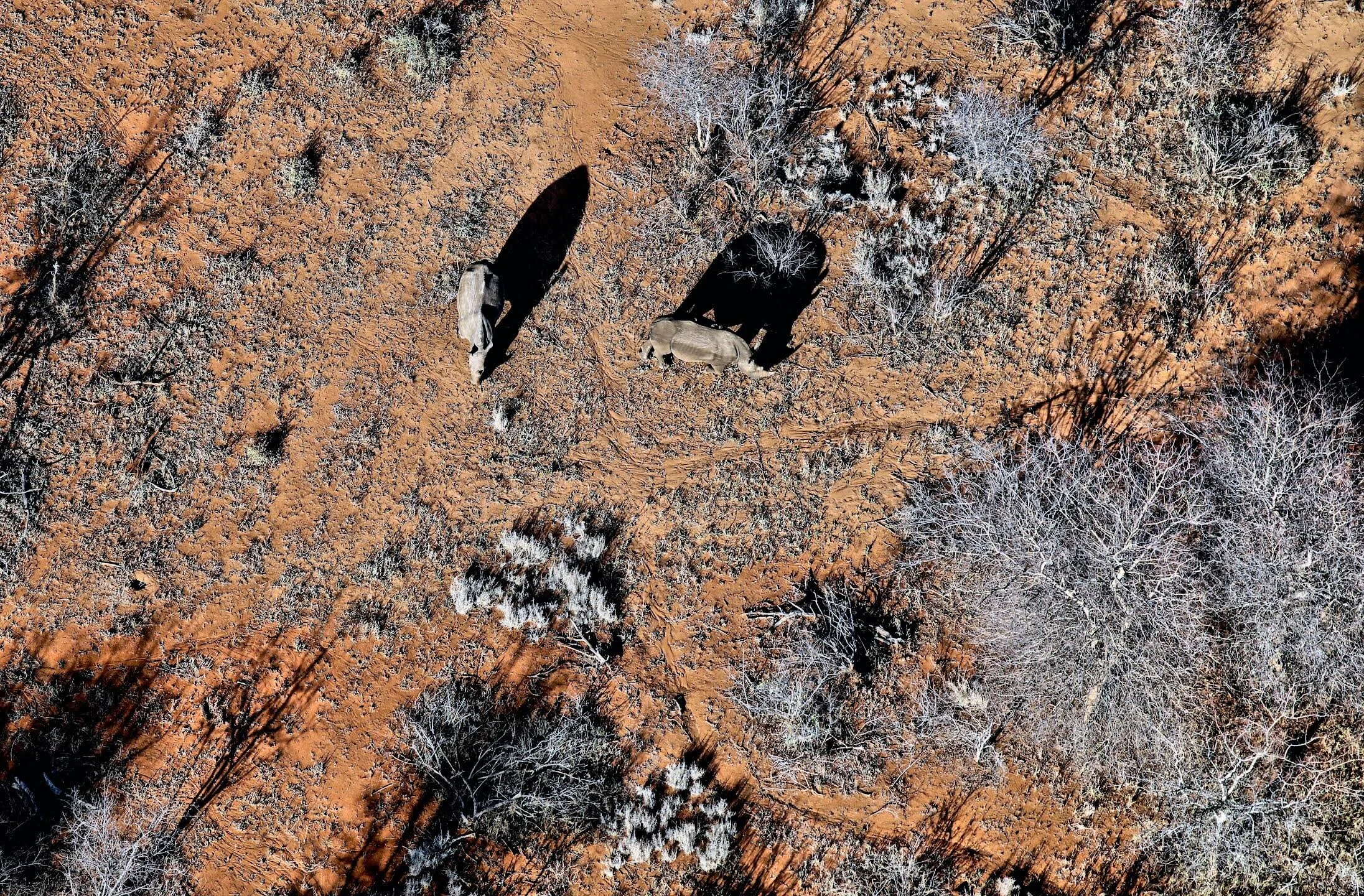
Black rhinoceros, Central African Republic. Photo by Wynand Uys on Unsplash

This Central African national park is located in the prefecture of Bamingui-Bangoran near the Chad border on the Bahr Aouk and Kameur Rivers. It was awarded status as a UNESCO World Heritage Site in 1988 because of its unique biodiversity and is the largest park in the country, with around 6,700 square miles of land. This park’s historical significance lies in its unique flora and fauna and its position as a “crossroads” savanna. This location acts as the intersection where species from Eastern and Western savanna communities and Southern savanna communities meet. Straddling the Sudano-Sahelian and Sudano-Guinean biogeographical zones, the park hosts various habitats from grassy floodplains and wetlands in the north to savannas with gallery forests in the south. The park is home to various rare species, including black rhinoceroses, elephants, sudanese cheetahs, leopards, wild dogs, red-fronted gazelles, buffalo and hippopotamus. 

Around 320 bird species  can be spotted in the park, with at least 25 of them being species of raptors. Manovo-Gounda St Floris National Park is home to many rare animals; however, its unique biodiversity has made it a target for illegal poaching of rhinoceros, elephants and giraffes as well as grazing. The western black rhinoceros that was indigenous to the land went extinct in 2011. The park is now governed by the Ministry of Water and Forests, Hunting and Fishing in efforts to protect the property. 

2. Okapi Wildlife Reserve, Democratic Republic of Congo

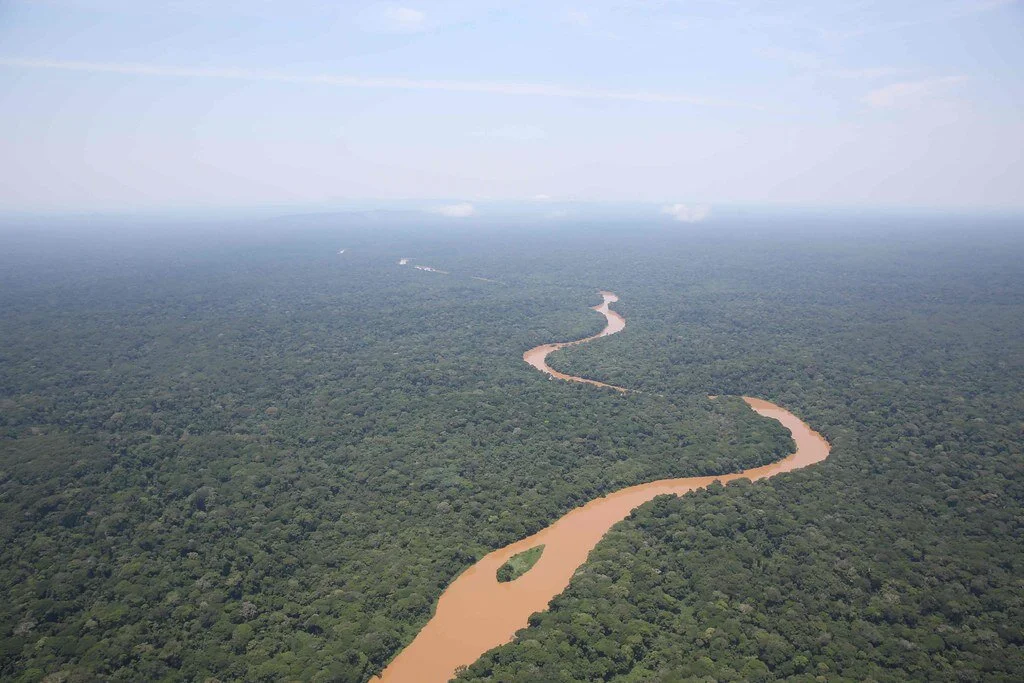
Ituri Forest, near Okapi Wildlife Reserve. MONUSCO. CC BY-SA 2.0

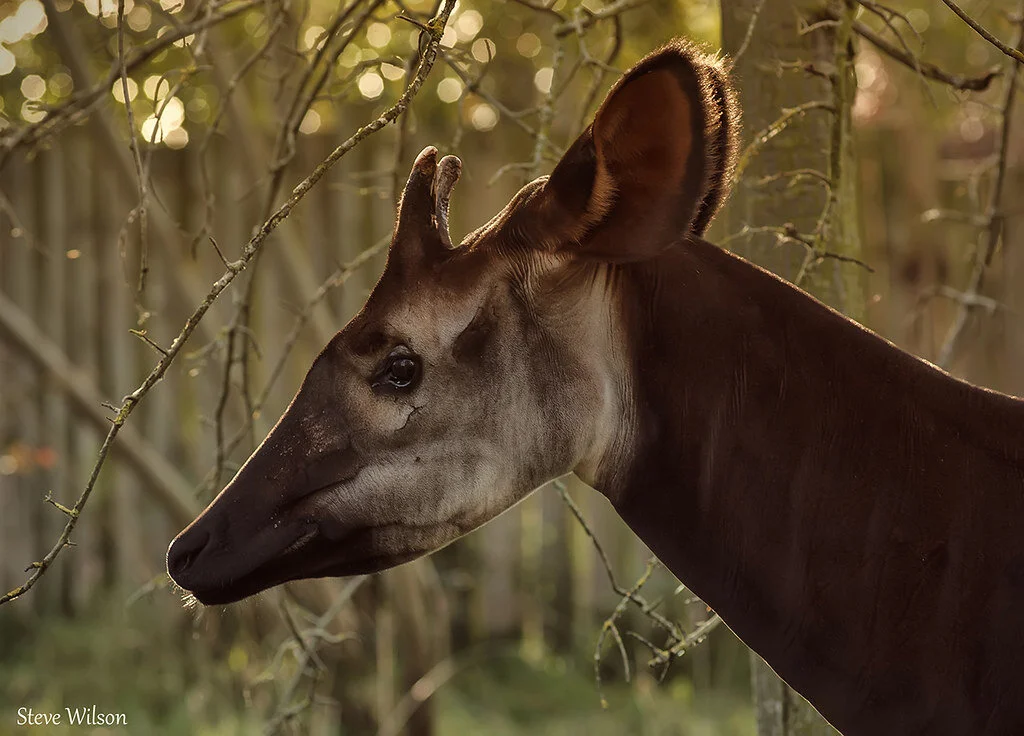
The Okapi Wildlife Reserve is located in the northeast of the Democratic Republic of Congo, occupying one-fifth of the Ituri forest. It is part of one of the largest drainage systems in Africa, the Congo river basin. Labeled as a UNESCO World Heritage Site in 1996 and categorized as “in danger” by 1997, the Okapi Wildlife Reserve stretches to around 5,300 square miles. The reserve is home to many threatened species of primates and birds, including leopards, forest buffalos, bongos, water chevrotain, dwarf antelopes and giant forest hogs. It also provides refuge to 5,000 of the estimated 30,000 remaining okapis, a forest giraffe and has the country’s largest population of forest elephants and chimpanzees

In addition to the 17 species of primates, the reserve is inhabited by nomads and hunter-gatherers like the Mbuti and Efe pygmies. Although the Ituri forest is mostly untouched by logging and other development activities, the reserve is threatened by slash and burn deforestation, commercial hunting and gold mining. 

3. Aïr and Ténéré Natural Reserve, Niger

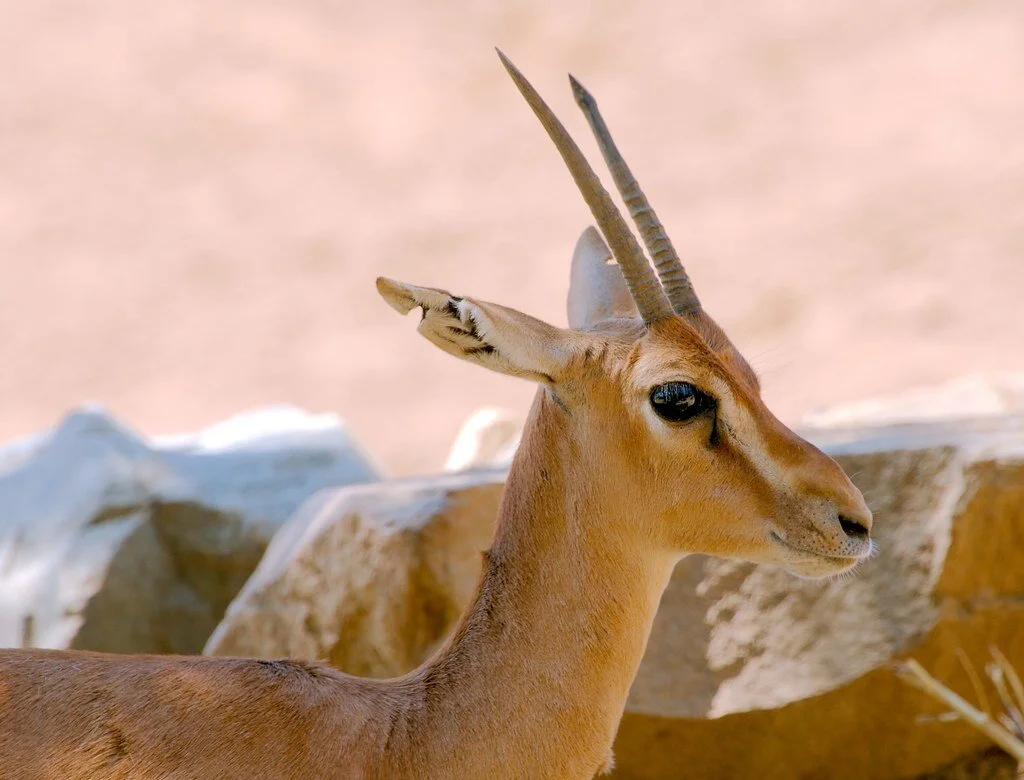
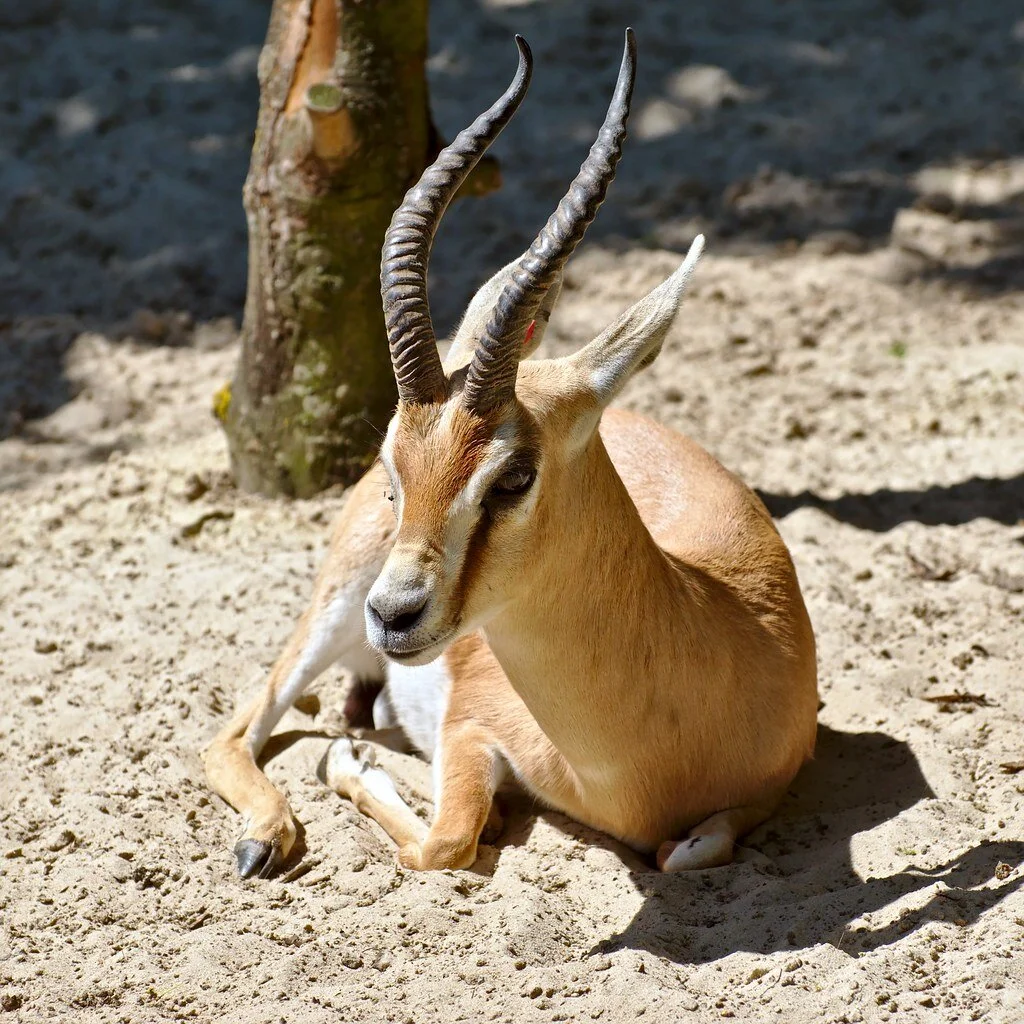
Dorcas Gazelle which can be found in Aïr and Ténéré Natural Reserve, Niger. FurLined. CC BY-NC-SA 2.0.

The Aïr and Ténéré Natural Reserve in Niger covers 29,870 square miles, awarding it position as the second-largest nature reserve in Africa. It was first established as a UNESCO World Heritage site in 1991 to preserve endangered species, various habitats and beautiful desert landscapes. The reserve is made up of two main zones: the eastern half of the Aïr mountains and the western sections of the Ténéré desert. The mountainous and plain landscapes are home to Saharo-Sahelian flora and fauna that exist within the various habitats of the reserve. Everything from it’s living dunes and stony gravel desert, to cliff valleys and water holes is necessary to preserve  the reserve’s biodiversity. The property provides a sanctuary for many threatened species, emphasizing desert antelopes, including the addax, the white antelope native to the Sahara desert, the dorcas gazelle, ostrich,  fennec fox, barbary sheep and cheetah. The mountains also attract large numbers of migratory birds, totaling around 165 different species of birds. However, political instability in northern Niger, poaching and illegal grazing and other threats have led to the disappearance and decline of many endangered species and designated the site in danger by 1992. The civil unrest left the reserve with no official management plan; poaching led to the extinction of rare species, grazing of domestic animals and crop production minimized resources for wildlife and denied wildlife access to certain crucial wetland habitats. 

4. Niokolo-Koba National Park, Senegal 

Bordering the Gambia river, Niokolo-Koba National Park is located in the Sudano-Guinean zone. The park is home to the Derby Eland, an open forest and savanna antelope, chimpanzees, lions, elephants, leopards and more than 300 bird species. 

Waterways, gallery forests, dry forests, savanna floodplains and rocky slopes are all landscapes that are found in this endangered World Heritage Site. Inscribed as a UNESCO World Heritage Site in 1981, the park is managed through the Ministry of Environment and Nature Protection and the National Parks Directorate. Poaching, one of the most significant factors contributing to landing the park on UNESCOs danger list in 2007, has been a major threat to the park for decades and has eliminated most giraffes and elephants that resided in the park. Bush fires, poor soil and the premature drying up of ponds are other factors that have endangered the park. 

5. Selous Game Reserve, Tanzania 

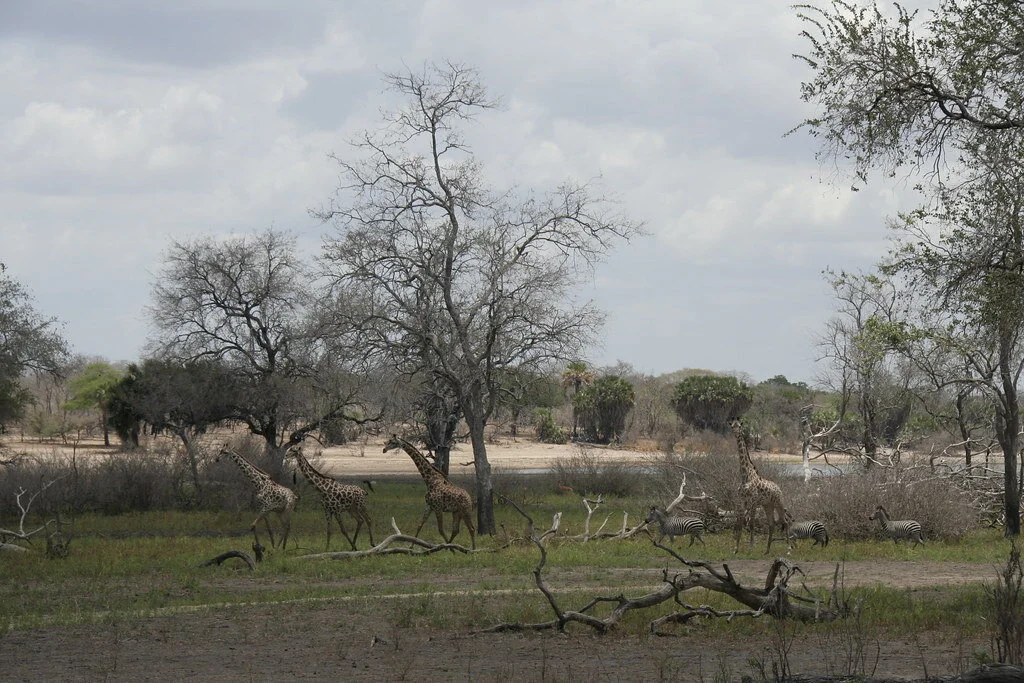
The Selous Game Reserve is located in Tanzania and covers more than 21,000 square miles of land. A UNESCO World Heritage Site since 1982, the reserve has diverse wildlife and habitats such as Miombo woodlands and its inhabitants—African bush elephant, black rhinoceros, East African wild dog, Cape buffaloes, Masai giraffe, Plains zebra and Nile crocodile—grasslands, Acacia savanna, rivers and swamps.

One of the most famous rivers in the region includes the Rufiji River, which flows into the Indian ocean. While the reserve held the largest number of elephants in the world in the mid-1970s, more than 100,000, the number of elephants in the ecosystem fell to about 15,000 by 2014. The reserve was labeled as endangered by UNESCO in 2014 and is threatened by poaching, deforestation, mining, oil and gas exploration and dam construction. The national government approved a plan to build a hydroelectric dam across the Rufiji River in 2018, and the dam is currently under construction. The damage caused by the dam’s construction has tempted UNESCO to strip the reserve of its status as a World Heritage Site.


Mia Khatib

Mia is a rising senior at Boston University majoring in journalism and minoring in international relations. As a Palestinian-American, Mia is passionate about amplifying the voices of marginalized communities and is interested in investigative and data-driven journalism. She hopes to start out as a breaking news reporter and one day earn a position as editor of a major publication.