
Paige Geiser
Discover the magical colors of Cano Cristales and the plant that makes it all happen.
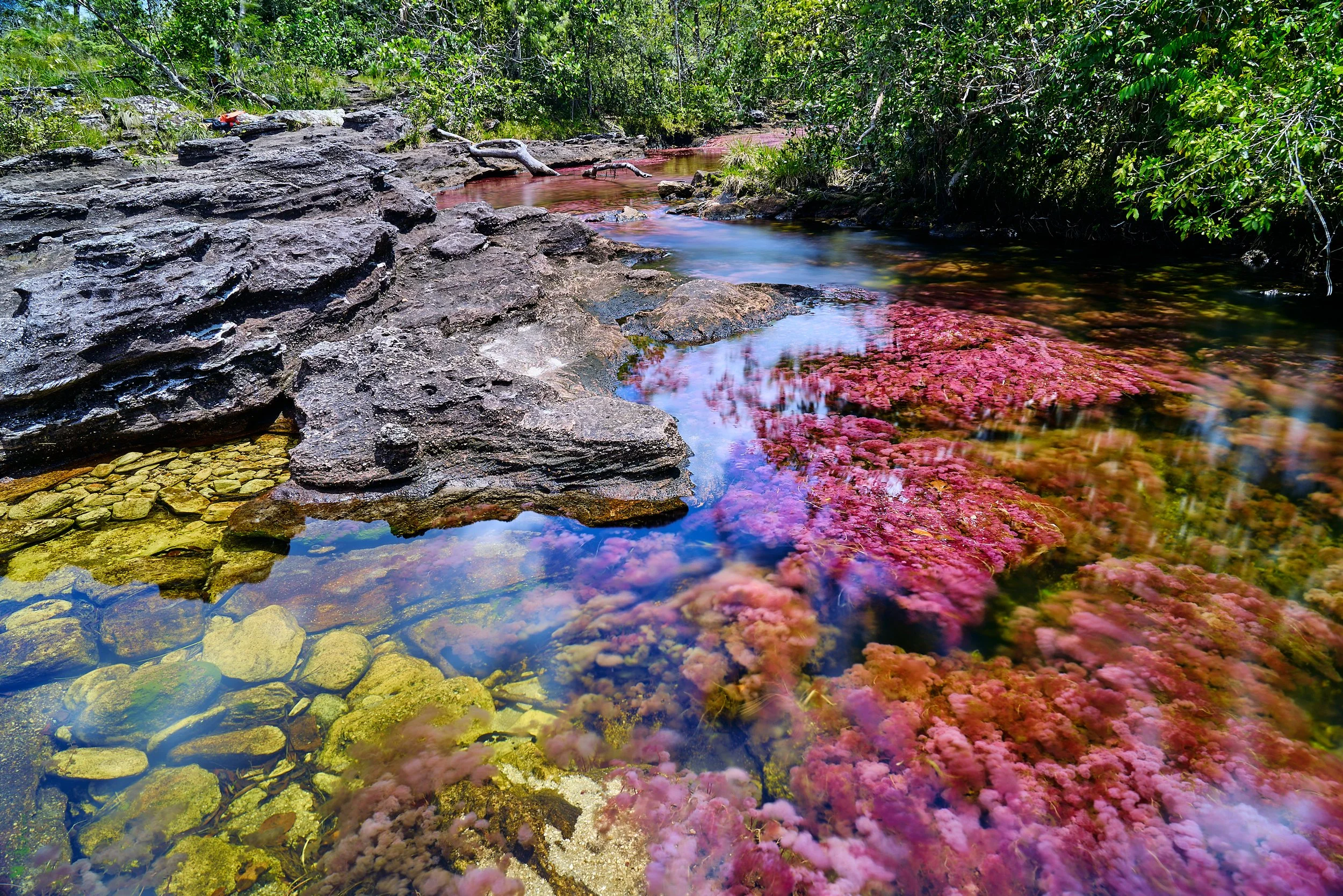
Colorful bursts in the Cano Cristales. Pedro Szekely. CC BY-SA 2.0.
Cano Cristales is a river located in Colombia in the Sierra de la Macarena National Park. Due to a rare biological phenomenon, this river explodes into color between June and November. A spectrum of purples, pinks, yellows and greens can be seen throughout the 62-mile-long river. Local legend, according to the BBC, describes how the body of water “escaped paradise to flow through Earth.”
The reality of these magical colors is due to a rare plant, the Macarenia clavigera, that lines the Cano Cristales’ rocky riverbed. The rocks that these plants grow on are a part of the Guiana Shield, a 1.7 billion-year-old rock formation and one of the oldest geological formations on the planet. From years of flowing over these ancient rocks, the Cano Cristales has become rich in phosphorus, iron, quartz and other minerals, which is what makes this aquatic plant’s life possible. In fact, the Cano Cristales is the only place Macarenia clavigera lives, making this “rainbow river” the only one in the entire world.
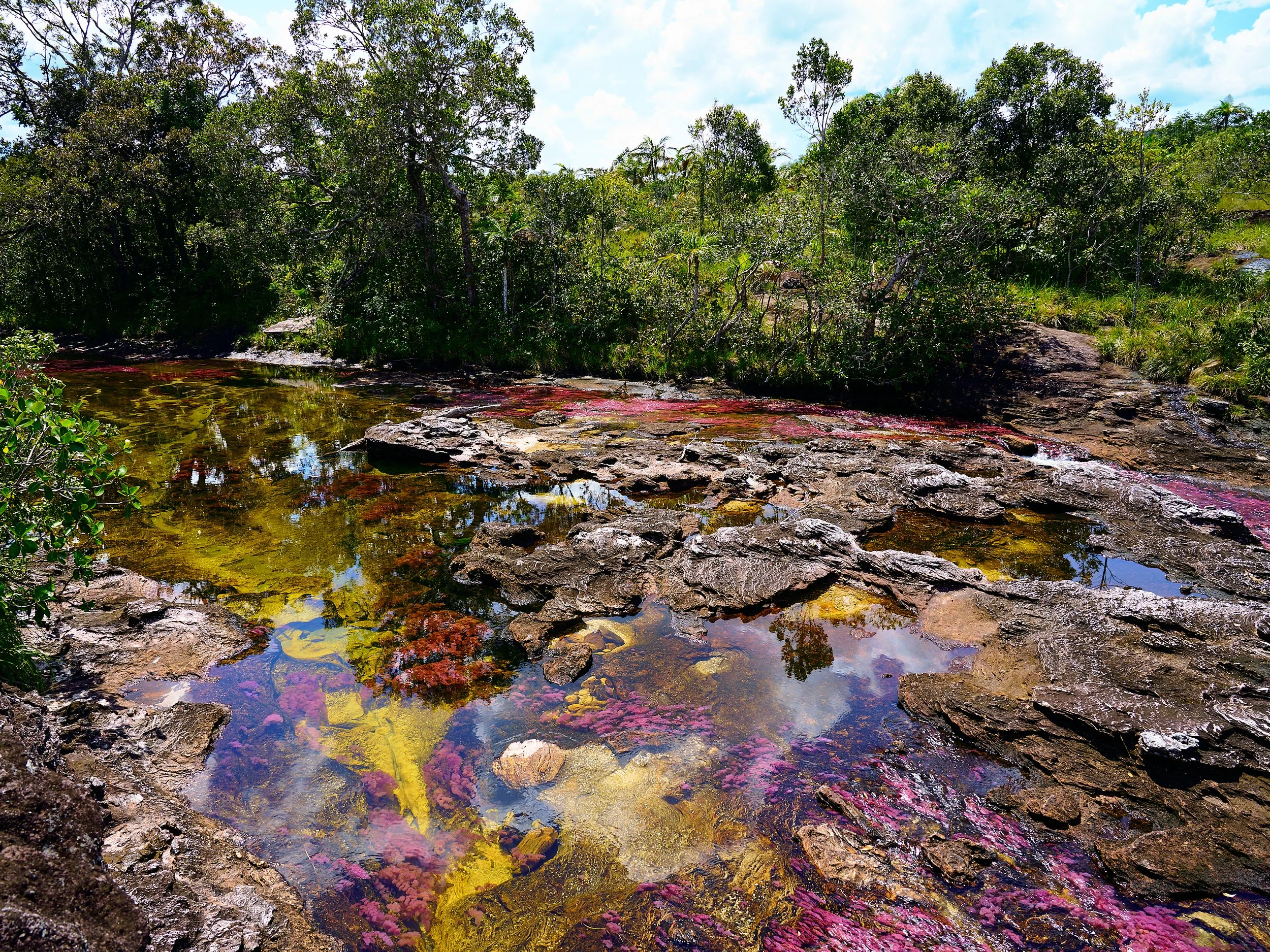
Photo of the Cano Cristales. Pedro Szekely. CC BY-SA 2.0.
Similar to leaves changing colors in autumn, the Macarenia clavigera remains a muted dark green hue for the majority of the year. During the rainy season, the water levels rise and sunlight reaches the river's floor, causing the plant’s colors to change. The color the Macarenia clavigera turns is determined by rainfall, temperature and sunlight. The plants with the most sunlight turn bright red and maroon, while plants with less sun transform into a lighter pink color. Those that are in shaded areas grow yellow and green. The rocks in the river also exude minerals that give the river a larger, yellowish look, only adding to the impeccable color scheme. While these colors generally last between June and November, the river is at its most vibrant between July and October.
Outside of exploring this magical river, visitors to this national park can expect to see an abundance of wildlife. The Sierra de la Macarena National Park is home to 2,000 species of plants, 1,200 types of insects and 550 species of birds, as well as deer, monkeys, jaguars and anteaters. With many different observation spaces, it is recommended that travelers pack binoculars as they make their way through this rocky rainforest.
Due to efforts to try and reduce tourism’s harmful impact on the local environment, the area where the Cano Cristales flows cannot be accessed without a licensed tour guide. The Cano Cristales tour package is one of the safest and most convenient ways to travel, as it covers getting to the river, hotel stays and the licensed tour guide needed to explore the park. The average price of a three-day trip through this package deal is about $488. The river's remote location takes a full day to get to, so most travel packages span three to five days to ensure that visitors get the entire Cano Cristales experience.
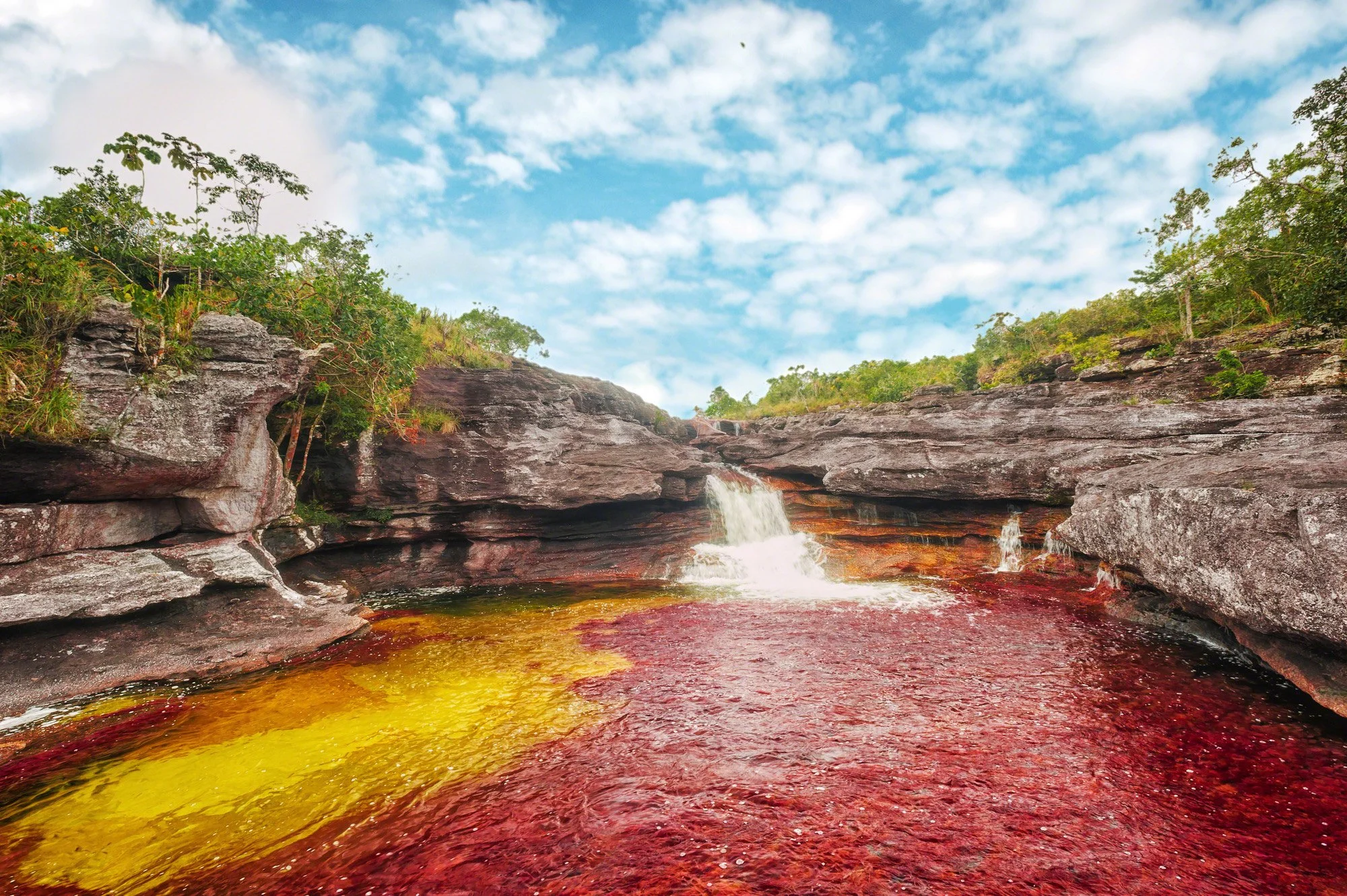
Waterfall in Sierra de la Macarena National Park. Mario Carvajal. CC BY 3.0.
To get to the river, most people start in Villavicencio, Colombia, a city of 500,000 people, 45 miles southeast of Bogota, Colombia’s capital. From here, a plane company offers daily rides to the small town of La Macarena, right outside of the national park. For those opposed to flying, a 26-hour drive through bumpy, waterlogged roads is the only other way to get to Cano Cristales. Once in La Macarena, small motorboats take visitors to the cusp of the national park, where transport trucks await. From where the truck drops travelers off, it’s an hour hike to the river. Typically, the first day in Sierra de la Macarena National Park is a short one, as traveling there takes so much time. After retiring to a local hotel, the real adventures begin in the days that follow. For the duration of the stay, tour guides take travelers to the most vibrant corners of the river, highlighting the pure beauty it has to offer. Although this magical river may be difficult to get to, it is worth the hassle. The Cano Cristales is quite literally one of a kind, and seeing this natural phenomenon in person is an unforgettable experience.

Paige Geiser
Paige is currently pursuing a bachelor’s degree in English with a minor in Criminal Justice at the University of Wisconsin-La Crosse. She grew up in West Bloomfield, MI, and has been fortunate enough to travel all throughout the country. She is an active member of the university’s volleyball team and works as the sports reporter for The Racquet Press, UWL’s campus newspaper. Paige is dedicated to using her writing skills to amplify the voices of underrepresented individuals and aspires to foster connections with people globally.