
Paige Geiser
From the 1920s to today, women's roles and rights have evolved across a century of Afghan history.
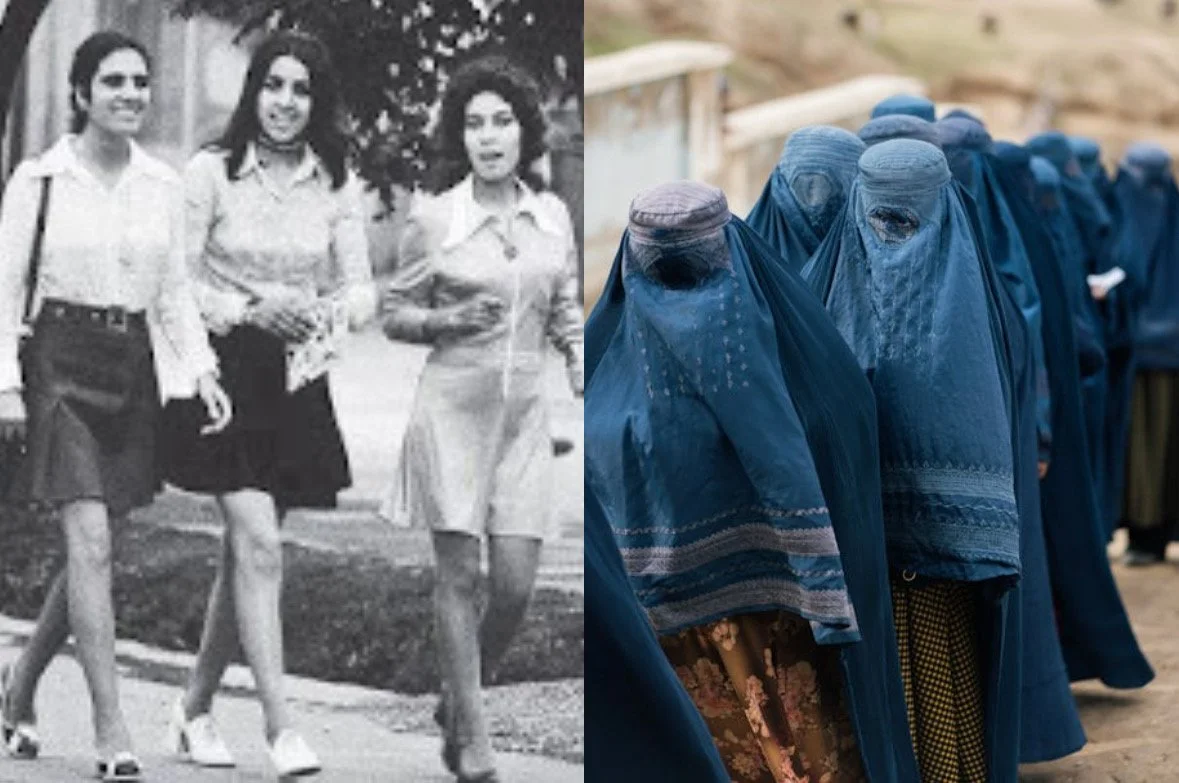
Then and now — women in Afghanistan. Left: retrieved from Esteban Fernandez. CC BY-SA 4.0. Right: Faruk Tokluoglu. Pexels.
Today, Afghanistan is known for its oppressive behaviors and restrictions on women. With blue burkas, an absence in the workforce and a general expectation of silence, the norm for women now is deeply confining. But the country’s oppressive tactics were not always this prevalent. In fact, Afghan leaders were making strides toward women’s equality before many other developed countries. Understanding how women in Afghanistan came to face this oppression is not only key to preventing it from happening again, but it is also vital for learning how to support those currently in need.
In 1919, women in Afghanistan gained suffrage, marking their first major movement toward equality. After earning the right to vote, a year before women in the United States did, spaces for women continuously started to grow. In 1921, the first Afghan school for girls opened its doors. Shortly after the school's opening, Queen Soraya founded the first women’s magazine and women’s organization, both of which advocated for gender equality. By 1957, women were allowed to attend universities and enter the workforce, furthering their fight to become equal members of society. Afghanistan drafted a new constitution, with the help of multiple women, in 1964, which gave women the right to run for office. Only five years after the constitution’s enactment, Jameela Farooq Rooshna became the first female judge in the country. Throughout the 1950s, 60s and 70s, life for women in Afghanistan was comparable to life in other developed countries. Women were educated, employed and enjoyed mixing traditional and Western fashion. Rather than the blue burkas required today, women could be found wearing jeans, skirts and high heels.
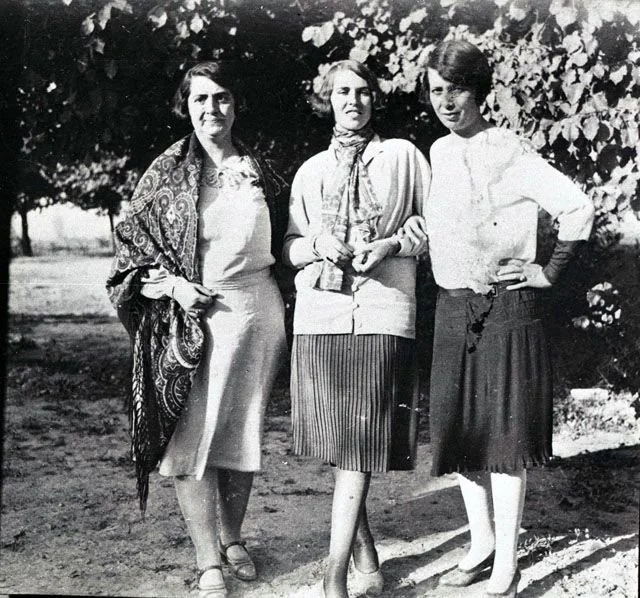
Photo of Afghan women in 1927. Unknown. CC0.
The push for equal rights continued to progress until the murder of President Mohammad Daoud Khan. With a weakened political system, the USSR was able to invade Afghanistan. Due to a focus on the frontlines of keeping the Soviets out, religious extremist groups were able to gain control of the country. Eventually, these groups formed Al-Qaeda, which started the “holy war” in 1988 to create a purely Islamic-governed nation. Almost a decade later, in 1996, a new religious extremist group, the Taliban, took hold of the country. The newly established Islamic state under Taliban rule was detrimental to women’s rights. Almost immediately, girls over the age of eight were banned from receiving an education, women were removed from the workforce and strict dress codes barred women from leaving their homes without full-body and face coverings. For five years, women were kept inside their houses, not allowed to interact with the outside world.
After the attacks on Sept. 11, 2001, the United States began infiltrating Afghanistan looking to flush out Taliban forces. By December of 2021, the Taliban had fallen, and over the next nine years, Afghan women attempted to rebuild what had been lost. While there were some strides, the withdrawal of U.S. troops from Afghanistan in 2020 quickly deposited the nation back into the hands of the Taliban. On Aug. 15, 2021, the Taliban regained control of the country's capital and began to reinstate all of their laws. Today, women cannot study beyond the sixth grade and are not allowed to enter the workforce. They must completely veil their bodies and can only go out in public if there is important work to be done. When going outside, they must be accompanied by a male chaperone and are forbidden from looking at a man who is not their husband or blood relative. During the summer of 2023, women's salons, parlors and gyms were banned, as well as women’s right to visit national and state parks. Public reading, speaking and singing have also been barred for Afghan women.
The women of Afghanistan have been subjugated to a life where the mantra “women should be seen and not heard” is pounded into their brains. While speaking at the United Nations General Assembly, Hollywood star Meryl Streep made a powerful comparison while shining a light on the diminishing rights of Afghan women: "A cat may go sit on her front stoop and feel the sun on her face. She may chase a squirrel into the park. A squirrel has more rights than a girl in Afghanistan today because the public parks have been closed to women and girls by the Taliban."
GET INVOLVED
While hope for change doesn’t seem plausible in the near future, there are organizations helping to break these new societal expectations. UN Women is an organization committed to helping Afghan women stay safe, build their skills, earn a living and access vital services. Across the nation, it has supported 140 other women’s organizations, allowing them to keep their doors open, retain staff and create safe spaces for organizers and women alike. As of June 27, 2025, they have helped over 16,000 women in Afghanistan. Women for Afghan Women is a grassroots organization working toward the same goals. Not only are they enacting change in communities, but they are also advocating for women's rights in hopes of addressing the root of the problem. Donations to both of these organizations not only help them do their jobs more effectively but also help to reach more women in need.

Paige Geiser
Paige is currently pursuing a bachelor’s degree in English with a minor in Criminal Justice at the University of Wisconsin-La Crosse. She grew up in West Bloomfield, MI, and has been fortunate enough to travel all throughout the country. She is an active member of the university’s volleyball team and works as the sports reporter for The Racquet Press, UWL’s campus newspaper. Paige is dedicated to using her writing skills to amplify the voices of underrepresented individuals and aspires to foster connections with people globally.