Egyptian Activist Brings About a #MeToo Moment

Nadeen Ashraf, creator of the Instagram page “Assault Police,” warned fellow women about men accused of sexual assault. Now, she is working to change the society that produces the perpetrators.
Nadeen Ashraf has received more death threats than she can count. Her infamy began with an Instagram page named “Assault Police” and culminated in a nationwide movement. It broaches a taboo subject in Egyptian society: sexual violence. The Instagram page provides women an outlet to express their stories of sexual assault and harassment while giving guidance on how to navigate Egyptian society as a survivor. The threats received by Ashraf demonstrate the opposition that activist women face. It also shows how necessary Egypt’s #MeToo moment is.

Ashraf joins a worldwide cadre of young activists who use social media to promote inclusivity. At 22 years old, she belongs to the first generation that was born and raised with social media. “I’ve been active on social media since I was 9 years old,” Ashraf said in an interview with Egyptian Streets, “and I’ve been an avid follower of internet trends and social media for as long as I can remember.” This gives her an edge in crafting social media campaigns that reach women, old and young, across Egypt. So far, Assault Police has over 200,000 followers. 

Ashraf started the account in a rage late one night. A fellow student at the American University in Cairo accused Ahmed Bassam Zaki of sexually harassing and blackmailing women on social media, but within days, the post disappeared. This was one of many instances. “I witnessed women first coming forward about being harassed by him on our university’s unofficial Facebook group around 2018, only to be silenced by having their posts deleted later,” Ashraf says. She soon created Assault Police to warn other women about Zaki. From there, the growth was explosive. 

Nobody predicted such widespread success, least of all Ashraf herself. “I initially expected it to get reported and shut down by Instagram within days of its creation,” she says. Such was the fate of most social media posts calling out sexual harassment. Assault Police comes, though, at a time when a new generation of young activists are using social media to advocate for societal change. Being tech savvy is necessary when authorities arrest activists on social media for “indecency” and “debauchery” while sexual predators roam free.

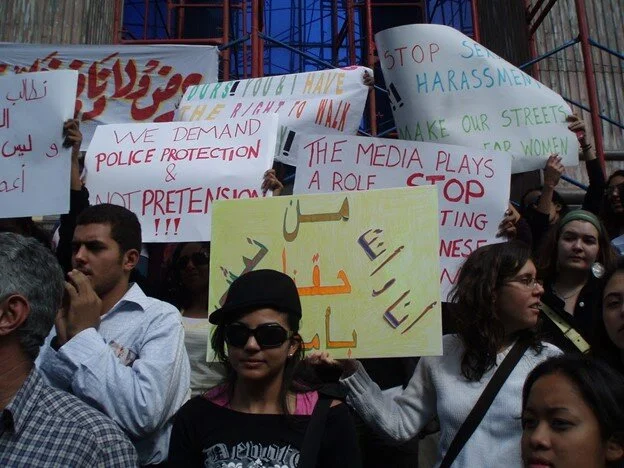
A protest at the University of Cairo. Hossam el-Hamalawy. CC BY-SA 2.0.

Ashraf faces an uphill battle in shifting widely held cultural norms. Though sexual harassment was criminalized in 2014, pervasive misogyny means victims of sexual abuse are rarely taken seriously. Moreover, a climate of stigma and shame deters many victims from accusing their aggressor publicly. Roughly 75% of men—and 84% of women—believe a woman who dresses provocatively deserves to be harassed. 

“My generation often takes credit for jump-starting change all over the world,” Ashraf said, “but I kept seeing this gap within my community of young women trying to speak out against sexual harassment, and never being taken seriously.” Assault Police provided one of the only venues where victims could tell their stories and seek help without bringing Egyptian society’s scorn upon them. The groundswell of support converted the fledgling account into a nationwide movement, one that is changing the conversation about sexual violence. Nevertheless, there is much work to be done. 

The case of Aya Khamees demonstrates the challenges the movement faces. When Khamess first told the police she had been gang raped, they did nothing. Only after weeks of online campaigning did the authorities arrest five suspects, but the delay allowed at least two suspects to flee the country. In a Kafkaesque turn, authorities charged Khamees herself in the trial on charges of prostitution, drug use and “violating family values.” The trial is yet to be decided, but many women understood the message. Their lives would be easier if they stayed quiet.

Still, the moment represents a #MeToo moment for the country. For the first time, women sharing stories of sexual assault are being taken seriously, and men are beginning to face consequences. After Ashraf repeated accusations against Ahmed Bassam Zaki on the Assault Police page, he was arrested by authorities. 
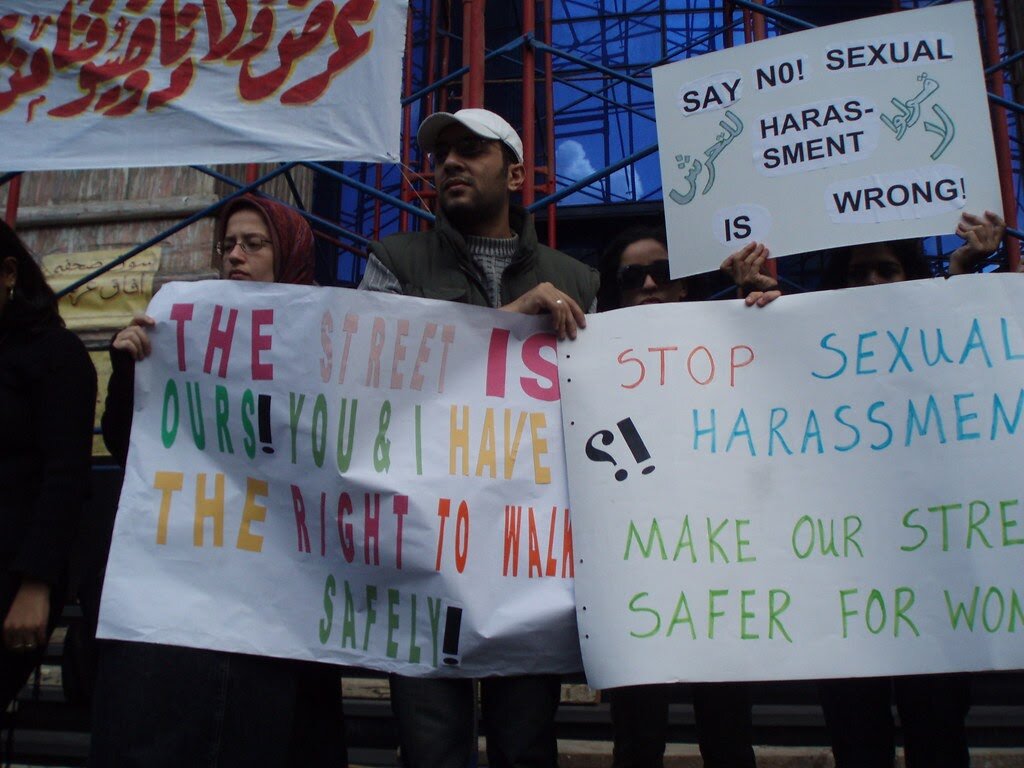
A protest against systemic sexism. Hossam el-Hamalawy. CC BY 2.0.

For the time being, Ashraf continues passionately against this misogynistic system. So far, Assault Police has been run by her alone, but facing down such a mammoth social issue requires more than one committed activist. “I want to expand from an online platform to a full-time organization,” Ashraf said, “that can support survivors in real time by connecting them to professionals, legal aid and therapy.” Assembling such a team is no easy task, but then again, nothing about Assault Police was ever easy. And look at its success so far. 



Michael McCarthy

Michael is an undergraduate student at Haverford College, dodging the pandemic by taking a gap year. He writes in a variety of genres, and his time in high school debate renders political writing an inevitable fascination. Writing at Catalyst and the Bi-Co News, a student-run newspaper, provides an outlet for this passion. In the future, he intends to keep writing in mediums both informative and creative.
‘Bad Students’: Thai High Schoolers Turned Political Activists

What started as a group of students protesting clothing and hair restrictions has turned into a political activism movement thousands strong. Thailand’s “Bad Students” are protesting a military-backed government and calling for reforms to the constitution and monarchy. 

On Nov. 21, thousands of pro-democracy activists gathered in downtown Bangkok to protest Thailand’s royalist, military-backed government. Some protesters came dressed as dinosaurs, in large, inflatable T-Rex suits, while others carried balloons shaped like meteors calling for the end of the “dinosaur age,” a reference to the conservative attitudes of government officials. The protesters called for the resignation of the current government, headed by Premier Prayut Chan-o-cha, a former army chief, as well as a new constitution to replace the current one, which was written by the military. 

Ahead of the protest, three of its organizers were summoned to a police station for questioning: 16-year-old Benjamaporn Nivas and two boys, also high school students. The three teenagers are some of the leaders of the “Bad Students,” a group of pro-democracy students in Thailand that has joined the broader protests against the government. 

At first, the Bad Students were focused solely on education reform; they wanted a complete overhaul of the education system, which they say promotes conformity and blind obedience through rote learning and whitewashed history. In August, hundreds of students gathered outside the education minister’s office, demanding no uniforms, no restrictions on hair length, and a modern curriculum. Since becoming a democracy, Thailand has had 13 successful coups, but textbooks ignore pro-democracy history and instead promote the monarchy. Following the August protest, the Bad Students also insisted that the education minister resign, distributing thousands of copies of a mock resignation letter and later even staging a mock funeral for him. 

Shortly after their August protest, the Bad Students realized that they would never achieve the reforms they wanted under the current government. Nivas said they learned that “the education ministry is just one part of a bigger, rotten system from the past that needs to be changed,” and that the voices of the Bad Students would be more useful if they joined the broader pro-democracy movements. 

Thailand has been at least a nominal democracy since 1932, when it abolished absolute monarchy in favor of constitutional monarchy. Over the years, Thailand has been mostly ruled by military governments, with its monarch serving as head of state. In addition to condemning Chan-o-cha’s military-backed rule, protesters have criticized the monarchy for spending Thai tax revenue and endorsing the military’s role in politics. Maha Vajiralongkorn, Thailand’s current monarch, is being pressured to remain bound by the constitution, to cut ties with the military-led establishment, to open palace books to the public for scrutiny and to repeal Thailand’s lèse-majesté law, which allows imprisonment for defamation of any member of the royal family.  

The government did not give ground to pro-democracy activists after the Nov. 21 protest. Chan-o-cha issued a warning that all laws, including lèse-majesté, would continue to be enforced. With neither the government nor the protesters changing their stance, some experts worry that the situation could descend into violence. Others, however, are hopeful. Chan-o-cha appeared in constitutional court on Dec. 2 for a minor infringement, and some saw this appearance as a way for the government to remove him as premier by legal means, thereby ousting him without giving in to the demands of the protesters. The Bad Students and other pro-democracy groups continue to plan, holding rallies and protests while advocating for change and a greater voice for the people. 

To Get Involved: 

To take action to support the pro-democracy movements in Thailand, sign the Amnesty International petition to defend peaceful protesters here


Rachel Lynch

Rachel is a student at Sarah Lawrence College in Bronxville, NY currently taking a semester off. She plans to study Writing and Child Development. Rachel loves to travel and is inspired by the places she’s been and everywhere she wants to go. She hopes to educate people on social justice issues and the history and culture of travel destinations through her writing.


10 Mouthwatering Sandwiches From Around the World 

Sandwiches are easy, affordable and most importantly, delicious, making them a common staple in cuisines across the globe. These 10 sandwiches are all tasty and unique, with histories connected to the cultures they come from. 

In many ways, sandwiches are the perfect food: quick to make, relatively inexpensive and always delicious. Sandwiches are versatile, too, made with a multitude of ingredients (meats, cheeses, vegetables, etc.) on different types of bread, so it’s no wonder that they are a common food all over the world. Many sandwiches on this list were originally created in poor conditions, using whatever ingredients were available at the moment, which were often limited due to poverty and even colonial occupation. These sandwiches then reached incredible levels of popularity, some spreading into other countries to become international delicacies. 

The sandwiches on this list range from open-faced breakfast dishes to foot-longs that feed four, with a wide variety of breads and fillings in between. Each sandwich reflects the culture of its place of origin through flavorful spice blends, regional ingredients and creation stories that speak to the countries’ unique histories. They are all sure to make your mouth water. 

1. Choripan, Argentina 

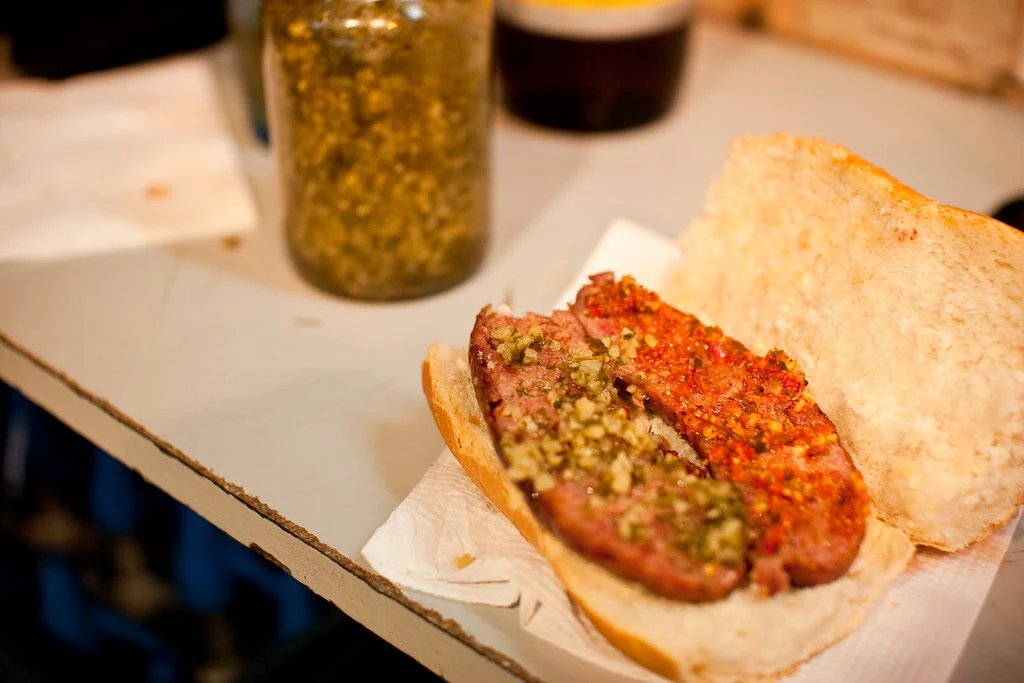
One of Argentina’s most popular street foods among both visitors and locals, the choripan is a simple sandwich consisting of a chorizo sausage on a bun. Its name, choripan, is a combination of the Spanish words “chorizo,” referring to the sausage, and “pan,” which means bread. Once the sausage is on the bun it is topped with a range of condiments, the most common being chimichurri, an Argentinian sauce similar to pesto. The sandwich can also be topped with other condiments or even onions and peppers, but chimichurri is what gives a choripan its unique taste. Choripan is a traditional Argentinian food and was historically served as an appetizer at barbecues while waiting for the main course to cook. From there, choripan became a common food at football games and then a street food staple. If you are visiting Argentina, you can pick up a choripan almost anywhere, since they are sold in every populated area. If you want to make your own Argentinian choripan at home, a recipe can be found here

2. Vada Pav, India 

More than 2 million vada pav are eaten in India’s largest city of Mumbai every day. The sandwich is a Mumbai fast-food classic; a patty made of mashed potato mixed with masala spices and green chili is dipped in chickpea flour and fried, then placed on a small, soft bread roll called a “pav” and topped with garlic chutney. It is typically served with a side of fried green chiles and is a perfect and inexpensive snack for people on the go. Vada pav was invented in 1966 by Ashok Vaidya, who opened a food stall across from the Dadar train station, which thousands of hungry workers passed through every day. Vada pav was an instant success. In the 1970s and ‘80s, a number of strikes led to the closure of many Mumbai textile mills, and former mill workers began opening their own vada pav stalls. Two of the most popular vada pav stalls today are Aaram Milk Bar and Ashok Vada Pav, which are both located near suburban train stations. Residents and visitors alike can find a vada pav almost anywhere in Mumbai. If you want to make a vada pav at home, a recipe can be found here

3. Zapiekanka, Poland 

Sometimes called “Polish pizza,” the zapiekanka is an open-faced sandwich, traditionally a toasted half-baguette topped with cheese and mushrooms, then ketchup once the cheese has melted. The zapiekanka varies in each region of Poland; long and thin in Warsaw but wider and shorter in Krakow, for example. Zapiekanka started as a street food in the 1970s but didn’t become widely popular until after 1988, when a change in the law loosened communist restrictions on private businesses. The simple makeup of the zapiekanka reflects the poverty and limited resources available in Poland during its creation. Bread, cheese and mushrooms were ingredients that were both available and inexpensive, meaning zapiekanka sellers could make a profit. Today, the zapiekanka is not just a classic street food; updated versions of the sandwich are found in restaurants across Poland, with a variety of different cheeses and other toppings like spinach, or jam instead of ketchup. People seeking a traditional zapiekanka can still find one, though, at any number of bars, restaurants or street food stalls. A recipe for zapiekanka can be found here.

4. Banh Mi, Vietnam

The banh mi got its start after the end of the French colonization of Vietnam, in the late 1950s. Made from meat, vegetables like cucumber and pickled carrots, and mayonnaise tucked into a baguette with Vietnamese sauces and spices, the banh mi took ingredients introduced by the French and reimagined them to fit Vietnamese cuisine. During the period of French colonization, the Vietnamese ate French foods the same way the French did: a baguette was served with a platter of cold cuts, cheese and butter. Vietnamese people were not able to modify French cuisine until after the French left following their 1954 defeat at the Battle of Dien Bien Phu. The initial ingredients of the banh mi were expensive, so mayonnaise replaced butter and vegetables replaced the pricier cold cuts. A couple named Mr. and Mrs. Le are credited with creating the first banh mi when they put the mayonnaise, meat and vegetables inside bread to make the meal portable. The banh mi grew in popularity and is even a hit in other parts of the world. Banh mis are often made with pork, but other types of meat can be used as well. A banh mi can be purchased at street food stalls in Vietnam, as well as storefronts in the United States and Europe, and a recipe to make one at home can be found here

5. Torta, Mexico 

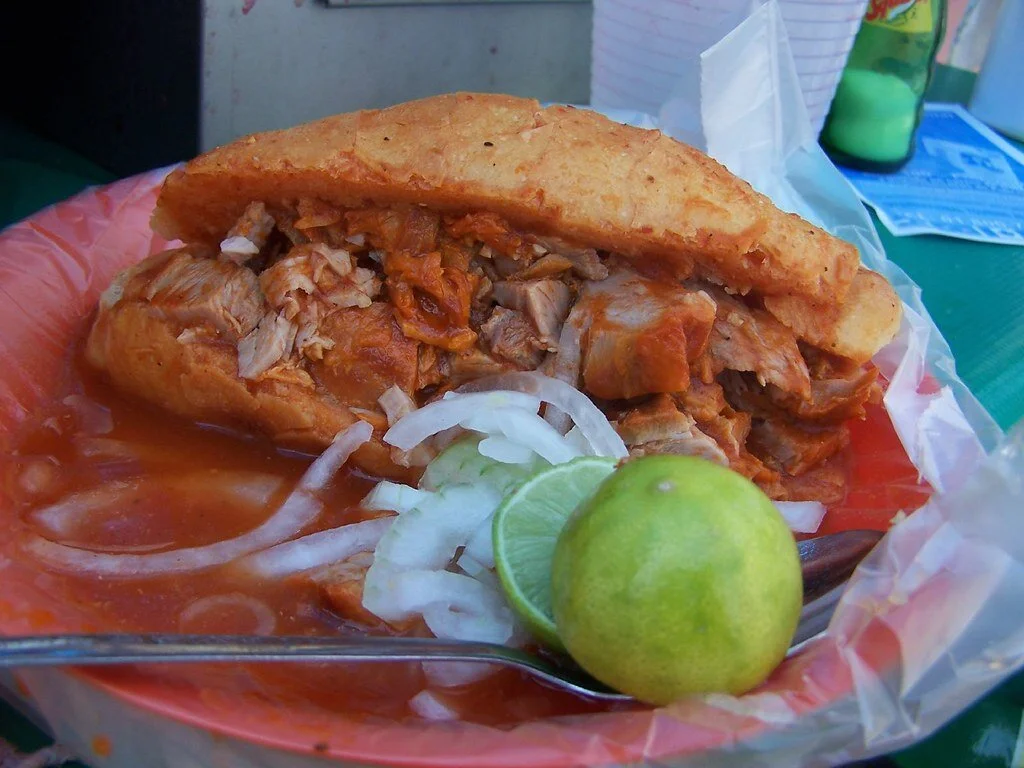
A mexican torta has all the rich, varied flavors of a taco between two slices of fluffy, buttered bread. Tortas can have almost anything as a filing but the most common are refried beans, avocado, peppers, meat and cheese. The most popular torta fillings, like chicken, carne asada and carnitas, are prepared similarly to taco meats. Since tortas come with such a wide variety of fillings and flavors, sandwich lovers are certain to find one they enjoy. The traditional torta consists of a fluffy roll stuffed with pork carnitas, then either partially or fully dipped in salsa, depending on the customer’s taste. Tortas dipped in salsa, or tortas ahogadas, are also known as “drowned sandwiches.” There are multiple stories about the history of tortas; some say the sandwiches originated during the brief French occupation of Mexico in the 1860s, when bakers took inspiration from the French baguette and created their own, smaller sandwich loaves, called “bolillo” and “telera.” Others say tortas were created by accident in the early 1900s, when a Guadalajara street vendor accidentally dropped a sandwich into a container of salsa, drowning it, with the customer enjoying it anyway. Today, tortas can have almost any filling and are a popular Mexican street food, easily purchased all over the country. A recipe for a pork carnitas torta with salsa can be found here

6. Gyro, Greece 

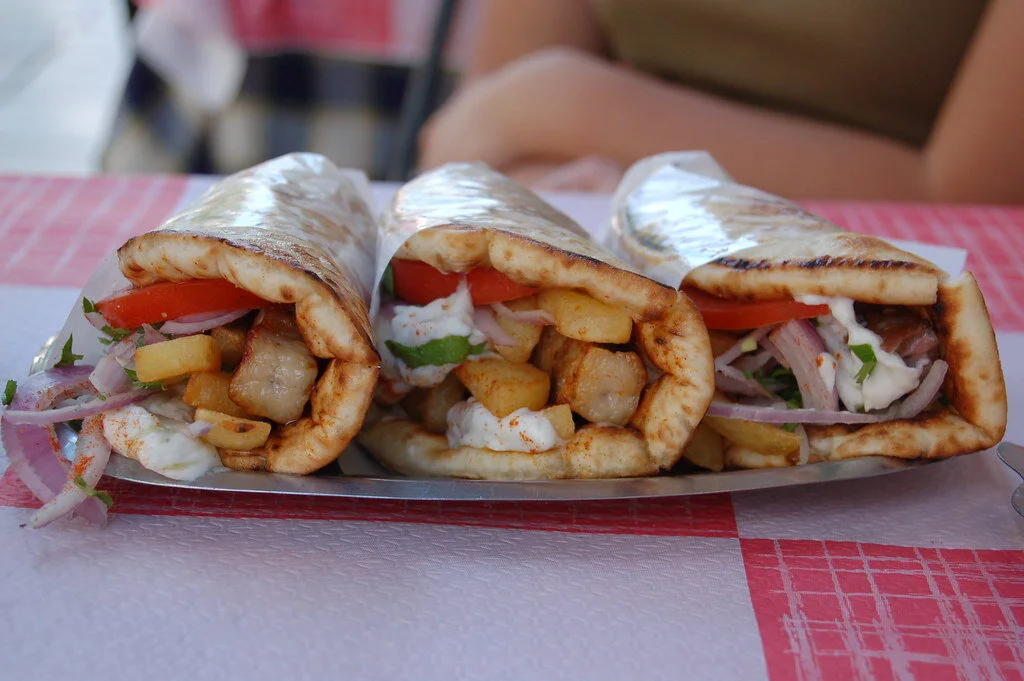
The gyro sandwich gets its name from the rotating stack of thinly sliced meat, usually lamb, beef, pork or some combination of those, where the meat for the sandwich comes from. Thin slices of meat are cut from the gyro rotisserie and placed in a pita wrap with tomatoes, red onion, lettuce or parsley, Greek yogurt or tzatziki, and sometimes fried potatoes. Today, the gyro meat can also be chicken or fish. Gyro is one of the most popular foods among travelers and Greek citizens alike. Though the gyro is a commonly known Greek food, it didn’t arrive in Greece until 1922, with thousands of Greek and Armenian refugees from present-day Turkey. The rotating gyro was common among Armenians, who know it as “doner kebab,” and according to legend, many Armenian refugees became merchants, opening shops that sold gyros. Following World War II, the gyro spread around the world, and now gyro shops can be found across Europe, the United States and Australia. Gyros are widespread, so if you want to try one, it is highly likely there’s a gyro shop where you live. Also, you can try making one at home (without a rotisserie) by following the recipe here

7. Mollete, Mexico

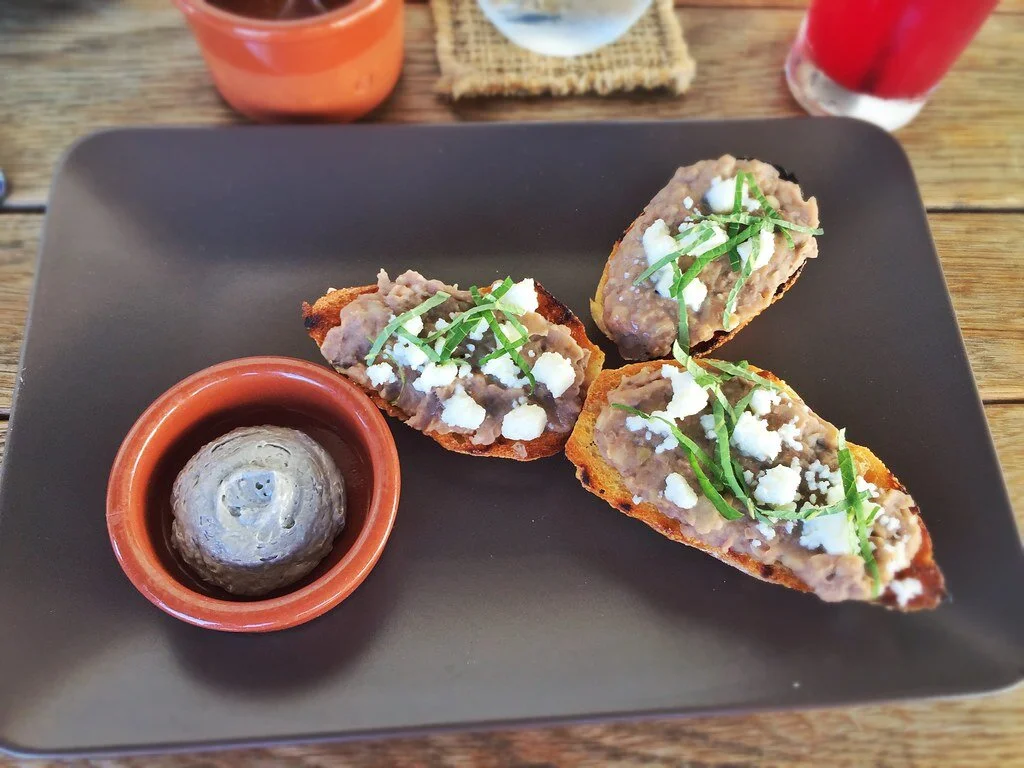
Similar to the Polish zapiekanka, the Mexican mollete is an open-faced sandwich, made from half a sliced bun but topped with drastically different ingredients. The mollete has its roots in Andalusia, Spain, where mollete stands for an oval-shaped bread roll drizzled with olive oil, tomatoes and sometimes cured meats. In Mexico, a mollete consists of half a toasted bolillo bun layered with refried beans, cheese and tomato salsa, and it is typically served as a breakfast. Sweet versions of the mollete have developed as well, replacing the beans, cheese and salsa with butter, sugar and honey. Molletes began being sold at chain restaurants in Mexico City and quickly became popular among university students due to their low prices. Molletes are popular in many areas of Mexico and have even spread to parts of the U.S., and a recipe can be found here

8. Bun Kebab, Pakistan 

Similar to an American hamburger, Pakistan’s bun kebab is a quick and affordable sandwich served on a crispy, fluffy bun. Inside the bun is a lentil and potato patty, usually topped with green chutney, sliced onions and a fried egg. Other toppings and condiments can be added to a bun kebab as well, such as shredded cabbage, tomatoes, ketchup and cucumber slices. Unlike American hamburgers, Pakistani bun kebabs are a light meal, able to be eaten any day. The bun kebab is a street food staple in Pakistan, especially in the city of Karachi, where it originated. Karachi’s favorite street food dates back to 1953, when businesses began to take over Karachi and it became a commercial metropolis. Workers wanted a fast, inexpensive and neat meal to eat over their lunch breaks, so Haji Abdul Razzak created one: the bun kebab. Another story about the creation of the bun kebab credits the Pakistani burger restaurant Mr. Burger, one of the first local fast-food restaurants. This story says that the bun kebab was created as a more affordable version of a burger and sold at Mr. Burger. The bun kebab stand started by Haji Abdul Razzak is still around and has been serving the people of Karachi bun kebabs for over 60 years. Whatever its origins, the bun kebab remains a delicious and inexpensive meal for people on the go. A recipe to make a bun kebab at home can be found here

9. Gatsby, South Africa 

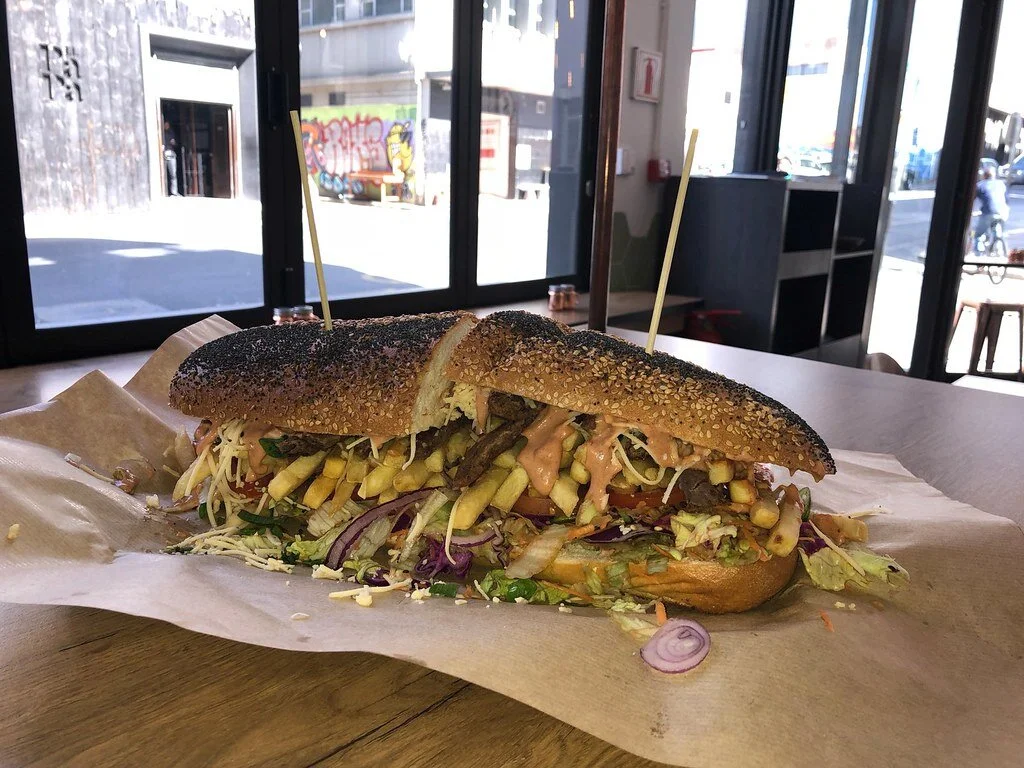
In Cape Town, South Africa, a popular local dish is the Gatsby, a foot-long sub sandwich filled with meat or seafood (usually bologna, chicken, calamari or steak), french fries, cheese, fried eggs and lettuce, all slathered in either tomato sauce or piri piri, a spicy sauce made from chiles. Gatsbys are gigantic and packed with flavor, and are intended to be shared, usually cut into four pieces. The man widely credited with creating the Gatsby is Rashaad Pandy, who still owns a fish and chip shop in Cape Town. In 1976, four men were helping Pandy clear a plot in the Cape Town suburb of Lansdowne after his family was forced to move due to South Africa’s apartheid regime of racial segregation. Pandy owned a shop in a nearby neighborhood, and he had promised the four men food, so they went back to his shop and he took stock of his ingredients: bologna, french fries, round bread loaves and homemade pickles. From these ingredients, he made the four men sandwiches, which they devoured. One of the men told Pandy that the new food was “a Gatsby smash,” giving the sandwich its name. The next day, Pandy began selling Gatsbys in his shop, and his customers suggested he substitute a long bread roll for a round one to make it easier to eat. His customers also suggested things Pandy could add to the sandwich, and piece by piece the present-day Gatsby came to be. Pandy’s shop, Super Fisheries, still sells Gatsbys, though he only carries fish variations, not chicken or steak. Click here for an original bologna Gatsby recipe. 

10. Roti John, Singapore

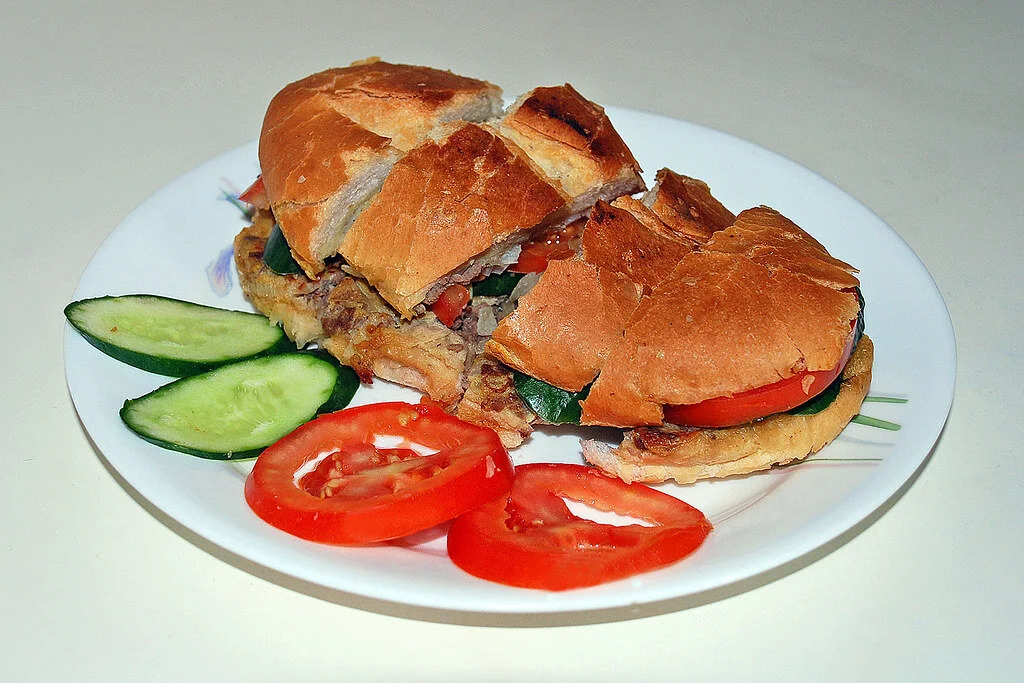
A dish unique to the Malay Peninsula, the roti john is sometimes called Singapore’s version of a hamburger. The sandwich actually has little in common with a hamburger; it consists of minced mutton, onions and egg, all fried and served in a toasted roll similar to a French baguette. More recently, melted cheese and mushrooms have been added to the sandwich, and versions using chicken, beef and sardines rather than mutton have become popular. The roti john is likely known as “Singapore’s hamburger” because of how it was created. Sometime in the 1960s, an Englishman asked a shop owner in Singapore for a hamburger. Having no hamburgers available, the shop owner quickly whipped up the roti john as a substitute. The name roti john is attributed to the same shop owner, who was overheard calling the customer “John,” a formerly common way to address Caucasians on the Malay Peninsula. The word “roti” is the Hindi term for bread, also used in the region. Literally, the name of the sandwich means “John’s bread.” Though it was created in the ‘60s, the roti john didn’t become widely popular until 1976, when a man named Shukor began selling the sandwich from his food stall near the Singapore Botanic Gardens. The roti john spread across the peninsula, and it remains a popular meal today. A roti john recipe can be found here.


Rachel Lynch

Rachel is a student at Sarah Lawrence College in Bronxville, NY currently taking a semester off. She plans to study Writing and Child Development. Rachel loves to travel and is inspired by the places she’s been and everywhere she wants to go. She hopes to educate people on social justice issues and the history and culture of travel destinations through her writing.

The Glaring Sexism of the Sudanese Revolution

Although the Sudanese revolution was a success, the women of Sudan continue to fight against the sexism that is so latent in their country.

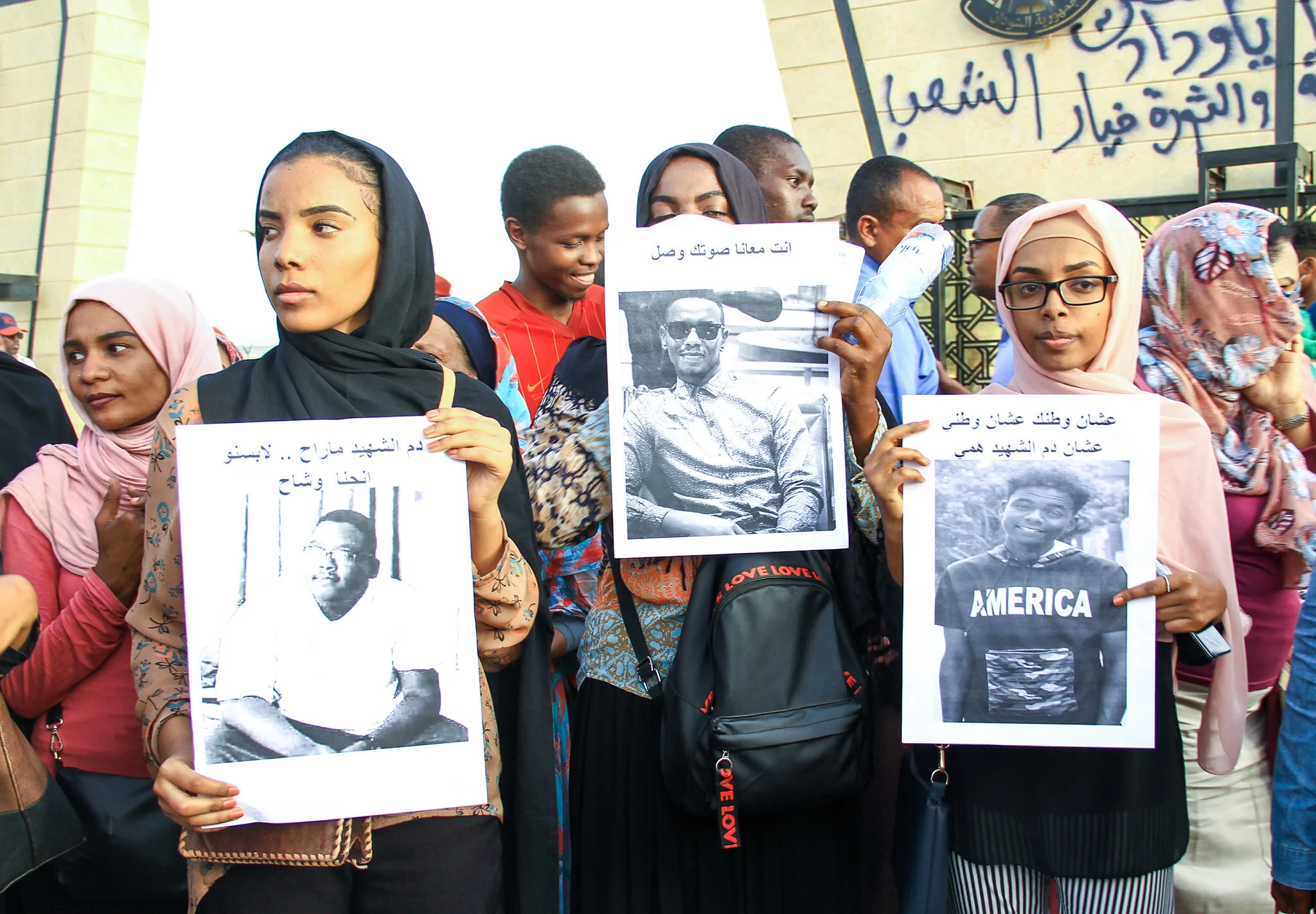
The forefront of the Sudanese revolution. Hind Mekki. CC BY 2.0.

Located in the northeast corner of Africa, Sudan gained its independence in 1956 from British and Egyptian rule. The young country has struggled internally ever since, with a multitude of political and religious divisions between the south and the north which broke out into multiple civil wars. South Sudan formed as the newest nation in the world in 2011, as a result of a majority vote for independence in a referendum created by the 2005 Comprehensive Peace Agreement. Present-day Sudan is majority Muslim, while South Sudan is mostly Christian.

Amid the turmoil which defined Sudan’s geopolitics rose Omar al-Bashir, the last president who was known for his cruel dictatorship, human rights violations and war crimes. Bashir came to power in 1989, overthrowing Prime Minister Sadiq al-Mahdi through a nonviolent coup. His autocratic reign at first introduced Sharia, or Islamic law, thus creating more tensions between the Islamic north and the Christian south. Under Sharia, floggings for adultery and drinking alcohol were commonplace. Through the strict interpretation of Islamic law, women and girls were made victims of political persecution, violence, and genital mutilation. Bashir’s laws were indifferent toward cases of domestic violence against women, child marriage and marital rape. Sudan’s Article 152 of the penal code validated the flogging and imprisonment of women for what they wore. 

Sudanese protesters gathered in December 2018 to confront President Omar al-Bashir’s strict measures for economic relief. Bashir made cuts to bread and fuel subsidies, which exacerbated the dissent which was already festering among citizens. Although the movement was initially made up primarily of men, women soon became the driving force behind the revolution. Women made up about 70% of the protesters and were targeted for gender-based and political violence, including battery and rape, by Sudan’s security forces. 

The success of the coup took the media by storm, but there remained sexist overtones within the movement itself. The Sudanese Professionals Association, which has been organizing resistance against Bashir’s dictatorship throughout all three decades, suggested that female protesters come gather on the streets to clean on a day which was scheduled for a protest. This devalued the women who were fighting alongside men against Bashir’s regime, making them feel dismissed as mere cleaners instead of as members of the  uprising itself. This led to a more pressing concern for women’s rights in Sudan, which have been shot down for decades. 


A photo of a Sudanese woman, clad in white and towering over the crowds on top of a car, became the icon of the movement itself. Her defiance and resilience moved millions of onlookers around the world, and she became dubbed as “Kandaka,” which refers to the Nubian queens of the Kush kingdom who reigned in Sudan centuries ago. This apparition of gender equality left female protesters disgruntled, as it was sorely evident that women were still oppressed by the patriarchal society in Sudan. 

After the coup, Alaa Salah, the celebrated icon herself, told Time magazine that the Sudanese government still limits the role of women in the legislature. Salah is pushing for 50% female representation in Sudan’s parliament, and works alongside women’s rights activists to change the restrictions placed on women. The public law, which tormented women in Sudan for their behavior and their ways of dressing, was finally repealed in November 2019. Although Sudan’s systemic violence against women is entrenched in its society, women’s rights activists remain optimistic about the progress already seen since the ousting of Omar al-Bashir. 


Heather Lim

Heather recently earned her B.A. in Literatures in English from University of California, San Diego. She was editor of the Arts and Culture section of The Triton, a student-run newspaper. She plans on working in art criticism, which combines her love of visual art with her passion for journalism.


Fighting Back with Fakes: Decoy Turtle Eggs Combat Poaching in Costa Rica 

Combating turtle poachers has often seemed like a hopeless task where innocent hatchlings always tend to lose. However, scientists in Costa Rica are beating poachers through the implantation of decoy eggs. 

Olive ridley turtle hatchling. Roehan Rengadurai. CC BY-NC-ND 2.0. 

When one thinks of a turtle’s life, it is often the image of an aged green sea turtle gliding gracefully over magnificently colorful coral reefs. Conversely, it could also be an injured turtle succumbing to increasing plastic pollution as it struggles to escape the rings of a beer can. What is often overlooked are the turtles that never even break into the daylight; millions of turtle eggs are stolen by malicious poachers who sell them to under-the-table buyers. 

Costa Rica stands as a prime example of a place where turtle egg poachers are abundantly transporting stolen eggs to urban areas. 

Turtle eggs are somewhat of a delicacy in Costa Rica, where they are served in a variety of ways. For instance, they are mixed with beer, served raw, or hard-boiled. Prices of the eggs vary widely, with some costing $5 apiece while others can set one back around $20. 

Poachers stealthily scavenge beaches known to house turtle egg nests, which primarily belong to the threatened olive ridley and endangered green sea turtle species. Scientists now realize that effectively tracking poaching activity may require an innovative but rather odd approach.

The decoy eggs, called InvestEGGators, are formed using a 3D printer and are made out of silicone. They are around the size of a pingpong ball and look nearly identical to real turtle eggs. The white balls are also slightly painted with a textured paint to mimic the varied hues of an egg. Inside, there is a small black block that houses a GPS transmitter. The tracker feeds information about the location of the egg once every hour. The hope is that poachers mistakenly pick up the decoy egg along with real ones, since poachers tend to take whole nests at once. 

Scientists have invested in this method because it has more beneficial long-term effects on combating the poaching problem. Instead of catching poachers in the act, researchers say that it is much more effective to track the distance and location that the eggs travel to be sold. From an enforcement point of view, tracking the location of sites where the eggs are sold to buyers allows for more frequent and lasting crackdowns. 

In one test, researchers hid 101 decoys in turtle nests, and about 25% of them were transported by poachers. It was discovered that the distance the eggs traveled varied quite a bit; some traveled just over a mile to someone’s home, while others went well over 80 miles to houses in Costa Rica’s Central Valley. 

Scientists were previously concerned that planting decoy eggs could possibly harm the other eggs’ ability to hatch, but the other eggs appeared to hatch successfully. 

The study has now branched into a larger scope of conservation, with talks that this method can be beneficial in saving other endangered animals. 

As stealthy as poachers may get, sometimes one has to beat them at their own game to have a chance at winning. Luckily, a handful of clever scientists have successfully played the poachers. 


Ella Nguyen

Ella is an undergraduate student at Vassar College pursuing a degree in Hispanic Studies. She wants to assist in the field of immigration law and hopes to utilize Spanish in her future projects. In her free time she enjoys cooking, writing poetry, and learning about cosmetics.

Women’s Rights Activist Killed in Afghanistan

Freshta Kohistani, a prominent women’s rights activist, was shot dead on Dec. 24, along with her brother. Her death is the latest in a string of assassinations of Afghan political activists and journalists. 

Afghan women's rights activist and former provincial council member Freshta Kohistani and her brother were shot and killed by unknown gunmen on motorbikes on Dec. 24, in their hometown in the Kohistan district of Kapisa province. Kohistani was 29 and a well-known activist. She used social media to raise awareness of violence against women in Afghanistan, led many protests advocating for women’s rights, and campaigned for Abdullah Abdullah in the 2019 presidential election. 

The shooting of Kohistani and her brother was not an isolated incident. A number of prominent Afghan activists have been targeted in recent weeks. Kohistani’s death came just a day after the murder of pro-democracy advocate Mohammad Yousuf Rasheed, who led an independent election monitoring organization, in a shooting in Kabul. The day before Rasheed’s death, the head of the Ghazni Journalists’ Union was shot by assailants on motorbikes. On Dec. 20, a member of parliament was targeted by a car bomb. No group has claimed credit for any of the attacks thus far. 

Prior to her death, Kohistani was vocal in her criticism of the assassination of journalists and political activists in Afghanistan. In November, she tweeted: “Afghanistan is not a place to live in. There is no hope for peace. Tell the tailor to take your measurement [for a funeral shroud], tomorrow it could be your turn.” Kohistani revealed that she had received threats and had asked for protection from the authorities, and on Dec. 11, not long before her assassination, Kohistani posted on Facebook asking officials to take her pleas for protection seriously. 

The recent assassinations in Afghanistan come amid peace talks between the Afghan government and the Taliban, which have been going on for over three months. Abdullah, who Kohistani campaigned for when he served as the chief executive of Afghanistan, now heads the High Council for National Reconciliation, a key body in the current peace negotiations with the Taliban. In early December, the peace talks were suspended until January, and there is worry that the talks will be suspended further after the recent string of assassinations by unknown assailants. 

Following Kohistani’s death, Abdullah spoke out against the assassination of political activists in a Facebook post, writing that “the continuation of such asssassinations is unacceptable.” In the same post, he described Kohistani as “brave and fearless” for her work as a political and women’s rights activist. 

On Georgetown University’s Women, Peace and Security Index, which ranks 167 countries on women’s equality based on data about women’s well-being and empowerment, Afghanistan ranks 166, with only Syria being a worse country for women. The country has also become increasingly dangerous for journalists, with at least five journalists having been killed since August. 


Rachel Lynch

Rachel is a student at Sarah Lawrence College in Bronxville, NY currently taking a semester off. She plans to study Writing and Child Development. Rachel loves to travel and is inspired by the places she’s been and everywhere she wants to go. She hopes to educate people on social justice issues and the history and culture of travel destinations through her writing.


Nordic and Celtic Traditions in Scotland’s Shetland Islands

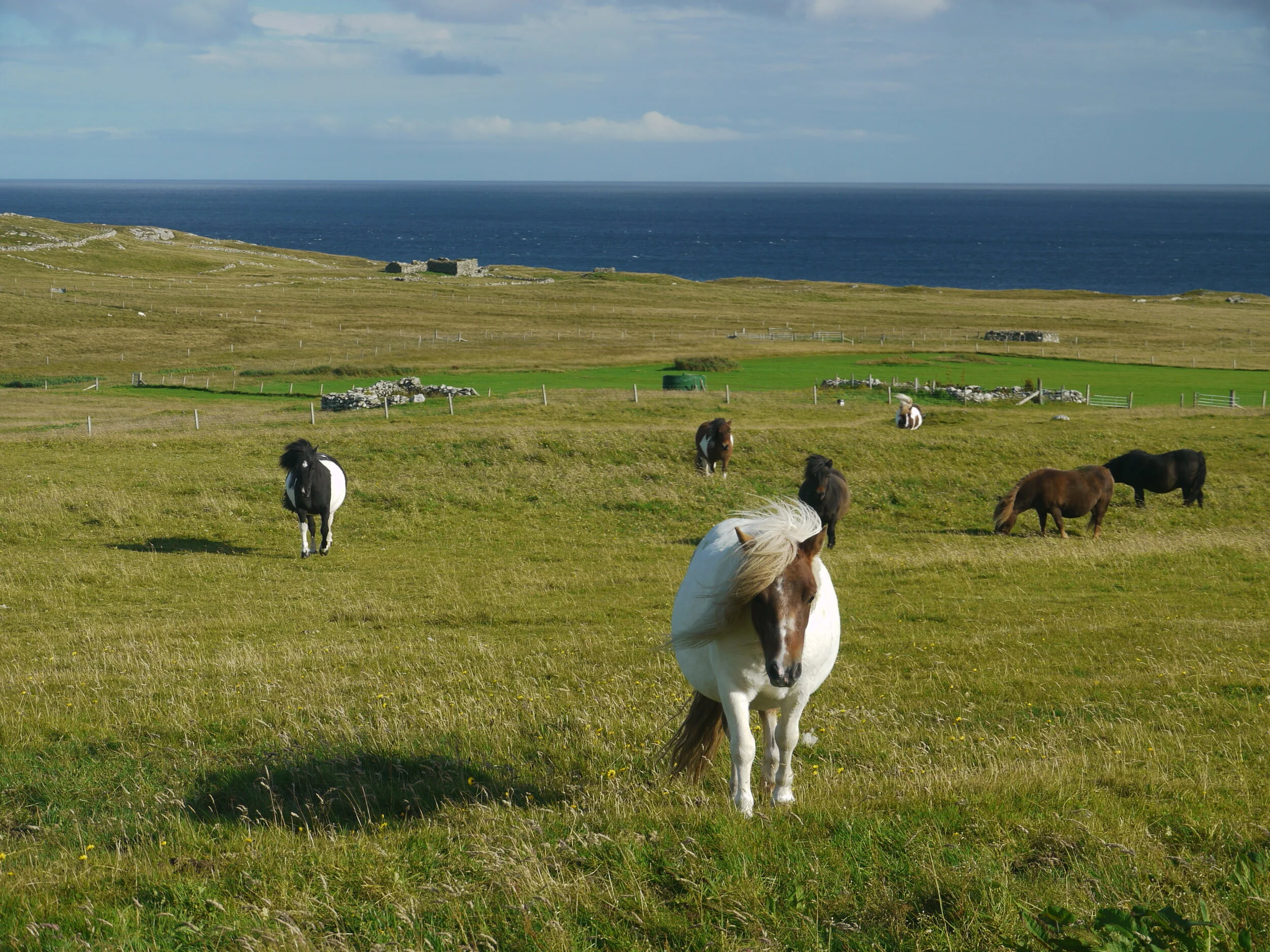
Shetland ponies in a field on one of the Shetland Islands. Infinite Ache. CC BY-NC 2.0.

Located 110 miles northeast of the Scottish mainland are the Shetland Islands, a sub-Arctic archipelago in the north Atlantic Ocean. The islands, with a population of 22,920 centered around the town of Lerwick, are home to one of the most unique cultures in the British Isles, with the islands’ residents maintaining a blend of Nordic and Celtic influences.

While travel to the archipelago is largely limited due to the ongoing COVID-19 pandemic, following the global crisis, any traveler looking to take the road less traveled will find joy in visiting the Shetland Islands. Given the region’s rich history, diverse local culture and beautiful wildlife, the farthest north region of Scotland should not be overlooked when planning future adventures abroad.

A History of Nordic and Celtic Tradition

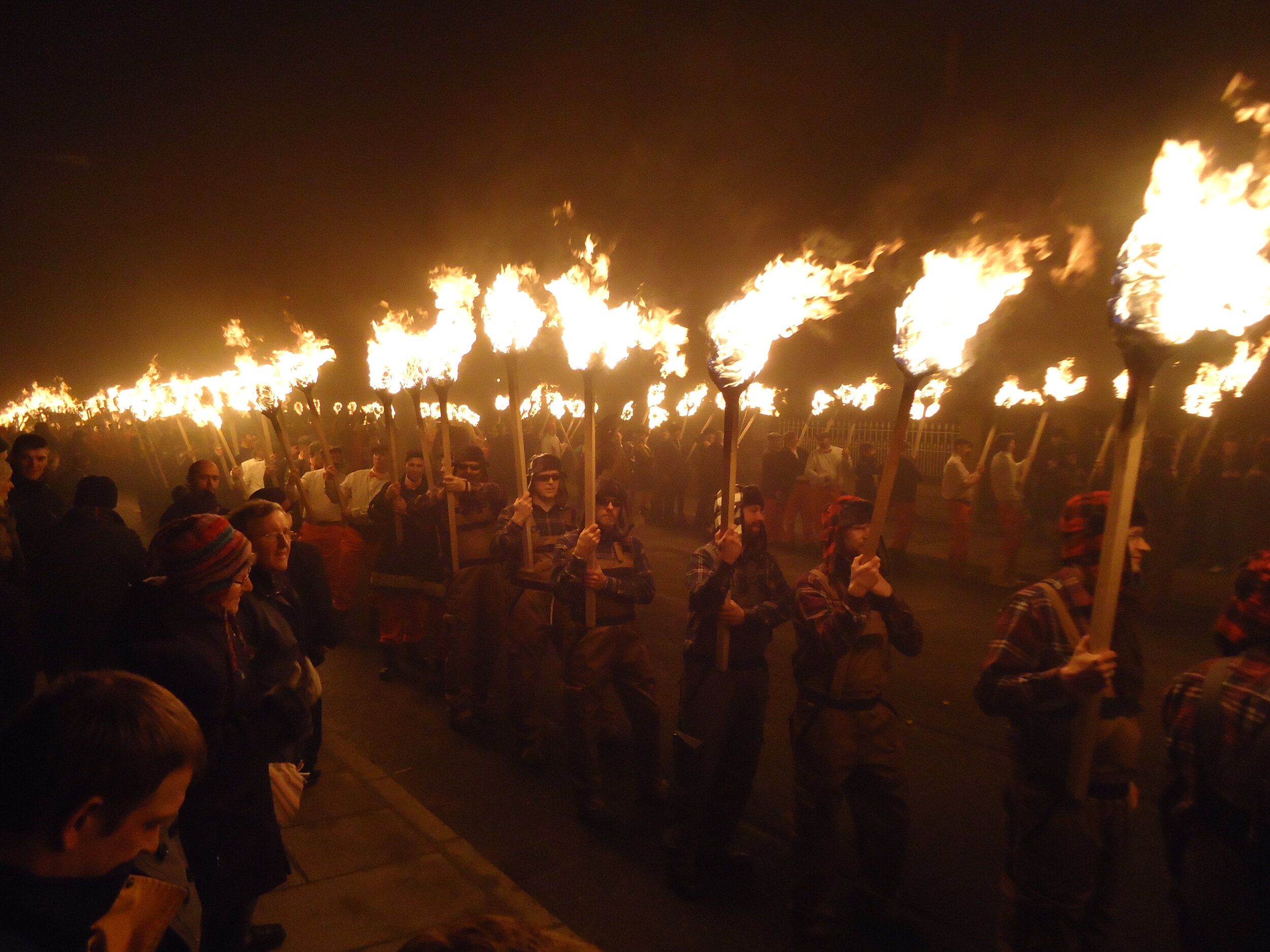
A parade through Lerwick during Up Helly Aa, an annual Shetland fire festival which pays tribute to the archipelago’s Viking origins. Vicky Brock. CC BY-SA 2.0.

While humans have inhabited the Shetland Islands since at least 2700 B.C., with evidence to suggest that the Romans knew about the archipelago during the height of their empire, modern Shetland culture began at the end of the 9th century A.D. with the colonization of the archipelago and the nearby Orkney Islands by Vikings from Scandinavia.

The Shetland Islands would remain under Norse rule for around 600 years, during which the islands’ population Christianized and gained a grounding for the region’s culture that is still seen to this day. For instance, remnants of Norn, the predominant language of the time but one that is now extinct, has influenced the Shetland dialect spoken in the region. Likewise, festivals such as Up Helly Aa, an annual midwinter fire festival which honors pagan and Christian traditions, can trace their roots back directly to Viking colonialism.

Following several centuries of conflict and growing Scottish influence in the region, sovereignty over the archipelago was sold to Scotland in 1468. This transfer of power, which lasted until 1707 when Scotland and England joined together under the name Great Britain, saw the adoption of more Celtic customs, as well as increased trade with the rest of Europe. The introduction of folk music, the cuisine of the region, and the English language can trace their origins back to this time period.

Into the contemporary era, the Nordic and Celtic cultures and heritage have blended together. This is represented in the aforementioned festivals and language of the region, as well as in the archipelago’s civil parish names, which feature both Old Norse and Celtic origins.

Visiting the Shetland Islands

Lerwick, the Shetland Islands’ largest settlement and only town. Balou46. CC BY-SA 4.0.

Given how remote the Shetland Islands are in comparison to the rest of Scotland, visitors to the islands can either arrive via a 12-hour overnight boat ride from Aberdeen, or by plane from one of six cities in Scotland or from Bergen, Norway.

Once on the archipelago, visitors have a number of experiences to partake in. Lerwick is home to a number of festivals throughout the year, including the Shetland Folk Festival, the Shetland Accordion and Fiddle Festival, and the largest celebration of Up Helly Aa. Likewise, the town is home to the Shetland Museum and Archives, which is dedicated to documenting the unique history and traditions of the region.

Venturing away from Lerwick, travelers can take in the untouched nature of the islands in one of three national nature reserves, the most popular being the Hermaness National Nature Reserve, a seabird colony on the island of Unst. For those more interested in the island’s oceanic location, Lonely Planet recommends kayaking, sailing and surfing for those who can brave the frigid waters of the north Atlantic.

For a taste of the local cuisine, the archipelago offers a number of highly recommended restaurants. Steamed lemon sole from The Dowry, reestit mutton soup from Peerie Shop Cafe, and saucermeat, a spiced breakfast sausage, from Fjara Cafe Bar, are all favorites among travelers and locals alike.

The Shetland Islands represent the best of what Scotland as a whole has to offer. The archipelago’s rich history, unique culture and variety of experiences offer something for everyone to enjoy. Following the pandemic, a visit to the Shetland Islands is a must for any world traveler.


Jacob Sutherland

Jacob is a recent graduate from the University of California, San Diego. Previously, he worked for The UCSD Guardian, serving both as News Editor and a columnist. In addition to his work at Catalyst, he writes the online column, PC Princess, and centers his writing around social justice issues.


Feline Fun: Japan’s Cat Culture and ‘Cat Islands’

It is always a pleasure to watch a cat  prancing through the neighborhood or a skittish kitten darting for the bushes. But one country, Japan, has completely dissolved the line dividing feline and human interaction. 

Cat cafe in Japan. nyxie. CC BY-NC-SA 2.0. 

Most people, if asked to name something from Japanese pop culture, would name the “Hello Kitty” cat cartoon as one of their top answers. As popular as the character has been with children across the world, a bustling cat scene exists within Japan itself entirely separate from Hello Kitty. 

Japan’s residents hold a lengthy history of interaction with their feline friends. Cats were originally an invasive species introduced to Japan around 500 A.D. The creatures soon proved their worth by managing the islands’ rat population; the silkworm industry was being devastated by pesky rats, so the nation’s cats jumped into action. Over 1,000 years ago, wealthy members of Japanese society owned cats as pets. Evidence of cats in Japanese history can be found in literary works and paintings, many of which are hundreds of years old. The country’s oral history also contains many tales of worship for the cherished creatures. 

Beyond being pets, cats in Japanese culture are an integral part of social interaction. “Cat cafes” have recently blossomed in Japan’s cat culture, allowing owners to mingle while their beloved friends wander among other felines. 

While a stray cat is a common sight on any island of Japan, about a dozen islands have been dubbed the “Cat Islands” for their particularly dense population of felines. Two of the most popular are the islands of Aoshima and Enoshima:

Aoshima Island

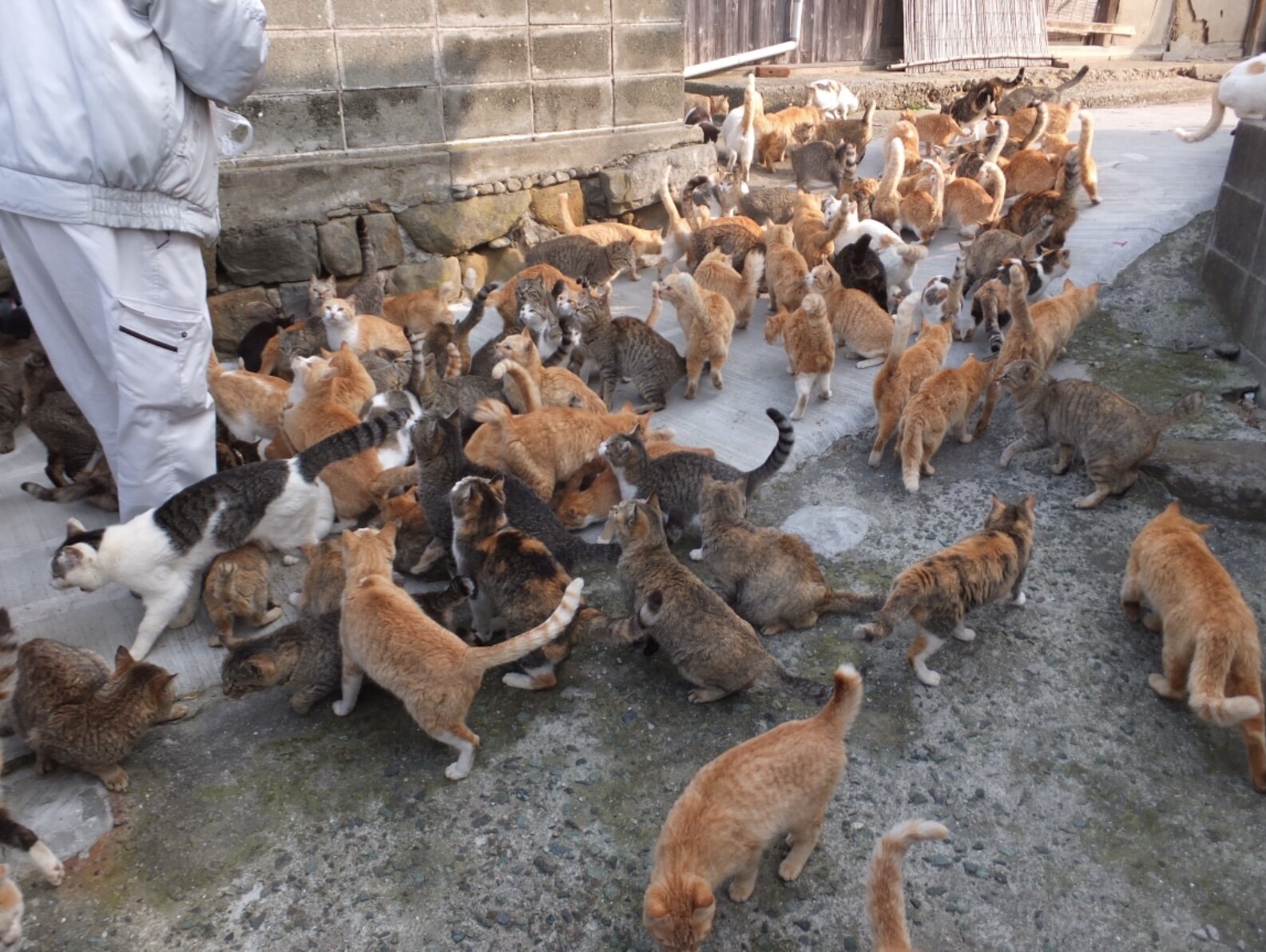
Crowd of cats on Aoshima Island. 暇・カキコ. CC BY-SA 4.0. 

Aoshima Island, located in southern Japan, boasts a human to cat ratio of 1-8. Cats were originally brought to the island to manage the rat population, but now they enjoy flashy media attention as internet sensations. The cats have become increasingly popular with visitors seeing viral videos, so an interactive feeding area has been installed. The cats have now become accustomed to interaction with strangers and will gladly show affection for a bit of food. 

Enoshima Island

Cat on Enoshima Island. tokyofortwo. CC BY-NC-SA 2.0.

Enoshima Island is a small island just over an hour south of Tokyo. The island’s human population is minuscule compared to the population of cats; there are only about 100 human residents among over 600 cats. The island draws many visitors for its Shinto shrines, which represent a religion that does not believe in the killing of cats. The island also houses a busy fishing industry, which has proven to provide plenty of nourishment for furry residents. Thus, the island’s cat population has bloomed. 

Japan’s feline friends have embedded themselves in the nation’s history and culture, and their lofty position in society appears to be secure. 


Ella Nguyen

Ella is an undergraduate student at Vassar College pursuing a degree in Hispanic Studies. She wants to assist in the field of immigration law and hopes to utilize Spanish in her future projects. In her free time she enjoys cooking, writing poetry, and learning about cosmetics.

Khoomei: Mongolian Throat Singing As Art and Action

Khoomei, otherwise known as Mongolian throat singing, enjoys a wide international audience thanks to inventive local artists looking for ways to share and save their culture.

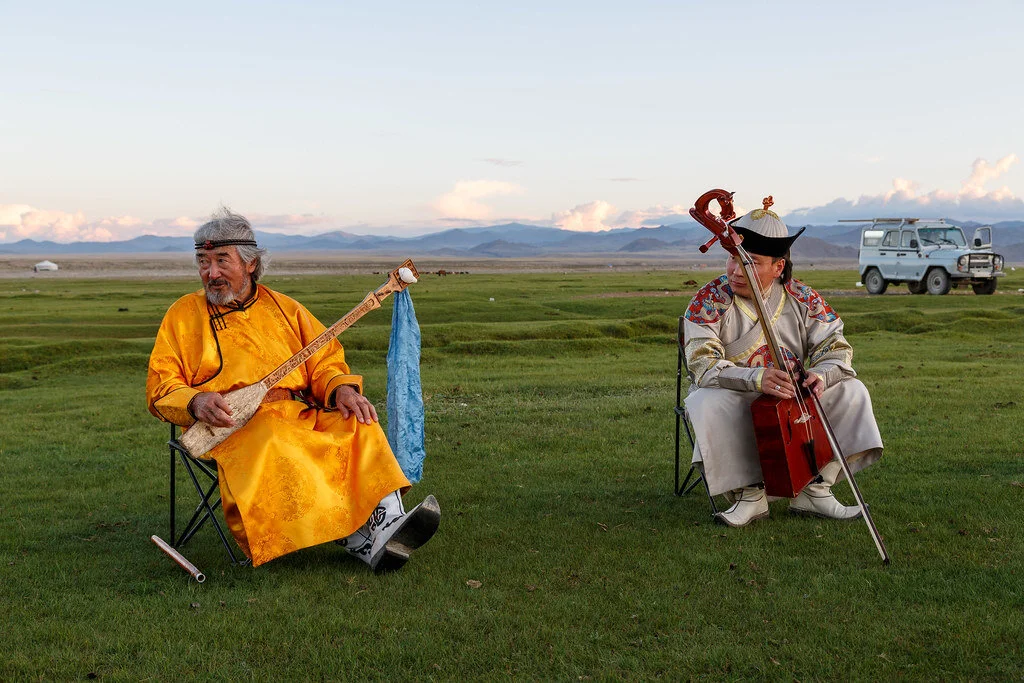
Mongolian throat singers holding a horsehead fiddle. Alan Fieldus. CC BY-NC 2.0. 

Across the steppes of Central Asia, the almost eerie but melodic droning of “khoomei” still echoes. Khoomei, more commonly known as throat singing, is the practice in which a singer can produce two or more notes simultaneously. By utilizing the jaw and larynx, as well as precise lip movements, the singer can produce unique harmonies using only their body.

Khoomei, which translates to “throat” in Mongolian, has origins with the Tuva people, an Indigenous group found in parts of Siberia, Mongolia and China. A 1999 Scientific American article traced back both the techniques of khoomei and its rich history. According to Tuvan legends, throat singing was the first way humans learned to sing. Throat singing was also designed to mimic the natural sounds of the surrounding wind and water. Coupled with their animistic beliefs, the Tuvan people believed that throat singing also served a spiritual purpose. Khoomei eventually proliferated and evolved among the Turko-Mongol tribes.

During the first half of the 20th century, however, throat singing was restricted. Communist governments considered the art as “backward” due to its heavy ritual and ethnic legacies. It was not until the 1980s that throat singing was restored to its former glory and preserved as a national art form. In 2010, UNESCO inscribed khoomei on the Representative List of the Intangible Cultural Heritage of Humanity. This honor was conferred to officially acknowledge the unique oral histories and philosophies that khoomei harbors. Despite its difficult history and almost seemingly jubilant ascent, khoomei and its singers are still under threat.

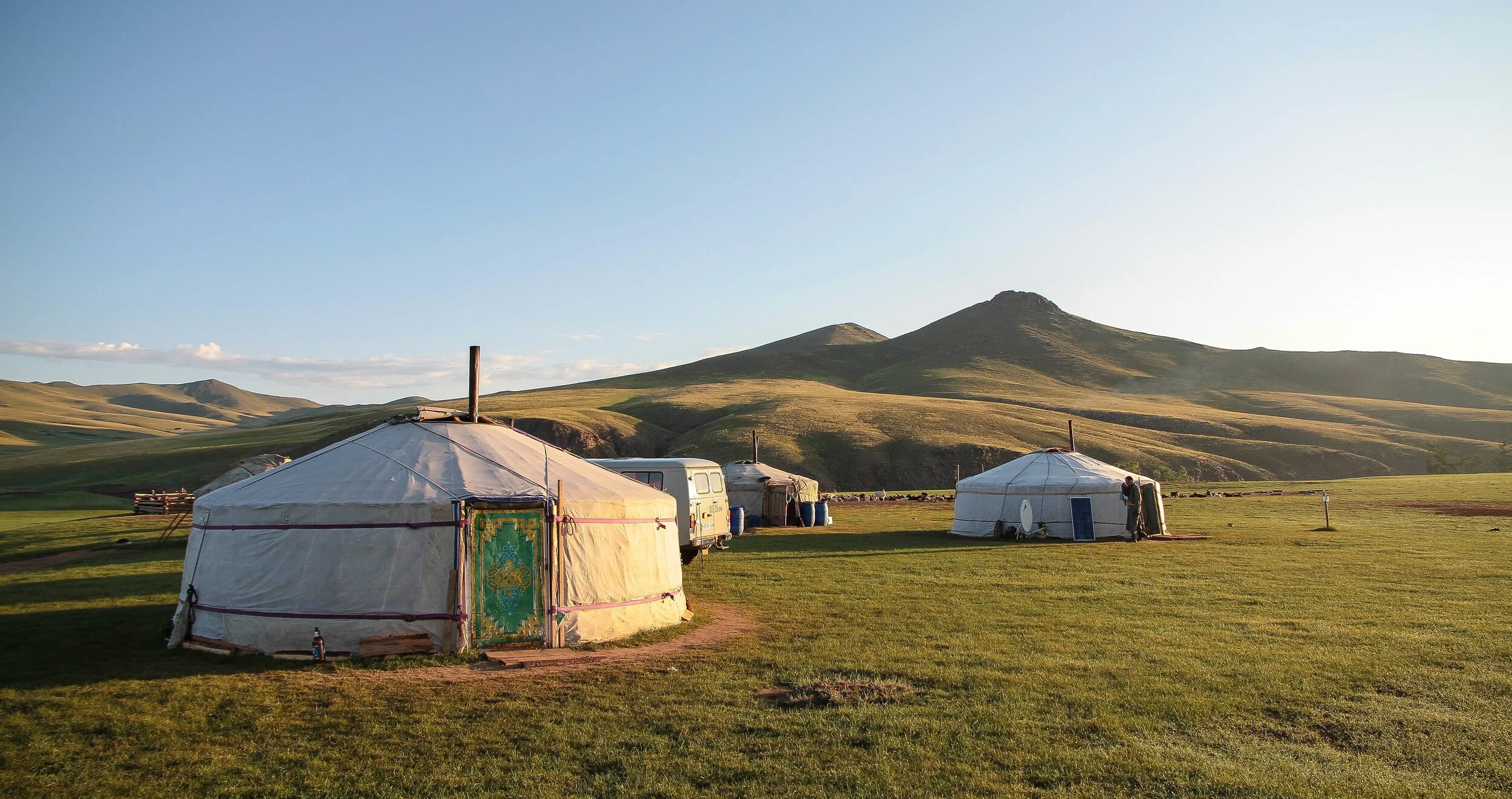
Mongolia’s wide-open steppes made it the ideal sound room for practicing and perfecting khoomei. Vince Gx. Unsplash.

Mongolia is a country that is landlocked between two geopolitical giants, China and Russia. The government has feared that both countries’ economic and diplomatic influences will overwhelm its own affairs. In 2010, Mongolian throat singers sought to defend the tradition against China. UNESCO mistakenly listed China as the sole country of throat singers, a misprint that angered the Mongolian community. 

In 2013, China announced its ambitious Belt and Road Initiative, a plan meant to enhance infrastructure connectivity and deepen financial cooperation, among several other aims. While China poured billions of dollars into creating trade routes and industries, the Mongolian people remain unappeased.

With these economic gains also came renewed cultural conflicts. When visiting the Mongolian capital of Ulaanbaatar this past September, Chinese Foreign Minister Wang Yi was greeted by protesters who accused Beijing of suppressing the Mongolian language in China’s Inner Mongolia autonomous region. The former Mongolian president Tsakhiagiin Elbegdorj condemned the Chinese government’s policy that replaced Mongolian with Mandarin in school curriculums. Elbegdorj condemned the action as “cultural genocide” and urged Mongolians to persist in preserving their culture at home and abroad. A part of this resistance also includes using khoomei as a way to reclaim and reassert identity.

Enter The HU. Through music, this heavy metal band uses its Mongolian roots as a way to share the country’s  culture with the world. Its most popular pieces, “Wolf Totem” and “Yuve Yuve Yu,” have garnered nearly 111 million YouTube views combined. The HU has charted millions of listeners on Spotify and even covered songs for the video game, Star Wars Jedi: Fallen Order. In an interview, The HU shared that its music stays true to form, mimicking natural sounds in certain tracks. The members hope that they can continue to be cultural ambassadors for their country and its culture. In 2019, The HU was honored with the Order of Genghis Khan, a presidential award recognizing special merits to society.

While music may not solve political conflicts, its influence and reach has given many Mongolians something to be proud of. Khoomei especially has proven to be both a restricted and a revolutionary form of art. As this contested expression continues to endure and flourish, it is clear that the people need their music as much as a song requires a voice.


Rhiannon Koh

Rhiannon earned her B.A. in Urban Studies & Planning from UC San Diego. Her honors thesis was a speculative fiction piece exploring the aspects of surveillance technology, climate change, and the future of urbanized humanity. She is committed to expanding the stories we tell.

London’s Mayor Promises Police Reform After Months of Unrest

In London, Mayor Sadiq Khan promises police reform after months of Black Lives Matter protests. By committing to hiring diverse police officers, Khan sets the precedent for other major cities to follow. 

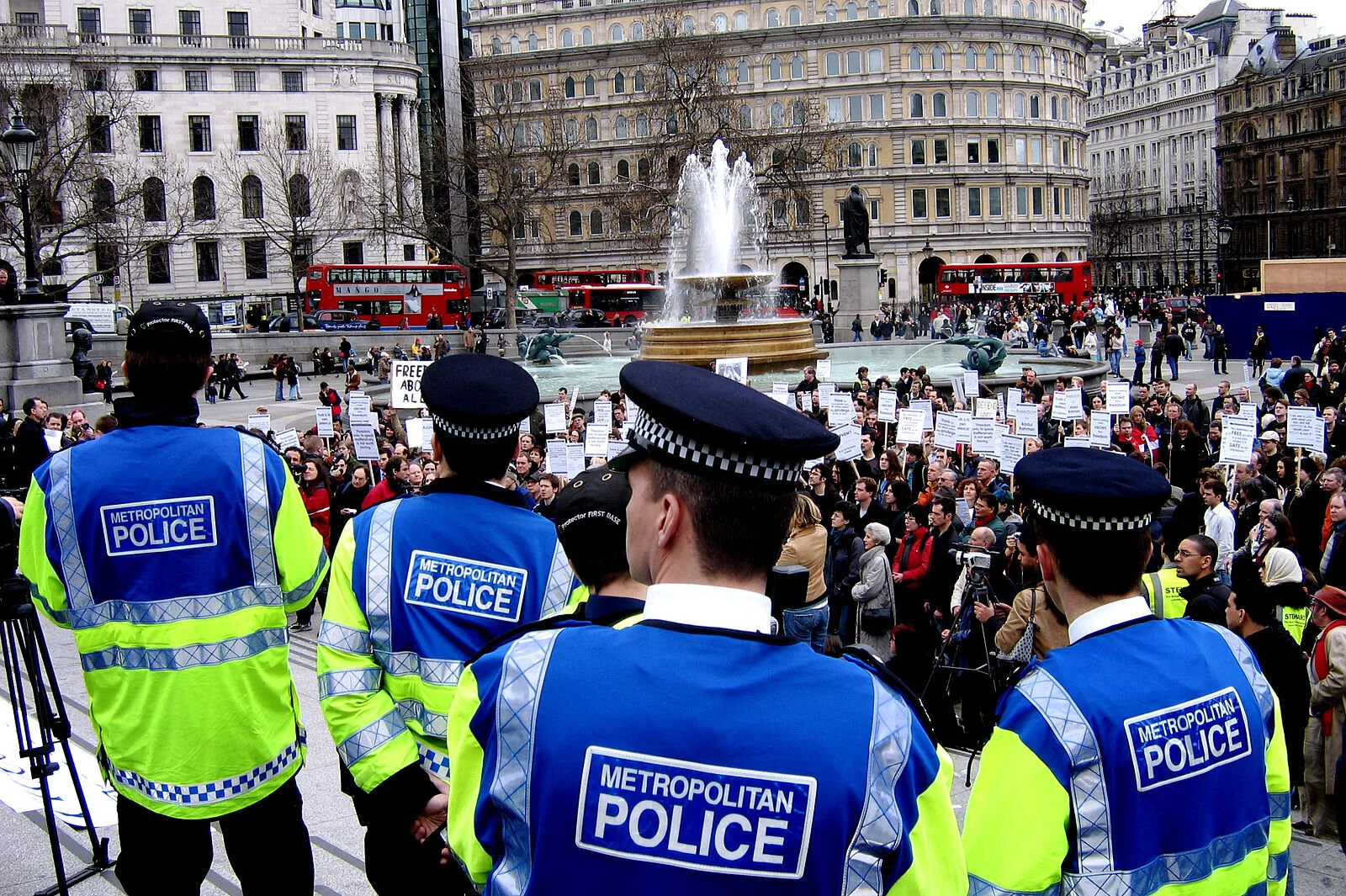
The Metropolitan Police Service at Trafalgar Square in London. CGP Grey. CC BY 2.0.

On Nov. 13, the mayor of London, Sadiq Khan, announced that by 2022, at least 40% of new recruits will be from minority backgrounds. Like many police forces around the world, London’s police have come under criticism in the wake of the Black Lives Matter protests that began in the United States. London’s action in reforming its police force sets the precedent for other communities to follow. 

The Metropolitan Police Service (MPS) is Britain’s largest police force. Also known as Scotland Yard and colloquially called the Met, MPS employs over 44,000 police officers and receives over 25% of the police budget for England and Wales. Along with most other police forces, the Met has come under criticism in the wake of the Black Lives Matter protests and demands for police brutality reform. London’s record with police brutality is quite different than that of America’s, but it and racial inequality are still common across the United Kingdom. In the U.K., Black people are more than nine times more likely to be stopped and searched by the police than White people. Though people of color make up 13% of the population in England and Wales, 48% of minors in custody belong to the group. 

While London is an incredibly diverse city, in 2017 an overwhelming 87% of MPS officers were White, with just 13.3% of officers identifying as Black and Minority Ethnic. These statistics have come under fire recently, with Black Lives Matter protesters taking to the streets of London demanding reform. Protesters turned out in thousands throughout the summer of 2020, with protest numbers spiking after Prime Minister Boris Johnson declared the U.K. as “not a racist country” and designating protesters’ behavior as “thuggery.” 

Mayor of London Sadiq Khan. Steve Punter. CC BY 2.0. 

Despite Prime Minister Johnson’s wavering views toward protests, the mayor of London, Sadiq Khan, acknowledged the institutional racism that he believes inflicts the country. In a statement from the mayor’s office, Khan said: “To the thousands of Londoners who protested peacefully today: I stand with you and I share your anger and your pain. George Floyd’s brutal killing must be a catalyst for change worldwide. No country, city, police service or institution can absolve itself of the responsibility to do better. We must stand together and root out racism wherever it is found. Black Lives Matter.” Khan’s acknowledgment of racism and discrimination is groundbreaking compared to American political leaders’ relative lack of action regarding this issue. 

On Nov. 13, Sadiq Khan announced that by 2022, at least 40% of new recruits in the MPS will be from minority backgrounds. Metropolitan Police Commissioner Cressida Dick released a rare public statement acknowledging that the Met “is not free of discrimination, racism or bias.” Commissioner Dick also announced that her “job is to continue to try to eliminate any such racism and discrimination, however it appears.” London’s active anti-racist stance will set the precedent for other communities and cities to follow. This commitment to diversity is evidence of tangible and long-lasting change within potentially racist institutions. 


Sarah Leidich

Sarah is currently an English and Film major at Barnard College of Columbia University. Sarah is inspired by global art in every form, and hopes to explore the intersection of activism, art, and storytelling through her writing.


Nigeria’s Stolen Schoolboys Reach Freedom

Young people in Nigeria begin their days with walks to school. For boys returning to the Government Science Secondary School in Kankara, these walks will mean something entirely different.

Stibej. CC BY-SA 4.0

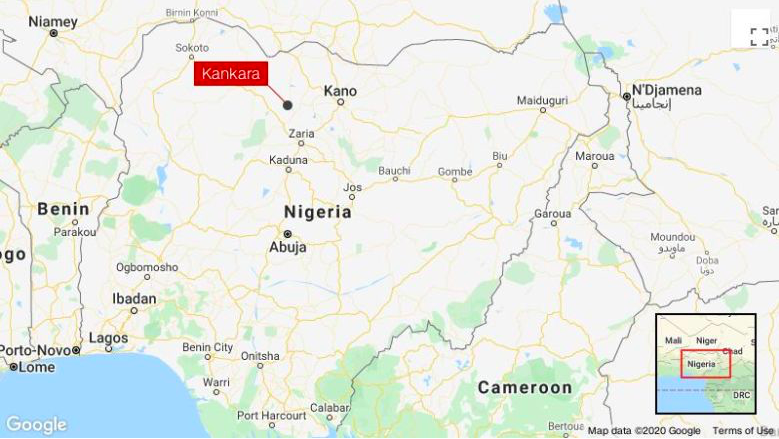
In the northwestern Nigerian state of Katsina, the militant group Boko Haram is thought to be responsible for stealing young men. On Dec. 11, unidentified men with guns invaded the Government Science Secondary School in the city of Kankara on motorbikes to kidnap the schoolboys. The gunmen proceeded to march the boys into the Rugu forest of Nigeria, potentially to use them as child soldiers if not freed. The governor, Aminu Bello Masari, says a total of 344 boys held in the forest have now  been liberated in the neighboring Zamfara state. In describing what they went through, the boys said they walked through large stretches of forest, stopping during the daytime and walking all night without shoes on stony ground littered with painful brush. There was no clarification on how or why they were freed, or if all the boys stolen were let go. As Boko Haram has executed similar kidnappings in the past, many think the Islamist militant group is behind the event. 

Map of Nigeria with the city of Kankara highlighted. Google Maps.  

 On Dec. 18, the schoolboys were finally returned home. The governor of Katsina state and Nigeria's president greeted them as they were brought back to their homes by military personnel. “I think we have recovered most of the boys,” Masari said in a televised interview with state channel NTA. The boys that were found have since been medically examined and returned to their families. It is important to note that the search is still ongoing as of Dec. 21. 

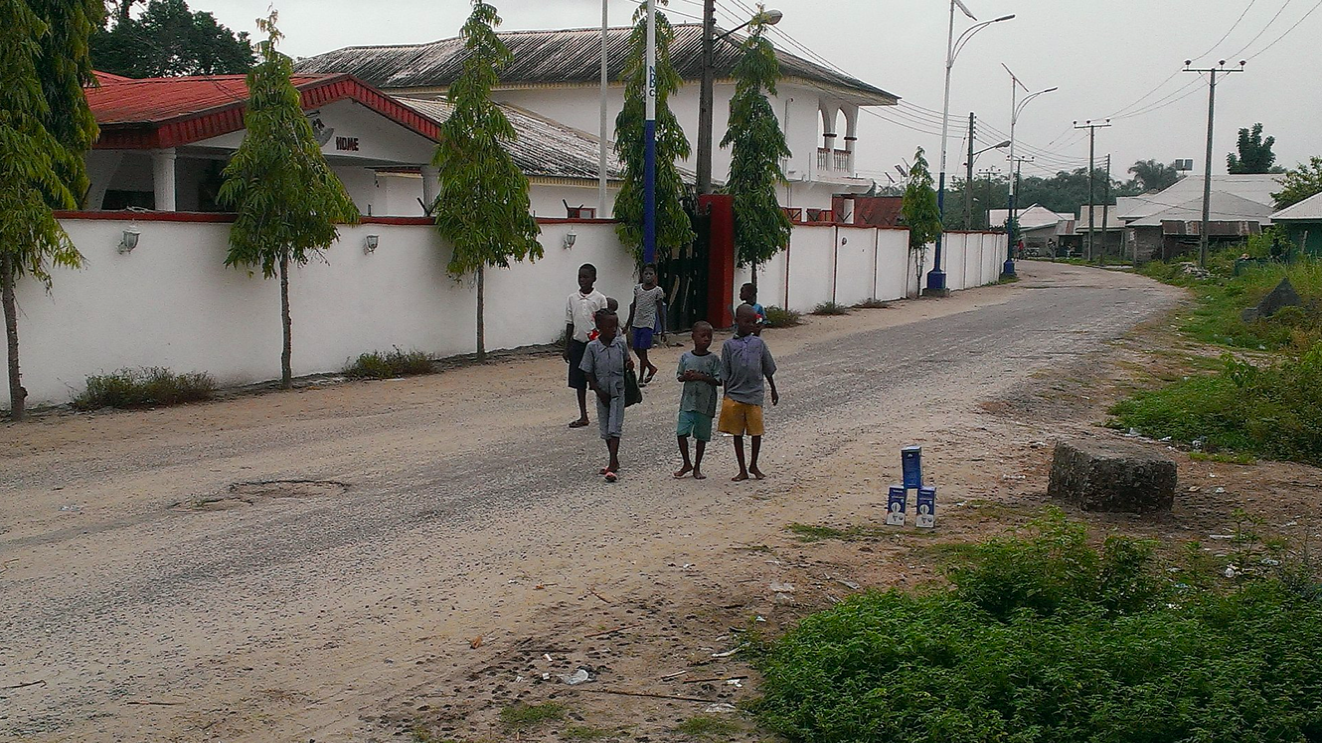
A typical street scene in Katsina state. Adebola Falade. CC BY-SA 4.0

Reports as to who is responsible for the kidnappings are unclear as unverified sources have attributed it to a resurgence of Boko Haram, the extremist group which has kidnapped in the past. In 2014, it executed the kidnapping of more than 270 schoolgirls in the northeastern town of Chibok, and nearly 100 of those girls are still missing. Now, residents of northern Nigeria believe the group is back. 

For the families of the boys, their return comes as a celebration. In a quote given to Reuters, retired health worker Shuaibu Kankara, whose 13-year-old son Annas Shuaibu was among the kidnapped boys, said, “I am so happy. We are so grateful to the governor of Katsina and all those who worked hard to secure their release.” The quick and seemingly uncomplicated return of the boys comes as a great shock but an even greater relief. 

As mentioned, many suspect that Boko Haram is responsible for the attack. The extremist Islamic rebels have taken responsibility for the abduction, claiming they attacked the school as a punishment for its Western teachings. For now, the investigation is ongoing, but the swift release of the boys sends a hopeful message that the Nigerian government is able to handle attacks quickly and effectively. Although there is fear that Boko Haram will act again, a precedent has been set by the efficient handling of this mass kidnapping. 


Renee Richardson

Renee is currently an English student at The University of Georgia. She lives in Ellijay, Georgia, a small mountain town in the middle of Appalachia. A passionate writer, she is inspired often by her hikes along the Appalachian trail and her efforts to fight for equality across all spectrums. She hopes to further her passion as a writer into a flourishing career that positively impacts others.

Indigenous Fashion Hits the Runway

Long overlooked Indigenous artists are revolutionizing the fashion world. Balancing innovation and tradition, these designers envision a sustainable, inclusive way of creating clothes.

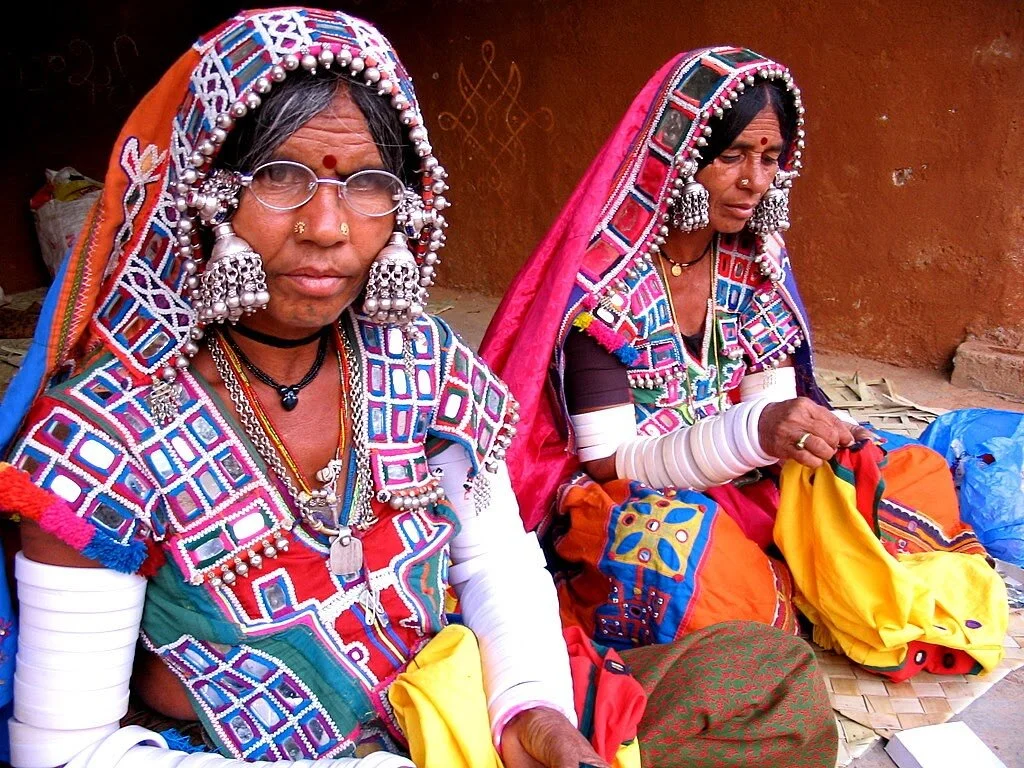
Indigenous women sewing. SriHarsha PVSS. CC BY-NC-SA 2.0.

Nothing about this year’s Indigenous Fashion Week Toronto (IFWTO) went according to plan. The pandemic demanded a totally virtual fashion venue without a live audience, forcing the Indigenous communities that comprise it to rethink what a fashion week could be. Then again, reimagining the fashion industry is the forte of many Indigenous designers.

The IFWTO featured 16 designers with their own unique takes on Indigenous fashion, the clothing created by designers from a native background. It included artists from across the world who are united by a shared Indigenous heritage. Combining traditional figures and techniques with mainstream styles yielded some of the week’s most exciting work. Mobilize, for instance, fused Indigenous writing and designs with streetwear hoodies and jackets to innovate style while staying true to its roots. Audiences took well to Mobilize’s style; most of its items sold out. 

Mobilize and other Indigenous brands seek to fundamentally change the fashion industry’s status quo. Jamie Okuma, a California designer of Luiseño and Shoshone-Bannock descent, emphasizes resourcefulness and respect for nature in her garments. “All of my work has tradition at its core ... So I try to utilize everything possible in my work—with my art, supplies, fabric—and not be wasteful.” Crafted with patience, detail and care, her pieces are meant to be worn again and again. “We all have those go-to pieces in our closet that we keep for years and literally wear out before we retire them,” she says. “I'm here to make the go-tos, the keepers.”

Shoes designed by Jamie Okuma. nonelvis. CC By-NC-SA 2.0.

Okuma’s approach is a welcome change to the dominant fad of “fast fashion.” These items, mass produced by large companies, are designed season by season and intended to fall out of fashion and be thrown out within a year. This approach to fashion differs starkly from that of Indigenous creators, who value durability, tradition and craftsmanship, even if it comes with a much higher sticker price. Though fast fashion allows consumers to don the latest runway fashions at an affordable price, it comes at a steep environmental cost. Products often fall apart within weeks or are thrown out having never been worn, earning the style the nickname “landfill fashion.”

A billboard for Grace Lillian Lee’s fashion. Brisbane City Council. CC BY 2.0.

Grace Lillian Lee, designer and co-founder of First Nations Fashion and Design in Australia, seeks a place for Indigeneity in the mainstream. “There’s definitely a lot that non-Indigenous people and designers can learn from Indigenous people,” she says, “especially in terms of sustainability.” Her work relies heavily on the weaving techniques of Torres Strait Islanders. More than a way to promote sustainability, Lee calls her clothing “a soft entry into reconciliation and healing our people.” Such meaningful craftsmanship doesn’t fall out of style by next season; it is passed down through generations.

Lisa Folawiyo. NDaniTV. CC BY 3.0.

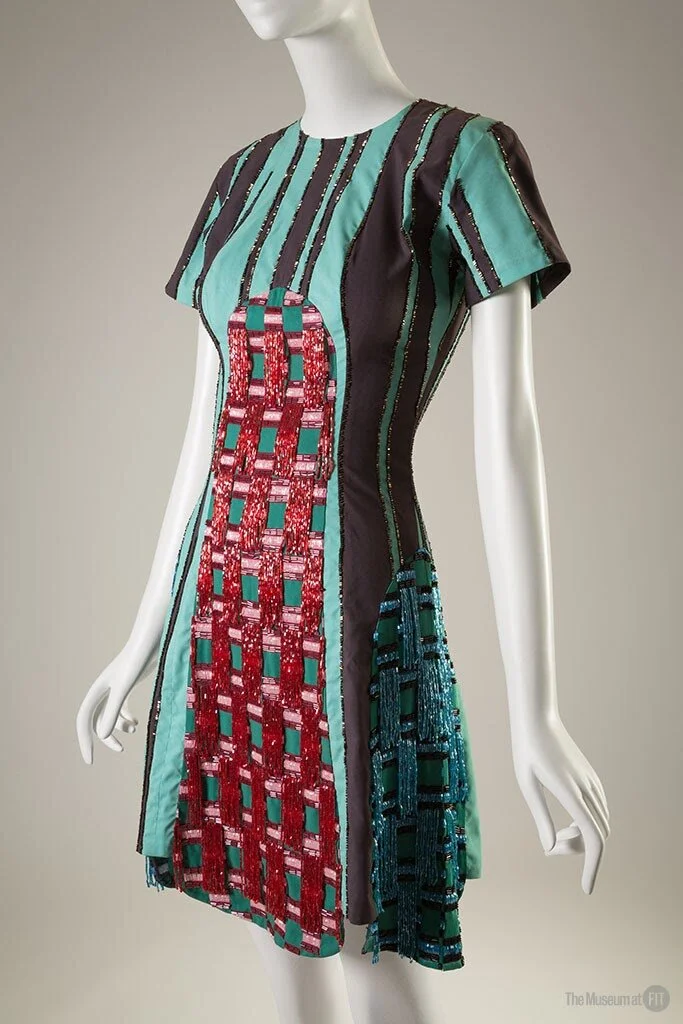
Indigenous fashion is just beginning to enjoy its long overdue time in the sun. Dresses by Lisa Folawiyo, a Nigerian and West Indian designer, have been worn proudly by the likes of Solange Knowles and Lupita Nyong’o. Her intricate, flowing dresses explode with color. Boasting hand-embellished designs, Folawiyo’s dresses can take up to 240 hours to complete. Her West African designs have won the plaudits of the international fashion world and effortlessly outshine the mass-produced artifacts of fast fashion.


A dress by Lisa Folawiyo. Museum at FIT. CC BY-NC-ND 2.0.

Indigenous people still generally lack a place at the corporate level. Sage Paul, a member of Canada’s English River First Nation who now lives in Toronto, called for the post-pandemic “new normal” to include the voices of Indigenous people in an article for The Kit. Fashion emerged from a 14th-century European aristocracy, she argues, and colonized Indigenous people to steal resources, goods and fashion trends. “The colonial systems we are operating under no longer serve our society, and the only way we will evolve is by allowing new and interconnected systems to come to the fore.” That means moving Indigenous brands into the mainstream. 

The IFWTO is a good place to start. Its online market links viewers directly to designers’ websites. Live panel discussions provided a glimpse into the questions and concerns of some of Indigenous fashion’s most admired artists. Videos of models strutting the catwalk resembled music videos, showcasing the unbridled possibilities of Indigenous fashion. Most importantly, it put more Indigenous designers on the map. As of now, they show no signs of slowing down.


Michael McCarthy

Michael is an undergraduate student at Haverford College, dodging the pandemic by taking a gap year. He writes in a variety of genres, and his time in high school debate renders political writing an inevitable fascination. Writing at Catalyst and the Bi-Co News, a student-run newspaper, provides an outlet for this passion. In the future, he intends to keep writing in mediums both informative and creative.

8 Surprisingly Vibrant Desert Destinations

Deserts are much more than the beating sun and rolling sand dunes we often picture. These eight destinations showcase the incredible natural beauty of the desert, from salt flats and chalk formations to mountains and glaciers. 

Though deserts are often thought of as just hot, dry expanses of sand, they come in a variety of climates and landscapes and hold some of the world’s most fascinating natural formations. Deserts “are areas that receive very little precipitation,” making them arid but not necessarily hot and sandy. Many deserts are mountainous, and others are large expanses of rock or salt flats. Though their arid environment makes water in deserts scarce, they are far from lifeless. Plants and animals, including humans, have adapted to desert life. One-sixth of the Earth’s population lives in deserts, which are found on every continent. 

These eight desert destinations range from freezing to boiling in temperature and are all unique, with their own attractions and plant and animal life. Each of these stunning deserts is worth a visit, and they may change your opinion of the desert as a stark, lonely place to one of beautiful landscapes blooming with culture, history and life. 

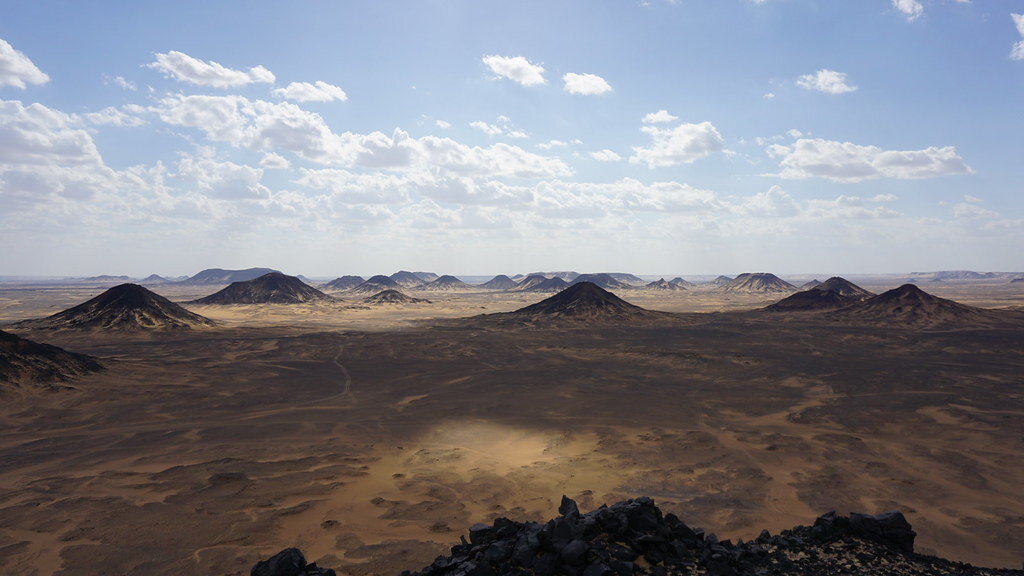
White and Black Deserts, Egypt 

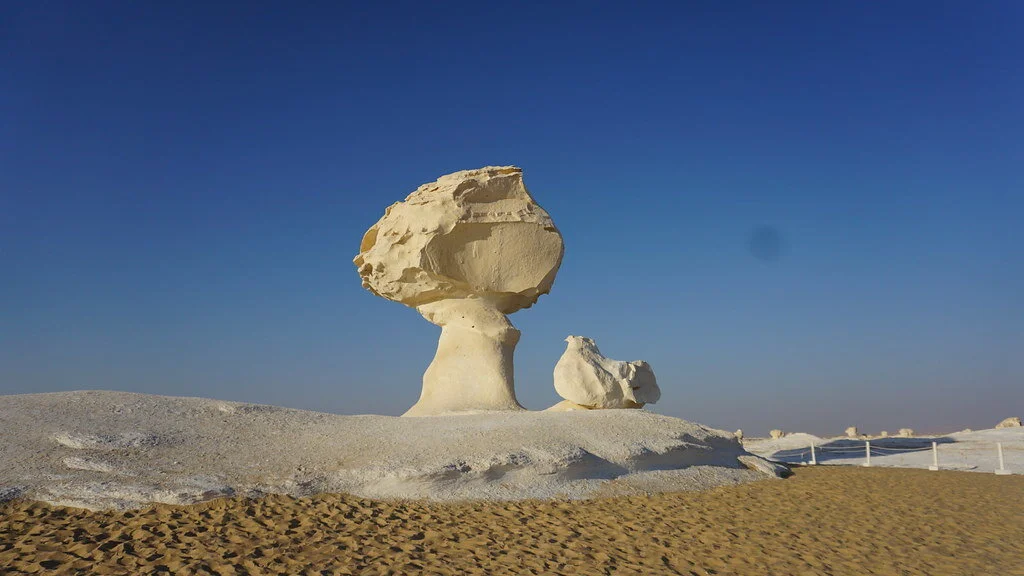
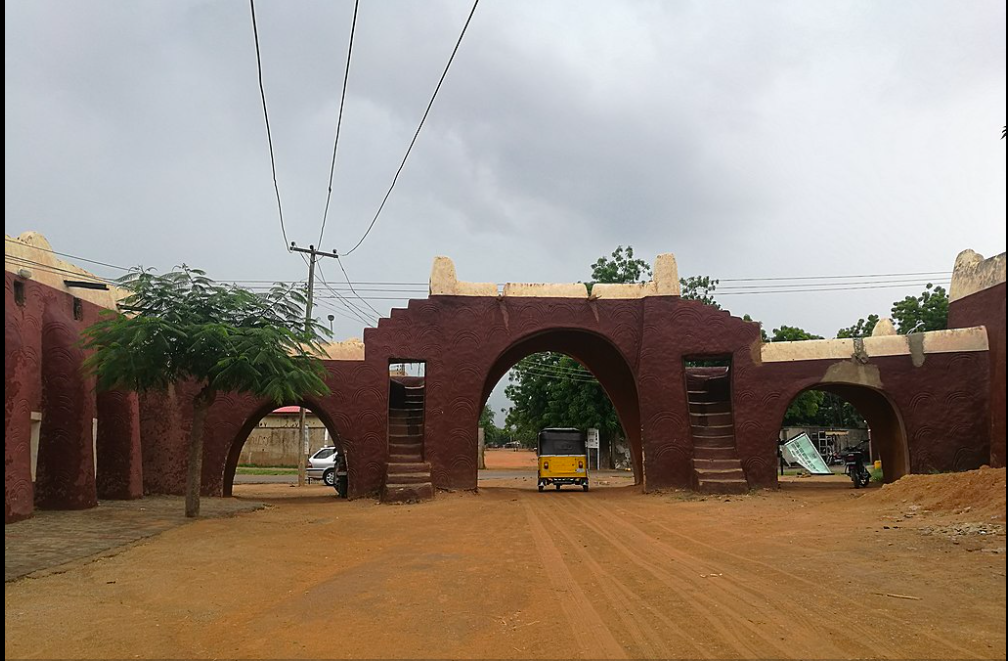
Located just a few hours from Cairo, Egypt’s White and Black deserts are two stunning and underappreciated visitor attractions. The White Desert is located in the Farafra Depression, a section of Egypt’s Western Desert, and boasts some of the most unique geological landscapes in the country. Incredible wind-carved white chalk formations rise from the sand in the shapes of towering mushrooms and pebbles, giving the White Desert its name. The White Desert stretches over 30 miles, and the most visited area is the southern portion closest to Farafra. To the north of the White Desert is the Black Desert, where volcanic mountains have eroded to coat the sand dunes with a layer of black powder and rocks. In the Black Desert, visitors can climb up English Mountain and look out over the landscape. The Egyptian Tourism Authority recommends booking a tour to explore the deserts in depth, and travelers can even stay in the White Desert overnight. 

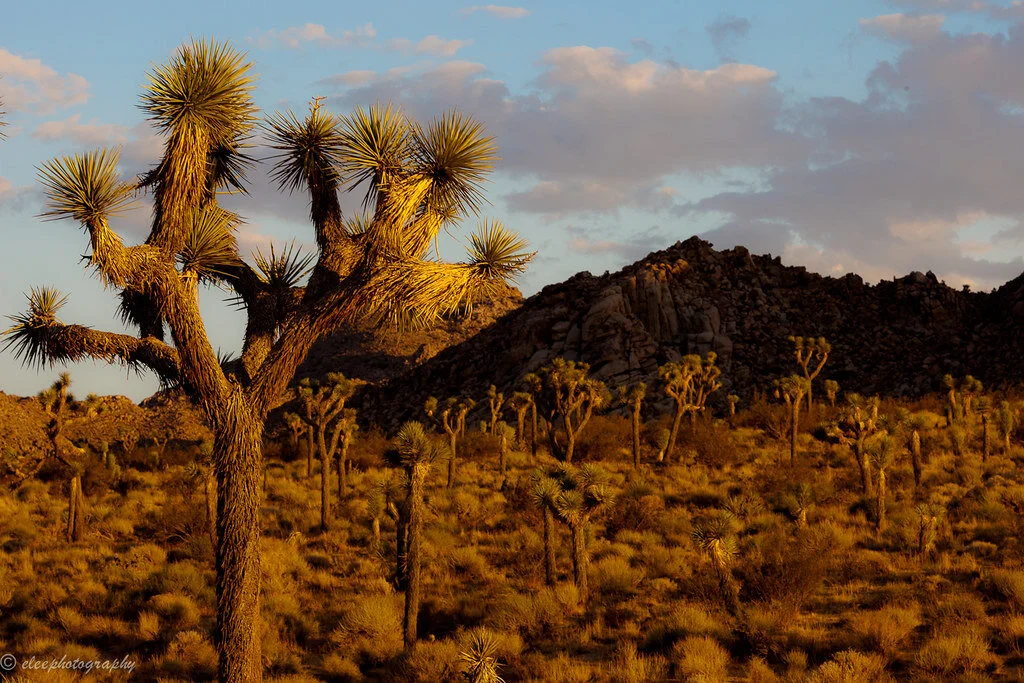
Joshua Tree National Park, California 

Joshua Tree National Park in Southern California is where two different desert ecosystems meet. Parts of the Mojave and the Colorado deserts are both found in Joshua Tree, along with a distinctive variety of plant and animal life. The Joshua tree, the park’s namesake, is the most identifiable of the plants, with its twisted, spindly branches and spiky clusters of greenery. Some of the park’s most popular attractions are Skull Rock; Keys View, a lookout with views of the Coachella Valley and the San Andreas Fault; and Cottonwood Spring Oasis, which was a water stop for prospectors and miners in the late 1800s. Joshua Tree National Park has roughly 300 miles of hiking trails for visitors to explore. The park is open 24 hours and can be visited at any time of the year, but visitation rises during the fall due to the cool weather and is at its height during the wildflower bloom in the spring. 

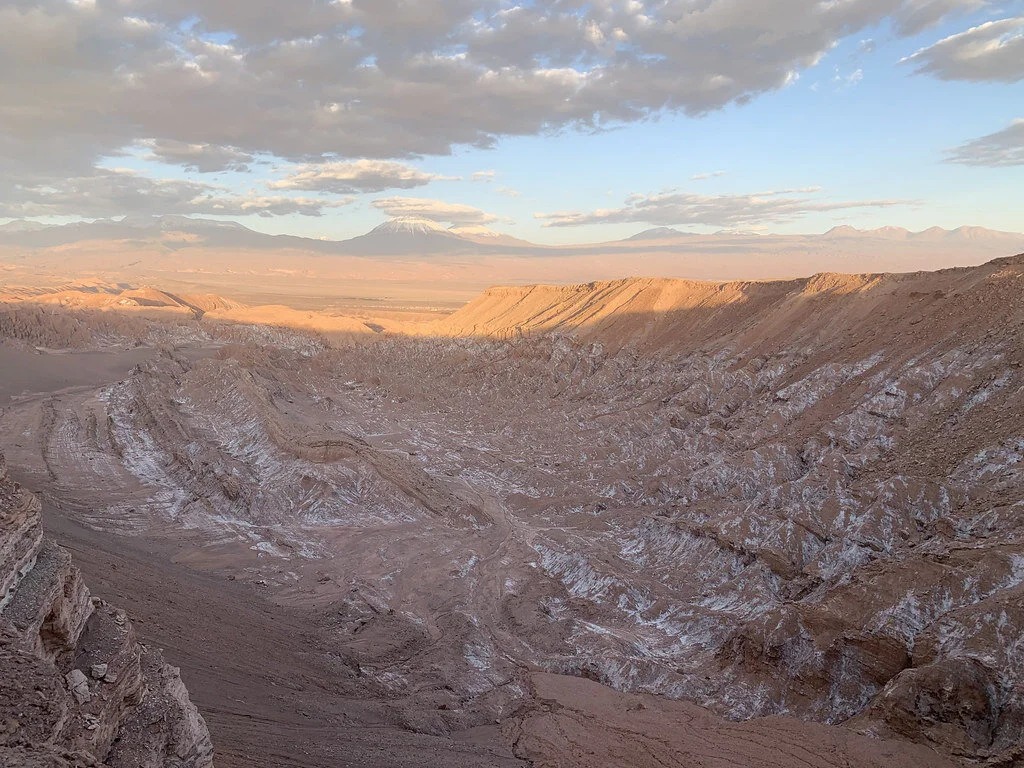
Atacama Desert, Chile 

Trips to the Atacama Desert in northern Chile are likened to visiting Mars on Earth. The dry, rocky terrain is so similar to that of Mars that NASA tests its Mars-bound rovers here. The Atacama Desert, the driest desert on Earth, spans over 600 miles between the Andes and the Chilean Coastal Range. Some weather stations set up in the Atacama have never seen rain. Despite its dryness, the desert is home to thousands of people, as well as plants and animals. People have been living in the Atacama Desert for centuries; mummies were discovered in the Atacama dating back to 7020 B.C., even before the oldest known Egyptian mummies. Attractions in the Atacama Desert include El Tatio geyser field, the Chaxa Lagoon, the Atacama salt flats, and sand dunes over 300 feet tall. The Atacama Desert is also said to have some of the clearest night skies in the world, making it perfect for stargazing. It is best to avoid a trip to the Atacama during the summer months, as the high temperatures make for a sweltering visit. 

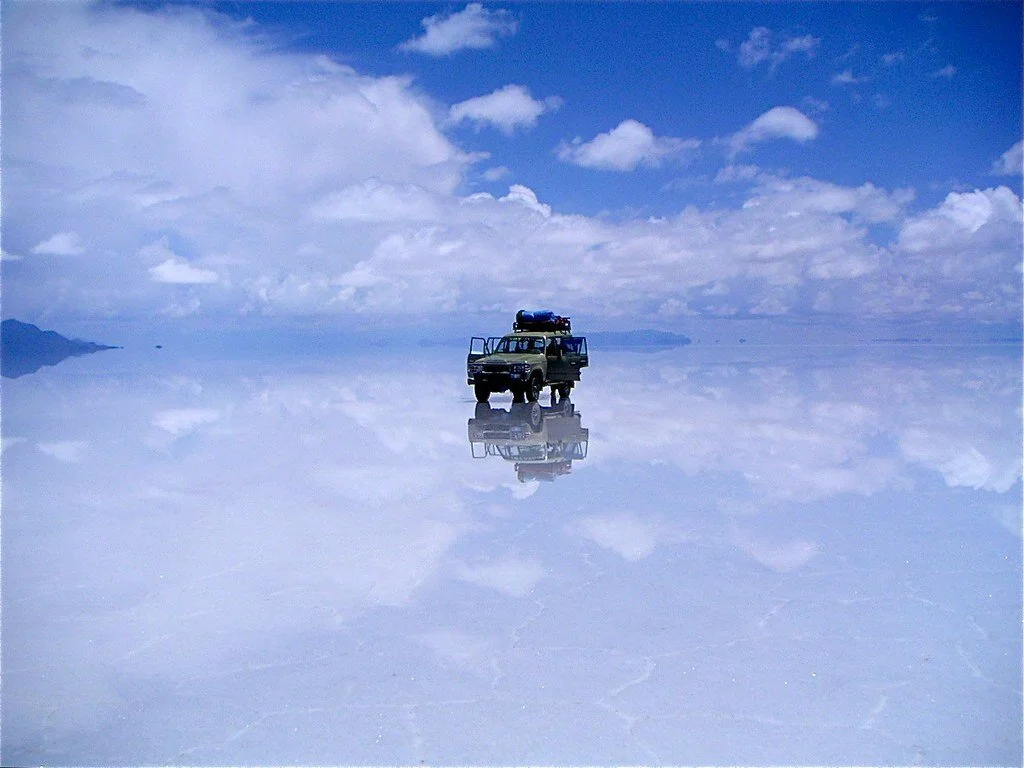
Salar de Uyuni, Bolivia 

The world’s largest salt flat, Salar de Uyuni, covers 3,900 square miles in the southwestern corner of Bolivia. Salar de Uyuni is so large it can be seen from space and holds an estimated 10 billion tons of salt. Beneath the salt flat is approximately 70% of the world’s lithium reserves. This lithium is carefully extracted and used for powering laptops, electric cars and smartphones. Salar de Uyuni is surrounded by scenic lakes, geysers and rock formations, and is one of the world’s most beautiful and untouched natural landscapes. Tours of Salar de Uyuni take visitors to the Valley of Rocks; Morning Sun, which is home to geysers and mud pots; Colchani, a salt-processing village; and the Polques Hot Springs, where travelers can soak in warm thermal water. The landscape of Salar de Uyuni changes based on the seasons, so travelers should plan their visits around what they want to see. From July to October, access to all sites of Salar de Uyuni is unrestricted, but during the rainy season from December to April, visitors may be able to witness the salt flat’s famous mirror effect, where a thin layer of water over the salt transforms the land into the world’s largest mirror. 

Tanque Verde Ranch, Arizona 

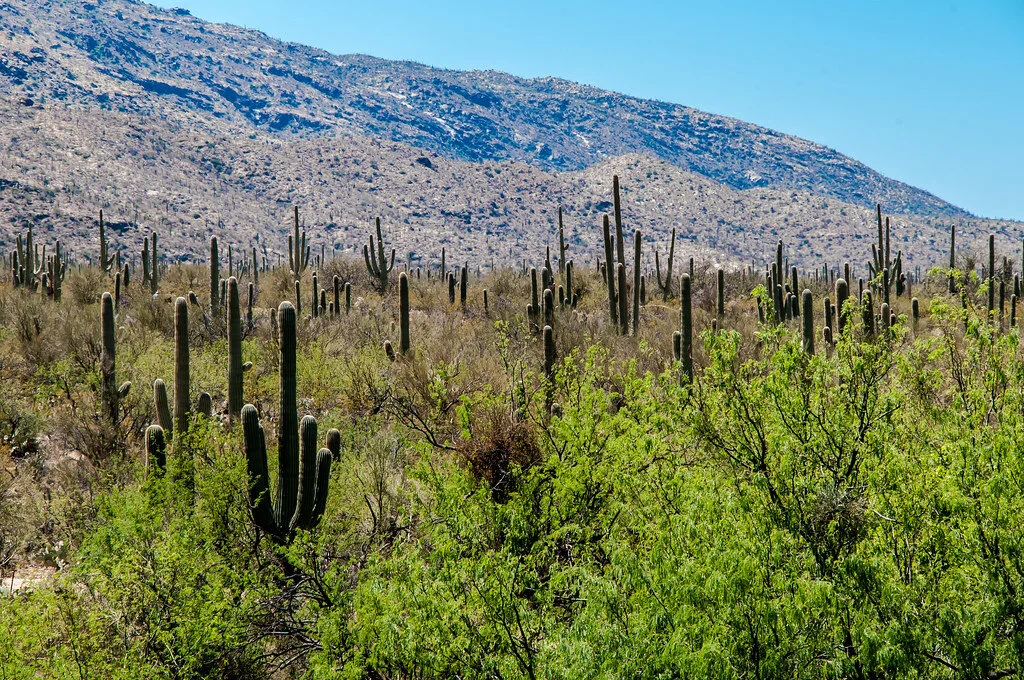
Located just outside of Tucson, Arizona, near Saguaro National Park and the Rincon Mountains, Tanque Verde Ranch gives visitors “the ultimate dude ranch experience.” The ranch sprawls over 640 acres and stocks over 150 horses. Visitors to the ranch can get a real-life cowboy experience, including horseback riding and team penning. Riders of all experience levels will find something to do at Tanque Verde, where visitors can take beginning, intermediate and advanced lessons and then go on a sunrise or sunset trail ride through the Arizona desert. Tanque Verde Ranch offers kids’ riding activities too, as well as activities for non-riders such as yoga, mountain biking, fishing, swimming and pickleball. Visitors should pack long pants and closed-toe shoes if they plan to ride, and casual wear is appropriate for all non-riding times. Trips to the ranch usually last around four days, and visitors stay on the property. Tanque Verde Ranch is open to visitors year-round. 

Gobi Desert, Mongolia 

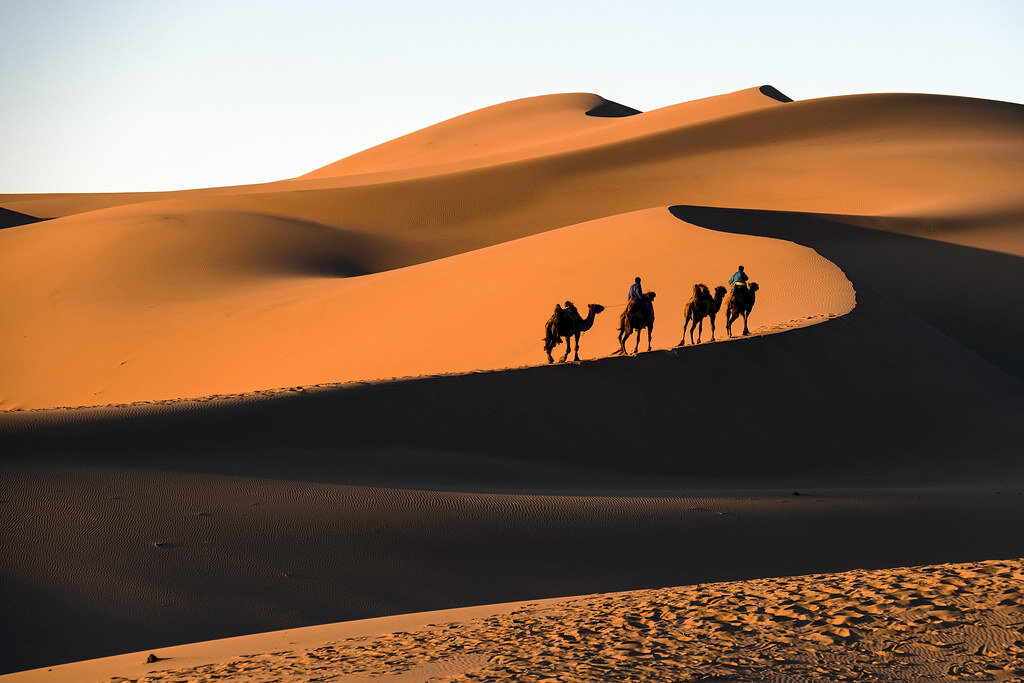
Spanning most of southern Mongolia and its border with China, the Gobi Desert contains stunning views and years of history. The region was once populated by dinosaurs, and some of the best-preserved fossils in the world were found near the Flaming Cliffs of Bayanzag. The Gobi Desert showcases a variety of natural beauty, from towering sand dunes to incredible white granite formations. Dry desert plants that come to life after rain make the Gobi unique, as well as ”saxaul forests” made up of sand-colored shrubbery. Visitors to the Gobi Desert should explore the Khongor Sand Dunes, an area that offers rocky and mountainous terrain in the south, dry and barren terrain in the center, and several oases in the north. Other major attractions are the Flaming Cliffs of Bayanzag, where red clay seems to glow in the sun, and the Gobi Waterfall, which looks like a city in ruins but is a completely natural formation. The best time to visit the Gobi Desert is either in late spring or in autumn, when the weather is neither too hot nor too cold.

Nk’Mip Desert, Canada 

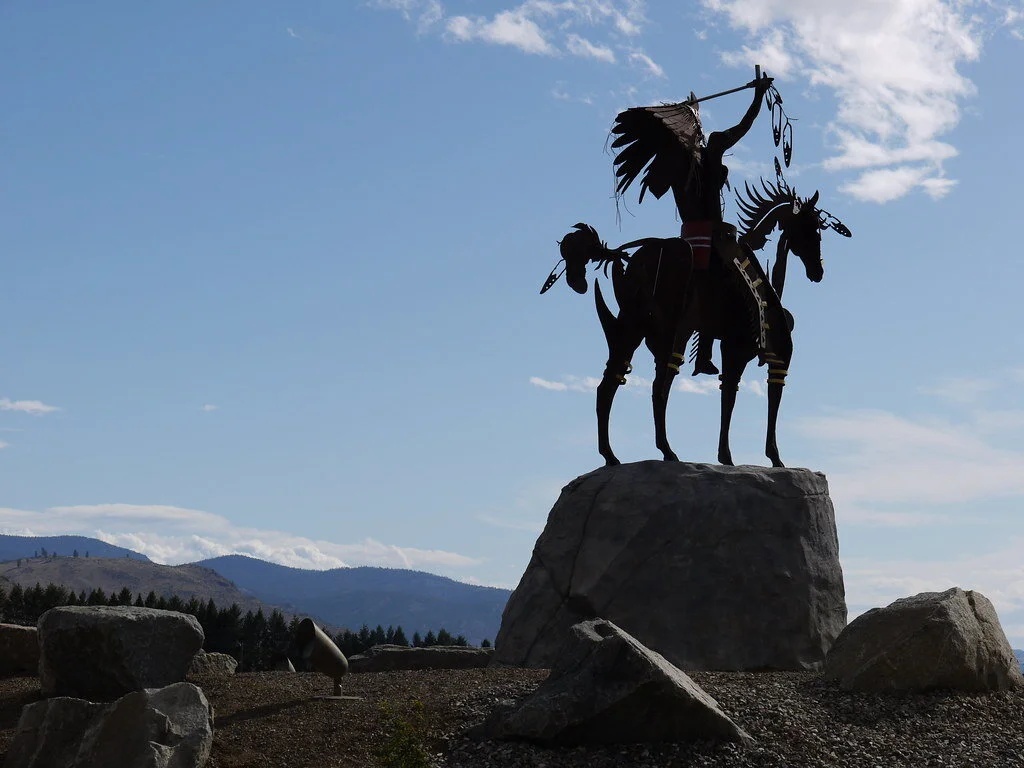
Also called the Okanagan Desert, Canada’s Nk’Mip Desert contains the most endangered landscape in Canada. Located in Osoyoos in British Columbia, the Nk’Mip Desert Cultural Center is a 1,600-acre area of the Okanagan Desert managed by the Osoyoos Indian Band, and is the only fully intact area of desert in Canada. The desert is situated in a semiarid microclimate. The cultural center was designed to be eco-friendly and resembles the traditional winter homes of the Osoyoos Indian Band. Visitors can explore the desert on walking trails, which are surrounded by sage, prickly pear cactuses and antelope brush, as well as sculptures of desert creatures and native peoples by Smoker Marchand. The trails take visitors through a traditional Osoyoos village, where they will find a traditional sweat lodge and pit house. Many visitors prefer to explore Nk’Mip Desert in the summer due to the region’s relatively cold winters. 

Patagonian Desert, Argentina and Chile

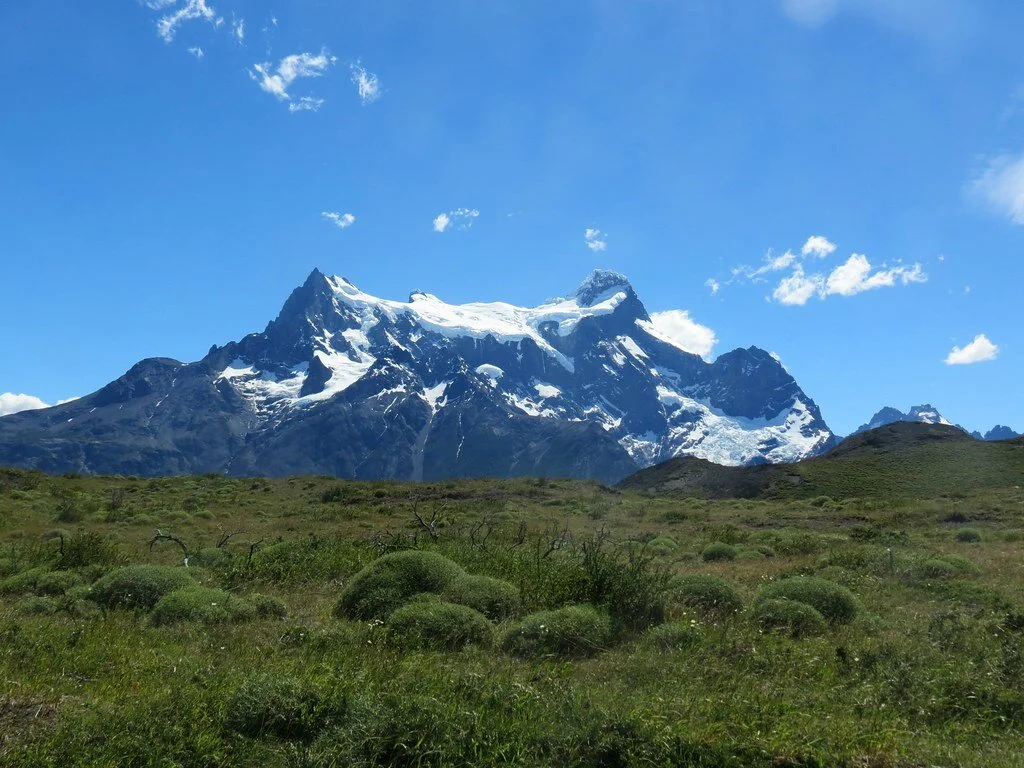
The Patagonian Desert is South America’s largest desert and the seventh-largest in the world. It covers parts of southern Argentina and Chile, and is a cold desert, sometimes reaching a high temperature of 68 degrees Fahrenheit. The Patagonian Desert is home to two national parks: Torres del Paine National Park in Chile and Los Glaciares National Park in Argentina. Torres del Paine and Los Glaciares aren’t typical desert environments, but since the Patagonian is a cold desert, its landscape is different from that of most deserts. Before the Andes were formed, the Patagonian Desert was likely covered by temperate forests, so the region containing the desert, Patagonia, is extremely ecologically and geographically diverse. Torres del Paine National Park is known for its towering granite structures, which were shaped by glaciers. Los Glaciares is home to large glaciers, as well as scenic mountains, lakes and woods. The Cueva de las Manos, or “Cave of Hands,” is a series of caves in Argentinian Patagonia which are filled with paintings of hands dating back to 700 A.D., likely made by ancestors of the Tehuelche people. Tehuelche people live in Patagonia today, some still following a nomadic lifestyle. The best time to visit Patagonia is generally said to be in the summer (December to February), when the days are warm and the fauna is in full bloom, but there are merits to exploring the area at all times of year. 


Rachel Lynch

Rachel is a student at Sarah Lawrence College in Bronxville, NY currently taking a semester off. She plans to study Writing and Child Development. Rachel loves to travel and is inspired by the places she’s been and everywhere she wants to go. She hopes to educate people on social justice issues and the history and culture of travel destinations through her writing. 

Disaster in the Delta: Workers Accused of Profiting from Oil Spills in Nigeria

A new documentary reports that employees of Shell’s Nigerian subsidiary are encouraging attacks on pipelines to pocket funds intended for environmental cleanup.

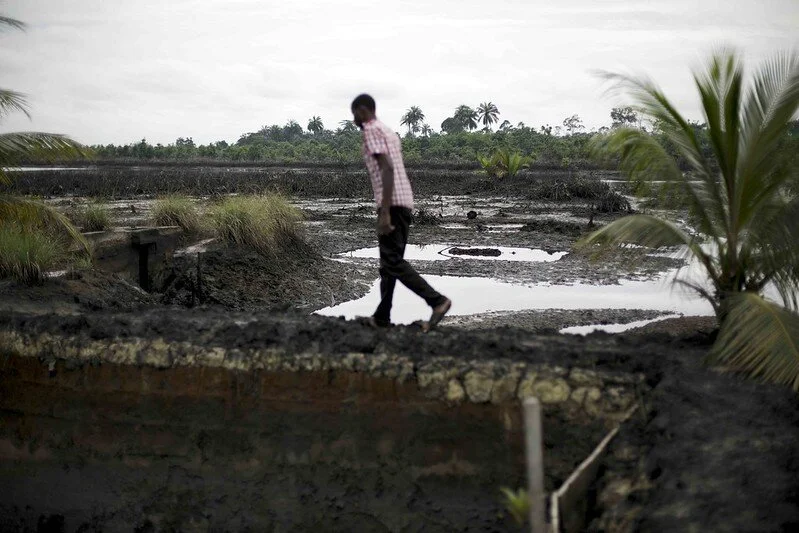
A man walks alongside land tainted by an oil spill near Kegbara Dere, Nigeria. Friends of the Earth International. CC BY-SA 2.0

As the largest oil producer in Africa, Nigeria has long struggled to balance the demands of multinational corporations with the needs of its own people. The country provides a clear example of the resource curse, as the government turns a blind eye toward endemic corruption in the oil and gas industries. The Niger Delta, home of Nigeria’s oil reserves, has become a land of lawlessness and environmental catastrophe with no clear end in sight.

For decades, Royal Dutch Shell has been in the crosshairs of both environmental and human rights activists over its role in the Niger Delta. Now, the Anglo-Dutch oil company is facing claims that its employees deliberately sabotaged its own pipelines to profit from environmental cleanup funds.

In a documentary released on Dec. 10, Dutch television program Zembla and environmental group Milieudefensie teamed up to investigate claims of malpractice by the Shell Petroleum Development Company of Nigeria (SPDC). This group is a joint venture between the state-run Nigerian National Petroleum Corporation, France’s Total, Italy’s Eni and Shell, which runs all operations.

Research focused on the village of Ikarama, where there have been 30 reported oil spills in the last 13 years alone. The region surrounding the community has become so polluted that agriculture and fishing barely yield any income for locals. Frustration with oil companies has mounted, leading some residents to vandalize pipelines to channel their frustration.

Per the report, Royal Dutch Shell’s employees saw an opening. They began to encourage local youths to sabotage pipelines so they could receive funds necessary for environmental cleanup. Workers for the oil titan received vast sums of money for “eco-friendly” measures, and members of the Ikarama community were hired to restore the land.

The SPDC denies responsibility for the oil leaks, instead blaming local criminals and gangs. The group said in a statement that, “As of now, we are not aware of any staff or contractor having been involved in acts causing oil spills in the Niger Delta.” The SPDC further claimed that it investigates all credible reports of misconduct and addresses situations as needed.

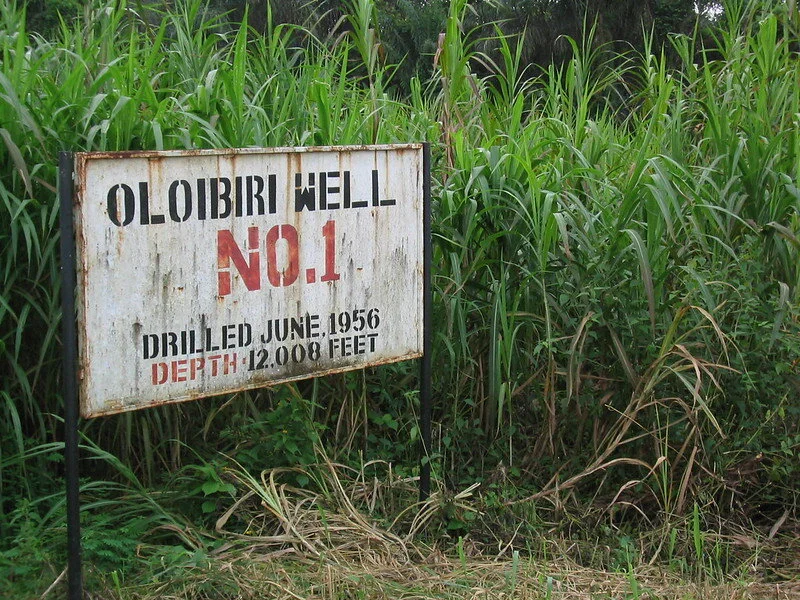
A sign points out Shell’s Oloibiri well, the first drilled in West Africa. Rhys Thom. CC BY-NC-ND 2.0

In the eyes of Cees van Dam, a professor of international business and human rights at the University of Rotterdam, the accusations are credible. “In the Netherlands,” he notes, “this would certainly be considered a criminal offense. Intentional destruction of property, intentional environmental pollution, these are serious issues that no single company would accept from its employees.”

Moreover, employees of the SPDC and residents of Ikarama attest to the claims addressed in the documentary. Saboteurs insist that they vandalize the pipelines “out of hunger” while a former Shell security guard said that supervisors and employees “split the money from the cleanup.”

Making matters worse, the former security guard said that “the recovery department from Shell sabotages the pipelines. If the cleanup will take seven months, they’ll stop after only three months.” In other words, the land remains in disarray even after remediation measures conclude.

In the documentary, Zembla claims that local employees and villagers were far from the only ones aware of the scheme. The SPDC, the Nigerian police and the Dutch embassy in Abuja also received word of the process from concerned locals. Then Dutch ambassador Robert Petri even visited Ikarama in 2018 and pledged to “take what is happening here … and we will share our experiences and information with both Shell and the government.” No further investigations have occurred.

As such, the process of intentional environmental degradation continues. As the alleged scheme moves into the spotlight, there is an opportunity for corruption in the Niger Delta to be extinguished. The region’s troubled past and present are intrinsically tied to the oil industry, but hope remains that a more transparent future may be just around the corner.


Stephen Kenney

Stephen is a Journalism and Political Science double major at the University of North Carolina at Chapel Hill. He enjoys sharing his passion for geography with others by writing compelling stories from across the globe. In his free time, Stephen enjoys reading, long-distance running and rooting for the Tar Heels.

How the BLM Movement Blossomed in the UK

As voices of the Black Lives Matter movement flooded American streets, British proponents alike rushed to rally. The seeds of the movement germinated in the U.K., but problems soon sprung up alongside them. 

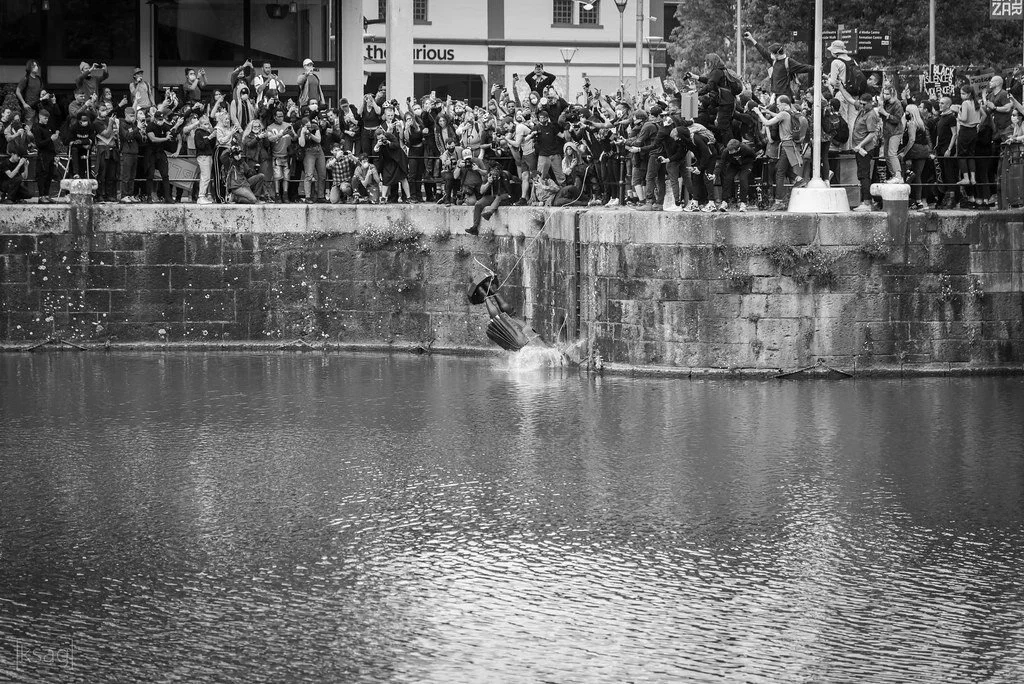
Black Lives Matter protest in Bristol, England. KSAG Photography. CC BY-NC-SA 2.0. 

In late May, the death of George Floyd ignited outrage in nations across the world, including in the United Kingdom. In the early summer months, the pages of social media and eager British ralliers mirrored the zeal of the Black Lives Matter movement in the United States. However, over the course of a few short months, the unmatched vigor of the movement in Britain quickly dropped off; neither the media channels nor the once fiery minds of residents continued active coverage and support. 

What had started as weekly protests in Britain’s largest cities had dissolved into a deferred dream for a few young activists. As more racial inequalities surfaced, less and less government engagement was found. 

Regardless of this obstacle, the young remaining supporters continue their fight with the unbattered zeal of seasoned activists. A few such activists are the founders of All Black Lives U.K., which is a movement started this past May by a group of students. The group organized protests for 10 weeks this summer and has since made substantial headway; its outreach, primarily made through social media and hosted panels, has garnered enough engagement to establish posts in other urban areas such as Bristol and Manchester. 

The movement pushes for a list of demands to be met by the government, which includes the removal of the highly scrutinized “gangs matrix.” 

The gangs matrix is a database that has been run by the Metropolitan Police since 2012 following the 2011 London riots. The database contains the names of “gang nominals,” or people whose online activity has been flagged for suspected gang affiliation. The Metropolitan Police advertised the database as a tool to combat violence in London, but many studies found that its standards have resulted in the disproportionate representation of young Black males. Thus, All Black Lives U.K. believes that the abolition of this database will remove a racist stronghold in the government. 

Aside from more obvious racial discrimination, many protesters think that the U.K. suffers from a profound lack of diversity. The movement continues to fight for increased inclusion of Black voices in local councils, as well as diversity in the national school curriculum. Campaigns have been launched to modify what is included in the national curriculum, specifically in order to make learning Black history compulsory. Proponents intend for this modification to fairly represent the Black population while creating a more well-rounded picture of the nation’s history for all students. The education campaigns were met with immediate backlash, with claims by educators that this change is too closely tied to political extremism. 

With several months of tumult having reshaped the face of racial discussions in the U.K., there is little that the British government has changed to address the issue. However, the few brave faces trailblazing the movement keep pressing on, calling others to educate themselves in the meantime. 

To Get Involved

To sign up to volunteer for the Black Lives Matter movement in the UK, click here.

To find out more about the Black Lives Matter movement in the UK, click here.

To become a partner or sponsor for the movement in the UK, click here.


Ella Nguyen

Ella is an undergraduate student at Vassar College pursuing a degree in Hispanic Studies. She wants to assist in the field of immigration law and hopes to utilize Spanish in her future projects. In her free time she enjoys cooking, writing poetry, and learning about cosmetics.