
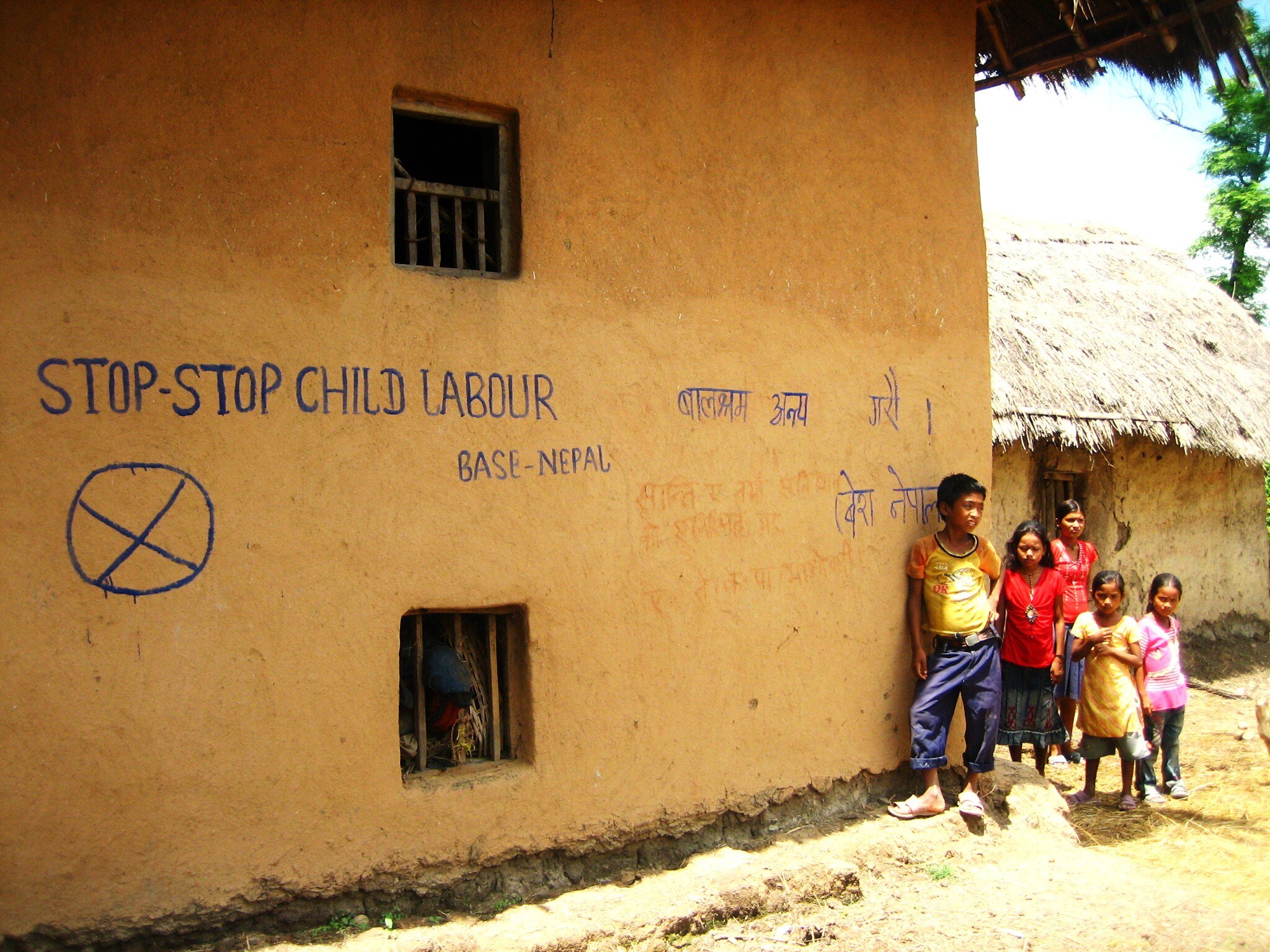
While many in the Western world regard slavery in any form as a relic of a distant, colonialist past, human trafficking and involuntary servitude affect more people today than ever before. The latest data from the International Labor Organization and the Walk Free Foundation shows that 40.3 million people are victims of modern slavery, roughly one in every 200 people alive today.
According to the U.S. Department of State Office to Monitor and Combat Trafficking in Persons, modern slavery falls under two categories: sex trafficking, the involuntary participation in a commercial sex act, and forced labor, which includes bonded labor, domestic servitude, forced child labor, and the unlawful recruitment and use of child soldiers. The office notes that while modern slavery can involve the movement of people, it is not a requirement for an act of involuntary servitude to be categorized as slavery.
However, while the aforementioned categories allow for a surface-level analysis of modern slavery, there is neither an agreed-upon definition within the global community nor an agreed-upon approach to combat this epidemic of involuntary servitude.
Part of the problem is due to the fact that certain forms of slavery are normalized in the countries in which they take place. In Mauritania, for instance, slavery is outlawed on the books but is still widely practiced, with an estimated 90,000 Mauritanians, or 2% of its population, living under a state of enslavement.
In countries with larger global influence, slavery is equally as difficult to identify as it is to combat. China, which has the world’s second-largest economy and produces many products and goods used by Western nations, maintains a large forced labor program composed of ethnic minorities, most recently including Muslim Uyghurs and Kazakhs.
Some activists characterize the for-profit prison system in the United States as a form of modern slavery. Notably, while the U.S. is home to only 5% of the global population it maintains 25% of the global prison population, and has the highest incarceration rate in the world, with 639 per 100,000 citizens being imprisoned.
Sex trafficking is likewise difficult to combat, in part due to how easily those who are trafficked for sexual exploitation slip under the radar and also because sex trafficking remains a taboo topic of discussion. According to the International Labor Organization, in 2016 4.8 million people were victims of forced sexual exploitation. Broken down, these victims were almost exclusively female, and 21% of the victims were under the age of 18. While sex trafficking occurs on every inhabited continent, the Asia-Pacific region accounts for the vast majority of cases, with 73% of reported forced sexual exploitation taking place in the region.
While modern slavery in all forms remains a prominent issue, continued support from concerned global citizens can help bring justice to all affected by involuntary servitude.
To Get Involved
UNICEF, an organization which works to address a number of factors leading to child slavery, offers a number of donation and volunteer opportunities.
Free the Slaves, an international nonprofit which seeks to change “the conditions that allow modern slavery to exist,” has a donation platform as well as educational resources on modern slavery.
International Justice Mission, whose slogan is “End Slavery in Our Lifetime,” accepts donations to fund both their advocacy work and rescue missions.

Jacob Sutherland
Jacob is a recent graduate from the University of California San Diego where he majored in Political Science and minored in Spanish Language Studies. He previously served as the News Editor for The UCSD Guardian, and hopes to shed light on social justice issues in his work.