
Travel deep enough into the Chihuahuan Desert and you’ll find yourself in Zacatecas. The Mexican state, known for its mining industry and colonial architecture, is often overlooked by travelers in favor of more popular cities such as Guadalajara, Mexico City and Acapulco.
Read More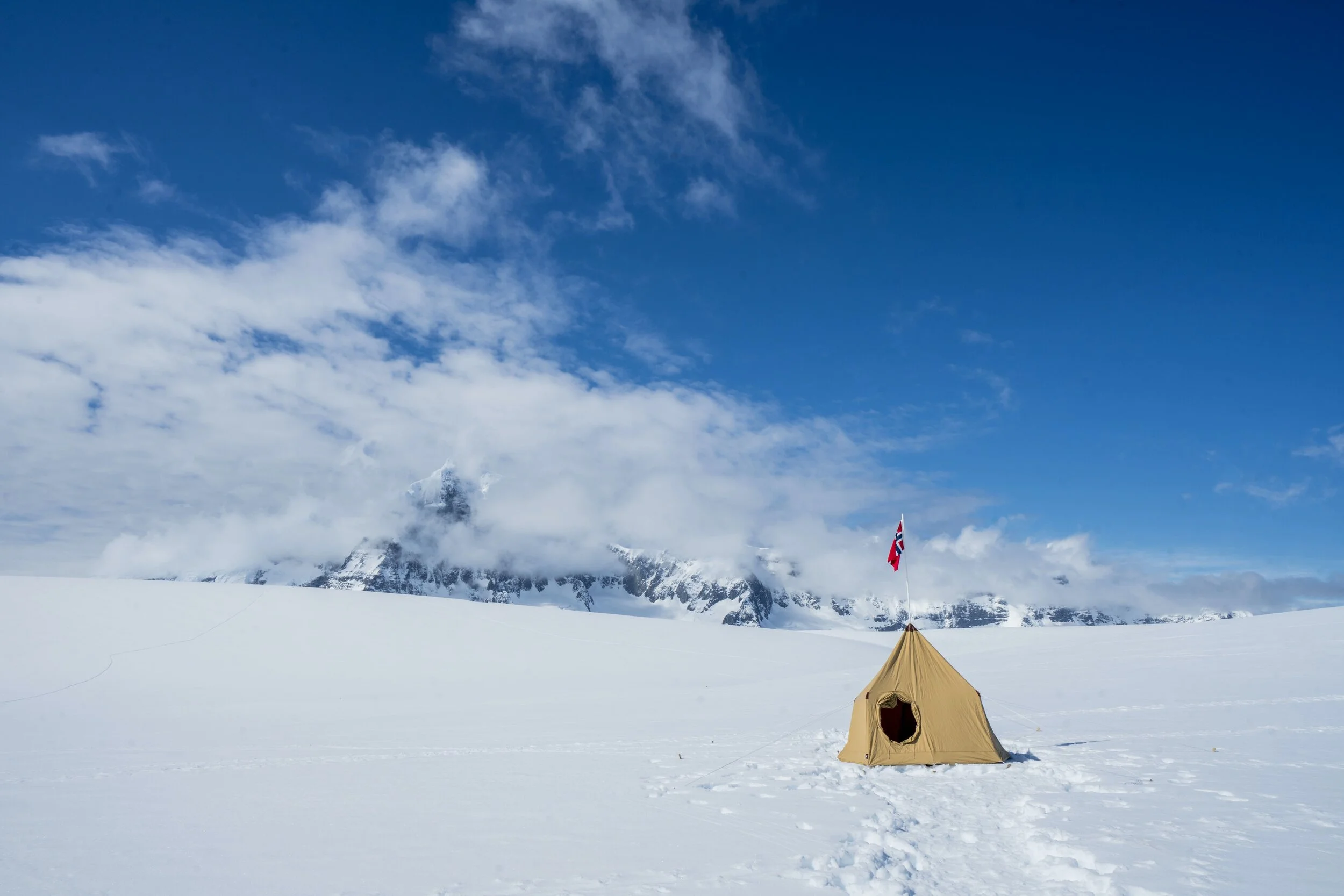
A tent stands alone, stark against miles and miles of snow. Dennis Rochel. Unsplash.
Even Antarctica Is Impacted by COVID-19
Antarctica is the only continent without any reported cases of COVID-19. As lucky as Antarctica’s temporary residents might consider themselves, they know that a single diagnosed case could be devastating for the 5,000 people living there. Not only is there a lack of medical equipment, but also of resources because nearly all of them have to be brought from elsewhere in the world. The continent has already had a few close calls with the virus thanks to cruise ships coming to visit. The most alarming incident occurred when almost 60% of the passengers on board the Greg Mortimer, an Antarctica-bound cruise liner, tested positive for the virus in late March.
Isolation is, in many ways, already an innate aspect of living in Antarctica. Nevertheless, those on the continent are still taking precautions against the virus. Rob McKay, director of the Antarctic Research Centre in Wellington, New Zealand, summed up the situation: “Antarctica's an isolated environment - if you had a medical emergency with a high number of people sick, you just don't have the capacity to deal with it. And with close-quarter, confined environments, it's kind of like living on a cruise ship down there.” Many researchers and scientists currently stationed on the continent have been forced to reassess their travel plans as well as their research. As the Antarctic winter approaches and the world wrestles with COVID-19, residents are growing increasingly concerned.
Life in Antarctica
There are over 80 bases established across Antarctica, each of which has its own community and is adjusting to COVID-19 independently from its neighbors. Although the bases are run by a multitude of countries and organizations, there is a universal understanding that the virus cannot reach Antarctic shores. If it does, there are plans for the virus to be dealt with immediately with methods such as isolation and contact tracing. Multiple organizations have announced that their priorities lie in keeping the stations safe for inhabitants and in continuing to operate the various base locations, even if it means redirecting resources. This reorganization means that construction and many major research projects have been canceled or postponed, leaving scores of researchers potentially cut off from a trip to the region.
For some stations, day-to-day life has continued mostly as normal. Davis Station, a research base between Australia and Africa, is home to 23 researchers who are still enjoying communicable luxuries such as a shared gym, sauna and bar. Fortunately, people who are living in Antarctica were trained before going there and taught how to live an isolated lifestyle. Nevertheless, the age of COVID-19 has brought isolation to a new level and even the smallest connections are being cut off. At the Bharati base, one of the more remote research outposts, residents say that although they typically get “regular visits” from nearby expeditions and bases, they have not seen anyone from another facility since the beginning of March. Australia has stopped shuttling people between its three Antarctic bases because they typically make stops at other nations’ places. Even in a place with no cases of COVID-19, there is a fear of inadvertently spreading the virus; people are wary of cross-continental travel, even if it's with residents who have been in Antarctica for months.
People in Antarctica have been watching the virus unfold from a distance. Some are struggling to conceptualize what a quarantined world looks like and wonder if they should practice social distancing to create good habits in anticipation of their return home. Everyone is worried about their loved ones, all of whom are at the very least 774 miles away.
Coming Home
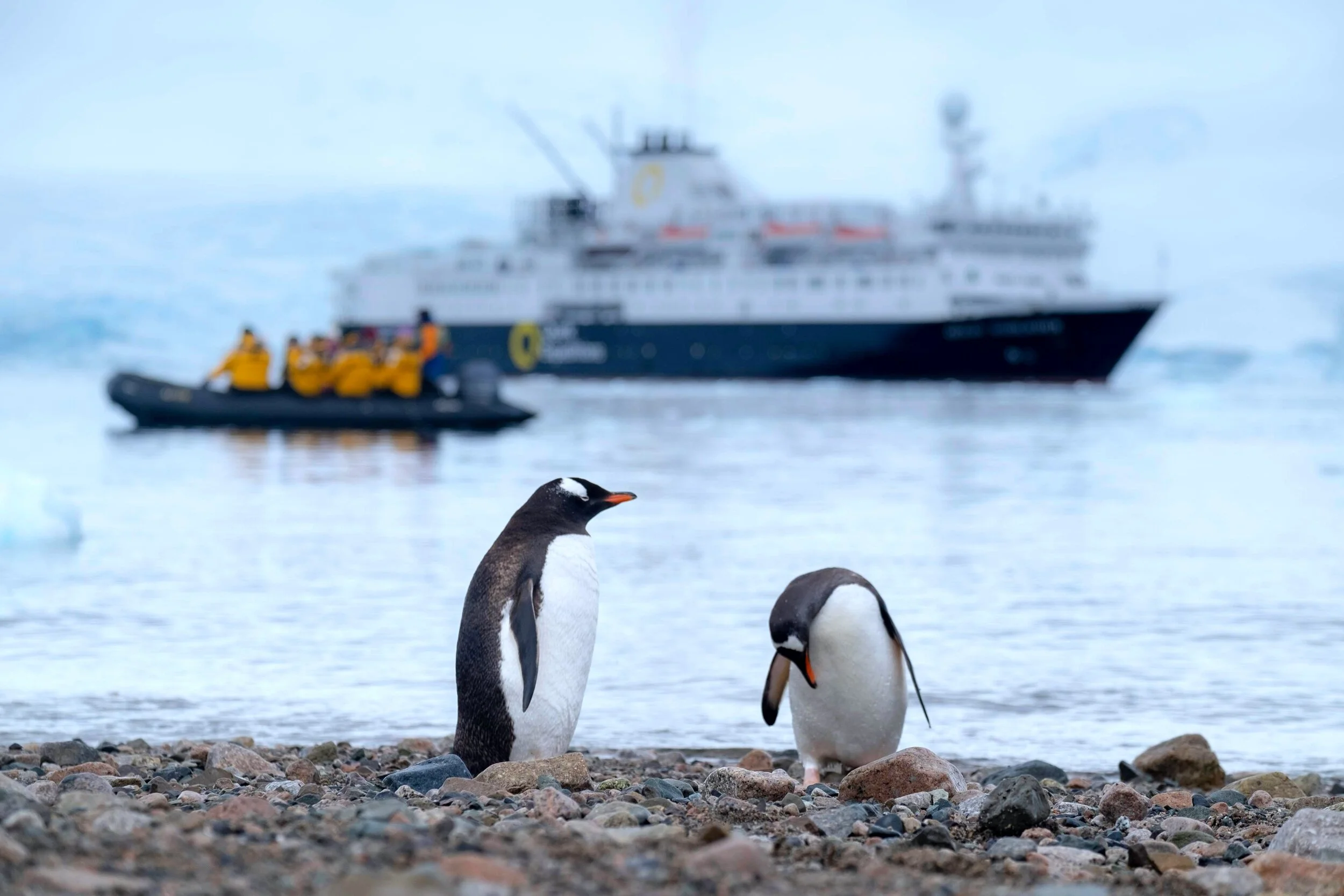
Penguins on a stony beach on the Antarctic Peninsula while an expedition ship transfers passengers in the background. Derek Oyen. Unsplash
Beyond setting high levels of restriction in order to enter Antarctica, isolation policies in the rest of the world have affected people’s ability to leave the continent as well. Many organizations wishing to bring people back are encountering closed borders, forcing travelers to reroute. Out of anyone to face these problems, however, Antarctic researchers seem to be the best suited. Despite running into major barriers about a month ago, organizations have been working to resolve this problem and have determined various ways of getting people out of Antarctica, especially in anticipation of the Antarctic winter. As one researcher said, “...that's the kind of the thing that we have to deal with. We have to be completely adaptable because working in Antarctica is like that - conditions change, the weather changes. So, we have to be ready.”

Phoebe Jacoby
is a Media Studies major and Studio Art minor at Vassar College who believes in the importance of sharing stories with others. Phoebe likes to spend her free time reading, drawing, and writing letters. She hopes to continue developing her skills as a writer and create work that will have a positive outward effect.
Colorism Shows its Face through India’s Skin Whitening Creams
Since 1975, India has had a market advertising products that can achieve being “fair and lovely” by whitening the skin, but what effect has this had on Indian society?
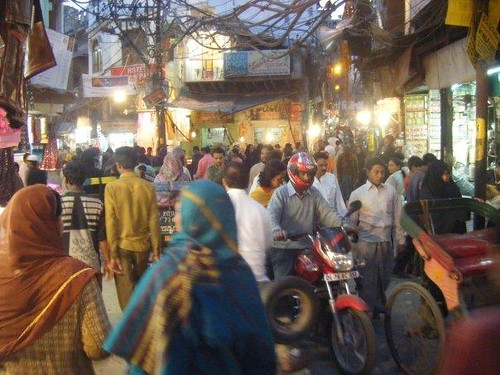
People on the street in India. Craig J Bethany. CC BY-NC-SA 2.0.
On June 26, Unilever made the decision to remove the word “fair” from its whitening creams sold throughout India and parts of Asia. It is assumed that the decision to rename the product was due to the global response to the death of George Floyd and the rise of the Black Lives Matter movement in the United States. For Indians, skin lightening is a painful reminder of their colonized past.
Commercials for whitening creams have advertised the products as the solution to all of life’s troubles. Along with that, they have carried the notion that having darker skin is harmful and will set you back in life. It only perpetuates colorism, when people within the same race discriminate against skin colors. Often, colorism takes on the form of favoritism toward lighter skin shades over darker ones.
Colorism is a byproduct of colonization. From 1858 to 1947, India was under British rule in hopes of extracting the resources that were making India so profitable through the East India Company. Britain took advantage of the wealth by imposing strict policies and limiting government representation across India. However, those that had lighter complexion were favored and often offered more better jobs than those with darker complexions. Britain maintained its control over India until the country’s independence after World War II.
Thus, in 1975, Unilever’s “Fair & Lovely” cream first debuted. Despite a decadeslong appeal toward fair skin, this “luxurious” type of cream would not become popular until the 1990s, when it became more accessible in the form of cosmetic products such as deodorants, creams and at-home treatments. Even though it is a more recent trend, skin lightening still reflects and enforces the mindset of British colonizers. Bollywood even joined the trend by selecting lighter-skinned actors who can “better represent Indian life.” Since the first release of Unilever’s product, the skin lightening industry has become a multimillion dollar market, with some estimates around $4 billion globally, due to the high demands to meet the beauty standards. The highest usage is across Asia and Africa.
Typical usage for skin lightening creams, also known as skin bleaching, is to help reduce the appearance of scars or age spots. In India, though, the products are also used to reduce the melanin levels in one’s skin. Most products must be applied over the course of six weeks to see results. Often, there is a combination of different steroids or chemicals used to help change skin tone.
Research by the World Health Organization has found that mercury is often an active ingredient. Even though it is banned for use in the U.S., other countries do not have much regulation over mercury’s usage. Mercury can cause a range of problems, from neurological to fertility in nature. 1 in 4 skin lightening products made in Asia has been found to contain mercury. Other risks include skin cancer, premature aging of skin, skin thinning and allergic reactions.
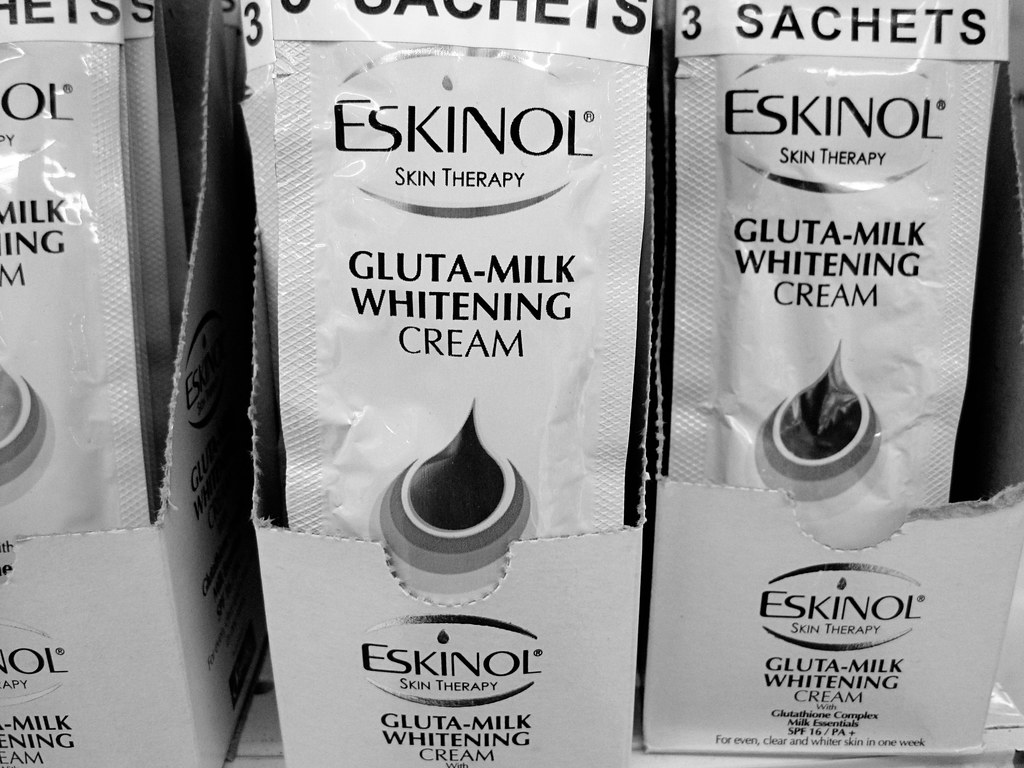
Skin lightening treatments at a convenience store. Sophia Kristina. CC-BY-NC-ND 2.0
Additionally, the color of one’s skin in India is critical when it comes to arranged marriages. Often, parents place advertisements in newspapers known as matrimonial ads in order to find potential spouses for their children. Often in these ads, there are descriptions of the child’s skin tone ranging from “fair” to “wheatish,” with “fair” individuals pursued the most. Along those lines, many dating websites for arranged marriages, such as Shaadi.com, allow users to select preferences based on skin tone. However, Shaadi.com representatives did announce earlier this month they were removing the search option.
This is not to say that the skin lightening industry is to blame for colorism today. It has become a deeply-rooted mechanism, with discrimination and racism existing in Indian society since the 1850s. Activists have encouraged the stop of these products’ production, as organizations such as Women of Worth have found that skin lightening practices cause a sharp decrease in self esteem for brown girls.
Eva Ashbaugh
is a Political Science and Gender, Sexuality, and Women's Studies double major at the University of Pittsburgh. As a political science major concentrating on International Relations, she is passionate about human rights, foreign policy, and fighting for equality. She hopes to one day travel and help educate people to make the world a better place.
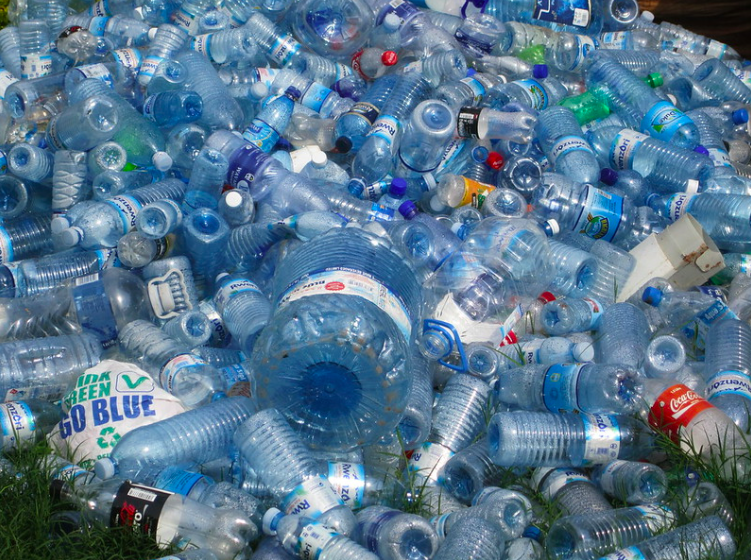
A pile of plastic water bottles in Kampala, Uganda. Jillian C. York. CC BY-NC-SA 2.0.
Ugandan Company Transforms Water Bottles into COVID-19 Face Shields
In Uganda, the COVID-19 pandemic has shut down nearly all operations. One essential business that has remained open is Takataka Plastics, a social enterprise in Gulu focusing on recycling plastic waste. Paige Balcom, a Fulbright scholar from the University of California, Berkeley, who is studying for a doctorate in mechanical engineering, and Peter Okwoko, a Ugandan environmental and community activist, teamed up to create the company. Initially, it was founded to tackle Gulu’s extreme waste problem as the nearest recycling center was six hours away. They started by creating building materials such as roofing tiles and pavers in 2019, but in March they turned their efforts to supplying face shields for Uganda’s doctors.
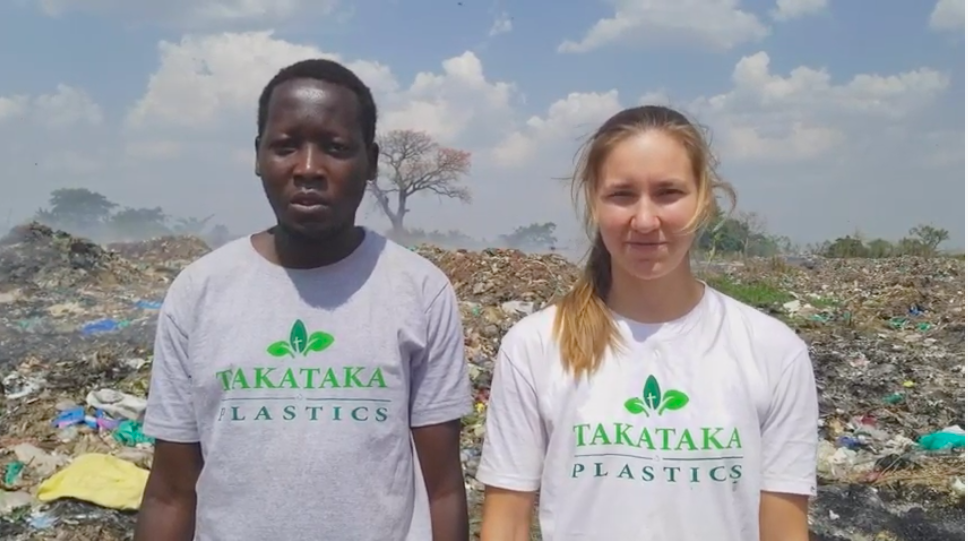
Peter Okwoko and Paige Balcom, the co-founders of Takataka Plastics, in front of recyclable waste. Stanford ENERGY. YouTube.
Mask-making process
To create the masks, the only materials needed are plastic water bottles, two days and an adjustable strap. First they sort through the plastic, shred it, melt it and shape the liquid plastic into face shields and frames, using locally made molds to do so. The plastic cools and sets, and the masks are ready to distribute. Balcom and Okwoko were able to create a prototype in three days that they sent to a local hospital, and the product quickly received approval with only small adjustments needed.This simple process gives Takataka Plastics the capacity to produce 400 units of the badly needed personal protective equipment each day, and orders from local hospitals have already flooded the business.
Protecting a community
Takataka Plastics’ face shield is a momentous invention in a time when personal protective equipment for hospitals is being rationed and reused. They have created a simple, cost-effective product that can be widely distributed. The handmade face shields from their center cost just 80 cents, but they have not stopped trying to lower the cost. As they receive multitudes of orders from local hospitals, Balcom and Okwoko have since ordered machinery that will allow for the manufacturing of 400 shields per day at a cost of only 25 cents each. With an abundance of plastic waste to create the shields, hospitals in Uganda will soon be equipped with proper protections thanks to Takataka Plastics.
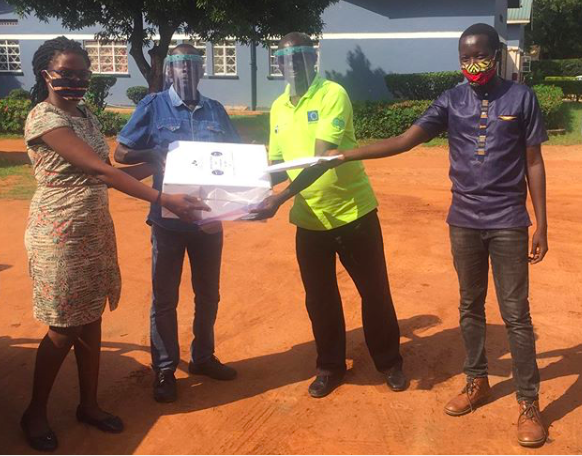
Members of the Takataka Plastics team give face shields to Pakwach District’s COVID-19 task force. Takataka Plastics. Instagram.
More than face shields
This plastic recycling company has made great strides since shifting production in March. Upon releasing the prototype, Takataka Plastics has received incredibly high demand for their shields. Because of the disruption of personal protective equipment supplies, Ugandan hospitals need these recycled masks more than ever. While accomplishing this feat, the company has also allowed the community to come together in a very special way.
Upon her first visit to Uganda four years ago, Balcom noticed how deeply ravaged the country was from the presence of the Lord’s Resistance Army (LRA), a Ugandan rebel group led by Joseph Kony. Starting in 1987, his group waged a deadly, almost 20-year campaign against the Ugandan government. Often, the LRA would abduct children children for the army, forcing them to work as child soldiers, porters and “wives,” sex slaves and LRA fighters. She and Okwoko knew their company could provide a safe place for healing, so they opened their doors to volunteers and workers of any kind. They have five full-time staff members and employ individuals from the community in order to allow them a space for healing from the trauma brought on by the LRA.
According to Takataka Plastics’ website, the company plans to continue its work and expand into a “full-scale plastic processing operation that will create jobs and a cleaner, healthier environment in Gulu.”

Renee Richardson
is currently an English student at The University of Georgia. She lives in Ellijay, Georgia, a small mountain town in the middle of Appalachia. A passionate writer, she is inspired often by her hikes along the Appalachian trail and her efforts to fight for equality across all spectrums. She hopes to further her passion as a writer into a flourishing career that positively impacts others.
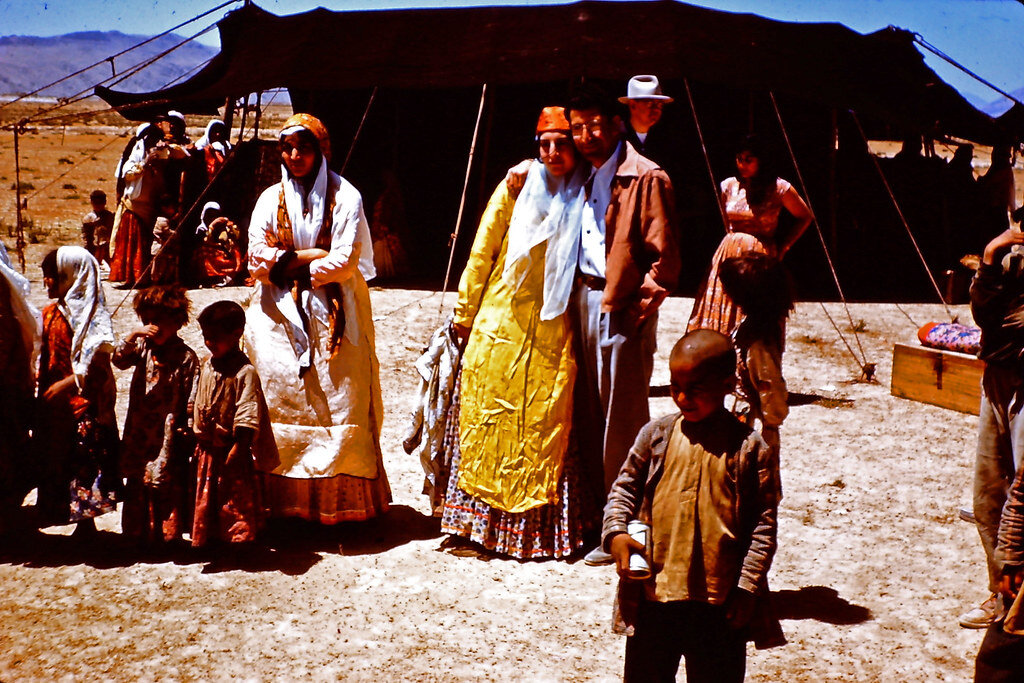
Iranian Children’s Day 2008. Unicefiran. CC BY-ND 2.0
Iran Fights for its Future as its Population Dwindles
After the Islamic Revolution in 1979, Iran’s population reached 55 million people as the government encouraged its citizens to have larger families. However, from the 1980s to 2012, Iran witnessed its fastest and largest fertility drop ever. This was largely due to Iran’s former supreme leader Ayatollah Khomeini who feared “the economy could not support a growing population after Iran’s war with Iraq.” Currently, if it continues on this trend, Iran will become the oldest country in the world by 2050 with a third of the population over 60 years old. This trend is due to government-imposed family planning strategies and economic issues which have led to a lower number of marriages.
Family Planning Implemented 50 Years Ago
Before the Islamic Revolution, the government pushed for families to increase the number of children they had. This led to an average of seven children per family, but after the 1980s and the post-Islamic revolution increased family planning policies, this dropped to what is now an average of 1.7 children. This was due to fears that the economy would not be able to handle the rapidly growing population after the Islamic Revolution. The government implemented a nationwide campaign with more sex education, free condoms, cheap contraceptives and slogans such as “fewer kids, better life,” along with the advice to wait three to five years to have more children. People suddenly had very easy access to sexual sterilization procedures in public hospitals at affordable prices and now women had more time to go to university, even outnumbering men there. Consequently, women had more time to focus on their own interests while men did not have to support quite as large a family.
Economic Issues Led to Fewer Marriages
Iran’s war with Iraq led to issues that were largely due to both countries taking out the other’s oil industry. Research shows that “the loss of oil exporting capacity in both countries was by far the most devastating economic blow of the war.” Other economic hardships arose from decreased amounts of imports and several cities were bombed, damaging major infrastructures and impacting normal life for citizens. These factors led Iran’s annual population growth rate to drop below 1% as of this year, while just two years ago the rate was 1.4%. About a decade ago, Iran’s government reversed course and began encouraging families after realizing they were headed toward a population decline. Economic challenges have led to fewer marriages, with the rate dropping 40% in a decade. In response, Supreme Leader Ayatollah Khamenei offered incentives such as increasing paid maternity leave for men and women and in 2015, two laws were passed restricting contraceptives and sterilization procedures.
What Now?
With the daunting current situation, Iran has focused on almost doubling its population to 150 million. Additionally, “vasectomies will no longer be carried out by state-run medical centers and contraceptives will only be offered to women who are at risk.” Of course, the option is still available at private hospitals, but the easy access the country has had to procedures and contraceptives has come to an end. This has met with some resistance from human rights groups such as Amnesty International, which stated that “women are not baby-making machines.” Ultimately, though, the previous family planning policies have started to reverse and action has been taken to increase Iran’s annual population growth rate. The government’s focus now is to change its headlines from a rapidly aging country to a young, fast-growing one.

Elizabeth Misnick
is a Professional Writing and Rhetoric major at Baylor University. She grew up in a military family and lived in Europe for almost half her life, traveling and living in different countries. She hopes to continue writing professionally throughout her career and publish her writing in the future.
U.N. Drops Saudi Arabia-Led Coalition From Blacklist Despite Recent Killings of Children
With no evidence that children are safe, the U.N. decided to remove the Saudi Arabia-led coalition in Yemen off a blacklist for violations of children’s rights.
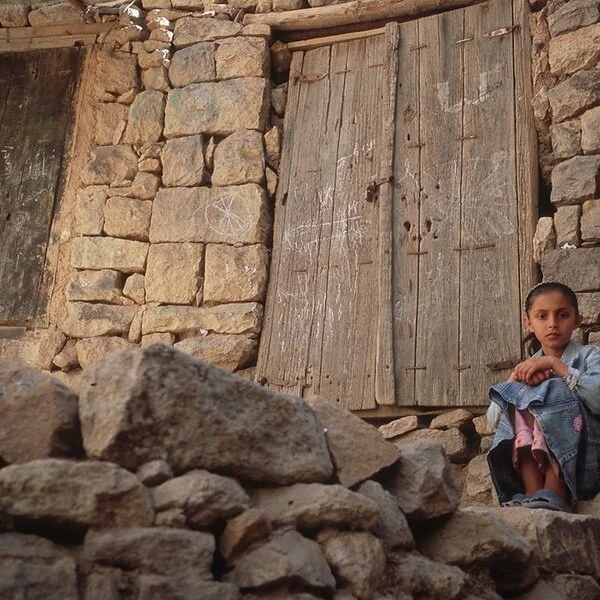
Child in Yemen among the rubble. Carl’s eye. CC BY-NC-ND 2.0
On June 17, the U.N. made the decision to remove the military coalition led by Saudi Arabia from one of its blacklists. The significance of this specific list, which focuses on children in armed conflict, is to shame groups that are guilty of violating the rights of children. Anyone can be placed on the list for a multitude of violations ranging from killing children to the recruitment of children for war. U.N. Secretary-General Antonio Guterres stated that the coalition’s removal was decided by efforts made to reduce the number of deaths and decrease the airstrikes that caused the killings over the previous three years.
However, there is a discrepancy in the decision. According to data released by the U.N., 222 children were hospitalized or killed as a result of these attacks last year. In addition, several hours after the U.N. announced its decision to remove the coalition, four children were killed in an attack in northwest Yemen.
The war in Yemen can be traced back to 2011. Following the Arab Spring, there has been unrest due to a failed political transition that led to terrorist attacks, a separatist movement and corruption. However, in 2014 a rebel group known as the Houthis, backed by Iran, ousted the government. What started out as a civil war transitioned into a conflict with neighboring countries as the Saudi Arabia-led coalition stepped in, attempting to help restore the government and defeat the Houthis.

Child of Yemen. Carl’s eye. CC BY-NC-ND 2.0
As of March 2020, it is estimated that 7,700 civilians have died in the war, largely due to airstrikes from the coalition. However, these are only verified deaths. Some statistics estimate it to be as high as 100,000 fatalities. On top of the conflict, Yemen has been experiencing one of the worst famines it has seen in over 100 years. The country is considered the poorest Arab nation, and the war has ruined the economy to the extent that many people, especially children, are considered malnourished.
There has been backlash over the U.N.’s decision to remove the coalition from the blacklist. From a video posted by Al Jazeera, protests have taken to the streets outside of the U.N. headquarters in Yemen to speak of their disapproval. The main concern is that the removal could leave children vulnerable to future attacks, as voiced by groups like Save the Children. Observers are also questioning the integrity of the blacklist itself, including Iran which said that “the U.N. is giving a free pass.” Iran claims that the Houthis and the Yemeni government have been responsible for the same number of deaths yet only the Houthis remain on the list.
Guterres has said that U.N. would monitor the coalition’s activity over the next year. If there is an increase in children’s casualties, the coalition would be placed back on the list.
Eva Ashbaugh
Eva is a Political Science and Gender, Sexuality, and Women's Studies double major at the University of Pittsburgh. As a political science major concentrating on International Relations, she is passionate about human rights, foreign policy, and fighting for equality. She hopes to one day travel and help educate people to make the world a better place.
National Parks Begin to Reopen, With Limits
National parks are popular travel destinations, and with COVID-19 still present, the distancing quality of being in a park holds appeal for many wishing to escape the confines of the quarantine. According to one survey, 24% of Americans planning on road-tripping this summer have national parks on their mind. The 52 million acres of national park space have not opened up to their full capacity, however, and lots of programming across the nation has been cut in order to discourage large gatherings. Some of the more dangerous trails are closed as well due to fear of contamination from visitors who might hold onto safety chains or railings. Many transportation options have been cut, a choice that makes the inner, unpaved portions of the parks less accessible. Each park is undergoing reopening phases at their own pace, the speed mostly a reflection of what the local government is permitting and the status of COVID-19 in the area. The National Park Service has publicly urged visitors to abide by social distancing guidelines to help prevent the spread of the virus and protect park employees. Many of these parks are located in rural areas that lack extensive hospital care, so an uptick in COVID-19 cases could have devastating effects.
Yellowstone National Park - Wyoming
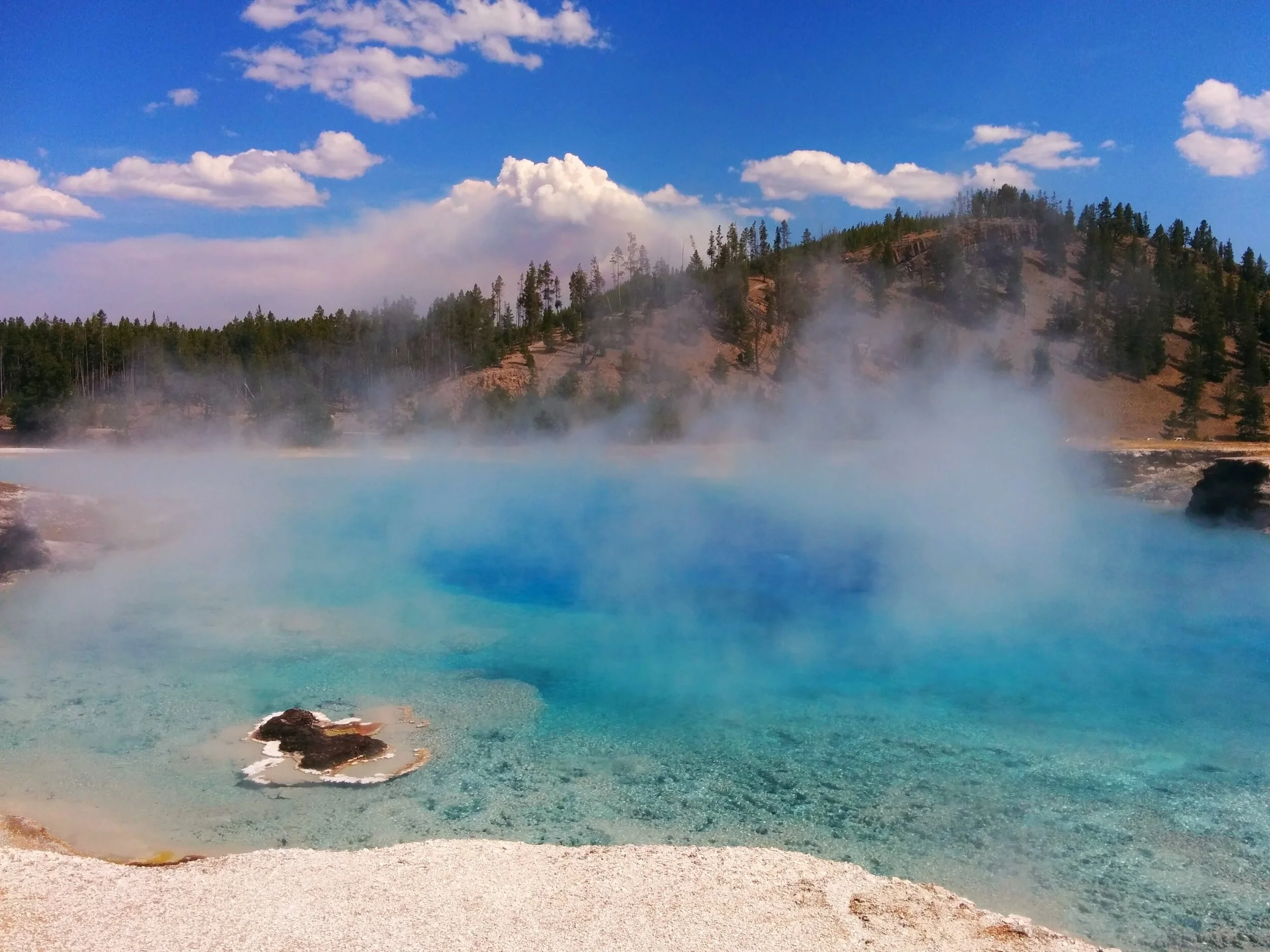
A hot spring in Yellowstone National Park. Aidan B. Unsplash.
Yellowstone National Park is the world’s first national park and a destination for millions of tourists each year. Accordingly, the park typically offers a wide assortment of attractions including an abundance of flora and fauna, 12 campgrounds, and nine visitor centers. Perhaps its most well-known assets are the Old Faithful geyser and the park’s numerous hot springs. Yellowstone reevaluated its spring opening dates after the initial COVID-19 outbreak, pushing its first major phase of reopening from a typical mid-April date to May 18. The park had been closed since March 24 and is now directing visitors toward a few specific entrances as well as limiting them to certain areas (the lower loop) of the park. Additional constraints include the unavailability of overnight accommodations including hotels and campgrounds, the banning of commercial tour buses, and closed ranger programs and visitor centers. As the park progresses into reopening phases 2 and 3, some of these restrictions are expected to loosen, such as the opening of some overnight rooms, takeaway at some on-site restaurants, and select campgrounds. While some of the regulations are done as a response to multiple state guidelines (Yellowstone spills into Montana and Idaho), a Yellowstone website states that “The park’s reopening priorities center on protecting employees and the public from transmission risks through a variety of mitigation actions.”
Arches National Park - Utah
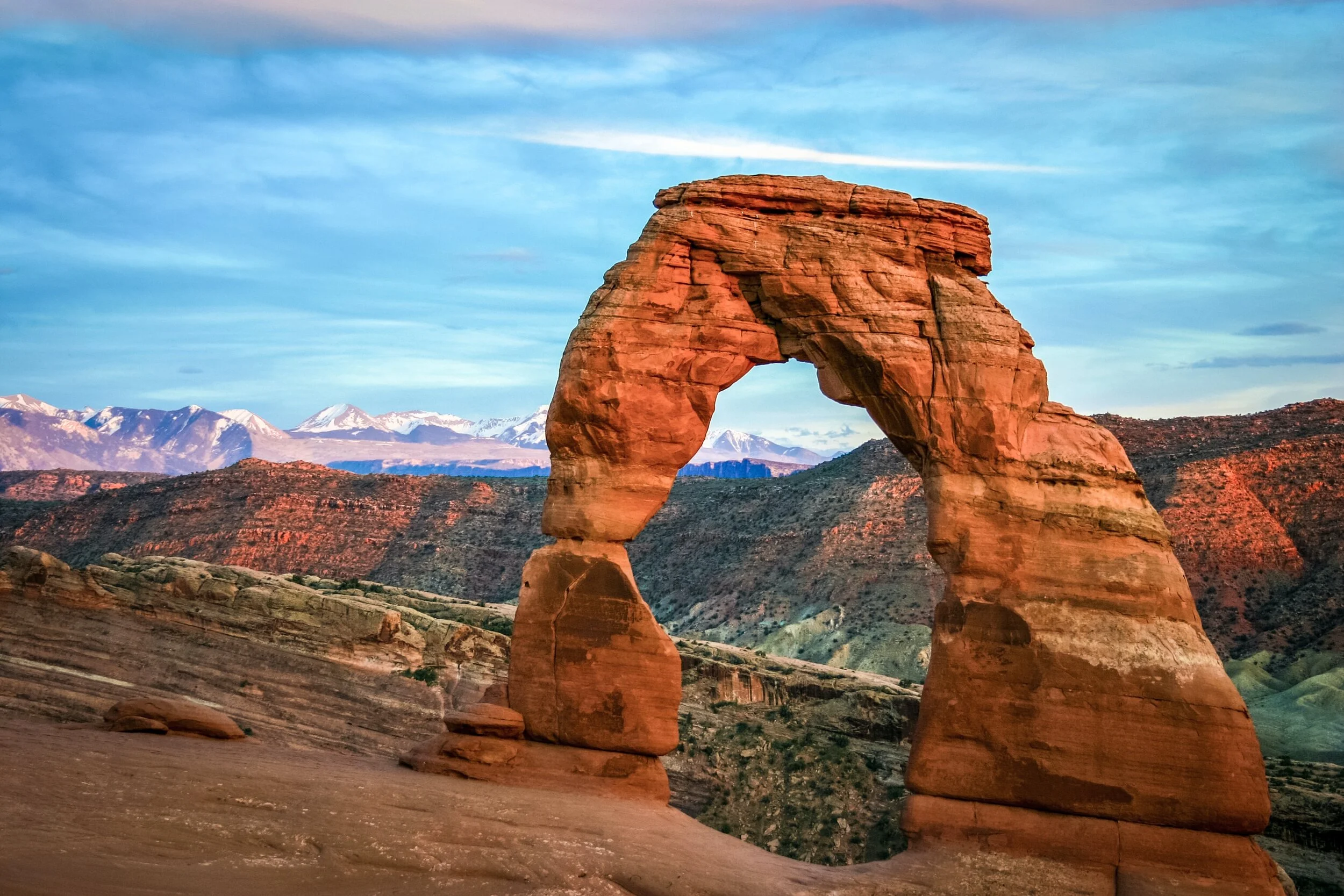
Delicate Arch, one of the top sites at Arches National Park. Holger Link. Unsplash.
Arches National Park, located on the eastern side of Utah near the city of Moab, is home to the famous stone marvel known as the Delicate Arch. The park also has numerous hiking opportunities, additional stone icons, and scenic drives. Although the park was closed for many weeks after the virus broke out, Arches resumed entrance fee collection (seven-day passes ranging from $15 to $30) on June 15 as part of a multiphased reopening process. While the Arches Visitor Center, Devils Garden Campground and Fiery Furnace remain closed, the roads, trails and park store are now permitting visitors. One major concern for those running the park is the congregation of visitors around popular landmarks like the Delicate Arch. Although the park has not issued any explicit policies banning congregations of visitors around hot spots like the arch, the National Park Service is following guidelines from the Centers for Disease Control and Prevention. The park has stated that it is actively monitoring visitors and encouraging them to wear masks and social distance in addition to following the park’s standard Leave No Trace principles.
Joshua Tree National Park - Southern California
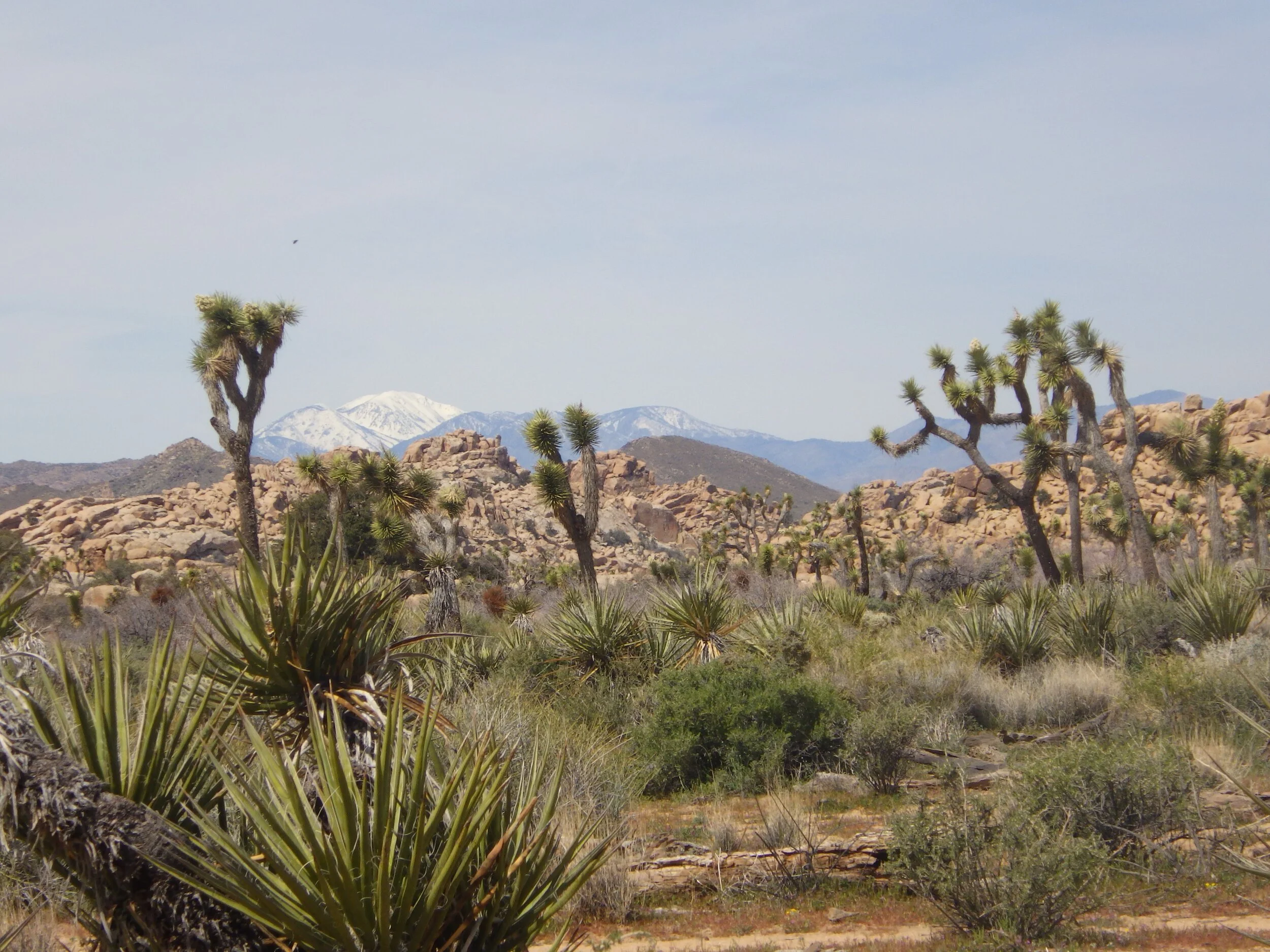
A snapshot of some yucca trees in Joshua Tree National Park. Fum Bally. Unsplash.
Joshua Tree has two distinct deserts (the Mojave and Sonoran) and is known for its iconic giant yucca trees. This rocky 794,000-acre park, located in Southern California, receives 2.8 million visitors during a typical year. Like many other national parks, Joshua Tree is undergoing a multiphased reopening plan that began in late May. Despite some modifications, Joshua Tree has listed many open amenities on their website, including entrance booths, trails, family campsites, visitor centers and group campsites (25 person limit). The park is not running any programs this year.
Redwood National Park - Northern California
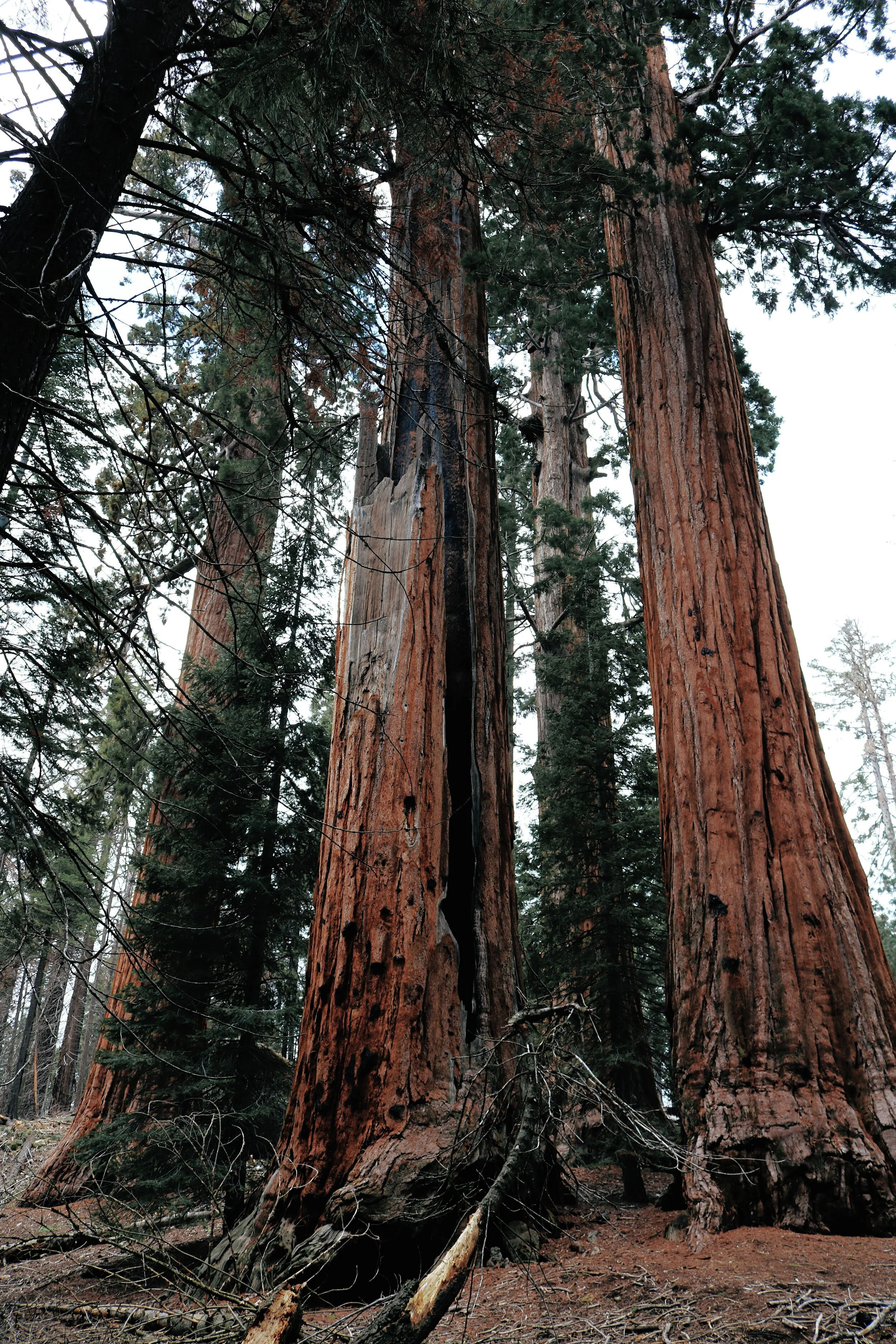
Some impressive redwood trees in Redwood National Park. James Lee. Unsplash.
Redwood National Park is named for the giant redwood trees throughout the area, the tallest of which is recorded to be over 379 feet tall. Most of the park is free and almost half a million visitors come to enjoy its beauty each year. In a state with nine national parks, this one is a standout. All five visitor centers are currently closed at Redwood National Park, as are some roads and parking lots. The park is not holding any on-site events or outdoor school programs, instead requesting that everyone spread out while visiting. The park asks that everyone be prepared to take home their trash as well. Nevertheless, visitors can still enjoy most of the campgrounds, trails and a number of scenic drives.
Acadia National Park - Maine
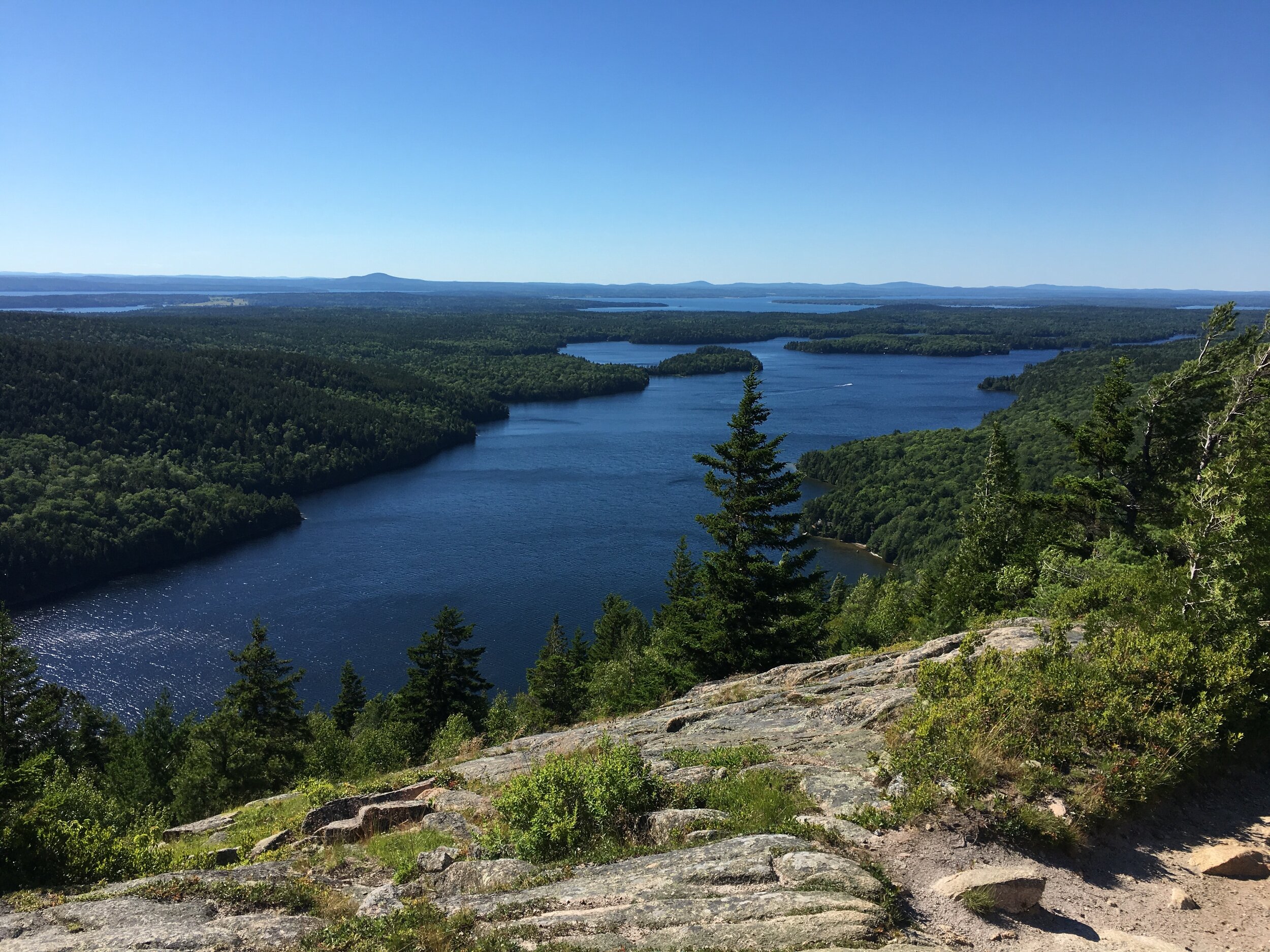
A lake view at Acadia National Park. Michael Loftus. Unsplash.
Acadia is located along coastal Maine and is in close proximity to a number of quaint restaurants, museums and hotels. Visitors can take scenic drives, investigate numerous lakes and wooded areas, and take boats out on the water. There is even a portion of the park that is accessible mainly by ferry. Acadia, like many other parks, is currently undergoing a multiphased reopening plan. While most hiking trails and retail services are open, campgrounds are not. If visitors are feeling down about being unable to camp overnight, they can still have a memorable experience and go for a horse-drawn carriage ride instead.
Valley Forge National Historical Park - Pennsylvania
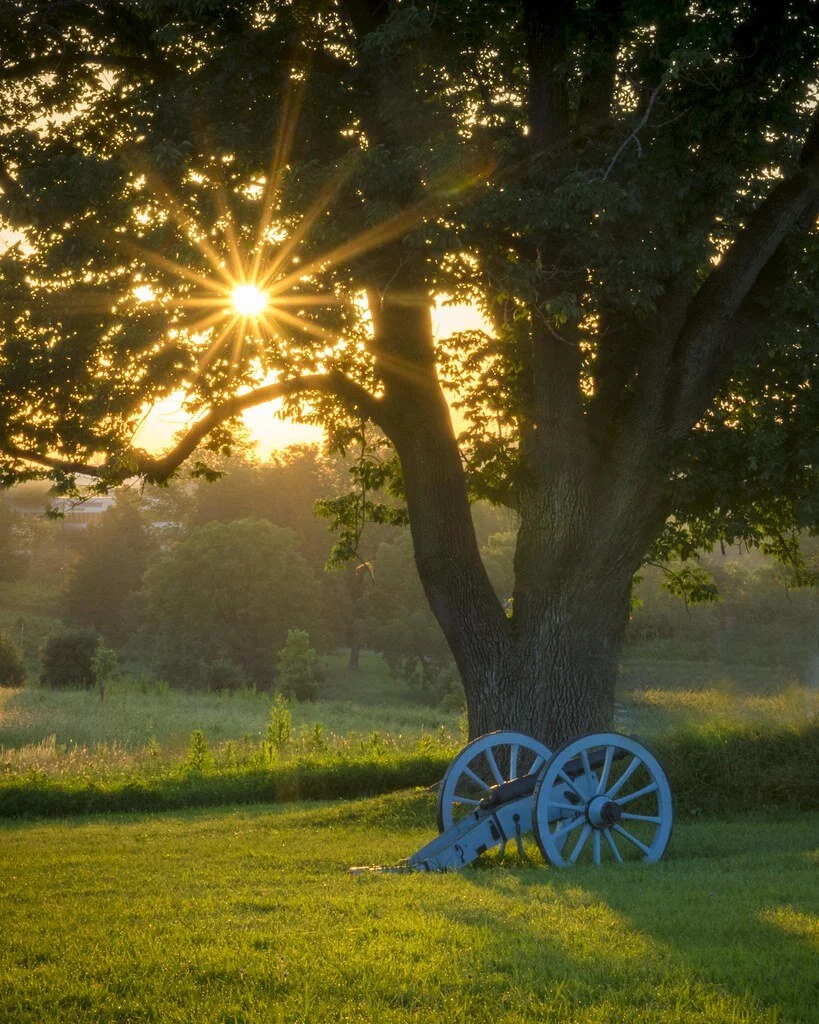
The sun rises over Valley Forge National Historical Park. Thomas James Caldwell. CC BY-SA 2.0
Valley Forge is rich with history and greenery as it is the location where Gen. George Washington kept the Continental Army for six months in 1777 and 1778. During a typical year, visitors participate in a number of recreational activities such as trolley tours, visiting Washington’s headquarters, and investigating the Muhlenberg Brigade Huts. As the park undergoes a slow reopening process, these buildings and facilities, including visitor centers, have remained closed. Some parking lots, roads and trails are open, however, and visitors are encouraged to take their trash with them in addition to practicing social distancing. Programs and events have not been officially canceled and are just postponed.
Big Bend National Park - Texas
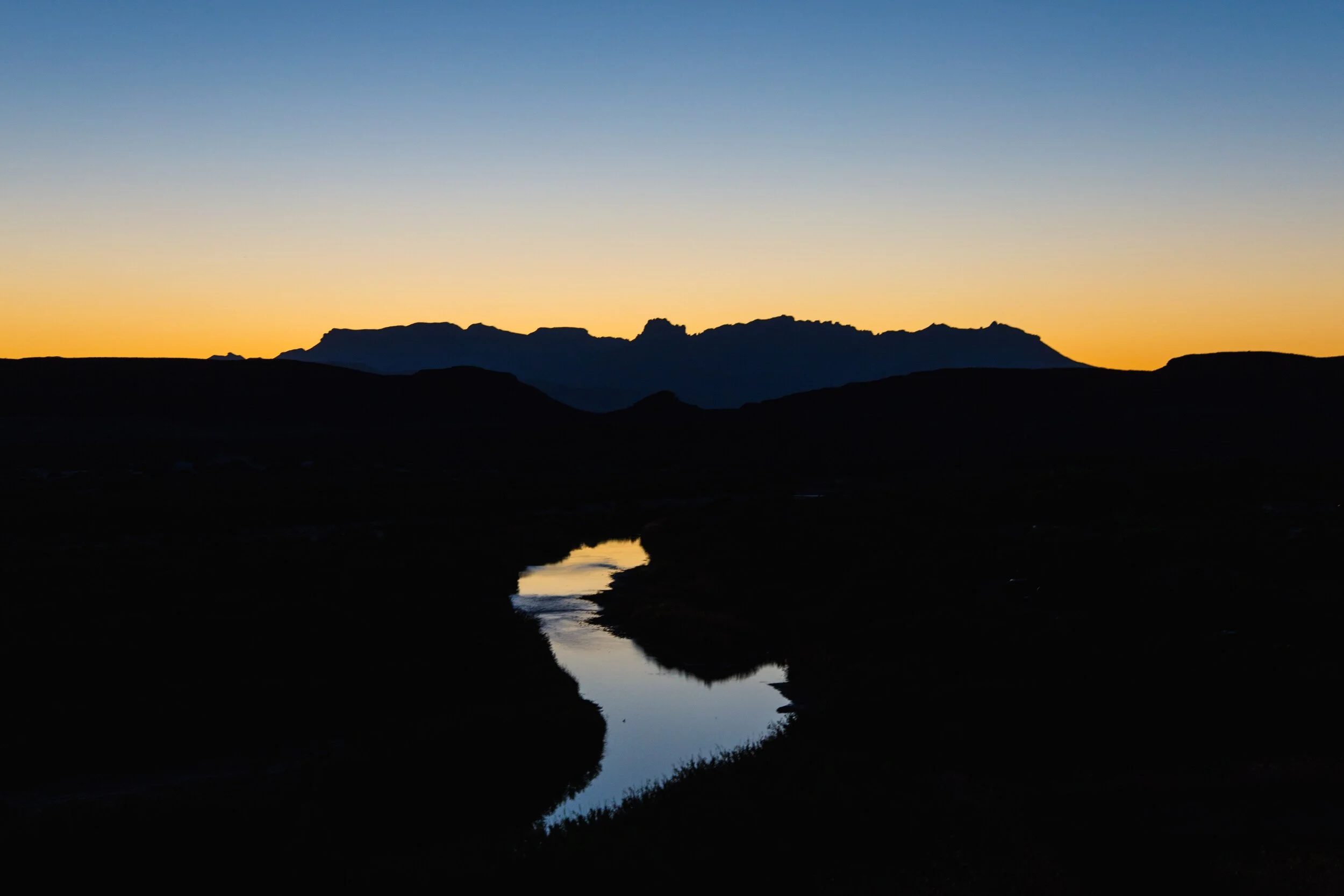
A view of the Rio Grande in Big Bend National Park. Kyle Glenn. Unsplash.
Big Bend National Park is situated in West Texas and covers over 800,000 acres of land. Named after the U-turn in the Rio Grande, this national park has a range of terrain including desert, mountains and rivers. The park does not receive many visitors - only about 350,000 per year - but it does have an excess of heat, with temperatures passing 100 degrees Fahrenheit before noon in the summertime. The park is fairly open, including day hike trails and rafting on the Rio Grande. The visitor centers and some stores are closed, as are the more “primitive roadside” campsites for backpackers. Camping and lodging are at limited capacity but expect a greater degree of reopening in the near future.

Phoebe Jacoby
is a Media Studies major and Studio Art minor at Vassar College who believes in the importance of sharing stories with others. Phoebe likes to spend her free time reading, drawing, and writing letters. She hopes to continue developing her skills as a writer and create work that will have a positive outward effect.
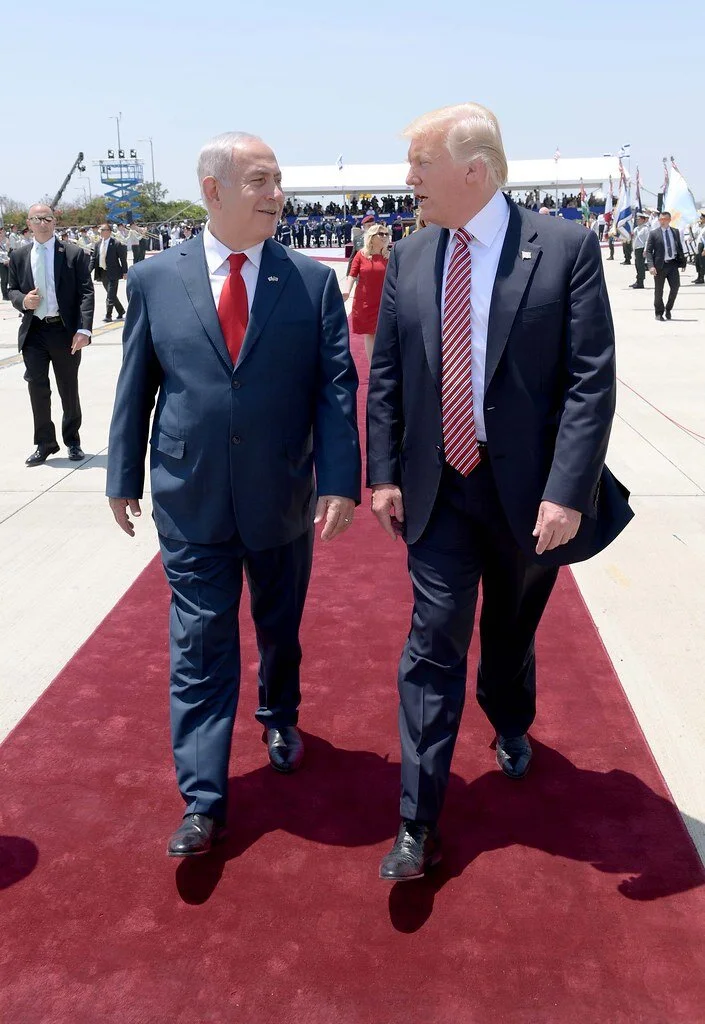
Israeli Prime Minister Benjamin Netanyahu and U.S. President Donald Trump. IsraelMFA. CC BY-NC 2.0.
A Surge in Condemnations Follows Israel’s Annexation Plans for the West Bank
The prime minister of Israel, Benjamin Netanyahu, is planning to annex parts of the West Bank on July 1 to extend Israeli sovereignty to new areas. This is a controversial and illegal move according to U.N. experts and much of the international community but comes with the support of the Trump administration.
According to 47 experts appointed by the U.N. Human Rights Council, "The annexation of occupied territory is a serious violation of the Charter of the United Nations and the Geneva Conventions, and contrary to the fundamental rule affirmed many times by the United Nations Security Council and General Assembly that the acquisition of territory by war or force is inadmissible. These experts also deemed Israel’s annexation plan “a vision of 21st century apartheid.”"
Palestinians, Palestinian leaders, and leaders of the Arab world have largely condemned this plan. In the first attempt of its kind, the United Arab Emirates’ ambassador to the United States, Yousef Al Otaiba, wrote in an Israeli newspaper to appeal “directly to Israelis in Hebrew to deter Prime Minister Benjamin Netanyahu from following through on his promise to annex occupied territory as early as next month,” says The New York Times. The article was a refutation of Netanyahu’s assertion that Arab countries gain too much from Israel to continue supporting Palestinians. In addition to those concerns, many former Israeli defense officials argue that the annexation plan could increase violence within the West Bank, where Palestinians are facing an increase in unemployment. “Imposing Israeli sovereignty on territory the Palestinians have counted on for a future state,” Israeli experts say, “could ignite a new uprising on the West Bank. Neighboring Jordan could be destabilized.”
The news of an annexation plan has brought about new pleas from the Boycott, Divestment, Sanctions movement (BDS), created in 2005 by Palestinians to end international support for Israel’s actions in the West Bank . In May 2020, various Palestinian civil rights groups, human rights organizations, and unions “called on governments to adopt ‘effective countermeasures, including sanctions’ to ‘stop Israel’s illegal annexation of the occupied West Bank and grave violations of human rights.’”
The BDS movement saw a huge victory on June 11 when the European Court of Human Rights shut down France’s attempt to criminalize BDS activists in a 2015 case. At the time of the arrests, the activists were said to be inciting discrimination against a group of people for their origins, race or religion. In the end “the European judges ruled that as citizens these activists had the right to express their political opinions, which are in no sense discriminatory against a race or a religion.” Netanyahu’s expeditious plan to annex is likely to bring about more condemnations from the international community and increase support for the BDS movement, but it is unclear whether these actions will actually halt his plan.

Hanna Ditinsky
is a sophomore at the University of Massachusetts Amherst and is majoring in English and minoring in Economics. She was born and raised in New York City and is passionate about human rights and the future of progressivism
A sunrise view. Nils Nedel. Unsplash.
Ready to Travel? An International Guide to Which Countries are Welcoming Travelers Now
Around the world, countries vary in terms of their travel restrictions. Most of South America bans all foreign travelers from entering, while Europe is opening up but has a ban on travelers from the US. Here is a worldwide guide to where you can go and not go.
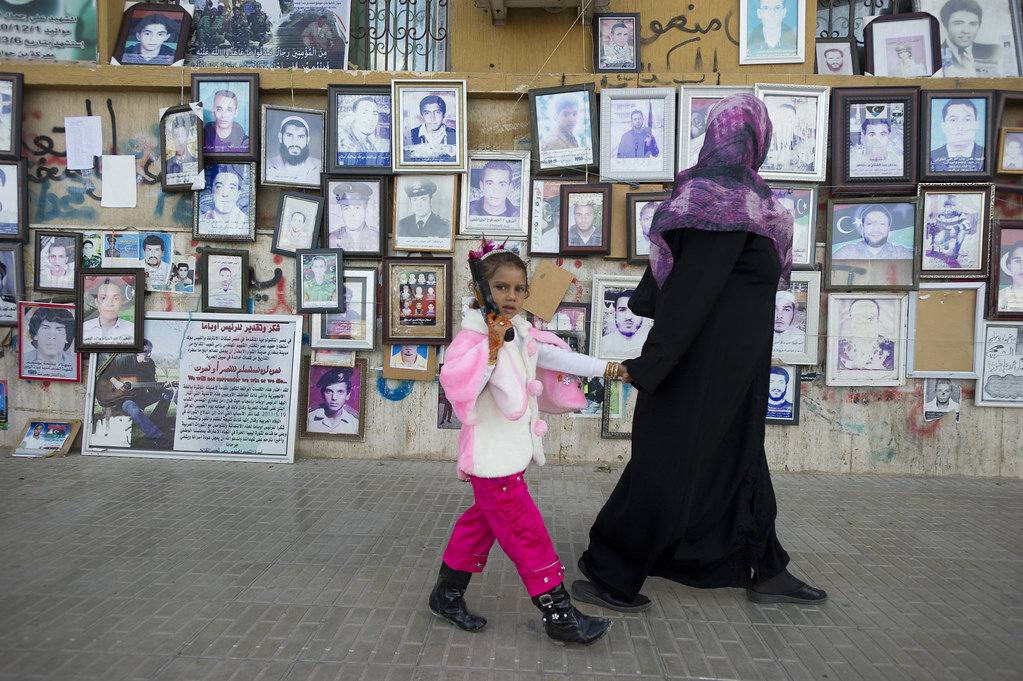
While playing with a toy gun, a child passes a memorial for civilians killed in the Libyan civil war. Teutloff Museum. CC BY-ND 2.0
Nearly a Decade of Strife in Libya
After the overthrow of then-leader Moammar Gadhafi in 2011, Libya has been in a constant state of political unrest. Since 2014, the Government of National Accord (GNA) and the Libyan National Army (LNA) have sought control over the country, sparking a destructive civil war. Based in the Libyan capital, Tripoli, the GNA is recognized by the United Nations. Allied with General Khalifa Hifter, the Benghazi-based LNA receives aid from Russia, France and the United Arab Emirates.
Libyan civilians have endured chaos, including shelling near the front lines, injuries from explosive devices and abductions for ransom. The United Nations High Commissioner for Refugees estimates that 1.3 million Libyans require urgent humanitarian assistance.
Armed Conflict and War Crimes
Weapons proliferation has been a major security concern in Libya, as allied countries provide the GNA and LNA with advanced military equipment. State-provided arms transfers make Libya a volatile battleground. Currently, the country has the world's largest uncontrolled ammunition supply, with an estimated 150,000 to 200,000 metric tons of uncontrolled munitions. Yacoub El Hillo, the U.N.’s resident and humanitarian coordinator in Libya, announced, “The increasing use of explosive weapons has resulted in unnecessary loss of life, displacement, destruction and damage to vital civilian infrastructure.” The Islamic State group has also used the country as a hub to coordinate broader regional violence, further complicating efforts to create a united government.
In April 2019, Khalifa Hifter’s forces attacked Tripoli, resulting in over 1,000 fatalities. As General Hifter continues his campaigns, the International Criminal Court (ICC) warns of potential war crimes, including mass murder, desecration of corpses and kidnappings. In a statement to the U.N. Security Council, chief prosecutor Fatou Bensouda accused the LNA of targeting innocent civilians: "Of particular concern to my Office are the high numbers of civilian casualties, largely reported to be resulting from airstrikes and shelling operations. Intentionally directing attacks against the civilian population or against individual civilians not taking direct part in hostilities is a war crime under the Rome Statute. Likewise, the Rome Statute prohibits the intentional directing of attacks against hospitals and other buildings protected under international law, such as those dedicated to religion or education, when they are not military objectives."
Civilian Victims and Internal Displacement
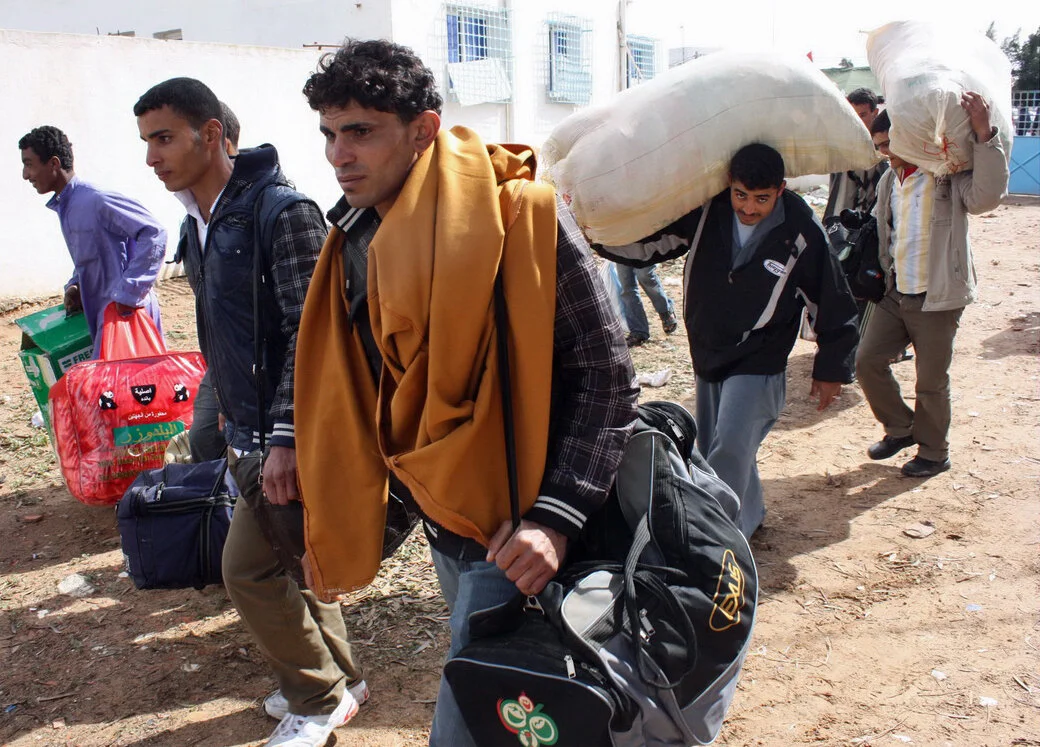
Displaced civilians flee their homes in Libya. Magharebia. CC BY 2.0
Due to ongoing conflict, nearly 400,000 Libyans have been forced to flee their homes and are now internally displaced. According to UNICEF, Libyan hospitals and schools serve as shelters for thousands of displaced civilians around Tripoli. Yet, with military forces continually targeting these makeshift shelters, Libyans face inadequate access to health care, essential medicines, food, safe drinking water and education. School has been suspended indefinitely for nearly 200,000 children, leaving them susceptible to abuse, human trafficking and violence.
Given the lack of eyewitnesses and credible reports, experts can only estimate the total number of fatalities since 2011. Small Arms Survey, a research-based organization, suspects that approximately 27,000 people have perished in the nine-year-long dispute.
Migrants, Refugees and Asylum-Seekers
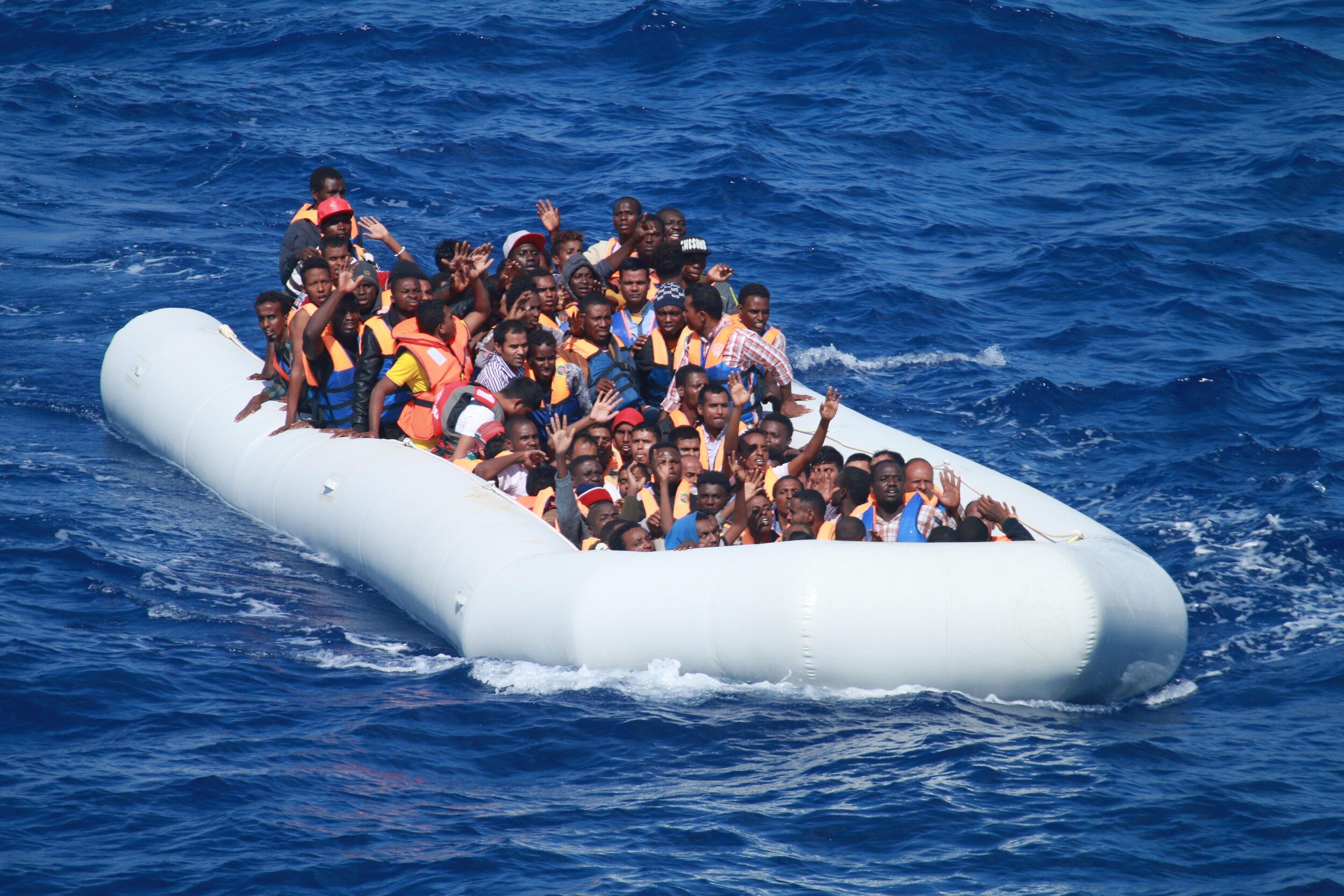
Migrants aboard an inflatable vessel in the Mediterranean Sea. Commander, U.S. Naval Forces Europe-Africa/U.S. 6th Fleet. Public Domain.
Within this war-torn nation, there are currently 654,000 migrants, refugees and asylum-seekers, mainly from sub-Saharan Africa. Approximately 90% of people crossing the Mediterranean Sea to Europe depart from Libya. Migrants and asylum-seekers who are captured at sea and returned to Libyan territory are detained in centers run by the GNA’s Interior Ministry, where many suffer inhumane conditions including sexual violence, extortion and forced labor. While the GNA manages formal migrant detention centers, smugglers and traffickers run numerous informal facilities. “Those interned there, mainly refugees, keep dying of diseases and hunger. They are victims of violence, rape and arbitrary treatment at the hands of militias,” said Julien Raickmann, Doctors Without Borders (MSF) chief in Libya. Since January, more than 4,000 migrants have been intercepted at sea and returned to Libya, while hundreds have disappeared altogether. Despite threats of detention, migrants and asylum-seekers still venture to Libya, hoping to reach Europe.
Humanitarian Relief
After nine years of instability, thousands of Libyan civilians and migrants face displacement, malnutrition and violence. The U.N. Office for the Coordination of Humanitarian Affairs (OCHA) launched the 2020 Humanitarian Response Plan, which pledges $115 million in relief efforts. Protection is at the core of this plan, as well as the provision of food, shelter, health care, water and sanitation. The U.N.’s refugee agency, UNHCR, will also work at 12 disembarkation points in Libya to aid and protect migrants, refugees and asylum-seekers. At detention centers, they will provide humanitarian assistance and mitigate maltreatment. These organizations seek durable solutions to prevent another decade of turmoil.

Shannon Moran
Shannon is a Journalism major at the University of Georgia, minoring in English and Spanish. As a fluent Spanish speaker, she is passionate about languages, cultural immersion, and human rights activism. She has visited seven countries and thirty states and hopes to continue traveling the world in pursuit of compelling stories.
Rohingya Muslims Trapped At Sea For Months While Fleeing Myanmar
Since February, Rohingya Muslims have been stuck at sea while fleeing persecution in Myanmar due to COVID-19.
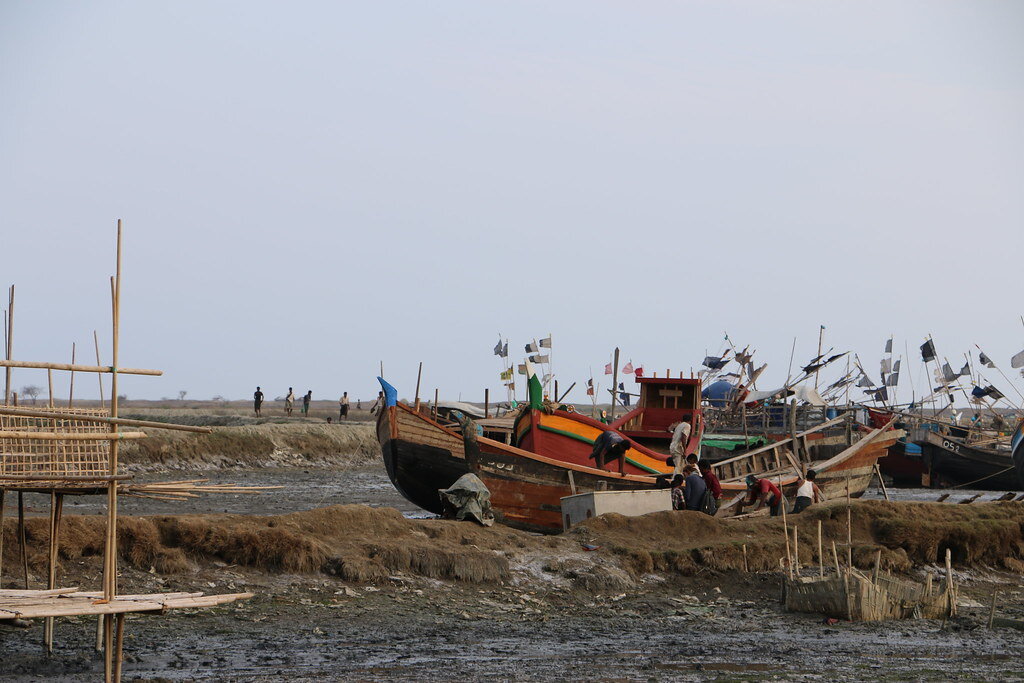
Rohingya Muslims refugee boats. United to End Genocide. CC BY-NC-ND 2.0
Since the mid-1820s Myanmar has looked down on the Rohingya Muslims, who were once laborers under the area’s British colonization. Following independence in 1948, the Buddhist-majority government began to deny citizenship to Rohingya who had come to live in the country. They could hold identification cards yet this severely diminished job prospects and even places where they could live. Eventually, they would settle within the Rakhine state.
It led to crackdowns in the 1970s to get the Rohingya out of Myanmar. It began with rapes, murders and arsons by government security forces. As a result, the Rohingya began fleeing into Bangladesh, Thailand and Malaysia.

Refugee camp in Bangladesh. UN Women Asia & The Pacific. CC BY-NC-ND 2.0
The most notable and deadliest crackdown occurred in August 2017 when Myanmar began to conduct an ethnic cleansing against the Rohingya. It began when Rohingya militants attacked 30 Myanmar police posts. The Rohingya as a whole were labeled as terrorists and the ethnic cleansing began. According to Doctors Without Borders, approximately 6,700 Rohingya were killed, along with the rape and abuse of many more Rohingya women and girls. Since 2017, Myanmar’s government has refused to take responsibility for the ethnic cleansing, including de facto leader Aung San Suu Kyi who was once seen as a human rights advocate. They have even gone to the extent of highlighting the Rakhine state as a stable tourist location.
In 2018, the U.N. accused Myanmar’s military of conducting genocide and rapes. With failure to acknowledge the claims, the court ordered Myanmar to take measures to protect the Rohingya from being persecuted. Yet, the conflict is still ongoing which has led to more people fleeing.
In February 2020, Rohingya were boarding boats in Southeast Asia to head out of Myanmar. This has been a trend for years with most voyages occurring from November to April when the seas are calm. Around 730,000 Rohingya make the trip every year out of Rakhine state since 2017, hoping to reach Malaysia, Thailand or Indonesia. Bangladeshi refugee camps have become less popular due to overcrowding, with nearly a million refugees living there. However, due to COVID-19, many Rohingya have been stranded offshore due to borders closing to try to contain the virus. The location of many of these boats is not even known since they were not able to dock right away.
Traffickers have begun to demand money from the families of those on board in order to get them off. Essentially, these traffickers have turned these boats into their own camps where those on board are held hostage until payment. The cost for one person is 12,000 ringgit ( $2,800). Those on the boats have been rationing food and water since April with many people still dying. Unfortunately, many are unsure if there is a guarantee to get their families off the boats.
There is also the harsh reality that those who end up off the boats could be sent back to Myanmar. Currently, Malaysia is currently considering sending Rohingya back to sea due to COVID-19 concerns after 269 ended up on its shores. It has asked Bangladesh to take back refugees who have traveled, but Bangladesh has refused. The boats were damaged on the journey but once repaired, could be forced to go back out to sea with their boats resupplied.
Human Rights Watch, however, has called on Malaysia and Thailand to allow the Rohingya refugees on land. HRW has acknowledged that the one most responsible is Myanmar, but it is the duty of neighboring countries to take in and protect refugees who are seeking asylum.
Eva Ashbaugh
is a Political Science and Gender, Sexuality, and Women's Studies double major at the University of Pittsburgh. As a political science major concentrating on International Relations, she is passionate about human rights, foreign policy, and fighting for equality. She hopes to one day travel and help educate people to make the world a better place.
10 Animal Festivals From Around the World That You’ve Likely Never Heard Of
The festival of lights honors and worships Lakshmi, the Hindu goddess of wealth, prosperity and beauty, and celebrates the relationship between humans and animals.
Read MoreMexico Continues to Reopen Despite a Severe Undercount of COVID-19 Cases
Mexico has continued the process of reopening its economy despite a severe undercount of COVID-19 cases and not having reached the peak of the virus’s spread in the country. As of this article’s publication, the National Council for Science and Technology had reported 191,410 cases and 23,377 deaths. This is currently the fourth highest number of cases in Latin America after Brazil, Peru and Chile, and the second highest number of deaths in the region after Brazil.
Read More
Ghanaian street market. Jozua Douglas. Pixabay.
Shoemaker’s Solar-Powered Hand-Washing Station Protects Ghana from COVID-19
As COVID-19 slowly spreads throughout the world, some have used this experience as an opportunity to create. 32-year-old shoemaker Richard Kwarteng and his brother Jude Osei are two brothers who are certainly included in this innovation boom. Located in Kumasi, Ghana’s cultural capital, the brothers used the city’s two-week lockdown as time to invent a solar-powered hand-washing basin called SolaWash.
They noticed that opportunities to wash one’s hands were often slim in Ghana. One day, while staring at a pile of recyclables and other materials, Kwarteng had a brilliant idea.
In a statement obtained by CNN, he said, “My brother and I decided we would create a basin to encourage regular hand-washing etiquette." They took this observation and from it came the first solar-powered hand-washing machine in Ghana. They designed it so that the faucet would run for 25 seconds, following guidelines from the Centers for Disease Control and Prevention, then shut off without even having to touch it. A video of their product quickly went viral on Twitter, and it caught the attention of many.
The Building Process
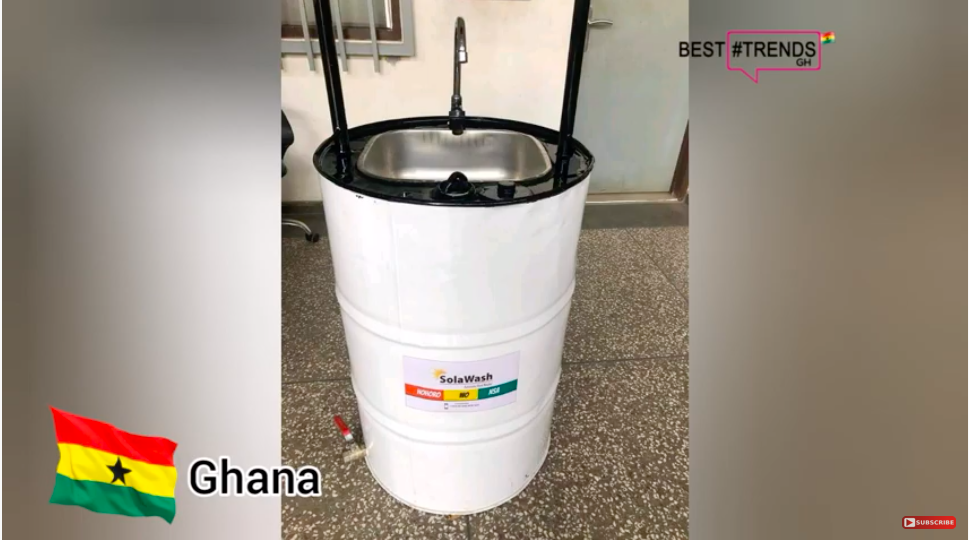
The SolaWash hand-washing machine. Best Trends gh. YouTube.
To create such an invention, the brothers began with the recycled materials they had and then headed to the market. They already had the large barrel their design would revolve around so they only had to purchase a sink, a faucet, a motherboard, a solar panel, a sensor and an alarm. After obtaining all the materials, they knew they needed help with the electrical work so they called upon their friend Amkwaah Boakye to do the wiring. They were able to gather the materials in only 48 hours and complete their project in just five days.
How Does It Work?
To wash your hands using the basin, you simply place them under the faucet. The device, programmed by the brothers, releases soapy water when hands or other items are picked up by the sensor installed underneath the faucet. The faucet runs for 25 seconds, then an alarm beeps to let the user know their hand-washing is complete. Water is then released again to rinse off any excess soap before drying. Their design is meant to not only be sanitary but also to conserve as much water and energy as possible.
What Will They Do With It?

President Akufo-Addo addresses Ghana about COVID-19. Joy News. YouTube.
The brothers have been commended by Ghanaian President Akufo-Addo for their incredible work, and he hopes to make their product widely available. Ghana's Ministry of Environment, Science, Technology and Innovation also reached out to the brothers in order to plan for mass distribution. They are hoping to quickly manufacture and distribute these hand-washing basins in order to curb the spread of COVID-19, and Kwarteng is encouraging this as well.

Richard Kwarteng receiving his product certification. Best trends gh. YouTube.
This process can officially begin as the Ghana Standards Authority released their official certification of the product. Professor Alex Dodoo, director-general of the GSA, has his full support behind the brothers as well. He presented the certificate to a manufacturer in Accra on Wednesday, and said the product had been tested for its safety and efficiency. Dodoo also noted that the hand-washing basin was ready for mass production, and he hopes to see this product used around the world. The certification given by the GSA attests to the product’s quality as it met international standards for electrically-controlled machines. That means that the hand-washing basin has the potential to not only save Ghanaian lives, but also many others around the world especially in places that do not have widespread sanitation accessibility.

Renee Richardson
Renee is currently an English student at The University of Georgia. She lives in Ellijay, Georgia, a small mountain town in the middle of Appalachia. A passionate writer, she is inspired often by her hikes along the Appalachian trail and her efforts to fight for equality across all spectrums. She hopes to further her passion as a writer into a flourishing career that positively impacts others.
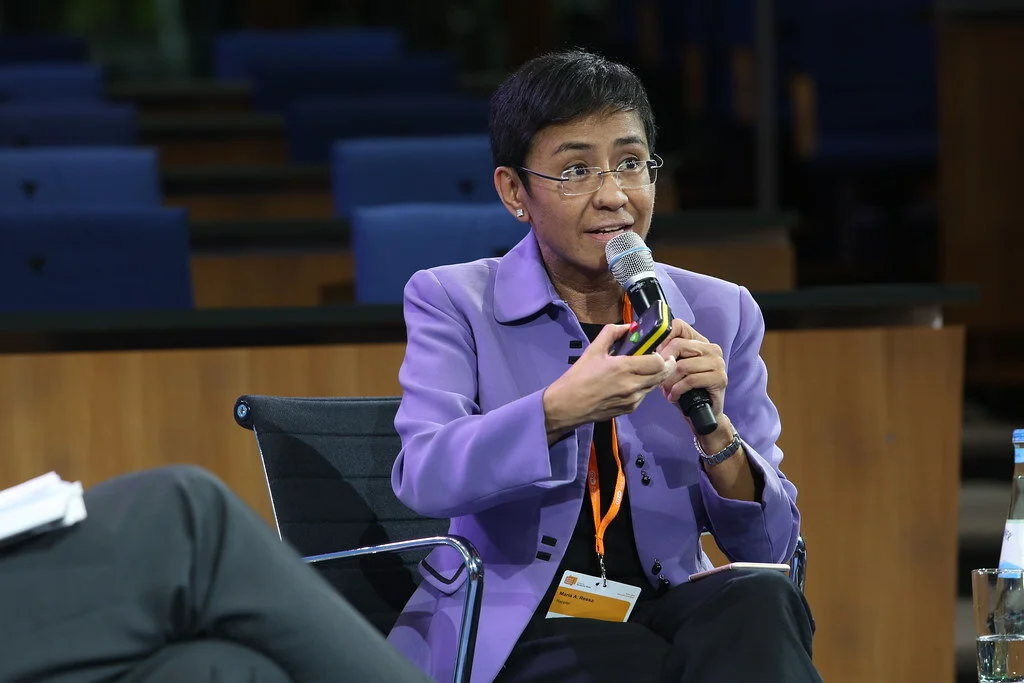
Maria Ressa speaking at a conference. Deutsche Welle Unternehmen. CC BY-NC 2.0.
Guilty Verdict of a Heralded Filipino Journalist Poses a Setback to Press Freedoms
Following years of threats and lawsuits by Philippine President Rodrigo Duterte, the heralded journalist Maria Ressa faces up to six years in prison for cyber libel. Ressa is known as one of Time magazine’s People of the Year in 2018, as a co-founder of the online news website Rappler, and as a previous CNN investigative reporter. The verdict is widely seen as a blow to press freedoms in the Philippines and a result of Duterte’s political motivations.
On June 15, a Manila court found both Ressa and her former Rappler colleague Reynaldo Santos Jr. guilty of cyber libel. The indictment is based on a story that was published by Rappler in 2012 that tied wealthy businessman Wilfredo Keng to then Philippine Chief Justice Renato Corona, who was impeached and removed from office shortly thereafter. “The article also alleged that Keng was involved in human trafficking and drug trafficking, among other illegal activities,” according to Forbes.
The controversy of the charge lies not only in its alleged attack on journalistic freedoms but also in its genesis. The story was written in 2012, four months before cyber libel even became a charge in the Philippines. Additionally, the case was filed in 2017, five years after the article’s publication. Rappler did concede that the story was edited to fix a misspelled word in 2014, but argued that the law still cannot be upheld retroactively. Moreover, the libel law states that a complaint must be filed within one year. After the back and forth over the validity of the charge, The Diplomat reported that “the Department of Justice argued a complaint can be filed under the 2012 cybercrime law for up to 12 years, countering Rappler’s argument that Keng’s complaint was invalid due to being outside the one-year deadline for libel.”
This is seen as yet another attack on press freedoms following Duterte’s shutdown of ABS-CBN, the Philippines’ largest broadcast media network, which according to The New York Times is “in some of the country’s most remote regions is the only available news source.” To frame the defeat in the context of the U.S., Ressa said, “Imagine an order by a regulatory agency telling CBS or CNN to shut down, and they do? And it’s nationwide.” The pattern behind the stifling of journalistic freedoms is thought to be due to the extensive coverage of Duterte’s deadly drug war by Rappler and ABS-CBN since he was voted into office in 2016.
In a press conference following the hearing, Ressa was unwavering in the mission of Rappler going forward, stating that the mission of Rappler would remain unchanged. “We’re at the precipice,” Ressa said. “If we fall over we’re no longer a democracy.” Various human rights groups have spoken out since the guilty verdict, with the National Union of Journalists of the Philippines adding that the verdict “basically kills freedom of speech and of the press.”
Duterte’s intimidation tactics toward the media, such as stating in 2016 that “just because you’re a journalist, you are not exempted from assassination,” were just a portent of what was to come. While Ressa has the opportunity to appeal, the mark of Duterte’s intent and message for journalists has been made clear to the Philippines and other countries in this guilty verdict.

Hanna Ditinsky
is a sophomore at the University of Massachusetts Amherst and is majoring in English and minoring in Economics. She was born and raised in New York City and is passionate about human rights and the future of progressivism.
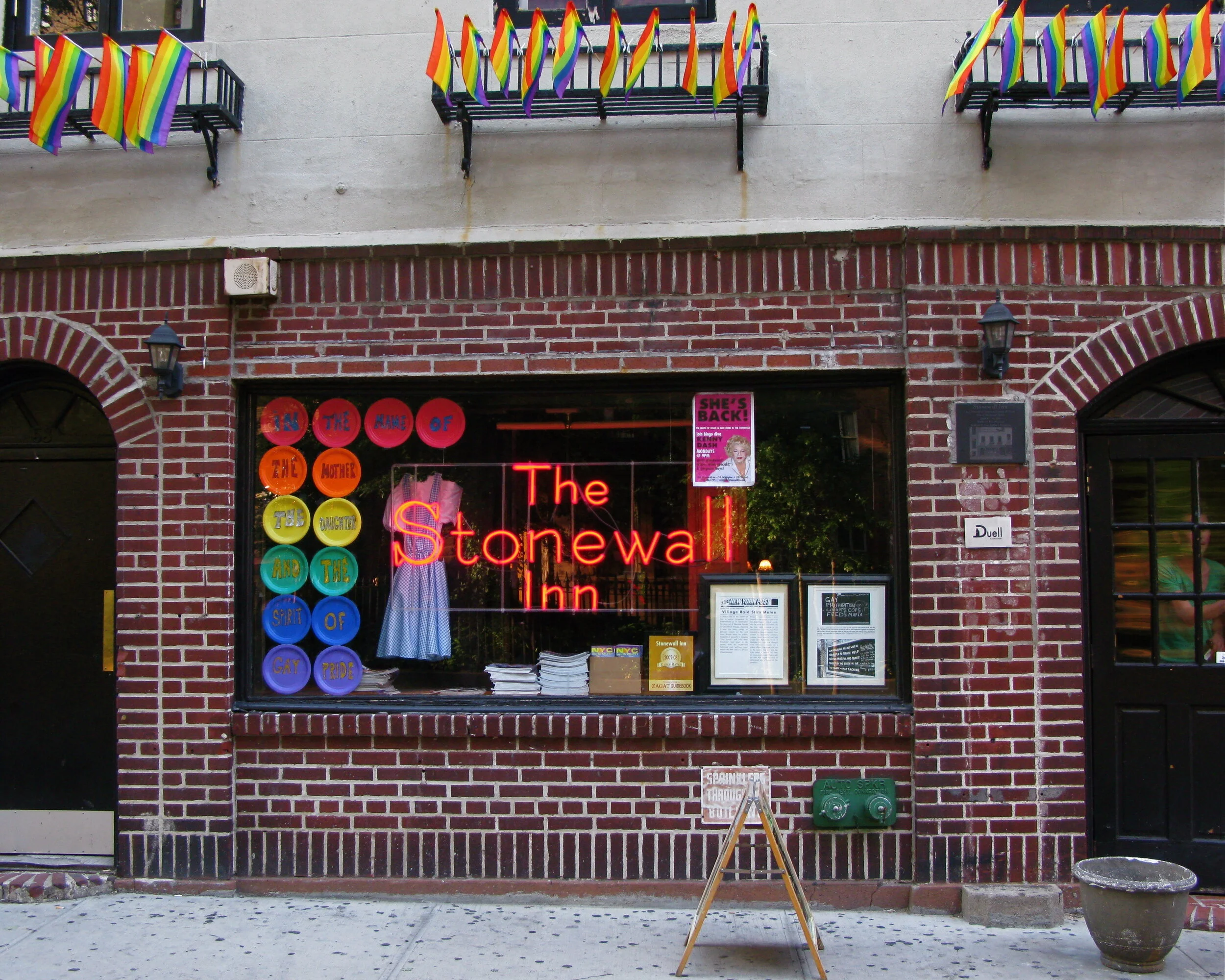
The Stonewall Inn in New York City. This is the site of the Stonewall riots which kickstarted the modern LGBTQ+ rights movement. Annulla. CC BY-SA 2.0.
10 Virtual Events to Celebrate Pride in the World of COVID-19
With the ongoing COVID-19 pandemic, many festivals, concerts and celebrations have been canceled across the globe. Pride Month has been no exception. The annual June recognition of the Stonewall riots, which started the contemporary LGBTQ+ rights movement, has seen cancellations amid the pandemic.
However, a number of LGBTQ+ activists, organizations and municipalities have taken it upon themselves to adapt to a global climate which favors remote gatherings rather than in-person celebrations. Below is a selection of 10 Pride events hosted around the world which you can participate in remotely from the comfort of your home.
Global Pride
Hosted by InterPride and the European Pride Organisers Association, Global Pride will be an online event held on Saturday, June 27, the 51st anniversary of the start of the Stonewall riots. Featuring musical performances, speeches and other festivities, the event will aim to serve as a way for members of the LGBTQ+ community to celebrate in spite of any canceled local events.
“For millions of people around the globe, Pride is their one opportunity each year to come together and feel a part of a community, to feel loved, connected and to know they aren’t alone,” Kristine Garina, president of the European Pride Organisers Association, said in a press release for the event. “It’s essential this year that as Pride organizers we ensure there is still the opportunity to connect, even if we are connecting from home.”
Digital Dublin Pride Festival
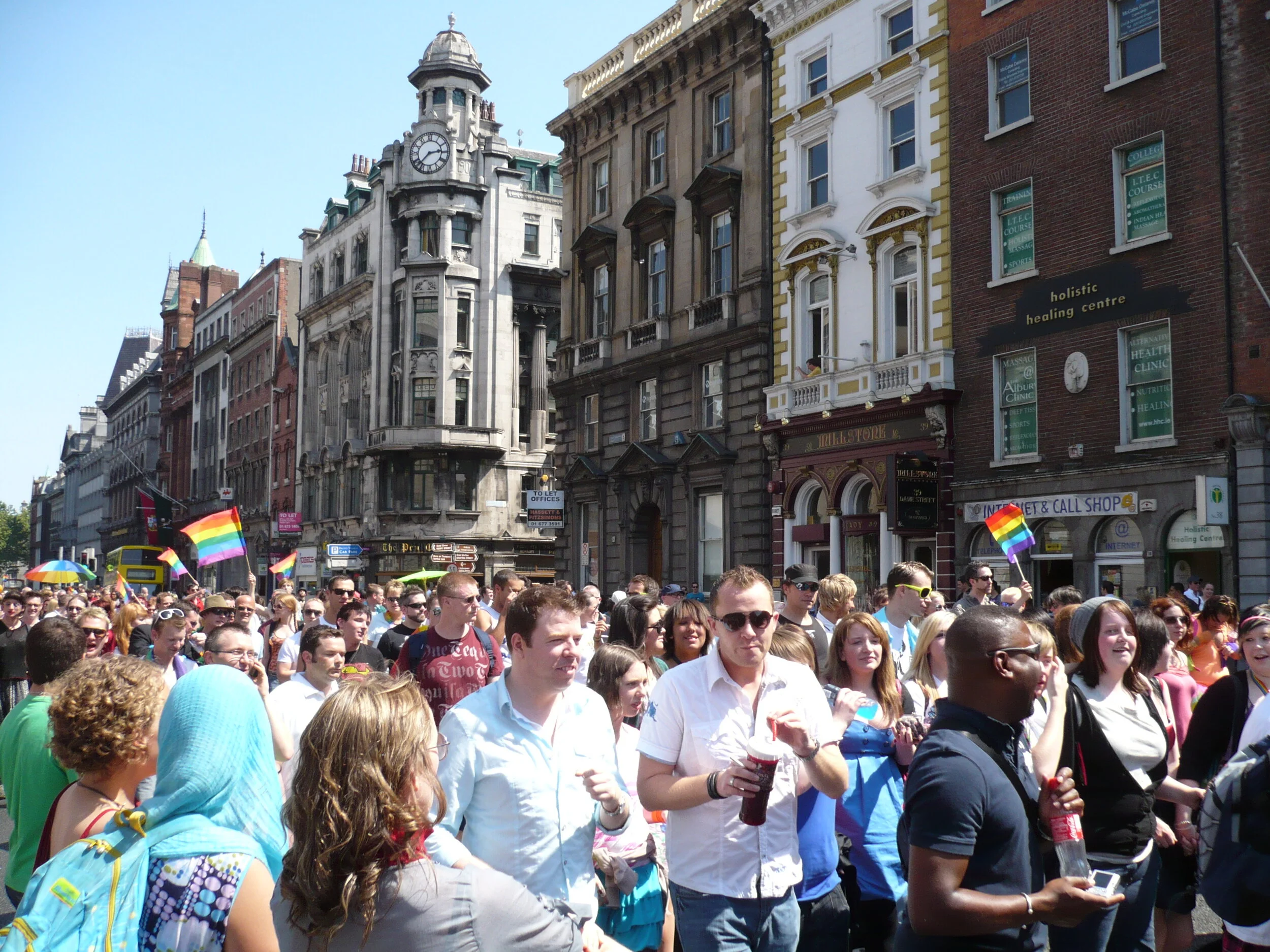
Dublin Pride, 2009. Charles Hutchins. CC BY 2.0.
Dublin, Ireland, will see its annual celebration go virtual from June 18 through June 28. The festival will kick off with a political debate to discuss issues such as hate crime legislation, LGBTQ+ inclusive education and global LGBTQ+ persecution. Other highlights from the event include the Dublin Pride Pet Show on Sunday, June 21, and a virtual parade on Sunday, June 28.
The Digital Dublin Pride Festival is hosted by Dublin LGBTQ Pride and the National LGBT Federation. The event began in March 1983 with a protest march through the heart of Dublin, and has continued annually to this day.
New York City Pride
One of the epicenters for the contemporary LGBTQ+ rights movement, New York City will see the 50th anniversary of its annual Pride event go digital this year. The event, which will be broadcast via New York’s ABC7 on Sunday, June 28, will feature appearances and performances by celebrities including Dan Levy, Yanzi Peng, Janelle Monáe and Billy Porter.
NYC Pride will also host a number of virtual events leading up to the June 28 broadcast. These include the Human Rights Conference on June 25, Savor Pride from June 22 through June 27, and a virtual rally co-hosted by GLAAD on June 26.
Madrid Pride
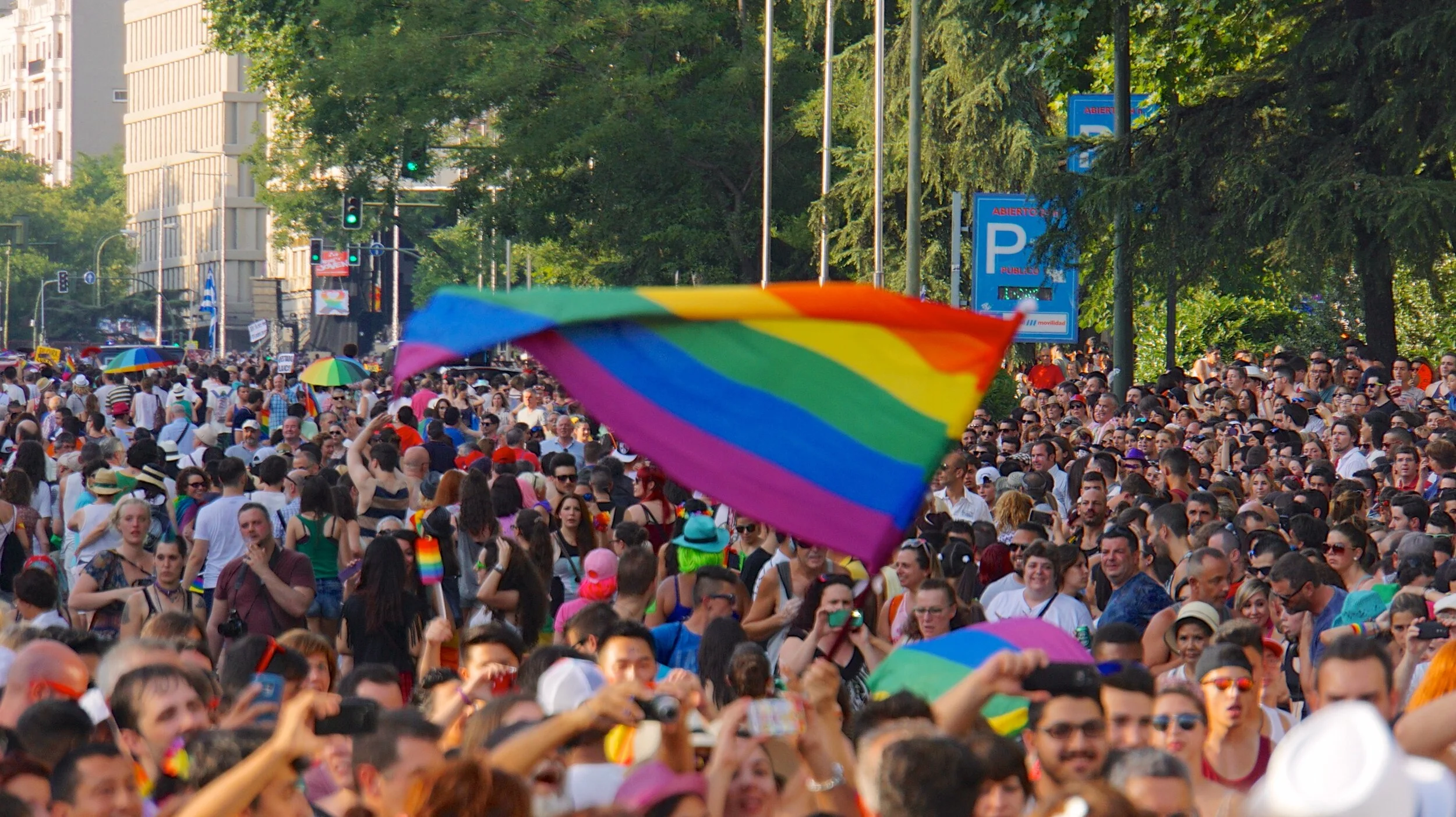
Madrid Pride, 2015. Ted Eytan. CC BY-SA 2.0.
The Organizing Committee of the LGBTI State Pride will host a virtual festival from July 1 through July 5 in lieu of Madrid’s annual in-person event. While the organization has yet to release official details as to what will take place during the virtual event, the event will be significant considering that it marks the 15th anniversary of the legalization of same-sex marriage in Spain.
“This Pride is more necessary than ever and we will continue to celebrate and defend [our rights] as we have done for the past 40 years,” the event’s organizers stated in Spanish in a press release. “Pride 2020 will serve to give voice to the distinct realities faced by the [LGBTQ+ community] during this crisis.”
Black Queer Town Hall
Co-hosted by NYC Pride and GLAAD, the Black Queer Town Hall will be a three-day event dedicated to financially supporting black, queer organizations and black LGBTQ+ performers and activists. The event replaced the Pride 2020 Drag Fest, and hopes to shed light on the experiences of black members of the LGBTQ+ community in response to recent global demonstrations against police brutality.
The organizers of the Black Queer Town Hall are currently accepting donations ahead of the event via a GoFundMe page. At the time of this article’s publication, the page had raised over $98,000.
#PrideEverywhere
The Trevor Project, a crisis intervention and suicide prevention nonprofit for LGBTQ+ youth, is hosting the #PrideEverywhere campaign throughout June. According to the organization’s website, the campaign “is about remembering what’s at the heart of our community—values we live every day, and values the world needs so much right now. No matter how challenging things may seem, this much is true: Pride isn’t going anywhere, because Pride is everywhere.”
The #PrideEverywhere campaign includes social media filters, a video by singer Demi Lovato, and a donation drive to help support the work done by The Trevor Project.
PRIDE Virtual 2020 - Marcha de la Diversidad
Costa Rica will celebrate it’s 11th annual March of Diversity Pride event on Sunday, June 28. While the organizers of the event have not yet released details on what will take place, the celebration is significant this year because Costa Rica became the first Central American country to legalize same-sex marriage on May 26, 2020.
The annual event in San Jose has grown to be one of the largest LGBTQ+ events in Latin America, seeing tens of thousands of participants in 2019.
50 Years of Pride
The GLBT Historical Society is currently working with the several San Francisco-based organizations to showcase its 50 Years of Pride online exhibition. The virtual gallery, which was curated by artist Lenore Chinn and Pamela Peniston, artistic director for the Queer Cultural Center, features historical photos from various Pride events around the San Francisco Bay Area from 1970 through the present day.
A larger photography exhibition which will continue the work of this current project will be housed in San Francisco City Hall at a later date.
Unity Pride
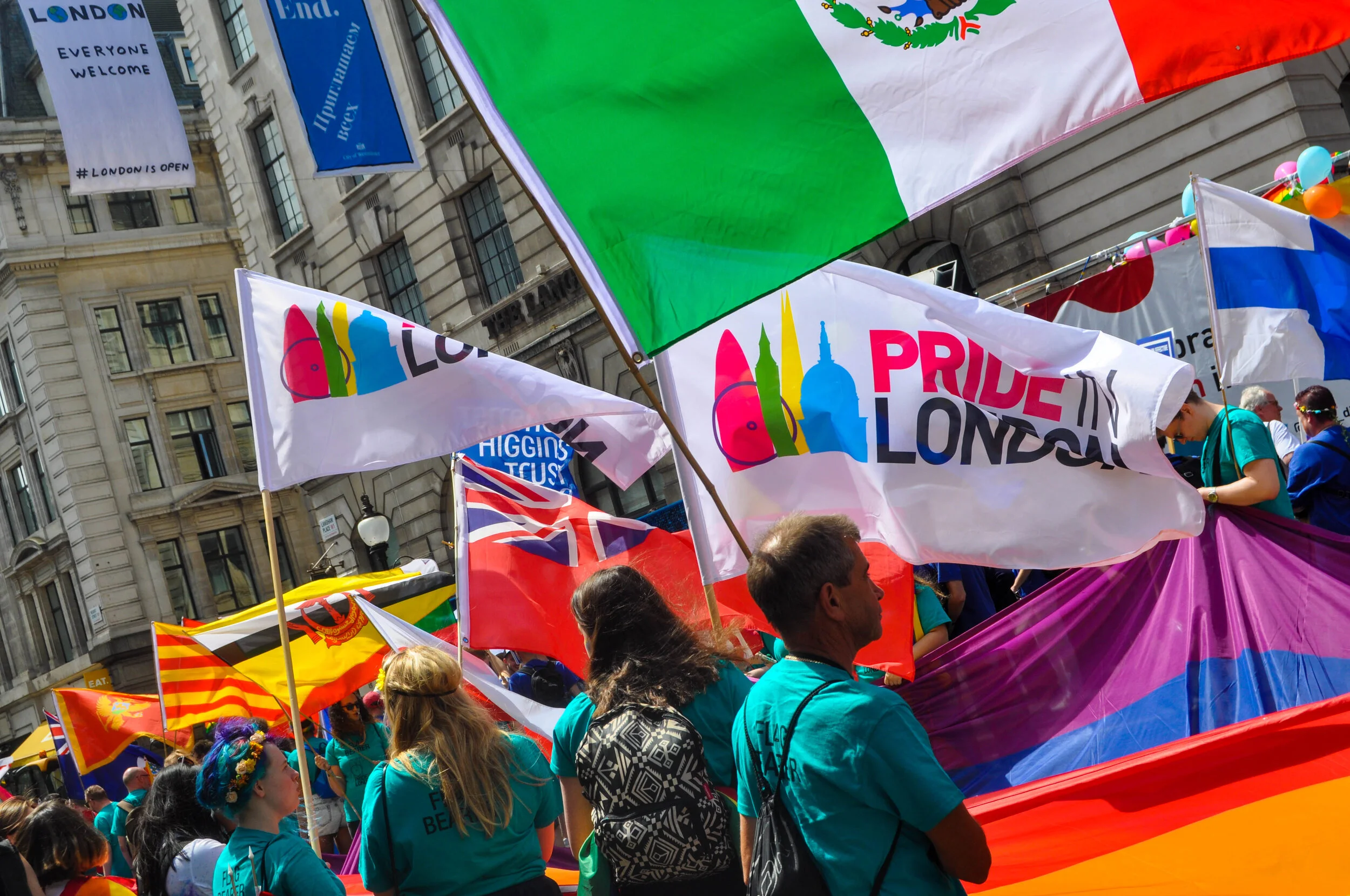
London Pride, 2017. MangakaMaiden Photography. CC BY 2.0.
Unite UK, a digital LGBTQ+ publication, will host a number of discussions and performances on Friday, June 19. The event, titled Unity Pride, will feature discussion panels such as “Stop Sexualising Queer Womxn” and “Celebrating Body Image & Fashion in the LGBTQ+ Community.”
Unity Pride is one of several virtual United Kingdom-based Pride celebrations. Others throughout the month include the weeklong Pride at Home, hosted by Attitude magazine, and Essex Pride Uploaded, which will be held on Saturday, June 20.
Out Now Live
Online magazine Them will host its inaugural virtual Pride celebration on Monday, June 22. Out Now Live, happening on YouTube, will feature performances, speeches and messages from a number of prominent figures in and allies to the LGBTQ+ community, including Adam Lambert, Bretman Rock, Cara Delevingne, Elton John, Princess Nokia, Shangela and Whoopi Goldberg.
The event will also include a fundraiser for the Ali Forney Center, an organization based out of New York City which works to combat the LGBTQ+ homelessness crisis.

Jacob Sutherland
is a recent graduate from the University of California San Diego where he majored in Political Science and minored in Spanish Language Studies. He previously served as the News Editor for The UCSD Guardian, and hopes to shed light on social justice issues in his work.
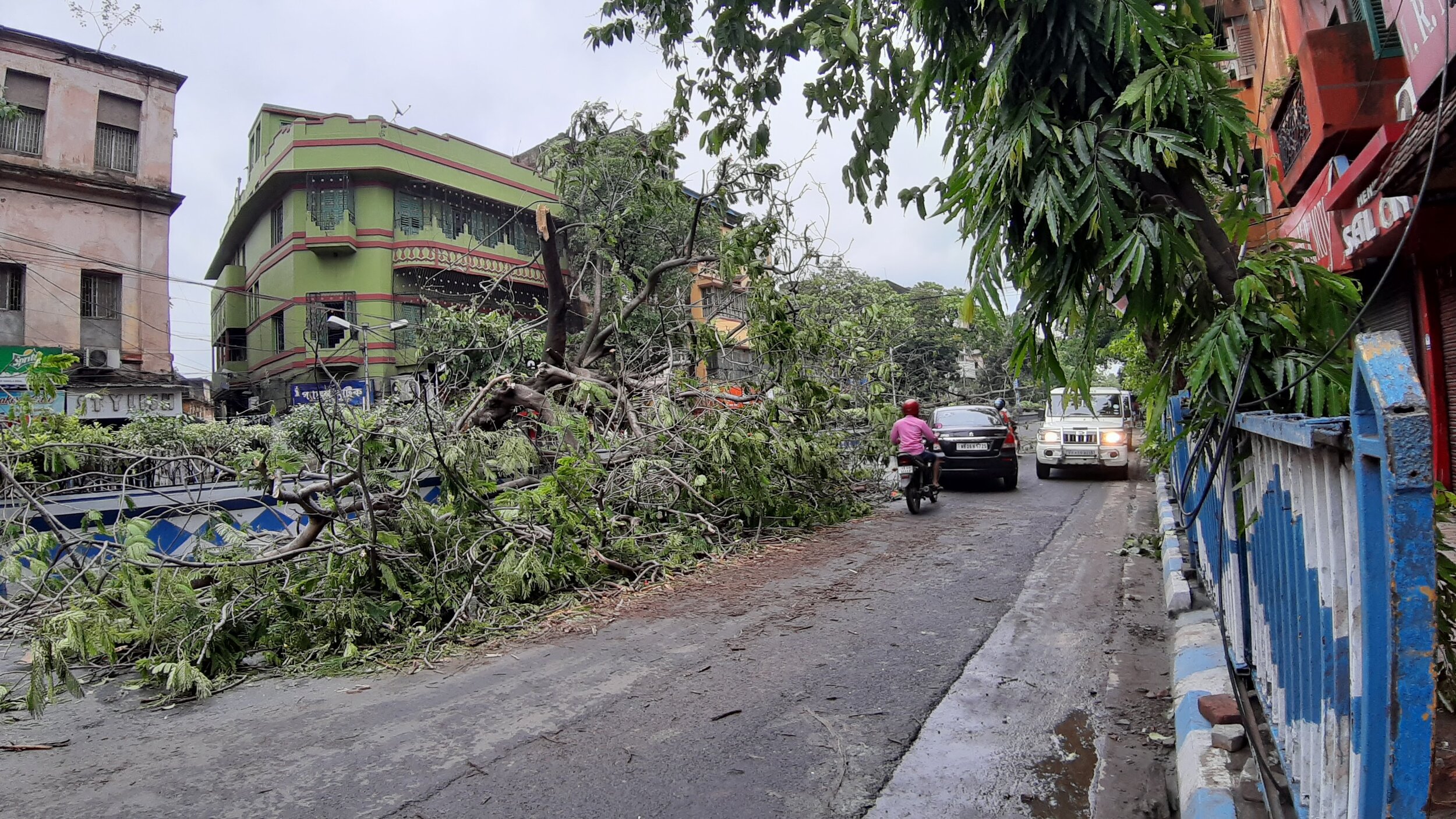
A fallen tree in the streets of Kolkata, India. Santanupyne. CC BY-SA 4.0
Super Cyclone Amphan Ravages East India and Bangladesh
Split trees, washed away bridges, dead livestock—this was the scene following Super Cyclone Amphan, which tore through India’s West Bengal region and Bangladesh. From May 16 to May 21, the Category 5 hurricane whipped through coastal villages, ravaging areas with fierce winds and rain.
One of the most powerful storms ever recorded in South Asia, Super Cyclone Amphan devastated coastal infrastructure, causing millions of people to flee from their homes to packed shelters. These cement block structures and repurposed community spaces have proven safe in past storms, offering respite and relief to displaced villagers. As Amphan gained momentum, officials urged people to leave their homes. Emergency crews lined the beaches, alerting passersby through megaphones. Television stations, text messages and door-to-door pleas also advised evacuation.
Crowded shelters pose a public health threat in the coronavirus pandemic. Physical distancing is unfeasible in the packed, enclosed spaces. Extra isolation rooms, masks, and sanitizers have done little to mitigate the rapidly spreading virus, while the need for social distancing has complicated Amphan relief efforts and shelter capacities. "The coronavirus restrictions have obviously made things much more difficult, especially with regards to evacuation to cyclone shelters," said Azmat Ulla, head of the International Federation of Red Cross and Red Crescent Societies’ office in Bangladesh. On May 20, India reported that it had recorded over 100,000 coronavirus infections.
Refugee camps, held in predominantly flood-prone areas, raised concerns during the cyclone. In Bangladesh, 306 Rohingya were moved from their refugee camp in Bhasan Char, an island in the Bay of Bengal, to mainland cyclone centres. A few years ago, these refugees fled massacres in Myanmar and built makeshift homes on coastal Bangladesh’s muddy hillsides. Amnesty International advised governments to protect Rohingya refugees stranded at sea. “They are in rickety boats; these are fishing trawlers that they use to take a very dangerous route in the hope of a better life. The Bangladesh government and others must do everything to save their lives,” declared Saad Hammadi, Amnesty International’s South Asia campaigner. Fortunately, the cyclone weakened as it made its way down the Bangladeshi coast, unleashing nothing more than heavy rains in the refugee-concentrated city of Cox’s Bazar. The U.N. estimates that, throughout Bangladesh, 10 million people were affected by the storm, and 50,000 people lost their homes. Economic production has been compromised at the region’s croplands and fisheries, striking away people’s long-term livelihoods.
The storm devastated the Sundarbans, the world’s largest mangrove forest and the home to endangered Bengal tigers. According to Belinda Wright, the Executive Director of the Wildlife Protection Society of India, villages on the outskirts of the wildlife refuge have been badly hit. Around 70% of the 4,000-square-mile forest lies at sea level, rendering the animals especially vulnerable to flooding and exacerbating India’s existing wildlife crisis. Urbanization, hunting and illegal animal trade have dwindled the global population of tigers down from 100,000 last century to 4,000 today. In response to the storm, the remaining few hundred Bengal tigers in the Sundarbans have been pushed out of their forest habitats and into human-dominated areas.
Scientists predict that tropical storms like Amphan will increase in strength and quantity going forward due to climate change.

Anna Wood
is an Anthropology major and Global Health/Spanish double minor at Middlebury College. As an anthropology major with a focus in public health, she studies the intersection of health and sociocultural elements. She is also passionate about food systems and endurance sports.
7 Whimsical Outdoor Adventures Sure to Pique Your Interest in New Zealand
From natural wonders such as glowworm caves and geothermal pools (considered Maori sacred waters) to whimsical spots such as Teapotland, home to a garden of 1,200 quirky teapots—New Zealand will not disappoint.
Read More
Young black woman taking a photo of Barcelona. (photo via iStock / Getty Images Plus / skyNext)
How the Travel Industry Can Do Its Part in the Fight Against Racism
One of the first features I wrote about the subject of race and racism in the travel industry, a travel executive reached out to me to ask me who or what had made me so angry to write the piece. As a brown woman of color, he was essentially inferring that I was an “angry brown woman,” a stereotype that has long been used to highlight women of color who discuss controversial topics such as racism.
To say that I wasn’t surprised by his reaction is accurate. The travel industry tends to think of itself as a space of leisure, fun, and escape where such things like racism are left behind for good times. The problem is, for black individuals and people of color, escaping racism is not something they can do by taking a vacation. Racism, like in many other sectors of society, has been built into the travel industry, both knowingly and unknowingly.
It’s the travel industry’s responsibility to do something about it.
I can showcase the pervasiveness of racism in the travel industry through study after study, through anecdotes of racial attacks on planes and racial biases in hotels or cruises. I can provide interviews with black men and women and people of color who share stories of harassment in various destinations, even those by travel agents like Alfred W. who told me, “I get looks all the time when I travel. I'm a 6' 6" 270 lbs. black male and when I enter a room/resort lobby/airplane/restaurant, I see it on some of the faces. You should see the looks of shock I get when I sit down in first-class seating.”
I’ve provided travelers of color, travel agents of color, and travel industry leaders of color a space to share their experiences through my articles, but it has not been enough to dismantle systems of racism in the travel industry. As we watch the Black Lives Movement work to topple racism in our justice and law enforcement systems through protests, it’s a good time to consider how the travel industry can do their part to fight racism.
The travel industry is trying to rebuild their companies after a devastating blow from the pandemic, making it the most opportune time to reevaluate how the travel industry has done business in the past, and creatively work toward a future in which the travel industry can be better.
I don’t have all the answers, but whether you’re a travel agent, tour guide, the owner of a hotel or airline company, the captain of a cruise ship, working in travel PR, or a travel employee in between, please read how the travel industry can fight racism.
Recognize Racism
The first thing the travel industry must do is recognize racism, and accept that we all have biases and blind spots. I have it, you have it. We all have it.
I once asked a group of travel agents: “How do you best serve travelers of color? How could you serve them better if you’ve yet to try to connect with them?”
The responses I received were eye-opening and I wrote about them in an article: “Many agents were uncomfortable with the question, stating things like, ‘My agency doesn't base service on a particular 'color,' we service everyone.’ Others, in some form or another, said they ‘don’t see color’—a well-meaning response meant to indicate they're not racist, but inadvertently meaning they don’t recognize that systems of racism exist and that they don't ‘see’ that the experiences of people of color are different. Some agents turned it around on me, claiming I was biased and my question inappropriate.”
The clear discomfort that these travel agents had speaking about race only highlighted that people in the travel industry would rather ignore that racism exists in the industry than do something about it. Start by accepting that racism is here; it is in your company and it affects travelers. Don’t ignore it, don’t attack people of color or others who point it out. Sit in those feelings, accept it, and know you’re not alone on this learning journey.
Inform Yourself About Racism in the Travel Industry and Beyond
If we don’t know what racism looks like in the travel industry, how then can we fight it? Racism in the travel industry is no longer overt, such as in the 1950s when hotels refused black travelers a place to stay. Rather, racism has been built into the travel industry through a lack of equal opportunity, travel technology, poorly designed customs and immigration systems, and ignorance about the experiences of people of color.

PHOTO: Women going through airport security. (photo via E+ / vm)
You can inform yourself as to what racism looks like in the travel industry by reading articles and studies related to racism on TravelPulse and other outlets, as well as memoirs written by black travelers and travelers of color like Maureen Stone’s Black Woman Walking and Amanda Epe’s Fly Girl, a memoir written by a black female flight attendant. Consult sites like Travel Noire, a digital media company serving African Diaspora travelers.
Better yet, hire a consultant within the Diversity, Equity, and Inclusion (D.E.I.) Industry to assist your travel company. They’ll develop courses and sessions about unconscious bias within your company and services. They’re equipped to lead small and large groups on conversations about racism, how to be an ally to people of color, set up systems in place to stop microaggressions that people of color experience within the company, and more.
It Starts From the Top
Dismantling systems of racism and inequality start at the top of a travel company. When travel company owners and CEOs don’t recognize that racism exists, it’s much harder to fight against.
On June 1, Royal Caribbean Cruises Ltd. CEO and chairman Richard Fain sent a message to his employees discussing racism in the travel industry. He pointed out: “Racism is chronic, a condition of the system that has afflicted us for centuries. And like any chronic condition, we can never stop fighting it, or it will overwhelm us.”
I was glad to see him discuss white privilege and the consequences of racism left unchecked: “At the end of the day, it is still much harder to be a person of color in America than it is to be white. We can go months trying to tell ourselves otherwise; then there is yet another episode like George Floyd's to remind us of the hard reality.”
Fain noted that Royal Caribbean’s Employee Resource Groups would be leading the way on virtual discussions of racism within the company and that they are “evaluating philanthropic partners who are demonstrating an ability to mobilize for change on this subject.”
As a white male CEO, Fain’s words to his employees create an environment in which promotes conversations of race and racism within the company. This is extremely important: if your company does not discuss racism, the likelihood of the company improving the experiences of black travelers, travelers of color, or black employees and employees of color are minimal.
Diversify Your Travel Company
One of the most effective ways the travel industry can fight racism is to diversify their staff and employ people of color at the highest levels of that company.
I had the opportunity to speak with Sheila Johnson, CEO of Salamander Hotels & Resorts, who spoke to this: “As both an African American and a woman – one who came of age in the very heart of the white and male-dominated 1950’s and 60’s – I’ve spent my entire life working and fighting, often against the longest of odds, to gain even the smallest toehold on the American Dream.”
“It is our obligation [as hospitality leaders] to continue to elevate the curious, intelligent, inspiring leaders of the black community and remove the preconceived notion of what that looks like in hospitality.”

Sheila Johnson is the CEO and Founder of a luxury hotel management property chain, Salamander Hotels & Resorts. (photo via Sheila Johnson)
She added: “There needs to be a recognition that people of diverse backgrounds bring forth new ideas and experiences and look at life from a different perspective. It is the only way we are going to evolve the industry and make an impact.”
“Change truly starts at the top, and at Salamander Hotels and Resorts, it begins with me.”
More Representation in Sales and Marketing
Look through your marketing materials and travel ads from the past five years: who do you see? Do the people you use in your travel branding look the same? How many people of color are clearly visible? Count them.

Grandparents and granddaughter on vacation. (photo via E+ / FG Trade)
If you want to make your travel company more inclusive of people of color, you must provide visible representation across your sales and marketing plan. Not only does this mean showcasing black families traveling, solo Muslim travelers, groups of Asian and Latinx friends, and interracial couples on romantic trips, but this also includes hiring writers and editors of color to shape the messages in your ads, social media, branding copy, etc.
Make a Plan to Fight Racism
Travel companies know that the first step to success is a good plan. So, make one to fight racism. It might look like this:
Create an anti-racism committee of diverse employees who will lead the fight against racism within your company and through the services provided to travelers. Have this committee remove racial bias in job descriptions and create policies that allow employees to call out and discuss racial bias and racism in company meetings and policies.

Employees work together in a meeting. (photo via E+ / Cecilie_Arcurs)
Have them create a mentorship program that helps people of color move up in the ranks of the company. Urge your recruiters and hiring managers to look for diverse candidates, at historically black colleges and through groups that uplift people of color. And encourage your committee to create opportunities and events for open dialogues and the exchange of new ideas to fight racism.
For small companies or solo entrepreneurs, analyze your travel services. Are they inclusive of diverse groups of people? Does your branding promote unconscious bias? Are you sensitive to the needs to travelers of color or supporting travel companies that fight racism and promote diversity?
Speak Up
If you see racism occur, whether systematically, subtly, or overtly, call it out. Bring it to the attention of your managers and human resources department. If you don’t feel like your travel company is doing enough to fight racism, gather coworkers for support and approach management with an idea for a committee against racism.
You have power and you have a voice, even at the lowest levels of a travel company, to fight against racism. It’s up to you who work in the travel industry to fight racism from within so that everyone can enjoy the joys of traveling equally.
To Sum it Up…
I’m amazed at what travel companies will do to help their customers. I’ve seen airport employees search planes for lost stuffed toys to bring joy to a child, travel agents move mountains to get their clients a new hotel when the initial one cancels their reservations unexpectedly, and hotel managers craft elaborate surprises to bring cheer to their guests.
I want to see that same enthusiasm, creative thinking, and teamwork among the travel industry to fight racism.
As your employees, company, destination, or industry works hard to make your service or place safe for travelers again after the pandemic, I’d urge you to take on racism now. Not tomorrow. Not next year. Not five years in the future. Now.

Alex Temblador
is a travel writer for TravelPulse and author of Secrets of the Casa Rosada. She's based in Dallas, Texas, and has had publications in Fodor's, Shermans Travel, Oyster, Hotels.com, among many others. When she's not jet-setting, she's usually addicted to a book or TV show, crafting art or sewing, or hanging with family and friends on a patio somewhere. You can reach her at alexrtemblador@gmail.com
THIS ARTICLE WAS ORIGINALLY PUBLISHED ON TRAVEL PULSE
5 Spots for a Uniquely Uruguayan Experience
Uruguay is sandwiched between Argentina and Brazil, has a population of just over 3.5 million, and is home to miles of coastline facing the Atlantic Ocean. Although the climate is fairly mild throughout the year, the warmer summer months are when the tourist attractions really come alive. Uruguay pairs a generally laid-back culture, full of food and art, with trendy nightlife. Visitors can also venture away from the cities to more rural areas and explore an expansive countryside. Given Uruguay’s diverse landscapes and activities, any visitor is sure to have a memorable experience.
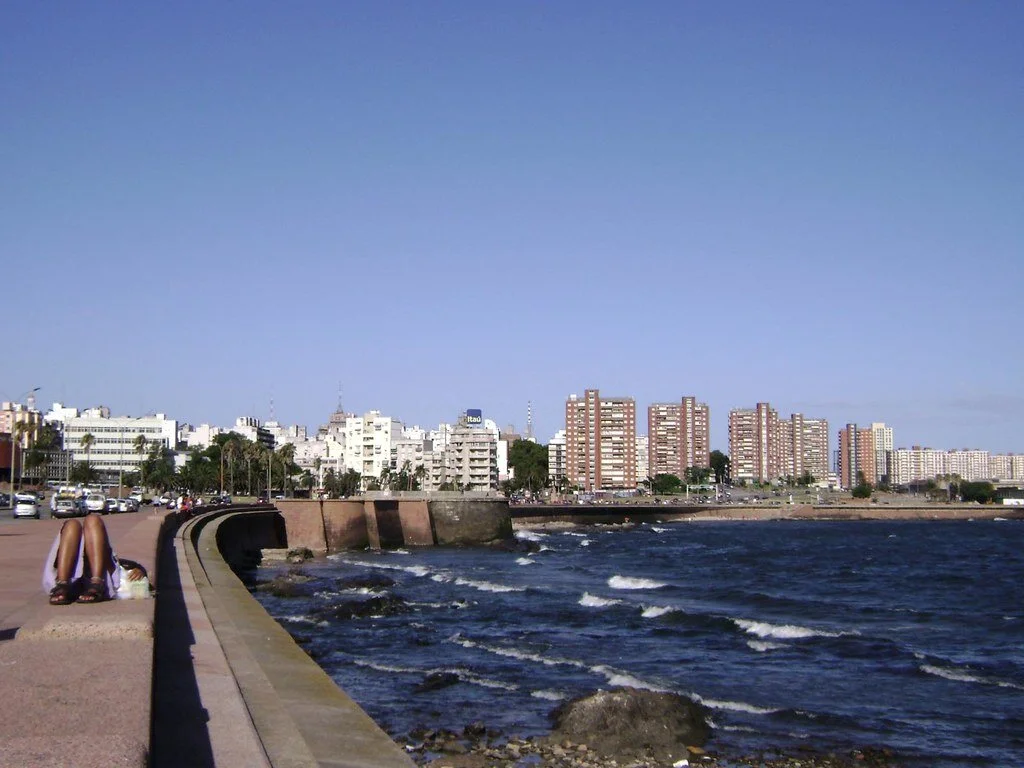
A view of the Rambla and the Montevideo skyline. Marisali. CC BY-NC-ND 2.0
Montevideo
Montevideo is the largest city in Uruguay as well as the capital. With a vibrant art scene and culture, Montevideo is an exciting place to explore. You can take a walk down the Rambla, a 14-mile boardwalk that offers an unobstructed view of the ocean as you wind through various neighborhoods in Montevideo. If you want to go to the beach, visit the Pocitos neighborhood, which is known for its beach and hosting nautical events throughout the year. In the Old City, tour the Solís Theater, a grand performance venue designed in a neoclassical style that echoes many of the other European-influenced buildings across the city. If you are craving a bite to eat stop by the Mercado del Puerto (Port Market), a hub of restaurants, cafes and shops overlooking the water. This is a great place to try eating at an Uruguayan parrilla, or wood-fired barbecue.
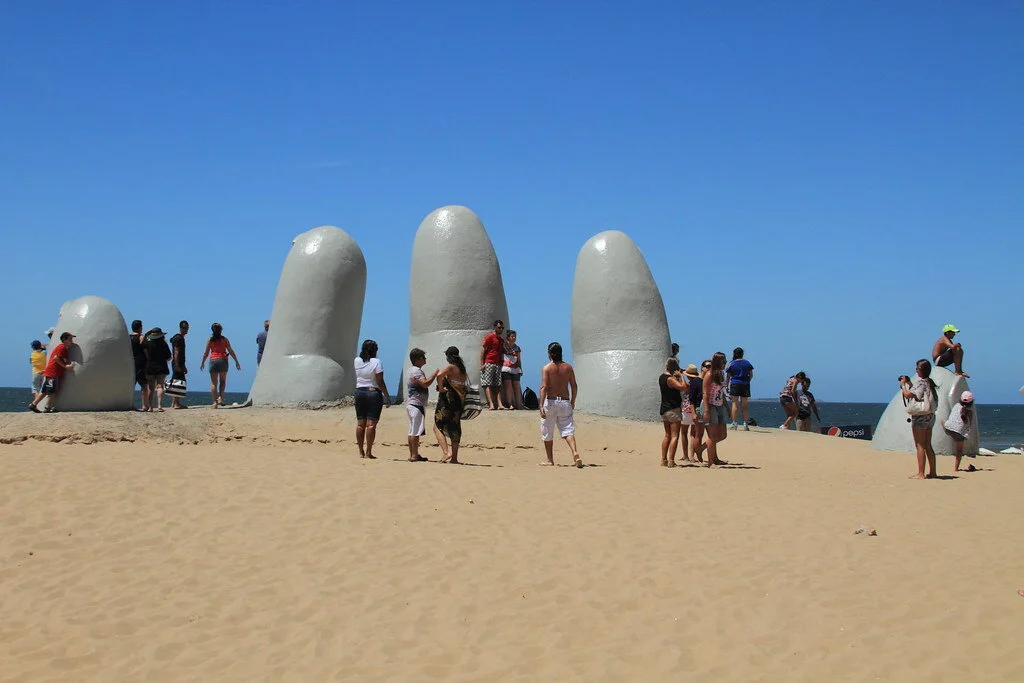
La Mano in Punta del Este. Gamillos. CC BY-SA 2.0
Punta del Este
Two hours away from Montevideo is Punta del Este, a trendy summer spot and a popular escape from the bustling city. Punta del Este has expansive beach access, some of which are rougher and face toward the ocean (such as Playa Brava) while others are calmer and preferred by those with young families (like Playa Mansa). At night, people can go out to bars, restaurants and clubs all over the city, where events can go on until the sun comes up. If you’re interested in a sleepier part of town, visit José Ignacio, a seasonal fishing village to the east. The national dish of Uruguay, the chivito, originated in Punta del Este. You would be remiss if you did not take a moment to sample a chivito (a beef sandwich with a variety of toppings such as cheese, egg and tomato) while visiting. For a taste of the arts, you can visit the iconic hand sculpture, crafted by Chilean artist Mario Irarrázabal, or the gallery and sculpture park of renowned artist Pablo Atchugarry.
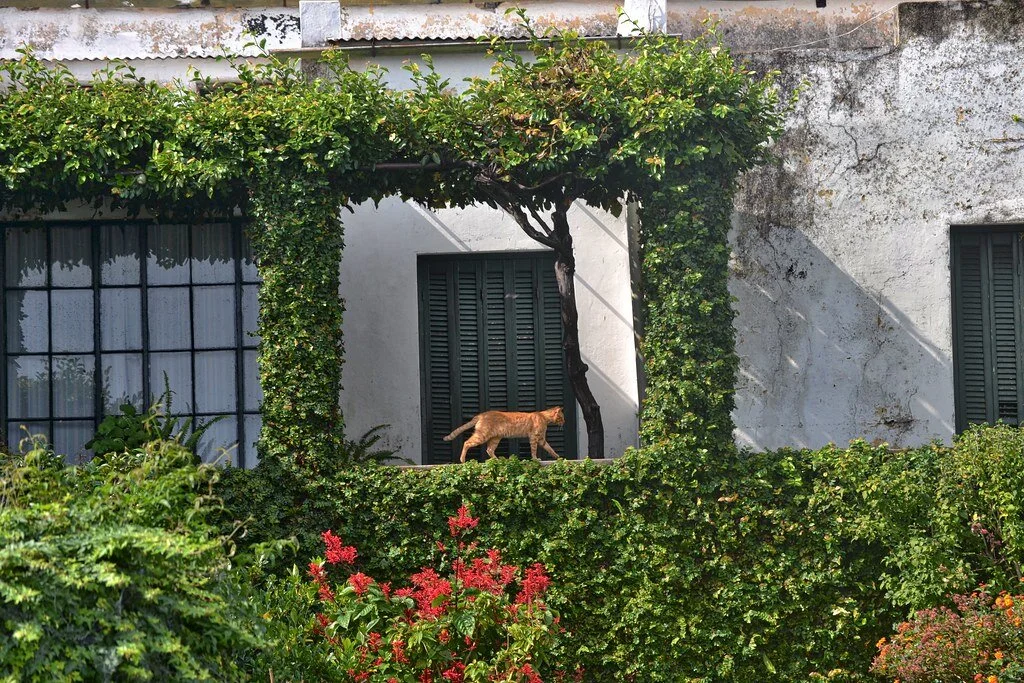
An old building in Colonia del Sacramento, Uruguay. DiegoOlivera_Uy. CC BY-NC 2.0
Colonia del Sacramento
A city with Portuguese roots, Colonia del Sacramento looks across the Rio de la Plata to Buenos Aires, Argentina. The cobbled streets of the Barrio Histórico are popular with visitors and this part of the city is labeled a UNESCO World Heritage Site. To enter this part of town you will cross a drawbridge of a former fortress. Notable landmarks include the Basilica of the Holy Sacrament, Convent of San Francisco, Calle de Portugal and the Colonia del Sacramento Lighthouse. This city will appeal to a wide range of visitors, from historians to vintage car enthusiasts.

Grapes hanging from the vine. UGA CAES/Extension. CC BY-NC 2.0
Wine Country
While in Uruguay, consider visiting one of many vineyards scattered across the country. Uruguay produces a variety of wines, but its signature red wine is called tannat. Although the wine originated in France, the Uruguayan version is considered to be softer due to the warmer climate. Many wineries will allow visitors to sample their wine and tour the grounds. You can visit popular wineries such as Bodega Bouza and Alto de la Ballena or organize a wine tour so you can experience a wide selection. Enjoy a glass while taking in the scenic Uruguayan landscapes.
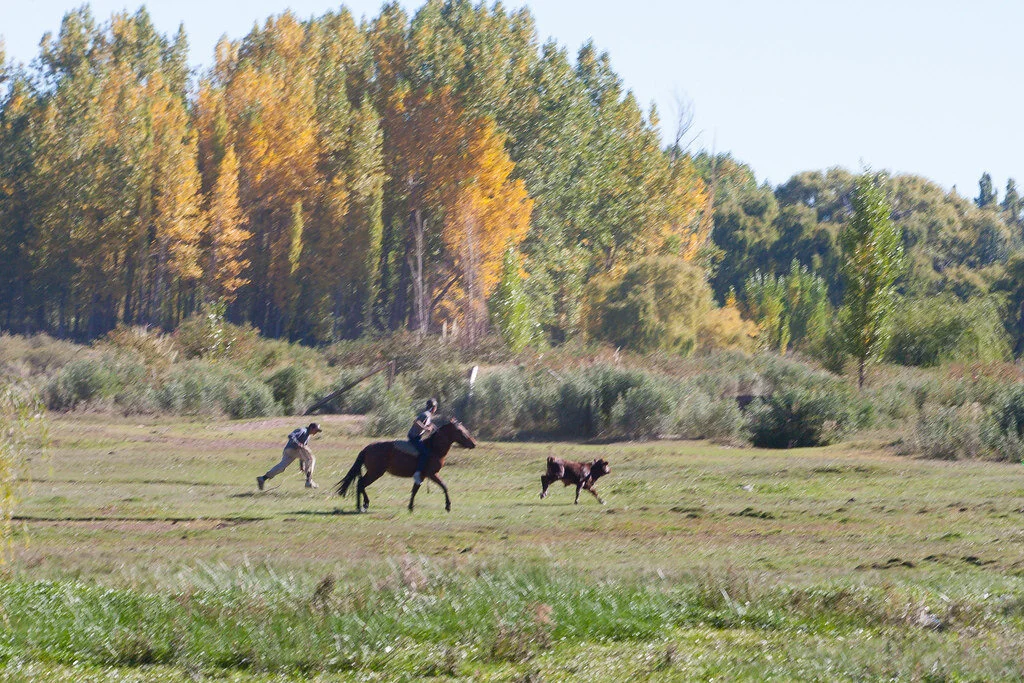
Gauchos practicing in the countryside. Nicoyogui. CC BY-NC 2.0
Gaucho Country
Another part of Uruguayan culture worth learning about is gaucho culture, which was formed around the romanticized idea of a horse riding hero of the land who cannot be tamed. One standout detail of gaucho culture is the drinking of yerba mate, a bitter tea one drinks from a modified gourd. While the traditional gaucho is no longer as prevalent, modern-day gauchos can be found working on estancias, cattle ranches that can span hundreds of acres. With meat, especially beef, a major component of the Uruguayan economy, these estancias are extremely important. Nowadays, some gauchos have joined the tourist industry in Uruguay and are open to hosting visitors or providing guided rides where they can educate others about their culture.

Phoebe Jacoby
is a Media Studies major and Studio Art minor at Vassar College who believes in the importance of sharing stories with others. Phoebe likes to spend her free time reading, drawing, and writing letters. She hopes to continue developing her skills as a writer and create work that will have a positive outward effect.