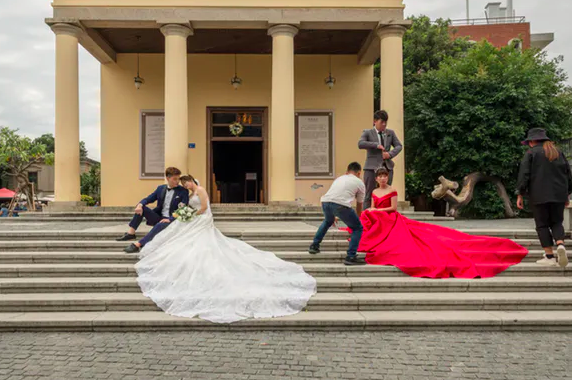
Investing in War: How Violence Has Turned into a Profitable Business

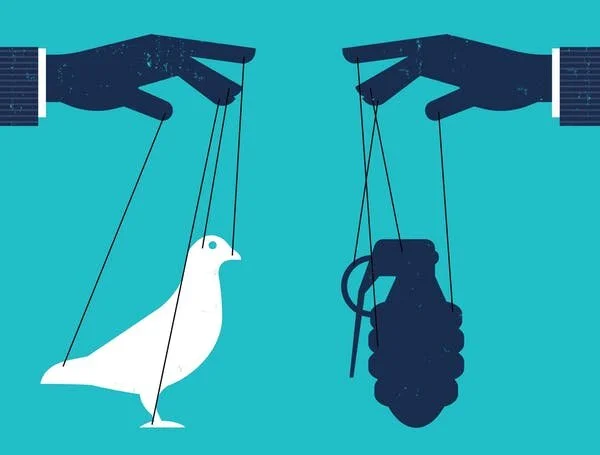
Violence finds its home most often in some of the poorest places. But money filtrates its way through often gathering in arms businesses and corrupt governments. In recent times, this has been true in many countries throughout Africa and the Middle East. Is the price of death worth it?
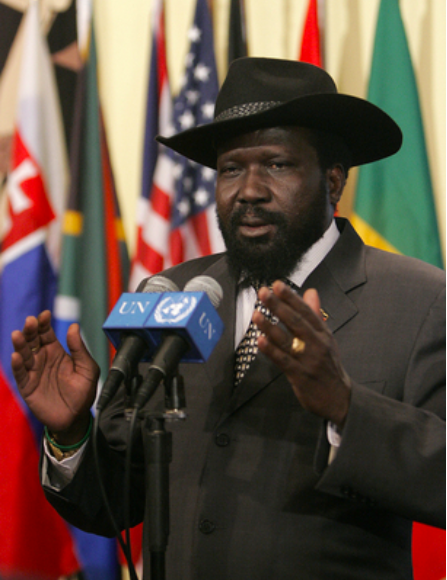
Salva Kiir, President of South Sudan. Jenny Rockett. CC BY-SA 1.0.


There is a moral question that has surfaced over the years on whether you would have to choose between the death of someone you loved or thousands of strangers. Most of the time it would be frowned upon if you picked one life at the expense of thousands. But not everybody agrees. That moral standard doesn’t translate when power is involved. Too often the death of innocent people is picked for monetary gain. This isn’t just found with governments often associated with corruption but also can be found in US foreign policy and even in the UN. Just look at the Rwandan Genocide and Iraqi War for example. The US tends to only involve itself in conflict in which it has another interest in, often oil or another economic benefit. In Rwanda, the UN actually left the country when violence broke out and only got re-involved once it reached international attention. After the genocide ended, the country got so much foreign aid that its capital city, Kigali, is being recreated as a post-modern enterprise focused solely on appearance and not reality. This pattern has continued throughout many conflicts. It is, quite frankly, the business of war.

 This best current examples of this trend lie in South Sudan and Yemen. The rise of the Arab Spring lead to the intermingling of conflict, with wealthy monarchies fueling and funding neighboring battles. This is seen in both Syria and Libya. The most notable pairing though is the UAE in Yemen. Like most foreign involvement it is motivated by economic gain, namely control of the Red Sea coastline, and military prowess, as presence equals power. The UAE’s influence has led to the risk of starvation for 14 million people and a much more complex civil war. The leaders of militia groups are now benefiting greatly from foreign aid while the gap between rich and poor continues to spread.

 South Sudan follows a similar pattern. The civil war has led to leadership on both sides of line pocketing millions and pursuing private business in real estate acquisitions and capital investments. South Sudan’s economy is completely dependent on oil leading to endless conflict over oil reserves and wealth distribution. The war has left over 5 million in need of aid yet little is being done to stop it. When those in charge get nothing but wealth, why save the people?

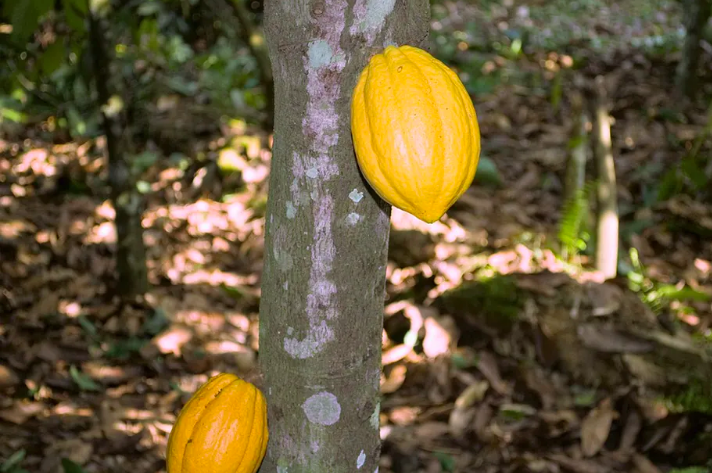
 One of the biggest culprits of profiting from war lies in the companies controlling valuable natural resources. Often these companies are foreign owned and operated and give little thought to the violence surrounding it, focusing only on the influx of cash. These goals often coincide with a repressive regime. A study from the World Bank found that if one-fourth of the country's GDP is from primary commodity exports, the possibility of a civil war increases by 30%. Two examples of this are in Columbia and Tibet. Both areas have repressive governments with Tibet under illegal occupation of China. This has allowed for the expansion of foreign interest in mining in both countries, often with little regard to the surrounding area and the people that live there. In Columbia alone, 68% of displacements occurred in mining areas.

As long as money is involved and there are people, governments, and companies benefitting from war and violence, there is little motivation to change. If only we could learn that you don’t need to fight violence with violence, you fight by combatting the wealth of those with power.  

DEVIN O’DONNELL’s interest in travel was cemented by a multi-month trip to East Africa when she was 19. Since then, she has continued to have immersive experiences on multiple continents. Devin has written for a start-up news site and graduated from the University of Michigan with a degree in Neuroscience.

Panama Celebrates its Black Christ, Part of Protest Against Colonialism and Slavery

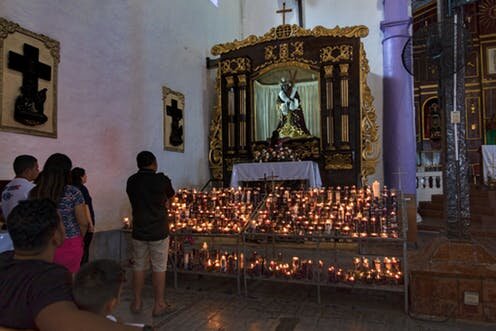
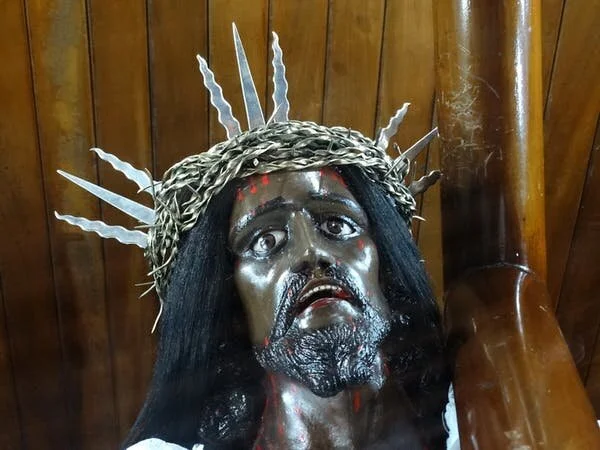
The life-sized wooden statue of the Black Christ in St. Philip Church in Panama. Dan Lundberg/Flickr, CC BY-SA

Panama’s “Festival del Cristo Negro,” the festival of the “Black Christ,” is an important religious holiday for local Catholics. It honors a dark, life-sized wooden statue of Jesus, “Cristo Negro” – also known as “El Nazaraeno,” or “The Nazarene.” 

Throughout the year, pilgrims come to pay homage to this statue of Christ carrying a cross, in its permanent home in Iglesia de San Felipe, a Roman Catholic parish church located in Portobelo, a city along the Caribbean coast of Panama. 

But it is on Oct. 21 each year that the major celebration takes place. As many as 60,000 pilgrims from Portobelo and beyond travel for the festival, in which 80 men with shaved heads carry the black Christ statue on a large float through the streets of the city. 

The men use a common Spanish style for solemn parades – three steps forward and two steps backward – as they move through the city streets. The night continues with music, drinking and dancing.

In my research on the relationship between Christianity, colonialism and racism, I have discovered that such festivals play a crucial role for historically oppressed peoples. 

About 9% of Panama’s population claims African descent, many of whom are concentrated in Portobelo’s surrounding province of Colón. Census data from 2010 shows that over 21% of Portobelo’s population claimAfrican heritage or black identity. 

To Portobelo’s inhabitants, especially those who claim African descent, the festival is more than a religious celebration. It is a form of protest against Spanish colonialism, which brought with it slavery and racism. 

History of the statute

Portobelo’s black Christ statue is a fascinating artifact of Panama’s colonial history. While there is little certainty as to its origin, many scholars believe the statue arrived in Portobelo in the 17th century – a time when the Spanish dominated Central America and brought in enslaved people from Africa. 

Various legends circulate in Panama as to how the black Christ got to Portobelo. Some maintain that the statue originated in Spain, others that it was locally made, or that it washed ashore miraculously. 

One of the most common stories maintains that a storm forced a ship from Spain, which was delivering the statue to another city, to dock in Portobelo. Every time the ship attempted to leave, the storms would return. 

Eventually, the story goes, the statue was thrown overboard. The ship was then able to depart with clear skies. Later, local fishermen recovered the statue from the sea. 

The statue was placed in its current home, Iglesia de San Felipe, in the early 19th century. 

Stories of miracles added to its mystique. Among the legends in circulation is one about how prayers to the black Christ spared the cityfrom a plague ravaging the region in the 18th century. 

Catholicism and African identity

Since its exact origins are unknown, so are the artistic intention behind the Jesus statue. However the figure’s blackness has made it an object of particular devotion for locals of African descent

At the time of the arrival of Cristo Negro, the majority of the Portobelo’s population was of African descent. This cultural heritage is significant to the city’s identity and traditions. 

The veneration of the statue represents one of many ways that the black residents of Portobelo and the surrounding Colón region of Panama have engendered a sense of resistance to racism and slavery. 

Each year around the time of Lent, local men and women across Colón – where slavery was particularly widespread – dramatize the story of self-liberated black slaves known as the Cimarrones. This reenactment is one of a series of celebrations, or “carnivals,” observed around the time of Lent by those who identify with the cultural tradition known colloquially as “Congo.” The term Congo was originally used by the Spanish colonists for anyone of African descent. It is now is used for traditions that can be traced back to the Cimarrones. 

During the carnival celebration, some local people dress up as the devil, meant to represent Spanish slave masters or complicit priests. Others don the dress of the Cimarrones.

Many of the participants in both the black Christ and carnival celebrations of Panama are Catholics as well. Together they participate to bring to light the Catholic Church’s complex relationship with Spanish colonization and slavery. Many Catholic leaders in the 16th to 18th centuries justified the enslavement of Africans and the colonization of the Americas, or at least did not object to it. 

A revered tradition

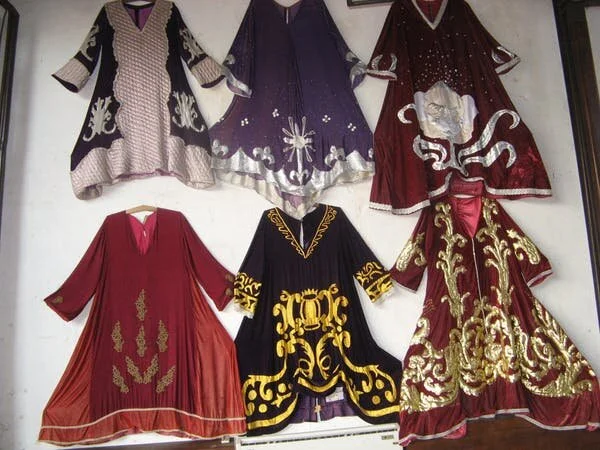
The different colored robes that are put on the statue of Cristo Negro. Ali EminovFlickr, CC BY-NC

Many people from throughout Panama have donated robes to clothe the statue. The colors of the robes donned by the statue varies throughout the year. Purple is reserved for the October celebrations, which likely reflects the use of purple in Catholic worship to signify suffering.

These robes draped on Panama’s black Christ are meant to representthose placed on Jesus when he was mockingly dressed in royal garb by the soldiers torturing him before his crucifixion. 

Evoking this scene perhaps serves to remind the viewer of the deeper theological meaning of Jesus’s suffering as it is often understood in Christianity: Although Jesus is the Son of God prophesied to save God’s people from suffering and should thus be treated like royalty, he was tortured and executed as a common criminal. His suffering is understoodto save people from their sins. 

Some pilgrims specifically come during the October festival to seek forgiveness for any sinful actions. Some wear their own purple robes, the color indicating a sign of their suffering – and, of course, that of the black Christ.


S. Kyle Johnson is a Doctoral Student in Systematic Theology, Boston College


THIS ARTICLE WAS ORIGINALLY PUBLISHED ON THE CONVERSATION

The Call for Change: Women Speak Out on Sexualized Violence in South Africa

The tallies have been rising on women murdered on the streets of South Africa. From a country with a history of violence and suppression, the fight is nowhere finished. Multiday protests throughout major cities have brought the crisis to international attention. 

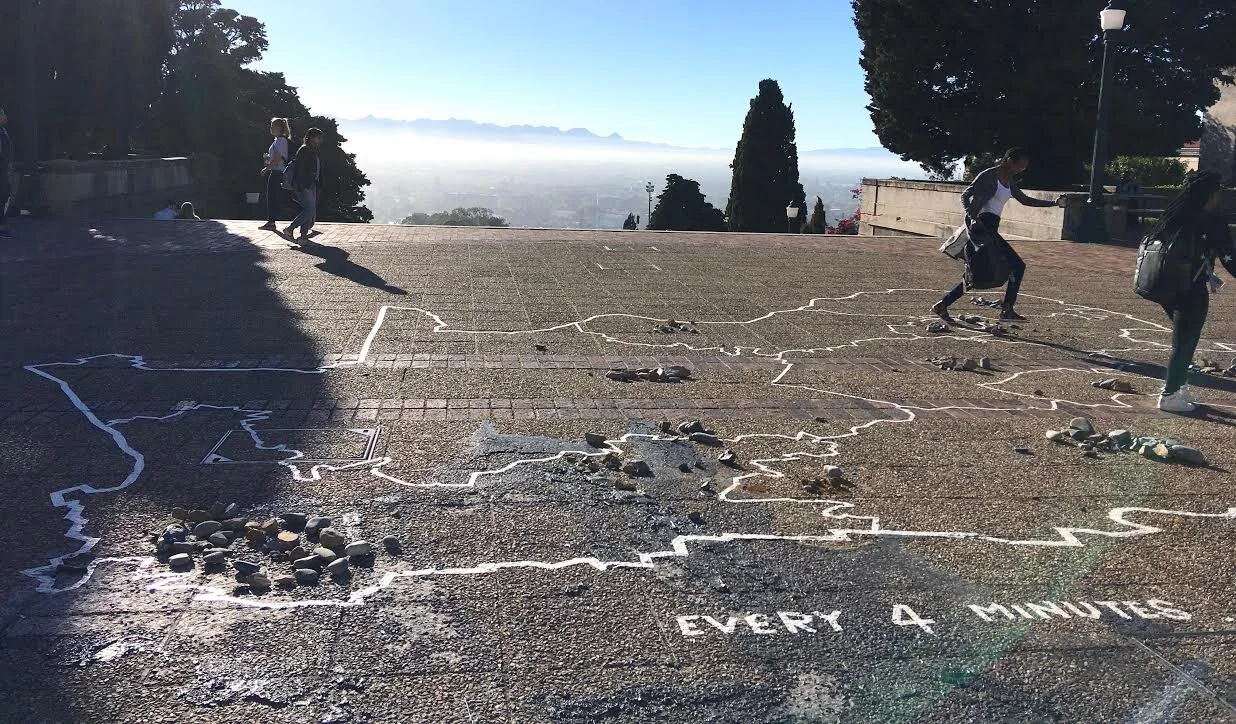
Protest drawing awareness to rape victims at University of Cape Town. Devin O’Donnell.

The brutal murder of Uyinene Mrwetyana, a University of Cape Town student who was raped and killed while at the post office is unfortunately not a standalone incident. Mrwetyana joined upwards of 30 women that had been murdered in August alone. This marks the highest rates gender-based violence the country has seen, in a month that is, ironically, also designated as the national awareness month for Women’s Rights. 

There are many reasons thought to be behind the high numbers. Culturally, it comes from a history of women being viewed as inferior and the belief that women must obey their husbands. In many parts of South Africa, there is a general acceptance of rape, including martial rape and gang rape, as not being seen as wrong. This has led to South Africa having the highest rate of domestic abuse in the world. Domestic abuse was only outlawed in 1998 and martial rape in 1993. A studied done by the South Africa Medical Research Council found that 50% of men have abused their partners. Most relevant to the recent murders, every six hours a partner kills their female counterpart and one in four men in South Africa have raped someone. 

Studies have also found that there are certain traits in men and women that can lead to a greater risk of abuse in the country. Men who have grown up with violence, without father figures, and who use alcohol are more likely to abuse. It is also tied to race and socioeconomic status, as women of color, who are unemployed, and/or are from rural communities are more likely to be victims. Psychological studies have found that domestic abuse is often used as a response to feeling powerless. Apartheid proved violence is successful as a means for control and left people with a lack of trust in the government. Men who feel helpless regress to using violence against their partners in an attempt to regain a sense of control and self-worth. They also have a lack of fear of being prosecuted due to flaws in the police system – which is legitimate when only 15% of perpetrators are convicted. 

The exceptionally high rates of HIV in South Africa pose an additional danger to rapes. The belief in a virgin cleansing myth, if you rape a virgin you will be cured of HIV, has led to high rates of abuse in children, with 50% of children being abused before they turn 18. Rates of sexual abuse have also been found to be exceptionally high in schools and often deters girls from pursuing education. Additionally, South Africa has increased rates of violence surrounding homophobia, with rates of “corrective rape” reaching 10 a week just in Cape Town. This mirrors statistics for gay black men. 

President Ramaphosa said that measures have to be taken now to address the femicide. He has proposed longer sentencing and introducing more sexual offence courts. With current rates of rape reporting lingering at 2%, there is a chance that this will cause little change. The women marching firmly believe that change is necessary, but will it be enough?


DEVIN O’DONNELL’s interest in travel was cemented by a multi-month trip to East Africa when she was 19. Since then, she has continued to have immersive experiences on multiple continents. Devin has written for a start-up news site and graduated from the University of Michigan with a degree in Neuroscience.


5 Women to Listen to When Thinking About Climate Advocacy

Greta Thunberg commanded the world’s attention with the urgency of her words before the 2019 UN Climate Action Summit, bringing to the forefront a conversation about the women who have been leading climate advocacy. While there are countless women who for decades have dedicated themselves to environmental activism, this article provides a shortlist of five women of all ages and walks of life who have promoted the common goal of a more sustainable world through their words and actions.

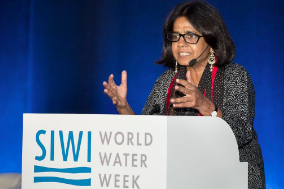
Dr. Sunita Nahrain presenting at the Stockholm Water Prize Symposium. Stockholm International Water Institute. CC 2.0

Sunita Narain, India: The director of the Center for Science and Environment in New Delhi, Nahrain has worked since the 1980s to build community partnerships focused on mitigating air pollution, as well as promoting food and water security. Nahrain has been a critical voice in the formation of climate policy in India, advising both the Environmental Pollution Authority for the National Capital Region, and a Joint Parliamentary Committee investigating pesticide contamination in foods. For her critical work Nahrain was awarded the World Water Prize in 2005, among numerous other honors throughout her career. 

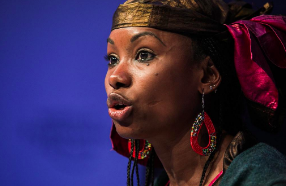
Hindou Omaraou Ibrahim Speaking before the World Economic Forum. World Economic Forum. CC 2.0

Hindou Omaraou Ibrahim, Chad: Ibrahim, a climatologist and environmental activist from Mbororo, Chad, has centered her work on the empowerment of indigenous women. She is the founder of the Association of Peul Women and Peoples of Chad, and was designated as the National Geographic Emerging Explorer in 2017. Ibrahim has spearheaded 3D mapping projects of Chad’s Sahel region, the home of the Mbororo community. The mapping efforts are partnered with UNESCO and the government of Chad, and are collecting thorough data regarding indigenous subsistence farming and environmental concerns, especially the drying of Lake Chad. 

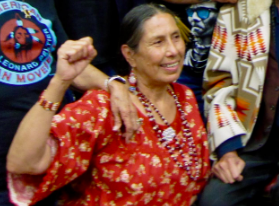
Casey Camp-Horinek, Wounded Knee AIM veterans. Neeta Lind. CC 2.0

Casey Camp-Horinek, United States: Camp-Horinek is a vocal environmental and indigenous rights activist on the behalf of the Ponca Nation, whose native land is located in the state of Oklahoma. Her advocacy deals directly with supporting grassroots activism against harmful industry practices such as fracking, and the construction of the Keystone XL natural gas pipeline. Camp-Horinek has dedicated herself to creating a platform for indigenous voices, serving as a board member for WECAN and presenting before the UN Forum on Indigenous Issues.

Shalvi Sakshi, Fiji: Sakshi, a twelve-year old climate activist from Bua, Fiji, served as the youngest panelist, then ten years old, for the 23rd Conference of the Parties to the UNFCCC in November of 2017 in Bonn, Germany. Sakshi urged of the dangers of rising sea levels due to deforestation and industrial contribution to rising carbon dioxide emissions. Her message is one of empowerment, emphasizing that everyone maintains the capacity and obligation to improve his or her world.

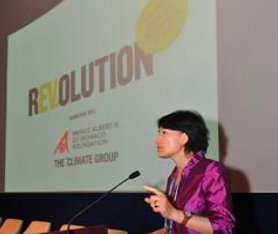
Changhua Wu Speaking before an EV20 Shanghai Media Event. The Climate Group. CC 2.0

Changhua Wu, China: Wu is an environmental advocate and social entrepreneur, who serves as the founding CEO of the Beijing Future Innovation Center and as the China/Asia Region Director for the Jeremy Rifkin Office. Wu has contributed extensively to important strides in clean energy policy in China, and has been recognized globally for her impact in the lowering of China’s carbon footprint. Combining her extensive background in economics, environmental policy, and journalism studies, throughout her career Wu has tied together sustainable technology, social entrepreneurialism, and environmental policy. 


HALLIE GRIFFITHS is an undergraduate at the University of Virginia studying Foreign Affairs and Spanish. After graduation, she hopes to apply her passion for travel and social action toward a career in intelligence and policy analysis. Outside of the classroom, she can be found, quite literally, outside: backpacking, rock climbing, or skiing with her friends.