
With clear water, diverse marine life and Indigenous culture, Panama’s beaches offer more than a beautiful place to swim.
Read MoreThe Cost of Climate Change: Forced Relocation in Panama’s San Blas Islands
Rising sea levels led to the evacuation of about 300 Indigenous Guna families from Gardi Sugdub Island off the coast of Panama on June 1, 2024.
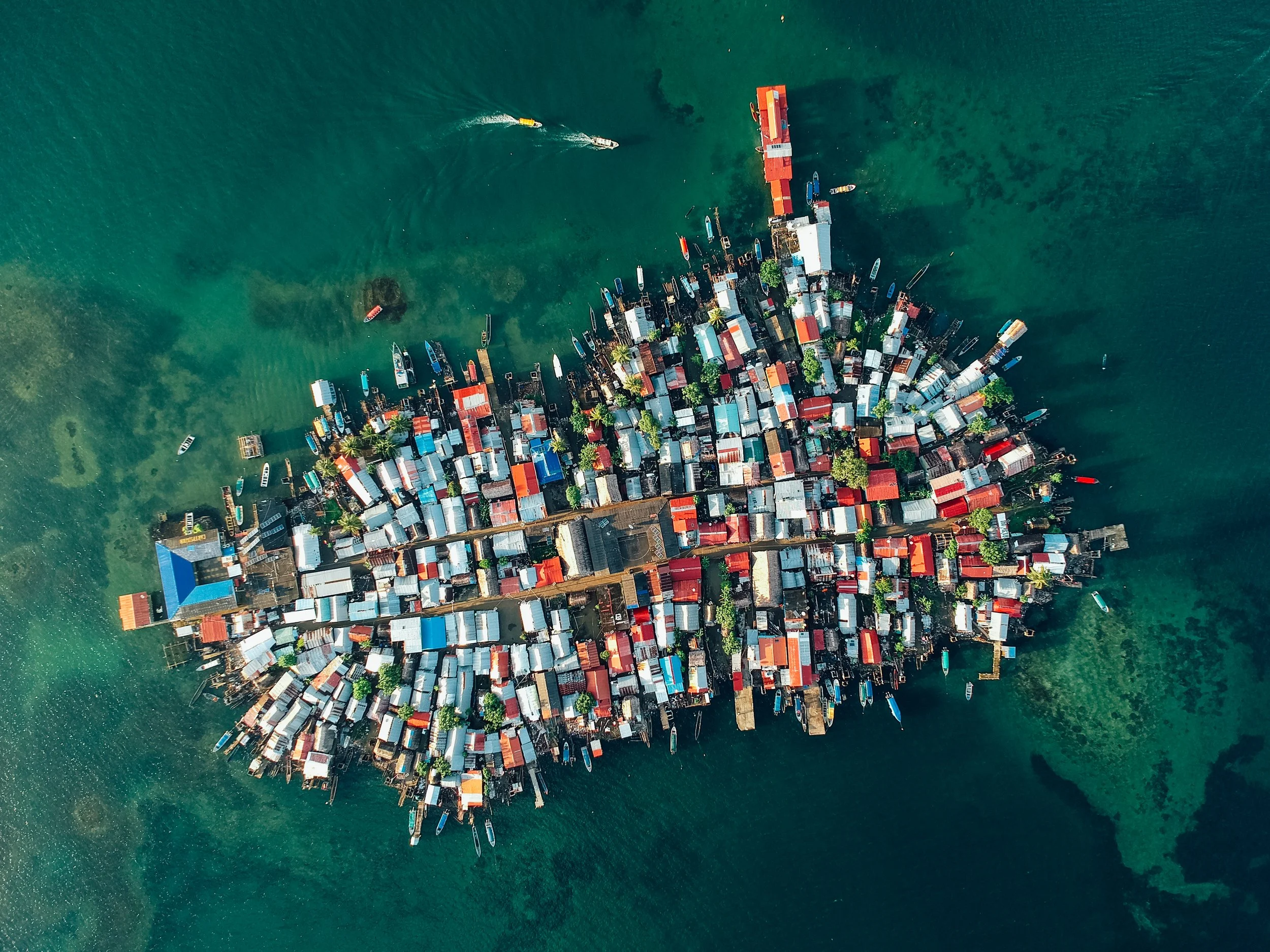
Gardi Sugdub, Panama. Lee Bosher. ATTRIBUTION-NONCOMMERCIAL 2.0 GENERIC
Climate change poses a threat to coastal territories around the world, as warming global temperatures lead to rising sea levels and stronger storms. Gardi Sugdub is one of 365 islands in the San Blas archipelago, many of which are expected to be underwater by 2050. The rising waters along Panama’s Pacific and Caribbean coasts are expected to subject 63 communities to climate displacement throughout the coming decades as about 2% of Panama’s coastal territory becomes submerged. Although the relocation on June 1, 2024, was successful, the 300 Guna families are the first of an estimated 38,000 people in Panama who will require relocation in the short and medium term.
The Guna people, the Indigenous inhabitants of about 50 of the 365 islands in the San Blas archipelago, are the first of these communities to relocate. Indigenous and other marginalized communities are disproportionately affected by climate displacement, where people are forced to move because of climate-related threats or disasters. Inequities resulting from the climate crisis disproportionately harm People of Color, particularly Women of Color. After decades of attempts by Guna community members to receive relocation support, the Panamanian government finally agreed.
The Guna people have inhabited Gardi Sugdub for generations. They arrived on the island about 150 years ago when they crossed the water from the Panamanian and Colombian mainlands. The move off of the island to a landlocked community surrounded by jungle is a challenge for many because over 200 years of Guna culture have been centered around the sea. While most of Gardi Sugdub’s inhabitants relocated, about 200 people chose to stay on the island.
The relocated Guna people have moved to a new community called Isberyala Isberyala, a plot of 300 two bedroom houses situated in the forest, starkly contrasts with life on Gardi Sugdub, where houses were overcrowded and often homed by multiple families. Panama’s Ministry of Housing ensured that the Isberyala residential project includes infrastructure like electricity, playgrounds, cultural spaces and streets named after historic Guna leaders. The people in Isberyala can easily visit their old homes too, as Gardi Sugdub is only a 30-minute walk and a short boat ride away.
TO GET INVOLVED
Those looking to spread awareness and advocate against climate displacement and inequity can learn more and share knowledge with others. People can support mitigation and relief efforts by donating to organizations that support relocations like Swiss NGO Displacement Solutions and the UN Refugee Agency, which recently started a Climate Resilience Fund.

Madison Paulus
Madison is a student at George Washington University studying international affairs, journalism, mass communication, and Arabic. Born and raised in Seattle, Washington, Madison grew up in a creative, open-minded environment. With passions for human rights and social justice, Madison uses her writing skills to educate and advocate. In the future, Madison hopes to pursue a career in science communication or travel journalism.
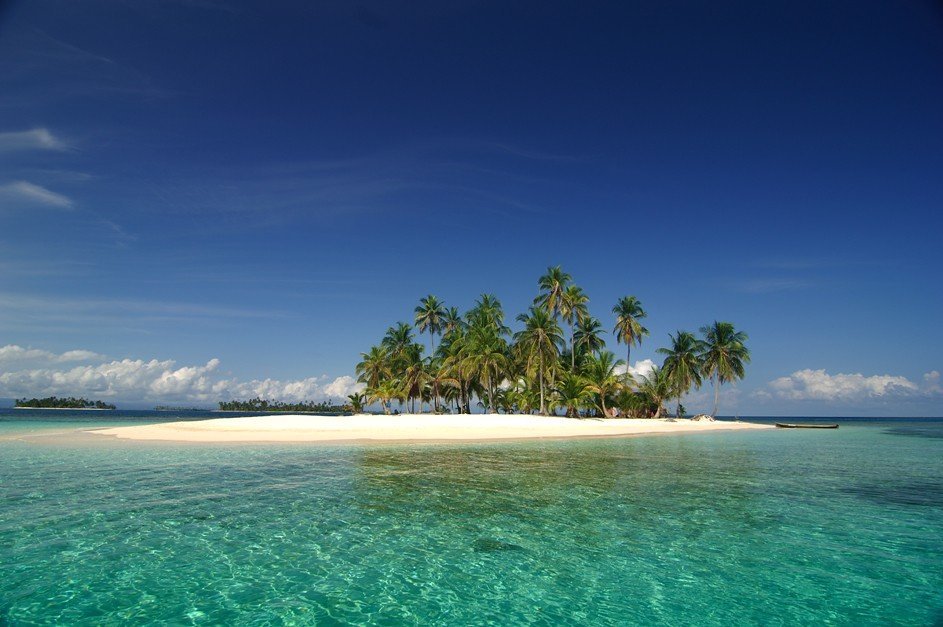
The San Blas Islands, Panama. Whl.travel. BY-NC-SA 2.0
8 Central American Islands You May Have Never Heard Of
Known mostly to locals and frequented by few travelers, these islands have an expansive amount of marine life and culture. This list includes islands in Belize, Honduras, Costa Rica, Nicaragua and Panama.
1. Glover’s Reef Atoll
Belize
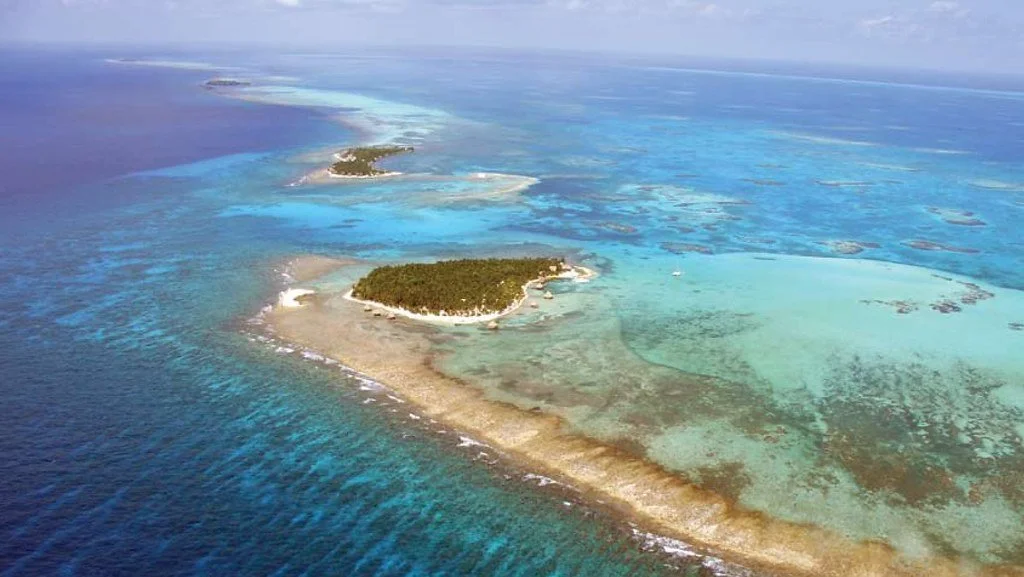
Opened to only a few visitors at a time, this 9-acre island is surrounded by Glover’s Reef—a 90 square mile stretch of reef made up of 700 individual patch reefs in a lagoon. This reef is thought to be the richest marine environment in the Caribbean Sea. There are many things to do on the island, such as kayaking, snorkeling, attending a yoga retreat or just relaxing. Once frequented by pirates, this protected marine reserve has been a designated World Heritage Site since 1996.
2. Isla del Caño
Costa Rica
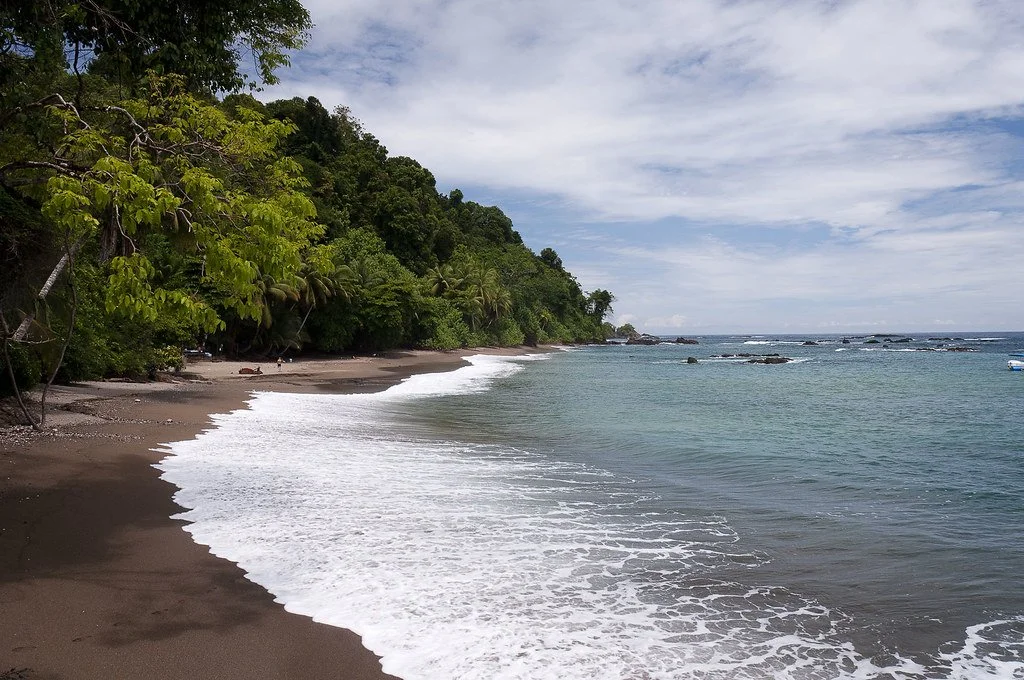
Isla del Caño, Costa Rica. Chris Varley. CC BY-NC 2.0
During pre-Columbian times, this island was a cemetery and home to Indigenous cultures. Located just 10 miles off the Osa Peninsula, it is a protected biological reserve surrounded by five platforms of low coral reefs. It is also home to an abundance of marine life, including sharks, whale sharks, dolphins, moray eels, sting rays and a variety of tropical reef fish. There are no hotels or guesthouses on the island; staying overnight is not allowed.. There are many tours available right outside of the Ballena Marine National Park. Your day trip or overnight stay can begin at the Osa Peninsula, Uvita or Sierpe.
3. Hog Islands
Honduras
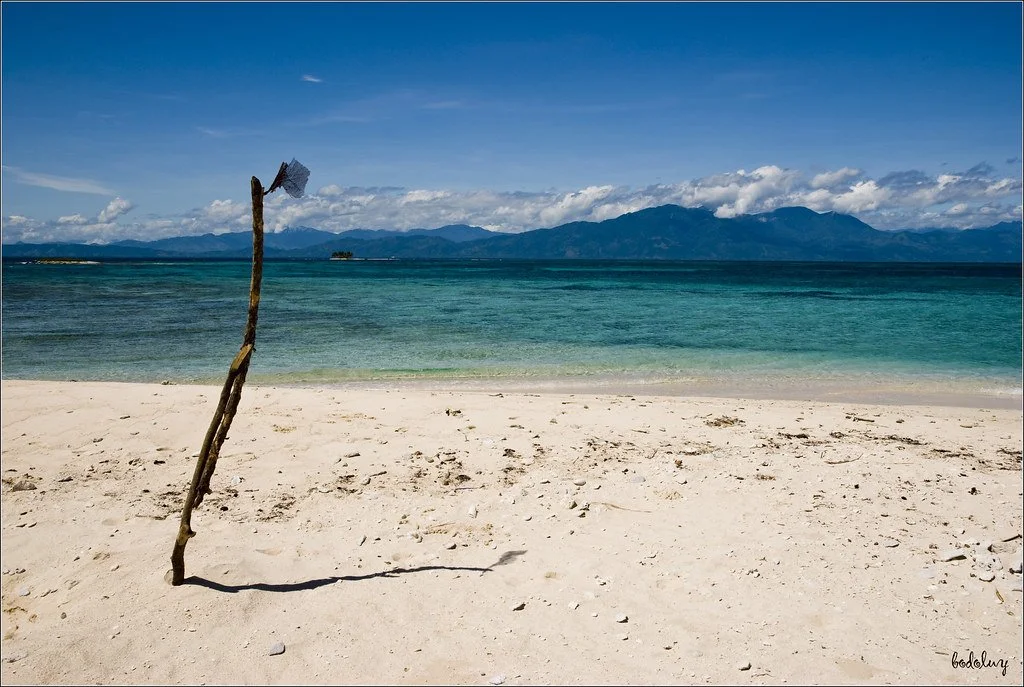
Cayos Cochinos a.k.a Hog Islands, Honduras. Bodoluy. CC BY-NC-SA 2.0
Off of the northern mainland coast of La Ceiba in Honduras lie the Hog Islands, known in Spanish as Cayos Cochinos. They consist of two small islands and 13 tiny sand cays. It’s inhabited by the Garifuna people, and they are the only ones allowed to fish the waters. The islands are managed by the Cayos Cochinos Foundation; they work in unison with the Honduran government and the Garifuna people to preserve the water’s health. The smaller of the two islands is used exclusively as a center for scientific investigation. Cayos Cochinos is a Marine Protected Area (MPA), which includes part of the world's second largest coral reef system known as the Mesoamerican Barrier Reef.
4. Isla Guadalupe
Mexico's Baja Peninsula
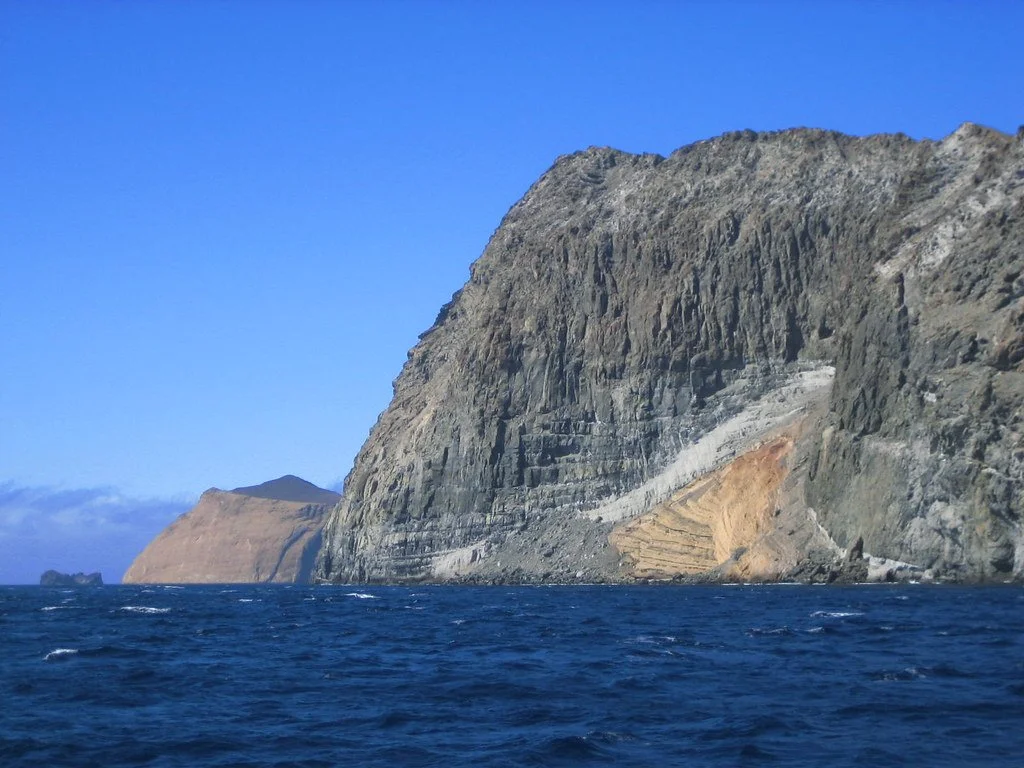
Isla Guadalupe. StJenna. CC BY-NC 2.0
The remote volcanic island of Isla Guadalupe, which is Spanish for Guadalupe Island, is located off the west coast of Mexico’s Baja Peninsula. The island is home to elephant seals and Guadalupe seals and is inhabited by scientists, military personnel operating a weather station and a small group of seasonal fishermen. The waters surrounding Isla Guadalupe drive experienced divers to take in the views of underwater life; it is known to consistently outperform South Africa and Australia with shark-seeing consistency. The diving tours leave the ports of Ensenada and San Diego and last on average five days.
5. Isla Ometepe
Nicaragua
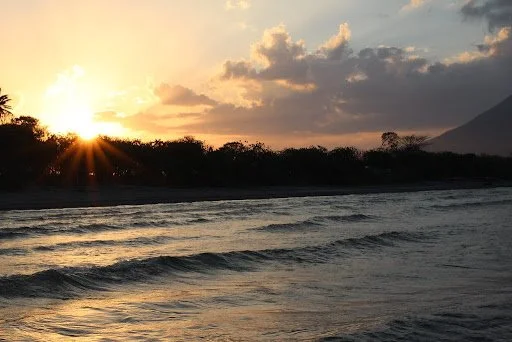
Isla Ometepe Sunset. Katie Laird. CC BY-NC-SA 2.0
Located southwest of Lake Nicaragua, Isla Ometepe is home to twin volcanoes: Concepción and Maderas. The island is inhabited with dense forests, natural springs, lake views and hiking trails. There are also diverse plant and animal species, including white-headed capuchins, yellow-naped Parrots and guayabón fruit trees. The island is visited by backpackers and nature seeking enthusiasts, with locals sharing that more eco-tourists are arriving. The best time to visit is during the dry season, which runs from November to April. In the dry season, the butterfly garden is open in Charco Verde, the ecological reserve.
6. Little Corn Island
Nicaragua
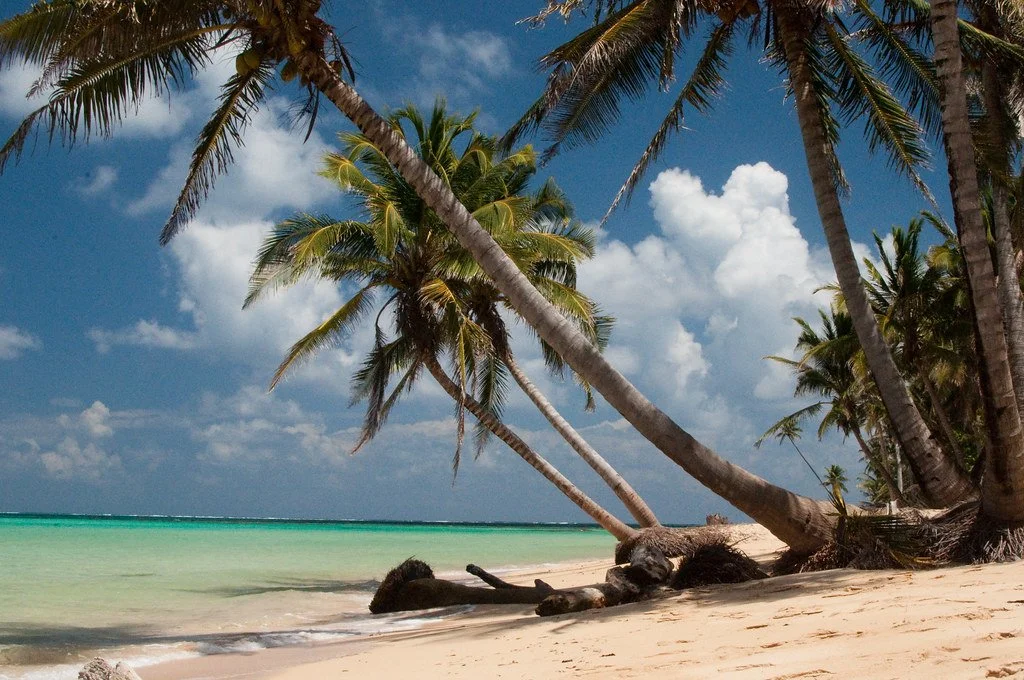
Little Corn is the smallest of the Corn Islands off Nicaragua’s Caribbean coast. Once ruled by the British, this remote island produces coconut oil, lobsters and shrimp and is inhabited by roughly 850 people. There are no cars, golf carts, motorcycles or an airport. Seeing the island is possible, but requires two or more connection flights, as well as a 30-minute boat ride from Bluefields, Nicaragua. It’s visited by many who enjoy diving due to the hundreds of dive spots that surround the island. Featuring cheap dining prices, a beer on the island is less than a dollar, and a fresh caught lobster dinner is on average $12.
7. Islas Zapatillas
Panama
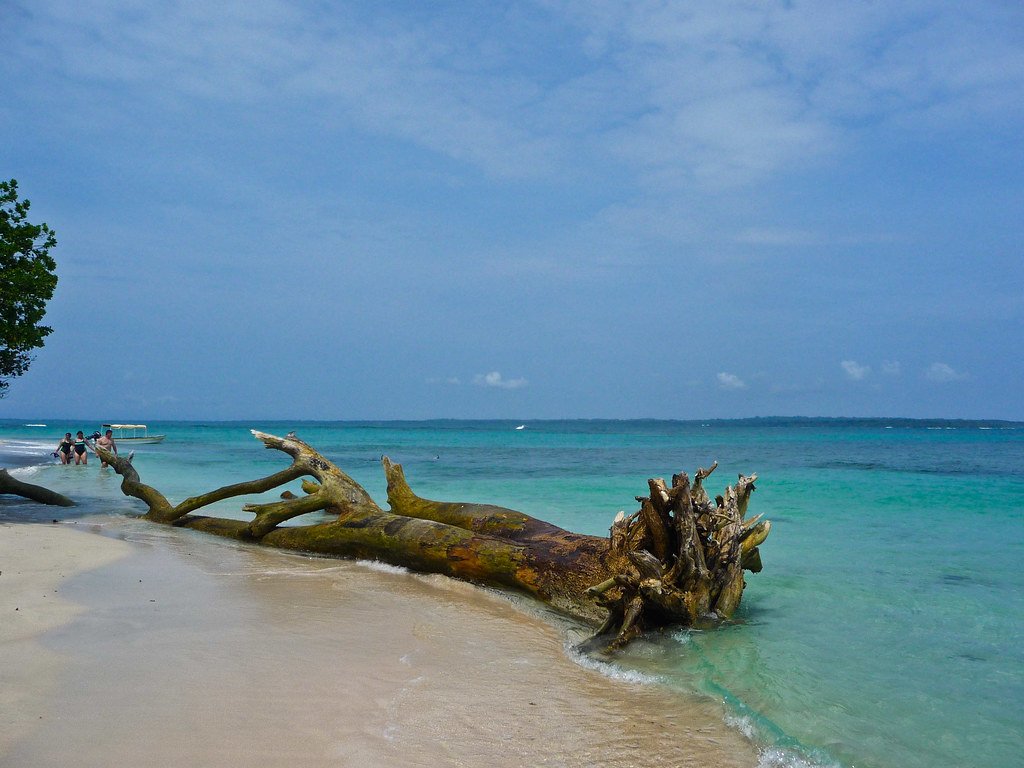
Isla Zapatilla. Michael McCullough. CC BY 2.0
Islas Zapatillas or Little Shoes Cays (named for their resemblance to footprints) are two small islands in Bocas del Toro, Panama. The islands are inhabited by sloths and protected by the Bastimentos National Marine Park. Islas Zapatillas are important ecological sites for the endangered hawksbill sea turtles that nest on their shores. You can explore the island through a tour or by charting a private boat to have a more intimate experience. The island is uninhabited, so making sure you have enough water, food, sunscreen and all other necessities is key to enjoying yourself here.
8. San Blas Islands
Panama
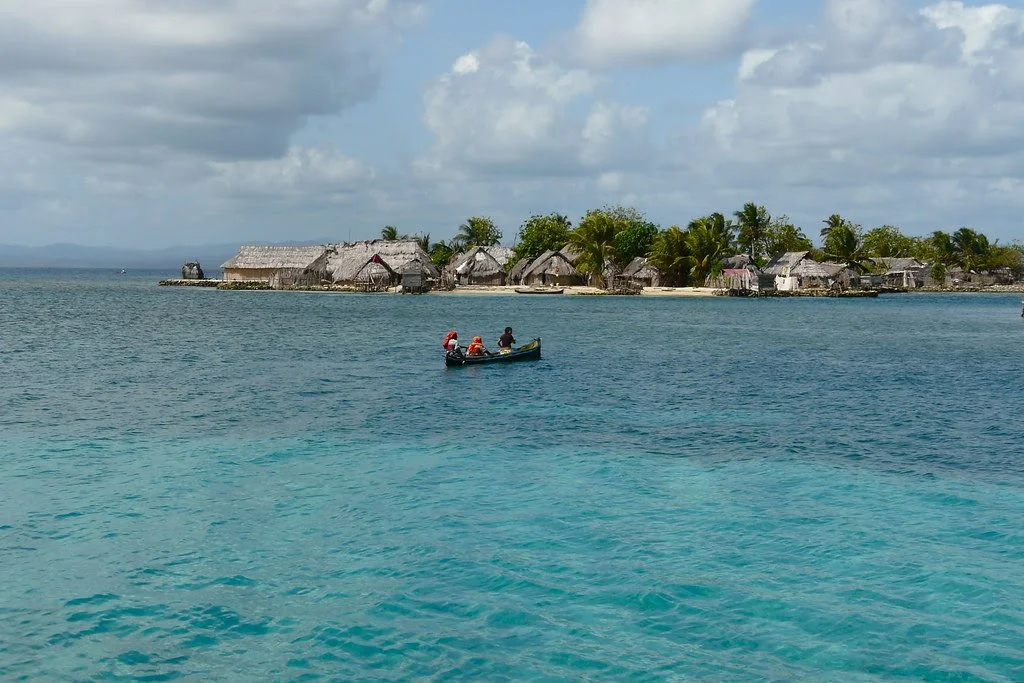
San Blas, Panama. Rita Willaert. CC BY-NC 2.0
The San Blas Islands are located in the Caribbean Sea off the coast of Panama. The Kuna Tribe of Panama inhabit the islands and have strictly controlled development and tourism here. All of the money spent on the islands falls directly into the hands of the Kuna Community. Day trips are available, but if staying overnight is an option you’d like to explore, palm-thatched cabins with a sand floor are available. They also offer overwater bungalows or even options for camping. There are visitors who decide to experience the Kuna lifestyle and culture; in those cases, they organize to stay in a dorm of a Kuna family. The island is filled with water activities and scenic views. However, researchers claim that the islands are at risk of disappearing in a matter of decades due to erosion and poor resource management.

Jennifer is a Communications Studies graduate based in Los Angeles. She grew up traveling with her dad and that is where her love for travel stems from. You can find her serving the community at her church, Fearless LA or planning her next trip overseas. She hopes to be involved in international humanitarian work one day.
Panama Celebrates its Black Christ, Part of Protest Against Colonialism and Slavery
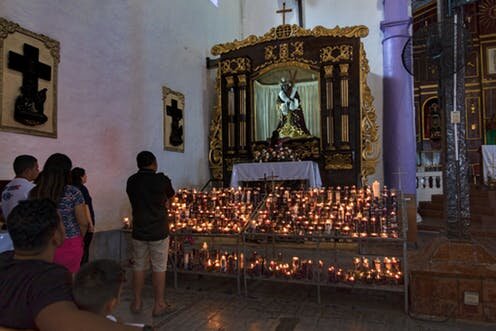
The life-sized wooden statue of the Black Christ in St. Philip Church in Panama. Dan Lundberg/Flickr, CC BY-SA
Panama’s “Festival del Cristo Negro,” the festival of the “Black Christ,” is an important religious holiday for local Catholics. It honors a dark, life-sized wooden statue of Jesus, “Cristo Negro” – also known as “El Nazaraeno,” or “The Nazarene.”
Throughout the year, pilgrims come to pay homage to this statue of Christ carrying a cross, in its permanent home in Iglesia de San Felipe, a Roman Catholic parish church located in Portobelo, a city along the Caribbean coast of Panama.
But it is on Oct. 21 each year that the major celebration takes place. As many as 60,000 pilgrims from Portobelo and beyond travel for the festival, in which 80 men with shaved heads carry the black Christ statue on a large float through the streets of the city.
The men use a common Spanish style for solemn parades – three steps forward and two steps backward – as they move through the city streets. The night continues with music, drinking and dancing.
In my research on the relationship between Christianity, colonialism and racism, I have discovered that such festivals play a crucial role for historically oppressed peoples.
About 9% of Panama’s population claims African descent, many of whom are concentrated in Portobelo’s surrounding province of Colón. Census data from 2010 shows that over 21% of Portobelo’s population claimAfrican heritage or black identity.
To Portobelo’s inhabitants, especially those who claim African descent, the festival is more than a religious celebration. It is a form of protest against Spanish colonialism, which brought with it slavery and racism.
History of the statute
Portobelo’s black Christ statue is a fascinating artifact of Panama’s colonial history. While there is little certainty as to its origin, many scholars believe the statue arrived in Portobelo in the 17th century – a time when the Spanish dominated Central America and brought in enslaved people from Africa.
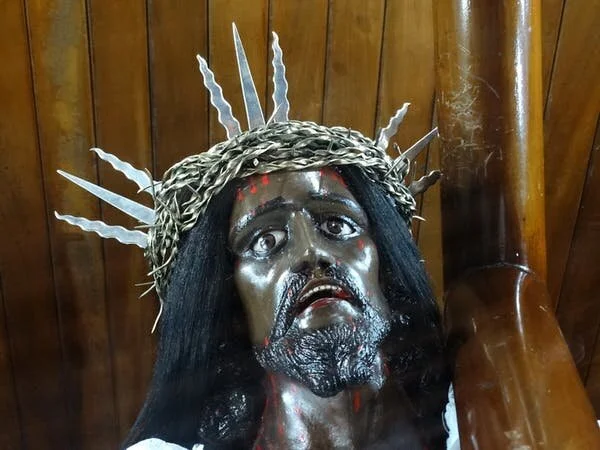
Cristo Negro. Adam Jones/Flickr, CC BY-SA
Various legends circulate in Panama as to how the black Christ got to Portobelo. Some maintain that the statue originated in Spain, others that it was locally made, or that it washed ashore miraculously.
One of the most common stories maintains that a storm forced a ship from Spain, which was delivering the statue to another city, to dock in Portobelo. Every time the ship attempted to leave, the storms would return.
Eventually, the story goes, the statue was thrown overboard. The ship was then able to depart with clear skies. Later, local fishermen recovered the statue from the sea.
The statue was placed in its current home, Iglesia de San Felipe, in the early 19th century.
Stories of miracles added to its mystique. Among the legends in circulation is one about how prayers to the black Christ spared the cityfrom a plague ravaging the region in the 18th century.
Catholicism and African identity
Since its exact origins are unknown, so are the artistic intention behind the Jesus statue. However the figure’s blackness has made it an object of particular devotion for locals of African descent.
At the time of the arrival of Cristo Negro, the majority of the Portobelo’s population was of African descent. This cultural heritage is significant to the city’s identity and traditions.
The veneration of the statue represents one of many ways that the black residents of Portobelo and the surrounding Colón region of Panama have engendered a sense of resistance to racism and slavery.
Each year around the time of Lent, local men and women across Colón – where slavery was particularly widespread – dramatize the story of self-liberated black slaves known as the Cimarrones. This reenactment is one of a series of celebrations, or “carnivals,” observed around the time of Lent by those who identify with the cultural tradition known colloquially as “Congo.” The term Congo was originally used by the Spanish colonists for anyone of African descent. It is now is used for traditions that can be traced back to the Cimarrones.
During the carnival celebration, some local people dress up as the devil, meant to represent Spanish slave masters or complicit priests. Others don the dress of the Cimarrones.
Many of the participants in both the black Christ and carnival celebrations of Panama are Catholics as well. Together they participate to bring to light the Catholic Church’s complex relationship with Spanish colonization and slavery. Many Catholic leaders in the 16th to 18th centuries justified the enslavement of Africans and the colonization of the Americas, or at least did not object to it.
A revered tradition
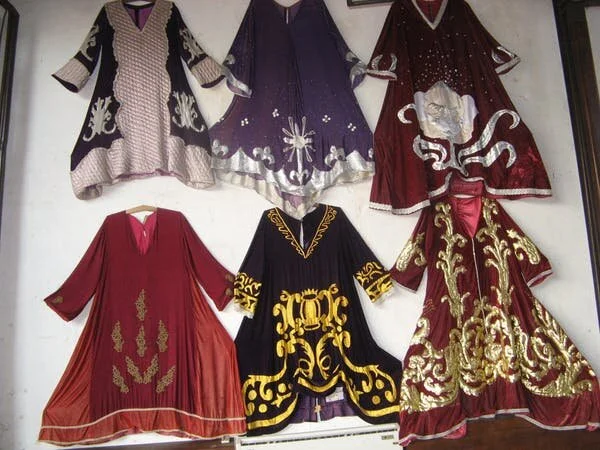
The different colored robes that are put on the statue of Cristo Negro. Ali EminovFlickr, CC BY-NC
Many people from throughout Panama have donated robes to clothe the statue. The colors of the robes donned by the statue varies throughout the year. Purple is reserved for the October celebrations, which likely reflects the use of purple in Catholic worship to signify suffering.
These robes draped on Panama’s black Christ are meant to representthose placed on Jesus when he was mockingly dressed in royal garb by the soldiers torturing him before his crucifixion.
Evoking this scene perhaps serves to remind the viewer of the deeper theological meaning of Jesus’s suffering as it is often understood in Christianity: Although Jesus is the Son of God prophesied to save God’s people from suffering and should thus be treated like royalty, he was tortured and executed as a common criminal. His suffering is understoodto save people from their sins.
Some pilgrims specifically come during the October festival to seek forgiveness for any sinful actions. Some wear their own purple robes, the color indicating a sign of their suffering – and, of course, that of the black Christ.
S. Kyle Johnson is a Doctoral Student in Systematic Theology, Boston College
THIS ARTICLE WAS ORIGINALLY PUBLISHED ON THE CONVERSATION