
Rich in both soil and history, this destination provides landscapes that have deeper meaning and symbolism for residents and travelers alike.
Read MoreThe Cost of Climate Change: Forced Relocation in Panama’s San Blas Islands
Rising sea levels led to the evacuation of about 300 Indigenous Guna families from Gardi Sugdub Island off the coast of Panama on June 1, 2024.
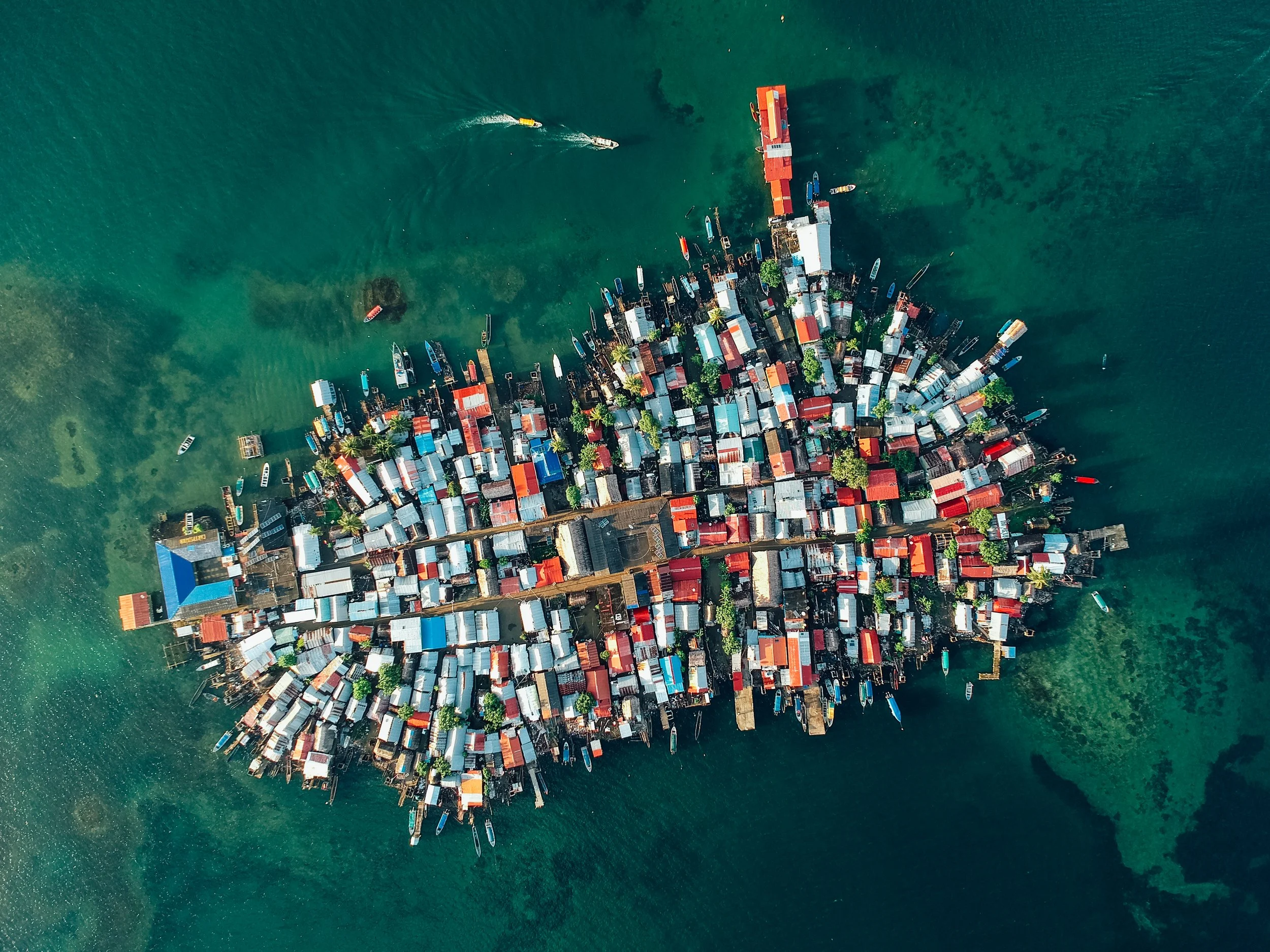
Gardi Sugdub, Panama. Lee Bosher. ATTRIBUTION-NONCOMMERCIAL 2.0 GENERIC
Climate change poses a threat to coastal territories around the world, as warming global temperatures lead to rising sea levels and stronger storms. Gardi Sugdub is one of 365 islands in the San Blas archipelago, many of which are expected to be underwater by 2050. The rising waters along Panama’s Pacific and Caribbean coasts are expected to subject 63 communities to climate displacement throughout the coming decades as about 2% of Panama’s coastal territory becomes submerged. Although the relocation on June 1, 2024, was successful, the 300 Guna families are the first of an estimated 38,000 people in Panama who will require relocation in the short and medium term.
The Guna people, the Indigenous inhabitants of about 50 of the 365 islands in the San Blas archipelago, are the first of these communities to relocate. Indigenous and other marginalized communities are disproportionately affected by climate displacement, where people are forced to move because of climate-related threats or disasters. Inequities resulting from the climate crisis disproportionately harm People of Color, particularly Women of Color. After decades of attempts by Guna community members to receive relocation support, the Panamanian government finally agreed.
The Guna people have inhabited Gardi Sugdub for generations. They arrived on the island about 150 years ago when they crossed the water from the Panamanian and Colombian mainlands. The move off of the island to a landlocked community surrounded by jungle is a challenge for many because over 200 years of Guna culture have been centered around the sea. While most of Gardi Sugdub’s inhabitants relocated, about 200 people chose to stay on the island.
The relocated Guna people have moved to a new community called Isberyala Isberyala, a plot of 300 two bedroom houses situated in the forest, starkly contrasts with life on Gardi Sugdub, where houses were overcrowded and often homed by multiple families. Panama’s Ministry of Housing ensured that the Isberyala residential project includes infrastructure like electricity, playgrounds, cultural spaces and streets named after historic Guna leaders. The people in Isberyala can easily visit their old homes too, as Gardi Sugdub is only a 30-minute walk and a short boat ride away.
TO GET INVOLVED
Those looking to spread awareness and advocate against climate displacement and inequity can learn more and share knowledge with others. People can support mitigation and relief efforts by donating to organizations that support relocations like Swiss NGO Displacement Solutions and the UN Refugee Agency, which recently started a Climate Resilience Fund.
Madison Paulus
Madison is a student at George Washington University studying international affairs, journalism, mass communication, and Arabic. Born and raised in Seattle, Washington, Madison grew up in a creative, open-minded environment. With passions for human rights and social justice, Madison uses her writing skills to educate and advocate. In the future, Madison hopes to pursue a career in science communication or travel journalism.
VIDEO: Deep in Panama's Rainforest
Enrique Pacheco’s cinematography takes us on a journey through Panama’s lush landscape.
“Deep in the Rainforest” captures the density and beauty of this undisrupted natural space. Through Pacheco’s lens, we explore nature’s gentle power—torrential storms, vibrant light, and the intricate ecosystems that make up Panama’s environment.
Bridging the Inequality Gap for Panama’s Darién Province
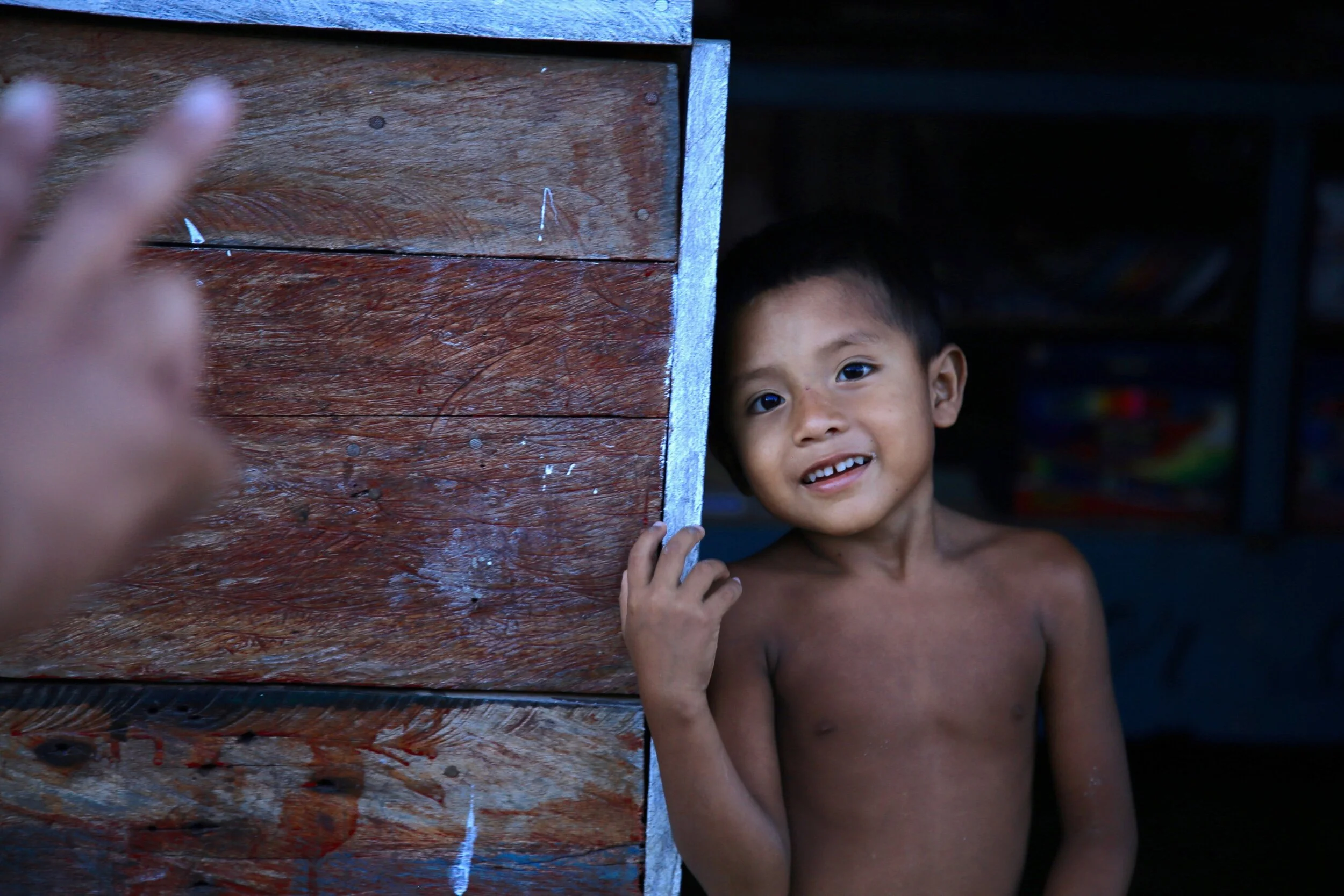
Photo by Katie Chen on Unsplash
The Gallup-Healthways Global Well-Being Index has ranked residents of Panama as the leaders in “well-being” for two consecutive years. However, three weeks in communities of the Darién province exposed me to the destitution and gubernatorial neglect that blankets this eastern region. Inhabitants of the Darién have been stigmatized, leaving them without access to clean water, health care facilities, or economic opportunity. My experience led me not only to question the validity of the Index, but also to consider the ways we can empower a forgotten sub-population.
“A little further down the road, you’ll find that it comes to an end,” my local Panamanian guide remarked while en route to the compound where we reside for the following three weeks. At the time, the idea of a place with no road was beyond comprehension. How could people stay connected? How could they receive supplies? The answer to these questions is simple —they don’t.
Soon after arriving in Panama, I began to comprehend the “Darién Gap” which is a 99-mile swath of undeveloped swampland and forest located within Panama’s Darién province — a symbol of the many development projects that have been discontinued in the region over the past decades. I found that the double-edged sword of indigenous isolation offers cultural preservation on one side, clean water and healthcare deficiencies on the other.
The border between Panama and Colombia is the only one in the world that remains unpaved! While the decision to stop construction of the Pan-American Highway provided benefits to some groups, such as law enforcement officers against drug traffickers and indigenous inhabitants of the Gap who wish to preserve a traditional lifestyle, it also resulted in neglect of an entire region. With the fastest-growing economy in the Americas, Panama now has an opportunity to improve the quality of life for all of its citizens. Yet, despite the recent boom, the nation has the greatest economic inequality in the Americas with nearly 40 percent of the country living in poverty. Many of those who endure economic destitution live in the eastern half of the country, particularly in the Darién.
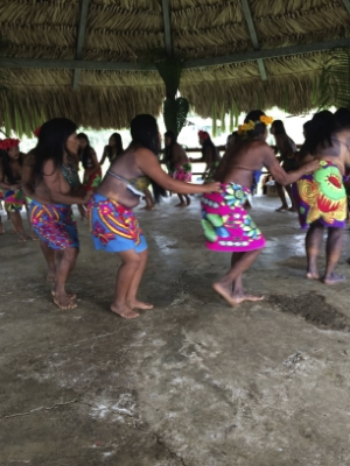
My three weeks in Panama were dedicated to community visits throughout this beleaguered province. We met with officials and members of individual households, and conducted surveys to determine the accessibility to fundamental necessities, such as clean water, health care, and education. I was an intern for a nonprofit based in Panama City, but which conducts most of its projects with American undergraduates serving communities of the Darién. This nonprofit creates partnerships with communities located in proximity to a road or a rocky pathway that Panamanian officials call highway. More indigenous groups are sheltered within the Darién Gap, undisturbed and unacknowledged.
According to community members who responded to our surveys in July 2014, lack of access to clean water is the main problem affecting daily life for an appreciable number of residents in the Darién province. Although the Panamanian government’s Ministry of Health is responsible for water distribution by means of aqueduct systems, complications such as project incompletion, water shortages, pipeline damages, and contamination from pesticides/animals inhibit achievement of the goal. Residents described complex, inconsistent, and seasonally based methods for receiving water. In the past, families might go two months without water when a government-constructed pipeline to a water tank is broken. When water finally arrives, it will sometimes come out dirty or contaminated from passage through farmland.
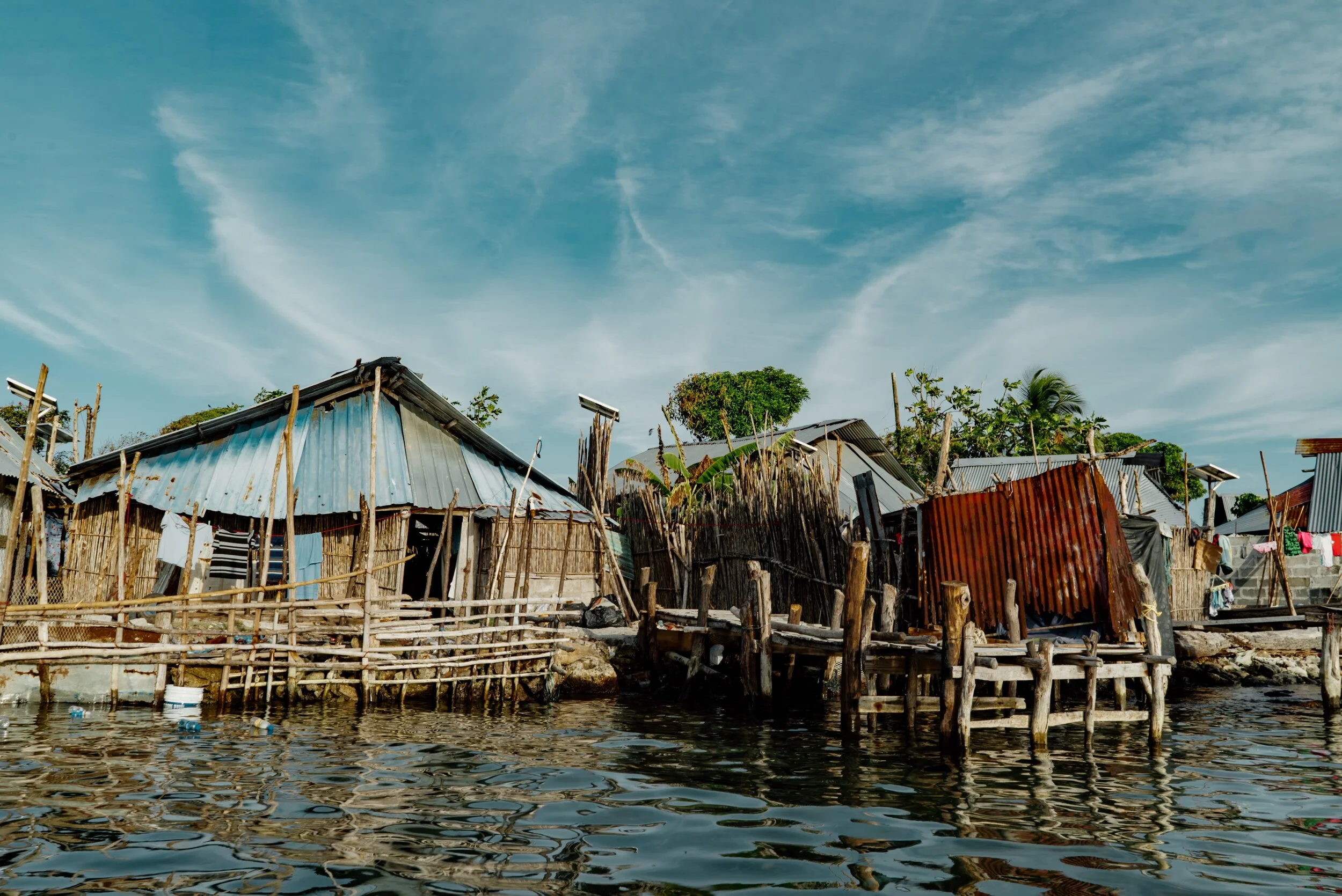
Photo by Aljoscha Laschgari on Unsplash
Observation and conversation with members of various communities taught me that collaboration between locals and external, resource-rich groups has been a driver for successful growth in this area. Yet, one person I met described the Darién province as “the temple of abandoned development projects” for the number of missionary and nonprofit groups that have attempted and failed to provide assistance to families in the greatest need. In an indigenous community named Emberá Puru, I noticed little blue water filters strewn about the property. The leaders explained that a missionary group had provided over 100 filters, but not explained how to use them. The group left after a week of what could be described as “voluntourism” — volunteering abroad that resembles a tourism opportunity — and the community was left with pieces of plastic polluting the land.
The neglected Darién province is not a unique case. Panamanians from other parts of the country (like Panama City) expressed surprise and/or distaste when my group revealed we were working in this eastern region. These people hold onto misconceptions, such as the idea that the Darién is filled with dangerous members of drug cartels or that it’s a completely unlivable swampland.
While the “Darién Gap” might lack a constructed road, the population of this area has done its best to overcome deficiency through resiliency. When a government or its people show indifference toward improving the lives of an entire population sector, outside measures need to be taken to reduce inequality. However, these outside measures should also be performed through culturally conscious and responsible mechanisms in order to achieve sustainable success. No clear-cut solution exists to resolve problems such as clean water, healthcare, and education inaccessibility in the Darién province, Panama. However, creative and collaborative efforts have the power to mediate substandard conditions and to catalyze change one household at a time.

SARAH SUTPHIN
Sarah is an undergraduate at Yale University and a content editor for CATALYST. As a traveler who has visited 30 countries (and counting!), she feels passionate about international development through sustainable mechanisms. Sarah has taken an interest in the intersection between public health and theater, and hopes to create a program that utilizes these disciplines for community empowerment. She is a fluent Spanish speaker with plans to take residence in Latin American after graduation.
More Freedom in Panama? Sure Feels That Way.
Disclaimer: The opinions in this article are not based upon the legal system of either the U.S or Panama, but rather my lifestyle experiences. So don’t get yourself arrested and blame it on me, chief.
“Are you ever coming back to the U.S?”
It’s a question I’ve been hearing for nearly two years.
At first, my answer had a built-in pause. “I don’t know…” I would mutter. “Maybe.”
These days, it’s shifted to a steady: “Why would I do that?”
The sentiment is further rooted during my annual visits to the U.S. It seems that Panama has spoiled me. With its advantageous atmosphere and empowering sense of freedom, I feel suffocated when I return “home.”
It’s the little things, as well as a few major shifts in mindset and lifestyle. There are things I do in Panama that I just can’t do in the states. At least- not without fighting an uphill battle.
The Little Things
The little things are the hardest to explain. When we fall in love, whether with a person or a country, it’s often thanks to the “little things” that we can barely pinpoint yet refuse to live without.
So, what are Panama’s little things? I’ll do my best to describe.
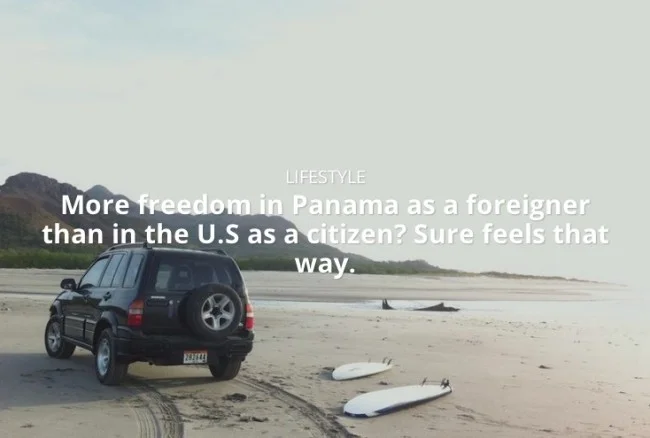
It’s the freedom to drive onto the beach to reach that faraway surf break, with no one to yell at you and (barely) any people to hit.
It’s the freedom to build a bonfire, pitch a tent, let your dog off the leash, or bring a flask to that same beach (or other public space) with no one to tell you off for it. The police drive by and wave- why would they care?“Hope you’ve got 4×4,” they say, “call us if you get stuck.”
It’s being able to walk into a store and have your smartphone unlocked, because you don’t want a 2-year contract, thank you very much. $15 a month, pay-as-you-go, sure beats that monthly $89 bill.
It’s affording a weekly manicure, because for $8, why the hell not? You’ll use that time to practice your Spanish, anyway- two services for the price of one.
It’s bringing your non-service dog on a public ferry, it’s riding a horse wherever the hell you want, because who are you to tell me I can’t?
Sure, buy a freshly-killed chicken from the farmer two houses down. Sell kabobs by the side of the road. Permit? Bah. The FDA won’t bother you.
The U.S is suffocating, with its pussyfooting philosophy. No dogs allowed. No beers on the beach. No sneaking snacks in the theater, and absolutely no monkey bars on the playground. Don’t you dare start that bonfire. And you! You’re trespassing. Get out of this…uh….forest. You’re up to no good.
Land of the free. Home of the brave.
Except everyone is terrified of lawsuits to the point that the country is idiot-padded and accident-proof.
Nevermind the fact that the 9 out of 10 casualty-free scenarios are stripped away from us. Nevermind the concept of, oh, I don’t know, doing what you want so long as you’re not hurting anybody else.
Life Changers
Little freedoms are nice. It’s only when combined with life-changers that a fun place to visit becomes a better place to live.
Living in Panama has enabled me to have a conscious control over my career, the direction it goes, and the rate at which it progresses. I’m not hungrily grabbing at whatever opportunity comes my way. With so many opportunities, I get to pick and choose.
I needn’t operate at the mercy of the economy, the market, and all its fluctuations. I operate according to me.
At 23, I’m in the initial stretch of my freelance career- but you wouldn’t know it by my portfolio. I spearhead projects that most people can’t touch before years of climbing the corporate ladder. The U.S is saturated with bureaucratic bullshit. Bide your time, pay your dues, wait for that promotion, your moment will come.
In Panama, you opt for the grab-what-you-want-by-the-cajones path instead.
The economy has grown dizzyingly fast. Businesses are racing to keep up, to expand, to offer more, make more, and maximize on this historical period. They don’t care how many notches are on your belt. They care that you’re able to grab the reins, bring something new to the table, and produce results.
I’m sure some would say the same about the States- and I don’t doubt them. But I also don’t envy freelancers or job seekers in the U.S- particularly those who are still earning their stripes, or competing against more people for less openings. Fighting to burst their head through a sea of contenders, just to grab the attention of some company who’s probably not hiring, anyway.
My life in Panama has afforded me a level of autonomy, both personally and professionally, that I’ve never had in the States. My no-handcuff, high-profit lifestyle has become my definition of freedom- and it’s given me little reason to ever look back.
ORIGINALLY PUBLISHED ON PERMANENTLY PANAMA
Alice Beth
Alice Beth arrived in Panama in 2012 with a few hundred dollars and a backpack stuffed with books and red lipstick. She gradually turned into an adult against her will and is now a freelance marketing strategist and founder of the ever-cheeky PermanentlyPanama.com. She's obsessed with dogs, productivity, and surfing- even though she's not very good at it.