
To a typical western viewer, life on the Mongolian steppes is about as foreign as one could get. Training eagles to hunt, herding yaks and camels, and packing up your home into a saddlebag isn’t on a city-dweller’s itinerary. However, the nomadic culture of Mongolia is still very much alive, its people flourishing in the rugged grasslands of central Asia and preserving their traditions even as much of the world has moved away from a nomadic lifestyle. This video captures both the exhilaration and quiet intimacy of a group of families as they go about their daily lives. Though much of their day is spent on horseback, there is always time for rest, relaxation, and familial bonding– something everyone can relate to, nomadic or not.

The departures board at the TWA Flight Center in New York. Wally Gobetz. CC BY-NC-ND 2.0.
Stuck at Home? Try These 5 Virtual Travel Experiences
With uncertainty surrounding the pandemic’s end, many sustainable travelers are unsure of when they will be able to venture back out into the world. Sustainable travel is rooted in the idea that one’s trip leaves a positive impact on the community visited, and the risk of spreading COVID-19 to remote communities around the globe directly interferes with this principle.
However, many sustainability and social action travel companies have pivoted from in-person travel to offer a variety of virtual experiences which connect travelers with communities they would otherwise be unable to visit. Likewise, a number of tourism organizations, tech developers and travel lovers have created their own virtual travel offerings. This allows communities around the globe which have traditionally been reliant on tourism to maintain economic sustainability during this period of uncertainty. Here is our guide to five organized virtual travel experiences that you can do from the comfort of your home.
1. Learn to Prepare Mexican Salsas with ExplorEquity
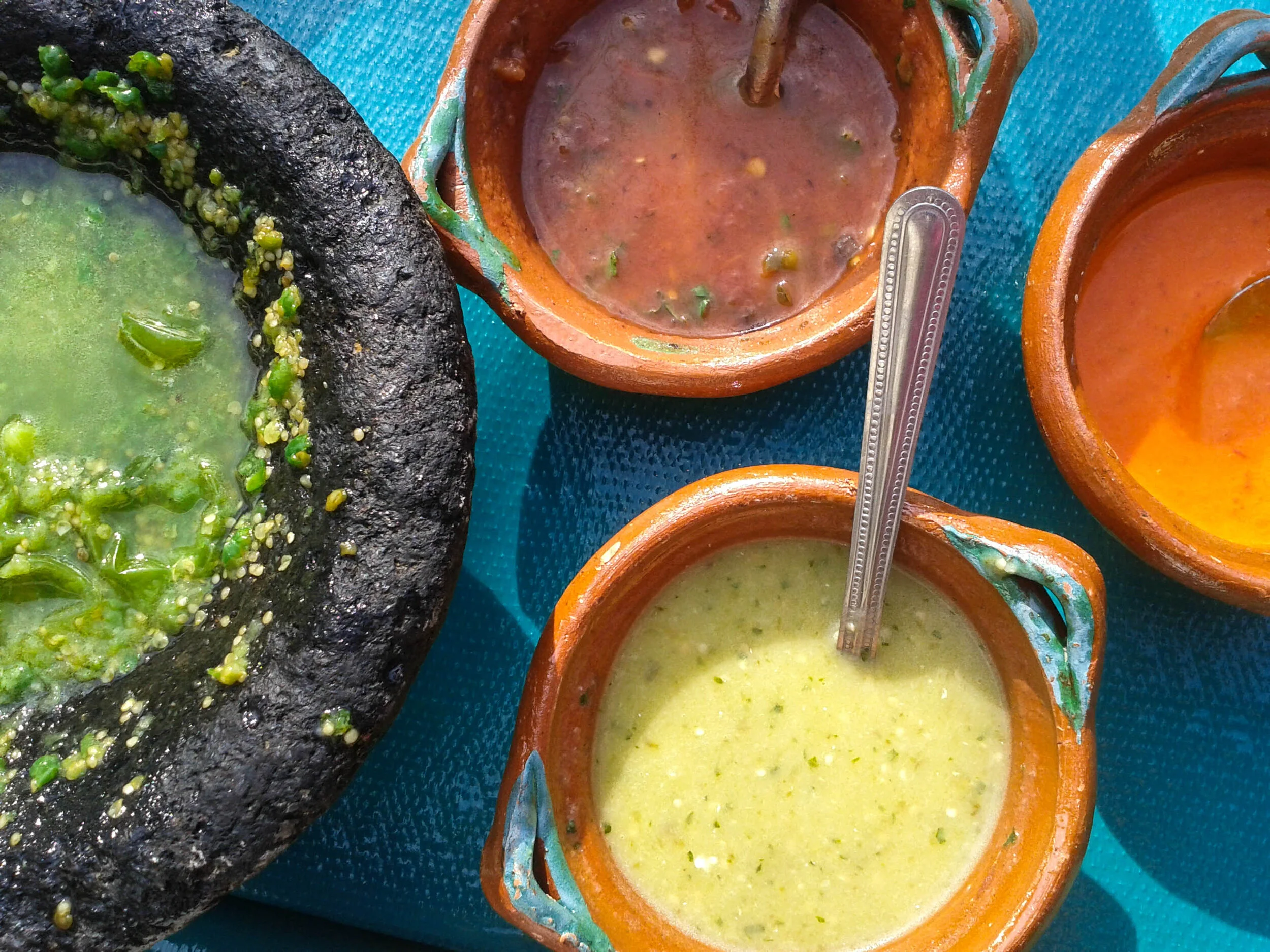
A variety of salsas. Chasing Donguri. CC BY-NC-SA 2.0.
Salsa is synonymous with Mexican cuisine. The delicious topping for chips, tortillas, tacos, burritos and enchiladas can trace its origins back to the Aztec, Mayan and Incan empires. Later popularized in Mexico and the United States throughout the 20th century, the salsa we know today can be made from combining an endless variety of ingredients. Given the regionality of Mexico’s cuisine, the country continues to innovate the popular dish in local restaurants, cafes, bars and homes.
With this unique virtual experience from ExplorEquity, travelers will learn to make a green creamy salsa, a red molcajete salsa and salsa macha. Led by chef Natalia from Mexico City, this virtual experience is perfect for salsa amateurs and connoisseurs alike. Each of the three recipes yields two servings, making this the perfect class to take with friends and family. ExploreEquity’s “Learn to Cook Mexican Salsa” class costs $39 per person and is generally offered every few weeks.
2. Practice Yoga in Sri Lanka, India and Portugal with Soul & Surf
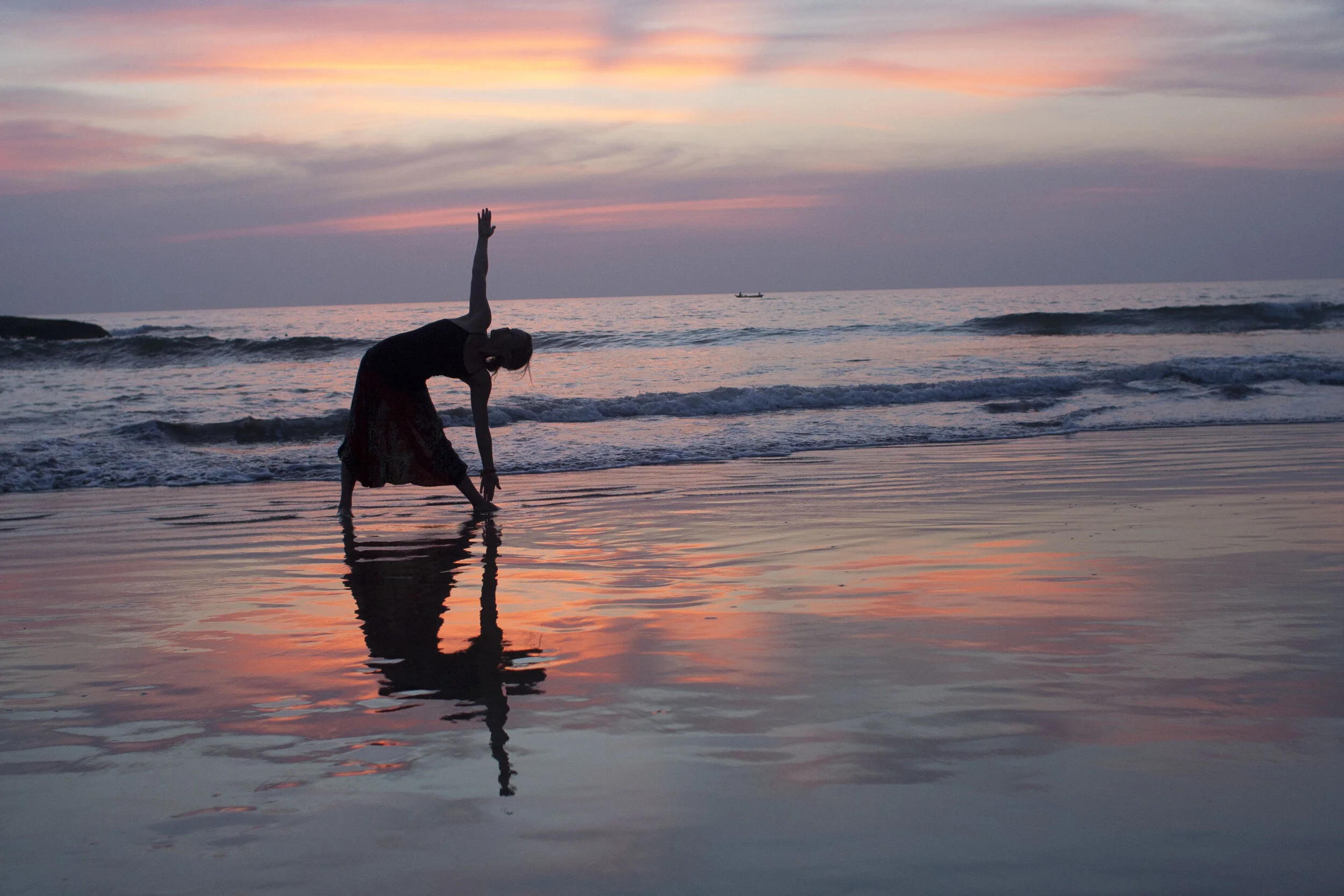
A person practicing yoga on a beach in India. Dennis Yang. CC BY 2.0.
The origins of yoga date back thousands of years, but the practice is most commonly associated with Hinduism as one of its six orthodox philosophical systems. While still commonly associated with India, which is home to the world’s largest Hindu population, yoga over the past few decades has gained worldwide popularity for its physical benefits and meditative and spiritual components.
Soul & Surf, a wellness travel company operating in India, Sri Lanka and Portugal, offers travelers at home a unique opportunity to practice yoga with teachers from around the globe. Unlike other virtual yoga opportunities which generally consist of an archive of prerecorded sessions, Soul & Surf’s at-home yoga experience involves videos that are created and uploaded on a weekly basis, allowing travelers at home to connect with their teachers and destinations around the globe. Soul & Surf’s at-home offerings are continuous, and are sold as subscriptions for around $33 a month.
3. Break Bread with a Faraway Family Through Two Point Four
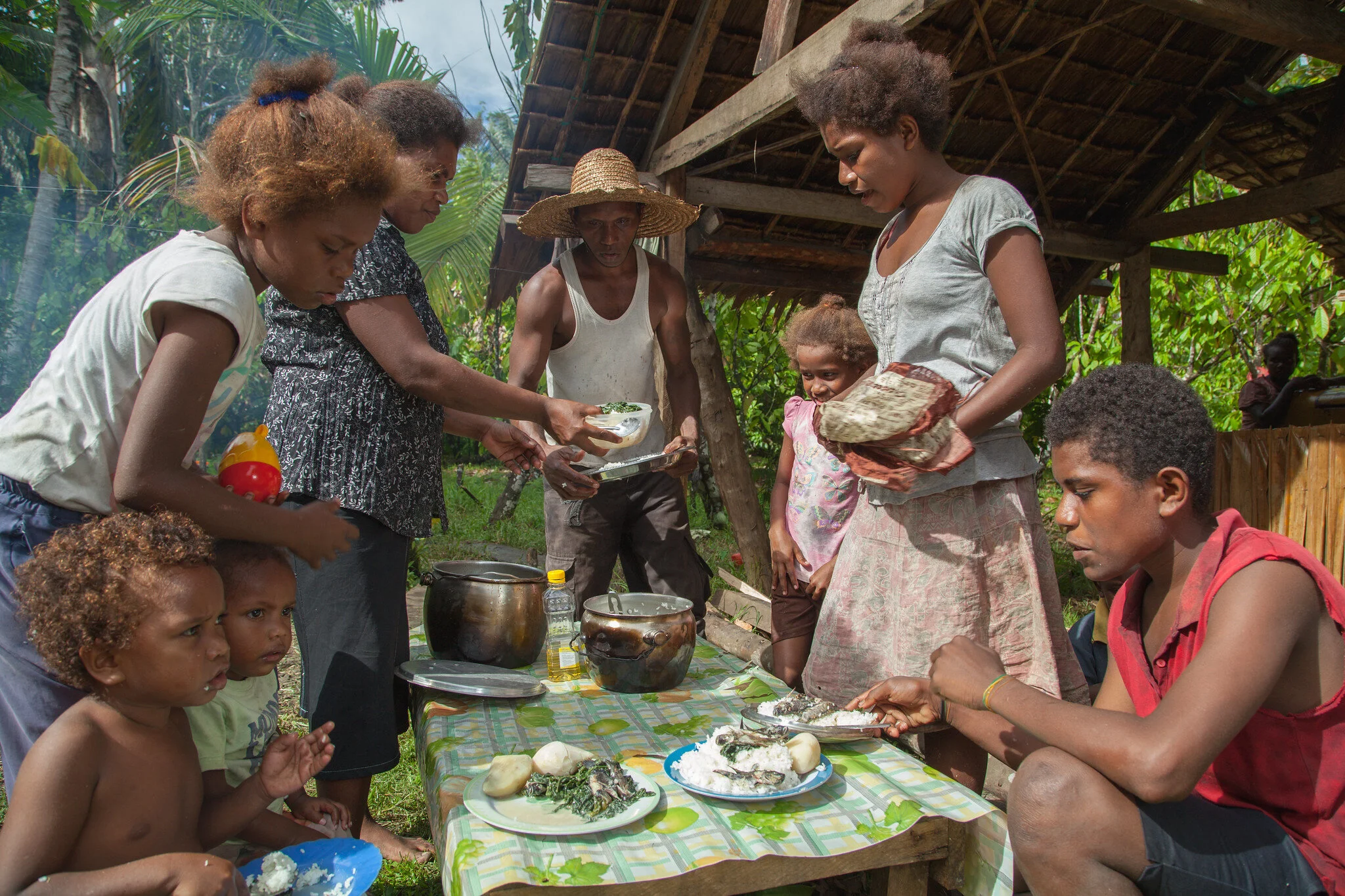
A family sharing a meal in Mozambique. WorldFish. CC BY-NC-ND 2.0.
One of the biggest casualties of sustainable travel throughout the pandemic has been the ability to connect with communities around the globe on a one-on-one basis. These intimate connections help to build lasting relationships, provide an opportunity for a mutual sharing of cultures, and foster a greater understanding and appreciation for the depth and complexity of the global community.
Two Point Four, a family-focused experiential travel company, has created a solution to allow intimate global connections to be made without risk of the virus’s spread. Through a free survey, the company will connect family travelers with others around the globe to facilitate community-building. Using a series of group calls, travelers will be able to learn from local guides and travel experts, break bread with other families, and allow folks to support one another on the issues of travel, sustainability and curiosity as the pandemic continues. What you do on the call is entirely up to you and the folks on the other end of the line—feel free to share favorite travel stories, have a meal together or discuss your lived experiences. The calls are free and vary in length based on the availability of the traveler and the other family or travel expert.
4. Explore the Natural Beauty of Chile with Chile 360
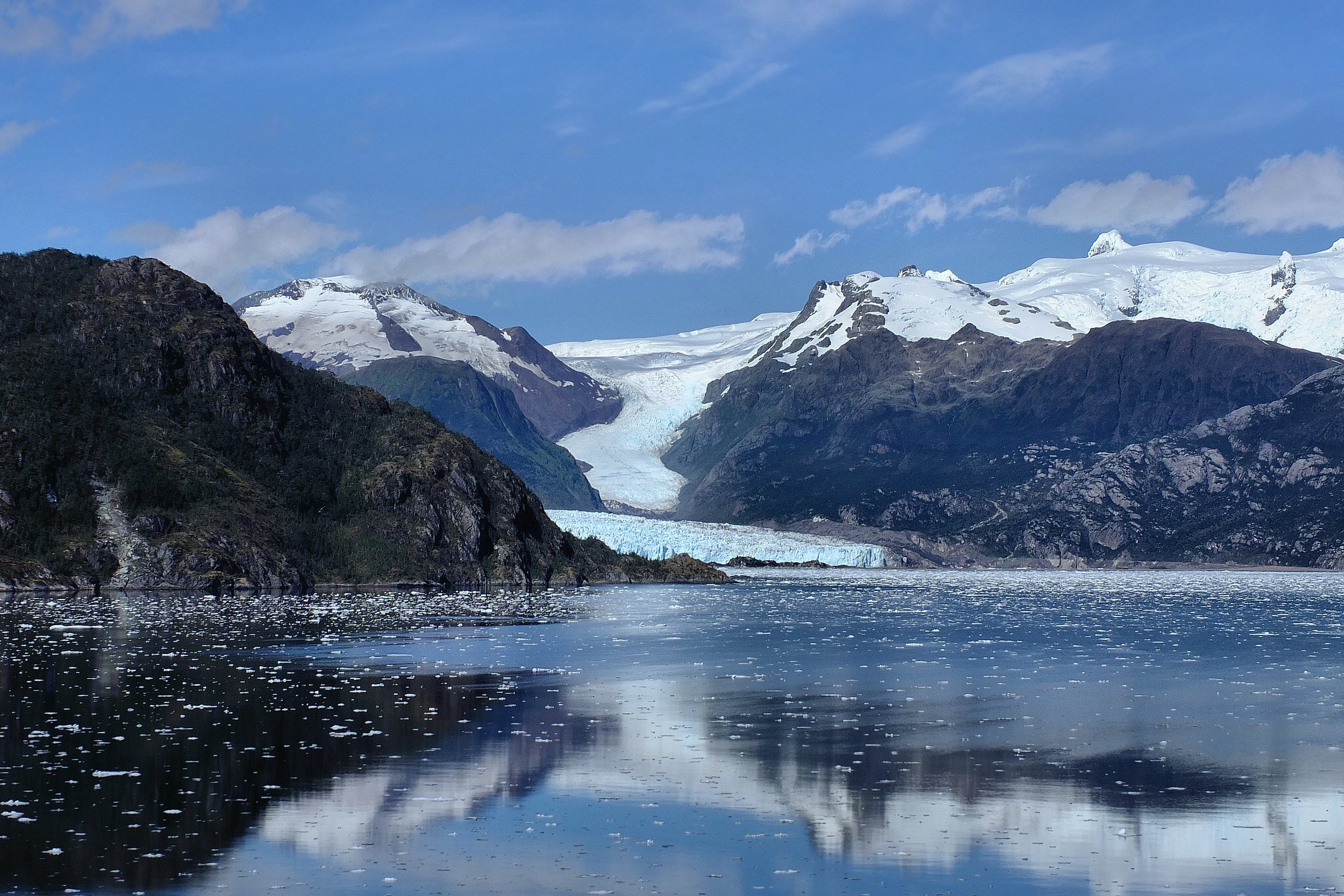
Amalia Glacier, Chile. Phil Parsons. CC BY-NC-SA 2.0.
Chile is one of the most beautiful countries in the world. The 2,653 mile ribbon-shaped country, which hugs the western edge of Argentina, is home to countless climates and cultures, offering travelers to the country a unique experience. Visitors can wander the Atacama in the north, the world’s driest desert, or the fjords and glaciers common throughout Chile’s southernmost regions. Santiago, the nation’s capital, is a cosmopolitan metropolis offering a wide variety of experiences, cuisines and cultural attractions.
While travel to the country may not be possible for most due to the pandemic, the Image of Chile Foundation, a private nonprofit which works closely with the Chilean government to promote tourism in the country, has released an app called Chile 360 which provides users with the opportunity to explore Chile’s vast natural and cultural heritage. Travelers stuck at home can visit the turquoise waters of Patagonia’s Torres del Paine, explore the Rano Kau volcano on Easter Island, and get up close with the Cathedral of Santiago de Compostela, a famous national landmark in the nation’s capital. The app is free and currently available on the Apple and Google app stores.
5. Visit Kyoto’s Historic Geisha District with Ken’s Tours Kyoto

Cherry blossoms in the Gion neighborhood of Kyoto, Japan. Trevor Dobson. CC BY-NC-ND 2.0.
Geishas, a class of Japanese women who are traditional performance artists and entertainers, have continued to maintain 17th-century Japanese traditions into the modern era. Common throughout the country, but most prevalent in Tokyo and Kyoto, geishas continue to captivate local and international audiences alike with their unique art, performances, makeup and dress. Many in Japan today regard geishas as some of the most successful Japanese businesswomen ever.
Ken’s Tours Kyoto, a small group of travel experts who normally lead guided tours throughout the city, offers travelers the opportunity to virtually explore Gion, Kyoto’s historic geisha district. Through 40-minute guided sessions, travelers from home will visit some of the most famous landmarks in the neighborhood, listen as guides share childhood stories from growing up in Kyoto and learn various Shinto rituals and traditions. This unique experience is offered for $39 a session through Amazon on a rolling basis.

Jacob Sutherland
Jacob is a recent graduate from the University of California San Diego where he majored in Political Science and minored in Spanish Language Studies. He previously served as the News Editor for The UCSD Guardian, and hopes to shed light on social justice issues in his work.
5 Ways to Discover the Distinctive Landscapes of Madagascar
Travelers will surely appreciate the island’s unique biodiversity, but ought to also learn about ongoing social issues in the country.

A scenic view in Madagascar. anmede. CC BY-SA 2.0
Located 250 miles from East Africa, the island nation of Madagascar is one of the most unique places on the planet. Interestingly, the Malagasy people are more closely related to Indonesians than East Africans; they have also developed cultural and linguistic ties with West Africa due to French colonialism. Madagascar is especially known for its incredible biodiversity. At least 80% of Madagascar’s flora and fauna cannot be found anywhere else on Earth, including many species of lemurs, chameleons and butterflies.
Despite the island's idyllic landscapes, Madagascar’s recent history has been anything but peaceful. After gaining independence from France in 1960, political unrest, countless coups and widespread corruption have dominated the headlines. The most recent coup in Madagascar occurred in 2009 and resulted in massive social unrest and international sanctions, further crippling the country’s economy. Currently, Madagascar is the poorest country in the world that is not mired in conflict, with 92% of the country’s population living on less than $2 a day.
Deforestation and environmental degradation remain pressing concerns as well. Many of Madagascar’s lush forests have been chopped down to make way for rice paddies and to harvest wood for export. Currently, significant forests only remain on the northern and eastern portions of the island. Southern Madagascar has been experiencing severe drought since 2014, which has left up to 1 million people without food. The country also continues to be ravaged by the COVID-19 pandemic with a Level 4 (very high) level of transmission according to the U.S. Centers for Disease Control and Prevention.
Despite Madagascar’s turbulent history, the country is one of the most beautiful in the world with stunning landscapes and kind people. Read on to learn about key sites to visit once Madagascar fully reopens.
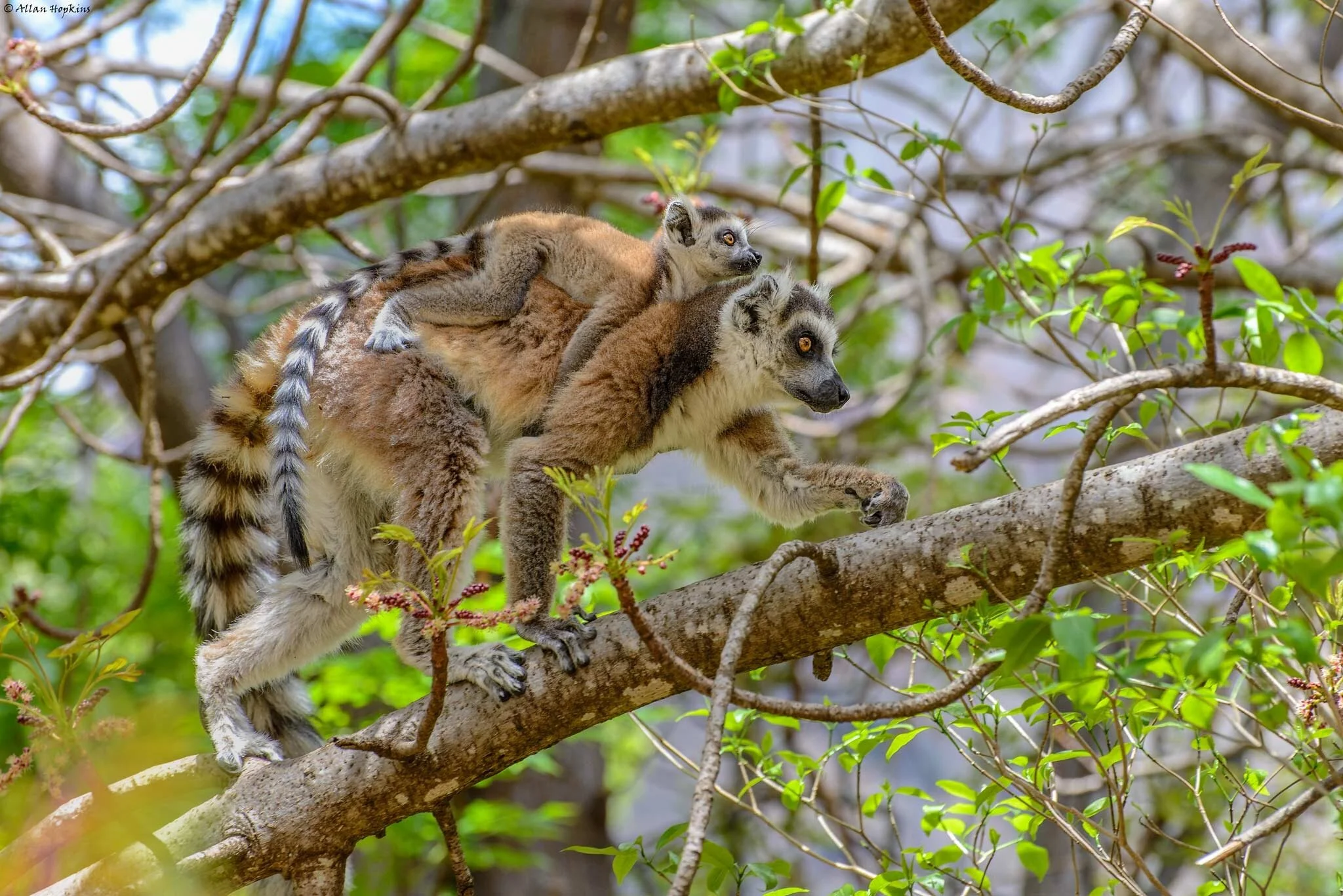
A mother ring-tailed lemur with her baby. Allan Hopkins. CC BY-NC-ND 2.0
1. Lemurs
Starting with Madagascar’s furriest (and cutest) attraction, these primates cannot be found anywhere else on Earth. Although they are likely related to monkeys, the exact origin of the species is not known. There are over 100 species of lemurs in total, some of the most notable being the ring-tailed lemur with its long black-and-white striped tail, the sifaka and the elusive aye-aye. There are many national parks where visitors can observe these animals in their natural habitat, including Isalo and Zombitse-Vohibasia.
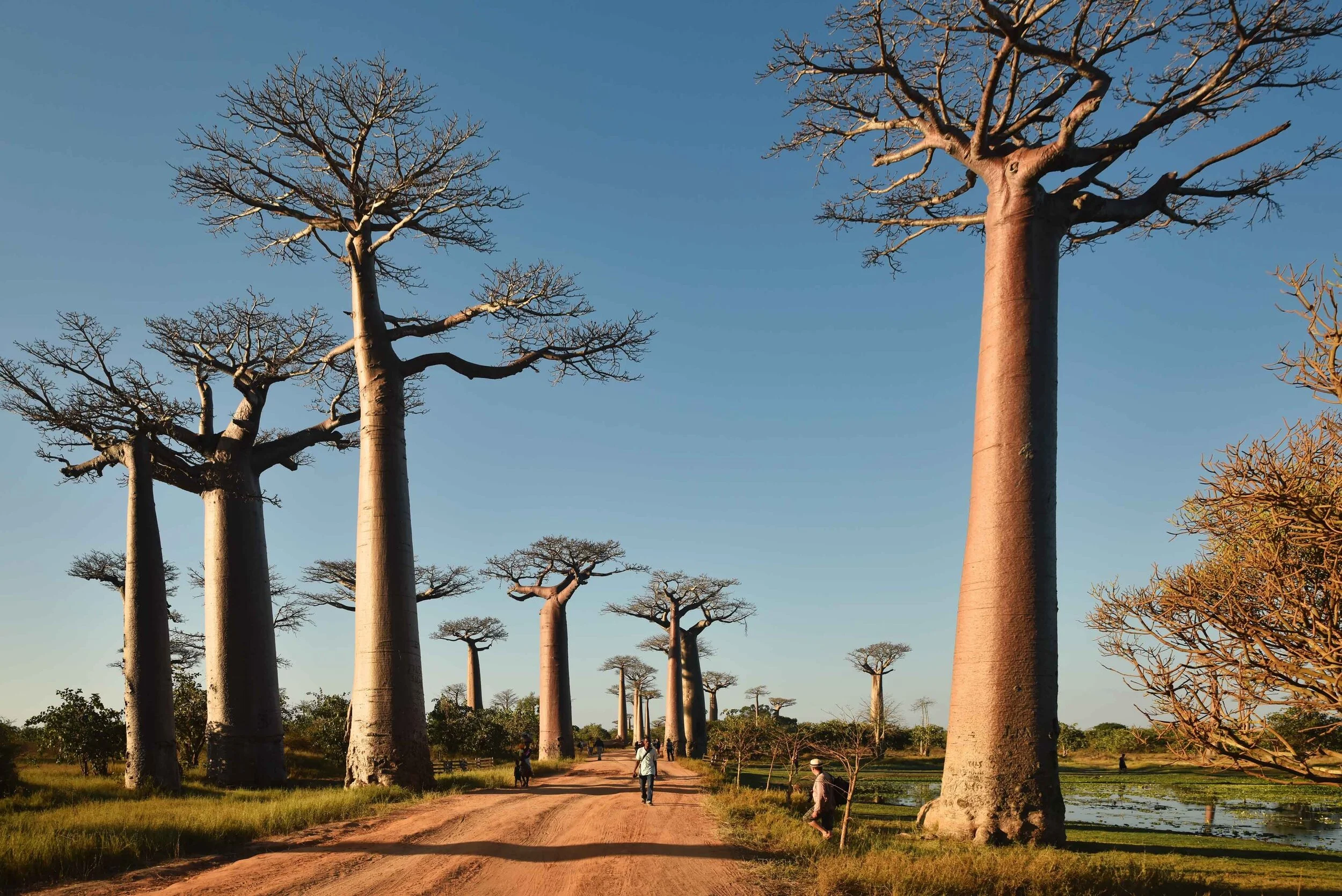
Avenue of the Baobabs in Madagascar. Rod Waddington. CC BY-SA 2.0
2. Avenue of the Baobabs
Baobabs are some of the most distinctive trees found anywhere in the world. Six species of baobab grow in Madagascar. Also known as the “mother of the forest” in Malagasy, they have large, bulbous trunks that store water, allowing baobabs to survive in dry climates. Many of Madagascar’s giant baobabs can be found along the Avenue of the Baobabs, located roughly 12 miles from Morondava. Travelers will have the opportunity to walk among these magnificent trees, some of which are over 800 years old!

A beautiful beach in Madagascar. Tatogra. CC BY-SA 2.0
3. Nosy Be
Nosy Be is the largest of a dozen small islands off the northwestern coast of Madagascar. These islands are teeming with rich marine life and offer perfect opportunities for snorkeling, diving and kayaking. Known as Ambariobe, or “the great island” in the local language, Nosy Be is a perfect launching point for cruises traveling to the other islands. Other notable islands in the region include Nosy Komba, often known as lemur island, and Nosy Sakatia, which contains both winding forest trails and pristine dive sites.
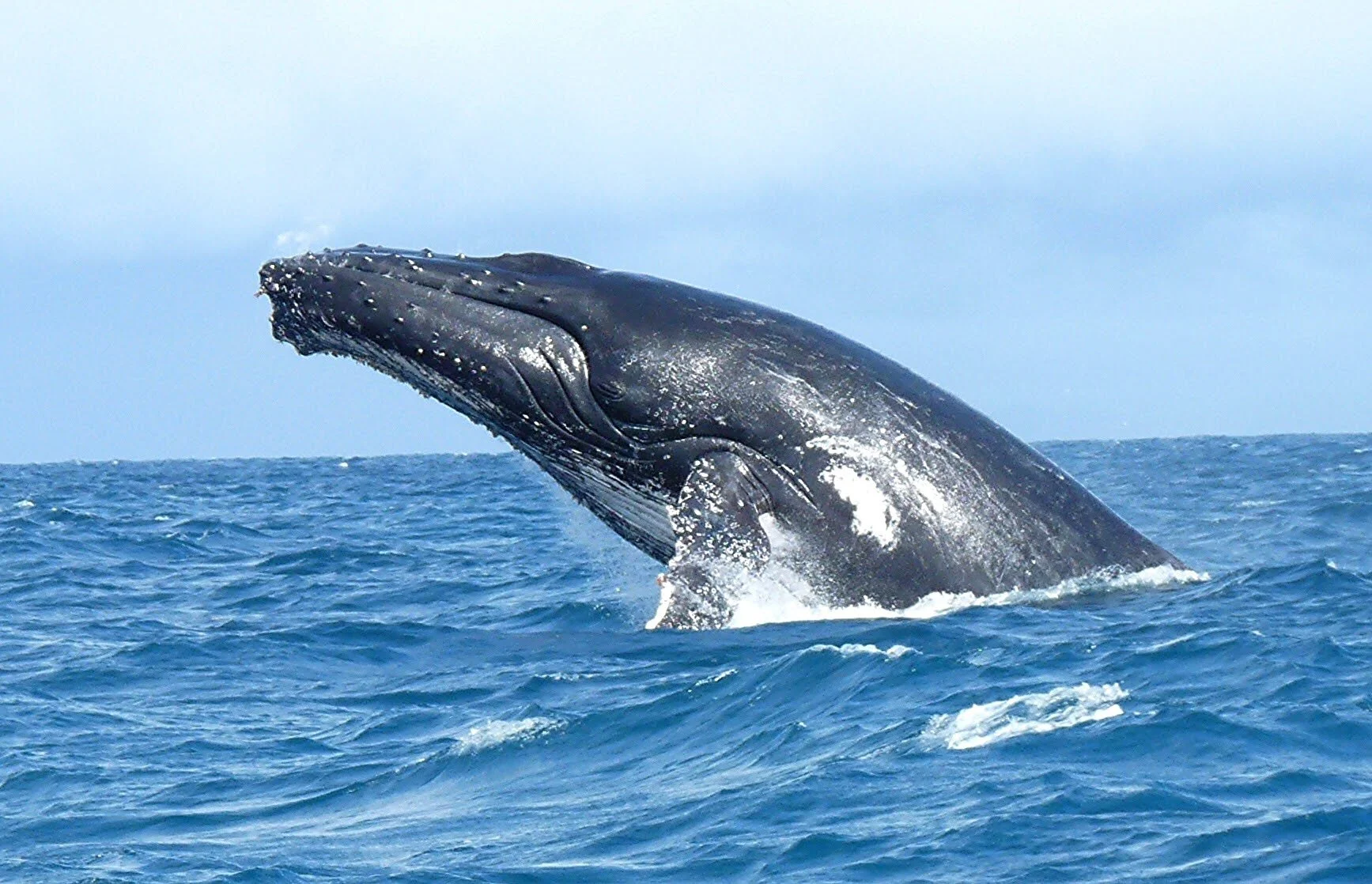
A humpback whale. Krishna Naudin. CC BY-SA 2.0
4. Humpback Whale Sightings
Humpback whales can be spotted off the eastern coast of Madagascar annually from June to September. Recognized by their black backs and white bellies, humpback whales arrive in Madagascar for the mating season after traveling over 900 miles from the Antarctic coast. If you’re lucky, you may even see a mating dance or a live birth! Ecotourism organizations such as Cetamada allow travelers to view humpbacks up close in an ecologically responsible way. Popular destinations for whale sightings include Nosy Be, Ile Sainte-Marie and Antongil Bay.
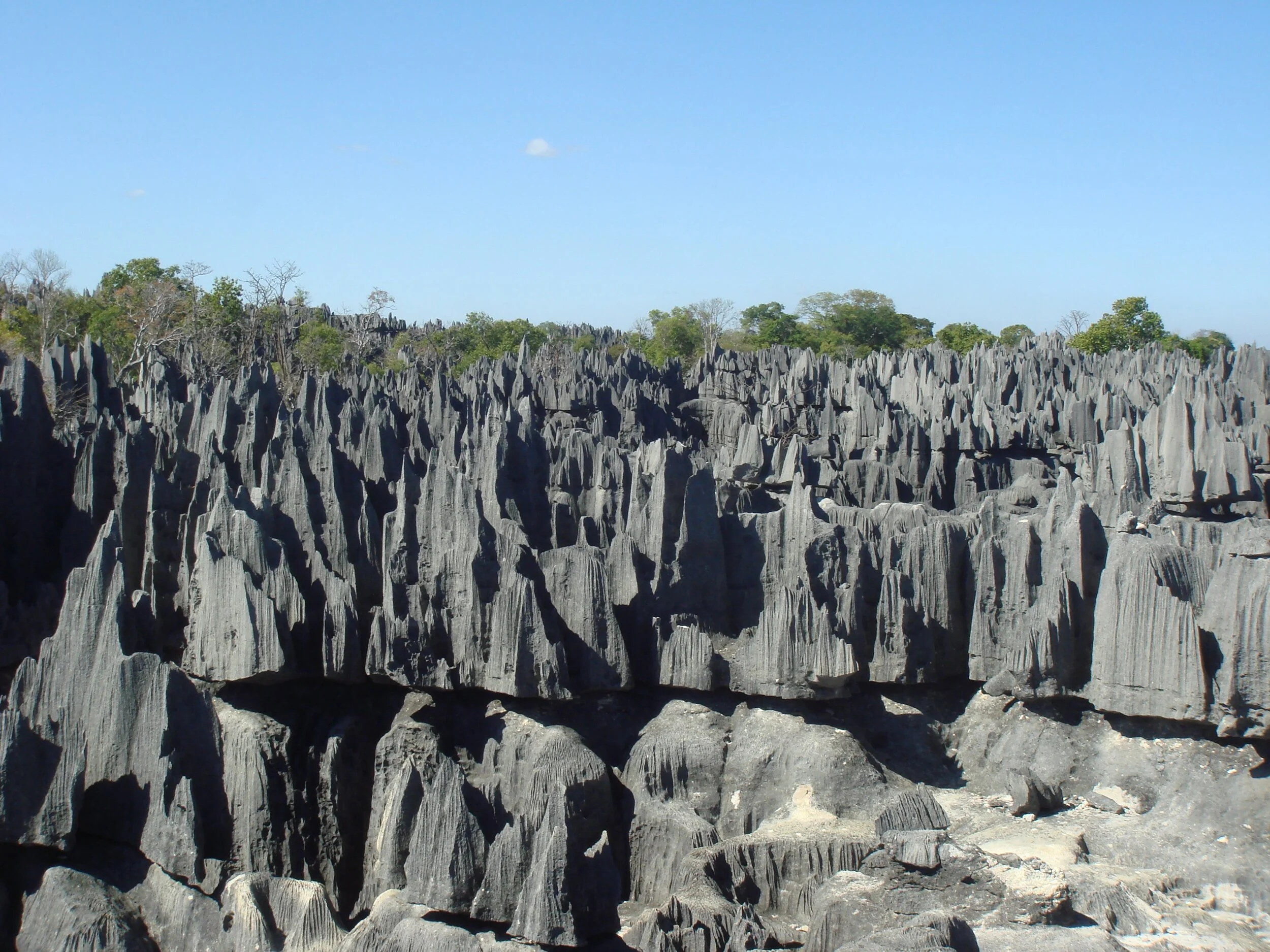
Tsingy formations in Madagascar. Oliver Lejade. CC BY-SA 2.0
5. Tsingy de Bemaraha National Park
Characterized by fossilized shell formations, these unique structures known as “tsingys” can be found in several regions of Madagascar. Tsingy de Bemaraha National Park is one of the best places to see these interesting structures and is located west of Madagascar’s capital, Antananarivo. The tsingy formations in the Melaky and Diana regions of Madagascar are both UNESCO World Heritage Sites and deserve a visit.
Although Madagascar faces many environmental and social dilemmas, the country has strong potential and an undeniable natural beauty.

Megan Gürer
VIDEO: THE MAGNIFICENCE OF AZERBAIJAN
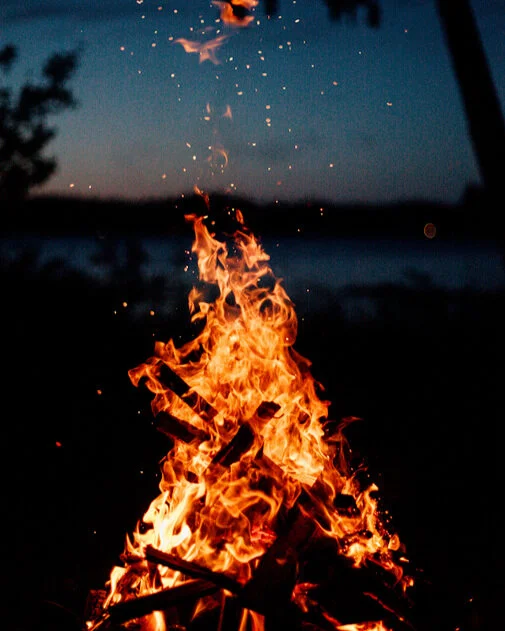
Azerbaijan is filled with incredible natural wonders and diverse land formations, yet it’s often overlooked by travelers who are unaware of the beauty it holds. Nicknamed “the land of fire,” it is home to Yanar Dağ (meaning “burning mountain”), a mountain near the Caspian Sea that hosts a naturally burning gas fire that has remained alight for over 65 years. Much of its architecture is built in harmony with the natural landscape; with churches carved into cliff sides and villages nestled in lush valleys. This video takes you through Azerbaijan, past rugged cypress forests, cascading waterfalls, and cliffs that blaze like fire when hit by the sun.
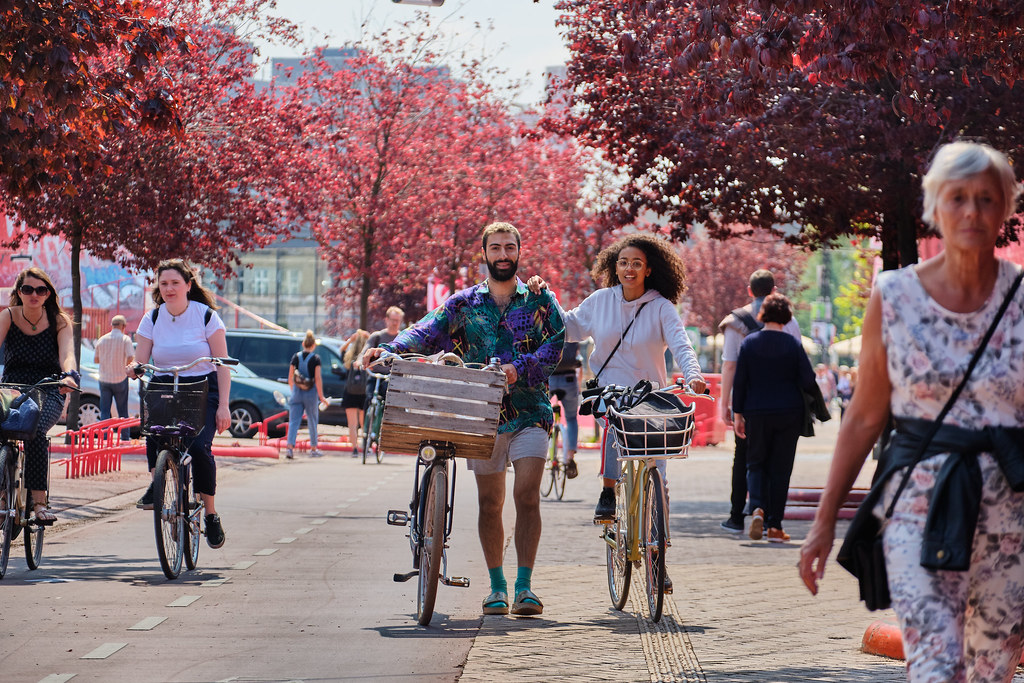
Bicycling in the Superkilen Park in Copenhagen, Denmark. Kristoffer Trolle. CC BY 2.0
Bicycles: The National Pride of Denmark
While most countries compete for the latest cars and the most efficient public transportation systems, Denmark is known most famously for its biking culture. The nation proudly calls itself an environmentally friendly place, with bicycles being among the most common modes of transport to work and school.
Bicycles were first introduced to Denmark in the 1880s, and gradually gained popularity in the 1920s and ‘30s as nationwide symbols for freedom and equality. This is because the nation views bicycles as a unifying force that ties the community together, and which Danish citizens of all ages use equally. The government introduced “Car-Free Sundays” in the early 1970s amid the Middle East oil crisis, and Danish interest in bikes began to soar.Over the years, concern for climate change and pollution brought new interest back into the bicycling culture, making it an essential way that most citizens get their daily exercise.
In fact, bicycling is so ingrained within Danish culture that most children learn to cycle before the age of 6. Until then, they are often carried in seats at the back of their parents’ bicycles. As it’s so common to see families with children on bicycles, another popular vehicle is the cargo bike, introduced in the 1980s. Many extended families use this bike to carry children while also transporting goods .
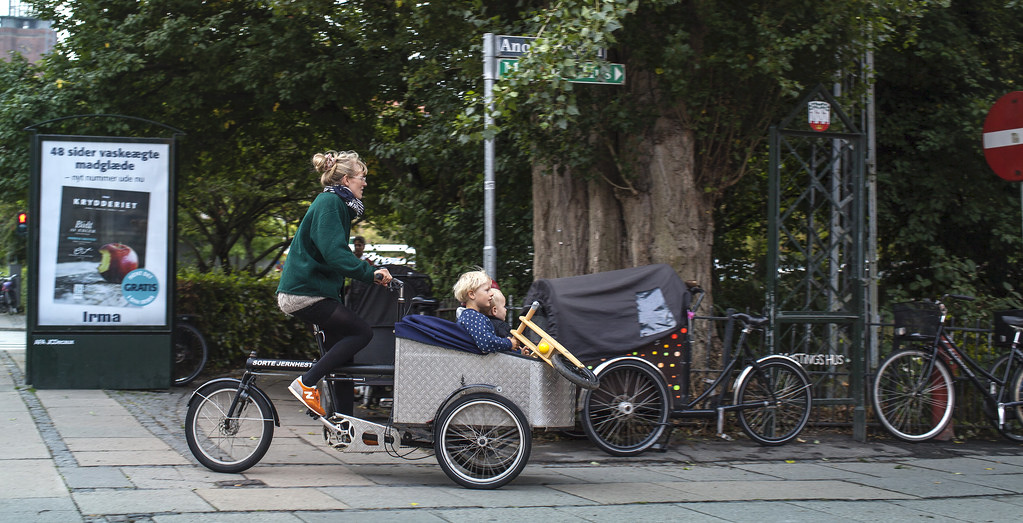
Cargo bike in Copenhagen, Denmark. News Oresund. CC BY 2.0
One may wonder how the Danes possibly cycle amid car traffic, along ragged roads and in between the swarms of people during rush hour. For one thing, Denmark is blessed with a flat terrain, helping bicyclists as they commute from place to place. Additionally, due to bicycles being a primary mode of transport, Denmark has developed cycle paths, bridges and even “cycle superhighways” to improve safety throughout the country. There are currently almost 7,500 miles of cycle routes in Denmark, while the city of Copenhagen alone has 250 miles of cycle paths apart from car lanes and sidewalks.
Due to the country’s prevalent bicycling culture, Denmark can proudly call itself environmentally conscious, with an average CO2 emissions reduction of 20,000 tons a year from bicyclists. Other than this environmental benefit, the cycling culture is a big step toward maintaining citizens’ health, and is thus encouraged across the country.

Swati Agarwal
Swati is a sophomore at University of California, San Diego, where she is studying Environmental Sciences and Theatre. Although born in India, she was raised in Tokyo, which gave her the opportunity to interact with diverse people from distinct cultures. She is passionate about writing, and hopes to inspire others by spreading awareness about social justice issues and highlighting the uniqueness of the world.
A Glimpse at Azerbaijan, Central Asia’s ‘Land of Fire’
Although a relatively new nation, Azerbaijan’s multifaceted culture from its historic tea rituals to its unique pomegranate festival makes it especially intriguing.
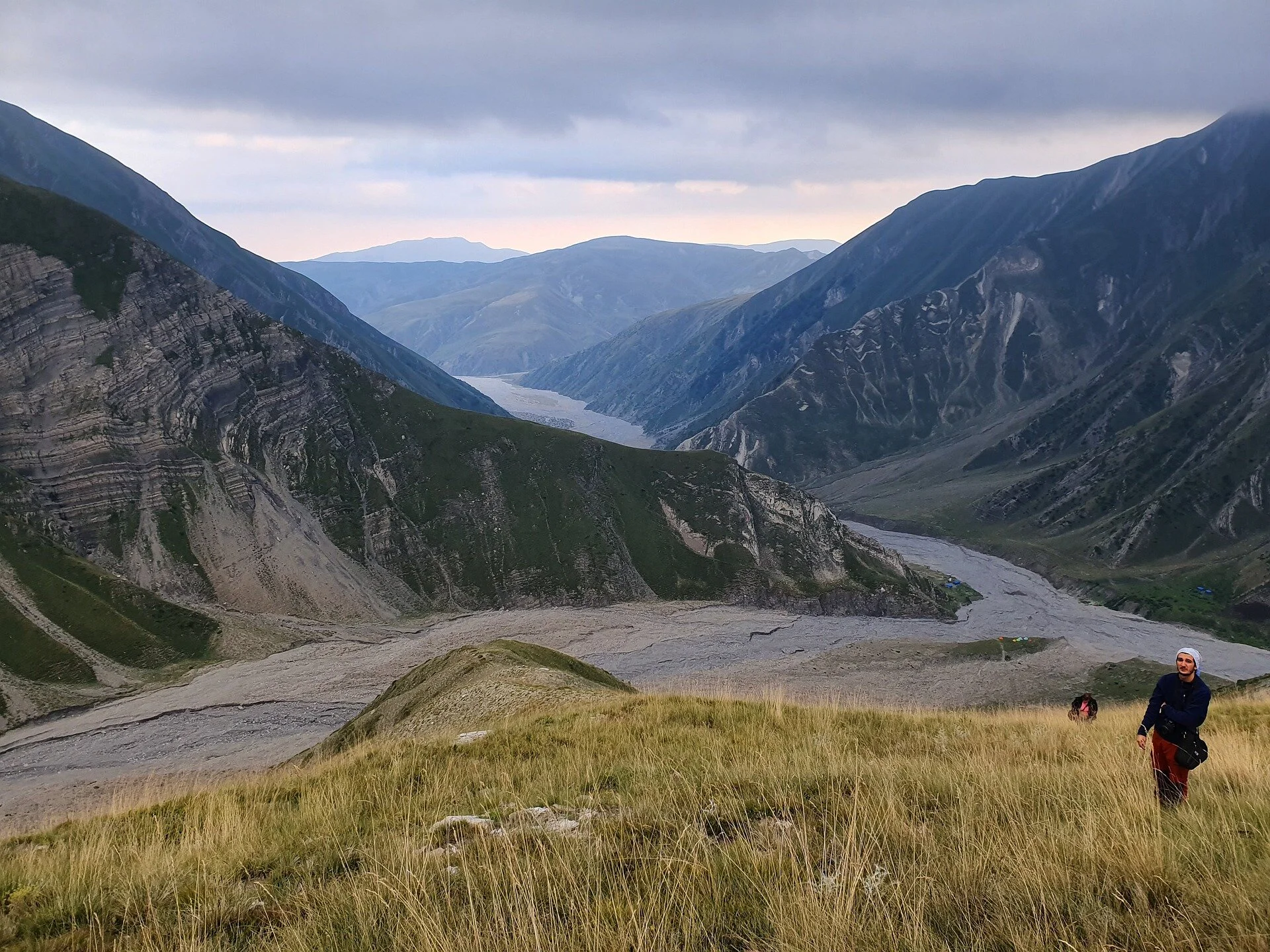
A mountainous region in Azerbaijan. Pozziss. CC0.
Azerbaijan, a former Soviet republic located in the southern Caucasus, stands as a diverse and exquisite country. Although the Russian imperialism of the past retains some influence, the “Land of Fire” prides itself on its many unique traditions which can be fully experienced today.
Tea Rituals

Black tea served in an armudu. Idin Ebrahimi. Unsplash
Tea is a prevalent part of Azeri culture, to the extent that it is served with every meal. The locals predominantly drink black tea and serve it in a pear-like glass called an armudu. This tradition was passed down from medieval times, when black tea was taken alongside a sugar cube to avoid assassination, as sugar tends to react with potential toxins in the drink. This tradition continues even today, as locals can be seen taking a bite of a sugar cube before sipping their tea.
The Importance of Fire
Temple of Fire in Baku. Diego Delso. CC BY-SA 4.0
Azerbaijan is also known for its national symbol of fire, and the country is recognized as a place where “the sacred fire is preserved.” “Azer” in Persian means “fire,” and the entire country is known as the “Land of Fire.” Although the exact reason behind this cannot be tracked to one specific moment, there are various potential reasons for why fire holds such a special place in this nation. First, although a large proportion of Azeris are Muslim, Zoroastrianism still holds a large influence on Azerbaijan. Zoroastrianism focuses on the worship of fire, water, Earth and wind. Thus, respect for nature is highly ingrained within Azeri culture. Moreover, the country’s “huge underground gas deposits” commonly lead to natural flames.
Food

Azeri dish known as kelem dolmasi. CC BY 3.0
Food is also a large part of Azeri culture, and one can find an array of distinct, delicious and healthy dishes. The reason for this is the large farming culture in Azerbaijan, which is possible due to the country’s extensive tracts of fertile land. This means that the nation grows a multitude of vegetables and fruits, with flavorful meats and herbs rounding out Azeri meals. Due to Azerbaijan’s vibrant culinary scene, food is given a high position in culture, where sharing food with another person is a sign of friendship.
Goychay Pomegranate Festival
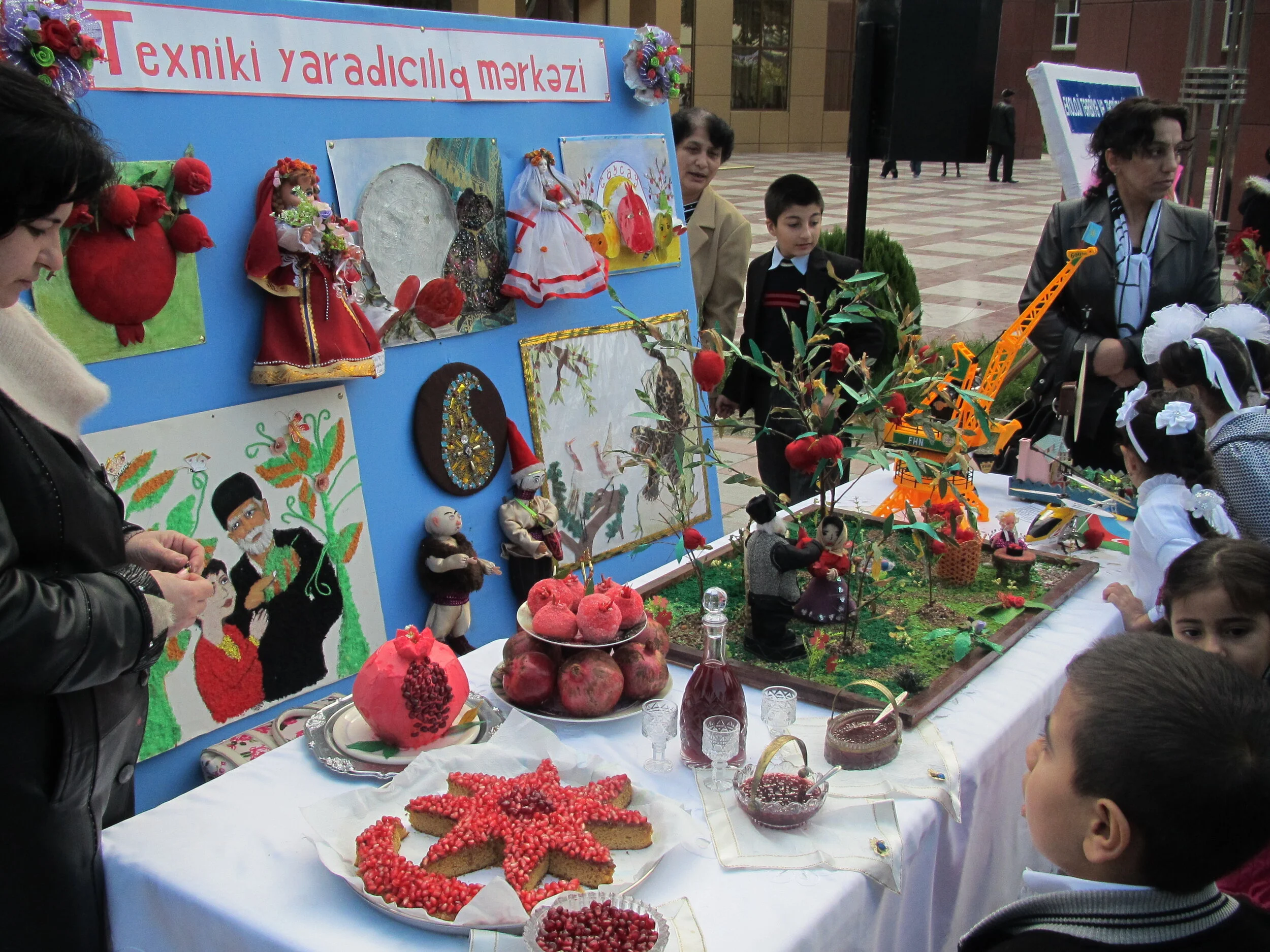
A booth at the Goychay Pomegranate Festival. Moonsun1981. CC BY-SA 3.0
Although many fruits are popular in Azerbaijan due to its fertile land, pomegranates are given the highest title as the symbol for love, luxuriance and eternal life. To commemorate the importance of this fruit, a pomegranate festival known as Nar Bayrami is celebrated every November in the city of Goychay, where over 50,000 tons of pomegranates are produced annually. Guests in this festival are welcomed by locals with an array of pomegranate dishes ranging from jams to baked goods to juices. Moreover, during the festival many vendors set up their shops with distinct varieties of this fruit. Other festivities include traditional dancing, instrumental music by local musicians, and competitions such as picking out the heaviest pomegranates from the lot.
Strides Toward Gender Equality

Kalbajar School in Azerbaijan. World Bank Photo Collection. CC BY-NC-ND 2.0
In 1918, Azerbaijan became the first country in the Islamic world to give women the right to vote. Gender equality comes partly as a legacy of Russian imperialism, as the culture placed large importance on respecting women. Women’s equality continues to be a notable social norm in Azerbaijan, and it is normal for Azeri women to hold positions of political power. On a day-to-day basis, men commonly offer their seats to women and hold the door for them.
Gracious Hospitality
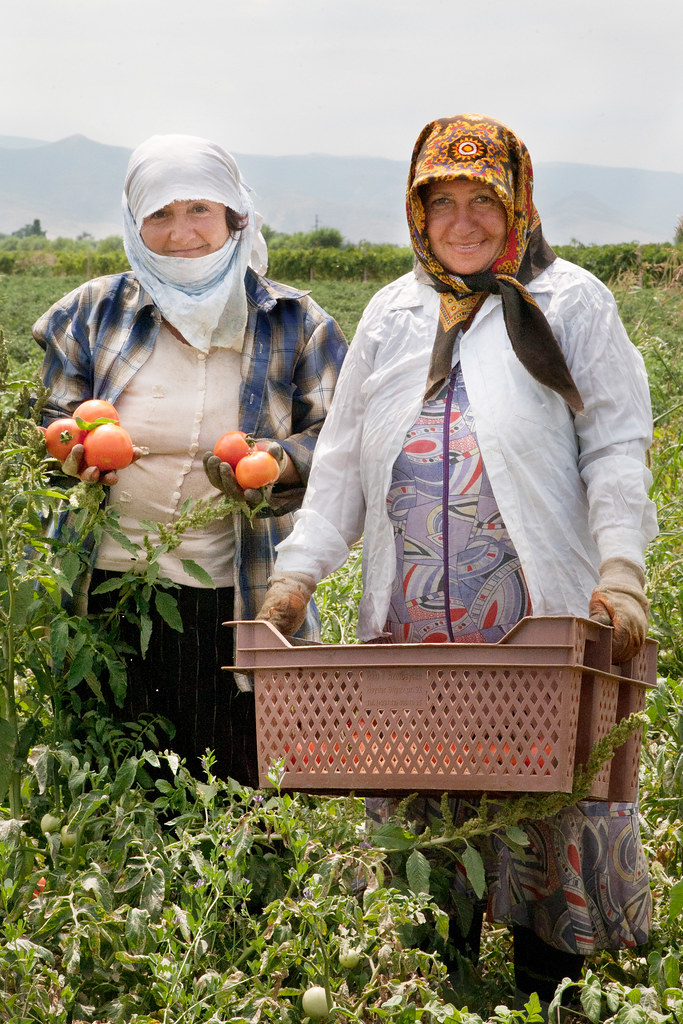
Two Azeri women picking out tomatoes. Asian Development Bank. CC BY-NC-ND 2.0
Generous behavior isn’t only reserved for women in Azerbaijan; it extends to guests as well. Hospitality is a common trait across the majority of Azeri citizens, who are often willing to provide shelter and food to their guests, regardless of the trouble they must go through. If one receives the luxury of going to a Azeri’s home, they should remember to take off their shoes before entering, and to remain standing until told where to sit. Moreover, as Azerbaijan is renowned for its food, guests should not refuse a serving as that may be misunderstood as a rude gesture.
In all, Azerbaijan’s riveting culture makes it an intriguing nation to visit. Despite its minuscule size, the country has much to offer to those willing to take a chance on it.
WANT TO LEARN MORE? CHECK OUT THIS VIDEO AND EXPLORE THE MAGNIFICENCE OF AZERBAIJAN.

Swati Agarwal
Swati is a sophomore at University of California, San Diego, where she is studying Environmental Sciences and Theatre. Although born in India, she was raised in Tokyo, which gave her the opportunity to interact with diverse people from distinct cultures. She is passionate about writing, and hopes to inspire others by spreading awareness about social justice issues and highlighting the uniqueness of the world.
10 Indigenous American Historical Sites to Visit
Ten million people lived in what is now the United States before Europeans arrived. These Indigenous Americans lived in complex cultures and completed amazing architectural feats that persevere to this day.
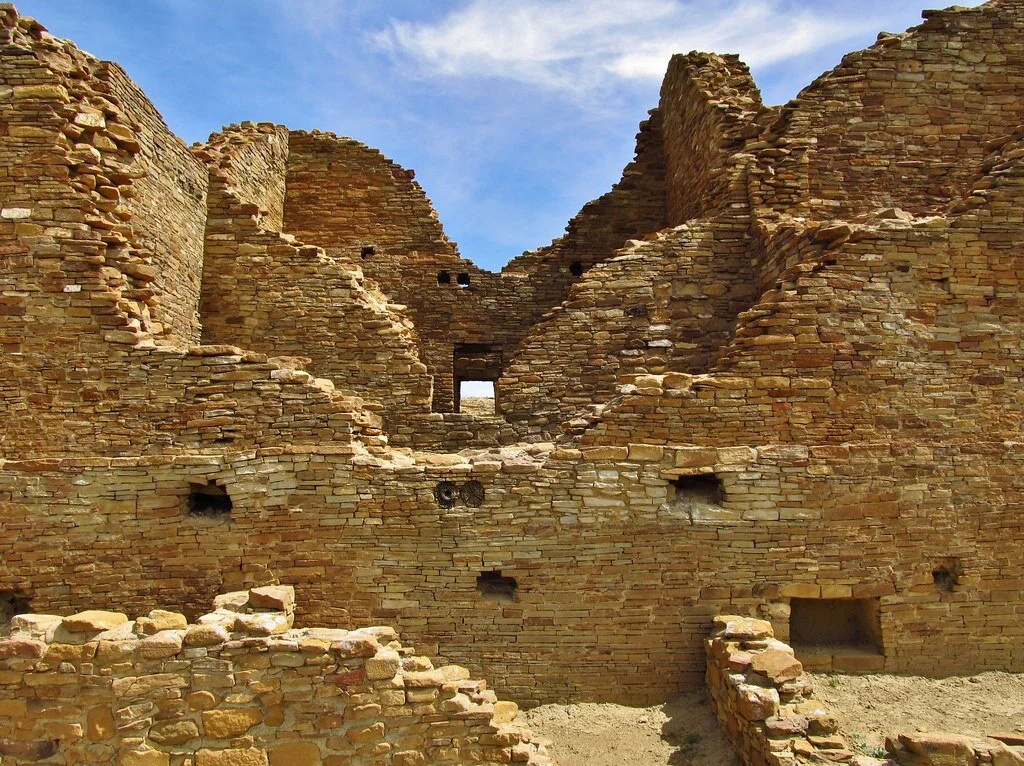
By the time European explorers arrived in the Americas, the Western Hemisphere was already home to more than 50 million people. Ten million of these people lived in what is now the United States. These Indigenous Americans developed intricate communities, religions and lifestyles, and made a lasting impact on American history and culture. Incredible sites built by Indigenous people can be found throughout the U.S. today, including cliff dwellings, multistory stone houses, earth lodges and effigies, and other stunning ruins. The history of Indigenous people is often overlooked or swept under the rug in favor of European colonists when looking at the larger context of American history, but preserved sites teach visitors about the complex cultures that came before Western settlers. These 10 sites showcase some of the impressive architectural triumphs of Indigenous people and pass on their histories.
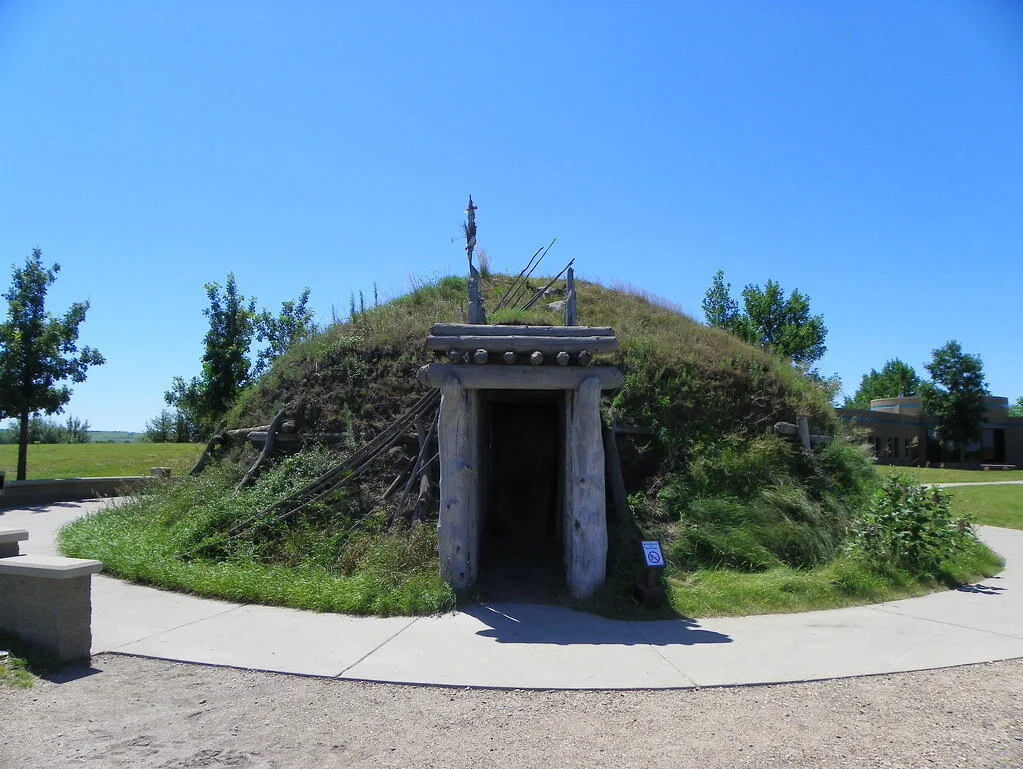
1. Knife River Indian Villages National Historic Site, North Dakota
Located near Stanton, North Dakota, the Knife River Indian Villages National Historic Site preserves the history of the Knife River region. The Knife River region, an area in North Dakota centered around a tributary of the Missouri River, has been home to a number of people groups for around 11,000 years. Not much is known about the cultures that have inhabited the Knife River region because very few artifacts from the area remain, but early written records document the lives of the Hidatsa people. Like the Mississippian people, the Hidatsa resided in earth lodges. The Mandan and Arikara were also earth lodge residents who settled in the Knife River region, and all three groups pioneered agriculture in the area while still hunting and gathering. Villages were the center of earth lodge peoples’ lives, and the park features the remains of three large villages constructed by the Hidatsa: Awatixa Xi’e village, Hidatsa village and Awatixa village.
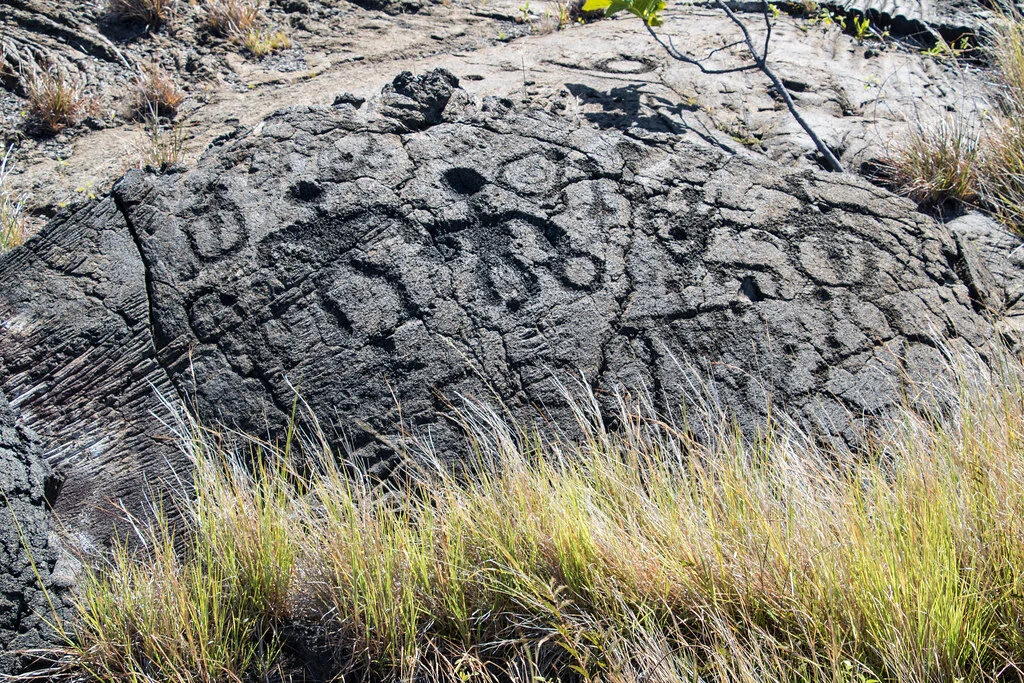
2. Puu Loa Petroglyphs, Hawaii
Hawaii Volcanoes National Park, on Hawaii’s Big Island, protects Mauna Loa and Kilauea, two of the world’s most active volcanoes. It is also home to the Puu Loa petroglyphs, stone etchings that document the lives and culture of the Native Hawaiian people. The petroglyphs are located in a lava field that is at least 500 years old, and the site has over 23,000 different petroglyphs. There are a variety of geometric designs, as well as depictions of people and tools, such as canoe sails. A number of the petroglyphs contain cupules, or holes where a portion of the umbilical cord was placed after the birth of a child in order to ensure long life. The first known written account of the petroglyphs is attributed to missionary Rev. William Ellis in 1823, but some petroglyphs likely date to the 1600s or even earlier. In addition to being used to ensure long life, some petroglyphs were used to record the movements of travelers on the island. Visitors to Hawaii Volcanoes National Park can take a 1.4-mile round trip day hike on a boardwalk to admire the petroglyphs up close.
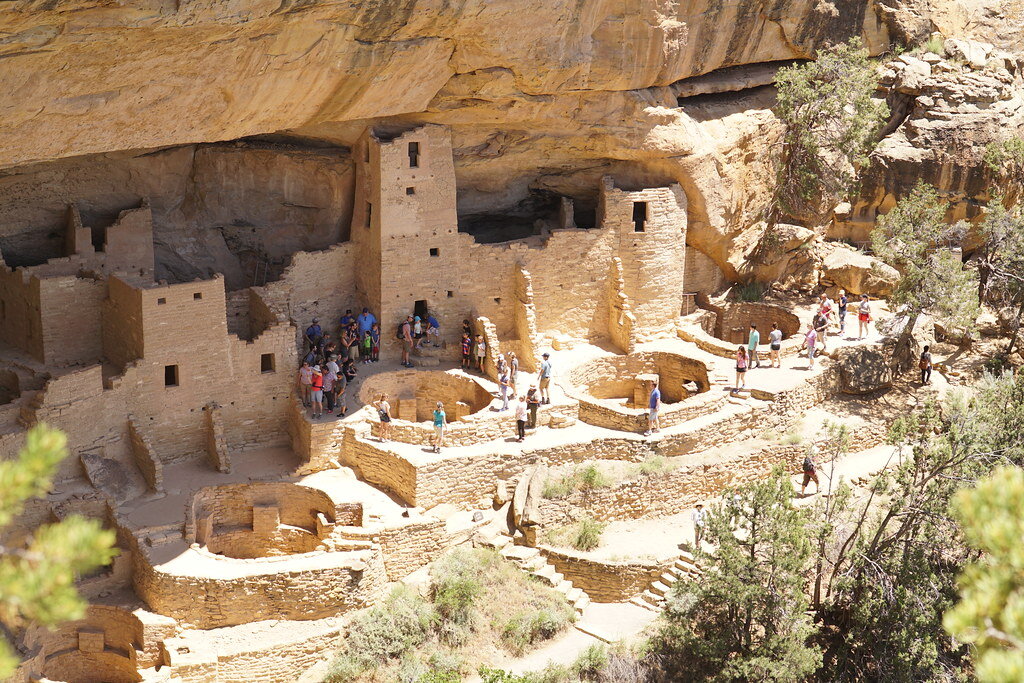
3. Mesa Verde National Park, Colorado
Probably one of the most well-known Indigenous sites in the United States, Mesa Verde National Park in Colorado preserves almost 5,000 historical sites of the ancestral Pueblo people, including 600 cliff dwellings. The ancestral Pueblo people lived at Mesa Verde for more than 700 years, from 550 to 1300 A.D. The first people settled at Mesa Verde in 550 A.D., turning from hunting and gathering to agriculture and building small villages of pithouses, sometimes sheltered in cliff alcoves. Around 750 A.D., these people began building houses above ground and became known as the Pueblo people, meaning “village dwellers.” The houses evolved from being made of poles and mud to being skillfully constructed from stone. Then, in 1200 A.D., for reasons that are unknown, the ancestral Pueblo began to move back into cliff alcoves and developed the cliff dwellings that make Mesa Verde famous. Mesa Verde’s cliff dwellings are truly incredible examples of Indigenous architecture, ranging from one- to 150-room houses. They are also some of the best-preserved cliff dwellings in North America, and visitors can tour some of the structures, like Balcony House and Cliff Palace.
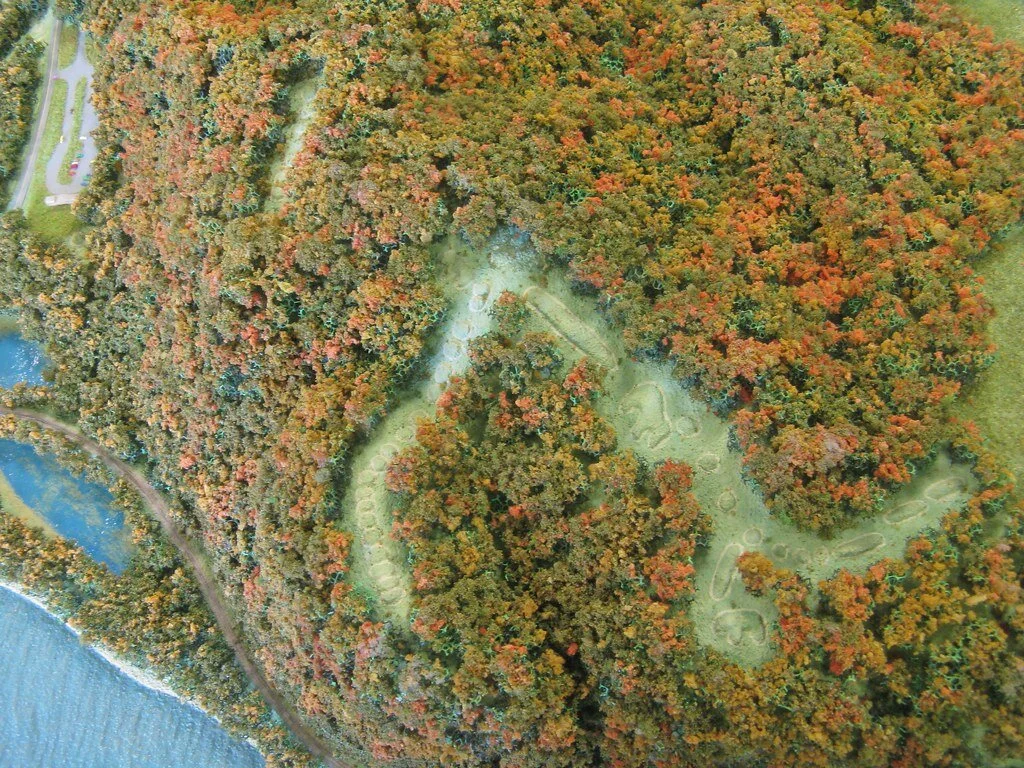
4. Effigy Mounds National Monument, Iowa
Ceremonial mounds created by Indigenous Americans can be found across the United States. Effigy Mounds National Monument preserves more than 200 distinct mounds built by people known as the Woodland Indians and gives visitors a glimpse directly into Woodland Indian culture. The mounds, found in northeastern Iowa, are unique because a large number of them are effigies in the shape of animals. Thirty-one of the mounds are bear or bird effigies. The Woodland culture consisted of hunter-gatherers who during the summer lived in large campsites along the Mississippi River, which they relied on for food and water. Archaeologists and researchers do not know precisely why the effigy mounds were built, but they guess that they may have been made for religious rituals or burial ceremonies. Guided tours are available throughout the summer at Effigy Mounds to teach visitors more about the area’s rich history, and there are also hiking trails around the site.
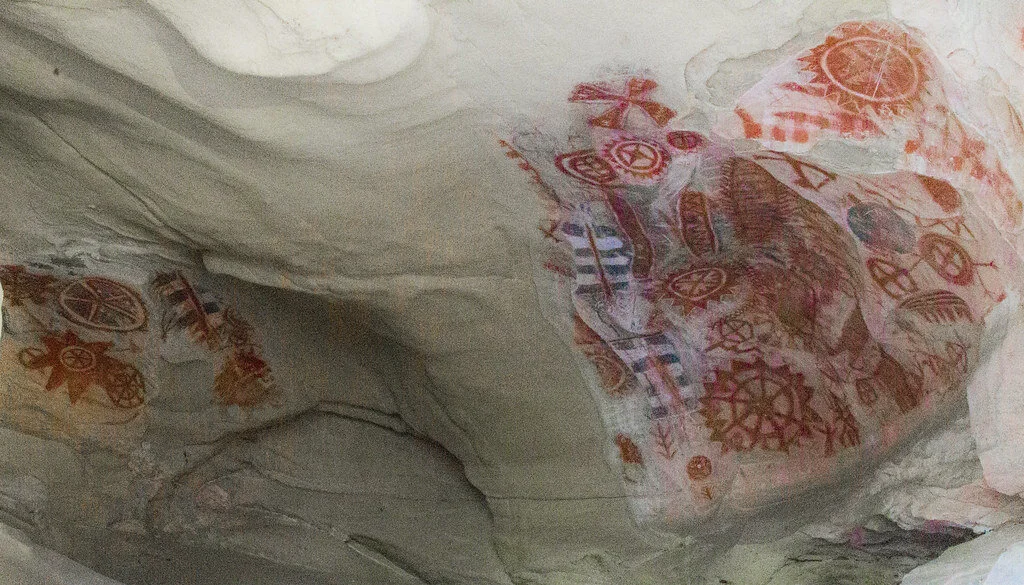
5. Chumash Painted Cave State Historic Park, California
Just outside of Santa Barbara sits the Chumash Painted Cave, a room-sized sandstone cavern filled with colorful anthropomorphic and geometric figures. The exact age of the cave paintings is unknown, but archaeologists estimate that they date to the 1600s or earlier. The paintings are attributed to the Chumash, a name referring to several groups of Indigenous people who lived along the coast of Southern California and on the nearby Channel Islands. The Chumash groups spoke a variety of what linguists refer to as the Hokan language, and they constructed canoes from pine or redwood planks, which they used to sail up and down the California coast to hunt, gather and trade with other tribes. The Chumash lived in round homes known as “aps,” organized into villages. A number of archaeological sites displaying Chumash rock art have been discovered, and the Chumash Painted Cave is one of the most well preserved. The meaning behind the figures at the painted cave is unknown, but the art may be connected to Chumash astrology and cosmology.
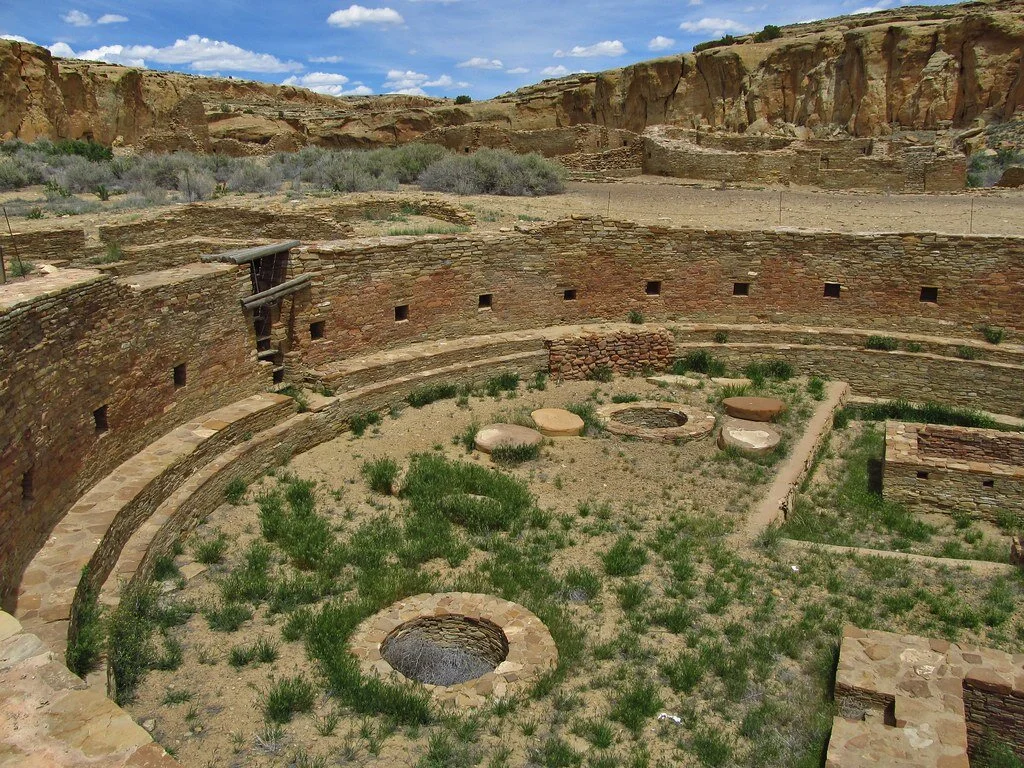
6. Chaco Culture National Historical Park, New Mexico
A valley in the high desert of northwestern New Mexico houses an ancient, sprawling center of ancestral Pueblo culture. Between 850 and 1250 A.D., the area that is now Chaco Culture National Historical Park was the epicenter of a widespread expansion of Chacoan culture. The Chacoan people used unique masonry techniques to construct stone houses multiple stories high, some containing hundreds of large rooms. The buildings were intricately planned out and often constructed according to solar, lunar and cardinal directions, as well as to maintain clear lines of sight between houses. By 1050, Chaco was the economic and cultural center of the San Juan Basin, with people from all over the area gathering there to share knowledge and traditions and to participate in ceremonies. A number of the great houses have been preserved and can be seen today, along with petroglyphs made by the Chacoan people. Since 2013, Chaco has also been designated an International Dark Sky Park, meaning it is one of the best places in the country to get a view of the night sky untainted by light pollution. Visitors can look at the sky the same way the Chaco people saw it a millennium ago.
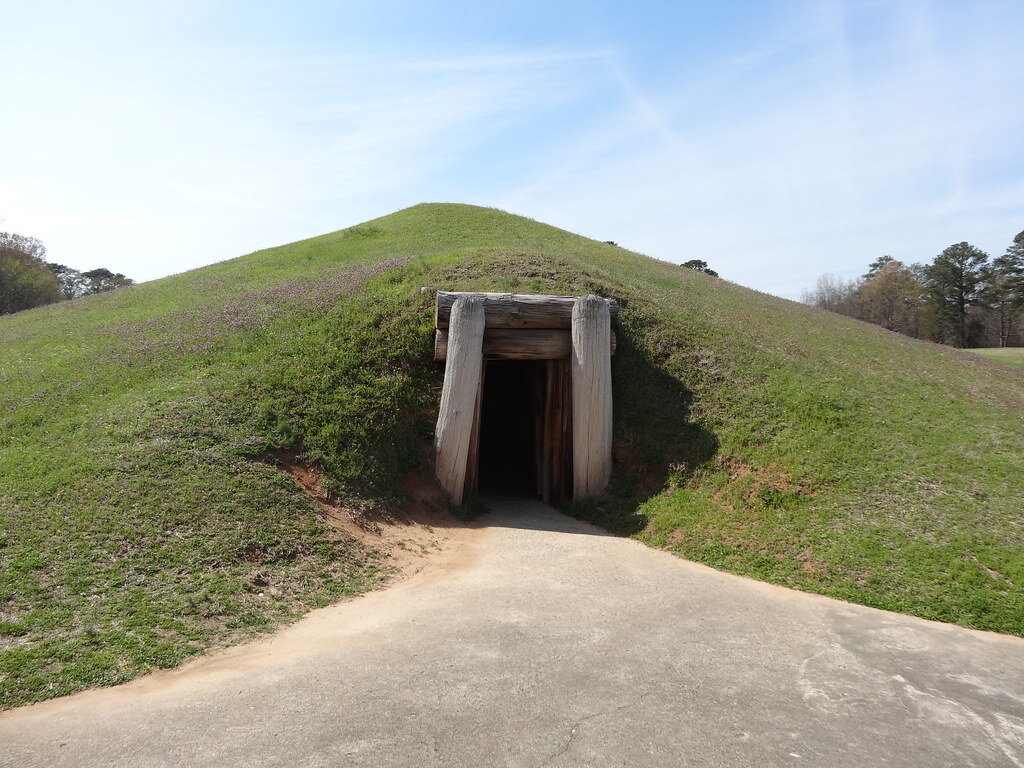
7. Ocmulgee Mounds National Historical Park, Georgia
Minutes outside of downtown Macon, Georgia, lies Ocmulgee Mounds National Historical Park, a site shaped by 17 millennia of habitation, dating back to prehistoric times. The nomadic Paleo-Indian people arrived at the site in around 17,000 B.C., during the last ice age. Around 9,600 B.C. the Paleo-Indian era gave way to the Archaic era. The Early Archaic people were nomadic hunters as well, but evidence suggests that by the Middle Archaic period people began to build more permanent settlements and gather food. It wasn’t until the Mississippian people, who migrated to the area in 900 A.D., that the land was permanently changed, however. The Mississippians constructed impressive villages that literally reshaped the landscape, forming elaborate earthen lodges and temples that are still visible today. The Mississippian culture declined after the 1539 arrival of Spanish explorer Hernando de Soto, who brought with him foreign diseases that devastated the Mississippian people. Descendants of the Mississippian people, the Muscogee Creek Nation, who lived at Ocmulgee from 1600 until their forcible removal by Andrew Jackson in 1836, considered the mounds built by their ancestors to be sacred. Today, visitors to the site can see several of the mounds constructed by the Mississippian people, as well as the location of two Civil War battles.

8. Little Bighorn Battlefield National Monument, Montana
Little Bighorn Battlefield National Monument memorializes the site of the Battle of Little Bighorn, a fight between the 7th Regiment of the U.S. Cavalry and thousands of Sioux, Cheyenne and Arapaho tribe members. It lies within the Crow Indian Reservation in southeastern Montana. On June 25, 1876, the 7th Regiment, led by Lt. Gen. George Custer, attacked a village of free Lakota and Cheyenne people. The battle was part of the U.S. campaign to force Indigenous people to comply with the 1868 Treaty of Fort Laramie, which created a large reservation in South Dakota intended to house the Lakota. Many Lakota did not want to give up their nomadic lifestyle in favor of a life controlled by the U.S. government, resulting in a number of armed conflicts. The Battle of Little Bighorn proved deadly for both sides, but the Lakota and Cheyenne ultimately triumphed, defeating Custer and his troops. Though the Lakota and Cheyenne tribe members won the battle, Custer’s defeat became a rallying cry for U.S. efforts to force Indigenous people onto reservations, and stronger military forces were sent to conquer the tribes. The monument includes the battlefield itself, as well as the Custer National Cemetery and a number of hiking trails.
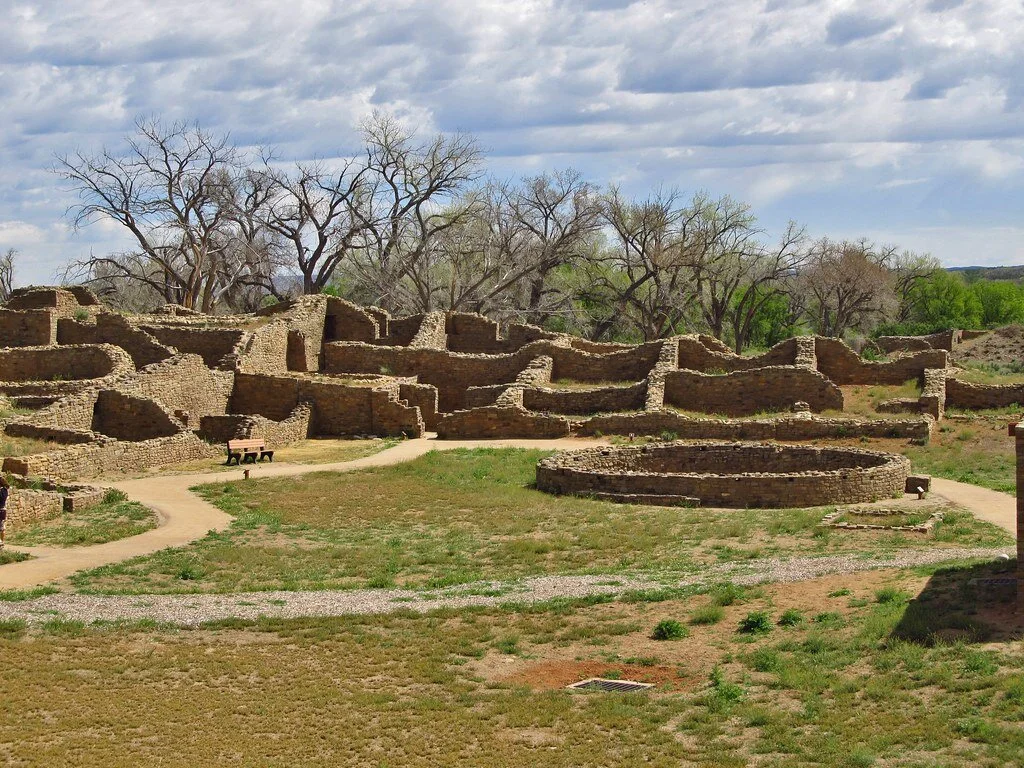
9. Aztec Ruins National Monument, New Mexico
Despite its name, Aztec Ruins National Monument has no association with Mexico’s Aztec empire. These large, multistory stone buildings, located within the city limits of Aztec, New Mexico, were constructed by the ancestral Pueblo. Early Western settlers thought that the site was built by the Aztecs, so they named the area “Aztec,” and the name remained even after the true builders of the ruins were discovered. Aztec Ruins was the largest ancestral Pueblo community in the Animas River valley. The site features a number of “great houses” made of stone, including the West Ruin, which had over 400 interconnected rooms. Each great house had a “great kiva,” a large, underground circular chamber used for ceremonies. Aztec Ruins also has three above-ground kivas, each encircled by three walls forming a triangle. Aztec Ruins was likely influenced by Chacoan culture, and may have even been an outlying community of Chaco. Visitors can wander through the rooms of West Ruin on a self-guided tour, or participate in ranger-led programs.

10. Hopewell Culture National Historical Park, Ohio
The term “Hopewell culture” refers not to a specific tribe, but to a “distinctive set of artifacts, earthworks and burial practices” common in areas of southern Ohio during the Middle Woodland period, from around 1 to 400 A.D. The Hopewell Mound Group is an 130-acre earthwork complex, which contains 29 burial mounds and was once enclosed by an enormous earthen wall that spanned over 2 miles and was up to 12 feet high. Remnants of the walls are still visible, as are several of the large, uniquely shaped mounds. Hopewell Culture National Historical Park encompasses five additional sites, all with fascinating remnants of the Hopewell culture. Settlements typically consisted of a few families living close together in rectangular houses with a shared garden nearby. In addition to growing domesticated plants, people of the Hopewell culture were hunters, fishers and gatherers. Visitors to the park will discover the commonalities between each distinct site by exploring the incredible Hopewell Mounds and looking at preserved artifacts.

Rachel Lynch
Rachel is a student at Sarah Lawrence College in Bronxville, NY currently taking a semester off. She plans to study Writing and Child Development. Rachel loves to travel and is inspired by the places she’s been and everywhere she wants to go. She hopes to educate people on social justice issues and the history and culture of travel destinations through her writing.
Exploring the Wonders of Australia’s Wild and Remote Kimberley
The Kimberley region of Western Australia boasts a spectacularly diverse landscape offering both biodiversity and impressive geological formations.
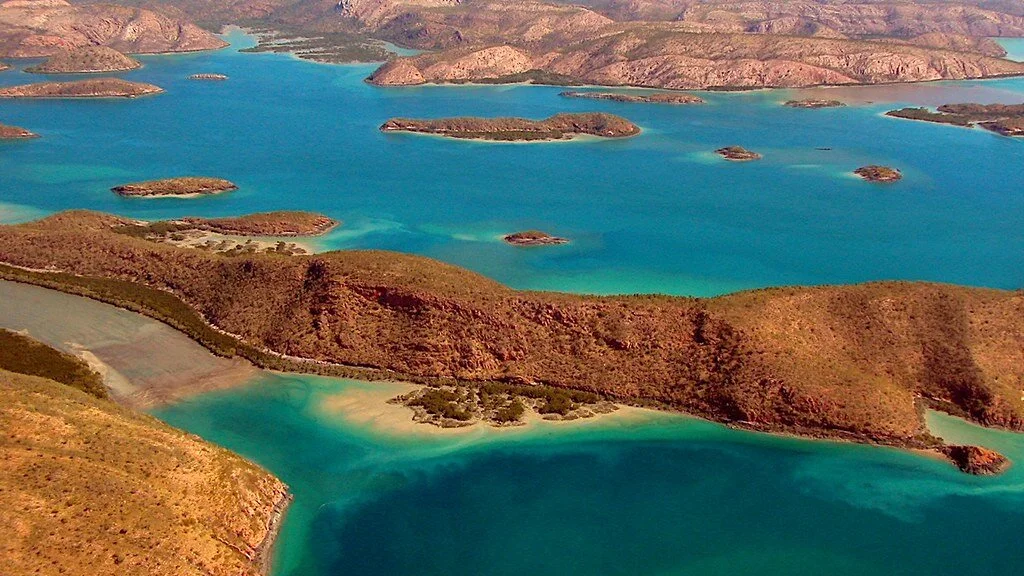
Aerial view of the Kimberley. Drumsara. CC-BY-SA 2.0.
Although Australia provides plenty of examples of nature’s extraordinary beauty, few compare to the Kimberley region. Situated in Western Australia’s northernmost corner, the Kimberley is a grandiose territory teeming with rich ecosystems. A plethora of microcommunities sprinkle across its sundry landscapes while towering hills spill into vast canyons neighboring pristine swimming holes.
The region covers over 150,000 square miles, with only about 40,000 residents inhabiting the area. Perhaps the most famous part of the Kimberley is Broome’s Cable Beach, ranked as one of the world’s most gorgeous stretches of sand and sea. The beach displays nearly 14 miles of fine sand meeting glassy waters. The beach itself has an interesting history; the name “Cable Beach” comes from the telegraph cable placed there in 1889. For adventurers more daring, Tunnel Creek National Park houses the oldest cave system in Australia. Again, the history of the stop is fascinating; Aboriginal leader Jandamarra hid in the cave system but was later caught and killed at its opening.
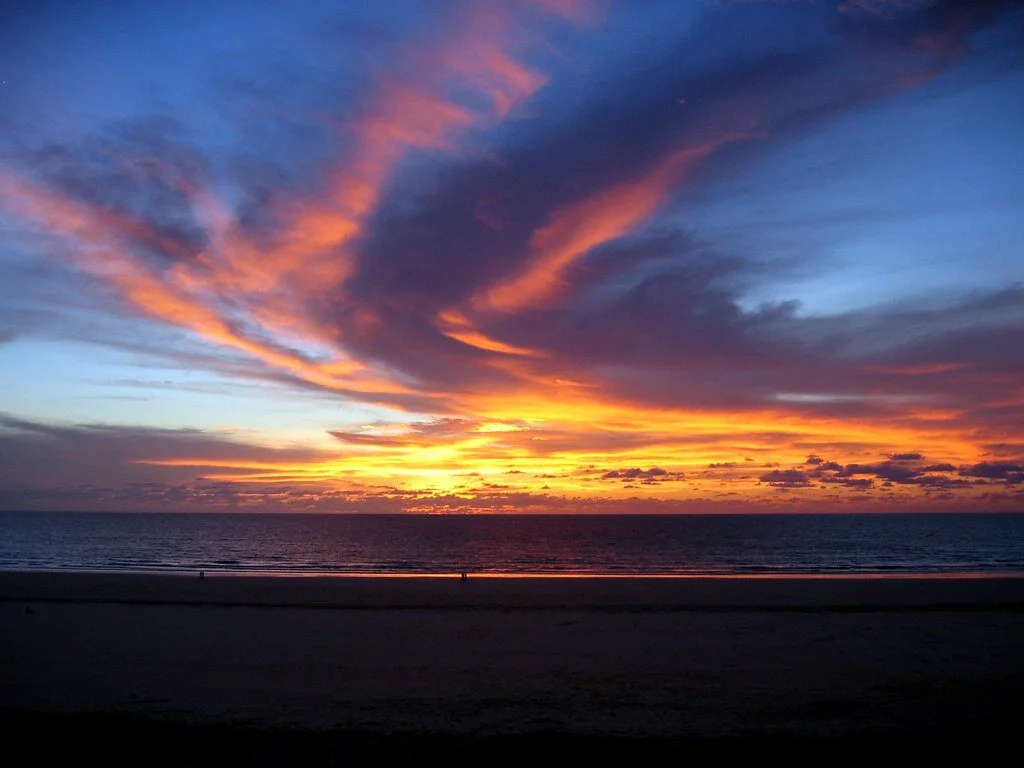
The swirling sky at Cable Beach in Broome. hmorandell. CC BY-NC-SA 2.0.
However, the history of the land tells a story drastically different than the extravagant serenity the region now boasts.
Exploration of the Kimberley by Europeans was initiated in 1879 by government surveyor Alexander Forrest, who explored much of Western Australia. Upon arrival, Forrest made note of the region’s vast landscape which made it ideal for cattle grazing. From this point on, the resources of the land quickly became tied to conflict; diggers struck gold which led to a quickly fleeting gold rush, and conflicts over cattle grazing raged between the Indigenous population and newly arrived Europeans. In the mid-20th century irrigation projects led to the rise of extensive farming, primarily that of sugar cane and rice. Oil drilling and diamond mining are now conducted in the region.
Today, the Kimberley contains residents as diverse as its wildlife; there are over 100 Aboriginal communities that share the region’s unmatched tranquility as well as its bustling economic opportunities. Due to the region’s iconic landscape, nearly 300,000 travelers visit every year, producing over $300 million annually.
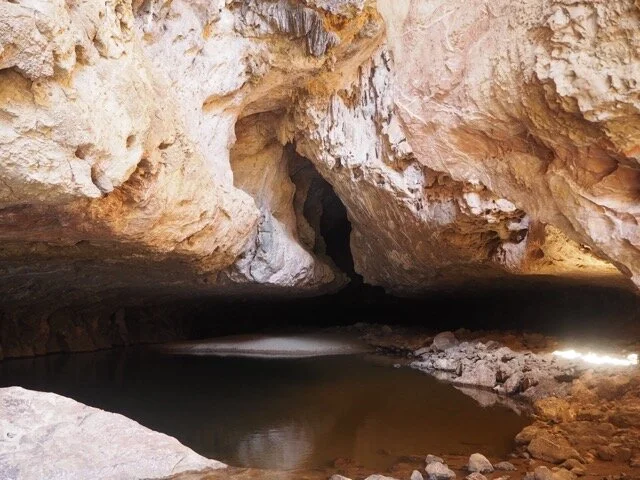
Tunnel Creek National Park. Nievedee. CC BY-SA 4.0.
As with most dazzling spectacles of nature, the region boasts pristine weather that complements the untouched wilderness. The wet season extends from November to April and is characterized by heavy rain and humid, sticky air. From May to October is the dry season, which is characterized by sun-drenched days and cloudless, baby blue skies.
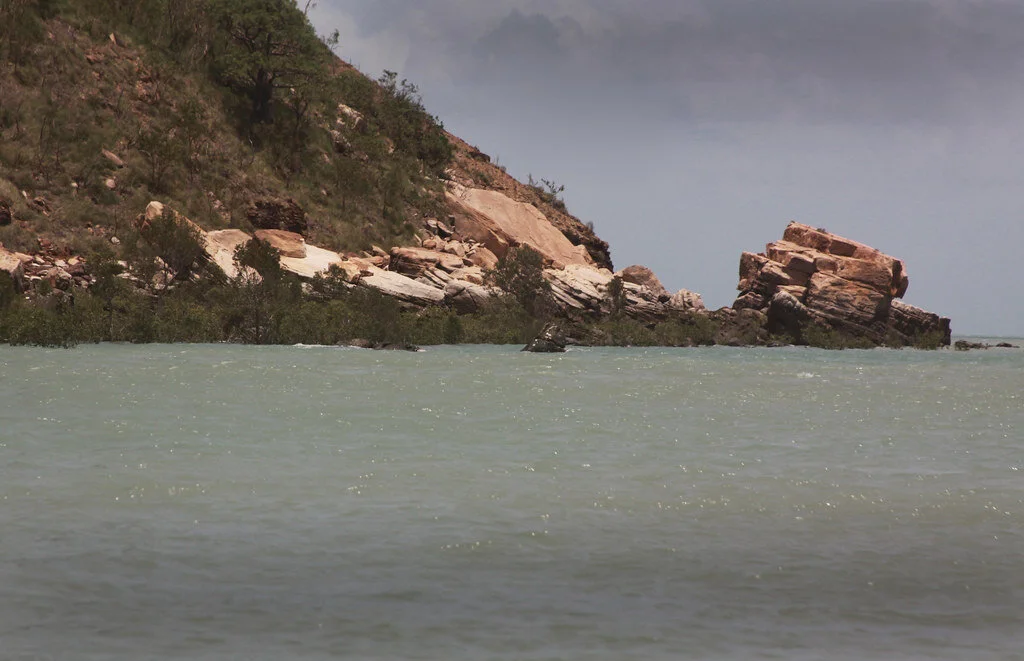
Raft Point. Johnny. CC BY-NC 2.0.
An exciting history and a dazzling landscape make Australia’s Kimberley region a powerfully adventurous destination. Surely any visitor will find their imagination stretched by the area’s countless wonders.

Ella Nguyen
Ella is an undergraduate student at Vassar College pursuing a degree in Hispanic Studies. She wants to assist in the field of immigration law and hopes to utilize Spanish in her future projects. In her free time she enjoys cooking, writing poetry, and learning about cosmetics.
Video: India’s Snake-Catching Business Through the Eyes of a Teen
Varanasi is over 5,000 years old and one of the holiest cities in India. Like the rest of the country, however, Varanasi is inundated with venomous snakes which often infest houses and endanger the population. The people hired to catch these snakes are often under-educated and suffer from a low-income, forced to turn to a dangerous job to make ends meet.
This mini-documentary follows Ali, a 16 year-old boy who is one of the best snake catchers in the city. His work takes him all over the city and through meetings with tourists, police, and people from all walks of life, yet the most important people are his family, who he supports by risking his life every day.
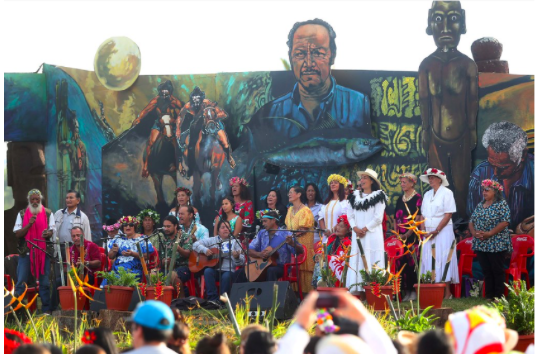
The Tapati festival on Easter Island is a colorful celebration of Rapa Nui heritage. It is enjoyed through traditions such as the singing performance and flower crowns seen here. Ministerio de las Culturas, las Artes y el Patrimonio. CC BY-NC-SA 2.0.
Easter Island’s Tapati Festival: A Celebration of Rapa Nui Tradition
When most think of Easter Island, located nearly 2,200 miles off the coast of mainland Chile, the first thought that comes to mind is, “How did those heads get there?” While the giant stone structures known as moai are quite fascinating, they are only one of the island’s impressive features. With its westernized name, it is easy to forget that the island, known as “Rapa Nui” to its natives, has been populated for centuries. The Tapati festival was born to celebrate that heritage.
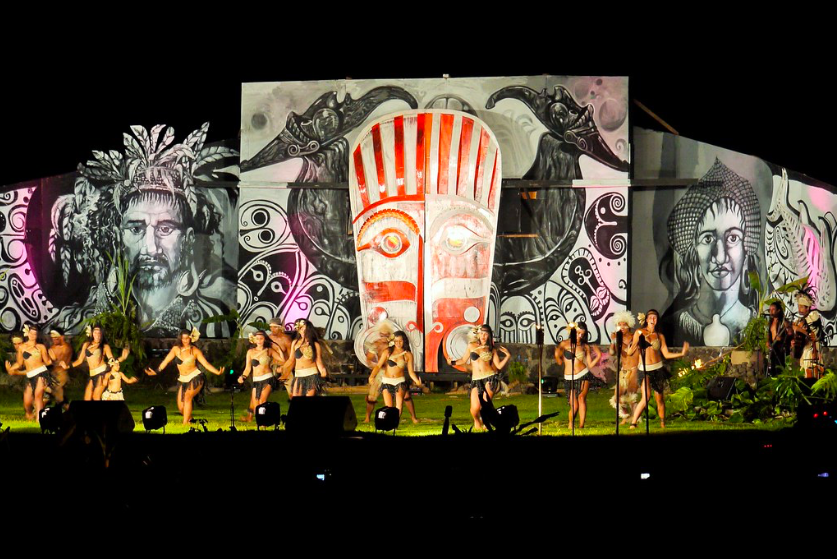
The Tapati festival began in the 1970s as a way to educate the world about Rapa Nui’s people and their customs. More importantly, it is a way to reconnect children on the island with their heritage and identity. In the last few years it has grown in popularity, and it is featured on many tours to the island. This year it was rescheduled due to the pandemic, but the celebration is set to happen early next year.
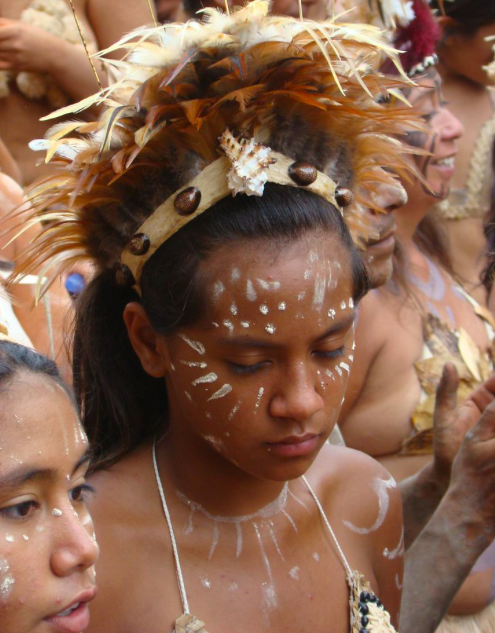
The two-week festival consists of music, dance and ancestral sporting events like swimming, canoeing and horse racing. The competitions take place between two clans in the spirit of the island’s Polynesian history. The events take place all over the island from day to night with the people of Rapa Nui emphasizing their heritage through face painting and dress. Each group also nominates a woman who receives points from the winners of the physical competitions, and the two compete to become the queen of Tapati at the end of the celebration.
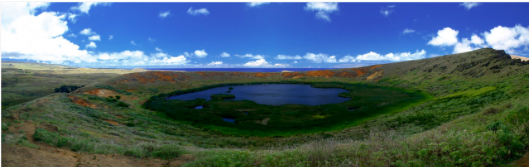
Rano Raraku, a volcanic crater on Easter Island. Iko. CC BY-NC-ND 2.0.
What Tapati is most noted for is the triathlon, the Taua Rapa Nui. This three-pronged competition is held at the Rano Raraku, a massive volcanic crater that many of Easter Island’s moai sculptures were carved from. The events that make up Taua Rapa Nui are the Pora, the Aka Venga and the Vaka Ama.
The Pora is a canoe race in which solo competitors in traditional outfits and body paint paddle across the crater lake on reed boats. Upon reaching the other side, they immediately transition into the Aka Venga, a running race made more difficult by the need for contestants to carry two banana bunches on their shoulders. This event is notorious for taking out racers.
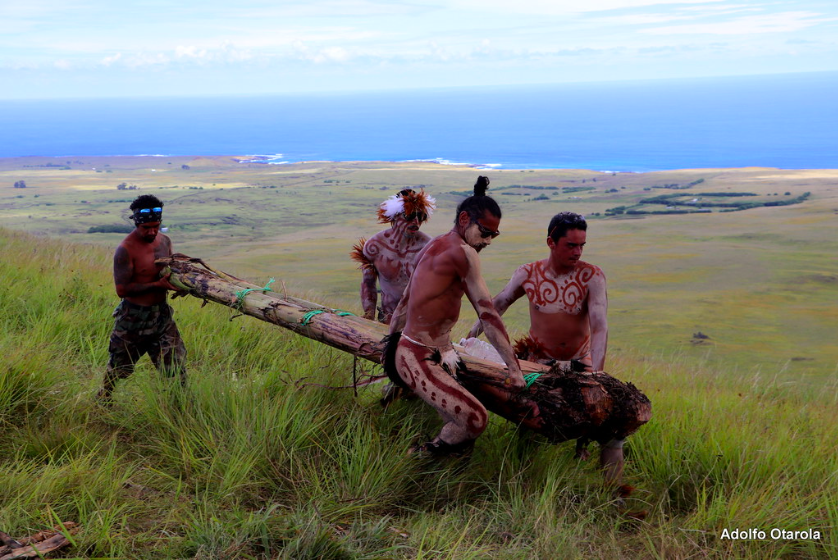
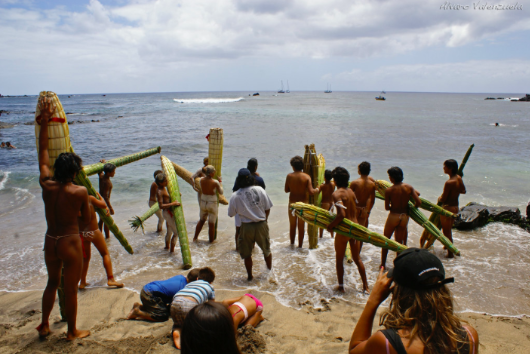
Competitors practicing for the Pora. Alvaro Valenzuela. CC BY-NC 2.0.
Another impressive event is the Haka Pei, where dozens of men cloaked in only body paint and a cloth race down the steepest hill on the island in sleds made of banana tree trunks.

Beyond physical competitions, there are many ancestral skills competitions like cloth making from mahute tree bark, stone and wood carving, and clothing designing. Another event is a cooking competition where women of the island face off with their creations of traditional Rapa Nui dishes. Additionally, there is an agricultural showcase in which farmers compete to see who has the biggest and heaviest products. As it is a two-week event, countless different cultural traditions are highlighted throughout the festival.
For visitors, the grand celebration of Rapa Nui and its people is a valuable way to respectfully learn about and appreciate islanders’ traditions. It is a culturally immersive experience, and the people on the island know that their heritage is worthy of recognition. Often, island cultures get isolated from global conversations as the beautiful landscapes distract from traditions. Festivals like the Tapati ensure that Rapa Nui’s residents are never forgotten.

Renee Richardson
Renee is currently an English student at The University of Georgia. She lives in Ellijay, Georgia, a small mountain town in the middle of Appalachia. A passionate writer, she is inspired often by her hikes along the Appalachian trail and her efforts to fight for equality across all spectrums. She hopes to further her passion as a writer into a flourishing career that positively impacts others.
Solidified in Salt: Tanzania’s Lake Natron
Miracles of nature are usually praised for their wondrous beauty, often worked into songs or captured in paintings. However, some miracles of nature harbor an equally eerie side. In Tanzania lies a daunting monster that preys viciously in sinister silence.
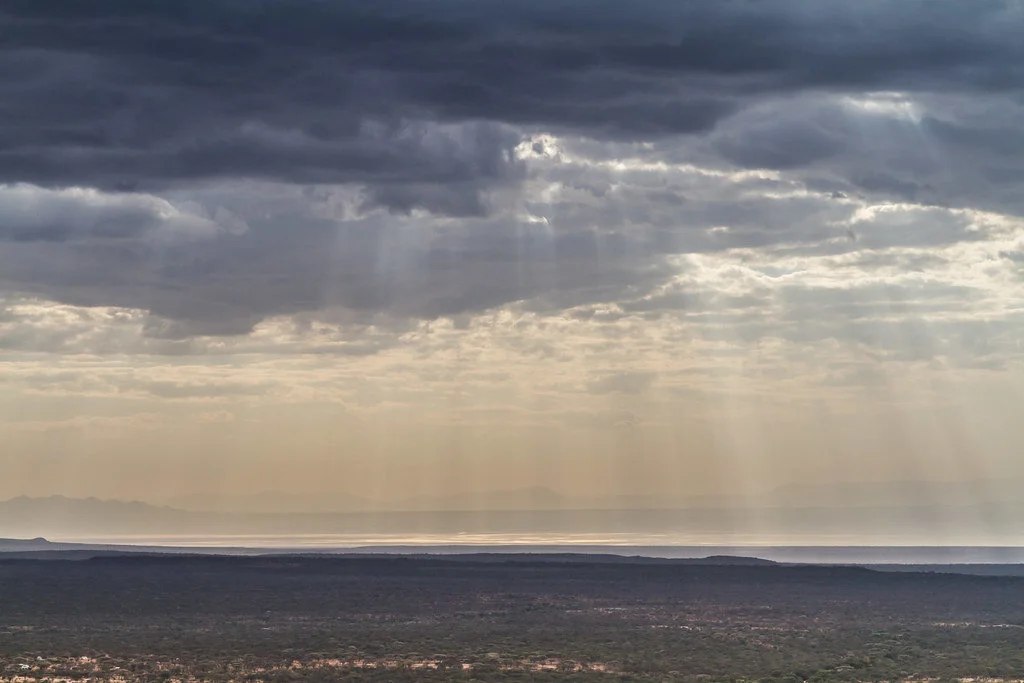
Sunlight over Lake Natron. blieusong. CC BY-SA 2.0.
In nearly any social studies class, bodies of water are framed as life-giving and as focal points for the world’s nations. Lakes and rivers are often credited in many civilizations’ lengthy histories for providing a means of transportation and crucial food security. Water itself stands as a symbol of life; ancient Egypt thrived due to fertile soil that would have been absent had it not been for the Nile River. Nonetheless, the complexity of nature has created exceptions to this rule. For instance, in the East African nation of Tanzania lies the deadly Lake Natron.
Lake Natron sits along the East African Rift System in northern Tanzania, and is 35 miles long and about half as wide. Although often photographed for its location under sunlit clouds and for its serene backdrop, the lake is an abyss for almost all wildlife.
Lake Natron is a salt lake, meaning it is incredibly alkaline. The deposits of natron, a chemical salt, flow in from the surrounding hills. This causes the lake’s pH level to be a very basic 10.5; this pH level falls only a bit short of that of ammonia and bleach. The water in this lake only flows inward, so evaporation leaves behind hefty salt deposits. Lake Natron can also reach a steamy state, with the water’s temperature recorded to reach 140 degrees Fahrenheit.
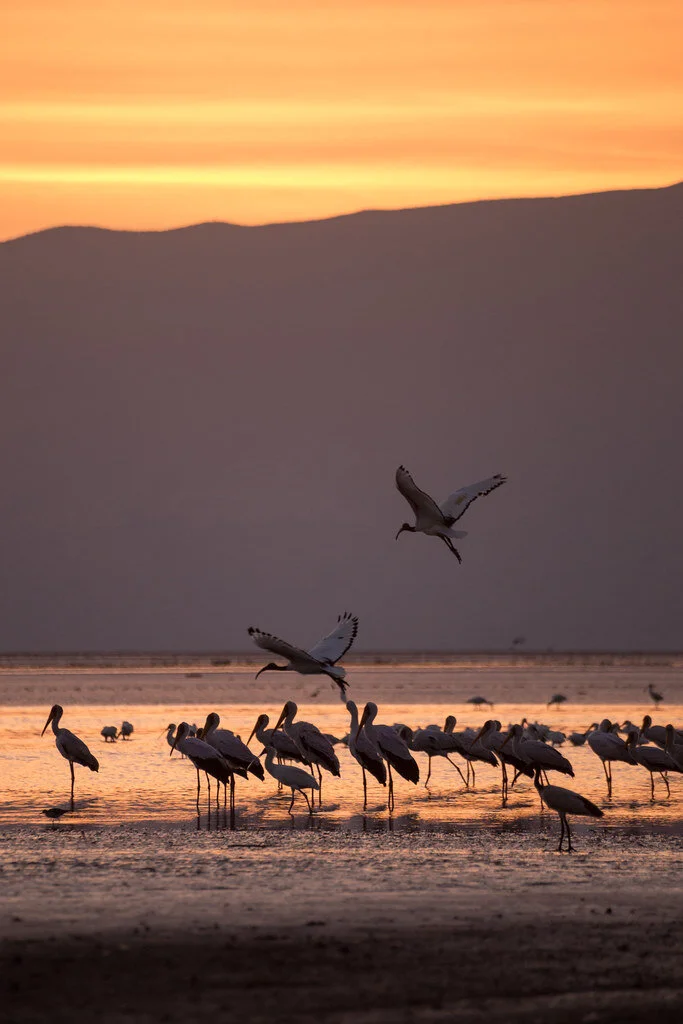
Flamingos on Lake Natron at sunset. virtualwayfarer. CC BY-NC 2.0.
In addition, a peculiar site is found at the shores of the lake. Long lines of dead birds and bats cover the shoreline, with each specimen preserved in a stonelike state. Scientists explain that the high salinity of the lake “freezes” the animals, perfectly preserving them with all of their wings and feathers in place. Nature photographer Nick Brandt chose to turn this site into a fascinating art project. He perches the birds on branches and poses the bats in order to make them look “alive.” With the help of locals, Brandt collected the best specimens and masterfully crafted chilling portraits of the fallen animals. Brandt suspects that the reflective surface of the lake tricks birds into believing it’s open air, leading the birds to drown in the deadly water.
However, to say that the lake is completely absent of life is an act of injustice toward the flocks of flamingos that call the lake their home. Nearly 2.5 million flamingos use the lake’s shores as breeding grounds each year, accompanied by thriving algae and a single resilient species of fish. Although a nontraditional ecosystem, Lake Natron’s niche wildlife web requires balance like any other. Threats to divert nearby rivers into Lake Natron would change its water composition, thereby putting the lake’s wildlife at high risk.
At first glance, Lake Natron appears to be both an example of life imitating art and life imitating horror. Regardless, Lake Natron is the foundation for both important species and scientific study, so there is much to lose if people begin to mistreat it.
RELATED CONTENT:

Ella Nguyen
Ella is an undergraduate student at Vassar College pursuing a degree in Hispanic Studies. She wants to assist in the field of immigration law and hopes to utilize Spanish in her future projects. In her free time she enjoys cooking, writing poetry, and learning about cosmetics.
7 Stunning Spots in Bangladesh, South Asia’s Most Verdant Country
Known for its lush greenery and fascinating sites, Bangladesh offers many exciting opportunities to travelers.

The Sundarbans in Bangladesh. USAID Biodiversity and Forestry. CC BY-ND 2.0
Bangladesh is a South Asian country that borders India and Myanmar. Originally referred to as East Pakistan after the partition of India in 1947, Bangladesh eventually gained independence from Pakistan in 1971. Although the country is not on many visitors’ radars, Bangladesh boasts both spectacular natural beauty and a rich culture. Here are seven destinations that travelers should check out when visiting Bangladesh.
1. Sundarbans Mangrove Forest

A Bengal tiger in Bangladesh’s Sundarbans mangrove. Anindya Majumder. CC BY-NC-ND 2.0
If one could only visit only a single attraction in Bangladesh, this would have to be it. The Sundarbans mangrove forest is located where the Brahmaputra and Ganges rivers meet the Bay of Bengal. It is the largest mangrove forest in the world and became a UNESCO World Heritage Site in 1997. The forest is well-known for its variety of flora and fauna, most notably the endangered Bengal tiger. Other animal sightings that travelers can look forward to on their visit include spotted deer, rhesus macaque monkeys and a variety of waterbird species, including egrets and herons.
2. Dhaka
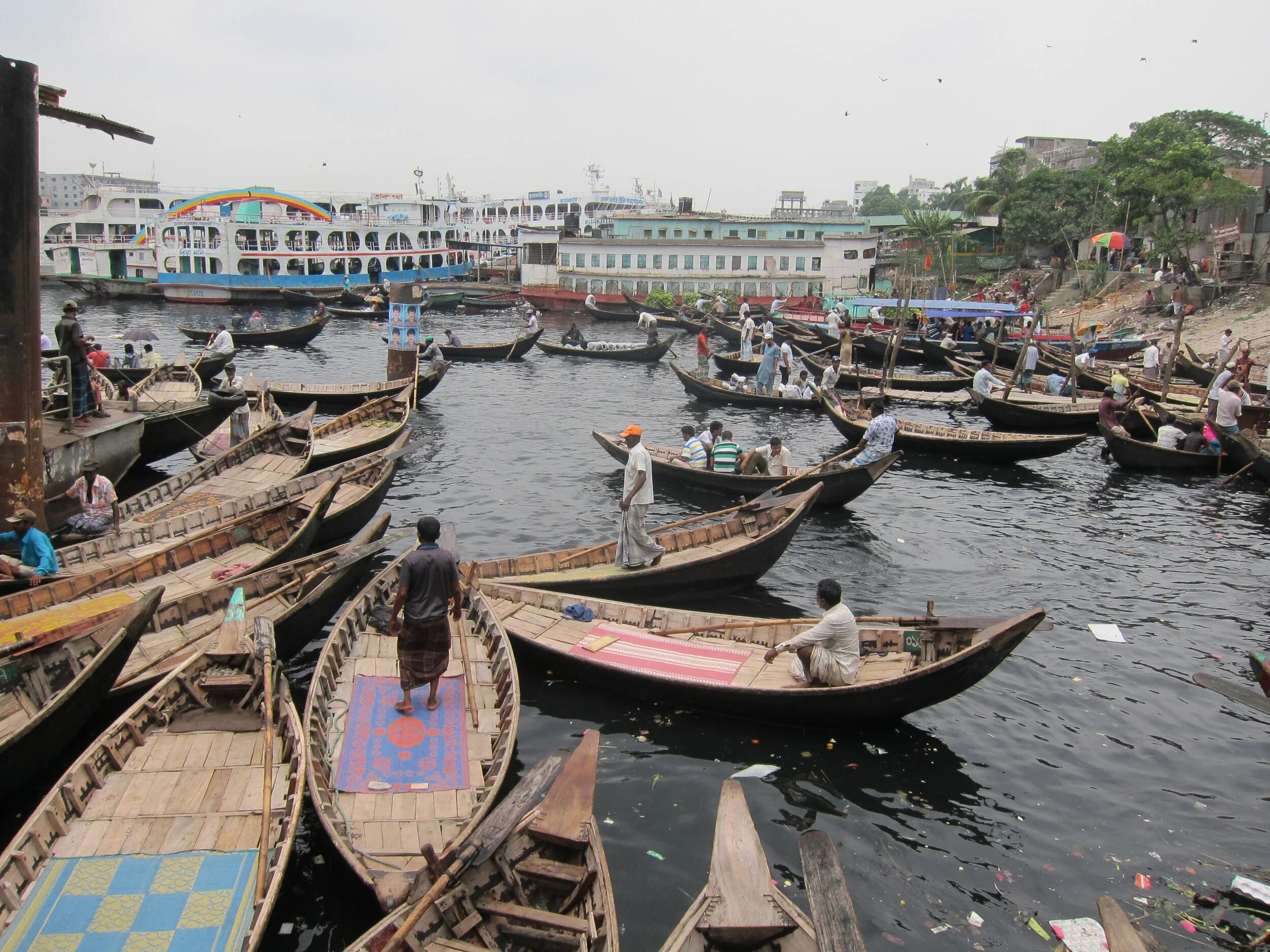
Boats in Bangladesh. Kuruman. CC BY 2.0
Travelers are likely to spend some time in Dhaka, as it is Bangladesh’s capital, largest city and travel hub. The city is a densely populated metropolis with some of the worst traffic in the world. Beyond the hectic rickshaw-filled streets, there are many exciting activities in the Bangladeshi capital, including watching boats dock at the Sadarghat river port, paying a visit to the Ahsan Manzil palace and museum, and touring the Baitul Mukarram Mosque, one of the largest in the world. Dhaka is also a wonderful place to explore traditional markets and sample Bangladeshi cuisine.
3. Cox’s Bazar Beach
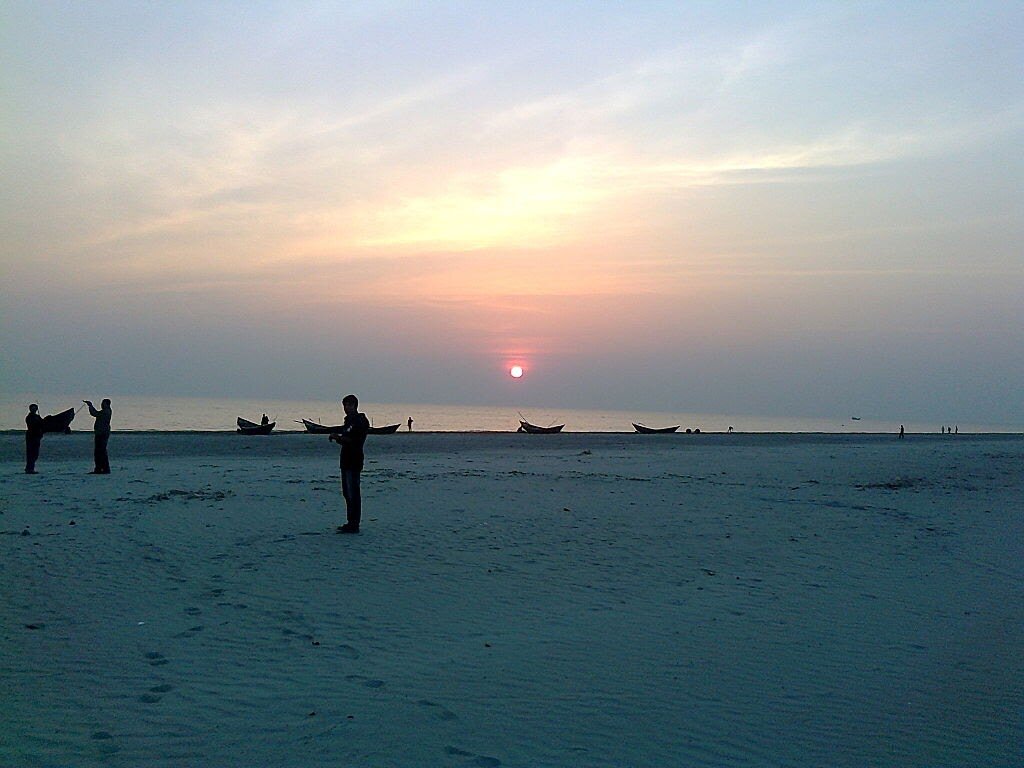
A beach sunset in Bangladesh. Lonely explorer. CC BY 3.0
This is one of Bangladesh’s most beautiful beaches. Stretching over 75 miles, Cox’s Bazar is the longest uninterrupted sea beach in the world. The beach becomes less crowded the farther south one travels down its banks. Off the coast of Cox’s Bazar Beach is Maheshkhali Island, a pilgrimage point for Muslims, Hindus and Buddhists alike. Another nearby location is St. Martin’s Island, the only coral island in Bangladesh. Located at the southernmost tip of the country, St. Martin’s Island provides wonderful swimming and snorkeling opportunities.
4. Panam Nagar

The ghost town of Panam Nagar. Nurul Amin Russel. CC BY-NC-ND 2.0
Located 18 miles southeast of Dhaka, this town was well known for its textile production and Hindu merchant community. Panam Nagar was destroyed in a fire and the town remains deserted to this day. Although the exact dates and cause of the fire are still unknown, the large number of textiles stored in the town’s buildings could likely have caused it.
5. Paharpur

The Somapura Mahavihara monastery in Paharpur, Bangladesh. Stefan Krasowski. CC BY 2.0
Paharpur is one of three UNESCO World Heritage Sites in Bangladesh and was added to the list in 1985. Located in the northern part of the country, Paharpur contains the most important archaeological site in Bangladesh, an ancient Buddhist monastery called Somapura Mahavihara. The monastery is the second-largest structure of its kind south of the Himalayas and contains 177 monastic cells with a large shrine located in the middle. The monastery was a center of learning where the practice of Mahayana Buddhism flourished from the seventh to 12th centuries. It was further known for influencing Buddhist architecture in other parts of Asia, including Cambodia’s Angkor Wat temple. Paharpur is also one of the best examples of pre-Islamic architecture in Bangladesh.
6. Srimangal

A woman picking tea in Bangladesh. Mariusz Kluzniak. CC BY-NC-ND 2.0
Srimangal is a small town located in the northeast of Bangladesh. Well known throughout the country for its tea production, a visit to Srimangal makes an excellent opportunity to learn about one of Bangladesh’s largest industries. Travelers can explore some of the 163 tea plantations that dot Srimangal’s hilly landscape and enjoy local brews straight from the source.
7. Bagerhat

The Shait Gumbad Mosque with 77 domes in Bagerhat. Joe Coyle. CC BY-NC 2.0
The Bagerhat district in the southwestern part of Bangladesh is home to the ancient city of Khalifatabad, which was founded by Turkic general Ulugh Khan Jahan in the 15th century. A UNESCO World Heritage Site, the city contains excellent examples of an early Islamic architectural style known as Khan-e-Jahan. The site includes 360 buildings such as mosques, public buildings, mausoleums, bridges and more. Unfortunately, the city’s location at sea level makes it vulnerable to rising seas, making cultural preservation a huge priority.
From its beautiful beaches to a fascinating history, Bangladesh makes a wonderful destination for travelers ready to visit a less-discovered piece of South Asia.

Megan Gürer
Megan is a Turkish-American student at Wellesley College in Massachusetts studying Biological Sciences. Passionate about environmental issues and learning about other cultures, she dreams of exploring the globe. In her free time, she enjoys cooking, singing, and composing music.
When Travel Stopped, These Sustainable Travel Agencies Pivoted
COVID-19 has disrupted virtually all facets of what used to be considered “normal.” Over a year into the pandemic, millions cannot safely work in person, children face difficulties with online education and governments struggle to develop and administer vaccines.

An empty check-in area at Gatwick Airport near London. Mark Hodson Photos. CC BY 2.0.
One area significantly impacted by COVID-19 is the sustainable travel industry. According to the International Civil Aviation Organization, air travel dropped by 60% in 2020 compared to 2019, with a $370 billion year-on-year loss worldwide.
But a broad array of sustainable and social action travel agencies, organizations which uplift the communities they bring groups of travelers to, have worked tirelessly to continue bolstering at-risk communities while weathering the many challenges of the pandemic.
Pivoting for a World Without Travel
As COVID-19 began to spread and governments imposed lockdown measures, travel agencies focused on sustainability and social action had to work quickly to pivot toward operating in an environment where travel was impossible.
“At first it was a ‘wait-and-see’ thing because it was uncertain how long it was going to last or how widespread it would be,” said Lindsay Booth, CEO of Off Season Adventures, an agency providing an immersive experience to empower travelers and destinations. “We were lucky we didn’t have anyone traveling when everything shut down … But obviously, everything got worse, so we touched base with our partners to make sure they were safe and see what their current situation was like. And then we talked to our travelers about postponing their trips.”
While some agencies initially canceled trips on a week-by-week basis, others, like G Adventures, a leading agency for small-group adventure travel, canceled or postponed all travel through the end of April 2020 without hesitation.
“We made the decision mid-March that we’re canceling until the end of April [because] there’s no reason to keep these tours if we don’t know,” said Casandra Rotunno, a consumer marketing specialist at G Adventures. “From there we kept it going on a monthly basis of canceling tours.”
Catarina Rivera, co-founder of ExplorEquity, an agency supporting local communities and connecting travelers to social justice issues, explained how shortly after the onset of the pandemic, her agency shifted its focus to creating virtual spaces for travelers to connect and talk about the recent loss of the ability to travel.
“We hosted [a series called] ‘Travel Lovers Happy Hour,’ where we invited people to come and share together,” Rivera said. “We invited a mental health expert to give tips at each one for how [travelers] could process what was going on and how they could approach planning for the future. [The expert] would respond directly to the sentiments people were sharing.”
Rivera also noted that ExplorEquity held a panel with the company’s partners in Brazil and Honduras, two countries where trips were canceled, to talk about how the countries were dealing with the uncertainty of the pandemic and how their travel partners’ communities were doing.
ExplorEquity was not the only agency to shift to completely virtual offerings. Beginning in April 2020, G Adventures launched virtual tours hosted by guides around the globe in countries like Italy, Costa Rica, Thailand and Japan.
“[The tours are] an hour on Zoom hosted by one of our [guides] and they remake a complete tour through Zoom and Google Earth and they include their own photos, they give you a welcome meeting and they hit all of the stops on the way—they condense this seven- to 10-day trip within an hour,” Rotunno explained. “And it's great because it allows our [guides] to work while they aren’t able to work within their country.”
Occasional Opportunities for Travel

Bus passengers in South Africa being screened before boarding. GovernmentZA. CC BY-ND 2.0.
As the pandemic continued into the summer, the spread of COVID-19 was uneven. While the United States maintained high case numbers, Europe saw significant declines, presenting opportunities for limited travel on the continent.
James Willcox, co-founder of Untamed Borders, a United Kingdom-based agency partnering with local communities in inaccessible parts of the world, explained how after the U.K. began permitting limited international travel without a mandatory quarantine, the agency was able to look into regions it had previously worked with to offer some in-person travel.
“There was a time where the U.K. had this list of countries where you didn’t have to quarantine upon return, and Turkey was one such country, and we [already] work in Syria, Iran and in Kurdish regions, so we [discussed] putting on a trip to Turkey in September,” Willcox said. “There’s a couple of areas which are stable where the [government] has some travel warnings against. Not that that’s what we look for, but [Turkey] looks like somewhere we could add value to and ensure people have a good experience where they can travel safely.”
Adventures also hosted several in-person experiences beginning in the summer when able to do so safely. The agency implemented new rebooking and cancellation policies to allow for greater flexibility given the pandemic’s uncertainty.
“We took our time in deciding to move forward with that,” Rotunno said, “and in the summer and fall Europe was able to travel within Europe. We had sailing trips for Europeans [with] everyone wearing masks, there’s extreme sanitation, the groups are smaller than usual, and it's all private transport as well. And then Costa Rica started to open up to travelers, then Tanzania and Egypt. So now it's dependent on if travelers are able to go.”
Focusing on Social Consciousness When It's Needed Most
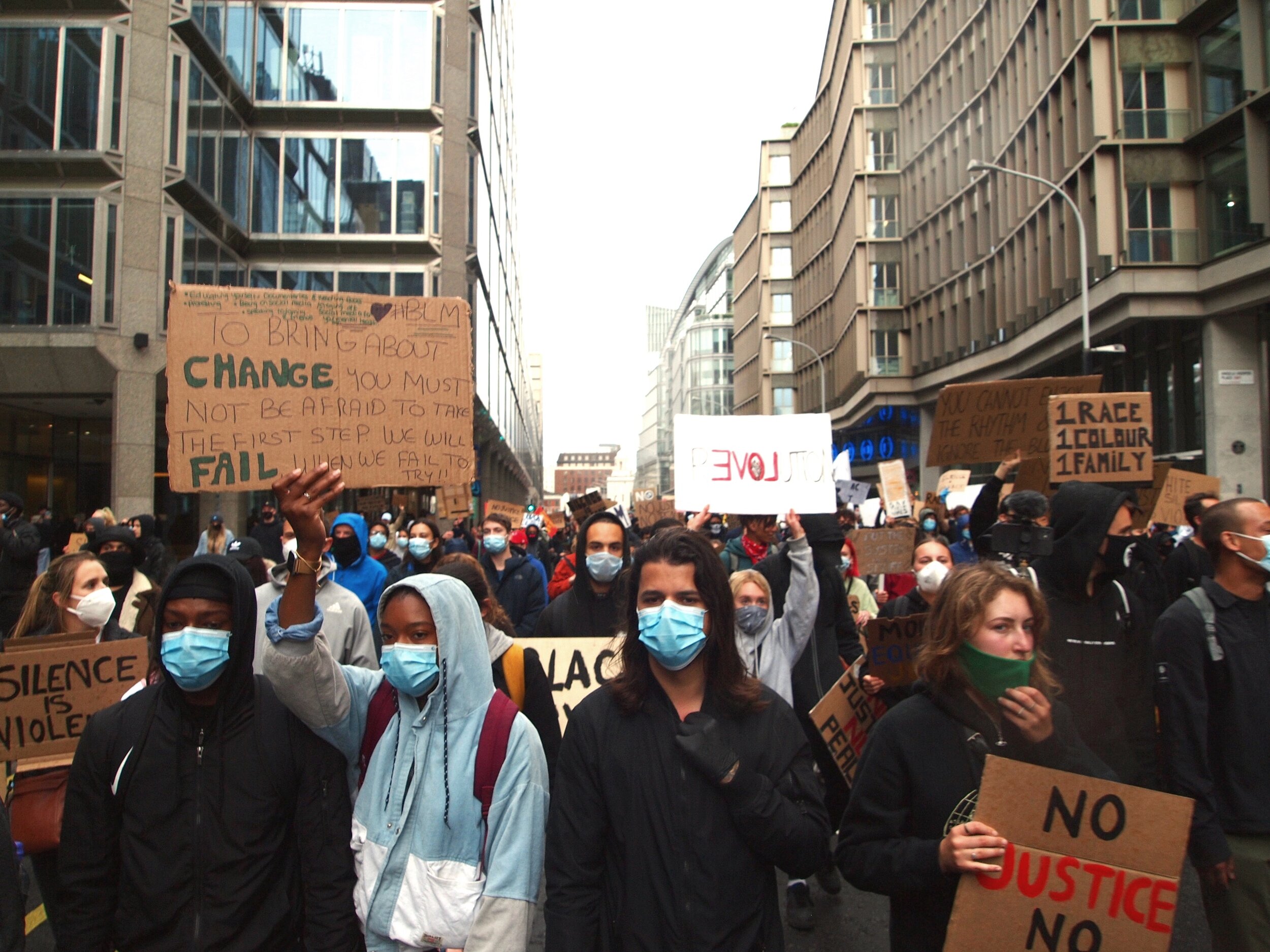
Black Lives Matter demonstrators in London. Livvy Adjei. CC BY-NC-SA 2.0.
At the core of each of these agencies is a mission rooted in sustainability and social action. While COVID-19 has for the most part disrupted the in-person travel component of these agencies, they have continued to uplift and support the communities they work with.
“There’s something [Untamed Borders is] trying to push at the moment which is that travel has always been a privilege, and in these days you should kind of be appreciative and have some thought about it … consider where you’re going, consider what the impact is and the benefits are,” Willcox said.
Untamed Borders has followed suit through a number of projects it has been able to hold throughout the pandemic. In Afghanistan, the agency helped to organize the Marathon of Afghanistan, and started a tree-planting initiative to help combat deforestation.
ExplorEquity continues to engage with its travelers and the communities it supports through a shift in the online content produced. Rivera discussed how the agency’s social media platforms have been used to shed light on issues including racism in travel, climate change, equity issues for Indigenous communities and decolonization.
“Instead of talking on Instagram and Facebook about our upcoming trips, we’ve been talking about equity issues and highlighting different themes,” Rivera explained. “We’ve seen a lot of engagement and a lot of learning. People who are connected to us on social media have been commenting and sharing the content, and I think they’ve been enthusiastic about being exposed to new concepts or things they weren’t aware of. Even though we can’t travel the way we used to, I still think it's important to create better travelers.”
Promoting social consciousness within the travel community is not limited to sustainable travel agencies. Planeterra, a community tourism nonprofit seeking to reduce global poverty, has worked throughout the pandemic to support many of the same communities the sustainable travel industry works with.
“We looked at what our partners needed and what they’ve been requesting, what support they need that we would normally give in person,” said Rhea Simms, a program manager at Planeterra. “We built an online learning hub … for no budget. Our team compiled a hundred years of [combined] experience on what are the key opportunities, challenges and instructions we bring a community through when we launch and start a tour.”
Simms discussed how these virtual webinars and trainings have served as a way to work directly with partners around the globe, and noted how the pandemic has given the organization the opportunity to reevaluate its approach to volunteers.
“Planeterra’s never had the time or the right projects for volunteers to work with our partners, but having the time now, we’ve got volunteers working with us all around the world,” Simms said. “One just finished designing an e-cookbook for our partner in Jordan … We’re just completing a project with the Canadian High Commission in Sri Lanka, where we got funding from a partner we have there … It's a handicraft shop where over a hundred women from various backgrounds create beautiful handmade goods … and we’re finishing a project in Peru … doing some technical training with communities hoping to launch a tourism program in the coming years.”
Planeterra and G Adventures had been partners before the pandemic, a relationship made stronger as the two have collaborated on recent initiatives. Rotunno said G Adventures worked with Planeterra to raise over $100,000 at the beginning of the pandemic to fund some projects which were impacted by the inability to travel abroad.
“This time has allowed us to reflect on what works best, what has created the most impact … and begin to create the strategy of how we scale this and do it bigger, with the right people, with different organizations,” Simms explained. “This is a huge opportunity for us to facilitate this space for socially minded community enterprises that are trying to empower women or break down barriers for at-risk youth or celebrate Indigenous culture.”
Looking Toward a Post-Pandemic World
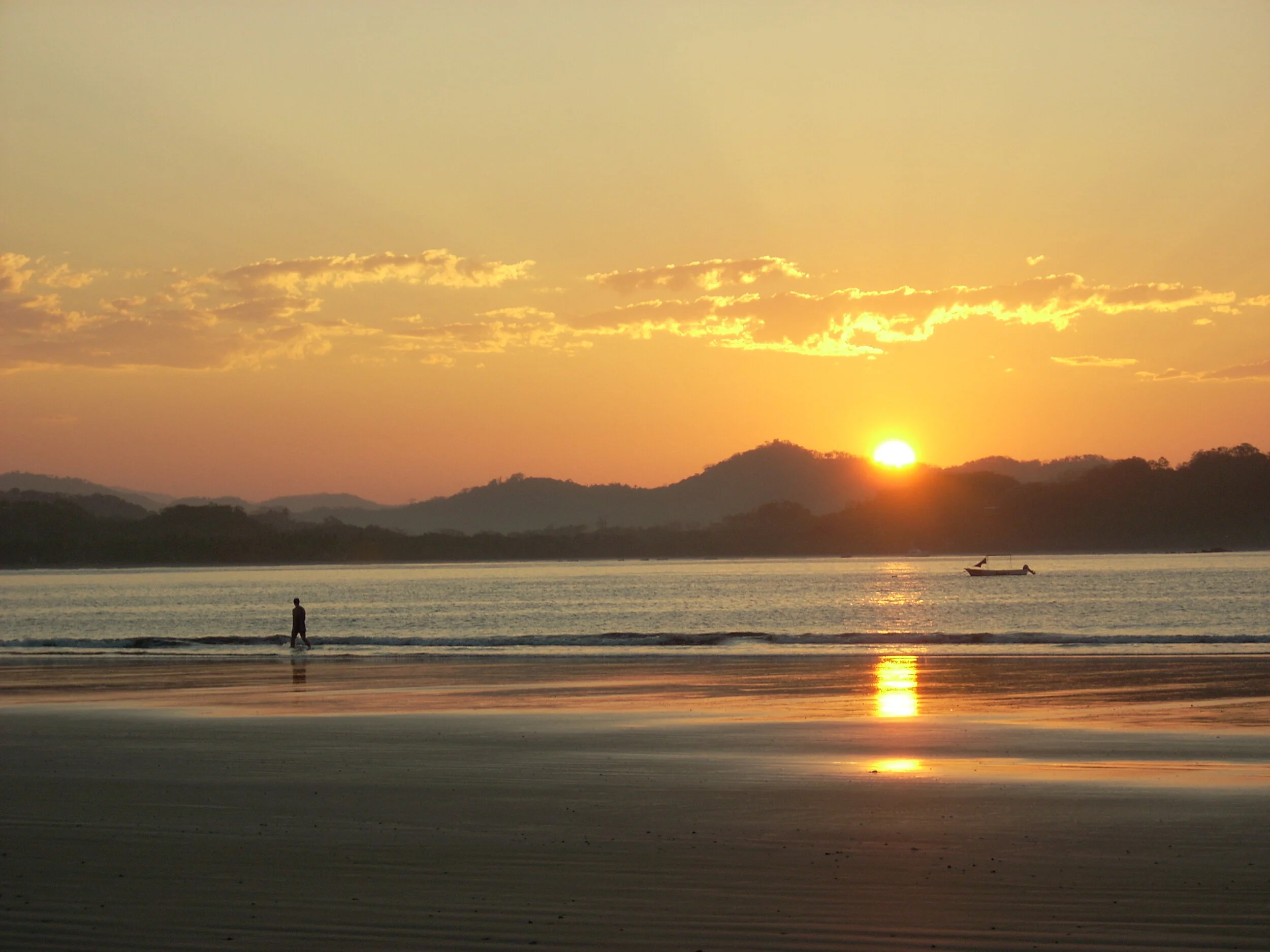
The sun setting in Samara, Costa Rica. John. CC BY-SA 2.0.
While there is no concrete timeline for the formal end of the pandemic and the beginning of a “new normal,” the distribution of 10 different vaccines worldwide as of March 17 signals the pandemic’s end will eventually become a reality. As countries receive and distribute COVID-19 vaccines to their citizens, international travel is expected to return.
But just because travel will be possible does not mean it will look the same as it did in the pre-COVID era. ExplorEquity ceased all group travel throughout the pandemic, a change made permanent going forward.
“We are shifting entirely away from group travel, so we’re not going to be offering those kinds of trips anymore,” Rivera said, noting the agency would be pivoting to an online store in March 2021. “What we’re going to be offering is [locally made] products as well as virtual experiences … The two experiences we’re starting with are both live, so you can still have the magic of a travel moment, creating a memory in a community with other people, through these experiences in a different way. And the benefit is that local communities can still earn income from this type of experience without receiving travelers in person.”
Other agencies are working to schedule prospective trips in 2021 and beyond, anticipating possible delays in the distribution of the COVID-19 vaccine. Off Season Adventures has begun planning new trips, taking into account the Adventure Travel Trade Association’s guidelines and safety measures from the World Health Organization and the Centers for Disease Control and Prevention.
“We have people planning to travel in June of this year, and we’re still keeping that open because we’re really still not sure what’s going to happen,” Booth said. “They’re planning to go to Tunisia. Tunisia has been closed to Americans for most of this, so we’ll just have to see.”
Given how far in advance most of its offerings need to be planned, Off Season Adventures is also working on coordinating with travelers who reach out to them to plan trips to Asia and Africa in 2022 and 2023.
Every agency interviewed expressed optimism for the future. While travel has been a temporary casualty of COVID-19, it has also brought folks together around the issues of sustainability, social consciousness and justice. The unique ways in which every agency pivoted to continue serving communities around the world show how versatile this industry is, and how vital the cause of uplifting marginalized communities remains today.

Jacob Sutherland
Jacob is a recent graduate from the University of California San Diego where he majored in Political Science and minored in Spanish Language Studies. He previously served as the News Editor for The UCSD Guardian, and hopes to shed light on social justice issues in his work.
Van Life: The New Tiny Home Trend
The popularity of van life has skyrocketed in recent years. Social media accounts on van life have billions of views. Check out the pros and cons of simplifying life by traveling and living in a van.
Read MoreTake a Video Tour Through Australia’s Underground Homes
Many societies are moving away from the typical household structure as overcrowding, climate concerns, and high maintenance costs incentivize people to create housing that works in tandem with the environment instead of against it. Coober Pedy, located in the remote South Australian desert, is one such community. Instead of building infrastructure in the scorching heat above ground, residents have repurposed old mine shafts into living spaces. The town’s primarily subterranean location makes it difficult for a passerby to spot, but it boasts underground restaurants, churches, and even nail salons. This video, narrated by one of Coober Pedy’s residents, takes you through some of the most interesting underground homes in the town while providing more information about its complex history.
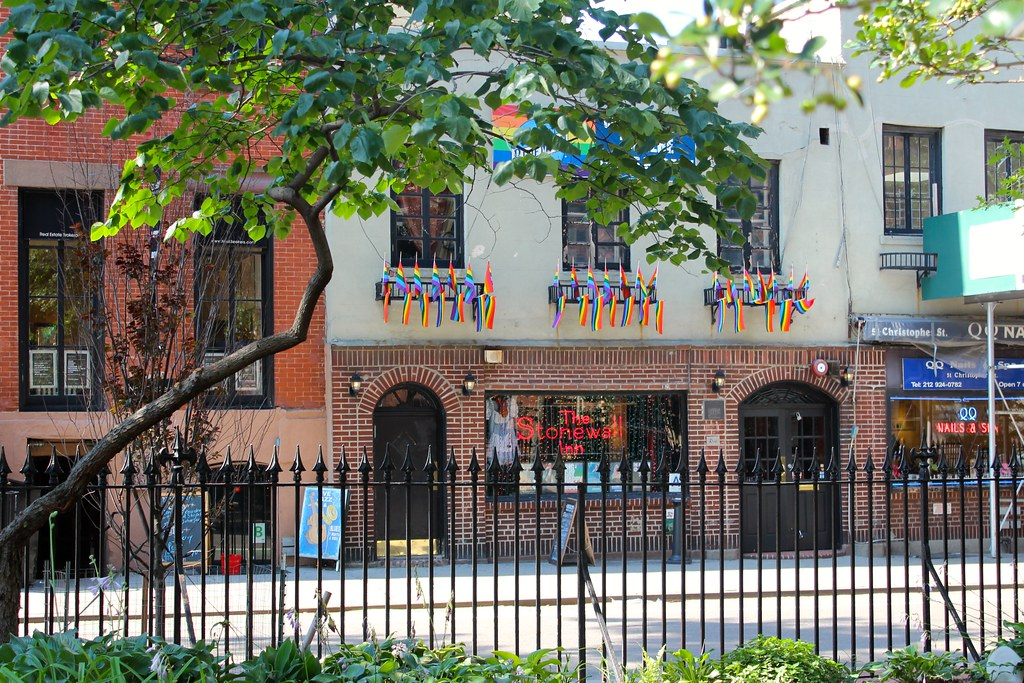
The Stonewall Inn in New York City’s Greenwich Village. The 1969 Stonewall riots are credited with starting the modern gay liberation movement. NPCA Photos. CC BY-ND 2.0
Discover These 8 Gay Villages from Around the World
Gay villages, or “gayborhoods,” are neigbhorhoods within cities that provide safe spaces for LGBTQ+ people to express themselves openly and form communities. Many gay villages feature bars and restaurants, vibrant nightlife and boundless queer history. Wherever one may find themselves, there is likely a gay village just around the corner waiting to be discovered. Here are eight gay villages from across the world.
1. Shinjuku Ni-chome, Tokyo
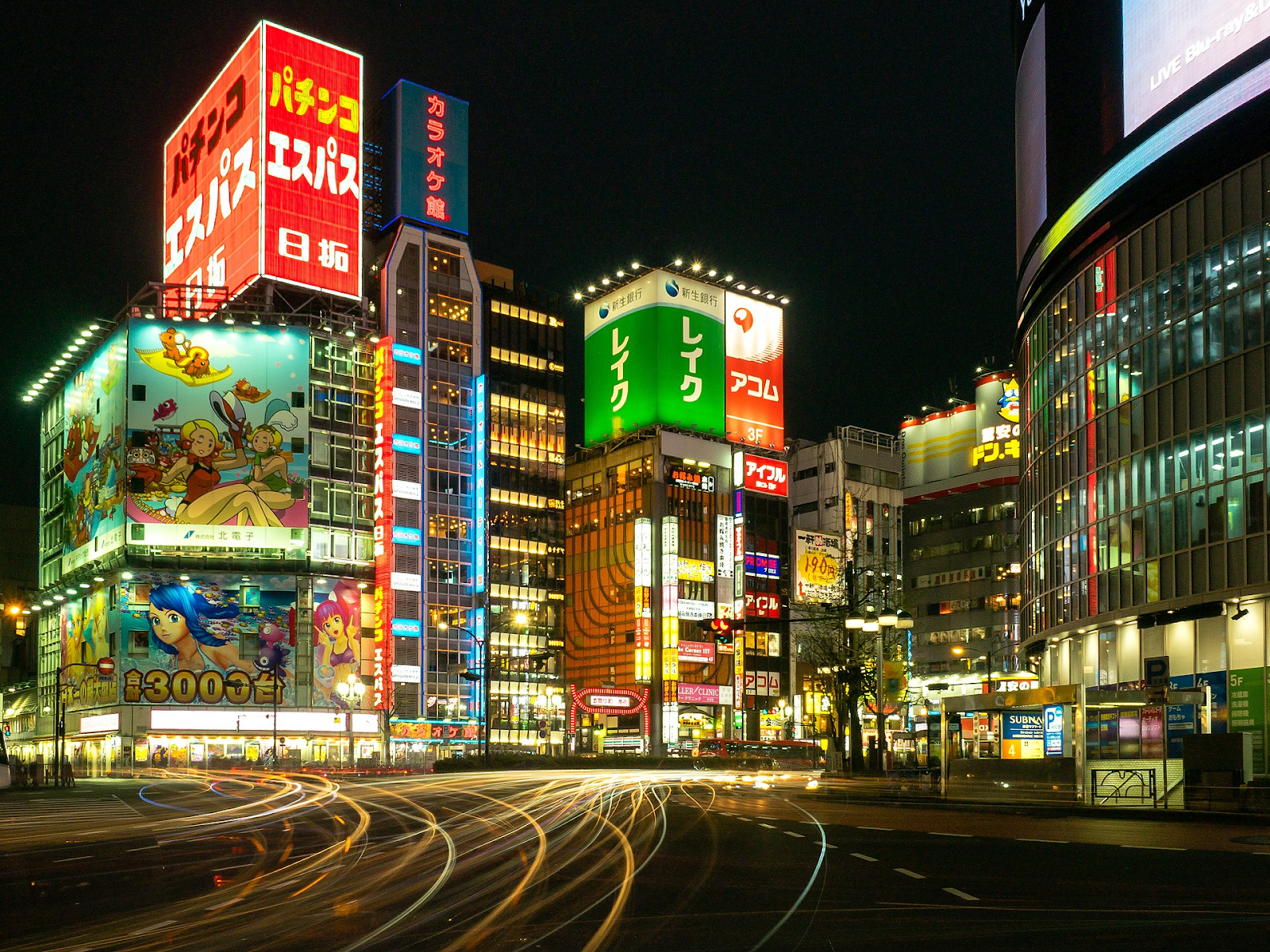
Buildings and neon lights in Tokyo’s Shinjuku ward. Andy Miller. Unsplash
In the heart of Shinjuku ward in Tokyo, between modern skyscrapers and dazzling neon-lit billboards, hides one of Asia’s most vibrant gay villages. Shinjuku Ni-chome, shortened to just Ni-chome, has the highest concentration of gay bars in the world. Ni-chome was once Tokyo’s red-light district, but when prostitution became illegal in Japan in 1956 it became Tokyo’s gay village. In a city known for its nightlife, Ni-chome is home to fusion restaurants and nightclubs open late into the night. Many of Ni-chome’s gay bars are small and personal, fostering their own tight-knit community within the city. Ni-chome was the location of Japan’s first gay pride parade in 1994, and is where the country’s first permanent LGBTQ+ center opened in 2020.
2. Oxford Street, Sydney

A brightly colored building near Taylor Square, Sydney. Ted McGrath. CC BY-NC-SA 2.0
Located in the Darlinghurst neighborhood of Sydney, Oxford Street is known for its nightlife, shopping and dining venues. It is also the heart of Sydney’s LGBTQ+ community, playing host to the annual Syndey Gay and Lesbian Mardi Gras. Unlike other Pride events, which usually occur around June, Mardi Gras is held in March, drawing over half a million attendees. The first Gay and Lesbian Mardi Gras was held in 1978. The organizers of the event were arrested and outed by the police, which garnered national attention. The next year in 1979, another event was held to commemorate the 10th anniversary of the Stonewall riots in New York City, as well as to bring attention to the events of the previous year. Every year since then, queer Australians have gathered along the western end of Oxford Street to socialize, party and remind Australia and the world that they will not be silenced.
3. Chueca, Madrid
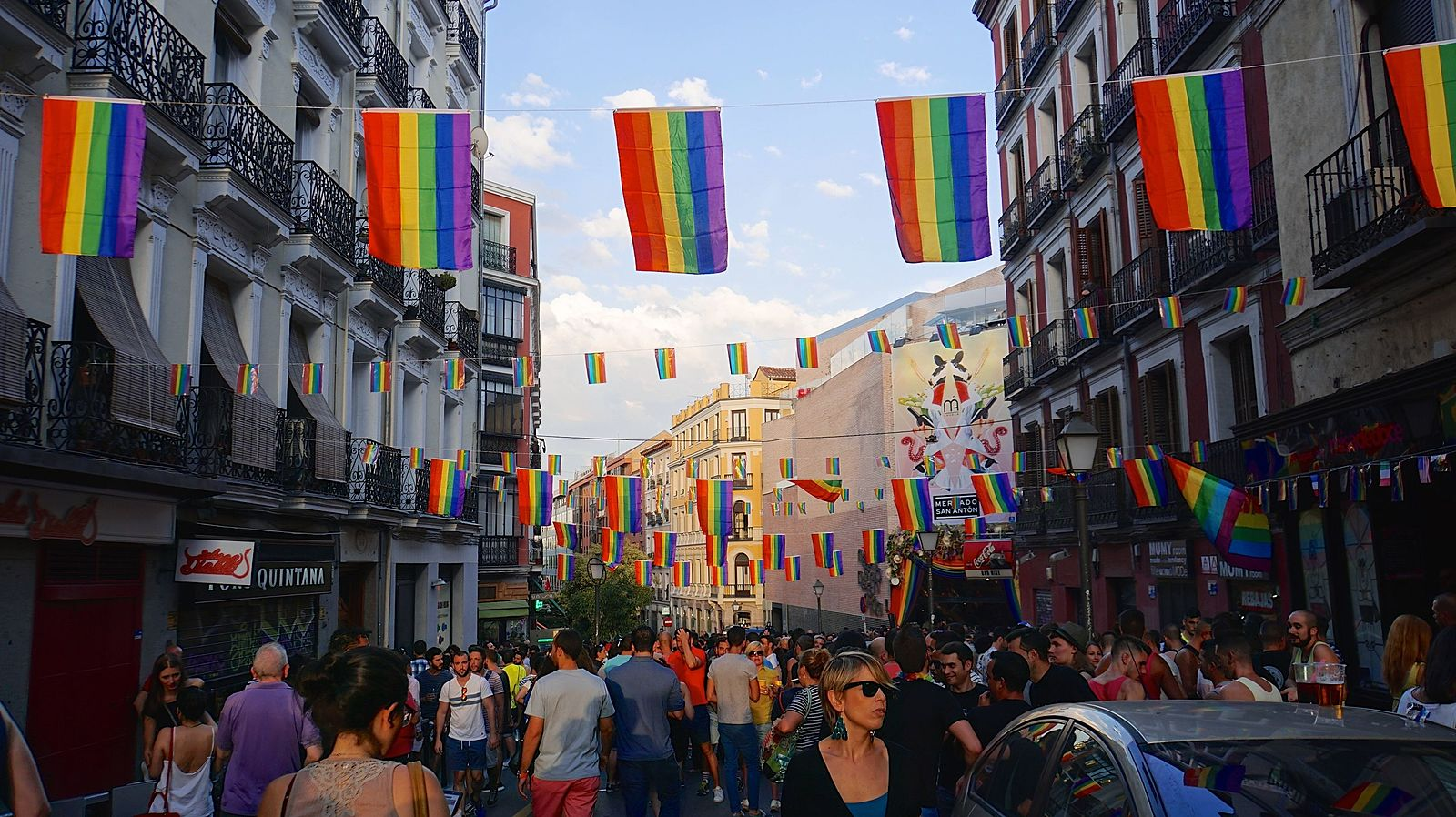
Pride flags hang over a crowded street in Chueca, Madrid. Ted Eytan. CC BY-SA 2.0
Chueca is a timeless neighborhood in an already historic city. Located in the heart of Madrid, this gay village is defined by its lively crowds as much as by its many cafes and boutiques. Chueca’s annual gay pride event, known as Madrid Pride, is the largest in Europe with an average crowd of over 2 million people each year. The neighborhood also hosted WorldPride Madrid 2017, an international Pride event that promotes LGBTQ+ issues globally. WorldPride 2017 was one of the largest Pride events in history, attracting an estimated 3.5 million attendees. Chueca has more to offer than just shops and festivals. For those with a love for romance and history, one can visit the Church of San Anton, where visitors will find the bones of St. Valentine himself.
4. Buenos Aires, Argentina
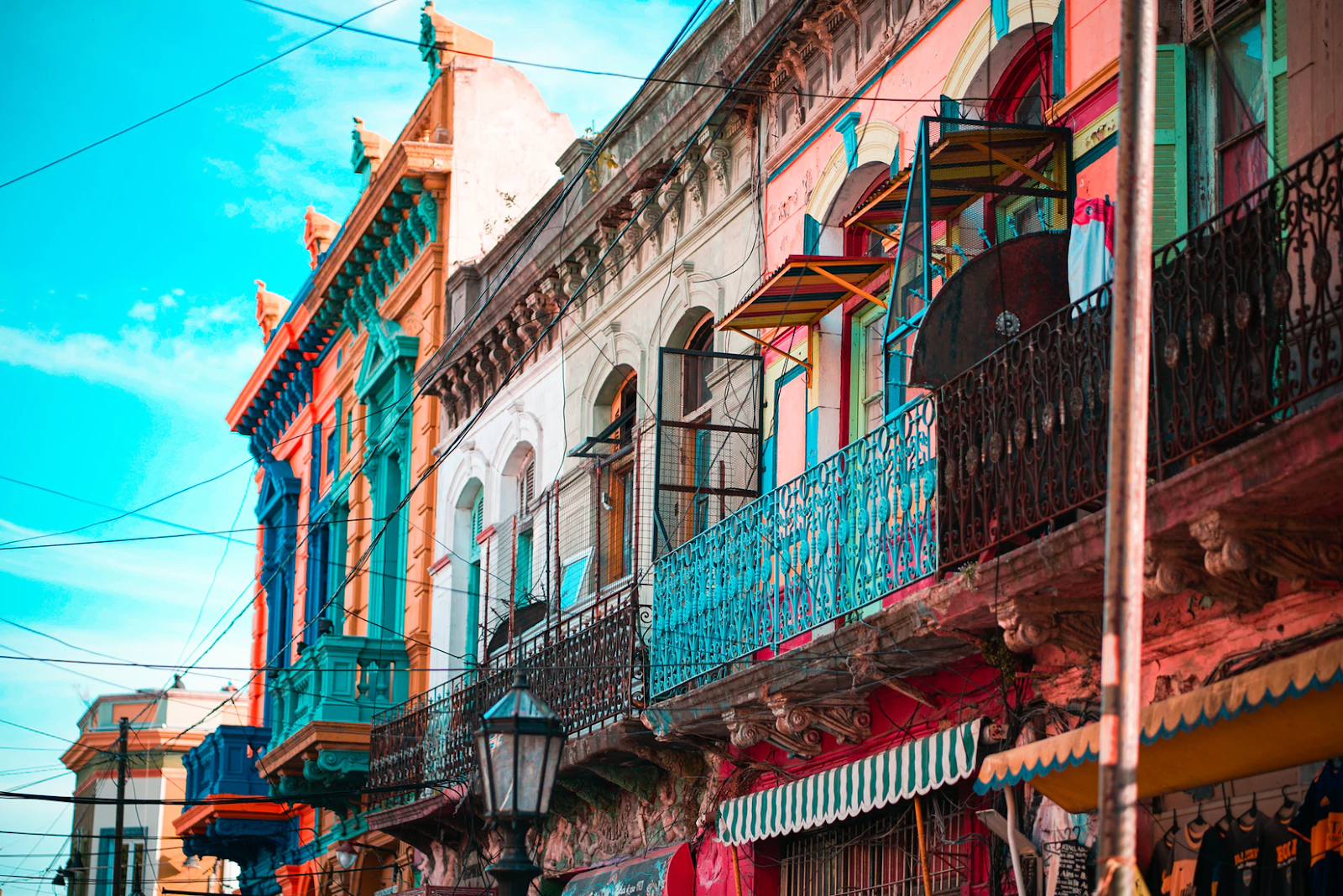
Colorful buildings in Caminito, Buenos Aires. Barbara Zandoval. Unsplash
Unlike other major cities, Buenos Aires lacks a specific gay village. However, this doesn’t mean that Buenos Aires isn’t a gay-friendly city, or that there isn’t a queer community in the Argentine capital. Rather, LGBTQ+ travelers will find pockets across the city’s many barrios that cater to gay and straight patrons alike. San Telmo, Bueno Aires’ oldest barrio, is known for its historic streets and contemporary art installations. In the city’s largest barrio, Palermo, one can find both stunning botanical gardens and the city’s largest collection of gay bars and clubs. The belle epoque buildings of Barrio Norte can instantly transport travelers to the streets of Paris. None of these neighborhoods are explicitly Buenos Aires’ gay village. Rather, visitors and locals alike will find a queer-friendly environment all across the city. Argentina is a leader of LGBTQ+ rights in the region, becoming the first country in Latin America to legalize same-sex marriage in 2010. Regardless of where travelers find themselves in Buenos Aires, they will find a progressive city paving the way for gay rights and liberation.
5. Gay Village, Montreal

A Black Lives Matter street mural in Montreal’s Gay Village. Martin Reisch. Unsplash
Montreal’s Gay Village is one of the most prominent of its type in the French-speaking world. Known as “Le Village Gai” in French, the community had to overcome decades of oppression before becoming one of the most well-known gayborhoods in the world. During the 1970s, gay businesses in the city were regular targets of the police, who often raided bars and other establishments. Police violence didn’t deter Montreal’s LGBTQ+ population. Rather, Montreal’s gay residents formed a series of demonstrations to fight injustice against their community. Now the area is one of Montreal’s most popular neighborhoods. It draws visitors from all over the world, and hosts the largest Pride in Canada. Fierte Montreal, literally “Montreal Pride,” drew more than 3 million attendees in 2019, which also makes it the largest Pride in a French-speaking city (sorry Paris!). In classic Montreal fashion, two gay villages technically exist in Montreal: an English one located near downtown, and a French one on Saint Laurent Boulevard.
6. Canal Street, Manchester, England
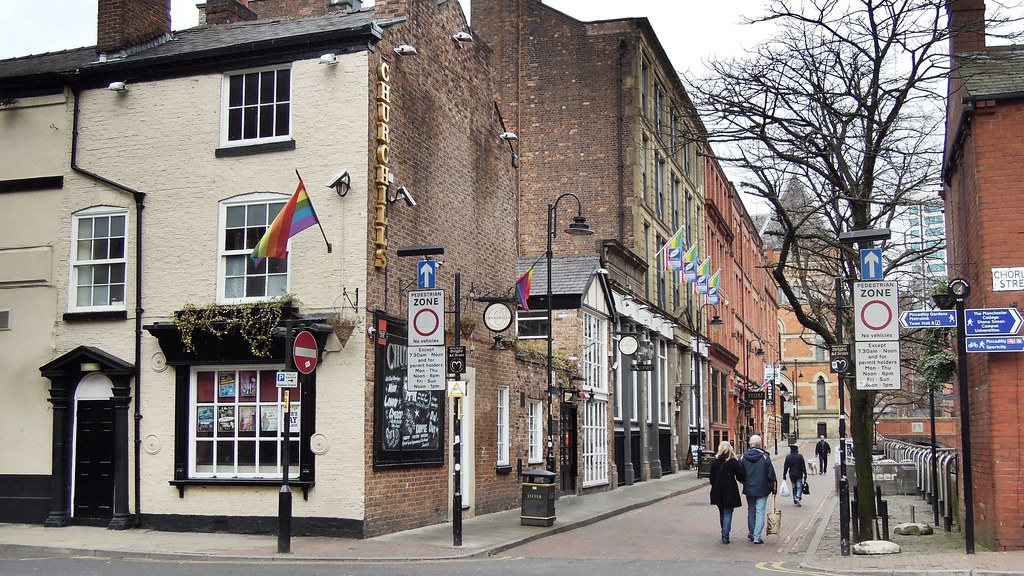
Canal Street in Manchester, England. David McKelvey. CC BY-NC-ND 2.0
When one thinks of cosmopolitanism in the U.K., most think of London. However, travelers shouldn’t count out the city of Manchester. Canal Street easily competes with London’s Soho for the center of Britain’s queer scene. The street dates back to the early 1800s as a transportation hub, when Manchester was rapidly growing as a major industrial center. Canal Street derives its name from the Rochdale Canal which runs alongside it. By the 1950s, the neighborhood was facing urban decline. This was around the same time that Canal Street became Manchester’s main gayborhood. Like many gay villages around the world, the community faced hostility from police during the 1980s. It wasn’t until the 1990s that Canal Street was able to thrive openly as a gay village. Now the street is a proud and open community, drawing locals and travelers from both the U.K. and across the world. It is home to the annual Manchester Pride, the second-largest Pride event in Britain after London’s.
7. Ximending, Taipei, Taiwan
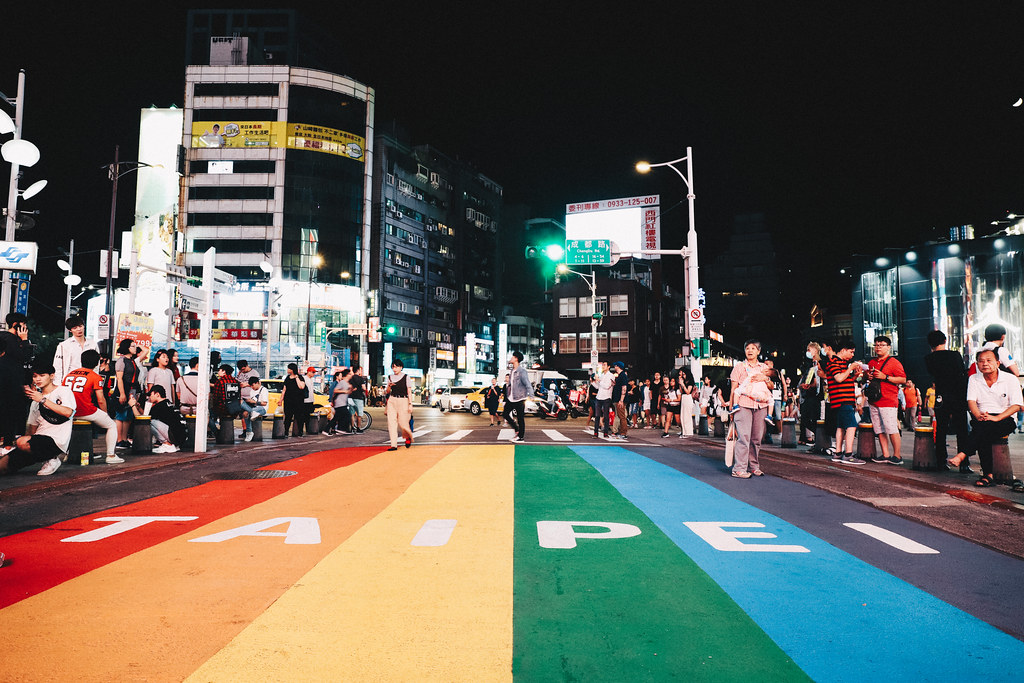
A rainbow-colored street in Taipei’s Ximending district. waychen_c. CC BY-NC-ND 2.0
Known for night markets and traditional temples, Taipei should be near the top of anyone’s list when traveling in Asia. It is also one of the most gay-friendly cities in the world, and a leading example of equal rights in the region. In 2019, Taiwan became the first and only country so far in Asia to legalize same-sex marrriage. This makes Taipei not only the center of gay culture in Taiwan, but a perfect example of what LGBTQ+ equality could look like in Asia. The city’s gay village is located in Ximending, a shopping area of the historic Wanhua district. Situated near the famous Red House Theater, Ximending offers a plethora of gay bars and nightclubs open late into the night. In a city like Taipei, you don’t need to be a local to enjoy what this friendly city has to offer travelers of all kinds. However, you might need to be a night owl to fully experience this gayborhood.
8. Schoneberg, Berlin
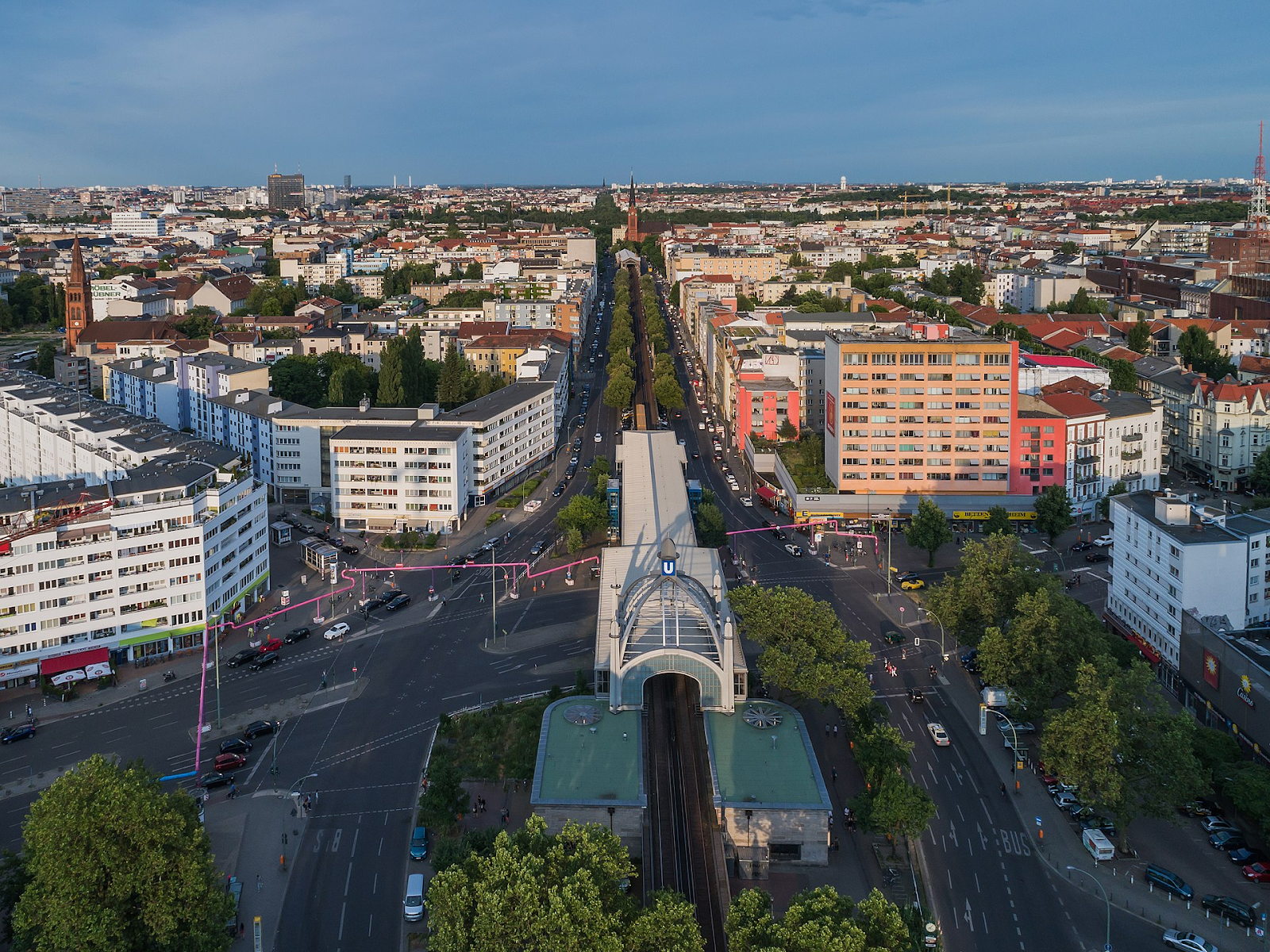
Nollendorfplatz in Berlin’s Schoneberg neighborhood. Schoneberg is the oldest gay village in the world. Oh-Berlin.com. CC BY 2.0
Located in the western part of Berlin, Schoneberg’s history as a gay village spans nearly a century. The neighborhood’s roots lie as a village in the Middle Ages, all the way back in the 13th century. In the 1920s, as Berlin grew in size, Schoneberg became a part of the German capital. That is around the same time the area became the center of the city’s emerging queer scene. Gay nightclubs and other venues flourished during the Weimar Republic, before almost all of them were shut down when the Nazis seized power in 1933. Now, Schoneberg is once again a proud gay village. Much of the gay life in the neighborhood is centered around Motzstrasse, a street that goes right through the center of Schoneberg. The street is where Berlin’s Lesbian and Gay City Festival is held each year, one of the largest of its kind in Europe. Whether one comes for its history or its nightlife, Schoneberg is a constant reminder that queer people have always been a part of Berlin life, just as they have been a part of communities around the world.

Aerex Narvasa
Aerex is a current student at Occidental College majoring in Diplomacy and World Affairs with a minor in East Asian Studies. He is passionate about sharing people’s stories through writing, and always strives to learn about new places and cultures. Aerex loves finding new music and exploring his hometown of Los Angeles in his free time.
Slope Point and Champagne Pool: Exploring New Zealand’s Wild Wonders
Sometimes nature is simple: vibrant sunsets, rays of warming moonlight or bouncing ocean waves. Other times, however, nature shocks and stuns. New Zealand houses two such examples: the odd site of Slope Point and the equally eerie Champagne Pool.
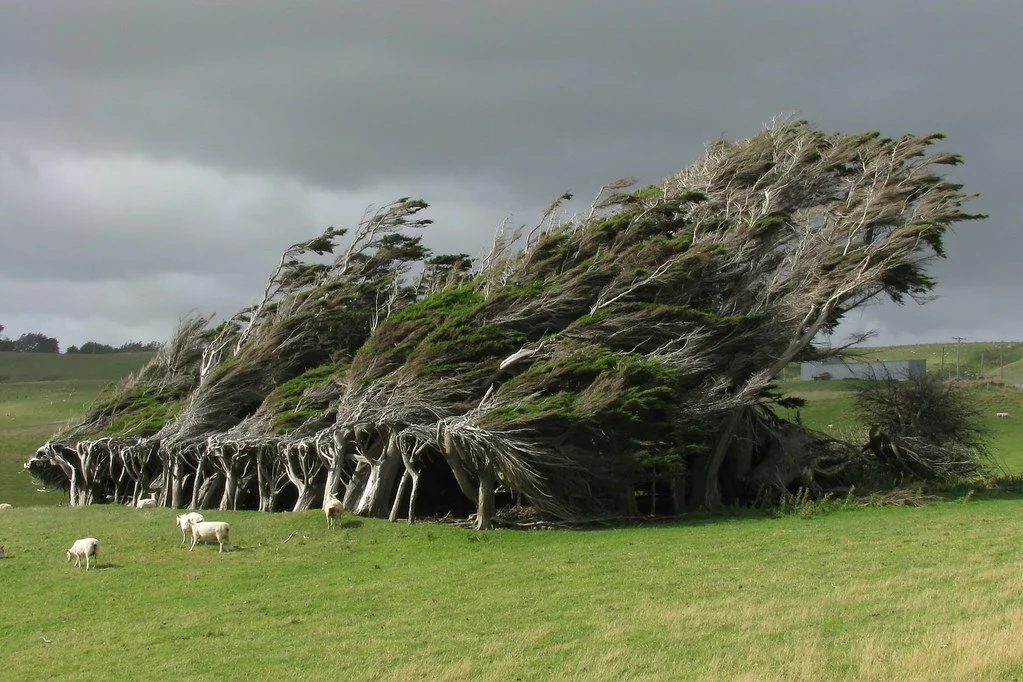
Slope Point with sheep. Seabird NZ. CC BY-ND 2.0.
Slope Point
Perhaps most descriptions of the wonders of wind speak of a gentle breeze or freshly blowing air. On the southernmost tip of New Zealand’s South Island, the winds are instead far from calm; the violently whipping winds gave one area the name “Slope Point.” Situated along a steep cliff at the island’s southern edge, Slope Point is an ideal spot for those mystified by science. The ocean winds are violent and unrelenting to the area’s trees. The wind provides a scary picture of nature’s true power, blowing away anything that may come in its path. The location of Slope Point forces the trees to become the first victims of the winds. As a result, the tall trees are bent at an odd angle, making them seem as if they were purposely posed. Although few people live in the area, local farmers planted the trees to provide shelter from the wind for their herds of sheep.
Photographs of the area offer profound inspiration for artists: the odd trees bend against a gray background striped with warm rays of sun. Although the area hosts an eerie feel, it is surely one underlined with the beauty of Mother Nature’s masterful hand.
Champagne Pool
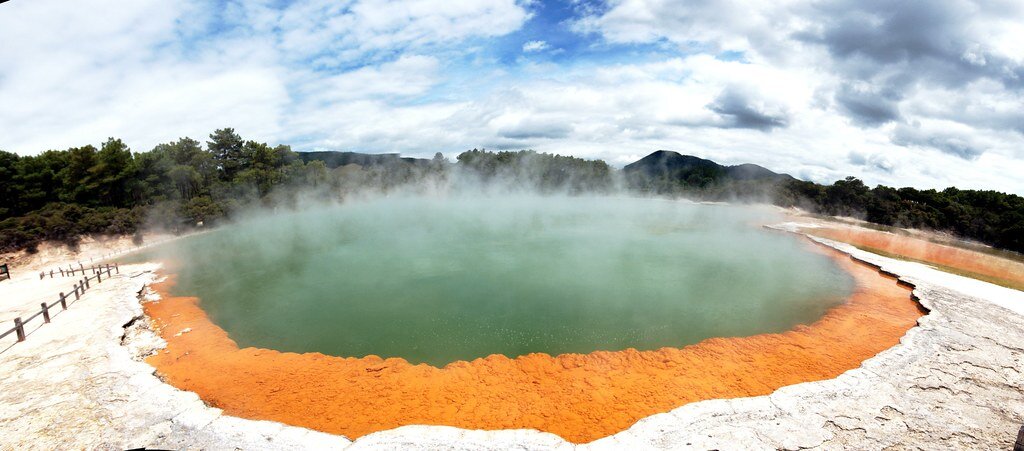
Boiling Champagne Pool. t3rmin4t0r. CC BY 2.0.
Far north of Slope Point lies the mystical Champagne Pool on New Zealand’s North Island. Although an uncanny site, Champagne Pool is only one of many geothermal spots peppering the area around the city of Rotorua. The surrounding area, called Wai-O-Tapu, is known for its geothermal sites carved throughout the landscape. The strips of active volcanic sites and geothermal pools have created an admittedly scary yet magnificent look into what lies just beneath our feet.
Champagne Pool is a captivating hot spring that stretches over 200 feet and is about equally as deep. A hydrothermal eruption caused this crater, which boils at over 160 degrees Fahrenheit, to form about 900 years ago. The hot spring earned its name from the presence of carbon dioxide that causes it to bubble like Champagne. Although seemingly uninhabitable, the hot spring teems with a rich microbial ecosystem. Additionally, striking photos of the site capture the vibrancy of the pool’s outer rim. Its neon orange strip is caused by antimony deposits that harden on the cooled rim of the pool. The surrounding grounds are equally rich in minerals; gold, mercury and silver are found in nearby rock beds.
Whether one is an artist, a scientist or an adventurous visitor, both Slope Point and Champagne Pool stand as equally inspiring trips.

Ella Nguyen
Ella is an undergraduate student at Vassar College pursuing a degree in Hispanic Studies. She wants to assist in the field of immigration law and hopes to utilize Spanish in her future projects. In her free time she enjoys cooking, writing poetry, and learning about cosmetics.
The entrance to a Chinatown in Sydney. Lenny K Photography. CC BY 2.0.
Explore 4 Chinatowns from Around the World
Travel to any of the inhabited continents and you will find Chinatowns, historical and contemporary ethnic enclaves of Chinese people outside of mainland China, Hong Kong, Macao and Taiwan. While there is no conclusive count as to how many Chinatowns exist, they will often be found in any community with a history of Chinese immigration.
The first Chinatown is considered to be Binondo, a neighborhood in the Philippines’ capital of Manila that developed in 1594. Since then, Chinatowns have developed around the world, most recently with Tijuana, Mexico’s La Mesa neighborhood in 2012.
The United States is home to some of the most famous Chinatowns, including those in San Francisco, New York City, Chicago and Los Angeles. That said, for those looking to travel abroad, here is a list of some of the most unique Chinatowns to be found.
1. El Barrio Chino, Havana
The paifang marking the entrance to Havana’s Chinatown. Kaldari. CC0.
Located just three blocks away from the Cuban capitol building, Havana’s Chinatown is a relic of prerevolutionary times. The neighborhood, which began to develop in the 1840s with the arrival of the first Chinese immigrants to the island, became the largest Asian ethnic enclave in all of Latin America by the 1920s.
Following the 1959 Cuban revolution led by Fidel Castro and the 26th of July Movement, during which the country became communist, the vast majority of Chinese-Cubans fled to neighboring countries like the United States. However, beginning in the 1990s, the Cuban government began the process of revitalizing the neighborhood centered around its historical roots.
Today, the Chinese-Cuban population in Havana is small. However, visitors to El Barrio Chino have a variety of restaurants and shops to visit, most of which are centered around Calle Cuchillo. Popular favorites include Restuarante Guang Zhou, whose menu offers a blend of Cuban and Chinese cuisine, Sociedad China Chang, which centers its food around a buffet, and Restaurante Tien Tan, whose menu includes fish and pork dishes which utilize the best ingredients from the Chinese and Cuban kitchens.
2. Chinatown, Singapore
An aerial view of Singapore’s Chinatown with the city skyline in the background. William Cho. CC BY-NC-SA 2.0.
While not necessarily an enclave in the traditional sense given that the majority of Singapore’s population is ethnic Chinese, Singapore’s Chinatown is one of the most historically and culturally significant neighborhoods of the city-state. While the appearance of a Chinese community has been documented in Singapore as early as 1330, the neighborhood was not officially designated as a Chinatown until 1822 when British colonizer Sir Stamford Raffles allocated the area west of the Singapore River as such.
Today, Singapore’s Chinatown is one of the most popular in the world. The neighborhood includes historically preserved sites such as the Sri Mariamman Temple, as well as more recent cultural icons like the Buddha Tooth Relic Temple. Likewise, given that the city-state is world-renowned for its food culture, Chinatown is no exception. Popular spots for street food include the Chinatown Street Market, a pedestrian outdoor mall, and the Maxwell Food Centre, which features some of the best hawker center food including oyster cakes, peanut soup and chicken rice.
3. Quartier Asiatique, Paris
A group of performers at Paris’ Chinese New Year parade. Passion Leica. CC BY-NC-ND 2.0.
While many Chinatowns around the globe have been around for centuries, Paris’ Quartier Asiatique is much more recent. In the late 1970s, many refugees from the Vietnam War settled in the 13th arrondissement. This was followed by later waves of ethnic Chinese immigrants coming from Vietnam, Laos and Cambodia. Many of the ethnic Vietnamese immigrants later moved to other parts of France, leaving the neighborhood with a distinct Chinese presence.
Today, Paris’ Chinatown is considered to be the largest by population in Europe. Visitors to the neighborhood have a number of places to visit. The popular Asian supermarket chain, Tang Freres, is based in the neighborhood and offers a number of foods and goods shipped in directly from China. Restaurants such as Noodle Bar and Les Jardines de Mandchourie have some of the best Chinese food in the whole city. Likewise, the neighborhood has an annual Chinese New Year parade in February which is the largest parade in all of Paris.
4. Chinatown, Sydney
People walking in Sydney’s Chinatown. blairwang. CC BY 2.0.
Sydney’s Chinatown has a history rooted in movement. Many Chinese immigrants in the 1850s were drawn to Australia and settled in The Rocks, a neighborhood that gained the colloquial nickname “Chinese Quarter.” However, due to growing anti-immigrant sentiment and racism beginning in the late 1880s, Sydney’s Chinatown transitioned away from The Rocks to Campbell Street in the 1920s, before relocating again to Dixon and Hay streets, where the current Chinatown lies.
Today, Sydney’s Chinatown is world-renowned for its food and attractions. The Chinese Garden of Friendship, located just a block away from Dixon Street in Darling Harbour, was designed in conjunction with Sydney’s sister city of Guangzhou, China, and features carefully cultivated flora and beautiful architecture. Likewise, every Friday at 4 p.m., Dixon Street is taken over by the Chinatown Night Market. The stalls in the market feature everything from street food staples like dumplings and kebabs, to clothing and jewelry imported directly from China.

Jacob Sutherland
Jacob is a recent graduate from the University of California San Diego where he majored in Political Science and minored in Spanish Language Studies. He previously served as the News Editor for The UCSD Guardian, and hopes to shed light on social justice issues in his work.
VIDEO: Country of Georgia is Coming Into its Own
In recent years, Georgia has had to look within itself and its two identities: the older generation’s traditional lifestyle of living off of the land and the younger generation’s embrace of modern technology, entertainment, and values. The political tensions between Georgia and Russia have exacerbated this divide; ever since the breakup of the USSR, the two countries have been on tense terms. 2008’s Russo-Georgian war was followed by a severance of diplomatic relations, culminating in Russia halting direct flights from Georgia in 2019. However, the people of Georgia will not sit silently by, and are working to make a better future for themselves and their country. Although COVID-19 has put a strain on flights, diplomats from both countries have expressed hopes that flights would be restored in the near future. These conflicts are illustrated in this short video, which details Georgia’s rich past alongside its uncertain future.
RELATED CONTENT:
Maurice the Cockerel: an Unexpected Symbol of the Fight for Rural France
One French couple filed a lawsuit against the owners of Maurice, a rooster, whose piercing call at 6:30 am disturbed their peace. The case sparked outcry all over the French countryside.
Read More