
Many societies are moving away from the typical household structure as overcrowding, climate concerns, and high maintenance costs incentivize people to create housing that works in tandem with the environment instead of against it. Coober Pedy, located in the remote South Australian desert, is one such community. Instead of building infrastructure in the scorching heat above ground, residents have repurposed old mine shafts into living spaces. The town’s primarily subterranean location makes it difficult for a passerby to spot, but it boasts underground restaurants, churches, and even nail salons. This video, narrated by one of Coober Pedy’s residents, takes you through some of the most interesting underground homes in the town while providing more information about its complex history.
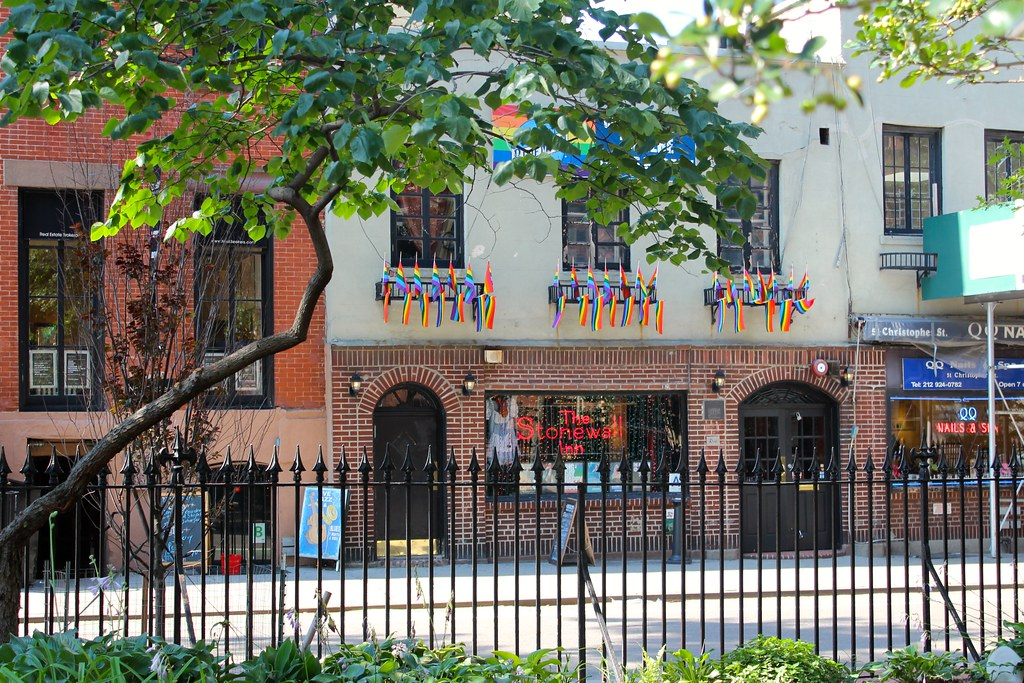
The Stonewall Inn in New York City’s Greenwich Village. The 1969 Stonewall riots are credited with starting the modern gay liberation movement. NPCA Photos. CC BY-ND 2.0
Discover These 8 Gay Villages from Around the World
Gay villages, or “gayborhoods,” are neigbhorhoods within cities that provide safe spaces for LGBTQ+ people to express themselves openly and form communities. Many gay villages feature bars and restaurants, vibrant nightlife and boundless queer history. Wherever one may find themselves, there is likely a gay village just around the corner waiting to be discovered. Here are eight gay villages from across the world.
1. Shinjuku Ni-chome, Tokyo
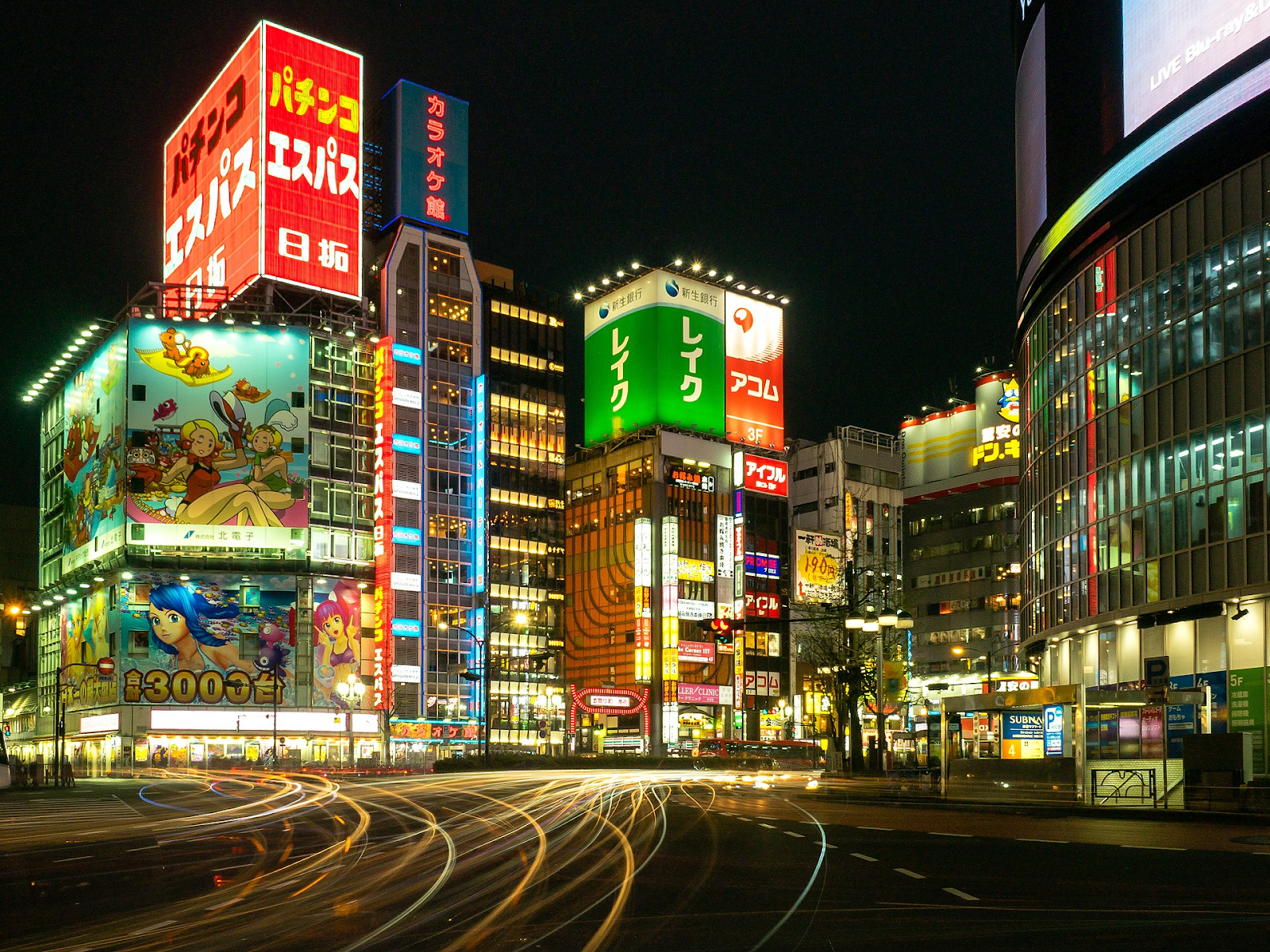
Buildings and neon lights in Tokyo’s Shinjuku ward. Andy Miller. Unsplash
In the heart of Shinjuku ward in Tokyo, between modern skyscrapers and dazzling neon-lit billboards, hides one of Asia’s most vibrant gay villages. Shinjuku Ni-chome, shortened to just Ni-chome, has the highest concentration of gay bars in the world. Ni-chome was once Tokyo’s red-light district, but when prostitution became illegal in Japan in 1956 it became Tokyo’s gay village. In a city known for its nightlife, Ni-chome is home to fusion restaurants and nightclubs open late into the night. Many of Ni-chome’s gay bars are small and personal, fostering their own tight-knit community within the city. Ni-chome was the location of Japan’s first gay pride parade in 1994, and is where the country’s first permanent LGBTQ+ center opened in 2020.
2. Oxford Street, Sydney

A brightly colored building near Taylor Square, Sydney. Ted McGrath. CC BY-NC-SA 2.0
Located in the Darlinghurst neighborhood of Sydney, Oxford Street is known for its nightlife, shopping and dining venues. It is also the heart of Sydney’s LGBTQ+ community, playing host to the annual Syndey Gay and Lesbian Mardi Gras. Unlike other Pride events, which usually occur around June, Mardi Gras is held in March, drawing over half a million attendees. The first Gay and Lesbian Mardi Gras was held in 1978. The organizers of the event were arrested and outed by the police, which garnered national attention. The next year in 1979, another event was held to commemorate the 10th anniversary of the Stonewall riots in New York City, as well as to bring attention to the events of the previous year. Every year since then, queer Australians have gathered along the western end of Oxford Street to socialize, party and remind Australia and the world that they will not be silenced.
3. Chueca, Madrid
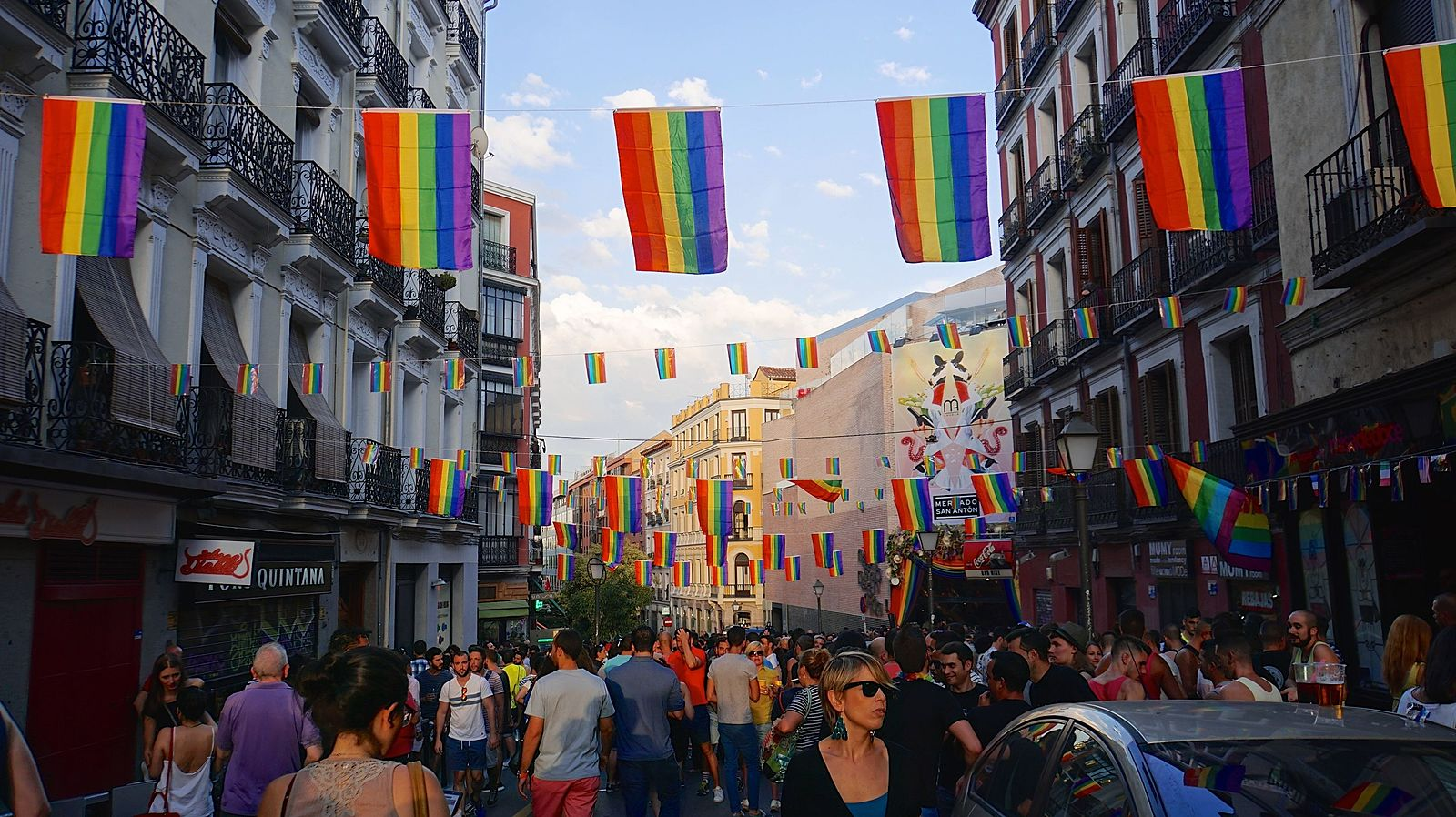
Pride flags hang over a crowded street in Chueca, Madrid. Ted Eytan. CC BY-SA 2.0
Chueca is a timeless neighborhood in an already historic city. Located in the heart of Madrid, this gay village is defined by its lively crowds as much as by its many cafes and boutiques. Chueca’s annual gay pride event, known as Madrid Pride, is the largest in Europe with an average crowd of over 2 million people each year. The neighborhood also hosted WorldPride Madrid 2017, an international Pride event that promotes LGBTQ+ issues globally. WorldPride 2017 was one of the largest Pride events in history, attracting an estimated 3.5 million attendees. Chueca has more to offer than just shops and festivals. For those with a love for romance and history, one can visit the Church of San Anton, where visitors will find the bones of St. Valentine himself.
4. Buenos Aires, Argentina
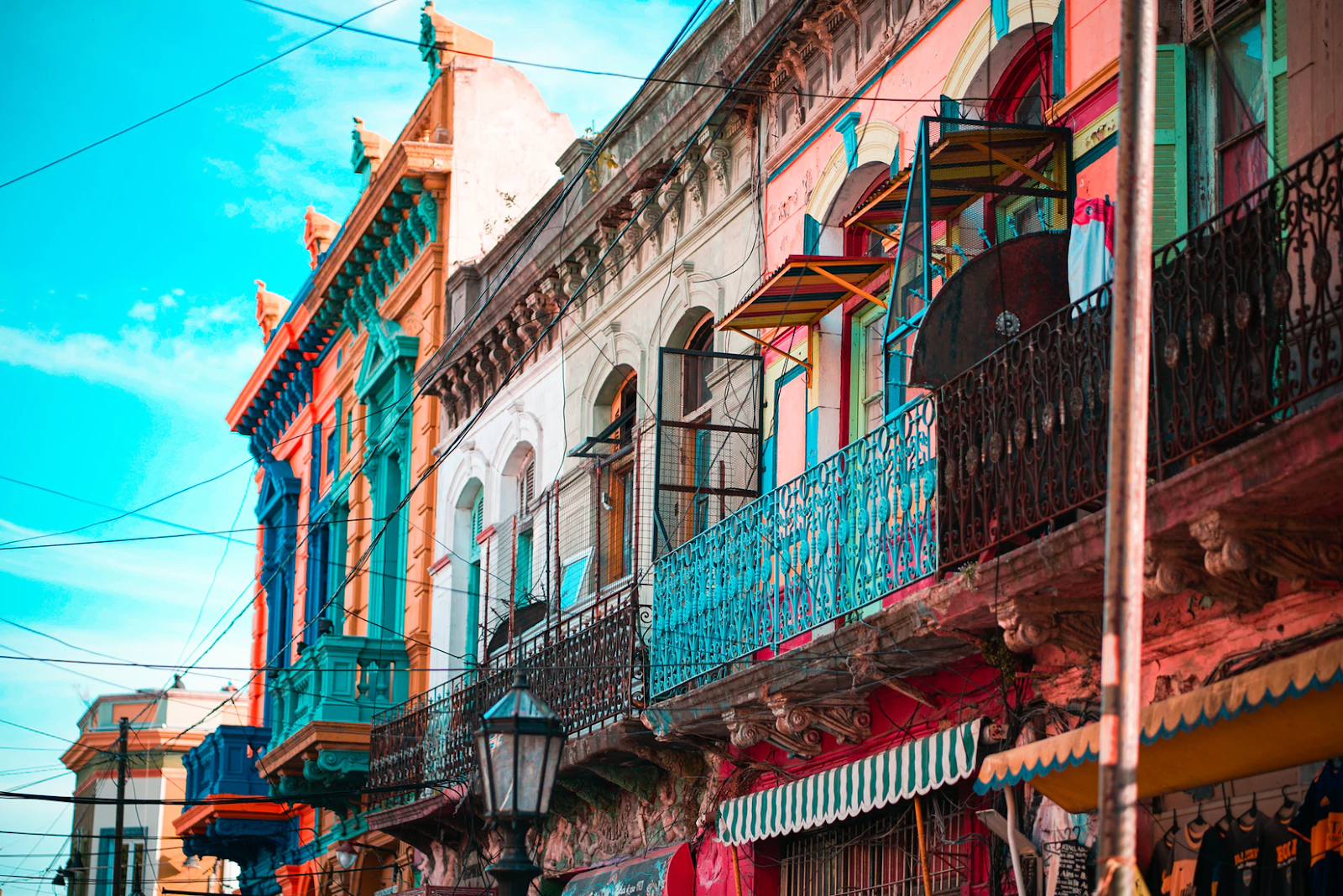
Colorful buildings in Caminito, Buenos Aires. Barbara Zandoval. Unsplash
Unlike other major cities, Buenos Aires lacks a specific gay village. However, this doesn’t mean that Buenos Aires isn’t a gay-friendly city, or that there isn’t a queer community in the Argentine capital. Rather, LGBTQ+ travelers will find pockets across the city’s many barrios that cater to gay and straight patrons alike. San Telmo, Bueno Aires’ oldest barrio, is known for its historic streets and contemporary art installations. In the city’s largest barrio, Palermo, one can find both stunning botanical gardens and the city’s largest collection of gay bars and clubs. The belle epoque buildings of Barrio Norte can instantly transport travelers to the streets of Paris. None of these neighborhoods are explicitly Buenos Aires’ gay village. Rather, visitors and locals alike will find a queer-friendly environment all across the city. Argentina is a leader of LGBTQ+ rights in the region, becoming the first country in Latin America to legalize same-sex marriage in 2010. Regardless of where travelers find themselves in Buenos Aires, they will find a progressive city paving the way for gay rights and liberation.
5. Gay Village, Montreal
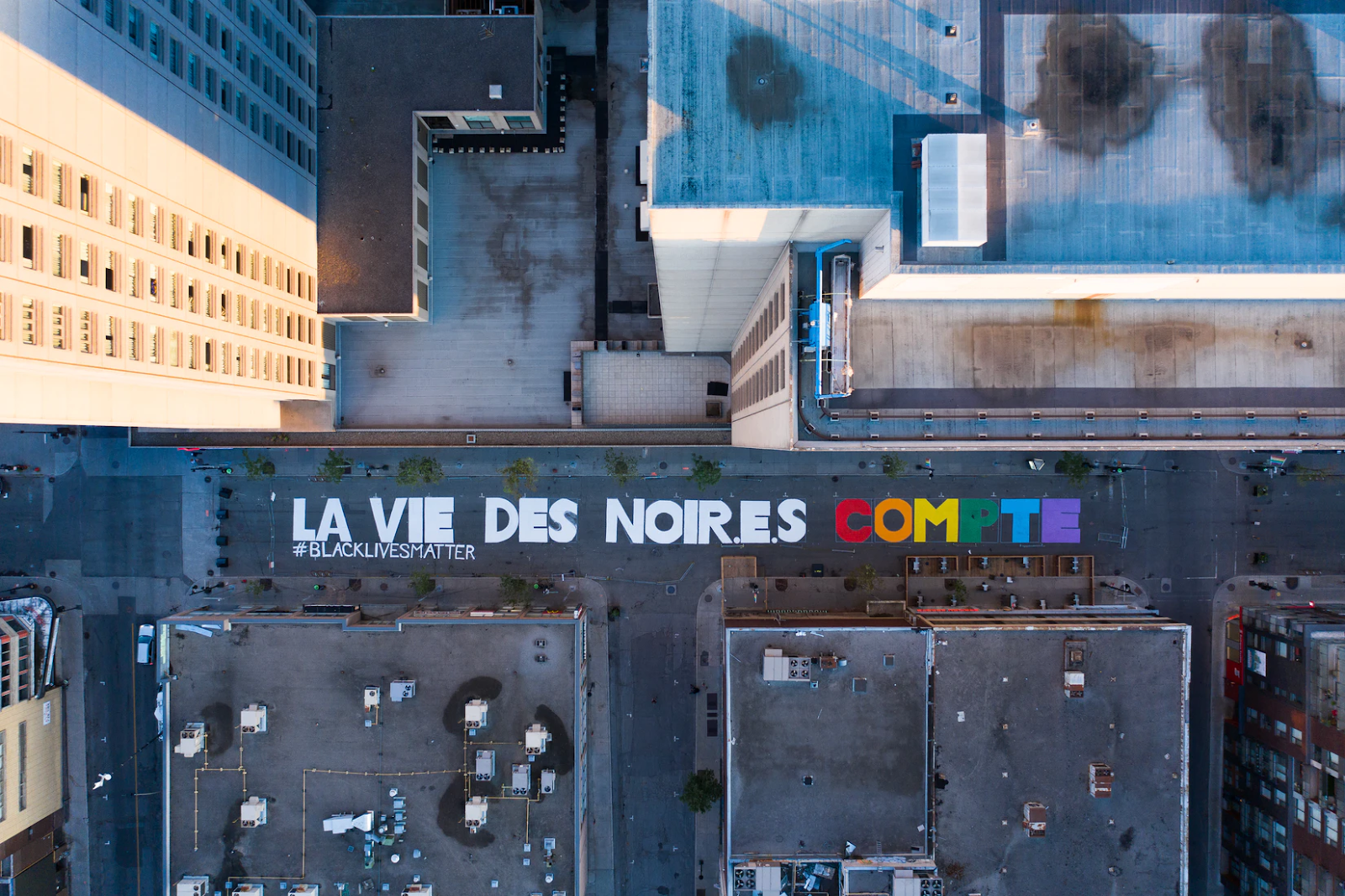
A Black Lives Matter street mural in Montreal’s Gay Village. Martin Reisch. Unsplash
Montreal’s Gay Village is one of the most prominent of its type in the French-speaking world. Known as “Le Village Gai” in French, the community had to overcome decades of oppression before becoming one of the most well-known gayborhoods in the world. During the 1970s, gay businesses in the city were regular targets of the police, who often raided bars and other establishments. Police violence didn’t deter Montreal’s LGBTQ+ population. Rather, Montreal’s gay residents formed a series of demonstrations to fight injustice against their community. Now the area is one of Montreal’s most popular neighborhoods. It draws visitors from all over the world, and hosts the largest Pride in Canada. Fierte Montreal, literally “Montreal Pride,” drew more than 3 million attendees in 2019, which also makes it the largest Pride in a French-speaking city (sorry Paris!). In classic Montreal fashion, two gay villages technically exist in Montreal: an English one located near downtown, and a French one on Saint Laurent Boulevard.
6. Canal Street, Manchester, England
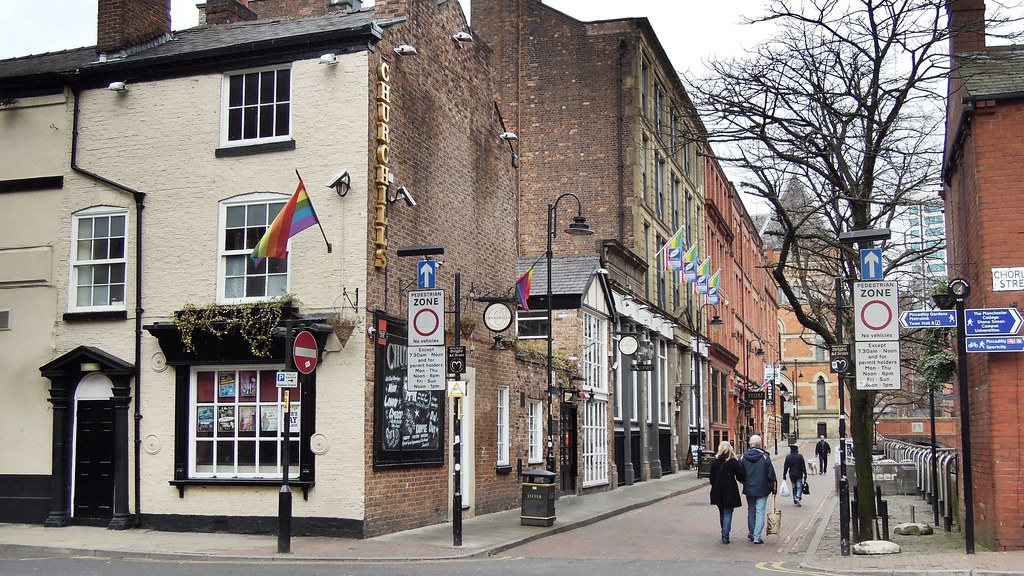
Canal Street in Manchester, England. David McKelvey. CC BY-NC-ND 2.0
When one thinks of cosmopolitanism in the U.K., most think of London. However, travelers shouldn’t count out the city of Manchester. Canal Street easily competes with London’s Soho for the center of Britain’s queer scene. The street dates back to the early 1800s as a transportation hub, when Manchester was rapidly growing as a major industrial center. Canal Street derives its name from the Rochdale Canal which runs alongside it. By the 1950s, the neighborhood was facing urban decline. This was around the same time that Canal Street became Manchester’s main gayborhood. Like many gay villages around the world, the community faced hostility from police during the 1980s. It wasn’t until the 1990s that Canal Street was able to thrive openly as a gay village. Now the street is a proud and open community, drawing locals and travelers from both the U.K. and across the world. It is home to the annual Manchester Pride, the second-largest Pride event in Britain after London’s.
7. Ximending, Taipei, Taiwan
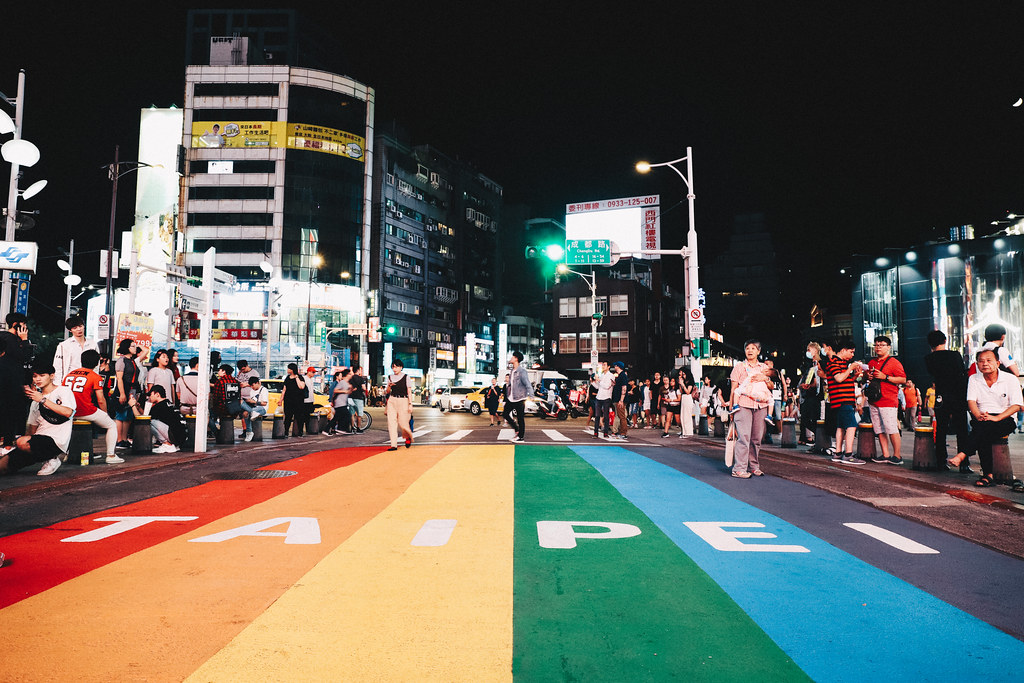
A rainbow-colored street in Taipei’s Ximending district. waychen_c. CC BY-NC-ND 2.0
Known for night markets and traditional temples, Taipei should be near the top of anyone’s list when traveling in Asia. It is also one of the most gay-friendly cities in the world, and a leading example of equal rights in the region. In 2019, Taiwan became the first and only country so far in Asia to legalize same-sex marrriage. This makes Taipei not only the center of gay culture in Taiwan, but a perfect example of what LGBTQ+ equality could look like in Asia. The city’s gay village is located in Ximending, a shopping area of the historic Wanhua district. Situated near the famous Red House Theater, Ximending offers a plethora of gay bars and nightclubs open late into the night. In a city like Taipei, you don’t need to be a local to enjoy what this friendly city has to offer travelers of all kinds. However, you might need to be a night owl to fully experience this gayborhood.
8. Schoneberg, Berlin
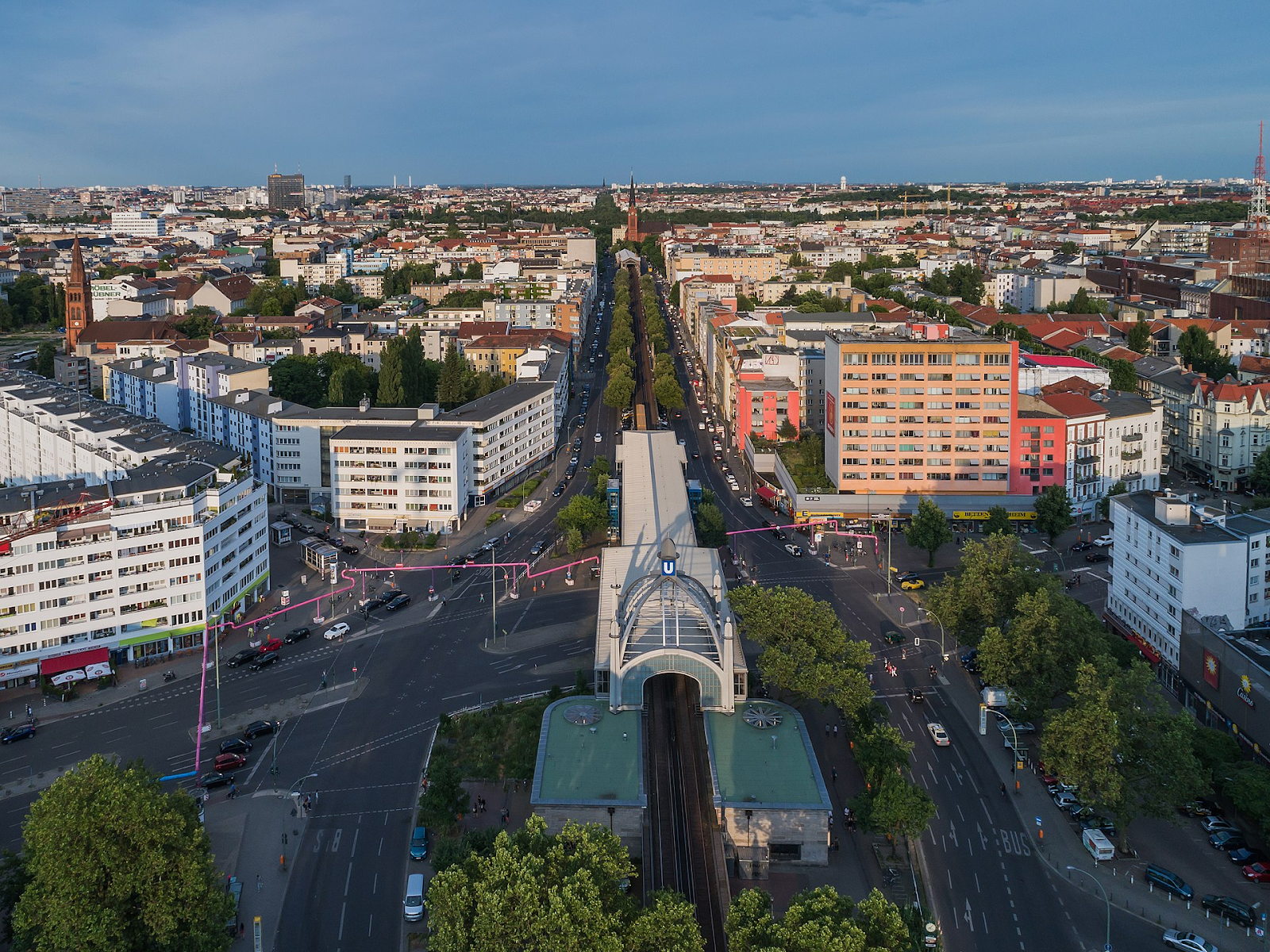
Nollendorfplatz in Berlin’s Schoneberg neighborhood. Schoneberg is the oldest gay village in the world. Oh-Berlin.com. CC BY 2.0
Located in the western part of Berlin, Schoneberg’s history as a gay village spans nearly a century. The neighborhood’s roots lie as a village in the Middle Ages, all the way back in the 13th century. In the 1920s, as Berlin grew in size, Schoneberg became a part of the German capital. That is around the same time the area became the center of the city’s emerging queer scene. Gay nightclubs and other venues flourished during the Weimar Republic, before almost all of them were shut down when the Nazis seized power in 1933. Now, Schoneberg is once again a proud gay village. Much of the gay life in the neighborhood is centered around Motzstrasse, a street that goes right through the center of Schoneberg. The street is where Berlin’s Lesbian and Gay City Festival is held each year, one of the largest of its kind in Europe. Whether one comes for its history or its nightlife, Schoneberg is a constant reminder that queer people have always been a part of Berlin life, just as they have been a part of communities around the world.

Aerex Narvasa
Aerex is a current student at Occidental College majoring in Diplomacy and World Affairs with a minor in East Asian Studies. He is passionate about sharing people’s stories through writing, and always strives to learn about new places and cultures. Aerex loves finding new music and exploring his hometown of Los Angeles in his free time.
Slope Point and Champagne Pool: Exploring New Zealand’s Wild Wonders
Sometimes nature is simple: vibrant sunsets, rays of warming moonlight or bouncing ocean waves. Other times, however, nature shocks and stuns. New Zealand houses two such examples: the odd site of Slope Point and the equally eerie Champagne Pool.
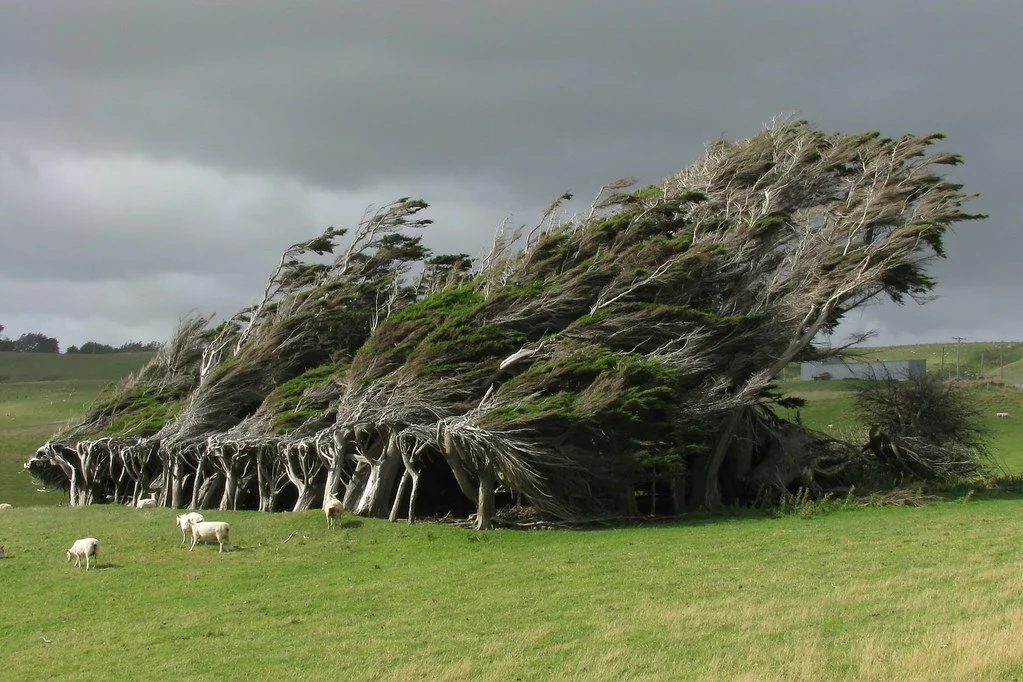
Slope Point with sheep. Seabird NZ. CC BY-ND 2.0.
Slope Point
Perhaps most descriptions of the wonders of wind speak of a gentle breeze or freshly blowing air. On the southernmost tip of New Zealand’s South Island, the winds are instead far from calm; the violently whipping winds gave one area the name “Slope Point.” Situated along a steep cliff at the island’s southern edge, Slope Point is an ideal spot for those mystified by science. The ocean winds are violent and unrelenting to the area’s trees. The wind provides a scary picture of nature’s true power, blowing away anything that may come in its path. The location of Slope Point forces the trees to become the first victims of the winds. As a result, the tall trees are bent at an odd angle, making them seem as if they were purposely posed. Although few people live in the area, local farmers planted the trees to provide shelter from the wind for their herds of sheep.
Photographs of the area offer profound inspiration for artists: the odd trees bend against a gray background striped with warm rays of sun. Although the area hosts an eerie feel, it is surely one underlined with the beauty of Mother Nature’s masterful hand.
Champagne Pool
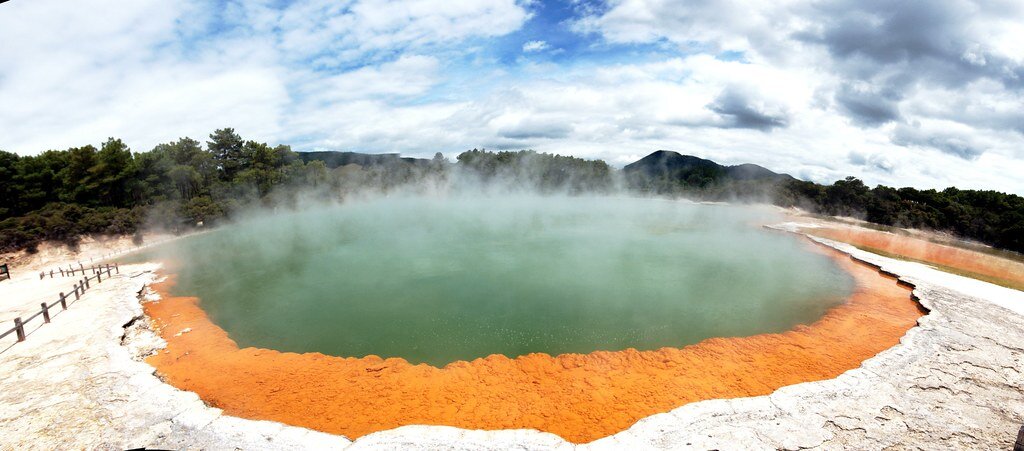
Boiling Champagne Pool. t3rmin4t0r. CC BY 2.0.
Far north of Slope Point lies the mystical Champagne Pool on New Zealand’s North Island. Although an uncanny site, Champagne Pool is only one of many geothermal spots peppering the area around the city of Rotorua. The surrounding area, called Wai-O-Tapu, is known for its geothermal sites carved throughout the landscape. The strips of active volcanic sites and geothermal pools have created an admittedly scary yet magnificent look into what lies just beneath our feet.
Champagne Pool is a captivating hot spring that stretches over 200 feet and is about equally as deep. A hydrothermal eruption caused this crater, which boils at over 160 degrees Fahrenheit, to form about 900 years ago. The hot spring earned its name from the presence of carbon dioxide that causes it to bubble like Champagne. Although seemingly uninhabitable, the hot spring teems with a rich microbial ecosystem. Additionally, striking photos of the site capture the vibrancy of the pool’s outer rim. Its neon orange strip is caused by antimony deposits that harden on the cooled rim of the pool. The surrounding grounds are equally rich in minerals; gold, mercury and silver are found in nearby rock beds.
Whether one is an artist, a scientist or an adventurous visitor, both Slope Point and Champagne Pool stand as equally inspiring trips.

Ella Nguyen
Ella is an undergraduate student at Vassar College pursuing a degree in Hispanic Studies. She wants to assist in the field of immigration law and hopes to utilize Spanish in her future projects. In her free time she enjoys cooking, writing poetry, and learning about cosmetics.
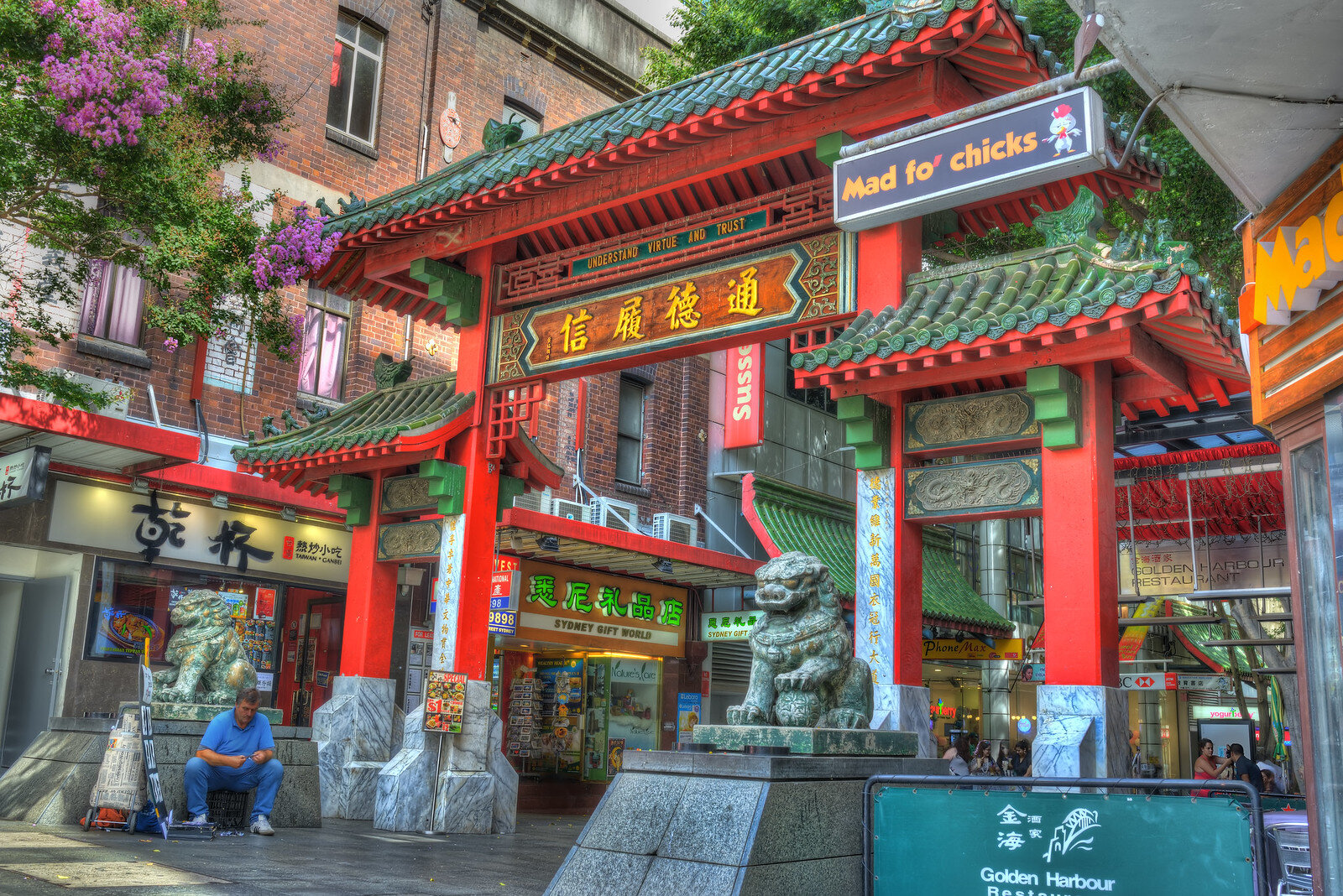
The entrance to a Chinatown in Sydney. Lenny K Photography. CC BY 2.0.
Explore 4 Chinatowns from Around the World
Travel to any of the inhabited continents and you will find Chinatowns, historical and contemporary ethnic enclaves of Chinese people outside of mainland China, Hong Kong, Macao and Taiwan. While there is no conclusive count as to how many Chinatowns exist, they will often be found in any community with a history of Chinese immigration.
The first Chinatown is considered to be Binondo, a neighborhood in the Philippines’ capital of Manila that developed in 1594. Since then, Chinatowns have developed around the world, most recently with Tijuana, Mexico’s La Mesa neighborhood in 2012.
The United States is home to some of the most famous Chinatowns, including those in San Francisco, New York City, Chicago and Los Angeles. That said, for those looking to travel abroad, here is a list of some of the most unique Chinatowns to be found.
1. El Barrio Chino, Havana
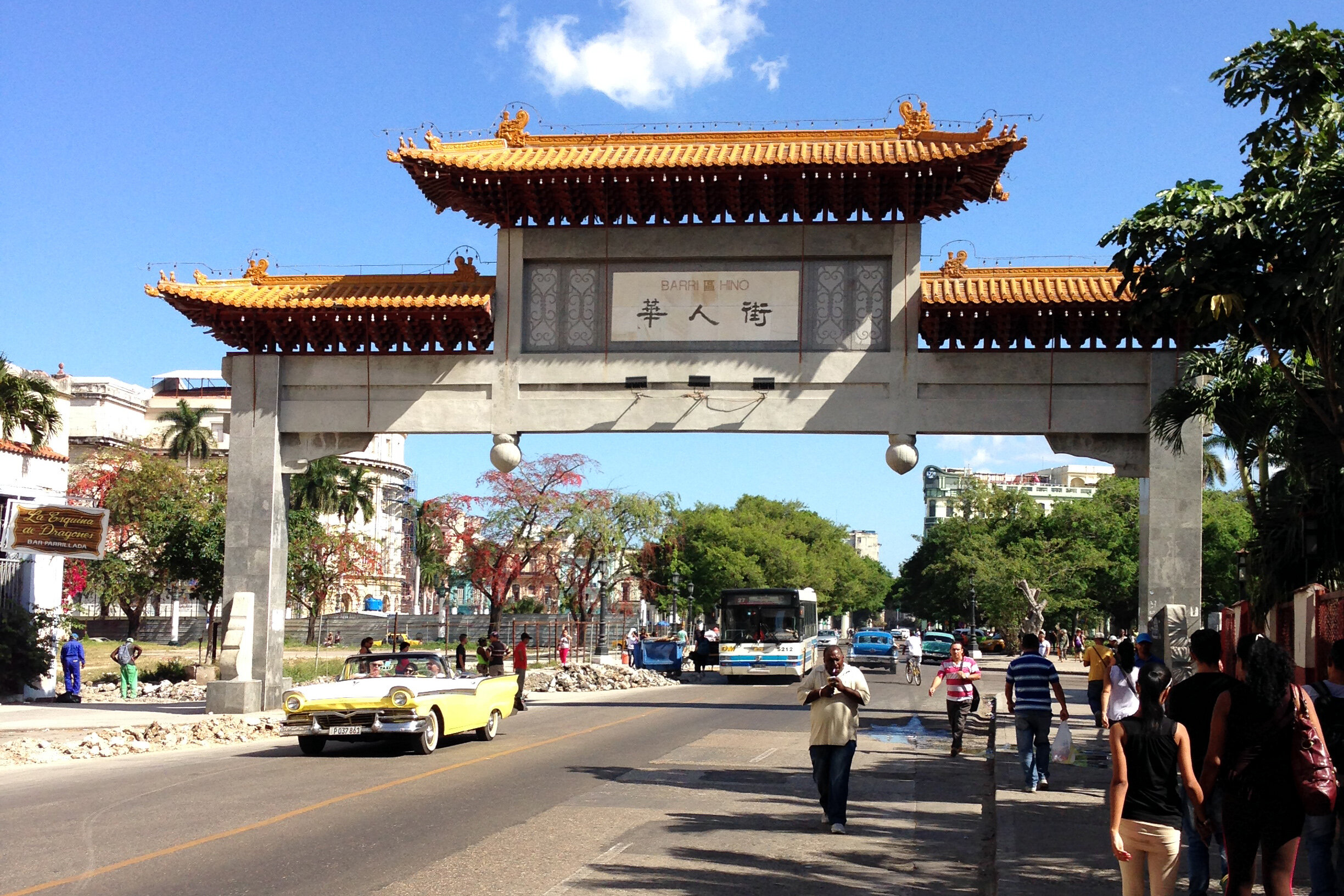
The paifang marking the entrance to Havana’s Chinatown. Kaldari. CC0.
Located just three blocks away from the Cuban capitol building, Havana’s Chinatown is a relic of prerevolutionary times. The neighborhood, which began to develop in the 1840s with the arrival of the first Chinese immigrants to the island, became the largest Asian ethnic enclave in all of Latin America by the 1920s.
Following the 1959 Cuban revolution led by Fidel Castro and the 26th of July Movement, during which the country became communist, the vast majority of Chinese-Cubans fled to neighboring countries like the United States. However, beginning in the 1990s, the Cuban government began the process of revitalizing the neighborhood centered around its historical roots.
Today, the Chinese-Cuban population in Havana is small. However, visitors to El Barrio Chino have a variety of restaurants and shops to visit, most of which are centered around Calle Cuchillo. Popular favorites include Restuarante Guang Zhou, whose menu offers a blend of Cuban and Chinese cuisine, Sociedad China Chang, which centers its food around a buffet, and Restaurante Tien Tan, whose menu includes fish and pork dishes which utilize the best ingredients from the Chinese and Cuban kitchens.
2. Chinatown, Singapore
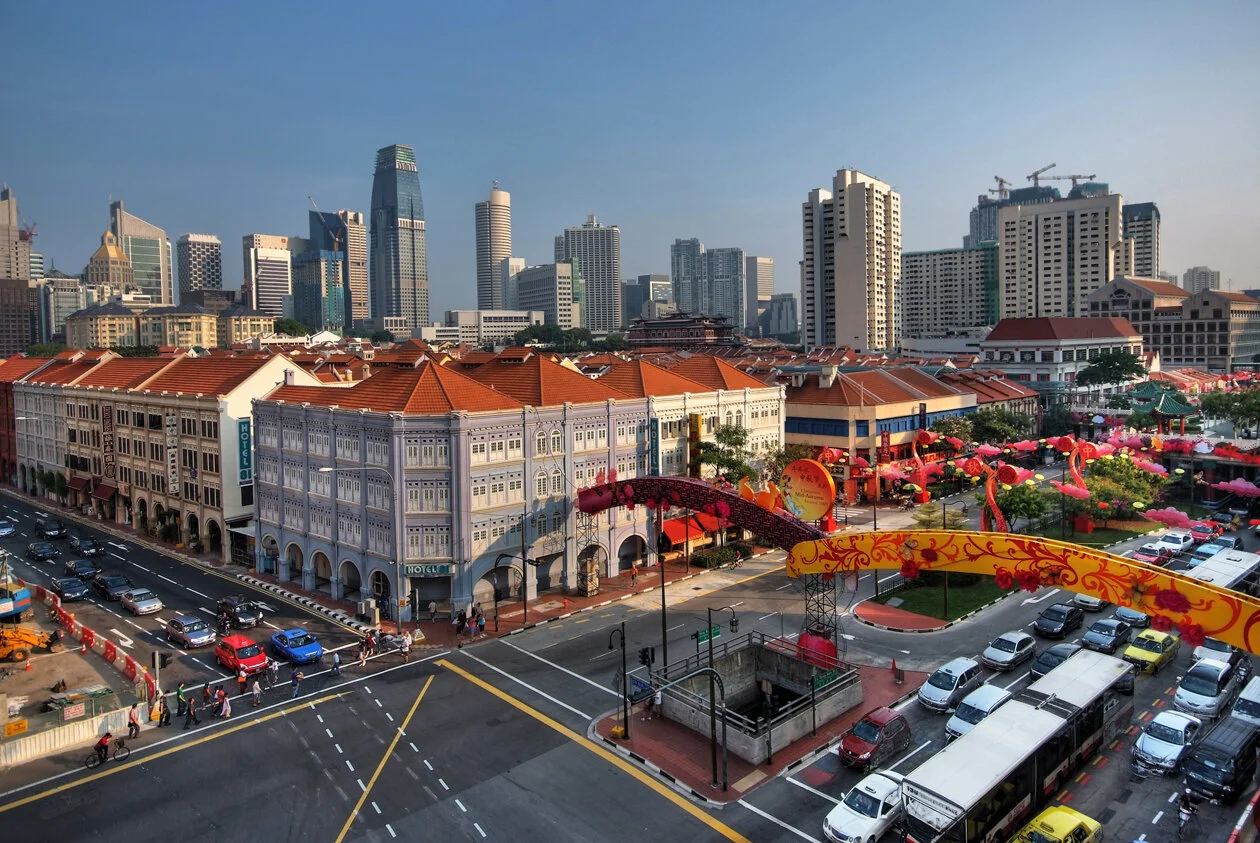
An aerial view of Singapore’s Chinatown with the city skyline in the background. William Cho. CC BY-NC-SA 2.0.
While not necessarily an enclave in the traditional sense given that the majority of Singapore’s population is ethnic Chinese, Singapore’s Chinatown is one of the most historically and culturally significant neighborhoods of the city-state. While the appearance of a Chinese community has been documented in Singapore as early as 1330, the neighborhood was not officially designated as a Chinatown until 1822 when British colonizer Sir Stamford Raffles allocated the area west of the Singapore River as such.
Today, Singapore’s Chinatown is one of the most popular in the world. The neighborhood includes historically preserved sites such as the Sri Mariamman Temple, as well as more recent cultural icons like the Buddha Tooth Relic Temple. Likewise, given that the city-state is world-renowned for its food culture, Chinatown is no exception. Popular spots for street food include the Chinatown Street Market, a pedestrian outdoor mall, and the Maxwell Food Centre, which features some of the best hawker center food including oyster cakes, peanut soup and chicken rice.
3. Quartier Asiatique, Paris
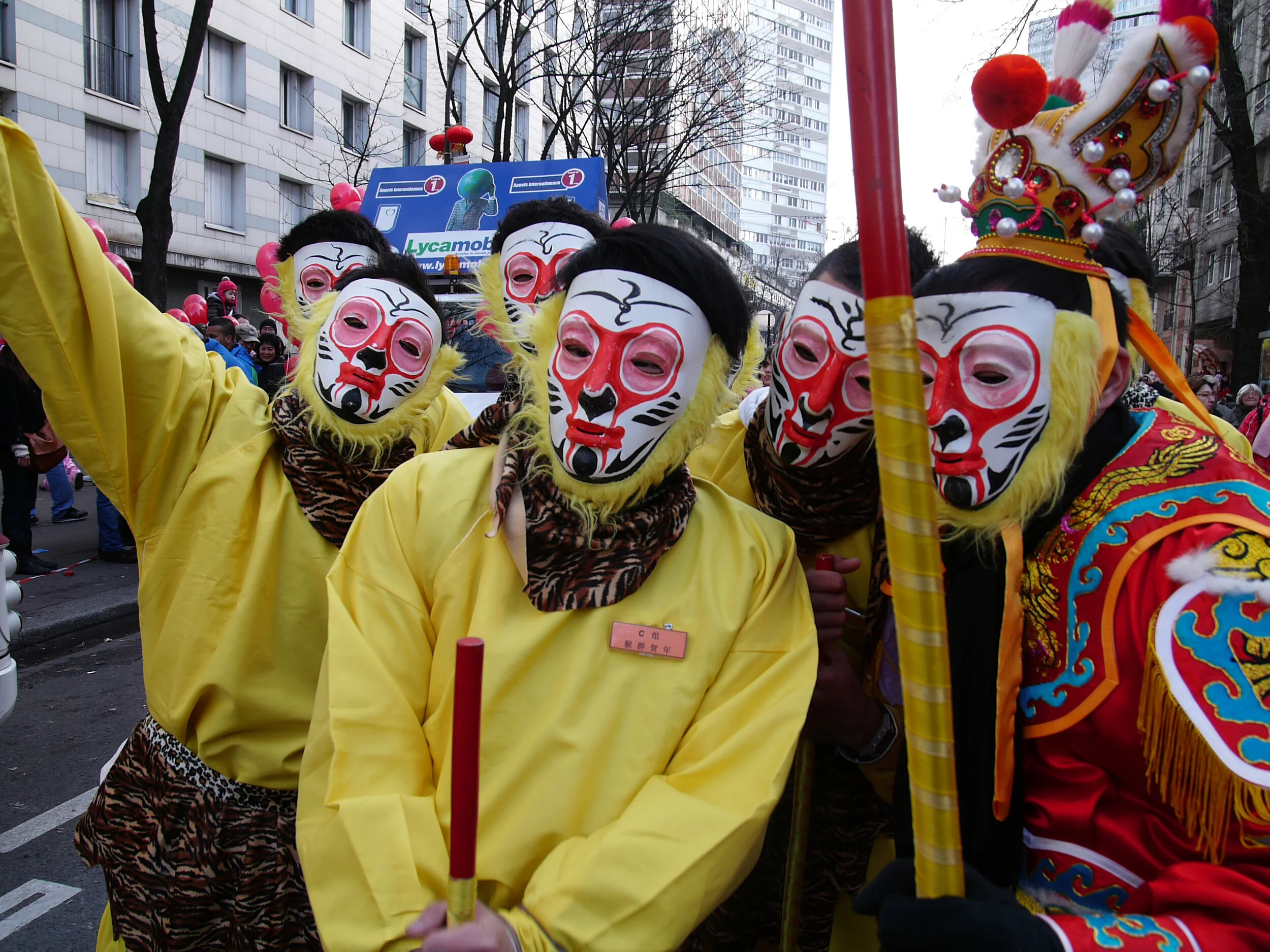
A group of performers at Paris’ Chinese New Year parade. Passion Leica. CC BY-NC-ND 2.0.
While many Chinatowns around the globe have been around for centuries, Paris’ Quartier Asiatique is much more recent. In the late 1970s, many refugees from the Vietnam War settled in the 13th arrondissement. This was followed by later waves of ethnic Chinese immigrants coming from Vietnam, Laos and Cambodia. Many of the ethnic Vietnamese immigrants later moved to other parts of France, leaving the neighborhood with a distinct Chinese presence.
Today, Paris’ Chinatown is considered to be the largest by population in Europe. Visitors to the neighborhood have a number of places to visit. The popular Asian supermarket chain, Tang Freres, is based in the neighborhood and offers a number of foods and goods shipped in directly from China. Restaurants such as Noodle Bar and Les Jardines de Mandchourie have some of the best Chinese food in the whole city. Likewise, the neighborhood has an annual Chinese New Year parade in February which is the largest parade in all of Paris.
4. Chinatown, Sydney
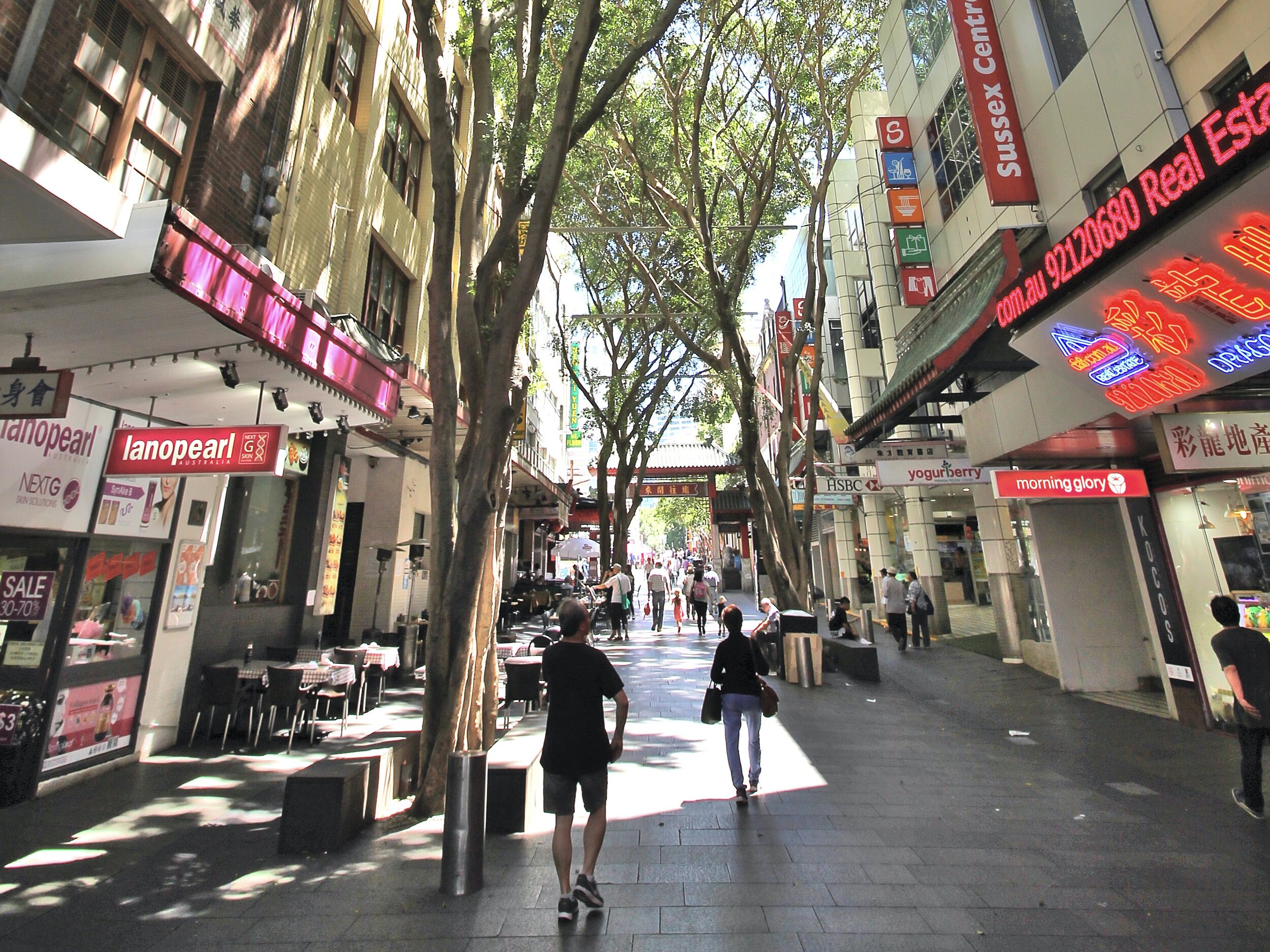
People walking in Sydney’s Chinatown. blairwang. CC BY 2.0.
Sydney’s Chinatown has a history rooted in movement. Many Chinese immigrants in the 1850s were drawn to Australia and settled in The Rocks, a neighborhood that gained the colloquial nickname “Chinese Quarter.” However, due to growing anti-immigrant sentiment and racism beginning in the late 1880s, Sydney’s Chinatown transitioned away from The Rocks to Campbell Street in the 1920s, before relocating again to Dixon and Hay streets, where the current Chinatown lies.
Today, Sydney’s Chinatown is world-renowned for its food and attractions. The Chinese Garden of Friendship, located just a block away from Dixon Street in Darling Harbour, was designed in conjunction with Sydney’s sister city of Guangzhou, China, and features carefully cultivated flora and beautiful architecture. Likewise, every Friday at 4 p.m., Dixon Street is taken over by the Chinatown Night Market. The stalls in the market feature everything from street food staples like dumplings and kebabs, to clothing and jewelry imported directly from China.

Jacob Sutherland
Jacob is a recent graduate from the University of California San Diego where he majored in Political Science and minored in Spanish Language Studies. He previously served as the News Editor for The UCSD Guardian, and hopes to shed light on social justice issues in his work.
VIDEO: Country of Georgia is Coming Into its Own
In recent years, Georgia has had to look within itself and its two identities: the older generation’s traditional lifestyle of living off of the land and the younger generation’s embrace of modern technology, entertainment, and values. The political tensions between Georgia and Russia have exacerbated this divide; ever since the breakup of the USSR, the two countries have been on tense terms. 2008’s Russo-Georgian war was followed by a severance of diplomatic relations, culminating in Russia halting direct flights from Georgia in 2019. However, the people of Georgia will not sit silently by, and are working to make a better future for themselves and their country. Although COVID-19 has put a strain on flights, diplomats from both countries have expressed hopes that flights would be restored in the near future. These conflicts are illustrated in this short video, which details Georgia’s rich past alongside its uncertain future.
RELATED CONTENT:
Maurice the Cockerel: an Unexpected Symbol of the Fight for Rural France
One French couple filed a lawsuit against the owners of Maurice, a rooster, whose piercing call at 6:30 am disturbed their peace. The case sparked outcry all over the French countryside.
Read MoreIndigenous Mexican Language isn’t Spoken– it’s Whistle
While Spanish is the official language of Mexico, its many Indigenous cultures still thrive and speak their own languages within their communities.
Read More6 Offbeat Travel Destinations in Mexico
Skip the crowded beaches of Cabo and Puerto Vallarta and discover Mexico’s rich history and diverse culture through its hidden gems
Read MoreHeartwarming Video Tracks Down a Long-Lost Photograph Across Cultures
Photography has played a large part in Chinese culture, adding a unique facet to memory documentation that is not often known to most outsiders. One vintage photo with an incredible back story exemplifies this. This mini documentary tells the tale of this photo through Chinese amateur photographer Xu Zhen and French photo archivist Thomas Sauvin; these two men helped create and preserve a timeless piece of history. This video is heartwarming, eye-opening and will change your view about Chinese photography and culture.
Thai Magical Tattoo and Wai Kru Festival: A Short Documentary
With beautiful temples, artwork, and monasteries dating back to the 17th century, the influence of Buddhism on Thai culture cannot be understated. Although Buddhism is the country’s primary religion, its rich history is influenced by Hinduism and Animism — shaping the people’s relationship with religion.
One physical manifestation of these influences comes in the form of Sak Yant tattoos — intricate tattoos believed to be powerful symbols for protection against evil influences. While a traditionally Buddhist practice, these tattoos’ use of magic is a clear sign of Thailand’s other religions shaping its traditions.
The tattoos are blessed by monks every year at the Wai Kru festival, documented in this video. Filmed by Gennaro Ambrosino, this mini-documentary details the spiritual practices behind the tattoos, the rituals of the Wai Kru festival and the altered state of consciousness its attendees often slip into. The transformative nature of the festival mirrors the impact of religion on Thai culture and identity, something still present today.
Vienna Rocks On at the World’s Largest Music Festival
Austria’s Danube Island Festival attracts around 3 million visitors annually. The festival spans three days, offers all kinds of music, and is completely free to attend.

Crowd at Danube Island Festival 2018. Andreas Jakwerth posted by Donauinselfest. CC BY-SA 2.0
Each year at the end of June, millions of people flock to an island in Vienna for a three-day musical event. The Danube Island Festival, as the event is known, is the world’s biggest open-air music festival, attracting over 3.3 million visitors every year. The festival hosts more than 2,000 musicians across three days and 19 stages, contains numerous food and souvenir stalls, and essentially turns the island into a giant, booming party—and admission is free.
The Danube Island Festival is held on Danube Island, a 13-mile man-made island located between the Danube River and a parallel, excavated channel known as the New Danube. When the island was created in 1972, its primary function was to serve as part of Vienna’s flood prevention system; the Danube crosses the city, so flooding is a major concern. Now Danube Island is a hub of recreation, complete with beaches, a trampoline center, a climbing park, a network of trails, and a few bars and restaurants. Danube Island is also full of wide green spaces, which easily become the venues for the Danube Island Festival. The island is located only a few minutes away from Vienna’s city center, making it a wonderful venue, as festivalgoers can stay in the city and sightsee while still having quick access to the festival grounds.
What would grow into the world’s biggest music festival began as a promotional event for Danube Island. In 1983, Austrian politician Harry Kopietz introduced the idea of a one-day party on Danube Island to demonstrate its value as a recreational area. Event organizers expected around 15,000 people to show up and were stunned when the party had over 160,000 attendees. Since the event was wildly successful, it was held again the following year, and the number of visitors nearly doubled. The Danube Island Festival has been an annual event ever since, and has steadily grown in popularity to reach the millions of visitors it has today. The festival also increased in length from one day to three, to accommodate the number of visitors and to provide more performances.
The festival offers music for everyone, from little-known local bands to world-famous headliners and everything in between, in a multitude of genres. In past years, there have even been performances from the Vienna Symphony Orchestra. Headliners have also included the Backstreet Boys and Simple Minds, as well as a number of artists famous among German speakers.
Even the COVID-19 pandemic couldn’t put a stop to the Danube Island Festival, which occurred in alternate form in 2020. Instead of one large three-day event, the 2020 festival took place over 80 days and throughout Vienna; a double-decker bus with an open-air stage on top toured the city, bringing over 200 live performances to the Viennese people. For 2021, the festival is scheduled to take place from Sept. 17-19 in a hybrid format. The double-decker performance bus will be back roaming the city from August to September, and festival organizers hope to hold a scaled-down version of the festival with mostly local acts if public health permits.

Rachel Lynch
Rachel is a student at Sarah Lawrence College in Bronxville, NY currently taking a semester off. She plans to study Writing and Child Development. Rachel loves to travel and is inspired by the places she’s been and everywhere she wants to go. She hopes to educate people on social justice issues and the history and culture of travel destinations through her writing.
5 Places to Visit for Lovers of Philosophy and Literature
For travelers who enjoy a good book or like to study the teachings of ancient thinkers, experiencing the places where those writers and philosophers lived (or died) is often at the top of their bucket lists. Here are five places to visit if you love philosophy, literature or both.
1. Davy Byrne’s Pub, Dublin, Ireland
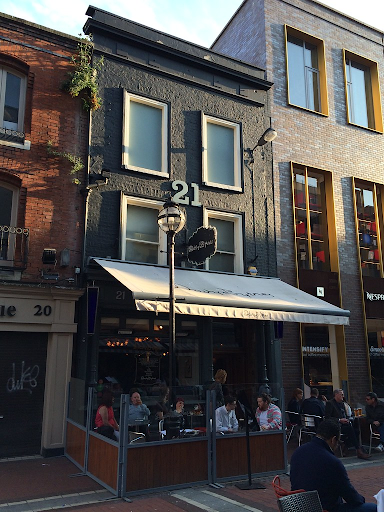
The exterior of Davy Byrne’s pub in Dublin. Flickr. John Logue. CC BY-NC-SA 2.0
The Irish capital has always been a popular European destination for visitors. Some come to Dublin to take in its historic architecture, while others go on journeys to trace their Irish ancestry. Some literature enthusiasts come for the city’s connection to James Joyce, the famed Irish author best known for his 1922 modernist novel “Ulysses.” The novel follows the story of Leopold Bloom as he wanders the streets of Dublin in a manner reminiscent of Odysseus’ journey in Homer’s “Odyssey.” In Chapter 8 of the novel, Bloom visits Davy Byrne’s pub for a Gorgonzola sandwich and some Burgundy before returning to his travels through Dublin. While Bloom is a character of fiction, the pub is not, and is still operating to this day. According to the pub’s website, Joyce frequently visited and was close to the pub’s founder, Davy Byrne. Joyce fans still stop by the pub while traveling through Dublin, enjoying a sandwich and some wine during their own Irish odyssey.
2. The Tomb of Karl Marx, London, England
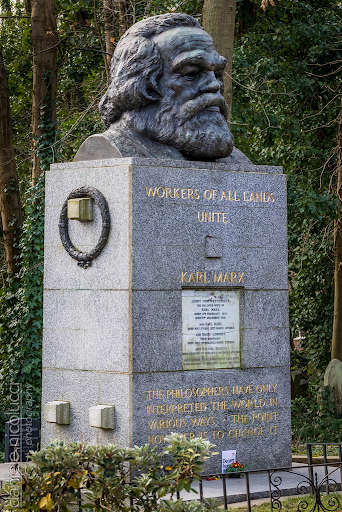
The headstone of Karl Marx’s grave in Highgate Cemetery, which reads “Workers of all lands unite.” Flickr. Daniele Nicolucci. CC BY-NC-ND 2.0
Cemeteries aren’t usually at the top of travelers’ bucket lists, especially of those visiting London. Yet, Highgate Cemetery in north London is visited by philosophy lovers for being the resting place of one notable 19th-century thinker— Karl Marx, the controversial German philosopher best known for writing “The Communist Manifesto” and “Das Kapital.” Almost 140 years after his death, his grave is sought out by fans of his work and of the school of thought that he inspired. However, the tomb of Karl Marx is also targeted by those who disagree with his philosophy, often being subject to acts of vandalism.
3. Kurt Vonnegut Museum and Library, Indianapolis, United States

The entrance to the Kurt Vonnegut Museum and Library in Indianapolis. Flickr. Martin Kalfatovic. CC BY-NC-SA 2.0
American novelist and satirist Kurt Vonnegut is known for his darkly humorous yet oddly lighthearted stories filled with eccentric characters representative of post-World War II America. Vonnegut, who was born and raised in Indianapolis, often referenced his home state in his novels. The Rosewaters, a fictitious American political family at the center of Vonnegut’s 1965 novel “God Bless You, Mr. Rosewater,” are even from Indiana. Fitting for a Midwesterner at heart, the Kurt Vonnegut Museum and Library is located in Indianapolis and is dedicated to his life and works. Vonnegut fans can sit in front of a model of the typewriter he used to write his stories with, look at pictures of his life and family, and even read his numerous rejection letters from editors.
4. Plato Academy Digital Museum, Athens, Greece
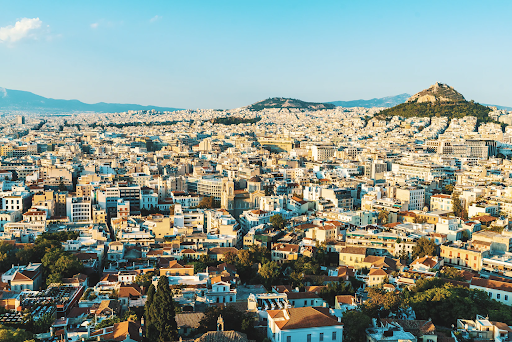
The Athens skyline. Unsplash. Evan Wise.
For those with a passion for classical history, ancient epics and philosophy, there’s no city with a connection to all three like the Greek capital of Athens. The city is considered the birthplace of many philosophical schools of thought and traditions, and was home to some of humanity’s most important thinkers. Yet one museum, dedicated to the philosopher Plato, is making ancient teachings accessible for a 21st-century audience. The Plato Academy Digital Museum was built in 2015 on the ancient grounds of Plato’s academy in Athens, and features interactive installations where visitors can learn about the teachings of Plato and his role in shaping Western philosophy. One can even take a quiz to see if they have what it takes to be a student of Plato.
5. Konigsberg Cathedral, Kaliningrad, Russia
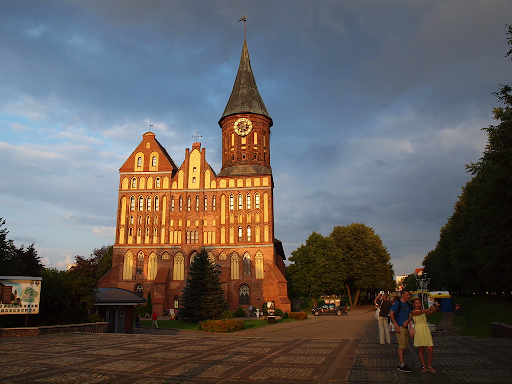
Konigsberg Cathedral, where Immanuel Kant is buried. Flickr. Anita. CC BY-NC-ND 2.0
Located in the Russian exclave of Kaliningrad, this Gothic cathedral looms over the surrounding city, a reminder of the region’s Prussian history. It is also the resting place of German philosopher Immanuel Kant, best known for his contributions to the fields of ethics, aesthetics and metaphysics, who was born in the city when it was still part of the kingdom of Prussia. Much of Kaliningrad, which was called Konigsberg when it was part of Prussia, was destroyed during Allied air raids in World War II. The cathedral was also heavily damaged during the war, before reconstruction efforts began in the early 1990s. Kant was buried inside the cathedral after his death in 1804, and now rests in a mausoleum located to the side of the building.

Aerex Narvasa
Aerex is a current student at Occidental College majoring in Diplomacy and World Affairs with a minor in East Asian Studies. He is passionate about sharing people’s stories through writing, and always strives to learn about new places and cultures. Aerex loves finding new music and exploring his hometown of Los Angeles in his free time.
From Everest to Kathmandu: The Wonders of Nepal
Nepal is most famous for being the home of Mount Everest, one of the 7 natural wonders of the world. However, you don’t have to be a mountaineer to appreciate the beauty of this remote country, which boasts much more than its high peaks and rocky slopes. The monasteries of Nepal demonstrate the deep spirituality of many of its people and their decision to live in harmony with the natural world. Nepal’s main religions are Hinduism and Buddhism, and it has historical significance for both of these faiths. As the world’s only Hindu kingdom, as well as the birthplace of Buddha, Nepal’s religious history is rich and vibrant. This can be seen today in its people, architecture, and majesty of the natural world.
A Trippy Trip: The Psychedelic Salt Mines of Russia
The salt mines of Russia are as dizzying in person as they appear in photos. Although a visit is not for the faint of heart, the mines stand as yet another testament to the gentle, artistic hand of nature.
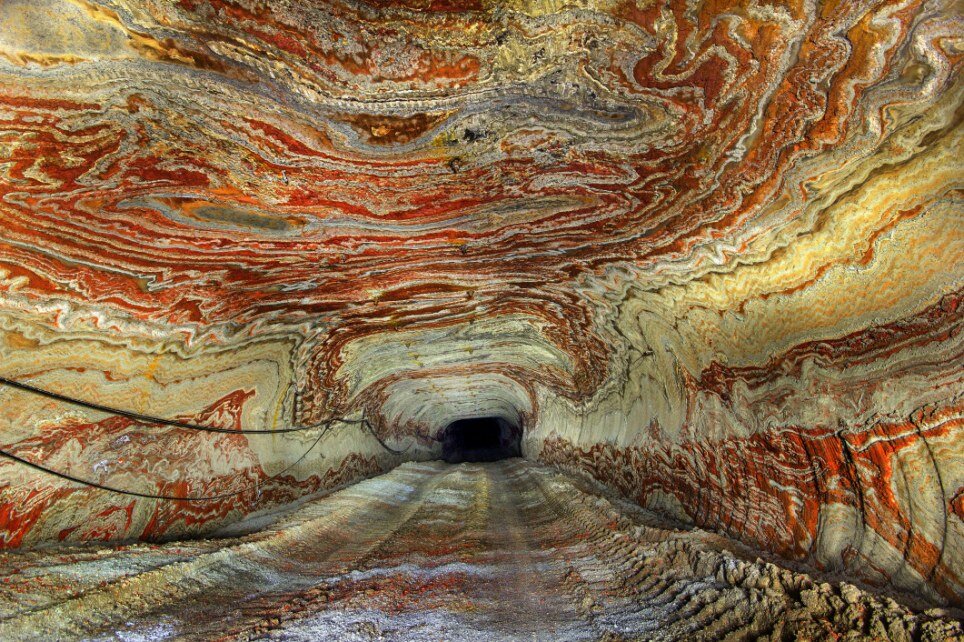
Red swirls cover the walls of this Russian salt mine. Mikhail Mishainik. Daily Mail.
Along the eastern edge of Russia’s Ural Mountains lies the city of Yekaterinburg, an industrial giant currently experiencing an explosion in population and construction. Although the city itself overflows with its buzzing nightlife scene and hectic economic sector, a nearby site also attracts curious eyes and aspiring photographers. 650 feet below Yekaterinburg lies a peculiar system of salt mines often known as the “psychedelic salt mines.”
These mines earned the name “psychedelic” for the hypnotizing pattern that covers the entirety of the caves. Any visitor would be easily mesmerized by the sight; the walls display a magnificent swirling pattern that mimics sound waves or animated gusts of wind. How the caves came to be such a fascinating art show is equally interesting, as the rich, almost electric swirls of blue, yellow, red and orange are entirely natural. They exist due to large deposits of the mineral carnallite, which is commonly used in fertilizer. The mineral showcases its vibrant range in the caves, but can also be found in a colorless state. Unlike most popular caves, the psychedelic salt mines are not narrow passages requiring extreme flexibility to squeeze through; the winding channels stretch for many miles and are truly spacious.
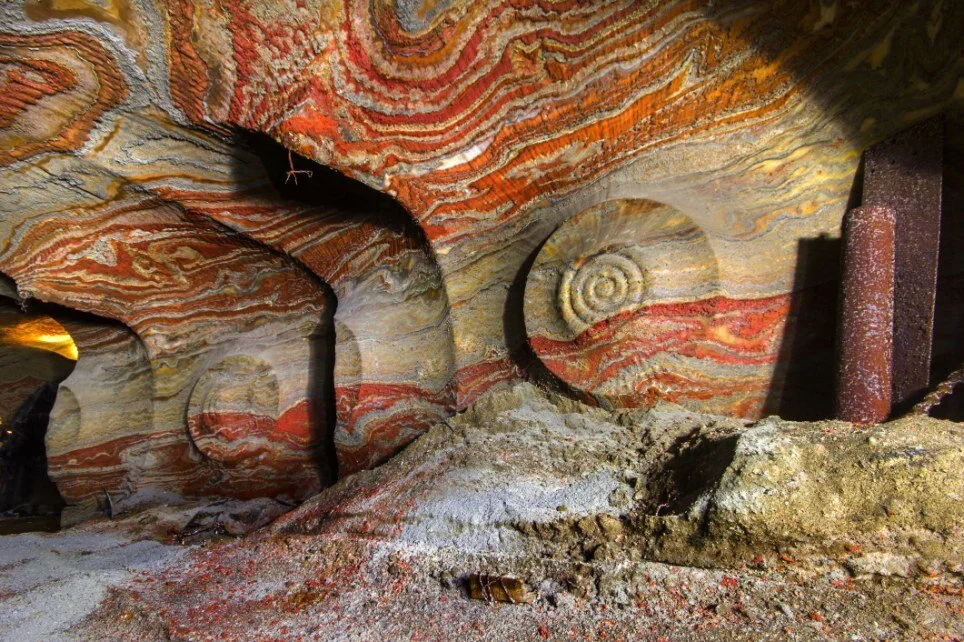
Cave walls underneath Yekaterinburg. Mikhail Mishainik. Daily Mail.
The caves date back 280 million years to the Permian period, and are a result of the Perm Sea having dried up. These rich salt deposits were largely forgotten for many years until around the second millennium B.C., when Russia began salt mining.
Additionally, only recently have photos of the cave even been shown to the public. Although the attractive site seems ideal for family-friendly adventures and novice photographers, the caves are closed off to the public. Only a small section of the caves are still in use, and the other parts require a special government permit to access.
However, a photographer named Mikhail Mishainik is credited with the awe-inspiring photos we now see. Along with some friends, Mishainik spent many hours exploring the caves, being sure to capture the magnificence of their artwork along the way. Mishainik stayed overnight in the pitch-black caves and chronicled his uncomfortable yet exciting experience. Due to the mineral deposits, the air inside is salty and dry, creating a constant feeling of unquenchable, perpetual thirst. Mishainik also claims that the lingering sense of instability in the caves is part of the excitement, since the caves face the threat of gas leaks and landslides.
It is uncertain whether any more than a select few will ever lay their eyes on the rainbow swirls of these caves, but one thing is sure: if such magnificence lies hidden under this one city, there are limitless other gems waiting to be uncovered by unsuspecting travelers.
RELATED CONTENT:
VIDEO: RUSSIA: Kamchatka Volcanoes
7 Stunning Caves Worth Exploring
VIDEO: A Diamond Mine in the Rough

Ella Nguyen
Ella is an undergraduate student at Vassar College pursuing a degree in Hispanic Studies. She wants to assist in the field of immigration law and hopes to utilize Spanish in her future projects. In her free time she enjoys cooking, writing poetry, and learning about cosmetics.
New Zealand: Innovation Meets Nature
Despite its small size and remote location in the southwest Pacific Ocean, New Zealand boasts diversity of all kinds and is exploding with culture, innovation, and beauty. Although today most of its inhabitants are of European descent, its Maori culture shines through, as well as the influences of recent immigrant groups. Additionally, while New Zealand is incredibly developed, with populous cities, it still has incredible geographic diversity. A traveler can find mountains, marshes, valleys, and coastal cliffs all without leaving a single island. The preservation of New Zealand’s nature is a testament to its people’s dedication to maintaining a balance between technological innovation and preserving the climate. Any traveler there will enjoy the best of both worlds and get a taste of a life unlike any other.
The Mexican Street Cart: A Culinary World on Wheels
Mexican street foods, like birria tacos and elote, have gained widespread attention on social media recently for their complex flavors and vivid colors. Some dishes have gone so viral that Americans are driving hours in search of truly authentic carts! Mexican street carts are essential to the people of Mexico, providing a convenient meal during a busy day, and more are popping up all over the United States as well.
Read MorePeru and Bolivia: A Short Film Capturing the Beauty of the Mountains
High in the Andes mountains, the people of Peru and Bolivia inhabit one of the most unique landscapes in the world. From rainforests to rocky slopes, towns and cities coexist with the wildlife and the natural topography in a way that seems as though they were created by nature as well as human innovation.
The people living in these cities blend historical traditions with the technological advancements of the modern age— retaining the beauty of their culture, dress, and craftsmanship and passing it down to the next generation. This video, directed and edited by Baptiste Lanne, highlights the beauty of both Peru and Bolivia’s varied climate, geography, and people, illustrating the complex balance of humanity and nature. The breathtaking scenes are interspersed with shots of people’s daily lives; both are equally beautiful.
Trapped in Time: Antarctica’s Secret Blood Falls
With technology advancing at a record pace, few wonders remain that puzzle scientists. However, deep in the frigid tundra of Antarctica lies one marvel that has attracted photographers and skeptics alike.
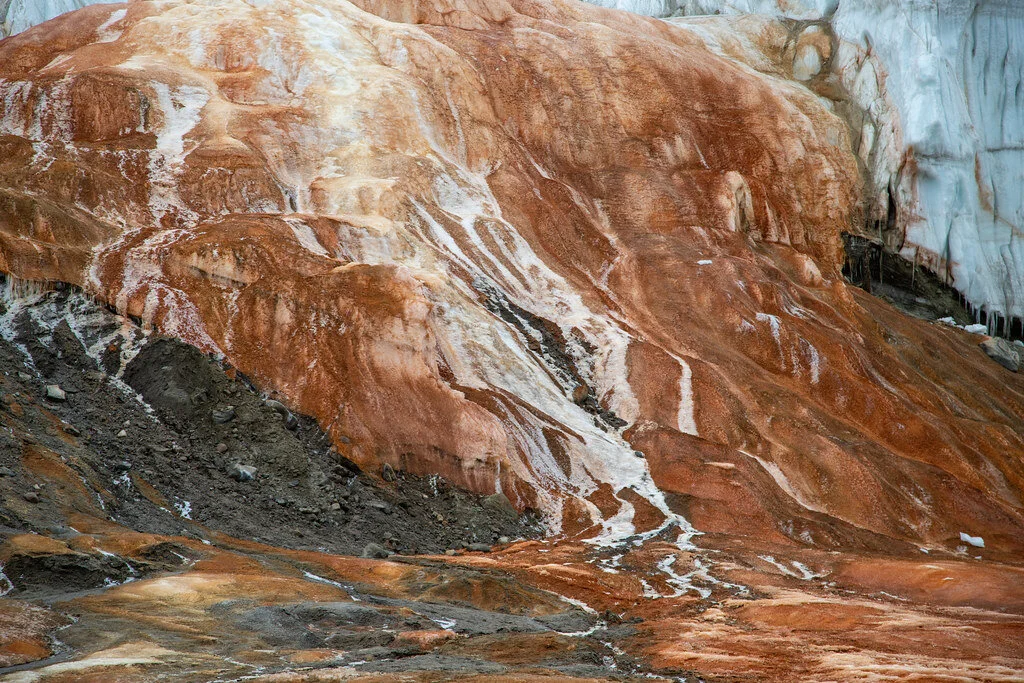
Antarctica’s Blood Falls. arielwaldman. CC BY-NC 2.0.
In the Taylor Valley of Antarctica lies a mighty natural wonder called the Taylor Glacier. Although a spectacle in and of itself, the glacier is only an opening to an even more magnificent miracle. Sandwiched between Taylor Glacier and the underlying bedrock is a “lake” that leads to a “waterfall” known as Blood Falls. The spectacle earned its name due to the deep, murky red color of the water; the glacier releases a beautiful, bloody fountain where it has burst open. Photos of the site capture winding streams of water, which are painted with endless stripes of crimson and cream, flowing over the rocky landscape.
Geologist Thomas Griffith Taylor, for whom the Taylor Valley is named, first discovered the Blood Falls on a voyage in 1911; he was alarmed by the scarlet hue spilling from what is normally a monochrome, colorless landscape. For the remainder of the 20th century, explanations for the vermilion wonder came up short. It was not until 2015 that scientists finally concluded that the waterfall’s maroon color is due to the presence of iron oxides. Cracks in the glacier expose the iron to oxygen, causing it to turn red in the same way rusting bike spokes produce a brick-red hue. Previously, the long-standing theory for the coloring had been the presence of reddish algae, although the theory lacked sufficient evidence.

Taylor Glacier. Mike Martoccia. CC BY-SA 2.0.
However, Blood Falls still presented two seemingly insurmountable scientific dilemmas: how did the water get there in the first place, and why did the water not freeze under the weight of an enormous glacier? Luckily, researchers at the University of Alaska Fairbanks soon answered these questions: water channels brought it from an underground reservoir, and the heat released from the freezing of the glacier kept the lake in a liquid state.
In addition to the striking red color, researchers found the water to be very salty, but the source of this brine truly stumped scientists.
The team applied radio-echo sounding, the use of sound waves to measure the location of a distant object, to construct an extensive map of underground water channels. They concluded that the brine reached the falls through the channels after about 1.5 million years. The “lake” from which the brine is sourced was found to sit underneath the glacier, and has slowly absorbed iron from the bedrock. The brine seeps into the ice due to the high pressure of the glacier’s weight. Researchers concluded that the concealed lake never froze over due to the heat produced from the process of glacial freezing.
Finally, scientists stumbled upon a remarkable discovery: the lake houses microbial ecosystems that live off of sulfate in the water’s oxygen-depleted environment. The presence of the ecosystem gives scientists a vital clue to the processes of Earth’s early life forms, and provides a picture of what life could be like on oxygen-depleted planets.
To the untrained eye, Antarctica’s Blood Falls may appear to be just another facet of Mother Nature’s artistry, but any digging quickly reveals a complicated puzzle that scientists are still working to piece together.
RELATED CONTENT:
ANTARCTICA: In Search of Beauty
TRIP: ANTARCTICA: Quest to the Antarctic Circle
VIDEO: Antarctica

Ella Nguyen
Ella is an undergraduate student at Vassar College pursuing a degree in Hispanic Studies. She wants to assist in the field of immigration law and hopes to utilize Spanish in her future projects. In her free time she enjoys cooking, writing poetry, and learning about cosmetics.
All the Way to Timbuktu: Exploring the Cultural Riches of Mali
Look beyond what the Western media says to appreciate Mali’s rich cultural heritage.
WARNING: As of February 2021, the U.S. Department of State advises against all travel to Mali due to risk of crime, terrorism and kidnapping. For the time being, enjoy the country from your computer screen. Do not visit Mali.
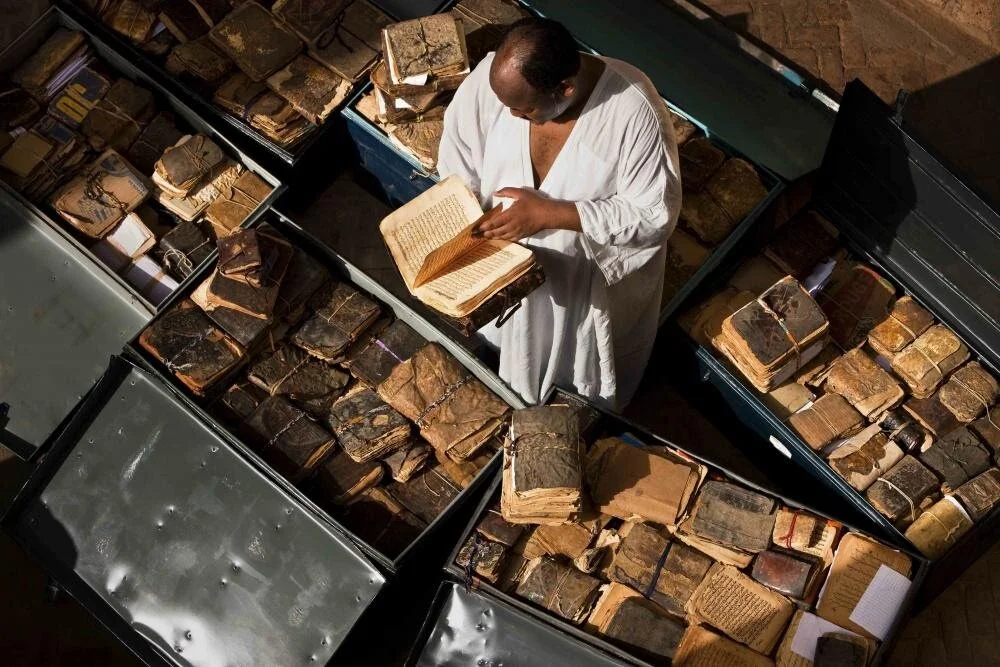
A man reading historical manuscripts from West Africa. Jermaine Johnson. CC2.0
Mali is a landlocked country located in the heart of West Africa. Mali’s rich history dates back to the 11th century, when the empire of Mali controlled vast swaths of the Niger River valley. Known as a beacon for Islamic scholarship and trade from the 13th to the 16th century, things took a turn when the French colonized the country in 1898. Since achieving independence in 1960, Mali has suffered from coups, droughts, corruption and insurgencies by Islamic extremists in the country’s north.
Despite Mali’s negative reputation in Western media coverage, the country has a fascinating history and vibrant culture that deserves to be celebrated—from afar, until safety returns. Here are some of the stunning historical and cultural sites in Mali:
Djenne
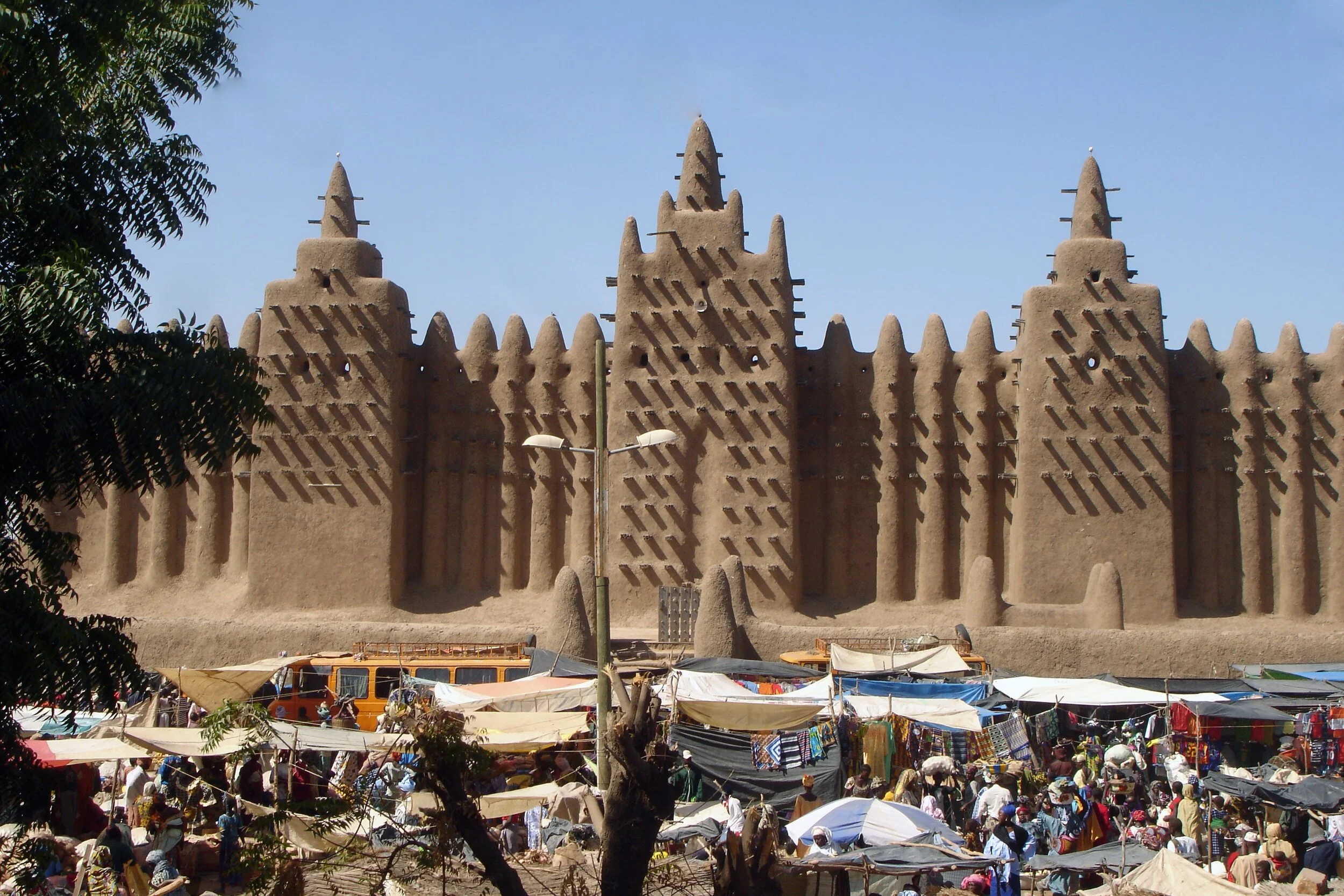
The Great Mosque and market in Djenne, Mali. Carsten ten Brink. CC2.0
Located in central Mali on a seasonal island in between the Niger and Bani rivers, Djenne is one of sub-Saharan Africa’s oldest towns and has been inhabited since 250 B.C. The town was a stopping point for traders in the trans-Saharan gold trade and was known as a hub of Islamic learning during the 15th and 16th centuries. The stunning Great Mosque in Djenne is the world’s largest adobe structure, containing three turrets. Interestingly, adobe structures are very common in Mali due to the lack of wood in the desert. The area in front of the mosque makes a great spot for people-watching and is the site of a colorful market every Monday.
Cliffs of Bandiagara
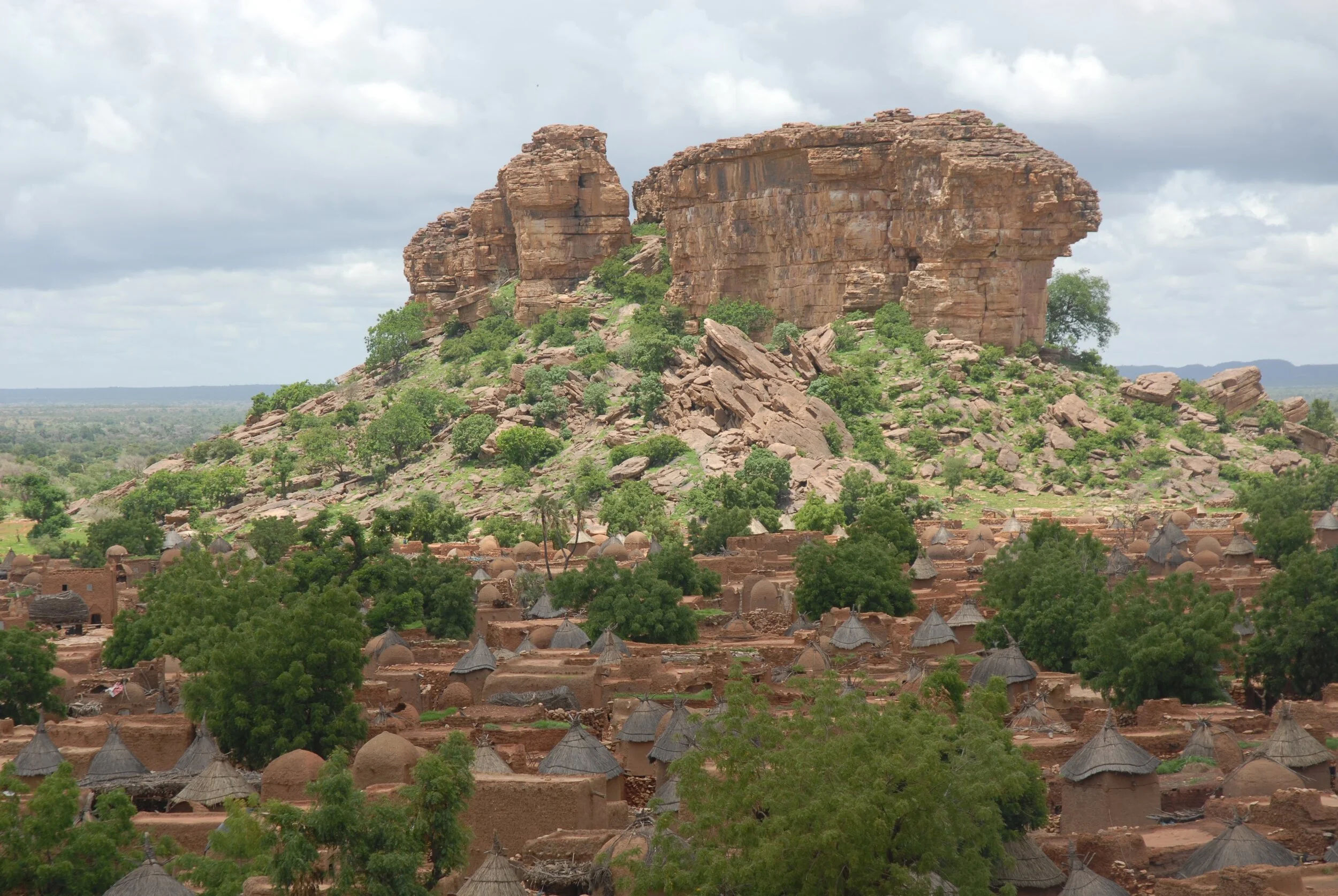
A village in Mali’s Dogon region. Emilio Labrador. CC2.0
A UNESCO World Heritage Site, the cliffs of Bandiagara are home to the Dogon people, who continue to carry on age-old traditions. Carved into tall sandstone cliffs, the Dogon region stretches for over 125 miles and provides a fascinating place for travelers. Due to the region’s remote nature, the culture of the Dogon people has been mostly left unchanged for centuries. Dogon cultural festivals take place from April to May and contain beautiful Dogon masks, dance and art. Travelers in the Dogon region often stay overnight in Mopti, a town located along the Niger River.
Timbuktu
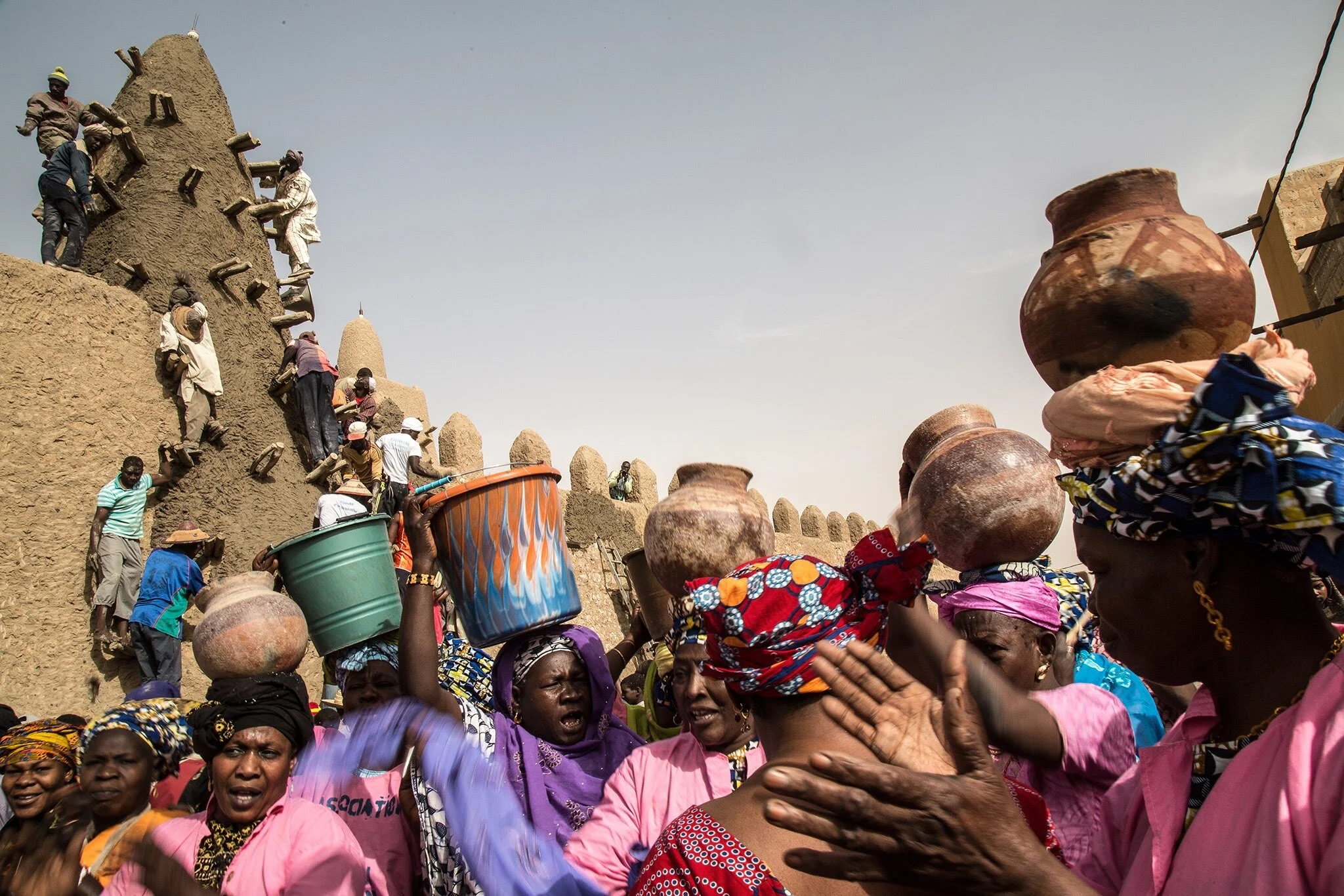
Conducting maintenance at Djingareyber Mosque in Timbuktu. United Nations. CC2.0
A city fabled for its rich heritage as a trading center, Timbuktu is still a crucial point for salt caravans traveling across the Sahara desert. From the 13th to 16th centuries, Timbuktu was a center of Islamic scholarship, with its teachings and sacred texts disseminated across the Muslim world as far as Cairo, Persia and Baghdad. The city was home to a 25,000-student university and several magnificent mosques, including Djingareyber, Sankore and Sidi Yahia. Many manuscripts are now in danger of falling apart or being sold on the black market. Due to recent conflicts in northern Mali, Timbuktu was proclaimed an endangered World Heritage Site by UNESCO in 2012. Thus, preserving Timbuktu’s historical legacy is of utmost concern.
Bamako
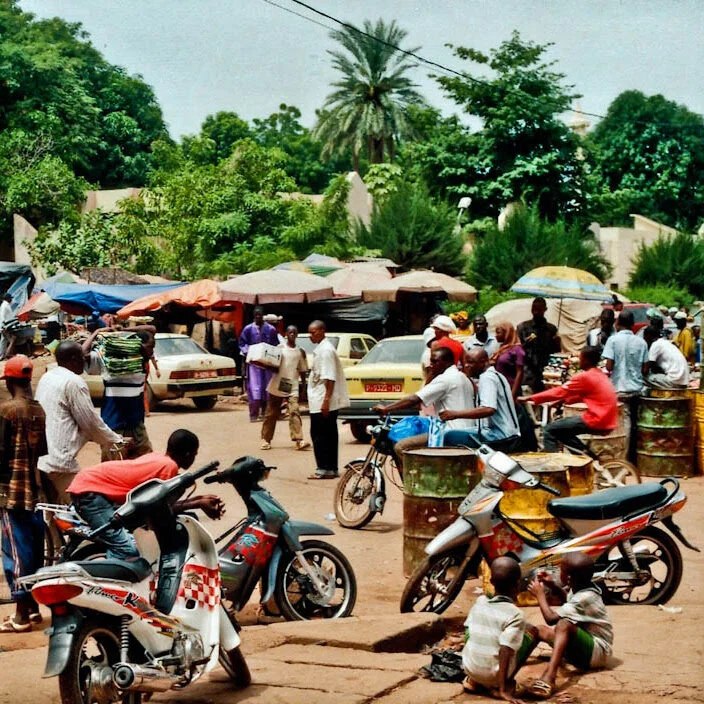
A market in Bamako. Aene gespinst. CC2.0
Mali’s capital is a vibrant city located on the Niger River in the southern part of the country. Translated as “crocodile river” in the Bambara language, it is an exciting place to acclimate to Malian life and culture, whether by trying the local cuisine, visiting bustling markets or exploring Mali’s music scene, which is well known throughout Africa.
Mali’s rich historical legacy is often overshadowed in the Western media by stories of violence caused by religious extremists, but there is much more to the story. One must be willing to look beyond the country’s negative portrayal to appreciate Mali’s true cultural heritage.

Megan Gürer
Megan is a Turkish-American student at Wellesley College in Massachusetts studying Biological Sciences. Passionate about environmental issues and learning about other cultures, she dreams of exploring the globe. In her free time, she enjoys cooking, singing, and composing music.
Sharjah: A City Full of Culture in UAE
The streets of Sharjah, UAE, are filled to the brim with magnificent architecture, delicious cuisine, and vibrant communities. The city is a living, breathing relic still standing in the modern world with old temples across the street from construction sites. The inhabitants have learned to navigate this liminal world and express their love for their complex, unique city. This video, shot and directed by Mike Beech, explores the different facets of Sharjah, entrancing the eye, making it hard to look away.