
My visit to Ireland’s southwestern coast and how I learned to get lost in its landscape.
Read MoreDubai on a Dime: A Budget Traveler’s Guide to the City of Gold
A practical guide to experiencing Dubai’s culture, food, and coastline without spending a fortune.
Read MoreA Guide to Hiking the Camino De Santiago
Stretching across Europe and concluding in Spain, the Camino de Santiago is a historic pilgrimage route that continues to attract visitors worldwide with its religious, cultural, and health experiences.
Read MoreThe Ethical Questions Surrounding “Dark Tourism”
“Dark tourism” attracts modern visitors to horrific sites, from concentration camps to war memorials, to view historical atrocities.
Read More7 Must-See Natural Wonders of the Czech Republic
Alongside the renowned architecture, the Czech Republic has an array of natural wonders that nature-loving travelers can explore.
Read MoreOff the Beaten Path: 10 Places to Escape Overtourism
In a travel-hungry world, it’s time to celebrate lesser-known treasures while prioritizing eco-consciousness, intimacy and crowd-free escapes.
Read MorePeru’s Floating Islands
The Uros Floating Islands on Lake Titicaca are man-made reed constructions in an Indigenous Quechua community.
Read MorePaved Roads Not Necessary: Mongolian Road Trip
See temples, ride camels and enjoy desert views across the country.
Read MoreFrom Ruins to Riviera: The Perfect Summer in Albania
From its pristine beaches to its mountains and UNESCO world heritage sites, Albania is Europe’s most underrated Summer-holiday destination.
Read MoreExploring Australia’s Remote Untouched Archipelagos
Exploring Australia’s Remote Untouched Archipelagos
The small island archipelagos, Recherche and Buccaneer, are a haven for remote beauty and responsible travel off the Australian coast.
Read MoreBali: A Recurring Chapter in My Travel Diary
Bali, with its intoxicating mix of vibrant culture, lush landscapes and tranquil seas, has always held a special place in my heart as a travel photographer and adventure seeker.
Read MoreVenezuela’s Drowned Church of Potosi
The Drowned Church of Potosi in Uribante remains a powerful reminder of the historical resilience of the Venezuelan people and the challenges they endure today.
Read More10 Places to See Before They Disappear
The casualties of industrialization and climate change.
Read MoreMorocco: A Colorful Tapestry of Heritage and Natural Beauty
Morocco is a land of contrasts, from the vastness of the Sahara to the intricate mazes of its ancient medinas. Each moment spent here is like stepping through the pages of a vividly illustrated storybook, where every corner promises a new adventure
Read More7 Eco-Adventures in Tuvalu: The World's Least-Visited Country
With fewer than 4,000 travelers each year, the beautiful island nation of Tuvalu is a perfect destination for exploring rich Pacific culture, ecotourism and marine conservation.
Read MoreOpening the World to Deaf Travelers with Lily Yu
Zoe Lodge
The creator of Deaf Journey strives to make travel more accessible, one destination at a time.
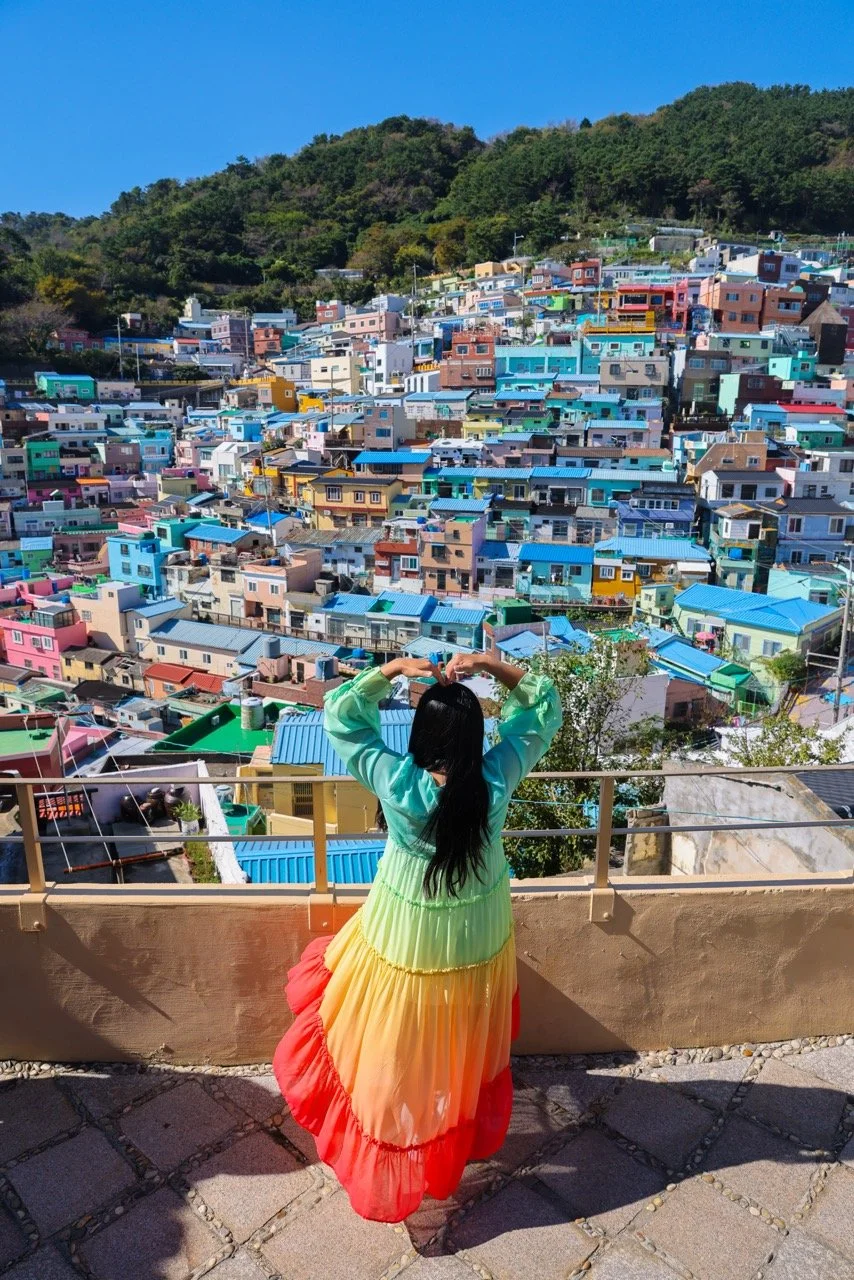
Gamcheon Culture Village in Busan, Korea.
When Lily Yu and her husband, Daniel Heidemeyer, both deaf individuals, began sharing travel photos on social media in 2018, she didn’t expect it to grow into a viral movement and a new career opportunity. What began as a private account for friends and family soon evolved into Deaf Journey, a travel media brand focused on sharing accessible guides, amassing over 100,000 followers across Instagram, Facebook, TikTok, YouTube and her blog.
Yu’s mission goes far beyond that of a typical content creator focused on travel. As a deaf traveler, she’s become a leading advocate for accessible travel, working to ensure that deaf and other disabled individuals are considered and included in every part of the travel experience, from hotel rooms to museum tours. “I want to make sure traveling is accessible for the deaf community,” Yu says. “That means having interpreters, flashing light fire alarms and visual doorbells in hotels, and captions or transcripts in museums and tours.”
Yu was raised on the East Coast and is a graduate of Gallaudet University, America’s only liberal arts university for the deaf. She began her travel content journey by posting photos from her trips for close friends. “People would ask, ‘How did you find that place?’” she said. “So I kept sharing, and then my husband and I created a public account. That’s when Deaf Journey really began.” Since then, the couple has traveled across all 50 U.S. states, partnered with nearly 40 tourism boards and visited 54 countries. Her husband often handles videography, while Yu takes the lead on editing and blogging. “I love writing and sharing stories that not only inspire but also educate,” she said.
Traveling while deaf presents unique challenges. Yu pointed out that travel accessibility tends to focus on mobility, including ramps, elevators and wheelchair access, but often allowing deaf-specific needs to fade into the background. “Hotels might have accessible rooms for wheelchairs, but nothing for deaf people. When we’re showering, we can’t hear someone knocking or a fire alarm going off,” she said. “I give advice to hotels about things like flashing light signals, visual doorbells or providing video relay services with interpreters.”
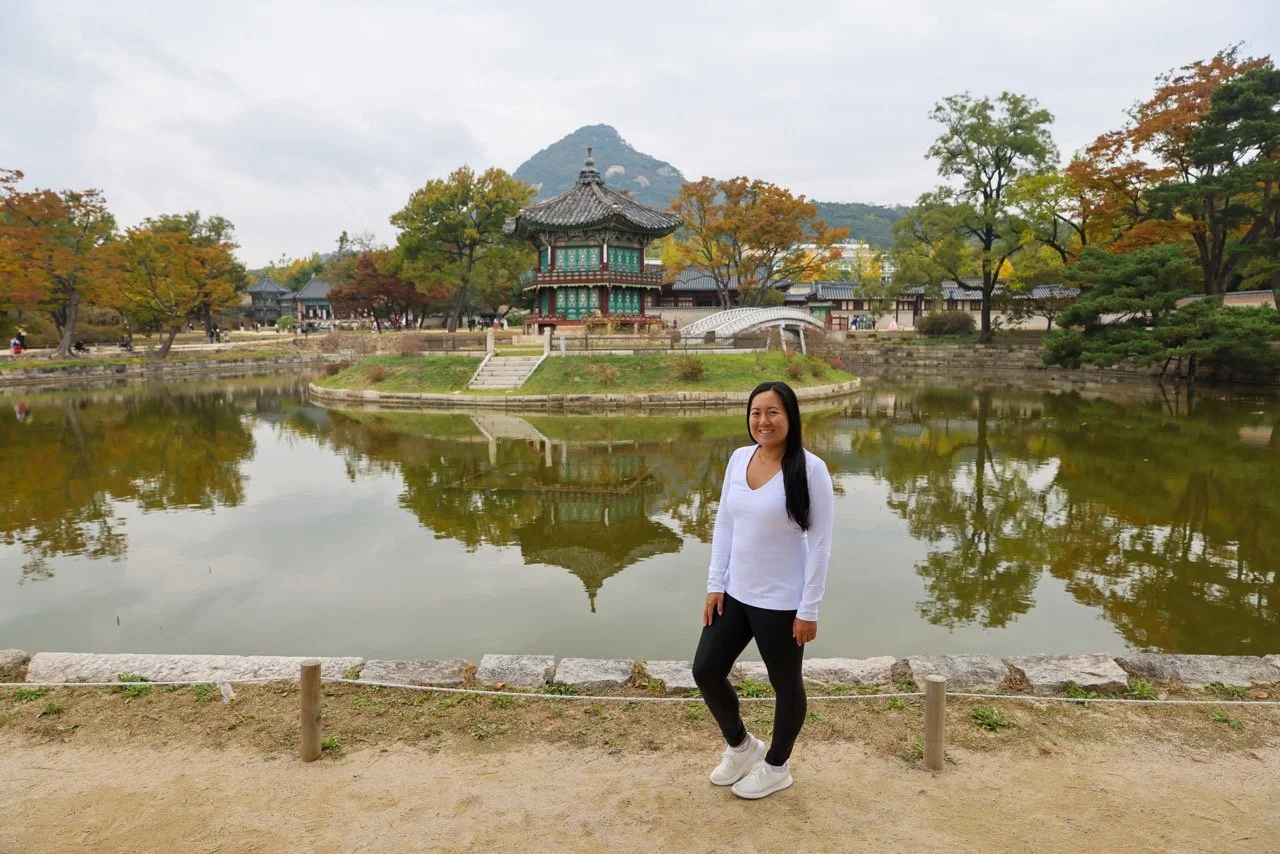
Gyeongbokgung Palace in Seoul, Korea.. Courtesy of Lily Yu.
From the sweeping beauty of national parks to hidden small-town charm, Yu's adventures have offered a broad view of the diverse travel landscape available within the United States. She described the natural beauty of Hawaii, noting the islands as one of her favorite destinations within the U.S. However, Yu was also surprised by smaller cities like Boise, Idaho, and Bentonville, Arkansas. “Boise had amazing food and outdoor activities. Bentonville really impressed me with its modern art museums and bike trails,” she said. “Every place is different, and that’s what makes traveling here so special.”
While visiting every corner of the U.S. was her first major travel goal, Yu is now setting her sights globally. She’s already visited 54 countries and has noted Japan as a particular champion of accessibility. “In Japan, even the soda cans have braille,” she says. “Crosswalks have both visual lights and floor indicators, which are helpful for blind travelers too. And in hotels, you can select your language on digital screens to communicate. I’ve never seen that level of accessibility before.” Yu also shared how museums in places like Ireland and Boston have become exemplary leaders in the world of accessibility. “During our trip to Ireland, the Guinness Storehouse provided us with an iPad featuring an International Sign interpreter. I’m also fluent in International Sign, which is different from American Sign Language (ASL). In Boston, there was a deaf guide giving an ASL tour. That kind of access makes a big difference.”
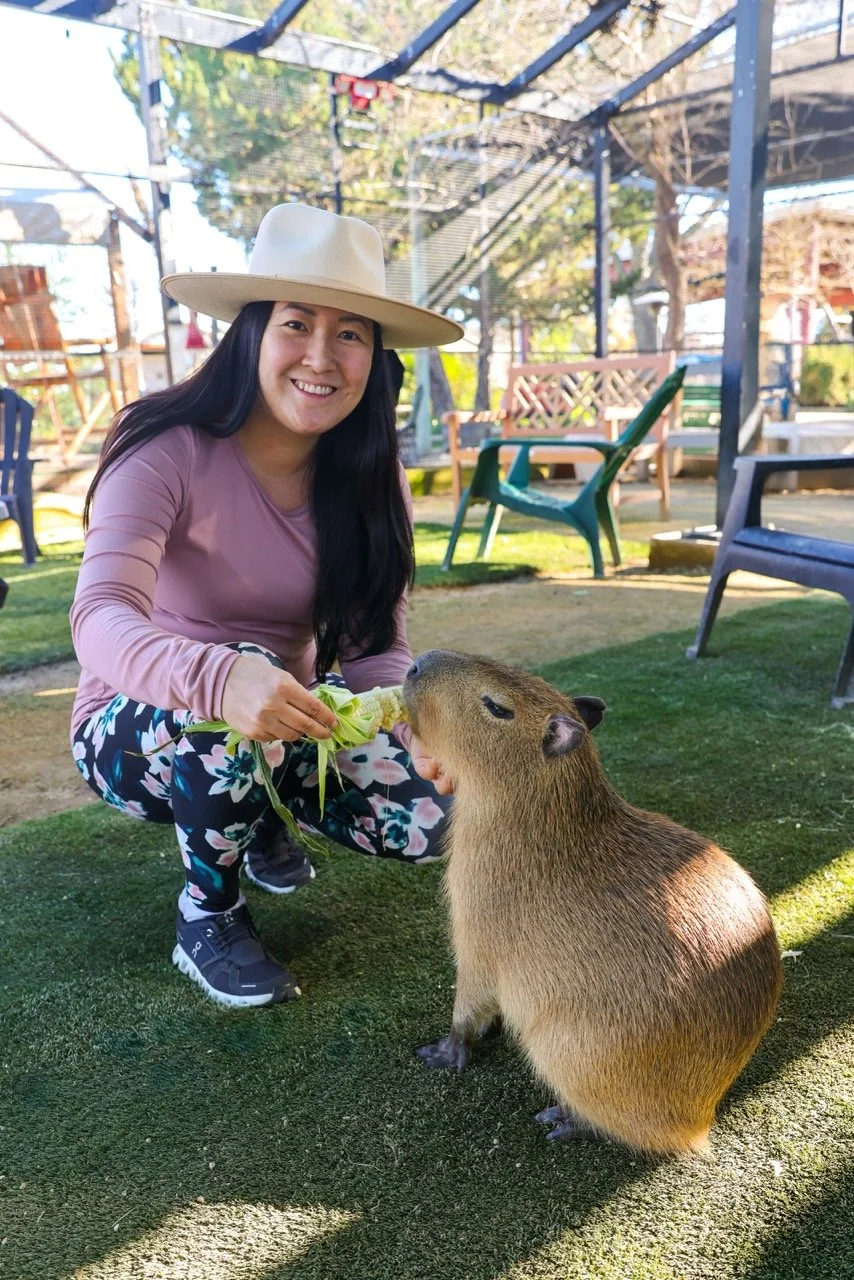
Yu with a capybara at Zoo to You in Paso Robles, California. Courtesy of Lily Yu.
Yu’s vision for Deaf Journey is not just to document her own experiences as a deaf traveler and content creator, but also to provide ease for future travelers. She’s passionate about providing accessibility tips, raising awareness on social media and consulting directly with businesses. “I think spreading awareness is key,” she says. “We need to educate hotels, airlines, museums and tourism boards on how to be more inclusive. And we need to share both the positives and the gaps, what works and what doesn’t, so we can keep improving.” Yu also emphasized the importance of using respectful and inclusive language. “We prefer to be called ‘deaf,’ not ‘hearing impaired,’” she said. “That term feels outdated and even offensive within our community.”
After conquering all 50 states, Yu’s next challenge is tackling the rest of the world, one accessible destination at a time. “I haven’t made a full plan yet,” she said. “TBut I’m hoping to partner with more tourism boards internationally. There’s still so much work to do.” With every post, blog and video, Lily Yu is proving that travel doesn’t have to be outside of the realm of possibility for disabled adventurers. It can, and should, be made accessible for everyone.
Zoe Lodge
Zoe is a student at the University of California, Berkeley, where she is studying English and Politics, Philosophy, & Law. She combines her passion for writing with her love for travel, interest in combatting climate change, and concern for social justice issues.
7 Less Traveled Wonders of the Natural World
As urban spaces dominate more and more of the world, it is important to remember the natural beauty the Earth has to offer. Here is a list of 7 less popular but equally enchanting wonders.
Read MorePhotographing the World With Laura Grier
Zoe Lodge
A peek into the fascinating life and career of a travel photographer.
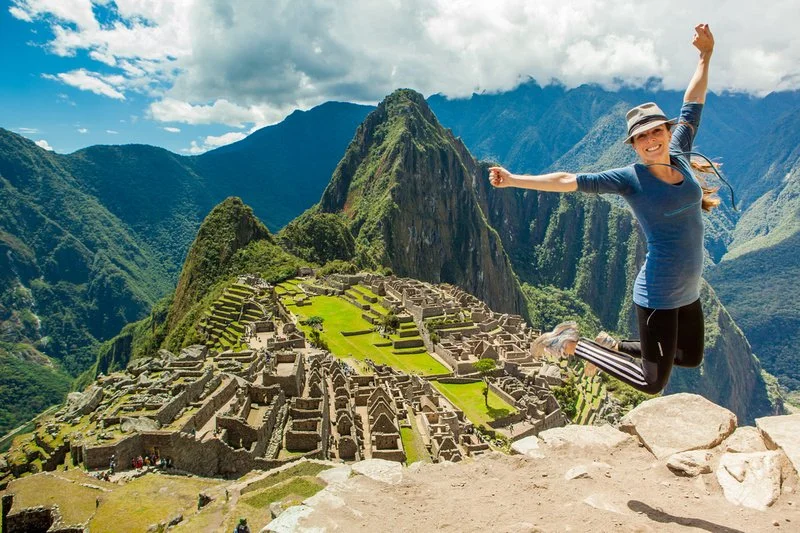
Laura Grier in Peru. Courtesy of Laura Grier.
Having visited over 100 countries across all seven continents, photographer Laura Grier has hardly been chained to a desk throughout her career. Raised by two parents in the CIA, Grier was exposed to global travel at a young age. She spent part of her youth living in Jakarta, Indonesia, where her parents encouraged her to embrace travel and global living. She always knew that she didn’t want to spend her life in an office, and her dream career was something of a treasure hunter. “I was always interested in being sort of an Indiana Jones-like archaeologist, or a Jacques Cousteau marine biologist,” Grier said. “I’ve always been really interested in exploring the world and knowing more about it in general.” Her avenue to do so ended up being photography, which has enabled Grier to visit 101 countries and all seven continents to date. She hit the 100 mark last year, visiting 10 new countries on a road trip through Eastern Europe, primarily the former countries of Yugoslavia. Now, Grier’s work is concentrated around her social enterprise, Andeana Hats, and leading philanthropic group trips. “I’m bringing a group in September to Greenland and Iceland, meeting about 25 people, doing thought-provoking conversations, fun adventures, and photo shoots along the way.”
Grier discovered her passion for photography at 13 years old, after realizing she disliked being confined to a lab in science class. Encouraged by her mother, she pursued photography as a creative outlet and career path, eventually earning a dual degree in photojournalism and art photography from Syracuse University. Studying abroad in London and Florence deepened her love for travel, and she began photographing weddings in Europe while visiting her sisters. Offered a CIA job after college, she instead moved to Los Angeles, working at a photography studio and bartending to support side shoots. She launched a wedding photography division, eventually breaking into celebrity and destination weddings, which propelled her career into extensive global travel. “I love it because it's never the same thing. Like, that whole idea where I can't be stuck in an office and do the same thing every day—this is definitely the perfect kind of job for me,” she said. “It's never the same assignment or place you're going to or whatever, but it is a hustle.”
National Geographic brought Grier to Peru, which she noted as being one of her favorite destinations due to the country’s diversity, both in landscape and culture. “There are not many places in the world I like going back to, and I go back to Peru over and over,” Grier said. “It has anything you could possibly want. There are mountains that look like the Swiss Alps, the Amazon jungle, the most incredible ruins and culture, and deserts that look like the Sahara.” She recounted her first visit to Peru, where she had a “magical experience” swimming with pink Amazon river dolphins and piranhas at the Treehouse Lodge, nestled deep in the Amazon rainforest.
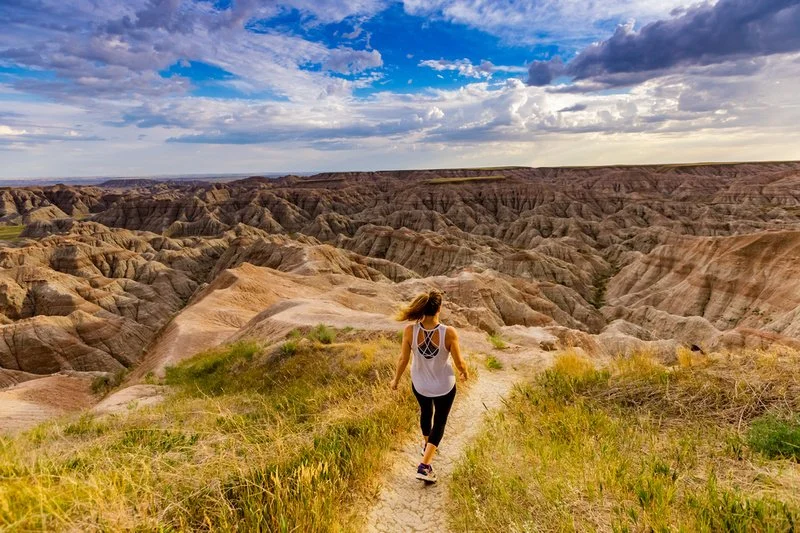
Laura Grier on a hike in her travels. Courtesy of Laura Grier.
Grier also holds a certain fondness for the places she has visited that are virtually untainted by human development, such as the Galapagos Islands or Antarctica. “Going to Antarctica was really, really special for me,” she said. “It was so mountainous and so pristine and the water was like nothing I’ve ever seen anywhere else in the world. It’s kind of magical to see that much vast, untouched land.” Grier visited Antarctica on a cruise, joining a small fraction of the population who have visited the remote continent. “There aren’t many places left on the planet where animals aren’t afraid of you,” she said, impressed by the almost complete lack of human impact. She had a similar experience when visiting the Galapagos Islands, saying, “It’s that same feeling [as visiting Antarctica] where you’re really part of nature.”
Upon establishing herself as a travel photographer, Grier reconnected with National Geographic, where she had previously worked. She began shooting for Novica, National Geographic’s artisan catalog, sparking her next big project, shooting “vanishing crafts” worldwide. Her work with artisans through National Geographic led her to an entirely new endeavor in Peru, which has become one of the most impactful places that Grier has visited in her career. Seeing an opportunity to share a cultural craft with the world, Grier and a friend launched a social enterprise called Andeana Hats to support female artisans in Sacred Valley, Peru, who have limited income opportunities, selling their handcrafted hats abroad and returning a much more significant profit to the artisans than they would have received through National Geographic or other large-scale artisan catalogs.
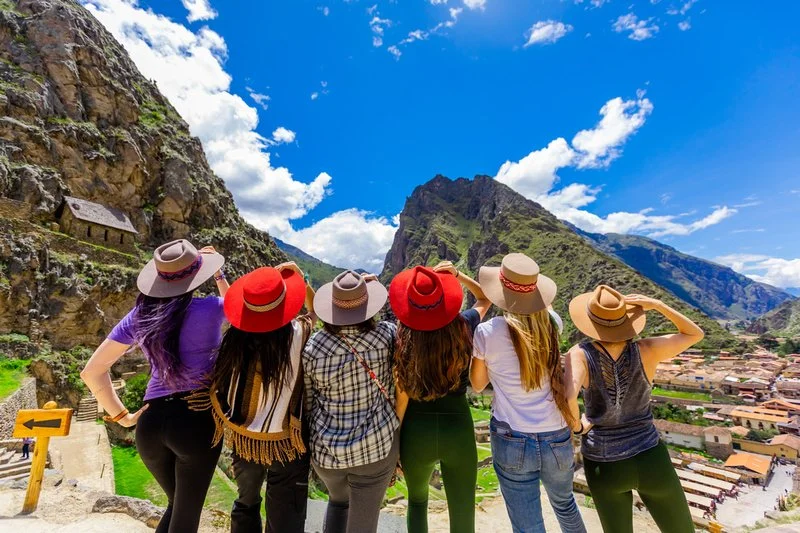
A group wearing hats and intention bands in Peru. Courtesy of Laura Grier.
The hats and their “intention bands,” which are decorative bands that carry unique designs and meanings derived from the Quechua language, help keep Indigenous Peruvian culture and history alive. “It first started off as what I thought would be a pretty simple passion project, and now it's taking over my house and my…everything,” she said. “I'm flying all over the world and doing markets and schlepping hats and meeting with artisan groups and it's really fun, but it's a lot of work.” Despite the challenges, Grier finds fulfillment in her work, knowing it creates a positive impact by benefitting these female artisans directly. Through it all, her career seems to keep circling back to National Geographic, the organization that shaped her path early on. “It’s funny because it just keeps on coming back full circle to National Geographic.”
Zoe Lodge
Zoe is a student at the University of California, Berkeley, where she is studying English and Politics, Philosophy, & Law. She combines her passion for writing with her love for travel, interest in combatting climate change, and concern for social justice issues.
The Case for Slow Travel
While many travelers hope to get the most out of their journey with faraway plane rides, consider slowing down and finding your way to the road less traveled.
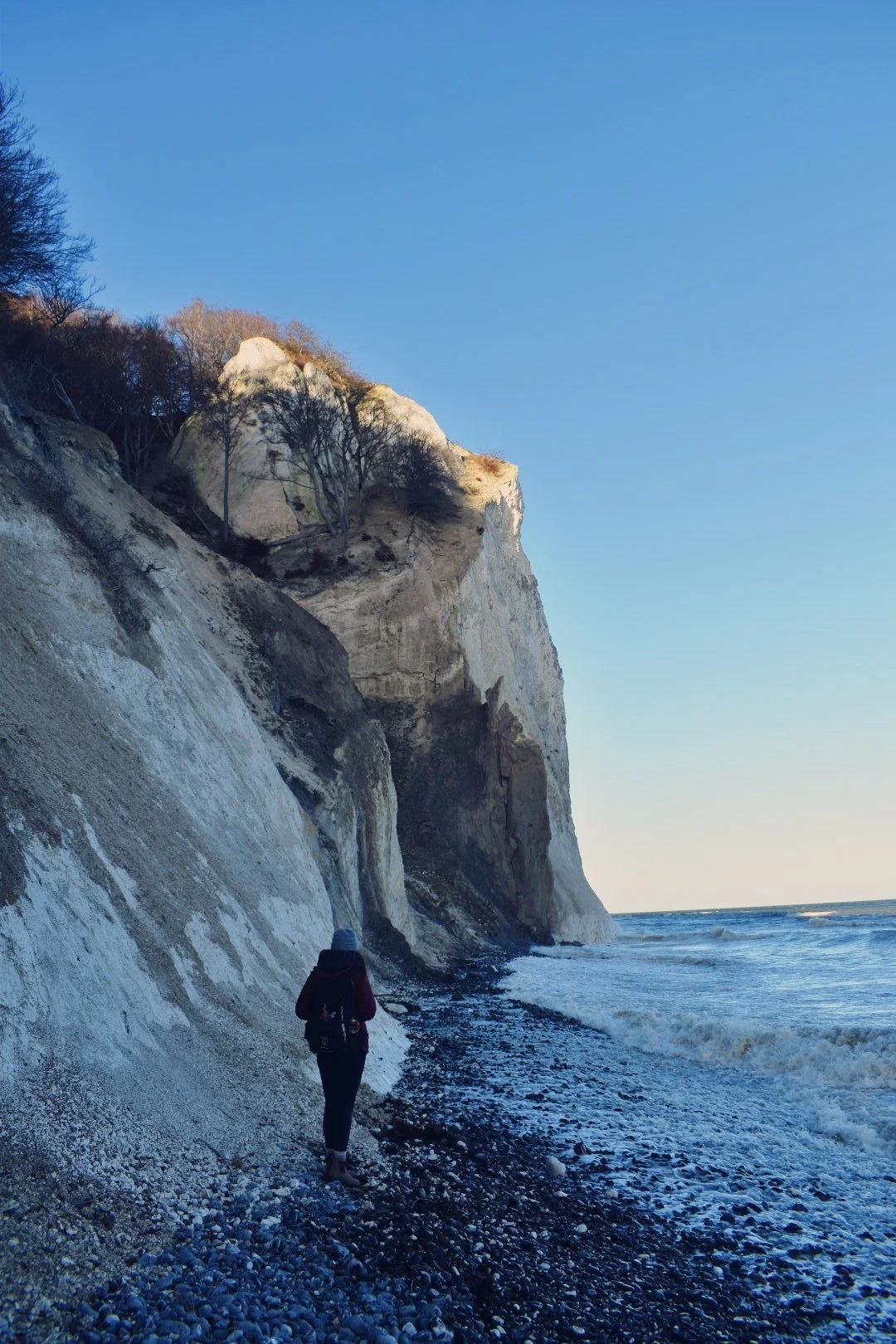
Walking on the beach at Møns Klint. Libby Scaperotta.
In the spring of 2022, I studied abroad in Copenhagen. My friends and I took advantage of the amazing public transit and metro system to get nearly everywhere. So, when it came time to plan an adventure to the limestone cliffs of Mons Klint, we didn’t even consider renting a car. Instead, we quickly opened our phones to the public transit app to route our trip the night before.
It’s the next morning, and the clock strikes 4:55 a.m. My roommate and I bounced out of bed, hopping into the clothes we had laid out the night before and grabbing our pre-packed bags before heading next door to knock on the neighbor’s apartment. With some begrudging groans from the boys next door, in under 10 minutes we were out the front door and headed toward the metro station.
Our journey began with a metro ride, two trains and two buses. After being dropped off and walking a short distance to the next bus stop, we waited patiently for what we thought would be the last leg of our trip, which never came. We had miscalculated a seasonal closure of part of the route’s timing. This led to the eight of us walking the last three kilometers of the trip on a beautiful sunny day in the Danish countryside. We walked among neighborhoods with quaint homes, beside farm animals and through pastures until we were dropped off at the magnificent cliffside of Mons Klint.

A friend walking along the backroad in the Danish countryside during our adventure to Mons Klint. Libby Scaperotta.
We repeated this process backward at the end of the day. But, as we waited at bus stops and train stations while the sun set, we giggled, shivered, danced and dreamed of a large pizza.
Although this journey to Mons Klint would have taken probably a quarter of the time had we just rented two cars for the group, the day’s adventure was unforgettable.
When traveling, we often try to maximize our two weeks of paid time off with ambitious plans to travel far by plane or private vehicle.
Yet, I am here to convince you to try slower travel. Try taking public transit instead of driving and see where the adventure may lead you. Or, try slowing down on your backpacking trip and volunteer in an area instead of packing up so quickly.
Traveling slowly is not only less costly for your wallet but also for the environment. My first introduction to a flight emissions calculator was a deeply upsetting experience that made me reconsider how I fly. Slower travel, which emphasizes public transport or staying in one place, may be a better option for eco-conscious travelers who hope to explore while still being mindful of their carbon footprint.
If you are interested in slowing down your travels, I highly recommend a volunteer experience or work exchange. These will allow you to stay in one place and save on accommodation and meals while immersing yourself in an area’s pace of life and community. From there, you may be able to take short day trips or weekends away in areas that you may have never otherwise explored. There are several platforms that my friends and I have used to find and plan work exchanges: WWOOF, Workaway and Worldpackers.
You can even integrate slow travel into your daily life. Grab your local public transit card and explore the destinations you may get to by bus or train! You might find a sweet town, a new beach or an adventure within arm’s reach.
Slowing down can be good for you and the earth. And, it may even allow you to decide for yourself if exploring the road less traveled does make all the difference.

Libby Scaperotta
Libby is a recent graduate from Middlebury College, where she studied Environmental Policy and Geography. She enjoys travel, photography, and spending time outdoors with people she loves. She plans to pursue a career dedicated to environmental work and wishes to share important stories that may inspire action.
Switzerland: A Hub of Sustainable Travel
Experience the best of Switzerland’s stunning landscapes and sustainable travel options through its extensive and efficient public transportation network, offering seamless access to scenic destinations while minimizing environmental impact.
Read More