South Sudan Faces Severe Flooding Due to Climate Change

The consequences of climate change have already ravaged communities across the globe, with the poor dealing with the brunt of the damage. Record-breaking floods in South Sudan have proven that the young nation is no exception. 
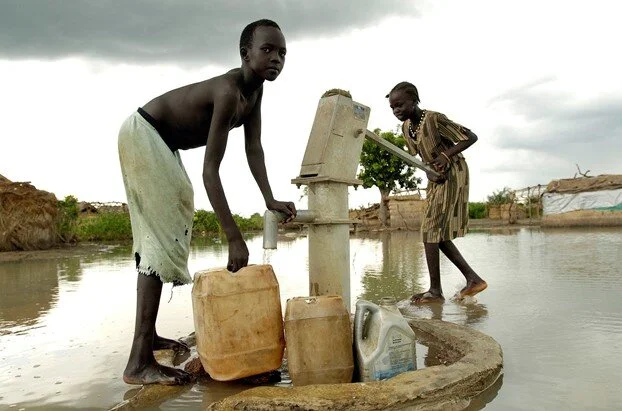
Children fetching water during flooding. United Nations. CC BY-NC-ND 2.0. 

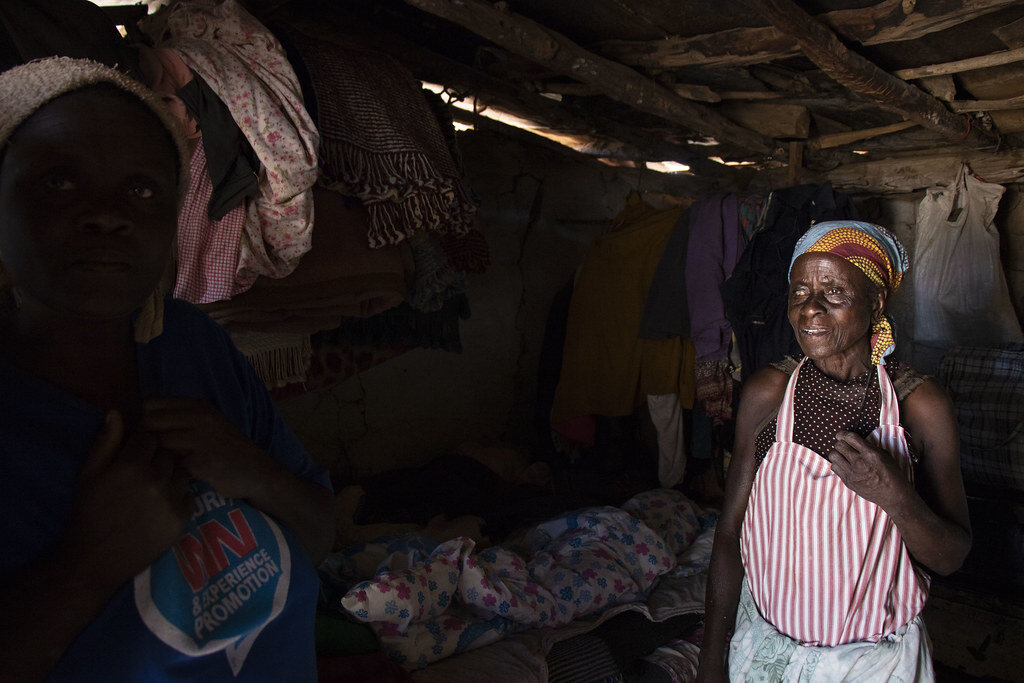
Devastated by the repercussions of civil war and an acute poverty problem, South Sudan faces yet another alarming episode in its ongoing humanitarian crisis. For the past six months, South Sudan has faced the worst flooding that the region has seen in 100 years. Since June 2020, the nation has been overwhelmed by rapid flooding of the Nile, Pibor and Sobat rivers. Humanitarian experts found that over 1 million people have been affected, with nearly half of these victims originating in Jonglei state. 

Jonglei has easily become the worst area hit by these floods, with entire villages submerged if not entirely washed away. So far, the count for those displaced is nearing 500,000. The floods have ruined farmland and drowned cattle, causing both short- and long-term threats to communities; nearly 90% of South Sudanese rely on farming for income. The displaced have been left to swim through chest-deep waters in search of aid to fight famine or waterborne diseases that are exacerbated by the floods. Those affected now wait eagerly for medical aid by humanitarian agencies, taking themselves and their families to higher and drier land. 
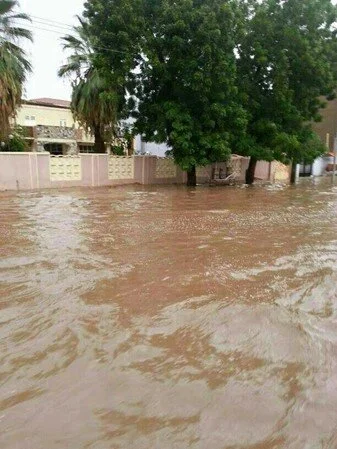
Street flooding. nafeersudan. CC BY 2.0. 

Although South Sudan has always experienced a dramatic rainy season, weather data shows that climate change has profoundly contributed to the record-breaking floods of this past year. Increased precipitation found in nearby areas increased the water flowing through the nation’s rivers, thereby increasing the flooding that ravages the country. Not only has climate change increased the severity of the flooding, but it has reduced the communities’ abilities to recover. Since 1980, an increased annual temperature has rendered the nation’s dry season even drier, which has fed into the area’s social, political and economic instability. With unprecedented flooding now in full swing, the nation’s weak infrastructure has now broken under the pressure. 

The COVID-19 pandemic has also aggravated both the damage among villagers as well as aid availability. Pandemic regulations have restricted help from other countries; due to lack of funding, victims are unable to decipher which disease they are suffering from. Relief packages by humanitarian agencies such as Cordaid have arrived in Bor, the capital of Jonglei state. Aid workers have expressed extreme stress with the current situation, many voicing concerns that an inability to meet long-term solutions will result in harsh consequences. For instance, aid workers have advised that a reliable clean water supply is essential; otherwise the availability of drinking water will continue to diminish rapidly. 

A battle between climate change and humanitarian efforts has characterized the history of this new nation. South Sudan has a long road ahead, but there is hope that stability will be regained and long-awaited peace will finally be restored. 



Ella Nguyen

Ella is an undergraduate student at Vassar College pursuing a degree in Hispanic Studies. She wants to assist in the field of immigration law and hopes to utilize Spanish in her future projects. In her free time she enjoys cooking, writing poetry, and learning about cosmetics.

China Weaponizes Tourism to Erase Uyghur Culture

8,000 Uyghur mosques have been destroyed, and cafes and bars have taken their place, as China’s Han majority ethnic group flock to Xinjiang for its natural beauty. Mosques left standing have become museums catering to Han visitors, and religious pilgrims are turned away.

Read More

Zimbabwean Teens Kick Away Child Marriage with Taekwondo

One town in Zimbabwe has learned to bear the weight of history by “kicking” child marriage customs away. 

Zimbabwean woman. ScotchBroom. CC BY-NC 2.0. 

In the small settlement of Epworth southeast of Harare, Zimbabwe’s capital, is a growing community of taekwondo enthusiasts. One member, 17-year-old Natsiraishe Maritsa, has taken it upon herself to organize taekwondo classes for the girls of her community. The participants of her classes are underage girls, some as young as 10, who have been subjected to the harrowing practice of child marriage that plagues Zimbabwe. 

The Statistics

Child marriage is a tradition practiced all around Zimbabwe, but it runs particularly rampant in rural areas. The Zimbabwean countryside was found to have a child marriage rate of about 40% compared to the urban areas that show a rate of 19%. 

In Zimbabwe, 34% of girls are married off before the age of 18, while another 5% are married before the age of 15. The issue of child marriage, although an occurence involving mostly underage women, affects more than just women. About 2% of boys are forced into the practice before the age of 18. 

Complications of Elimination

The task of eliminating child marriage has proven to be especially difficult due to the many conditions and societal beliefs that worsen girls’ ability to escape the practice. There are four main reasons that girls are easily trapped in the tradition: 

First, gender inequality ranks women as inferior to men, thereby allowing the men of the family to force the women into submission. 

Second, and a particularly large piece of the problem, is poverty. The practice of child marriage is often used as an economic tool; the price for a bride is used to cover household expenses. Because marrying off daughters of the family can be the decision between life and death, the pressure to commit these practices is often insurmountable. With poverty increasing due to COVID-19, this problem has become particularly difficult. 

Third, the need to avoid shame causes many families to marry off their daughters. In Zimbabwe, the act of a daughter committing premarital sex is seen as shameful to the family, so it is resolved by forcing the daughter to marry her boyfriend. The girls will submit to these demands, especially if they became pregnant, in order to avoid abuse by their family members. 

Fourth, a lack of education pushes girls into the trap of child marriage. Many poorer households are unable to pay for their daughters to attend school, which increases the risk that they will be forced into a marriage. 

It is an oppressive cycle. Studies find that poverty causes child marriage, and in return, child marriage feeds into poverty. 

Seventeen-year-old Maritsa has chosen to use taekwondo education to empower the girls of her community, hoping they can use their newfound confidence and skills to reshape their futures. She holds classes in a small dirt yard in front of her house, while her parents use their small income to supply some food for the attendees. 

Maritsa’s class has proven to be empowering, with each class used as a safe space for girls to talk about the physical, mental and emotional abuse they endure from their husbands. 

She has proven that although oppressive practices are formidable opponents, the power of education and community can undo even the most controlling traditions. 

To Get Involved

Nonprofit organization FORWARD is led by African women seeking to end violence and the oppression of women in Africa, including child marriage. To read more about how to lend a hand, click here

Global partnership Girls Not Brides has combined the efforts of over 300 organizations dedicated to empowering women on nearly every continent. To see how you can support bills and other legislation they are pushing, click here


Ella Nguyen

Ella is an undergraduate student at Vassar College pursuing a degree in Hispanic Studies. She wants to assist in the field of immigration law and hopes to utilize Spanish in her future projects. In her free time she enjoys cooking, writing poetry, and learning about cosmetics.
Fighting for Freedom: Uganda’s Election and the Internet Shutdown 

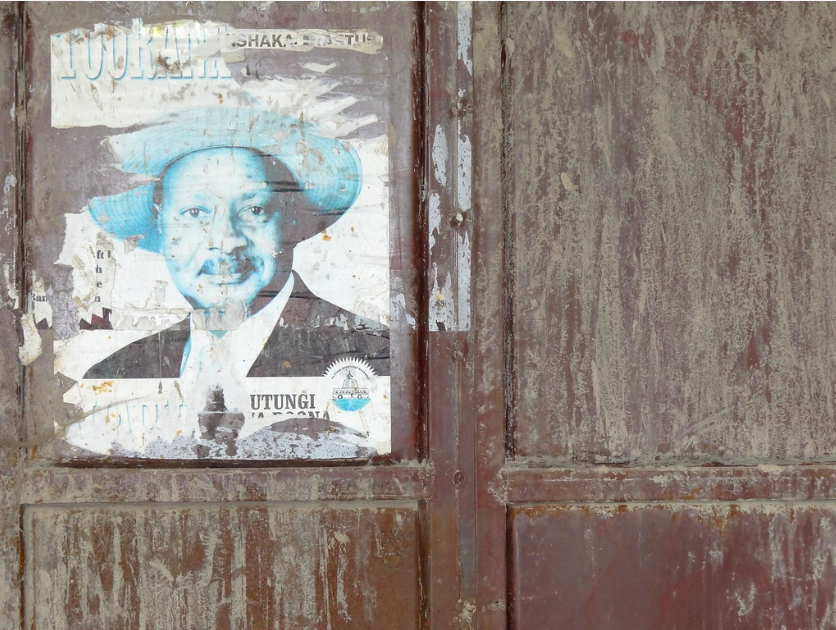
In southwestern Uganda, a wall with a faded poster of President Yoweri Museveni represents how long his presidency has continued. Adam Jones, Ph.D. - Global Photo Archive. CC BY-SA 2.0

In Uganda, a tumultuous victory for President Yoweri Museveni was declared on Jan. 17. This victory comes after weeks of tension and strife surrounding the election and its validity. Museveni won his sixth term in office at the age of 76 against Ugandan pop singer Robert Kyagulanyi who goes by the stage name “Bobi Wine.” Wine, 38, claims he ran as a voice for the youth, a significant position in the country as its median age is 16.   

Wine does not believe the electoral results were fair, despite the president claiming this election to be the “most cheating-free” in Uganda’s history. The claims of fraud are not a surprise as Museveni is notorious for his actions against opponents including jailing them and arresting protesters. The current suspicions around this election’s validity lie in two major factors: the large military and police presence during voting as well as the mass internet and social media shutdown in days leading up to the election. 

This is not the first time during elections that Museveni has shut down the internet or blocked messaging applications like WhatsApp. This internet shutdown severely damaged Wine’s campaign as he did not have access to campaigning through traditional outlets controlled by Museveni. Not only did it cost Wine his campaign, but it cost Uganda itself over $9 million according to Netblocks, an internet freedom monitor. CIPESA, an African internet nongovernmental organization, reports that both biometric voting systems and mobile money—a payment form relied upon by many Ugandans—were disrupted by the shutdown as well.                                      

Luyimbazi Nalukoola, a legal adviser, speaks with Bobi Wine. Mbowasport. CC BY-SA 4.0

Beyond the blocking of the internet come the physical barriers to voting put in place by Museveni. In a telephone interview with BBC World Service, Bobi Wine said he and his wife were being kept in their home by soldiers, with no allowance to leave. He said, "Nobody is allowed to leave or come into our house. Also, all journalists—local and international—have been blocked from accessing me here at home.” Members of Wine’s party are also experiencing this. One of the party’s Parliament members, Francis Zaake, was violently arrested on Friday while trying to access their Wine’s compound. He was beaten by security forces so badly that hospitalization was required, according to party spokesman Joel Ssenyonyi. 

Even Ugandan voters could not safely vote out of harm's way as the BBC's Patience Atuhaire reports from the capital, Kampala, that “as vote counting began, lorries carrying soldiers drove through the city and police and local defense units were also seen patrolling.” 

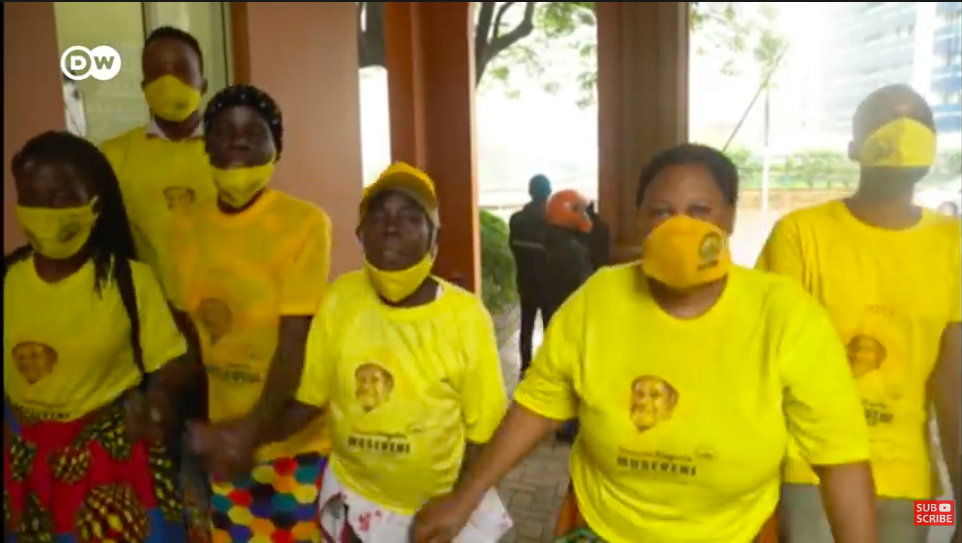
A group of men and women protesting the election in Uganda. DW Africa. YouTube

Many believe that this is life under an authoritarian regime, as Museveni’s presidency has often been called, and the utilization of internet blocks and physical force to suppress votes and muddy elections confirms this. So far, despite the turmoil, Ugandan people have not received assistance from international organizations designed to protect elections. African organizations are reporting conflicting observations as well, making it difficult to determine if intervention is appropriate. One group, the Africa Elections Watch coalition, said their 2,000 poll observers did observe irregularities, but the East African observer missions and those from the African Union said voting was largely peaceful. 

What is apparent is the suppression of Ugandan votes leading up to this election even if not witnessed firsthand by organizations. This is known to be true because in November, The Associated Press noted that at least 37 had died while protesting the election, and the number has grown but remained unconfirmed since. Now, many Ugandans continue their fight against an election result that is still unconfirmed to them despite their president’s claims. 


Renee Richardson

Renee is currently an English student at The University of Georgia. She lives in Ellijay, Georgia, a small mountain town in the middle of Appalachia. A passionate writer, she is inspired often by her hikes along the Appalachian trail and her efforts to fight for equality across all spectrums. She hopes to further her passion as a writer into a flourishing career that positively impacts others.

Middle Eastern Countries Combat Stigma Surrounding Mental Health

While the stigmatization of mental health issues is common worldwide, sociocultural factors specific to the Middle East often prevent individuals from seeking treatment.

A drawing depicting mental health issues. Pixabay.

Mental health services are more urgently needed now than ever before. The world is currently facing a mental health epidemic, with over 264 million people struggling with depression in 2019. The additional stress and uncertainty caused by the COVID-19 pandemic have caused anxiety and depression levels to skyrocket. For many individuals, it has become even harder to participate in counseling programs. According to the World Economic Forum, over 93% of countries have reported a disruption in their mental health services since the pandemic started. 

In the Middle East, mental health awareness continues to rise, especially in the Gulf countries among the nations’ youth. A recent poll conducted in the Gulf region reported that 62% of youth agree that mental health issues are important. Even so, a recent survey in Saudi Arabia revealed that 80% of people struggling with severe mental health issues do not seek treatment. Similarly, this year’s Arab Youth Survey, which interviewed 4,000 young adults ages 18-24 from 17 Arab countries, revealed that mental health issues are rampant, with the number of people affected continuing to rise. 

Difficulties in Obtaining Proper Mental Health Care

The Kaaba in Mecca, Saudi Arabia, the holiest site in Islam. Konevi, Pixabay.

A prevalent culture of stigmatization in Middle Eastern countries prevents many individuals from seeking treatment in the first place. Due to the shame associated with mental health issues, privacy between the client and their mental health professional is of utmost concern. In many cases, mental health issues place a burden on a family’s reputation and social status. Rania Raine, a 43-year-old British-Egyptian art teacher who struggles with mental health, states that, “It’s the ‘shame’ families have, that their child isn’t perfect, that their lives are not perfect and what will people say, what will the neighbors say, society say–and then it all leads to marriage, how no one will marry the child who has a mental health condition, or worse still, ruin the chances of marriage of the other siblings.” 

Although the stigmatization of mental health conditions is common in Muslim communities, Ph.D. researcher Mounira al-Dousari states that they are “reflections of cultural practices and discourse.” There is a growing movement among mental health professionals to include faith in therapy, which results in a faster recovery for some clients. It’s also important to note that many forms of therapy use predominantly Western practices, which need to be diversified to appeal to a larger audience. According to Dousari, “When it comes to Islam, Muslim scholars and those working in the mental health field are working harder than ever to establish well-structured Islamically integrated psychotherapy models.”

Additionally, the financial burdens of seeking mental health treatment raise another concern. Even though mental health care is free in some public hospitals, many people do not trust them due to privacy concerns. Prices for private mental health care sessions are quite expensive. For example, Dousari’s research sessions cost $225 an hour, a large sum even for well-off families. 

Historic Treatment of Mental Illness in the Middle East

An entrance to the Moristan of Kala’oon, a mental health hospital in Egypt, 1878. Werner. CC2.5

Although mental health remains a prevalent issue in the region, the Middle East was well known for mental health treatment during the Islamic Golden Age. The term bimaristan, Persian for “home for the sick,” refers to entire psychiatric hospitals where a patient’s mind, body and soul were considered part of the treatment process. First opened in Fez, Morocco, and in Baghdad in the eighth century and later in Cairo, Damascus and Aleppo in the ninth, the practice was initially introduced by physician Ahmed ibn Sahl al-Balkhi. A famous manuscript written by Balkhi called “Sustenance for Bodies and Souls” was written in clear, understandable language and helped make mental health education more accessible to the public. Unfortunately, the practice declined throughout the centuries and does not occur in the mainstream today. 

Additionally, Dr. Mamoun Mobayed, director of the treatment and rehabilitation department at Behavioral Healthcare Center in Qatar, emphasizes that the stigmatization of diseases is a global phenomenon. “Any disease thought to be infectious or bizarre-looking, like leprosy, has always been stigmatized. Even with COVID-19, there have been cases where paramedics working with COVID-19 patients have been avoided due to the fear and stigma attached to the virus.”

In recent years, mental health awareness in the Middle East has become a top priority, with many countries starting their own wellness initiatives and campaigns. 

Qatar Paves the Way in the Gulf

Sidra Medical and Research Center in Qatar. Sergeev. CC3.0

Qatar launched a new mental health program in conjunction with World Mental Health Day. Being the first country in the Gulf to start such an initiative, the Wellness Ambassadors program aims “to promote mental health support and break the stigma attached to mental health conditions at school level.” Program ambassadors received comprehensive training on mental health issues such as anxiety, depression and bullying while breaking cultural misconceptions surrounding mental health. Dr. Mobayed states that educating individuals about mental health issues serves “to remove the barriers associated with mental health and know they are normal humans with a disorder in the mind.” 

Turkish Counseling Services Provide Assistance

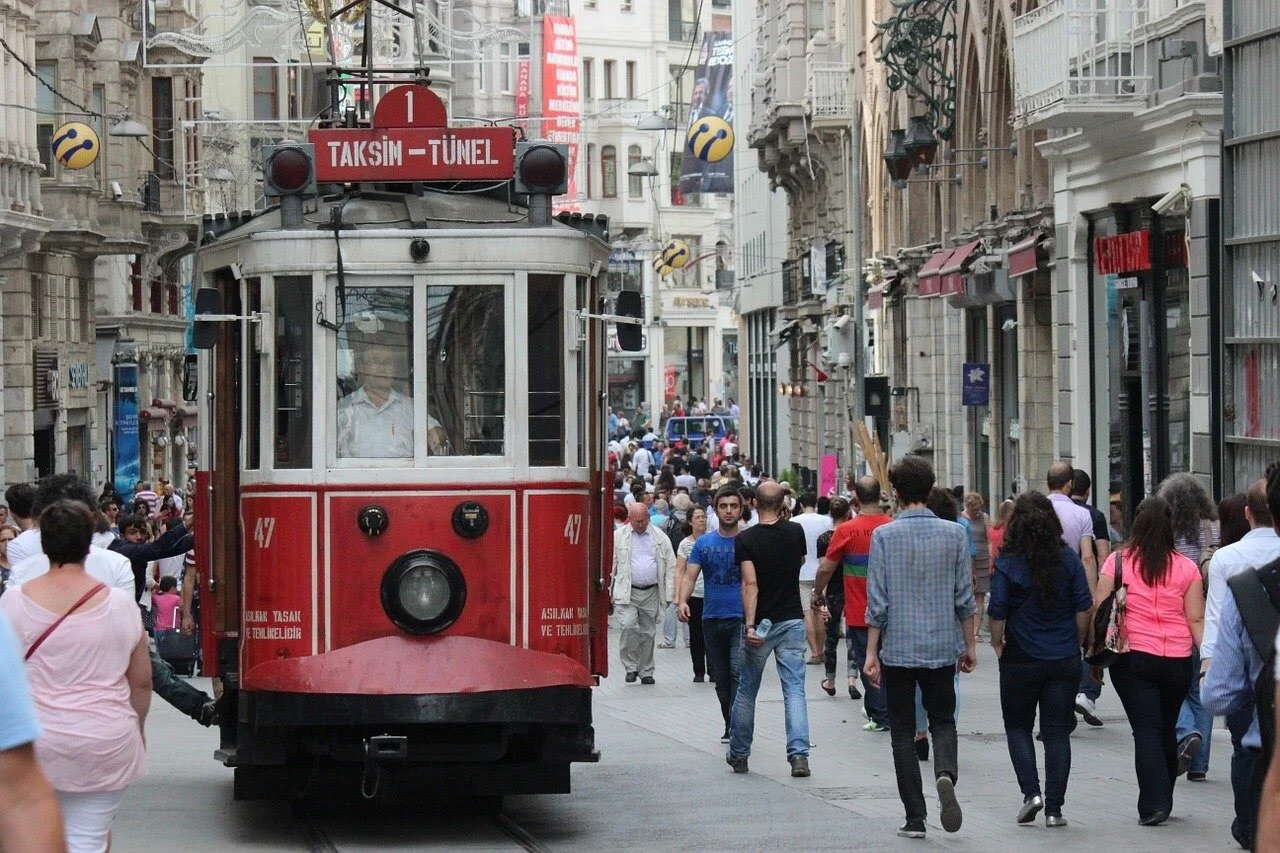
Taksim Square in Istanbul. Pixabay.

A crisis helpline in Turkey helps those struggling with mental health issues during the pandemic. Supported by the World Health Organization, the service is accessible in all of Turkey’s 81 provinces and consists of 418 staff members trained in helping individuals manage stress and access mental health resources. So far, the service has offered more than 80,000 consultations since its inception. 

Social Media Campaigns in Kuwait Lead to Legislative Action

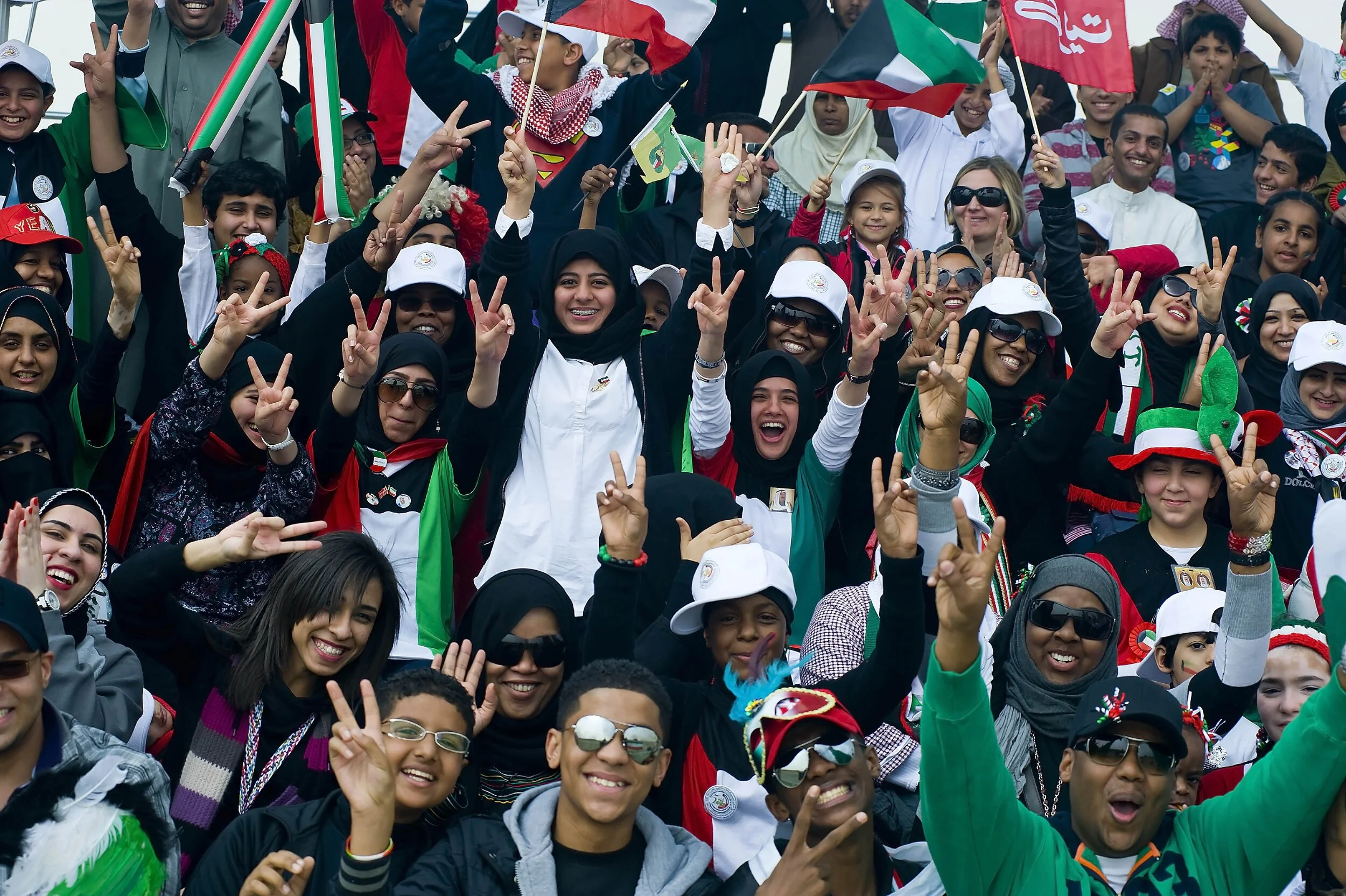
Youth in Kuwait. Wikimedia Commons. CC2.0

Kuwait enacted its first mental health law in 2019, which passed unanimously through the national assembly. Instrumental to this success were numerous social media campaigns led by youth, artists and mental health advocates. The founder of ASAP Beauty, Sheika Majda al-Sabah, credits her involvement in the campaign to her own struggles with depression. Other campaigns include “Mind Me”, “Human Line Organization” and “Taqabal”, with trending hashtags such as #noshame working to spread awareness. Outreach events helped to create a welcoming climate where people could speak more openly and denounce negative stereotypes surrounding mental illness. Since the onset of the COVID-19 pandemic, an online program called Corona Care provides mental health services for those in need. Additionally, the Gulf Program for Mental Health encourages countries to develop comprehensive mental health programs that adhere to international standards. 

Although there is still work needed to break down barriers surrounding mental health treatment, Middle Eastern countries seem ready to rise to the challenge. 

To Get Involved: 

Check out social media campaign pages “Mind Me”, “Human Line Organization” and “Taqabal” working toward mental health awareness in Kuwait. Visit the website of the Institute for Muslim Mental Health, which focuses on providing support for Muslims in the United States. The Journal of Muslim Mental Health is an excellent resource to learn about issues affecting the Muslim community in the United States and globally. 


Megan Gürer

Megan is a Turkish-American student at Wellesley College in Massachusetts studying Biological Sciences. Passionate about environmental issues and learning about other cultures, she dreams of exploring the globe. In her free time, she enjoys cooking, singing, and composing music.

Nonprofits Reach Syrian Refugee Children Through Education

As the Syrian refugee crisis enters its 10th year, children continue to suffer from mass displacement and a lack of educational opportunities. 

Syrian primary schoolchildren. DFID. CC2.0

The Syrian refugee crisis is considered by many to be the most urgent humanitarian crisis of the decade. Since 2011, the conflict has displaced 11 million people through the destruction of countless homes, hospitals, schools and public buildings. An equally large number of Syrians require humanitarian assistance, over half of them being children. Many of these young children lack safe spaces to play, face childhood neglect and have witnessed horrific violence in their lives. Numerous children are at risk of developing toxic stress, which is a biological response that impedes growth and development when humans have experienced too much hardship. 

However, with hardship also comes hope. Reaching children early and providing educational opportunities have been shown to alleviate toxic stress, allowing children to live productive and happy lives. However, educational resources for Syrian refugee children remain in short supply. Despite its importance in providing children a brighter and more stable future, education efforts only receive 3% of humanitarian aid annually. Additionally, many humanitarian organizations do not provide adequate educational resources for children to increase school enrollment. 

Students in Syria start to drop out at the age of 12, when they are in secondary school. A study conducted on Syrian refugee children in Jordan showed that only 25% of students are enrolled in secondary school, citing a lack of safe transportation, limited educational resources available, poverty and limited professional opportunities as contributing factors. Children who drop out of school are at increased risk of experiencing hardship in their lives, including living in poverty, being subjected to child marriage and facing sexual violence. Adequate educational resources and child support are essential to help provide resilience and much-needed support for Syrian refugee children. Some nonprofit organizations are aiming to do just that.

Making a Difference in Syrian Refugee Children’s Lives

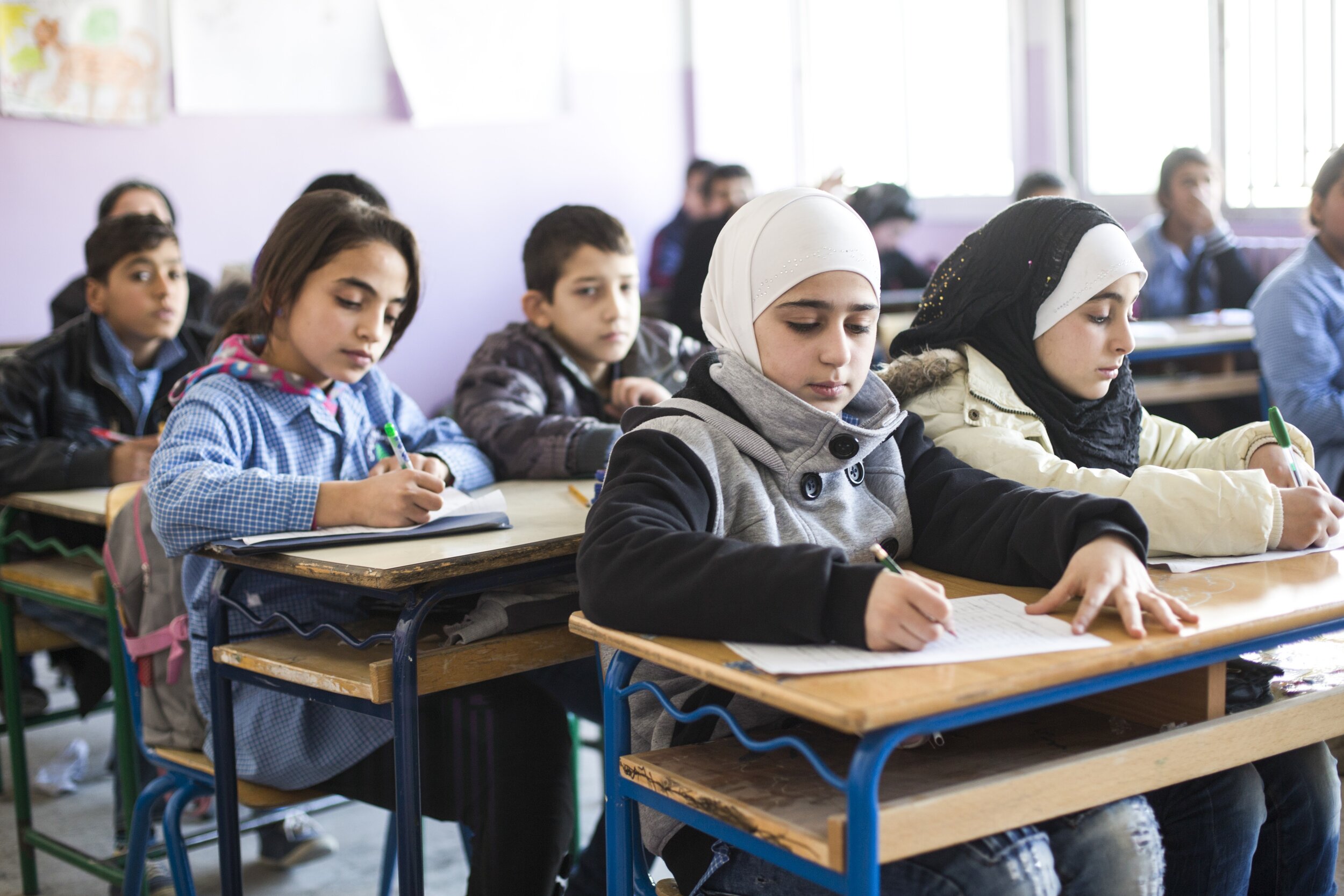
Syrian refugee children at a school in Lebanon. DFID. CC2.0

A new educational program developed by the International Rescue Committee (IRC) and Sesame Workshop aims to provide adequate educational resources for Syrian refugee children. Called Ahlan Simsim, which translates to “Welcome Sesame” in Arabic, the program aims to combine the IRC’s experience working in conflict zones with the TV show “Sesame Street,” which is known for its educational and nurturing effects on children. Program resources include safe spaces for young children to play, an Arabic-language version of ”Sesame Street,” parenting resources for caregivers, and partnerships with nonprofits and local governments to ensure child access to education. In light of COVID-19, educational programming takes place through WhatsApp and online video. 

Ahlan Simsim provides children with skills in literacy and numeracy while helping them develop emotional resilience. For example, the program will teach students how to deal with difficult situations, understand their feelings and empathize with others. The program is a winner of the MacArthur Foundation’s 100&Change grant competition and is among the most ambitious early childhood development programs ever attempted by the humanitarian system. According to Sherrie Westin, executive vice president for global impact and philanthropy at Sesame Workshop, “The issue we are addressing is the greatest humanitarian crisis of our time. We know we can make a difference in the long term if we reach children early. Without that, there’s an entire generation at risk, and that has repercussions not just for their future, but for a more peaceful, stable world for all children.”

To Get Involved: 

Check out this link to the International Rescue Committee’s webpage to learn more about the Ahlan Simsim initiative.


Megan Gürer

is a Turkish-American student at Wellesley College in Massachusetts studying Biological Sciences. Passionate about environmental issues and learning about other cultures, she dreams of exploring the globe. In her free time, she enjoys cooking, singing, and composing music.

Egyptian Activist Brings About a #MeToo Moment

Nadeen Ashraf, creator of the Instagram page “Assault Police,” warned fellow women about men accused of sexual assault. Now, she is working to change the society that produces the perpetrators.

Nadeen Ashraf has received more death threats than she can count. Her infamy began with an Instagram page named “Assault Police” and culminated in a nationwide movement. It broaches a taboo subject in Egyptian society: sexual violence. The Instagram page provides women an outlet to express their stories of sexual assault and harassment while giving guidance on how to navigate Egyptian society as a survivor. The threats received by Ashraf demonstrate the opposition that activist women face. It also shows how necessary Egypt’s #MeToo moment is.

Ashraf joins a worldwide cadre of young activists who use social media to promote inclusivity. At 22 years old, she belongs to the first generation that was born and raised with social media. “I’ve been active on social media since I was 9 years old,” Ashraf said in an interview with Egyptian Streets, “and I’ve been an avid follower of internet trends and social media for as long as I can remember.” This gives her an edge in crafting social media campaigns that reach women, old and young, across Egypt. So far, Assault Police has over 200,000 followers. 

Ashraf started the account in a rage late one night. A fellow student at the American University in Cairo accused Ahmed Bassam Zaki of sexually harassing and blackmailing women on social media, but within days, the post disappeared. This was one of many instances. “I witnessed women first coming forward about being harassed by him on our university’s unofficial Facebook group around 2018, only to be silenced by having their posts deleted later,” Ashraf says. She soon created Assault Police to warn other women about Zaki. From there, the growth was explosive. 

Nobody predicted such widespread success, least of all Ashraf herself. “I initially expected it to get reported and shut down by Instagram within days of its creation,” she says. Such was the fate of most social media posts calling out sexual harassment. Assault Police comes, though, at a time when a new generation of young activists are using social media to advocate for societal change. Being tech savvy is necessary when authorities arrest activists on social media for “indecency” and “debauchery” while sexual predators roam free.

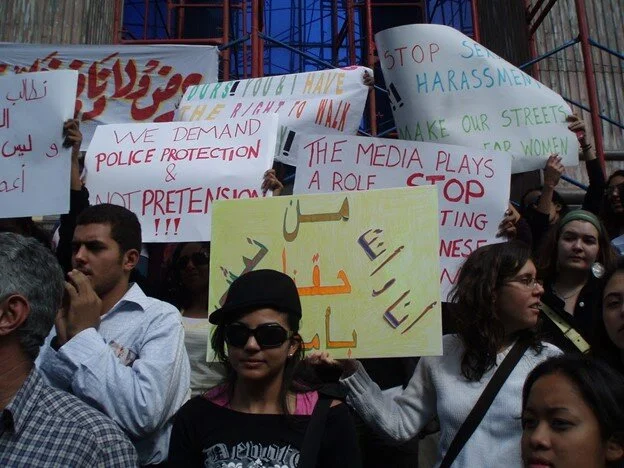
A protest at the University of Cairo. Hossam el-Hamalawy. CC BY-SA 2.0.

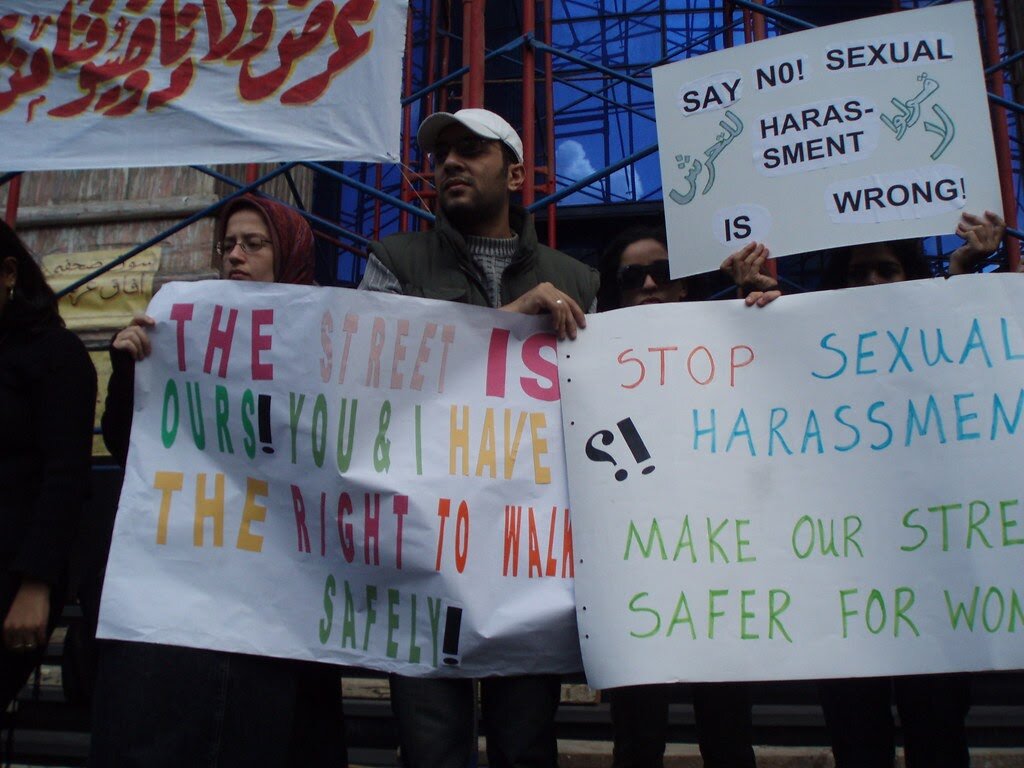
Ashraf faces an uphill battle in shifting widely held cultural norms. Though sexual harassment was criminalized in 2014, pervasive misogyny means victims of sexual abuse are rarely taken seriously. Moreover, a climate of stigma and shame deters many victims from accusing their aggressor publicly. Roughly 75% of men—and 84% of women—believe a woman who dresses provocatively deserves to be harassed. 

“My generation often takes credit for jump-starting change all over the world,” Ashraf said, “but I kept seeing this gap within my community of young women trying to speak out against sexual harassment, and never being taken seriously.” Assault Police provided one of the only venues where victims could tell their stories and seek help without bringing Egyptian society’s scorn upon them. The groundswell of support converted the fledgling account into a nationwide movement, one that is changing the conversation about sexual violence. Nevertheless, there is much work to be done. 

The case of Aya Khamees demonstrates the challenges the movement faces. When Khamess first told the police she had been gang raped, they did nothing. Only after weeks of online campaigning did the authorities arrest five suspects, but the delay allowed at least two suspects to flee the country. In a Kafkaesque turn, authorities charged Khamees herself in the trial on charges of prostitution, drug use and “violating family values.” The trial is yet to be decided, but many women understood the message. Their lives would be easier if they stayed quiet.

Still, the moment represents a #MeToo moment for the country. For the first time, women sharing stories of sexual assault are being taken seriously, and men are beginning to face consequences. After Ashraf repeated accusations against Ahmed Bassam Zaki on the Assault Police page, he was arrested by authorities. 

A protest against systemic sexism. Hossam el-Hamalawy. CC BY 2.0.

For the time being, Ashraf continues passionately against this misogynistic system. So far, Assault Police has been run by her alone, but facing down such a mammoth social issue requires more than one committed activist. “I want to expand from an online platform to a full-time organization,” Ashraf said, “that can support survivors in real time by connecting them to professionals, legal aid and therapy.” Assembling such a team is no easy task, but then again, nothing about Assault Police was ever easy. And look at its success so far. 


Michael McCarthy

Michael is an undergraduate student at Haverford College, dodging the pandemic by taking a gap year. He writes in a variety of genres, and his time in high school debate renders political writing an inevitable fascination. Writing at Catalyst and the Bi-Co News, a student-run newspaper, provides an outlet for this passion. In the future, he intends to keep writing in mediums both informative and creative.

‘Bad Students’: Thai High Schoolers Turned Political Activists

What started as a group of students protesting clothing and hair restrictions has turned into a political activism movement thousands strong. Thailand’s “Bad Students” are protesting a military-backed government and calling for reforms to the constitution and monarchy. 

On Nov. 21, thousands of pro-democracy activists gathered in downtown Bangkok to protest Thailand’s royalist, military-backed government. Some protesters came dressed as dinosaurs, in large, inflatable T-Rex suits, while others carried balloons shaped like meteors calling for the end of the “dinosaur age,” a reference to the conservative attitudes of government officials. The protesters called for the resignation of the current government, headed by Premier Prayut Chan-o-cha, a former army chief, as well as a new constitution to replace the current one, which was written by the military. 

Ahead of the protest, three of its organizers were summoned to a police station for questioning: 16-year-old Benjamaporn Nivas and two boys, also high school students. The three teenagers are some of the leaders of the “Bad Students,” a group of pro-democracy students in Thailand that has joined the broader protests against the government. 

At first, the Bad Students were focused solely on education reform; they wanted a complete overhaul of the education system, which they say promotes conformity and blind obedience through rote learning and whitewashed history. In August, hundreds of students gathered outside the education minister’s office, demanding no uniforms, no restrictions on hair length, and a modern curriculum. Since becoming a democracy, Thailand has had 13 successful coups, but textbooks ignore pro-democracy history and instead promote the monarchy. Following the August protest, the Bad Students also insisted that the education minister resign, distributing thousands of copies of a mock resignation letter and later even staging a mock funeral for him. 

Shortly after their August protest, the Bad Students realized that they would never achieve the reforms they wanted under the current government. Nivas said they learned that “the education ministry is just one part of a bigger, rotten system from the past that needs to be changed,” and that the voices of the Bad Students would be more useful if they joined the broader pro-democracy movements. 

Thailand has been at least a nominal democracy since 1932, when it abolished absolute monarchy in favor of constitutional monarchy. Over the years, Thailand has been mostly ruled by military governments, with its monarch serving as head of state. In addition to condemning Chan-o-cha’s military-backed rule, protesters have criticized the monarchy for spending Thai tax revenue and endorsing the military’s role in politics. Maha Vajiralongkorn, Thailand’s current monarch, is being pressured to remain bound by the constitution, to cut ties with the military-led establishment, to open palace books to the public for scrutiny and to repeal Thailand’s lèse-majesté law, which allows imprisonment for defamation of any member of the royal family.  

The government did not give ground to pro-democracy activists after the Nov. 21 protest. Chan-o-cha issued a warning that all laws, including lèse-majesté, would continue to be enforced. With neither the government nor the protesters changing their stance, some experts worry that the situation could descend into violence. Others, however, are hopeful. Chan-o-cha appeared in constitutional court on Dec. 2 for a minor infringement, and some saw this appearance as a way for the government to remove him as premier by legal means, thereby ousting him without giving in to the demands of the protesters. The Bad Students and other pro-democracy groups continue to plan, holding rallies and protests while advocating for change and a greater voice for the people. 

To Get Involved: 

To take action to support the pro-democracy movements in Thailand, sign the Amnesty International petition to defend peaceful protesters here


Rachel Lynch

Rachel is a student at Sarah Lawrence College in Bronxville, NY currently taking a semester off. She plans to study Writing and Child Development. Rachel loves to travel and is inspired by the places she’s been and everywhere she wants to go. She hopes to educate people on social justice issues and the history and culture of travel destinations through her writing.


Fighting Back with Fakes: Decoy Turtle Eggs Combat Poaching in Costa Rica 

Combating turtle poachers has often seemed like a hopeless task where innocent hatchlings always tend to lose. However, scientists in Costa Rica are beating poachers through the implantation of decoy eggs. 

Olive ridley turtle hatchling. Roehan Rengadurai. CC BY-NC-ND 2.0. 

When one thinks of a turtle’s life, it is often the image of an aged green sea turtle gliding gracefully over magnificently colorful coral reefs. Conversely, it could also be an injured turtle succumbing to increasing plastic pollution as it struggles to escape the rings of a beer can. What is often overlooked are the turtles that never even break into the daylight; millions of turtle eggs are stolen by malicious poachers who sell them to under-the-table buyers. 

Costa Rica stands as a prime example of a place where turtle egg poachers are abundantly transporting stolen eggs to urban areas. 

Turtle eggs are somewhat of a delicacy in Costa Rica, where they are served in a variety of ways. For instance, they are mixed with beer, served raw, or hard-boiled. Prices of the eggs vary widely, with some costing $5 apiece while others can set one back around $20. 

Poachers stealthily scavenge beaches known to house turtle egg nests, which primarily belong to the threatened olive ridley and endangered green sea turtle species. Scientists now realize that effectively tracking poaching activity may require an innovative but rather odd approach.

The decoy eggs, called InvestEGGators, are formed using a 3D printer and are made out of silicone. They are around the size of a pingpong ball and look nearly identical to real turtle eggs. The white balls are also slightly painted with a textured paint to mimic the varied hues of an egg. Inside, there is a small black block that houses a GPS transmitter. The tracker feeds information about the location of the egg once every hour. The hope is that poachers mistakenly pick up the decoy egg along with real ones, since poachers tend to take whole nests at once. 

Scientists have invested in this method because it has more beneficial long-term effects on combating the poaching problem. Instead of catching poachers in the act, researchers say that it is much more effective to track the distance and location that the eggs travel to be sold. From an enforcement point of view, tracking the location of sites where the eggs are sold to buyers allows for more frequent and lasting crackdowns. 

In one test, researchers hid 101 decoys in turtle nests, and about 25% of them were transported by poachers. It was discovered that the distance the eggs traveled varied quite a bit; some traveled just over a mile to someone’s home, while others went well over 80 miles to houses in Costa Rica’s Central Valley. 

Scientists were previously concerned that planting decoy eggs could possibly harm the other eggs’ ability to hatch, but the other eggs appeared to hatch successfully. 

The study has now branched into a larger scope of conservation, with talks that this method can be beneficial in saving other endangered animals. 

As stealthy as poachers may get, sometimes one has to beat them at their own game to have a chance at winning. Luckily, a handful of clever scientists have successfully played the poachers. 


Ella Nguyen

Ella is an undergraduate student at Vassar College pursuing a degree in Hispanic Studies. She wants to assist in the field of immigration law and hopes to utilize Spanish in her future projects. In her free time she enjoys cooking, writing poetry, and learning about cosmetics.

Nigeria’s Stolen Schoolboys Reach Freedom

Young people in Nigeria begin their days with walks to school. For boys returning to the Government Science Secondary School in Kankara, these walks will mean something entirely different.

Stibej. CC BY-SA 4.0

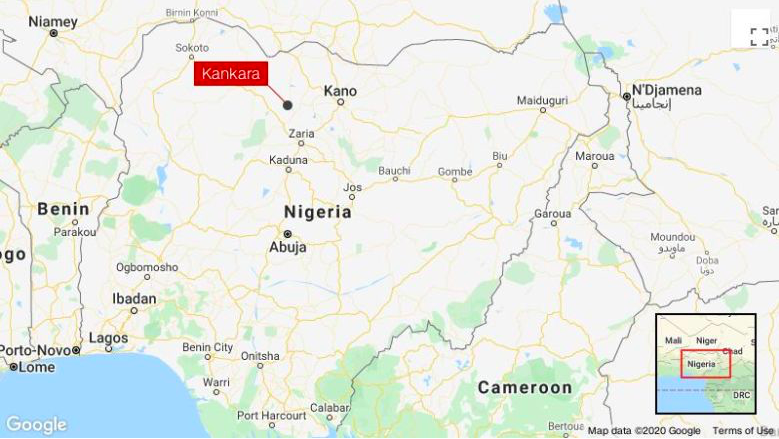
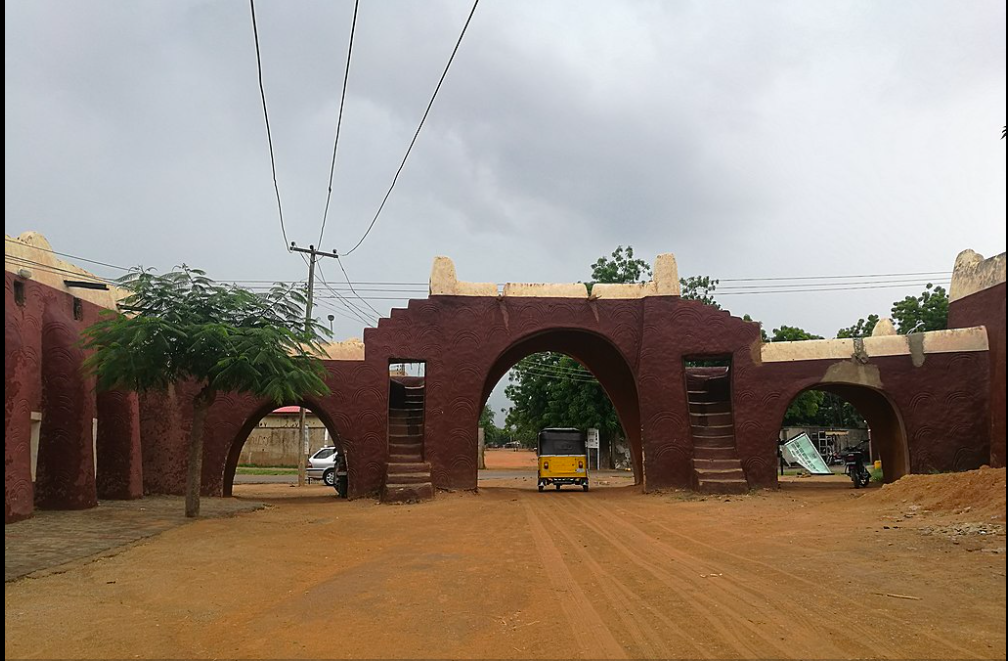
In the northwestern Nigerian state of Katsina, the militant group Boko Haram is thought to be responsible for stealing young men. On Dec. 11, unidentified men with guns invaded the Government Science Secondary School in the city of Kankara on motorbikes to kidnap the schoolboys. The gunmen proceeded to march the boys into the Rugu forest of Nigeria, potentially to use them as child soldiers if not freed. The governor, Aminu Bello Masari, says a total of 344 boys held in the forest have now  been liberated in the neighboring Zamfara state. In describing what they went through, the boys said they walked through large stretches of forest, stopping during the daytime and walking all night without shoes on stony ground littered with painful brush. There was no clarification on how or why they were freed, or if all the boys stolen were let go. As Boko Haram has executed similar kidnappings in the past, many think the Islamist militant group is behind the event. 

Map of Nigeria with the city of Kankara highlighted. Google Maps.  

 On Dec. 18, the schoolboys were finally returned home. The governor of Katsina state and Nigeria's president greeted them as they were brought back to their homes by military personnel. “I think we have recovered most of the boys,” Masari said in a televised interview with state channel NTA. The boys that were found have since been medically examined and returned to their families. It is important to note that the search is still ongoing as of Dec. 21. 

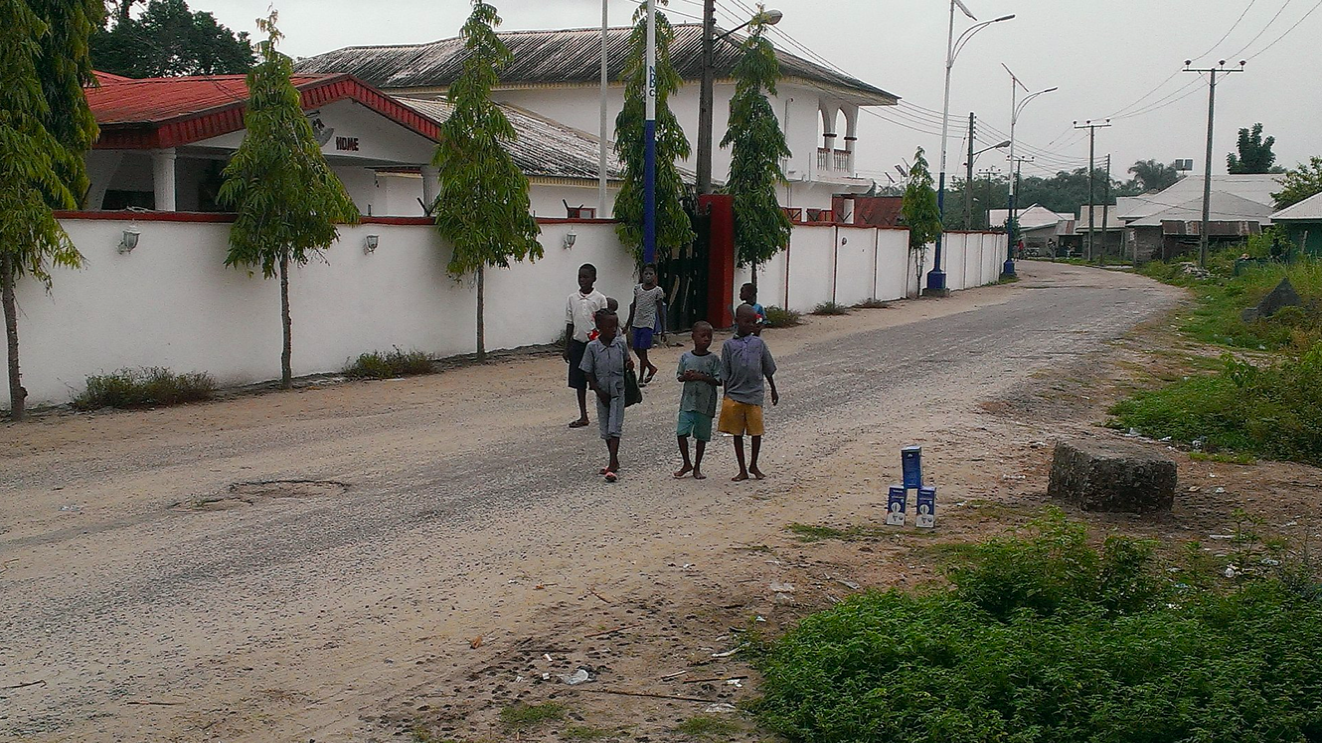
A typical street scene in Katsina state. Adebola Falade. CC BY-SA 4.0

Reports as to who is responsible for the kidnappings are unclear as unverified sources have attributed it to a resurgence of Boko Haram, the extremist group which has kidnapped in the past. In 2014, it executed the kidnapping of more than 270 schoolgirls in the northeastern town of Chibok, and nearly 100 of those girls are still missing. Now, residents of northern Nigeria believe the group is back. 

For the families of the boys, their return comes as a celebration. In a quote given to Reuters, retired health worker Shuaibu Kankara, whose 13-year-old son Annas Shuaibu was among the kidnapped boys, said, “I am so happy. We are so grateful to the governor of Katsina and all those who worked hard to secure their release.” The quick and seemingly uncomplicated return of the boys comes as a great shock but an even greater relief. 

As mentioned, many suspect that Boko Haram is responsible for the attack. The extremist Islamic rebels have taken responsibility for the abduction, claiming they attacked the school as a punishment for its Western teachings. For now, the investigation is ongoing, but the swift release of the boys sends a hopeful message that the Nigerian government is able to handle attacks quickly and effectively. Although there is fear that Boko Haram will act again, a precedent has been set by the efficient handling of this mass kidnapping. 


Renee Richardson

Renee is currently an English student at The University of Georgia. She lives in Ellijay, Georgia, a small mountain town in the middle of Appalachia. A passionate writer, she is inspired often by her hikes along the Appalachian trail and her efforts to fight for equality across all spectrums. She hopes to further her passion as a writer into a flourishing career that positively impacts others.

Indigenous Fashion Hits the Runway

Long overlooked Indigenous artists are revolutionizing the fashion world. Balancing innovation and tradition, these designers envision a sustainable, inclusive way of creating clothes.

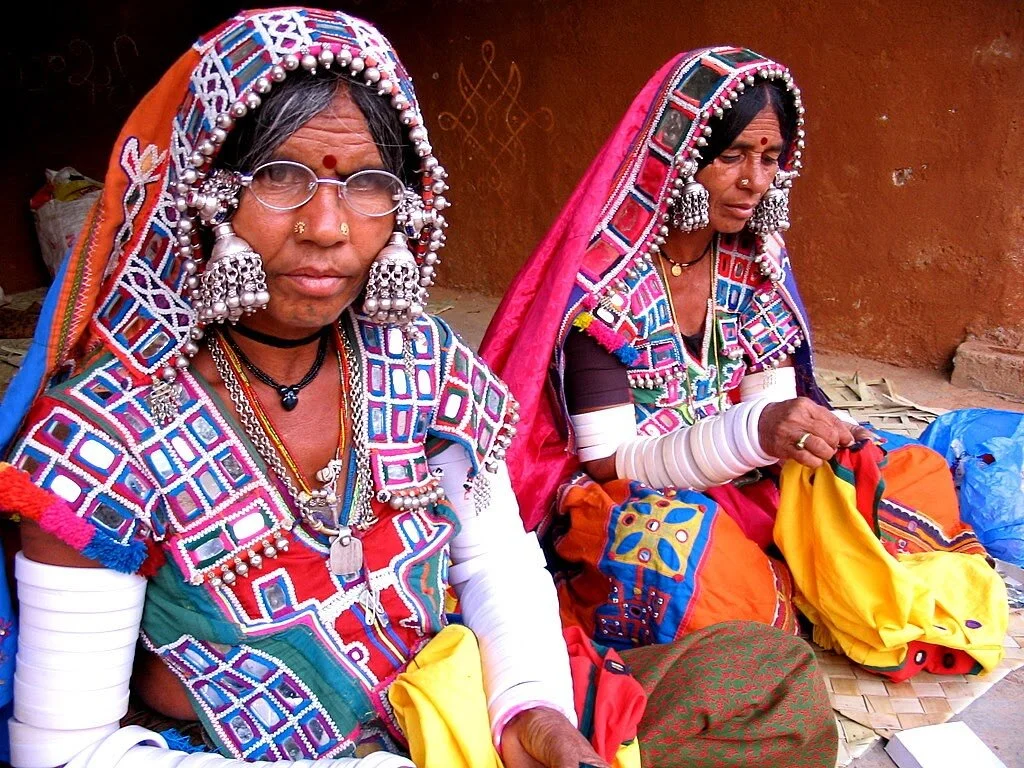
Indigenous women sewing. SriHarsha PVSS. CC BY-NC-SA 2.0.

Nothing about this year’s Indigenous Fashion Week Toronto (IFWTO) went according to plan. The pandemic demanded a totally virtual fashion venue without a live audience, forcing the Indigenous communities that comprise it to rethink what a fashion week could be. Then again, reimagining the fashion industry is the forte of many Indigenous designers.

The IFWTO featured 16 designers with their own unique takes on Indigenous fashion, the clothing created by designers from a native background. It included artists from across the world who are united by a shared Indigenous heritage. Combining traditional figures and techniques with mainstream styles yielded some of the week’s most exciting work. Mobilize, for instance, fused Indigenous writing and designs with streetwear hoodies and jackets to innovate style while staying true to its roots. Audiences took well to Mobilize’s style; most of its items sold out. 

Mobilize and other Indigenous brands seek to fundamentally change the fashion industry’s status quo. Jamie Okuma, a California designer of Luiseño and Shoshone-Bannock descent, emphasizes resourcefulness and respect for nature in her garments. “All of my work has tradition at its core ... So I try to utilize everything possible in my work—with my art, supplies, fabric—and not be wasteful.” Crafted with patience, detail and care, her pieces are meant to be worn again and again. “We all have those go-to pieces in our closet that we keep for years and literally wear out before we retire them,” she says. “I'm here to make the go-tos, the keepers.”

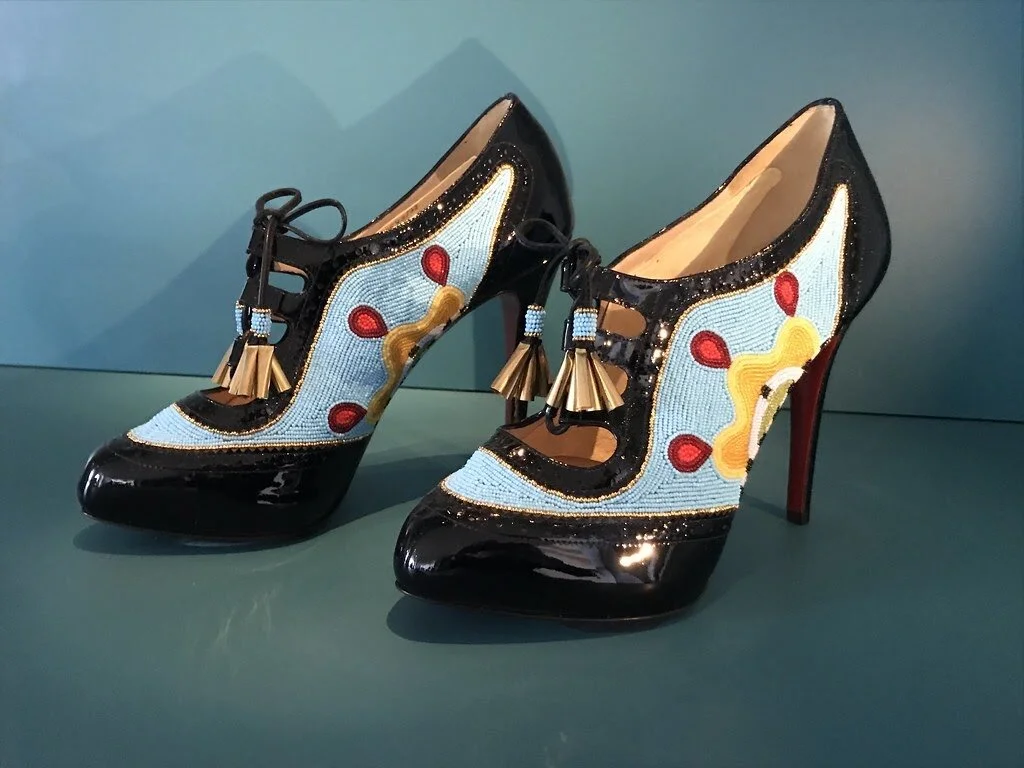
Shoes designed by Jamie Okuma. nonelvis. CC By-NC-SA 2.0.

Okuma’s approach is a welcome change to the dominant fad of “fast fashion.” These items, mass produced by large companies, are designed season by season and intended to fall out of fashion and be thrown out within a year. This approach to fashion differs starkly from that of Indigenous creators, who value durability, tradition and craftsmanship, even if it comes with a much higher sticker price. Though fast fashion allows consumers to don the latest runway fashions at an affordable price, it comes at a steep environmental cost. Products often fall apart within weeks or are thrown out having never been worn, earning the style the nickname “landfill fashion.”

A billboard for Grace Lillian Lee’s fashion. Brisbane City Council. CC BY 2.0.

Grace Lillian Lee, designer and co-founder of First Nations Fashion and Design in Australia, seeks a place for Indigeneity in the mainstream. “There’s definitely a lot that non-Indigenous people and designers can learn from Indigenous people,” she says, “especially in terms of sustainability.” Her work relies heavily on the weaving techniques of Torres Strait Islanders. More than a way to promote sustainability, Lee calls her clothing “a soft entry into reconciliation and healing our people.” Such meaningful craftsmanship doesn’t fall out of style by next season; it is passed down through generations.

Lisa Folawiyo. NDaniTV. CC BY 3.0.

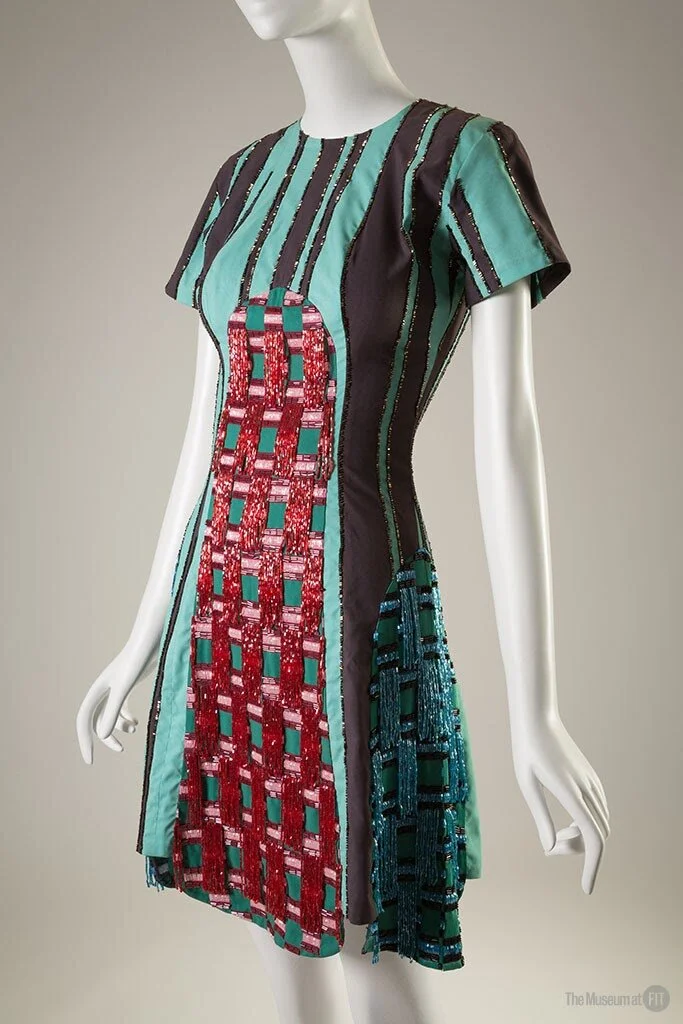
Indigenous fashion is just beginning to enjoy its long overdue time in the sun. Dresses by Lisa Folawiyo, a Nigerian and West Indian designer, have been worn proudly by the likes of Solange Knowles and Lupita Nyong’o. Her intricate, flowing dresses explode with color. Boasting hand-embellished designs, Folawiyo’s dresses can take up to 240 hours to complete. Her West African designs have won the plaudits of the international fashion world and effortlessly outshine the mass-produced artifacts of fast fashion.


A dress by Lisa Folawiyo. Museum at FIT. CC BY-NC-ND 2.0.

Indigenous people still generally lack a place at the corporate level. Sage Paul, a member of Canada’s English River First Nation who now lives in Toronto, called for the post-pandemic “new normal” to include the voices of Indigenous people in an article for The Kit. Fashion emerged from a 14th-century European aristocracy, she argues, and colonized Indigenous people to steal resources, goods and fashion trends. “The colonial systems we are operating under no longer serve our society, and the only way we will evolve is by allowing new and interconnected systems to come to the fore.” That means moving Indigenous brands into the mainstream. 

The IFWTO is a good place to start. Its online market links viewers directly to designers’ websites. Live panel discussions provided a glimpse into the questions and concerns of some of Indigenous fashion’s most admired artists. Videos of models strutting the catwalk resembled music videos, showcasing the unbridled possibilities of Indigenous fashion. Most importantly, it put more Indigenous designers on the map. As of now, they show no signs of slowing down.


Michael McCarthy

Michael is an undergraduate student at Haverford College, dodging the pandemic by taking a gap year. He writes in a variety of genres, and his time in high school debate renders political writing an inevitable fascination. Writing at Catalyst and the Bi-Co News, a student-run newspaper, provides an outlet for this passion. In the future, he intends to keep writing in mediums both informative and creative.

Disaster in the Delta: Workers Accused of Profiting from Oil Spills in Nigeria

A new documentary reports that employees of Shell’s Nigerian subsidiary are encouraging attacks on pipelines to pocket funds intended for environmental cleanup.

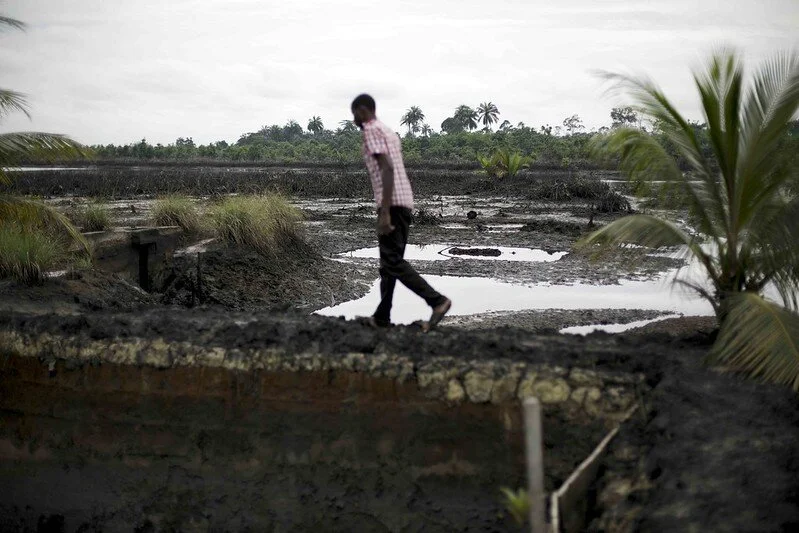
A man walks alongside land tainted by an oil spill near Kegbara Dere, Nigeria. Friends of the Earth International. CC BY-SA 2.0

As the largest oil producer in Africa, Nigeria has long struggled to balance the demands of multinational corporations with the needs of its own people. The country provides a clear example of the resource curse, as the government turns a blind eye toward endemic corruption in the oil and gas industries. The Niger Delta, home of Nigeria’s oil reserves, has become a land of lawlessness and environmental catastrophe with no clear end in sight.

For decades, Royal Dutch Shell has been in the crosshairs of both environmental and human rights activists over its role in the Niger Delta. Now, the Anglo-Dutch oil company is facing claims that its employees deliberately sabotaged its own pipelines to profit from environmental cleanup funds.

In a documentary released on Dec. 10, Dutch television program Zembla and environmental group Milieudefensie teamed up to investigate claims of malpractice by the Shell Petroleum Development Company of Nigeria (SPDC). This group is a joint venture between the state-run Nigerian National Petroleum Corporation, France’s Total, Italy’s Eni and Shell, which runs all operations.

Research focused on the village of Ikarama, where there have been 30 reported oil spills in the last 13 years alone. The region surrounding the community has become so polluted that agriculture and fishing barely yield any income for locals. Frustration with oil companies has mounted, leading some residents to vandalize pipelines to channel their frustration.

Per the report, Royal Dutch Shell’s employees saw an opening. They began to encourage local youths to sabotage pipelines so they could receive funds necessary for environmental cleanup. Workers for the oil titan received vast sums of money for “eco-friendly” measures, and members of the Ikarama community were hired to restore the land.

The SPDC denies responsibility for the oil leaks, instead blaming local criminals and gangs. The group said in a statement that, “As of now, we are not aware of any staff or contractor having been involved in acts causing oil spills in the Niger Delta.” The SPDC further claimed that it investigates all credible reports of misconduct and addresses situations as needed.

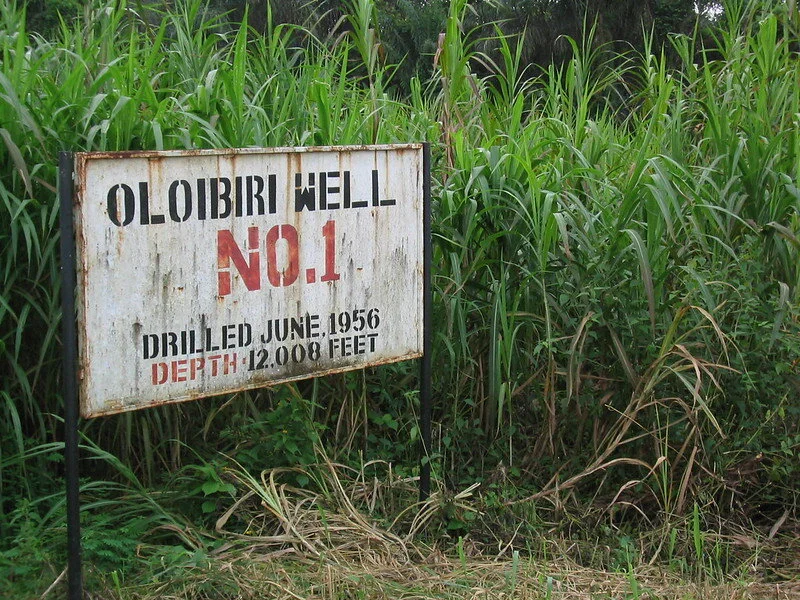
A sign points out Shell’s Oloibiri well, the first drilled in West Africa. Rhys Thom. CC BY-NC-ND 2.0

In the eyes of Cees van Dam, a professor of international business and human rights at the University of Rotterdam, the accusations are credible. “In the Netherlands,” he notes, “this would certainly be considered a criminal offense. Intentional destruction of property, intentional environmental pollution, these are serious issues that no single company would accept from its employees.”

Moreover, employees of the SPDC and residents of Ikarama attest to the claims addressed in the documentary. Saboteurs insist that they vandalize the pipelines “out of hunger” while a former Shell security guard said that supervisors and employees “split the money from the cleanup.”

Making matters worse, the former security guard said that “the recovery department from Shell sabotages the pipelines. If the cleanup will take seven months, they’ll stop after only three months.” In other words, the land remains in disarray even after remediation measures conclude.

In the documentary, Zembla claims that local employees and villagers were far from the only ones aware of the scheme. The SPDC, the Nigerian police and the Dutch embassy in Abuja also received word of the process from concerned locals. Then Dutch ambassador Robert Petri even visited Ikarama in 2018 and pledged to “take what is happening here … and we will share our experiences and information with both Shell and the government.” No further investigations have occurred.

As such, the process of intentional environmental degradation continues. As the alleged scheme moves into the spotlight, there is an opportunity for corruption in the Niger Delta to be extinguished. The region’s troubled past and present are intrinsically tied to the oil industry, but hope remains that a more transparent future may be just around the corner.


Stephen Kenney

Stephen is a Journalism and Political Science double major at the University of North Carolina at Chapel Hill. He enjoys sharing his passion for geography with others by writing compelling stories from across the globe. In his free time, Stephen enjoys reading, long-distance running and rooting for the Tar Heels.

How the BLM Movement Blossomed in the UK

As voices of the Black Lives Matter movement flooded American streets, British proponents alike rushed to rally. The seeds of the movement germinated in the U.K., but problems soon sprung up alongside them. 

Black Lives Matter protest in Bristol, England. KSAG Photography. CC BY-NC-SA 2.0. 

In late May, the death of George Floyd ignited outrage in nations across the world, including in the United Kingdom. In the early summer months, the pages of social media and eager British ralliers mirrored the zeal of the Black Lives Matter movement in the United States. However, over the course of a few short months, the unmatched vigor of the movement in Britain quickly dropped off; neither the media channels nor the once fiery minds of residents continued active coverage and support. 

What had started as weekly protests in Britain’s largest cities had dissolved into a deferred dream for a few young activists. As more racial inequalities surfaced, less and less government engagement was found. 

Regardless of this obstacle, the young remaining supporters continue their fight with the unbattered zeal of seasoned activists. A few such activists are the founders of All Black Lives U.K., which is a movement started this past May by a group of students. The group organized protests for 10 weeks this summer and has since made substantial headway; its outreach, primarily made through social media and hosted panels, has garnered enough engagement to establish posts in other urban areas such as Bristol and Manchester. 

The movement pushes for a list of demands to be met by the government, which includes the removal of the highly scrutinized “gangs matrix.” 

The gangs matrix is a database that has been run by the Metropolitan Police since 2012 following the 2011 London riots. The database contains the names of “gang nominals,” or people whose online activity has been flagged for suspected gang affiliation. The Metropolitan Police advertised the database as a tool to combat violence in London, but many studies found that its standards have resulted in the disproportionate representation of young Black males. Thus, All Black Lives U.K. believes that the abolition of this database will remove a racist stronghold in the government. 

Aside from more obvious racial discrimination, many protesters think that the U.K. suffers from a profound lack of diversity. The movement continues to fight for increased inclusion of Black voices in local councils, as well as diversity in the national school curriculum. Campaigns have been launched to modify what is included in the national curriculum, specifically in order to make learning Black history compulsory. Proponents intend for this modification to fairly represent the Black population while creating a more well-rounded picture of the nation’s history for all students. The education campaigns were met with immediate backlash, with claims by educators that this change is too closely tied to political extremism. 

With several months of tumult having reshaped the face of racial discussions in the U.K., there is little that the British government has changed to address the issue. However, the few brave faces trailblazing the movement keep pressing on, calling others to educate themselves in the meantime. 

To Get Involved

To sign up to volunteer for the Black Lives Matter movement in the UK, click here.

To find out more about the Black Lives Matter movement in the UK, click here.

To become a partner or sponsor for the movement in the UK, click here.


Ella Nguyen

Ella is an undergraduate student at Vassar College pursuing a degree in Hispanic Studies. She wants to assist in the field of immigration law and hopes to utilize Spanish in her future projects. In her free time she enjoys cooking, writing poetry, and learning about cosmetics.
The Global Coffee Crisis Takes its Toll on Small Farmers

While the world’s most craved caffeinated beverage has become a beloved staple, not many people know how its production has affected the people behind the scenes.
Coffee. Mckaysavage. CC BY 2.0
Today the coffee industry is considered big business, with an annual revenue of around $200 billion. Global demand for coffee is on a steady incline, increasing by 2% each year. Americans’ demand alone has risen 3% in the last four years, and the country’s citizens drink a whopping 400 million cups of it daily. But if demand for this beverage is so high, why are the people who produce and cultivate it in a state of poverty?

Cappuccino. Mckaysavage. CC BY 2.0

The industry has always been in a perpetual state of change, with prices rising and falling depending on demand. But in 2019 another coffee crisis hit when Brazil, the world’s top producer of coffee, flooded the market with large amounts of its product. This dropped global coffee prices to the lowest point in over a decade, far below the minimum that a small farmer needs in order to break even. Gradually, small farms in Latin America are going out of business while big producers from Brazil and Vietnam are becoming suppliers’ go-to sources.

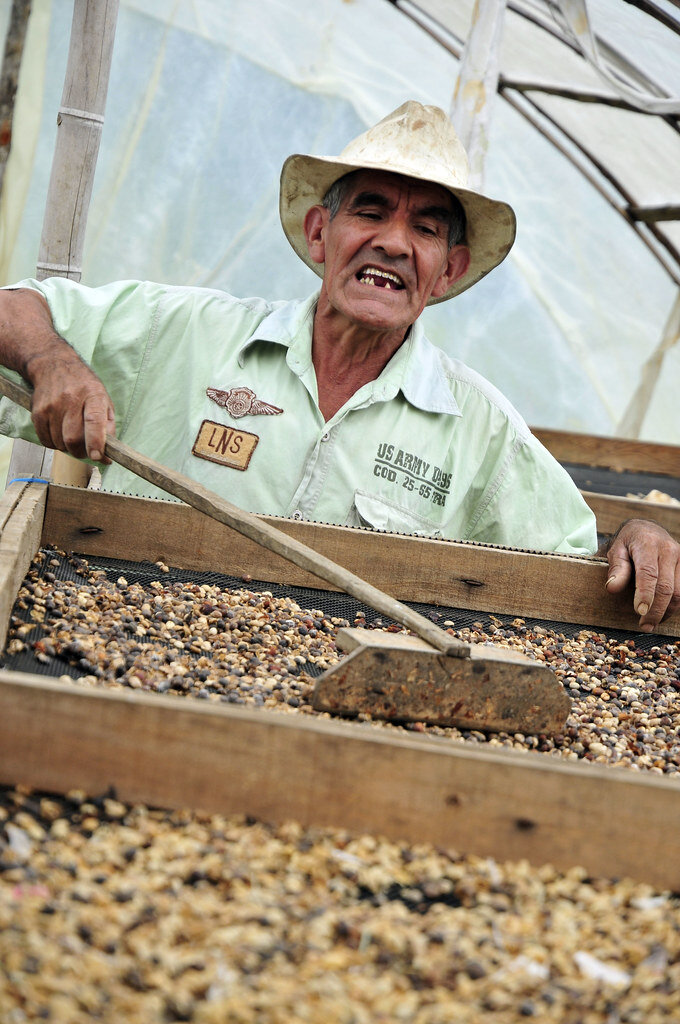
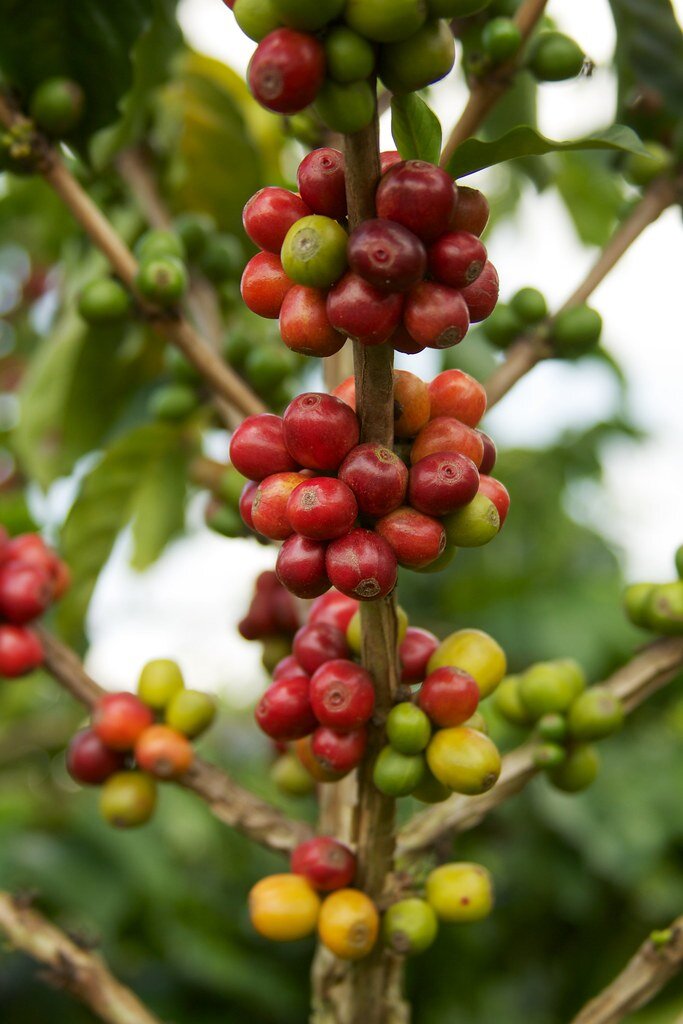
Freshly picked coffee beans. Mckaysavage. CC BY 2.0

Eighty percent of the world’s coffee is produced by 25 million small farms spread across the world. These farmers have dedicated their lives to the pursuit of coffee cultivation, and rely on the income they receive from the annual harvest to survive. Over half of the growers in Central America and Mexico, though, have reported difficulty getting enough food to feed their families.


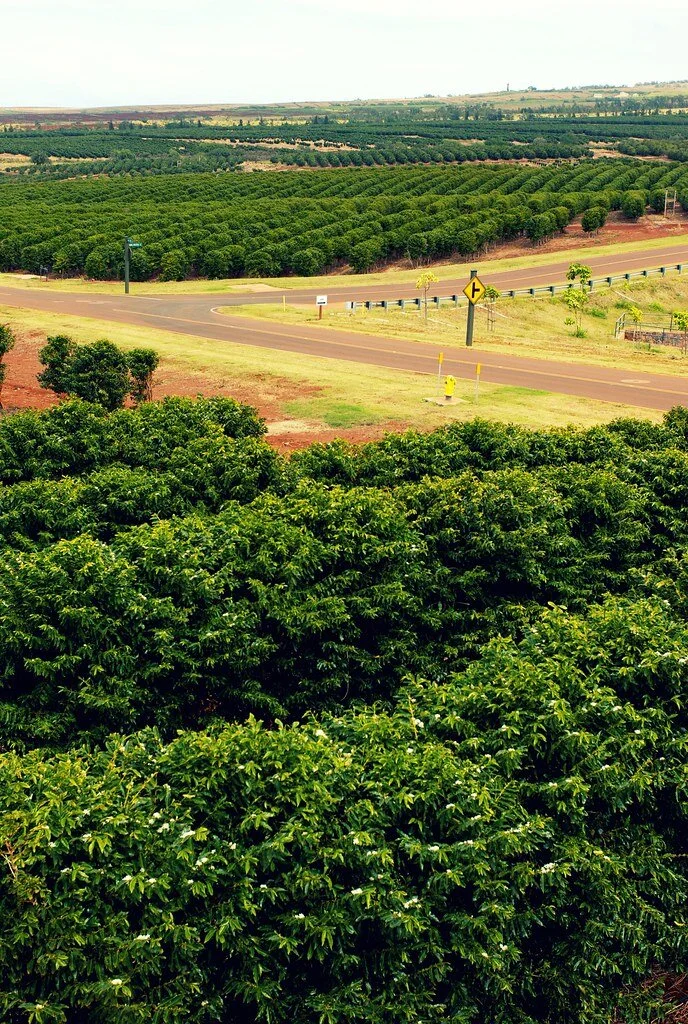
Coffee plantation. Mikefats. CC BY 2.0

There are about 100 different coffee species on Earth. The few that are cultivated on farms are mostly robusta, commonly known for making instant and espresso coffee, and Arabica, the smoother and more expensive coffee. Colombia, the world’s third-largest coffee producer, demonstrates the difficulties of relying on these two types of coffee plants. With the rise in global temperatures impending coffee’s growth, bacteria and fungi like “coffee rust” have become more common, devastating crops. Infrequent and sporadic rain patterns have become a big worry among growers, as coffee is very specific in terms of how much water it needs. 

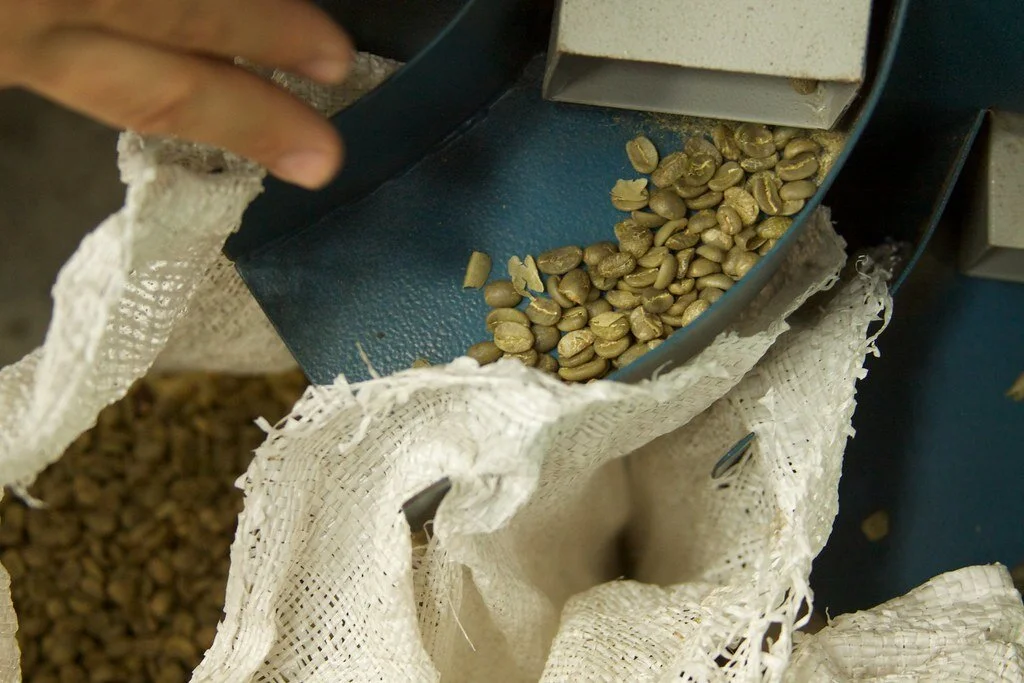
Coffee beans in Colombia. Mckaysavage. CC BY 2.0

There are many things that Colombian growers can do to help protect their crops, such as planting shade trees to keep plants cool and to stabilize the soil. They can also shift their entire crops uphill to higher elevations that can keep them from overheating. Farmers have also been switching their usual crop with a more resilient plant, a hybrid with some of the unused wild species. The biggest issue with these changes is that it takes money that many farmers do not have. One coffee farmer in Colombia stated that, “Nowadays coffee production is equivalent to losing money.”

Beans. Mckaysavage. CC BY 2.0

For farmers to continue producing coffee, more of the revenue gained from increased consumption must go back into the hands of the people who grow it. More revenue for farmers will allow them to fight back against climate change, letting them continue the generational line of work that has become, in essence, a part of them.


Yuliana Rocio

Yuliana is currently a Literature/Writing major at the University of California San Diego. Yuliana likes to think of herself as a lover of words and a student of the world. She loves to read, swim, and paint in her free time. She spent her youth as part of a travel-loving family and has grown up seeking adventure. She hopes to develop her writing skills, creating work that reflects her voice and her fierce passion for activism.