
Before Sudan died in 2018, scientists collected his sperm in hopes of developing an embryo that would carry on the species. In December 2019, eggs from Najin and Fatu were harvested and sent to the same lab as Sudan’s sperm. It is here that scientists toyed with the idea of in vitro fertilization (IVF) for rhinos.
Read MorePeruvian Farmer Loses Climate Case, But Sets Global Precedent
Saúl Luciano Lliuya sued the German energy company RWE for damages to his home related to climate change. He lost, but the case is still considered a win for environmental activists.
Read MoreWear Once, Waste Always: The Hidden Toll of Festival Fashion
Festival fashion is fast, flashy and overwhelmingly disposable.
Read MoreThe Hidden Climate Cost of Namibia and Botswana’s Oil Refinery
Energy independence for southern Africa could boost local economies, but oil refinery aspirations hold a hidden cost, contributing to greater climate issues.
Read MoreHow Indigenous Knowledge Supports Conservation in Australia’s Outback
Across the arid regions that define the Australian Outback, Aboriginal groups’ deep connection with the land has led to enduring protection against species loss and environmental decay.
Read MoreCarbon Credits Aren’t as Green as They Seem
Carbon credits are a tool to reduce emissions, but they tend to carry more weight as a marketing tactic rather than a sustainable practice.
Read MoreTrash to Treasure: A Tour Through Cairo’s Garbage City
Take a guided walk through Cairo’s Garbage City and discover how one community is turning waste into a way of life.
Read MorePreserving Heritage and Habitat: Indigenous Australian Rangers Redefine Ecotourism
Indigenous Australians are blending ancient traditions with modern science to preserve and protect endangered ecosystems and species.
Read MoreCalifornia’s Fashion Act: Fighting For Accountability
California’s Fashion Accountability Act is bringing environmental transparency to the trillion-dollar industry.
Read MoreVietnam’s Floating Markets Are Disappearing
Kennedy Kiser
Climate change, migration and tourism are reshaping life on the Mekong Delta’s rivers.
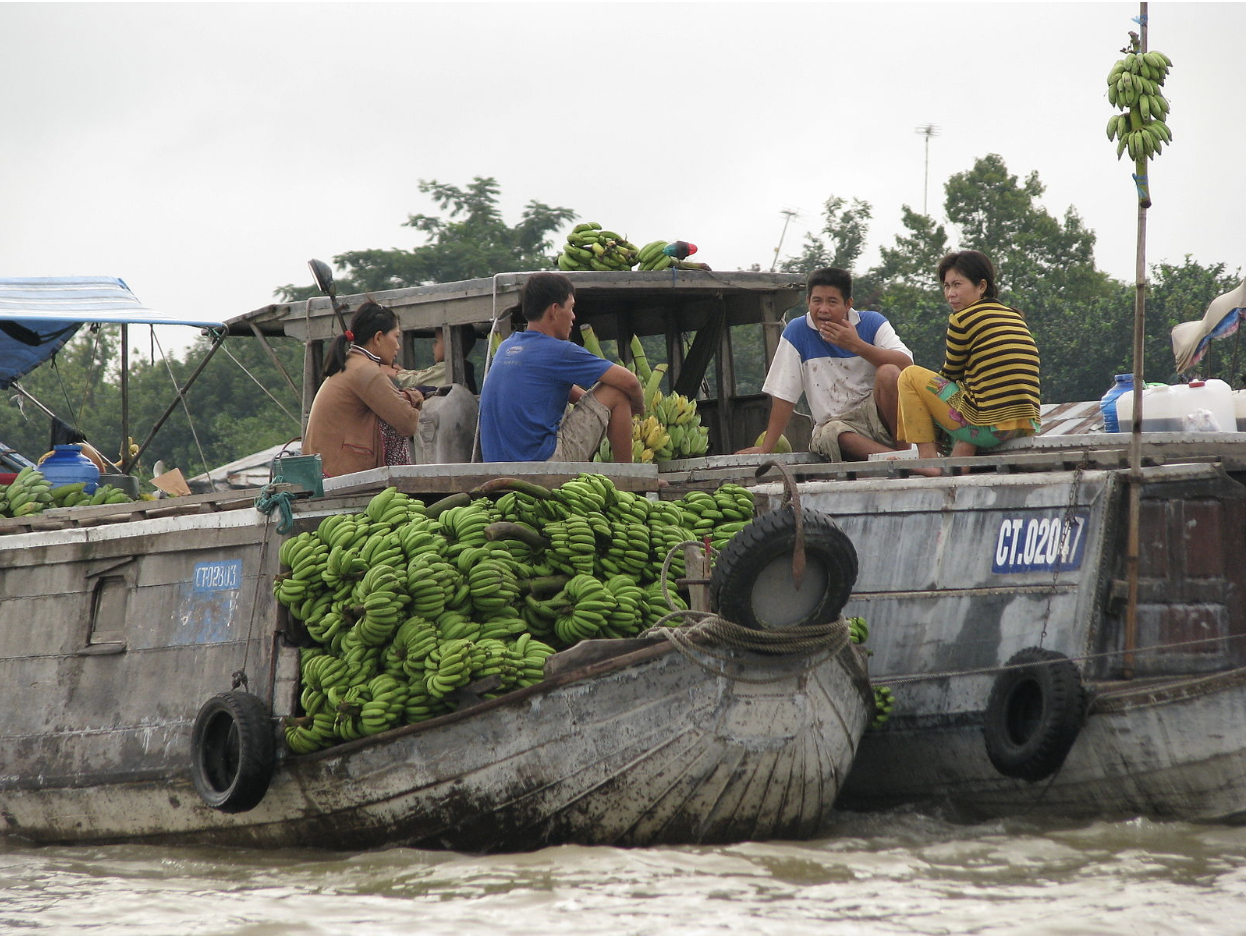
Bananas being traded at the Cai Be floating market in Vietnam. McKay Savage. CC BY 2.0.
In Vietnam’s Mekong Delta, boats once crowded with fruits, vegetables and steaming bowls of noodle soup now drift by in dwindling numbers. The iconic floating markets, such as Cai Rang in Can Tho, are in decline. Rising sea levels and saltwater intrusion have transformed daily life in the delta, threatening these vibrant centers of commerce and culture. These markets have been around for generations, and in the 1990s, were major trade hubs. But today, many of these boats are gone.
The decline is largely environmental. The Mekong Delta, which supplies half of Vietnam’s rice and a third of its GDP, is being overwhelmed by rising sea levels and saltwater intrusion. Climate change has intensified these threats, but human activity plays a role too. According to Environmental Law Alliance Worldwide, the overuse of groundwater, upstream hydropower dams and sand mining have all accelerated the erosion and subsidence of the delta. As saltwater continues to creep further on land, fertile rice paddies turn sterile and make freshwater harder to access. For boat vendors, this means fewer crops to sell, higher transportation costs and increasingly unreliable river routes.
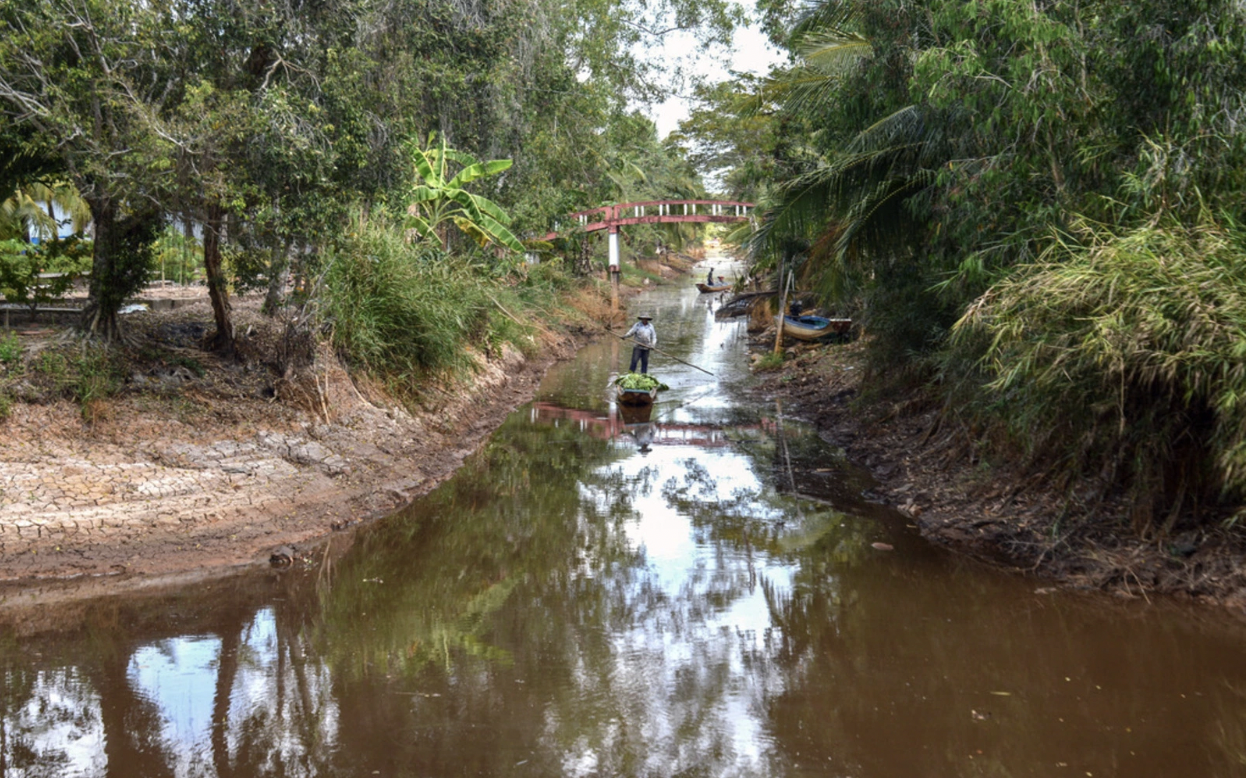
Saltwater intrusion impacts farmland in Vietnam’s Mekong Delta. AFP. CC BY 4.0.
This decline in floating markets severely impacts local families, especially those who depend on the markets. Many vendors face dwindling incomes, leading to increased migration to urban areas in search of better opportunities. For instance, Nguyen Thi Thuy, a former farmer, was forced to leave her home due to saltwater intrusion and now works as a security guard in Ho Chi Minh City. Just a decade or two ago, her income from selling fruit on the water would have been enough to sustain a family.

Aerial view of storm surge over Thi Nai Bay, Quy Nhon, 1969. Bill Gann. CC BY 2.0.
Adding to this shift is an increasing generational divide. Many younger residents no longer see a future in river-based life. Education and tech-based jobs in the cities hold more appeal than selling local produce. In part, local governments are struggling to maintain these markets as an increasing number of vendors’ children choose to leave instead of inheriting the family business. As fewer people choose to stay, the floating communities face cultural erosion.
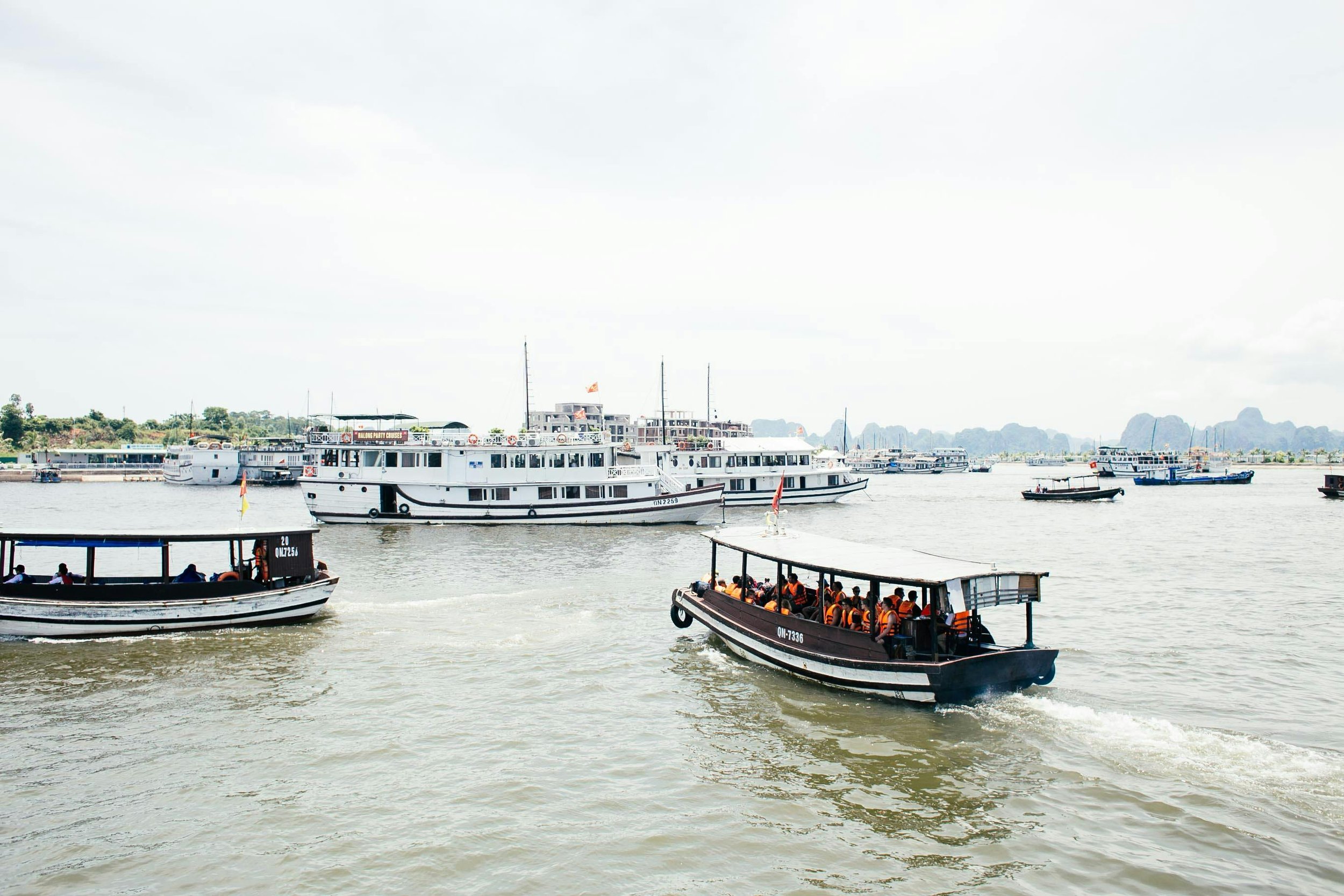
Passenger ferries at a harbor in Vietnam. Rachel Claire. CC0.
Tourism presents both challenges and opportunities for the preservation of floating markets. While increased tourist interest can provide economic benefits, it can also lead to cultural commodification and environmental degradation. Some markets that have become more tourist-oriented have, in turn, seen their authenticity and traditional practices diminish.
However, efforts are underway to balance tourism development with cultural preservation. In 2016, the Can Tho City People’s Committee approved the Preserving and Developing Cai Rang Floating Market project. This project aims to promote tourism and environmental hygiene while transforming Cai Rang into a “hub for the Mekong Delta’s agricultural products.”.
The future of Vietnam’s floating markets hinges on sustainable practices that honor their cultural significance while adapting to environmental realities. Community engagement, responsible tourism and environmental conservatism are key to ensuring the survival and success of these markets. As the Mekong Delta navigates the challenges of climate change, preserving the unique heritage of its floating markets remains crucial.
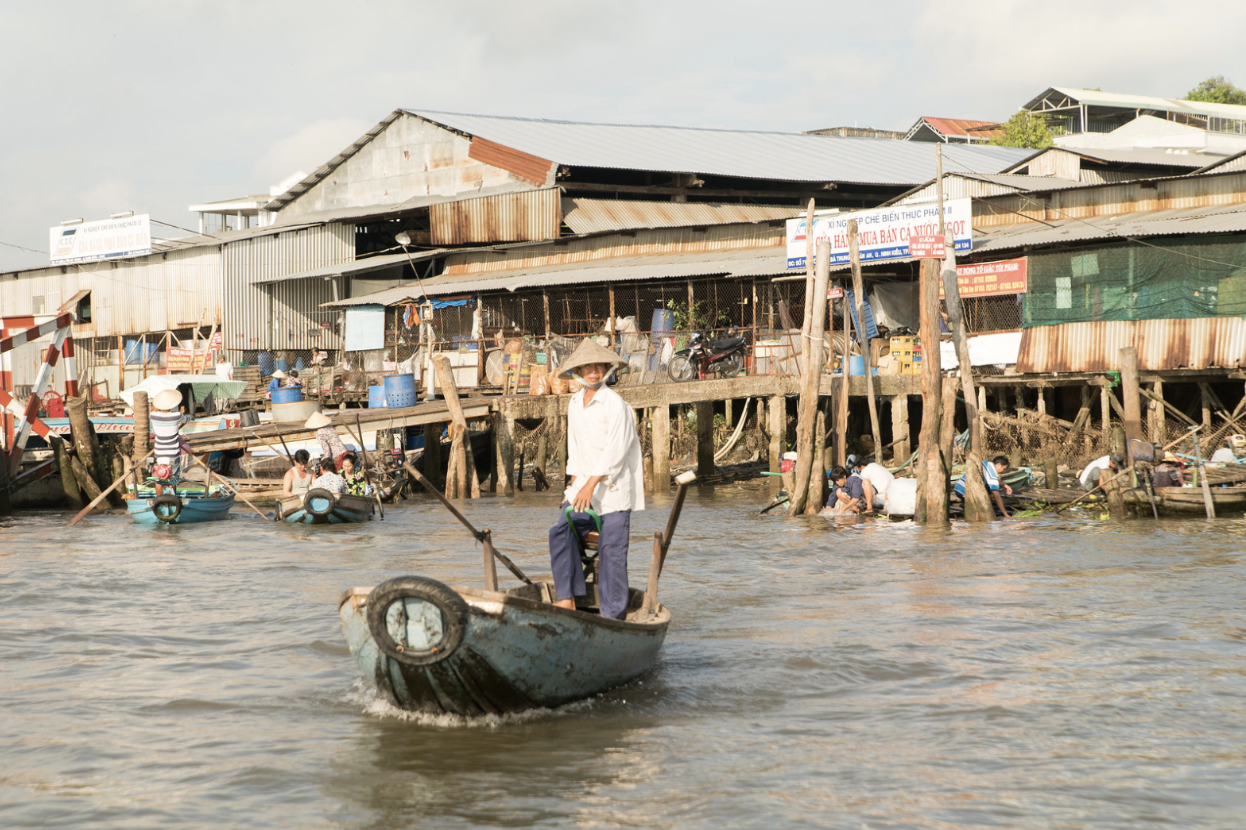
Boats at the Cai Rang floating market in Can Tho, Vietnam. pixiduc. CC BY 2.0.
For travelers hoping to experience the floating markets, visiting with care and intention matters. Cai Rang in Can Tho remains the largest and most accessible market. It is best visited early in the morning when trading is at its peak. Smaller markets like Phong Dien offer a local, less touristy atmosphere and are perfect for travelers seeking a quieter glimpse of daily life. Opt for small, locally operated boat tours and avoid bringing single-use plastics that could end up in the river. Supporting vendors by buying fresh produce or food dishes directly from their boats will not only enhance your experience but also help maintain these communities. By traveling mindfully, visitors can help preserve the spirit of Vietnam’s floating markets for generations to come.

Kennedy Kiser
Kennedy is an English and Comparative Literature major at UNC Chapel Hill. She’s interested in storytelling, digital media, and narrative design. Outside of class, she writes fiction and explores visual culture through film and games. She hopes to pursue a PhD and eventually teach literature! @kennedy_kiser
The Hidden Cost of Counterfeit Luxury
Zoe Lodge
Though the price tag might be tempting, counterfeit goods have a broader negative societal and environmental impact than many realize.
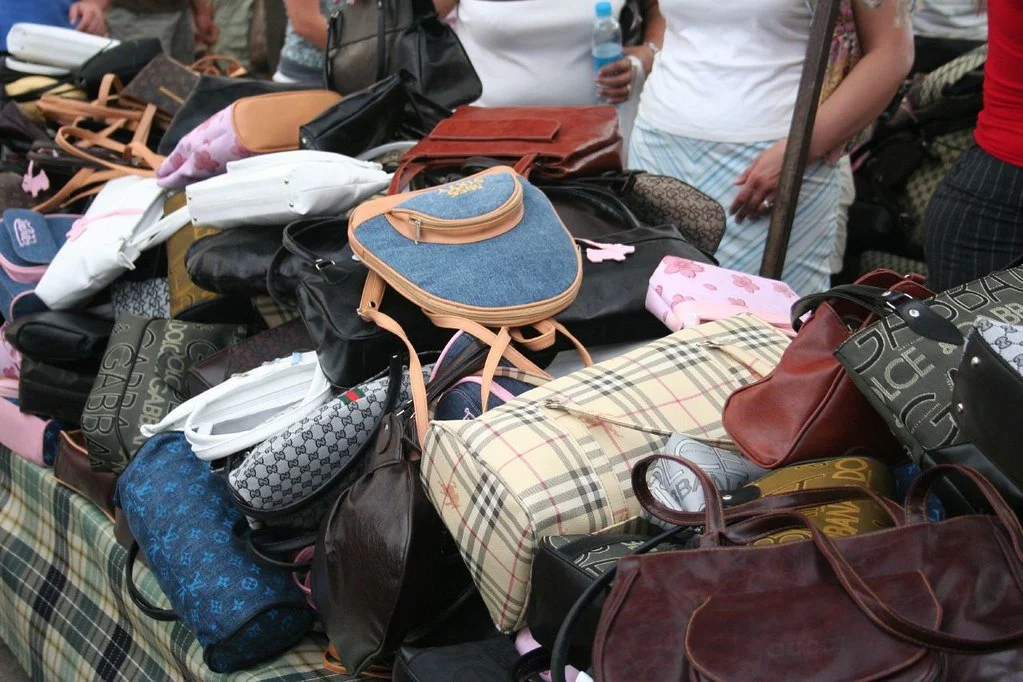
Street stand selling counterfeit bags. Nick Adams. CC BY-NC-SA 2.0.
The counterfeit goods market has expanded dramatically in recent years, moving far beyond street vendors in tourist hotspots to major online marketplaces like Temu, AliExpress and DHGate. Emma Warbey, Detective Chief Inspector of the Police International Property Crime Unit in London, noted that “it’s becoming easier for counterfeit goods to enter the marketplace, with online sales portals, social media, and apps.”
What was once a niche market has become a booming industry, driven in part by social media influencers showcasing “dupe hauls” of fake designer bags, shoes and clothing, promoting the overconsumption of counterfeit luxury goods. While these “dupe” items offer an affordable way to mimic luxury, the reality of their production and ethical impact is far less glamorous.
Luxury fashion is synonymous with exclusivity, as high-end designer items remain out of reach for most consumers due to high prices and limited availability. Through nearly identical copies of luxury items sold at a fraction of the price, counterfeit goods offer an illusion of prestige without the financial burden. Social media influencers have only fueled this trend by normalizing the purchase of fake goods, often describing them as “budget-friendly” alternatives rather than illegal imitations.
Growing demand has created an underground economy that thrives on accessibility and affordability. According to Keith Goldstein, the president and COO of VerifyMe, “the total amount of counterfeit goods sold each year comes in at around $1.7 trillion to $4.5 trillion, which would make counterfeiting at least the tenth largest economy […] It’s also responsible for 2.5 million jobs lost globally.”
Despite their popularity, purchasing counterfeit goods comes with a number of ethical issues. First and foremost, they are illegal to manufacture, sell, and, in many cases, even possess. Many countries have strict intellectual property laws prohibiting the production and distribution of fake designer products, with penalties ranging from hefty fines to imprisonment. Luxury brands invest significant resources in protecting their designs through trademarks, and counterfeit operations directly undermine these efforts.
Additionally, the quality of counterfeit goods is often leagues below the original. Many are made from cheap materials that do not match the durability or craftsmanship of genuine designer pieces. While the items may look similar at first glance, they can fall apart and show signs of wear after minimal use, making them a poor investment even at a lower price point.
Beyond the personal drawbacks of purchasing counterfeit items, the industry itself has serious ethical and environmental implications. Counterfeit production often relies on exploitative labor conditions, including underpaid workers, child labor and unsafe workplaces. Many counterfeit factories operate in countries with weak labor regulations, allowing manufacturers to cut costs and skirt the law at the expense of workers’ rights and safety.
The industry’s environmental impact is equally concerning. Counterfeit goods are frequently produced using toxic materials, synthetic dyes and low-quality plastics that contribute to pollution and waste. The sheer volume of goods produced and shipped worsens global overconsumption, contributing more products to landfills. Unlike reputable brands that are increasingly prioritizing sustainability and ethical sourcing, counterfeit manufacturers have no incentive to follow environmental guidelines. The result is a shadowy industry that promotes unsustainable practices while flooding the market with disposable, low-quality goods.
As counterfeit luxury items continue to gain popularity, consumers must be mindful of their purchasing decisions. The short-term benefit of a cheap designer look comes at the considerably higher cost of legal risks, poor quality, exploitative labor and environmental harm.
GET INVOLVED:
Instead of opting for counterfeits, consumers can explore ethical alternatives by shopping at second-hand luxury markets, designer rental services and brands that prioritize affordability without compromising quality or ethics.
For example, The RealReal is a verified online retailer featuring secondhand designer goods at reasonable prices, allowing consumers to shop at lower cost to both their wallet and the environment.
Apps and websites such as Pickle, Rent the Runway and Nuuly offer short-term rentals of designer items at a fraction of the cost, enabling a cyclical and sustainable use of well-crafted fashion items.

Zoe Lodge
Zoe is a student at the University of California, Berkeley, where she is studying English and Politics, Philosophy, & Law. She combines her passion for writing with her love for travel, interest in combatting climate change, and concern for social justice issues.
Is Ethical Tourism in Hawaii Possible?
How to visit the Hawaiian Islands while minimizing your environmental and cultural impact.
Read MoreFirst Amendment Freedoms in Danger: Greenpeace Ordered to Pay $667M to Oil Company
Julia Kelley
A North Dakota jury has ordered environmental group Greenpeace to pay Dakota Access Pipeline’s operating oil company in a case sparking controversy around Americans’ right to freedom of speech and protest.
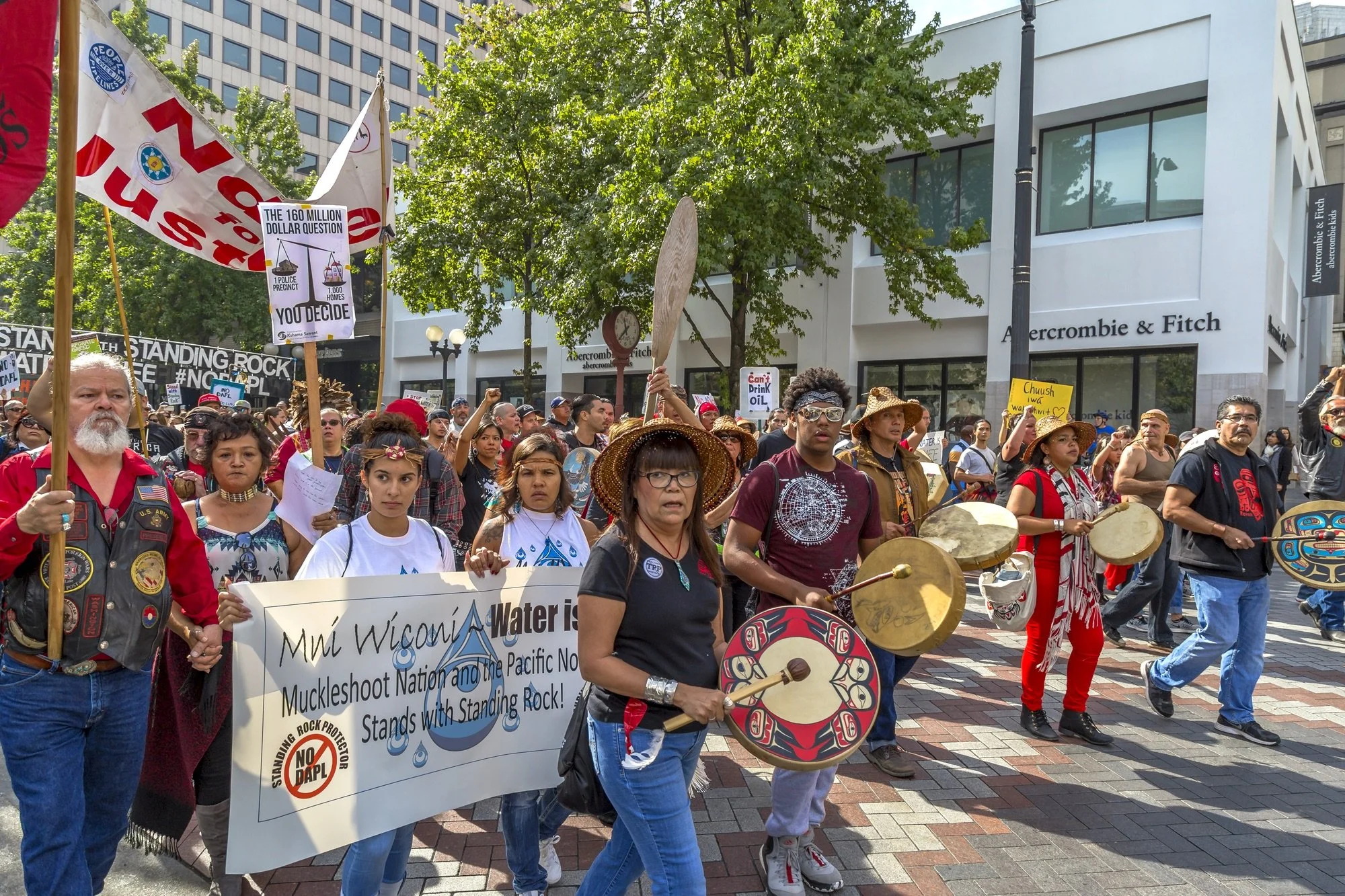
Protest Against Dakota Access Pipeline. John Duffy. CC BY 2.0
On March 19, 2024, a North Dakota jury found Greenpeace, a global environmental nonprofit network, guilty of defamation and destructive protest action against the Dakota Access Pipeline, ordering the nonprofit to pay its operating oil company $667 million. This decision comes after years of national pushback against the Dakota Access Pipeline due to the project’s potential environmental hazards; the 1,172-mile-long underground pipeline transfers crude oil from North Dakota to an oil terminal in Patoka, Illinois. Moreover, the pipeline stretches within a half-mile of the current Standing Rock Sioux Reservation boundaries, posing potential risks to significant cultural and burial sites. As such, since its approval in 2016, protests led by Native tribes and environmental groups such as Greenpeace began sprouting up around the pipeline’s construction sites and sacred Native American areas. In many instances, demonstrations resulted in violence between protesters and law enforcement. It is because of these protests that the builders of the pipeline, oil company Energy Transfer, praised the jury’s March 19 decision, echoed in its counsel’s statement: “Peaceful protest is an inherent American right; however, violent and destructive protest is unlawful and unacceptable.”
In response to this decision, however, environmental activists and Tribal nations have taken a much different position. Contrary to Energy Transfer’s sentiment, many have determined this verdict to be an attack on First Amendment rights rather than a protection against unnecessary violence and destruction. Those associated with Greenpeace have even named the case a Strategic Lawsuit Against Public Participation, or a suit that intentionally targets those speaking out against public interest issues in an attempt to intimidate critics and force them to spend money. To those opposing the pipeline, not only has this lawsuit silenced years-long appeals for environmental safety and Native land protection, but has also cost Greenpeace an immense amount of money to defend its position, thus delaying progress in such areas. Despite being a major nonprofit, Greenpeace has previously warned that losing this case could potentially lead to bankruptcy. Those involved now fear that this could be a reality, as financial reports demonstrate that its total assets from 2023 may not be enough to ensure a supersedeas bond, in which a surety insurer would put up the bond necessary to pay the court-ordered amount. If not, then Energy Transfer would be able to begin seizing Greenpeace’s assets, including all cash needed to keep it operating.
Moreover, Greenpeace has come to represent freedom of speech and protest in general. In an interview with Democracy Now, Steven Donziger described the trial as a way to “silence people’s legitimate constitutionally protected right to speak out,” founded on a false narrative that protesters were violent while it was actually “law enforcement agencies […] hired by Energy Transfer that were really committing violence.” Critics warn that this will have effects that go beyond support for environmental and Native protections, potentially posing detrimental risks to nonprofit work as a whole. With a rise in anti-protest bills since 2017 mirroring a rise in major protest movements, much of this newly proposed legislation calls for increased liability against organizations not directly involved with protests but who offer support, including nonprofits or religious groups. In addition, the potential bankruptcy of Greenpeace, a substantial and largely influential organization, signals even fewer protections for smaller nonprofits, who may not have the same amount of financial support or as wide of a network. This could significantly decrease charities’ ability to speak out on various issues, for fear that they could easily be sued by larger corporations. Such concern would halt imperative support for causes across the country, a major blow to many movements. .
In the wake of the lawsuit, supporters of Greenpeace, environmental protection and the Standing Rock Sioux Tribe have critiqued and denounced the jury’s final decision. Despite the shock that the trial has caused, such advocates find hope in Greenpeace’s intention to appeal the case, as the organization declared in a statement released a day after the verdict. In addition to this, Greenpeace also highlighted the increased support it has gained over the past year, as opposed to a dissolution of its movement risked by the court case. The statement’s overall message affirms Greenpeace’s continued efforts as well, signaling that their work is still not over: “we will not be silenced, and our movement will endure.”
GET INVOLVED:
For those looking to get involved with environmental protection in the United States, researching local or state legislation is a great place to start. Looking into advocacy on a federal scale can be powerful as well, especially through staying updated on EPA regulations and making comments. In addition, check out organizations like the Environmental Defense Fund, The Nature Conservancy, We Act For Environmental Justice or the National Environmental Education Foundation, all of which are focused on making environmental change and expanding awareness through public policy support and education. Those interested in supporting Native American rights can look into the Native American Rights Fund, the Association on American Indian Affairs, the American Indian Policy Institute or Cultural Survival.

Julia Kelley
Julia is a recent graduate from UC San Diego majoring in Sociocultural Anthropology with a minor in Art History. She is passionate about cultural studies and social justice, and one day hopes to obtain a postgraduate degree expanding on these subjects. In her free time, she enjoys reading, traveling, and spending time with her friends and family.
The Price of Preservation: Famous Sites Limit Tourism
By: Zoe Lodge
As overtourism threatens popular sites, the only solution seems to be restricting access, a controversial move.
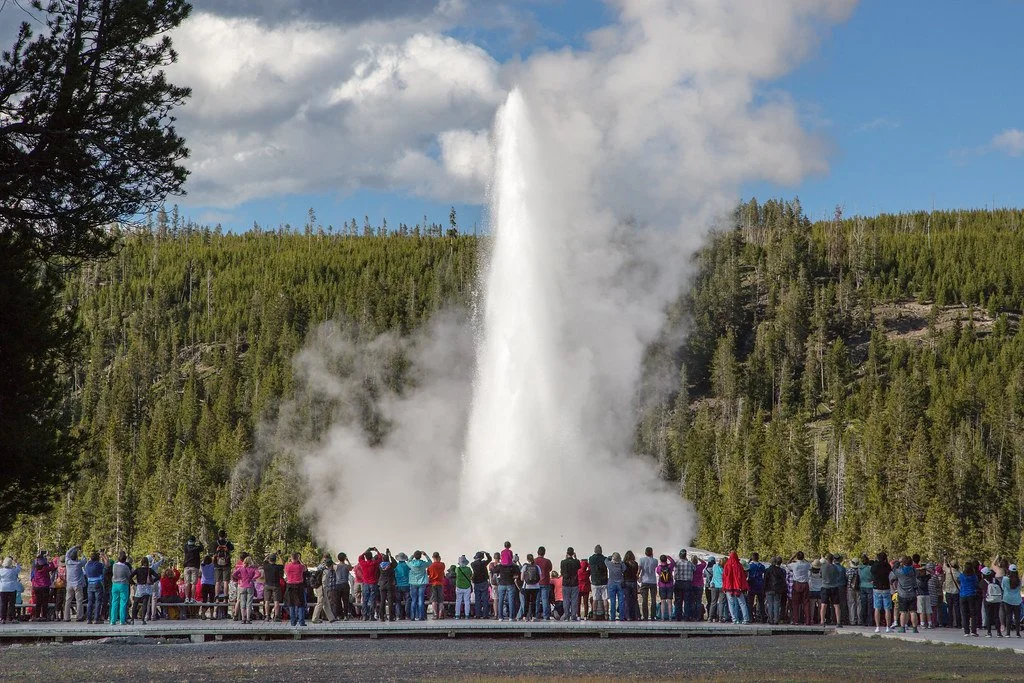
Tourists crowd Yellowstone National Park. Neal Herbert. PDM 1.0.
From Yosemite to Machu Picchu, many of the world’s most incredible natural wonders and historical landmarks are facing the complex challenge of overtourism. While these destinations attract millions of eager visitors who enable economic circulation, the surge in foot and vehicle traffic has led to environmental, cultural and infrastructural concerns. To combat these issues, many national parks and heritage sites have implemented reservation systems and strict visitor limits, measures that while frustrating to some, are essential for long-term preservation.
National parks and global historical landmarks are not merely attractions; they are delicate sites that require careful management. Overtourism can lead to severe consequences such as soil erosion, damage to plant life, disruption of local wildlife and even structural harm to historical sites. In places like Yellowstone National Park, off-trail hiking, wildlife harassment and increased vehicle traffic have led to environmental destruction and tourist injury. Similarly, Machu Picchu has suffered from footpath erosion, instances of vandalism and structural strain due to the high number of daily visitors. Without intervention, these sites risk being permanently damaged or potentially lost to future generations.
Recognizing these risks, many national parks and historical sites have begun introducing reservation systems and ticketing policies to manage visitor numbers. These restrictions help reduce congestion, minimize environmental damage and ensure more responsible tourism. While ticketing specific attractions is not a new concept, regulations limiting the number of people allowed in a park or site at a given time are becoming increasingly common. Yosemite National Park, for example, has experimented with reservation-only entry during peak seasons to control the flow of tourists. Zion National Park has implemented a permit system for some of their most popular hiking routes to prevent environmental damage and danger caused by overcrowding. Similarly, Peru has imposed strict daily limits on visitors to Machu Picchu and even restricted access to certain trails to prevent excessive wear.
Some travelers have voiced frustration with these limitations, arguing that they complicate trip planning and reduce the chance for spontaneity. However, these restrictions exist precisely because the unrestricted flow of visitors has contributed to significant degradation of these sites. Unlimited access to national parks and heritage sites might seem appealing, but unregulated tourism is not worth the cost, causing irreparable damage to the landscapes, historical structures and environments that make these destinations so remarkable.
Beyond preservation, limits ultimately enhance visitors’ experience. With fewer crowds, tourists can enjoy these sites in a more serene environment, appreciating natural and cultural significance without the chaos of overcrowding. Less congestion also means improved safety and reduced strain on park staff and infrastructure, an already complicated issue in the United States.
While restrictions on tourism might be inconvenient for some, they are a necessary measure to protect the world’s most cherished natural and cultural landmarks. Managing visitor numbers is not about keeping people out but about protecting the environmental integrity of these sites. Ultimately, it is for the good of the sites, the world and visitors, as they will then have to deal with less traffic, fewer crowds and be able to enjoy these locations more in tune with the way that nature intended.

Zoe Lodge
Zoe is a student at the University of California, Berkeley, where she is studying English and Politics, Philosophy, & Law. She combines her passion for writing with her love for travel, interest in combatting climate change, and concern for social justice issues.
White House Goes Back to Plastic Straws
On February 10, 2025, President Donald Trump issued an executive order reversing the ban on plastic straws, calling paper straws ineffective and environmentally harmful.
Read MoreHow ‘The White Lotus’ is Driving Overtourism in Thailand
The “White Lotus Effect” has driven a surge in tourism to Koh Samui and Thailand, as the hit HBO series boosts global interest in these destinations.
Read MoreCoastal Residents Bear the Brunt of Climate Change
Coastal communities worldwide are grappling with the widespread effects of a warming climate and rising sea levels, witnessing the devastation of their homes and increased economic difficulties.
Read MoreThe Human Cost of Renewable Energy
To ensure a sustainable future, it is crucial to address the harmful effects of lithium extraction and prioritize social justice, equitable resource distribution, and environmentally responsible practices.
Read MoreMeet an Organization Tackling Plastic Pollution in Bali
Initiatives like Sungai Watch are fighting back by implementing innovative trash barriers in rivers, preventing plastic from reaching the ocean and empowering local communities in Bali for a cleaner future.
Read MoreAgriculture and Climate Change: A Complex Relationship
Agriculture plays a critical role in contributing to and being impacted by climate change; however, sustainable farming solutions offer a path toward reducing agriculture's environmental impact while ensuring long-term food security.
Read More