What India’s Successful Moon Landing Means for Space Exploration

India is now the fourth country to land on the moon, and its lunar rover is making some big waves in space exploration.

The Chandrayaan-3 lunar exploration craft was launched from the south of India on July 14. Sky News. CC BY-SA-NC 2.0

On August 23, the Indian Space Research Organization (ISRO) landed its Chandrayaan-3 craft near the moon’s south pole, marking both the country’s first ever moon landing and the world’s first on that specific lunar region. Not only has this achievement finally placed India among the ranks of other space exploring nations, but has also made it one of only four countries to land a craft on the moon. The location of the craft’s landing near the unexplored south pole is significant given the multiple failed attempts by other nations to do just that in the past and stake a claim to lead future research in the area. Chandrayaan-3’s successful landing will hopefully cement the credibility of the ISRO on the international playing field and allow for continued collaboration with other foreign space agencies. During its two-week lifespan, the rover investigated the existence of frozen water deposits beneath the surface of the moon, and has made a number of surprising discoveries that orbiting crafts were unable to.

A digital rendering of the Chandrayaan-3 craft and its lunar rover. NDTV. CC BY-NC 2.0

While India’s space program was first established in 1962, it took another decade or two for the ISRO to really pick up steam. Many of the first projects involved sending satellites up into Earth’s orbit in order to map and survey the country from above, bringing telemedical and communication services to communities in remote regions. Chandrayaan, a Sanskrit term meaning “mooncraft,” is the name of India’s lunar exploration program, which made its debut between 2008 and 2009 with the Chandrayaan-1 lunar space probe, which found water deposits on the moon using various mapping techniques and reflection radiation. The next craft, launched in 2019, was comprised of an orbiter, moon lander and rover, and was actually intended to be the first to land on the south pole of the moon, but after successfully entering lunar orbit, the ISRO lost communication with the landing craft and rover before touchdown. 

Chandrayaan-3 is therefore the culmination of more than a decade of scientific research and technological development and is undoubtedly the crown jewel in India’s space program. The probe was launched on July 14 from Sriharikota Range, the country’s largest launch site located in the southern state of Andhra Pradesh, and successfully touched down on the moon on August 23. Unlike its recent predecessor, the Chandrayaan-3 traveled without an orbiter module, further cementing its intention to land on the moon and conduct experiments in situ. Additionally, while this craft was unambiguously an Indian project and creation, some of the technology on board resulted from various collaborations between the ISRO, NASA and the European Space Agency (ESA), proving once again the importance and benefits of scientific collaboration.
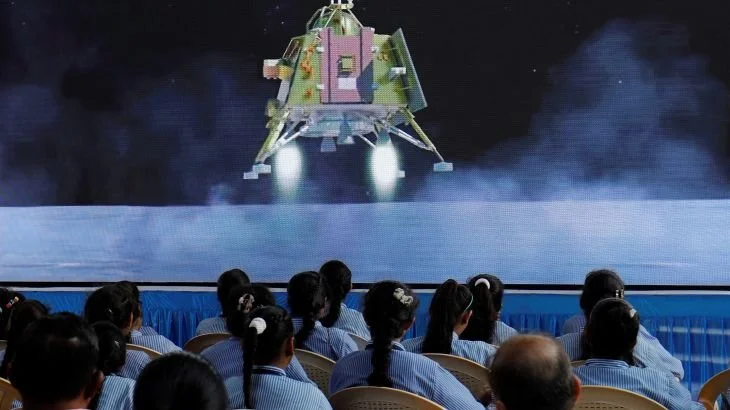
Students in India watch a video explaining the lunar mission. Al Jazeera. CC BY-NC-ND 2.0

Aside from proving that landing on the south pole of the moon is indeed possible, the information sent back by the Chandrayaan-3 rover has already resulted in some groundbreaking discoveries about the moon. One such finding has to do with understanding the temperature of lunar soil, an important factor when considering building long-lasting structures or even settlements on the moon. The Indian rover is equipped with a temperature probe that can reach nearly four inches (10 cm) beneath the surface, and found that the temperature drops 140ºF (60ºC) at a depth of just roughly 3.14 inches (8 cm). This has provided an updated and more accurate reading as compared to the data currently in use from NASA’s 2009 Lunar Reconnaissance mission, which lacked precision because it was an orbiter and therefore not actually on the lunar surface. Another interesting discovery took place in the form of a series of strange vibrations detected by the rover’s seismograph: scientists have suspected it as being a minor moonquake, although further exploration and longer-term observations would need to confirm this.

While these scientific discoveries are of course extremely significant and promising for the future of lunar exploration and research, the Chandrayaan-3 project also set a historic precedent in terms of the budget they used to complete this mission. The ISRO has a long held reputation amongst international space research circles for their ability to work on limited funds, at least compared to other major space exploration agencies. NASA, for example, has a $25.4 billion budget for the current fiscal year, while the ISRO received a measly $1.5 billion from the Indian government for the fiscal year ending this March by comparison. If that wasn’t enough, the ISRO actually spent 25% less than what it had been allocated. The Chandrayaan-3 mission cost a total of $74.3 million USD, ironically less than half of the budget that director Christopher Nolan had to make Interstellar, his award winning film about space travel.

The actual Chandrayaan-3 craft before it was launched into space. The Week. CC BY-SA 2.0

In addition to finally taking its place amongst the other lunar landing nations, Chandrayaan-3 has opened countless doors for both the ISRO and the space exploration community as a whole. Going forward, the example that this mission has set with regards to the resources it used as well as through the international collaboration it benefitted from. The moon’s south pole has now been unequivocally proven accessible and investigable, new information about lunar composition has been brought to light, and like all other missions into space, has helped to deepen our understanding of both the universe and ourselves.


Tanaya Vohra

Tanaya is an undergraduate student pursuing a major in Public Health at the University of Chicago. She's lived in Asia, Europe and North America and wants to share her love of travel and exploring new cultures through her writing.
Soldiers Speak: War Crimes in Myanmar

Recent atrocities and war crimes have been reported by military soldiers in Myanmar as the civil war rages on. 

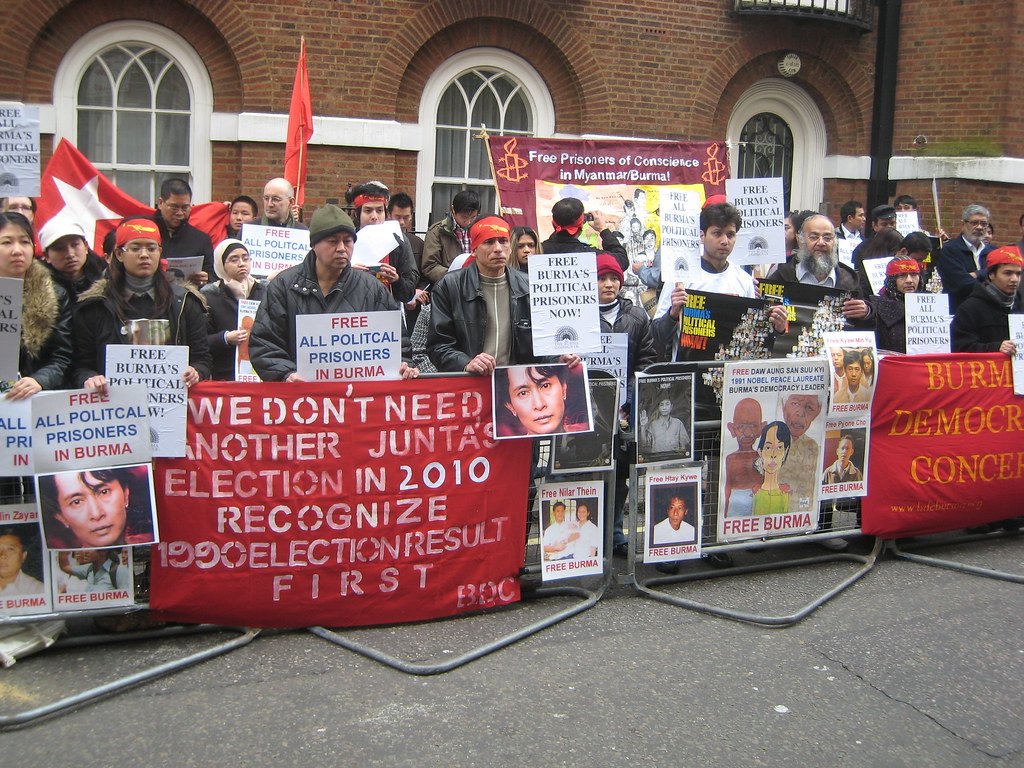
Human rights protest for Burma in France. Totaloutnow. BY-NC-ND 2.0.

Myanmar has a dirty, bloody history attached to the political and military conflicts that have furiously swept through their country. The civil war that rages on adds to this history, and the war crimes and atrocities that are currently occuring illuminate the fragility and deep rooted struggles between the Burmese government and its citizens.

The civil war started in February of 2021 after Myanmar’s military powers – known as the Tatmadwa – seized the government from the elected officials of the National League for Democracy (NDL), the leading civilian party in Myanmar. The NDL had won the election in 2021 by 83%, the New York Times reports, but the military ignored these results, an action said to be linked to the government's dislike for Aung San Suu Kyi. She was the leader of the NDL who would have become the elected official of the Burmese government. 

The military coup that overthrew the government in 2021 was the event that turned the tide of the political state of the country, and now battles between military soldiers in the Tatmadaw and pro-democracy armed civil militias have erupted and raged now for almost two years. 

The military powers in charge currently – referred to as the junta: a “group of military leaders” as BBC explains – are led by General Ming Aung Hlaing. He was given power from military leaders after the coup in 2021. General Ming is responsible for the imprisonment of countless NDL members, as well as multiple ‘campaigns against ethnic minority groups’ including the Rohingya Muslim Genocide that has been taking place in Myanmar for years.

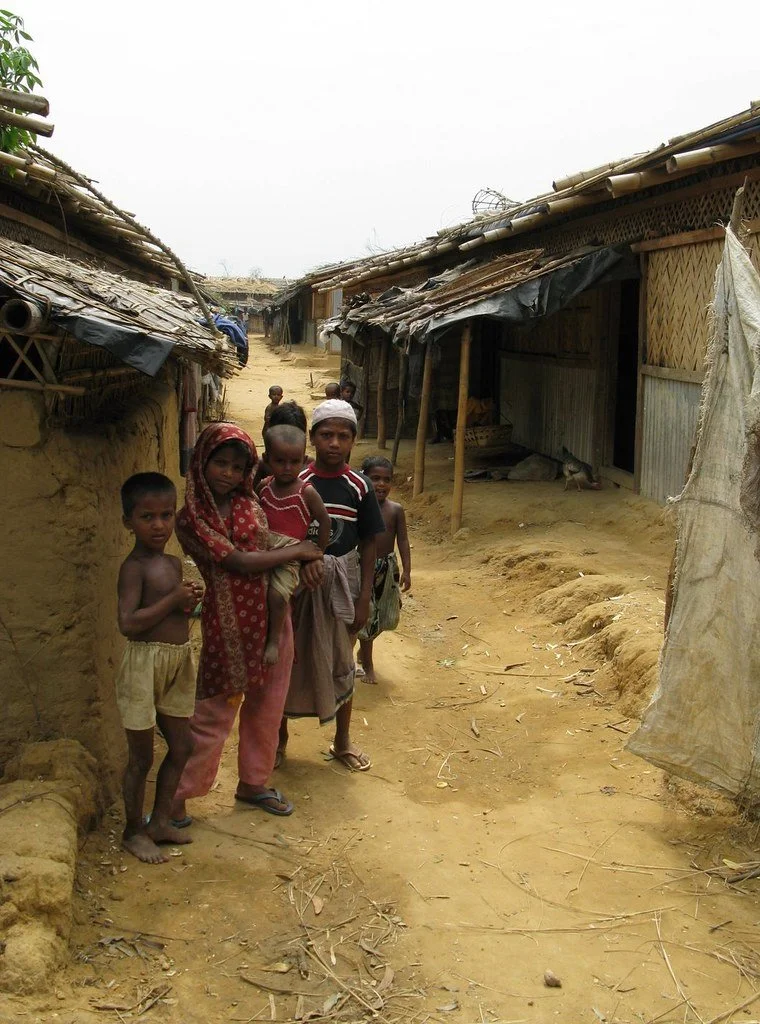
Rohingya refugees. Austcare-World Humanitarian Aid. CC BY-NC-ND 2.0.

As the war continues to rage on, Tatmadaw soldiers have started to come forward with stories of the atrocious war crimes that they were ordered to commit onto the civilians of Myanmar. BBC has reported that soldiers have admitted to “killing, torturing and raping civilians”. Large scale human rights violations have continued to occur as well, including the imprisonment of protesters, the treatment and killing of political prisoners and the treatment of civilians during wartime conflicts has sparked dialogue from the United Nations (UN). The UN reports that military powers have “directly targeted civilians” with airstrikes and attacks, and have already killed “at least 1,600 people”.

Six anonymous soldiers agreed to an interview with BBC, where they told the story of crimes against humanity, one of the few crimes that can be prosecuted at the Internationcal Criminal Court, being committed at the hands of the unstable Tatmadaw military regime. One reported that they had been told to “shoot anything they saw; another was ordered to burn down a house with civilians locked inside it. Other soldiers admitted to witnessing women being raped at gun point after soldiers believed the victims to be supporters of the People’s Defence Force (PDF) – an armed civilian militia organization. These six soldiers also discussed the energy of other members of the regime, stating that some soldiers would ‘boast’ about their crimes and actions.

Villages have burned to the ground, civilians have been abused, killed and looted. This is the current fate of the Burmese people, but the civilian militias continue to fight back and continue to push for democracy. In a country so often torn between citizens and the military state, the fate of the people of Myanmar has remained undecided. The UN states in their report that “despite spiraling violence… ‘the will of the people has clearly not been broken.’” Determined to return to a time of democratic rule, the civilian population of Myanmar continues to fight against the horrors of the military regime wishing to dominate them.

TO GET INVOLVED

The Committee Representing Pyidaungsu Hluttaw is, as Insider states, “the country’s democratically elected legislature,” the very same that was overthrown in the coup in 2021. They have a GoFundMe, which is run by the Citizen of Burma Award Organization, that uses the money to support pro-democracy protests and encourages civil disobedience against the junta military regime. To donate to the protestors, click here .

The Civil Disobedience Movement also collects donations which are sent directly to people in Myanmar to fund and support civil disobedience and protests against the government. To donate, click here.

Additional ways to GET INVOLVED can be found in Insider’s “5 Ways to Help Anti-Coup Protests on the Ground in Myanmar Right Now”. This article discusses multiple ways to donate, to educate oneself and to create constructive and far reaching conversations about the injustices befalling the Burmese people. To read more, click here.


Ava Mamary

Ava is an undergraduate student at the University of Illinois, double majoring in English and Communications. At school, she Web Writes about music for a student-run radio station. She is also an avid backpacker, which is where her passion for travel and the outdoors comes from. She is very passionate about social justice issues, specifically those involving women’s rights, and is excited to write content about social action across the globe. 

Mass Detention of Civilians In Ethiopia

The Ethiopian government declared a state of emergency, resulting in the detention of civilians on suspicion of cooperating with rebel terrorists.

Addis Ababa, capital of Ethiopia. DFID - UK Department for International Development  CC BY 2.0

Ethiopia has been in the throes of a civil war. The federal government, headed by Prime Minister Abiy Ahmed, has been fighting against Tigrayan rebels in the northwest region of the country. Recently, it appears Tigray fighters are at an advantage as they push south towards the nation’s capital. In response, the government declared a state of emergency Nov. 2 and began to roundup civilians of Tigrayian descent. Civilians with no connection to the rebels are being detained, forced from their homes, plucked off the street or at work. The United Nations stated that more than 1,000 people have been detained since the government declared the state of emergency. Additionally, they reported that 70 drivers contracted by the United Nations and agencies to deliver aid to the country have been detained by officials as well. Along with the detained drivers, 16 employees of the United Nations were detained following the state of emergency. These employees were present because the Tigray region is in desperate need of aid after airstrikes fell on the region in mid-October. The dire situation in Tigray has been labeled an ongoing humanitarian crisis. 

The civil war broke out after tensions between the Tigray’s People Liberation Front political party and the federal government came to a point. The party previously held control of the Ethiopian government for decades, until Prime Minister Abiy Ahmed took office in 2018. In 2020, the T.P.L.F attacked a military base in the Tigray region, prompting the Prime Minister to order a military offensive in response. In June, the Ethiopian military was forced to withdraw from the Tigray region, marking a major defeat and subsequent turning point of the conflict. 

In July 2021, the United Nations requested access to the region because an estimated 400,000 people were experiencing famine, with another 1.8 million at risk. Additionally, 1.7 million people have been internally displaced while thousands of others have fled the country.

The state of emergency declared on Nov. 2 allows officials to search anyone’s home and arrest without a warrant solely based on suspicion of association with rebel groups. The recent arrests have included other ethnicities, but the majority of detentions have been people of Tigrayan descent. Along with the large-scale detentions, public figures allied with the government have taken to social media inciting hate speech against ethnic Tigrayans. The head of the Ethiopian government communication office stated that the detentions were not ethnically motivated, but the United Nations High Commissioner of Human Rights expressed concern at the broad terms of the recent state of emergency.


Dana Flynn

Dana is a recent graduate from Tufts University with a degree in English. While at Tufts she enjoyed working on a campus literary magazine and reading as much as possible. Originally from the Pacific Northwest, she loves to explore and learn new things.

Yemen Experiences World's Worst Humanitarian Crisis

Yemen’s ongoing civil war has left 24 million in need of assistance and more than 100,000 dead since the conflict began in late 2014. Today, Yemen is considered the world’s worst humanitarian crisis and is on the brink of being labeled by the United Nations as the world’s worst famine in 100 years. 

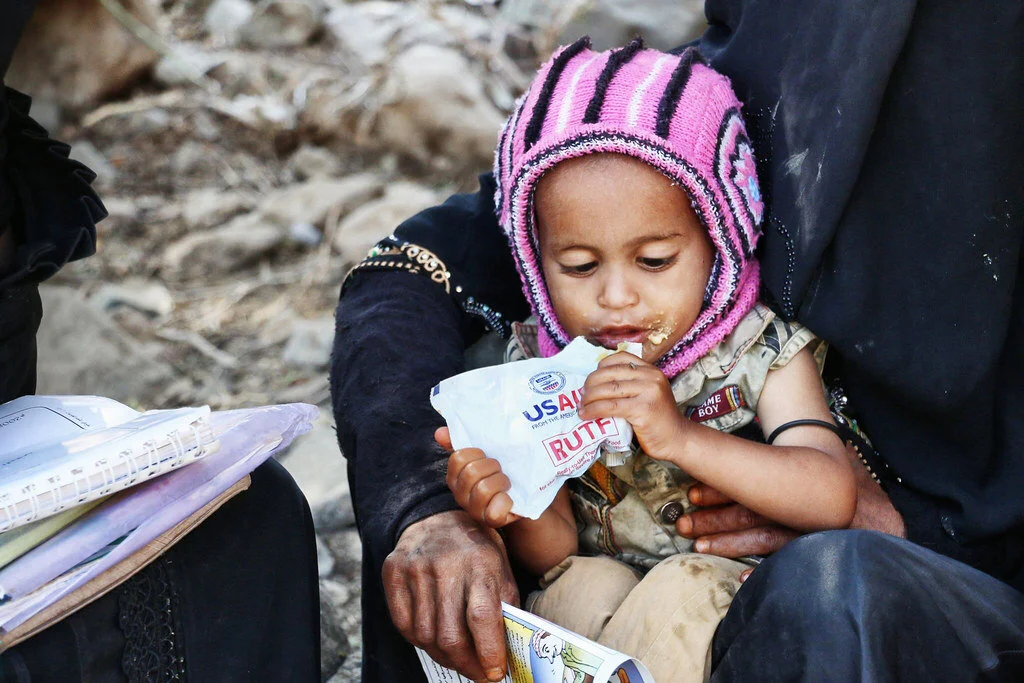
A hungry Yemeni child eats a food bag. USAID_IMAGES. CC BY-NC 2.0.

Hunger, malnutrition, famine, displacement and mental health issues are among some of the devastating consequences imposed upon Yemeni civilians by the country’s civil war. Although the conflict between Yemeni President Abdrabbuh Mansour Hadi’s government and the Houthi, or Ansar Allah, armed movement broke out in late 2014, Yemen was already one of the most vulnerable countries in the Middle East.

Following the Arab Spring in late 2011, previous Yemeni President Ali Abdullah Saleh was forced to turn over his power to his deputy, Abdrabbuh Mansour Hadi. Since then, the country has been enthralled in a civil war which has left millions of civilians hungry homeless, or dead. Houthi forces took over Sana’a, the capital of Yemen, in late 2014, instigating the war. By early 2015, Houthi officials declared mobilization to overthrow Hadi’s regime and, only a day later, fighting broke out in Lahij Governorate. Lahij Governorate quickly succumbed to Houthi rule and President Hadi fled the nation. 

With the help of the United Arab Emirates, Saudi Arabia created a coalition of mostly Sunni Arab states to combat Houthi forces and the rise of Iranian influence in the Middle East in 2015. Today, much of the conflict in Yemen is a proxy conflict for the power struggle between Iran and Saudi Arabia in the region. 

The Arab coalition conducted countless air campaigns to drive out Houthi forces from Yemen and facilitate the return of Hadi’s government, despite the trail of destruction these air strikes leave behind. Funerals, weddings, homes, mosques, schools and hospitals have all fallen victim to these bombs. In response to an attack on Saudi Arabia’s eastern oil fields—which disrupted nearly five percent of the world’s global oil supply—Saudi Arabia spearheaded a bombing campaign. According to the Yemen Data Project, the conflict and air strikes since 2015 left around 17,000 Yemeni civilians dead or injured, as of March of 2019. 

According to the United Nations, Yemen remains the world’s worst humanitarian crisis. With over 100,000 people killed and 85,000 children dead from famine, the UN warned that millions of Yemenis could face starvation in what could be “the world’s worst famine in 100 years.” Currently, 16.2 million Yemenis are food insecure while famine continues to rise; child malnutrition there is one of the highest in the world, with two million children in need of acute malnutrition assistance; and at least one child dies of malnutrition or diarrhea every 10 minutes in Yemen. 

Displacement is another major consequence of the war in Yemen. With more than five million people estimated to have been forced to flee their homes, four million Yemenis remain displaced today. These displaced families live in camps of makeshift shelters, forcing them to continue moving around and making them vulnerable to severe weather conditions, air strikes and other dangers. In addition to the overwhelming number of displaced and homeless Yemenis, the nation is also home to around 300,000 refugees mostly from the Horn of Africa.

The devastating impacts of Yemen’s ongoing war does not stop at the physical realm—consequences of the violence have affected the mental health of Yemeni youth. According to Columbia Global Centers’ PGIF Project, a 25-year-old living in Yemen today “has already lived through 15 major conflicts and wars,” making depression, PTSD and other mental health disorders common in Yemen’s youth. Considering the lack of infrastructure and medical facilities already in Yemen, mental health concerns are pushed to the backburner. With roughly one psychiatrist per 500,000 people, only three mental health hospitals exist in Yemen. The lack of mental health services and resources has forced individuals who battle with mental health issues to turn to alternate methods of help, such as Quranic healing, while professional help is reserved for more extreme disorders, such as psychosis. 

PTSD is one of the most common products of war, and this is evident with  Yemeni children. Growing up with bombs dropping all around them, PTSD in Yemeni civilians and children is often triggered by loud noises and the sounds of planes whooshing overhead. Behavioral changes such as bedwetting, isolating oneself and emotional detachment are common consequences of PTSD in children. 

Beyond death by air strike or on-the-ground fighting, many Yemenis have lost their lives to hunger and diseases because of restrictions on humanitarian assistance, imports and access to essential services. Because of this, UN Secretary-General Antonio Guterres refers to Yemen’s crisis as “man-made.” Many third party nations, organizations and institutions have requested the warring countries involved to improve civilian protection, but have experienced little success. Now, many activists have taken to social media to garner support and aid for Yemen’s children, as well as raise awareness of Yemen’s situation—for being the world’s worst humanitarian crisis, Yemen is often underrepresented in the media.

GET INVOLVED

Despite the restrictions on humanitarian aid in Yemen, there are still ways to help. Save the Children is one of the largest organizations operating in Yemen and is currently aiding children suffering from malnutrition, supporting health facilities in hard-to-reach areas and leading educational programs. 

The international organization, World Food Programme, aims to provide 13 million people with food assistance across Yemen. To accomplish this goal and ensure their efforts are uninterrupted in 2021, the WFP is seeking to raise $1.9 billion. 

The Danish Refugee Council offers partnership opportunities to private companies, where partners will have the opportunity to help solve the global displacement crisis. The DNC is a trusted partner of the United Nations, is rated the world’s third best non-governmental organization, and is a Core Humanitarian Standards certified organization.


Mia Khatib

Mia is a rising senior at Boston University majoring in journalism and minoring in international relations. As a Palestinian-American, Mia is passionate about amplifying the voices of marginalized communities and is interested in investigative and data-driven journalism. She hopes to start out as a breaking news reporter and one day earn a position as editor of a major publication.

Evo Morales Returns in Triumph to Bolivia, Ending a Year in Exile

One year after he stepped down amid a contested election, the popular left-wing leader is back. Will he be content with his supporters’ love, or will he seek power as well?

Evo Morales waving the Wiphala, a symbol for South America’s Indigenous people. Brasil de Fato. CC BY-NC-SA 2.0.

Exiled leaders rarely return so triumphantly. Evo Morales, president of Bolivia for 14 years before fleeing the country in November 2019, greeted a jubilant crowd when he crossed the border from Argentina and trekked to his home province of Chapare. Many expected a more forceful return, perhaps a march to the seat of government in La Paz. Rather, Morales traveled to where he started his political career at the precise moment when that career seems set to either end or begin again. 

If Morales plans to kick-start a new phase in his political career, he reenters in a much better position than when he started. Born to a poor family in the Orinoca region in 1959, his family moved with countless other families from the highland altiplanos to work on lowland coca farms, which provided poor Bolivians the best shot at a livable wage. The young Evo became a union leader, fiercely advocating for the rights of farmers when the United States’ war on drugs demanded the Bolivian government slash its supply of coca, its most profitable crop. In Bolivia, people chew on it or brew tea, but one ton of leaves can be refined into two pounds of cocaine base paste. 

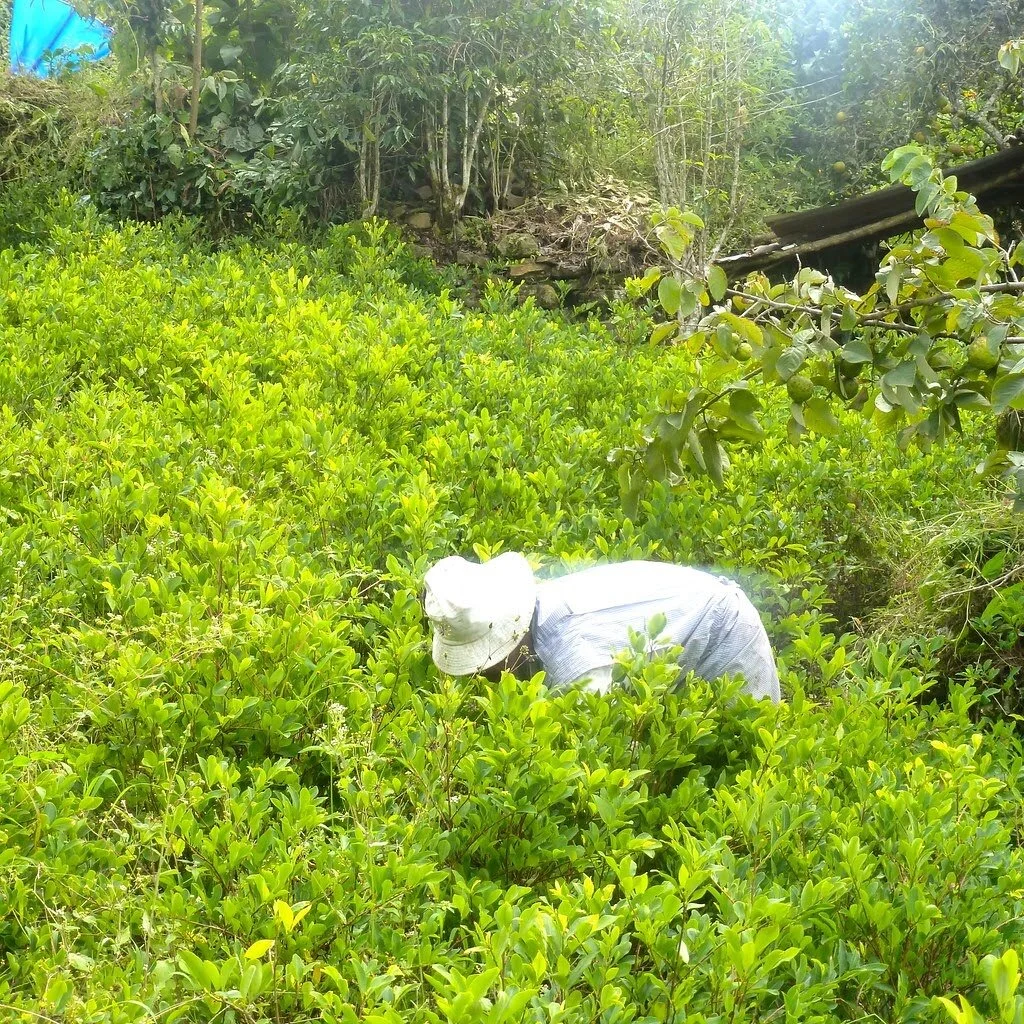
A farmer pruning coca. Erik Cleves Kristensen. CC BY 2.0.

Morales’ experiences there fostered a brand of politics staunchly devoted to the poor and Indigenous communities through the institution of socialism. He joined and soon transformed the Movement for Socialism party (MAS) and became a one-term congressman. After leading violent street altercations that forced two presidents to resign, his ambitions expanded to the national realm. In 2006, the Bolivian people voted him in as president, beginning a 14-year-long tenure which would prove revolutionary.

For one, he was the first Indigenous president since the country’s independence in 1825. In a nation that is 42% Indigenous, this seems strange, but centuries of colonization and racism led to a society of haves and have-nots. An ethnic Aymara, Morales expanded MAS’s appeal to all Indigenous people, chafing many Whites and Mestizos who supported MAS in far fewer numbers. Some Indigenous communities found Morales’ embrace of Indigenous peoples hollow; he allowed drilling in forest reserves and expanded the amount of land settlers could clear. 

Man without a plan. Alain Bachellier. CC BY-NC-ND 2.0. 

Most of all, however, he presided over what many view as an economic miracle. Morales’ government reduced by two-thirds the amount of people living on less than $1.90 a day, the World Bank’s definition of extreme poverty. The high price of petroleum, another of Bolivia’s largest exports, allowed his administration to invest heavily in innovation and modernization. The widespread prosperity led many to ignore Morales’ authoritarian streak. He would often jail critics and journalists while piling lawsuits on his political rivals.

But when Morales ran for a fourth term against constitutional term limits, opponents found it unforgivable. A pause in vote-counting led many to believe he planned to rig the election, so thousands stormed the streets to protest the election results. Clashes broke out between pro- and anti-Morales protesters; 36 people died amid the violence. Once the military “recommended” Morales step down, he boarded a plane to Mexico and left Bolivia in the hands of little-known senator Jeanine Anez. 

She was a right-wing politician with exactly the opposite views of Morales. Where he proudly represented Indigenous peoples, Anez called them “savages.” (In his triumphant return, Morales sarcastically quipped, “The Bolivian right and the global right should know: the savages are back in government.”) Anez presided over an economic slump due to political unrest and COVID-19. She governed for 11 months before the electorate put in office Morales’ own protege Luis Arce.

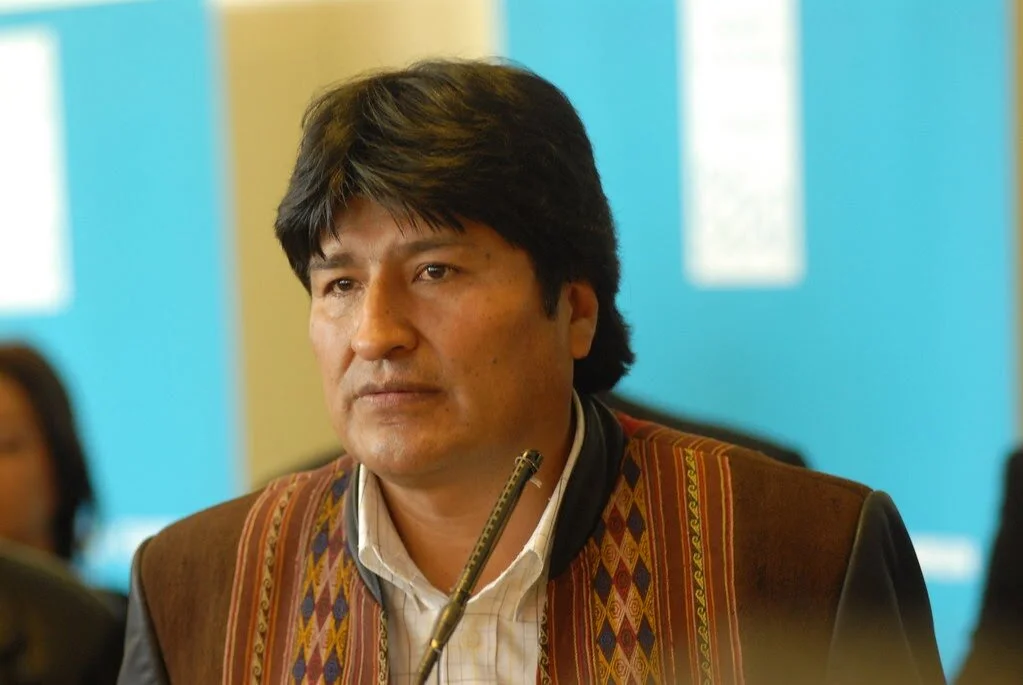
Morales’ protege Luis Arce. Casa de América. CC By-NC-ND 2.0.

A bland, uncharismatic technocrat, Arce won broad appeal precisely because he was Morales’ choice. He engineered the economy during Morales’ presidency, so he can take credit for much of Bolivia’s prosperity. His support from the former president may prove both a blessing and a curse, however. He will struggle to distance himself from a controversial figure who still holds strong sway over MAS. His primary responsibility will be to maintain distance from Morales to the greatest extent possible.

For the time being, however, Morales will enjoy his warm welcome home. Crowds gleefully waved the Wiphala, a colorful checkered flag representing Indigenous peoples. Supporters dressed in their finest, most colorful Indigenous attire to celebrate his homecoming. Luis Arce neither met him in Chapare nor sent him a word of greeting. So far they hold no communication. For the sake of Bolivia’s democracy, many hope it will stay that way. 


Michael McCarthy

Michael is an undergraduate student at Haverford College, dodging the pandemic by taking a gap year. He writes in a variety of genres, and his time in high school debate renders political writing an inevitable fascination. Writing at Catalyst and the Bi-Co News, a student-run newspaper, provides an outlet for this passion. In the future, he intends to keep writing in mediums both informative and creative.

Syria’s Allies Exploit the Nation’s Strife

With friends like these, who needs enemies?

A long road to recovery. Chaoyue Pan. CC BY-NC-ND 2.0.

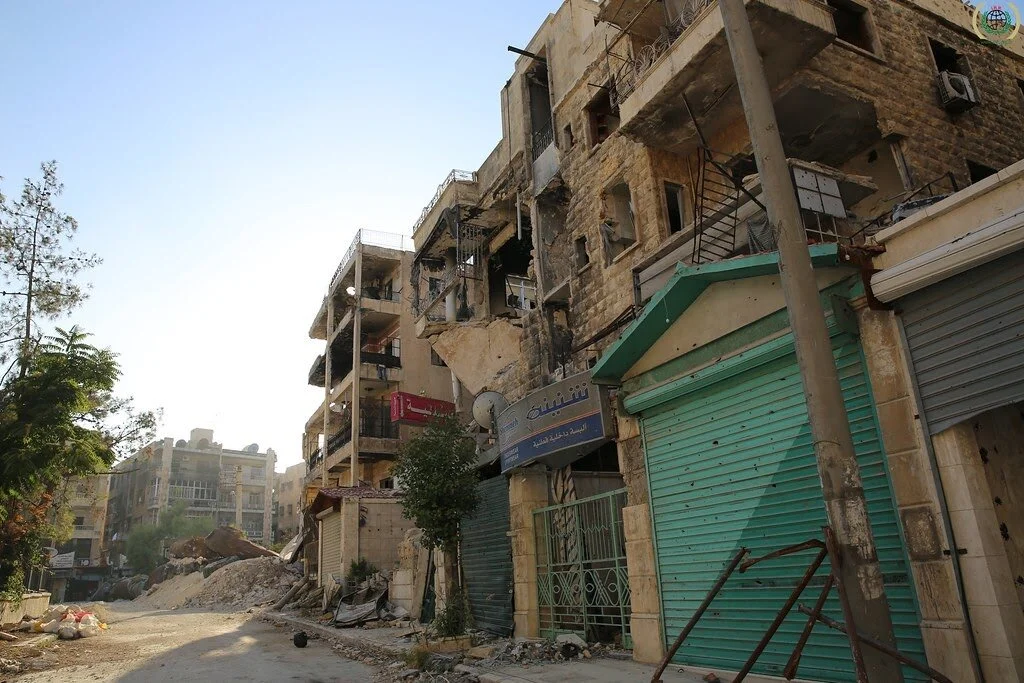
Bashar Assad didn’t survive his country’s civil war alone. Only with the help of Russia was he able to resist rebel forces and reestablish his grip on Syria. Now, his grip on power seems unshakable, and the question has moved from who will win to how Syria will rebuild. This challenge, however, Assad might have to do alone.

It will be a mighty task. Every aspect of Syria’s economy suffered in the almost decade long civil war. Oil, the country’s primary export, is being produced at one-sixth its prewar level, and last year’s wheat crop was half the prewar average. 60% of businesses have closed either permanently or temporarily. What savings citizens had are losing value fast, for the Syrian currency lost 70% of its value against the dollar. The forthcoming peace is preferable to war but far from easy. 

COVID-19 only adds to the country’s plight. The Assad regime has attempted to hide the extent of the devastation by blaming COVID-19 deaths on “pneumonia,” but the damage is clearly intense. Desperate for food and cash, many Syrians shirked lockdown measures. Other measures enforced in other countries are impossible to follow in a war zone. What little medical infrastructure existed has been swiftly overwhelmed. 

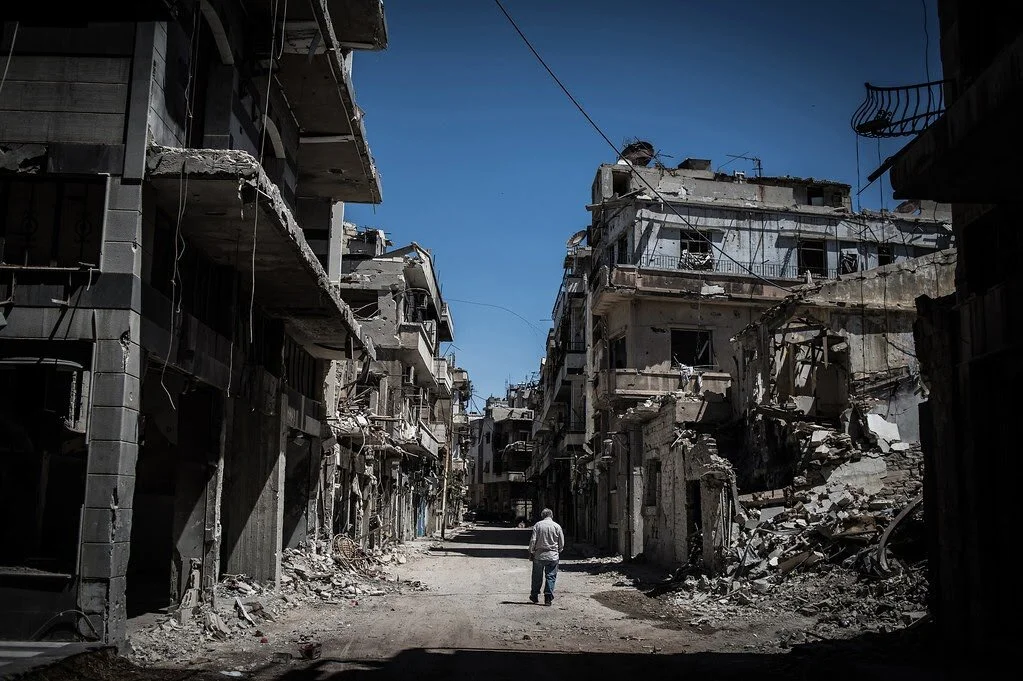
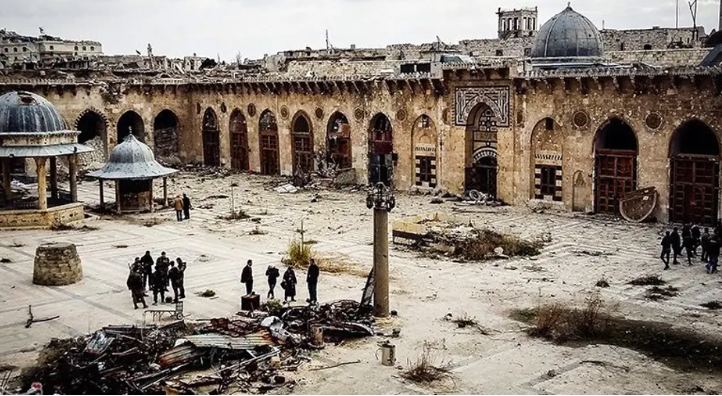
The ruins of Aleppo. Ihh Insani Yardim. CC BY-NC-ND 2.0.

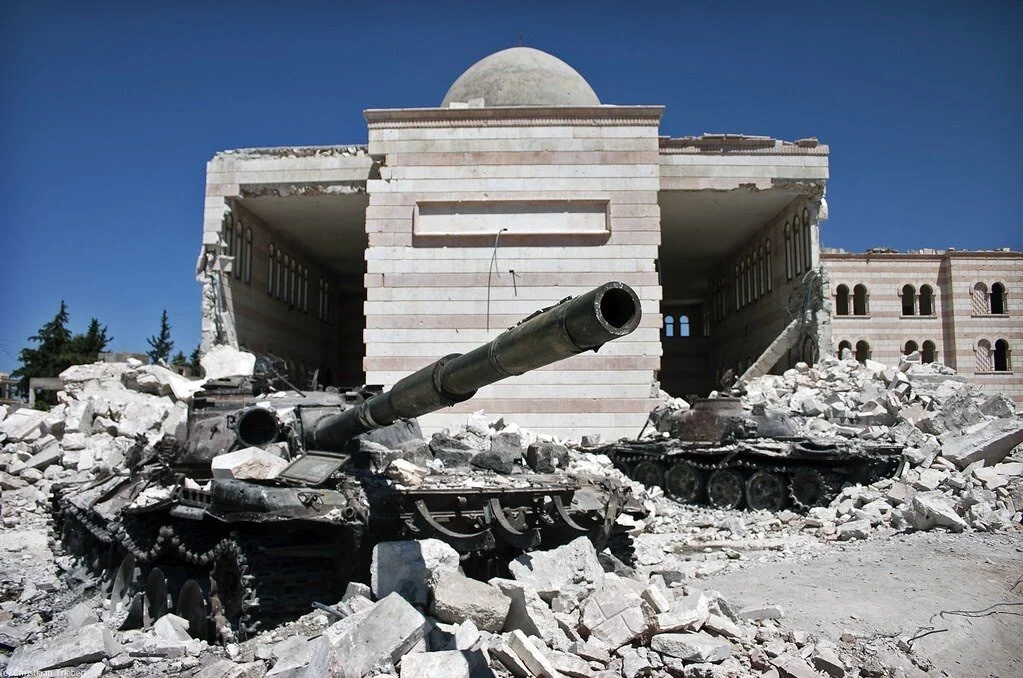
Syria’s allies and neighbors seem content to watch its slow death and profit where they can. Recently, Russian Foreign Minister Sergei Lavrov visited not to help with reconstruction efforts but to scope out energy and construction contracts. Russia knows it can depend on Syria’s loyalty because the Assad regime has nowhere else to turn. Turkish involvement in Syria, meanwhile, focused on supporting anti-Assad rebels along with limiting the influence of regional Kurds, an ethnic group with aspirations of a nation-state.

What’s left of Azaz. Christiaan Triebert. CC BY-NC 2.0.

The United States and Europe provide only humanitarian aid. The U.S. heaped sanctions on Assad’s government in an effort to force at least a semi-democratic settlement, but Assad drifts still further into authoritarianism. At one point, President Donald Trump entertained assassinating the Syrian leader after his use of chemical weapons in 2018. “I would have rather taken him out. I had him all set. Mattis didn’t want to do it,” Trump said, referring to former Secretary of Defense James Mattis. To switch from a desire for assassination to a respectful negotiation would be a stark, and unlikely, change. 

Rather than give aid, Russia seems content to exploit Syria’s weaknesses. As always, the decisions of Syria’s leaders and allies will mainly affect Syrian citizens. The Assad regime’s finances have been bled so dry that it is rumored that customs officers and generals impound trucks and confiscate goods just to charge hefty bribes for their return. 

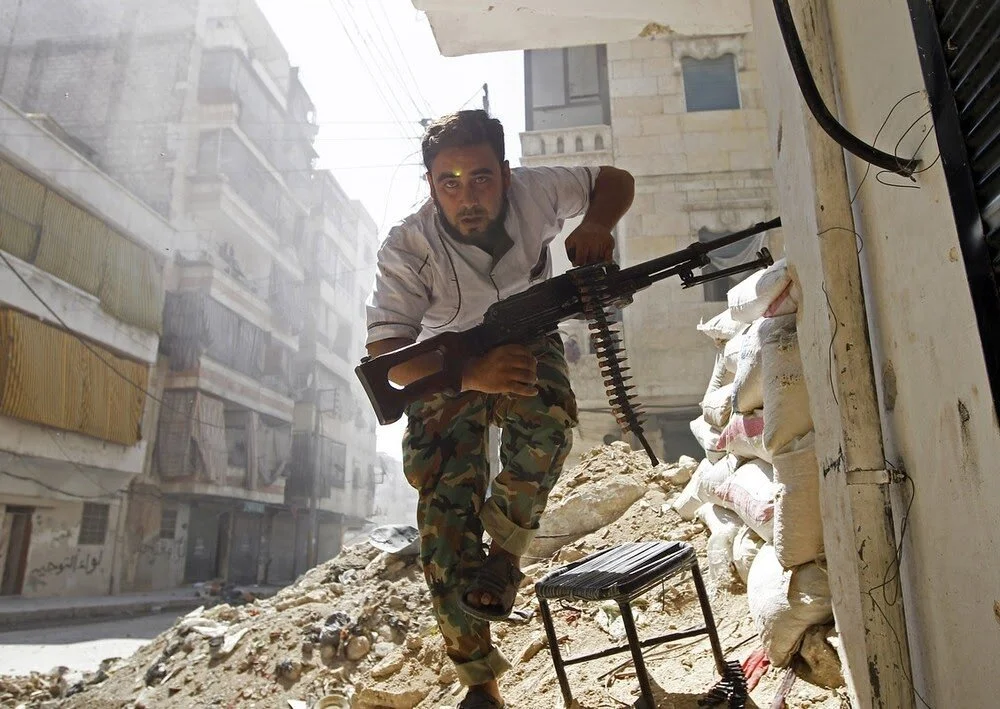
The plight of Syrian mercenaries illustrates just how dire life the situation has become. Years of fighting created a generation of young men whose only marketable skill is waging war. With no fighting left to be done at home and hungry families to feed, these men have enlisted as mercenary soldiers for Turkey and Russia. Once on the fringe of Syrian life, brick and mortar offices now house recruiters who advertise on WhatsApp, often lying about the safety of certain deployments. Families have more or less accepted fighting as a necessary means to make a living. In the current economy, there are no other options. 

Nowhere left to run. a.anis. CC BY-ND 2.0.

What these fighters make can hardly be called a living. A soldier earns the equivalent of $1 a day, most of which has to be sent home to their family. Syrian mercenaries were deployed in 2019 to fight the conflict in Libya, and just recently, they were deployed to fight for Azerbaijan against Armenia in the disputed Nagorno-Karabakh territory. Russia and Turkey have made pawns out of Syria’s most desperate citizens to support their foreign policy expansions. As one Syrian businessman loyal to Assad observed, “Our saviors have become vultures.”

Syria’s isolation will only intensify in the near future. The Netherlands recently announced that it is preparing a case for the International Criminal Court at The Hague for “gross human rights violations and torture in particular.” Russia repeatedly blocked efforts from the U.N. Security Council to refer such a case, but the Netherlands has bypassed the U.N. altogether. It is yet another thrust from the international community to move Assad in a more democratic direction., For the time being, however, Assad refuses to budge and the plight of Syrians is likely to continue. 


Michael McCarthy

Michael is an undergraduate student at Haverford College, dodging the pandemic by taking a gap year. He writes in a variety of genres, and his time in high school debate renders political writing an inevitable fascination. Writing at Catalyst and the Bi-Co News, a student-run newspaper, provides an outlet for this passion. In the future, he intends to keep writing in mediums both informative and creative.

Unpacking the Nagorno-Karabakh Conflict and the Armenian Diaspora

The renewed conflict in the South Caucasus region has its roots in long-standing historical divisions between Turkey and Armenia. 

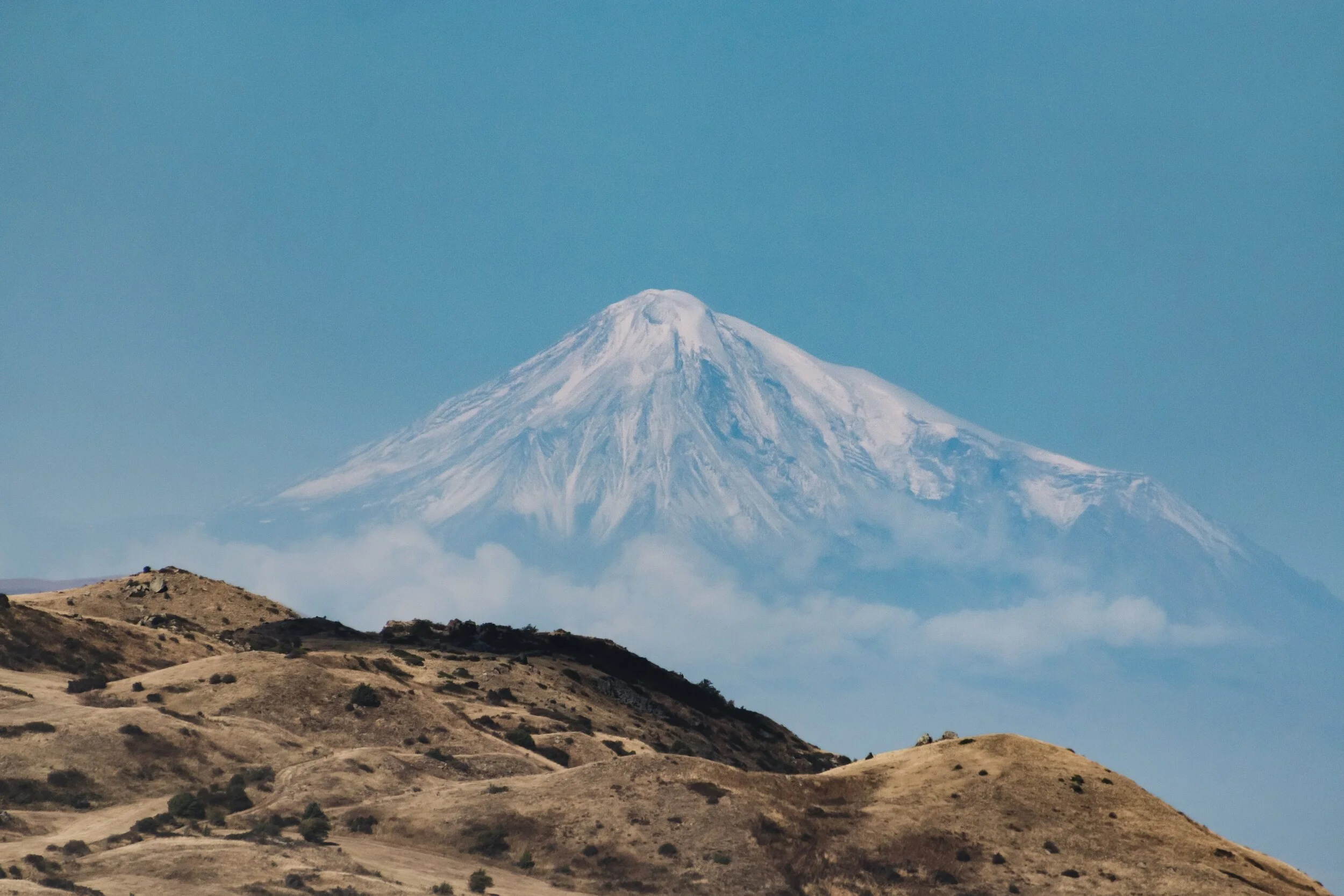
A view of Mount Ararat. West. CC2.0

Tensions between Azerbaijan and Armenia have been renewed due to the ongoing territorial dispute over Nagorno-Karabakh. Fighting started up again on Sept. 27 and has caused massive upheaval and casualties on both sides. Backed by Turkey, the Azerbaijani military bombed Nagorno-Karabakh’s regional capital of Stepanakert with intense artillery fire, while Armenia launched missiles at Ganja (Azerbaijan’s second-largest city), putting citizens in grave danger. Officials speculate that the last two weeks of fighting have proven to be the worst since a cease-fire was brokered by Russia in 1994. Although another cease-fire is a possibility, there is no prediction of what will come next. “Don’t discount the possibility of this turning into something much larger,” said Kevork Oskanian from the University of Birmingham in England. “Once a conflict like this kicks off, it has a dynamic of its own and you don’t know where it will go.”

A Brief History of the Nagorno-Karabakh Dispute

A map of the Nagorno-Karabakh region. Achemish. Wikimedia Commons. CC4.0

The recent fighting is a result of a renewed 32-year-long military conflict between Azerbaijan and Armenia. The territory of Nagorno-Karabakh, also known as Artsakh to Armenians, contains a population of about 150,000. Although completely surrounded by Muslim-majority Azerbaijan, it is governed and claimed by Christian Armenians. Josef Stalin gave the territory to Azerbaijan in 1921 and made it an autonomous region two years later. Initially, the territorial dispute was not violent, as both Armenia and Azerbaijan were under the stronghold of the Soviet Union. However, nationalistic and militaristic tensions increased between the two nations when the USSR began to dissolve. The fighting began in 1991, which resulted in 30,000 casualties and over one million displaced. Although a cease-fire was agreed to in 1994, no official peace deal has been reached. Armenia is happier with the status quo than Azerbaijan, as it was able to reclaim 20% of surrounding land during the fighting in the ‘90s (shown in yellow on the map above). However, Azerbaijan still has a large population of people displaced by the fighting who want to return to their homes. 

Why Turkey is Supporting Azerbaijan

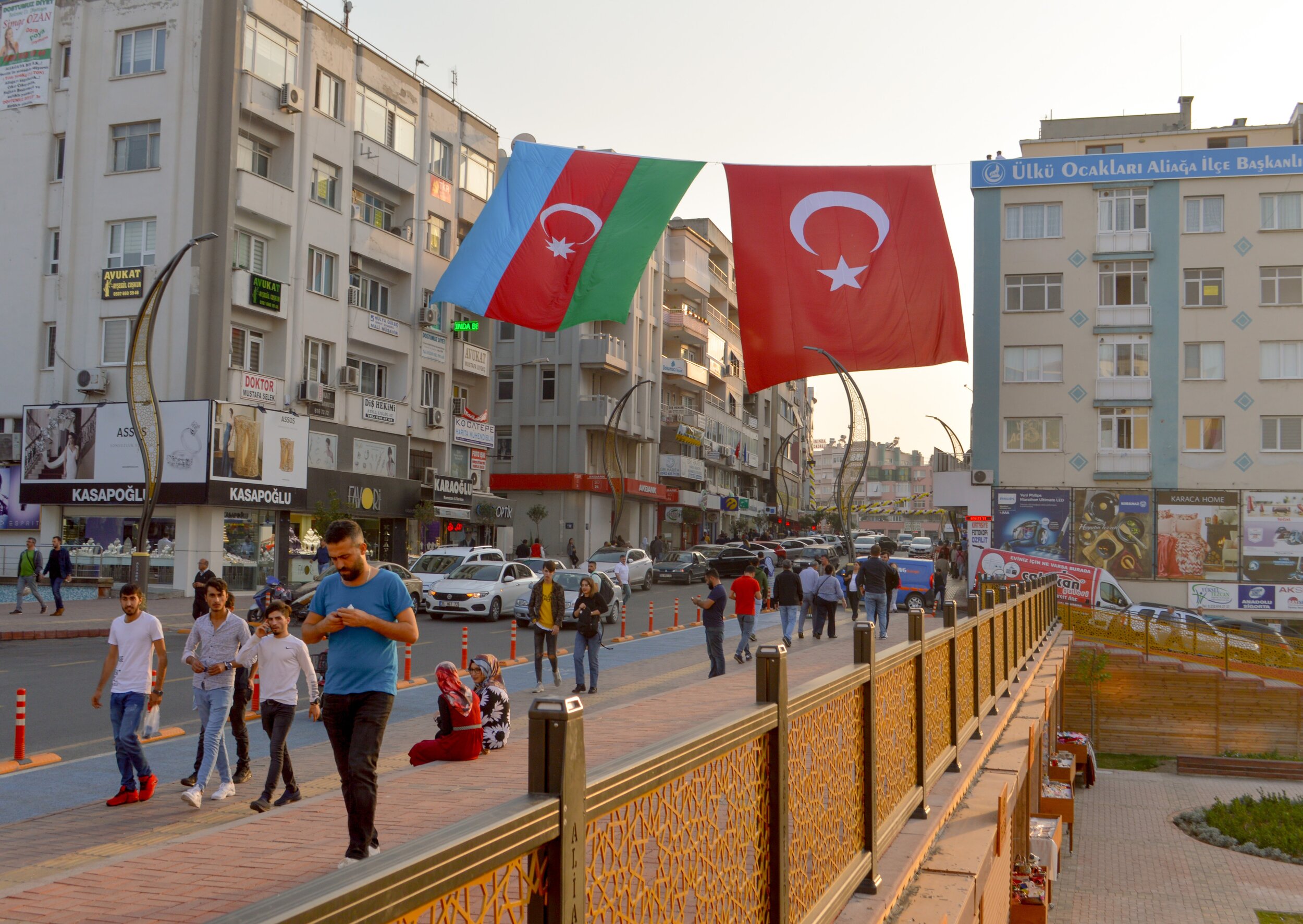
Azerbaijani and Turkish flags in Izmir, Turkey. Anzola. CC 2.0

Azerbaijan is often referred to as a little brother to Turkey, due to the two nations’ connections through cultural, linguistic and religious ties.The two have a relationship built on trade and mutual exchange. Azerbaijan provides a large portion of Turkey’s gas and oil, where the money in return is used to buy weapons from Turkey. Azerbaijan is currently using military weapons provided by Turkey to strike Nagorno-Karabakh, allowing Turkey to increase its political presence in the region. Underpinning Turkey’s involvement in the conflict are the events of 1915, where 1.5 million Armenians were killed under the direction of the Ottoman Empire (present-day Turkey), which many consider a genocide but Turkey denies. Many Armenians see Azerbaijan’s alliance with Turkey as a resurfacing of these events, providing an ultimate threat to their existence and statehood. 

The Conflict Reaches the Armenian Diaspora

An Armenian church in Los Angeles. Steeds. CC2.0

Although Armenia has a population of 3 million, the diaspora population is estimated to be much larger, with notable communities in Australia, Russia, Lebanon, France and Southern California. Although the events of 1915 resulted in mass migrations of Armenians around the world, the diaspora goes as far back as the Middle Ages. Throughout history, many Armenians migrated to new corners of the world due to political upheaval. Armenian merchants often traveled to trade and sell wares, playing a key role in the economies of China, India and Persia. Armenia’s long history of migration and displacement has resulted in a strengthened cultural identity in diaspora communities. Many notable Armenian celebrities, including Kim Kardashian and Serj Tankian, are strong proponents of the Armenian cause, posting on social media to raise awareness of the Nagorno-Karabakh dispute. Armenian lobby groups have held protests in Southern California, as well as asking Armenian-Americans to bring awareness of the conflict to representatives and congresspeople. Some Armenians even contemplate returning to their country to fight Azerbaijan. According to Alex Galitsky, part of the Armenian National Committee of America’s western region, “I think a lot of people see themselves as bearing some responsibility for the defense of our nation.” 

The conflict in Nagorno-Karabakh continues to escalate as nationalistic and militaristic tendencies fuel both sides. True peace will only be reached if Turkey, Armenia and Azerbaijan are willing to begin the difficult work of listening and embracing each other’s conflicting histories and narratives.


Megan Gürer

Megan is a Turkish-American student at Wellesley College in Massachusetts studying Biological Sciences. Passionate about environmental issues and learning about other cultures, she dreams of exploring the globe. In her free time, she enjoys cooking, singing, and composing music.