7 Caves, Temples and Cities Carved in Mountains

These ancient sites were once carved into the surrounding landscape and continue to stand today.
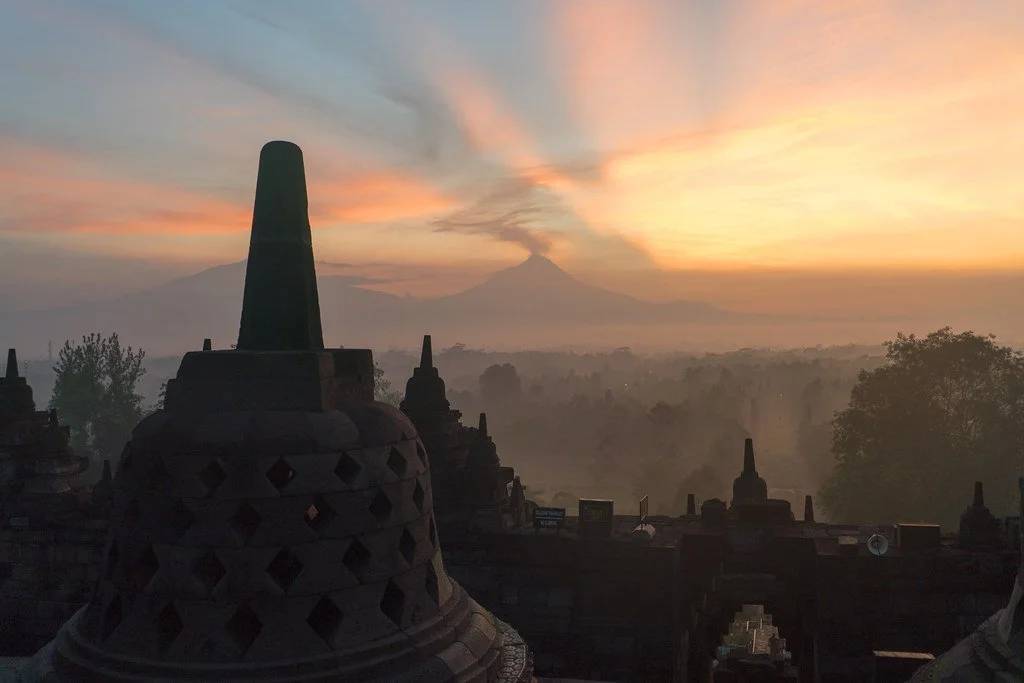
Created at a time when construction vehicles and advanced building tools did not exist, these caves, temples and cities demonstrate the craftsmanship of their ancient peoples all over the world.  

1. Petra 

Petra, Jordan
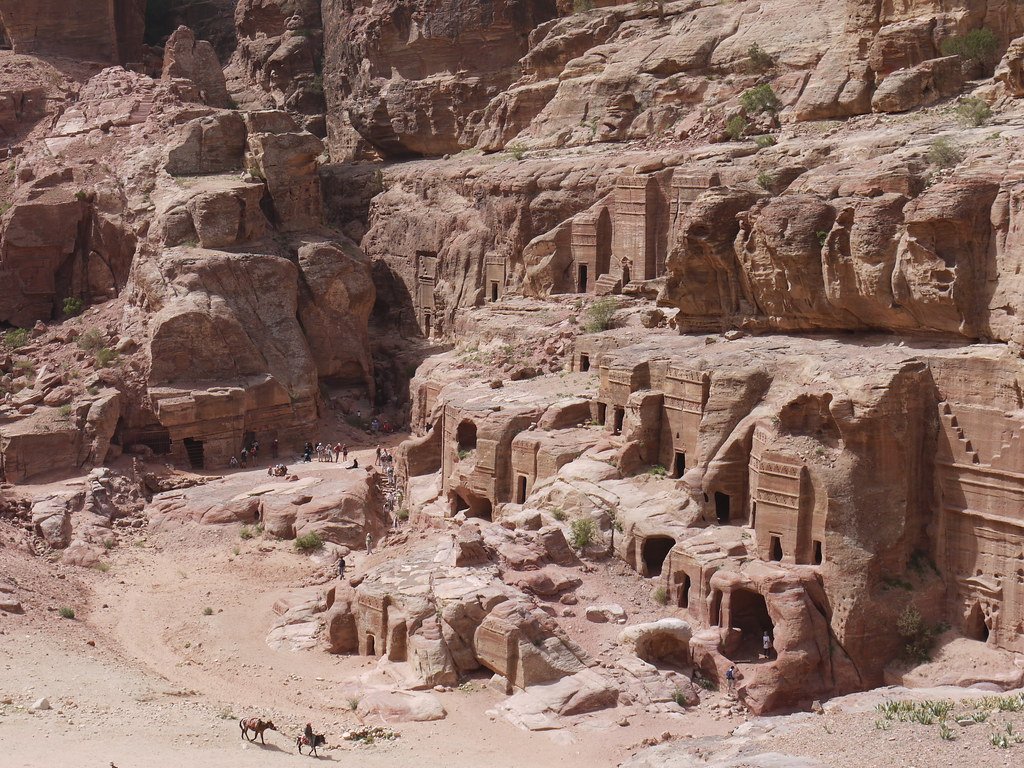
Petra, which is also known as “Rose city” for its pink-hued rock carvings, is located between the Red Sea and the Dead Sea in Jordan. The archaeological site is home to several rock-cut temples and tombs, including Al Khazneh, Al-Deir, the Palace Tomb and Urn Tomb. Today this carved site is both a UNESCO World Heritage Site and one of the New 7 Wonders of the World.

2. Longmen Grottoes 

Luoyang, China 
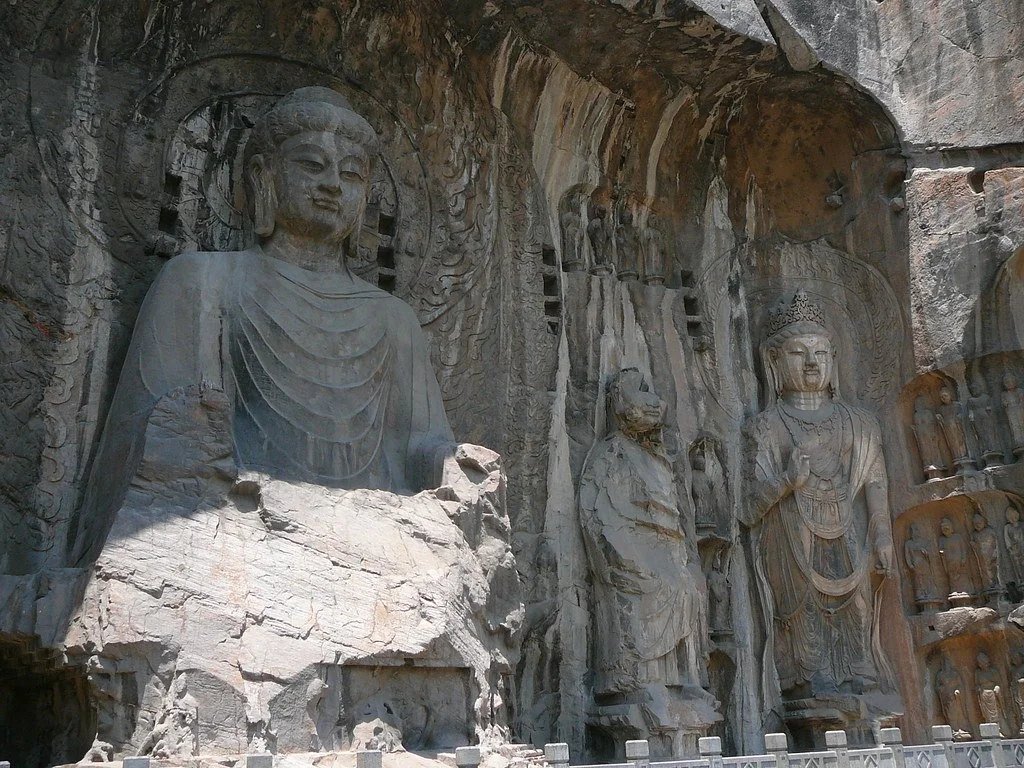
Longmen Grottoes. Dericafox. CC BY-NC-ND 2.0

Considered one of the best examples of Chinese Buddhist art, the Longmen Grottoes date back to the 5th century. The site contains more than 2,000 artificial caves and over 100,000 Buddhas carved into the limestone cliffs of the Xiangshan and Longmenshan mountains. The Longmen Grottoes cover an area of 30,000 square meters and the statues range in size (0.7 in- 53 ft). The site became a UNESCO site in 2000. 

3. Ellora Caves 

Maharashtra,India
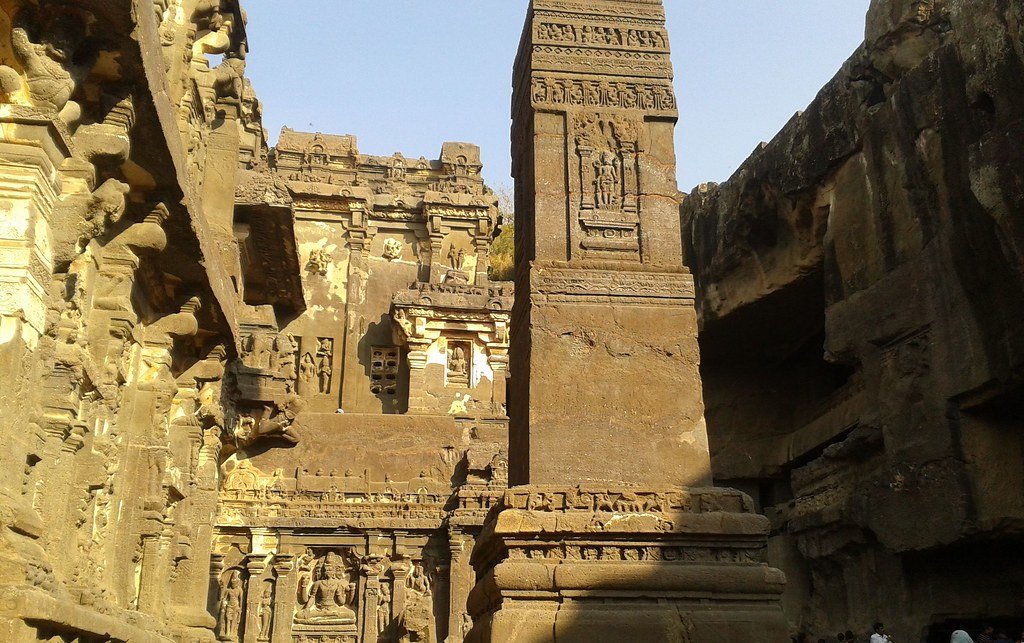
Ellora Caves: Kailasanatha Temple. DdasedEn. CC BY-NC-ND 2.0

Stretching more than a mile long in distance, the Ellora cave temples date back to the 5th century. Located in Maharashtra, India the 34 caves are dedicated to Buddhism, Hinduism and Jainism. Designated a UNESCO World Heritage site in 1983, the Ellora Caves were hand carved into hillside rock.   

4. Mesa Verde National Park 

Montezuma, Colorado
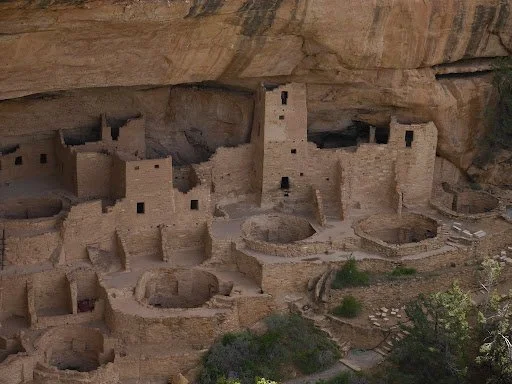
Mesa Verde National Park. Usareisetipps. CC BY-SA 2.0

Within Colorado’s Mesa Verde National Park you’ll find the largest archeological preserve in the US. Located in Montezuma County and occupying 81 square miles, the more than 4,000 Pueblo Indian sites date back to the 6th century. As well as 600 cliff carved dwellings including the famous Cliff Palace and Long House. It is frequently visited by mountain lions, elk and bears as well as lizards and snakes which roam the National Park. 

5. Goreme National Park 

Nevşehir, Turkey
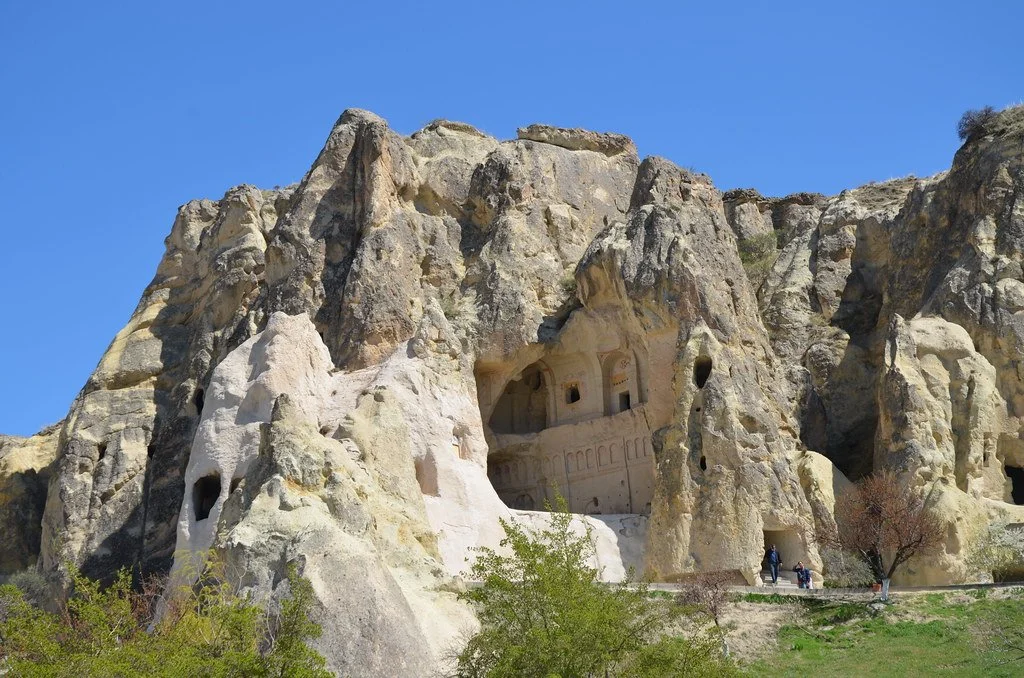
Sculpted by erosion, the Göreme National Park is in Cappadocia, Turkey and contains rock-hewn sanctuaries, houses, monasteries, churches and underground cities. These were inhabited and built in the 4th century, Neolithic pottery and tools found in Cappadocia attest to an early human presence in the region. Clay tablets recovered from the remains of an Assyrian merchant colony at Kanesh are among the oldest written documents discovered in Turkey. 

6. Abu Simbel 

Aswan, Egypt
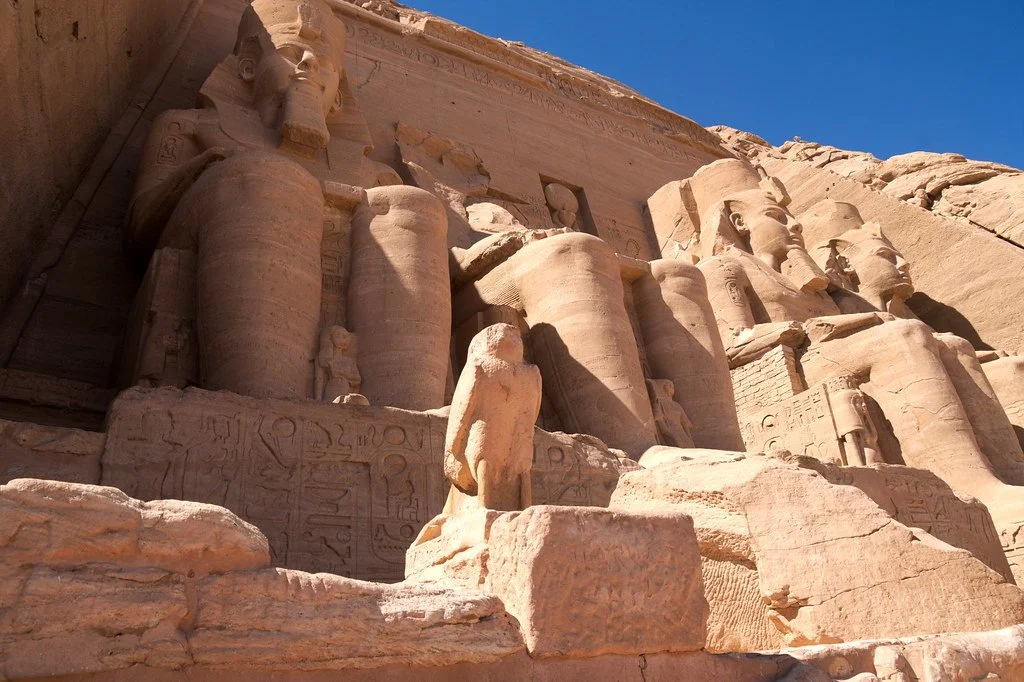
An ancient temple complex, Abu Simbel was built by Egyptian King Ramses II to intimidate his enemies and seat himself amongst the gods. The 66-foot seated figures of Ramses are set against the recessed face of the cliff, two on either side of the entrance to the main temple. Carved around their feet are small figures representing Ramses’ children, his queen, Nefertari, and his mother, Muttuy. The temples were unknown to the outside world until their rediscovery in 1813 by the Swiss researcher Johann Ludwig Burckhardt. 

7. Lycian Tombs 

Anatolia, Turkey
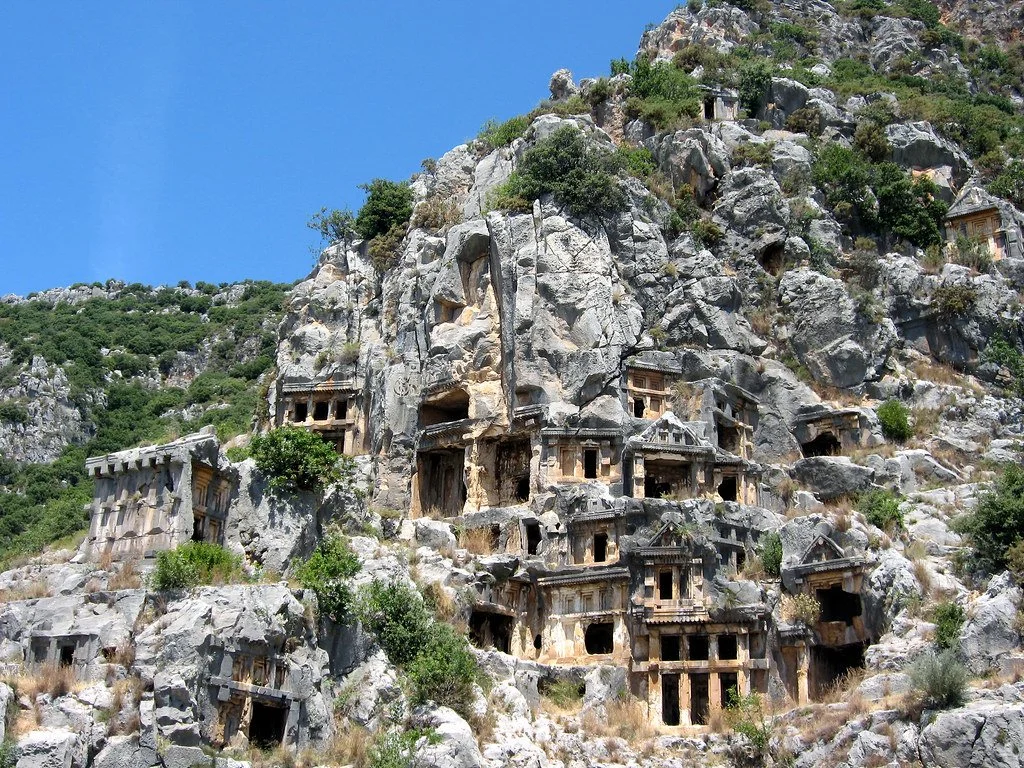
The 4th century Lycian tombs of Turkey contain carved tombs into the side of the region’s mountains, demonstrating a form of ancestral worship. More than a thousand tombs are there  today varying in many intricate styles. Some with Romanian columns and other decorative features. The Lycian people believed the dead were carried to the afterlife by winged creatures, hence helping the process by laying them to rest in high cliffside tombs. 



Jennifer Sung

Jennifer is a Communications Studies graduate based in Los Angeles. She grew up traveling with her dad and that is where her love for travel stems from. You can find her serving the community at her church, Fearless LA or planning her next trip overseas. She hopes to be involved in international humanitarian work one day.
10 National Parks to Visit Outside the US

While most people associate National Parks with the US, there are amazing National Parks to visit around the world. Check out glaciers, tropical wetlands, the oldest desert in the world in these parks in Iceland, Namibia, Thailand, India and more.

Read More

7 Stunning Caves Worth Exploring

Though caves often hold a fearsome reputation, they have a myriad of captivating natural features and intriguing histories. 

Caves often get a bad reputation: cold, dark, damp and uninteresting, or even frightening. In reality, caves offer snapshots of history, unusual natural structures, and examples of remarkable biodiversity. There are thousands of caves on Earth, and even more that are yet to be discovered. Each cave is unique, with specific natural formations that cannot be found anywhere else. Here are seven incredible caves to add to your list of must-see sights. 

1. Reed Flute Cave, China 

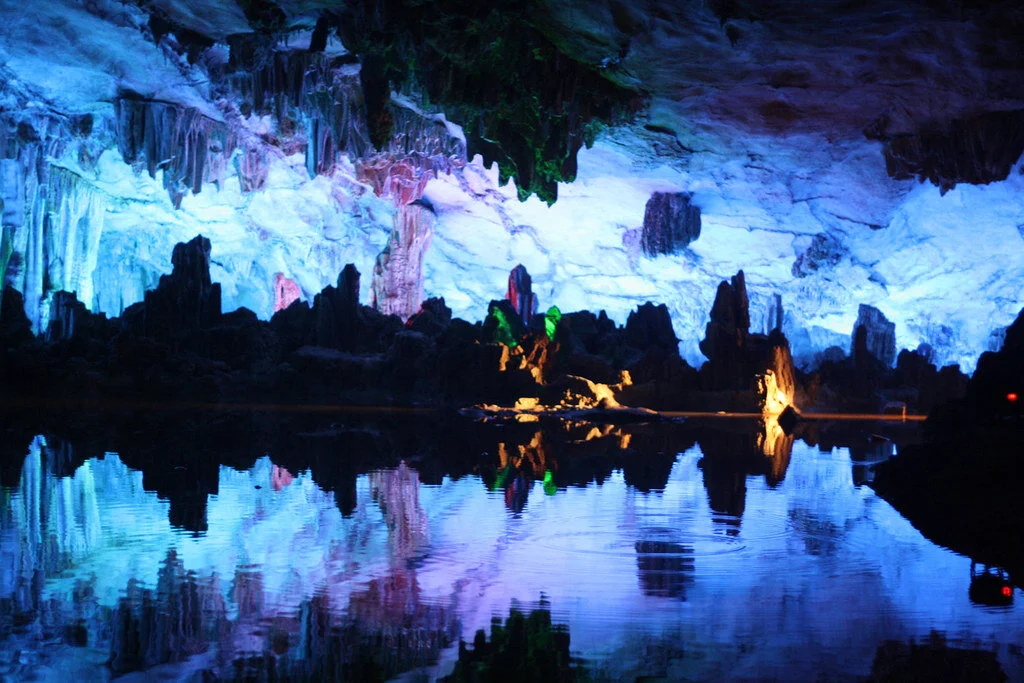
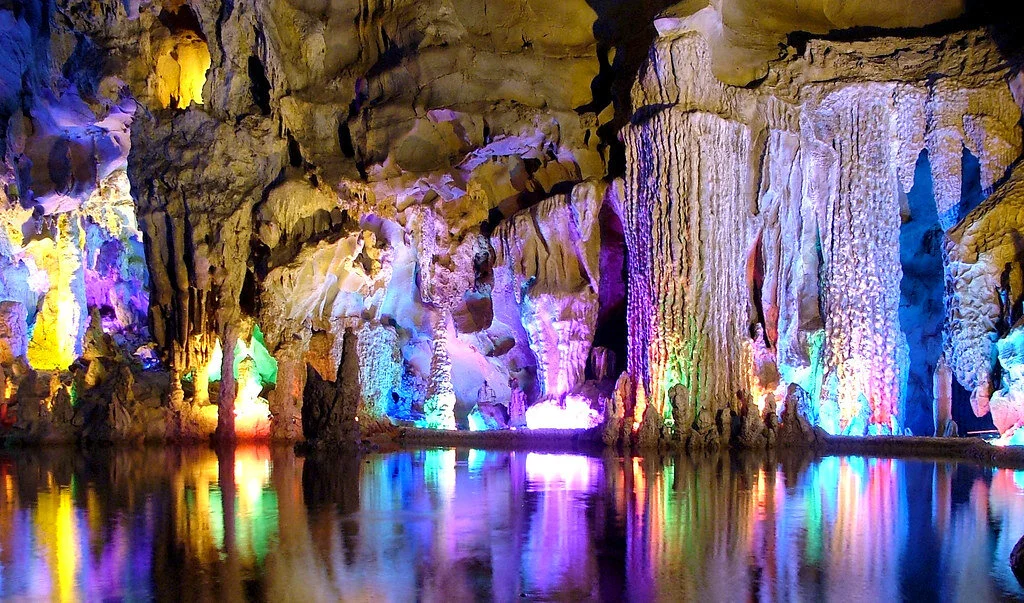
Called “the Palace of Natural Art,” Reed Flute Cave is known for its impressive stone curtains and pillars. Reed Flute Cave is located just 3 miles from downtown Guilin, China, and has been an attraction for centuries. Seventy-seven inscriptions of poems and travel descriptions can be found around the cave, and the oldest dates back to 790 A.D., the era of the Tang dynasty. There are inscriptions from the Tang, Song, Yuan and Ming dynasties, written by monks, poets, scholars and tourists from all over China. Today, the cave is lit by many multicolored lights hidden in its natural cracks and crevices, which cast a bright rainbow glow around the dark space, giving cave visitors a surreal and breathtaking experience. The cave was forgotten for years until its rediscovery in 1940, when a group of Chinese refugees stumbled upon it while fleeing from Japanese forces. During World War II, the cave’s large chamber, called the “Crystal Palace of the Dragon King,” was used as a bomb shelter. The cave regained popularity after its rediscovery at the end of the war, and was officially opened to the public in 1962. 

2. Waitomo Glowworm Caves, New Zealand 

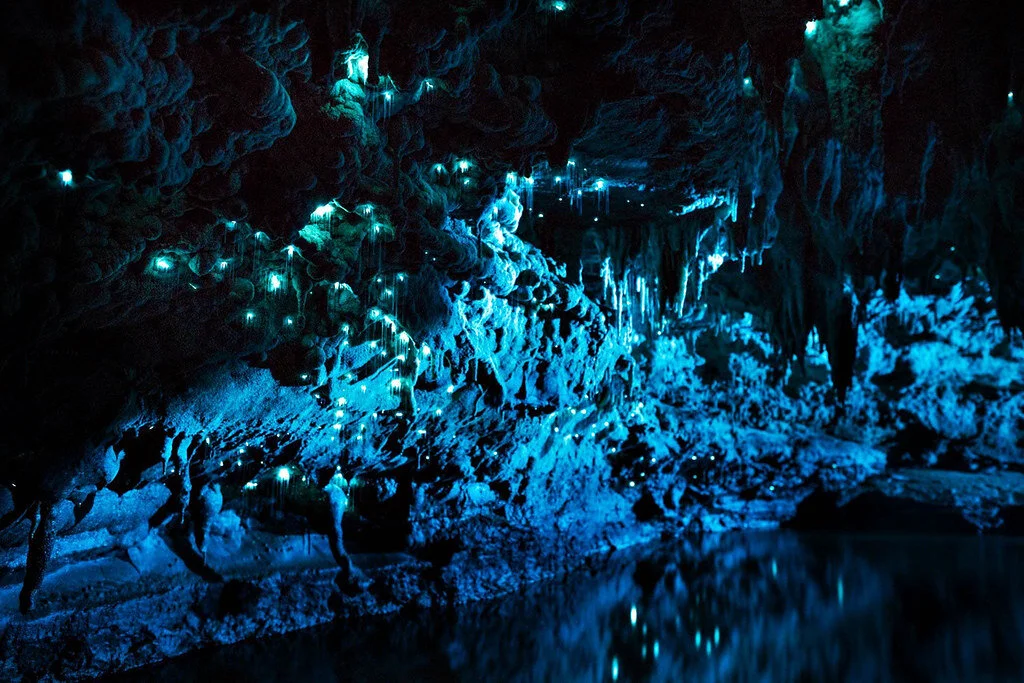
Visitors to the Waitomo Glowworm Caves will take a trip into the past by exploring a cave over 30 million years old. The cave, located in Waitomo on the North Island of New Zealand,  is praised as one of New Zealand’s best natural attractions. It contains an underground river, towering rock formations, and thousands of shimmering glowworms. The Glowworm Caves have been an attraction for over 130 years. These limestone caves formed at the bottom of the ocean millions of years ago. Local Maori communities knew about the caves, but they were first explored in 1887 by Maori Chief Tane Tinorau and English surveyor Fred Mace. After discovering the natural beauty of the caves, Chief Tinorau opened the caves to tourists in 1889. Many of the guides for tours today are descendants of Chief Tinorau. Guides take visitors on walking tours through the caves, as well as boat tours through the glowworm grotto. These boat tours take visitors to the center of the grotto, where they can look up in awe at the luminescent glowworms covering the cave walls and ceiling.  

3. Mendenhall Ice Caves, Alaska

Just 12 miles outside downtown Juneau lies Mendenhall Glacier, known as the “Glacier Behind the Town.” Inside the glacier are the Mendenhall ice caves, passageways formed by water flowing through the glacier. These caves vary in size from tiny openings visitors have to squeeze through to giant caverns. Mendenhall Glacier was first explored in 1794 by Joseph Whidbey, a member of the British Royal Navy serving on Capt. George Vancouver’s 1791-95 expedition of the Pacific Northwest coast. To visit the caves, travelers can hike through the Tongass National Forest and then across the glacier, or they can canoe across Mendenhall Lake to the glacier. Both options offer breathtaking views of the glacier and surrounding landscapes, and both are somewhat strenuous but well worth the effort. Inside the caves, visitors are immersed in the cool blue shades of light coming through the glacier and can explore ever-changing ice formations. The caves change as the ice melts, so each visit to the Mendenhall ice caves is unique. The presence of the caves is also inconsistent and typically seasonal, so visitors should be sure to check on the status of the caves before planning a trip. 

4. Barton Creek Cave, Belize

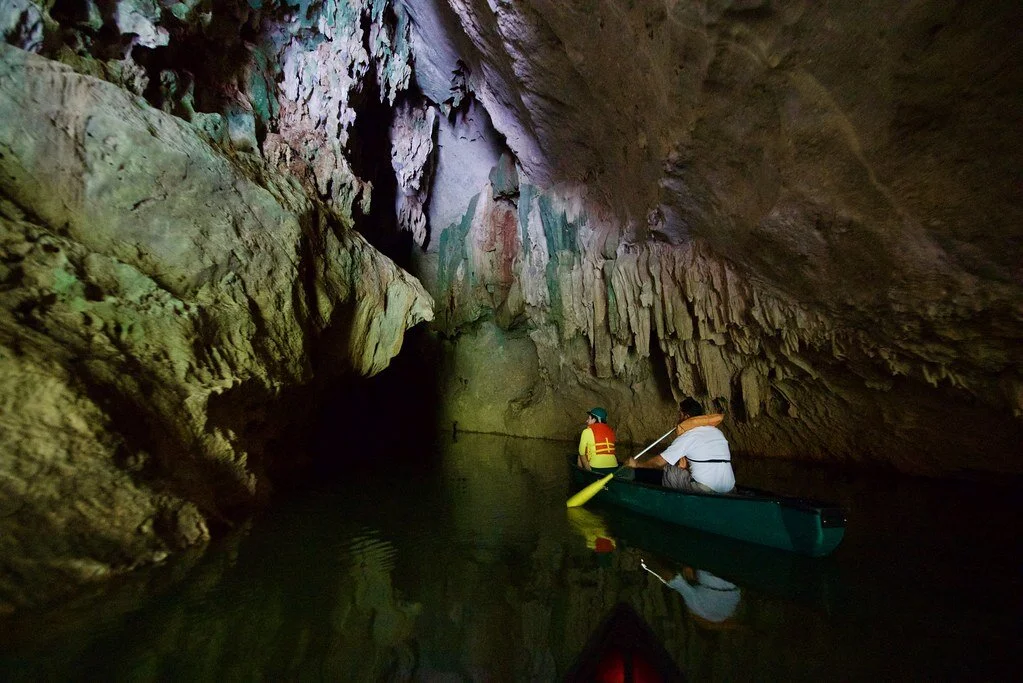
To discover the wonders of Barton Creek Cave, visitors will have to board a canoe. Barton Creek Cave is located east of San Ignacio along the western edge of Belize. It is a wet cave because it has a cave river running through it, and paddling along this tranquil river is the only way to take in the cave’s majesty and history. It is the largest river cave in Belize and contains evidence of ancient Mayan culture. The cave is natural, but archaeologists have identified a number of areas they believe were purposefully modified by the Mayans to improve access to the cave. These modifications include natural formations of flowstone broken to allow access to a rimstone pool and holes drilled by Mayan tools, likely to serve as handholds or to attach climbing ropes. Ten ledges made by the Maya line the cave walls, where archaeologists have discovered thousands of pottery shards, most of which are from large jars called ollas, and a number of stone tools. These discoveries have helped archaeologists determine the use of the cave during Mayan times; it was likely the site of ritual activity and worship. The Maya regarded caves as sacred sites, and the artifacts found in Barton Creek Cave reflect this view. Tours through the cave offer visitors the opportunity to witness incredible natural formations and to learn how the ancient Mayans interacted with the cave. 

 5. Hang Son Doong, Vietnam 

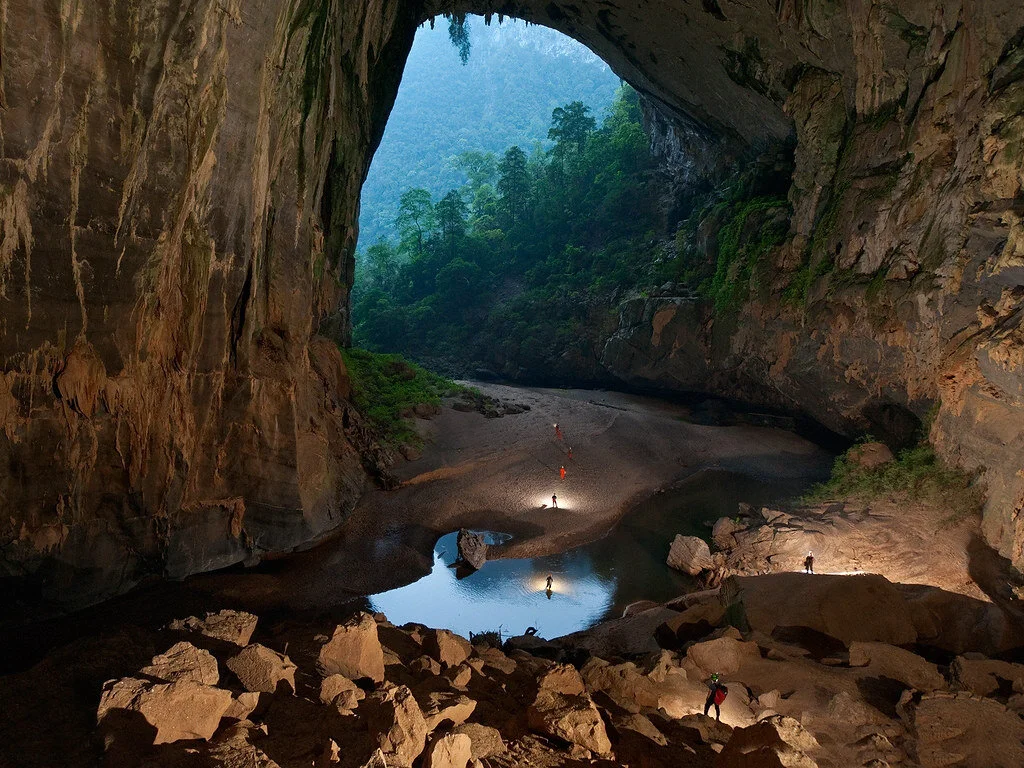
For travelers who want to explore a cave but worry about darkness and small spaces, Son Doong Cave in central Vietnam is the perfect place to visit. Son Doong has the largest cross section of any cave in the world, reaching over 5 miles long, 650 feet wide and 490 feet tall. In some areas, the limestone ceiling of the cave grew weak and collapsed, creating huge skylights and allowing areas of lush vegetation to grow inside the cave. It was formed millions of years ago by the Rao Thuong River eroding limestone. Son Doong Cave was initially discovered in 1990 by a local man named Ho Khanh, who stumbled upon the entrance while searching the area for food and timber. He then returned home and no further exploration of the cave occurred until Howard and Deb Limbert, members of the British Cave Research Association, heard Ho Khanh’s story and urged him to find the cave again. In 2008, he successfully rediscovered the cave, and a survey was conducted by Howard Limbert and a group of British cavers. The cave opened to the public in 2013. Visitors are sure to be impressed by the sheer size of the cave, as well as its natural formations, river and distinctive vegetation growth. 

6. Puerto Princesa Underground River, Philippines

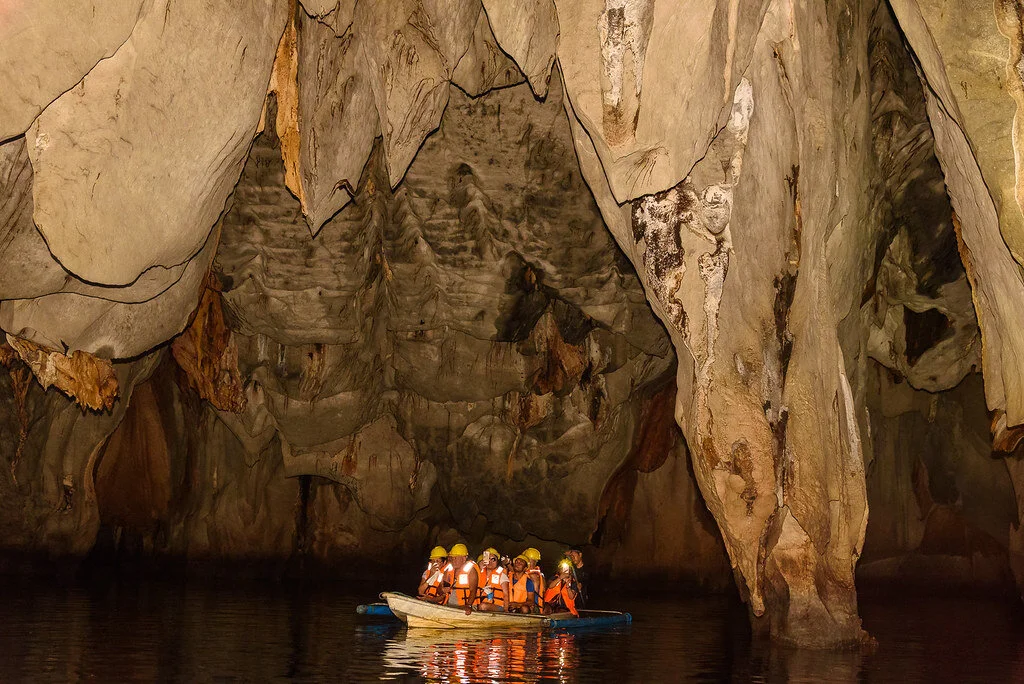
Located on Palawan, the westernmost island in the Philippines, Puerto Princesa Subterranean River National Park is home to old-growth forests, wildlife and an expansive limestone cave system. The Puerto Princesa Underground River, as it is commonly known, flows for over five miles through beautiful caverns and eventually meets the sea. Visitors can take underground river tours on paddleboats to see the stunning cave formations and limestone cliffs, as well as a variety of native animal species. There are records of the Puerto Princesa Underground River dating back to 1898, but it is believed to have been known to early inhabitants of the Philippines and investigated by foreign explorers prior to that time. The area was established as an official attraction in 1971, and the cave system is still being explored. In 2010, researchers discovered a large cave dome above the underground river, with more river channels and access to an even deeper cave. The Puerto Princesa Underground River offers an abundance of fascinating natural formations to explore. 

7. Shell Grotto, England 

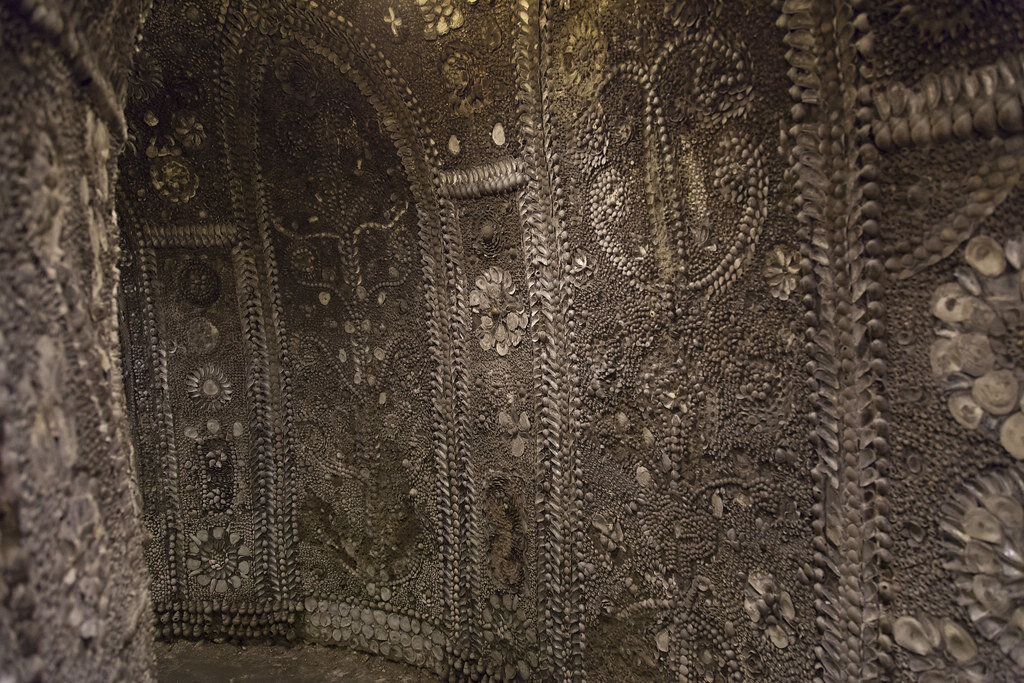
Shell Grotto is one of England’s most mysterious sites, encompassing over 70 feet of tunnels under the seaside town of Margate. These caves were discovered by chance in 1835, when a man excavating his new land stumbled upon them. Sprawling mosaics made of mussel, oyster, whelk and cockle shells cover every wall of the tunnels. Historians are unsure of who built Shell Grotto, or why. Theories range from Shell Grotto being a place of worship to a simple display of extreme wealth to the meeting room of a secret society. The elaborate shell designs offer little explanation, displaying swirling patterns that can be interpreted as a number of different things. Shell Grotto is a tremendous work of art, and the questions surrounding its origin and purpose add a layer of intrigue that draws visitors from around the world. 


Rachel Lynch

Rachel is a student at Sarah Lawrence College in Bronxville, NY currently taking a semester off. She plans to study Writing and Child Development. Rachel loves to travel and is inspired by the places she’s been and everywhere she wants to go. She hopes to educate people on social justice issues and the history and culture of travel destinations through her writing.

A Cage Home Away from Being Homeless in Hong Kong

Cage homes have become the dangerous solution to living in the most expensive housing market in the world: Hong Kong.

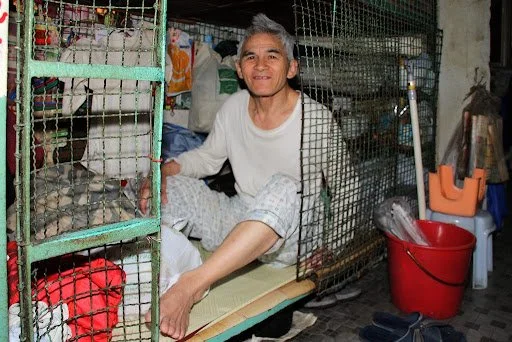
Man Living in a Cage Home. Pondspider. CC BY-NC-SA 2.0

Hong Kong is considered one of the most expensive cities to live in the world. The population of 7.4 million people live in a metropolis 110 times smaller than New York City.  Many struggle with the mounting housing prices which seem to keep rising. As a dangerous solution, low income individuals have developed "cage homes'' or “coffin homes” in which they reside. It consists of a bed-space, usually made of wood or wired boxes, large enough to only fit a bed and one or two personal items. An estimated 200,000 people, including 40,000 children live in cage homes in Hong Kong. The poor and elderly are the ones experiencing the effects the housing crisis Hong Kong has caused. 

Out of desperation, many people are deciding to live out of these cage homes in order to avoid living on the streets. These barbed wire “homes” were created in the 1950’s due to an influx of refugees coming from mainland China. They provided cheap labor for Hong Kong and, therefore, a demand for low cost bed space apartments. The apartment operators decided to make more profit by stacking bunk beds known as cages on top of each other, and the term “cage home” was created. Since then, the inhabitants have grown from immigrant workers to elderly men and women and children.

An average home in Hong Kong is about $1.28 million USD and a tiny “nano” apartment is on average $500,000 USD. Cage homes are approximately $230-$300 USD a month. They are the size of a parking space in the US, 7.5 feet in width and about 10 feet in length. They’re stacked on one another and there are approximately 30 cage homes in one room. All of the renter’s personal items are locked away at night or when renter’s go out for the day. Bathrooms are mostly communal and often there are no kitchens, just electric portable burners. While living in these homes, renters usually have no privacy or natural light coming in. Most windows are away from where the cage homes are placed. Many of the cage homes are in older urban districts, such as, West Kowloon, Sham Shui Po and Mongkok. 

The mental and physical effects of living in a cage home are concerning. The people who live in these spaces are dealing with depression, anxiety and stress due to their financial situation and cramped living space. Although they live among others, they often feel isolated and alone. Hygiene is also a big issue when living in these confined spaces. Up to a dozen people share bathrooms and kitchen areas, which are at times both in one room. In addition, there are poor safety regulations due to the buildings’ age and the number of people living in these tight spaces. The inadequate fire protection is a big risk many face when choosing to live in constricted spaces like these. Renters often have to deal with the infestation of rodents, roaches and bed bugs, which in turn affects their sleep and adds to health issues. There is poor air quality and no ventilation systems, with summer temperatures making it unbearable. Some elderly people have described their lives in their cage homes as “waiting for death.”

The new coronavirus pandemic has made it extremely difficult to live in these confined spaces. The cage home inhabitants find it impossible to quarantine safely as they do not have any walls or personal space. Most of them have to wear masks to sleep in order to avoid contracting the virus from others in their room. Many who live in the cage homes used to escape their reality by spending the day in parks, librairies or jungle gyms, however the pandemic has forced all public areas to close. Now cage home dwellers pass the time by, napping, listening to music or watching TV. Volunteers visit the people living in these spaces and bring food to donate, while also spending time with the residents to ease their loneliness.

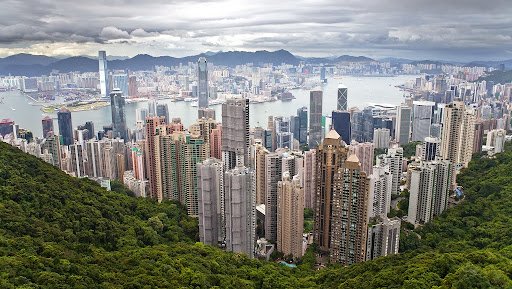
Panorama of Hong Kong. CC BY-NC 2.0

The reason for the rising costs in the housing market is Hong Kong’s dense population, in which only seven percent of the city’s land is used for residential living. The pace of land supply and creation has slowed down in recent years. With low supply and high demand for living space, Hong Kong’s housing prices have no chance to come down. Chief Executive of Hong Kong Carrie Lam has proposed a variety of measures to boost the number of homes in the residential market. Her plan includes an aggressive target to turn the remote northern part of the city into a “metropolis” for 2.5 million people, a project that will take decades to complete. In July, Director of the Hong Kong and Macau Affairs Xia Baolong set a city goal to eliminate its ‘infamously small apartments’ by 2049. This refers to less than 500 square foot apartments many residents live in. The Hong Kong government legally recognised cage homes, but did so under the label “bedspace apartments,” which are defined as “any flat in which there are 12 or more bed spaces occupied or intended to be occupied under rental agreements.” The United Nations has taken notice and calls the poor conditions present “an insult to human dignity”.


Jennifer Sung

Jennifer is a Communications Studies graduate based in Los Angeles. She grew up traveling with her dad and that is where her love for travel stems from. You can find her serving the community at her church, Fearless LA or planning her next trip overseas. She hopes to be involved in international humanitarian work one day.
Just How Successful Is China's War on Poverty?

China announced in February that it has eradicated extreme poverty. Yet, how should extreme poverty be defined, and is the Chinese government really doing enough in the fight?

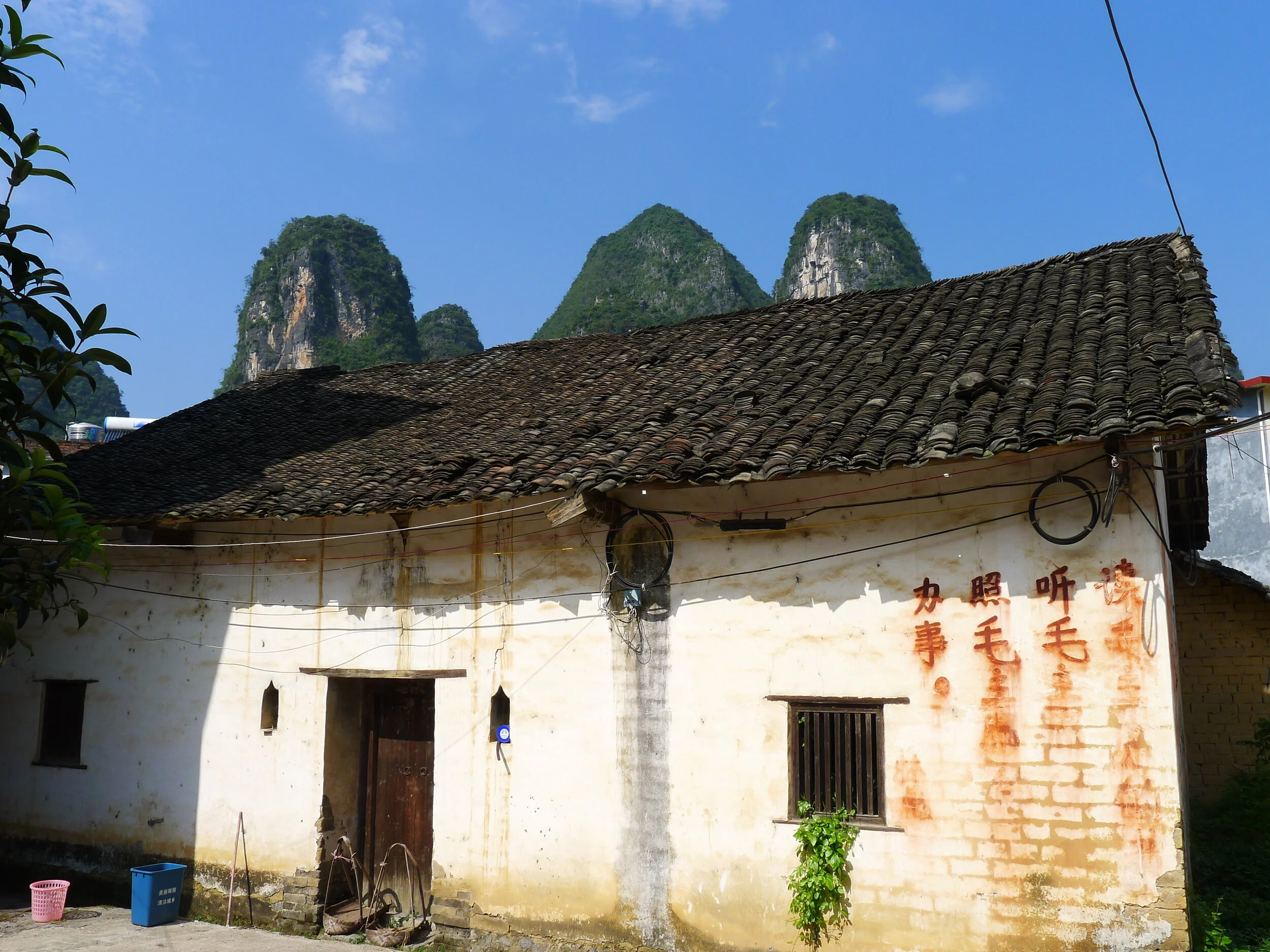
A dilapidated building in a rural area of Guangxi autonomous region in southeastern China. President Xi’s poverty eradication program targeted China’s rural poor. Edwin Wisse. CC BY-NC-ND 2.0

On Feb. 25, Chinese President Xi Jinping announced that China has successfully eliminated extreme poverty. The declaration comes after a lengthy campaign initiated by the Chinese Communist Party (CCP) that claims to have lifted an estimated 100 million people out of poverty in just eight years. President Xi's announcement is a major victory for the CCP, which is celebrating its centennial later this year. 

If true, China’s poverty alleviation campaign could become a model of success for developing nations on how to eradicate extreme poverty in rural areas. However, just how comprehensive the program was in fully eliminating extreme poverty is debated, with critics questioning China’s measure of poverty itself. The World Bank defines extreme poverty as living on less than $1.90 a day; China’s threshold is slightly lower at about $1.52 per day. Regardless, China has made immense progress in the past 30 years in reducing the number of people living in poverty, even by World Bank standards. In 2016, the percentage of Chinese people living below $1.90 a day was only 0.5% of the population, compared to 66% in 1990. 
While impressive, China’s declaration has garnered criticism for using a metric of poverty that does not adequately reflect the level of deprivation that remains. China has experienced rapid growth since the country introduced market reforms back in the late 1970s. Since 1978, China has averaged 9% real growth per year, higher than other rapidly developing Asian economies, according to the International Monetary Fund. Due to this rapid growth, China is now considered an upper-middle-income country by the World Bank. Under this classification, extreme poverty would be measured as living on under $5.50 a day, which accounts for 14% of the population, or roughly 200 million people

Chinese President Xi Jinping meeting with World Bank President Jim Yong Kim in 2014. World Bank Photo Collection. CC BY-NC-ND 2.0

With continued economic growth, a relatively successful battle against the coronavirus, and now at minimum a vast reduction in extreme poverty, Chinese officials hope to argue that their system of governance is more successful for international development than the West. China exports more than just commodities. As its rise to global superpower status becomes imminent, its influence outside of Asia continues to grow. In 2018, China announced the Global Poverty Reduction & Inclusive Growth Platform, providing a basis for developing countries to fight their own wars against poverty.

Whether or not President Xi was actually successful in eradicating extreme poverty in China remains to be seen. With the COVID-19 pandemic causing global poverty to rise for the first time in 20 years, the CCP hopes that its model inspires other countries to follow its path. In the meantime, China may bring the world one step closer to finally solving the puzzle of poverty. 


Aerex Narvasa

Aerex is a current student at Occidental College majoring in Diplomacy and World Affairs with a minor in East Asian Studies. He is passionate about sharing people’s stories through writing, and always strives to learn about new places and cultures. Aerex loves finding new music and exploring his hometown of Los Angeles in his free time.

China Weaponizes Tourism to Erase Uyghur Culture

8,000 Uyghur mosques have been destroyed, and cafes and bars have taken their place, as China’s Han majority ethnic group flock to Xinjiang for its natural beauty. Mosques left standing have become museums catering to Han visitors, and religious pilgrims are turned away.

Read More

Geopolitical Tensions Hinder Climate Science in the Himalayas

The Himalayas remain one of the most susceptible regions in the world to climate change.

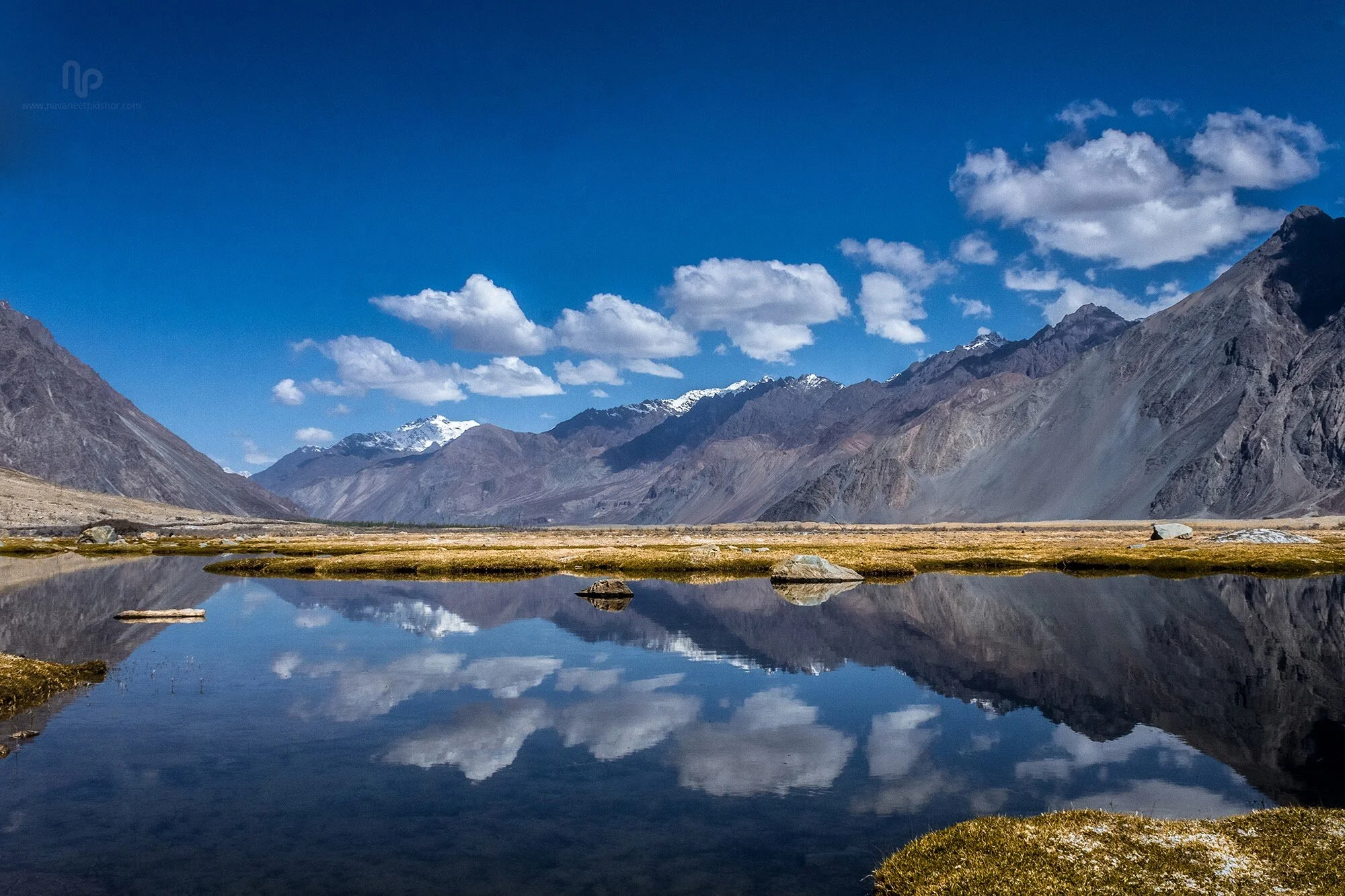
A lake in the Himalayas. Kishor. CC2.0

In order to address the imminent threat of climate change in the Himalayan region, environmental ministers from eight countries had hoped to meet in Nepal’s capital of Kathmandu in April. Organized by the International Center for Integrated Mountain Development (ICIMOD), it had taken over two years of convincing environmental leaders to work together as geopolitical tensions in the region continued to rise. An assessment conducted by ICIMOD reveals that the Himalayas are predicted to lose more than one-third of their ice caps by the end of the century, underscoring the importance of international collaboration on this issue. The event ended up being canceled, though, due to the rise of the COVID-19 pandemic. 

Passing through Afghanistan, Bhutan, China, India, Nepal and Pakistan, the Himalayas act as a barrier between countries. Home to four of the world’s 36 biodiversity hotspots and more than 35,000 plant and 200 animal species, the Himalayan region is one of the most biodiverse in the world. The Himalayas also contain the world’s third-largest ice deposits (after Antarctica and the Arctic) with over 15,000 glaciers scattered throughout the region. These glaciers, known as the “water towers of Asia,”  are the starting points for many of Asia’s largest rivers, such as the Indus, Ganges, Yangtze and Mekong, and help sustain over 2 billion people

Overflowing glacial lakes pose severe risks for mountain communities, as rising water levels from melted ice caps result in floods of water, ice and rocks down mountainsides, washing away homes, infrastructure and crops. Lake Imja in particular, a high-altitude lake near Mount Everest in Nepal, poses a threat to Sherpa communities living in the mountain valleys. 

A red panda, one of many species endemic to the Himalayan region. Ducker. CC2.0

From a geopolitical standpoint, the Himalayas have served as a political and cultural buffer between India and China since ancient times, which resulted in little interaction between their cultures and governments. As the Himalayas were considered impassable for much of history, the delineation of international borders was not given much importance until recently. Currently, however, nearly all of their 2,500-mile border is disputed. One of the most contested regions is Ladakh in northern India, where the most violent clashes in the last 45 years have recently occurred between India and China. Another region is the Mahakali river basin in northwestern Nepal, which acts as a meeting point between Nepal, India and China. The Himalayan region is also one of the most heavily militarized in the world. 

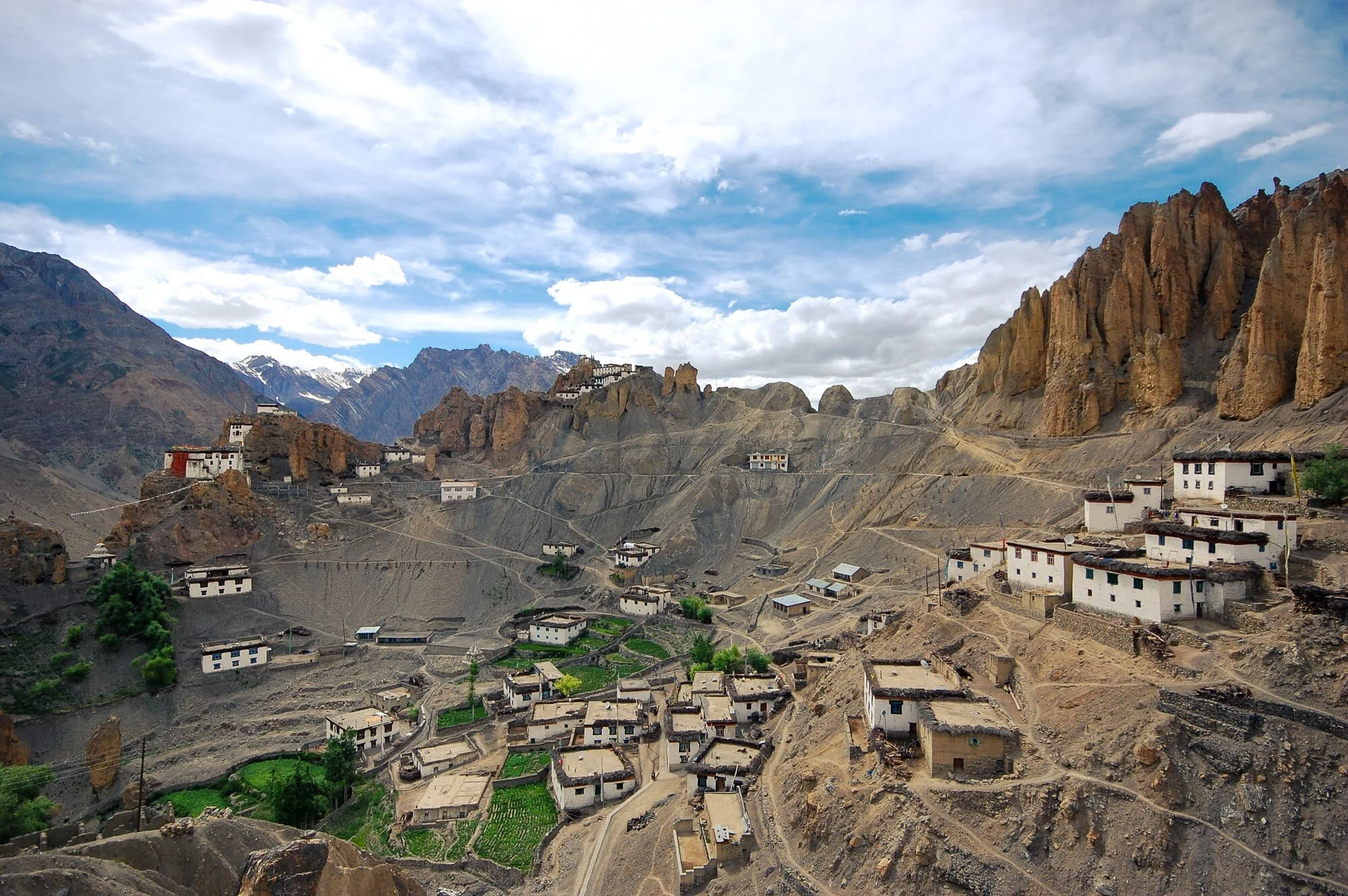
Dhankar village in India’s Spiti Valley. The Adventurous b3n. CC2.0

Despite the urgency of current climate science research and political action, scientific progress in the region continues to suffer. When the Intergovernmental Panel on Climate Change (IPCC) released its fourth assessment report in 2007, the entire Himalayan region was listed as a “black hole” for data. Although governments tried to address the problem, there still has not been much action, with similar concerns in the IPCC’s fifth assessment report published in 2014. One of the major difficulties is weak data-sharing between countries, which is fraught with secrecy. Although scientists advocate for open data-sharing between countries, many governments disregard their requests for national security reasons. “To be frank, scientific culture doesn’t have deep roots in this region,” says Dipak Gyawali, Nepal’s former water resources minister. “Countries think somebody else will use the science that they are doing. That is wrong. Science ultimately benefits others beyond borders.”

Climate change remains one of the most existential threats to humanity. Working together to address transnational environmental issues in the Himalayas will not only protect its fragile ecosystems but will also foster diplomacy and peace between nations in a politically volatile part of the world. 

Megan Gürer

is a Turkish-American student at Wellesley College in Massachusetts studying Biological Sciences. Passionate about environmental issues and learning about other cultures, she dreams of exploring the globe. In her free time, she enjoys cooking, singing, and composing music.

Welcome to the Jungle: Badaling’s Wildlife Park

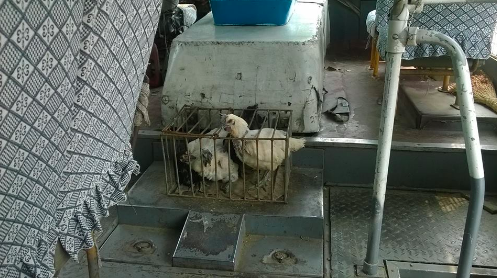
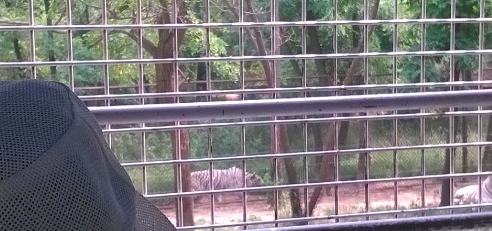
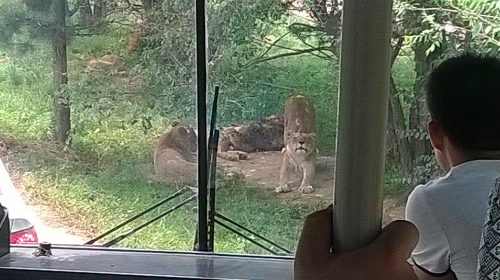
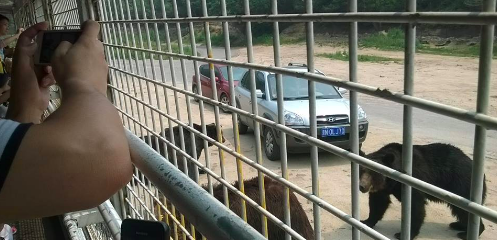
You can't just stroll into the park. You have to take one of its special "zoo buses"...and pay for it. The initial ride is fairly benign, but after passing through a security checkpoint, you can literally see lions, tiger and bears swirling around the bus you are riding in. These animals spend their lives here at the park and have grown accustomed to vehicles passing through their enclosures—they know you're coming long before you do. As your fellow passengers pull out their phones and snap pictures, you notice a steel cage riveted to the floor of the bus. It’s filled with chickens. For 40 yuan ($6.30) you can buy one of these chickens and toss it to the animals outside. It’s not an option for the squeamish, of course, but an option nonetheless.

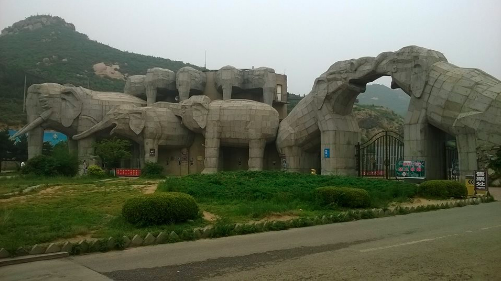
The entrance to the Badaling Wildlife Park. Jonathan Robinson.

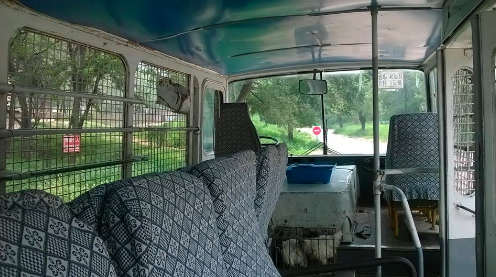
The zoo bus. Jonathan Robinson.

The Badaling Wildlife Park outside of Beijing is known for giving its guests an up-close-and-personal experience with exotic animals. If you've got the funds, the park staff can also arrange for live chickens, sheep, even cows to be served to those animals for your viewing pleasure. Critics call this practice cruel and inhumane, but live animal feedings are fairly common at zoos and wildlife parks throughout China.

Every bus comes with its own chicken cage. Jonathan Robinson.

A white tiger. Jonathan Robinson.

If tourists aren't careful, they can find themselves on the menu as well. Two years ago, a woman was attacked when, after an argument with her husband, she decided to exit the car that she, her husband, and her mother were riding in and make the rest of the trip on foot. Surveillance videos show her being dragged away by a Siberian tiger, as her husband and mother look on in horror. The woman’s mother eventually exited the vehicle and jumped on the tiger, saving her daughter's life at the cost of her own. The park paid out a settlement of 1.2 million yuan ($299,917.52) following the incident. Last year, a male patron was bitten by a bear as he fed the animal through the driver's side window of his car. Despite these and other incidents, the park is still as popular as ever and continues to admit new patrons looking for an adventure.

A group of lions. Jonathan Robinson.

Bears looking for a snack. Jonathan Robinson.

A cardinal rule when traveling is to expect differences from one's country of origin. Not everyone will have the same beliefs and values as those of the traveler. The Badaling Wildlife Park is a prime example of this. While controversial, none of the activities that occur in the park are illegal in China. Nor do they pose an immediate threat to the population of any particular animal. Respecting things that we do not necessarily support is a vital part of the international, intercultural education that world travel gives us, and though the temptation may be great at times, we must weigh the validity of imposing our values in countries that we are admitted to as guests. For now, the park hovers in its own moral space. It cannot be labeled definitely as “right” or “wrong.” It simply is.


JONATHAN ROBINSON is an intern at CATALYST. He is a travel enthusiast always adding new people, places, experiences to his story. He hopes to use writing as a means to connect with others like himself. 


‘This is Africa’: Depictions of Black People in Mainland China

Earlier this year, Black Panther premiered in theaters around the world. The latest in a string of comic book-themed films turned out to be more of a cultural event than a mere movie. Black Panther broke records in the United States, as well as Great Britain, North and South Korea, and East and West Africa, dispelling the long-held Hollywood myth that “black films don’t travel.” Though fictional, the film struck a chord with audiences, as it featured a predominantly black cast and did not put them into the stereotypical roles often lamented by moviegoers. The film, however, was not as successful in Mainland China. Despite the fact that China is a major trading partner with the African continent, many Chinese moviegoers bristled at the idea of seeing Africans up close.

Chadwick Boseman, star of the movie Black Panther, appearing at Comic-Con in San Diego. Gaga Skidmore. CC BY SA-2.0

China was relatively closed to foreign trade until Deng Xiaoping's economic reform in 1978. Because of this, interactions with non-Chinese people are still a relatively new phenomenon. There is also a traditional standard in China that equates lighter skin with a comfortable, indoor lifestyle, and darker skin with peasantry, having to labor in fields under the hot sun. This combined with exposure to western media creates an environment that can be less than hospitable to blacks. Last year, an exhibit at the Hubei Provincial Museum in Wuhan titled, “This is Africa”, featured a portrait of a young African boy placed next to the portrait of a monkey. The exhibit was visited by over 100,000 people before criticism from the African community prompted museum officials to dismantle it, and the museum curator to take responsibility for the presentation. In February of this year, the same month Black Panther premiered, China’s Central China Television (CCTV) network came under fire when it aired a skit featuring a Chinese actor in blackface. Beijing issued a statement saying it was opposed to racism of any kind, but did not apologize for the skit.

Western nations are by no means immune to racial prejudice. While the Civil Rights movement of the 1960’s attempted to resolve many of the racial schisms that split the United States, lingering prejudices remain in various parts of the country. In recent years, proponents of racism have become more desperate, and less discreet. In January, the president of the United States allegedly referred to El Salvador, Haiti, and various African nations as “shithole countries,” seemingly forgetting his role as chief diplomat. Perceptions of Africa, and by extension those of African descent, are still slanted by the media, and media still accounts for much of the world’s education. This creates a quandary for those who have to live day-to-day under the banner of these stereotypes.

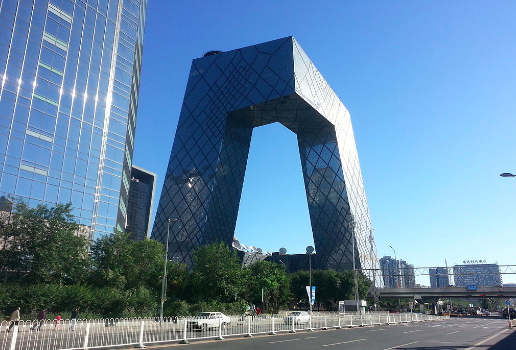
The CCTV building in Beijing. Verdgris. CC BY SA-3.0


There are some things that we believe because it serves us to believe them. Racism today is more than mere ideology. Like sexism, racism has evolved into a cultural standard, feeding into a lifestyle standard that is enjoyed, or not enjoyed, by millions of people around the world. As we begin to tinker with the idea racism, we also tinker with the standards it creates in our societies-some people are bound to get upset. At the same time, this tinkering opens new possibilities for growth, for all the parties it applies to. It refutes old characterizations of people and cultures and encourages us to make connections that we may not have considered before. All change involves a degree of pain and uncertainty, but we can only move forward, confident that the benefits of our efforts will justify the challenges.


JONATHAN ROBINSON is an intern at CATALYST. He is a travel enthusiast always adding new people, places, experiences to his story. He hopes to use writing as a means to connect with others like himself. 


Life on the Margins

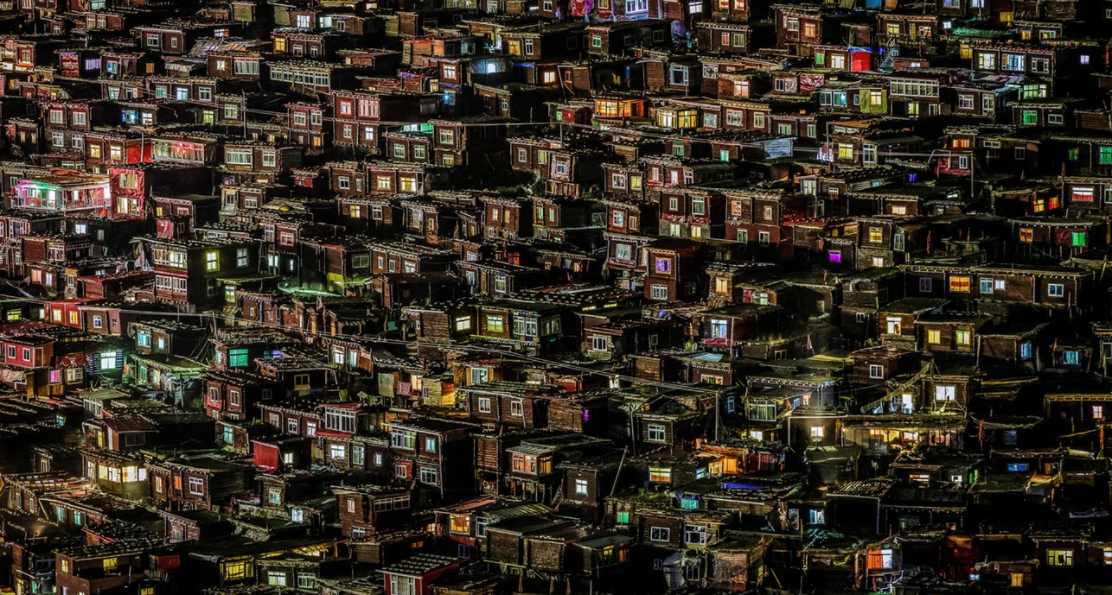
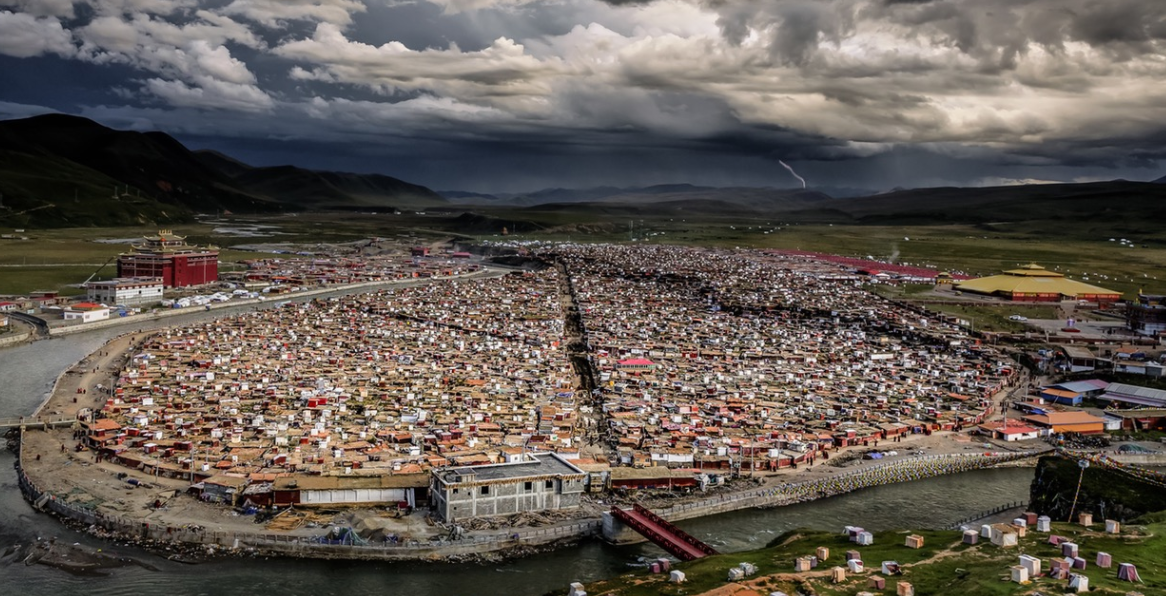
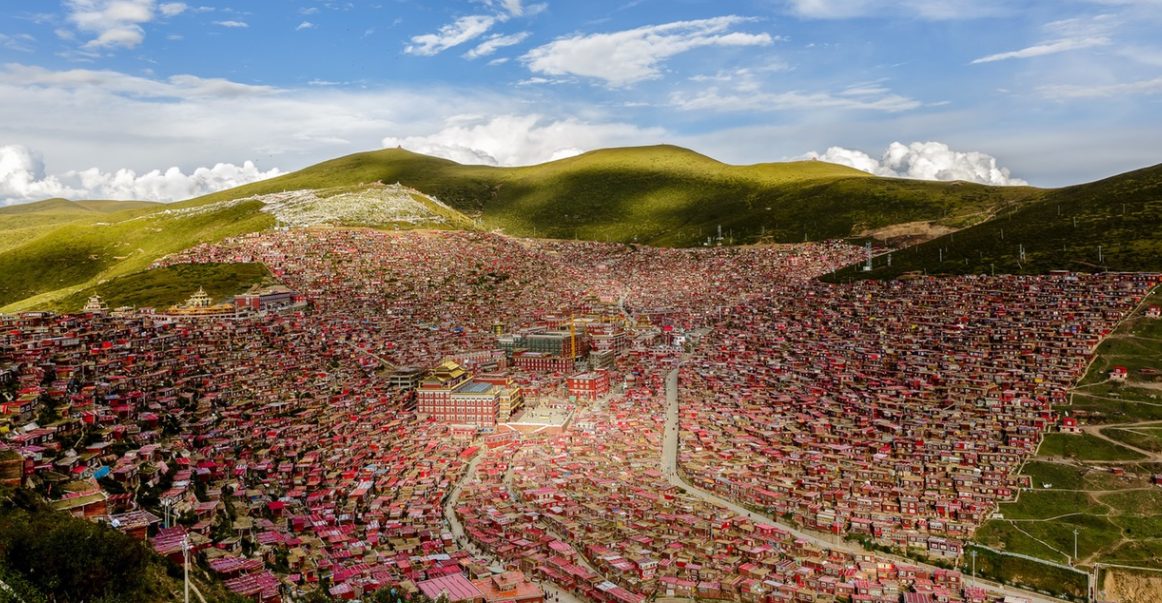
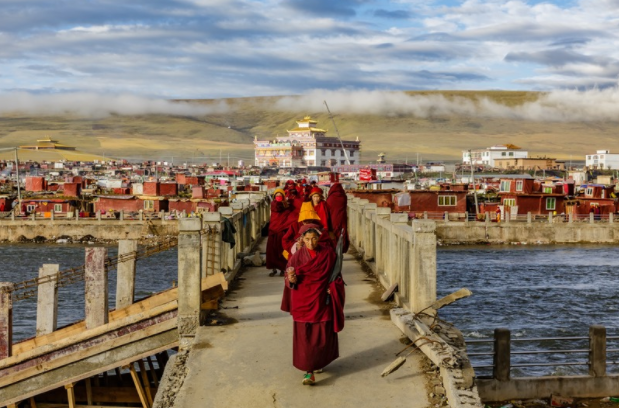
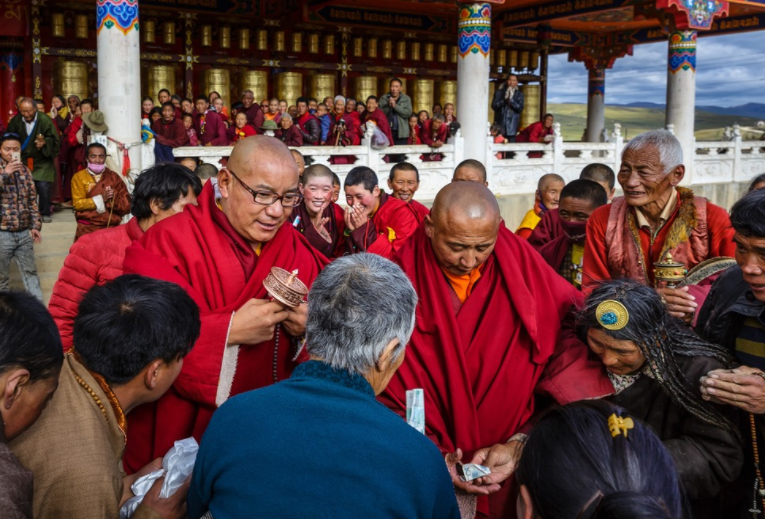
During the northern summer of 2001 thousands of Chinese security personnel, backed by an army of labourers armed with sledgehammers, massed at the entry of the Larung Gar Tibetan Buddhist Institute. In this almost impossibly remote place, sitting high on the Tibetan Plateau, 9,000 monks and nuns had found a home, defying decades of China’s aggressive atheist policies to learn from its charismatic and avowedly apolitical founder, Khenpo Jigme Phuntsok.  

PRC authorities had long been skittish about the institute’s remarkable growth, and particularly alarmed by its growing appeal to ordinary Han Chinese. By 2001 over 1,000 Han also called Larung Gar home.
 

The Larung Gar Five Sciences Buddhist Institute.

Both Larung Gar and Yarchen Gar (gar translates as camp) have remained largely hidden from the outside world, as much because of their inaccessible geography as the tight controls on freedom of movement put in place by the Chinese government. Both sit at elevations of over 4,000 metres, sunk deep into hidden valleys of the Hengduan mountain range, which cuts across China’s south-western Sichuan province.
 

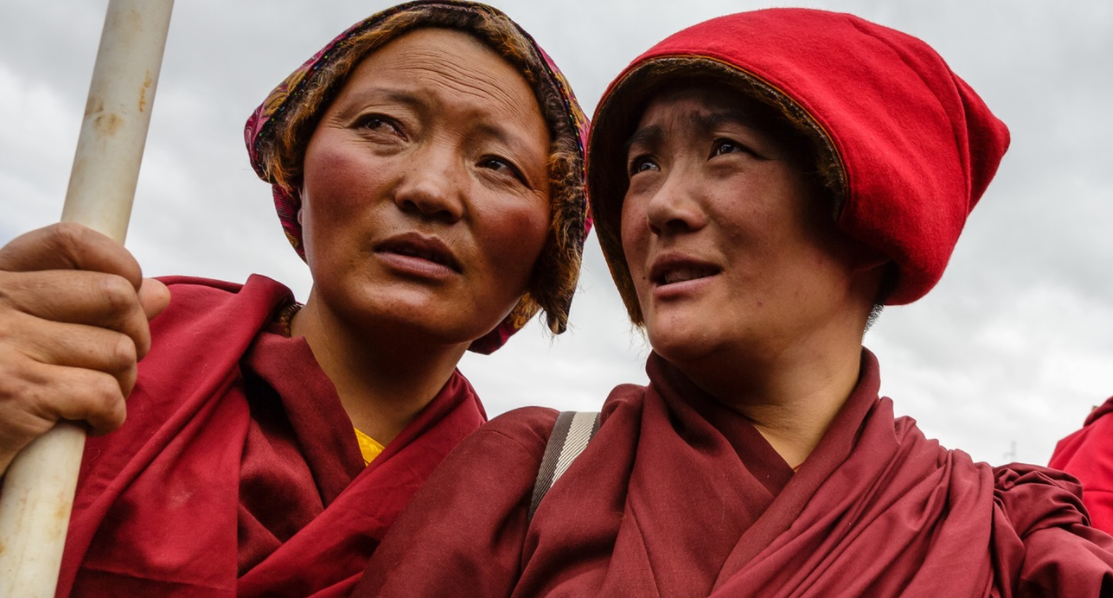
Yarchen Gar sits hard against the border of the TAR and is home to roughly 9,000 nuns. 
 

Both Yarchen and Larung Gar are part of what is known as the Garzê Semi Autonomous Prefecture, where 77 percent of the inhabitants — some 800,000 people — claim ethnic Tibetan heritage. As is the case in the similarly named Tibetan Autonomous Region (TAR), the people’s future has long been out of their own hands.

In theory, to move around Garzê as a foreigner, one only needs a Chinese tourist visa and bucket loads of time, patience and fortitude. This is in stark contrast to the neighbouring TAR, at the border of the lands known to the wider world as ‘Tibet’. Visitors to the TAR are required to first negotiate a complex and shifting permit process, before joining an organised and highly controlled tour of the region.
 

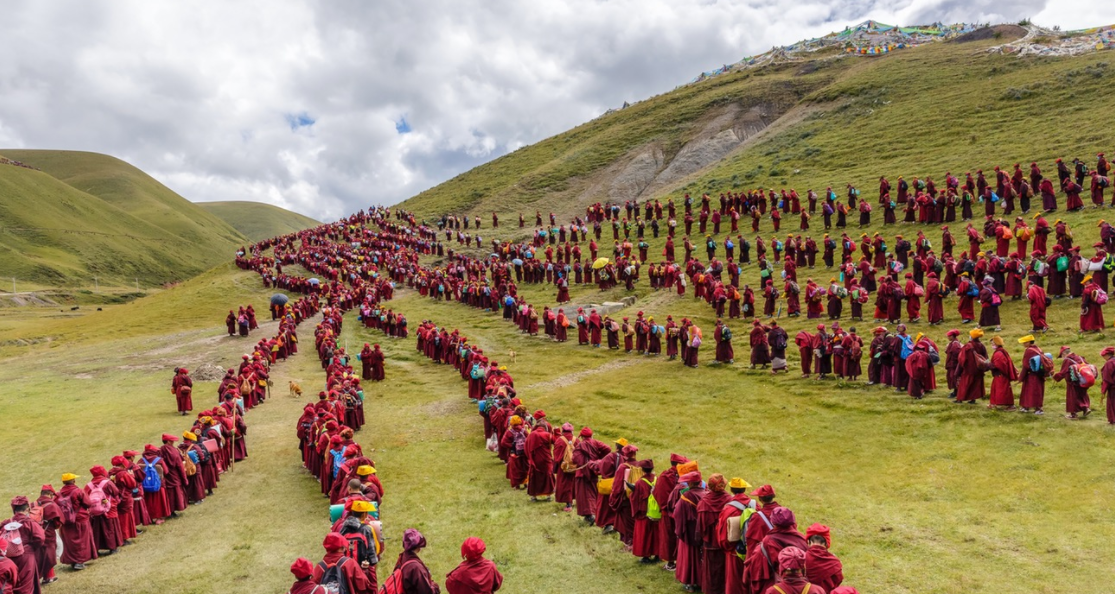
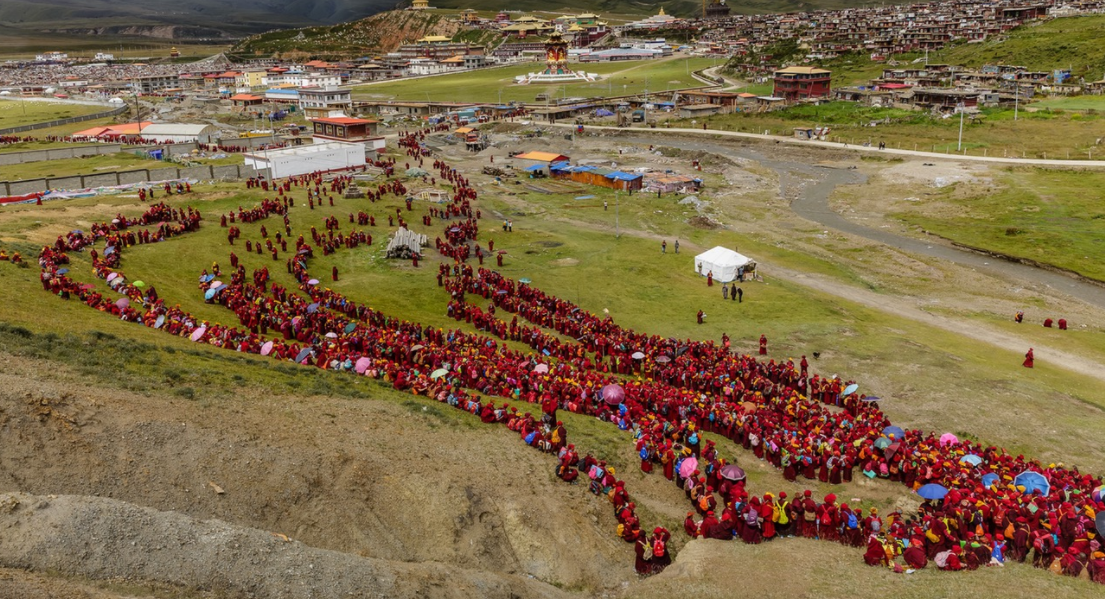
Nuns at a ceremony at Yarchen Gar in which almost the entire population of the camp leaves for a month of meditation in the surrounding hills. 

Yet Garzê and nearby Qinghai are also restive. Tibetans here have openly protested against Chinese control, most notably as part of a violent uprising in 2008. Referred to by the Chinese as the 3-14 riots, unrest had spread from the TAR into Sichuan. This unrest effectively slammed the door shut to the region’s hidden treasures until 2013. Today, despite relative calm, nuns and monks continue to take the extreme measure of self-immolation in towns and villages. Reports of random arrests and the disappearance of accused activists are common. Recently Garzê has been open, yet regulations can change overnight and information is scarce. 
 

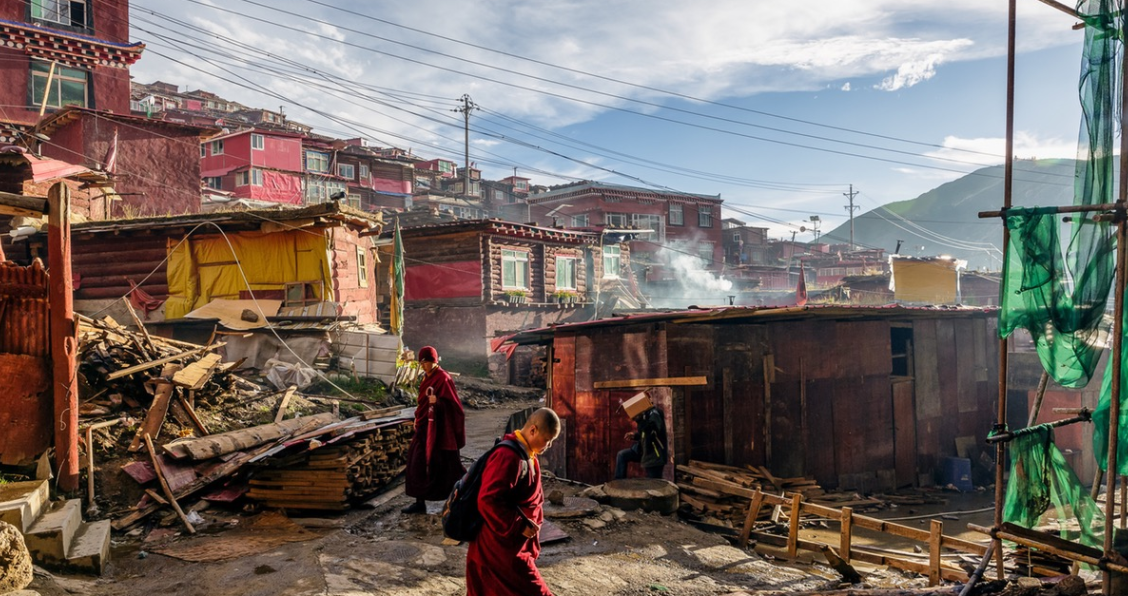
The narrow, winding alleyways of Larung Gar.

During China’s breakneck boom the mountainous Garzê region represents ground zero in the great ‘go west’ campaign — viewed by the People’s Republic as integral to the rapid growth of the Chinese economy. 

The wealth of natural resources found here, as well as the nation-building railway into Tibet (completed in 2006) have been the catalyst for extraordinary development. In the regional town of Sertar, which sits astride the Larung Gar complex, the reality of the security situation quickly hits home. I was challenged in the main square and taken to police headquarters to sign in and face a barrage of questions.

Mercifully, one officer spoke English and took my story of being a history teacher at face value. This would be just one of my almost daily encounters with the local police force over the coming weeks.

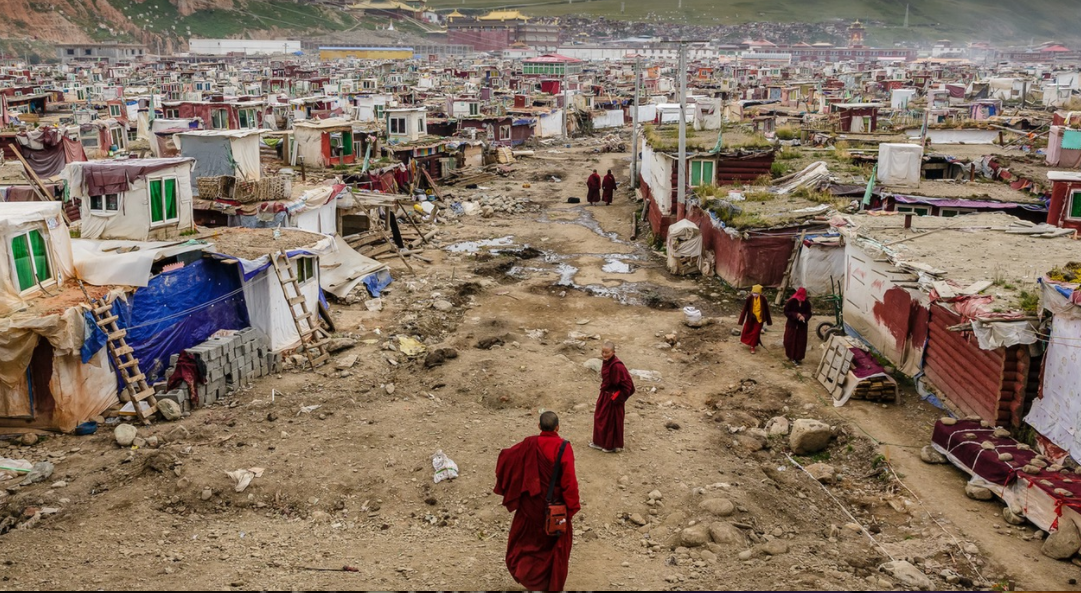
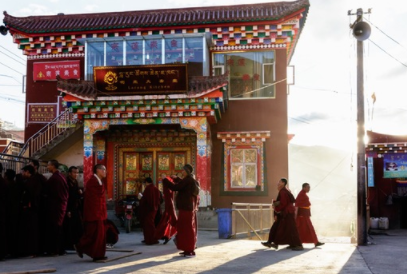
The main street through Yarchen Gar

Monks debating at Larung Gar.

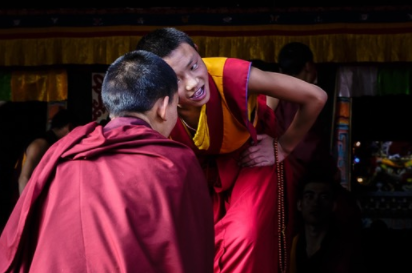
During the following days I was left free to explore the vast warren of huts, temples and study houses that surround the complex. One morning I witnessed a loud monks’ debate; where the men and boys almost come to blows over competing theological arguments.

The monks and nuns live their lives separated by the main road which slices Larung Gar camp down the middle. I found both groups to be generally welcoming and curious, and the tinderbox atmosphere and police presence of Sertar is replaced by the constant hum of worship, with the sound of prayer and Tibetan horns a constant.
 

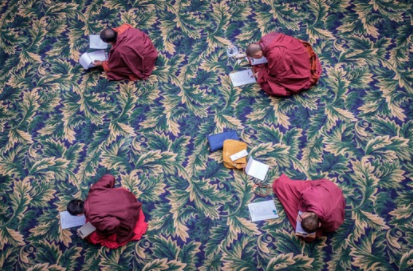
Monks in study and debate at Larung Gar. 

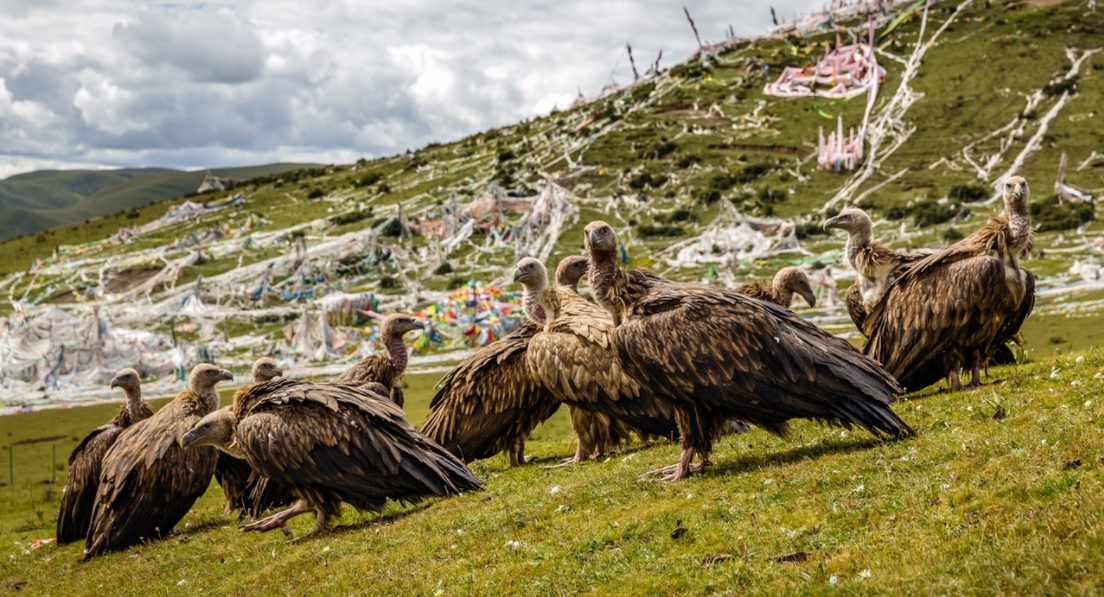
Many Chinese tourists visit Larung too. The biggest draw for them turns out to be the opportunity to witness a traditional Tibetan ‘Sky Burial’. At 1pm every day, the Rogyapa (“body breaker”) arrives to dismember recent human remains, which are then fed to aggressive flocks of resident vultures on a hillside set back from the complex.

Macabre to some, this ancient ritual is both a practical way of disposing of human remains whilst also adhering to jhator, the principle of kindness to all living things, which includes feeding these huge carrion creatures. Few of traditional these sky burial locations remain operational, mainly due to religious marginalisation, urbanisation and the decimation of vulture populations.
 

The vultures who are fed during the traditional ‘Sky Burial’ on the hillside above Larung Gar. 

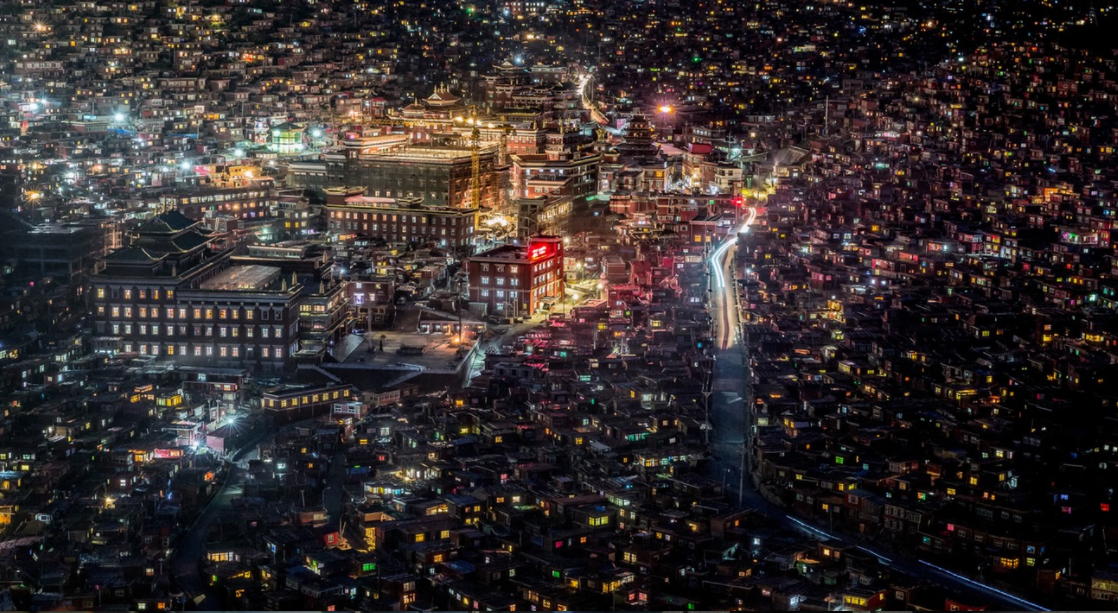
The institute at Larung Gar currently attracts followers of Tibetan Buddhism from all over China. Its regrowth after the 2001 evictions was swift; students began to illegally return and rebuild almost immediately. After Jigme’s death in 2004, countless followers made a pilgrimage to Larung Gar to pay homage to their spiritual master. Many stayed and contributed to the already rapid regrowth of the population. Today, Larung Gar is home to an estimated population of 50,000 people.
 

Gar camp from above, on rare clear day.

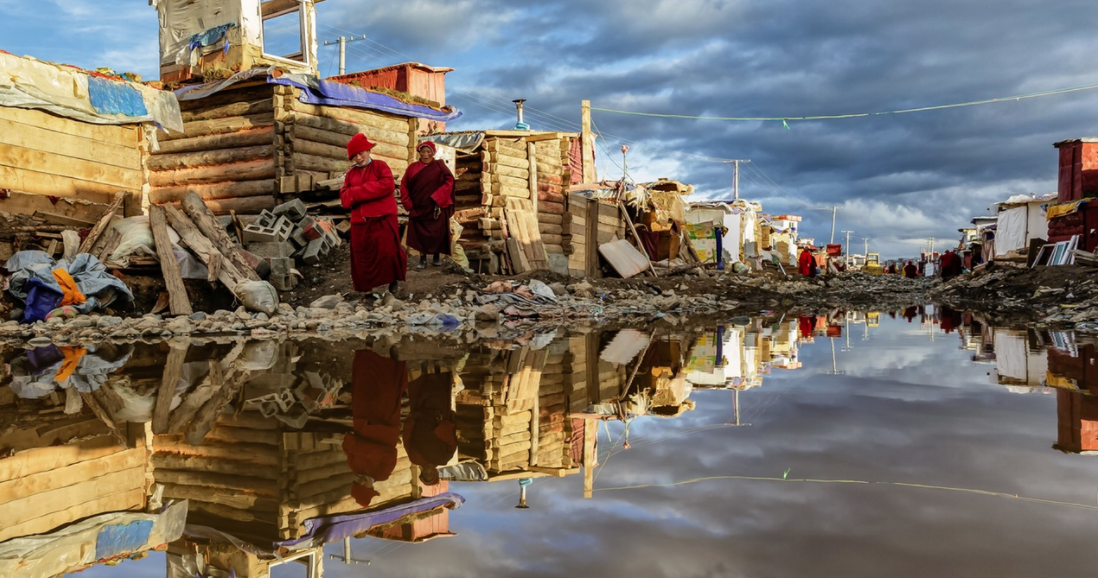
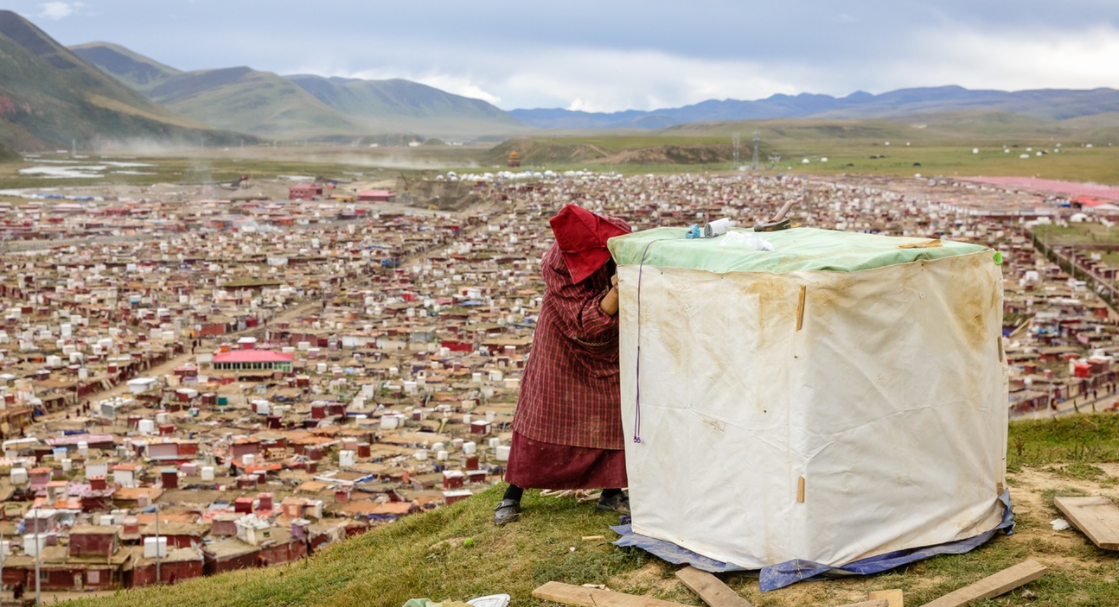
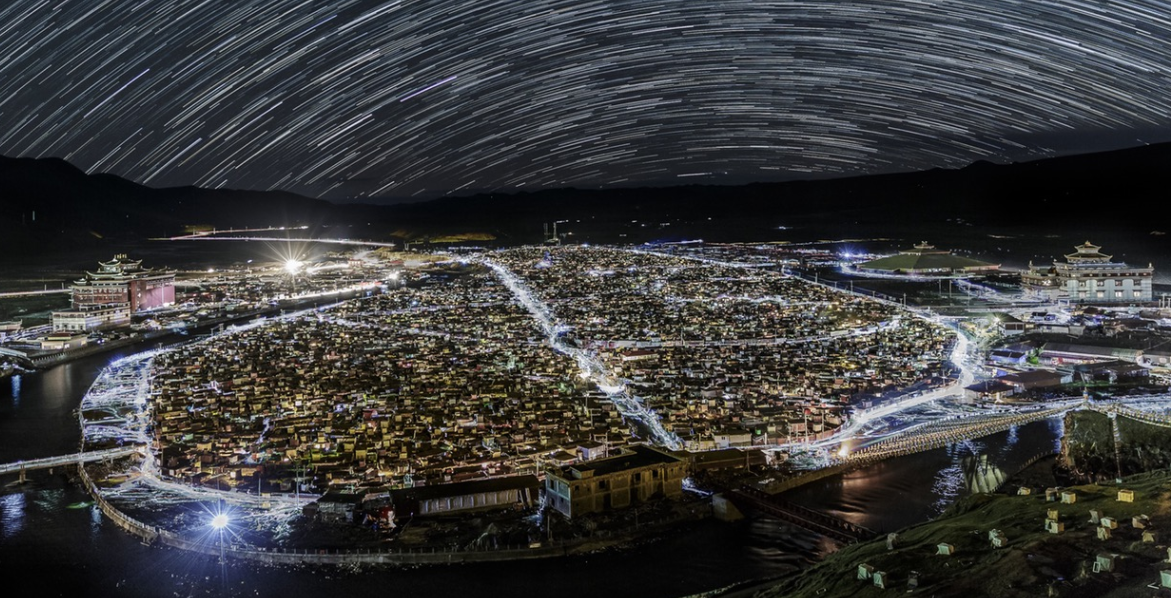
Yarchen Gar, founded in 1985 hard against the border of the TAR, has deplorable living conditions. Without even basic sanitation, every corner of the complex is permeated by a breathtakingly toxic smell.  Around 9,000 nuns live in ramshackle huts on an island, while the more solidly built monks’ quarters sit more favourably on the surrounding hills. Monsoon rains bring regular flooding; on my visit ankle-deep raw sewage flowed into the streets on more than one occasion. 

Rains in Yarchen Gar flood the streets with raw sewage.

No electricity runs to the island where the nuns live. Cholera and typhoid outbreaks are a daily threat. In winter, the temperatures plunge to a life-threatening minus 25 degrees. Yet this does not deter the nuns. Winter meditation sessions, referred to as the “direct crossing”, can last for days, with nothing more than a blanket to shield worshippers from the cold.
 

Sunrise at Yarchen

 The reward for this remarkable display of self-deprivation is the chance to learn first-hand from some of the most revered figures in Tibetan Buddhism. The current leader in residence is Asong Tulku. ‘Tulku’ is a title given to a person who has reached the highest level of spiritual enlightenment, and Asong is considered a living Buddha by his followers. To assist in his teaching at Yarchen, Asong is aided by senior nuns, called khenmos. Many nuns begin their life here at the age of just six.
 

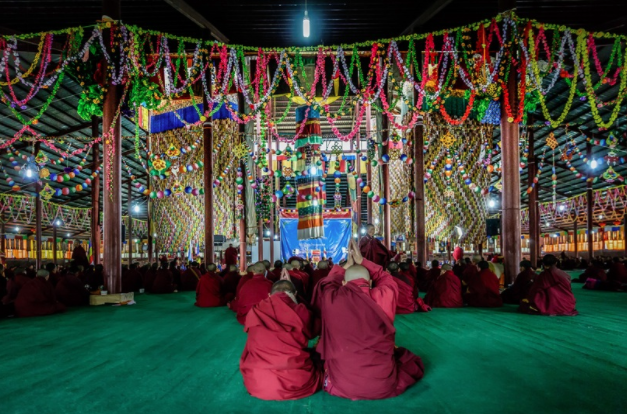
Worshippers inside one of the temples at Yarchen Gar.

The bridge over to the island where the nun’s live.

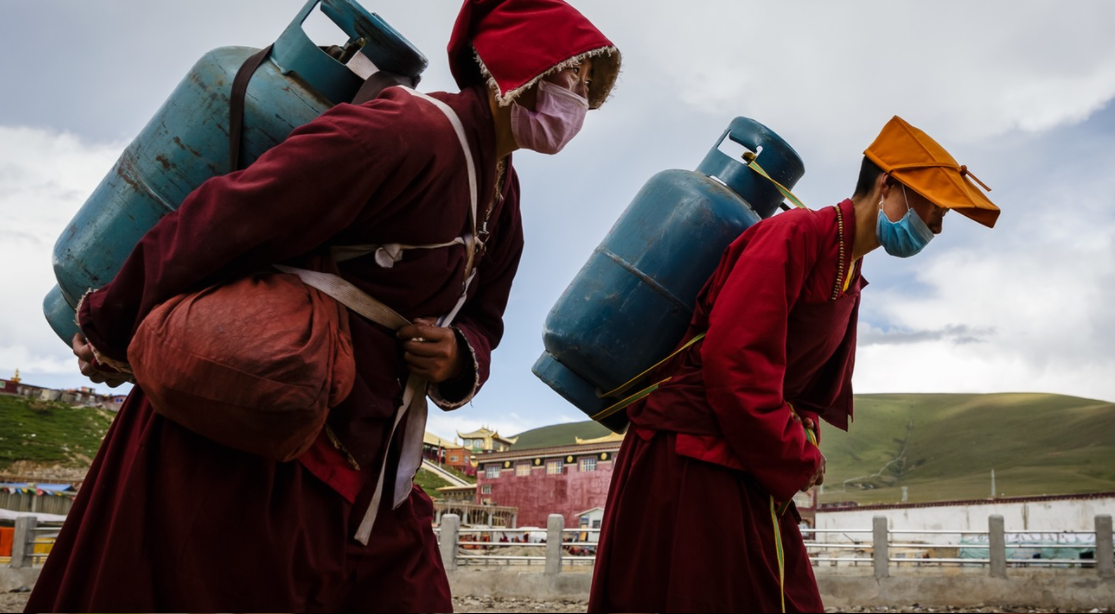
Not only do the nuns dedicate themselves fully to their studies, they are also responsible for almost all physical labour at Yarchen, constructing houses, unloading trucks or building roads. The monks, who rarely participate in physical labour here, seem to have it easy in comparison.
 

Building a basic meditation hut on the hills overlooking the nun’s encampment.

The nuns carry out most of the hard physical labour at Yarchen. 
 

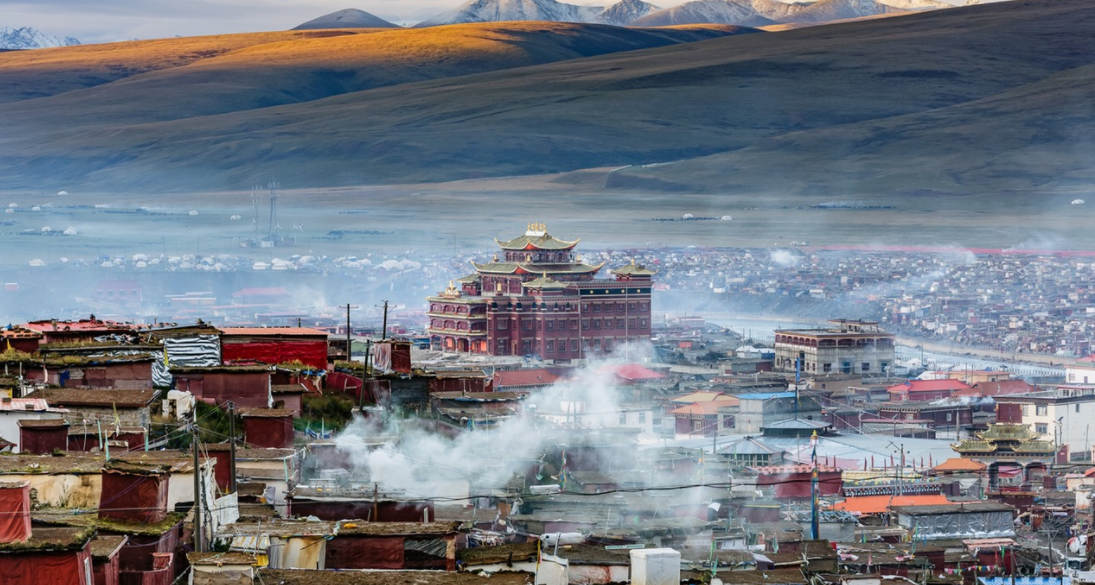
Despite the challenging living conditions, vast amounts of money are being funnelled into gigantic, ornate temples and monuments in the heart of the camp, while the surrounding slums continue to crumble.

Han Chinese money has poured into this region, with relatively wealthy converts to Tibetan Buddhism bringing much needed funds to the camps. These wealthy benefactors, hoping to improve their karma for the next business deal, or through a “cover all bases” spiritual mentality, have sparked a huge construction boom on the far western Chinese frontier.

A young nun exits an area reserved for eating and socialising in the centre of Yarchen. 

During my time in Yarchen I had several memorable brushes with the revered leader, Asong Tulku. As he piloted his gleaming white Lexus around the slum, our paths would meet on my early morning photo shoots. Watching people fall into the putrid mud at his feet wherever he walked, all rushing to pay tribute with cash and gifts, I found myself wondering if the money for the Lexus couldn’t be better spent elsewhere.
 

Asong Tulku is considered a living Buddha by his followers

The abrupt change from the monsoon season to the biting cold of winter was a fortuitous time to be visiting Yarchen. A ceremony in which almost the entire population of nuns empty from the confines of their island home for a month of meditation in the hills was due to take place. For days, preparations for this ritual, translating roughly to the “circle of life”, had provided a preview of what was to come.
 

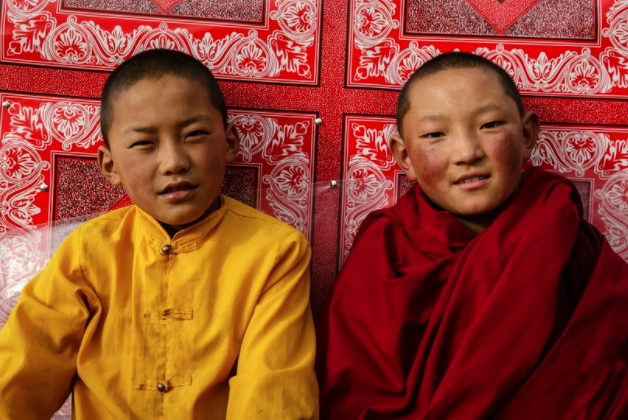
Young monks taking a break from daily classes at Yarchen.

Basic supplies were taken by foot to a hidden nook outside the complex, the location of which was strictly off limits to outsiders. When the fortuitous day finally arrived, the sight of 9,000 nuns in their bright red robes streaming into the hills was a privilege to see.
 

The nuns of Yarchen Gar prepare to walk into the hills for a month of meditation.

At the entrance to the valley I reached a sign hammered into the ground, with a message written in bold letters, announcing that any man who followed the nuns on their trek would return blind. With this, I knew that my luck had held out for long enough; it was time to go.
 

Larung Gar camp by night. 

By rights Larung Gar and Yarchen Gar shouldn’t exist, and at different times the authorities have tried to sweep them away. Draconian restrictions on the freedom of movement and religious practices in the TAR itself means that nothing exists there to rival these two sites.

Quite possibly, the future leadership of Tibetan Buddhism rests not within the more recognisable white-washed walls of Lhasa’s hillside fortresses, or within the Dalai Lama’s inner circle, but within China itself.
 

Star trails arching over Yarchen Gar.


THIS ARTICLE WAS ORIGINALLY PUBLISHED ON MAPTIA.


BROOK MITCHELL

Brook Mitchell is a photographer + writer with Getty & The Sydney Morning Herald.

CHINA: Love is Blind

The recently relaxed one-child policy in China led many parents to abandon children who were born with mental or physical disabilities.

Photographer Alice Carfrae travelled between Beijing and Zhengzhou to visit two projects run by Bethel, a dedicated organization that is set up to provide high-quality care, education, life skills and livelihood opportunities to blind and visually impaired children in China through foster care projects. Bethel also runs an associate programme in training and outreach called 555, which aims to prevent blindness, lower orphan rates and conduct eye screenings to identify young visually-impaired children living in the country.
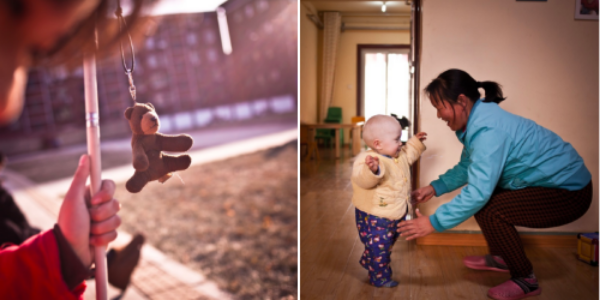
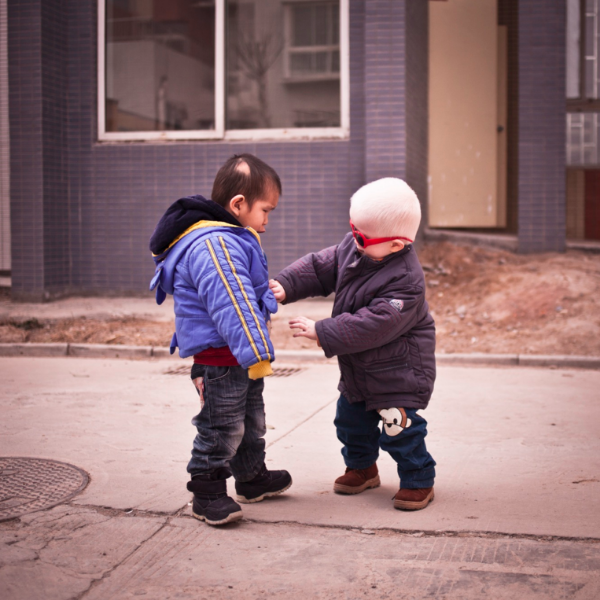
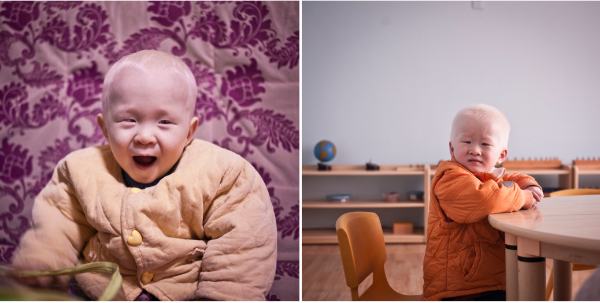
Above: (Left) Cane belonging to En Hong who arrived at Bethel in 2008. They believe she may have been living on the streets. (Right) Yuan Ming has albinism. He came into Bethel’s care when he was just a year old. He has learned to walk and he is now talking a lot. 

Almost all of the children helped by Bethel have been abandoned by their parents, because they have a physical or mental health problems. Susan Ou, manager of Bethel’s Love is Blind project, says minor disabilities such as missing fingers can be reason enough for parents to abandon a child.

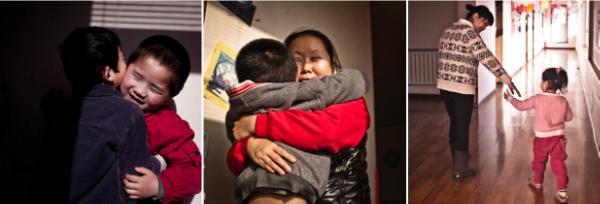
Above: (Far left) Gui Gui hugs his friend as they wait in line for lunch and then gives his teacher a big hug (middle). (Right) A teacher takes Ai Fei’s hand and guides her to class. 

In the past decades, China’s One Child policy has exacerbated this problem as a great deal of pressure is put on the child to provide for the rest of the family, especially for their parents as they reach old age. If they are unable to work, they cannot meet this requirement or support the family, and this leads some parents to abandon their child.

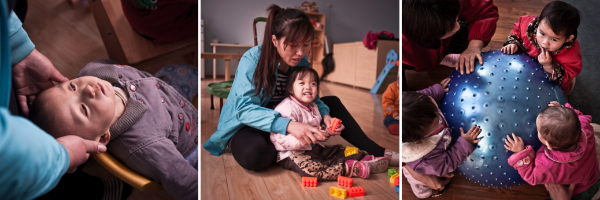
Above: Children attend a cognitive skills class at Bethel. Developing cognitive skills by moving parts of the body and using the senses at a young age is a very important for a child with a visual impairment. 

There are two projects within the Love is Blind programme. The first is a partnership between Bethel and an orphanage in Zhengzhou and another orphanage in Dou Dian, outside Beijing, which includes a farm, school and home for visually impaired children.

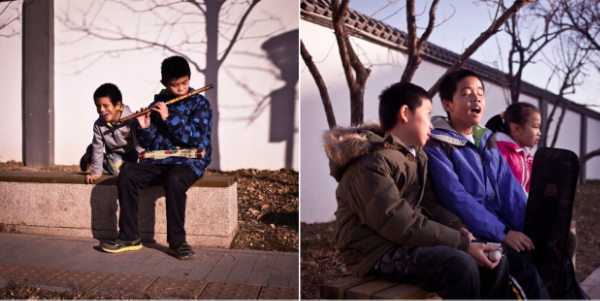
Above: (Left) Hong Fa plays the Chinese flute whilst his friend Xiao Dong listens. Peter (middle, right) loves to sing and has a perfect tenor voice. He was awarded a scholarship for his excellent work which he spent on music lessons.

Speech therapy is now regarded as a vital component for many of the children, and music also plays a huge part in the children’s lives, with specially designed music rooms offering stimulation and relaxation.

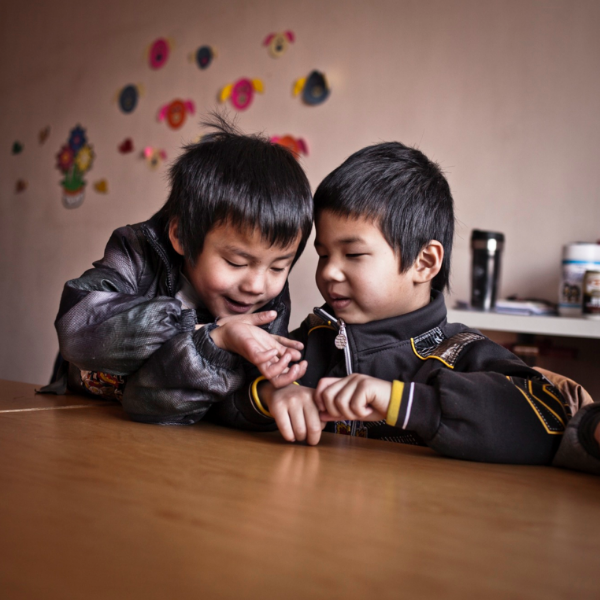
Above: Jian Ang (left) helps Jianshan do up his jacket at the orphanage in Zhengzhou. 

Early on, children are encouraged to understand the concept of their own bodies, which instils confidence and a strong sense of self. At Bethel, both the environment and the children are very well cared for, and this, in turn, helps to prevent the kind of discrimination against disabilities, which has pervaded wider Chinese society for many years.

Above: (Left) Yuan Ming has albinism, when he came into Bethel’s care he was just a year old. He has learned to walk and he is now talking a lot. (Right) Jian Ang also has albinism. When he arrived, he was a tiny, weak baby. Now he runs everywhere and does well in class. 

The role of education, whatever their needs, is paramount. 

Above: (Left) a caregiver touches the head of a child and describes what it does so that he understands the concept of his body. (Middle) Xuerou plays with her teacher, before coming to Bethel she could not even sit up. (Right) Children are encouraged to play and explore. 

In Alice's words:

Zhengzhou is not the prettiest city. Its grey buildings are shrouded by a grey choking smoke. Henan is one of China’s poorer provinces and its capital reflects this. The Zhengzhou City Children’s Welfare Institute is located on the very outskirts of the city, where land is cheaper.

Despite being newly painted, the centre still did not look especially inviting from the outside, but we were welcomed warmly by Ma Jingya, who has been working as a teacher there for two years.

When we arrived, the twelve children in Bethel’s preschool initiative were taking an after lunch nap. We took this chance to look around one of the apartments they share, including a girl’s room, a boy’s room and a separate space for babies. The apartment looked very cosy with the kitchen and living room especially feeling like family homes. The only clue to the nature of the environment is stickers with children’s names and pictures to identify chairs, cups and toothbrushes.

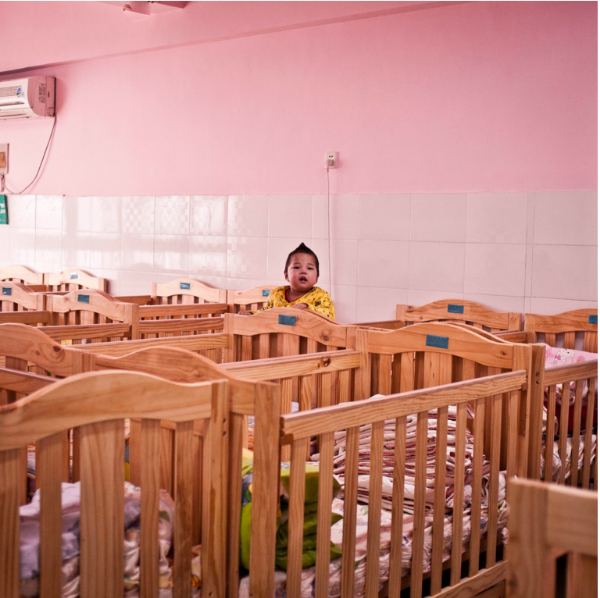
Above: Baby room at the Zhengzhou orphanage.

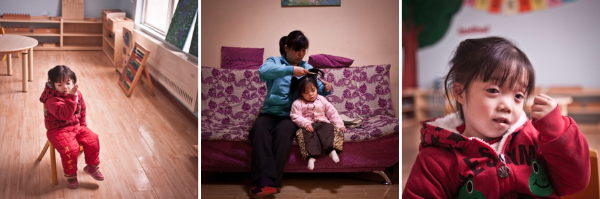
The first child to wake was Xuerou. As I walked over to her cot I could see her yawning and smiling to herself. I whispered hello and she squealed with delight. Susan Ou, Bethel’s manager, told me she loves being talked to and cuddled. Xuerou is a child in whom they have seen the most significant changes since her arrival, very weak and malnourished.

Xuerou’s former circumstances are not known, but at first, she couldn’t even sit up or eat solid food, nor had she ever been taught how to walk or talk. It took six months of intensive care for her to respond to food and three years before she was able to stand. Now she is six, and can walk, but remains very small for her age. Susan told me that she understands when you tell her she is beautiful and will let you brush her hair.

Above: When Xuerou first arrived at age 4, she was very weak. She couldn’t sit up or eat any solid food. She now understands when you tell her that she is beautiful and she loves being cuddled and having her hair brushed.

I also spent a day with Gui Gui, a five year old boy who came into Bethel’s care at 18 months, after being abandoned by his parents. Gui Gui was expecting us but was feeling too shy to say hello. However, his shyness dissipated as soon as his Braille class started. The teacher, who is also blind, formed the children into a group to act out the Braille dots. Gui Gui was particularly quick and bossy, shouting out answers and physically putting the others in the correct place.

Gui Gui has transformed over the years, staff told me, from a terrified little boy who couldn’t walk or talk into the smiling bundle of energy I see today, who jumps downstairs in his haste to get to lunch. It wasn’t long before he was taking my hand and guiding me round his home.

He took particular interest in my camera, feeling his way around the buttons and the shutter. He would shout for his friends and the teacher and when he located them he would point the camera in their direction and push the shutter button in rapid succession as though firing a gun.

Gui Gui showed me one of his favorite places, the music room. He can play many instruments including the piano, which he asked me to play with him. When he realized I am not musical, he sat himself on my lap, took my hands in his and guided my fingers to the right keys to help me play Twinkle Twinkle Little Star — which is exactly what he is.


ORIGINALLY PUBLISHED ON MAPTIA

Text by Legatum Foundation

ALICE CARFRAE

@ACarfrae

Alice Carfrae is an English documentary photographer currently based in Beijing, China. She works for clients such as The Telegraph magazine, Ford Foundation, Legatum, The Welsh Ruby Union, the Youth Justice Board, and Billionaire.com.