
In June 2017 we took a heart and went to the city of Lagos, Nigerias melting pot and the dream destination for most people who reside in nearby cities and rural communities. Everyone believes Lagos is a city where dreams come true, regardless of your means of livelihood.
The Trail To Kazbegi
What happens when four like-minded adventurers head into one of the world’s wildest mountain ranges with nothing but their mountain bikes and enough food to survive for 10 days?
The answer? What doesn’t happen? Terrifying lightning storms. Raging-river crossings. Snow-covered glacial pass traverses. Mind-melting descents. Constant fights with vicious dogs. Tense encounters with over-zealous border-patrol guards.
All of the above were just another day following “The Trail to Kazbegi,” a self-supported mountain-bike mission through the highest reaches of the Caucasus Mountains in the former Soviet Republic of Georgia. Our four-man team—adventure filmmaker Joey Schusler, Bike magazine editor Brice Minnigh, photographer Ross Measures and mountain man Sam Seward—spent half of June 2015 exploring the crown jewels of the Georgian High Caucasus on a feature assignment for Bike.
Fighting Food Waste in Los Angeles
When Rick Nahmias realized that fresh produce in his community was routinely being tossed out for minor bruising or browning, he knew something needed to be done to end the unnecessary waste. He founded Food Forward, a non-profit dedicated to ending hunger by sharing abundance. The organization recovers fresh produce that may otherwise go to waste, collecting from farmers markets, wholesale food suppliers, and even residential backyards. Within the past year, they’ve already fed 1.5 million people across Los Angeles.
Unlikely Emcees: The Muslim Hip-Hop Artists Bridging Worlds
Poetic Pilgrimage is a hip-hop duo from the U.K., and their music is influenced by their Muslim faith, Jamaican background and British upbringing. Not only is their music giving a voice to Muslim women, it's become an unexpected bridge between the global hip-hop community and Islam.
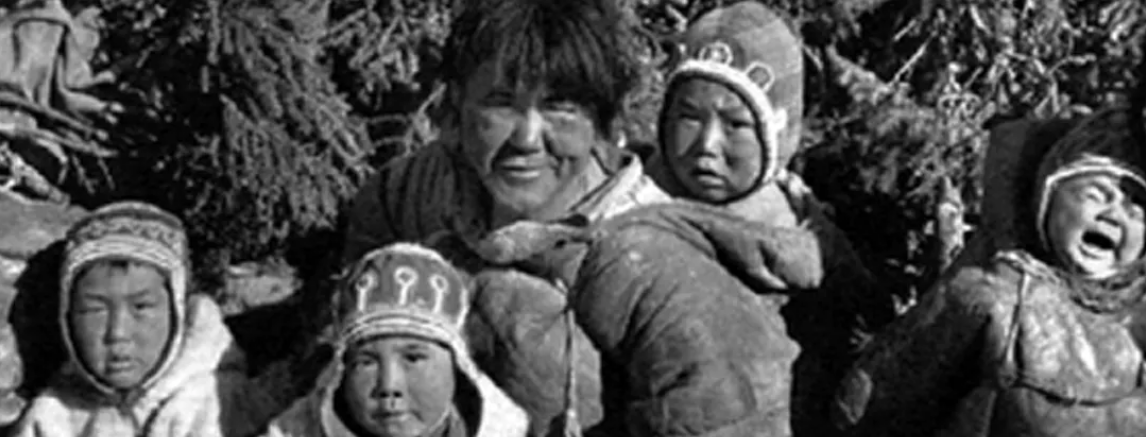
A family of Ahiarmiut, including David Serkoak pictured behind his mother Mary Qahug Miki (centre) at Ennadai Lake in the mid-50s before the Canadian government forcefully relocation them.
Canada’s Genocide: The Case of the Ahiarmiu
As a human rights scholar, I have long argued that Canada committed cultural genocide against Indigenous peoples. But recently, I’ve come to conclude, in the case of the Ahiarmiut, that it’s not cultural genocide —it’s actual physical genocide.
An article in the Globe and Mail last summer by Gloria Galloway told the story of what happened to the Ahiarmiut, a small group of Inuit in 1950.
The Canadian government forcefully relocated them 100 kilometres from their original home in what is now Nunavut. The government’s reason for moving the Ahiarmiut people was that they were becoming too dependent on trade with federal employees at a nearby radio tower.
Galloway got much of her information from David Serkoak, an Elder who lived through the relocations. Recently, Serkoak collaborated with the Canadian Museum for Human Rights (CMHR) to tell his story and to be a storyteller for his community.
RHODA E. HOWARD-HASSMANN is a Professor Emeritus, Department of Political Science, at Wilfrid Laurier University.
THIS ARTICLE WAS ORIGINALLY PUBLISHED ON THE CONVERSATION
Nomads of Mongolia
Life in Western Mongolia is an adventure. Training eagles to hunt, herding yaks, and racing camels are just a few of the daily activities of the nomadic Kazakh people. Brandon Li spent a few weeks living with them and experiencing one of the most unique cultures in the world.
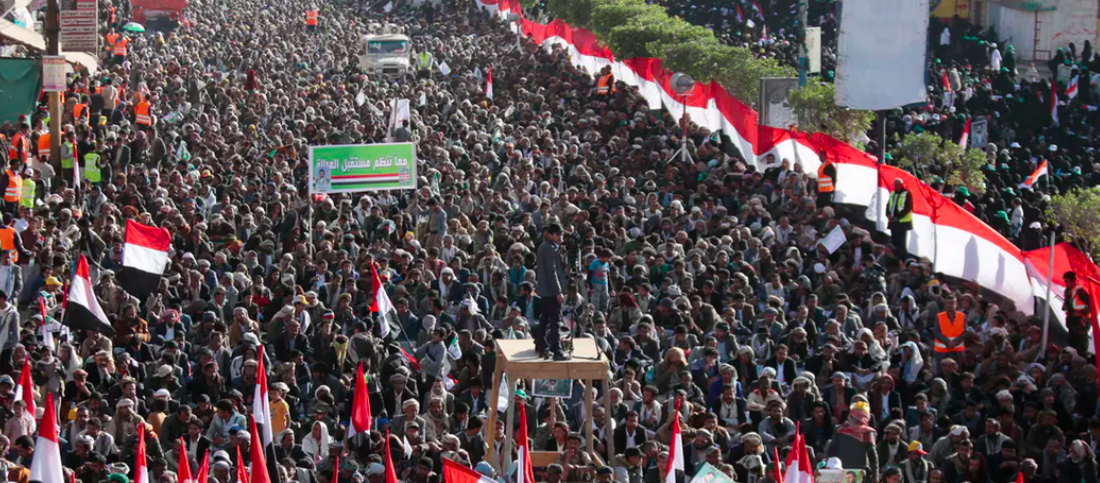
Supporters of Shiite Houthi rebels attend a rally in Sanaa, Yemen, in 2017. AP Photo/Hani Mohammed, File
Who are Yemen’s Houthis?
Fully half of Yemen’s population – 14 million people – are on the brink of starvation. Some analysts blame their inability to access basic foodstuff on escalating conflict between two religious factions: the country’s Sunni Muslims and its Houthis. The Houthis belong to the Shiite branch of Islam.
Saudi Arabia, which shares a border with Yemen and is predominantly Sunni, has been helping Yemen’s government forces try to regain control over Houthi-held parts of the country. For several weeks, a Saudi-led coalition has unleashed near-continuous airstrikes on Houthi strongholds including access points for the majority of humanitarian aid coming into country.
What are the Houthis’ religious beliefs?
Roots of Houthi movement
Just as the Protestant tradition is subdivided into Methodists, Presbyterians, Congregationalists and others, Shiite Islam is also subdivided. Houthis belong to the Zaydi branch.
From the ninth century onward, or for a thousand years, a state ruled by Zaydi religious leaders and politicians existed in northern Yemen. Then, in 1962, Egyptian-trained Yemeni military officers toppled the Zaydi monarchy and replaced it with a republic. Because of their ties to the ancient regime, Zaydis were perceived as a threat to the new government and were subjected to severe repression.
Nearly three decades later, in 1990, the region known as south Yemen merged with north Yemen to become the Republic of Yemen. Zaydis remained a majority in the north and west of the country, and also in the capital city of Sanaa. However, in terms of the overall population, they became a minority.
According to a 2010 CIA estimate, 65 percent of Yemen’s people are Sunnis and 35 percent are Shiites. The majority of those Shiites are Zaydis. Jews, Bahais, Hindus and Christians make up less than 1 percent of inhabitants, many of whom are refugees or temporary foreign residents.
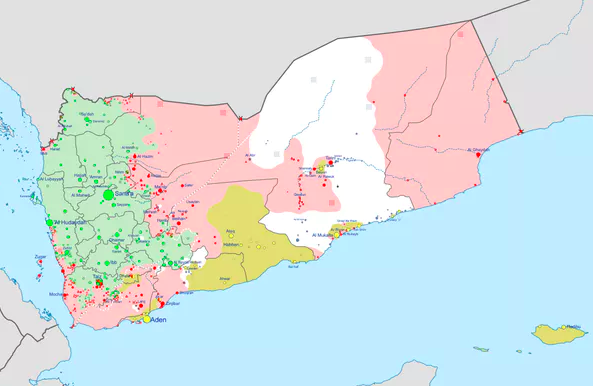
Yemen: 2015 Civil War map. The section in green is controlled by the Houthis. 0ali1,via Wikimedia Commons, CC BY-SA
To reduce the dominance of Zaydis in the north, government authorities encouraged Muslims belonging to two Sunni branches with links to Saudi Arabia – Salafis and Wahhabis – to settle in the heart of the Zaydis’ traditional territories.
Start of Houthi insurgency
Contributing to this trend, in the early 1990s, a Yemeni cleric founded a teaching institute in the Zaydis’ heartland. This cleric, educated in Saudi Arabia, developed a version of Salafi Islam.
His institute proselytized with the goal of reforming Muslims through conversion. It educated thousands of Yemeni students and, in less than three decades, the new religious group grew large enough to compete with older groups such as the Zaydis.
According to scholar Charles Schmitz, the Houthi insurgency began in the early 1990s, spurred, in part, by Zaydi resistance to growing Salafi and Wahhabi influence in the north.
Hussein Badreddin al-Houthi, son of a prominent Zaydi cleric, gave the grassroots movement its name. He coalesced support among his followers around a narrative of Houthis as defenders and revivers of Zaydi religion and culture.
Sunni vs. Zaydi Shiite beliefs
What beliefs set Zaydis apart from Sunni Muslims? That is an old story, dating back to the seventh century when the Prophet Muhammad died.
Shiites and Sunnis disagree about who should have been selected to succeed Muhammad as head of the Muslim community. Two groups emerged after his death. One group of the Prophet’s followers – later called Sunnis – recognized four of his companions as “rightly guided” leaders In contrast, another group – later called Shiites – recognized only Ali, the fourth of these leaders, as legitimate.
Ali was the Prophet’s first cousin and closest male blood relative. He was also married to Fatima, Muhammad’s youngest daughter. For these and other reasons, Shiites believe that Ali was uniquely qualified to lead. In support of this claim, they cite sources describing Muhammad’s wish that Ali succeed him. Shiites consider Ali second in importance only to the Prophet.
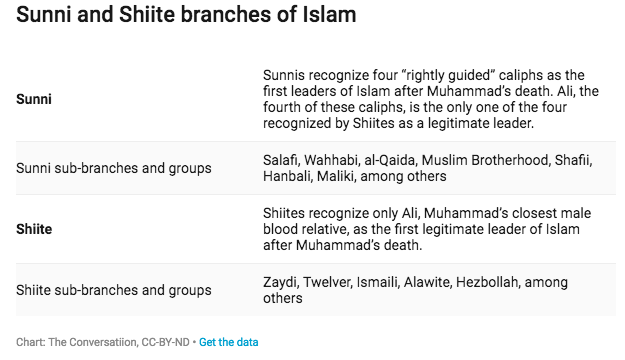
Over time, further divisions took place. Allegiances to different descendants of Ali and his two sons, Hassan and Hussein, split Shiites into sub-branches. A grandson of Hussein called Zayd gave the Zaydis their name. To them, he is the fifth imam after Muhammad, giving the Zaydis their other name: “Fivers.”
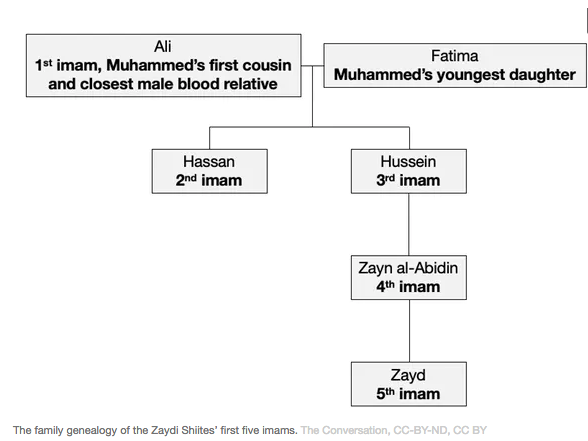
Zayd earned the respect of his followers when he rose up against the powerful Muslim rulers of his time, whom he believed to be tyrannical and corrupt. Though his rebellion was ill-fated, his fight against oppression and injustice inspires Zaydis to actively resist.
A key Zaydi belief is that only blood relatives of Ali and Fatima are eligible to serve as religious leaders, or imams. In Yemen, these relatives form a notable class of people called Sada. Hussein al-Houthi, the first leader of the Houthis, came from a prestigious clan of Sada.
Impact of sectarian differences
Not all Zaydis have a favorable view of Sada elites. When north and south Yemen merged in 1990, the republican government, led by a Zaydi president sought to reduce their outsized influence and limit their privileges.
Some members of the Sada reacted to the country’s changing political landscape by joining electoral politics to secure honor and exercise power. This path was initially followed by Hussein al-Houthi but, after he decided it was ineffective, he abandoned it.
Other members of the Sada, particularly the youth, reacted by pledging to teach and promote Zaydism among their peers who had forgotten their ancestors’ religion. To accomplish this, they founded the Believing Youth organization and set up a cultural education program based on a network of summer camps in the north. Hussein al-Houthi joined this organization in the early 2000s and later transformed it into a political movement critical of the Yemeni government’s ties to the West.
Security forces sent to arrest Hussein al-Houthi touched off the first war with the Houthis. Hussein was killed during the conflict and leadershippassed to Hussein’s father and then to Hussein’s youngest brother, Abdul-Malik Badreddin al-Houthi. Abdul-Malik helped transform the Houthi movement into a powerful fighting force.
Five additional wars followed over the next six years until, in 2010, the rebels had grown strong enough to repel a ground and aerial offensive launched against them by Saudi Arabia. During these wars, the Houthispushed beyond their traditional base and captured vast sections of territory.
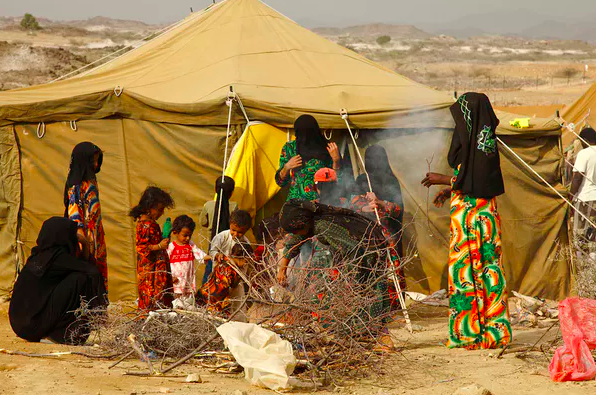
Yemeni women and children at a camp in north Yemen. IRIN Photos/Flickr.com, CC BY-NC-ND
Many Yemenis, according to one expert, believe that the Houthis are fighting to restore a state like the one prior to 1962, led by imams who came exclusively from Sada families.
Complex factors today
Houthis continue to focus on protecting the Zaydi region of north Yemen from state control. However, they have also forged coalitions with other groups – some of them Sunni – unhappy with Yemen’s persistent high unemployment and corruption.
A 2015 U.N. Security Council report estimates that the Houthi movement includes 75,000 armed fighters. However, if unarmed loyalists are taken into account, they could number between 100,000 and 120,000.
Sectarian tension is only one factor in the complex set of interlocking factors responsible for violence and starvation in Yemen. But it is, without a doubt, a contributing factor.
MYRIAM RENAUD is the Principal Investigator and Project Director of the Global Ethic Project, Parliament of the World's Religions at the University of Chicago.
THIS ARTICLE WAS ORIGINALLY PUBLISHED ON THE CONVERSATION
SOUTH AMERICA - A Time-Lapse Adventure
In this short film, you will be taken on a journey through the incredibly varied landscapes of this imposing continent, South America.
One year of travel, nine countries, countless hours on busses, motorbikes, and cars. Hundreds of thousands of images taken. 30TB of data used, 5 months of editing. The time-lapse film features South America like it has never been before with images from Brazil, Venezuela, Guyana, Colombia, Argentina, Chile, Peru, Bolivia and Ecuador.
The Alien Beauty of Socotra Island
The remote island of Socotra looks like a landscape out of a sci-fi film. Over millions of years, the isolated island in the Arabian Sea has cultivated a unique biodiversity unlike anywhere else on Earth. Twisted dragon’s blood trees and bulbous bottle trees have made Socotra a place of legends, feared by sailors throughout history and believed by some to be the site of the original Garden of Eden.

Genking, a male-born Japanese TV personality and ‘genderless’ pioneer. _genking_/Instagram
Japan’s Gender-Bending History
I’m an anthropologist who grew up in Japan and has lived there, off and on, for 22 years. Yet every visit to Tokyo’s Harajuku District still surprises me. In the eye-catching styles modeled by fashion-conscious young adults, there’s a kind of street theater, with crowded alleyways serving as catwalks for teenagers peacocking colorful, inventive outfits.
Boutiques are filled with cosmetics and beauty products intended for both males and females, and it’s often difficult to discern the gender of passersby. Since a gendered appearance (“feminine” or “masculine”) often (but not always) denotes the sex of a person, Japan’s recent “genderless” fashion styles might confuse some visitors – was that person who just walked by a woman or a man?
Although the gender-bending look appeals equally to young Japanese women and men, the media have tended to focus on the young men who wear makeup, color and coif their hair and model androgynous outfits. In interviews, these genderless males insist that they are neither trying to pass as women nor are they (necessarily) gay.
Some who document today’s genderless look in Japan tend to treat it as if it were a contemporary phenomenon. However, they conveniently ignore the long history in Japan of blurred sexualities and gender-bending practices.
Sex without sexuality
In premodern Japan, aristocrats often pursued male and female lovers; their sexual trysts were the stuff of classical literature. To them, the biological sex of their pursuits was often less important than the objective: transcendent beauty. And while many samurai and shoguns had a primary wife for the purposes of procreation and political alliances, they enjoyed numerous liaisons with younger male lovers.
Only after the formation of a modern army in the late-19th century were the sort of same-sex acts central to the samurai ethos discouraged. For a decade, from 1872 to 1882, sodomy among men was even criminalized. However, since then, there have been no laws in Japan banning homosexual relations.
It’s important to note that, until very recently, sexual acts in Japan were not linked to sexual identity. In other words, men who had sex with men and women who had sex with women did not consider themselves gay or lesbian. Sexual orientation was neither political nor politicized in Japan until recently, when a gay identity emerged in the context of HIV/AIDS activism in the 1990s. Today, there are annual gay pride parades in major cities like Tokyo and Osaka.
In Japan, same-sex relations among children and adolescents have long been thought of as a normal phase of development, even today. From a cultural standpoint, it’s frowned upon only when it interferes with marriage and preserving a family’s lineage. For this reason, many people will have same-sex relationships while they’re young, then get married and have kids. And some even later resume having same-sex relationships after fulfilling these social obligations.
Contentious cross-dressing
Like same-sex relationships, cross-dressing has a long history in Japan. The earliest written records date to the eighth century and include stories about women who dressed as warriors. In premodern Japan, there were also cases of women passing as men either to reject the prescribed confines of femininity or to find employment in trades dominated by men.
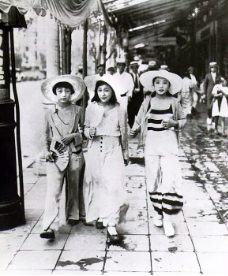
‘Modern girls’ (‘moga’) stroll along the Ginza, Japan’s Fifth Avenue, in 1928. Wikimedia Commons
A century ago, “modern girls” (moga) were young women who sported short hair and trousers. They attracted media attention – mostly negative – although artists depicted them as fashion icons. Some hecklers called them “garçons” (garuson), an insult implying unfeminine and unattractive.
Gender, at that time, was thought of in zero-sum terms: If females were becoming more masculine, it meant that males were becoming feminized.
These concerns made their way into the theater. For example, the all-female Takarazuka Revue was an avant-garde theater founded in 1913 (and is still very popular today). Females play the parts of men, which, in the early 20th century, sparked heated debates (that continue today) about “masculinized” women on stage – and how this might influence women off the stage.
However, today’s genderless males aren’t simply weekend cross-dressers. Instead, they want to shatter the existing norms that say men must dress and present themselves a certain way.
They ask: Why should only girls and women be able to wear skirts and dresses? Why should only women be able to wear lipstick and eye shadow? If women can wear pants, why shouldn’t men be able to wear skirts?
Actually, the adjective “genderless” is misleading, since these young men aren’t genderless at all; rather, they’re claiming both femininity and masculinity as styles they wear in their daily lives.
In this regard, these so-called genderless men have historical counterparts: In the late 19th and early 20th centuries, cosmopolitan “high collar” men (haikara) wore facial powder and carried scented handkerchiefs, paying meticulous attention to their Westernized appearances. One critic – invoking the zero-sum gender attitudes of the era – complained that “some men toil over their makeup more than women.” Conservative pundits derided the haikara as “effeminate” by virtue of their “un-Japanese” style.
On the other end of the masculinity spectrum were the nationalistic “primitive” men (bankara) who wore wooden clogs (geta) to complement their military-style school uniforms. Ironically, like their samurai predecessors – and unlike the foppish haikara – the macho bankara would engage in same-sex acts.
Japan’s ‘beautiful youths’
Probably the biggest contemporary inspiration for today’s genderless males are a spate of popular androgynous boy bands. Cultivated and promoted by Johnny & Associates Entertainment Company, Japan’s largest male talent agency, they include boy bands like SMAP, Johnny’s West and Sexy Zone.
Johnny’s West performs their song ‘Summer Dreamer.’
There’s a term for the type of teenage boy that Johnny & Associates cultivates: “beautiful youths” (bishōnen), which was coined a century ago to describe a young man whose ambiguous gender and sexual orientation appealed to females and males of all ages.
Similarly, Visual Kei is a 1980s glam-rock and punk music genre that features bishōnen performers who don flamboyant, gender-bending costumes and hairdos. In its new, 21st-century incarnation as Neo-Visual Kei, the emphasis on androgyny is even more pronounced, as epitomized by the prolific career of the androgynous Neo-Visual Kei pop star Gackt, who enjoys an international fan following.
Since the word “genderless” is misleading, a better term might be “gender-more,” in the sense that young men – especially in Tokyo – are insisting on the right to present and express themselves in ways that contradict and exceed traditional masculinity. In the long span of Japanese cultural history, there have been many things that were – and are – new under the sun. But genderless males aren’t among them.
JENNIFER ROBERTSON is a Professor of Anthropology and Art History at the University of Michigan.
THIS ARTICLE WAS ORIGINALLY PUBLISHED ON THE CONVERSATION
This Mega Kitchen Serves 40,000 People Each Day
With one of the largest kitchens in Asia, the Shri Saibaba temple in Shirdi, India, prepares, cooks and serves quantities of food that are nearly unimaginable. The kitchen dishes out as many as 40,000 meals per day, every day, all year long. It takes 600 people working in two daily shifts to prepare all this food. Yet despite all the effort, meals are free to the public. Why? The temple believes that those who are hungry deserve to be fed, and those who are thirsty deserve to be given a drink.

Like Dr. Seuss’ imaginary truffula trees, baobabs are endangered. Dudarev Mikhail/Shutterstock.com
Why Companies Should Help Pay for the Biodiversity That’s Good for Their Bottom Line
In the “The Lorax,” an entrepreneur regrets wiping out all the make-believe truffala trees by chopping them down to maximize his short-term gains. As the Dr. Seuss tale ends, the Once-ler – the man responsible for this environmental tragedy – tells a young child that “Unless someone like you cares a whole awful lot, nothing is going to get better. It’s not.”
Likewise, many corporations that profit from nature’s bounty, such as Unilever, Patagonia and Interface, appear to be reaching a similar conclusion. They are realizing that it’s time for the business world to do more about conservation.
We, two economists who have extensively researched natural resources and development, are proposing a new way to solve the problem of species and ecosystem loss. Corporations that benefit from biodiversity could forge what some are calling a “new deal for nature” by paying part of the tab for biodiversity conservation.
Biodiversity
Biodiversity, the variety of all natural ecosystems and species, is being lost at an unprecedented rate. According to the recent World Wildlife Fund Living Planet Report, the populations of mammals, birds, fish, reptiles and amphibians have fallen by an average of 60 percent in just over 40 years. The scientists Gerardo Ceballos, Paul R. Ehrlich and Rodolfo Dirzo have dubbed this decline and an impending wave of extinctions a “biological annihilation.”
We argue that many businesses are threatened by the loss of species and ecosystems, such as declining bee populations and dwindling stocks of fish, forests, wetlands and mangroves. Without an array of ecosystems and species, it’s tough for farmers to grow crops or ranchers to raise animals.
The pharmaceutical industry needs them to make and create drugs. For example, one team of U.S.-based researchers estimates that the pharmaceutical value of marine biodiversity for anti-cancer drug discovery could range from US$563 billion to as much as $5.7 trillion.
Insurance companies depend on coastal wetlands to minimize the impact of big storms. For example, an international group of researchers estimated that preserving one hectare of mangroves in the Philippinesyields more than $3,200 in flood-reduction benefits each year.
A global treaty, the Convention on Biological Diversity does set worldwide conservation targets. But we believe they may not be ambitious enough. Cristiana Pașca Palmer, who serves as the UN’s biodiversity chief, is considering raising the treaty’s targets to conserve at least half of terrestrial, inland water, coastal, and marine habitats to preserve biodiversity.
But the existing efforts to preserve biodiversity are not only inadequate. They’re underfunded.
New way to pay
Global biodiversity protection requires $100 billion annually, according to a previous study one of us conducted, yet the international community spends up to $10 billion each year on biodiversity conservation.
Much of the world’s biodiversity is in developing countries, which lack the financial wherewithal to adequately conserve it.

The Lorax could speak for the trees, but he lacked the cash to preserve them. Random House Children's Books
As we have explained with our colleague Thomas J. Dean in Science magazine, we believe that involving businesses in an international environmental agreement could help bridge a chronic funding gap.
A key part of this new deal for nature would be making the corporations that depend on the health of natural ecosystems and species help foot the bill to preserve biodiversity.
Benefiting the bottom line
Why would corporations want to get involved?
First off, it may benefit their bottom line. Big companies depend on robust natural ecosystems systems and individual species.
We calculate that the increase in revenue and profits from biodiversity conservation could generate between $25 billion and $50 billion annually to fund global conservation efforts.
The seafood industry stands to gain $53 billion annually from an increase in marine stocks. This could generate $5 billion to $10 billion each year to spend on preserving biodiversity.
The insurance industry could see an additional $52 billion from increasing the area of protected coastal wetlands with a similar investment.
Agriculture also has an incentive to protect habitats of wild pollinators, who along with managed populations enhance global crop production by an amount a global group of scientists estimates to be worth between $235 billion to $577 billion annually.
What’s more, there is growing evidence that when corporations engage in environmental stewardship, they become more attractive investmentsand their borrowing costs decline.
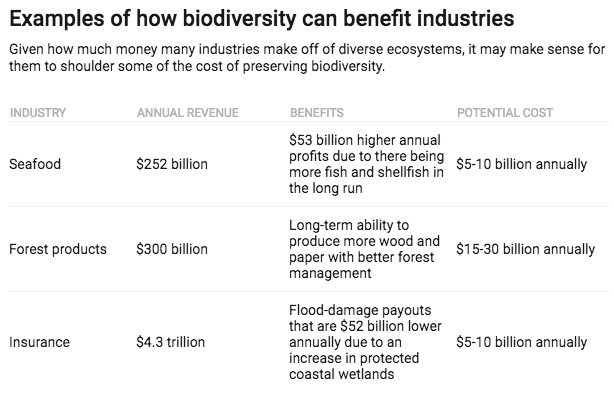
Chart: The Conversation, CC-BY-ND Source: Edward B. Barbier, Joanne C. Burgess and Thomas J. Dean Get the data
Corporate social responsibility
There is a second reason why big companies are sometimes willing to take action and pay to conserve biodiversity: corporate social responsibility, an ethos that builds into business models a commitment to protect the environment and benefit society.
Danone is a leader in this regard. It established the first partnership agreement between a global environmental convention and a private company over 20 years ago.
Since then, the multinational corporation best known for its yogurt and bottled water has promoted and supported the sustainable use and management of wetlands.
Danone, for example, worked with local partners to replant mangroves in approximately 500 Senegalese villages. We believe this reforestation project shows that investments in nature can be sustainable and scalable business models.
Danone, which earned $3 billion in profits in 2017, has its own $80 million “Ecosystem Fund.” It’s just one of an increasing number of companies taking concrete steps toward biodiversity protection, even though they are not required by any law or national policy.
More than 21 national and regional initiatives have been established to encourage partnerships between business and biodiversity conservation. For example, 10 of the 13 biggest seafood companies that control up to 16 percent of global marine catch and 40 percent of the largest and most valuable fisheries have come together to support an ocean stewardship initiative.
Similarly, the International Council of Forest and Paper Associations, which represents the global forest products industry, now engages in sustainable forest management certification.
The total area of forests worldwide deemed to be subject to sustainable practices supplying the industry increased from 62 million hectares, 12 percent of the total global forest area, in 2000, to 310 million hectares in 2015, according to the industry group. That’s more than half of the total global forest area. The annual revenue of the world’s 100 largest global forest, paper and packaging companies is over $300 billion.
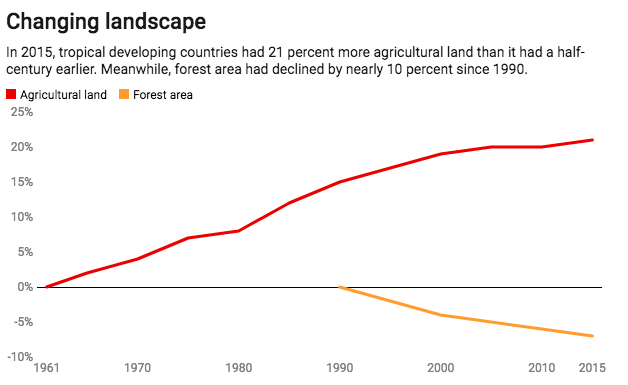
Chart: The Conversation, CC-BY-ND Source: World Bank Get the data
A new deal for nature
In addition to creating marine reserves, protecting forests, preserving the habitats of wild pollinators and conserving coastal wetlands, the private sector could also help finance conservation efforts in developing countries.
Based on our calculations, if the seafood sector were to set aside up to 20 percent of the increase in profits it gets from sustainably managing marine biomass stocks, it could conceivably spend up to $10 billion annually for marine biodiversity conservation.
And we estimate that by channeling up to 10 percent of the gains from sustainable forest management, the forest products industry could raise as much as $30 billion each year for investment in increasing protected forest area.
An agricultural sector contribution of around 10 percent of the benefits it derives from wild pollination services would amount to about $20 billion to $60 billion per year in additional financing for the conservation, creation and restoration of wild pollinator habitats.
All told, this business-world support could help close the $100 billion gap in global biodiversity conservation funding. This would go a long way toward slowing, and potentially reversing, biodiversity loss.
There are, of course, barriers to corporate conservation. The costs may be high. It may be hard for to businesses to assess the long-term value of biodiversity conservation benefits and integrate them into investment decisions. And it is possible that some of the corporations that take this step could be at a competitive disadvantage, especially in the short term.
But a number of companies are already showing that they believe investing in ecosystem preservation is worth it. In our view, corporate support for international biodiversity conservation is essential to prevent “biological annihilation.”
JOANNE BURGESS is an Assistant Professor of Economics at Colorado State University and EDWARD BARBIER is a Professor of Economics at Colorado State University.
THIS ARTICLE WAS ORIGINALLY PUBLISHED ON THE CONVERSATION
France Banned Food Waste in Supermarkets
Millions more meals can reach those who need them.

Produce at a market in Nice, France. M-Louis. CC BY-SA 2.0.
In 2016, France banned supermarkets from destroying or discarding unsold food products, requiring them to donate instead to food banks or local charities.
The law was written by Parliamentarian and former food industry minister Guillaume Garot, who believes that food waste is a national health and safety issue, akin to wearing a seatbelt. The campaign itself was the product of a grassroots movement by anti-poverty and food waste activists which eventually became a petition, lead by local councillor Arash Derambarsh.
Now that food waste has been outlawed in French supermarkets, Derambarsh has set his sights on European and ultimately global policy revisions around the issue. “Food is the basis of life, it is an elementary factor in our existence,” he told the Guardian.
While Derambarsh became a councillor to help people, he reports being called “naive and idealistic” because of the policy he hoped to implement surrounding food waste. “Perhaps it is naive to be concerned about other human beings, but I know what it is like to be hungry,” he said.
“When I was a law student living on about €400 a month after I’d paid my rent, I used to have one proper meal a day around 5pm. I’d eat pasta, or potatoes, but it’s hard to study or work if you are hungry and always thinking about where the next meal will come from.”
Now, grocery store managers in France with a 400 sq meter or larger footprint must sign contracts with local charities and food banks promising their edible expired items, or face a €3,750 ($4,500) fine per infringement.
According to Jacques Bailey, head of Banques Alimentaires, a network of french food banks, 5,000 charities rely on food banks, who in turn, receive almost half their donations from grocery stores. Under the law, these food banks are receiving larger amounts of better quality food products, enabling them to better reach the the people they serve. According to Bailey, an increase as small as 15% in donations from supermarkets will result in 10 million more meals served every year.
And yet, required donations are not the only way that France is fighting food waste. In 2014, Intermarche, one of the country’s supermarkets began selling produce that was deemed too “ugly” to sell at other markets. These “ugly” or misshapen produce are perfectly safe to eat, but have blemishes make them less marketable to consumers, resulting in their disposal before even seeing the grocery store isles. This initiative is particularly effective, as fresh fruits and vegetables are the most difficult items for charities and food banks to come by, and are necessary to a healthy diet. Intermarche’s initiative reached 13 million people after only one month of being implemented.
About a third of food produced is wasted worldwide. France has narrowed the food it wastes to 66 pounds per person every year. In comparison, Americans waste 200 billion pounds of food per year - 40% of all food produced in the country. The waste problem in America is partly due to the lack of regulation surrounding expiration dates, which are often selected at random and do not always reflect when items are safe to consume.
The rest of the world has a lot to learn from France’s policy. NPR writes that communities and governments worldwide are now reaching out to Garot, hoping for information that would help them reproduce France’s law in their own countries. Ultimately this change needs to be made, because, as Garot emphasized, supermarkets are not just businesses, they are places where humanity must be respected.
EMMA BRUCE is an undergraduate student studying English and marketing at Emerson College in Boston. While not writing she explores the nearest museums, reads poetry, and takes classes at her local dance studio. She is passionate about sustainable travel and can't wait to see where life will take her.

Forgotten, but not Gone: Zika’s Return to the Media
Earlier this week the Duchess Sussex of Meghan Markle canceled a trip to Zambia, citing exhaustion and concerns over the presence of Zika virus in the country. The Zika virus had been rather dormant in the media over the last year, all but vanishing in the wake of Trump speeches, trade wars, and Brexit. It had, however, remained a constant concern for those living in certain countries or traveling to them. Markle’s encounter with the Zika virus and the subsequent headlines have helped to push it back into public view, and once again, questions are being raised about its origin, transmission, and what is being done to fight it.

The Duchess of Sussex. Office of the Governor - General - GG.govt.nz. CC BY 4.0.
The Zika virus was first discovered in the Zika Forest in Uganda in 1947. The first recorded carriers were monkeys, but the forest was also home to over 70 species of mosquitoes, and they became the primary source of viral transmission. The disease was eventually discovered in humans in 1952, but for the most part remained confined to animals until 2007, when the first human outbreak was documented on the Island of Yap in the Federated States of Micronesia. In 2015, the virus made international headlines when Latin America and the Caribbean saw an explosion of human-related cases. As was the case in Africa, mosquitoes were the main culprits of transmission. However, in 2016, the virus saw a sharp decline in new cases, and with it a decline in news coverage.
Adults infected with Zika often display no symptoms. Those who do usually report mild fevers, rashes and muscle pain. The impact on unborn babies is far more devastating. Zika infections during pregnancy have resulted in miscarriages and babies being born with microcephaly, a condition in which a child's head is much smaller than it should be (Markle and husband Prince Harry had recently announced that they were expecting a child, and concern for the child’s welfare was thought to be Markle's main concern when she opted out of her trip to Zambia).
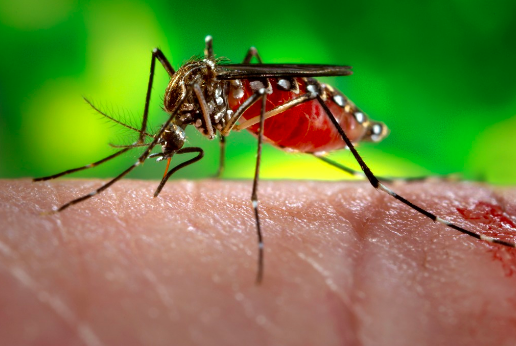
The Zika Virus is spread mainly through mosquito bites. James Gathany - https://phil.cdc.gov/phil/details.asp?pid=9257. Public Domain.
While a full-on cure for the virus remains elusive, health and government officials have been able to curb infections by going after the mosquitoes that carry and transmit the disease. In preparation for the 2016 Olympics in Rio de Janeiro, the Brazilian government launched a large-scale effort to fumigate the city for the insects, while in England a biotech company called Oxitec developed genetically modified mosquitoes, which, when released into the wild, would mate with infected mosquitoes and pass a gene on that would prevent those mosquitoes from reproducing. In the United States, The Centers for Disease Control made a point of advising those traveling to countries with high rates of infection to use insect repellants.

Microcephaly- a birth defect linked to the Zika virus. Centers for Disease Control and Prevention. Public Domain.
Many world issues persist despite the ebbing and flowing of news coverage. Though not the hot story it once was, the Zika virus is still a viable threat and will remain so until a vaccine is found. Those traveling to countries that have been deemed areas of risk should take all necessary precautions to prevent infection, or, like the Duchess of Sussex, simply the put the trip off until another time.
JONATHAN ROBINSON is an intern at CATALYST. He is a travel enthusiast always adding new people, places, experiences to his story. He hopes to use writing as a means to connect with others like himself.

Mask off: How Beijing is Managing its Smog Problem
Earlier this month, California made national headlines when the worst wildfire in the state’s history covered parts of it in smoke, creating yet another worry for citizens already vexed by the high cost of living and rising homelessness. Some news stations, hoping to illustrate the seriousness of the matter, stressed that the air quality in California was “worse than Beijing’s,” an announcement that prompted many locals to don the air masks that one often sees in images of the Chinese capital. In media, locally, and abroad, Beijing has become synonymous with bad air. The internet is peppered with images of skyscrapers draped in brown or grey fog. But recent efforts by the government have made some headway in the battle with Beijing’s notorious smog and could give us insight into how to battle this problem at home.
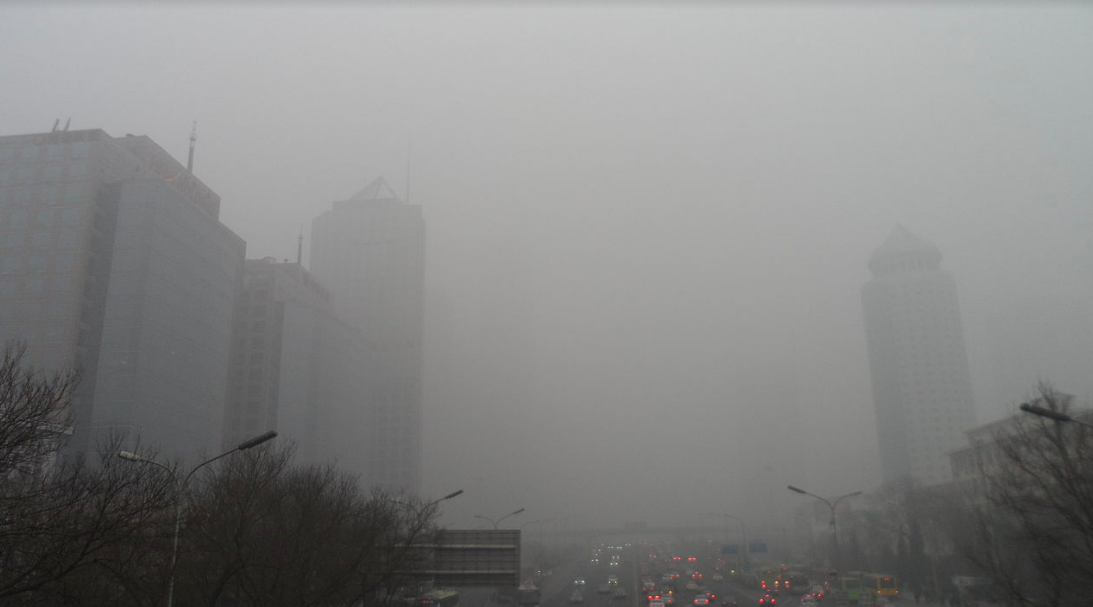
A smoggy day in Beijing. By 螺钉 - Own work, CC BY-SA 3.0, https://commons.wikimedia.org/w/index.php?curid=24944427
Those who have been to Beijing know that air quality is but one of many dangers; crossing an intersection can be like an action movie at times and drinking water out of the tap is generally a bad idea. Smog, however, is the issue most often associated with Beijing in the media. Fortunately, Beijing is aware of its reputation and has taken steps over the last few years to improve its air quality. The city has pledged to shut down 1000 manufacturing factories by 2020 to help reduce smog. It is also experimenting with new technology. Early last year Beijing employed the use a solar-powered air vacuum to help clean up the city’s air. Developed by Dutch designer Daan Roosegaarde, the Smog Free Tower sucks up 30,000 cubic meters of polluted air per hour. The air is then cleaned at a nano level and released back into the city. In a particularly bold move, Beijing's government is investigating the possibility of switching from coal to natural gas as the primary source of heating for millions of households. This shift will be implemented gradually, as concern for the well-being of Beijingers during the winter months supersedes the need for cleaner air.

Dan Roosegaardes's Smog Free Tower. By Bic - Own work, CC BY-SA 4.0, https://commons.wikimedia.org/w/index.php?curid=47801218
People can change, and ideally, their reputations will change as well. Beijing’s efforts to clean its air shows an environmental consciousness that contradicts its reputation as a dirty industrialized city. As smog becomes a more recurrent issue in cities and courtiers around the world, communities that once judged China for its smog may get to learn a thing or two about how to fight it.
JONATHAN ROBINSON is an intern at CATALYST. He is a travel enthusiast always adding new people, places, experiences to his story. He hopes to use writing as a means to connect with others like himself.

VIDEO: Germany's Oasis for Humanity
In the heart of Magdeburg, Germany is a mosaic superstructure known as the Green Citadel. Equipped with residential apartments, shops, cafes, hotels and a preschool, the complex was built to be an oasis for all mankind. Taking only two years to complete construction, the Citadel is considered one of the first pre-fabricated buildings in Germany. With its incredible pink exterior and bright green gardens, the building stands as the last work of architect Friedensreich Hundertwasser, built to be "an oasis for humanity and nature in a sea of rational houses."

Mourners wait to attend the funeral of Heather Heyer in Charlottesville, Virginia, Aug. 16, 2017 after Heyer was killed attending a rally to protest white nationalism. Julia Rendleman/AP Photo
Why Bigotry is a Public Health Problem
Over a decade ago, I wrote a piece for a psychiatric journal entitled “Is Bigotry a Mental Illness?” At the time, some psychiatrists were advocating making “pathological bigotry” or pathological bias – essentially, bias so extreme it interferes with daily function and reaches near-delusional proportions – an official psychiatric diagnosis. For a variety of medical and scientific reasons, I wound up opposing that position.
In brief, my reasoning was this: Some bigots suffer from mental illness, and some persons with mental illness exhibit bigotry – but that doesn’t mean that bigotry per se is an illness.
Yet in the past few weeks, in light of the hatred and bigotry the nation has witnessed, I have been reconsidering the matter. I’m still not convinced that bigotry is a discrete illness or disease, at least in the medical sense. But I do think there are good reasons to treat bigotry as a public health problem. This means that some of the approaches we take toward controlling the spread of disease may be applicable to pathological bigotry: for example, by promoting self-awareness of bigotry and its adverse health consequences.
In a recent piece in The New York Times, health care writer Kevin Sack referred to the “virulent anti-Semite” who carried out the horrific shootings at the Tree of Life synagogue in Pittsburgh on Oct. 27, 2018.
It’s easy to dismiss the term “virulent” as merely metaphorical, but I think the issue is more complicated than that. In biology, “virulence” refers to the degree of pathology, or damage, caused by an organism. It differs from the term “contagious,” which refers to a disease’s communicability. But what if, in an important sense, bigotry is both virulent and contagious – that is, capable of both causing damage and spreading from person to person? Wouldn’t a public health approach to the problem make sense?
The harm to victims and to haters
There is little question among mental health professionals that bigotry can do considerable harm to the targets of the bigotry. What is more surprising is the evidence showing that those who harbor bigotry are also at risk.
For example, research by psychologist Dr. Jordan B. Leitner has found a correlation between explicit racial bias among whites and rates of circulatory disease-related death. Explicit bias refers to consciously held prejudice that is sometimes overtly expressed; implicit bias is subconscious and detected only indirectly.
In effect, Leitner’s data suggest that living in a racially hostile community is related to increased rates of cardiovascular death for both the group targeted by this bias – in this case blacks – as well as the group that harbors the bias.
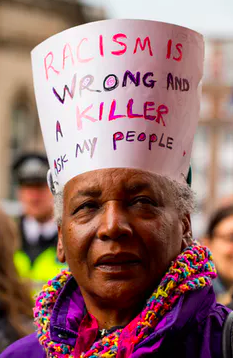
A woman protests racism at a London rally.John Gomez/Shutterstock.com
Writing in the journal Psychological Science, Leitner and his colleagues at the University of California Berkeley found that death rates from circulatory disease are more pronounced in communities where whites harbor more explicit racial bias. Both blacks and whites showed increased death rates, but the relationship was stronger for blacks. Although correlation does not prove causation, clinical psychology professor Vickie M. Mays and colleagues at UCLA have hypothesized that the experience of race-based discrimination may set in motion a chain of physiological events, such as elevated blood pressure and heart rate, that eventually increase the risk of death.
It’s unlikely that the adverse effects of discrimination and bigotry are limited to blacks and whites. For example, community health sciences professor Gilbert Gee and colleagues at UCLA have presented data showing that Asian-Americans who report discrimination are at elevated risk for poorer health, especially for mental health problems.
But are hatred and bigotry contagious?
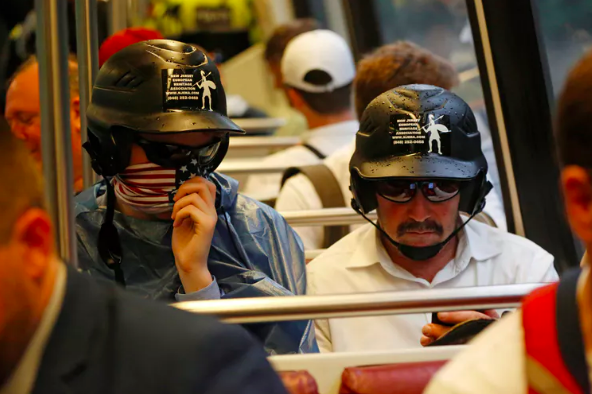
Supporters of white nationalist Jason Kessler on a subway car after an Aug. 12, 2018 rally in Washington, D.C. Jim Urquhart/Reuters
As the adverse health effects of bigotry have been increasingly recognized, awareness has grown that hateful behaviors and their harmful effects can spread. For example, public health specialist Dr. Izzeldin Abuelaish and family physician Dr. Neil Arya, in an article titled “Hatred – A Public Health Issue,” argue that “Hatred can be conceptualized as an infectious disease, leading to the spread of violence, fear, and ignorance. Hatred is contagious; it can cross barriers and borders.”
Similarly, communications professor Adam G. Klein has studied the “digital hate culture,” and has concluded that “The speed with which online hate travels is breathtaking.”
As an example, Klein recounted a chain of events in which an anti-Semitic story (“Jews Destroying Their Own Graveyards”) appeared in the Daily Stormer, and was quickly followed by a flurry of anti-Semitic conspiracy theories spread by white supremacist David Duke via his podcast.
Consistent with Klein’s work, the Anti-Defamation League recently released a report titled, “New Hate and Old: The Changing Face of American White Supremacy.” The report found that,
“Despite the alt right’s move into the physical world, the internet remains its main propaganda vehicle. However, alt right internet propaganda involves more than just Twitter and websites. In 2018, podcasting plays a particularly outsized role in spreading alt right messages to the world.”
To be sure, tracking the spread of hatred is not like tracking the spread of, say, food-borne illness or the flu virus. After all, there is no laboratory test for the presence of hatred or bigotry.
Nevertheless, as a psychiatrist, I find the “hatred contagion hypothesis” entirely plausible. In my field, we see a similar phenomenon in so-called “copycat suicides,” whereby a highly publicized (and often glamorized) suicide appears to incite other vulnerable people to imitate the act.
A public health approach
If hatred and bigotry are indeed both harmful and contagious, how might a public health approach deal with this problem? Drs. Abuelaish and Arya suggest several “primary prevention” strategies, including promoting understanding of the adverse health consequences of hatred; developing emotional self-awareness and conflict resolution skills; creating “immunity” against provocative hate speech; and fostering an understanding of mutual respect and human rights.
In principle, these educational efforts could be incorporated into the curricula of elementary and middle schools. Indeed, the Anti-Defamation League already offers K-12 students in-person training and online resources to combat hatred, bullying, and bigotry. In addition, the Anti-Defamation League report urges an action plan that includes:
Enacting comprehensive hate crime laws in every state.
Improving the federal response to hate crimes.
Expanding training for university administrators, faculty and staff.
Promoting community resilience programming, aimed at understanding and countering extremist hate.
Bigotry may not be a “disease” in the strict medical sense of that term, akin to conditions like AIDS, coronary artery disease or polio. Yet, like alcoholism and substance use disorders, bigotry lends itself to a “disease model.” Indeed, to call bigotry a kind of disease is to invoke more than a metaphor. It is to assert that bigotry and other forms of hatred are correlated with adverse health consequences; and that hatred and bigotry can spread rapidly via social media, podcasts and similar modes of dissemination.
A public health approach to problems such as smoking has shown demonstrable success; for example, anti-tobacco mass media campaigns were partly responsible for changing the American public’s mind about cigarette smoking. Similarly, a public health approach to bigotry, such as the measures recommended by Abuelaish and Arya, will not eliminate hatred, but may at least mitigate the damage hatred can inflict upon society.
RONALD W. PIES is an Emeritus Professor of Psychiatry, Lecturer on Bioethics & Humanities at SUNY Upstate Medical University and a Clinical Professor of Psychiatry atTufts University School of Medicine.
THIS ARTICLE WAS ORIGINALLY PUBLISHED ON THE CONVERSATION
VIDEO: The 12-Year-Old Scientist Taking On Flint's Water Crisis
When Gitanjali Rao first heard about the water crisis in Flint, Michigan, she wanted to help in any way she could. Now, at only 12 years old, Gitanjali is the proud inventor of “Tethys,” a portable device that detects lead in water. Named “America’s Top Young Scienist,” Gitanjali hopes to inspire other kids to get moving and make a difference in their own communities.
Grappling with Sexism: Female Wrestlers in Mongolia
There’s an old legend in Mongolia: A woman wrestler once dressed up as a man and entered an all-male wrestling competition, defeating all challengers. She then pulled up her jacket and revealed her breasts, shocking everyone in attendance. From them on, all wrestlers were required to compete bare-chested, a failsafe to ensure that Mongolia’s prized “manly” tradition remained that way. While the legend may or may not be true, the practice of bare-chested wrestling in Mongolia is real, as is the practice of banning women from the sport. Despite achieving international fame in grappling, female Mongolian wrestlers are still unable to compete in their own native games.
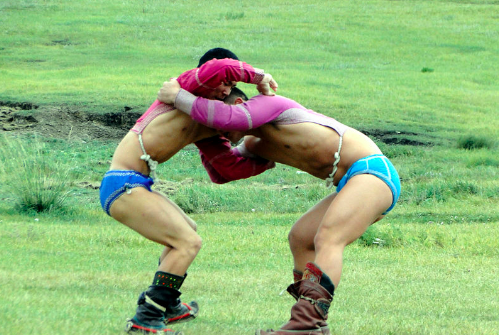
Mongolian Wrestling. A. Omer Karamollaoglu. CC BY 2.0.
The Nadaam festival is held every year in July and is the single most anticipated sporting event in the country. Short for “Eriin Gurvan Naadam” (the three games of men), it is a celebration of the three traditional sports of Mongolia: wrestling, archery, and horseback riding. Nadaam dates back to the 13th century when Genghis Khan would throw celebrations for soldiers after successful military campaigns. After Kahn’s death, warlords continued the tradition, encouraging combat sports in order to prepare men for military service. Nadaam endured and developed throughout the centuries, and today, it is the Mongolian equivalent of the Super Bowl or World Cup. The games are typically held in July. Hundreds of small, county level events lead up to the main competition, which is held in the Mongolian capital of Ulaanbaatar. Wrestling is often featured as the centerpiece of the competition, and in Mongolian, is referred to as “Bokh,” which means “durability.”
Mongolia experienced a socialist revolution in 1921 that brought with it an emphasis on male-female equality and gradually these values led to women being allowed to compete in Nadaam, but only in archery and horse racing. To fill the void, female grapplers turned their attention to other grappling sports. Soronzonboldyn Battsetseg won a bronze medal for judo in the 2012 Olympics in London, while Sumiya Dorjsuren won a silver medal in judo in the 2016 Olympics and then went on to win gold in the World Judo Championships in 2017. Both women are national heroes in Mongolia, and yet, Nadaam remains closed to them.
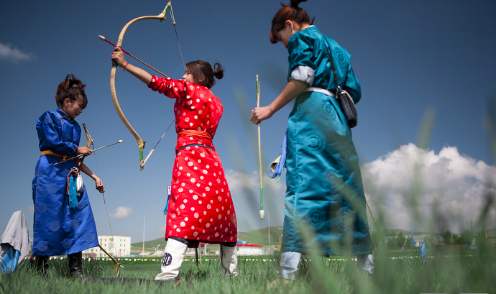
Female archers preparing for Nadaam. Taylor Weidman. CC BY SA-3.0.
The fact that a sport has to be guarded against an entire group people suggests a fear that these people could be competent in the sport. Like the wrestler in the old legend, women grapplers like Soronzonboldyn and Sumiya are barred from competing in Bokh, not because they aren't capable, but because they are. Judo is a widely recognized grappling sport, practiced by professional athletes, law enforcement officials, and ordinary citizens in literally every country on the planet. It would not be a stretch to assume that the grit and skill required to master Judo would translate well to Mongolian Bokh, and that the current barring of women from Bokh in Mongolia seems to be more about maintaining a status quo than anything else. When female grapplers will have a chance to challenge this standard is anyone’s guess.
JONATHAN ROBINSON is an intern at CATALYST. He is a travel enthusiast always adding new people, places, experiences to his story. He hopes to use writing as a means to connect with others like himself.

Welcome to the Jungle: Badaling’s Wildlife Park
You can't just stroll into the park. You have to take one of its special "zoo buses"...and pay for it. The initial ride is fairly benign, but after passing through a security checkpoint, you can literally see lions, tiger and bears swirling around the bus you are riding in. These animals spend their lives here at the park and have grown accustomed to vehicles passing through their enclosures—they know you're coming long before you do. As your fellow passengers pull out their phones and snap pictures, you notice a steel cage riveted to the floor of the bus. It’s filled with chickens. For 40 yuan ($6.30) you can buy one of these chickens and toss it to the animals outside. It’s not an option for the squeamish, of course, but an option nonetheless.
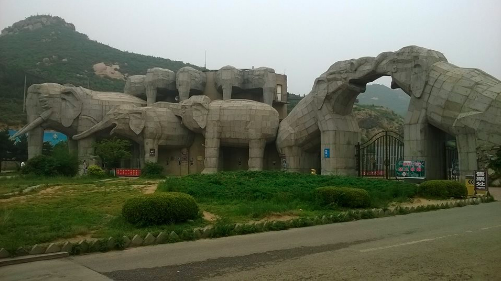
The entrance to the Badaling Wildlife Park. Jonathan Robinson.

The zoo bus. Jonathan Robinson.
The Badaling Wildlife Park outside of Beijing is known for giving its guests an up-close-and-personal experience with exotic animals. If you've got the funds, the park staff can also arrange for live chickens, sheep, even cows to be served to those animals for your viewing pleasure. Critics call this practice cruel and inhumane, but live animal feedings are fairly common at zoos and wildlife parks throughout China.
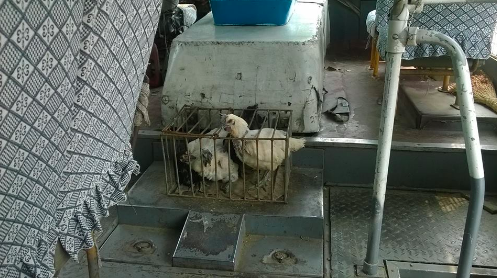
Every bus comes with its own chicken cage. Jonathan Robinson.

A white tiger. Jonathan Robinson.
If tourists aren't careful, they can find themselves on the menu as well. Two years ago, a woman was attacked when, after an argument with her husband, she decided to exit the car that she, her husband, and her mother were riding in and make the rest of the trip on foot. Surveillance videos show her being dragged away by a Siberian tiger, as her husband and mother look on in horror. The woman’s mother eventually exited the vehicle and jumped on the tiger, saving her daughter's life at the cost of her own. The park paid out a settlement of 1.2 million yuan ($299,917.52) following the incident. Last year, a male patron was bitten by a bear as he fed the animal through the driver's side window of his car. Despite these and other incidents, the park is still as popular as ever and continues to admit new patrons looking for an adventure.

A group of lions. Jonathan Robinson.
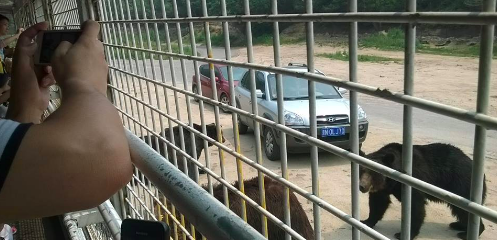
Bears looking for a snack. Jonathan Robinson.
A cardinal rule when traveling is to expect differences from one's country of origin. Not everyone will have the same beliefs and values as those of the traveler. The Badaling Wildlife Park is a prime example of this. While controversial, none of the activities that occur in the park are illegal in China. Nor do they pose an immediate threat to the population of any particular animal. Respecting things that we do not necessarily support is a vital part of the international, intercultural education that world travel gives us, and though the temptation may be great at times, we must weigh the validity of imposing our values in countries that we are admitted to as guests. For now, the park hovers in its own moral space. It cannot be labeled definitely as “right” or “wrong.” It simply is.
JONATHAN ROBINSON is an intern at CATALYST. He is a travel enthusiast always adding new people, places, experiences to his story. He hopes to use writing as a means to connect with others like himself.


