
One of the most well-known attractions in Taiwan are the night markets where people flock for delicious food, shopping and games.
Read MoreThe Camino de Santiago: Hiking a Medieval Pilgrimage
This pilgrimage has seen a modern revival and is now a popular hiking route for those seeking a spiritual or physical retreat.
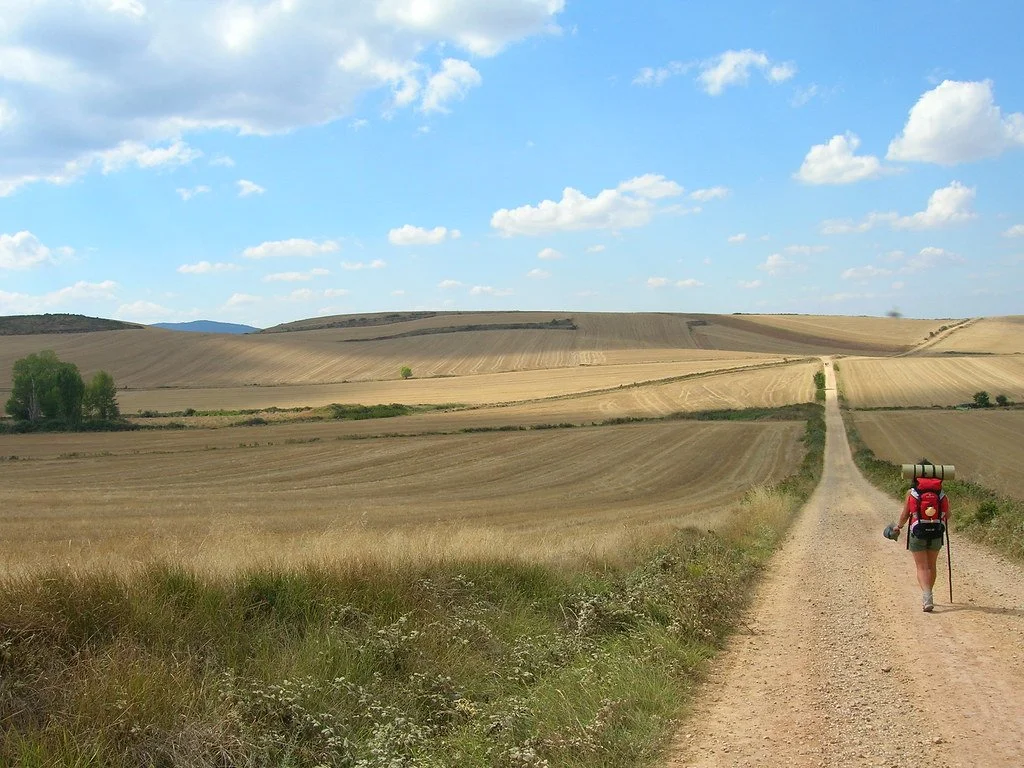
A hiker on the Camino de Santiago trek through rolling hills. FreeCat. CC BY 2.0.
The apostle St. James had done considerable missionary work in Iberia when he was martyred in Rome in A.D. 44. After his death, his remains were transported to Galicia in modern-day northwest Spain, where they were discovered in the 9th century at the city of Santiago de Compostela. That discovery caused the site to become a pilgrimage destination, as many wanted to visit the relics of St. James for spiritual growth. A romanesque cathedral was built in the city, the destination of the pilgrimage that would be called the Camino de Santiago (Way of St. James in English, or just the Camino) in 1078, which further cemented the status of the pilgrimage as one of the most important in the Christian world.
The late Medieval period, roughly the 12th and 13th centuries, was the heyday for the pilgrimage. However, as the political situation in Europe got unstable, especially with the onset of the Protestant Reformation and religious wars, the Camino fell into decline.
Starting in the late 20th century, the Camino experienced a resurgence, thanks to people like Father Don Elías who marked the path after centuries of disuse and promoting it to a wider audience. Today, it is a network of hiking paths across Portugal and Spain that converge at Santiago de Compostela. In 2019, almost 350,000 pilgrims arrived at Santiago de Compostela.
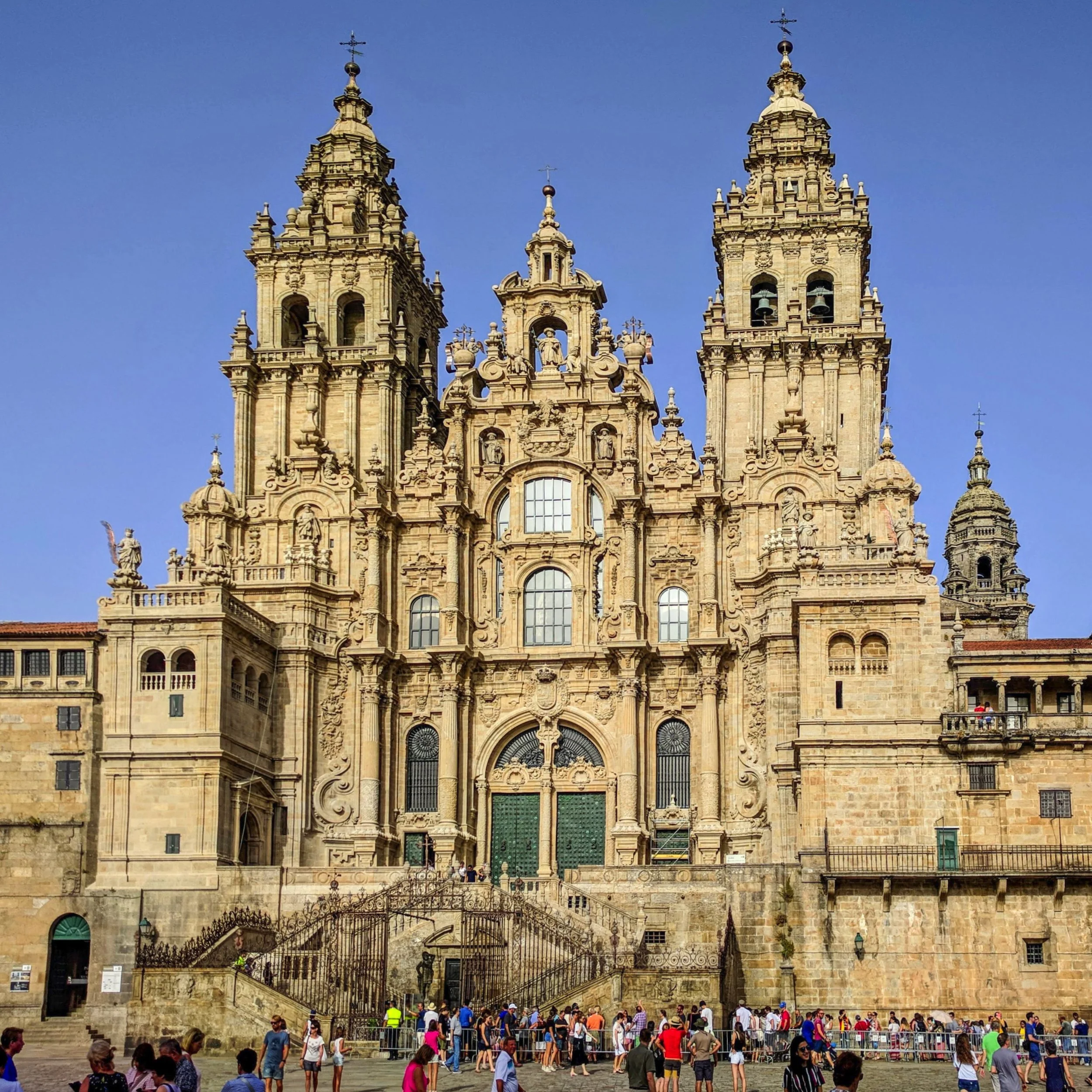
The cathedral at Santiago de Compostela serves as the culmination of the trek. CC BY-SA 4.0.
The experience of hiking the Camino is different from most other long-distance hikes such as the Appalachian Trail or the Pacific Crest Trail. While there are sweeping wilderness views, they are not the focus of the Camino. Instead, the focus is cultural. Hikers experience all the history the region has to offer, like the intricate Gothic churches and Medieval ruins. People take the trek for a variety of reasons, including for a spiritual awakening, physical challenge, or cultural experience.
Similarly, unlike a traditional hiking trail, the Camino is actually a network of paths that converge at Santiago de Compostela. Hikers can start anywhere they like and make their way to Santiago. There are, however, several defined routes that modern hikers usually follow, with the most popular being the French Way, which starts in the town of St.-Jean-Pied-de-Port in France and winds nearly 500 miles along northern Spain to Santiago de Compostela. Other routes criss-cross Iberia; some start in Portugal, others start in southern Spain, and still others go across northern Spain.
There are other differences from traditional long-distance hikes as well. Instead of camping out in the open every night, pilgrims on the Camino stay in ‘albergues,’ which are hostels specifically for pilgrims. There, pilgrims stay in bunks with other pilgrims and get to know them. Camping is discouraged and widely prohibited outside of designated campsites in Spain. There are pricier options, such as hotels, for travelers who prefer a more luxurious experience.
Lastly, in order to gain all of the benefits of being a pilgrim, such as the completion certificate and access to some albergues, it is necessary to show a pilgrim’s passport. The passport can be stamped at various locations along the way to Santiago de Compostela, which is proof that one has walked or biked the required distance. At Santiago, pilgrims who have walked at least 100 kilometers or biked 200 kilometers can show their passport for a certificate of completion at the pilgrim’s office.
While the Camino used to facilitate cultural exchange across Europe, today, it connects travelers from all over the world who wish to take part in this historic pilgrimage.

Byran Fok
Bryan is currently a History and Global Affairs major at the University of Notre Dame. He aims to apply the notion of Integral Human Development as a framework for analyzing global issues. He enjoys hiking and visiting national parks.
Belize: The World’s “Cradle of Chocolate”
Belize is home to some of the highest quality cacao farms in the world: meet some of the farmers and activists ensuring fair trade practices.
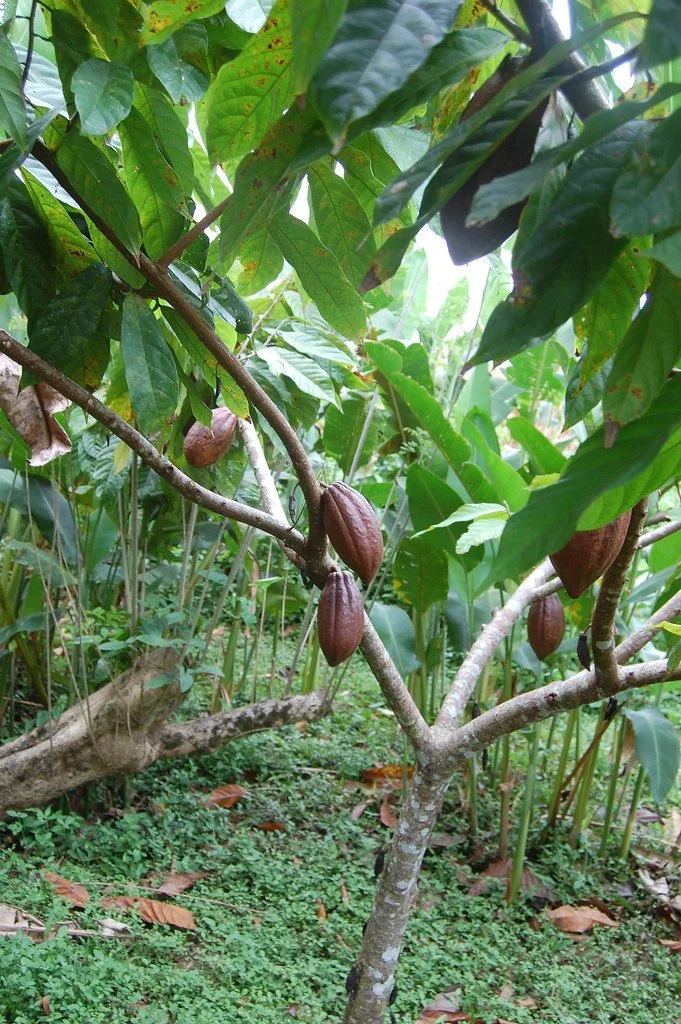
Cacao tree in Belize. Renee Johnson. CC BY-SA 2.0.
Many scholars believe Belize is the first place where cacao was cultivated. Cacao was very important to the Mayans who lived in Belize in ancient times, and artifacts have even been found in modern-day Belize to prove cacao’s historical significance. A “chocolate pot” used by the Mayans believed to be 2600 years old was found in Belize—a chocolate pot being a pot to serve a chocolate drink. Traces of cacao were found on the pot, and this drink is still common among some cacao farmers in Belize today.
In the 1980s, Hershey had a deal with the Belizean government to partner with cacao farmers to produce organic chocolate using the most up to date methods. Unfortunately, when the global price of chocolate dropped, Hershey abandoned the deal, as they were able to produce chocolate at a lower price elsewhere in the world. Belize’s chocolate production and exports essentially stopped for about ten years, leaving many farmers in dire financial situations.
Green & Blacks, an organic chocolate company founded in 1991, eventually partnered with the Toledo Cacao Growers Association to source organic, high quality and most importantly, ethically sourced cacao from the Toledo district in Belize. Since this partnership, the cacao industry in Belize has slowly been strengthened. Below are two examples of family-owned farms in Belize, as well as ways to support Belizean and Mayan chocolate companies.
Justino Peck is a cacao farmer from San Jose, Belize, and a chairman of the Toledo Cacao Growers Association. His farm is in partnership with Green & Blacks, and they produce a chocolate bar called Maya Gold which is marketed in Europe. Maya Gold chocolate was the first chocolate in the UK to be verified as Fair Trade in 1994. After being devastated by the decrease in price of cacao, Peck’s family was able to renovate their home and send one of their children to college after this deal. Peck also became a leader in his community: he lobbied the Belizean government on issues such as land rights and fair pay and working conditions for cacao farmers. Peck’s farm reflects the importance of being a mindful consumer: knowing where your goods come from can have a real, tangible impact on peoples’ lives.
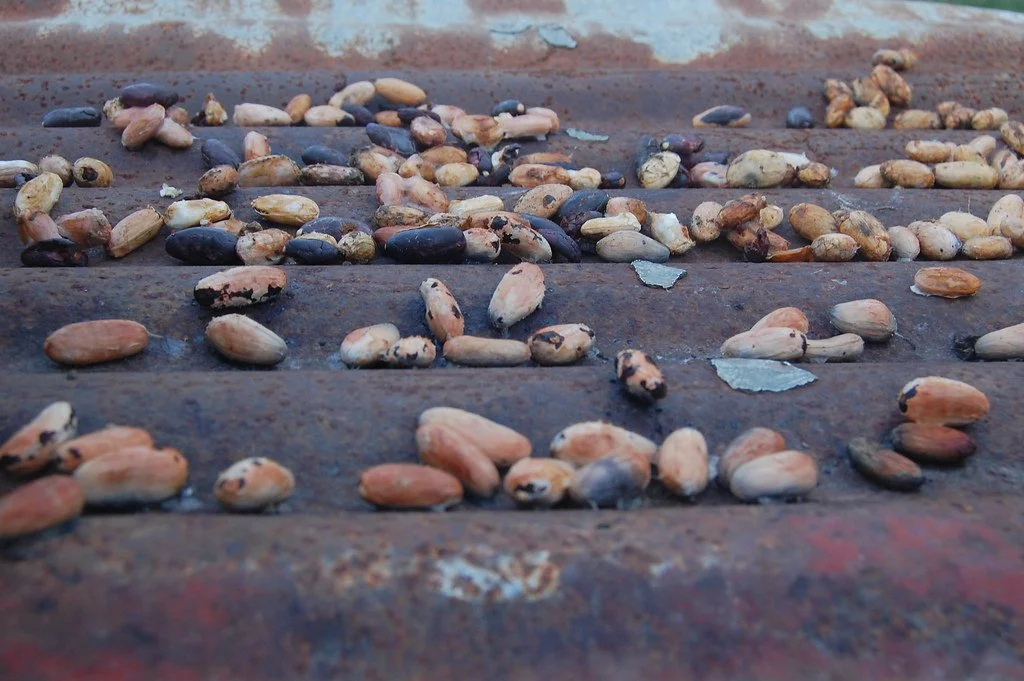
Cacao from Belize during the drying process. Renee Johnson. CC BY-SA 2.0.
Abelina Cho is the owner of a small chocolate company in San Felipe called Ixcacao. Cho is known as “Chocolate Queen”, and her farm is currently the only family-owned, Mayan chocolate producer today in Belize. Abelina Cho and her husband, Juan, are passionate about cacao’s cultural importance to Mayan people, and they produce dark chocolate the traditional Mayan way, without a recipe. Cho is shifting the credit for fine, high-quality chocolate back to the indigenous farmers who created these practices. Post colonization, high-quality chocolate was known as a European export, when really, it is Mayan farmers who created the practices used to cultivate cacao. Crediting the original creators of the chocolate we all enjoy, and paying them for their labor, is of the utmost importance.
TO GET INVOLVED
The best way to support small, Belizean-owned cacao producers is to be mindful of where you buy your chocolate from. Try to steer away from large corporations like Hershey, which are known to abuse and underpay their workers. Maya Gold chocolate—produced by both Justino Peck’s and Abelina Cho’s farms—is available throughout Europe and on many websites that ship to the U.S. and worldwide. Cho’s chocolate and other products are also available directly from the Ixcacao Mayan Belizean Chocolate website. If you ever find yourself traveling to Belize near the San Felipe area, Ixcacao farm also offers tours and chocolate making classes, where not only can you witness firsthand the historically rich and complex method of Mayan cacao production, but Abelina also cooks travelers a home cooked meal. Essentially, being a thoughtful consumer is the best way to get involved on this issue.

Calliana Leff
Calliana is currently an undergraduate student at Boston University majoring in English and minoring in psychology. She is passionate about sustainability and traveling in an ethical and respectful way. She hopes to continue her writing career and see more of the world after she graduates.
The Colonial Legacy of the Portuguese in Macau
Though Macau has been an autonomous region of China since 1998, its 400 years of Portuguese rule has given Macau a distinctive flair found nowhere else in Asia.
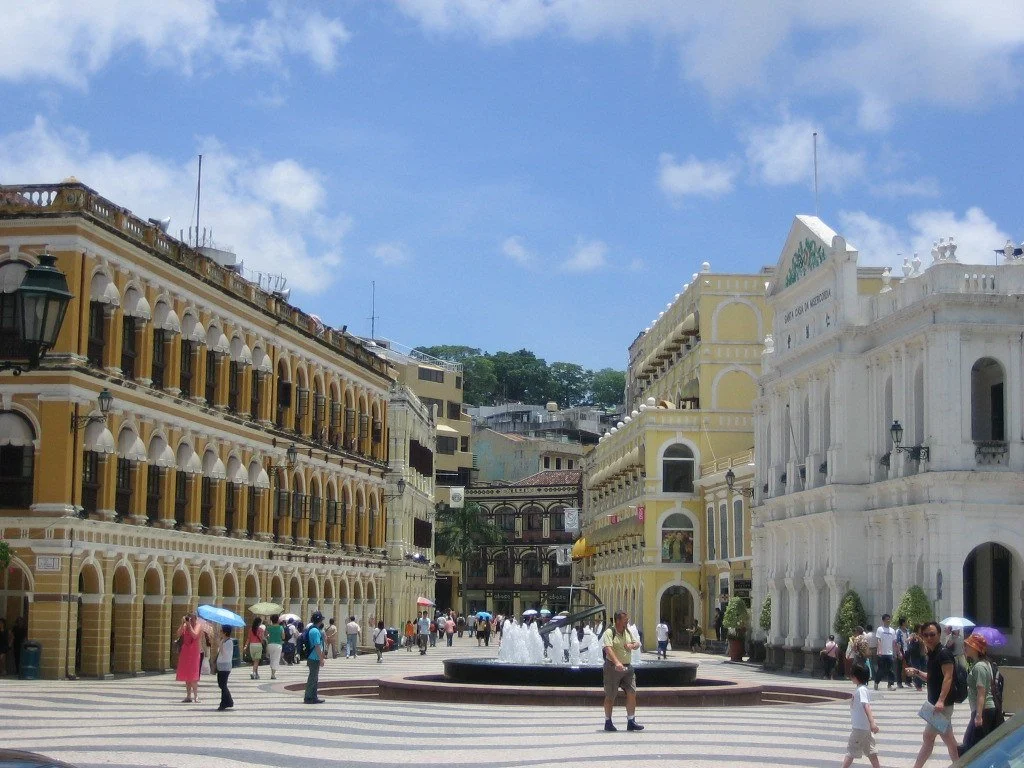
The pastel-colored buildings of Senado Square give off a European flair. Teen Wolf. CC BY-NC 2.0.
Macau, a Special Administrative Region (SAR) of China, located on the Pearl River Delta south of Guangdong province, was a Portuguese colony from 1557 to 1999. In its early years, the city quickly became a bustling commercial center, since it was at the crossroads of several notable trade routes. It was the gateway to China for the Portuguese. By the time Macau became a SAR of China in 1999, ending the period of European colonization of Asia, the Portuguese had left their mark on the city.
When the Portuguese first established Macau as a colony, settlement was limited to a small island that became the Macau Peninsula. As the original colony expanded, it incorporated the islands of Taipa and Coloane. Today, the land between Taipa and Coloane has been reclaimed, and the resulting strip of land, the Cotai Strip, is home to many casinos. Those casinos are one of the major economic drivers of Macau, generating even more revenue than Las Vegas, and they attract many tourists from around Asia. Macau is quickly becoming a cosmopolitan center, but the historic core of the region, on the Macau peninsula, is full of buildings constructed in the Portuguese style. Other influences remain of Portuguese rule, such as its cuisine, languages and legal system.
Architecture
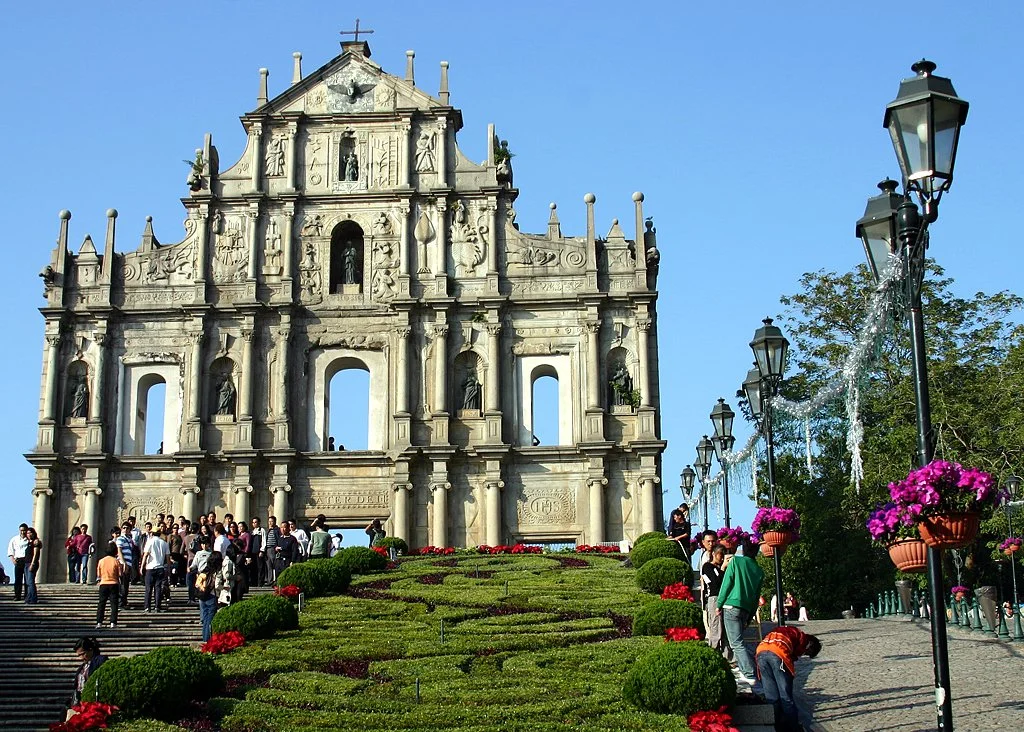
The ruins of St. Paul’s Church. Christian Junker | Photography. CC BY-NC-ND 2.0.
It is easy to spot the Portuguese influence on the buildings in Macau, because many of them have Ionic columns and baroque appearances. The Portuguese mainly left their mark on religious and administrative buildings in the city, such as the Ruins of St. Paul’s Church and the buildings of Senado Square.
St. Paul’s Church was built between 1604 and 1640 by the Jesuits, and the church became their base of operations in Asia. It was the largest church in Asia at the time and was called the “Vatican of the Far East”. The baroque front of the church combines Eastern elements, as Japanese Christians who were fleeing persecution in their home country were involved with its construction. However, most of the church was made of wood, and much of it burned down during a typhoon in 1836. All that remains is its ornate façade, which has become a popular site in Macau.
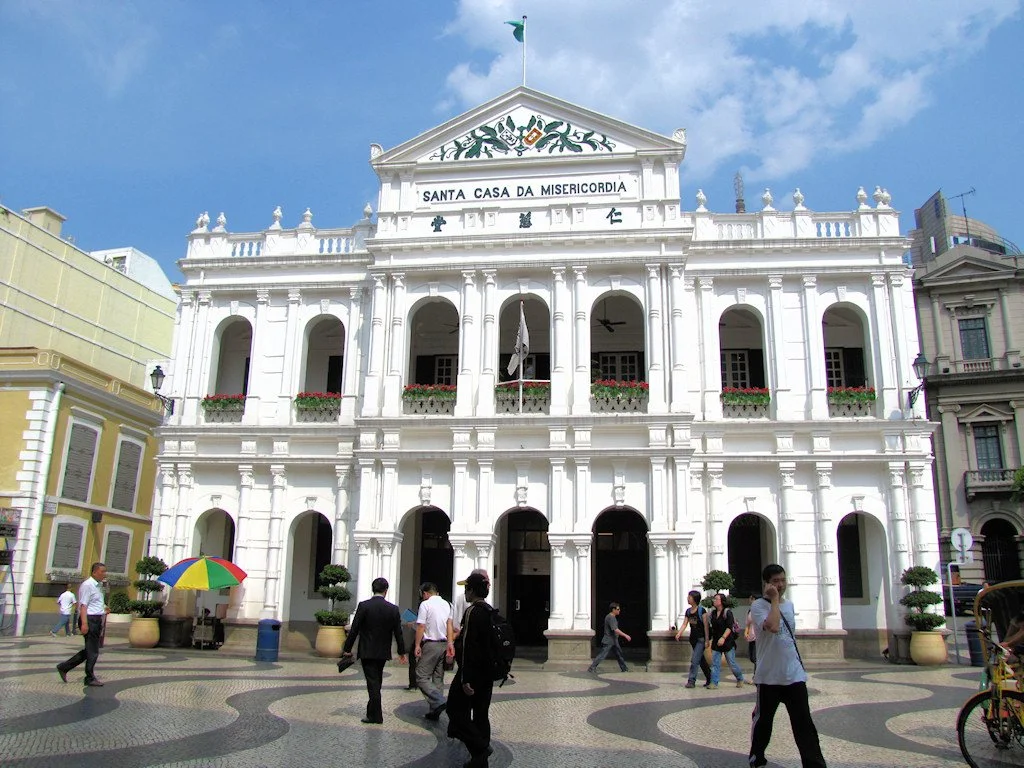
The Holy House of Mercy is intricately linked with the early history of Macau. wiredtourist.com. CC BY 2.0.
The historic colonial administrative buildings are also preserved in Senado Square, which is full of pastel-colored, neo-classical buildings. It served as the main town square in centuries past and it contains a fountain. The square is flanked by the Leal Senado Building and the Holy House of Mercy. The Leal Senado Building, built in 1784 in a neoclassical style, was Macau’s first municipal chamber. Today, the building continues to host the city’s municipal council meets. There is also a Portuguese-styled courtyard behind the building.
Across Senado Square from the Leal Senado Building lies the Macau Holy House of Mercy. Built in 1569 shortly after the establishment of the colony, the Holy House of Mercy served as a medical institution originally and now serves a charitable institution. The Holy House of Mercy is also a present-day museum that holds a collection of Macau’s Catholic relics, telling the story of how Western culture entered Asia through the city.
Cuisine
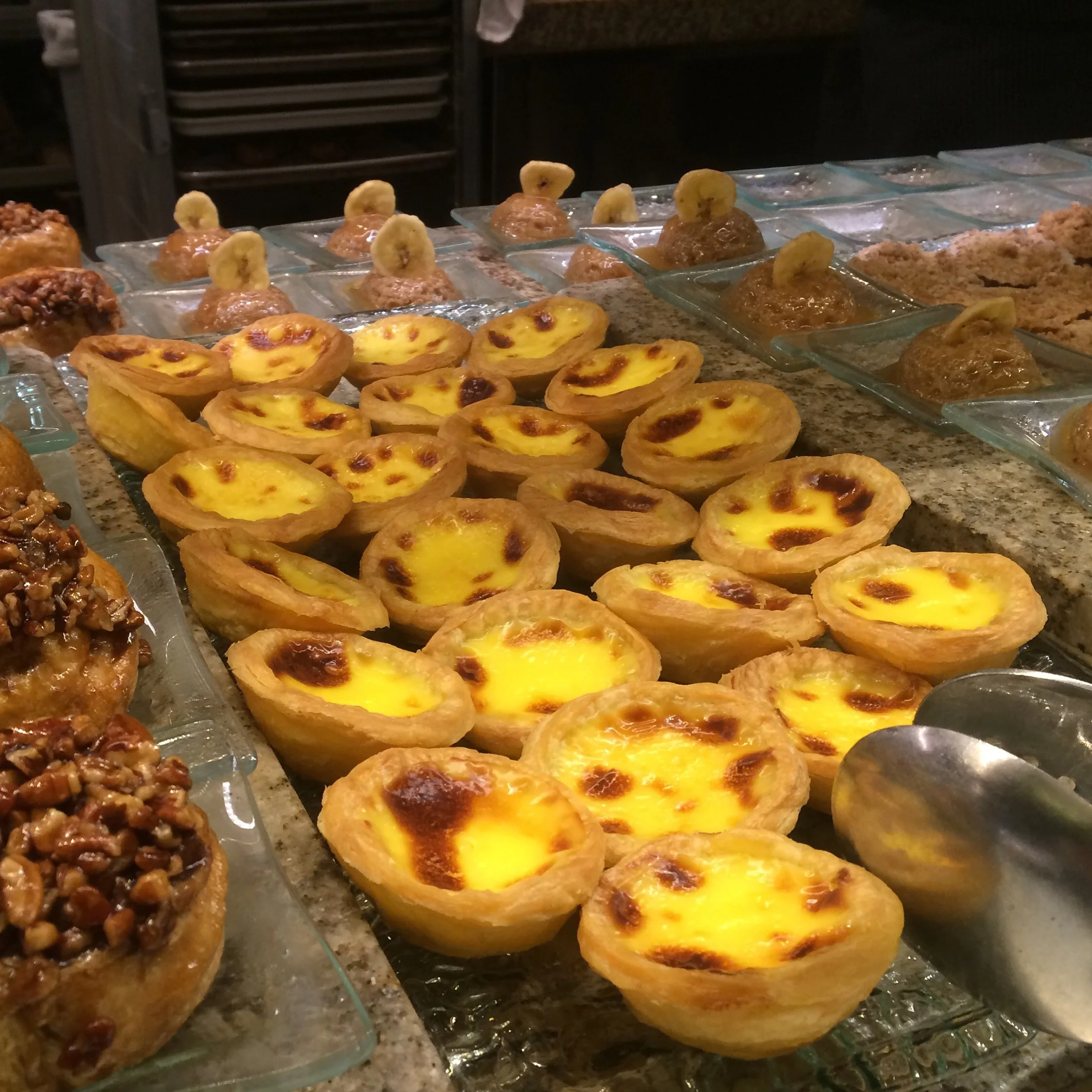
Macau egg tart. foodnut.com. CC BY-NC-ND 2.0.
Portuguese influences also affect the food of Macau, which is “one of the best places in the world to sample Portuguese cuisine.” It is easy to find signature Portuguese dishes such as bacalhau, which is dried and salted cod, in local restaurants.
Macau is also the home of the world’s first fusion cuisine, combining Chinese and Portuguese influences into local staples. Portuguese settlers in Macau added new spices and herbs to traditional Chinese foods and introduced new cooking methods like roasting, grilling and stewing to create a unique Macanese cuisine. Today, well-known Macanese dishes include minchi (considered Macau’s national dish and made from minced beef, soya sauce, onions and fried egg), tacho (a stew containing both Chinese and Western ingredients) and cappela (a meatloaf with cheese, black olives and breadcrumbs). Another popular dish, the Macau egg tart, has its origins in Portuguese pastries, but they are slightly different from similar dishes found in Portugal and neighboring Hong Kong.
Language
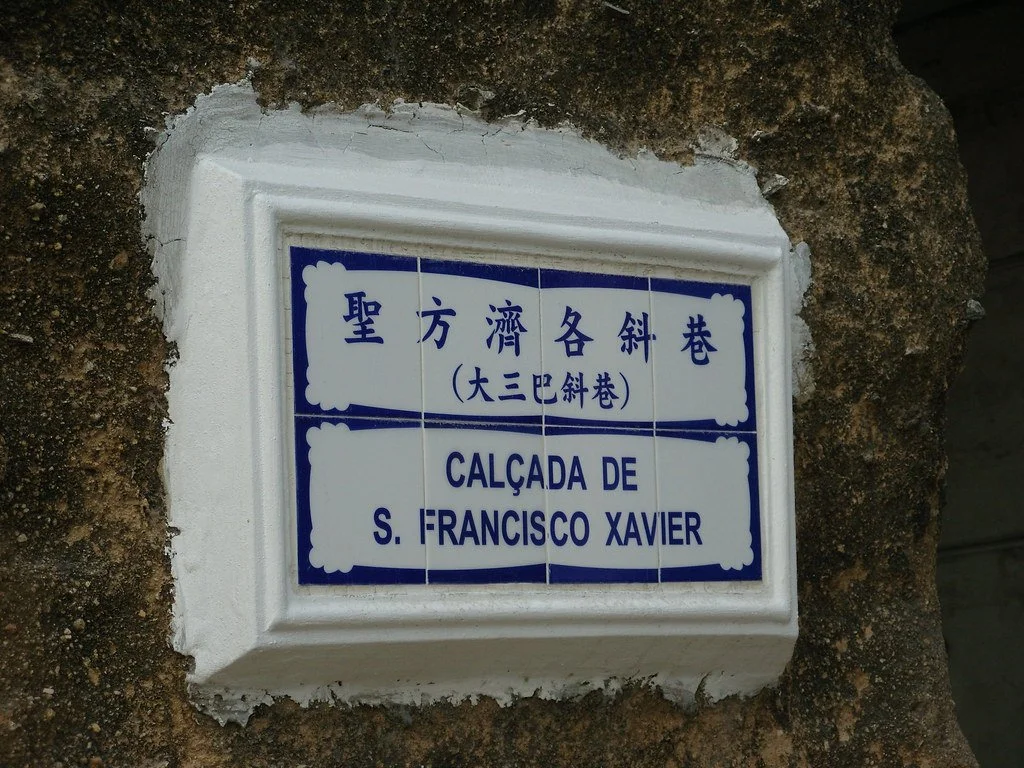
Street signs in Macau are still written in both Chinese and Portuguese. shankar s. CC BY 2.0.
The Portuguese language retained its official status in Macau after the handover, but only around 6,200 people speak it (based on the data from 2014). While its popularity dwindled in the years immediately following the handover, the Portuguese language has seen a resurgence in Macau due to the increase in Lusophone countries doing business with China, which is leading to a growing number of people learning it.
Macau is also the home of the very unique creole language of Macanese Patois, also known as patuá to its native speakers, which is a combination of Cantonese and Portuguese with a few influences from Malay and Indian languages. There is no standard orthography in the language. The number of speakers is decreasing rapidly, and it is only spoken by around 50 people of Macanese ancestry. The Macanese people are a distinct group of people who are of mixed Portuguese and Chinese ancestry. However, there is a growing effort to preserve the language, with a drama group called Doci Papiaçam di Macau leading the revival by performing original plays in patuá.
Legal System

Macau government headquarters, which was also built in a Portuguese architectural style. Friscocali. CC BY-NC 2.0.
When Macau was returned to China in 1999, the Chinese government promised that Macau would be governed under the concept of “one country, two systems”. As part of that arrangement, Macau would be able to keep its existing political and economic systems for at least 50 years after becoming an SAR of China. Because of this, the legal code of Macau, though it is under Chinese sovereignty, is still based on the Portuguese legal code. However, recently, the Chinese government has undermined the agreements to keep the Portuguese legal code in place by removing Portuguese judges from presiding over sensitive cases. As China exerts more influences over Macau, which may have diminished some Portuguese influences, and the city could be in a much different place by 2049, when the agreement made in 1999 ends.

Bryan Fok
Bryan is currently a History and Global Affairs major at the University of Notre Dame. He aims to apply the notion of Integral Human Development as a framework for analyzing global issues. He enjoys hiking and visiting national parks.
Alaska: The Land of the Midnight Sun
In the summertime, Alaska experiences 24-hour long daylight for months at a time.
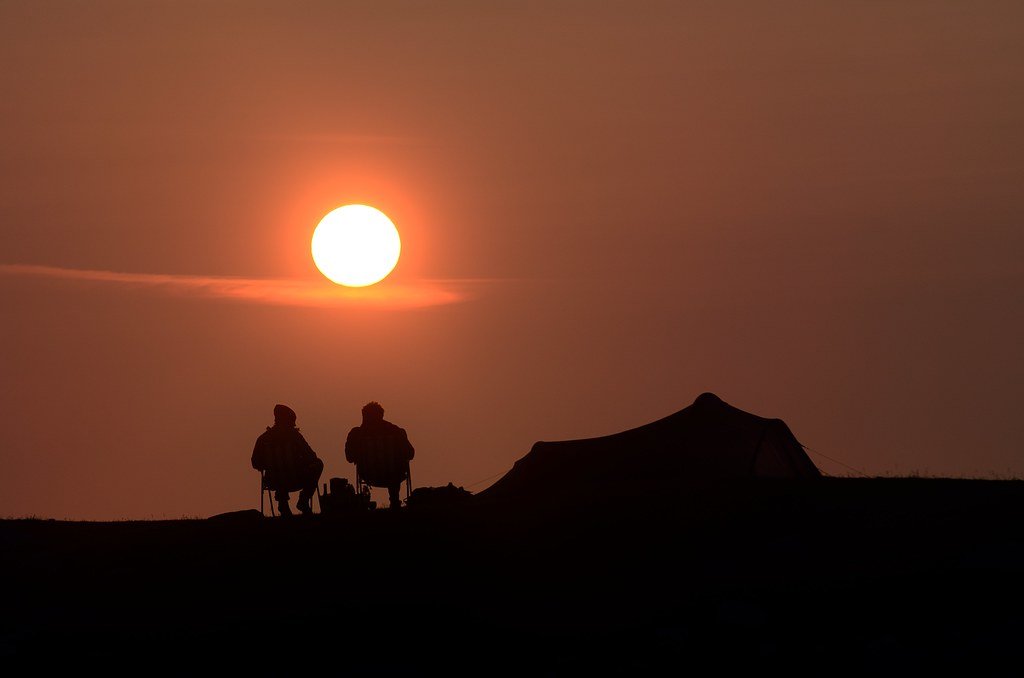
Two people watching the Midnight Sun. Aha24. CC BY-NC 2.0.
“The Land of the Midnight Sun” is the nickname given to the state of Alaska. In certain areas of the state, the sun does not fully set for months – typically between April and August – granting Alaskans and travelers roughly 24 hours of daylight. Additionally, this extra daylight allows for a unique phenomena that has given Alaska its greatest nickname; with daylight occurring even in the late hours of the evening, the sun can be seen even when the clock strikes midnight, donning Alaska the Land of the Midnight Sun. Alaskans and travelers alike visit locations in Alaska specifically for the pleasure to witness and experience this event.
The phenomena of the Midnight Sun occurs due to the relationship between the Earth’s axial tilt and how the planet rotates the sun. The rotation of the Earth around the sun is what allows our planet to experience seasons that cycle every year with the globe's movement. The northern hemisphere of the Earth experiences summer time in the months between April and August due to the fact that the North Pole points in the direction of the sun during these months. Alaska, being extremely close to the North Pole, experiences summer during these months as well.
In understanding how the rotation of the Earth allows for the seasons to change, we can then use the Earth’s axial tilt to explain why the Midnight Sun phenomena occurs in the summer. Already facing the sun due to the rotation of the Earth, the tilt of the globe – which is 23.5 degrees – places the North Pole directly into the sunlight coming from the star. This means that the North Pole - and surrounding areas like Alaska – face the sun continuously for around 4 months straight, causing the sun to rarely dip below the horizon. In this way, the Midnight Sun is a result of the combination between the Earth’s rotation and its axial tilt.
This long occurrence of sunlight also serves to explain and off put the two months of darkness Alaska experiences as well. When the North pole is not tilted towards the sun, and the earth has rotated around the sun into winter months, the North Pole – and subsequently Alaska – experiences what is called a Polar Night, where the sun doesn’t rise for nearly 60 days. That means Alaskans, especially those in more northern parts of the state, experience blackness during the winter months of November through January.
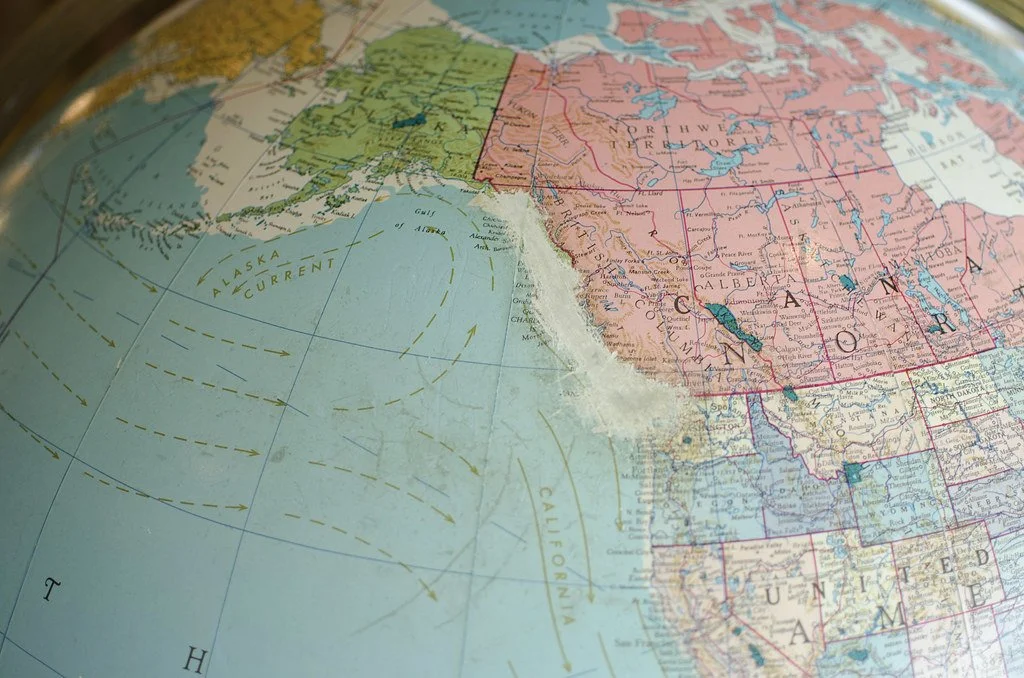
Alaska in green near the North Pole. Theron Trowbridge. CC BY-NC 2.0.
The further in Alaska you travel north during the summer, the longer the days become and the higher chances you will have of seeing the Midnight Sun. In Barrow, Alaska, the northernmost place in Alaska, the sun through the summer months does not set. That means that Barrow experiences 84 days of constant daylight straight, without a single sunset. In Fairbanks, which is at the lower center of the state and a few hundred miles south than Barrow, the sun can be seen for 21 hours a day. In Anchorage it is 19 hours and in Seward it is 18 hours.
For Alaskan’s that have been living in darkness during long winters, the Midnight Sun and long days of sunshine are a welcome occurrence. The thrill of enjoying the daylight for extended periods of time brings Alaskans out of a pseudo-hibernation. Climatologist Dr. Brian Brettschneider told the Weather Channel, “Not once have I heard an Alaskan say they don’t like long days. It isn’t uncommon to hear a lawnmower running or kids outside at 11 p.m.”
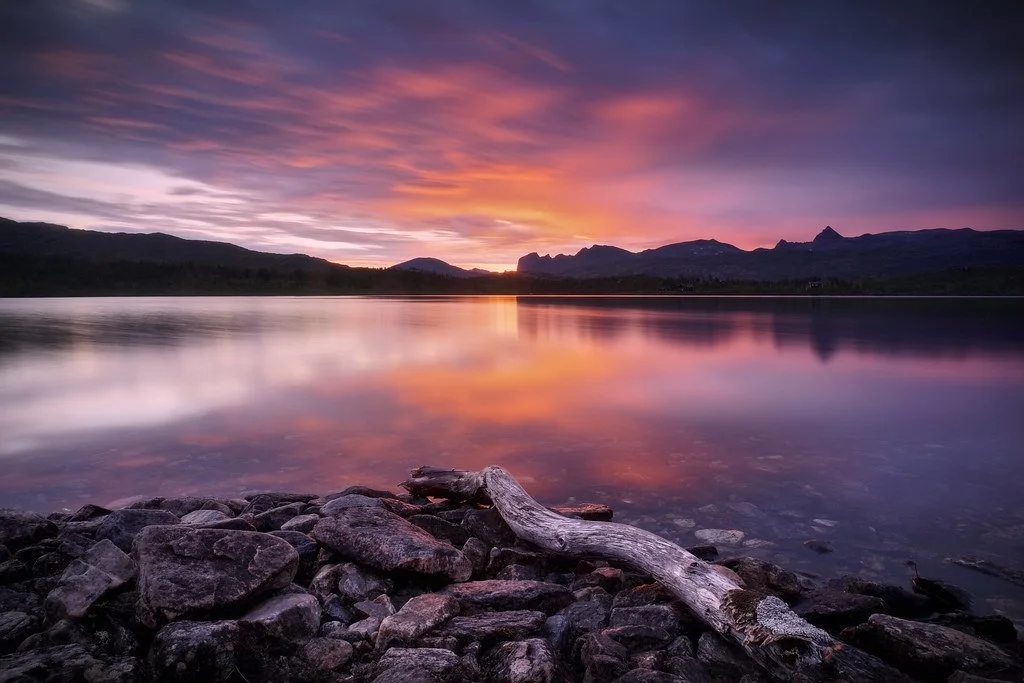
Midnight Sun behind clouds. PoetheusFotos. CC BY-NC-SA 2.0.
Brettschneider also mentioned that many who live in Alaska and work during the day use the extra hours of daylight to further enjoy their downtime. Outdoor activities like hiking are made possible after work because of the additional daylight during late hours.
For travelers visiting Alaska, the summer months are the most popular for the same reason. Able to really make the most of their time there, travelers can explore more areas of the beautiful wildlife found in the state, while witnessing once in a lifetime natural occurrences like the Midnight Sun.
Ava Mamary
Ava is an undergraduate student at the University of Illinois, double majoring in English and Communications. At school, she Web Writes about music for a student-run radio station. She is also an avid backpacker, which is where her passion for travel and the outdoors comes from. She is very passionate about social justice issues, specifically those involving women’s rights, and is excited to write content about social action across the globe.
More Than A Desert: The Natural Beauty of Oman
From deep canyons and golden dunes to lush rivers and turtle beaches, Oman’s landscape has a lot to offer nature lovers and curious travelers alike.
Read MoreUnexpected Paradise: 6 Macaronesian Islands That You May Not Have Heard Of
Off the coast of Europe and Africa, the Macronesian islands offer unspoiled landscapes, quaint towns, and stunning coastlines.
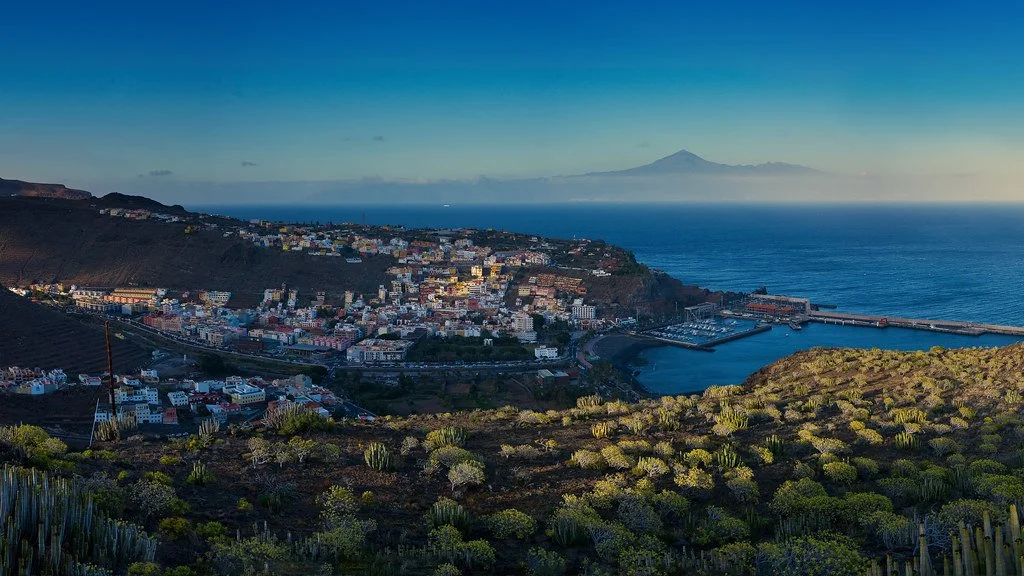
The island of La Gomera is located in the Canary Islands, one of the island chains that make up Macaronesia. Jörg Bergmann. CC BY-NC-ND 2.0.
Macaronesia is a group of archipelagos in the North Atlantic Ocean. off the coast of Europe and Africa. It consists of the islands of the Azores and Madeira, (part of Portugal) the Canary Islands (part of Spain) and Cabo Verde (an independent group of islands formerly controlled by Portugal). Some of these islands are only a short flight away from many major cities in Western Europe and becoming more popular, leading to more development on some of them, but unspoiled wilderness remains prevalent.
1. São Miguel, Azores
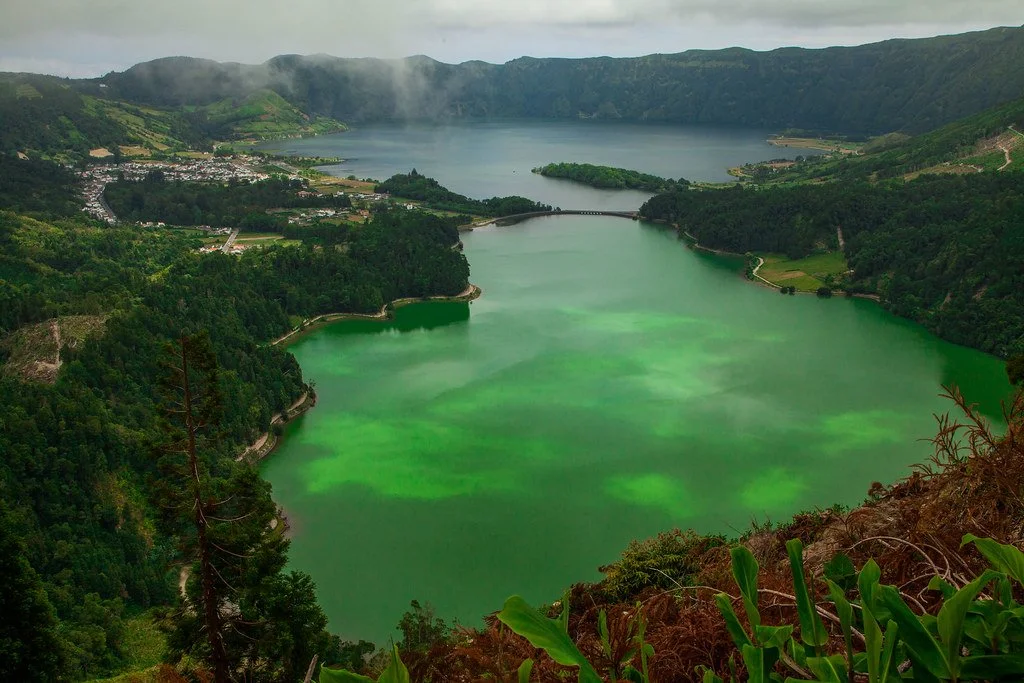
The Lagoa das Sete Cidades features colorful lakes in the remnants of volcano calderas on São Miguel. energeticspell. CC BY-NC 2.0.
The largest island in the Azores, São Miguel features numerous beautiful natural sights for hikers and/or tourists. Due to minerals in the water, the lakes on the island come in various tints of green and blue. At a more temperate climate than many of the other Macaronesian islands, São Miguel receives more rain, resulting in many waterfalls on the island. Some companies lead rappelling excursions at the waterfalls. The seas around São Miguel are also prime for whale watching.
2. Flores, Azores
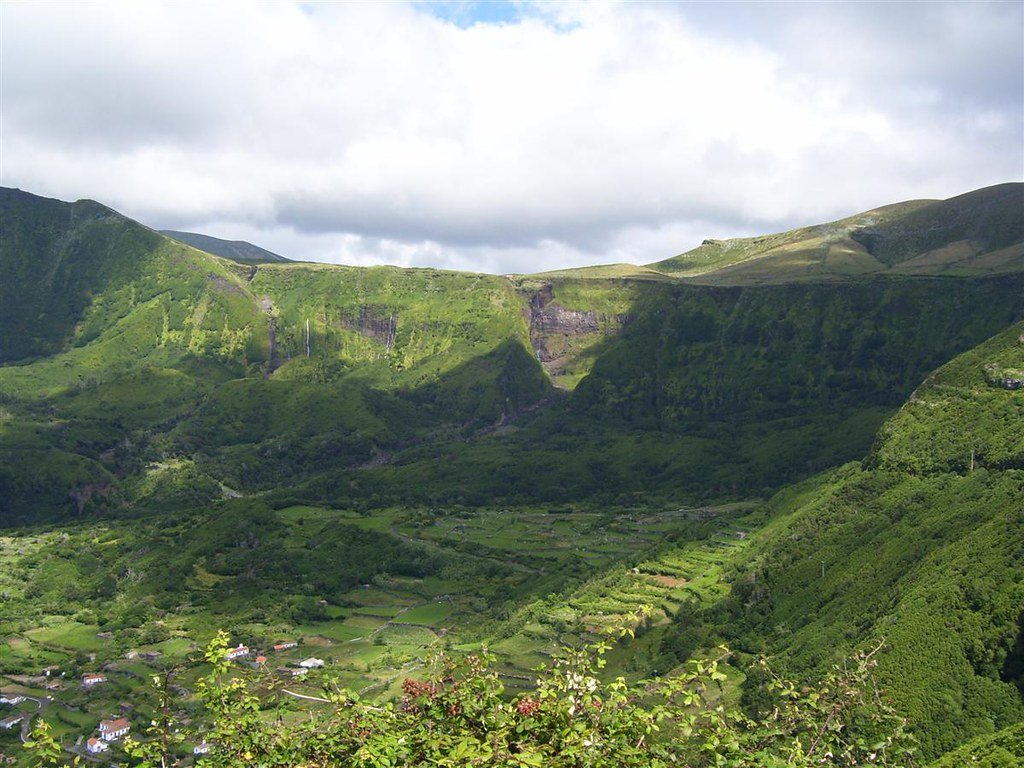
Lush, green cliffs characterize the island of Flores in the Azores archipelago. Paulo Corceiro. CC BY-ND 2.0.
One of the more remote islands in the Azores archipelago, Flores literally translates to “flowers” in English. Its stunning lush mountains are well-suited for hiking and canyoneering, with trails leading to some unique geological formations. Some places on the island to visit include the village of Fajã Grande, which is tucked in between cliffs and the Atlantic Ocean, and the 7 lagoons, the remnants of ancient volcanoes.
3. Madeira
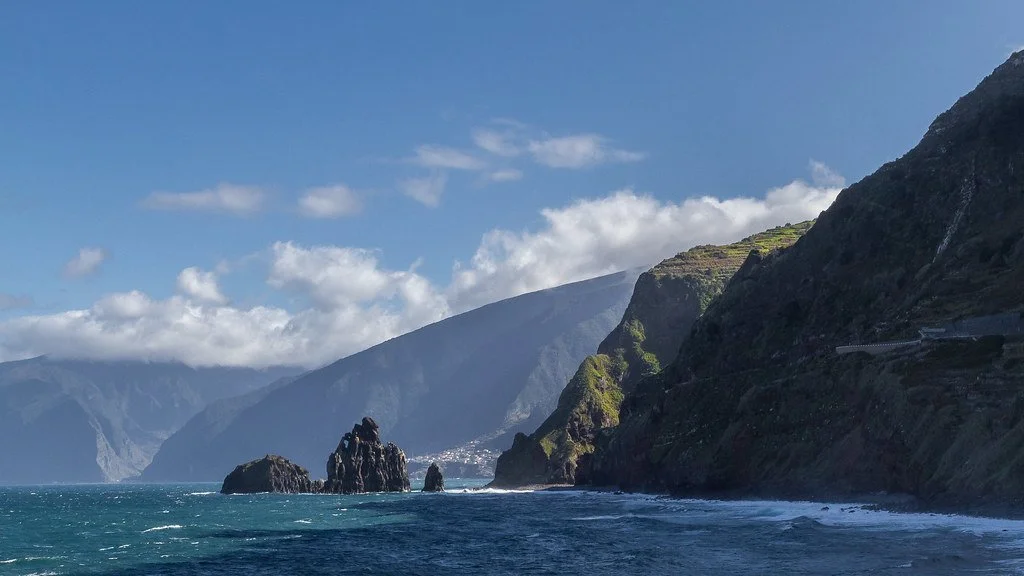
The cliffs of Madeira. Kacper Gunia. CC BY-NC 2.0.
After a thrilling landing at one of the most challenging airports for pilots in the world, visitors step into a green oasis with dramatic mountains and steep drop-offs. In the past, Madeira was a maritime center with Christopher Columbus and James Cook making stops there on their voyages. Later, rich landowners built ornate summer estates on the island, such as the Monte Palace Madeira, which is a present-day vast botanical garden. Hiking trails criss-cross the island, with many built on the remnants of levandas, irrigation canals used to feed water to drier areas of the island. A strenuous hike to Pico Ruivo, the highest point on the island, rewards intrepid hikers with vast views.
4. La Palma, Canary Islands
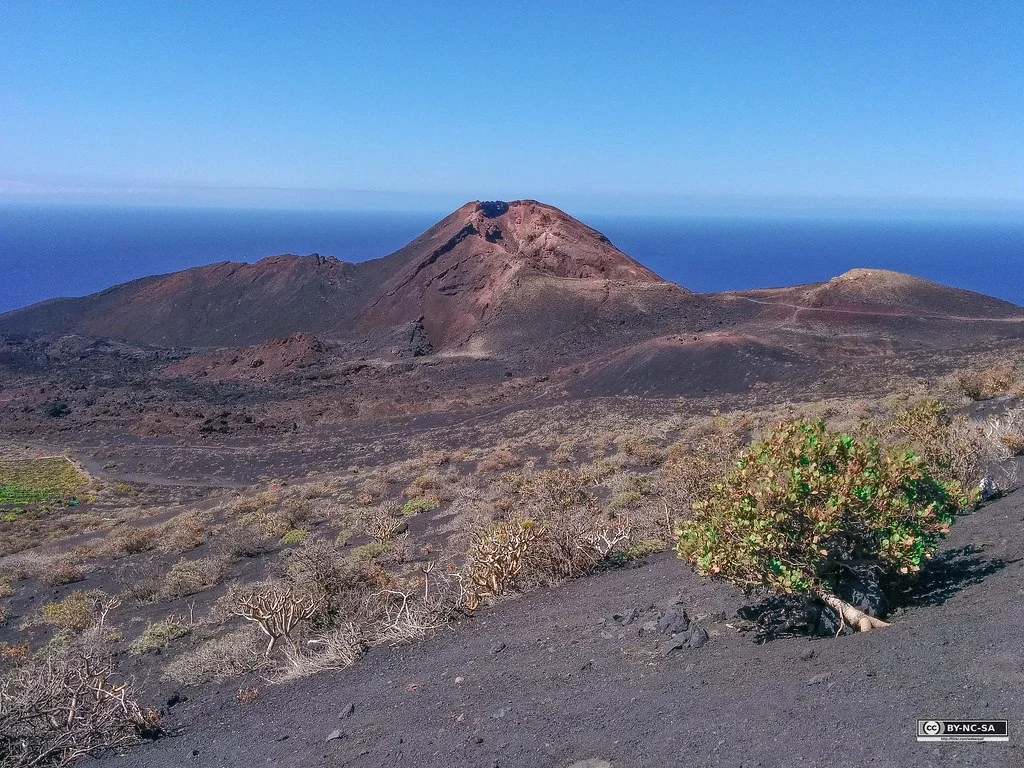
The volcanic landscape of the island of La Palma. weberpal. CC BY-NC-SA 2.0.
The island of La Palma in the Canary Islands is fully operational again after the Cumbre Vieja volcano stopped erupting in December 2021. While it is still advisable to exercise caution around the eruption area, the rest of the island is free to be explored. Past volcanic eruptions have created unique rock formations underwater, making diving a popular activity off the coast of the island. Watersports such as kayaking and canoeing are also popular, especially along the sheltered coast of Fuencaliente. There is also an extensive network of hiking paths on the island, leading to a variety of unique landscapes.
5. Fuerteventura
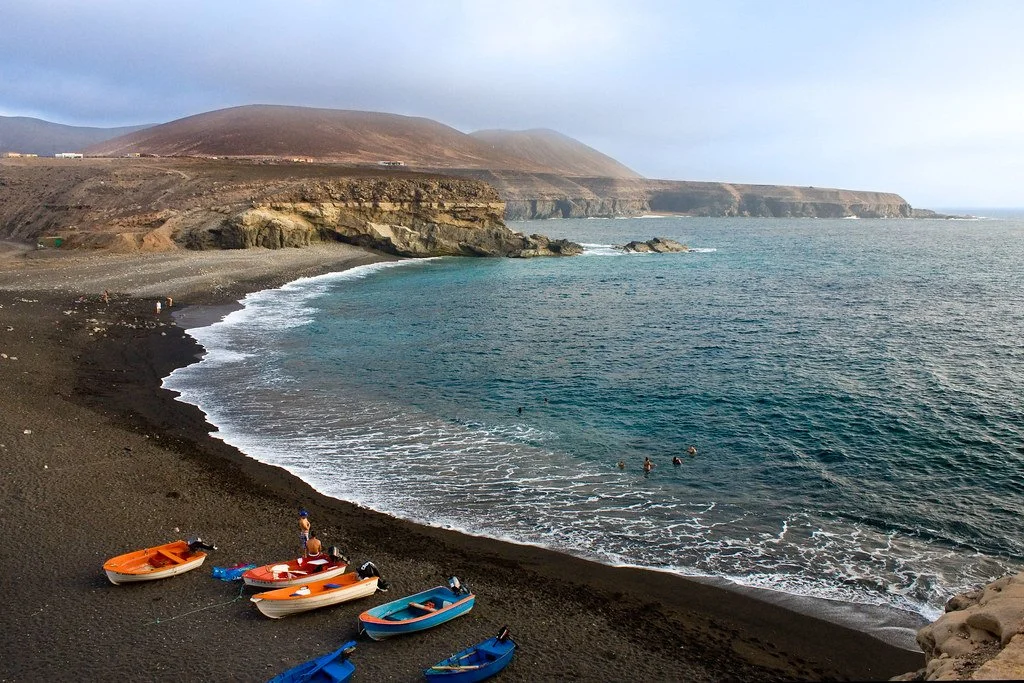
Popular beaches and desert landscapes combine on the island of Fuerteventura. xavipat. CC BY-NC-ND 2.0.
The more southern islands of Macaronesia have a more arid climate, leading to more desert-like landscapes. Less than 100 kilometers from the coast of Africa, Fuerteventura consists of many popular beaches but also has quaint towns and rolling hills. As the first of the Canary Islands to be settled by Europeans, its first capital city of Betancuria was founded in 1404 and remains to this day and is a great place to learn about the island’s pre-Hispanic history. The island is also famous for its cuisine featuring majorero cheese and papas arugás with mojo (wrinkly potatoes with a local sauce).
6. Sal, Cabo Verde
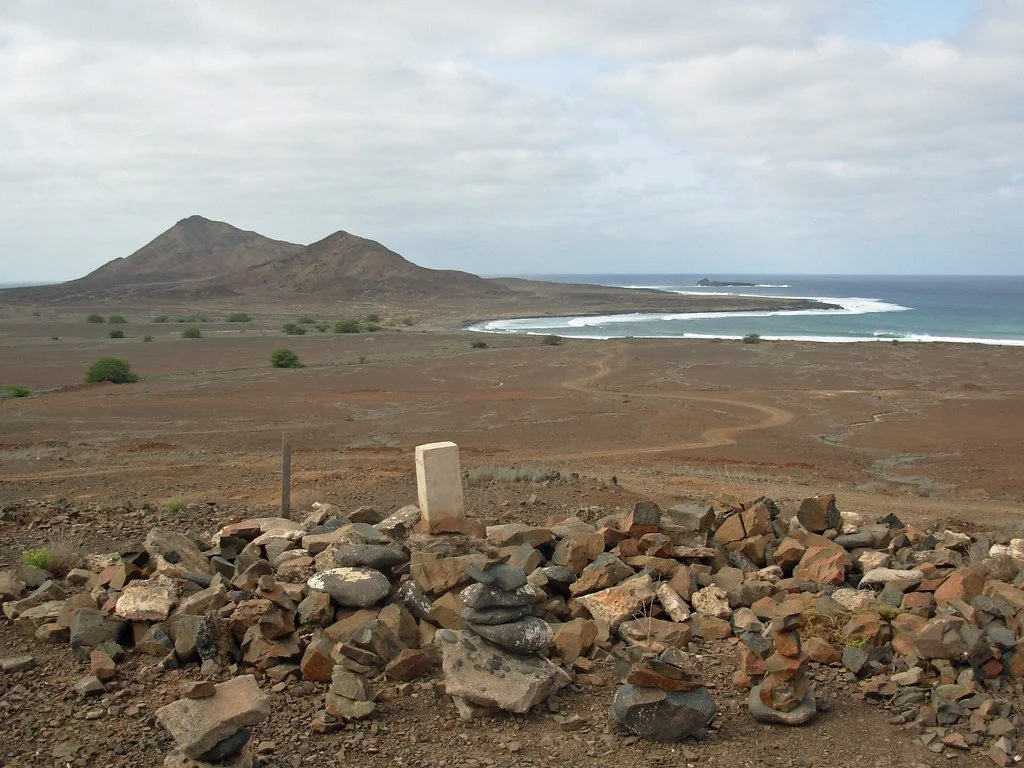
The barren landscape of Sal is much more than what it seems. Phil Thirkell. CC BY-NC 2.0.
Another desert-like island, Sal is located in the northeast of the Cabo Verde archipelago and used to be the least populous island of the country until recent developments that have caused rapid growth. Like Fuerteventura, Sal has many beaches which are known as prime kiteboarding areas. Away from the beaches and resort areas lies what seems like a barren landscape, but tours on jeep and horseback can bring visitors to the remote interior to secluded areas. The island also has a legacy of salt mining, and it is possible to visit the Pedra de Lume area, which preserves the remnants of salt extraction operations.

Bryan Fok
Bryan is currently a History and Global Affairs major at the University of Notre Dame. He aims to apply the notion of Integral Human Development as a framework for analyzing global issues. He enjoys hiking and visiting national parks.
VIDEO: Wonders of Yangshuo in China
Van Reijin, a video creator based in the Netherlands, spent a week in Yangshuo, a region located in Southeast China. The closest city being Guilin in Guangxi province, it’s situated between the Li River and karst peaks. This beautiful area is famous throughout China and depicted on the 20 yuan bill. The landscape is surrounded by limestone, dolomite and gypsum mountains. Yangshuo is a popular destination for climbers and became a tourist hub in the 1980s. In the summer, people swim in the Li River and bike alongside it.
Indoor Skiing As Far Afield as Dubai
With massive, man made indoor ski resorts, skiing is no longer a winter-only sport.
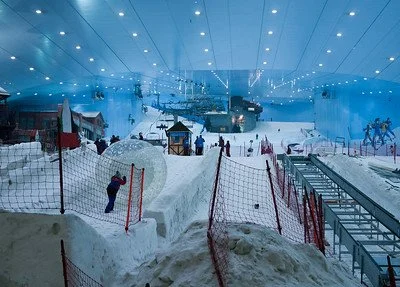
Ski Dubai. Neekoh.fi. CC BY 2.0
In 1927, Vienna, Austria opened up the first indoor ski slope called Schneepalast. The slope was 65.6 feet tall, and the building was eventually destroyed, but the idea has stayed around. People have improved on it by creating larger and larger indoor ski slopes for people to enjoy not just during the normal skiing season, but also in warm temperatures where and when snow doesn’t fall. Indoor ski resorts are all over the world, with at least one on every continent. Ski Dubai in Dubai, United Arab Emirates was voted the best indoor resort back in 2016 and 2017, and it used to be the biggest, though Harbin Wanda Indoor Resort in Harbin, China surpassed Ski Dubai in 2017. Wintastar Shanghai in Shanghai, China is currently on track to being the largest once it is completed in 2022. There are also indoor slopes that are meant only for practice in the summer. These are training centers for athletes, without man-made snow and more akin to treadmills.
Though an indoor resort will likely never be as large as an outdoor one, Ski Dubai is one of the largest indoor ski resorts in the world. It is the first indoor ski resort in the Middle East, featuring a chairlift, a freestyle snowboarding area, an area for toboggans and snowball fights, an indoor zipline and five ski runs, including a black diamond run, the highest level of difficulty in skiing. Ski Dubai also has a penguin colony of Gentoo and King penguins that people can meet and interact with. Though not the only indoor ski resort with penguins, Ski Egypt has Gentoo and Chinstrap penguins, which is the most well-known. The entire area is extremely family friendly, which is why it continues to be one of the most popular attractions in Dubai.

King Penguins at Ski Dubai. Pranav Bhasin. CC BY-NC-ND 2.0
For an avid skier, indoor skiing might be a very interesting experience, but it doesn’t come close to skiing on an actual mountain. Having such a limited space can lose interest towards experienced skiers, but less experienced people tend to enjoy indoor resorts more. Another factor that could affect this is that skiing on fake snow is different than skiing on real snow.
Fake snow is stickier than real snow, and it’s much harder and more packed. Skiing on it isn’t as smooth as on real snow. The composition of real snow is around 10% ice and 90% air, but man-made snow is closer to 30% ice and 70% air. Of course, indoor ski slopes can’t exactly use real snow, so these resorts are made entirely of this kind of snow. However, since it is still snow, it will melt in heat. Indoor ski resorts have to be cold to maintain it. Ski Dubai stays at a constant -4Celsius, or 24.8 Fahrenheit. Therefore, despite being located in the desert, the inside of Ski Dubai is fairly cold and a stark contrast to the outside heat.

Katherine Lim
Katherine Lim is an undergraduate student at Vassar College studying English literature and Italian. She loves both reading and writing, and she hopes to pursue both in the future. With a passion for travel and nature, she wants to experience more of the world and everything it has to offer.
7 Sites of Mexico City’s Architectural Diversity, from Baroque to Brutalist
Mexico City is a flourishing metropolis with a plethora of historic and modernist architectural sites. Here are a few attractions scattered around the city.
Read More6 Secret Spots in Greece You Should Know About
Greece’s natural beauty and history extends far beyond the well-traveled islands of Santorini and Mykonos.

The isolated Vlacherna Monastery off the coast of Corfu.. Daniel Solabarrieta. CC BY-SA 2.0.
Though Greece has 6,000 islands and islets, only 227 of them are inhabited. Many are famous for picturesque beaches and nightclubs that welcome more than 34 million tourists every year. It is no surprise that the country is a favorite for travelers looking to explore the natural beauty of the Mediterranean, to learn more about the ancient civilization that once called the islands home or just to escape the monotony of everyday life. However, there is much more to the country than its white stucco buildings and tzatziki including cliffside monasteries, man-made lakes, and hidden fishing villages just waiting to be discovered.
1. Monastery Republic of Mount Athos, Chalcidice
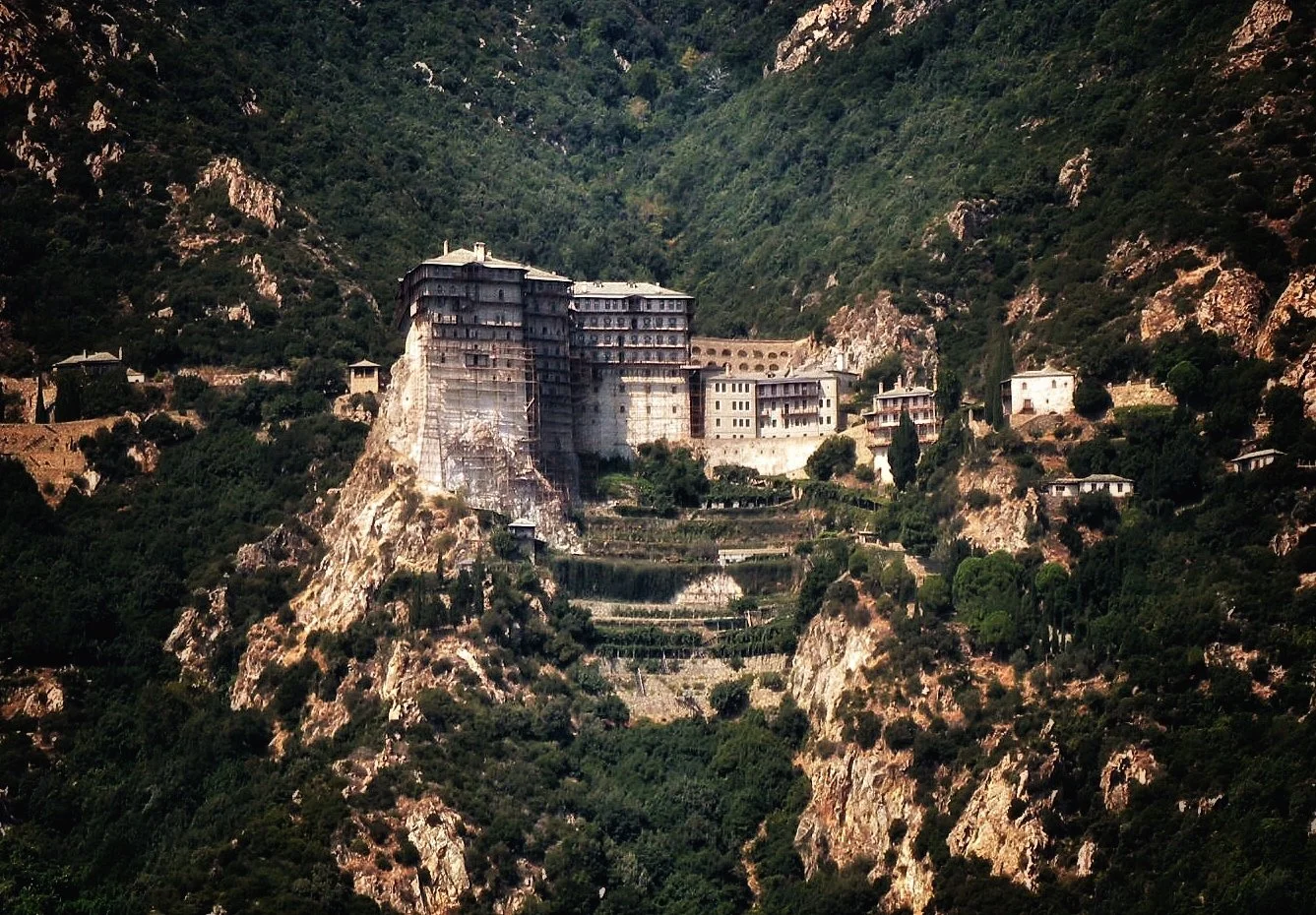
The holy monastery at Mount Athos. Maite Elorza. CC BY-NC-SA 2.0.
Located on the northern Greek peninsula of Chalcidice, Mount Athos is home to twenty ancient monasteries that date back to Byzantine times. Known to locals as the “Holy Mountain,” the recognized heritage site is off limits to women and children, but is home to approximately 1,400 monks. Its religious significance stems from legends that the rock face was once the location of a sanctuary of Zeus, but the mountain was also subjected to a number of attacks and attempted invasions over the years. The mountainous state officially became an autonomous region on October 3 ,1993and legally lies under the religious jurisdiction of the Patriarch of the Greek Orthodox Church from Constantinople.
2. Lake Doxa, Corinthia
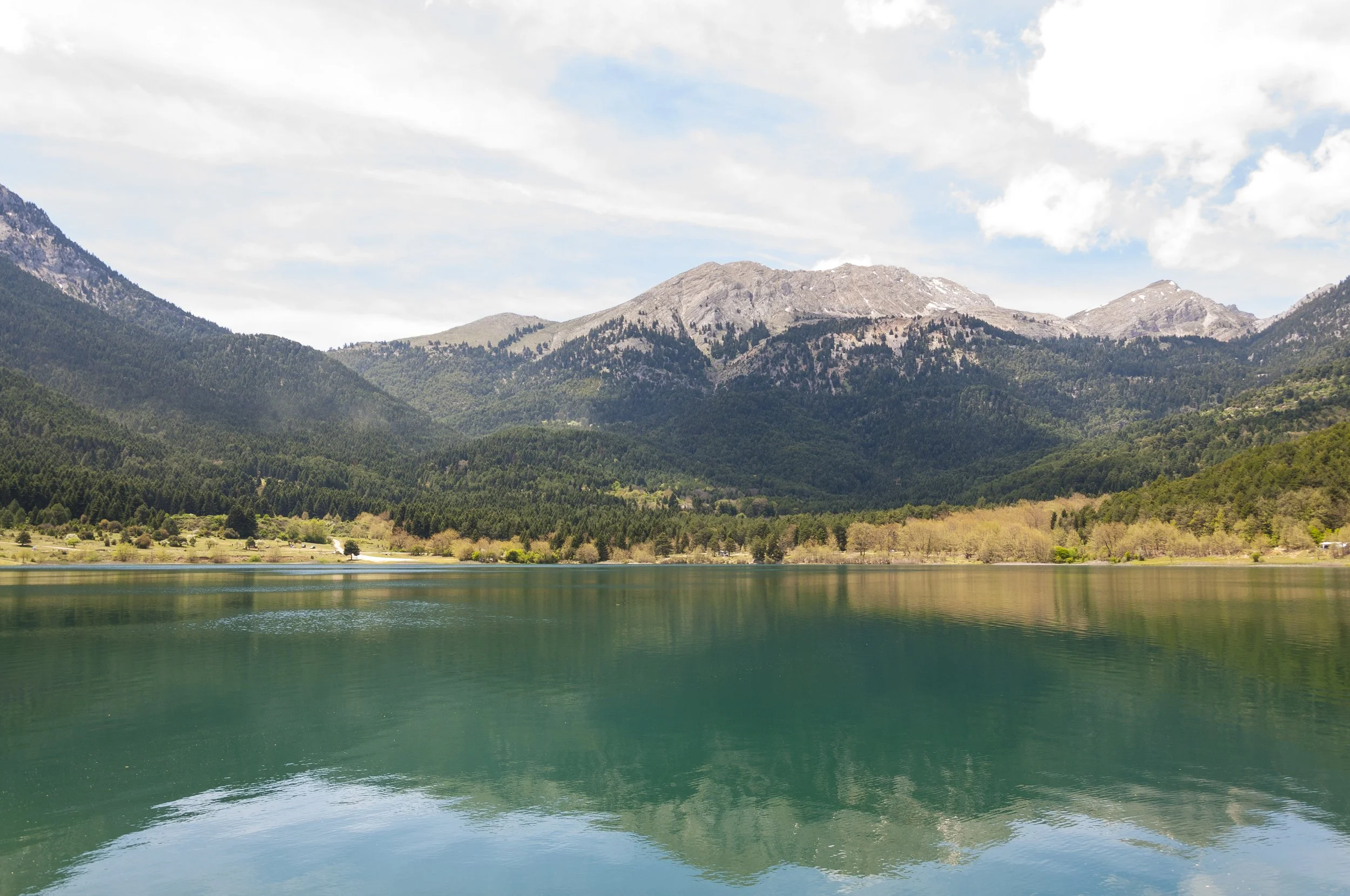
Artificial Lake Doxa in western Corinthia. Ava Babili. CC BY-NC-ND 2.0.
Surrounded by fir-tree covered mountains, the man-made Lake Doxa was built about fifteen years ago to help counter the high water levels. These tides also caused the Monastery of Agios to relocate at the center of the lake, and now appears as though it is floating on the water’s surface. The lake is in the village of Archaia Feneos which is located at the base of Mount Cyllene, the supposed birthplace of the god Hermes. According to popular Greek myth, there is also a subterranean canal underneath the lake that was dug by Hercules as one of his Twelve Labors.
3. Klima Fishing Village, Milos

The colorful fishing village of Klima. Ioana. CC BY-SA 2.0.
Located on the volcanic island of Milos, the tiny fishing village of Klima has an extensive history that stretches all the way back to around 3,000 BC. The island was occupied by Athenians, Macedonians and Romans over the next few centuries, each leaving their own architectural mark. Visitors can still see remnants of aqueducts, catacombs, theaters and even ancient gymnasiums. After its eventual liberation in the Greek Revolution, the population of Milos began focusing on agriculture and fishing, leveraging the unique volcanic soil and rocks to build garages and houses (known as “syrmatas”) that would protect them from bad weather. Many of the fishermen painted their doors and balconies with bright colors, giving the village its picturesque facade.
4. Voutoumi Beach, Antipaxos
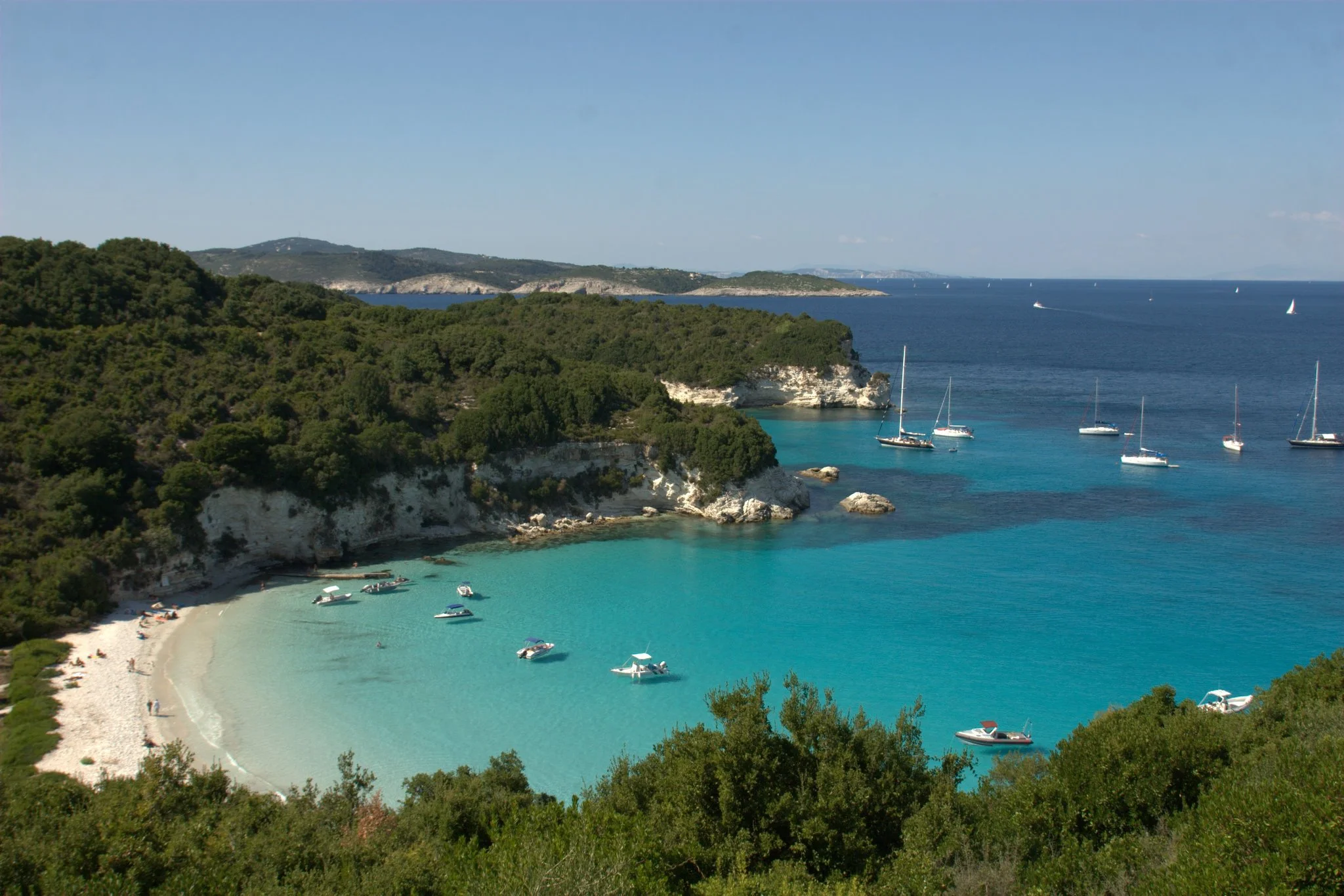
The isolated Voutoumi beach on Antipaxos Island. Ari Bakker. CC BY 2.0.
As the smallest of the Ionian Islands, Antipaxos’ beaches are popular among locals from the neighboring islands of Paxi and Corfu but are relatively unknown to foreign tourists. Voutoumi beach is the largest of these and has some of the clearest waters in the Greek archipelago. It is also the preferred destination for private yachts because of its isolated location in a hidden cove on the north eastern side of the island. In fact, the pebble beach is so secluded that there aren’t any shops aside from a local tavern on a nearby hill that serves traditional Greek snacks. There are also a number of smaller coves that are easily reachable from Voutoumi by boat.
5. Melissani Cave, Kefalonia Island
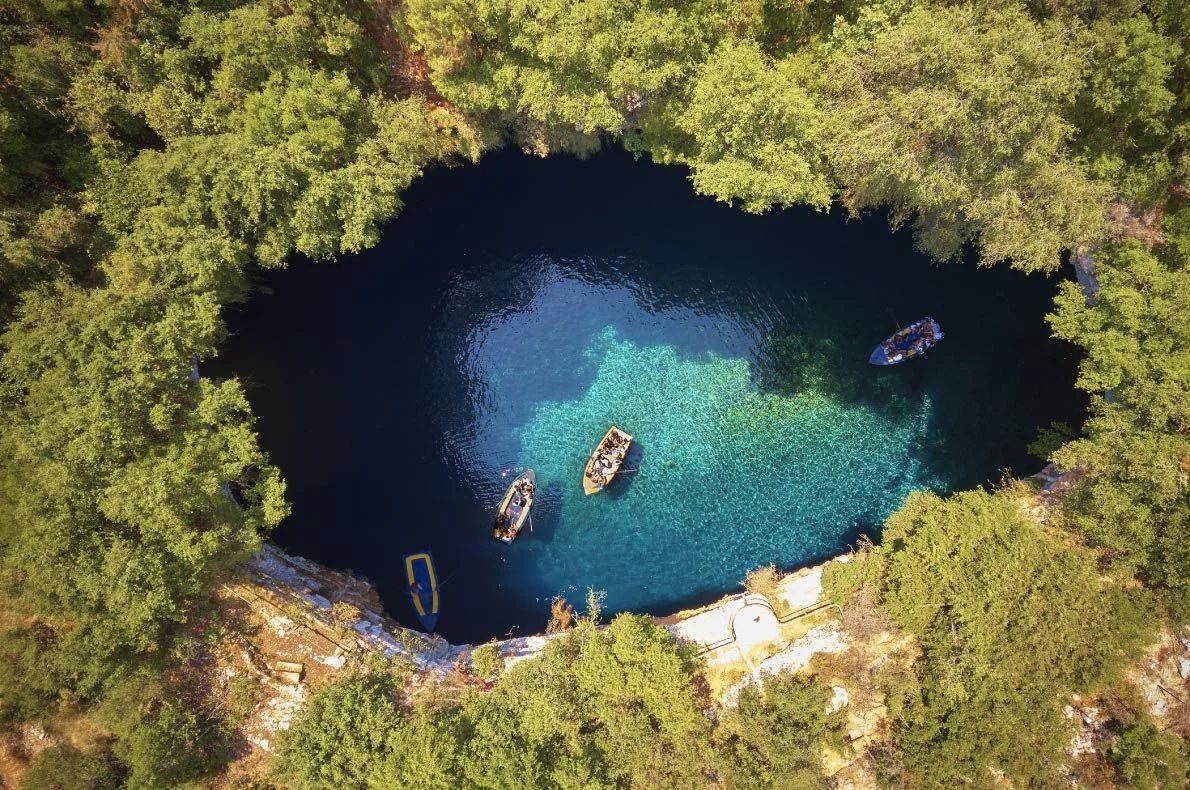
An overhead view of the Melissani Cave. jordeangjelovik. CC BY 2.0.
Kefalonia is conversely the largest of the Ionian Islands and is home to an underground grotto located 20 meters (roughly 60 feet) below the surface of the Earth. The Melissani Cave is made up of two rooms, one of which is bright and sun-lit while the other is fully roofed with dark stone stalactites. The chambers are connected by a pool of water that runs about 30 meters (about 90 feet) deep. Legend has it that the cave is named after the nymph Melissanthi who perished in these waters after being rejected by the satyr god Pan. Excavations carried out in the 1950s and 1960s discovered small terracotta statues in the cave depicting the myth and commemorating her unrequited love.
6. Ancient Greek Ruins, Delos

Ruins of the House of Cleopatra on the island of Delos. Bgag. CC BY-SA 2.0.
The island of Delos was once the religious epicenter of the Cyclades. It is now home to a large collection of archaeological ruins that commemorate Artemis and Apollo, the Olympian twins that are believed to have been born on the island. There are also beautifully preserved remnants of civilization from the archaic, classical and Hellenic periods in the form of ceramics, statues and mosaics. En route to the island’s highest point at the summit of Mount Cynthe is the ancient theater district and temples dedicated to the Egyptian deities Isis and Serapis. In fact, many foreign gods have dedicated shrines on Delos because it was a crucial trading port and hosted many sailors from overseas.

Tanaya Vohra
Tanaya is an undergraduate student pursuing a major in Public Health at the University of Chicago. She's lived in Asia, Europe and North America and wants to share her love of travel and exploring new cultures through her writing.
5 Tips for Haggling at a Souk in Morocco
At Moroccan souks and bazaars, haggling is a must-have skill for any shopper.
Read MoreSouth Africa’s Town of Penguins
The small port town Simon’s Town is full of amazing marine life, most notably the African Penguin colony that is just outside the town center.
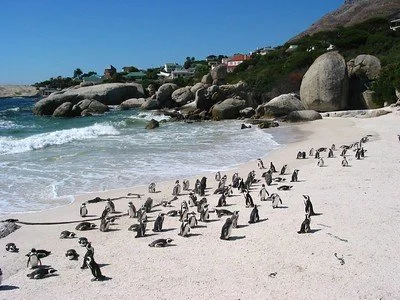
Jackass Penguins Simon’s Town SA. Donnie Ray. CC BY-NC-ND 2.0
Located on the southwestern coast of South Africa, Simon’s Town is a small village surrounded by both the ocean and the mountains. Being so close to Cape Town, Simon’s Town is a beautiful, small port city.
Simon’s Town is on a part of the Cape Peninsula known as False Bay. This area is a Hope Spot, an important and protected area for the ocean’s health. It is a valuable area for wildlife, with various species of birds and marine life coming to live off the area. Large marine creatures such as dolphins, whales, seals and sharks can be found near the town, some close enough to see while kayaking and others closer to Seal Island, 8 nautical miles away from the harbor.
However, much smaller than these other sea creatures is Simon’s Town’s famous attarction –the penguin colony. Penguins are found on every continent in the Southern Hemisphere, all the way from the Galápagos Islands at the equator to Antarctica. Here in this small town in South Africa, one colony of African penguins known as the Boulders Colony regularly comes ashore. Because of the colony, the town is also named Penguin Town. Breeding season for these birds is between February to August, so it is more common to see penguins during those months, but the birds will also come to land while they are molting. People can watch them from afar, and even swim alongside them, as long as they don’t get too close or chase them because the penguins will bite.
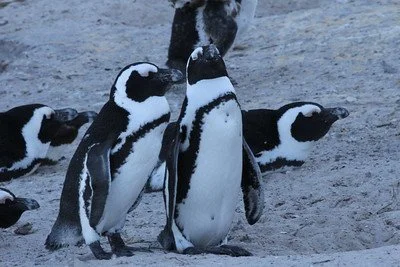
Simon’s Town (9). Joe Pyrek. CC BY-SA 2.0
African penguins–also known as black-footed penguins, Cape penguins, and jackass penguins (the last one because of their unique braying-like sounds)–are an endangered species of penguins, with only around 140,000 penguins in the world. They are small birds, only growing between 24-27 inches and weighing around 8-9 pounds. In addition to the black backs and white fronts, they have a black, parabolic band across their chests, though chicks and juvenile members are brown and gray. The population of this species started declining in the 1980s due to commercial fishing and oil pollution. Though penguins do eat more than just fish, it is the largest part of their diet and commercial fishing has been taking all the species that the penguins eat. Luckily, commercial fishing has been banned in False Bay, so African penguins’ food supply belongs to them and the other sea creatures again. The oil pollution is another serious issue for the birds because the oil will destroy their waterproof feathers, making it hard for them to swim.
There are 27 breeding sites for African penguins, and each of them is a protected habitat, including Simon’s Town, though the town did have to erect fences and boardwalks to prevent the penguins from wandering too far inland and into people’s gardens and backyards. The entire area is a sanctuary for penguins, and keeping them from invading residents’ properties can help people respect the animals, as well as helping the number of penguins to increase.

Katherine Lim
Katherine Lim is an undergraduate student at Vassar College studying English literature and Italian. She loves both reading and writing, and she hopes to pursue both in the future. With a passion for travel and nature, she wants to experience more of the world and everything it has to offer.
VIDEO: Shadows of Bangkok
Bangkok, or Krung Thep, “The City of Angels”, is the capital of Thailand and home to more than 10 million people. The city is a composite of temples, factories, cultural sites, residences and shops. Emerging from political unrest in the 1990s and early 2010s, Bangkok has become a popular destination in its own right; gone are the days when travelers viewed the city as a simple pitstop on the way to Thailand’s beautiful beaches and islands. Escaping “from the typical travel videos that are usually made about Bangkok,” director and scriptwriter Jiajie Yu, based in Barcelona and Madrid, provides a glimpse into the everyday lives of Bangkok’s residents. He showcases “Bangkok in a cinematographic way,” introducing us to the quotidien and silent moments of a city that is usually portrayed as teeming with bright lights and action. Through “faces, alleys, sounds, and music,” Yu creates a subtle yet mesmerizing depiction of Bangkok.
The Islands of Hong Kong: Hidden Oases Next to a Bustling City
Hong Kong is known as an urban center, but just a short ferry ride away from downtown are traditional fishing villages and untamed beaches waiting to be explored.
Read MoreKyrgyzstan: From the Silk Road to the Celestial Mountains
A Central Asian country not known for its tourism, Kyrgyzstan boasts three Unesco World Heritage Sites. Each differs greatly in terms of its cultural significance, all providing different experiences for a traveler.
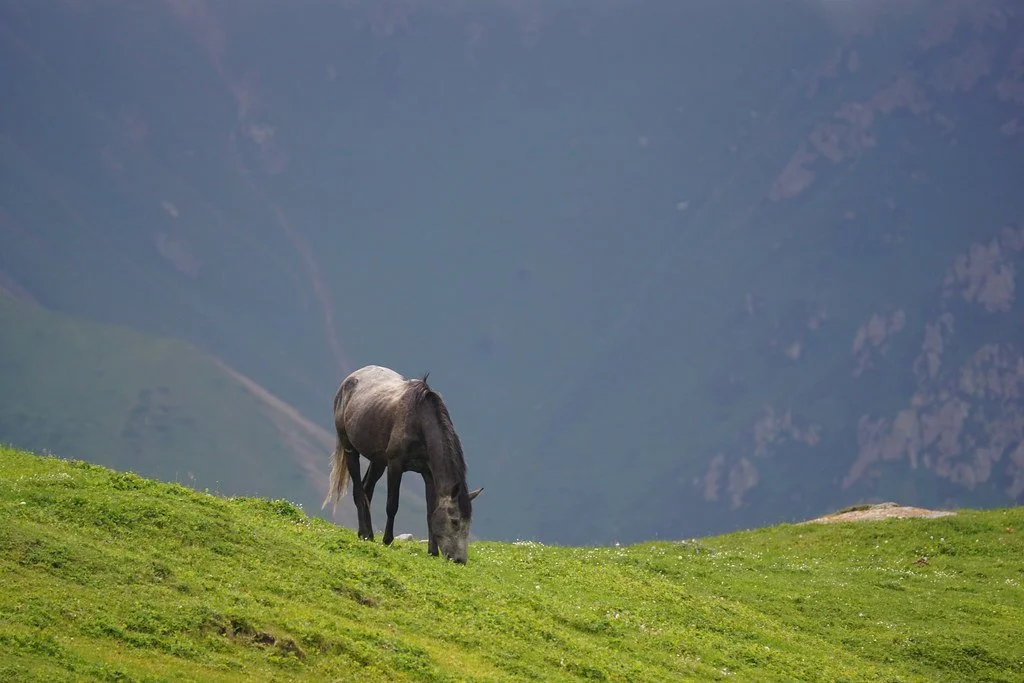
Wildlife in Kyrgyzstan. Charles Fred. CC BY-NC-SA 2.0.
Kyrgyzstan is known for its beautiful scenery; for example, there are two stunning canyons in Kyrgyzstan: the Fairy Tale Canyon and the Konorchek Canyons. The Kyrgyz people lived a nomadic lifestyle well into the 20th century, and aspects of this rich culture are still recognizable in architecture today. For example, a traveler to Kyrgyzstan can see a Bozui house—a type of architecture distinct to the Kyrgyz—and learn how it is built. In terms of the UNESCO World Heritage Sites, the three sites are deeply historically and culturally significant, as well as breathtaking.
1. The Chang'an-Tianshan Corridor of the Silk Road
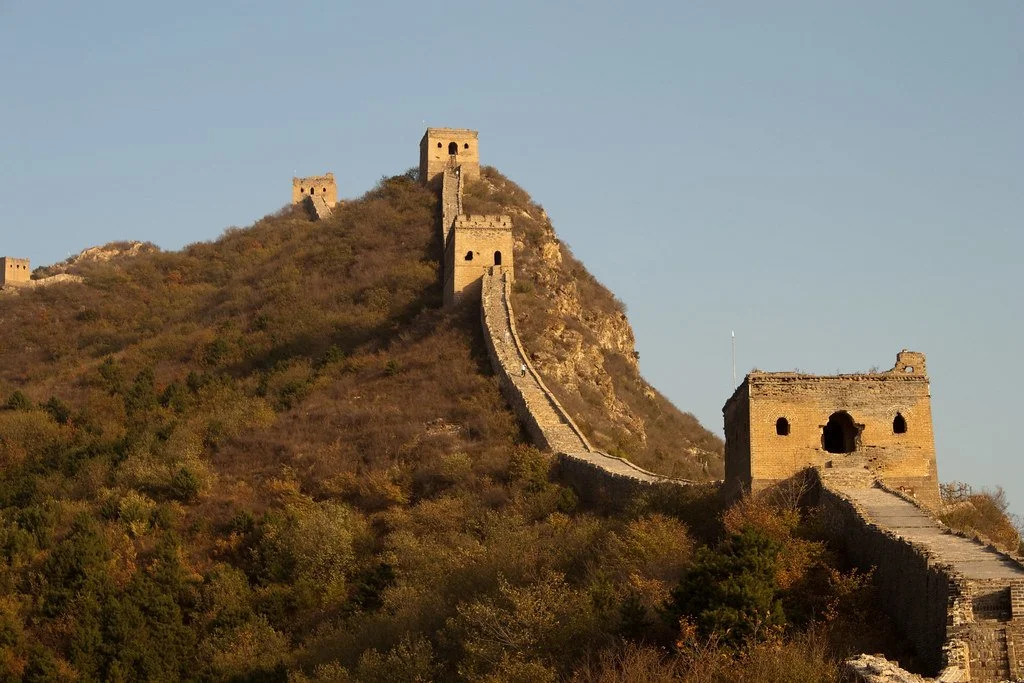
Section of the Great Wall of China in Kyrgyzstan. Matt Barber. CC BY 2.0.
The Chang’an-Tianshan Corridor is a section of the Silk Road, the most used collection of trade routes during ancient times, which primarily connected China with countries in Europe, the Middle East and East Africa. The Chang'an-Tianshan Corridor was named a UNESCO World Heritage Site in June of 2014, due to the historical significance of the Silk Road, which had been used until as late as the 16th century. The Chang’an-Tianshan Corridor in Kyrgyzstan is an especially interesting and important sector of the Silk Road due to its beauty, rocky terrain and historical significance. The Chang’an-Tianshan Corridor was used from the 4th through 16th century to transport mostly luxury goods, with its use beginning to facilitate trade between the Chinese and Roman empires. It was also very difficult to navigate due to its massive peaks and valleys—the climate of which ranges from snowy to arid to humid. In addition to natural sites, the corridor contains many cultural and historical destinations. Parts of the Chang’an-Tianshan Corridor run along the Great Wall of China. Additionally, there are several Buddhist temples, ancient palaces and tombs along the corridor.
2. The Sulaiman-Too Sacred Mountain

View of Sulaiman Too-Sacred Mountain from Osh. Christian Gawron. CC BY-SA 2.0.
Also located on the Silk Road, the Sulaiman-Too Sacred Mountain (located next to the city of Osh) was declared a UNESCO World Heritage Site in 2009. The Sulaiman-Too Sacred Mountain has been regarded for hundreds of years as a sacred destination, primarily in Islam, but also in religions and belief-systems that contain only some aspects of the Islamic faith. The mountain contains two reconstructed mosques from the 16th century, caves with ancient petroglyphs and many other sites for worship—17 of which are still in use today. One of the main non-Islamic groups which has historically worshiped at the Sulaiman-Too Sacred Mountain is the cult of the horse, which is reflected in much of the cave art.
3. The Tien-Shan Mountains

The Tien-Shan Mountains. Bruno Rijsman. CC BY-SA 2.0.
“Tien-Shan” in Chinese means “celestial.” The mountains may have gotten their name from their extremely high peaks; the highest points of the Tien-Shan mountains are also the highest points in all of Kyrgyzstan. The peaks in Kyrgyzstan were officially declared a World Heritage Site in 2016, although the parts of the mountains in China had been named a World Heritage Site in 2013. The Tien-Shan Mountains are mostly known for their diverse wildlife and for being home to several ethnic groups such as the Uyghur people and various Buddhist sects. While the oppression of the Uyghur people is not nearly as severe in Kyrgyzstan as it is in China, in recent years, there have been reports of violence from the Kyrgyz majority towards the Uyghur, as well as governmental interference in Uyghur political organizing. Despite Kyrgyzstan’s treatment of the Uyghur people, the Tien-Shan Mountains remain the home of many Uyghur people in the country. The mountains are covered in glaciers, many of which are threatened by climate change. This could change the entire geological landscape of the Tien-Shan mountains. Wildlife found on Tien-Shan include snow leopards and the Himalayan snowcock. Out of the three World Heritage Sites in Kyrgyzstan, the Tien-Shan Mountains is the most focused on the nature of Kyrgyzstan as opposed to the history featured in the other two sites.

Calliana Leff
Calliana is currently an undergraduate student at Boston University majoring in English and minoring in psychology. She is passionate about sustainability and traveling in an ethical and respectful way. She hopes to continue her writing career and see more of the world after she graduates.
12 Local Cuisines You Can Find Around the World
Tasting local foods is one of the most interesting things about travel. Learn about some hallmark culinary traditions of these diverse regions.
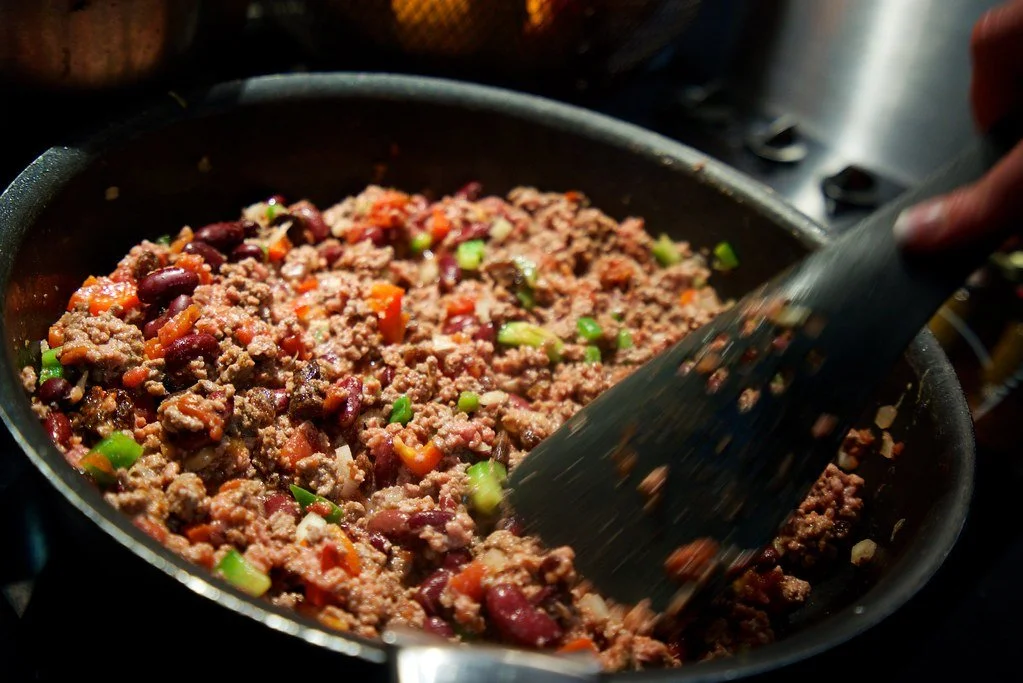
Meat and veggies simmering in a pan. LoKan Sardari. CC BY-NC-SA 2.0.
My favorite part of traveling is exploring and tasting local food dishes with culturally significant roots within the region I’m visiting. When I traveled to London, I explored the local pubs and decided fried fish wasn’t that bad. The local aspect of dishes excites me, and I would much rather dine in a family-owned restaurant than a tourist trap.
This serves as a bite-sized serving of the infinite variety of food on this massive planet—not a definitive recounting of the delicious and culturally significant dishes on Earth, but rather these regions serve as starting points that lead to culinary exploration.
1. Kanto Region - Japan
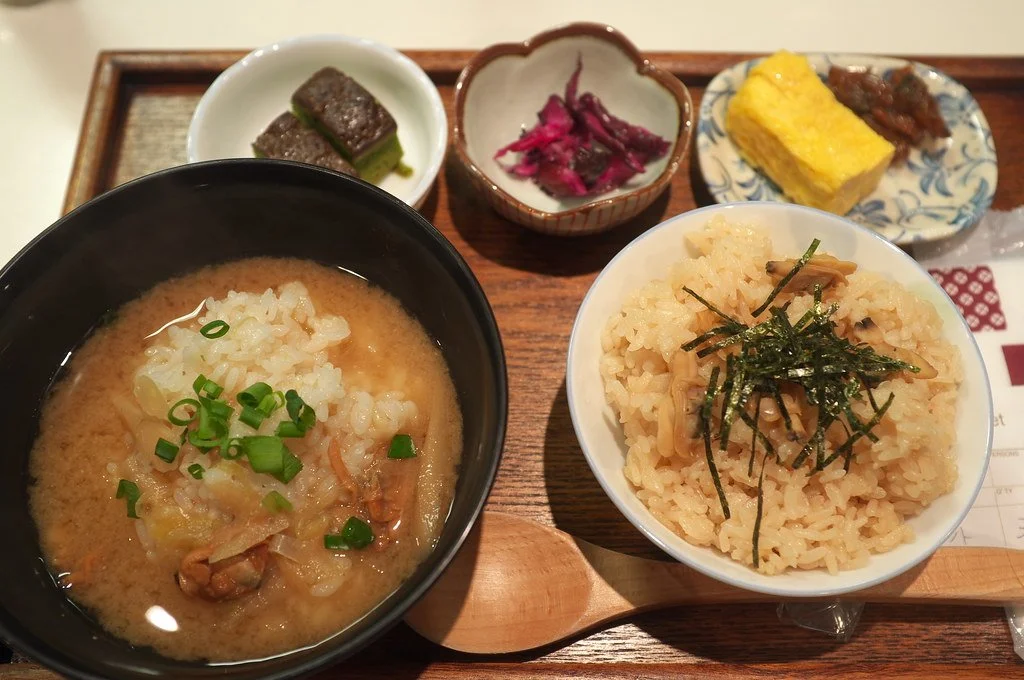
Fukagawa meshi and other side dishes. Nekotank. CC BY-ND 2.0.
Japan is divided into eight regions, each of which has its own culturally significant dishes. The Kanto region is home to the capital city of Tokyo, and the flavors are stronger than the other regions’ food. Fukagawa meshi is a dish that originated in the Edo period (approximately 1603-1867) and consists of clams and leeks cooked in a miso stew. The dish was a product of abundant fishing in the area and quickly became adopted by locals. The Kanto region became a hub for industry during the Edo period, and the cuisine naturally started evolving to incorporate other region’s influences.
2. New South Wales - Australia
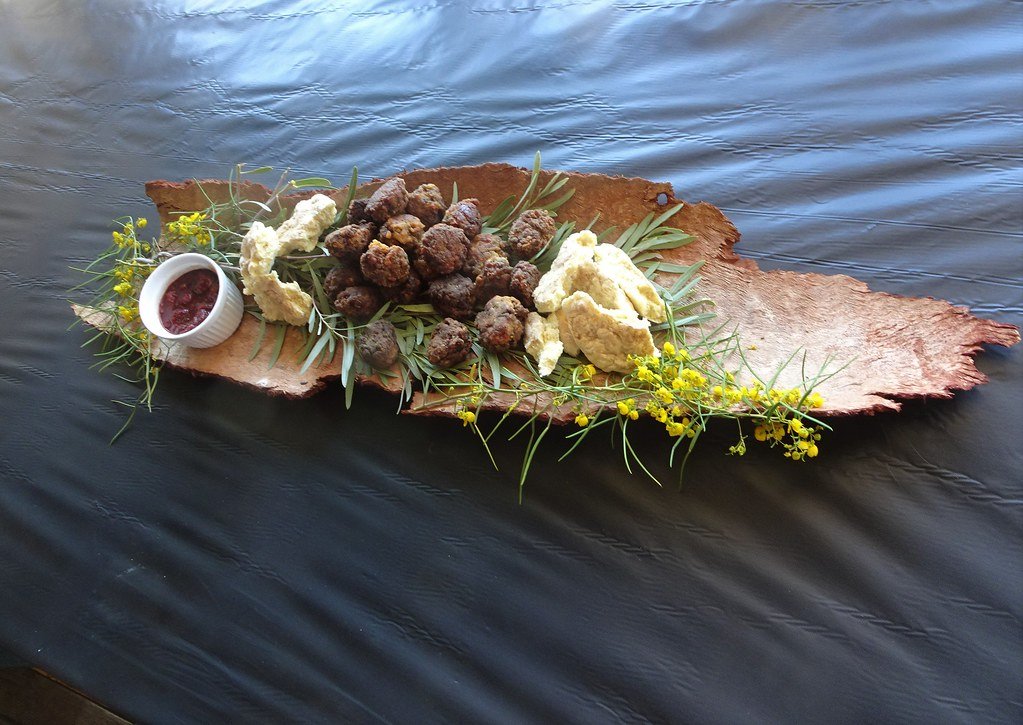
Kangaroo Meatballs with quandom jam. by denisbin. CC BY-ND 2.0.
Prior to the 18th century, the Indigenous population of Australia subsisted on hunting local wildlife, including kangaroos and wallabies. Once Australia became a continent-sized prison for the British Empire, the cuisine quickly modified to have influences of the colonizer diet. Today, Sydney cuisine reflects the multi-cultural population that lives there. Take-away foods and fast food are staples of Australian culture, and Sydney specifically is a melting pot of local and international foods. Fish and thick cut fries are common. The cuisine of Australia is heavily influenced by Western diets but still utilizes ingredients that Aussies connect with, including eating their national animal, the kangaroo—a dish low in fat, delicious, and popular in local restaurants.
3. Phobjikha Valley - Bhutan
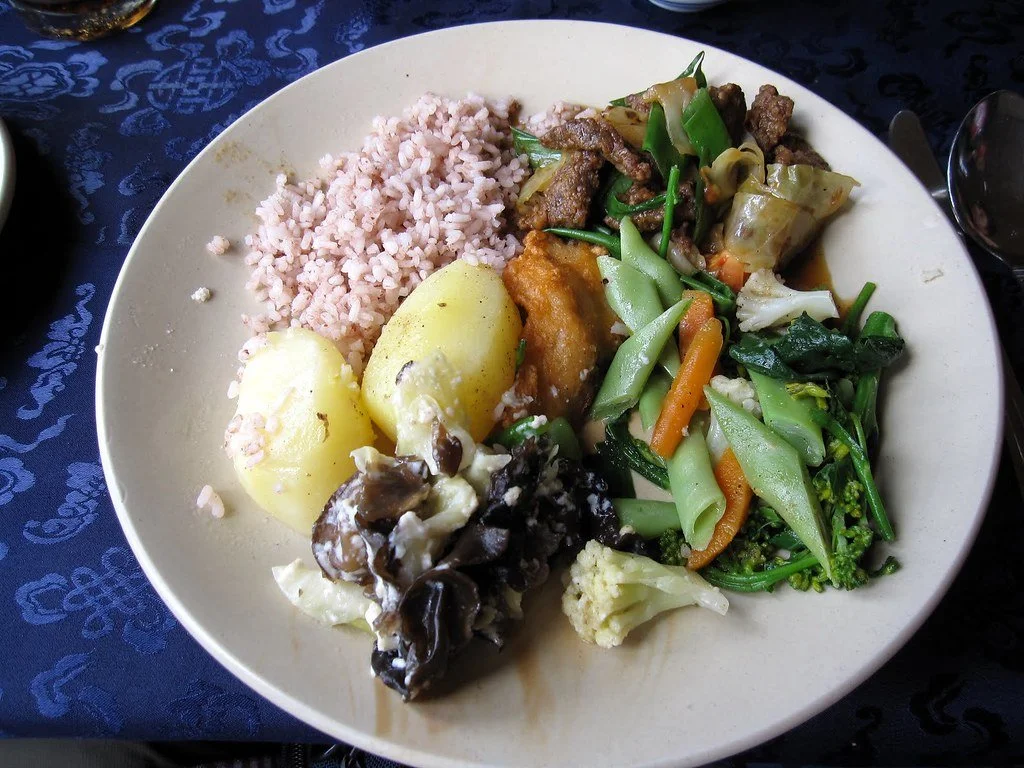
Bhutan dish with potatoes and vegetables. By rapidtravelchai. CC BY 2.0.
This region is home to many rich cultural events, such as the Black-Necked Crane Festival, which honors one of the region’s most culturally significant animals. This festival is held annually on Nov. 12, where cranes can be seen flying at high altitudes, accompanied by traditional dancers dressed in black-necked crane attire. The local cash crop is potatoes, which are the main ingredient in kewa datshi, a traditional dish prepared by thinly slicing potatoes and sauteeing with cheese, butter and chiles. The dish is relatively new to the region’s culture; in fact, potato consumption in Bhutan was near non-existent until the 1970s. Until then, it was mainly used as an export crop. Due to the region’s altitude and climate, insects do not interfere with the local’s potato crops, which eliminates the need for harmful pesticides.
4. Metsovo - Greece
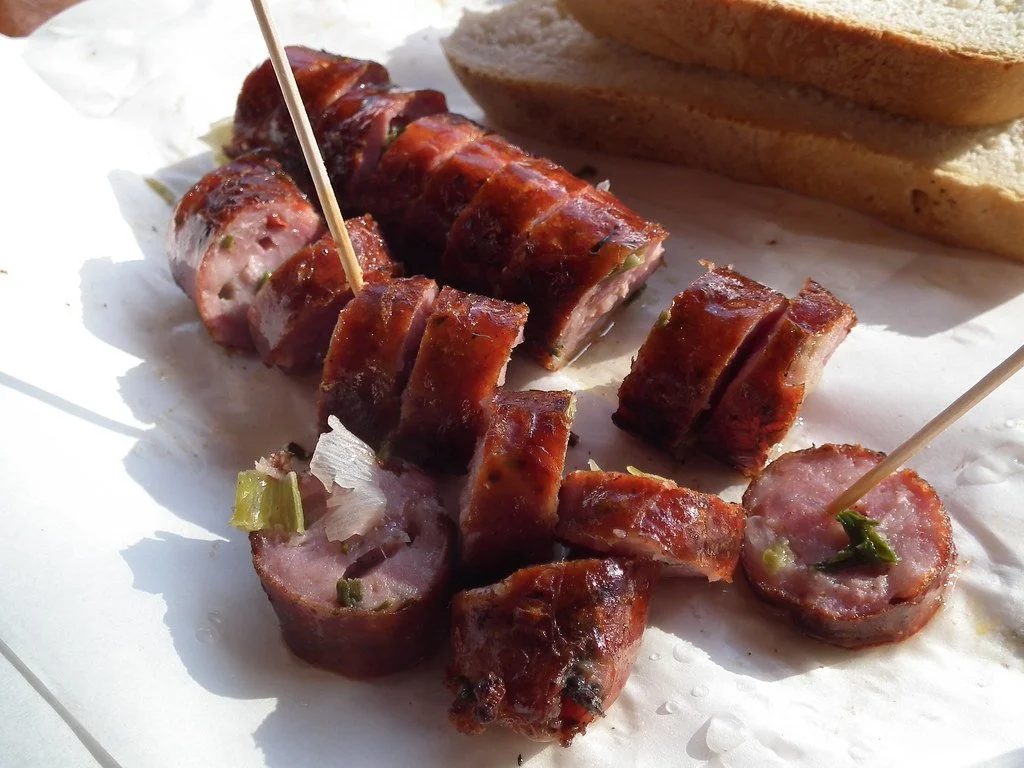
Skewered sausages. PACO POMARES. CC BY-NC-SA 2.0.
Situated to the north of Epirus, Greece, this gorgeous small town is home to some of Greece’s most delicious industries: wine and cheese. The history of this town is fascinating, with it being the center of production for sheep wool traded as far as Northern Africa during the 17th and 18th centuries. The region is most popular during the winter season for its spectacular mountains and beautiful streams. Venturing off the beaten path, one can find themselves entranced with gorgeous forests, filled with statues, 19th-century architecture and natural springs supplying fountains. The local cuisine has an emphasis on dishes with rich flavors like sausages and ruffage, as well as a nice glass of wine to pair with it. Extra virgin olive oil is a heavily used condiment that could be added to multitudes of things, including toasted bread and other dishes.
5. Chengdu - China
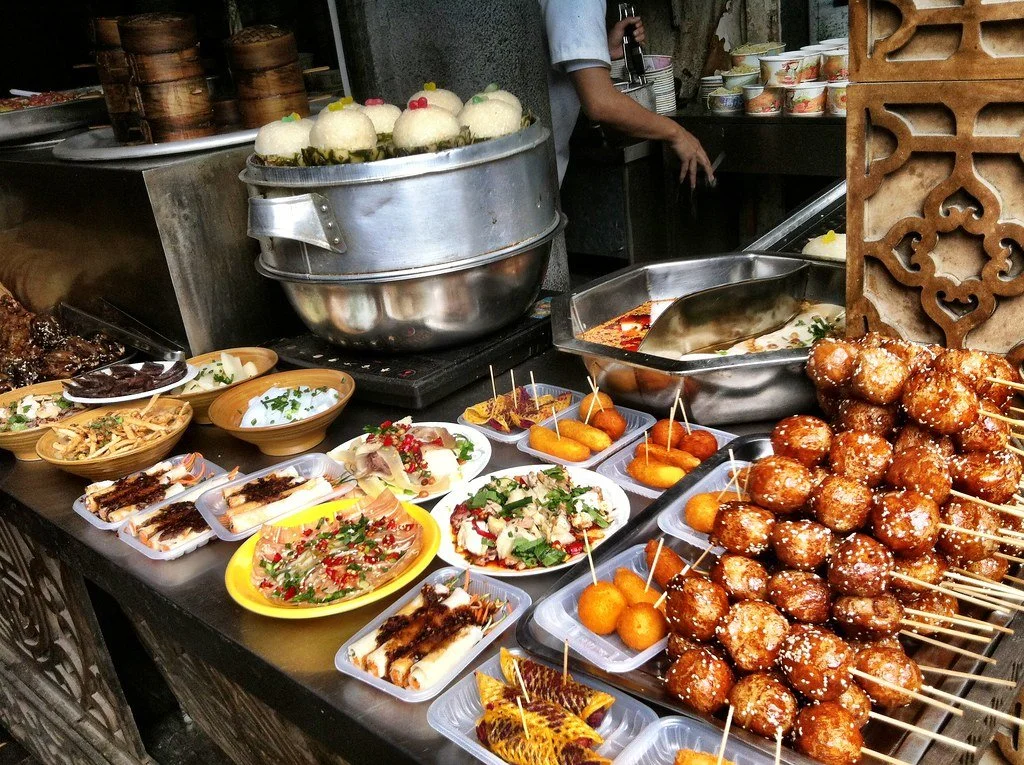
An assortment of Chengdu Food. sinosplice. CC BY-NC 2.0.
Chengdu, China is a so-called “Party City,” according to the Los Angeles Times. While it is true that Chengdu has more teahouses and bars than Shanghai, it’s also home to many local dishes, specializing in chiles and peppercorns. One dish, dan dan mein (which Chengdu is credited for making), utilizes both in order to achieve a very spicy broth. Chengdu’s local tea culture is also very important, since the city was once a starting point for the Silk Road, offering many opportunities to create and enhance cultural staples. Although not culinary-specific, the city is a hotspot for LGBTQ+ travelers and natives, combining influences from the local party scene and the Queer community.
6. Soca Valley - Slovenia
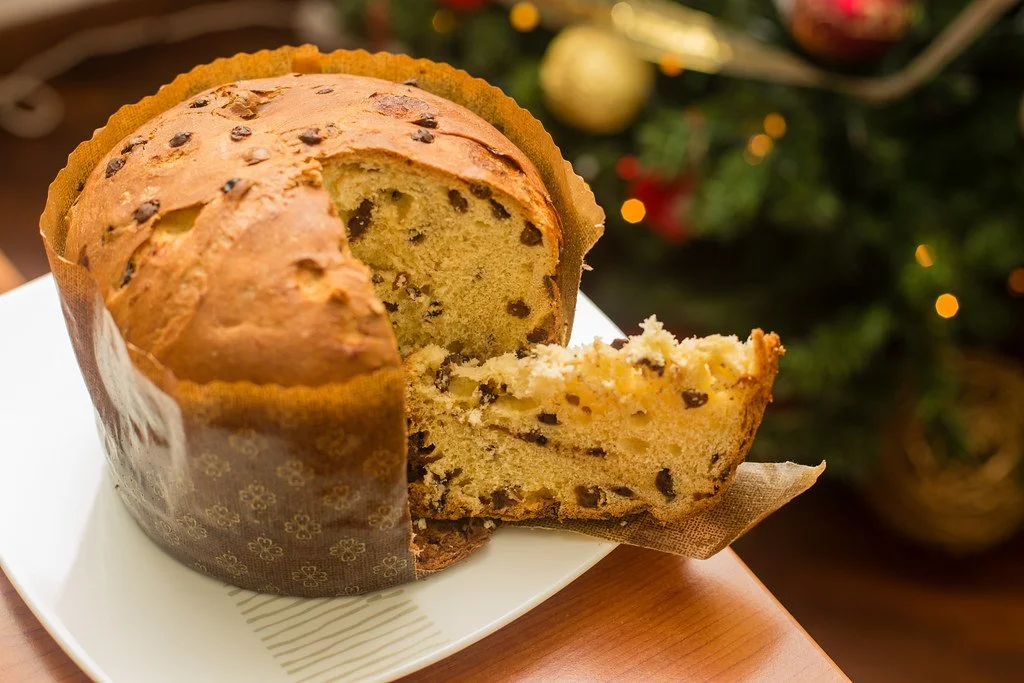
Panettone with chocolate chips. Nicola since 1972. CC BY 2.0.
Slovenia is right in the center of four surrounding cultural influences; the Balkans, Alpines, Mediterranean and Pannonian flavors are all present in Slovenia’s dishes, and each is broken down into distinct ‘genres’ of food. The Alpine mountains are home to the cows and sheep that graze and produce milk, used for cultural dishes like žganci (literally translated as mash). The expansive meadows let honey bees run rampant to produce fresh honey. To the east of Slovenia, there is a vast amount of wheat fields, used to prepare a litany of different dishes and thermal springs that allow for fresh drinking water. The most popular fish is sea bass, and according to popular sentiment in the region, “a fish must swim three times, in water, oil and wine.” By utilizing hard harvested salt, Slovenia’s population takes its local cuisine very seriously.
7. Cape Town - South Africa
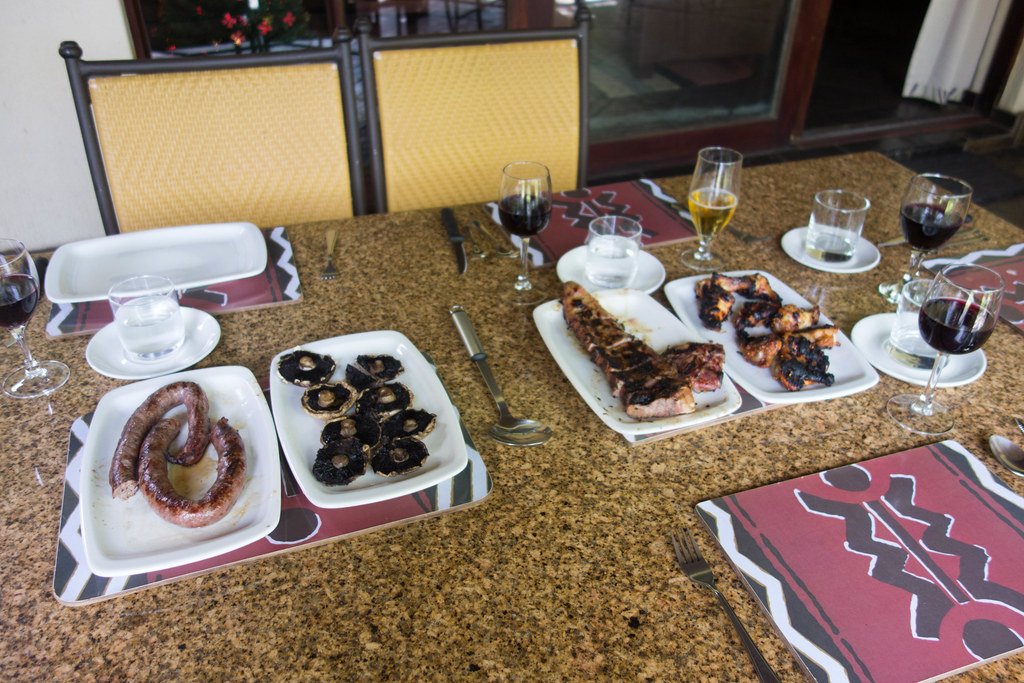
Braai at a meal. Kent Wang. CC BY-SA 2.0.
South Africa’s cuisine can be summed up with the term “melting pot,” since this region contains a mixture of Asian, European and Indigenous cultures within their food. Braai, an almost universally utilized meat preparation method in Southern Africa, is prepared by digging a firepit, providing meat and setting it ablaze. The practice is adjacent to America’s cultural touchstone of “barbecue,” although a key difference is that braai fires stay lit throughout the celebration as participants enjoy everyone’s company. Indigenous populations prioritized beef as a high-value food, and today, many South Africans still utilize foods from their Indigenous past. Colonialism severely altered the landscape of South African cuisine by bringing in an enslaved workforce from across Asia, which in turn brought their own cultural roots. The introduction of spices like nutmeg and allspice and the influence of European culture altered the cuisine further. Fermented beer is also popular, with a common practice being offering someone homemade beer as they enter your house.
8. Sicily - Italy

Italian cassatelle drizzled with chocolate. JohnDiP. CC BY-NC-SA 2.0.
Across the Mediterranean is the island of Sicily, a region known for its famous seafood dishes, sweets and, of course, pasta. The island restaurants have the opportunity to catch fish from the surrounding Mediterranean, specializing in tuna and freshly caught sardines. Pasta con le sarde is one of Sicily’s most popular dishes, utilizing fresh fennel seed that grows abundantly in Italy and the sardines from the surrounding sea. The dish also reflects the region’s multicultural influences, such as including raisins and pine nuts adapted from North American travelers. Sicily’s sweet side is also on full display, with cannoli being a centerpiece in Sicilian culture. Made with sweet ricotta filling, the crust of the cannolis is made from a fried pastry.
9. Andes - South America
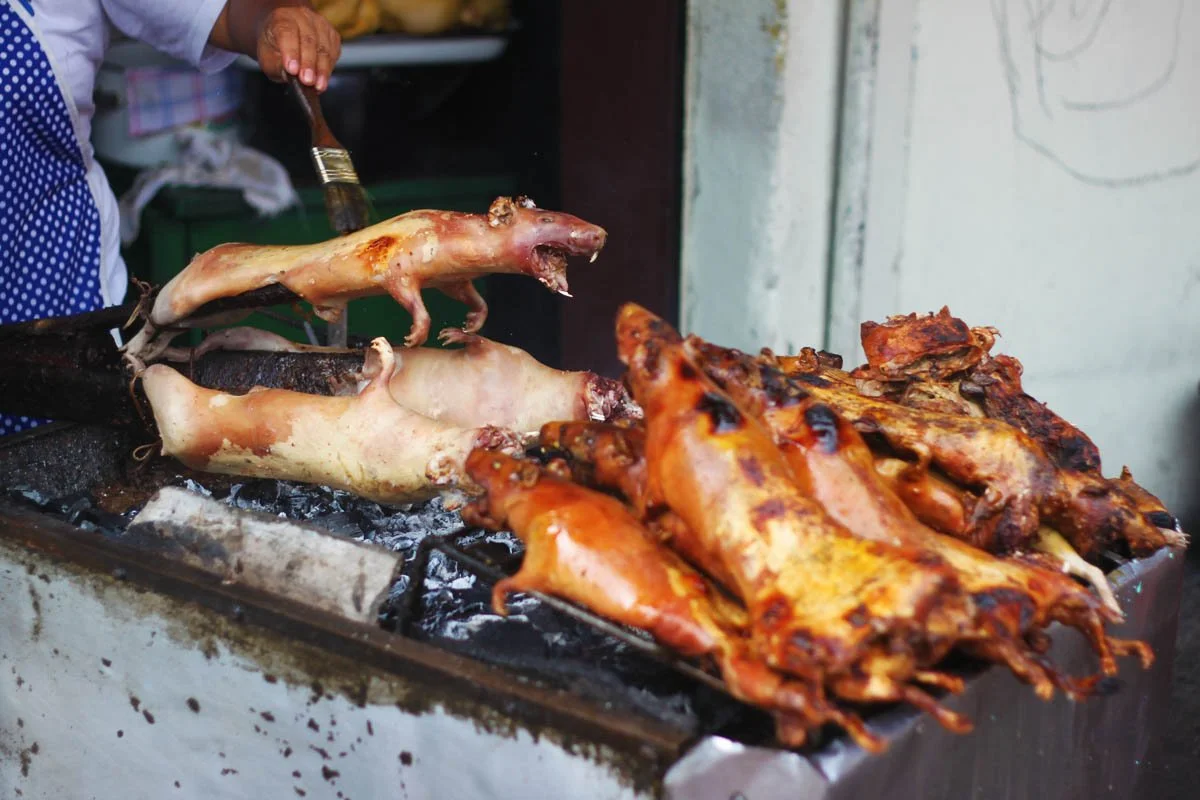
Cuy on skewers. Nestor's Blurrylife. CC BY 2.0.
The Andes Mountains are home to communities of Indigenous peoples who have worked to preserve traditional flavors and techniques. The foodstuffs of the Indigenous peoples were incredibly versatile. Corn and potatoes are still some of the most important aspects of Andes cuisine, accompanied by traditionally used meats such as llama and guinea pig. Another word for a guinea pig is “cuy,” which has been a staple in Peruvian culture since the Incas and is used on important occasions.
10. Prague - Czech Republic
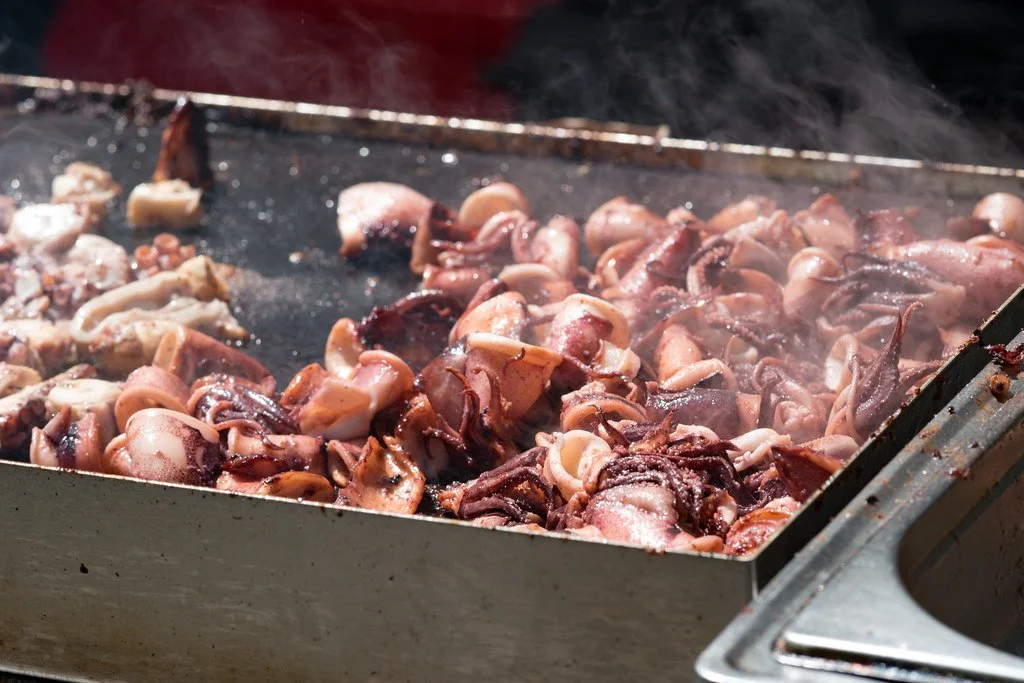
The capital of the Czech Republic harbors many cultural influences within its dishes. Italian food has touched the landscape of cuisine in Prague, but there are still many delicious dishes with deep Czech roots. Czech cuisine doesn’t have lots of vegetables in its arsenal of ingredients, and the foods of Prague are “delicious, comforting, very filling and addictive.” Steak tartare, a dish that tops “Taste of Prague’s” list of snacks that pair well with beer, is raw minced beef served with an egg or condiments. Sausages are a very common food in Prague, as well as the greater Czech region, overflowing into Germany.
11. Central Ghana
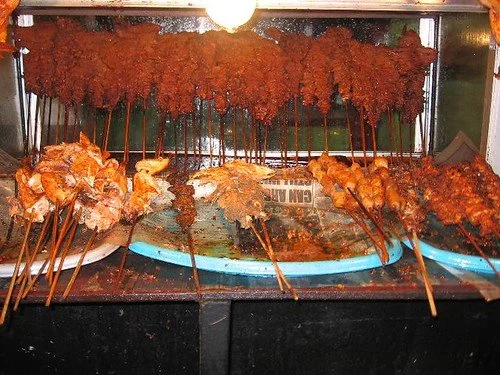
Western Africa’s recipes are still being prepared in deeply culturally important ways. Dishes are typically very starch heavy, accompanied by heavily seasoned meats, like beef, fish and the most dominant form of red meat in this region, goat. Traditionally, West Africans didn’t eat much meat and instead opted for dishes with natural oils, but now locals mix various meats together in different aspects of dishes. Suya is also a very popular street food, taking meat and mixing it with spices, resembling a kebab flavor on a stick. Prior to Ghana’s independence in 1954, residents boycotted colonial goods, including tinned meat and biscuits, in an effort to lower the cost of living. This action, along with a demonstration at the governor’s estate, set the stage for Ghana to be the first Sub-Saharan independent country. Ghana is not concerned about dictating a national food, rather it embraces the diversity of the many cultural influences within the country.
“Ghanaians expect to encounter diverse ethnic foods when traveling through different ecological zones within their country,” said researcher Brandi Miller in her paper, “Food and Nationalism in Independent Ghana.” “They welcome this difference and consider it a source of national strength and an indication of their unique national character, which embraces diversity.”
12. Tropics - South America
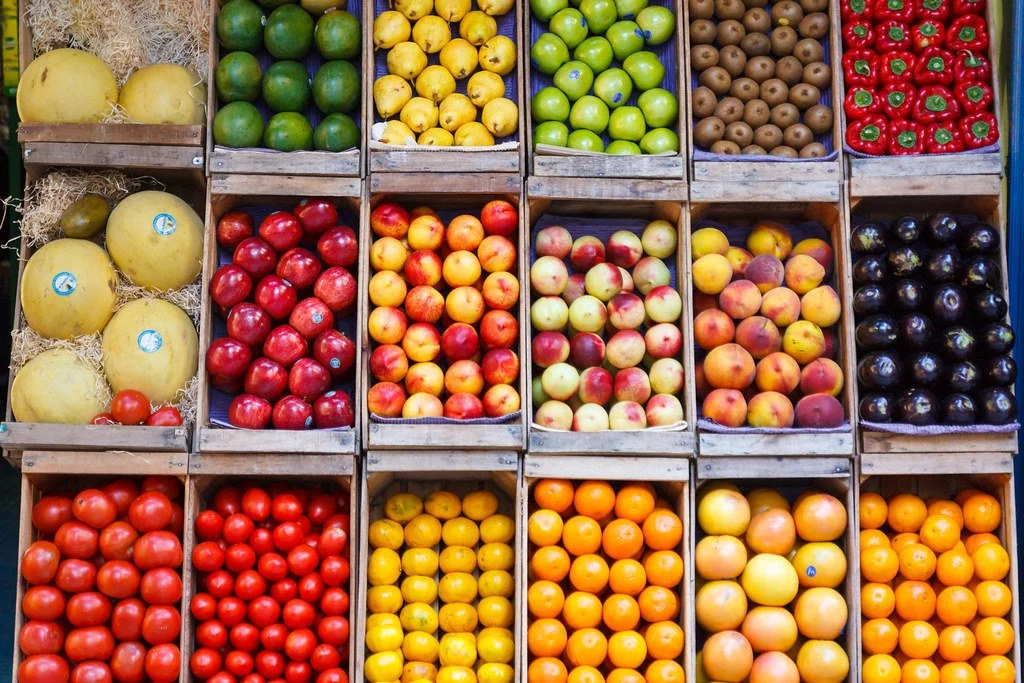
Fruit in a market. Nico Kaiser. CC BY 2.0.
On the beaches of South America, some so-called ‘exotic’ fruits are common staples of local culture. Pineapples, mangos, papayas and dozens others can be found in the tropical forests within the region. The climate allows for a dizzying variety of local agriculture to be used in recipes, such as tostones, which are popular Latin American twice-fried sliced plantains. The Amazon Rainforest is also utilized to enhance local flavors, utilizing meats from turtles and capybaras to use for local cuisine. Nearer to the coast, seafood dishes like ceviche are common to see enjoyed on a sunny day on the beach. Other than fish and fruits, there is a wide variety of vegetables that are grown in the tropics that influence local cuisine, including corn, beans and sweet potatoes.

Clayton Young
Clayton is an aspiring photojournalist with a Bachelor's in Liberal Studies with a minor in History from Indiana University - Bloomington. In his free time, he enjoys hikes, movies, and catching up on the news. He has written extensively on many topics including Japanese incarceration in America during World War II, the history of violence, and anarchist theory.


Discover Cambodia’s Beauty Despite Dark Political Past
Though still recovering from Pol Pot’s regime, Cambodia contains numerous sites and monuments worth traveling for.
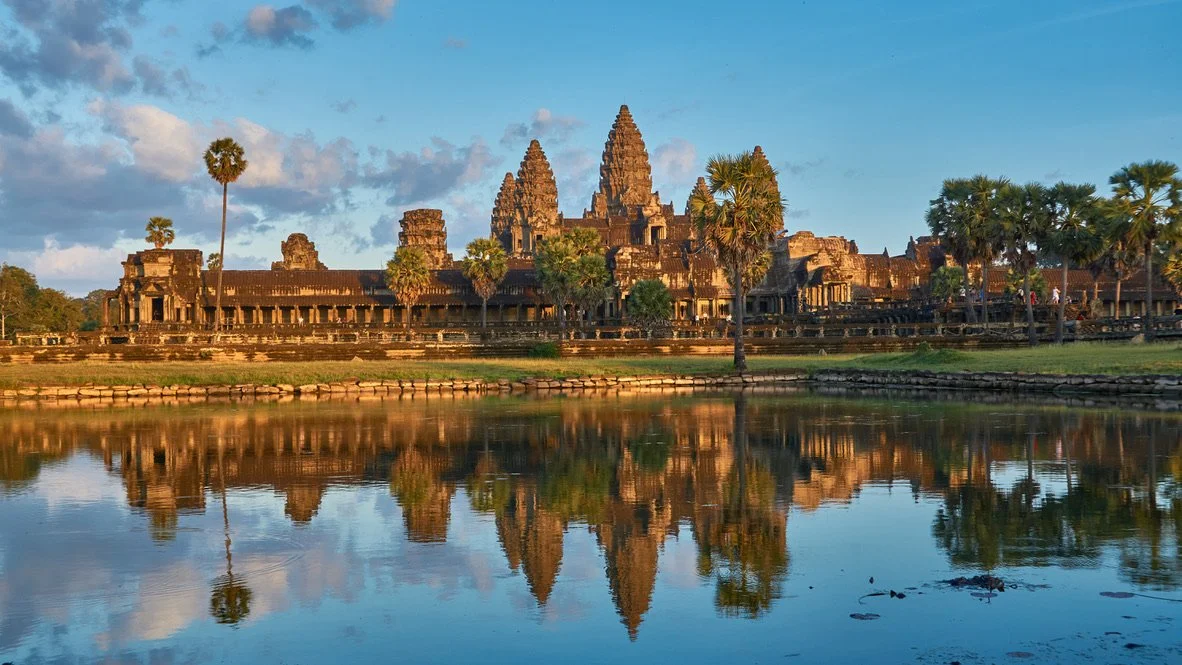
Angkor Wat Reflection. Radek Kucharski. CC BY2.0.
Cambodia is known for its massive and brilliantly crafted religious temples, vast untouched forests and vibrant city life. What some may not know is Cambodians have and are still recovering socially, economically and politically from one of recent history's most horrific events: the reign of the Khmer Rouge.
Under the rule of dictator Pol Pot, the Khmer Rouge was a Marxist regime created in 1975. Whether from execution, starvation, exhaustion and disease, more than 2 million civilians died during the genocide. Despite the defeat of the Khmer Rouge on January 7, 1979 by the Vietnamese military, Cambodians struggled to regain their political and economic prosperity. General poverty rates have lingered around 35% which is a great improvement from the 50% at the initial end of the events. Those who experienced the genocide are now be in their 50s, and thus Cambodians are still living with the traumatic experiences they went through.
With that said, the Southeast Asian country has shown great perseverance and progress towards a bright future. Now, Cambodian citizens celebrate their traditional cultures and welcome outsiders to experience the atmosphere and history of their country. Here are a few of the most popular spots.
1. Angkor Wat
Said to be the largest religious monument in the world, Angkor Wat is a vast Buddhist temple that touches over 400 acres of land and comprises over 1,000 buildings. Cambodia is home to this cultural wonder of the world and is a destination that provides both visual beauty and an introduction to Cambodia’s rich history and culture.
Angkor Wat has five lotus-like towers rising 65 meters up, being the first part of the temple visitors tend to notice. The awe-inspiring scenery continues with carvings throughout the inside of the temple. Celestial dancers, known as apsaras in Khmer (Cambodia’s national language), helped reintroduce Apsara dance in Cambodia. Carvings of war, spiritual journeys and everyday life explain Cambodia’s hardships and relationship with culture and religion. Ta Prohm, also known as the Tomb Raider Temple due to its appearance in the 2001 film, and Angkor Thom are other beautifully architected sights nearAngkor Wat.
2. Banteay Srei

Banteay in Angkor. Juan Antonio Segal. CC BY 2.0.
Known as the Temple of the Women, Banteay Srei is sacred in Angkor. Though it is much smaller in size than Angkor Wat, it contains some of Cambodia's most delicate carvings. Images of women holding lotus flowers and memorable stories of the Hindu religion are depicted here. Banteay Srei is still a place for women to visit and observe to feel inspired and appreciated, as well as a place where anyone can experience its beauty and history.
3. Bayon
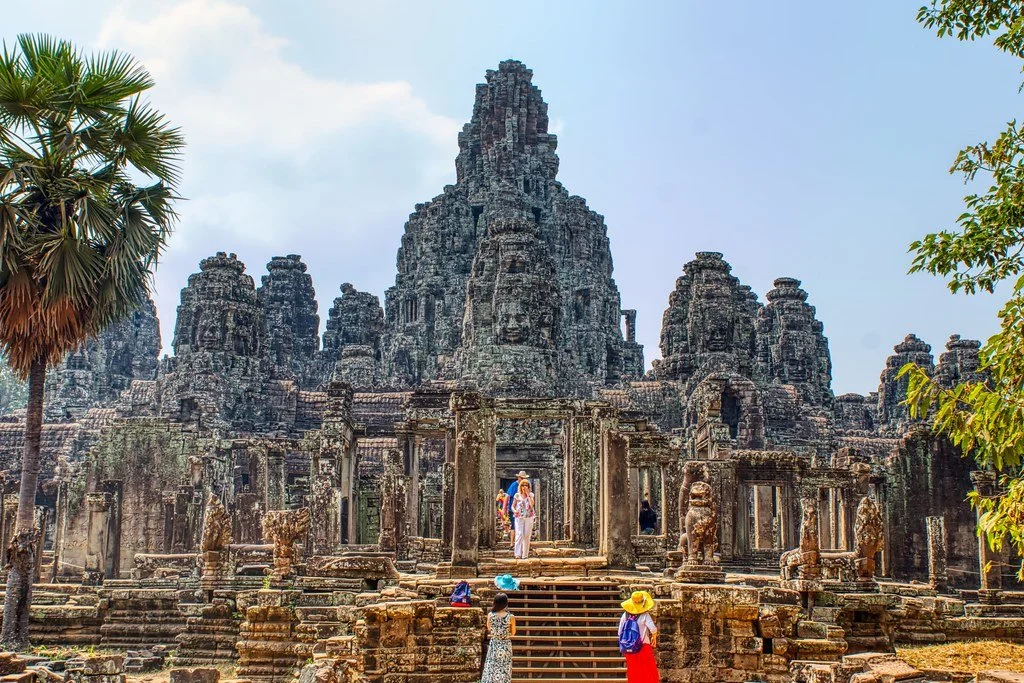
Bayon Temple Ruins in Cambodia. Uwe Schwarzbach. CC BY-NC-SA 2.0.
This Buddhist Temple is home to 216 smiling, peaceful faces carved into towers. Numerous other carvings can be seen representing the experiences of the Khmer people. Bayon temple allows visitors to understand the goals and journey of the Khmer Empire and is a great temple to visit if you are interested in Buddhism and appreciating Cambodia’s past.
4. Phnom Penh
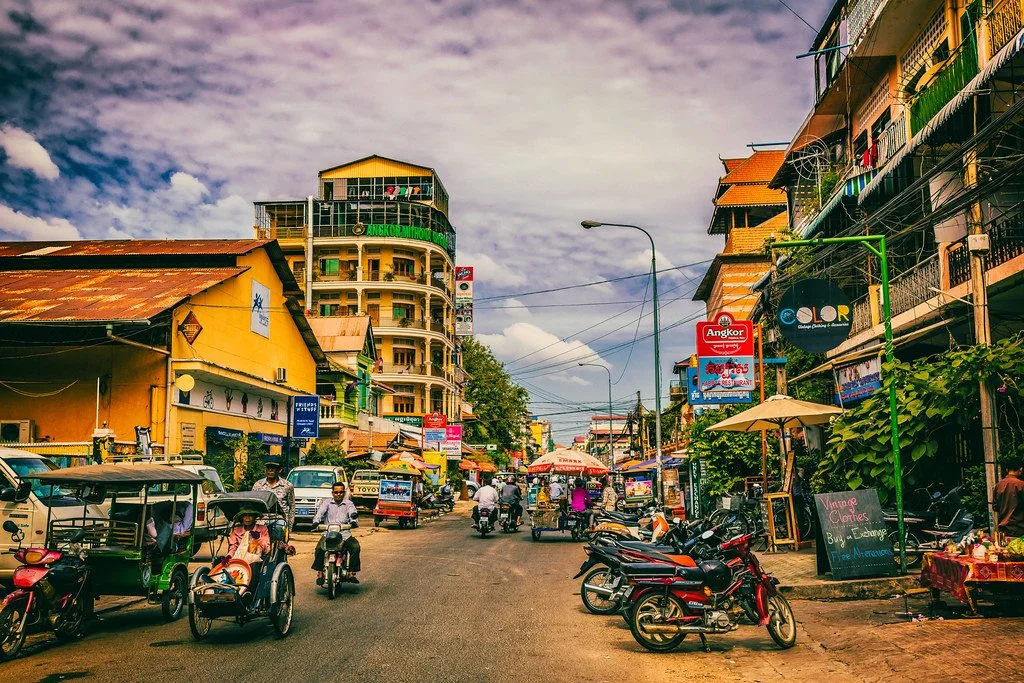
Bustling Phnom Penh. Baron Reznik. CC BY-NC-SA 2.0.
Phnom Penh is the capital of Cambodia andhome to vibrantly colored buildings, tight streets with motorbikes, friendly locals and more architectural beauty. A main mark of the Cambodian experience, Phnom Penh is affordable and easy-going—a great way to submerge yourself in the country's culture. here are some upscale restaurants and locations, but overall, Phnom Penh remains its gritty, lively and romantically chaotic self.
5. Krong Siem Reap
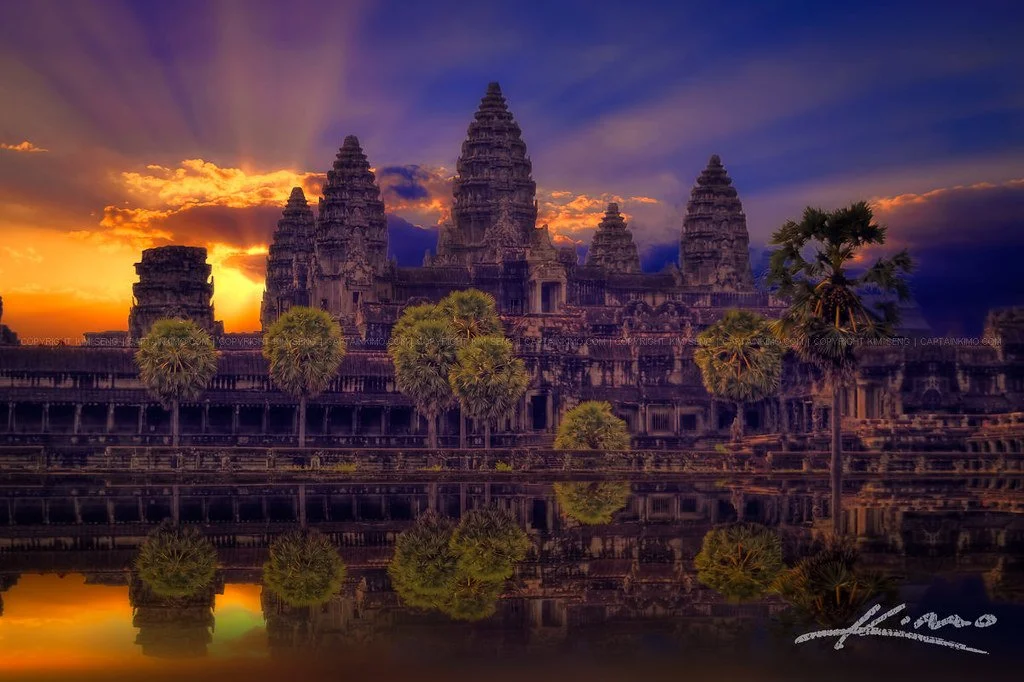
Angkor Wat in Krong Siem Reap. Kim Seng. CC BY-NC-ND 2.0.
Krong Siem Reap is another other major city destination in Cambodia. Krong Siem Reap is a staple of Cambodia’s religious history, being home to Angkor Wat, the ruins of Banteay Srei and Ta Prohm. Locals treat travelers as if they have been life-long friends, and travelers will get the chance to explore much of Cambodia’s Buddhist history as long as remaining respectful.
Krong Siem Reap is also known for its exquisite food scene. Cafes offer coffee, teas and delicious local food dishes with some even offering vegetarian and vegan-friendly options. Restaurants to grab an authentic and budgeted meal are around every corner.
6. Kirirom National Park
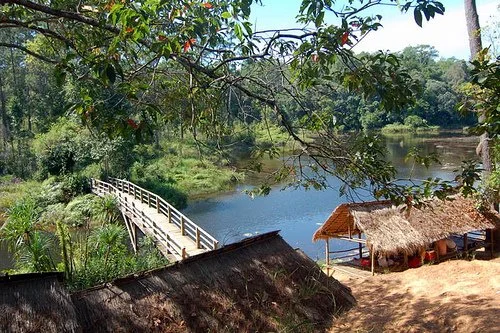
Kirirom National Park Rest Area. Arie. CC BY2.0.
Located mostly in Phnom Sruoch District, Kirirom National Park is covered with deep forestry and high elevation. Kirirom, meaning “Mountain of Joy,” is loved for its high elevation pine forests and many glistening waterfalls. Along with vast, isolated hiking trails, the endangered sun bears, pileated gibbons and tigers can be found living in the forests.
7. Koh Tonsay
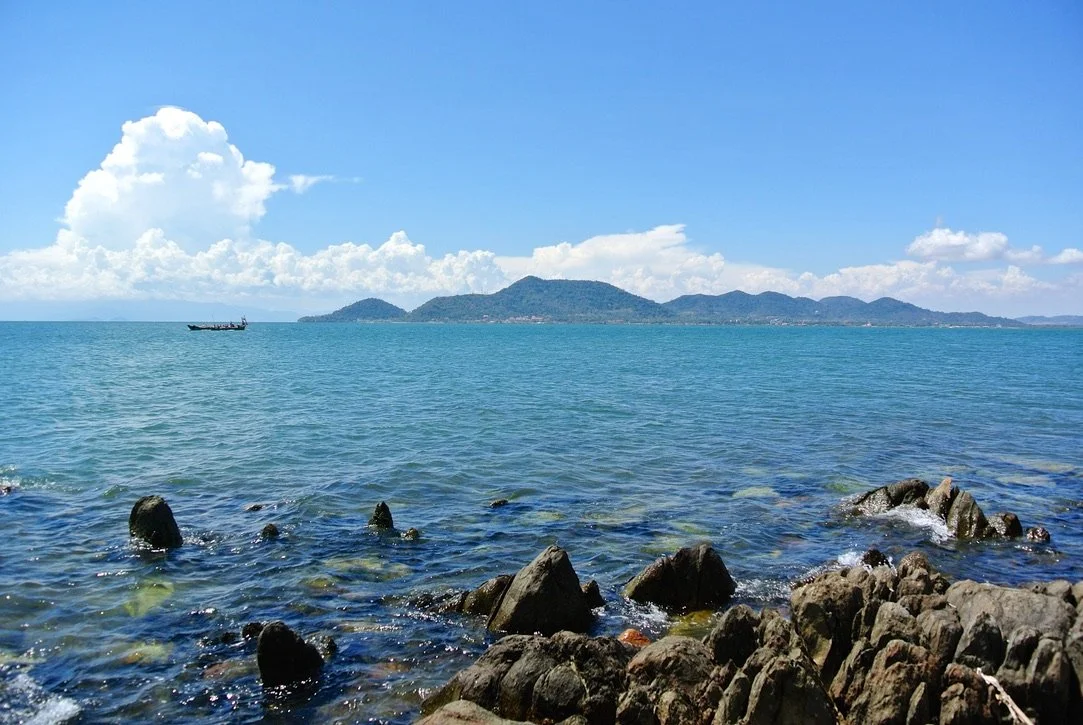
Located on the country's south coast in the Gulf of Thailand, Koh Tonsay can be translated as “Rabbit Island” and received its name because it houses the furry little creatures. It is a relatively quiet coast with a more rustic beach style. While tourists tend to visit other parts of the Cambodian coast more influenced by Chinese businesses, Koh Tonsay remains a sliver of true Cambodian land. It is not as flashy as some other beaches on the coast of Cambodia, but Koh Tonsay offers a unique and isolated beach experience.
8. Bousra Waterfall
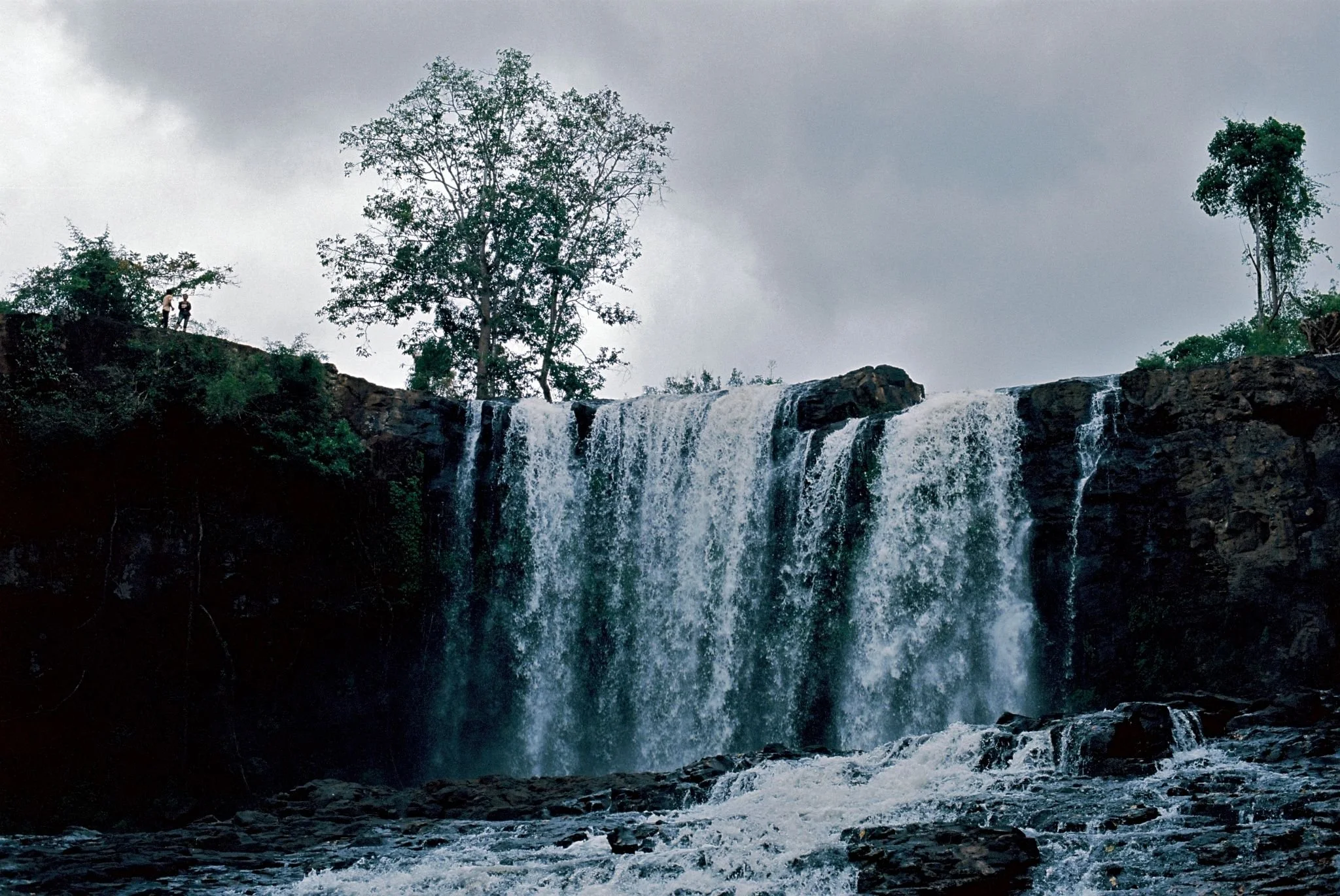
Bousra Waterfall. Lucien Tan. CC BY-ND 2.0.
Located just outside of Sen Monorom, the Bousra (also spelled Bou Sra and Busra) waterfall is a three-level natural wonder offering viewing platforms at different heights and access to its base, where visitors can get misted and explore the powerful waters.


Haleigh Kierman
Haleigh is a student at The University of Massachusetts, Amherst. A double Journalism and Communications major with a minor in Anthropology, she is initially from Guam, but lived in a small, rural town outside of Boston most of her life. Travel and social action journalism are her two passions and she is appreciative to live in a time where writers voices are more important than ever.
VIDEO: The Way of Manaslu, Nepal's Eighth Tallest Mountain
Arvīds Barānovs, award winning photographer and head of Eaglewood Pictures, explores Manaslu, a mountain within the Nepalese Himalayas. Manaslu, at 8,163 meters (26,781 feet), is the eighth highest mountain in the world. The mountain stands proudly over Budhi Gandaki valley. At the peak of the mountain, one can gaze upon the adjacent Annapurna mountain range and Tibetan plateau. As one climbs the mountain, they will encounter many small tea houses along the way. Climbers often stop there to have a cup of tea and eat dal bhat, a staple dish of rice and lentils. Manaslu is inhabited by the Tsum and Nubri peoples, whose ways of life are rooted in Buddhism and Tibetan culture. The local people live traditionally and farm barley, maize and oats, in addition to cultivating nuts and fruits.