
A self-taught sculptor’s secret garden.
Read MoreA Village in India Fights Female Infanticide and Deforestation
How a village leader changed the perception of women in India, one tree at a time.
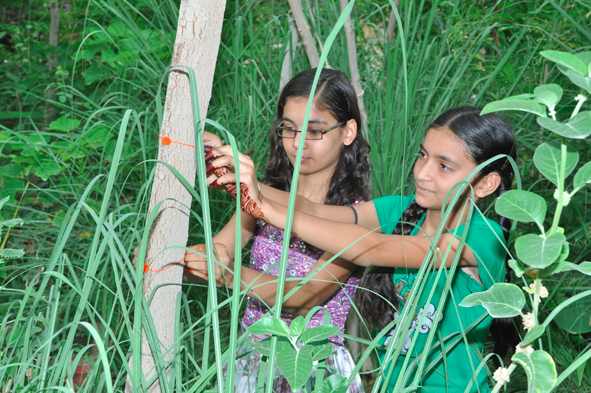
Girls connecting with the trees in Piplantri. Photo provided by Piplantri Village.
Every time a baby girl is born in Piplantri, India, the village gathers together to plant 111 trees in her honor. The custom began a couple of years ago, when former village leader, Shyam Sundar Paliwal was forced to ponder the fleetingness of life after his daughter tragically passed away at a young age.
Piplantri and other villages in the area were facing two crises that greatly affected the quality and value of life. One issue was social: a high rate of female infanticide. Traditionally, female births were considered a burden on the family. The parents of a girl are expected to provide a dowry to her husband’s family, which can be a big financial undertaking. Additionally, daughters were married off well before the age of 18, before they could obtain an education.
Piplantri and its surrounding villages faced environmental hardships as well. The villages in the Rajasthan area are suffering from deforestation with the increase of marble mining.
Paliwal decided to confront these issues with a plan that can be broken down into three words: “Daughter, Water, Trees.”
To counter the pessimism around the birth of a baby girl—and improve the lives of the daughter and her family—the village raises money for a “trust” every time a girl is born. The family is to contribute one third of the fund, which is set aside until the girl turns 20. This alleviates the problem of the financial burden of a dowry.
In order for the family to receive the money, they must sign an affidavit agreeing not to marry their daughter until she is of the legal age of 18 and has received a proper education.
To solve the deforestation problem, the village gets together to plant 111 trees in the girl’s honor. As a part of the contract, the family agrees to take care of those 111 trees. Hopefully the trees will help the spread of water along the land.
And the scheme gets even better. The fruit trees being planted were beginning to attract a lot of termites. In order to prevent infestation, the villagers planted many aloe plants to protect the trees. The villagers can harvest and sell the aloe—which has incredible healing benefits—and make a profit, to even further improve their quality of life.
Although Paliwal is no longer the leader of the village, the tradition continues. Now, teachers report that there are just as many girls enrolled in school as boys. And, the village is lush and green with the hundreds of trees planted.
Other villages are following suit. The nearby village of Tasol is trying out Piplantri’s eco-feminist village model.
RELATED CONTENT:

ELIANA DOFT
Eliana loves to write, travel, and volunteer. She is especially excited by opportunities to combine these three passions through writing about social action travel experiences. She is an avid reader, a licensed scuba diver, and a self-proclaimed cold brew connoisseur.
A Country Divided: Marking the 75th Anniversary of the Indian Partition
Decades after India and Pakistan gained their independence in 1947, the cultural and political ramifications of partition continue to shape the lives of the new generation.
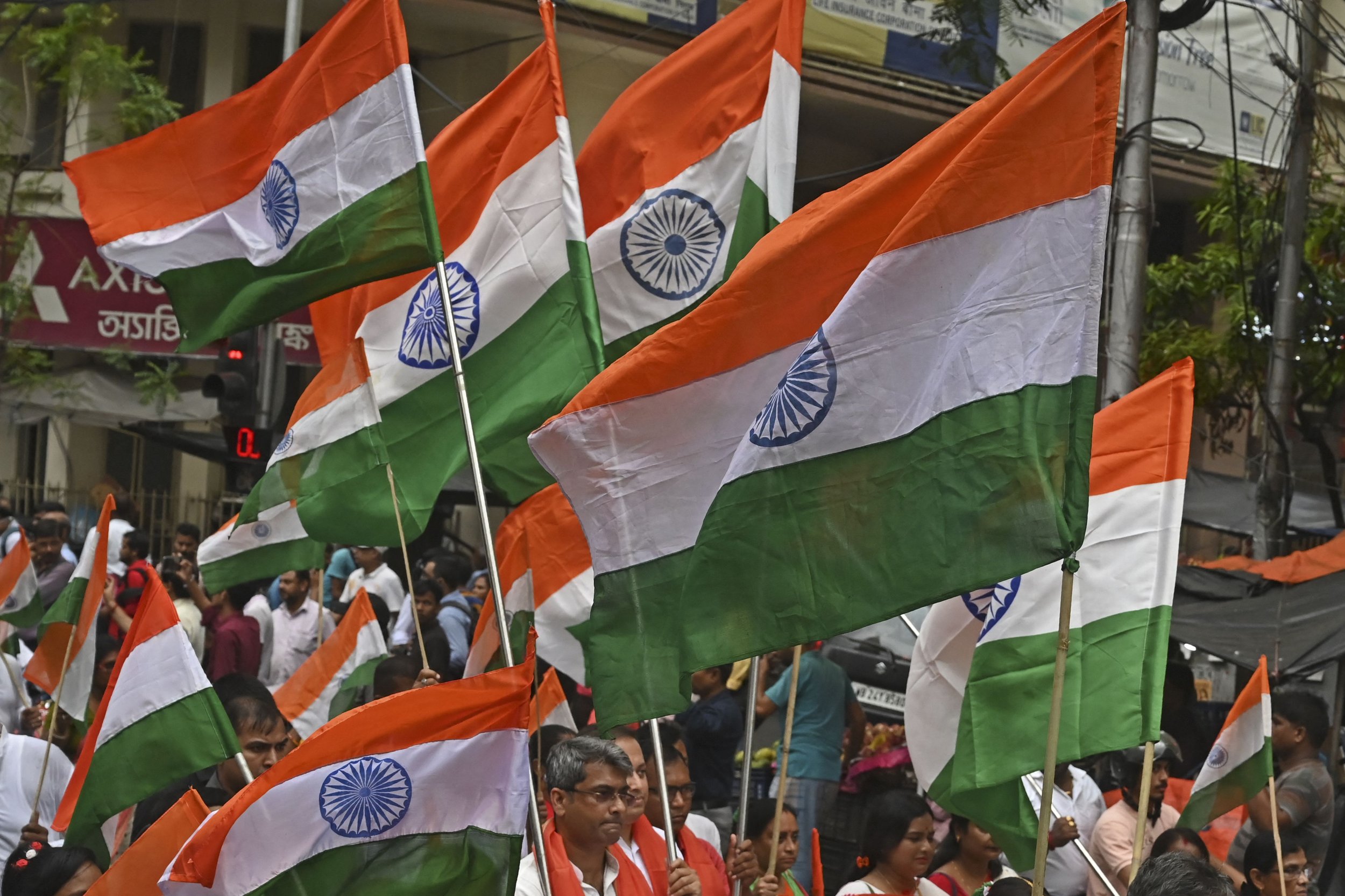
India celebrated their 75th Independence Day on August 15, 2022. Sanstuthi Nath. CC BY-NC 2.0.
2022 marks 75 years since British colonizers divided up the Indian subcontinent, officially declaring India and the Islamic Republic of Pakistan as sovereign states and leaving a trail of violence in their wake. Unlike the 50th anniversary of the event celebrated back in 1997, many, if not most, of the generation who lived through the horrors of partition have aged or gone, leaving fewer and fewer with first-hand memories of the difficult time. Despite this, discussions of South Asian affairs continue to be inextricably linked to the birth of Pakistan, the idea of an unified Indian nation, and the difficulties of birthing a new democracy in the wake of such upheaval.

Refugees desperate to escape massacre cram themselves onto trains during partition. Derek Barry. CC BY-NC-ND 2.0.
The pro-independence movement in India had long preceded partition, gaining most of its following in the years just after World War II. By this time, the country had been under British colonial rule for just under a century, and the country, while still heavily divided by caste, religion and ethnicity, largely agreed upon their desire to be self-governed. The newly elected British government at the time also appeared to be on the same page, but their exercises in subjugating the Indian population, in order to maintain control over them, had the unexpected consequence of inter-group violence, specifically when it came to deciding who would inherit the British Raj’s political power. This was especially true among religious groups: influential Hindu, Sikh and Muslim groups in politics were unable to agree on their vision for the new India with one such failed conference in 1946, resulting in Muhammed Ali Jinnah, head of the Muslim League, demanding the creation of a Muslim state. This call to action incited violence all over the country which the British decided would only end by partitioning the country into a Hindu-majority India and a Muslim-majority Pakistan. Their minimal logistical support, however, resulted in even more violence and ethnic cleansing, causing millions of people to flee their homes after discovering they were on the wrong side of the border. A million people perished in the refugee crisis and fifteen million were forced from their homes.

The Beating the Retreat ceremony is performed by Indian Border Security Forces and Pakistani Rangers at a border post. AFP Photo. CC BY-NC 2.0.
The ramifications of partition, 75 years after its occurrence, are still prevalent in many aspects of life for the younger Indian and Pakistani generations that may not even realize it. Their experiences of partition, unlike those of their grandparents, are largely based on knowledge learned in school and second-hand accounts from elder relatives. To those interested in the rapidly diminishing value of independence in an increasingly globalized society, the younger generation’s lack of connection to the event, which single-handedly birthed the modern nation of India as we know it, is placing a much larger burden on other institutions -- the media in particular -- to ensure an accurate historical memory of partition. In light of the waves of recent cultural, political, religious, gender and border conflict that have reignited across the subcontinent, remembering the sacrifices and hardships endured by those who fought for a unified India could provide a useful point of mediation.

Millions of displaced peoples set up refugee camps after being forced to flee their homes due to religious violence. The Guardian. CC-BY-SA 2.0.
If nothing else, celebrating 75 years of Indian independence has caused a lot of stories to resurface. Younger generations are making more of an effort to retrace their family histories across time and borders, digging into family archives and questioning their relatives before they are lost to time. The decades have done nothing to erase the history and emotions of what happened, and it is becoming increasingly common among those who have inherited the burden from their parents and grandparents to rediscover these narratives, both sweeping and personal, in the name of developing a personal identity. By posting these stories and sharing them online, young Indians and Pakistanis are building a community of their own and collectively defining what partition means to them. Hopefully, it will also be these communities that can overcome the legacy of pain and trauma that has followed the event through the years, and turn it into a new foundation of strength of unity for future generations of Indian and Pakistanis to come.

Tanaya Vohra
Tanaya is an undergraduate student pursuing a major in Public Health at the University of Chicago. She's lived in Asia, Europe and North America and wants to share her love of travel and exploring new cultures through her writing.
Indian Cuisine Is More Than Just Curry
From the steamed seafood dishes of coastal Odisha to the smoky meat skewers of the northern Punjab region, Indian cuisine has an incredible range to offer.

Indian cuisine.CC0.
Despite the popularity of dishes like butter chicken and naan in westernized Indian restaurants, the rich history of the Indian subcontinent actually has a surprisingly diverse cuisine that ranges far beyond the bright red curries and steaming roti that often comes to mind. Thanks to the diverse geography across the country, each region has its own go-to meats, vegetables, grains and most importantly, spices.
Indian cuisine has also been hugely impacted by its colonial history, and not just the British one that we are familiar with; the Portuguese and French also set up colonies across the southern and western parts of the country—both of which influenced the cooking styles of those regions. This, in addition to flavors from neighboring Persia, China and a variety of religious influences, have transformed Indian cuisine into a hugely popular cuisine not just across Asia, but in the western world as well.
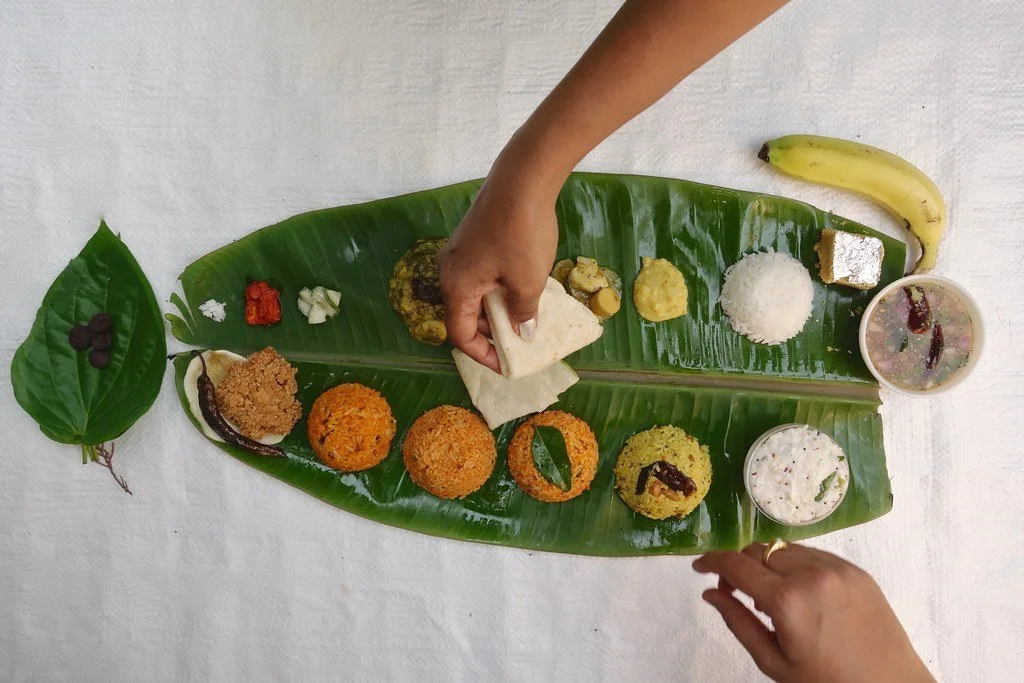
Setting the south Indian plate. Rajesh Pamnani. CC BY-NC-ND 2.0.
The coastal state of Kerala lies on the southwestern tip of India and is most well known for its unique geography and natural beauty. This makes it an ideal travel destination for people interested in Ayurvedic healing, a centuries old natural medical technique that relies on a number of herbal remedies. Ayurvedic cooking is based on trying to re-balance the patient’s internal constitution using the six rasas or flavor profiles: sweet, sour, salty, bitter, pungent and astringent. The local food and culture are both heavily influenced by the region’s 200 years as a colony under the rule of Arab settlers, the Portuguese and finally the Dutch, which added to the large Christian population in the area.
Keralan cuisine is known for its generously seasoned seafood dishes, as well as its use of tapioca, banana leaves and most famously, coconuts. The long monsoon season in this region of the country is conducive to paddy farming, making rice and rice-flour based dishes like idli and appam, different types of rice cakes and common dietary staples. Because of its coastal location, Kerala received huge imports of spices from the Middle East, which to this day can be seen in the extensive use of cardamom, cinnamon, chili and black pepper in both seafood curries and vegetarian stews. A popular dish amongst Western travelers is vindaloo, which is the local south-western variation on a Portuguese dish known as carne de vinha d’alhos, a pork dish flavored with garlic, wine and vinegar.
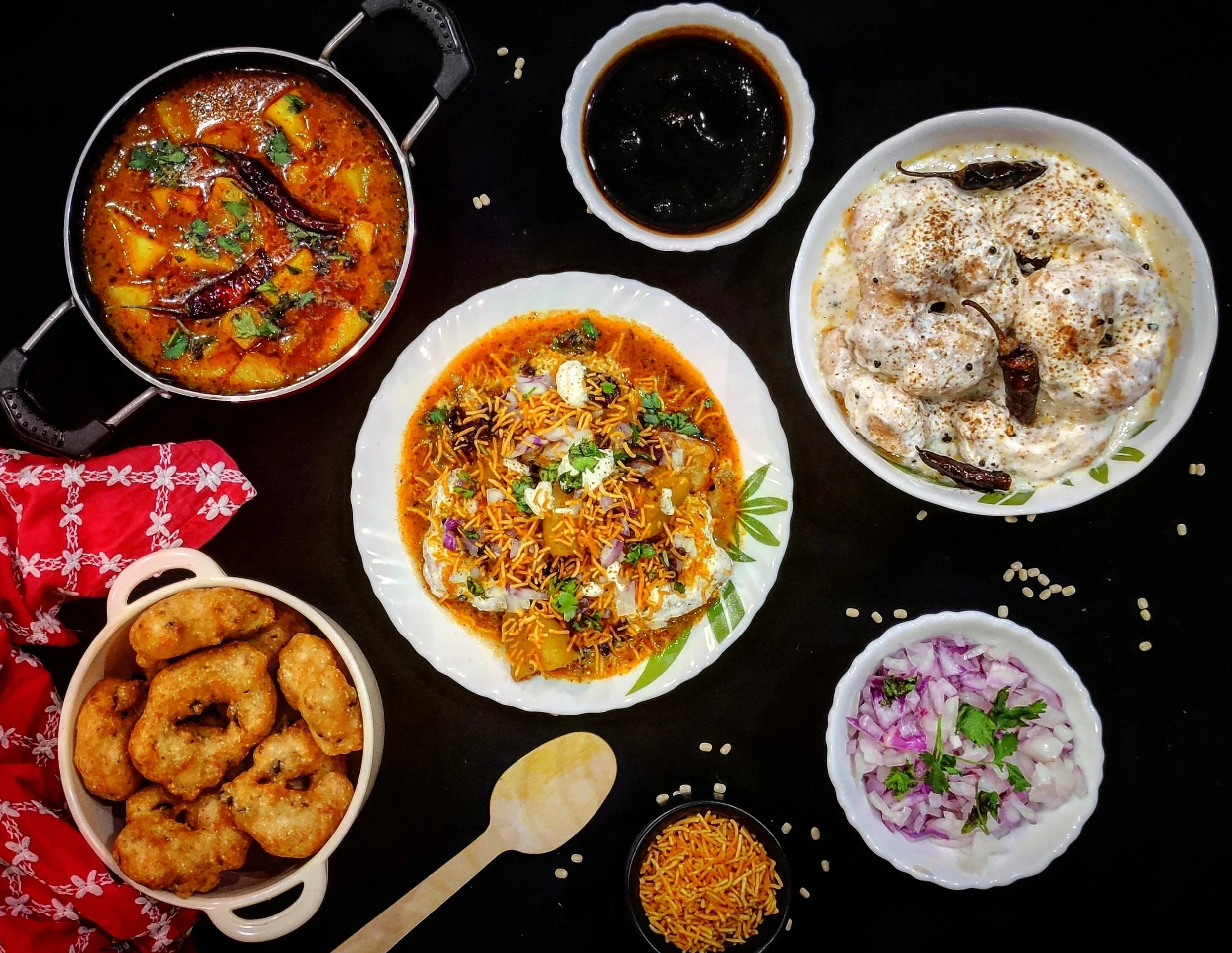
Odishan pakhala platter. Lopanayak. CC BY-ND 2.0.
Formerly known as Orissa, the mountainous state of Odisha is home to more than 700 beautifully preserved Hindu temples, many of which are still in use by the state’s huge Brahman population to this day. The local food is heavily influenced by the many thriving tribal cultures as well as the religious restrictions of the social caste system, which survived despite the region being part of the Muslim Mughal empire and later the southern Marathas dynasty before coming under British rule in the early 1800s.
Because of the prominent role of religion in Odia life, most of the local cuisine is based on foods believed to be the favorites of Hindu gods so that they can be given as offerings. Most dishes are prepared with ghee, a form of clarified butter, instead of regular cooking oil, and unlike most other regional Indian cuisines, not a lot of chili is used either. The local climate is favorable for the growth of mustard leaves, which is a common flavoring agent in a number of popular curries and chutneys. Odia desserts are also very unique to the region given their heavy use of dairy products, especially paneer, a local preparation of cottage cheese. It can be deep fried with brown sugar to make jalebis and is a very popular snack because of the sugar syrup it soaks in. Paneer can also be scrambled and soaked in milk, giving it a much softer and fluffier texture before adding various flavors to make a porridge-like dish called kheer. Most commonly, the raw paneer is shaped into cake-pop sized balls and boiled in sugar syrup to make gulab jamun and rasgullas.

Traditional Meghalayan meal. Jakub Kapnusak. CC BY 2.0.
The northeastern state of Meghalaya is one of the Seven Sister States tucked between Bangladesh and Bhutan, with nearby Myanmar not too far to the east. It is located entirely on a mountain plateau and is often subject to heavy precipitation, which gives it a unique range of local vegetation. Tribal cultures are still very prominent, many of which are reminiscent of more East Asian groups due to the region’s proximity to China, which also heavily influences the local cuisine.
The two most staple ingredients in Meghalaya cuisine are rice and pork, especially when prepared with the local spice mix known as purambhi masala. In fact, local tribes even brew their own rice liquor, a clear yellow liquid called kiad that tends to contain up to 70% alcohol and is believed to have healing and curative properties. Rice noodles and dumplings made with rice paper wrappers are also very popular in the area. In parts of the state with higher altitude, locals may substitute pork for yak meat instead, which is a local delicacy that also shows the heavy influence of nearby Bhutan. Many of the local vegetable dishes make use of fermented soybeans, bamboo shoots, tree tomatoes, banana flowers and sesame seeds for texture and flavor.
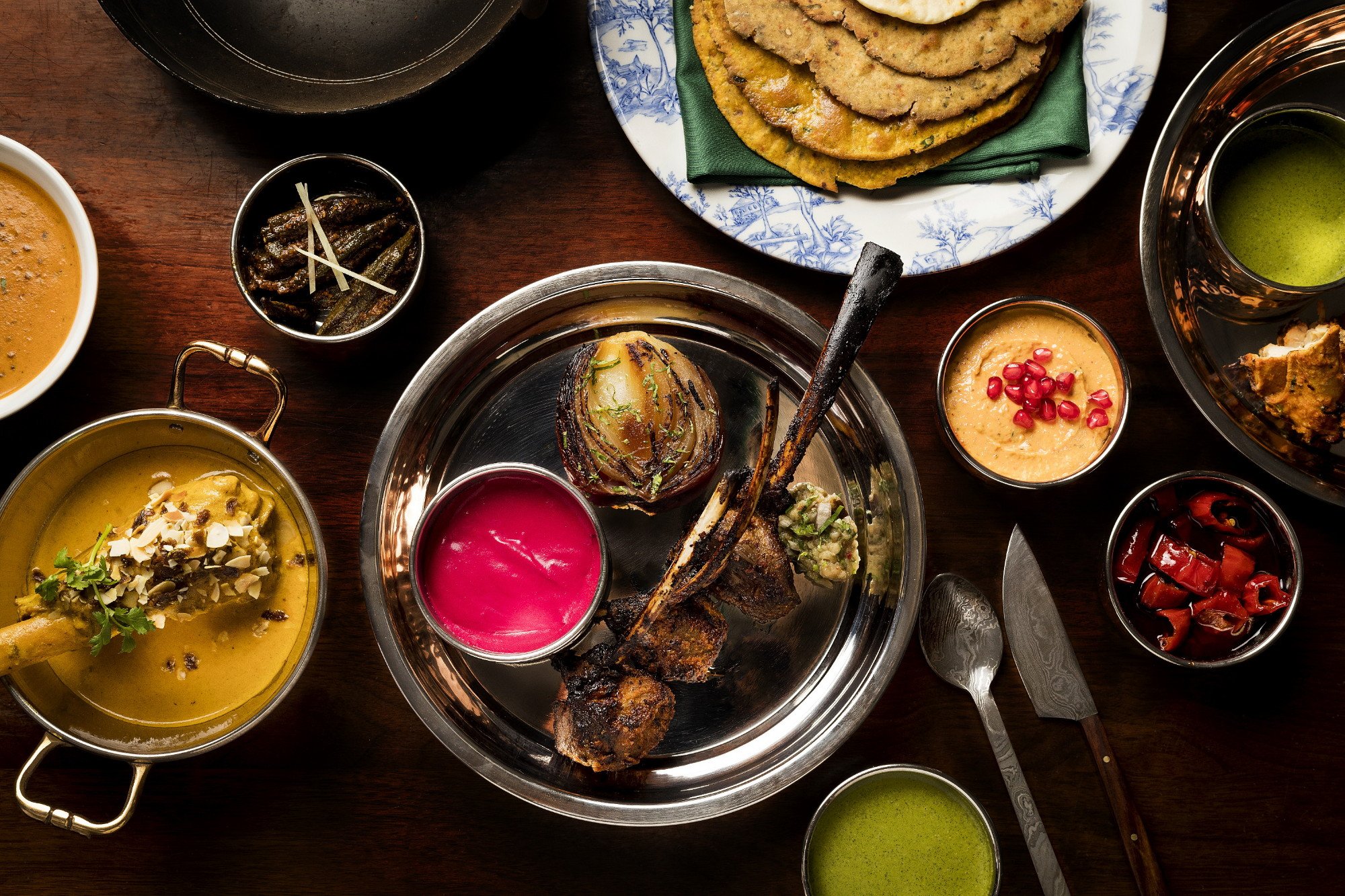
Punjabi food. What The Fox Studio. CC BY-NC 2.0.
Punjab is a state located in the northwestern part of India, right on the border with Pakistan. While Sikhs make up the majority of the local population, many are descendants of Greek and Aryan invaders who came into the country thousands of years ago. The state is also completely landlocked and receives most of its irrigation from the Sutlej and Beas rivers that flow through it. This, in addition to extremely hot and dry summers, makes the area very favorable for growing wheat, which earned the state the nickname of “India’s bread-basket”.
Besides garam masala, the local spice mix composed of cumin, nutmeg, cardamom and black pepper among other condiments, pickled vegetables are a local favorite to be eaten alongside the tandoori dishes unique to Punjab. The meter-tall clay tandoor ovens are often buried in the ground and house a small wood charcoal fire at their base. They are filled with meat skewers that have been soaked in yogurt based marinades while pre-rolled naan are stuck to the sides to bake. Aside from the dry tandoori meats, Punjabi cuisine also features a variety of sauce-heavy dishes, including murgh makhani which is famously known worldwide as butter chicken. Another local favorite is kulfi, the Punjabi take on ice cream made from churned milk and sugar, often flavored with fresh mango, especially during the hot summer months.

Tanaya Vohra
Tanaya is an undergraduate student pursuing a major in Public Health at the University of Chicago. She's lived in Asia, Europe and North America and wants to share her love of travel and exploring new cultures through her writing.
The Maha Kumbh Mela Pilgrimage in India
This Indian pilgrimage and festival attracts 100 million spirituality-seeking visitors—pilgrims, saints, seekers, philosophers, gurus and disciples. It happens every 12 years at the sacred confluence of Ganges and Yamuna rivers, and the next 6 week event happens in 2025.
Read MoreVIDEO: The Man Behind the World’s Largest Beach Cleanup
In 2015, Versova Beach in Mumbai was little more than a dumping ground for garbage and waste. After witnessing the devastating impact the refuse was having on the ocean, young lawyer Afroz Shah, with the help of 84-year-old neighbor Harbansh Mathur, decided to take matters into their own hands. What started off as a single man’s mission to clean up his favorite childhood beach turned into the world’s largest beach cleanup initiative with 70,000 adult volunteers and 60,000 student volunteers. After three years of work, Shah and hundreds of volunteers had cleaned up over 9 million kilograms of plastic and waste, with hopes to expand their initiative to other beaches in the future. The beach is now clean enough to welcome olive ridley sea turtles ready to lay their eggs to its shores. In 2016, Shah was awarded the UN’s Champions of the Earth award. He is currently working to clean Mithi River, Mumbai’s longest river.
VIDEO: Skating the Indian Holi Festival
Holi is a festival celebrated widely throughout India and is also known as the “festival of love.” Often represented through the popular activity of throwing vibrantly colored powder, it is a celebration in which people shed resentments of the past to rejoice together. Though originating from the Hindu religion, Holi helps unite different groups, as non-Hindus participate in the holiday as well. Throughout the country, different regions celebrate Holi in different ways; the state of Manipur enjoys a six-day festival, while other groups celebrate for one day and one night. Holi is rooted in multiple religious tales that celebrate the triumph of good over evil and truth over falsehood. For example, the famous colored powder originates from the story of the deities Krishna and Radha, and each color represents something (like red for love and green for new beginnings). Above all, Holi is a time to have fun and enjoy the loosening of social constraints; to drink bhang (an intoxicating drink made from cannabis leaves and buds), play practical jokes and dance.
Michael Mackrodt and Vladik Scholz had the opportunity to skateboard in Rajasthan during the festival. Their “wingman” David Zvereff describes skateboarding as “an activity that combines athletic endeavor with the urge to explore the cities of the world.” Director Patrik Wallner captured their journey and has also produced skateboarding films set in the Maldives, Georgia, Aremania, Lesotho, Namibia, South Africa and many other countries.
9 Beautiful Houses of Worship Around the World
Different religions have different ways of showcasing their houses of faith.
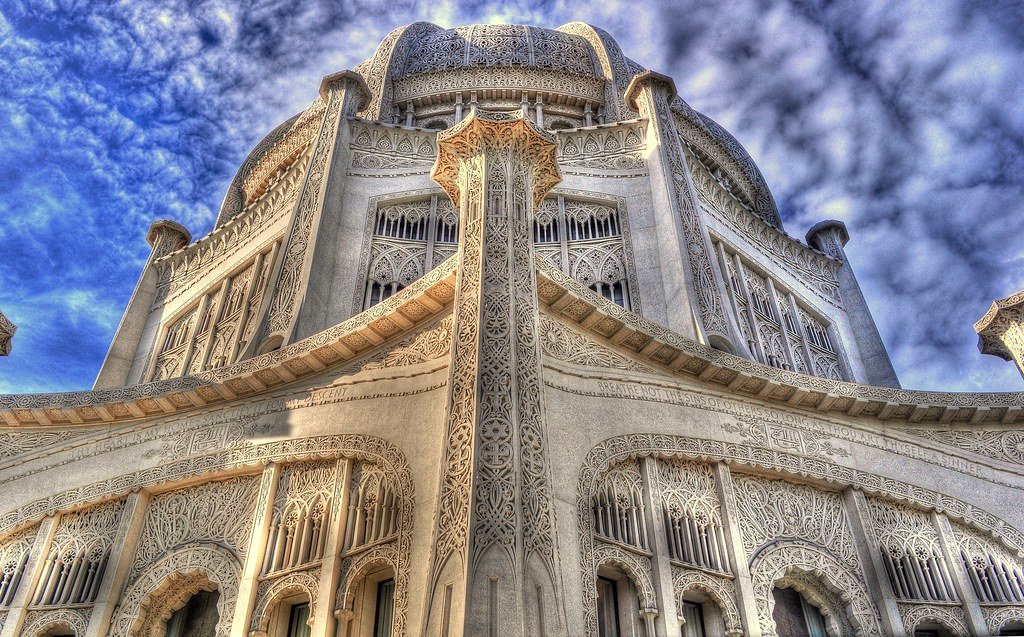
For many centuries across the globe, people have built houses of faith to honor the higher power(s) they worship. Below is a list of different architectural representations of these sacred spaces.
1. Borgund Stave Church
Borgund, Norway
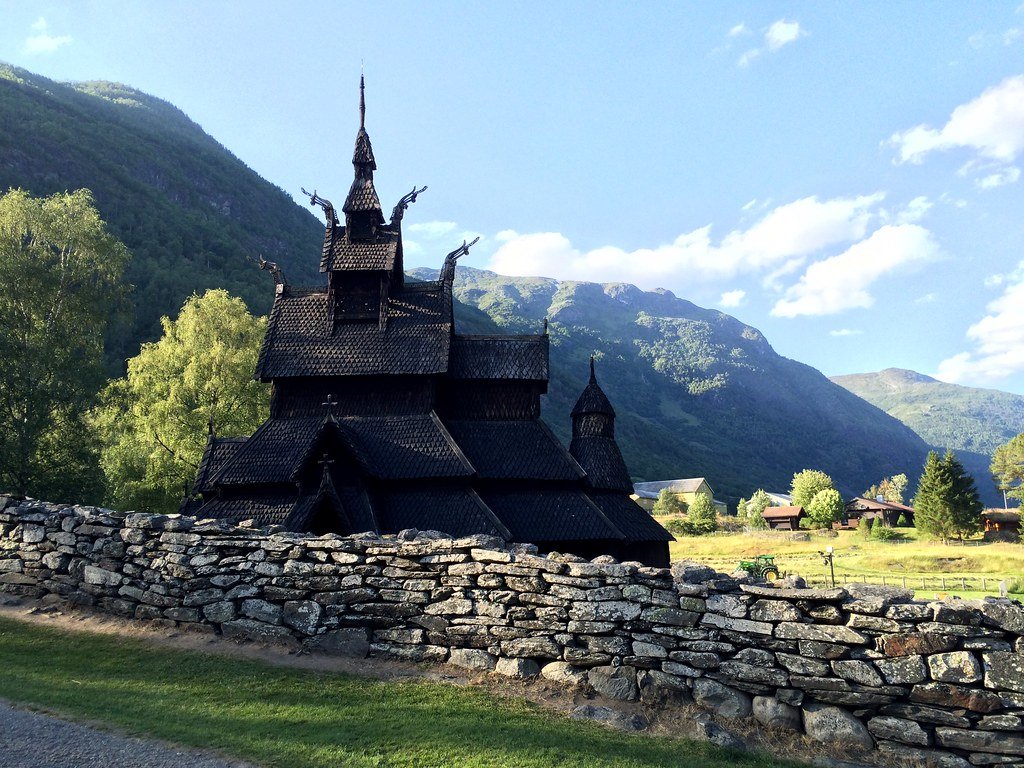
The portrayal of dragon heads on the roof of the Borgund Stave Church in Norway was built to ward off spirits in 1180. The church was dedicated to Apostle Andrew and has been incredibly preserved. The medieval church received certification in 2010 for being an environmental lighthouse. The church is set to reopen to visitors on April 15.
2. Golden Temple
Amritsar, India
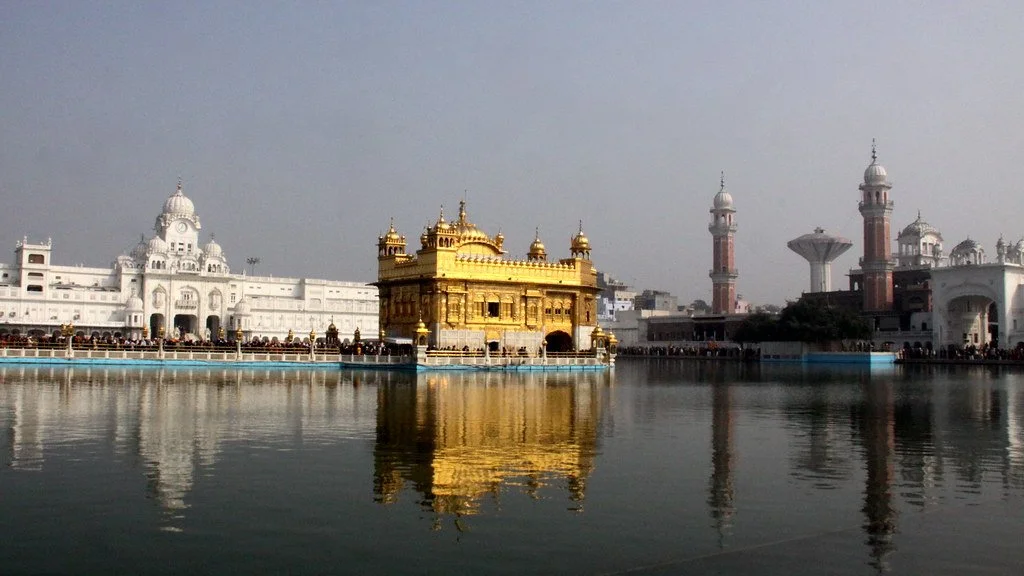
Named the holiest temple in the Sikh faith, the Golden Temple’s upper floors are covered in 750 kilos of pure gold. It was built by Guru Arjan in 1604 and is located in the Northwest of India, near the border of Pakistan. It is said that the waters surrounding the temple in the river Ganga cleanse one’s bad karma when taking a dip. It is visited by 100,000 worshippers daily.
3. Hallgrímskirkja
Reykjavik, Iceland
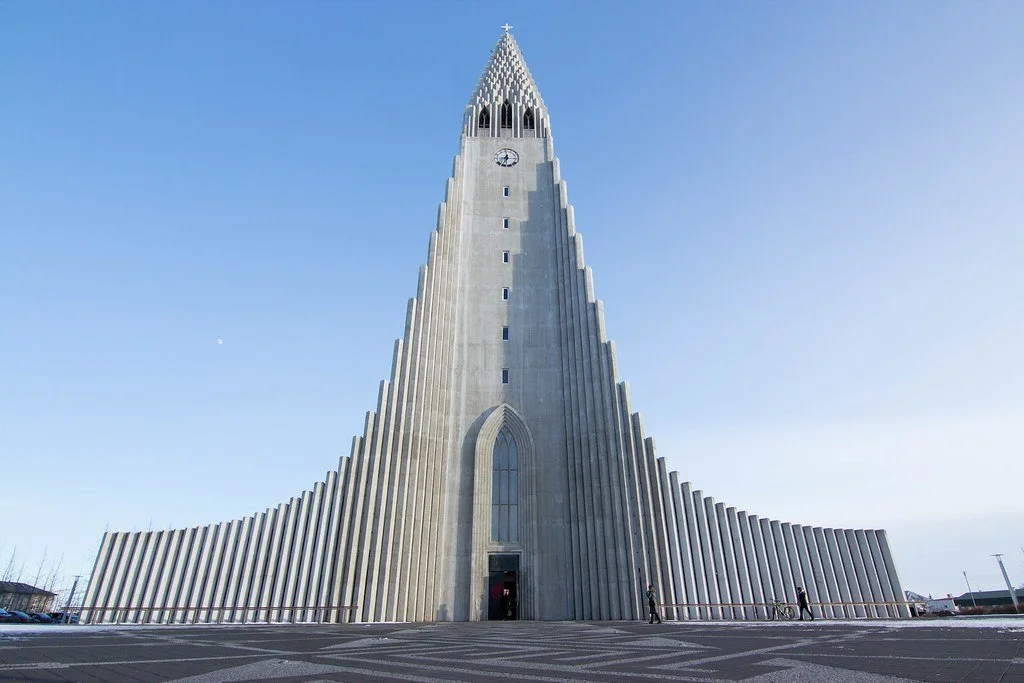
This Lutheran Icelandic church was built by architect Guðjón Samúelsson and, at 240 feet, stands as the tallest building in the capital and the second tallest in all of Iceland. The design is influenced by the country's volcanoes and the natural surroundings that inhabit the nation. Visible from almost any point in the city, the church is known as one of Iceland’s landmarks and largest church.
4. Kizhi Pogost
Kizhi Island, Russia
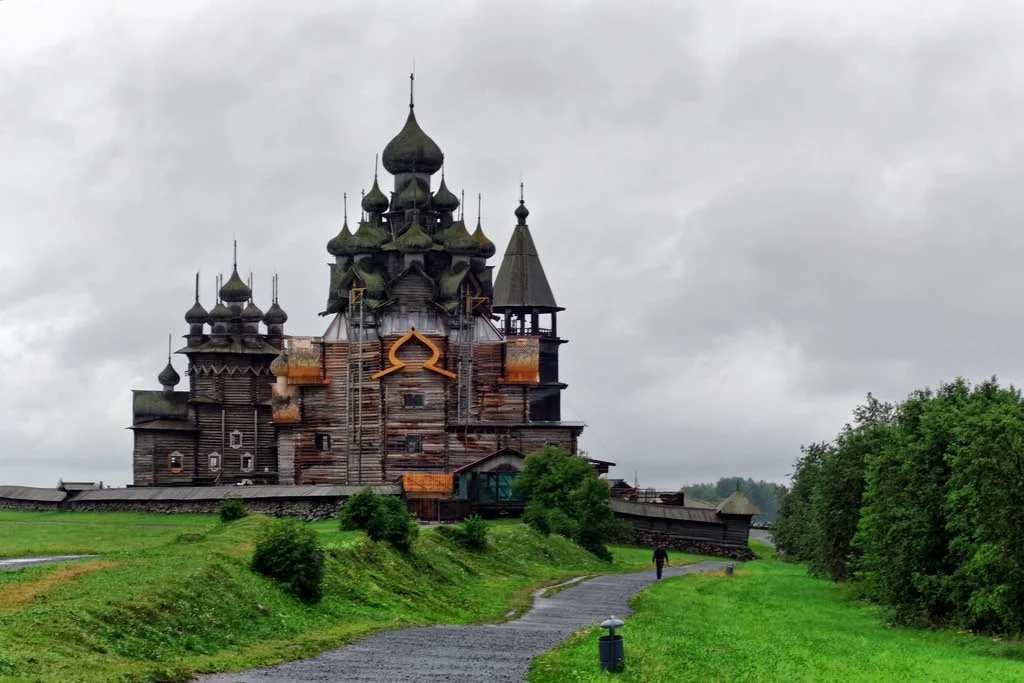
Kizhi Pogost. Alexxx Malev. CC BY-NC 2.0
Set on Kizhi Island in Russia’s Lake Onega, Kizhi Pogost is a UNESCO World Heritage site consisting of two wooden churches and a bell tower built in 1714. What makes this an incredible architectural structure is that it was made completely of wood, with no metal or nails involved. Today, the churches are an open air museum.
5. Wat Rong Khun
Chiang Rai Province, Thailand
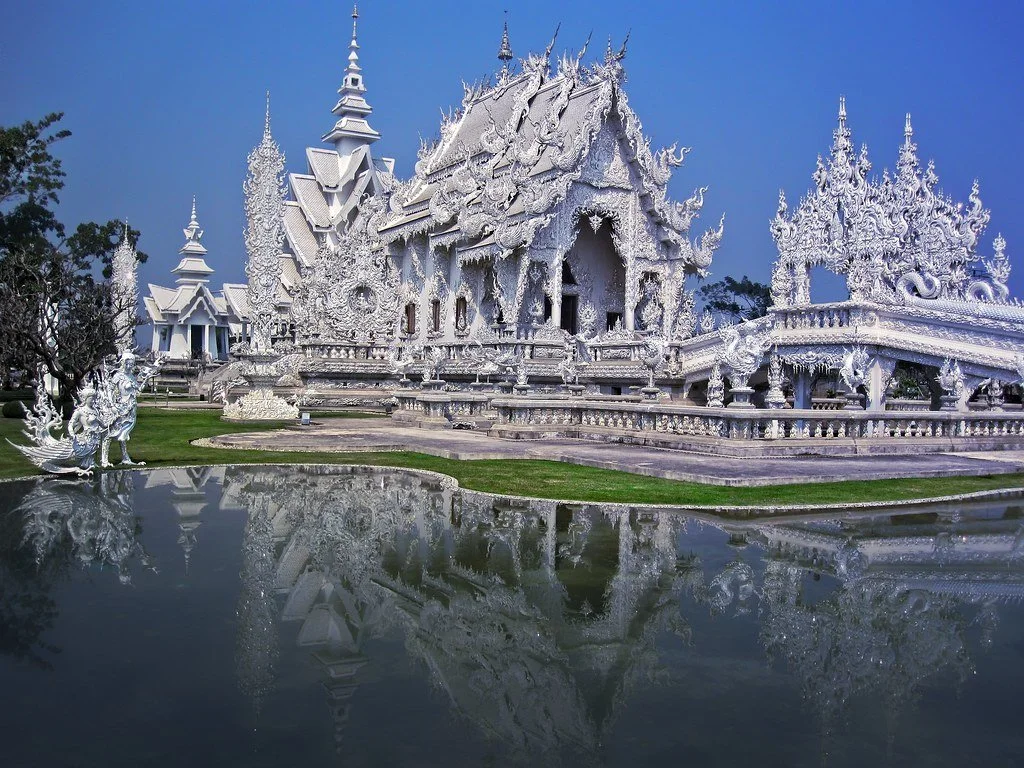
Designed by Thai visual artist Chalermchai Kositpipat, Wat Rong Khun (also known as The White Temple) was created to honor Buddha’s purity. There are many intricate details in the space, including carvings of monkeys, people and hands among other things. Today, Kositpipat has only completed three of the nine buildings he has plans for. The temple entrance cost is $1.50, Kositpipat will not accept more because he does not want large donors to influence his art. The temple is being run by a team of volunteers.
6. Las Lajas Sanctuary
Ipiales, Colombia
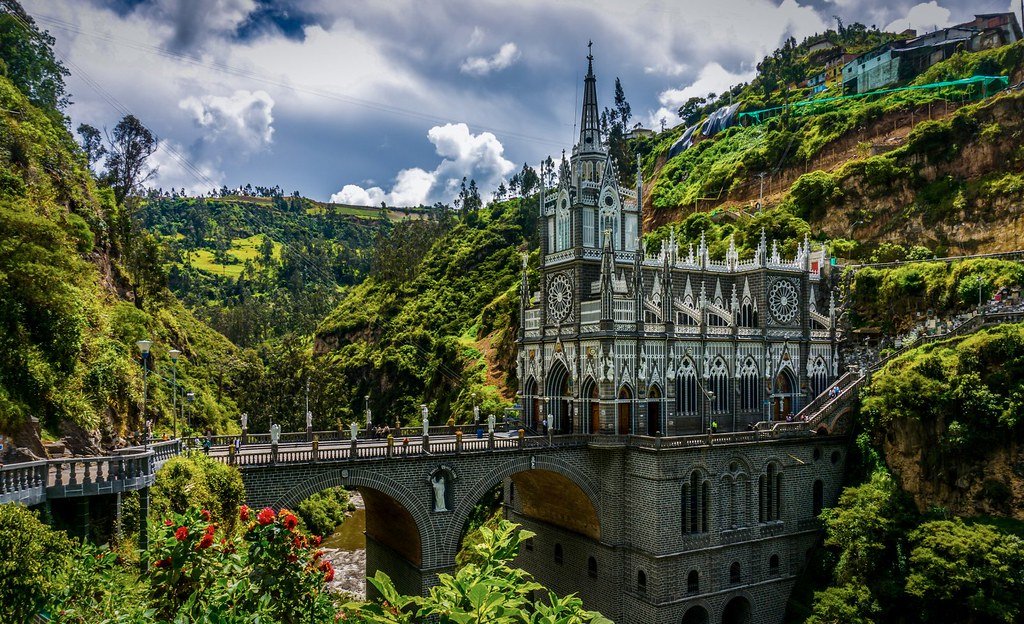
Las Lajas Sanctuary. BORIS Gt. CC BY-NC-ND 2.0
Located less than seven miles from the Ecuadorian border, Las Lajas Sanctuary sits over the Guaitara River. The Roman Catholic basilica has three iconic features. First, the bridge has statues of angels playing instruments on each side. The second is the stained glass by Italian artist Walter Wolf. Lastly, there is an image of the Virgin Mary painted on the back stone wall. The neo-Gothic basilica is surrounded by lush vegetation and was named the most beautiful church in 2015 by The Telegraph.
7. Great Mosque of Djenné
Djenné, Mali
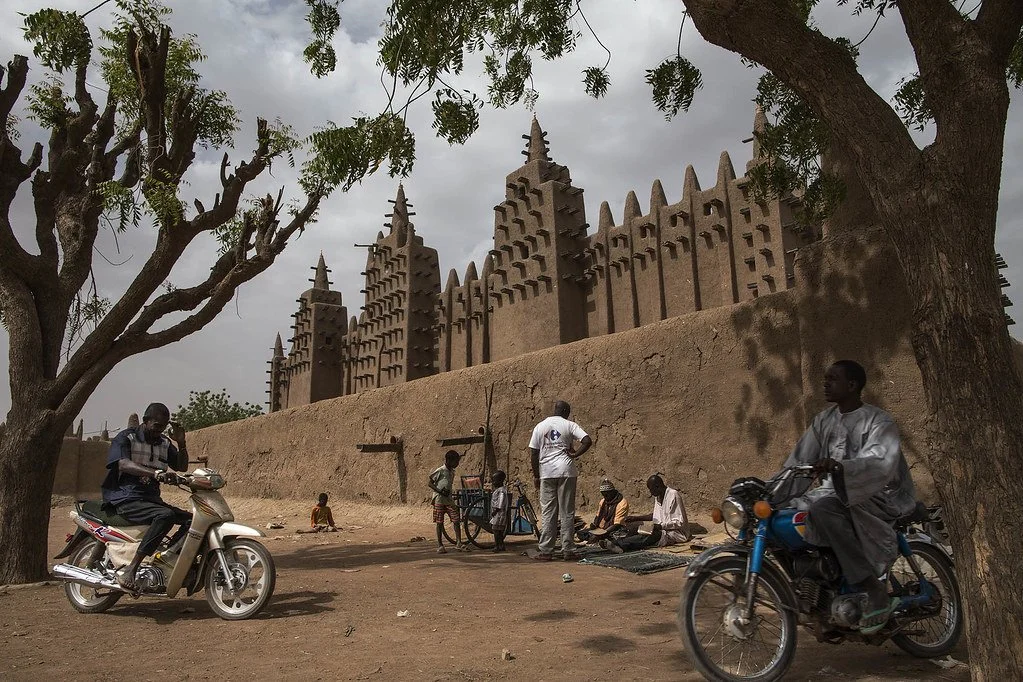
Great Mosque of Djenné. Mission de l'ONU au Mali. CC BY-NC-ND 2.0
Globally known as an example of Sudano-Sahelian architecture and one of Africa’s most famous structures, the Great Mosque of Djenné was built in 1907 from mud and brick, which needs regular replastering to keep its form. Today, the Great Mosque is a UNESCO World Heritage Site and a sacred destination for Muslims.
8. Jubilee Synagogue
Prague, Czech Republic
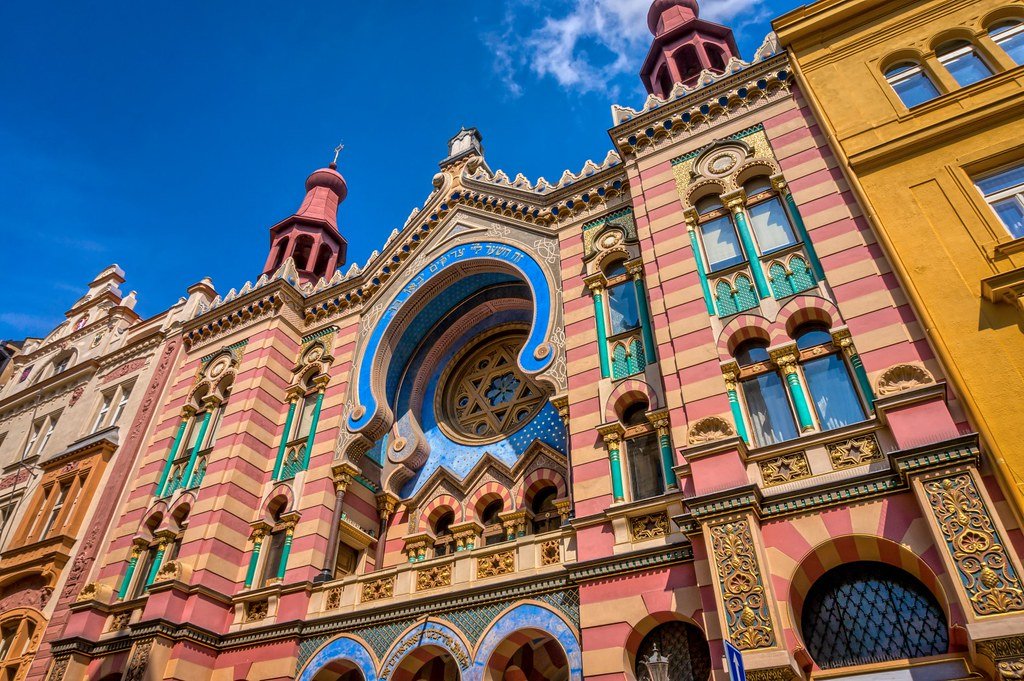
Jubilee Synagogue. BORIS G. CC BY 2.0
The colorful and intricate Jewish Jubilee Synagogue, also known as the Jerusalem Street Synagogue, was built in 1906 by architect Wilhelm Stiassny to commemorate the Emperor Franz Joseph I’s ascension to the throne. A preserved organ by composer Emanuel Stephen Peter is played for visitors. Today, it is open to the public and used for Orthodox prayer services.
9. Szeged Synagogue
Szeged, Hungary
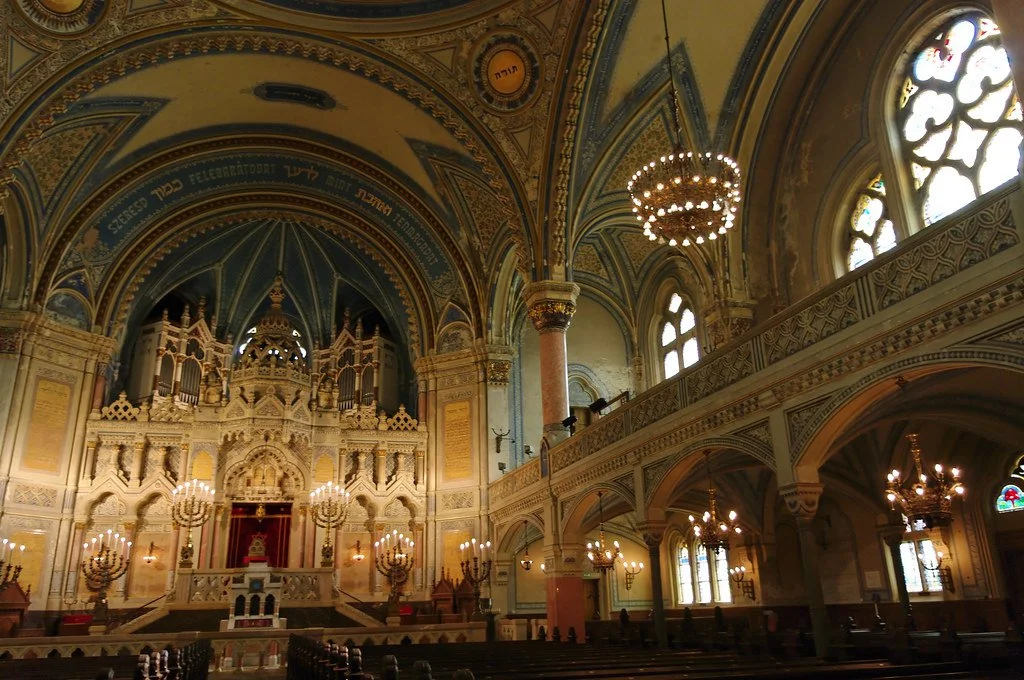
New Synagogue. Emmanuel Dyan. CC BY-NC-SA 2.0
The second largest synagogue in Hungary, Szeged Synagogue merges Art Nouveau with Gothic, Moorish, Byzantine, Roman and Baroque interior design. The sanctuary’s seating faces a Torah ark made with wood from the banks of the Nile River. The triumphal arch of the building displays the biblical commandment, “Love your neighbor as yourself" in both Hebrew and Hungarian.
10. Temple of Heaven
Beijing, China
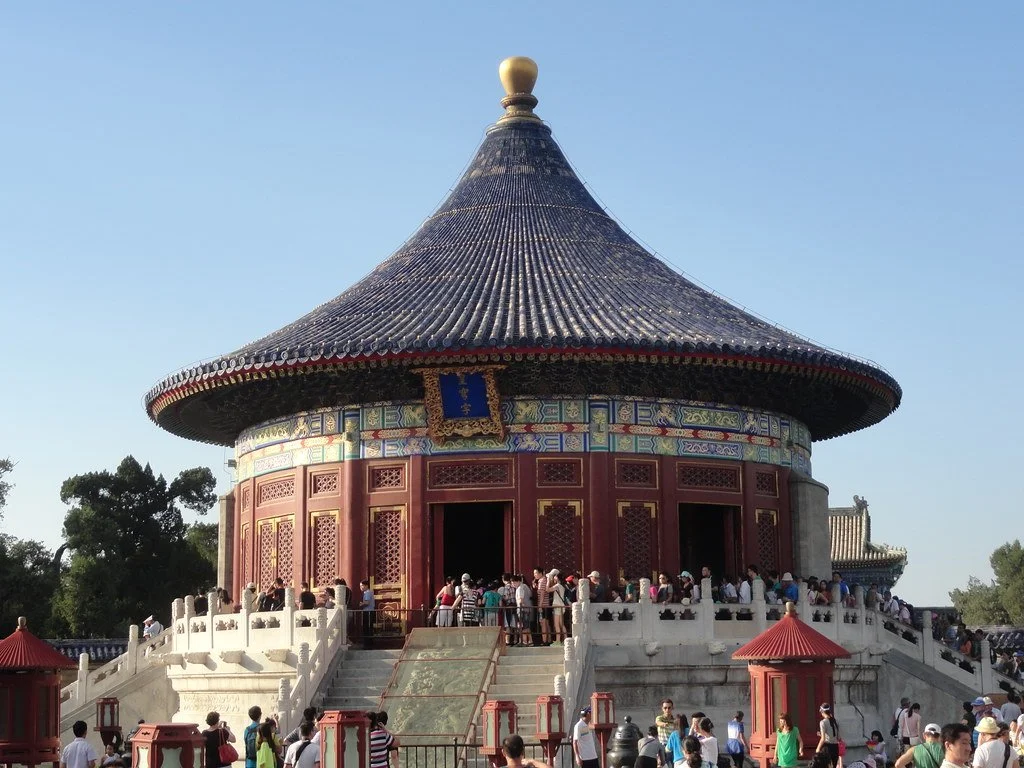
Temple of Heaven in Beijing. Fabio Achilli. CC BY 2.0
An imperial sacrificial altar, the Temple of Heaven in Dongcheng District, Beijing is considered the “supreme achievement of traditional Chinese architecture.” It is 273 acres and located in a large park, measuring 38 meters high and 30 meters in diameter, built on three levels of marble stones. It was completed during the Ming dynasty in 1420 and used to pray for harvest and for worship. In 1998, it was named a UNESCO World Heritage Site.

Jennifer Sung
Jennifer is a Communications Studies graduate based in Los Angeles. She grew up traveling with her dad and that is where her love for travel stems from. You can find her serving the community at her church, Fearless LA or planning her next trip overseas. She hopes to be involved in international humanitarian work one day.
VIDEO: E-Waste Landfill in India
Providing insight into the landscape of the Bhalswa Landfill in northwestern Delhi, this film reveals that the task of sifting through e-waste, unwanted electronic products and parts, falls to members of the urban poor in the developing world. E-waste is collected and managed along railroads and in massive heaps, sometimes even by children. This waste is known to be harmful to human health; e-waste contains hazardous chemicals and toxins that especially affect children. The Bhalswa landfill was supposed to be shut down in 2007 but is still currently in operation and thus over capacity. Multiple fires have occured in the landfill, releasing toxic pollution into the air. This film is a product of the E-Waste Tsunami project, headed by Susannah Pal, who aims to use art to raise awareness about electronic waste.
THE HIJRA — INDIA'S THIRD GENDER
While Western countries move to embrace the LGBTQ+ community, people of non-binary gender in India have played an important role in the society’s history and culture for over 4000 years.
Evidence of sexual ambivalence has been a recurring theme in ancient holy texts in which Hindu deities often change genders. In various Hindu scriptures, Hijras are seen as demi-gods who have historically played important roles as entrusted advisors to rulers. Hijras are born male but look and dress as female — many will undergo castration and offer their male genitalia to the Hindu goddess Bahuchara Mata. Bahuchara Mata is a pivotal deity who enjoys the patronage of the transgender community in India.
Life as a Hijra, or Kinnar (mythological beings that excel at song and dance) as they prefer to call themselves, is often a difficult one because while someone they may be revered they can also be disdained. Often cast out by their families they become open to exploitation, forces sex work and dangerous castrations. Community networks help to overcome this alienation by forming “houses” or “families” led by a Guru/teacher in order to support themselves by dancing and performing rituals. The connection to male/female characters in holy texts leads many to believe that the Hijra possess special powers and they earn a living by attending weddings and birth ceremonies to dance and offer blessings. To many Hindus, a Hijra’s blessing will mean long life and prosperity for the child. After a marriage ceremony the couple will receive a fertility blessing. It’s believed that the Hijra’s act of sacrificing their ability to procreate to the goddess Bahuchara Mata gives them their incredible religious power.
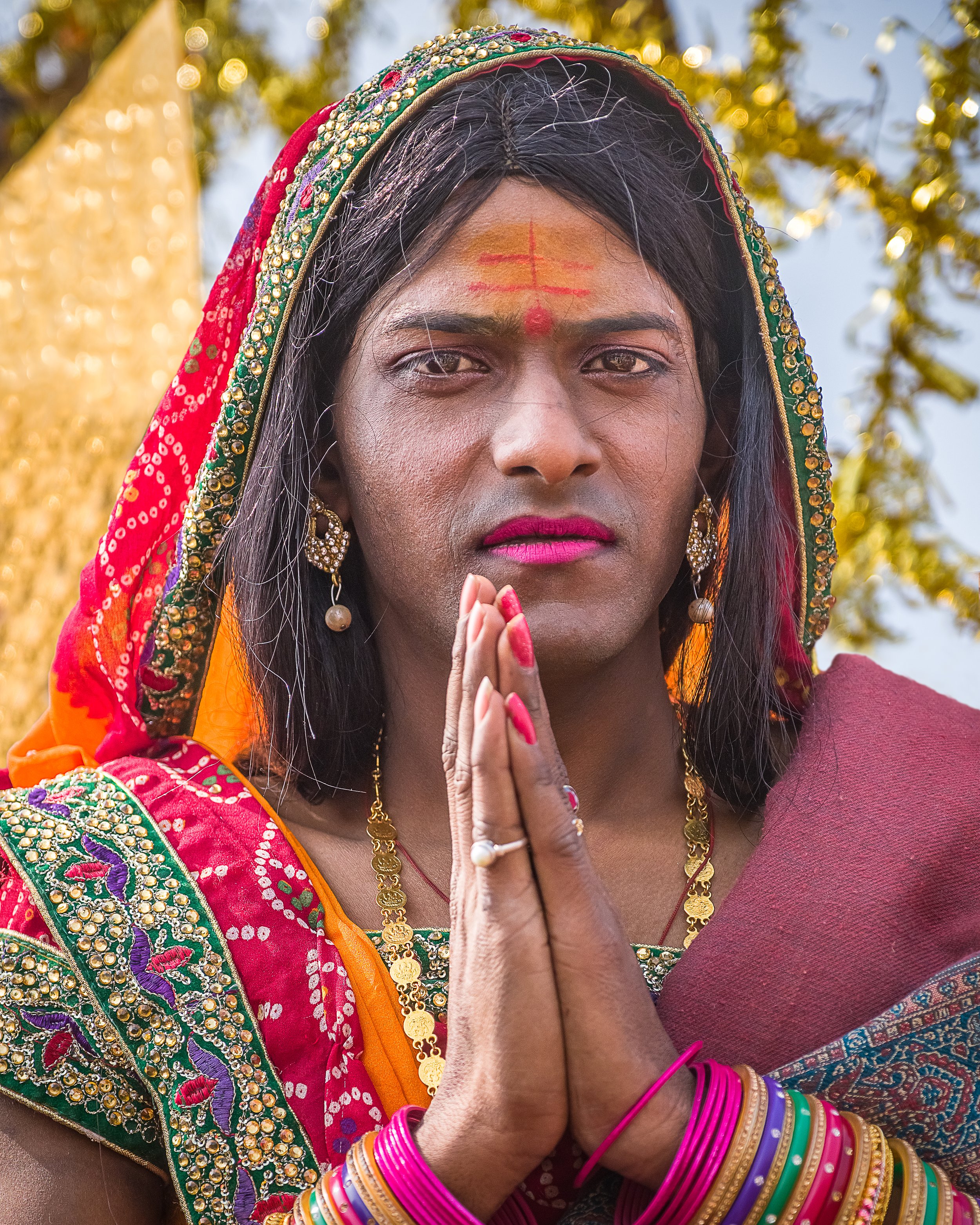
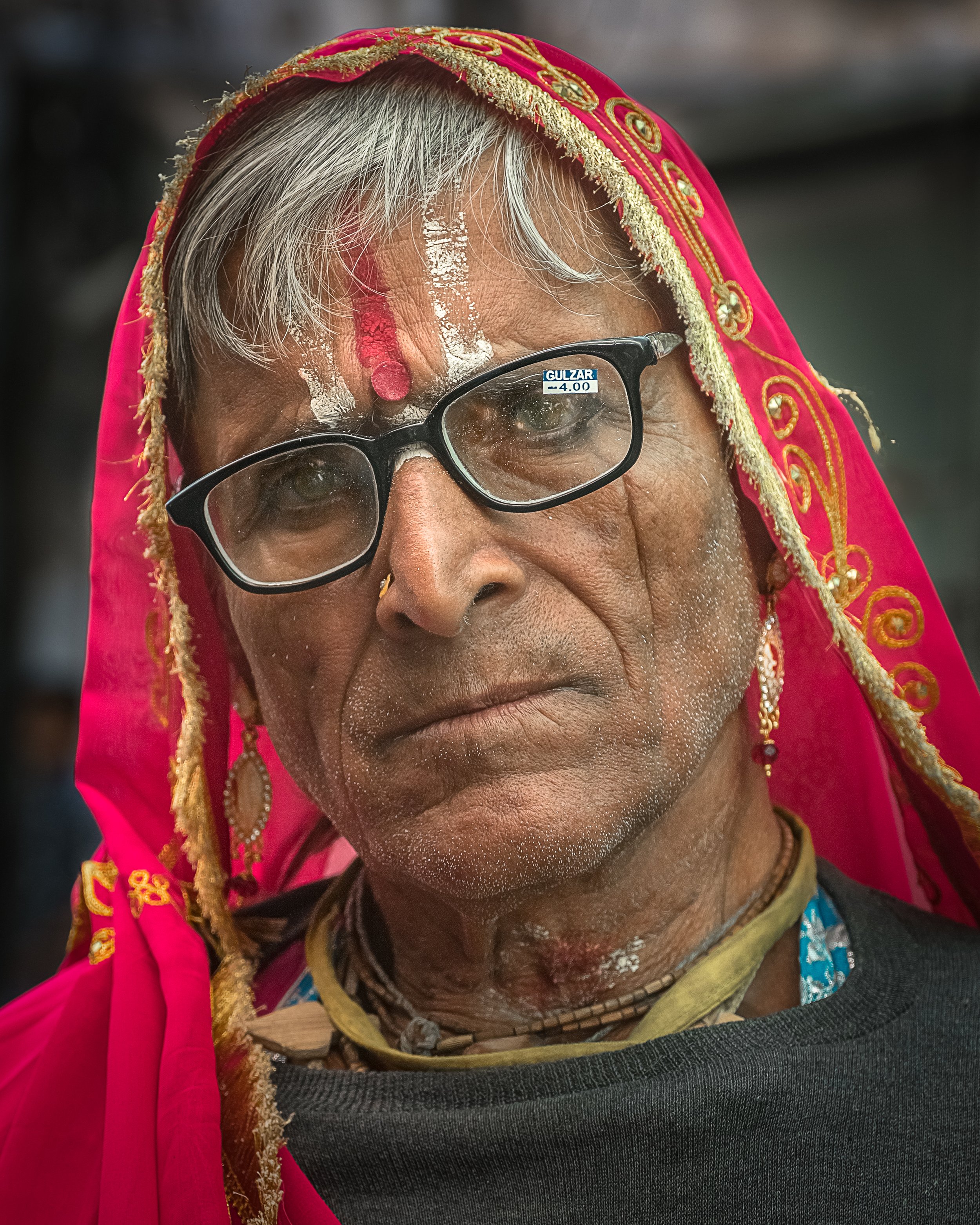
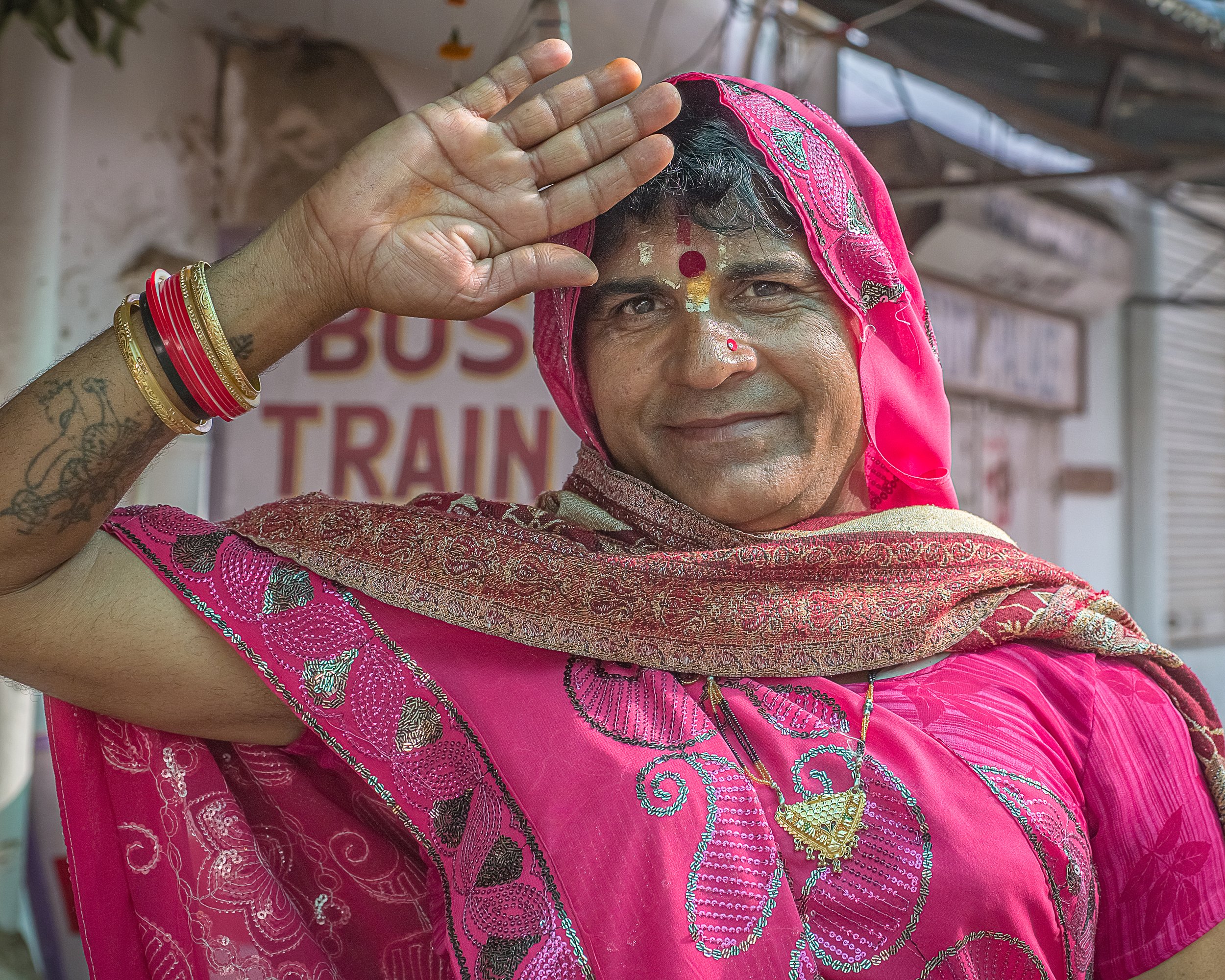
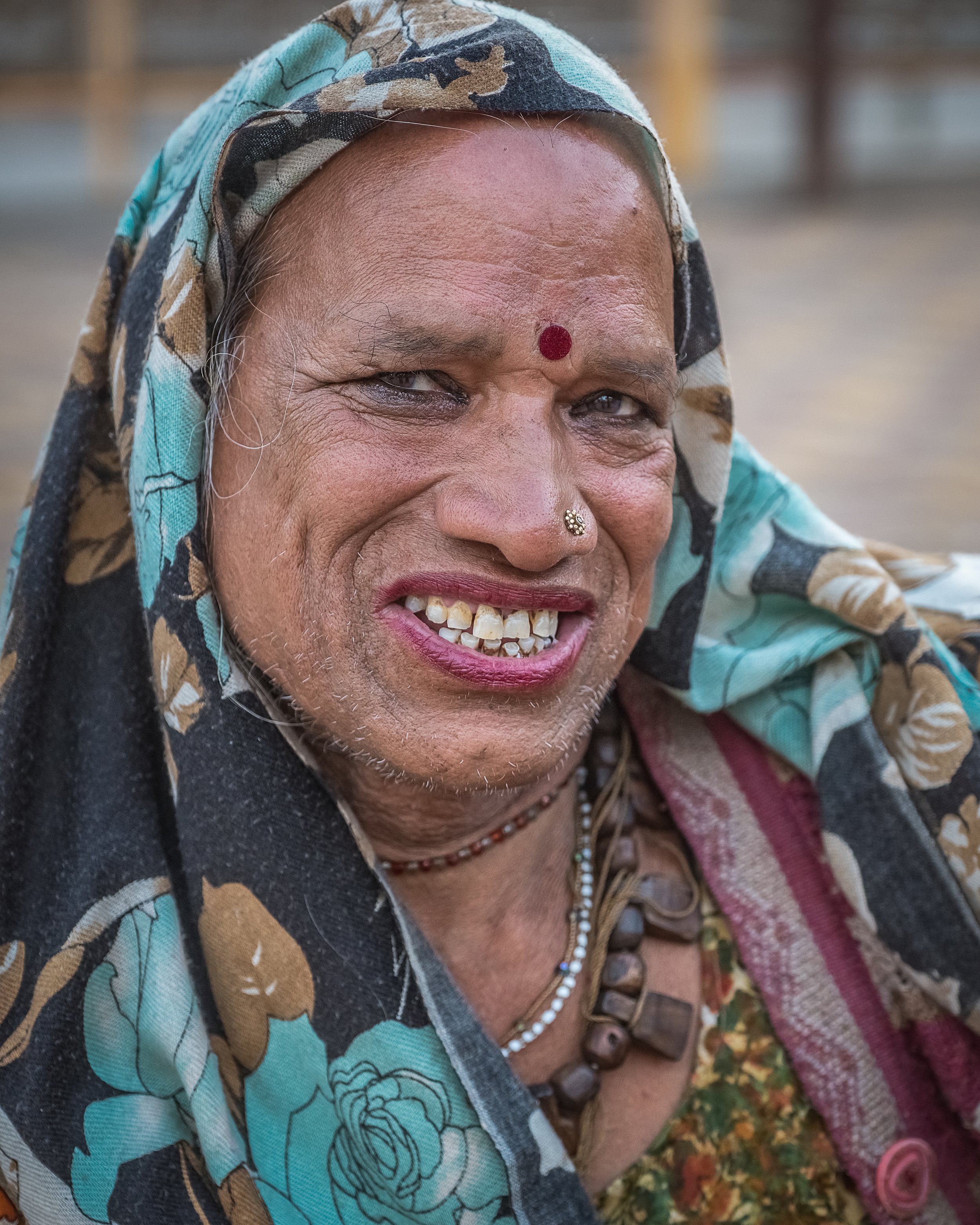
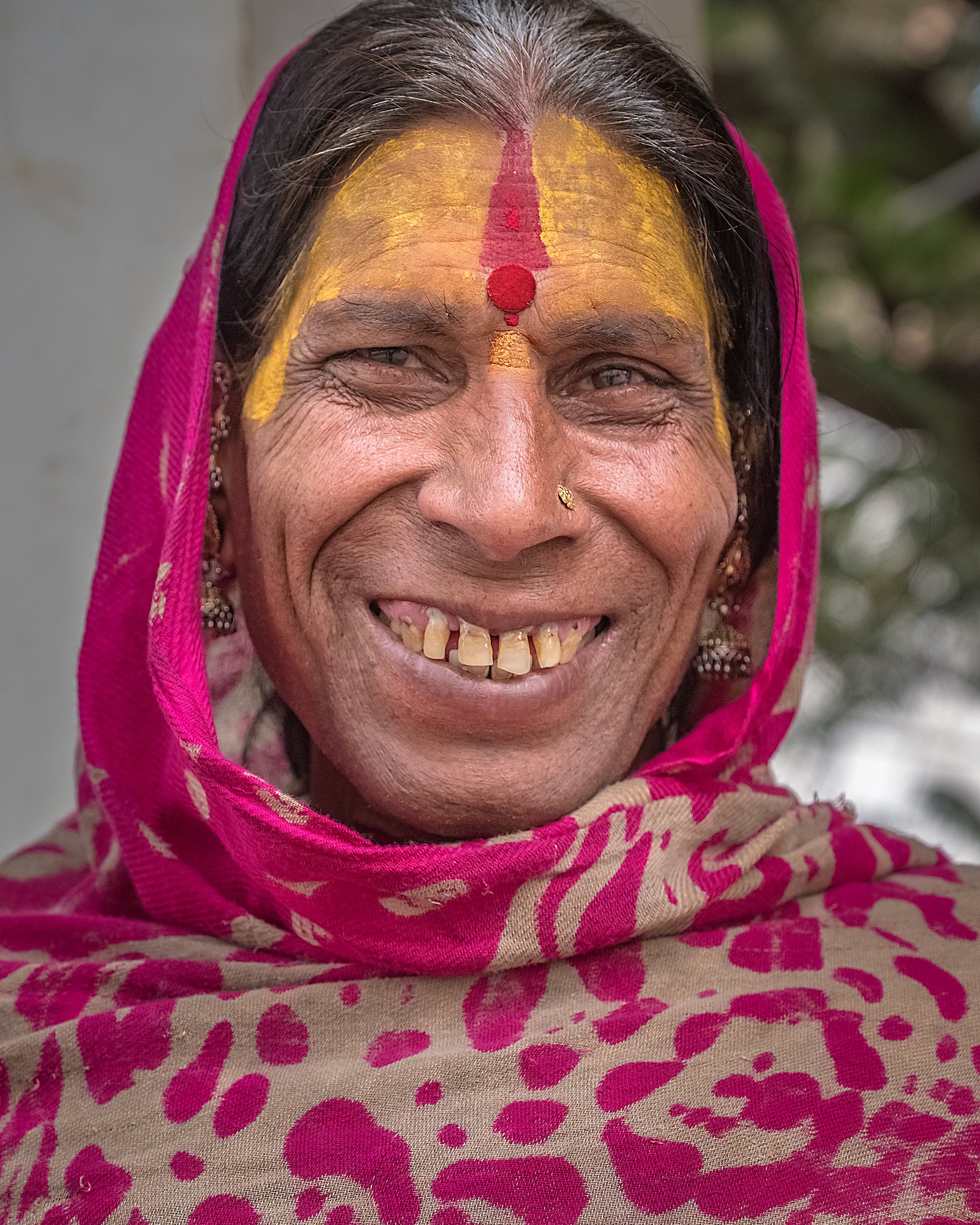
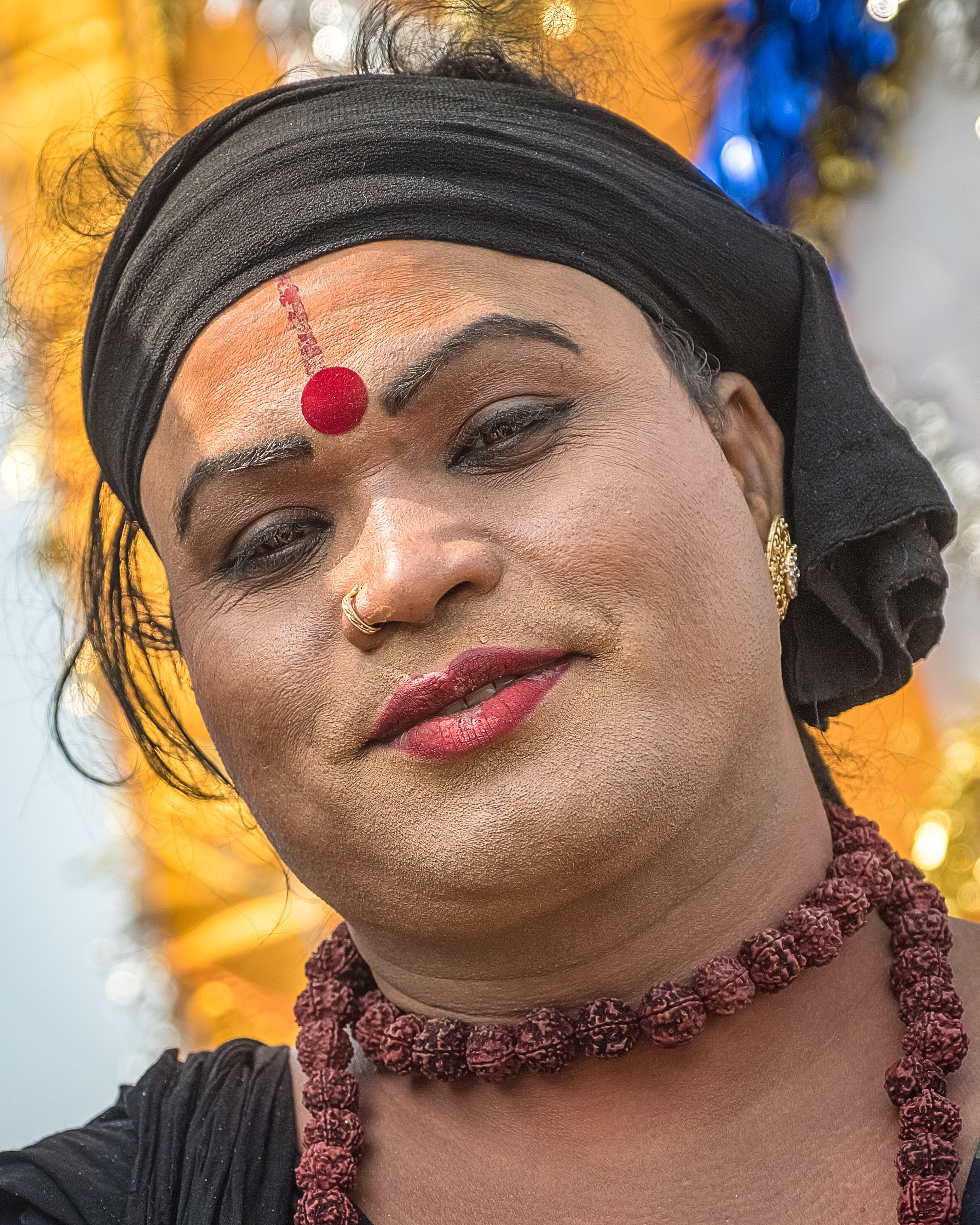
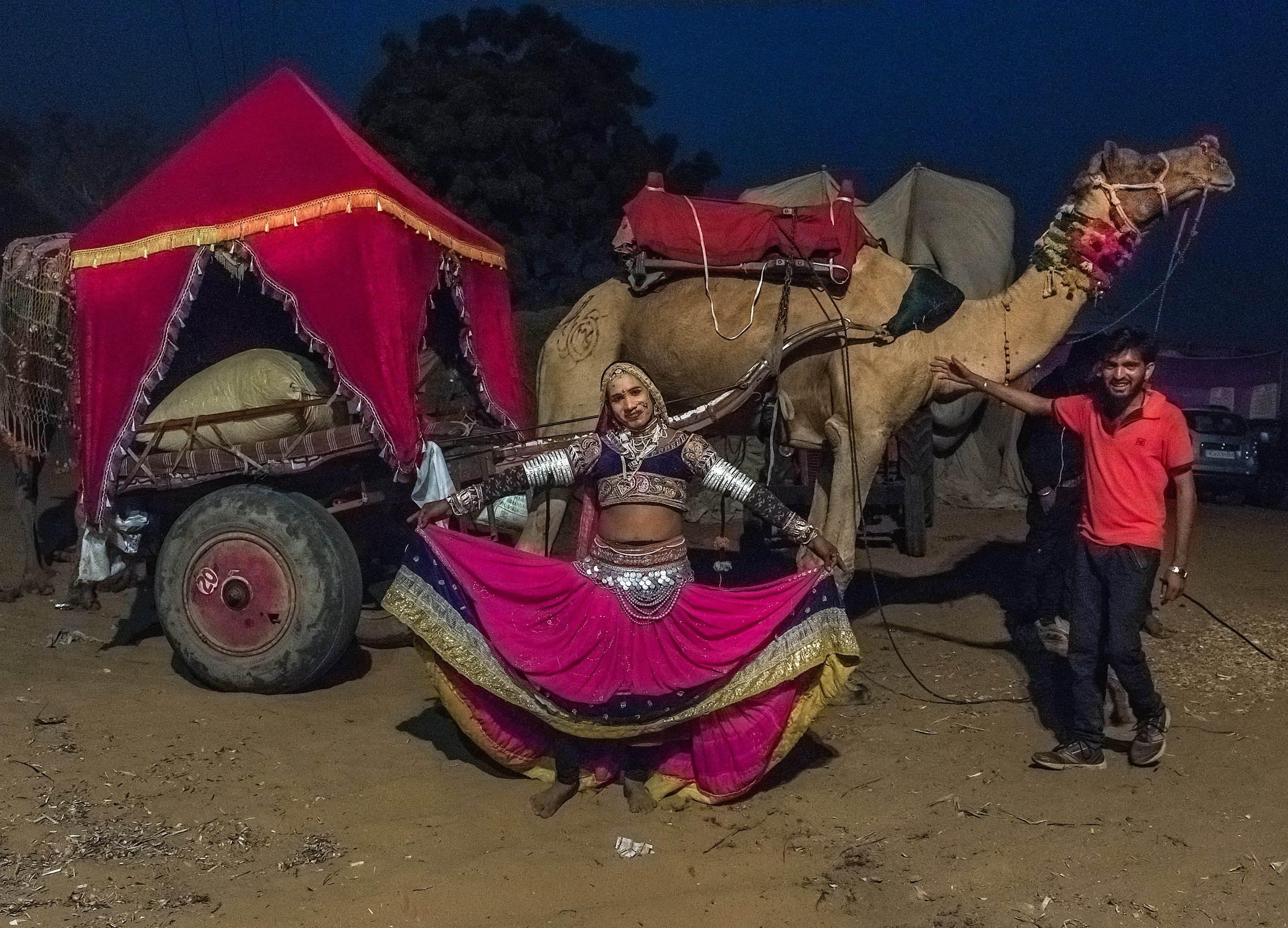
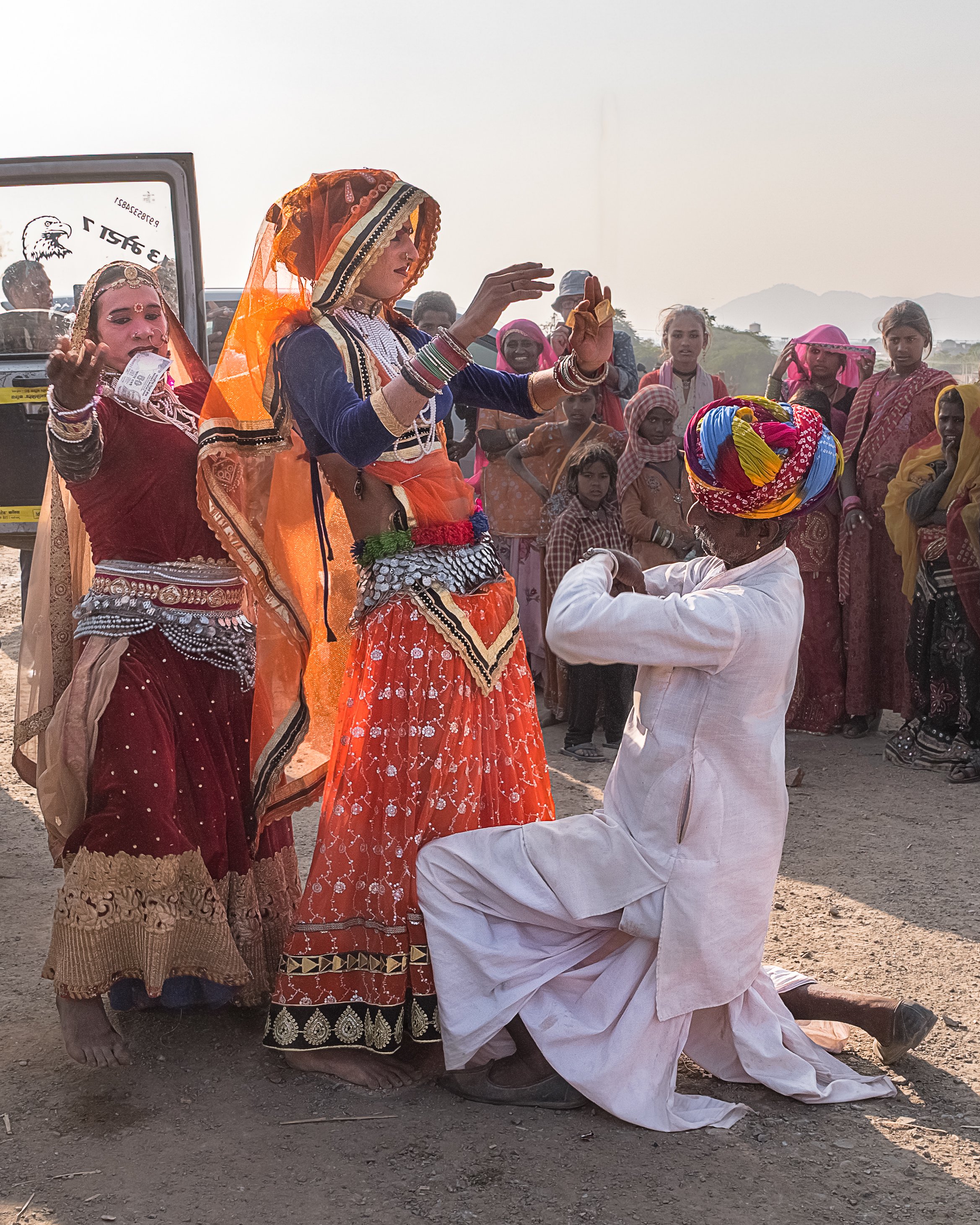
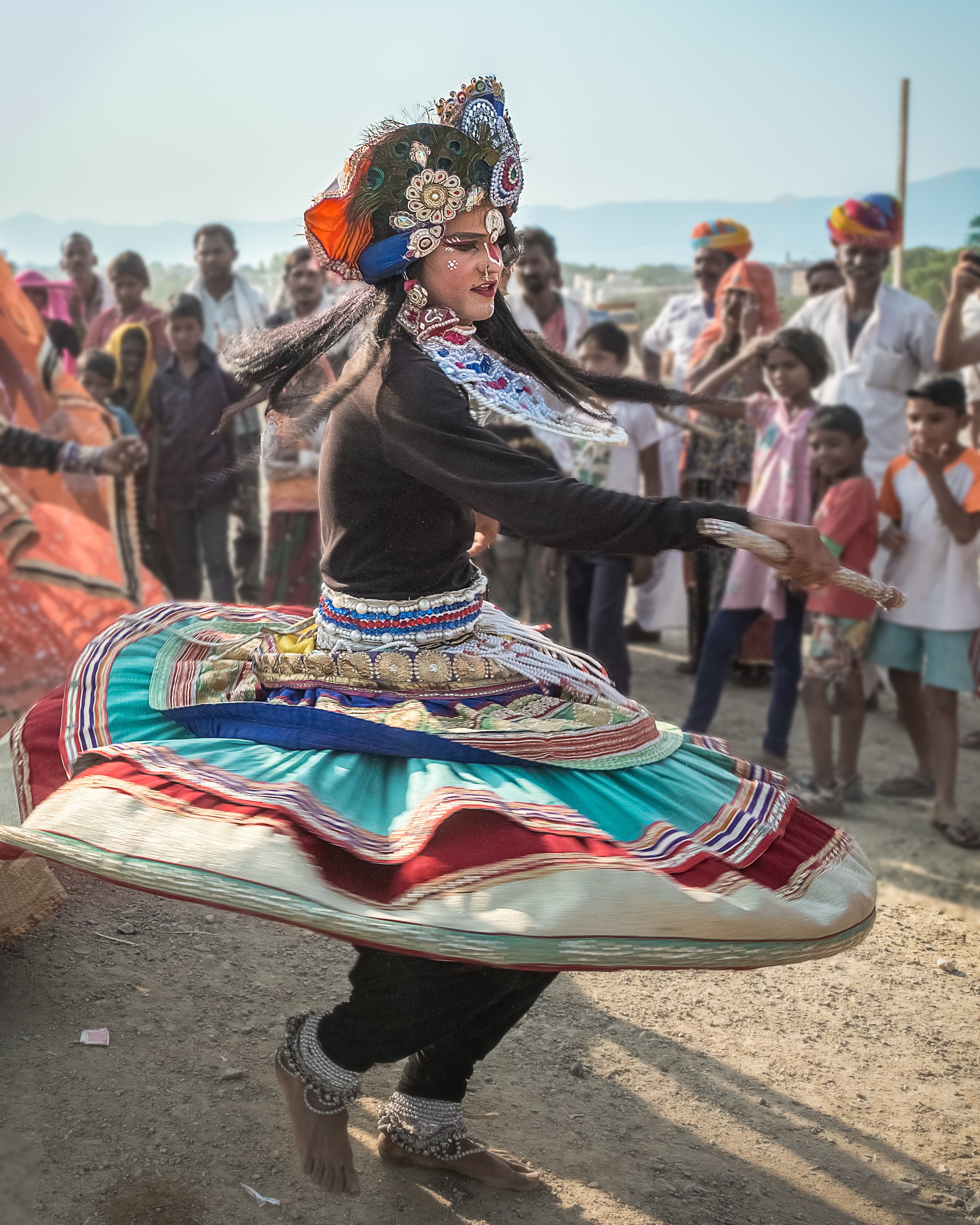
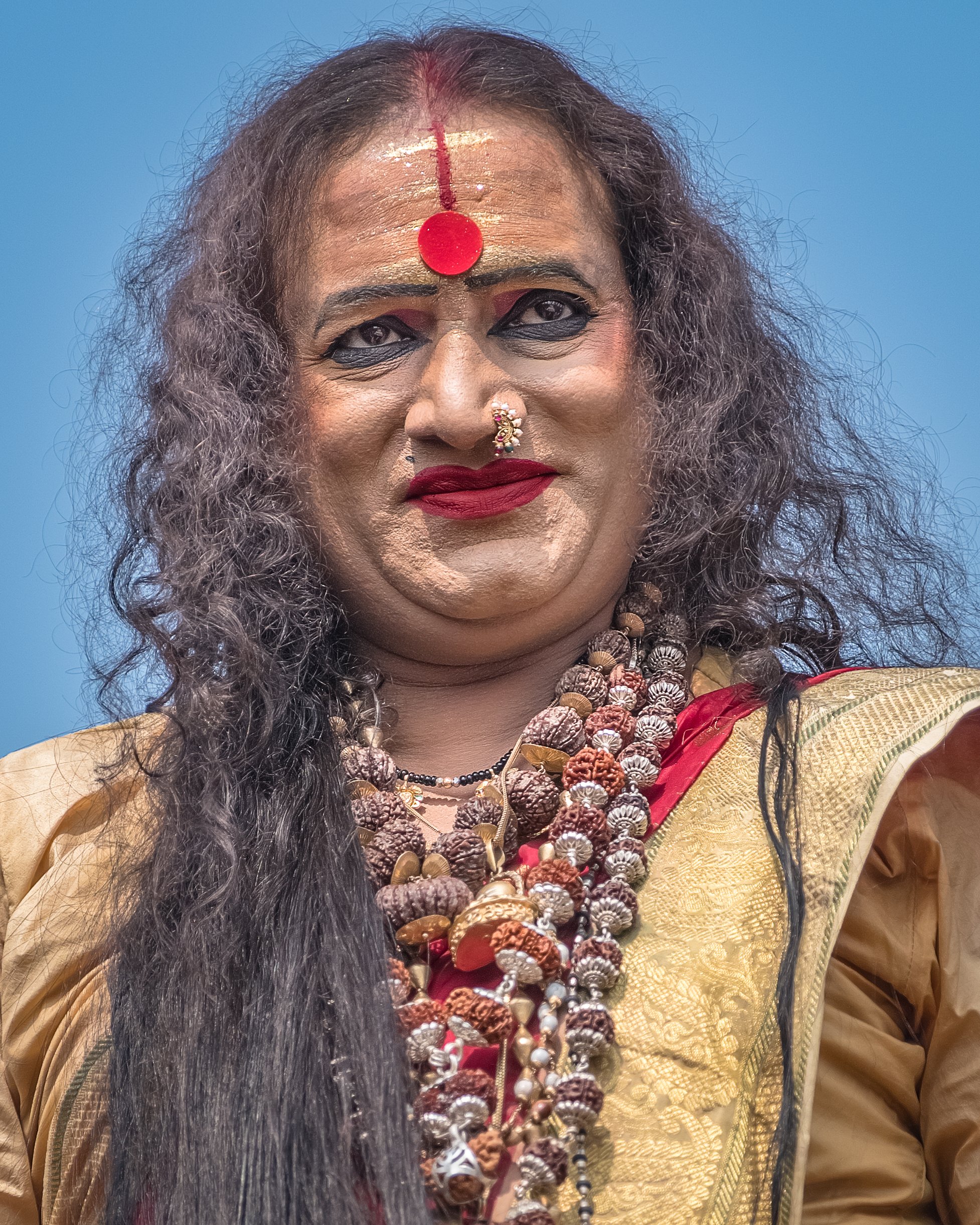
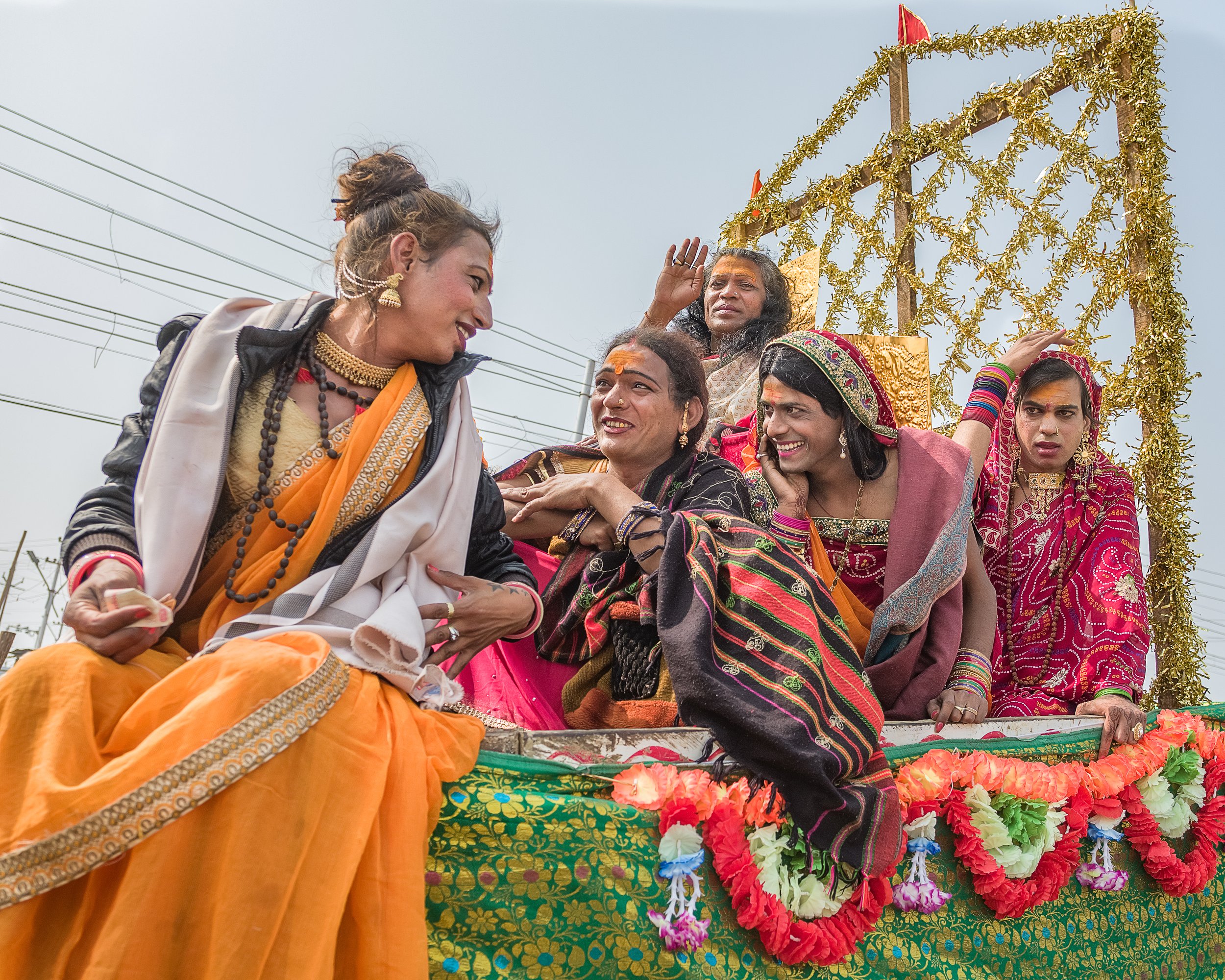
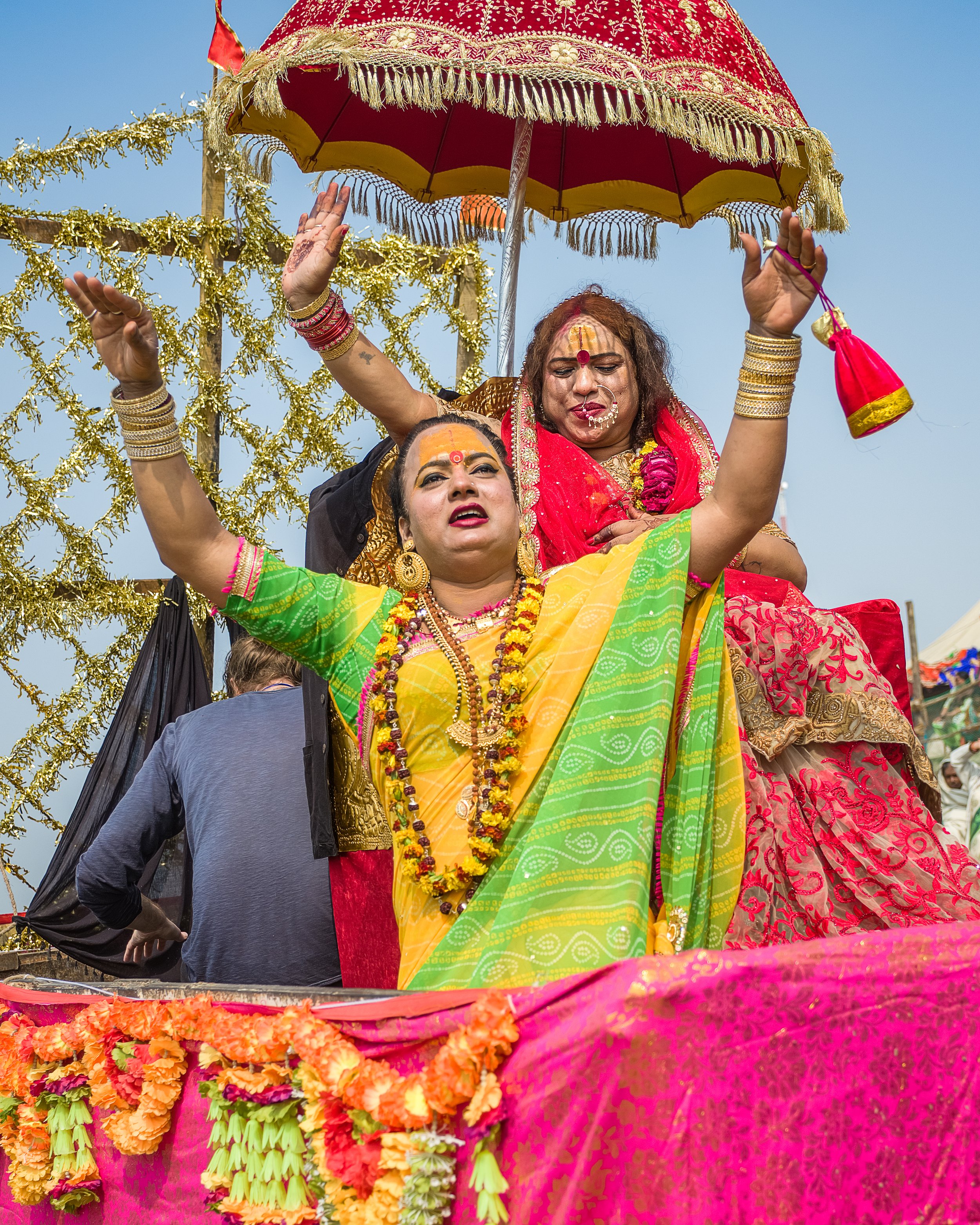
During the British colonization of India, the fluidity of gender was repressed, transgender practices were outlawed, and they were forced underground. In recent years, the Hijra have regained some of the rights and freedoms that were formerly denied. In 2014 the Supreme Court acknowledged that third gender people are deserving of rights equal to other citizens. They are slowly assimilating into the fabric of Indian society and are now recognised as a third gender on passports and other official documents.
Additionally, there have been several events in the recent past which indicate a move to more inclusive sexual variance in society. In 2019 The Hijra were invited to take part in the Kumbh Mela in Prayagraj, one of the largest holy bathing festivals in India. They were led by Laxmi Narayan Tripathi, a well-known Bollywood actress and activist for transgender rights in India. When invited to speak at the Asia Pacific UN Assembly in 2008, she spoke of the plight of sexual minorities claiming that transgender people should be respected as humans and given equal rights. After centuries of ostracism, the Hijra community’s fight to be accepted by the Hindu establishment is slowly reaching fruition.
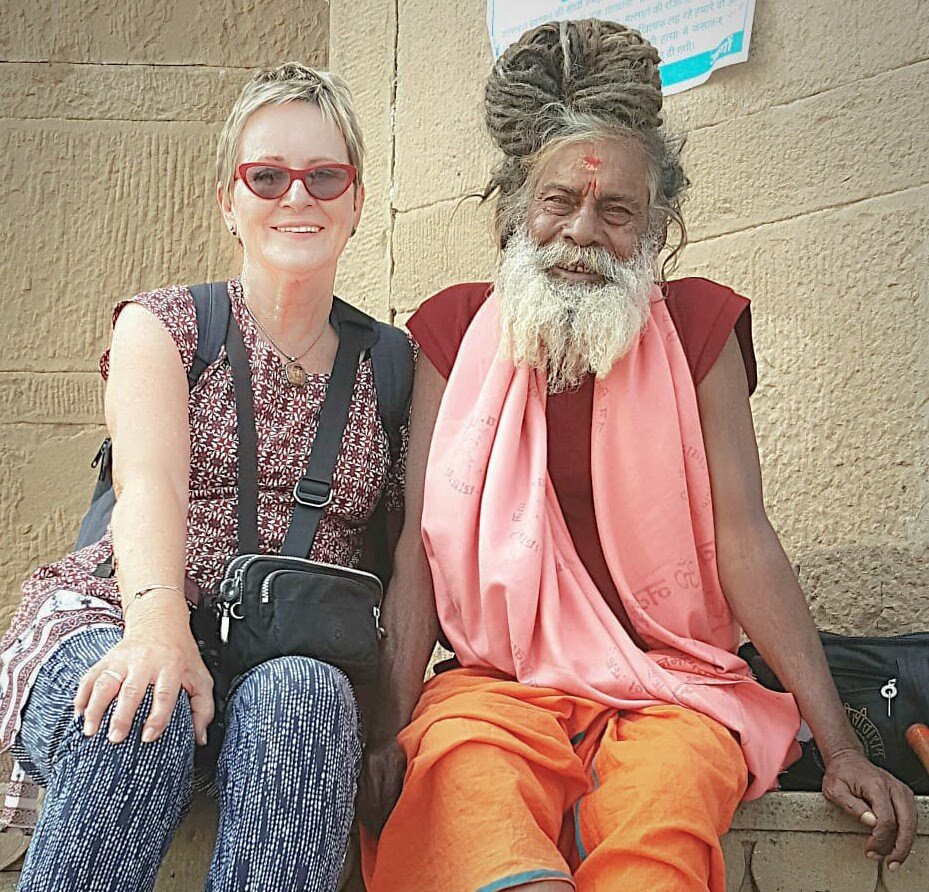
Carol Foote
Carol is based in Queensland Australia and has always been drawn to street photography, searching out the most colourful and quirky characters in her own environment. After studying documentary photography at college, she travelled to Yunnan, China to photograph the wide diversity of ethnic minorities in the region. However, over the past five years, her focus has shifted to Tibet, Nepal and India. As someone who has always been drawn to unique and different cultures, the regions rich heritage and local traditions make it a haven for her style of photography.
Follow Carol on social media @carolfoote_photographer
Check out more of Carol’s photography here
PHOTO ESSAY: Tibetan Worship and Culture at Lhasa’s Jokhang Temple
7 Caves, Temples and Cities Carved in Mountains
These ancient sites were once carved into the surrounding landscape and continue to stand today.
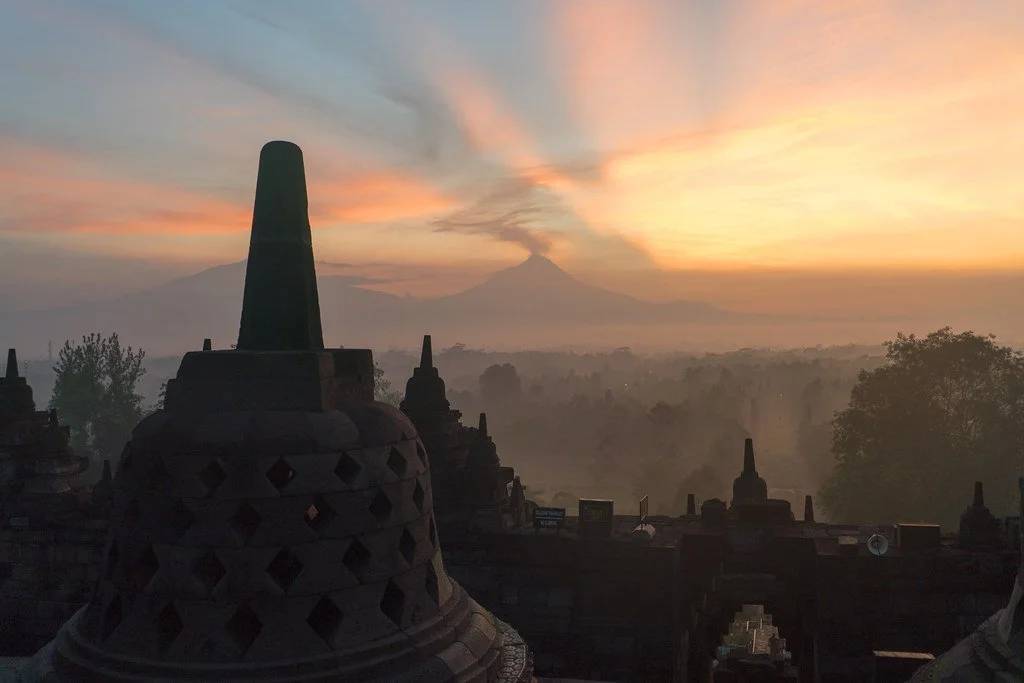
Created at a time when construction vehicles and advanced building tools did not exist, these caves, temples and cities demonstrate the craftsmanship of their ancient peoples all over the world.
1. Petra
Petra, Jordan
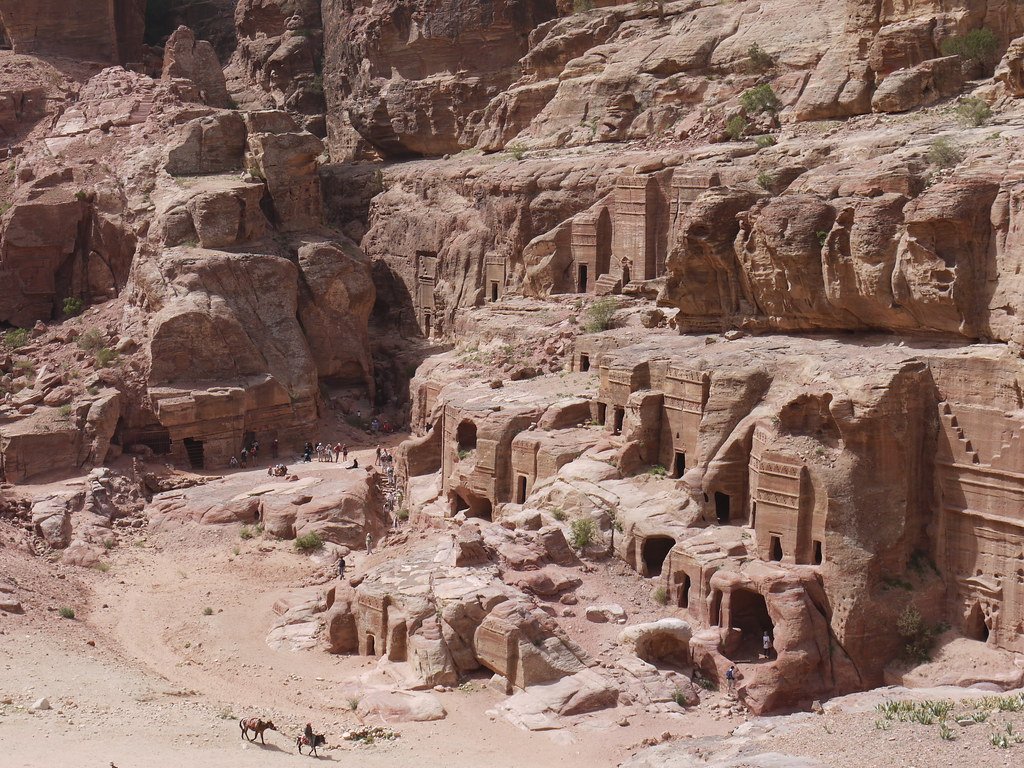
Petra, which is also known as “Rose city” for its pink-hued rock carvings, is located between the Red Sea and the Dead Sea in Jordan. The archaeological site is home to several rock-cut temples and tombs, including Al Khazneh, Al-Deir, the Palace Tomb and Urn Tomb. Today this carved site is both a UNESCO World Heritage Site and one of the New 7 Wonders of the World.
2. Longmen Grottoes
Luoyang, China
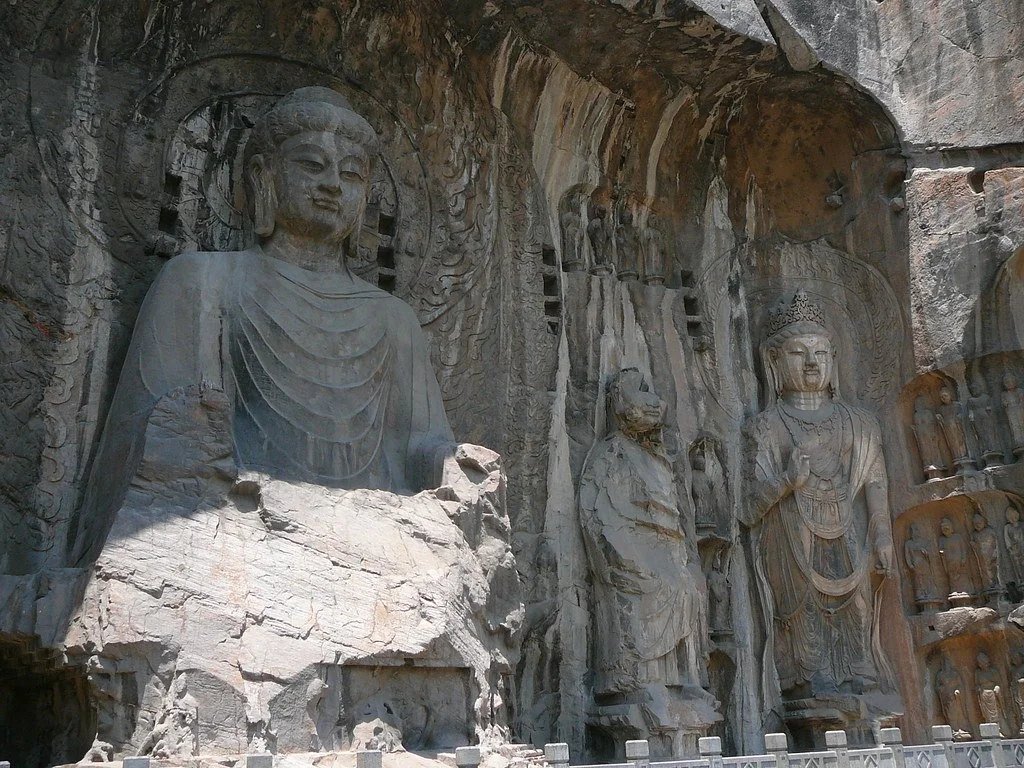
Longmen Grottoes. Dericafox. CC BY-NC-ND 2.0
Considered one of the best examples of Chinese Buddhist art, the Longmen Grottoes date back to the 5th century. The site contains more than 2,000 artificial caves and over 100,000 Buddhas carved into the limestone cliffs of the Xiangshan and Longmenshan mountains. The Longmen Grottoes cover an area of 30,000 square meters and the statues range in size (0.7 in- 53 ft). The site became a UNESCO site in 2000.
3. Ellora Caves
Maharashtra,India
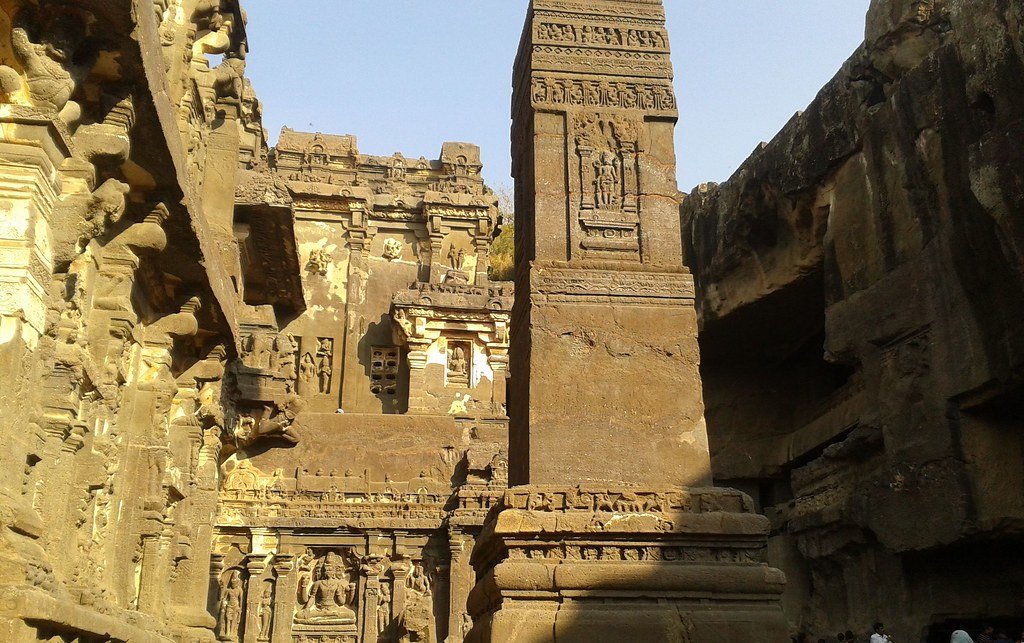
Ellora Caves: Kailasanatha Temple. DdasedEn. CC BY-NC-ND 2.0
Stretching more than a mile long in distance, the Ellora cave temples date back to the 5th century. Located in Maharashtra, India the 34 caves are dedicated to Buddhism, Hinduism and Jainism. Designated a UNESCO World Heritage site in 1983, the Ellora Caves were hand carved into hillside rock.
4. Mesa Verde National Park
Montezuma, Colorado
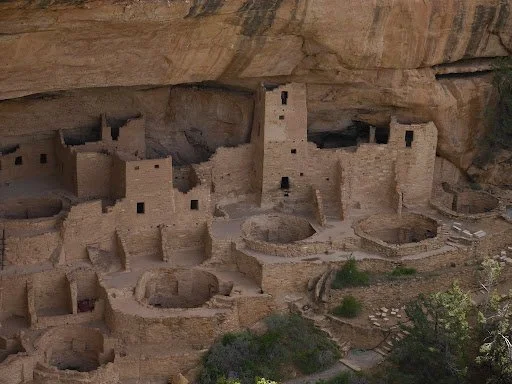
Mesa Verde National Park. Usareisetipps. CC BY-SA 2.0
Within Colorado’s Mesa Verde National Park you’ll find the largest archeological preserve in the US. Located in Montezuma County and occupying 81 square miles, the more than 4,000 Pueblo Indian sites date back to the 6th century. As well as 600 cliff carved dwellings including the famous Cliff Palace and Long House. It is frequently visited by mountain lions, elk and bears as well as lizards and snakes which roam the National Park.
5. Goreme National Park
Nevşehir, Turkey
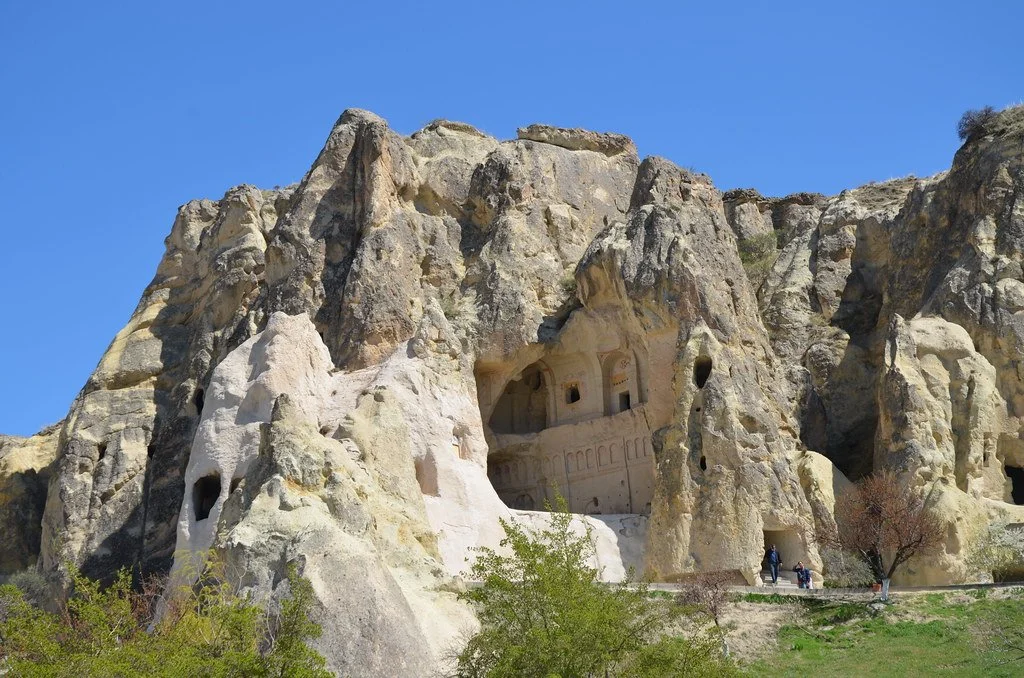
Sculpted by erosion, the Göreme National Park is in Cappadocia, Turkey and contains rock-hewn sanctuaries, houses, monasteries, churches and underground cities. These were inhabited and built in the 4th century, Neolithic pottery and tools found in Cappadocia attest to an early human presence in the region. Clay tablets recovered from the remains of an Assyrian merchant colony at Kanesh are among the oldest written documents discovered in Turkey.
6. Abu Simbel
Aswan, Egypt
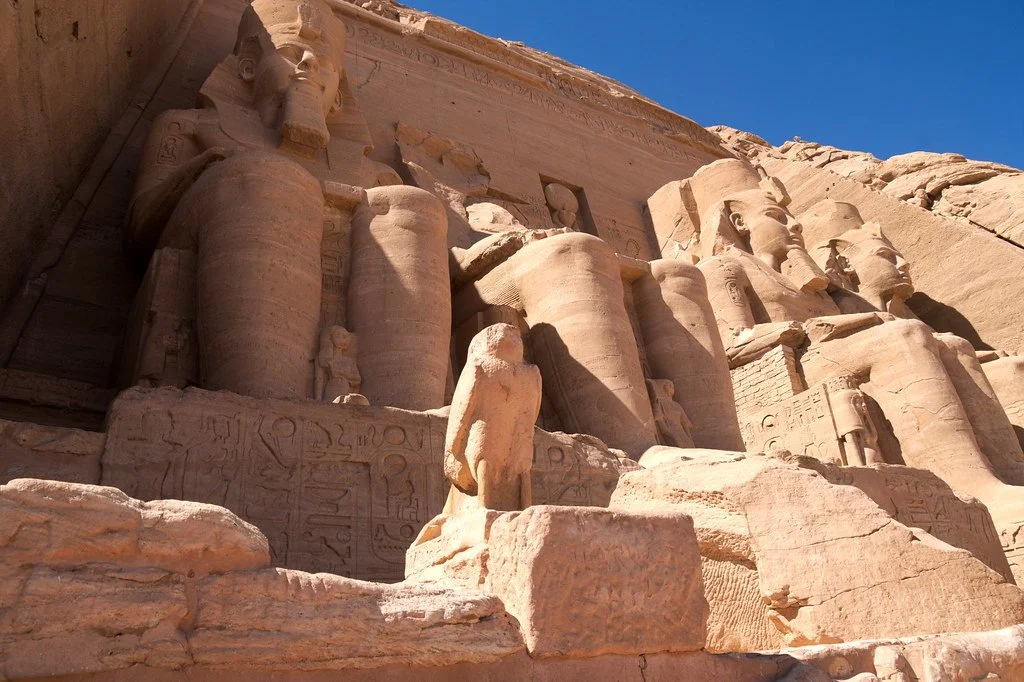
An ancient temple complex, Abu Simbel was built by Egyptian King Ramses II to intimidate his enemies and seat himself amongst the gods. The 66-foot seated figures of Ramses are set against the recessed face of the cliff, two on either side of the entrance to the main temple. Carved around their feet are small figures representing Ramses’ children, his queen, Nefertari, and his mother, Muttuy. The temples were unknown to the outside world until their rediscovery in 1813 by the Swiss researcher Johann Ludwig Burckhardt.
7. Lycian Tombs
Anatolia, Turkey
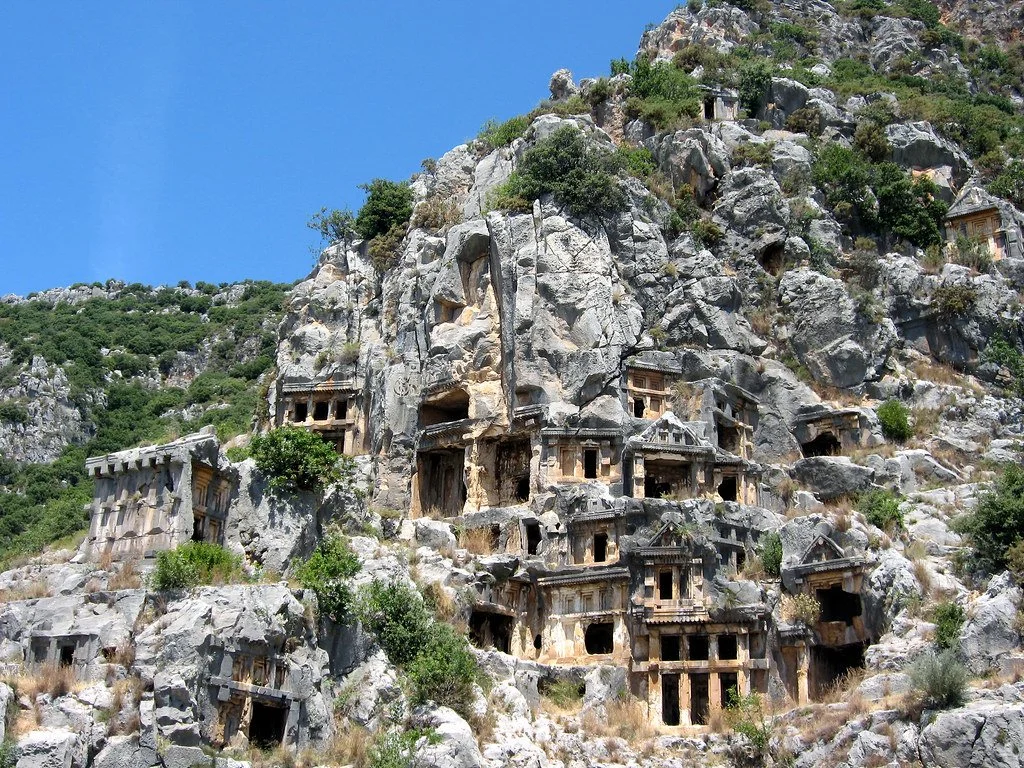
The 4th century Lycian tombs of Turkey contain carved tombs into the side of the region’s mountains, demonstrating a form of ancestral worship. More than a thousand tombs are there today varying in many intricate styles. Some with Romanian columns and other decorative features. The Lycian people believed the dead were carried to the afterlife by winged creatures, hence helping the process by laying them to rest in high cliffside tombs.

Jennifer Sung
Jennifer is a Communications Studies graduate based in Los Angeles. She grew up traveling with her dad and that is where her love for travel stems from. You can find her serving the community at her church, Fearless LA or planning her next trip overseas. She hopes to be involved in international humanitarian work one day.
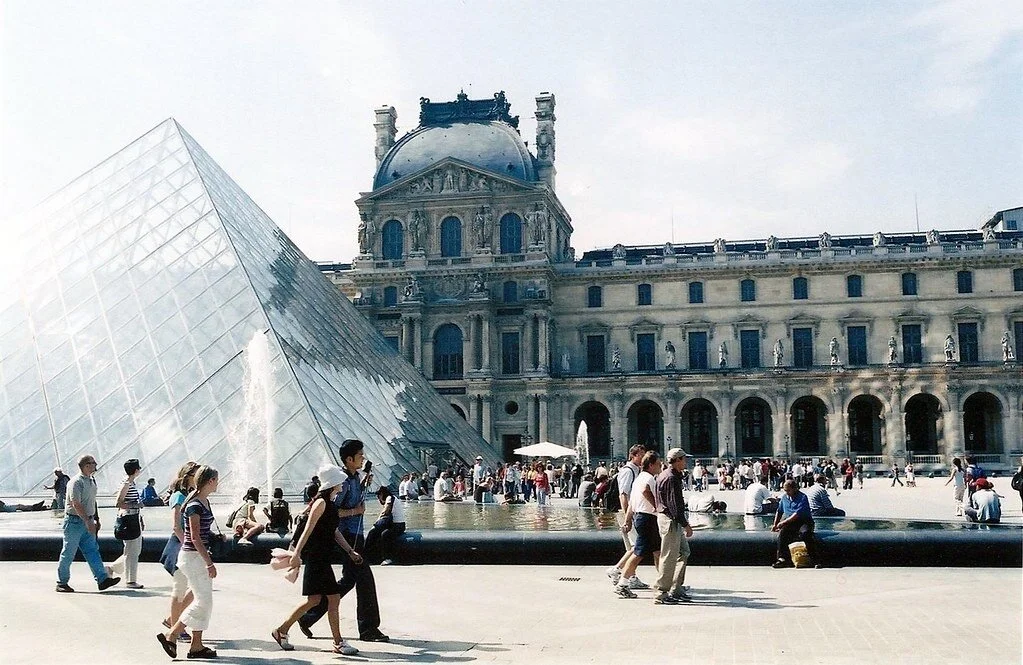
The Louvre Museum in Paris. BY-NC-SA 2.0
8 Museums from Around the World to Visit Virtually from Home
The coronavirus pandemic has seen many facets of daily life change. Many are working or taking classes from home, limiting their contact with the outside world, and finding new methods to ward off the fear of missing out on travel. With no clear end in sight, the trend of virtual living, working and playing is likely to carry on into next year.
In recognizing this unique opportunity, many museums around the world have opened up their collections to be viewed online for free. With exhibits ranging from science to rare art to historical demonstrations, there truly is something for everyone to enjoy. Below is a guide to eight museums whose exhibitions are available to be viewed from home.
1. Prado Museum — Madrid, Spain
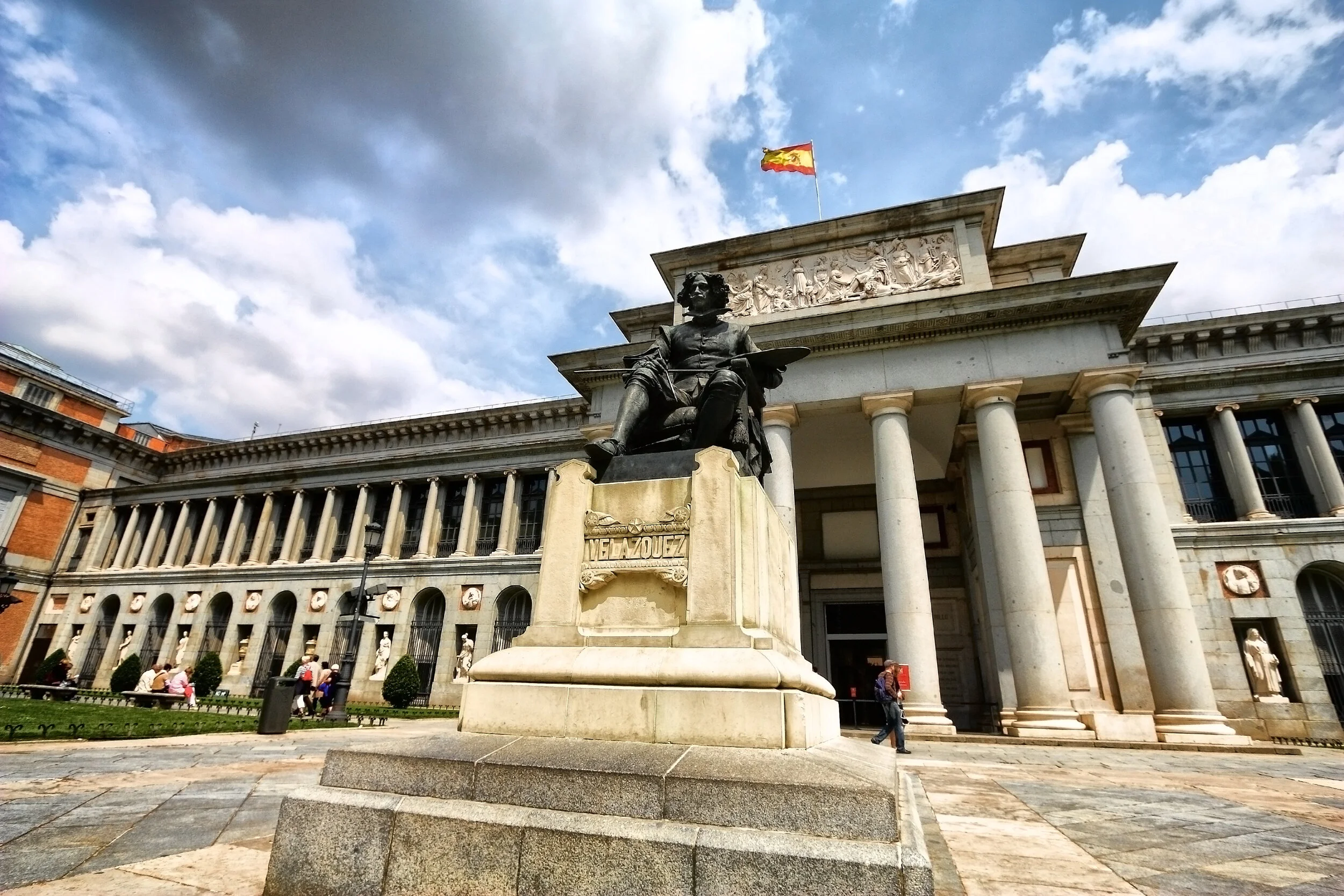
Wenji Zhang. CC BY 2.0.
The Prado Museum is Spain’s most important art museum and is world-renowned for its extensive collections of European and Spanish artwork. The museum’s collection is home to approximately 8,200 drawings, 7,600 paintings, 4,800 prints and 1,000 sculptures, and features the work of artists like Diego Velazquez, Francisco de Goya and El Greco.
According to Miguel Falomir, director of the Prado Museum, “Since its foundation in 1819, the Museo del Prado has played a key role in the evolution of art history. It has been crucial for the rediscovery of the Spanish Primitives and emblematic figures such as El Greco, and for positioning Velazquez as the greatest figure in the Spanish pictorial Parnassus, while its galleries have inspired some of the most avant-garde painters of the past 150 years. We are proud to show visitors this great artistic patrimony.”
The online collection, which is available here, showcases over 10,000 works of art. Additionally, the museum’s Instagram account, @museoprado, uploads daily mini-tours of different pieces which discuss their history and meaning.
2. National Museum of African American History and Culture — Washington, D.C.
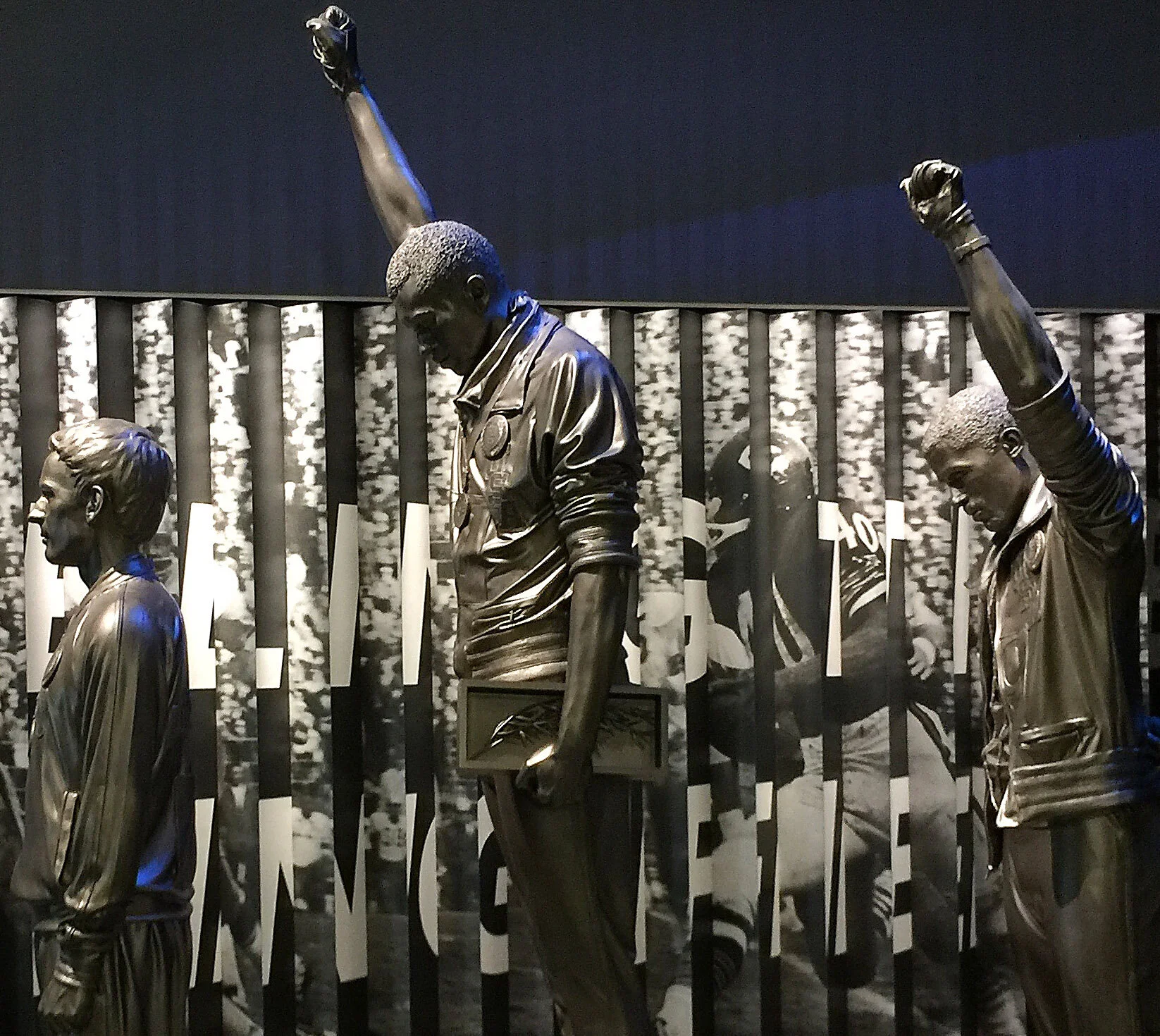
Ron Cogswell. CC BY 2.0.
The newest addition to the Smithsonian Institution’s National Mall campus, the National Museum of African American History and Culture is the sole national museum in the United States dedicated to documenting African American life, culture and history. The museum was widely popular when it opened in 2016, and has only continued to gain prominence with the resurgence of the Black Lives Matter movement.
The museum offers a number of virtual exhibitions and resources, including permanent and past special exhibition galleries, publications for further research into African American history, and a “Curator Chats” series which features museum curators providing information on the museum and various upcoming projects.
3. Georgia O'Keeffe Museum — Santa Fe, New Mexico

Kent Kanouse. CC BY-NC 2.0.
The Georgia O’Keeffe Museum is a small gallery located in New Mexico’s capital city which is dedicated to the life and work of Georgia O’Keeffe, one of the most influential American modernist painters. Since its opening in 1997, the museum’s collections have grown to house nearly 1,200 pieces of the late artist in its Santa Fe gallery and in the Abiquiu Home and Studio, where O’Keeffe resided and created many of her most popular pieces.
While the museum has since reopened with a limited capacity for visitors, art lovers across the globe can still enjoy the museum’s virtual collections, which include digital versions of her art, various online programs and creative activities to create art at home inspired by O’Keeffe’s legacy.
4. Kahlo Museum — Mexico City, Mexico
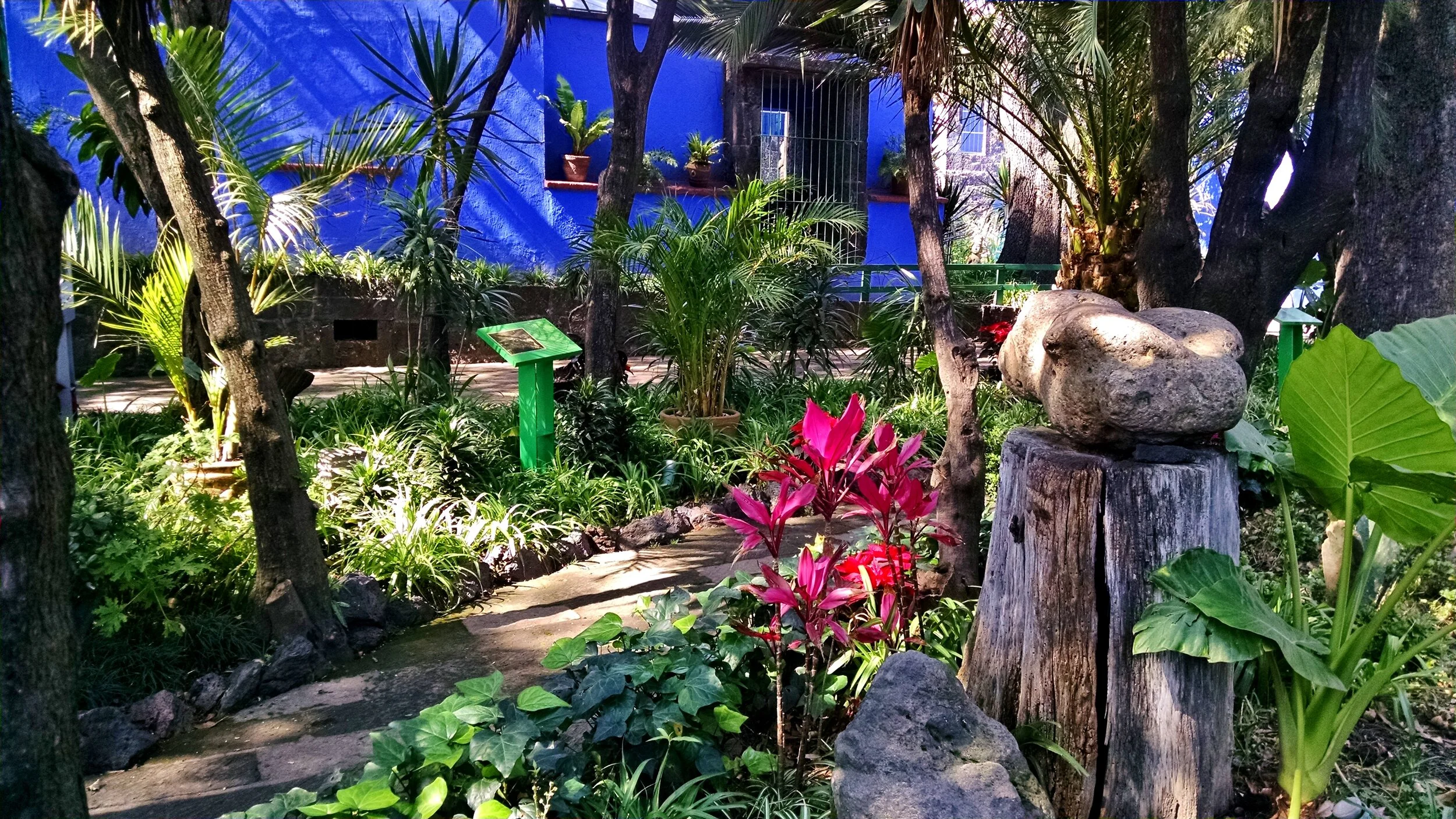
Kyle Magnuson. CC BY 2.0.
Located inside Frida Kahlo’s lifelong home, the Frida Kahlo Museum features a number of the artist’s paintings, as well as her home studio and garden. The site is famous for its vibrant blue walls which have given the building the nickname “La Casa Azul,” or “the Blue House.”
Hilda Trujillo, one of the museum’s curators, stated that: “As one explores Frida Kahlo’s work more deeply and enjoys the privilege of getting to know her home, one begins to discover the intense interrelations between Frida, her work and her house. Her creative universe is to be found in the Blue House, the place where she was born and where she died.”
Via Google Arts & Culture, visitors to the museum’s virtual gallery can view the “Appearances Can Be Deceiving” exhibit, a number of photos and paintings, and immersive virtual viewings of four rooms within the museum.
5. Emperor Qinshihuang’s Mausoleum Site Museum — Xi’an, China
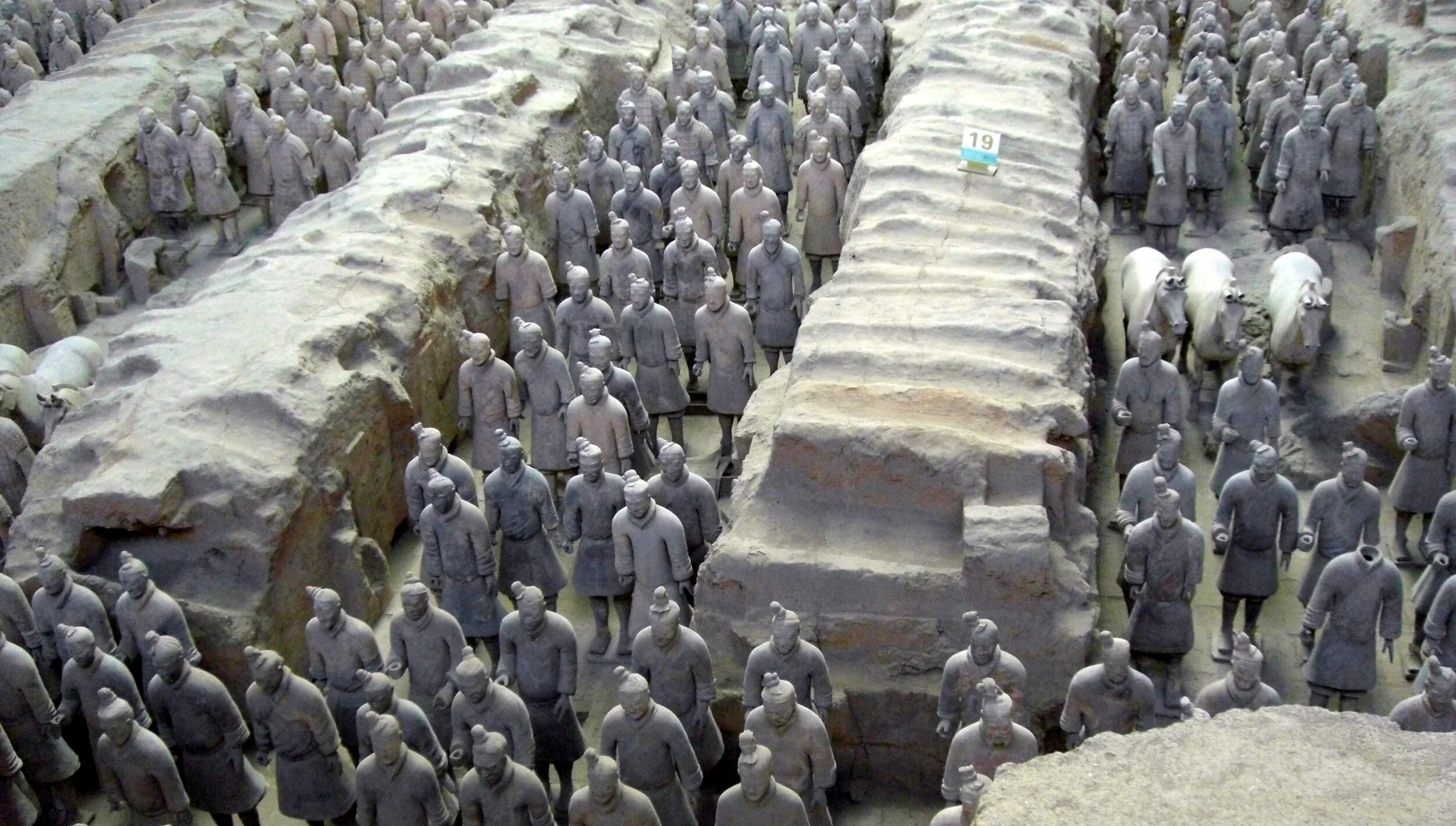
Larry Koester. CC BY 2.0.
One of the most famous archaeological sites in the world, the Emperor Qinshihuang’s Mausoleum Site Museum is home to the terra-cotta army, a collection of several thousand sculptures depicting the army of Qin Shi Huang, China’s first emperor. All of these sculptures surround the emperor’s mausoleum in formations meant to guard the site from invaders.
The site in Xi’an was discovered by local farmers in 1974, and numerous excavations have uncovered more than 8,000 individual sculptures buried in the site.
The museum offers a broad online collection with a number of selections. Likewise, the virtual experience allows viewers to learn more about the history of the terra-cotta army, as well as detailed information on individual sculptures.
6. National Gallery of Victoria — Melbourne, Australia
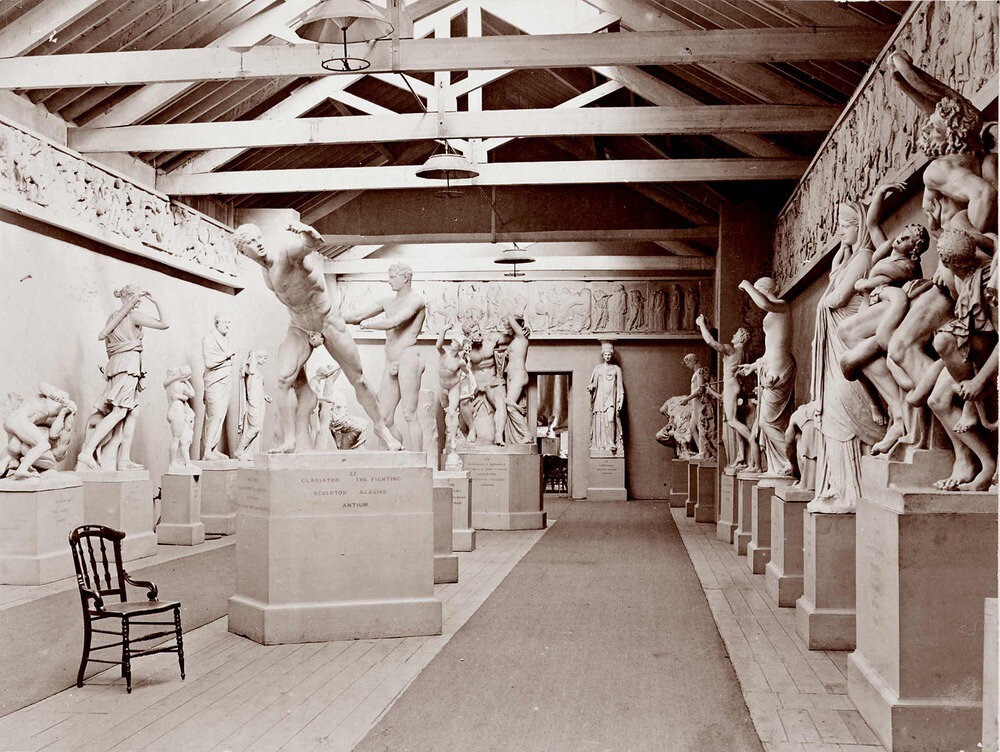
State Library Victoria Collection. CC BY-NC 2.0.
The National Gallery of Victoria is the oldest and largest art museum in Australia. Featuring thousands of pieces of Australian Indigenous art, Asian art and international art, the museum has grown to become the most visited art museum in the country.
The museum offers an extensive list of virtual experiences which will keep any stuck-at-home art lover captivated for days. Digital tours like “20th Century Australian Art,” “Japanese Modernism” and “Marking Time: Indigenous Art from the NGV,” short documentary films, explanatory articles, podcasts and the museum’s bimonthly magazine are all available for free on the museum’s website.
7. National Museum — New Delhi, India
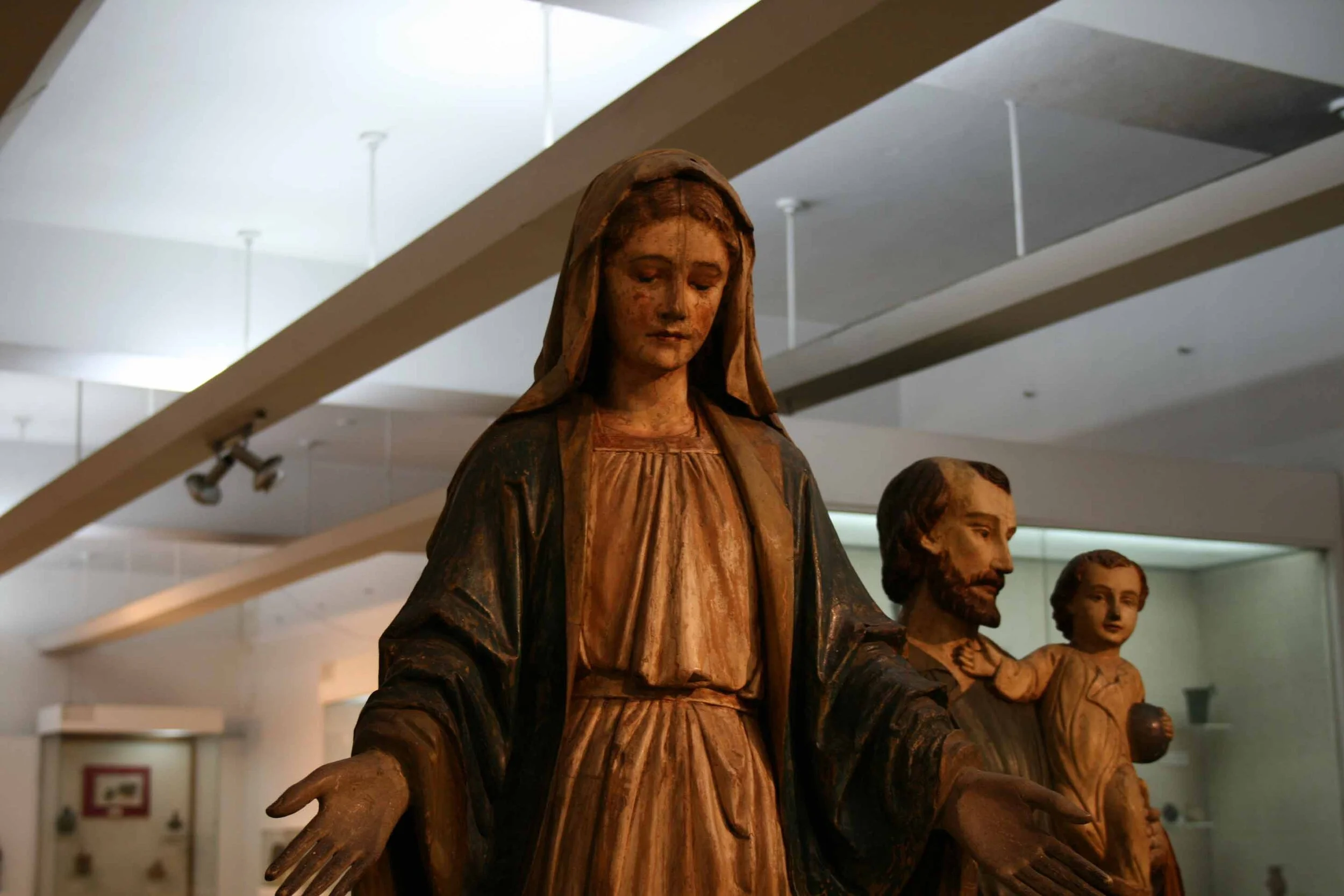
Tom Thai. CC BY 2.0.
The National Museum in New Delhi is one of the most prominent art institutions in India. Inaugurated in 1949, the museum’s collections have grown to house over 2 million diverse pieces of Indian and foreign artwork which represent over 5,000 years of Indian cultural history. The museum has also become known as a center for art history and cultural research in recent years.
The museum’s online collection, which is available via Google Arts & Culture, showcases hundreds of pieces from the institution and features seven 360-degree room viewings.
8. Galileo Museum — Florence, Italy
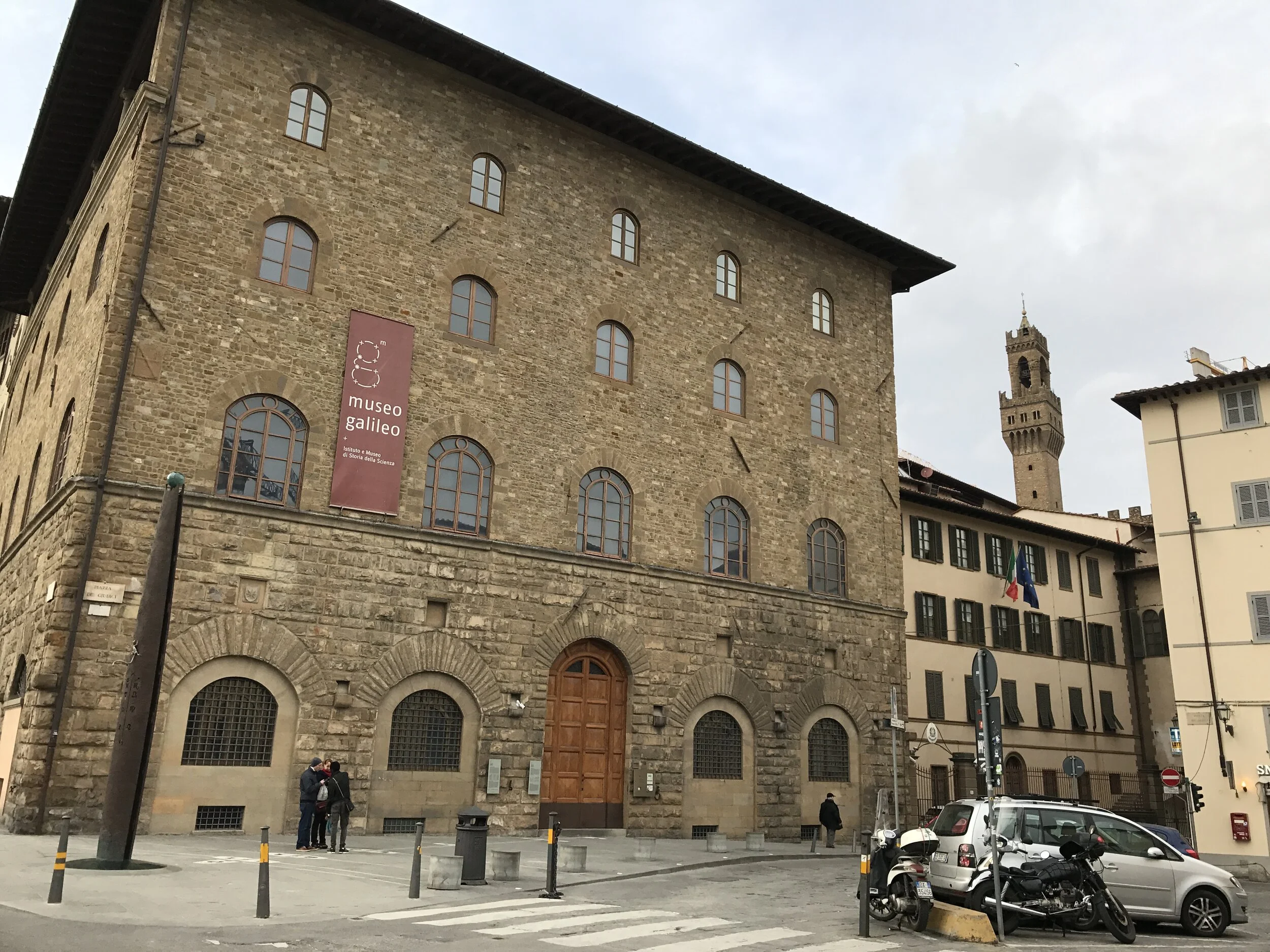
Elias Rovielo. CC BY-NC-SA 2.0.
Dedicated to highlighting the contributions from scientist and astronomer Galileo Galilei, the Galileo Museum is one of the most popular science museums in the world. The museum’s collection includes a number of scientific instruments dating back to the 13th century, including Galileo’s telescope which was used to discover the existence of Jupiter. Curators at the museum also undertake a number of research projects and activities, including the publication of several research journals and catalogs.
Visitors to the virtual exhibition are able to view a number of the museum’s rooms and pieces via in-depth videos ranging from rooms dedicated to astronomy and physics to an interactive space titled “Galileo and the Measurement of Time.”

Jacob Sutherland
Jacob is a recent graduate from the University of California San Diego where he majored in Political Science and minored in Spanish Language Studies. He previously served as the News Editor for The UCSD Guardian, and hopes to shed light on social justice issues in his work.
10 National Parks to Visit Outside the US
While most people associate National Parks with the US, there are amazing National Parks to visit around the world. Check out glaciers, tropical wetlands, the oldest desert in the world in these parks in Iceland, Namibia, Thailand, India and more.
Read MoreSouth India on Foot: Breaking Stereotypes One Step At a Time
We all have images in our minds about faraway places and the people that occupy them. Whether accurate or not, these ideas are often put in our heads by the news we consume, school textbooks or social media.

Dawn Lwakila exploring bush-trails in India’s rural Tamil Nadu
I’m one of those folks who likes to go and see for herself. I’ve spent the past 30 years living and traveling across four continents. My roots are in northern Canada—Yukon to be exact. Many would think this to be the absolute opposite in every way from my current home in the big bustling city of Chennai, the capital of India’s southern state, Tamil Nadu. Fortunately, I live on the outskirts of the city which enables me to get into the countryside fairly quickly. I believe it is my small-town roots that have allowed me to feel comfortable and at home in rural settings here in India.
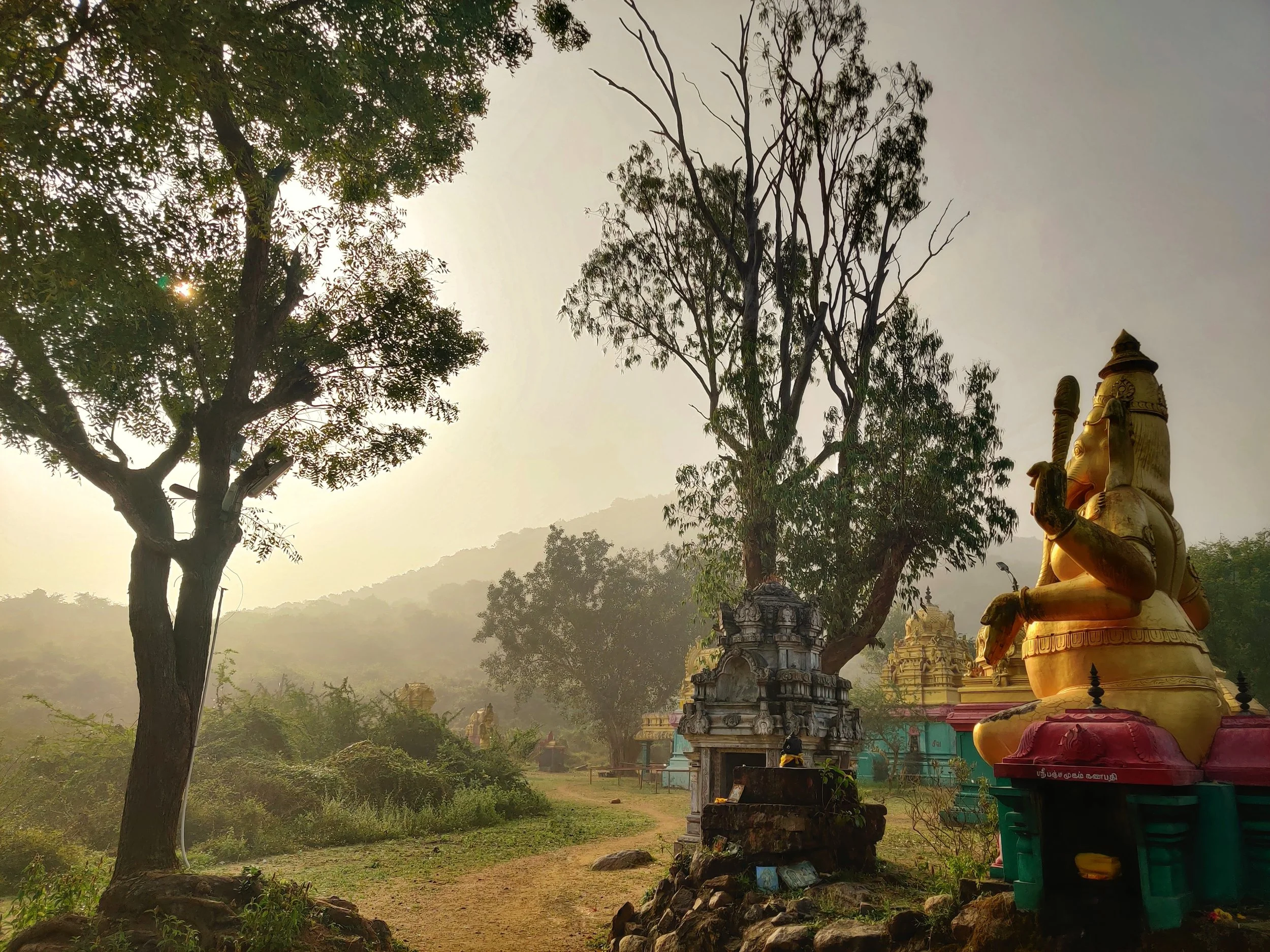
Ganesh temple in Tamil Nadu’s Chengalpattu District.
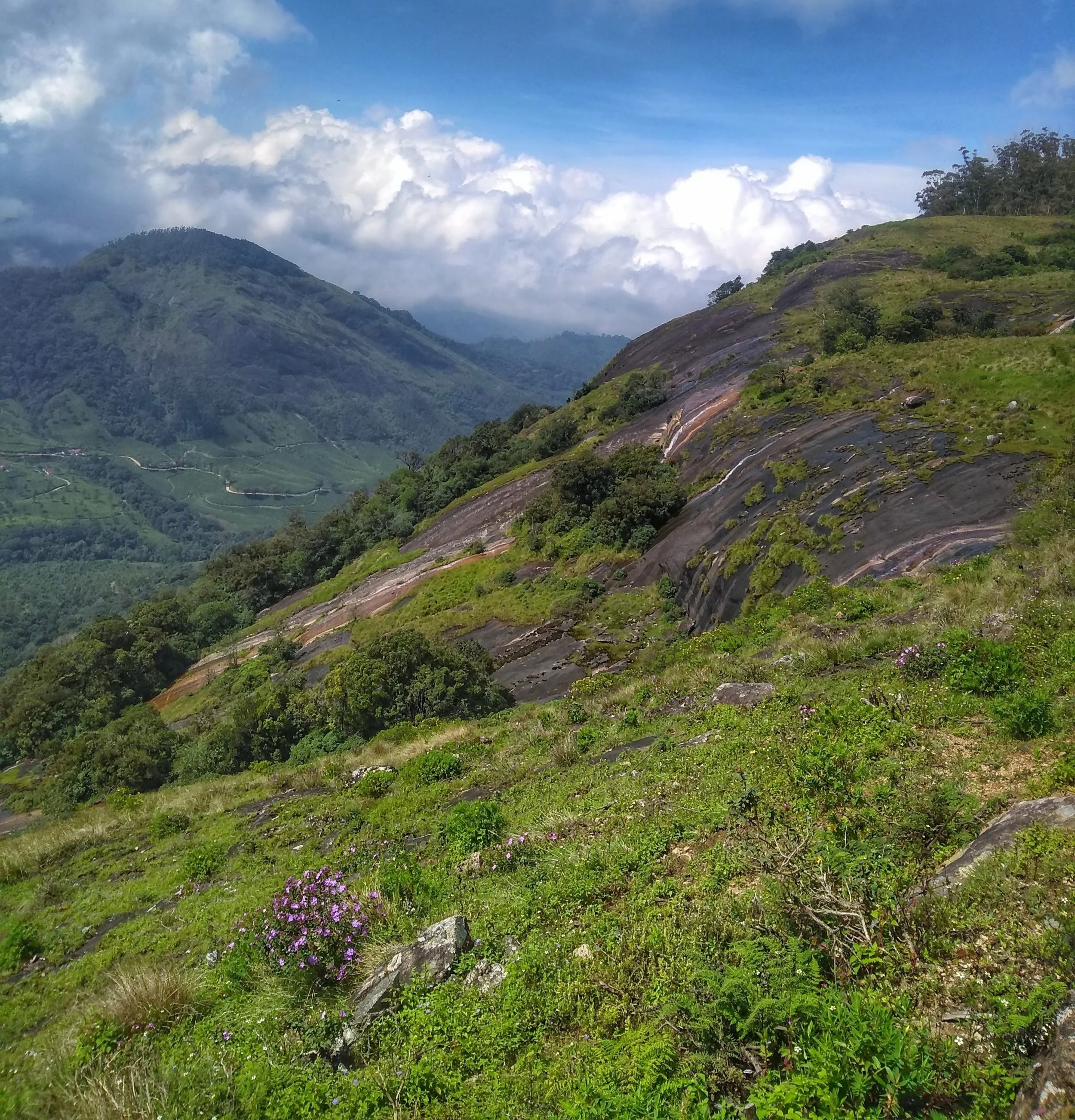
I love wandering the dreamy hills of Munnar, Kerala.
I’m a wanderer at heart, and I am happiest walking from village to village, hilltop to hilltop. Some days I only walk 15km and other days I may walk more than 40km. I take backroads and bush trails, all the while documenting what I find beautiful with a few photos and videos, posted almost daily on my Instagram. Photography is a wonderful form of storytelling and the tale that I aim to tell isn’t often heard. I have been warned countless times not to walk alone in India. From mainstream media, I have been inundated with images representing India as a place of filth, overcrowding and crime. This has not been my experience.
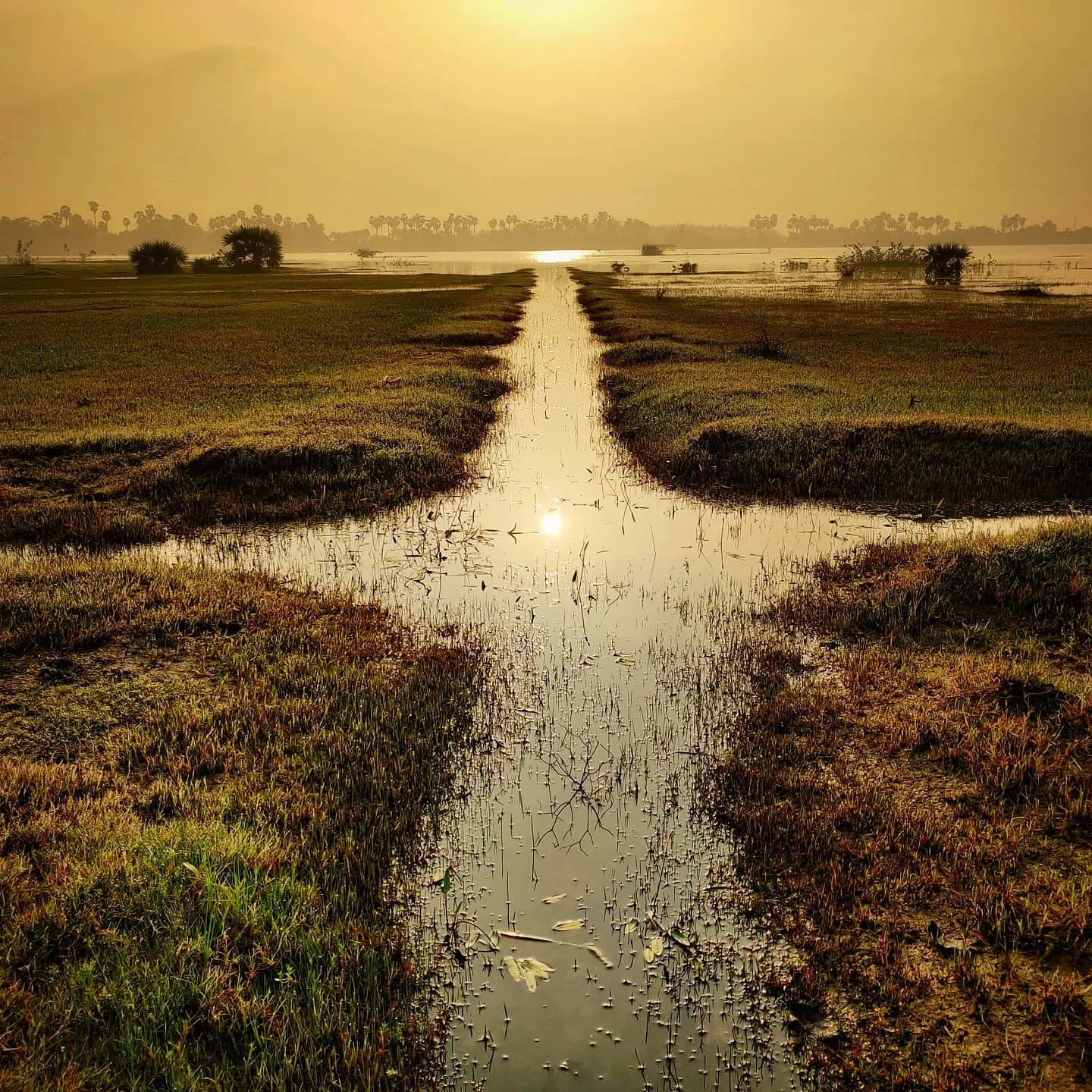
Mambakkam Lake, Tamil Nadu. I love to leave my house while it’s still dark so that I can reach these magnificent locations at sunrise.
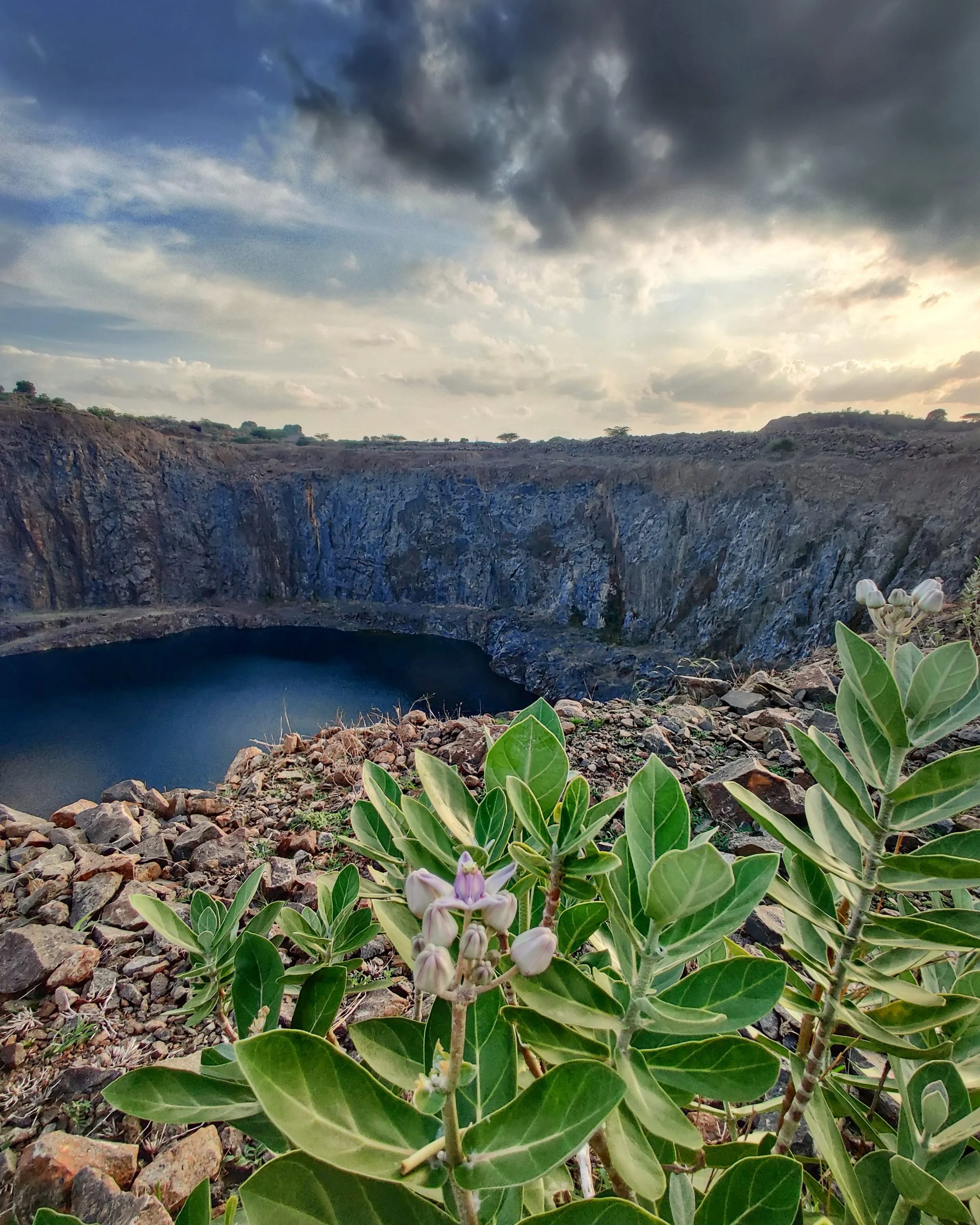
My secret swimming hole.
Over the past several years I have walked through much of South India exploring my home-state of Tamil Nadu as well as Kerala, Karnataka and Andhra Pradesh. There has not been a single incident where I felt threatened or unsafe. Rather, I have been greeted with nothing but kindness and hospitality. I have walked through bustling cities, endless kilometers of road and countless areas of pristine natural beauty, enjoying the entire place all to myself.
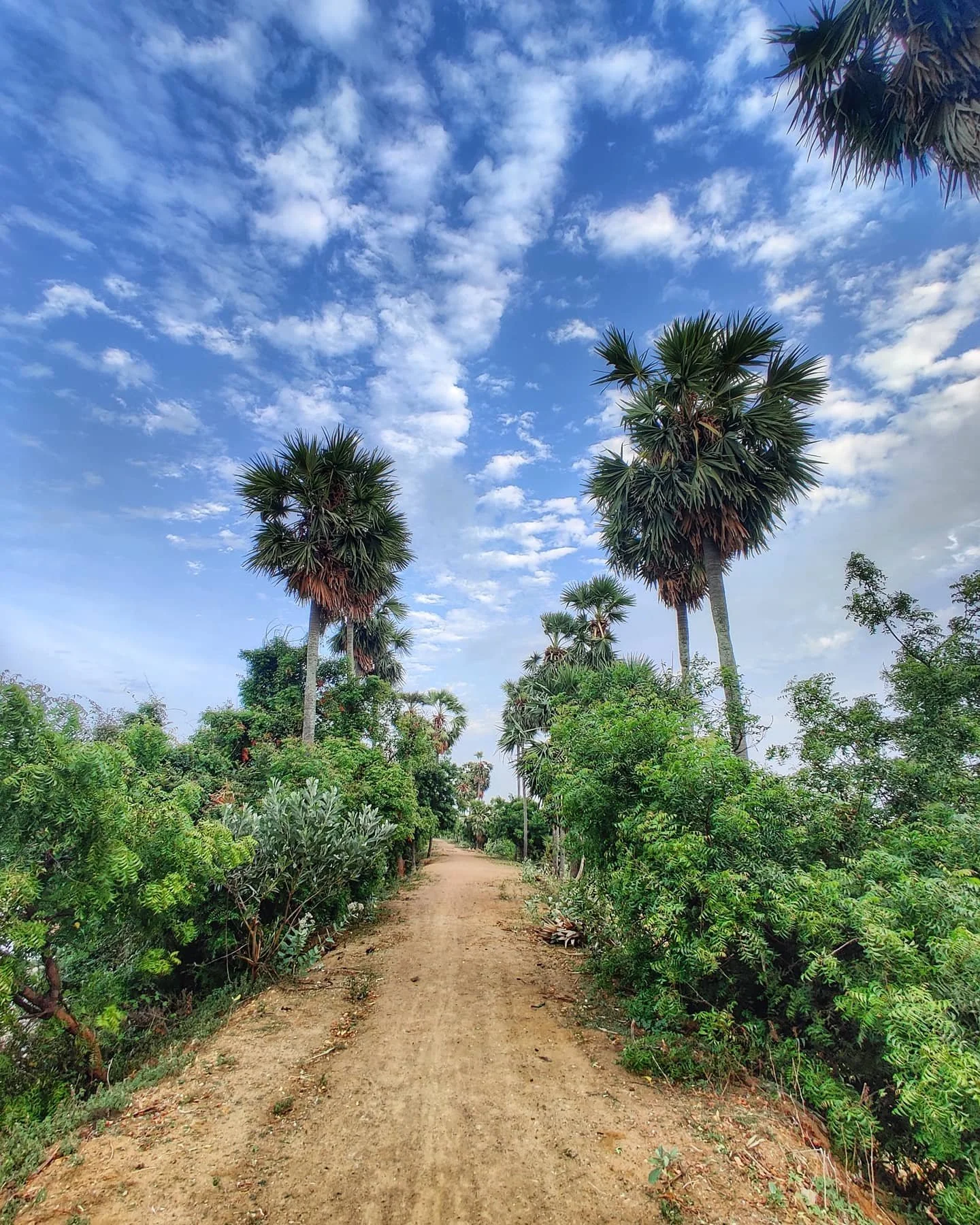
Following back-roads in Chengalpattu, Tamil Nadu.
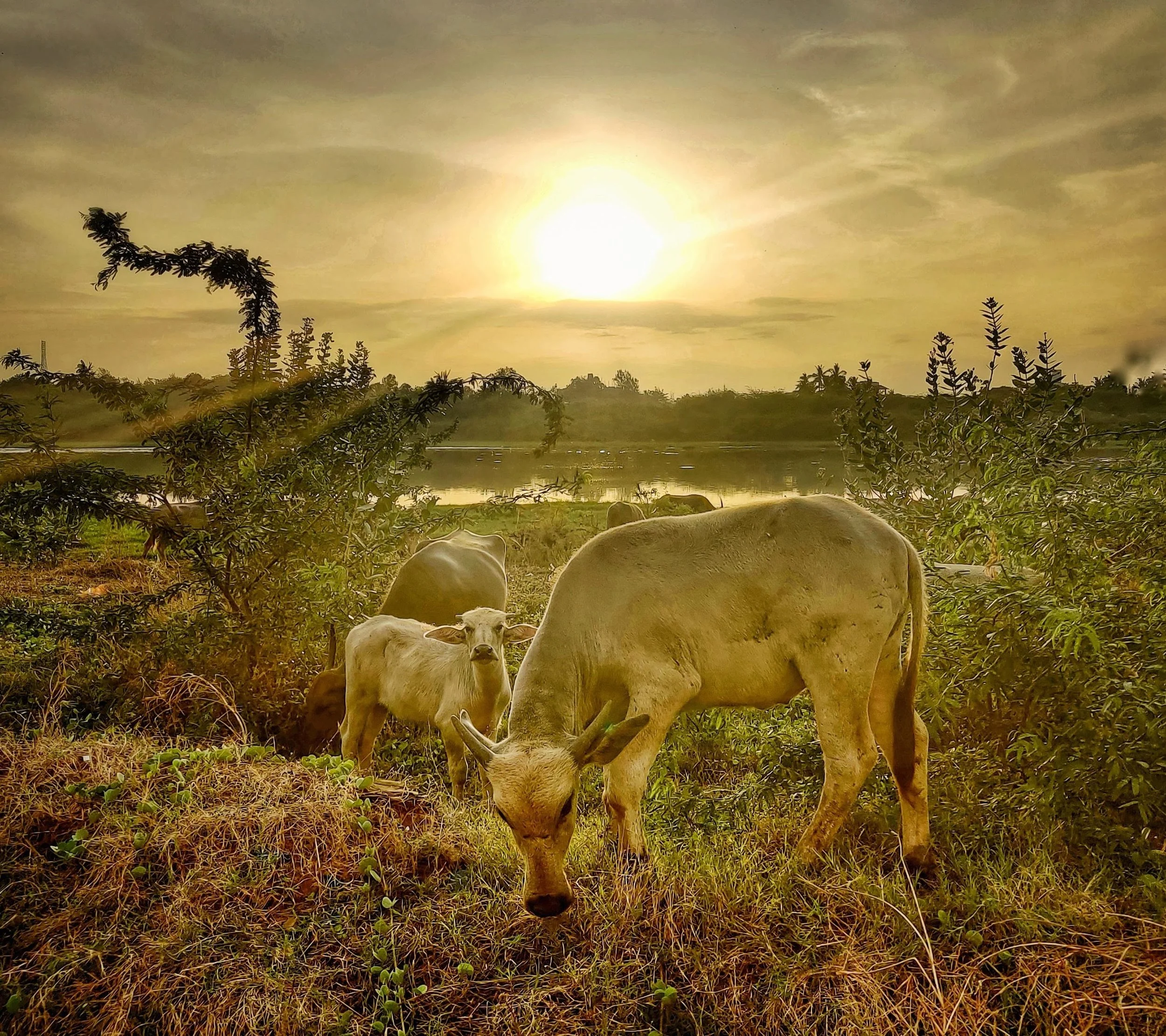
Golden buffalo babies at sunrise.
I choose to go to locations that are off the beaten path. I search Google Maps for interesting features in the landscape and simply go check it out. One of my favorite things to do is follow small backroads from village to village. I cut through farmland and learn when each of the crops is planted and harvested. I find wondrously forgotten temples, tucked away in forests or on hilltops, unvisited except by a few folks from nearby settlements. I prefer to see life slowed down and simplified. For me, rural India offers the most incredible scenery where I am always bound to meet kind-hearted people who offer me smiles, refreshments and places to rest my tired feet.
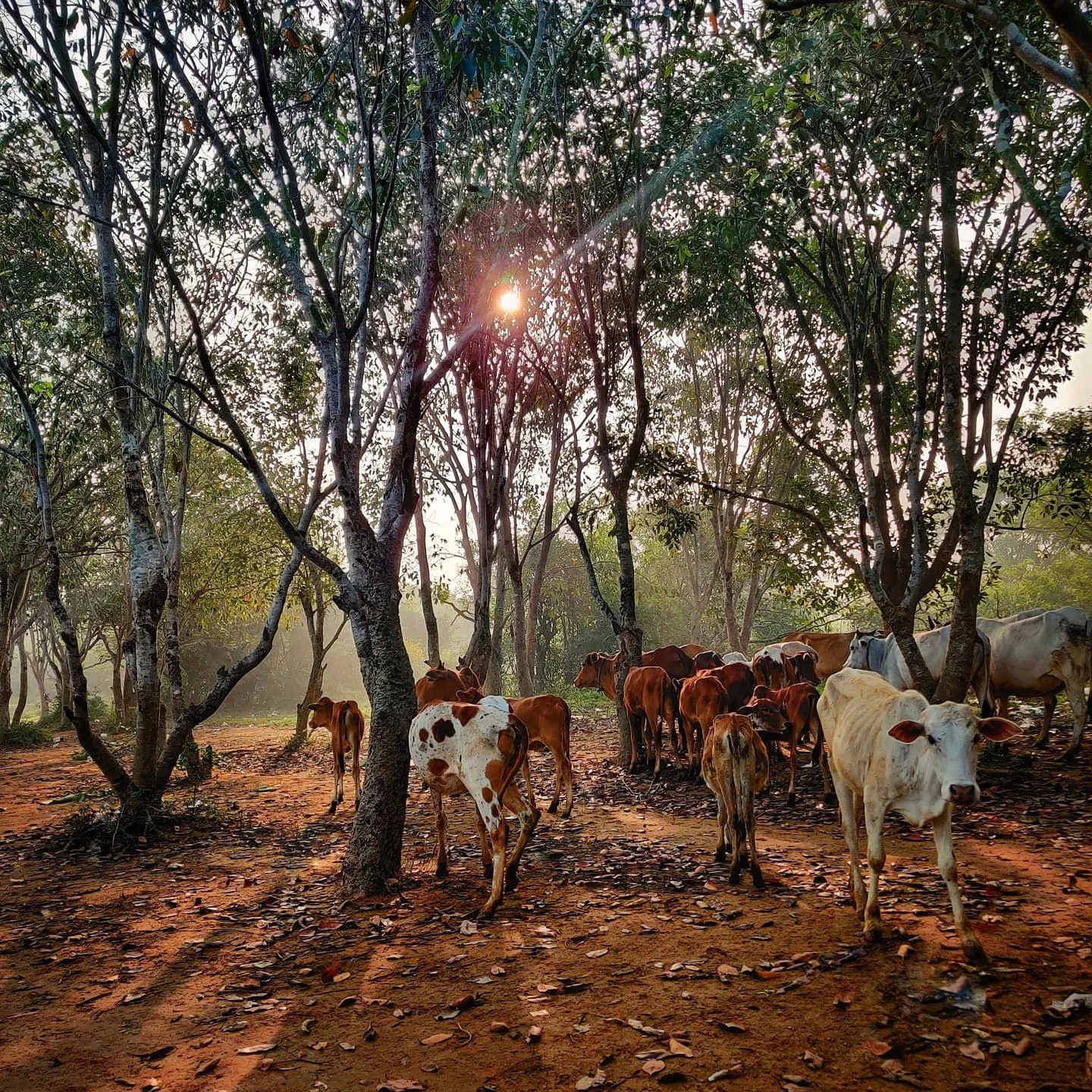
Misty morning, cutting through the forest at sunrise to find a hidden lake.
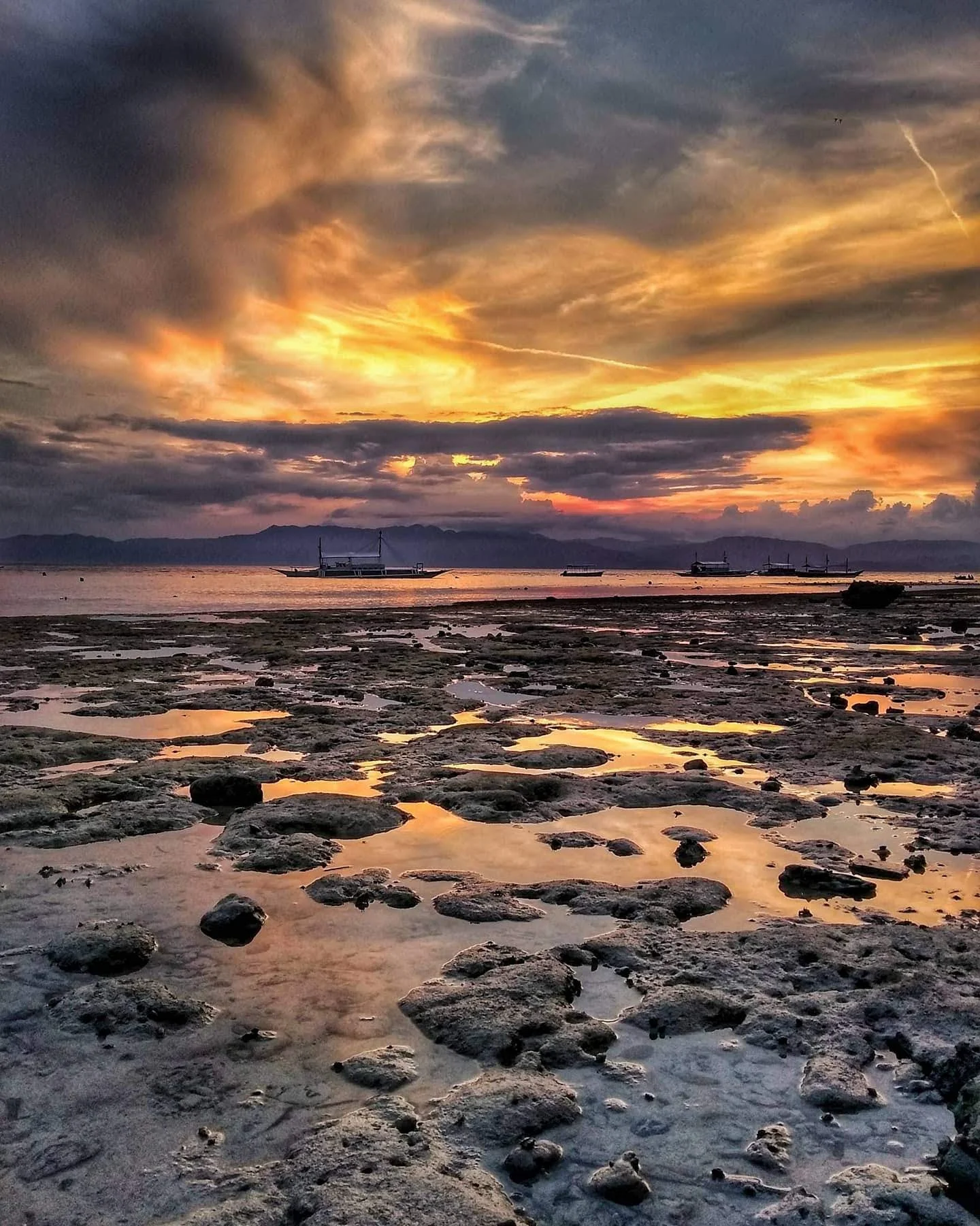
Enjoying the coast of Kerala after trekking the highlands.
I feel so grateful for the sense of pride in the beauty of South India my photography has sparked. Many people, especially in the cities of India, have their eyes fixed on international destinations. When they look at tourism in India they often head to large resort towns or famous national parks. There is a sense of surprise when people see my images and learn of places in their own backyards that rival these famous destinations. I have received both local and national media coverage, which boggles my mind, but I guess this is because I’m doing something that the majority of women are not doing and, with a fresh set of eyes, I’m showcasing humble locations that are largely overlooked.
The comment I get the most from people who have never visited India is, “This is not how I pictured India to be.” For me, this is the greatest compliment, as it means that people are reevaluating the impressions they have about this country that is so dear to my heart.
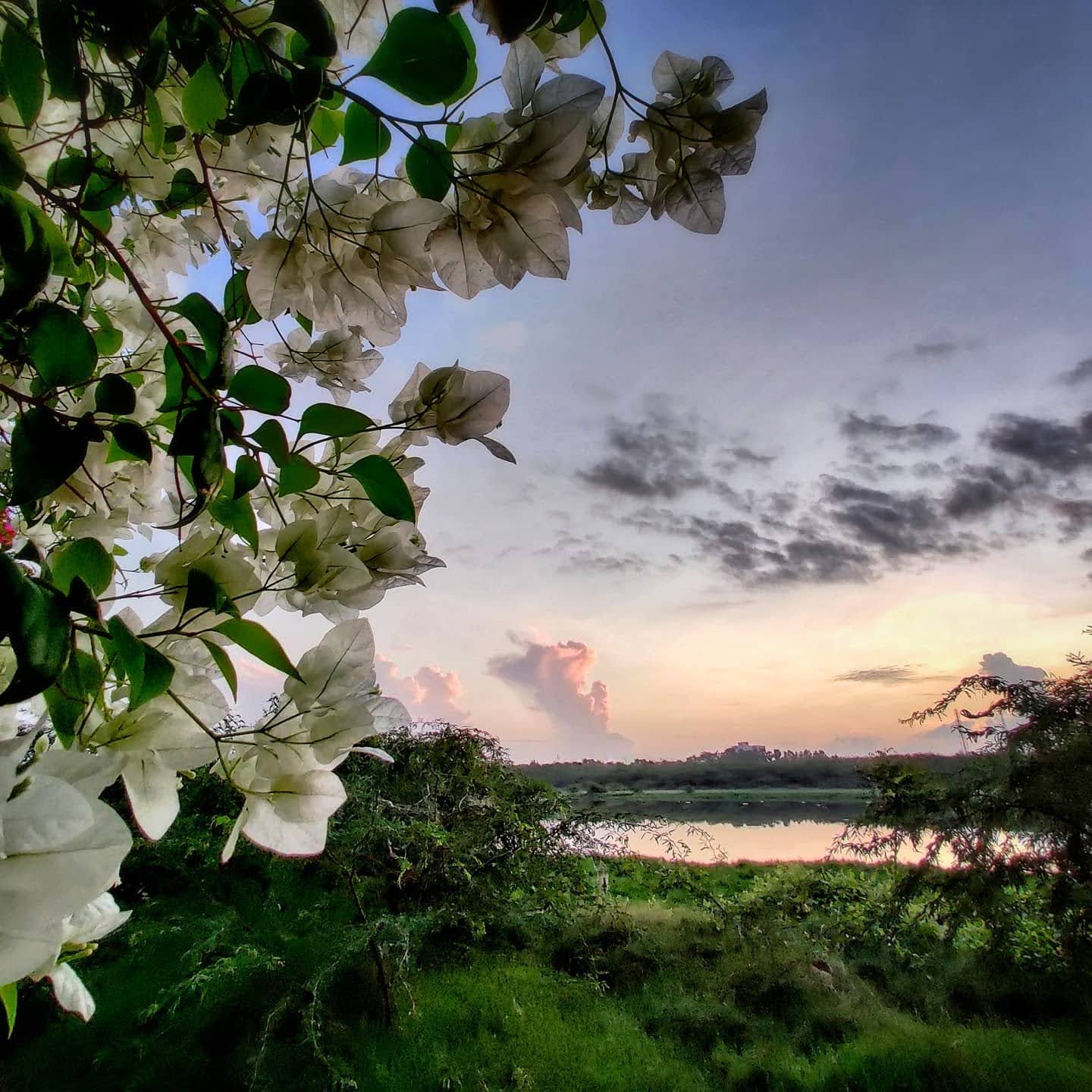
Muttukadu Backwaters at sunrise. This is an important nesting and feeding area for both local and migratory birds.
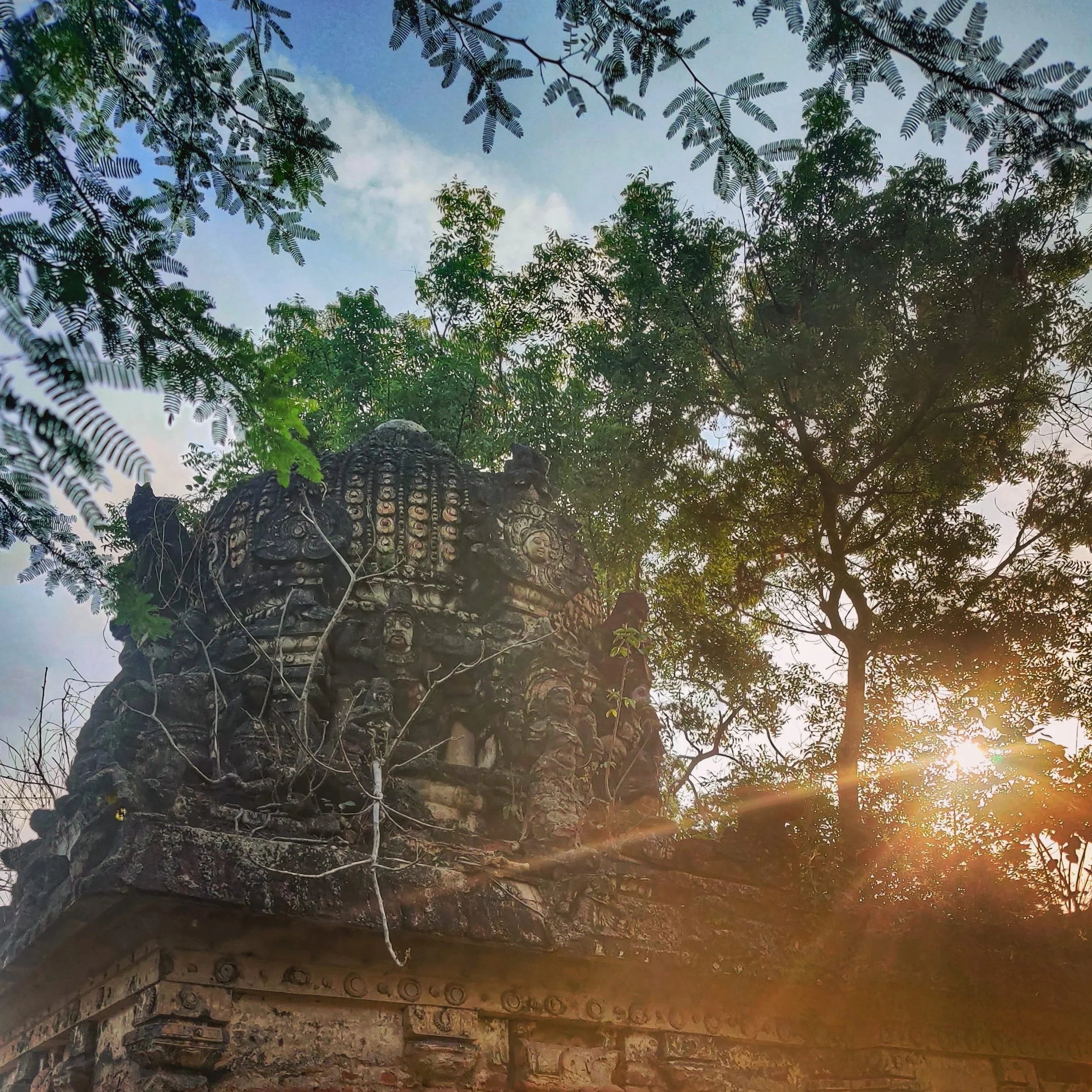
An old neglected temple in Kanchipuram District of Tamil Nadu.
I like to approach new places with the idea that I’m a simple student and that those around me have something of value to offer. Trying to absorb as much as I can, I chose to share through my photography what intrigues and inspires me. I look for a sense of belonging and what connects me to others. Over the years I have learned that despite the superficial things that mark our differences—language, religion, politics—there is much more that unites us as humans. Step by step I find that all my previous notions about a place are left behind, replaced by a much more balanced and authentic understanding.
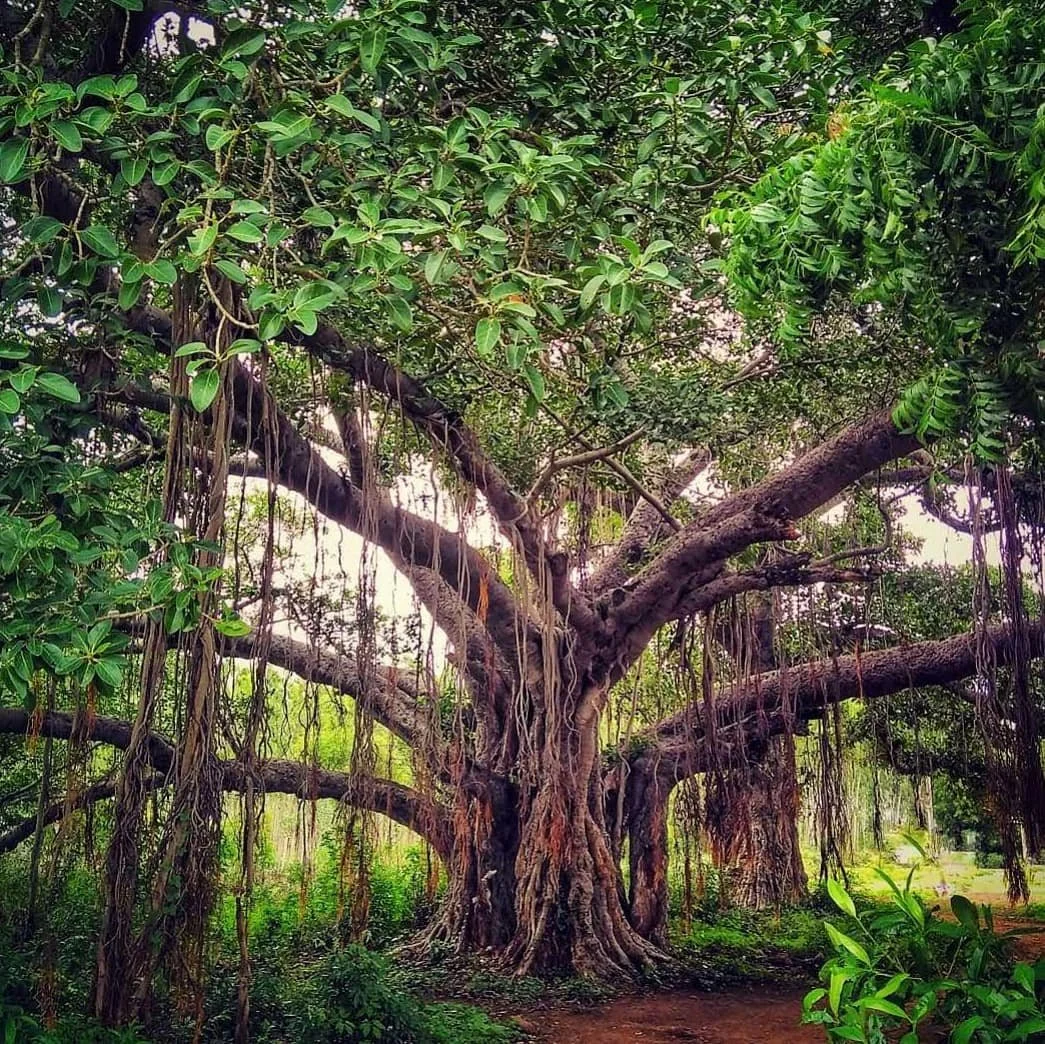
Banyan tree. Andhra Pradesh.
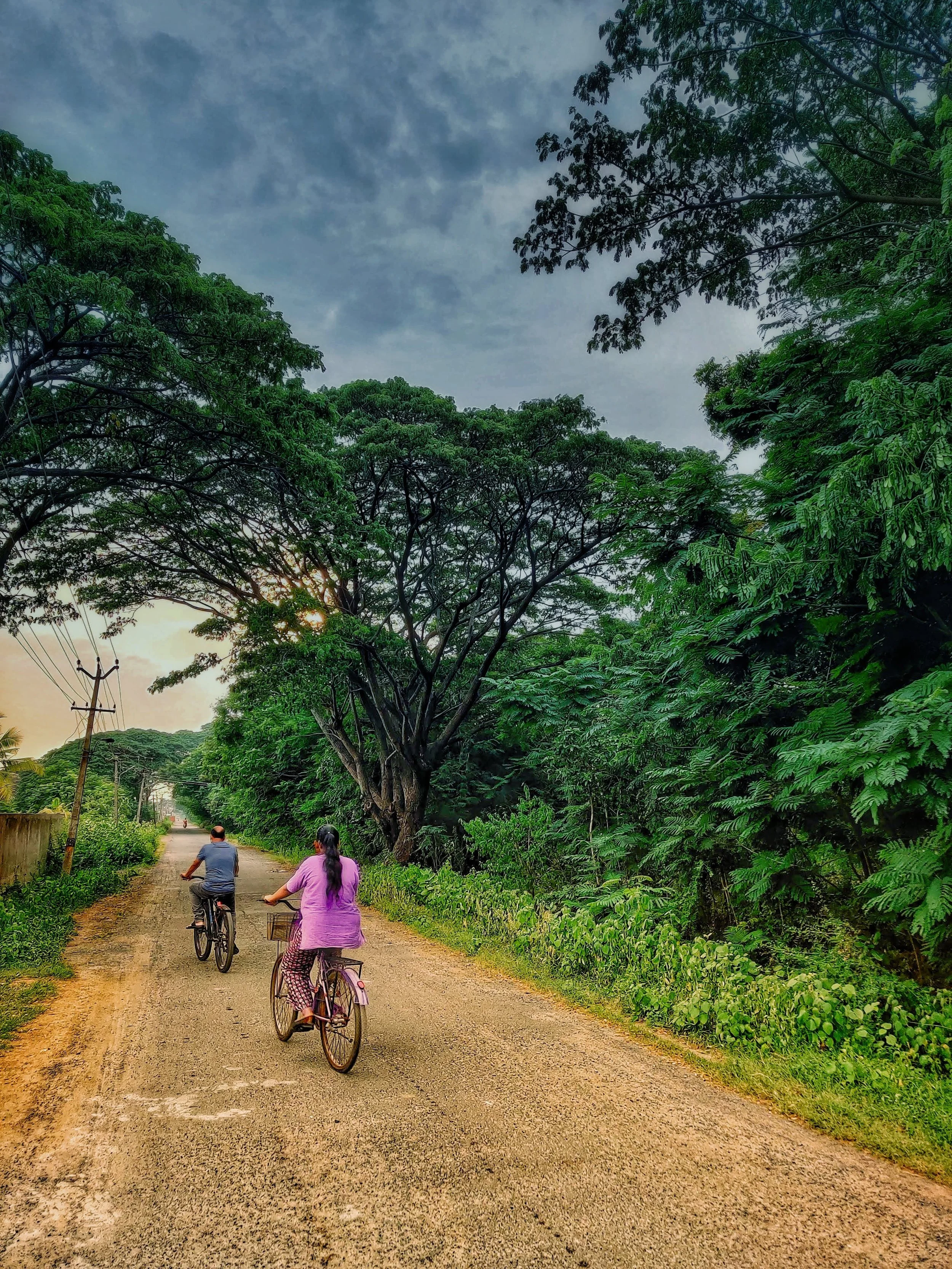
Peaceful moments walking from village to village.
Nothing compares to making my way through a new place on foot. The world slows right down and all the little details come into view. Precious moments that could never be captured any other way have become my daily reality. I am grateful for this journey and my hope is that it will inspire others to get out there and explore in a way that allows them to feel intimately connected to the places they visit.
Feel free to stay up to date with my adventures. You can find me on Instagram @dawned_onme or on Youtube: Wander Woman.

Dawn Lwakila
Dawn continually takes the path less trodden, both figuratively and literally. She loves to really live in a place and grow some roots there — as well as a good wander and the freedom to explore. Canada is her homeland, but her heart and soul are scattered across the globe. She has journeyed through over 30 countries and still has an ever-growing bucket list of new places to experience. She is currently based out of Tamil Nadu India.
India’s Third Gender — Hijra
Despite being protected within the Indian constitution, hijra communities experience persecution. Their colonies are often sites of abuse and poverty, yet serve as the only space in Indian society for their identity.

Image by Carol Foote
India’s third gender includes a few different groups, but the most common are the hijras. The hijra identity is complex; some are born male but dress in traditionally feminine ways, some are born intersex, some seek gender reassignment procedures, and some choose to be castrated as an offering to the Hindu goddess of chastity and fertility, Bahuchara Mata, granting them their religious powers. Outsiders tend to associate them as transgender, but Indian society considers them to be the third gender — not male, not female, not transitioning. The one defining characteristic of hijras is that they leave their homes from a young age to become a part of the hijra community, where they teach their lessons in secret. These communities exist on the outskirts of society, where they are often shunned by their families and at the mercy of police authorities.

Image by Carole Foote
For centuries, trans, intersex and genderqueer individuals abandoned by their families have been initiated into the hijra community by gurus within the system. From the age of 12 or 13, hijras trade their relationships with their families for a relationship with a guru who takes on the role of of parent, teacher and boss. The gurus are expected to teach each hijra the chela, or the disciple, in the hijra way of life. This includes learning their rituals, how to manage a household and how to make a living. Gurus are expected to treat the hijras like their children, but their ability to dictate how a hijra works, what they earn and even who they see maintains a hold over their lives that many activists consider a systemic form of bonded labor.
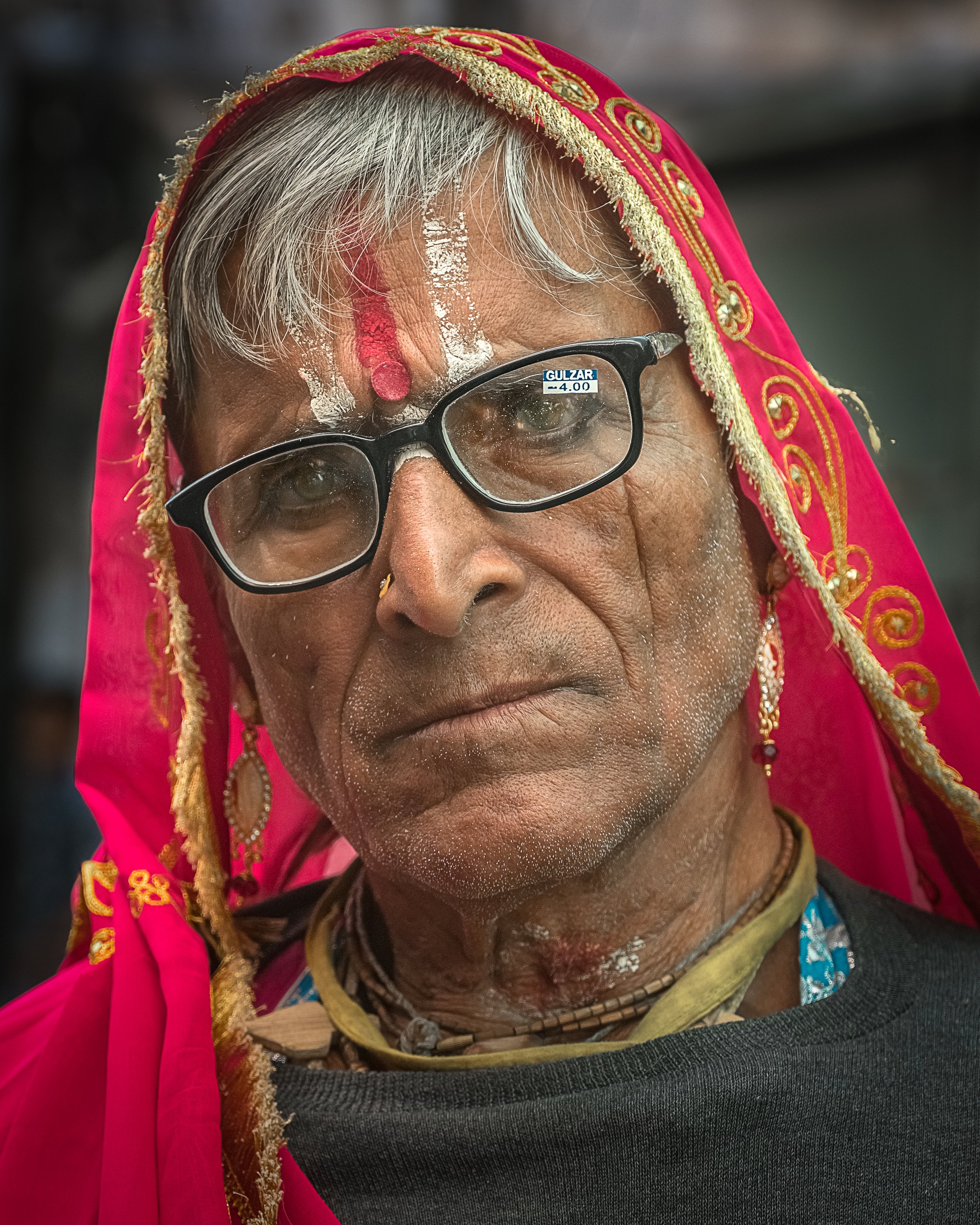
Image by Carol Foote
These communities operate within a pyramid system where the “chelas,” or the hijra students, are divided into hierarchies by their work. At the top of the pyramid are the senior-most chelas, who sing and dance. Below them are the chelas who beg and collect alms in exchange for blessings at events. And lastly, at the bottom of the chela pyramid are the sex workers. In addition to their work, chelas are expected to take on chores that serve their guru. Regardless of how a hijra earns their money, a portion of it will go to their gurus.

Image by Carol Foote
The founder of online transgender community Transgender India, Neysara, told NewsNewslaundry,aundry, an independent news media company in India, that the hijra community is “not a child-friendly place equipped to handle trauma.” She went on to say that, “What is vulnerable is trafficable and most that join are disenfranchised.” Neysara recalled turning to the hijra community at a time when she was young and scared. “When my family was trying to honor-kill me, I sought the hijra jamaat for help. They outright told me that I [...] could only stay with them if I do sex work and earn for them.” Honor killings are committed by a male family member seeking to protect the dignity of their family against someone they believe has brought them shame. It was sex work or death.
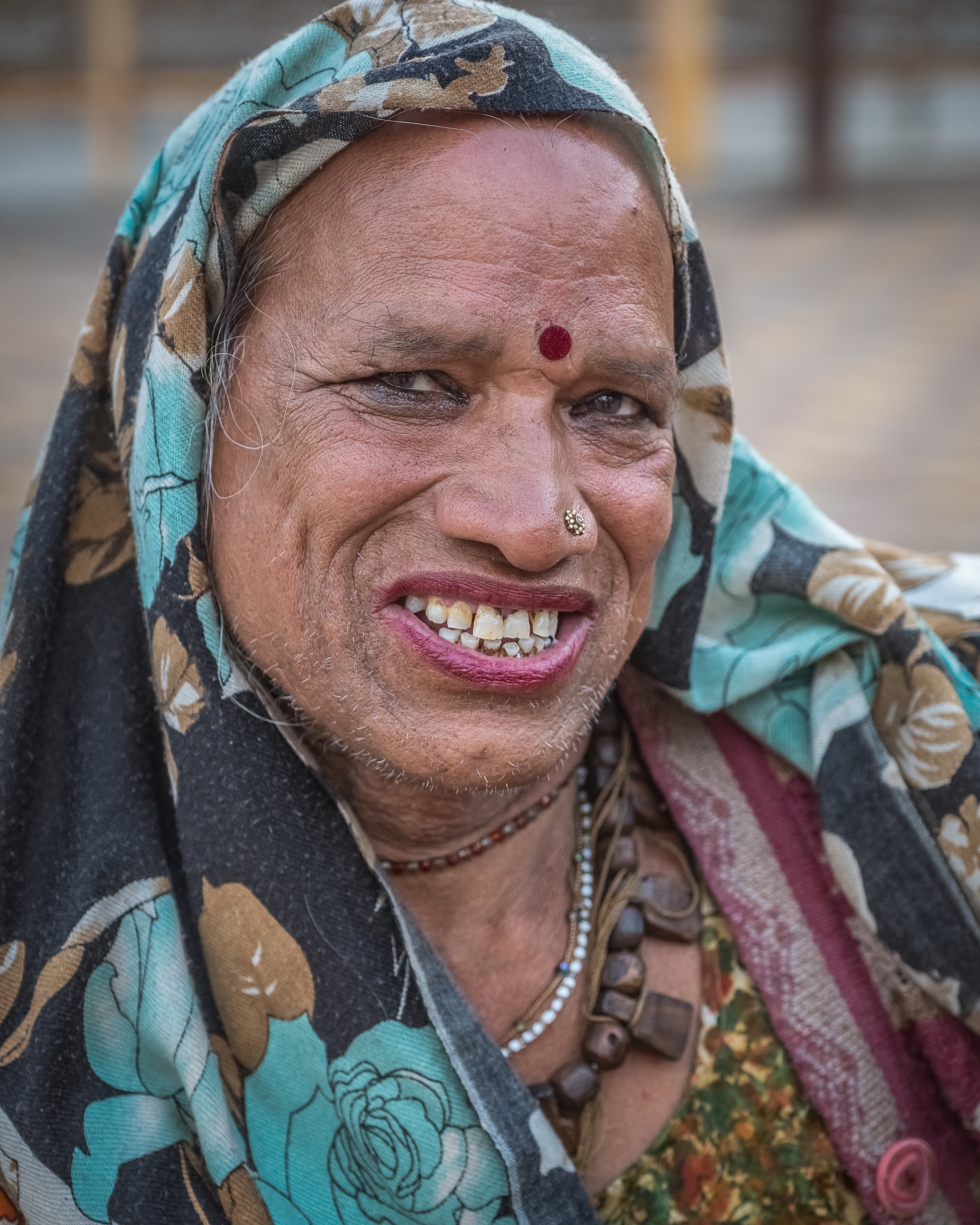
Image by Carol Foote
Hijras have been a part of Indian life for more than a thousand years. Evidence of their existence within Hindu society can be found inside holy texts like the Ramayana and the Mahabharata, where Arjuna became the third gender. Throughout South Asian history, third-gender people have often held positions of high power. For example, during the Mughal Empire in the 15th to 19th centuries, Hindu and Muslim rulers were considerate advocates of the third gender, and many rose to significant positions, even serving as the sexless watchdogs of Mughal harems. In Hinduism, their high regard is marked by their loyalty to Lord Rama, when hijras waited at the edge of the forest for 14 years until he returned to Ayodhya after being exiled.

Image by Carol Foote
The hijras’ religious backgrounds tend to center around traditions that blend Hinduism and Islam. The practice of removing genitalia is something stigmatized in a normal Indian community, however, it’s this act that is the source of their sacred power and legitimizes their role in society. According to tradition, when a hijra is castrated their genitalia is offered to the Hindu Mother Goddess, Bahuchara Mata. The Mother Goddessworks alongside Muslim saints to transform the sacrifice of their ability to procreate into the power to bestow fertility and good luck onto others. The hijras give blessings at births and weddings to grant new couples and their newborn children fertility and prosperity. Intersex people, transgender women and infertile men are considered to be called upon by the goddess to become a hijra. Should they ignore the call, it is believed that they will pay the price of being impotent for the next seven lives they have on Earth.

Image by Carol Foote
The castration surgery is performed by a guru and takes place without an anesthetic. The operation is illegal and life-threatening and has led some Indian regions to consider offering a medical alternative free of charge. However, because of tradition, the sacred sacrifice is performed in absolute secrecy and never spoken of. Following the surgery, new hijras recover in semi-seclusion and eat a special diet for 40 days. Afterward, they conduct a special ceremony where they're dressed as brides and blessed with the power of Bahuchara Mata. From this moment on, they are given new names and new identities. Articles in the India Times and India Today have reported how this system has been forced upon young and at-risk men, who are then pressured into prostituion and homosexuality.
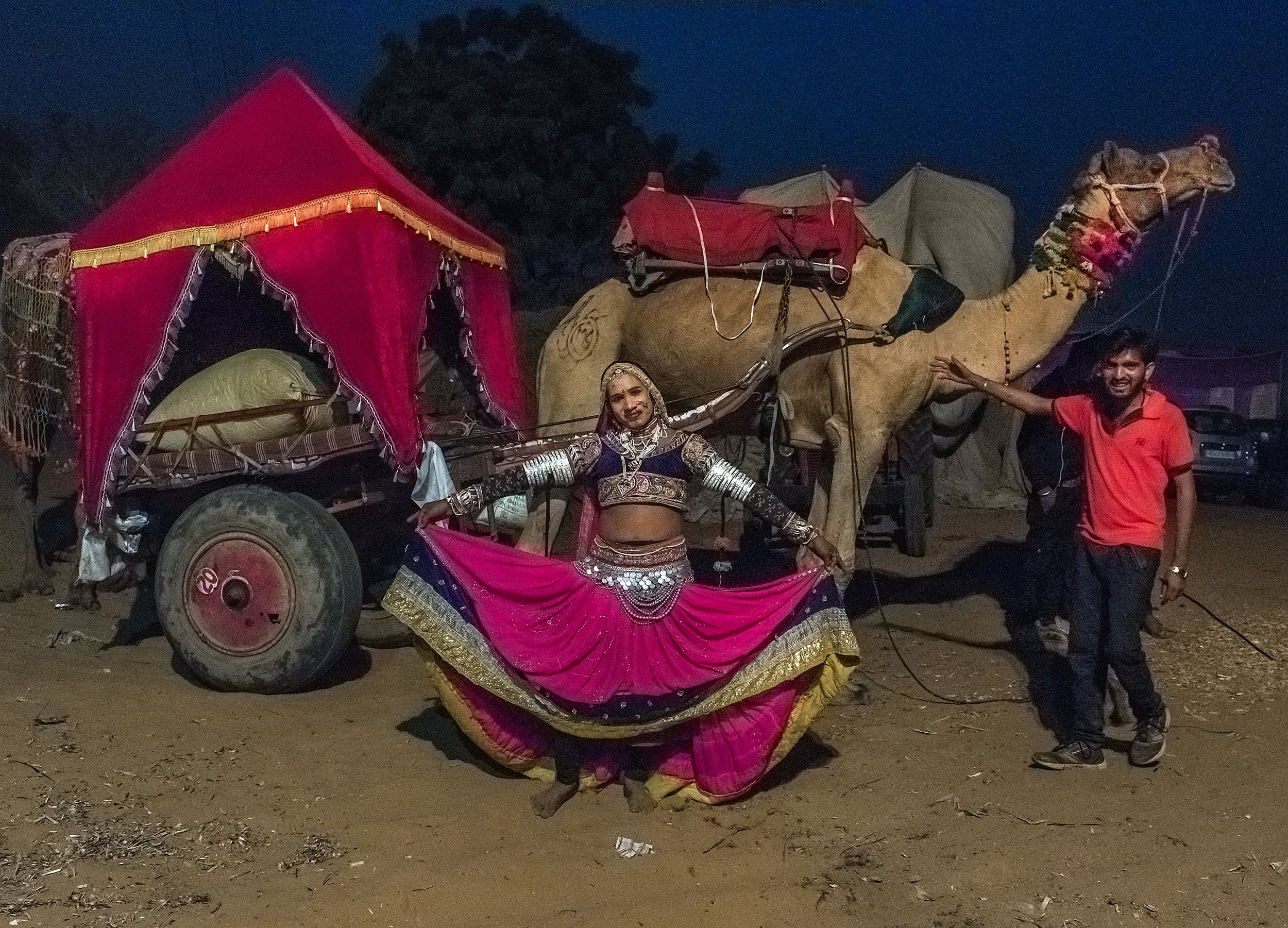
Image by Carol Foote
Even though hijras were treated with respect for thousands of years, much of their societal downfall can be attributed to Hinduism’s encounter with colonialism. The British colonized most of South Asia in the 19th and 20th centuries, and their Christian beliefs did not prepare them for their confrontation with the third gender. In 1871, the British named all hijras hereditary criminals and ordered authorities to arrest them. The law gave police the power of increased surveillance over the community, who went as far as to compile registers of hijras. A historian named Dr. Jessica Hinchy told BCC that, "Registration was a means of surveillance and also a way to ensure that castration was stamped out and the hijra population was not reproduced."

Image by Carol Foote
Even though the law was repealed once India regained its independence, 200 years of stigmatization took a toll. Today, hijras are almost always excluded from employment and education outside of their religious roles. They are often stricken by poverty and forced to resort to begging and prostitution. Most are victims of violence and abuse, harassed by police and refused treatment in hospitals.
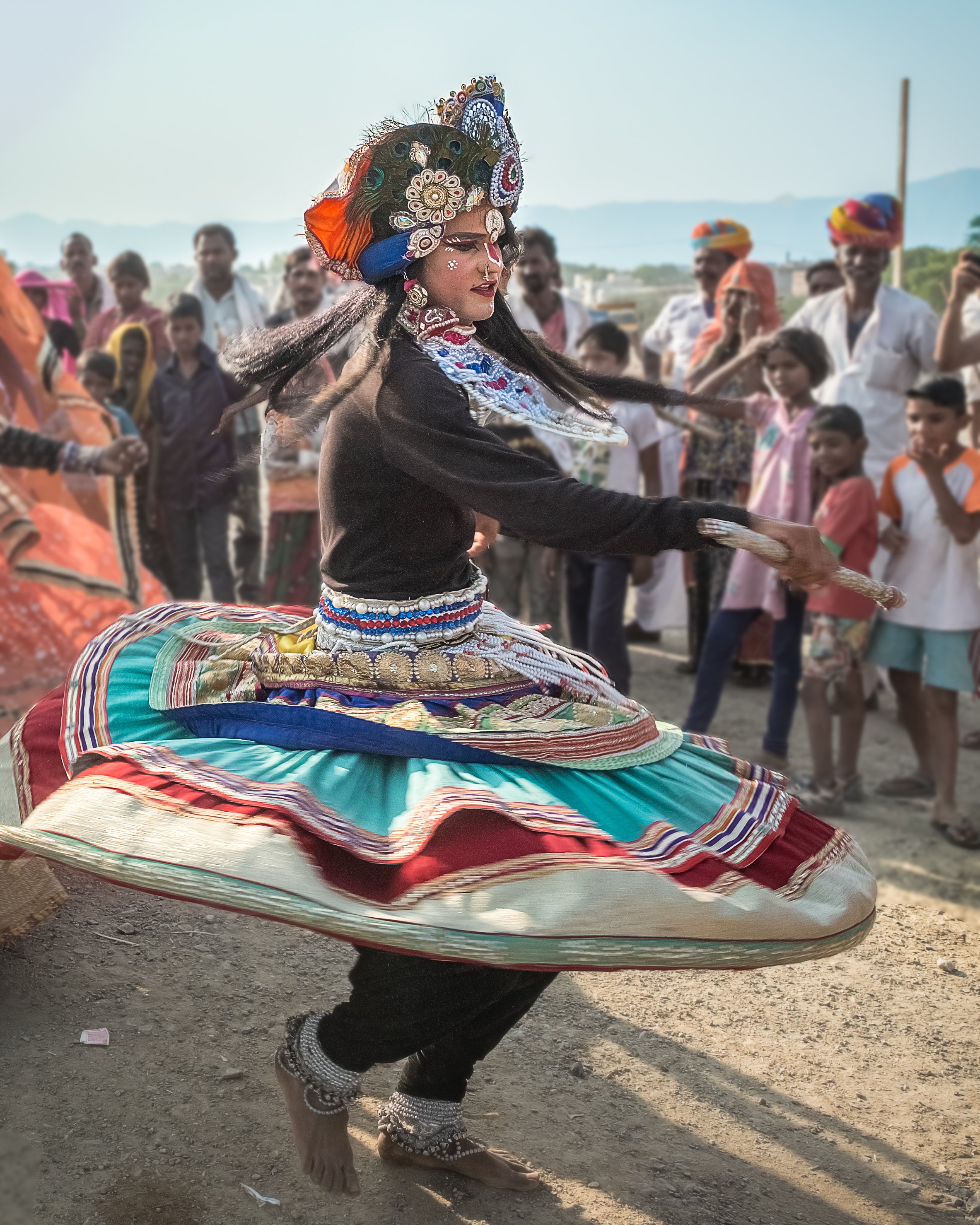
Image by Carol Foote
In a step forward, India’s Supreme Court officially recognized hijras as a third gender in August of 2014, in a law that ordered the government to provide third gender people with quotas in jobs and education. The ruling came just six months after the Supreme Court’s decision to re-criminalize homosexual acts through the reversal of a 2009 Delhi High Court order.Despite being legally recognized and protected under the Indian Constitution, the court’s choice meant that hijras would be breaking the law if they participated in consensual homosexual relations.

Image by Carol Foote
As Neysara told NewsLaundry, “without trans representation, laws made by cis people for the ‘other’ can be damaging.” Prior progress gained seemed to be lost in 2019 when activists protested the Transgender Persons Act. According to Ajita Banerjie, a Delhi-based gender and sexuality rights researcher, this “set the whole movement back by a decade.”
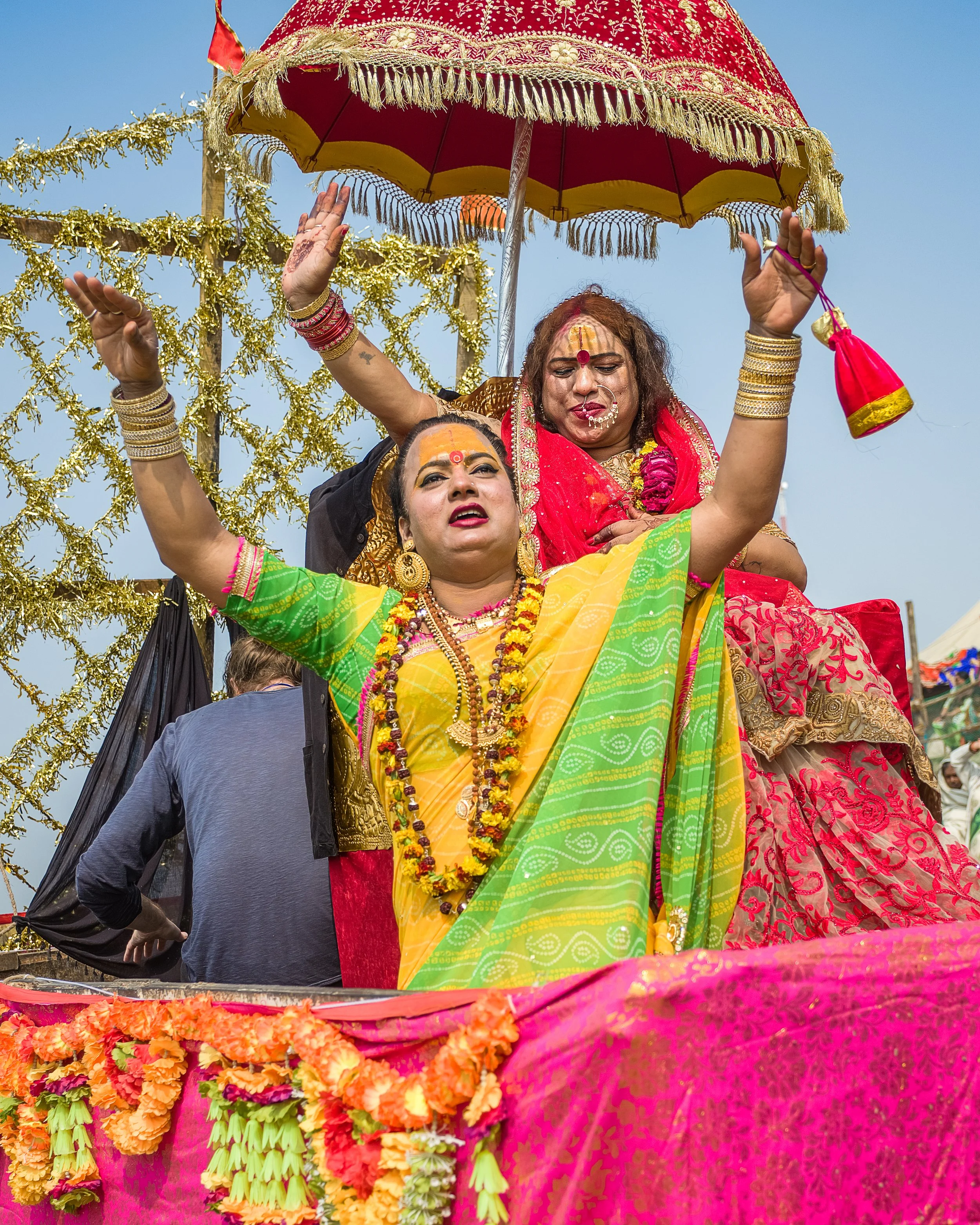
Image by Carol Foote
Today, as many as half a million members of the Indian hijra community live within the guru-chela system. Despite facing discrimination, abuse and living on the margins of society, the community continues to “remain a visible presence in public space, public culture, activism and politics in South Asia," Dr. Jessica Hinchy told BBC. On a high note, NewsLaundry says that policy-led interventions have been advocated by stakeholders in the system, with the mission to integrate “trans folks into mainstream society to reduce and ultimately end their dependency on this system, if not the system itself.”
ABOUT THE PHOTOGRAPHER:
Carol is based in Queensland Australia and has always been drawn to street photography, searching out the most colourful and quirky characters in her own environment. After studying documentary photography at college, she travelled to Yunnan, China to photograph the wide diversity of ethnic minorities in the region. However, over the past five years, her focus has shifted to Tibet, Nepal and India. As someone who has always been drawn to unique and different cultures, the regions rich heritage and local traditions make it a haven for her style of photography.
Claire Redden
Claire Redden is a freelance journalist from Chicago, where she received her Bachelor’s of Communications from the University of Illinois. While living and studying in Paris, Claire wrote for the magazine, Toute La Culture. As a freelancer she contributes to travel guides for the up and coming brand, Thalby. She plans to take her skills to London, where she’ll pursue her Master’s of Arts and Lifestyle Journalism at the University of Arts, London College of Communication.
Child Labor Increases in India During the Pandemic
Child labor in India has always been prevalent, but due to the pandemic the numbers are at an all-time high.
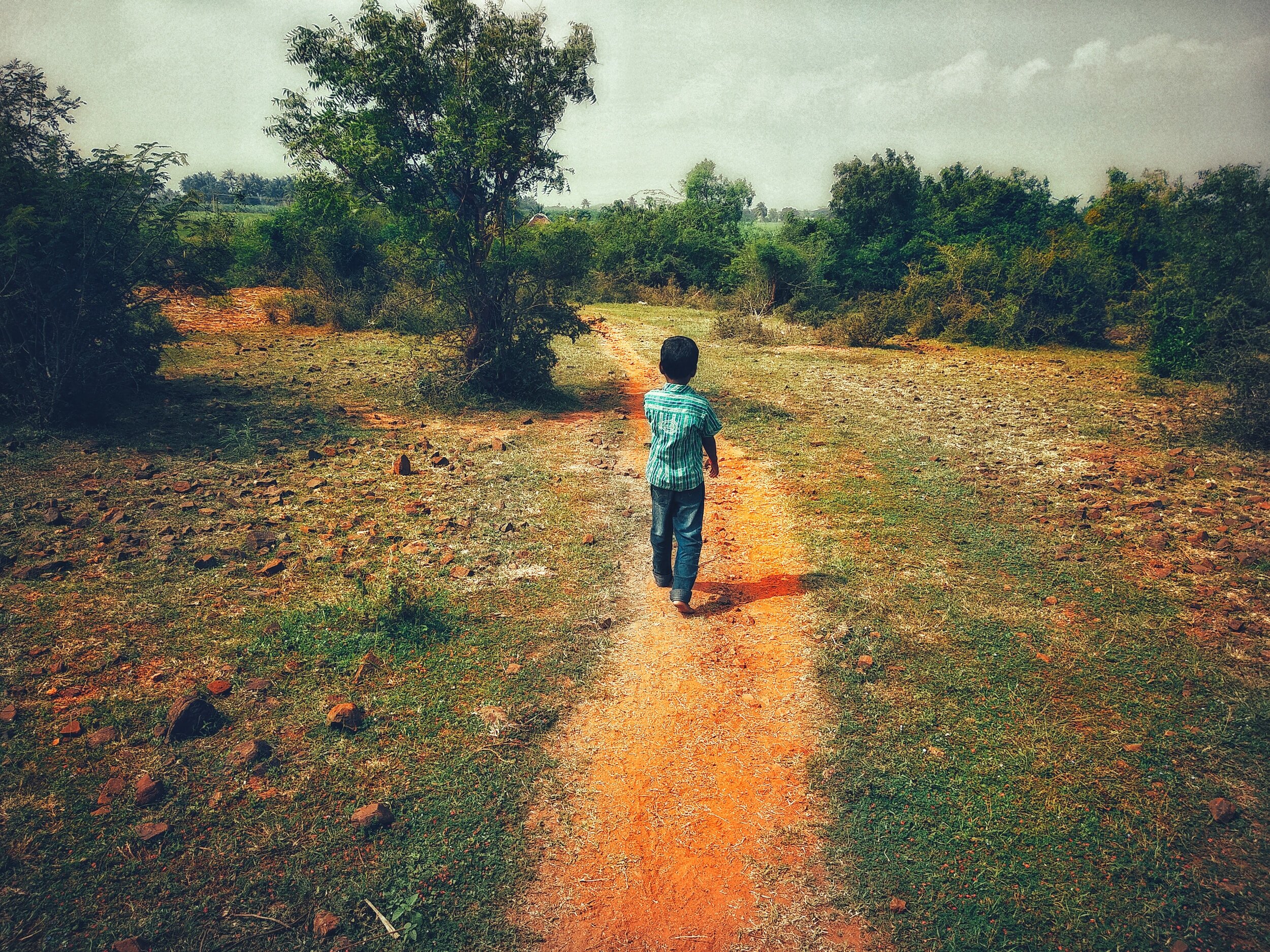
Photo courtesy of Vignesh S.
India has always had a large number of child laborers. In 2019, 152 million children were working. In the last two years, there has been an increase of 8 million children to the workforce. There is a great risk that this new generation will be academically displaced.
Before the pandemic, being in school protected children from child labor. However, with most families out of work or working to get by, the most vulnerable have to pay the cost: children. Children are often working 16 hour days in inhumane conditions. There are many contributing factors to this issue, the largest being that a third of the Indian population is living under the poverty line. With families working and narrowly making ends meet, families may feel they have no other choice but to send their children to work. Another factor is the country’s high illiteracy rate of 287 million people. Children who do not get a basic education will become illiterate adults, making them a target for underpaying jobs that creates an intergenerational cycle of poverty within the family.
The states where child laborers are most prevalent are Bihar, Uttar Pradesh, Rajasthan, Madhya Pradesh and Maharashtra, where over half of the country’s children work. Uttar Pradesh in northern India is the state with the highest number of child laborers, 20 percent of children work in the silk industry and child laborers work in textile factories making garments for big companies. Gap was once in the headlines when someone discovered children working in the shops. Many of the child laborers were there due to their families selling them. Taking swift action, Gap responded and said, “the factory was being run by a subcontractor who was hired in violation of Gap’s policies, and none of the products made there will be sold in its stores.” Additionally, the spokesman for Gap Bill Chandler told The Associated Press, “Under no circumstances is it acceptable for children to produce or work on garments.” Since then Gap decided to stand up against child laborers and stated on their website that they would be “removing young workers from the facility.”
Children will work all kinds of jobs from carpet manufacturing, farming, brick making and gem extracting/polishing to selling cigarettes on the streets for the tobacco industry. Indian law prohibits children under the age of 14 to work and teens from age 14-18 to do any work that is considered hazardous. Nonetheless, most go unnoticed due to lack of enforcement of the law. Companies that turn a blind eye to this issue will oftentimes not recognize the child’s labor. Children will be forced to work long hours with no compensation or very little compensation. It has been reported that a child can make as little as 52 cents a day, if they are paid at all. They are frequently abused physically, verbally or sexually. Sexual exploitation in India is widespread, with 1.2 million children involved in prostitution.
The mental and physical effects of this arduous and traumatic experience have consequences. Exposed children may experience mental health issues, causing a disruption in their emotional development. Many psychiatric disorders can stem from child labor, for example, depression, mood disorder, attachment issues, psychogenic seizures, post-traumatic stress disorder (PTSD) and substance abuse. The physical effects include but are not limited to exposure to toxic substances, working in extreme temperatures, malnutrition, sleep deprivation and death. The mental and physical toll it takes on the child will be long term if it is not dealt with.
According to one estimate, more than 20 percent of India’s economy is dependent on children. This is a large financial burden on the hands of young people who should be exploring and playing, nurtured in their formative years, according to the American Academy of Pediatrics. The government’s accountability is key to move forward and to bring change to an already impacted generation. The laws that protect children need to be enforced and further tightened.
The extreme poverty that has affected India is another root cause of child labor. According to Humanium, a organization that defends children’s rights, this is the primary reason children are falling victim to child labor. Their need to grow up before their time and help feed their impoverished family is only a momentary fix. This will impact their future and the future generations that will come after them.
To Get Involved:
Global March is an organization that seeks to eliminate child labor. Their mission is to ensure free access to education. To learn more about Global March click here.
To support the children of India through Global March click here.

Jenn Sung
Jenn is a Communications Studies graduate based in Los Angeles. She grew up traveling with her dad and that is where her love for travel stems from. You can find her serving the community at her church, Fearless LA or planning her next trip overseas. She hopes to be involved in international humanitarian work one day.
3 Asian Theatrical Traditions
The cinema may be the world’s most prominent entertainment, but recorded film screenings cannot match the liveliness of performing theater. Learn about three theatrical traditions beloved by their Asian audiences for their craftsmanship and cultural significance.

Stage Theatre. AndyRobertsPhotos. CC BY 2.0.
Theater is a unique art in its ability to elicit both laughter and tears within the same showing. Throughout these three Asian nations the stage is a place where performers can bring imaginary worlds to life, or inspire their audiences to better their own.
1. Japan’s Rakugo
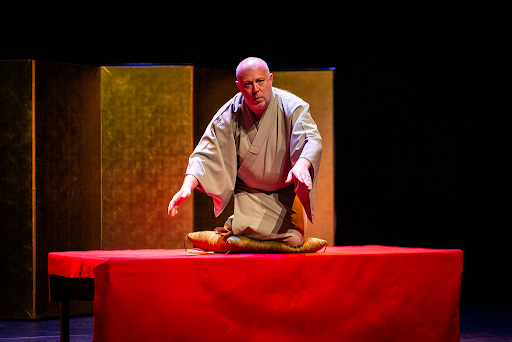
Rakugo. Isabelle + Stephanie Galley. CC BY 2.0.
Rakugo (fallen words) showcases a storyteller’s skill to enthrall their audience without the use of any costumes, scenery or special effects. Rakugo was developed during Japan’s Edo Period (1603-1868) by Buddhist priests who recounted dramatic tales to illustrate the impermanence of life and the sufferings elicited by materialistic attachment. Soon non-religious performers regaled crowds with parodied interpretations of those parables. A specialized sect of storytellers has emerged since, termed the rakugoka, who rely upon improvisation, exaggeration and, most critically, wordplay for their performances. A rakugoka presents upon the spartan kōza stage while dressed in traditional Japanese garb, and has only a sensu (paper fan) and a tenugui (hand towel) as props to aid them. With pantomime, voice and facial expressions the rakugoka will narrate one of 300 stories inspired by the realities of ordinary people.
The stories of rakugo are structured as back-and-forth dialogues between a set of archetypal characters and generally culminate in a funny climax. Popular character archetypes include cunning tricksters, miserly merchants, arrogant authorities and kaidan (ghosts or other apparitions). Each narration ends with an raku (fall), a humorous linguistic twist which serves as a punch line for the whole performance. Rakugo is analogous to a one-man show of sit-down comedy.
2. India’s Nukkad Natak
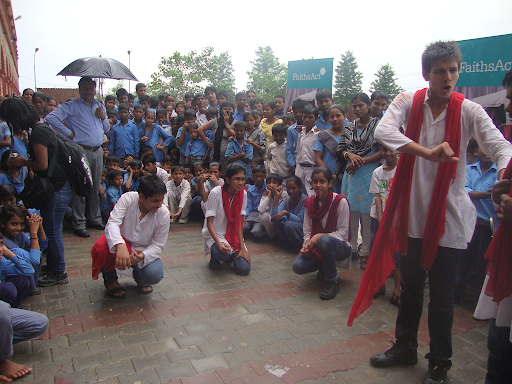
Nukkad Natak. DLF PUBLIC SCHOOL, INDIA. CC BY 2.0.
From universities to slums throughout India, nukkad natak (street drama) serves as a medium of entertainment as well as social commentary. India has a rich heritage of theater which traces back centuries, but nukkad natak was shaped very recently among the country’s schools and streets. In the 1980s, left-wing grassroots activists started to put on plays for the lay public to highlight major social and political issues. Nukkad natak grew especially popular among college students who identified an outlet through which they could express their unacknowledged emotions and views. Nukkad natak has since become a channel for communication and information among the uneducated masses.
Without any audiovisual equipment or cosmetic crew professionals nukkad natak troupes are forced to capitalize their bodies to the fullest. The troupers’ voices vary in pitch and volume as they undertake in constant physical motion. Troupes will not shy away from controversial scenes like sexual assault but will act them out publicly to provoke emotions. Some troupes dedicate their performances towards the portrayal of exemplary civic behavior. Even India’s private sector recognizes nukkad natak’s enormous influence on public society; some multinational corporations sponsor their own performances to advertise their products.
3. Indonesia’s Wayang Kulit
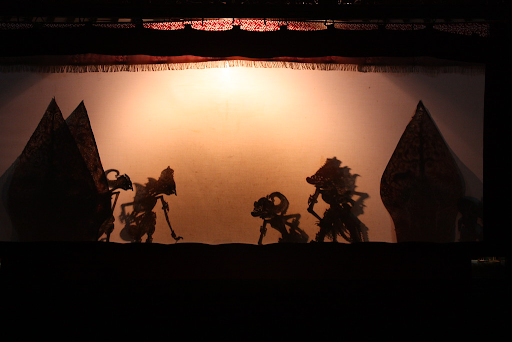
Yogyakarta, Wayang Kulit. Arian Zwegers. CC BY 2.0.
Although its origins are disputed to date, there is no debate as to the renown wayang kulit (shadow leather) holds today in Indonesia and neighboring countries. Intricately detailed leather puppets are deftly maneuvered by a dhalang (puppeteer) between a light source and a blank screen to portray a story via shadow. Performances feature plots derived from a bevy of sources, ranging from Hindu epics such as the Ramayana or Mahabharat to the East Javanaese Prince Panji cycle.
A show of wayang kulit may carry on through the night for eight hours and is usually accompanied by a gamelan bronze orchestra. A single performance may entail the use of hundreds of puppets, all of whom are designed with utmost faithfulness to visual symbolism. Puppets portraying noble heroes, for example, are crafted in accordance with the Javanese ideal of male beauty: slender build, long and pointed nose and eyes shaped like soya beans. A puppet’s colors represent characteristics; gold indicates dignity whereas white is the color of youth.
RELATED CONTENT:

Rohan A. Rastogi
Rohan is an engineering graduate from Brown University. He is passionate about both writing and travel, and strives to blend critical thinking with creative communication to better understand the places, problems, and people living throughout the world. Ultimately, he hopes to apply his love for learning and story-sharing skills to resolve challenges affecting justice, equity, and humanity.
Holy Men of Nepal and India
Check out this amazing special photo essay by photographer Carol Foote who visited with the Sadhus at the Kumbh Mela, the world’s largest religious pilgrimage held only once every 12 years.
Read MoreVIDEO: India’s "Death Hotels"
Varanasi, the most sacred of India’s seven holy cities, is home to several so-called “death hotels.” Unlike their morbid name, these hotels are actually places of peaceful worship where devout Hindus aspire to reach moksha — liberation from the infinite cycle of rebirth. Believers check in and remain until they die, a time that ranges from days to years. This video explores the ancient, often emotional, rituals of preparing for moksha from the viewpoint of hotel owners, pilgrims, cremation workers, and the family of those soon to be departing. Set on the banks of the Ganges River, it intertwines themes of religion, caste, family, and mortality into a masterpiece that shows an entirely new perspective on how to deal with death.
Video: Devastating Impacts of COVID-19 in India
Although much of the world is beginning to overcome some of the impacts of COVID-19, India remains very much in need due to widespread infection and unemployment. The surge in cases means that many people are staying at home, hurting industries that depend on in-person interaction, such as hospitality. Those that can’t afford to stay home find themselves scrambling, only to make extremely low wages amidst a spike in poverty. To explain the situation, this report puts a spotlight on Netrapal Yadav, a former taxi driver trying to find work to support his family. Through Yadav’s struggles, we see the massive impact COVID-19 has had on India’s economy and the daily struggles of its lower-income citizens to survive during this unprecedented time.
Music spoken in Portuguese (more commonly known as Lusophone) often stems from Brazil, Mozambique and Cape Verde. From bossa nova, to MPB to Tropicalia, learn and listen in this article on some amazing musical traditions.