
Energy independence for southern Africa could boost local economies, but oil refinery aspirations hold a hidden cost, contributing to greater climate issues.
Read MoreThe Impact of Authoritarianism on Food Insecurity in Chad
Food insecurity and the authoritarian regime in Chad have denied many individuals and communities access to fundamental human rights.
Read MoreTrash to Treasure: A Tour Through Cairo’s Garbage City
Take a guided walk through Cairo’s Garbage City and discover how one community is turning waste into a way of life.
Read MoreMorocco: A Colorful Tapestry of Heritage and Natural Beauty
Morocco is a land of contrasts, from the vastness of the Sahara to the intricate mazes of its ancient medinas. Each moment spent here is like stepping through the pages of a vividly illustrated storybook, where every corner promises a new adventure
Read MoreThe Supernatural Role of Masks in Nigeria’s Yoruba Tribal Culture
Julia Kelley
Whether the feminine celebration of the Gelede mask or the spiritual transformation through the Egungun mask, these cultural objects perform an imperative role in the Yoruba people’s religious culture.

Egungun Festival Masks. Fermi12. CC BY-SA 4.0.
African masks have been functionally used for thousands of years. Recognized for their supernatural qualities, they transform wearers into new entities, symbolize animal or ancestor spirits, mythological heroes, or moral values, and can even be a way of honoring specific individuals. Moreover, specific ceremonies and masks act as visual representations of local customs. With a vibrant music and dance tradition, the Yoruba people are known for their notable mask culture. The Yoruba are one of Nigeria’s largest ethnic groups, mainly concentrated in the southwestern part of the country but also found in smaller groups throughout Benin and Togo. For over 1,500 years, they have also been defined by their advanced urban kingdoms, strong economy and unique artistic tradition. Ceremonies are imperative to their way of life; vibrant festivals, rituals and weddings display cultural pride, celebrate history and connect the physical realm to the spiritual. Beyond the symbolic instruments and costumes used during these occasions, masks are also extremely vital due to their mystic transformative qualities.
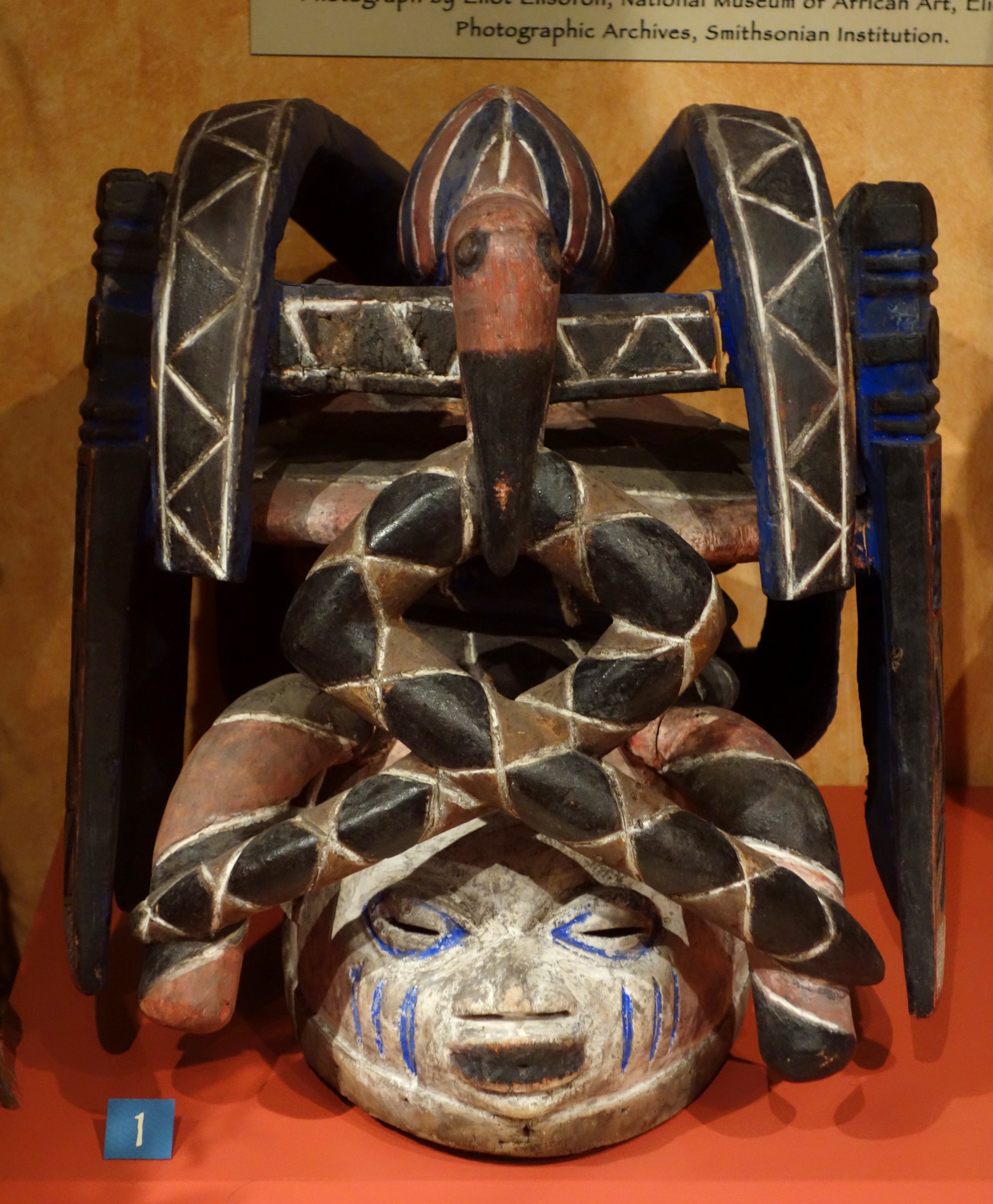
Gelede Mask With Animal Figure. Daderot. CC0 1.0.
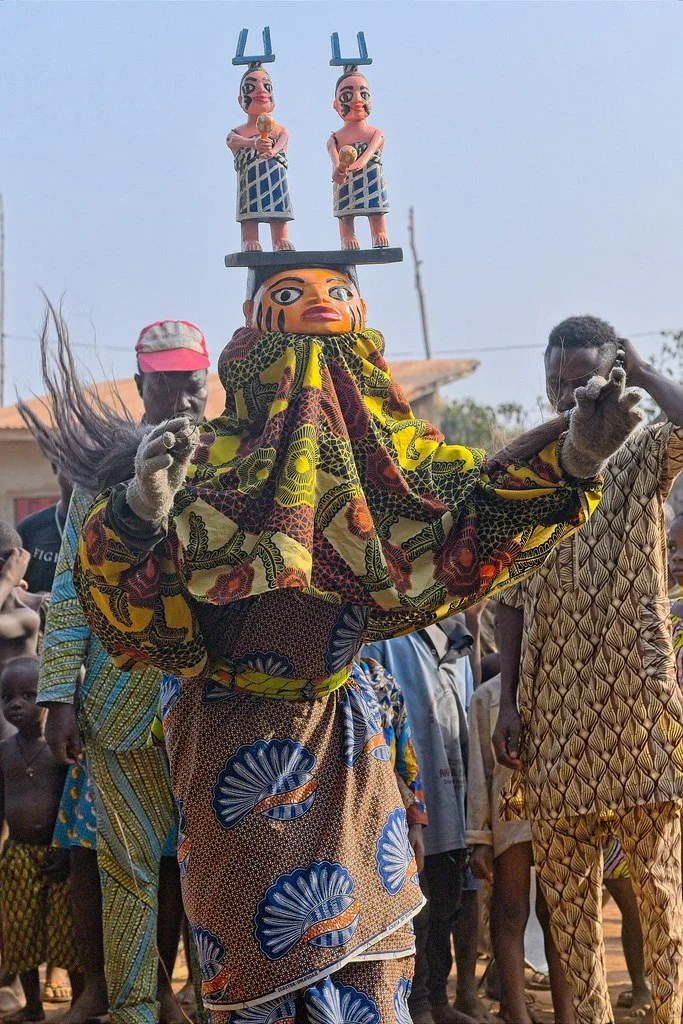
Gelede Dance. dave massie. CC BY 2.0.
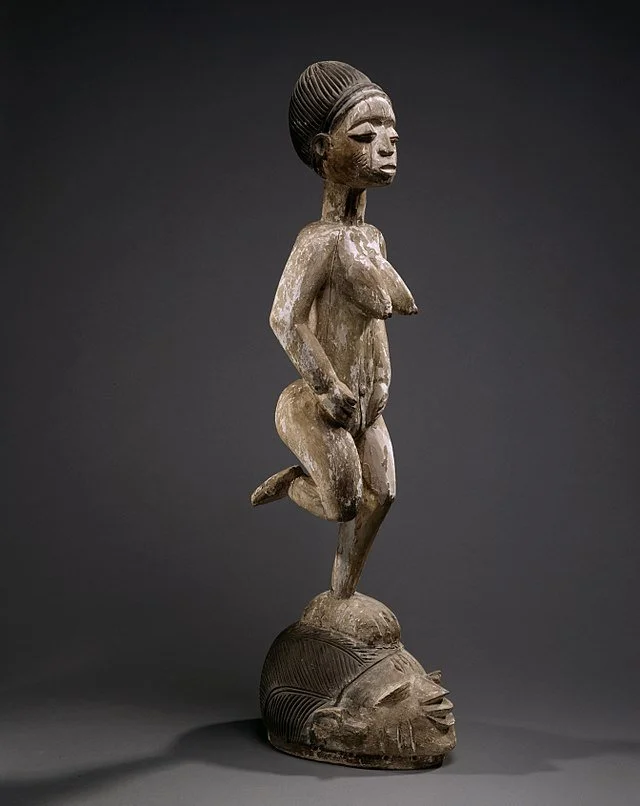
Gelede Mask With Woman Figure. Kugbenu (Vervaardiging). CC0.
However, when and how masks are used depends on their corresponding festivals. The Gelede mask, for example, is used during the Gelede dance. This ceremony is performed as a way to pay tribute to the primordial mother Iyà Nlà and recognize women’s role in social organization and development. Retracing the history and myths of the people, the Gelede takes place annually after harvests and during times of drought and epidemics. The masks, adorned with intricate motifs and vibrant colors, are worn as a way to honor “mothers,” or good witches who have power over bad ones, in their efforts to protect the community from negative forces. Individual masks reflect local traditions, such as through unique facial markings or figures included on the masks.
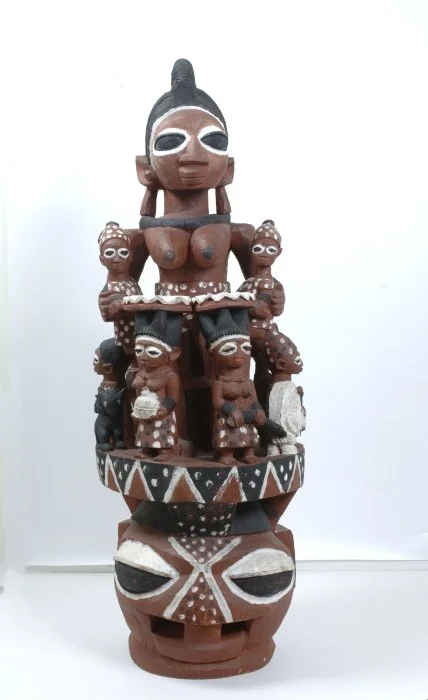
Epa Festival Mask. Beeldhouwer / sculptor: Jospeph Agbana. CC BY-SA 3.0.
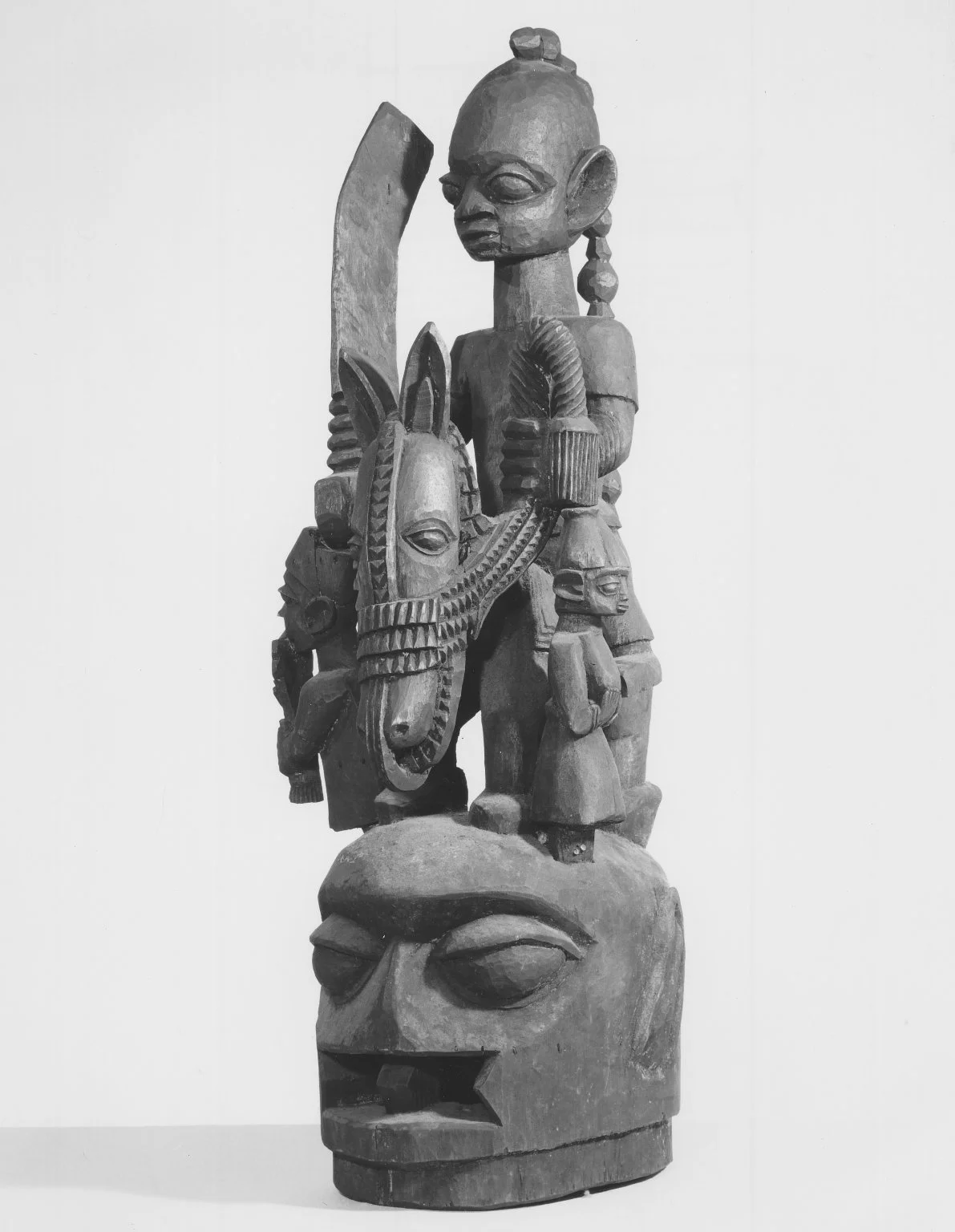
Epa Mask With Warrior Figure. Unknown author. CC BY 3.0.
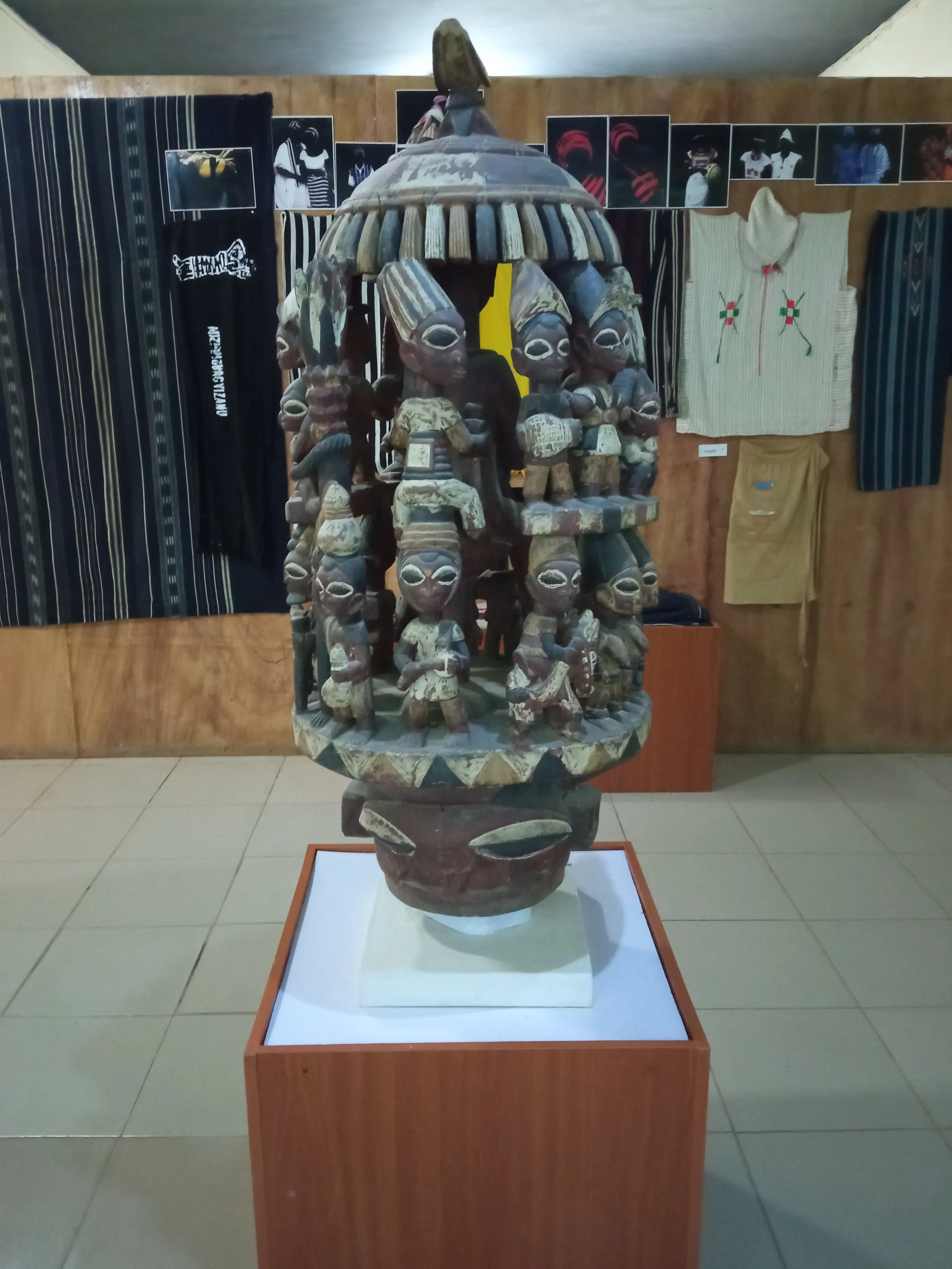
Large Epa Helmet Mask. Em-mustapha. CC BY-SA 4.0.
Epa masks are worn during yam harvest festivals by young male dancers as they leap onto mounds. The rigorous movements of this dance indicate the community’s fate over the next year; if the dancer successfully leaps, then all is well, but if not, sacrifices are made to the forces that made him fail. Leading up to these ceremonies, the masks are kept in shrines, where they are fed to increase their power and efficacy. Since they are believed to contribute to the wearer’s success, heavy weight and symbols associated with war are characteristic of these masks.
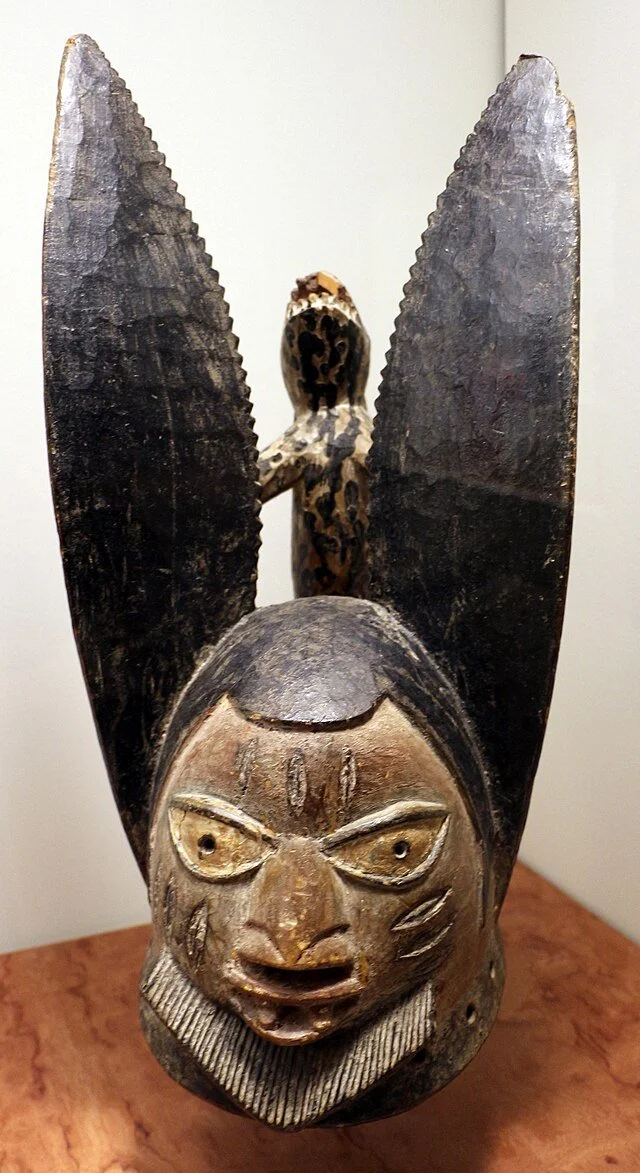
Ancestor Egungun Mask. Sailko. CC BY 3.0.

Egungun Festival. Fermi12. CC BY-SA 4.0.
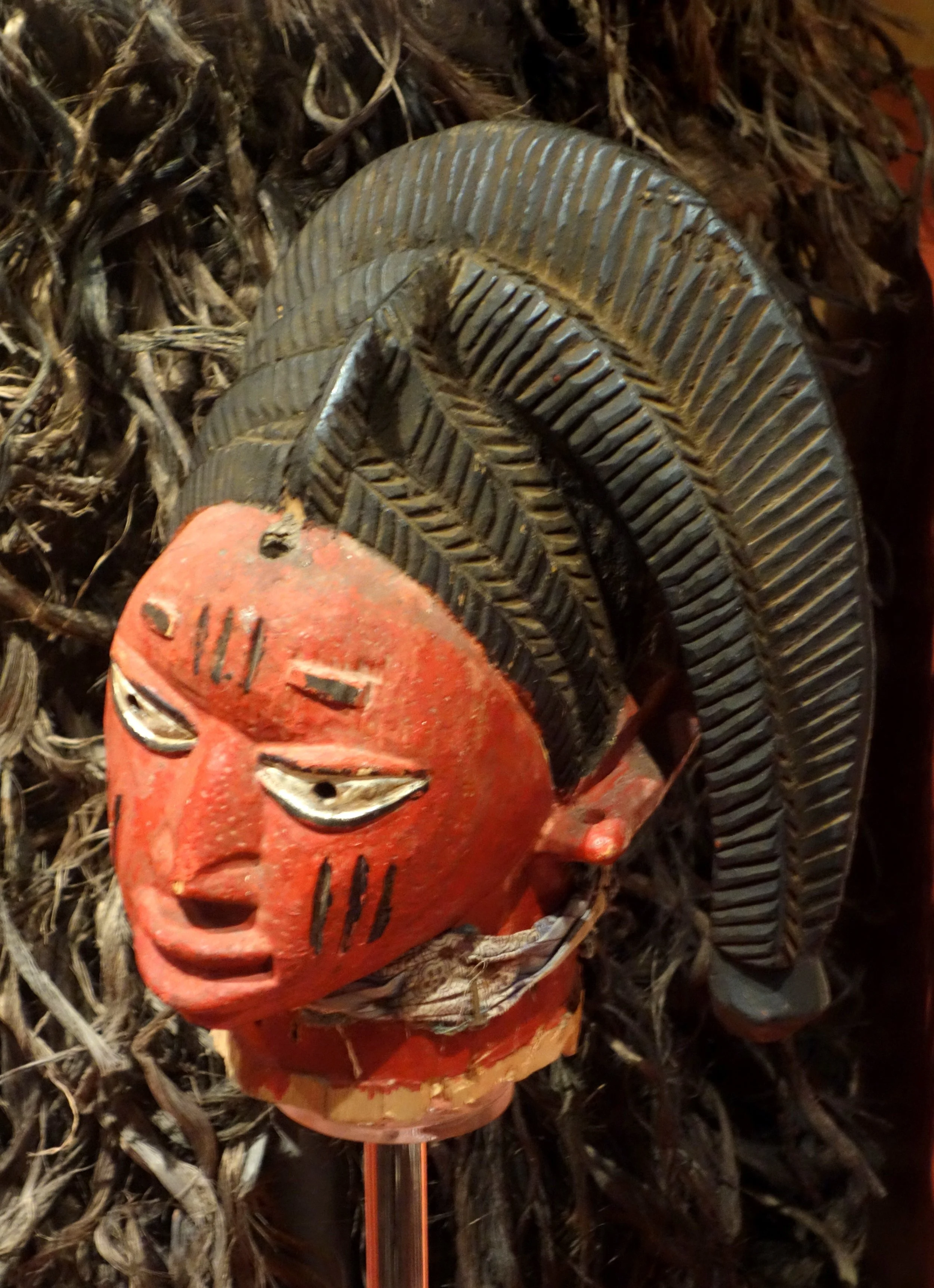
Yoruba Egungun Mask. Daderot. CC0 1.0.
One of the most important masks in their ritual culture, the Yoruban Egungun masks are worn to worship ancestors. These are used during Odun Egungun or “masquerade” festivals, during which men move through town wearing masks as they embody their ancestors. These masks act as a visual manifestation of those being depicted, offering members of the community the opportunity to strengthen their familial bonds and ask for protection or blessings.
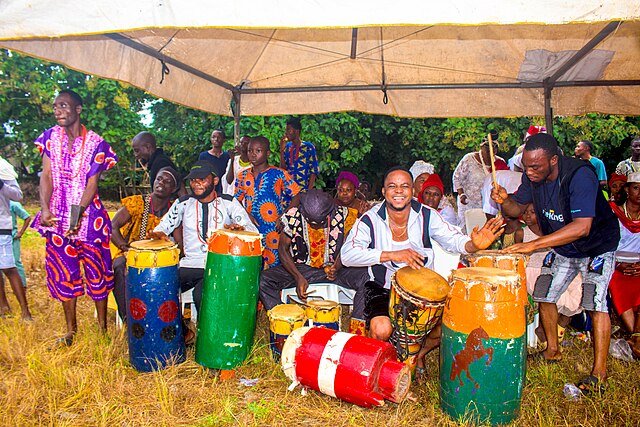
Yoruba Festival Music and Dance. Tunde Akangbe. CC BY-SA 4.0.
Developed over centuries, ceremonial masks remain a significant part of Yoruban culture. African masks have also become admired in museums worldwide for their intricate designs, but contemporary artists and historians have noted that they are exhibited mostly as ethnography. Moreover, African masks have inspired many well-known European artworks, most notably in Picasso’s 20th-century modernist paintings. This Westernization has helped shape stereotypes around African communities, decontextualizing their current cultural significance. However, as the Yoruba masks demonstrate, festivals recommence every year, and the masks continue to visually represent the community’s rich history and religious tradition.
Julia Kelley
Julia is a recent graduate from UC San Diego majoring in Sociocultural Anthropology with a minor in Art History. She is passionate about cultural studies and social justice, and one day hopes to obtain a postgraduate degree expanding on these subjects. In her free time, she enjoys reading, traveling, and spending time with her friends and family.
Cholera Outbreaks: Nigeria’s Struggle with a Reoccurring Epidemic
Julia Kelley
Poor access to clean water and underdeveloped facilities has led Nigeria to face a decades-long, deadly battle against cholera.
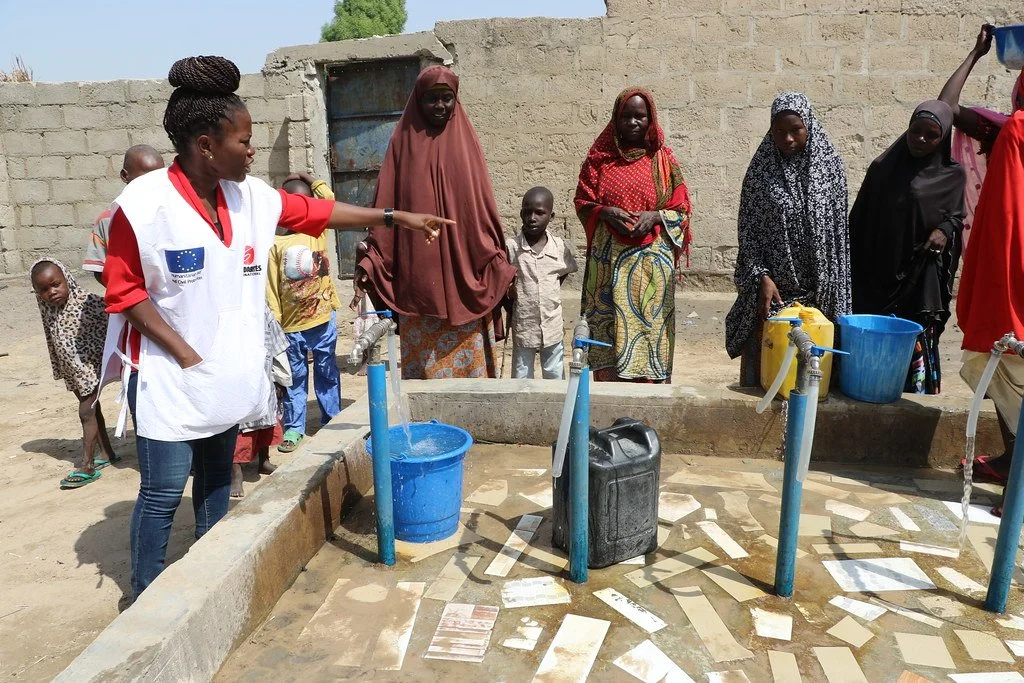
Access to Safe Water in Nigeria. EU Civil Protection and Humanitarian Aid. CC BY-NC-ND 2.0.
For decades, Nigeria has faced major cholera outbreaks throughout the country, posing a serious threat to public health. The disease, an acute diarrheal infection caused by ingesting food or water contaminated with the bacterium Vibrio cholerae, is a major indication of inequity, as well as a lack of social and economic development in the areas where it forms. Since 1972, cholera has plagued Nigeria in intermittent outbreaks that have claimed thousands of lives, the worst being in 1991, with a high of 59,478 reported cases and 7,654 deaths. Despite numerous attempts by the World Health Organization, the Nigeria Center for Disease Control and the Borno State Ministry of Health to provide support through free cholera vaccines and implement prevention and preparedness, the country continues to fight against large, destructive outbreaks.
Many factors make Nigeria especially prone to these widespread epidemics, including a lack of access to safe drinking water, a lack of infrastructure necessary for water supply and waste disposal and a lack of health facilities. Particularly in smaller communities and remote villages, sourcing clean water is a challenge that leads residents to dig their own wells. Moreover, during the dry season, these wells dry up and leave individuals only with the more hazardous alternative of shallow streams. Poor weather conditions worsen this significant obstacle to clean water and sanitation. Flooding, for example, increases food insecurity by destroying farmland, creating economic loss, demolishing sanitation facilities and contaminating sources of clean water. Several financial issues, including poor investment, funding allocation and low human capital, in conjunction with already deficient infrastructure and low community participation, also contribute to a lack of secure water infrastructure. Not only does this make for a higher potential of infection, but Nigera’s healthcare infrastructure is also underdeveloped, lacking the medical facilities and supplies necessary to treat those infected with cholera. Limited medical equipment and supplies, as well as a lack of internet connectivity, make it extremely difficult to heal patients and facilitate important reporting of cholera data.
These issues remain significant and continue to threaten the lives of Nigeria’s citizens. This is exemplified by the country’s most recent outbreak in 2024, which saw about 11,000 recorded cases and 359 deaths in October that year. Intense rains throughout the year led to widespread floods and dam breaks across Nigeria, weakening water infrastructure, destroying farmland and leaving many homeless in damaged areas, overall causing a large part of the country to be vulnerable to diseases like cholera. This most recent epidemic was met with policy and prevention program recommendations in the hope of impeding future spreads, the most critical of which being Water, Sanitation and Hygiene services. These accelerate and sustain access to safe water, sanitation services and good hygiene practices, all of which are the main deterrents of cholera spread. While this strategy proved effective when instituted by the Nigerian government during the 2018 outbreak, it still requires increased government funding and outside investment to remain effective. Public health and safety continue to endure disadvantages, as the threat of cholera looms over the country.
GET INVOLVED:
For those looking to get involved in supporting the fight against cholera outbreaks in Nigeria, check out organizations such as WaterAid, Bread and Water for Africa, Save the Children and The Water Project, groups focused on supplying safe drinking water and sanitation to Nigeria, as well as many other countries in Africa. In addition, organizations like Doctors Without Borders, the World Health Organization, ICAP Global Health and Gavi, The Vaccine Alliance provide medical support to cholera patients in Nigeria and contribute to the development of disease control and prevention.
Julia Kelley
Julia is a recent graduate from UC San Diego majoring in Sociocultural Anthropology with a minor in Art History. She is passionate about cultural studies and social justice, and one day hopes to obtain a postgraduate degree expanding on these subjects. In her free time, she enjoys reading, traveling, and spending time with her friends and family.
How Congo and Rwanda Arrived at the Brink of War
In their fight over marginalized peoples and access to rare minerals, the Congolese military and Rwanda-backed rebels risk triggering a broader regional war in southeast Africa.
Read MoreGhanaians Knee Deep in Clothing Waste
Ghana is struggling with the overwhelming influx of textile waste from the fast fashion industry, with millions of garments dumped each week, much of it unfit for resale
Read MoreChild Slavery in Congo’s Cobalt Mines
The world’s high demand for cobalt mining has led to the exploitation of child labor in the Congo.
Read MoreUS Declares Genocide in Sudan
After two years of famine, disease, and misery, the U.S. has given an official deemed the ongoing conflict in Sudan as genocide.
Read MoreBarring Basic Rights: Uganda’s Anti-Homosexuality Regulation
Modern anti-gay regulations continue to threaten the lives and safety of Ugandan LGBTQ+ individuals.
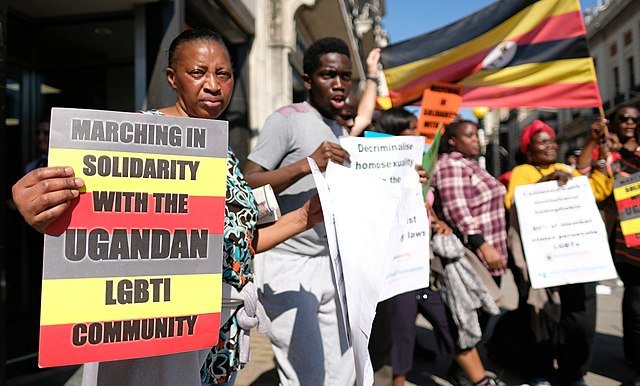
Group Marching in Support of Uganda’s LGBTQ+ Community. Alisdare Hickson. CC BY-SA 2.0.
Known for having one of the world’s harshest LGBTQ+ rights records, the Ugandan parliament has pursued longstanding efforts to diminish same-sex activity within the country. As a result of 19th-century British colonization, the severe criminalization of homosexuality set the stage for modern homophobic sentiments. This culminated in the Anti-Homosexuality Act of 2023, which was later upheld by the Ugandan parliament in April 2024.
The 2023 Anti-Homosexuality Act was signed into law by Ugandan President Yoweri Museveni in May 2023, enforcing strict restrictions against LGBTQ+ individuals. Implementing harsh penalties, the act demands life imprisonment for consensual same-sex activity and the death penalty in cases of “aggravated homosexuality,” a term that denotes any same-sex act that involves people under 18, older than 75, those with a disability, or when consent is not given or cannot be given. This act is not the first attempt to limit LGBTQ+ rights in Uganda. In 2010, the Ugandan parliament passed a bill introducing similarly anti-gay legislation that was eventually ruled illegal by the constitutional court due to its lack of necessary quorum. In 2021, however, the president succeeded in passing a sexual offenses bill that criminalized same-sex relationships and sex work in Uganda.
While the Ugandan government has praised such legislation as acting in the country’s best interest, the persistent condemnation of same-sex actions has negatively impacted the lives of LGBTQ+ Ugandans. This has not only promoted anti-gay views but has also threatened lives through the reduction of HIV prevention and perpetuation of societal abuse. In an interview with Amnesty International, Ugandan activist and founder of the gay and intersex rights organization Freedom and Roam Uganda (FARUG), Jacqueline Kasha described the new law’s impact on her community. She contends that advocacy and visibility for LGBTQ+ individuals have sharply diminished with the aggressive crackdown: “Several LGBTI persons have since gone underground which is now impeding all our efforts, especially in the health sphere in the fight against HIV, mental illness and economic disparities.” The 2023 Act has allowed anti-gay groups to accuse or arrest people with little evidence or reasoning. As such, LGBTQ+ individuals are vulnerable to attack when outside the safety of their homes, forced to hide their identities under the threat of violence. Furthermore, those in need of HIV services have become disproportionately vulnerable to health risks, driven away from receiving care due to fear of criminal punishment or discrimination.
The first case of “aggravated homosexuality” has already come into effect: 21-year-old Michael Opolot was arrested in August 2023 after allegedly participating in public sexual activity with another man reported to have a disability. While the new act permits this arrest, there has not been any evidence submitted by police to substantiate claims that the alleged victim is disabled and therefore could not give consent. Opolot’s case has provoked Ugandan activists to challenge the law's constitutionality, citing the act’s contradiction of citizens’ freedom from discrimination and rights to privacy and health. Moreover, they have noted that Opolot’s case demonstrates the senseless oppression of LGBTQ+ individuals. Ugandan activist Clare Byarugaba affirmed that this mistreatment not only violates human rights but also suppresses advocacy, as “activists, public health workers, and others face long prison sentences and hefty fines” for attempting to voice support.
As a result of such political, social and health persecution, the LGBTQ+ population in Uganda has been left unprotected and endangered by intimidating threats. Although Uganda’s government views the recent passing of anti-homosexual legislation as a “step forward” for the country, many in the LGBTQ+ community have experienced the opposite result in their daily lives. Several international organizations and governments have commented on the bill, with United States President Joe Biden describing the act as a “tragic violation of universal human rights,” and the Joint United Nations Programme on HIV/AIDS (UNAIDS) explaining that “criminalizing populations most at risk of HIV, such as the LGBTQ+ communities, obstructs access to life-saving health and HIV services.” Despite such international criticism, anti-homosexuality continues to loom largely over Uganda and LGBTQ+ existence within the country.
TO GET INVOLVED
Those looking to support LGBTQ+ communities in Uganda can do so by getting involved with organizations dedicated to supporting individuals inside the country as well as those who have fled. Such organizations include: Sexual Minorities Uganda (SMUG), an LGBTQ+ advocacy organization, Universal Coalition of Affirming Africans Uganda (UCAA - UG), a human rights organization advocating for human rights and marginalized people, and Global Black Gay Men Connect (GBGMC), a group collaborating with Uganda Key Populations Consortium (UKPC) and SMUG to launch an emergency response fund to support LGBTQ+ Ugandans.
Julia is a recent graduate from UC San Diego majoring in Sociocultural Anthropology with a minor in Art History. She is passionate about cultural studies and social justice, and one day hopes to obtain a postgraduate degree expanding on these subjects. In her free time, she enjoys reading, traveling, and spending time with her friends and family.
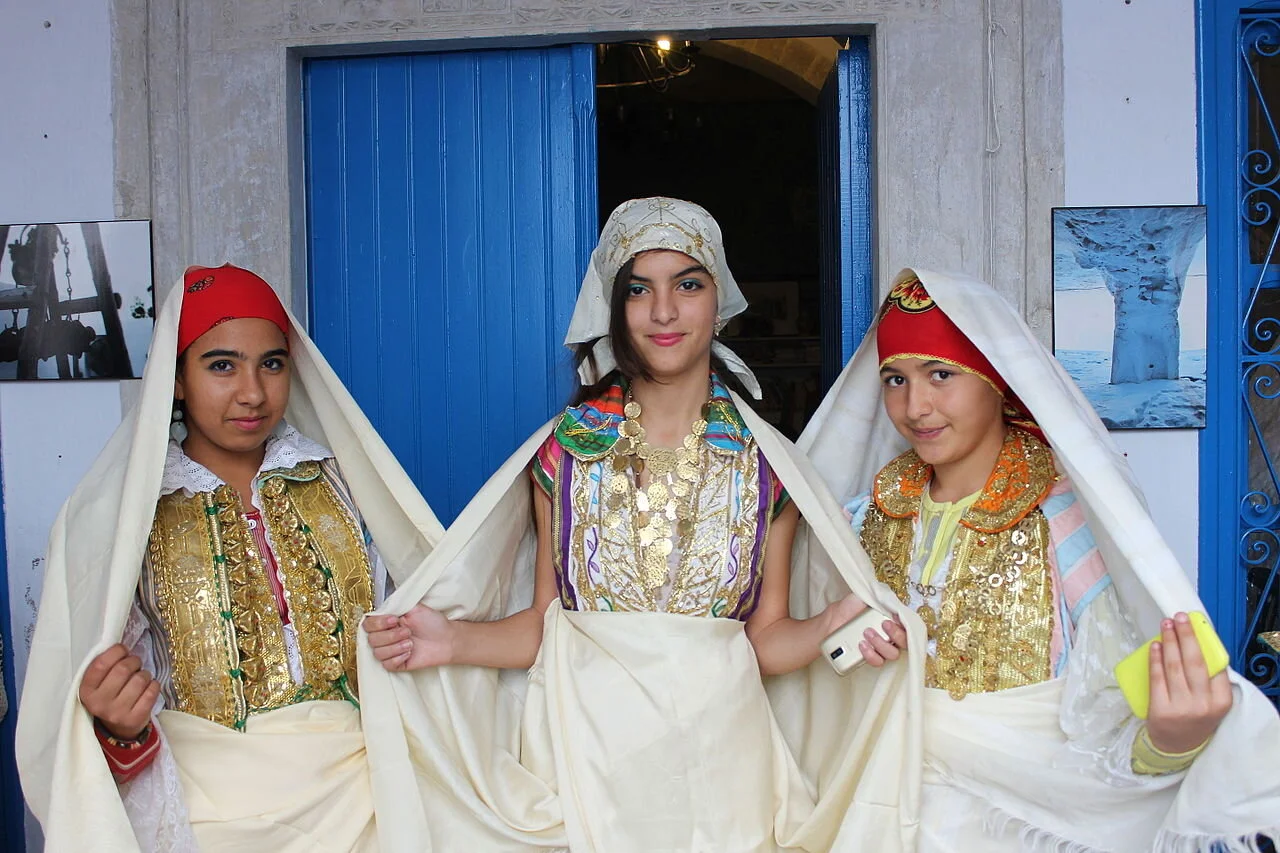
Tunisian girls wearing traditional Tunisian dress including the sefseri, a white veil made of silk or wool. Sami Mlouhi. CC BY-SA 4.0.
6 Treasures of Tunisia, From 'Star Wars' to Desert Oases
Tunisia is a country in North Africa, a region known as the Maghreb, that is similar in culture, history and religion to Morocco and its neighbor, Algeria. Tunisia is one of the most visited countries in Africa – it is a popular vacation destination for Libyans, Algerians, the French, Germans and the British. The country’s official language is Arabic, but the local Tunisian Arabic dialect,darija,, and French are also commonly used. The majority of Tunisians are Muslim, though a small Jewish community lives on Djerba, North Africa’s largest island.
The tiny country offers a variety of landscapes – beaches, mountains, the desert, woods and salt pans – that are sure to appeal to all types of travelers. The museums and ancient Roman ruins are sure to appeal to history buffs, and die-hard “Star Wars” fans will be interested to know that many scenes on the planet Tatooine were filmed in Tunisia. Be ready to enjoy dishes flavored with harissa, a spicy red pepper paste that has recently become popular in the U.S., along with plenty of seafood and Maghrebi staples such as couscous and syrupy doughnut-like bambalouni and zlebia.
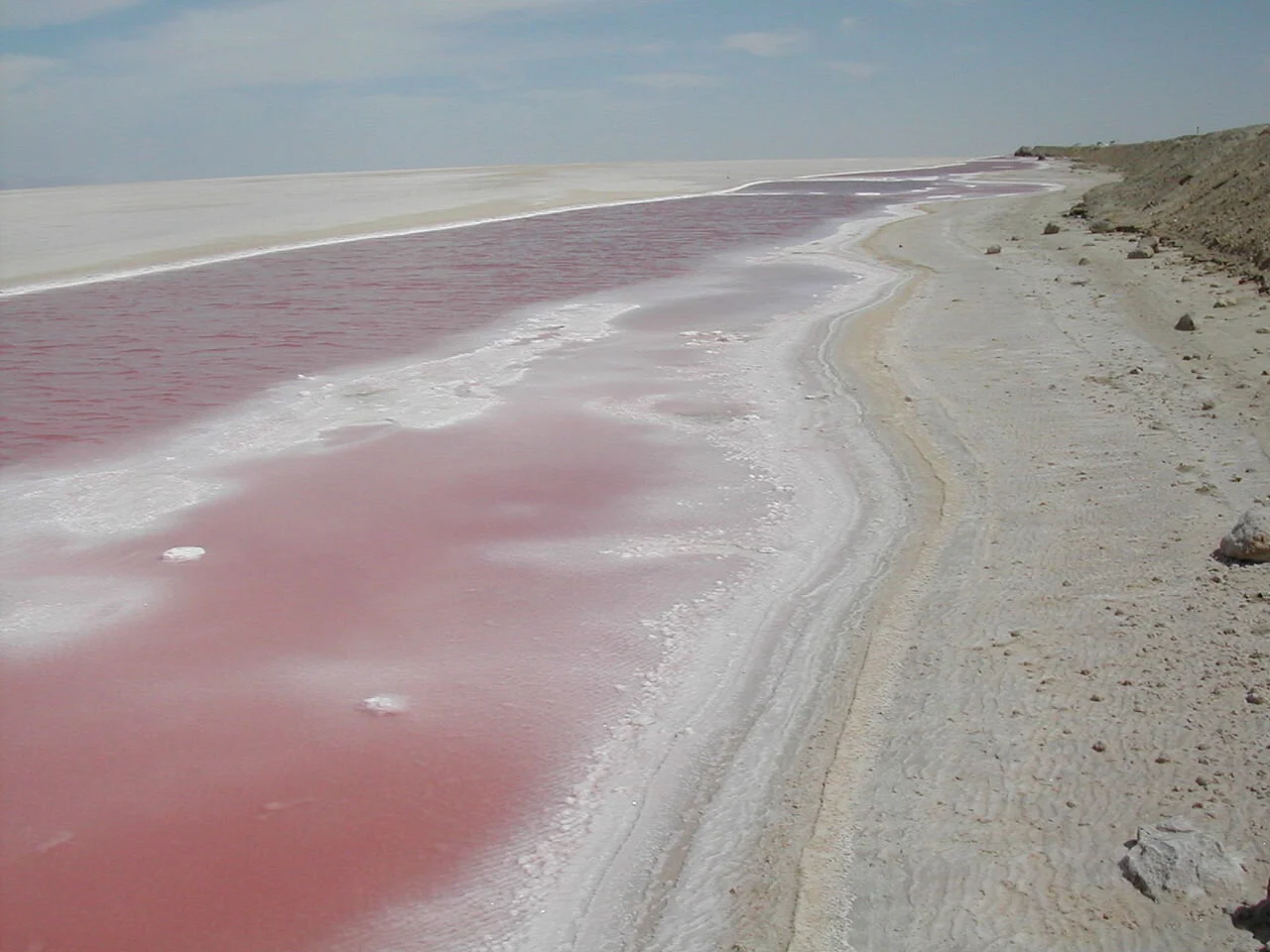
Minerals from Atlas Mountain runoff give Chott el Djerid its pink hue. Vinzenz Mühlstein. Public Domain. CC0
1. Chott el Djerid
The fictional planet Tatooine from the “Star Wars” saga was named after Tataouine, a desert city in Tunisia. Although no scenes were filmed in the real Tataouine, many of the first “Star Wars” film’s scenes were filmed in cities all over Tunisia. One of the most notable scenes of Tatooine is of Luke Skywalker’s home, the exterior of which was filmed in Chott el Djerid, the Sahara’s largest salt pan. A chott, or salt lake, stays dry for the majority of the year but fills intermittently from infrequent rainfall and during the spring thaw when water runoff from the Atlas Mountains floods the basin. The dissolved minerals from the Atlas Mountains give Chott el Djerid its otherworldly cotton candy pink color.
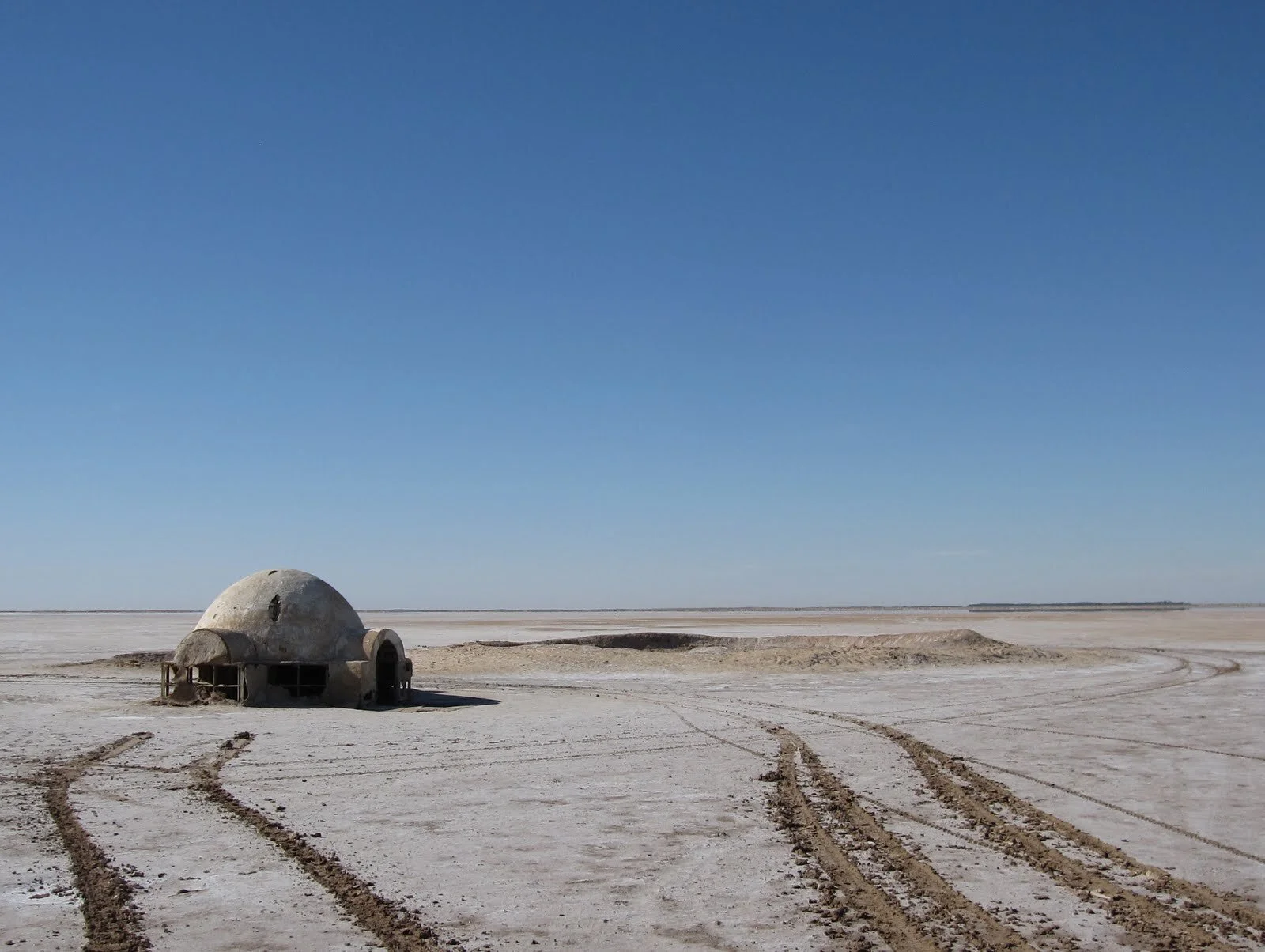
Remains of the Lars Homestead on one of the “Star Wars” movie sets in Chott el Djerid. Stefan Krasowski. CC BY 2.0.
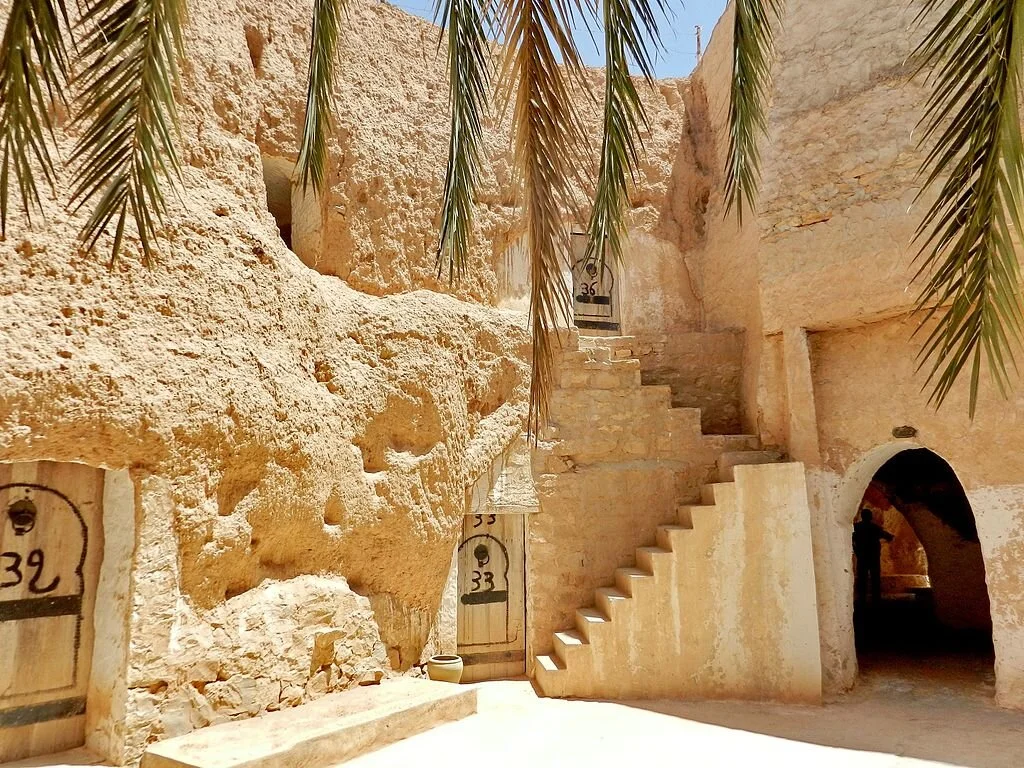
Ancient Berber underground homes in Matmata, Tunisia. Tanya Dedyukhina. CC BY 3.0.
2. Matmata
When “Star Wars: A New Hope” was released in 1977, Matmata, a small Berber village in southern Tunisia, became famous for its underground cavelike homes where some of the local residents still live. (The Berber, or Amazigh, are an ethnic group native to Northwest Africa, particularly the Maghreb.) The interior of Luke Skywalker’s home was filmed in the courtyard of Hotel Sidi Idriss, an underground hotel in Matmata. The hotel is open year-round, and is a must-visit for any die-hard “Star Wars” fan. For those who are not “Star Wars” fans but still want to visit the cave dwellings, the Musée Berbère de Tamezret (about six miles from Matmata) is a great alternative option.
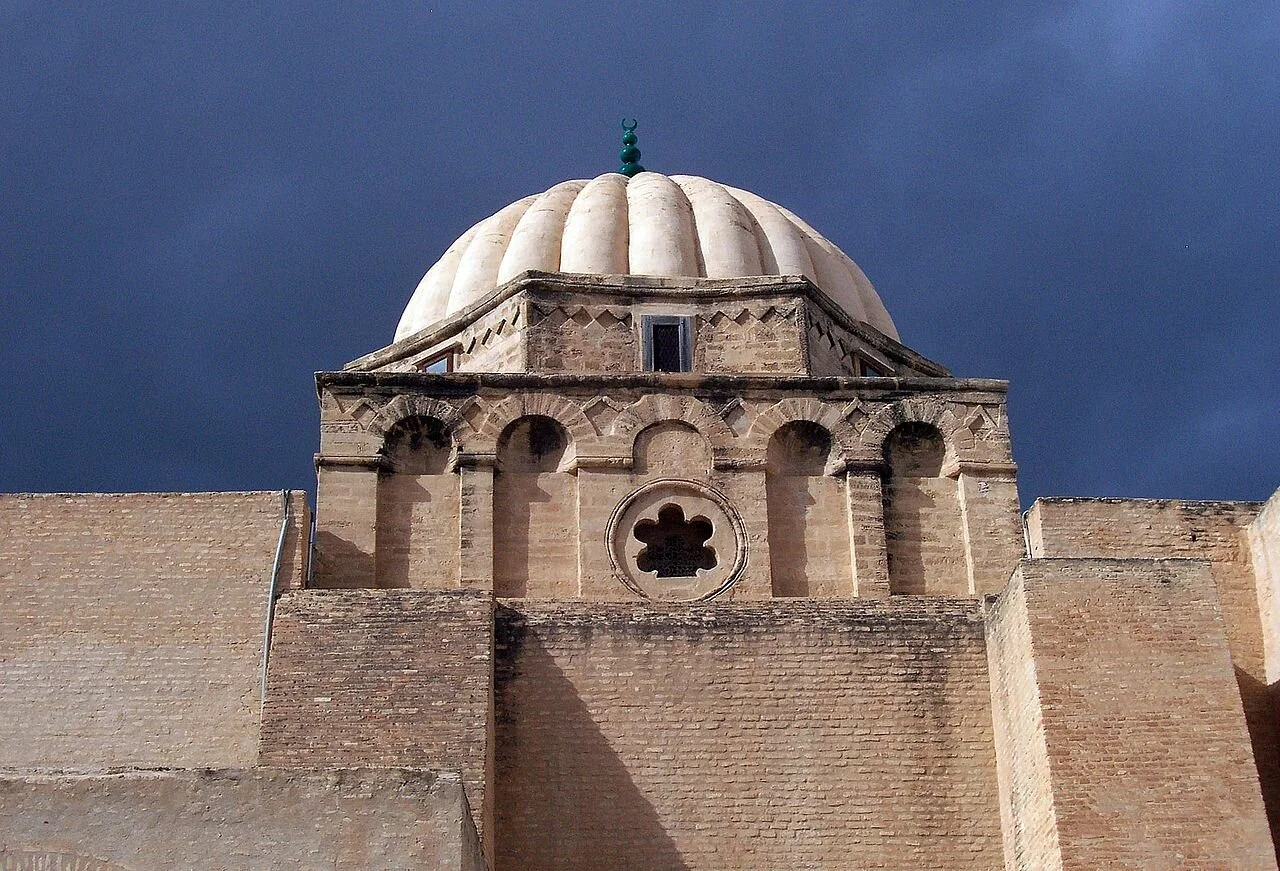
The dome of the Great Mosque of Kairouan houses the mihrab, or structure that points out the direction in which Muslims pray. Colin Hepburn. CC BY-SA 2.0.
3. Kairouan
Kairouan, a UNESCO World Heritage Site, is considered by some to be the fourth holiest site in Islam, after Mecca, Medina and Jerusalem. The city, founded by the Umayyads in 670, is the most ancient Arab-Muslim center in the Maghreb. Kairouan began as a military camp, but soon became an important center for Islamic scholarship, religious sciences, and art. The city contains many mosques, but the most important is the Great Mosque of Kairouan, also known as the Great Mosque of Uqba. The mosque contains a courtyard and a prayer hall, as well as a 105-foot minaret that bears resemblance to a Syrian bell tower or an ancient Roman lighthouse.
Another site that cannot be missed when visiting Kairouan are the Aghlabid Basins, a sophisticated feat of engineering and the largest hydraulic installation of the Middle Ages. Originally, there were 16 pools that provided water for Kairouan, but today only two reservoirs remain. Nearby, Kairouan’s souk has countless vendors who sell everything from snacks and jewelry to carpets and leather goods.
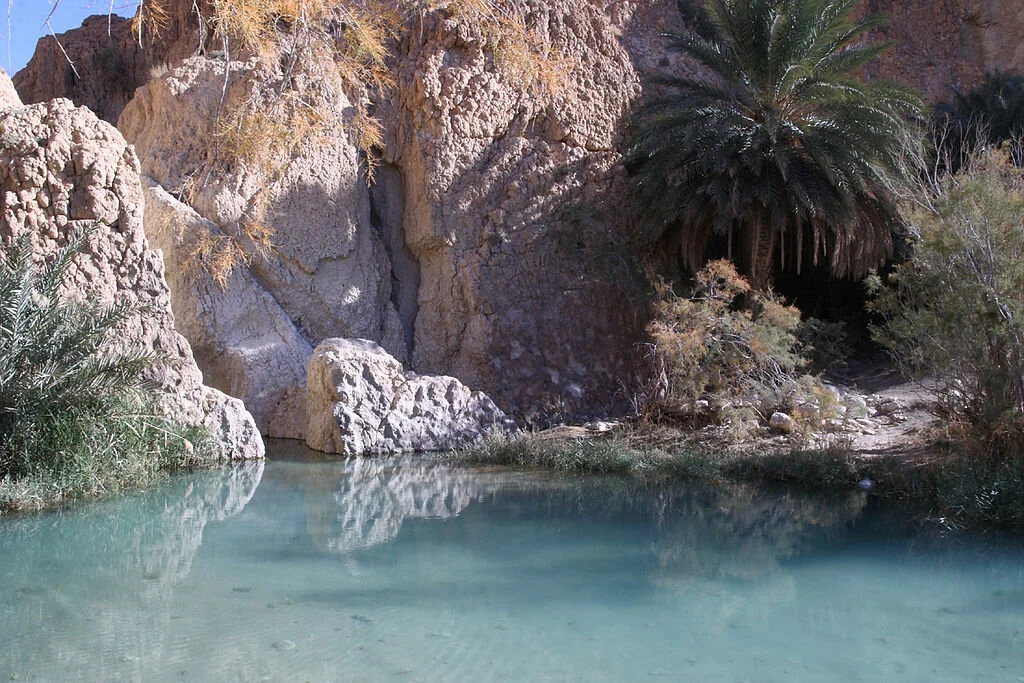
The Chebika oasis lies at the bottom of the Djebel el Negueb Mountains. Remi Jouan. CC BY-SA 3.0.
4. Chebika
Built on what was once a Roman military post, Chebika is a small village that sits right above a palm oasis at the foot of the Djebel el Negueb, which are part of the Atlas Mountains. At the top of the mountain, one can see the oasis, the village, and Chott el Gharsa, a salt lake that lies near the Algerian border (and served as a movie set for “Star Wars: The Phantom Menace” and “The English Patient”). Visitors can hike up the canyon to a small waterfall where they will be greeted by a beautiful view of bright green palm trees standing starkly against the mountainside.
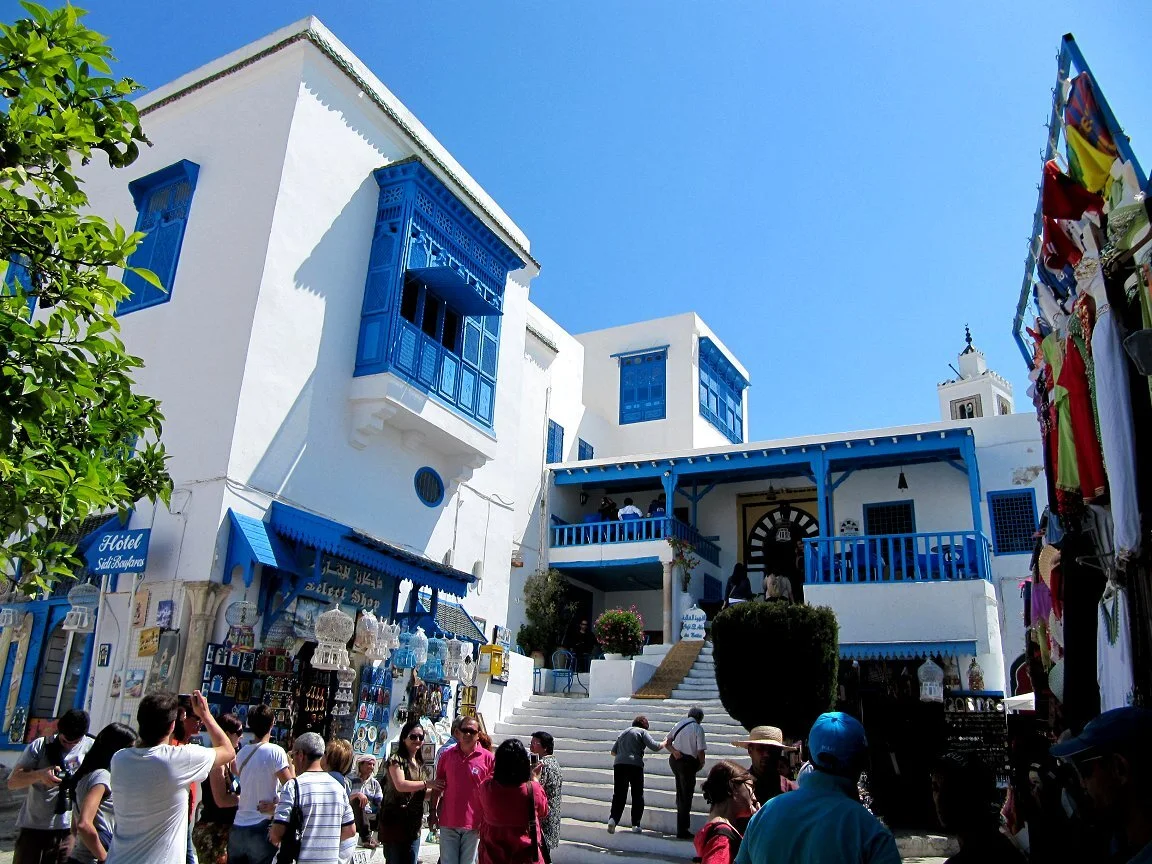
Hôtel Bou Fares and storefront in Sidi Bou Said. Allain Muller. CC BY-SA 2.0.
5. Sidi Bou Said
Sidi Bou Said is known for its blue and white theme, common to other Mediterranean-region cities and towns. The beautiful cerulean doors, shutters, gates and decorative balconies against the whitewashed buildings mirror the bright sky and the Mediterranean Sea which lies below the cliffside town. Sidi Bou Said was established as a religious sanctuary in the 13th century by Abu Said al-Baji, after whom the town was named. The palace Ennejma Ezzahra, finished in 1921 by French painter and musicologist Rodolphe d’Erlanger, is now a museum one can visit to see the beautiful architecture, view paintings by the baron, and see a treasure chest that was reportedly once owned by Suleiman I of the Ottoman Empire. Within the palace is the Centre des Musiques Arabes et Méditerranéennes (Center for Arab and Mediterranean Music), which houses a collection of musical instruments and art, and acts as a concert venue.
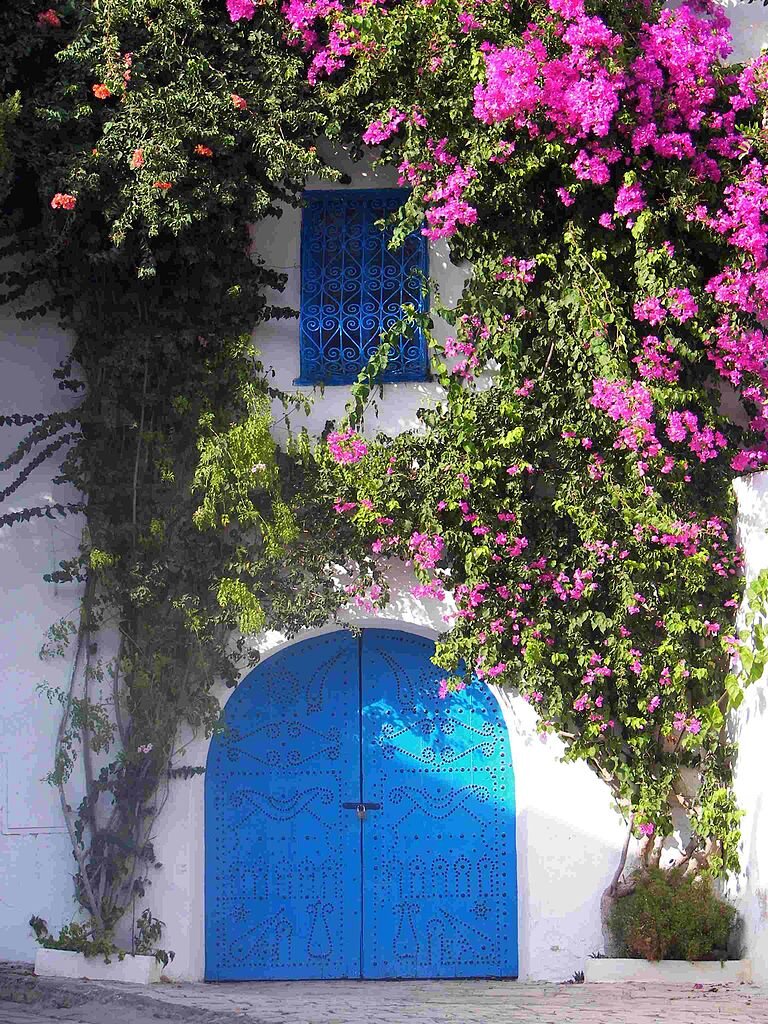
Traditional blue door in Sidi Bou Said surrounded by purple bougainvillea. Benrais. CC BY-SA 3.0.

Korbous was frequented by the ancient Romans of Carthage as a health resort. Patrick Giraud. CC BY 3.0.
6. Korbous
If you enjoy spas and natural hot springs, head for Korbous – a single street clinging to a cliff face on the west coast of Cap Bon. The mineral-rich hot springs of Korbous have been a popular spa and health resort since the time of the ancient Romans of Carthage, as evidenced by an inscription on display in the National Bardo Museum in Tunis. Korbous was not a popular spa destination until the 19th century, when Ahmed Bey, the last Ottoman leader of Constantine, had the hammam, or Turkish bath, built. In addition to the hot springs, mud from Aïn Kanassira, rich with minerals, is used to treat arthritis, various skin diseases and other health issues.
Asiya Haouchine
Asiya is an Algerian-American writer who graduated from the University of Connecticut in May 2016, earning a BA in journalism and English. She was an editorial intern and contributing writer for Warscapes magazine and the online/blog editor for Long River Review. She is currently studying for her Master’s in Library and Information Science. @AsiyaHaou
Speaking for the Trees: A Plan to Bring Life Back to the Sinai Desert
For Ties van der Hoeven, the desert isn’t a symbol of emptiness but of hope.
Read MoreTunisia: Discover Ancient Rome in North Africa
Thousands of years later, Tunisia’s rich history as part of the Roman empire is still on display.
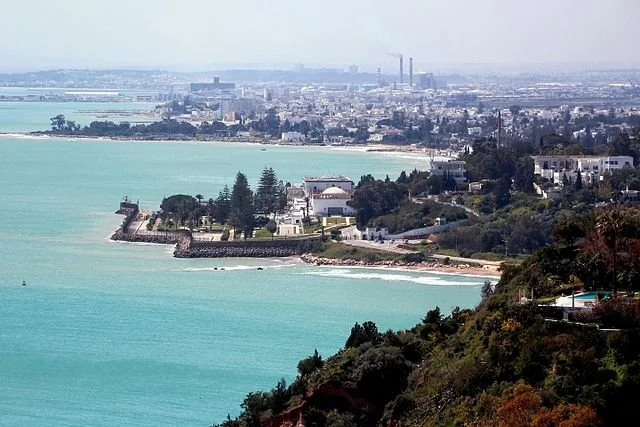
A view of Carthage Palace in Tunisia. Farah Jack Mustaklem. CC BY-SA 4.0
For many, the word “Rome” evokes images of the city in Italy. Its days as the center of one of the largest empires in history ended millennia ago, and today, popular culture has largely moved on, TikTok memes aside. But the Roman Empire was far bigger than many now imagine, stretching well into the modern-day Middle East and across North Africa. Today, the empire’s ruins remain visible in the furthest reaches of its territories.
Tunisia, for instance, is home to a wealth of ancient Roman history. Sitting on the edge of the Sahara Desert, the African nation has found fame with tourists who admire its gorgeous beaches. However, beyond the nation’s natural beauty and high-quality resort towns, Tunisia's territory was once at the very heart of the Roman empire in Africa. Ranging from the remains of villages to the shell of the great city of Carthage, ancient ruins dot the country’s landscape. Almost every major city features ancient Roman artwork, architecture and history. While Tunisia is gorgeous in its own right, the country possesses a richer history than almost anywhere else in the world.
The best-preserved example of Imperial Rome’s presence in Tunisia is El Jem. Estimated to have held up to 35,000 people at once, El Jem is not only the largest amphitheater in Africa but one of the largest in the world. Incredibly, the entire building is supported by stone arches, the edifice resting on a flat plain with no hills or rises for balance. The structure’s underground passages also remain largely intact, and tours are led daily through the entire grounds of the colosseum.
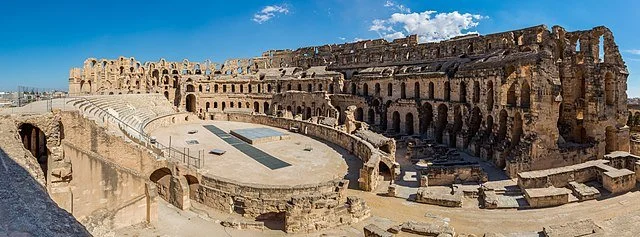
A panoramic view of El Jem. Diego Delso. CC BY-SA 4.0
Another incredible part of history hidden away just outside the Sahara is the ancient city of Sbeitla, home to some of the best-preserved temples from the Byzantine Empire. Outside Sbeitla, visitors can also tour the ruins of Byzantine public baths, a Roman Forum that houses ancient temples to Minerva, Jupiter and Juno, and a series of Catholic basilicas.
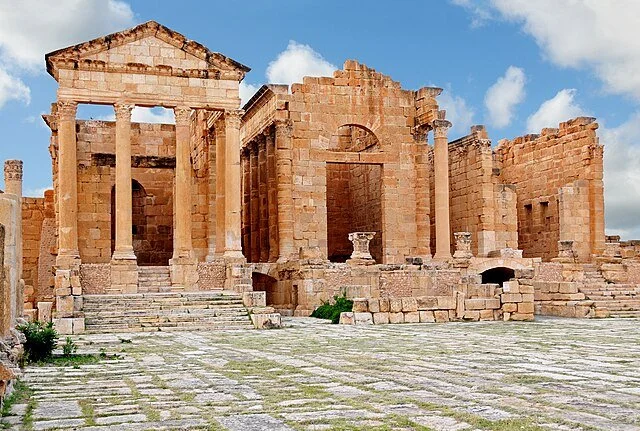
The Roman Forum in Sbeitla. Dennis Jarvis. CC BY 2.0
In addition to its ancient history, Tunisia provides visitors with the unique opportunity to visit the Sahara Desert. Numerous tour companies offer frequent excursions into the desert on camelback. These tours range from day trips to two or more days of camping and bivouacking in traditional Bedouin style. These tours are a once-in-a-lifetime opportunity to experience the lifestyle of the nomadic tribes local to Tunisia.
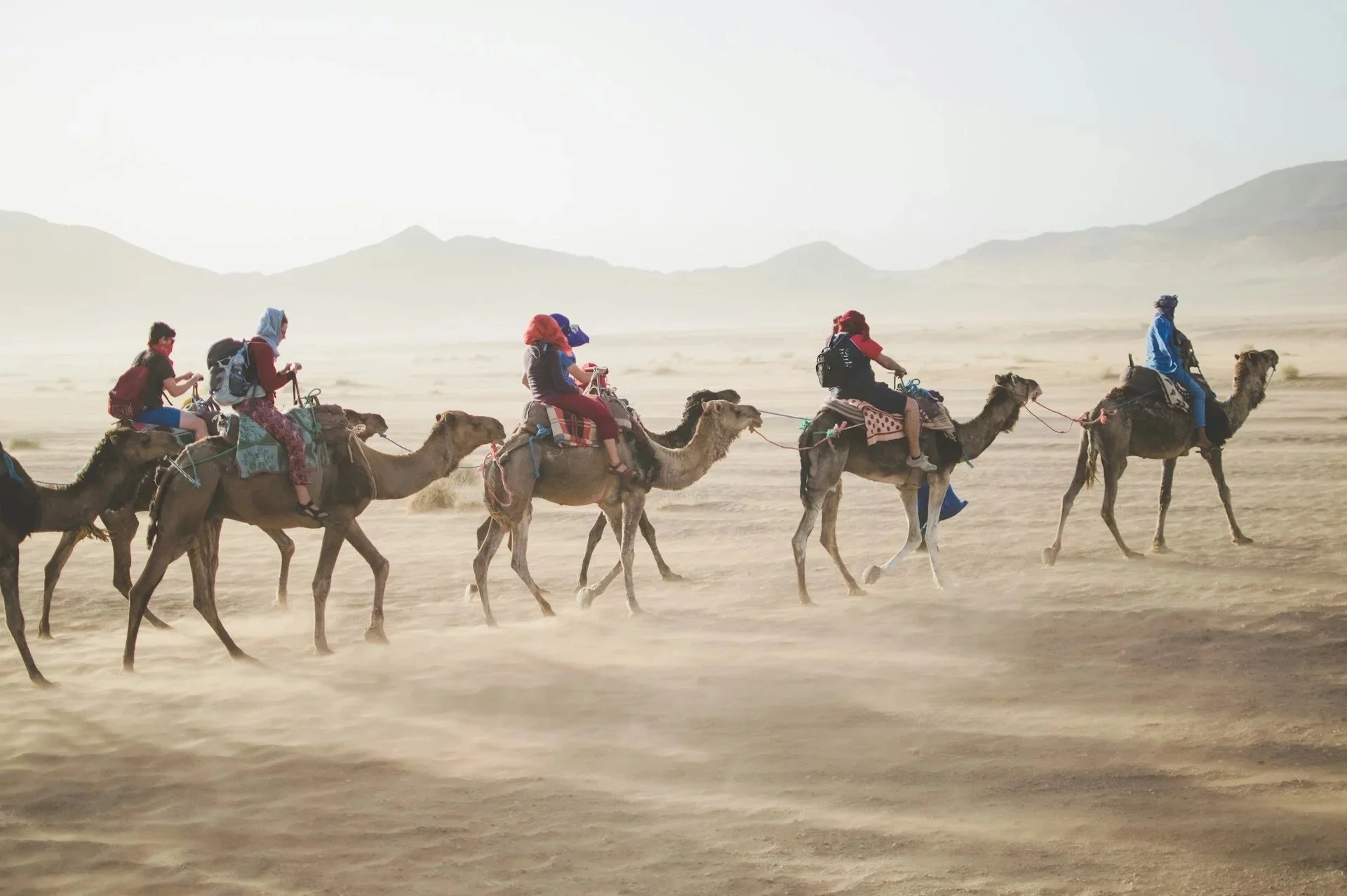
A camelback tour of the Sahara Desert. Vaida Tamošauskaitė. CC0
Despite all of the wonderful experiences that Tunisia presents, there are notable risks to visiting the country as a tourist. As of May 2024, the US Department of State issued a Level 2 travel advisory. This marker warns tourists to avoid certain areas due to increased terrorist activity in countries around Tunisia and the newly declared military zone south of the city of Remada. However, the majority of the country is still considered mostly safe to visit, with only select locations listed at Level 4 or “do not travel.” Tourists should mind the precautions listed in the advisory.
Visitors to Tunisia may be advised to stay in the country’s capital Tunis, a central location which allows easy access to the majority of the destinations listed above. The city offers a variety of hotel options, with prices ranging from $100-300 a night. More affordable options include the Dar Ya hostel in Tunis (priced at around $40 per night) and rentable apartments (from around $35 a night) located just outside the main city.
Ryan Livingston
Ryan is a senior at The College of New Jersey, majoring in English and minoring in marketing. Since a young age, Ryan has been passionate about human rights and environmental action and uses his writing to educate wherever he can. He hopes to pursue a career in professional writing and spread his message even further.
Zambian Women Fight Poaching with Jewelry
Mulberry Mongoose, a Zambian woman-run jewelry shop, turns poaching snares into art.
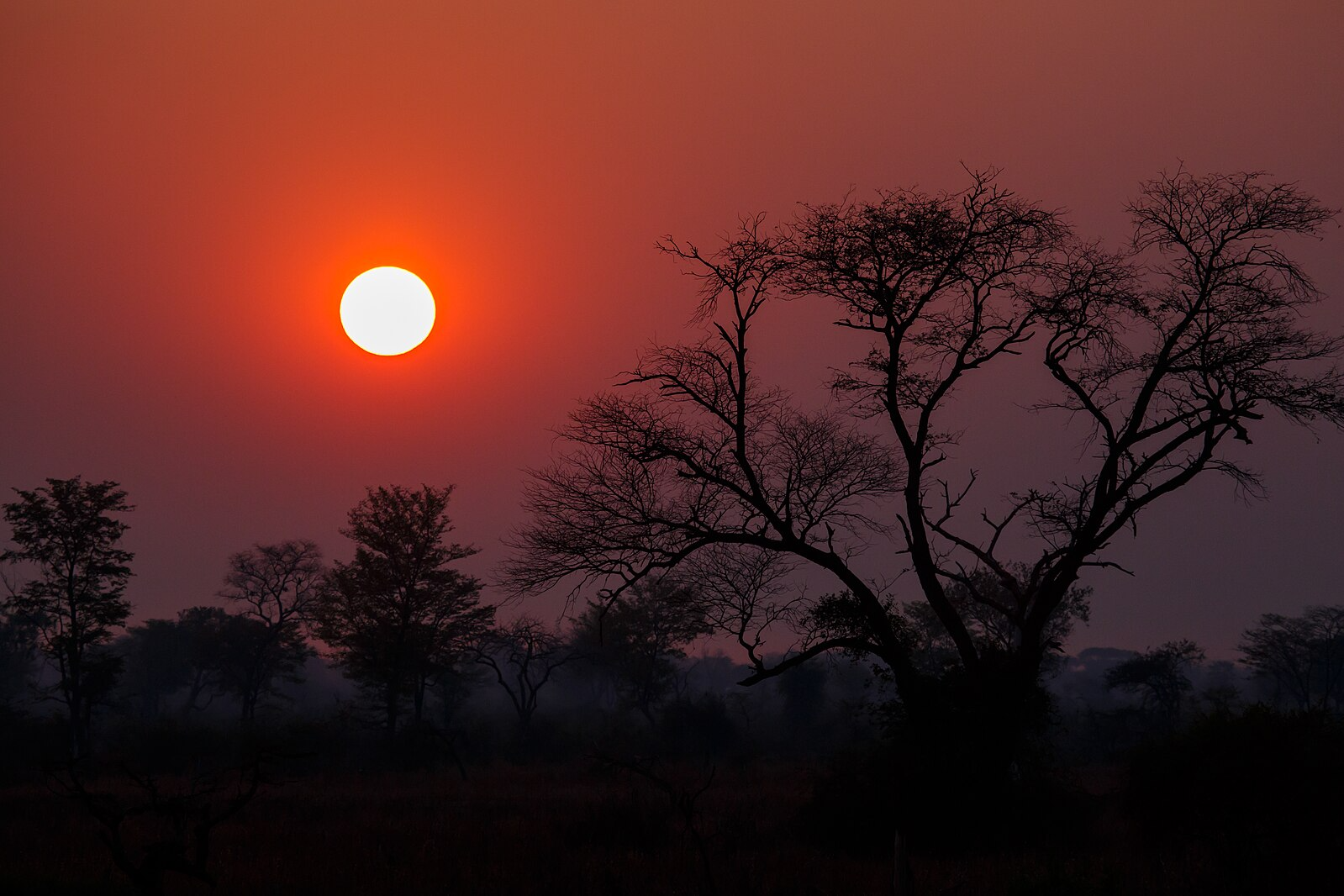
South Luangwa National Park. Thomas Fuhrmann. CC BY-SA 4.0
Located just 15 minutes from the South Luangwa National Park's main gate in Zambia, Mulberry Mongoose is not just a jewelry brand; it's a movement of conservation, empowerment and creativity. The enterprise's business model is to transform poachers' snare wires into intricate jewelry. The workshop team is composed of 80% women and 100% locals born and raised in Zambia, and has become famous for its innovative methods of production. So far the company has raised over $150,000 for conservation. The story of Mulberry Mongoose is a testament to the power of turning adversity into art, with the motto of "creating beauty from brutality."
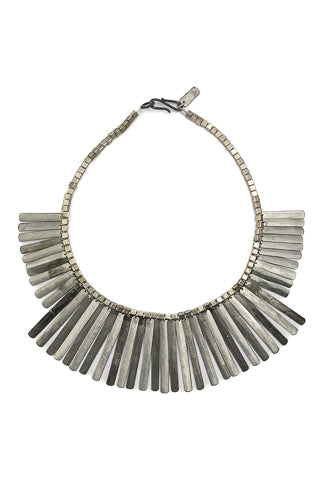
Original Snare Necklace. Courtesy of Mulberry Mongoose.
The shop was founded by the English entrepreneur Kate Wilson, who married Dave, a native of Zimbabwe. Before meeting her husband she had never stepped foot on African soil, but given his passion for the African bush, she ended up moving with him to South Luangwa. It was there that she realized her perspective of Africa was fundamentally flawed. Inspired by her own Zambia journey of self-actualization and realization, she decided to set up an ethical craft business that reflected her core values of growth, discipline, care, transparency and joyful bravery.
South Luangwa National Park is famed for its wildlife, having one of the highest concentrations of leopards in Africa. Like many parks in Africa, it struggles to protect its wildlife against poachers. Snare traps are an especially brutal method of hunting used by illegal wildlife poachers. They are the biggest killer of iconic wildlife in Southern Africa, killing tens of thousands of animals each year, including elephants, lions, leopards, giraffes and wild dogs. The traps are set by areas of high wildlife movement such as watering holes to catch antelopes, which are consumed by locals mainly for purpose of selling it on the illegal bushmeat trade. Unfortunately, snare traps are dreadful tools of destruction, they also do not discriminate, and often other animals can trigger the snare, leading to a slow and painful death by strangulation, dislocation, or near decapitation Without veterinary intervention, the animals are certain to perish.
Snare wire traps are collected by rangers and stored in containers across the continent. Mulberry Mongoose has been granted special permission to access the containers. Its team carefully extracts, untangles and cuts the wire into strips, which are then transformed into the materials they use to create their signature jewelry, a process requiring incredible strength and precision. This transformation not only prevents the wires from causing further harm but also turns them into symbols of hope and resilience.
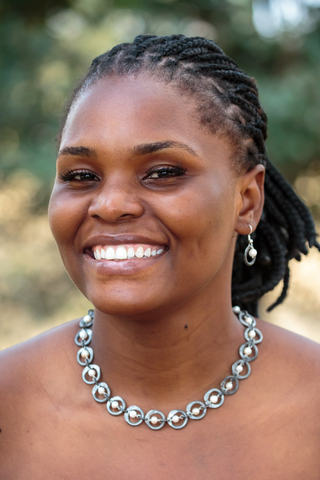
Snare Chain Necklace with White Pearl. Courtesy of Mulberry Mongoose.
The team worked with a Mfuwe carpenter to train the shop’s female artisans to work with the difficult materials. Grace Mwanza, one of the artisans, told National Geographic how the skills she learned at her job enabled her to build her own house. “The process requires incredible strength,” said Kate Wilson, the business’ founder. “We course through nearly 5 steel drill bits per week!”
The project supports conservation efforts as well as local communities. Mulberry Mongoose gift bags are made with colorful chitenge material bought from businesswomen and turned into beautiful gift pouches by Mfuwe tailors. Its artisans use unique materials bought from local entrepreneurs, such as hand-carved wooden beads, seeds, vintage coins, and farmers’ feathers to ensure that their designs are authentically African and benefit their rural communities, while also showcasing the unique beauty of the African bush and the dexterity and ingenuity of African artisans. A portion of the proceeds from their jewelry sales go to NGOs dedicated to protecting wildlife and supporting rangers. The shop has removed 27,000 snare traps from circulation and transformed over 164,000 feet of snare wire into works of art.
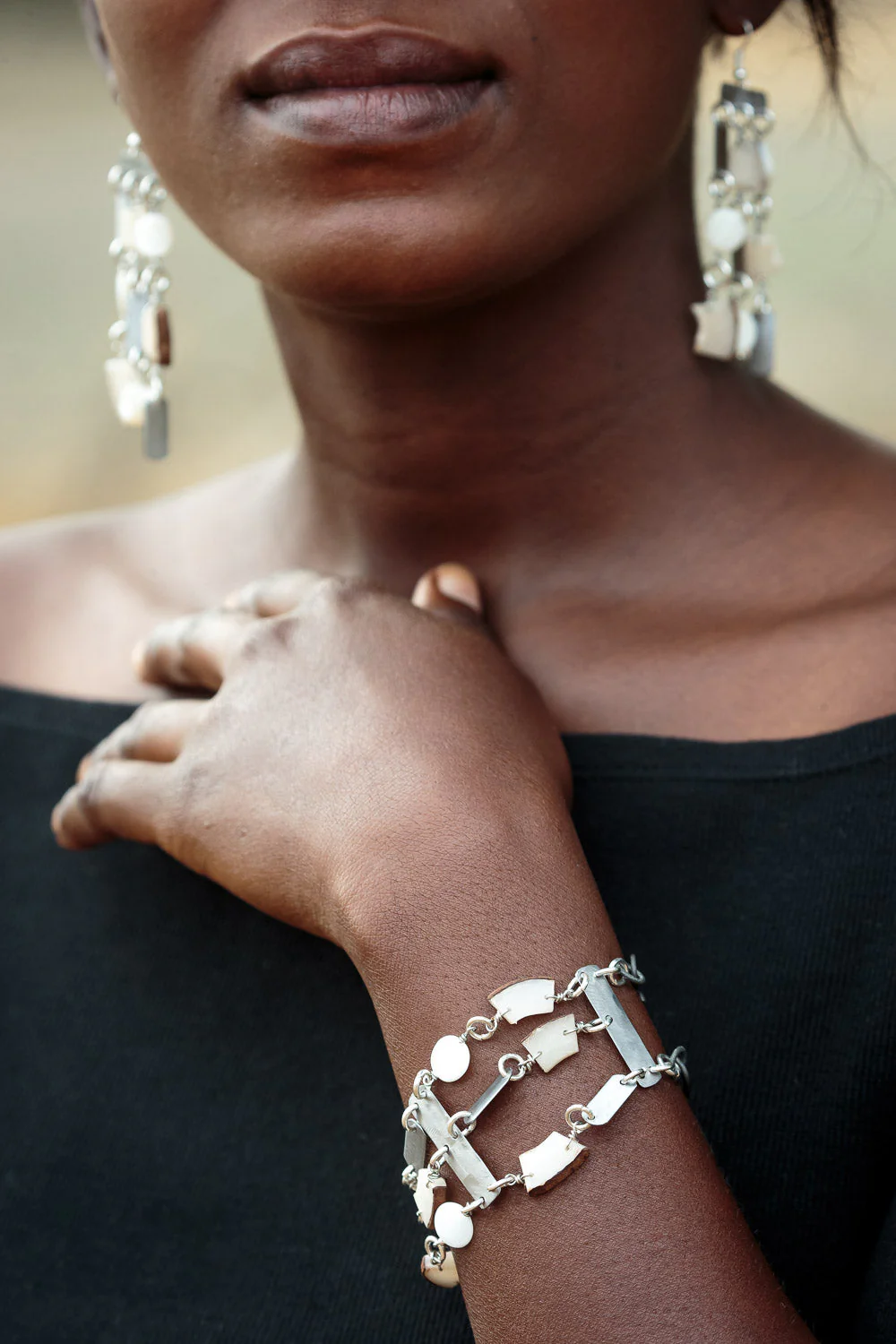
Rhino Conservation Snare & Vegetable Ivory Bracelet. Courtesy of Mulberry Mongoose.
The Mulberry Mongoose team is renowned for its passion and hospitality. You can drop into their "Shop Less Ordinary: between 7:00 a.m. and 4:30 p.m. any day of the week. Visitors will receive a warm welcome and a free guided tour of the team's purpose-built workshop and learn their story of conservation, female empowerment, rural African employment and ingenuity. You can even try coiling or hammering poachers’ snare wire yourself! Their shop is a beautiful space with an extraordinary variety of designs, worn by the likes of supermodel Doutzen Kroes, businessman Richard Branson, former president Bill Clinton, and former Secretary of State Hillary Clinton.
“On a typical day, a package will leave our shop for the Mfuwe airport, where the truck drives by a watering hole for hippopotamus and a natural basin where giraffes and elephants meet,” said Wilson. “It may take a bit longer to receive our jewelry, but I want to take people on the journey of why we do what we do—to conserve the species of this pristine wilderness we call home.”
TO GET INVOLVED
Mulberry Mongoose: Visit the website to learn more about Mulberry Mongoose’s team and story and to shop online. If you are lucky enough to travel to the South Luangwa you can visit the shop itself to learn firsthand from the passionate members. Their site also includes an online shop, with the proceeds benefiting the local community and conservation efforts. They ship orders from their remote workshop anywhere in the world in under 14 days. They also stock ethical retail businesses including conservation shops and safari boutiques. Last you can follow them on Instagram or Facebook as Mulberry Mongoose.
Conservation South Luangwa: This organization’s mission is to work with community and conservation partners in the protection of the wildlife and habitats of the South Luangwa ecosystem. Their goal is to ensure the long-term survival of wildlife and habitats in South Luangwa under the custodianship of the Zambian people. Their site includes information about getting involved and donating.
Zambian Carnivore Programme: This organization seeks to conserve Zambia’s large carnivores and the ecosystems they reside in through science, action and strengthening local leadership. ZCP hopes to create restored and thriving ecosystems that are collaboratively conserved by local communities, scientists and policy-makers through evidence-based approaches. Its website includes information about getting involved and donating.
Conservation Lower Zambezi: Conservation Lower Zambezi is an NGO committed to the conservation of wildlife and the environment in Lower Zambezi, Zambia, and was founded in 1994 to provide support to the Department of National Parks and Wildlife and help it fulfill its mandate to mitigate threats to wildlife from poaching in the region. The organization's website has information about getting involved and donating.
Rebecca Pitcairn
Rebecca studies Italian Language and Literature, Classical Civilizations, and English Writing at the University of Pittsburgh. She hopes to one day attain a PhD in Classical Archeology. She is passionate about feminism and climate justice. She enjoys reading, playing the lyre, and longboarding in her free time.
Zakouma: A Haven for African Wildlife
Chad’s Zakouma National Park has transformed from a hotspot for poaching into a sanctuary for wildlife.
Read MoreHunger War: Sudan is Starving
Constant violence is keeping humanitarian aid from entering Sudan.
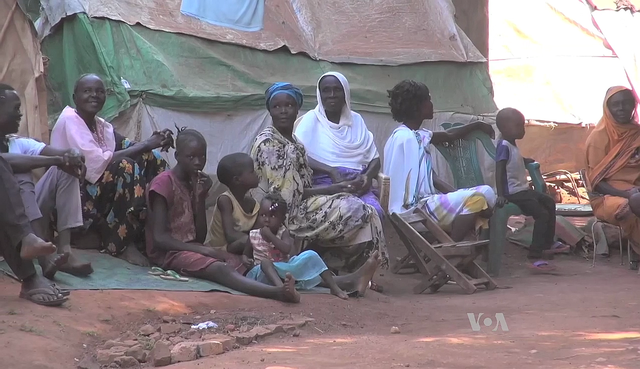
Refugees from South Sudan. Jill Craig. CC 0
The civil war in Sudan has only sped up after entering its second year. After fighting broke out between the two warring factions in Khartoum in April of 2023, the conflict has spread to all corners of the country as the official Sudanese Armed Forces (SAF) and the paramilitary Rapid Support Forces (RSF) vie for control of the nation.
The rest of the country has been forced to either flee their homeland or suffer through increasingly dire conditions. Chad, South Sudan, and Ethiopia have taken in roughly 1.8 million refugees, but tens of millions of people are still trapped within Sudan, enduring acute food insecurity and outright starvation amid intensely destructive violence.
The United Nations World Food Programme (WFP) has stated that almost nine in ten people living in Sudan are trapped in “relentless violence,” which is fueling unprecedented levels of food insecurity. This crisis has been declared the largest hunger crisis in history, as most of the citizens facing starvation are stuck in completely inaccessible areas as a result of the ongoing conflict.
Several nations have attempted to send humanitarian aid to Sudan and to the countries to which refugees have fled. However, the fighting that is keeping citizens trapped in the country is also effectively barring supplies from entering Sudan.
This often takes the form of direct military assaults on citizens and local responders, suggesting that the RSF and SAF are both using starvation as a weapon against each other. In addition, many attempted aid drops have been looted and destroyed by the warring armies.
As of July 2024, over 26 million people in Sudan are facing food insecurity, with an additional 9 million having been driven out of the country by the war. These refugees have triggered smaller but no less serious hunger crises in neighboring Egypt, Chad, South Sudan and Ethiopia.
Currently, over $2.2 billion has been allocated to humanitarian aid and recovery, with roughly $1 billion coming from the United States. However, as the crisis stretches on into 2024, donations have begun to dry up. Estimates suggest that around $200 million is still needed to counteract the rampant starvation, and even that does not account for the total value of all looted and destroyed supplies.
How You Can Help
Humanitarian aid organizations across the country are constantly accepting donations to send to the Sudanese citizens. Groups such as World Food Programme USA and Save the Children aim to provide food, health supplies, and other necessary resources to those trapped in the middle of the war. On an international scale, Doctors Without Borders and the UN Refugee Agency are providing humanitarian aid to Sudanese displaced people and refugees in the surrounding nations
Ryan Livingston
Ryan is a senior at The College of New Jersey, majoring in English and minoring in marketing. Since a young age, Ryan has been passionate about human rights and environmental action and uses his writing to educate wherever he can. He hopes to pursue a career in professional writing and spread his message even further.
Gambia's Controversial Bid to Reverse FGM Ban
In 2015, female genital mutilation was made a criminal offense in Gambia, but in March of 2024, a bill was introduced to overturn the ban.
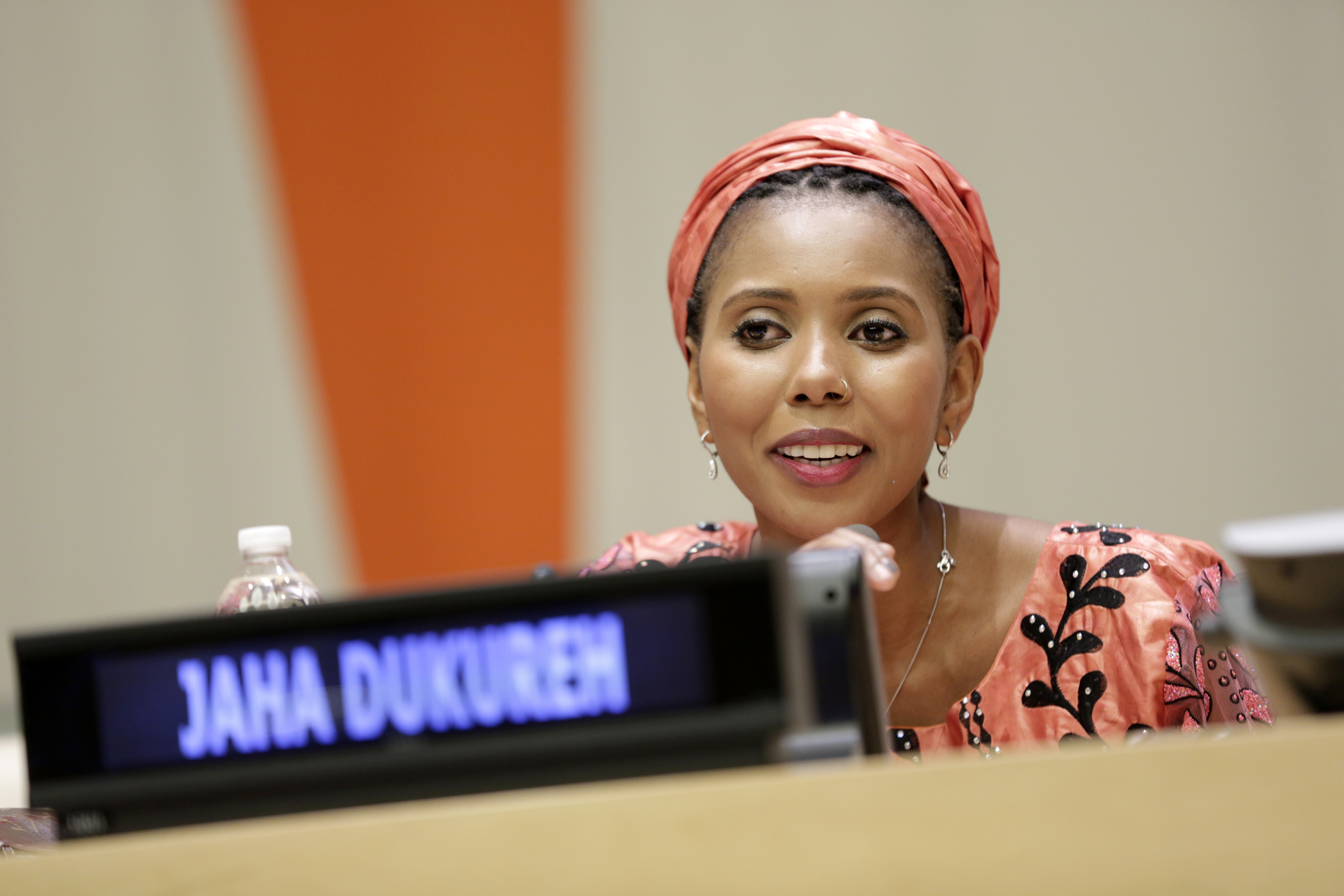
Jaha Dukureh, Gambian Anti-FGM Activist, Speaks at UNHQ. Ryan Brown. CC BY-NC-ND 2.0
Female genital mutilation, or FGM, refers to the practice of partially or completely removing the external female genitalia for non-medical and often religious reasons. In addition to psychological trauma, the procedure can cause a variety of medical issues for the victim, including bleeding, problems with urination, cysts, infections, complications in childbirth, and shock or death. According to the World Health Organization, as of 2024 more than 230 million women have undergone FGM. It is most often practiced on girls between infancy and age 15. Data collected by UNICEF in 2024 reveals a 15% increase in the number of survivors compared to data released eight years ago.
Gambia has one of the highest rates of FGM worldwide. Around 46% of girls age 14 and younger and 73% of girls and women between ages 15 and 49 have undergone FGM in the country, according to UNICEF. In 2015, Gambia passed the Women’s (Amendment) Act, which criminalized FGM. The law did little to end the practice, however. Only two case of FGM have been prosecuted since the law was passed, and the first conviction for performing FGM was not made until August of 2023.
Calls to overturn the ban on FGM began in earnest after the 2023 conviction, in which three women were indited. Many supporters of the practice were outraged by the womens’ fate. One of Gambia’s most vocal religious leaders, Islamic cleric Imam Abdoulie Fatty, who believes that FGM is prescribed by Islam, raised funds to pay the womens’ fines. From that point on the movement began to gain traction.
A bill proposing to overturn the ban was officially introduced to Gambia’s parliament in March of 2024. Of the 58 members of Gambia’s parliament, 4 legislators voted to preserve the ban, 42 legislators voted to legalize FGM and one abstained. Although it passed by a majority, the bill still needs to be approved by a final committee before it becomes law. Notably, only five of Gambia's parliamentary seats are currently held by women.
Activists fear that the bill represents a threat to more than just the ban on FGM; it is representative of a broader struggle for gender equality in Gambia. The widespread support that the bill has received suggests that many Gambians still hold deeply patriarchal values, a revelation that could embolden religious conservatives to take advantage of the moment to set back other steps that have been taken towards gender equality. It could also inspire other countries in Africa, especially Muslim-majority West African countries like Kenya or Guinea, to repeal their bans on FGM, says Satang Nabaneh, a human rights law professor at the University of Dayton. “There has been an uptick in [attempts to reverse] anti-FGM laws within the continent,” she told TIME, “and what happens in the Gambia will be a signal to other West African countries or conservative actors to roll back women’s sexual and reproductive rights, as well as to allow for gender-based violence.”
Gambian President Adama Barrow said in June that his government would abide by the ban, though he faces increasing pressure from traditionalists as a parliamentary commission considers the new bill. "While awaiting its outcome, government remains committed to enforcing the prohibition of FGM in The Gambia," Barrow said in a statement, although he has yet to suggest a plan for preventing the ban from being overturned if the bill is passed.
GET INVOLVED
The Five Foundation: The Five Foundation was established to combat FGM. They have launched multiple projects aimed at supporting women all across Africa who have been affected by FGM.
Safe Hands for Girls: This organization is dedicated to ending FGM and child marriage in Africa. Their website offers a link for donations and information on their various initiatives.
Rebecca Pitcairn
Rebecca studies Italian Language and Literature, Classical Civilizations, and English Writing at the University of Pittsburgh. She hopes to one day attain a PhD in Classical Archeology. She is passionate about feminism and climate justice. She enjoys reading, playing the lyre, and longboarding in her free time.
Why You Should Care About the War in Eastern Congo
A decades-old conflict in Central Africa threatens to reignite in full, with worldwide implications.
Read MoreMadagascar’s Cyclone Gamane—The Devastating Storm Nobody’s Talking About
Thousands of homes were destroyed and families displaced, with almost no American news coverage.
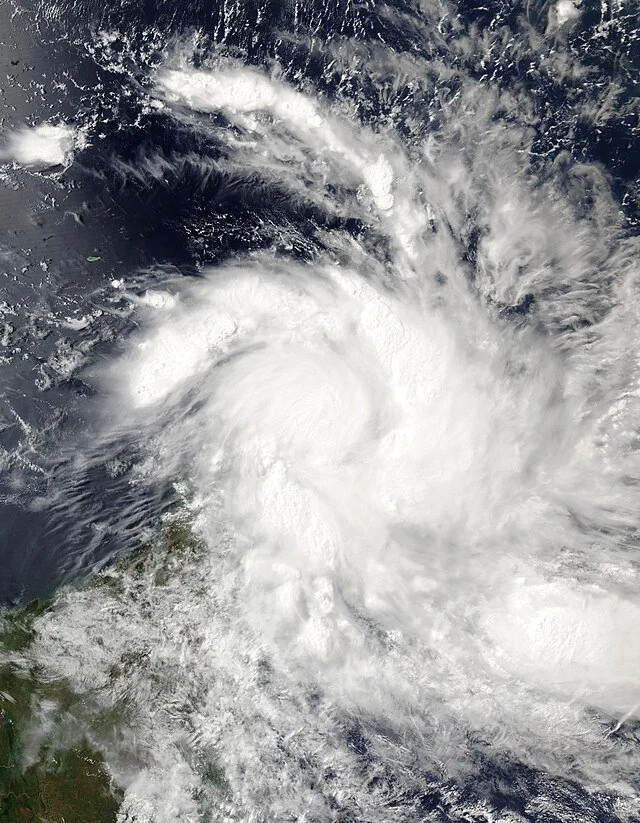
Cyclone Gamane over Madagascar. NASA, CC0
A few weeks ago, Cyclone Gamane made landfall on Madagascar. It devastated the island in no time flat, leaving tens of thousands of people homeless and without food or electricity. It arrived on March 27th; the government declared a state of emergency on April 3rd. And despite all of this, there was almost no American news coverage about the disaster.
Gamane began as a tropical cyclone over the South Indian Ocean. By the time it reached Madagascar, its wind speed was clocked at an average of 93 mph, with gusts up to 130 mph recorded. Thirty-three communes were flooded in the three days it pummeled the northern coast, and more than 780 houses were destroyed. Eighteen people were killed and more than 22,000 were displaced from their homes. Estimates suggest that there are roughly 220,000 people in need of humanitarian assistance on the island.
Even before the cyclone, Madagascar was numbered among the worst off in the Global Hunger Index in 2023. Before the flooding in February and with Gamane, much of the island was unable to produce enough food to support the population. Roughly 1.6 million citizens are food insecure, relying instead on humanitarian aid. Additionally, the cyclone came at the beginning of Madagascar’s notoriously dry lean season, which lasts from late March until May. If conditions don’t improve quickly, there are concerns that large chunks of the country will experience crisis-level food insecurity.
Emergency supplies on the island are already low—Gamane is only the third crisis to hit Madagascar in 2024, after the Alvaro storm in January and heavy flooding in February. Local humanitarian associations have made efforts to help the populace recover, but without resources, the government has had to call for aid from other countries.
The UN has set up a funding program under the CERF, the Central Emergency Response Fund, to accumulate funds to send to Madagascar. As of April 21st, the program is 20% funded, and is seeking to raise 90 million dollars. Smaller humanitarian organizations, such as the Redemptorist Solidarity Office (headquartered in Cork, Ireland), have taken action in the meantime to provide what help they can. According to their website, the RSO has provided 15,000 pounds for financial support and is shipping several tons of food items and medical kits. They hope to raise enough money to help provide shelter-building supplies for the displaced as well.
Madagascar is uniquely situated as one of the most susceptible places on Earth to natural disasters. Over the last 35 years, more than 50 hazards, including locust swarms, droughts, and heavy flooding, have struck the country and affected nearly half of the entire population. This has, to some degree, resulted in less coverage being dedicated to each event; even now, almost a month since the storm first made landfall, it has received very little publicity in the United States. But despite this lack of interest, humanitarian action is still being taken. It will be an uphill battle, between the fallout from the storm and the height of the lean season approaching, but with the help of the UN and other independent aid groups, Madagascar can and will recover.
Get Involved
At the moment, due to the lack of publicity that the crisis has received in the US, there are not many volunteer opportunities within the country. Those looking to help can donate to SEED Madagascar (which seeks to combat food insecurity), UNICEF Madagascar (which is working to minimize the effects of climate change on the island), or the World Food Programme’s Madagascar mission (which aims to supply over 1.6 million people with humanitarian assistance).
Ryan Livingston
Ryan is a senior at The College of New Jersey, majoring in English and minoring in marketing. Since a young age, Ryan has been passionate about human rights and environmental action and uses his writing to educate wherever he can. He hopes to pursue a career in professional writing and spread his message even further.