Tunisia: Discover Ancient Rome in North Africa

Thousands of years later, Tunisia’s rich history as part of the Roman empire is still on display.
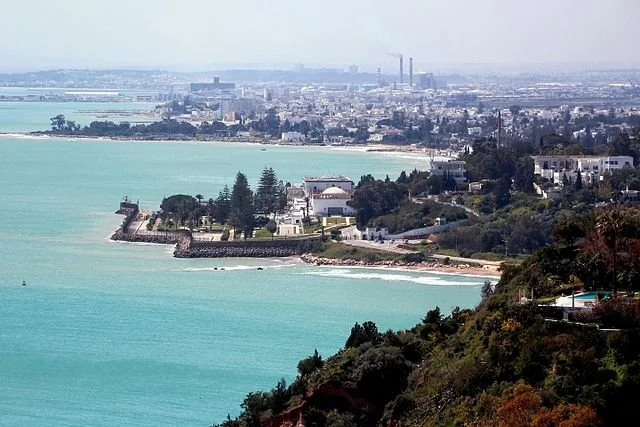
An aerial view of the coastline. A large palace stands on a piece of land jutting out onto bright teal ocean, with the city in sight further in the distance.

A view of Carthage Palace in Tunisia. Farah Jack Mustaklem. CC BY-SA 4.0

For many, the word “Rome” evokes images of the city in Italy. Its days as the center of one of the largest empires in history ended millennia ago, and today, popular culture has largely moved on, TikTok memes aside. But the Roman Empire was far bigger than many now imagine, stretching well into the modern-day Middle East and across North Africa. Today, the empire’s ruins remain visible in the furthest reaches of its territories.

Tunisia, for instance, is home to a wealth of ancient Roman history. Sitting on the edge of the Sahara Desert, the African nation has found fame with tourists who admire its gorgeous beaches. However, beyond the nation’s natural beauty and high-quality resort towns, Tunisia's territory was once at the very heart of the Roman empire in Africa. Ranging from the remains of villages to the shell of the great city of Carthage, ancient ruins dot the country’s landscape. Almost every major city features ancient Roman artwork, architecture and history. While Tunisia is gorgeous in its own right, the country possesses a richer history than almost anywhere else in the world.

The best-preserved example of Imperial Rome’s presence in Tunisia is El Jem. Estimated to have held up to 35,000 people at once, El Jem is not only the largest amphitheater in Africa but one of the largest in the world. Incredibly, the entire building is supported by stone arches, the edifice resting on a flat plain with no hills or rises for balance. The structure’s underground passages also remain largely intact, and tours are led daily through the entire grounds of the colosseum.
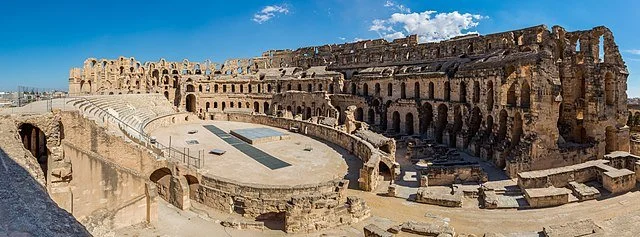
An aerial panorama of a massive Roman ampitheater. The walls are still standing in good shape, with some erosion of the tops.

A panoramic view of El Jem. Diego Delso. CC BY-SA 4.0

Another incredible part of history hidden away just outside the Sahara is the ancient city of Sbeitla, home to some of the  best-preserved temples from the Byzantine Empire. Outside Sbeitla, visitors can also tour the ruins of Byzantine public baths, a Roman Forum that houses ancient temples to Minerva, Jupiter and Juno, and a series of Catholic basilicas.
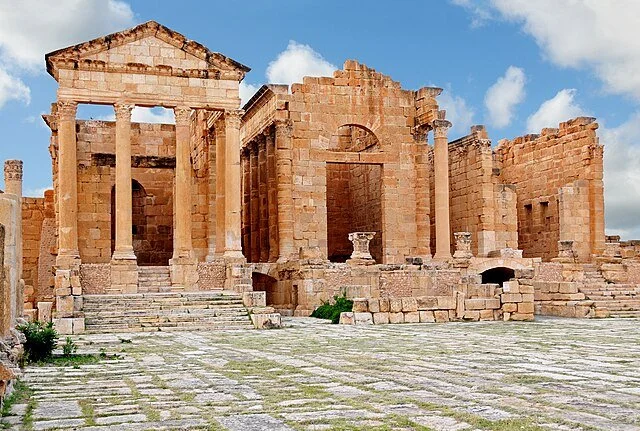
Looking at the front of Roman forum ruins. The area is well-preserved and empty

The Roman Forum in Sbeitla. Dennis Jarvis. CC BY 2.0

In addition to its ancient history, Tunisia provides visitors with the unique opportunity to visit the Sahara Desert. Numerous tour companies offer frequent excursions into the desert on camelback. These tours range from day trips to two or more days of camping and bivouacking in traditional Bedouin style. These tours are a once-in-a-lifetime opportunity to experience the lifestyle of the nomadic tribes local to Tunisia.
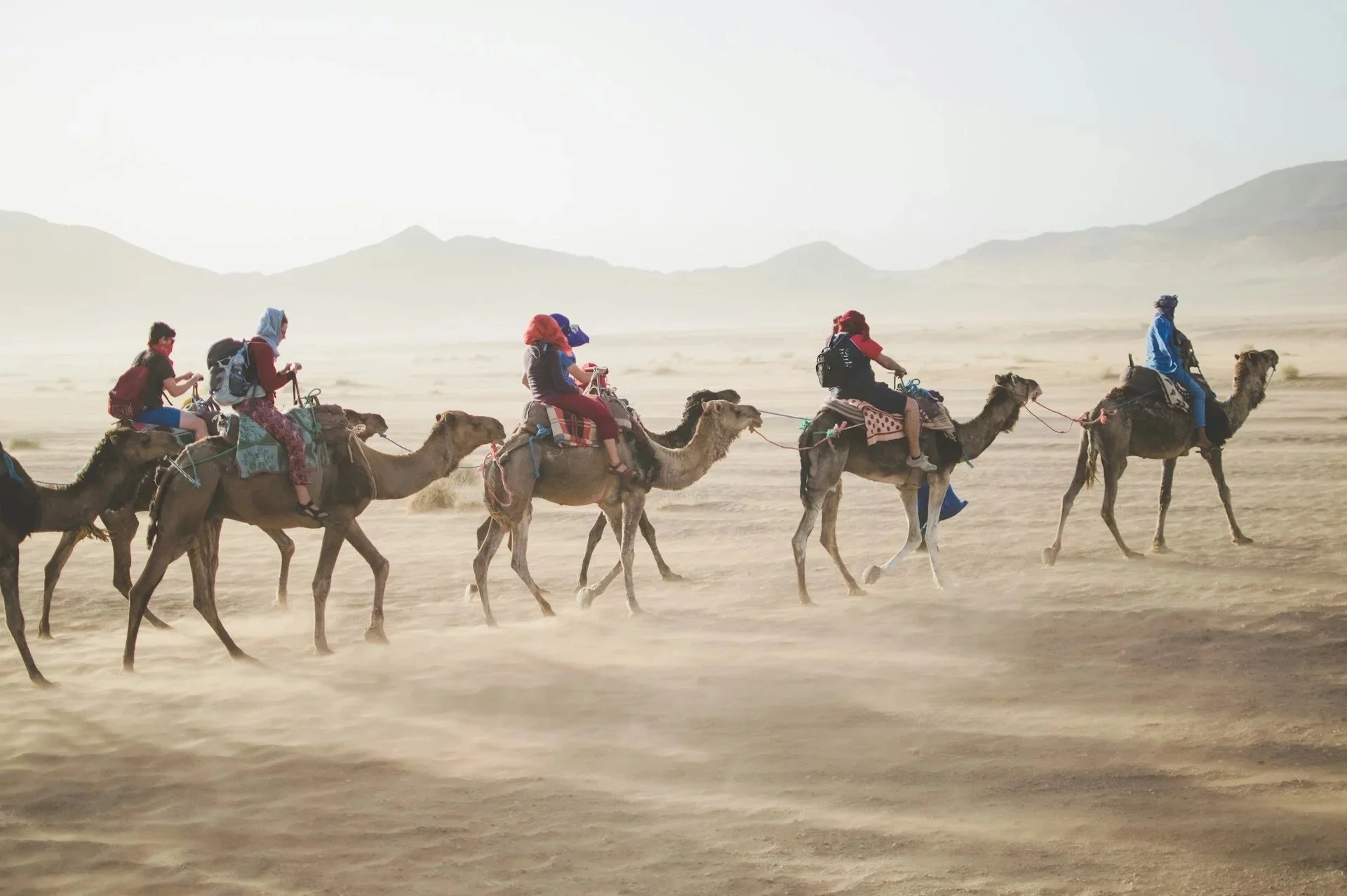
A line of tourists ride camelback through the desert, with dust obscuring the silhouette of mountains in the distance

A camelback tour of the Sahara Desert. Vaida Tamošauskaitė. CC0

Despite all of the wonderful experiences that Tunisia presents, there are notable risks to visiting the country as a tourist. As of May 2024, the US Department of State issued a Level 2 travel advisory. This marker warns tourists to avoid certain areas due to increased terrorist activity in countries around Tunisia and the newly declared military zone south of the city of Remada. However, the majority of the country is still considered mostly safe to visit, with only select  locations listed at Level 4 or “do not travel.” Tourists should mind the precautions listed in the advisory.

Visitors to Tunisia may be advised to stay in the country’s capital Tunis, a central location which allows easy access to the majority of the destinations listed above. The city offers a variety of hotel options, with prices ranging from $100-300 a night. More affordable options include the Dar Ya hostel in Tunis (priced at around $40 per night) and rentable apartments (from around $35 a night) located just outside the main city.

Ryan Livingston

Ryan is a senior at The College of New Jersey, majoring in English and minoring in marketing. Since a young age, Ryan has been passionate about human rights and environmental action and uses his writing to educate wherever he can. He hopes to pursue a career in professional writing and spread his message even further.

Is Climbing Everest Ethical? Why the World’s Highest Peak is in Danger

Pollution and overcrowding are making it increasingly controversial to climb the world's highest summit.

Tourists take photos of the dramatic snowy peaks as they stand on rocky terrain covered in prayer flags

Tourists photographing Everest. Peter West Carey. CC BY-NC-SA 3.0

Mount Everest, the tallest peak in the world, attracts thousands of mountaineering tourists each year. Each of these travelers takes on significant personal risk, however, as climbers ascend the mountain its limited oxygen and the cold can lead to life-threatening conditions including frostbite, exhaustion and altitude sickness. Although approximately 4,000 people have successfully reached the top, Mount Everest continues to claim victims. The death toll varies annually; eighteen climbers died on the mountain in 2023 alone. Over the last century, more than 330 people have died on Everest. Not only is climbing Everest dangerous, but it has also become the subject of an increasingly controversial debate. A surge in climbers has led to overcrowding and significant pollution, with tons of waste left behind each season.

Climbing Everest has become more accessible in recent years, with 90% of climbers now participating in guided tours. These tours, often guided by members of the local ethnic Sherpa population, allow tourists without professional climbing experience to ascend Everest. The two most popular routes, the Northeast Ridge and the Southeast Ridge, are now notoriously crowded during climbing season in April and May. 

Climbing Everest is costly. An $11,000 permit is required from the government, and total expenses typically range from $30,000 to $100,000. Despite the high costs, the revenue generated from this tourism does not substantially benefit the local community. The Nepalese government claims that Sherpa guides may earn around $6,000 per trip, cooks $2,500, and lead Sherpa guides up to $10,000. However, many believe that the Sherpa mountaineers are underpaid relative to the risks they undertake. Efforts are also underway to mitigate the environmental impact of Everest expeditions. Climbers are now required to pay a $4,000 deposit, which is refunded upon their return if they collect eighteen pounds of garbage. The economic debate surrounding Everest is nuanced. Though some argue that the Nepalese government should limit how many people can climb Everest yearly, the country relies significantly on Everest tourism for economic income.

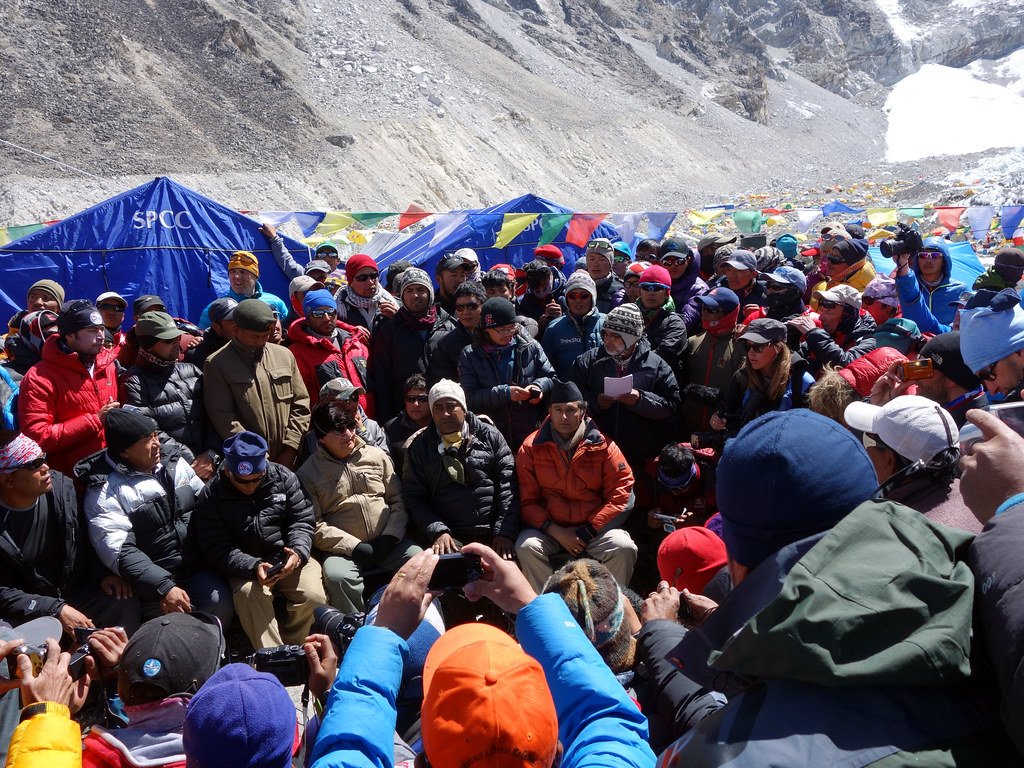
A crowd gathers at a camp at Everest photographing seated government officials. Prayer flags hang in the background.

Government officials assembled at Everest. Mark Horrell. CC BY-NC-SA 2.0

Everest has been dubbed “the world’s largest rubbish dump” due to the substantial waste accumulated over the decades. The Himalayan mountains are ecologically sensitive, and while the exact amount is unclear, thousands of tons of waste have been discarded on Everest. The mountain has also become a macabre resting place for deceased climbers. Roughly 200 bodies, many belonging to native Sherpa guides who died on the mountain, still remain on the path, and mountaineers must walk over them to reach the summit.

Get Involved:

Mount Everest Biogas Project aims to eliminate human waste at Everest, as well as convert waste into renewable energy (methane), which can be used to power local communities. Learn more about their work and donate here.

The Sagarmatha Pollution Control Committee (SPCC),founded by the local Sherpa people, aims to manage waste in the Khumbu Region. Learn more about their work here.


Agnes Moser Volland

Agnes is a student at UC Berkeley majoring in Interdisciplinary Studies and minoring in Creative Writing, with a research focus on road trip culture in America. She currently writes for BARE Magazine and Caravan Travel & Style Magazine. She is working on a novel that follows two sisters as they road trip down Highway 40, from California to Oklahoma. In the future, she hopes to pursue a career in journalism, publishing, or research.

4 of UNESCO’s Newly Named World Heritage Sites

Take a closer look at four of UNESCO's most important new World Heritage Sites.

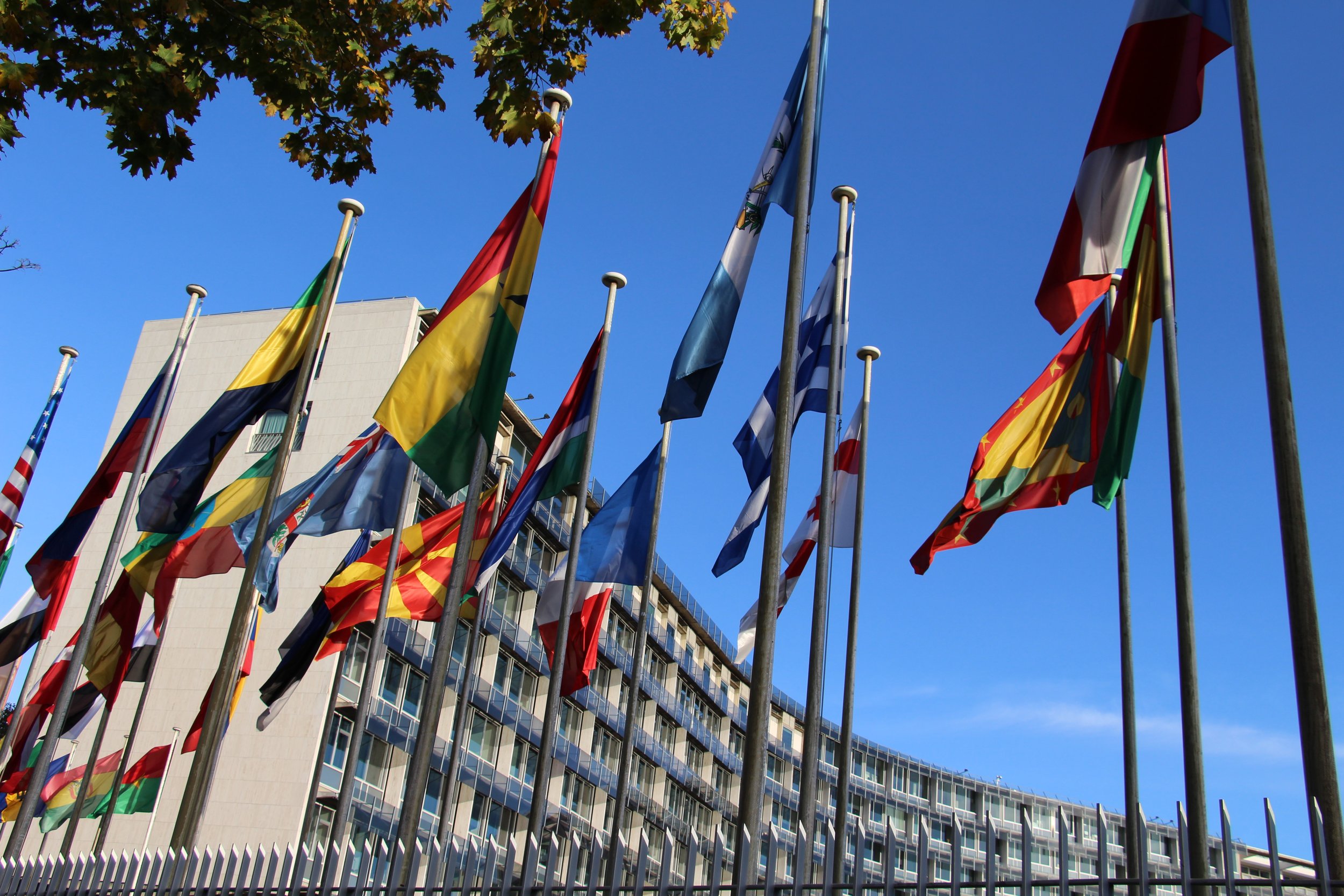
Large curved office building rises behind a fence with dozens of multiple nation's flags.

UNESCO building in Paris, France. Fred Romero. CC BY 2.0

The role of the United Nations Educational, Scientific, and Cultural Organization (UNESCO) is to contribute to peace and development around the world, a goal it has embraced through the establishment of numerous World Heritage sites. Located across the globe, these prestigious locations are hand-picked by the agency to retain their immense natural and/or cultural significance. Popular World Heritage sites include the Taj Mahal, the Great Barrier Reef, the Great Pyramid of Giza and the Serengeti National Park. Spanning across 168 countries, there are currently 1223 properties marked as UNESCO World Heritage sites. In alignment with the 1972 World Heritage Convention, UNESCO continues to hold annual meetings to decide what new locations they will adopt to their list. According to UNESCO, the Convention unites the importance of, “nature conservation and the preservation of cultural properties.” The World Heritage Committee’s selection process is centered around a set of policies referred to as the “Five C’s”: credibility, conservation, capacity-building, communication and communities. It is through the analysis of these characteristics that UNESCO establishes a yearly list of exceptional locations worthy of preservation for the continual appreciation of humanity. This year, the 46th session of the World Heritage Committee took place in New Delhi, India during the week of July 21. The session was live-streamed and recorded, providing full transparency to the public on the Committee’s decision to name 24 new World Heritage sites. Below is a closer look at a few of this year’s additions.

Nelson Mandela Legacy Sites, South Africa

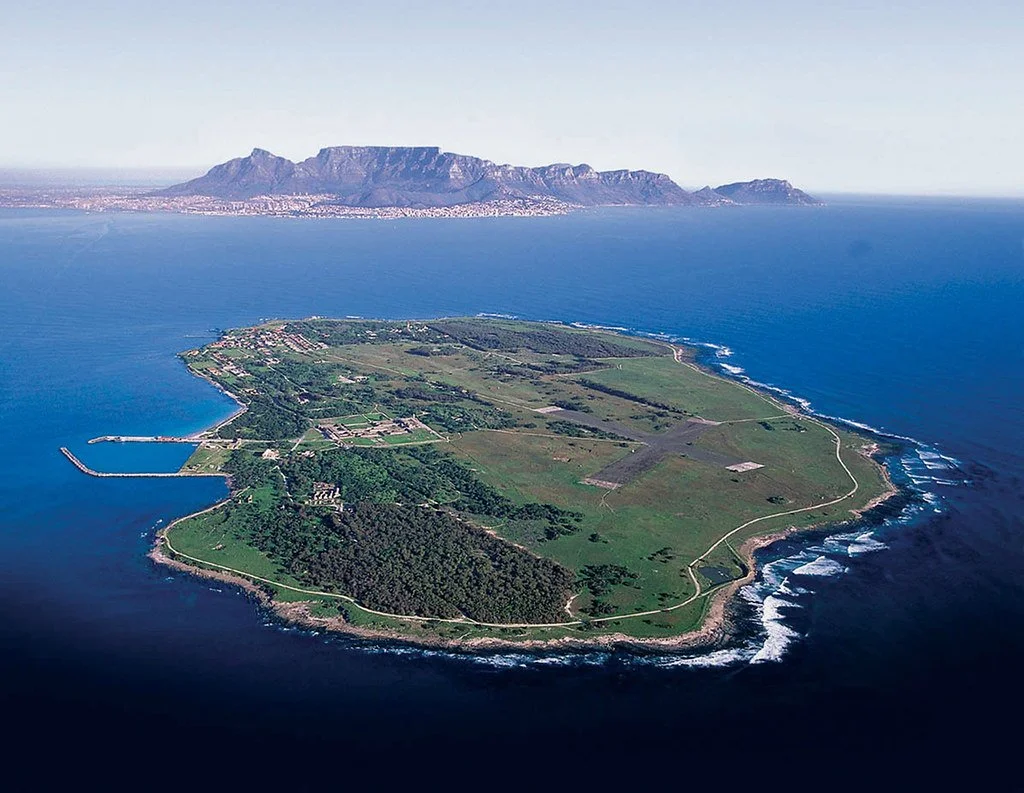
An aerial view of a circular, flat and green island. There is an air strip and small town on the island, with wooded areas scattered. View of Cape Town in the background.

Robben Island. South African Tourism. CC BY 2.0

Representing the “legacy of the South African struggle for human rights, liberation, and reconciliation”, the Nelson Mandela Legacy Sites were recently inducted into UNESCO’s list.  The Legacy Sites are broken into 14 parts, each place with a special significance. For example, the Sharpeville sites commemorate the massacre of 69 protestors of the Pass Laws which restricted the free movement of Black South Africans in 1952. Other spots include the Mqhekezweni Great Place and the Union Buildings in Pretoria, now the official location of South Africa’s government. 

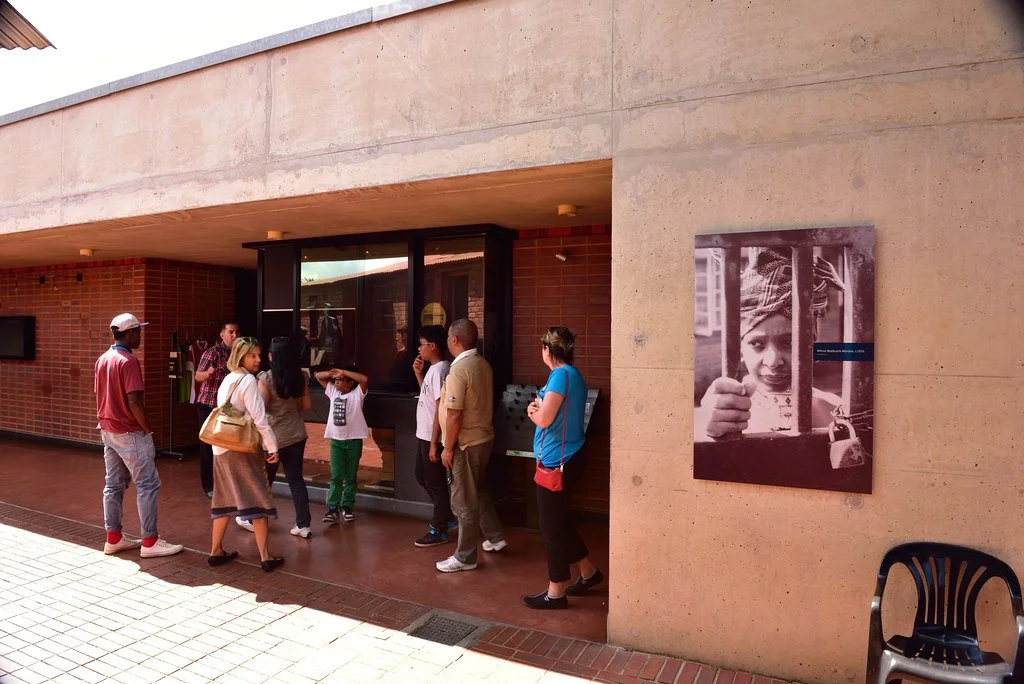
People waiting outside the doors to a museum. On the wall outside is a large portrait of a young girl looking through a window behind locked bars, holding on

Nelson Mandela Museum in Soweto, South African Tourism, CC By 2.0

Spanning across South Africa, visitors can visit anywhere from one to all fourteen sites. With an entry fee of about $9 per adult, the Apartheid Museum features interactive exhibits and personal stories detailing South Africa’s history. Robben Island, where Mandela was imprisoned for 18 years, offers guided water tours at $22 per person.

Charaideo Maidams, India

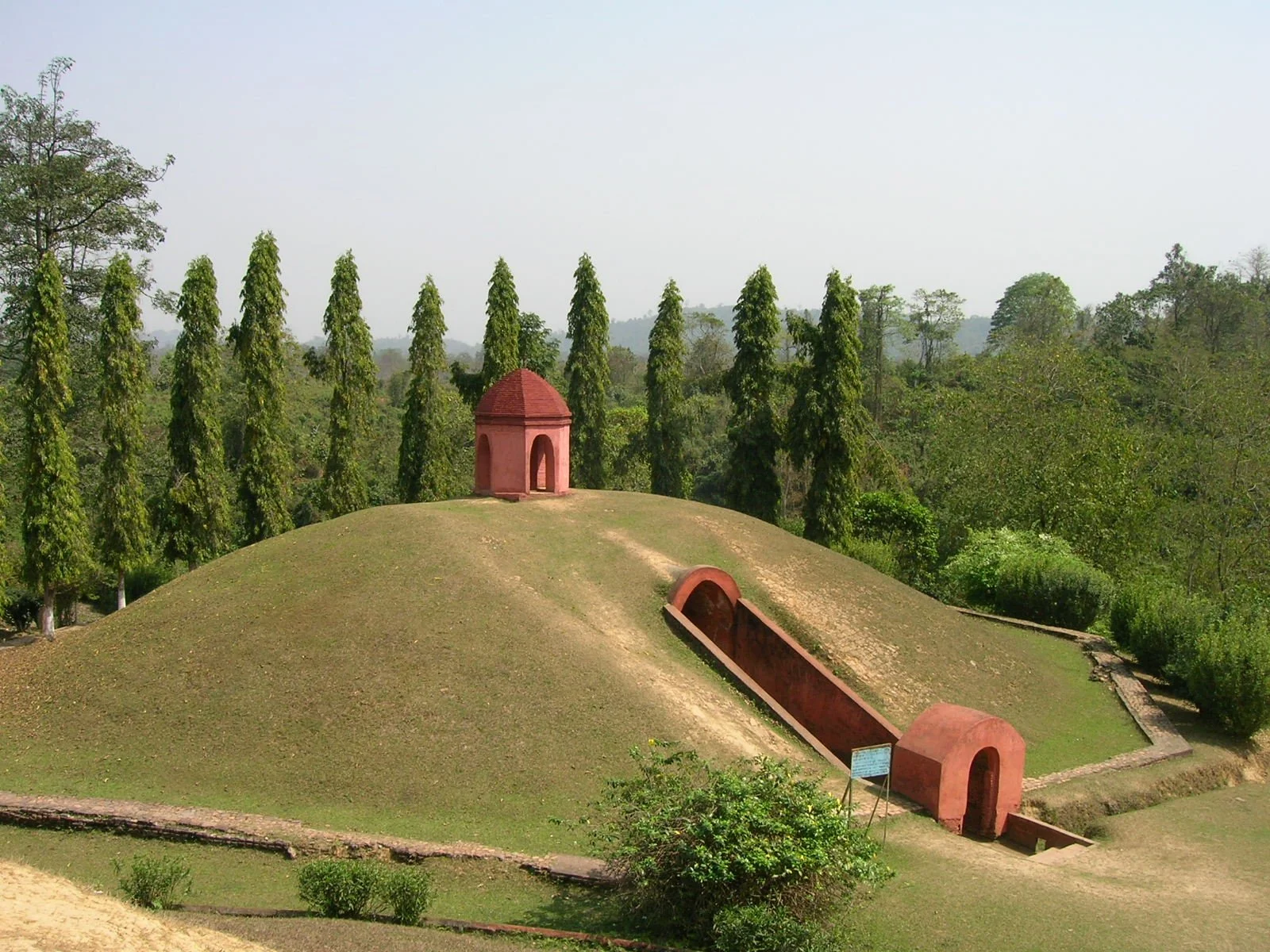
A grassy mound, with a red small building atop. Tunnel through the center, with its entrance under a red arch. Surrounding the mound is a moat and retaining wall, beyond that lies dense jungle.

Charaideo Maidam. Mozzworld. CC BY-SA 4.0

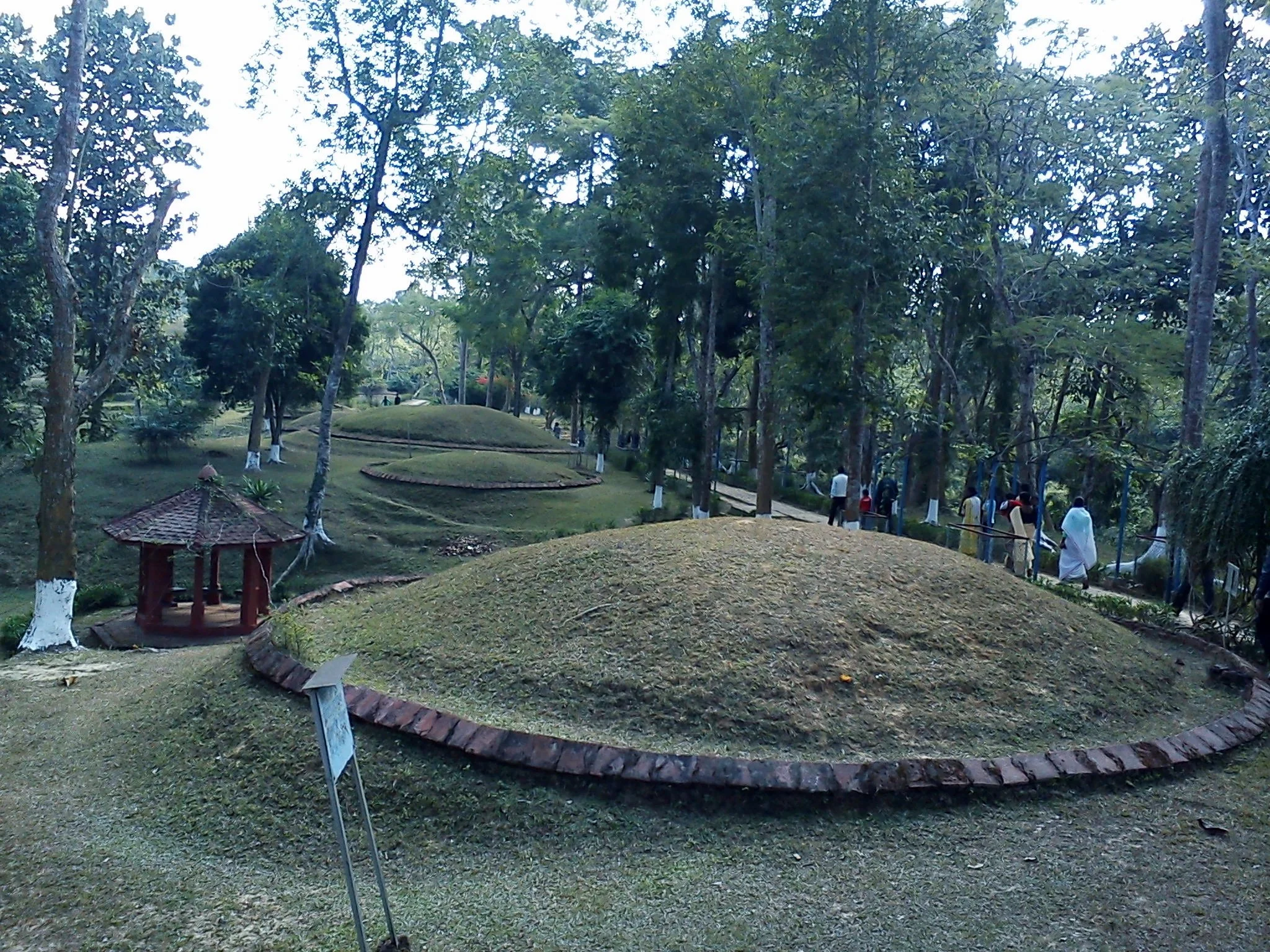
Created by the Ahoms, an ethnic group in Northern India that once possessed its own indigenous kingdom, “maidams” are large mounds built atop graves. Constructed over a “hollow vault” of earth, these “mounded burial grounds” served as burial grounds for Ahom royalty. This year, Assam’s Charaideo Maidam, a royal burial complex of approximately 90 maidams established over a period of 600 years, was recognized by UNESCO as a World Heritage Site. Spokespeople from the World Heritage Committee’s advisory board ICOMOS proclaimed that, “The [maidams] are an exceptional example of an Ahom necropolis that represents funeral traditions and associated beliefs in a tangible way.” In addition to royals and significant members of Ahom society, maidams may also contain food, horses, elephants, and sometimes the bodies of queens and servants.

Four smaller grassy mounds lined together, each encircled by a brick border. People walk past on a walkway to the side

Group of four smaller maidams, Dhruba Jyoti Deka, CC BY-SA 3.0

The Charaideo Maidams’ visiting hours are between 9:30 AM to 5:00 PM. According to the Directorate of Archaeology in the Government of Assam, a full tour of the site takes approximately two and half hours. Visitors can purchase entry tickets online ahead of time or on-site for about $3. With public transportation, the Charaideo Maidams is  approximately an hour away from Sivasagar, the closest major city.

Badain Jaran Desert, China

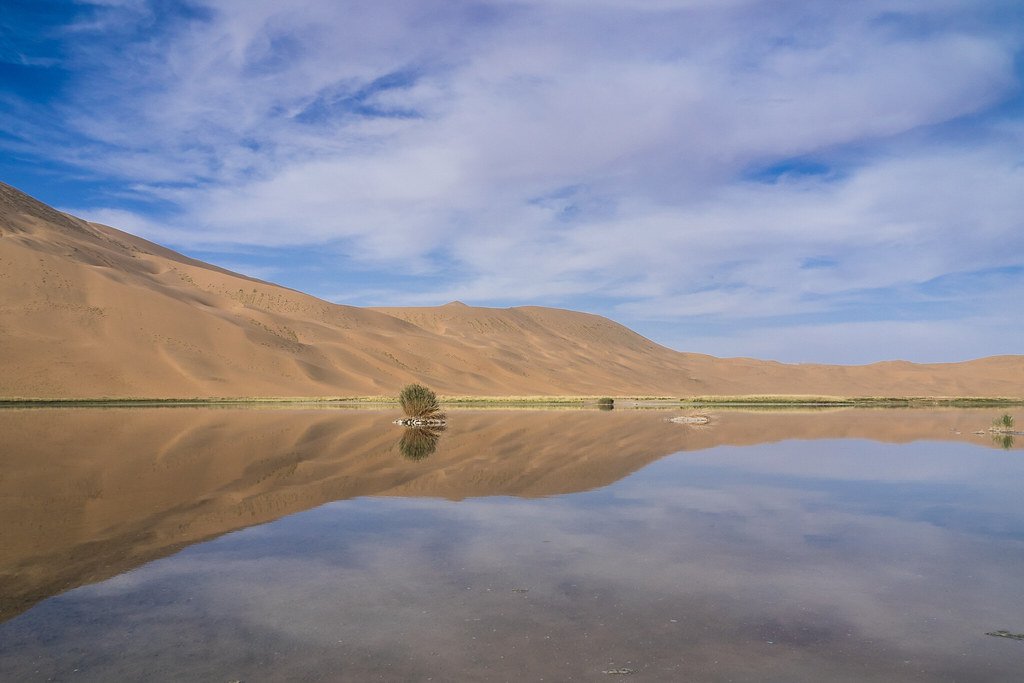
Desert dunes are reflected into a crystal clear large pond.

Badain Jaran Desert. Rita Willaert. CC BY-NC-SA 2.0

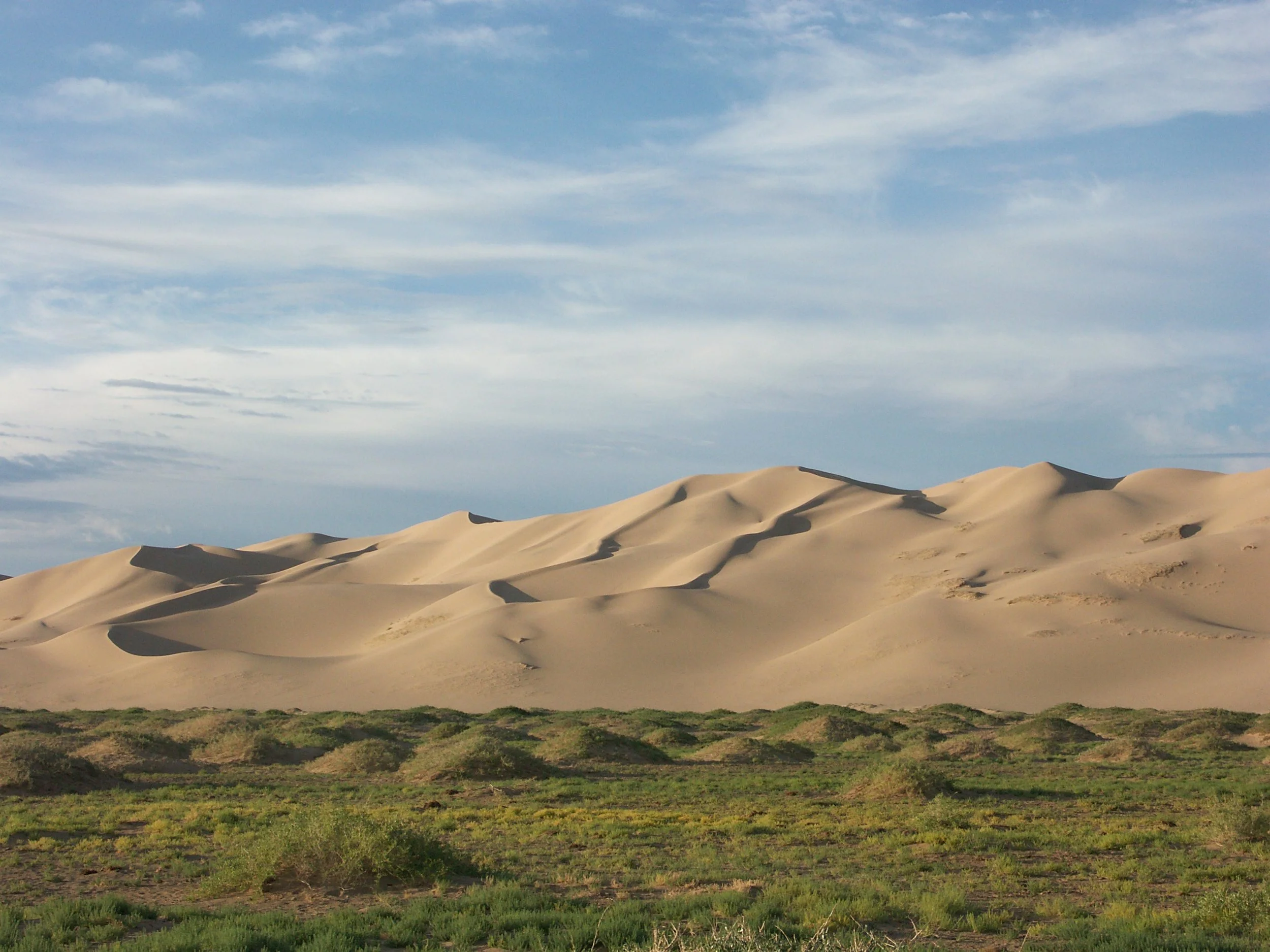
The Badain Jaran Desert can be found in the Alashan Plateau of northwestern China’s desert region. According to UNESCO, “the property stands out with its high density of mega-dunes, intersected with interdunal lakes.” The site’s unique geologic features, “include the world’s tallest, stabilized sand mega-dune (relative relief of 460 meters)’ and the largest expanse of “singing sands” (so-called due to resonance caused by wind moving dry and loose sand). China Discovery classifies the unique terrain of the desert into “five wonders”: the sandy peaks, singing dunes, colorful lakes, clear springs and an ancient temple. At just over 30,000 square miles, the site is the third largest desert in China. 

Dunes meet a grassy and shrubby meadow.

Dunes in Badain Jaran Desert.. Zhoarby. CC BY-SA 3.0

The desert can only be accessed by jeep, with the Zhangye Travel Guide warning travelers of the local agency's monopoly on desert travel The desert features specific tourist attractions, including the Pearl Lake of the Badain Jaran Desert, the Yinderitu (A Magic Spring) and Bilutu Dune, the world’s highest sand dune. The starting fee for entrance into the Badain Jaran Desert is about $30 and $11 for the Badain Lake, not accounting for additional fees for accommodation and guided desert tours.

Flow Country, United Kingdom

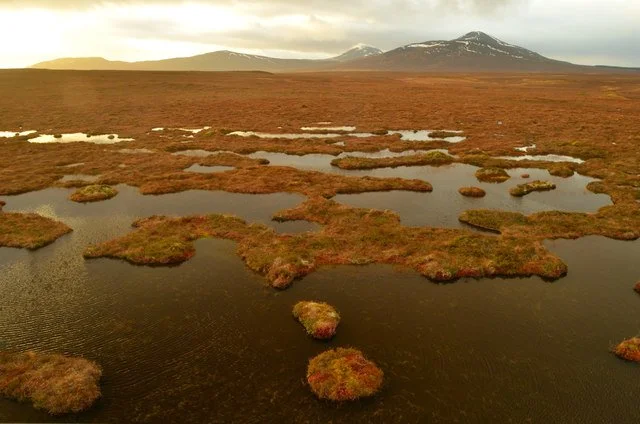
Looking down at a bog, with vegetation a mix of green and browns, and some lightly snowy hills looming in the background.

View of peatlands in the Flow Country. Andrew Tryon. CC BY-SA 2.0

The first peatlands to be recognized as a World Heritage Site, the Flow Country in Scotland is a massive bog storing about 400 million tons of carbon. A “globally rare” habitat, the Flow Country is immensely environmentally significant. In the Flow Country, carbon is trapped and stored in dead vegetation, preventing it from being released into the atmosphere and causing further environmental harm. Professor Mike Robinsons on the Culture at United Kingdom National Commission for UNESCO highlighted the importance of the site’s environmental impact in its official naming: “World Heritage status recognises the global importance of the Flow Country and its peat bogs, not only as important ecosystem for wildlife, but also through their carbon storage, as a critical defense against the impact of climate change.” 

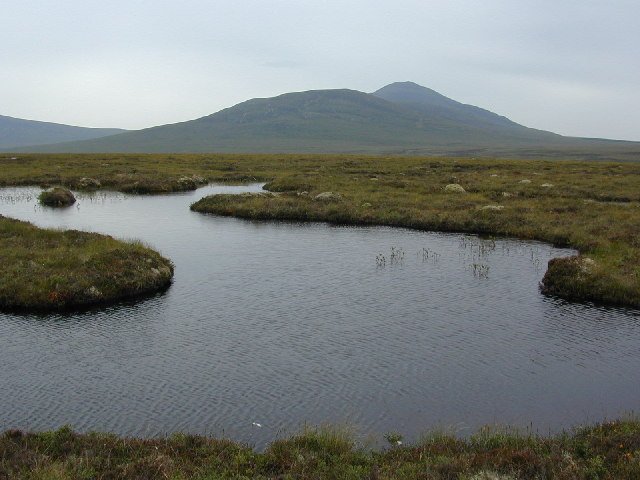
A pond among a marsh, with a rolling green hill behind on a foggy day.

Closer view of a peat pool. Steve Neal. CC BY-SA 2.0

In the Flow Country, there are numerous experiences for interested visitors. The Forsinard Flows Visitor Center features exhibitions and educational films about the area. Nearby the center is the Lochan Dub Trail, a one-mile loop weaving through peat pools and sections of the blanket bog. A longer trail option would be the Forsinain Trail four miles north of the Forsinard train station. For those hoping for a less outdoorsy visit, the Far North Railway Line travels through the Flow Country as well.


Aanya Panyadahundi

Aanya Panyadahundi Aanya is a student at the University of Michigan studying sociology and journalism on a pre-law path. She loves to travel the world whenever she can, always eager to learn more about the different cultures and societies around her. In her free time, she likes to play the violin, ski, and listen to podcasts.

Zambian Women Fight Poaching with Jewelry

Mulberry Mongoose, a Zambian woman-run jewelry shop, turns poaching snares into art. 

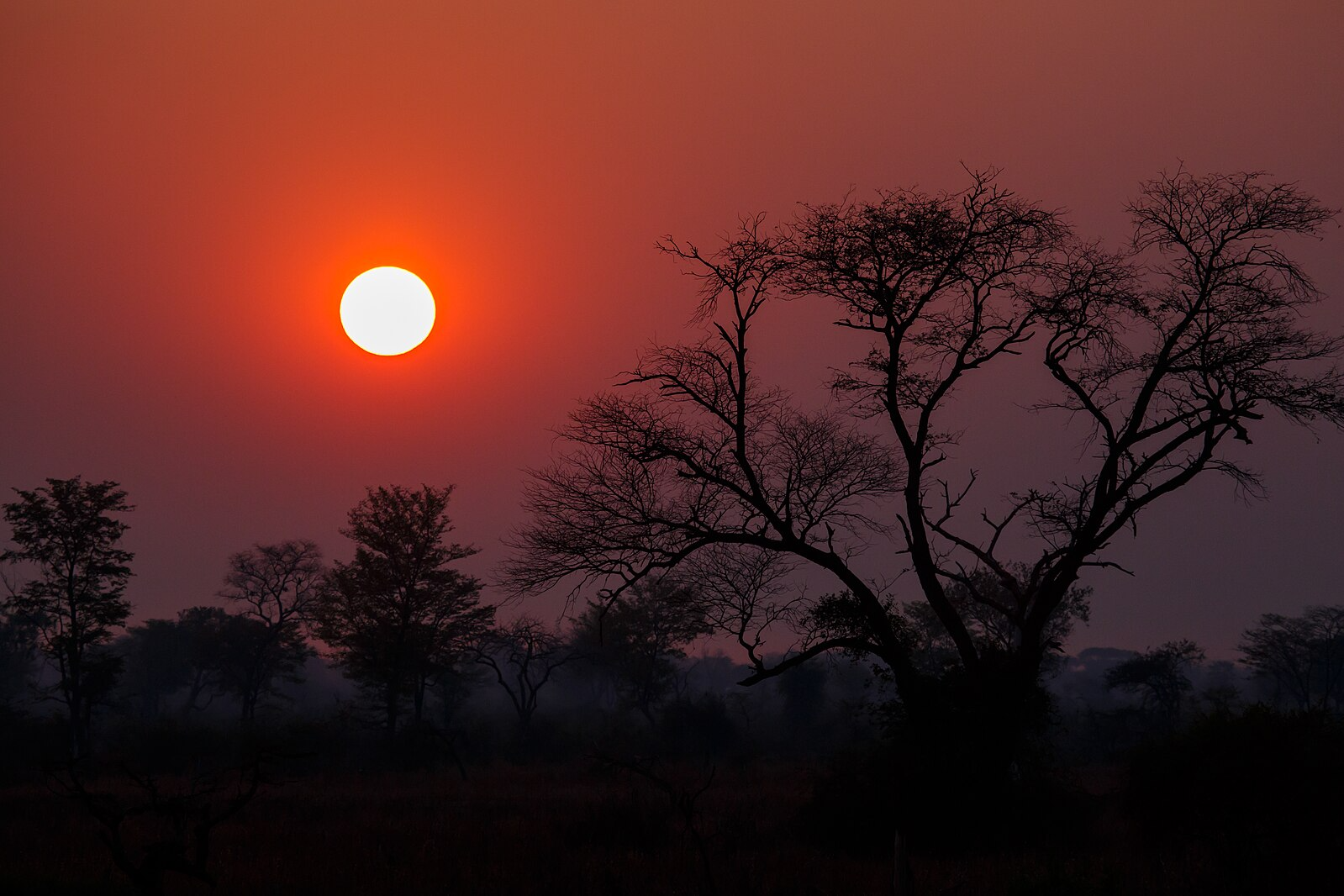
A red sun setting over silhouetted trees.

South Luangwa National Park. Thomas Fuhrmann. CC BY-SA 4.0

Located just 15 minutes from the South Luangwa National Park's main gate in Zambia, Mulberry Mongoose is not just a jewelry brand; it's a movement of conservation, empowerment and creativity. The enterprise's business model is to transform poachers' snare wires into intricate jewelry. The workshop team is composed of 80% women and 100% locals born and raised in Zambia, and has become famous for its innovative methods of production. So far the company has raised over $150,000 for conservation. The story of Mulberry Mongoose is a testament to the power of turning adversity into art, with the motto of "creating beauty from brutality." 

A close-up display of a statement silver necklace, with metal tabs linked on the chain, fanning out in two sizes.

Original Snare Necklace. Courtesy of Mulberry Mongoose.

The shop was founded by the English entrepreneur Kate Wilson, who married Dave, a native of Zimbabwe. Before meeting her husband she had never stepped foot on African soil, but given his passion for the African bush, she ended up moving with him to South Luangwa. It was there that she realized her perspective of Africa was fundamentally flawed. Inspired by her own Zambia journey of self-actualization and realization, she decided to set up an ethical craft business that reflected her core values of growth, discipline, care, transparency and joyful bravery

South Luangwa National Park is famed for its wildlife, having one of the highest concentrations of leopards in Africa. Like many parks in Africa, it struggles to protect its wildlife against poachers. Snare traps are an especially brutal method of hunting used by illegal wildlife poachers. They are the biggest killer of iconic wildlife in Southern Africa, killing tens of thousands of animals each year, including elephants, lions, leopards, giraffes and wild dogs. The traps are set by areas of high wildlife movement such as watering holes to catch antelopes, which are consumed by locals mainly for purpose of selling it on the illegal bushmeat trade. Unfortunately, snare traps are dreadful tools of destruction, they also do not discriminate, and often other animals can trigger the snare, leading to a slow and painful death by strangulation, dislocation, or near decapitation Without veterinary intervention, the animals are certain to perish.

Snare wire traps are collected by rangers and stored in containers across the continent. Mulberry Mongoose has been granted special permission to access the containers. Its team carefully extracts, untangles and cuts the wire into strips, which are then transformed into the materials they use to create their signature jewelry, a process requiring incredible strength and precision. This transformation not only prevents the wires from causing further harm but also turns them into symbols of hope and resilience.

A model showcasing a metal hollow circle linked necklace, with pearls inside each circle.

Snare Chain Necklace with White Pearl. Courtesy of Mulberry Mongoose. 

The team worked with a Mfuwe carpenter to train the shop’s female artisans to work with the difficult materials. Grace Mwanza, one of the artisans, told National Geographic how the skills she learned at her job enabled her to build her own house. “The process requires incredible strength,” said Kate Wilson, the business’ founder. “We course through nearly 5 steel drill bits per week!” 

The project supports conservation efforts as well as local communities. Mulberry Mongoose gift bags are made with colorful chitenge material bought from businesswomen and turned into beautiful gift pouches by Mfuwe tailors. Its artisans use unique materials bought from local entrepreneurs, such as hand-carved wooden beads, seeds, vintage coins, and farmers’ feathers to ensure that their designs are authentically African and benefit their rural communities, while also showcasing the unique beauty of the African bush and the dexterity and ingenuity of African artisans. A portion of the proceeds from their jewelry sales go to NGOs dedicated to protecting wildlife and supporting rangers. The shop has removed 27,000 snare traps from circulation and transformed over 164,000 feet of snare wire into works of art.

A close-up of a silver linked bracelet, made with pieces of vegetable ivory and metal.

Rhino Conservation Snare & Vegetable Ivory Bracelet. Courtesy of Mulberry Mongoose.

The Mulberry Mongoose team is renowned for its passion and hospitality. You can drop into their "Shop Less Ordinary: between 7:00 a.m. and 4:30 p.m. any day of the week. Visitors will receive a warm welcome and a free guided tour of the team's purpose-built workshop and learn their story of conservation, female empowerment, rural African employment and ingenuity. You can even try coiling or hammering poachers’ snare wire yourself! Their shop is a beautiful space with an extraordinary variety of designs, worn by the likes of supermodel Doutzen Kroes, businessman Richard Branson, former president Bill Clinton, and former Secretary of State Hillary Clinton.

“On a typical day, a package will leave our shop for the Mfuwe airport, where the truck drives by a watering hole for hippopotamus and a natural basin where giraffes and elephants meet,” said Wilson. “It may take a bit longer to receive our jewelry, but I want to take people on the journey of why we do what we do—to conserve the species of this pristine wilderness we call home.”

TO GET INVOLVED

Mulberry Mongoose: Visit the website to learn more about Mulberry Mongoose’s team and story and to shop online. If you are lucky enough to travel to the South Luangwa you can visit the shop itself to learn firsthand from the passionate members. Their site also includes an online shop, with the proceeds benefiting the local community and conservation efforts. They ship orders from their remote workshop anywhere in the world in under 14 days. They also stock ethical retail businesses including conservation shops and safari boutiques. Last you can follow them on Instagram or Facebook as Mulberry Mongoose.

Conservation South Luangwa: This organization’s mission is to work with community and conservation partners in the protection of the wildlife and habitats of the South Luangwa ecosystem. Their goal is to ensure the long-term survival of wildlife and habitats in South Luangwa under the custodianship of the Zambian people. Their site includes information about getting involved and donating.

Zambian Carnivore Programme: This organization seeks to conserve Zambia’s large carnivores and the ecosystems they reside in through science, action and strengthening local leadership. ZCP hopes to create restored and thriving ecosystems that are collaboratively conserved by local communities, scientists and policy-makers through evidence-based approaches. Its website includes information about getting involved and donating.

Conservation Lower Zambezi: Conservation Lower Zambezi is an NGO committed to the conservation of wildlife and the environment in Lower Zambezi, Zambia, and was founded in 1994 to provide support to the Department of National Parks and Wildlife and help it fulfill its mandate to mitigate threats to wildlife from poaching in the region. The organization's website has information about getting involved and donating.


Rebecca Pitcairn

Rebecca studies Italian Language and Literature, Classical Civilizations, and English Writing at the University of Pittsburgh. She hopes to one day attain a PhD in Classical Archeology. She is passionate about feminism and climate justice. She enjoys reading, playing the lyre, and longboarding in her free time. 

Hot Spots: 6 Volcanic Adventures Around the Globe

Volcanoes are spectacular natural phenomena, drawing millions of adventurers from far and wide hoping to catch a glimpse of their awesome power.

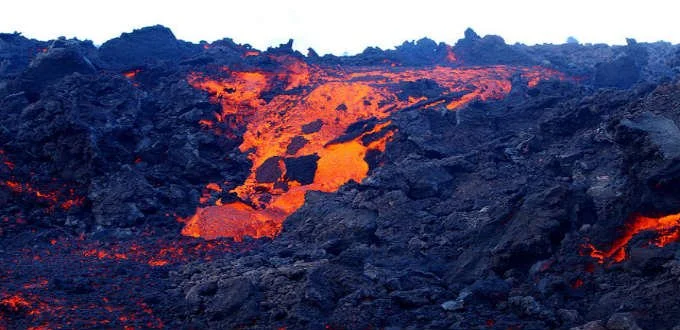
Bright lava flowing among a pile of black ash and rock

Lava flowing from a volcano in Iceland. Global Panorama. CC BY-SA 2.0

Volcanic destinations around the world have drawn visitors for centuries, and despite the risks, volcanic tourism has been on the rise since the COVID-19 pandemic. While destinations like Hawaii, Iceland and Italy often take center stage in discussions of volcanic tourism, there are many more incredible destinations around the world.

1. Arenal Volcano, Costa Rica

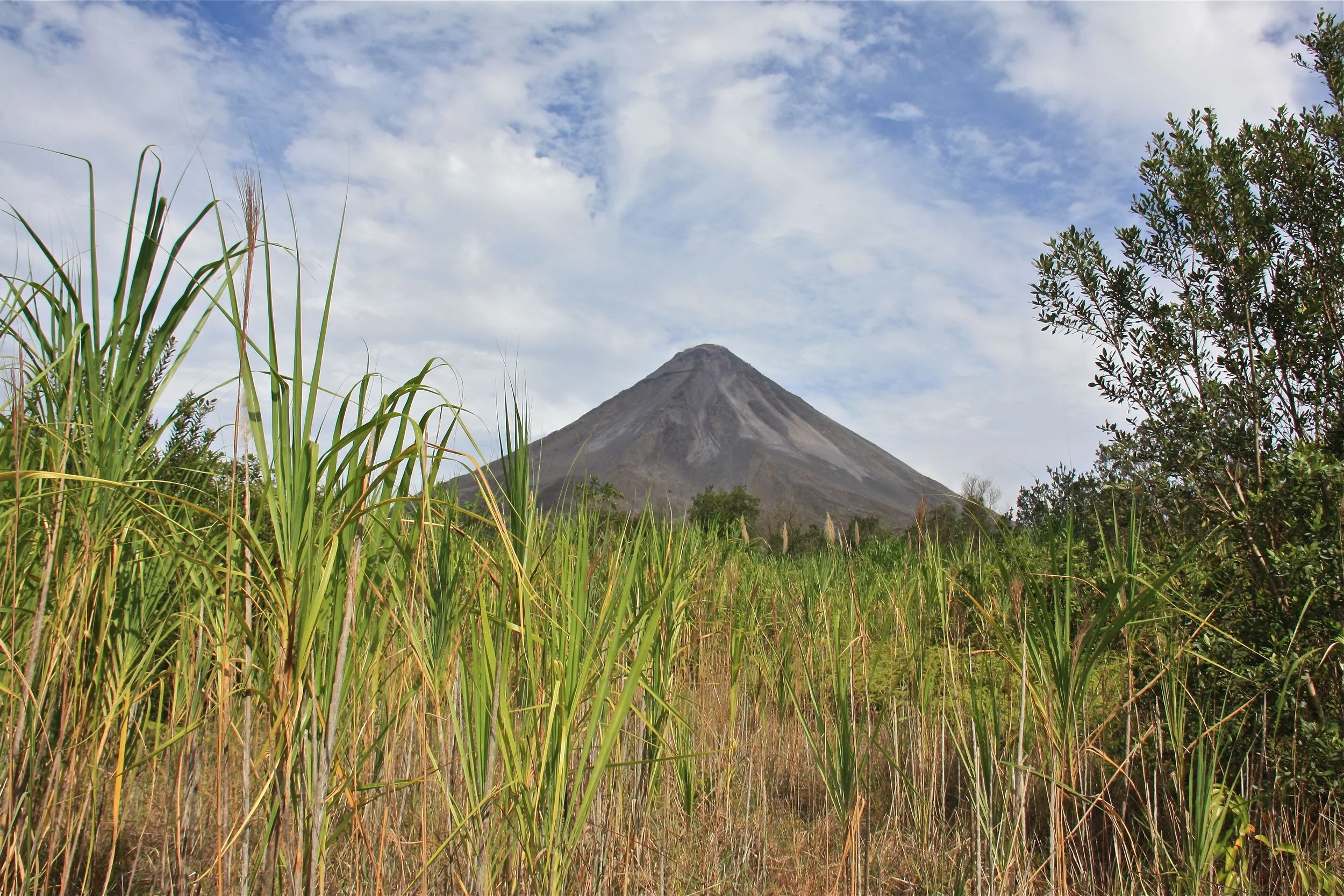
Looking up at a tall volcano standing in the background of a grassy meadow

Arenal Volcano, Costa Rica. smilla4. CC BY-NC 2.0

The Arenal Volcano towers over the northern lowlands of Costa Rica, offering incredible sights and activities to travelers. Until 2010, the Arenal Volcano was a destination for thrill-seekers hoping to witness eruptions and lava flow, although it has since fallen into a resting phase. 

While the recent dormancy has been disappointing for visitors hoping to see lava, the Arenal Volcano continues to present engaging activities and spectacular views. While visiting the area, adventurers can hike, relax in the hot springs, and spend time along the numerous lakes and rivers.

2. Mount Batur, Indonesia

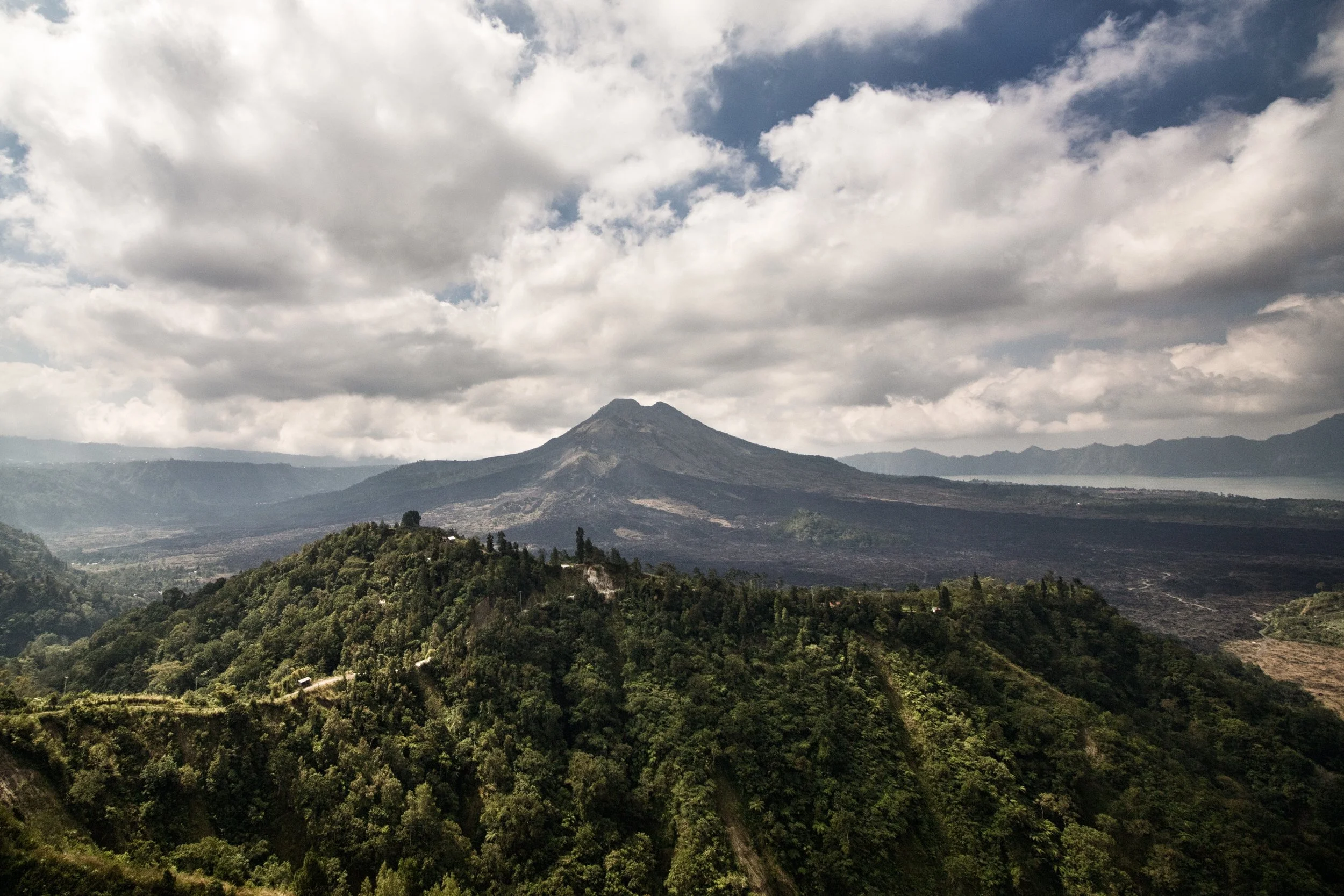
A tall volcano stands tall in a mountainous jungle area.

Mount Batur, Indonesia. _paVan_. CC BY 2.0

In Bali's Kintamani province stands Mount Batur, an active volcano renowned for hiking activities. In order to hike Mount Batur, travelers are strongly advised to hire a tour guide through the official Association Of Mount Batur Trekking Guides. The trip from the base to the summit can take one to two hours.

Sunrise is the most popular time to hike Mount Batur. As visitors gather on the summit to soak up the sunrise, vendors can be found using volcanic steam to boil eggs and cook noodles for hungry travelers. Along the road from Mount Batur to the Batur Caldera Lake, adventurers can visit the Ulun Danu Batur temple and several hot springs.

3. Mount Etna, Italy

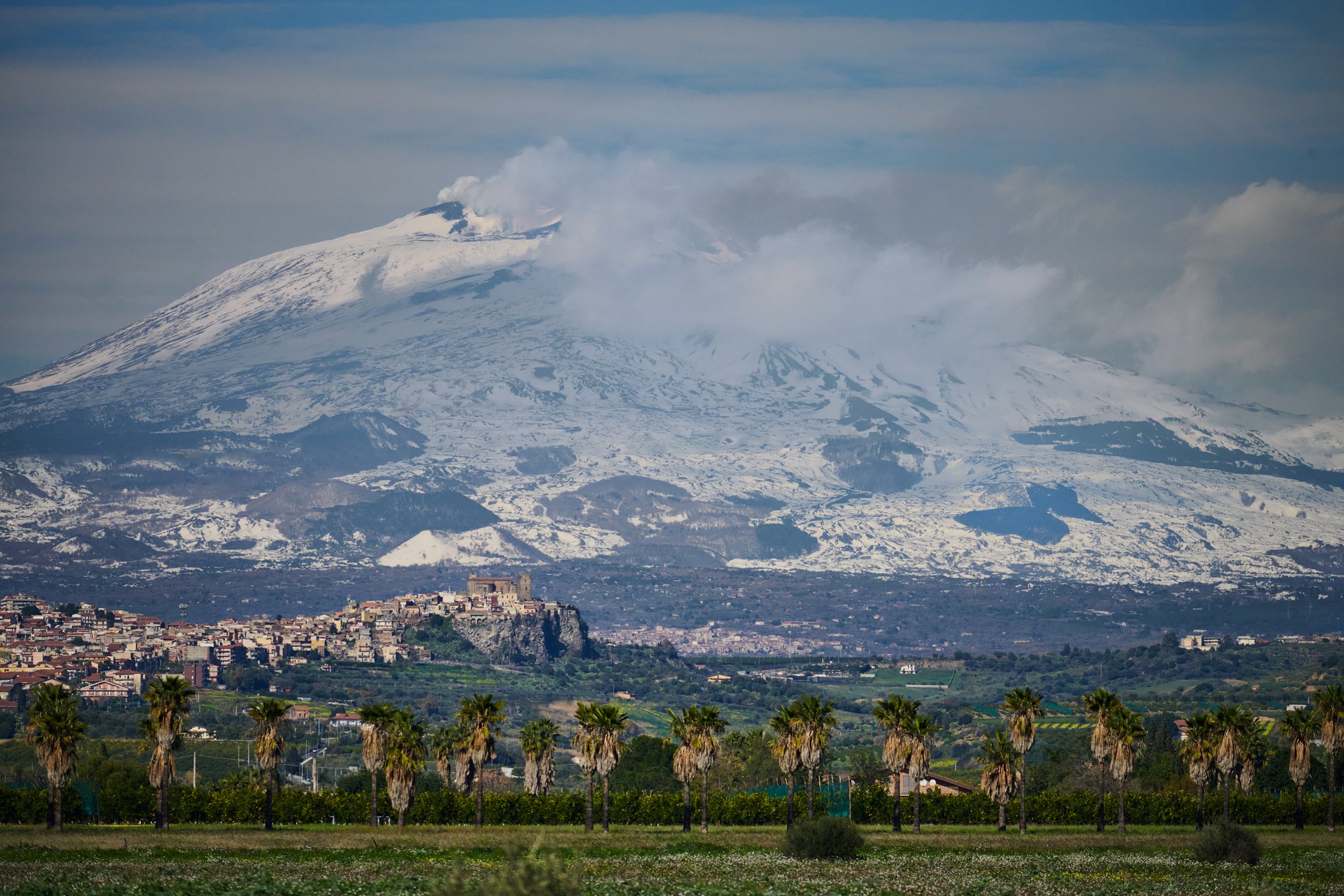
A snowy volcano, with its top hiding behind clouds and smoke, stands tall above a small village and grassy rolling hills

Mount Etna, Italy. Naval S. CC BY-NC 2.0

As one of the world’s tallest and most active volcanoes and the tallest volcano in Europe, Mount Etna has long been a hot spot for travelers visiting Sicily. Mount Etna first erupted 570,000 years ago, making it a gem for geological historians and interested travelers alike.

Travelers can find guided tours that depart from several locations including Taormina, Catania and Messina. After arriving at Mount Etna, tours begin with a cable car ride that reaches almost ten thousand feet. From there, travelers can choose to proceed in a tour by car or on foot. For hikers, the recommended time to visit is March through September.

4. Piton de la Fournaise, Reunion Island, France 

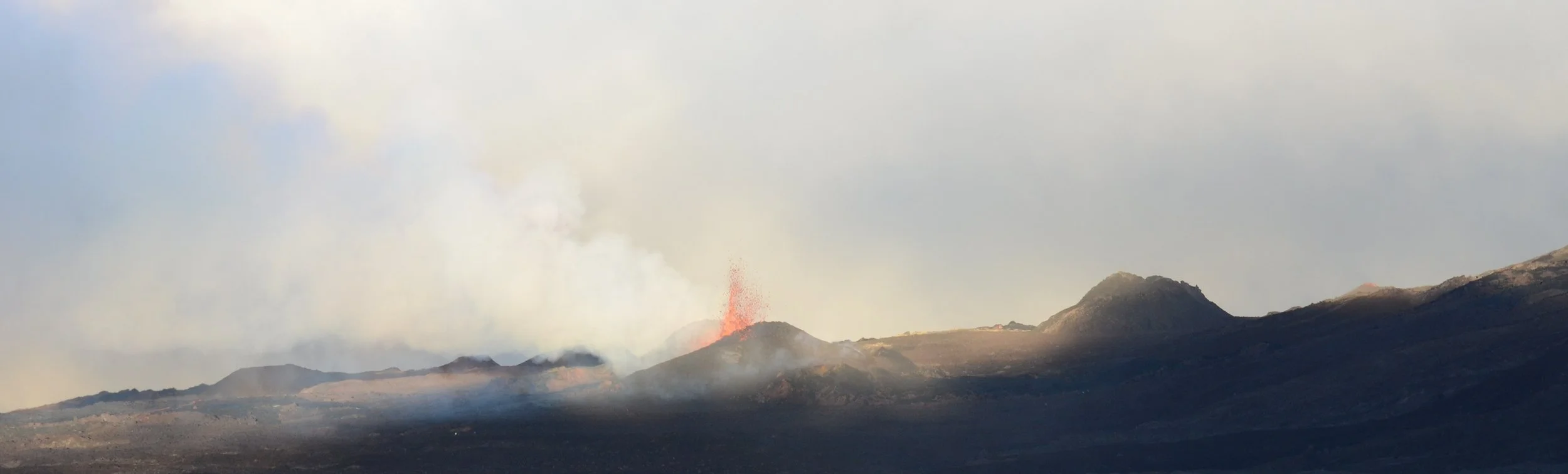
Cropped image of lava and ash spewing up from a volcano top into the air

Piton de la Fournaise, France. Flickr @BOENE75. CC BY-SA 2.0

Located on Reunion Island in the Indian Ocean, the Piton de la Fournaise is an iconic volcano and Reunion’s most popular attraction. Despite its status as an active volcano, the Piton de la Fournaise is open to everyone regardless of age and draws about 400,000 visitors every year.

Travelers can venture from the coast to the summit on foot or by car, and there are even lava tunnels open for exploration. During a three-and-a-half-hour tour of the lava tunnels, travelers can witness the halls and galleries created by a lava flow in 2004. To learn about the science and history of Piton de la Fournaise, travelers can also visit the Cite du Volcan Museum. 

5. Stromboli, Italy

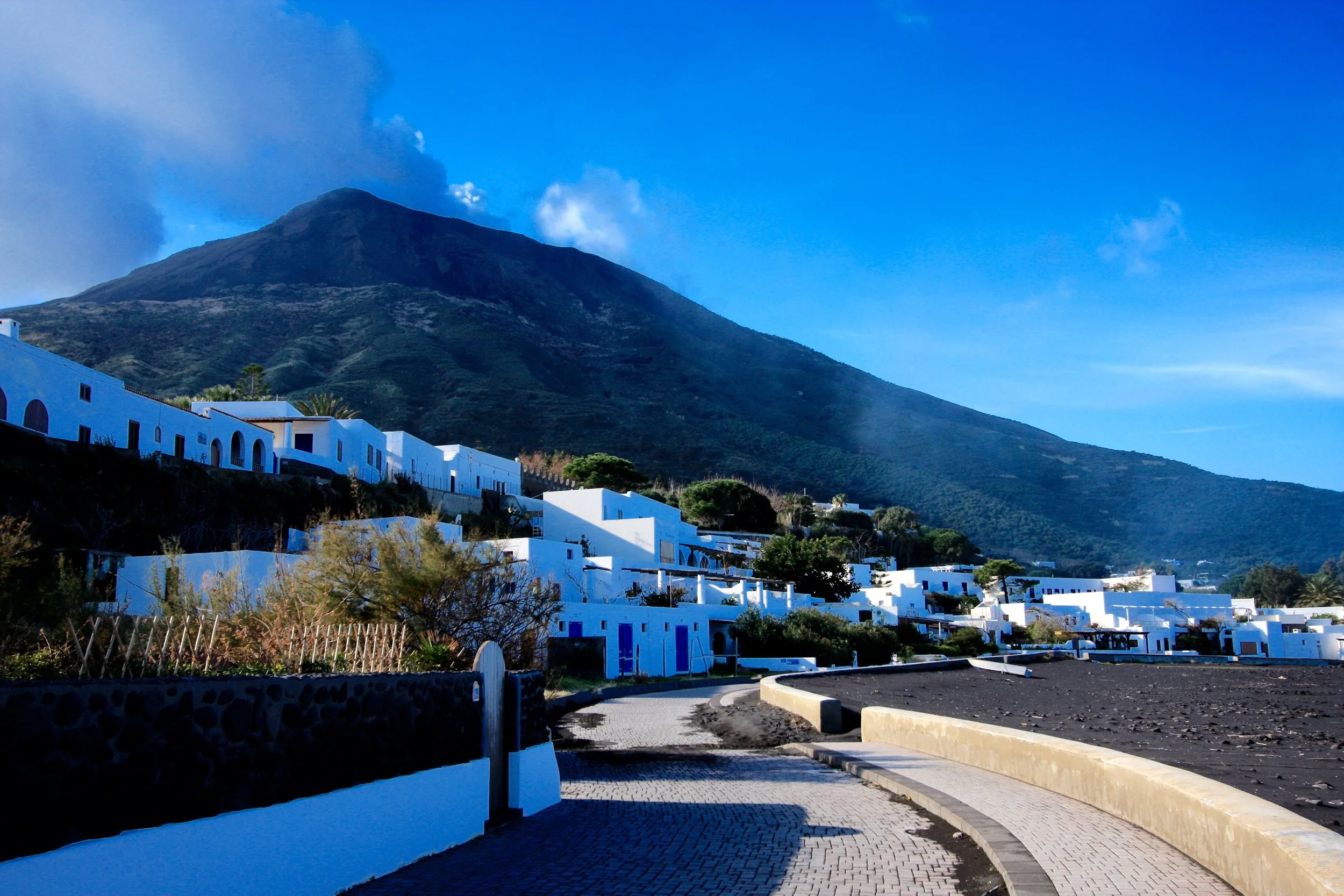
A green volcano looks over a hillside Italian town with matching white buildings.

Stromboli Village, Italy. Johannes Zielcke. CC BY-NC-ND 2.0

One of seven volcanic islands in the Aeolian Archipelago north of Sicily, Stromboli is home to one of the most active volcanoes in the world. The volcano, which locals call Iddu, has left on-lookers in awe for thousands of years. Stromboli is full of breathtaking contrasts, from the white houses surrounded by black sand beaches to the lava against the night sky.

Travelers can take guided tours by boat or on foot. Booking a guided tour is essential considering Stromboli is very active and involves risk. Despite the active status of the volcano, hundreds of visitors are drawn to view the lava glow during sunset. 

6. Thrihnukagigur Volcano, Iceland 

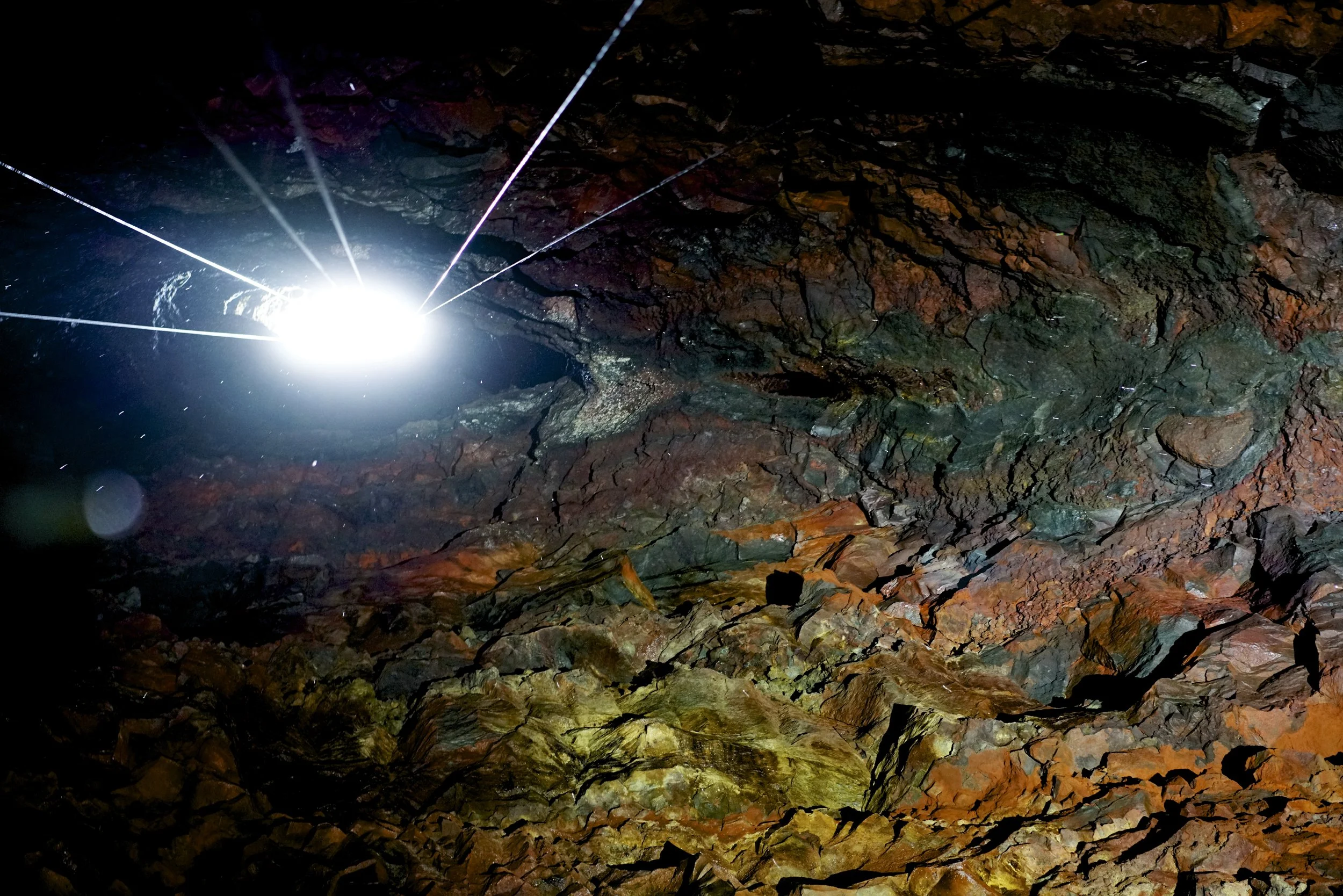
Inside of a lava chamber with red and black striated rocks and a bright light glaring from the  center.

Inside the Thrihnukagigur Volcano lava chamber. Miki Jourdan. CC BY-NC-ND 2.0

At the Thrihnukagigur Volcano in Iceland, adventurous travelers can visit the only accessible lava chamber on the planet. Translated to “Three Peaks Crater”, Thrihnukagigur is a low-risk destination that has been dormant for over 4,000 years. The three peaks of Thrihnukagigur formed from three separate eruptions thousands of years ago. 

The crater of the Thrihnukagigur Volcano is so deep the Statue of Liberty could fit inside. The bottom of the crater dates back to 30 to 40 thousand years ago, approximately the beginning of modern humankind. Since the volcano went dormant, the lava chamber at the heart of the volcano emptied, allowing visitors to glimpse this rare geologic gem.


Madison Paulus

Madison is a student at George Washington University studying international affairs, journalism, mass communication, and Arabic. Born and raised in Seattle, Washington, Madison grew up in a creative, open-minded environment. With passions for human rights and social justice, Madison uses her writing skills to educate and advocate. In the future, Madison hopes to pursue a career in science communication or travel journalism.

5 Must-Visit Speakeasies Across the Globe

Inspired by the American Prohibition era, speakeasies exist in the most unconventional places today.

Black and white image of four men sitting on bags of confiscated liquor bottles in a house pose

Liquor raid by sheriff’s department circa 1925. Gleason W. Romer. CC0

Prohibition was a result of the 18th amendment of the U.S. Constitution in 1919, which stated that, “The manufacture, sale, or transportation of intoxicating liquors within, the importation thereof into, or the exportation thereof from the United States and all territory subject to the jurisdiction thereof for beverage purposes is hereby prohibited,” within a years time. The amendment marked a political move that brought dismay to many citizens. Daniel Okrent, author of "Last Call: The Rise and Fall of Prohibition," argues that, “Prohibition became the same sort of political football that people on either side would use trying to struggle to get it towards their goal, which was control of the country," with politicians using the ban and the controversies around it to push other agendas.

Although Prohibition was mainly an American phenomenon, many countries around the world have made, or are currently making, attempts to limit alcohol consumption. Currently, Nordic countries concerned with their citizens’ alcohol intake are resorting to alcohol monopolies, marketing bans and higher taxation to combat it. Japan also struggles with alcoholism, with 60% of alcoholics being businessmen that drink socially to help their careers. With alcohol consumption quadrupling in Japan since 1960, private treatment centers and halfway houses have been popping up to combat the issue.

One of the most recognizable institutions of the Prohibition era was the speakeasies. A speakeasy was a place where alcohol was illegally sold, usually underground or at least out of view due to the danger posed to workers, owners and patrons. Although the 18th amendment was repealed in 1933, speakeasies still exist throughout the United States and the world today. Listed below are five notable and currently operating speakeasies from various major cities.

Evans and Peel Detective Agency 

London, England

Bartop and Evans and Peel. Jan Mark Holzer. CC By 2.0.

Located in Chelsea, Evans and Peel is a detective-themed speakeasy. Appointments are booked through the company's website, which tells prospective visitors, “We’re Evans & Peel, a highly renowned Detective duo who operate from our hidden Agency in Chelsea, London. Go beyond our facade and discover our famous secret.” People are given the option to customize their experience, sending the detective agency information about the “case” they wish to consult on. To enter the bar, customers have to ring a buzzer to enter a fake detective’s office and stay in character, explaining that they have, “an appointment with the detective.” They are then guided down a staircase to consult with the detective. Emily Gray from "The Handbook"  recalls that, “The Agatha Christie fan that I am, I went into a long story about losing a very expensive earring that had been stolen from a jeweler in the 1920’s (apparently most people say they’ve just lost their cat).” Evans and Peel's drink menu is also outlaw themed, with most of its special cocktails based on some of the biggest real and fictional superstar criminals like Thomas “Tommy” Shelby, Bill McCoy and Al Capone. The "agency" claims to make the “World’s Best Old Fashioned.”

‘Al Capone’ themed drink on the menu. Evans and Peel.

Located at: 310c Earls Court Road, London, SW5 9BA, England

Bank Bar 

Manila, Philippines

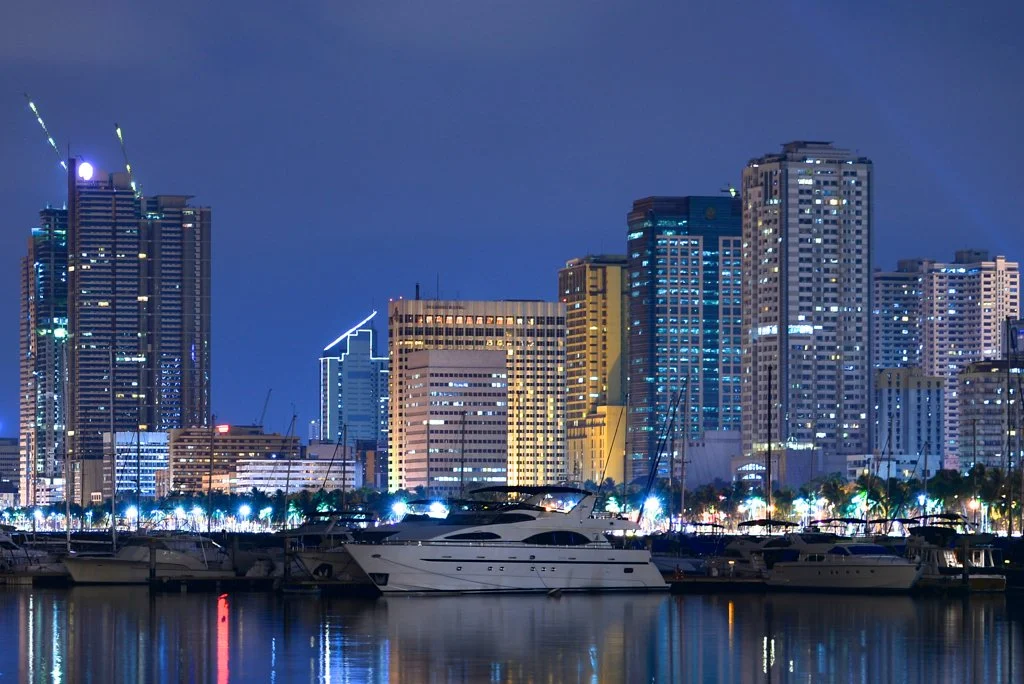
City skyline at night, with skyscrapers lit up in the background and small boats in the port.

Manila skyline at night. Thomas Yie. CC BY 2.0

In keeping with its name, the Bank Bar in Metro Manila's Bonifacio Global City has set up shop in the RBCB Savings Bank Corporate Center. A bouncer is waiting inside, next to a small door which opens into a fake stockroom that patrons walk through to enter the bar. Once in, there is a calming and luxurious ambiance. Erica Jahn notes in her review that, “The velvet sofa and candles on the marble table make the place attractive and intimate.” The bar advertises its own drinks drinks as including, “ Inventive cocktails and the widest selection of any bar in Manila” Although located in the Philippines, much of the bar's menu has an American theme. Bank Bar offers pasta, pizza, burgers, steaks, fried chicken and more American classics. The establishment is far from a simple American outpost, however, offering among other indigenous options Chicharon Bulaklak, a traditional Filipino appetizer and street food. Visitors are asked to call ahead and reserve their spots because space is limited and can fill up quickly.

Located at: 26th and 25th Street G/F RCBC Savings Bank Corporate Center, Taguig City, Luzon 1934, Philippines

Janai Coffee 

Tokyo, Japan

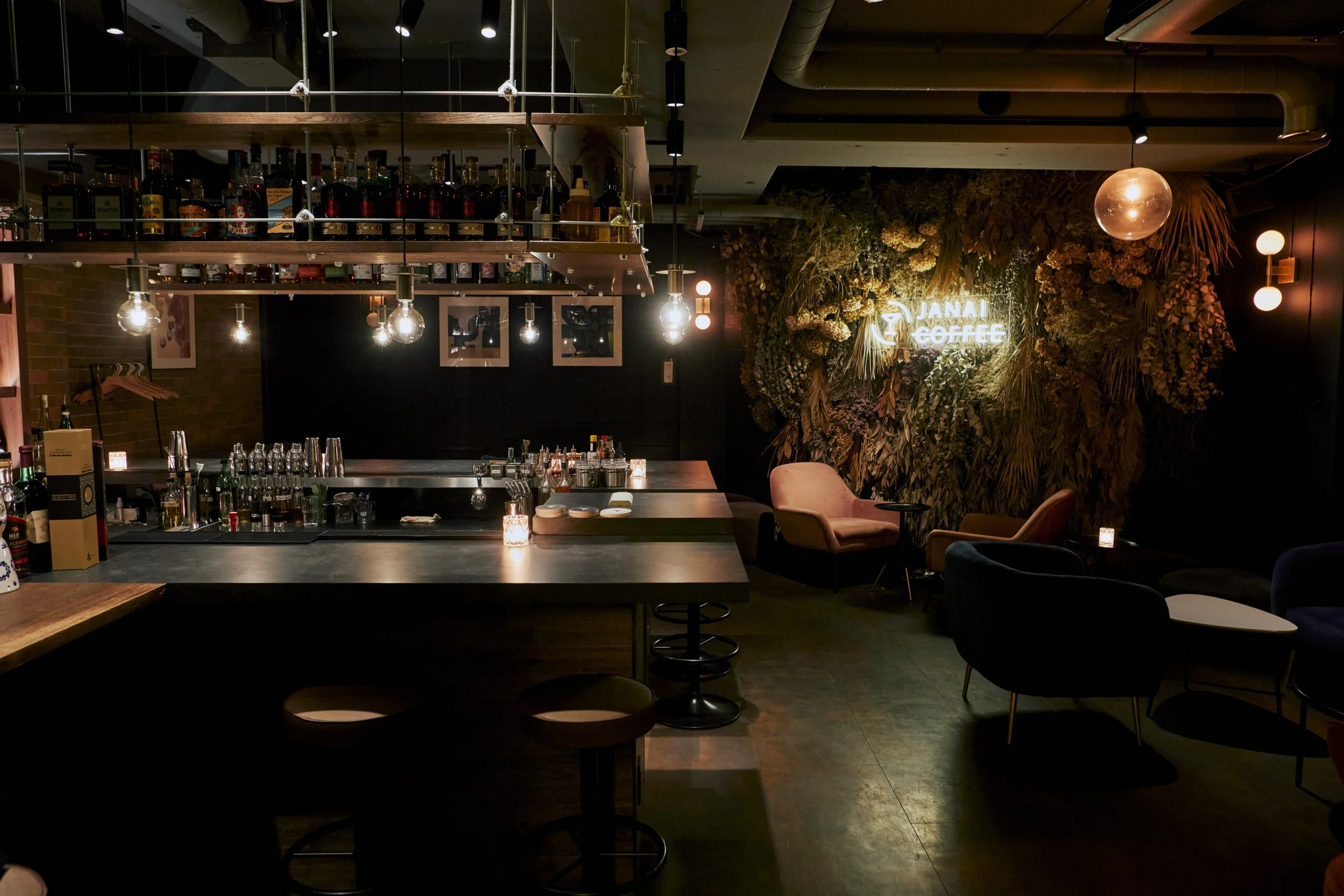
Low-lit interior of trendy coffee shop. Low stone bar counter, comfortable modern chairs, and a flower wall with neon light sign

Interior of Janai Coffee. Junki Yoshida.

This Tokyo speakeasy takes on the guise of a traditional coffee bar, hidden behind a secret doorway only the barista knows how to access. At first glance, Janai's website sticks with the coffee theme, offering to-go cups, explaining seasonal coffee bean selection, all while subtly hinting that it might offer more: “We don’t just want to serve coffee. Forget about time. Stop measuring. Don’t compare yourself to others. Take time to relax and forget about your daily routine. A place where you can forget about your daily routine and enjoy coffee to your heart’s content without thinking about anything else.” There is a secret puzzle that has to be solved on their website before being able to make a reservation (a hint—look at the logo). The flipside states their mission as a speakeasy and adds that, “This bar has a wide selection of alcohol that the staff all tasted and selected together. Even if you are not an expert, even if the taste is difficult, you can enjoy Janai Coffee for some ‘just because’ reason such as the cute label or the interesting name.”

Espresso martini from Janai Coffee’s bar, Junki Yoshida.

Located at: 2-3-13 Ebisu, Shibuya, Tokyo, 150-0022

Moonshiner 

Paris, France

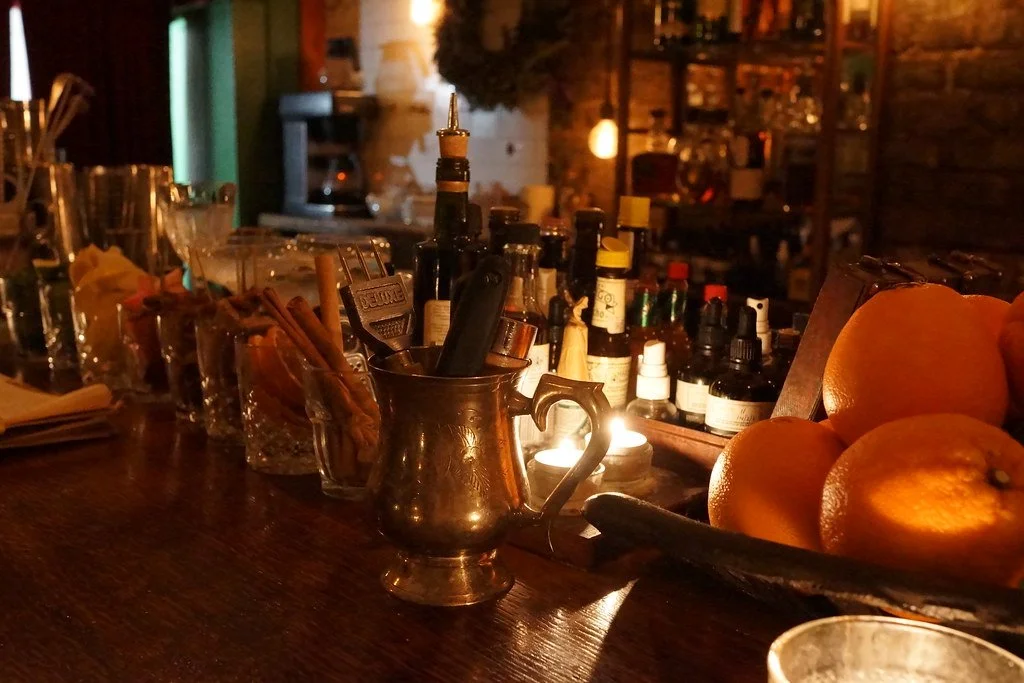
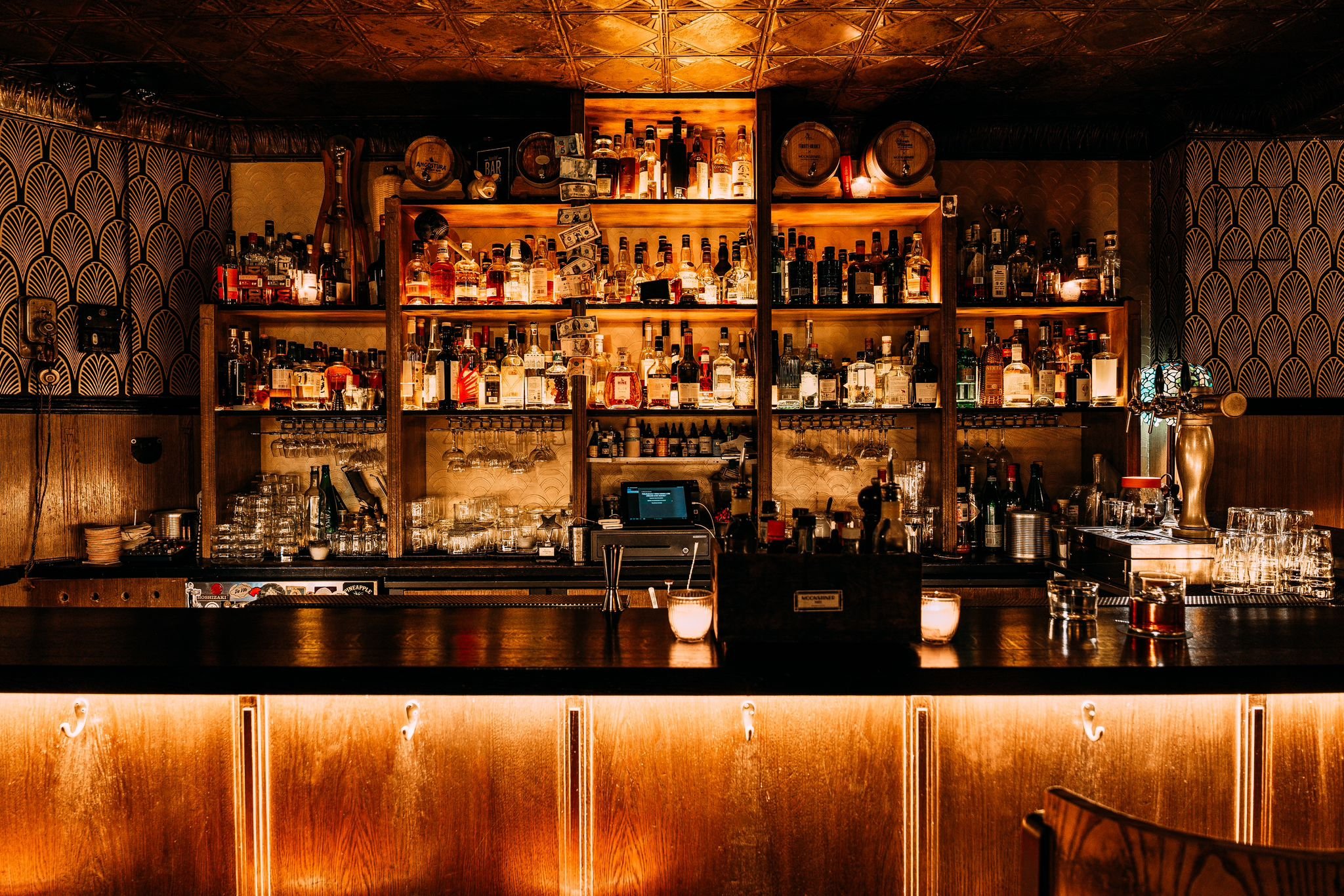
Swanky wood bar design, lit from underneath, with intricate shelving on the wall behind to hold dozens of bottles and garnishes

Bartop at Moonshiner, Fiamma Brighi. 

Continuing the theme of being hidden behind a conventional storefront, the Moonshiner’s entrance is through Da Vito, a small pizza parlor in Paris. The joint's website tells potential visitors, “Shhhh, listen up, music is filtering behind this wall … lower your voice, lighten your steps, and push the door to the cold room … we’ll see you on the other side!” To enter, guests walk into the pizza parlor and head directly to the steel door of a fake meat locker at the back. This speakeasy in particular tends to attract a younger crowd of twenty-to-thirty-year-olds, and a combination of travelers and locals. Their drinks range from classic cocktails like Old Fashioneds to more novel and creative options like “Money Time” or “Back to Basil.” As it is a small space, the bar tends to get very busy. Sara Lieberman from Conde Nast Traveler notes that, “Despite it looking like the type of place you want to sit and sip luxuriously, unless you get there early be prepared to stand and hover over those with seats until other bar-goers finally get up (IF they get up!).” Many bar goers are just stopping by for a drink while waiting for the pizza they ordered on the way in, with Liberman also explaining that, “Moonshiner and the pizza parlor out front—Da Vito—--are more or less one in the same, so if you’re hungry, put your name on the list when you arrive and head to the back for a drink while you wait.”

Old Fashioned at the Back Room. Fiamma Brighi.

Located at: 5 rue Sedaine, 75011, Paris, France.

The Back Room 

New York City, United States

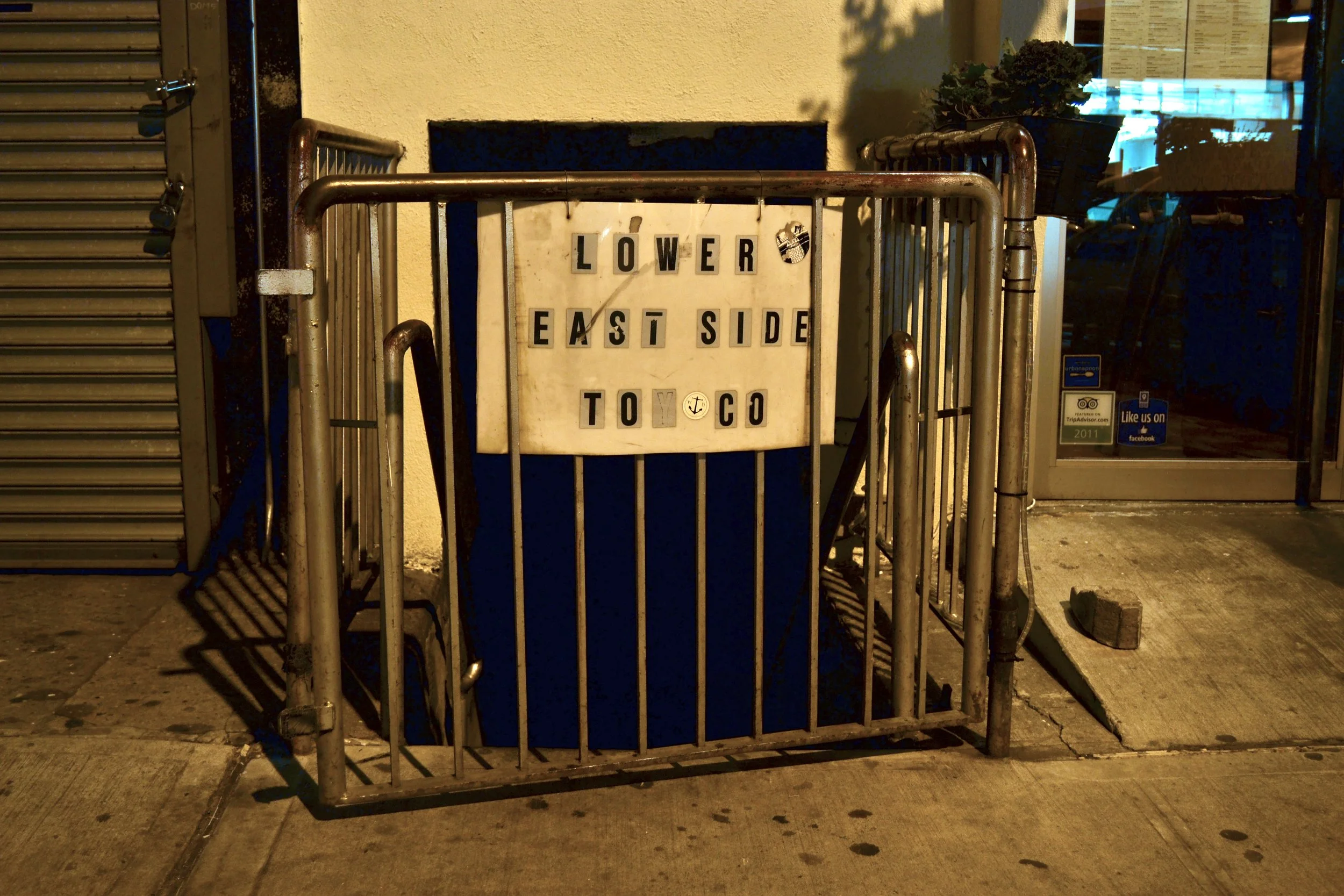
A street in the city with a small metal barrier gate around a staircase leading down to a building basement. There is a stickered sign on the gate pointing to the stairs, describing it as the "Lower East Side Toy Co."

The entrance to the Back Room, Troy Hahn.

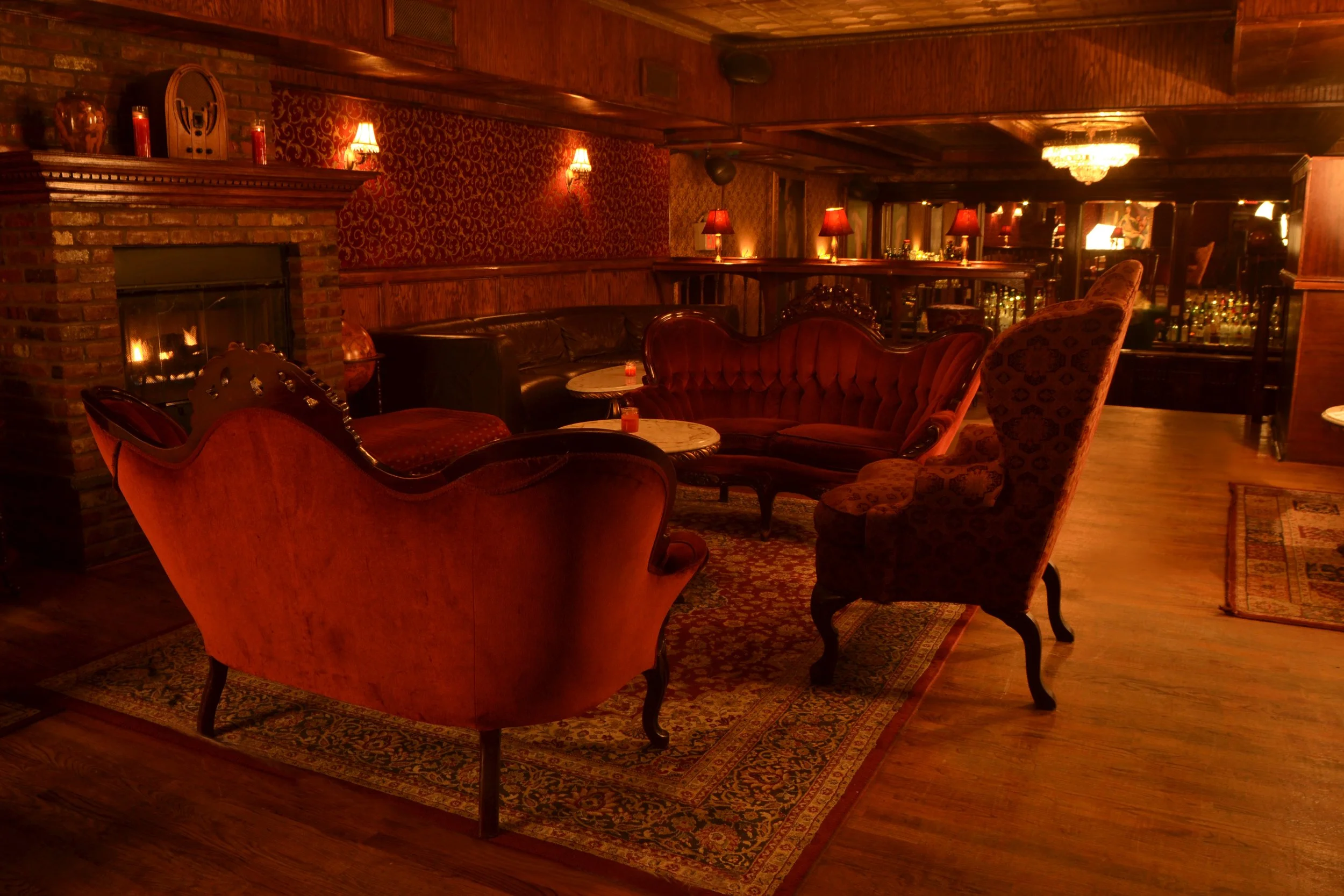
Finally, located in the heart of the Big Apple, the Back Room is a speakeasy in New York that has been operating since the Prohibition era. Disguised as  the "Lower East Side Toy Company,"  the Back Room is hidden down a secret staircase in a narrow corridor. There are no clear indications to the entrance and a variety of staircases are involved before visitors find themselves at the door of the bar. In order to enter, a weekly password from the official Bank Room website is required. Once entered, the bartenders serve drinks in a traditional Prohibition-era style—cocktails are served in teacups and beers in brown paper bags, disguising their true contents. The Back Room was predated by Ratner’s Backroom, which was opened in 1908 in the same location. Owner Johnny Barounis has said that it used to be a popular meeting spot for many Jewish gangsters due to its convenient location, saying, “If somebody came in and was being double crossed or there was a hit going on, there were so many different ways out if you knew the space. You could [even] hop the roofs all the way to Rivington.” The general appearance of the Back Room is luxurious, straying away from the traditional rough appearance speakeasies had due to fear that cops would overturn the establishment at any given point. Barouis calls it, “My bastardized version of these old 1920s ballrooms fused with a speakeasy.” The decor incorporates 1920s cigarette dispensers, mutoscopes, chandeliers, hardwood floors and other period-accurate details. 

A look back in time, with a luxurious interior decoration with massive brick fireplace, red velvet antique chairs and couches, hardwood floors, and warm lighting

The Back Room’s luxurious decor, Troy Hahn.

Located at: 102 Norfolk Street, New York City, NY, 10002-3310


Aanya Panyadahundi

Aanya Panyadahundi Aanya is a student at the University of Michigan studying sociology and journalism on a pre-law path. She loves to travel the world whenever she can, always eager to learn more about the different cultures and societies around her. In her free time, she likes to play the violin, ski, and listen to podcasts.

Political Tourism in America’s Swing States

Volunteers play a crucial role in mobilizing key electorates by traveling to swing states, whose voters will ultimately decide the presidential election.

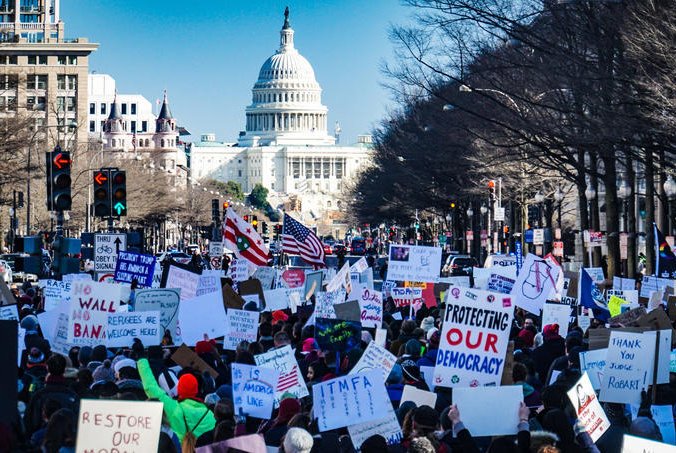
Protestors rally in front of the US Capitol, holding an American flag high in the air and a multitude of different political messages on signs, spanning from "Protecting our Democracy" to "Refugees are welcome here"

Protestors rally in front of the Capitol in DC. Ted Eytan. CC BY-SA 4.0

With the U.S. presidential election fast approaching, politically minded Americans are turning their attention to swing states, where Democratic or Republican victory often hinges. Volunteers play a crucial role in these states, engaging in grassroots efforts to sway voters and educate communities on policies and candidates. This is often achieved by speaking with locals directly, typically through door-to-door visits, made possible through non-profits.

Organizations such as Common Power and the Swing States Action Fund aim to mobilize Democratic voters by providing clear information on when, where and why to vote. Common Power, based in Seattle, allows volunteers to either travel to swing states or contribute remotely through activities like writing postcards and making calls. Common Power allows you to choose volunteer opportunities based on location, activity or date. For the 2024 general election, their tentative travel dates are from September to November, with most trips lasting five days. You can sign up for State Teams here, and the volunteer travel guide is available here. Volunteers travel in teams and take part in a virtual training event before their trip. The estimated total cost for a five-day State Team trip is $2,500 (includes lodging, meals, and transportation). However, volunteers are typically responsible for their own transportation, so the final cost can vary depending on their starting location. The Swing States Action Fund operates a little differently; the organization specializes in encouraging recent graduates or retirees to relocate to swing states. They then connect these individuals with a network of volunteers involved in outreach efforts like voter drives and postcarding. These organizations are crucial in combating voter suppression, especially in historically BIPOC communities, ensuring fair access to the democratic process. Organizations like the Progressive Turnout Project pay volunteers, offering up to $125 for completing a door-knocking list, which typically takes about three hours. The Progressive Turnout Project organization operates in key swing states such as Arizona, Georgia, Michigan, Pennsylvania, North Carolina and Wisconsin.

Map of the US with each state colored in corresponding to its political alignment, with swing states in gray.

Map of swing states (in gray and light colors) in the 2020 U.S. Presidential Election. A Red Cherry. CC BY 4.0

Overcoming voter suppression has roots tracing back to the 1950s. During the Civil Rights Movement, volunteers traveled to Southern states to confront segregation and rally Black community members to participate in voting. In the South, Black individuals faced barriers such as poll taxes, rigged literacy tests and fraud when attempting to register. In June 1964, the Freedom Summer Project aimed to register a significant number of Black voters in Mississippi. This effort eventually led to the enactment of the Voting Rights Act of 1965, a landmark legislation that outlawed racial discrimination in the electoral process. Despite this progress, however, voter suppression continues to persist in the South today. In 2021, Georgia and Florida enacted SB 202 and SB 90 respectively, imposing stricter voter identification requirements, particularly for those voting by mail.

Following Kamala Harris's nomination as the Democratic presidential candidate, her campaign claims a recent surge in support, particularly in key swing states such as Florida, Pennsylvania and Georgia. Volunteers will take direct action through advertisements, demonstrations, and fundraising, as well as by encouraging individuals to submit opinions to government officials.


Agnes Moser Volland

Agnes is a student at UC Berkeley majoring in Interdisciplinary Studies and minoring in Creative Writing, with a research focus on road trip culture in America. She currently writes for BARE Magazine and Caravan Travel & Style Magazine. She is working on a novel that follows two sisters as they road trip down Highway 40, from California to Oklahoma. In the future, she hopes to pursue a career in journalism, publishing, or research.

Fighting FGM: Meet the Woman Activist Standing Up to Mutilation

Meet Ifrah Ahmed, the brave woman taking a stand against a brutal practice that still affects millions of women.

Close up of Ifrah Ahmed speaking at a desk into several microphones

Ifrah Ahmed speaking at a training workshop in Mogadishu, Somalia. AMISOM Public Information, CC0

FGM, or female genital mutilation, is the violent and forcible removal of the external female genitalia. This practice usually takes place at a young age, as the belief systems of those who promote FGM believe it to be the best way to preserve a woman’s “purity.” Although modern medicine has proven that there are no benefits of any kind connected to the practice, women around the world continue to suffer from the procedure.

FGM opens the door to a variety of immediate and long-term health complications, including infections, diseases and potential complications during childbirth. The mental effects are also damaging; according to the limited number of studies investigating the psychological impact of FGM, the vast majority of women who have been mutilated by the procedure exhibit symptoms of depression, anxiety and PTSD, among other disorders.

Although FGM has been condemned as a violation of human rights and globally banned by the World Health Organization (WHO), as of 2012 a number of countries still engage in the practice. While cases of FGM are concentrated mostly in the Middle East and sub-Saharan Africa, instances have also been documented in Latin America, Asia and eastern Europe. Since 2012, the WHO has been working with local organizations to devise more effective ways to enforce the global ban. In the meantime, however, over 230 million women have undergone FGM, with more being mutilated every day. The victims of this procedure have started to take action into their own hands.

Enter Ifrah Ahmed. As a young girl in Mogadishu, Somalia, Ahmed was subjected to FGM. In 2006, she escaped from the Ethiopian War and made her way to Ireland, where her doctor struggled to understand what had happened to her. In the following years, Ahmed discovered that FGM, despite its near ubiquity in Somalia, was entirely absent in Ireland. This drove her to begin speaking out against FGM, becoming one of the first women to publicly share her experience with the mutilation.

In 2010, Ahmed established the Ifrah Foundation, an NGO devoted to the total elimination of FGM around the world. There are many misconceptions regarding FGM (groups who practice it make use of parents’ ignorance to sell the procedure), such as the belief that it provides benefits for the woman or that it is required under Islamic law. Ahmed, through the Ifrah Foundation, has worked tirelessly to deconstruct these misunderstandings.

The Ifrah Foundation has collaborated with several international nonprofits such as UNICEF, UNFPA and Amnesty International. The organization has also formed partnerships with various governmental agencies on legislation addressing FGM. Additionally, in 2018, Ahmed collaborated with the Global Media Campaign to end FGM to release a short documentary detailing a 10-year-old girl’s death as a result of complications from FGM.

Today, Ahmed works to promote her cause in her home country of Somalia, where she was appointed the Gender Advisor to the Prime Minister in 2016. She is also the Human Rights advisor to the Somali government. In these positions, and with the help of the Somali prime minister and the Ifrah Foundation, Ahmed managed to implement an FGM abandonment program across the entire country.

How You Can Help

Readers who wish to contribute to the Ifrah Foundation can do so here. The Foundation has recently begun a new campaign titled “Dear Daughter," which focuses on educating and empowering women against genital mutilation. Interested readers can visit the campaign and make donations here.


Ryan Livingston

Ryan is a senior at The College of New Jersey, majoring in English and minoring in marketing. Since a young age, Ryan has been passionate about human rights and environmental action and uses his writing to educate wherever he can. He hopes to pursue a career in professional writing and spread his message even further.
Long, Strange Trip: Psychedelic Drug Use and Legalization

With psychedelic drug reform still underway, research indicates that microdosing may be useful for medical and therapeutic treatment.

Music record cover using very psychedelic imagery of a face with vibrant colors, text, and swirls

Capitol Records Cover. Daniel Yanes Arroyo on Flickr. CC BY-NC 2.0

In the 1960s, psychedelic drugs became central to counter cultural identity, as they were believed to expand human consciousness and helped inspire the era’s writing, art and music scene. Their acceptance only went so far, however, the war on drugs led to the ban of psychedelic drug use in 1968. These drugs include psilocybin mushrooms (magic mushrooms), MDMA (ecstasy, molly), and LSD (acid). But recent studies show that psilocybin may be used to treat alcohol and tobacco dependence, as well as mood disorders like anxiety, depression and OCD. The U.S. Food and Drug Administration has already declared psilocybin as a “breakthrough therapy,” with growing evidence for its efficacy in treating cases of depression that have proven resistant to psychotherapy and traditional antidepressants.

Close up of psychedelic mushrooms growing in the ground.

Psilocybin mushrooms. Mushroom Observer on Wikipedia Commons. CC BY-SA 3.0

Some argue that the legalization of psychedelic drugs would be positive, with regulated companies outcompeting the black market and manufacturing safer drugs (e.g., there would be little risk of products being laced with fentanyl). The status of drug policy reform varies across the U.S. Some states—including Washington, Texas and Connecticut—are actively studying the medical effects of psilocybin. In California, several cities, including Oakland, Santa Cruz, Arcata, Berkeley and San Francisco, have already passed resolutions to decriminalize the possession of psychedelic drugs, excluding peyote. The use of peyote in Native American ceremonies and sacraments is protected under the First Amendment of the Constitution as a form of Free Exercise of Religion. Despite this, the supply of Peyote is severely limited, to the point of being listed as vulnerable to extinction on the IUCN Red List. In several states, including New York, Florida and Utah, legislators have introduced bills to legalize psilocybin for clinical use that ultimately failed to pass. Psychedelic drugs remain illegal under the Controlled Substances Act at the federal level in the U.S. 

Legislation varies even more worldwide, but many countries have less stringent laws than the United States. In Australia, MDMA and psilocybin may be prescribed for PTSD for depression. In the Bahamas and British Virgin Islands, psilocybin is legal to possess but not to sell. In Mexico, citizens cannot be prosecuted or charged if psilocybin is used for spiritual or religious purposes. Most of Europe has either decriminalized or deregulated aspects of the use or trade of psychedelic drugs, including countries like Portugal, Spain, the Netherlands, and Switzerland. The definition of “decriminalization” varies, but usually implies that one can possess a certain amount of a substance avoiding fines or other penalties, despite it being illegal.

While concerns regarding the safety of psychedelic drugs are and will continue to be raised, statistics show that emergency room visits related to psilocybin and LSD are infrequent. Legalizing psychedelic drugs would signify for advocates a stride toward personal autonomy, enabling individuals to make informed choices about what they put in their bodies. This shift mirrors a growing global interest in investigating the therapeutic and medical potential of psilocybin, prompting a reevaluation of 20th century policies.


Agnes Moser Volland

Agnes is a student at UC Berkeley majoring in Interdisciplinary Studies and minoring in Creative Writing, with a research focus on road trip culture in America. She currently writes for BARE Magazine and Caravan Travel & Style Magazine. She is working on a novel that follows two sisters as they road trip down Highway 40, from California to Oklahoma. In the future, she hopes to pursue a career in journalism, publishing, or research.

Sweden’s Unique Icehotels

From ice rooms to outdoor experiences, Sweden’s Icehotels provide a unique stay for travelers interested in the outdoors.

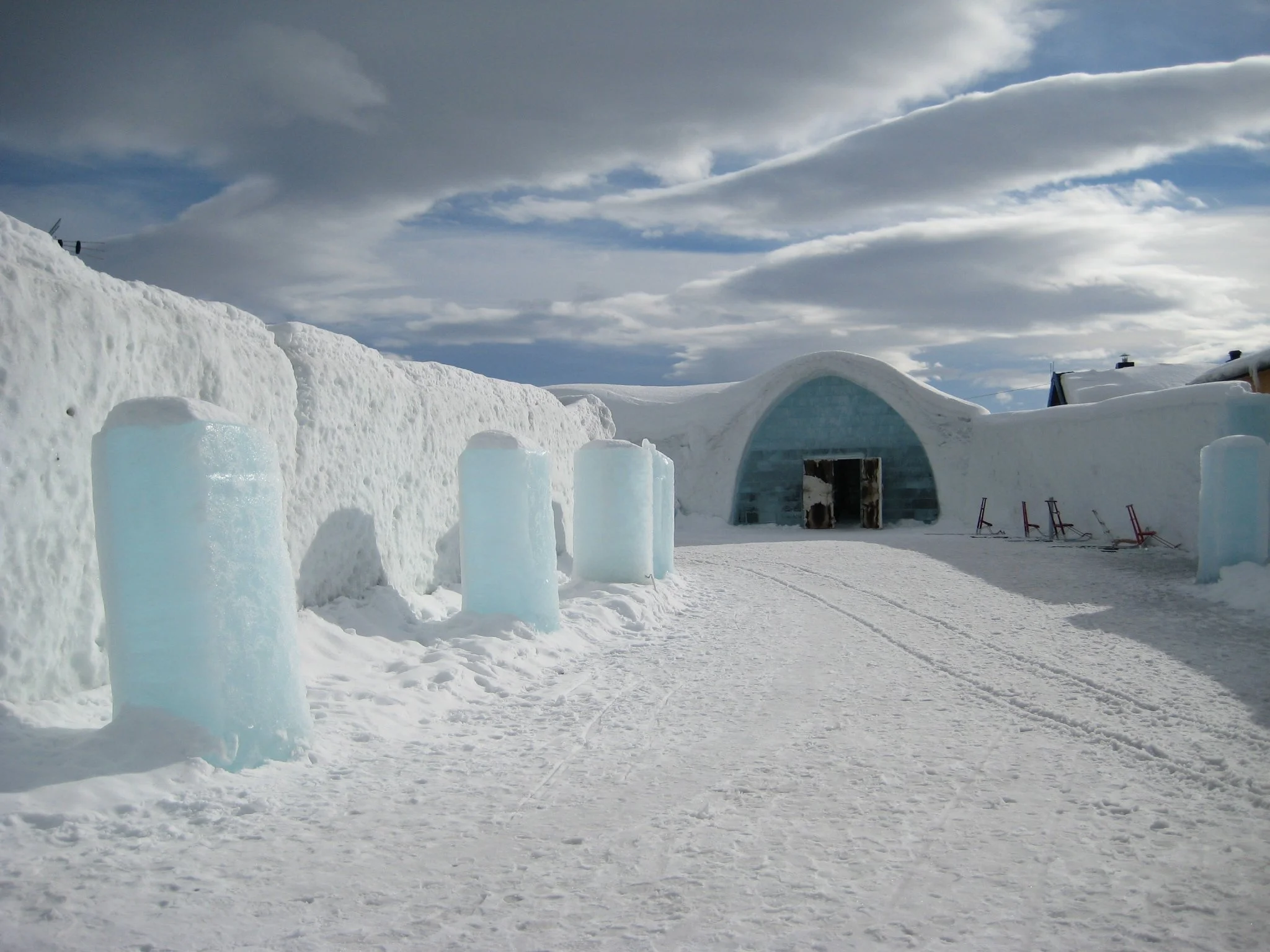
Snow tunnel entrance, lined with large ice blocks toward a hotel door that appears like an entrance to a glacier.

Entrance to Icehotel. Markus Bernet. CC BY-SA 2.5

A trip to Sweden may entail many unique experiences, but very little can parallel a stay at Icehotel in Jukkasjarvi. Located in the land region and 200km north of the Arctic Circle, the hotel was established in 1989 as the world’s first ice hotel, with the goal to, “Create life enriching experiences." A unique venue for hospitality, the ice hotel is structurally similar to an igloo. Ice and stagnant air both have very low thermal conductivity, limiting the heat transferred from the outdoors and keeping the structures from melting. The travel group Transun explains that, “The ice structure stops heat being transferred to the surroundings, because the ice and the windless air are both excellent insulators. The buildings depend on sub-freezing temperatures and usually melt in summer, rebuilt again from fresh ice every year.” 

On its site, the Icehotel group writes about the central theme of storytelling it hopes to achieve with its establishments: “Our inspiration is the Arctic and the delicate beauty of crafting something that is ephemeral yet engaging all your senses," creating its edifices with ice taken from the Torne River. With each winter, new artists are given the opportunity to showcase their talents through the Icehotel. The same river is also the source of the crystal-clear ice furniture that adorns both the original Icehotel and the new Icehotel 365, a newer project from the same brand to offer more to travelers all year.

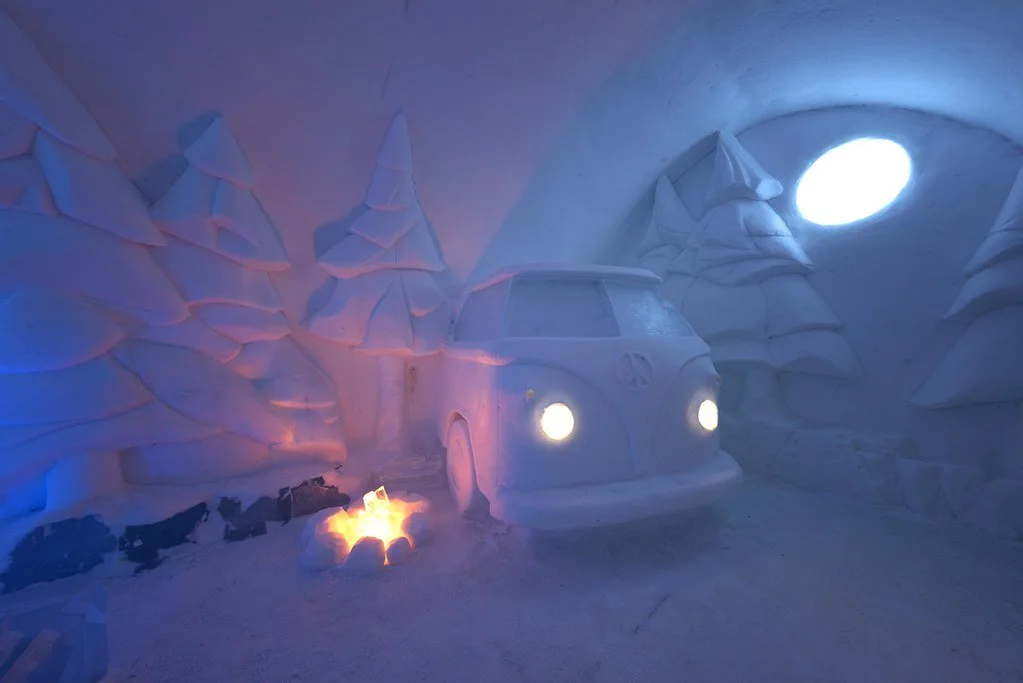
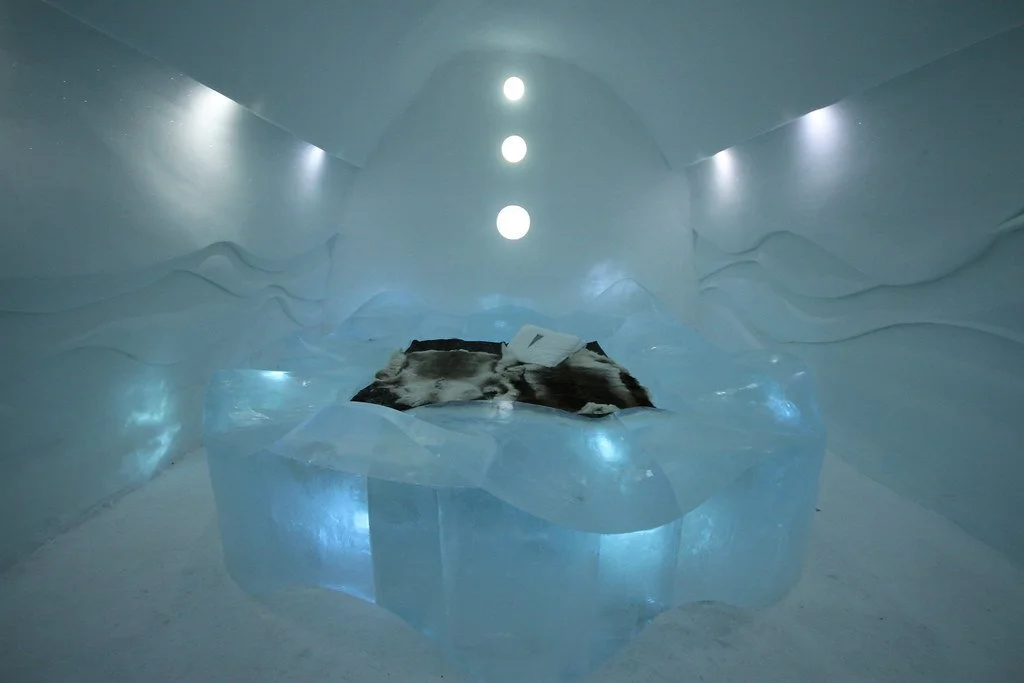
Travel Agency "Discover the World" recommends that, although elements of Icehotel are now open year-round, the best time to visit is, “During the winter months when it is blanketed in snow, the air outside is crisp and cold and the Northern Lights might make an appearance.” For Sweden, this is from December to early April, the months when the original Icehotel is constructed and open. During this time, the Icehotel has between fifteen and twenty standard ice rooms and twelve art suites for guests to stay in. Johan Larsson, the standard ice rooms’ artist, explains that he chose to incorporate an ice bed and decor because, “I wanted to create a feeling of being embraced and protected by the ice—a good night’s sleep for all guests.” The art suites are a step up from the standard rooms. Each suite is designed by an artist who has creative freedom to choose their own themes and styles. Icehotel says that, “The artist, perhaps from Kiruna, Germany, UK, or the US has been picked from over two hundred applicants and invited to make the suite you’ll be sleeping in.” Art suites are kept between 18 and 23 degrees fahrenheit. Because of their icy cold atmosphere, all rooms have special accommodations like thermal sleeping bags, reindeer hides and curtains in place of doors. Guests are given access to Riverside, a heated lobby, for changing rooms, toilets and saunas.

A room built in the snow. Snowy sculptures of pine trees and the front of an old-school VW camper van carved into the walls.

Art Suite in Icehotel. Rob Alter. CC BY 2.0

When planning a stay, guests are offered a choice of warm or cold accommodations. Warm rooms are like a standard hotel room and are located in a separate building. Icehotel recommends that guests spend just one night in the cold while booking a warm room for the rest of their trip, and provides special, insulated sleeping bags for guests to keep warm. The company also encourages appropriate sleepwear—thermal underwear, hats, warm jumpers, etc. Transun notes that, , although sleeping in a room made of ice might sound unpleasant, the right clothing and sleeping bags can keep guests warm as long as the outdoor temperature stays above -13 degrees Fahrenheit. Visitors can still arrange tours if they choose not to spend the night. Icehotel can accommodate up to five people in its largest warm rooms and two people in each of its cold rooms.

A white hotel room, with abstract icy mountain murals on the walls. A large bed carved from ice stands in the center with a fur blanket in the middle.

Standard Ice Room. Xraijs. CC BY-NC 2.0

Even during the summer months, the Icehotel brand still has much to offer interested travelers. Icehotel 365 was first opened in December 2016 as a year long ice experience. The building is a permanent, 2100 square meter art hall, maintaining interior sub-zero temperatures by relying on cool solar power throughout the year. Its art hall contains a collection of traditional art while the building is also home to deluxe suites, an ice bar and experience rooms that depict Icehotel’s history. Additionally, guests can enjoy Torne River rafting, private fishing tours, a ropes course, mountain hikes, and, of course, the Northern Lights.

Despite being a large tourist attraction, sustainability is central to Icehotel’s methods. The organization writes that, “We borrow the ice from the Torne River to build a new, seasonal Icehotel, which eventually melts and returns back to its origin in the spring. The basic idea of Icehotel is built on the premise of the environmental cycle, and our relation to the water and the ice is central.” The company also works with River Rescuers, an activist group protecting “The untouched waters of Sweden,” and regularly makes donations to WaterAid to assist water health throughout Sweden.


Aanya Panyadahundi

Aanya is a student at the University of Michigan studying sociology and journalism on a pre-law path. She loves to travel the world whenever she can, always eager to learn more about the different cultures and societies around her. In her free time, she likes to play the violin, ski, and listen to podcasts.

Aboriginal Australians: Ancient Roots and Modern Struggles

Centuries after British Settlement and mass destruction of their culture, Aboriginal Australians continue to be discriminated against by the Australian government. 

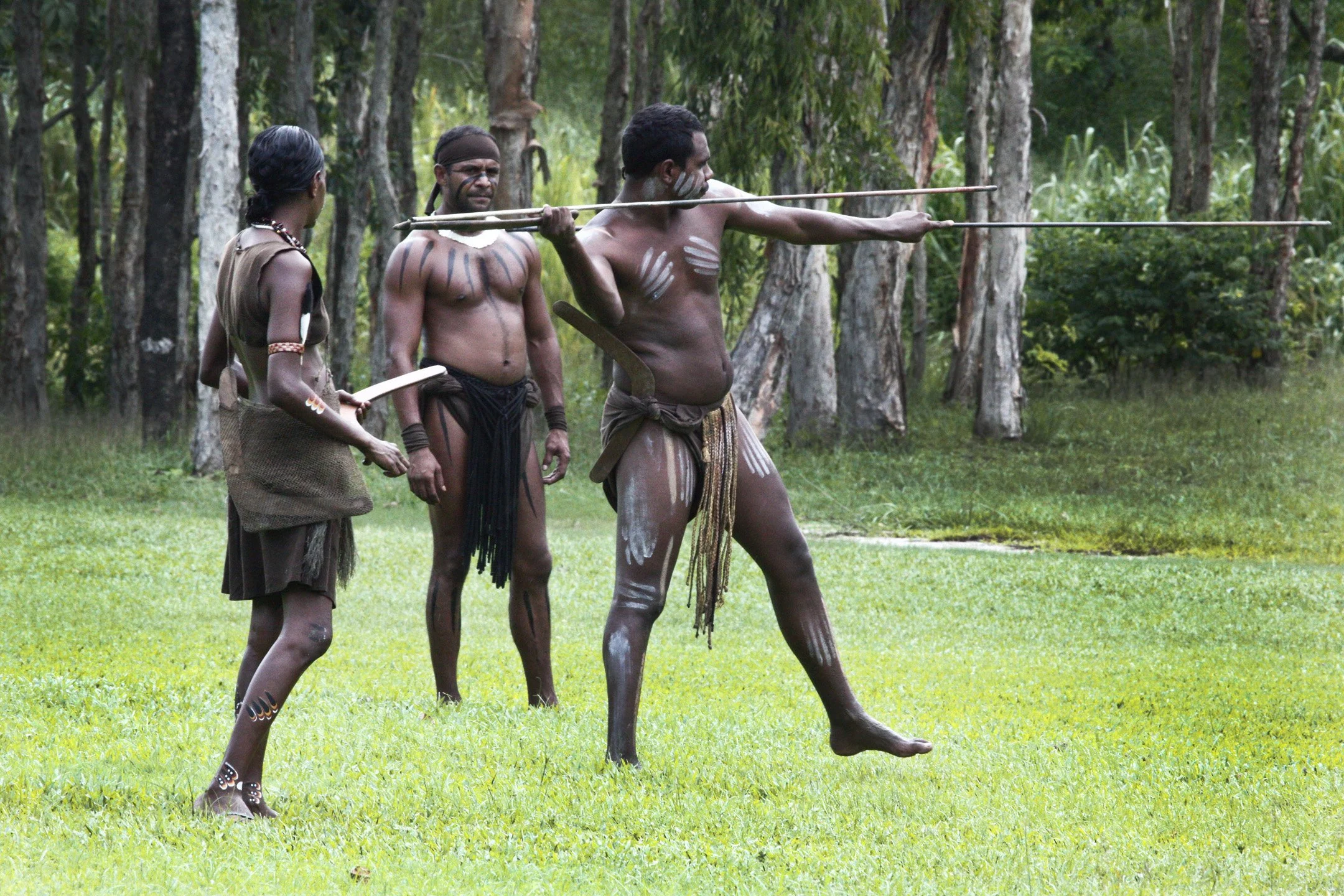
Three Aboriginal men together in traditional dress aiming a throw.

Aboriginal Men in 2011. Steve Evans. CC BY 2.0

Aboriginal Australians have experienced systemic disadvantages throughout Australia’s history. Noted as one of the oldest Indigenous communities living outside of Africa, Aboriginal Australians led an advanced lifestyle in precolonial times. According to an article in The Conversation, Indigenous Australians are noted for “establishing complex religions, burying their dead with elaborate rituals, engaging in long-distance trade, making jewelry, and producing magnificent works of art” when Europe was still home to Neanderthals. 

The ancestors of Indigenous Australians migrated to the continent from Southeast Asian countries like Malaysia, Singapore, Brunei, Indonesia and the Philippines. Numerous studies investigating the Indigenous group conclude that Aborigines have lived in Australia for approximately 65,000 years. Across the country, Aborigines speak more than 250 distinct languages. There are two classifications of Indigenous people in Australia—the Aboriginal peoples and the Torres Strait Islanders. Aboriginal Australians are those whose ancestors lived in mainland Australia before the arrival of European colonists, while Torres Strait Islanders have traditionally lived in an archipelago between the continent and Papua New Guinea to the north. 

Over time, Australia’s Aboriginal presence has fallen to just 3% of the national population due to colonization and legal restrictions. When British Settlement began in 1788, 750,000 to 1.25 million Aboriginal Australians were living in the country at the time. The British brought epidemics, land seizures, and violent conflict, subjecting most Aboriginal Australians to poverty and massacres. According to National Geographic, “[t]hough the term ‘genocide’ remains controversial, people related to the continent’s first inhabitants are widely considered to have been wiped out through violence.” 

From 1910 to 1970, the Australian government created assimilation policies for Aboriginal Australian children, resulting in the Stolen Generations. Successive administrations took Indigenous children away from their families and put them into adoptive families or institutions, forbidding them from speaking their native languages or even keeping their original names.

Today’s Aborigines still face various hurdles as a result of settlement, one being accessible maternal healthcare.  Edie, an Aboriginal woman interviewed by BBC, explains her recent involvement with a movement called Birthing on Country following the birth of her fourth child and observations about the dearth in Indigenous mother healthcare in Australia. Her colleague and co-director of the Molly Wardahuha Research Centre Yvette Roe explains that the organization is, “a concept with key elements: when we talk about ‘Country,’ we’re talking about ancestral connection to the country where we’re born. We’re talking about 60,000 years of connection to the land and sky.” Lack of proper maternal care for Indigenous mothers results in them being three times more likely to die during childbirth than non-Indigenous mothers, and their babies almost twice as likely to die in the first year. The maternal health crisis reflects general disparities that exist for Australia’s Indigenous population. Aboriginal Australians and Torres Strait Islander people face high levels of discrimination, unemployment, poor housing and poor education compared to their counterparts. Concentration in remote locations has also limited access to life-saving services.

Additionally, Aboriginals continue to fight for general recognition and restitution by the Australian government. As the only country in the Commonwealth of Nations country to not make a treaty with its Indigenous population, Australia's Parliament attempted to recognise Aboriginals in its Constitution and create an Indigenous advisory board that would weigh in on national, relevant issues along with Parliament. In the fall of 2023, Australia rejected the referendum. While most of the Indigenous voters were in favor of the referendum, 60% of Australian voters said no. The Aboriginal community took a week of silence and reflection following the decision. In the Queensland Parliament, the "Path to Treaty Act 2023" was legislated with an 88 out of 92 member majority. Truth and Treaty Queensland described it as a, “Historic piece of legislation … the Act provides the legislative framework for the Truth-telling and Healing Inquiry and the First Nations Treaty Institute to be established.”

Since the late 1700’s,  Aboriginal Australians have struggled at the hands of foreign settlers. Whether it is maternal healthcare or incorporation into Australia’s Constitution, their rights and needs have been and continue to be disregarded in numerous ways across the country. 

TO GET INVOLVED

Australians are encouraged to get involved with their local Aboriginal communities by attending community events and participating in local Aboriginal tours. Residents can also explore local Aboriginal Land Councils to learn about what actions are currently being taken in their communities. Creativespirits.info explains what land councils do to help Indigenous Australians and has a comprehensive list of Aboriginal land councils in Australia. Activist groups such as Australians for Native Title and Reconciliation (ANTaR) and Stop the Intervention Collective Sydney (STICS) are actively working to help remediate the injustices Aboriginals are facing across Australia.


Aanya Panyadahundi

Aanya is a student at the University of Michigan studying sociology and journalism on a pre-law path. She loves to travel the world whenever she can, always eager to learn more about the different cultures and societies around her. In her free time, she likes to play the violin, ski, and listen to podcasts.

Hiking with Dinosaurs in Argentina

Argentina's Talampaya and Ischigualasto Parks contain between them the most complete continental fossil record of the Triassic Period, and a record of early humanity. 

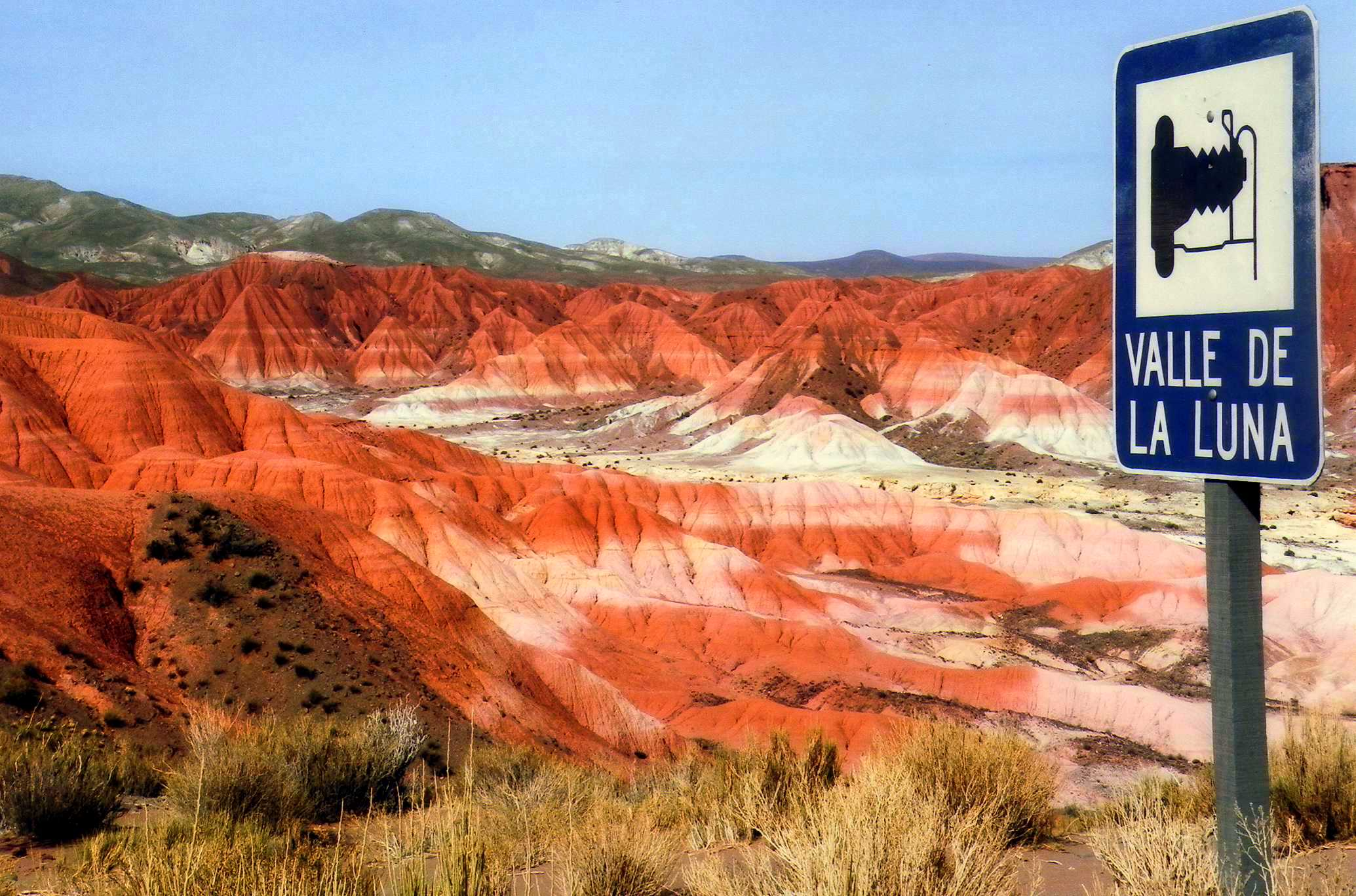
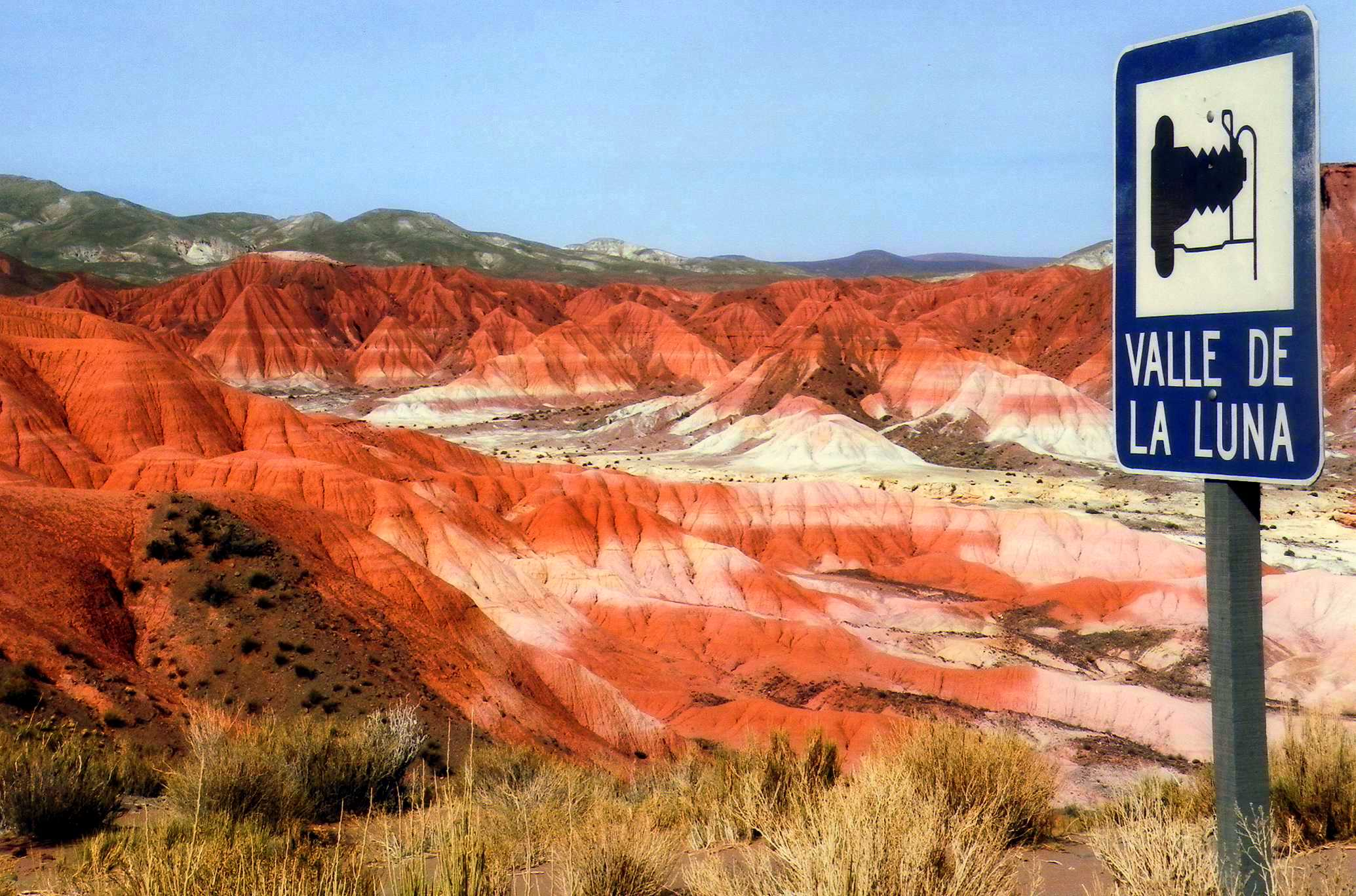
A red, orange, and white striated canyon badlands. Larger green mountain hills in the distance

Valle de la Luna. Rodoluca. CC BY-SA 3.0

In the heart of Argentina, the Ischigualasto and Talampaya Natural Parks are a gateway to a prehistoric world. Situated on the border between the provinces of San Juan and La Rioja, in Argentina's Monte ecoregion, a warm scrub desert along the Eastern Andean foothills, these contiguous parks contain a plethora of geological marvels, ancient history and stunning desert landscapes for visitors to explore. 

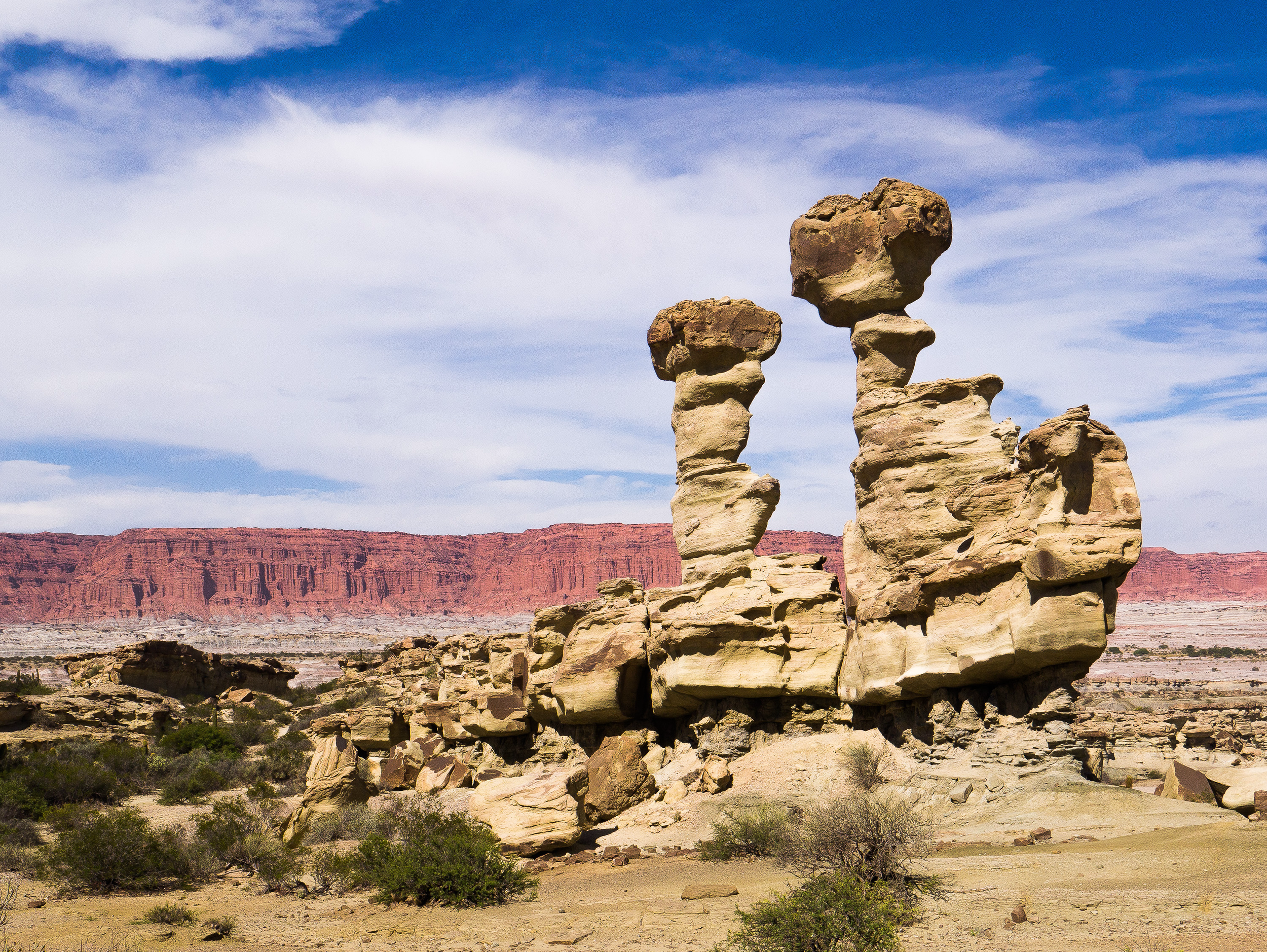
Two tan hoodoo rock formations stand tall in front of rocky terrain and a red canyon in the background

Ischigualasto Rock Formations. Rita Willaert. CC BY-NC-SA 2.0

Ischigualasto and Talampaya stretch over most of the sedimentary basin of the Ischigualasto-Villa Union Triassic, a geologic basin of great scientific importance which formed during the Triassic Period, approximately 250 to 200 million years ago. The basin contains a sequence of six layers of continental fossiliferous sandstone and mudstone sediments deposited by rivers, lakes and swamps, providing the world’s most complete and undisturbed picture of the geological history of the Triassic Period. 

The geological record helps us understand the evolution of vertebrate life and the nature of palaeoenvironments in the Triassic, the era that ushered in the Age of the Dinosaurs. Fossil records of at least 100 species of plants, 56 known genera and many more species of vertebrates, such as fish, amphibians, and a great variety of reptiles and direct mammalian ancestors, including the early dinosaur Eoraptor, have been found in the park. 

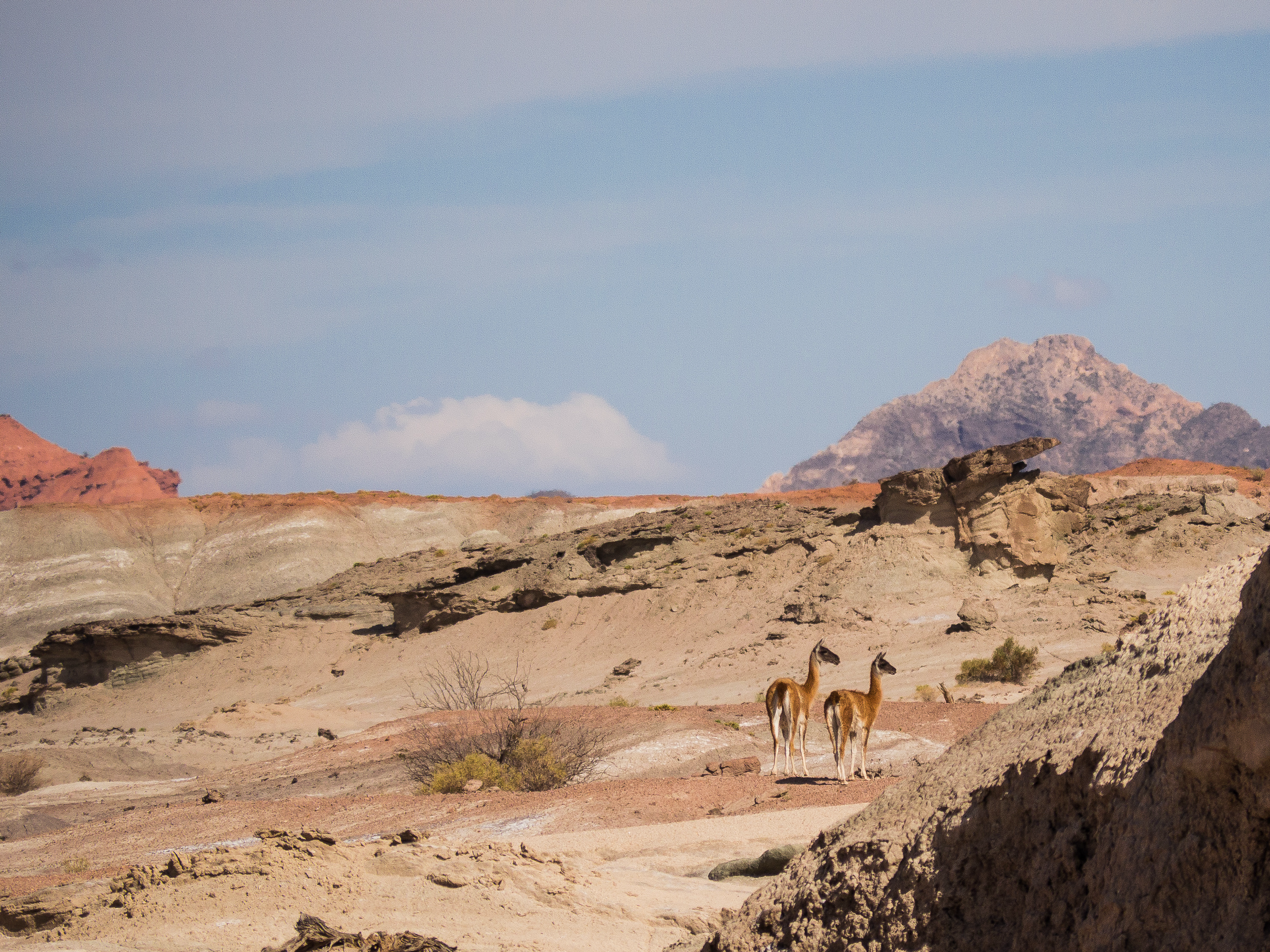
Two guanacos standing on a desert slope. The rock is red and sandy, with a variety of elevations and terrains

Guanacos, Ischigualasto National Park. Rita Willaert. CC BY-NC-SA 2.0

Radiocarbon dating suggests that humans occupied the area approximately 2,590-950 years ago. At Ischigualasto, six rock art sites have been discovered, along with burial sites, campgrounds and tool-making areas, as well as 1500-year-old petroglyphs (images carved into rock). The petroglyphs depict, among other things, geometric human figures, animals and a radiating sun figure. Animal and human footprints have also been found in the art, mainly puma, rhea and guanaco prints. 

A red, orange, and white striated canyon badlands. Larger green mountain hills in the distance

Valle della Luna. Guslight. CC BY-NC 2.0

One of Ischigualasto's main attractions is the Valle della Luna (Valley of the Moon). The valley, located near the provincial capital of San Juan, is famous for its unique and otherworldly landscapes. The valley is composed of rugged badlands of bizarrely shaped multicolored rocks and a floor of barren gray-white volcanic clay. Two hundred and thirty million years ago, the desert was a volcanically active floodplain, crisscrossed by rivers and subjected to seasonal heavy rainfalls. Petrified tree trunks more than 130 feet tall are a record of the ancient vegetation. These days the stark desert vista has sparse vegetation, xeric shrubs, cacti, the occasional tree and several rare species of flora and fauna. 

The Canon de Talampaya (Talampaya Gorge) is Talampaya’s main attraction. The red sandstone walls of the canyon and the surrounding cliffs reach up to 656 feet. The landscape has been deeply eroded by watercourses, a testament to the artistry of nature. These days the area is usually dry, but flash floods powerful enough to move large boulders have been known to strike the area.

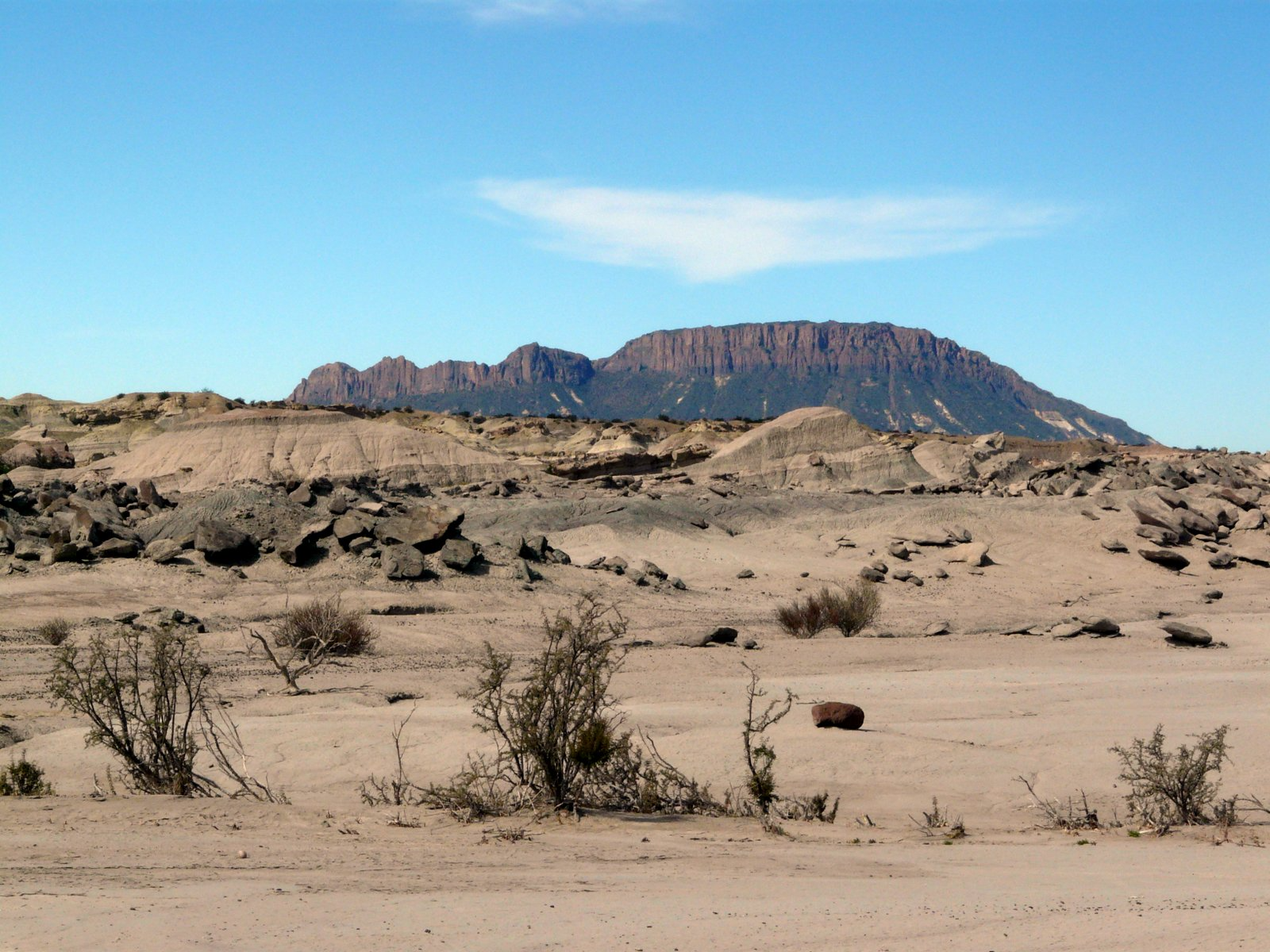
A desert scene with large red mountain mesa in the background.

Ischigualasto National Park. Benjamin Dumas. CC BY-NC-SA 2.0

Before Spain began its conquest of South America, the area that now makes up the parks was inhabited by several groups of Indigenous people who lived as semi-nomadic hunters and gatherers, including the Diaguita and Huarpes.

The Ischigualasto and Talampaya Parks are more than just sites of great natural beauty. They are a journey into the history of this planet. Their spectacular geological formations, unparalleled scientific significance and cultural heritage have rightfully earned them a place on UNESCO’s list of World Heritage sites.

GETTING THERE

Fellow travelers recommend reaching the parks by taking an airplane to Villa Union, the closest neighboring city. From there you can rent a car, and it is about a 40-minute drive to Talampaya. You could also stay in La Rioja, which is about a 2-hour drive from the parks. Rough camping is permitted in the buffer zone at Ischigualasto Park, which has a small visitor center with an interpretive display, four toilets and a single ranger’s residence. Small buffet food services are available at both parks. Walking trails and interpretive signs are scarce. There are full-service facilities, lodging, commerce and medical care in the nearby towns of San Agustin in San Juan Province and Patquja and Villa Union in La Rioja Province. There are agencies in La Rioja and Villa Union that offer guided tours of the park.


Rebecca Pitcairn

Rebecca studies Italian Language and Literature, Classical Civilizations, and English Writing at the University of Pittsburgh. She hopes to one day attain a PhD in Classical Archeology. She is passionate about feminism and climate justice. She enjoys reading, playing the lyre, and longboarding in her free time. 

Fanning the Flames: Heat Waves Across America Set to Get Worse

An unending barrage of heat waves has pummeled North America in 2024, with climate change the likely culprit.

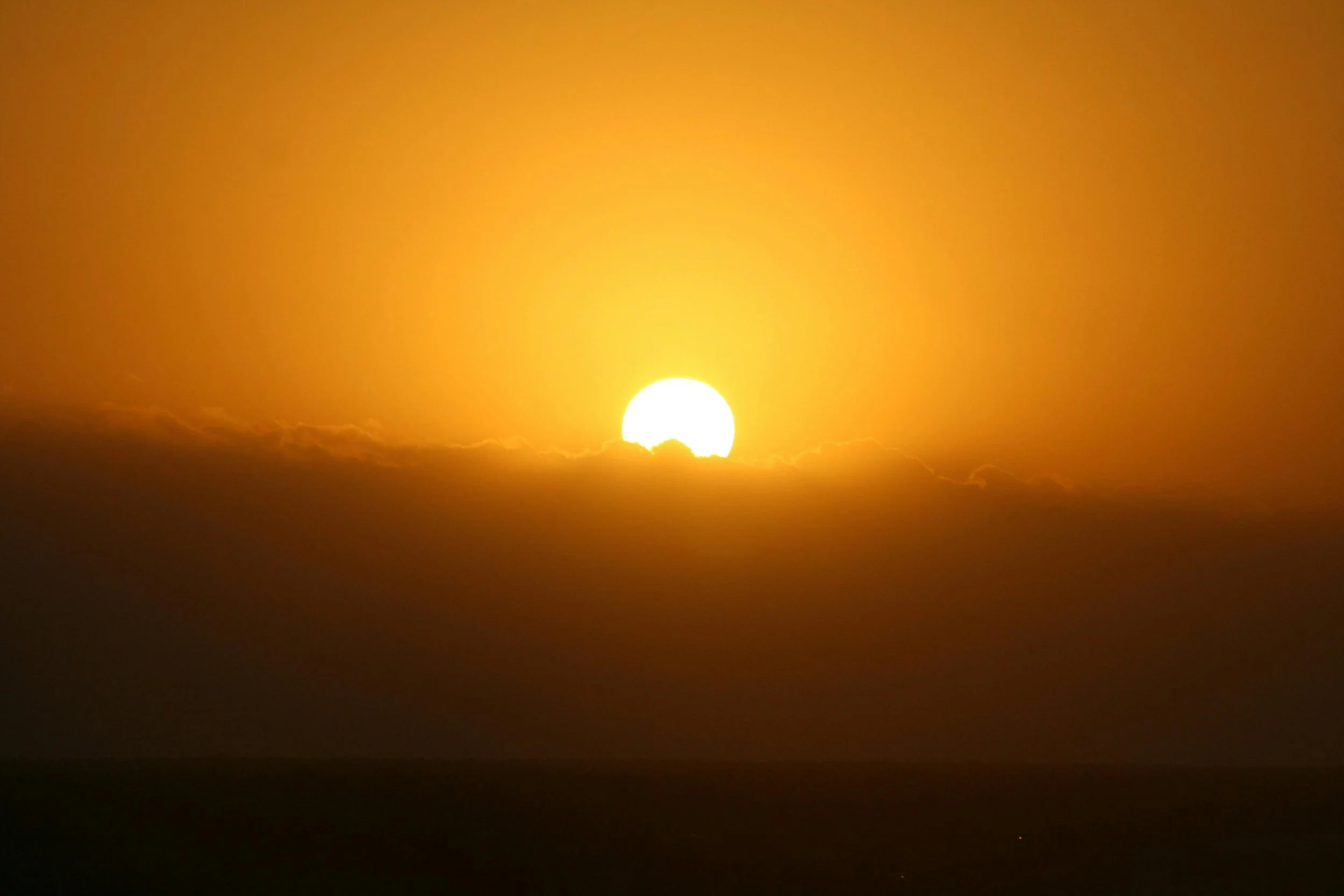
Golden sun rising through clouds in the sky

The sun rises on another 100-degree day in California. Pixabay. CC0

Climate change is an ongoing and severe crisis that is affecting all parts of the globe in different ways. From rising sea levels to increasingly chaotic weather patterns, every part of human society is at risk of some adverse effects.

North America has been suffering droughts on the west coast and frequent hurricanes and tornadoes on the east, but the entire continent is united in facing historically high temperatures. Almost the entire month of July has seen a solid string of heat waves, appearing in every corner of the continent. According to the United States Environmental Protection Agency (EPA), these heat waves have become far more frequent in the last few years, rising from two waves yearly in the 1960s to around six annually in the 2010s. In addition, heat waves have become more intense over the last few decades, with temperatures in Mexico and Central America brushing 125 degrees Fahrenheit in a historic first. Las Vegas also recently witnessed a record-breaking 115 degree day on July 12th, topping off a seven-day streak of broken records.

And these heat waves are only set to continue. As of the time of writing, heat waves are expected to renew their assault on the west coast, with temperatures projected to reach up to 110 degrees Fahrenheit and effect Washington, Nevada, Oregon, Arizona, Idaho and California. In 2023, Las Vegas never dropped from 100 degrees during the entire month of July, while this year’s forecast suggests that the average will have risen to 103 degrees by the end of the month. In addition, July 20th saw parts of Florida setting daily temperature records at around 97 degrees. This is a solid increase across the board for this time of year, with those same parts of Florida sitting at around a mean temperature of 84.9 degrees last year.

The biggest immediate threats presented by the rising temperatures, however, are wildfires. Hot and dry conditions naturally portend fires, and the already dangerous wildfire seasons in California and Canada have only gotten worse as the heat steadily increases. As of July 21st, several wildfires are raging in Oregon and western Canada, and incoming thunderstorms are predicted to make things substantially more difficult for the firefighters struggling to contain the blazes.

Although official statements stop short of absolute certainty, the vast majority of organizations are pinning the blame for these heat waves squarely on climate change. A series of incidents—the rising frequency and intensity of heat waves across the globe over the last few years, reports from 2022 about sidewalks melting in Europe, and 2023's historically devastating Canadian wildfire season—have raised concerns about the damage climate change can do even in the short term. That 2024's heat waves have been worse are suggestive of what is to come.

According to the Canadian Climate Institute, climate change has been proven to raise the frequency of severe heat waves, as well as slowing them down and causing them to linger over certain areas. Additionally, a statement released by the World Weather Attribution suggests that wildfire risk has become significantly higher as a result of climate change, making 2023’s wildfire season in Quebec close to 50% more intense.

It is becoming increasingly clear how rapidly climate change is altering the planet. Heat waves have been increasing in severity for the past few years, with 2023 setting global heat records and 2024 looking to blow even those historic numbers out of the water. These events are becoming increasingly common as time goes on, and it is possible that global average temperatures will rise five  degrees by 2050, and around 10 degrees by the end of the century. Even the deviations we’re experiencing now are severe, but it looks like the world is going to get even hotter—and fast.


Ryan Livingston

Ryan is a senior at The College of New Jersey, majoring in English and minoring in marketing. Since a young age, Ryan has been passionate about human rights and environmental action and uses his writing to educate wherever he can. He hopes to pursue a career in professional writing and spread his message even further.
UAE Activists Sentenced on Terrorism Charges

The United Arab Emirates has sentenced 43 activists to life in prison for their alleged participation in terrorist organizations.

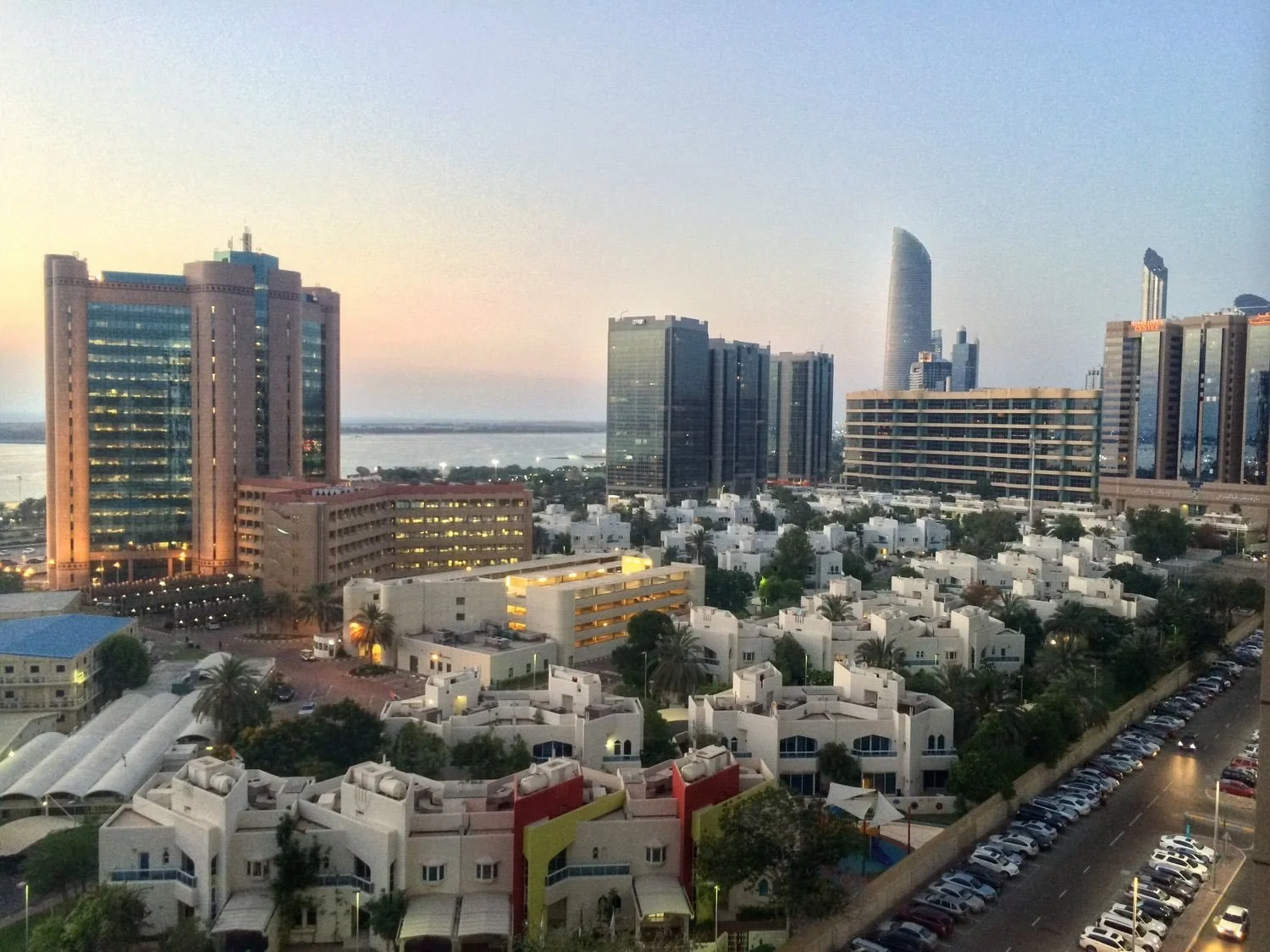
An aerial view of Abu Dhabi in the evening, with a varied skyline and luxury apartments and residences.

Khalidiya, Abu Dhabi. Thomas Galvez. CC BY 2.0

In 2024, the UAE tried 84 defendants for terrorism charges for  "co-operating with al-Islah" and money laundering, individuals human rights groups have determined are activists and not terrorists. Al-Islah is considered to be the Emirati version of the Muslim Brotherhood, a pan-Islamic organization declared a terrorist group by the Emirates. In 2014, the UAE passed Terrorism Law No. 7. The law defines terrorism as, among other things, “stirring panic among a group of people” and “antagonizing the state,” a broad definition that makes it possible for peaceful dissent to be labeled terrorism. “Terrorist organizations” are defined as groups that act to create “direct or indirect terrorist outcome regardless of the … place of establishment of the group or the place where it operates or exists, or the nationality of its members or places.” Along with the passage of the law, the UAE state news agency announced that the cabinet had “approved a list of designated terrorist organizations and groups in implementation of Federal Law No. 7 for 2014.” Muslim organizations that operate legally in the United States and Norway were included on the list.

On July 10, 43 of the defendants were sentenced to life in prison, while 10 received 10 to 15 years in prison. Human rights organizations, including Human Rights Watch and Amnesty International, insist that the defendants are innocent and that the UAE is abusing its justice system to punish activists, government critics and democracy advocates for forming an independent advocacy group in 2010. In the UAE, these groups mainly advocate for freedom of expression and assembly, the right to a healthy environment and workers' rights, as well as an end to arbitrary detention, torture and the death penalty. 

The indictment, the charges, the defense lawyers and the defendants' names have all been kept secret by the government. They are known only partially through leaks. One of the known defendants, Ahmed Mansoor, is on the Board of the Gulf Centre for Human Rights (GCHR) and the MENA Division Advisory Committee for Human Rights Watch, and was arrested on charges relating to his human rights activities. Another, Mohammed al-Roken, is a human rights lawyer who was arrested on charges related to his peaceful criticism of the Egyptian and Emirati authorities. Yet another three, Nasser bin Ghaith, Abdulsalam Darwish al-Marzouqi and Sultan Bin Kayed al-Qasimi, are academics.

The mass sentencing marks the UAE’s second-largest trial of this nature. The proceedings and the verdict were criticized for the lack of transparency and fairness, along with various other allegations of violations of justice, including but not limited to torture, solitary confinement, withholding evidence from lawyers and the removal of key witnesses. Joey Shea, a UAE researcher at Human Rights Watch, called the sentencing a “mockery of justice”, saying, “The UAE has dragged scores of its most dedicated human rights defenders and civil society members through a shamelessly unfair trial riddled with due process violations and torture allegations.”

Authorities launched the new mass trial during COP28, the international climate gathering held in Dubai in 2023. The case had been ongoing since 7 December 2023, yet the UAE only acknowledged the trial was taking place a month after human rights groups and journalists first uncovered and reported it. A number of the defendants had already spent ten years behind bars after being convicted in 2013 for their alleged involvement with the Justice and Dignity Committee, a branch of the al-Islah movement. This has sparked protests that the Emirati authorities are violating the principle of double jeopardy, which prohibits trying people twice for the same offense after receiving a final verdict.

The mass trial reflects a broader trend of the UAE using its anti-terrorism laws to stifle dissent and suppress political opposition. Devin Kenney, Amnesty International’s UAE Researcher, said in a statement, “Trying 84 Emiratis at once, including 26 prisoners of conscience and well-known human rights defenders is a scarcely disguised exercise in punishing dissenters…This case should be the nail in the coffin of the UAE’s attempts to disguise its horrendous human rights abuses behind a progressive façade.”

The UAE government, however, has staunchly defended its judicial process, maintaining that the convictions were based on solid evidence of terrorism-related activities. Officials have argued that the country’s stringent laws are necessary to combat extremism and ensure national security. The court ruled that those convicted “have worked to create and replicate violent events in the country, similar to what has occurred in other Arab states—including protests and clashes between the security forces and protesting crowds—that led to deaths and injuries and to the destruction of facilities, as well as the consequent spread of panic and terror among people.”

Critics argue that the country’s use of anti-terrorism laws to quash political dissent is part of a wider pattern of repression. They point to other cases where activists, journalists and opposition figures have been detained and sentenced under similar charges, calling for greater scrutiny of the UAE’s legal practices and human rights record. The recent trial is a stark reminder of the ongoing struggle for human rights and justice in the UAE and the broader Arab world. The international community’s response to this case will likely shape the future of human rights advocacy in the region and beyond, as activists continue to call for greater transparency, accountability and fairness in the UAE’s judicial system.

TO GET INVOLVED

Emirates Detainees Advocacy Center: Emirates Detainees Advocacy Centre (EDAC) is a non-profit organization founded in 2021 by a group of human rights activists to support detainees of conscience in the UAE and shed light on their cases. Their website contains important information on cases in the UAE.

Amnesty International: Amnesty International is a global organization whose mission is to undertake research and action focused on preventing and ending grave abuses of these rights. Their website provides information on their projects and how to join their organization.

Human Rights Watch: Human Rights Watch (HRW) is an organization that investigates and reports on abuses happening in all corners of the world. They work to protect the most at risk, from vulnerable minorities and civilians in wartime to refugees and children in need. They direct their advocacy toward governments, armed groups and businesses, pushing them to change or enforce their laws, policies and practices. HRW's website provides information on their projects and how to join the organization.


Rebecca Pitcairn

Rebecca studies Italian Language and Literature, Classical Civilizations, and English Writing at the University of Pittsburgh. She hopes to one day attain a PhD in Classical Archeology. She is passionate about feminism and climate justice. She enjoys reading, playing the lyre, and longboarding in her free time. 

6 of August's Hottest Music Festivals

From the U.S. to Hungary, music festivals have blossomed over recent decades and now attract millions of people from around the world every year.

A lit up stage at night with festivalgoers cheering in the crowd as confetti falls from the sky.

Music festival performance. Veld Music Festival. CC BY-SA 2.0

Since the origins of music festivals sprung up in ancient Greece in 582 BC, these lively events have evolved from local music and sports competitions to globally renowned happenings. During August, many people flock to these festivals to experience remarkable performances accompanied by the summer weather.
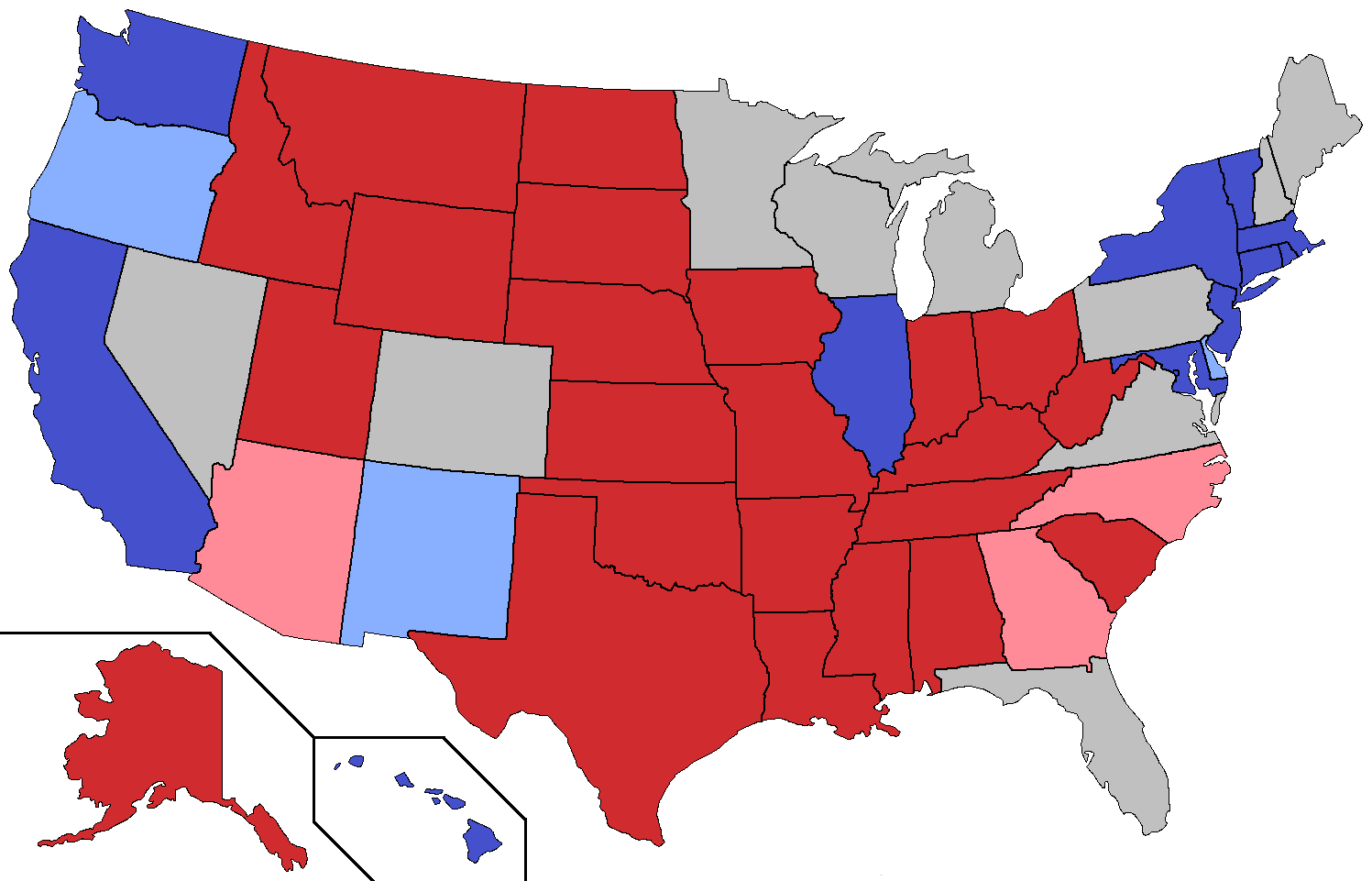
Boomtown Festival, England

Two artists on stage silhouetted by warm orang and red lights, playing the guitar and bass.

Performers at the 2006 Boomtown Festival, UK. Dimi15. CC BY-NC-SA 2.0

With over 50 venues, a dozen main stages and thousands of performers, the Boomtown Festival located near Winchester in the United Kingdom brings eight city districts to life from August 7 to 11, 2024. The lineup is often kept a mystery until right before the festival, but the Boomtown Festival generally incorporates all kinds of genres into the lineup, from folk music to EDM.

Festival-goers are encouraged to camp overnight. Every ticket provides access to the Campsite Villages located throughout the festival. For eco-conscious attendees, the Boomtown Festival offers upgraded Green Transport Citizen Entry Tickets at a discounted rate for those who arrive via public transport.

Burning Man, U.S.

An aerial view of Burning Man music festival, the crowd littered with multi-colored neon lights, food trucks, and art structures

Burning Man, 2013. Chayna Girling. CC BY-NC-ND 2.0

From August 25 to September 2, 2024, tens of thousands of people will come together in Nevada’s Black Rock Desert for the notorious Burning Man music festival. The theme for Burning Man 2024 is "Curiouser & Curiouser," inviting participants to explore their curiosities and wonders. The lineup has not yet been released, but Burning Man is known to host artists from many different genres.

Burning Man evolved from a spontaneous event on a San Francisco beach in 1986, when Larry Harvey and Jerry James drew a crowd to burn a wooden man in celebration of the Summer Solstice. Since then, Burning Man has become an official event that has attracted as many as 75,000 people. Ticket prices range greatly, from $225 tickets for low-income participants who qualify for the Ticket Aid Program, to $2,500 for early-bird FOMO Tickets. The Main Sale tickets cost $575 in addition to a $150 vehicle pass.

Creamfields, England

Festivalgoers at a neon pink lit DJ stage dancing along.

2005 Creamfields music festival, UK. Edith Adasme. CC BY-NC-SA 2.0

From August 22 to 25, 2024, Creamfields will return to Daresbury, UK, for another electrifying multi-day music festival. Since its origins as a weekly house music night called Cream, the event has transformed from a cozy club night into an iconic music festival that attracts thousands of attendees each day. 

With each stage dedicated to a different genre, Creamfields attracts lovers of all kinds of music. Dozens of artists will perform throughout the festival, from blk. to Calvin Harris. For an elevated festival experience, Creamfields offers a range of ticket options to suit different preferences and budgets. The ticket costs range from Standard Day Tickets, which cost about $100, to four-day Gold Tickets that cost about $550. 

Edinburgh Fringe Festival, Scotland

Three street performers in facepaint holding multi-colored umbrellas in downtown Edinburgh

Edinburgh Fringe 2011, Scotland. Anriro96. CC BY-NC 2.0

The 2024 Edinburgh Fringe Festival will bring 14 venues to life throughout Edinburgh from August 2 to 26. The origins of the Edinburgh Fringe Festival date back to 1947, when eight theater groups performed on the fringes of the Edinburgh International Festival. Since then, the Edinburgh Fringe has drawn millions of people.

Edinburgh Fringe features thousands of shows, from comedy to music. With many free shows, festival-goers can attend the Edinburgh Fringe Festival regardless of financial status. For those on a budget or with limited travel ability, there are some virtual events that festival-goers can attend as well. 

Lollapalooza, U.S.

A singer crowdsurfing over cheering fans while still holding onto the corded microphone.

Cage the Elephant crowdsurfing at Lollapalooza. Henrique Oli. Wikimedia. CC 3.0

Lollapalooza returns to Chicago’s Grant Park from August 1 to 4, 2024, featuring a star-studded lineup with headliners like SZA, Megan Thee Stallion, The Killers, Blink-182 and Skrillex. Lollapalooza began as a traveling festival in 1991 when founder Perry Farrell envisioned it as a grand farewell for Jane’s Addiction. 

Since then, the festival has found its home in Chicago’s Grant Park, growing from a two-day event into a four-day extravaganza that attracts 100,000 attendees daily. With international outposts in cities like Santiago, São Paulo, Berlin and Mumbai, Lollapalooza’s impact has transcended borders. Ticket prices range from $155 for general admission to $4,500 for platinum two-day tickets. 

Sziget Festival, Hungary

A full crowd at night dancing along against the lit stage.

A performance at the Sziget Festival, Hungary. Opethpainter. CC BY 2.0

From August 7 to 12, 2024, the Sziget Festival will transform Budapest into a musical paradise. At the Sziget Festival, festival-goers can witness world-renowned performances by artists like Halsey, Janelle Monáe, Sam Smith, Fred Again, Liam Gallagher, Martin Garrix, Skrillex, Stormzy, Louis Tomlinson and RAYE.

Tickets are available for purchase directly from the website. The ticket prices range from less than a dollar to about $2.50. Families are welcome, and children under 11 can enter free with a child wristband. Basic camping is included with the tickets, allowing festival-goers to set up a tent in any free camping area.


Madison Paulus

Madison is a student at George Washington University studying international affairs, journalism, mass communication, and Arabic. Born and raised in Seattle, Washington, Madison grew up in a creative, open-minded environment. With passions for human rights and social justice, Madison uses her writing skills to educate and advocate. In the future, Madison hopes to pursue a career in science communication or travel journalism.

Big Brother is Watching: China’s Social Credit System

The nuanced nature of China’s social credit system has sparked global debate.

People walking through a crowded market street in Shanghai. Items of all kinds for purchase hang from the stall walls with a glimpse of skyscrapers in the background.

People walking through crowded streets in Shanghai. Rawpixel. CC0 1.0

Amid social and political turmoil, many are fascinated by order, hierarchy and control. One of China’s long-term goals is technological self-reliance, reflected in the country’s controversial social credit system. Millions of citizens are defined by and reduced to a numeric value, which is generated as their daily interactions and purchases are closely monitored. The system was predominantly economic—similar to a FICO score—until 2004, when President Jian Zemin expanded the system by adding a social aspect. The current social credit system was formally introduced in 2014, and by 2022, 80% of China’s cities, counties and regions had instituted some version of it.

The social credit system varies geographically. Some citizens receive a numeric score between zero and 1,000, while others are marked by a letter score from A to Z. The system is divided into four categories: business, social, government, and judicial. It operates punitively, rewarding citizens for good behavior and punishing them for bad behavior. A drop in one's score can come from traffic violations, littering and gossiping, while good deeds like donating to charity and assisting the elderly can increase it. The more points accrued, the more preferential treatment one receives, including discounts and travel perks. However, if a citizen's score is too low, they can be prevented from traveling or landing work. In 2019, millions of Chinese citizens were banned from buying plane tickets due to low social credit scores. China’s social credit system has been compared to the Black Mirror episode "Nosedive," which depicts dystopian society in which one’s worth is defined in relation to their portrayal on social media.


Looking up at the corner of a building with two surveillance cameras looking out

Surveillance equipment. Rawpixel. CC0 1.0

The government claims that the social credit system was instituted to “build trust” amongst citizens. However, the lack of privacy and blacklist perpetuated by the system has sparked global concern. Even by criticizing the government, your social credit score is lowered, and in some cities, the government pays citizens to report good or bad behavior. Recent studies suggest that the portrayal of China’s social credit system in the media is exaggerated. According to the MIT Technology Review, the system primarily functions as a comprehensive record of data, documenting companies’ financial histories. It is therefore less important as a single score than as a record.

The social credit system is only one aspect of government surveillance in China. The country’s firewall limits internet searches, and there are at least 200 million surveillance cameras installed that can use facial recognition software. China’s government operates without rule of law, leading to the abuse of power. Surveillance capitalism ultimately poses a threat to individual autonomy and democratic governance. The question remains as to how far it will spread in the coming years.


Agnes Volland

Agnes is a student at UC Berkeley majoring in Interdisciplinary Studies and minoring in Creative Writing, with a research focus on road trip culture in America. She currently writes for BARE Magazine and Caravan Travel & Style Magazine. She is working on a novel that follows two sisters as they road trip down Highway 40, from California to Oklahoma. In the future, she hopes to pursue a career in journalism, publishing, or research.