2024 Paris Olympics: Challenges, Protests and Controversies

From transportation and public safety concerns in Paris to discontent in Tahiti, the 2024 Paris Olympic Games are riddled with contention.
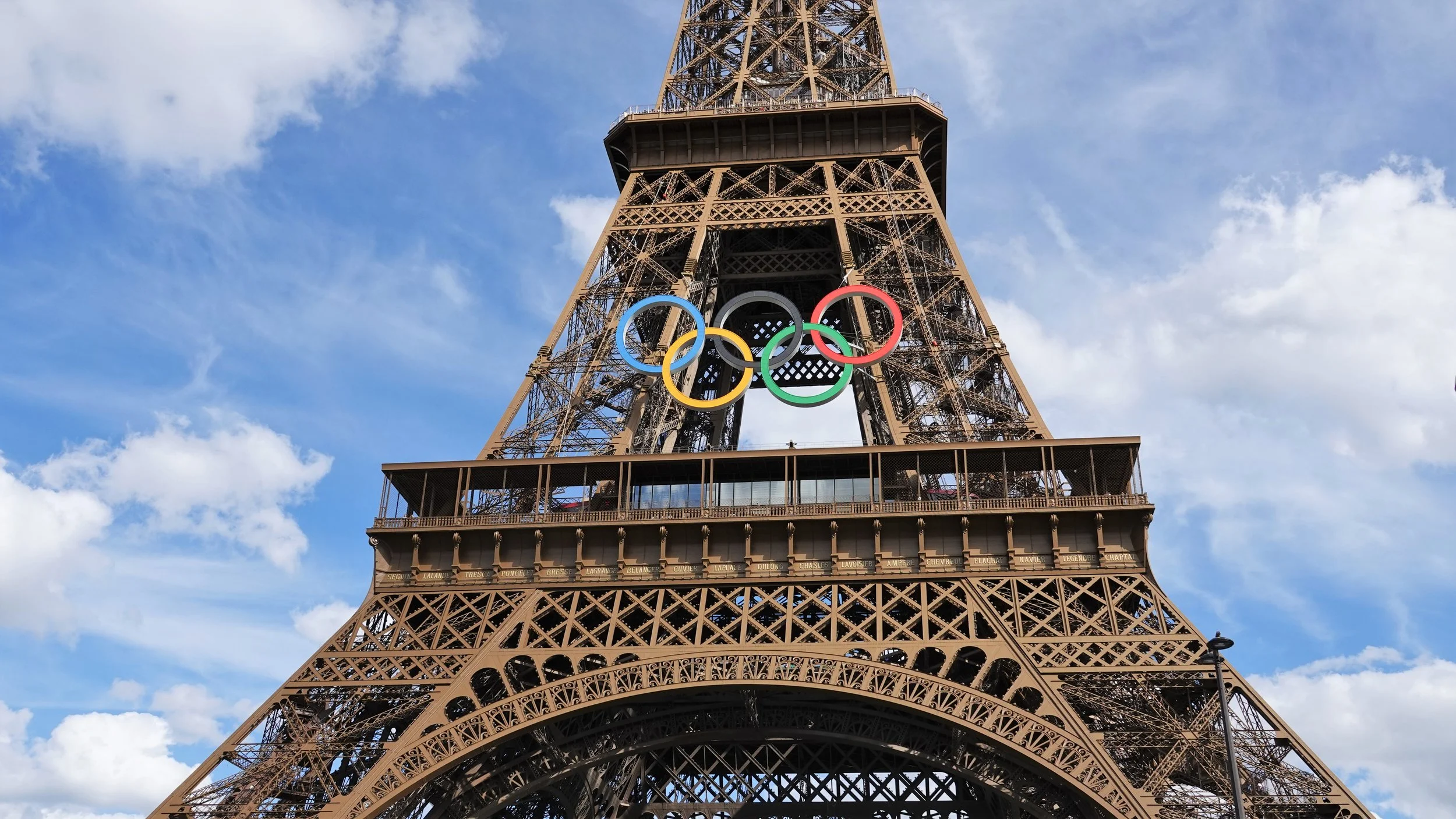
Looking up at the Eiffel Tower decorated with the olympic rings.

The Eiffel Tower with the logo of the Olympic Games. Ibex73. CC BY 4.0 via Wikimedia Commons

As the countdown to the 2024 Olympic Games in Paris reaches its final days, anticipation is building among the estimated 15 million visitors set to descend upon the city. However, this year’s games are not without their share of controversies. Unrest and protests have begun to surface, not just from within the borders of France but also among the vast number of international travelers and athletes. These contentious issues are casting a shadow over the upcoming Games, adding a layer of uncertainty and complexity to an event traditionally associated with unity and the celebration of athleticism.

Security Concerns, Congested Transportation, Unhoused Parisians

The opening ceremony, scheduled to take place in the open air along the historic Seine River, has raised a number of security concerns. These concerns are particularly acute because of the memory of the terrorist attacks in Paris in 2015. Furthermore, ongoing geopolitical unrest, notably the war between Gaza and Israel and Russia’s continued aggression towards Ukraine, adds to the apprehension. In anticipation of potential protests, the French government has reduced the number of tickets for the public from 600,000 to 300,000 and plans to deploy around 45,000 French police and security forces. During the opening ceremony, an additional 35,000 security agents are expected to be on duty alongside the military to safeguard against security threats. The recent stabbing of a French counter-terrorism soldier over a week before the games are set to begin has only increased tensions.

Along with security concerns come concerns over the expected additional congestion of the city’s already packed public transport system. Many Parisians believe the transportation is largely underprepared for the influx of tourists as they already deal with poor frequency of trains, overcrowding, and general uncleanliness. Those who are financially able are electing to leave the city for the period of the games, while others will be forced to turn to alternative modes of transport and access such as biking, walking or telecommuting. Those who are unable to consider alternative transportation will have to endure long commutes with few alternatives. In response to criticism over transportation concerns, the French president of the Ile-de-France region, Valérie Pécresse, made a statement to worried citizens, "Don't be afraid to walk a little, it's good for your health". 

The Olympics have also brought the plight of the city’s unhoused population to the forefront. The Olympic Village has been constructed in one of Paris’s most impoverished suburbs, an area where thousands of individuals reside in street encampments, shelters and derelict buildings. In a controversial move, the French government transported thousands of these unhoused individuals on buses to other French cities such as Marseille and Lyon. They were removed from the city under the pretext of promising housing elsewhere, only to find themselves living on unfamiliar streets far from their original homes. This action has drawn widespread criticism as it is in no way a permanent solution, but rather a means to conceal the city’s homelessness issue and present a more idyllic image of Paris. While the government denies any connection between this relocation and the Olympics, an email obtained by the New York Times and initially reported by L’Equipe reveals a government housing official stating the objective to “identify people on the street in sites near Olympic venues” and relocate them prior to the Games.

Water Sport Events

The Seine River, the chosen venue for the opening ceremony, will also host the triathlon and marathon swimming events. This decision has ignited controversy, as many Parisians view the river as polluted and unsafe. Swimming in the Seine has been illegal for over a century. In an effort to clean the river, Paris has invested $1.5 billion in infrastructure to prevent bacteria-laden wastewater from entering the river. Despite the clean up, experts are still uncertain if the river’s E. coli levels will be safe for swimming in time for the events, and no backup plan has been announced. In a show of confidence, President Emmanuel Macron and Paris Mayor Anne Hidalgo have vowed to swim in the river themselves to demonstrate its safety. Just this past Saturday, French Sports Minister Amélie Oudéa-Castéra took the plunge into the river.

In an unusual display of public anger, a distinctive form of protest seemed to be in the works for several weeks. Known colloquially as the ‘poop protest’, it called for citizens to deposit their waste into the Seine on June 23, 2024, strategically timed to coincide with the President’s original planned swim. Remarkably, an unidentified engineer had developed a website that calculates the exact moment for the waste drop-off, ensuring it aligns with the President’s swim based on the individual’s distance from the river. This protest concept was not merely a reflection of skepticism regarding the cleanliness of the Seine, but also a broader expression of French dissatisfaction with the President’s recent election gambit and the anticipated disruptions the Olympic Games are expected to bring to the city. The protestors seem to have been more bark than bite, however, because after Macron canceled his originally planned dip Oudéa-Castéra's swim took place nearly without incident; the Sports Minister slipped while getting in the water.

Meanwhile, in French Polynesia, Tahiti is set to host this year’s Olympic surfing events. Tahiti is a well-known destination for surfing competitions, and has been so for many years. The International Surfing Association (ISA) voiced its opposition to the construction of a new aluminum judges’ tower for the 2024 Olympics in Tahiti, amid concerns from locals and environmentalists about potential damage to the local coral reef. Despite the continued use of a wooden tower at Teahupo’o, one of the world’s most famous surf breaks, for the past 20 years, Olympic organizers and government leaders greenlit construction on a new tower due to safety concerns. The ISA had proposed more environmentally friendly solutions, such as building the tower on land and using digital cameras on the wooden tower, but these were rejected in favor of the new structure.

The controversy escalated from the first peaceful protest in October, with over 200,000 people signing an online petition against the tower and prominent surfers lending their support. An incident where a barge being used in the construction got stuck on the offshore reef further fueled local anger. Despite apologies from the president of French Polynesia, Moetai Brotherson, and assurances from Barbara Martins-Nio, general manager of the 2024 Paris Olympic committee based in Tahiti, that the barge incident was a mistake, the new tower was still deemed necessary for the competition. However, many locals, including the mayor of Taiarapu Ouest, stood by the belief that building the tower outweighed the costs. The protests failed, and the tower has since been completed.

As the 2024 Olympic Games in Paris approach, they carry the weight of numerous controversies and the hopes of millions of spectators, eager to participate in a global event of this magnitude for the first time since the COVID-19 pandemic. From security concerns and transportation issues to the treatment of the city’s unhoused population and environmental concerns, these Games are a testament to the complex interplay of sports, politics and society. Despite the controversies, the essence of the Olympics remains—unity, athleticism and global camaraderie. As the world tunes in, these Games will be a reminder of our shared love for sport and competition, and the collective challenges we need to address.


Julz Vargas

Julz is a student at Wellesley College studying Anthropology and Spanish. She grew up in Los Angeles, CA, and has studied all around the world in places such as Costa Rica, Greece, Iceland, and Spain. She is passionate about employing writing as a tool to explore human connection and diversity. Julz aspires to foster cross-cultural connections through community-based research, amplifying inclusive and diverse media about global cultures, foods, and people, to encourage individuals to engage more wholly with the world.

Italian Women Take Action Against Femicide

A family tragedy turns into a political movement in Italy, a country that saw over 100 femicides in 2023.

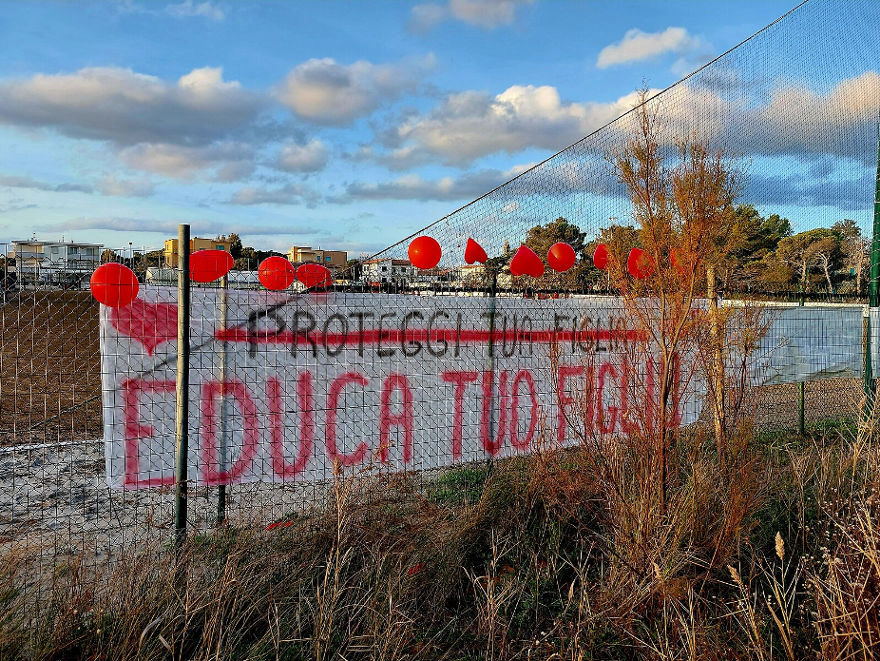
Behind a chainlink fence, a large wall is grafittied with a large protest slogan, the first line crossed out and the second part larger in red. Red ballons float above the wall.

Statement for the femicide of Giulia Cecchetin and for all women victims of femicide. "Instead of protecting your daughter, educate your son." Anna Massini. CC BY-SA 4.0

Giulia Cecchettin was 22 years old and only days away from attaining her college degree when her life was brutally ended by her ex-boyfriend, Filippo Turetta. Turetta was enraged that Cecchettin had decided to end their romantic relationship. He had been controlling while the two were together, to the extent that he had installed a spy app on Cecchettin’s phone to monitor her movements. On November 11th, 2023, Cecchettin disappeared after going to buy her graduation outfit with Turetta. After a search that lasted a week, her body was found wrapped in black plastic bags and covered in more than twenty stab wounds. A week later, Turetta was arrested near Leipzig, Germany. He was extradited to Italy to face trial for the murder and is now serving time in prison. 

The murder gained international coverage thanks in part to the efforts of Giulia’s sister, Elena Cecchettin, who turned her family tragedy into a political movement. The day that Turetta was extradited from Germany, Elena posted a letter on social media. In the letter, Elena condemned the culture of violence against women that pervades Italy. “Turetta is often referred to as a monster, but he is not a monster,” she says in the letter. "A monster is an exception, a person outside society. The ‘monsters’ are not sick, they are healthy children of patriarchy, of rape culture. Don't take a minute's silence for Giulia, burn everything for Giulia.”

A poster with a depiction of Giulia drawn, half of her alight in flame, and a speech bubble protest slogan

Poster for Giulia Cecchettin in Naples, "For you we will burn everything." Rebecca Pitcairn.

A video of Elena reading her statement received millions of views. Elisa Ercoli, director of Differenza Donna, a women’s rights organization, told BBC that the killing was "the last straw, after a string of high-profile cases of femicides,” and that “Italy is a deeply patriarchal country.” Until 1981 honor killings were punished less stringently than other murders, and only in 1996 did rape start to be considered a crime against the person assaulted rather than a crime against “public morality.” As of 2024, only 58 percent of Italian women own a bank account, and in 2022, 44,669 women left their jobs due to the challenge of reconciling working and family life. According to statistics, a woman is murdered in a femicide every 72 hours. Giulia Cecchettin’s murder was the 105th of 120 femicides that occurred in Italy in 2023. 

After Giulia’s murder, women took to the streets and the piazzas of Italy in massive numbers to defend their right to live and to create awareness about Italy’s epidemic of violence against women. More than 500,000 people attended a protest in Rome by the Non Una Di Meno, (Not One Less) women’s rights movement, which hosted marches all across Italy in 2023. Students at the University of Padua (where Giulia studied), when asked to hold a minute of silence in Giulia’s honor, instead spent the minute making noise, clapping, reading poetry and singing.

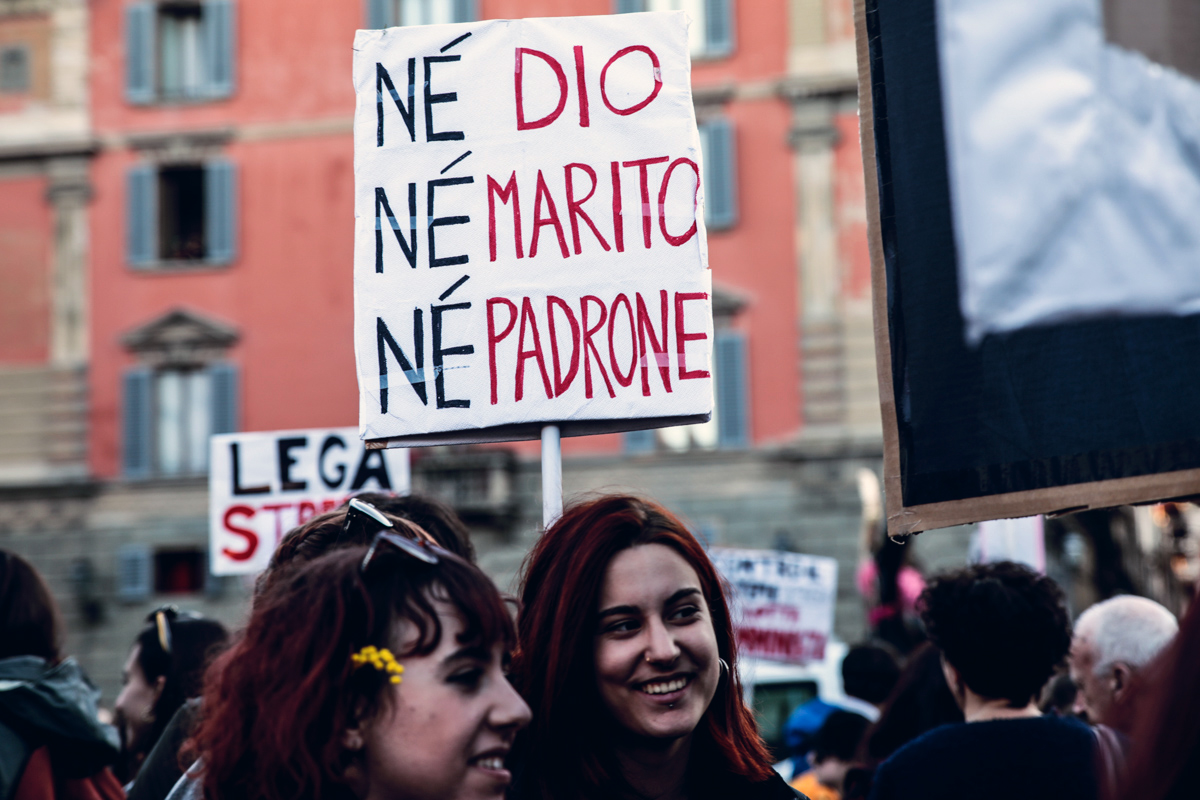
Women at a protest in the city, holding up their signs.

Protest Organized by Non Una di Meno, Firenze, "Neither God, nor husband, nor master." Valentina Ceccatelli. CC BY-NC-SA 2.0

Feminists and student collectives in other cities organized torchlight walks and “angry walks” in response to the moments of silence requested by schools in a culture where insidious silence already envelops the topic of violence against women. Non Una di Meno led students from multiple universities and hundreds of thousands of protestors across Italy in a “moment of noise” for Giulia on November 25, 2023, the International Day for the Elimination of Violence Against Women.

Many women, inspired by Elena Cecchettin, adopted the poem “Si manana me toca, quiero ser la ultima” (“If it's my turn tomorrow, I want to be the last”) by Peruvian poet and activist Cristina Torres Cáceres. The poem was written in 2011 to honor women and the victims of violence in Latin America after the murder of Mara Castilla. “If tomorrow it’s me, if I don’t come back tomorrow, mother, destroy everything./If it’s my turn tomorrow, I want to be the last,” Castilla wrote.

Thousands attended Giulia’s funeral, which was broadcast live on television. In a eulogy delivered by Giulia’s father, Gino Cecchettin, he called for men to stand against patriarchy. “We should be the first to show ourselves as agents of change against sexual violence,” he said as he addressed the crowd, “Let us speak to other men we know, let us challenge the culture that tends to play down violence by men who appear to be normal.” As Giulia’s coffin was taken out of the church, members of the crowd shook their keys in a symbolic call for violence against women to not be tolerated in silence.

TO GET INVOLVED

Non Una di Meno: This organization’s website has information about demonstrations and campaigns against violence against women that are currently active in Italy. 

Differenza Donna: This organization provides legal assistance, a hotline and shelter for victims of gendered violence. Their website includes a link to donate to their fight to protect women. 

Centro Antiviolenza Artemesia: A shelter for victims of domestic abuse that accepts donations and volunteers.


Rebecca Pitcairn

Rebecca studies Italian Language and Literature, Classical Civilizations, and English Writing at the University of Pittsburgh. She hopes to one day attain a PhD in Classical Archeology. She is passionate about feminism and climate justice. She enjoys reading, playing the lyre, and longboarding in her free time. 

Become an Artist-in-Residence at a National Park

Writers, painters and musicians can receive a stipend to create in some of the most majestic landscapes in the US.

Woman sat in a grassy field in front of an easel, painting with her materials beside her.

Woman painting outdoors. Caroline Veronez. Unsplash

There is a long-running debate over whether to preserve the natural beauty of western landscapes or exploit them. The Artist-in-Residence program many national parks are now offering serves as a compromise, honoring these landscapes and giving back to the parks once inhabited by native tribes. This program provides writers, painters, musicians and other artists the chance to refine their art in some of the country’s most scenic landscapes. Selected artists live in the park and receive a stipend, as well as coverage for food and travel expenses. The stipends can reach up to $5,000, with half of it usually given at the start of the program and half at the end. The program lengths vary, but typically last between two to four weeks. These residencies are inclusive, welcoming artists of all backgrounds and ages (although only legal adults may submit applications). Each artist's primary task is to create art inspired by their natural surroundings and—upon completion of their residency—donate a piece of their work to the park.

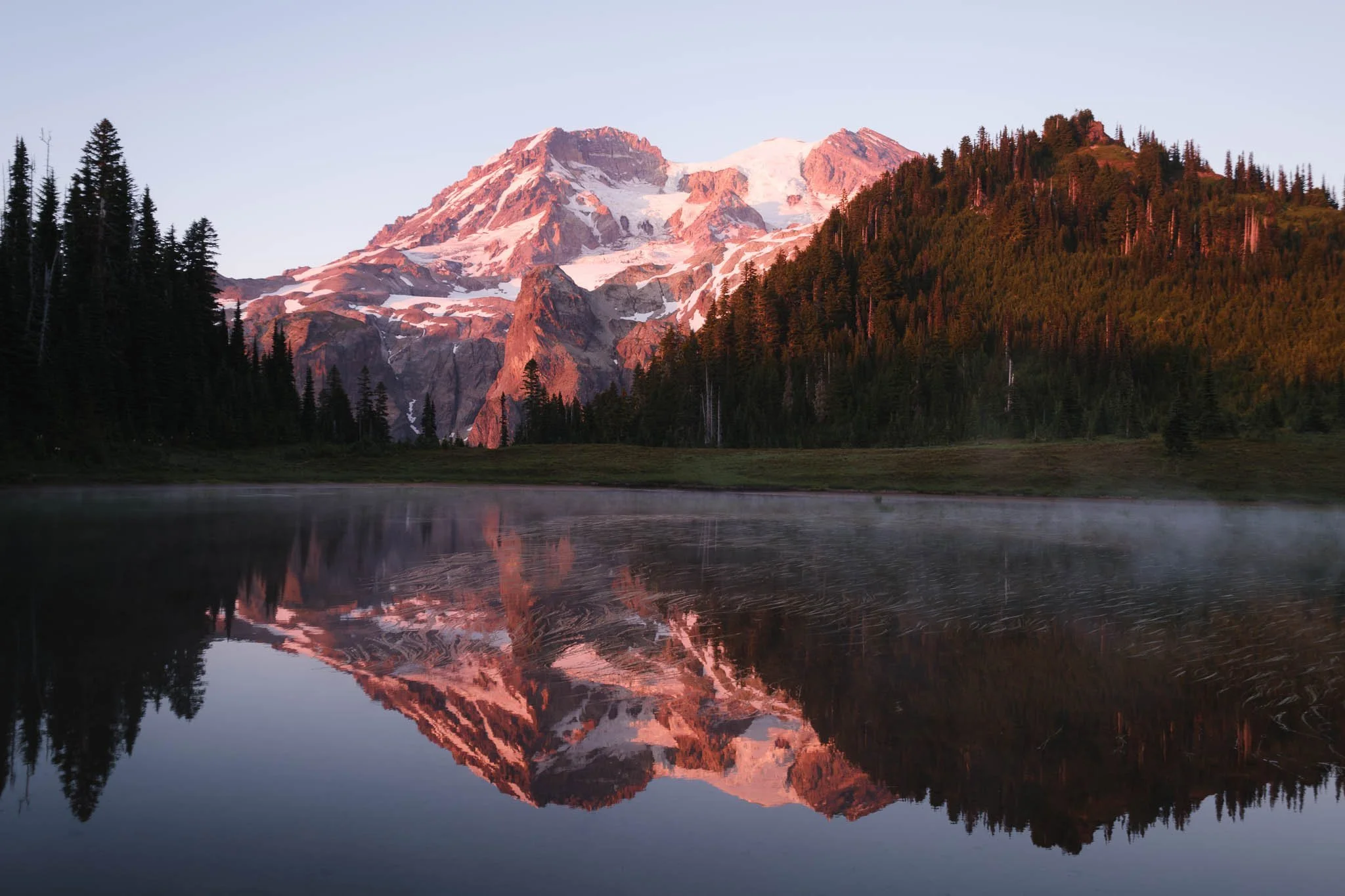
In Mount Rainier National Park, the mountain reflects into a pond below with the light in a pinkish hue.

Mount Rainier National Park. Lily M. Tang. CC BY-NC-ND 3.0

Artist-in-Residence programs welcome unique projects. Felix, a musician, served as the 2021 Artist-in-Residence at Canaveral National Seashore. His project, Listeners, was a collaborative sonic experience, capturing the park’s soundscape through contributions from people who live, work and visit there. Casey, a food writer, served as the 2022 Artist-in-Residence at Acadia National Park. She released a recipe book, Maine Ingredients: Recipes Inspired by Acadia National Park, crafting dishes using local ingredients and traditional regional cuisine.

These programs give artists the chance to immerse themselves in natural landscapes, gaining insight into the indigenous peoples who occupied western landscapes before us and learning about how their legacies live on today. While some view national parks as a byproduct of white settlement, the Artist-in-Residence program forces us to consider how we can shift the narrative, redirect the focus back onto their original inhabitants. The submission window for applicants is open during the summer, so act now! Keep in mind acceptance rates vary based on the park’s popularity. Check out NPAR openings here.


Agnes Moser Volland

Agnes is a student at UC Berkeley majoring in Interdisciplinary Studies and minoring in Creative Writing, with a research focus on road trip culture in America. She currently writes for BARE Magazine and Caravan Travel & Style Magazine. She is working on a novel that follows two sisters as they road trip down Highway 40, from California to Oklahoma. In the future, she hopes to pursue a career in journalism, publishing, or research.

Hunger War: Sudan is Starving

Constant violence is keeping humanitarian aid from entering Sudan.

Refugees seated on the sandy ground outside of a makeshift tent

Refugees from South Sudan. Jill Craig. CC 0

The civil war in Sudan has only sped up after entering its second year. After fighting broke out between the two warring factions in Khartoum in April of 2023, the conflict has spread to all corners of the country as the official Sudanese Armed Forces (SAF) and the paramilitary Rapid Support Forces (RSF) vie for control of the nation.

The rest of the country has been forced to either flee their homeland or suffer through increasingly dire conditions. Chad, South Sudan, and Ethiopia have taken in roughly 1.8 million refugees, but tens of millions of people are still trapped within Sudan, enduring acute food insecurity and outright starvation amid intensely destructive violence.

The United Nations World Food Programme (WFP) has stated that almost nine in ten people living in Sudan are trapped in “relentless violence,” which is fueling unprecedented levels of food insecurity. This crisis has been declared the largest hunger crisis in history, as most of the citizens facing starvation are stuck in completely inaccessible areas as a result of the ongoing conflict.

Several nations have attempted to send humanitarian aid to Sudan and to the countries to which refugees have fled. However, the fighting that is keeping citizens trapped in the country is also effectively barring supplies from entering Sudan.

This often takes the form of direct military assaults on citizens and local responders, suggesting that the RSF and SAF are both using starvation as a weapon against each other. In addition, many attempted aid drops have been looted and destroyed by the warring armies.

As of July 2024, over 26 million people in Sudan are facing food insecurity, with an additional 9 million having been driven out of the country by the war. These refugees have triggered smaller but no less serious hunger crises in neighboring Egypt, Chad, South Sudan and Ethiopia.

Currently, over $2.2 billion has been allocated to humanitarian aid and recovery, with roughly $1 billion coming from the United States. However, as the crisis stretches on into 2024, donations have begun to dry up. Estimates suggest that around $200 million is still needed to counteract the rampant starvation, and even that does not account for the total value of all looted and destroyed supplies.

How You Can Help

Humanitarian aid organizations across the country are constantly accepting donations to send to the Sudanese citizens. Groups such as World Food Programme USA and Save the Children aim to provide food, health supplies, and other necessary resources to those trapped in the middle of the war. On an international scale, Doctors Without Borders and the UN Refugee Agency are providing humanitarian aid to Sudanese displaced people and refugees in the surrounding nations


Ryan Livingston

Ryan is a senior at The College of New Jersey, majoring in English and minoring in marketing. Since a young age, Ryan has been passionate about human rights and environmental action and uses his writing to educate wherever he can. He hopes to pursue a career in professional writing and spread his message even further.

Gambia's Controversial Bid to Reverse FGM Ban

In 2015, female genital mutilation was made a criminal offense in Gambia, but in March of 2024, a bill was introduced to overturn the ban.

A close up of Jaha Dukureh as she speaks seated on a panel

Jaha Dukureh, Gambian Anti-FGM Activist, Speaks at UNHQ. Ryan Brown. CC BY-NC-ND 2.0

Female genital mutilation, or FGM, refers to the practice of partially or completely removing the external female genitalia for non-medical and often religious reasons. In addition to psychological trauma, the procedure can cause a variety of medical issues for the victim, including bleeding, problems with urination, cysts, infections, complications in childbirth, and shock or death. According to the World Health Organization, as of 2024 more than 230 million women have undergone FGM. It is most often practiced on girls between infancy and age 15. Data collected by UNICEF in 2024 reveals a 15% increase in the number of survivors compared to data released eight years ago.

Gambia has one of the highest rates of FGM worldwide. Around 46% of girls age 14 and younger and 73% of girls and women between ages 15 and 49 have undergone FGM in the country, according to UNICEF. In 2015, Gambia passed the Women’s (Amendment) Act, which criminalized FGM. The law did little to end the practice, however. Only two case of FGM have been prosecuted since the law was passed, and the first conviction for performing FGM was not made until August of 2023. 

Calls to overturn the ban on FGM began in earnest after the 2023 conviction, in which three women were indited. Many supporters of the practice were outraged by the womens’ fate. One of Gambia’s most vocal religious leaders, Islamic cleric Imam Abdoulie Fatty, who believes that FGM is prescribed by Islam, raised funds to pay the womens’ fines. From that point on the movement began to gain traction. 

A bill proposing to overturn the ban was officially introduced to Gambia’s parliament in March of 2024. Of the 58 members of Gambia’s parliament, 4 legislators voted to preserve the ban, 42 legislators voted to legalize FGM and one abstained. Although it passed by a majority, the bill still needs to be approved by a final committee before it becomes law. Notably, only five of Gambia's parliamentary seats are currently held by women. 

Activists fear that the bill represents a threat to more than just the ban on FGM; it is representative of a broader struggle for gender equality in Gambia. The widespread support that the bill has received suggests that many Gambians still hold deeply patriarchal values, a revelation that could embolden religious conservatives to take advantage of the moment to set back other steps that have been taken towards gender equality. It could also inspire other countries in Africa, especially Muslim-majority West African countries like Kenya or Guinea, to repeal their bans on FGM, says Satang Nabaneh, a human rights law professor at the University of Dayton. “There has been an uptick in [attempts to reverse] anti-FGM laws within the continent,” she told TIME, “and what happens in the Gambia will be a signal to other West African countries or conservative actors to roll back women’s sexual and reproductive rights, as well as to allow for gender-based violence.”

Gambian President Adama Barrow said in June that his government would abide by the ban, though he faces increasing pressure from traditionalists as a parliamentary commission considers the new bill. "While awaiting its outcome, government remains committed to enforcing the prohibition of FGM in The Gambia," Barrow said in a statement, although he has yet to suggest a plan for preventing the ban from being overturned if the bill is passed.

GET INVOLVED 

The Five Foundation: The Five Foundation was established to combat FGM. They have launched multiple projects aimed at supporting women all across Africa who have been affected by FGM. 

Safe Hands for Girls: This organization is dedicated to ending FGM and child marriage in Africa. Their website offers a link for donations and information on their various initiatives.


Rebecca Pitcairn

Rebecca studies Italian Language and Literature, Classical Civilizations, and English Writing at the University of Pittsburgh. She hopes to one day attain a PhD in Classical Archeology. She is passionate about feminism and climate justice. She enjoys reading, playing the lyre, and longboarding in her free time. 

Dirty Water: The Frantic Rush to Clean the Seine Before the 2024 Olympics

Officials of the French government are trying to clean the Seine, which has been deemed unswimmable for a century, in time for the 2024 Summer Olympics swim competition.

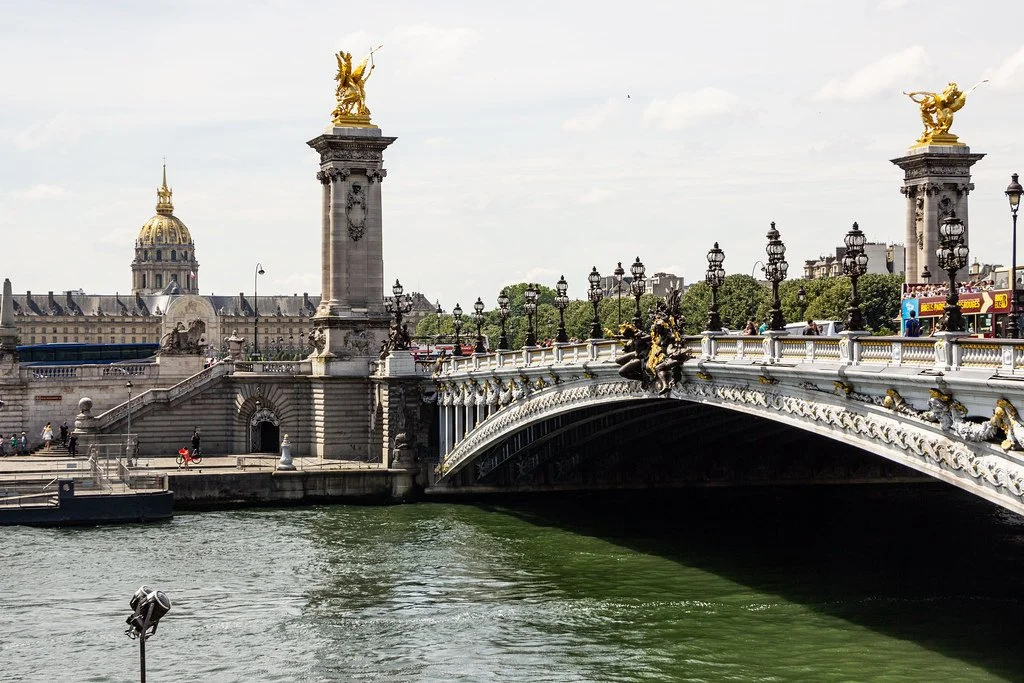
Ornate bridge over the green River Seine.

Pont Alexandre III on the River Seine, Billy Wilson, CC BY-NC 2.0

With the 2024 Olympics set for Paris, the French government has faced backlash for its efforts to quickly clean the Seine, the main river that runs through Paris. The Seine is approximately 13 kilometers long and, in Paris, accompanied by 37 bridges. The staple has promoted water travel and inspired classic French songs such as, “Sous le Pont Mirabeau” and “Sous les Ponts de Paris.” The Seine also has a long history of supplying water to Parisians. In Medieval Paris, citizens and street vendors would collect water from the Seine before they had access to running water. In 1802, Napoleon constructed the Canal St Martin connecting the Seine to the Bassin de La Villette with the goal of supplying water via public fountains throughout the city. The River Seine was in wide use, with people engaging in walks along its banks and recreational swimming, until a decree was passed in 1923 that banned such activities due to pollution and waste runoff. News Writer Olivia Craighead explains that, “The city is old as hell, and as such, sometimes sewage ends up in the Seine.” While people are still allowed to visit its banks, the River Seine has been closed to swimmers since the decree. Until the announcement of the 2024 Olympics.

Since the 2008 Olympics, there have been two open water swimming events: the triathlon and the 10k marathon swim. Pierre Rabadan, the deputy mayor in charge of sports, Olympics, and Paralympics, has said that, “Our objective is an Olympic legacy.” In 2015, Paris introduced the "Plan Baignade" (“Swimming Plan” in English), a plan to make the river swimmable for the Olympics and regular citizens by 2024. As a result, the government has invested upwards of $1.5 billion to make their plan a reality. Despite their efforts, test results from the week of June 10 reveal that E. coli levels in the river are over twice the maximum allowed in water for Olympic events. Marc Guillame, a top government official for Paris, says that these recent readings “are not in line with the standards we will have in the summer.” With the Seine, most bacteria is killed with sunlight and warm temperatures, both of which Paris has seen very little of at this point in the summer. Instead, it has endured heavy rain and cloudy conditions. Phillippe Leclercq, an 18 year old living on a houseboat on the River Seine, notes that, “When it’s good, it’s a nice green color, lately it’s just been brown.”

To ease concerns citizens and athletes have about the River Seines’ cleanliness, President Emmanuel Macron and Mayor of Paris Anne Hidalgo have pledged to be the first swimmers. Originally scheduled to take a dip on June 23, the two have moved their swim back to July 14. Hidalgo stresses that this was not due to the condition of the water, but the current weather and political atmosphere: “Yes, I will swim in the River Seine, not now because the weather is not so well in Paris, but also because we have an election. It is not possible to organize the jump to the river during the election.”


Aanya Panyadahundi

Aanya is a student at the University of Michigan studying sociology and journalism on a pre-law path. She loves to travel the world whenever she can, always eager to learn more about the different cultures and societies around her. In her free time, she likes to play the violin, ski, and listen to podcasts

Afghanistan is Starving: The Ongoing Food Crisis Under Taliban Rule

Millions of Afghan children will suffer crisis-level hunger by the end of 2024.

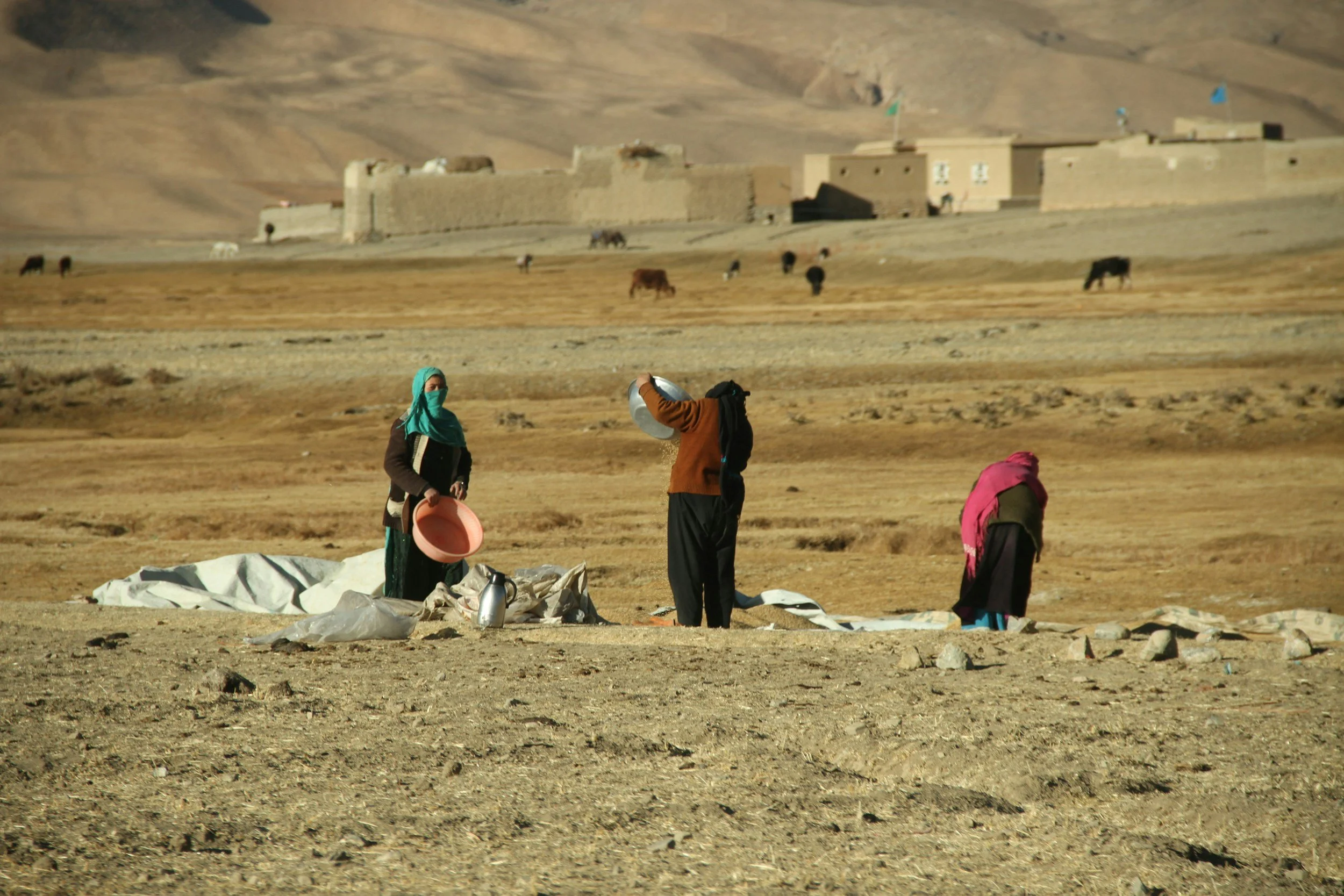
Women holding buckets among an arid landscape. Cows graze in the background with sandstone buildings.

Arid landscape in Afghanistan. Unsplash. CC0

Afghanistan has had no shortage of crises so far this year. Frequent flooding in the north and west in May and severe drought in January have triggered a monumental inflow of humanitarian aid, but despite the world’s best efforts, it appears that the fallout from these events will be seriously damaging for the already impoverished and oppressed citizens for the rest of the year.

Studies by Integrated Food Security Phase Classification, an independent global hunger monitoring organization, suggest that around 12.4 million Afghan citizens will be faced with food insecurity between June and October of 2024. Of those affected, just over half are children. In addition, 2.4 million citizens will experience starvation at emergency levels; this categorization is just above outright famine.

A variety of causes have been listed for the crisis. Back in May, flooding devastated many northern towns, affecting 60,000 citizens and reducing farmland to fields of mud. Based on weather patterns, these floods are expected to continue throughout the year, preventing any recovery of the farmland and causing a major decrease in domestic food production.

Additionally, an unexpectedly warm and dry winter has led to a lasting drought across the southern and western parts of the country. Although rainfall has increased somewhat in recent months, the arrival of the La Nina weather pattern in the fall is expected to bring even more dry, warm days. Although some farmland is recovering thanks to the brief respite provided by El Nino, much of the land is about to be confronted with a second round of drought conditions, further cutting down food production.

The most prominent cause of food insecurity, however, is the ever-present and ever-controversial Taliban government. Local currency has taken an alarming plunge while food prices, thanks to scarcity caused by the aforementioned environmental catastrophes, continue to soar. The Taliban’s apparent lack of concern for Afghanistan’s economy suggests that there will be no serious action towards rectifying the crash. Economic aid from foreign countries helps somewhat to avert the biggest fallout from the crisis, but the problem is virtually unfixable without changes in the regime's policies.

Regardless of how it began, the food crisis in Afghanistan is only getting worse—and fast. The country is alarmingly unequipped to pull itself out of poverty and hunger; action by charities and foreign governments is helping, but more is needed to prevent the looming threat of starvation. Hundreds of thousands of families are actively struggling to find their next meals, and millions of children will soon be forced to endure near-famine levels of food insecurity.

How You Can Help

Organizations such as the World Food Programme and UN Crisis Relief are actively supplying food to communities most impacted by the crisis. Estimates show that around $600 million are needed to ease the burden across the entire country. Other groups, such as UNICEF, are specifically aiming to feed and protect the millions of starving children and their families. There is no way to fix Afghanistan’s economic and political crises from the outside, but these organizations have already helped to feed and house countless citizens facing down these disasters head-on.


Ryan Livingston

Ryan is a senior at The College of New Jersey, majoring in English and minoring in marketing. Since a young age, Ryan has been passionate about human rights and environmental action and uses his writing to educate wherever he can. He hopes to pursue a career in professional writing and spread his message even further.

Paradise for Tourists is Hell for Canary Islands Residents

Canary Islands residents are protesting against mass tourism, which they say is making the islands uninhabitable. 

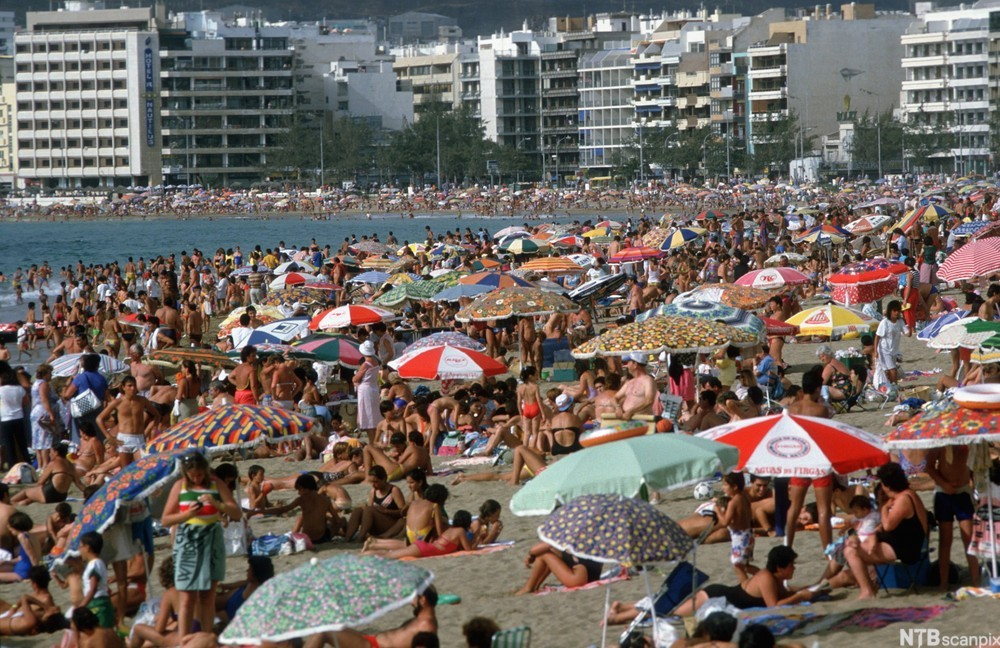
A beach packed shoulder-to-shoulder with colorful umbrellas and sunbathers beneath the cityscape

A crowded beach in Las Palmas. Trygve Bølstad. CC BY-NC-SA

The Canary Islands have long been a hotspot for tourism. Vacationers flock to the archipelago in imposing numbers, drawn by the islands’ mild climate, rich cultural history and stunning vistas. In 2023, approximately 14 million international tourists visited the Canary Islands, representing an increase of roughly 13 percent compared to the previous year, and tourism accounts for approximately 35 percent of the islands’ GDP. Unfortunately, not all residents are experiencing the benefits of this influx. In fact, many locals have begun to complain that the massive waves of tourism are actively contributing to a decline in their quality of life.

While the Canary Islands host large numbers of tourists every year, approximately 15 million, they are home to only 2.2 million native residents. Of those 2.2 million, 33.8 percent are at risk of poverty according to a living conditions survey conducted by the Instituto Nacional de Estadística of Spain in 2023. The same survey designated the Canary Islands as one of the autonomous communities in Spain with the highest percentage of people making ends meet with “a lot of difficulty.”

The bright turquoise colored ocean splashing up against rocks and small buildings on jetties

Canary Islands. PxHere. CC0 1.0

The tourism industry only exasperates the economic challenges faced by residents. The islands’ resources are simply not equipped to sustain the large numbers of tourists, who put pressure on health services, waste management, water supplies and biodiversity. According to reports, tourists use up to six times more water than residents who, as a result of a drought brought on by climate change and rising temperatures, have been subjected to restrictions on water usage. Meanwhile, tourist resorts and golf courses have not been made to comply with the same restrictions. 

Biologist Anne Striewe commented on the toll tourism takes on the environment. “There are hundreds of boats and jet skis in our waters every day pumping petrol into the water,” she said, “then there are the boat parties which blast music all day long…this is picked up by whales and other creatures and really confuses and frightens them … Meanwhile, there have been multiple cases of animals being injured or killed by boat propellers, there are often vessels in protected waters but no one is cracking down on the activity.” According to the environmental group Salvar Tenerife (Save Tenerife, the largest of the Canaries), millions of liters of sewage water are being dumped into the sea off Tenerife and other islands every single day, with amounts rising in accordance with the number of visitors.

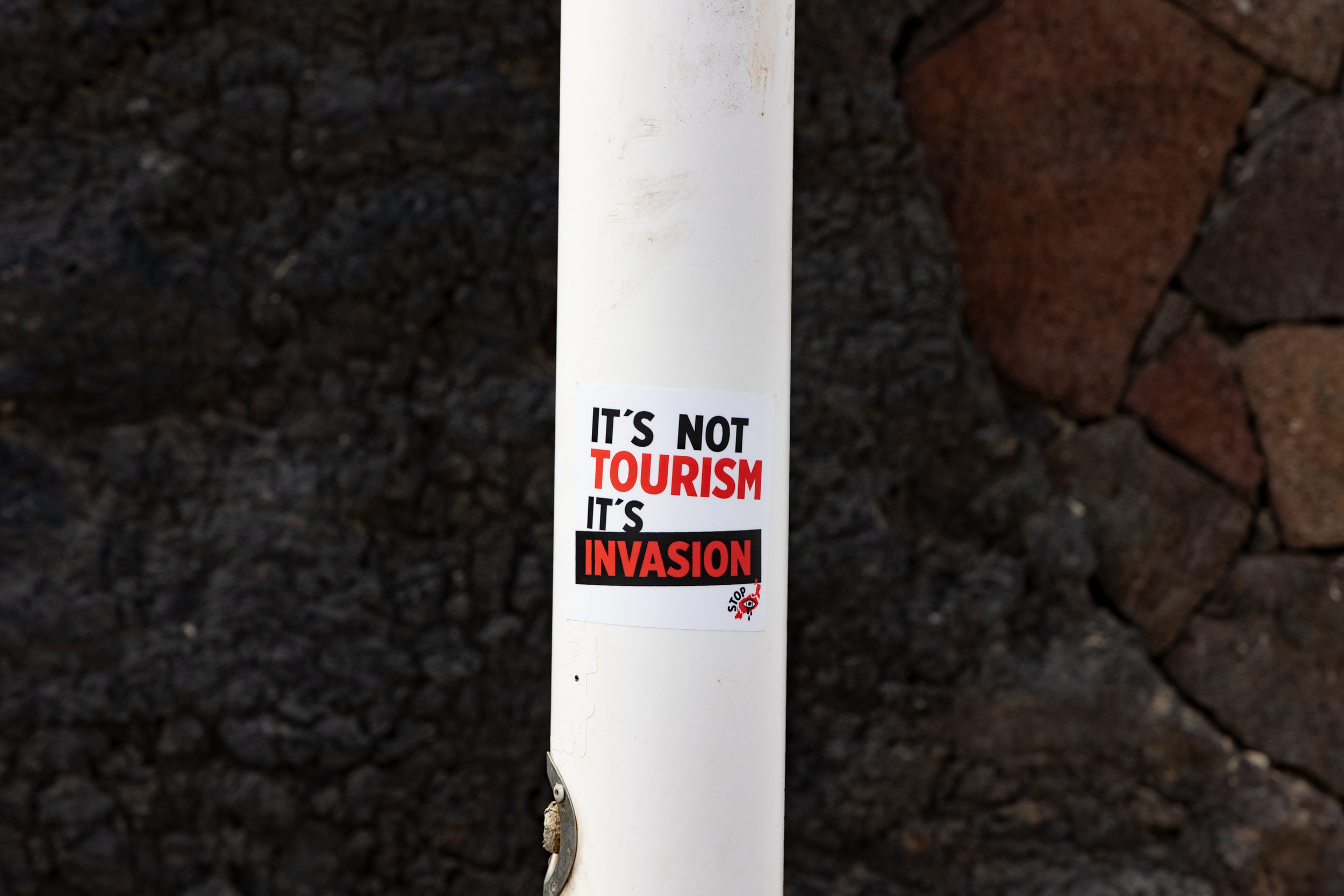
An anti-tourism sticker posted on a pole

Sticker against overtourism, 2024. Rasande Tyskar. CC BY-NC 2.0.

Female residents have reported feeling unsafe in the presence of tourists who harass and follow them in public. Trailers park illegally and leave trash in their wake. The number of hotels being built and the amount of housing being converted to short-term rentals to accommodate these tourists has caused a rise in the cost of living. As a result, some locals have been forced to begin sleeping in their cars and in caves. "It is absurd to have a system where so much money is in the hands of a very few extremely powerful groups, and is then funneled away from the Canary Islands," says Sharon Backhouse, who owns GeoTenerife along with her Canarian husband, a program that runs science field trips and training camps in the Canary Islands and conducts research into sustainable tourism.

Thousands of locals took to the streets in April to protest over tourism and defend their right to live in their native land. “We are not against tourism,” Rosario Correo, one of the protesters, clarified to the media, “We’re asking that they change this model that allows for unlimited growth of tourism.” 

Protesters are calling for a halt to the construction of a hotel and a beach resort on one of the few remaining unoccupied beaches, a moratorium on all tourism development projects, stricter regulation on property sales to foreigners and a more sustainable model of tourism that will not put the environment or the livelihoods of locals at risk. “I feel like a foreigner here, I don't feel comfortable anymore, it's like everything is made for British and German tourists who just want to drink cheap beer, lay in the sun and eat burgers and chips,” another protester, Vicky Colomer, said. “We need higher quality tourists who actually want to experience our culture and food and respect our nature.”

The protests have motivated the government to introduce measures to limit tourism. The island of Tenerife announced a tourist tax of an undisclosed amount that will go into effect on January 1, 2025 for tourists seeking to visit natural beauty spots. A law that would place harsher regulations on short-term rentals is also expected to pass in 2025.


Rebecca Pitcairn

Whatever it is, the way you tell your story online can make all the difference.

Waste Not, Want Not: 6 Unique Companies Revolutionizing Food Waste

With nearly a third of the world's food going to waste, here are some small companies working to make food waste edible.

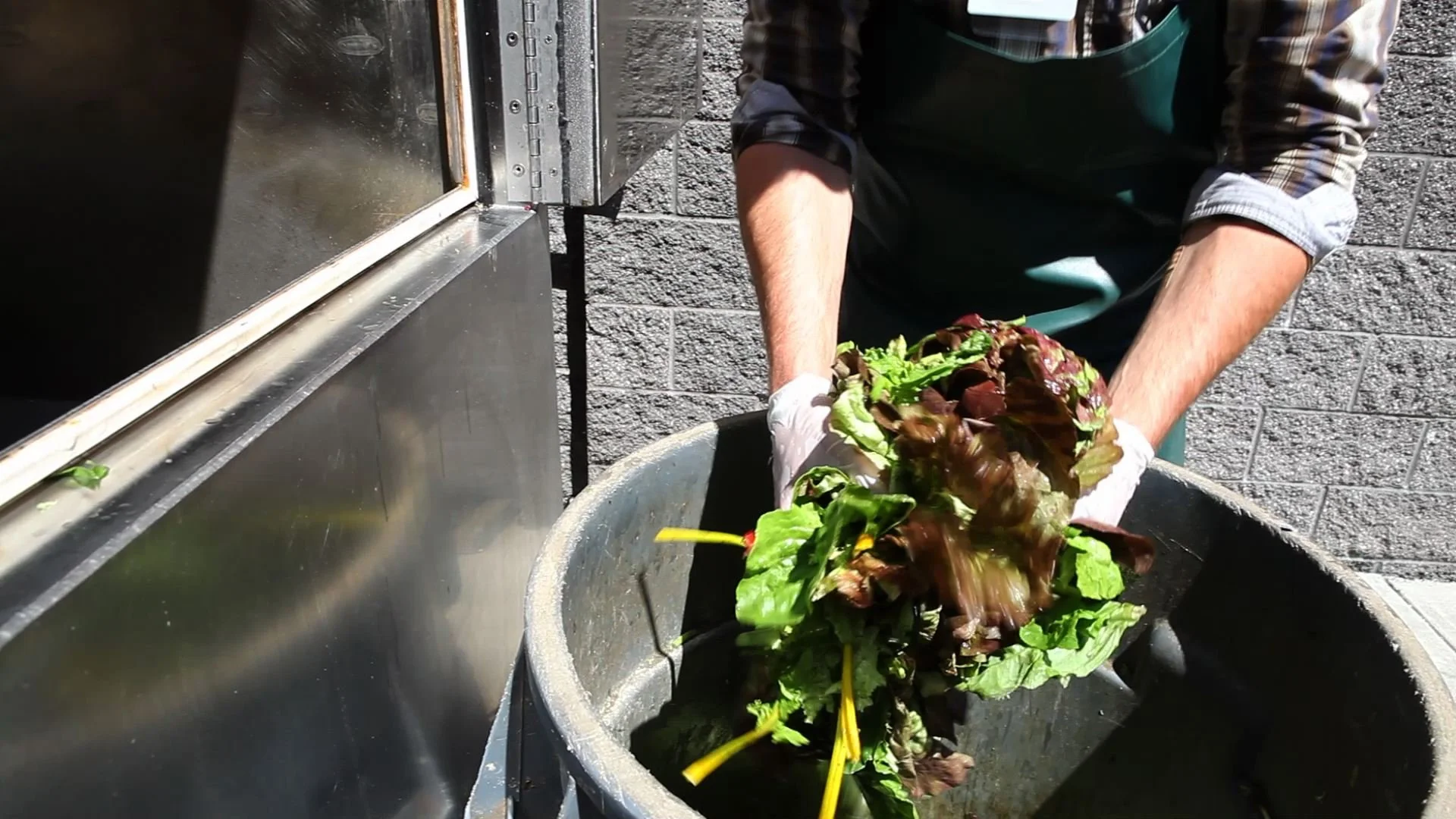
Close up of a man with handful of leafy greens tossing them into garbage can.

Food waste. EarthFix. CC BY-NC 2.0

Every year 1.3 billion tons of food is wasted, costing over $1 trillion around the world. Even though food waste breaks down faster than other types of waste such as plastics, the decomposition produces a significant amount of carbon dioxide, which exacerbates climate change. There are ongoing efforts to confront this issue, such as the Biden-Harris Administration’s National Strategy for Reducing Food Loss and Waste and Recycling Organics announced on June 12, 2024. Many small companies and organizations are working to address this issue as well. Here are six businesses that have found innovative ways to transform food waste.

1. Back to the Roots’ Mushroom Growing Kits

Close up of two shelves stacked with plastic-wrapped containers of mushroom-growing kits.

Mushroom grow kits. Suzie's Farm. CC BY-NC-ND 2.0

Every year about six million tons of coffee grounds end up in landfills around the world. Back to the Roots is a company that sells mushroom growing kits that use recycled coffee grounds. Back to the Roots aims to make food growing accessible while keeping used coffee grounds out of the landfill.

After connecting with each other during college through a shared interest in growing mushrooms from recycled coffee grounds, Back to the Roots’ co-founders Alejandro Velez and Nikhil Arora began growing mushrooms in Velez’s fraternity. 

Back to the Roots has found many ways to give back to communities. Through their #GrowOneGiveOne campaign, customers can post a picture with their growing kits and Back to the Roots will send a growing kit and curriculum to an elementary school classroom. People can also access free kids gardening curriculums and gardening resources, including a garden glossary, grow calendar and grow guide. You can explore Back to the Roots’ mushroom growing kits and resources here.

2. Cascara Foods’ Supplements

Several pills and capsules on a plain table

Health supplements. Jdurchen. CC BY-NC-ND 2.0

Cascara Foods is a Chilean company that transforms food waste into health supplements. Nutrients from fruit pulp and peels are used in supplements for digestion, joints and more. Cascara was started in 2017 in order to combat climate change, and the company strives to upcycle as much fruit waste as possible. 

Currently, recycled apple, blueberry and strawberry fibers can be found in Cascara's supplements. The apple fiber is leftover from local producers in the apple juice industry and contains more than 90% of the total fiber of the whole fruit. Blueberry fiber salvaged from the juicing industry and strawberry fiber sourced from the puree industry are both sources of antioxidants and can also serve as natural food colorings. Check out Cascara Foods’ supplements here.

3. EatKinda’s Cauliflower Ice Cream

Cauliflower growing out of its stem in patch

Cosmetically imperfect cauliflower. Pictoscribe -. CC BY-NC-ND 2.0

EatKinda is a New Zealand-based company that sells ice cream made from cosmetically imperfect cauliflower. As with many other countries, New Zealand’s supermarket standards often reject produce based on aesthetic issues such as size or color, creating unnecessary food waste. EatKinda collects cauliflower from local farmers and supermarkets that would otherwise end up in the landfill and transforms it into a delectable treat.

EatKinda’s co-founder Jenni Matheson stumbled across her cauliflower ice cream recipe after a failed attempt at making a vegan cheesecake. Then, when Matheson met food technologist Mrinali Kumar, they got to work and EatKinda was born.

EatKinda currently offers three vegan flavors, including Strawberry Swirl, Double Chocolate and Mint Choc Bikkie, and its products can be found in 90 stores throughout New Zealand. The cauliflower ice cream has recently gone viral on TikTok, and EatKinda is in the process of seeking investors to expand into Australia and beyond. Here is where you can learn more about EatKinda.

4. Imperfect Food’s Grocery Delivery Service

A cardboard box of groceries; a bunch of kale lays atop brown-bagged produce and plastic wrapped leafy greens

Delivered produce. Aine. CC BY-SA 2.0

Imperfect Foods is an American company that combines sustainability with convenience. By delivering retailer-rejected food products to customers’ doors in 100% recycled boxes, Imperfect Foods has saved over 160 million lbs of food waste from the landfills. All of these food items had been rejected for various reasons including aesthetic issues, surpluses or being near their best-buy dates.

Sustainability is kept in mind through every step of the grocery delivery process. By delivering all the groceries for each neighborhood in one trip and using 100% recycled boxes collected from previous orders, Imperfect reduces waste and carbon emissions. By signing up online, customers can limit food waste and get everything from farm-fresh produce to pantry staples delivered to their door. You can discover more about Imperfect Foods here.

5. Sweet Benin’s Cashew Apple Juice

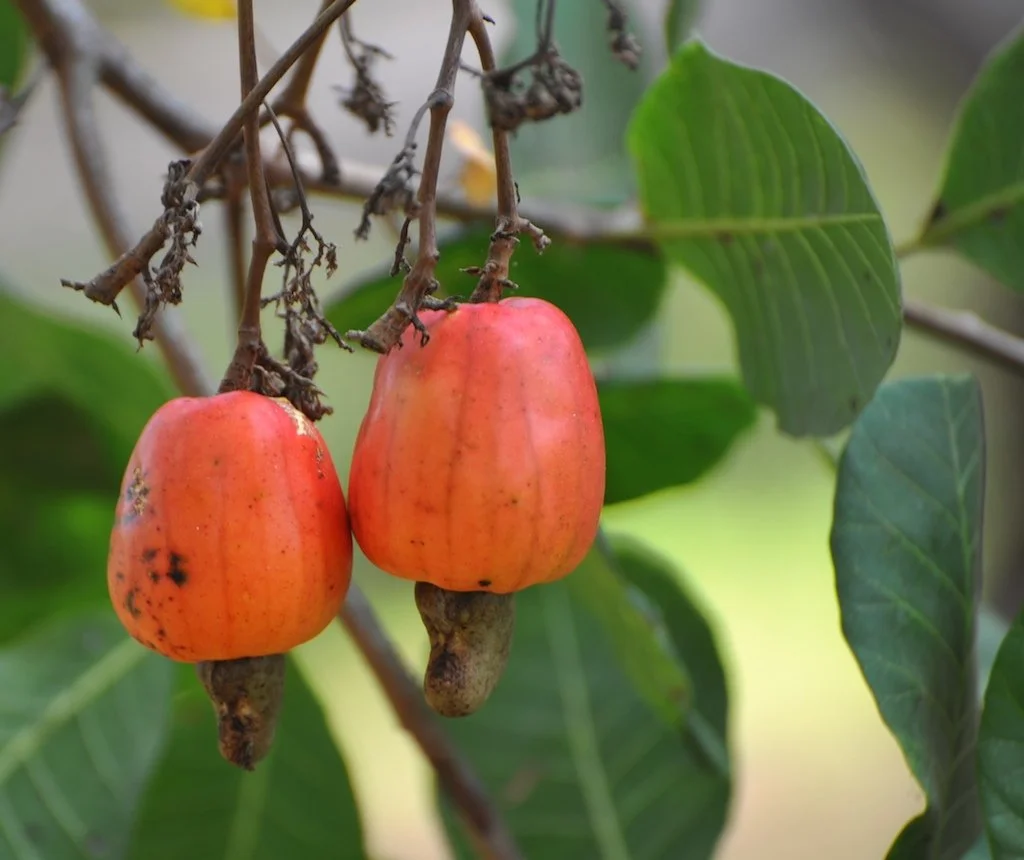
Two orange cashew fruit hang from a leafy branch

Cashew fruit. Richard Vignola. CC BY-NC-ND 2.0

The cashew industry is prominent in Benin, but every year ten million tons of cashew apples are left to rot in fields across Africa. Sweet Benin limits food waste and supports local communities by working with producers to transform these leftover cashew apples into juice. 

The cashew apple is the fruit attached to the cashew nut. Despite the many uses for cashew apples, many consider the fruit trash because of a misconception that it is poisonous. Sweet Benin started countering this misconception after partnering with the non-profit TechnoServe in 2017. Since then, the company has strived to support economic growth while prioritizing women in the hiring process. TechnoServe offers further information here.

6. Toast Brewing’s Beer

Two loaves of crusty bread on a wooden rack

Surplus bread. Melinda Young Stuart. CC BY-NC-ND 2.0

With about 44% of bread going to waste, Toast Brewing has set out to transform this surplus into beer. The over three million slices of bread saved by Toast Brewing since 2016 could be stacked nearly as high as five Mount Everests. So much bread can be saved because Toasted uses it to replace 25% of the malted barley it uses to brew beer.

Toast Brewing supports sustainability through charity as well. 100% of the profits go to environmental charities. The company has also partnered with the social enterprise Change Please and created a cafe taproom that helps fight houselessness and food waste. You can discover more and order Toast Brewing products online here.


Madison Paulus

Madison is a student at George Washington University studying international affairs, journalism, mass communication, and Arabic. Born and raised in Seattle, Washington, Madison grew up in a creative, open-minded environment. With passions for human rights and social justice, Madison uses her writing skills to educate and advocate. In the future, Madison hopes to pursue a career in science communication or travel journalism.

Mallorca and Beyond: Spain’s Balearic Islands

Get to know the lesser-known islands of Menorca, Cabrera and Formentera, alongside the classic Balearics, Mallorca and Ibiza. 

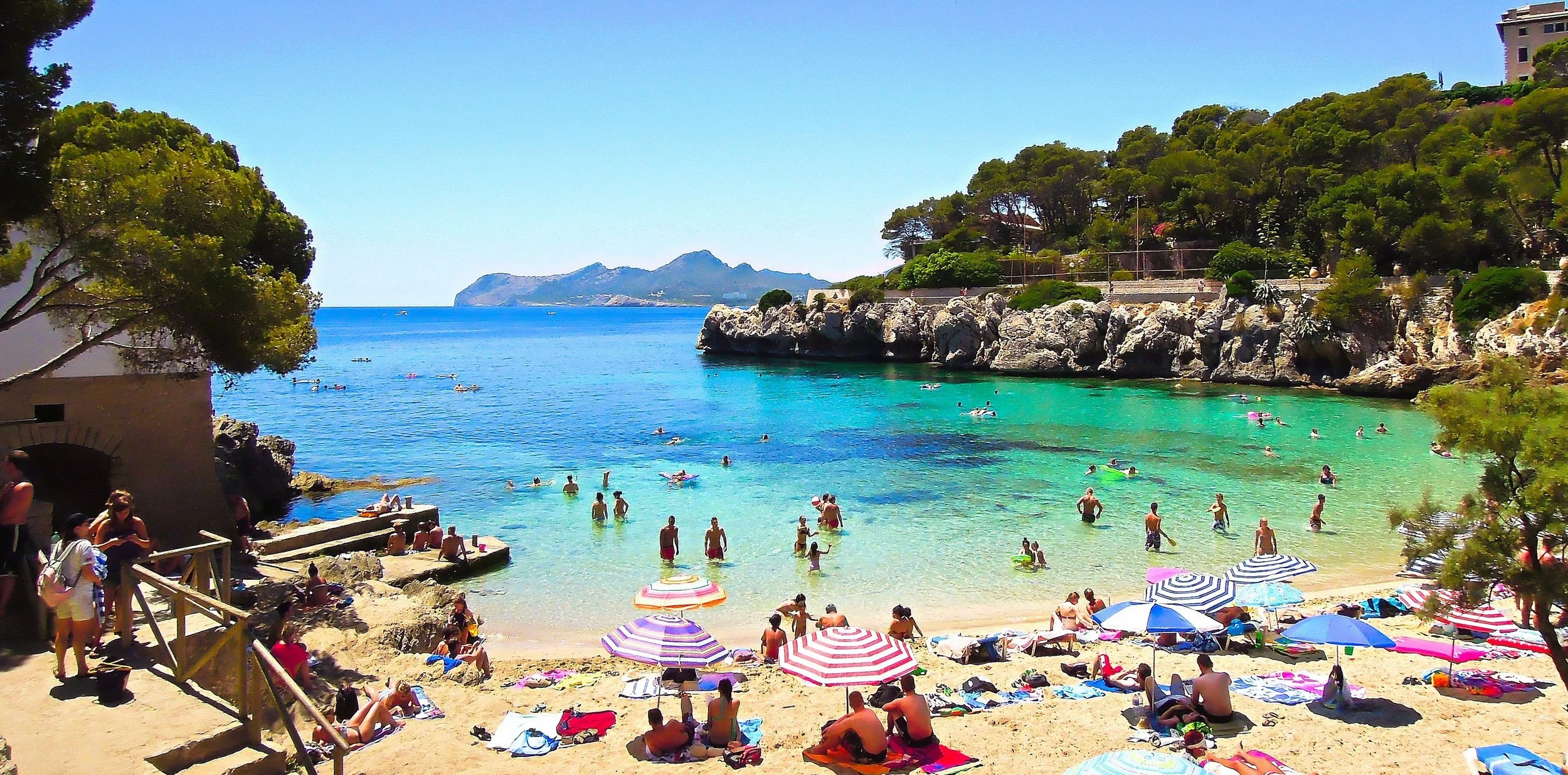
A bustling beach cove with turquoise water and rocky coastlines, swimmers, and sunbathers under striped umbrellas.

Cala Ratjada. originalpickaxe. CC BY 3.0, via Wikimedia Commons

The Balearic Islands are destinations well-known for their beaches and energetic nightlife. Beyond the impressive coastlines and vibrant parties, visitors will find charming villages, ancient ruins and traditional cuisines that showcase the islands' heritage. From Menorca to Formentera, each island boasts a rich culture and history that makes it distinct and uniquely captivating.

Mallorca

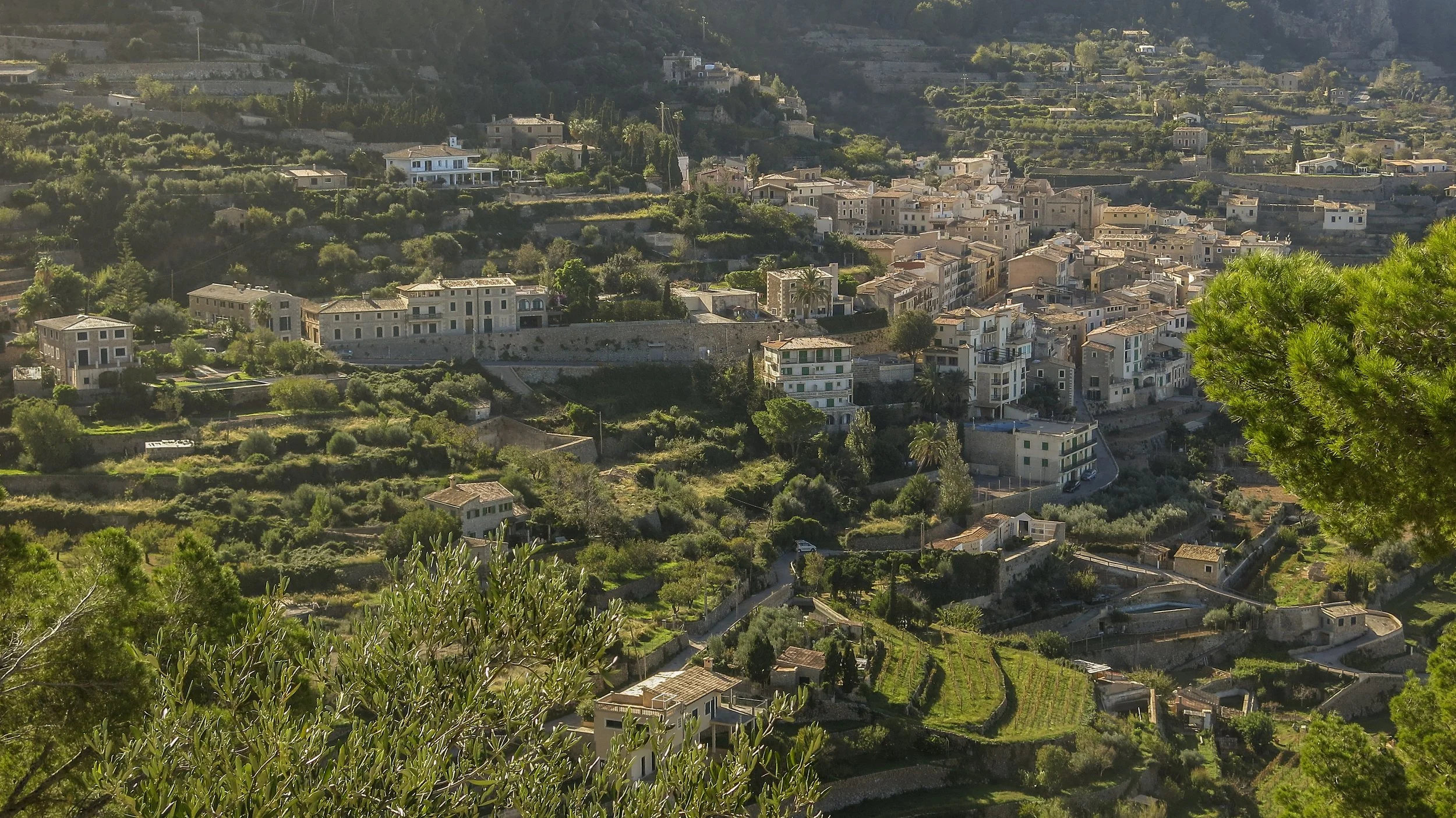
A hillside old European town, with buildings nestled in the green terraces and trees along the mountain.

The town of Banyalbufar, Serra de Tramuntana mountains. Vicenç Salvador Torres Guerola. CC BY-SA 4.0.

Mallorca, the largest of Spain's Balearic Islands, is celebrated for its diversity of landscapes, culture and history. The island has historically been a popular vacation spot among travelers for its secluded beaches and coves with turquoise waters, such as those in Cala d'Or and Playa de Muro. However, the island is also known for its dramatic cliffs and mountainous terrain along the Serra de Tramuntana mountain range, just a thirty-minute drive from the island’s capital, Palma. This region of Mallorca is home to intimate villages such as Valldemossa and Deia. Here, the towns are tranquil, filled with olive groves and surviving monastic charterhouses from as early as the 13th century, reminiscent of the island’s historic past and lasting Roman Catholic influence.  

Mallorca’s gastronomy is worth the trip alone, with dishes such as el arros brut, a meat and vegetable rice dish, and el frito mallorquin, an offal and vegetable stew. Another classic dish is the Frit mallorqui, which consists of potatoes tossed in a thickened sauce of onions, garlic, tomatoes and capers. The island is also rich in medieval architecture, being home to the gothic-style Bellver Castle, built in the 14th century for King James II of Majorca, and the renowned Cathedral of Santa Maria, once a mosque converted into a Christian church in 1229.

Menorca

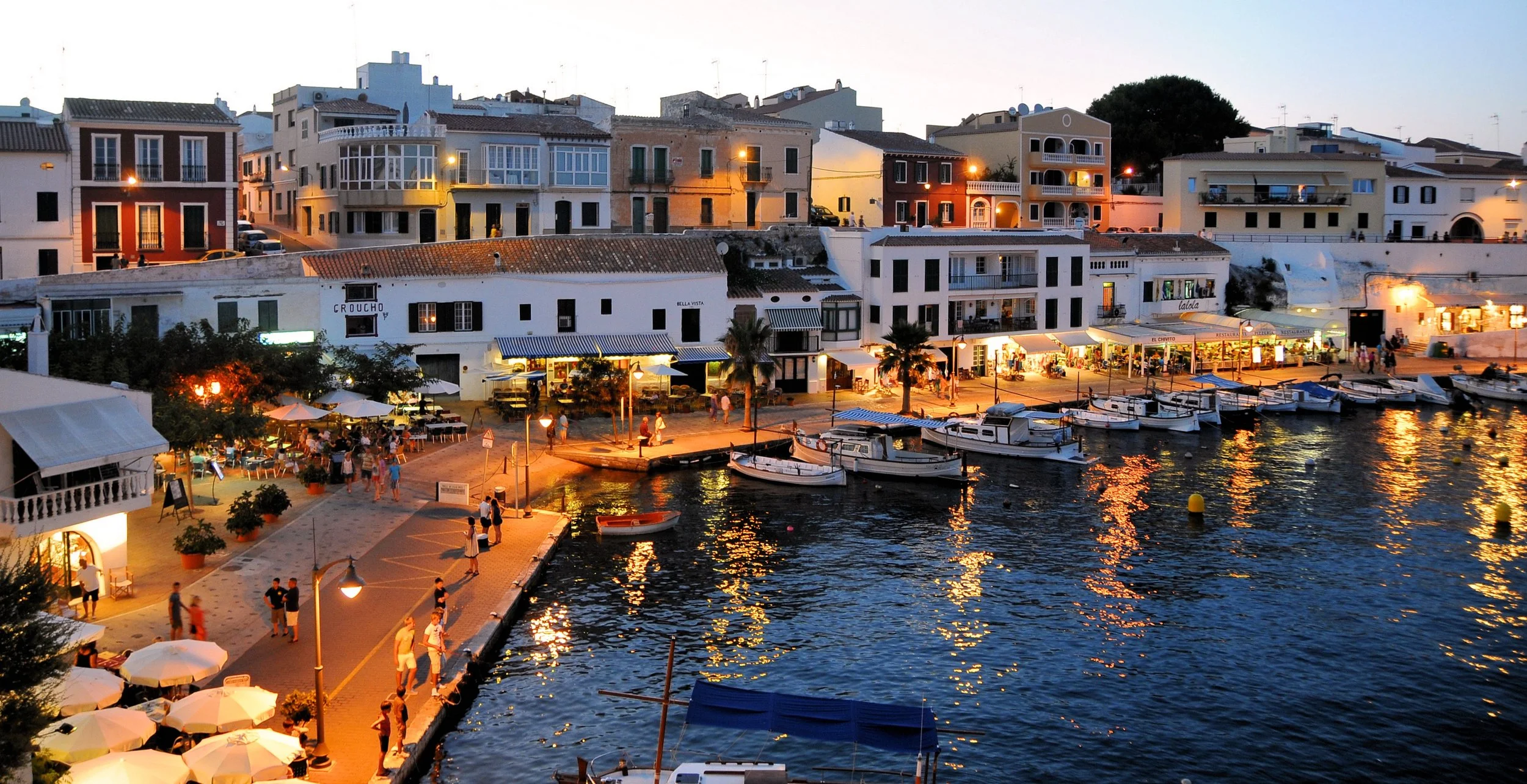
Coastal city at dusk, with lit streets and tourists walking along the harbor. Nice boats anchor the dock and shops line the street.

The city of Mahon, Menorca. pxhere. CC0, via Wikimedia Commons

In contrast to Mallorca’s bustling island pace, Menorca is renowned for its peaceful ambiance, enticing beaches and historical heritage. The island's coastline is dotted with secluded coves and crystal blue waters, with stunning beaches like Cala Macarella and Cala Mitjana. Menorca is much smaller than Mallorca, and most of its beaches are hidden 'calas,' or sandy coves between rocky cliffs. The island itself is calmer, with more intimate and relaxed “hippie” nightlife opportunities such as a cave disco in the Cova d’en Xoroi, Menorca’s most famous cave. 

Menorca’s capital, Mahon, features the second-deepest natural harbor in the world alongside charming streets lined with Georgian architecture, reflecting its British colonial past. The island is also well known for its famous Mahon cheese, matured exclusively in Menorca. The local cuisine is characterized by fresh seafood with traditional dishes such as lobster stew, Menorcan sausages and sweet and savory pastries. Additionally, Menorca is a UNESCO Biosphere Reserve, with a diverse landscape of rolling hills, wetlands and forests, ideal for hiking. This island is quieter than its Balearic counterparts yet is just as abundant in nature, cuisine and architecture.  

 Cabrera

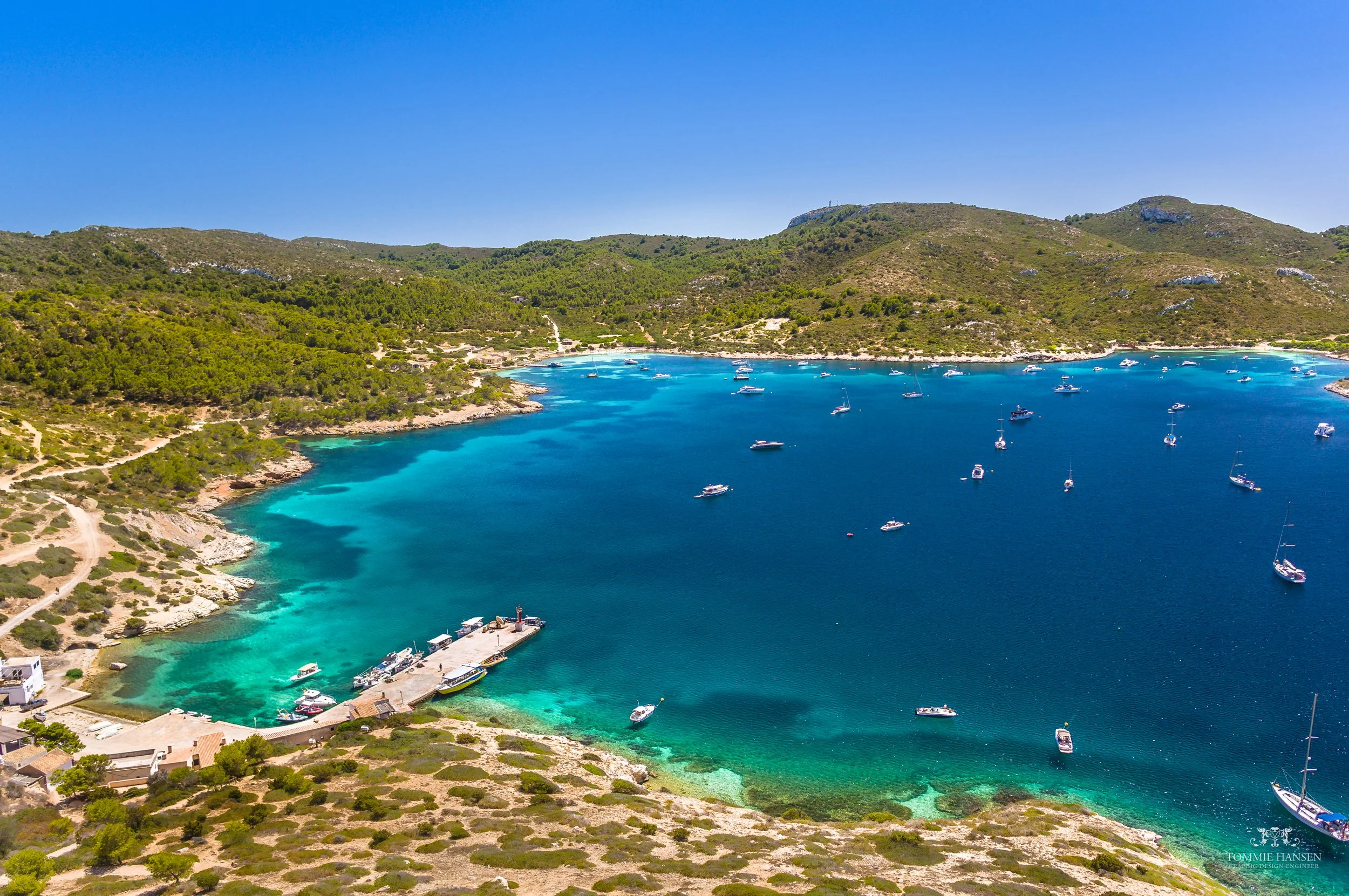
Aerial view of a beautiful bay. The water is a deep turquoise, with boats jetting along, and a sandy but vegetated hilly landscape with little development surrounds the water.

Isla de Cabrera National Park, Mallorca. Tommie Hansen from Stockholm, Sweden, CC BY 2.0, via Wikimedia Commons

Cabrera, a serene archipelago of nineteen islets off Mallorca's southern coast, stands out for its untouched natural beauty and ecological diversity. The island’s name, the Spanish word for goat, from a time when the island’s only inhabitants were goats transplanted there by the Romans as an emergency food source. Interestingly, today there are less than 30 permanent residents on the island, making it the largest undeveloped area in the Balearics. Once a hideout for pirates and later a prison for captured soldiers, today Cabrera, or Cabrera National Park, is a protected area that ensures a thriving habitat for numerous bird species and marine life. 

The island's transparent waters make it a prime spot for snorkeling and diving, revealing undisturbed marine ecosystems and caves. Visitors can also explore historical landmarks like the 14th-century Cabrera Castle, which offers sweeping sea views. Unlike its neighboring islands, Cabrera offers a tranquil retreat where nature remains untouched.  

Formentera

A rocky inlet with turquoise water, white buildings of shops or residences are dotted among the distance.

Los Pujols, in Formentera. Emanuela Meme Giudic…. CC BY 3.0, via Wikimedia Commons

Formentera, while the smallest of the Balearic Islands, stands out for its calm beaches and clear waters, particularly at Playa de Ses Illetes and Playa de Migjorn. The island’s flat landscape contrasts with Mallorca’s rugged Serra de Tramuntana and Cabrera’s protected wilderness, offering easy exploration by bike or foot. Historical sites like the Cap de Barbaria lighthouse provide a glimpse into Formentera’s past, less grandiose than Mallorca’s Bellver Castle but no less significant. The island’s cuisine is full of dishes such as seafood paella, freshly grilled fish, leg of lamb, figs and local goat and sheep cheese.

Formentera’s charm lies in its blend of serene nature and rich history, providing a unique travel experience distinct from its larger neighbors. Like Menorca, Formentera is a less common destination than its closest counterpart, Ibiza, thus preserving the island’s natural beauty and relaxed pace. The local markets, often buzzing with artisans, offer a taste of the island’s vibrant craft traditions. Additionally, the annual jazz festival brings a rhythm to the island that echoes against the backdrop of the Mediterranean, highlighting its lively yet laid-back cultural scene. 

Ibiza

An empty beach, with loungers and closed umbrellas set up, is nestled in a rocky coastline. Out in the distance, beautiful rock-cliffed islands jut out of the ocean.

Sea view, Ibiza Spain. athinaf, CC BY 2.0.

Ibiza, renowned for its vibrant nightlife, is also a bastion of cultural and historical significance. The island’s party scene, with its origins in the countercultural movements of the 1970s, has evolved into a global hub for electronic music, hosting legendary clubs like Pacha and Amnesia. These venues, alongside the annual music festivals, continue to draw international crowds and top-tier DJs, cementing Ibiza’s status as a dance music mecca.

Beyond the beats, Ibiza’s cultural tapestry is rich in history. The Phoenician settlement of Sa Caleta and the necropolis at Puig des Molins are testaments to the island’s ancient maritime trade and significant role in the Mediterranean economy in Antiquity. Dalt Vila, Ibiza Town’s historic center, is a UNESCO World Heritage site that showcases over 2,500 years of history through its Renaissance military architecture and medieval streets. The island’s cuisine offers traditional dishes like bullit de peix, a fish stew, and local desserts such as greixonera. 

Ibiza’s beaches, from the popular Playa d’en Bossa to the tranquil Cala Comte, are celebrated for their white sands and clear waters, providing a natural counterpoint to the island’s bustling nightlife. Each beach offers a unique experience, whether it’s the serene Cala Salada or the lively atmosphere of Ses Salines.


Julz Vargas

Julz is a student at Wellesley College studying Anthropology and Spanish. She grew up in Los Angeles, CA, and has studied all around the world in places such as Costa Rica, Greece, Iceland, and Spain. She is passionate about employing writing as a tool to explore human connection and diversity. Julz aspires to foster cross-cultural connections through community-based research, amplifying inclusive and diverse media about global cultures, foods, and people, to encourage individuals to engage more wholly with the world.
Summer Road Trip to the Tetons and Yellowstone

From experiencing geysers, to hot springs to glacial lakes, this is an adventurous road trip that offers exceptional and unique camping lodging. 

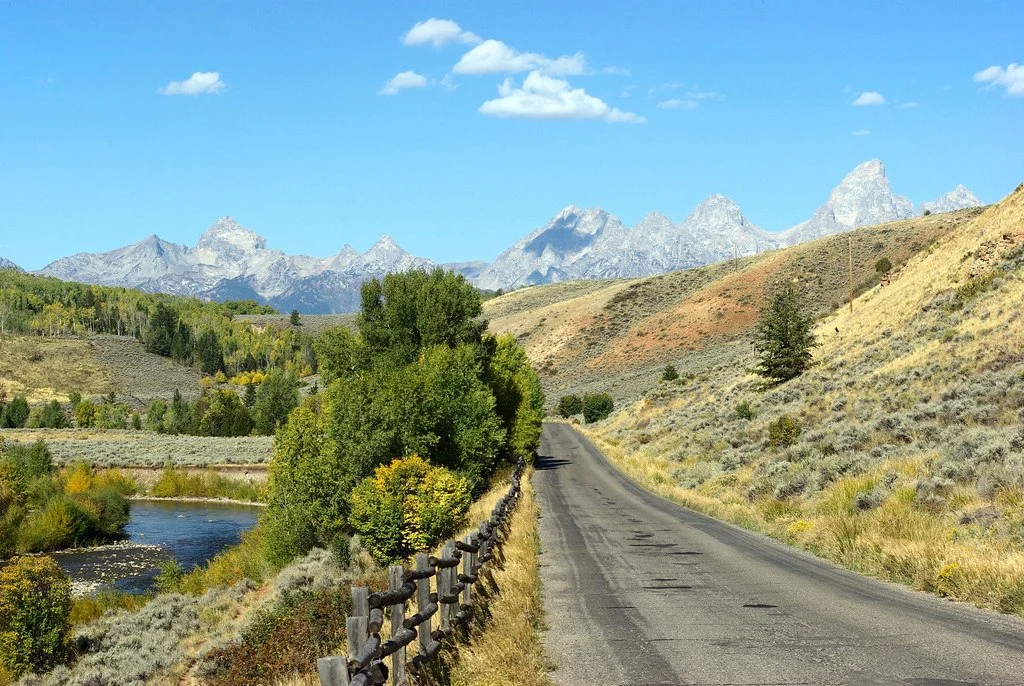
A backroad through the open space and rolling hills in the Tetons. A pond and wooden fence are on side and a shrubby hill the other.

Gros Ventre Road. Mike Goad. CC0 1.0

Grand Teton and Yellowstone are neighboring National Parks celebrated for their rich biodiversity, particularly vibrant during the summer months. A scenic drive through both parks typically spans about a week, allowing time to explore key attractions along the route. Yellowstone National Park is renowned for its geothermal vents, pine tree forests and grasslands, while Grand Teton National Park is known for its rugged landscape, including lush fields and U-shaped valleys. For those planning a summer road trip to Wyoming, here are the top attractions, hiking trails and campgrounds in the Tetons and Yellowstone.

Attractions

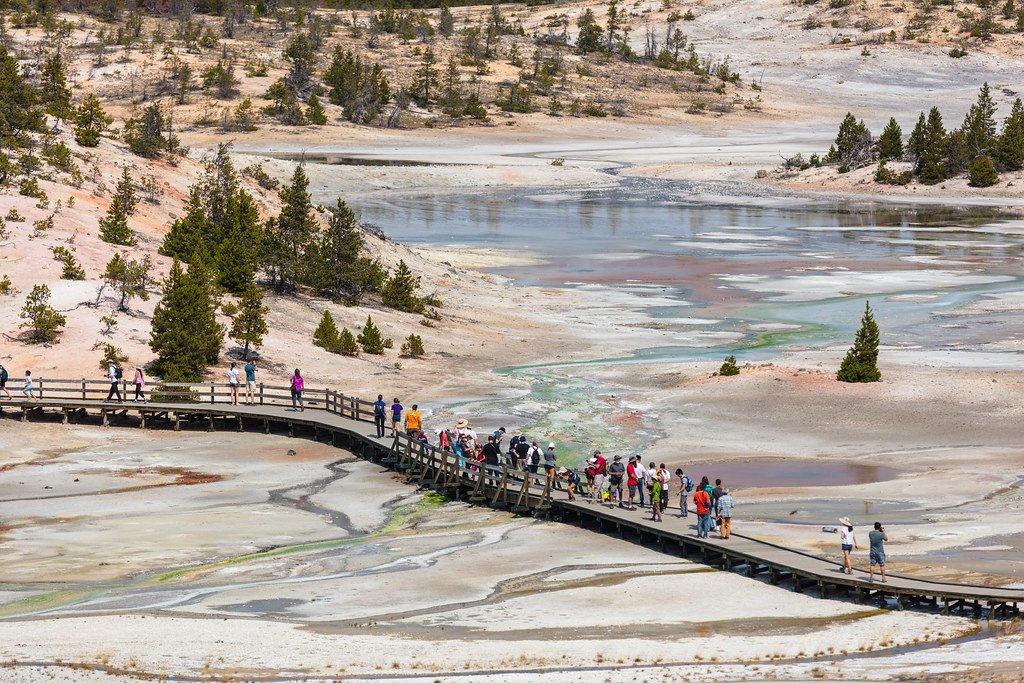
Tourists lining the boardwalk over hot springs, waiting for a geyser to erupt

Norris Geyser Basin boardwalk. Yellowstone National Park. PDM 1.0

Norris Geyser Basin, the hottest geyser basin in Yellowstone, erupts every 20 to 80 minutes. A 1.8-mile loop trail, accessible via a boardwalk, offers views of steaming blue pools, and bison are sometimes spotted in the area. Notably, it features the Steamboat Geyser, the world's largest active geyser, known to reach heights of up to 380 feet. 

Side note: for visitors road tripping through the Tetons and Yellowstone, I recommend purchasing the $80 America the Beautiful pass, granting access to attractions in all National Parks.

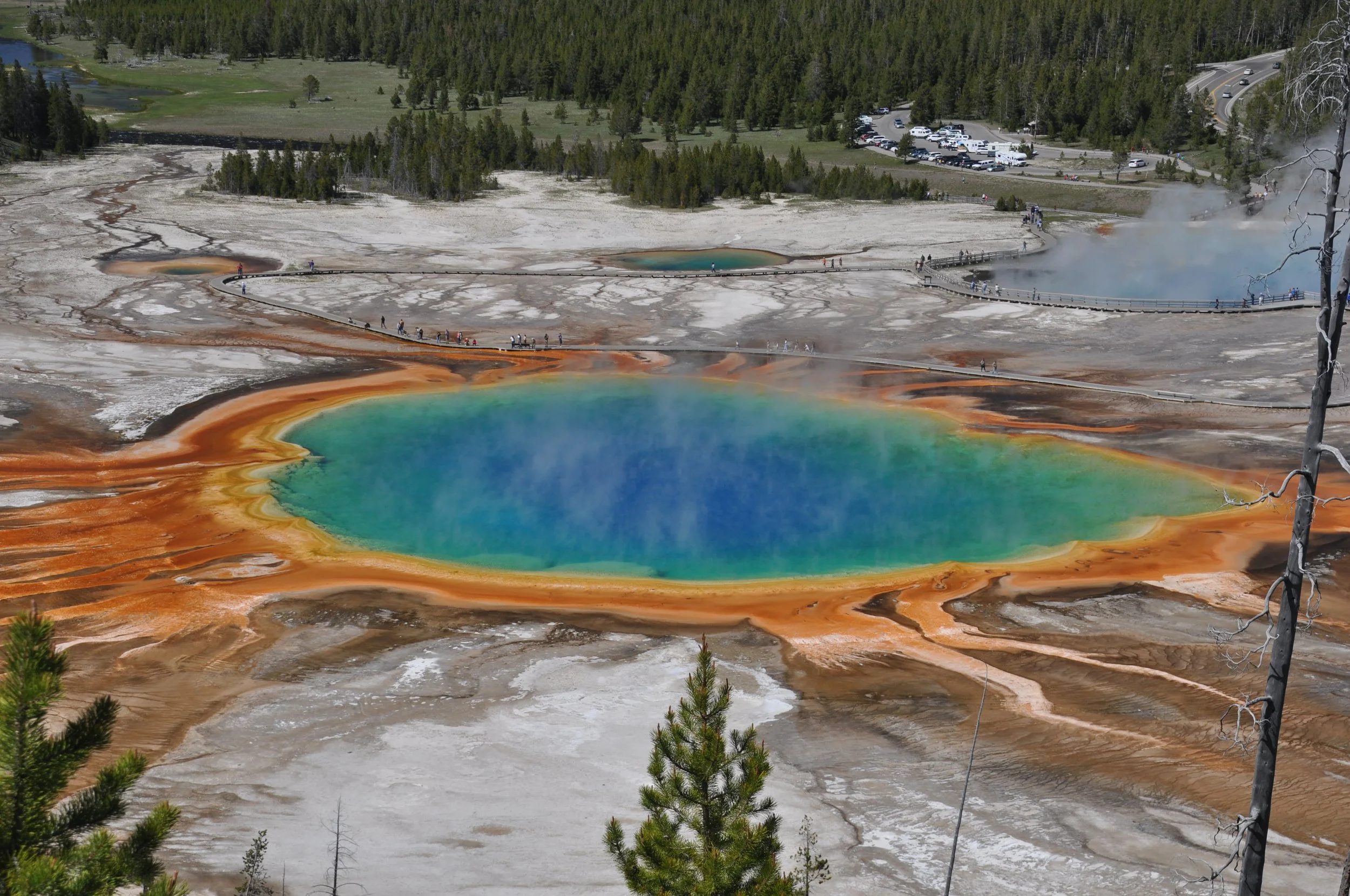
An aerial view at the large multicoloured Grand Prismatic spring, with tourists dotting the windy path to admire it.

Grand Prismatic Spring. James St. John. CC BY 2.0

Yellowstone’s Grand Prismatic Spring, the largest hot spring in the United States, is celebrated for its vibrant colors—a teal blue pool with bands of orange and yellow. For a viewpoint overlooking the spring, follow the 0.5-mile Fairy Falls trail.

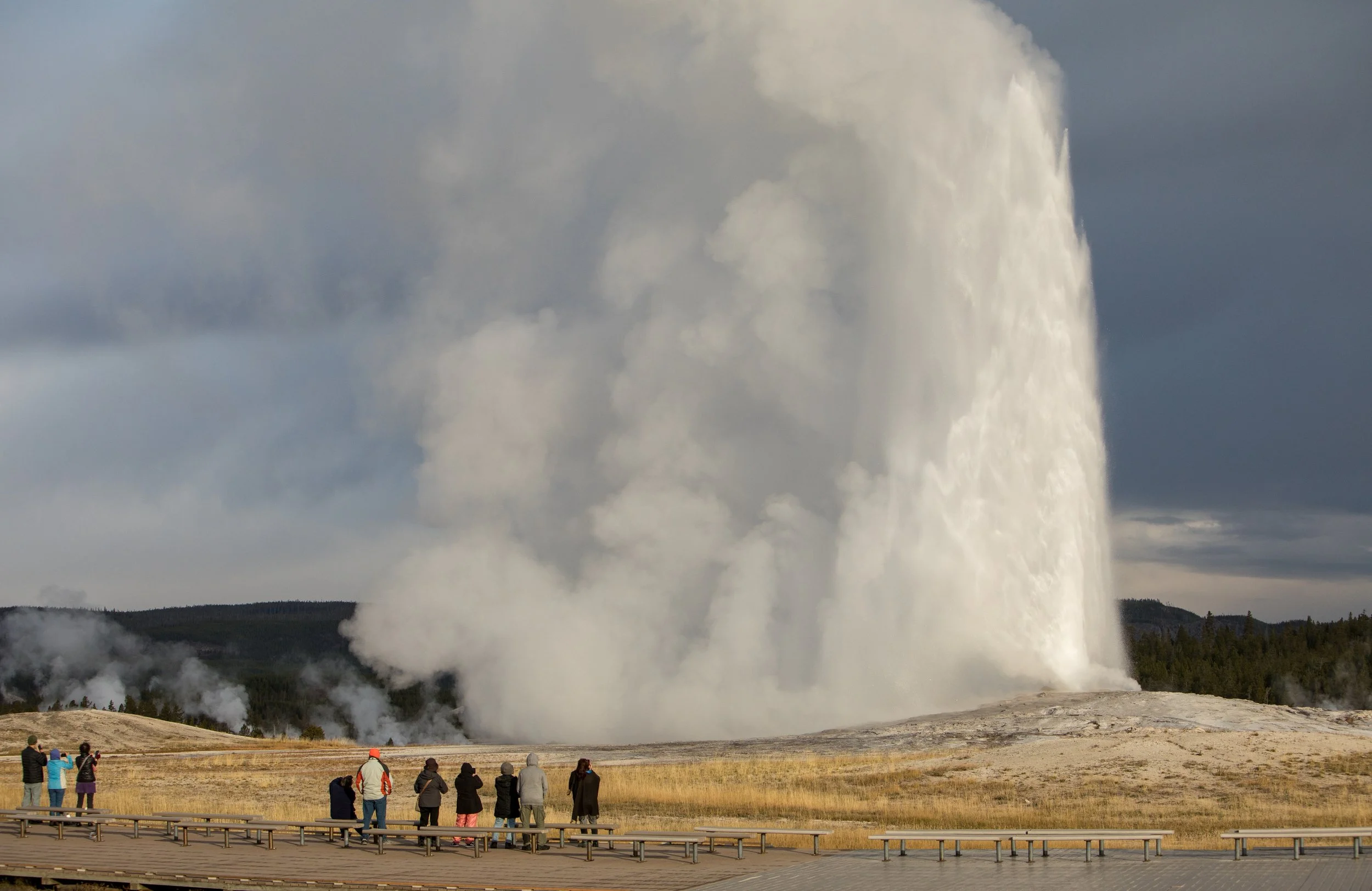
Large geysir erupts while tourists stand in front and admire.

Old Faithful Geyser. National Parks Gallery. PDM 1.0

Old Faithful Geyser erupts regularly, every forty minutes to two hours. Located in West Yellowstone near the Old Faithful Inn, the 0.7-mile loop trail offers convenient access to the geyser.

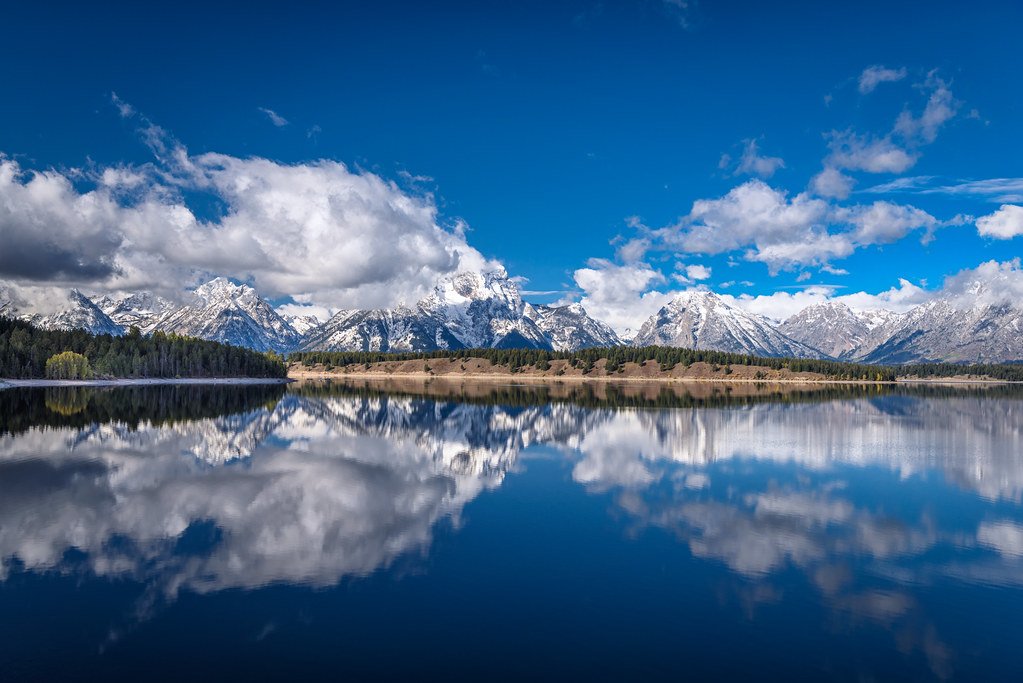
Snowy Teton mountains on a sunny day reflected into clear lake below.

Jackson Lake. Diana Robinson. CC BY-NC-ND 2.0

Jackson Lake is a glacial lake known for its clear, icy water, surrounded by snow-capped mountains. Colter Bay picnic area and beach provide opportunities for fishing, boating and polar plunging. The Colter Bay campground is convenient for water enthusiasts and is the largest campground in the Tetons.

Hikes

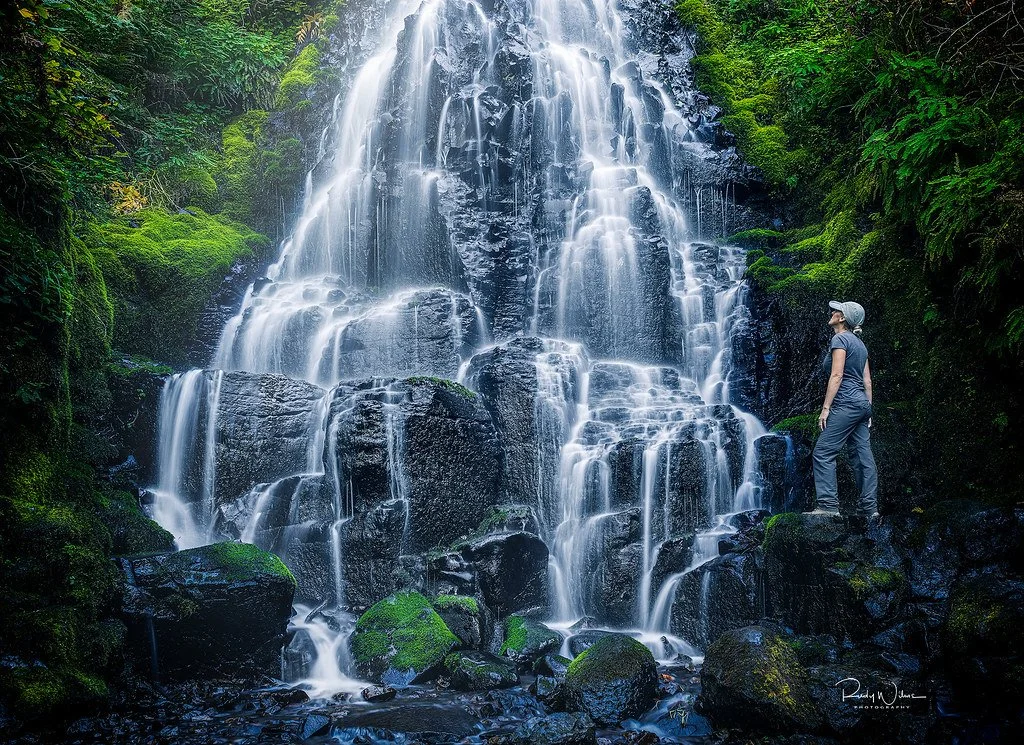
Hiker standing beside massive waterfall cascading in a mossy forest.

Fairy Falls. Rudy Wilms. CC BY-NC-ND 2.0

For outdoors lovers, there are can’t-miss hikes in both parks. In Yellowstone, the Fairy Falls trail is an easier, flatter route, a 1.6-mile hike to a waterfall surrounded by lush greenery. A little longer, Mystic Falls is a 2.4-mile hike to a cascade-type waterfall. Pelican Valley is a 6.2-mile hike, providing a quieter, less touristy experience through serene meadows. In the Tetons, Cascade Canyon is a 9.1-mile out-and-back trail to a glacier-formed canyon, with wildflowers that are most vibrant during spring and summer months. It’s a more strenuous hike, so less experienced trekkers may opt for the Cascade Canyon Express to experience panoramic views of the area.

Campgrounds

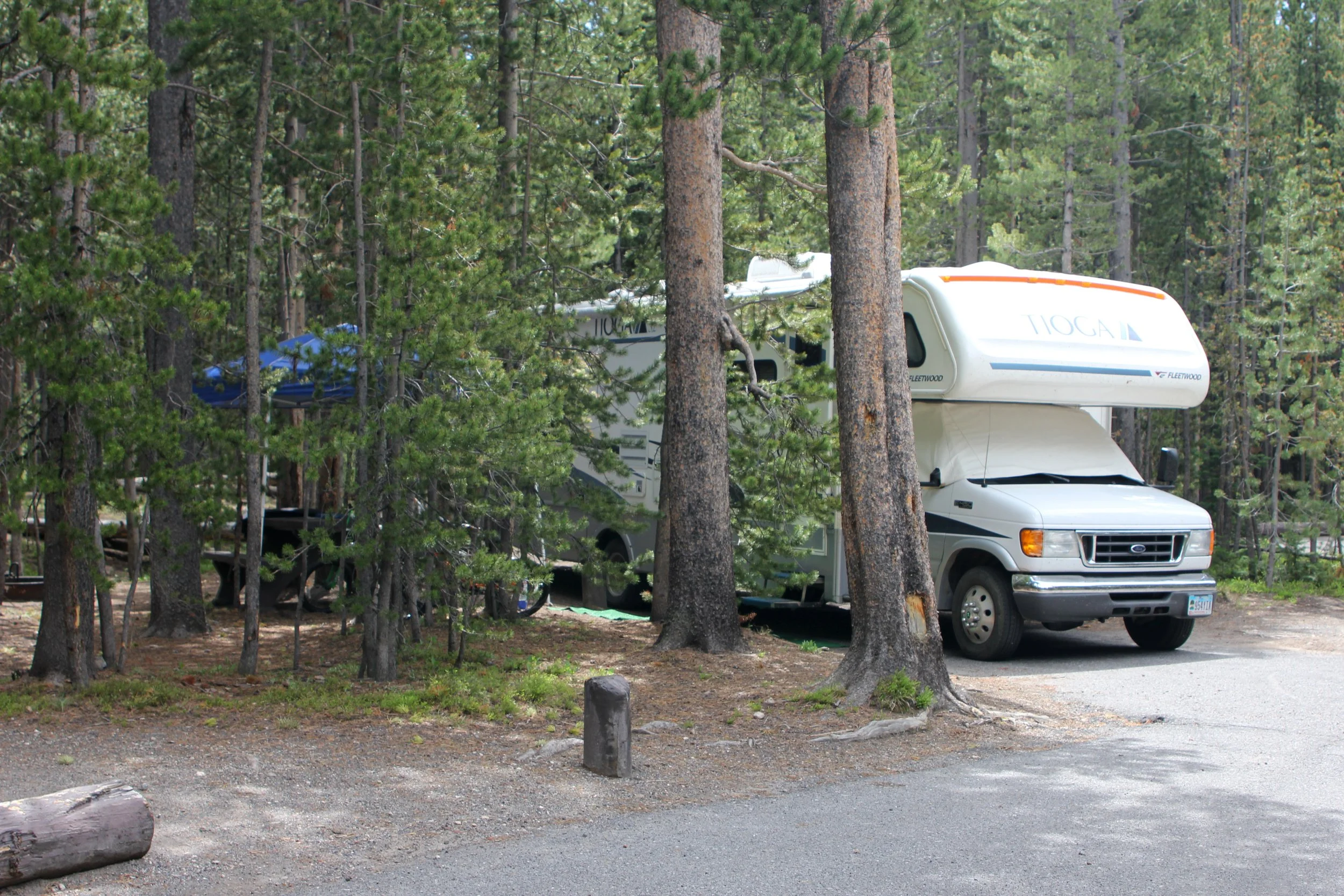
A camper van parked into a wooded site on the campground

Canyon campground site. Yellowstone National Park. PDM 1.0

In Yellowstone, both Madison campground and Canyon campground are centrally located. Madison is close to the Old Faithful area and Madison River, while Canyon is near the Geyser Basins. Canyon campground arguably has more privacy, mostly due to the shade from pine trees.

In the Tetons, Jenny Lake campground is next to the scenic Jenny Lake, providing expansive views of snow-peaked mountains.

Yellowstone is recognized by the National Park Service as one of the planet's last and largest natural ecosystems. The Tetons, often overshadowed by Yellowstone, are just as worth visiting. Experience the unbeatable views, attractions and trails of Grand Teton and Yellowstone National Parks on a road trip this summer.


Agnes Volland

Agnes is a student at UC Berkeley majoring in Interdisciplinary Studies and minoring in Creative Writing, with a research focus on road trip culture in America. She currently writes for BARE Magazine and Caravan Travel & Style Magazine. She is working on a novel that follows two sisters as they road trip down Highway 40, from California to Oklahoma. In the future, she hopes to pursue a career in journalism, publishing, or research.

A Trip Through the Past: Japan’s Living Heritage on Sado Island

The historical music, performing arts and cuisine are kept alive on a tiny resort island off the Japanese coast.

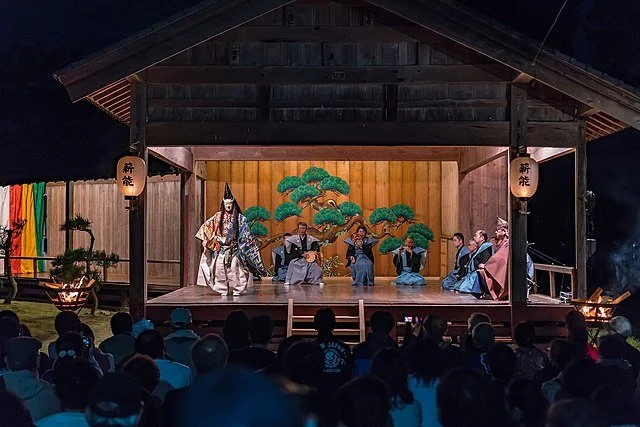
Traditional performers with instruments and in dress on stage as an audience sits and watches.

A Noh performance onstage on Sado Island. Yoshiyuki Ito, CC BY-SA 3.0

Feudal Japanese history gave rise to one of the most fascinating cultures in the world. Decades of relative isolation on the islands of Japan allowed for a completely unique society to blossom, and the resulting art, music and performance is incredible to behold. Although the world has largely moved on from the 18th century, there are still small pockets of society that try to keep those cultures alive. And there is no better place to see Japan as it once was than on Sado Island.

Sado Island was not always beautiful. In the beginning, it was used as a prison colony for political exiles from nearby Japan. Around 1601, however, the territory's rulers discovered a massive vein of gold running through the island. This naturally led to a gold rush, which jump started the population of Sado. The mine lasted for over 400 years, closing at last in 1989. After this, the population began to decline, and now the island has gone from a mining hub to a lush resort.

Today, Sado is a massive cultural hotspot. Throughout history, Sado Island was a crucial trading base on the way to Osaka—this resulted in a huge number of cultures leaving their mark on the land over centuries. Ancient Buddhist shrines and feudal Japanese temples share space across the island, as architecture from all eras fills in the gaps.

The city of Shukunegi, for instance, has been around for over 400 years—it was constructed during the beginning of the Edo era in the 1600s. Many of the buildings were actually built from wood and stone brought by or recycled from the trading ships themselves. Many of these structures are still standing today, packed tightly together to form blocks of houses.

However, the heart of Sado’s cultural preservation comes in the form of its performing arts and music. Noh, a traditional style of Japanese theater, is typically performed in shrines, with the audience sitting outside around bonfires. The stages are open on three sides, with the back featuring a painted image of pine trees. The lead performer typically wears a mask, fashioned after the leading characters of the play (although they are also used to denote spirits and demons). There is nothing in the world quite like Noh, and Sado Island is one of the best places to watch these magnificent performances in person.

Another example of classic Japanese culture on Sado Island is onidaiko, which literally translates as “demon drumming”. These performances include masked dancers and the famous music of Japanese taiko drumming, which was traditionally used to ward off negative energy and spirits during rice harvests. Taiko is most prominent during the Earth Celebration, which takes place in the middle of August every year and lasts for three days of music, performances, and culture. The Sado Island Taiko Centre, where visitors can see taiko drumming year-round, is home to two of the biggest taiko drums in the world.

In addition to its vibrant culture and rich history, Sado Island is a simply gorgeous natural vista. It boasts over 170 miles of coastline, with everything from nearly 100-foot cliffs and volcanic rock walls to lovely beaches. The island is also home to a wide variety of rare plants and animals, including the toki, also called the crested ibis, an extremely rare bird that has become the unofficial mascot of Sado. Even if you’re more in the market for nature than culture, there’s an incredible amount of both to be found on Sado.

Sado has a large number of hotels all over the island, ranging in price from $99 to $500. The island is a wonderful travel destination year-round, but the best time to go is mid-August in order to catch the Earth Celebration.


Ryan Livingston

Ryan is a senior at The College of New Jersey, majoring in English and minoring in marketing. Since a young age, Ryan has been passionate about human rights and environmental action and uses his writing to educate wherever he can. He hopes to pursue a career in professional writing and spread his message even further.

July 2024's Top European Music Festivals

Here's a compilation of music festivals to rock your summer.

A crowd under the neon lights and lit stage at a music festival.

Live outdoor concert. Ultrafan123, CC BY-SA 4.0

Exploring Europe offers a rich tapestry of experiences, from museums and historic cathedrals to renowned cuisines and coastlines. In between the typical, however, consider enlivening your trip with a summer music festival.

Rock Werchter (Werchter, Belgium) 

July 4-7, 2024

Packed crowd attends the outdoor venue and waits under the Black Keys stage.

The Black Keys at Rock Werchter 2023. Haggis MacHaggis, CC BY-SA 4.0

Head over to the tiny town of Werchter, Belgium, which has hosted the multi-award-winning Rock Werchter festival for over 40 years. It is one of the largest and most renowned festivals in Europe, with this year’s event boasting a strong 4-day lineup with headliners including Lenny Kravitz, Måneskin, Dua Lipa, and the Foo Fighters. According to their website, the carefully curated lineup “spans across all genres, making it a truly unique experience.” The curators also make it a point to showcase established artists alongside new talents. Rock Werchter is known for its Belgian beer, waffles, campgrounds, and multiple stages.

EXIT Festival (Novi Sad, Serbia)

July 10-14, 2024

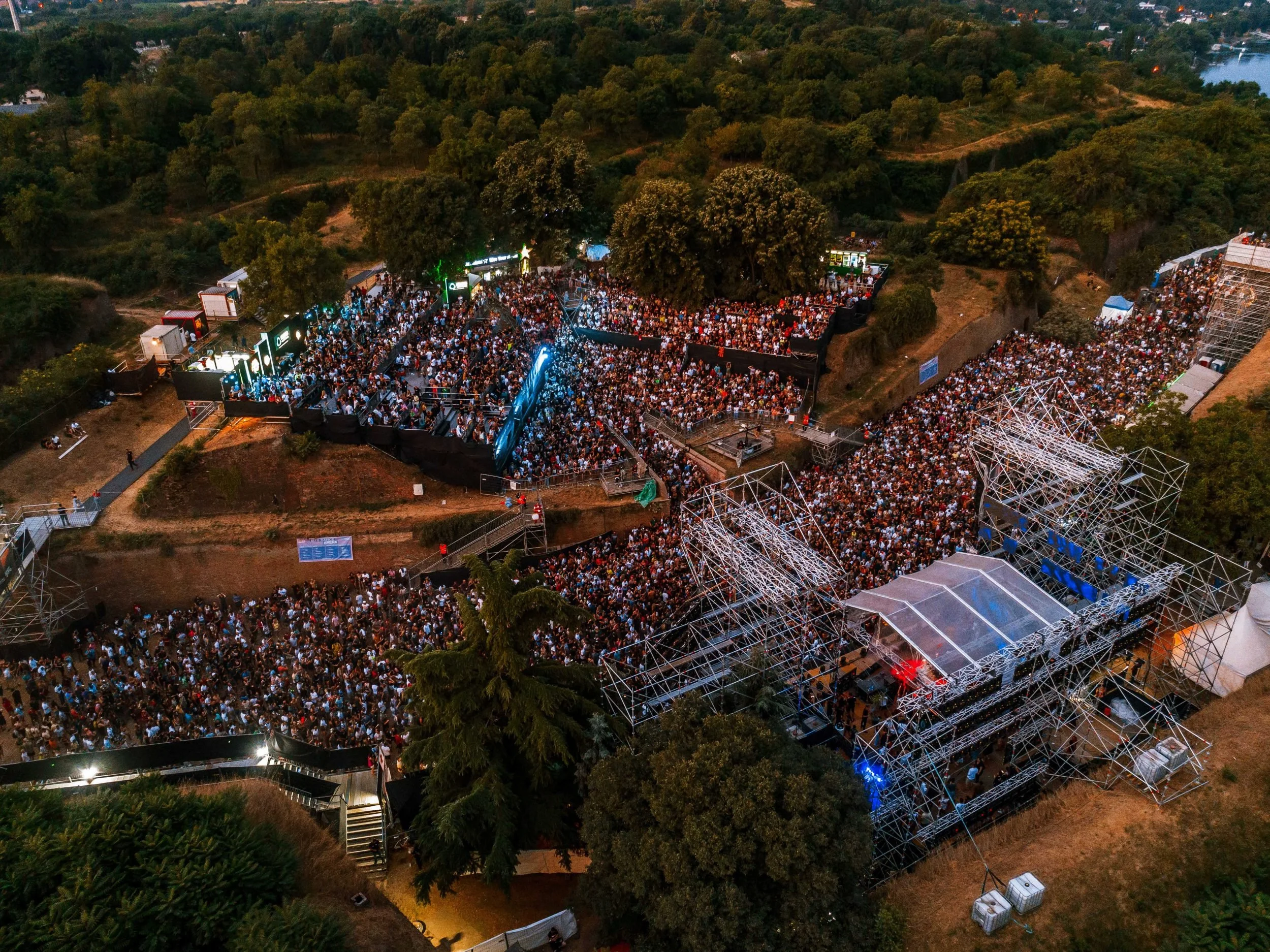
A birds-eye-view of the crowds and multiple stages at a festival

Drone shot of Exit Festival 2021. Exitfest, CC BY 3.0

The EXIT Festival of Serbia is known for its astounding location: the Petrovaradin Fortress, a historic fortress located on the banks of the Danube River, has unique acoustics and acts as a picturesque backdrop for the festival’s performances. This festival was first held in 2000 as part of a student movement fighting for democracy and freedom in Serbia. Since then, it has grown into one of the largest festivals in Southeast Europe, attracting tens of thousands of attendees each year. Today the festival continues to emphasize social activism and positive change through its various social responsibility projects. This year’s four-day lineup includes Gucci Mane, the Black Eyed Peas, John Newman, and Tom Morello.

NOS Alive Lisbon (Lisbon, Portugal)

July 11-13, 2024

Under red lights, the crowd at a main stage cheers and dances along, looking up at stage.

The view of the mainstage from the crowd at NOS Alive. Chris, CC BY-SA 2.0.

NOS Alive Lisbon takes place at the waterfront Passeio Marítimo de Alges. Formerly known as Optimus Alive, this festival is known for local and international attendees attracted by its diverse lineup, including rock, indie, pop, electronic, and more. It typically showcases a mix of established artists and emerging talents across multiple stages. Festival goers can either camp on the grounds or stay in nearby hotels as the location is just eight minutes from downtown Lisbon. The three-day lineup this year includes artists like Arcade Fire, The Smashing Pumpkins, Dua Lipa, Tyla, Aurora, Pearl Jam, and Sum 41. Its reputation for hosting top-notch artists and vibrant festival atmosphere has contributed to its global appeal. 

Parookaville (Weeze, Germany)

July 19-21, 2024

Under blue lighting and large blimp, a packed crowd cheers along under the stage at a festival.

The concert at the mainstage at Parookaville. Ss279, CC BY-SA 4.0

This German festival is truly unique as the event takes place in a faux city, known as Parookaville. Since 2015, the urban creation has come to life once a year in remembrance of the fictional founding father and mayor, Bill Parooka, whose goal was to make people remember to celebrate the joy of life. According to the festival’s website, Parooka is allegedly responsible for instituting the “Madness, Love and Pure Happiness” laws. Festival fans are invited to experience a “mad” musical place where they can connect with their purest selves, experience true connections, and feel sensations of bliss and love. This lineup for this year’s eccentric festival includes headliners such as Don Diablo, Steve Aoki, KSHMR, Oliver Heldens, and Timmy Trumpet. Parookaville is ideal for those open to new experiences and electronic dance. 

Hill Vibes Reggae Festival (Telfs, Austria)

July 24-27, 2024

Silhouette of a crowd in orange light and haze, as a girl dances atop someone's shoulders.

Concert, Crowd, Silhouette image. Mike Wall, CC0.

For the more relaxed and tranquil festival-goer, consider the Hill Vibes Reggae Festival in the mountains of Telfs, Austria. Hill Vibes celebrates reggae music and its various sub-genres. Attendees can expect performances from both local and international reggae artists. The festival boasts a lineup of talented musicians, featuring Gentleman, Alborosie, Romain Virgo, Mellow Mood, Teacha Dee, Samora, and Treesha. From roots reggae to dancehall and dub, the lineup offers something for every reggae enthusiast.

Monegros Desert Festival 2024 (Fraga, Spain)

July 27, 2024 

Festival attendees walk between crowded stages at night under flashing lights and colorful beams.

Monegros Desert Festival attendees at night. Gaudencio Garcinuño, CC BY-SA 2.0

The festival takes place in the Monegros Desert, located near Fraga in the province of Huesca, Aragon, Spain. Monegros Desert Festival is renowned for its lineup of electronic music artists, spanning various sub-genres such as techno, house, trance, drum, bass, and more. The festival has a rich history, from its inception in 1994 growing in popularity and stature to become one of the most anticipated electronic music events in Spain and beyond. In addition to the music, the festival is known for its impressive visual displays, stage designs, and production value. Immersive lighting, pyrotechnics, and other visual effects enhance the overall experience for festival-goers. This year’s one-day lineup includes Chase and Status, Vitalic, Sophia Gabanna, Culture Shock, and ASTRIX. According to Music Festival Wizard, Monegros is the biggest electronic music festival in Spain, and although many attempt to describe the festival, “It is literally impossible to put in plain words if you have not had the chance to attend it.”


Julz Vargas

Julz is a student at Wellesley College studying Anthropology and Spanish. She grew up in Los Angeles, CA, and has studied all around the world in places such as Costa Rica, Greece, Iceland, and Spain. She is passionate about employing writing as a tool to explore human connection and diversity. Julz aspires to foster cross-cultural connections through community-based research, amplifying inclusive and diverse media about global cultures, foods, and people, to encourage individuals to engage more wholly with the world.

Ukraine War Tourism: Educational or Unethical?

As Ukraine looks toward the future, it is not clear whether tourism will help or hurt efforts to rebuild the country devastated by war. 

A person stands in the window of a destroyed apartment building, with rubble at the floor, pieces hanging off the walls, and holes blasted through every door.

Destroyed Apartment Building Kyiv, Ukraine. Maxim Dondyuk. CC BY 2.0

A fascination with the macabre is not a new phenomenon. For centuries human beings have been attracted to spectacles of death, suffering, and violence. In 1996 two Scottish academics, John Lennon and Malcolm Foley, coined the term “Dark Tourism'' in their book "Dark Tourism: The Attraction to Death and Disaster" to describe how some tourists are drawn to sites of catastrophe, tragedy and death, such as Chernobyl, Hiroshima or the wreckage of the Titanic. Whether these tours are purely voyeuristic or serve a purpose for those affected by the tragedy is a matter of contentious debate, and is always dependent on the nature of the tour.

In 2022, the organization Visit Ukraine proposed to host tours of cities in the Kyiv region that had been hit particularly hard during the country's invasion by Russia. The tour was meant to educate foreigners while raising funds for refugees. Mariana Oleskiv, the chair of the State Agency for Tourism Development of Ukraine, supported the proposal. However, despite its official support, the initiative faced backlash from critics who viewed it as a disrespectful intrusion into the lives of victims. As a result, Visit Ukraine and the State Agency for Tourism abandoned the idea. But is war tourism truly unethical? 

A gold-roofed building in Kyiv stands tall among an empty plot of land, with the city behind surrounding.

Outskirts of Kyiv, Ukraine. Rodrigo Abd. CC BY 2.0
Tourism is an important economic asset for many countries, and the loss of this source of revenue due to foreign invasion can represent a significant economic blow. “While the right to tourism is forcibly taken away during conflicts, tourism is always a reminder of the importance of dialogue, peace, tolerance, and sustainable development among countries,” The World Committee on Tourism Ethics said in a statement on Ukraine issued in 2022. 

According to UNESCO, since February 2022, the culture and tourism sectors have suffered losses of $19.6 billion due to the Russian invasion, while the total cost of the physical damage to these sectors is estimated to have reached nearly $3.5 billion as of March 12th, 2024. As Ukraine begins to think about rebuilding, the government believes tourism is essential for post-war recovery. 

“Any money that people will spend in Ukraine will help the economy to recover,” Oleskiv said in 2024. “We need to create interest to Ukraine not just as people that you support and you feel sorry for—but also the country you want to support by visiting.” However, the chairwoman is emphatic that Ukraine is not interested in developing a culture of “dark tourism.” Ukrainians want to attract tourists who are interested in learning about the history of the war and the story of the Ukrainian people, not thrill-seekers or adrenaline junkies. 

Stone bust sculpture stands atop a desk in a room with peeling paint, bullet holes and larger holes ripped out of the wall, while rubble lines the floor.

War in Ukraine. Tatyana Tkachuk. CC BY-SA 2.0

While the State Agency for Tourism Development is advising tourists to stay away until the war is over, warning that insurance may not cover risks in Ukraine, war tourism initiatives began to spring up in Kyiv as early as April of 2022, not long after Russian troops had retreated from the region. The tour guides responsible for these initiatives are aware of the precarious ethical ground upon which they tread. One Kyviv local, Svet Moiseev, saw war tourism as an opportunity to educate foreigners and raise money for the war effort. According to Moiseev, these tours are not very profitable for him, and he sees himself as a volunteer rather than a businessman, dedicated to informing the public and increasing support for the country abroad.

However, not all locals share Moiseev’s opinion, and some are uncomfortable with their lives being turned into a tourist attraction. Some locals have begun to put up signs warning tourists not to enter or photograph buildings damaged by the fighting. “Sometimes [the tour guides] bring tourists on purpose to make money from it. Not to talk about what happened,” says a resident of Hostomel, Serhii Ahiyev, in an interview with the Kyiv Independent. However, he is not entirely against the concept of war tourism and believes that it is important for foreigners to see firsthand the “terrible actions of the Russians.” 

Tourists who decide to travel to Ukraine are still undertaking a significant risk. Visit Ukraine reports that, while the majority of the fighting is currently concentrated in the eastern and southern regions, the entire country is subjected to regular rocket attacks. If tourists install the Air Alarm app, it will send an air alert notification for their chosen region of Ukraine from the Civil Defense System. Visit Ukraine also advises tourists to observe local curfews, always keep documents and IDs on their person and avoid crowded areas. Their website provides further information and resources on how to stay safe in Ukraine, such as details about the rules, prohibitions and restrictions on visiting Ukraine during the war, the most convenient routes to and through Ukraine, travel recommendations and legal support. 

The idea of war tourism in Ukraine remains a controversial subject, but organizations such as Visit Ukraine continue to plan to bring tourists to the country. “We are working to make sure that more people can see the things that the Russian army does to Ukrainian lands and people,” says Mykhailo Cherevyk, the project manager of Visit Ukraine. The organization has begun an initiative dubbed Donation Tours, and it wants prospective visitors to understand that this experience is different from war tourism or dark tourism. It is not just an opportunity to view firsthand the brutality of the invasion, but rather a way to “immerse yourself in the life of a country at war, and make a personal contribution not only to supporting the country but also to the common Victory.”


Rebecca Pitcairn 

Rebecca studies Italian Language and Literature, Classical Civilizations, and English Writing at the University of Pittsburgh. She hopes to one day attain a PhD in Classical Archeology. She is passionate about feminism and climate justice. She enjoys reading, playing the lyre, and longboarding in her free time.