
Whether they’re born into captivity or captured from the wild, here are the controversial conditions faced by zoo animals today.
Read MoreMud Mania: Dive into South Korea’s Boryeong Mud Festival
During the Boryeong Mud Festival, one of South Korea’s most popular celebrations, adventurers can immerse themselves in mineral-rich mud and South Korean culture simultaneously.
Read MoreIn Mongolia, a Summer Festival for the Ages
For a few days in early July, the people of Mongolia eat, dance and play “the three games of men” during a storied festival called Naadam.

The 2012 Naadam opening ceremony in Ulaanbaatar. Carsten ten Brink. CC BY-NC-SA 2.0.
Mongolia is a country primarily known for its nomadic inhabitants and isolated location. Positioned between Russia and China, it is easily overlooked in the midst of these global giants. Its relative emptiness does not help matters; only 3.3 million people inhabit Mongolia’s 603,909 square miles , making it the least densely populated country in the world. But every summer, those 3.3 million come together in a celebration of sports, culture and Mongolia’s past. This celebration is called Naadam, and as far as festivals go, it is one of the last of its kind.
In ancient times, when Ghengis Khan and his horde of Mongols were inhabiting what would eventually become Mongolia, soldiers were selected for battle based on their skills in various sports. Wrestling, horse racing and archery in particular were activities that Khan believed a good soldier should, and would, excel at. Before and after battles, his battalions would organize and participate in sports competitions. These local competitions evolved into what Naadam is now.
As a consequence of the 1921 Mongolian People’s Revolution, which brought the nation independence from China, Naadam’s essence was altered. It was officially sanctioned as a national holiday, with a date set in the second week of July. Mongolia’s capital of Ulaanbaatar became the home of “National Naadam,” the biggest and most important celebration of the holiday. Most importantly, the festival became less of a violent competition and more of a national celebration; an emotional change which remains today.
Every celebration of Naadam features the three main sports of Mongolia; wrestling, horse racing and archery. All three sports have histories in Mongolia that are older than the country itself. For example: if a rock carving found in central Mongolia is anything to go by, wrestling competitions have been around in the county since the Bronze Age. Naadam features the grandest of all Mongolian wrestling competitions; up to a thousand or more take part in the Ulaanbaatar tournament. Before their matches, wrestlers often mimic local birds such as eagles, hawks and vultures. By doing well in the competition, wrestlers can receive titles based on these animals—“hawk of Ulaanbaatar,” for example, would be given to a wrestler who makes it to the final few rounds.
The final thing to note about Mongolian wrestling is the dress code, which is very particular. Wrestlers must don a four-sided hat, shorts, boots, and a shoulder vest that exposes the chest. The legend is that the open vest was put into practice after a woman snuck into the male-only wrestling competition in ancient times by pretending to be her father, and eventually won the competition. Such deceptions have been made impossible by exposing the chest of the wrestlers; to this day, Mongolian wrestling continues to be an exclusively male sport.
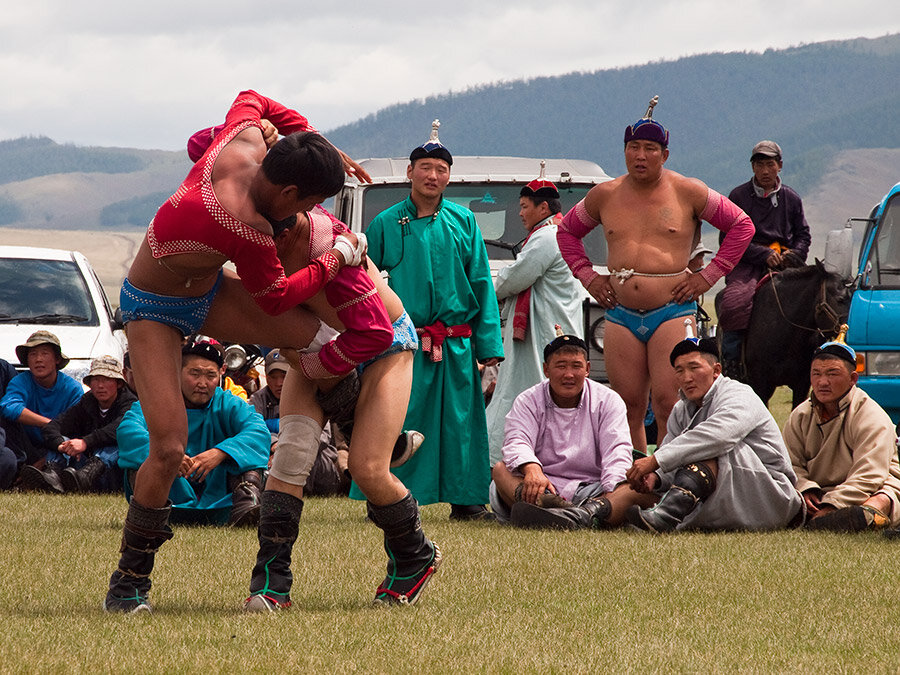
Naadam wrestling in the village of Tariat. Evgeni Zotov. CC BY-NC-ND 2.0
Horses are a large part of Mongolian life—nomadic tribes continue to depend exclusively on them for transportation. It follows that horse racing is extremely popular in the nation. According to Naadam’s official website, around 180,000 horses race during the holiday. All of Naadam’s races are very long in distance—at least in comparison to western competitions. The Kentucky Derby is about 1¼ miles long; a Naadam race can be up to ten times that.
Mongolian jockeys are incredibly wily and experienced; most Mongolians learn to ride a horse when they are just five years old. The jockeys treat their horses with incredible care. Before, after and even during the races, they are said to sing complimentary songs to their steeds.
The final sport of Naadam is archery, which is said to be even older than wrestling in Mongolia. Naadam’s official website hypothesizes that archery has been around in Mongolia since the Neolithic period, which ended in 4,500 BC. It was first used for hunting—later on, Ghengis Khan would employ it in his battles and sports competitions.
Male, female and child archers all compete at Naadam, wearing traditional costumes made of colorful cloth. There are three categories of the sport—Khalka, Buriat and Uriankhai—each of which come from different tribes and have different sets of rules. Only men are allowed to practice Uriankhai archery, for example.
While these three sports are the core of Naadam, the festival does not begin and end with them. There are smaller carnival games, singing and dancing. National cuisine is enjoyed; Khuushuur, a fried pancake with meat, is the most popular dish. Airag, a fermented, alcoholic drink made from horse milk, is also popular.
However, Naadam’s most important attribute is not the food, the history or the sports competitions. It is the fact that for a few summer days, the sparse vastness of Mongolia is filled. Whether in Ulaanbaatar or in a tiny village, Naadam brings Mongolians together to celebrate a culture that few in the world know anything about. This quiet happiness is the magic of Naadam; it is a magic that will continue long into the future.

Finn Hartnett
Finn grew up in New York City and is now a first-year at the University of Chicago. In addition to writing for Catalyst, he serves as a reporter for the Chicago Maroon. He spends his free time watching soccer and petting his cat
Travel Europe For Free: Red Bull’s Annual “Can You Make It?” Challenge
Every year, the Red Bull drink company attracts hundreds of young travelers to participate in a race across Europe, using only social skills and Red Bull cans to fuel their adventures.

Red Bull Cans. Sanket Sawale, CC0.
On May 21, 2024, teams of three from around the world began Red Bull’s "Can You Make It?" challenge across Europe. Every year, at the end of May, the drink company hosts a competition to challenge adventurous young adults. In order to compete, contestants must assemble a team of three eighteen-plus-year-olds and create a video explaining why they should be chosen as one of the representatives for their country. After being selected to represent their nations, contestants fly to one of five locations to begin their journey. This year, the cities were Copenhagen, Milan, Amsterdam, Barcelona and Budapest. From there, Red Bull states that, “Each team will hand over their cash, credit cards, and personal phones, and they’ll have just one week to make it to Berlin.” Their only form of currency: a case of Red Bull cans.
Teams are given the Red Bull, and it is up to them how they will pitch themselves to the European public in order to gain food, transportation, housing, etc. The can trades may also lead to once-in-a-lifetime experiences for competitors. One team’s contestants had never seen snow before, so they traded some of their cans for a ride up to the Swiss Alps. Other teams have traded cans for things like tattoos, private jet rides, tickets to the Champions League quarterfinal, fine dining at a three Michelin Star restaurant, and many more unique adventures.
While in the modern day it seems difficult to make thousand mile journeys with just cans and teamwork at one's disposal, the Red Bull teams make it work. The Salt Lake City based team “Connoisseurs'' shared their experiences with The Daily Utah Chronicle: “We are just armed with people’s kindness. That’s all we had to get from one point to another.” The group, which started in Copenhagen, had come up with different strategies for how they would convince people to help them. Team captain Zuni Olivares shares, “We had plans for different routes out of Copenhagen, we had plans for the pitch we were going to use, and plans for how we were going to get to Berlin.” Eight minutes into the competition, however, the team met a man from Italy that offered them tickets to Milan after hearing about the competition that they were participating in. Throughout their journey, the Connoisseurs noted that “Europeans were very receptive.” People would offer to bring them places and buy them good after hearing about the competition they were participating in, “intrigued by just helping us out rather than getting anything in return. People loved the adventurous nature of it all.”
In 2020, a Czech team known as “Airborne” also competed in the RedBull competition. Team member Ondrej Vašíček notes that, after their team was accepted, they attempted to strategize but realized that it would be difficult; “We basically had no idea what we signed up for. You can’t prepare for something like that.” The team struggled with finding accommodations for the night, spending upwards of four hours wandering city streets to find a hotel with an open room. At one point, the team exchanged four cans for a whole package of beer. Contestant Vašíček said that this exchange worked out well for the team because, “we could then give the beer as a present to others to make them happy because until this point people were constantly helping us.” As expected, the team did encounter their own set of issues when traversing across Europe. They noted that people would usually refuse at first, but then became more helpful once they heard Airborne’s story and more about the competition. Overall, the team was pleasantly surprised by the kindness and helpfulness of the local people.
In addition to the staple Red Bull can trades, contestants are also encouraged to participate in two categories of challenges; Adventure Challenges and Checkpoint Challenges. Adventure Challenges can be completed at any point during the day at any location. Most of these challenges are created to promote fun amongst teammates and focus on their creativity. Red Bull notes that, this year, “Adventure Challenges included the straightforward (trading cans for ice cream) as well as the more complex (gathering 30 people to scream their team name in public).” The second type is Checkpoint Challenges. These challenges have specific locations in several cities across Europe. Red Bull tries to make these more specific to the location, immersing contestants into the local culture or activities. Some Checkpoint Challenges contestants took part in were abseiling, surfing, recording music tracks, skydiving, and learning a traditional alpine Schuhplattler dance.”
This year, a United States team composed of Texas A&M University students won the seven day competition. Their team, called “Gladiators,” was composed of college students Weston Cadena, Jacob Mathiasmeier, and David Greek. Over the week, the team traveled 3,000 miles, created 80 vlogs, competed in 53 adventure and 14 checkpoint challenges, and traded approximately 150 Red Bull cans for a grand total of 18,784 points. The team recounts that, “We visited eight countries in seven days and interacted with people who spoke many different languages. But simply smiling, and our body language, allowed us to communicate and make strong relationships.”

Aanya Panyadahundi
Aanya is a student at the University of Michigan studying sociology and journalism on a pre-law path. She loves to travel the world whenever she can, always eager to learn more about the different cultures and societies around her. In her free time, she likes to play the violin, ski, and listen to podcasts
The Cost of Climate Change: Forced Relocation in Panama’s San Blas Islands
Rising sea levels led to the evacuation of about 300 Indigenous Guna families from Gardi Sugdub Island off the coast of Panama on June 1, 2024.
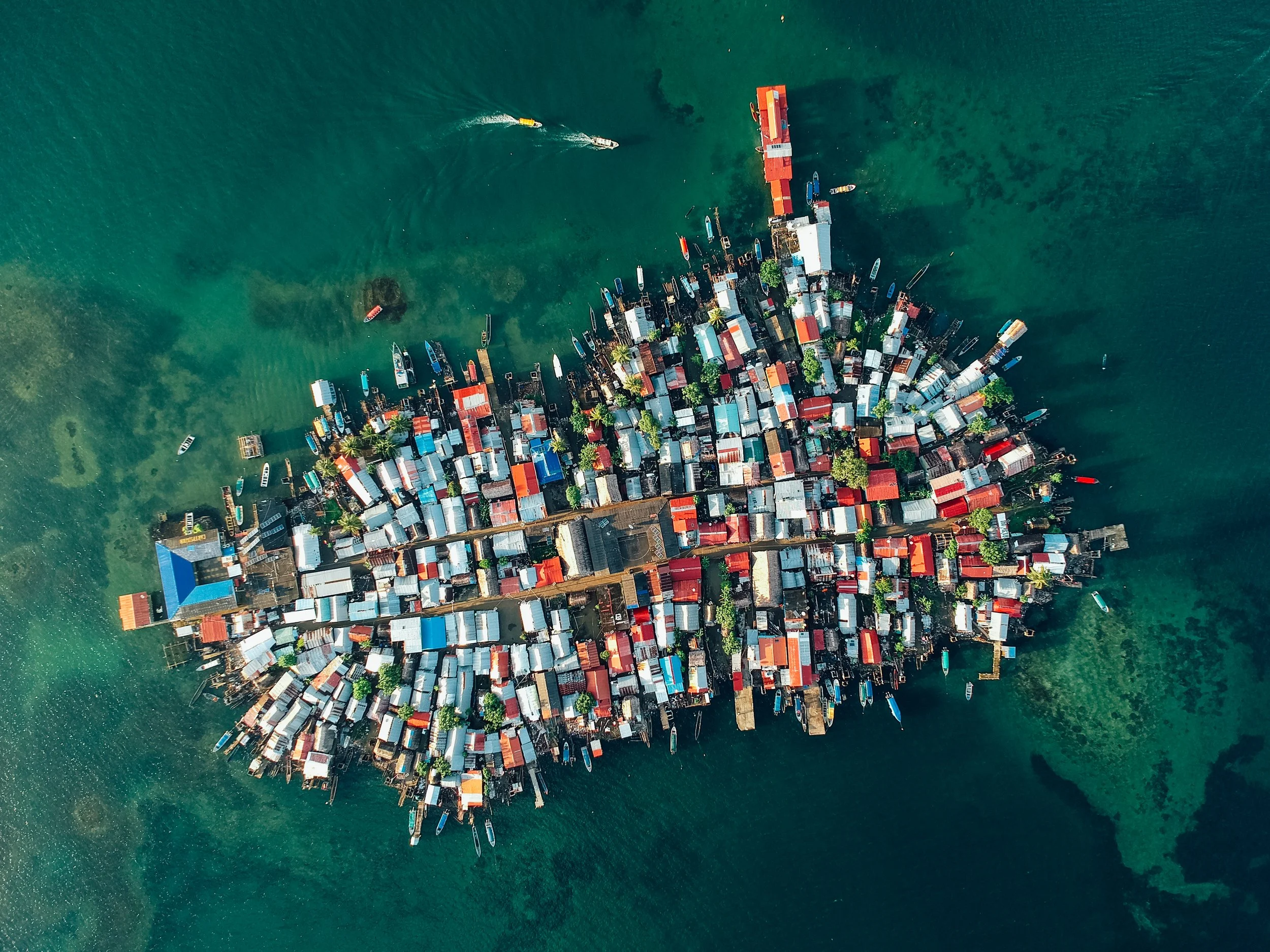
Gardi Sugdub, Panama. Lee Bosher. ATTRIBUTION-NONCOMMERCIAL 2.0 GENERIC
Climate change poses a threat to coastal territories around the world, as warming global temperatures lead to rising sea levels and stronger storms. Gardi Sugdub is one of 365 islands in the San Blas archipelago, many of which are expected to be underwater by 2050. The rising waters along Panama’s Pacific and Caribbean coasts are expected to subject 63 communities to climate displacement throughout the coming decades as about 2% of Panama’s coastal territory becomes submerged. Although the relocation on June 1, 2024, was successful, the 300 Guna families are the first of an estimated 38,000 people in Panama who will require relocation in the short and medium term.
The Guna people, the Indigenous inhabitants of about 50 of the 365 islands in the San Blas archipelago, are the first of these communities to relocate. Indigenous and other marginalized communities are disproportionately affected by climate displacement, where people are forced to move because of climate-related threats or disasters. Inequities resulting from the climate crisis disproportionately harm People of Color, particularly Women of Color. After decades of attempts by Guna community members to receive relocation support, the Panamanian government finally agreed.
The Guna people have inhabited Gardi Sugdub for generations. They arrived on the island about 150 years ago when they crossed the water from the Panamanian and Colombian mainlands. The move off of the island to a landlocked community surrounded by jungle is a challenge for many because over 200 years of Guna culture have been centered around the sea. While most of Gardi Sugdub’s inhabitants relocated, about 200 people chose to stay on the island.
The relocated Guna people have moved to a new community called Isberyala Isberyala, a plot of 300 two bedroom houses situated in the forest, starkly contrasts with life on Gardi Sugdub, where houses were overcrowded and often homed by multiple families. Panama’s Ministry of Housing ensured that the Isberyala residential project includes infrastructure like electricity, playgrounds, cultural spaces and streets named after historic Guna leaders. The people in Isberyala can easily visit their old homes too, as Gardi Sugdub is only a 30-minute walk and a short boat ride away.
TO GET INVOLVED
Those looking to spread awareness and advocate against climate displacement and inequity can learn more and share knowledge with others. People can support mitigation and relief efforts by donating to organizations that support relocations like Swiss NGO Displacement Solutions and the UN Refugee Agency, which recently started a Climate Resilience Fund.

Madison Paulus
Madison is a student at George Washington University studying international affairs, journalism, mass communication, and Arabic. Born and raised in Seattle, Washington, Madison grew up in a creative, open-minded environment. With passions for human rights and social justice, Madison uses her writing skills to educate and advocate. In the future, Madison hopes to pursue a career in science communication or travel journalism.
Sparking Outrage: The Pope and His Comments on the LGBTQIA+ Community
Despite his efforts to merge LGBTQIA+ and Catholic communities, Pope Francis tries to resolve tensions following a harmful name calling incident.

Pope Francis Waving. Long Thiên. CC BY-SA 2.0
There are around 1.2 billion Roman Catholics around the world today, united in a common Church defined in large part by its belief in the primacy of Saint Peter and in its head, the Pope, as his successor. Despite immense growth over its two millennia of history, the central tenet of Catholicism remains the same, as described in Matthew 22:37-39: “To love God with all your soul, heart, strength and mind [and] to love your neighbor as yourself—the Golden Rule, as many refer to it today.”
Despite these ideals, and guided by conservative religious principles, the Catholic Church has often been hostile toward the LGBTQIA+ community. Recently, on May 28, Pope Francis extended a formal apology for his use of the word “fociaggine”, an offensive Italian slang word referring to the gay community. The Pope used the word behind closed doors in a private meeting with 250 Italian Bishops when asked about whether openly gay men should be admitted into seminaries (priesthood colleges). The press office director for The Holy See Matteo Bruni told the public that the Pope never intended to offend people or come across as homophobic, extending the Pope’s apologies to those that were hurt by the slur.
Throughout its history, the relationship between LGBTQIA+ community and the Catholic Church has often been tense. In 1975, the Vatican issued a declaration stating that, “Homosexual acts are intrinsically disordered and can in no case be approved of.” Despite verbal support of the gay community, the Catholic Church itself does not officially recognize same-sex marriages.
In 2013, Pope Francis responded, “Who am I to judge?” when asked about his stance on gay priests, opening the conversation on the gay community’s involvement with the Catholic Church. Pope Francis is thought of by many as revolutionary for the LGBTQIA+ community, with CNN noting that he, “has shifted the church’s tone and approach to gay people, refusing to take a judgemental stance, something that church institutions and leaders had often been accused of doing in the past.” The Pope’s decision to bless same-sex couples in 2023 was a landmark move for the community, the Vatican document opening “the possibility of blessings for couples in irregular situations and for couples of the same sex, [leaving decisions to] the prudent and fatherly discernment of ordained ministers.”
Although blessings were not formally allowed until 2023, some progressive priests conducted them unofficially for years prior. Ultimately, discrimination against the LGBTQIA+ community varies across dioceses and parishes. Some communities are very welcoming, within the Church policy limits, whereas others will quickly deny membership to those affiliated with LGBTQIA+. The Human Rights Campaign states that, “There have been recent instances of LGBTQIA+ employees in the United States being dismissed from Catholic schools and parishes following the celebration of a same-sex couple’s marriage.” In addition to the gay community, the transgender community is also discriminated against. The Vatican’s Congregation for the Doctrine of the Faith in September 2015 prevented a transgender man in Spain from serving as a godfather, barring transgender Catholics from serving as baptismal sponsors.
Over the decade of his papacy, Pope Francis has served as a beacon of hope for the LGBTQIA+ community, long used to hostility from organized religion. In early 2023, he called for the elimination of laws in many countries that criminalized homosexuality, stating that “being homosexual isn’t a crime.” The Vatican also announced in late 2023 that transgender people may be baptized as Catholics and serve as godparents under special circumstances. Although there has been progress for the LGBTQIA+ community in Pope Francis's Catholic Church, his recent comments serve as a reminder that these are recent, fragile developments that still leave much room for improvement.
Aanya Panyadahundi
Aanya is a student at the University of Michigan studying sociology and journalism on a pre-law path. She loves to travel the world whenever she can, always eager to learn more about the different cultures and societies around her. In her free time, she likes to play the violin, ski, and listen to podcasts
Abstinence-Only Feminism: Exploring South Korea's 4B Movement
The 4B Movement in South Korea aims to fight discrimination and decenter men by leaving them behind entirely.

Women’s protest in Seoul for sex worker’s rights, South Korea. Rita Willaert. CC BY-NC-SA 2.0
The 4B movement comprises four strategies that de-center men in an attempt to advance gender equality and women’s rights in South Korea. They include abstaining from bihon (marriage), bichulsan (childbirth), biyeonae (dating), and bisekseu (sex) with men.
Since the 4B movement was sparked by a Twitter user in 2018, the fertility rate in South Korea has dropped significantly, and the country now has the lowest fertility rate in the world. There are predictions that by 2065 over half of South Korea’s population will be over the age of 65.
Feminists in South Korea have been fighting against traditional gender roles, gender-based violence, and discrimination for years. South Korea’s gender income disparity ranking is one of the highest among Organisation for Economic Co-operation and Development (OECD) members, with a 31% gap between the average pay of men and women. This is particularly striking in contrast to the OECD average wage gap of 11.9%.
Discrimination and violence against South Korean women are not limited to the workplace. A 2021 survey found that a third of South Korean women have experienced gender-based violence in their lifetimes, while 80% of South Korean men admitted to abusing romantic partners in another survey. Most of the perpetrators do not face consequences.
In South Korea, feminist movements have recently been faced with significant resistance and anti-feminist rhetoric. President Yoon Suk Yeol’s political platform focused on men’s grievances regarding feminism and called for the abolition of South Korea’s Ministry of Gender Equality.
This rhetoric includes the notion that feminism and misandry are synonymous and that, because of feminism, men are now the victims of gender discrimination. These tensions have further stigmatized the discussion of women’s rights and gender equality, with the government going so far as to remove the term “gender equality” from textbooks.
While President Yook Suk Yeol has yet to be successful in getting rid of the Ministry of Gender Equality, his appointment of Kim Hyunsook as Gender Equality Minister has been condemned by feminists and activists who claim Hyunsook has failed to fulfill the mission of the ministry by ignoring cases of discrimination and gender-based violence.
To address the demands of the 4B movement, international affairs experts have several policy recommendations. These initiatives include increased support and advocacy for advancing South Korea’s Ministry of Gender Equality, enforcing laws against gender-based discrimination, and requiring gender equality training for the Gender Equality Minister.
Feminist organizations such as Haeil and the Korean Women’s Associations United continue to organize protests and advocate for women’s rights. This persistence combined with the tangible impact the 4B Movement has had on the South Korean fertility rate has inspired feminists around the world.
GET INVOLVED
Those who wish to support the 4B Movement can use social media to raise awareness. To financially support feminism in South Korea, donations or sponsorships can be made with South Korean feminist organizations such as the Seoul International Women’s Association or the Korean Women’s Association.
Madison Paulus
Madison is a student at George Washington University studying international affairs, journalism, mass communication, and Arabic. Born and raised in Seattle, Washington, Madison grew up in a creative, open-minded environment. With passions for human rights and social justice, Madison uses her writing skills to educate and advocate. In the future, Madison hopes to pursue a career in science communication or travel journalism.
Climate Change on Trial: Vermont Passes Climate Reparations Bill
After historic flooding, Vermont calls for “Big Oil” to pay its share of the damages.
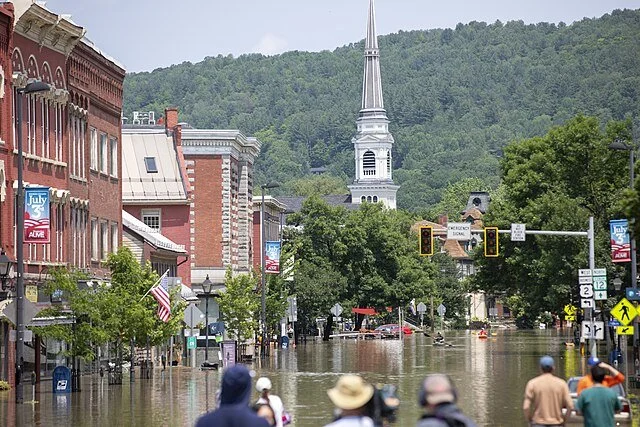
The Great Vermont Flood of 2023 in Montpelier, Vermont. The National Guard, CC BY-SA 2.0
Climate change has become a serious issue across the globe. Freak weather events, increased global temperatures and glacial melt, among other crises, have made it almost impossible to ignore. And for residents in one state, climate change has come right to their doors for what lawmakers intend to make the last time.
Vermont suffered severe flooding during the summer of 2023—the water completely submerged parking meters in the capital city of Montpelier. Thousands of residents lost cars, homes and businesses. According to the National Weather Service, the damages from this event alone rivaled—and even exceeded—the damage caused by Hurricane Irene back in 2011.
Now, the state government has passed a bill forcing fossil fuel companies to pay for a portion of the damages caused by climate change. Vermont is now the first state in the Union to take these organizations to task for externalities caused by fossil fuel emissions. According to the bill, the Agency of Natural Resources will create a report by 2026 that estimates the cost of climate change-based damage since 1995. This will examine aspects such as public health, agriculture and economic development.
The bill has been lauded for its progressive approach to climate justice, as holding companies accountable for pollution is, perhaps unsurprisingly, very widely supported. However, several Vermont politicians have also expressed concern over what will surely turn into a knock-down, drag-out legal battle come the report’s publication.
This bill marks a huge turning point in the climate justice movement. Although the legal battle has yet to begin, the precedent set by this bill is groundbreaking. The federal government has taken little serious action toward climate change reparations, as they are a divisive issue on a national level. Some consider the process to have very little legal basis, which naturally spawns skepticism that the legislation can actually be enforced.
However, regardless of how the bill has been received, the progress here is undeniable. There’s something to be said for the power of precedent in legal situations. Reparations have been divisive in the court system on account of being largely untested in a legal setting. Most court cases on a federal level are decided largely based on the results of similar cases in the past. Much of the heel-dragging over climate change, then, can be explained by how new and untested many of these legal approaches are.
It’s far more difficult to pass a bill at the federal level than the state, especially when trying to attack such an inflammatory issue. That said, states taking action—successful or not—could begin to wear down that resistance. If Vermont manages to extract reparations from the targeted companies, other states may follow suit. With enough states unified towards climate reparations, the federal government may be forced to take a stance. It likely won’t be for some time, but Vermont’s actions now are potentially paving the way for a massive shift in the governmental response to climate change in future years.
Ryan Livingston
Ryan is a senior at The College of New Jersey, majoring in English and minoring in marketing. Since a young age, Ryan has been passionate about human rights and environmental action and uses his writing to educate wherever he can. He hopes to pursue a career in professional writing and spread his message even further.
Hiking in the Canadian Rockies: The Natural Magic of Waterton National Park
Find some of the best hikes in the world on the southern Canadian border.
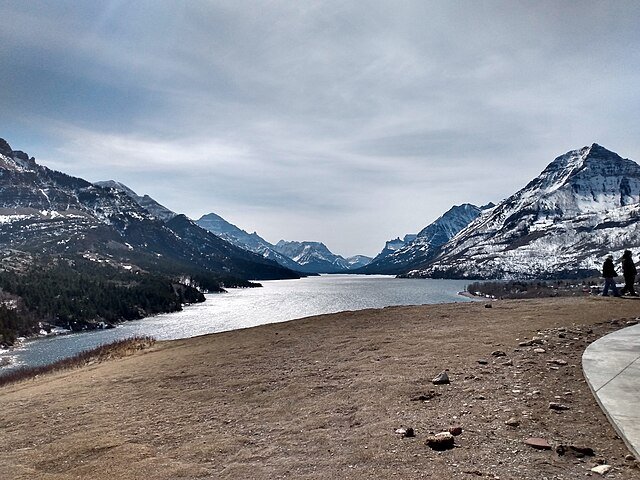
Waterton Lakes seen from the Prince of Wales. Sean Tseng, CC BY-SA 4.0
Uniquely positioned as the only national park in both the United States and Canada at the same time and known as an International Peace Park, and the first of its kind, Waterton is a once-in-a-lifetime experience. During my two weeks there, I discovered hidden waterfalls, hiked over miles of snow and ice, and took a step back into Canadian history.
Our first destination was the Prince of Wales Hotel. Positioned on top of a hill overlooking the beautiful Upper Waterton Lake, this building was constructed in 1927 and has remained one of the most recognizable landmarks in the entire park. The interior is a classic 20th-century hotel, complete with a manually-operated crank elevator. Niagara, the restaurant within the hotel, holds high tea in the drawing room in the afternoons, bringing guests back to Victorian England, complete with pastries and ornate British tea sets.
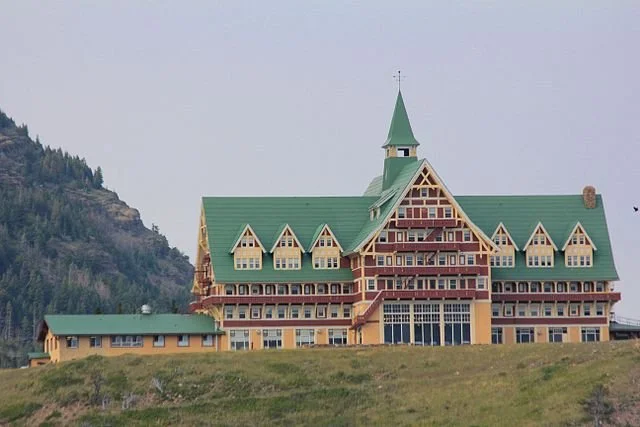
The Prince of Wales Hotel. Royalbroil, CC BY-SA 3.0
Heading down along the steep path on the hillside, we arrived in the small town of Waterton on the edge of the lake. The sleepy mountain village was a lovely experience; it felt like taking a trip back through Canadian history, complete with uniformed mounties patrolling the streets. The town opens up onto a variety of hiking trails into the surrounding mountains and along the shores of the lake.
Taking one of these mountain paths, we climbed up and around the foothills and into a gorgeous pine forest. Making our way along the rocky outcroppings and winding paths, we found ourselves facing a thundering waterfall only a few minutes after we started out. This would prove to be the standard for our trip; it seems like everywhere you look, there’s another beautiful vista or secret wonder waiting to be discovered.
Just a few minutes’ drive from the hotel, we arrived in Red Rock Canyon, a small but beautiful gap in the earth lined by small brush and occasionally frequented by coyotes. Thankfully, we didn’t run into any of them on our trail, but at the viewing spot at the end of the short hike we spotted one scampering along the bank of the small river far below us. This canyon is also a known visiting spot for both brown and grizzly bears; their presence in the park has led seasoned travelers to suggest carrying noisemakers or regularly shouting, “Hey, bear!” to avoid taking the huge animals by surprise and risking an attack.
After a few days enjoying the sights of Waterton, we made our way further west and crossed the border back into the US’s Glacier National Park to visit some of the last remaining glaciers in North America. One of these ancient ice giants, Jackson Glacier, is visible from the side of the famous Going-to-the-Sun Road. This winding path along the side of the Rocky Mountains sits at an elevation of around 6,000 feet and is lined with waterfalls and scenic vistas. If you’re lucky, you can spot herds of bighorn sheep climbing the hills alongside the road; with their unique hooves, they can cling to a sheer rock wall as if it was flat ground. And as long as the weather is good, you can clearly see the massive ice sheet that carved out the valleys below, suspended between two peaks in the far distance.
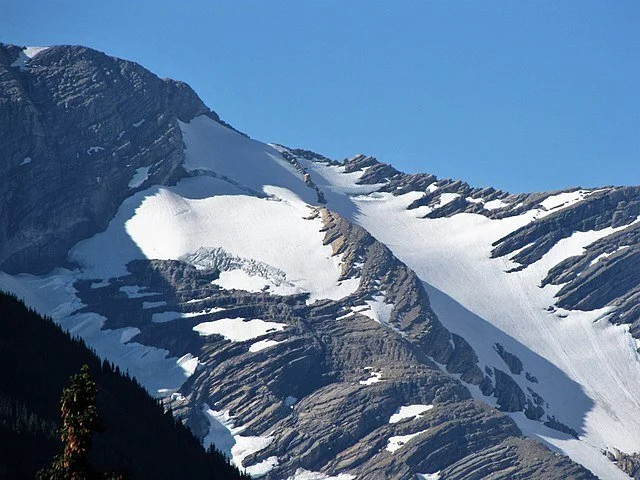
Jackson Glacier as seen from Going-to-the-Sun Road. MONGO, CC BY-SA 4.0
Further along the road, we came to our next stop; a trailhead that led out into a massive field of snow. With bandanas and wool hats to resist the biting cold, we started out across what looked like a scene straight out of a Hallmark movie. But after a few feet, we discovered that there was actually a wooden walkway—about three yards beneath us. This massive field of snow was in reality a mountain of its own; it was several yards deep and miles wide in all directions.
After picking our way along the often slippery surface of the snowy mountain, we found ourselves in another forest, this one populated by tons of wild mountain goats. Groups of hikers stood along the roped-off path, snapping photos of the adorable baby goats as they rooted through the snow and brush for food. We also spotted some wolverines, keeping their distance from us as they hunted for prey along the upper slopes of the mountain.
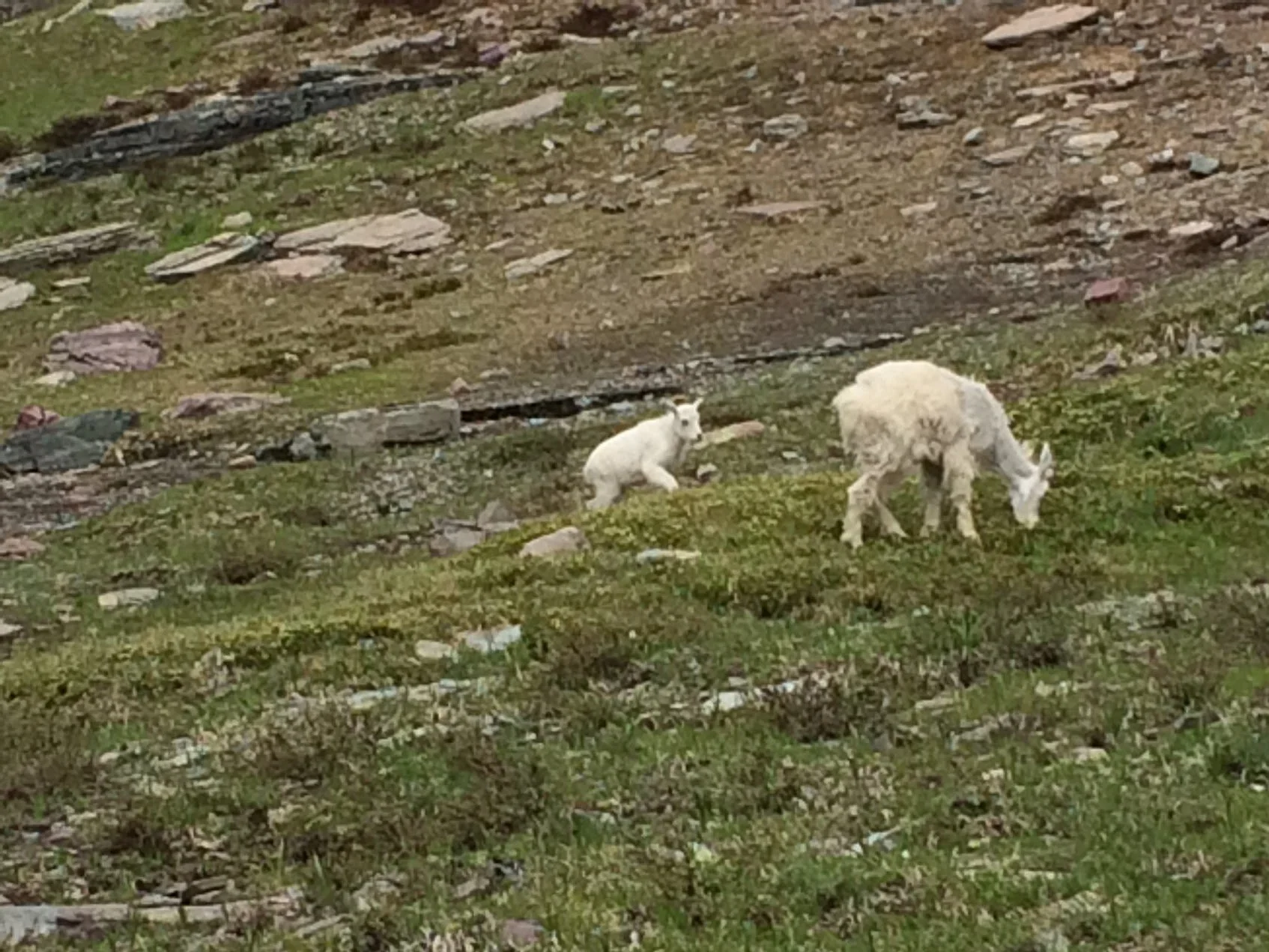
A mountain goat with its kid. Photo by author.
Once we had descended to our car again, we made our way back north to our last stop: Many Glacier Hotel, overlooking Swiftcurrent Lake. After dropping off our things, we hopped on board one of the boating tours. We were taken across the lake to the opposite shore, where we briefly hiked our way through the foothills before hopping on another boat and circling back around. During our cruise, we were given the history of the area, from the area’s original residents, the Cheyenne and Blackfoot tribes, to the park’s founding in 1910.
Waterton and Glacier are some of the most beautiful national parks in the world; despite being overshadowed by Yellowstone and the Grand Canyon, there is nothing quite like hiking across miles of snow and viewing the ancient glaciers that formed the landscape of America and Canada. The wildlife, the environment and even the towns of Waterton are steeped in natural beauty and wonder; anyone who enjoys hiking and loves a good view should make their way to Waterton once in their lives.
There are many ways to visit and stay in Waterton. The closest airport to the park is Kalispell (FCA), although for some Calgary International Airport (YYC) may be preferable. The Prince of Wales Hotel from this article is open for online bookings in the spring and summer at their website, and other lodgings are bookable here and on other sites you can find through Google Hotels. Prices in the area generally range from around $130 to $150 per night.
Ryan Livingston
Ryan is a senior at The College of New Jersey, majoring in English and minoring in marketing. Since a young age, Ryan has been passionate about human rights and environmental action and uses his writing to educate wherever he can. He hopes to pursue a career in professional writing and spread his message even further.
An Epic Motorbike Journey Through Northeast Vietnam
The Ha Giang Loop offers travelers a unique way to experience the natural beauty of Vietnam.
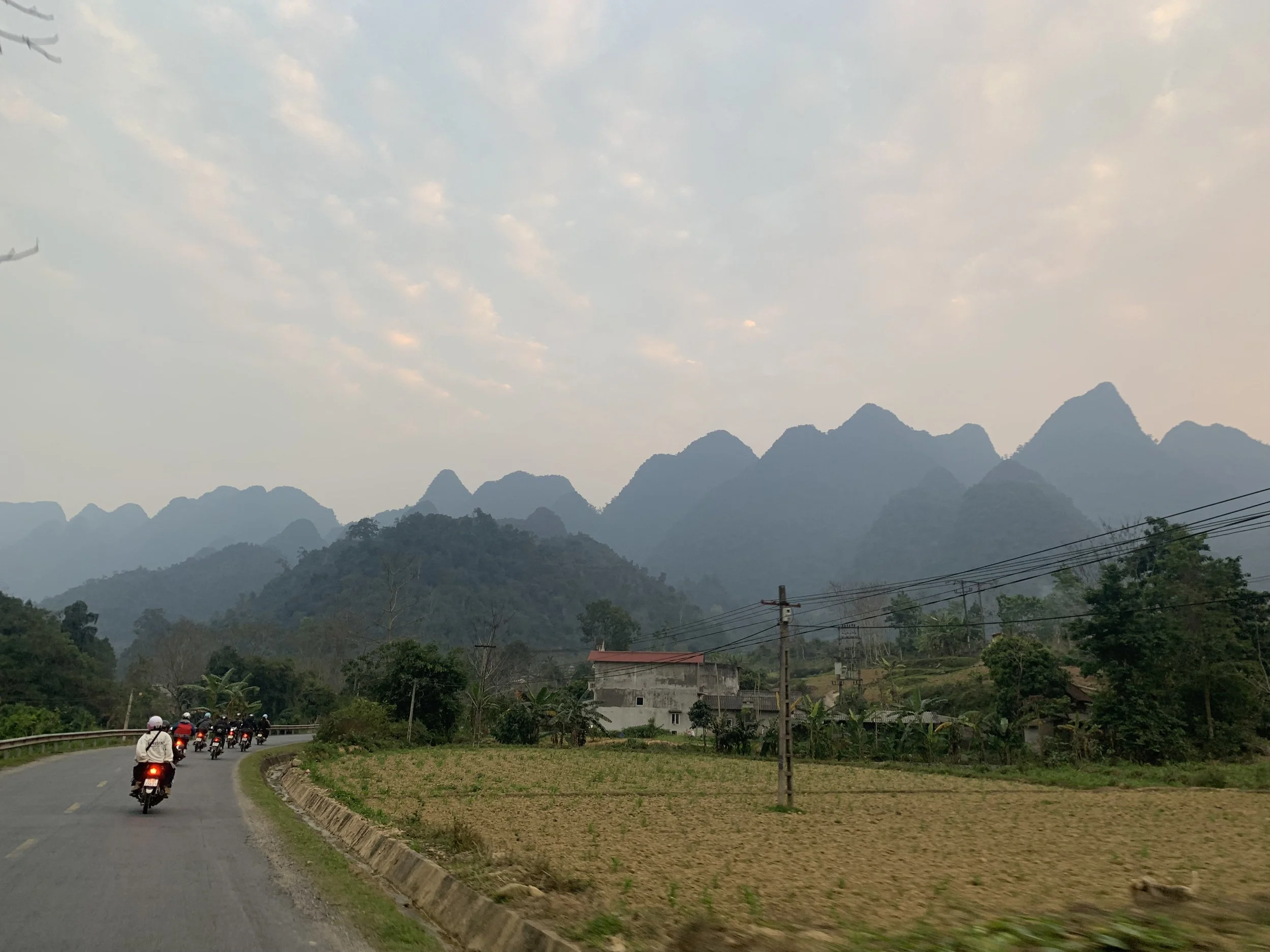
Mountain View on the Ha Giang Loop, Harper Noteboom.
Nestled against the southern Chinese border, the Ha Giang province serves as the great final frontier of Vietnam. The region is characterized by its striking limestone peaks, steep drop-off valleys and quaint roadside villages. Despite its natural beauty, its remoteness, at approximately 300 km outside of Hanoi, makes it less frequented among tourists. When I first embarked on my five-month solo trip through Southeast Asia, I had never heard of Ha Giang or the experiences it offered. But within a few weeks, I began to hear conversations about the region and the once-in-a-lifetime opportunity to be a passenger on or, for the braver travelers, to drive a motorbike for three days through lush valleys full of hairpin turns. Despite these conversations, nothing could have prepared me for the life-changing experience of the Ha Giang Loop.
In the pre-dawn hours, our overcrowded semi-sleeper bus from Hanoi pulled into the city of Ha Giang. By 10 AM the street outside Jasmine Hostel was full of eager backpackers and their motorbikes. Being an inexperienced driver I opted to hire an easier ride, a Ha Giang local who would drive while I sat on the back. I would quickly be reassured that this was the right choice when I saw the injuries that a crash can inflict. We were sectioned off into groups of 15 and hit the road.
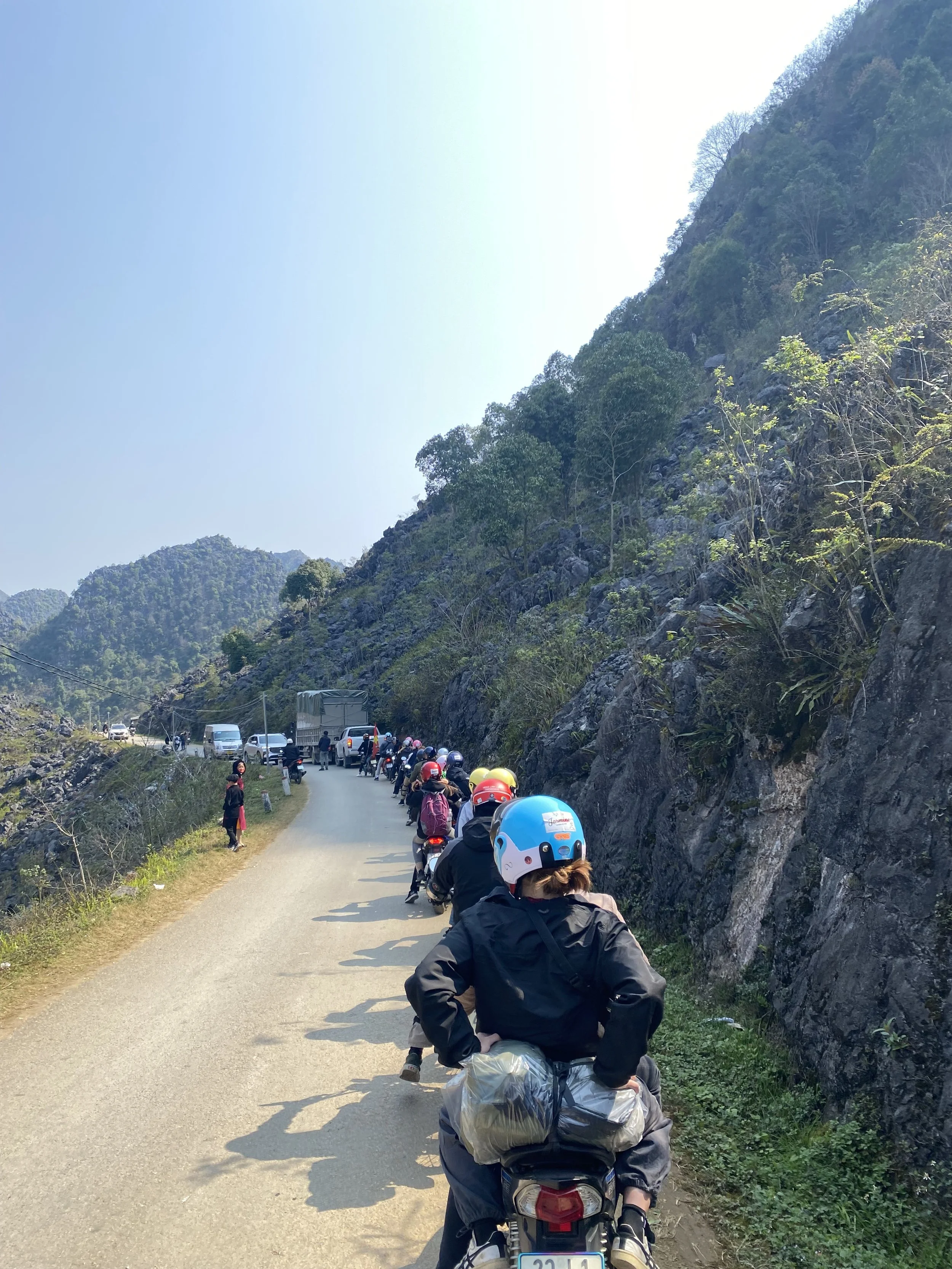
Traffic jam on the Bac Sum Pass. Harper Noteboom
We spent the first few hours of our drive traveling north out of the city of Ha Giang and over the Bac Sum pass. The first of many steep and narrow passes, Bac Sum is a 4.3 mile stretch of sharp zigzag turns at an altitude of 1475 feet. I was immediately encapsulated by the stunning mountain peaks that rose around me and began to understand its common nickname “Heaven Gate;” I truly felt like I was transcending the Earth and moving up into the Heavens.
Throughout the day we made several stops to enjoy the view, take a necessary break from sitting, and eat some lunch. As we pulled away from one of our stops, I suddenly felt the bike start to slow down and emit a horrible creaking sound. We came to a complete stop and I watched as the rest of the group sped past leaving my driver and me in their dust. Suddenly I found myself completely alone on the side of a mountain with a driver who spoke no English and had no way to contact my friends. Through lots of pointing, I was instructed to sit down next to the bike and wait while my driver walked off to call someone. As I was sitting wondering how far ahead my friends were, two little girls appeared from their small roadside village and began to show me the flowers they had picked. Without any verbal communication we were able to appreciate the beauty of their flowers together. These girls belong to one of the many ethnic minority groups in the Ha Giang region. The loop not only serves as a beautiful journey for adventurous travelers but also as a lifeline between small, isolated minority communities and the modern world. In this small interaction, I was reminded of the true reason I was traveling, to experience and connect with people and cultures that were different from my own.
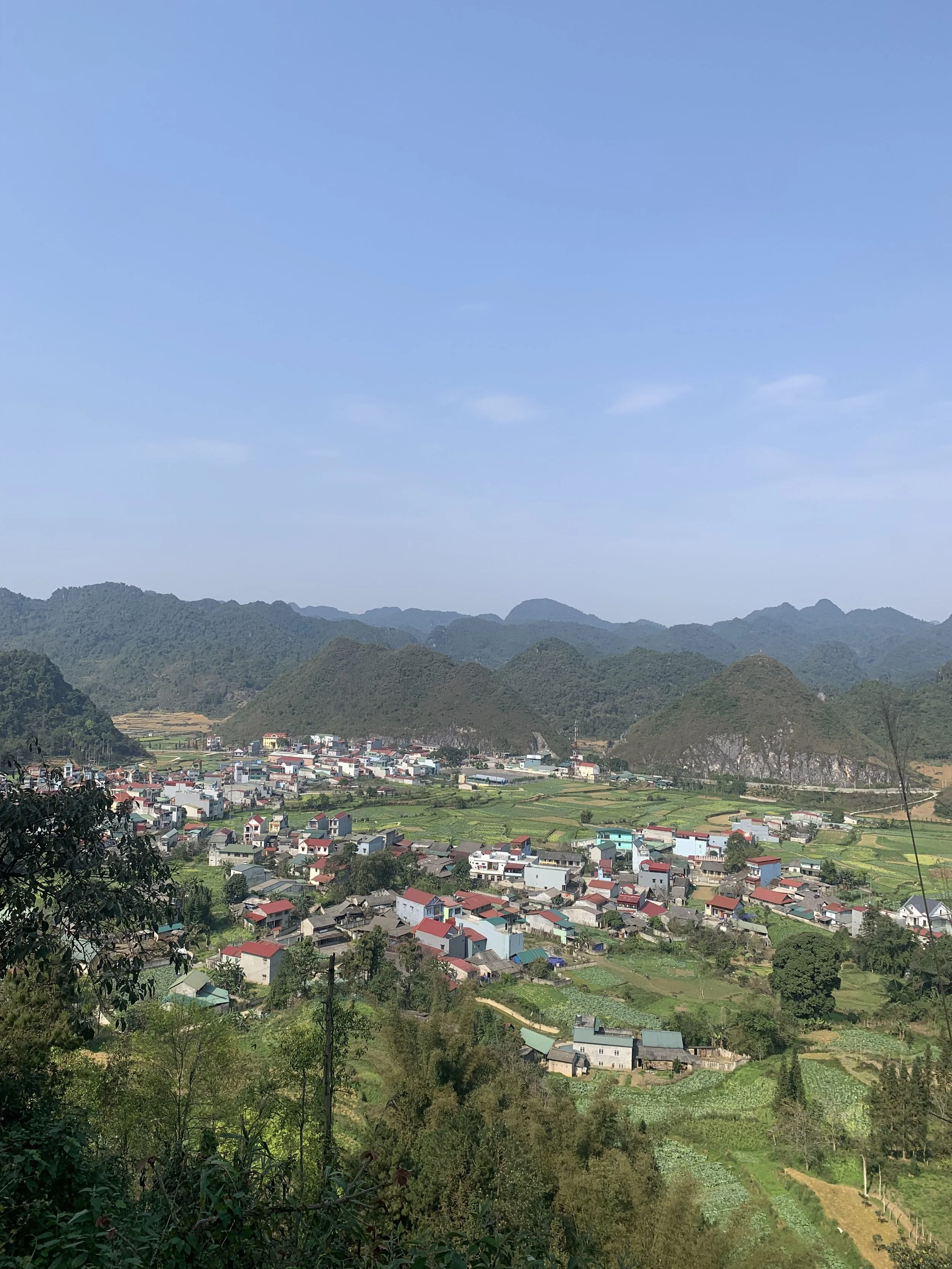
Roadside Village. Harper Noteboom
Eventually, the leader of my group returned and put me on the back of his bike, he turned to me and said “Hold on tight we need to catch up”. And just like that, I was on my way to our homestay for the night. We closed out our first day with a delicious meal of authentic H’mong cuisine and shots of rice wine, accompanied by a chant-like toast from the group leaders.
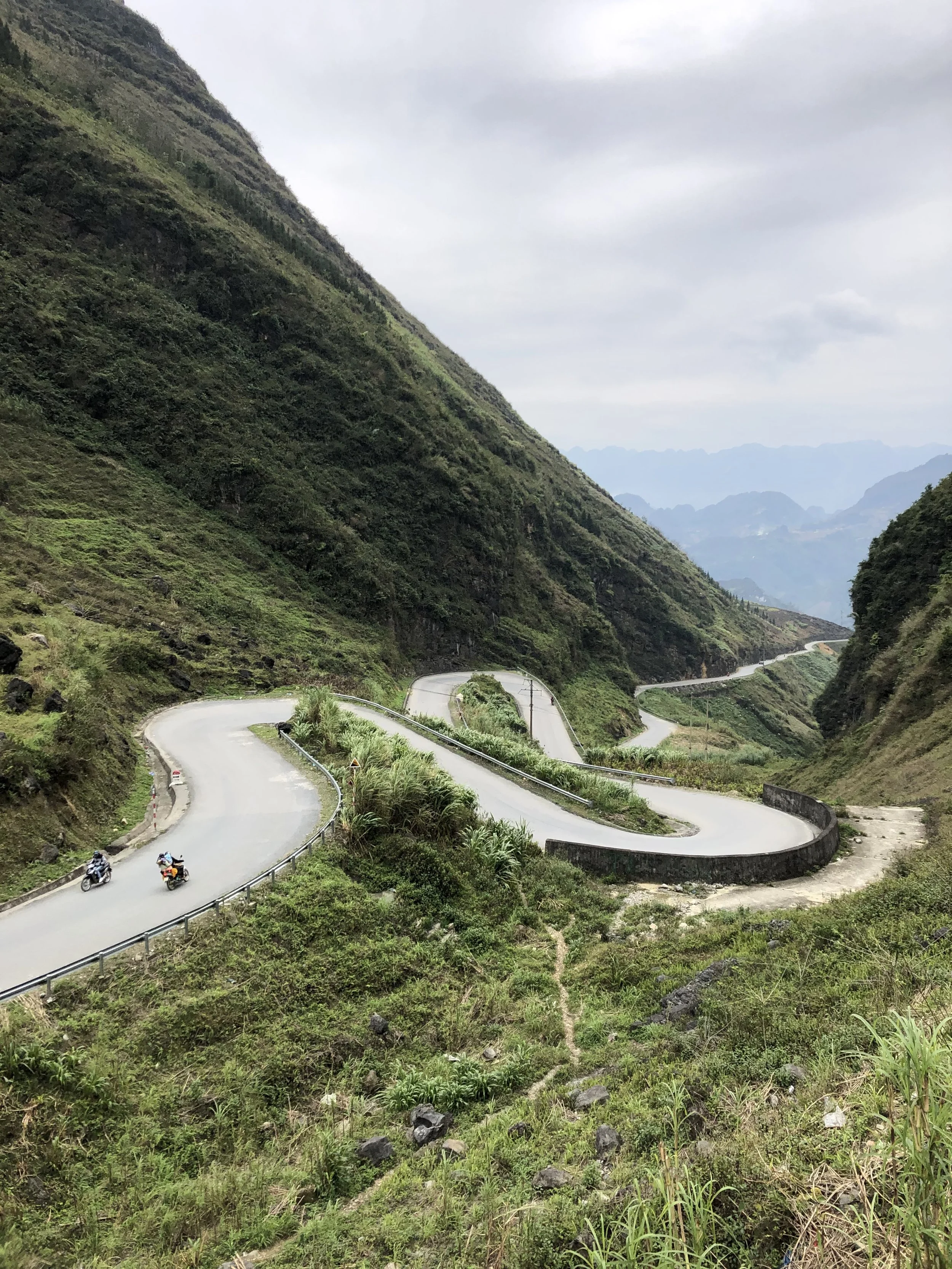
Pass along the Dong Van Plateau. Sabourock. CC BY-SA 4.0
We started day two with a visit to Kings' Royal Palace, the home of the traditional leader of the Hmong ethnic group. The 19th-century mansion, built fully by hand, combines Hmong, Chinese and French architecture and serves as both a majestic home and a protected army base. The palace's harmonic design and original furnishings transport the visitor back in time and give a real glance into the life of the Hmong King. After indulging in a traditional Vietnamese coffee, we took a brief drive to Lung Cu Flag Tower. At over 35 meters tall, the octagon-shaped tower sits at the northernmost point of Vietnam and represents unity and independence for the country, offering a panoramic view across the Chinese border. After our morning of traveling back in time, we departed for what would be one of the most terrifying, gut-wrenching and inspiring experiences of my life, the Skywalk.
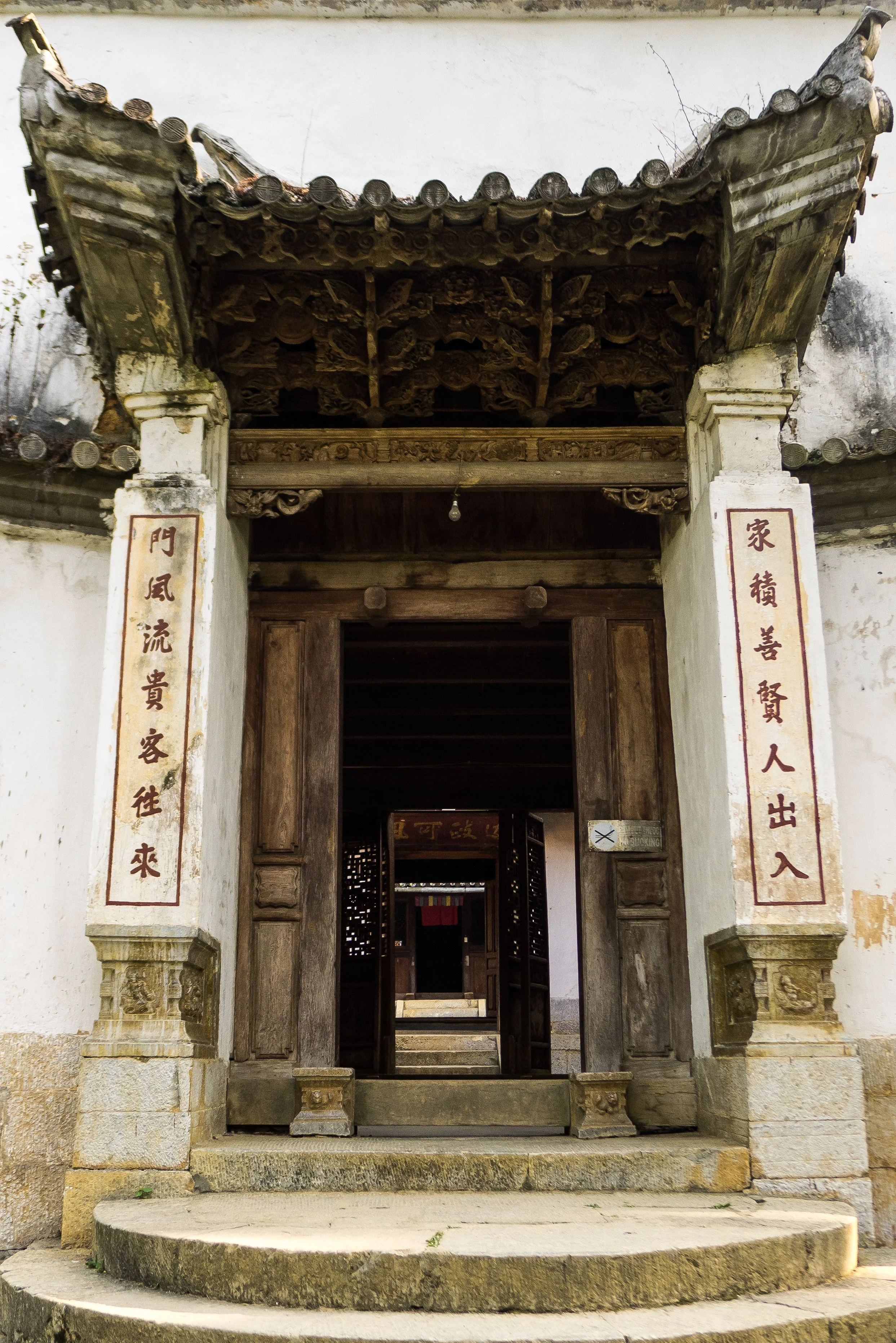
Entrance to Kings' Royal Palace. Gavin White. CC BY-NC-ND 2.0
Describing exactly what the Skywalk is and what it truly feels like to be there is no easy task. The beginning of the trail is extremely narrow and hugs the side of a mountain while snaking along its exterior. The short walk itself is nothing compared to the destination. A massive mound of rocks stretches out over the edge of a cliff and seems so perfectly balanced that a single shift would result in the complete crumbling of the cliff and all the people on it. From the side, one long, narrow, flat rock extends out from the rest. While barely big enough for two people and high enough that a misstep would result in a deadly drop, there was a long line of eager backpackers waiting for their turn to cautiously creep out onto the rock. When it was my turn to go, I was overwhelmed with fear and even glancing down sent my stomach into my chest, but I carefully and slowly crept to the edge and sat down. As I looked out at the 360-degree view of the sharp peaks and luscious fields below me, I felt like I was truly the queen of the world. In this moment I had a realization, this is what traveling is all about, this is what life is all about; it’s about facing your fears to fully take in the beautiful world that we are so blessed to explore. The memory of this moment is one I return to often, and I revel in the euphoria of travel and the beauty of experience.
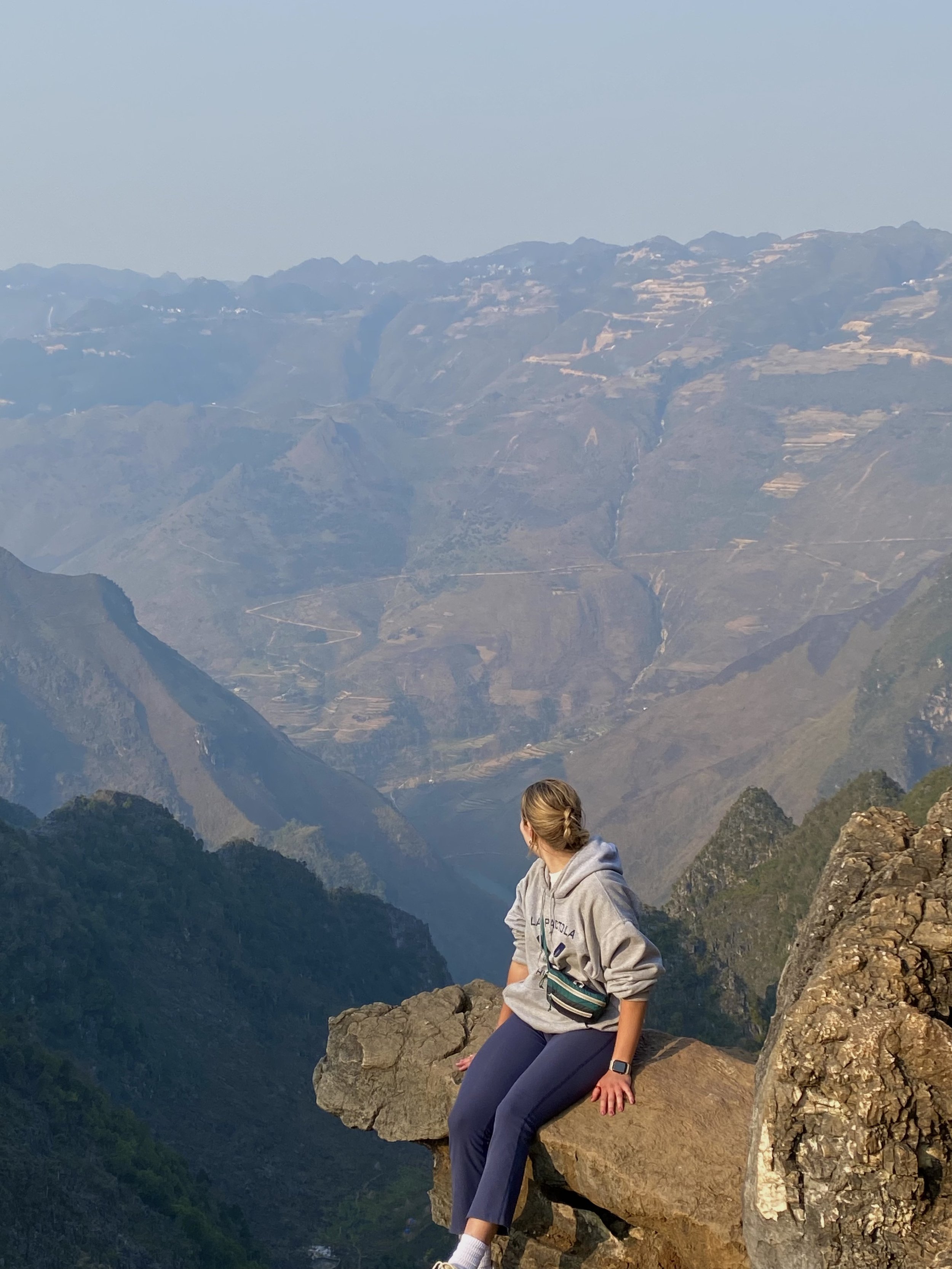
Skywalk. Harper Noteboom
I rode the high of that moment for the rest of our drive to the quaint village where we would stay for the night. The following morning, as a final send-off, we took a cruise down the limestone-crested Tu San Canyon before our long, bumpy, and admittedly very dusty journey back to the city before catching our even longer bus back to Hanoi.
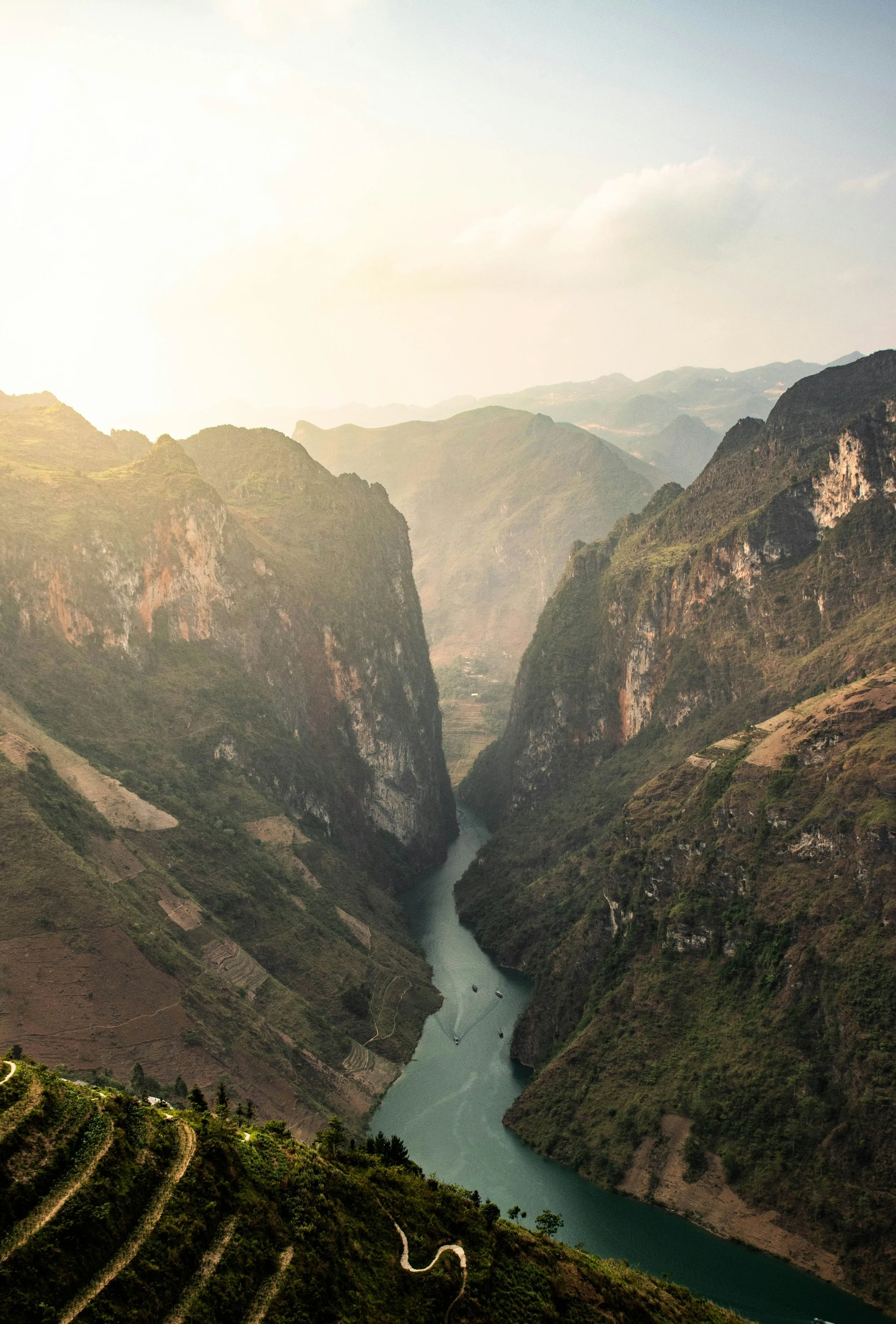
Tu San Canyon. Ryan Le. CC0
As I reflect on these 3 marvelous days, there's no way to describe the life-altering effect that the Ha Giang loop has had on me. I never thought I would have the chance to soar through epic mountain ranges on the back of a motorbike with some of my best friends, but I’m overjoyed that I did and I urge everyone who is visiting Vietnam to experience the Ha Giang Loop.
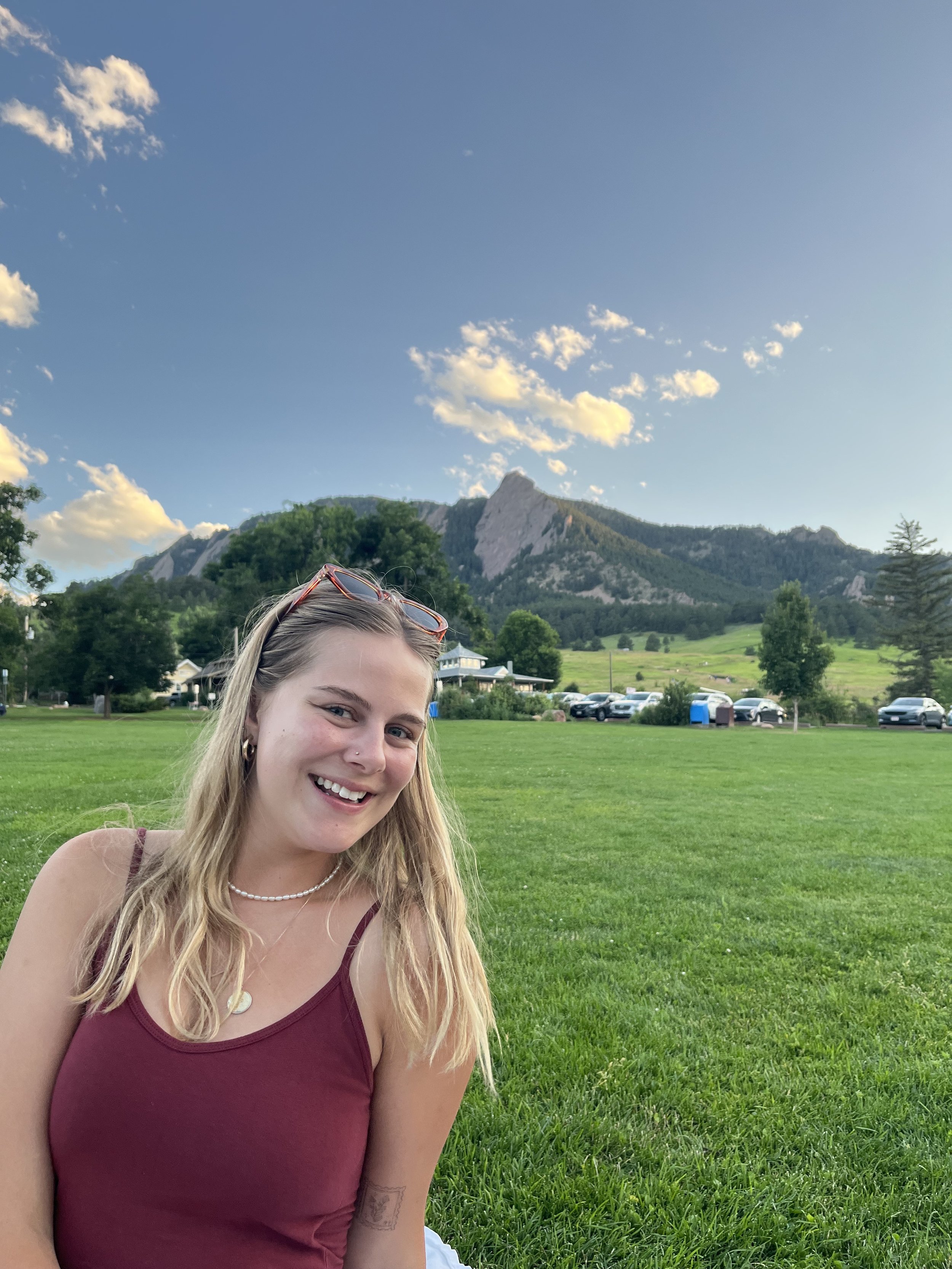
Harper Noteboom
Harper is a student at Pomona College majoring in Computer Science while exploring many interests in the liberal arts nature. Her worldly curiosity and passion for traveling took her to The Netherlands for High School and then on a gap year around Southeast Asia. Harper hopes to share the immense joy of traveling through her writing.
Florida Reef Farmers Revitalizing Coral Reefs
A group of environmentalists based out of the Florida Keys have devised a way to farm coral and help rebuild dead reefs.
Read MoreFeeling Unlucky: Why Gambling Hotspots Are So Bad for the Environment
Balancing the economic benefits of the casino industry against its environmental costs in Las Vegas and Macau.

Las Vegas strip at night. Las Vegas City Files. PDM 1.0
Rapid urbanization is one of the driving causes of pollution worldwide, and gambling hotspots are no exception, using precious resources to fight heat, water scarcity and pollution. The gambling centers of Las Vegas and Macau generate billions of dollars a year from tourist revenue, promoting overconsumption via colossal retail stores, high-rise casinos and souvenir shops. Beneath their twinkling lights, however, lies a reality riddled with addiction, excess and greed, and environmental impacts that are all too often overlooked.

Motorists waiting at traffic light. Dickson Phua. CC BY-NC-ND 2.0
Located in an arid desert landscape, Las Vegas’s temperatures can crawl up to 120 degrees Fahrenheit during the summer months, making it one of the hottest in the U.S.; other than Reno, it is the fastest-warming city in the country. Just twenty miles east of Las Vegas, Lake Mead’s water level has significantly dropped over the years. With temperatures rapidly rising, residents and tourists alike face the possibility of rarely going outside, as there’s little more to do outside than wander up and down the strip and lounge at a hotel pool. According to SWANA (Solid Waste Association of North America), Las Vegas produces more than five billion pounds of waste each year. While Las Vegas is attempting to rebrand itself as an eco-friendly city, conservation efforts are still underway. In 2016, the city began powering government buildings and streetlights with renewable energy, and most high-rises have installed solar panels on their roofs. The Sphere, Las Vegas’s newest concert venue, has an agreement to meet its electricity needs with solar power, but this must be approved by the Public Utilities Commission of Nevada, which likely won’t happen until 2027.
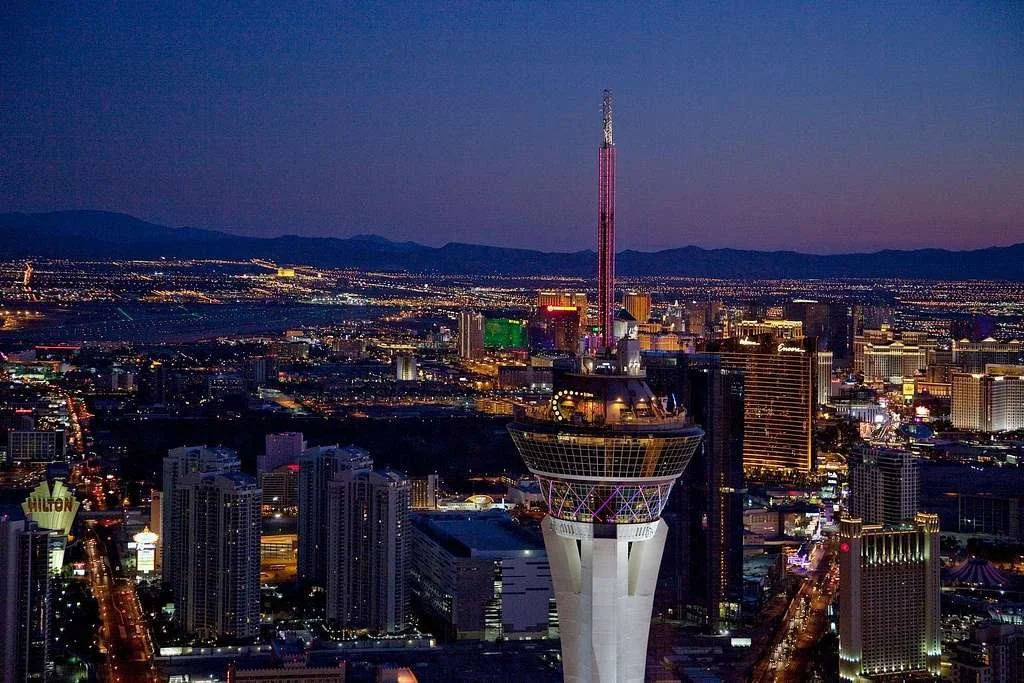
Aerial view of Las Vegas at night, Carol M. Highsmith's America Project, PDM 1.0
With casino-hotels lining the Cotai Strip, Macau has been dubbed “the Las Vegas of Asia” for its gambling, shopping and nightlife scene. With tourists flocking the city from mainland China and Portugal, vehicle exhaust from traffic has led to air pollution and excessive greenhouse gas emissions. With a population of just 600,000, a 2023 census indicated that roughly 30 million tourists flock to Macau every year, resulting in overcrowding. The subtropical landscape doesn’t reach temperatures as high as Las Vegas, but the climate is continuing to rise, with average summer temperatures of 83 degrees Fahrenheit. Similar to Las Vegas, Macau is striving to be more eco-friendly, incentivizing citizens to drive electric cars and use green lighting products through tax subsidies, in compliance with environmentally friendly standards.
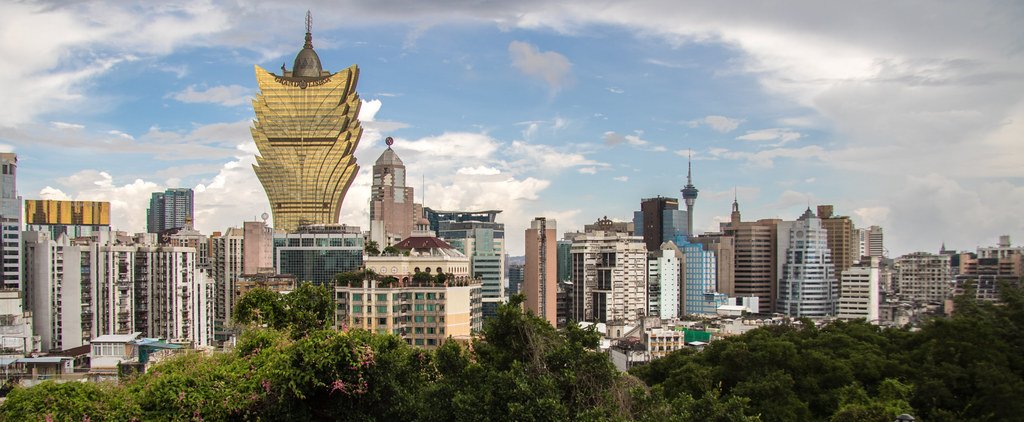
Panoramic view of Macau. Andrew Moore. CC BY-SA 2.0
The impacts of gambling are not entirely negative, particularly for the local economy. The American casino industry generates over $40 billion annually, which funds local development and creates hundreds of customer service jobs. With most casinos operating 24/7, energy consumption is the most significant environmental effect. As global temperatures rise, an excessive amount of energy is spent on air conditioning and lighting. Today, many are turning to online gambling as a more “sustainable” option, thanks to rapid technological advancements. Gambling hotspots like Las Vegas and Macau can adopt greener practices, such as improving public transportation and implementing recycling and composting programs. While gambling hotspots fuel local economies and tourism, their environmental and social impacts cannot be ignored, calling for a balanced approach that prioritizes sustainable practices and responsible urban development.

Agnes Volland
Agnes is a student at UC Berkeley majoring in Interdisciplinary Studies and minoring in Creative Writing, with a research focus on road trip culture in America. She currently writes for BARE Magazine and Caravan Travel & Style Magazine. She is working on a novel that follows two sisters as they road trip down Highway 40, from California to Oklahoma. In the future, she hopes to pursue a career in journalism, publishing, or research.
Thailand’s Progress Towards Marriage Equality
After years of advocacy, Thailand may become the first country in Southeast Asia to legalize same-sex marriage.
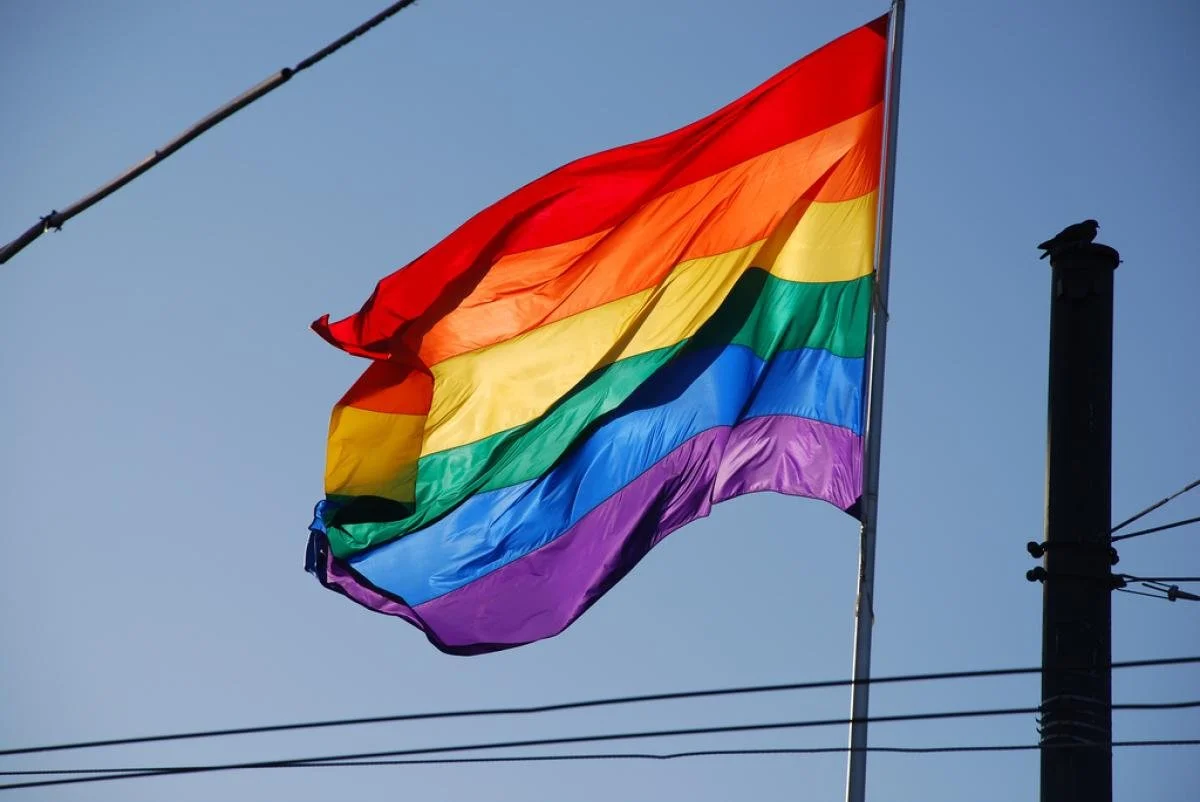
A pride flag waving in the wind. Jamison Wieser. CC BY-NC-SA 2.0
Thirty-seven countries currently recognize same-sex marriage on a national level, and Thailand may soon become the 38th. On December 21, 2023, a package of bills including the Marriage Equality Act was introduced by the cabinet, and debates began in Thailand’s House of Representatives, the lower house of Thailand's legislature. This body resoundingly assented to marriage equality in late March, although it is not yet law.
The Marriage Equality Act would amend Thailand’s civil and commercial code, making many terms that refer to people gender neutral. If the bills pass the the Senate, and receive approval from the King, Thailand will become the third country in Asia and the first in Southeast Asia to legalize same-sex marriage.
Four hundred out of 415 members of the House of Representatives voted to pass the Marriage Equality Act on March 27, 2024. The Marriage Equality Act passed the first reading in the Senate with another overwhelming majority on April 2, 2024.
For decades, LGBTQIA+ laws in Thailand have not matched the country’s acceptance of LGBTQIA+ culture and travelers. Despite being home to many LGBTQIA+ spaces, such as bars and nightclubs, and serving as a destination for many to receive gender-affirming care, discrimination continues and many LGBTQIA+ rights in Thailand remain unprotected.
While there has been progress in advancing LGBTQIA+ rights in Thailand with the passage of the Gender Equality Act in 2015, currently non-binary and transgender people’s identities are not recognized and LGBTQIA+ couples are unable to marry and struggle with adoption.
The recorded history of the LGBTQIA+ community in Thailand dates back to the 14th century. These records include verbal accounts and murals depicting LGBTQIA+ relationships. However, in the 19th century, the criminalization of homosexuality and Victorian norms of propriety spread along with European colonialism in the region, although Thailand itself remained independent.
This influence resulted in a cultural shift, as people began to equate sexuality with moral conduct and consider sexuality taboo. Despite this, Thailand has been famously receptive to LGBTQIA+ travelers, with the Thai Tourism Authority promoting Thailand as a “gay paradise”.
As LGBTQIA+ visibility and activism have increased, Thai political figures have begun to follow suit, with the Pheu Thai party making marriage equality a main goal. Since taking office in 2023, the Pheu Thai party has been integral in moving Thailand toward equality for LGBTQIA+ people.
The Marriage Equality Act will undergo its second and third Senate readings in July. If passed, it will be brought to the King for assent, and will then be established within 120 days, making Thailand a role model for the advancement of LGBTQIA+ rights.
Madison Paulus
Madison is a student at George Washington University studying international affairs, journalism, mass communication, and Arabic. Born and raised in Seattle, Washington, Madison grew up in a creative, open-minded environment. With passions for human rights and social justice, Madison uses her writing skills to educate and advocate. In the future, Madison hopes to pursue a career in science communication or travel journalism.
5 Sea Creatures That Could Save Your Life
We can create tons of life-saving medications from the ocean—as long as we can keep it alive.
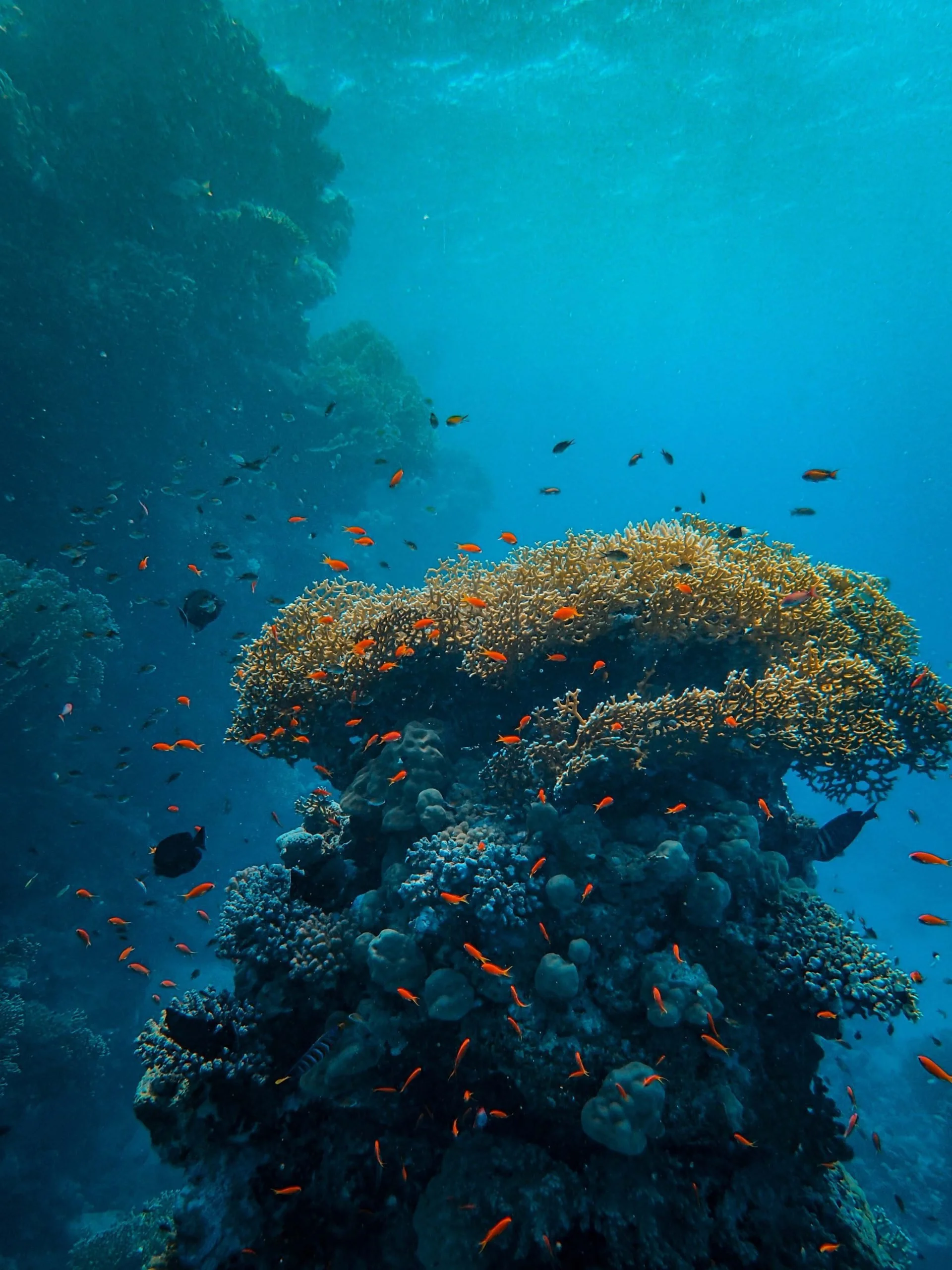
A coral reef. Francesco Ungaro, CC0
It has been said that we know less about our oceans than we do about the surface of Mars. We have already discovered more than 200,000 different species, but scientists agree that we have still only barely scratched the surface of what may be down there for us to find.
Some of these creatures are capable of producing life-saving drugs, curing or treating everything from diabetes to certain types of cancer. Most of our current medications come from terrestrial plants and animals, but given that the ocean represents 95% of Earth’s biodiversity, we are somewhere around 300 to 400 times more likely to find the next big cure in the ocean.
But in spite of this enormous potential, the oceans are in severe danger due to climate change, overfishing and pollution. Here are five different ocean creatures that could potentially save your life—and why we need to keep them alive and healthy.
Seahorses
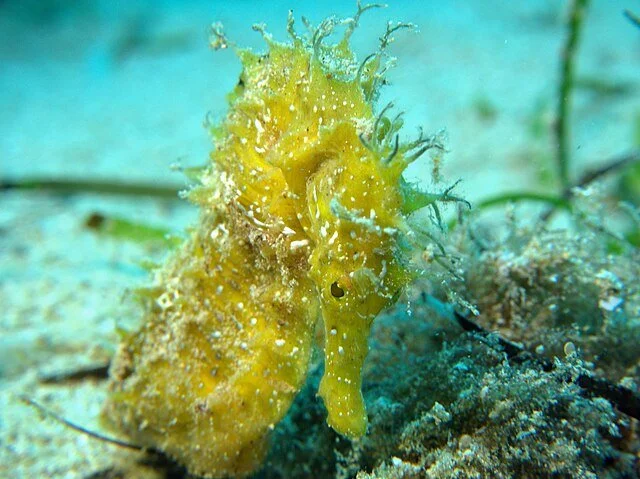
A yellow long-snouted seahorse. Victor Micallef, CC BY-SA 4.0
The first face on our list is a familiar one; seahorses are one of the more famous animals that make their homes on coral reefs, and have proven to be one of the most useful as well. These aquatic equines’ medicinal properties were recorded as long ago as 700 AD, when their extracts were first used in China to cure asthma and arthritis. More recently, seahorses have also been used to treat kidney and liver diseases.
But the population today is larger than ever, so the demand for these treatments is growing every day. Since the 1980s, demand for seahorses in the pharmaceutical industry has dramatically increased, resulting in a frighteningly steep decline in the number still living in the wild. Studies have shown that at least 35% of all species of seahorse are endangered.
This is due primarily to overfishing—aside from the mass harvesting for pharmaceuticals, seahorses are also frequently accidentally caught by commercial fishermen and simply left to die. If this population declines much further, a historically successful treatment for several different diseases may be on the line.
Sea Hares
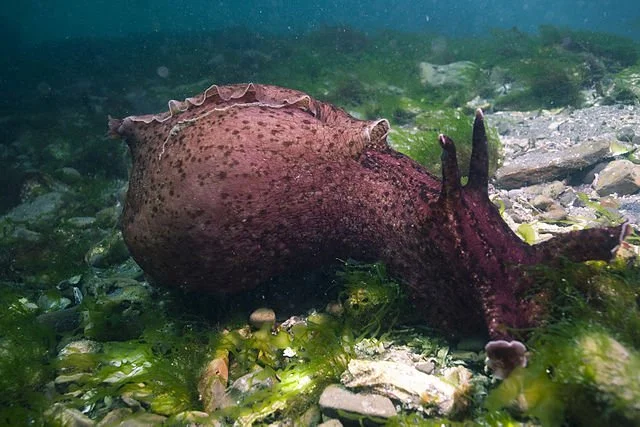
A sea hare in Monterey Bay. Chad King / NOAA MBNMS, CC0
A much less pleasant animal to look at, sea hares are still incredibly useful. A particular species from the Indian Ocean secretes a chemical that may be able to treat tumors, leukemia, and breast and liver cancer. Although the compound is still undergoing chemical trials, the results are promising and scientists believe the unassuming slug may be our best shot at dealing with many of the trickiest cancers in the human body.
Although sea hares are not currently endangered, they are threatened by ocean acidification and climate change. Also, since they are most commonly found along rocky shorelines, they are at risk from agricultural runoff and coastal development. Though we have not pushed them to extinction quite yet, continuing to develop our shorelines without proper caution could rob us of a very promising treatment for some of our most devastating diseases.
Sea Sponges
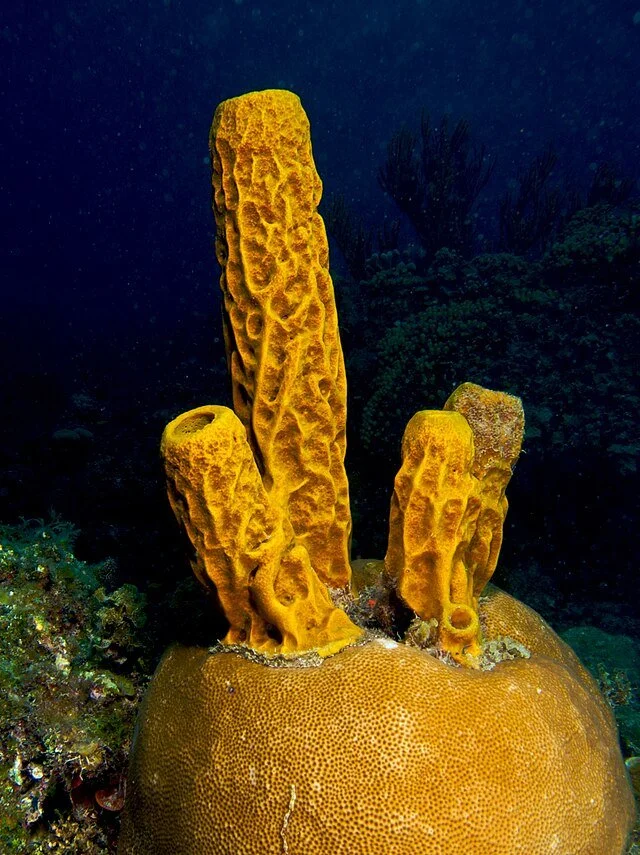
A yellow tube sea sponge. Nick Hobgood, CC BY-SA 3.0
There are countless different types of sea sponge and soft coral all over the ocean floor. In the last few decades, as more and more of them are discovered, we have found countless uses for just about every part of them.
One species in particular, known in the scientific community as Tectitethya crypta, has been used to treat HIV and AIDS. The sponge’s fatty acids in particular are a crucial component in many modern medications. Others have been used to treat breast cancer, leukemia, Ebola and even COVID-19. Needless to say, sea sponges are some of the most beneficial animals in the world, and experts say we haven’t even scratched the surface of what else they may be able to do for us.
Sea sponges are some of the most widespread ocean animals in the world, and have existed since before even the dinosaurs—however, that doesn’t mean they are safe from humanity. Deep-sea mining threatens their habitats by destroying the very land that the sponges grow on. Companies have claimed that deep-sea mining is far more environmentally friendly than other processes on land, however, it might only seem this way because we know so little about the ecosystems that sit just above the valuable mineral deposits in the deep sea. If we continue to haphazardly destroy these animals’ homes, countless potential miracle cures could be lost forever.
Corals

A soft coral in Bali. AlexeiAVA, CC BY 4.0
The backbone of all reefs, coral is widely thought of as a simple plant. Shockingly, these stationary structures are actually animals! Tiny polyps, the real minds behind the beautiful skeletal coral, secrete a thin limestone covering that attaches to the seafloor and eventually grows into the twisting and spiraling forms that we’re familiar with. These polyps have been used in the past to facilitate bone growth, and even to replace shattered or fractured bones in the human body. Ground-up corals can also be used to treat, of all things, Alzheimer’s and heart disease.
As well as being the mascot of the reef, coral is also the poster child for ocean acidification. Coral bleaching, the largest problem facing reefs around the world, is when the polyps that make their homes in the coral flee in response to warming waters or high concentrations of carbon. Without their inhabitants, the coral turns white and brittle, and can be broken by the slightest impact. Unsustainable fishing practices have also resulted in the destruction of entire chunks of reefs, whether it be through dynamiting or simply by tearing them up with oversized fishing nets. Besides providing a home for unimaginable numbers of animals and plants, corals are some of the richest sources of medicine and treatments in the ocean.
Sea Squirts
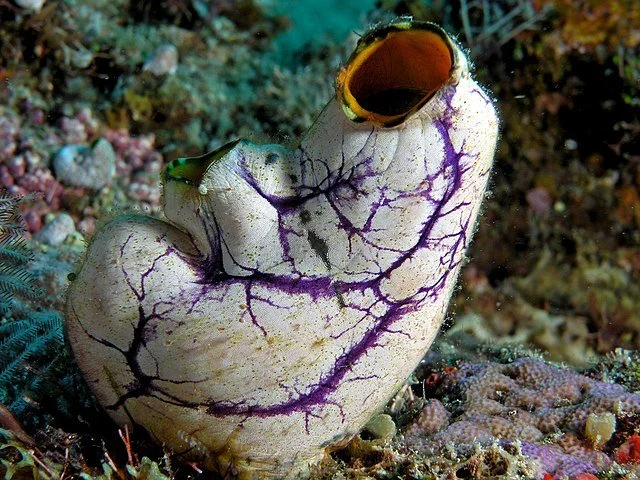
A sea squirt. Nick Hobgood, CC BY-SA 3.0
Sea squirts, despite their unappealing name and unassuming appearance, are being used to treat—and eventually, maybe even cure—one of the most dangerous skin cancers in the world. Found along the coast of almost every major ocean in the world, sea squirts contain a chemical that actually prevents cancer cells from regenerating. However, scientists have not yet figured out how to make this chemical in the lab, meaning they’re relying on harvesting sea squirts to produce the treatment.
Although some sea squirts are incredibly common (even being considered invasive in some places), various human activities threaten their habitats. Much like the sea hare, they live close to the surface on rocky shorelines and along reefs, meaning they’re more at risk from chemical runoff and coastal development. Unless we can take more precautions, harvesting these useful blobs will become much harder.
TO GET INVOLVED
Between global warming, ocean acidification and pollution, the dangers facing marine life can seem overwhelming. But there are many ways that an individual can make a difference and help the ocean survive. Organizations like Coral Guardian and the Reef Life Foundation work tirelessly to maintain reefs around the world with the help of donations and coral adoptions.
There are also countless hazardous waste recycling centers all over the country where you can safely dispose of harmful chemicals that you no longer need, rather than tossing them into landfills. And practicing eco-friendly behavior—avoiding single-use plastic, only applying zinc- or titanium-based sunscreen, and simply helping to pick up litter before it makes its way into the ocean—goes further than you might think.
The ocean is threatened from a million different places, but if we all do our part, it will provide for us for many years to come. There are countless undiscovered plants and animals living down there—there’s no telling what we’ll find next, and how it can help us in return.
Ryan Livingston
Ryan is a senior at The College of New Jersey, majoring in English and minoring in marketing. Since a young age, Ryan has been passionate about human rights and environmental action and uses his writing to educate wherever he can. He hopes to pursue a career in professional writing and spread his message even further.
Food Fight: European Farmers Battle Food Outsourcing
As climate concerns grow, many feel that the EU’s new agricultural policies are uprooting farmers’ way of life.

Farmers blocking a Berlin road in protest. Leonhard Lenz. CC0
Global warming, climate change, and greenhouse gasses have been hot-button topics for decades, but recent events have painted them in a much more alarming light. Many countries around the world have begun instating policies and procedures to combat this crisis, from carbon taxes to efforts at land preservation and conservation.
But just like every major change, it comes at a cost. Farmers, the backbone of the food market and a group with interests very much built around the environmental status quo, have been upended by recent policy changes. The EU has turned its attention to agriculture in recent months, proposing a variety of policies that will decrease the amount of land being used for farms, dubbed the Green Deal. In addition to stricter regulations, rising operating costs and taxes have also been cited as causes for discontent among the farming population of Europe.
This series of events reached a head in December of 2023, when farmers first began protesting across the continent. At first, it was simple picketing and protests, but in the months since, every possible display of discontent—from holding up traffic to spraying manure and throwing produce—has plagued much of the EU. Farmers in Berlin blocked the road around the Brandenburg Gate with tractors, and others in Brussels lit bales of hay on fire to deter police.
Over the last few weeks, the EU has made several concessions for the aggravated farmers. In addition to relaxing many of the regulations and reducing taxes on the diesel fuel used for tractors and farm equipment, the EU has apparently canceled its plan to import grain and other crops that could be grown in Europe from Ukraine. This in particular drove an especially angry contingent of protests, as the lower price and food standards of imported grain make domestic crops less profitable.
In the months since March, many of the more aggressive demonstrations mentioned above have begun to taper off in response to the EU’s capitulations. This demonstrates a problem that many governments are struggling to face in regards to climate change. The situation gets worse and its effects more severe, but swift action often ends up displacing people who rely on how the system has always been.
Hundreds of millions of people around the world have built their whole lives on the current status quo. Many of the changes that the EU suggested threatened their livelihoods by increasing the competition and undermining their typical methods. Unfortunately, there are not yet systems in place to account for the losses these individuals suffer, meaning future attempts to reduce the impact of climate change will risk the same backlash.
The EU may have been trying to minimize habitat destruction and land overuse, but in the process it risked harming the backbone of its economy and even its food supply. Climate change is an undeniable issue, but one that affects every person in the world differently. Any attempt to fix it will inevitably create some losers, whether the people in charge have accounted for them or not.
Ryan Livingston
Ryan is a senior at The College of New Jersey, majoring in English and minoring in marketing. Since a young age, Ryan has been passionate about human rights and environmental action and uses his writing to educate wherever he can. He hopes to pursue a career in professional writing and spread his message even further.
Fighting Femicide in Turkey
Turkey has long struggled to prevent violence against women, and Erdoğan’s withdrawal from the Istanbul Convention only worsened matters.

Protests after the murder of Turkish student Özgecan Aslan. 2015. Hilmi Hacaloglu. CC0
Femicide is a massive problem for women in Turkey. According to data from the women’s rights group We Will Stop Femicide, 338 women were murdered by a man between March 2023 and March 2024. The same data reports that the large majority of these women were killed by a close male relation, with the most common motive being their refusal to marry or have a relationship with their murderers.

Recep Tayyip Erdoğan at the 2017 G-20 Hamburg summit. Пресс-служба Президента Российской Федерации. CC-BY-4.0
In March 2021, Turkish President Erdoğan announced his decision to withdraw Turkey from the Istanbul Convention, itself named after Turkey's largest city. The convention obligates political parties to “develop laws, policies and support services to end violence against women and domestic violence.” It also included clauses aimed at protecting members of the LGBTQ+ community from violence.
The decision was met with outrage and criticism from activist groups, lawyers and politicians. Following the decision, thousands took to the streets to protest. Amnesty International Secretary-General, Agnès Callamard, spoke against the decision, expressing her concern that “the withdrawal sends a reckless and dangerous message to perpetrators who abuse, maim and kill: that they can carry on doing so with impunity.”

International Day for the Elimination of Violence Against Women, 2019. Neslihan Turan. CC0 1.0
We Will Stop Femicide was founded in 2012 in response to the murder of an 18-year-old high school student, Münevver Karabulut, and has been one of the leading advocates of women’s rights in Turkey ever since. The group began an initiative to collect, analyze and publicize data on femicide in Turkey in response to claims from the government that no such data existed. They gather their data from cases reported to the public and cases reported directly to the group by associates of the victims. “Patriarchy is the reason behind the loss of so many lives,” the group states on its website. “The lack of efficient policies that secure equal existence and rights of women is also encouraging men who are prone to violence.”
A lawyer working with the women’s rights group We Will Stop Femicide, Esin İzel Uysal, stated that there has been a significant increase in femicides as a result of Turkey’s withdrawal from the Istanbul Convention, with authorities refusing to take action in the face of violations of women’s rights. As of 2024, almost 2,000 women have either been murdered by men or died under suspicious circumstances since Turkey’s withdrawal in 2021.
Women’s rights groups in Turkey such as We Will Stop Femicide continuously face opposition and oppression from the government. On December 2nd, 2021 the Intellectual and Property Rights Investigation Bureau of the Istanbul Public Prosecutor’s Office filed a lawsuit against We Will Stop Femicide aimed at shutting the group down, citing “illegal and immoral actions.” On September 13th, 2023, the court rejected the lawsuit.
Women in Turkey continue to fight for their rights and their lives despite government opposition and police violence. In March 2024, thousands of women defied a ban against protests on International Women’s Day, seeking to draw attention to the rise of femicide in Turkey and voice their discontent with Turkey’s withdrawal from the Istanbul Convention.
TO GET INVOLVED
We Will Stop Femicide: We Will Stop Femicide’s website lists several ways to support their cause, including producing visual materials for their social media and participating in the collection of data on violence against women.
Women for Women’s Human Rights: Another Turkish feminist group, WWHR initiated a Human Rights Education Program for women in 1995 that seeks to educate women about their rights and help them exercise those rights. Information about participation in the HREP program can be found here.

Rebecca Pitcairn
Rebecca studies Italian Language and Literature, Classical Civilizations, and English Writing at the University of Pittsburgh. She hopes to one day attain a PhD in Classical Archeology. She is passionate about feminism and climate justice. She enjoys reading, playing the lyre, and longboarding in her free time.
Into the Inferno: 6 Destinations with Ever-Lasting Flames
From Australia to Ethiopia, destinations with seemingly eternal flames attract explorers from around the world.
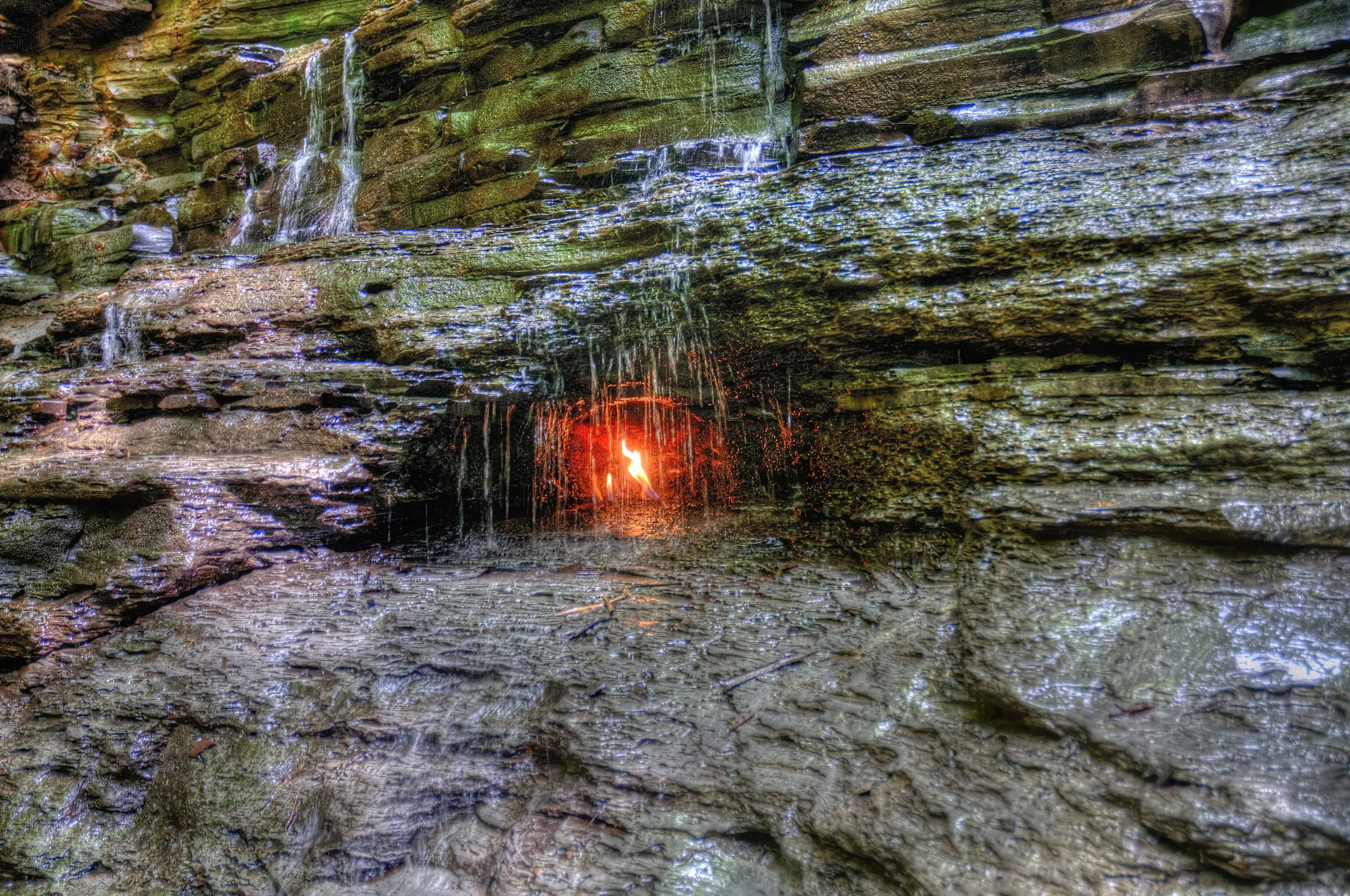
Eternal Flame Falls, New York. Kim Carpenter. CC BY 2.0
Natural gasses, when combined with geologic, volcanic or industrial activities, have led fires that burn for tens to thousands of years. These marvels have created wonder, inspired myths and served as resources. Drawing people from around the globe, eternal flames continue to ignite the minds of travelers.
Baba Gurgur, Iraq
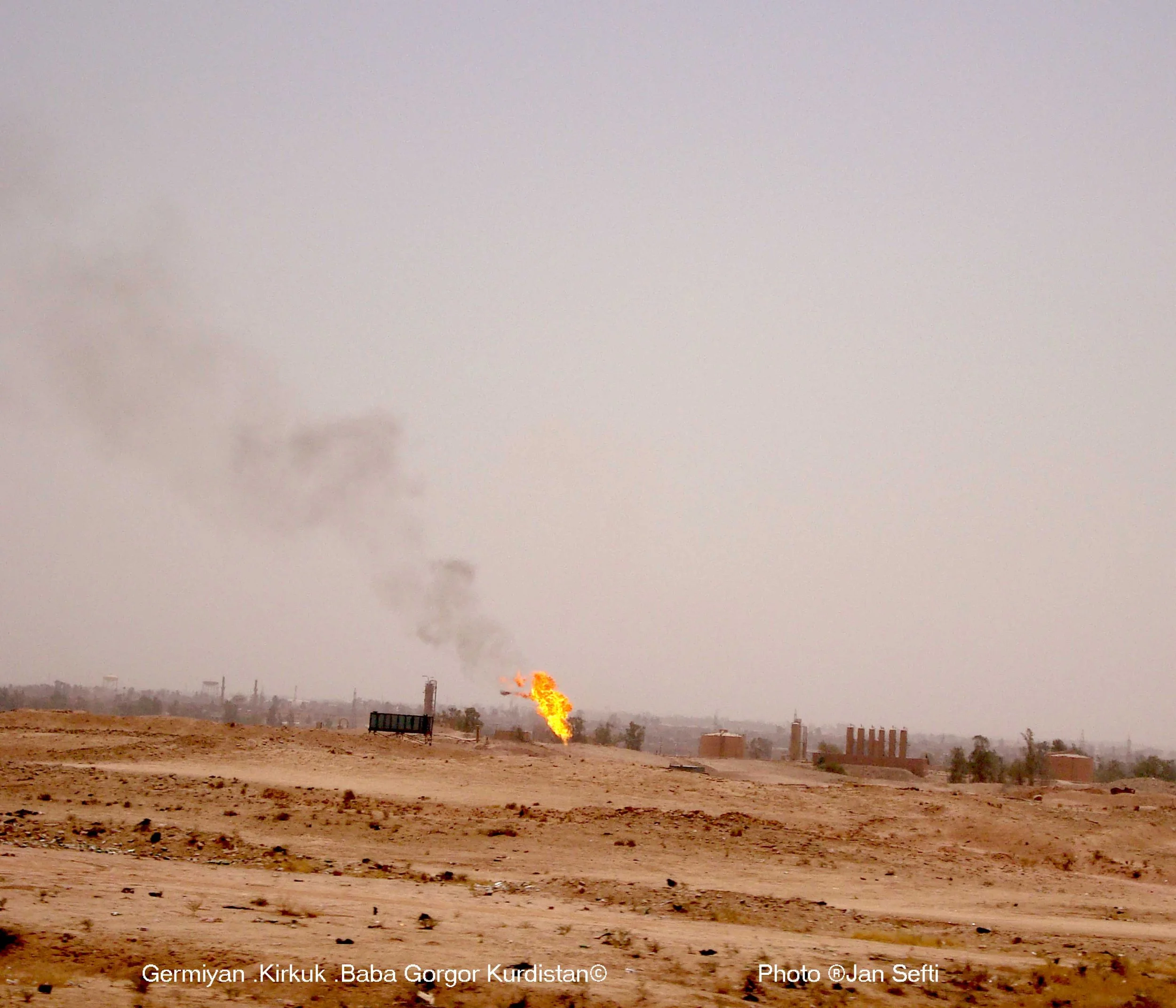
Fire in an oil field, Kirkuk, Iraq. KURDISTAN🌟 كوردستان. CC BY-SA 2.0
A fire has burned outside of Kirkuk, Iraq for an estimated 4,000 years. Baba Gurgur, roughly meaning "Father of the Fire" in Kurdish, is a circular area covered in holes bursting with smokeless flames.
These flames are fed by natural gas from beneath the ground combined with flammable liquid derived from petroleum called naphtha. There is ample oil and natural gas at this site, considering Baba Gurgur was the world’s largest oil field when it was discovered in 1927.
In addition to Baba Gurgur, the Citadel is another one of Kirkuk’s primary tourist attractions. Built in the 9th century BC, the Kirkuk Citadel is a UNESCO World Heritage Site containing a market, a church and many mosques.
Burning Mountain, Australia
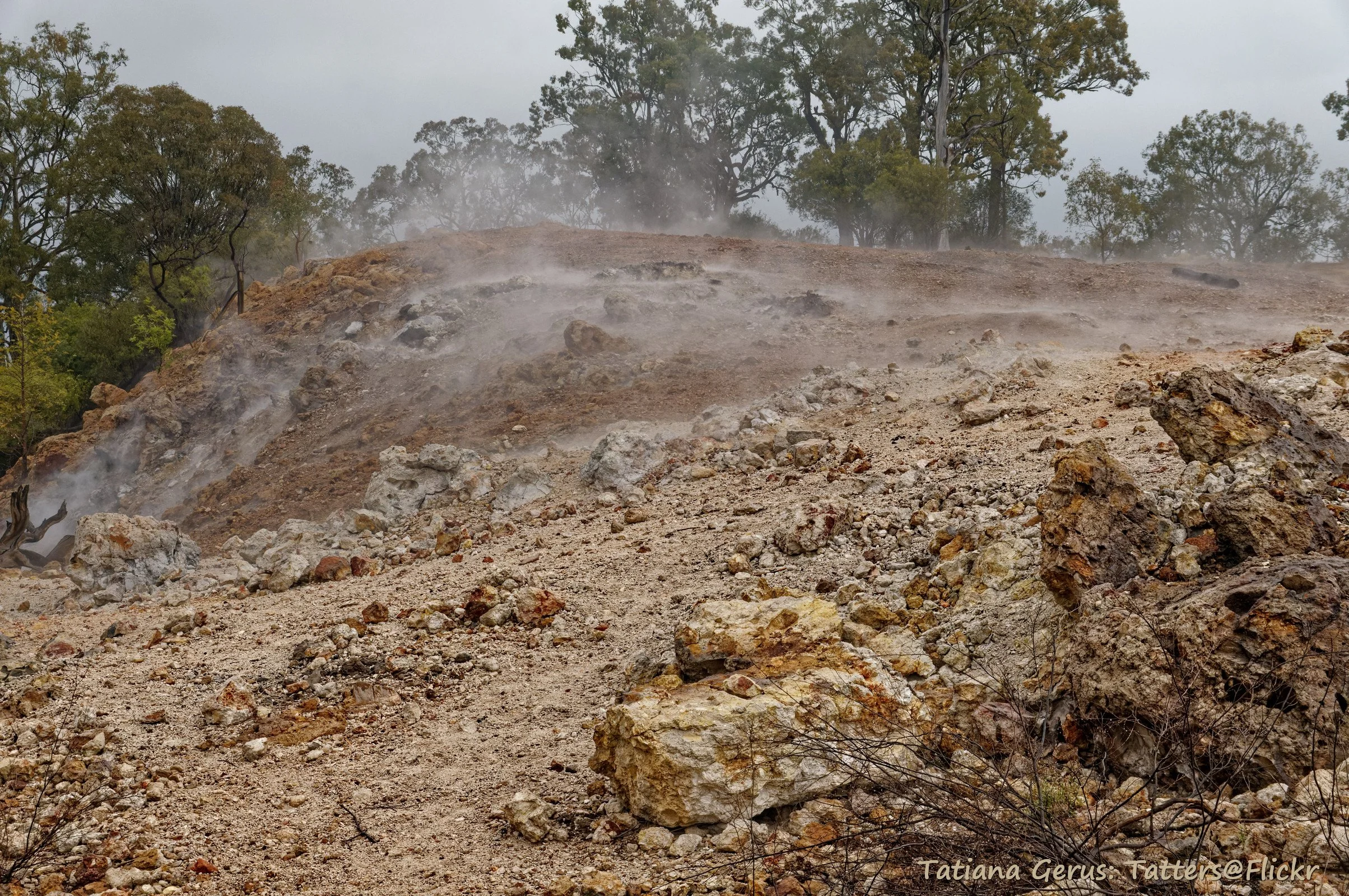
Smoke at the Burning Mountain Nature Reserve, Australia. Tatters ✾. CC BY-NC 2.0
A coal seam that has burned in Australia for an estimated 5,500 years can be found at the Burning Mountain Nature Reserve. Many Aboriginal Australians believe that the smoke and flames of the Burning Mountain are the tears of a woman who the sky god Biami turned to stone. Burning Mountain long served as a source of heat for the Wanaruah people, the traditional owners of the land.
Throughout the two-and-a-half-mile Burning Mountain walk, explorers can find an abundance of viewing platforms and opportunities to learn from informational panels. During an adventure to see Burning Mountain, travelers can also enjoy walks and picnics surrounded by nature and breathtaking views.
Erta Ale, Ethiopia
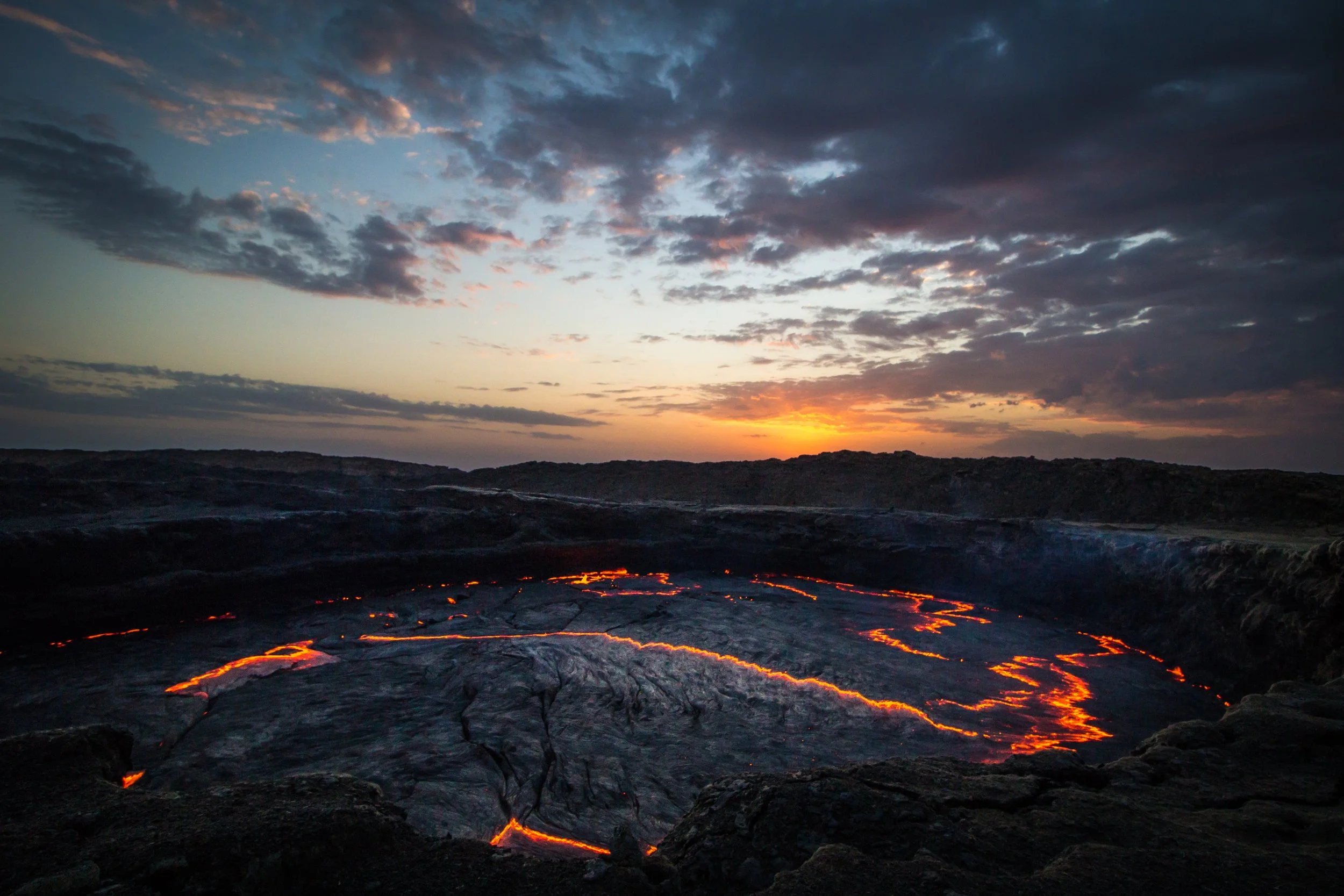
Lava lake in the Erta Ale volcano, Ethiopia.Thomas Maluck. CC BY-ND 2.0
Ethiopia’s Erta Ale volcano has been home to an inferno for decades. The active shield volcano contains lava lakes in both the northern and southern craters and is Ethiopia’s most active volcano. This phenomenon is a result of three tectonic plates separating and creating channels for magma to rise to the Earth’s surface.
Erta Ale means the "gateway to hell" in the local Afar language. Erta Ale’s lava lakes have burned since at least 1967, and possibly for over a century, making the volcano home to one of the few consistent lava lakes in the world. Erta Ale has become a popular tourist destination, and travelers can safely witness this natural wonder by taking tours.
The Door to Hell, Turkmenistan
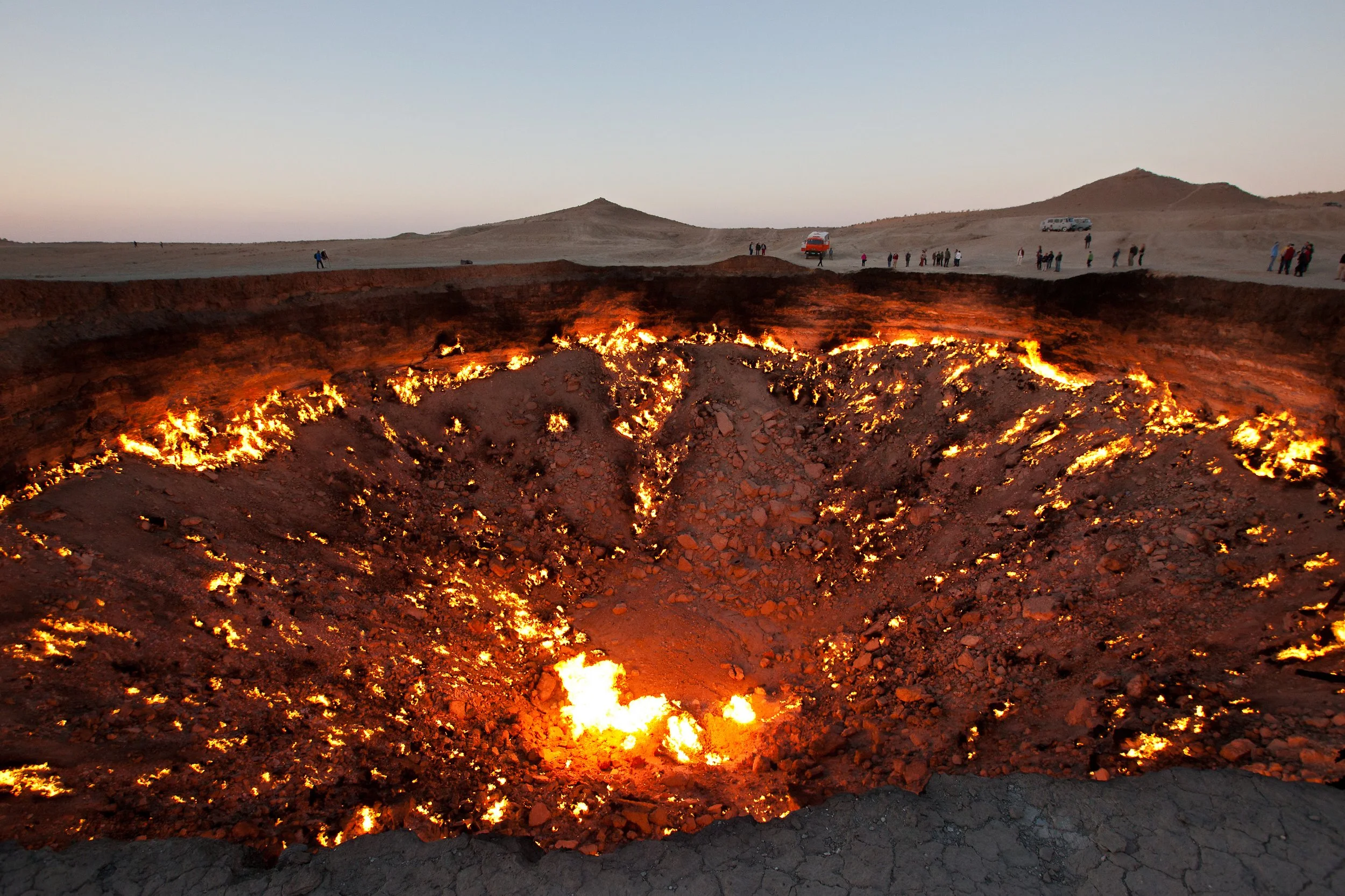
The Door to Hell, Turkmenistan. Martha de Jong-Lantink. CC BY-NC-ND 2.0
The burning pit in a remote region of Turkmenistan, internationally famous as the "Door to Hell," has burned for over 50 years. The story goes that the Door to Hell was set alight when an oil rig was lit on fire after falling into the crater.
Despite being one of the most closed-off countries in the world, many travelers have successfully ventured to Turkmenistan to experience the roar of the Door to Hell’s flames firsthand.
Home to one of the largest gas deposits in the world, oil and gas are important natural resources in Turkmenistan. Despite many failed attempts in the past, Turkmenistan’s government officials have expressed intent to get rid of the Door to Hell in an effort to conserve natural gas.
The Fire and Water Spring, Taiwan
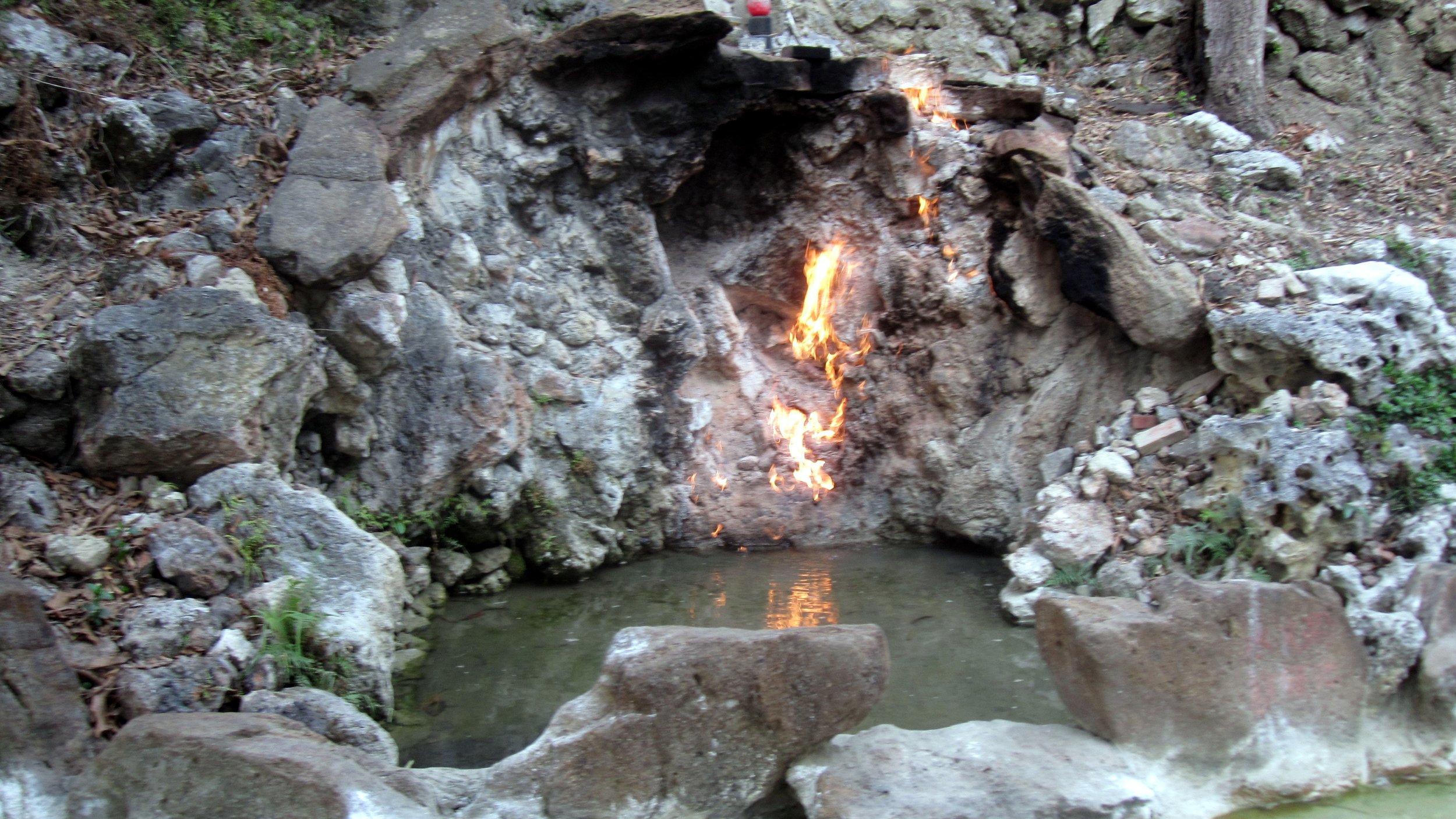
The Fire and Water Spring, Taiwan. Amy Ross. CC BY-ND 2.0
The Fire and Water Spring is a unique place where fire and water co-exist in harmony. Taiwan is covered by fault lines that leak natural gasses such as methane.
The Fire and Water Spring is above one of these fault lines, so the water that flows from the cliff walls is accompanied by natural gas. The natural gas, kept alight by the heat of the stone, has burned for over 300 years, according to locals.
During the trek to the Fire and Water Spring, adventurers can come across the Biyun Temple, in addition to a variety of treats like Chinese Mesona provided by street vendors. The Biyun Temple is over 300 years old and is home to many shrines.
Yanartas, Turkey
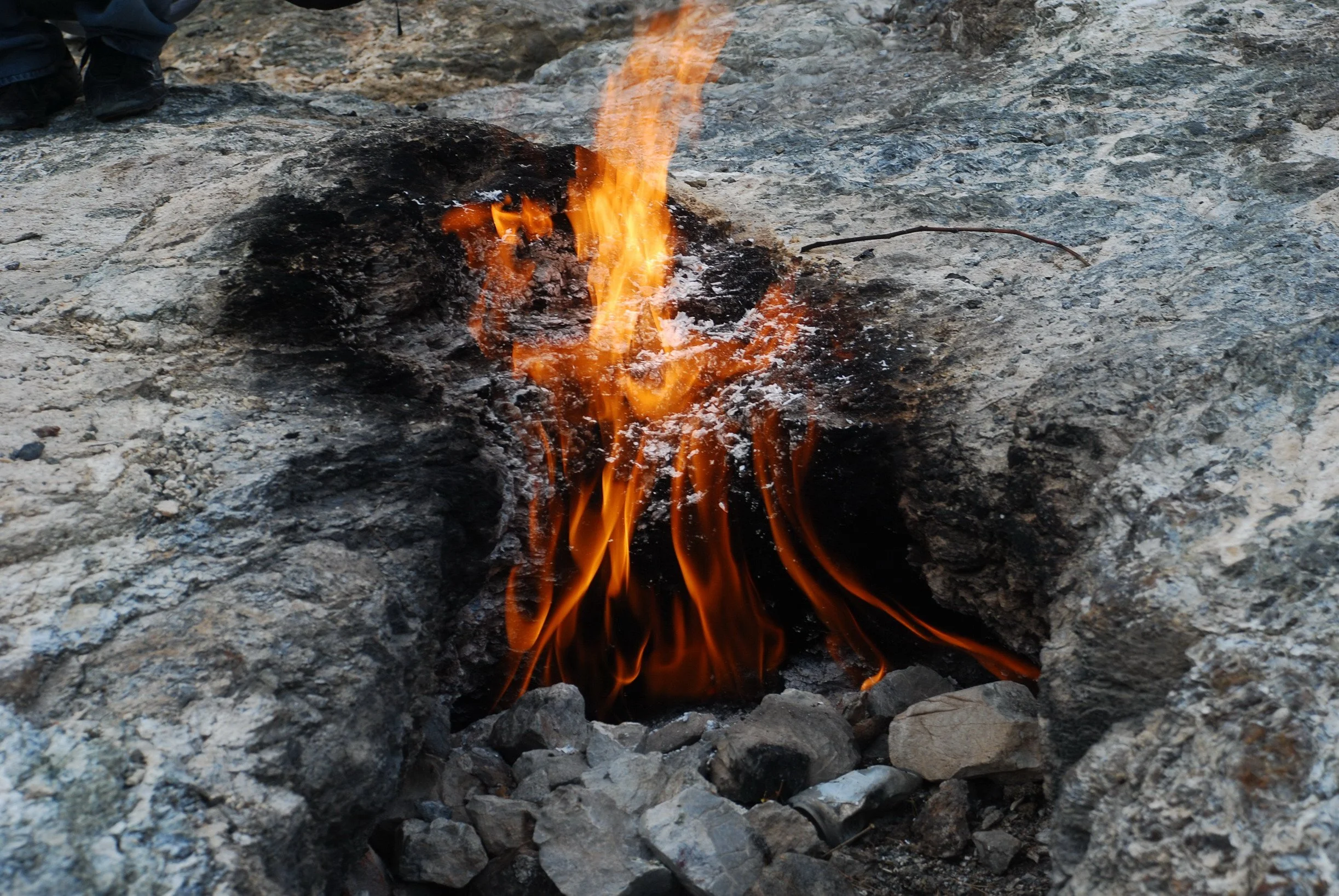
The flames of Yanartaş, Turkey. Veyis Polat. CC BY-NC-ND 2.0
Yanartas, meaning "burning rock" in Turkish, and also known as the Chimera, is a crop of flames coming from rocks that overlook the Cirali village in Turkey. The flames come from methane gas, which has seeped through the Mt. Olympos slopes for thousands of years.
Some who experienced the flames during ancient times believed them to be the breath of a monster that combined the characteristics of lions, snakes and goats. Now, the flames serve as a pit stop for hikers along the Lycian Way.
The Yanartas is a place of great historical significance. The glow of the Yanartas flames was used as a landmark by sea travelers for centuries. At the entrance of the Yanartas site explorers will find an ancient church, and buried beneath the flames lie the remains of the Temple of the Greek god Hephaestus
Madison Paulus
Madison is a student at George Washington University studying international affairs, journalism, mass communication, and Arabic. Born and raised in Seattle, Washington, Madison grew up in a creative, open-minded environment. With passions for human rights and social justice, Madison uses her writing skills to educate and advocate. In the future, Madison hopes to pursue a career in science communication or travel journalism.
Hidden in the Himalayas: The Tiny, Scenic Kingdom of Bhutan
With stunning architecture, beautiful natural vistas and a culture unlike anything else in the world, Bhutan truly is a once-in-a-lifetime destination.
Read MoreUncontrolled Burn: Canada’s Devastating Wildfires
Thousands of wildfires, miles of scorched forests and colossal plumes of smoke are threatening Canada on all fronts.
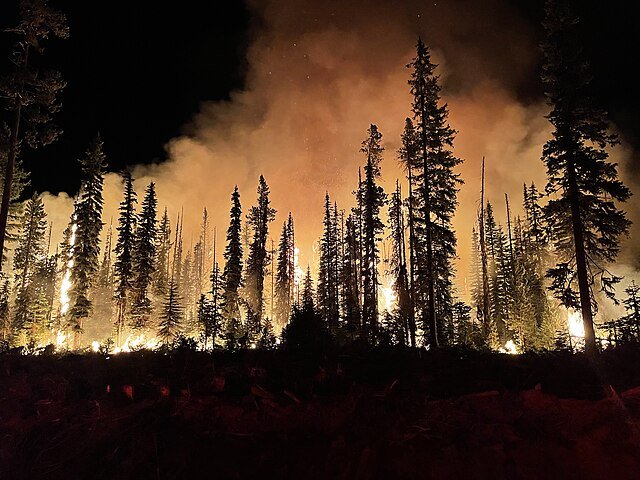
Forest fire at night. U.S. Forest Service, public domain
Canada is no stranger to wildfires. According to the Canadian National Fire Database, over 8,000 fires occur every year, burning over 2 million hectares of land. The highest risk period for fires starts in April or May and lasts all the way through September or October, with hold-over fires potentially burning well into winter.
But recently, fires have become more and more frequent earlier in the year. These early fires have also been growing in severity and damage, which should only happen well into the summer. Canada has endured over a thousand fires in 2024 alone, with 104 currently raging as of late May. Most are relatively under control thanks to quick responses from fire teams, but about a seventh are registered as “uncontrolled.” Despite the best efforts of local fire companies and government action, these fires have devoured thousands of hectares of land and are currently threatening several cities across the country.
The Parker Lake fire, named for its apparent origin point, caused thousands of citizens of Fort Nelson in British Columbia to flee their homes. At that time the fire was already roughly 3 square miles in size; the long period of dry weather, coupled with strong winds, caused the fire to grow out of control, which prompted evacuation orders on May 11th. Parts of Alberta have also been given orders to prepare for evacuation as other fires steadily approach.
In addition to the threat posed by the blazes themselves, the smoke produced by the constant burning has blanketed most of Canada and is beginning to drift south into the midwestern United States. This smoke can cause serious reactions in those with existing respiratory illnesses and even be harmful to the lungs of healthy individuals. Given the severity of 2023’s wildfire season, we can expect a tremendous amount of smoke this year as well.
There are many possible causes for wildfires, ranging from the carelessness of individual hikers or campers to the climate itself. Higher global temperatures can cause more frequent flare-ups, long-lasting droughts can leave forest floors incredibly dry and flammable, and warmer winters leave less snow behind, resulting in even dryer conditions. Additionally, zombie fires—blazes that have smoldered underneath the snow over winter only to reemerge after the spring thaw—have increased the number of threatened communities.
How You Can Help
Fire season has only just begun in Canada and the nation is already being battered from all sides. Conditions are only expected to worsen as the temperatures rise and droughts linger; more evacuations are also expected as a result. However, several charities have already begun donating to the firefighters working to combat the blazes, as well as the many displaced citizens. Sites such as Global Giving and the Canadian Red Cross are excellent ways to help offset the devastation wreaked by the hundreds of wildfires.
Ryan Livingtston
Ryan is a senior at The College of New Jersey, majoring in English and minoring in marketing. Since a young age, Ryan has been passionate about human rights and environmental action and uses his writing to educate wherever he can. He hopes to pursue a career in professional writing and spread his message even further.
Gen Z’s Growing Criticism of the Peace Corps
The Peace Corps was built upon the ideals of “world peace and friendship,” but Gen Z is analyzing the organization through a new lens.
Read More