A Pilgrimage to Lourdes: Why a Tiny Town in France Attracts so Many Visitors

Every year, 6 million pilgrims descend upon the town of Lourdes. Explore how the town’s history and developments in the Catholic Church made it so popular.

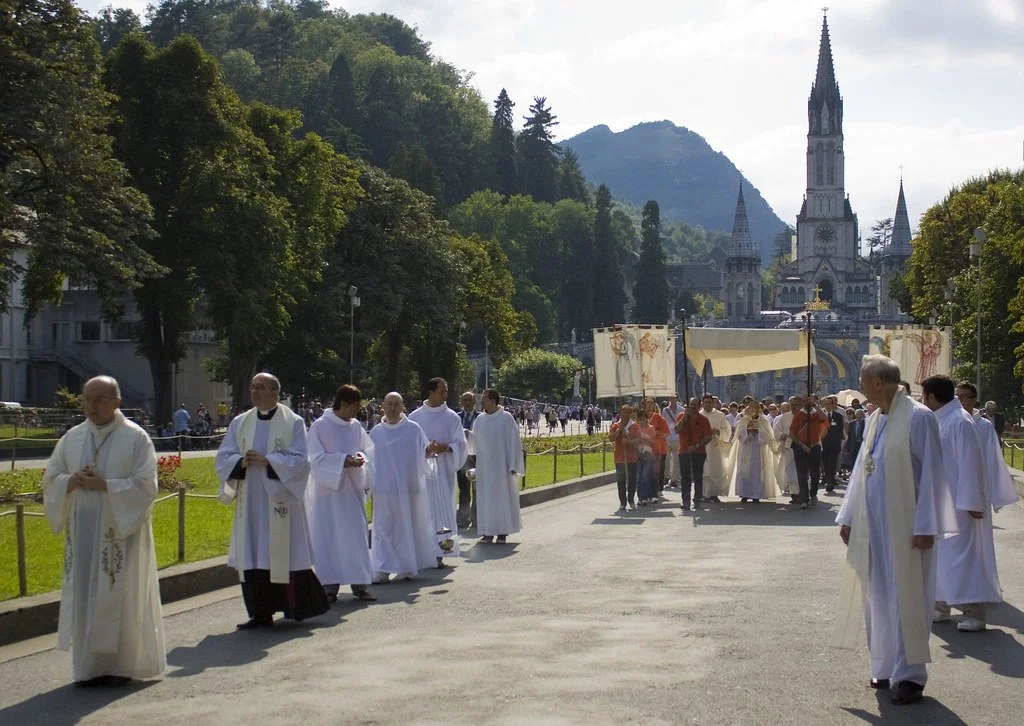
Lourdes Eucharistic Procession. Lawrence OP. CC BY-NC-ND 2.0.

In 1858, 14-year-old Bernadette Soubirous, purportedly saw visions of the Virgin Mary by a spring in Lourdes, a tiny French town in a remote corner of the Pyrenees Mountains. It was almost unbelievable that the Virgin Mary decided to reveal herself to Soubirous, a poverty-stricken, sickly, illiterate girl. The town was immediately thrown into upheaval, with some questioning the veracity of the apparitions and others trying to see the sight themselves. Nobody else besides Soubirous ever saw the apparitions. But the spring besides the Grotto where she saw the apparitions was later revealed to have healing powers. The town was put on the map, and pilgrimages started soon after, continuing to this day. 

The story of how Lourdes became so popular is intricately linked to the developments in the Catholic Church. After the horrors of the French Revolution, Catholics found solace in miracles, pilgrimages and processions. The 19th century was an era of Catholic revival, with an increase in devotion to the Virgin Mary. In 1854, Pope Pius IX proclaimed the dogma of the Immaculate Conception of Mary, meaning Mary was preserved from original sin. The appearance of Mary just four years after that proclamation threw the town into great excitement. The apparitions at Lourdes and the subsequent pilgrimages fit into the pattern of Catholic revival of the time.

That century also saw the consolidation of papal power in Rome. Papal authority became more prominent as Catholics became increasingly loyal to Rome. While there were other alleged Marian apparitions reported in the 19th century, Lourdes became the most famous because it had the Vatican stamp of approval. Pope Pius IX declared Lourdes an official pilgrimage site in 1876, demonstrating the increasingly tight link of remote villages to Rome.

The pilgrimages to Lourdes also reflect the expanding reach of the globalizing Catholic Church. Pilgrims going to Lourdes were not limited to Europeans; they came from all over the world. According to John T. McGreevy, a Bengali journalist made the trip to Lourdes and found “infallible proof” of God. Vietnamese soldiers in France during World War I toured Lourdes soon after their arrival. The diverse group of people who visit Lourdes show that the Catholic Church has become a transnational institution.

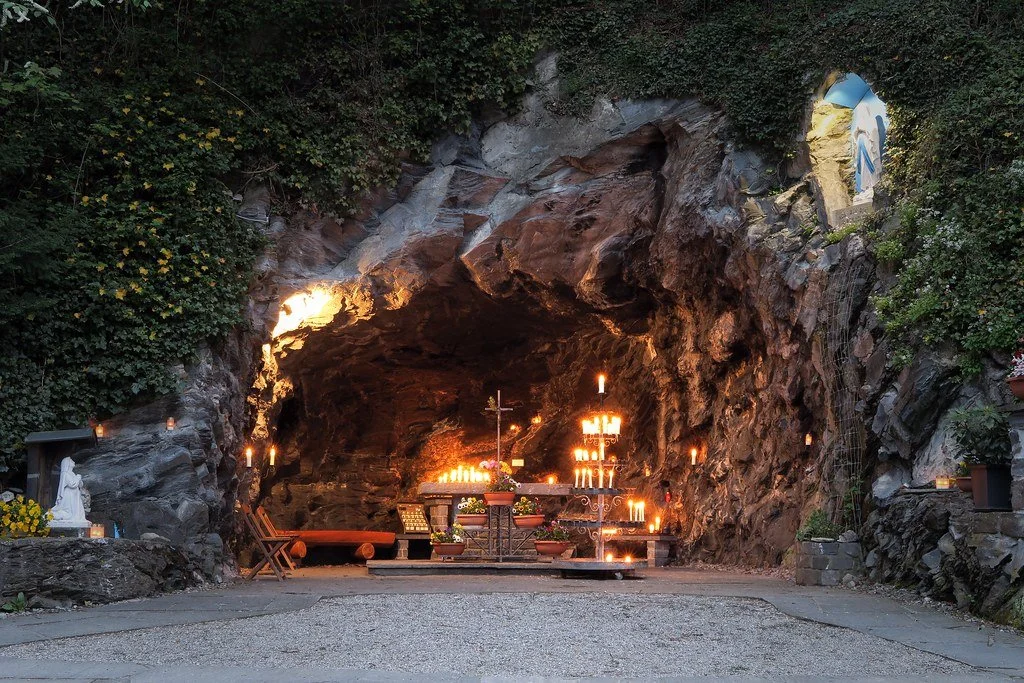
Lourdes Grotto. Kecko. CC BY 2.0.

Not only did the diverse array of visitors reflect the globalization of the Catholic Church, but the export of Lourdes to places around the world proved the same. Not long after people first became fascinated with Lourdes, aspects of Lourdes diffused to the home countries of visitors. The result was the creation of numerous replicas of Lourdes Grottos around the world, from the Vatican Gardens to Northern Indiana to Aruba

Today, Lourdes is a vibrant community—much more than the sleepy village of 1858—that attracts 6 million visitors annually from around the world. But tradition is still observed. Catholic Masses take place daily in the Sanctuary of Our Lady of Lourdes, and processions are still a common occurrence. People bathe in the water from the springs, hoping for a miraculous healing. Despite the global reach of the village of Lourdes, it still manages to preserve the Catholicism that brought it to fame.


Bryan Fok

Bryan is currently a History and Global Affairs major at the University of Notre Dame. He aims to apply the notion of Integral Human Development as a framework for analyzing global issues. He enjoys hiking and visiting national parks.

5 Cultures That Acknowledge More Than Two Genders

A close look at these 5 cultures shows the existence of more than two genders has been part of the human experience for thousands of years.

Two-Spirit person at a march. Mia Culpa. CC BY-NC-SA 2.0.

Several societies have understood and sometimes honored genders outside of the binary for hundreds or thousands of years. The way gender is expressed differs between cultures and has been greatly influenced by globalism and colonialism. An exploration into the following five genders demonstrates the complexity of nonbinary genders and their role in society.

Two-Spirit

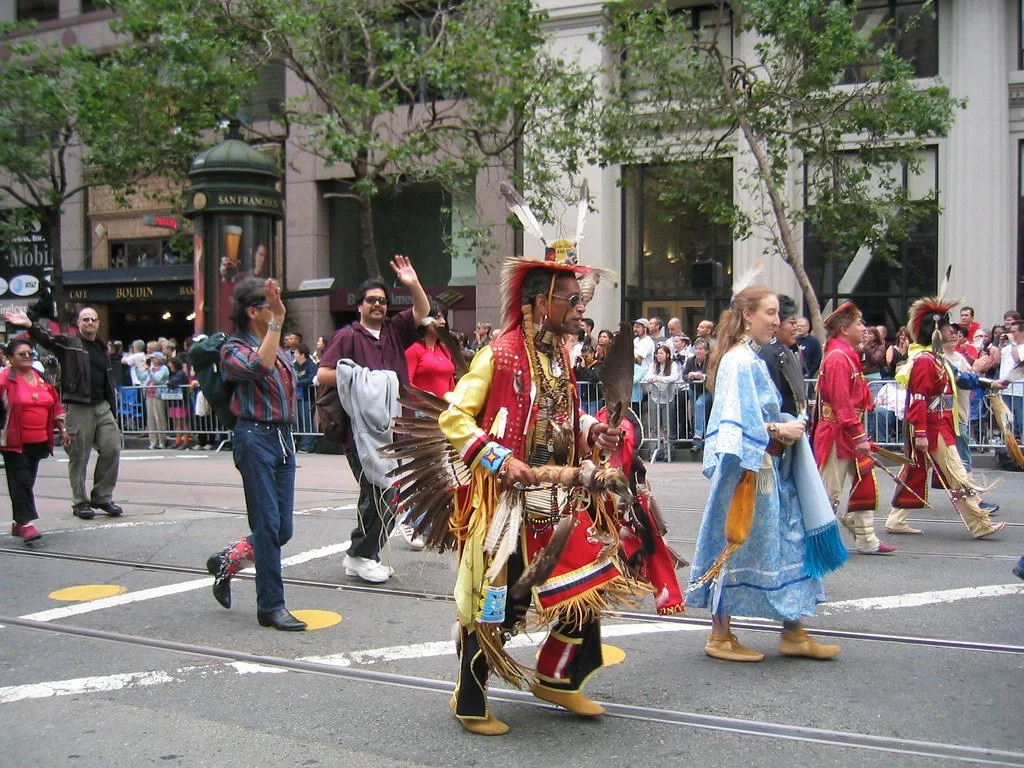
 Two-Spirit banner at a Bay Area Pride Parade. Quinn Dombrowski. CC BY-SA 2.0.

To be Two Spirit is to contain the spirits of both the male and the female in Indigenous North American society. For one person to have both of these perspectives is regarded as a great honor and historically indicated a different role in society in terms of responsibilities and jobs. For example, Two-Spirit people were often entrusted with creating art in the Navajo Nation. While this identity has existed for hundreds of years across several Indigenous North American tribes, the title “Two-Spirit” itself was created in 1990 as an all-inclusive term for intersex, transgender and nonbinary people across Indigenous tribes.

Hijra

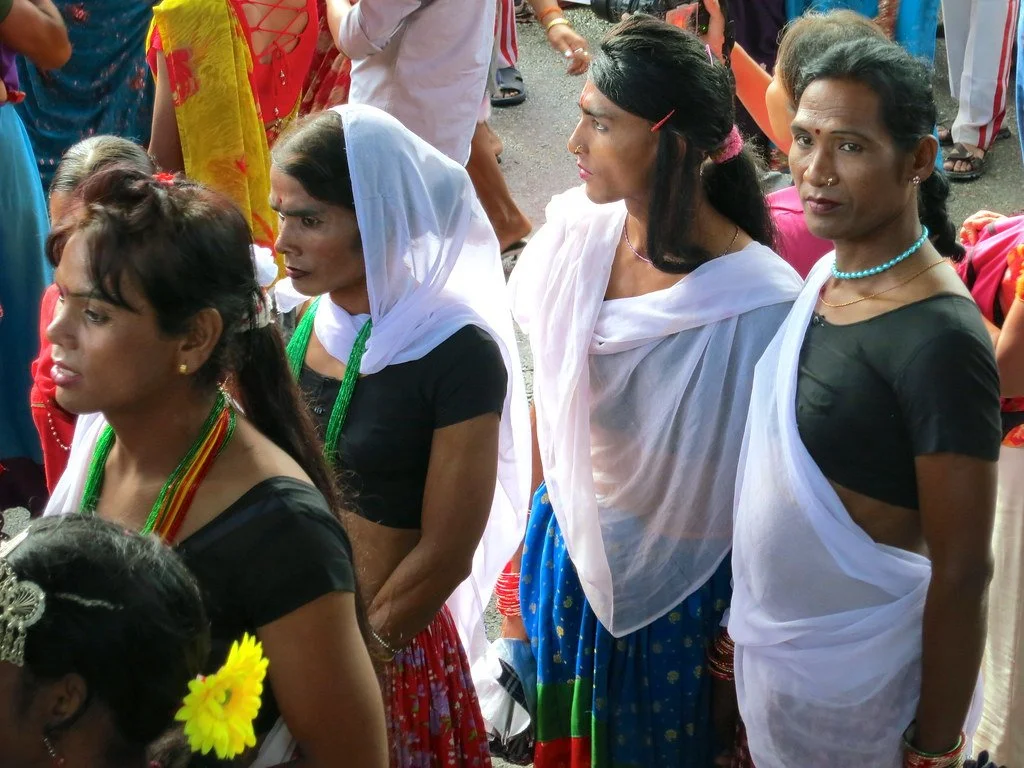
Hijras at a festival. Sabatica Sabata. CC BY-NC-SA 2.0. 

‘Hijra’ is a third gender acknowledged in Hinduism. Hijras are often people born biologically male who dress traditionally feminine or intersex people. Regardless of their biological sex, hijra is regarded as an independent third gender. Like Two-Spirit people, hijras have a special and honored place in traditional Hindu society. They were believed to have the power to instill fertility upon couples and often live in groups to be mentored by an elder in the community. However, being hijra was criminalized by the British upon their colonization of India. Much of the way hijras are treated today as well as the opportunities available to them continue to suffer as a result of British oppression. For example, hijras are often still denied work today.

Māhū

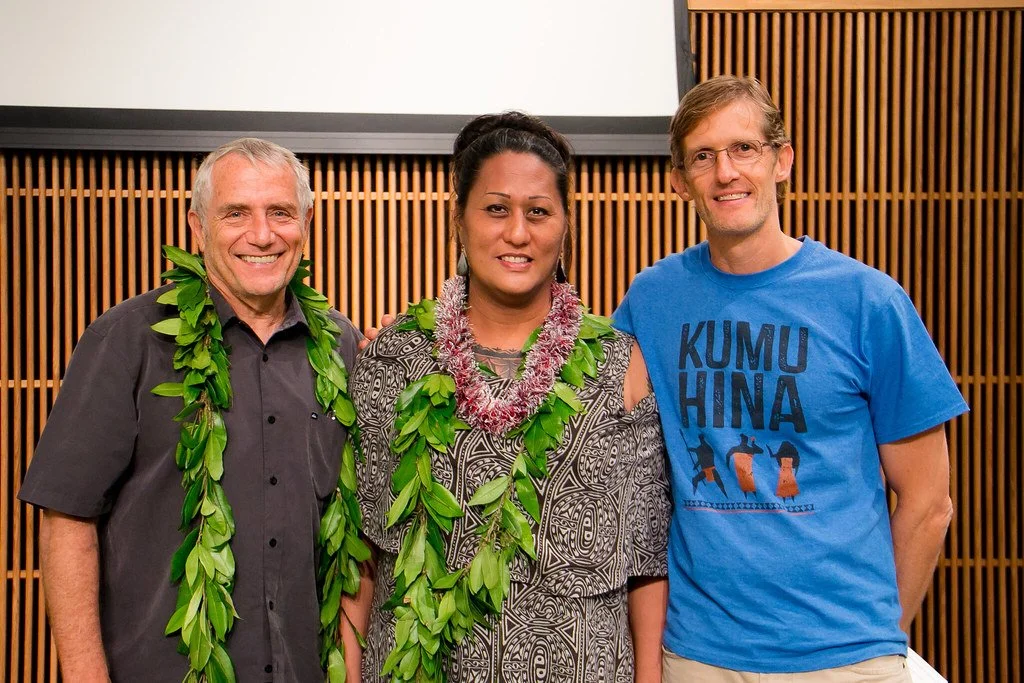
Scholar Hinaleimoana Wong-Kalu. University of Hawai‘i–West O‘ahu. CC BY-ND 2.0 

The Hawaiian māhū are people who are understood to have aspects of both genders within them. When Europeans arrived in Hawaii, they took the term and gave it a derogatory and homophobic and transphobic meaning. The term still carries a negative association for some because of the impact of colonialism. However, prior to European arrival, and still among many in the community today, māhū means “in the middle” (of male and female) and is regarded in traditional Hawaiian culture as a meaningful identity indicating a wealth of wisdom and knowledge. 

Muxes

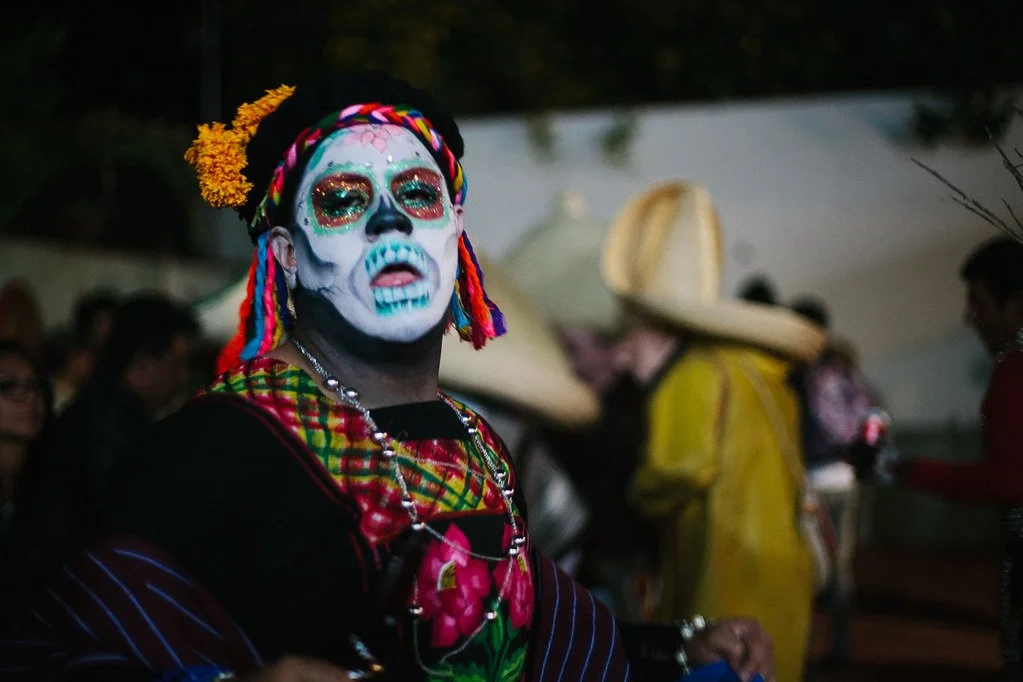
Muxe. Arnaud B. CC BY-SA 2.0.

Muxe is a gender that exists in Oaxaca, Mexico, in the Zapotec community. Muxes have a strong tie to Zapotec tradition, as they continue to practice certain Zapotec customs that most no longer take part in, such as dressing traditionally. Muxes are generally people assigned male at birth who present traditionally feminine, but muxe is considered a third gender as opposed to a transgender woman. Like Two-Spirit and hijra people, muxes play a distinct role in Zapotec society, different from those who identify with their assigned sex at birth.

Six Genders of Classical Judaism

Talmud. Chajm Guski. CC BY-SA 2.0.

The ‘Talmud’ is a book of the ancient teachings of various rabbis and Jewish religious scholars. While it isn’t a holy book itself, it contains valuable interpretations of the Torah still referenced today. The Talmud acknowledges six genders as opposed to two. The Talmud is thousands of years old, demonstrating that the idea of gender fluidity has existed for much longer than most people would think. “Zachar” and “Nekevah” translate roughly to “male” and “female” respectively, and they refer to people who grow up resembling the sex they were identified as at birth. “Androgynos” was a term used for someone with both male and female characteristics, while “Tumtum” was a term used for someone who seems to present neither male nor female characteristics. “Ay’lonit” and “Saris” are used to describe people who were assigned female or male at birth (respectively) but grow up to resemble the opposite gender. All of these terms are parallel to identities common today, suggesting that people who do not fit into the gender binary have existed throughout human history. 


Calliana Leff

Calliana is currently an undergraduate student at Boston University majoring in English and minoring in psychology. She is passionate about sustainability and traveling in an ethical and respectful way. She hopes to continue her writing career and see more of the world after she graduates. 

How to Vet a Charitable Organization

Sometimes it can be difficult to find a charity that is as ethical as they claim to be. This article will help you find and assess organizations worthy of your donation. 

Tree growing from coins. Michelle Chow, ejinsight. December 16, 2020

In an era of a social justice revolution, it can be daunting to find organizations to support. Sure, you see their ads on social media, but how do you know if they spend their money ethically? What if you’re paying for their CEO’s third home or even unknowingly supporting an extremist organization? Luckily, sites like charitynavigator.org and charitywatch.org have streamlined the process of vetting charitable organizations so you can ensure your money is going to a cause you care about. 


In this article, I will be focusing on three aspects to help you research nonprofits: 

Administrative costs: How much does an organization spend on the causes they are involved with vs. how much they spend on overhead?

Impact: How much does the organization actually do, and how well does it work?

Financial Transparency: How much does the organization disclose about their income and tax bracket?

Administrative Costs

It takes a lot of money to run a non-profit organization. They have to take into account their employee salaries and office rental costs, which dictates how much the charity gives to the causes they support. Some unethical organizations use=donation money to supplement their CEO’s paycheck. The site Charity Navigator utilizes colorful graphs to help potential donors evaluate how much money the organization spends on their cause compared to their 

Pie chart dividing NWLC expenses. Clayton Young. Courtesy of CharityNavigator.org

overhead, or operational costs. Charity Navigator uses three sections of an organization’s expense report to get their Program Expense Ratio: program (how much they donate to the cause they support), administrative costs, and fundraising. 

A good example of an organization spending most of its income on the program is the National Women’s Law Center, which spends 85% of its income on the programs it supports internationally. They spend roughly 15% on administrative costs and fundraising combined. It’s important to note that all nonprofits are different and cannot be held to the same bar. While it is best to take into account their Program Expense Ratio, some organizations simply do not raise enough money to spend it all on their charitable programs. 

Impact

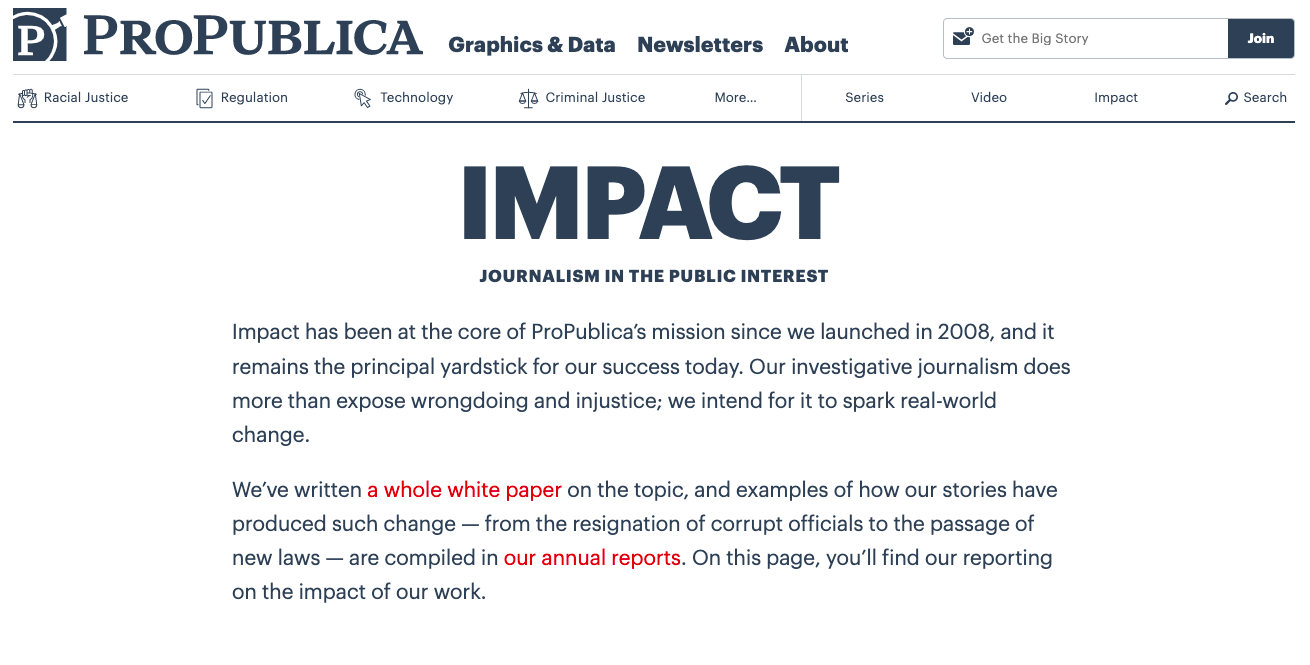
Impact statement. Courtesy of ProPublica.org. Clayton Young.

How do you know if a nonprofit is actually doing something with your donation money? It can be difficult to quantify the effectiveness of an organization, but independent research can help you make an informed decision about your donation. Charity Navigator’s video details some of the steps you can take to make sure your donation is being used well. One tip they suggest is to call the organization to directly ask them about their impact. However, this poses a problem: the organization might give biased information since they would want to look good at first glance. It helps to have something tangible the organization has done with your donation. 

ProPublica is an independent news organization founded in 2008 that exposes abuses of power against the public from government and institutions through nonbias journalism. Their Investor Impact Report, details all their work for the past year. Additionally, they link follow-up stories to their original articles that sparked the active change to fix injustices. In 2021, the administrator to the Environmental Protection Agency used ProPublica’s article on how the EPA allows some communities to breathe toxic air and announced a new Pollution Accountability Team in response to ProPublica’s article. 

Financial Transparency

Our final aspect of vetting a charitable organization relies on a group’s ability to maintain a clear view of its finances. Obviously, it’s a very important job to tell your donors where their money is going. Charity Watch defines what classifies as a charity and how that tax status could influence the money spent on the intended program. Generally, 501(c) 3 organizations are what most are classified as, meaning they receive tax-exempt contributions from donors, as long as they do not try to influence legislation or endorse presidential candidates, according to the IRS’s classification and rules of charitable organizations with that status. 

An example organization that fits the 501(c)3 status while also providing transparency to its financial records and expenditures is Amazon Watch. While it may sound like an Amazon.com watchdog organization, the charity is actually focused on legislating and providing humanitarian relief on behalf of the Indigenous communities in the Amazon rainforest. They spend 85.6% of their revenue on the Amazon program, the rest going to administration and fundraising, but their tax records are publically available for anyone to see, dating back to 2016. 

The sites utilized in this article were Charity Navigator and Charity Watch, but they’re only two of a litany of other similar sites. The nonprofits listed are not the only worthy charitable organizations in the world; rather, these are just a jumping point for you to do your own research and give to causes you are passionate about.


Clayton Young

Clayton is an aspiring photojournalist with a Bachelor's in Liberal Studies with a minor in History from Indiana University - Bloomington. In his free time, he enjoys hikes, movies, and catching up on the news. He has written extensively on many topics including Japanese incarceration in America during World War II, the history of violence, and anarchist theory.

How to Debate the Climate Change Skeptics in Your Life

With many climate skeptics, it’s important to know how to respond to the claims from those who don’t believe in human-induced climate.

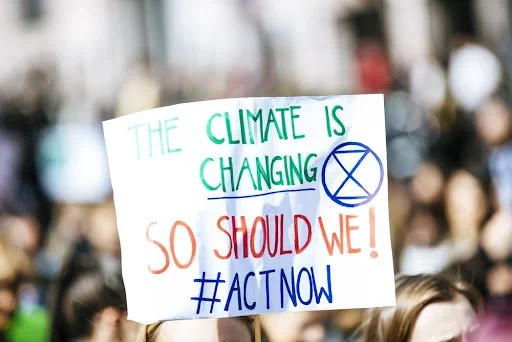
Climate change protest in Nuremberg. Markus Spiske. Unsplash.

Climate change refers to the current unprecedented warming of the climate that the Earth is experiencing. There are many skeptics who don’t believe the planet’s warming is of concern or that humanity is the main driver. These skeptics have a few main points they like to bring up. Here’s how to hit back.

“The Earth’s climate has always been changing, so there’s no reason we need to be worried now.”

Though the first part of this claim is correct (Earth’s climate has always been in flux), this is most certainly not a reason to be unconcerned about the current warming our planet is experiencing. Though the climate has changed a lot throughout Earth’s history, the planet hasn’t experienced such rapid warming in at least the last 2,000 years as it is currently. To respond to this type of statement, the key is referencing the unprecedented rate of warming as the reason modern climate change is a huge problem that needs to be addressed immediately. For specific credible evidence, one can draw from the reports made by the Intergovernmental Panel on Climate Change (IPCC), which is a body of the United Nations that conducts and disseminates scientific studies on modern climate change. In the Summary for Policymakers of the IPCC’s Sixth Assessment Report, it was reported that humans have caused the Earth to warm by an estimated 1.07 C since the Industrial Revolution. Comparing this temperature anomaly to ones before the mid 1800s shows us “human influence has warmed the climate at a rate that is unprecedented.”

“The Earth has been much warmer in the past than it is today, so we don’t need to be worried that it’s getting warmer.”

Again, the first part of this claim is true; we are actually currently in what is called an icehouse period, meaning we are experiencing a colder phase relative to Earth’s entire history. Though our current climate isn’t abnormally warm compared to all of Earth’s history, it is not only warming unusually fast, but it also poses dangers to humans, animals and many ecosystems, which are adapted to Earth’s current climate—not a warmer one. In response to these statements, it’s important to remind those in the conversation that we aren’t physically or fiscally able to adapt ourselves, our ecosystems and our industries to a warmer climate fast enough because of the unprecedented speed at which the climate is changing. 

“The sun is the source of the Earth’s heat, so any change in the Earth’s temperature must be due to changes in solar radiation, not human activities.”

This type of statement is generally made by those who admit the Earth is warming quickly but don’t believe humans are the cause. The Earth is heated by the sun through solar radiation. However, if the sun was the only factor in warming our planet, the Earth would be too cold for us to survive on it. To respond to this kind of claim, you should remind whomever that our atmosphere is largely responsible for the warmness of our planet because the greenhouse gases in the atmosphere trap heat. A skeptic may then ask how we know humans have caused greenhouse gases to increase. Human-caused warming can be illustrated through graphs of the global average surface temperature, which show a continued increase in temperature since the Industrial Revolution (when humans began to emit large amounts of greenhouse gases by burning fossil fuels for energy). Countering this claim can be done by looking at any graph of global average temperature in the last century, as these graphs show the increase in the Earth’s temperature has very closely followed the increase in the human activities of fossil fuel burning, deforestation, and other greenhouse gas emitting actions. Also, it wouldn’t hurt to note the IPCC has reported “it is unequivocal that human influence has warmed the atmosphere, ocean and land.” 

Whether writing about modern climate change or having a casual discussion about it amongst friends, it’s important to not only be aware of the fact that our climate is getting warmer at an unprecedented rate, but also to understand why the large majority of the scientific community is certain humans are the main reason why. Knowing this information can help you discuss and explain global warming and the importance of taking immediate action.


Jordan Hunt

Jordan Hunt is an undergraduate student at UC San Diego. She is majoring in Communication and is on track to earn her BA degree in the Spring of 2023. With an ever-growing passion for filmmaking and a strong desire to effect change in environmental policymaking, she loves to share her ideas and knowledge with others through writing.

The Swimming Savior: Journey From Refugee to Olympian 

Syrian Yusra Mardini escaped civil war and became the face of Olympic refugees.

Yusra Mardini. l3o_. CC BY-NC-SA 2.0

Yusra Mardini began swimming at the budding age of 3 in her birth country, Syria. As she grew older, she continued to pursue her swimming career with the Syrian Olympic Committee, hoping to one day fulfill her dream of competing for her country in the Olympics. Outside of the pool, however, a pressing issue loomed over Mardini’s promising athletic career: a civil war in Syria jeopardizing everything she had worked for.  

A peaceful Syrian protest in 2011 initiated an intense civil war. As it progressed, Mardini lost focus during swim practices due to the bomb threats and active bombings during her training. The danger eventually led the Mardini family to leave Syria in August of 2015, shortly after their family home was destroyed. The Mardinis embarked on a 25-day journey to Germany, crossing the Aegean Sea and seven countries along the way. 

During that time, Mardini’s swimming career and life as a refugee merged in one defining moment. While crossing the Aegean Sea on the way to Greece, the boat the Mardinis were on stopped working. In the midst of the chaos, Yusra and her sister, Sara, boldly jumped out of the boat and began to push the vessel to shore. The Mardinis successfully delivered the boat to shore, saving the 18 other passengers on board. Yusra was just 17 years old. 

Mardini began training again in Germany, the country her family settled in. This time, she swam with a greater purpose: making a name for herself at the Olympics and bringing awareness to refugees at the same time. Her hard work paid off, as Mardini was selected to compete with the 2016 Refugee Olympic Team. This team was the first of its kind, allowing refugee athletes to compete together rather than for a specific country. Representing a cause she was passionate about, Mardini traveled to Brazil to swim in the 2016 Rio Olympics and share her story with the world. She competed in the 100-meter butterfly event, as well as the 100-meter freestyle. 

After her story received positive press at the Olympics, Mardini began using her voice to represent refugees both in and out of the pool. In April of 2017, the UN Refugee Agency dubbed Mardini a Goodwill Ambassador, making her the youngest UNHCR ambassador at the age of 19. Since then, she has used her life story to represent refugees on a global scale. Mardini shares her triumphant tale at conferences, schools and through her social media, allowing people to understand the trials that come with civil war, displacement and personal growth. Mardini also attended the 2020 Tokyo Olympics, where she was given the honor of being the flag bearer for the Refugee Olympic Team. She continues to train in Berlin, Germany, where she is making a name for not only herself, but refugees everywhere who are looking for a new beginning, just as Mardini once was.


Ellie Sabby

Ellie is a senior at the University of Minnesota Twin Cities, studying English literature. She is the Chief Online Editor and Chief Art Editor for undergraduate literary and art magazine, The Tower. In her free time, she enjoys writing poetry, reading anything by Shakespeare, and fulfilling her passion for traveling through a variety of spontaneous trips.

Entertainment or Exploitation? Dive Into Sea Mammals in Captivity 

Marine mammals living in captivity may appear happy and healthy, but the harsh reality is the aquatic entertainment industry exploits the animals for profit. Here’s why they deserve to roam free.  

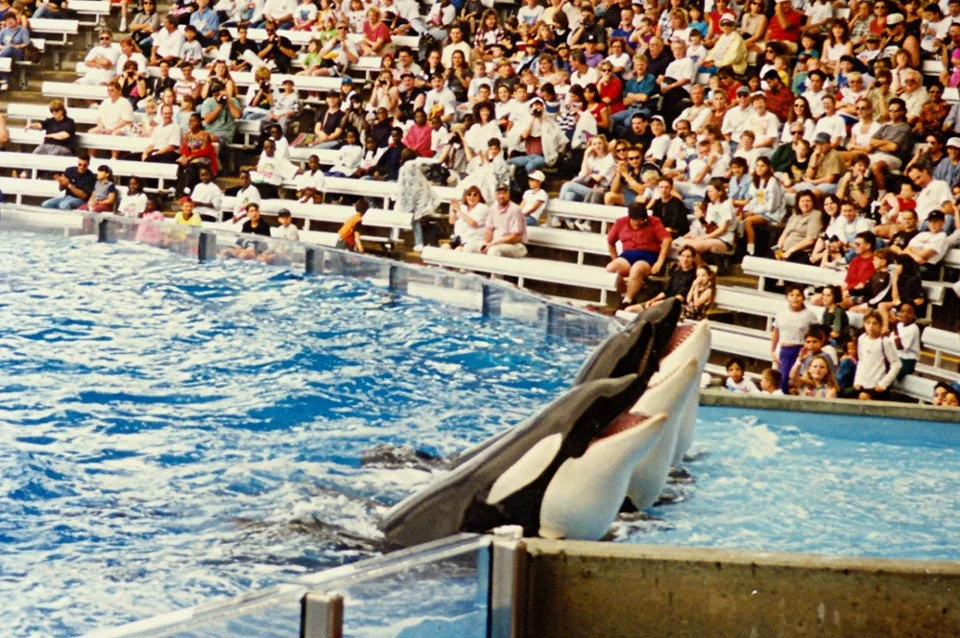
Orca show at SeaWorld. roger4336. CC BY-SA 2.0

The definition of a cetacean is a marine mammal, but they are better known as dolphins, porpoises and whales. While not everyone has viewed these creatures in their natural habitats, there is a good chance they have been seen closer to home at a local zoo or aquatic institution. However, these businesses are in possession of cetaceans for entertainment purposes, not the well-being of the actual animals. 

As breathtaking as it may be to see an orca, whale, or dolphin right in front of your face, these creatures have complex ways of thinking and living that cannot be maintained in a glass tank. Cetaceans are social animals, similar to humans, who thrive off interacting with other aquatic mammals. They are also extremely intelligent and need space to explore new concepts and create families. If kept in captivity and separated from their offspring, cetaceans suffer similarly to what a human may experience if they are depressed or anxious: physical ailments, raised stress levels, aggressive temperaments and even premature death. As a result, this changes the demeanor of the animals, and several trainers have been injured or killed over the years. Organizations using cetaceans for entertainment purposes overlook the basic needs of these animals and forgo moral and ethical standards for the benefit of their business. 

SeaWorld is famous for its orca shows, dazzling spectators with what seem to be displays of happy creatures performing tricks willingly but are truly a collection of unhappy animals working for food in unsuitable tanks. Years of cetacean exploitation in this organization—and ones similar to it—were masked as research. SeaWorld claimed to save marine animals who had been injured in the wild by bringing them to their facility and rehabilitating them in a controlled environment. Upon further investigation, these claims were false, as some animals had been forcefully taken from their homes rather than rescued. Companies battled with lawmakers for years over the proposal of a law that would benefit the animals more than the humans in charge of them. The Orca Protection and Safety Act was passed in 2016, banning the breeding, capturing and performing of orcas in California. SeaWorld’s long reign amongst aquatic entertainment organizations crumbled. 

While several states have adopted laws banning the breeding of orcas since then, there are still 59 whales in captivity across the globe and numerous other dolphins and beluga whales in the same situation. In recent years, China and Russia have become popular locations for orca breeding and performing. 

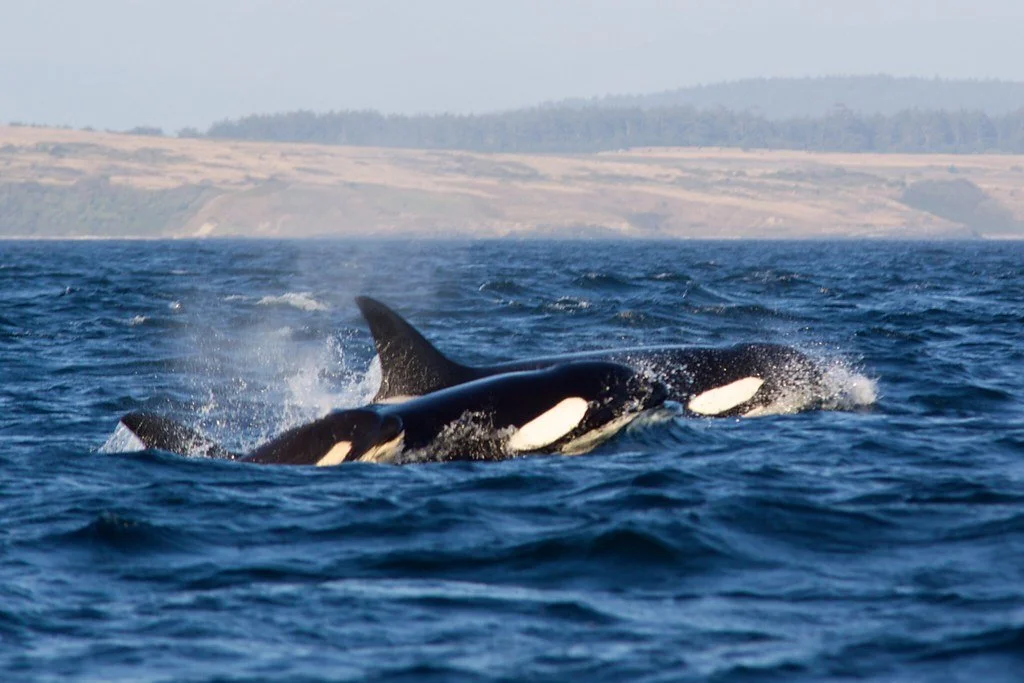
Orcas in the wild. DrTH80. CC BY 2.0

One organization in Canada is now working to rectify the unethical treatment of these animals by creating a space for them to retire and return to the life a cetacean would normally live. The Whale Sanctuary Project is dedicating their time to supporting cetaceans bred and raised in captivity who may be retired, but have no home or family to return to. The Whale Sanctuary Project creates authentic sanctuaries for these animals, large bodies of water with adequate depth where whales, dolphins and porpoises can roam free and interact with other creatures in the same situation. Their work is the first of its kind in North America and will continue to improve the lives of cetaceans in need for years to come. 

GET INVOLVED

Orca Network is a non-profit organization working to spread awareness about orca whales and other aquatic mammals living in captivity. To learn more about orcas, the effects living in captivity has on marine mammals and ways you can directly support these animals, visit Orca Network’s website and consider attending one of their virtual informational events.


Ellie Sabby

Ellie is a senior at the University of Minnesota Twin Cities, studying English literature. She is the Chief Online Editor and Chief Art Editor for undergraduate literary and art magazine, The Tower. In her free time, she enjoys writing poetry, reading anything by Shakespeare, and fulfilling her passion for traveling through a variety of spontaneous trips.

11 Ways to Help Ukraine

Help support the Ukrainian people as their country is invaded.

The ongoing war in Ukraine has caused hundreds of civilian deaths, with more than 2 million refugees having already fled the country. It is crucial in these trying times that Ukrainians know they have support. Here are some ways to help. 

Meduza

“Within a few days, maybe even today, it is possible that there will be no independent media left in Russia,” read a post on Meduza’s website. Meduza is an independent media source at extreme risk of losing its platform to inform the public. Russian President Vladimir Putin is working to have complete control over censorship in Russia and Ukraine, meaning citizens of these countries will no longer have access to any information besides what Russia’s government allows. Meduza has already been blocked in Russia, and now it is fighting to stay alive through the support of allies outside of these countries. The organization is looking for financial support and social media awareness.

For more information and to donate, visit Meduza’s website

Reporters Without Borders

Reporters Without Borders is a worldwide independent media organization that works to keep freedom of the press and information to citizens of the world. According to their site, on March 4, Russia adopted a new law making the “publication of ‘false’ or ‘mendacious’ information about the Russian armed forces punishable by up to 15 years in prison.” This threatens every single independent media outlet in Russia and Ukraine. Support Reporters Without Borders through sponsorship, donations, volunteering and more listed on the website. 

For more information and to support, visit Reporters Without Borders’ website. 

The Kyiv Independent

The Kyiv Independent was launched three months ago by journalists who had been fired in Ukraine for defending editorial independence. Now, they are playing a vital role in keeping the freedom of the press alive in Russia and Ukraine. On their website, they have options to “become a patron” and donate to the organization’s GoFundMe.

For more information and to support, visit The Kyiv Independent’s website.  

Doctors Without Borders

Working in conflict zones, Doctors Without Borders focuses on helping citizens in need after natural disasters, wars, epidemics and more. Responding to the Ukraine crisis, the organization sent 1,400 cubic feet of medical supply shipments on March 6, along with members of the organization. There are multiple ways to get involved with Doctors Without Borders from working in offices to working in the field, and if a career path isn’t something you’re considering, donating is another great way to show support. 

For more information and to support, visit Doctors Without Borders’ website. 

International Medical Corps

A global first responder organization, International Medical Corps provides emergency medical assistance to people in need in any circumstances. A hub in Poland has been created, so members of the organization can assist members of Ukraine and surrounding countries with physical and mental health situations. International Medical Corps is looking for donations to continue its efforts in Poland. 

For more information and to support, visit International Medical Corps’ website. 

Contact Government Representatives 

Don’t have the money to donate? Another way to get involved if you are in the United States or Europe is by contacting government representatives in efforts to accept as many Ukrainian refugees as possible. Boundless offers great tips for formatting emails, finding your elected officials and learning information about what your contribution will do for citizens in need. 

To find your representative, visit the U.S. House of Representatives’ website. 

Global Giving

Global Giving is a nonprofit that connects other nonprofits with donors and companies. Helping to properly equip humanitarian projects in distressed communities and donating to the Ukraine Crisis Fund creates a direct impact on citizens in need. With a goal of $10,000,000, Global Giving has promised that all funds raised will go to providing shelter, food, clean water, health support, psychosocial support and more. 

For more information and to support, visit Global Giving’s website.

The World Food Programme 

As the world's largest humanitarian organization, The World Food Programme works to provide meals to all people in emergency situations. Working directly with citizens in Ukraine who have been forced from their homes and into hunger, donating to The World Food Programme will provide families with meal packages and more.

For more information and to support, visit The World Food Programme’s website.

UNICEF

UNICEF is running an emergency response for Eastern Ukraine, leading health, social policy, child protection and many more programs to aid families affected by the conflict. UNICEF is looking for volunteers, donors, social media support and reporters to help with the efforts in Ukraine

For more information and to support, visit UNICEF’s website. 

United Help Ukraine

An organization started directly in response to the attack on Ukraine, United Help is focusing on wounded warriors, humanitarian aid, medical supplies and raising awareness. Donating to United Help Ukraine will directly help Ukrainian citizens, soldiers and frontline volunteers. 

For more information and to support, visit United Help Ukraine’s website.

Airbnb

Offering free short-term housing for over 100,000 Ukrainian refugees, Airbnb is relying on the help of citizens across the world. Airbnb is looking for donations and possible hosts to house refugees. Nonprofits are working with Airbnb during this time to book homes for eligible citizens. 

For more information and to support, visit Airbnb’s Help Ukraine website. 

Knowing what organizations have the best intentions and support for people in need can be difficult. The American Endowment Foundation provides a great resource for choosing the right organizations where your support will make the biggest difference.

Haleigh Kierman

Haleigh is a student at The University of Massachusetts, Amherst. A double Journalism and Communications major with a minor in Anthropology, she is initially from Guam, but lived in a small, rural town outside of Boston most of her life. Travel and social action journalism are her two passions and she is appreciative to live in a time where writers voices are more important than ever.

9 Beautiful Houses of Worship Around the World 

Different religions have different ways of showcasing their houses of faith. 

For many centuries across the globe, people have built houses of faith to honor the higher power(s) they worship. Below is a list of different architectural representations of these sacred spaces. 

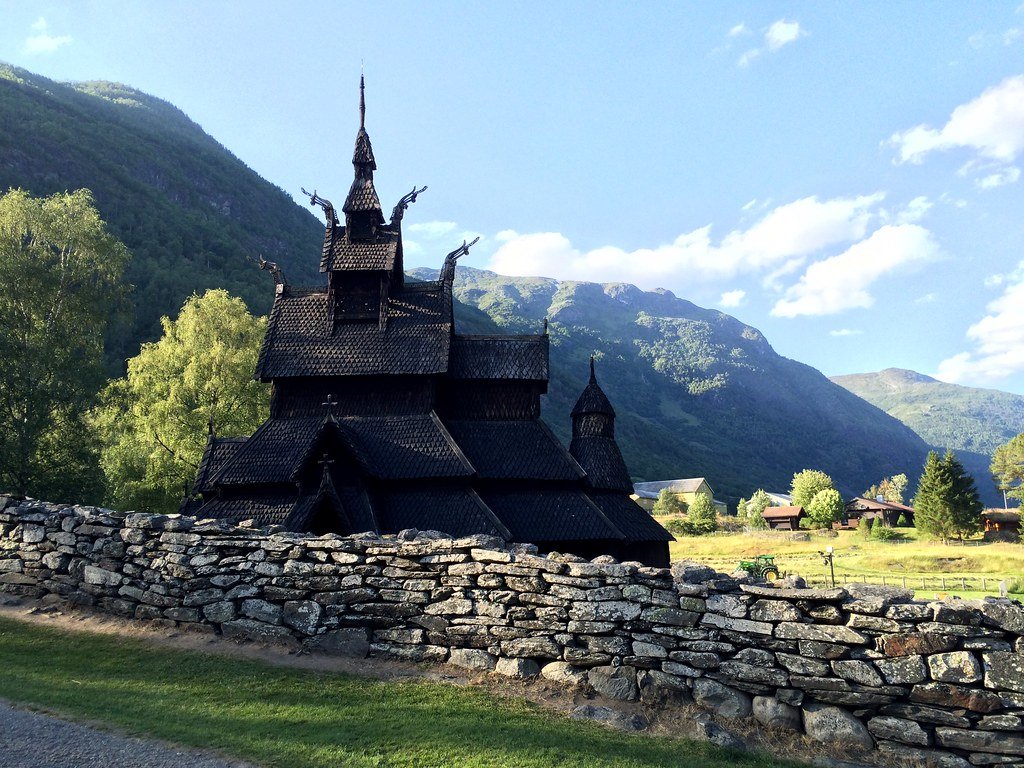
1. Borgund Stave Church

Borgund, Norway

The portrayal of dragon heads on the roof of the Borgund Stave Church in  Norway was built to ward off spirits in 1180. The church was dedicated to Apostle Andrew and has been incredibly preserved. The medieval church received certification in 2010 for being an environmental lighthouse. The church is set to reopen to visitors on April 15.

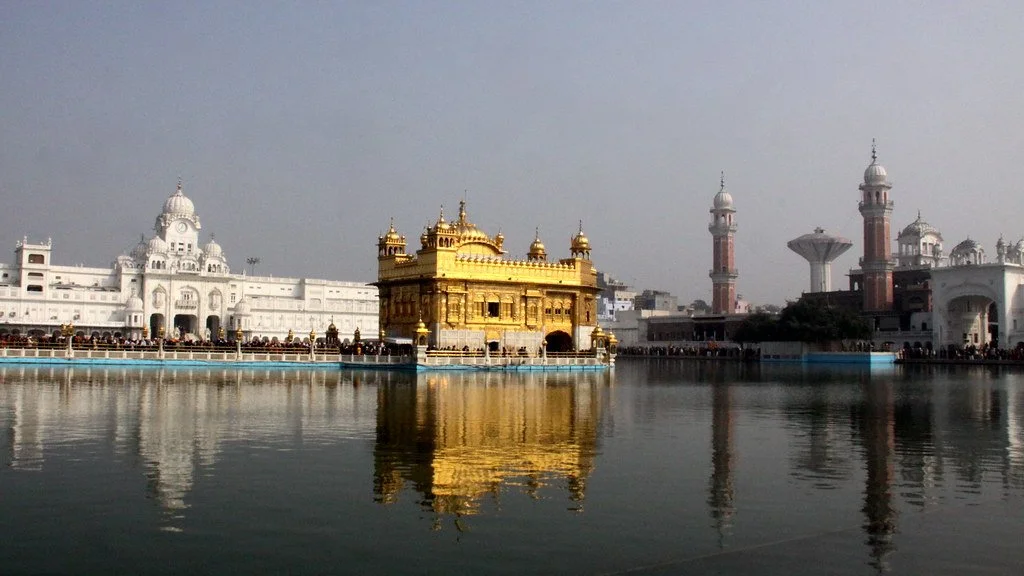
2. Golden Temple

Amritsar, India

Named the holiest temple in the Sikh faith, the Golden Temple’s upper floors are covered in 750 kilos of pure gold. It was built by Guru Arjan in 1604 and is located in the Northwest of India, near the border of Pakistan. It is said that the waters surrounding the temple in the river Ganga cleanse one’s bad karma when taking a dip. It is visited by 100,000 worshippers daily. 

3. Hallgrímskirkja

Reykjavik, Iceland

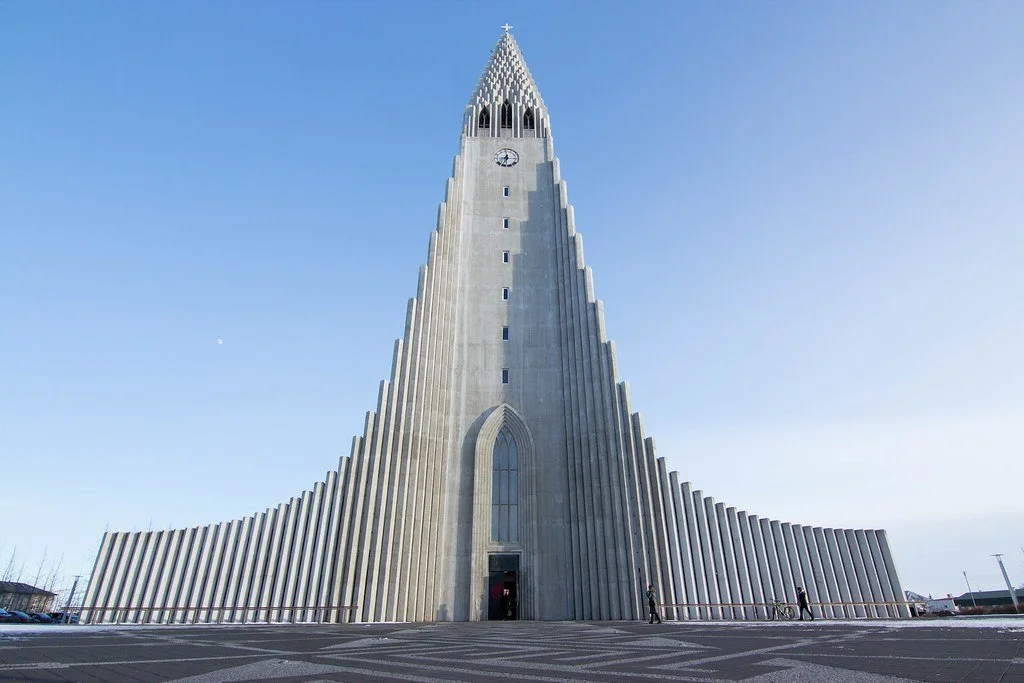
This Lutheran Icelandic church was built by architect Guðjón Samúelsson and, at 240 feet, stands as the tallest building in the capital and the second tallest in all of Iceland. The design is influenced by the country's volcanoes and the natural surroundings that inhabit the nation. Visible from almost any point in the city, the church is known as one of Iceland’s landmarks and largest church. 

4. Kizhi Pogost

Kizhi Island, Russia

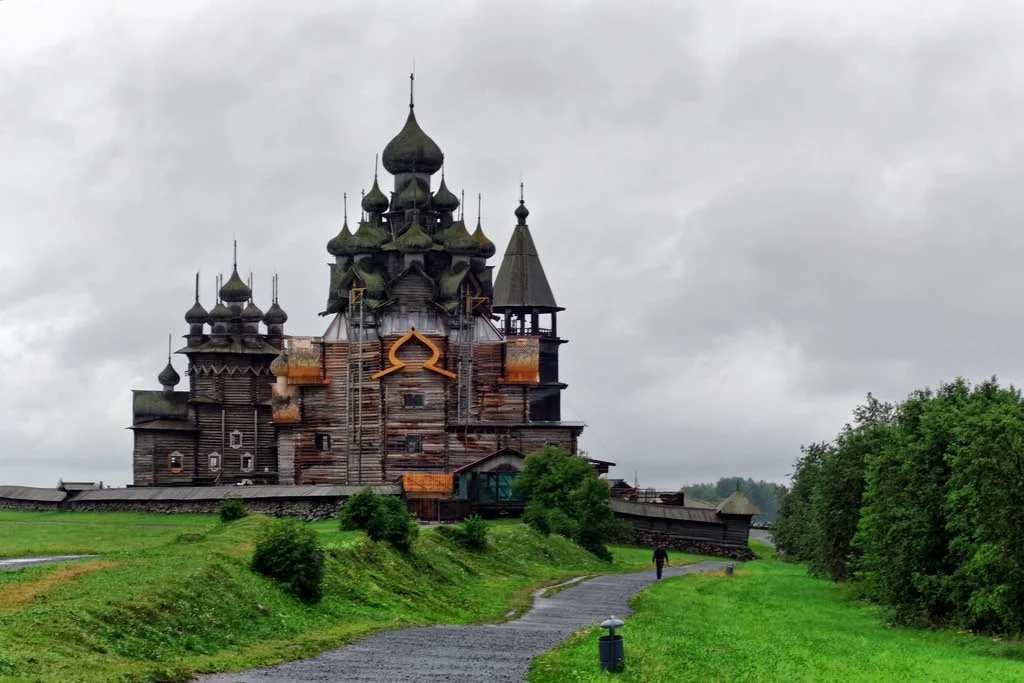
Set on Kizhi Island in Russia’s Lake Onega, Kizhi Pogost is a  UNESCO World Heritage site consisting of two wooden churches and a bell tower built in 1714. What makes this an incredible architectural structure is that it was made completely of wood, with no metal or nails involved. Today, the churches are an open air museum

5. Wat Rong Khun

Chiang Rai Province, Thailand

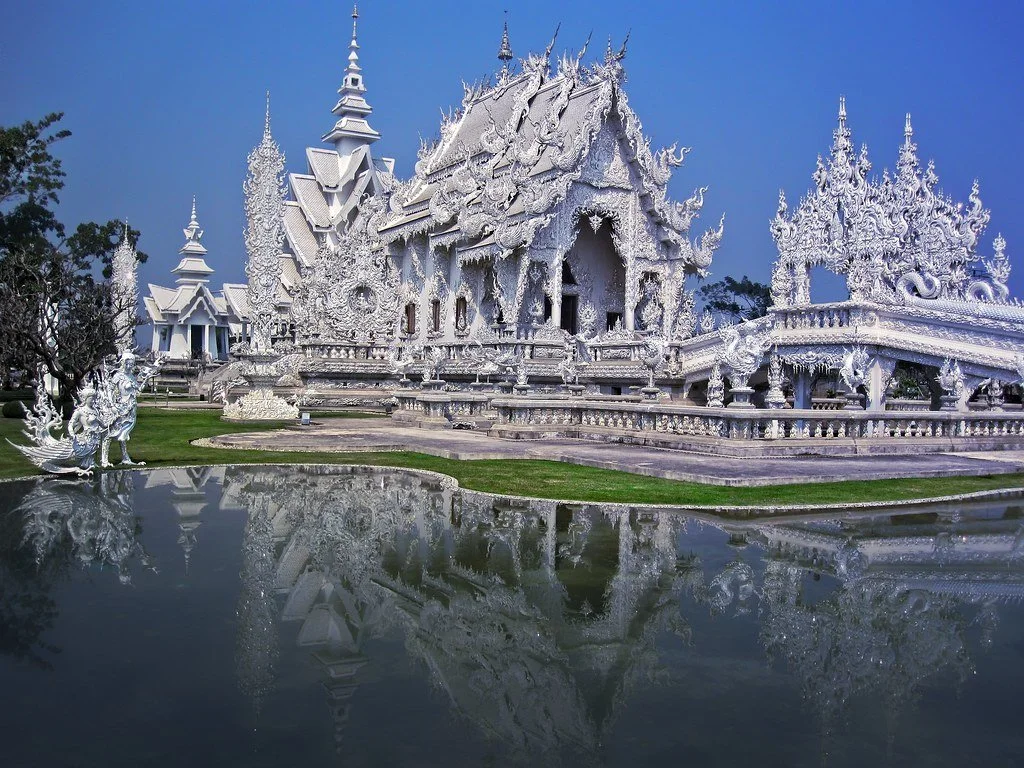
Designed by Thai visual artist Chalermchai Kositpipat, Wat Rong Khun (also known as The White Temple) was created to honor Buddha’s purity. There are many intricate details in the space, including carvings of monkeys, people and hands among other things. Today, Kositpipat has only completed three of the nine buildings he has plans for. The temple entrance cost is $1.50, Kositpipat will not accept more because he does not want large donors to influence his art. The temple is being run by a team of volunteers. 

6. Las Lajas Sanctuary

Ipiales, Colombia 

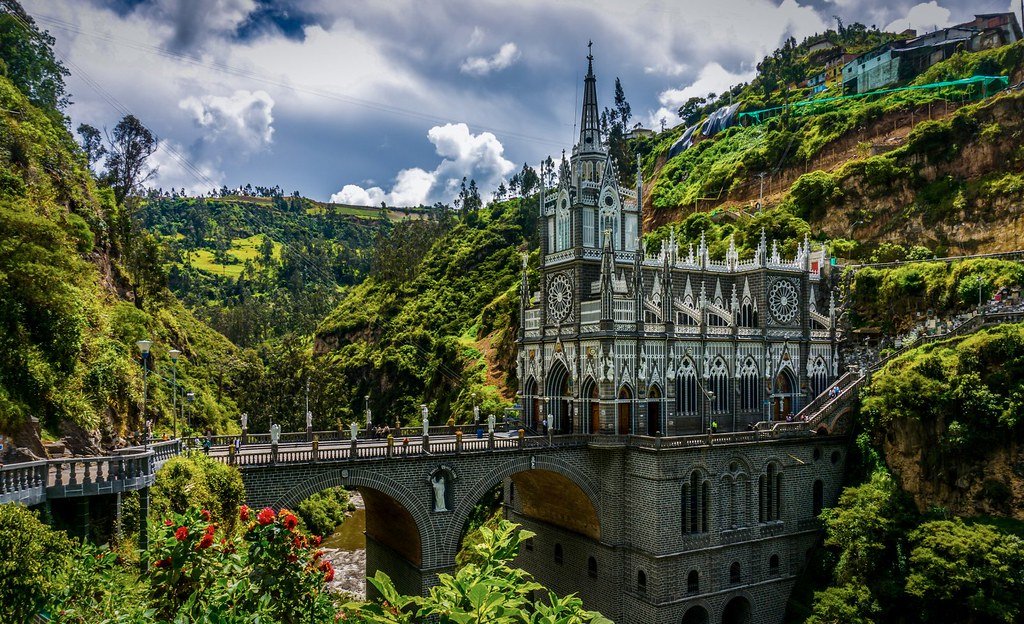
Located less than seven miles from the Ecuadorian border, Las Lajas Sanctuary sits over the Guaitara River. The Roman Catholic basilica has three iconic features. First, the bridge has statues of angels playing instruments on each side. The second is the stained glass by Italian artist Walter Wolf. Lastly, there is an image of the Virgin Mary painted on the back stone wall. The neo-Gothic basilica is surrounded by lush vegetation and was named the most beautiful church in 2015 by The Telegraph

7. Great Mosque of Djenné

Djenné, Mali

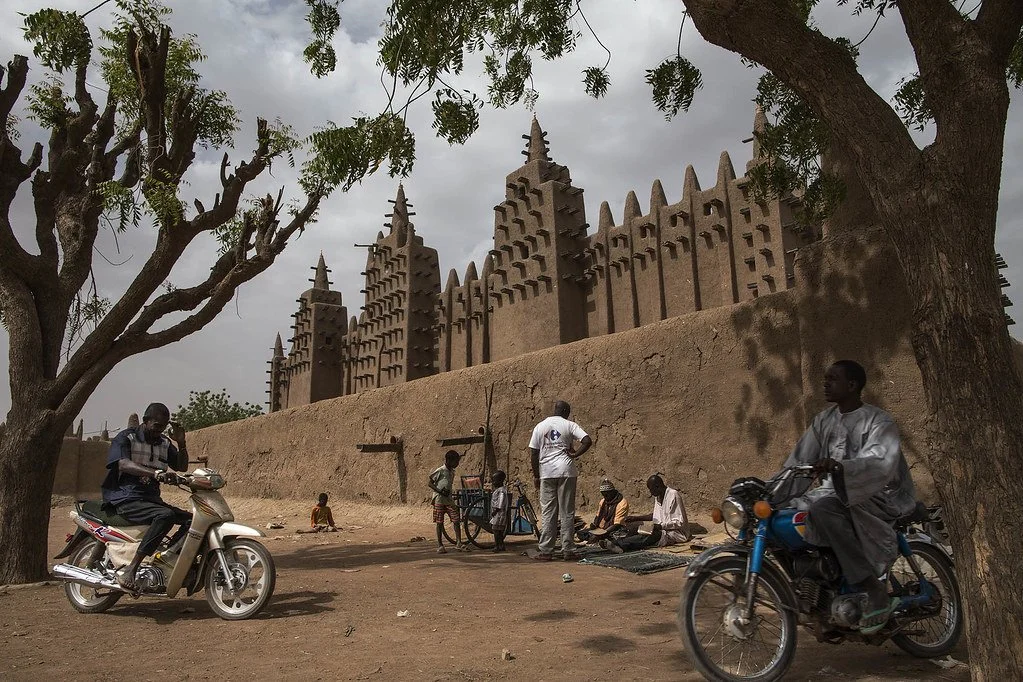
Globally known as an example of Sudano-Sahelian architecture and one of Africa’s most famous structures, the Great Mosque of Djenné was built in  1907 from mud and brick, which needs regular replastering to keep its form. Today, the Great Mosque is a UNESCO World Heritage Site and a sacred destination for Muslims. 

8. Jubilee Synagogue

Prague, Czech Republic

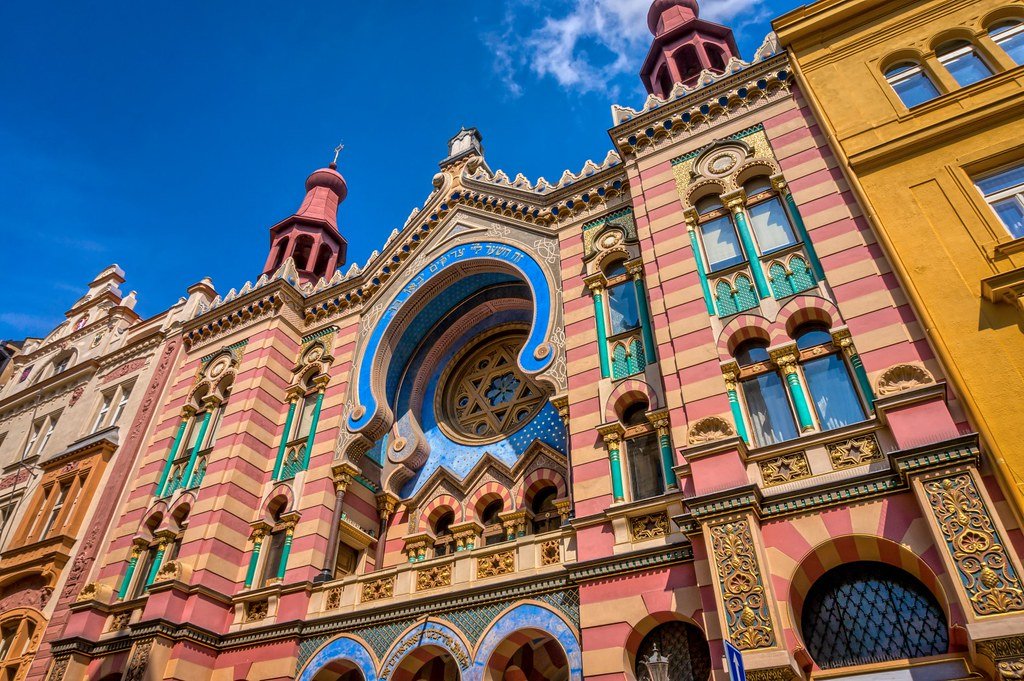
Jubilee Synagogue. BORIS G. CC BY 2.0

The colorful and intricate Jewish Jubilee Synagogue, also known as the Jerusalem Street Synagogue, was built in 1906 by architect Wilhelm Stiassny to commemorate the Emperor Franz Joseph I’s ascension to the throne. A preserved organ by composer Emanuel Stephen Peter is played for visitors. Today, it is open to the public and used for Orthodox prayer services.

9. Szeged Synagogue 

Szeged, Hungary

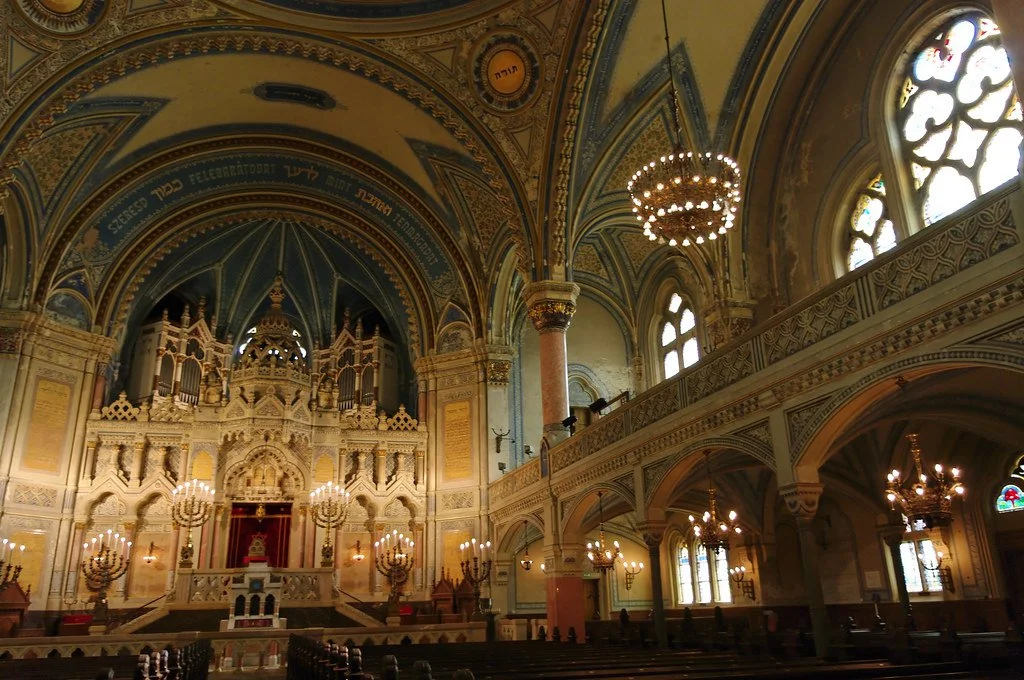
New Synagogue. Emmanuel Dyan. CC BY-NC-SA 2.0

The second largest synagogue in Hungary, Szeged Synagogue merges Art Nouveau with Gothic, Moorish, Byzantine, Roman and Baroque interior design. The sanctuary’s seating faces a Torah ark made with wood from the banks of the Nile River. The triumphal arch of the building displays the biblical commandment, “Love your neighbor as yourself" in both Hebrew and Hungarian. 

10. Temple of Heaven

Beijing, China 

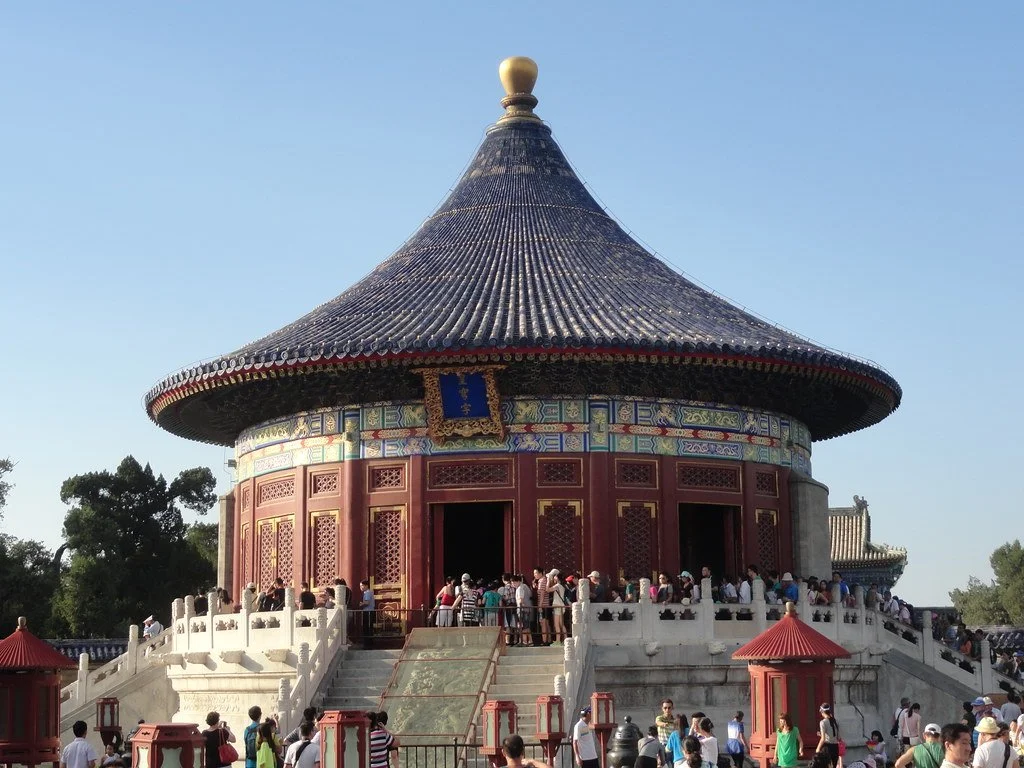
Temple of Heaven in Beijing. Fabio Achilli. CC BY 2.0

An imperial sacrificial altar, the Temple of Heaven in Dongcheng District, Beijing is considered the “supreme achievement of traditional Chinese architecture.” It is 273 acres and located in a large park, measuring 38 meters high and 30 meters in diameter, built on three levels of marble stones. It was completed during the Ming dynasty in 1420 and used to pray for harvest and for worship. In 1998, it was named a UNESCO World Heritage Site.


Jennifer Sung

Jennifer is a Communications Studies graduate based in Los Angeles. She grew up traveling with her dad and that is where her love for travel stems from. You can find her serving the community at her church, Fearless LA or planning her next trip overseas. She hopes to be involved in international humanitarian work one day.

Sand Mining Threatens Coastline as Sierra Leone Rebuilds

Within a few miles of Sierra Leone’s capital, sand mining is having a devastating effect. As beaches slowly disappear, so do the country’s hopes of post-war revival. 

Freetown Beach in Sierra Leone, Erik Cleves Kristensen, CC BY 2.0

Twenty years after Sierra Leone's 11-year civil war, the economic promises of sand mining prove to be costly. The war, which took thousands of lives and led nearly half the country's population into poverty, destroyed most of the country. What followed was a construction boom made possible by an essential ingredient of modern civilization: sand. However, as Sierra Leone’s 300 miles of glorious beaches slowly disappear, so does the revival of tourism and the protection of 55% of the population who live along the country’s coast from the dangers of rising sea levels due to climate change. 

As part of a post-civil war move to help communities benefit from local resources, Sierra Leone’s central government gave regulation of sand mining to local councils. Under the 2004 Local Government Act, local committees operate the trucks and strictly hire local people to mine the sand. After a long day of mining, the sand is dried and sold to developers to pave and extend roads as new homes, hotels and restaurants go up across the country. 

Government officials defend sand mining as an essential source of jobs and a necessary component in rebuilding Sierra Leone. Kasho Cole, chairman of the Western Area Rural District Council, told the Los Angeles Times that his council is “sensitive to environmental concerns, having banned sand mining on certain beaches because of the devastation it has already caused.”

Cole also acknowledged that assessments had not been carried out anywhere in the district to determine sand mining’s environmental impact. Due to large-scale illegal sand mining operations, Cole could not provide a definite amount of sand extracted from the beaches. 

Sand theft, the unauthorized and illegal form of sand mining, has led to a worldwide non-renewable resource depletion issue, causing the permanent loss of sand and significant habitat destruction. Sand mining has already made a significant environmental impact in North Stradbroke Island and Kurnell in Australia; the Indian states of Maharashtra, Madhya Pradesh, Andhra Pradesh, Tamil Nadu, and Goa; and the Red River in Yunnan, China. 

In the United States, the sand mining market generates slightly over $1 billion per year. The industry continues to grow annually by nearly 10% because of its use in hydrocarbon extraction. Globally, sand mining is a $70 billion industry, with sand selling for up to $90 per cubic yard. 

In Sierra Leone, sand mining operations are regulated on John Obey Beach, a village 20 miles south of the Western Area (Freetown Peninsula.) According to the Environmental Protection Agency, sand mining should be banned on all beaches apart from John Obey. However, when the police leave the beaches at 5 p.m., the mining continues after dark. 

Efforts to address the issue are hampered by conflicts of interest from those involved: miners who need the work, construction companies who need the supply and investors who are getting rich taxing the sand. Last year, a press statement from the local police force confirmed “certain service personnel appear to be aiding and abetting this illegal act.” 

As dump trucks continue to haul sand away and tides push further inland, John Obey Beach is slowly disappearing—taking trees, businesses, homes and dry land with it as far down the coast as Bureh, a surf town two miles south. While the activity contributes to Sierra Leone's coastal erosion, which is proceeding at up to 6 meters a year, the removal of sand also changes wave patterns that move sand along the coast, altering the quality of surf that Bureh, a renowned surf spot in Africa, is known for. 

Prior to the war, Sierra Leone’s beaches were packed with adventurous travelers from around the world. Kolleh Bangura, the director of Sierra Leone’s Environmental Protection Agency, told The New Humanitarian that “sand-mining is a calamity for the tourism industry… Anywhere in the world, sand is the resource of tourism, but now our beaches are being degraded.”

Lakka, a coastal town located 10 miles from Freetown, was once known for its large beaches and seaside resorts, offering a glimpse of the future if actions are not taken. Sand mining on Lakka Beach is illegal now, but the ban came too late—leaving a thin wedge of sand lined by crumbling buildings, many of which have been left abandoned. 

Even the miners themselves recognize sand mining is not sustainable; however, with a youth unemployment rate of 70%, the pressure falls on the government to provide alternative jobs. “In time, they need to ban it, as we want to bring tourism here,” Abu Bakarr, a sand miner, told The New Humanitarian. “But we need sand-mining to sustain our lives…The government needs to give us jobs. If there are no jobs, the youths will mine the sand.”

Papanie Bai-Sessay, the biodiversity officer at Conservation Society of Sierra Leone, told the Los Angeles Times that “the sand has been a buffer… we are destroying our first line of defense. If we don’t stop, it will be a disaster for millions.”


Claire Redden is a freelance journalist from Chicago, where she received her Bachelor’s of Communications from the University of Illinois. While living and studying in Paris, Claire wrote for the magazine, Toute La Culture. As a freelancer she contributes to travel guides for the up and coming brand, Thalby. She plans to take her skills to London, where she’ll pursue her Master’s of Arts and Lifestyle Journalism at the University of Arts, London College of Communication.

Labor Cruelty Inside Dubai, the City of Gold

Ninety percent of Dubai's residents are migrant workers, many of whom are experiencing abuse from their employers. 

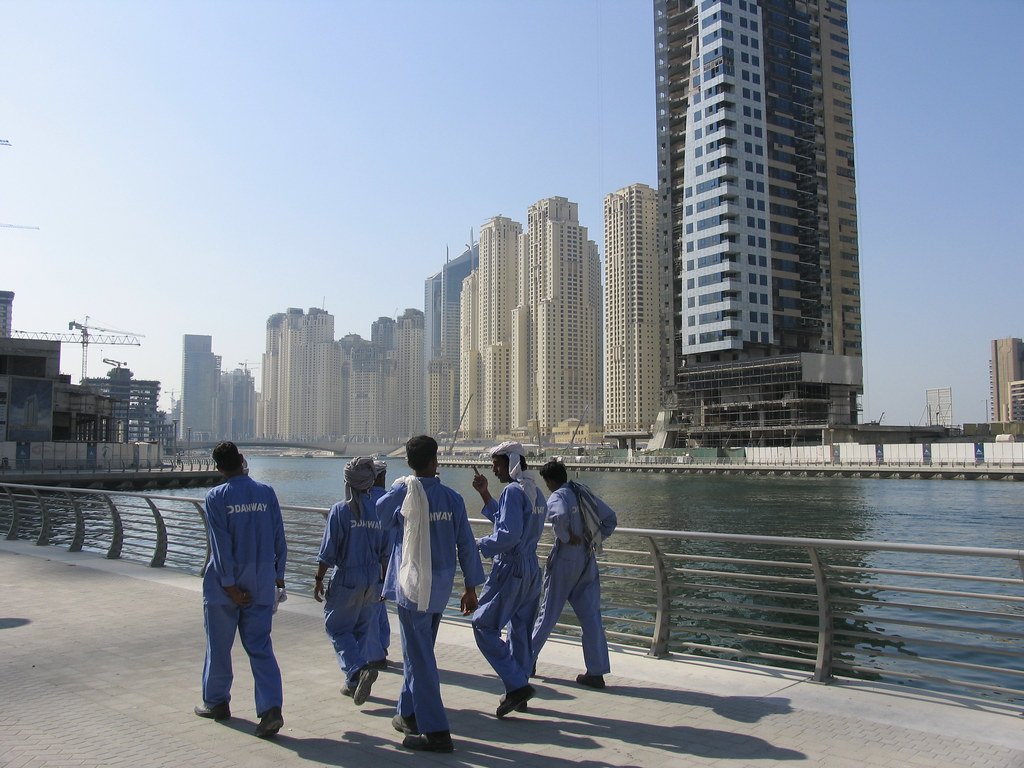
Dubai is known as the city of gold due to its rapid growth, from a global gulf port to a busy business city center. Migrant workers arrive from Asia, Africa and different parts of the Middle East through the sponsorship program kafala. The program gives employers the permits necessary to hire foreign labor workers and gives employers complete control over the legal status of whom they’ve hired. In some cases, this causes a power imbalance among the employer and employee relationship. In addition to being exploited through the sponsorship program, migrant workers have accused employers of various forms of abuse.

Migrant workers often arrive in Dubai in hopes of making a steady income to provide for their families back home. Dubai has a high demand for labor workers and provides better opportunities to migrant workers. Therefore, they take on jobs in construction or domestic work, such as nannying, housekeeping or other household services. At times, they’re promised a higher wage or a different job description; however, after arriving, that promise was broken. Migrant workers receive their wages on a monthly basis and are required to work weekends, with an average of 16-21 hour days. Overworked migrants cannot leave the job until their contract is terminated, as those are the conditions under the kafala sponsorship. If one decides to leave, the employer can have the worker sent to prison for six months, deported and/or fined $27,225 for not abiding by the contract. 

Migrant Worker Cleaning a Mall in Dubai. Iwona Rege. BY-ND 2.0

This very strict rule under the kafala sponsorship forces employees to continue working under very stressful conditions. Fear of what could happen to them binds them to their employer until the contract is completed. Due to these conditions, migrant workers have complained that employers have not paid them their wages, delayed the wages or have had their passports taken from them; preventing them from leaving. At Dubai’s Expo 2020, migrant workers claimed their employers violated UAE labor laws, with one interviewee saying, “the way they treat the staff is like slaves, I mean modern day slavery.” Women have reported being raped by their employer as well as family members for the home they work in. However, there has been no action taken against these accused employers. 

With the pandemic, cases got worse as most employers did not pay the migrant workers their wages. The lack of income left workers stranded in Dubai with no money to fly back home or provide themselves with basic needs. A Sri Lankan embassy source based in Dubai said, ​​“the two most common complaints from the worker are that employers don’t give them salaries and that they are harassed either physically, sexually or verbally.” The UAE has settled requirements that help protect migrant workers rights, yet there has been non-compliance and no way to ensure workers are not being abused and/or taken advantage of. 


To Get Involved: The organization Migrant-Rights advocates the rights of migrant workers affected by the kafala sponsorship program. They also assist migrant workers who need assistance. 
To learn more click here.
To support Migrant-Rights’ organization click here.



Jennifer is a Communications Studies graduate based in Los Angeles. She grew up traveling with her dad and that is where her love for travel stems from. You can find her serving the community at her church, Fearless LA or planning her next trip overseas. She hopes to be involved in international humanitarian work one day.