The Smallest Country in South America: Suriname

The nation of Suriname is home to a multicultural society and the Amazon rainforest. Yet, little is known of the country as it attempts to stand out behind the shadows of its former Dutch colony. 

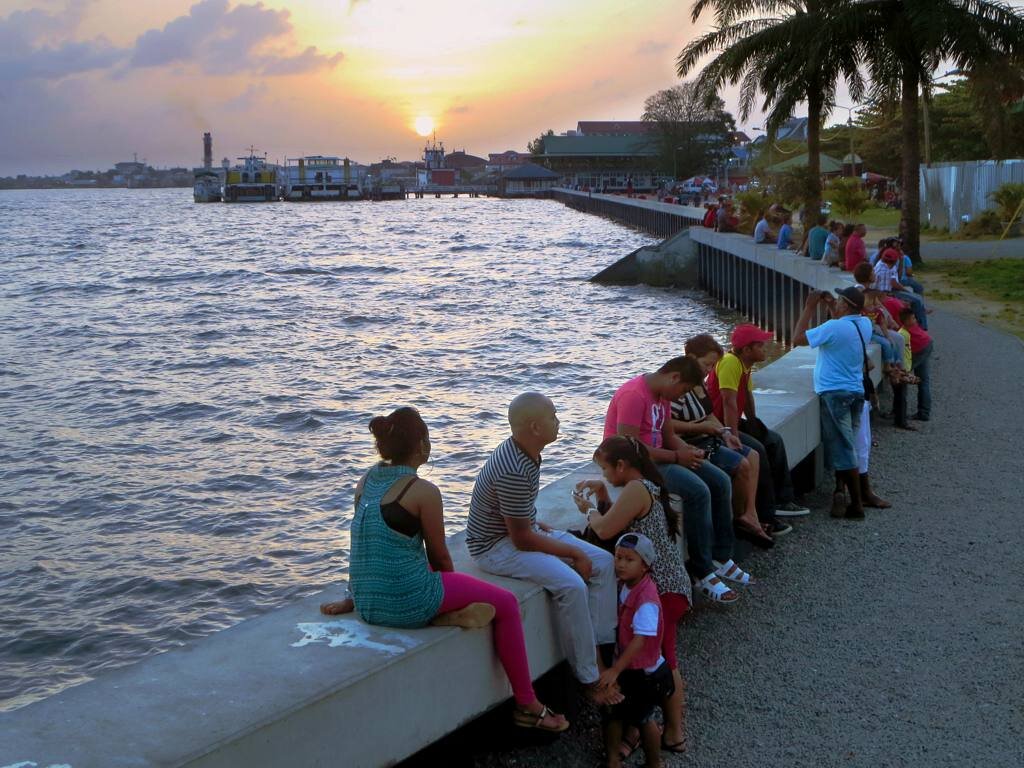
Suriname River Waterfront. D-Stanley. CC BY 2.0

When one thinks of South America, one thinks of all the Spanish-speaking countries. However, rarely do you think of The Guianas, the three countries in the northern part of the continent: Guyana, Suriname and French Guiana. The smallest nation of the three is Suriname, and it covers a surface area of 63,252 square miles. Known as a former colony of The Netherlands, Suriname gained its independence in 1975. This Dutch-speaking nation is surrounded by 94% of pristine forest and has a multicultural society. 

Suriname is named after its first occupants, the Surinen Indians. However, in 1602 the Dutch settled in the region, and by 1667 it became a colony of the Netherlands. Throughout the Dutch’s settlement in the nation, many important events made Suriname the country it is today. After the termination of slavery, the Dutch brought in East Indian laborers. The Netherlands granted Suriname its independence on November 25th, 1975, when the Surinamese people rioted over inflation and unemployment. Fast forward to today, the country is a constitutional democracy

In addition, Suriname is struggling with seven in ten people falling below the poverty line. The Surinamese rely heavily on the exportation of gold and other minerals, accounting for 85% of exports and 27% of government revenues. Agriculture is also a big part of their exportation, which includes bananas, rice and shrimp. With poverty taking a toll on its people, there has been an upside to their current financial situation. The country will begin producing oil in 2025, appealing to prospective investors. The government holds 13 billion barrels of oil and gas that have been discovered in the past six years. With this finding, financial stability can emerge for the Surinamese. At the moment, Suriname produces oil for domestic use and its own oil company Staatsolie

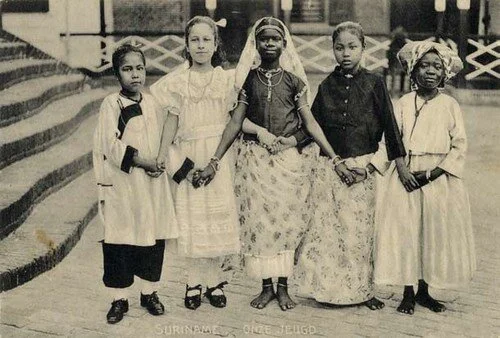
Surinam youth. KITLV Collections. CC BY-NC 2.0

With the history Suriname has lived through, it is no surprise that it is a multicultural nation. It is made up of South Asians (Indians), Maroons, Suriname Creole(Afro-Surinamese), Javanese, biracial and others. 

Even ith this diverse and integrated culture that makes up Suriname, citizens of this nation  live peacefully among one another. So much so that a Jewish temple and a Muslim mosque sit side by side in the capital city of Paramaribo. This cohabitation can be seen as the entire country officially marks other nations’ religious and nonreligious holidays as their own. . These holidays include Chinese New Year, Easter, Indigenious Peoples Day, Maroons day, Idul Adha and Deepavali. Through this act, the nation exemplifies unity through its melting pot of diversity. 

With any diverse culture comes an eccentric music genre. Through the music, one can hear the different backgrounds of each region represented. Suriname’s music style is no different. It is a mixture of International European, North American indigenous and South American rhythms. One of the Surinamese most well-known music forms is Kaseko. It is a fast-paced beat with Indo-Caribbean influence, which emphasizes wind instruments and percussion. 

The nation’s cuisine is quite diverse as well and is a big part of the Surinamese culture. However, there is a dish that they call their own, which is Pom, the National dish. The name Pom is short for pomtajer, the root vegetable used to top the dish. Pom is a casserole made up of root vegetables and your choice of meat. This dish is a luxury, usually served on special occasions due to the high cost of meat.  
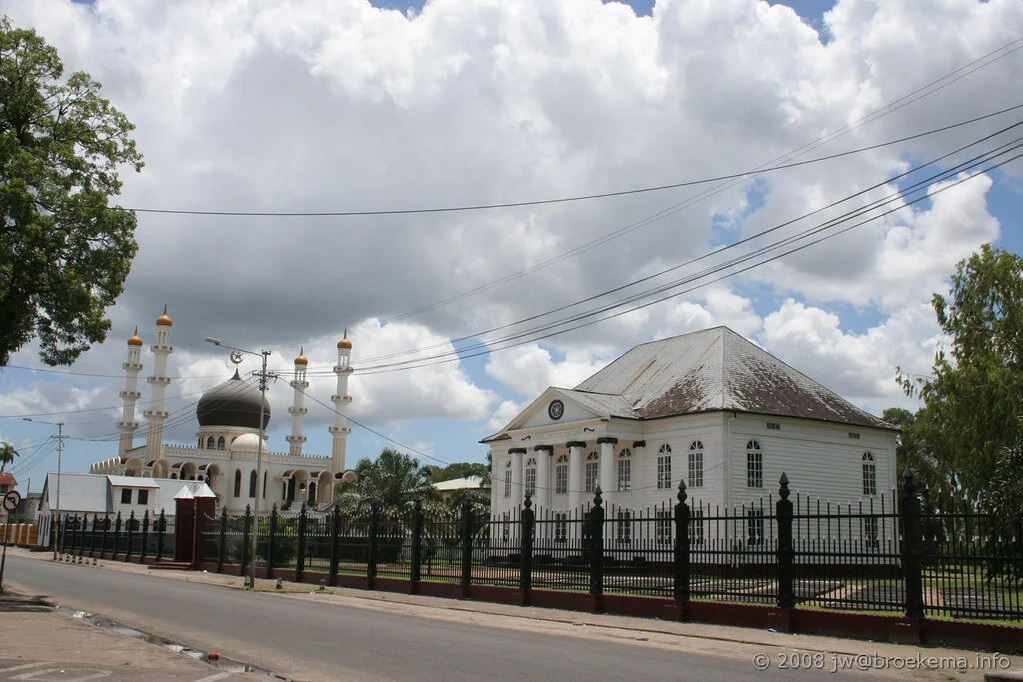
Muslim Temple and Jewish Mosque sitting side by side. Dan Lundberg. CC BY-SA 2.0

There are many influences in the country’s buildings and architecture today. With all of the ethnicities and cultures that inhabit Suriname, it is no surprise it would spill over onto the design of the city. Made up of mostly wooden buildings, the style and design seem to have stayed rooted in a specific time period. There are no contemporary buildings, and that is what makes the city so enchanting. Throughout Suriname you can see the fusion of Dutch, North American and Creole culture and others in the architectural style

On the outskirts of the city sits more than 90% of lush green forest, the Amazon. With such vast greenery, this forest is home to 150 species of mammals, 650 bird species and 350 fish species. With such a large part of the forest being untouched and preserved, Suriname species don’t face extinction like other species around the world. This is due to the capacity of the land makes it easy to house the numerous species. Nature enthusiasts visit the various nature reserves Suriname has to offer. The largest and most popular is the Central Suriname Nature Reserve at 1.6 million hectares; it protects the upper watershed of the mighty Coppename River and other important rivers. The reserve’s animals include sloths, jaguar, tapir, eight species of primates and others. 
Sunset in the Suriname rainforest. Delphinidaesy. CC BY-NC-ND 2.0

This small nation is home to slightly fewer than 600,000 people. Although mostly unknown to many, Suriname is slowly bringing in many travelers worldwide. Its unique landscape and culture are admired and it is sure to attract many more travelers in the years to come. Suriname is making a name for itself on the world map with so many species to see and nature reserves to explore. 


RELATED CONTENT:

Jennifer Sung

Jennifer is a Communications Studies graduate based in Los Angeles. She grew up traveling with her dad and that is where her love for travel stems from. You can find her serving the community at her church, Fearless LA or planning her next trip overseas. She hopes to be involved in international humanitarian work one day.
15 of the World’s International Dark Sky Sanctuaries 

The star-filled night sky is one of the greatest natural wonders, but it can be hard to see these days due to light pollution. Therefore, the ultimate places for stargazing are “Dark Sky Sanctuaries”, some of the most remote and dark places where the night sky is perfectly visible. Check out these 15 spots.

Read More

Tapas Bars in Andalucía Continue Spanish Traditions

Spanish tapas started as simple small plates to accompany a drink and are now an important part of Spain’s culture where people gather for food, drinks and socializing.

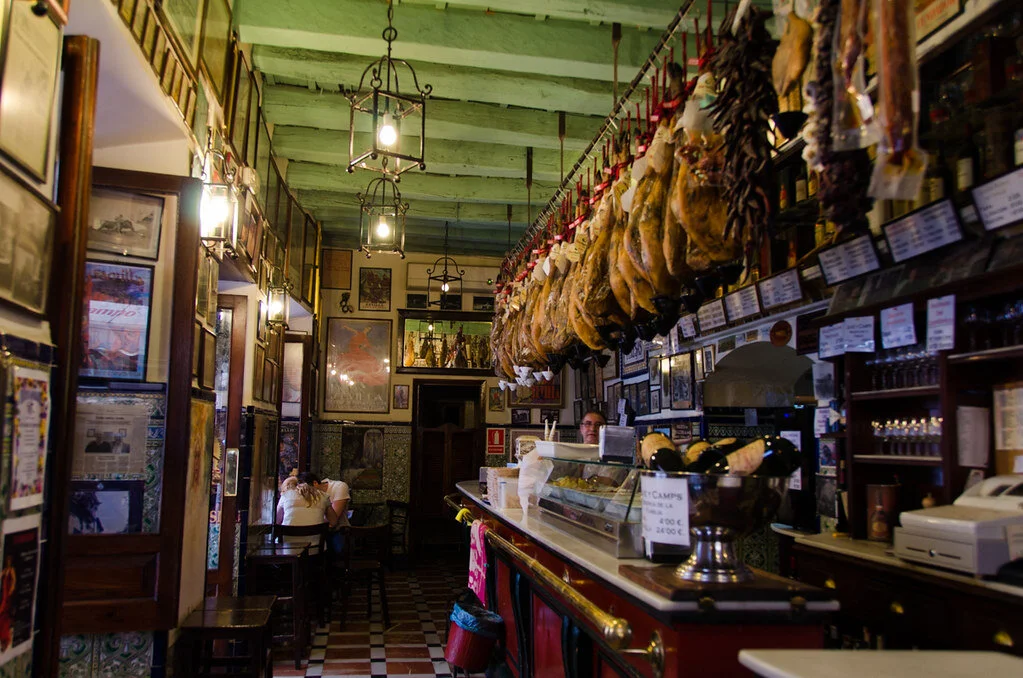
Bar Las Teresas in southern Spain. VallausaCC BY 2.0

Tapas bars are a long-held Spanish tradition that includes traditional food, wine, friends and a lively atmosphere. The small plates have been enjoyed at wine bars for generations, but the exact origin of tapas is unknown. There are several tales speculating how the dishes first gained popularity. One dates back to the 13th century when King Alfonso X of Castille was ill and only ate and drank in small quantities. Another story tells a more grassroots origin, with local bars in Andalucía serving wine with a saucer on top to keep flies out during the hot summer. In addition, a small amount of complimentary food would be placed on the plate to attract more customers to the bar. Even though there may be some disagreement over the origins of tapas, there is no doubt that the cuisine is a staple of Spanish food and culture. With increased tourism and popularity, most tapas are no longer free, although some wine bars still will serve complimentary tapas in smaller towns in Andalucía.
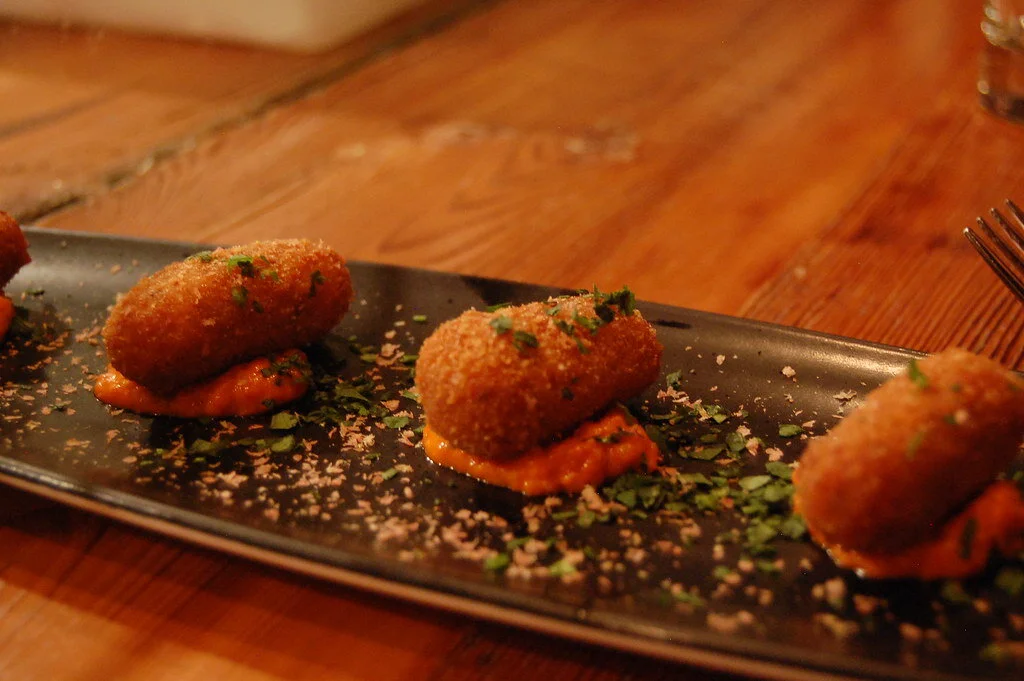
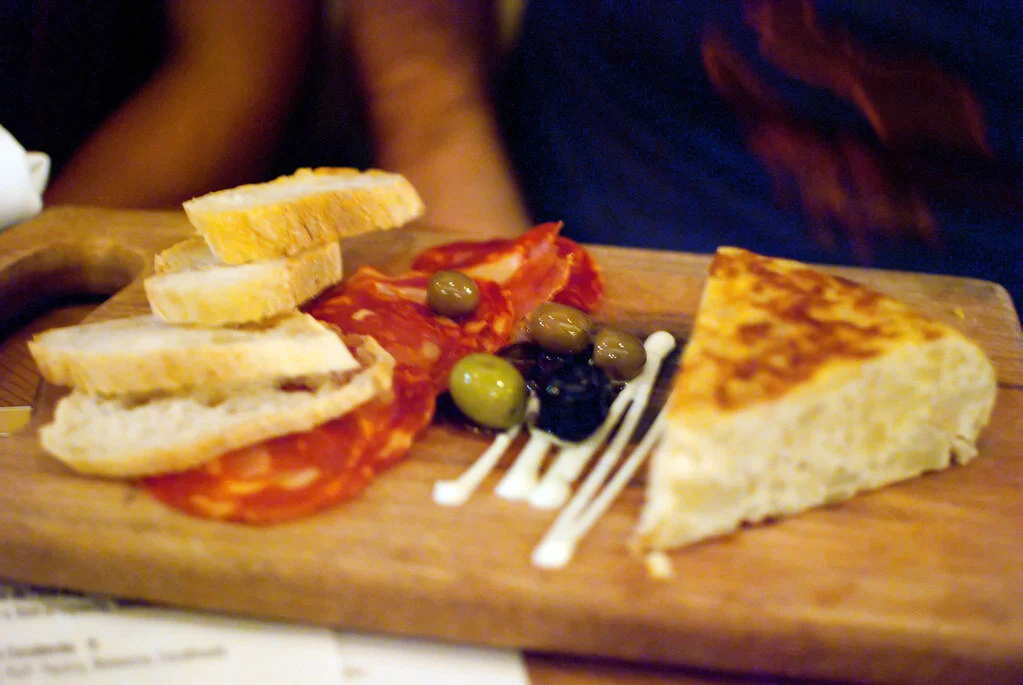
Tapas bars are typically small wine bars, with varying small plates placed on top of the bars. While many tapas may have started out as simple small plates,  chefs have gotten increasingly inventive in creating new dishes over the years. Traditional cold tapas include serrano, thinly sliced salt-cured ham and manzanilla or gordal olives, classic Andalucía olives, along with a variety of salads. Seafood is prevelant, with calamari and prawns dipped in batter, called gambas gabardina, being just a few dishes offered at tapas bars. Other popular tapas include ham croquettes (a fried ball of cheese and ham), pincho de tortillas (a potato-based omelet) and patatas bravas (fried potatoes covered in sauce).

Tapas bar hopping is popular for people to socialize and enjoy traditional food. People can have tapas as a quick snack with a drink and can eat standing up at a bar, or turn the small plates into a complete meal with many people. Tapas hold so much cultural significance to Spain that in 2016 the country sought to put tapas on the UNESCO Intangible Cultural Heritage List. Tapas have now spread worldwide with chefs experimenting with small plates of all kinds. Despite the global reach, Spain’s beloved tapas bars are still a unique cultural experience.


RELATED CONTENT


Dana Flynn

Dana is a recent graduate from Tufts University with a degree in English. While at Tufts she enjoyed working on a campus literary magazine and reading as much as possible. Originally from the Pacific Northwest, she loves to explore and learn new things.

3 Cliffside Communities and Underground Towns

Towns throughout the world strive for connection with their natural environment. Here are three which built very close relationships with local geology.

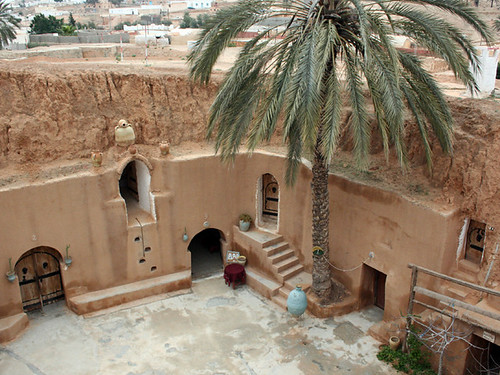
 Hotel Sidi Driss, Matmata. Scottroberts. CC BY 2.0 

Venice may be renowned for its aquatic urban planning, but it’s not the only place making resourceful use of its surroundings. Learn about the following three settlements whose residents literally live under a rock (or two). 

1.     Setenil de las Bodegas, Spain

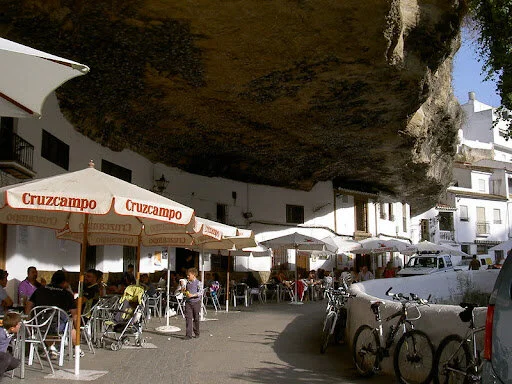
Biking street in Setenil de las Bodegas. Kans1985. CC BY 2.0

In Southern Spain lies Setenil de las Bodegas, a town carved into towering bluffs of rock. The rocky cliffs are remnants of a canyon gorge eroded by the river Rio Trejo and were first developed for residence by the Moors in the 12th century. They built houses directly into cave walls to provide inexpensive, temperature-regulated dwellings at minimal risk from disasters such as earthquakes or wildfire. With expansive rocky overhangs serving as natural roofing, these houses are materially efficient and easy to maintain. The three thousand inhabitants of Setenil de las Bodegas take pride in local history; the town is named after seven battles fought by Catholic Spaniards against the Moorish rulers during the Reconquista. The Moors maintained their defensive stronghold throughout six attempts but were defeated by the Catholics on the seventh.

Visitors may tour the town’s Nazari castle, an Arabian fortress dating back to the Almohad Caliphate, and the signature church of Our Lady of the Incantation. In addition, Setenil de las Bodegas offers several restaurants and bars for visitors to sample among its stony streets; dine upon the traditional local delicacy sopa cortijera, a wild asparagus soup enriched with boiled eggs and chorizo.

2.     Matmata, Tunisia

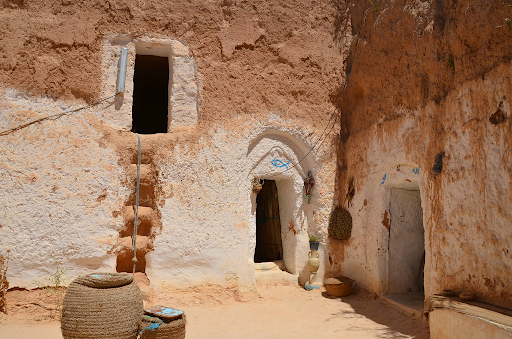
Troglodyte house. Professor Mortel. CC BY 2.0

Just across the Mediterranean Sea, Berber descendants populate the town of Matmata, iconic for its traditional subterranean dwellings. Historians are uncertain about when these troglodytes first emerged; settlement may have occurred as early as the 11th century or as late as the 15th. The Berbers excavated clay from underground pits to form cool spaces within which they could evade the dry heat of the Matmata valley. Deep, circular pits were dug into the sandstone ground and hollowed out. The troglodyte spaces were subsequently dug out around the pit’s perimeter, leaving the central pit as a courtyard. Sandstone clay was soft enough to excavate by hand but would harden rapidly upon exposure to air. Such underground homes were sturdy but vulnerable to flooding; during the 1960’s Matmata were forced to evacuate due to extreme rains.

Visitors may immediately recognize Hotel Sidi Driss, the site selected by George Lucas to film Luke Skywalker’s childhood home on the planet of Tatooine, within Matmata. Hotel Sidi Driss operates to date, boasting twenty rooms, a hotel restaurant, and Star Wars decorations in homage to its movie history. 

3.     Coober Pedy, Australia

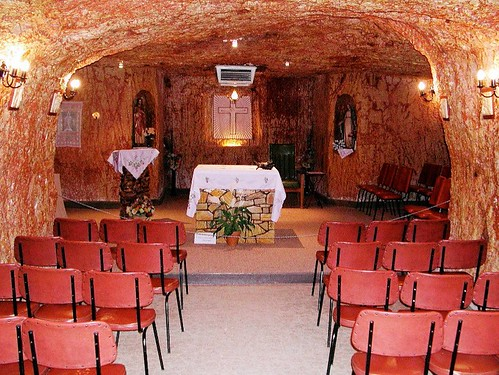
The underground church in Coober Pedy. www.wbayer.com. CC BY 2.0

In Australia’s outback, Coober Pedy is a storied subterranean town situated at the edge of the Great Victoria Desert. The town originated from the discovery of opal reservoirs in 1916 and soon became a premier mining community. Miners moved to Coober Pedy to try their luck at burrowing for gemstones but found extreme temperatures more often than opals. To deal with the dry summer heat, which can exceed 100 degrees Fahrenheit, miners started to sleep and eat in the mines. It wasn’t long before miners decided to dig out proper buildings from sandstone to reside in. Currently, Coober Pedy boasts public museums, libraries, churches, bars, a drive-in theatre and even a swimming pool,—all underground.     

But the ‘Opal Capital of the World’ has cause for another claim to fame: ‘Hollywood of the Outback.’ Coober Pedy is renowned for science fiction filmography due to its extreme environment and barren landscapes. Hardly any vegetation grows natively; Coober Pedy’s tallest tree used to be a sculpture of scrap metal before townsfolk planted seeds. Moviemakers have flocked to Coober Pedy to leverage the area’s uncanny resemblance to other planets. “Mad Max: Beyond Thunderdome,” “Pitch Black,” “Red Planet” and “Until the End of the World Planet” are some sci-fi films shot in Coober Pedy.


Rohan A. Rastogi

Rohan is an engineering graduate from Brown University. He is passionate about both writing and travel, and strives to blend critical thinking with creative communication to better understand the places, problems, and people living throughout the world. Ultimately, he hopes to apply his love for learning and story-sharing skills to resolve challenges affecting justice, equity, and humanity.

Nazaré, Portugal: How A Fishing Village Became a Surfing Mecca

For centuries, Nazaré, Portugal was a traditional fishing village; until it made its way on the big wave surfing map. Now, it’s what many consider to be the Mecca of surfing, drawing crowds from across the globe. 

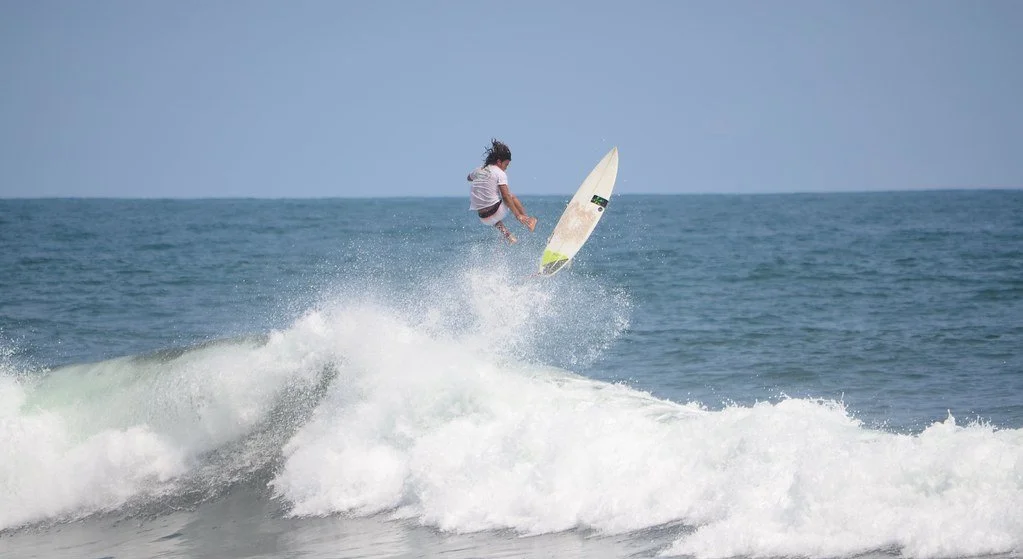
Historically, big wave surfers gravitated towards the waves found in the surfing communities of Hawaii and California. Locations like Jaws, Mavericks, Shipstern Bluff and Mullaghmore were thought of as the best of the best. However, it wasn’t until recently that Nazaré, Portugal made its name as a surfing destination. Nazaré’s beach of Praia do Norte has all the elements for disaster—a deep underwater canyon and currents of waves that collide into one, breaking towards the coast of monumental cliffs. Surfing there, in the winter especially, was long thought to be impossible. It wasn’t until 2010 that someone was daring enough to surf the uncharted waters and alter the history of Nazaré forever. 

Just a few meters off the shore of Praia do Norte is the Nazaré Canyon, an underwater submarine valley 3 miles deep. When water currents move through the valley, they get compressed and begin to move faster. When these currents collide with the local water current, they forge waves upwards of 10 stories high. Among villagers, the waves in Praia do Norte were forbidden. Many had loved ones who died at sea, and they taught their children to avoid the huge waves. So in 2010, when Garret McNamara first arrived, locals were apprehensive about getting behind him and his mission to ride a 100-foot wave.  

It took five years for McNamara to take up an invitation from Dino Casimiro, a local bodyboarder who worked to publicize Nazaré’s waves. When he first laid his eyes on the view from the cliff, he told The New York Times, “it was like finding the Holy Grail.” He’d spend the next year preparing, studying the rhythm of the waves, and developing a safety system with his team of jet-ski tow-riders and spotters on walkie-talkies. Finally, in November of 2011, McNamara conquered a 78-foot wave, earning him a Guinness World Record, and serving as proof that Nazaré’s waves were real and surfable. From that moment on, every big wave surfer in the world wanted their shot to make a name for themselves at Nazaré. Today, at least 20 professional surfers stay in Nazaré during any given week in the winter, including men and women like Justine Dupont, Lucas Chianca, and Kai Lenny. 

In 2013, the town’s current mayor Walter Chicharro was elected. Chicharro worked with McNamara and Casimiro to capitalize on their waves’ fame and invested in the professionalization of the surfing scene. The World Surf League now hosts an annual big wave surfing challenge event every winter, a time that Nazaré’s 10,000 locals were accustomed to having to themselves. In additon, Mayor Chicharro opened the town’s 17th-century lighthouse, Farol Da Nazaré, both as a museum showcasing the town’s history and as a space to view the waves. According to an article in The New York Times, about 40,000 people visited it in 2014, while more than 220,000 entered the fort in 2018. 

Today the town is used to the presence of surfers; even the local fisherman welcome them thanks to the business they bring. Joao Carlines, a retired fisherman, told reporters that “Surfers have a different relationship with the sea, but I’m happy the town’s become known for surfing because it means we have people coming here in the winter.” While the elusive 100-foot wave has yet to be ridden, rest assured that it will be one day, and it will be in Nazaré. In anticipation of that day, surfers and their fans will continue traveling to the seaside village in hopes of witnessing the historic event for themselves.  


Claire Redden

Claire is a freelance journalist from Chicago, where she received her Bachelor’s of Communications from the University of Illinois. While living and studying in Paris, Claire wrote for the magazine, Toute La Culture. As a freelancer she contributes to travel guides for the up and coming brand, Thalby. She plans to take her skills to London, where she’ll pursue her Master’s of Arts and Lifestyle Journalism at the University of Arts, London College of Communication. 

Hut-to-Hut: Hiking in the Italian Dolomites

Mountain Huts, called Rifugios, make multiple day treks through the Italian Alps accessible to hikers.

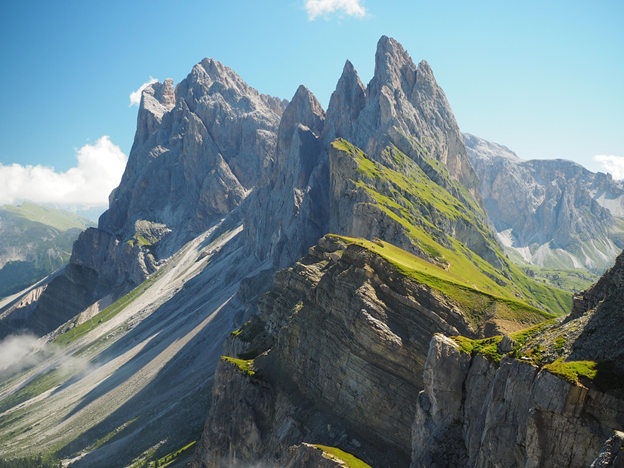
Puez-Geisler nature park in the Dolomites. Dmitry Djouce. CC BY 2.0

The mountain range located in northern Italy has 18 major peaks and uniquely diverse mountain landscapes. The Dolomites have sharp peaks in varying shapes, along with alpine meadows and valleys that have drawn hikers for years. Mountain huts, also known as rifugios, are placed throughout the Italian mountain range, all within a day’s hike of the next hut. The trek to visit each hut is a total of 75 miles, and typically takes hikers ten days to complete. The huts are stocked with food, and offer basic bedding for travelers. While not every rifugio offers places for hikers to stay overnight, many only serve food, so travelers can stop for lunch before continuing to the next hut. The huts allow hikers to do multiple day-treks without having to pack much. All they will need is personal items and sleeping bag linings. The rifugios are open starting in June and often draw travelers of varying hiking experience.

The Dolomites first started attracting hikers during the ‘golden age of mountaineering’ in the late 19th century. Many mountaineers who first summited the peaks wrote early travel guides for the region, drawing more explorers. Then, in World War One, the Dolomites became the front line for the Italian and Austro-Hungarian armies to pass through. As a result, there are still visible remnants of the war, one being an open-air museum of Mt. Lagazuoi. The ‘castle of rock’ has complex systems of tunnels dug into the mountainside during the war. The tunnels are open for people to walk through and learn more about World War One’s impact on the region. 

Additionally,a museum is dedicated to World War One on the range’s highest peak, Marmolada. The summit stands at over 10,000 feet, making the museum the highest in Europe. The locals of the region often speak Italian, German and Ladin, a Rhaeto-Romaniclanguage that is recognized as an official language of the region. Roughly 30,000 people speak Ladin, and there are considerable efforts to preserve the region’s language and the culture.


Dana Flynn

Dana is a recent graduate from Tufts University with a degree in English. While at Tufts she enjoyed working on a campus literary magazine and reading as much as possible. Originally from the Pacific Northwest, she loves to explore and learn new things.

Volcano Boarding in Nicaragua

Looking for an adrenaline rush? Slide down the side of an active volcano at up to 60 miles per hour during your stay in Nicaragua.

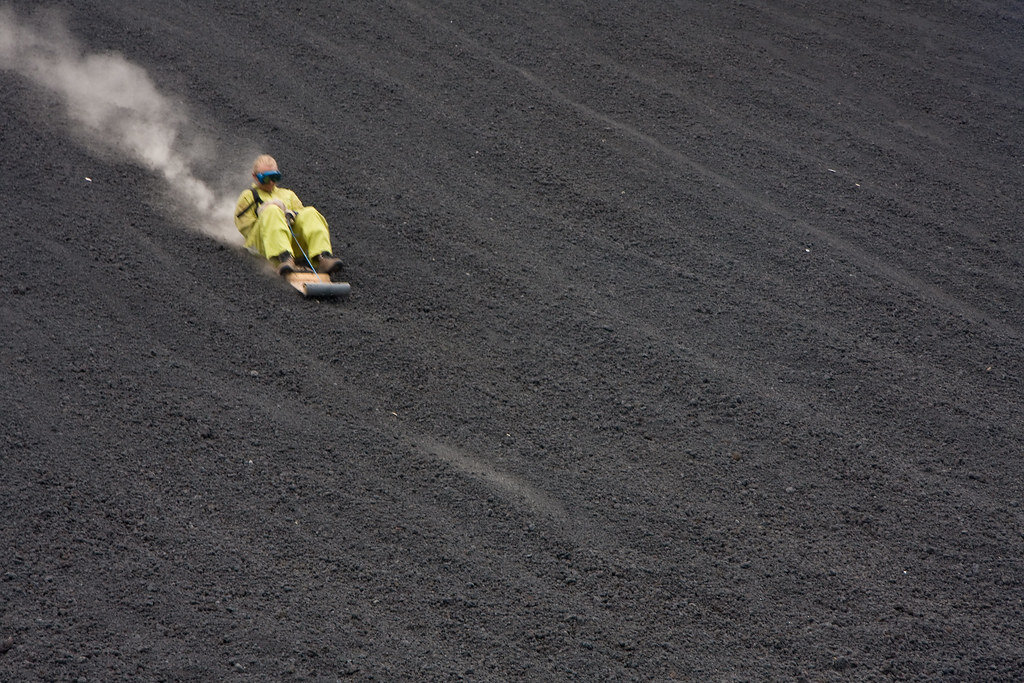
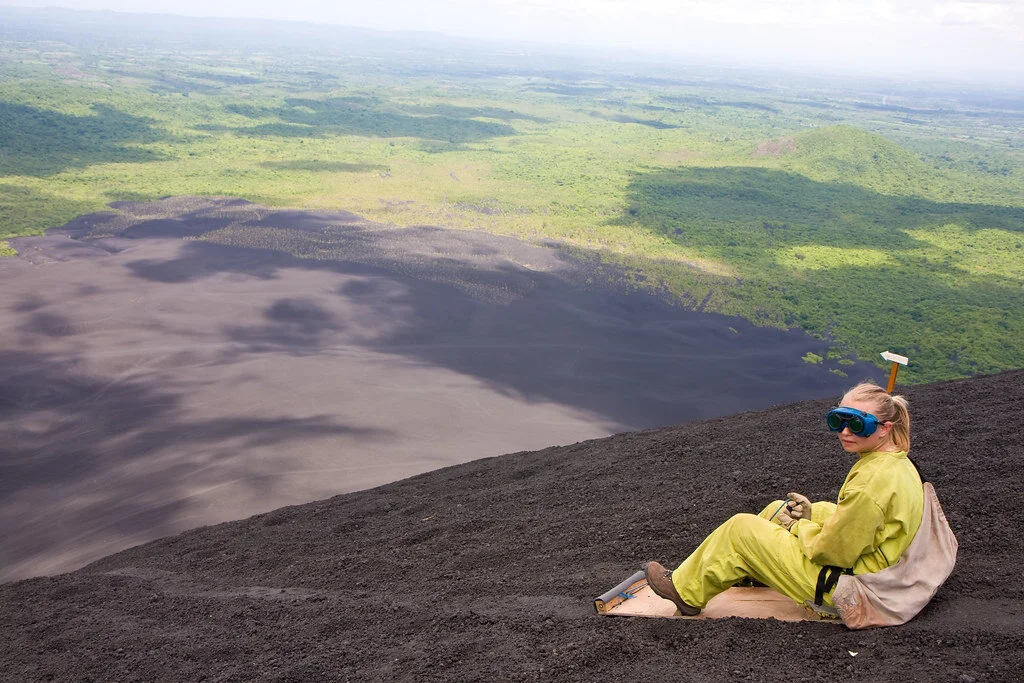
Volcano boarding on Cerro Negro, Nicaragua. Garrett Ziegler. CC BY-NC-ND 2.0.

Bigfoot Hostel in Leon, Nicaragua is one of the only places in the world where you can go volcano boarding. According to their website, volcano boarding is the “thrill of a lifetime.” The hostel’s original owner, Daryn Webb, created the extreme sport, where those brave enough to try it can speed up to 60 miles per hour down the side of an active volcano.

Webb and his crew tested various objects for sliding down the volcano, and after some trial and error, they created a sit-down toboggan made of metal and plywood. The hostel offers daily tours beginning at 9 a.m., with prices at $25 per person. Tours return at 3 p.m.

The Cerro Negro volcano is the youngest volcano in Central America, and is also one of the most active volcanoes in Nicaragua, erupting nearly every 20 years.

Bigfoot Hostel has sent over 20,000 people down Cerro Negro slope at up to  62 miles per hour, and it is known for attracting many sports enthusiats  and adrenaline junkies. One of the most famous people to attempt the extreme sport was Eric Barone, who rode down the volcano on a bike at 107 miles per hour in 2002.

Volcano boarding on Cerro Negro. Garrett Ziegler. CC BY-NC-ND 2.0.

It is possible to slide down the Cerro Negro because the volcano is made of small grain-like volcanic rocks, which came from the crater. In addition, there is almost always a very strong wind hitting the volcano, so it’s the perfect surface for boarding.

Those who have visited before say that they could feel the heat radiating from the volcano and could even cook their meals in a hole dug out in the volcano.

All visitors must wear closed toe shoes and comfortable clothing. Those who have boarded down the volcano before recommend wearing hiking boots (since it takes about 45 minutes to reach the summit) and a multipurpose head wrap to cover your nose and mouth while boarding. Also, take a large water bottle and a GoPro if you want to record the experience.

The hostel offers dorm-style rooms, with rooms with fans at $6 and rooms with air conditioning at $10. There are also private rooms with double, triple, or quadruple beds.


Isabelle Durso

Isabelle is an undergraduate student at Boston University currently on campus in Boston. She is double majoring in Journalism and Film & Television, and she is interested in being a travel writer and writing human-interest stories around the world. Isabelle loves to explore and experience new cultures, and she hopes to share other people's stories through her writing. In the future, she intends to keep writing journalistic articles as well as creative screenplays.

6 Interesting Facts about the Egyptian Pyramids

There is still so much we don’t know about the history and structure of the Egyptian pyramids. Here are six things that you may not have known about the pyramids and ancient Egypt.

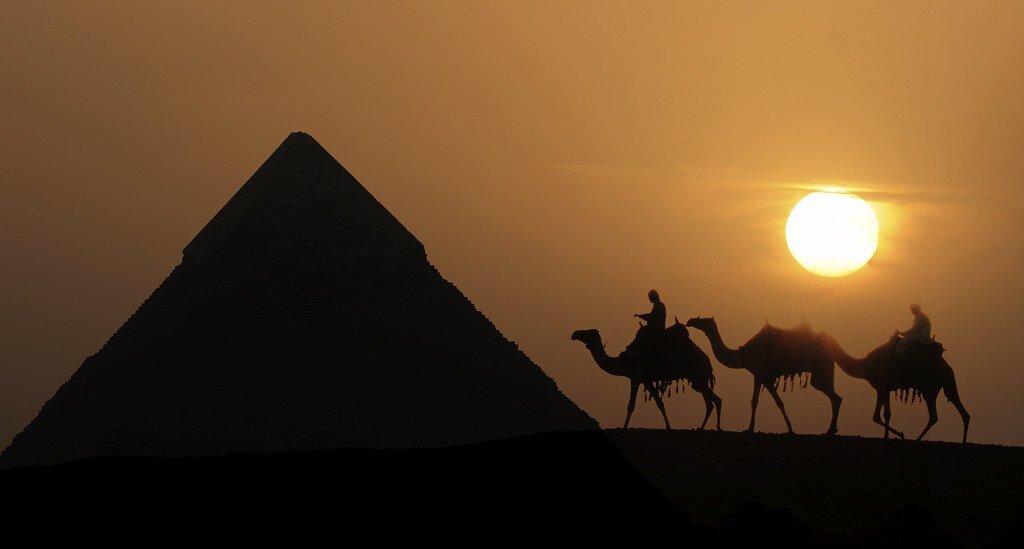
Egyptian pyramids in the sunset. Club Med UK. CC BY-NC 2.0.

The Egyptian pyramids are famous for their buried mummies and treasures, but there are still many secrets waiting to be uncovered about their history. Take a deep look into the ancient pyramids’ past with these six interesting facts.

The seven wonders of the world, Egyptian pyramids. Boston Public Library. CC BY 2.0.

1. Once upon a time, they sparkled.

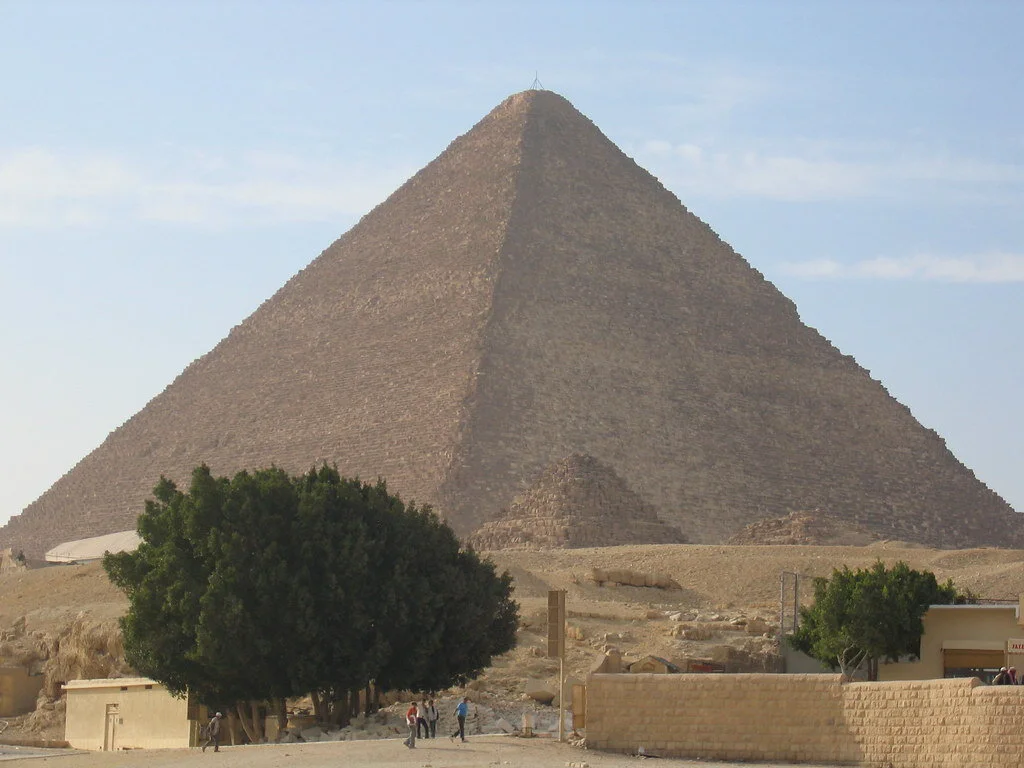
According to research on ancient texts and found evidence, it is thought that the Great Pyramid of Giza used to shine like glass and sparkle in the sunlight. Ancient Egyptians even called the pyramid “Ikhet,” which translates to “glorious light.” This is mainly because the pyramid was originally covered in polished limestone which reflected light like a mirror and made the pyramids visible from anywhere nearby. What is even more interesting is that the speed of light—299,792,458 m/s—are also the exact coordinates of the Great Pyramid of Giza, which is at 29.9792 degrees north, 31.1342 degrees east. Spooky? Definitely.

Entering the pyramid. Trey Ratcliff. CC BY-NC-SA 2.0.

2. Many of them were robbed.

A lot of the unknown history of the pyramids can be blamed on tomb robbers. Tomb robbing was a serious problem in ancient Egypt because robbers targeted the tombs for looting—even Kings’ tombs were broken into. It was the Egyptian belief that everything buried with you was taken into the afterlife, so Kings and Queens were buried with unimaginable amounts of riches. It was also very common for people to steal from their ancestors’ tombs —some even dumped the body and stole the sarcophagus. Egypt was a cashless society until the Persians came in 525 BCE, so those who stole from the tombs would have had to trade their stolen goods to higher, corrupt officials. Those caught would be executed for the offense.

The Great Pyramid of Cheops. Boston Public Library. CC BY 2.0.

3. We still don’t know how they were built.

Although the pyramids are over 4,000 years old, professionals still don’t understand how the ancient Egyptians managed to build the pyramids without advanced technology. The most accepted theory is that they used ramps to bring materials to the top, which has been proven by a recent discovery. Researchers in Egypt discovered a 4,500-year-old ramp used to haul alabaster stones out of a quarry. The ramp system dates back to Pharaoh Khufu, who built the Great Pyramid of Giza. However, the way in which the ancient Egyptians built the pyramids is still a mystery because the pyramids were not made of alabaster, which is what the discovered ramp helped to move.

Khufu’s Great Pyramid. Bernt Rostad. CC BY 2.0.

4. There is a secret chamber in the Great Pyramid of Giza (Khufu’s Pyramid).

Weighing in at 5,750,000 tons, the Great Pyramid is simply a feat of architecture. To add further to the mystery, a previously unidentified chamber in the Great Pyramid was discovered in 2017 when physicists used the by-products of cosmic rays to reveal an at least 100-foot long void. The mysterious space’s dimensions are similar to the pyramid’s Grand Gallery, which is the corridor that leads to the burial chamber of Pharaoh Khufu. What lies within the space is still unknown, as well as its purpose. Scientists hope to find out more about this newly discovered area and what it was used for.

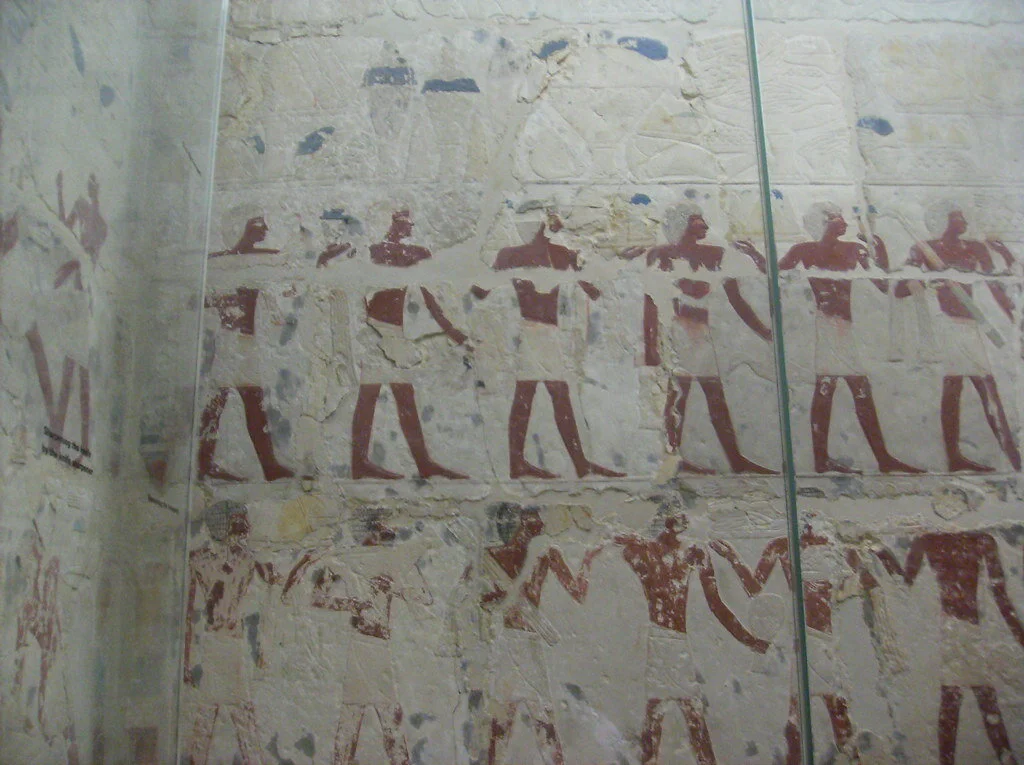
Tomb of Perneb, carving of offering bearers. Peter Roan. CC BY-NC 2.0.

5. It was tradition for the living to share food with the dead.

Ancient Egyptians believed that tombs were eternal homes for the mummified bodies and the ka spirits that lived within them. Each tomb had a tomb-chapel where families and priests could visit the deceased and leave offerings for the ka, while a hidden burial chamber protected the mummified bodies from potential harm. Visitors offered food and drink to the dead daily, and once the offerings were consumed by the ka, the living were free to eat and drink their offerings. The Beautiful Feast of the Valley was an annual festival of death and renewal where families spent the night in the tomb with their ancestors and feasted with them in celebration of their lives.

A statue ofNefertiti in the Altes Museum in Berlin. George M. Groutas. CC BY 2.0.

6. Egyptian women and men had equal rights.

In ancient Egyptian times, men and women of the same social class were treated as equals in the eyes of the law. Women could sell, own, earn, buy and inherit property. If widowed or divorced, women could raise their own children. Women could also bring cases before a court. Overall, women could legally act on their own and were responsible for their own actions. Although everyone in ancient Egypt was expected to marry, wives still had an important, equal and independent role in their marriage. 


Isabelle Durso

Isabelle is an undergraduate student at Boston University currently on campus in Boston. She is double majoring in Journalism and Film & Television, and she is interested in being a travel writer and writing human-interest stories around the world. Isabelle loves to explore and experience new cultures, and she hopes to share other people's stories through her writing. In the future, she intends to keep writing journalistic articles as well as creative screenplays.