Khoomei: Mongolian Throat Singing As Art and Action

Khoomei, otherwise known as Mongolian throat singing, enjoys a wide international audience thanks to inventive local artists looking for ways to share and save their culture.
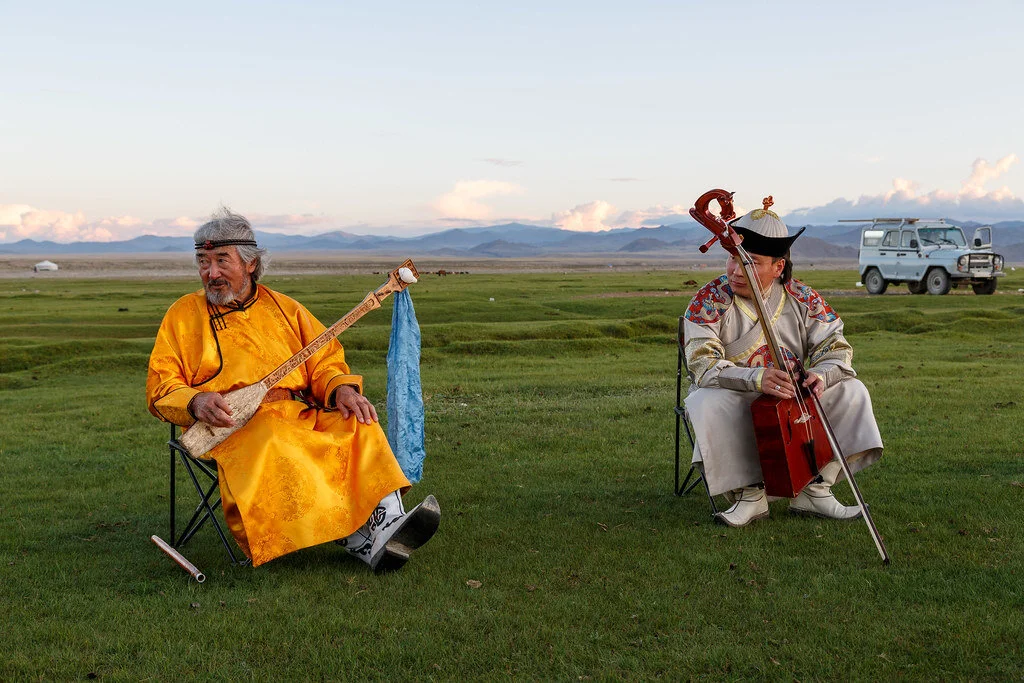
Mongolian throat singers holding a horsehead fiddle. Alan Fieldus. CC BY-NC 2.0. 

Across the steppes of Central Asia, the almost eerie but melodic droning of “khoomei” still echoes. Khoomei, more commonly known as throat singing, is the practice in which a singer can produce two or more notes simultaneously. By utilizing the jaw and larynx, as well as precise lip movements, the singer can produce unique harmonies using only their body.

Khoomei, which translates to “throat” in Mongolian, has origins with the Tuva people, an Indigenous group found in parts of Siberia, Mongolia and China. A 1999 Scientific American article traced back both the techniques of khoomei and its rich history. According to Tuvan legends, throat singing was the first way humans learned to sing. Throat singing was also designed to mimic the natural sounds of the surrounding wind and water. Coupled with their animistic beliefs, the Tuvan people believed that throat singing also served a spiritual purpose. Khoomei eventually proliferated and evolved among the Turko-Mongol tribes.

During the first half of the 20th century, however, throat singing was restricted. Communist governments considered the art as “backward” due to its heavy ritual and ethnic legacies. It was not until the 1980s that throat singing was restored to its former glory and preserved as a national art form. In 2010, UNESCO inscribed khoomei on the Representative List of the Intangible Cultural Heritage of Humanity. This honor was conferred to officially acknowledge the unique oral histories and philosophies that khoomei harbors. Despite its difficult history and almost seemingly jubilant ascent, khoomei and its singers are still under threat.
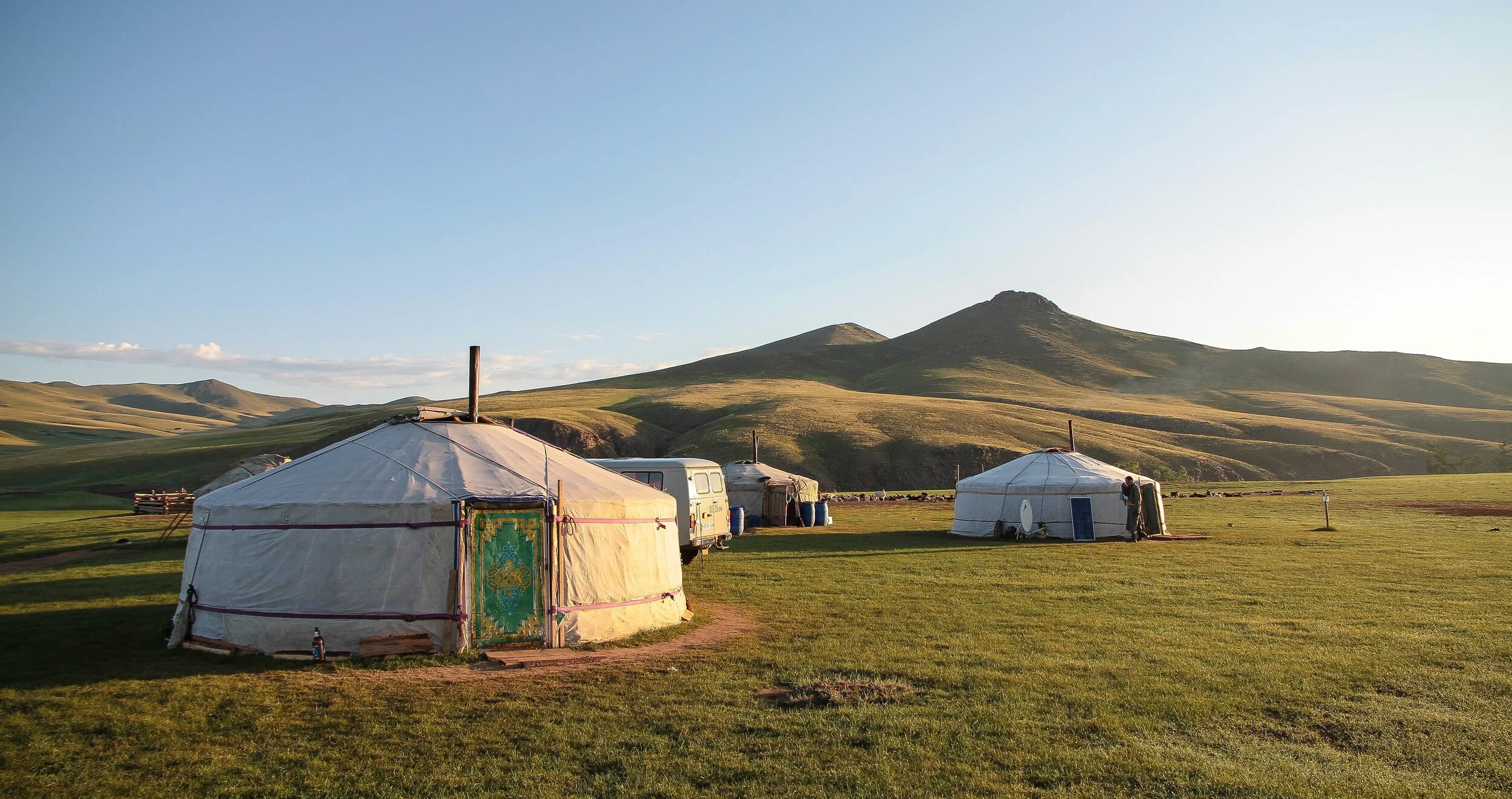
Mongolia’s wide-open steppes made it the ideal sound room for practicing and perfecting khoomei. Vince Gx. Unsplash.

Mongolia is a country that is landlocked between two geopolitical giants, China and Russia. The government has feared that both countries’ economic and diplomatic influences will overwhelm its own affairs. In 2010, Mongolian throat singers sought to defend the tradition against China. UNESCO mistakenly listed China as the sole country of throat singers, a misprint that angered the Mongolian community. 

In 2013, China announced its ambitious Belt and Road Initiative, a plan meant to enhance infrastructure connectivity and deepen financial cooperation, among several other aims. While China poured billions of dollars into creating trade routes and industries, the Mongolian people remain unappeased.

With these economic gains also came renewed cultural conflicts. When visiting the Mongolian capital of Ulaanbaatar this past September, Chinese Foreign Minister Wang Yi was greeted by protesters who accused Beijing of suppressing the Mongolian language in China’s Inner Mongolia autonomous region. The former Mongolian president Tsakhiagiin Elbegdorj condemned the Chinese government’s policy that replaced Mongolian with Mandarin in school curriculums. Elbegdorj condemned the action as “cultural genocide” and urged Mongolians to persist in preserving their culture at home and abroad. A part of this resistance also includes using khoomei as a way to reclaim and reassert identity.

Enter The HU. Through music, this heavy metal band uses its Mongolian roots as a way to share the country’s  culture with the world. Its most popular pieces, “Wolf Totem” and “Yuve Yuve Yu,” have garnered nearly 111 million YouTube views combined. The HU has charted millions of listeners on Spotify and even covered songs for the video game, Star Wars Jedi: Fallen Order. In an interview, The HU shared that its music stays true to form, mimicking natural sounds in certain tracks. The members hope that they can continue to be cultural ambassadors for their country and its culture. In 2019, The HU was honored with the Order of Genghis Khan, a presidential award recognizing special merits to society.

While music may not solve political conflicts, its influence and reach has given many Mongolians something to be proud of. Khoomei especially has proven to be both a restricted and a revolutionary form of art. As this contested expression continues to endure and flourish, it is clear that the people need their music as much as a song requires a voice.



Rhiannon Koh

Rhiannon earned her B.A. in Urban Studies & Planning from UC San Diego. Her honors thesis was a speculative fiction piece exploring the aspects of surveillance technology, climate change, and the future of urbanized humanity. She is committed to expanding the stories we tell.
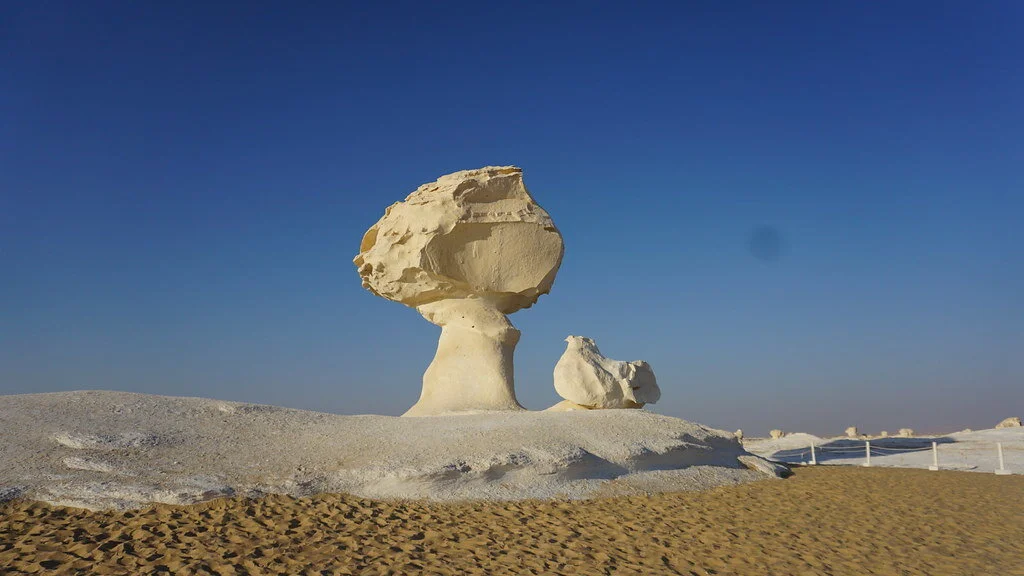
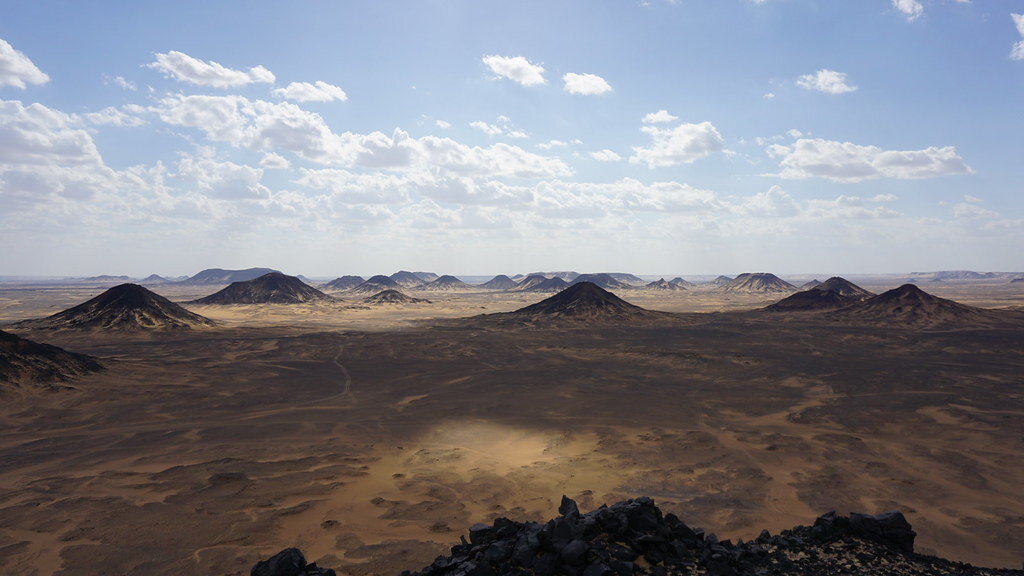
8 Surprisingly Vibrant Desert Destinations

Deserts are much more than the beating sun and rolling sand dunes we often picture. These eight destinations showcase the incredible natural beauty of the desert, from salt flats and chalk formations to mountains and glaciers. 

Though deserts are often thought of as just hot, dry expanses of sand, they come in a variety of climates and landscapes and hold some of the world’s most fascinating natural formations. Deserts “are areas that receive very little precipitation,” making them arid but not necessarily hot and sandy. Many deserts are mountainous, and others are large expanses of rock or salt flats. Though their arid environment makes water in deserts scarce, they are far from lifeless. Plants and animals, including humans, have adapted to desert life. One-sixth of the Earth’s population lives in deserts, which are found on every continent. 

These eight desert destinations range from freezing to boiling in temperature and are all unique, with their own attractions and plant and animal life. Each of these stunning deserts is worth a visit, and they may change your opinion of the desert as a stark, lonely place to one of beautiful landscapes blooming with culture, history and life. 

White and Black Deserts, Egypt 

Located just a few hours from Cairo, Egypt’s White and Black deserts are two stunning and underappreciated visitor attractions. The White Desert is located in the Farafra Depression, a section of Egypt’s Western Desert, and boasts some of the most unique geological landscapes in the country. Incredible wind-carved white chalk formations rise from the sand in the shapes of towering mushrooms and pebbles, giving the White Desert its name. The White Desert stretches over 30 miles, and the most visited area is the southern portion closest to Farafra. To the north of the White Desert is the Black Desert, where volcanic mountains have eroded to coat the sand dunes with a layer of black powder and rocks. In the Black Desert, visitors can climb up English Mountain and look out over the landscape. The Egyptian Tourism Authority recommends booking a tour to explore the deserts in depth, and travelers can even stay in the White Desert overnight. 

Joshua Tree National Park, California 

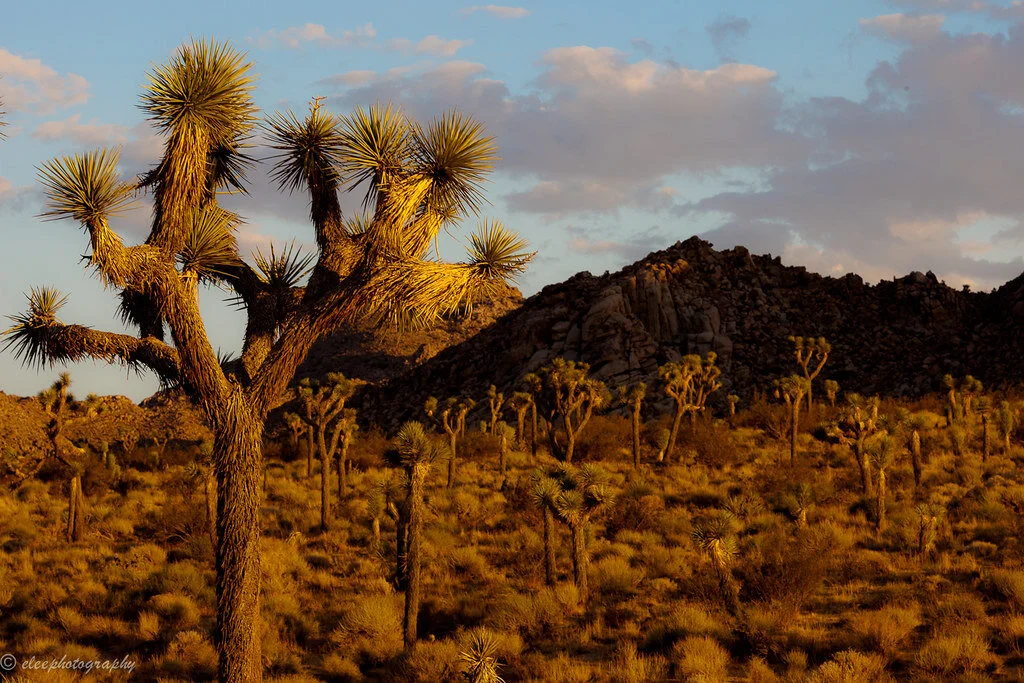
Joshua Tree National Park in Southern California is where two different desert ecosystems meet. Parts of the Mojave and the Colorado deserts are both found in Joshua Tree, along with a distinctive variety of plant and animal life. The Joshua tree, the park’s namesake, is the most identifiable of the plants, with its twisted, spindly branches and spiky clusters of greenery. Some of the park’s most popular attractions are Skull Rock; Keys View, a lookout with views of the Coachella Valley and the San Andreas Fault; and Cottonwood Spring Oasis, which was a water stop for prospectors and miners in the late 1800s. Joshua Tree National Park has roughly 300 miles of hiking trails for visitors to explore. The park is open 24 hours and can be visited at any time of the year, but visitation rises during the fall due to the cool weather and is at its height during the wildflower bloom in the spring. 

Atacama Desert, Chile 

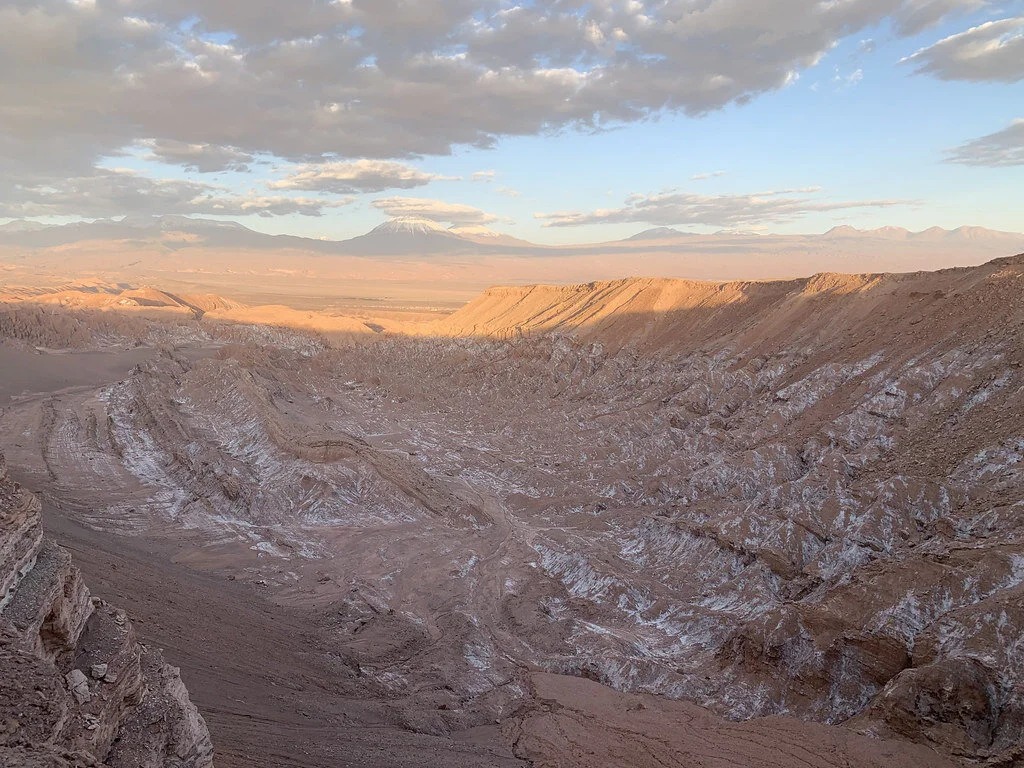
Trips to the Atacama Desert in northern Chile are likened to visiting Mars on Earth. The dry, rocky terrain is so similar to that of Mars that NASA tests its Mars-bound rovers here. The Atacama Desert, the driest desert on Earth, spans over 600 miles between the Andes and the Chilean Coastal Range. Some weather stations set up in the Atacama have never seen rain. Despite its dryness, the desert is home to thousands of people, as well as plants and animals. People have been living in the Atacama Desert for centuries; mummies were discovered in the Atacama dating back to 7020 B.C., even before the oldest known Egyptian mummies. Attractions in the Atacama Desert include El Tatio geyser field, the Chaxa Lagoon, the Atacama salt flats, and sand dunes over 300 feet tall. The Atacama Desert is also said to have some of the clearest night skies in the world, making it perfect for stargazing. It is best to avoid a trip to the Atacama during the summer months, as the high temperatures make for a sweltering visit. 

Salar de Uyuni, Bolivia 

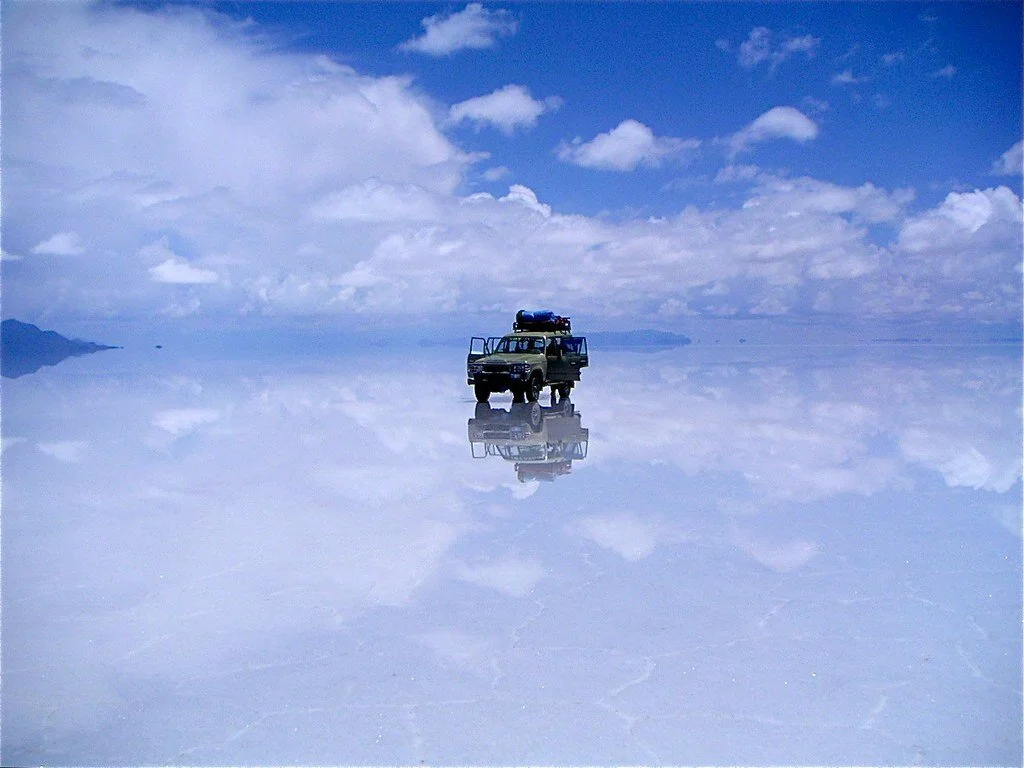
The world’s largest salt flat, Salar de Uyuni, covers 3,900 square miles in the southwestern corner of Bolivia. Salar de Uyuni is so large it can be seen from space and holds an estimated 10 billion tons of salt. Beneath the salt flat is approximately 70% of the world’s lithium reserves. This lithium is carefully extracted and used for powering laptops, electric cars and smartphones. Salar de Uyuni is surrounded by scenic lakes, geysers and rock formations, and is one of the world’s most beautiful and untouched natural landscapes. Tours of Salar de Uyuni take visitors to the Valley of Rocks; Morning Sun, which is home to geysers and mud pots; Colchani, a salt-processing village; and the Polques Hot Springs, where travelers can soak in warm thermal water. The landscape of Salar de Uyuni changes based on the seasons, so travelers should plan their visits around what they want to see. From July to October, access to all sites of Salar de Uyuni is unrestricted, but during the rainy season from December to April, visitors may be able to witness the salt flat’s famous mirror effect, where a thin layer of water over the salt transforms the land into the world’s largest mirror. 

Tanque Verde Ranch, Arizona 

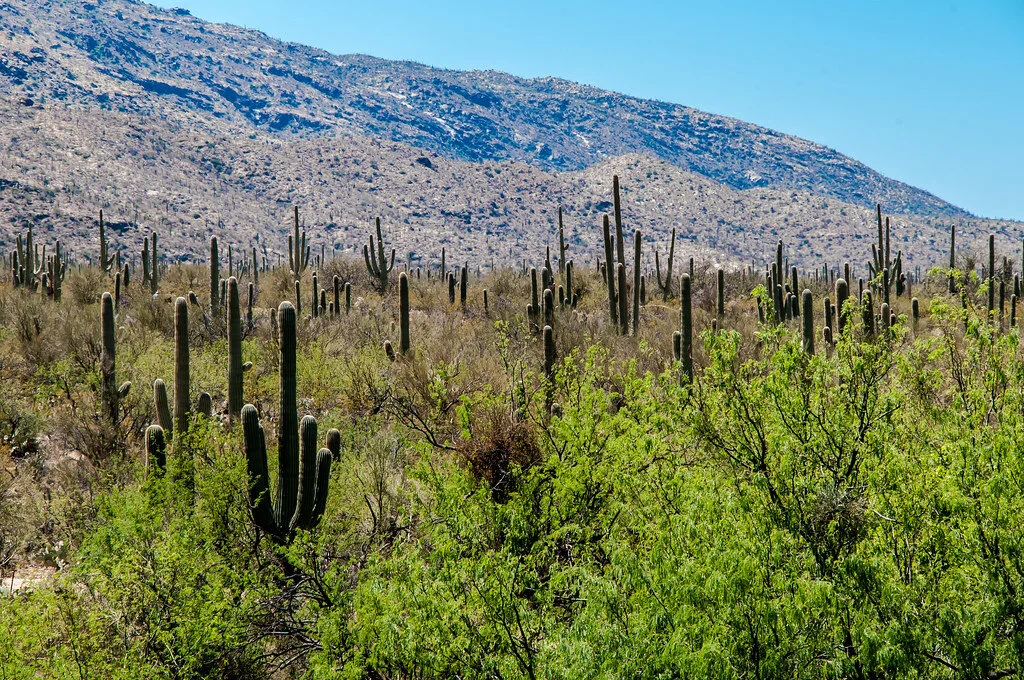
Located just outside of Tucson, Arizona, near Saguaro National Park and the Rincon Mountains, Tanque Verde Ranch gives visitors “the ultimate dude ranch experience.” The ranch sprawls over 640 acres and stocks over 150 horses. Visitors to the ranch can get a real-life cowboy experience, including horseback riding and team penning. Riders of all experience levels will find something to do at Tanque Verde, where visitors can take beginning, intermediate and advanced lessons and then go on a sunrise or sunset trail ride through the Arizona desert. Tanque Verde Ranch offers kids’ riding activities too, as well as activities for non-riders such as yoga, mountain biking, fishing, swimming and pickleball. Visitors should pack long pants and closed-toe shoes if they plan to ride, and casual wear is appropriate for all non-riding times. Trips to the ranch usually last around four days, and visitors stay on the property. Tanque Verde Ranch is open to visitors year-round. 

Gobi Desert, Mongolia 

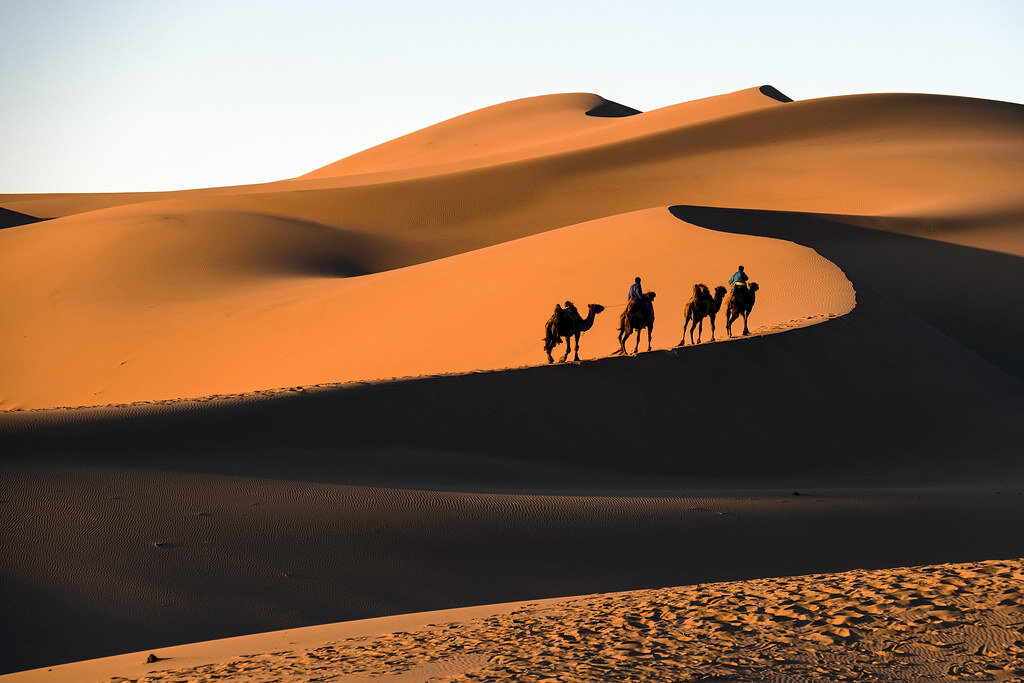
Spanning most of southern Mongolia and its border with China, the Gobi Desert contains stunning views and years of history. The region was once populated by dinosaurs, and some of the best-preserved fossils in the world were found near the Flaming Cliffs of Bayanzag. The Gobi Desert showcases a variety of natural beauty, from towering sand dunes to incredible white granite formations. Dry desert plants that come to life after rain make the Gobi unique, as well as ”saxaul forests” made up of sand-colored shrubbery. Visitors to the Gobi Desert should explore the Khongor Sand Dunes, an area that offers rocky and mountainous terrain in the south, dry and barren terrain in the center, and several oases in the north. Other major attractions are the Flaming Cliffs of Bayanzag, where red clay seems to glow in the sun, and the Gobi Waterfall, which looks like a city in ruins but is a completely natural formation. The best time to visit the Gobi Desert is either in late spring or in autumn, when the weather is neither too hot nor too cold.

Nk’Mip Desert, Canada 

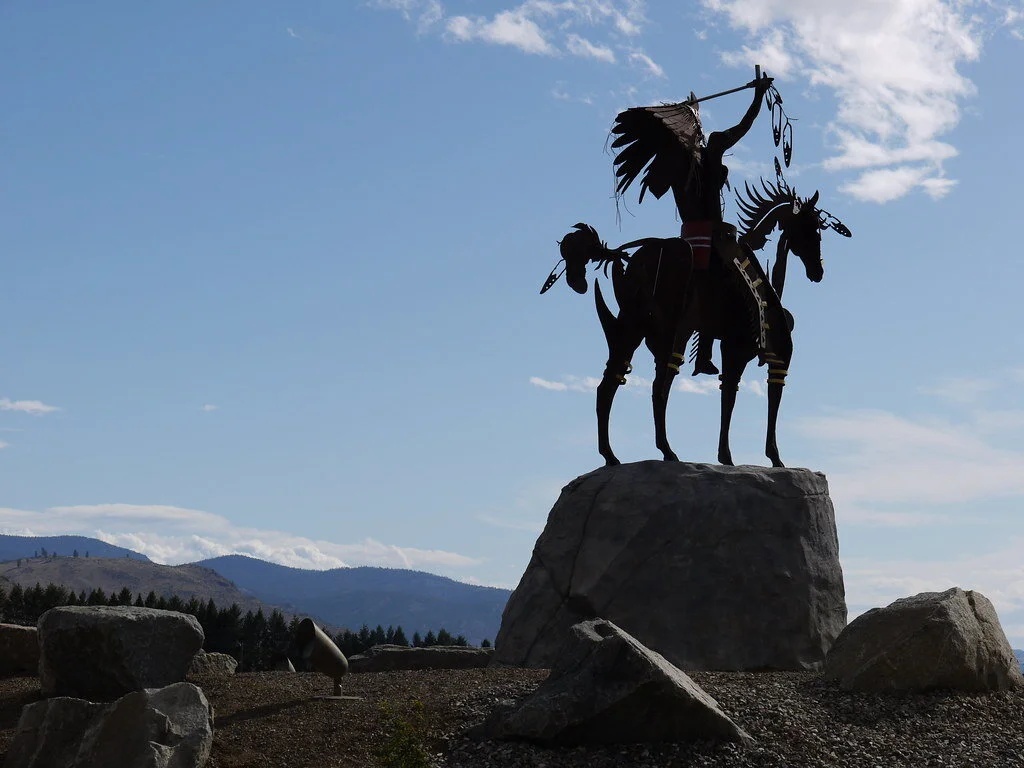
Also called the Okanagan Desert, Canada’s Nk’Mip Desert contains the most endangered landscape in Canada. Located in Osoyoos in British Columbia, the Nk’Mip Desert Cultural Center is a 1,600-acre area of the Okanagan Desert managed by the Osoyoos Indian Band, and is the only fully intact area of desert in Canada. The desert is situated in a semiarid microclimate. The cultural center was designed to be eco-friendly and resembles the traditional winter homes of the Osoyoos Indian Band. Visitors can explore the desert on walking trails, which are surrounded by sage, prickly pear cactuses and antelope brush, as well as sculptures of desert creatures and native peoples by Smoker Marchand. The trails take visitors through a traditional Osoyoos village, where they will find a traditional sweat lodge and pit house. Many visitors prefer to explore Nk’Mip Desert in the summer due to the region’s relatively cold winters. 

Patagonian Desert, Argentina and Chile

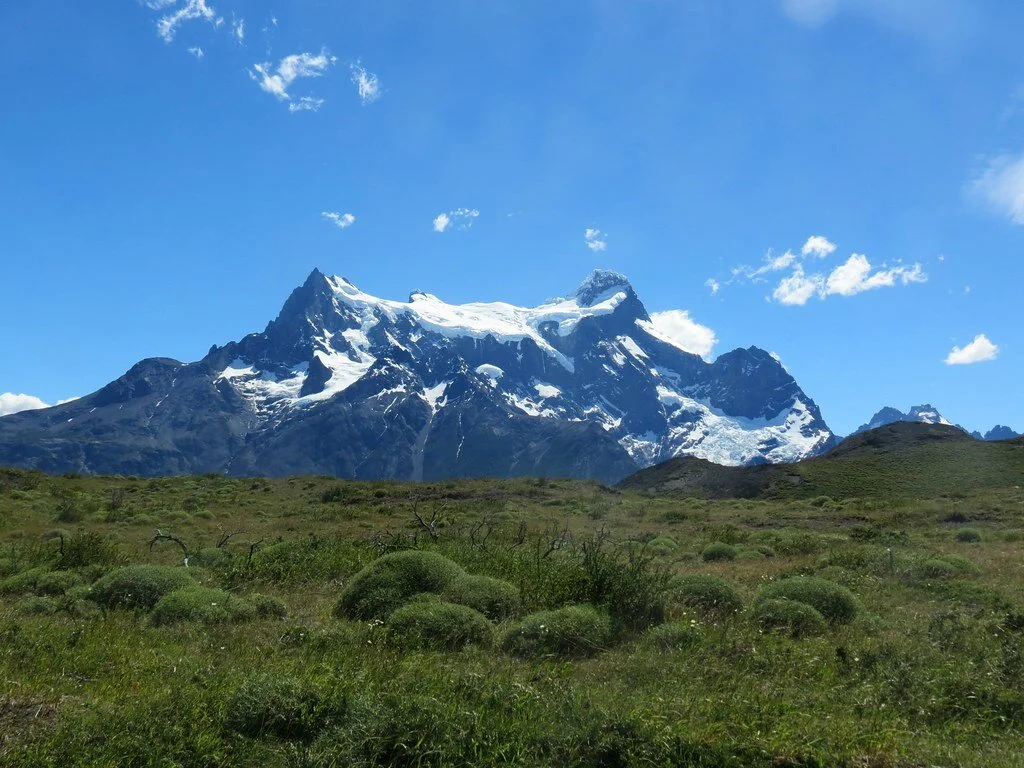
The Patagonian Desert is South America’s largest desert and the seventh-largest in the world. It covers parts of southern Argentina and Chile, and is a cold desert, sometimes reaching a high temperature of 68 degrees Fahrenheit. The Patagonian Desert is home to two national parks: Torres del Paine National Park in Chile and Los Glaciares National Park in Argentina. Torres del Paine and Los Glaciares aren’t typical desert environments, but since the Patagonian is a cold desert, its landscape is different from that of most deserts. Before the Andes were formed, the Patagonian Desert was likely covered by temperate forests, so the region containing the desert, Patagonia, is extremely ecologically and geographically diverse. Torres del Paine National Park is known for its towering granite structures, which were shaped by glaciers. Los Glaciares is home to large glaciers, as well as scenic mountains, lakes and woods. The Cueva de las Manos, or “Cave of Hands,” is a series of caves in Argentinian Patagonia which are filled with paintings of hands dating back to 700 A.D., likely made by ancestors of the Tehuelche people. Tehuelche people live in Patagonia today, some still following a nomadic lifestyle. The best time to visit Patagonia is generally said to be in the summer (December to February), when the days are warm and the fauna is in full bloom, but there are merits to exploring the area at all times of year. 


Rachel Lynch

Rachel is a student at Sarah Lawrence College in Bronxville, NY currently taking a semester off. She plans to study Writing and Child Development. Rachel loves to travel and is inspired by the places she’s been and everywhere she wants to go. She hopes to educate people on social justice issues and the history and culture of travel destinations through her writing. 

Brilliant Bushes: The History of Topiary and Where to Find Them

It seems that grand landscapes are incomplete without some unique plant life to adorn the surrounding grounds. The untraditional category of gardening known as topiary has become famous over thousands of years for its intricate, and often grandiose, art style. 

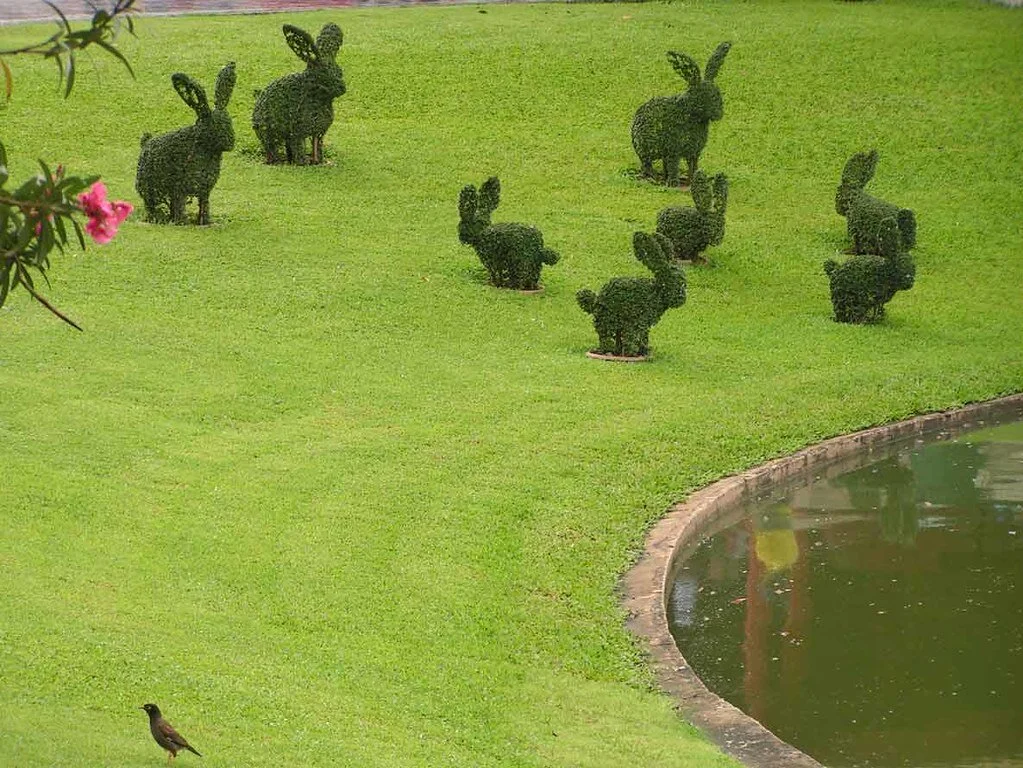
Rabbit topiary in Bangkok. Arthur Chapman. CC BY-NC-SA 2.0.

The Origins of Topiary

The exact year that topiary was invented remains unknown, but it is generally believed that it began around the first century with the Greeks. Topiary, the art of clipping plants into decorative shapes, was believed to be very complementary to the elaborate form of Greek architecture, so topiary found a good foundation in Greek culture. The joy of topiary eventually spread to nearby countries, with Roman Emperor Caesar Augustus being the next famous face to take part in the art. The proliferation of French monasteries later helped to push topiary across Europe. 

As hundreds of years passed, many more nations weaved topiary into the foundation of their decorative landscapes. The art itself also grew incredibly precise and complex. The French primarily created larger and less intricate designs to line their gardens, while the Dutch used mathematics to master finely clipped designs. 

Interest in topiary has wavered over the last few hundred years, but love for the art form has never disappeared. In the 1800s, the introduction of new plants through trade with Asia caused an explosion in topiary interest, but this interest then faded again after World War I. 

Two Top Topiaries 

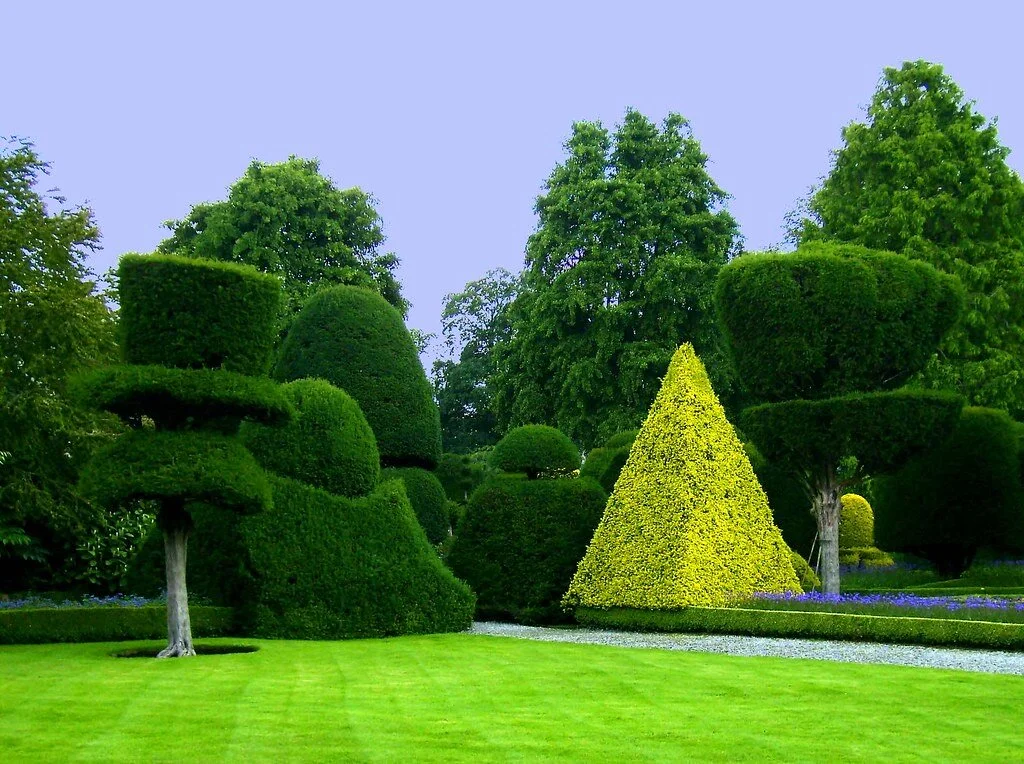
Levens Hall Topiary Garden. Jenny Mackness. CC BY-NC 2.0. 

For topiary enthusiasts and clueless travelers alike, Levens Hall Topiary Garden guarantees a moment of awe. Sitting in the Lake District of northwest England, this garden is the oldest topiary garden in the world; some pieces are over 300 years old. It was started by the gardener of King James II and originally housed a simpler layout, but faced a fairly dramatic change about a century after it was made. When interest in topiary experienced one of its many dips, the garden was redesigned in the early 1800s to display Victorian shapes.

Gardens of Marqueyssac. Andy Lawson. CC BY 2.0. 

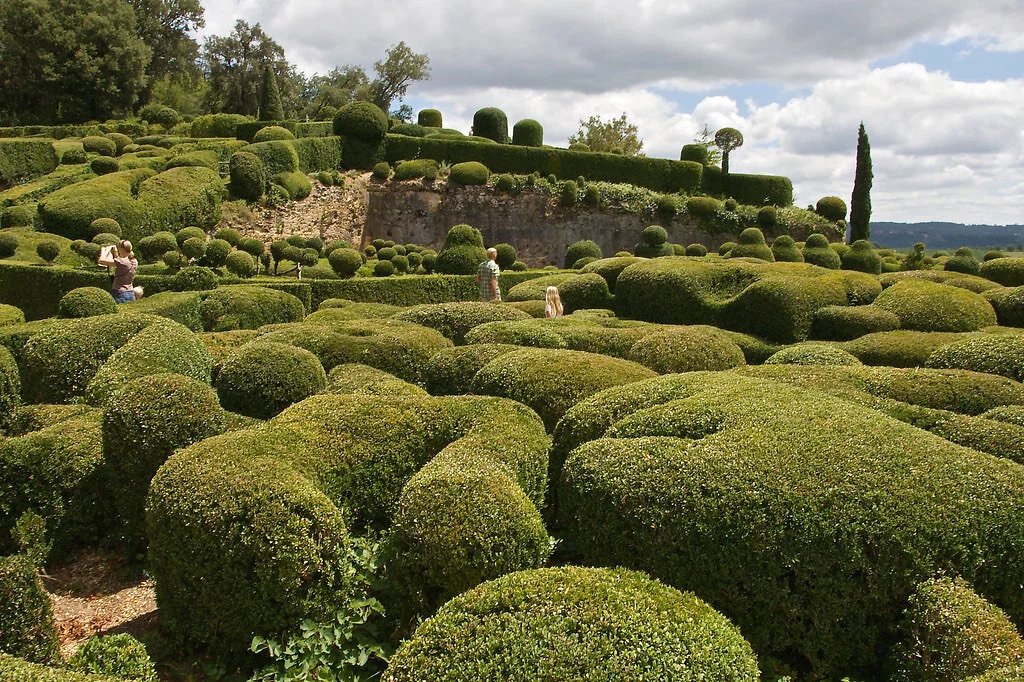
The French are famous for their clipped hedge style, but the gardens of Marqueyssac have evolved this style immensely. The garden is located by the Dordogne River, which creates an incredible view of the endless countryside when seen from the elevated areas of the garden. The hedges display a traditional box clipping style, but the swirling pattern makes them appear weaved together. The masterfully uniform design creates an illusion of an endless sea of hedge; this work is credited to a student of Andre Le Notre, who designed the gardens of Versailles. 

Although overlooked by many mainstream artists, the form of topiary is not to be underestimated. For countless years, topiary has become an elaborate foundation for landscape and architecture. It has embedded its way into cultures across the world, only further enabling artists to express their limitless imagination. 


Ella Nguyen

Ella is an undergraduate student at Vassar College pursuing a degree in Hispanic Studies. She wants to assist in the field of immigration law and hopes to utilize Spanish in her future projects. In her free time she enjoys cooking, writing poetry, and learning about cosmetics.

‘Malaysia’s Banksy’ Brings Art Lovers—and Overtourism—to Penang

Ernest Zacharevic is a Lithuanian-born artist who made his mark creating iconic street murals on the island of Penang in Malaysia. Despite good intentions, Zacharevic’s work prompted the rise of tourist attractions that lack the soul and authenticity that made Penang a UNESCO World Heritage Site in the first place. 

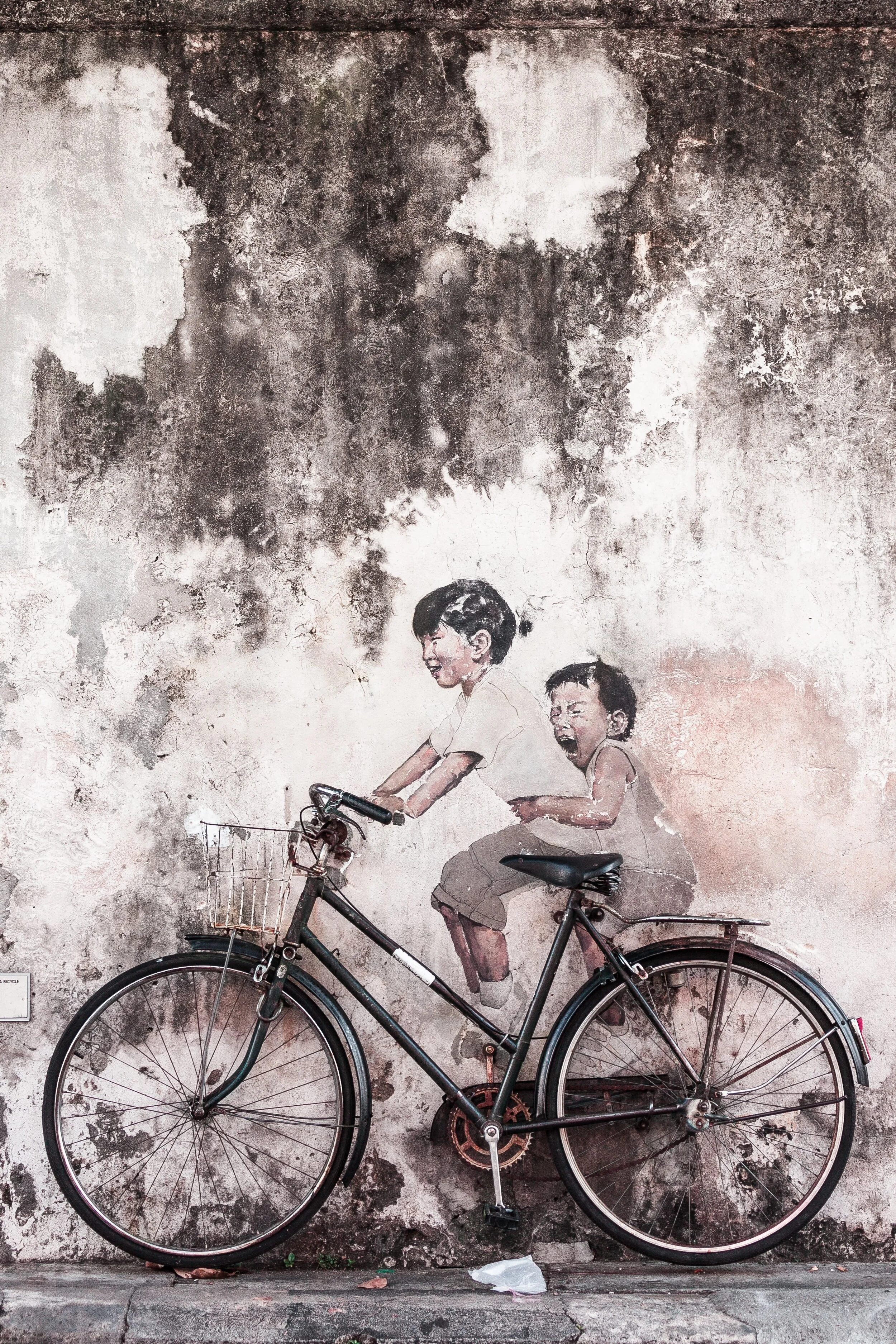
 The iconic “Little Children on a Bicycle” mural in Penang. Yaopey Yong. Unsplash. 

Penang’s historical capital, George Town, was officially inscribed as a UNESCO World Heritage Site in 2008. Since the 18th century, this Malaysian city has been a prolific hub of cultural and commercial exchange. Today, it remains a multicultural hot spot. George Town is also home to a unique layout of mixed architecture that also reflects the region’s history. From its colonial-style British office buildings to its rustic Chinese shophouses, George Town’s mismatched grid of alleyways and side streets bolsters the place’s almost stuck in time sentiment. To further enhance George Town and its diverse history, the George Town Festival was launched in 2010 as a platform for dance, theater and other regional artistic endeavors.

In the midst of this budding art movement, Lithuanian-born artist Ernest Zacharevic began to make his literal mark on the walls of George Town. As an experimentalist known by some as “Malaysia’s Banksy,” Zacharevic’s style revolves around ever-changing concepts, manifesting in his preference for outdoor art. Zacharevic’s primary interest lies in the relationship between art and the urban landscape. Consequently, he mainly flits between stencil, spray and other types of tools conducive to dynamic and public pieces.  

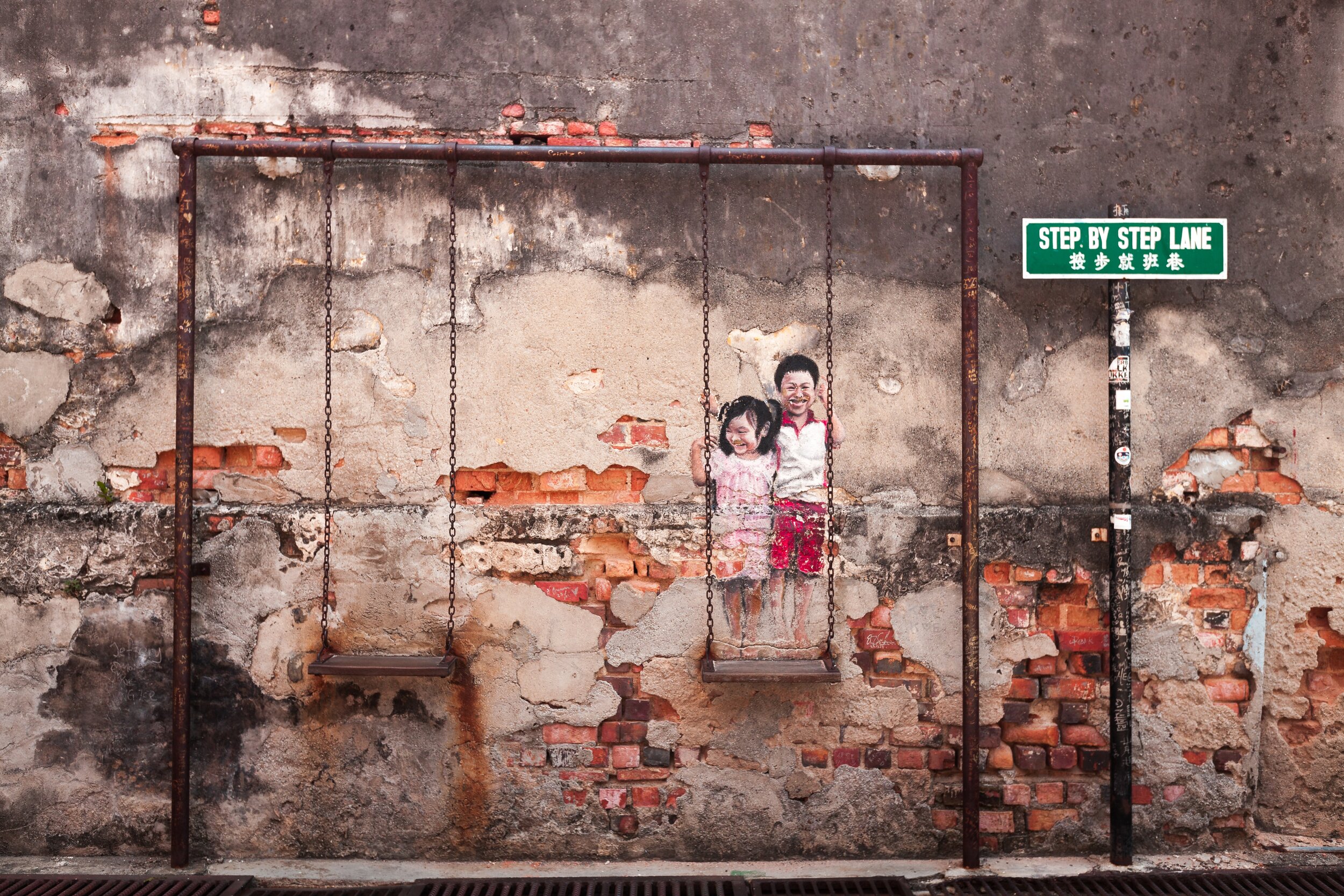
One of the more famous interactive pieces. Yaopey Yong. Unsplash. 

Although local pieces funded by Sculpture At Work also grace the walls of George Town, Zacharevic’s pieces are the main attraction thanks to the George Town Festival 2012 project “Mirrors George Town.” His iconic and sometimes interactive pieces like “Little Children on a Bicycle” and “Brother and Sister on a Swing” became hot-ticket items for both visitors and locals alike to experience. The open-air exhibitions became so popular that various travel blogs offered the best walking maps for viewing the murals.

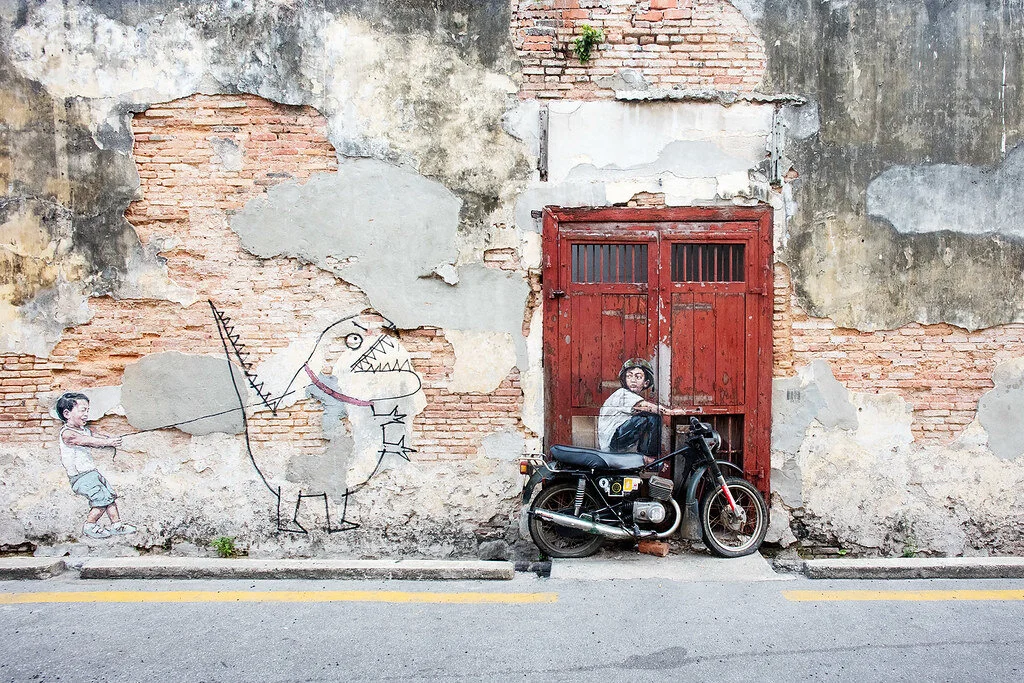
“The Little Boy with Pet Dinosaur” and “Boy on a Bike” murals side by side. Travelationship. CC BY-NC-ND 2.0. 

In 2013, Chairman of Penang Global Tourism Ooi Geok Ling felt that Ernest Zacharevic “captured the essence of Penang. I know he spent a lot of time here, soaking it all in when he was visiting. He could translate that into his murals.” Ling also believed that Zacharevic’s influence would also help to expand the reach of local artists and small galleries in the city. Indeed, most of Zacharevic’s pieces are reflective of the city and country’s diverse populace. Murals portray children cycling through the city, a painter attending to a pair of clogs, and even more modern scenes of phone booths and curious cats.  

Since the creation of these murals, Penang has experienced an influx of “Instagram tourists” and the subsequent boom of businesses that cater to them. The town’s soul, as the South China Morning Post wrote, has been “warped.” Before the worldwide lockdown, older buildings in George Town had begun renovating in a way that catered to foreign tastes. Cookie-cutter coffee shops, museums and art galleries began lining the centuries-old landscape, sapping away at the gritty authenticity of the once safely obscure town.

In response to this commercialization, Ernest Zacharevic made a statement on his Instagram in July 2019. He lamented, “Myself and many others blame my work for Armenian Street being a center of [the] tourist route in Penang.” He called the construction of Instagram-friendly places a “circus” and a threat to George Town’s status as a UNESCO World Heritage Site.

Since the worldwide lockdown, however, locals have made it back into the spotlight. Though the Penang economy today is largely devoid of tourist dollars, the city is also free of the overtourism and traffic jams that congested its streets. Nikkei Asia reports that locals now have the chance to reclaim spaces that gentrification took away. Hawker stalls and other peddlers are also refocusing on the needs of residents and the smaller but more consistent business they provide. Local shopkeepers feel that the lockdown has provided the city an unexpected but much-needed reset button. In the wake of this worldwide pause, locals are starting to explore more sustainable possibilities—ones that don’t compromise the historical integrity of George Town or the well-being of its residents.


Rhiannon Koh

Rhiannon earned her B.A. in Urban Studies & Planning from UC San Diego. Her honors thesis was a speculative fiction piece exploring the aspects of surveillance technology, climate change, and the future of urbanized humanity. She is committed to expanding the stories we tell.
7 Reasons to Visit Lebanon

Although Lebanon often gets a bad reputation in Western media coverage, the country’s rich history, culture and diversity deserve positive recognition.

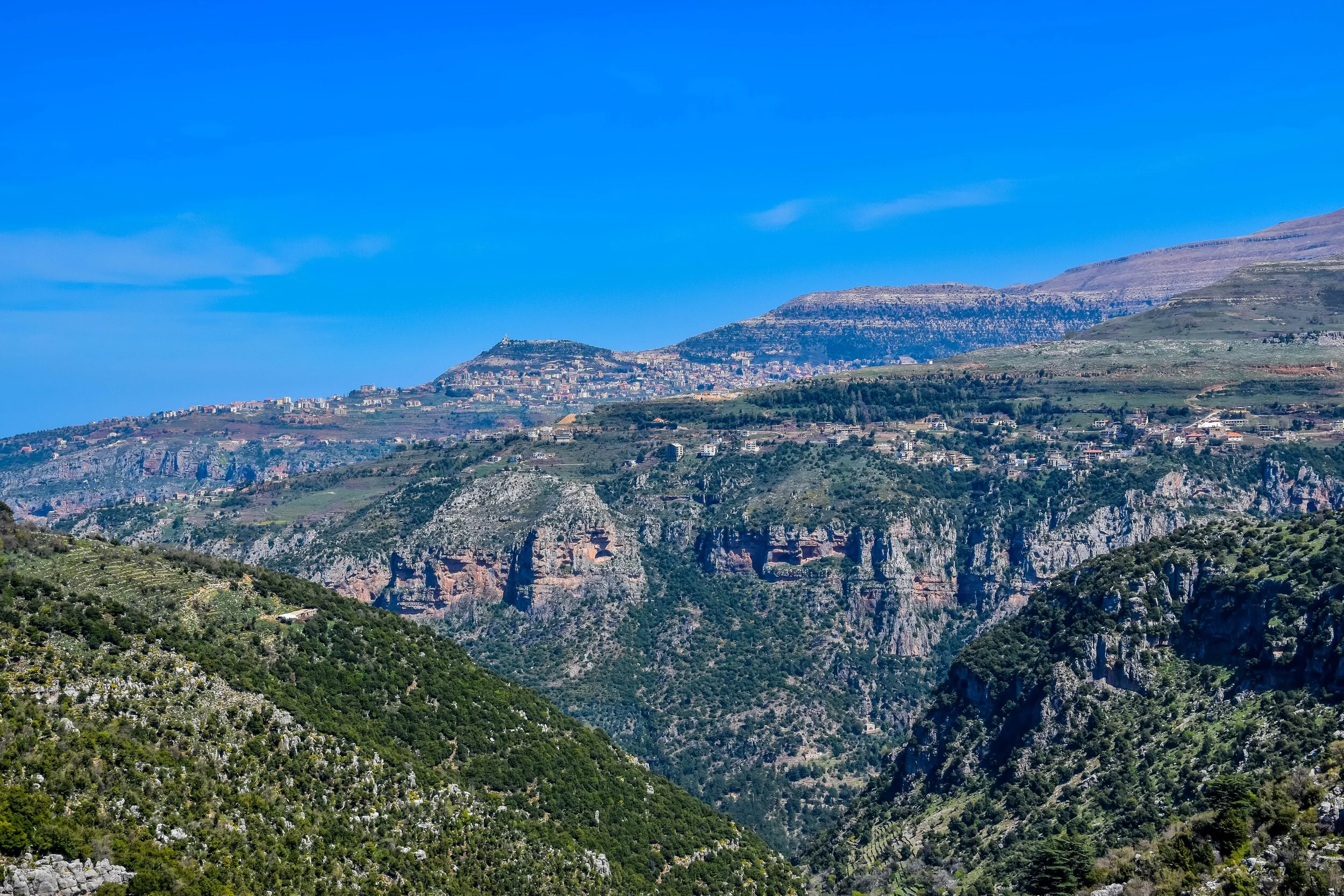
The Kadisha Valley in northern Lebanon. Saad. CC2.0

Located on the eastern Mediterranean coast bordering Israel and Syria, many people have heard of Lebanon for mostly negative reasons. Strife caused by a 15-year civil war and other regional conflicts has long dominated international news headlines in the Middle East, as well as the explosion in Beirut on Aug. 4. Despite this, Lebanon is a beautiful country with amazing scenery, culture, people, food and so much more. Here are seven lesser-known facts about this beautiful Middle Eastern country.

1. Variety of Landscapes

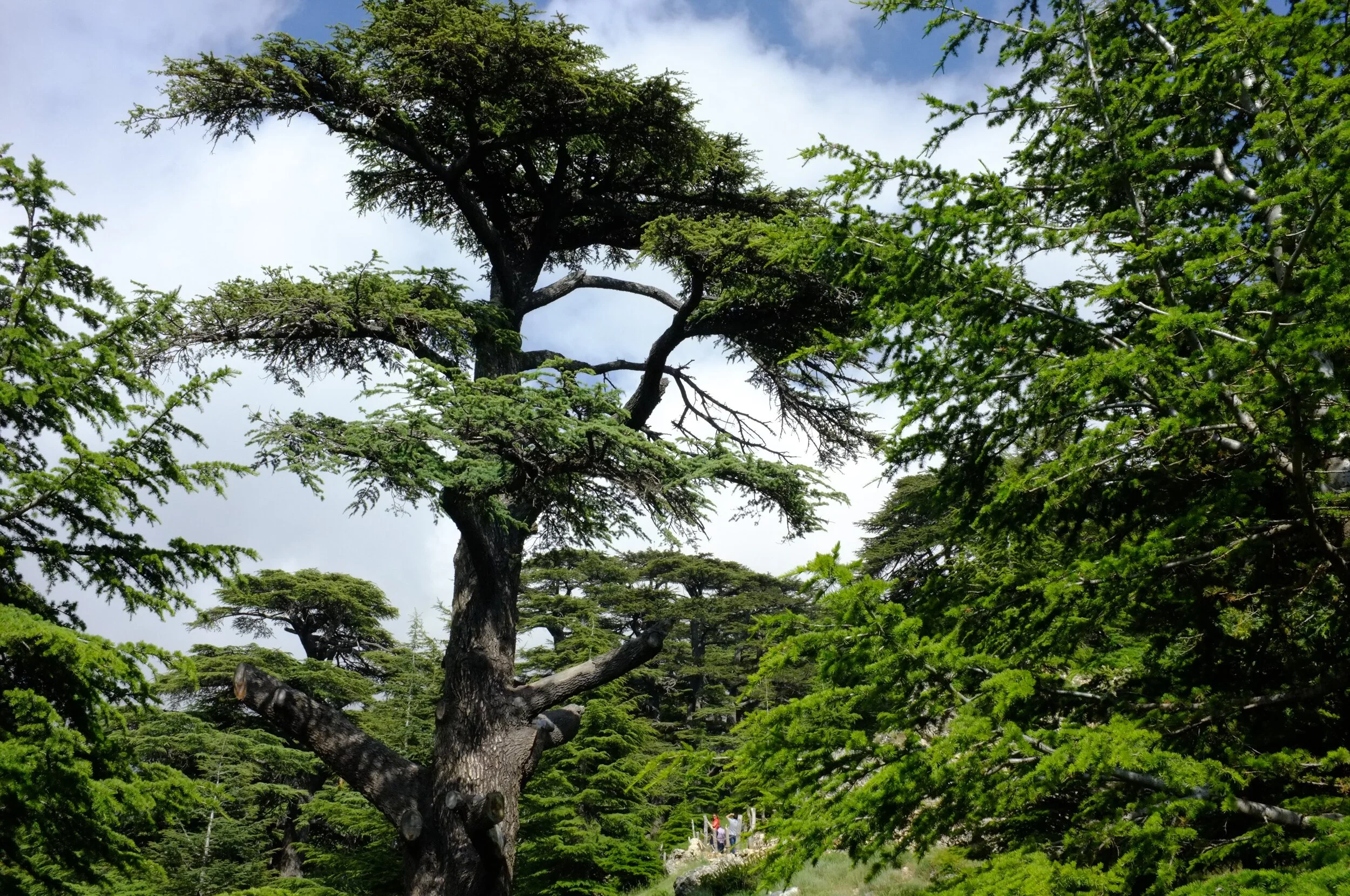
Cedars of God. cwirtanen. CC2.0

Although many people mistakenly refer to the entire Middle East as a desert, this could not be further from the truth. On the contrary, Lebanon’s small landmass has many different landscapes, from a Mediterranean climate by the coast with olive groves to the snow capped Mount-Lebanon to the beautiful and fertile Bekaa Valley. One other beautiful nature area is the Cedars of God in the Kadisha Valley, which is one of the last places in the world where the majestic Lebanon cedar trees can be found today. In ancient times, the wood of cedar trees was used for constructing religious buildings.

2. Ancient History

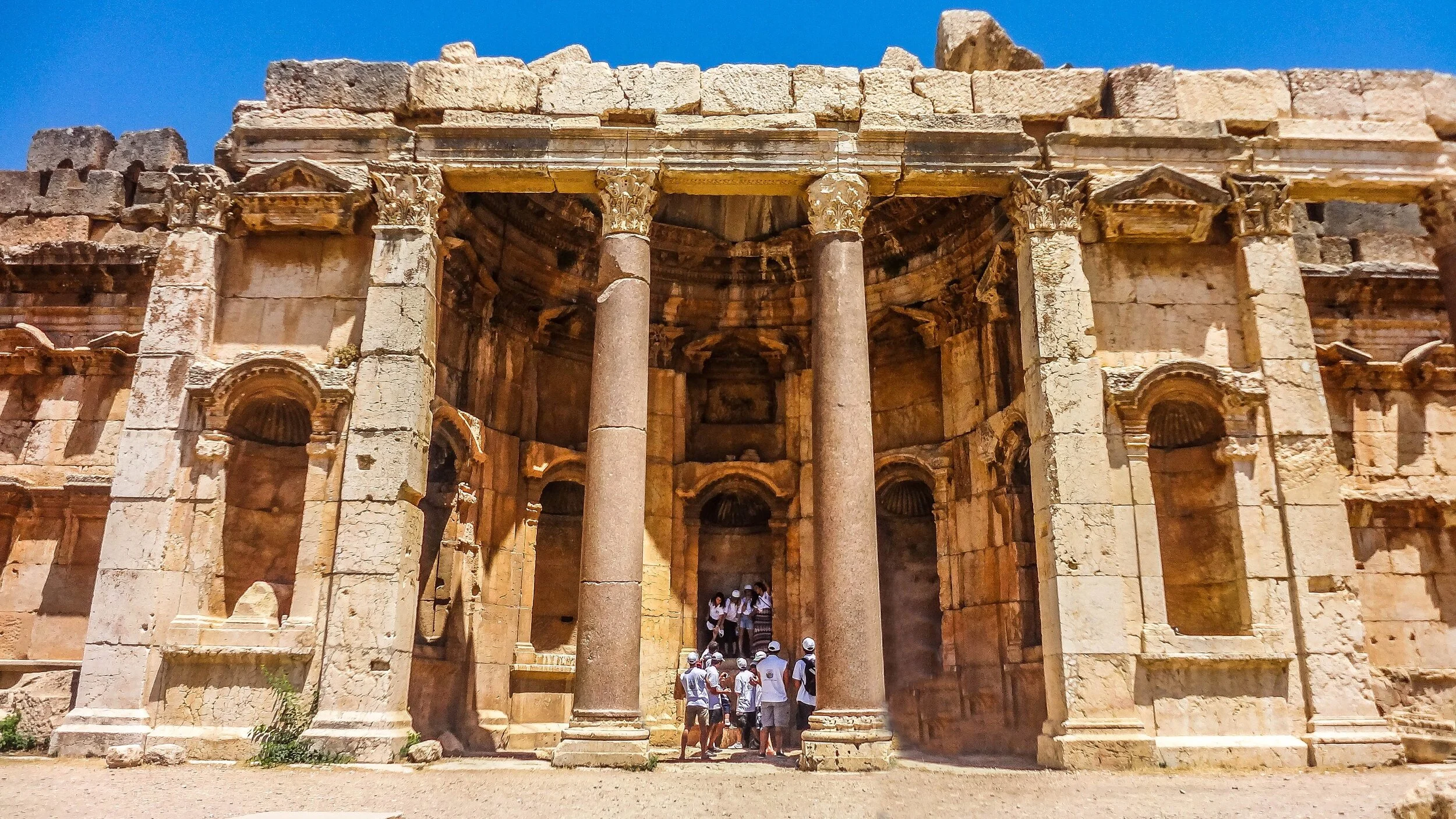
Roman ruins in Baalbek. Saad. CC2.0

What Lebanon lacks in size it more than makes up for in history. Founded by the Phoenicians and later influenced by the Persians, Greeks, Egyptians, Romans, Ottomans and the French, this variety of civilizations has undoubtedly made a mark on the country’s history. The Phoenicians, who were well known for their skills in navigation and seafaring, traded with empires around the world and established colonies in other parts of the Mediterranean. Phoenicians are also credited with the invention of the first writing system with an alphabet known as “abjad.” Travelers can visit the historical cities of Tyre, Byblos and Sidon, which have distinct Phoenician influences. Additionally, some of the best Roman ruins in the world can be found in Lebanon, including sites in Baalbek and Faqra.

3. Religious and Cultural Diversity

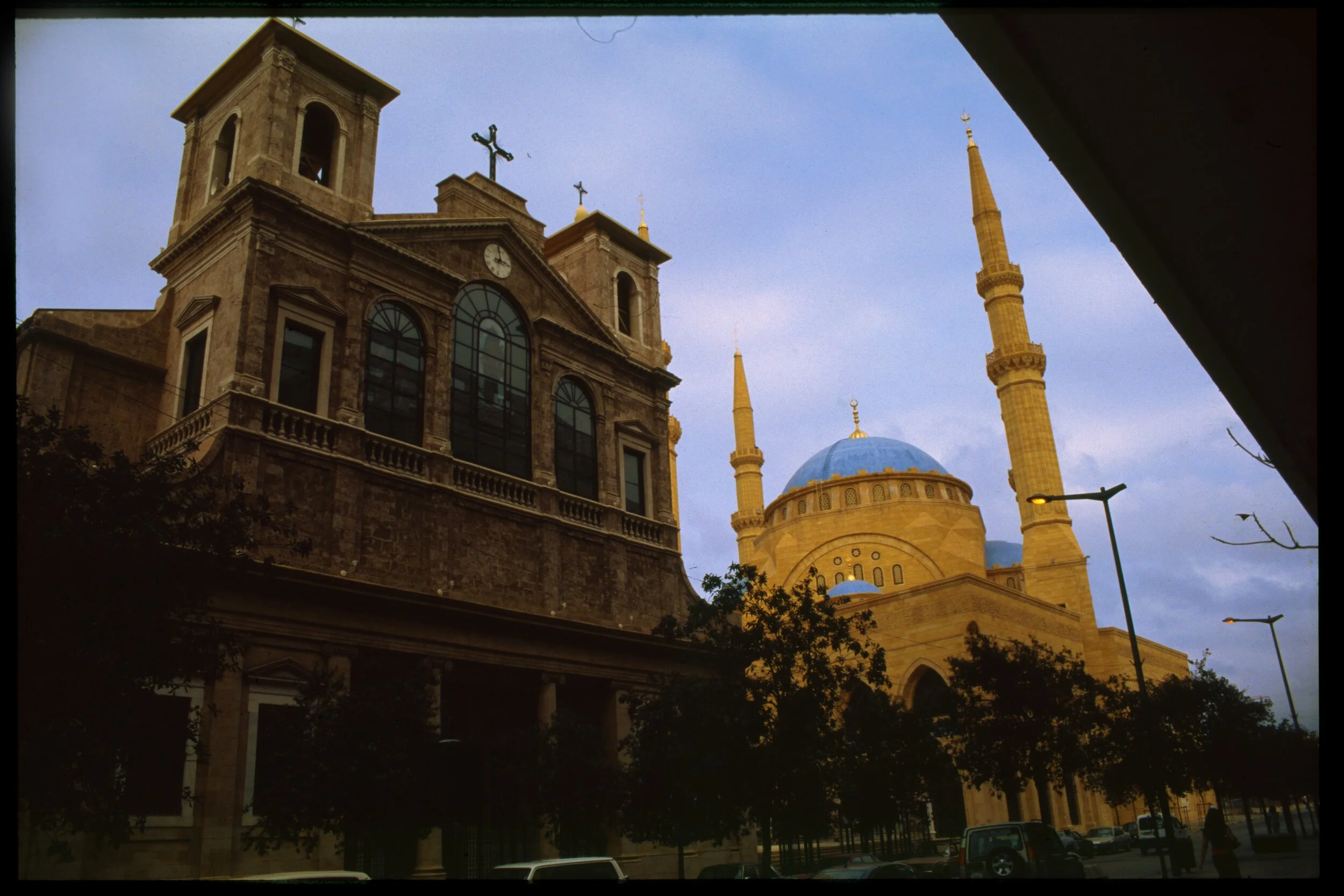
A mosque and a church side by side in Beirut. Zagrebelnyi. CC2.0

Lebanon is one of the most diverse countries in the Middle East. Roughly 61% of Lebanon’s population is Muslim, with nearly equal numbers of Shiites and Sunnis, 33% is Christian, and an estimated 4.5% are Druze, a religion containing elements of Islam, Judaism, Christianity and classical Greek philosophy. However, travelers are unlikely to experience widespread friction between the different religious groups. Columnist Taha Meli Arvas traveled in Lebanon and observed that, “I didn't see any divisions between regions or religions … The people and cultures all blend in seamlessly and to an outsider it is all just Lebanon.” Arabic, French and English are spoken in Lebanon, but it is also common for people to speak the Lebanese dialect, which has notable influences from all three languages.

4. Amazing Food

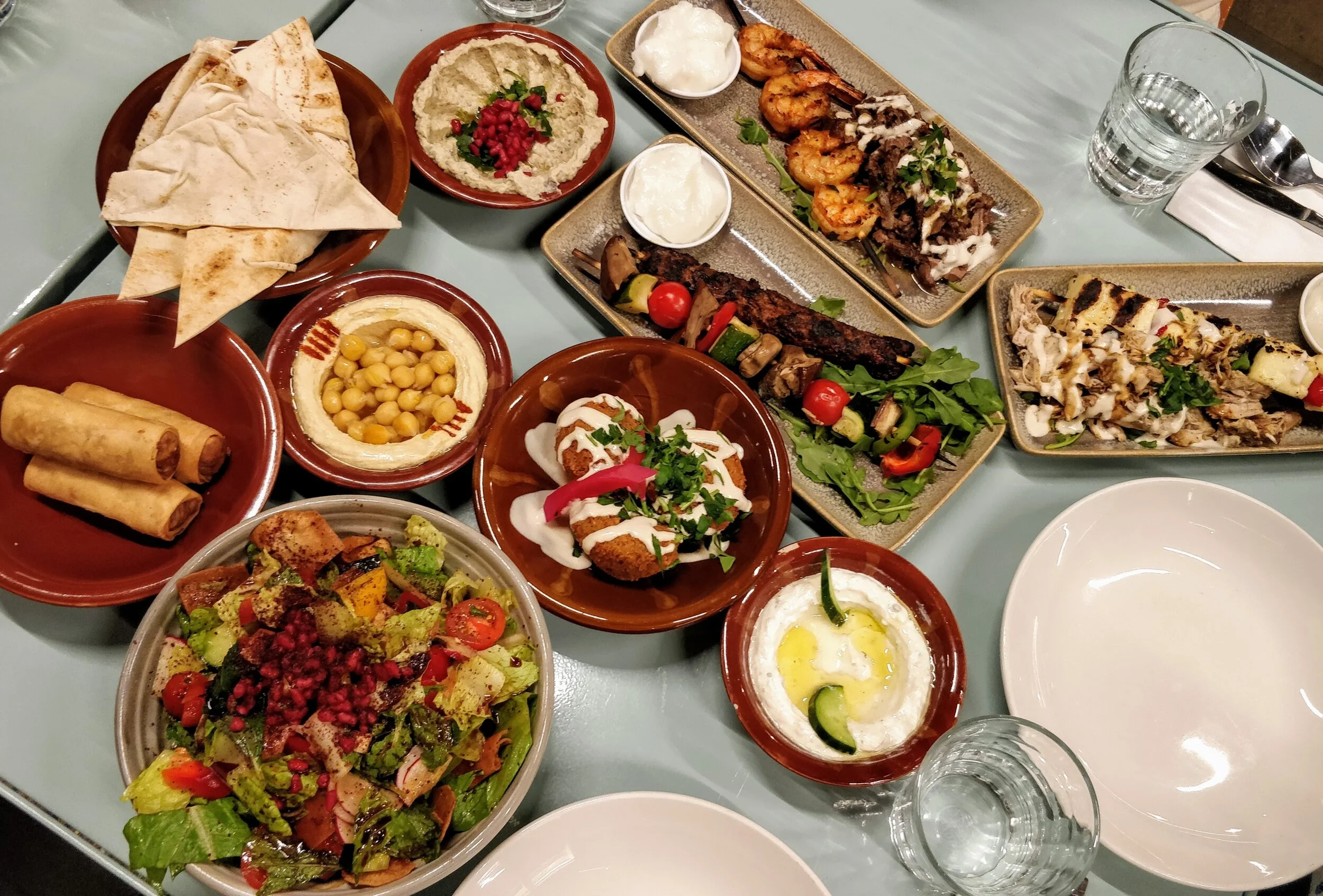
Lebanese food. Alpha. CC2.0

Food lovers rejoice! Travelers will look forward to trying the endless culinary delights of Lebanon. One of the most famous dishes is kibbeh, a Lebanese national dish made up of a mixture of bulgur wheat, ground lamb, herbs and spices. Sfiha, an open-faced flatbread topped with meat, a delicious salad made of herbs known as tabbouleh, bulgur wheat, tomatoes and olive oil, is equally loved. Manoushe or “Lebanese pizza,” a toasted flatbread with za'atar (a herb and spice blend), is also popular, as are olive oil, hummus, falafel, shawarma and many others.

5. Friendliness and Hospitality

Friendly Lebanese girl. Paterno. CC2.0

As a whole, Lebanon is relatively safe for travelers, with theft and petty crime being extremely rare. Similar to other Mediterranean and Middle Eastern countries, hospitality is deeply rooted in Lebanese culture. It is considered a great honor to host guests. Lebanese are very family oriented and it is common for travelers to be invited into people’s homes for tea, coffee or a family meal. Prepare to be well-fed; it is considered polite for hosts to serve their guests multiple servings of food. You will likely not leave hungry!

6. Party Scene

Beirut cityscape at night. Saad. CC2.0

Filled with trendy nightclubs and bars, Beirut is known as the de facto party capital of the Middle East. Naomi Sargeant, a managing director of city guide Time Out Beirut, describes the night scene as having an “East-meets-West feel.” Beirut’s fun-loving vibe speaks to the overall culture of Lebanese, despite a turbulent past. Similar to Europe, alcohol in Beirut is readily available and consumed. 

7. Famous People of Lebanese Descent

Shakira. Pozo. CC2.0

Some famous people of Lebanese descent include the Latin singer Shakira (her father is of Lebanese descent), actress Salma Hayek, Fairuz, one of the most famous singers in the Arab world and a cultural icon of Lebanon, and Nadine Labaki, an actress, filmmaker and activist. 

Although Lebanon was going through difficult times even before the explosion in Beirut, the country has so much to offer. Learning more about other countries and cultures helps to promote coexistence and peace. 

Click here to donate to the Lebanese Red Cross to provide humanitarian and medical assistance in Beirut after the devastating explosion and amid the continuing effects of COVID-19.


Megan Gürer

Megan is a Turkish-American student at Wellesley College in Massachusetts studying Biological Sciences. Passionate about environmental issues and learning about other cultures, she dreams of exploring the globe. In her free time, she enjoys cooking, singing, and composing music.

Barack Obama Plaza: Ireland’s Gas Station Tribute to the 44th President

Learn about the gas station that doubles as a museum to the 44th president of the United States.

Land of a thousand welcomes. O’Dea. CC BY-SA 4.0.

On the M7 motorway between Dublin and Limerick, Ireland, a tired and hungry traveler can find just the service station they need. It provides a gas station, fast food outlets, and a convenience store. If the traveler has a little time to spare, they can head upstairs to the museum dedicated to Barack Obama, the United States’ 44th president. 

It’s a surreal mix of a service station and a presidential memorial. Signs with Obama’s name adorn everything from the floor mats to trash cans to cups of tea. Cardboard cutouts of the former U.S. president and first lady greet every entrant. Upstairs, display cases proudly show off memorabilia from Obama’s 2008 presidential campaign and his visit to the nearby village of Moneygall. 

Obama fever swept Ireland when an Irish genealogist discovered that Obama’s great-great-great-grandfather, Fulmoth Kearney, emigrated from Moneygall to a farm in rural Ohio in 1850. The discovery added yet another twist to Obama’s multifaceted heritage and led to a 2011 visit by the president. 

Moneygall adorned its streets with Irish and American flags to welcome the presidential motorcade. Locals lined the streets to welcome the president and first lady as they met Obama’s eighth cousin Henry, whom the president dubbed “Henry the Eighth.” Most famously, they stopped by Ollie Hayes’ Pub to drink a pint of Guinness. “We feel very much at home here,” Obama said. “I feel even more at home after that pint that I just had.”

What’s the craic, Barack? Charles McCain. CC0.

As a nation defined by diaspora, Ireland welcomes prominent figures from across the world into its fold. The Great Potato Famine of 1845 forced millions to flee Ireland penniless and starving, beginning a long pattern of emigration in search of a better life. Over the course of the next century, Irish migrants spread across the world. Though Ireland’s population numbers only 5 million, 80 million people worldwide can claim Irish ancestry.

So when Barack Obama discovered his Irish roots, the nation feverishly celebrated his visit. His speech in Dublin packed the city’s streets. Convenience stores stocked up on presidential souvenirs and knickknacks. Musicians celebrated Obama’s homecoming in song. The Corrigan Brothers wrote the minor hit “There’s No One As Irish As Barack O’bama” while fiddler Martin Hayes still regularly performs “The Barack Obama Reel.”

Martin Hayes and Dennis Cahill performing “The Barack Obama Reel”

Obama’s 2012 reelection campaign couldn’t have been far from his mind, speculated political analysts. Irish-Americans constitute a large voting bloc, so his ceremonial visit to Ireland played well to a key demographic. As Obama noted in a later address in Belfast, Northern Ireland, “When I was first running for office in Chicago, I didn’t know this [his Irish ancestry], but I wish I had. It pays to be Irish in Chicago.” It pays nationwide as well.
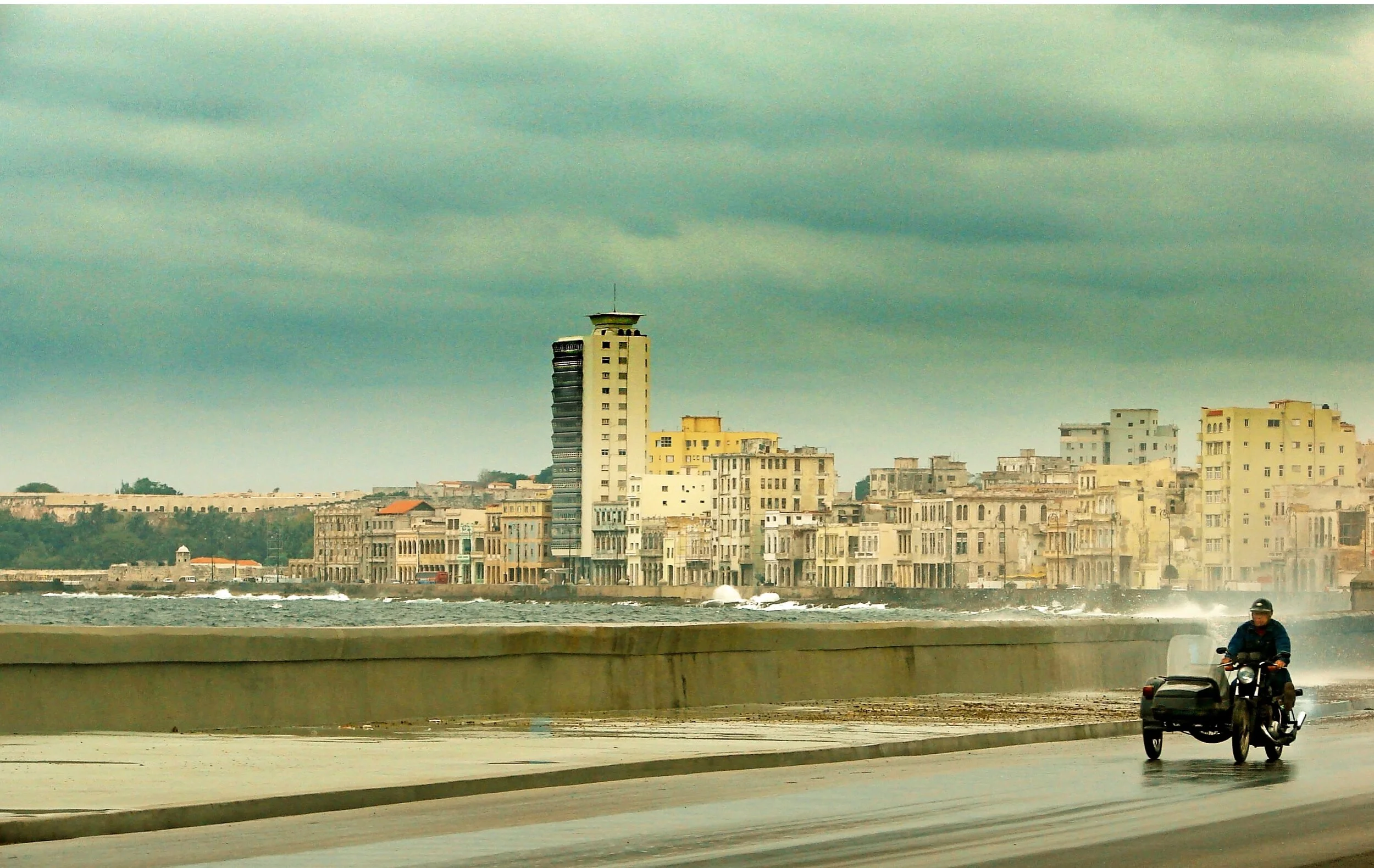
Obama fever culminated in the half-charming, half-embarrassing Barack Obama Plaza. The $9 million project opened in 2014, long after Obama's first visit, but an earnest love persists across the Emerald Isle. In 2016, the service station wondered whether it should change its name to “Trump’s Pumps” or “Hillary’s Fillery.” The change never happened. Obama fever’s symptoms are long-lasting.


Michael McCarthy

Michael is an undergraduate student at Haverford College, dodging the pandemic by taking a gap year. He writes in a variety of genres, and his time in high school debate renders political writing an inevitable fascination. Writing at Catalyst and the Bi-Co News, a student-run newspaper, provides an outlet for this passion. In the future, he intends to keep writing in mediums both informative and creative.

The 10 Best Museums You’ve Never Heard Of

The world’s most popular museums are often overcrowded and overwhelming. Here are 10 of the world’s best museums that are less known but just as impactful.

People walk by Zentrum Paul Klee in Bern, Switzerland. Lys Ippos. CC BY 3.0. 

The most popular museums in the world—the Louvre, the Met, the Tate Modern—offer an incredible breadth of art, but are often crowded, congested and overwhelming. Lesser-known museums can offer exceptional art, culture and history, all without the lines and high volumes of other visitors. Here are 10 of the best museums around the world that fly under the radar and are home to unique and fascinating collections. 

1. Louisiana Museum of Modern Art 

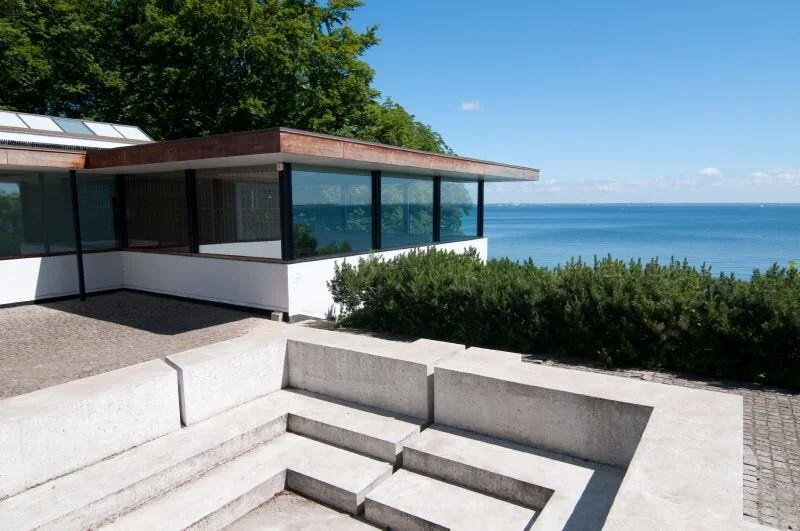
The exterior of the Louisiana on the Oresund Sound. CC BY 4.0. Kim Hansen. 

The Louisiana, located outside of Copenhagen, Denmark, is home to one of the most immersive modern art collections in the world. In response to Danish museums turning away modern art, founder Knud W. Jensen created the Louisiana in 1958. The museum’s integration of indoor, outdoor and digital space allows visitors to move through art dynamically, fulfilling Jensen’s goal of a truly integrated art experience. This museum is also one of the only in the world with a permanent light installation from Yayoi Kusama, whose temporary installations in cities such as New York are almost impossible to get tickets for. 

2. Museum of Broken Relationships

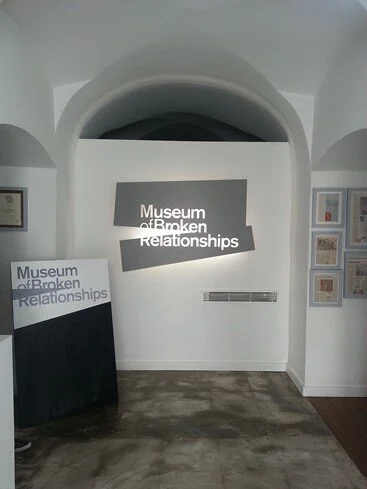
The Museum of Broken Relationships. CC BY 2.0. Pros Opee. CC BY 2.0.

This museum, created by artists Olinka Vistica and Drazen Grubisic, is located in Zagreb, Croatia, with a second gallery in Los Angeles. The museum’s mission is to create a shrine of symbolic possessions that commemorate and treasure humanity’s ability to love and to lose. While the Museum of Broken Relationships is a physically stunning museum, the heart of this project stems from its global engagement. The museum’s online component has space for everyone to share the story of their heartbreak. View the online portion of the museum here.

3. Pitt Rivers Museum 

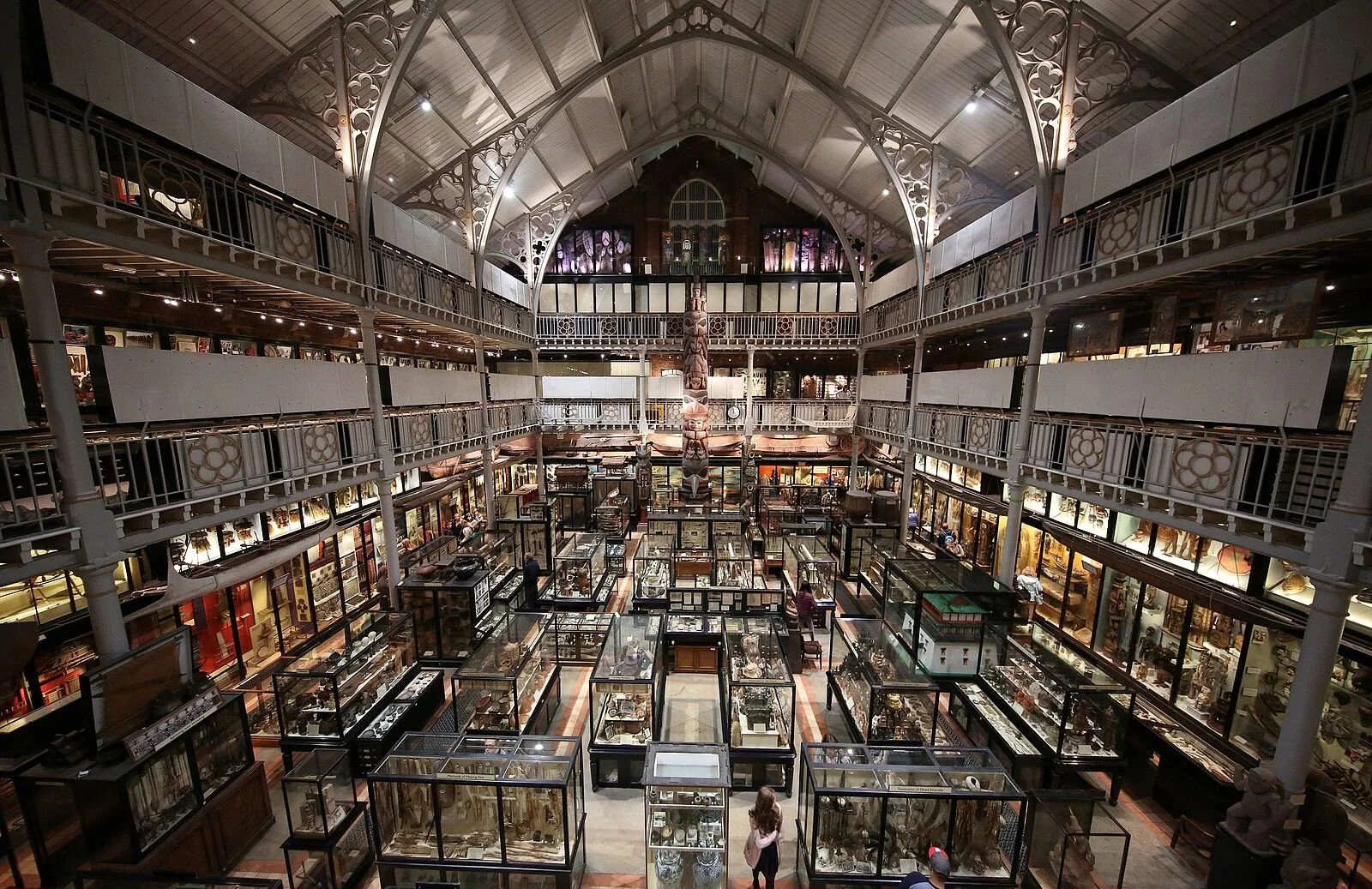
Interior of the Pitt Rivers Museum. Geni. CC BY 2.0.

The Pitt Rivers Museum in Oxford, England, is home to over half a million artifacts from around the globe. A fascinating collection of anthropological and archaeological items, the Pitt Rivers Museum is unique because of its organizational system for displays. Rather than grouping items together by period or people, the Pitt Rivers Museum groups items together by type, illustrating the commonalities between different peoples and histories throughout the world. You can visit the museum virtually today.

4. Tenement Museum 

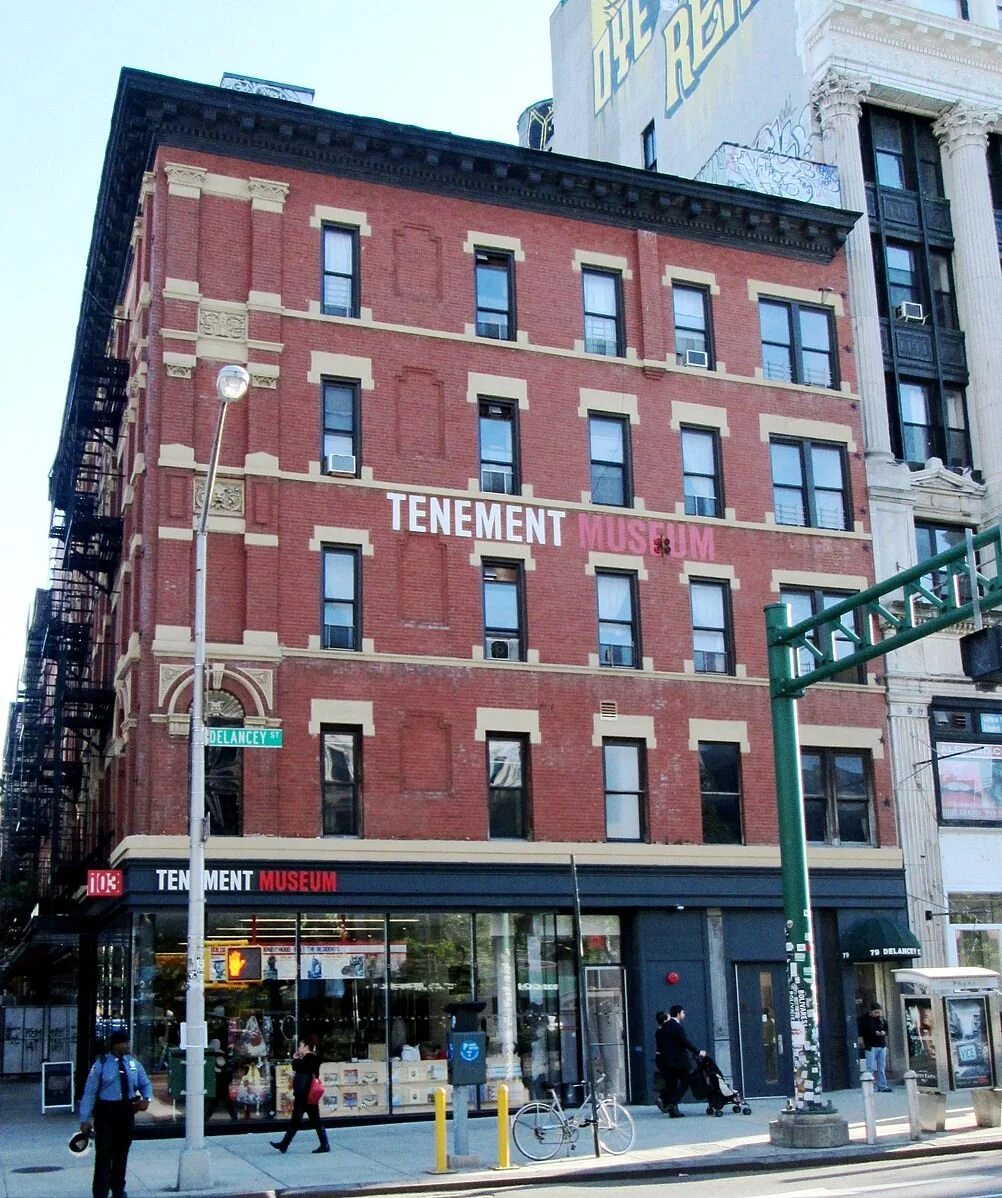
The Tenement Museum exterior. Beyond My Ken. CC BY 2.0.

The Tenement Museum in New York City is devoted to the history of immigration and migration to the United States. Located in a formerly dilapidated tenement building that was home to immigrant families between 1860 and 1930, historian Ruth Abram and social activist Anita Jacobsen built their museum around the stories of these families. In connecting public policy, oral history and immigrant narratives, the Tenement Museum offers a moving and topical exploration of recent history. 

5. The Kunstkamera 

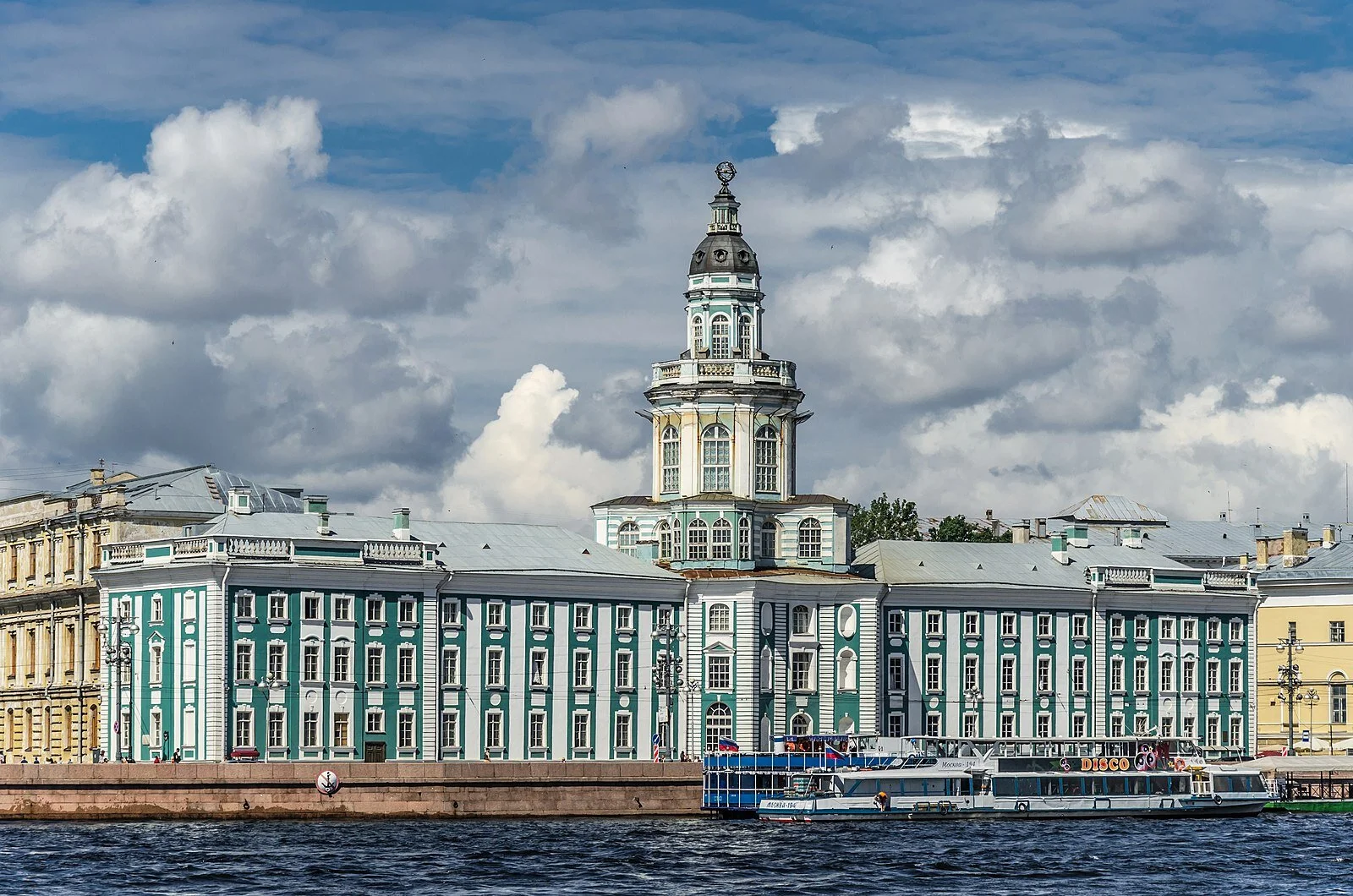
The Kunstkamera in St. Petersburg, Russia. Flor Stein. CC BY 4.0. 

Established by Peter the Great at the beginning of the 18th century, the Kunstkamera’s collection comprises nearly 2 million oddities.  Located in St. Petersburg, Russia’s first museum was founded with the goal of containing all of the world’s knowledge in one building. This massive collection remains relatively unknown outside of Russia, but offers one of the world’s most vast displays of global anthropology and ethnography. 

6. Castello di Rivoli 

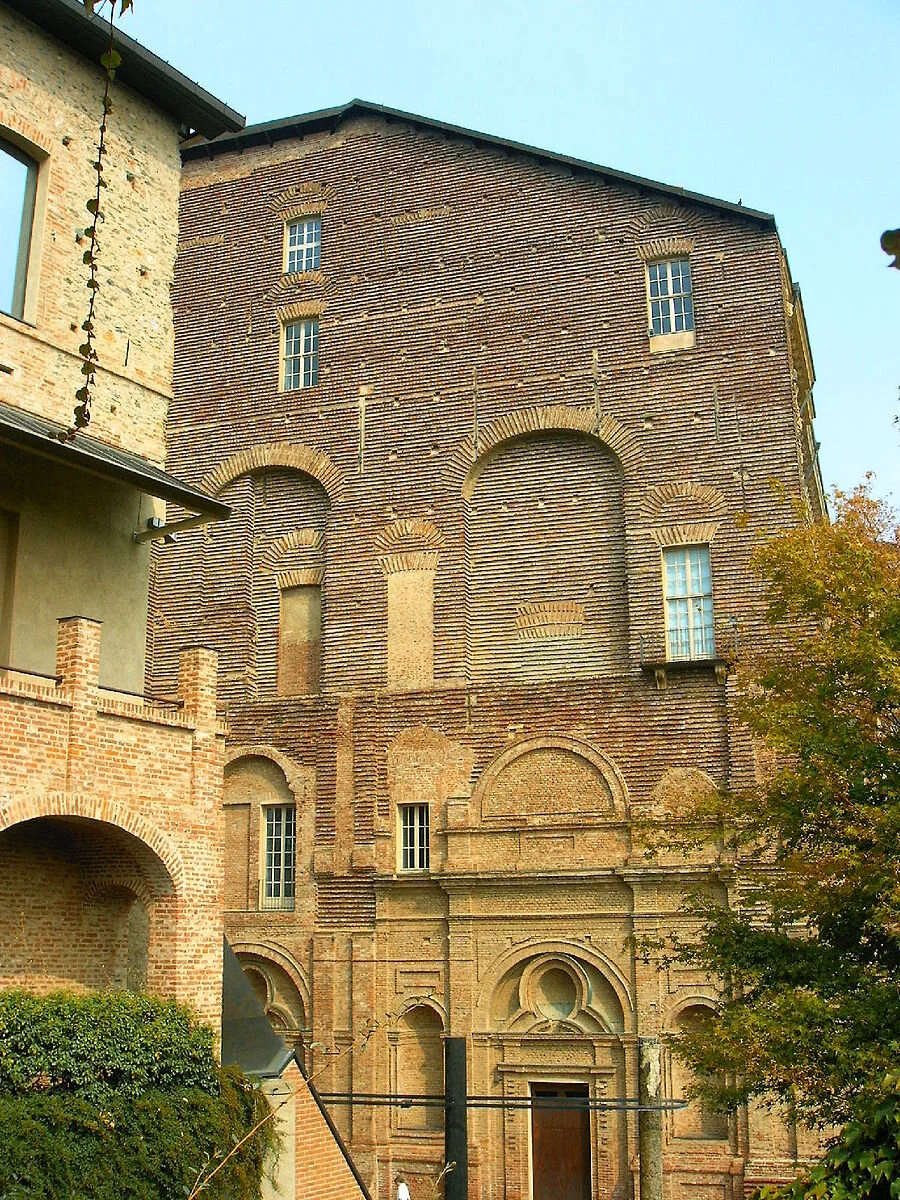
The facade of Castello di Rivoli. M. A. CC BY 2.5. 

In 1984, the Castello di Rivoli became the first museum in Italy completely devoted to contemporary art. Located just outside of Turin, this museum is located in a UNESCO World Heritage Site. The castle buildings are open to the public and the modern art exhibitions within the castle walls are world-class, with the Castello di Rivoli also serving as one of the world’s premier art history research centers. 

7. Zentrum Paul Klee 

Zentrum Paul Klee exterior. Krol K. CC BY 3.0. 

This museum, located in Bern, Switzerland, is dedicated to the work of artist Paul Klee. Klee’s artistic collection is remarkable in its own right with his groundbreaking exploration of color theory, but the draw of this museum is also the physical building. Designed by Italian architect Renzo Piano in 2005, the iconic building integrates the natural hilly landscape with metallic swoops and arcs that mirror Klee’s art. Check out the online exhibit, “Mapping Klee,” at this link

8. Museum of Old and New Art 

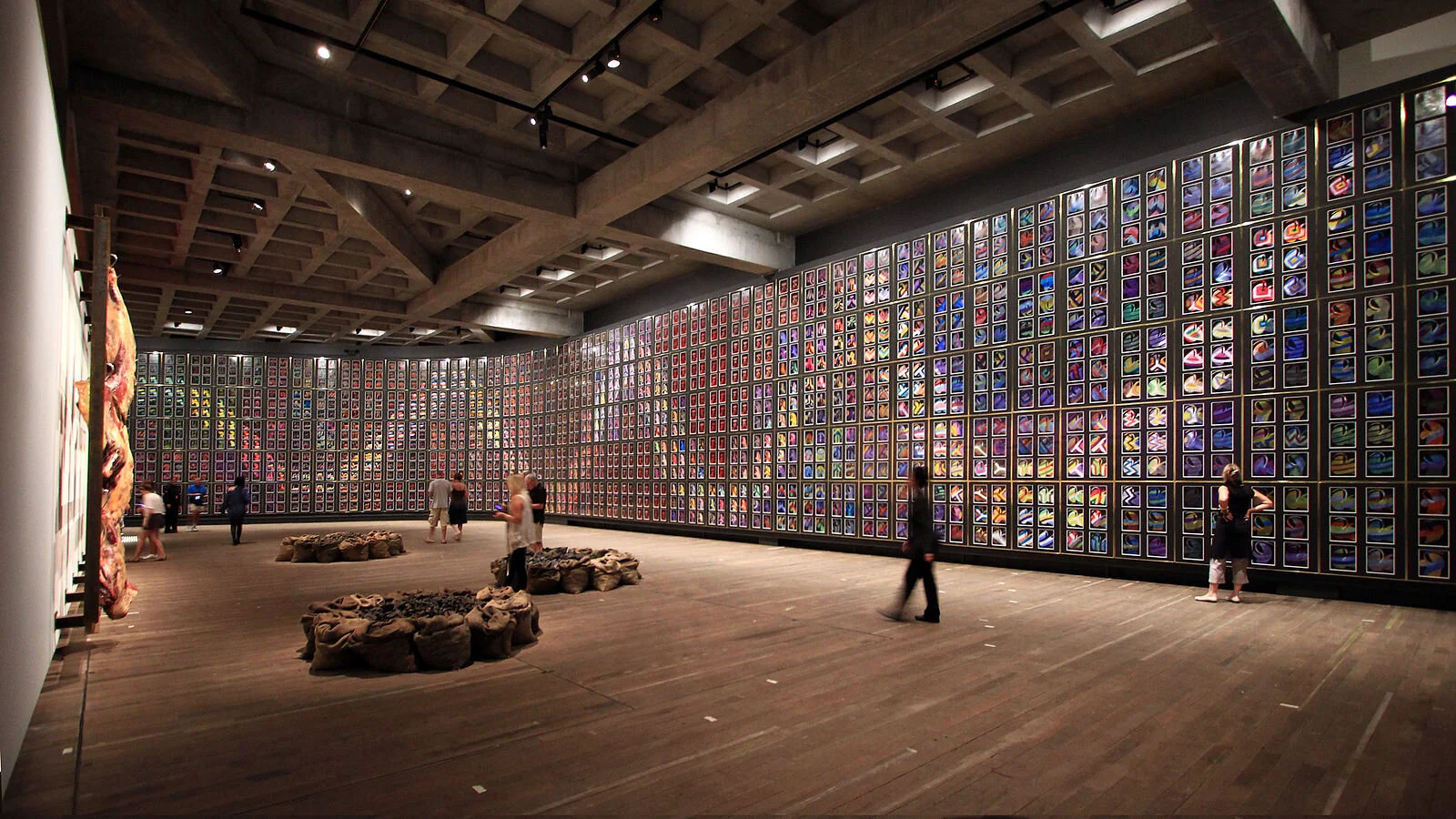
“Snake” by Sidney Nolan in MONA. Jeff Owens. CC BY 2.0. 

MONA, the Museum of Old and New Art, is an ever-changing collection of ancient, contemporary and modern art. Located in Hobart on Australia’s island of Tasmania, the museum is built into a cliff and prioritizes multimedia installations, engagement with community-based art, and live performances. MONA elevates the museum experience by operating a winery, hotel and restaurant on-site that all mirror the museum’s ethos: fun. 

9. Museum Willet-Holthuysen

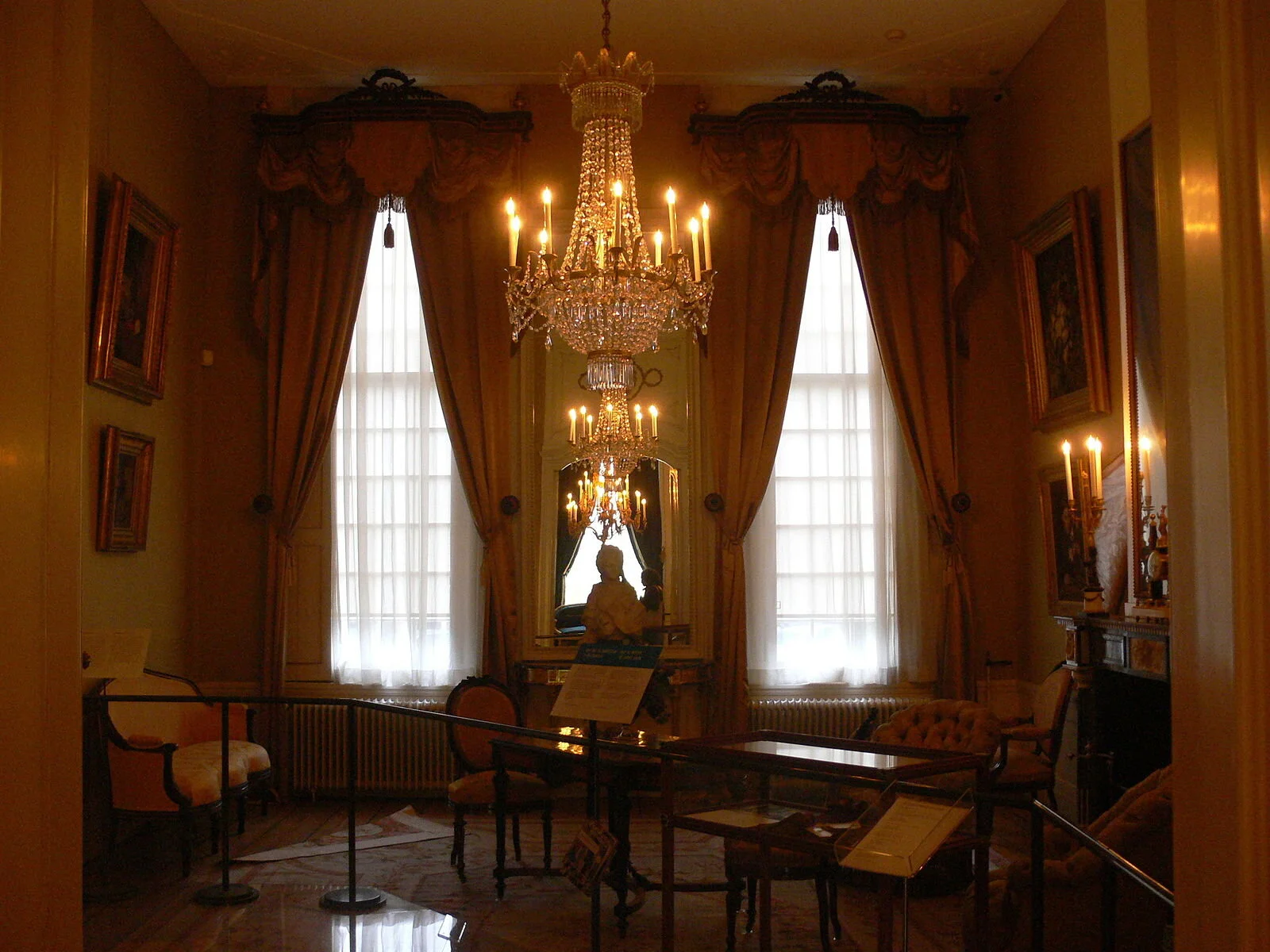
Interior of the Museum Willet-Holthuysen. Remi Mathis. CC BY 3.0. 

The Museum Willet-Holthuysen is a homage to Amsterdam’s golden age. Built in 1687, this canal house was donated to the Dutch city in 1895. The 18th- and 19th-century room decor is still in its original condition, and the gallery walls are lined with paintings from the Willet-Holthuysen private collection, allowing many of the paintings to be displayed in their original historic setting. View part of the collection online here

10. The Neon Museum

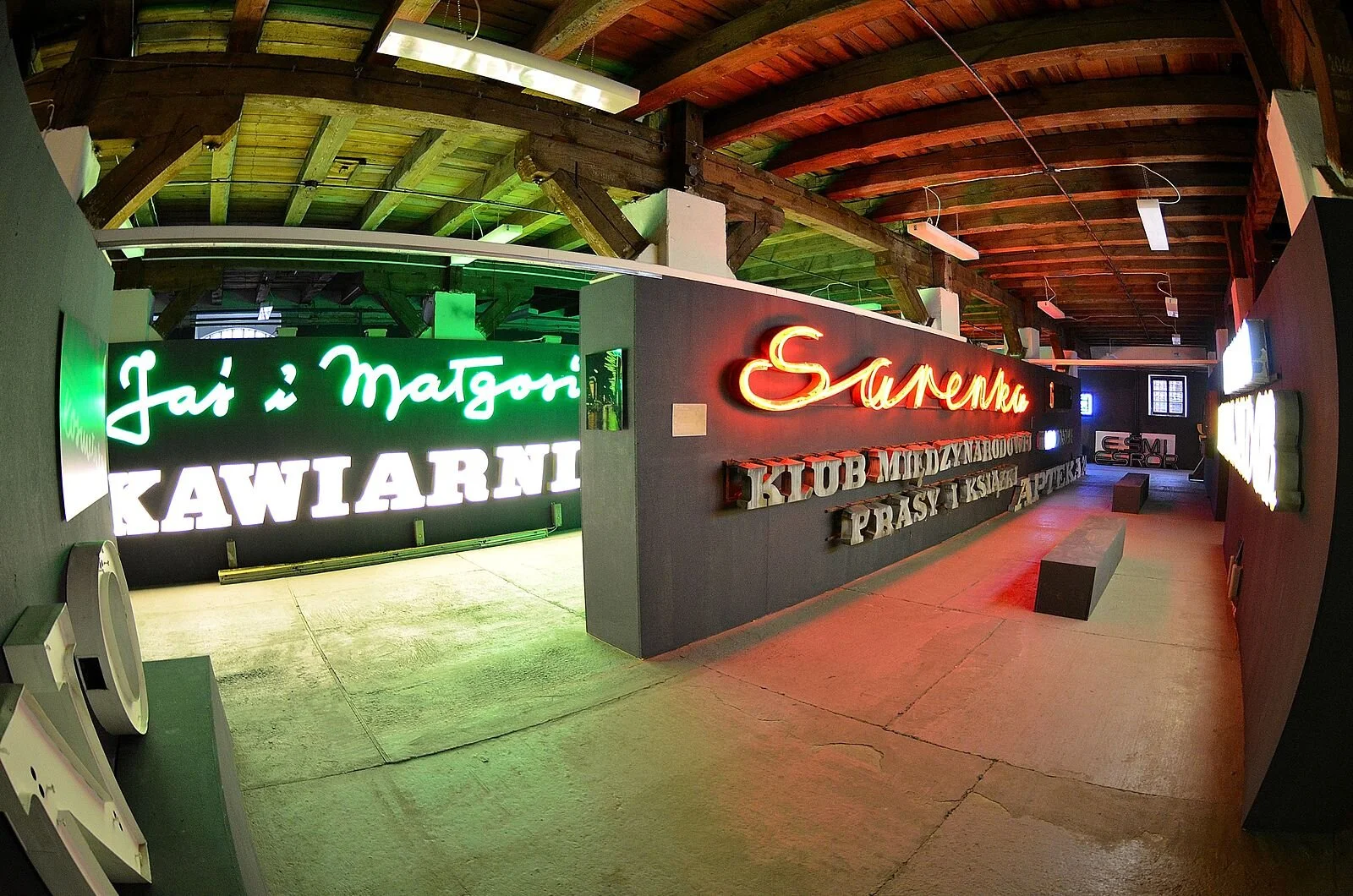
Signs in the Neon Museum. Adrian Grycuk. CC BY 3.0. 

Since 2005, this museum in Warsaw, Poland, has been dedicated to the preservation of Cold War-era artifacts; namely, neon signage from the Soviet Union. In the Eastern Bloc, which included Poland, there was an official effort from the 1950s to the 1970s to “neonize” the state. The Soviet attempt to bring Western aesthetics to Eastern Europe has been preserved at the Neon Museum, where gallery walls are lined with an array of colorful relics. 


Sarah Leidich

Sarah is currently an English and Film major at Barnard College of Columbia University. Sarah is inspired by global art in every form, and hopes to explore the intersection of activism, art, and storytelling through her writing.

7 Architectural Marvels of Tashkent that Reveal Uzbekistan’s History

Tashkent, the capital of Uzbekistan, boasts of its opulent infrastructure and the nation’s history to a world audience. 

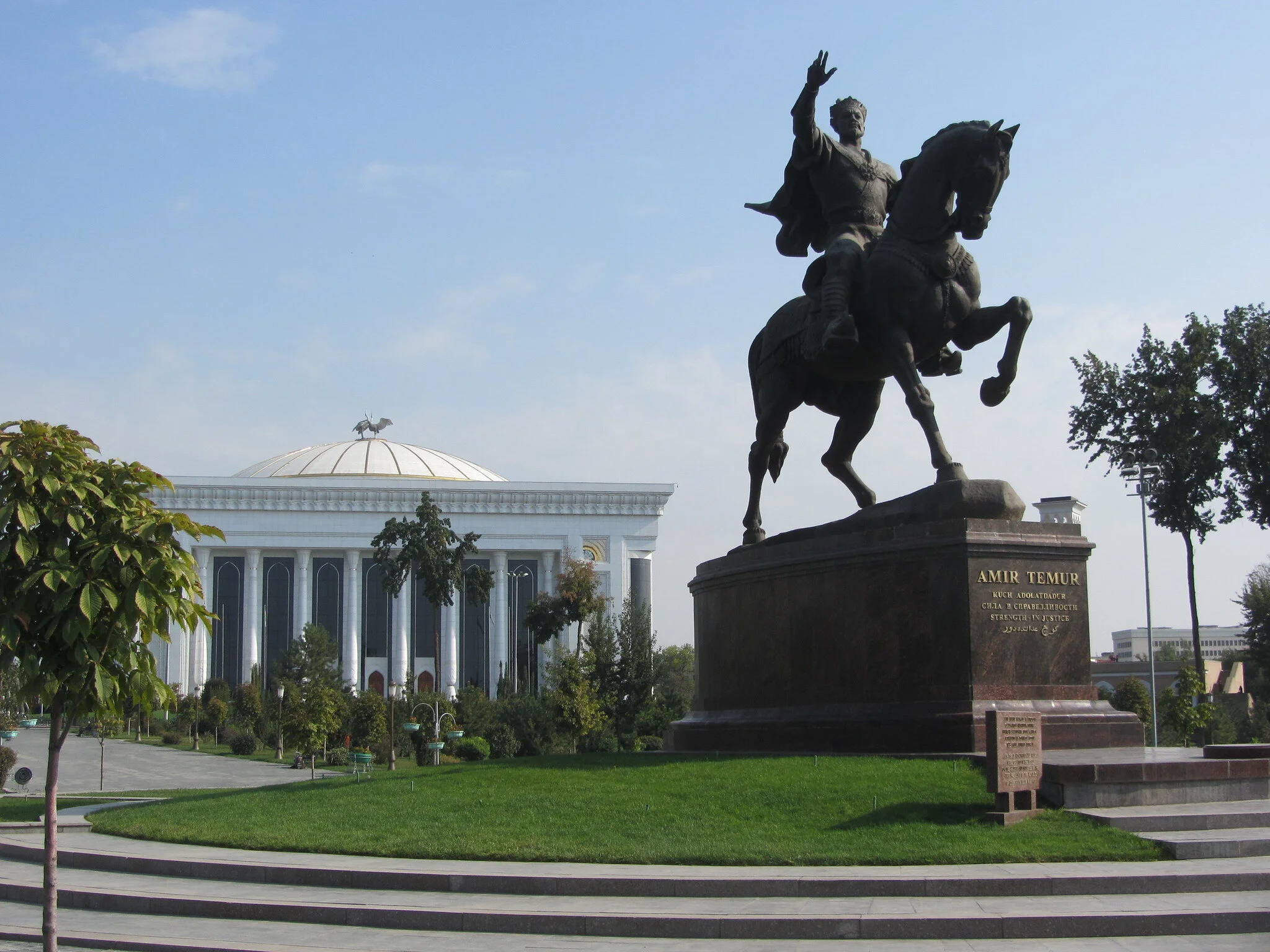
Amir Temur Square in Tashkent’s center. Matthew Goulding. CC BY-NC-ND 2.0.

Glistening skyscrapers are built over historic neighborhoods, while ancient mosques and some Soviet-era buildings are left unscathed. Tashkent, Uzbekistan, has been dramatically shape-shifted by the late president Islam Karimov and the current president Shavkat Mirziyoyev. As the city gets reconstructed, some of its rich history remains: Tashkent’s mosques, Soviet-style subway stations, classical opera houses and theaters, and traditional Russian architecture draw in many visitors. Here are seven sites which each represent distinct eras in Tashkent’s tumultuous history. 

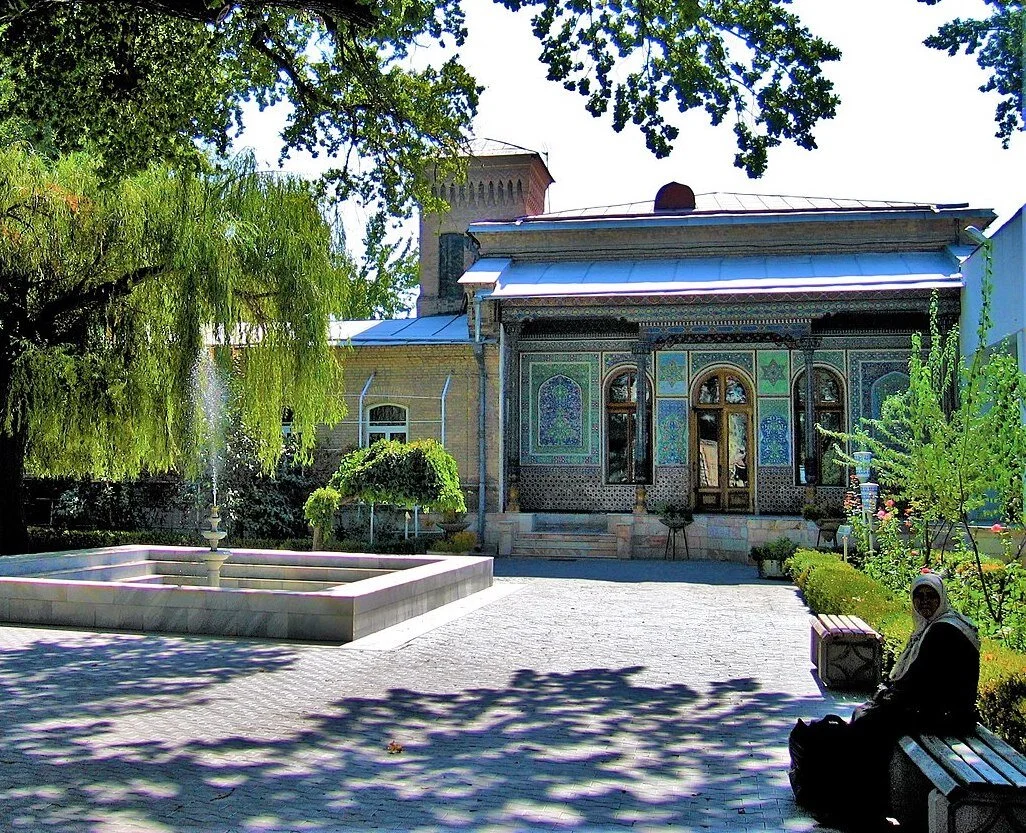
Museum of Applied Arts in Tashkent. Ehedaya. CC0 1.0

1. Museum of Applied Arts

In the early 20th century, Russian aristocrat Alexander Polovtsov ordered that a mansion be made to showcase Uzbek architecture and craftsmanship. After Polovtsov’s death, the mansion was turned into a museum in 1937, where its interior was further remodeled. This structure’s interior is entirely covered in ornamentation, displaying key components of Islamic architectural design such as the “girih,” a pattern made up of many intricate lines, arabesque stucco, and zellij, a mosaic of individually crafted pieces which create a motif. At the center of its main room is a stunning muqarna, an inverted dome carved to an exacting honeycombed configuration; this centerpiece is embellished with flora-inspired stucco designs and individually painted tiles which resemble the stained-glass windows of a chapel. 

Close-up of Barak Khan Madrassa’s facade. LBM1948. CC-BY-SA 4.0.

2. Hazrati Imam Complex

Larger-than-life mosques and mausoleums border a wide square where visitors stroll around in awe, either on a pilgrimage or simply admiring the grandiosity of the minarets and domes. The Hazrati Imam Complex is a conglomerate of historically significant monuments; its most notable sites are the Muyi Muborak Madrassa, the Barak Khan Madrassa and the Tillya Sheikh Mosque. Originally built in the 16th century as a tomb for one of the first imams of Tashkent, the complex drastically changed over the following centuries. Tillya Sheikh Mosque is a stately rectangular building with tall minarets topped with vibrant turquoise domes. The structure’s most notable features are its Central Asian architectural design, the panjara, which is a patterned lattice grid, and its geometrically carved pillars. The Muyi Muborak Madrassa (meaning “sacred hair”) is the most significant monument in this ensemble, since it is said to house the hair of the Prophet Muhammad and the oldest Quran, which dates back to 656 A.D. The library’s walls are mostly a neutral beige, but its arches and domes are covered in arabesques of colorful tiles. The Barak Khan Madrassa displays a stunning facade covered in floral motifs, Arabic calligraphy inscriptions, and geometric linework. At the madrassa’s center is an inverted dome with miniature arches and an open walkway into the building. 

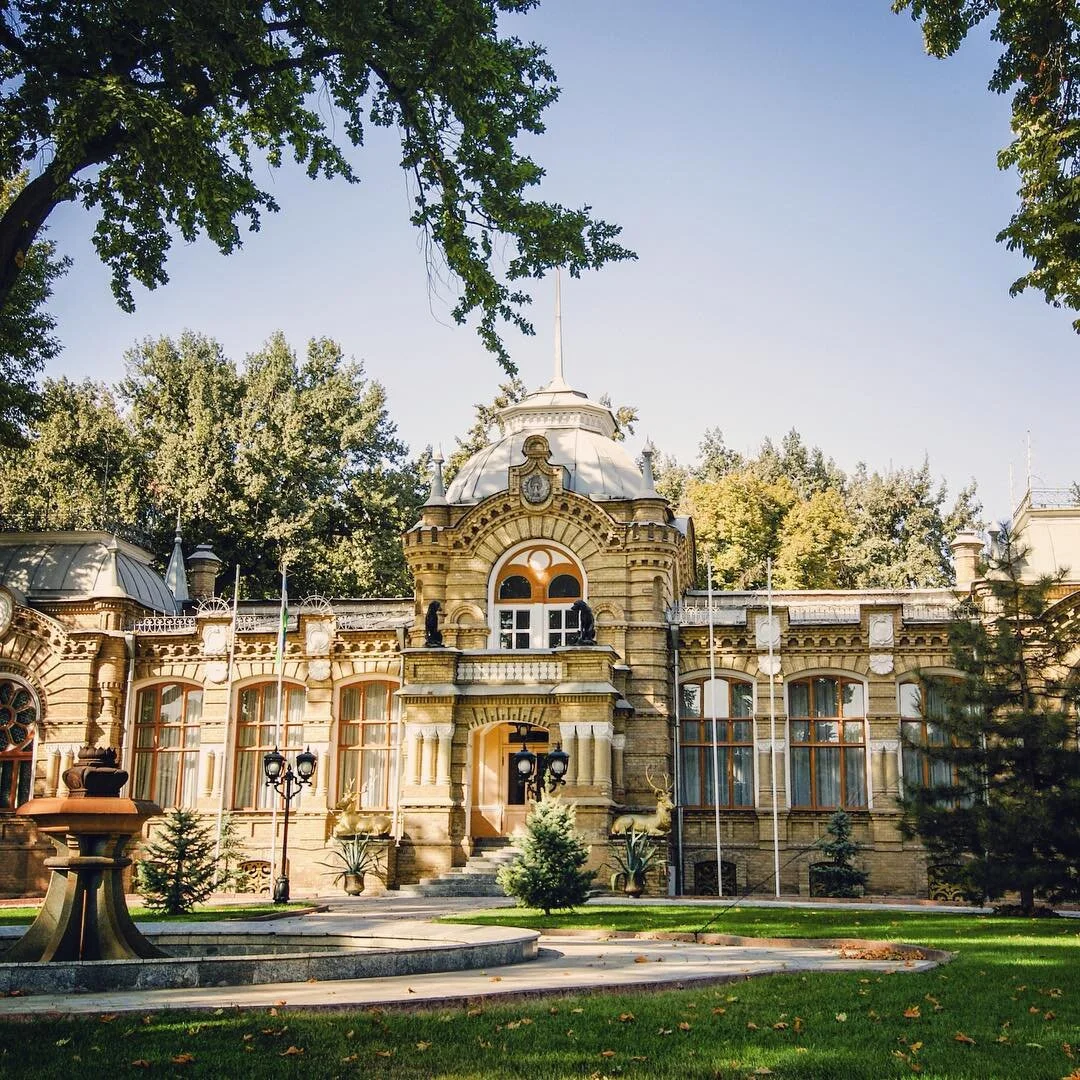
The Palace of the Romanovs in Tashkent. Jude Lee. CC BY 2.0.

3. The Palace of the Romanovs 

Although Tashkent is architecturally diverse, this oddly Baroque estate near its center looks alien in a city full of Soviet modernism and traditional Islamic architecture. Left behind by Grand Duke Nicholas Kostantinovich Romanov who was exiled from Russia for a scandalous love affair near the end of the 19th century, this palace embodies the international art nouveau. The building is predominantly monochromatic, as opposed to the vibrant color palette of traditional Islamic architecture. It flaunts a combination of its neoclassical base structure, extravagant gothic stucco work and Asiatic lattices. Bronze sculptures of deer and hounds sit precariously at the entrance of the mansion above a staircase to greet the visitors. The palace’s interior is more decadent: beds are covered in textiles with gold and silver thread weavings, valuable metal trinkets decorate its hallways, and Uzbek wood carvings adorn its walls. The Palace of the Romanovs reminds one of Russia’s pre-Soviet occupation of Uzbekistan, which used to be the colony of Turkestan. 

Hotel Uzbekistan. Giorgio Montersino. CC BY-SA 2.0.

4.  Hotel Uzbekistan

Hotel Uzbekistan is flat, precise and mathematical. The building itself is a towering sheet of metal with no variation in pattern or shape. Standing as a remarkable display of Soviet modernism from the 1970s, this hotel is a relic of the Uzbek Soviet Socialist Republic. The typical brutalist architecture often paired with Soviet aesthetics is made flexible in this structure, as shown in its lattice pattern found in Islamic architecture.

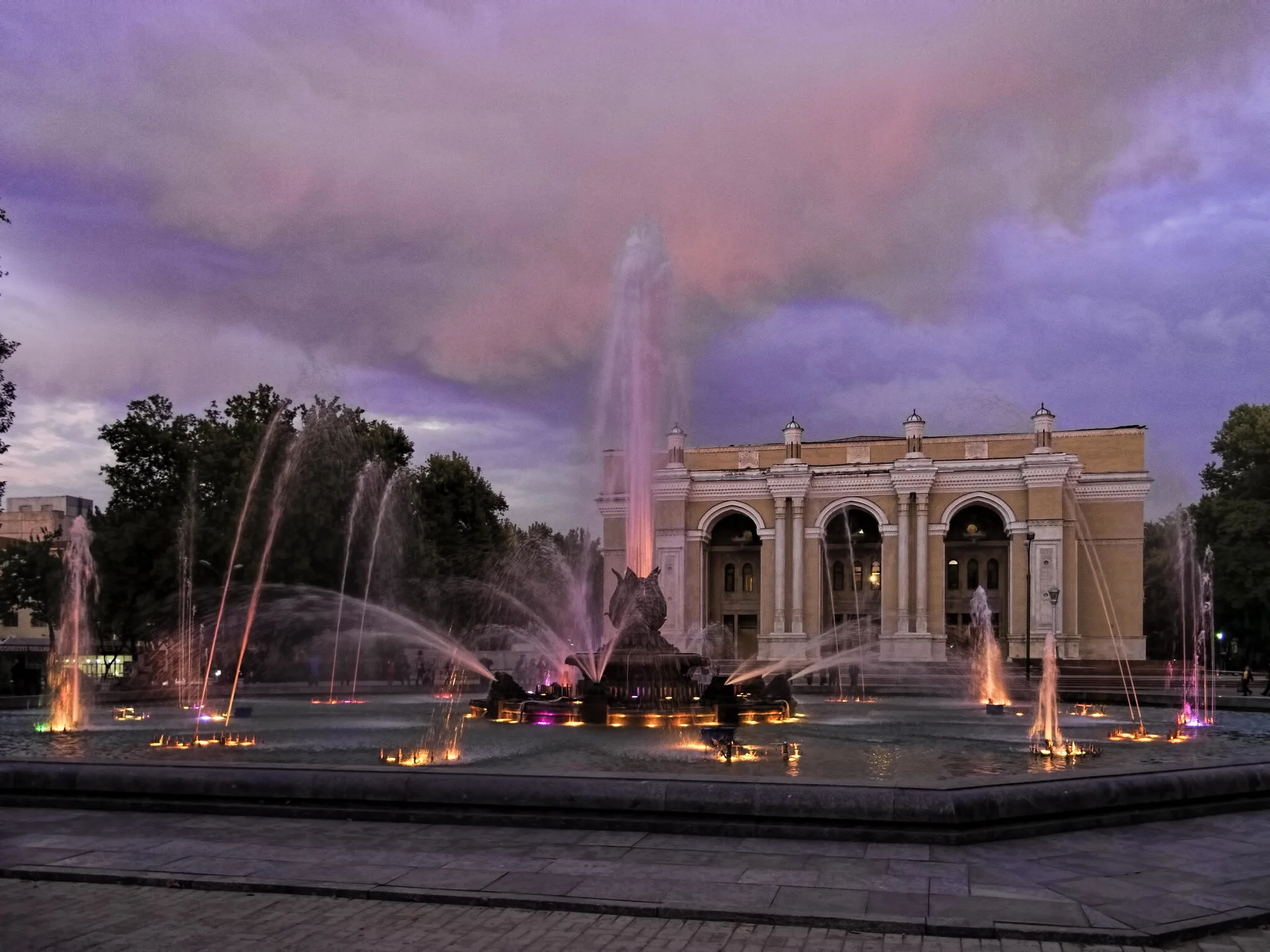
In the evening, the fountain lights up in front of the Alisher Navoi Opera House. Dan Lundberg. CC BY-SA 2.0.

 5.  The Alisher Navoi Opera House 

Romanesque pillars hold up this neoclassical beauty at the heart of Tashkent. At the front of this mainly Western-style theater is a remarkable fountain that stretches to the width of the building itself. Its distinctively European charm can be traced back to the classical architecture of czarist Russia. The Alisher Navoi Opera House was designed by Soviet architect Alexey Shchusev under Josef Stalin’s call to redesign Tashkent after World War II. Shchusev’s approach to building cultural institutions, including the famous Lenin’s Mausoleum, was to marry the decorative elements of Russian classicism with the structural integrity of Soviet brutalism. The space of the theater itself is adorned with arabesque etchings on its balconies and gold embellishments bordering the stage. Today, the Alisher Navoi Opera House remains a central playhouse for ballets, musical performances and plays. 

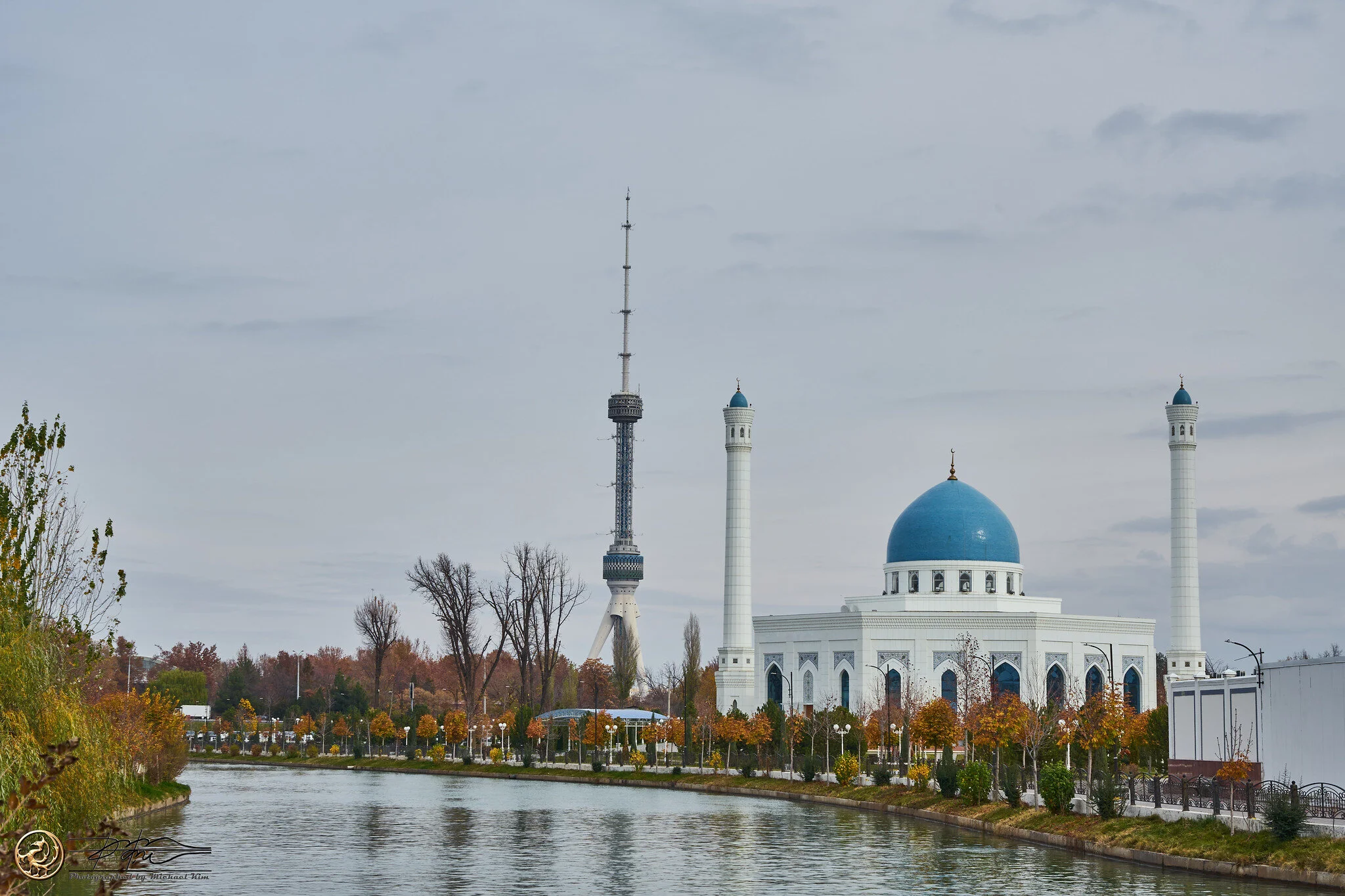
Minor Mosque sitting along the banks of Anhor Canal. Michael Kim. CC BY-ND 2.0.

6. Minor Mosque

Minor Mosque is a fairly new religious center which opened in 2014 under Islam Karimov’s presidency. Although the mosque follows the traditional structure with its two minarets and its sky-blue dome, it is completely different in material. Instead of being made a typical brown-toned brick base, the mosque is a glaringly white marble, making it a sight to behold. Its facade is decorated with curling floral patterns and Quran passages. Minor Mosque is a feat of Uzbek architectural accomplishment after its independence. The new site seems to reaffirm the country’s Islamic roots, while boasting of its modernization.

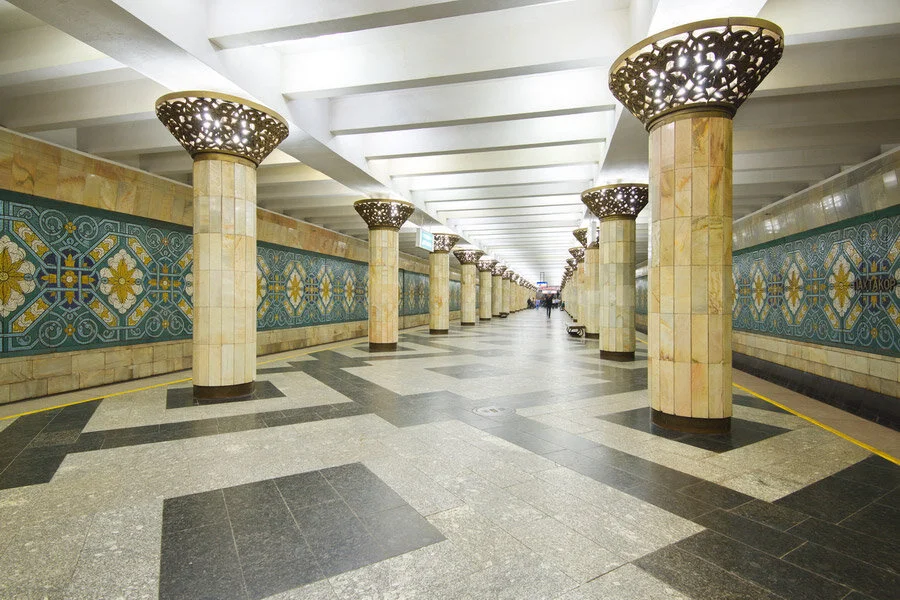
Pakhtakor Station has classical pillars and an arabesque mosaic on its walls. Valentin Parshin. CC0 1.0.

 7. Tashkent Subway System

Tashkent’s subway system is full of mosaic art, chandeliers and echoes of Soviet attempts at excellence. First opened in 1977 at the height of the Cold War arms race, Tashkent subway stations doubled as nuclear bomb shelters. Much like the famously extravagant subway stations in Russia, Tashkent’s are built with the utmost acuity to detail and order. 

Uzbekistan’s ongoing efforts to reform its Soviet past and its recent history under Islam Karimov are clearly expressed in the tearing down of older structures. As the city’s historic mahallas are demolished for the construction of shopping malls, new buildings threaten Tashkent’s original residences. Each monumental building in Tashkent is telling of Uzbekistan’s past under Russian occupation, its Islamic influences, and its encounters with globalization. Tashkent is a melting pot of architectural forms, and in some ways, the noteworthy buildings are used as both markers for national identity and foreign allure.  


Heather Lim

Heather recently earned her B.A. in Literatures in English from University of California, San Diego. She was editor of the Arts and Culture section of The Triton, a student-run newspaper. She plans on working in art criticism, which combines her love of visual art with her passion for journalism.

A Guide to Chatuchak: Thailand’s Largest Market

Chatuchak Weekend Market is Thailand’s largest market, containing over 15,000 stalls. The market offers anything visitors could want to buy and provides an incredible cultural experience. 

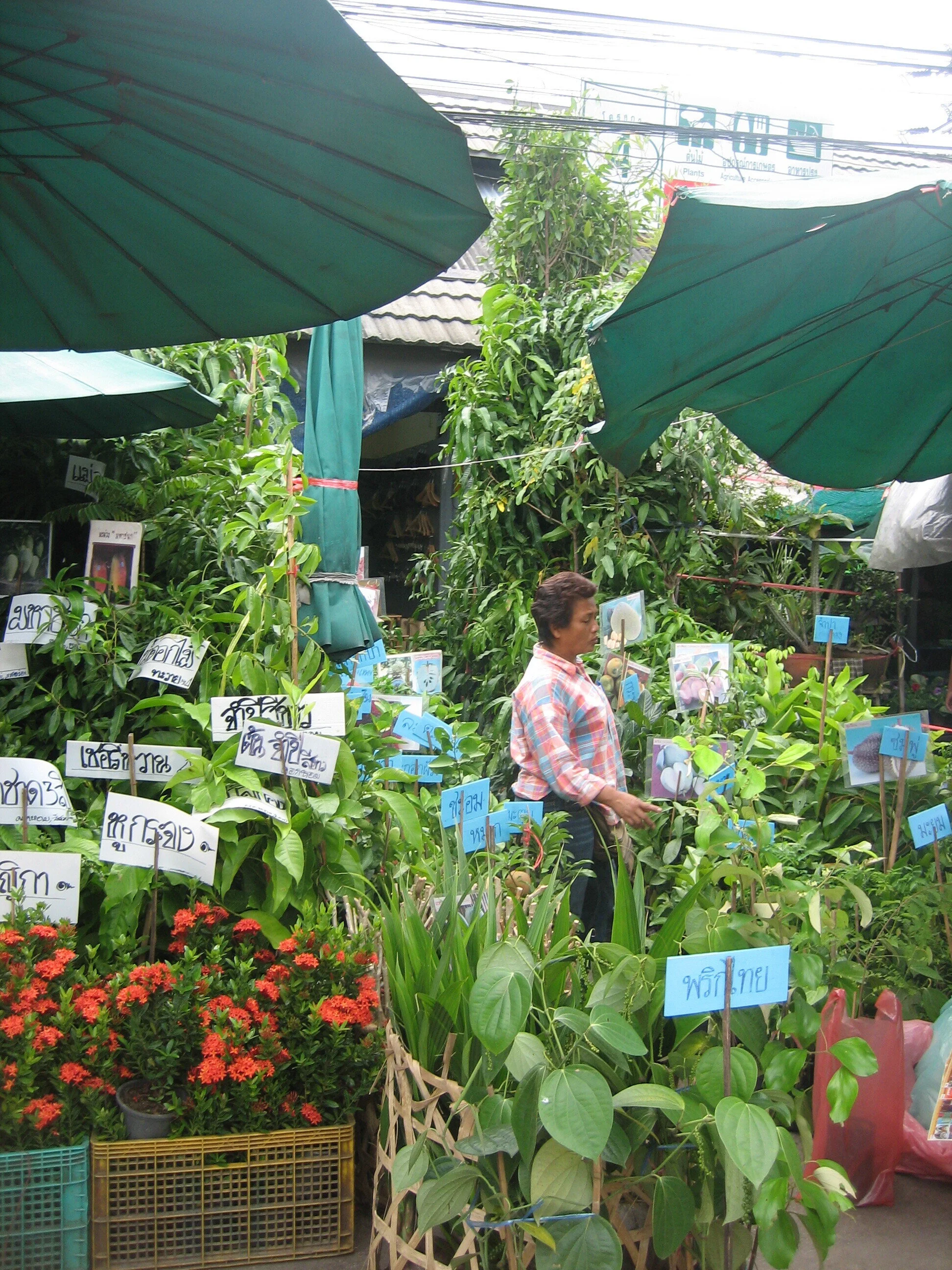
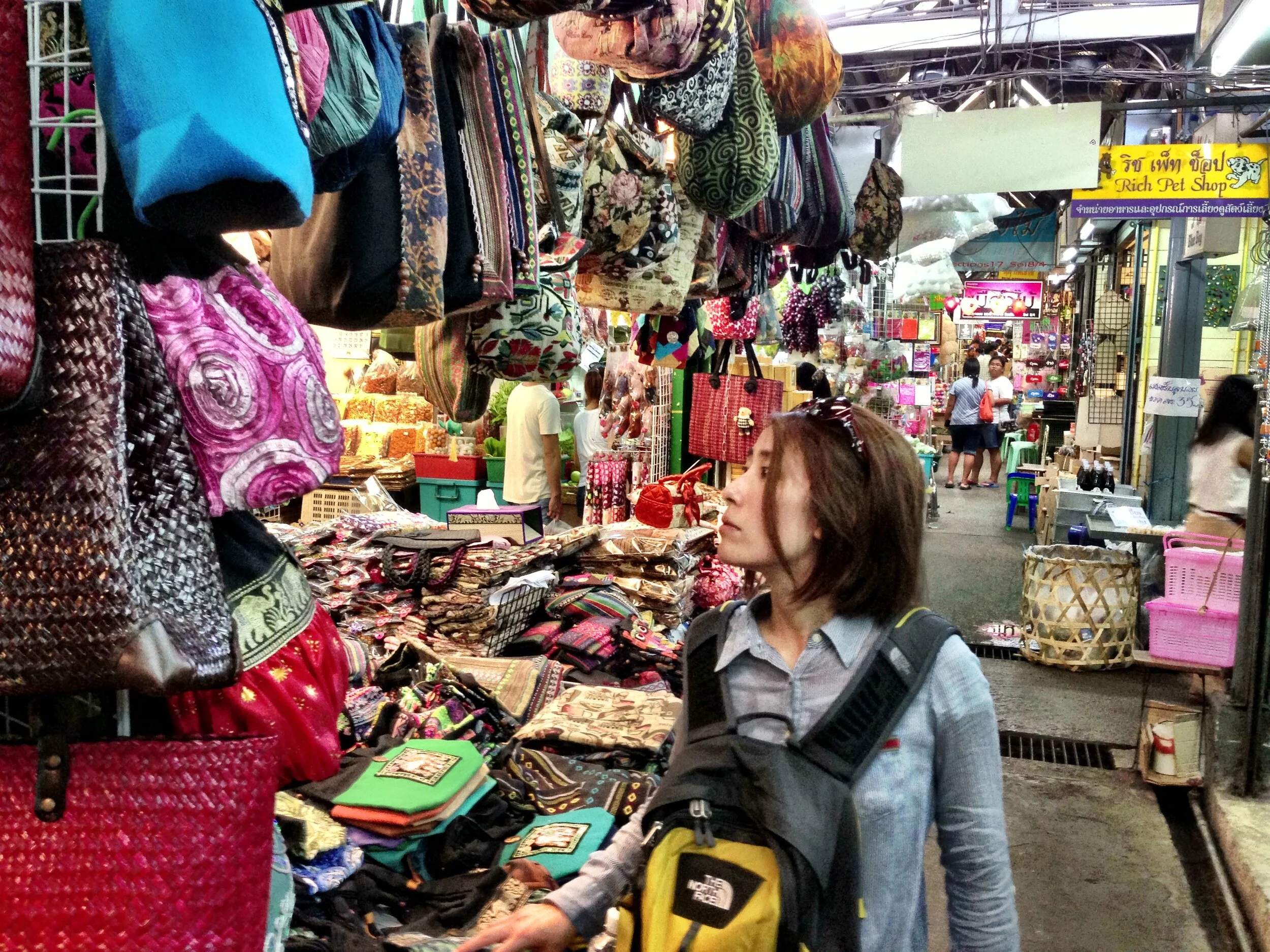
If you want to buy anything at all in Thailand, from vintage clothes and home decor to street food and exotic animals, visit the Chatuchak Weekend Market. The market spans 35 acres in Bangkok and contains over 15,000 stalls, making it Thailand’s largest market and one of the largest in the world. Chatuchak is divided into 26 sections and is so expansive that maps are available to help visitors navigate the vendors. Most of Chatuchak’s stalls are open on weekends, hence the common name “Chatuchak Weekend Market,” but a number of stalls are open during the week as well. 

Chatuchak Weekend Market, also known as “Jatujak” or “JJ Market,” opened over 70 years ago. It began as a small, local Bangkok market called Sanam Luang in 1942. The market opened as a result of the rule of Thailand’s third prime minister, Field Marshal Plaek Phibunsongkhram, who ordered that every town have its own flea market in order to promote trade and boost the local economy. The market was relocated numerous times over the years until it was permanently established in Chatuchak in 1982 and officially named Chatuchak Market five years later. Today, the market receives an estimated more than 200,000 visitors each weekend and is known around the world as a landmark and a must-see destination in Bangkok. 

Due to Chatuchak Market’s incredible size, it can seem daunting to visitors. However, many people say that spending a day in the market wandering and hunting for what you want is an exciting part of the Chatuchak experience, and navigating the market is not as difficult as it may appear. Visitors to Chatuchak can pick up complimentary maps showing the locations of vendors from kiosks along the main road, which circles the entire market. This main road branches into a number of smaller alleyways called “soi,” which make up the market’s 27 sections. These sections are not organized by product; clothing, for example, is found in nearly every section, but the numbered areas will help visitors get their bearings. Additionally, there is a Chatuchak Guide app available for iOS and Android that displays a live map and allows users to search for products and stalls. 

Vendors at Chatuchak Market control their own operating hours, so the market does not open or close at a set time. It is listed as being open from 9 a.m. to 6 p.m. on Saturdays and Sundays, but many vendors will remain open as long as there are customers around. For visitors who want to explore the market but will not be in Bangkok over a weekend, smaller sections of the market open on Wednesdays, Thursdays and Fridays. The plant section opens from 7 a.m. to 6 p.m. on Wednesdays and Thursdays, and the wholesale section from 6 p.m. to midnight on Fridays.  

Bartering is common in Thailand, so prices at most Chatuchak stalls are negotiable unless otherwise posted. The Chatuchak Market website notes that the best approach to bartering is “smiling and being polite,” and not being concerned about walking away if you don’t get the price you’re hoping for. Since Chatuchak has over 15,000 stalls, you’re likely to be able to find a better deal at another stall, and you can always return and renegotiate later.

 It is recommended that travelers planning to visit Chatuchak Market spend at least three hours for a brief visit and five hours or longer for a more in-depth look.The best time to arrive is in the morning to give yourself ample time to explore. Visitors should dress in comfortable clothing and shoes. There are public restrooms throughout the market. Chatuchak Market is easily accessible by public transportation such as Skytrain, subways and buses, or by taxi or tuk-tuk, a motorcycle with a small carriage for seating two to three people. 

Chatuchak Market is a wonderful place to spend a day while in Bangkok. It offers visitors an opportunity to experience a piece of Thailand’s history and culture, taste authentic Thai street cuisine like pad thai and coconut ice cream, and browse a wide range of unique products.  


Rachel Lynch

Rachel is a student at Sarah Lawrence College in Bronxville, NY currently taking a semester off. She plans to study Writing and Child Development. Rachel loves to travel and is inspired by the places she’s been and everywhere she wants to go. She hopes to educate people on social justice issues and the history and culture of travel destinations through her writing.

Visit Mexico and Germany on a Virtual Visit Staycation

With the ongoing COVID-19 pandemic and winter fast approaching, many who traditionally would take a holiday vacation are stuck at home in an effort to curb the spread of the virus. That said, one can still enjoy a nontraditional vacation while following proper safety precautions. Here is our guide to taking an international “staycation” featuring two different destinations, as well as tips on how to design your own trip abroad from the comfort of your couch.

Read More

Honoring San Basilio de Palenque: The First Town Liberated from Slavery in the Americas

The story of San Basilio de Palenque is one of unparalleled strength, resistance and bravery. 

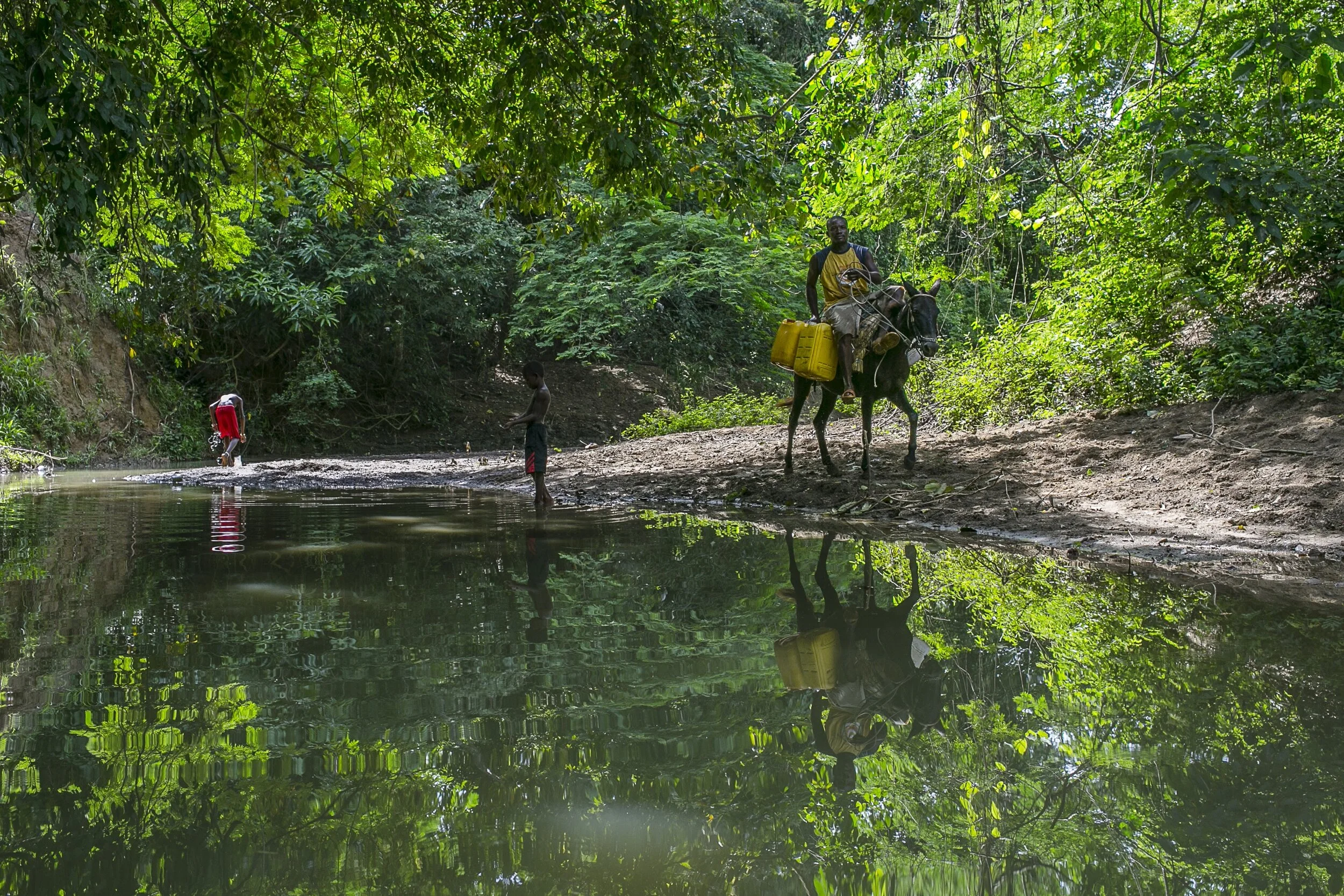
River near San Basilio de Palenque. Fundacion Gabo. CC2.0 

Roughly 30 miles away from the port city of Cartagena, Colombia, lies the small town of San Basilio de Palenque. Palenque has rich historical significance, as it was the first free African town in the Americas. The town was declared a “Place of National Character and Cultural Interest” by the Colombian government and a “Masterpiece of the Oral and Intangible Heritage of Humanity” by UNESCO in 2005. 

History of San Basilio de Palenque

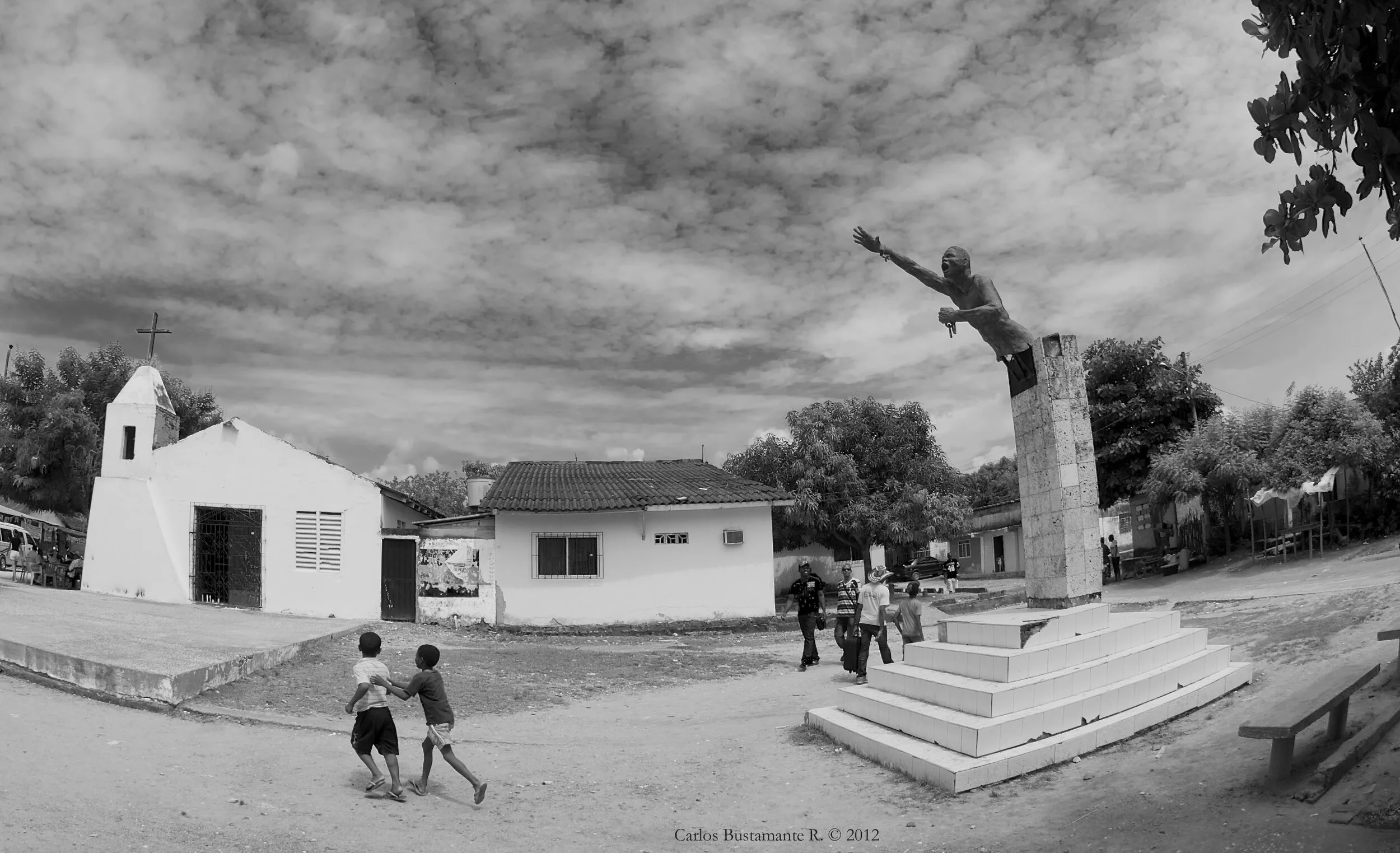
Town square in San Basilio de Palenque. Restrepo. CC2.0

San Basilio de Palenque was one of many walled forts, known as palenques, that were founded by those escaping slavery in colonial times. Founded in 1603 by Benkos Bioho and 36 other people, San Basilio is the only palenque remaining to this day and was successful due to its isolated location amid swamps and hills. Escaped slaves from Cartagena and surrounding regions would travel to San Basilio de Palenque in the hopes of seeking freedom. Against all odds, “palenqueros” formed their own army, language and support system to stay safe. The town was declared the first free town in the Americas in 1713, nearly 100 years before Colombia became independent from Spain. 

Palenqueros in Colombia Today

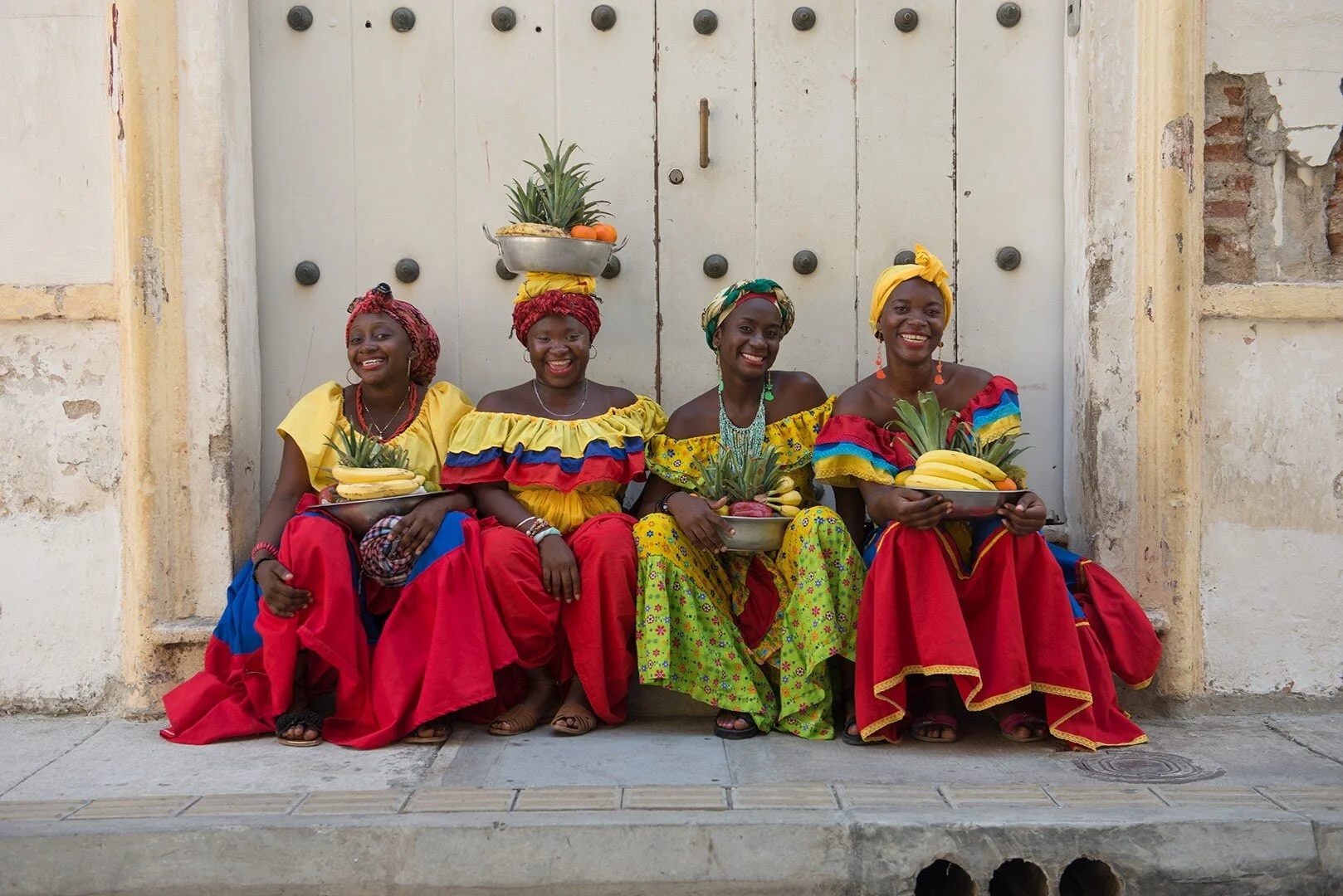
Palenquera women in Colombia. Vest. CC2.0

The isolated nature of San Basilio de Palenque provides limited employment opportunities, which in turn causes the migration of many palenqueros to larger cities in search of work. On the streets of Cartagena, palenquero men are engaged in construction projects while palenquera women wearing brightly colored dresses sell fresh fruit and traditional sweets made of nuts, tropical fruits and panela (unrefined sugar). In a video from Great Big Story, the palenquera Everlinda Salgado Herrera discusses the historical and cultural significance of a sweet called alegria (meaning happiness in Spanish), which represents the joy palenqueros felt when they found freedom.

Although palenqueros are becoming integrated into Colombian society, they were initially met with discrimination, sometimes leading to feelings of resentment and denial over their cultural and racial identity. In the 1980s and ‘90s, a young generation of palenqueros advocated for a resurgence of palenquero culture, hoping to promote an appreciation of their rich heritage. Strong cultural pride among palenqueros continues to this day.  Edwin Valdez Hernandez, a dance instructor at the Batata Dance and Music school in Palenque, states, "We defend our values with a shout. We are Black, and we are defending our culture."

Cultural Treasures of San Basilio de Palenque

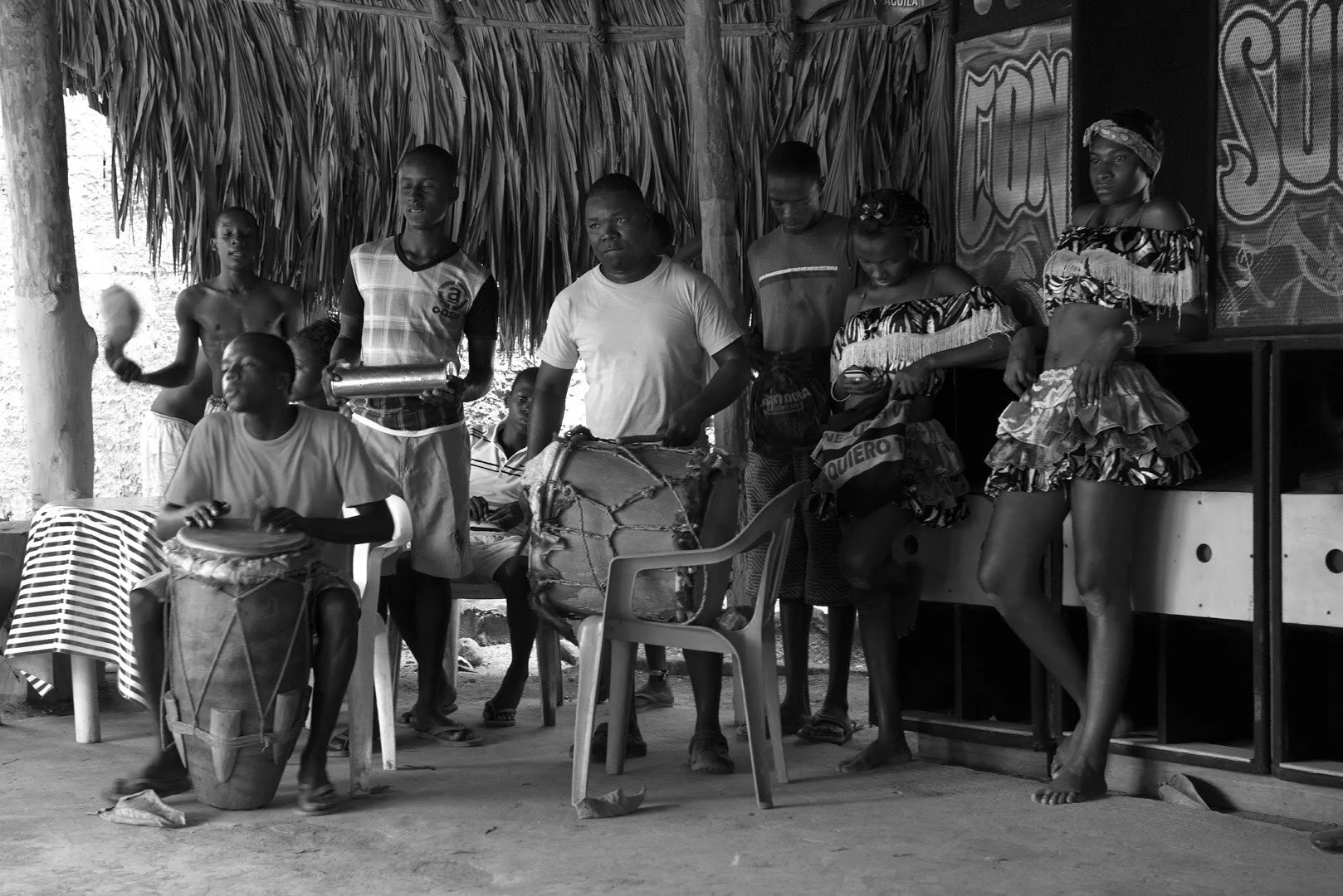
Drummers in Palenque. Vest. CC2.0

Palenque is known worldwide for its unique language, music and culinary scene. One of Colombia’s 69 Indigenous languages, the palenquero language is only spoken in San Basilio de Palenque. Captives on European slave ships came from all parts of Africa speaking a variety of languages. As a colonizing strategy, people were purposely mixed together so they would not be able to communicate to plan an escape. Despite this, palenqueros created their own language, influenced by Castilian Spanish, Bantu, Portuguese and English. 

The cuisine of San Basilio de Palenque is a delight for the taste buds. Some dishes include seafood rice, mote (a traditional Caribbean cheese), and fish cooked in a creamy coconut sauce with pigeon peas, cassava and panela sugar. Palenquero cooking continues to reach international heights, most notably when the book “Cocina Palenquera Para el Mundo” won first prize at the 2014 Gourmand Cookbook Awards in Beijing. 

Music is an incredibly important part of palenque culture and throughout Colombia. Palenque music is joyful with sweeping rhythms and fast drum beats and is coupled with bright costumes and a seemingly endless stamina for dancing. Some of the many dance styles include chalusonga, paseo, champeta, entrompao and palenquero son. Travelers can learn about Palenque’s rich musical culture by attending the Drums and Cultural Expressions Festival held annually in October. 

The town of Palenque is also known for its interesting methods of running society. Instead of a police presence, Palenque is organized into systems called ma-kuagro, where people have designated roles and watch over each other. The crime rate in the town is nearly nonexistent due to this sense of community among Palenqueros. Interestingly, palenque women’s hairstyles also have historical significance. In colonial times, women would braid intricate patterns in their hair that were used to create maps, store gold and transmit messages to help people reach freedom. A statue of Palenque founder Benkos Bioho breaking out of chains stands in the town center. 

A place of redemption and perseverance, San Basilio de Palenque is a cornerstone of Black resistance in Latin America and a perfect destination for a socially conscious traveler. Confronting past historical truths and being willing to listen to others’ experiences helps shed light on modern social issues to hopefully make the world a brighter and better place. 

Megan Gürer

is a Turkish-American student at Wellesley College in Massachusetts studying Biological Sciences. Passionate about environmental issues and learning about other cultures, she dreams of exploring the globe. In her free time, she enjoys cooking, singing, and composing music.

Throwing Tomatoes: Spain’s Festival of La Tomatina 

Sometimes organized chaos is just what a town needs to bring its residents together. Spain’s annual tomato-throwing festival of La Tomatina has certainly proven this true. 

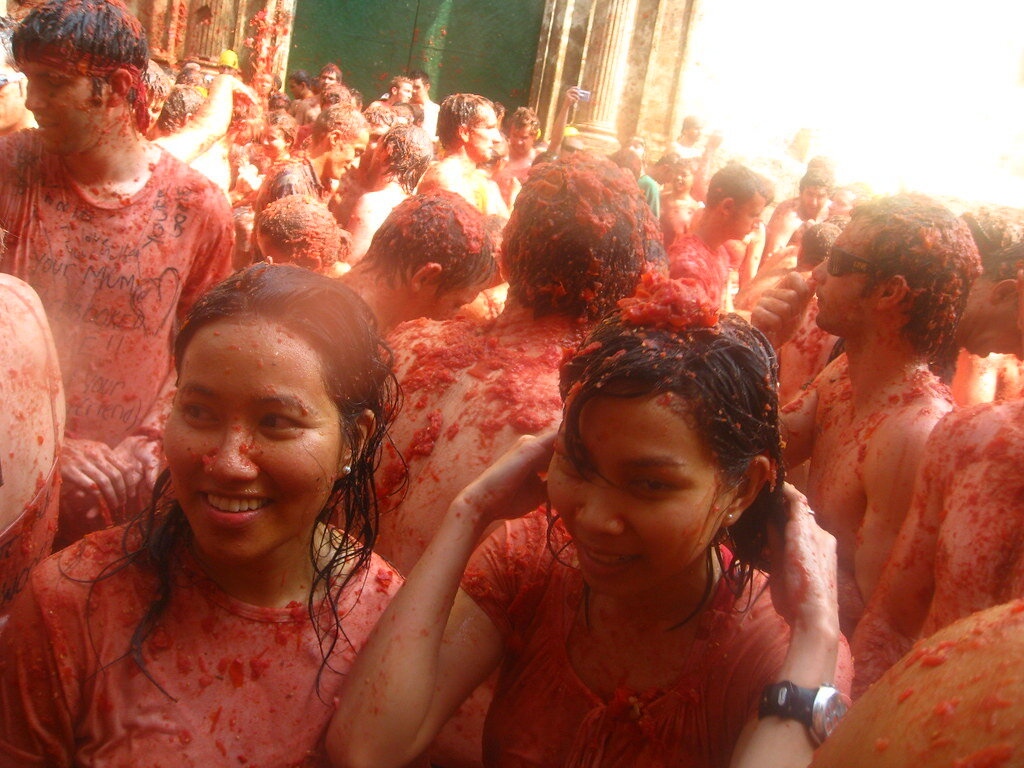
Festivalgoers covered in tomatoes. dahon. CC BY-ND 2.0. 

Considered the world’s biggest food fight, Spain’s annual festival of La Tomatina draws countless residents and visitors to the streets. Held in the small town of Bunol near Valencia, Spain, the festival brings in over 20,000 people every year. The town, which is home to only 10,000 residents, doubles in size during La Tomatina.

The festival takes place on the last Wednesday of August, but has been canceled this year due to COVID-19 restrictions. 

Over the past several years, the festival’s appeal to visitors has skyrocketed. What was once an informal celebration now requires tickets to limit the guests to the small space available; the town plaza comfortably fits 9,000 people but well over 20,000 take part. 

The origin of the festival dates back to 1945, when it is told that a group of rambunctious boys started this cherished tradition. It is said that during a town festival, one of the boys fell down in the chaos of the parade. He then knocked over a vegetable cart, causing anger among the other observers. People began throwing the tomatoes at each other, and thus this tradition was born. 

The festival tickets can only be purchased if you are 18 years or older, but there is still a place for young feisty participants. Another festival called Tomatina Infantil, or Tomatina Kids, is held for children between the ages of 4 and 14. It takes place on the last Saturday of August, a few days after the main celebration. 

The festival itself is a brief event lasting only one to two hours. Shopkeepers prepare for the mess by using large plastic covers to protect their shops being painted red. Large trucks pull into the town center and volunteers toss tomatoes to participants eager to load for battle. The beginning of the festival is marked by a cannon shot at noon, and an hour or so later, a second cannon is shot to mark the end of the festival. Over 300,000 pounds of tomatoes are tossed around. Additionally, participants are given quite a few rules to prevent injury and severe pummeling. These rules include no bottles or hard objects, no tearing or tugging on your own or others’ clothing, requiring all tomatoes to be squashed before throwing, and participants needing to stop throwing tomatoes once the second cannon is shot. 


Once the fight has concluded, helpers hose down the painted buildings while participants wash each other. Meanwhile, other participants take a dip in the Bunol River to wash off. 

Although chaotic, La Tomatina is a testament to the power of happy accidents bonding a town and its many welcomed visitors.

Ella Nguyen

is an undergraduate student at Vassar College pursuing a degree in Hispanic Studies. She wants to assist in the field of immigration law and hopes to utilize Spanish in her future projects. In her free time she enjoys cooking, writing poetry, and learning about cosmetics.

What Makes Bhutan So Happy?

Meet the country which prioritizes the contentment of its citizens before everything else through its “Gross National Happiness” program.

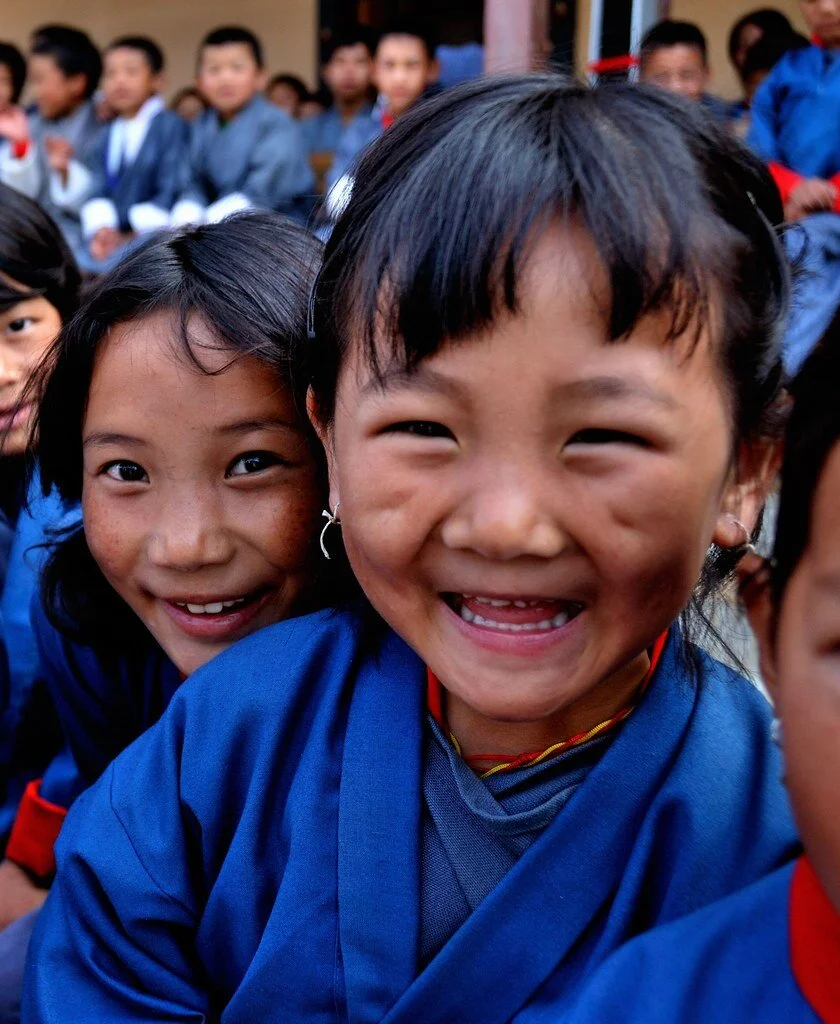
Bhutanese children. r y _ _ _ _ . CC BY-NC 2.0

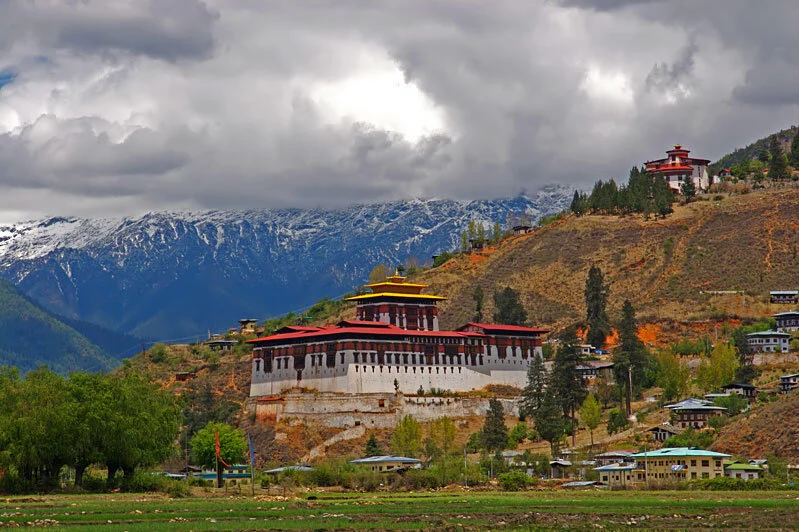
Imagine a country hidden away from the rest of the world. Tucked in between China and India, the world’s most populous countries, little Bhutan rests at the base of the Himalayan mountains. The rural country long ago made the decision to close off its borders to most tourism in hopes of preserving the nation’s unique Buddhist culture and the identity of its 740,000 people. In 1974 the country gradually reopened, though the Bhutanese monarchy was reluctant for the nation to be connected with the rapidly urbanizing world. Bhutan could not be completely isolated for long due to globalization, and in 1999 internet and Wi-Fi were quickly introduced. Being alone for so long, Bhutan was innovative in ways that made sense for its culture and ecosystem.

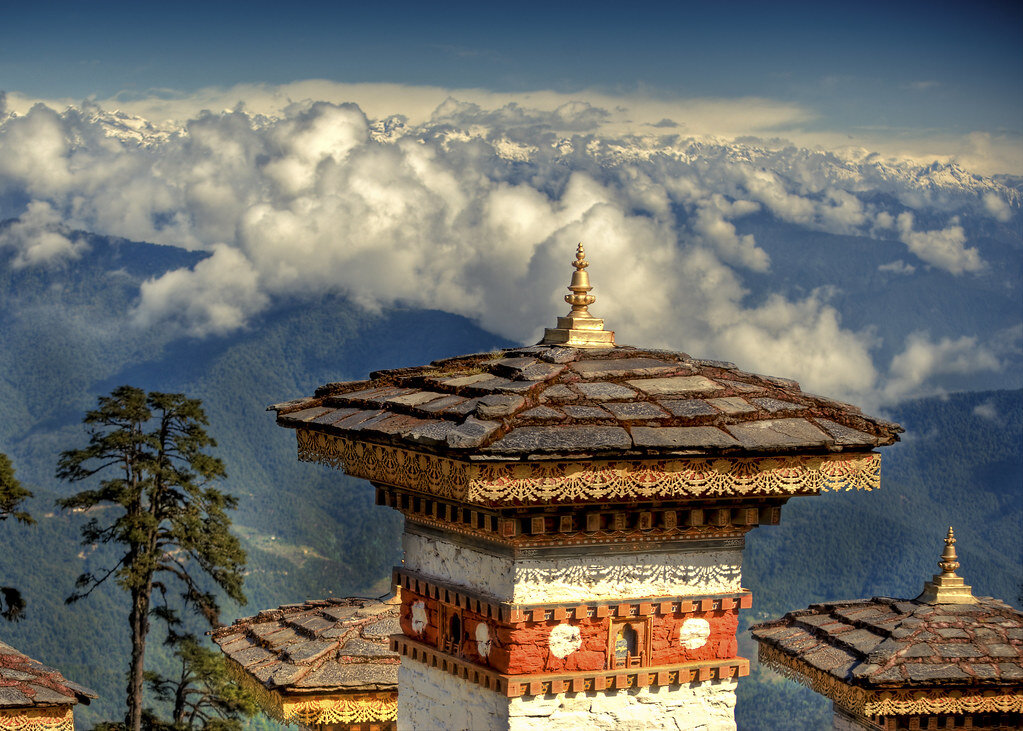
Dochula Pass. Göran Höglund (Kartläsarn). CC BY 2.0

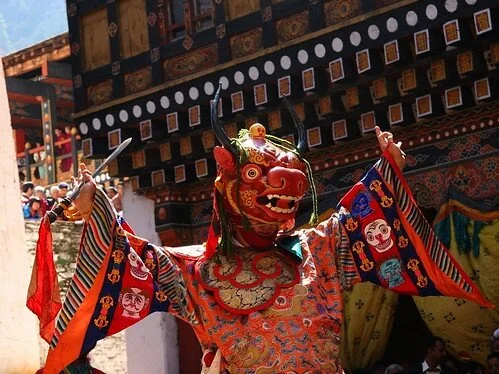
Bhutan is unique in its location and recent connections to the outside world, but it’s the traditions and customs within Bhutan that really make it a sight to behold. Even during the age of colonization and imperialization, Bhutan was never colonized. The country’s official religion remains Vajrayana Buddhism, a deity-dense, merit-based and karma-focused faith implemented into everyday life and routines. 

Bhutan Buddhist monk sand art. John K. CC BY-NC-ND 2.0

Dance of the death god. jmhullot. CC BY-SA 2.0

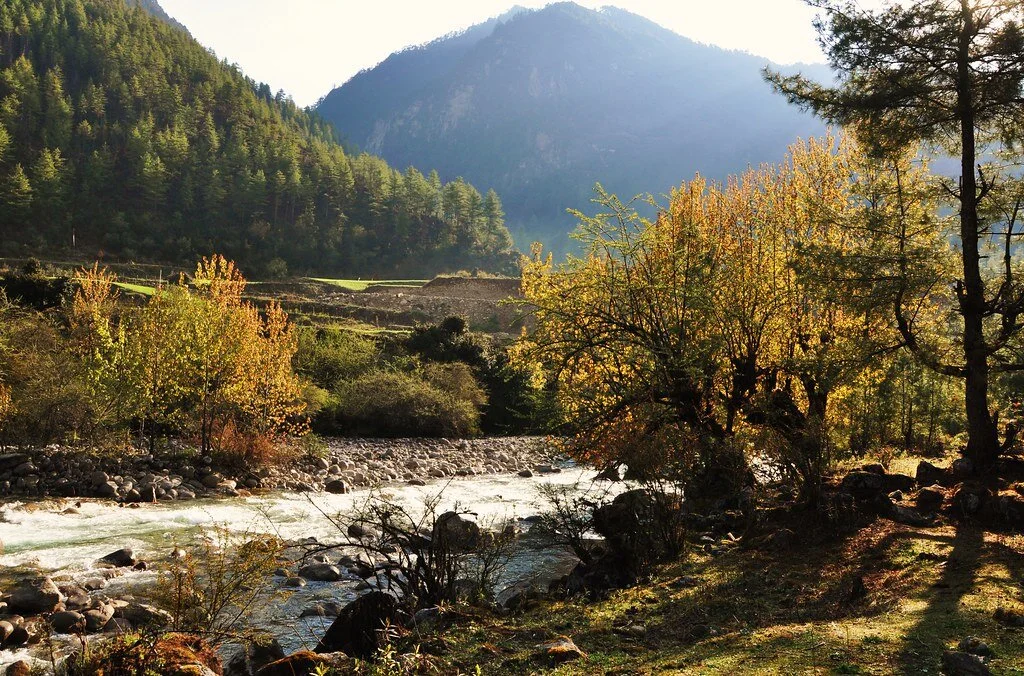
Ecology is everything. Bhutan is the only carbon negative nation in the modern world, absorbing three times more carbon than it produces. In light of climate change, that feat is revolutionary. Its government has established laws that require Bhutan to always have its area 60% covered in forest lands. Keeping in mind its minimal carbon footprint, Bhutan is still vigilant about tourists who enter the country, always prioritizing  the preservation of the nation’s cohesive identity. The tourist industry is nationally regulated, making it expensive and difficult to travel to. Documents and visas are issued by state-appointed companies and provide visitors with everything, including hotels, insurance and most importantly a guide who must accompany travelers at all times

Ecology is everything. 360around. CC BY 2.0

Ecology and tourism are not the only things the government has taken to regulating. Bhutan is once again unique in national policy, measuring its nation’s happiness. Outsiders like to say that Bhutan is the “happiest country in the world” and the statistics given by Bhutan back up this claim. In 2015, the annual extensive survey that gauges the nation’s happiness concluded that 91% of its population was happy.” The Ministry of Happiness measures the contentment of its population with “Gross National Happiness” (GNH). 

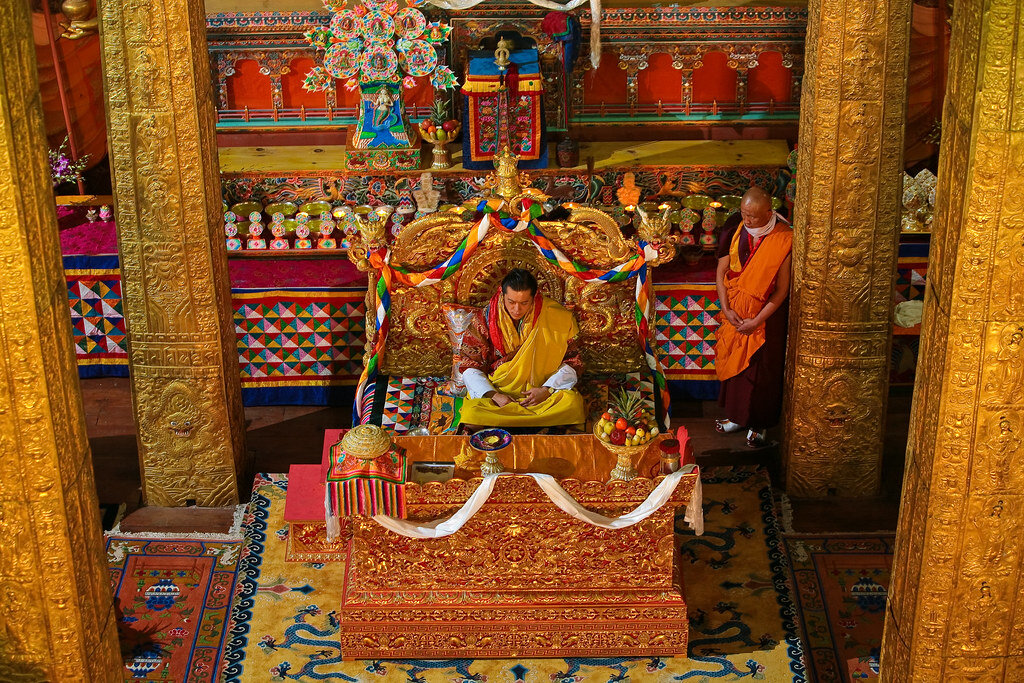
King of Bhutan. Bhutan-360. CC BY-NC-SA 2.0

Ex-Prime Minister Tshering Tobgay defined it as “a developing philosophy that acknowledges that economic growth is important, but that growth must not be mindless, but sustainable.”

Much like a country’s gross domestic product, GNH is considered important. Established in 2008, the Gross National Happiness Commission was appointed to take into consideration and care the inner peace of Bhutan’s people. Broken down into four pillars, nine domains and 72 indicators, GNH is a difficult concept to comprehend. The country’s leaders take into account how happy its people are in every aspect of life: governance, health, education, living standards, culture, ecology, time use and psychological well-being. 

Tobgay breaks Bhutan’s complicated process down to three components: the key to happiness is security, identity and purpose. These things are not mutually exclusive; they reinforce one another in every direction, both on an individual and a national level. He says that, “The government has a responsibility to ensure the whole nation has individual pursuit of the keys to happiness.” 

Temple overlooking the Himalayas. Jean Marie Hullot. CC BY-SA 2.0

The Bhutanese are often misunderstood. Outsiders often believe that just because they have GNH, it automatically makes them the happiest country in comparison to all others. They have free health care, free education, clean air, a thriving environment and a strong sense of community. But Tobgay argues that the Bhutanese still struggle because that is what it means to be human. Bhutan is a “real country with real people, and real desires.” Although every person may suffer from inner turmoil for whatever reason, the Bhutanese should be happy knowing that they have been given the keys to happiness.


Yuliana Rocio

Yuliana is currently a Literature/Writing major at the University of California San Diego. Yuliana likes to think of herself as a lover of words and a student of the world. She loves to read, swim, and paint in her free time. She spent her youth as part of a travel-loving family and has grown up seeking adventure. She hopes to develop her writing skills, creating work that reflects her voice and her fierce passion for activism.

10 Mouthwatering Rice Dishes from Around the World

The world is filled with a variety of rice dishes. 

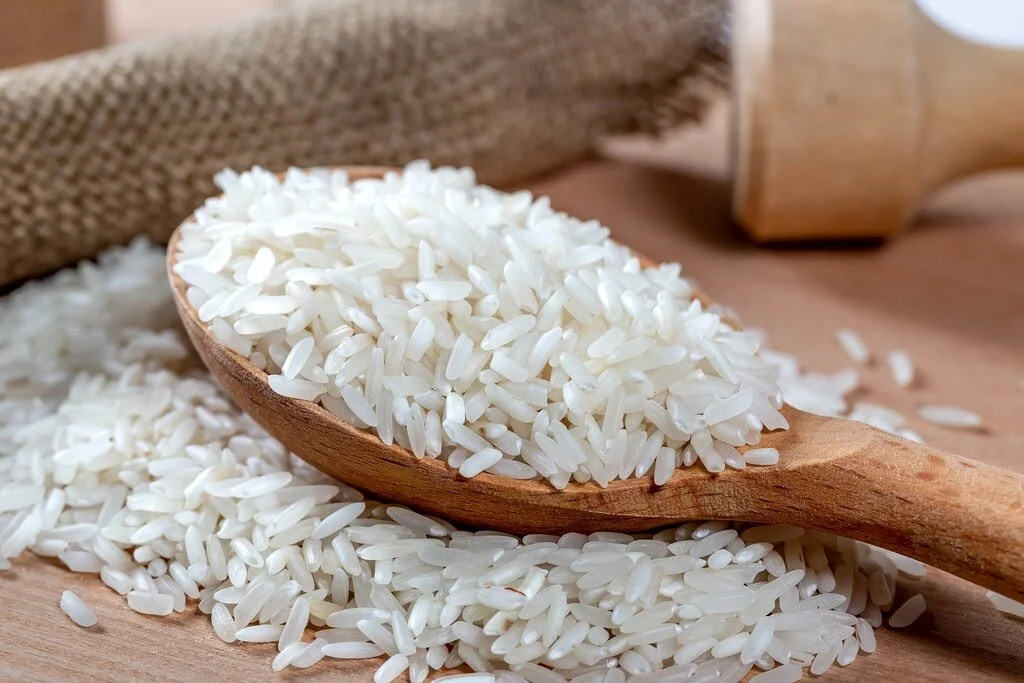
Rice grains. Verch. CC2.0

No matter where you are in the world, rice is a much loved staple. First cultivated in China and spread through international trade and migration, every region has its own way of preparing rice with local spices and ingredients. Here is a sample of 10 unique and culturally significant rice dishes from around the world. 

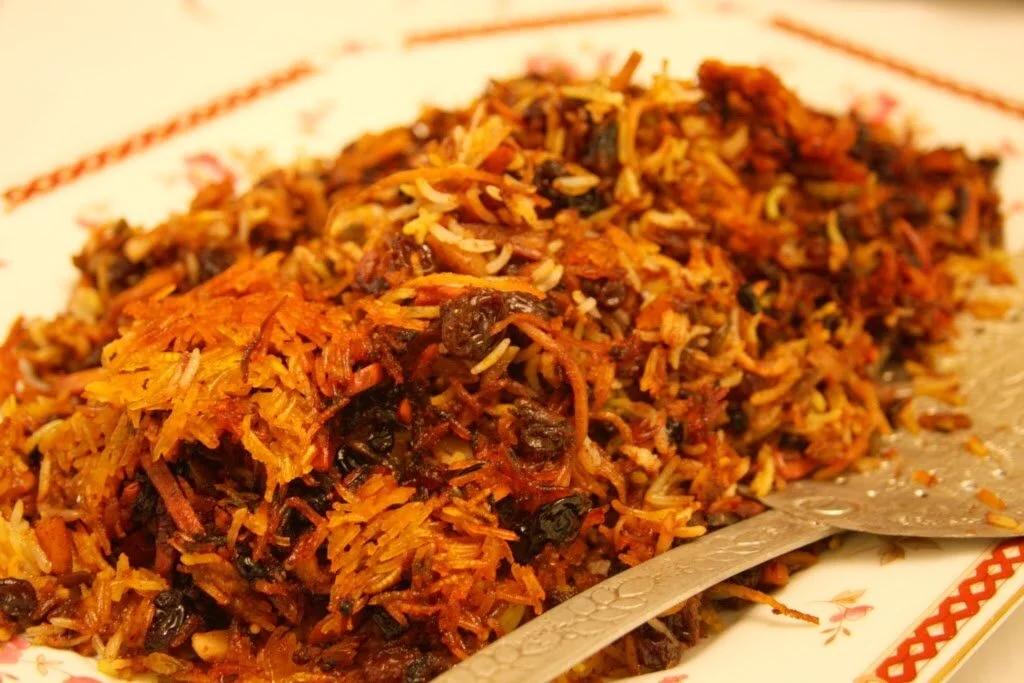
Morasa polo with tahdig. Moos. CC2.0

1. Morasa polo (jeweled rice): Iran

Morasa polo (jeweled rice in Farsi) is one of Iran’s most festive dishes, traditionally served at celebrations and weddings to bring “sweetness” to a married couple. The rice is topped with various types of fruits and nuts, each representing a desired jewel. For example, barberries represent rubies and pistachios represent emeralds. Each component of the rice is cooked separately in sugar to give the dish a little sweetness. No plate of rice in Iran is complete without tahdig (literally “bottom of the pot”), referring to the crispy layer of rice at the bottom of the pan. One of the most coveted and challenging techniques to master in Persian cuisine, tahdig can be made several ways by using ghee, saffron, potatoes and lavash bread to give that desired crunch. 

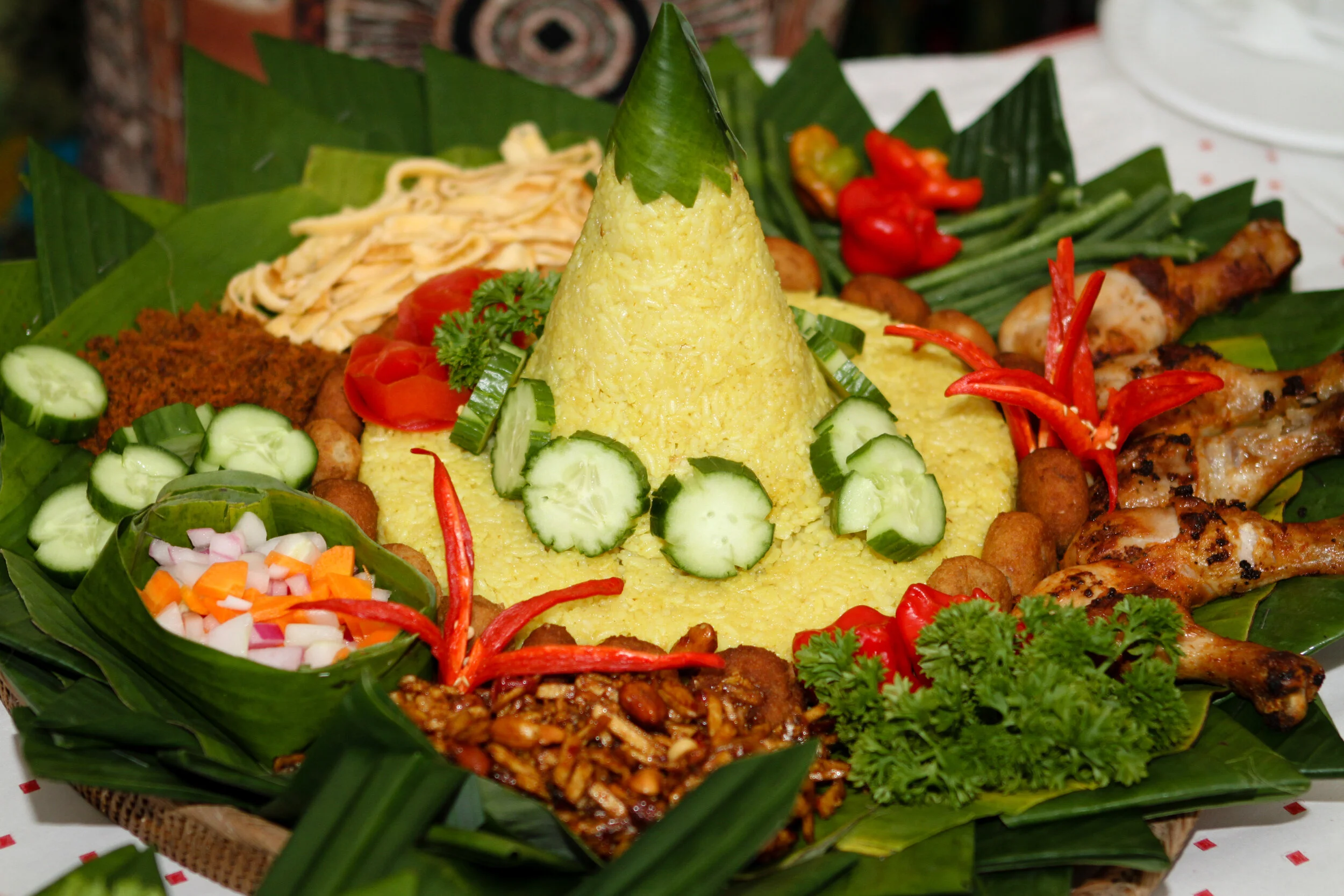
Nasi tumpeng. Kenwrick. CC2.0

2. Nasi tumpeng: Indonesia

Nasi tumpeng is a traditional rice dish served at a selamatan, a traditional ceremony for special occasions such as birthdays and weddings. The dish consists of a tall rice cone in the center, usually yellow rice, which represents the mountains and volcanoes of Indonesia’s landscapes. According to tradition, the yellow mountain of rice refers to Mount Semeru, home of the hyang, the spirits of Indonesian ancestors and the Hindu gods. The dish is accompanied by seven side dishes with a balance of chicken, seafood, eggs and vegetables that represent the helping hands of God. Nowadays, the dish has been ingrained in Indonesia’s Muslim culture representing gratitude toward God. 

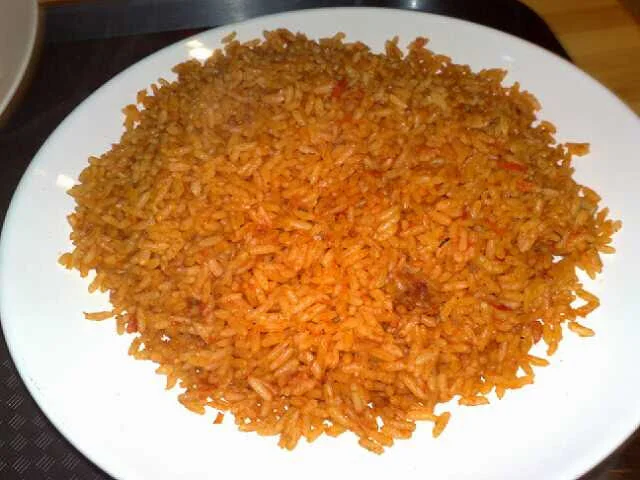
Jollof rice. Secretlondon123. CC2.0

3. Jollof rice: West Africa

Widely enjoyed across Africa, there is perhaps no dish that has sparked such heated discussion over its origins as jollof. A staple in social gatherings and weddings across West Africa, the rice is cooked with tomatoes, onions and peppers with additional seasonings depending on the region. Historians credit the origin of jollof rice to the Senegambia region, with cultural exchange then spreading it across the rest of West Africa. However, Nigerians, Ghanaians and Senegalese all claim the origins of this dish and are eager to debate which version is better with online battles (#JollofWars) and cook-offs. The dish is also popular among the African diaspora in the American South. In fact, popular dishes such as jambalaya and gumbo are believed to have their origins in jollof rice.  

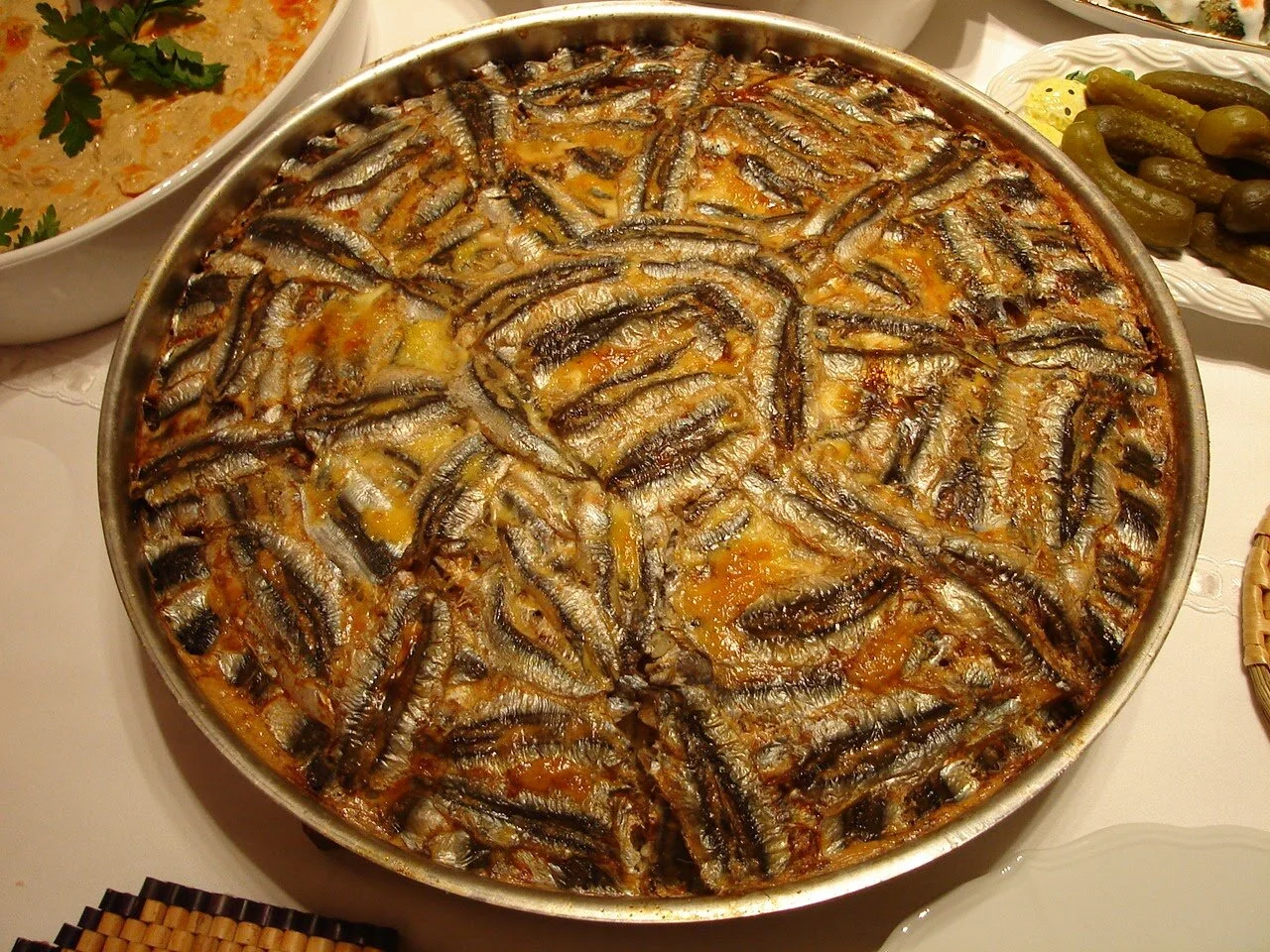
Hamsili pilav. Vardar. CC2.0

4. Hamsili pilav: Turkey 

Although there are many types of pilaf in Turkey and the Middle East, hamsili pilav is one of the most unique and visually striking versions, with layers of fish covering up rice. Hamsi, also known as European anchovies, are considered Turkey’s national fish and play a crucial role in the culture and cuisine of the Black Sea region. Many poems and songs have been written about hamsi and the small but mighty fish is used in a variety of dishes, from breads to pickles and even jam. Known to be a favorite of the sultans during the Ottoman Empire, hamsili pilav is still a favorite in Turkish homes, especially among the Laz people living in the northeastern regions of the country. 

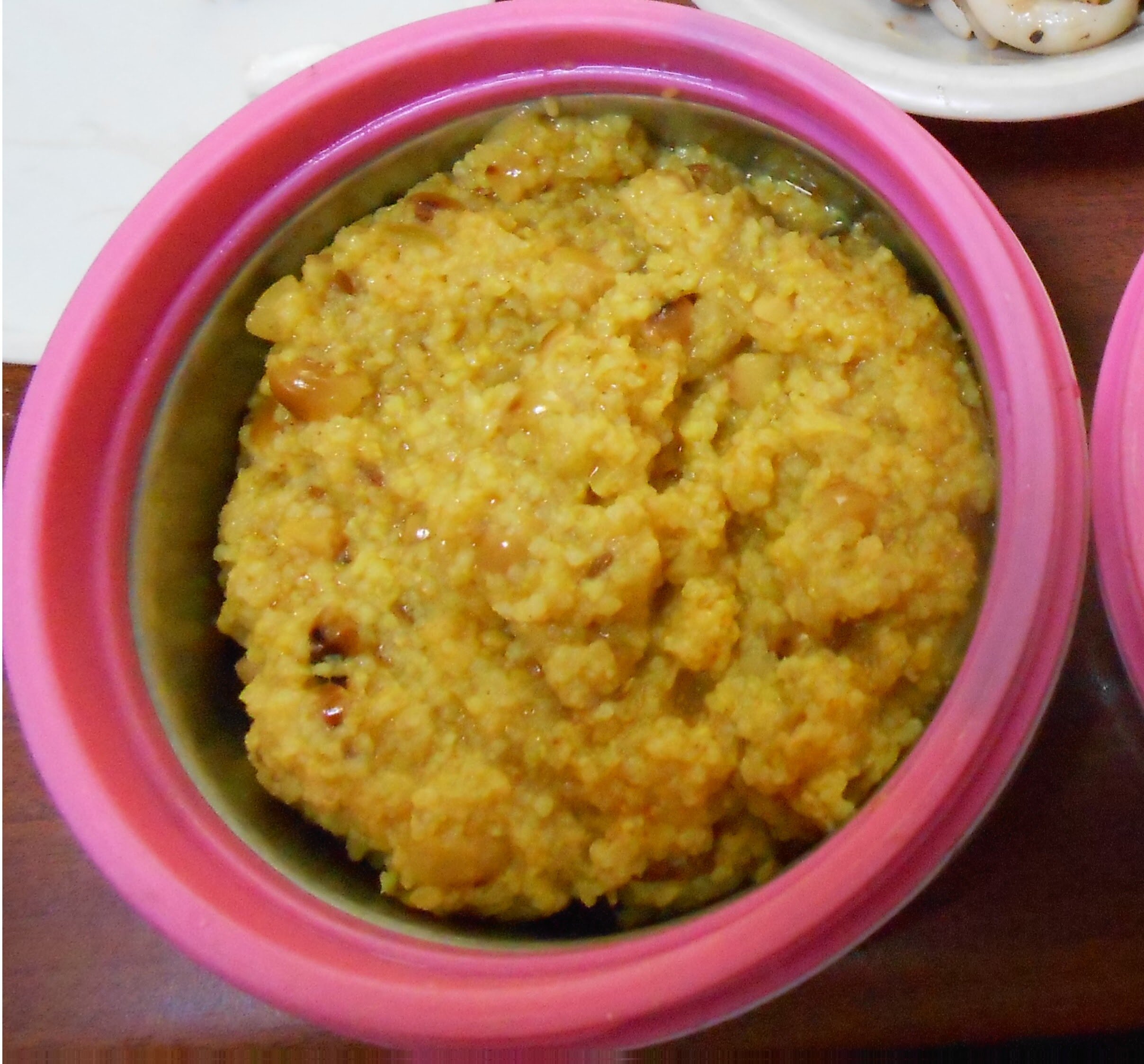
Khichdi. Tushar. Wikimedia Commons. CC4.0

5. Khichdi: Indian Subcontinent

This humble but delicious dish is heavily ingrained in South Asian food culture. Most commonly made with rice and moong dal (a type of legume), it is one of the first foods that babies eat in Hindu culture. Easily digestible and nutritious, khichdi is popular across South Asia, including in India, Pakistan, Nepal and Bangladesh. Many regional variations of khichdi exist, adding available ingredients such as vegetables, spices, dried fruits and coconut. The Bengali variation, known as khichuri, is a rather elaborate version, served with an array of vegetable dishes, fried fish and curries. 

Maqluba. Homan. CC2.0.

6. Maqluba: Palestine 

Often considered Palestine’s national dish, maqluba is enjoyed at least once a week by many Palestinian families. Meaning “upside down” in Arabic, the dish is cooked in one pot with layers of meat (chicken or lamb), vegetables (most commonly potato and eggplant) and rice. Once the dish is cooked, it is flipped over onto a plate and served. 

Cooking traditional foods allows Palestinians to cherish their culture while empowering themselves and their families. The Noor Women’s Empowerment Group is run by 13 Palestinian women working to overcome social stigmas faced by women and disabled children in Aida refugee camp. The organization holds traditional Palestinian cooking classes as a way to generate income to support their families and give visitors an insight into Palestinian life and culture. The organization has garnered international attention and received a visit by celebrity chef Anthony Bourdain in 2013. 

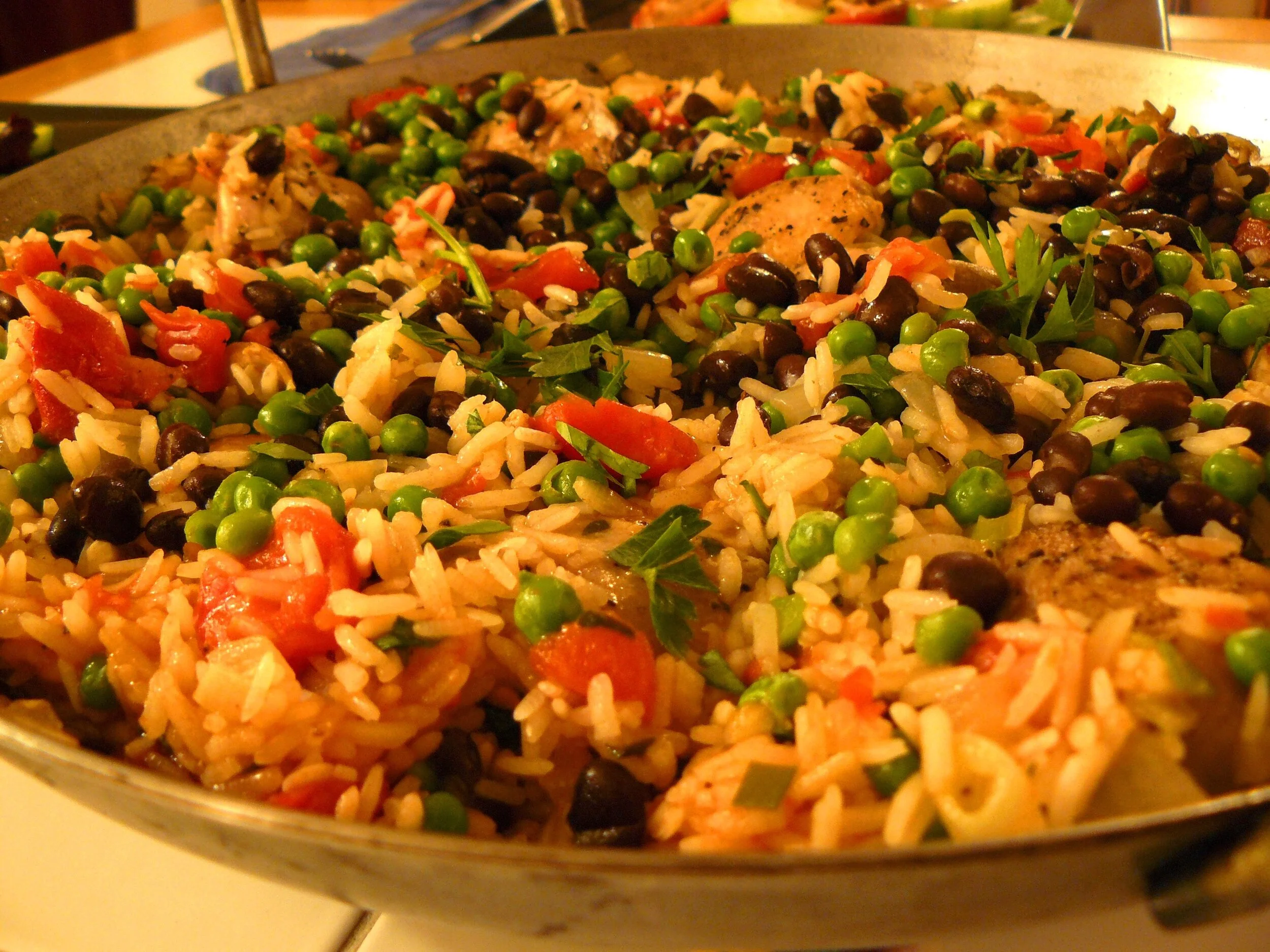
Arroz con pollo. Sea turtle. CC2.0

7. Arroz con pollo: Latin America and Spain

Translating as “rice with chicken,” this incredibly versatile rice dish is enjoyed across Latin America and Spain. The dish is thought to be connected to the Spanish paella and could have its origins from Arab influence in Spain as early as the 8th century. However, there is some debate as to whether the dish actually originated in Puerto Rico, as it is one of the island’s classic dishes. Arroz con pollo is seared chicken cooked with rice and vegetables, although seasonings vary from country to country across Latin America. For example, Mexican versions use chile, Colombian versions use a sofrito (blend of flavors including tomato and saffron) and Peruvian versions include cilantro and dark beer. 

Ozoni. David Z. CC2.0

8. Ozoni: Japan 

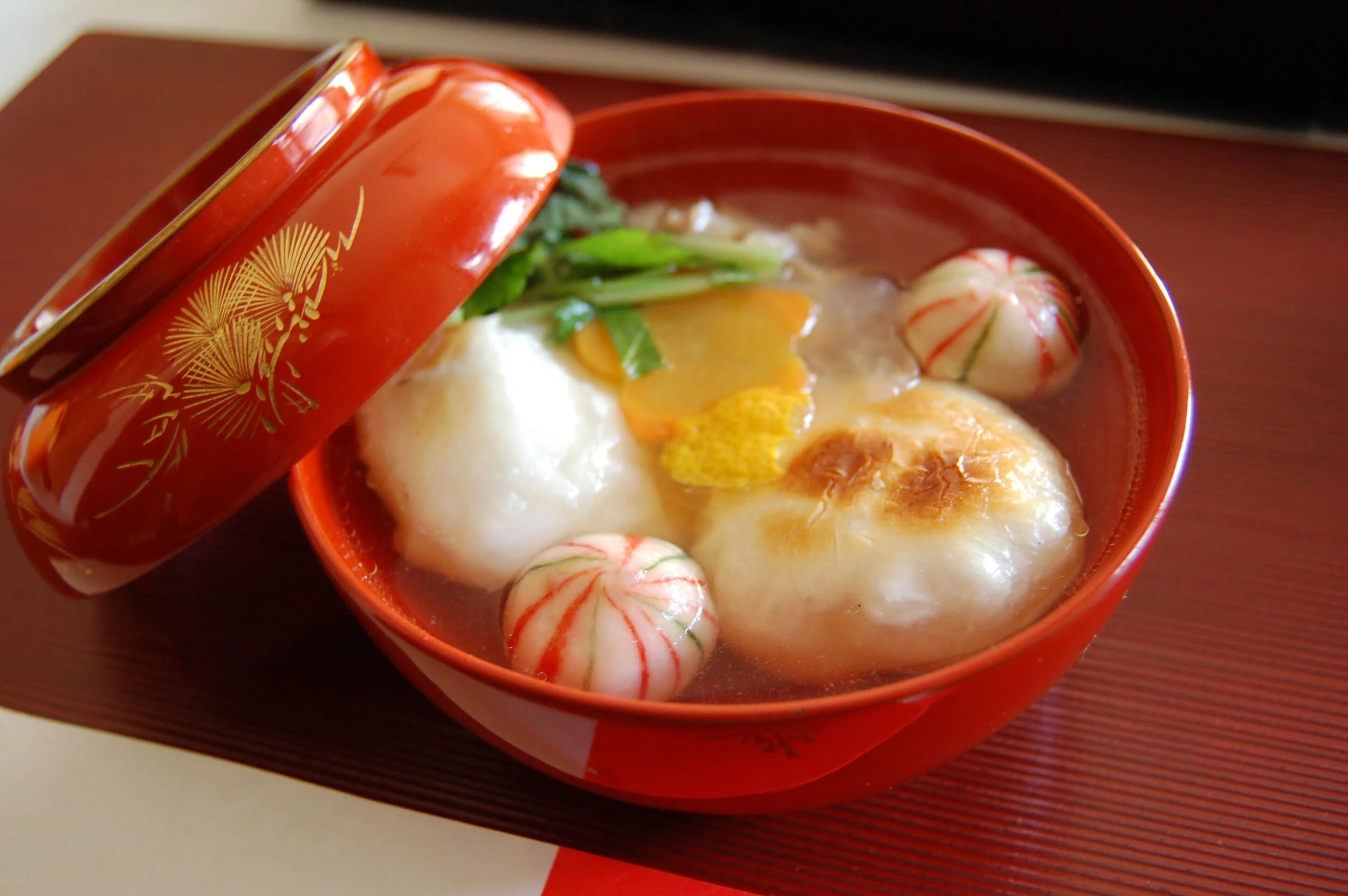
Ozoni (also spelled as zoni) is a soup that is eaten on the morning of New Year’s Day in Japan. The soup contains mochi cakes, either round or square-shaped, a clear dashi broth (made of dried kelp and bonito flakes) and other ingredients depending on the region. In areas closer to the water, seafood is added to the broth while more vegetables are used in inland areas. All ingredients have a special meaning that guarantees luck for the upcoming year. As mochi is stretchable, it represents longevity. Local produce is added for a bountiful harvest in the new year. 

Wild rice. Emily. CC2.0. 

9. Wild rice: North America

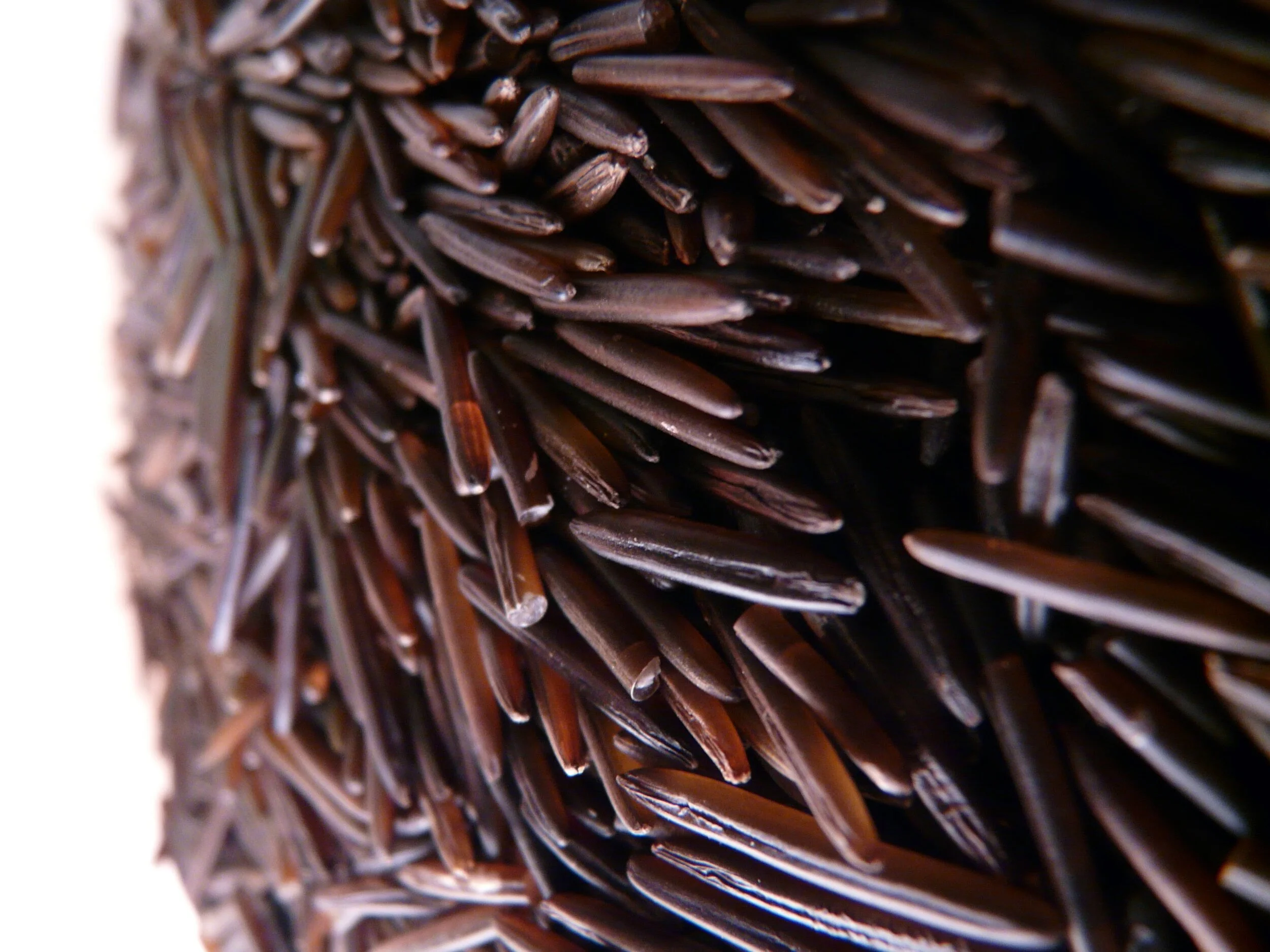
Considered to actually be an “aquatic grass seed,” wild rice has a higher nutritional value than regular rice. Wild rice is a staple of the Ojibwe people of southern Canada and the United States’ northern Midwest. The month of September was called “ricing moon”, when the Ojibwe left their homes to begin the weeklong process of harvesting the rice. Wild rice was a popular commodity at trading posts and was used to feed canoers transporting fur to and from the posts. The Ojibwe people would wait near rice fields to hunt birds, as ducks and geese use wild rice as a food source. 

Rice and beans. The Marmot. CC2.0

10. Rice and beans: widely consumed across Latin America and Africa

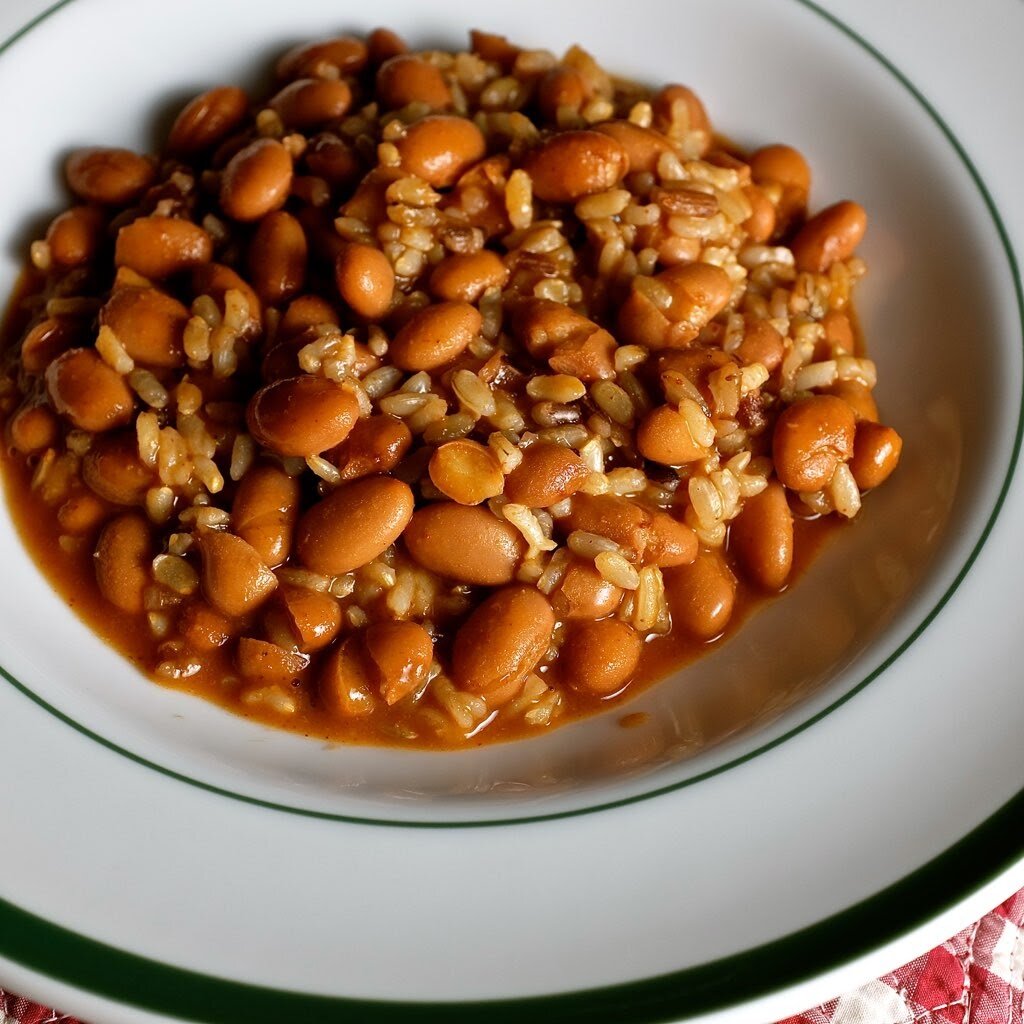
Rice and beans is a staple in many Latin American and African countries and has become a pivotal part of their cuisines. Nutritious and filling, rice and beans have been a pairing in Latin America for thousands of years, known as the “matrimonio” or marriage in Central America. The types of beans and the preparation of the dish varies from country to country. For example, pinto beans are common in Mexico, fava beans are popular in Peru and black beans are a staple in Brazil and Cuba. Kidney beans and black-eyed peas are widely enjoyed across West Africa and the rest of the continent as well as in the American South. In Jamaica and other parts of the Caribbean, rice and pigeon or field peas are quite popular, while the rice is cooked in coconut milk. 

From Iran to North America, the preparation of rice differs vastly. Despite many differences, food is something that brings the world together and fosters an appreciation of Earth’s incredible cultural diversity.


Megan Gürer

Megan is a Turkish-American student at Wellesley College in Massachusetts studying Biological Sciences. Passionate about environmental issues and learning about other cultures, she dreams of exploring the globe. In her free time, she enjoys cooking, singing, and composing music.