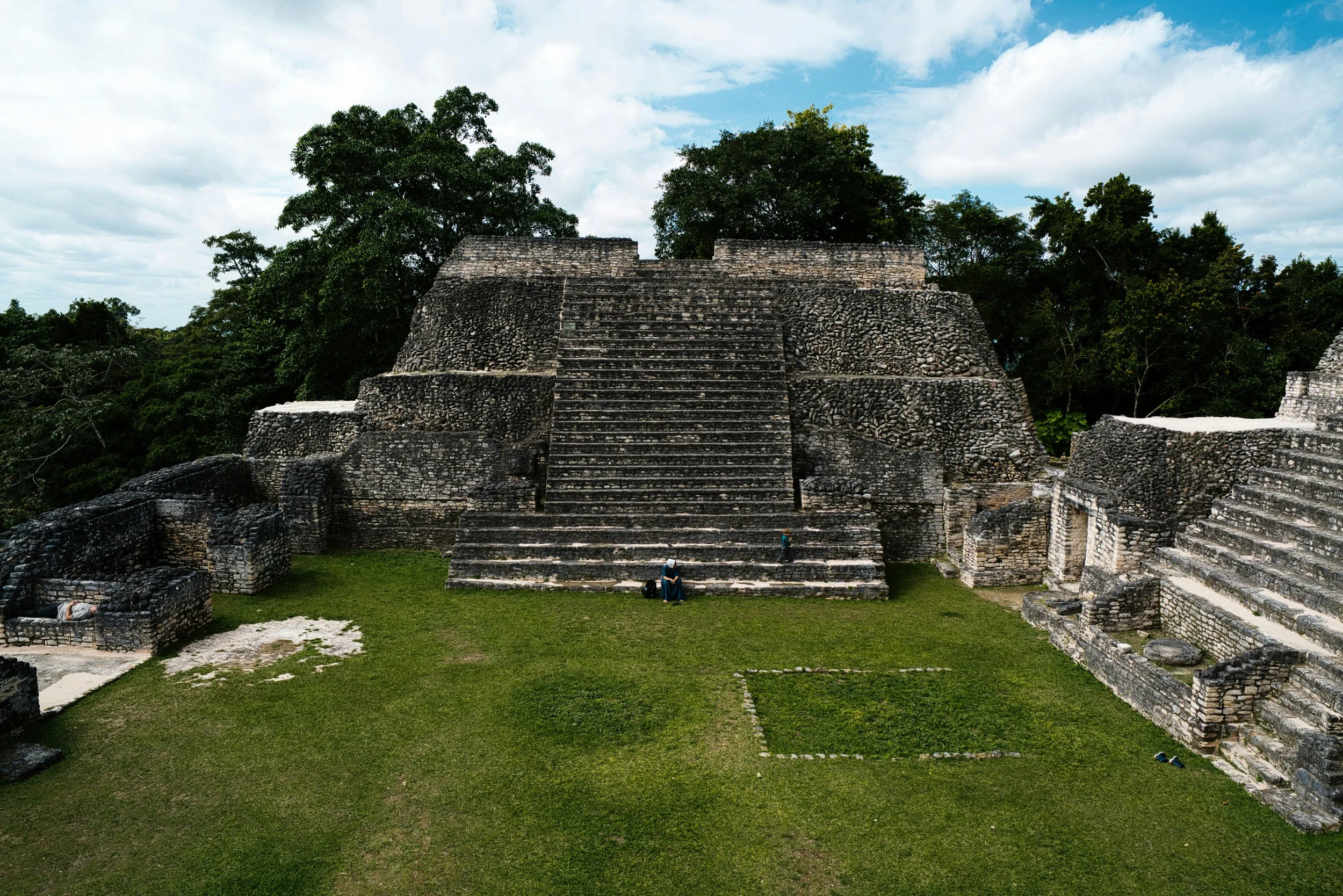
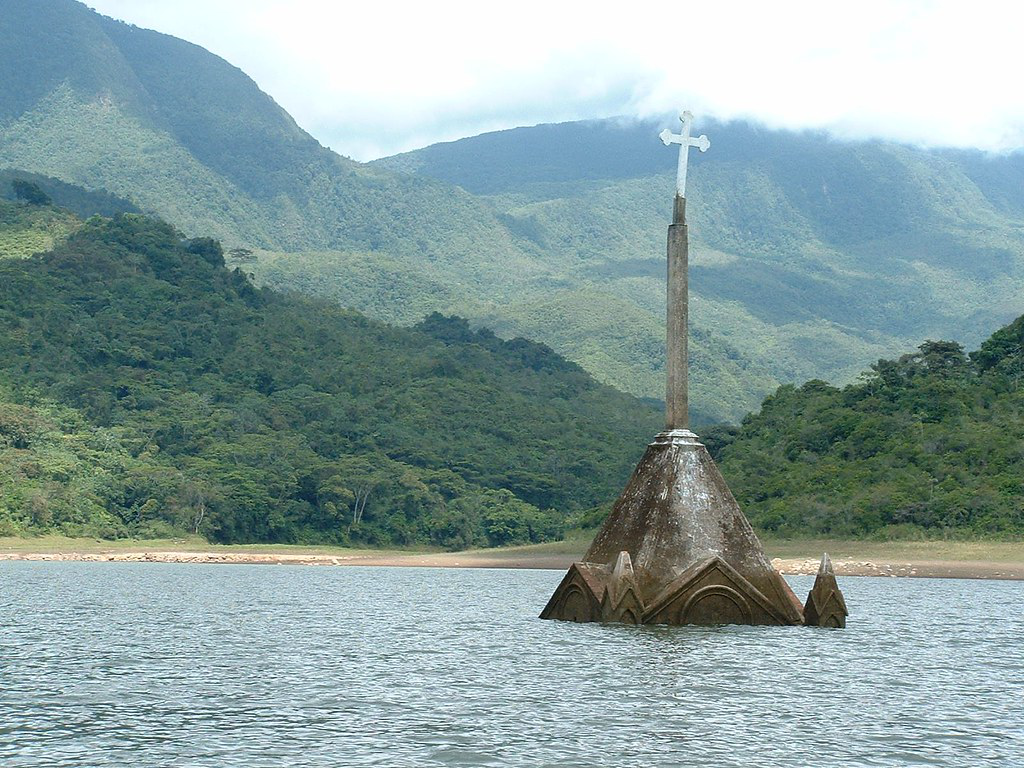
The Ghostly Shores of the Namib Desert’s Skeleton Coast

Bones and wreckage meet biodiversity on the Skeleton Coast of the world's oldest desert. 
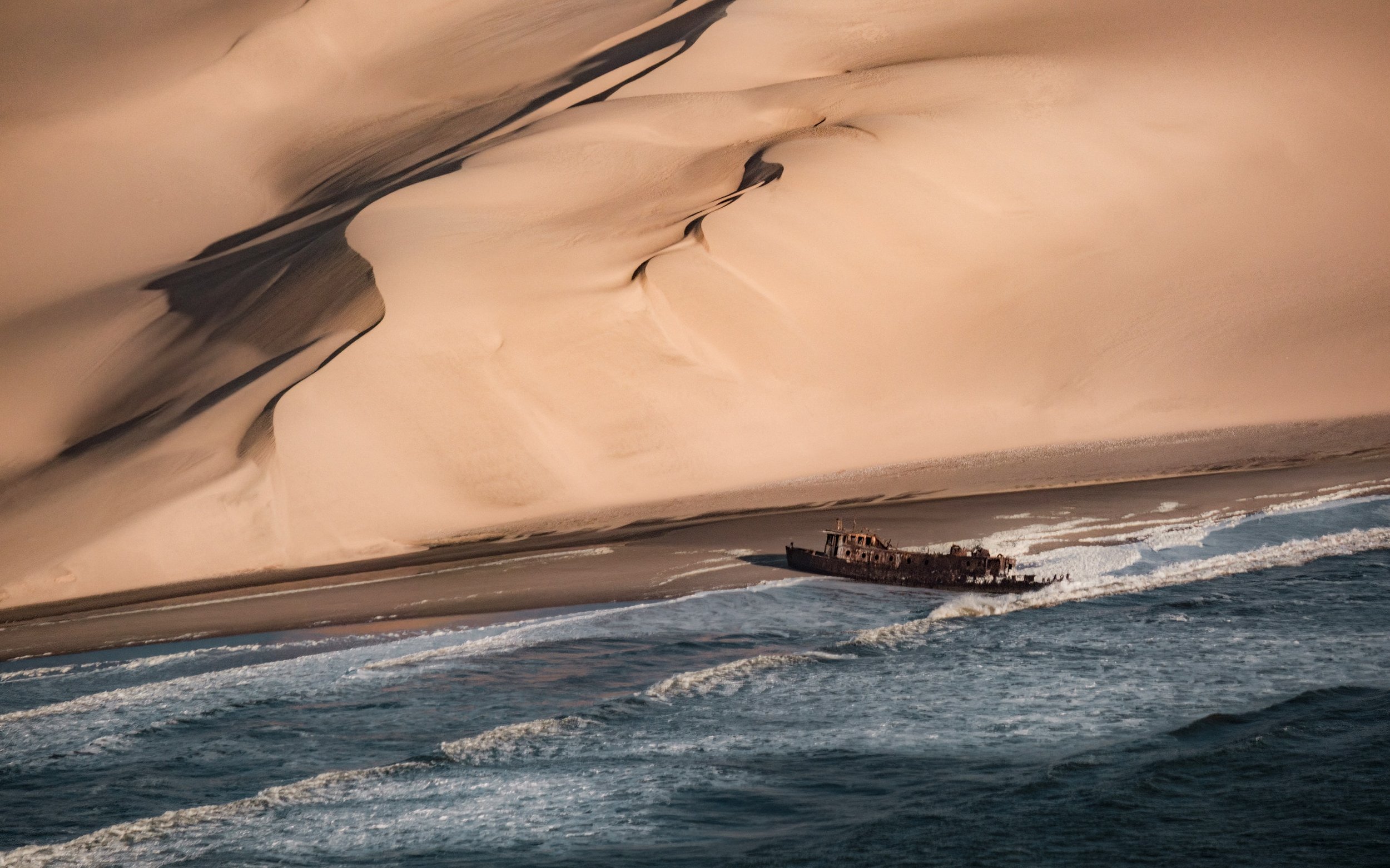
A ship wreckage by the red, sandy dunes along the Skeleton Coast. op23 | Unsplash

A map highlighting the Namib Desert in red along the coast of Africa.

Home to earthy-red dunes which roll right into the Atlantic ocean, the Namib Desert is thought to be between 50-80 millions years old, making it the oldest desert in the world. It’s also one of the world's most inhospitable places—an unpredictable, arid and remote region that on the surface has no appeal whatsoever. With temperatures fluctuating from blistering hot to dangerously cold and sand for as far as the eye can see, it extends from the country of Angola, through Namibia and down to South Africa. That’s over 31 thousand square miles of desert. 

But don't be fooled, there’s more to these sandy plains than meets the eye. The Namib is home to the Skeleton Coast. And despite this desert’s penchant for death, The Skeleton Coast is teeming with rare wildlife. 

What is the Skeleton Coast

The Skeleton Coast is on the northern shores of this ancient and unexpected desert and earned its macabre name from the whale and seal bones that once littered the shore from the whaling industry. The Ovahimba who have since settled in the far north-eastern parts of Namibia once used the whale bones for building their shelters. In modern times, the Skeleton Coast hides its infamous graveyard buried beneath the sand, and with the exception of a rare adventure seeker looking for a wave to surf, the odds of seeking a human along this part of the coast are slim.
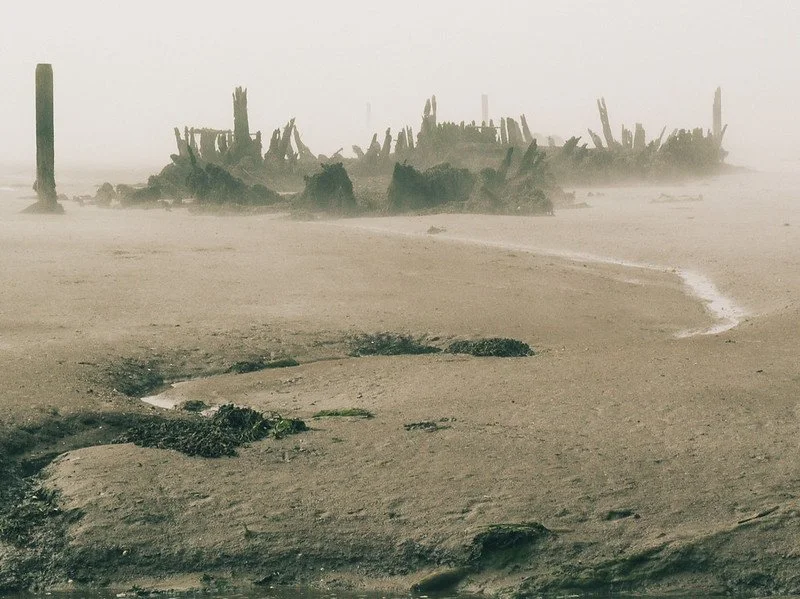
A shipwreck in the fog on the Skeleton Coast. Lee | CC BY 2.0

The Unique Climate of the Namib Desert

The bones scattered across Namibia’s Skeleton Coast aren’t from ocean mammals alone. Over the centuries, ships have ended up stranded on its shores for various reasons, but the main culprit is caused by the unique geography of the region. Hot, dry air from the interior of the continent and desert blows west combining with the cold wet air from Antarctica via a northward flowing ocean current called the Benguela Current. The hot dry winds act as a cap or roof not only prevents the cold wet air from escaping, but also from forming rain clouds. Instead, there is an eerie fog, and a lot of it. 

In fact, for 180 days of the year there is fog on the Skeleton Coast so dense, it’s caused thousands upon thousands of ships to run aground throughout history; the oldest of which is from the 1500’s. The ocean's intense surf would have prevented anyone from getting back into the water, and with a wrecked ship, this meant that sailors stranded on this isolated coast were left with only one choice: to make their way through the Namib Desert. With a dryness rivaling South America’s Atacama Desert (the driest place on Earth), and sand dunes reaching nearly 1000 ft high, this option was nearly as dangerous as swimming out to sea and surely has added human bones to its burial collection. 
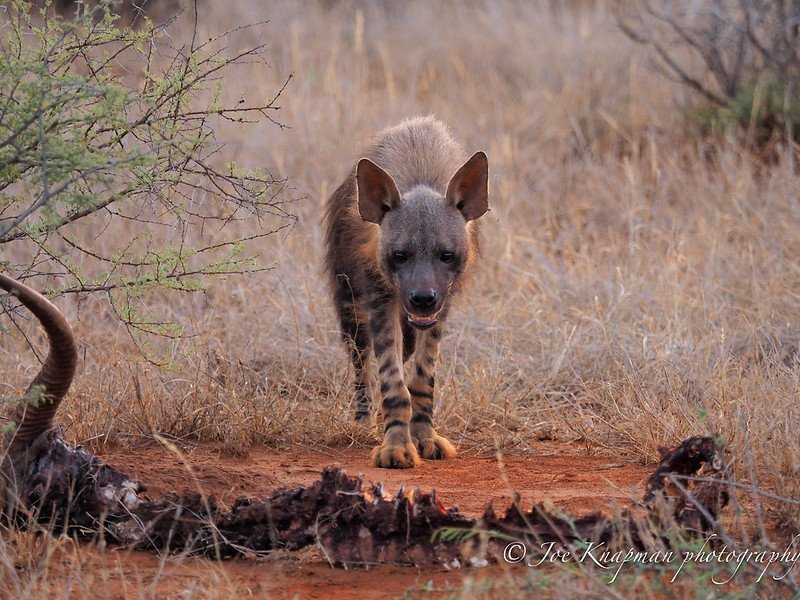
A brown hyena stands over a carcass in the Namib Desert. Joe Knapman | CC BY 2.0

Wildlife on the Skeleton Coast

Incredibly diverse, the Skeleton Coast has more near-endemic species than any other desert in the world. Elephants, black rhinos, desert lions, jackals, giraffes, seals, oryx, kudus and zebras and just some of the desert adapted species inhabiting this wilderness. One such animal is the brown hyaena. They’re usually on the move after darkness has fallen, which adds to their elusiveness. The name strandwolf was coined on Namibia’s Skeleton Coast where they scavenge for dead seals along the shoreline. If you are fortunate enough to spot one, make sure you take a really good look, because sightings of these inscrutable carnivores is never guaranteed. A truly endemic avian, the Dune Lark, inhabits thinly vegetated dunes along the Skeleton Coast and larger Namibian dune system associated with Bushman grasses and Nara melons.
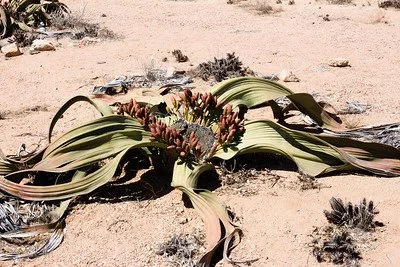
A blooming welwitschias. Ragnhild&Neil Crawford |CC BY 2.0    
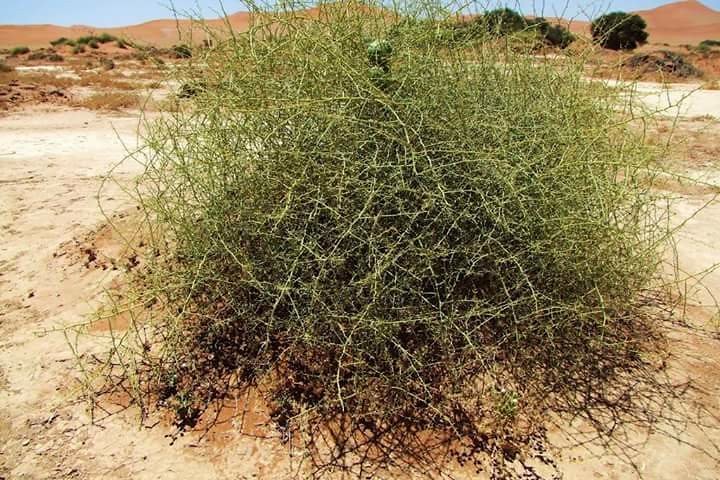
A spiny looking nara bush in the Namib Desert. Palmora| CC BY 2.0

Nara Melons are just one of the many plants incredibly adapted to the rainless area and depend solely on the warning fog from the Atlantic Ocean. The nara bush is of great importance not only to the people of the region, but it is ecologically key to maintaining the unique desert habitat. More plants include welwitschias—which is a dwarf tree with only two leaves that can live for several thousand years—several lithops succulent plants known as living stones, lichen, pencil bush and the vividly colored succulents of rainbow colored agate mountains dotting the shore. 

The Lion’s Roar, a desert phenomenon

The phenomena of the Skeleton Coast doesn’t stop at bones, fog and compelling flora and fauna. Travelers, nomads and lost sailors once believed in the presence of desert spirits—singing songs through the mist. When the dunes form a bowl with the right acoustic properties, even a small flow of disturbed sand causes a terrific noise that resembles rolling thunder or even a low-flying airplane. The phenomenon is known locally on the Skeleton Coast as ‘the lion’s roar’.
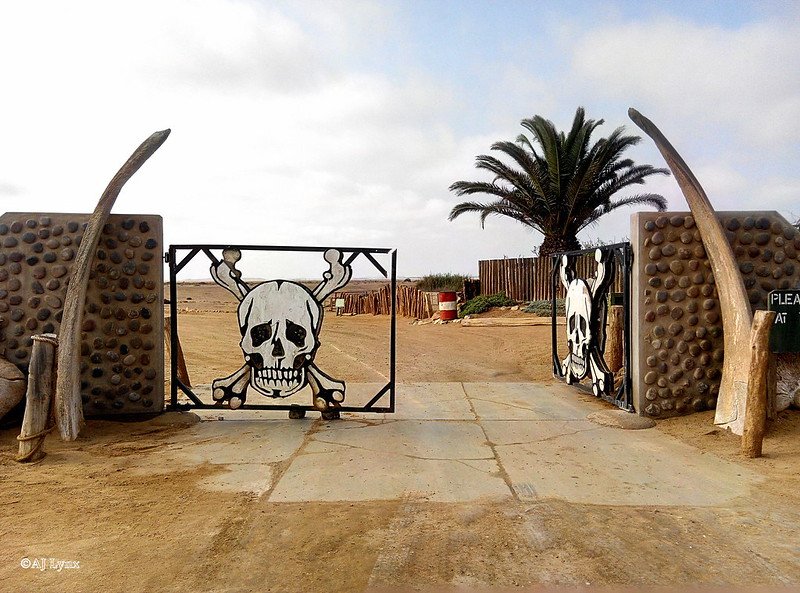
Ugab River Gate, Agnieszka Rysio | CC BY 2.0

The Skeleton Coast National Park

Luckily, this wildly unique, albeit creepy shoreline, along with its diverse inhabitants is protected. In 1971, Namibia established a well-maintained national park to protect the curious treasures, bones and wildlife which makes the Skeleton Coast so incredible. The park is divided into a northern and southern section; the southern section is open to travelers with four wheel drive vehicles who are welcomed to go as far north as the Ugab River Gate. There, they will be greeted by a sign with a skull and crossbones warning you to go no further. The northern section is off limits, its loose, enveloping sands will literally swallow you up and can therefore only be accessed by airplane with a certified guide. It also happens to be the most attractive region of the park with lunar-esque vistas as far as the eye can see. The park attracts all types of travelers, both local and international fishers, photographers, ecologists and folks just looking for a unique adventure to one of the world's most understated treasures.



Raeann Mason

Raeann is the Content and Community Manager at CATALYST, an avid traveler, digital storyteller and guide writer. She studied Mass Communication & Media at the Walter Cronkite School of Journalism where she found her passion for a/effective journalism and cultural exchange. An advocate of international solidarity and people's liberation, Raeann works to reshape the culture of travel and hospitality to be ethically sound and sustainable.
The Largest Salt Flat in the World in Bolivia

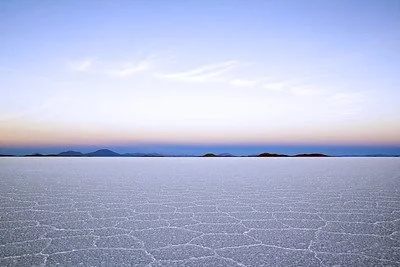
Bolivia’s Salar de Uyuni is one of the country’s wonders. Despite the amount of tourists it still preserves its beauty.

Salar de Uyuni, Bolivia. Giacomo Buzzao. CC BY 2.0.

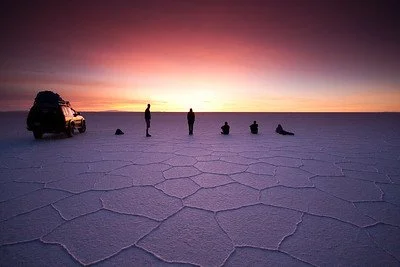
Located in the Andean Plateau in South America, the Salar de Uyuni is the largest salt flat in the world. It is in southwestern Bolivia, close to the border between Bolivia, Chile and north of the Argentinian border. It is over 4,050 square miles and the salt crust stretches to the horizon. It is also 10,000 feet above sea level, as it is located in the Andes. Since the salt is white, the Salar de Uyuni appears to be a large white desert, but during the rainy season, nearby lakes overflow, rivers empty into the salt flat and it becomes filled with water.

Though the seeing the dry, white salt stretch for miles is beautiful, when the salt flat is filled with water, it creates a clear mirror-like lake. Generally, there are only a few centimeters of water so it is still possible to walk on it, but as the weather is unpredictable, some areas become restricted for safety. The salt flat is mostly waterproof, but too much rain will melt some of the salt and make it dangerous to walk on. However, during this time, Salar de Uyuni turns into the world’s largest natural mirror, reflecting the light from the sky. The winter months also have clear skies that offer beautiful stargazing opportunities, the reflected stars only adding to the salt flat’s wonder.

The Salar de Uyuni is large enough to be seen from space, and it contains 10 billion tonnes of salt. 70% of the lithium in the world is also mined from this salt flat. The Salar de Uyuni was created 40,000 years ago, after Lake Michin evaporated. Over the course of its slow evaporation, the salt hardened and created a crust that formed the area into what it is today. In addition, there is still water underneath the salt that continues to evaporate as temperatures rise, which adds more salt to the surface. 

Beyond the scientific explanation for the Salar de Uyuni’s creation, the locals have passed on their own legends. In one of them, one of the nearby mountain goddesses, Yana Pollera, gave birth to a baby that two other mountain gods fought over. They both believed themselves to be the father, and Yana Pollera sent her child away to where the salt flat is located today and flooded the area with her milk that eventually evaporated into salt so it would survive. Another legend claims the flat was formed because after two mountain gods were married, the husband left and the wife cried until her tears created the Salar de Uyuni. 

Dawn at Salar de Uyuni. Trevor McKinnon CC BY-NC-SA 2.0.

Because of its location, there are many tours leaving from Bolivia and Chile, and many of them stretch over the course of multiple days in order to get the most out of the natural beauty. Planes, buses and trains are all able to get to Uyuni, the town closest to the salt flat, but there are also tours from Tupiza, a town south of Uyuni, and San Pedro de Atacama, a town in Chile.


Katherine Lim

Katherine Lim is an undergraduate student at Vassar College studying English literature and Italian. She loves both reading and writing, and she hopes to pursue both in the future. With a passion for travel and nature, she wants to experience more of the world and everything it has to offer.

Discover Cambodia’s Beauty Despite Dark Political Past

Though still recovering from Pol Pot’s regime, Cambodia contains numerous sites and monuments worth traveling for.

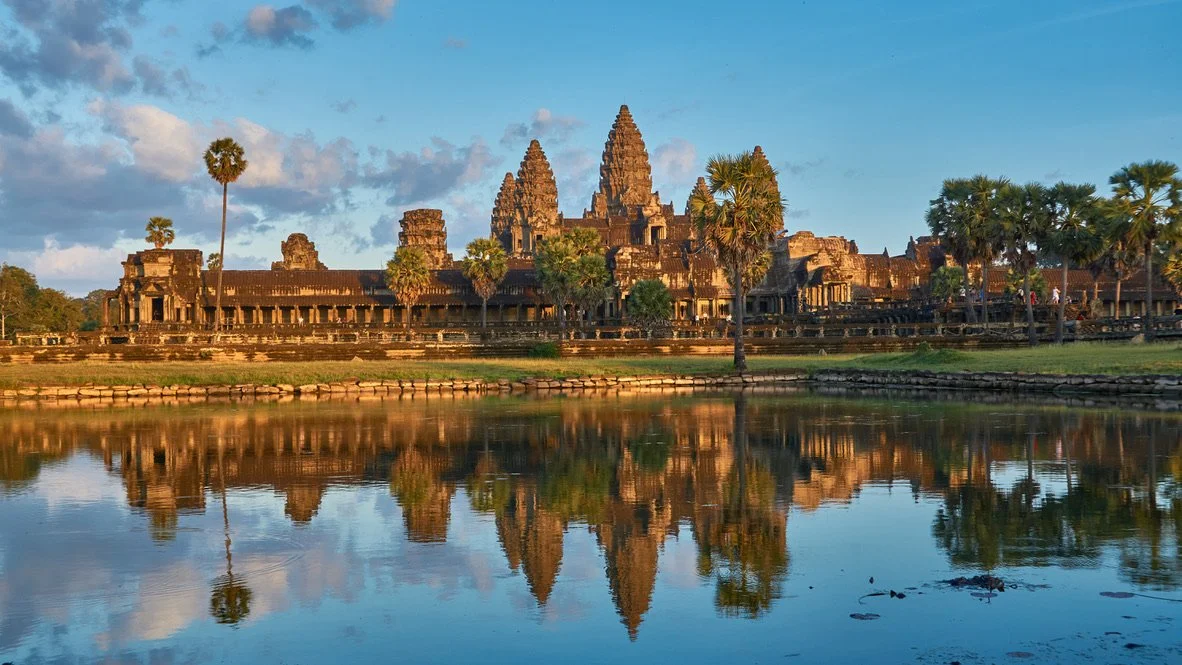
Angkor Wat Reflection. Radek Kucharski.  CC BY2.0.

Cambodia is known for its massive and brilliantly crafted religious temples, vast untouched forests and vibrant city life. What some may not know is Cambodians have and are still recovering socially, economically and politically from one of recent history's most horrific events: the reign of the Khmer Rouge. 

Under the rule of dictator  Pol Pot, the Khmer Rouge was a Marxist regime created in 1975. Whether from execution, starvation, exhaustion and disease, more than 2 million civilians died during the genocide. Despite the defeat of the Khmer Rouge on January 7, 1979 by the Vietnamese military, Cambodians struggled to regain their political and economic prosperity. General poverty rates have lingered around 35% which is a great improvement from the 50% at the initial end of the events. Those who experienced the genocide are now be in their 50s, and thus Cambodians are still living with the traumatic experiences they went through.

With that said, the Southeast Asian country has shown great perseverance and progress towards a bright future. Now, Cambodian citizens celebrate their traditional cultures and welcome outsiders to experience the atmosphere and history of their country. Here are a few of the most popular spots.

1. Angkor Wat

Said to be the largest religious monument in the world, Angkor Wat is a vast Buddhist temple that touches over 400 acres of land and comprises over 1,000 buildings. Cambodia is home to this cultural wonder of the world and is a destination that provides both visual beauty and an introduction to Cambodia’s rich history and culture. 

Angkor Wat has five lotus-like towers rising 65 meters up, being the first part of the temple visitors tend to notice. The awe-inspiring scenery continues with carvings throughout the inside of the temple. Celestial dancers, known as apsaras in Khmer (Cambodia’s national language), helped reintroduce Apsara dance in Cambodia. Carvings of war, spiritual journeys and everyday life explain Cambodia’s hardships and relationship with culture and religion. Ta Prohm, also known as the Tomb Raider Temple due to its appearance in the 2001 film, and Angkor Thom are other beautifully architected sights nearAngkor Wat.  

2. Banteay Srei 

Banteay in Angkor. Juan Antonio Segal. CC BY 2.0.

Known as the Temple of the Women, Banteay Srei is sacred in Angkor. Though it is much smaller in size than Angkor Wat, it contains some of Cambodia's most delicate carvings. Images of women holding lotus flowers and memorable stories of the Hindu religion are depicted here. Banteay Srei is still a place for women to visit and observe to feel inspired and appreciated, as well as a place where anyone can experience its beauty and history.

3.  Bayon

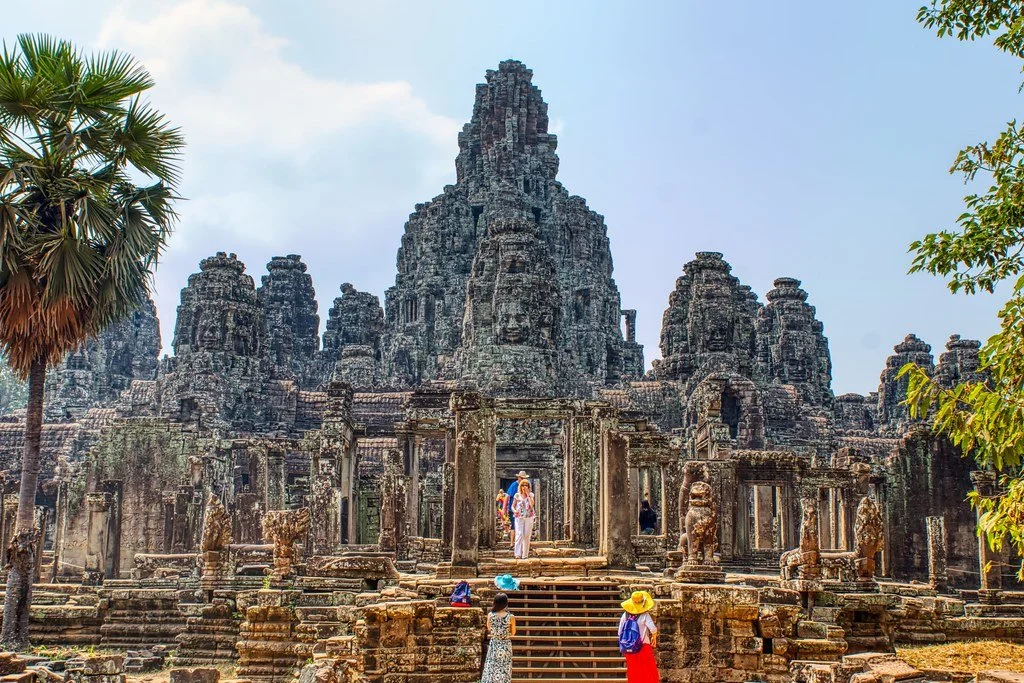
Bayon Temple Ruins in Cambodia. Uwe Schwarzbach.  CC BY-NC-SA 2.0.

This Buddhist Temple is home to 216 smiling, peaceful faces carved into towers. Numerous other carvings can be seen representing the experiences of the Khmer people. Bayon temple allows visitors to understand the goals and journey of the Khmer Empire and is a great temple to visit if you are interested in Buddhism and appreciating Cambodia’s past.  

4. Phnom Penh

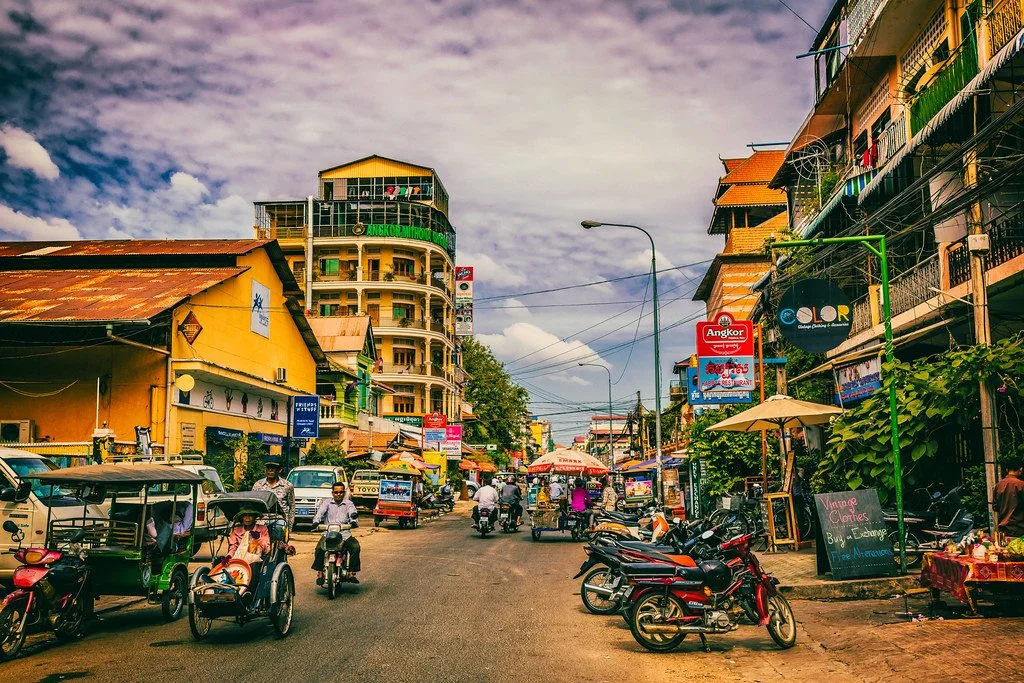
Bustling Phnom Penh. Baron Reznik. CC BY-NC-SA 2.0.

Phnom Penh is the capital of Cambodia andhome to vibrantly colored buildings, tight streets with motorbikes, friendly locals and more architectural beauty. A main mark of the Cambodian experience, Phnom Penh is affordable and easy-going—a great way to submerge yourself in the country's culture. here are some upscale restaurants and locations, but overall, Phnom Penh remains its gritty, lively and romantically chaotic self. 

5. Krong Siem Reap

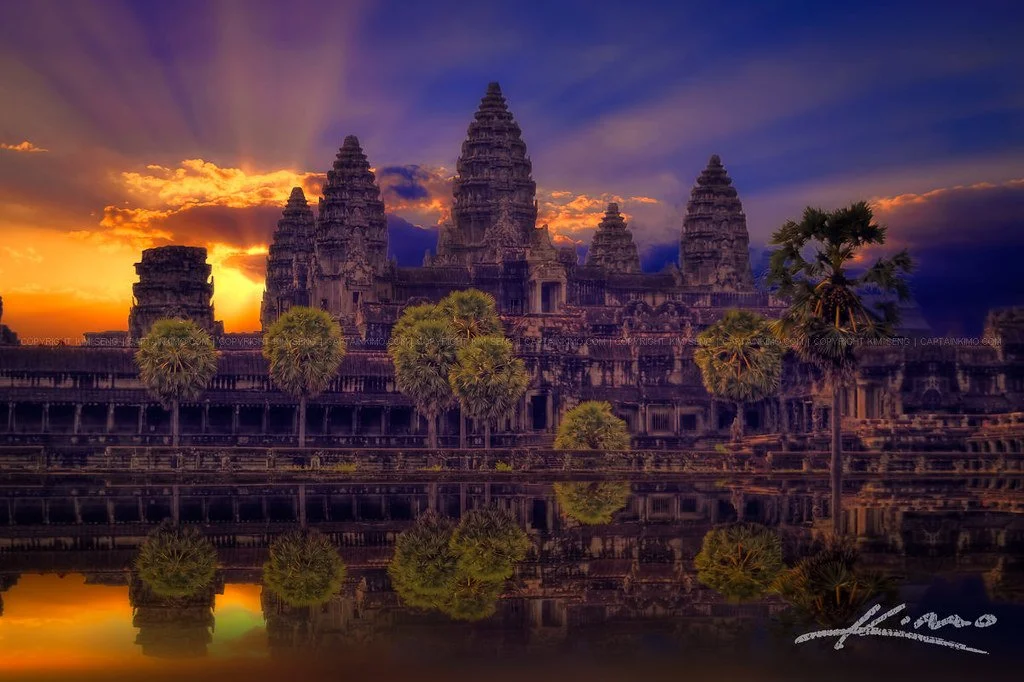
Angkor Wat in Krong Siem Reap. Kim Seng. CC BY-NC-ND 2.0.

Krong Siem Reap is another other major city destination in Cambodia. Krong Siem Reap is a staple of Cambodia’s religious history, being home to Angkor Wat, the ruins of Banteay Srei and Ta Prohm. Locals treat travelers as if they have been life-long friends, and travelers will get the chance to explore much of Cambodia’s Buddhist history as long as remaining respectful. 

Krong Siem Reap is also known for its exquisite food scene. Cafes offer coffee, teas and delicious local food dishes with some even offering vegetarian and vegan-friendly options. Restaurants to grab an authentic and budgeted meal are around every corner. 

6. Kirirom National Park

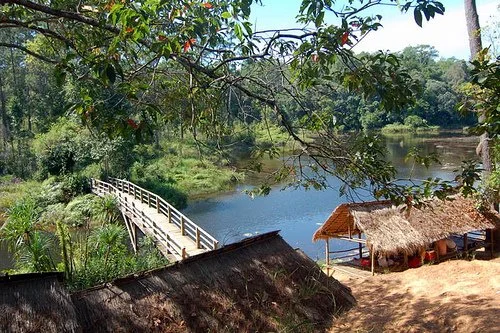
Kirirom National Park Rest Area. Arie. CC BY2.0. 

Located mostly in Phnom Sruoch District, Kirirom National Park is covered with deep forestry and high elevation. Kirirom, meaning “Mountain of Joy,” is loved for its high elevation pine forests and many glistening waterfalls. Along with vast, isolated hiking trails, the endangered sun bears, pileated gibbons and tigers can be found living in the forests. 

7. Koh Tonsay

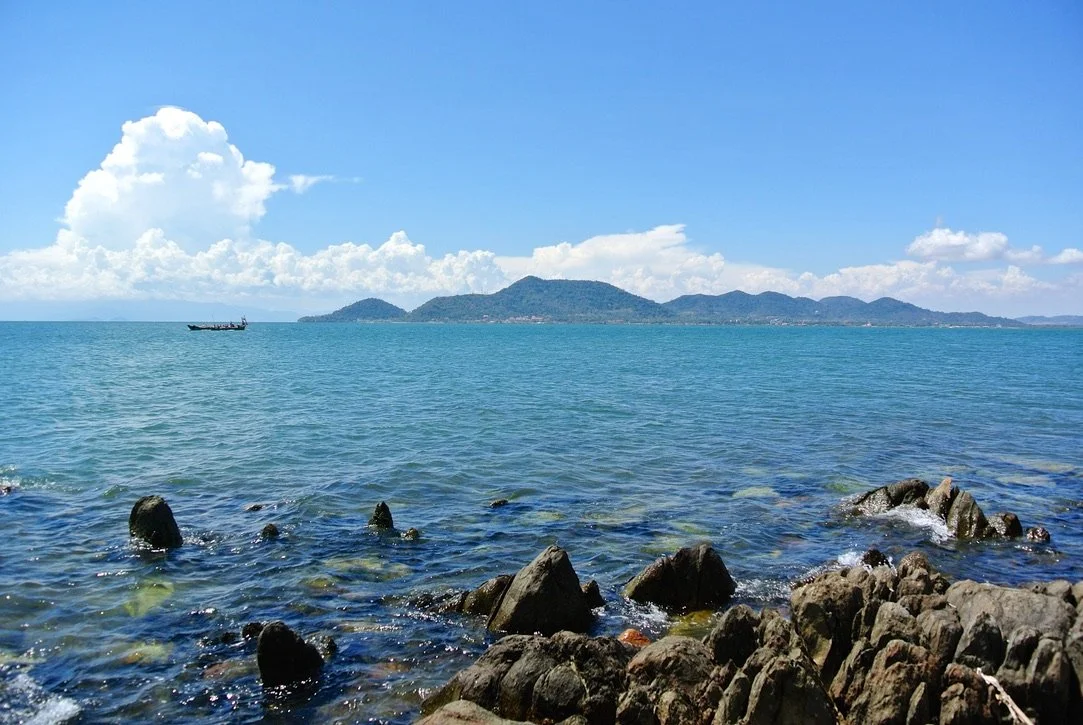
Koh Tonsay. James Antrobus. CC BY2.0. 

Located on the country's south coast in the Gulf of Thailand, Koh Tonsay can be translated as “Rabbit Island”  and received its name because it houses the furry little creatures. It is a relatively quiet coast with a more rustic beach style. While tourists tend to visit other parts of the Cambodian coast more influenced by Chinese businesses, Koh Tonsay remains a sliver of true Cambodian land. It is not as flashy as some other beaches on the coast of Cambodia, but Koh Tonsay offers a unique and isolated beach experience. 

8. Bousra Waterfall 

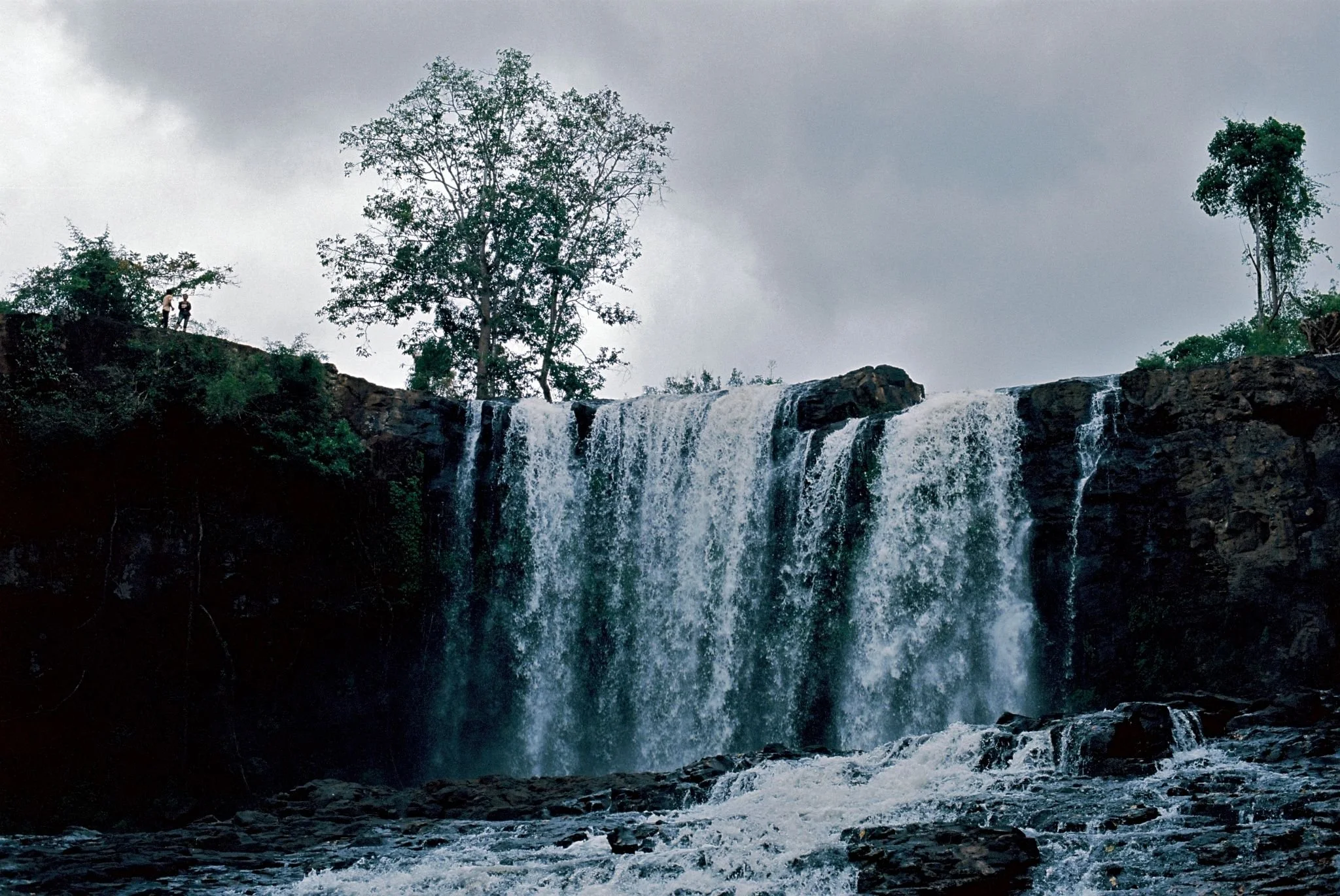
Bousra Waterfall. Lucien Tan. CC BY-ND 2.0.

Located just outside of Sen Monorom, the Bousra (also spelled Bou Sra and Busra) waterfall is a three-level natural wonder offering viewing platforms at different heights and access to its base, where visitors can get misted and explore the powerful waters.


Haleigh Kierman

Haleigh is a student at The University of Massachusetts, Amherst. A double Journalism and Communications major with a minor in Anthropology, she is initially from Guam, but lived in a small, rural town outside of Boston most of her life. Travel and social action journalism are her two passions and she is appreciative to live in a time where writers voices are more important than ever.

5 Cultures That Acknowledge More Than Two Genders

A close look at these 5 cultures shows the existence of more than two genders has been part of the human experience for thousands of years.

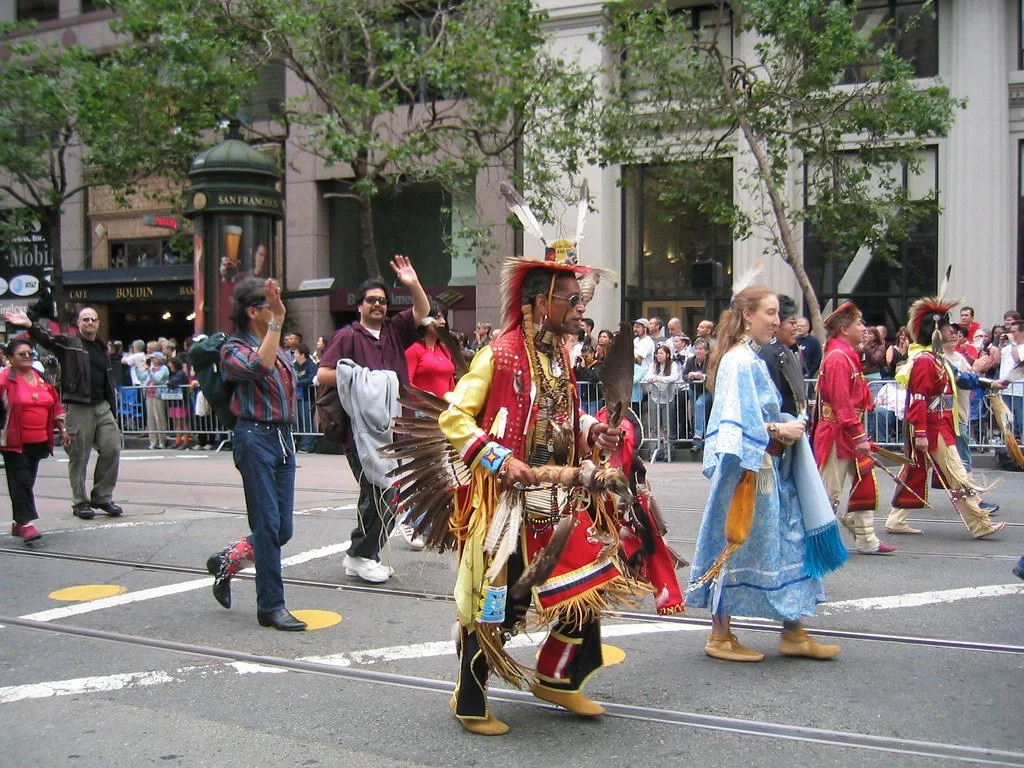
Two-Spirit person at a march. Mia Culpa. CC BY-NC-SA 2.0.

Several societies have understood and sometimes honored genders outside of the binary for hundreds or thousands of years. The way gender is expressed differs between cultures and has been greatly influenced by globalism and colonialism. An exploration into the following five genders demonstrates the complexity of nonbinary genders and their role in society.

Two-Spirit

 Two-Spirit banner at a Bay Area Pride Parade. Quinn Dombrowski. CC BY-SA 2.0.

To be Two Spirit is to contain the spirits of both the male and the female in Indigenous North American society. For one person to have both of these perspectives is regarded as a great honor and historically indicated a different role in society in terms of responsibilities and jobs. For example, Two-Spirit people were often entrusted with creating art in the Navajo Nation. While this identity has existed for hundreds of years across several Indigenous North American tribes, the title “Two-Spirit” itself was created in 1990 as an all-inclusive term for intersex, transgender and nonbinary people across Indigenous tribes.

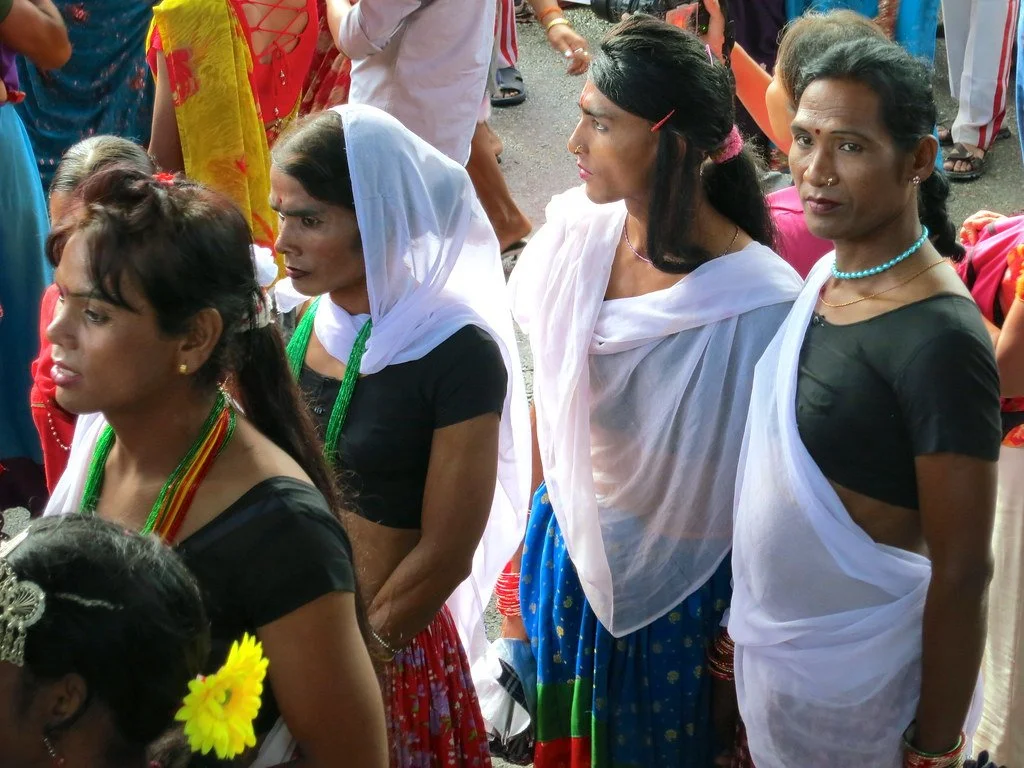
Hijra

Hijras at a festival. Sabatica Sabata. CC BY-NC-SA 2.0. 

‘Hijra’ is a third gender acknowledged in Hinduism. Hijras are often people born biologically male who dress traditionally feminine or intersex people. Regardless of their biological sex, hijra is regarded as an independent third gender. Like Two-Spirit people, hijras have a special and honored place in traditional Hindu society. They were believed to have the power to instill fertility upon couples and often live in groups to be mentored by an elder in the community. However, being hijra was criminalized by the British upon their colonization of India. Much of the way hijras are treated today as well as the opportunities available to them continue to suffer as a result of British oppression. For example, hijras are often still denied work today.

Māhū

Scholar Hinaleimoana Wong-Kalu. University of Hawai‘i–West O‘ahu. CC BY-ND 2.0 

The Hawaiian māhū are people who are understood to have aspects of both genders within them. When Europeans arrived in Hawaii, they took the term and gave it a derogatory and homophobic and transphobic meaning. The term still carries a negative association for some because of the impact of colonialism. However, prior to European arrival, and still among many in the community today, māhū means “in the middle” (of male and female) and is regarded in traditional Hawaiian culture as a meaningful identity indicating a wealth of wisdom and knowledge. 

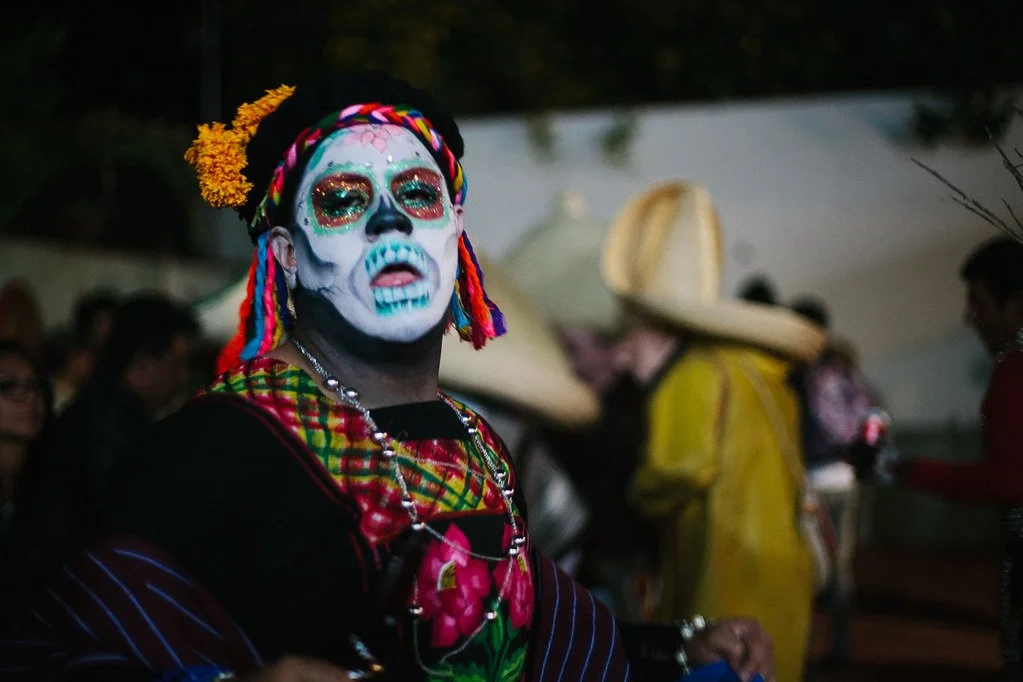
Muxes

Muxe. Arnaud B. CC BY-SA 2.0.

Muxe is a gender that exists in Oaxaca, Mexico, in the Zapotec community. Muxes have a strong tie to Zapotec tradition, as they continue to practice certain Zapotec customs that most no longer take part in, such as dressing traditionally. Muxes are generally people assigned male at birth who present traditionally feminine, but muxe is considered a third gender as opposed to a transgender woman. Like Two-Spirit and hijra people, muxes play a distinct role in Zapotec society, different from those who identify with their assigned sex at birth.

Six Genders of Classical Judaism

Talmud. Chajm Guski. CC BY-SA 2.0.

The ‘Talmud’ is a book of the ancient teachings of various rabbis and Jewish religious scholars. While it isn’t a holy book itself, it contains valuable interpretations of the Torah still referenced today. The Talmud acknowledges six genders as opposed to two. The Talmud is thousands of years old, demonstrating that the idea of gender fluidity has existed for much longer than most people would think. “Zachar” and “Nekevah” translate roughly to “male” and “female” respectively, and they refer to people who grow up resembling the sex they were identified as at birth. “Androgynos” was a term used for someone with both male and female characteristics, while “Tumtum” was a term used for someone who seems to present neither male nor female characteristics. “Ay’lonit” and “Saris” are used to describe people who were assigned female or male at birth (respectively) but grow up to resemble the opposite gender. All of these terms are parallel to identities common today, suggesting that people who do not fit into the gender binary have existed throughout human history. 


Calliana Leff

Calliana is currently an undergraduate student at Boston University majoring in English and minoring in psychology. She is passionate about sustainability and traveling in an ethical and respectful way. She hopes to continue her writing career and see more of the world after she graduates. 

The 5 Blue Zone Regions and their Centenarian Lifestyle

Dan Buettner coined the term blue zones—regions around the world where people live the healthiest and the longest. These Centenarians share similar lifestyles, although living thousands of miles from each other.

Average life expectancy around the world is 77 years. However, award winning journalist and New York Times bestselling author Dan Buettner discovered five regions where people typically live to be over 90. Buettner named these cities ‘Blue Zones’ to identify them by their life expectancy. Researchers found that although their lifestyles change slightly, the people of blue zone areas were living longer and had more fulfilled lives compared to the rest of the world. This is due to their primarily plant-based diet, their spirituality, family and social networks, along with regular exercise and drinking moderate amounts of alcohol. The five cities classified as blue zones are Okinawa, Japan; Sardinia, Italy; Nicoya, Costa Rica; Ikaria, Greece; Loma Linda, California. 

1. Okinawa, Japan

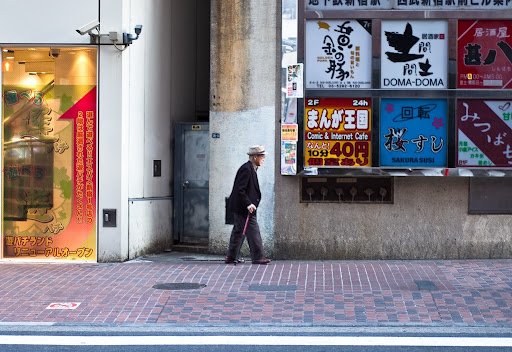
Okinawan on a Walk. Dshack. CC BY-NC 2.0

Okinawans are among the healthiest living people in the world and Okinawan women live the longest in all the earth, with an average lifespan of 90 years. They follow a plant based diet, eating mostly sweet potatoes, rice, grains and soy. The Okinawan household does not have much furniture; meals are eaten on tatami mats on the floor. By getting up and down several times a day to relax or eat their meals, older people are able to gain lower body strength and, in turn, protect themselves from having dangerous falls. In addition, their diet and active lifestyle of gardening and walking everywhere helps their body stay strong. Their physical and mental welfare is accompanied by a social network called Moai. This social network consists of lifelong friends who support each other emotionally and financially in times of need. Okinawans know that there are always friends who surround them and are willing to lend support in time of need. By these simple lifestyle habits, the people of Okinawa have been able to live centenarian lives with less illness than those in other regions. 

3. Sardinia, Italy

Italian Elderly Woman Going on a Bike Ride. Paolo Margari. CC BY-NC-ND 2.0

The Sardinian lifestyle has been culturally isolated from the rest of Italy as it is an island town. Sardinians' long life is the benefit of living within strong healthy families and a plant based diet accented with meat. Sardinian seniors are often surrounded by children and grandchildren, which results in lower rates of stress, depression and suicide. Men in this blue zone region are known for gathering in the street in the afternoons to share laughs with one another. Laughter reduces stress, which can lower one’s risk of cardiovascular disease. In addition to being surrounded with family and laughter, Sardinians still hunt, fish and harvest everything they eat. Their diet consists mainly of whole grain bread, fruits, beans and garden vegetables. An average of two glasses of wine daily are consumed by Sardinian residents, which is known to reduce stress among men. Meat is reserved for Sunday family meals and other special occasions. Although diet and family network help add years to Sardinians’ lives, a research team discovered that there is a rare genetic quirk carried by the island’s inhabitants.The M26 marker is linked to exceptional longevity, and due to geographic isolation, the genes of the residents in this area of Sardinia have remained mostly undiluted, resulting in nearly 10 times more centenarians per capita than the United States.

4. Nicoya, Costa Rica

The Central American nation of Costa Rica is home to Nicoya, an 80- mile peninsula just south of the Nicaraguan border. The people of Nicoya believe in having a sense of purpose for everyday living. This purpose encourages them to feel needed and want to contribute to a greater good. With the purpose driven life they live, they continue to work and find joy in their physical chores. Usually, they are surrounded with family and frequent social gatherings from friends and neighbors. Nicoya centenarians regularly take in the sun. This helps their bodies produce Vitamin D which is known to keep bones strong and contributes to a healthy body function. Their Mesoamerican diet consists of corn, squash and beans. These foods are rich in vitamins, proteins, fiber and healthy fats,creating a complete, nutritional diet that has helped Nicoya people live well into their 100s. 

4. Ikaria, Greece

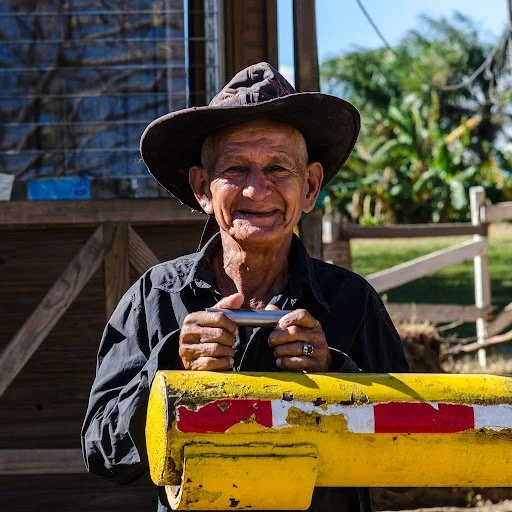
Greek Man Smiling. Julie70. CC BY-NC-ND 2.0

The small island of Ikaria in Greece sits on the Aegean Sea and is home to an almost dementia-free society. Lifestyle, clean air, relaxed pace and diet contribute to the longevity of Ikarians, with one in three making it to their 90s. The people of Ikaria tend to relax mindlessly through gardening, walking to a neighbor's house or playing late night domino games. Through the games and socializing, Ikarians are able to create connections with others. Studies have found that having a strong social network is part of living a healthy life. Their faith also aids in their longevity, as most Ikarians are Greek Orthodox Christians. While practicing calls for fasting almost half of the year, it cuts about 30 percent of calories out of the normal diet — the only proven way to slow the aging process in mammals. Lastly, almost all Ikarians drink goat milk as it provides potassium and the stress-relieving hormone tryptophan. 

5. Loma Linda, California

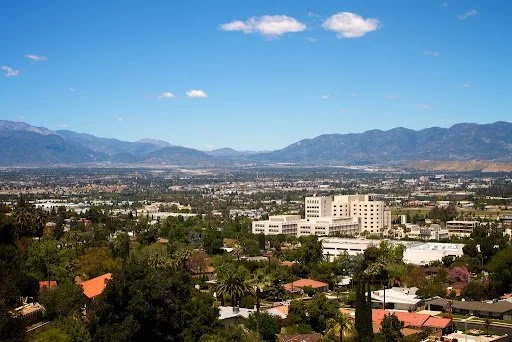
"Loma Linda, California. CCPIX.  CC BY-NC 2.0

A community of an estimated 9,000 Adventists who live in Loma Linda, California put the US on the blue zone list. Adventists live 10 years longer than other Americans. Their beliefs, their volunteering, diet, exercise and fellowship add years to their lives. The Seventh-day Adventist Church encourages and provides opportunities for its members to volunteer. Through volunteering, many are able to focus on others and this allows Adventists to ward off depression. Their well balanced diet of vegetables, fruits, legumes and lots of nuts is influenced by the Bible. Adventists cite Genesis 1:29: “And God said, Behold, I have given you every herb bearing seed, which is upon the face of all the earth, and every tree, in which is the fruit of a tree yielding seed; to you it shall be for meat.” They also avoid smoking and drinking, a healthy habit that will help prevent future health issues. Many Adventists go on daily walks or participate in low intensity exercise. Their active bodies can stay consistently strong. Adventists’ time spent with like minded people who support their habits is what continues to make them some of the longest living Americans.


Jennifer Sung

Jennifer is a Communications Studies graduate based in Los Angeles. She grew up  traveling with her dad and that is where her love for travel stems from.  You can find her serving the community at her church, Fearless LA or  planning her next trip overseas. She hopes to be involved in  international humanitarian work one day.

The Smallest Country in South America: Suriname

The nation of Suriname is home to a multicultural society and the Amazon rainforest. Yet, little is known of the country as it attempts to stand out behind the shadows of its former Dutch colony. 

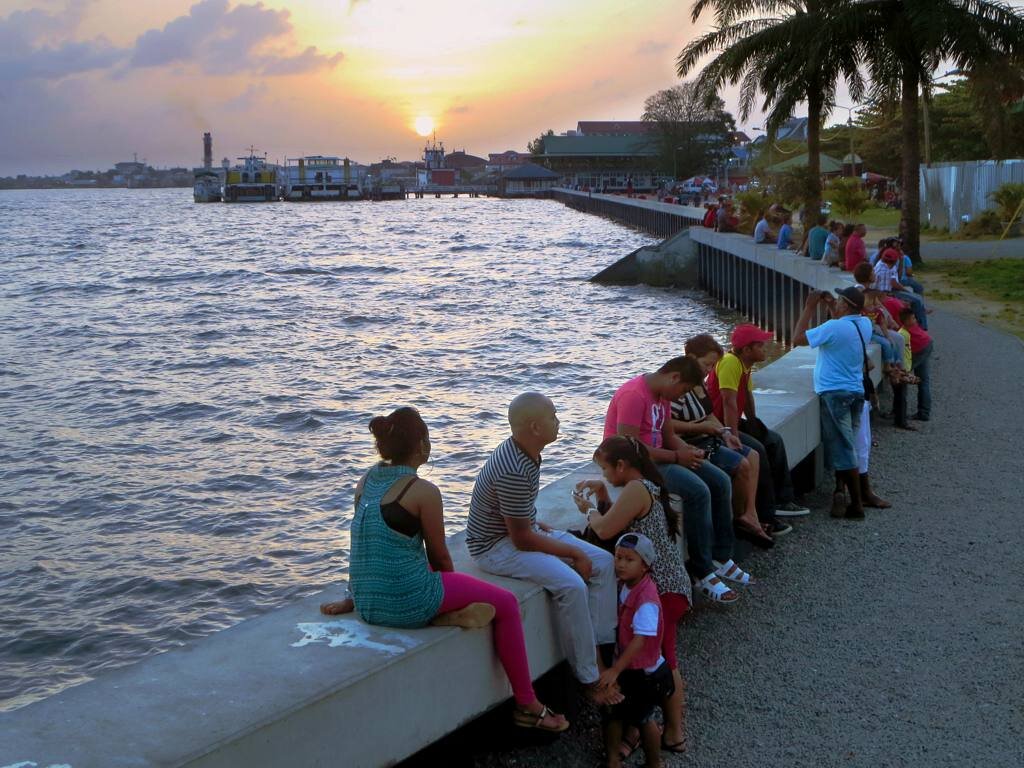
Suriname River Waterfront. D-Stanley. CC BY 2.0

When one thinks of South America, one thinks of all the Spanish-speaking countries. However, rarely do you think of The Guianas, the three countries in the northern part of the continent: Guyana, Suriname and French Guiana. The smallest nation of the three is Suriname, and it covers a surface area of 63,252 square miles. Known as a former colony of The Netherlands, Suriname gained its independence in 1975. This Dutch-speaking nation is surrounded by 94% of pristine forest and has a multicultural society. 

Suriname is named after its first occupants, the Surinen Indians. However, in 1602 the Dutch settled in the region, and by 1667 it became a colony of the Netherlands. Throughout the Dutch’s settlement in the nation, many important events made Suriname the country it is today. After the termination of slavery, the Dutch brought in East Indian laborers. The Netherlands granted Suriname its independence on November 25th, 1975, when the Surinamese people rioted over inflation and unemployment. Fast forward to today, the country is a constitutional democracy

In addition, Suriname is struggling with seven in ten people falling below the poverty line. The Surinamese rely heavily on the exportation of gold and other minerals, accounting for 85% of exports and 27% of government revenues. Agriculture is also a big part of their exportation, which includes bananas, rice and shrimp. With poverty taking a toll on its people, there has been an upside to their current financial situation. The country will begin producing oil in 2025, appealing to prospective investors. The government holds 13 billion barrels of oil and gas that have been discovered in the past six years. With this finding, financial stability can emerge for the Surinamese. At the moment, Suriname produces oil for domestic use and its own oil company Staatsolie

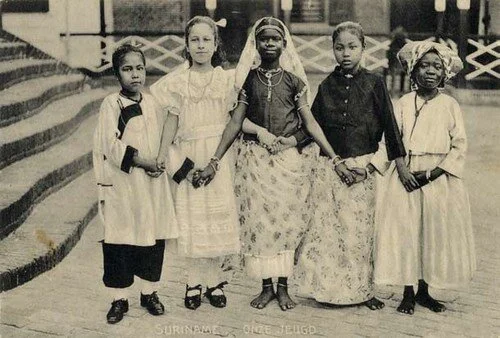
Surinam youth. KITLV Collections. CC BY-NC 2.0

With the history Suriname has lived through, it is no surprise that it is a multicultural nation. It is made up of South Asians (Indians), Maroons, Suriname Creole(Afro-Surinamese), Javanese, biracial and others. 

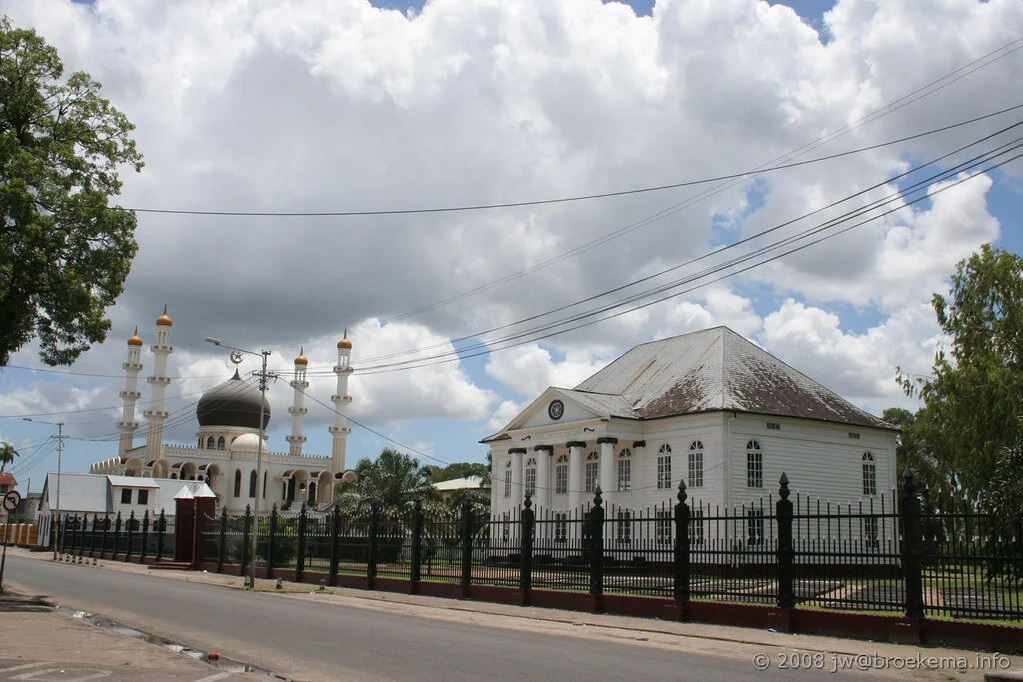
Even ith this diverse and integrated culture that makes up Suriname, citizens of this nation  live peacefully among one another. So much so that a Jewish temple and a Muslim mosque sit side by side in the capital city of Paramaribo. This cohabitation can be seen as the entire country officially marks other nations’ religious and nonreligious holidays as their own. . These holidays include Chinese New Year, Easter, Indigenious Peoples Day, Maroons day, Idul Adha and Deepavali. Through this act, the nation exemplifies unity through its melting pot of diversity. 

With any diverse culture comes an eccentric music genre. Through the music, one can hear the different backgrounds of each region represented. Suriname’s music style is no different. It is a mixture of International European, North American indigenous and South American rhythms. One of the Surinamese most well-known music forms is Kaseko. It is a fast-paced beat with Indo-Caribbean influence, which emphasizes wind instruments and percussion. 

The nation’s cuisine is quite diverse as well and is a big part of the Surinamese culture. However, there is a dish that they call their own, which is Pom, the National dish. The name Pom is short for pomtajer, the root vegetable used to top the dish. Pom is a casserole made up of root vegetables and your choice of meat. This dish is a luxury, usually served on special occasions due to the high cost of meat.  

Muslim Temple and Jewish Mosque sitting side by side. Dan Lundberg. CC BY-SA 2.0

There are many influences in the country’s buildings and architecture today. With all of the ethnicities and cultures that inhabit Suriname, it is no surprise it would spill over onto the design of the city. Made up of mostly wooden buildings, the style and design seem to have stayed rooted in a specific time period. There are no contemporary buildings, and that is what makes the city so enchanting. Throughout Suriname you can see the fusion of Dutch, North American and Creole culture and others in the architectural style

On the outskirts of the city sits more than 90% of lush green forest, the Amazon. With such vast greenery, this forest is home to 150 species of mammals, 650 bird species and 350 fish species. With such a large part of the forest being untouched and preserved, Suriname species don’t face extinction like other species around the world. This is due to the capacity of the land makes it easy to house the numerous species. Nature enthusiasts visit the various nature reserves Suriname has to offer. The largest and most popular is the Central Suriname Nature Reserve at 1.6 million hectares; it protects the upper watershed of the mighty Coppename River and other important rivers. The reserve’s animals include sloths, jaguar, tapir, eight species of primates and others. 

Sunset in the Suriname rainforest. Delphinidaesy. CC BY-NC-ND 2.0

This small nation is home to slightly fewer than 600,000 people. Although mostly unknown to many, Suriname is slowly bringing in many travelers worldwide. Its unique landscape and culture are admired and it is sure to attract many more travelers in the years to come. Suriname is making a name for itself on the world map with so many species to see and nature reserves to explore. 


RELATED CONTENT:


Jennifer Sung

Jennifer is a Communications Studies graduate based in Los Angeles. She grew up traveling with her dad and that is where her love for travel stems from. You can find her serving the community at her church, Fearless LA or planning her next trip overseas. She hopes to be involved in international humanitarian work one day.