
By Claire Garvin
Colombia’s “Coffee Axis,” a UNESCO World Heritage Site since 2011, reveals the stunning cultural and natural landscape of one of the nation’s most important exports.
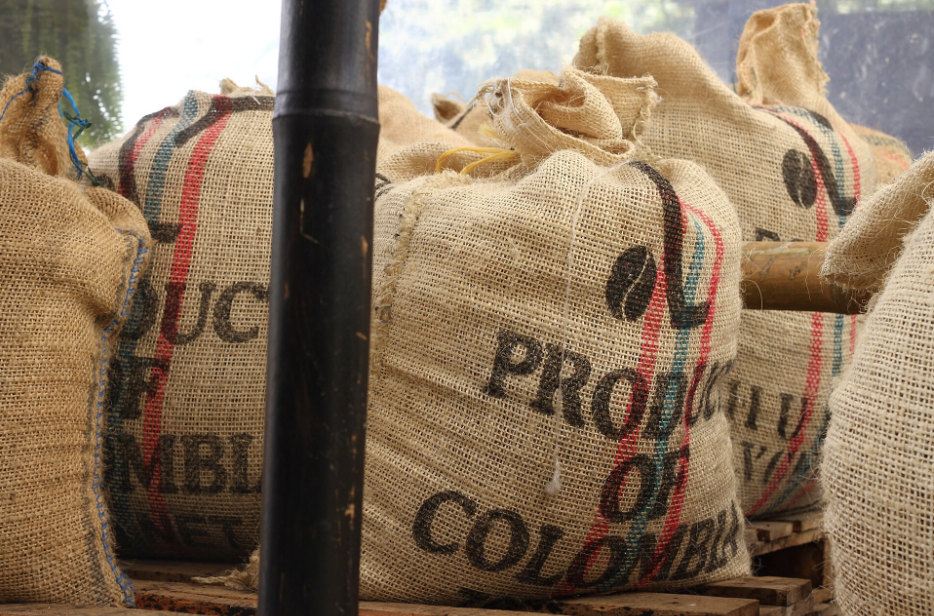
Bags of Colombian coffee. Felipe Quijano. CC BY-SA 4.0.
In Colombia, coffee is more than a simple morning beverage. For centuries, the drink has served as a symbol of national culture and pride, as the nation remains the third-largest coffee-producing country in the world. The quality of Colombian coffee also distinguishes it from other varieties; Colombia is one of the few nations to produce 100% arabica coffee beans, a sweeter, less bitter variety held in high international regard.
The origins of the Colombian coffee industry remain shrouded in myth and legend, but documented encounters with the crop can be traced to at least 1730. At the dawn of the 20th century, the Colombian coffee industry was dominated by a few large farms, which relied on the labor of peasants and Indigenous workers. However, as the global economy plummeted in the 1930s, the Colombian government bought the land, dividing it up into small plots for farmers to grow coffee alongside other crops in hopes of revitalizing the economy. Today, there are over half a million coffee farms, about 95% of which are smaller than 12 acres. The small size and family ownership have allowed for small-batch coffee production highly focused on quality.
The majority of the coffee plantations are concentrated within or around the UNESCO World Heritage site, the Eje Cafetero. Known in English as the “Coffee Axis,” the region unveils the historic cultural practices and intergenerational traditions that have defined Colombian culture for generations. Comprising 18 urban centers, most of which are situated on flat mountain plateaus atop valleys dotted with coffee farms, the expansive region is an excellent addition to any trip to Colombia.
1. Pijao
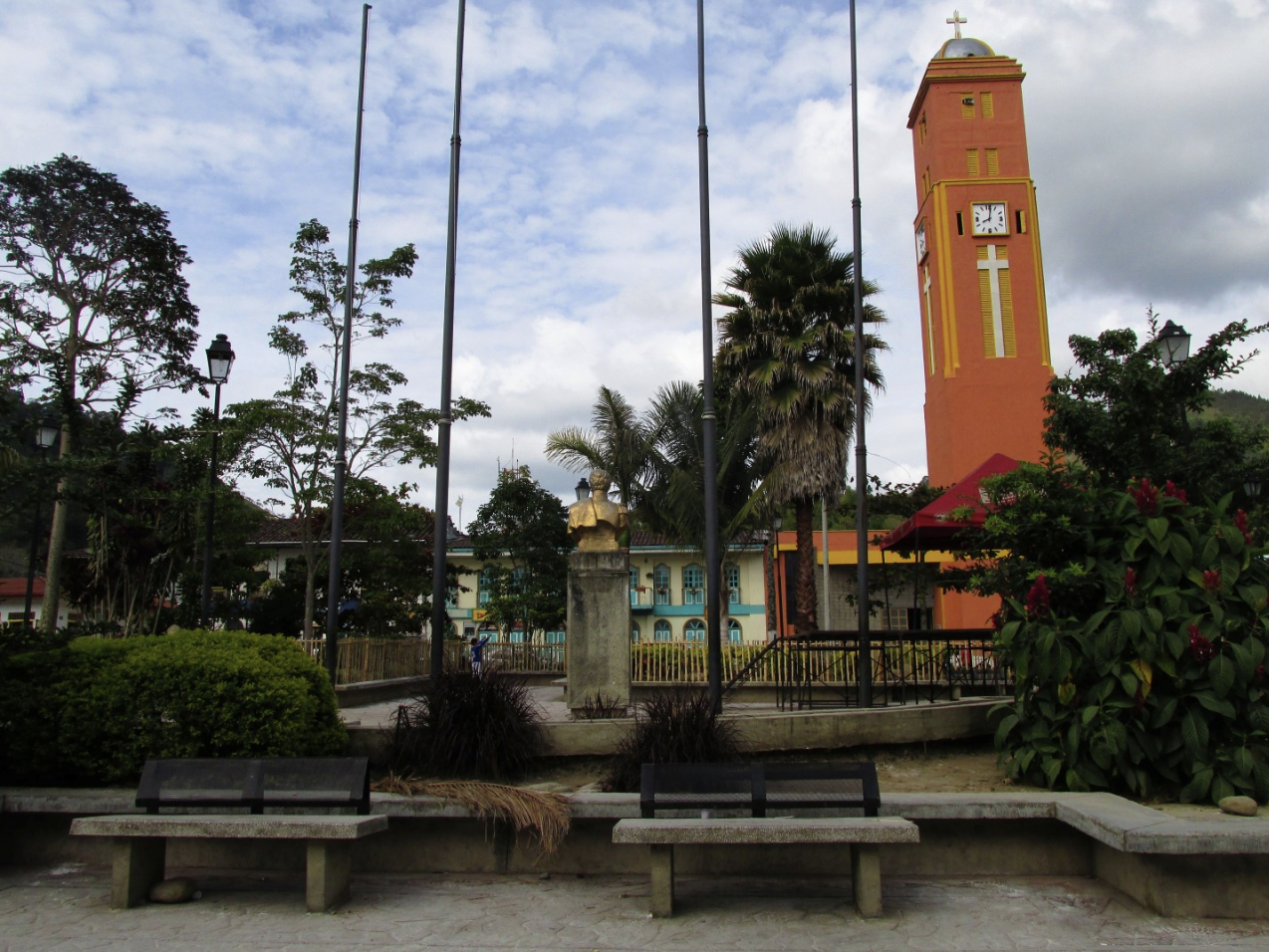
Square in Pijao, Colombia. Darthvader2. CC-BY-SA-4.0.
Named after the Pijao people, an Indigenous people of Colombia, the town of Pijao offers a colorful, meditative respite nestled in beautiful mountainous scenery. As Colombia’s first member of the international Cittaslow movement, meaning “slow city,” Pijao invites travelers to embrace the town’s focus on slow living by enjoying local artisan goods, including the eco-conscious, artisanal coffee at La Tienda del Buen Vivir, or “The Good Living Shop,” and the traditional Indigenous Pijao corn dish, el subido. The town invites travelers to pause and embrace the small, surprising beauties around every corner, such as the local Heron Tree bursting with white-feathered herons and the striking, colorful architecture along Calle Real. The region surrounding the town is brimming with small family coffee farms where visitors can learn about eco-friendly, sustainable coffee cultivation practices. At Finca La Esmeralda, an ecological refuge and shade-grown agroforestry reserve, tours take visitors step-by-step through the coffee growing, harvesting and drying processes.
2. Salento
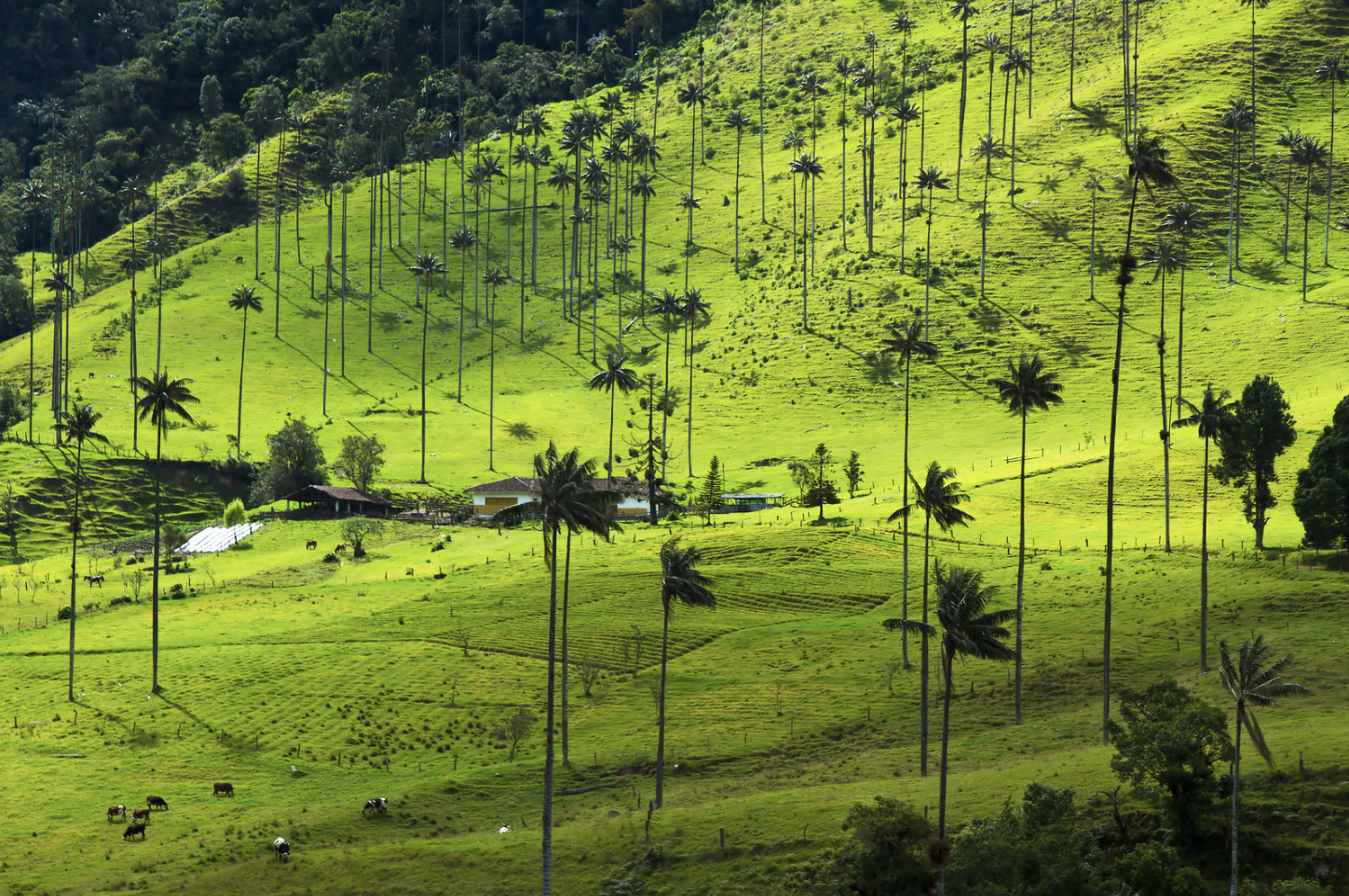
Colombian Wax Palm trees in Salento, Colombia. Pedro Szekely. CC BY-SA 2.0.
Among the towns of the Eje Cafetero, Salento is likely the most popular and well-visited. The town is surrounded by family coffee farms offering tours, including Finca Momota, Finca Las Acacias and Finca Luger. Besides delving into the heart of coffee farming, the nearby Cocora Valley is home to the jaw-dropping Quindio wax palm, the world’s tallest palm species. In town, the Plaza de Bolivar Salento remains the heart of local life, surrounded by historical cafes, churches and shops.
3. Filandia
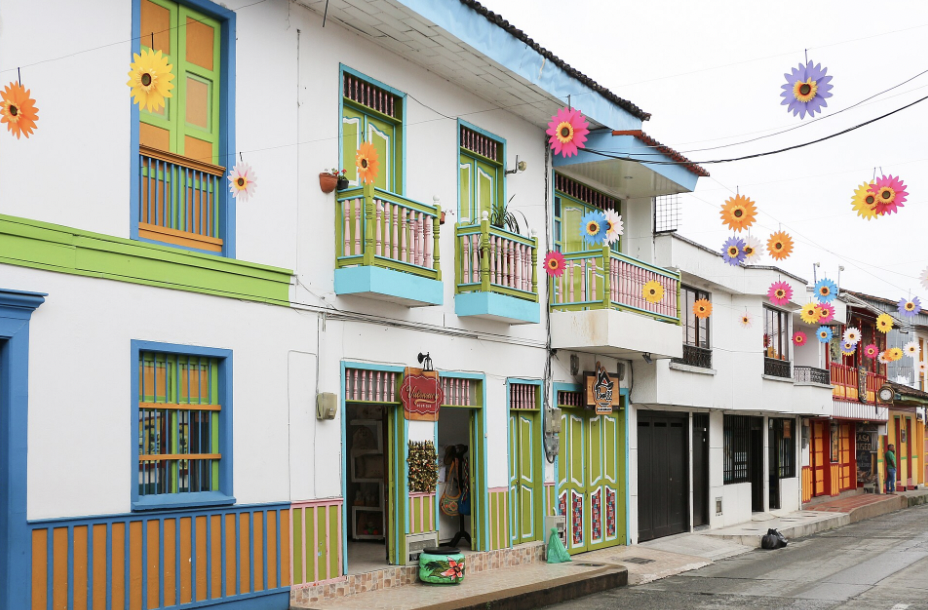
Calle 7, one of the main streets of Filandia, Colombia. Bernard Gagnon. CC BY-SA 4.0.
Neighboring Salento, Filandia is an ideal destination for those seeking to learn more about the Eje Cafetero in a destination off the beaten path. Although less popular among tourists, Filandia is one of the few towns in the region to retain the traditional bahareque architecture, composed of clay and bamboo-style constructions. On balconies, flowers burst with color, complementing the bold, colorful exteriors of buildings throughout the city. In the center of town, travelers and locals converge in Bolivar Park, enjoying a cup of coffee from the surrounding cafes while sitting under the shade of the blue and white exterior of the city’s central church, the Iglesia Maria Inmaculada. Neighboring coffee farms surrounding the town, including Finca Agua Bonita and Finca La Palmera, highlight traditional coffee farming and processing techniques through guided tours.
4. Salamina
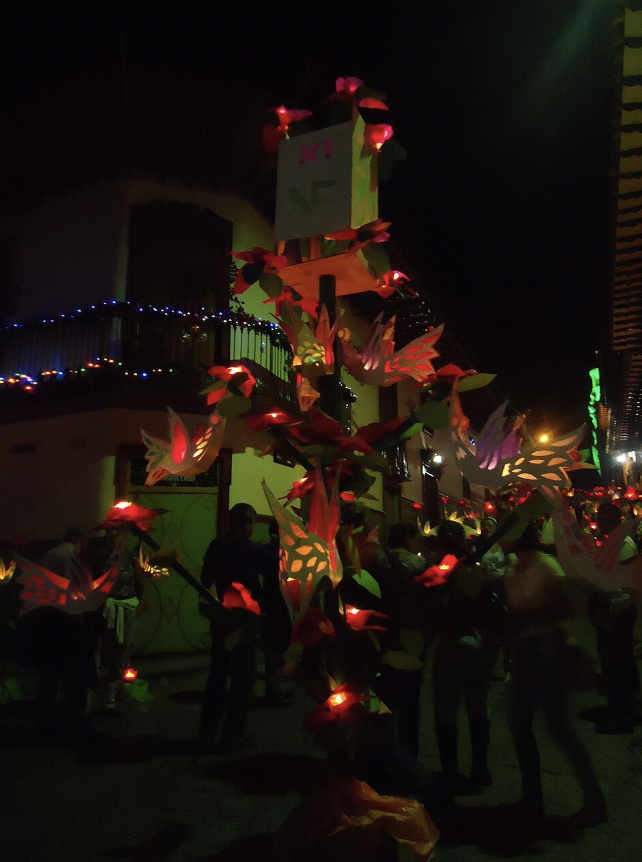
La Noche del Fuego, Salamina, Colombia. Samacar. CC BY 3.0.
Home to both stunning nature and deep cultural history, Salamina is one of the best spots for travelers to truly immerse themselves in the beauty of the Coffee Axis. Owing to the large number of poets and artists hailing from the town, Salamina remains known as the “City of Light” today. The birthplace of internationally acclaimed 19th-century Colombian poet Agripina Montes del Valle and architect Eliseo Tangarife, local artistry and stunning architecture interlace in harmony throughout the streets today. In December, locals celebrate “La Noche del Fuego,” or Night of Fire, with lantern parades transforming the city streets. Nearby, in the Mirador Valle de la Samaria, Colombia’s towering wax palm trees soar into the sky. At Cafe Entre Montanas, or Coffee Among the Mountains, tours include Yipao-led exploration of ecological trails, as well as guided coffee tasting and “seed-to-cup” experiences.
5. Jardin
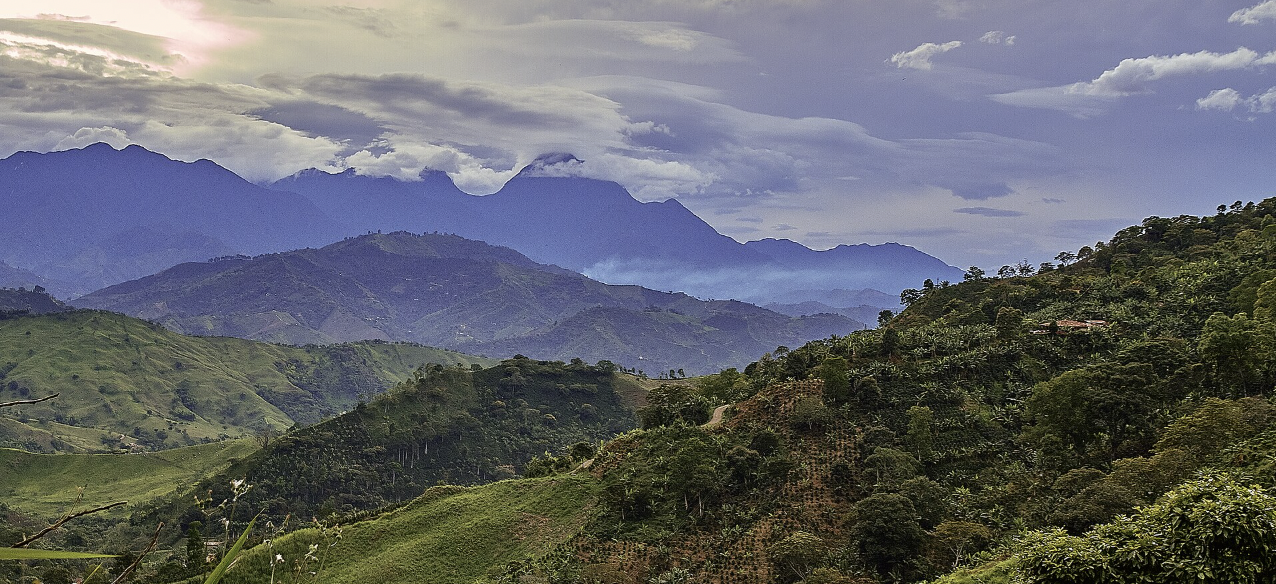
Mountains in Jardin, Colombia. Pedro Szekely. CC BY-SA 4.0.
Translated into English as “Garden,” the town of Jardin is overflowing with natural beauty. Atop Mirador Cristo Rey, a striking mountain viewpoint near the center of town, endless valleys of sloping coffee farms fall beneath your feet. The high altitude of the coffee farms slows the ripening of coffee beans, which produces a sweeter, smoother beverage, according to Jaime, a farmer in Jardin. Beyond the luscious coffee plantations surrounding town, a myriad of stunning waterfalls dot the forests, including the moss-covered cave waterfall, Cueva del Esplendor and the popular Cascada la Escalera. The town itself is a nationally designated Pueblo Patrimonio, or Heritage Town, which has retained its colorful historical architecture in local shops, homes and churches.
A 10-minute drive away from town, locals Martha and Gustavo run Finca Cafetera Margus, a fifth-generation coffee plantation offering “plant to cup” tours of coffee cultivation. Nearby, Finca Mariposa boasts over 6,000 Arabica coffee plants, with tours detailing the art of coffee harvesting, fermenting and roasting.
6. Jerico
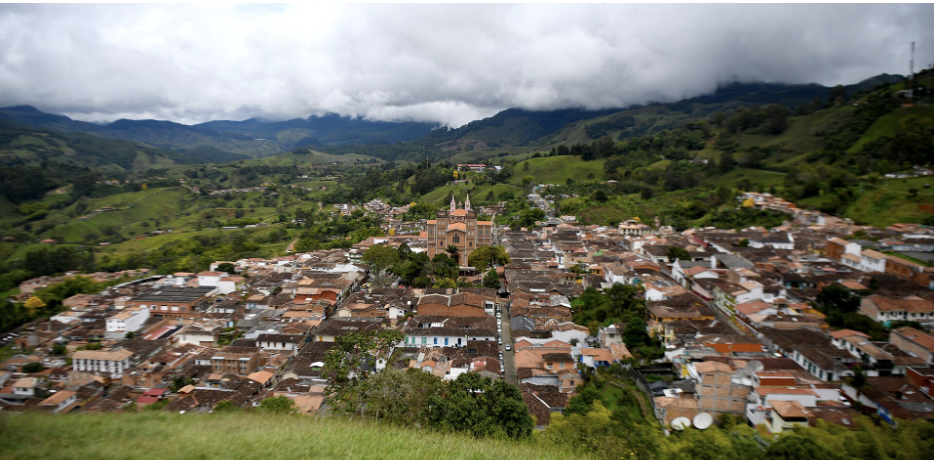
Bird’s-eye view of Jerico, Colombia. Martin Parks. CC BY 4.0.
Jerico is similar to Jardin in that it is also one of only 17 Heritage Towns in Colombia, yet the city’s distinction as the home of Colombia’s first saint, St. Laura Montoya, has produced a unique local appreciation for the town’s identity as a heritage town. Today, the pale pink clock towers of the Sanctuary of Santa Laura are silhouetted against the rolling green hills filled with family coffee farms. Local artistry not only honors Santa Laura Montoya through sculptures and murals but also continues to reflect the town’s historical significance as artisan leather producer of carriels, traditional folded leather bags sported by men today. One of the best ways to explore the town is to simply bask in the main square, or Parque Principal, which is home to bustling shops, cafes and city landmarks. Close to town, Finca Arcoiris offers the unconventional “Anti Coffee Tour,” which invites a small group of visitors to join the plantation owner, Ariel, and his family for lunch before receiving a hands-on lesson in coffee harvesting, deshelling, cleaning and roasting.
Claire Garvin
Claire is a fourth-year student at Barnard College, Columbia University studying Neuroscience. She is interested in writing as a means of understanding the world, and she hopes to ignite meaningful change through her journalism. Outside of class, she enjoys baking, painting, and reading.