LGBTQ+ Intolerance in Ghana Reaches Boiling Point 

Tensions within the West African country have risen following the recent restriction of LGBTQ+ rights, resurfacing the decades long discussion regarding the criminalization of same-sex conduct.   
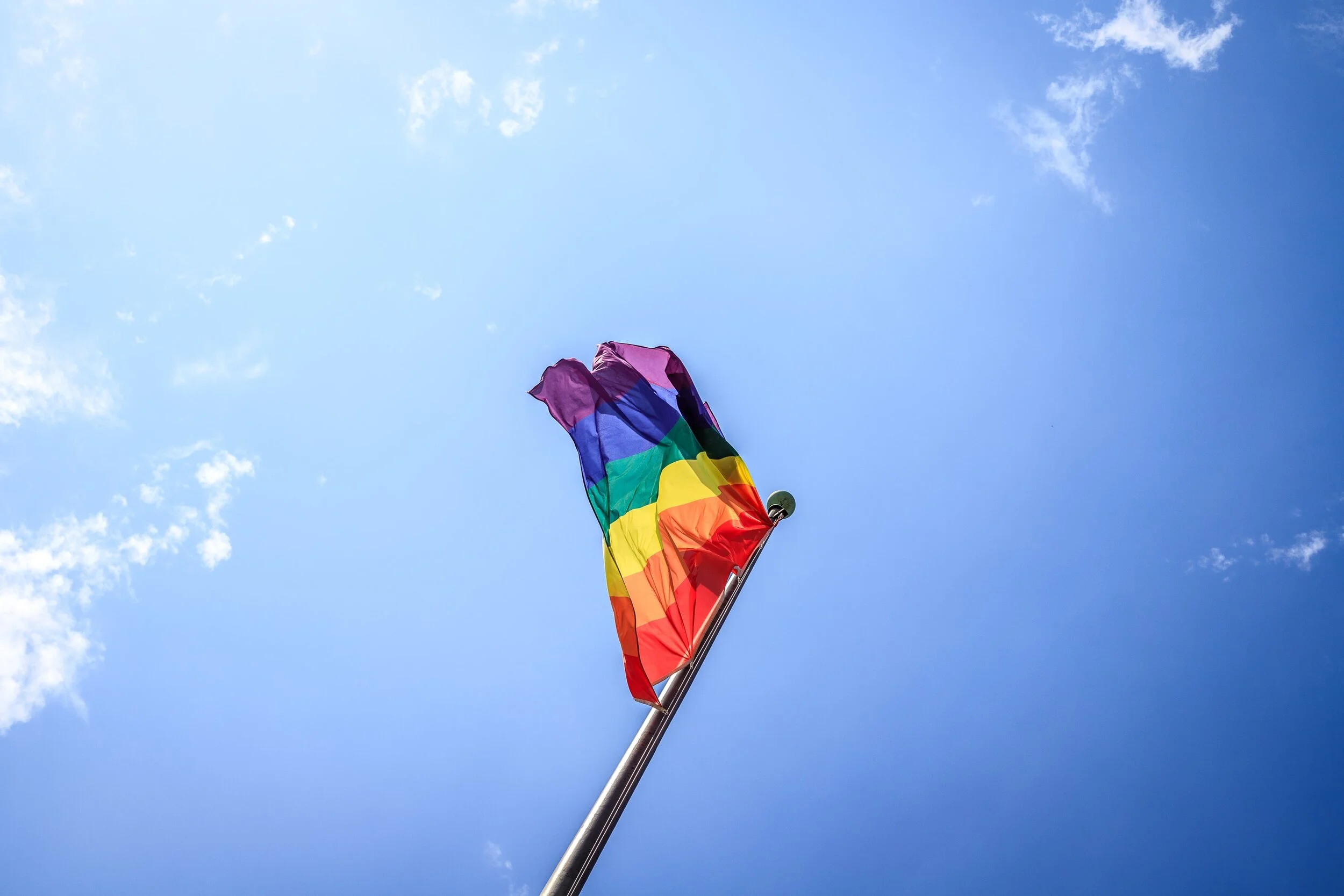
Pride flag waving in the sky. Tim Bieler. Unsplash. 

The newly established office of nonprofit organization LGBT+ Rights Ghana was raided and searched by police last month, endangering one of the only safe spaces for LGBTQ+ people in the country. This raid came mere days after Ghanaian journalist Ignatius Annor came out as gay on live television, and many have speculated that the raid was in retaliation of that moment. 

Given Ghana’s criminalization of same-sex conduct, it is not a stretch to say that homophobia runs rampant and unchecked, especially when considering the widespread opposition from both government officials and religious figures regarding the construction of the center for LGBT+ Rights Ghana.   

The building has been under scrutiny since it first opened back in January. Only three weeks after opening its doors to the public, the organization had to temporarily close in order to protect its staff and visitors from angry protesters. The director of the organization, Alex Kofi Donkor, explained how the community “expected some homophobic organizations would use the opportunity to exploit the situation and stoke tensions against the community, but the anti-gay hateful reaction has been unprecedented.”   

This unprovoked suppression of basic freedoms indicates that LGBTQ+ intolerance in Ghana has reached a boiling point and is about to bubble over. 
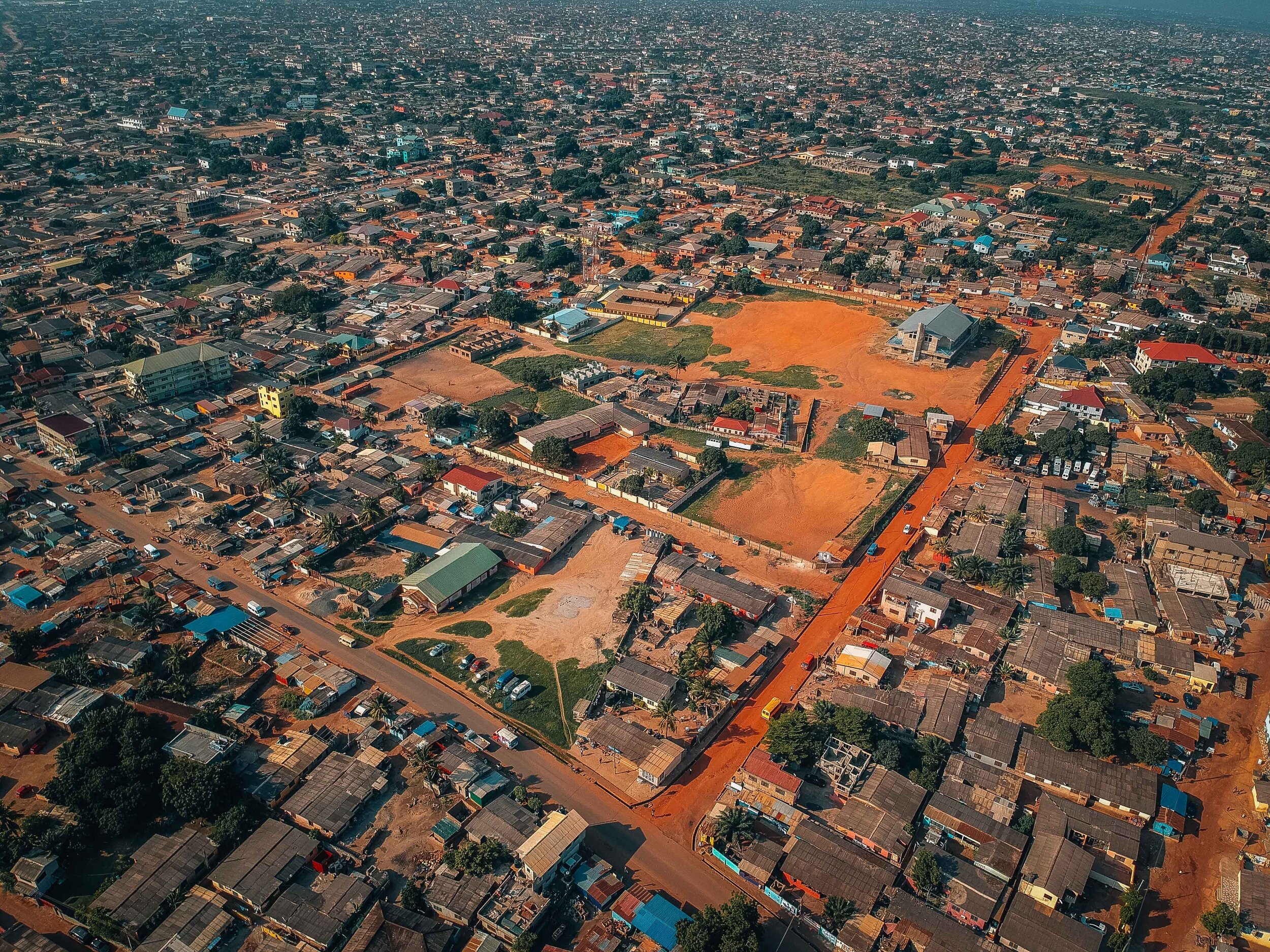
Aerial shot of Accra, Ghana. Virgyl Sowah. Unsplash. 

News of the situation reached a handful of high-profile celebrities such as Idris Elba and Naomi Campbell, who joined 64 other public figures in publishing an open letter of solidarity with the Ghanaian LGBTQ+ community using #GhanaSupportsEquality. While prejudice has only recently garnered public attention due to the letter, blatant and widespread homophobia in Ghana has run rampant for years. 

According to a study conducted by the Human Rights Watch in 2017, hate crimes and assault due to one's sexual identity are regular occurrences in Ghana. Dozens of people have been attacked by mobs and even family members out of mere speculation that they were gay. Furthermore, the study found that for women, much of this aggressive homophobia was happening behind closed doors through the pressures of coerced marriage. 

Consider 24-year-old Khadija, who identifies as lesbian and will soon begin pursuing relationships with men due to the societal pressure for women to marry. Or 21-year-old Aisha, who was exiled by her family and sent to a “deliverance” church camp after she was outed as lesbian. 

Marriage pressures and intolerances are certainly prevalent in other countries as well, even in those often deemed progressive. The big difference is that in many countries, homophobic beliefs are slowly becoming less and less common. In Ghana, it seems as though these sentiments are normalized and held by the majority of people. 

The precedent for discrimination based on sexual orientation was set as early as 2011, when former Western Region minister Paul Evans Aidoo called for the immediate arrest of LGBTQ+ people in the area. The stigma that actions like this produced in Ghana have only been amplified over time when coupled with religious and cultural tensions. 
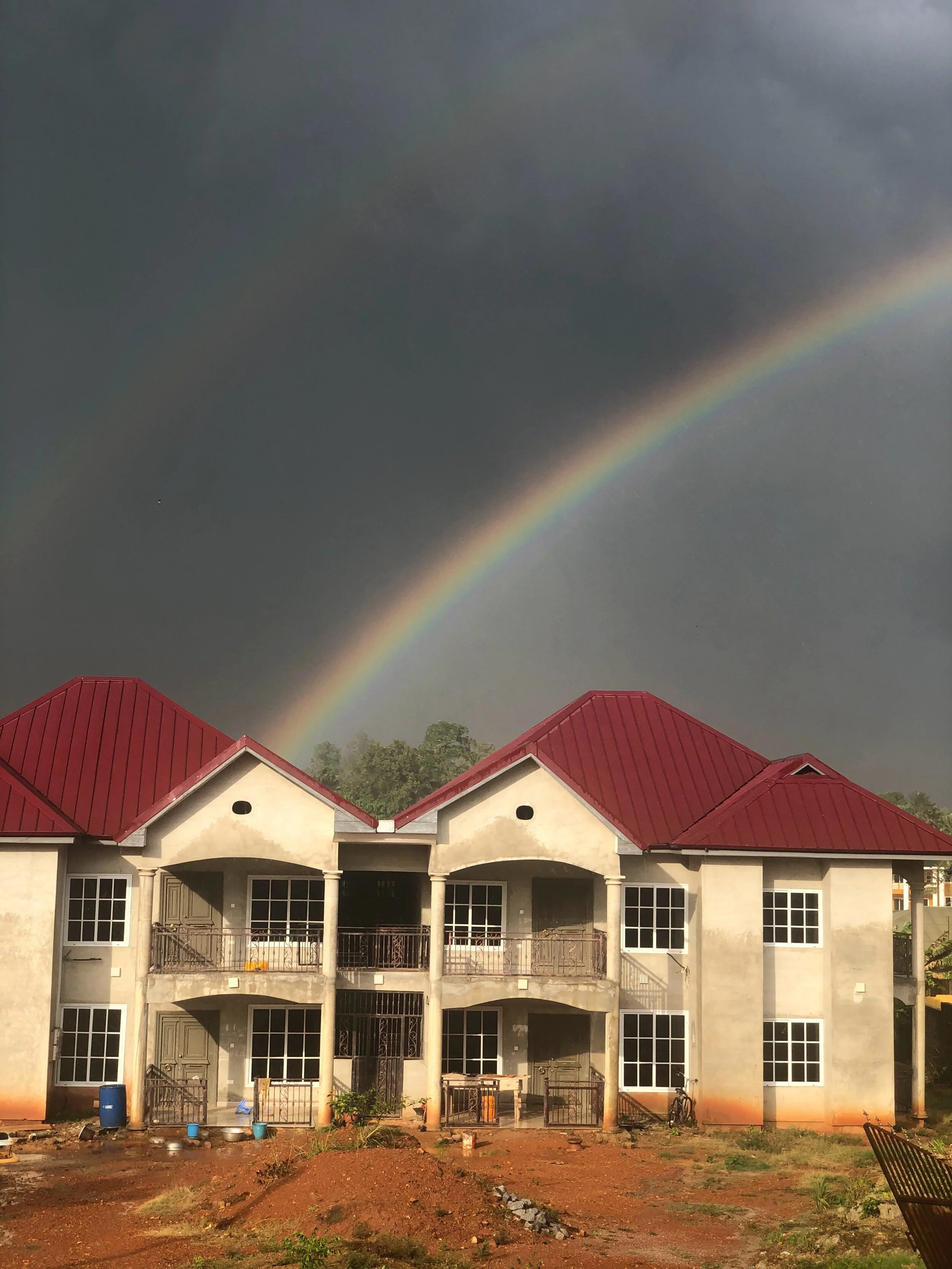
A rainbow forms above a home in Kumasi, Ghana. Ritchie. Unsplash. 

Many victims of hate crimes or abuse in Ghana reported that because of the codified homophobia in the country, they are unable to report their experiences to local authorities without putting themselves in danger. As a result, LGBTQ+ Ghanaians find themselves stuck in a perpetual cycle of making slight progress just for higher authorities to snatch it away. 

There have been countless opportunities for legalized discrimination to be addressed, and ever since current Ghanaian President Nana Akufo-Addo assumed office in 2017, he has been under immense pressure to announce his official position on homosexuality. Four years later, he has still not done so.

Instead of embracing the shift toward more inclusive policies supported by LGBT+ Rights Ghana, the Ghanaian government appears to be succumbing to public pressures in an attempt to keep peace. What it fails to realize is that sweeping inequalities under the carpet doesn’t make them go away. It actually does quite the opposite. It heightens inequalities until they become absolutely impossible to avoid. Celebrity involvement in dismantling Ghana’s current system has caused quite the public reaction. It may end up being the spark that causes the Ghanaian government to reconsider its policies and begin to offer LGBTQ+ people the respect and protection they deserve. 

Zara Irshad

Zara is a third year Communication student at the University of California, San Diego. Her passion for journalism comes from her love of storytelling and desire to learn about others. In addition to writing at CATALYST, she is an Opinion Writer for the UCSD Guardian, which allows her to incorporate various perspectives into her work.
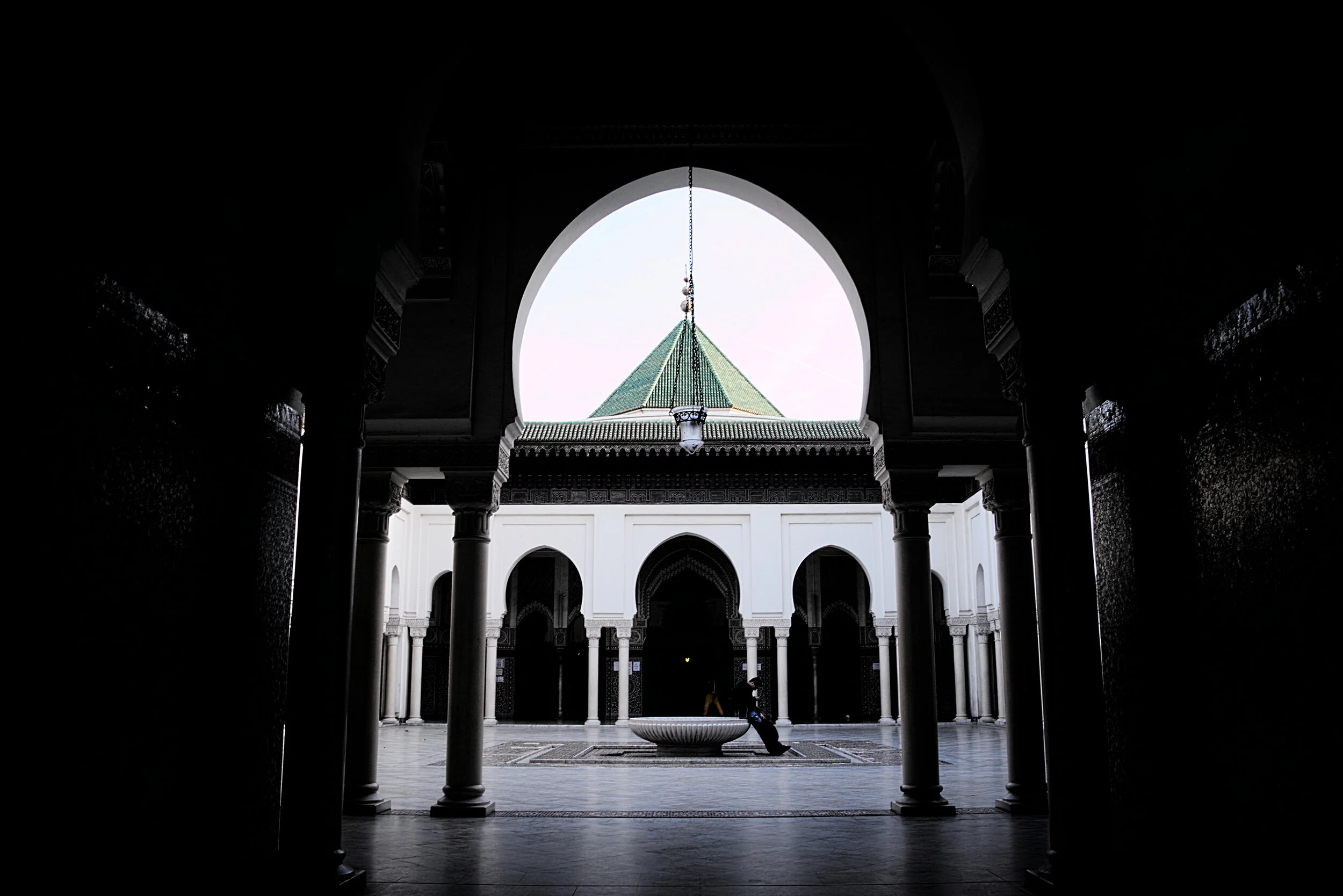

In 2020, Femicide Rates Rose Around the Globe

Last year, the U.N. reported a significant increase in domestic violence against women and girls worldwide. Rates of femicide, the murder of women because they are women, have increased greatly since the start of the COVID-19 pandemic.

 Last year, countries around the world saw protests decrying the increase of violence against women. A number of these protests were sparked by femicides that made headlines, like the murders of Vanessa Guillen in the United States, Pinar Gultekin in Turkey and Tshegofatso Pule in South Africa. Guillen, an Army private, is believed to have been killed by another service member who likely also sexually assaulted her, and Gultekin and Pule both died at the hands of a current or former boyfriend. These women were only three of a reported 50,000 women who die as a result of domestic violence each year. 

In 2020, that number increased further. The U.N. reported that reports of domestic violence as a whole dramatically increased, with 243 million women around the world being subjected to sexual and/or physical violence within the year. That figure only includes women and girls aged 15 to 49, so the real total worldwide is even higher, since women outside that age range experience violence as well. 64-year-old Justina Galo Urtecho, who was raped and strangled to death in her home in Costa Rica, stands as a prominent example. The rise in violence against women, especially domestic violence, is directly related to the COVID-19 pandemic. Concerns over security, health and money, as well as the series of lockdowns in many countries, have all contributed to an increase in cases of domestic violence. Due to the pandemic, women and girls worldwide found themselves stuck at home in abusive situations. 

Since France’s March 17, 2020, lockdown, cases of domestic violence have increased 30%. Emergency calls to domestic violence helplines in Argentina, Cyprus and Singapore increased 25%, 30% and 33%, respectively, after the countries instituted lockdowns. 

Many women who were victims of domestic violence ended up dead. During the first two months of its lockdown, Brazil saw a 22% increase in femicides from the same time last year. In Mexico, at least 987 women and girls were murdered in the first four months of 2020 alone. 

At the same time that the pandemic led to an increase in violence against women, it also compromised the care that women facing domestic violence had access to. With health care providers and governments overwhelmed by COVID-19 cases, the U.N. report suggests that support for women who experienced violence slipped through the cracks. 

The United Nations has dubbed the increase of domestic violence and femicide that followed the COVID-19 pandemic “the Shadow Pandemic,” and urges that national responses to COVID-19 include services to address violence against women and girls. The U.N. Shadow Pandemic Campaign recommends that countries follow five steps to combat the increase of violence against women: 

  1. Allocate resources in COVID-19 response plans to addressing violence against women.

  2. Strengthen support services for women who experience violence by treating them as essential services.

  3. Increase the capacity of key support services.

  4. Put women at the center of policy reform. 

  5. Collect data on the phenomenon to inform governments’ responses.

Violence against women is an ongoing issue around the world. It did not start when the pandemic did; it simply increased. Similarly, violence against women will not end when the pandemic does. Reports suggest that the most effective way to prevent femicide is to end intimate partner violence, which necessitates addressing global gender inequality and power imbalances as a whole. 

To Get Involved: 

A list of ways to take action with the U.N.’s Shadow Pandemic Campaign can be found here. 


Rachel Lynch

Rachel is a student at Sarah Lawrence College in Bronxville, NY currently taking a semester off. She plans to study Writing and Child Development. Rachel loves to travel and is inspired by the places she’s been and everywhere she wants to go. She hopes to educate people on social justice issues and the history and culture of travel destinations through her writing.

Altered Photos of Cambodian Genocide Victims Spark Outrage

Too often history is viewed as an element of the past—chains of unchangeable events that can be analyzed and nothing more. However, it is important that victims of past atrocities are honored, a lesson in which modern media has fallen short. 

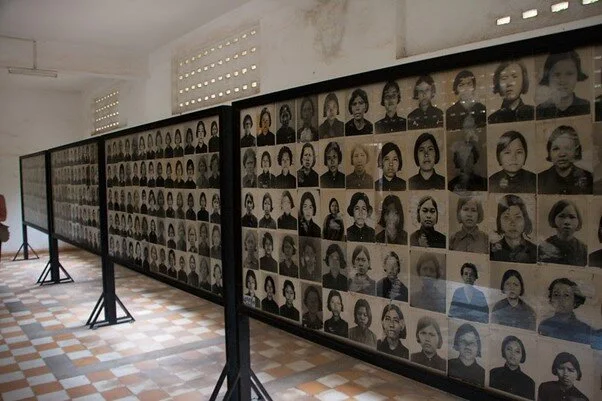
Unaltered photos of Khmer Rouge genocide victims at the Tuol Sleng Genocide Museum. Christian Haugen. CC BY 2.0.

With the advancements of the digital age, the culture of media has grown ever more rapid, often leading to negative consequences. In a recent incident, history itself took center stage as one photographer’s actions sparked massive outrage among victims of the Khmer Rouge genocide, which led to the deaths of more than 2 million Cambodians in the late 1970s. 

Vice published the work of photographer Matt Loughrey, who edited photos of victims from the S-21 prison in Phnom Penh taken minutes before their executions. Loughrey has been accused of editing the photos so that they show smiling faces, creating waves of backlash for the photographer. 

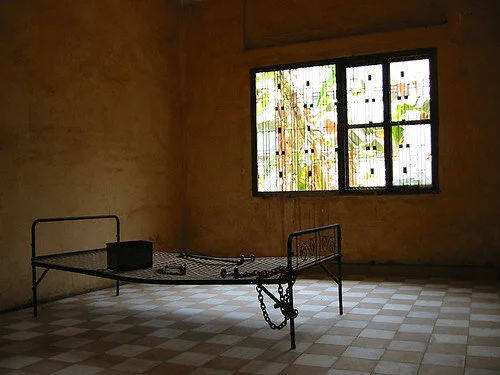
Torture room. Timoluege. CC BY-NC 2.0. 

Upset relatives of the photographed victims stated that Loughrey’s work was of horrible judgment, citing his acts as degrading the dignity of the victims. Cambodian officials too were outraged upon seeing the photos; the country’s Ministry of Culture and Fine Arts threatened legal action. In addition to insensitive alterations of the photos, the Vice article misidentified one of the victims, publishing incorrect personal details. 

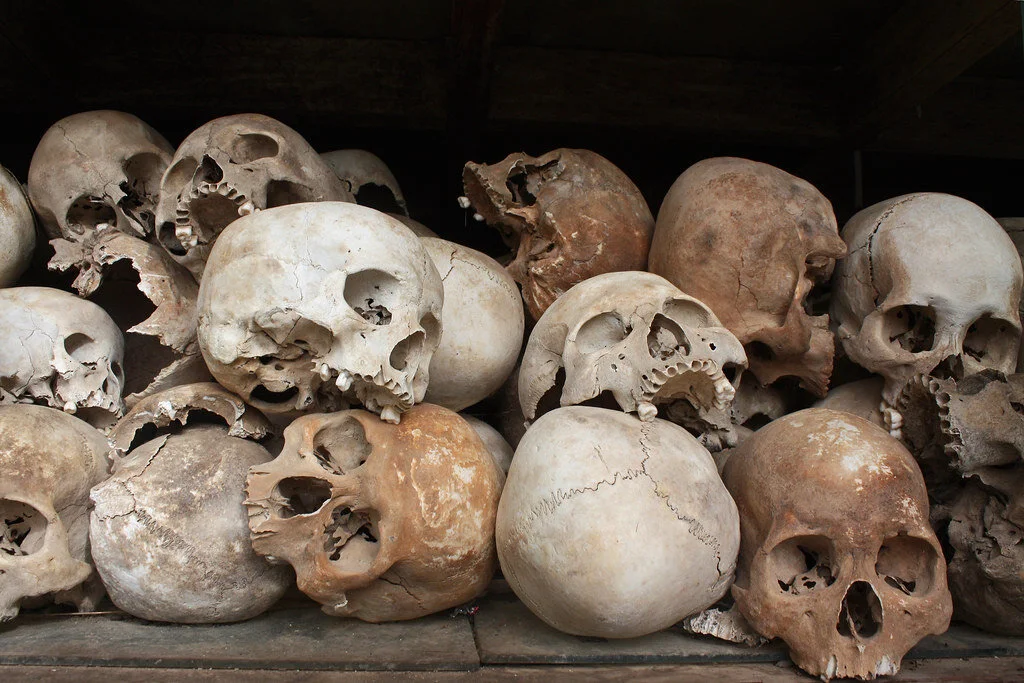
Victims’ skulls. istolethetv. CC BY 2.0.

Others have declared the actions of Loughrey to be crimes against history itself, stating the alterations to be offensive to truth. 

VICE has since removed the photos, citing errors in the company’s editorial process. 

The Bigger Picture 

Beyond the first waves of anger resulting from this incident, larger lessons have been learned by all involved. Primarily, the incident has brought to light a flaw in the way people view history; although history is an analysis of past events, it must be equally weighted against potential consequences for the victims themselves. Second, it highlights that history is not always entirely of the past—there are still over 5 million Khmer Rouge victims living, along with millions of other descendants and close community members. Third, it brings up the question of what should be considered acceptable when it comes to altering representations of history. Is there wiggle room for subjectivity, or should all journalistic representations be as objective as possible? 

Amid the turmoil and animosity between the opposing sides of this conflict, some light still remains. The incident stands as a crucial reminder for everyone that the analysis of history can be as much a weapon as a tool. It remains up to the media, and their audiences, to use the past appropriately.


Ella Nguyen

Ella is an undergraduate student at Vassar College pursuing a degree in Hispanic Studies. She wants to assist in the field of immigration law and hopes to utilize Spanish in her future projects. In her free time she enjoys cooking, writing poetry, and learning about cosmetics.

High Schools in Rome Increase Support for Transgender Students

In the Roman Catholic stronghold of Italy, Rome’s high school students have sped up the city’s journey toward acceptance of transgender individuals. 

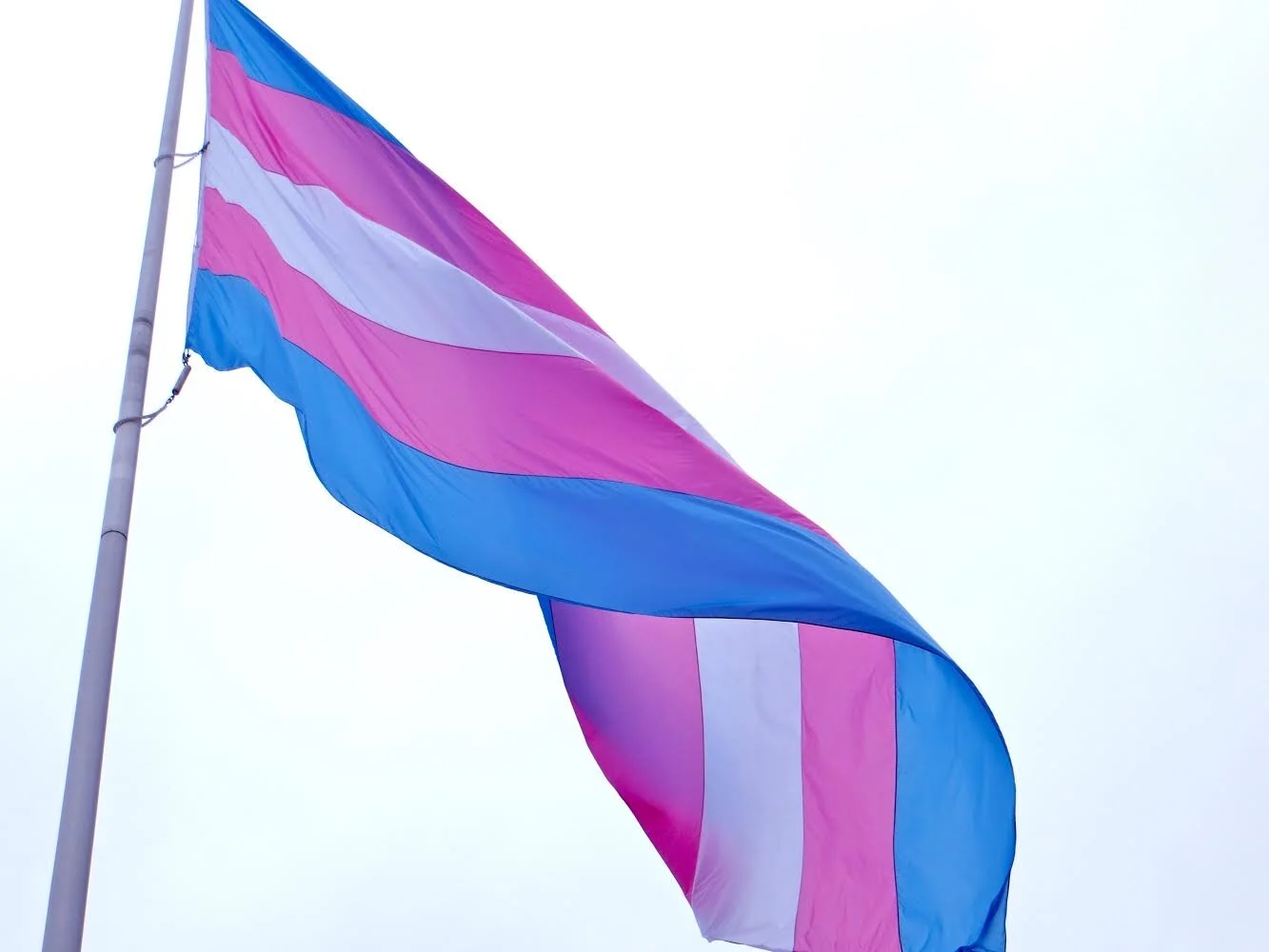
Transgender flag. User:torbakhopper. CC BY-SA 3.0.

Despite the challenges of the COVID-19 pandemic, the high school community of Rome has been making strides toward the advancement of LGBTQ+ rights. Recently, a handful of high schools in the city have decided to allow transgender students the right to go by their chosen name. This is a stark change from the previous method of using a transgender person’s name given at birth, known as their “dead” name. The high schools that have made this change lag behind the city’s universities, with some colleges already having given transgender students the right. 

Although the act itself seems small, it is a substantial gesture within the context of the transgender community. Upon hearing the news, students have expressed great relief; many see this step as a beacon of hope toward full transgender visibility in Italy. The country’s LGBTQ+ community currently deals with hate crimes, some of which have been so violent that victims have required reconstructive surgery. For Italy, the flaw is in the law; there is a law prohibiting crimes based on religion and race, but none exists for acts based on gender or sexual orientation. The largest change benefiting the transgender community occurred in 1982, when the Sex Reassignment Act legalized that procedure. 

School officials in Rome believe that this change will help to protect students by creating a sense of security and peace in their learning environment. The first students to experience the change in rules hope that they will pave the way for an easier education for future transgender individuals, many of whom face large-scale bullying. 

In a study on LGBTQ+ tolerance conducted by the Williams Institute, Italy fell quite far behind some of its European counterparts. Italy sat at 30th place in the ranking while Iceland and the Netherlands snagged the first two slots. The prevalence of the Roman Catholic Church, which does not condone LGBTQ+ behavior, has much to do with the country’s lower score. 

This step has been a significant one for Italy, but much work remains to be done. With a smoother education now in store, these students hope that they are just the group to bring about further change. 


Ella Nguyen

Ella is an undergraduate student at Vassar College pursuing a degree in Hispanic Studies. She wants to assist in the field of immigration law and hopes to utilize Spanish in her future projects. In her free time she enjoys cooking, writing poetry, and learning about cosmetics.

Plastic Surgery Thrives in War-Torn Afghanistan

For the middle class in Afghanistan, the popularity of plastic surgery is growing. Botox injections, breast implants and liposuction are options for mostly women, and even families trying to beautify their daughters to marry them off more easily.

Read More

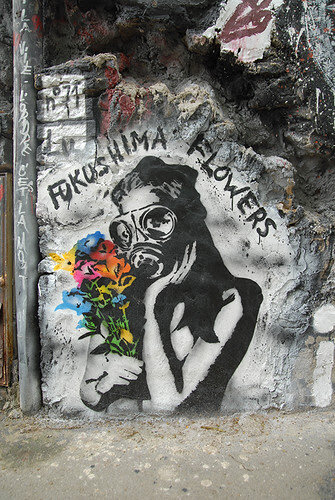
Ten Years After Nuclear Disaster, Recovery Remains Distant in Fukushima

The tsunami and ensuing meltdowns at the Fukushima Daiichi nuclear power plant forced thousands to flee their homes. A decade later, some locals have returned home, but full recovery remains remote.

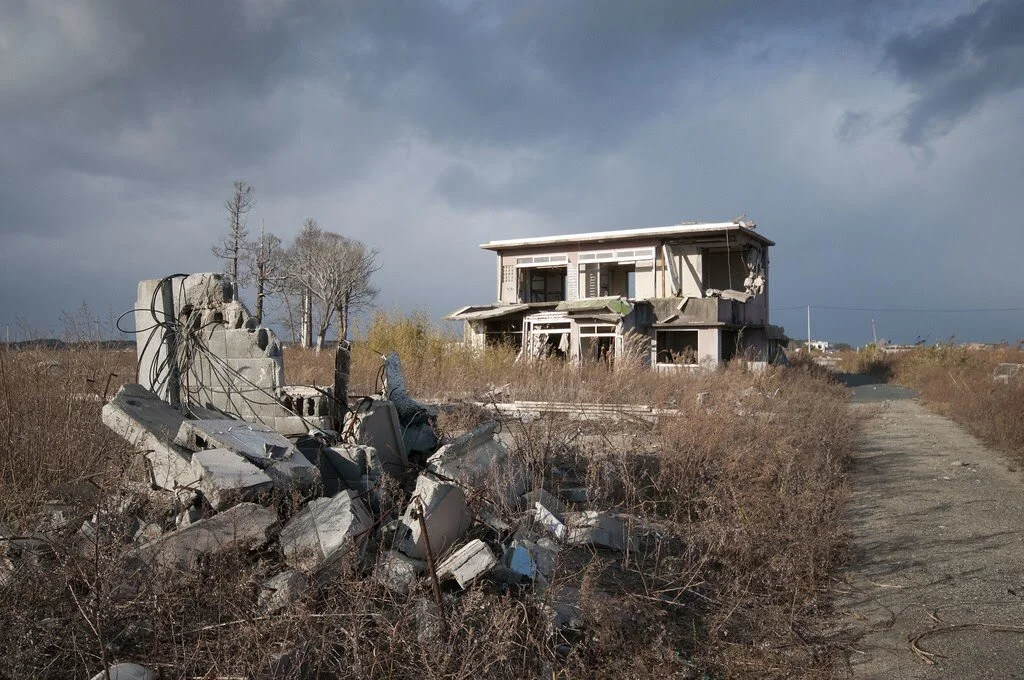
A tsunami’s wreckage. UCLAnewsroom. CC BY-NC-SA 2.0.

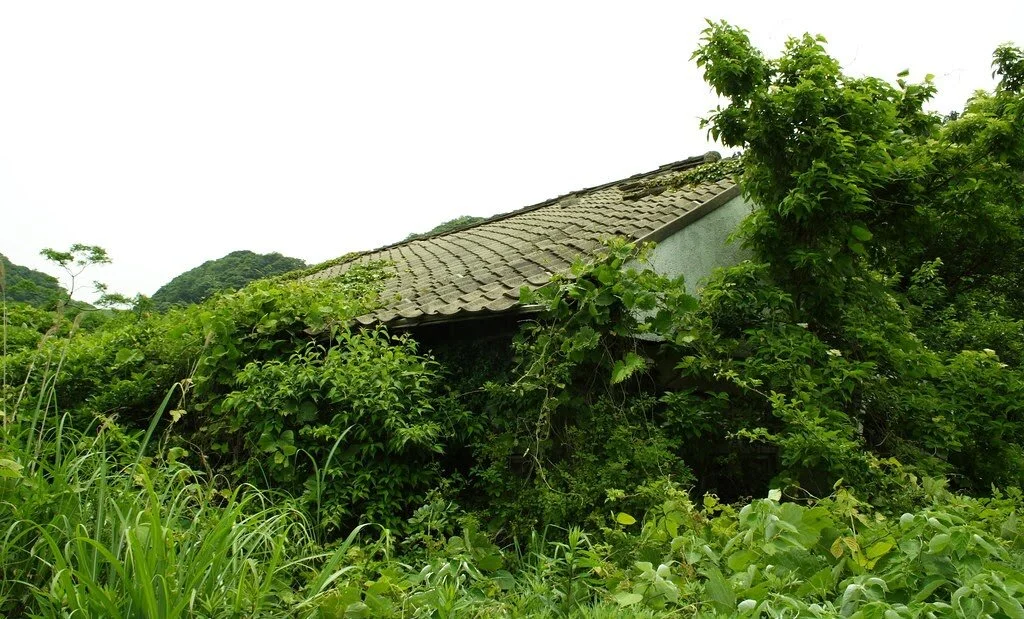
Upon returning home after 10 years away, Masumi Kowata found a monkey in her living room. It wasn’t a joyful homecoming. In 2011, she evacuated her home along with 160,000 locals across Japan’s Fukushima prefecture. A cloud of radiation, spewing from three simultaneous meltdowns at the Fukushima Daiichi nuclear power plant, rendered swaths of land uninhabitable. Only in 2021 did the government allow she and her husband to return. Even then, it was only safe for them to visit for the day. Clad head to toe in plastic protective gear, she tread cautiously through the wreckage of an earthquake, a tsunami and neglect: a house shaken by earthquake, food left to rot for a decade, overgrown plants vining up the walls. The monkey had helped itself to Kowata’s belongings. It pranced around the room “wearing our clothes like the king of the house.”

A house under nature’s dominion. colincookman. CC BY-NC-SA 2.0.

Wild animals have overtaken “difficult-to-return” zones, as the government termed them. Such areas encompass 2.4% of Fukushima prefecture and experience 50 times more radiation than what is considered safe. Boars, raccoon dogs and macaques roam the dangerously radioactive neighborhoods oblivious to the damage but unfettered by human life. They can cross streets without fear of speeding cars and feed on the produce of untended gardens, long overgrown. Human beings have returned much more slowly. Currently, the zones remain stuck in time at the moment of disaster. 

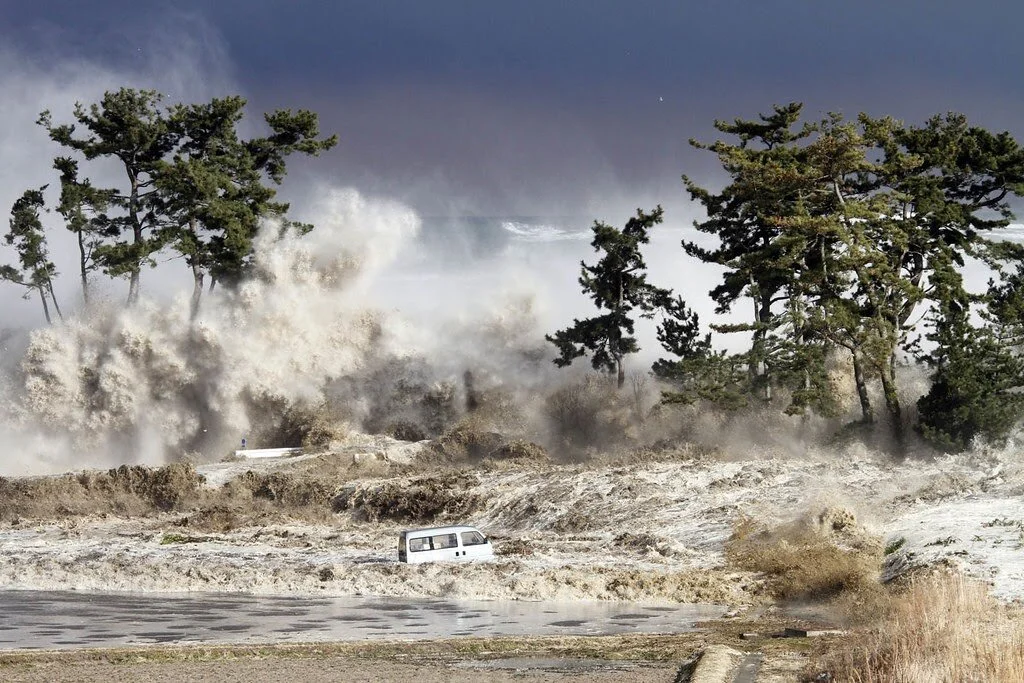
The tsunami crashing through Minamisoma, Fukushima. Warren Antiola. CC BY-NC-ND 2.0

Agriculture struggles to recover as a result. Boars descended from the nearby mountains and invaded farms and rice paddies to feast on the crops. Hunters struggle to control the wild boar population. That is to say, they shoot as many as possible. “When I got married and was about to have my first child,” said one elderly boar hunter, “my mother said to me, ‘You’re going to be a father. Stop killing. Is that really the right thing to do?’ I stopped hunting then.” Now, he ventures out each day to beat back nature’s 10-year-long advance on Fukushima’s villages. “My town is abandoned and overrun with radiated boars,” he says. “It is my duty to help.”

The tasks of hunting down boars, tending to radioactive cattle and repopulating deserted towns fall to the few who have returned. Of the 160,000 who were evacuated after the meltdowns, only one-fourth plan to return. Most of them are elderly. The majority of evacuees found it easier to settle down elsewhere than endure a yearslong wait to return home. Young people especially favored big cities filled with jobs over their provincial hometowns, a trend that predated the disaster. In the nine years before the meltdowns, Fukushima’s population declined by 100,000. In the nine years after, it fell by another 180,000.

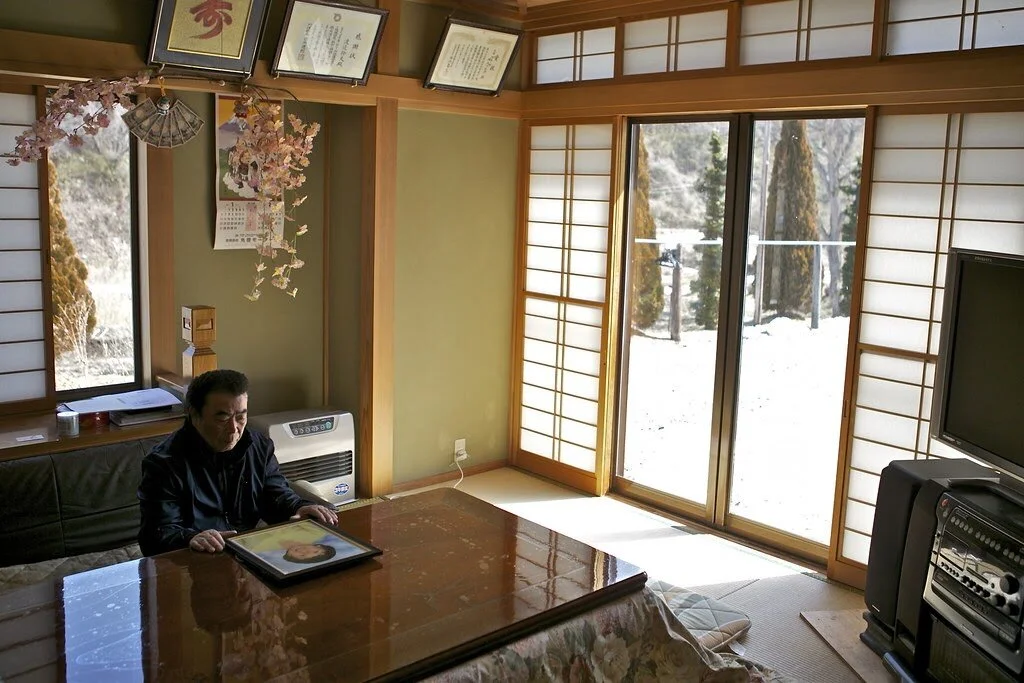
An elderly man with a picture of his late wife. Al-Jazeera English. CC BY-SA 2.0.

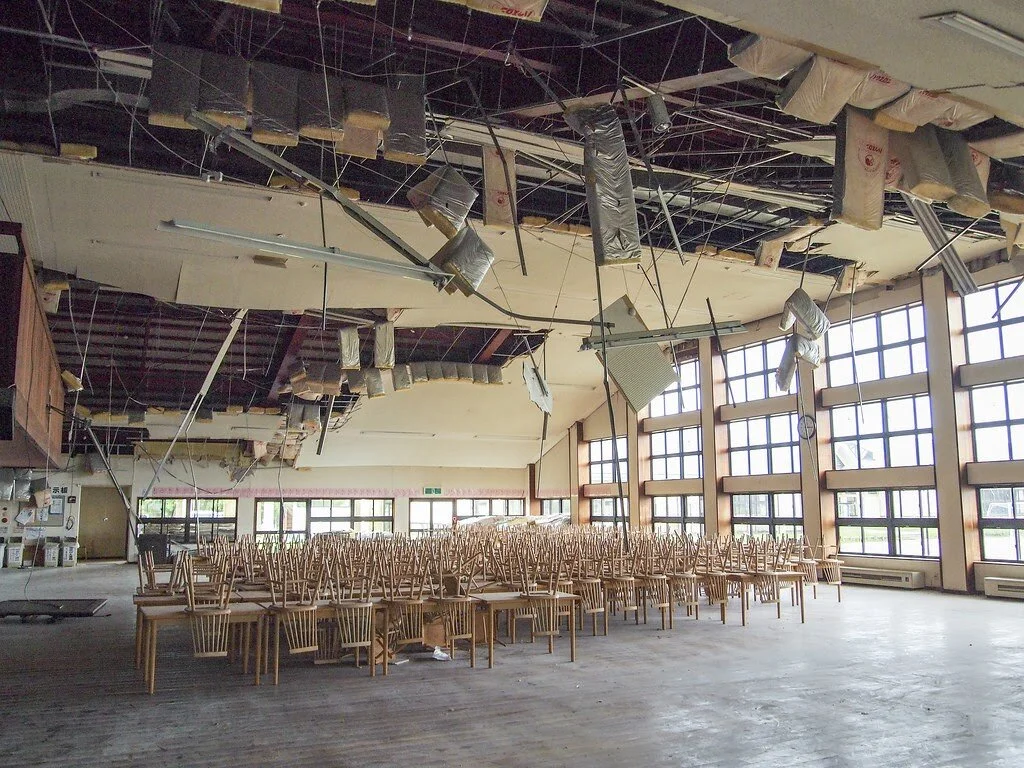
Local communities feel the absence of locals. As residents begin to plan for the future, they struggle to build a new community amid the ruins of an old one. Ancestral homes sit empty. Classrooms are frozen in time at the moment of the tsunami. Farmers spent generations breeding prized lines of livestock which are now useless. Radiated cattle, horses and pigs—as well as hunted boar—cannot be consumed because of radiated meat. Once famous for its produce, the prefecture’s fruits and vegetables now sell for below the national average. Though radiation tests ensure that the food is safe to eat, the stigma of nuclear disaster keeps customers away. 

Hope Tourism seeks to make these ruins the foundation of the future. The group offers tours through areas that reflect both the devastation wrought by the nuclear disaster and the communal efforts toward reconstruction. Tourists see the abandoned elementary school in Ukedo, roads bent out of line by the tsunami’s rip current and black bags filled with radioactive soil. They can also tour villages trying to revive their local industries and meet community leaders who spread awareness about the dangers of nuclear fallout. 

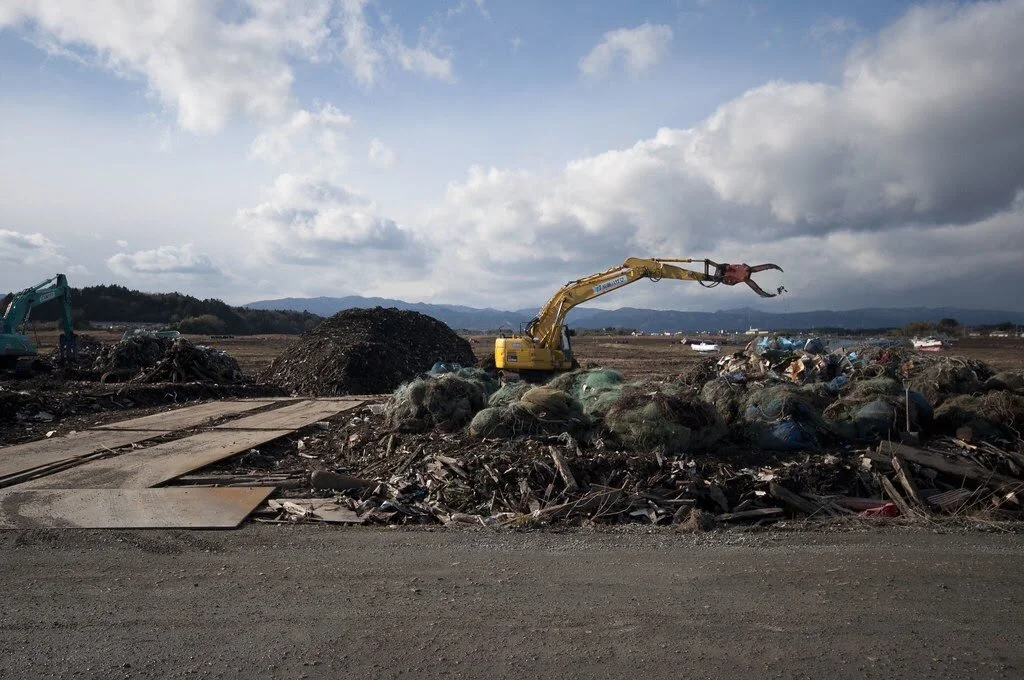
Where to put radioactive waste? UCLAnewsroom. CC BY-NC-SA 2.0.

In the face of hardship, locals still express pride in their roots. Iitate village joined the exclusive club of “most beautiful villages of Japan” in 2010, only to be wrecked by the tsunami and ensuing meltdowns. Ten years later, locals gathered to celebrate the opening of a new community center. It was built from parts of abandoned buildings: windows from old businesses, doors from run-down houses, a chalkboard from a school with no children to attend. An elderly woman in a green kimono sang folk tunes while the crowd enjoyed chestnut-filled rice balls. The Hope Tourism website states the village’s motto is a single word: madei. It means “thoughtfully” or “wholeheartedly” in the local dialect. It refers to the steady, persistent progress toward a revived community. 

An abandoned building. Patrick Vierthaler. CC BY-NC 2.0.

The fight against nature’s invasion of Fukushima’s villages still preoccupies recently decontaminated zones. The national government branded the upcoming Olympics as the “Recovery Olympics” to highlight the region’s progress since the disaster. The Olympic torch relay will begin at Fukushima’s J-Village sports complex, which workers used as a base during the crisis in 2011. Japan will need to escape the shadow of the Fukushima disaster if the government is to accomplish key items on its agenda. Prime Minister Yoshihide Suga pledged a carbon neutral Japan by 2050, an unthinkable prospect without nuclear power. 

A radioactive bouquet. Abode of Chaos. CC BY 2.0.

National priorities rarely concern those repopulating Fukushima, though. They focus on the day-to-day resurrections of ghost towns. Some still search for ghosts. “I often tell people that my daughter would be a very independent and successful adult out in the world,” says one man. He lost his entire family in the tsunami, including his young daughter. “She was the type of girl other people could rely on.” With a shovel, a trowel and his gardening gloves, he digs through the soil for his daughter’s remains. “I’ve found about 20% of her, but 80% is still missing,” he says. “That means she’s definitely still here.”

Radiated livestock are marked with a white symbol that tells farmers the animal was affected by the 2011 meltdowns. There is no such symbol for the psychic wounds that Fukushima’s disaster continues to exact on its people. 


Michael McCarthy

Michael is an undergraduate student at Haverford College, dodging the pandemic by taking a gap year. He writes in a variety of genres, and his time in high school debate renders political writing an inevitable fascination. Writing at Catalyst and the Bi-Co News, a student-run newspaper, provides an outlet for this passion. In the future, he intends to keep writing in mediums both informative and creative.

UK Considers Bill Outlawing Protests that Cause ‘Annoyance’

British lawmakers are debating a bill that would give police greater authority to curb protests. The legislation comes amid a series of ongoing protests regarding violence toward women and the abuse of police power. 

The U.K. Parliament is currently debating a bill that would outlaw any protest that causes “serious annoyance,” brought forward by Prime Minister Boris Johnson. The Police, Crime, Sentencing and Courts Bill could see protesters facing prison sentences of up to 10 years and would limit the right to protest outside of Parliament. 

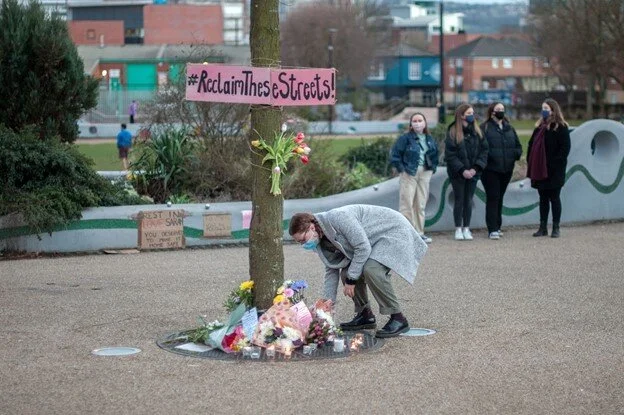
The second reading of the bill took place on March 16, just days after police physically restrained people attending a peaceful vigil for Sarah Everard. Everard, a 33-year-old marketing executive, disappeared from a busy London street on March 3 and her remains were later found in Kent. On March 12, police officer Wayne Couzens was arrested and charged with Everard’s kidnapping and murder. 

Everard’s murder sparked a number of protests calling for action to prevent violence against women. Many women shared their own stories of harassment. Vigils were also organized in Everard’s honor, including one on Clapham Common, a park near where Everard was last seen. Police warned against holding a vigil at this location due to COVID-19 restrictions on public gatherings, but the vigil proceeded. Hundreds came to peacefully pay tribute to Everard and stand in solidarity against violence toward women. In the evening, police arrived at the vigil and began handcuffing attendees. Four women were arrested. Footage and photos of the police physically restraining women, forcing them to the ground and leading them into police vans began circulating on social media, leading to a new round of protests, this time focused on the police. 

Protesters gathered outside London police headquarters on March 14 before proceeding to another rally outside of Parliament, where they called for the resignations of Metropolitan Police Commissioner Cressida Dick and British Home Secretary Priti Patel. Protests continued the next day and are ongoing. 

On March 16, as protests continued outside Parliament, lawmakers inside the building allowed the Police, Crime, Sentencing and Courts Bill to proceed to the next stage of debate. A Downing Street spokesperson insisted that the bill will not infringe upon people’s right to protest peacefully, but the vague language of the bill has many worried about how loosely it will be interpreted. If passed, the bill would give police much greater authority to curb protests that cause “serious disruption” or “serious annoyance” to passersby, terms which could be applied to nearly any protest. 

The bill has faced widespread criticism and is regarded by many as an attack on civil liberties. Over 150 organizations sent an open letter to Patel, who oversees U.K. law enforcement, expressing their opposition to the legislation. 

Parliament member Gavin Robinson voiced the concerns held by many protesters regarding the bill, saying that, “Protests will be noisy, protests will disrupt and no matter how offensive we may find the issue at their heart, the right to protest should be protected.”

Rather than listening to protesters’ concerns about violence against women and the abuse of police power, the government instead has focused its resources on limiting citizens’ voices.


Rachel Lynch

Rachel is a student at Sarah Lawrence College in Bronxville, NY currently taking a semester off. She plans to study Writing and Child Development. Rachel loves to travel and is inspired by the places she’s been and everywhere she wants to go. She hopes to educate people on social justice issues and the history and culture of travel destinations through her writing.

Just How Successful Is China's War on Poverty?

China announced in February that it has eradicated extreme poverty. Yet, how should extreme poverty be defined, and is the Chinese government really doing enough in the fight?

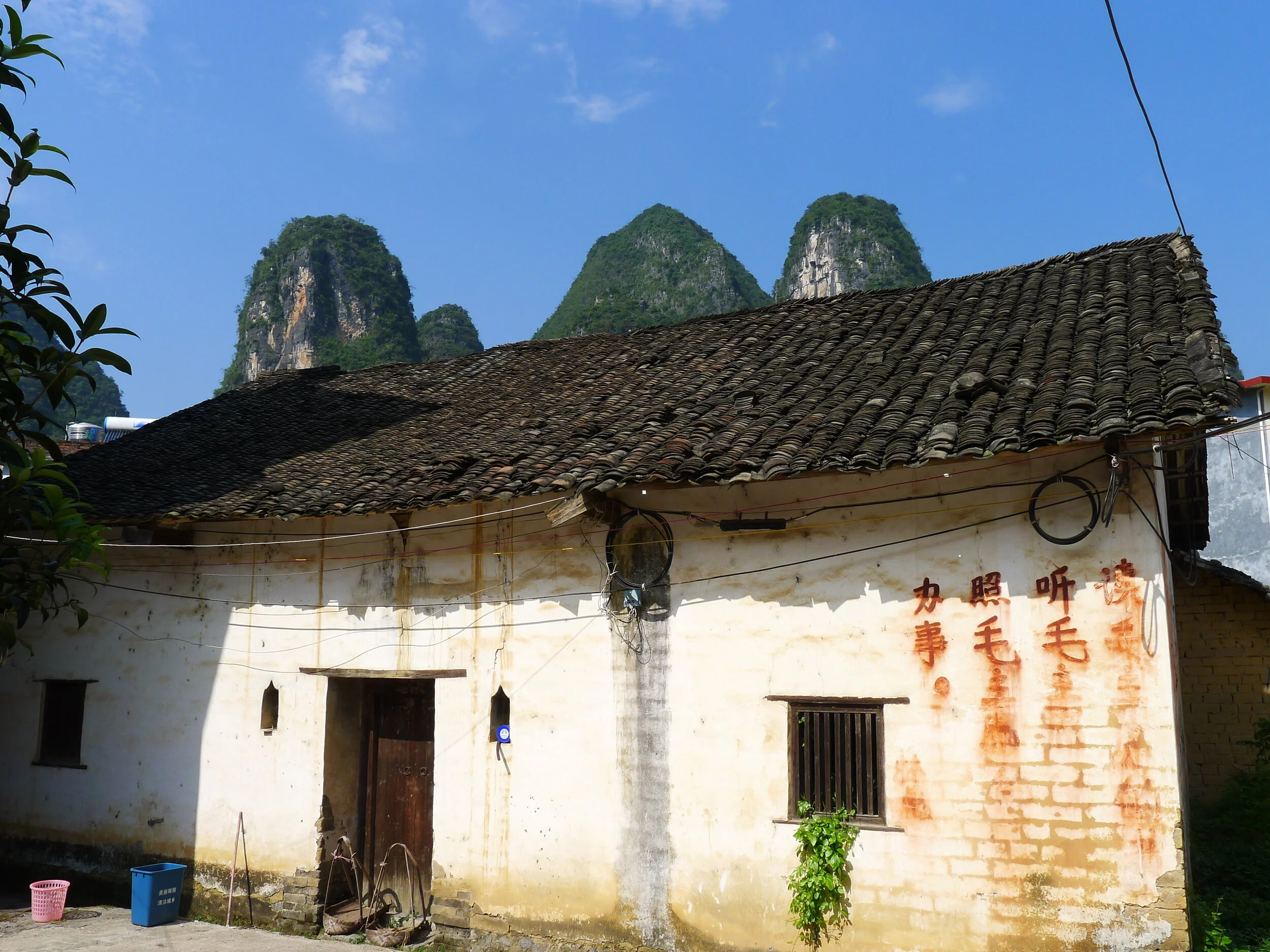
A dilapidated building in a rural area of Guangxi autonomous region in southeastern China. President Xi’s poverty eradication program targeted China’s rural poor. Edwin Wisse. CC BY-NC-ND 2.0

On Feb. 25, Chinese President Xi Jinping announced that China has successfully eliminated extreme poverty. The declaration comes after a lengthy campaign initiated by the Chinese Communist Party (CCP) that claims to have lifted an estimated 100 million people out of poverty in just eight years. President Xi's announcement is a major victory for the CCP, which is celebrating its centennial later this year. 

If true, China’s poverty alleviation campaign could become a model of success for developing nations on how to eradicate extreme poverty in rural areas. However, just how comprehensive the program was in fully eliminating extreme poverty is debated, with critics questioning China’s measure of poverty itself. The World Bank defines extreme poverty as living on less than $1.90 a day; China’s threshold is slightly lower at about $1.52 per day. Regardless, China has made immense progress in the past 30 years in reducing the number of people living in poverty, even by World Bank standards. In 2016, the percentage of Chinese people living below $1.90 a day was only 0.5% of the population, compared to 66% in 1990. 

While impressive, China’s declaration has garnered criticism for using a metric of poverty that does not adequately reflect the level of deprivation that remains. China has experienced rapid growth since the country introduced market reforms back in the late 1970s. Since 1978, China has averaged 9% real growth per year, higher than other rapidly developing Asian economies, according to the International Monetary Fund. Due to this rapid growth, China is now considered an upper-middle-income country by the World Bank. Under this classification, extreme poverty would be measured as living on under $5.50 a day, which accounts for 14% of the population, or roughly 200 million people

Chinese President Xi Jinping meeting with World Bank President Jim Yong Kim in 2014. World Bank Photo Collection. CC BY-NC-ND 2.0

With continued economic growth, a relatively successful battle against the coronavirus, and now at minimum a vast reduction in extreme poverty, Chinese officials hope to argue that their system of governance is more successful for international development than the West. China exports more than just commodities. As its rise to global superpower status becomes imminent, its influence outside of Asia continues to grow. In 2018, China announced the Global Poverty Reduction & Inclusive Growth Platform, providing a basis for developing countries to fight their own wars against poverty.

Whether or not President Xi was actually successful in eradicating extreme poverty in China remains to be seen. With the COVID-19 pandemic causing global poverty to rise for the first time in 20 years, the CCP hopes that its model inspires other countries to follow its path. In the meantime, China may bring the world one step closer to finally solving the puzzle of poverty. 


Aerex Narvasa

Aerex is a current student at Occidental College majoring in Diplomacy and World Affairs with a minor in East Asian Studies. He is passionate about sharing people’s stories through writing, and always strives to learn about new places and cultures. Aerex loves finding new music and exploring his hometown of Los Angeles in his free time.

The World’s Newest Type of Migrants: Climate Refugees

With climate change rendering entire countries uninhabitable, people are forced to leave their homes and seek refuge elsewhere. 

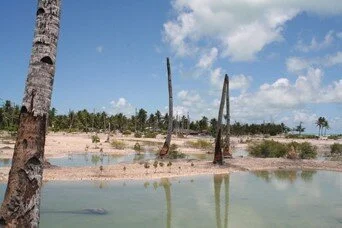
Flooding in Kiribati. AusAID. CC BY 2.0. 

In recent years, there have been growing concerns and conversations about climate change’s effects on the Earth. With warmer summers, retreating coastlines and record-breaking natural disasters, it is clear that the Earth is changing, and quickly. However, one aspect of the issue that is often overlooked is the displacement it causes among residents in climate change hot spots. As climate crises happen all over the world, more and more people—often called climate refugees—are forced to leave their homes to find a safe living environment elsewhere. 

In 2019, around 8.5 million people fled their homes for another part of their country because of violence and conflict. That same year, almost 25 million were internally displaced due to extreme weather and natural disasters caused by climate change. People are not only being internally displaced, however. In some cases, it is necessary for them to cross borders. 

One country facing drastic climate change problems is Kiribati, an island nation in the Pacific. Since the islands are extremely low-lying, rising sea levels are a major concern. So far, the elevated sea levels have caused coastal erosion, flooding and freshwater contamination. Because of this, one native, Ioane Teitiota, gathered his family and moved to New Zealand for a better life. 

Once climate refugees are forced to leave their countries, they face one main obstacle: legally, they are not “refugees” at all. Under the 1951 Refugee Convention, a refugee is a person who has fled their country due to persecution. Under international law, those migrating due to weather and climate change do not meet this criteria. Therefore, when people leave their country for climate reasons, they find themselves legally vulnerable and unable to claim the rights and protections provided to refugees. In most cases, their only option is to apply for some sort of temporary protection. 

In Teitiota’s case, he and his wife only received work visas, which expired in four years. Facing deportation, Teitiota applied for protection in New Zealand, arguing that his family was at risk back home in Kiribati due to the destruction climate change had caused to the islands. New Zealand rejected his plea and, in January 2020, the United Nations backed the decision.

The number of climate refugees is increasing, and there are projected to be 200 million displaced due to climate change by 2050. With this urgency, human rights activists are fighting for some sort of policy on the rights and protections of climate refugees, especially because countries that contribute the least to global climate change are often the ones hit hardest by its effects. 

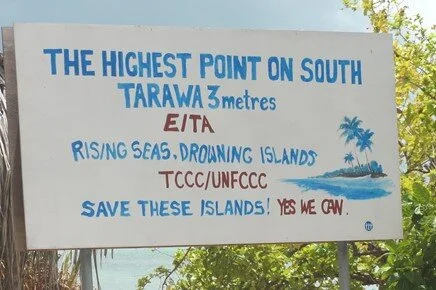
Climate change sign in South Tarawa, Kiribati. DFAT. CC BY 2.0.

Teitiota was eventually deported to Kiribati. Still, experts still see a silver lining in his case. When reviewing New Zealand’s decision to reject Teitiota’s appeal, the U.N. reasoned that although the rising sea levels will “render Kiribati uninhabitable … the time frame of 10 to 15 years could allow for intervening acts by Kiribati, with the assistance of the international community, to take affirmative measures to protect and relocate its population.” 

The reason the U.N. committee provided for the rejection is that climate change’s threat to Teitiota’s life is not imminent enough—there is still time to help Kiribati. For the first time, the U.N. also declared that in life-threatening situations, countries should not send climate refugees back home. Although the ruling denied Teitiota’s claim to protection in New Zealand, it paves the way for other climate refugees to receive it. The ruling is not internationally binding, but is a step toward bettering the situations of climate refugees.

While governments and international organizations are making strides to put adequate structures in place, many think much more work needs to be done. There are people like Teitiota fleeing their climate change-ravaged countries every single day.


Mahlia Neely

Mahlia was born and raised on the island of New Providence in The Bahamas. She attends Vassar College, where she is studying English with a minor in Hispanic Studies. She enjoys reading books of all genres and learning about new places. When she isn’t doing either of those things, she is working on articles for her school newspaper or eyeing the chocolate desserts in the dining hall.

India’s Silk Industry: A Hub For Modern Slavery

Despite global efforts to eliminate the practice, modern-day slavery still widely exists. In India, the silk industry continues to serve as an oppressive stronghold for the practice. 

Indian workers. Photo by Sujeeth Potla on Unsplash

The silk industry in India is not to be underestimated; it employs hundreds of thousands of workers and is worth over $3.6 billion annually. However, as with many booming industries, a dark side lingers in the background. In southwest India lies Karnataka state, a hub for many of the nation’s age-old industries including silk production. Although justly paid workers exist, a sizable portion remain stuck in a taxing system known as “bonded labor.” 

What is “Bonded Labor”?

Although not explicitly mentioned in the phrase, “bonded labor” is actually a form of modern-day slavery. Bonded labor is when someone is forced to work off an imposed debt, where their captivity is known as “debt bondage.” In this system, the victims are often promised employment or an opportunity they cannot afford to refuse, and are then forcefully kept as workers. Their pay is usually minuscule compared to the debt amassed, and as a result, the employers are able to continually pile on debt over time. The dynamic transitions from employer-employee to that of a master and a slave. 

Additionally, the work is often arduous and the masters are even more unrelentingly brutal; abuse is commonplace in the system. As a result, many families attempt to escape, only to find that the support system for a successful departure is at best a bare-bones operation if not entirely absent. Many authorities who are meant to help these victims escape partner instead with the perpetrators; corruption bleeds away most hope of an escape.

However, one way out does exist. Victims are able to apply for a certificate of release, which would trigger an investigation to either approve or deny the request. Frequently these attempts fall through, often due to failure on the part of the authorities. 

Although the use of bonded labor remains widespread, it is most extensively used in South and Southeast Asia. Oftentimes debt laborers work off family debts, held hostage due to a loan taken by their parents or grandparents. 

How Did Bonded Labor Spread in India?

Bonded labor has been illegal in India since the Bonded Labor System Act of 1976, but this law failed to provide substantial change. It is estimated that over 8 million bonded laborers still exist in India, with experts fearing this statistic to be a gross underestimation. Rarely are those found guilty of violating the Bonded Labor System Act forced to serve out their punishment. 

Many human rights groups have pooled their efforts to research the extent of the system’s damage. What was found revealed grotesque physical, emotional and verbal abuse of children forced into bonded labor in the silk industry. Children of all ages, even as little as 5, were found to work 12-hour days nearly every day of the week; they do not attend school. Their work included placing their hands in boiling water and breathing in lung-blackening fumes; the children are not provided health care either, and often succumb to injuries. 

Human rights groups have stated that the Indian government is fully aware of this ongoing crime, yet fails to act on the victims’ behalf. It seems that corruption, combined with the consequences of the restrictive caste system, has left little hope for the estimated 350,000 children held in the silk industry’s bonded labor system. 

In the early 1990s, human rights groups sparked global outrage about the situation of India’s children, causing  the government to act. The Indian Supreme Court passed additional laws in 1996 to protect children in harmful workspaces, yet the government has failed to bring about any meaningful change. India’s National Human Rights Commission was brought in to spearhead proceedings, but very few perpetrators ever faced justice. 

The impact of the system is devastating as it enslaves whole families and sometimes even future generations. Until justice is truly served, victims of bonded labor will continue to be denied freedom.

To Get Involved:

To learn how Free the Slaves, an organization dedicated to sustainable freedom, helps victims, click here

To read about Anti-Slavery International, the world’s oldest anti-slavery organization, click here.


Ella Nguyen

Ella is an undergraduate student at Vassar College pursuing a degree in Hispanic Studies. She wants to assist in the field of immigration law and hopes to utilize Spanish in her future projects. In her free time she enjoys cooking, writing poetry, and learning about cosmetics.

Iran’s Shoddy ‘Satellite Cities’ Test Citizens’ Patience

Thanks to high rent prices and overpopulation, thousands of Iranians have been forced out of their hometowns. But the “satellite cities” built to hold them leave much to be desired. 

An aerial view of Tehran, Iran. Hansueli Krapf. CC BY-SA 3.0

In the 1980s, Iran intentionally tried to grow its own population, aiming to increase its military strength amid the Iran-Iraq war. The 1979 Islamic Revolution had seen Iran’s old monarchy overthrown and a new republic built on Shiite Islam take shape. Student groups and leftist organizations rejoiced at the new rights promised to women; Islamist groups lauded the fact that their country was now a theocracy. But the new government wanted to ensure that the ideas of the revolution would last beyond one generation. So it encouraged polygamy, made birth control nearly impossible to find and lowered the age of marriage to 9 for girls and 15 for boys.

The plan worked—Iran’s population grew enormously. Forty years after the revolution, there are almost 50 million more people living in Iran. But these newcomers are not a new generation of happy, loyal citizens. They are people who the nation was not built to hold. 

Overpopulation was not something Iran was completely unprepared for. Soon after the revolution, 17 new “satellite cities” were planned on the outskirts of the country's major cities. They had names like Pardis (“paradise” in Persian) and Parand ("silk"). They were to provide affordable places to live for people that the larger cities could not hold. But as Iran struggled with unrest and war, these cities wouldn’t begin to be built for decades. They remain half-finished even today.

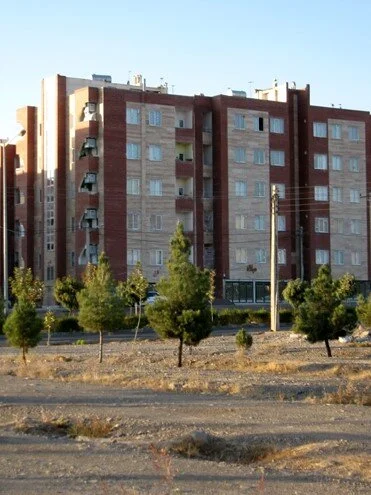
The Mehr housing project in Nishapur, Iran. Sonia Sevilla. CC BY 1.0

In 2007, the Iranian government developed a scheme it hoped would solve the overpopulation problem and make the satellite cities more livable: contract out free land to real estate developers who were willing to build low-income housing units. In this way around 2 million homes were planned to be built throughout Iran. But the Mehr housing project, as it was called, failed to deliver in the cities that needed housing the most. The 400,000 units built were poorly constructed and lacked essential utilities, like plumbing and clean water. The sterile white color that all the high-rises were painted with in Pardis says it all. These buildings didn’t seem like they were meant to be lived in, only passed through. 

But the satellite cities are indeed lived in. In recent years, the overpopulation that plagues Iran’s largest cities has only gotten worse. The Financial Times reported in 2017 that the population of Tehran, Iran’s capital and largest city, “exceeds the optimum level by more than 70%.” The air is full of pollution, and the city’s roads are packed with traffic. But the last straw for many Tehranis is the cost of housing, which according to the New Yorker has more than doubled in the last three years. U.S. sanctions have contributed to this, as did former President Donald Trump’s decision to withdraw from the Iran nuclear deal. With nowhere else to go, droves of Iranians have moved to the satellite cities, where houses are cheaper. In 2019, the population of Parand was 100,000; a year later, that number had doubled.

The unfinished cities have been unable to provide jobs for their populations. Most of the people who make up Pardis must commute each day to work in Tehran. And, as the city lacks most forms of public transport, this means driving—sometimes up to three hours each way. The cities lack recreational areas, stores and the capabilities to provide health care and schooling to their growing populations. It’s no surprise that drug abuse and suicides are common in the cities.

Real estate prices remain high in congested Tehran, and more and more people are expected to leave. The people who make up these satellite cities, despite the lack of basic amenities, are grateful that they have a place to go at all. The Mehr housing project is not finished, and it is possible that in five years the livability of Tehran’s satellite cities will improve. But it is up to the Iranian government to ensure that these improvements do happen, and soon. The well-being of many Iranians depends on it.


Finn Hartnett

Finn grew up in New York City and is now a first-year at the University of Chicago. In addition to writing for Catalyst, he serves as a reporter for the Chicago Maroon. He spends his free time watching soccer and petting his cat.

Anti-Coup Protesters Launch Garbage Strike in Myanmar

Over 500 civilians have been killed since Myanmar’s Feb. 1 military coup. Protests and civil disobedience campaigns launched by pro-democracy activists are ongoing. 

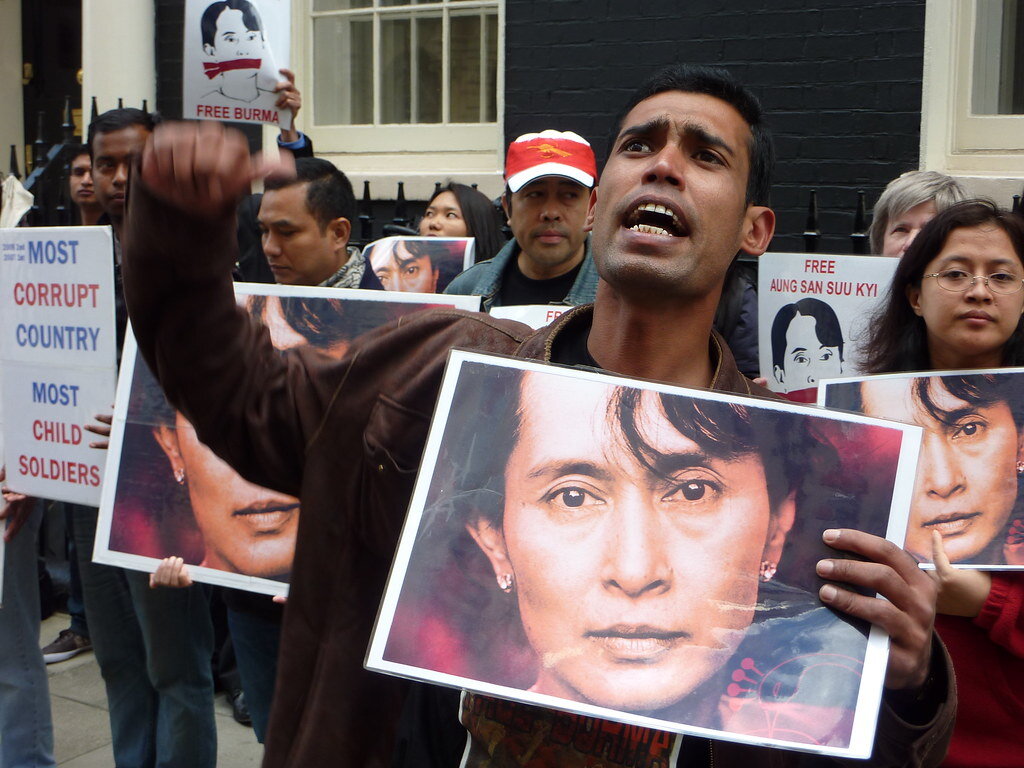
On March 30, pro-democracy activists in Myanmar launched a civil disobedience campaign of throwing garbage into the streets at key intersections in protest of the country’s military rule and the frequent killing of civilians by security forces. At least 512 civilians have been killed since Myanmar’s Feb. 1 military coup. 

The military seized control of Myanmar two months ago, ousting democratically elected leader Aung San Suu Kyi of the National League for Democracy (NLD). After Suu Kyi’s landslide victory, the opposition began claiming widespread election fraud and demanded a recount of the votes. The military backed the opposing party’s claims of fraud, despite the election commission’s statement that there was no evidence to suggest the election had been tampered with. On Feb. 1, Parliament was scheduled for its first meeting since the Nov. 8 election, where it was expected to endorse the election results and approve the next government. The military detained Suu Kyi and the leaders of the NLD, arrested a number of writers and activists, and declared a yearlong state of emergency. 

The coup returned Myanmar to full military rule after the country’s decadelong quasi-democracy. Myanmar was under full military rule from 1962 to 2011, when the military implemented a parliamentary election system. Since the coup, Suu Kyi has been held in an undisclosed location and faces several charges, including violating the country’s official secrets act. 

Protests against the coup began immediately, and are some of the largest and most widespread protests in Myanmar since 2007, when thousands of monks spoke out against the military. A number of civil disobedience campaigns, like the current garbage strike, have been ongoing as well, paralyzing various sectors of the economy. The military’s response to protests escalated quickly, from imposing curfews and limits on gatherings to the use of rubber bullets and live ammunition. Hundreds of civilians have been killed by security forces. March 27 was Myanmar’s Armed Forces Day, and the deadliest day of the coup thus far, with 141 deaths resulting from the military’s attempt to stop protests. 

The current garbage strike reportedly began after loudspeaker announcements in some areas of Yangon, Myanmar’s largest city, urged residents to dispose of their garbage properly. Word of the protest circulated on social media alongside the message that anyone could join in protest against the military. Once the protest had started, photos of garbage piling up in the streets began to circulate. 

Also on March 30, a joint letter from the Myanmar National Democratic Alliance Army, the Arakan Army and the Ta’ang National Liberation Army called for the government to stop killing protesters and to resolve political issues. 


Rachel Lynch

Rachel is a student at Sarah Lawrence College in Bronxville, NY currently taking a semester off. She plans to study Writing and Child Development. Rachel loves to travel and is inspired by the places she’s been and everywhere she wants to go. She hopes to educate people on social justice issues and the history and culture of travel destinations through her writing.

Abortion Cases in El Salvador Could Loosen Restrictions on Reproductive Rights

The National Palace in San Salvador, El Salvador. David Stanley CC BY 2.0.

Reproductive rights in Latin America have a complicated history. While a handful of countries in the region allow for abortion at the mother’s request, the vast majority of Latin American countries only allow abortions to be performed in very specific cases, with El Salvador, the Dominican Republic, Nicaragua and Honduras retaining complete prohibitions.

2021 may be a turning point, however. Argentina began the year with a new law legalizing abortion, which makes the country the third in Latin America to do so after Cuba and Uruguay. More recently, new abortion cases being heard in El Salvador could loosen laws in one of the world’s most restrictive countries for reproductive rights, opening the door for further decriminalization and legalization of abortion throughout the region.

El Salvador’s Historical Lack of Reproductive Rights

In 2012, a young Salvadoran woman named Sara had a miscarriage after she slipped and fell while washing laundry. Despite maintaining her innocence, the Salvadoran government sentenced Sara to 30 years in prison for aggravated homicide due to the country’s prohibition on any and all abortions. Lawyers are currently working to appeal her conviction.

A mural in El Salvador which says “Hope Woman” in English. El Decertor. CC BY NC-ND 2.0.

Sara, who is only identified by her first name to protect her privacy, is one of countless women who have been subjected to El Salvador’s restrictive policies on reproductive rights. Another woman, Manuela, had a miscarriage in 2008. After going to the hospital, she was handcuffed to her bed by government authorities, accused of having an abortion and charged with aggravated homicide, which resulted in a 30-year sentence that was cut short when she passed away two years later due to lymphatic cancer.

El Salvador has historically maintained heightened restrictions on abortion access. While the country’s 1956 Penal Code permitted abortions if the woman’s life was at risk and the 1973 Penal Code expanded the exceptions to include circumstances of rape, statutory rape or detected congenital disorders in the fetus, El Salvador banned abortions under any circumstances in 1998 and amended its constitution in 1999 to recognize human life from the moment of conception.

A number of organizations, most notably the United Nations, have condemned El Salvador’s restrictive laws as human rights violations. However, the government has largely ignored these accusations.

Abortion-rights activists both within and outside of El Salvador are hopeful that 2021 could be a turning point for the country. Both Sara and Manuela’s cases are being heard by courts this year—Sara’s in a national court and Manuela’s at the Inter-American Court of Human Rights. If either of these cases come back in favor of the women, it could force the country to expand upon reproductive rights after nearly two and a half decades of restrictions.

A Brief Look at Reproductive Rights in Latin America

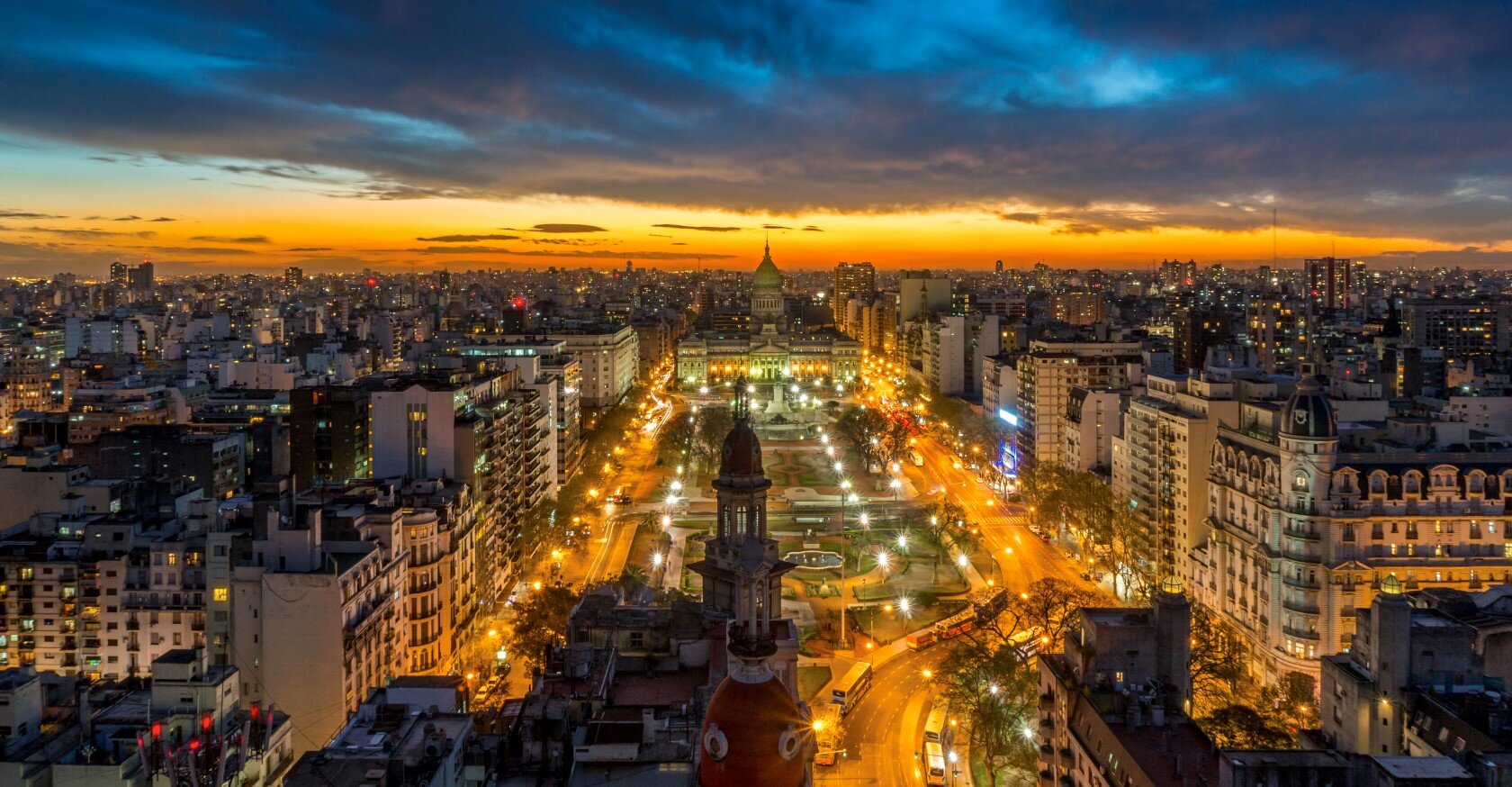
A view of Buenos Aires, the capital of Argentina. The country legalized abortion up to the 14th week of pregnancy in January 2021. Boris G. CC BY-NC-SA 2.0.

El Salvador’s restrictions on reproductive rights are by no means an outlier in Latin America. As of March 2021, only Argentina, Cuba, Uruguay, Puerto Rico, Mexico’s Federal District and the Mexican state of Oaxaca have legalized abortion at the mother’s request. Every other country in Latin America restricts access to abortions in some way.

One of the primary reasons for Latin America having such restrictive standards on abortion is due to the dominance of Roman Catholicism in the region, a religion which heavily stigmatizes the practice. According to the Pew Research Center, 69% of those in Latin America practice Catholicism, with every country in the region aside from Honduras and Uruguay retaining Catholic majorities. Even when new legislation has favored expanded access, stigmas against abortion remain high.

However, this stigmatization may be changing. Argentina rang in the new year with a groundbreaking abortion law guaranteeing women the right to seek out an abortion up to the 14th week of pregnancy with no exceptions. This new law makes Argentina, which has the fourth highest population of any country in Latin America, the largest country in the region to have such a comprehensive set of reproductive rights standards.

Should El Salvador expand access to abortion in the near future, the change may serve as a catalyst for expanded rights in other countries such as Chile and Mexico, both of which have seen pro-feminist movements in recent years. For the time being, however, activists continue to fight for expanded abortion access throughout Latin America.


Jacob Sutherland

Jacob is a recent graduate from the University of California San Diego where he majored in Political Science and minored in Spanish Language Studies. He previously served as the News Editor for The UCSD Guardian, and hopes to shed light on social justice issues in his work.
A Closer Look at East Africa’s Human-Elephant Conflict

For farming communities in East Africa, elephants pose a danger to survival. Consuming up to 1,000 lbs of food a day, they destroy farmers crops in hours, cause injury and even death. While poaching is publicized, it is actually the human-animal conflict that poses the greatest threat to the species survival.
Read More