Academic Freedom: Repressive Government Measures Taken Against Universities in More Than 60 Countries

Universities around the world are increasingly under threat from governments restricting their ability to teach and research freely. Higher education institutions are being targeted because they are the home of critical inquiry and the free exchange of ideas. And governments want to control universities out of fear that allowing them to operate freely might ultimately limit governmental power to operate without scrutiny.

My recent report, co-authored with researcher Aron Suba for the International Centre for Not-for-Profit Law, has found evidence of restrictive and repressive government measures against universities and other higher education institutions in more than 60 countries.

This includes government interference in leadership and governance structures to effectively create state-run institutions that are particularly vulnerable to government actions. It also includes the criminalisation of academics for their work as well as the militarisation and securitisation of campuses through the presence of armed forces or surveillance by security services. We also found evidence that students have been prevented from attending university because of their parents’ political beliefs, while others have been expelled or even imprisoned for expressing their own opinions.

Some of the more shocking examples of repressive practices have been widely publicised, such as the firing of thousands of academics and jailing of others in Turkey. But much of what is happening is at an “administrative” level – against individual institutions or the entire higher education system.

There are examples of governments that restrict access to libraries and research materials, censor books and prevent the publication of research on certain topics. Governments have also stopped academics travelling to meet peers, and interfered with curricula and courses. And our research also found governments have even interfered in student admissions, scholarships and grades.

Repression, intimidation

Hungary provides a particularly glaring recent example of government interference with university autonomy. The politicised targeting of the institution I work at –- Central European University –- has been well documented. But the government has also recently acted against academic life in the country more broadly. It has effectively prohibited the teaching of a course (gender studies) and taken control of the well-regarded Hungarian Academy of Social Sciences.

What makes the Hungarian example especially disturbing is that it is happening within the European Union – with seemingly no consequences for the government. This is despite the EU Charter of Fundamental Rights which states that: “The arts and scientific research shall be free of constraint. Academic freedom shall be respected.” Meanwhile the Hungarian government still has all the privileges of being an EU member state, which includes receiving large sums of EU money.

Public demonstration in front of the Hungarian Academy of Science building against the removal of the Academy Science Research Institute’s autonomy. Istvan Balogh/Shutterstock

The inexplicable failure by the EU to enforce its own standards is particularly troubling and helps to normalise this behaviour. Indeed, there are clear signs such repressive practices are spreading. Anti-human rights legislation, policy and practice that begins in one country is frequently copied in another. Anti-civil society legislation recently adopted in Hungary and Israel, for example, which aims to stop protests and minimise the number of organisations receiving funds from abroad, was previously adopted in Russia.

Repressive practices against universities are starting to spread in Europe. Earlier this year it was reported that the Ministry of Justice in Poland planned to sue a group of criminal law academics for their opinion on a new criminal law bill.

Academics in distress

The freedom of academics and university autonomy is not entirely without scrutiny. There are some excellent organisations, such as Scholars At Risk and the European University Association who actively monitor this sector. But, at an international level, university autonomy is rarely raised when governments’ human rights records are being examined. And there is no single organisation devoted to monitoring the range of issues identified in our recent report.

Without proper monitoring, universities, academics and students are even more vulnerable because there is little attention paid to these issues. And there is little pressure on governments not to undertake repressive measures at will.

Thousands demonstrate in central Budapest against higher education legislation seen as targeting the Central European University. Drone Media Studio/Shutterstock

A global monitoring framework is needed, underpinned by a clear definition of university autonomy. The UN and EU institutions also need to pay more attention to the dangers that such attacks on universities pose to democracy and human rights. A stronger line against governments who are acting in violation of existing standards should also be taken.

Universities should be autonomous in their operations and exercise self-governance. These institutions are crucial to the healthy functioning of democratic societies. Yet academic spaces are closing in countries around the world. This should be a concern for all. The time for action is now, before this trend becomes the new norm.


Kirsten Roberts Lyer is a Associate Professor of Practice, Acting Director Shattuck Centre, Central European University.

THIS ARTICLE WAS ORIGINALLY PUBLISHED ON THE CONVERSATION

Gender Matters in Coastal Livelihood Programs in Indonesia

Significant investments have been made in improving the well-being of Indonesian coastal communities in recent decades. However, most of these programs have not tackled gender inequalities.

Projects based on comprehensive understanding of gender norms in coastal communities will contribute to improved community wellbeing. www.shutterstock.com

Our team studied 20 coastal livelihood programs implemented across the Indonesian archipelago from 1998 to 2017. Our aim was to see how gender issues were considered in project design and implementation.

The Indonesian government, international governments, international development and lending agencies and non-government conservation organisations funded these projects.

Most projects included women in activities to enhance or introduce new livelihoods. However, 40% of the projects were gender-blind with respect to the design and impact of their activities. This means that activities may have further entrenched processes that disadvantage women by limiting their ability to pursue their own livelihood goals.

Only two projects (10%) used an approach that sought to challenge entrenched gender norms and truly empower women.

We recommend future projects be developed with a comprehensive understanding of gender norms within coastal communities. Participatory approaches that address and challenge these norms should be implemented. This will more effectively contribute to improvements in community well-being.

What we found

Our study, which assessed livelihood programs from various regions throughout Indonesia – including Bali, Sulawesi and West Papua – found 95% of programs had directly or indirectly included women. They did so through activities such as providing training and equipment to support alternative sources of income – e.g. making fish or mangrove-based food products.

Only three of the 20 projects provided gender awareness training for staff members and community facilitators. Only one provided similar training at the community level. In addition, two projects included a gender quota for community facilitators (30-50% female).

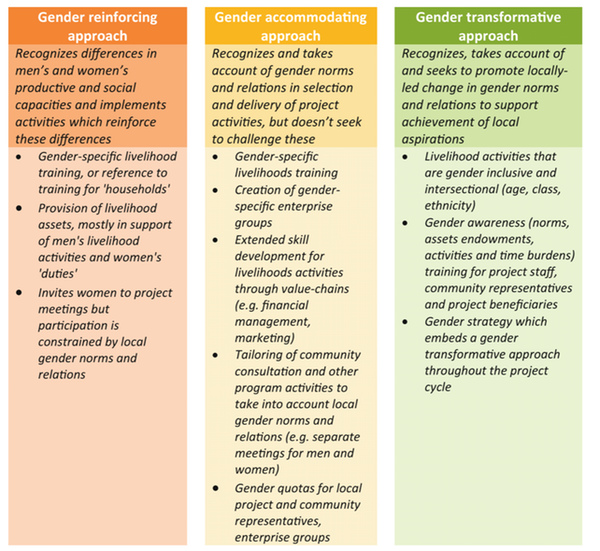
However, we found most projects applied either a “gender reinforcing” approach – reinforcing the existing gender norms and relations that underlie social and economic inequalities between men and women – or a “gender accommodating” approach – recognising these norms and relations but making no attempt to challenge them.

For example, many projects included separate “women’s activities”, such as handicrafts manufacture, or sought to increase household income by engaging women in income-generating enterprise groups. However, there was little consideration of how women would balance these activities with traditional caring and household roles, or of other ways women contributed to the household economy.

What we can do

Based on our findings, we recommend a “gender transformative” approach. Firstly, this approach involves mainstreaming gender issues across entire project cycles. Secondly, it involves working with coastal communities to identify and, where appropriate, challenge existing gender norms and social relations.

A core component of these projects is gender analysis. This is a process that identifies:

  • men’s and women’s activities within the home and community

  • differences in men’s and women’s access to, control over and use of livelihood resources

  • differences in participation in processes that govern management of natural resources

  • the gender norms and relations governing these differences

  • their impact on men’s and women’s livelihood opportunities.

For example, the Coastal Field School program included participatory activities that documented men’s and women’s daily activities. This activity highlighted the time women spent on caring and household duties and unpaid supportive contributions to “men’s activities”.

When undertaken in a participatory manner, this analysis helps communities to identify local, and broader structural, barriers to gender equality. They can then identify options and potential actions for overcoming these barriers. This creates a more equitable social and economic environment.

Summary of the characteristics of approaches to gender in development programs (based on Lawless et al. 2017), with examples of typical project activities drawn from our. study. Stacey et al (2019).

This process must be sensitively facilitated because it may confront traditional power hierarchies within communities. It also takes time, which must be factored into project cycles.

The use of gender-transformative approaches can improve the well-being of coastal communities by identifying and reducing barriers to equitable participation in social and economic life. This increases the ability of men and women to pursue enhanced or alternative livelihood opportunities.

Finally, recognising women’s contributions, building women’s confidence and giving women voice to participate in local community planning processes creates greater opportunities for issues of concern to women to be included in the development agenda.

Natasha Stacey is a Associate Professor, Research Institute for the Environment and Livelihoods, College of Engineering, IT and Environment, Charles Darwin University

Emily Gibson is a PhD Candidate, Research Institute for the Environment and Livelihoods, Charles Darwin University

THIS ARTICLE WAS ORIGINALLY PUBLISHED ON THE CONVERSATION

World’s Youngest Prime Minister Will Head Women-Led Government in Finland

FINLAND IS GETTING a new prime minister, and she’s about to become the world’s youngest leader. Not only that, but she will also head a coalition government of five parties, all of them led by women. Sanna Marin, 34, was nominated by her party on Sunday and will be sworn as prime minister later this week.

Finland’s previous government resigned last week after the Centre Party lost confidence in then-Prime Minister Antti Rinne’s handling of a postal strike.“I myself have never thought about my age or gender,” said Marin, “but rather about the issues for which I took on politics and about the reasons for which we were trusted in the elections.”

For many countries, like the US, electing its first female leader would be a historic occasion. For Finland, however, this isn’t exactly news — the first Finnish female prime minister was elected in 2003 and after elections this year, women make up 47 percent of its parliament. 

Eben Diskin is a staff writer for Matador Network

THIS ARTICLE WAS ORIGINALLY PUBLISHED ON MATADOR NETWORK

Pope Affirms Catholic Church’s Duty to Indigenous Amazonians Hurt by Climate Change

The Catholic Church “hears the cry” of the Amazon and its peoples. That’s the message Pope Francis hopes to send at the Synod of the Amazon, a three-week meeting at the Vatican that ends Oct. 27.

Images from Rome show tribal leaders in traditional feather headdresses alongside Vatican officials in their regalia. They are gathered with hundreds of bishops, priests, religious sisters and missionaries to discuss the pastoral, cultural and ecological struggles of the Amazon.

The densely forested region spans nine South American countries, including Brazil, Colombia and Peru. Its more than 23 million inhabitants include 3 million indigenous people.

The Amazon meeting is part of Pope Francis’s efforts to build a “Church which listens.” Since taking office in 2013, Francis has revitalized the Catholic Church’s practice of “synods” – a Greek word meaning “council” – expanding decision-making in the church beyond the Vatican bureaucracy to gather input from the entire church, including from laypeople.

Voting on synod decisions, however, remains restricted to bishops and some male clergy.

The Amazon synod is the first such meeting to be organized for a specific ecological region. Media coverage of this event has emphasized its more controversial debates – such as the possibility of easing celibacy requirements in the rural Amazon, where priests are in extremely short supply.

But its focus is much broader: listening to the suffering of the Amazon – particularly the environmental challenges facing the region – and discerning how to respond as a global church.

Amazon in crisis

After more than a decade of environmental policies that successfully slowed deforestation in the Amazon, logging and agricultural clearing have begun to increase rapidly again. The fires in the Brazilian rainforest that captured headlines in early September are symptoms of much broader destruction.

Up to 17% of the Amazon rainforest has already been eliminated – dangerously close to the 20% to 40% tipping point that experts say would lead the entire ecosystem to collapse.

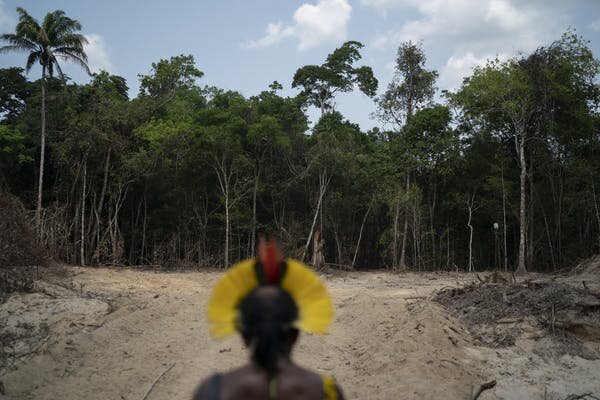
Deforestation of the Amazon is rapidly approaching the tipping point that, experts say, could lead to total collapse of the rainforest ecosystem. AP Photo/Leo Correa

Stories of deforestation can seem insignificant against the vastness of the Amazon, a region two-thirds the size of the lower 48 United States.

But for the 390 indigenous ethnic groups who inhabit the region, each burned forest grove, polluted stream or flooded dam site may mark the end of a way of life that’s survived for thousands of years.

Deprived of their land, many indigenous Amazonians are forced into an exposed life on the edge of frontier towns, where they are prey to sex trafficking, slave labor and violence. In Brazil alone, at least 1,119 indigenous people have been killed defending their land since 2003.

The Catholic Church recognizes that it still has to address the “open wound” of its own role in the colonial-era violence that first terrorized the indigenous peoples of the Americas, according to the synod’s working document. The church legitimated the colonial confiscation of lands occupied by indigenous peoples and its missionaries often suppressed indigenous cultures and religions.

For this reason, according to the Vatican, organizers of the synod have sought input through 260 listening events held in the region that reached nearly 87,000 people over the past two years. Indigenous leaders have been invited as observer participants in the meeting itself.

Learning from indigenous peoples

As a theologian who studies religious responses to the environmental crisis, I find the pope’s effort to learn from the indigenous people of the Amazon noteworthy.

The Vatican sees that the Amazon’s traditional residents know something much of humanity has long forgotten: how to live in ecological harmony with the environment.

“To the aboriginal communities we owe their thousands of years of care and cultivation of the Amazon,” the 58-page synod working document reads. “In their ancestral wisdom they have nurtured the conviction that all of creation is connected, and this deserves our respect and responsibility.”

Pope Francis has expressed his respect for indigenous peoples before.

At a meeting of indigenous leaders in Peru in January 2018 he said, “Your lives cry out against a style of life that is oblivious to its own real cost. You are a living memory of the mission that God has entrusted to us all: the protection of our common home.”

Global problems, local solutions

Environmental destruction isn’t the synod’s only concern.

Catholicism – long the dominant religion in Latin America – is rapidly losing members to evangelical Protestantism. Evangelicals are projected to eclipse Catholics in Brazil by 2032.

One advantage evangelical churches have in Amazonian countries is that they can appoint local indigenous pastors to minister to their communities. Meanwhile, with less than one priest per 8,000 Catholics in the Amazon, some isolated communities might see a priest only once a year.

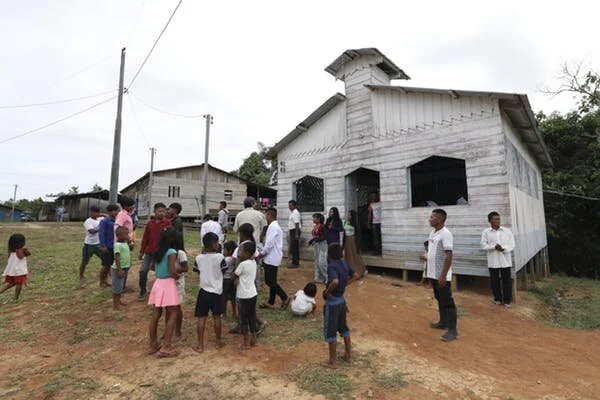
Catholic churches are in short supply in rural Brazil, where many people will go a year without seeing a priest. AP Photo/Fernando Vergara

The scarcity of priests in rural Latin America is behind a proposal to the synod to ordain older married men as priests in isolated Amazonian communities.

In the the U.S., the celibacy question is easily mapped onto a familiar divide. Progressive Catholics argue that clerical celibacy should be optional, while conservative Catholics insist this discipline is fundamental to the faith.

The issue is far less politicized in the Amazon, where, in the words of one bishop, the Catholic Church remains a “visiting church” with limited day-to-day presence in indigenous communities.

Some might dismiss this synod as just a meeting. But, in my judgment, it is an attempt to apply Francis’ vision of a “listening Church” to the environmental crisis. The Synod of the Amazon marks a significant shift from high-minded papal exhortations about taking climate action to a global religious community that gives voice to those living on the front lines of ecological destruction.


Vincent J. Miller is a Professor of Religious Studies, University of Dayton

THIS ARTICLE WAS ORIGINALLY PUBLISHED ON THE CONVERSATION
Following the Removal of Evo Morales, Anti-Indigenous Sentiment Explicit in Bolivia

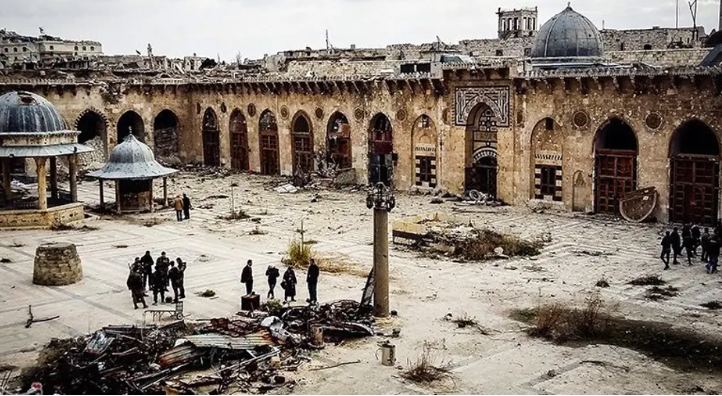
In the aftermath of the ouster of former President of Bolivia, Evo Morales, many suspected a right-wing coup had taken place. Now, a month later, the status of Indigenous peoples in Bolivia hangs in the balance.

Read More

An Inuit Approach to Cancer Care Promotes Self-Determination and Reconciliation

For thousands of years, Inuit have adapted to the changes in their environment, and continue to find new and innovative ways to survive

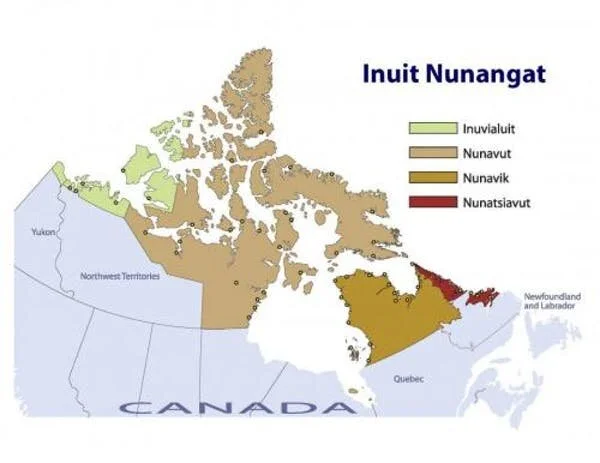
But life expectancy among populations in Inuit Nunangat (the traditional territory of Inuit in Canada) is an average of 10 years less than that of the general Canadian population.

Cancer is a leading cause of this disparity. Inuit experience the highest mortality rates from lung cancer in the world, and mortality rates of some other cancers continue to increase disproportionately.

Inuit communities tend to be self-reliant and are renowned for working together for a common goal, which is evident in their self-governance and decision-making activities. They have also endured a long history of cultural insensitivity and negative health-care experiences that span generations

Map of Inuit Nunangat (Inuit Regions of Canada) (Inuit Tapiriit Kanatami)

The ways the Canadian health-care system interacts with Inuit populations plays an important part in this health disparity. And there is an urgent need for Inuit to be able to access and receive appropriate health care. 

Elder Peter Irniq speaks about the remarkable Inuit capacity for survival in extreme conditions

In 2015, the Truth and Reconciliation Commission of Canada (TRC) report made 94 recommendations in the form of Calls to Action. Seven of these Calls to Action specifically relate to health. They explain the importance of engaging community members, leaders and others who hold important knowledge in the development of health care.

As members of a team of Inuit and academic health-care researchers, we have been working with health-system partners to support Inuit in cancer care. We focus on enhancing opportunities for Inuit to participate in decisions about their cancer care through the shared decision-making model, in a research project we call “Not Deciding Alone.”

We travel thousands of miles for cancer care

Our collective success in addressing the TRC Calls to Action will require health research to focus on addressing the health-care inequities experienced by Inuit, First Nations and Métis populations in ways that take action to promote self-determination. 

This is important as current health-care models do not often support Indigenous values, ways of knowing and care practices.

Poor cultural awareness in our mainstream health-care systemsdiscourages Indigenous people from seeking care and engaging with health services. It increases the risk that Indigenous people will encounter racism when seeking care

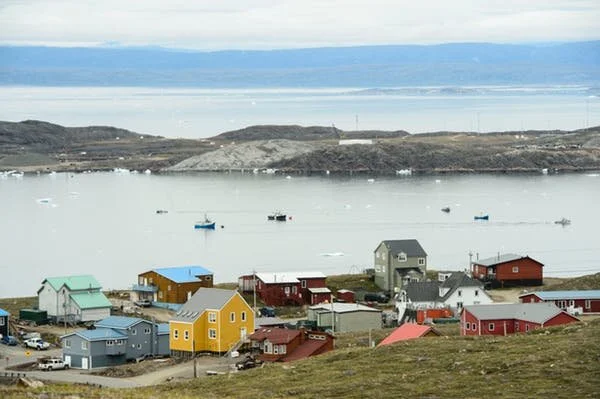
Small boats make their way through the Frobisher Bay inlet in Iqaluit on Aug. 2, 2019. THE CANADIAN PRESS/Sean Kilpatrick

There are many documented instances of our health-care system’s failure to provide appropriate health care to Indigenous people, due to unfair assumptions and demeaning and dehumanizing societal stereotypes.

These health system failures discourage people from seeking care, and have resulted in death, as in the case of Brian Sinclair,who died after a 34-hour wait in a Winnipeg hospital emergency room in September 2008.

There can also be significant physical barriers to care for Inuit. Critical health services such as oncology specialists and treatments are often located in urban centres such as Ottawa, Winnipeg, Edmonton, Montréal and St John’s, thousands of kilometres away from remote communities in Inuit Nunangat. This leaves many Inuit negotiating stressful urban environments, dealing with cultural dislocation and navigating complex health systems without the benefit of community support networks.

People must fly out of remote communities for cancer treatment. (Alex Hizaka), Author provided

During our research, an Inuit peer support worker explained what it can be like for those who travel far from their family and community for their care: 

“People come with no idea of why, and we are having to bridge two worlds for them. Often patients have no idea why health-care providers tell them to get on a plane, and then they think they are coming for treatment for three days and then it becomes two weeks. It is a tough situation as often people have no money, no support. People need to be able to explain their situation and how it is for them. People need to know that they are not alone.”

Research shows that these geographical challenges significantly impact access to health care and are often exacerbated by language barriers. Together these factors may make people vulnerable to additional harms unrelated to the health conditions for which they seek treatment.

Patients and health-care providers work together

Shared decision-making is an important evidence-informed strategy that holds the potential to promote patient participation in health decisions

In this model, health-care providers and patients work togetherusing evidence-based tools and approaches and arrive at decisions that are based on clinical data and patient preferences— to select diagnostic tests, treatments, management and psycho-social support packages. 

Shared decision-making is considered a high standard of carewithin health systems internationally and it has been found to benefit people who experience disadvantage in health and social systems

Shared decision-making has also been found to promote culturally safe care, and has the potential to foster greater engagement of Inuit with their health-care providers in decision-making

The concept of cultural safety was developed to improve the effectiveness and acceptability of health care with Indigenous people. Culturally safe care identifies power imbalances in health-care settings — to uphold self-determination and decolonization in health-care settings for Indigenous people

The aim of a shared decision-making approach is to engage the patient in decision-making in a respectful and inclusive way, and to build a health-care relationship where patient and provider work together to make the best decision for the patient.

Most importantly, our approach has emphasized ways of partnering that align with the socio-cultural values of research partners and community member participants, both to develop tools and create approaches to foster shared decision-making. The term “shared decision-making” translates in Inuktitut to “Not Deciding Alone” and so that is the name of our project.

The results are outcomes that Inuit are more likely to identify as useful and relevant and that respect and promote Inuit ways, within mainstream health-care systems.

Self-determination through Inuit Qaujimajatuqangit

Our research uses the guiding principles of Inuit Qaujimajatuqangit — a belief system that seeks to serve the common good through collaborative decision-making — as the foundation for a strengths-based approach to promote Inuit self-determination and self-reliance

Inuit Qaujimajatuqangit principles have been passed down from one generation to the next and are firmly grounded in the act of caring for and respecting others. 

There is important learning taking place within academic and health-care systems that involves deepening understandings of what “patient-oriented care” means. We need to learn how to do research in partnership with those who are the ultimate knowledge users in cancer-care systems — patients.

In our work, Inuit partners and community members are leading the development of shared decision-making tools and approaches, building on their strengths and resiliency. Our research and health systems are beneficiaries of these partnerships that hold potential to create health care that is welcoming and inclusive for all. 

With guidance and support from Inuit and more broadly, from Indigenous partners, we are learning how to take action on the TRC recommendations, and to make respect and kindness integral to best practice in research and health care.

Janet Jull is a Assistant Professor, School of Rehabilitation Therapy, Queen's University, Ontario

THIS ARTICLE WAS ORIGINALLY PUBLISHED ON THE CONVERSATION

In Hong Kong Protests, Technology Serves as a Tool of Both Expression and Repression

While activists have used the internet as a powerful organizing tool, web coverage on the Chinese mainland is defined by mass blackouts and systematic silencing.

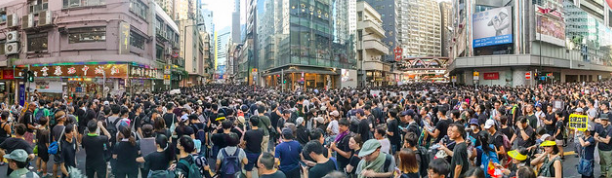
Protesters in Hong Kong. Studio Incendo. CC BY 2.0

The most widely attended protest in recent American memory, the Women’s March, brought about 1 percent of the population onto the streets. Last month’s protests in Hong Kong brought 25 percent.

By any standards, the anti-extradition campaign in Hong Kong, spurred by a proposed China-backed amendment that would allow for the extradition of Hong Kongers to mainland China, was an astronomical success, engaging huge swathes of the population and eventually leading to the death of the proposal. Images of the demonstration depict unfathomable numbers of citizens exercising their right to peaceful protests, but something remains invisible in those photos: the constantly active, multilayered and multifaceted presence of the internet, which—through messaging apps, social media, and LIHKG (Hong Kong’s answer to Reddit)—allowed protestors to turn ideology into concrete action.

On June 12, the protest reached a milestone when tens of thousands of citizens surrounded the Hong Kong legislative building, spurring an initial suspension of the bill. In order to mobilize without attracting unwanted attention, activists created online events inviting people to a “picnic” in nearby Tamar Park, a cover-up for their actual intentions. Messaging services, too, helped with planning efforts. Particularly popular was the encrypted app Telegram—although the arrest of Ivan Ip for “conspiracy to commit a public nuisance” set efforts back, given that Ip was leading a group on the platform of 30,000 users. Still, Ip’s group was far from the only one: In a Baptist University poll of protestors, more than half of respondents reported using Telegram for broadcasting information and participating in discussion groups.

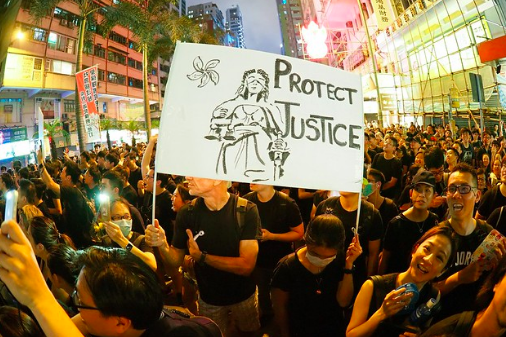
Protestors in the streets. Etan Liam. CC BY-ND 2.0

The survey also revealed the protestors’ widespread use of LIHKG, which lived up to its reputation of supporting free speech by subtly assisting activist efforts: Administrators removed ads from their site for about two weeks in June to shorten loading time and upped the number of replies allowed on some threads from 1,001 to 5,001, citing a need “for more convenient discussions.”

For protestors, the utility of social media and messaging platforms was far from over once planning progressed into action. During the demonstration on June 12, attendees broadcast real-time updates through countless Instagram stories and an hour-long livestream on the Twitter-owned service Periscope. In addition to spreading the word to Hong Kongers not attending the demonstration, protestors were able to communicate amongst themselves, using apps to request supplies, share the locations of food and water stations, and disseminate hand signals that would allow for discreet communication. Technical difficulties, however, thwarted efforts to some degree: Poor mobile signals made accessing the internet a challenge and threatened to spur chaos. “Without Telegram and WhatsApp, people did not know what they had to do,” Laura, 18, a student who volunteered as a first-aid staffer, told the South China Morning Post

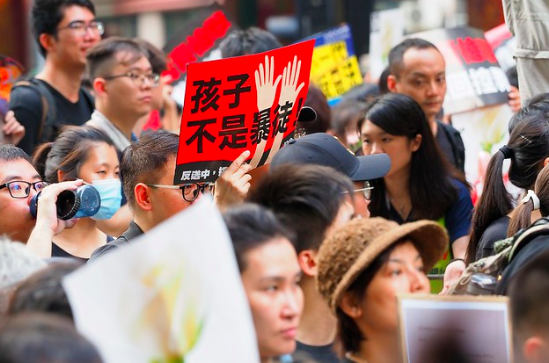
Holding a sign that reads “kids are not rioters.” Etan Liam. CC BY-ND 2.0

Limited connectivity was not the only tech-related hurdle facing protesters. Tech-savvy activists cautioned against using public Wi-Fi or swiping their Octopus public transit card, actions that could put users at risk of having their personal information picked up and employed to incriminate them. And protestors made sure to turn off Face ID and fingerprint ID on their phones so that police could not unlock their devices without consent, as well as enabling encryption on apps where it was not already automatic.


Across the border in China, however, such internet-driven activism would have been impossible. Hong Kongers have the privilege of a much more open internet—a dichotomy that has manifested starkly in mainland media coverage of the protests. As part of the mass censorship and limited access that has long defined the Chinese internet and that is sometimes dubbed the “Great Firewall of China,” the Communist Party has enacted a total blackout on protest coverage in newspapers and on TV, with television screens simply going dark when foreign news outlets show images of the demonstrations. Video footage of Hong Kong Chief Executive Carrie Lam apologizing for her attempt to push through the extradition law never lasted long on social media, as censors would immediately delete the content each time it was reuploaded. And even a song that activists sang during the protests, “Can You Hear the People Sing” from “Les Miserables,” was inexplicably missing from QQ, a popular musical streaming site.

Protestors filled the streets on June 16. Etan Liam. CC BY-ND 2.0

On social media platforms like WeChat and Weibo, users devised strategies to get around the firewall, like distorting images of the protests or blocking parts of the image with giant smiley-face logos. In some cases, however, China’s tech power was simply too strong: Telegram reported on June 12 that it was experiencing a distributed denial of service (DDoS) attack, which means that a number of computers were attempting to overload its servers with bogus requests, resulting in service slowdowns or outages. Telegram’s CEO, Pavel Durov, said that the IP addresses behind the attack were coming mainly from China, potentially suggesting a concerted effort by authorities.

By systematically silencing the voices of activists, China is able to spread its own narrative of the protests, which it portrays as violent events provoked by foreign elements amining to undermine Hong Kong and the “one country, two systems” policy. The policy was formulated in the 1980s for the reunification of China by Paramount Leader of the People’s Republic of China Deng Xiaoping; in the interest of furthering Hong Kong’s status as a global financial center, it guarantees freedom of speech and protest for citizens. Yet Hong Kongers have long feared an erosion of their autonomy, a concern that most recently boiled over in the form of the 2014 Umbrella Movement, during which streets in the city’s business district were flooded by demonstrators for nearly three months. Throughout that time, mainland China busily erased all mention and images of the protests from its internet.

Protesters were unsatisfied by the original postponement of the bill. Etan Liam. CC BY-ND 2.0

On July 8, Lam publicly stated that the bill was finally dead, describing the proposed amendment as a “total failure.” Yet Hong Kongers were not entirely satisfied, as questions remain about whether Lam will officially withdraw the bill or whether it might be revived in future. Either way, the anti-extradition movement of 2019 will stand as a landmark protest for the digital age: one whose scale and power could have only coalesced in an era of instant connectivity, and one that throws into stark relief the power of technology—for expression and repression alike.


TALYA PHELPS hails from the wilds of upstate New York, but dreams of exploring the globe. As former editor-in-chief at the student newspaper of her alma mater, Vassar College, and the daughter of a journalist, she hopes to follow her passion for writing and editing for many years to come. Contact her if you're looking for a spirited debate on the merits of the em dash vs. the hyphen.

From North Carolina to Norway, Fossil Fuel Divestment Hits Headlines

Whether motivated by practical or ideological means, institutions around the world are pulling their finances out of oil, gas, and coal.

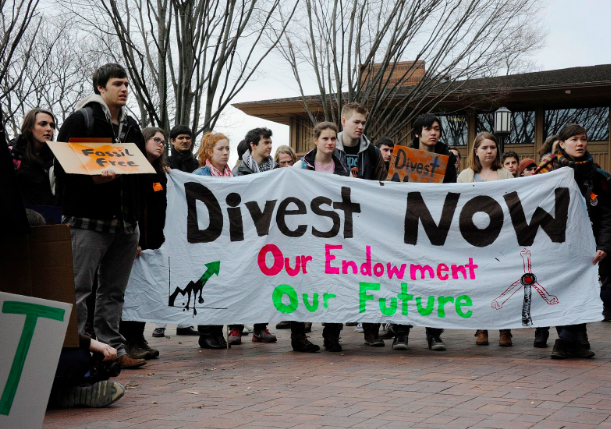
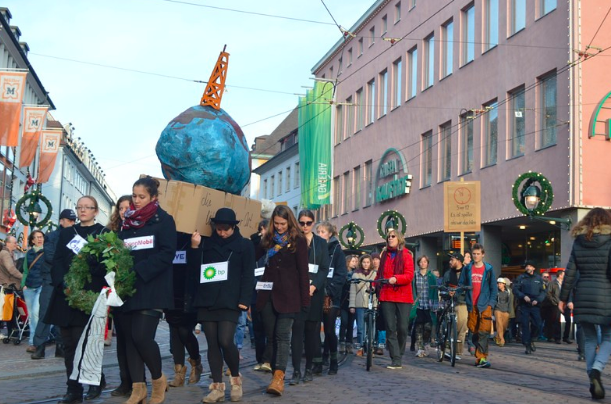
Divestment protest at Tufts University. James Ennis. CC BY 2.0

Upon receiving the news in 2017 that our planet is in the midst of its sixth mass extinction event, spurred partly by rampant climate change, stunned denizens of Earth everywhere struggled to process the implications and searched for concrete ways to mitigate the damage. In the months since, countless climate proposals have rolled out across the globe, and U.S. citizens have watched as 2020 presidential hopefuls laid out their plans—all while the current president decried the very existence of climate change. In the flurry of rhetoric and policy aimed at addressing the climate crisis, one strategy continues to hold strong: fossil fuel divestment, which has hit the headlines this summer with particular force.

On July 4—Independence Day in the United States—Britain’s largest membership organization declared independence from fossil fuel investments. The National Trust, which stewards 780 miles of coastline; 612,000 acres of land; and more than 500 historic houses, castles, monuments, and parks, announced that it would divest its £1 billion portfolio from fossil fuels in a bid to address the worsening climate crisis. 

Previously, the trust had invested £45 million into oil, gas, and mining companies, despite having made earlier pledges to cut down on its own use of fossil fuels. The vast majority of those investments will be withdrawn in the next 12 months, the trust promises, and 100 percent within three years. The freed-up funds will be diverted to alternative energy options: CFO Peter Vermeulen told The Guardian, “Now we will seek to invest in green startup businesses and other suitable portfolios that deliver benefits for the environment, nature and people.”

Fossil Free Freiburg divestment protest. 350.org. CC BY-NC-SA 2.0

Five hundred miles away in Norway, another high-profile institution is also preparing to drop fossil fuels: the Government Pension Fund Global (GPFG), which was founded in 1990 to oversee the integration of petroleum revenues into the national economy, and which invests in more than 9,000 companies worldwide, including Apple, Amazon, and Microsoft. On June 21, Norway’s parliament, the Storting, approved plans for the GPFG to divest more than $13 billion of the $1.06 trillion it manages from investments in oil, gas, and coal. The decision comes with some caveats: GPFG will only divest from companies that are exclusively involved with fossil fuels, but not oil companies that also have renewable energy units, such as BP and Royal Dutch Shell. And the fund maintains that financial considerations, not ideological ones, are behind the divestment, given the risk posed by fluctuations in oil prices. Nevertheless, environmental advocates can appreciate the fact that GPFG will earmark up to 2 percent of its funds—or about $20 billion—for investments in renewable energy.

In some cases, not only individual institutions are divesting, but also entire regions. At the beginning of June, the city council of Charlottesville, Va., voted 4-1 to divest the city’s operating budget investments from any entity involved with the production of fossil fuels or weapons. Supporters explain that the divestment—which will be carried out within 30 days of the decision—aligns with the city’s strategic plan goals, including being responsible stewards of natural resources. Charlottesville joins various other college towns across the United States, including Ann Arbor, Mich., and Berkeley, Calif., in pledging to divest.

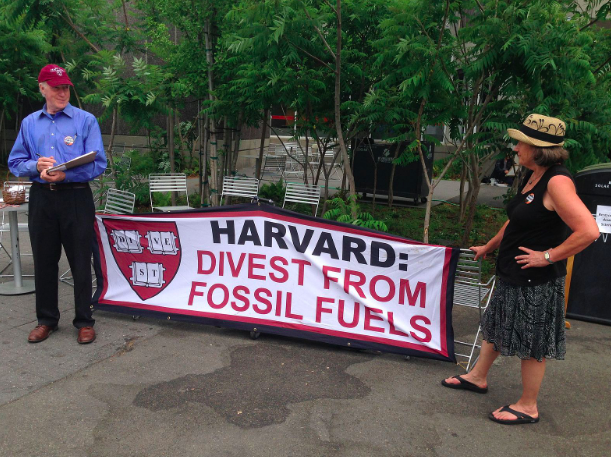
At some universities, however, the prospect of divestment has long brewed controversy, which is coming to a head in light of the climate crisis. During Al Gore’s speech at Harvard University on May 29, the former vice president turned environmental activist called on his alma mater to divest, stating that climate change is “a threat to the survival of human civilization as we know it” and framing divestment as “a moral issue” for the university. In recent years, student activists at Harvard have ramped up demands on the school to divest, and the student newspaper reversed its formerly opposed position in May, acknowledging that Harvard’s reluctance to entertain the possibility of divestment “compromises its efforts to position itself as an academic institution at the forefront of the fight against climate change.” On the administrative side, more than 300 faculty members have signed a petition calling for divestment of fossil fuel stocks. Nevertheless, this number represents less than 14 percent of all faculty, and the university maintains the opinion that it should impact public policy through research rather than through its endowment.

Advocates for divestment at Harvard. victorgrigas. CC BY-SA 3.0

Across the country, 47 U.S. colleges and universities have chosen to divest, although the number has dropped off in recent years, with only 10 making the decision since 2017. Most recently, the Board of Trustees at the University of North Carolina, Asheville, voted on June 21 to divest a portion of their $50 million endowment from fossil fuels. The unanimous vote, which will make the Asheville campus the first in the UNC system to divest, builds on a resolution spearheaded by student activists. In concert with administration and the Board, these activists researched new funds in which the university could invest about 10 percent of its capital, eventually landing on Walden Asset Management, which focuses on investing using environmental, social, and governance criteria.

Botanical gardens at Asheville. David441491. CC BY-NC-ND 2.0

Meanwhile, earlier this month, the University of California—another sprawling and well-regarded state university system—saw 77 percent of its voting faculty agree “to divest the university’s endowment portfolio of all investments in the 200 publicly-traded fossil fuel companies with the largest carbon reserves.” The decision is now in the hands of the University Regents. Should the Regents choose to divest, the news would make waves on the national level due to U Cal’s significant size and prestige—and in the fight against fossil fuels, ideological statements, even if they have negligible bearing on the industry’s financial resources, are of the utmost importance.

Individuals in academic circles, therefore, are beginning to take their own stands to support divestment. In a piece for the Chronicle of Higher Education, climate activists Christiana Figueres and Bill McKibben explain that they have begun refusing to accept honorary degrees from colleges that have not divested, writing, “[e]ach of us has already turned down these honors at institutions that remain committed to coal, gas, and oil.” Meanwhile, members of the younger generation are also weighing in—such as Jamie Margolin, a rising high school senior and prominent environmental activist with more than 11,000 Twitter followers. In a piece for Teen Vogue last month, Margolin wrote, “I have serious concerns about how my future school might be investing in fossil fuels and, if they can’t be convinced to divest by student activists like me, how that might render my college education useless.” From Norway to Britain to Asheville to Cambridge, from Ivy-educated vice presidents to those still awaiting their high school degrees, the world is beginning to agree that taking action is not optional.


TALYA PHELPS hails from the wilds of upstate New York, but dreams of exploring the globe. As former editor-in-chief at the student newspaper of her alma mater, Vassar College, and the daughter of a journalist, she hopes to follow her passion for writing and editing for many years to come. Contact her if you're looking for a spirited debate on the merits of the em dash vs. the hyphen.