
Have a passion for hiking, here’s your chance to embark on a whole new experience. Travel to Guatemala to follow a guide, either by horseback or foot, to climb Volcan Pacaya.
Read More11 Ways to Help Ukraine
Help support the Ukrainian people as their country is invaded.
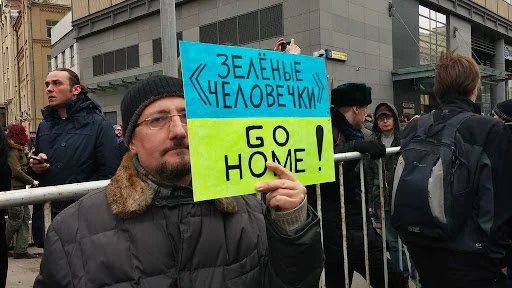
The ongoing war in Ukraine has caused hundreds of civilian deaths, with more than 2 million refugees having already fled the country. It is crucial in these trying times that Ukrainians know they have support. Here are some ways to help.
Meduza
“Within a few days, maybe even today, it is possible that there will be no independent media left in Russia,” read a post on Meduza’s website. Meduza is an independent media source at extreme risk of losing its platform to inform the public. Russian President Vladimir Putin is working to have complete control over censorship in Russia and Ukraine, meaning citizens of these countries will no longer have access to any information besides what Russia’s government allows. Meduza has already been blocked in Russia, and now it is fighting to stay alive through the support of allies outside of these countries. The organization is looking for financial support and social media awareness.
For more information and to donate, visit Meduza’s website.
Reporters Without Borders
Reporters Without Borders is a worldwide independent media organization that works to keep freedom of the press and information to citizens of the world. According to their site, on March 4, Russia adopted a new law making the “publication of ‘false’ or ‘mendacious’ information about the Russian armed forces punishable by up to 15 years in prison.” This threatens every single independent media outlet in Russia and Ukraine. Support Reporters Without Borders through sponsorship, donations, volunteering and more listed on the website.
For more information and to support, visit Reporters Without Borders’ website.
The Kyiv Independent
The Kyiv Independent was launched three months ago by journalists who had been fired in Ukraine for defending editorial independence. Now, they are playing a vital role in keeping the freedom of the press alive in Russia and Ukraine. On their website, they have options to “become a patron” and donate to the organization’s GoFundMe.
For more information and to support, visit The Kyiv Independent’s website.
Doctors Without Borders
Working in conflict zones, Doctors Without Borders focuses on helping citizens in need after natural disasters, wars, epidemics and more. Responding to the Ukraine crisis, the organization sent 1,400 cubic feet of medical supply shipments on March 6, along with members of the organization. There are multiple ways to get involved with Doctors Without Borders from working in offices to working in the field, and if a career path isn’t something you’re considering, donating is another great way to show support.
For more information and to support, visit Doctors Without Borders’ website.
International Medical Corps
A global first responder organization, International Medical Corps provides emergency medical assistance to people in need in any circumstances. A hub in Poland has been created, so members of the organization can assist members of Ukraine and surrounding countries with physical and mental health situations. International Medical Corps is looking for donations to continue its efforts in Poland.
For more information and to support, visit International Medical Corps’ website.
Contact Government Representatives
Don’t have the money to donate? Another way to get involved if you are in the United States or Europe is by contacting government representatives in efforts to accept as many Ukrainian refugees as possible. Boundless offers great tips for formatting emails, finding your elected officials and learning information about what your contribution will do for citizens in need.
To find your representative, visit the U.S. House of Representatives’ website.
Global Giving
Global Giving is a nonprofit that connects other nonprofits with donors and companies. Helping to properly equip humanitarian projects in distressed communities and donating to the Ukraine Crisis Fund creates a direct impact on citizens in need. With a goal of $10,000,000, Global Giving has promised that all funds raised will go to providing shelter, food, clean water, health support, psychosocial support and more.
For more information and to support, visit Global Giving’s website.
The World Food Programme
As the world's largest humanitarian organization, The World Food Programme works to provide meals to all people in emergency situations. Working directly with citizens in Ukraine who have been forced from their homes and into hunger, donating to The World Food Programme will provide families with meal packages and more.
For more information and to support, visit The World Food Programme’s website.
UNICEF
UNICEF is running an emergency response for Eastern Ukraine, leading health, social policy, child protection and many more programs to aid families affected by the conflict. UNICEF is looking for volunteers, donors, social media support and reporters to help with the efforts in Ukraine.
For more information and to support, visit UNICEF’s website.
United Help Ukraine
An organization started directly in response to the attack on Ukraine, United Help is focusing on wounded warriors, humanitarian aid, medical supplies and raising awareness. Donating to United Help Ukraine will directly help Ukrainian citizens, soldiers and frontline volunteers.
For more information and to support, visit United Help Ukraine’s website.
Airbnb
Offering free short-term housing for over 100,000 Ukrainian refugees, Airbnb is relying on the help of citizens across the world. Airbnb is looking for donations and possible hosts to house refugees. Nonprofits are working with Airbnb during this time to book homes for eligible citizens.
For more information and to support, visit Airbnb’s Help Ukraine website.
Knowing what organizations have the best intentions and support for people in need can be difficult. The American Endowment Foundation provides a great resource for choosing the right organizations where your support will make the biggest difference.
Haleigh Kierman
Haleigh is a student at The University of Massachusetts, Amherst. A double Journalism and Communications major with a minor in Anthropology, she is initially from Guam, but lived in a small, rural town outside of Boston most of her life. Travel and social action journalism are her two passions and she is appreciative to live in a time where writers voices are more important than ever.
9 Beautiful Houses of Worship Around the World
Different religions have different ways of showcasing their houses of faith.
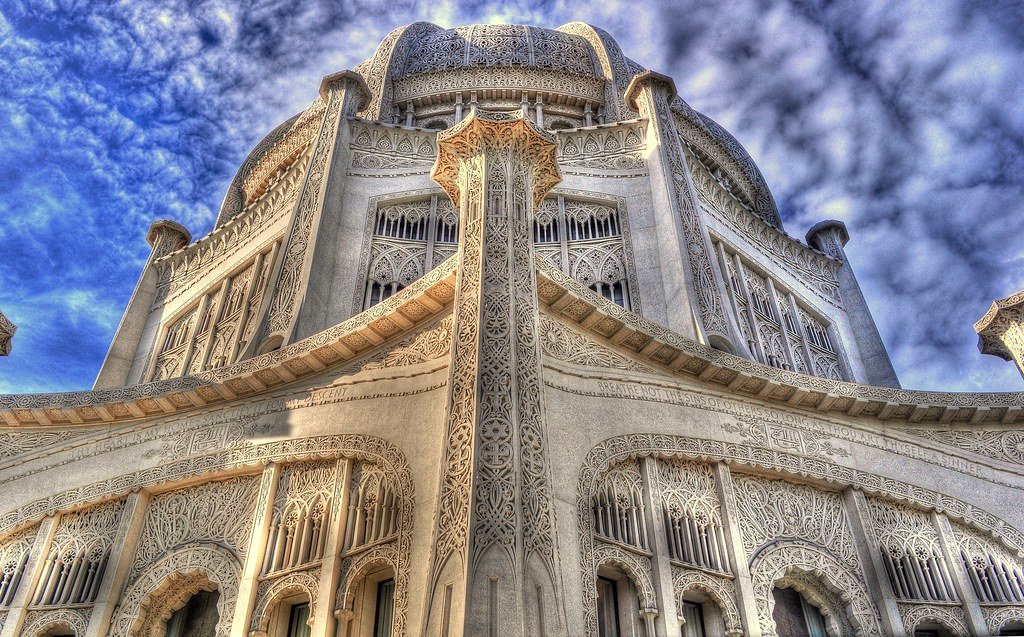
For many centuries across the globe, people have built houses of faith to honor the higher power(s) they worship. Below is a list of different architectural representations of these sacred spaces.
1. Borgund Stave Church
Borgund, Norway
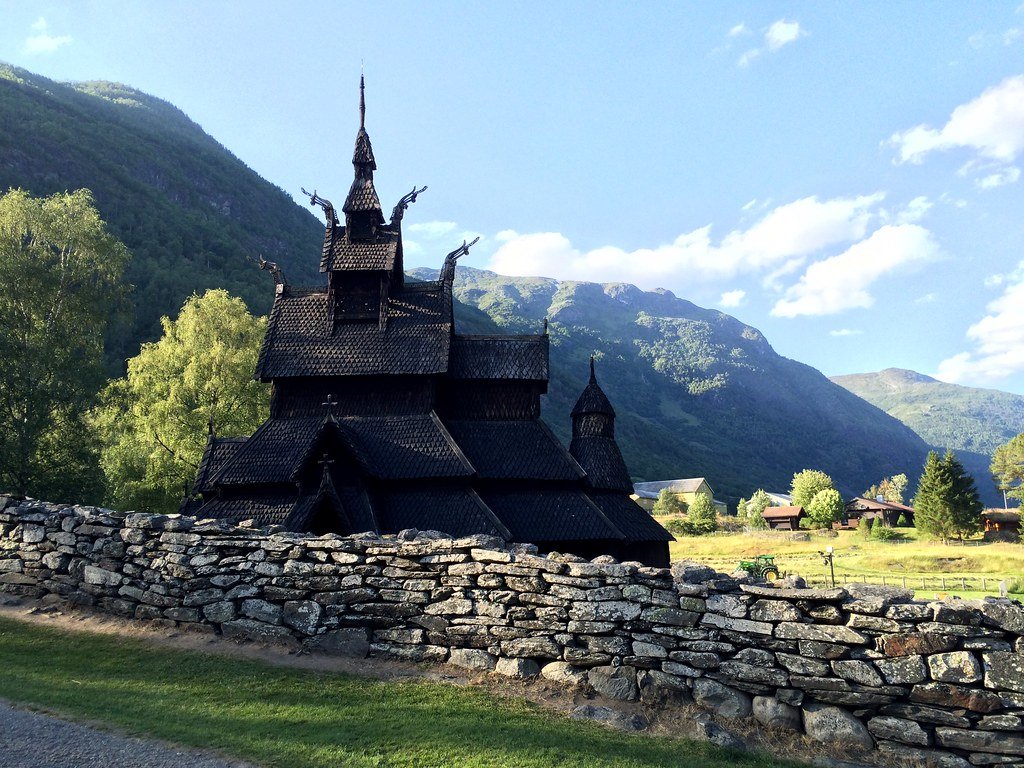
The portrayal of dragon heads on the roof of the Borgund Stave Church in Norway was built to ward off spirits in 1180. The church was dedicated to Apostle Andrew and has been incredibly preserved. The medieval church received certification in 2010 for being an environmental lighthouse. The church is set to reopen to visitors on April 15.
2. Golden Temple
Amritsar, India
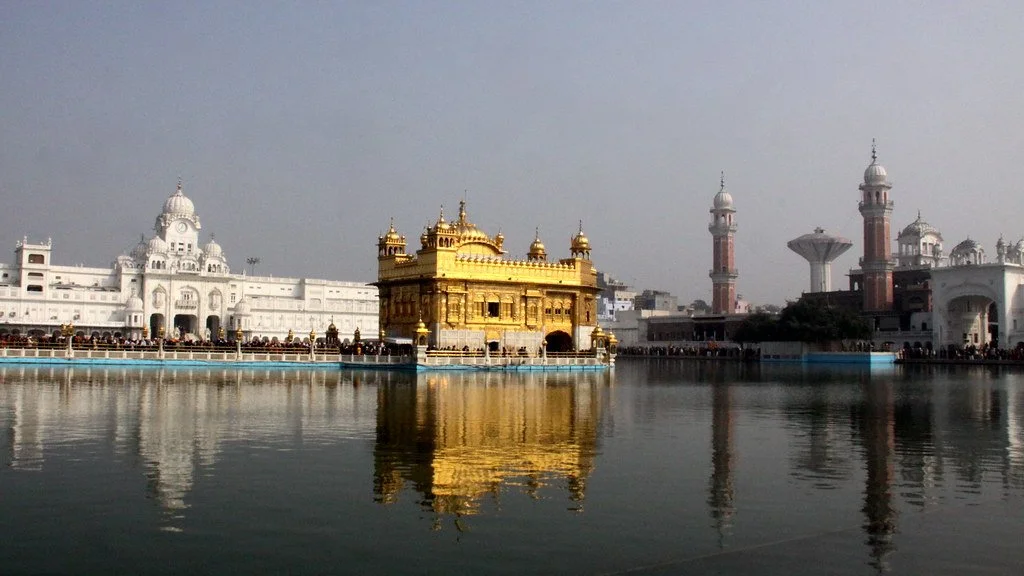
Named the holiest temple in the Sikh faith, the Golden Temple’s upper floors are covered in 750 kilos of pure gold. It was built by Guru Arjan in 1604 and is located in the Northwest of India, near the border of Pakistan. It is said that the waters surrounding the temple in the river Ganga cleanse one’s bad karma when taking a dip. It is visited by 100,000 worshippers daily.
3. Hallgrímskirkja
Reykjavik, Iceland
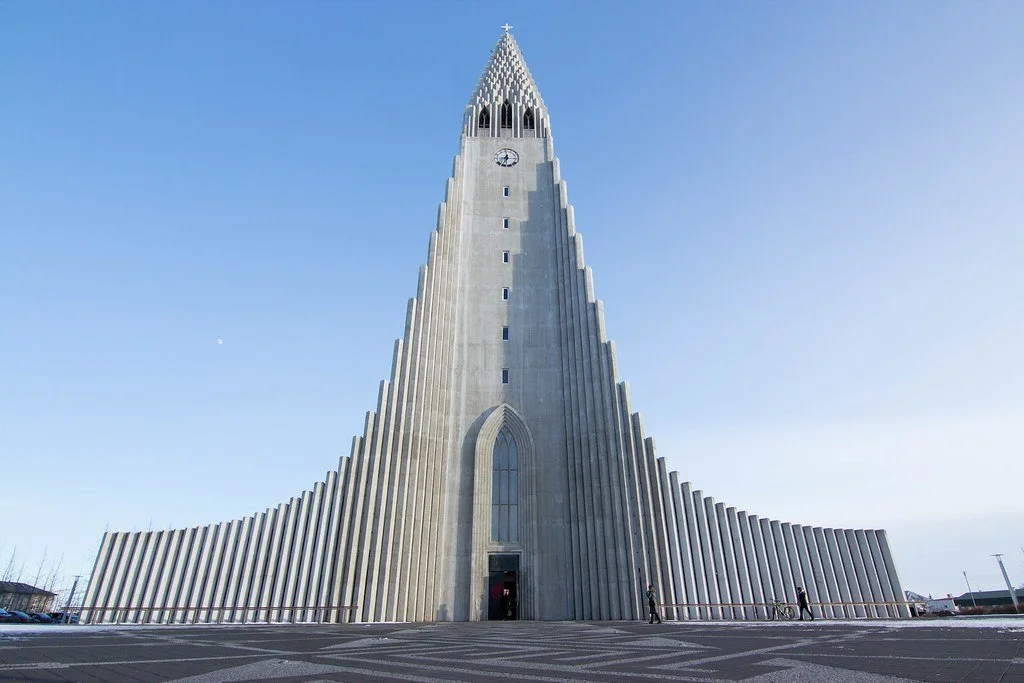
This Lutheran Icelandic church was built by architect Guðjón Samúelsson and, at 240 feet, stands as the tallest building in the capital and the second tallest in all of Iceland. The design is influenced by the country's volcanoes and the natural surroundings that inhabit the nation. Visible from almost any point in the city, the church is known as one of Iceland’s landmarks and largest church.
4. Kizhi Pogost
Kizhi Island, Russia
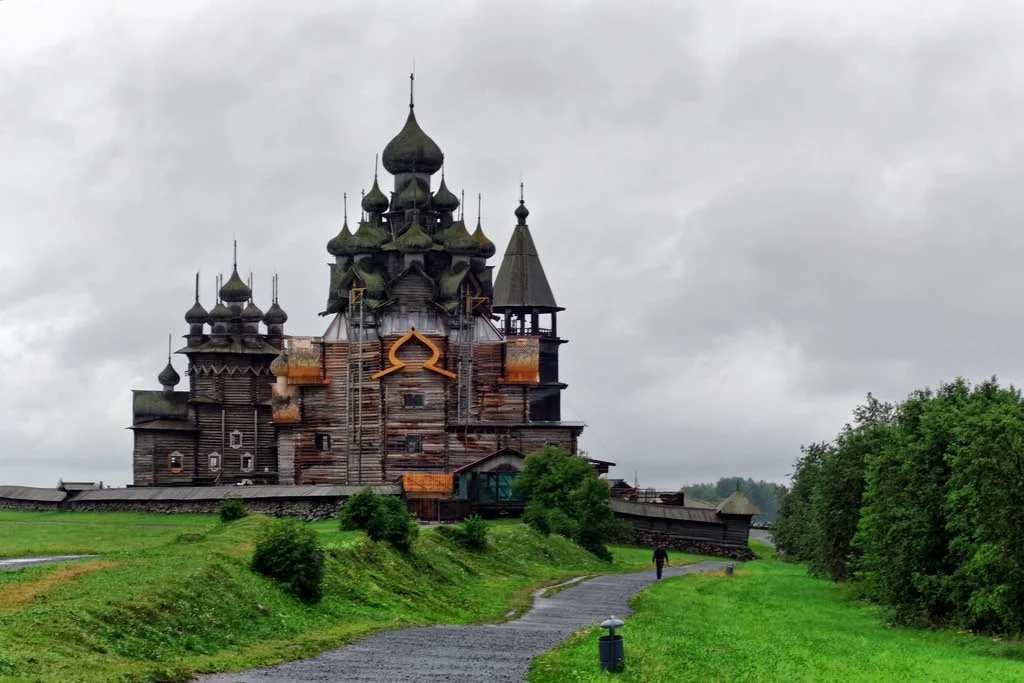
Kizhi Pogost. Alexxx Malev. CC BY-NC 2.0
Set on Kizhi Island in Russia’s Lake Onega, Kizhi Pogost is a UNESCO World Heritage site consisting of two wooden churches and a bell tower built in 1714. What makes this an incredible architectural structure is that it was made completely of wood, with no metal or nails involved. Today, the churches are an open air museum.
5. Wat Rong Khun
Chiang Rai Province, Thailand
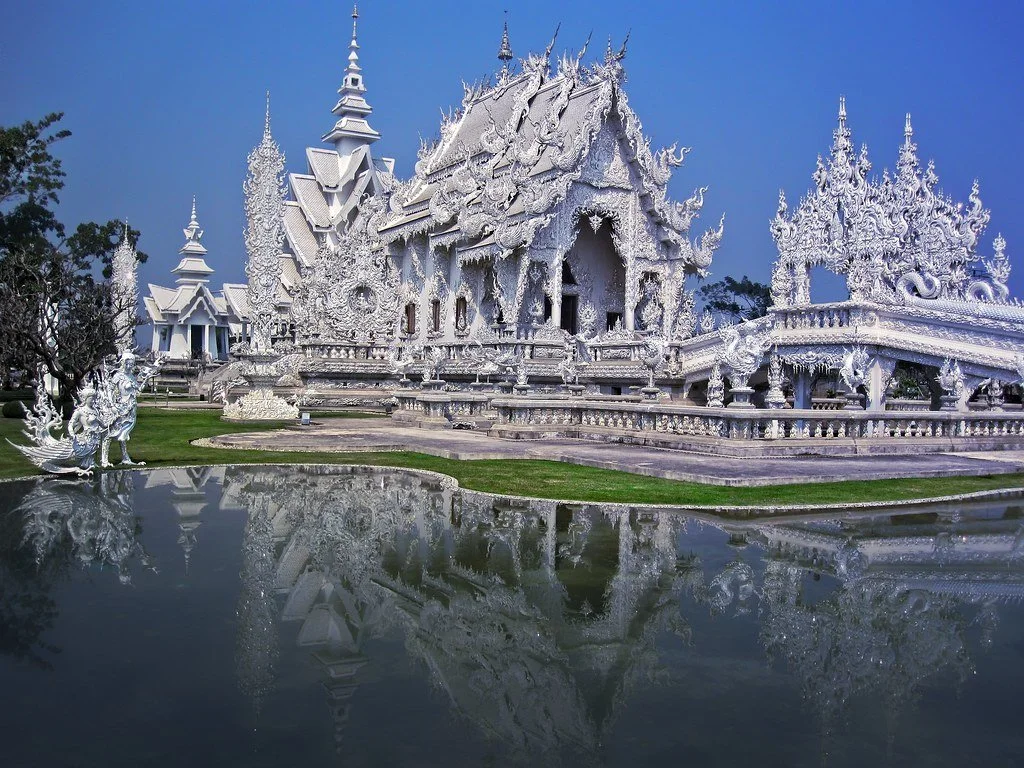
Designed by Thai visual artist Chalermchai Kositpipat, Wat Rong Khun (also known as The White Temple) was created to honor Buddha’s purity. There are many intricate details in the space, including carvings of monkeys, people and hands among other things. Today, Kositpipat has only completed three of the nine buildings he has plans for. The temple entrance cost is $1.50, Kositpipat will not accept more because he does not want large donors to influence his art. The temple is being run by a team of volunteers.
6. Las Lajas Sanctuary
Ipiales, Colombia
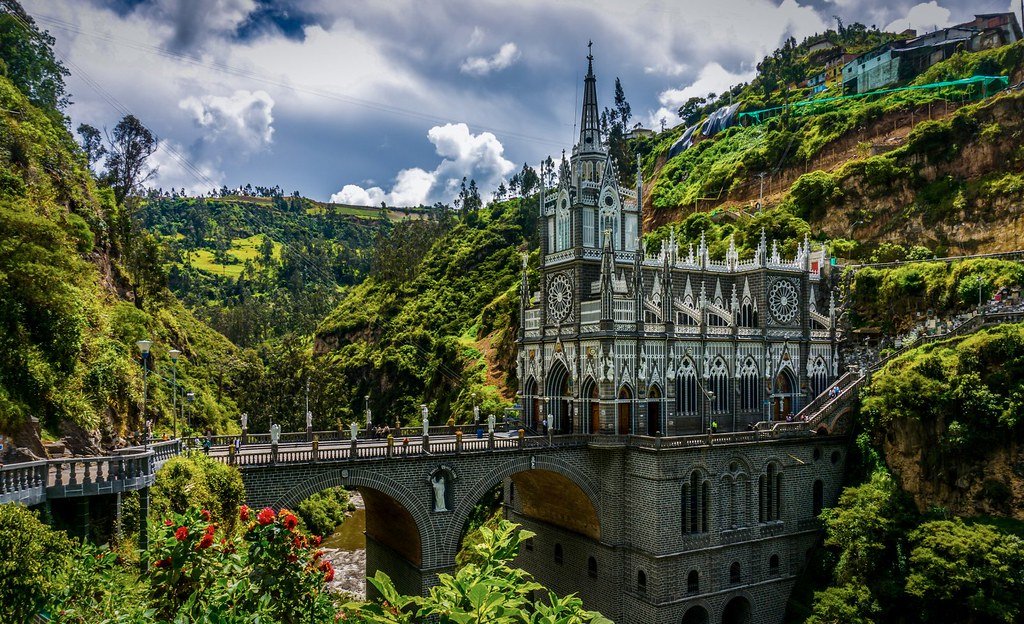
Las Lajas Sanctuary. BORIS Gt. CC BY-NC-ND 2.0
Located less than seven miles from the Ecuadorian border, Las Lajas Sanctuary sits over the Guaitara River. The Roman Catholic basilica has three iconic features. First, the bridge has statues of angels playing instruments on each side. The second is the stained glass by Italian artist Walter Wolf. Lastly, there is an image of the Virgin Mary painted on the back stone wall. The neo-Gothic basilica is surrounded by lush vegetation and was named the most beautiful church in 2015 by The Telegraph.
7. Great Mosque of Djenné
Djenné, Mali
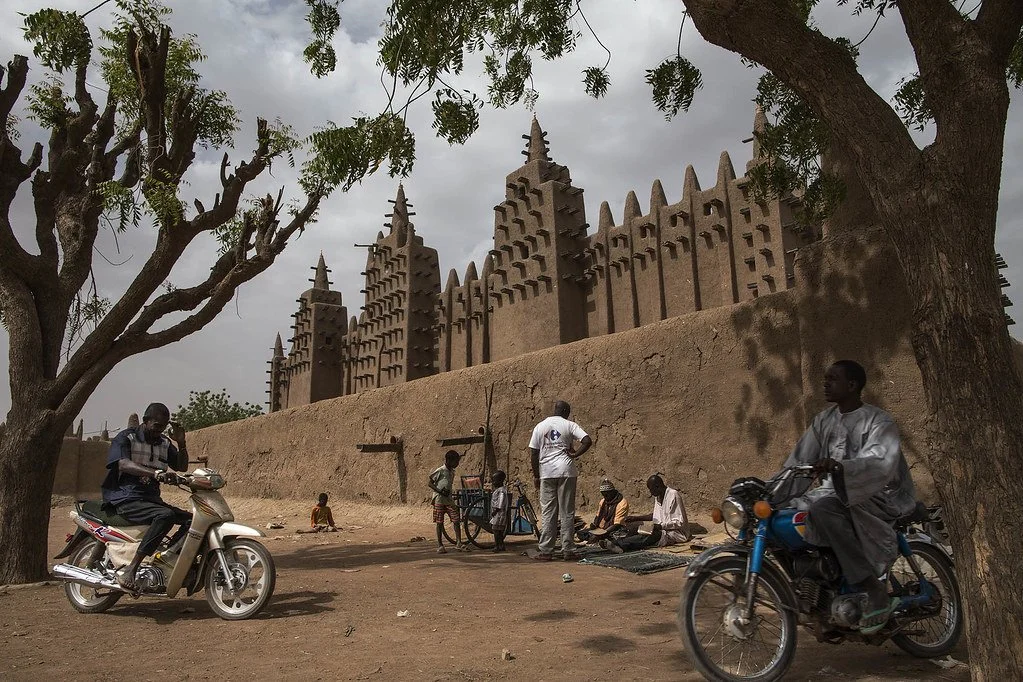
Great Mosque of Djenné. Mission de l'ONU au Mali. CC BY-NC-ND 2.0
Globally known as an example of Sudano-Sahelian architecture and one of Africa’s most famous structures, the Great Mosque of Djenné was built in 1907 from mud and brick, which needs regular replastering to keep its form. Today, the Great Mosque is a UNESCO World Heritage Site and a sacred destination for Muslims.
8. Jubilee Synagogue
Prague, Czech Republic
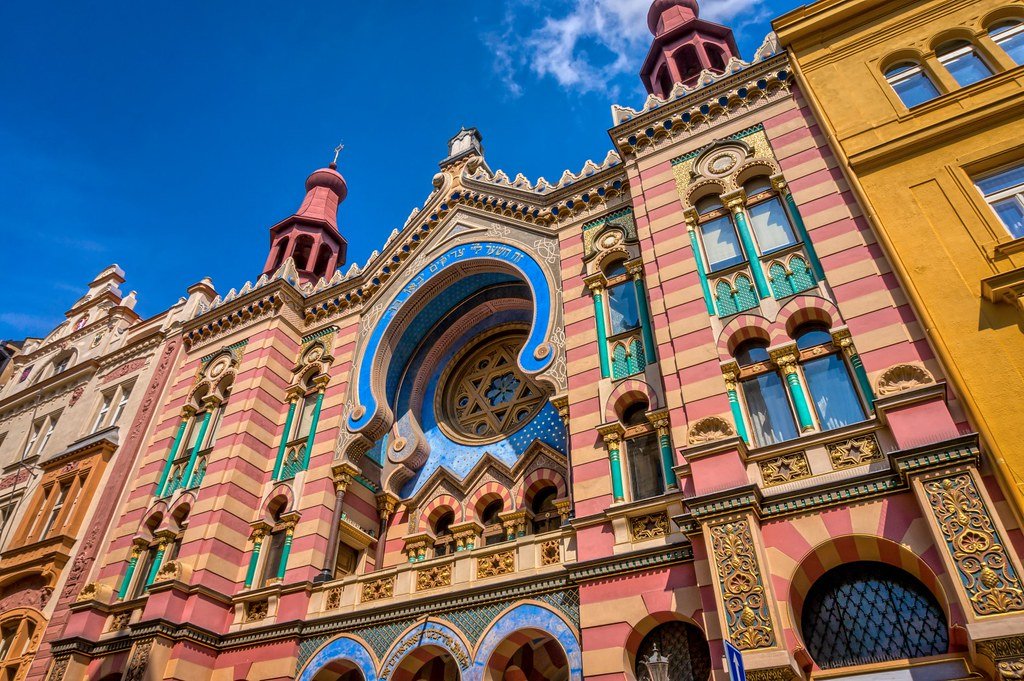
Jubilee Synagogue. BORIS G. CC BY 2.0
The colorful and intricate Jewish Jubilee Synagogue, also known as the Jerusalem Street Synagogue, was built in 1906 by architect Wilhelm Stiassny to commemorate the Emperor Franz Joseph I’s ascension to the throne. A preserved organ by composer Emanuel Stephen Peter is played for visitors. Today, it is open to the public and used for Orthodox prayer services.
9. Szeged Synagogue
Szeged, Hungary
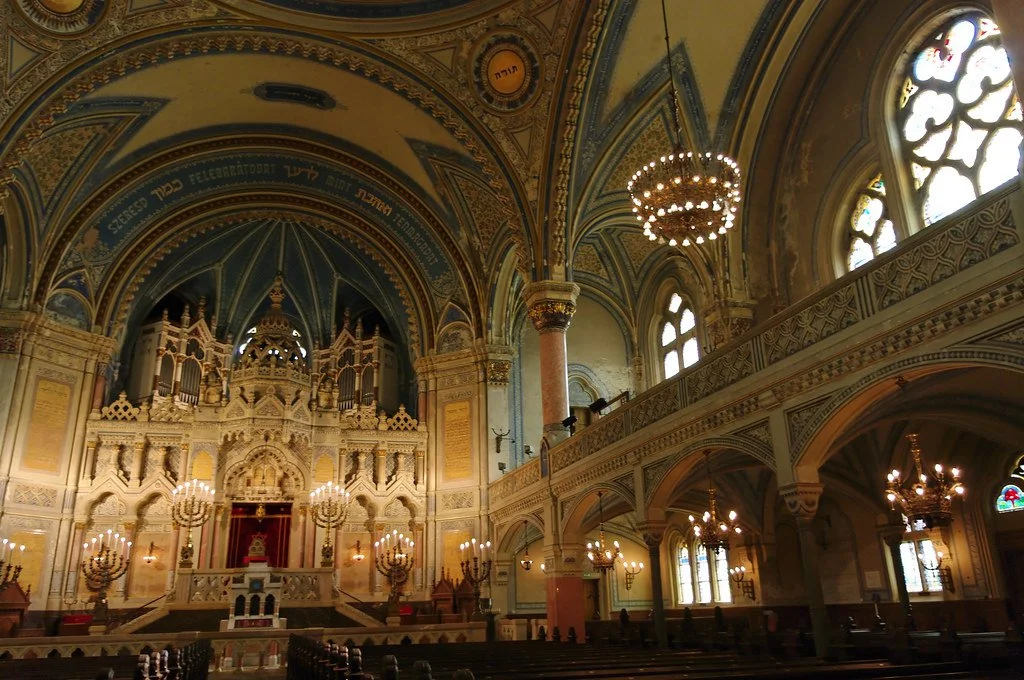
New Synagogue. Emmanuel Dyan. CC BY-NC-SA 2.0
The second largest synagogue in Hungary, Szeged Synagogue merges Art Nouveau with Gothic, Moorish, Byzantine, Roman and Baroque interior design. The sanctuary’s seating faces a Torah ark made with wood from the banks of the Nile River. The triumphal arch of the building displays the biblical commandment, “Love your neighbor as yourself" in both Hebrew and Hungarian.
10. Temple of Heaven
Beijing, China
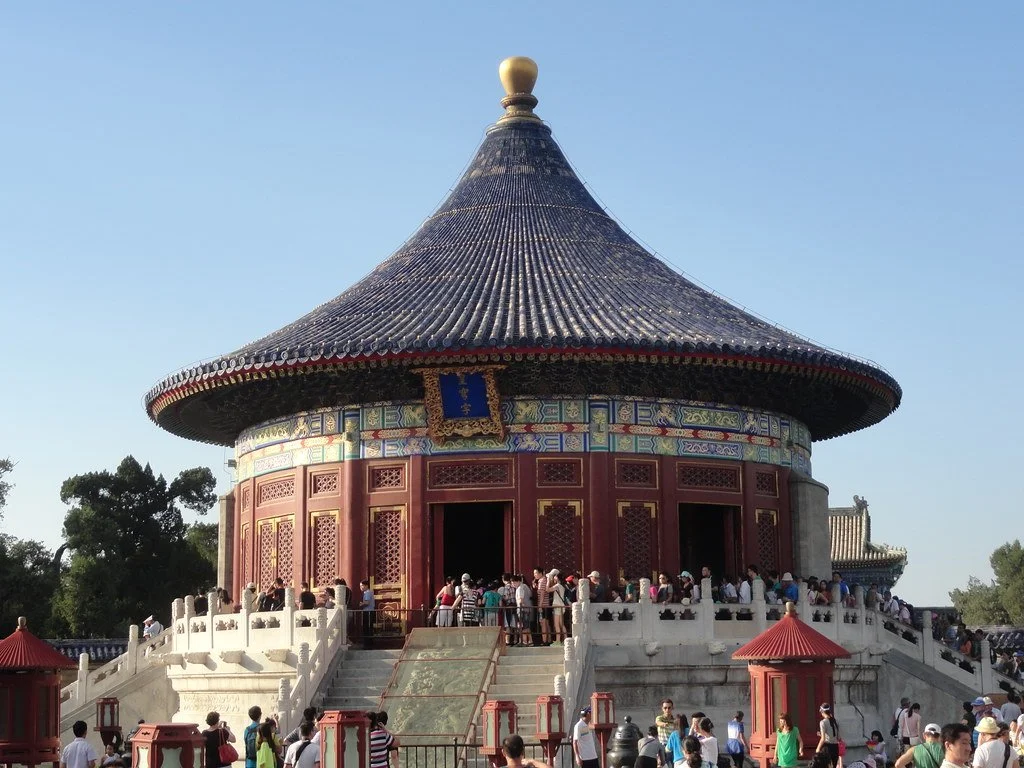
Temple of Heaven in Beijing. Fabio Achilli. CC BY 2.0
An imperial sacrificial altar, the Temple of Heaven in Dongcheng District, Beijing is considered the “supreme achievement of traditional Chinese architecture.” It is 273 acres and located in a large park, measuring 38 meters high and 30 meters in diameter, built on three levels of marble stones. It was completed during the Ming dynasty in 1420 and used to pray for harvest and for worship. In 1998, it was named a UNESCO World Heritage Site.

Jennifer Sung
Jennifer is a Communications Studies graduate based in Los Angeles. She grew up traveling with her dad and that is where her love for travel stems from. You can find her serving the community at her church, Fearless LA or planning her next trip overseas. She hopes to be involved in international humanitarian work one day.
8 Only-in-Madagascar Experiences
You may know about lemurs and baobabs, but here are more amazing and unique cultural and wildlife experiences that the island nation of Madagascar has to offer.
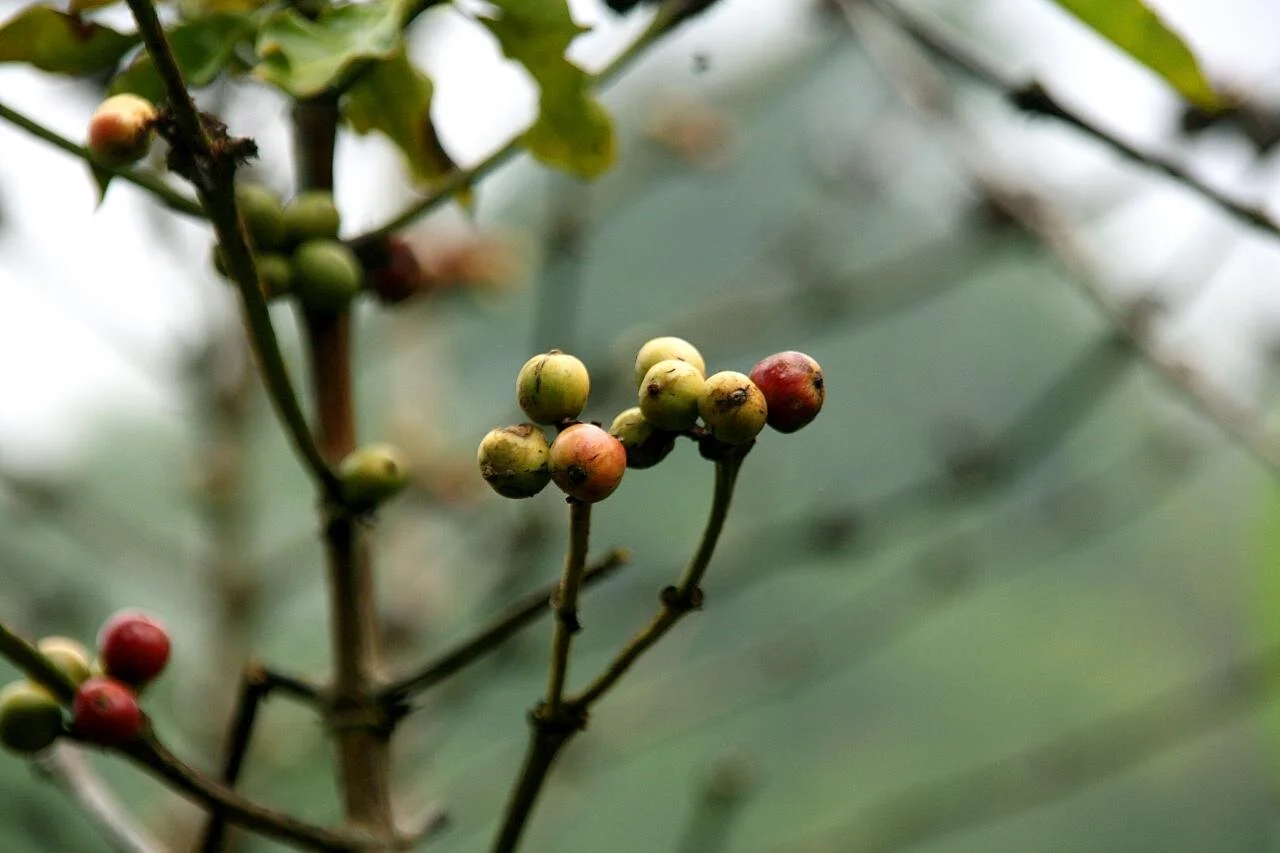
Unripe coffee beans grown in a field. ZeePack. CC BY-ND 2.0.
7 Distinctive Coffee Drinks from Around the World
Coffee is enjoyed in every corner of the globe. The caffeinated beverage, which is made using beans grown best in the tropics, is enjoyed on its own or as a starting point to make an endless number of lattes, cappuccinos, cocktails, smoothies, desserts and other foods and beverages.
While most in the West are familiar with the quick caffeine fixes afforded by Starbucks and Dunkin’, countries around the world maintain their own unique coffees which can be made with a handful of ingredients, a little bit of time and the curiosity to try something new. Here are seven coffee beverages from around the world that can be made in your own kitchen.
1. Flat White - Australia
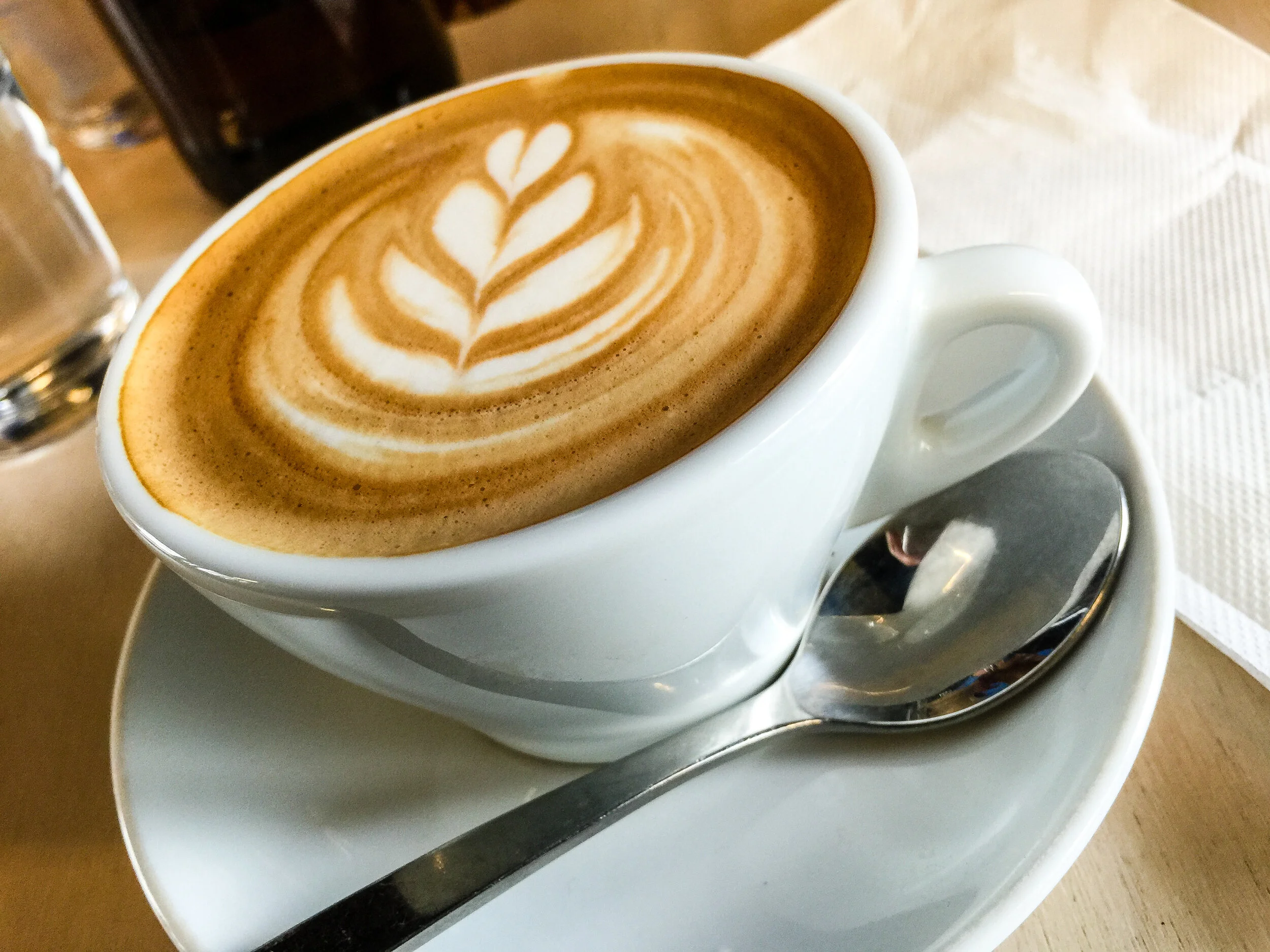
A basic flat white. Katherine Lim. CC BY 2.0.
The flat white, sometimes known as the wet cappuccino, is Australia’s favorite caffeinated beverage. The drink has gained global recognition in recent years, with Starbucks adding the drink to its United States menu in 2015. What distinguishes the flat white from a traditional latte is the ratio of milk to espresso—flat whites have less steamed milk than lattes, which yields a more complex coffee flavor in the drink.
Ingredients:
Double shot of espresso
4 ounces of your milk of choice
Espresso machine with a steam wand
Steaming pitcher
6-ounce mug, warmed
Steps:
Brew your espresso shot. You can place your 6-ounce mug directly under the filter head of your espresso machine so the espresso can be brewed directly into the cup.
Pour your milk of choice into the steaming pitcher and froth it with the steam wand.
Pour your steamed milk slowly into the center of the 6-ounce mug, directly onto the espresso. Latte art is optional.
2. Ca Phe Sua Da - Vietnam
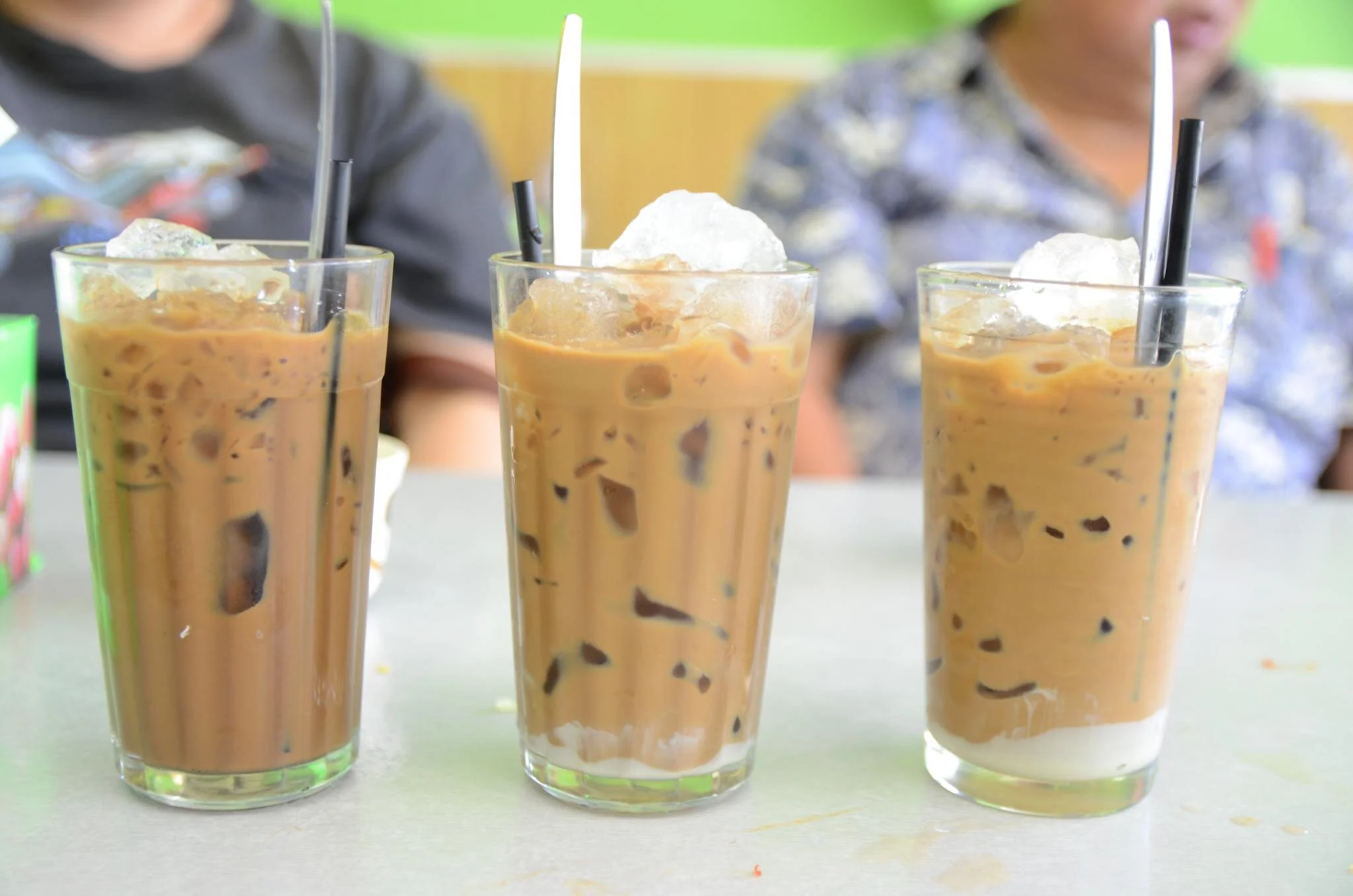
Three cups of ca phe sua da, known in English as Vietnamese iced coffee. Alpha. CC BY-NC-SA 2.0.
Ca phe sua da, commonly known in English as Vietnamese iced coffee, is a popular beverage in the world’s second-largest producer of coffee beans. This treat is traditionally made with robusta beans, which have a deeper, more dynamic flavor than their Arabica counterparts, in a phin filter, which is a slow-drip brewing method popular in Vietnam. Ca phe sua da is a sweet, highly caffeinated and refreshing beverage best shared with friends and family.
Ingredients:
2 tablespoons of ground coffee (robusta beans sourced from Vietnam are best, but you can also use your favorite blend)
2 tablespoons of sweetened condensed milk
1 cup of boiling water
Phin filter (if you don’t have a phin, you can steep your coffee grounds with 2/3 cup of boiling water in a heatproof container for 4 minutes)
Steps:
Remove the top screen from your phin, add the coffee grounds and screw back on the top screen. Place your phin on top of a glass cup or measuring cup.
Pour a splash of boiling water into the phin filter and let sit. Once the coffee begins to drip through the filter into the glass, add in enough of your remaining water to reach the top of the phin. Place the lid back on the phin and let the coffee drip for approximately 4 minutes.
Stir in the sweetened condensed milk until thoroughly blended, and serve with ice.
3. Affogato - Italy

Two classic affogatos. Jen. CC BY 2.0.
Affogato is a deliciously simple dessert popular throughout Italy. The sundae combines the sweetness of vanilla gelato with the bold and nutty flavors of espresso to create a refreshing dessert perfect for enjoying on a warm summer night. If you’re worried about having caffeine late at night but want to still enjoy an affogato, try using decaf beans for your espresso.
Ingredients:
1 scoop of vanilla gelato
Double shot of espresso
Chilled bowl
Steps:
Place the scoop of gelato into your chilled bowl. Make sure the bowl is big enough to fit both your gelato and espresso.
Pour your espresso over the gelato quickly to ensure minimal melting.
Enjoy your affogato on its own or topped with whipped cream, fresh fruit or nuts.
4. Cafe de Olla - Mexico
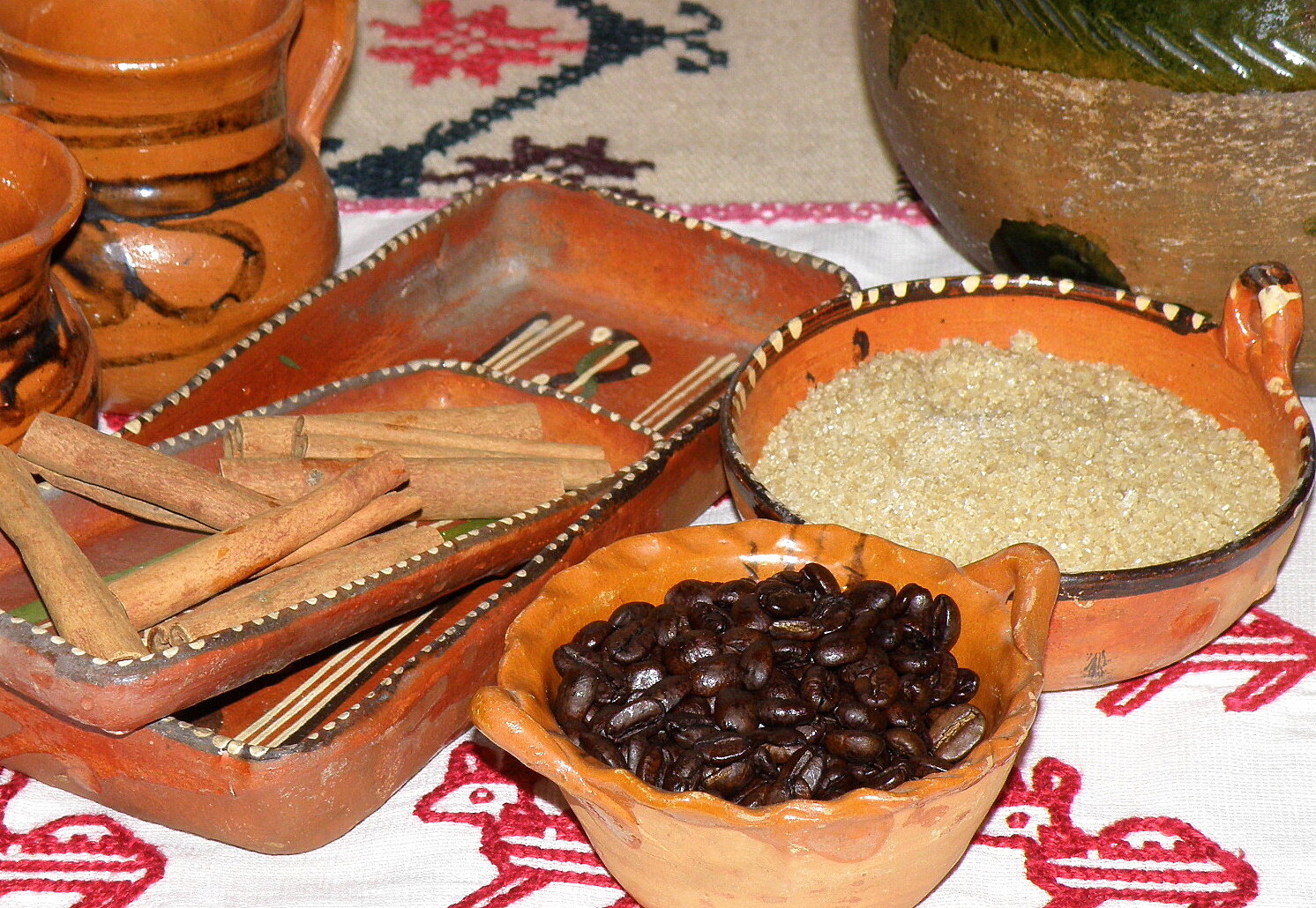
Ingredients to make cafe de olla. Susannah Anderson. CC BY-NC-ND 2.0.
Translated in English to mean “coffee from a pot,” cafe de olla is a coffee drink popular throughout Mexico made traditionally in a small earthen clay pot, which gives the drink its distinct, hearty flavor. However, the drink can also be made in a small saucepan. Commonly enjoyed in rural regions with cold climates, cafe de olla is the perfect drink to enjoy on a cold winter day.
Ingredients:
8 cups of cold water
3 piloncillo cones, or 1/3 cup of dark brown sugar
1 cinnamon stick
8 tablespoons of coarsely ground Mexican coffee
1 saucepan
Ladle
Steps:
In your saucepan, add the water, cinnamon stick, and either your piloncillo cones or dark brown sugar.
Bring the water mixture to a boil and let the sugar dissolve fully before removing the saucepan from the heat and adding in the coffee grounds. Let your coffee steep for 8-10 minutes.
Using your ladle, serve the cafe de olla immediately.
5. Cafe Touba - Senegal
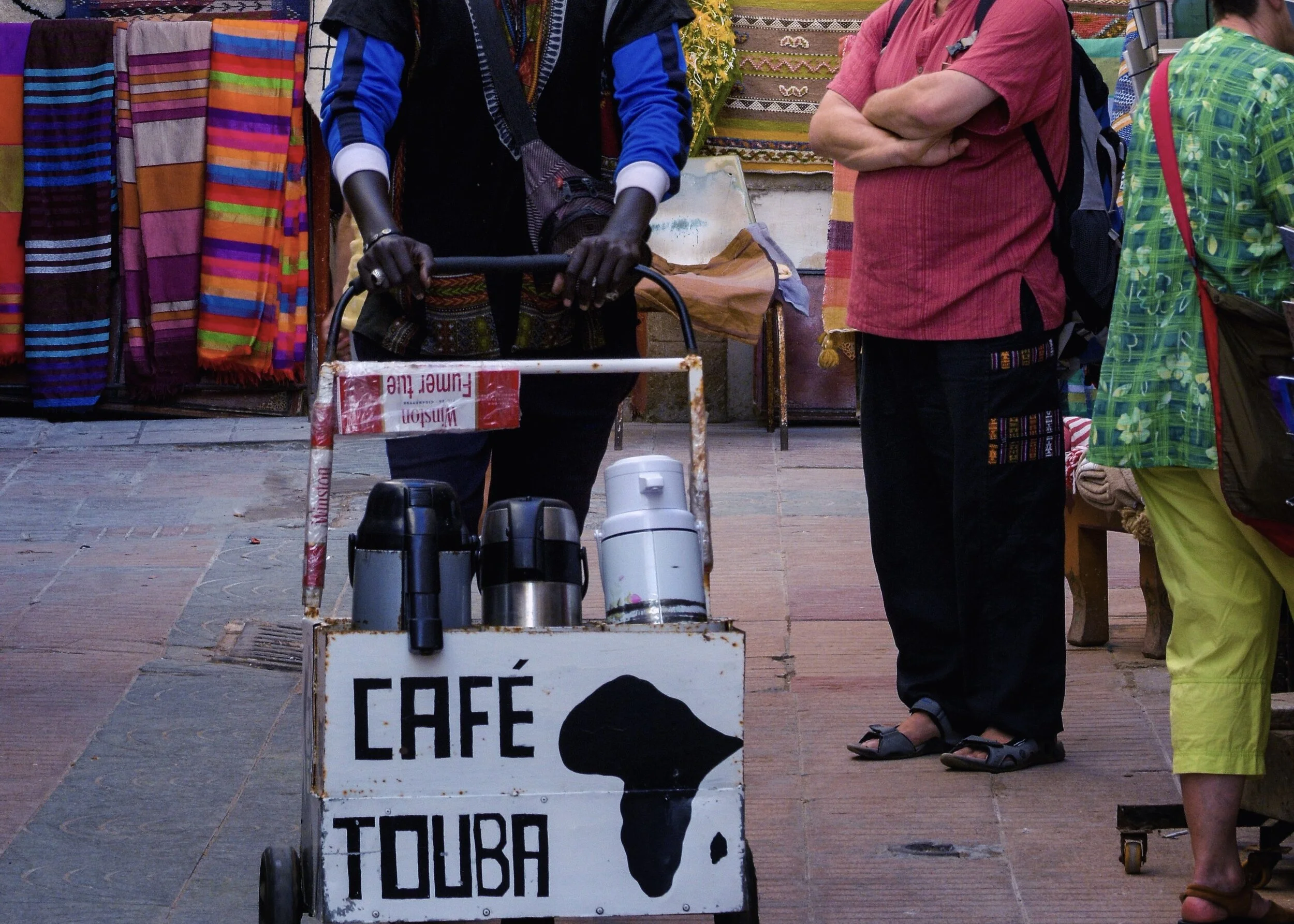
A vendor selling cafe touba. George D. Manta. CC BY-SA 4.0.
Popular throughout West Africa, cafe touba is a spiced coffee drink named after the Senegalese city of the same name. What distinguishes the beverage from other types of spiced coffee is that cafe touba is brewed using a powder made by combining coffee beans with selim pepper grains, an aromatic spice commonly used throughout West Africa. The drink is a great source of antioxidants, helps with digestion and has antidepressant properties.
Ingredients:
1 tablespoon of coffee beans
1/2 teaspoon of selim pepper grains
1 cup of cold water
Coffee grinder
Small saucepan
Single cup pour-over coffee maker with a filter
Steps:
Heat your saucepan over medium heat and add in the selim pepper grains. Roast the grains in the pan for a few minutes until they become aromatic, but not burnt.
Add the pepper grains and coffee beans to a grinder and grind together until the mixture has a coarse texture.
Add your mixture to the cold water in the saucepan. Bring to a boil and let simmer for 5 minutes.
Pour your mixture into the filtered pour-over coffee maker and let drip through fully before serving.
6. Cafezinho - Brazil

A mug with cafezinho. Ricardo. CC BY-NC-SA 2.0.
Synonymous with hospitality throughout Brazil, cafezinho is served throughout the country as a way to welcome folks and invite them in for conversation, whether that be at home, in the workplace or out and about. The drink is much thicker than traditionally brewed coffee, has stronger caffeination than pure espresso, and is naturally sweet and creamy. Invite some friends and family over to share cups of cafezinho with good conversation.
Ingredients:
3/4 cups of cold water
1 heaping tablespoon of espresso-ground coffee beans
1 teaspoon of sugar
Small saucepan
Paper coffee filter
Steps:
Add water and sugar to your small saucepan and heat until the mixture is just about to boil.
Mix in your coffee grounds, remove the saucepan from heat and stir thoroughly.
Pour your coffee mixture into the filter over an espresso cup and allow the drink to drip through the filter completely.
7. Qahwa - Saudi Arabia

Cardamom pods, which are a key ingredient in qahwa. Etienne. CC BY-NC-ND 2.0.
Qahwa is a traditional Arabic coffee drink most popular in Saudi Arabia. The yellow beverage is unique from other coffees in that it is made using green coffee beans, which yields a weaker brew, and cardamom, an ingredient which gives the drink its iconic color. This low-caffeine beverage is delicious on its own or mixed with saffron, rosewater or cinnamon.
Ingredients:
1 tablespoon of coarsely ground green coffee beans
1 tablespoon of crushed cardamom pods
2 1/2 cups of water
Small saucepan
Coffee filter
Steps:
Bring water to a boil in the saucepan, and add in the coffee grounds. Let the mixture boil for 10 minutes.
Add in your crushed cardamom and continue to boil for 5 more minutes.
Remove the pot from heat and allow the grounds to settle completely at the bottom of the pan.
Filter the coffee into a teapot or mug for serving.

Jacob Sutherland
Jacob is a recent graduate from the University of California San Diego where he majored in Political Science and minored in Spanish Language Studies. He previously served as the News Editor for The UCSD Guardian, and hopes to shed light on social justice issues in his work.
Sand Mining Threatens Coastline as Sierra Leone Rebuilds
Within a few miles of Sierra Leone’s capital, sand mining is having a devastating effect. As beaches slowly disappear, so do the country’s hopes of post-war revival.

Freetown Beach in Sierra Leone, Erik Cleves Kristensen, CC BY 2.0
Twenty years after Sierra Leone's 11-year civil war, the economic promises of sand mining prove to be costly. The war, which took thousands of lives and led nearly half the country's population into poverty, destroyed most of the country. What followed was a construction boom made possible by an essential ingredient of modern civilization: sand. However, as Sierra Leone’s 300 miles of glorious beaches slowly disappear, so does the revival of tourism and the protection of 55% of the population who live along the country’s coast from the dangers of rising sea levels due to climate change.
As part of a post-civil war move to help communities benefit from local resources, Sierra Leone’s central government gave regulation of sand mining to local councils. Under the 2004 Local Government Act, local committees operate the trucks and strictly hire local people to mine the sand. After a long day of mining, the sand is dried and sold to developers to pave and extend roads as new homes, hotels and restaurants go up across the country.
Government officials defend sand mining as an essential source of jobs and a necessary component in rebuilding Sierra Leone. Kasho Cole, chairman of the Western Area Rural District Council, told the Los Angeles Times that his council is “sensitive to environmental concerns, having banned sand mining on certain beaches because of the devastation it has already caused.”
Cole also acknowledged that assessments had not been carried out anywhere in the district to determine sand mining’s environmental impact. Due to large-scale illegal sand mining operations, Cole could not provide a definite amount of sand extracted from the beaches.
Sand theft, the unauthorized and illegal form of sand mining, has led to a worldwide non-renewable resource depletion issue, causing the permanent loss of sand and significant habitat destruction. Sand mining has already made a significant environmental impact in North Stradbroke Island and Kurnell in Australia; the Indian states of Maharashtra, Madhya Pradesh, Andhra Pradesh, Tamil Nadu, and Goa; and the Red River in Yunnan, China.
In the United States, the sand mining market generates slightly over $1 billion per year. The industry continues to grow annually by nearly 10% because of its use in hydrocarbon extraction. Globally, sand mining is a $70 billion industry, with sand selling for up to $90 per cubic yard.
In Sierra Leone, sand mining operations are regulated on John Obey Beach, a village 20 miles south of the Western Area (Freetown Peninsula.) According to the Environmental Protection Agency, sand mining should be banned on all beaches apart from John Obey. However, when the police leave the beaches at 5 p.m., the mining continues after dark.
Efforts to address the issue are hampered by conflicts of interest from those involved: miners who need the work, construction companies who need the supply and investors who are getting rich taxing the sand. Last year, a press statement from the local police force confirmed “certain service personnel appear to be aiding and abetting this illegal act.”
As dump trucks continue to haul sand away and tides push further inland, John Obey Beach is slowly disappearing—taking trees, businesses, homes and dry land with it as far down the coast as Bureh, a surf town two miles south. While the activity contributes to Sierra Leone's coastal erosion, which is proceeding at up to 6 meters a year, the removal of sand also changes wave patterns that move sand along the coast, altering the quality of surf that Bureh, a renowned surf spot in Africa, is known for.
Prior to the war, Sierra Leone’s beaches were packed with adventurous travelers from around the world. Kolleh Bangura, the director of Sierra Leone’s Environmental Protection Agency, told The New Humanitarian that “sand-mining is a calamity for the tourism industry… Anywhere in the world, sand is the resource of tourism, but now our beaches are being degraded.”
Lakka, a coastal town located 10 miles from Freetown, was once known for its large beaches and seaside resorts, offering a glimpse of the future if actions are not taken. Sand mining on Lakka Beach is illegal now, but the ban came too late—leaving a thin wedge of sand lined by crumbling buildings, many of which have been left abandoned.
Even the miners themselves recognize sand mining is not sustainable; however, with a youth unemployment rate of 70%, the pressure falls on the government to provide alternative jobs. “In time, they need to ban it, as we want to bring tourism here,” Abu Bakarr, a sand miner, told The New Humanitarian. “But we need sand-mining to sustain our lives…The government needs to give us jobs. If there are no jobs, the youths will mine the sand.”
Papanie Bai-Sessay, the biodiversity officer at Conservation Society of Sierra Leone, told the Los Angeles Times that “the sand has been a buffer… we are destroying our first line of defense. If we don’t stop, it will be a disaster for millions.”
Claire Redden is a freelance journalist from Chicago, where she received her Bachelor’s of Communications from the University of Illinois. While living and studying in Paris, Claire wrote for the magazine, Toute La Culture. As a freelancer she contributes to travel guides for the up and coming brand, Thalby. She plans to take her skills to London, where she’ll pursue her Master’s of Arts and Lifestyle Journalism at the University of Arts, London College of Communication.
VIDEO: E-Waste Landfill in India
Providing insight into the landscape of the Bhalswa Landfill in northwestern Delhi, this film reveals that the task of sifting through e-waste, unwanted electronic products and parts, falls to members of the urban poor in the developing world. E-waste is collected and managed along railroads and in massive heaps, sometimes even by children. This waste is known to be harmful to human health; e-waste contains hazardous chemicals and toxins that especially affect children. The Bhalswa landfill was supposed to be shut down in 2007 but is still currently in operation and thus over capacity. Multiple fires have occured in the landfill, releasing toxic pollution into the air. This film is a product of the E-Waste Tsunami project, headed by Susannah Pal, who aims to use art to raise awareness about electronic waste.
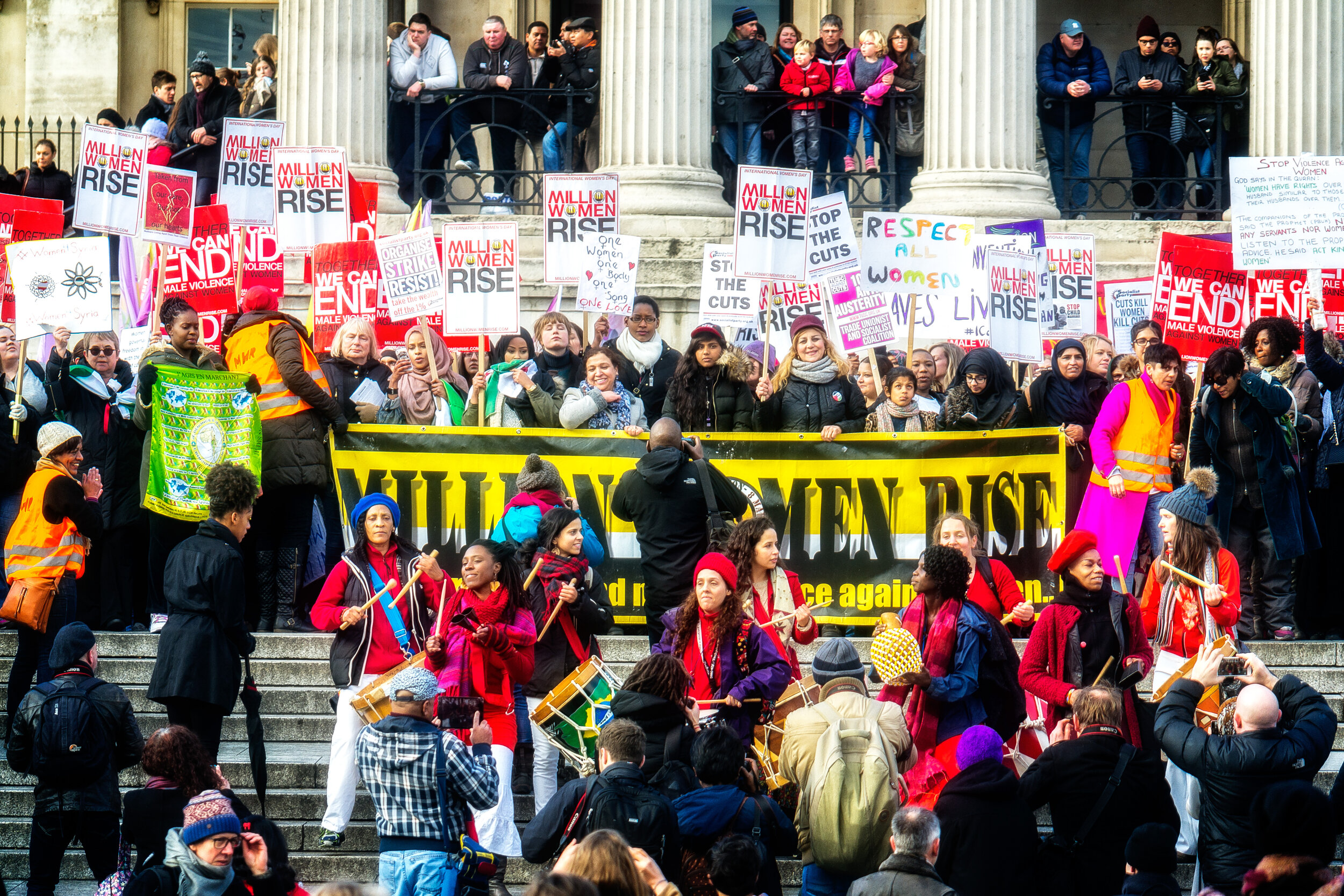
Protest against male violence in London’s Trafalgar Square. Garry Knight. CC0 1.0.
5 Women Activists Working to End Femicide — And How You Can Get Involved
These 5 activists from Mexico, Serbia, Palestine, Brazil and Nigeria, are fighting to end femicide, the deliberate killing of women because of their gender. More than 35% of murdered women globally are killed by an intimate partner, yet femicide also manifests in honor killings, dowry killings and killing of women in armed conflict.
Read MoreLabor Cruelty Inside Dubai, the City of Gold
Ninety percent of Dubai's residents are migrant workers, many of whom are experiencing abuse from their employers.
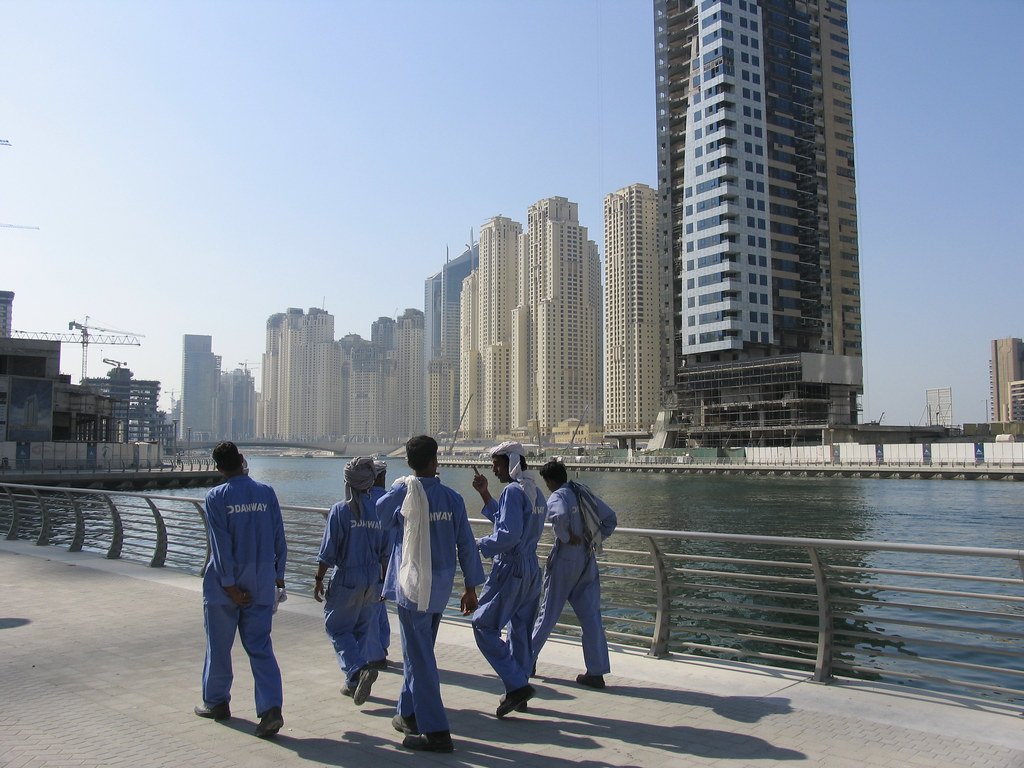
Dubai is known as the city of gold due to its rapid growth, from a global gulf port to a busy business city center. Migrant workers arrive from Asia, Africa and different parts of the Middle East through the sponsorship program kafala. The program gives employers the permits necessary to hire foreign labor workers and gives employers complete control over the legal status of whom they’ve hired. In some cases, this causes a power imbalance among the employer and employee relationship. In addition to being exploited through the sponsorship program, migrant workers have accused employers of various forms of abuse.
Migrant workers often arrive in Dubai in hopes of making a steady income to provide for their families back home. Dubai has a high demand for labor workers and provides better opportunities to migrant workers. Therefore, they take on jobs in construction or domestic work, such as nannying, housekeeping or other household services. At times, they’re promised a higher wage or a different job description; however, after arriving, that promise was broken. Migrant workers receive their wages on a monthly basis and are required to work weekends, with an average of 16-21 hour days. Overworked migrants cannot leave the job until their contract is terminated, as those are the conditions under the kafala sponsorship. If one decides to leave, the employer can have the worker sent to prison for six months, deported and/or fined $27,225 for not abiding by the contract.
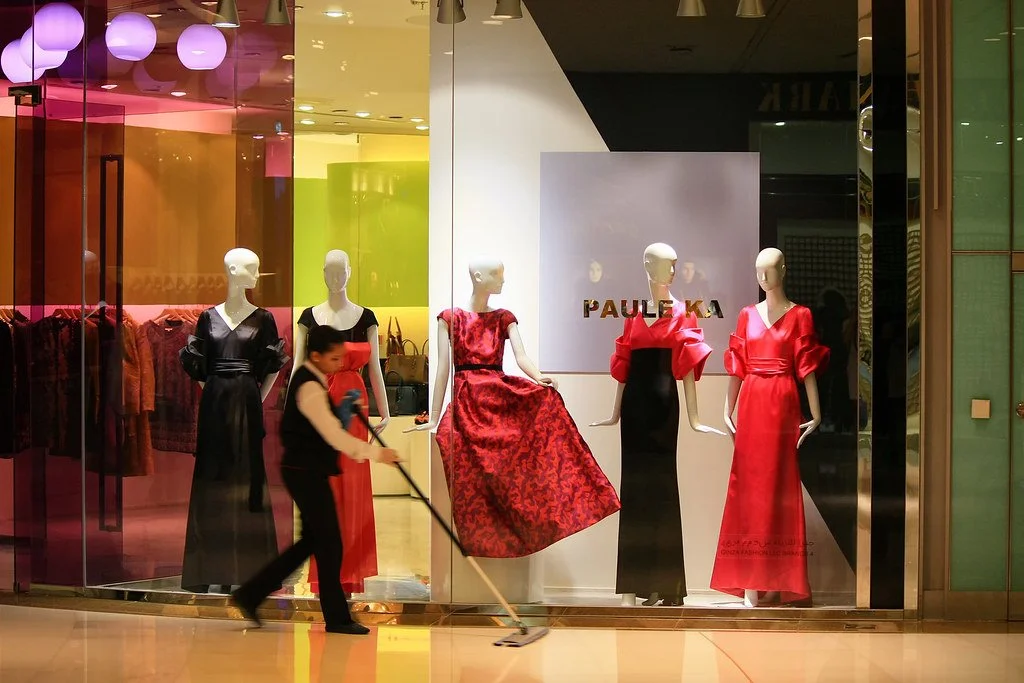
Migrant Worker Cleaning a Mall in Dubai. Iwona Rege. BY-ND 2.0
This very strict rule under the kafala sponsorship forces employees to continue working under very stressful conditions. Fear of what could happen to them binds them to their employer until the contract is completed. Due to these conditions, migrant workers have complained that employers have not paid them their wages, delayed the wages or have had their passports taken from them; preventing them from leaving. At Dubai’s Expo 2020, migrant workers claimed their employers violated UAE labor laws, with one interviewee saying, “the way they treat the staff is like slaves, I mean modern day slavery.” Women have reported being raped by their employer as well as family members for the home they work in. However, there has been no action taken against these accused employers.
With the pandemic, cases got worse as most employers did not pay the migrant workers their wages. The lack of income left workers stranded in Dubai with no money to fly back home or provide themselves with basic needs. A Sri Lankan embassy source based in Dubai said, “the two most common complaints from the worker are that employers don’t give them salaries and that they are harassed either physically, sexually or verbally.” The UAE has settled requirements that help protect migrant workers rights, yet there has been non-compliance and no way to ensure workers are not being abused and/or taken advantage of.
To Get Involved: The organization Migrant-Rights advocates the rights of migrant workers affected by the kafala sponsorship program. They also assist migrant workers who need assistance.
To learn more click here.
To support Migrant-Rights’ organization click here.

Jennifer is a Communications Studies graduate based in Los Angeles. She grew up traveling with her dad and that is where her love for travel stems from. You can find her serving the community at her church, Fearless LA or planning her next trip overseas. She hopes to be involved in international humanitarian work one day.
VIDEO: Growing Up in a Megaslum in Kenya
Joseph Djemba grew up in Kibera, Kenya, the largest urban slum in Africa. Djemba found himself there when his mother became unable to support her eleven children after the death of her husband. Djemba describes his childhood sleeping outside and begging for food, detailing the psychological impacts of living in poverty. He also notes the large gap between the rich and the poor in Kenya and discusses how impoverished people help each other survive. Djemba is the main character in “Megaslumming,” a book by Adam Parsons. In his work, Parsons explores how the settlement of Kibera came into existence and documents what life is like for those who live in slums.
Get Involved:
Touch Kibera Foundation is a non-profit organization devoted to uplifting children who live in Kibera, Kenya through sports programs, sexual health programs, education support and mentorship opportunities. Donations are accepted online, and more information can be found here.
Polycom Development Project is a foundation which seeks to provide educational and athletic opportunities to girls and women in Kibera. The organization is also devoted to promoting sanitation and public health. Donations are accepted online, and more information can be found here.
St. Vincent de Paul Community Development Organization aims to provide support to orphaned and other vulnerable children in Kibera. The organization supports families and seeks to intervene on behalf of children at an early stage in their development. Donations are accepted online, and more information can be found here.
VIDEO: Experience Southeast Asia
In his trailer for “In Asia,” German director Vincent Urban highlights memorable experiences in his trip to Southeast Asia. Over two months, Urban traveled to Thailand, Cambodia, Malaysia and Laos. We are transported to Bangkok, the capital of Thailand, a city with night skies full of fireworks and streets teeming with music. Urban next introduces us to the Southeast Asian landscapes he encounters. He highlights the tropical climates of Thailand, Cambodia, Malaysia and Laos with footage of waterfalls, aquamarine waters, beaches and coral reefs. Urban also highlights Buddhist culture by featuring images of the Angkor Wat temple in Cambodia, the largest temple complex in the world. The individual episodes of “In Asia” provide greater context for the footage within this trailer and are certainly worth viewing if you would like to learn more about Thai, Cambodian, Malaysian and Laotian cultures.
5 Everyday Products that Hurt the Environment And Their Sustainable Alternatives
In our fast-paced lives, it can be difficult to remember to make sustainable choices. Here are a few products most of us use every day that have a negative effect on the environment.
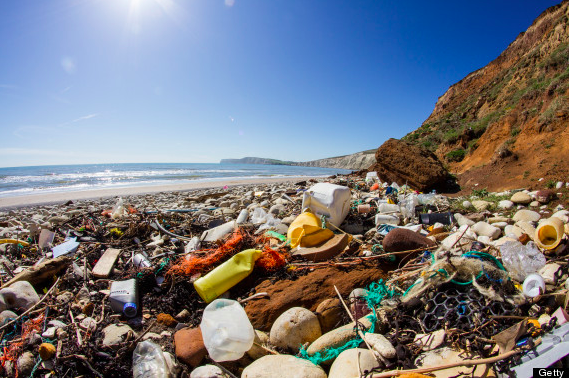
Image Credit: HuffPost UK
Plastic Bags
You’ve probably heard this one before, but despite widespread coverage of the issue, between 500 billion and 1 trillion plastic bags are used worldwide every year. These bags take enormous amounts of energy to produce and ship; they are difficult to recycle, do not decompose and emit toxic chemicals into the environment.
Fortunately, there are many green alternatives to the plastic bag. Fabric or canvas shopping bags are relatively inexpensive to purchase and can be reused for grocery shopping.
Produce Bags
Produce bags often get left out of the conversation surrounding plastic bags, but they are made from the same materials and are equally harmful. Try using washable mesh produce bags instead—they are fairly cheap and can be reused.
Exfoliant Products
Many facial soaps contain tiny plastic microbeads that help exfoliate the skin. These beads are too small to be filtered during sewage treatment and have started to build up in lakes and oceans. In one year alone, researchers found 1,500 to 1.7 million bits of plastic per square mile in the great lakes. California, Colorado, Illinois, Indiana, Maine, Maryland and New Jersey have already banned microbeads, and it is likely that other states will follow. There are many alternatives to these soaps that are environmentally friendly and better for the skin. Try using oatmeal, raw honey or coffee ground scrubs—often you can make them yourself from ingredients you probably already have in your pantry.
Coffee Pods
They may be convenient, but single-serve coffee pods aren’t recyclable, meaning almost all of the 10 billion made each year end up in landfills. Brewing coffee the old fashioned way may take a few minutes longer, but it will reduce your waste in the long run. You can recycle unbleached paper filters and compost the grinds or use them in a face scrub.
Non shade-grown coffee
While we’re on the subject, the coffee industry is responsible for massive amounts of deforestation and water pollution. Buying shade-grown coffee is easier on the environment because it allows trees to grow alongside the coffee plants, which not only guards against deforestation, but controls soil erosion and filters carbon dioxide. Shade-grown beans also mature at a slower rate, which creates a delicious flavor.
Prepackaged Food
From juice boxes to chips, almost nothing you buy at a grocery store is free of plastic packaging. While these products are convenient, they pose a risk to the environment. Like plastic bottles and bags, plastic food packaging is difficult to recycle and does not decompose. While there are alternatives to prepackaged food, such as zero waste grocery stores, they can be hard to come by. Try to reduce the amount of packaged food you buy, but when necessary, buy bulk products instead, as single-serve items have more packaging.
In the end, working to reduce or eliminate your consumption of these five products is a step towards a greener planet and more sustainable lifestyle.

EMMA BRUCE
Emma is an undergraduate student studying English and marketing at Emerson College in Boston. She has worked as a volunteer in Guatemala City and is passionate about travel and social justice. She plans to continue traveling wherever life may take her.
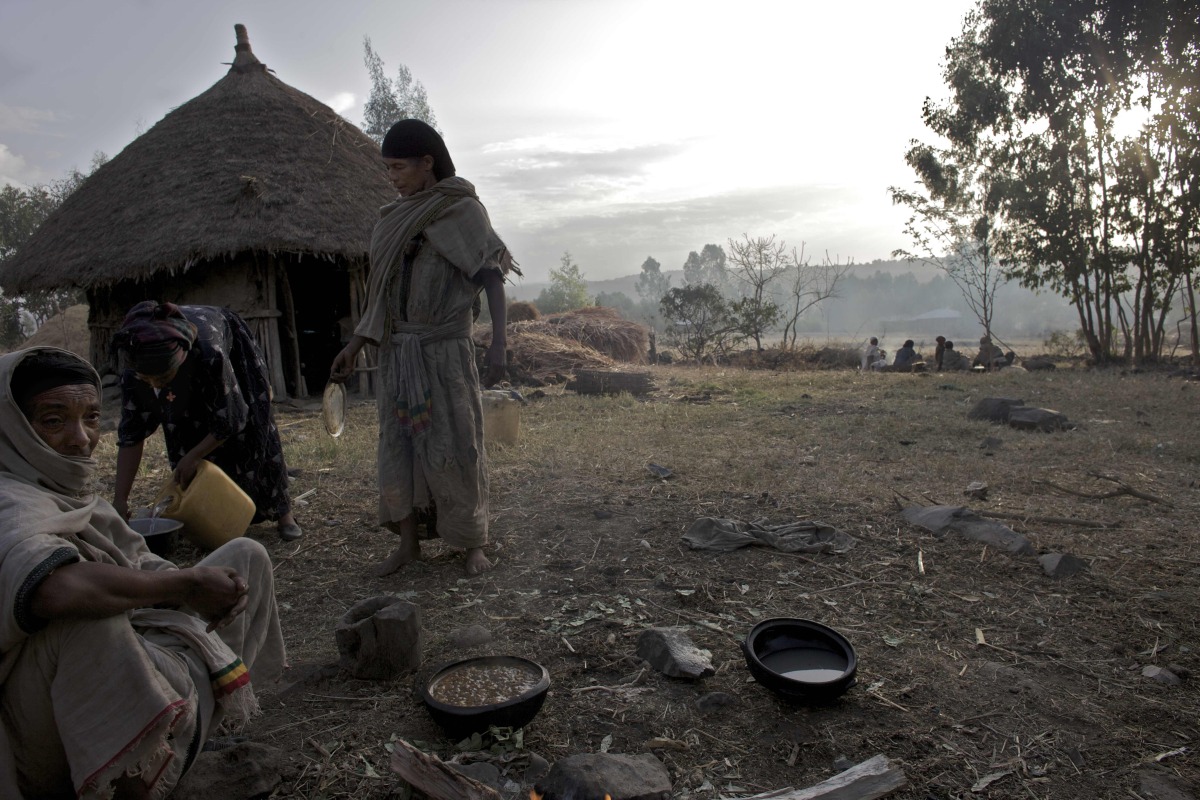
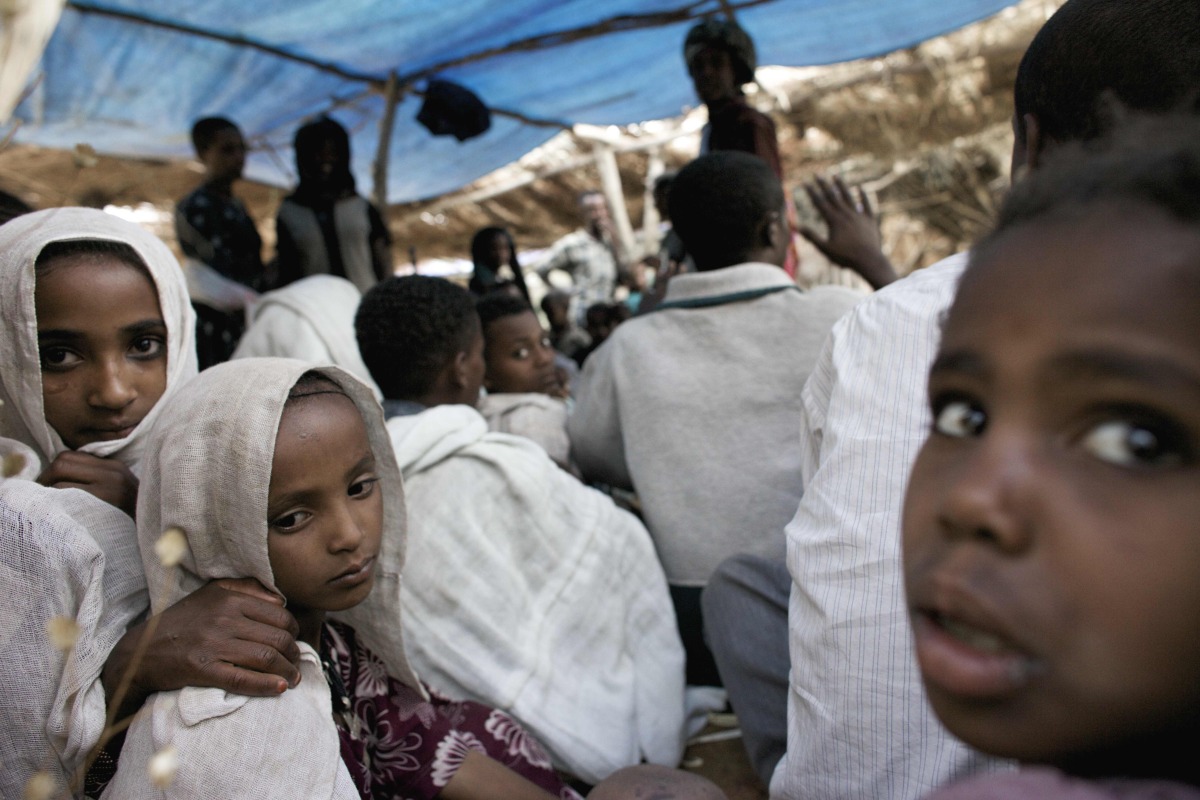
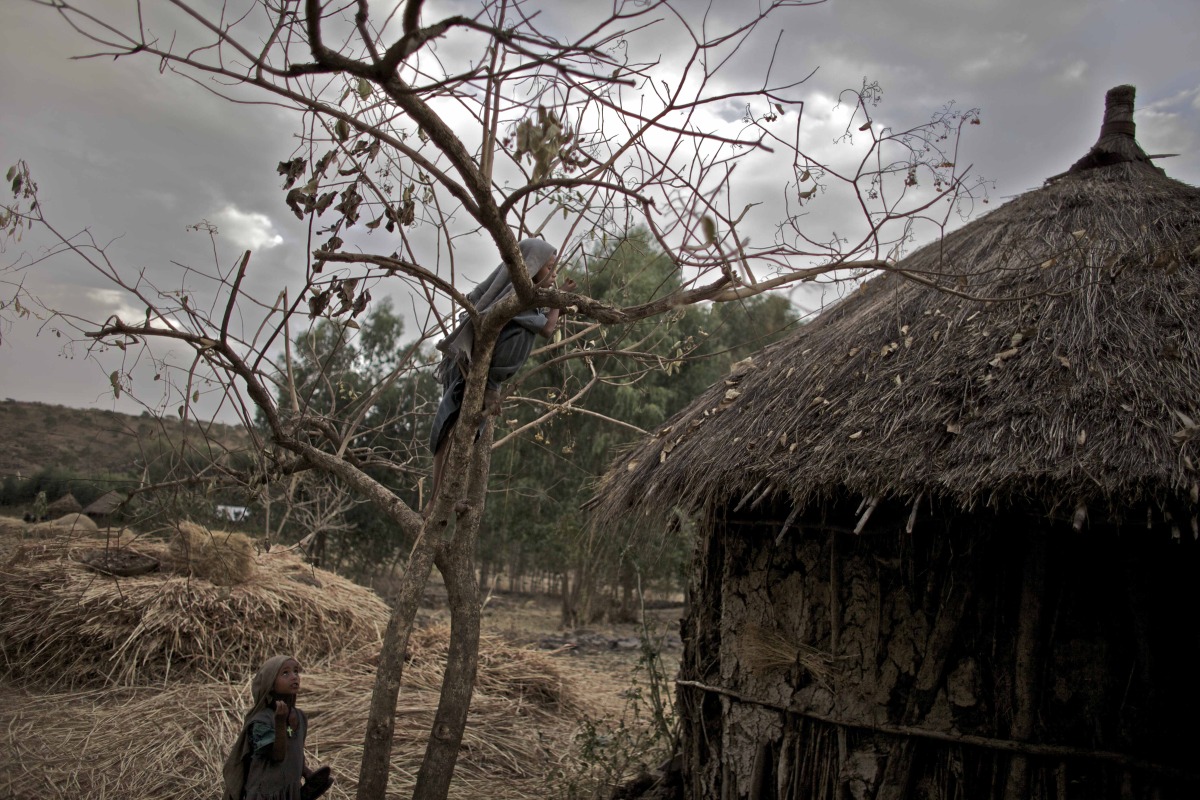
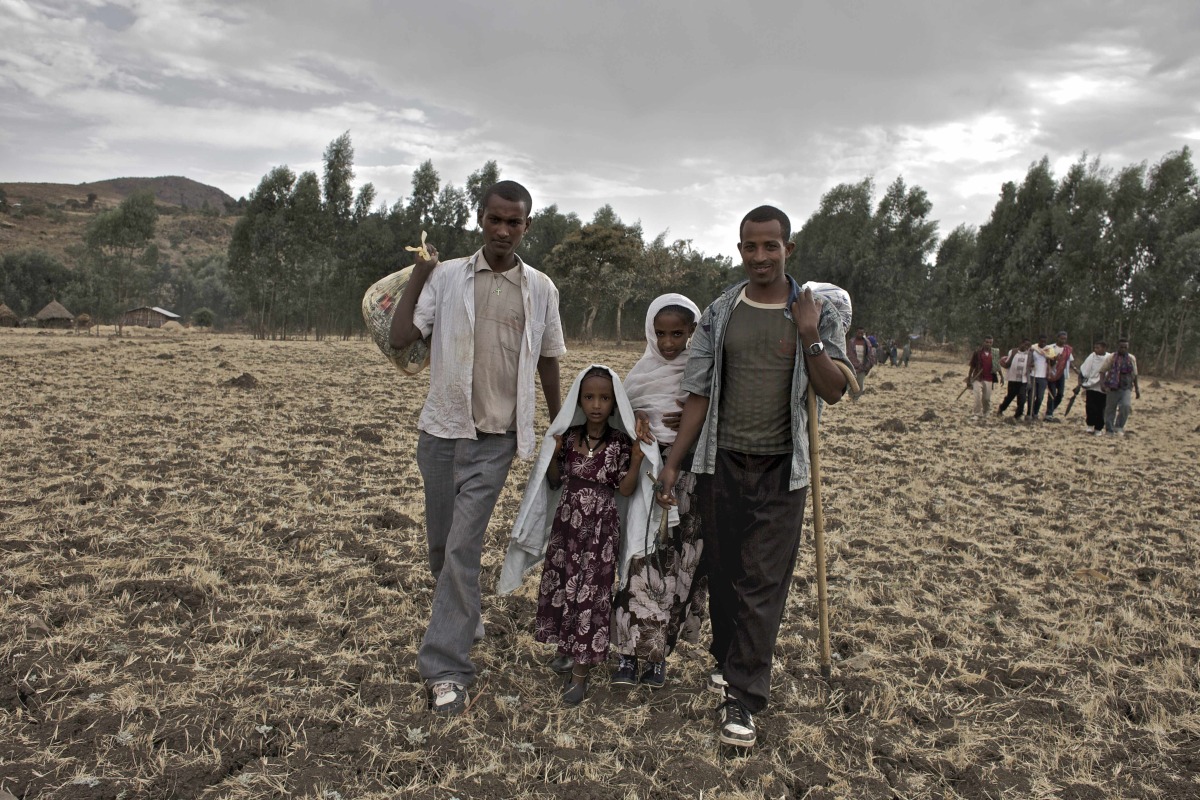
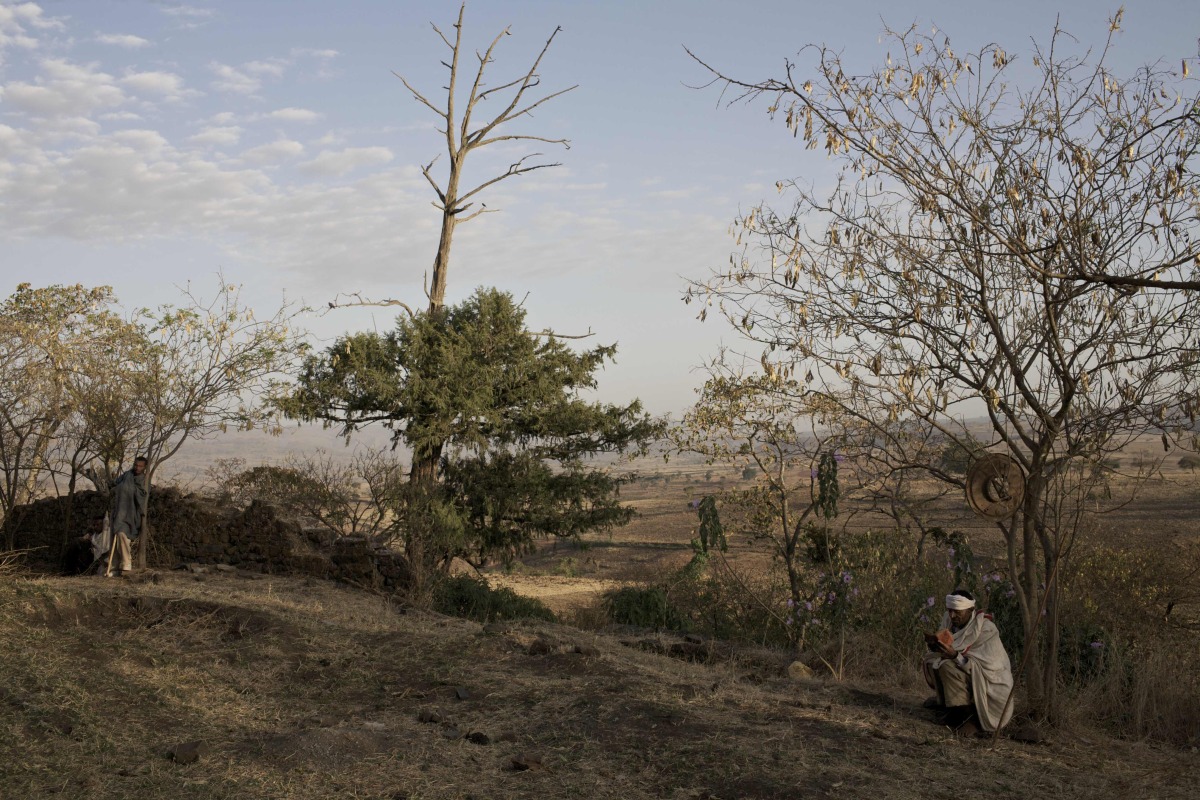
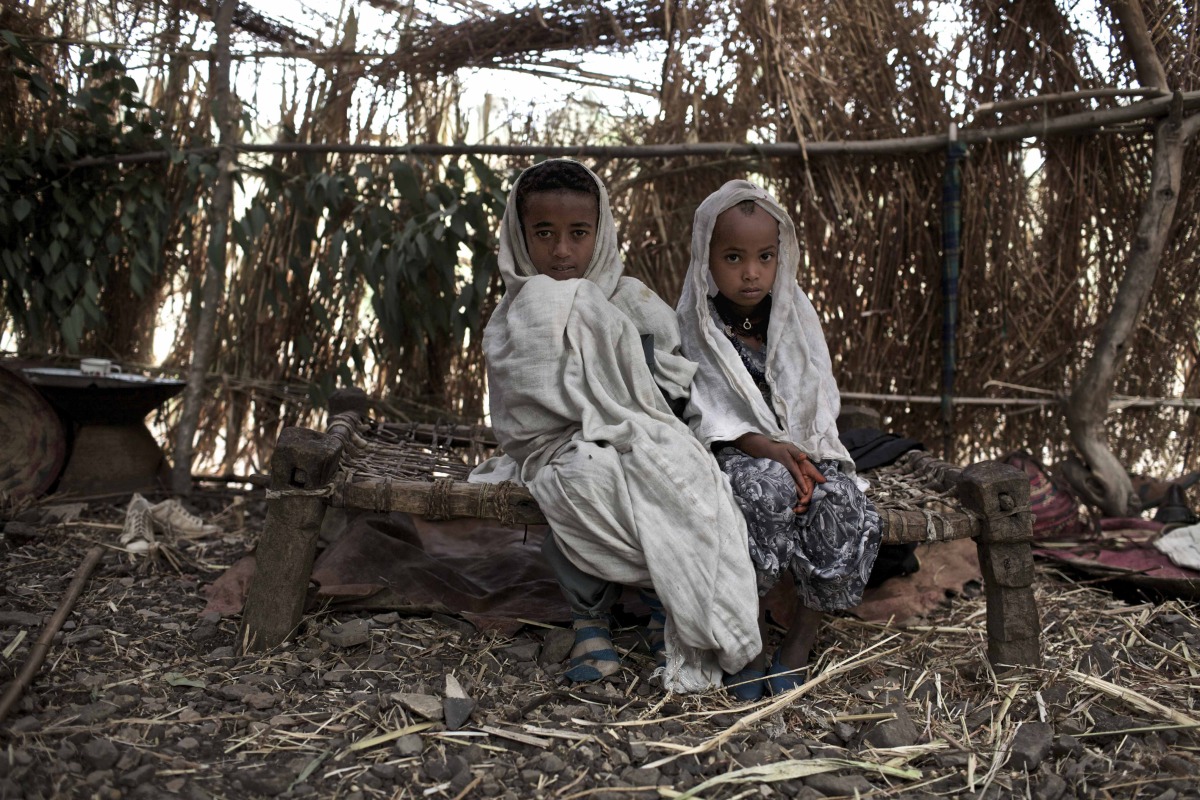
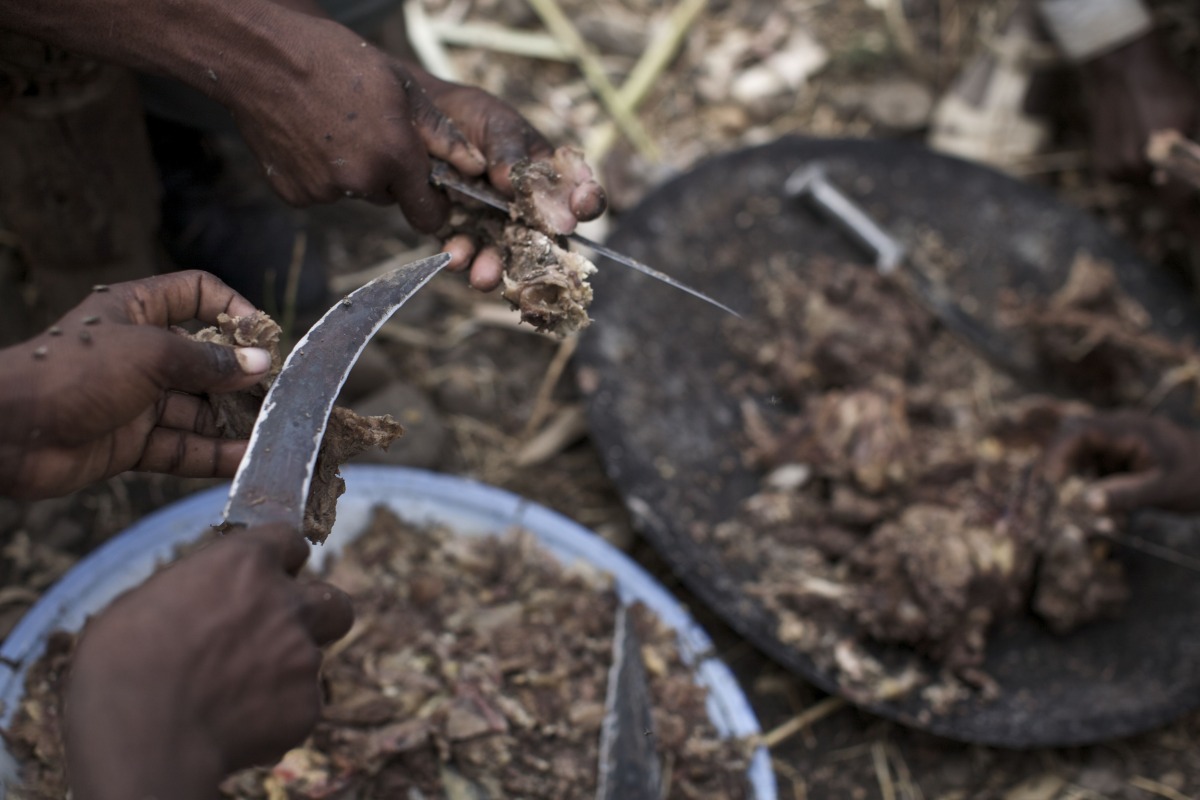
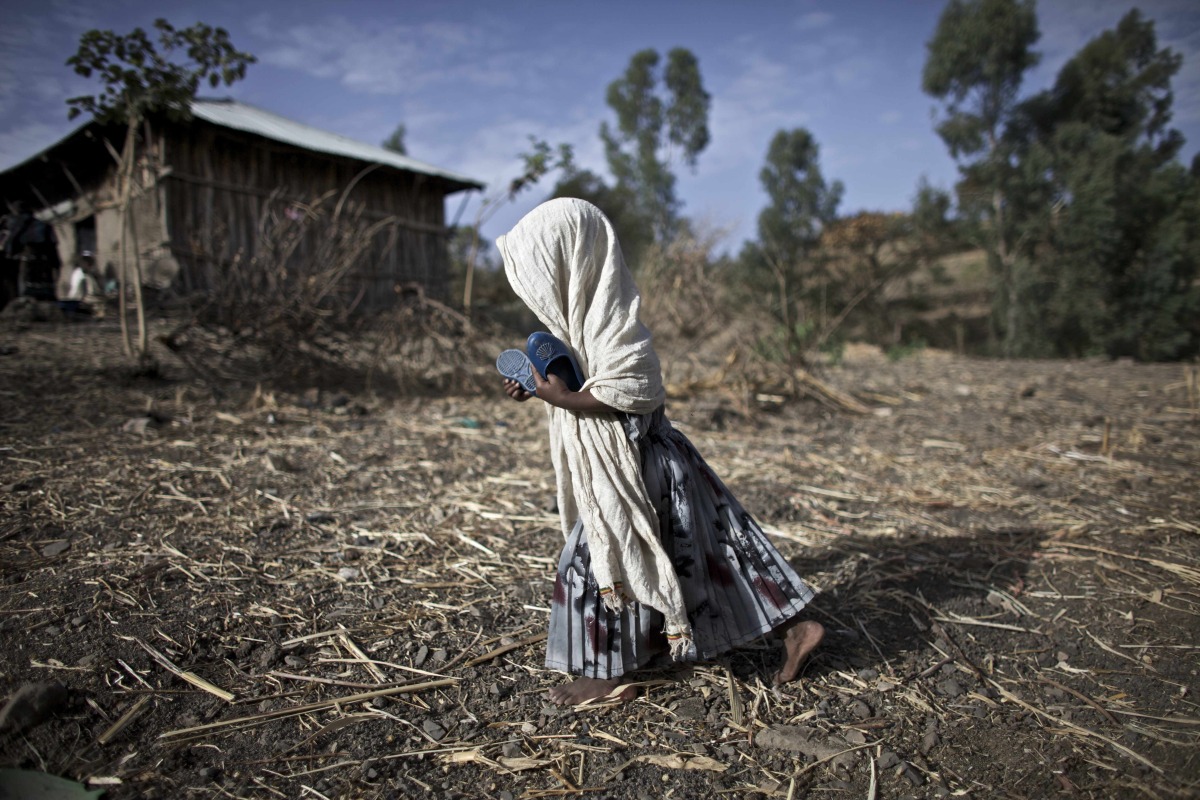
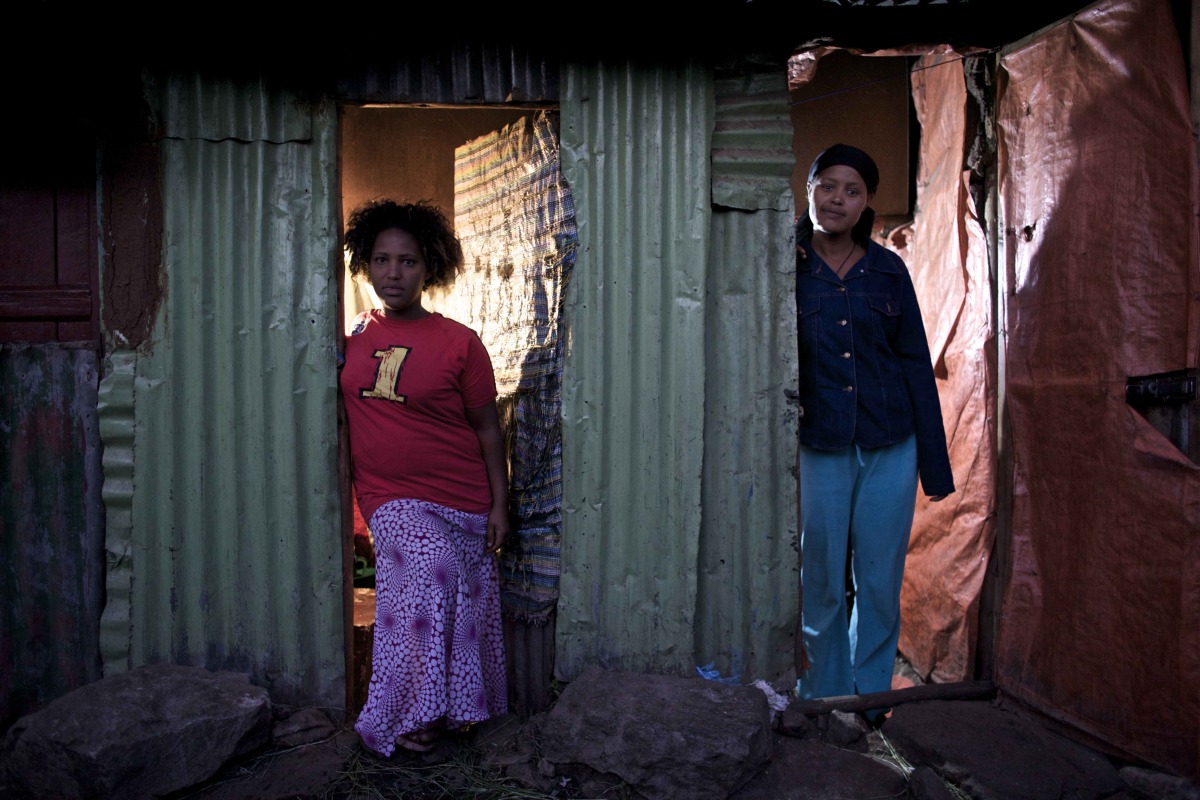
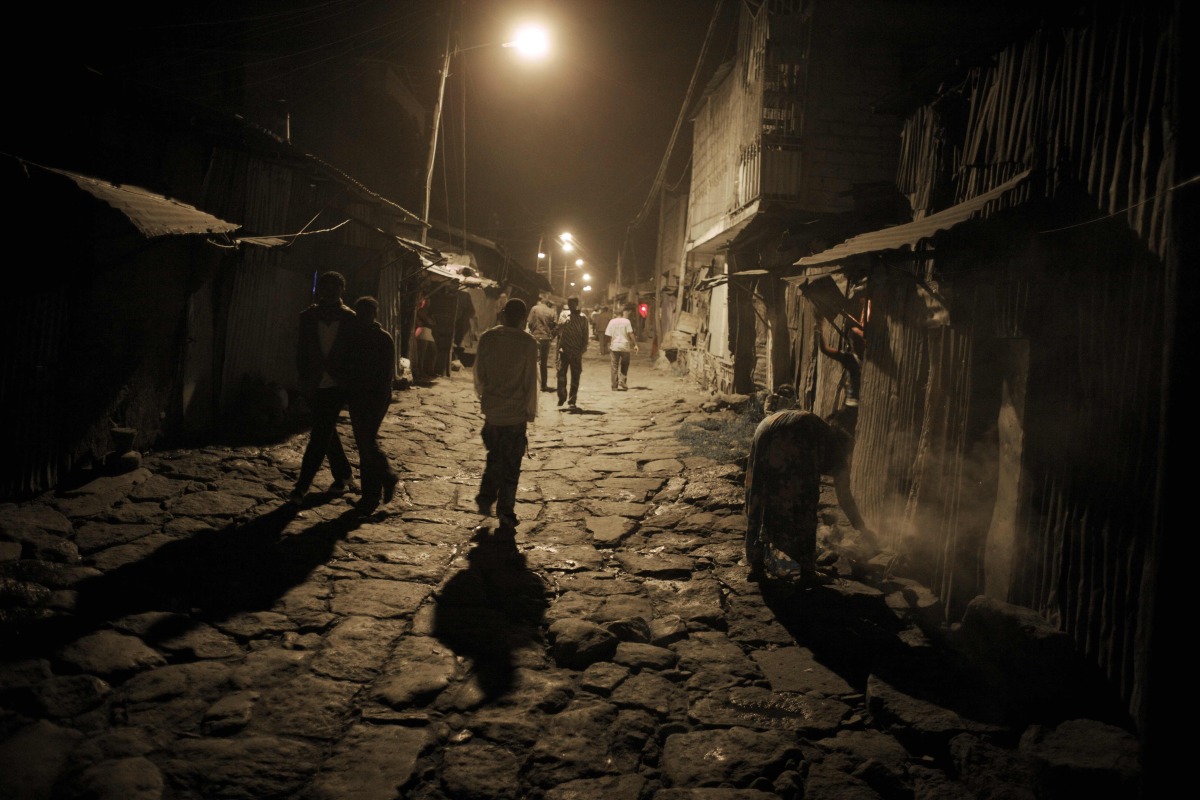
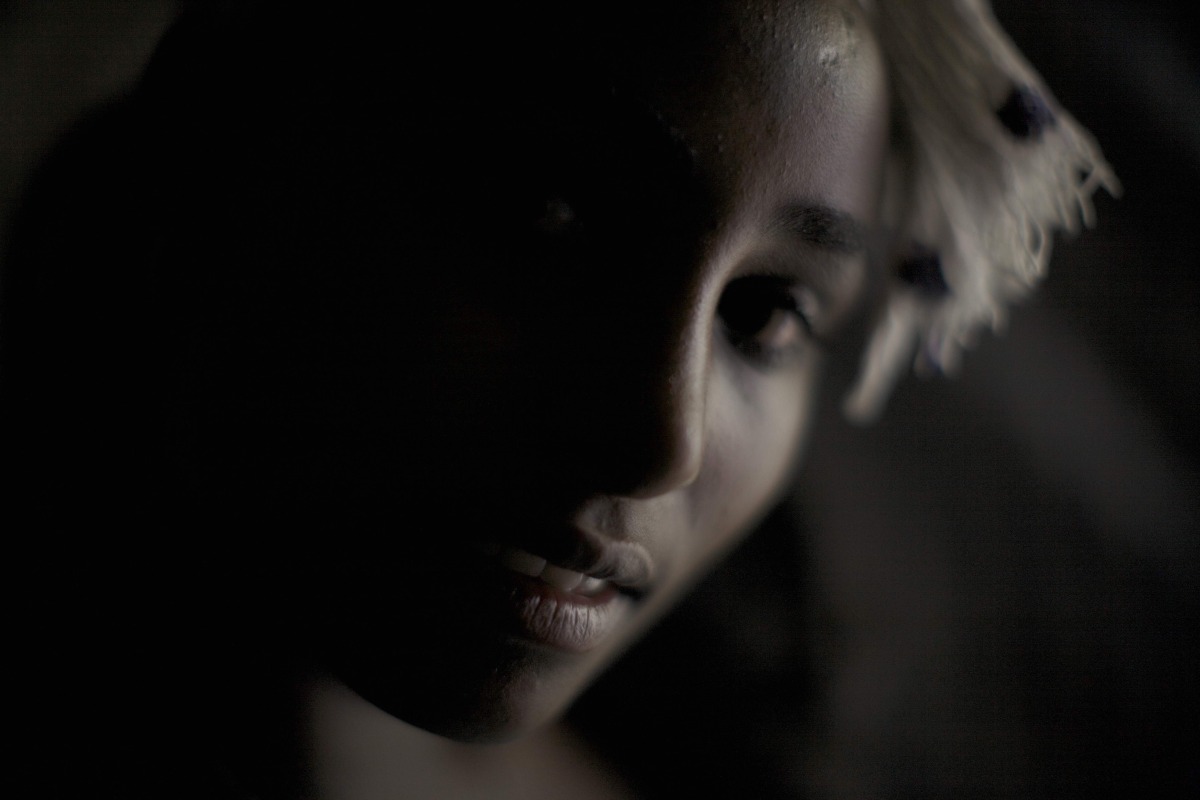
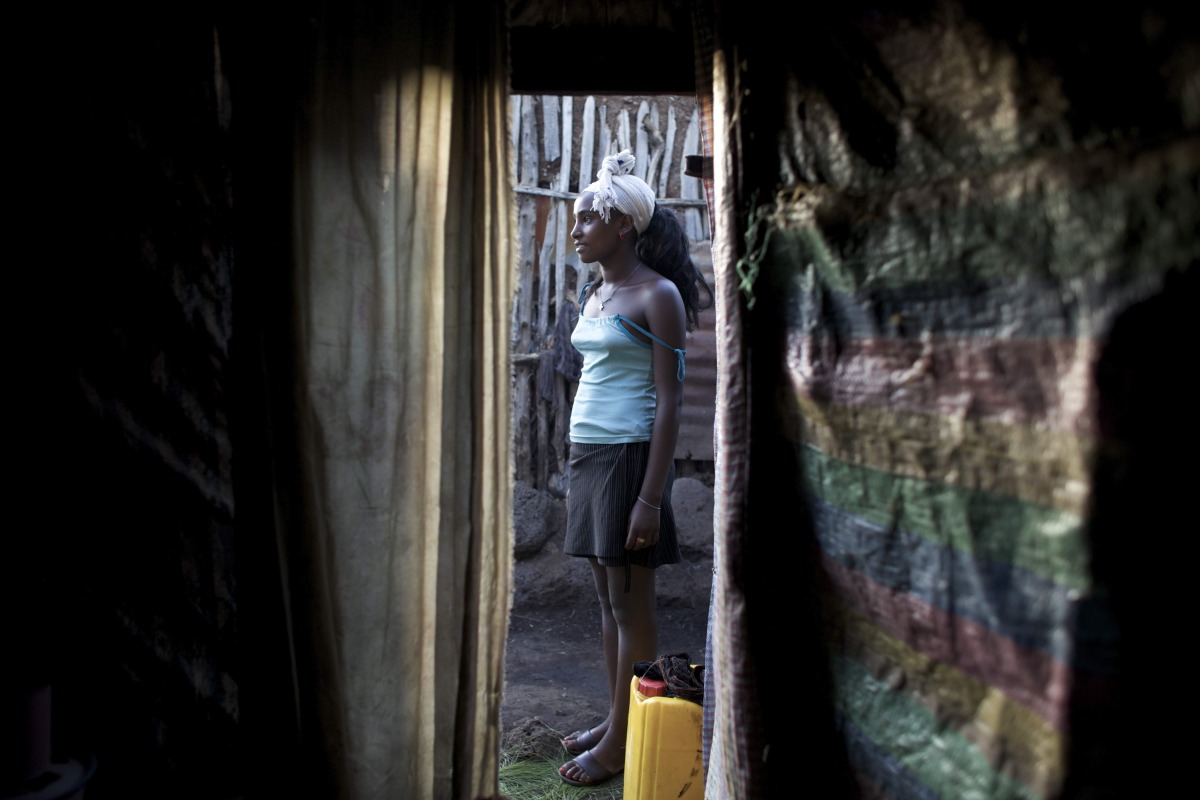
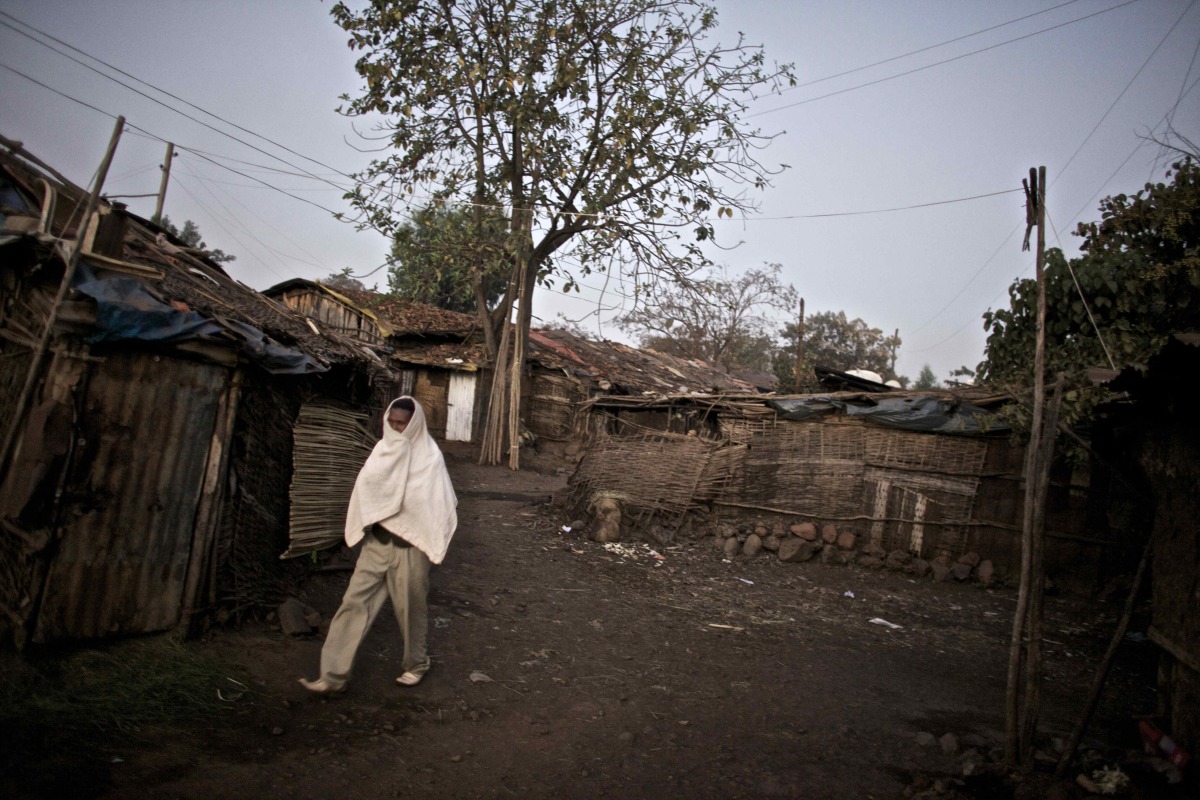
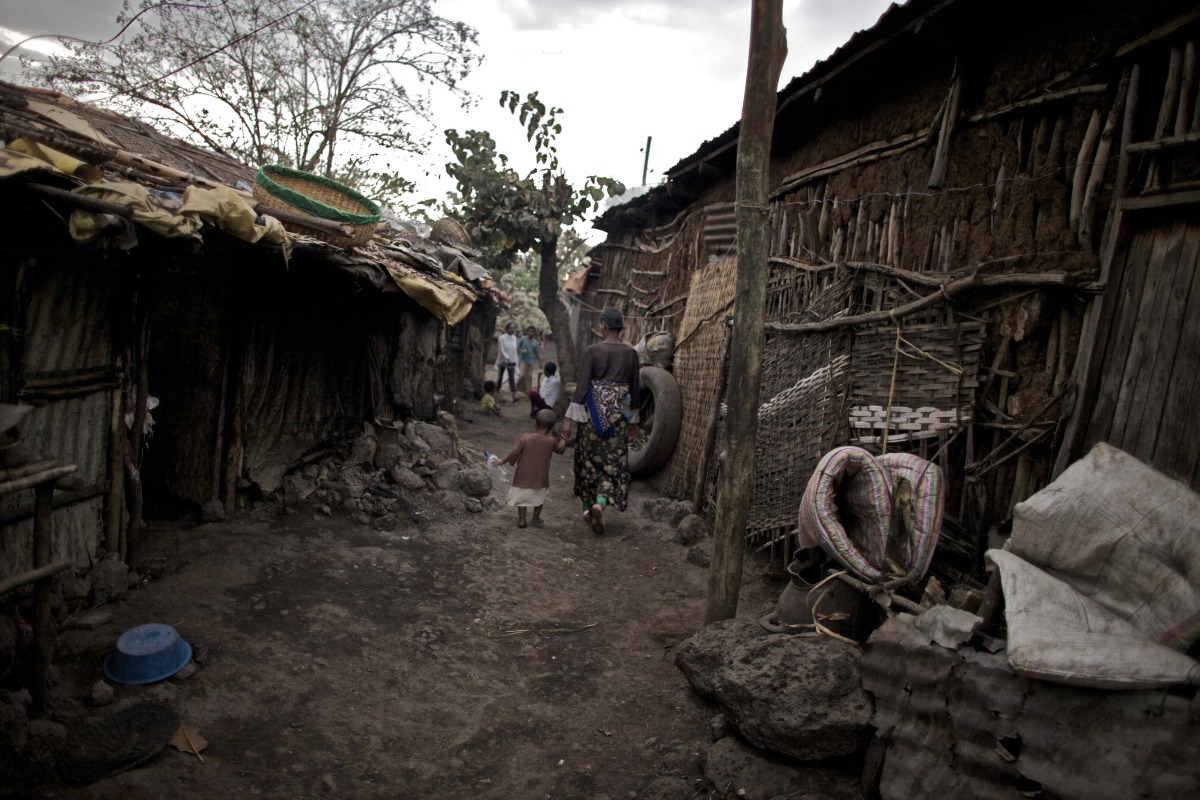
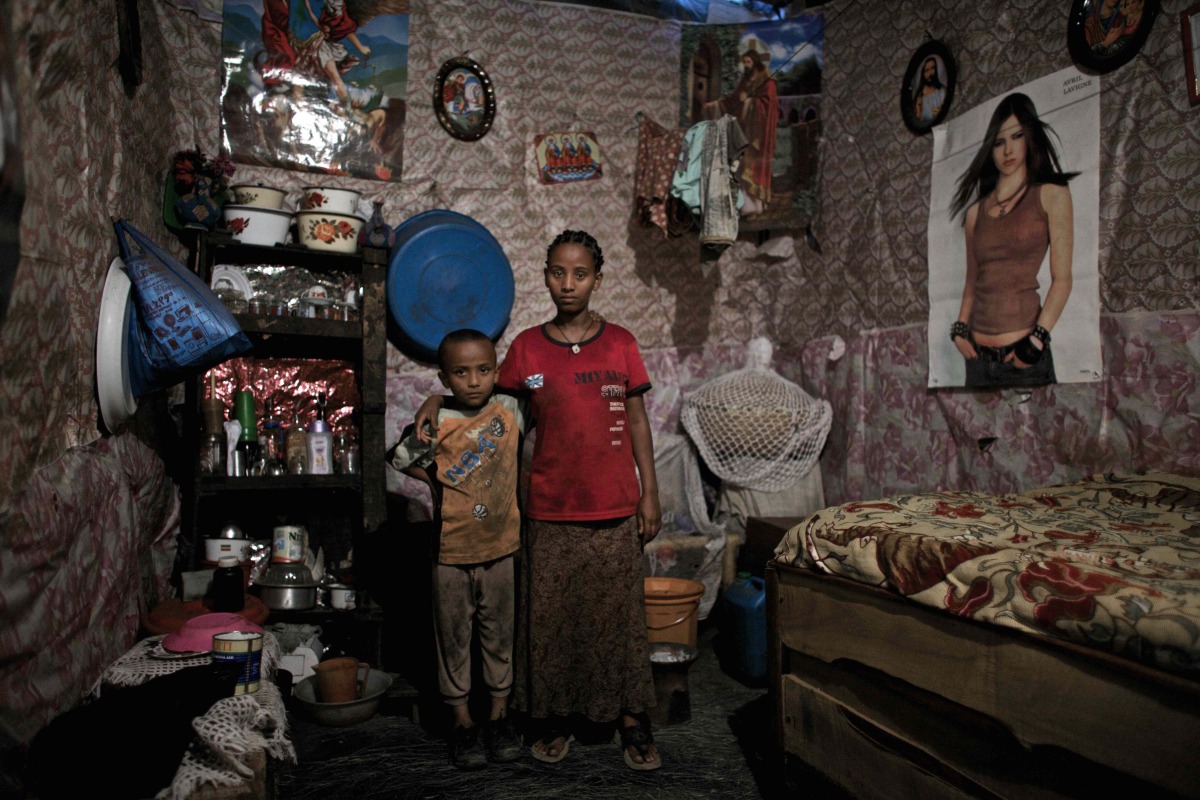
PHOTO ESSAY: Child Marriage in Ethiopia
While it may seem shocking, in Ethiopia girls are married off at ages as young as 5 years old, and 48% of rural women are married before age 15. Photographer Guy Calaf documents these young child brides and their marriages in this photo essay.
Read MoreWhere Children Sleep
Children all over the world live and sleep in very different environments. It is my hope that these photographs will help children, and adults, to think about inequality, within and between societies around the globe, and perhaps to start to figure out how, in their own lives, they may respond.
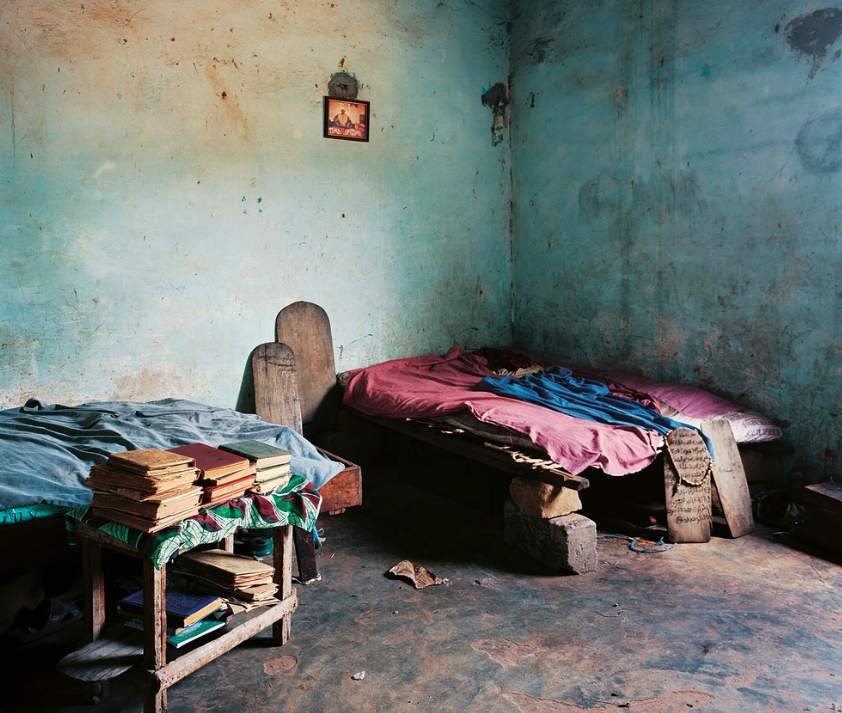
When Fabrica (Benetton’s creative research center) asked me to come up with an idea for engaging with children’s rights, I found myself thinking about my bedroom: how significant it was during my childhood, and how it reflected what I had and who I was — my bedroom was my personal kingdom. It occurred to me that a way to address some of the complex situations and social issues affecting children would be to look at the bedrooms of children in all kinds of different circumstances.
From the start of this project, I didn’t want it just to be about ‘needy children’ living in the developing world, but rather something more inclusive, about children from all types of situations.
It seemed to make sense to photograph the children themselves, too, but separately from their bedrooms, using a neutral background. My thinking was that the bedroom pictures would be inscribed with the children’s material and cultural circumstances — the details that inevitably mark people apart from each other — while the children themselves would appear in the set of portraits as individuals, as equals... just as children.
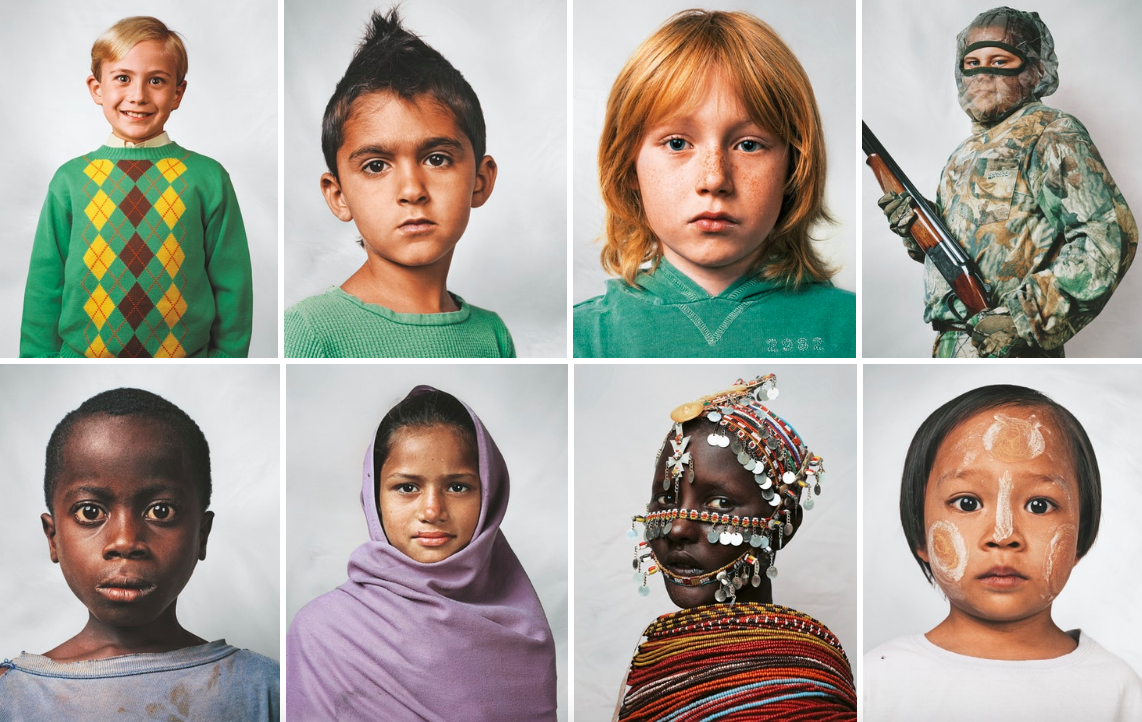
Above: You can see where these children sleep, and read their stories, below.
To begin with, I initially called the project ‘Bedrooms’, but I soon realized that my own experience of having a ‘bedroom’ simply doesn’t apply to so many kids. Millions of families around the world sleep together in one room, and millions of children sleep in a space of convenience, rather than a place they can in any sense call their room.
I came to appreciate just how privileged I had been as a child, to have had a personal kingdom in which to sleep and to grow.
For me, the project became a vehicle to think about issues of poverty and wealth, about the relationship of children to personal possessions, and the power of children — or lack of it — to make decisions about their lives.
However, this photo essay is not a campaign. There’s nothing scientific about the selection of children featured: I travelled where I could, often alongside other projects, and many of the pictures result from chance encounters, following my photographer’s nose. I am not qualified to give anyone a lecture on the state of childhood today, or the future of children’s rights. Although I have relied on the help of Save the Children, Italy, there is no agenda to the project other than my own journey and curiosity, and wanting to share in pictures and words the stories that I found interesting, or that moved me.
In the end, I hope these pictures and stories speak to children. So that lucky children (like I was) may better appreciate what they have.
But more than that, I hope these photographs will help children think about inequality, within and between societies around the world, and perhaps start to figure out how, in their own lives, they may respond.
* * *
Below you can meet twenty-five of the children whose stories and portraits are featured in my final book Where Children Sleep.
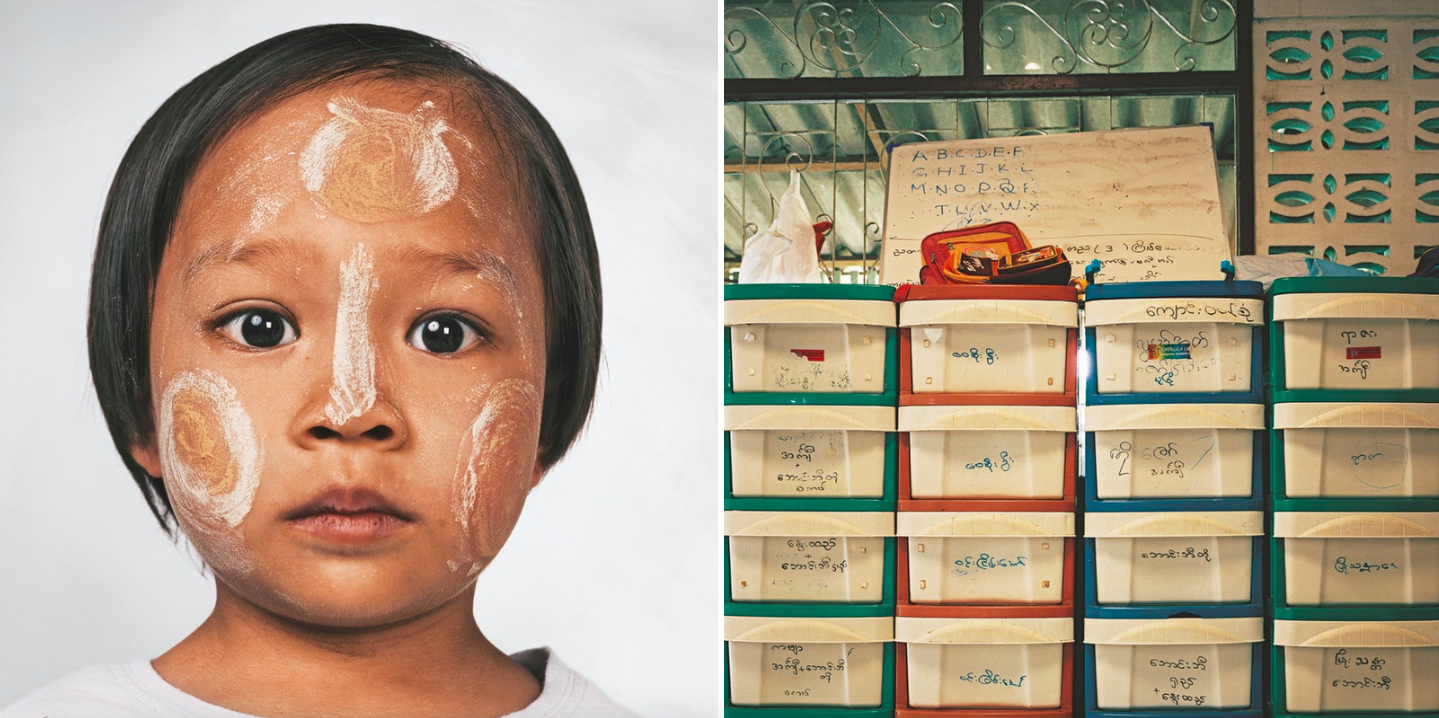
Lay Lay, 4 years old
Mae Sot, Thailand
—
Lay Lay is four years old. The cream she has on her face is made from the bark of the thanaka tree, used to condition and protect the skin. Lay Lay lives in Mae Sot, Thailand, close to the border with Burma. When her mother died, no other members of her family came to claim her, so she was placed in an orphanage. She shares this home with twenty-one other nursery-aged children. The orphanage consists of two rooms. During the day, one room is the classroom and the other is a dining room. At night, these rooms become bedrooms. The tables are pushed to one side and mats are rolled out for the children to sleep on. Each child has one drawer in which to keep their belongings.
Lay Lay does not have many belongings — just a few clothes. All that is known of her background is that she is from an ethnic group of people called the Karen, one of the persecuted minority ethnic groups which make up about forty per cent of the Burmese population. Lay Lay and her mother fled from the brutal Burmese military dictatorship and arrived in Thailand as refugees.
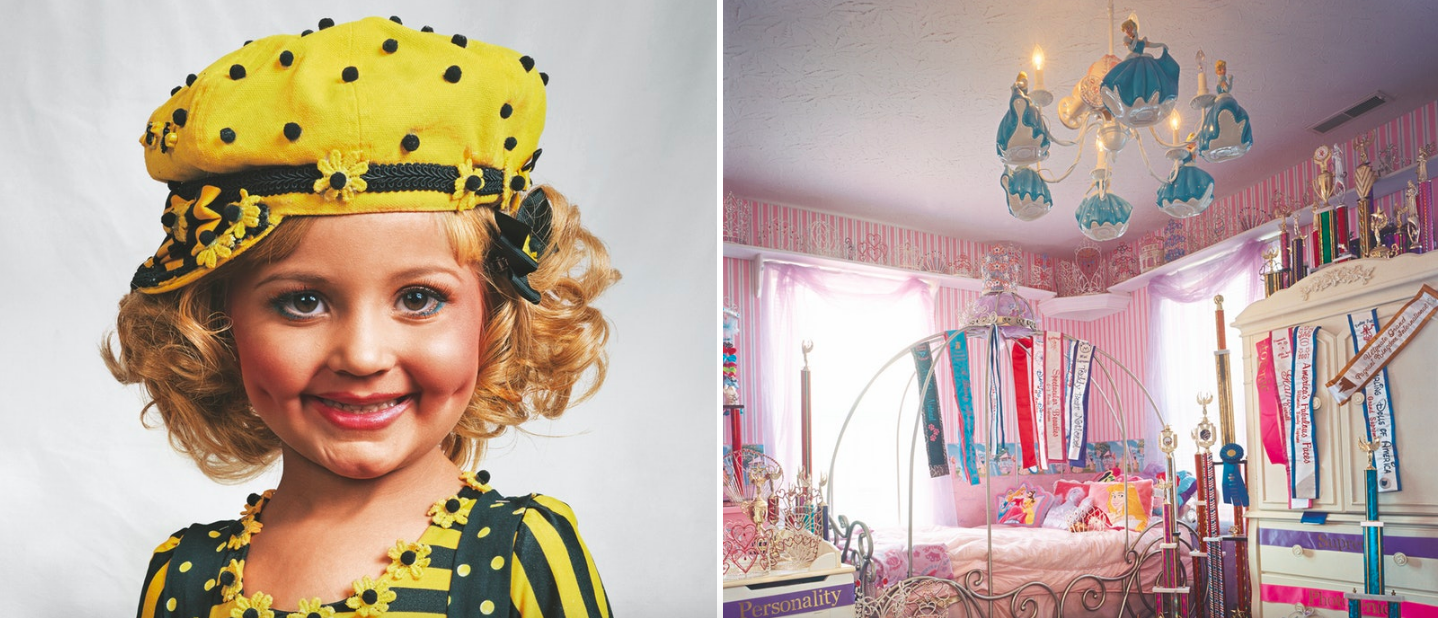
Jasmine, 4 years old
Kentucky, USA
—
Jasmine prefers to be called by her nickname, Jazzy. She lives in a big house in Kentucky, USA, with her parents and three brothers. Her house is in the countryside, surrounded by farmland.
Her bedroom is full of crowns and sashes which she has won in ‘child pageants’. She is only four years old and has already entered over a hundred of these competitions. Her spare time is completely taken up with preparation and rehearsal. She practices her stage routines every day with a trainer who teaches her new steps.
Each weekend, she participates in a different pageant, arriving on Friday afternoon, performing on Saturday, and attending the crowning ceremony on Sunday. By the end of the show, she is quite exhausted. Jazzy enjoys being pampered and treated like a princess — having her hair done and wearing pretty clothes and make-up, with false nails and a fake tan. It is a very expensive hobby and can cost her parents a thousand dollars for each pageant she takes part in. Jazzy would like to be a rock star when she grows up.
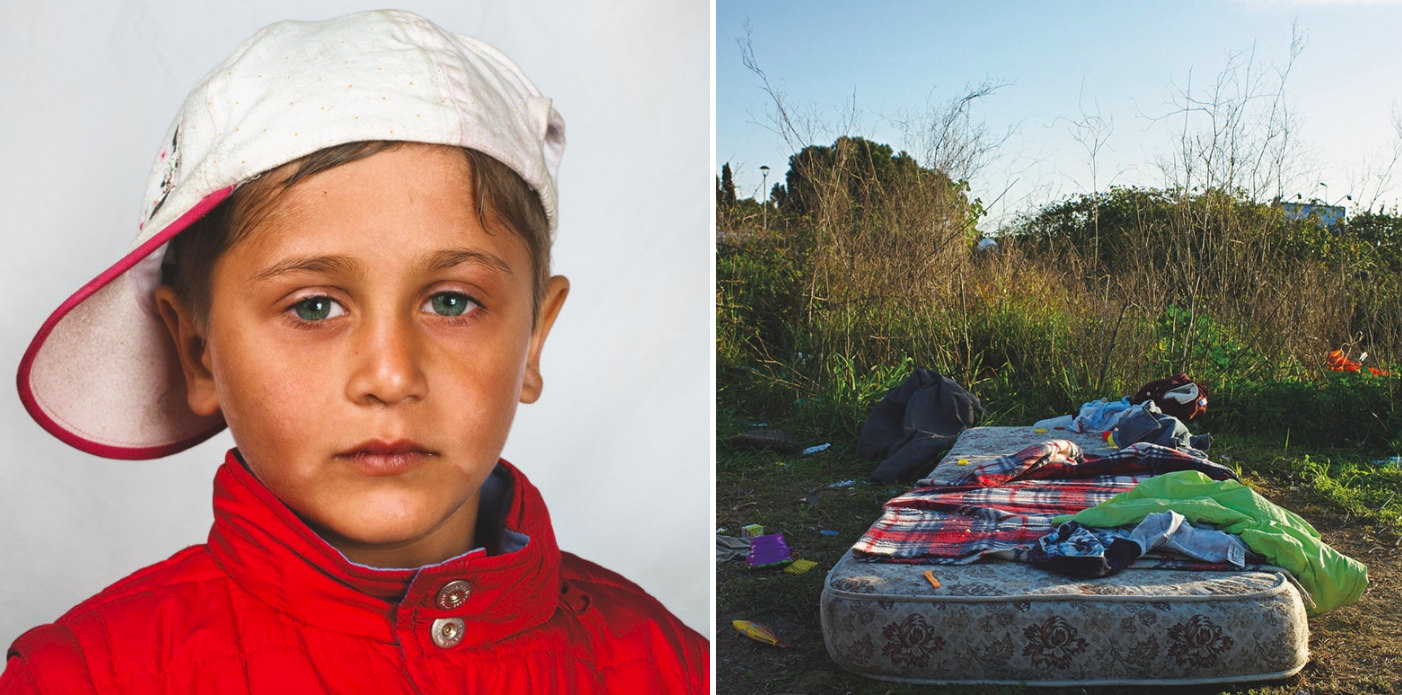
4 years old
Rome, Italy
—
Home for this four-year-old boy and his family is a mattress in a field on the outskirts of Rome, Italy. The family came from Romania by bus, after begging on the streets for enough money to pay for their tickets (€100 per adult and €80 per child).
When they first arrived in Rome, they camped in a tent, but the police threw them off the site because they were trespassing on private land and did not have the correct documents. Now the family sleeps together on the mattress in the open. When it rains, they hastily erect a tent and use umbrellas for shelter, hoping they will not be spotted by the police.
They left Romania without identity documents or work papers and so are unable to obtain legal employment. This boy sits by the curbside while his parents clean car windscreens at traffic lights, earning thirty to fifty cents a time. No one from the boy’s family has ever been to school. His parents cannot read or write.
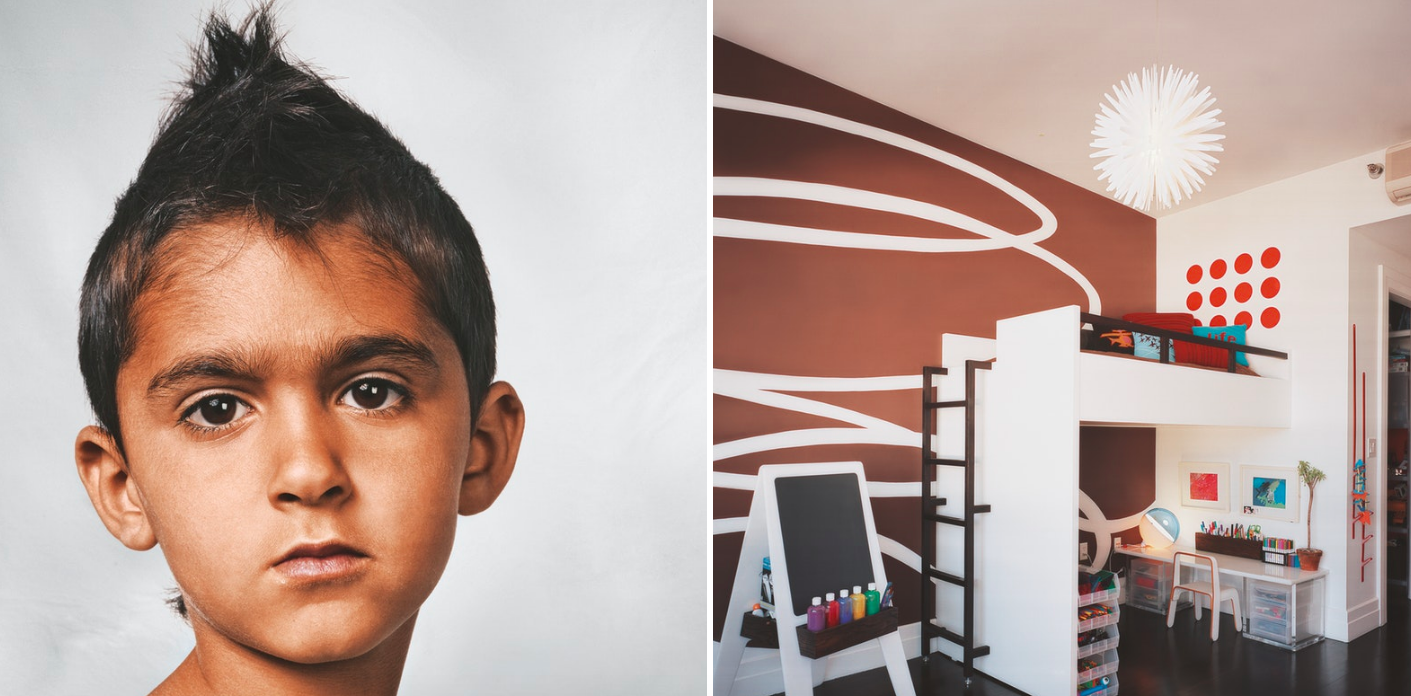
Jivan, 4 years old
Brooklyn, New York
—
Jivan is four years old. He lives with his parents in a skyscraper in Brooklyn, New York. From his bedroom window, he can see across the East River to New York’s Manhattan Island and the Williamsburg Suspension Bridge which connects it to Brooklyn. Jivan has his own bedroom with an en-suite bathroom and a toy cupboard. The room was designed by Jivan’s mother, who is an interior designer. His father is a DJ and music producer. Jivan’s school is only ten minutes’ walk away.
To gain a place at this school, Jivan had to take a test to prove that he can mix socially with other children. He found this quite stressful as he is a very shy boy. His parents were also interviewed before he was accepted by the school. Jivan’s favorite foods are steak and chocolate. He would like to be a fireman when he grows up.
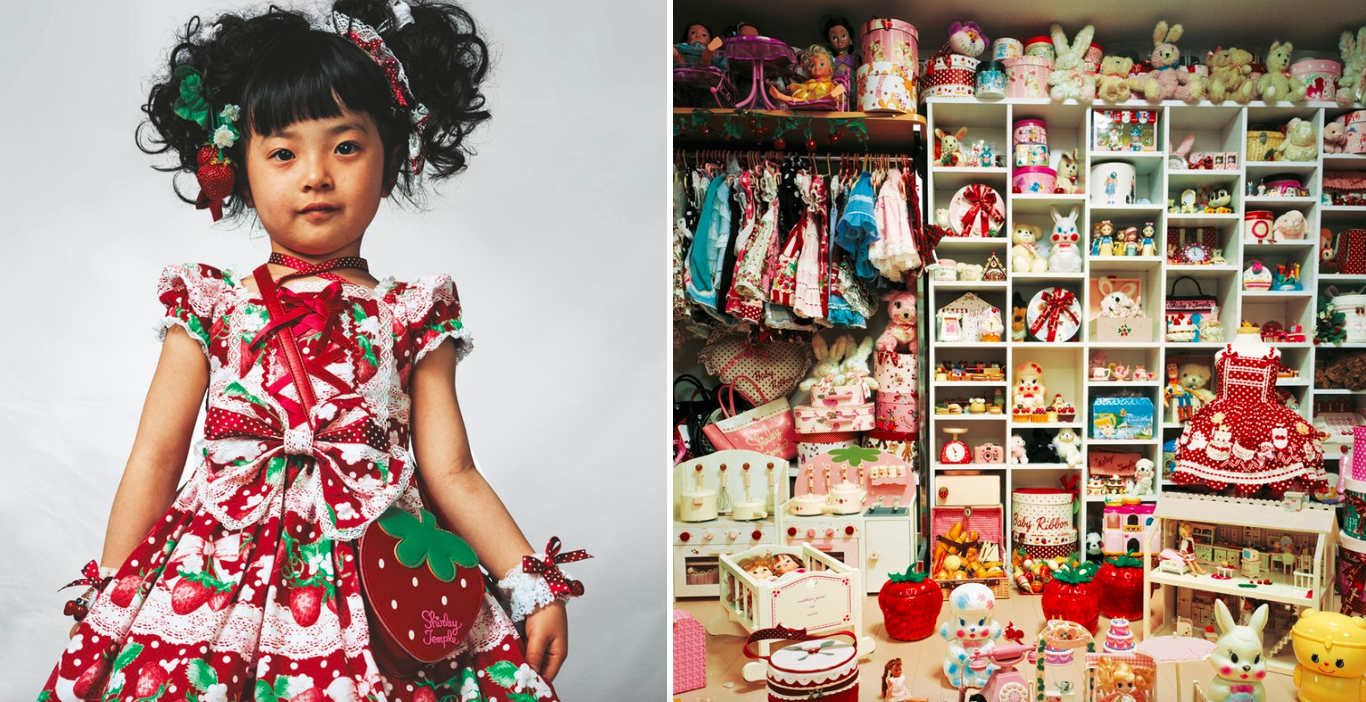
Kaya, 4 years old
Tokyo, Japan
—
Kaya is four years old. She lives with her parents in a small apartment in Tokyo, Japan. Most apartments in Japan are small because land is very expensive to buy and there is such a large population to accommodate. Kaya’s bedroom is every little girl’s dream. It is lined from floor to ceiling with clothes and dolls.
Kaya’s mother makes all Kaya’s dresses — up to three a month, usually. Now Kaya has thirty dresses and coats, thirty pairs of shoes, sandals and boots, and numerous wigs. (The pigtails in the picture are made from hairpieces.) Her friends love to come round to try on her clothes.
When she goes to school, however, she has to wear a school uniform. Her favorite foods are meat, potatoes, strawberries and peaches. She wants to be a cartoonist when she grows up, drawing Japanese ‘anime’ cartoons.
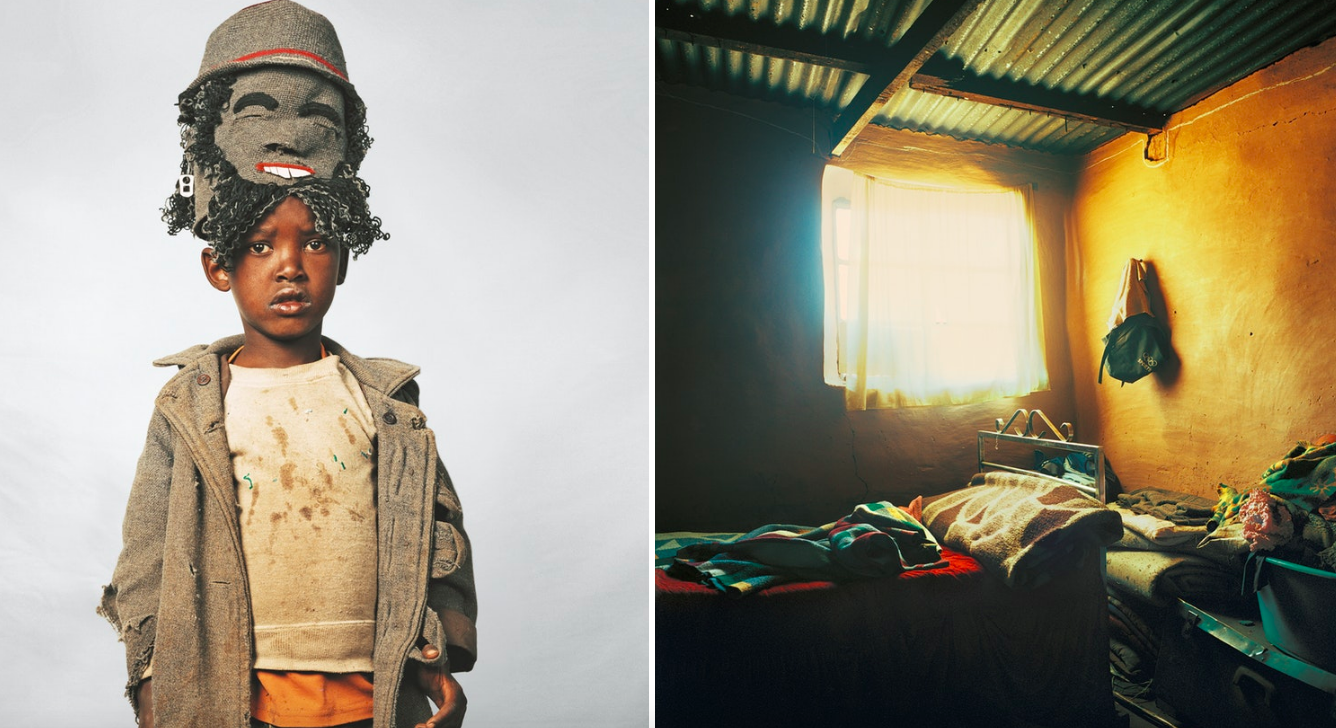
Lehlohonolo, 6 years old
Lesotho
—
Lehlohonolo is six years old. He and his three brothers live in Lesotho, in southern Africa. The boys are orphans — their father died from AIDS some years ago and they have not heard from their mother since she went away in search of work. It is likely that she also died from an AIDS-related illness. It is quite common in Lesotho for mothers and fathers to die as a result of AIDS, and there are growing numbers of orphans.
Lehlohonolo’s sixteen-year-old brother is responsible for looking after the family. The boys live in a mud hut where they sleep together on the floor, cuddling up to each other for warmth during the freezing cold nights. Two of Lehlohonolo’s brothers go to a school eight kilometers away where they are also given monthly rations of food — cereal, pulses and oil. They cannot remember the last time they ate meat.
Sadly, they will probably live in poverty for the rest of their lives because crops are difficult to grow on the infertile land and there are no prospects of employment.

Indira, 7 years old
Kathmandu, Nepal
—
Indira lives with her parents, brother and sister near Kathmandu in Nepal. Her house has only one room, with one bed and one mattress. At bedtime, the children share the mattress on the floor.
Indira is seven years old and has worked at the local granite quarry since she was just three. The family is very poor so everyone has to work. There are 150 other children working at the quarry, some of whom will lose their sight because they do not have goggles to protect their eyes from stone splinters.
Indira works five or six hours a day and then helps her mother with household chores such as cleaning and cooking. Her favorite food is noodles. She also attends school, which is thirty minutes’ walk away. She does not mind working at the quarry but would prefer to be playing. She would like to be a Nepalese dancer when she grows up.
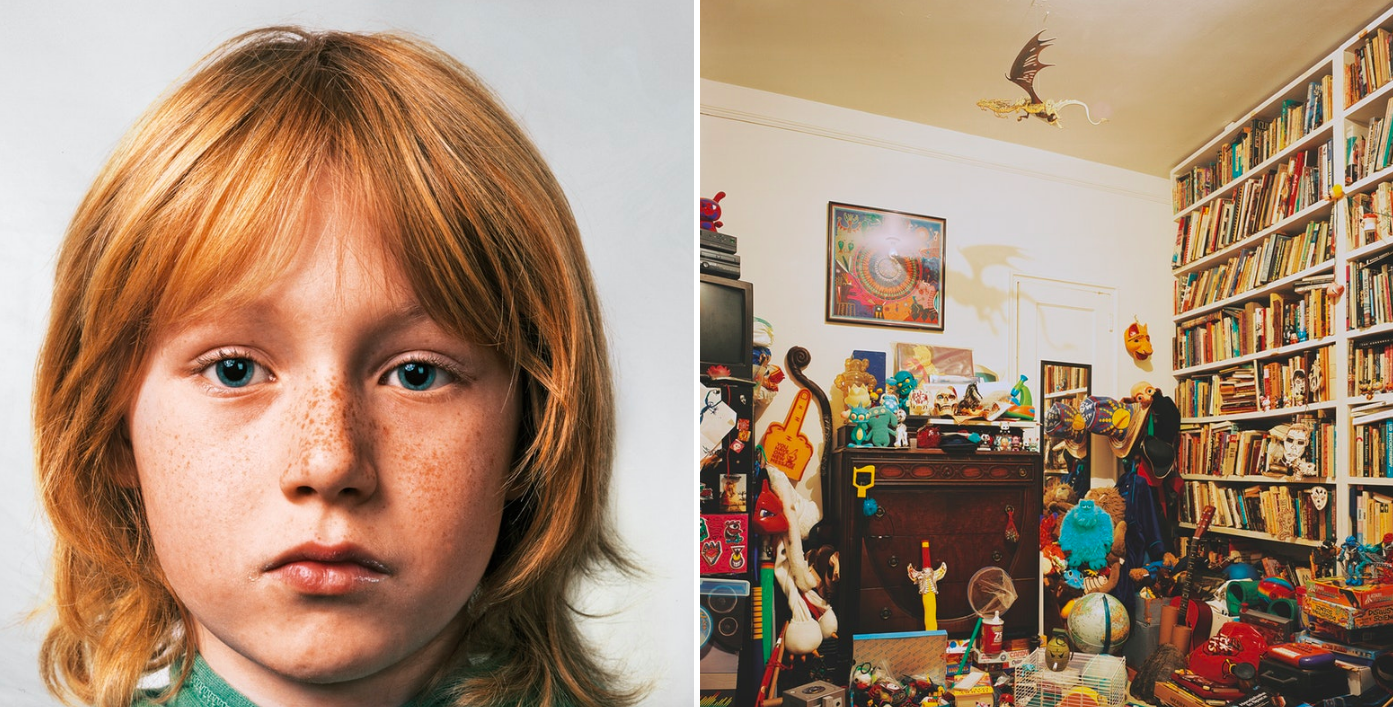
Tristan, 7 years old
Manhattan, New York
—
Tristan is seven years old and is an only child. His mother is a film maker, and his father is a pop cultural writer. They live in a small apartment in Manhattan, New York. They also own a beach house in New Jersey where they go for their summer holiday.
Tristan attends an Eco-School, a state school run on environmental principles, just ten minutes’ walk from his apartment. Here, there are no religious holidays — only the solstices and equinoxes are celebrated. Tristan had to pass several tests before he was accepted at the school, and his parents were also interviewed.
This was the tenth school he had applied to. Competition for school places is fierce in New York. He enjoys school but does not like being told to clean up after lunch. Tristan’s favorite food is bacon, and he has pizza every weekend. He has an unusual ambition for when he grows up — to be a creator of marmalade.
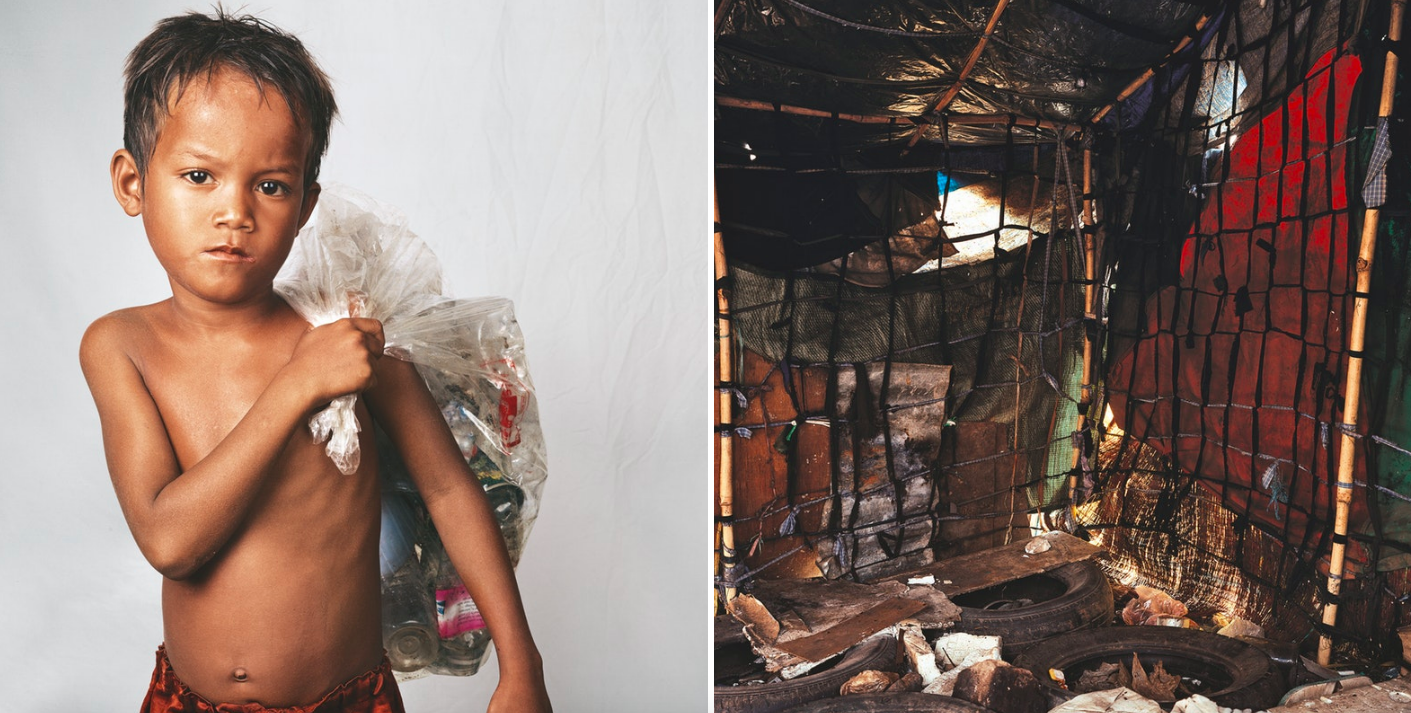
Roathy, 8 years old
Phnom Penh, Cambodia
—
Roathy is eight years old. He lives on the outskirts of Phnom Penh, Cambodia. His home sits on a huge rubbish dump which is swarming with flies. They re-use whatever they can find. Roathy’s mattress, for instance, is made from old tires. The air is thick with the stench of decomposing waste, and the ground underfoot is soft and springy — one wrong step and it gives way to a poisonous black liquid. Five thousand people live and work and pay rent here.
At six o’clock every morning, Roathy and hundreds of other children are given a shower and some breakfast at a local charity centre before they start work, scavenging through the rubbish for cans and plastic bottles which are sold to a recycling company. Breakfast is often the only meal of the day. On one occasion, Roathy’s family suffered food poisoning after eating a chicken which his brother had found on the dump.
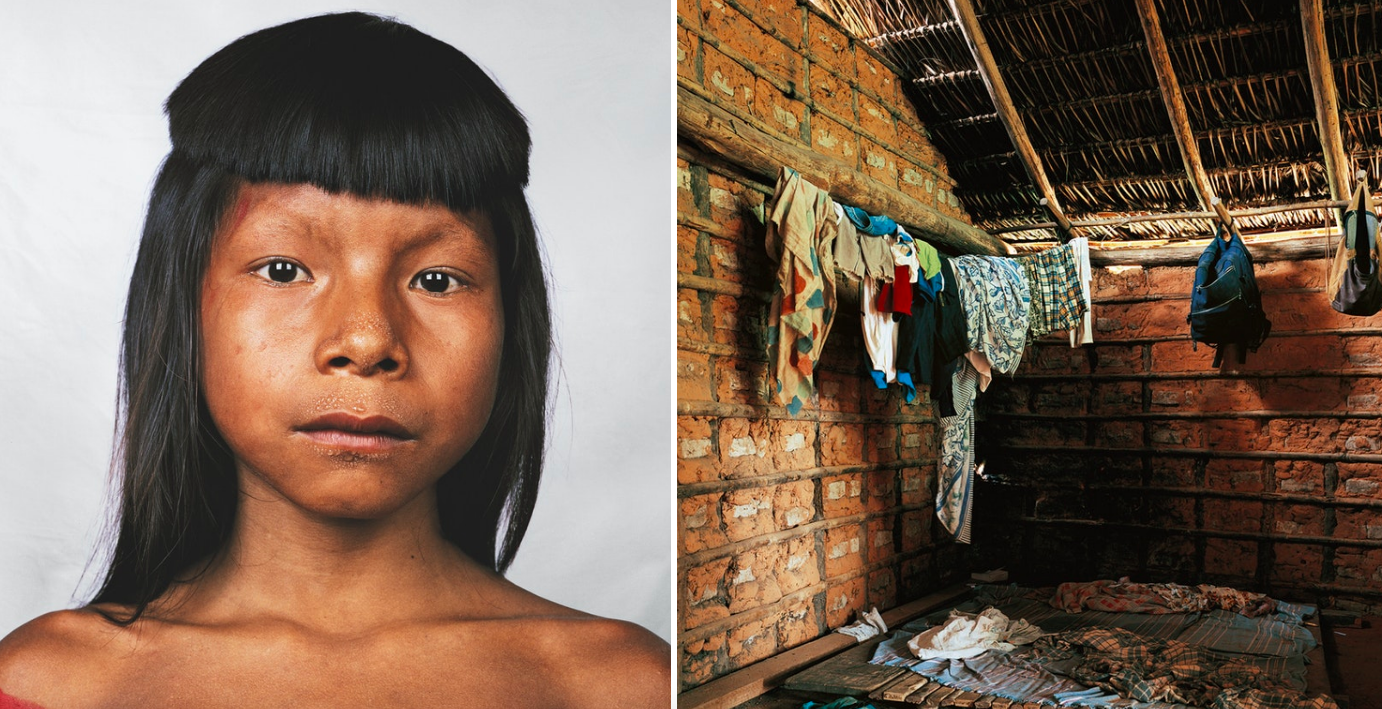
Ahkôhxet, 8 years old
Brazil
—
Ahkôhxet is eight years old and a member of the Kraho tribe, who live in the basin of the river Amazon, in Brazil. There are only 1,900 members of the tribe. The Kraho people believe that the sun and moon were creators of the universe, and they engage in rituals that are many centuries old. The red paint on Ahkôhxet’s chest is from one of his tribe’s rituals.
The elders teach Ahkôhxet’s generation to respect nature and their surroundings. Their huts are arranged in a circle, leaving space in the middle for gatherings and ceremonies to take place. The nearby river provides water for drinking and washing.
The tribe grow half their food in the poor soil using basic tools. They also hunt. The rest of their food is bought using money earned from film crews and photographers who visit their camp. There is one car, shared between the whole tribe.
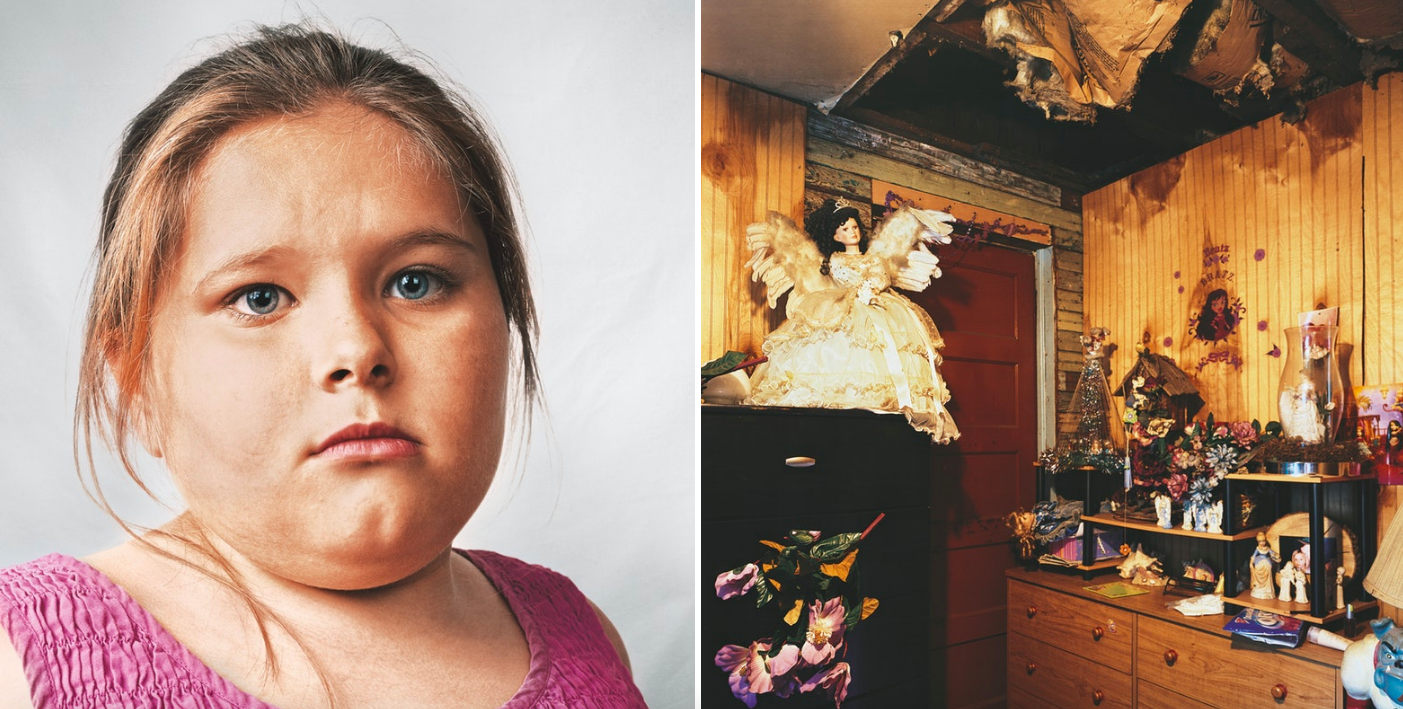
Alyssa, 8 years old
Kentucky, USA
—
Alyssa lives with her parents in Kentucky, USA. She is an only child but her grandmother, uncle and orphaned cousin live close by. It is a beautiful, mountainous region known as Appalachia, but one of the poorest parts of America.
Their small, shabby house, heated only by a wooden stove, is falling apart. The ceiling in Alyssa’s bedroom is beginning to cave in. The family would like to buy a caravan instead, if they could afford it. Alyssa’s mother works at McDonald’s and her father works at Walmart, and everything they earn goes towards bringing up their daughter.
She is lucky that her parents have jobs, even though they earn very little. Many local families are unemployed and have to rely on charity. There is a huge problem with drug misuse in the area, and two of Alyssa’s relatives have already died from drug-related problems.
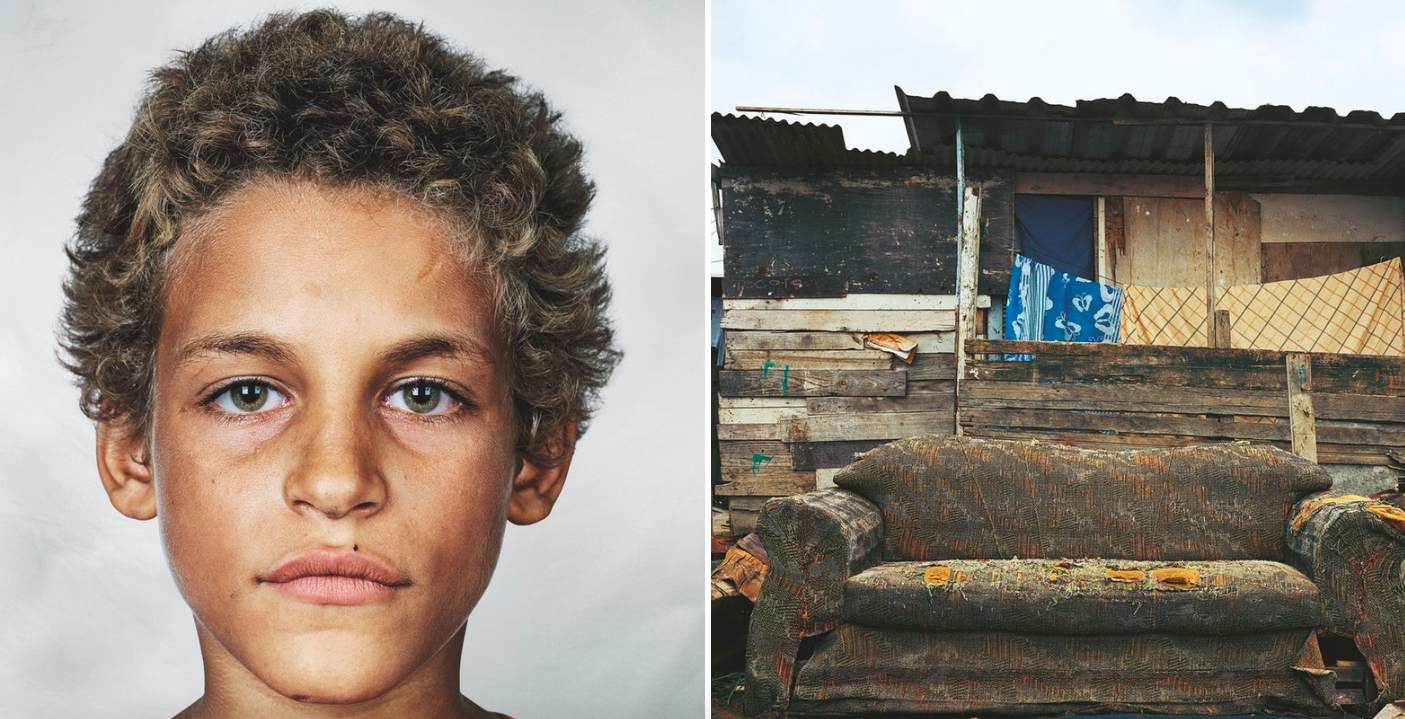
Alex, 9 years old
Rio de Janeiro, Brazil
—
Alex is nine years old. He lives in Rio de Janeiro, Brazil. He does not go to school but spends his time begging on the city streets. He has found that the only way he can survive is to beg or steal.
He admits that he sometimes steals from old people or from drivers waiting at traffic lights. As the drivers lean their arm on the window, Alex snatches the watch from their wrists. He is addicted to sniffing glue.
Most of the time he sleeps outside, on an empty bench or discarded sofa if he can find one — otherwise on the pavement. Alex is still in touch with his family, and occasionally goes to see them to share a meal.
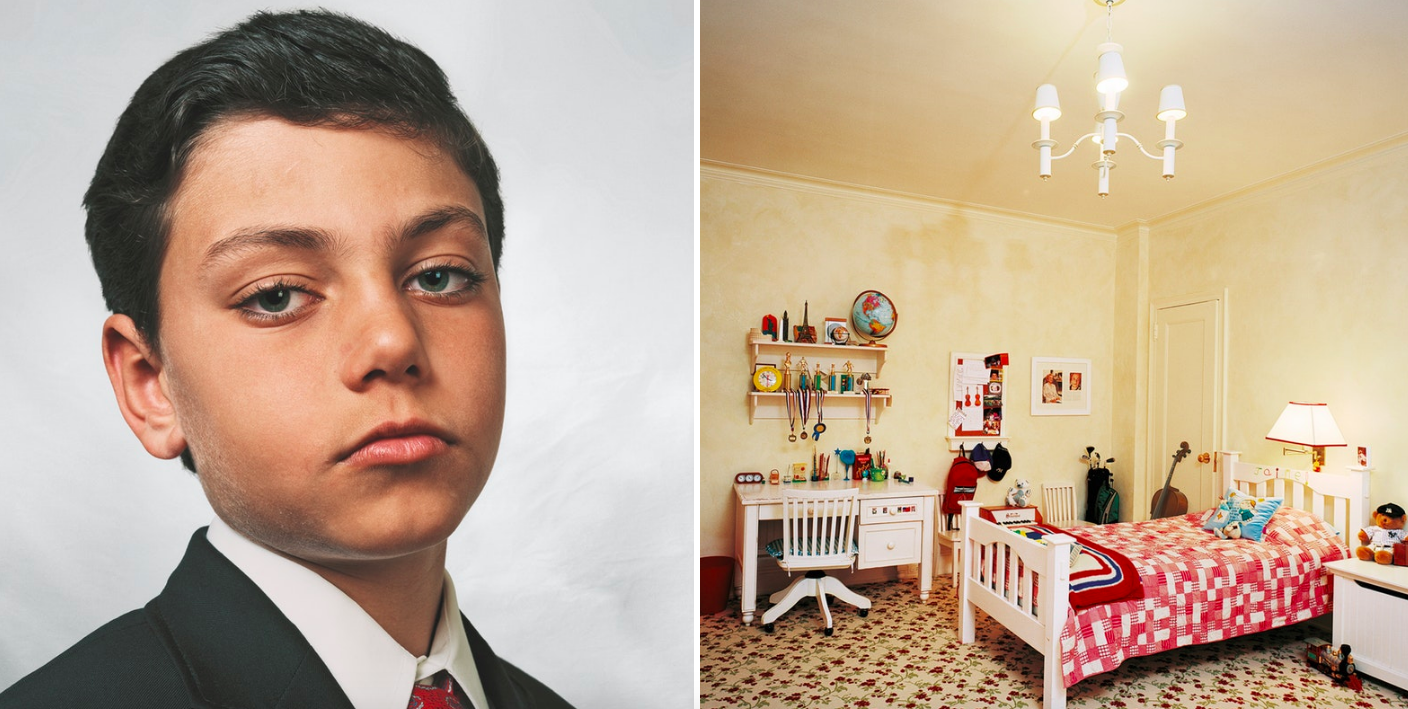
Jaime, 9 years old
Fifth Avenue, New York
—
Jaime is nine years old. He lives in a top-floor apartment on Fifth Avenue in New York. His parents also own luxury homes in Spain and in the Hamptons on Long Island. He has a younger brother and sister who are twins. Places at Jaime’s school are greatly sought after, even though the fees are very high. Jaime had to pass several tests before he was accepted.
He is doing very well at his studies and particularly enjoys computer class, spelling, and woodwork, but not geometry. He has an hour’s homework each night and often finds it hard to fit this in with his other after-school activities.
Wednesdays are particularly busy as he has judo and swimming lessons. In his spare time, apart from playing the cello and kickball, Jaime likes to study his finances on the Citibank website. When he grows up, he would like to be a lawyer like his father.
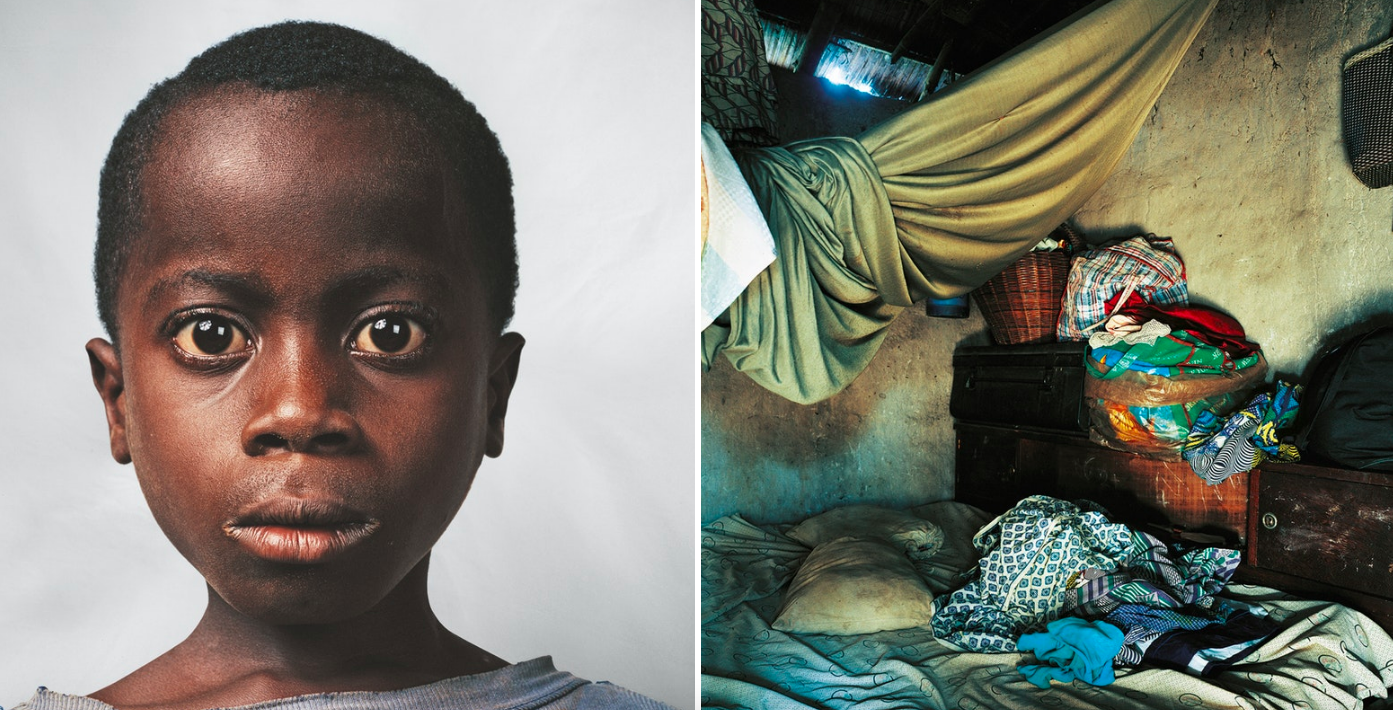
9 years old
Ivory Coast
—
This nine-year-old boy is a refugee from war in Liberia, in western Africa, and goes to a school for ex-child soldiers in Ivory Coast. His name remains a secret in order to protect his identity. If it is revealed, his life could be at risk.
Thousands of young children — many of them orphans — were recruited as soldiers to fight in the violent civil war in Liberia. They were tempted to become soldiers by promises of money, food and clothing. These child soldiers were then moved around the country during the conflict, causing them to lose track of their home villages. They became displaced.
This boy is an orphan and has three brothers. He now lives in a concrete shack alongside other pupils from his school. His favorite food is rice with tomato, meat and fish ground up together. He likes football and would like to be a teacher when he is older.
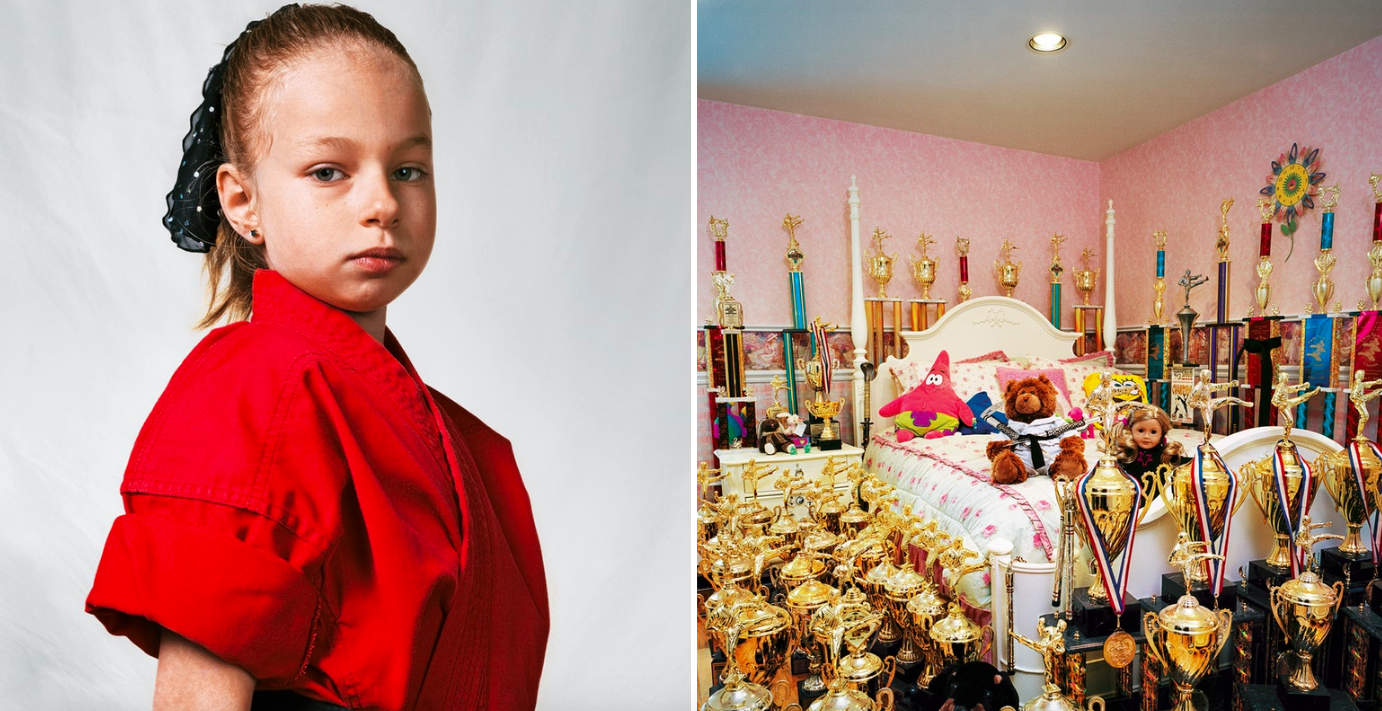
Samantha, 9 years old
Long Island, New York
—
Samantha is nine years old. She lives with her parents, and her guinea pig and fish, in a detached house on Long Island, New York. Samantha has achieved a black belt — the highest level — in karate. She has been world champion three times.
She first became interested at the age of three, when she saw a television advert featuring karate. She pestered her parents to let her learn and took her first lesson when she was four. She has now been in two adverts and a short film, and her bedroom is full of trophies she has won in competitions.
Samantha’s school is one mile away. Her mother takes her by car each morning so that she can have an extra few minutes’ rest in bed. She spends four hours a day practicing karate at the studio and also has an hour and a half of school homework each night. Samantha would like to become a karate movie star.

Tzvika, 9 years old
Beitar Illit, West Bank
—
Tzvika is nine years old and lives in Beitar Illit, an Israeli settlement in the West Bank. It is a gated community of thirty-six thousand Haredi (Orthodox) Jews, who live their lives according to a strict religious code set out in the Jewish holy book, the Talmud. Televisions and newspapers are banned from the settlement.
The average family has nine children, but Tzvika has just one sister and two brothers, with whom he shares his room. Like all good Haredi boys, Tzvika reveres God and wants to become a rabbi when he is older. He lives in a modern apartment block and is taken by car to school, a two-minute drive away.
Religion is the most important subject, followed by Hebrew and maths. Sport is banned from the curriculum. Tzvika goes to the library every day and enjoys reading the holy scriptures. All the books in the library are religious books. Tzvika also likes to play religious games on his computer. His favorite food is schnitzel and chips.
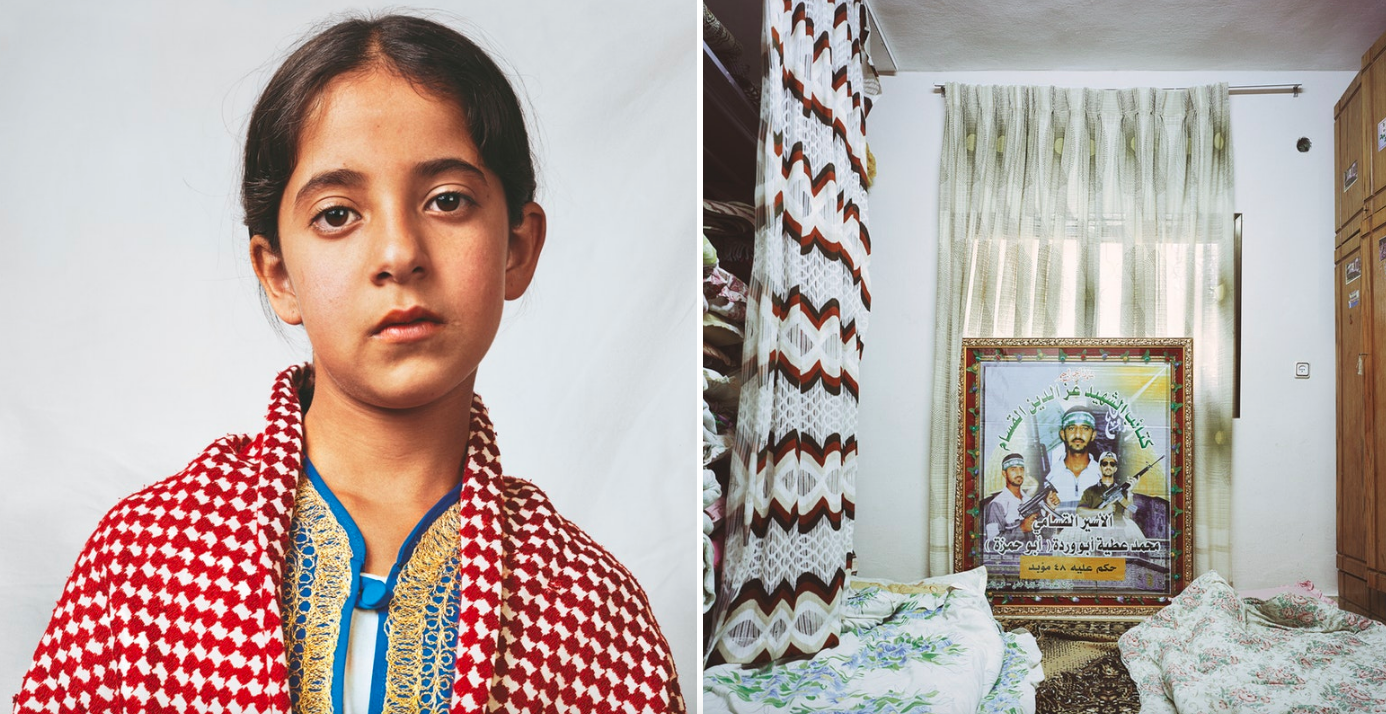
Douha, 10 years old
Hebron, West Bank
—
Douha lives with her parents and eleven siblings in a Palestinian refugee camp in Hebron, in the West Bank. She is ten years old and shares a room with all five of her sisters. The family diet mostly consists of green beans, meat, rice and lentil soup.
Douha attends a school which is ten minutes’ walk away. She works hard because she wants to be a pediatrician when she grows up. Douha’s life has been severely affected by the conflict between Palestine and Israel. Her grandparents fled from their village in 1948, when Israel took over their land, and Douha’s family has lived in refugee camps ever since.
Douha was born in a refugee camp, and there has always been violence around her. Her brother Mohammed killed himself and twenty-three civilians in a suicide bomb attack against the Israelis in 1996. Although no one in her family knew what Mohammed was planning, the whole family was punished for it: immediately after the bombing, the family home — including all their possessions — was destroyed by the Israeli military. Douha has a poster of Mohammed on her bedroom wall.
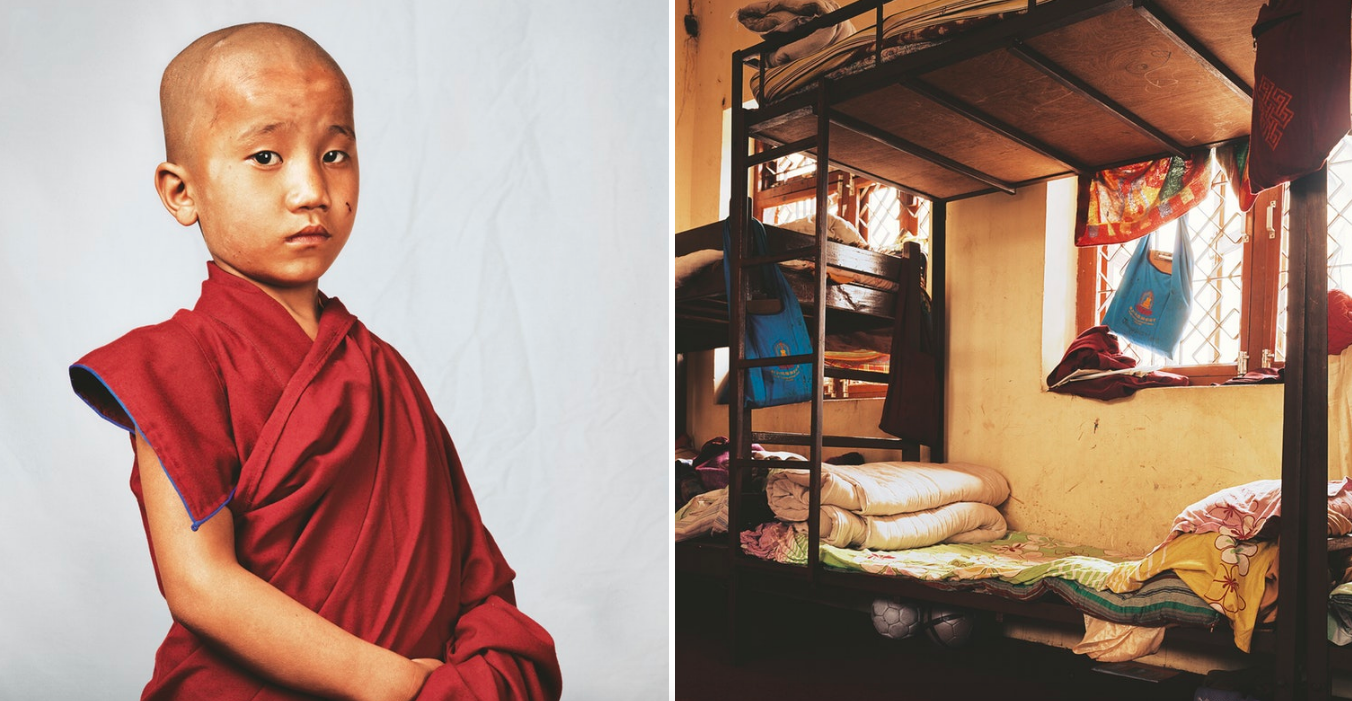
Sherap, 10 years old
Kathmandu, Nepal
—
Sherap is ten years old. He lives in a beautiful Tibetan monastery in Kathmandu, Nepal, and shares a room with seventy-nine other boys training to be monks. The boys all sleep in bunk beds and have very few personal possessions.
Sherap’s parents sent him here because it is believed that good luck comes to families who offer a son to the monastery. It also means they have one less mouth to feed.
Sherap has a long day. He gets up at 5.30 am to study, and finishes the day with an hour of chanting at 9 pm. He usually eats dhal bhat (rice and lentil soup), thukpa (noodle soup) and roti (flat bread). He admires his teacher and would like to be a kempo martial arts teacher one day, but first he must finish school and then study privately for three years and two months.
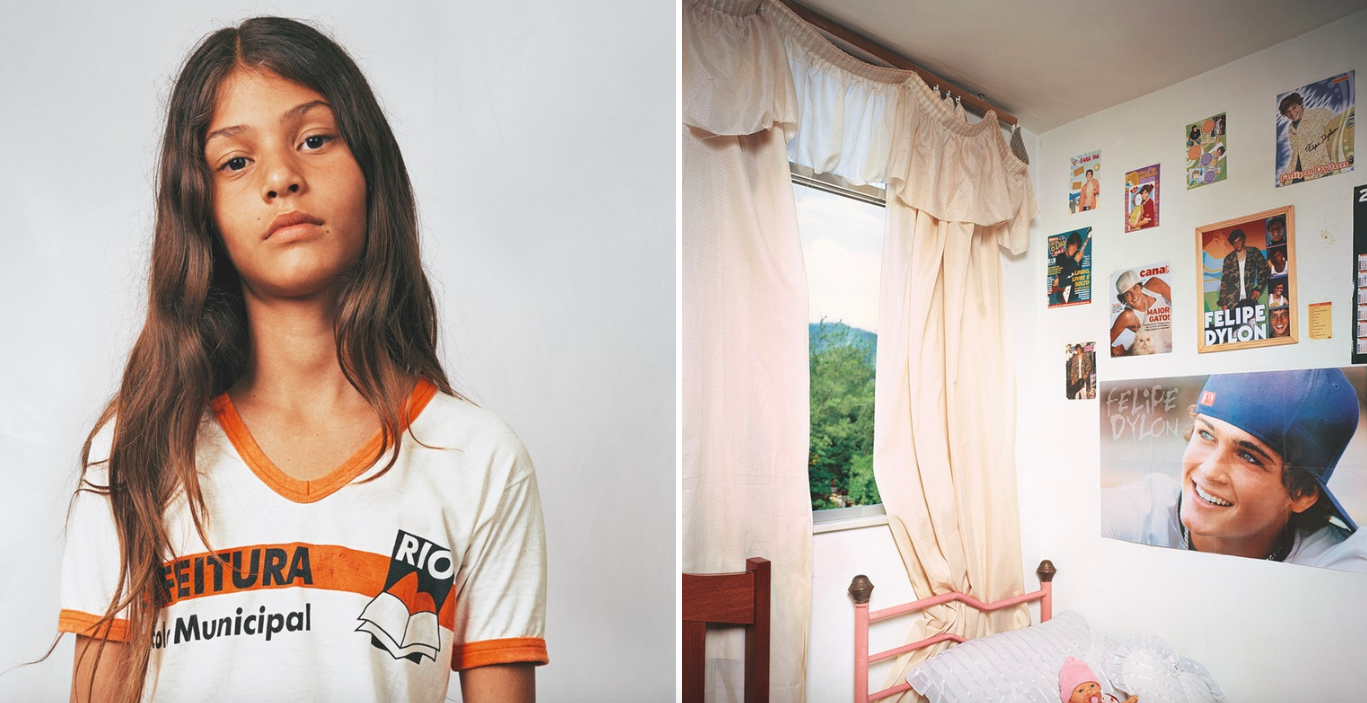
Thais, 11 years old
Rio de Janeiro, Brazil
—
Thais is eleven years old and lives with her parents and sister on the third floor of a block of flats in Rio de Janeiro, Brazil. There are two bedrooms in the flat, so Thais has to share her room with her sister.
They live in the Cidade de Deus (‘City of God’) neighborhood in the western zone of Rio de Janeiro. It used to be a poverty-stricken, crime-ridden area, dominated by gang rivalry and drug abuse, but the 2002 film City of God, which was set in the neighborhood, inspired major improvements. It is now a much safer place to live.
Thais’s parents are not well off but are able to support their family reasonably well. Thais is a great fan of Felipe Dylon, a Brazilian pop singer. She has his posters all over her bedroom wall. She also admires the Brazilian model and actress, Gisele Bündchen, who is thought to be the highest paid model in the world. Thais would like to be a model when she grows up or, alternatively, a pediatrician.
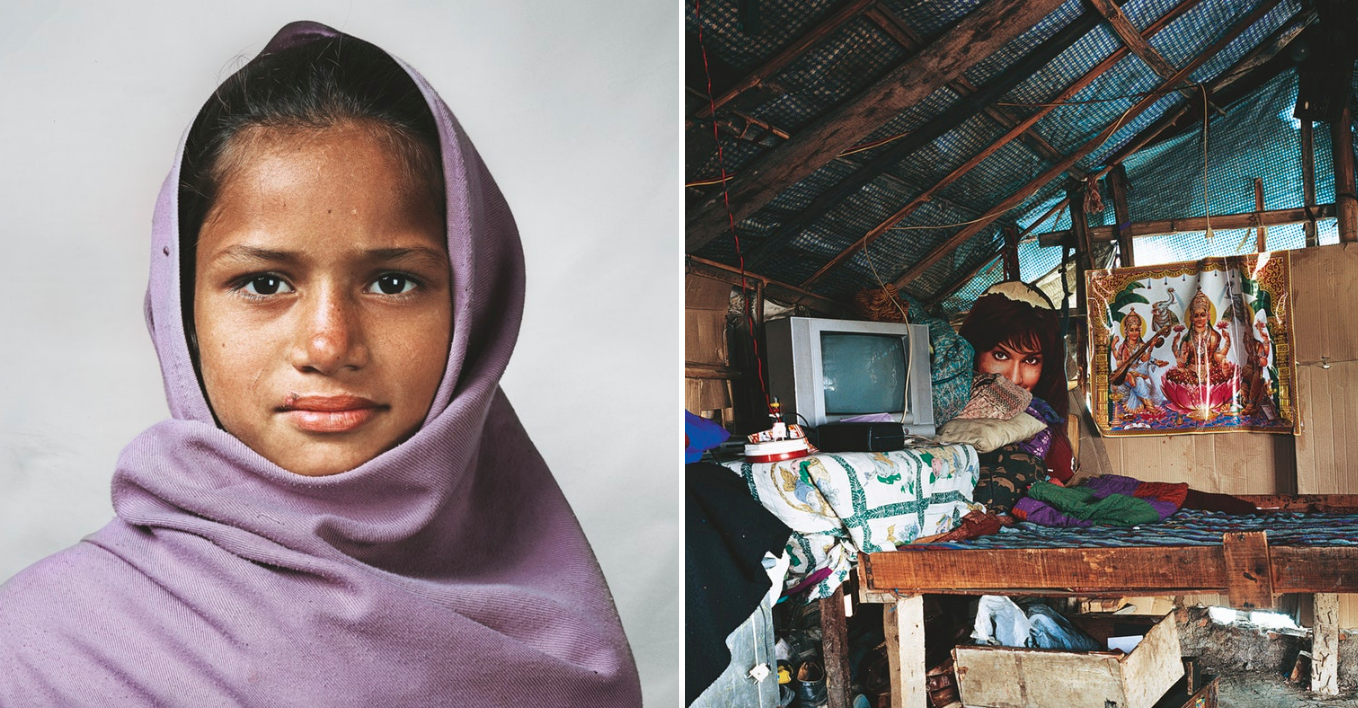
Netu, 11 years old
Kathmandu, Nepal
—
Netu lives in Kathmandu, Nepal, in an area known as ‘Beggars’ City’. She used to live in India with her parents, four sisters and brother. Her parents were unable to support the family and there was not enough food to survive, so they had to send Netu, the eldest, away to live with her aunt. They had hoped for better prospects for their daughter. They spent one week’s salary on the bus fare for Netu to travel to Kathmandu. The journey took three days.
Netu is eleven years old and now has to beg for money on the city’s streets. It is only the tourists who are willing to donate anything and often she goes home with nothing.
Her home is a plastic sheeted shack. The room measures four meters by six meters and contains two beds. Four people sleep in one bed, three in the other, and four people sleep on the floor.
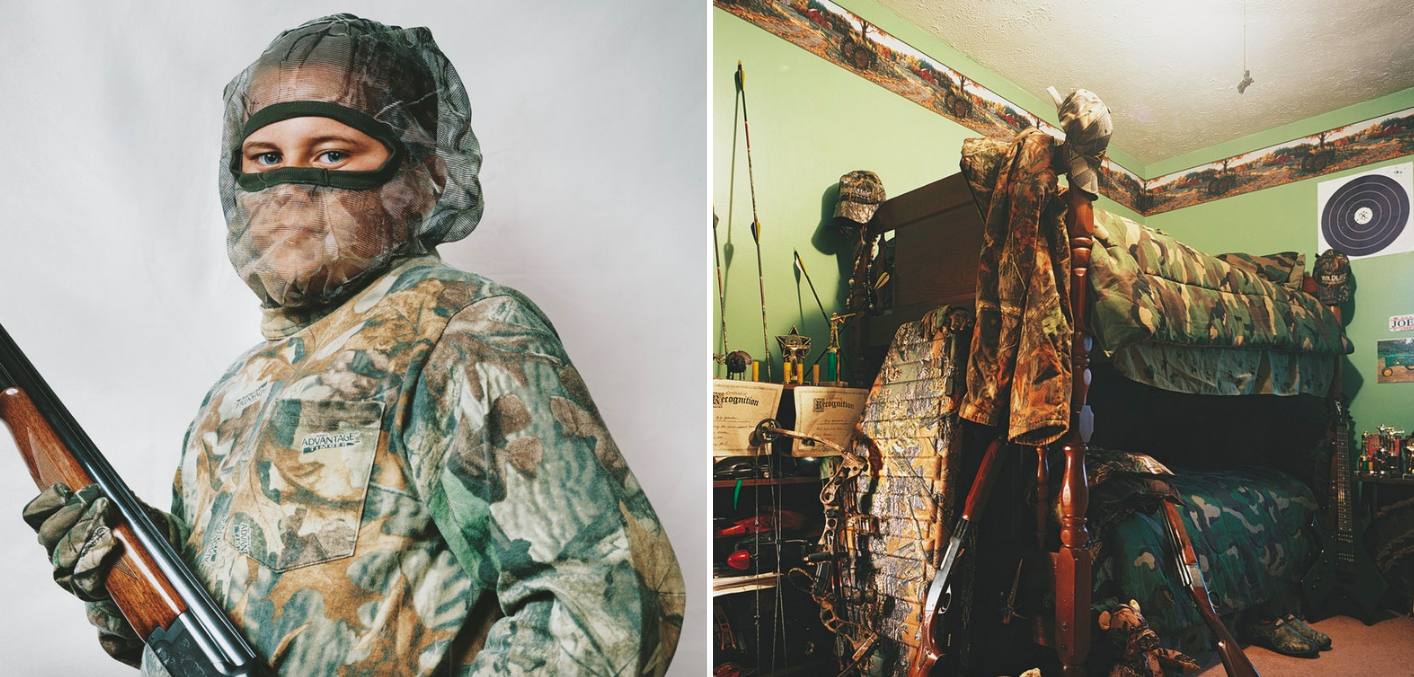
Joey, 11 years old
Kentucky, USA
—
Joey lives in Kentucky, USA, with his parents and older sister. He is eleven years old. He regularly accompanies his father on hunts. He owns two shotguns and a crossbow and made his first kill — a deer — at the age of seven. He is hoping to use his crossbow during the next hunting season as he has become tired of using a gun.
He loves the outdoor life and hopes to continue hunting into adulthood. His family always cook and eat the meat from the animal they have shot. Joey does not agree that an animal should be killed just for sport. When he is not out hunting, Joey attends school and enjoys watching television with his pet bearded dragon lizard, Lily.
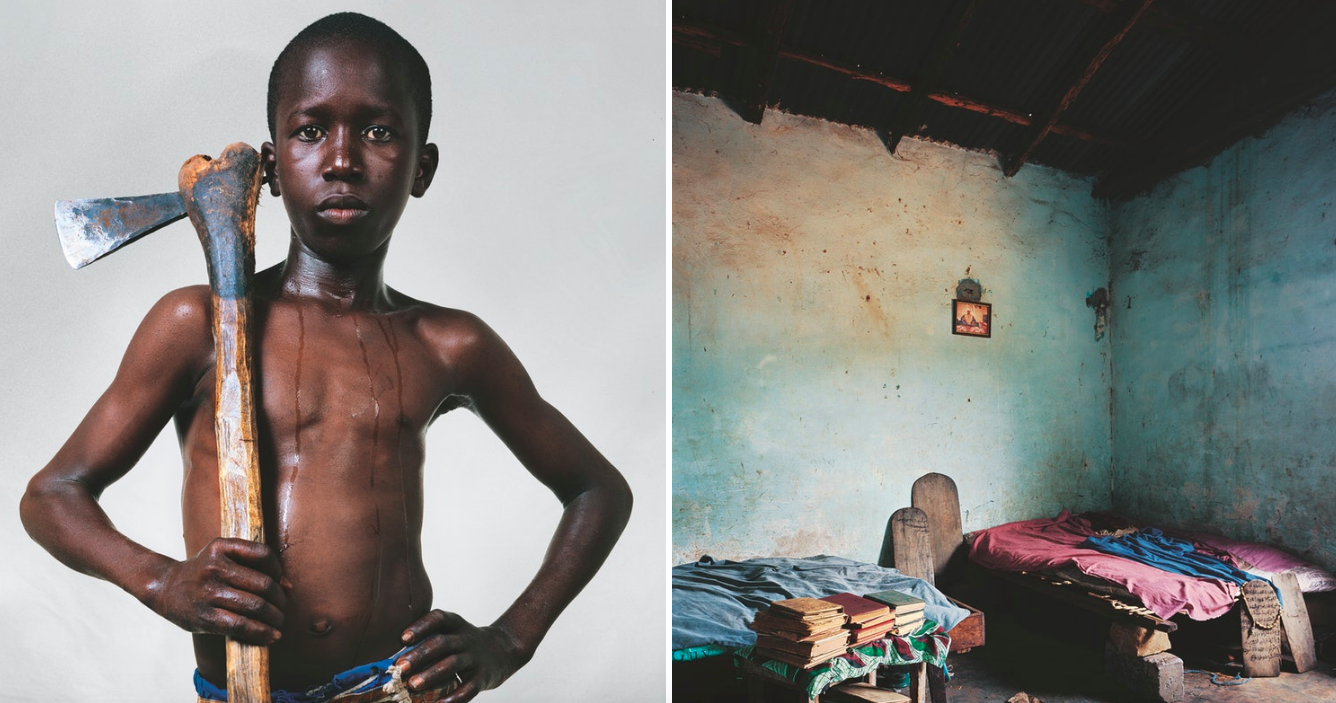
Lamine, 12 years old
Senegal
—
Lamine is twelve years old and lives in a village in Senegal, western Africa. He is a pupil at the village Koranic school, where no girls are allowed. He shares a room with several other boys from the school.
The beds are very basic and uncomfortable, some supported by bricks for legs. At six o’clock every morning, the boys begin work on the school farm. Depending on the season of the year, they are taught digging, harvesting maize or how to plough the fields using donkeys. In the afternoon, they study the Koran, the holy book from which Islam is derived, learning to recite its verses from wooden tablets. They have the same teacher for all their lessons.
Lamine enjoys school but finds the farming lessons hard work and very hot. In his free time, he likes to play football with his friends. When Lamine grows up he would like to be a teacher.
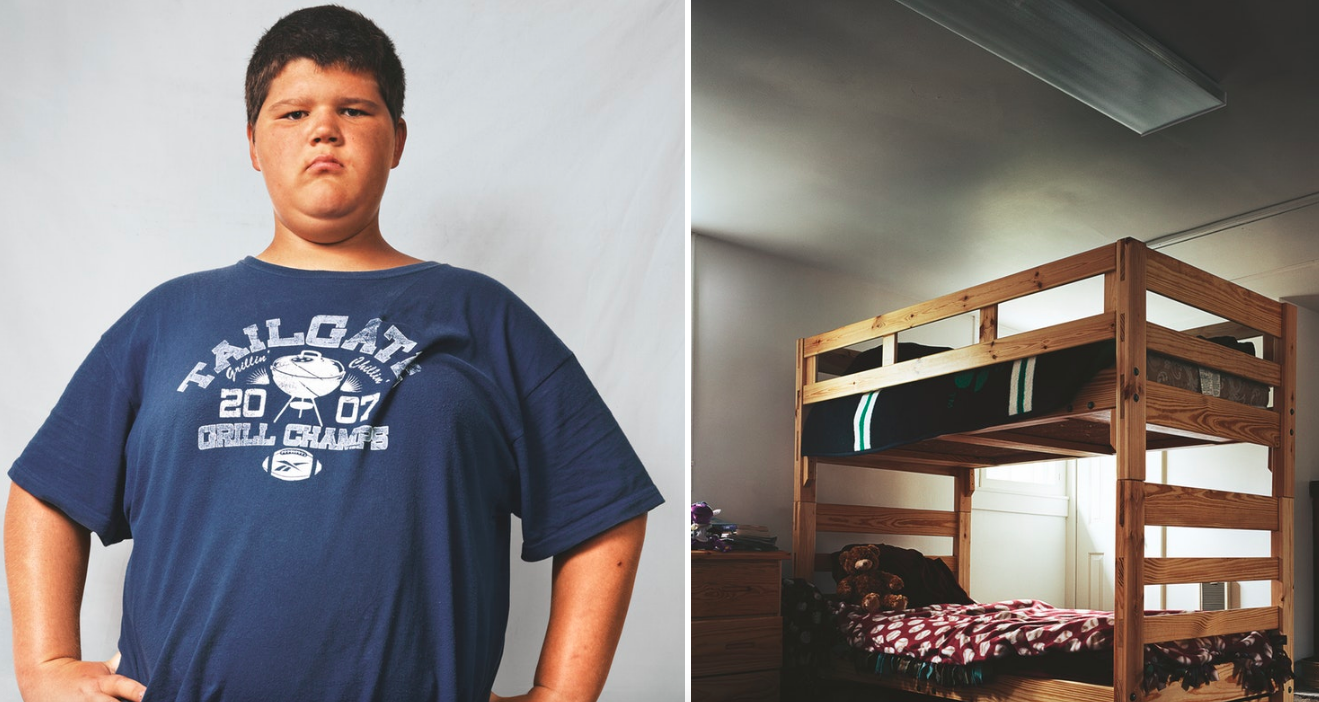
Ryan, 13 years old
Pennsylvania, USA
—
Ryan normally lives with his parents and two sisters in Pennsylvania, USA, but is currently staying at a school for obese children aged eleven to sixteen. Ryan is thirteen years old.
When he was nine, he was found to have a brain tumour. As a result, he now suffers from ‘Prader-Willi Syndrome’, an inherited condition that causes Ryan to have an insatiable appetite. This led Ryan to gain a lot of weight, but since attending the school, he has lost nine kilos. He is determined to lose as much weight as possible so that he can play baseball with his friends again.
Meal times are becoming easier for him because the school provides healthy versions of pizza and spaghetti alongside unlimited amounts of low-calorie foods such as soup, fruit and vegetables. This means he is not always as hungry as he used to be at home. All students have to take ten thousand steps per day.
Ryan would like to be a doctor when he grows up, in gratitude to the medical profession for helping him through his illnesses.
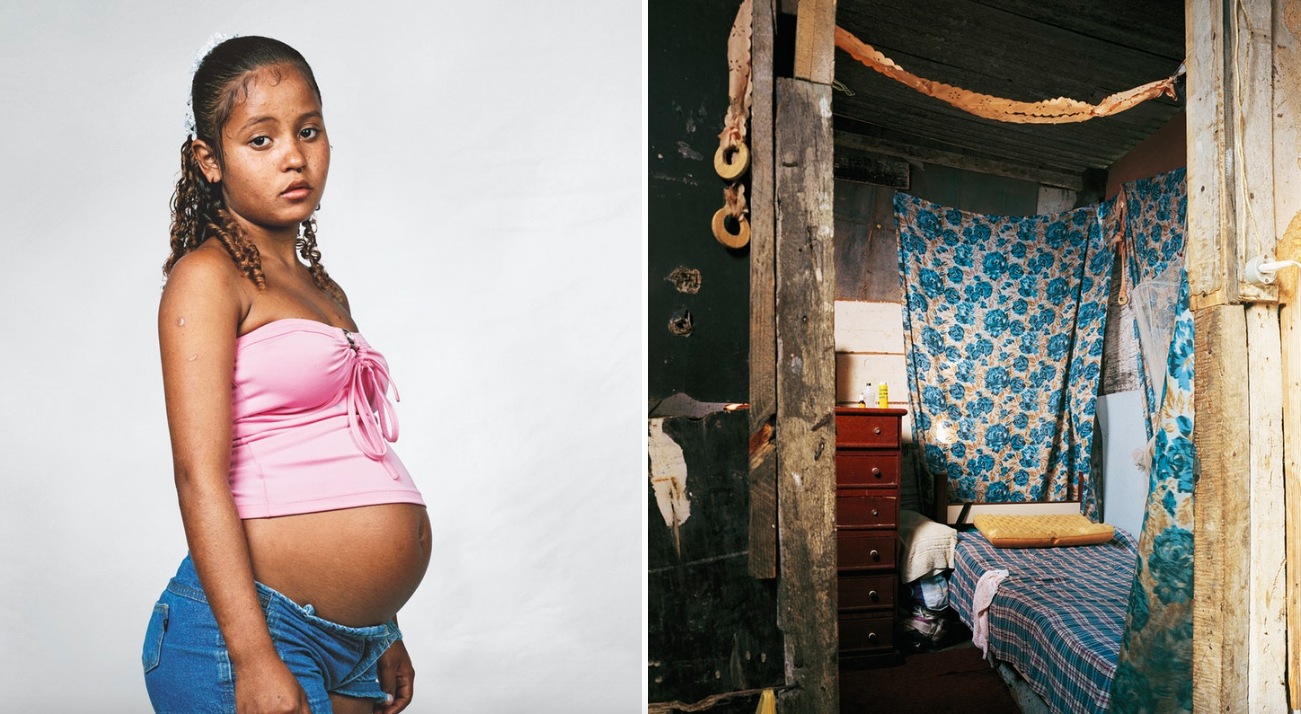
Erlen, 14 years old
Rio de Janeiro, Brazil
—
Erlen is fourteen years old and is pregnant for the third time. She lives in a favela (slum) in Rio de Janeiro, Brazil. Her home is a small shack. She usually sleeps on the floor, but now that she is in the later stages of her pregnancy, her mother has swapped places and allowed her to sleep in the bed. Erlen was twelve when she first became pregnant, but her baby was stillborn. A year later, she lost a second baby soon after its birth. If her new baby survives, Erlen is unlikely to return to school as she will need to stay at home to look after it. She will be a single parent.
The Brazilian government is concerned at the increase in teenage pregnancies despite its efforts to promote contraception. Abortion is illegal and can result in a three year prison sentence. It is also very dangerous — one in five women die while having abortions in illegal back-street clinics. Erlen would like to be a vet when she is older, and to live somewhere else.
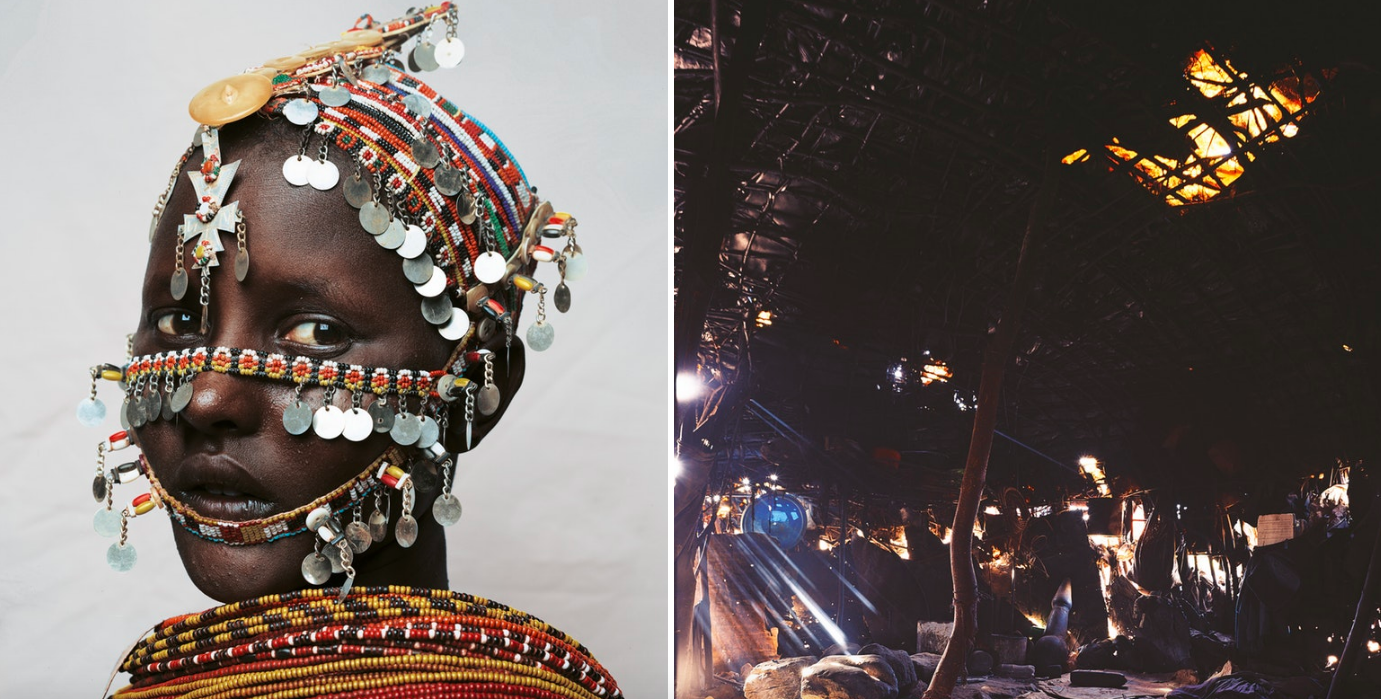
Nantio, 15 years old
Marsabit, Kenya
—
Nantio is fifteen years old and a member of the Rendille tribe in northern Kenya. She has two brothers and two sisters. Her home is a tent-like dome made from cattle hide and plastic, with little room to stand. There is a fire in the middle, around which the family sleep.
Nantio’s household chores include looking after the goats, chopping firewood and fetching water. She went to the village school for a few years but decided not to continue. Nantio is hoping a moran (warrior) will select her for marriage (she has a boyfriend now, but it is not unusual for a Rendille woman to have several boyfriends before marriage).
First, she will have to undergo circumcision, as is the custom. Nantio’s status in life can be seen by the number of necklaces she wears and whether she also wears a white band, indicating that she has a boyfriend or that her menstrual cycles have begun.
* * *
You can explore many other children’s stories and photographs, from all over the world, in my book Where Children Sleep.
THIS ARTICLE WAS ORIGINALLY PUBLISHED ON MAPTIA
JAMES MOLLISON
Kenyan-born, English-raised, Venice-based documentary photographer, jamesmollison.com
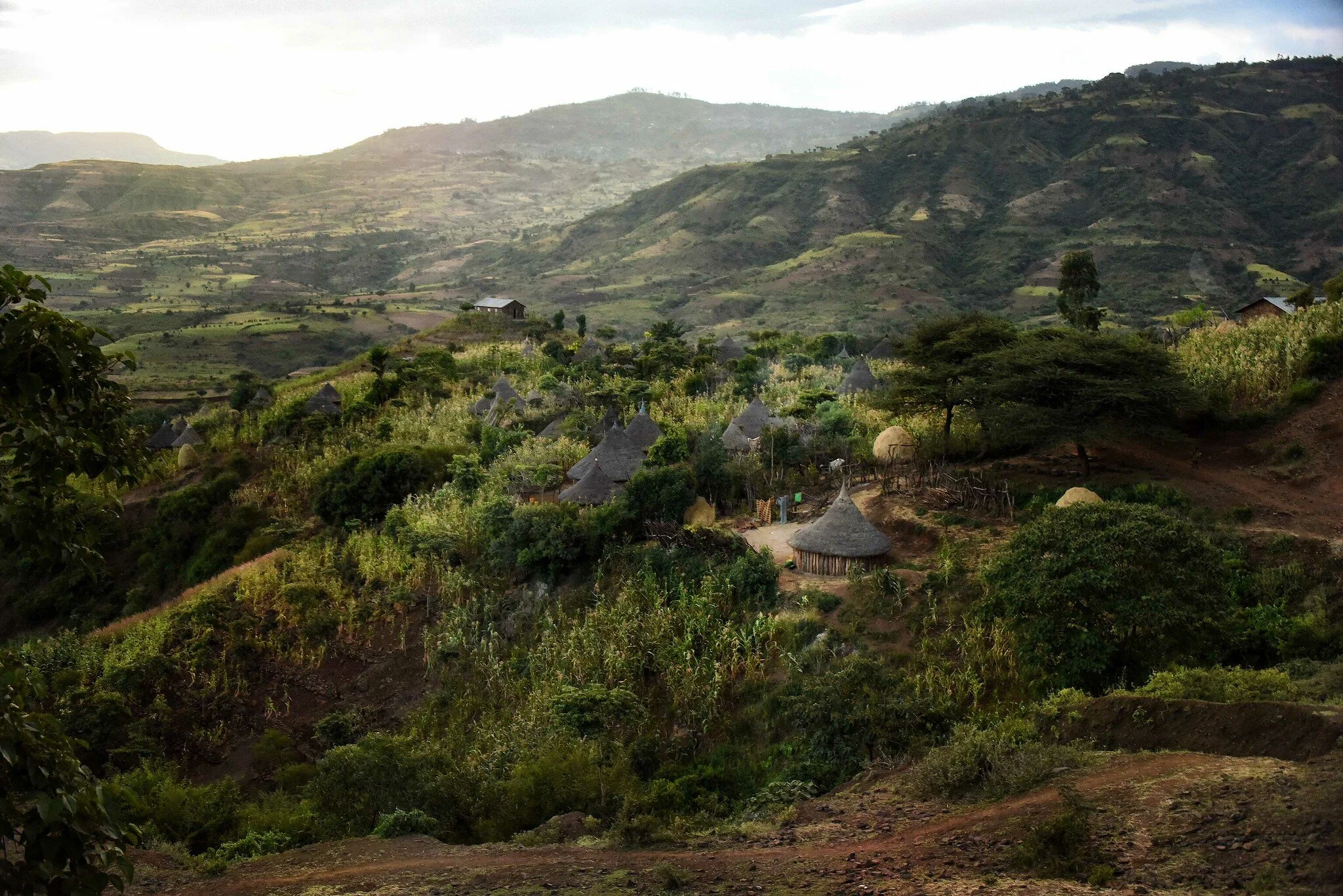
Like so many others across the country, this village in Ethiopia’s Omo Valley blends seamlessly into its colorful surroundings. Rod Waddington. CC BY-SA 2.0
Top 5 Sites to Visit in Ethiopia, Africa’s Hidden Gem
Boasting a stunningly diverse landscape, a rich culture and nine UNESCO World Heritage Sites, Ethiopia belongs on every traveler’s bucket list. As word gets out, more and more visitors are discovering – and falling in love with – the East African country’s seemingly endless charms.
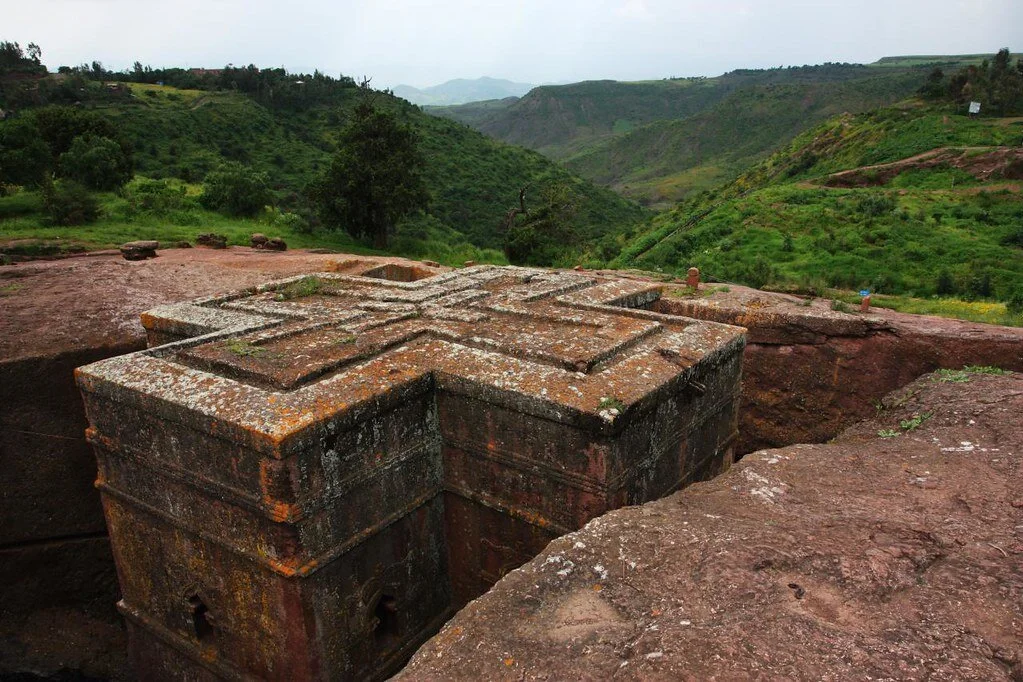
Seen from above, the Church of Saint George looks impressive. From below, it’s simply unreal. Bryan_T. CC BY-ND 2.0
Lalibela
Painstakingly chiseled out of rock in the 13th century, the 11 churches of Lalibela stand as powerful symbols of Ethiopia’s devotion to Christianity. After Jerusalem’s fall to Islamic conquest, King Lalibela ordered construction of a “New Jerusalem” in his own land. The results are spectacular: the Church of Saint George rests in the shape of a cross, seemingly inaccessible due to its position below ground. It’s nearly incomprehensible that the churches of Lalibela were carved out by hand 800 years ago. You may come to believe, as many locals do, that angels alone could have built such a masterpiece.
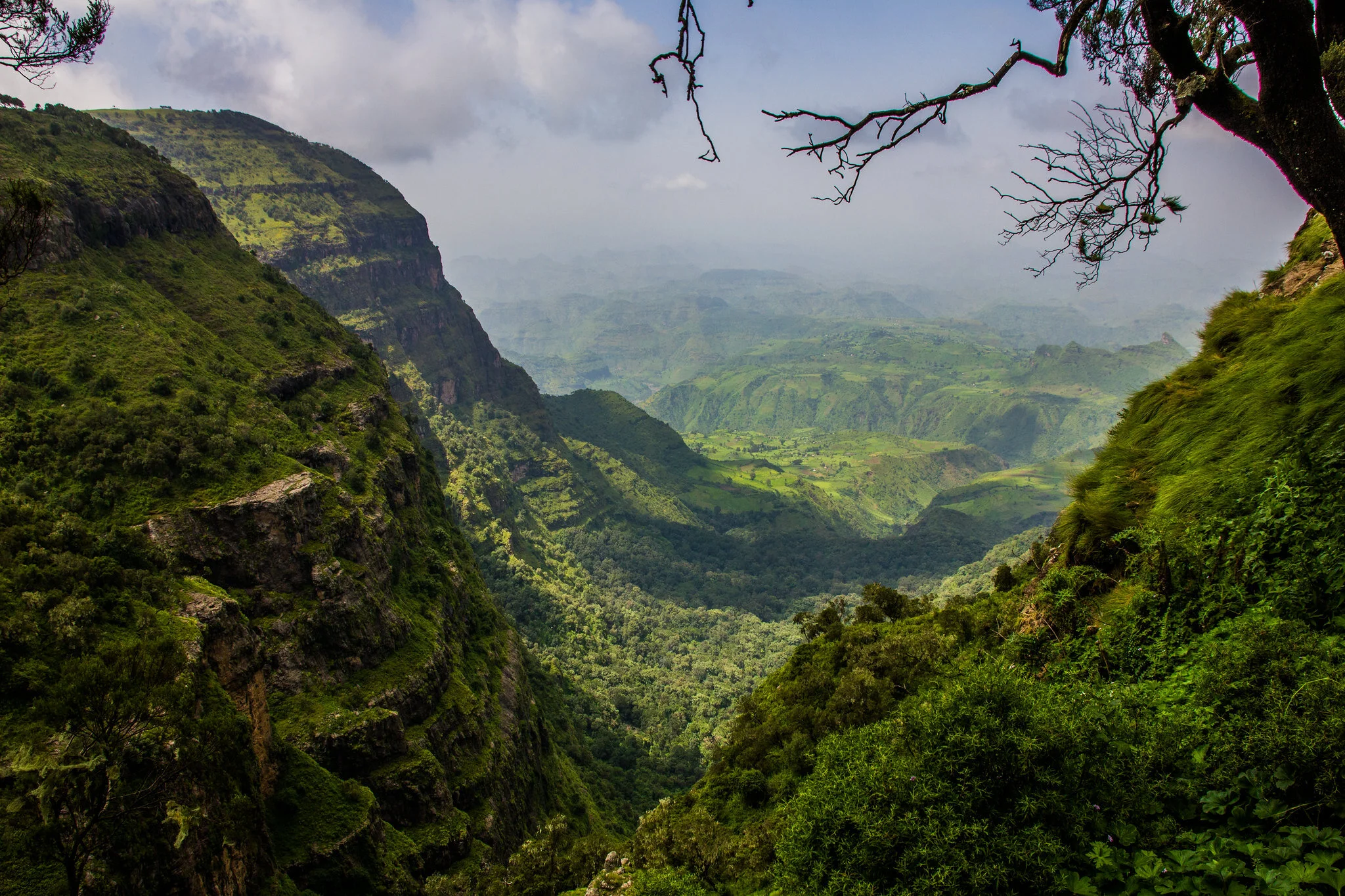
The Simien Mountains, often known as the “Water Tower of Africa,” are one of the top contributors to the Nile River. Thomas Maluck. CC BY-ND 2.0
Simien Mountains National Park
Known as the “Roof of Africa,” the Simien Mountains present a landscape of sheer cliffs, winding canyons and peaks once described by Homer as the “chess set of the gods.” Few places in Africa offer such breathtaking scenery; however, travel here takes some work. To fully experience the Simiens, prepare for long days of trekking and nights spent in remote villages. The trip may be tough, but travelers who persevere can expect jaw-dropping scenery unlike anywhere else on earth.
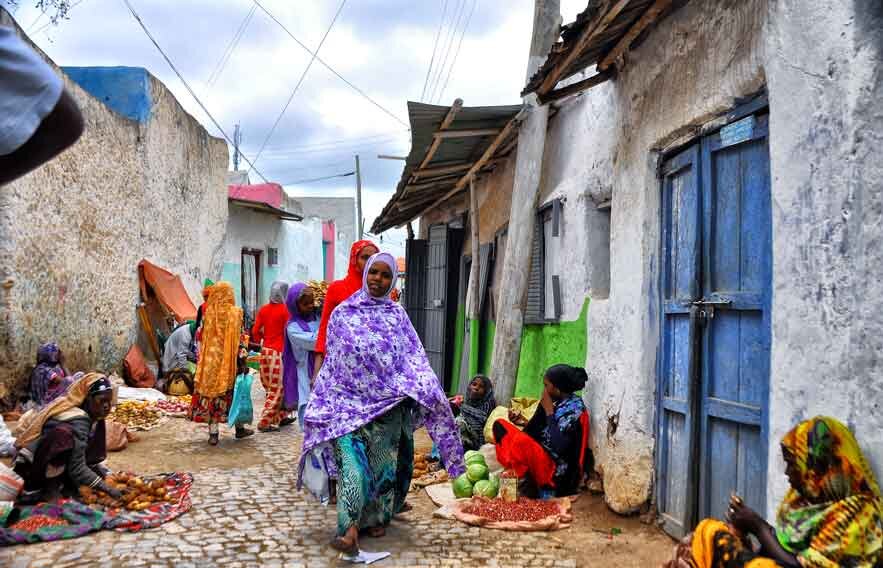
Eerily similar to the mazelike medinas of North Africa, Harar holds no comparisons across Ethiopia. Rod Waddington. CC BY-SA 2.0
Harar Jugol
Considered the fourth-holiest city of Islam, Harar gives off a distinct vibe from the rest of Ethiopia. Visitors head to Jugol, the fortified city, to take in the area’s maze of 368 alleyways and 48 mosques – all packed into less than a half a square mile.
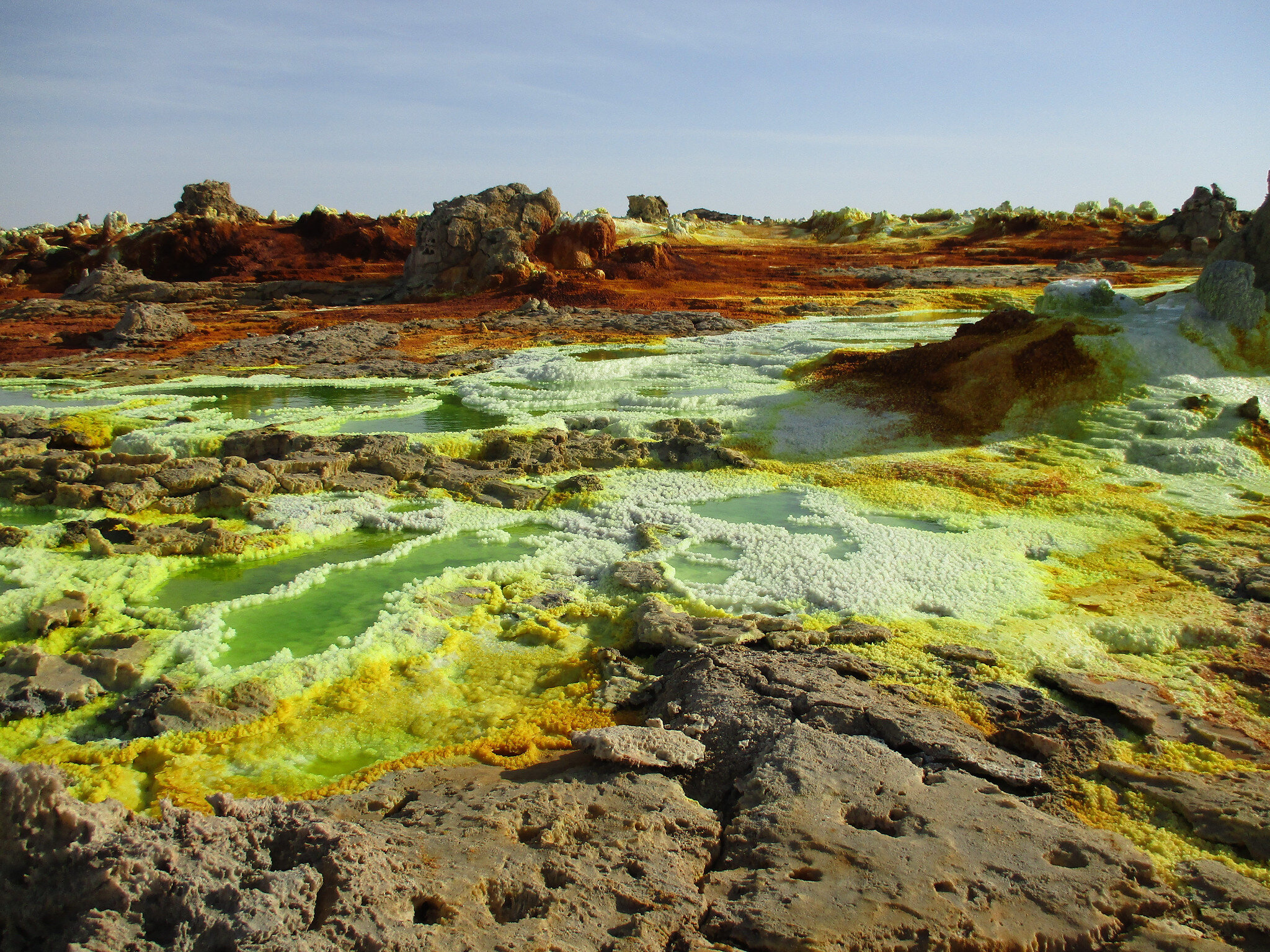
Sulfur pools are one of the many anomalies that draw visitors to the harsh landscapes of the Danakil Depression. Ian Swithinbank. CC BY-ND 2.0
Danakil Depression
Lying 400 feet below sea level and recognized as one of the hottest places on earth, the Danakil Depression is downright inhospitable. Scientists flock to the region to test out whether microbes can survive the environment, believing its harshness to be about equal to that of Mars. Visitors are equally enticed by the Danakil Depression’s otherworldliness, seeking out neon-colored lakes, steaming fissures and bubbling lava patches. Travel to the area is not for the faint of heart; daytime temperatures reach up to 120 degrees Fahrenheit and the condition of the “roads” is equally hideous.
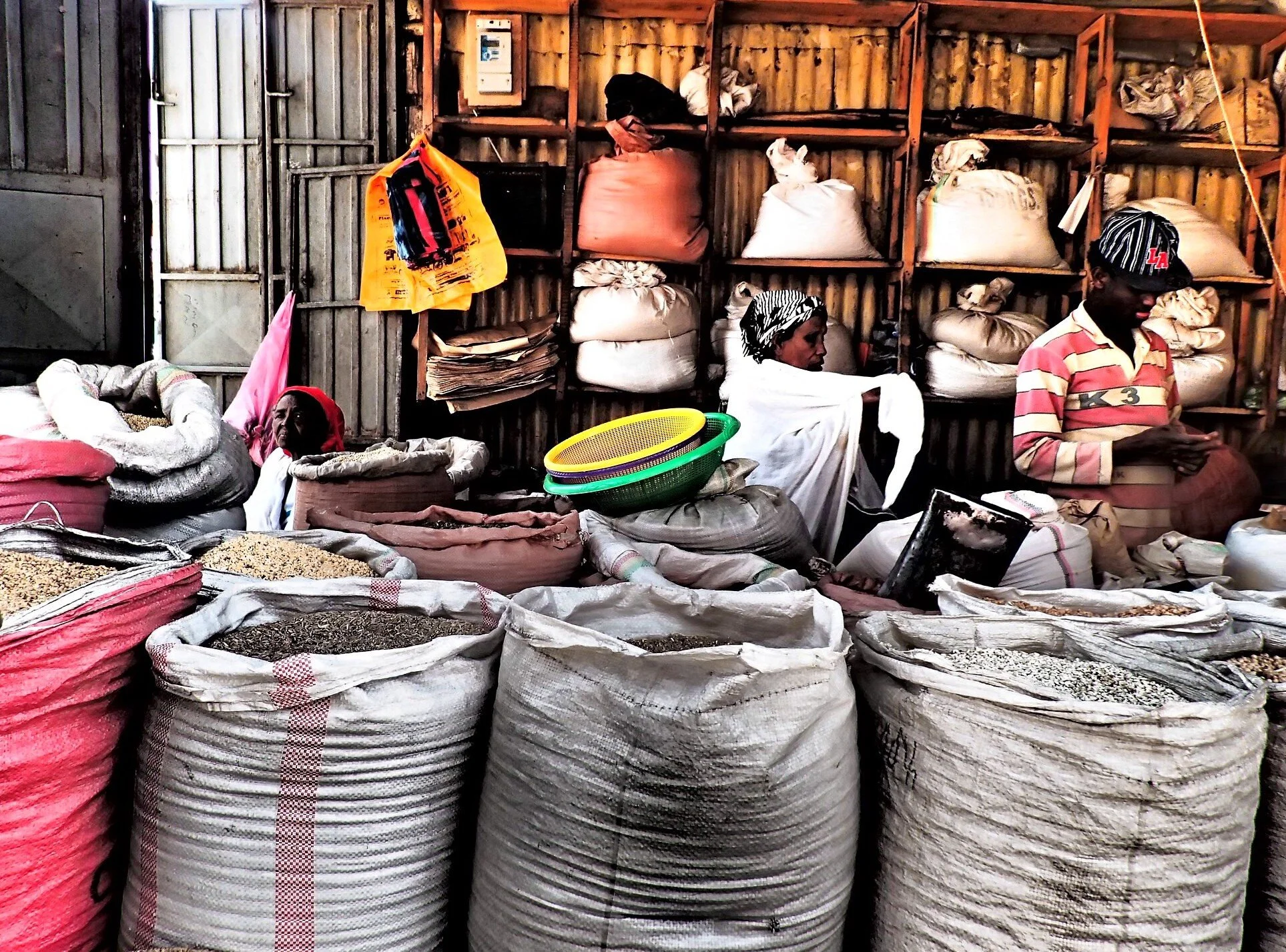
Nearly anything can be found at the Mercato, the largest open-air market in all of Africa. Jasmine Halki. CC BY 2.0
Addis Ababa
Ethiopia’s capital and largest city may not hold many star attractions, but nowhere else does the country’s culture so vividly come to life. Indulge in a cup of coffee in one of Addis Ababa’s countless cafés; this is, after all, the birthplace of the drink. Lucky visitors may receive an invite to an Ethiopian coffee ceremony, a tradition that lasts for hours and is reserved for close friends. Addis also contains some of Ethiopia’s best food. Make sure to try injera, a spongy bread filled with meat, vegetables and countless spices. Finish off the stay by visiting the Mercato, Africa’s largest open-air market. A dizzying array of gifts can be found, helping to carry the delightful essence of Ethiopia all the way home.
Stephen Kenney
Stephen is a Journalism and Political Science double major at the University of North Carolina at Chapel Hill. He enjoys sharing his passion for geography with others by writing compelling stories from across the globe. In his free time, Stephen enjoys reading, long-distance running and rooting for the Tar Heels.
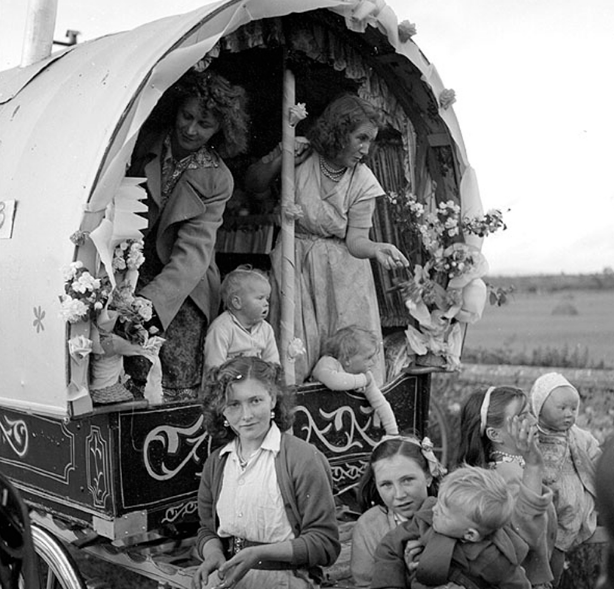
Irish Travellers in a decorated caravan, 1954. Unknown (via The National Library of Ireland on the Commons). Wikimedia Commons.
Systems of Discrimination and Irish Travellers
Travellers are a traditionally nomadic ethnic group, possibly descended from the Romany people, though their origins are somewhat debated. Today, they are found mostly in Ireland, but also live in the United Kingdom and United States. They are also subject to relentless racism in Ireland and around the world.
The exact origins of the Travellers are unknown, but it is believed that they are descended from Irish people who were made homeless by Oliver Cromwell’s military actions in Ireland in the 1650s or by the Irish potato famine in the 1840s. They remained itinerant, choosing to avoid educational and political systems for centuries in exchange for a life on the road, until vagrancy laws made it illegal to live a nomadic lifestyle; even so, many Irish Travellers still live in sedentary caravans. Most are Irish Catholic, and typically marry young and prioritize family and loyalty, though there are of course exceptions to these generalizations. Today, there are about 40,000 Travellers in Ireland, and in 2017 they finally attained recognition as an ethnic group from the Irish government. There are also about 10,000 Travellers in the United States.
Many people outside Ireland first encountered Travellers through the reality TV show, “My Big Fat Gypsy Wedding,” a show that portrays Irish Travellers as uncouth, uncivilized, and almost inhuman. When I was studying in Ireland, I was shocked to find that everyone I asked, including other American foreign exchange students, expressed an implicit belief in the fundamental “filth” or “trashiness,” words that they believed characterized all Travellers.
While abroad, I took a class at the National University of Ireland in Galway taught by a Traveller woman—a poised, beautiful, intelligent professor who has spent her life working tirelessly for Traveller rights. In the class, I was shocked to hear Irish students use ethnic slurs to describe Travellers right in front of her face.
It is usually difficult for people who are not from Ireland to identify Travellers, but during my time there, I came to realize that the native Irish are able to pick them out with ease based on specific characteristics, such as fashion choices, mannerisms and dialects. All differences are small—Travellers are white, a characteristic that certainly endows them with levels of privilege of their own—but most settled Irish people not only are able to notice Travellers, but make a special effort to reject and demonize them.

An Irish Traveller in Dublin watches neighbouring children play from her trailer
window. Photobymack. Wikimedia Commons.
In Ireland, Travellers are often ostracized, rejected since childhood on the basis of their identities. My professor told us that her own daughter was not invited to class birthday parties by settler children simply because she was a Traveller. This early rejection is a precursor of a far larger machine in which systems orchestrated around privilege and the practice of discrimination prevent Travellers from attaining certain access to healthcare, housing rights, and educational opportunities, which compromises their mental and physical health, making it nearly impossible for them to rise out of poverty.
Racism against Travellers is remarkably commonplace and socially acceptable in Ireland. Many Irish people believe that Travellers are all criminals, dangerous social outcasts that cause trouble and stick to themselves.
However, these beliefs immediately create hierarchies that disadvantages those not already privileged, further locking them out of the possibility of accessing healthcare and the tools to improve their own vitality and growth.
Fear is one of the great accomplices of the privileged, and many defend their racist actions on the basis of a fear of Travellers, labeling them as dangerous criminals. However, it is likely that this fear has much deeper roots, roots that stretch back to old wounds stemming from discrimination against the Irish back in the days of English colonization. Fascinatingly, negative stereotypes initially deployed against the Irish by the British—such as the degenerative, false stereotype of the drunk and raucous Irish criminal—seem to have transferred over to the way settled Irish people view Travellers.
This will only end when the cycle is broken and systems are created that allow Travellers and minority groups to have voices and rights that do not hinge on compromisation of their identities and culture. After all, Travellers are no longer allowed to be legally nomadic—so most live in stationary caravans, or some are able to purchase houses. They have been forced to become part of settled society by law. The least settled society can do is give them a chance.
GET INVOLVED
To learn more about Travellers and the struggle for Traveller rights, visit https://itmtrav.ie.
Eden Gordon
Eden is a journalist, editor, and creative writer specializing in the arts, climate justice, social change, and their intersections. Her work explores everything from music and intersectionality to capitalism and climate change. She’s passionate about telling stories that disrupt archaic patterns and highlight the shared truths that make us alive.
Destination Travel in the Age of Social Media
When it comes to being inspired by social media, Instagram travel feeds are there ready to lure us in. Each feed presents itself like a journey all on their own — with enviously gorgeous images beckoning a traveler onward. It’s a shame to learn then they’re ruining it for the rest of us.
In fact, according to the National Park Service, between 2008 and 2017 places like Yellowstone National Park gained a 40% increase of visitors. And since the onset of COVID-19, those numbers have only got worse. In an interview with The Guardian, the former superintendent of the park, Dan Wenk says, “Our own species is having the greatest impact on the park and the quality of the experience is becoming a casualty.” And national parks aren’t alone, it’s even affecting farmers like those at Bogle Seeds.
Hundreds of people showed up to take photos in front of the sunflowers that grow at Bogle Farms; you’ve all seen those IG worthy shots, like this:

@protectour_publiclands. Instagram.com
After his farm went viral on Instagram, owner, Mr. Bogle was quoted saying, “I’ve described it as a zombie apocalypse. There were so many cars. People were walking in and around them. No one would move.” People crowded the farm to take selfies and were then accused of doing a lot of damage to flowers.
CBC news in Canada described the sight as “chaos”; and shortly after opening to the public the owners closed it to them for good.
Mr. Bogle is not alone. Just a few miles out from The Grand Canyon, resident of Page, AZ, Bill Diako says that the natural attraction Horseshoe Bend saw a massive spike of visitors when Instagram launched in 2010. He says the numbers grew from a few thousand annual visitors to 100,000 that year. And the phenomenon doesn’t just affect the United States, getting that perfect shot for social media is an international phenomenon.
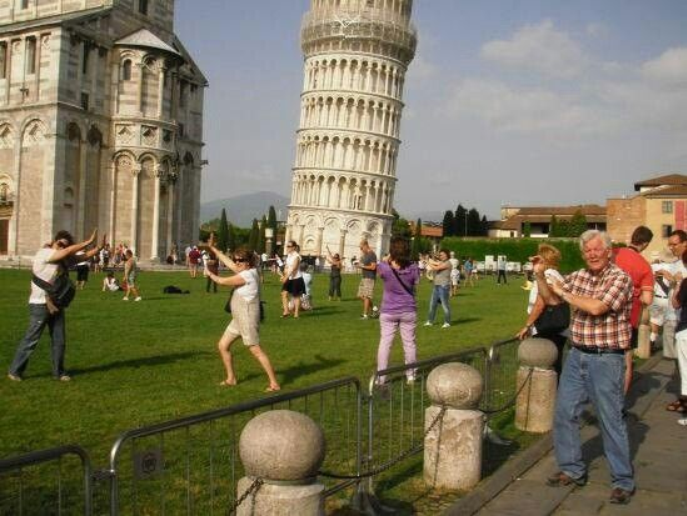
Tourists posing “holding up” Leaning Tower of Pisa. Pinterest
It’s not just the crowds that are ruining the experience for sustainable travelers. Just like the damage done to the sunflowers at Bogle Seeds, the Great Wall of China has been affected by mistreatment and even theft. Today, if you don’t want to navigate a sea of tourists there, you’ll have to go off-season and in the snow.
Great Wall of China packed with visitors over holiday.
On July 26th Associated Press announced that the Yankee Jims pristine swimming hole in Northern California was closed to motor vehicles due to over crowding. There were about 300 cars spotted parked along the freeway due to the fact that the swimming hole only has 12 spots, which used to suffice. And the local authorities claim that social media is to blame for the surge.
Getting that perfect shot no matter the cost has been a catalyst for movements of change and education. There are even petitions on Change.org to encourage social media users to be more aware of their behaviors when traveling. It would seem that the age of COVID-19 and our need for fresh-air and social distancing has backfired, as the problem only seems to be getting worse. Many would agree there needs to be a sustainable and long term way to travel in the age of social media to prevent the lasting effects on the cultural and historic sites, monuments and lives of people all over the world.

.jpg,)

Raeann Mason
Raeann is an avid traveler, digital storyteller and guide writer. She holds a Bachelor’s degree in Mass Comm & Media Studies from the Walter Cronkite School of Journalism & Mass Communication. Passionate about a/effective journalism and cultural exchange, she is an advocate of international solidarity and people's liberation. As the founder of ROAM + WRITE and EIC of Monarch Magazine, Raeann hopes to reshape the culture of travel and hospitality to be both ethically sound and sustainable.
Asylum-Seeking Children Arrive at US Border Unaccompanied
As crime and violence have increased in Mexico and Central America, there has been a notable increase in asylum-seekers. More than ever, children are entering the United States with no trace of a guardian or parent.
Read More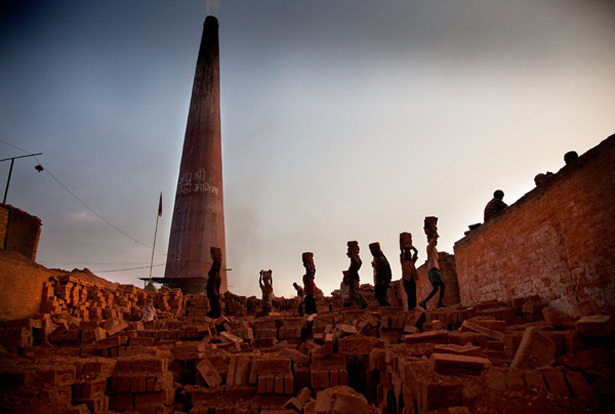
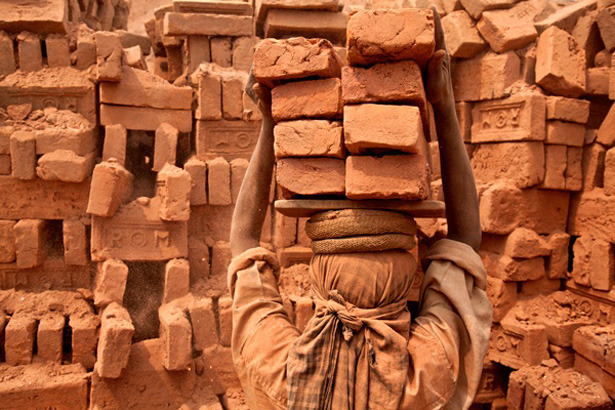
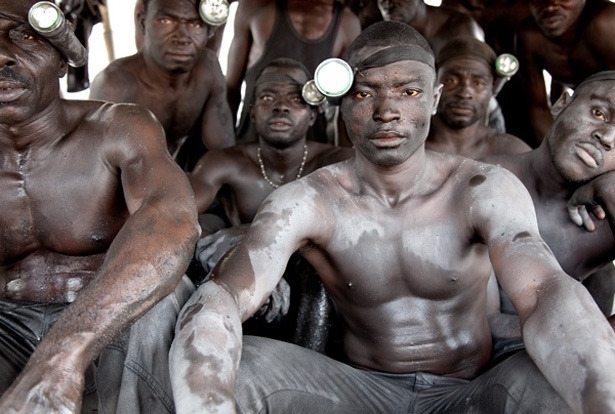
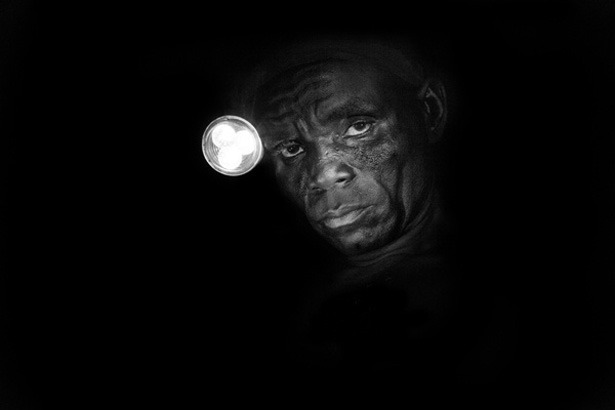
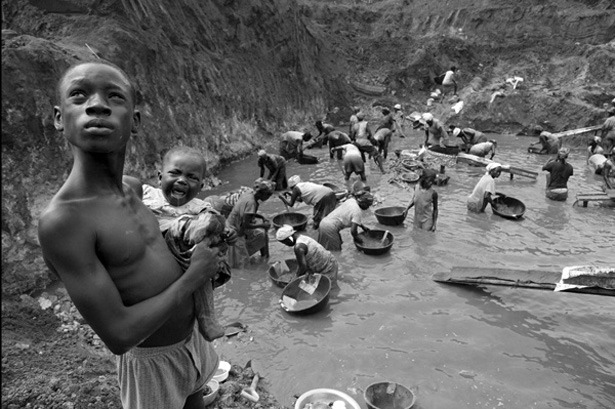
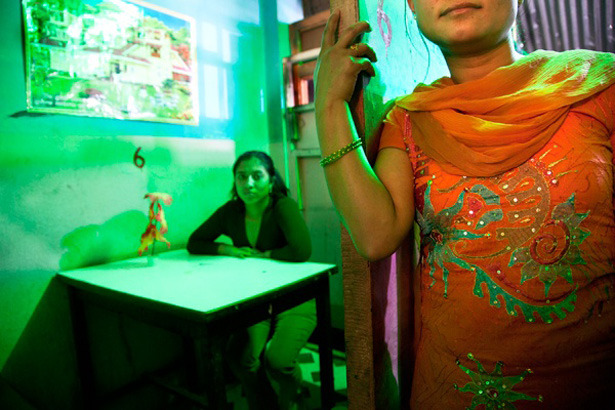
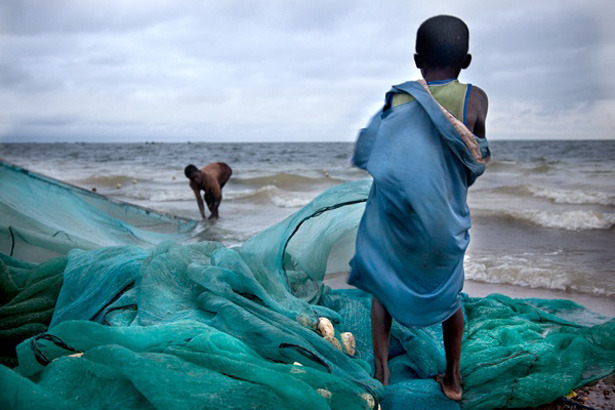
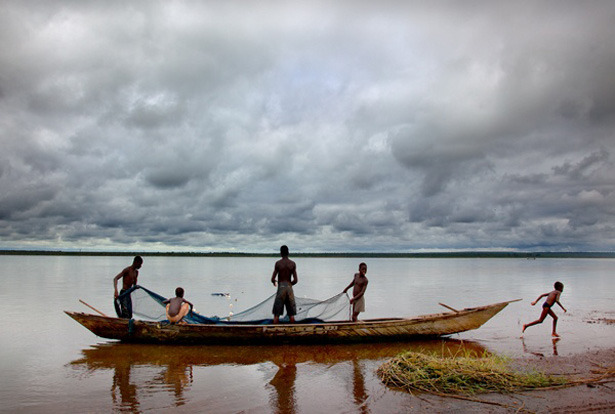
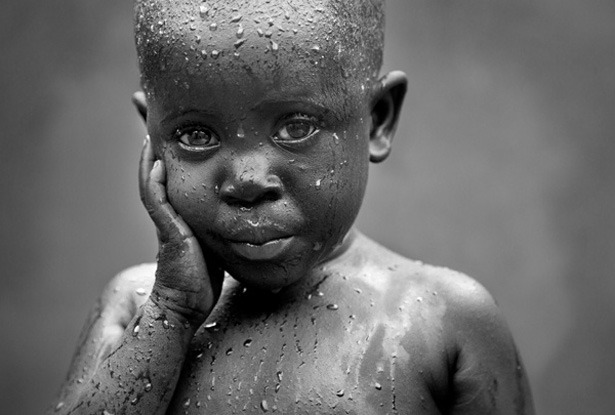
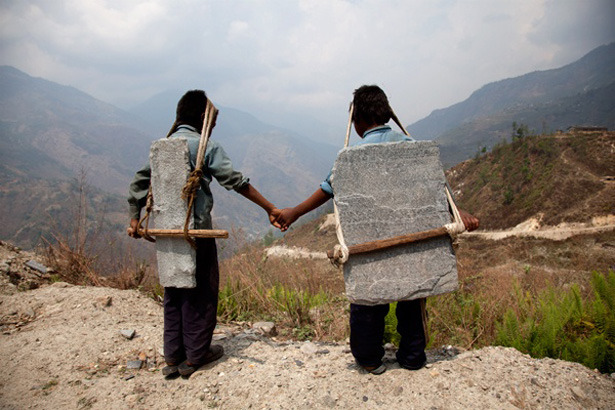
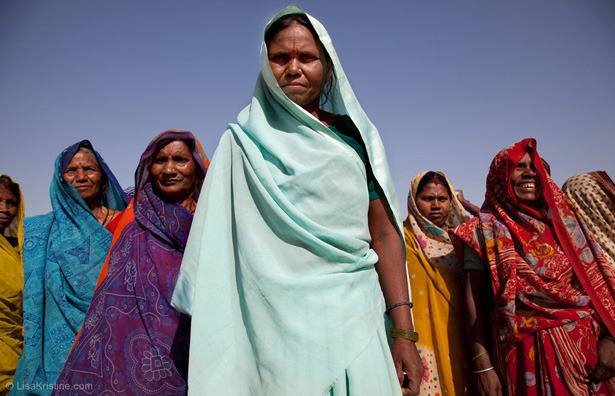
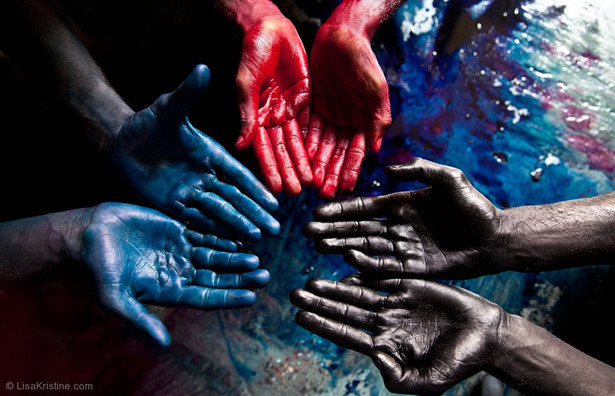
Understanding Modern Slavery
There are 27 million human slaves in the world today, more than double the slaves in the whole transAtlantic slave trade. Lisa Kristine here documents slavery from Nepal to Ghana, from the Himalayas to India. As she says, there are dark corners in this world, and she exposes them through her images.
Read MoreVIDEO: Angkor Wat to Phnom Penh, Cambodia
Set to a mesmerizing soundtrack, this footage of Cambodia highlights the natural beauty of the country’s tropical landscape, as well as provides insight into the daily lives of its people. As viewers, we travel from surrene Angkor Wat—the world famous Buddhist temple complex—to Phnom Penh, Cambodia’s lively and bustling capital city. German director Vincent Urban, who is from Munich now based in New York City, concludes the episode teasing his next stop, Thailand, for the following installment of his series: “In Asia.”