• Travel Features
  • Global Action
  • Take A Trip
  • Travel Guides
    • Podcast
    • Courses
    • Bookshop
  • About
  • Sign Up
Menu

CATALYST PLANET

  • Travel Features
  • Global Action
  • Take A Trip
  • Travel Guides
  • Discover
    • Podcast
    • Courses
    • Bookshop
  • About
  • Sign Up

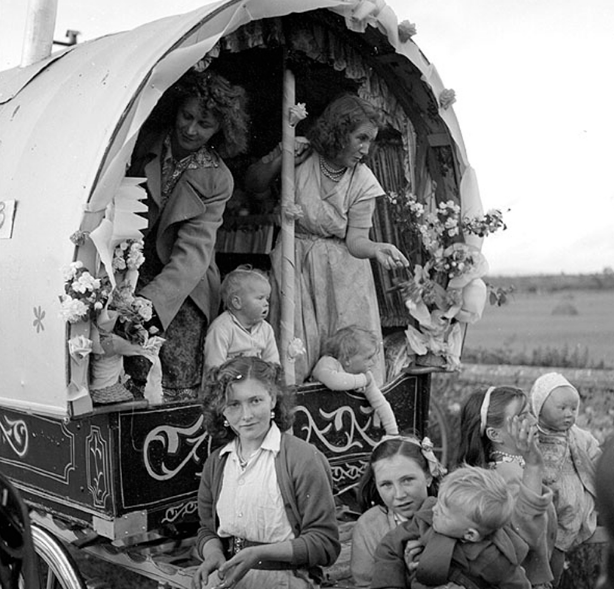
Irish Travellers in a decorated caravan, 1954. Unknown (via The National Library of Ireland on the Commons). Wikimedia Commons.

Systems of Discrimination and Irish Travellers

February 10, 2022

Travellers are a traditionally nomadic ethnic group, possibly descended from the Romany people, though their origins are somewhat debated. Today, they are found mostly in Ireland, but also live in the United Kingdom and United States. They are also subject to relentless racism in Ireland and around the world.

The exact origins of the Travellers are unknown, but it is believed that they are descended from Irish people who were made homeless by Oliver Cromwell’s military actions in Ireland in the 1650s or by the Irish potato famine in the 1840s. They remained itinerant, choosing to avoid educational and political systems for centuries in exchange for a life on the road, until vagrancy laws made it illegal to live a nomadic lifestyle; even so, many Irish Travellers still live in sedentary caravans. Most are Irish Catholic, and typically marry young and prioritize family and loyalty, though there are of course exceptions to these generalizations. Today, there are about 40,000 Travellers in Ireland, and in 2017 they finally attained recognition as an ethnic group from the Irish government. There are also about 10,000 Travellers in the United States.

Many people outside Ireland first encountered Travellers through the reality TV show, “My Big Fat Gypsy Wedding,” a show that portrays Irish Travellers as uncouth, uncivilized, and almost inhuman. When I was studying in Ireland, I was shocked to find that everyone I asked, including other American foreign exchange students, expressed an implicit belief in the fundamental “filth” or “trashiness,” words that they believed characterized all Travellers.

While abroad, I took a class at the National University of Ireland in Galway taught by a Traveller woman—a poised, beautiful, intelligent professor who has spent her life working tirelessly for Traveller rights. In the class, I was shocked to hear Irish students use ethnic slurs to describe Travellers right in front of her face.

It is usually difficult for people who are not from Ireland to identify Travellers, but during my time there, I came to realize that the native Irish are able to pick them out with ease based on specific characteristics, such as fashion choices, mannerisms and dialects. All differences are small—Travellers are white, a characteristic that certainly endows them with levels of privilege of their own—but most settled Irish people not only are able to notice Travellers, but make a special effort to reject and demonize them.

An Irish Traveller in Dublin watches neighbouring children play from her trailer

window. Photobymack. Wikimedia Commons.

In Ireland, Travellers are often ostracized, rejected since childhood on the basis of their identities. My professor told us that her own daughter was not invited to class birthday parties by settler children simply because she was a Traveller. This early rejection is a precursor of a far larger machine in which systems orchestrated around privilege and the practice of discrimination prevent Travellers from attaining certain access to healthcare, housing rights, and educational opportunities, which compromises their mental and physical health, making it nearly impossible for them to rise out of poverty.

Racism against Travellers is remarkably commonplace and socially acceptable in Ireland. Many Irish people believe that Travellers are all criminals, dangerous social outcasts that cause trouble and stick to themselves.

However, these beliefs immediately create hierarchies that disadvantages those not already privileged, further locking them out of the possibility of accessing healthcare and the tools to improve their own vitality and growth.

Fear is one of the great accomplices of the privileged, and many defend their racist actions on the basis of a fear of Travellers, labeling them as dangerous criminals. However, it is likely that this fear has much deeper roots, roots that stretch back to old wounds stemming from discrimination against the Irish back in the days of English colonization. Fascinatingly, negative stereotypes initially deployed against the Irish by the British—such as the degenerative, false stereotype of the drunk and raucous Irish criminal—seem to have transferred over to the way settled Irish people view Travellers.

This will only end when the cycle is broken and systems are created that allow Travellers and minority groups to have voices and rights that do not hinge on compromisation of their identities and culture. After all, Travellers are no longer allowed to be legally nomadic—so most live in stationary caravans, or some are able to purchase houses. They have been forced to become part of settled society by law. The least settled society can do is give them a chance.

GET INVOLVED

To learn more about Travellers and the struggle for Traveller rights, visit https://itmtrav.ie.
Eden Gordon

Eden is a journalist, editor, and creative writer specializing in the arts, climate justice, social change, and their intersections. Her work explores everything from music and intersectionality to capitalism and climate change. She’s passionate about telling stories that disrupt archaic patterns and highlight the shared truths that make us alive.
In News and Social Action Tags Ireland, irish, tradition, ethnicity, Arts and Culture, Travel
Comment

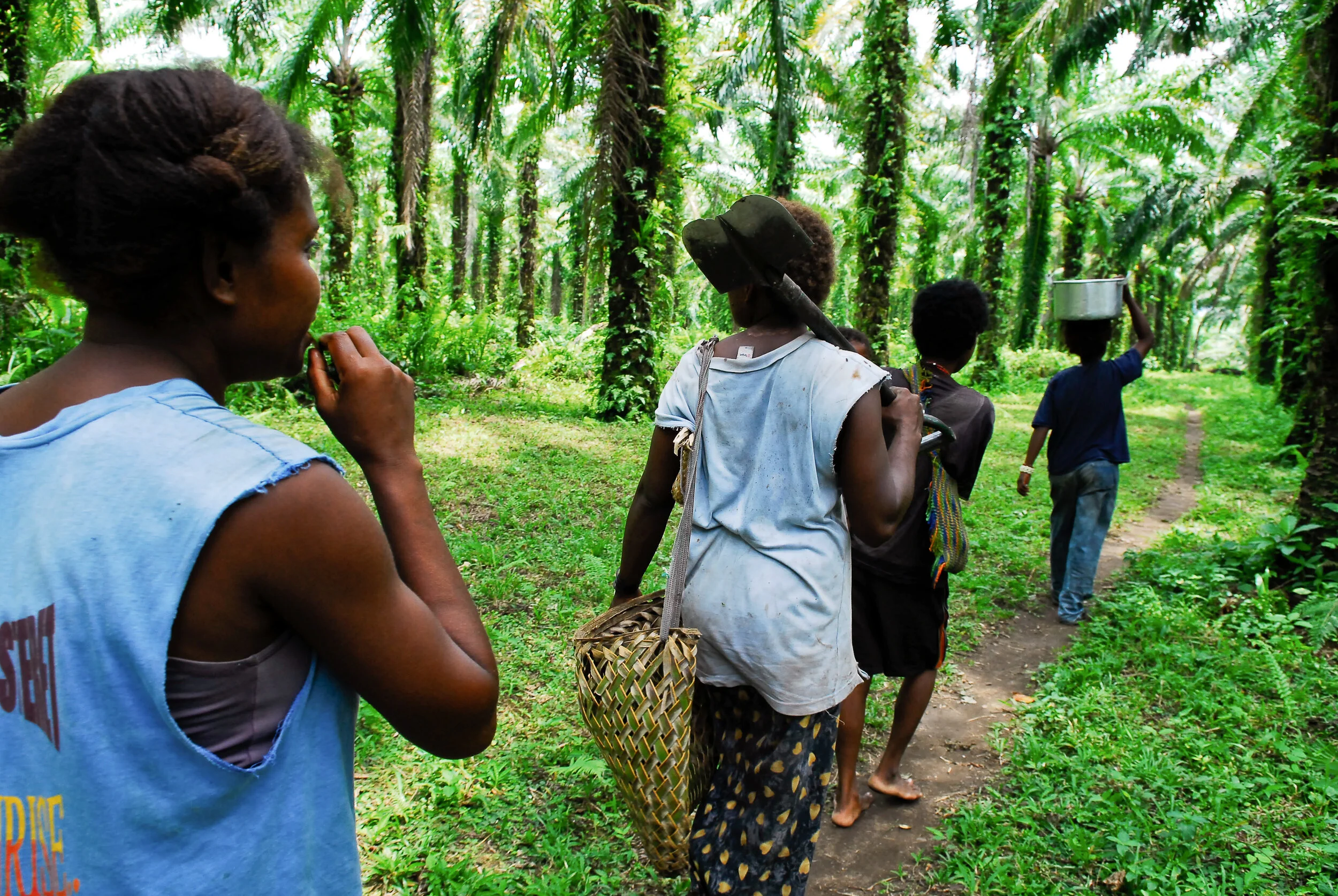
Papuan women walking to get water. Asian Development Bank. CC BY-NC-ND 2.0.

A Cultural Divide in Papua New Guinea May Lead to a New Country’s Formation

October 15, 2020

Papua New Guinea, an island nation in the southwest Pacific comprising the eastern half of New Guinea and its surrounding islands, is a culturally and historically rich country which is often overlooked by travelers in favor of neighboring Indonesia and Australia.

One key component to the country’s diversity is the numerous ethnic groups which call the island nation home. While many of these groups have historically coexisted for generations in peace, the island of Bougainville, which is located at the far eastern edge of the country, has remained distinct from the rest of the nation, so much so that it is its own autonomous region rather than a province.

While a push for Bougainville’s independence has been ongoing since the 1980s , a recent referendum and presidential election may lead to negotiations between the autonomous region and the national government.

One Country, Many Cultures

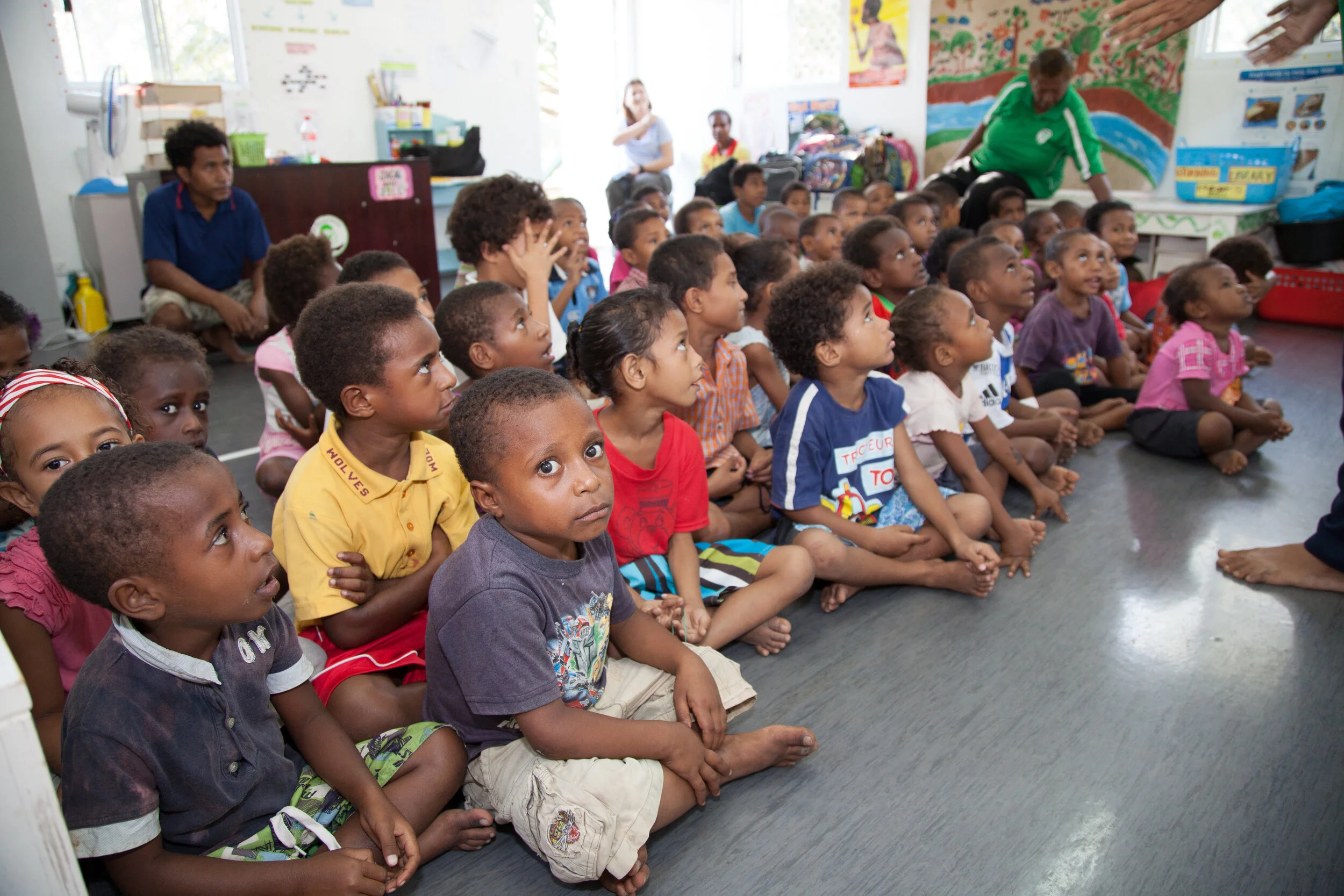
Children attending class in Port Moresby, Papua New Guinea. Department of Foreign Affairs and Trade. CC BY 2.0.

Bougainville and Papua New Guinea are culturally and historically distinct. While both regions were at one point in time under German colonial rule, Papua New Guinea was later held by the United Kingdom, while Bougainvile was administered by Australia before being invaded by Japan in World War II.

While both Papua New Guinea and Bougainville hold Tok Pisin as the lingua franca and maintain English as a standard for government proceedings, the North and South Bougainville language families are commonly spoken within the autonomous region while the Trans-New Guinea language families are much more common throughout the rest of the country.

The differences between Papua New Guinea and Bougainville are also reflected in the composition of both regions’ governing bodies. Papua New Guinea is infamously one of three countries in the world without any female representatives in the national parliament. In trying to distance itself from this, Bougainville has reserved three seats within its regional legislature to be dedicated for women representatives. Two of these seats have been filled as of this article’s publication.

A Growing Push Toward Independence

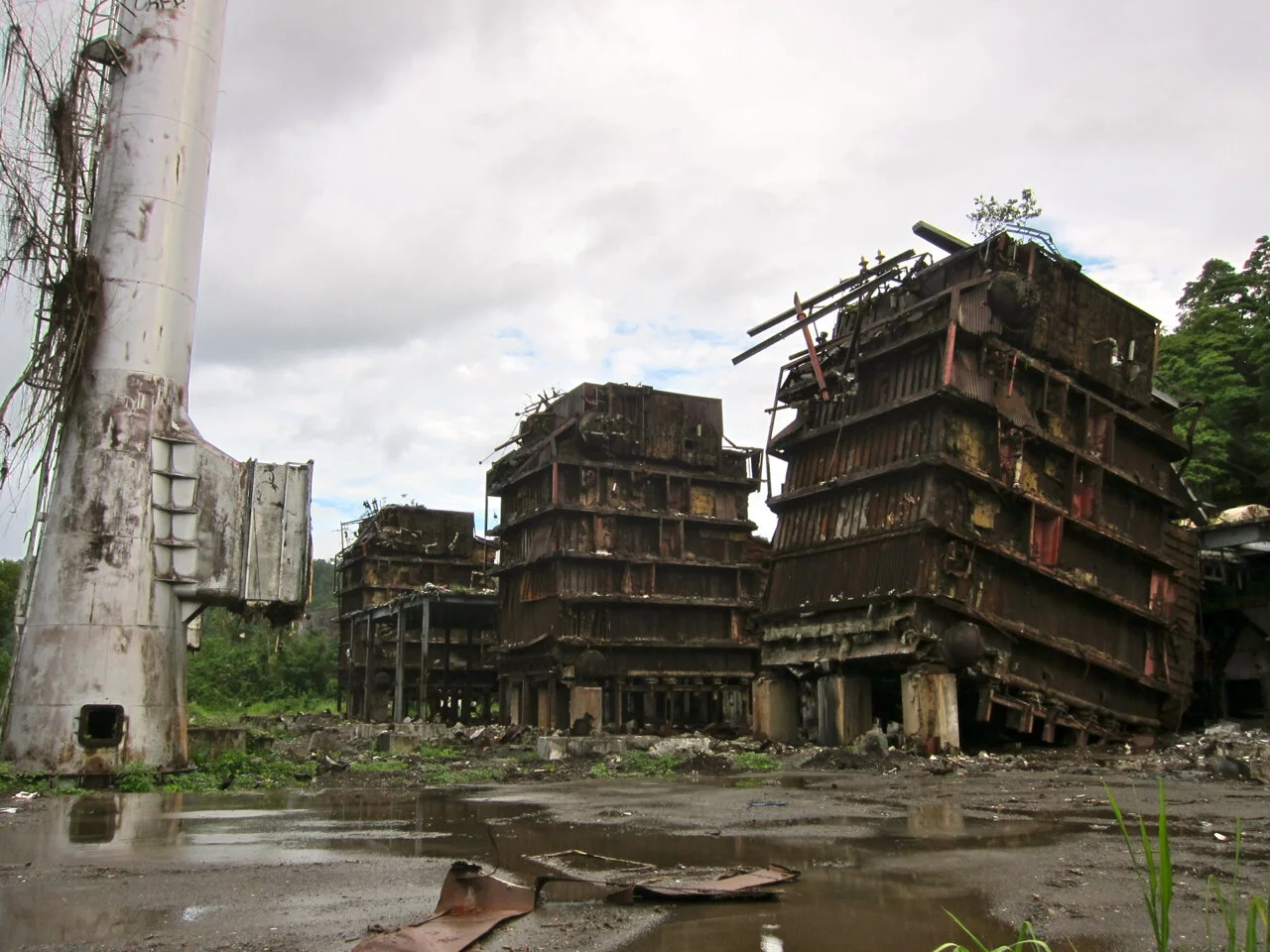
A power plant in Arawa on the island of Bougainville, which was destroyed during the Bougainville civil war. madlemurs. CC BY-NC-ND 2.0.

The Bougainville independence movement dates back to the late 1980s following a series of conflicts between the region and the central government after immigration increased to the region in response to the discovery of vast copper reserves. This led to racial tensions between the native Bougainvilleans and the newly arrived Papuans and Australian nationals, coming to a boiling point in 1988 with the decadelong Bougainville civil war.

The Dec. 7, 2019, independence referendum was a result of the 2001 peace agreement which formally ended the civil war, the results of which were overwhelming in favor of the region’s independence. While the referendum was nonbinding, it did open the door for renewed negotiations between the autonomous region and Port Moresby.

“The essence of what our people want is still empowerment of a Bougainville government that can truly manage its own affairs,” then Bougainville President John Momis said in an August 2019 speech. “Just as we did when negotiating the peace agreement, the national government and Bougainville will have the rare privilege of developing something new.”

Should Bougainville gain independence, it likely will galvanize more support for other independence movements throughout Melanesia, the surrounding region of islands north of Australia. Protests and referendums for independence in New Caledonia and West Papua occurred throughout the late 2010s and are expected to continue in the coming years.

Recent Electoral Victory

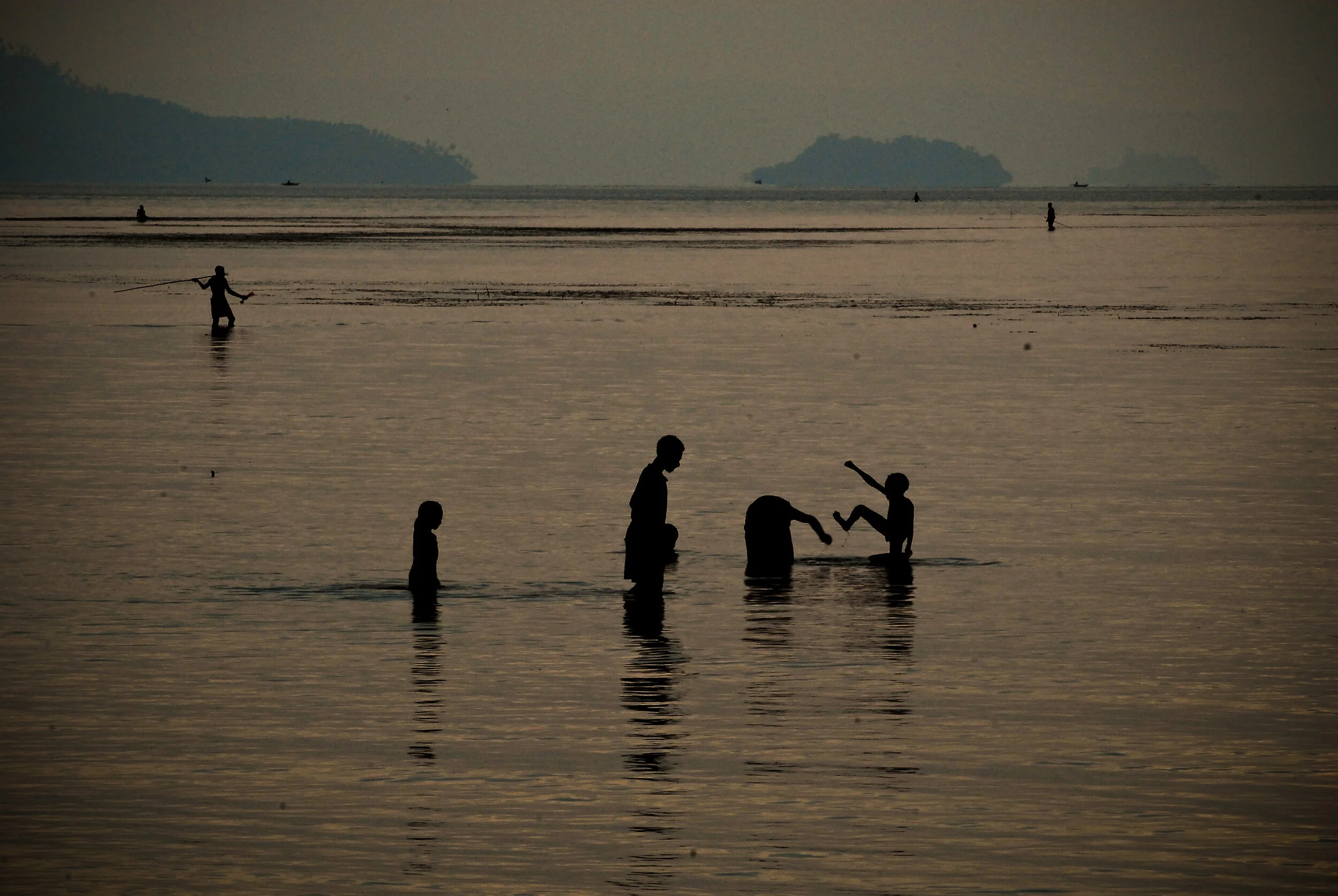
People fishing off the coast of New Britain, Papua New Guinea. Asian Development Bank. CC BY-NC-ND 2.0.

Citizens of Bougainville elected former rebel military commander and Bougainville independence activist Ishmael Toroama as president of the region during the Sept. 23 election. While campaigning, Toroama proposed a two- to three-year timeframe for achieving the region’s independence, something which experts consider to be at best ambitious given that the referendum was nonbinding.

“We conducted a clean campaign, we did not give money to the voters and we did not intimidate any voters: people have used their God-given wisdom to vote for the right candidate,” Toroama said shortly after he was declared winner of the election. “I will stand up for independence in Bougainville … it is now time to work together.”

While it is unclear yet as to whether or not Toroama will be able to fully transition Bougainville from an autonomous region to a full-fledged country, he at the very least will be able to begin negotiations with the central government given the support he gained while campaigning as well as the results of the Dec. 7 referendum.

Jacob Sutherland

is a recent graduate from the University of California San Diego where he majored in Political Science and minored in Spanish Language Studies. He previously served as the News Editor for The UCSD Guardian, and hopes to shed light on social justice issues in his work.

Tags Papua New Guinea, island, ethnicity, autonomous zone, autonomy, Germany, United Kingdom, independence, election
Comment

ETHIOPIA: The Omo Valley

February 1, 2019

The lower Omo Valley near the borders of Kenya and Sudan, is home to some of the most fascinating tribes on the continent of Africa and around the world. This land frozen in time is inhabited by different ethnic groups with ancient traditions that have remained untouched for centuries.

Tags Omo Valley, Kenya, Sudan, Ethiopia, Africa, ethnicity, Arts and Culture
Comment

Also check out...

Featured
Vietnam’s Floating Markets Are Disappearing
The Supernatural Role of Masks in Nigeria’s Yoruba Tribal Culture
Opening the World to Deaf Travelers with Lily Yu

Featured trips

Featured
Offer NGO Support While Visiting Quito
Experience Life as a Mongolian Nomad
Help Grow Organic Costa Rican Coffee

Sign up for the CATALYST newsletter

Sign up for our newsletter to get the scoop on international travel, global social impact insights, our latest podcast releases, and more from around the world, all delivered right to your inbox!

We respect your privacy.

Thank you!
Newsletter Sign Up | Advertise | Careers + Internships | Privacy Policy | Submissions | Contact Us

Copyright © 2025, MISSION MEDIA LLC. All rights reserved.