Locked Up: Unmasking Australia’s Aboriginal Youth Prison Crisis

The Aboriginal people have been severely marginalized by Australia’s government, but among the most impacted are the group’s children.
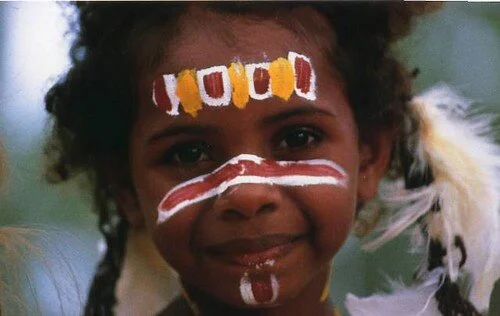
A young Aboriginal girl. mingzhuxia. CC BY-NC-SA 2.0

Indigenous people make up approximately 3% of Australia’s overall population and are considered the country’s most disadvantaged group. It is believed that the Aboriginal people lived in Australia for over 47,000 years prior to European colonization. Even today, the Aboriginal people continue to suffer some of the consequences of violent colonization such as low literacy rates, low life expectancy and a high unemployment rate.

Aboriginal children in particular are 30 times more likely to be stopped and prosecuted than other Australian youths. This reveals a pattern of racial profiling and stereotyping that has been called out by protests affiliating with the U.S.’s Black Lives Matter movement. 

Progress was made in 2018, when police in Western Australia apologized for practicing “forceful removal,” the separation of Indigenous children from their families. Forceful removal was popular throughout the late 19th century and was legal until 1969. Many refer to those impacted by forceful removal as the “Stolen Generation.” 

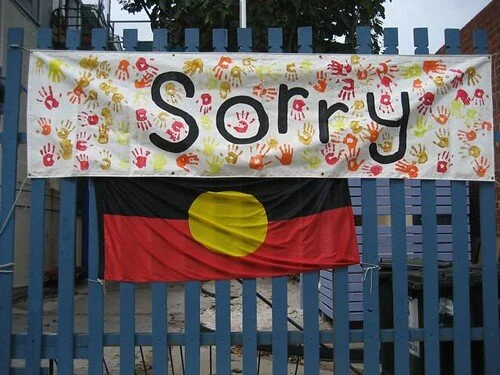
Since May 26, 1998, Australians have observed “National Sorry Day” as a way to apologize to the Aboriginal people for the harmful practice. It is a nationwide campaign committed to paying homage to affected groups while teaching youth of Australia’s harmful past actions. In 2008, former Prime Minister Kevin Rudd made a proposal in front of Parliament to help bridge the gap between Indigenous and non-Indigenous people

Australia’s National Sorry Day in 2015. butupa. CC BY-NC-ND 2.0

Yet, the gap between the Aboriginal community and other Australians remains as wide as ever. In February, the police of New South Wales revealed details about the Suspect Targeting Management Plan, which is intended to prevent future crimes by targeting likely or repeat offenders. Reports from 2016 to 2018 show that up to 72% of targeted children were likely from Indigenous descent. The youngest child identified was 9 years old. 

The minimum age of criminal responsibility in Australia is one of the lowest in the world, allowing children as young as 10 to be sentenced to jail. Additionally, Aboriginal children are 17 times  more likely to be jailed than non-Indigenous youth. Statistics from Western Australia say that 60 to 70% of children currently being held in the state’s detention centers are of an Aboriginal background. 

As of now, very little research proves that locking up children reduces criminal activity in the future. In fact, youth already in the criminal justice system are far more likely to be repeat offenders, challenging the original intent of New South Wales’ Suspect Target Management Plan. 

There is a push by lawyers and advocacy groups to raise the age of criminal responsibility in Australia to at least 14. Others believe that an alternative is to provide better health care and other social services in an attempt to elevate Aboriginal children’s socioeconomic standing. The end goal would be to improve their overall quality of life, allowing for better employment opportunities and an end to the societal obstacles currently facing the group.


Eva Ashbaugh

Eva is a Political Science and Gender, Sexuality, and Women's Studies double major at the University of Pittsburgh. As a political science major concentrating on International Relations, she is passionate about human rights, foreign policy, and fighting for equality. She hopes to one day travel and help educate people to make the world a better place.

The Back-to-Africa Movement: A Response to Racism

Some Black Americans have chosen to move to Africa to embrace their heritage and ancestral roots after experiencing racism, violence and stereotyping in the United States. 

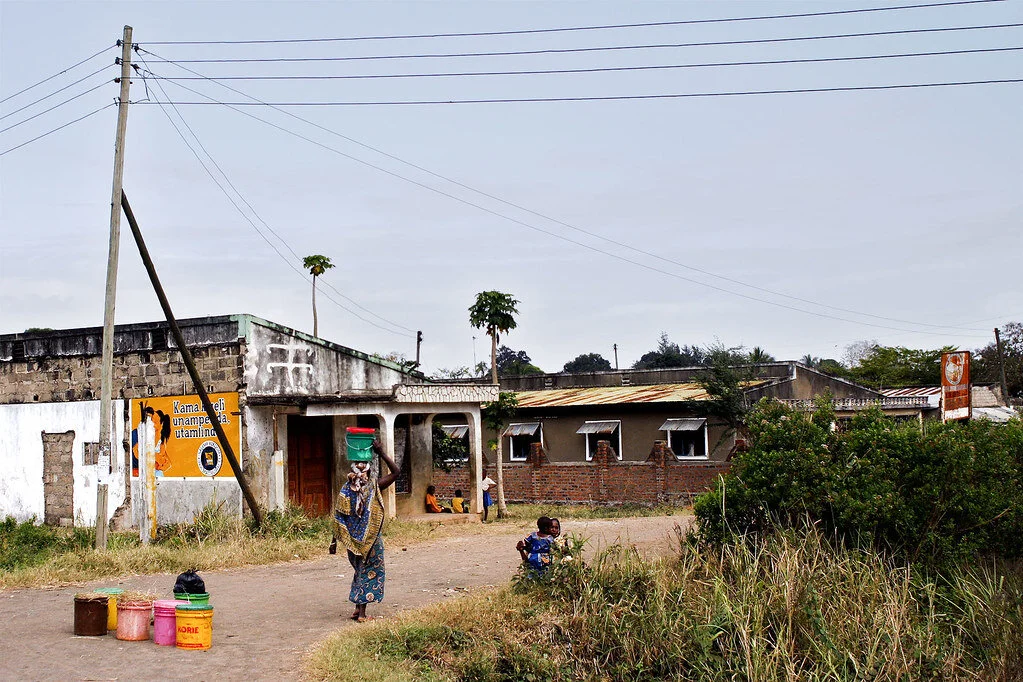
A village in Tanzania. ceasrgp. CC BY-SA 2.0

The Back-to-Africa movement was initially started to encourage those of African ancestry to travel back to Africa where their ancestors once lived. Even though many are unsure of the movement’s founder, many in the U.S. attribute it to Marcus Garvey, who founded the Universal Negro Improvement Association in 1914 in New York City’s Harlem district. He encouraged many Black people to seek social equality even if it meant moving to Africa through “self-emancipation.”

However, the Back-to-Africa movement can be traced even further back to the 19th century and the establishment of the American Colonization Society The predominantly-White group, founded by Robert Finley in 1817, shipped up to 12,000 freed slaves and freeborn Black Americans to Liberia. Historians’ views on the American Colonization Society’s work remain split; some view it as an early group dedicated to Black Americans’ freedom while others see it as nothing more than an attempt to remove Black people from the United States. Either way, the group was unpopular among the African American community, and should not be confused with more recent Back-to-Africa movements.

Painting of Marcus Garvey. David Drissel. CC BY-NC-SA 2.0.

Many African Americans have more recently picked up the Back-to-Africa movement to help strengthen Black identity. Martin Luther King Jr. and Malcom X both made visits to Ghana in order to reconnect with their heritage. 

Obadele Kambon is a recent example of the modern Back-to-Africa movement. Kambon was living in Chicago in 2007 when he was wrongfully accused of possessing a loaded firearm illegally in his car. In reality, he had an unloaded, licensed gun. The fear of mistreatment and wrongful convictions, sometimes even leading to death, was a main influence in Kambon’s decision to move to Ghana in 2008.He said his participation in the Back-to-Africa movement made him realize what it “feels like to be a White person in America, just to be able to live without worrying that something is going to happen to you.”

Many of those who have moved to Africa from the United States fear that “nothing can fix [racism].” Africa holds the potential to reconnect people with their roots while offering them a life less affected by racism and violence. 71% of African Americans in the United States have said that they have experienced discrimination in some form. For many African Americans, heading abroad frees them from the need to prove themselves to be more than their skin color.

2019 was marked by Ghanaian President Nana Akufo-Addo as the “Year of Return.” It coincided with the 400th anniversary of what is believed to be the first enslaved Africans arriving in the United States. Last year, Ghana rewarded over 100 citizenships to Black individuals from the Americas as a part of its “Year of Return” initiative. The campaign brought over 500,000 visitors to the region—and some of them have decided to stay.

Eva Ashbaugh

is a Political Science and Gender, Sexuality, and Women's Studies double major at the University of Pittsburgh. As a political science major concentrating on International Relations, she is passionate about human rights, foreign policy, and fighting for equality. She hopes to one day travel and help educate people to make the world a better place.
Gender Discrimination Is Nothing New in Poland

Many view the reelection of Polish President Andrzej Duda in July as a further setback for women’s and LGBTQ+ rights in the country.

Andrzej Duda, the president of Poland, meets with a leader of the Roman Catholic Church. EpiskopatNews. CC BY-NC-SA 2.0

For much of the 20th century, Poland was under the influence of foreign countries, particularly the Soviet Union. This caused communism and its ideologies of censorship and control to direct the Poles’ daily lives. During that time, the Roman Catholic Church provided a safe space for many people to feel freedom. Thus, post-communist Poland has continued to embrace Catholicism, with 93% of Poles practicing it despite the country having no official religion.

A result of the Catholic Church’s widespread influence has been restrictive measures toward women and those in Poland’s LGBTQ+ community. One of the first major impacts seen was the passage of an “anti-abortion law” in 1988. While this law banned most instances of the procedure, many doctors and hospitals did not fully enforce it at the time. 

Abortion is still a topic of debate in Polish political campaigns. In the Catholic Church’s eyes, abortion is seen as murder and a direct violation of God’s will. Thus, any practice which may go against God’s “original intent” is normally frowned upon.

Due to the Catholic Church’s continued influence in Poland, most legislation passed today still follows the Church’s guidance. This includes on LGBTQ+ rights, where as of June nearly 100 locations had declared themselves to be “LGBT-free zones.”. Yet the fight for LGBTQ+ rights has continued, especially since the election of the staunchly-conservative Prime Minister Mateusz Morawiecki.

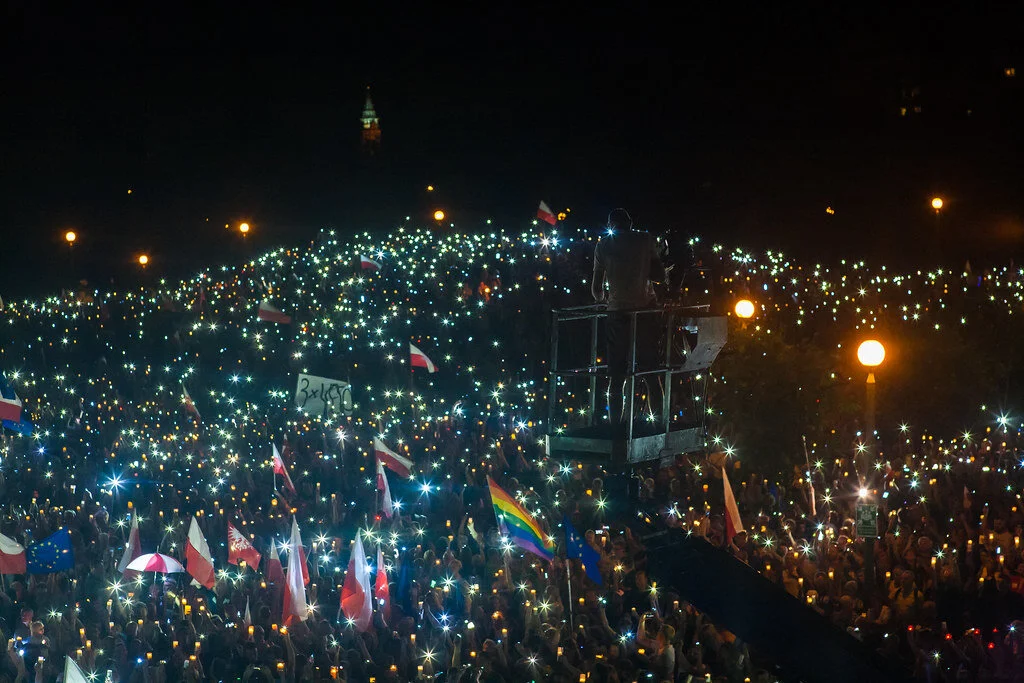
LGBTQ+ activists in Poland. Sakuto. CC BY-NC 2.0.

Additionally, the reelection campaign of President Andrzej Duda painted a narrative that LGBTQ+ individuals are a threat to society. As a part of the right-wing Law and Justice Party, his ideologies align with protecting Poland’s “traditional values.” Duda even went so far as to call the LGBTQ+ rights movement “an ideology worse than communism.” He also tapped into anti-Semitism that has been prevalent since World War II by saying that Jewish interests would become more important than Polish ones if his opponent Rafal Trzaskowski had won.

Two weeks after Duda’s victory in the July presidential election, it was announced that Poland was in the process of withdrawing from a European domestic violence treaty known as the Istanbul Convention. This treaty protected women from any forms of violence and placed responsibility on European states to take appropriate measures to protect women and punish attackers.

As justification for the government's decision, Poland denounced the treaty as an infringement on parents’ rights since it required children to be taught about nontraditional gender roles. Duda claimed that the treaty “contains elements of an ideological nature, which we consider harmful.” Many women have argued that withdrawing from the treaty only legalizes domestic violence in Poland.

Eva Ashbaugh

is a Political Science and Gender, Sexuality, and Women's Studies double major at the University of Pittsburgh. As a political science major concentrating on International Relations, she is passionate about human rights, foreign policy, and fighting for equality. She hopes to one day travel and help educate people to make the world a better place.